When you let your cucumber vines climb instead of flopping all over the ground, you actually make your garden work smarter, not harder.
A good trellis saves space, makes picking way easier, and keeps your cucumbers cleaner and less likely to rot. Plus, you don’t have to crawl around in the dirt—bonus!
I’ve rounded up 14 easy, wallet-friendly trellis ideas here. We’re talking everything from quick twine nets to cute bamboo teepees. You can pick a style that fits your yard, your skills, and your garden’s personality.

You’ll get options, fast how-tos, and a few caring tips to help your cucumbers thrive. Let’s make gardening feel less like a chore and more like a hobby you actually look forward to.
1. Bamboo pole teepee trellis for that natural, zen garden vibe
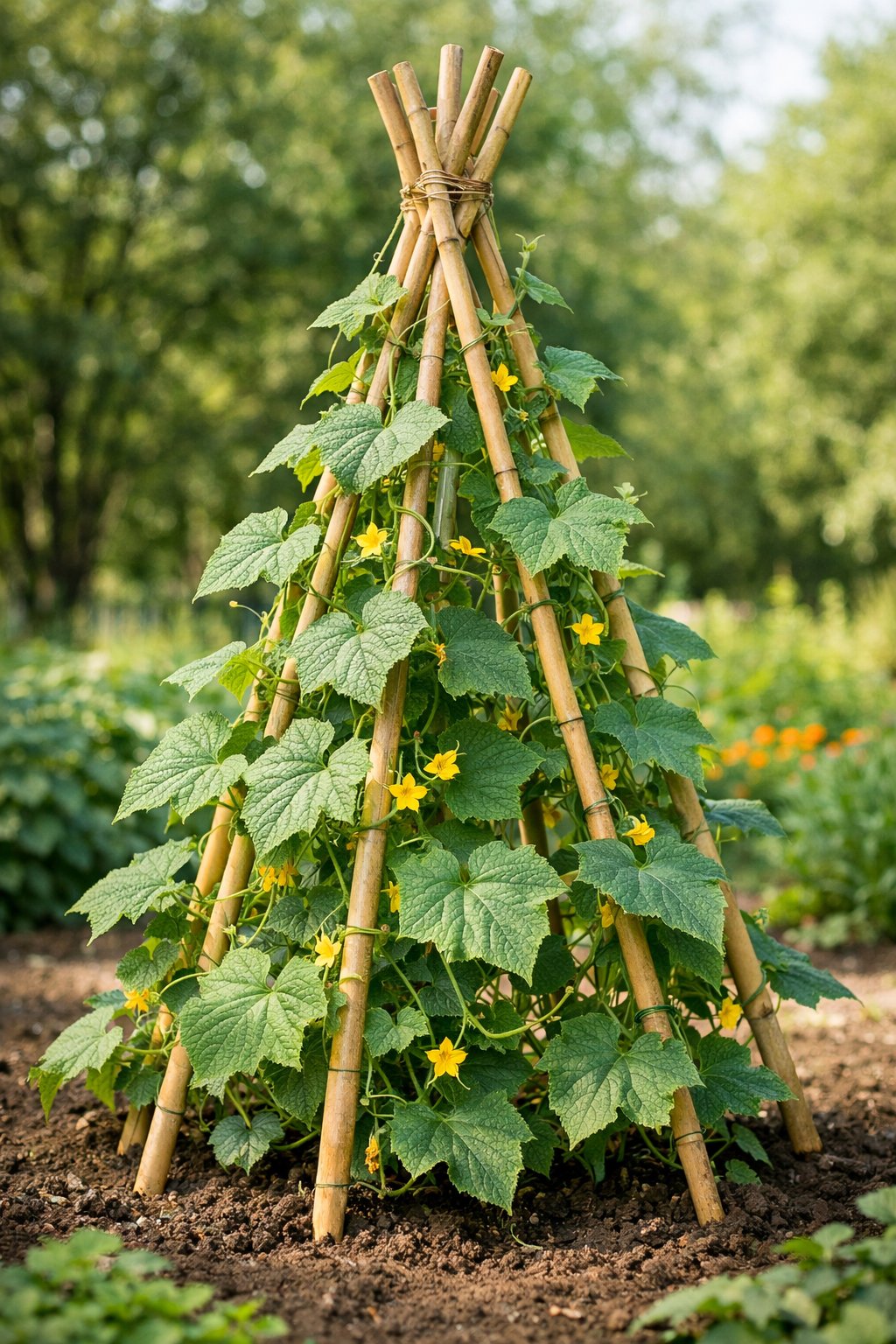
Here’s something cool: you only need a few bamboo poles to turn your garden into a peaceful, green retreat. Tie 4–6 poles together at the top, spread out the bottoms, and you’ve got a sturdy cone that looks simple and kind of artsy.
This teepee lifts your cucumbers up, keeping them cleaner and helping them ripen faster. It also adds a calm, zen look—like a mini bamboo temple for your plants.
You don’t need fancy gear. Just grab some poles, twine, and a dash of patience. Make sure the spot gets sun, and push the poles deep so they don’t topple.
Gently guide the vines up as they grow, and you’ll have a living sculpture before you know it.
Expert Tip From MrPlanter: Tie the poles with a loose figure-eight knot so you can adjust later. Check the ties every week and tuck new tendrils up the poles to keep your plants happy.
2. Wooden lattice panel to turn your cucumbers into vertical ninjas
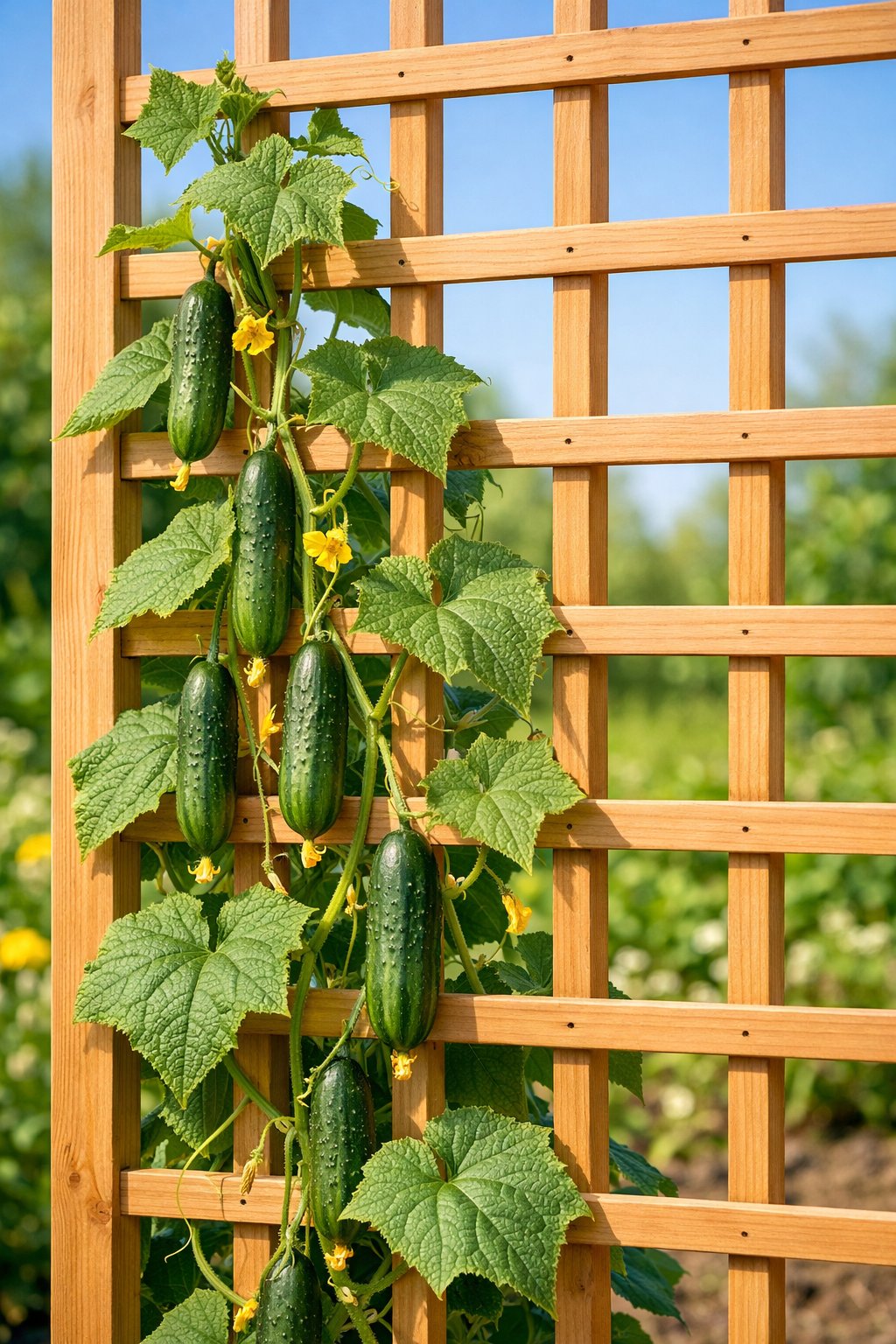
Ever get tired of cucumbers sprawling everywhere and getting squished? A wooden lattice panel gives your vines a clean surface to climb, so your fruit stays off the dirt and grows straight.
You can buy a ready-made lattice or make a simple frame and attach some crisscross slats. Cedar or pressure-treated wood lasts longer, and if you space the slats about 4–6 inches apart, the tendrils can grab on without trapping your cucumbers.
Set up the panel when you plant or slip it behind young plants. This way, roots don’t have to change direction.
Tie loose vines gently with soft twine as they grow to help them climb.
Expert Tip From MrPlanter: “Pick rot-resistant wood and space the lattice so air can flow through. Tie plants loosely with fabric strips so you don’t cut into the stems.”
3. PVC pipe frame trellis—lightweight and ready for action
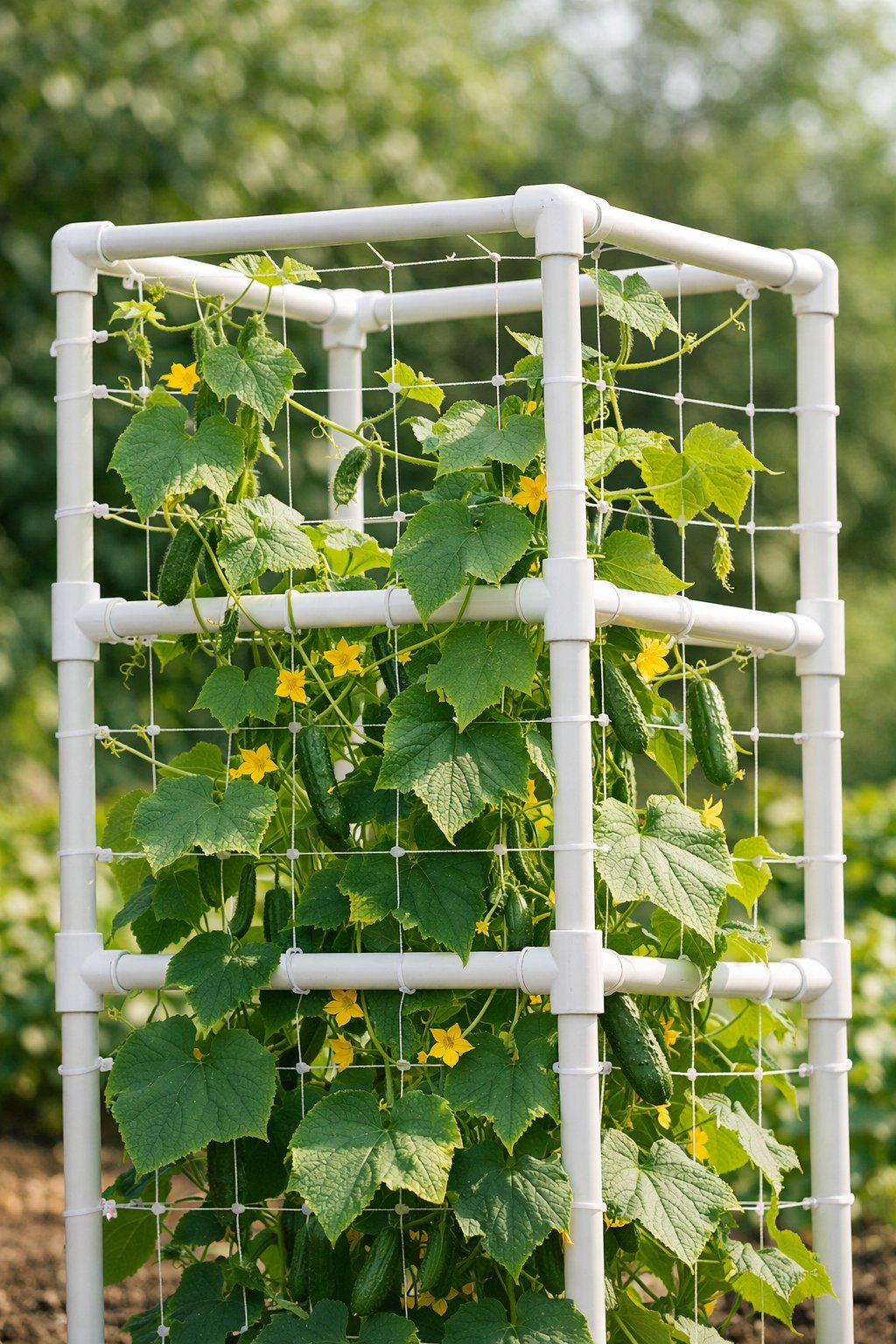
People think PVC trellises are flimsy, but honestly, they can be tough, light, and super easy to move.
You can build a simple rectangle with PVC elbows and straight pipes. It’s light, so you can move it to chase the sun or make picking easier.
String twine or clothesline across the frame so your vines have something to hold onto. The open grid keeps air moving, which helps fight mildew and keeps your fruit clean.
This design fits small beds, containers, or works as a quick support. It’s cheap, fast to build, and even fun for kids to help with on a Saturday.
Expert Tip From MrPlanter: “Tie twine in a diamond pattern about 6–8 inches apart so vines climb naturally. Check knots every week and retie any loose ones to protect those tender stems.“
4. Twine netting stretched between stakes because sometimes simple wins
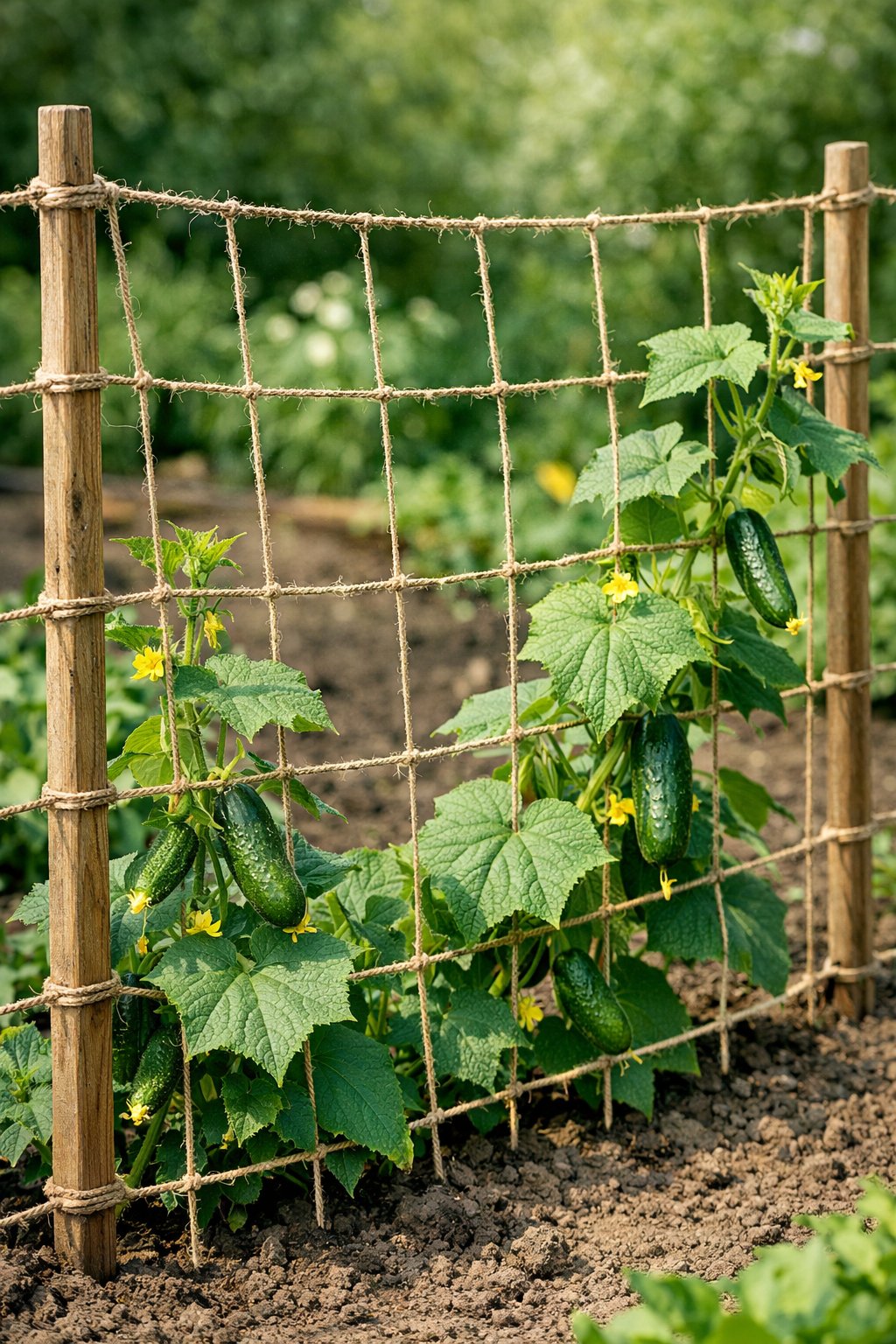
If your cucumbers flop everywhere and you keep tripping over them, you’re not alone.
You can make a trellis with two sturdy stakes and some twine or garden netting. Tie the netting at the top and bottom, then add horizontal lines every 6–8 inches so the vines have plenty to grab.
This setup barely costs anything and takes just minutes to put together.
It saves space, keeps fruit clean, and makes picking way less of a hassle.
Push the stakes deep and keep the netting tight so it doesn’t sag as the plants get bigger. It’s easy to move if you want to change your garden around.
Expert Tip From MrPlanter: “Use weather-resistant twine and check the tension every few weeks.” “Guide young vines by gently winding them around the netting so nothing snaps.”
5. Repurposed old wooden pallet trellis, eco-friendly and quirky
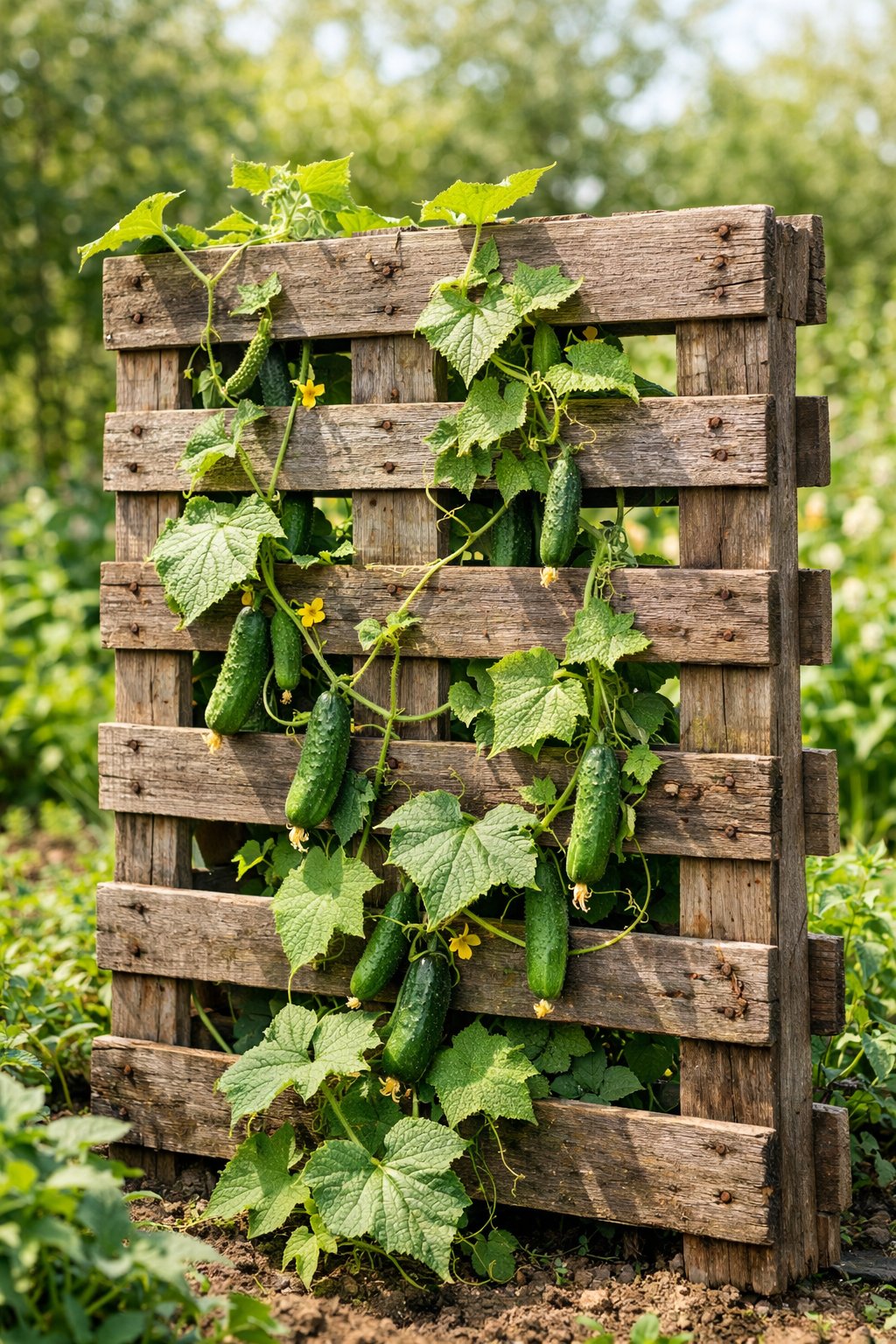
Ever buy cucumber plants and realize you have nowhere for them to climb? A wooden pallet can save the day and look cute doing it.
Stand a pallet up against a fence or anchor it with stakes, and you’ve got instant vertical space. The slats make perfect rows for vines to weave through, keeping your cucumbers clean and easy to grab.
You can leave the wood rustic or sand and paint it to match your garden’s vibe. Add twine or zip ties if you need more grip, and check for old nails so nothing snags your plants.
It’s eco-friendly, quirky, and cheap, and it adds a little personality to your yard. With a couple tweaks, it’ll hold even heavy cucumbers.
Expert Tip From MrPlanter: “Put the pallet in full sun and set the base on gravel for drainage. Secure the top to a post so the wind doesn’t tip it over.“
6. Metal tomato cage upgrade that cucumbers secretly love
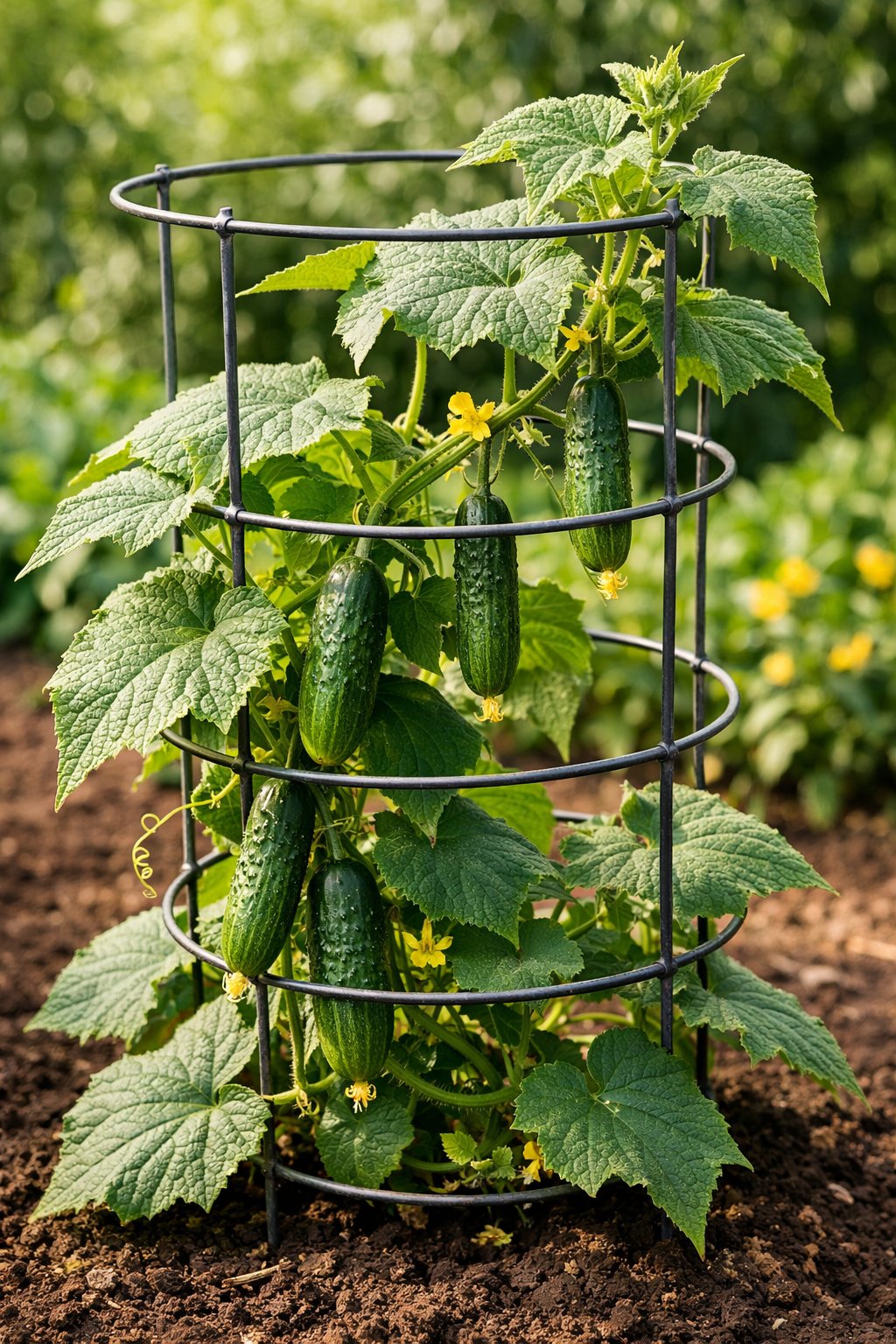
Did you know a tomato cage can double as a cucumber trellis? It’s a quick hack that makes your garden look neat and keeps cucumbers way happier.
Just plop a metal tomato cage over your young cucumber plants. The sturdy support helps the vines grow up, not out.
Add some twine or garden netting inside the cage. This gives more spots for tendrils to grab and keeps fruit off the ground.
Set the cage in place when the seedlings are small, so the vines learn to climb early. Metal cages last for years and save loads of space.
Expert Tip From MrPlanter: “Tie twine loosely in a grid inside the cage to guide vines without choking them. Check ties every week and loosen if the stems start to thicken.”
Surprising fact: a roll of wire mesh can outlast a dozen flimsy trellises and still be easy to move.
7. Wire mesh trellis, sturdy like your grandma’s advice
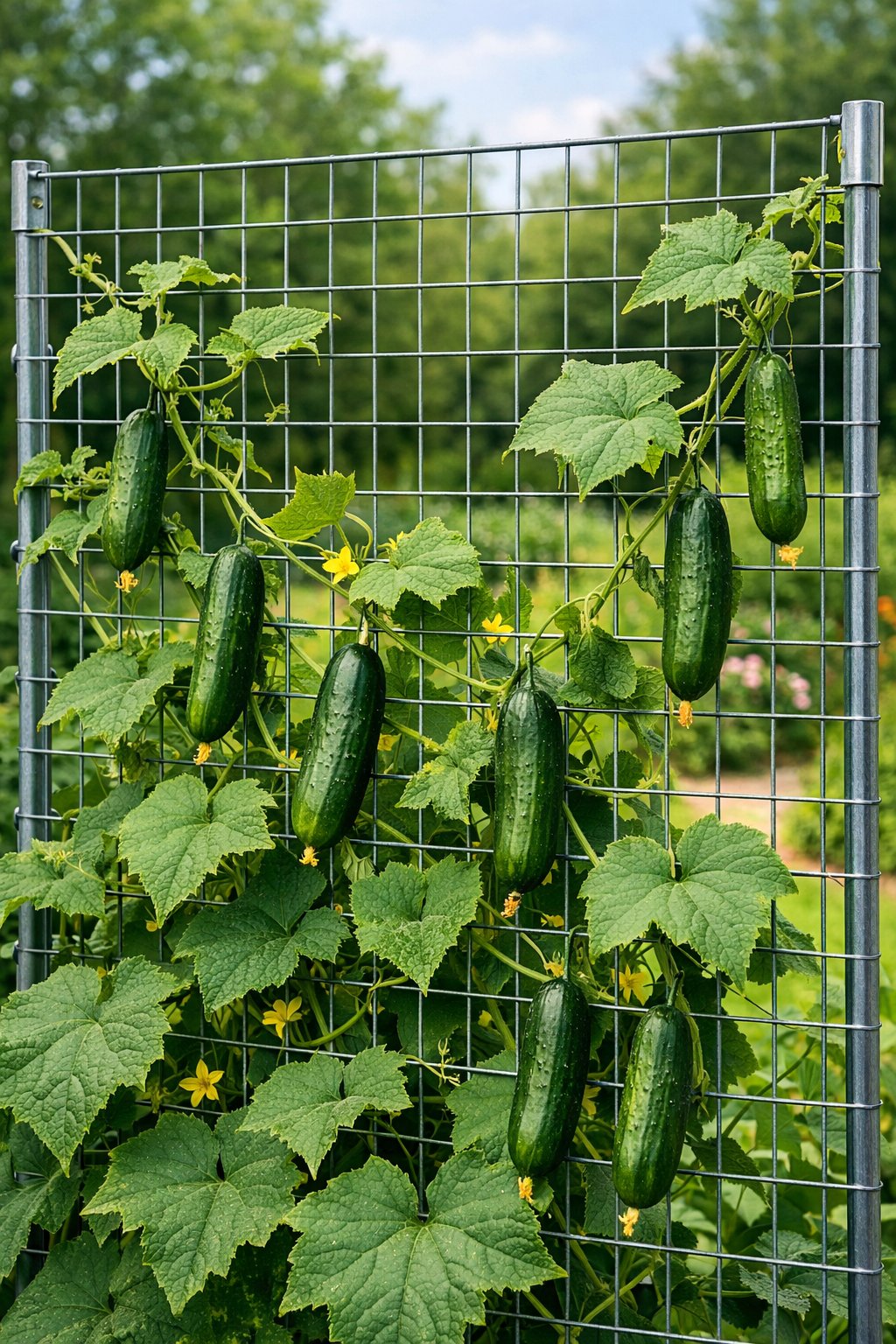
Try attaching wire mesh to some posts and you’ll get a straight, strong wall for your cucumbers. This setup holds even heavy vines and keeps fruit off the dirt, so you’ll pick cleaner cukes without breaking your back.
It works for raised beds or open ground. Just drive wooden or metal posts into the soil, then zip-tie the mesh to the posts at the height you want.
The mesh lets air and sun through, which helps cut down on disease and ripens fruit faster. It’s easy, cheap, and lasts for years if you use galvanized or coated wire.
Expert Tip From MrPlanter: “Pick mesh with 2–4 inch squares so vines can climb but small fruit won’t fall through. Tie vines gently to the mesh early on to train them upward.”
8. DIY vertical pot trellis, because cucumbers deserve pots with views
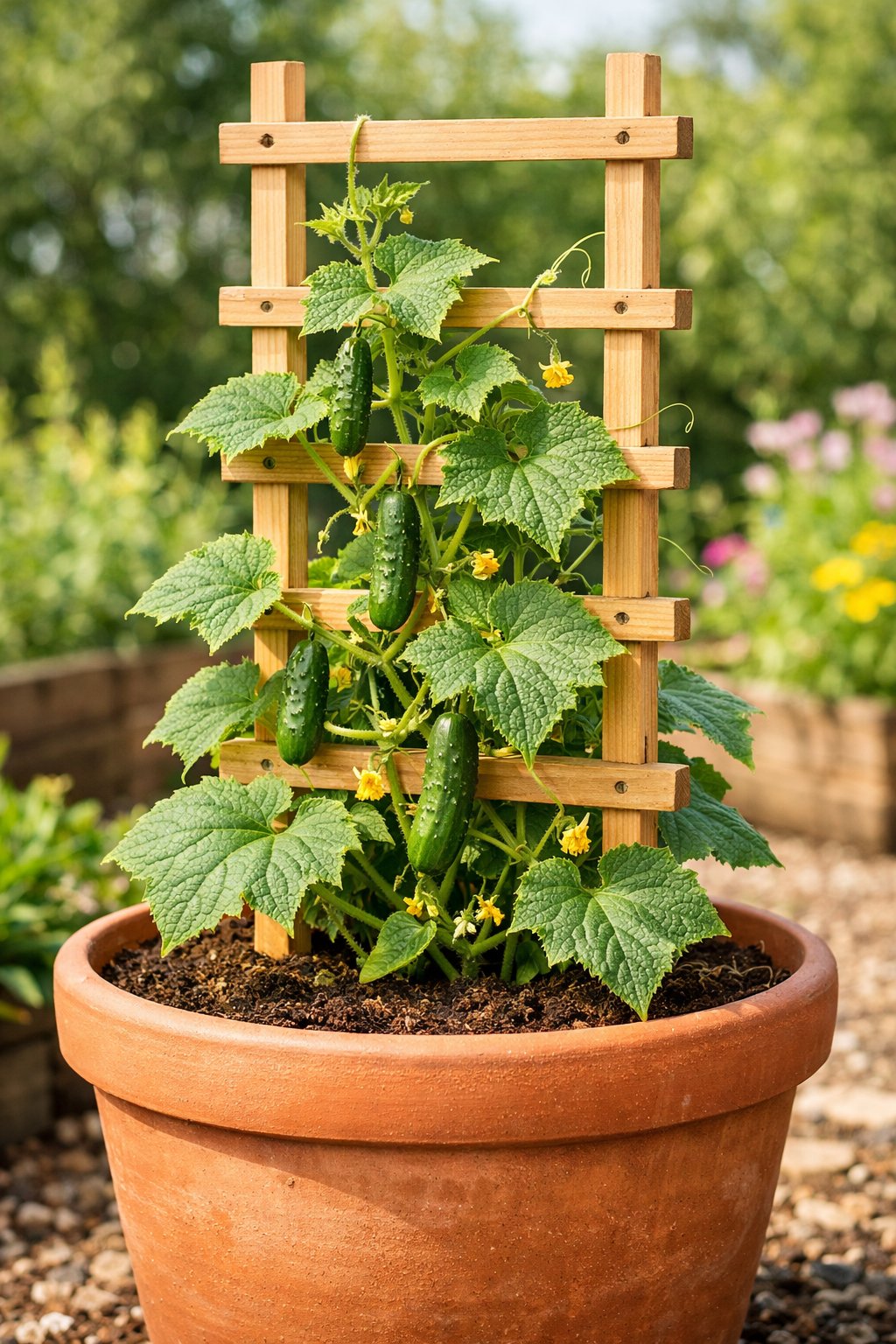
Fun fact: you can grow a bunch of cucumbers in a single pot if you give them a trellis. Plant a vining cucumber in a big pot and train it up a simple frame—easy, tidy, and perfect for patios.
Pick a deep pot with good drainage and fill it with quality potting mix. Anchor a sturdy trellis or bamboo teepee right at the rim so the vine can climb.
Guide young vines up with twine or soft ties. This keeps leaves dry, cuts down on disease, and makes your porch look extra cheerful.
Expert Tip From MrPlanter: “Use a five-gallon pot or bigger, and feed your plants with balanced fertilizer every couple weeks. Tie vines loosely as they grow so you don’t hurt the stems.”
Surprising Fact: a branch arch trellis gives your cucumbers a wild, storybook feel without much cost.
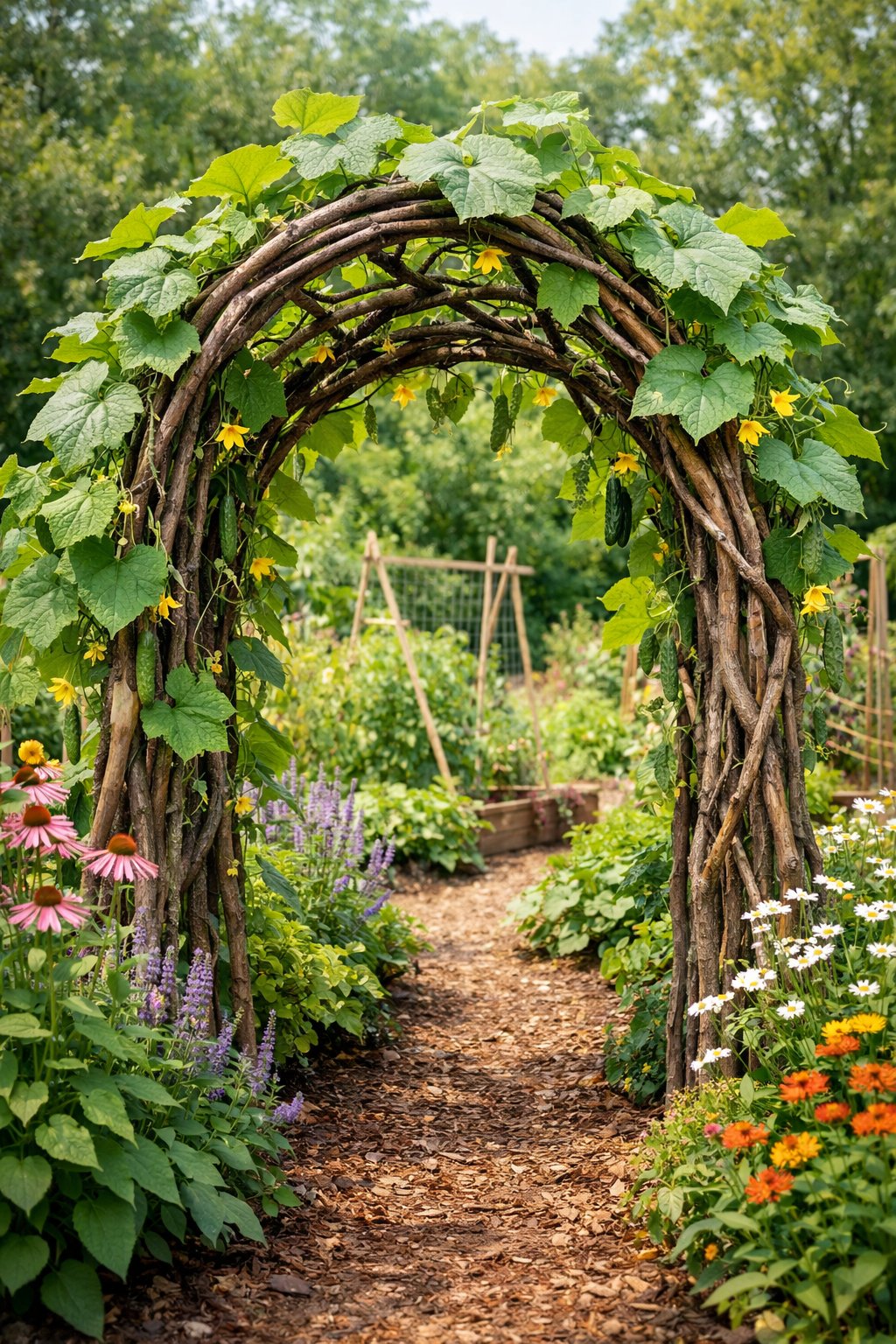
9. Branch arch trellis for the nature-lover who has everything
Build an arch from fallen branches and let your plants weave through the gaps. It feels cozy for the vines and looks like it just belongs there—not store-bought at all.
Use thick branches for the base and thinner ones for the top. Tie everything together with twine or metal ties so it doesn’t wobble in the wind.
Set the arch where you want a green tunnel or a cool entryway. Cucumbers climb fast, so be ready to prune and pick at eye level.
Expert Tip From MrPlanter: “Pick strong, dry branches and lash them tight for safety. Check the ties every season and swap out any that get worn.”
Surprising Fact: A boring fence can hold a bumper crop of cucumbers and make your yard look alive overnight.
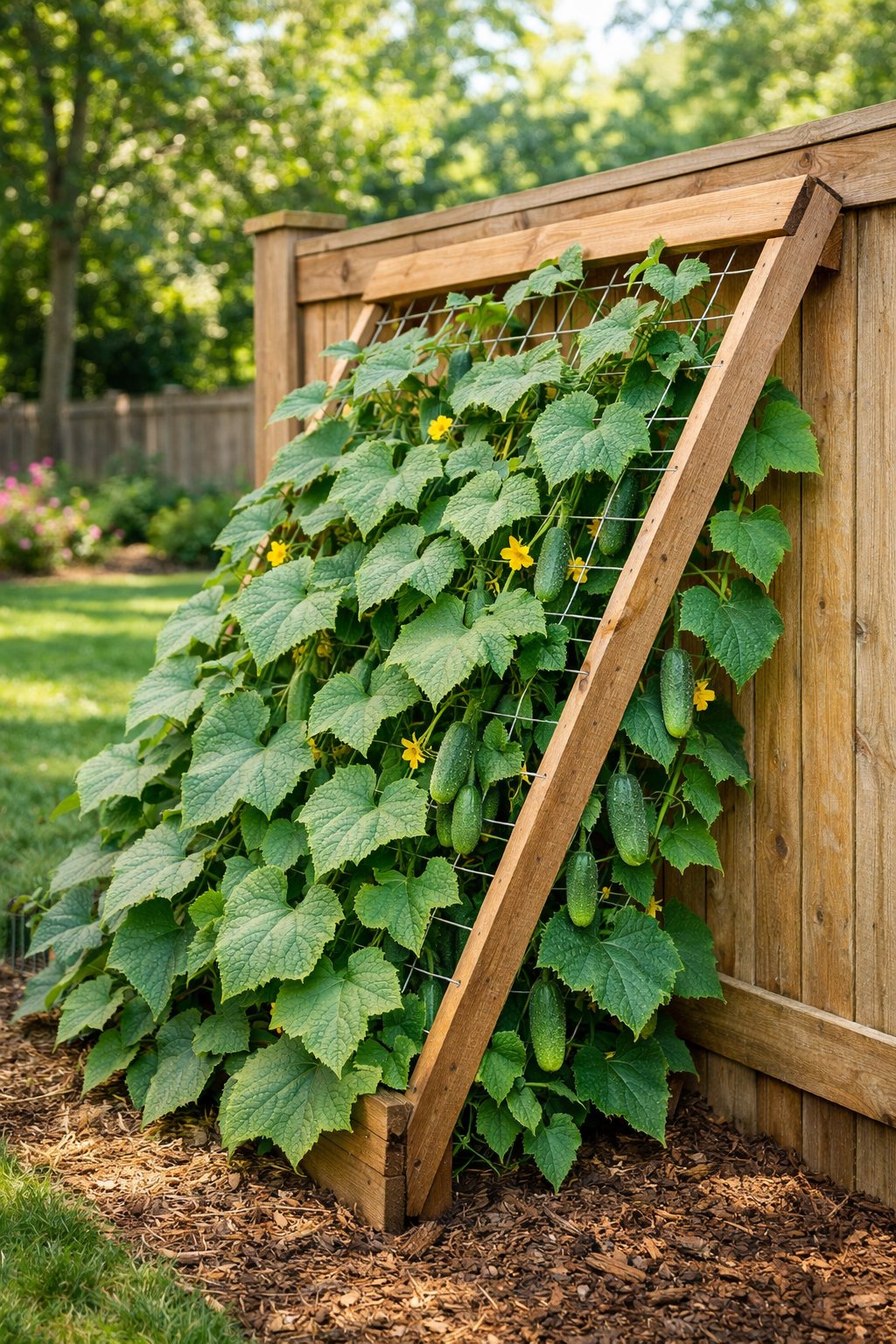
10. Fence panel lean-to trellis, turning boring fences into green magnets
Lean a recycled fence panel or lattice against your fence and you’ve got a tall, sturdy climbing route. It saves space and keeps things looking tidy.
Attach the panel at the top and let the bottom rest on the ground so vines can climb up naturally. Use zip ties or hooks that won’t wreck your fence, and check as the vines get heavier.
Guide young cucumber stems to the panel with soft ties every few inches. This keeps fruit off the ground and makes picking way easier.
Expert Tip From MrPlanter: “Pick a panel a little taller than your expected vines so you don’t run out of room. Use soft cloth ties and move them as stems thicken so you don’t cut into the plant.”
11. DIY twine hammock trellis for your cucumbers to lounge and climb
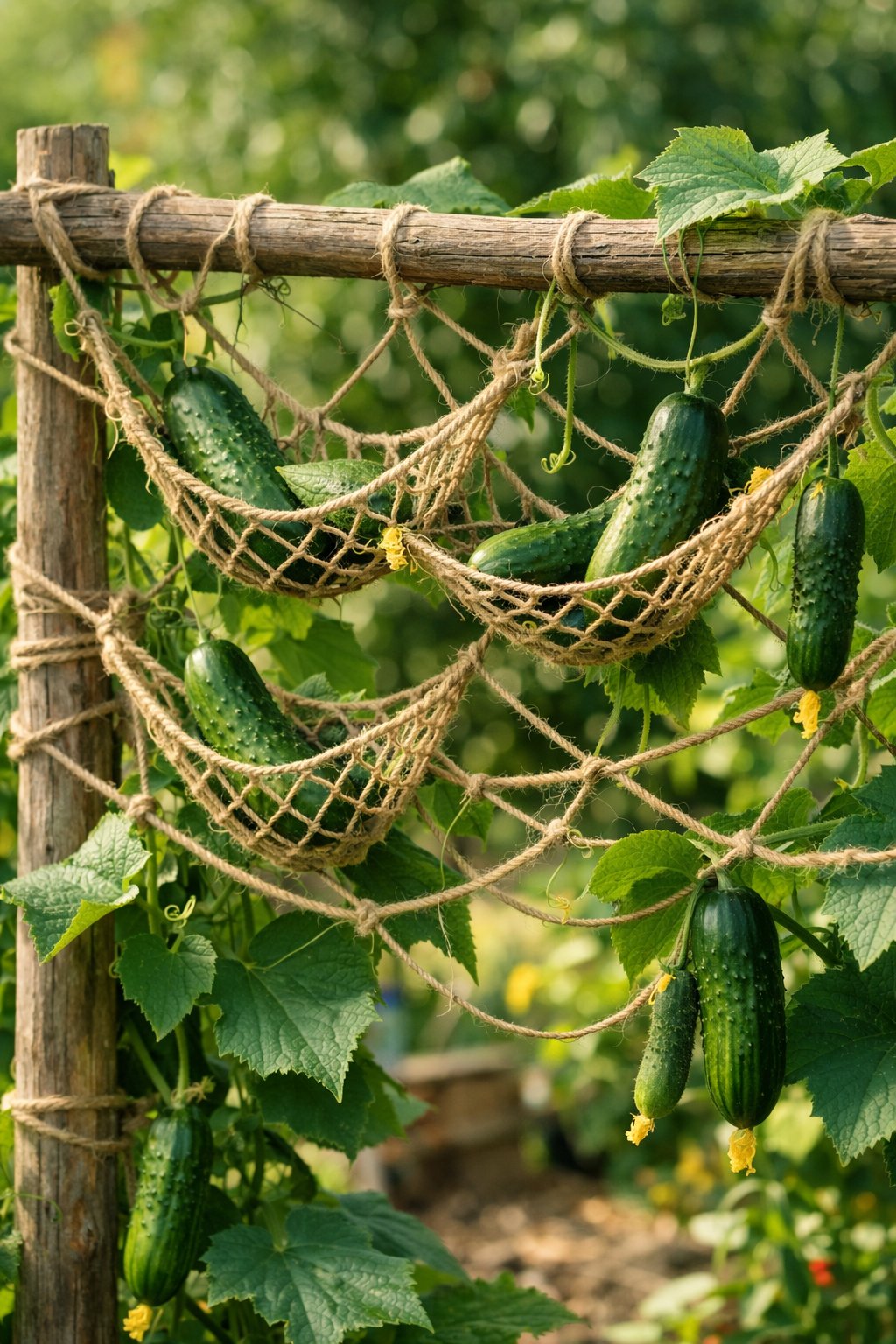
Cucumbers don’t need heavy-duty frames to thrive. A simple twine hammock trellis gives your vines soft, airy support and keeps fruit off the dirt.
You can make one with two strong posts and a crisscross net of twine or jute. The hammock shape holds your cucumbers gently so they won’t bend or snap as they grow.
Tie the twine in 6–8 inch squares for easy weaving. This design saves space and works great over a raised bed or big container.
Keep the twine tight and check the knots every week so the net doesn’t sag. If a cucumber gets heavy, add a soft sling with scrap cloth.
Expert Tip From MrPlanter: Pick weatherproof twine and swap out any frayed strands each season. Tie loops with extra slack so you can adjust as the vines grow.
Surprising fact: a hula hoop makes a perfect, quirky trellis that saves space and looks fun in the garden.
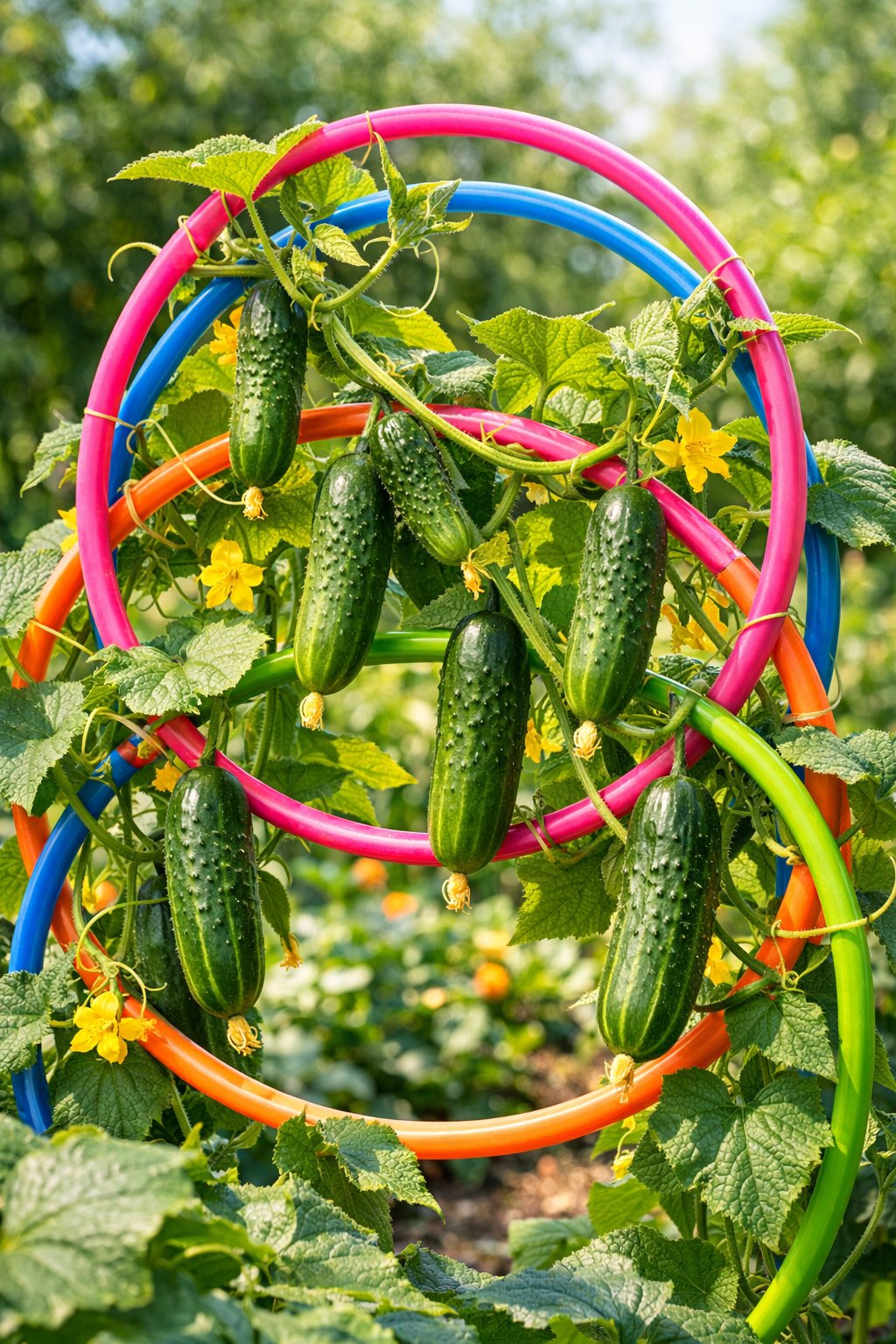
12. Hula hoop trellis—yes, cucumbers can party too
Grab a hula hoop and hang it up vertically or lean it against a post. You can train your cucumber vines right up and around it.
This setup gives your cukes plenty of vertical room and keeps the fruit off the dirt, so they stay cleaner and ripen more evenly.
Stretch some twine or garden netting across the hoop to help the vines grab on. Secure the hoop with a couple of sturdy stakes or attach it to a frame so it doesn’t topple over when those vines get big and heavy.
You can use this trick in containers and on small patios. It’s cheap, colorful, and honestly, you probably have a hula hoop or two in your garage already.
Expert Tip From MrPlanter: Pick a hoop at least 24 inches wide and wrap twine in a grid for extra support. Train young vines gently and tie them loosely as they climb.
13. String ladder trellis for those aspiring cucumber climbers
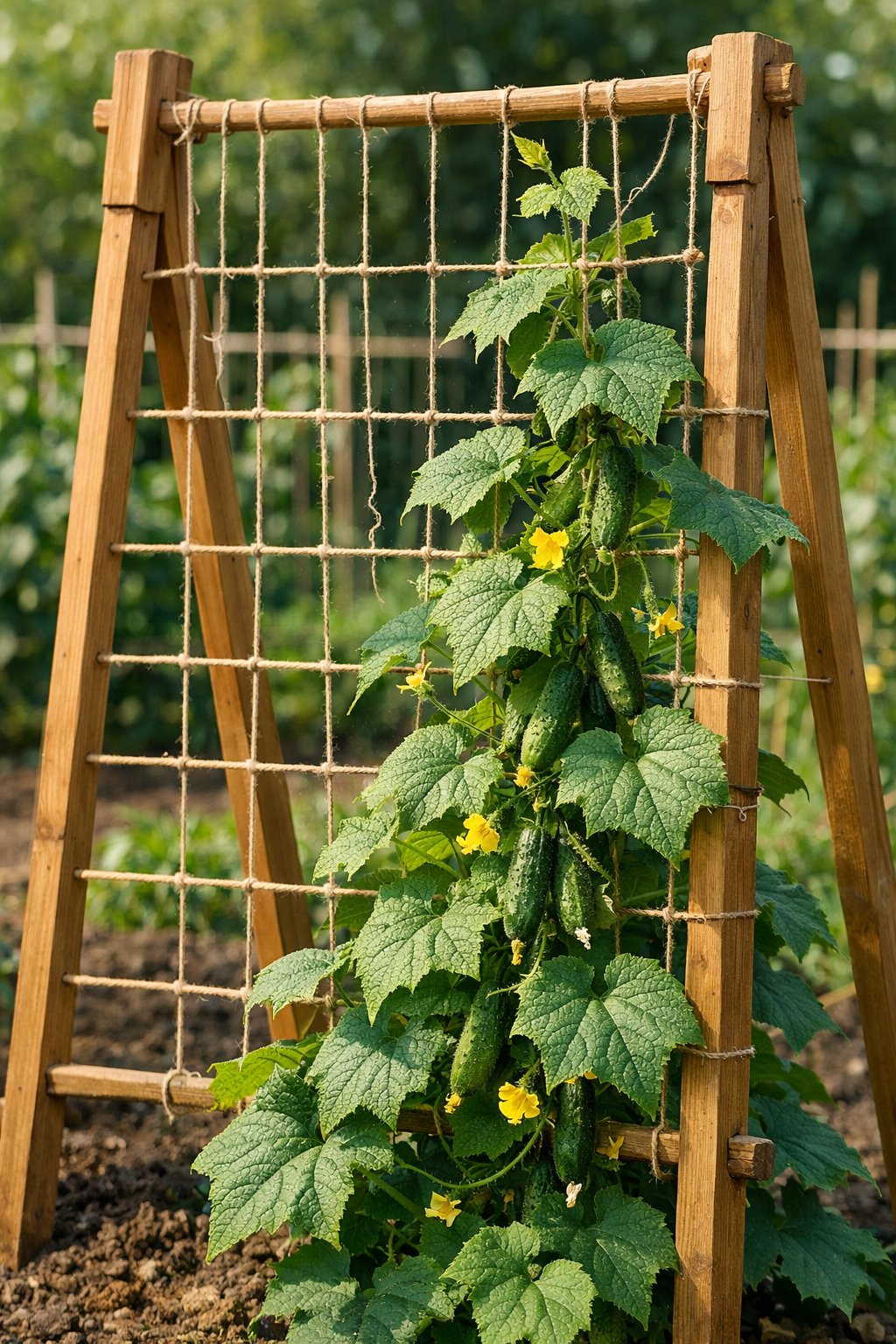
Did you know cucumbers absolutely love to climb? A string ladder trellis gives them the perfect route upward.
You can make this with two sturdy posts and a handful of horizontal strings tied like rungs. It’s lightweight, easy on your wallet, and you can adjust it as your plants grow.
Tie the top to a beam or a wire and push the posts deep into the soil. I usually space the rungs about 8–12 inches apart—this way, the vines can grab on without getting into a big leafy mess.
This setup saves space and keeps the fruit straight and clean. You’ll thank yourself when you’re picking cucumbers that are easy to spot and reach.
Expert Tip From MrPlanter: Use weatherproof twine and check knots weekly to keep the ladder taut. Train new shoots gently by wrapping them around the rungs so they learn where to grow.
14. Obelisk garden trellis that says, ‘I’m fancy and I grow cucumbers’
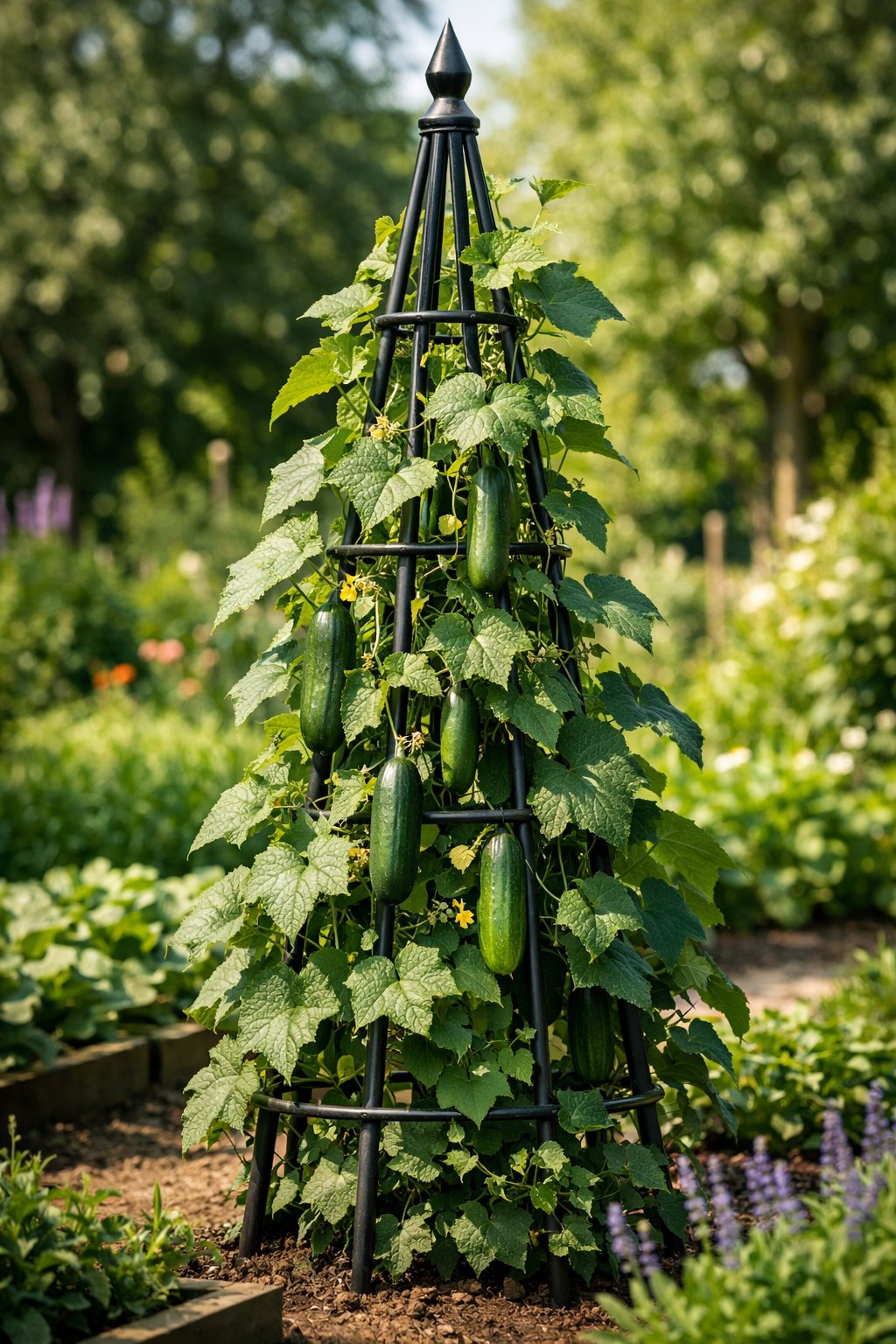
Let’s be honest, an obelisk trellis looks like a little plant tower wearing a top hat. It adds some drama to your garden bed and helps cucumbers climb up instead of sprawling everywhere.
Plant three or four vines around the base and watch as they fill in the shape pretty quickly. The open sides make it easy to pick the fruit and keep your cucumbers cleaner than if they were on the ground.
Pick cedar or metal if you want something that’ll last a few seasons. Tie the vines loosely as they climb, just to give them a little help.
Place your obelisk somewhere it won’t block sunlight from your shorter plants, but still gets plenty of sun itself.
Expert Tip From MrPlanter: “Place a sturdy stake in the center when you set up the obelisk to keep it steady. Tie vines loosely with soft twine every 8–12 inches so they can grow without damage.”
Benefits of Using a Trellis for Cucumbers
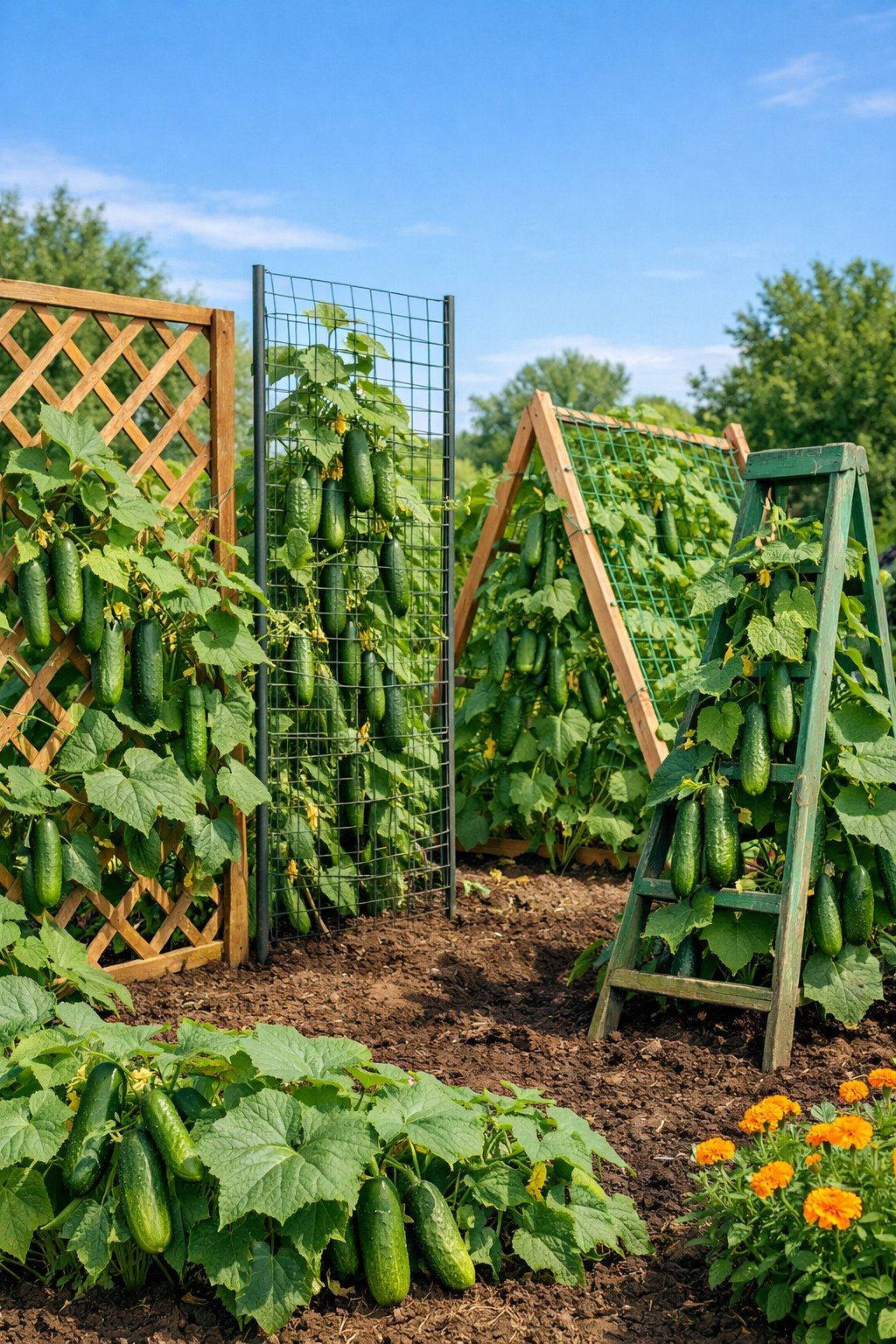
When you use a trellis for cucumbers, you get healthier plants, more garden space, and fewer pests munching on your hard work. It changes the way your vines grow, makes picking way easier, and even cuts down on how much you need to water or worry about diseases.
Healthier Vines, Happier You
Training cucumbers to climb keeps their leaves and fruit up in the fresh air. This better airflow really helps fight off fungal problems like powdery mildew and downy mildew.
You’ll spray less and spend less time fussing over sick plants.
Leaves on a trellis soak up more sun, which means more energy for the plant and more flowers turning into fruit. You’ll see straighter, cleaner cucumbers instead of weird, bent ones that struggle on the ground.
A trellis also helps prevent stems from snapping. Vines wrap and climb instead of dragging across rough soil. Stronger stems mean better yields and less patching up during the season.
More Space, Less Fuss
Growing cucumbers up saves lots of ground space for other plants or flowers. A 4–6 foot trellis lets you tuck a bunch of cucumber plants in a small spot, which is perfect for tiny yards or crowded patios.
Picking cucumbers gets so much easier. Fruit hangs right at eye level, so you can spot what’s ripe and grab it without crawling around. Less handling means fewer bruises and longer-lasting cucumbers in your kitchen.
Watering and mulching is simpler too. The roots stay close together, so you can use a drip line or a soaker hose and save yourself some time and water.
Say Goodbye to Slugs and Rotten Fruit
Cucumbers sitting on damp soil attract all sorts of pests—slugs, snails, you name it. Lifting fruit up on a trellis keeps it away from the ground, so you see less rot and fewer unwanted visitors.
Checking your plants is a breeze. You can spot pests, sunburn, or any funky spots early and do something about it before things get out of hand.
When your cucumbers stay clean and dry, they last longer in the fridge and taste fresher. That means more salads, pickles, and snacks—and way less waste.
Caring for Cucumbers on a Trellis
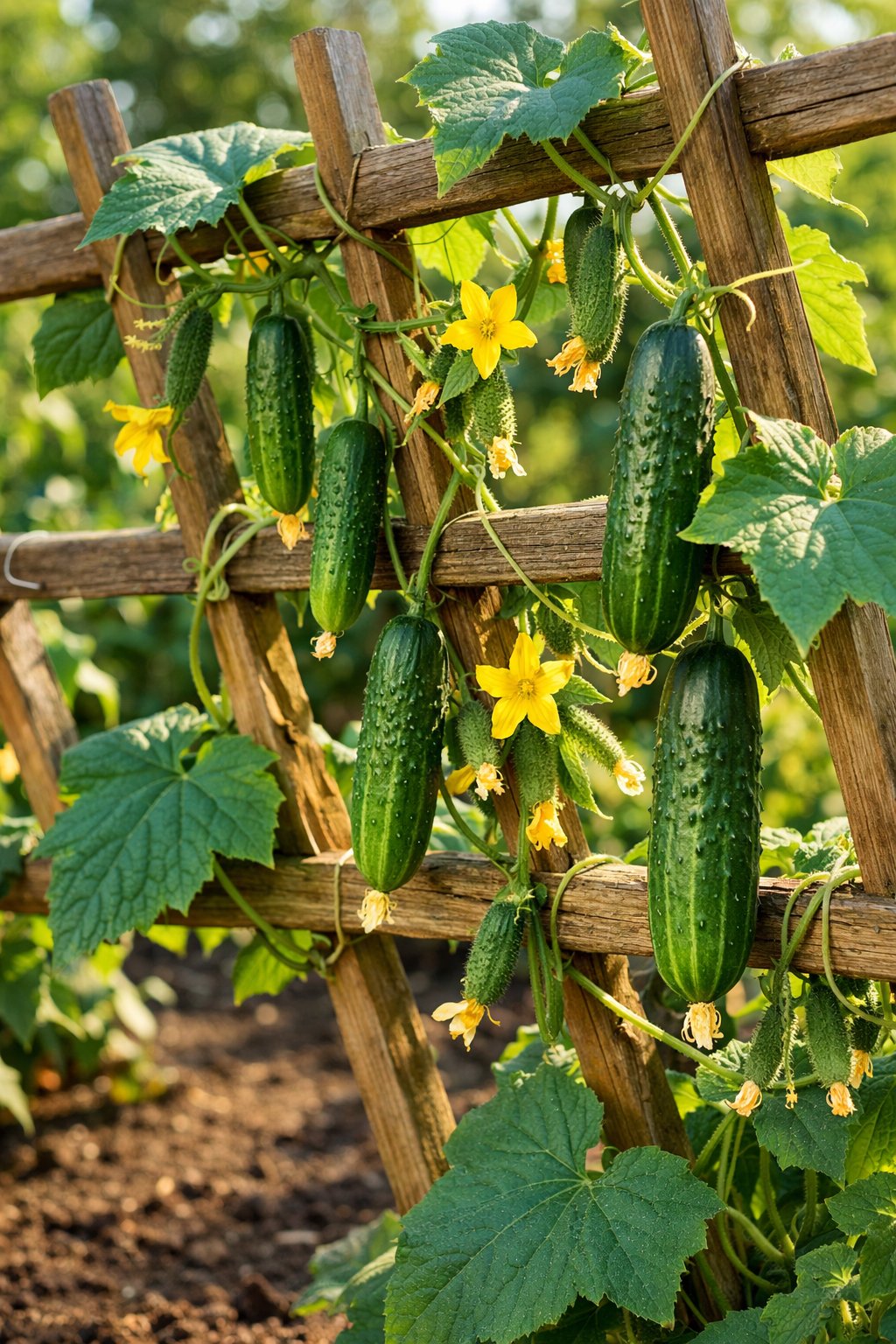
Keep your vines tidy, water them regularly, and feed lightly so the plants stay healthy and the fruit grows straight. Simple supports, daily leaf checks, and catching pests early make a big difference.
Training Vines Without Losing Your Mind
Start when the seedlings reach about 6–8 inches. Loosely tie the main stem to the trellis with soft ties or strips of old T-shirt.
Pick one or two main stems to train upward and pinch off side shoots that try to take over.
Use clips or figure-eight ties every 8–12 inches to help heavy fruit. Guide tendrils toward the trellis by gently nudging them—cucumbers will grab on when they’re ready.
If you use a wide-mesh panel, weave the vine through the openings so the fruit hangs free and doesn’t get scraped.
If vines get into a tangled mess, grab your gloves and snip only the crowded stems or yellow leaves. This helps air move through and keeps diseases from taking over.
Essential Watering and Feeding Tips
Alright, let’s talk watering. I usually water right at the soil twice a week when it’s hot—sometimes more if I poke my finger in and the top inch feels dry. You want about 1 to 1.5 inches of water each week, all in.
Honestly, a soaker hose or drip line works wonders and saves you from splashing water all over the leaves. Nobody wants soggy, sad cucumber leaves.
When the flowers start popping up, I grab a balanced fertilizer and feed the plants. Then, I do it again when I spot those first baby cucumbers.
If your leaves look super dark and lush but you barely see any flowers, try a low-nitrogen mix or a 10-10-10. The plants might be showing off too much with their leaves!
About halfway through the season, I like to toss on some compost or aged manure along the sides. It gives the plants a gentle nudge to keep making fruit.
If a big rainstorm rolls through, I check the soil for sogginess. I’ll loosen it up a bit and add mulch—straw or wood chips are my go-tos—to help the roots stay cool and happy.
Honestly, keeping the water steady and feeding at the right times? That’s how you get those cucumbers straight, crisp, and packed with flavor.