You love your yard, but standing water? That mess can ruin your plans and drown your plants. Here are 15 backyard drainage ideas—real, practical fixes to keep water moving away from your house and your favorite outdoor hangouts.
You’ll see options for any style and budget, from sneaky underground tricks to features that steal the show.
Honestly, think of this as your secret stash of clever moves—rain gardens, French drains, swales, permeable pavers, and a bunch more.
Each one helps you fix soggy spots without turning your yard into a construction zone.
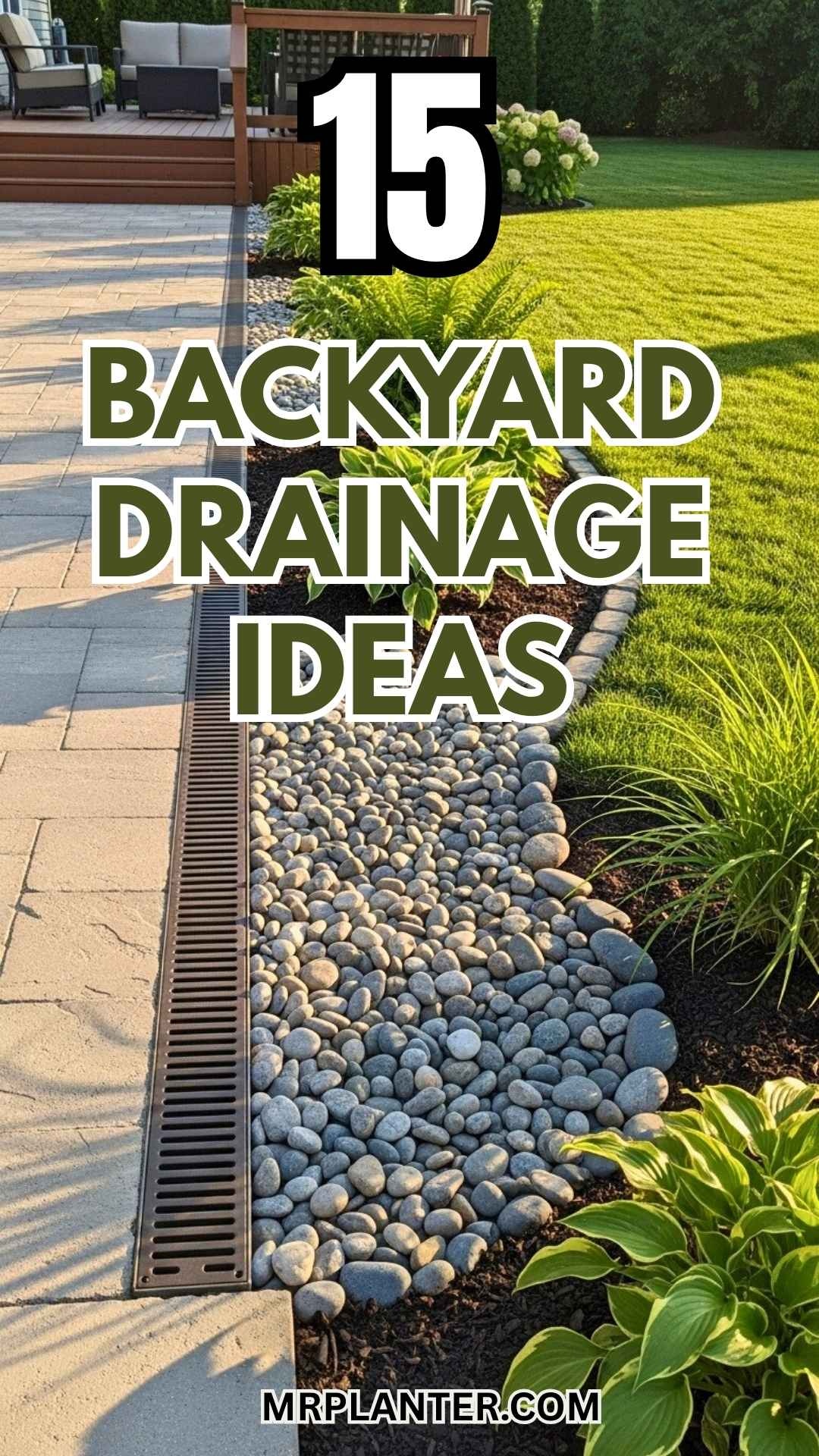
You’ll find ways to protect your home, rescue those swampy flower beds, and even put water right back where it belongs.
1. Install a French drain to sneak water away like an undercover agent
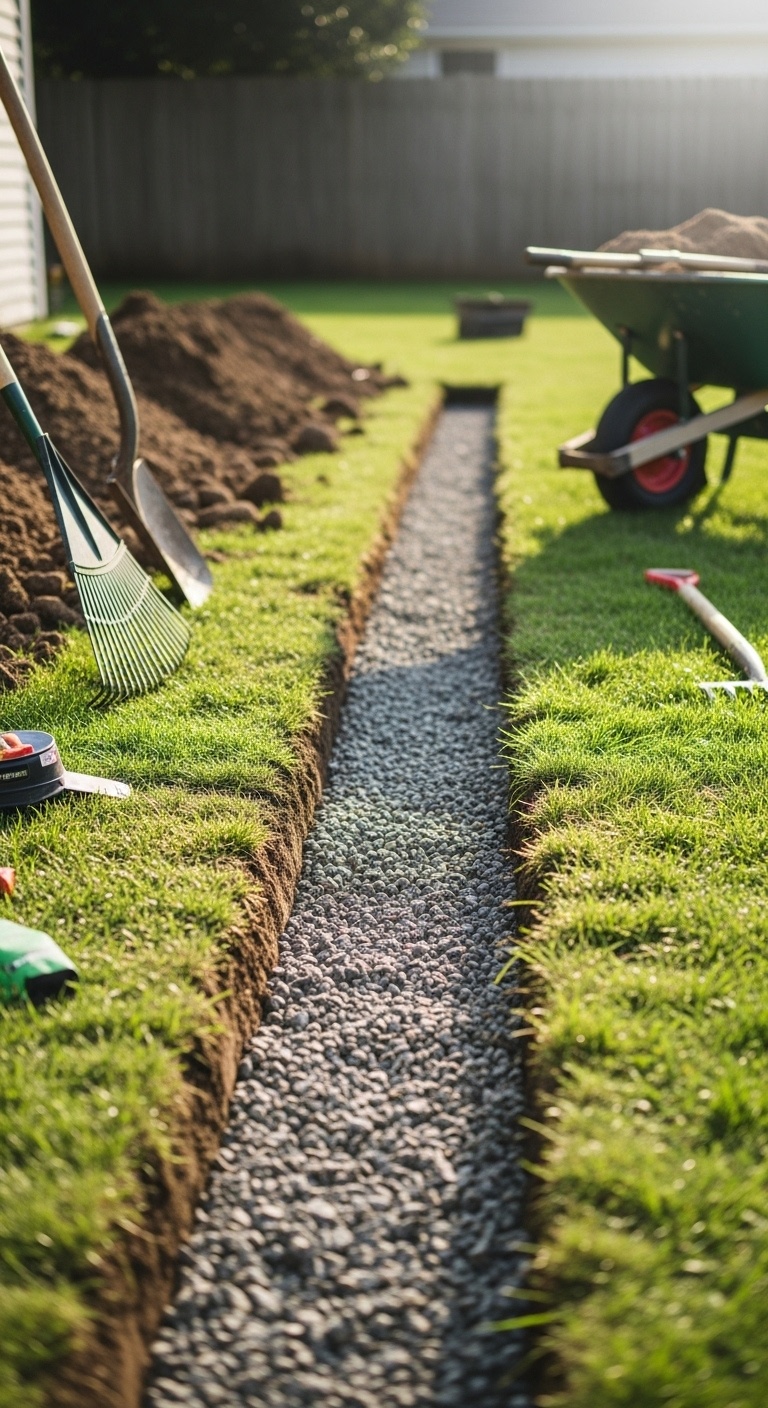
Ever get tired of puddles hugging your house after every rain? A French drain swoops in and quietly collects that surface and shallow groundwater, then whisks it away from your foundation.
Picture a shallow trench lined with gravel and a perforated pipe, all sloped downhill. It hides out of sight and works even if your soil is stubbornly soggy.
If you can dig and slope a pipe, you can DIY a short run over a weekend. Trickier slopes, dense clay, or deep trenches? Yeah, that’s when you might want to call in a pro.
Expert Tip From MrPlanter: Keep that pipe sloping about 1% so water doesn’t just sit there. Clear the trench of roots and wrap everything in landscape fabric to block clogs.
2. Create a rain garden with native plants that drink up water like thirsty party guests
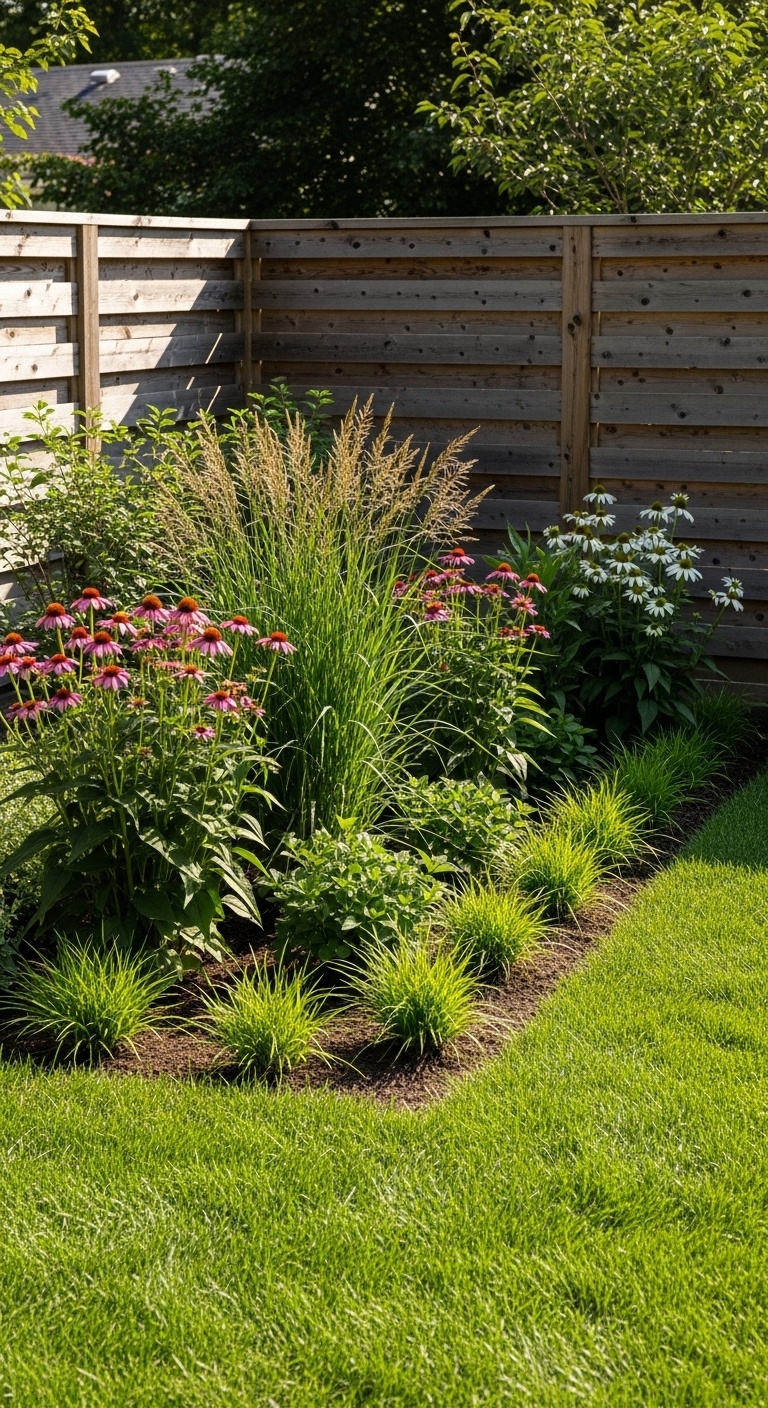
Imagine your yard throwing a party and native plants are the guests who just can’t stop sipping. A rain garden settles into a low spot, catching runoff, and those plants drink up every drop so water soaks in instead of pooling.
Go for local favorites like sedges, swamp milkweed, or native grasses. They need less babysitting, help the soil soak up water, and attract birds and pollinators.
Set up the garden where water naturally flows. Shape it to hold a couple inches after storms, and mulch lightly to shield the roots. You don’t need anything fancy—just good dirt, the right plants, and a bit of patience.
Expert Tip From MrPlanter: “Grab plants from local nurseries so they’re tuned to your soil and weather. Planting in fall or spring gives them a head start before the big rains.“
3. Build raised garden beds so your veggies don’t get soggy better than a wet sock
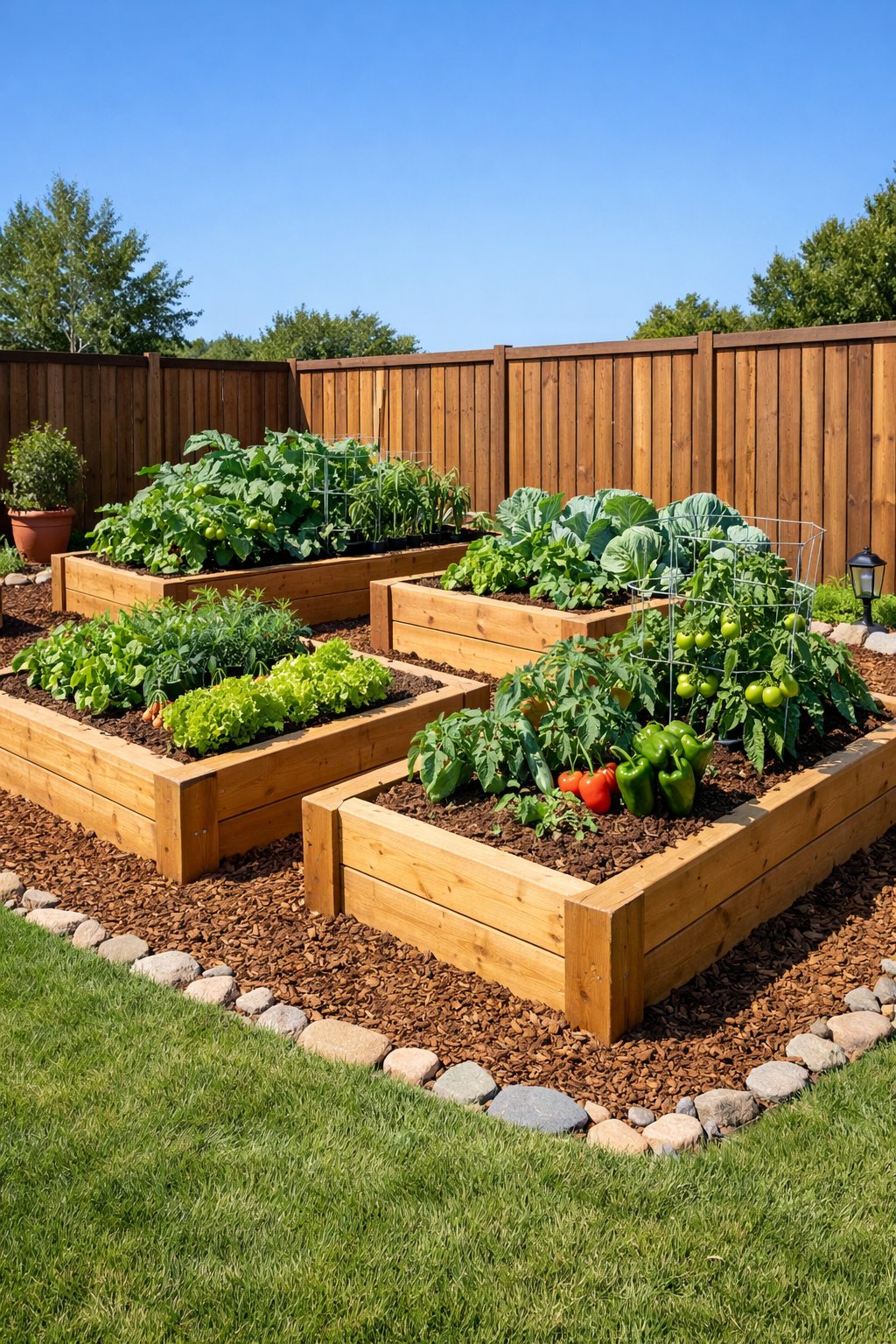
Ever had your dinner plans ruined by limp, waterlogged veggies? Raised beds fix that fast.
Stack those beds 8–12 inches high, so water slides away from roots. Mix up compost, topsoil, and some coarse sand or perlite to keep things light and fluffy. Leave the base open or toss in a gravel layer if your yard just can’t let go of water.
Put beds on a gentle slope, or dig a shallow trench to send runoff packing. Leave walkways between beds so water doesn’t pool around your plants. You’ll notice the veggies grow faster and pests seem less interested when the soil dries out between rains.
Expert Tip From MrPlanter: “Use rot-resistant wood or recycled plastic for frames—they last longer. Toss in compost every season to keep soil healthy and draining well.”
4. Add a dry creek bed that looks natural and channels water like a lazy river ride
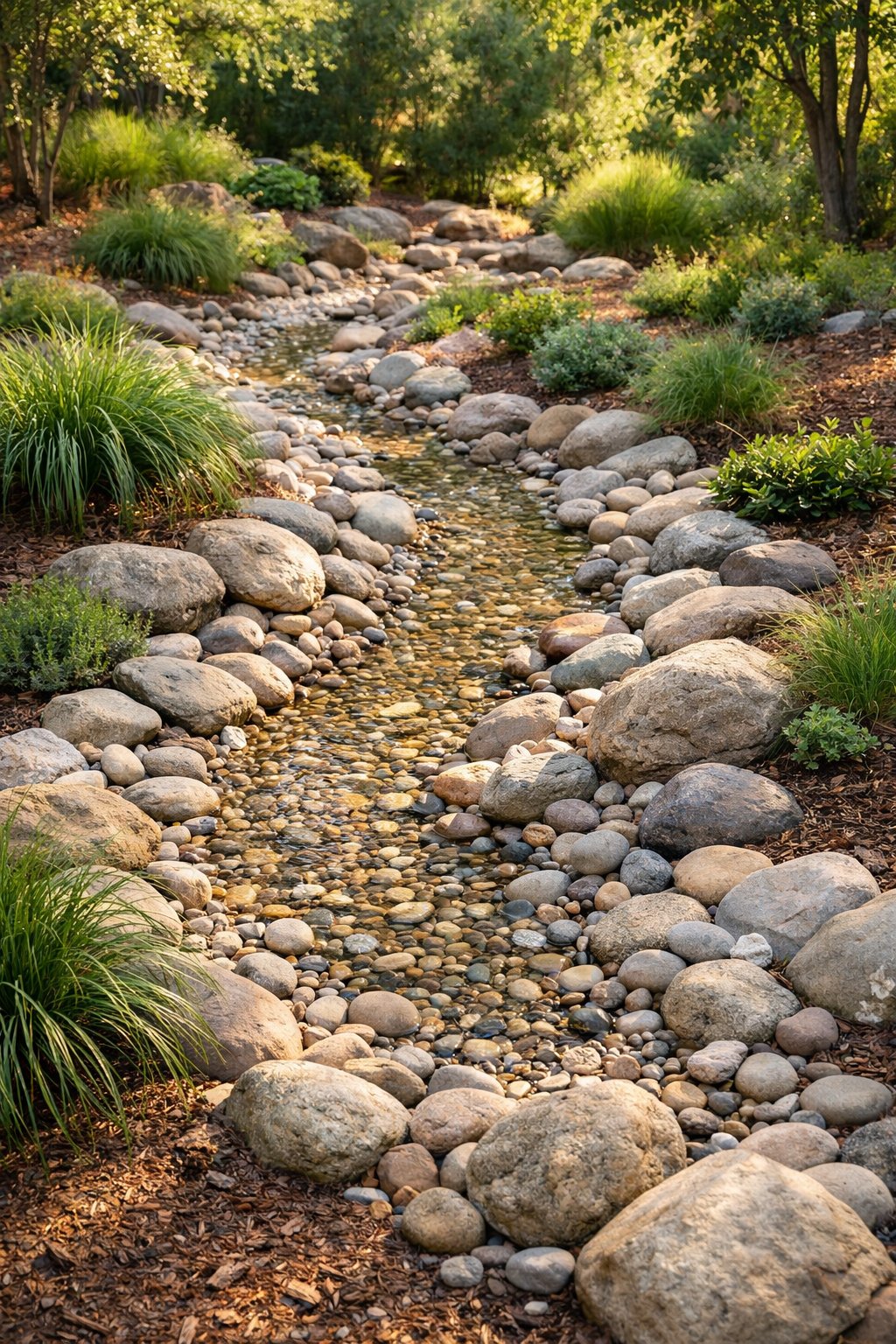
A dry creek bed doesn’t need to run with water all the time to look cool or work. You can carve out a shallow channel that guides runoff away from low spots and your house, all while looking like a chill little stream.
Use a mix of big and small stones, some boulders, and gravel to fake a natural flow. Curve the path to slow water down and help it soak in, which keeps erosion in check.
Plant native grasses and groundcovers along the edges so the creek bed blends in and the soil stays put. Set the bed a little lower than the rest of the ground so it only fills up during rain.
Expert Tip From MrPlanter: Start with a small bed and watch how water moves during storms. Expanding a working creek is way easier than shrinking one that’s too big.
5. Use perforated PVC pipes buried underground for secret water highways
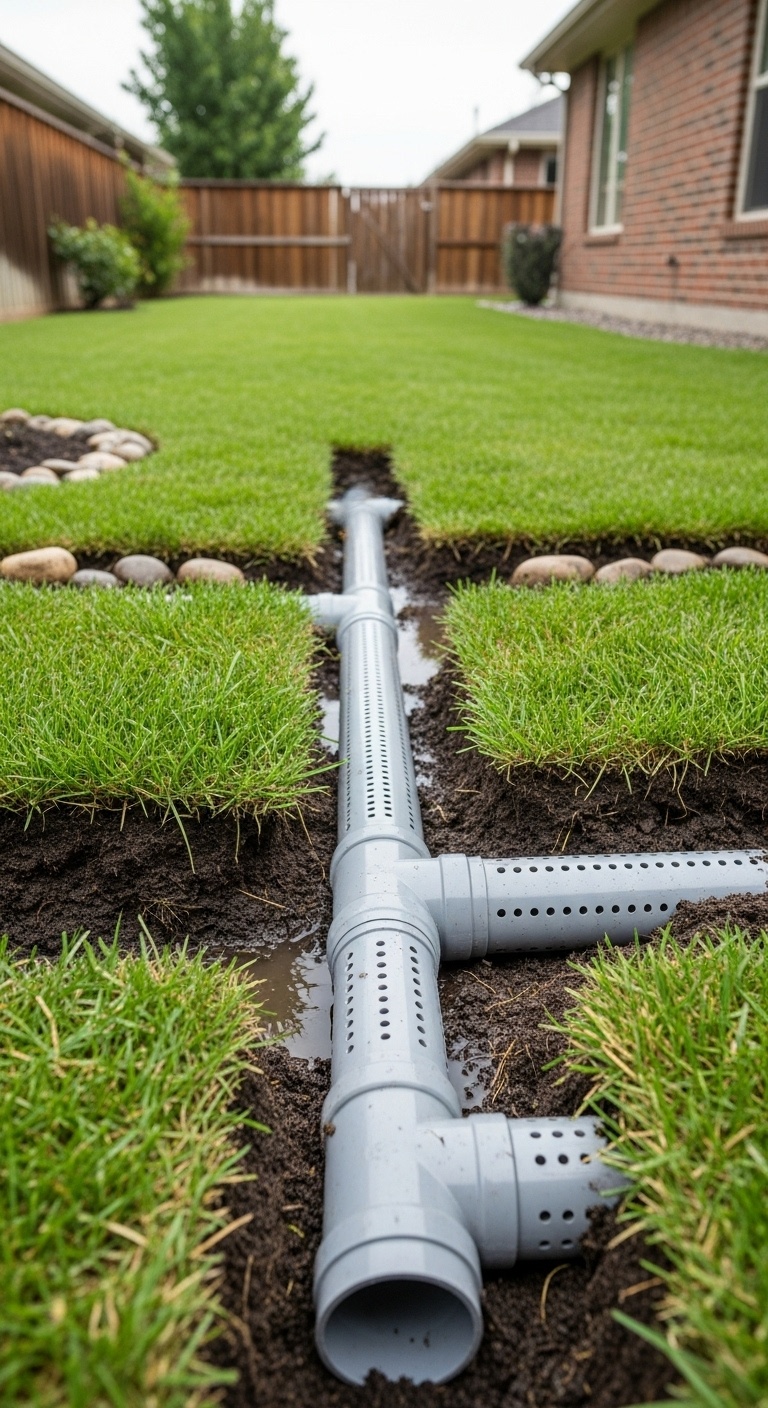
Those little holes in the pipe? Totally on purpose.
You can run perforated PVC pipes underground to carry extra water away from those trouble spots. The pipe sits in a gravel-lined trench wrapped in landscape fabric, so water seeps in and then flows to a dry spot or the storm drain.
This trick keeps soggy soil from wrecking lawns, flower beds, or your foundation. It hides out of sight, lasts ages, and works just about anywhere—even on flat or sloped yards.
Make sure you keep a gentle slope so water actually moves, and leave cleanouts or catch basins for easy clearing. Skip sharp bends, and don’t pack the soil too tight over the trench—let water find the pipe.
Expert Tip From MrPlanter: Call 811 before you dig so you don’t hit anything important. Try a short test run to check your slope and flow before going all-in.
6. Slope your yard away from the house like it’s training for a downhill sprint
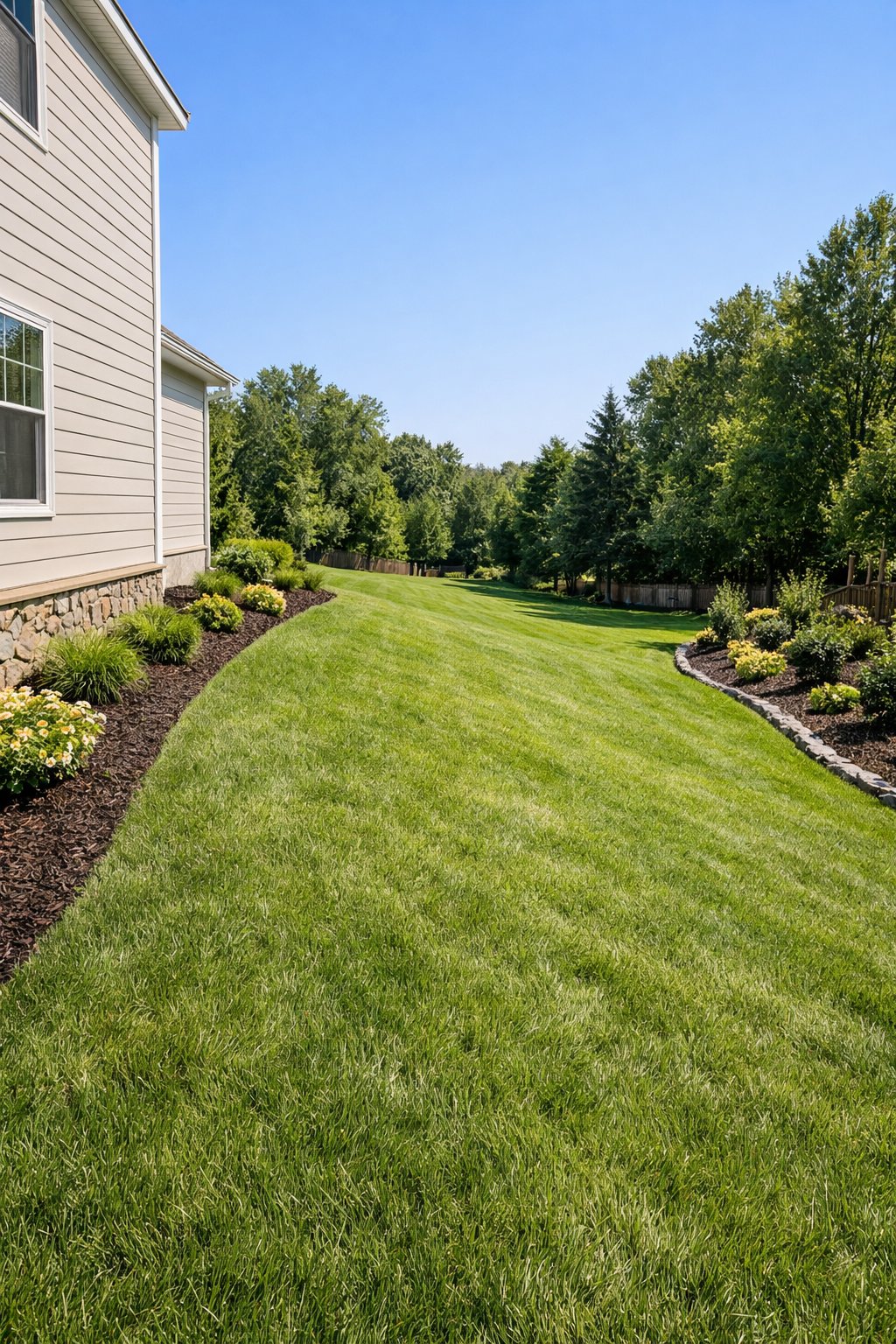
Nobody wants puddles at the foundation after a storm.
You can shape the soil so water runs away from your house. Shoot for a drop of about 1 inch per foot for the first 5–10 feet. That way, water moves off without making the yard look weird.
Work in small sections and pack the soil down tight. Use a rake and a hand tamper, or call in the pros if you’re dealing with a big job. Plant grass or groundcover to lock the soil in place and slow down erosion.
If you still see puddles, add a shallow swale or a gravel trench to send water somewhere safe.
Expert Tip From MrPlanter: “After a rain, check the slope to make sure water’s leaving the foundation. Small fixes now save you a headache later.“
7. Install a surface drain grate to gulp puddles faster than your morning coffee
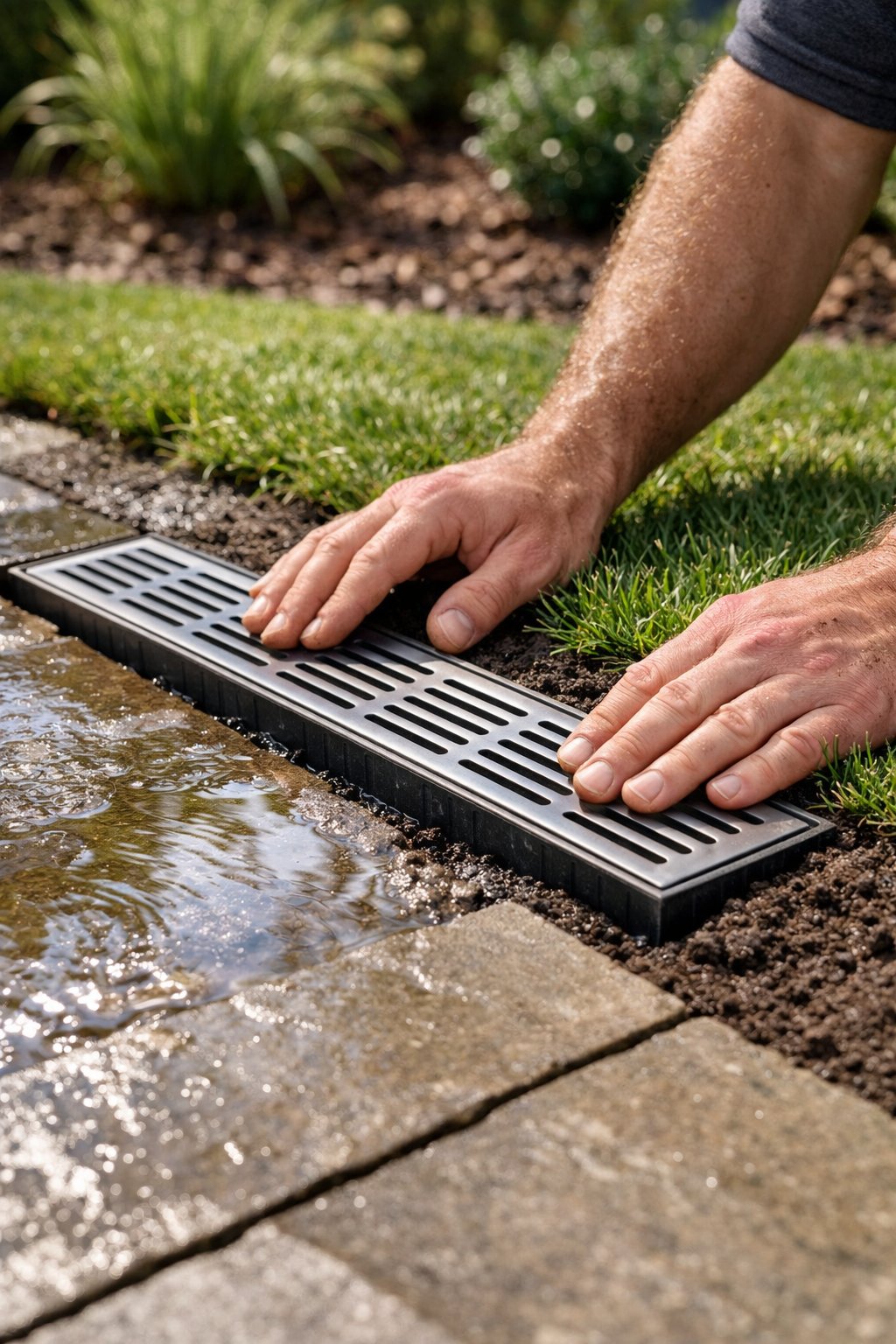
Ever step outside after rain and squish right through the yard? Wet shoes, sad plants, and puddles that just won’t dry. A surface drain grate gives those puddles a fast exit, so your lawn and patios stay ready for action.
Pick a grate that matches your vibe and the water flow. Drop it in the lowest spots or along hard surfaces where water gathers. Hook it up to a buried pipe or a dry well so water disappears for good.
Usually, you just need some digging and a level spot to set it up. You’ll save time and keep your foundation happy.
Expert Tip From MrPlanter: Put the grate where water naturally runs and slope the pipe away from your house. Check the grate twice a year and clear out leaves so it keeps working.
8. DIY a swale — a shallow ditch that says, ‘Not today, water!’
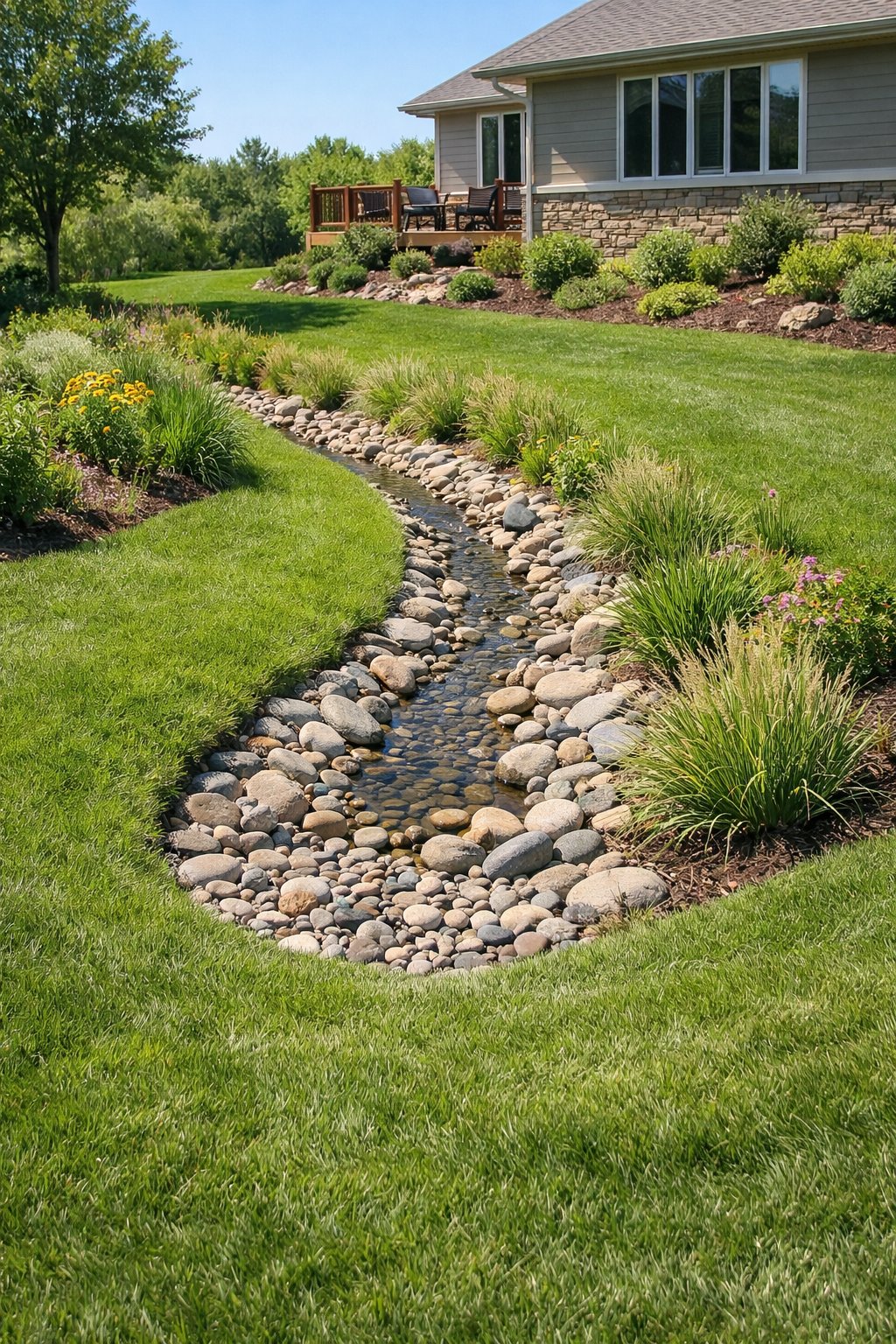
Some wet spots in the yard make you avoid certain patches like they’re quicksand. You can dig a swale—a simple, shallow ditch with a small berm—to slow and redirect runoff so water soaks in instead of pooling.
Mark out a gentle line, dig a wide, shallow channel, and pile the dirt on the downhill side for the berm. Plant grass or tough native plants on the banks to drink up water and hold the soil in place.
Swales work best on a slight slope and with soil that drains well. They fit in gardens, along driveways, or even across the lawn, and cut down on erosion and swampy spots.
Expert Tip From MrPlanter: Dig the swale on the contour so water moves slow and spreads out. Plant native grasses on the berm—they soak up water and keep the dirt put.
9. Lay permeable pavers so water can slip through like a ninja on a mission
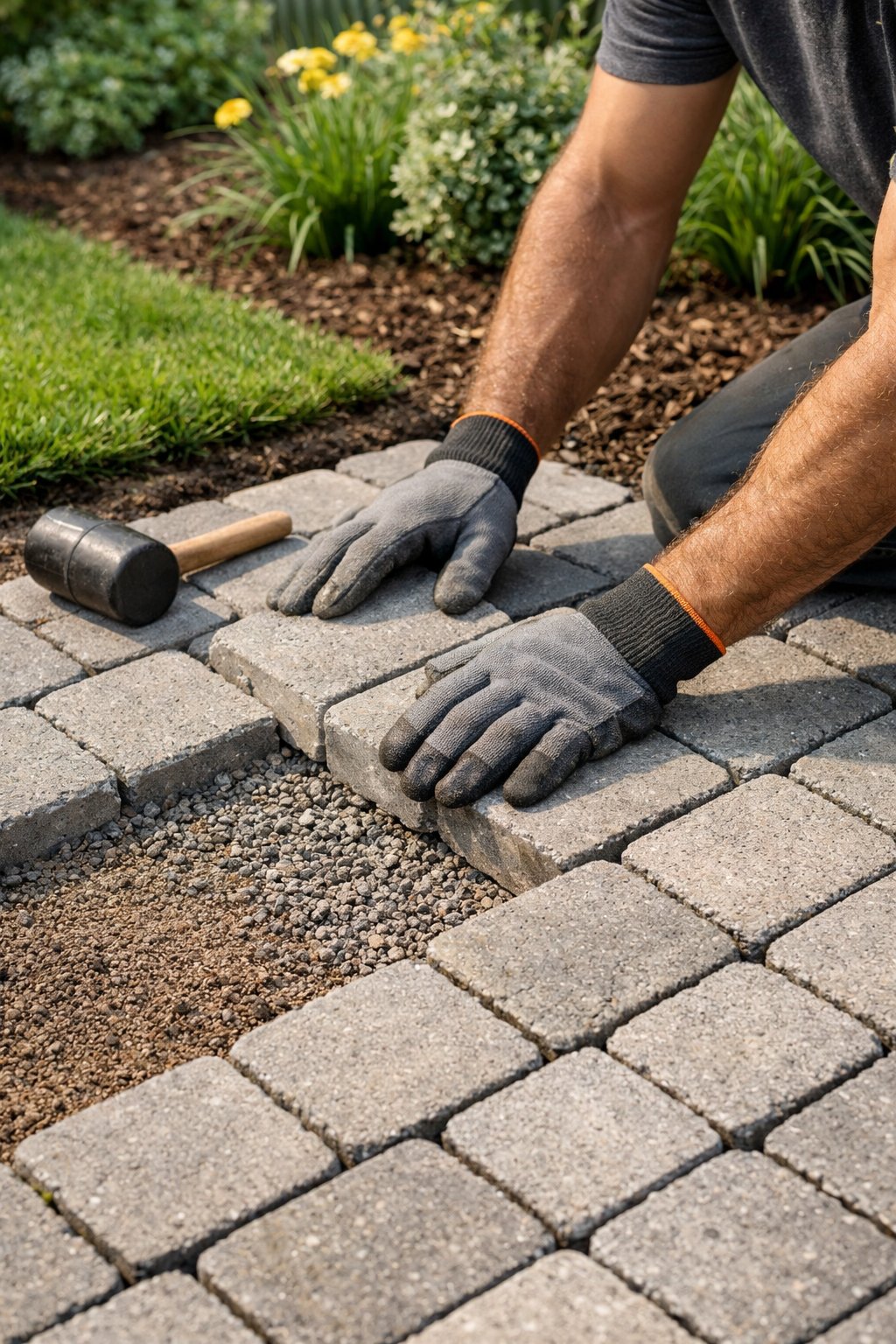
Did you know stormwater can show up in minutes and mess up your yard? Permeable pavers let water sneak through the cracks and into a drained base, so puddles vanish and roots stay happy.
Try them on patios, walkways, or even driveways if you prep the base right. Use a crushed-stone layer and joint sand or gravel so water takes the hint and moves out.
Install with care: dig, maybe lay down some geotextile, compact the layers, and place pavers with gaps for the joint stuff. They cut down on runoff, help recharge groundwater, and still look sharp.
Expert Tip From MrPlanter: “Go with pavers made for drainage and build a solid, sloped base. Check your local codes so your path or driveway stays good for years.”
10. Plant deep-rooted grasses that act like water sponges in disguise
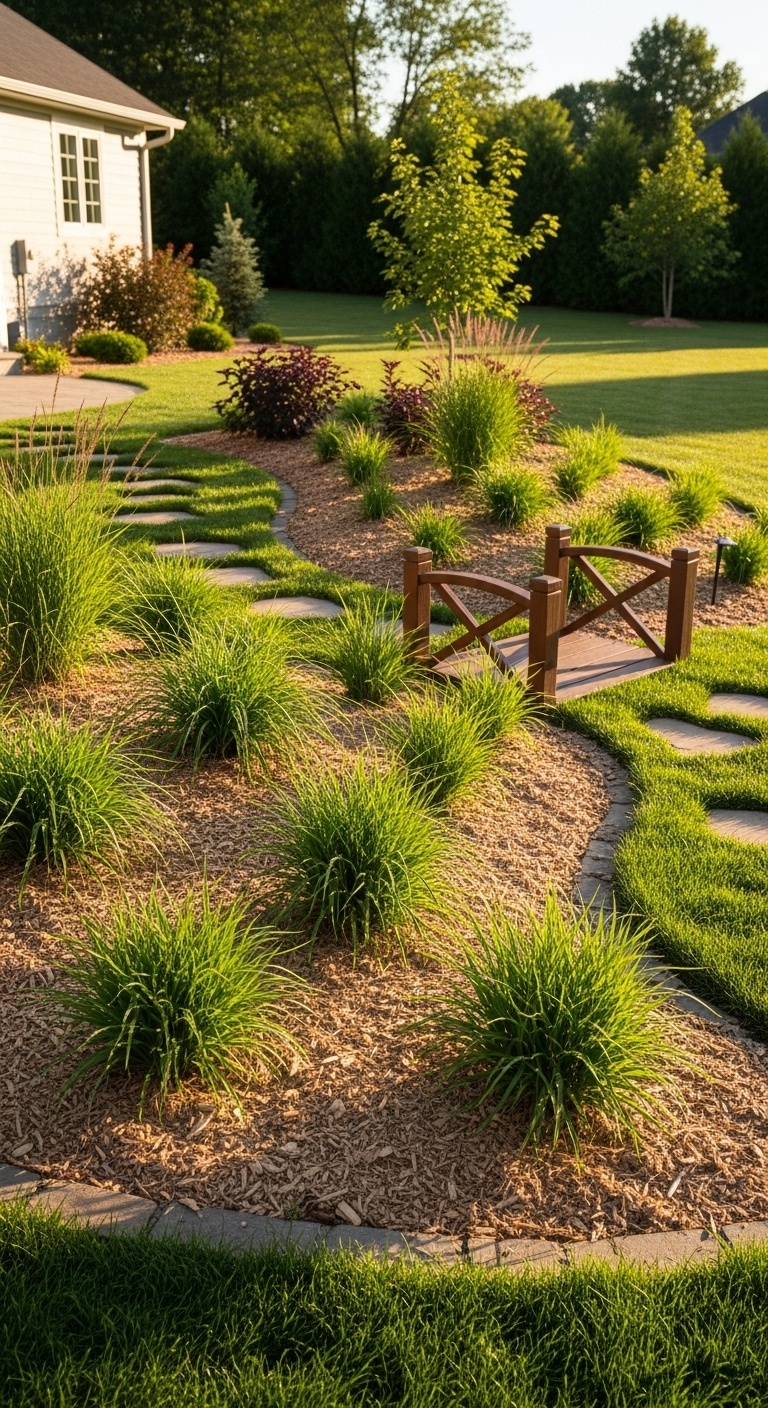
Those pretty grasses? They do more than look nice—they act like little water pumps for your yard.
Pick deep-rooted natives like switchgrass, little bluestem, or buffalo grass. Their roots break up tough soil and help water soak in instead of hanging around as puddles.
You’ll notice less standing water after storms and fewer muddy patches. These grasses also slow erosion on slopes and add some texture to your garden.
Plant them where water flows or mix them into swales and rain gardens. Once they settle in, they’re easy to care for and feed the soil as roots break down.
Expert Tip From MrPlanter: Plant in early fall or spring so roots grow before the heat or drought. Give new plugs a good month of watering, then let them do their thing.
11. Set up a rain barrel to collect and recycle water like a thrifty superhero
Surprising Fact: You can trim your water bill and help your garden at the same time.
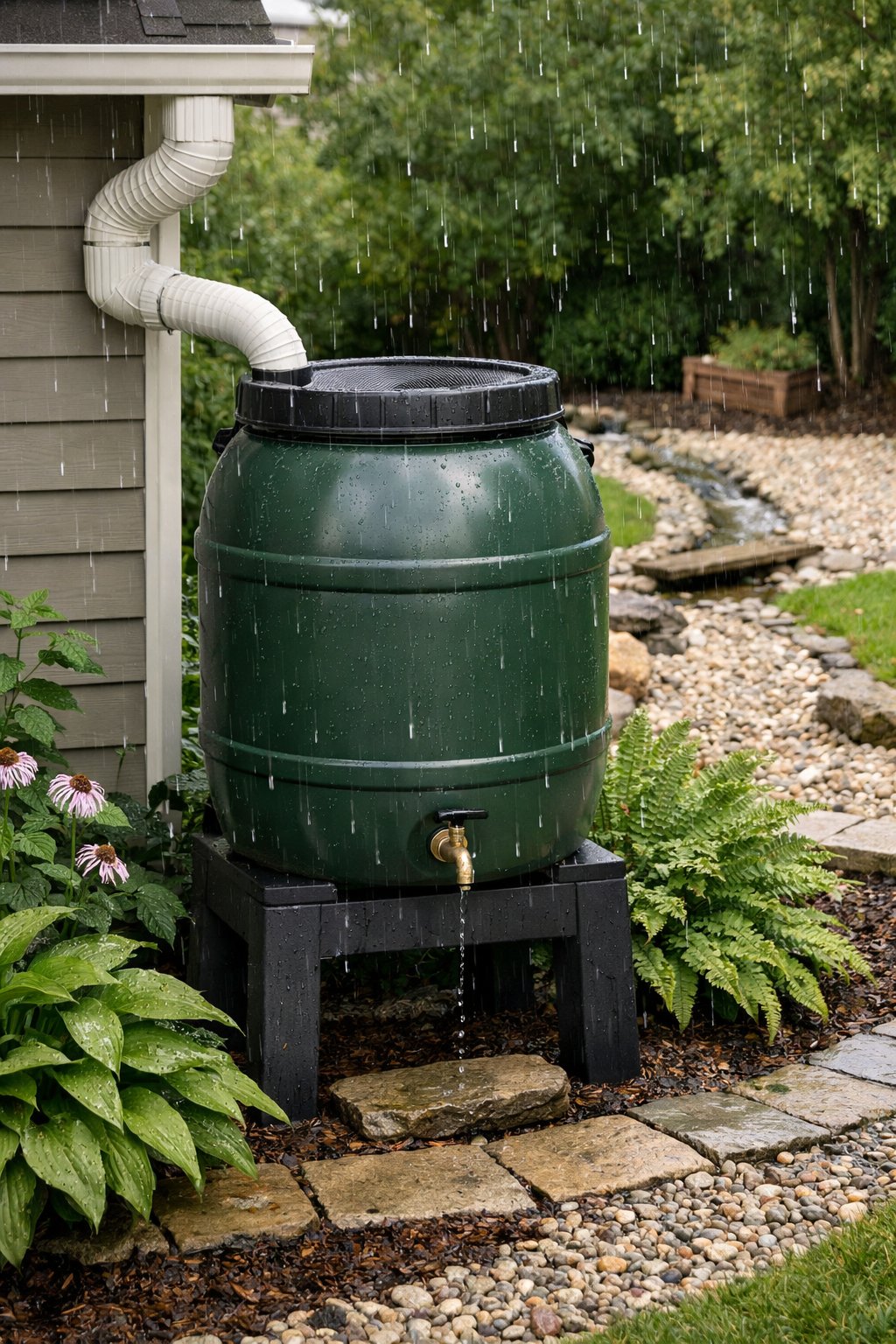
Snag roof runoff with a rain barrel to stop puddles and score free water for your plants. Just hook up your downspouts to a barrel, toss on a screened lid to keep bugs out, and add a spigot near the bottom for easy watering.
A barrel saves water for dry spells and keeps heavy rain from flooding your yard. You can buy one or convert a trash can—just seal any openings and make sure the lid’s on tight.
Set the barrel on a sturdy, flat base so you can fill your watering can without a circus act. If your winters get icy, empty it before the freeze to dodge cracks.
Expert Tip From MrPlanter: “Cover the barrel with a wide mesh screen to block debris and mosquitoes. Use a hand pump or hose for quick water—no heavy lifting required.”
12. Add a gravel pit at low spots to hold water like a miniature, stylish pond
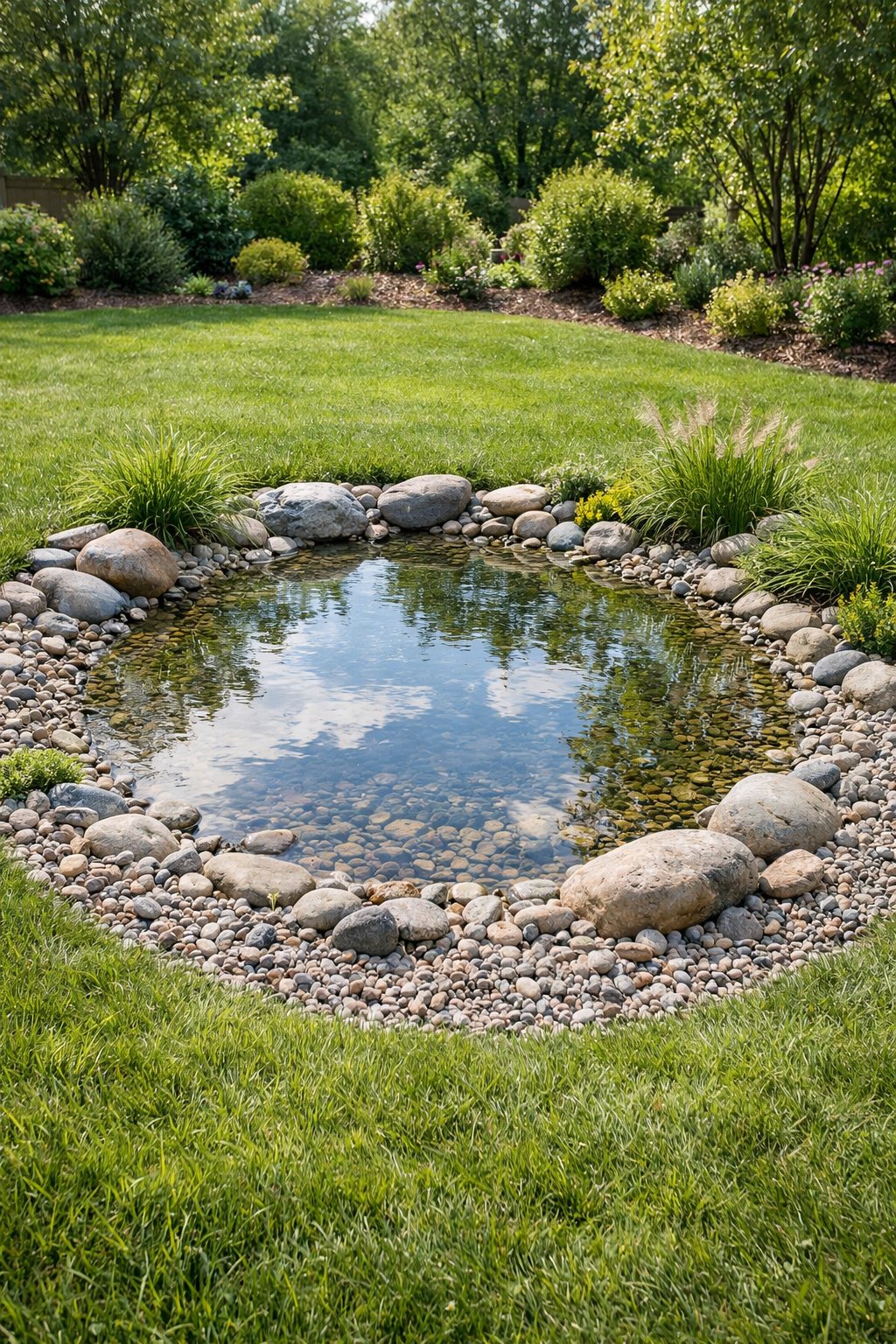
Here’s something cool—turning a soggy patch into a gravel pit can actually look great and save your shoes from getting soaked.
Just scoop out a shallow spot where water always gathers. Toss in some chunky gravel, and you’ll notice it drains fast and looks tidy.
Pick the lowest spot in your yard for this. Slope the dirt around it so rainwater heads right for your new pit.
Lay down some landscape fabric under the gravel. That’ll keep dirt from sneaking in and clogging things up. Border the pit with rocks or a few plants if you want it to feel like a mini pond—kind of fun, right?
Don’t make it too deep. You want water to drain out between storms, not stick around and turn into a swamp.
This little project adds some texture to your yard and actually helps with drainage. Double win!
Expert Tip From MrPlanter: Pile in enough gravel so water can zip through it, and peek in every season for any gunk that might build up. A couple of tough plants around the edge will hide the pit and soak up extra water, too.
13. Use terracing on slopes to catch water like tiny catchers’ mitts
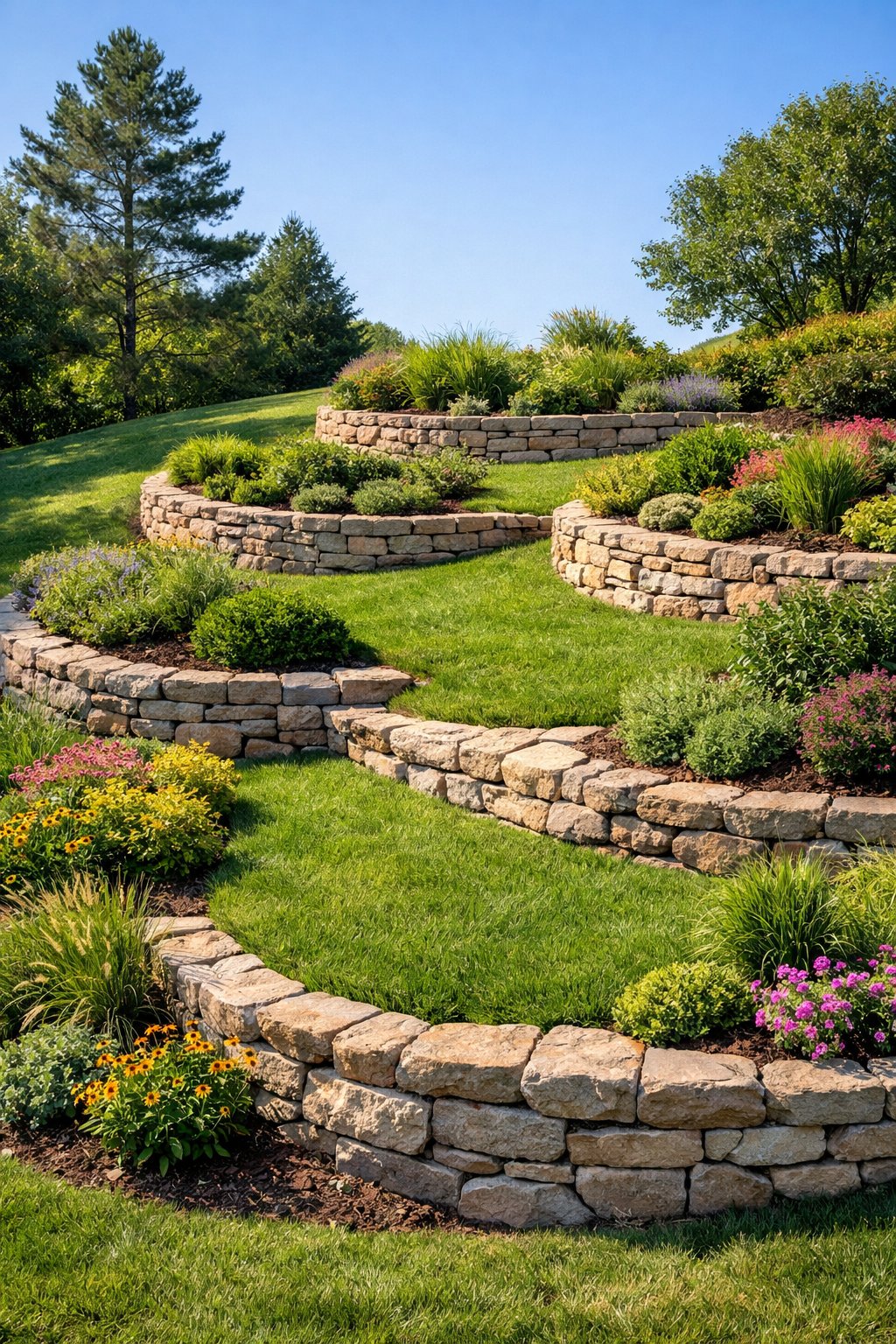
Ever avoid the bottom of your yard because it turns into a slip-and-slide after rain? You’re not alone.
Terracing breaks up that long slope into smaller, flat steps. Water slows down, soaks in, and your plants actually get a chance to drink.
You can stack up dirt, use stone, or even wood to build those little ledges. If puddles still show up, tuck some gravel or a pipe behind the terrace.
Pop in groundcover or shrubs with deep roots on each step. That way, the soil stays put and you get more garden space.
Expert Tip From MrPlanter: Try building just two terraces first to see how water moves before you go all-in. Stick with native plants—they’re tough, need less fuss, and really help with the soaking up part.
14. Install a catch basin to trap water before it throws a wild party in your yard
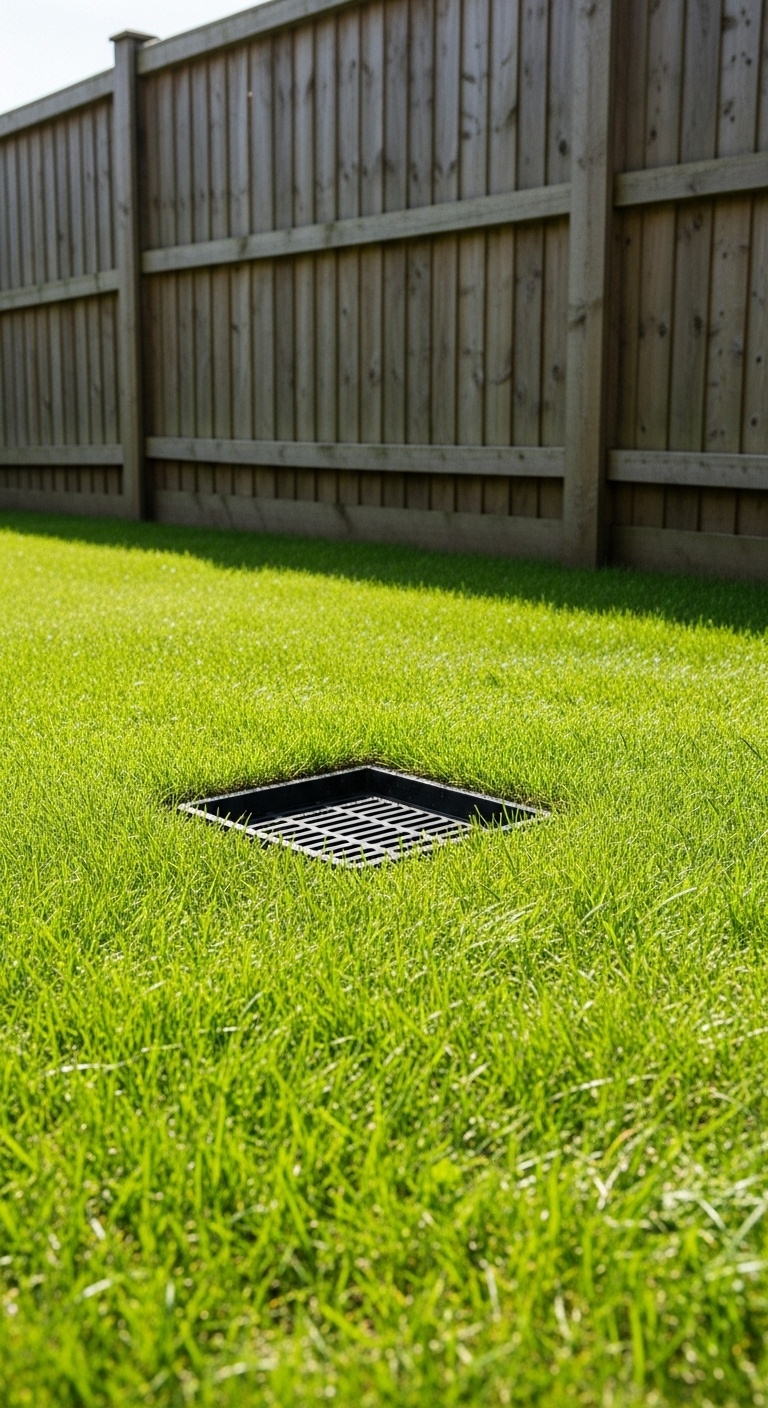
If you’ve ever watched your yard turn into a mud pit after a storm, you know the struggle.
A catch basin sits right at the lowest spot and grabs that runaway water before it spreads everywhere. It sends the water down a pipe and away from your house, saving your lawn and garden.
You can snag a ready-made basin or build your own with some concrete blocks and a grate. Set it where water naturally gathers, make sure it’s level with the ground, and hook it up to a drain that leads somewhere safe.
Don’t forget to clear leaves off the grate and check inside for junk every so often. Just a little upkeep keeps things running smoothly.
Expert Tip From MrPlanter: “Put the catch basin right where water loves to pool, and angle the pipe so it drains away. Clean out the grate in spring and fall to dodge any clogs.“
15. Replace compacted soil with sandy mix for better drainage, because soggy feet aren’t trendy
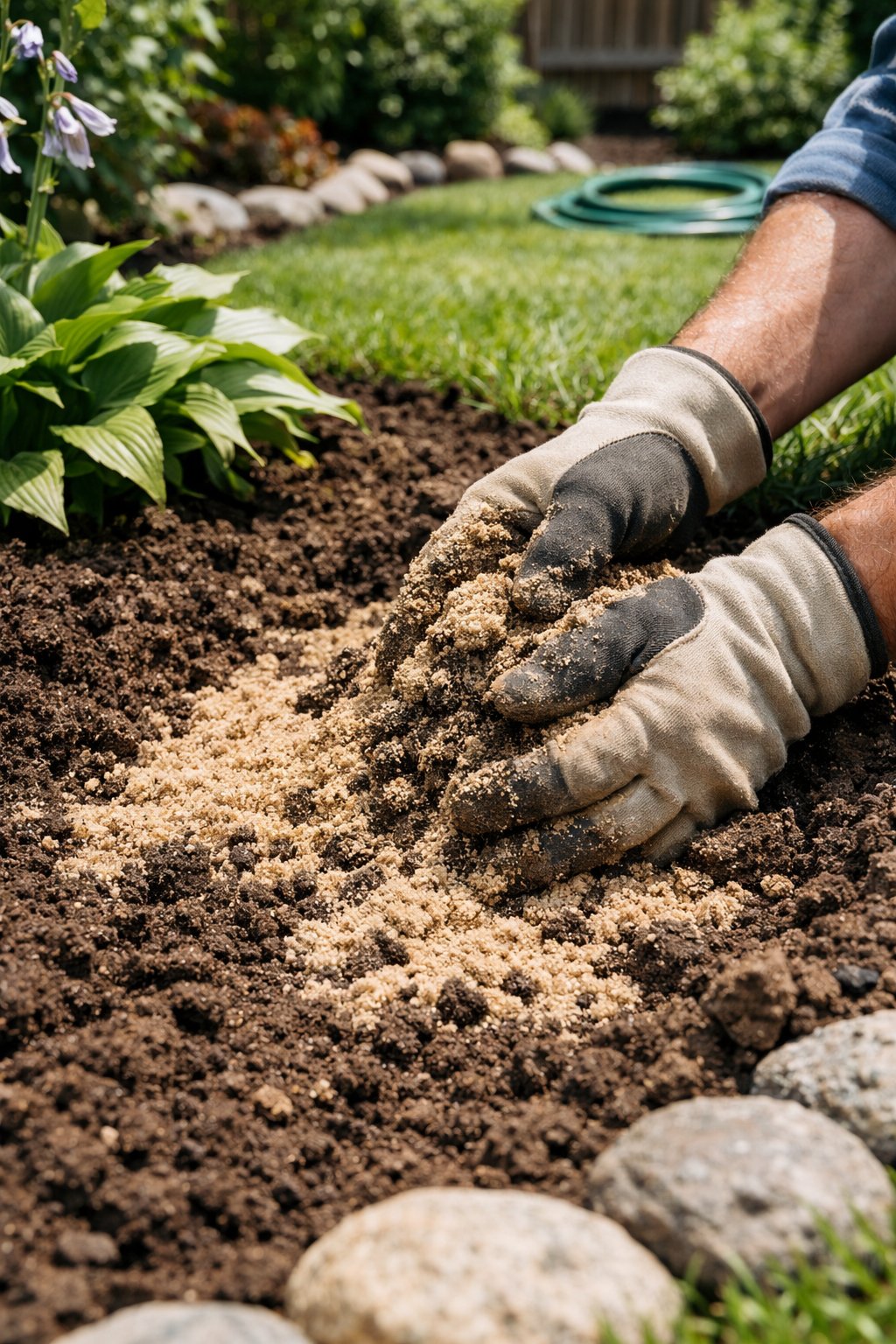
Ever step outside and feel your shoes start to disappear in mud? Yeah, not exactly the dream backyard for grilling or letting the kids run wild.
When soil gets packed down, water just hangs out on top and roots can’t breathe. No one wants that.
I like to grab some coarse sand and a good heap of compost, then mix them right into the dirt. This opens things up and lets water move through instead of turning your yard into a swamp.
Go heavy on the coarse sand and compost. Skip the fine sand or silt—trust me, those just make the problem worse.
I usually work this mix into the top 6 to 12 inches of soil, then rake it out so it’s nice and even.
Later on, I toss in more compost every so often to keep things fluffy and healthy.
Expert Tip From MrPlanter: “Try it out on a small spot first and see what happens. Keep adding organic matter each year so your soil doesn’t squeeze itself tight again.”