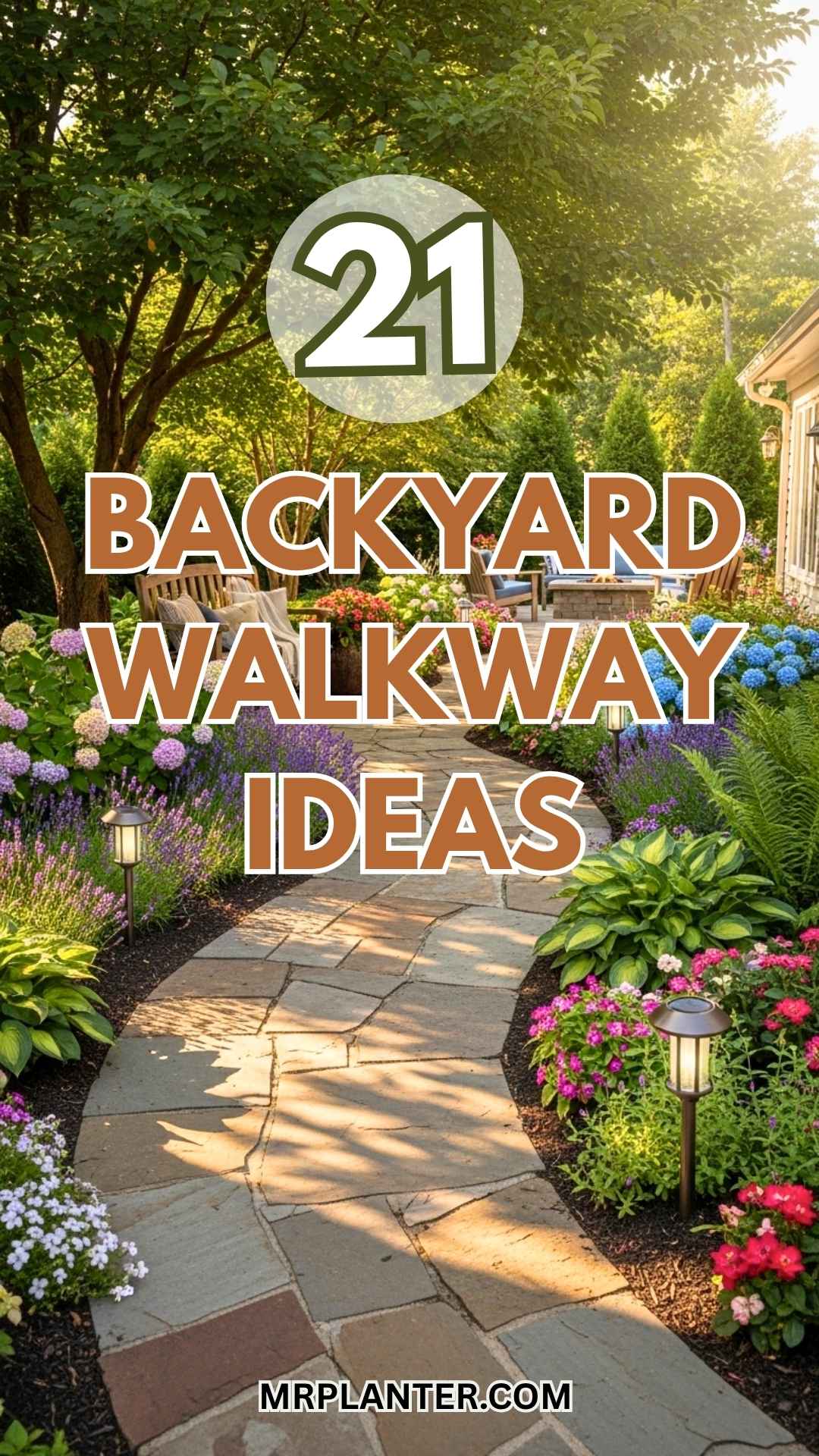
Ever notice how a backyard path can look great in your head, but in person, it just feels like someone dropped off a pile of leftovers? A solid walkway changes that in a snap.
The right path pulls your garden together, guides your feet, and keeps muddy shoes from turning your patio into a disaster zone.
Here are 21 backyard walkway ideas that cover just about every vibe, from soft and natural to crisp and modern.
You’ll find stuff for tiny side yards, veggie patches, pool hangouts, and even some DIY projects you can tackle on a weekend.
By the end, you’ll probably have a much better idea of what fits your space (and your sanity).
1. Flagstone And Creeping Thyme Garden Path
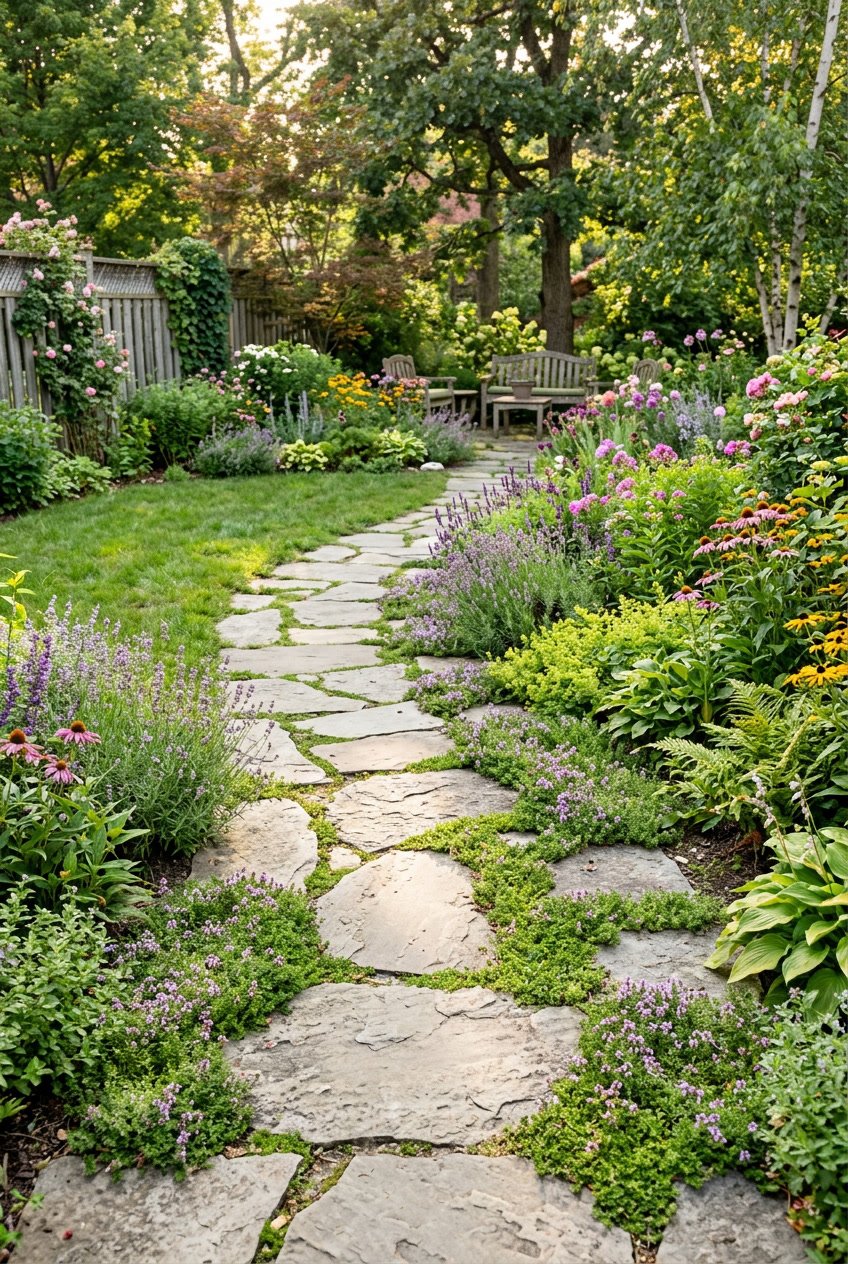
Let’s be honest, nobody wants their path to look like a row of chores. Flagstone brings a relaxed, natural look, and creeping thyme slips into the gaps with that soft green vibe.
That “planted in-between” look helps the walkway melt into your garden, instead of screaming for attention.
This combo fits right in with cottage gardens, pollinator spots, or any yard that wants a softer touch.
Make sure those stones sit nice and steady so you don’t wobble with every step.
Expert Tip From MrPlanter: “Leave enough space for thyme to spread, then keep the stones level so you don’t trip during your coffee run to the compost bin. Water new plants often until they settle in.“
2. Large Concrete Slab Walkway With Black Pebble Joints
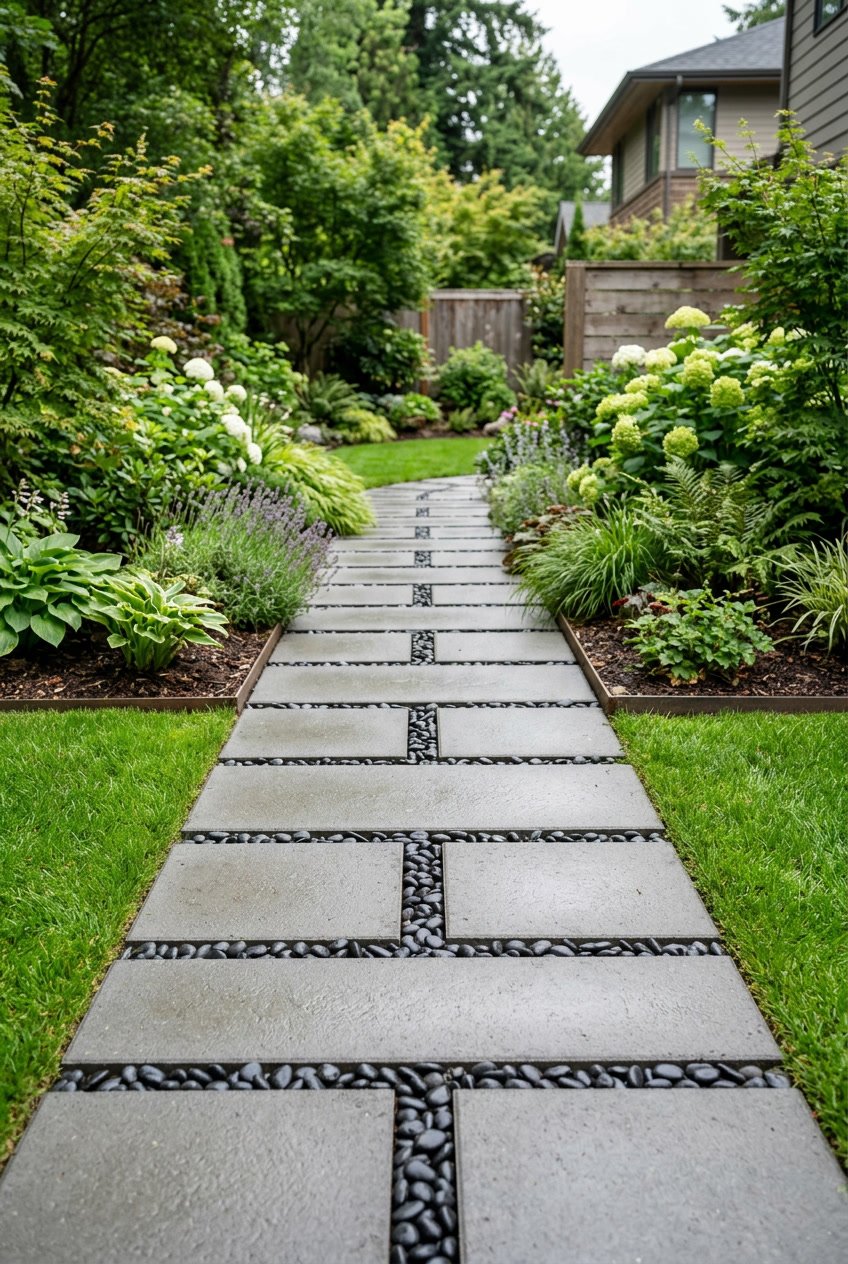
Here’s a fun one—plain old concrete can actually look amazing with a little space to breathe. Big slabs give you a bold, modern path, and black pebble joints break things up without making it look fussy.
That dark contrast hides dirt way better than bright filler, too.
This works best for homes with straight lines and simple planting beds.
If you hate cleaning joints, bigger slabs mean less to fuss over.
Expert Tip From MrPlanter: “Keep the slab spacing consistent so the path feels calm, not accidental. A strong edge detail makes the whole walkway look more intentional.“
3. Permeable Concrete Paver Path With Gravel Base
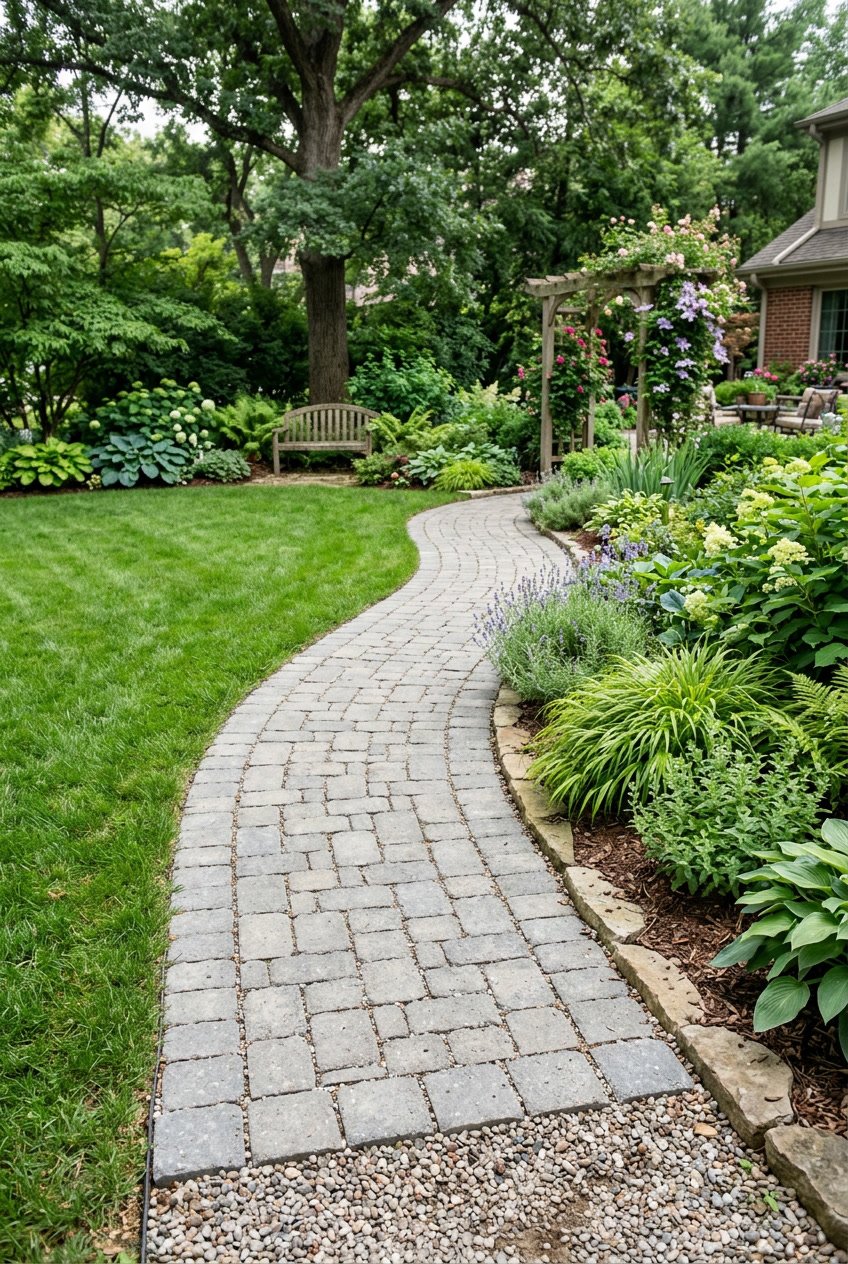
You don’t have to pick between pretty and practical. Permeable pavers let water sneak through, which is a lifesaver in rainy spots or yards that love to puddle.
The gravel base helps water drain and gives your pavers something stable to sit on.
Go for this if your yard turns into a swamp or you want to stop erosion in its tracks.
It looks tidy and finished, without feeling stiff.
Expert Tip From MrPlanter: “Choose pavers with enough texture for safe footing. If your yard stays damp, a permeable setup can save you a lot of slippery-mud drama.“
4. Rustic Bluestone Walkway With Natural Irregular Edges
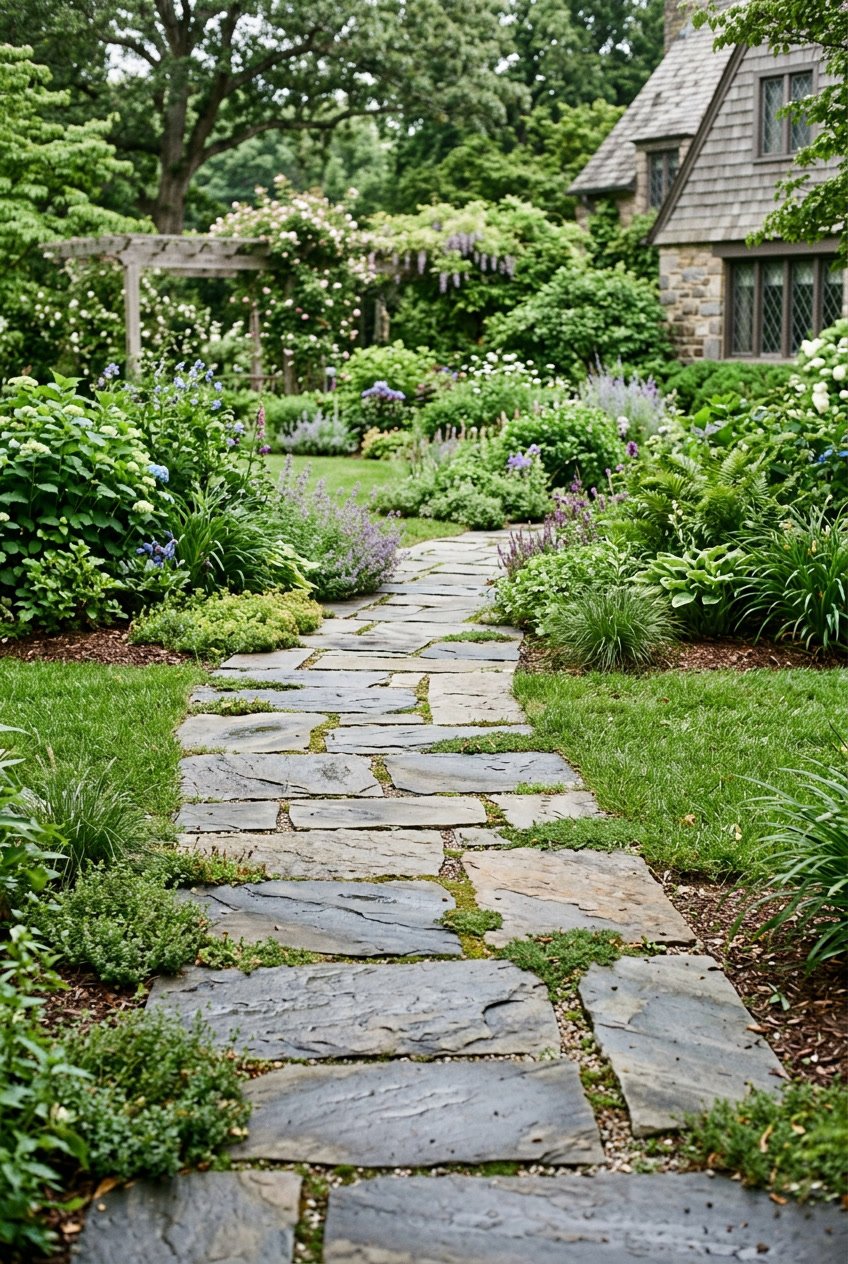
Bluestone’s got a chill, reliable vibe. Its cool gray-blue color never really goes out of style, and those wobbly edges make the path feel like it just belongs there.
That natural shape works great in laid-back gardens or older homes.
You can use bigger pieces for drama or tuck them closer for a tighter look.
It pairs up nicely with shrubs, grasses, and layered flower beds.
Expert Tip From MrPlanter: “Mix stone sizes with care so the path looks natural, not messy. A few well-placed pieces often look better than a perfect grid.“
5. Herringbone Brick Walkway With Soldier Course Border
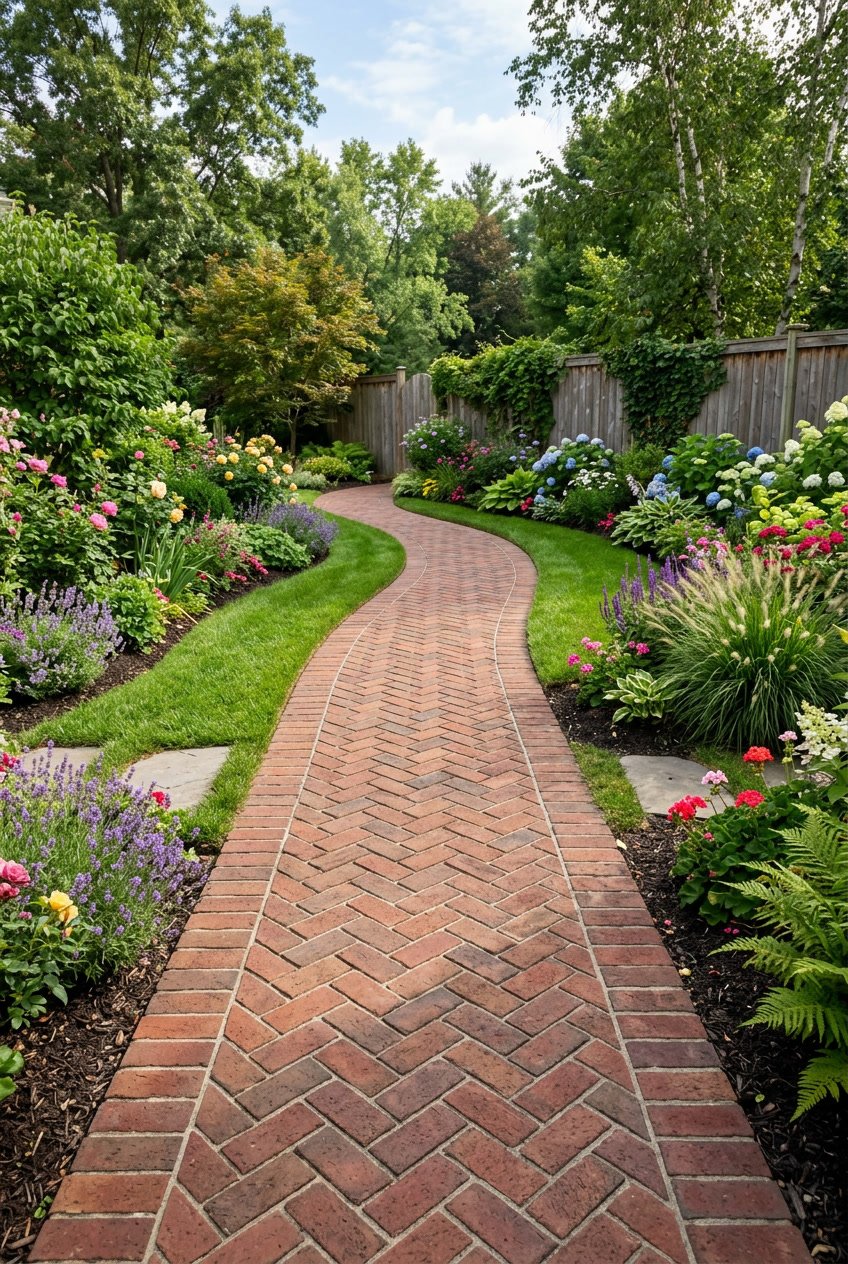
Let’s face it, bricks can look a little “school hallway” if you just line them up. The herringbone pattern adds some movement and strength, while the soldier course border frames everything like a picture.
That border is what takes it from “just okay” to “wow, that looks finished.”
This one’s perfect for classic homes, front paths, or gardens that want a little old-school charm.
Brick brings a warm color that works with brick houses, wood fences, and leafy plants.
Expert Tip From MrPlanter: “Use a compacted base so the bricks stay level over time. If the border is straight, the whole path reads as polished right away.“
6. Crushed Granite Path With Steel Edging
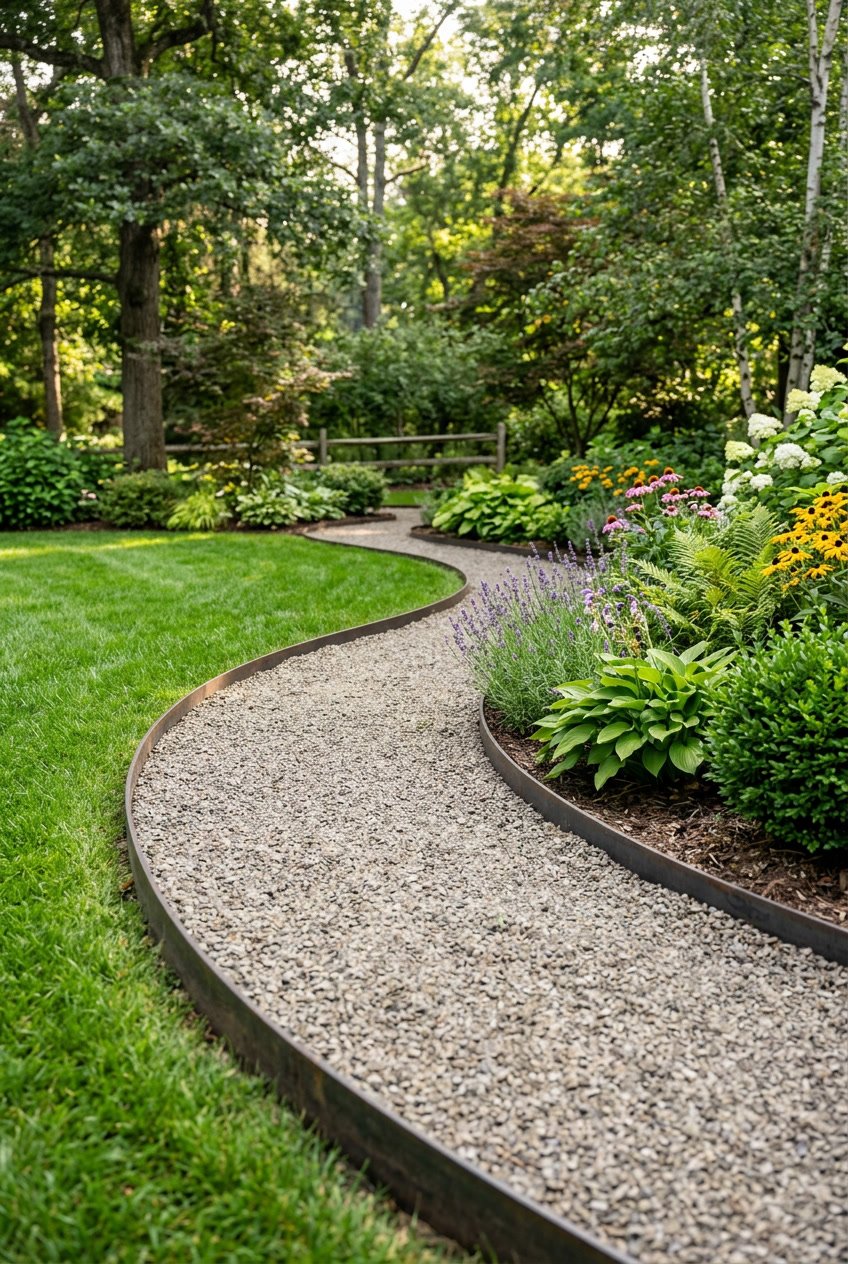
Sometimes, simple wins the day. Crushed granite gives you a soft, earthy feel, but steel edging keeps those lines crisp and stops the gravel from sneaking onto your lawn.
That neat border does more work than most people notice.
This style shines in modern yards, side paths, or budget projects that still want to look sharp.
It feels comfy underfoot if you pack it down right.
Expert Tip From MrPlanter: “Install the edging first so the path keeps its shape from day one. A firm base will save you from constant raking and patching.“
7. Mosaic River Pebble Walkway With Geometric Pattern
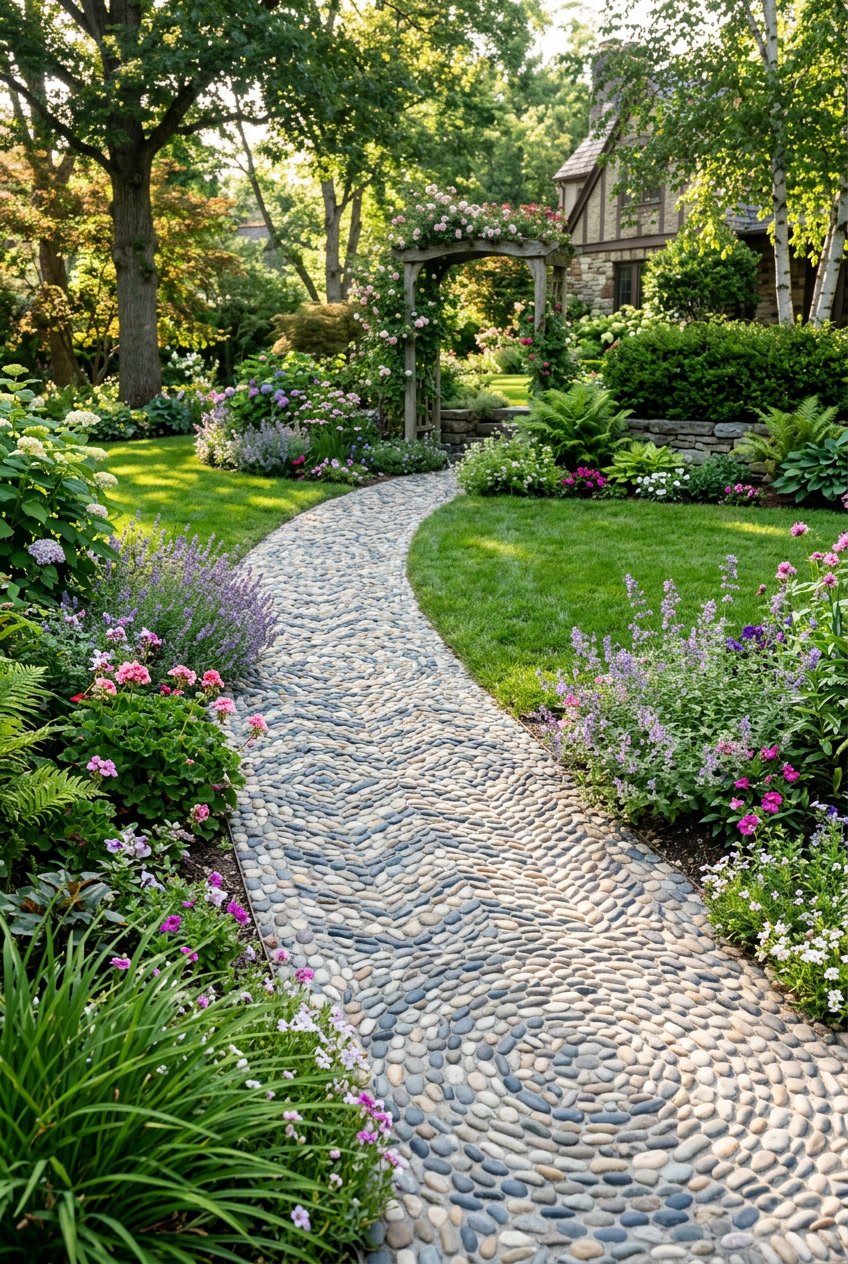
Who says pebble paths have to look random? A geometric mosaic turns river stones into art—kind of like outdoor tile with a handmade touch.
The texture pops, and the pattern makes your yard feel special.
This idea fits best in smaller garden spots where you can actually see the details.
It goes nicely with simple plants or a cozy courtyard.
Expert Tip From MrPlanter: “Keep the pattern simple if you’re new to stone layout. Too many shapes can make the path feel busy instead of artistic.“
8. Stepping Stone Path Set In Dwarf Mondo Grass
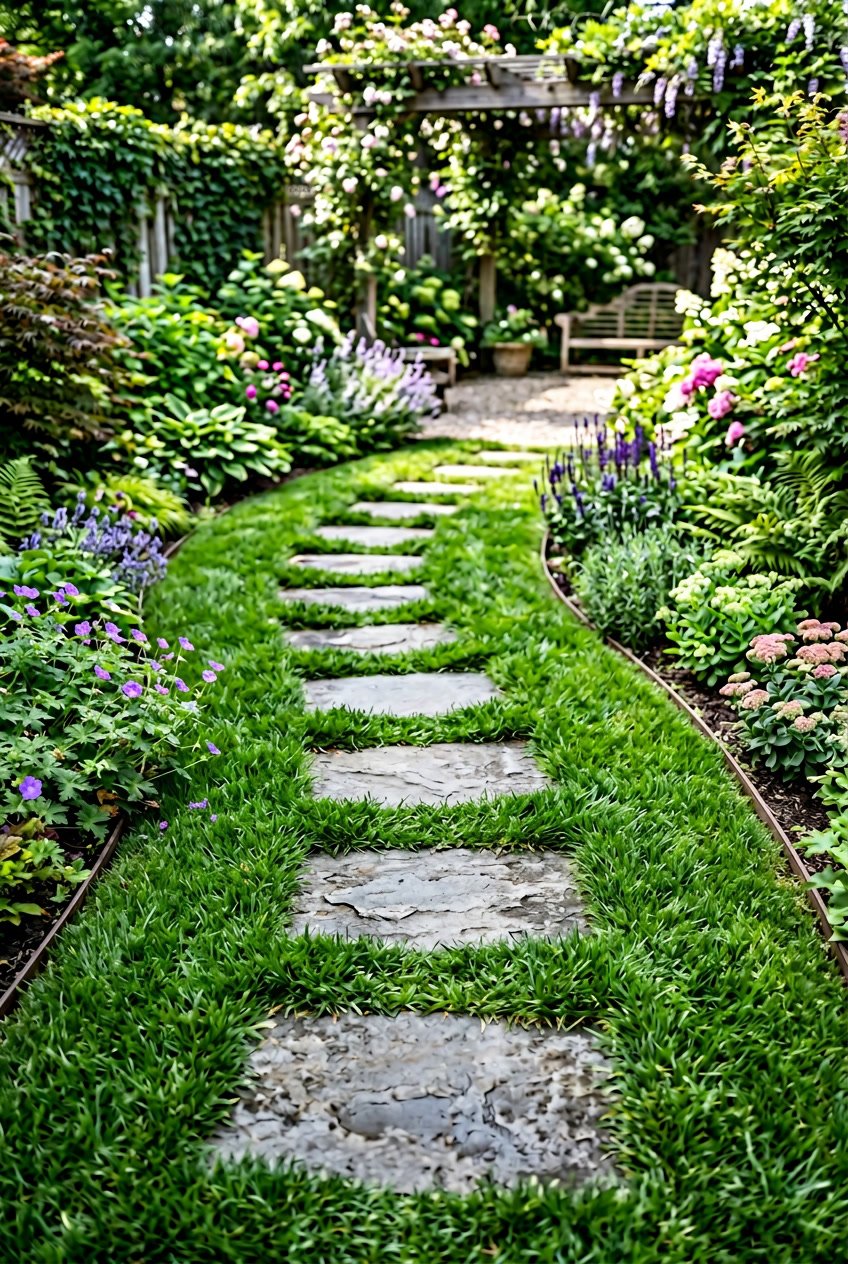
Sometimes, you want a path that doesn’t scream “I paved the yard!” Stepping stones tucked into dwarf mondo grass give you that gentle, almost hidden look.
The grass softens everything, and the stones guide your feet without hogging the spotlight.
This works for skinny side yards, Japanese-inspired gardens, or anywhere you want plants to take center stage.
It also keeps your walkway from feeling chunky in small spaces.
Expert Tip From MrPlanter: “Space the stones for a natural walking stride, then test the layout before you set anything permanently. Your future knees will thank you.“
9. Gravel Walkway With Belgian Block Edging
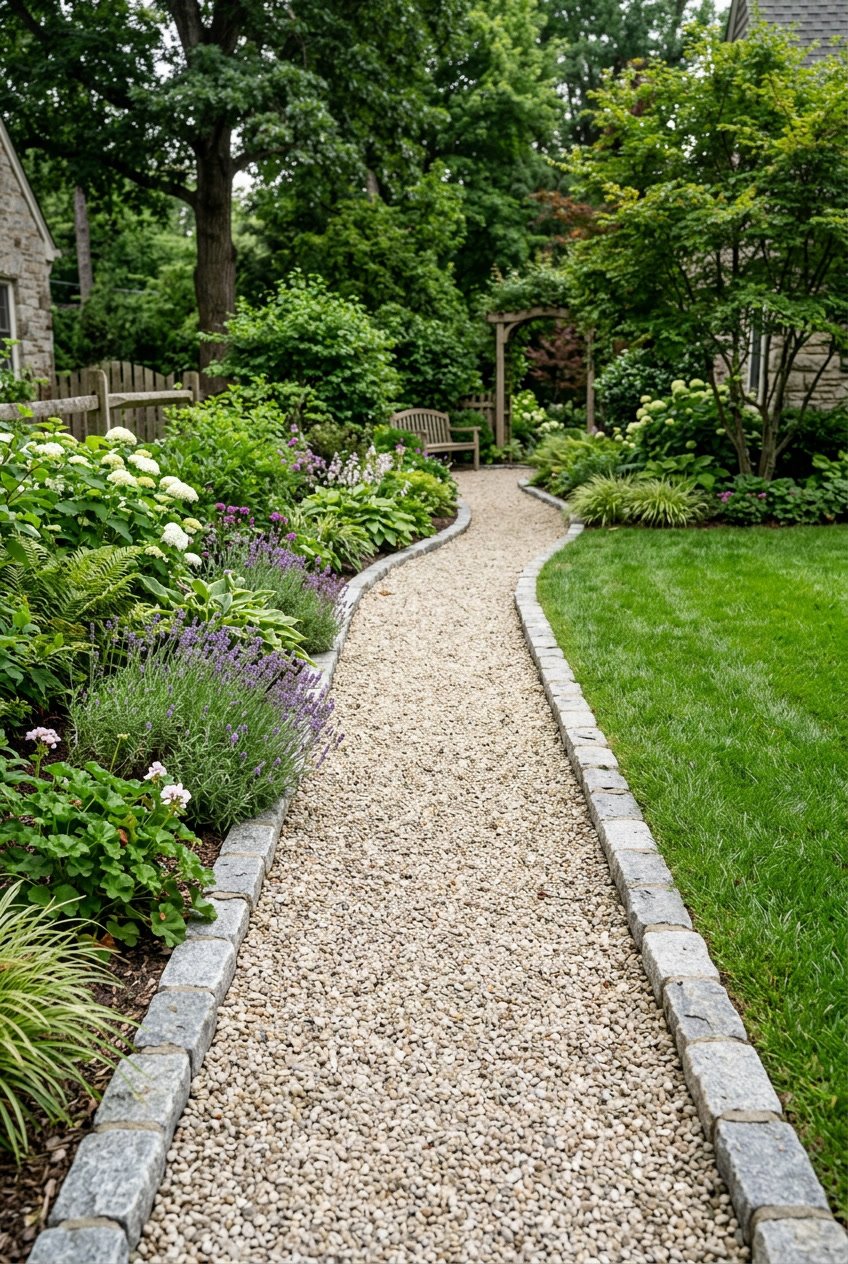
Gravel actually cleans up real nice with the right border. Belgian block edging gives your path a strong outline so the loose stone feels planned, not messy.
The result is sturdy, classic, and easy to bend around curves or go straight.
Pick this if you want good drainage, quick setup, and a look that fits almost any house.
It’s also super easy to match with driveways or older stonework.
Expert Tip From MrPlanter: “Use a weed barrier and a deep base so the gravel stays where it belongs. A good border makes the whole path feel more expensive than it really is.“
10. Wooden Boardwalk Path Using Cedar Deck Boards
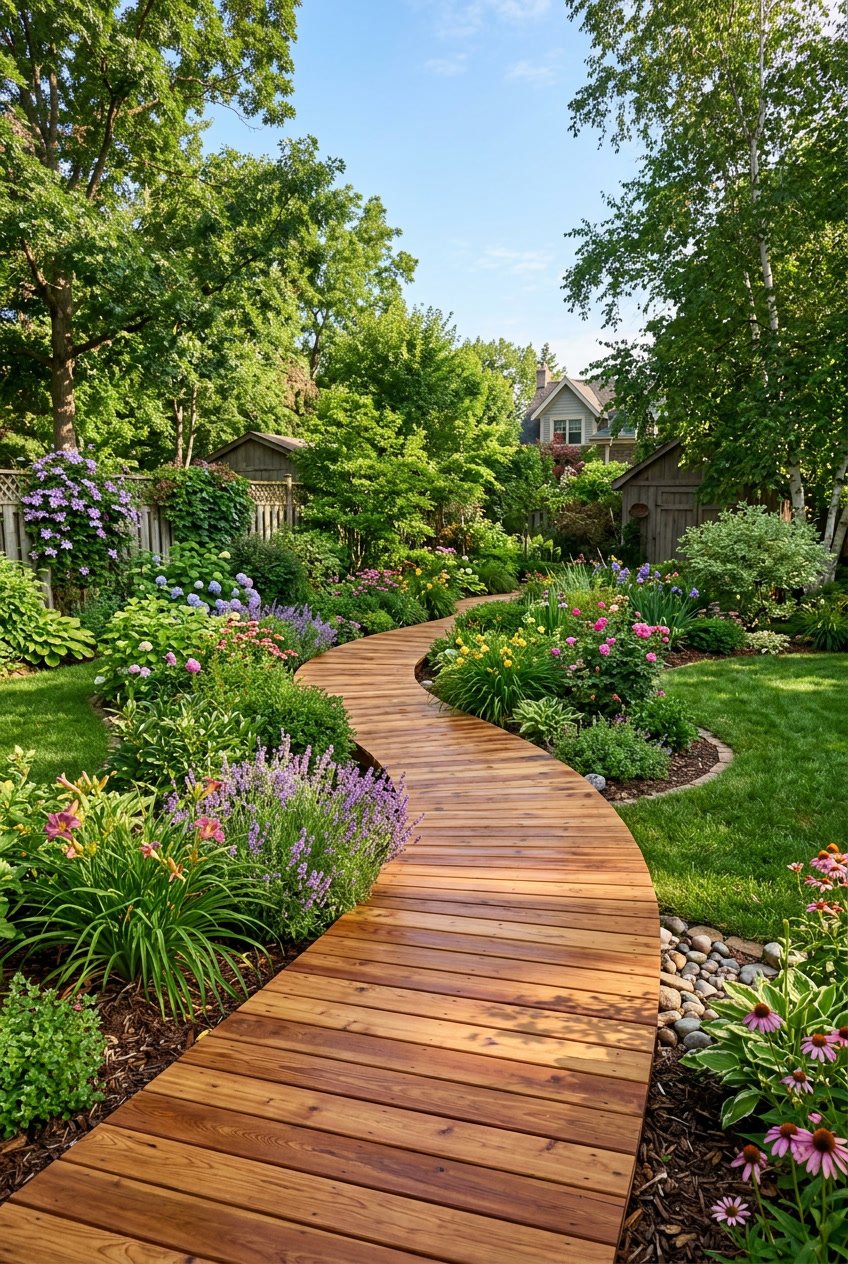
Cedar boards just have this warm, welcoming feel. A boardwalk path winds through planting beds or over soggy spots and keeps your shoes dry.
Cedar looks rich and works for both rustic and modern yards.
Try this in uneven areas, near water, or anywhere you want to float above the mud.
You’ll need to seal it and give it a little love to keep it looking good.
Expert Tip From MrPlanter: “Keep the boards slightly spaced for drainage and airflow. A regular finish coat helps the wood stay handsome longer.“
11. Straight Linear Porcelain Paver Walkway
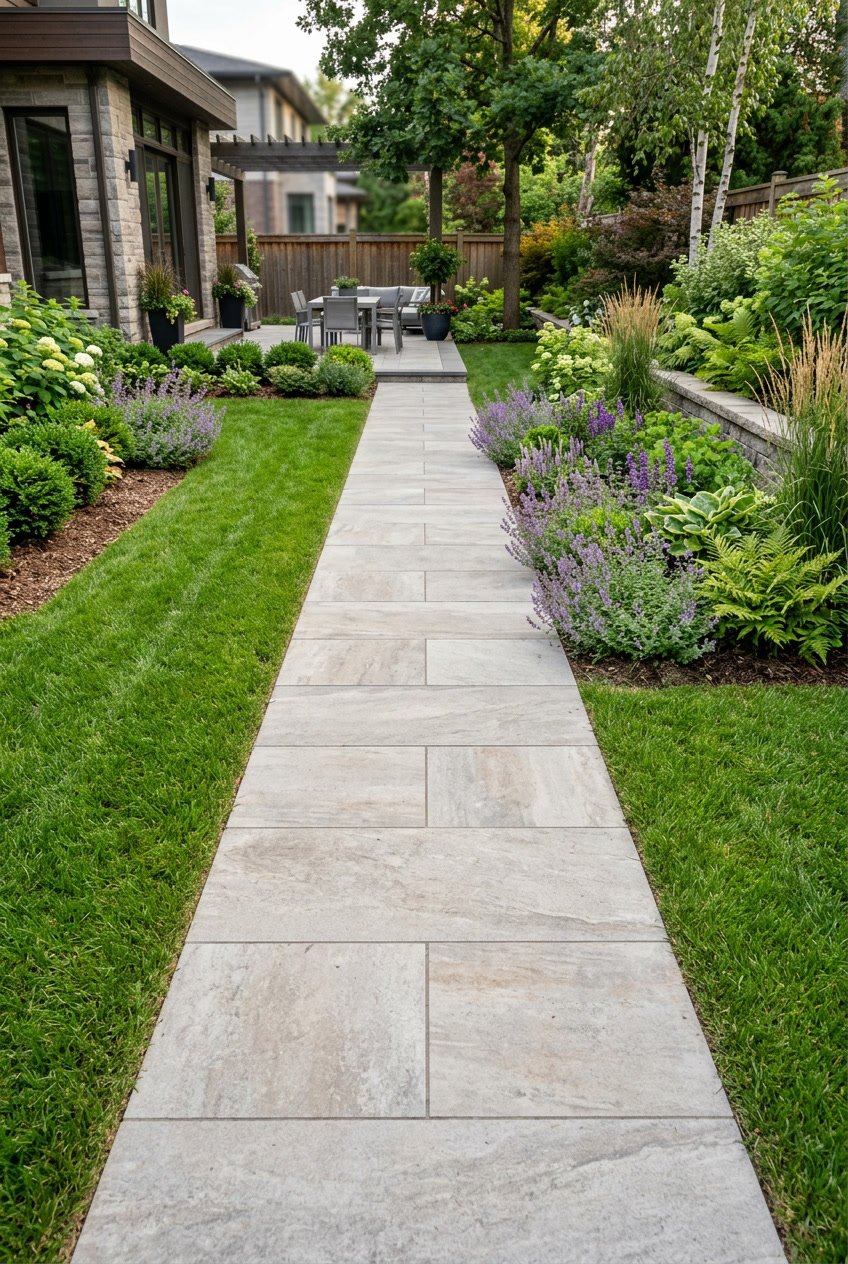
Sleek doesn’t have to mean complicated. Porcelain pavers make a clean, straight path with a smooth surface that shrugs off stains and looks sharp in modern yards.
The straight lines keep things simple and tidy.
This style fits right in with contemporary homes, pool decks, and those “patio to garden” connections.
It’s also a winner if you want something easy to care for.
Expert Tip From MrPlanter: “Choose a slip-resistant finish so the path stays safe after rain. Straight lines look best when the edges are installed with real care.“
12. Reclaimed Brick Garden Path Through Raised Beds
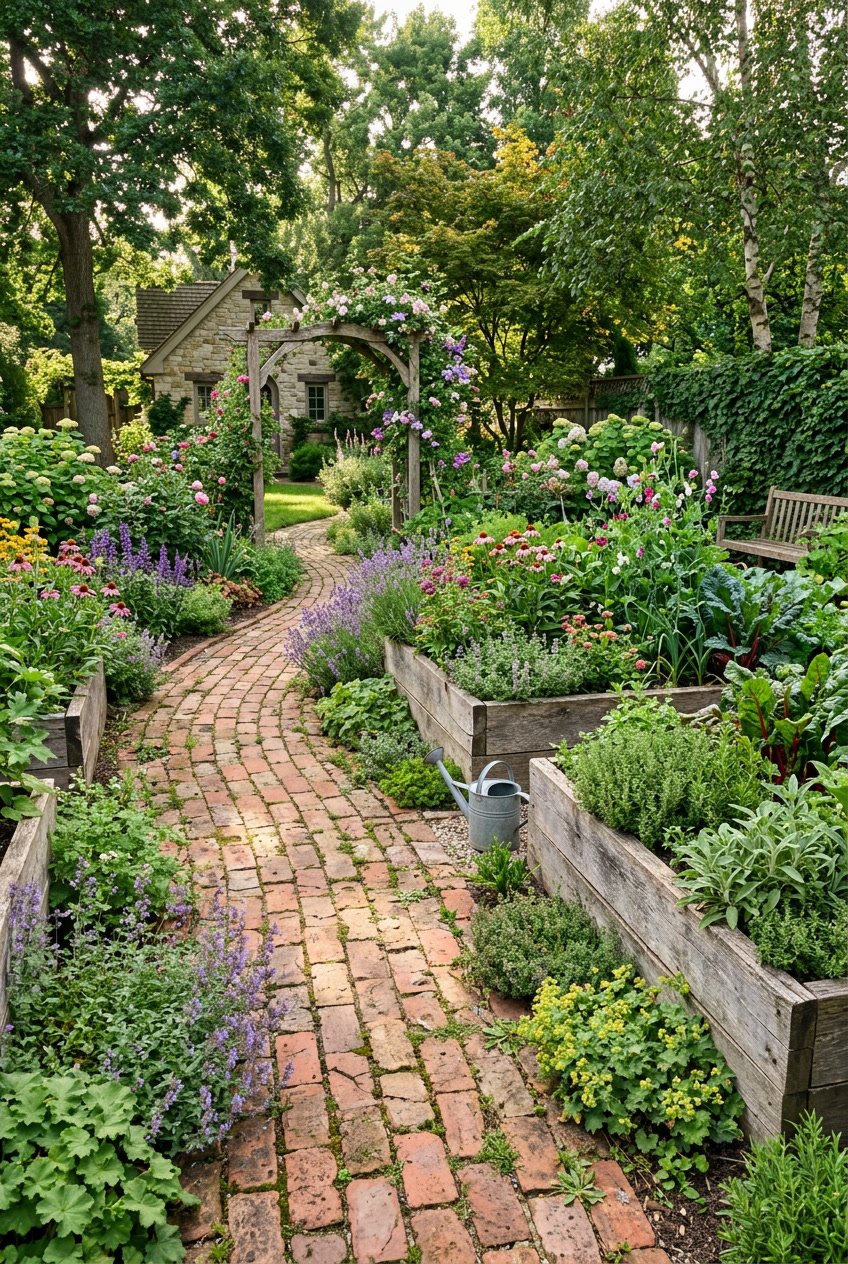
Veggie gardens can turn into a mud wrestling ring in no time. Reclaimed brick gives you a strong path through raised beds, and the worn look brings character without trying too hard.
Old bricks love hanging out with wood beds and leafy greens.
This is a great pick if you want your garden to feel useful and a little bit charming.
The brick path makes harvesting and watering way easier, especially after rain.
Expert Tip From MrPlanter: “Lay the bricks tightly enough to walk on with confidence. Reclaimed material looks best when the path feels steady, not patchy.“
13. Decomposed Granite Path With Stabilizer Binder
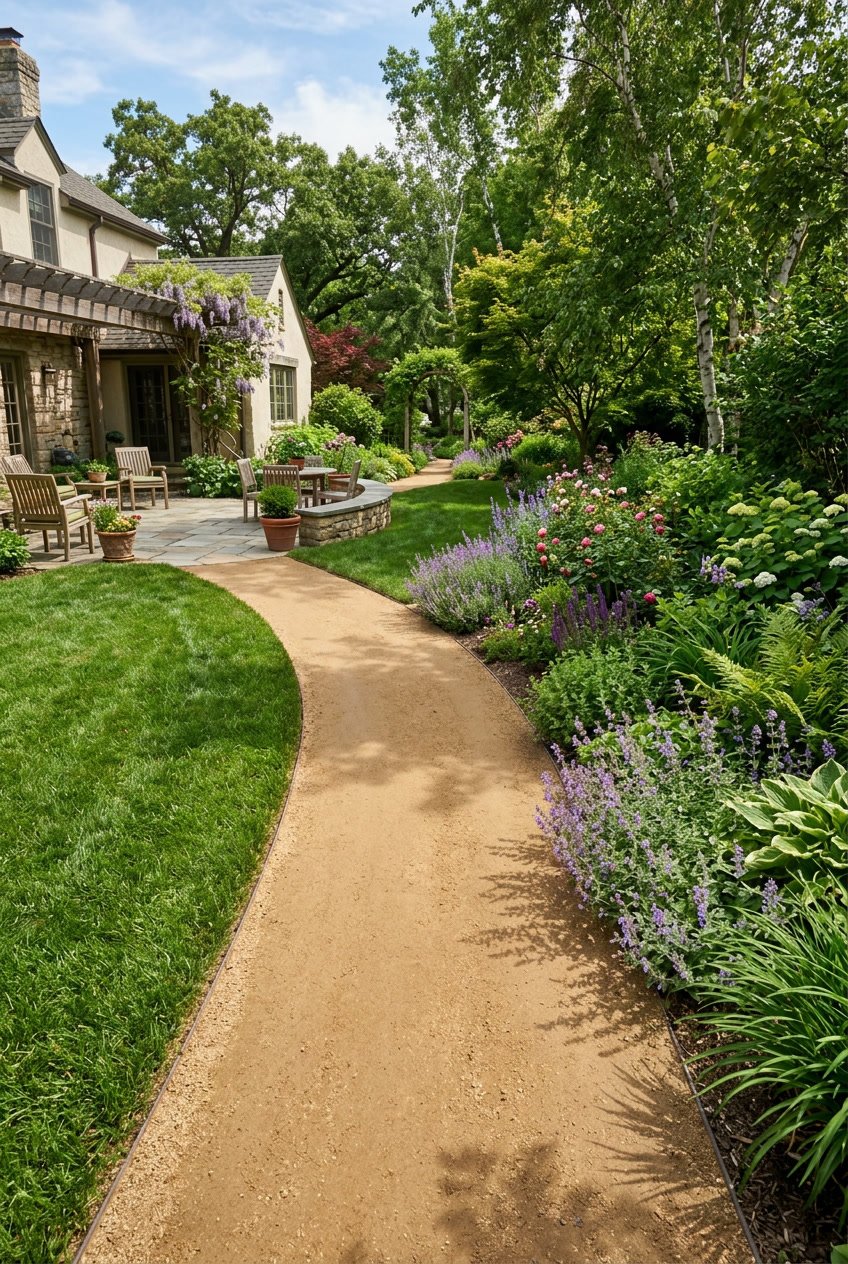
Loose paths can actually hold their own with a little help. Decomposed granite mixed with a stabilizer binder makes a smooth, natural trail that packs down and stays put.
The soft color blends in with almost any landscape.
This one’s a favorite for drought-friendly gardens, winding paths, or yards that want a natural look without big rocks.
It’s also easier on the wallet than a lot of hardscape options.
Expert Tip From MrPlanter: “Compact the base in thin layers so the surface stays even. If you want a neat finish, edge the path before the DG goes in.“
14. Round Concrete Steppers Through White Clover
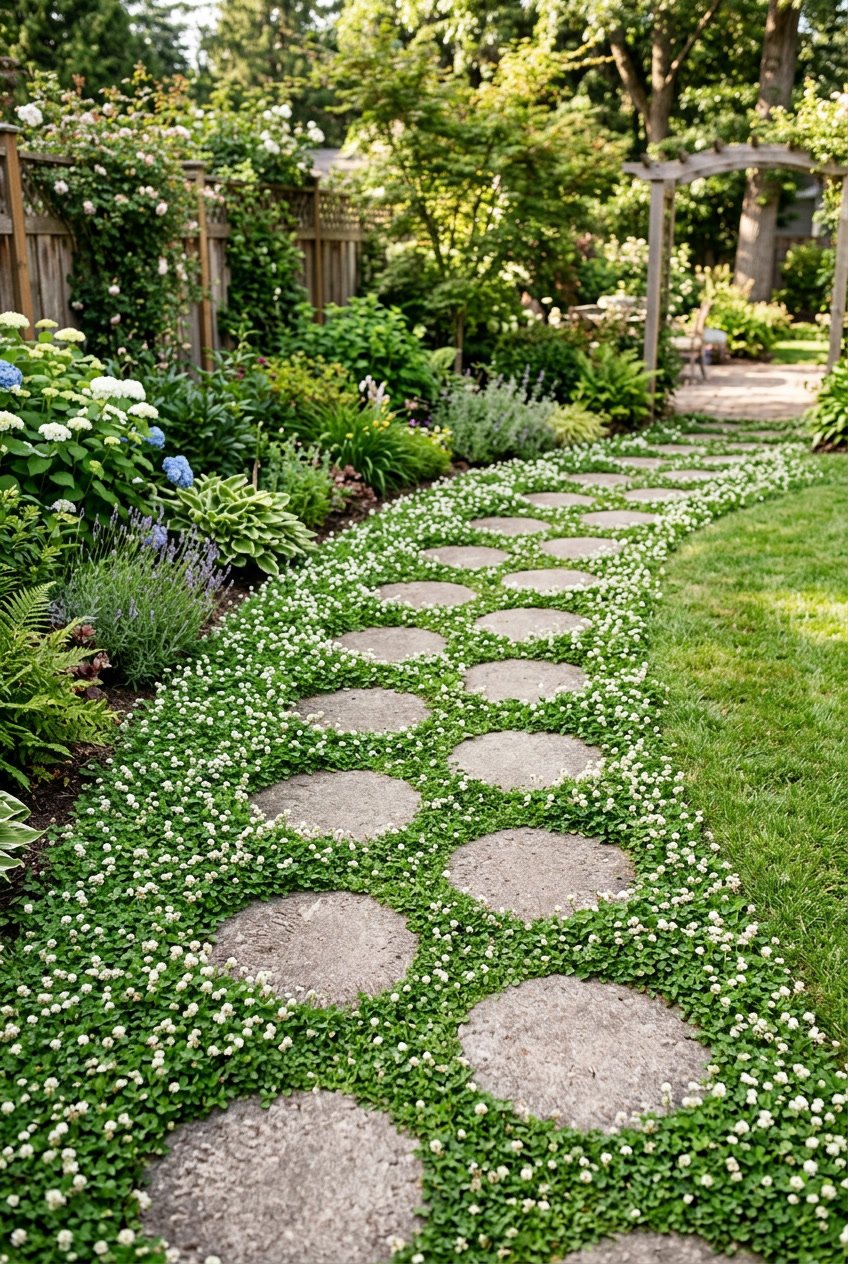
White clover is like the cheerful neighbor who always fills in the gaps. Round concrete steppers look simple and friendly, and the clover softens the path with a living green carpet.
The round shapes break up long lines and add a playful touch.
This setup works for relaxed gardens or families who want an easy path without a heavy look.
It can even help you mow less in those spots.
Expert Tip From MrPlanter: “Set the steppers at a comfortable stride and keep them flush with the turf. A slight height mismatch turns a cute path into a stubbed-toe contest.“
15. Slate Tile Walkway With Low Voltage LED Path Lights
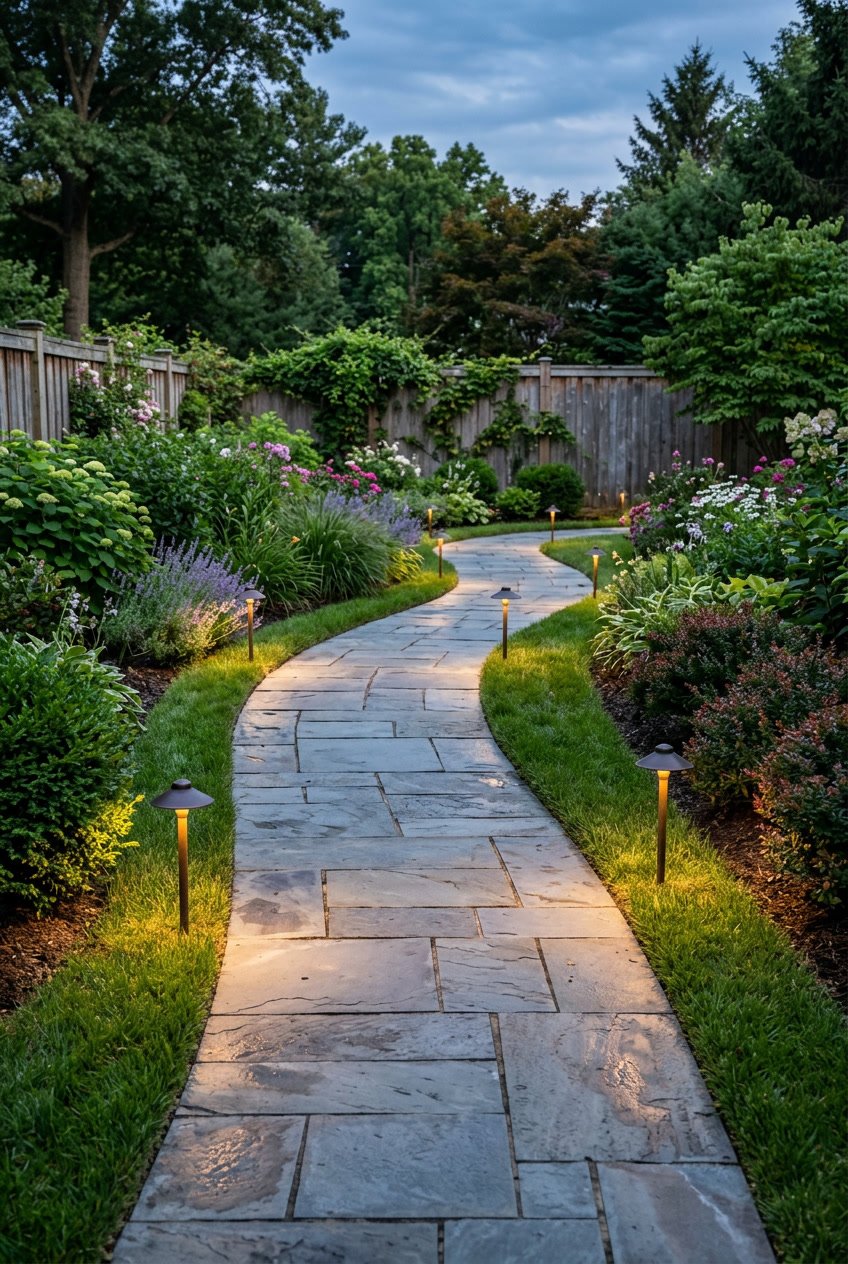
Let’s clear something up—walkways aren’t just for daytime strolls. Slate tile gives you this deep, layered look, and low voltage LED path lights let you use the yard long after the sun clocks out.
The lights make the path feel safe, but they don’t blast your yard with too much brightness. I love this setup for entertaining, side routes, or any garden path you wander at night.
Slate brings in texture, and those lights? Pure function and style. Expert Tip From MrPlanter: “Place the lights low and keep them spaced out so they guide your eyes but don’t blind you. A calm path light makes a dark yard way easier to use.“
16. Pallet Wood Walkway For A Rustic Vegetable Garden
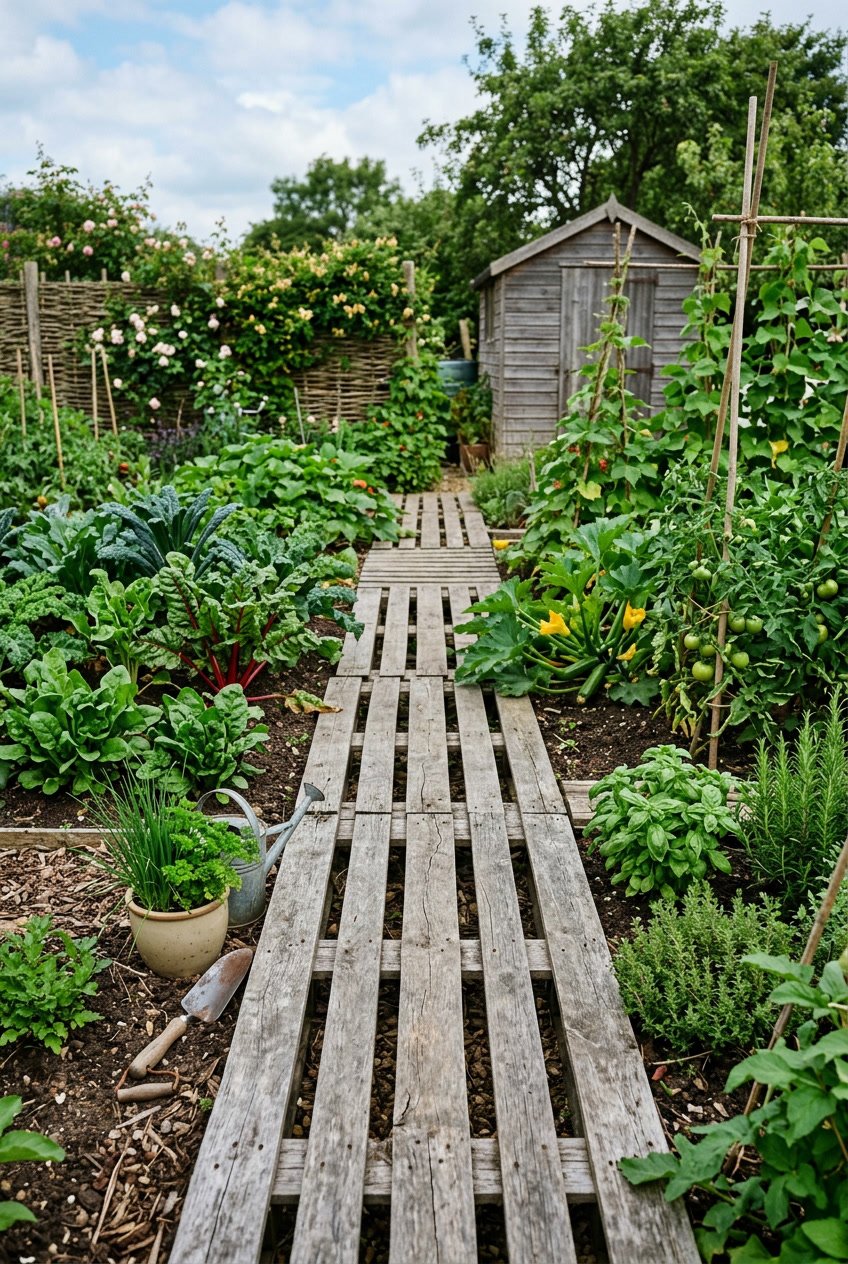
Let’s be real—veggie beds are awesome until it rains and you’re suddenly in a mud pit. Pallet wood walkways give you a cheap, rustic path and keep your shoes mud-free.
That rough texture just fits a working garden, you know? I like this for temporary or light-use spots, especially if you like a good DIY project.
Build it with care so the boards stay flat and you don’t trip. Expert Tip From MrPlanter: “Check each board for splinters and weak spots before you use them. Rustic is great, but your path should still feel sturdy when you walk on it.“
17. Cobblestone Path With Moss-Filled Joints
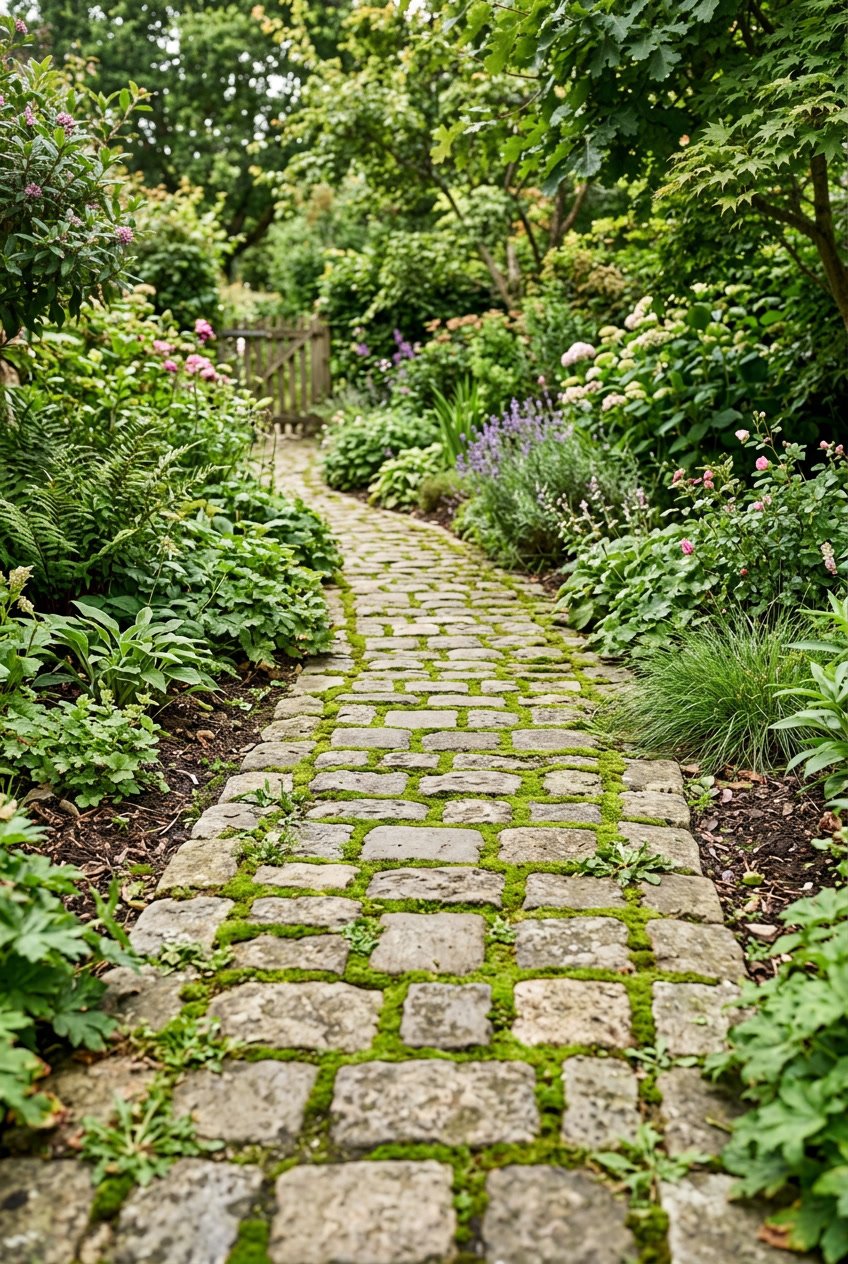
You might not expect it, but cobblestone can look old-school without getting too fancy. Moss in the joints softens the hard stone and gives the path a cool, lived-in vibe.
The texture is just rich, and the bumpy surface makes the garden feel like it’s been around forever. I’d use this where you want charm, not speed—think near a fountain, pergola, or a showy flower bed.
It’s gorgeous, but yeah, it’s not the softest underfoot. Expert Tip From MrPlanter: “Use cobbles where you want texture, not where you’re pushing a stroller in a hurry. Moss grows best when the cracks stay shady and damp.“
18. Mulch Path Framed With Pressure-Treated Timber
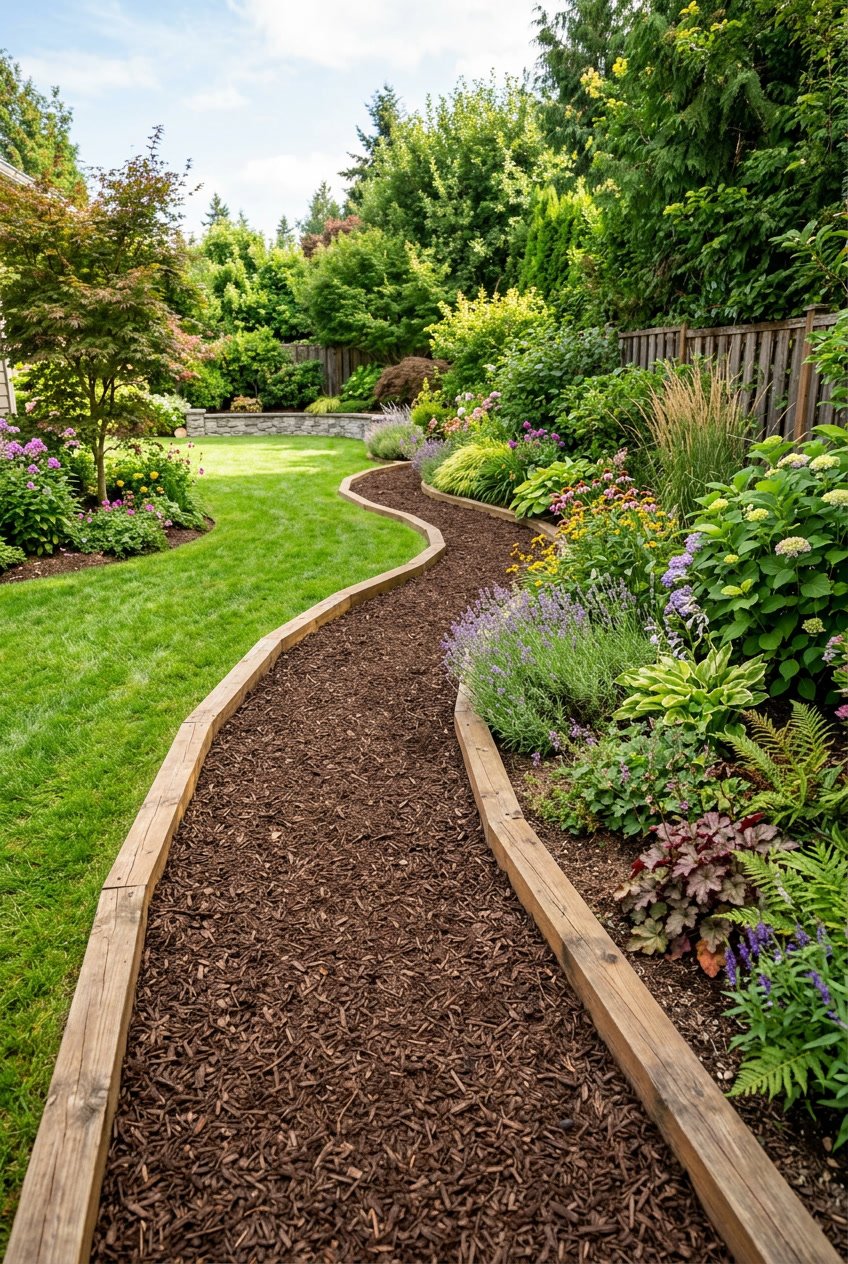
Here’s a myth to bust—mulch isn’t just for the “meh” corners. A framed mulch path feels soft underfoot, won’t break the bank, and you can build it right around your plants.
Pressure-treated timber keeps the edges neat and holds the mulch in place. I like this for temporary garden setups, kids’ paths, or places that don’t see heavy foot traffic.
You’ll probably need to top up the mulch now and then, but that’s the tradeoff for saving a few bucks. Expert Tip From MrPlanter: “Keep the timber frame level so the mulch doesn’t spill everywhere like a bag of chips with a hole. A thicker mulch layer feels great underfoot, too.“
19. Broom-Finished Concrete Walkway With Clean Modern Lines
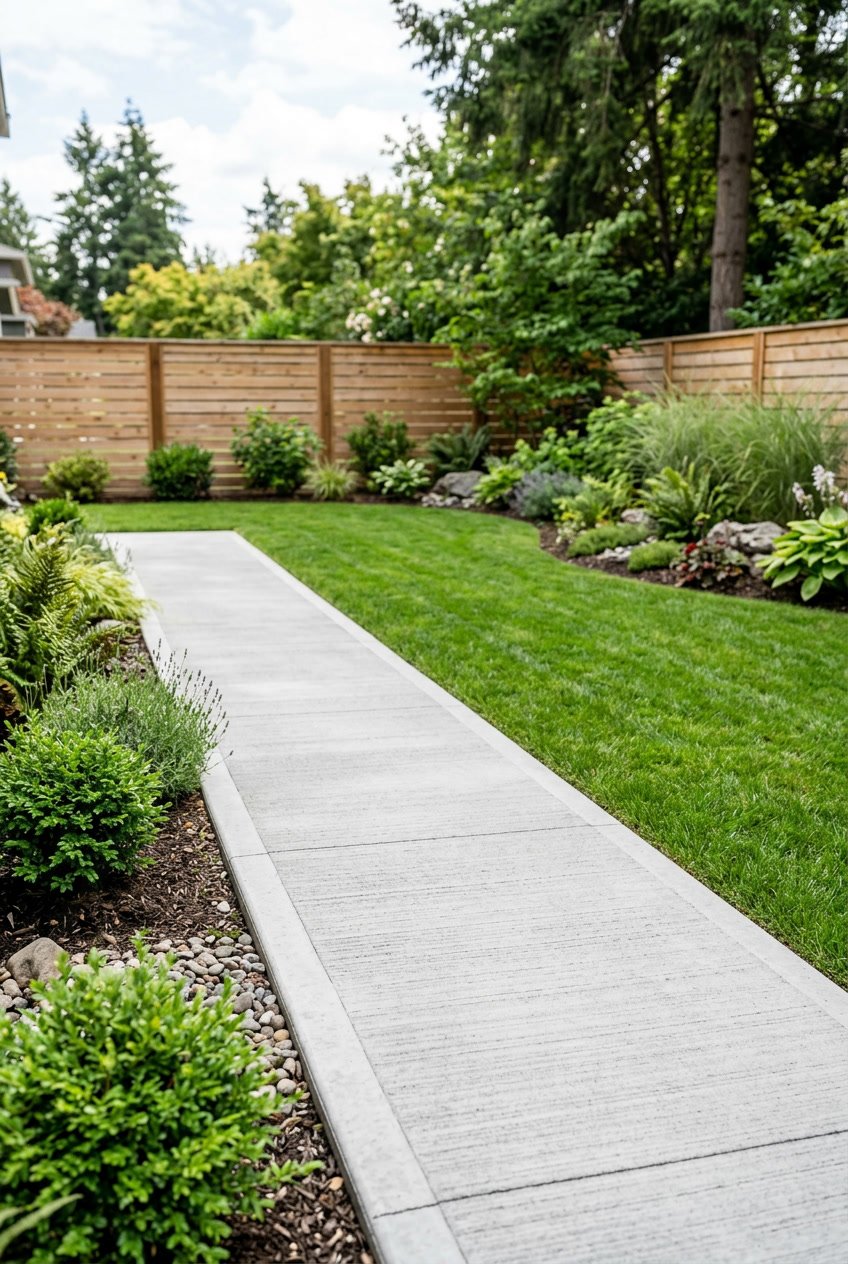
If concrete could talk, broom-finished would be that reliable friend who shows up early and looks sharp. The textured surface gives you grip, and those crisp lines just make the yard look tidy.
It’s a straight-shooter—no frills, just good looks. I think this works best for modern homes, utility paths, or anywhere you want something simple and easy to take care of.
You can always soften the vibe with some plants along the sides. Expert Tip From MrPlanter: “Ask for control joints to be lined up neatly so cracks stay in check. Clean edges and good grading do most of the heavy lifting here.“
20. Travertine Paver Walkway Around A Backyard Pool
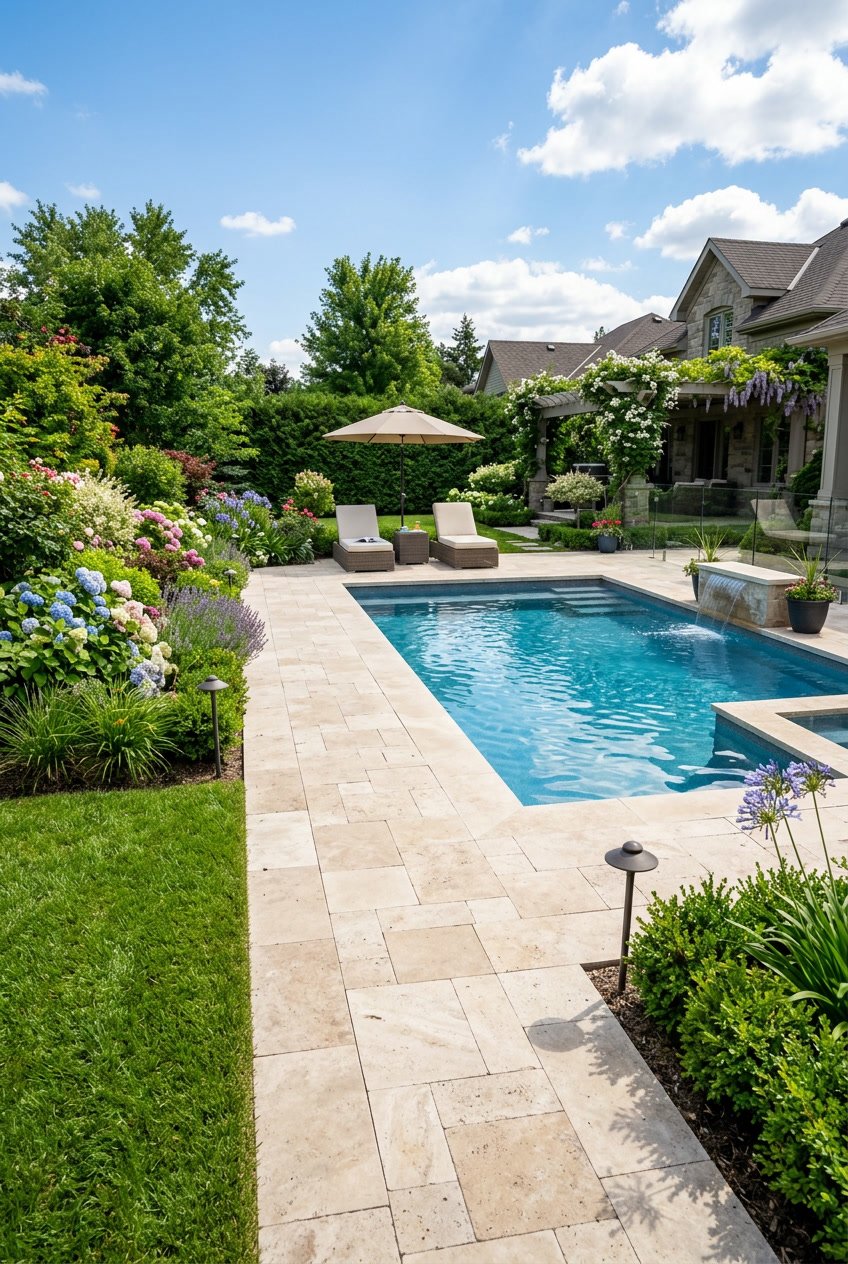
Pools need to look good and keep you safe—no arguments there. Travertine pavers bring a soft, fancy look, and they usually stay cooler than dark stone, which is a lifesaver for bare feet in summer.
I like using these around pools, patios, or lounge spots where you want that “resort” feel. Travertine pairs up nicely with water, stone, and loads of greenery.
Expert Tip From MrPlanter: “Pick a finish with enough grip for wet feet. Lighter colors keep the area cooler and brighter when the sun’s blazing.“
21. Brick And Pea Gravel Ribbon Walkway
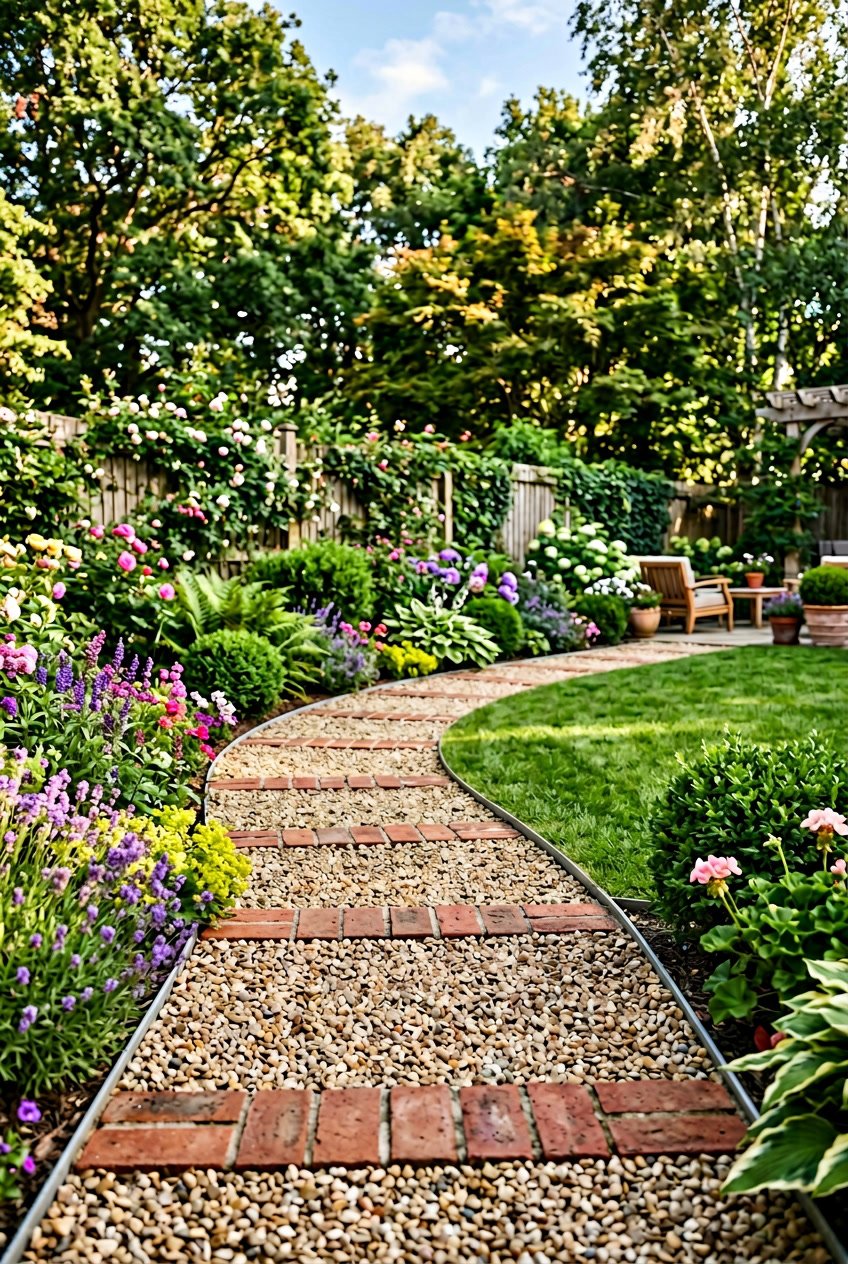
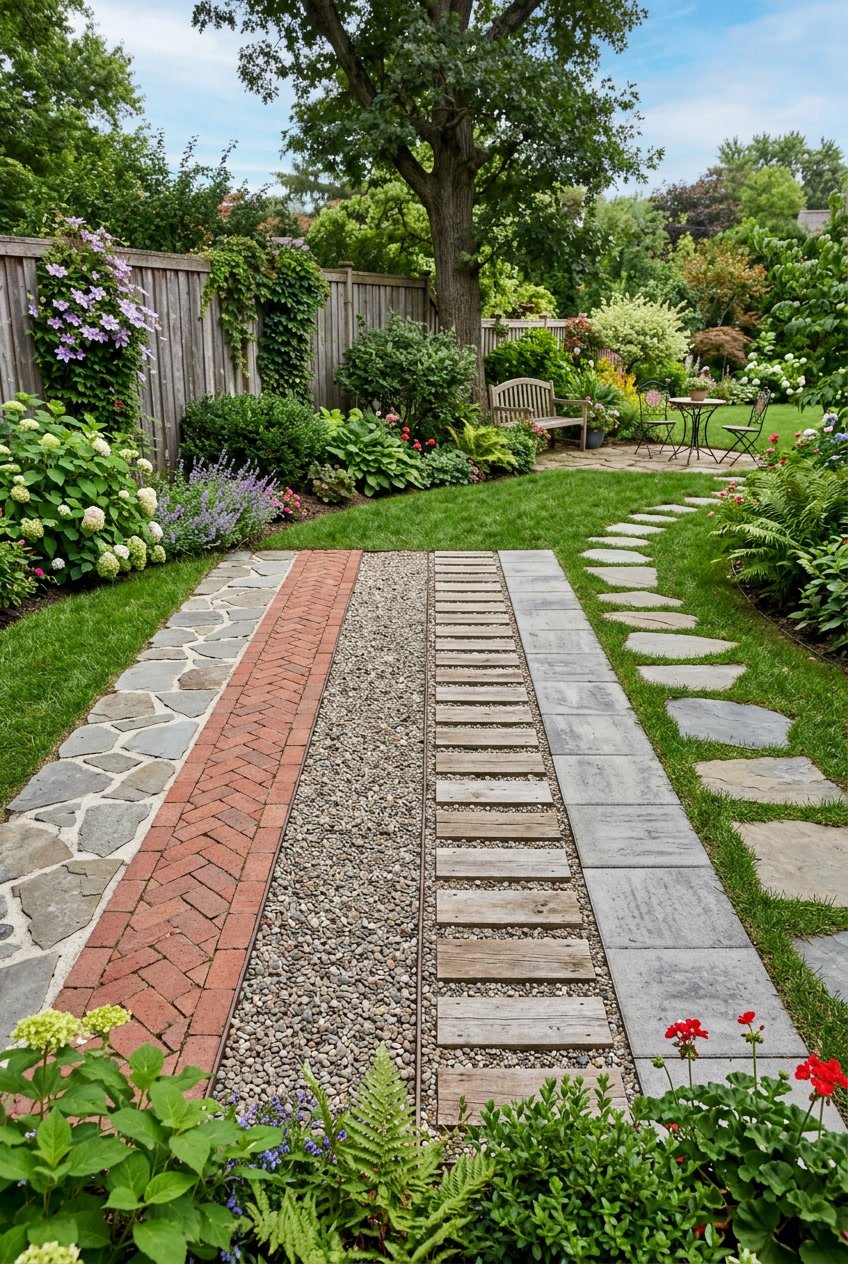
Mixing materials is way easier than you’d think, and it makes a path look custom without fuss. Brick and pea gravel together create a ribbon effect that feels relaxed but still has some structure.
The brick gives the path shape, and the gravel adds movement and fun texture. I like this in cottage gardens, side yards, or anywhere you want more personality than plain gravel.
It can also break up a long walkway into friendlier chunks. Expert Tip From MrPlanter: “Repeat the same brick tone in a few spots so the design feels connected. Strong edges keep the pea gravel from sneaking into your flower beds.“
How To Choose The Right Backyard Walkway
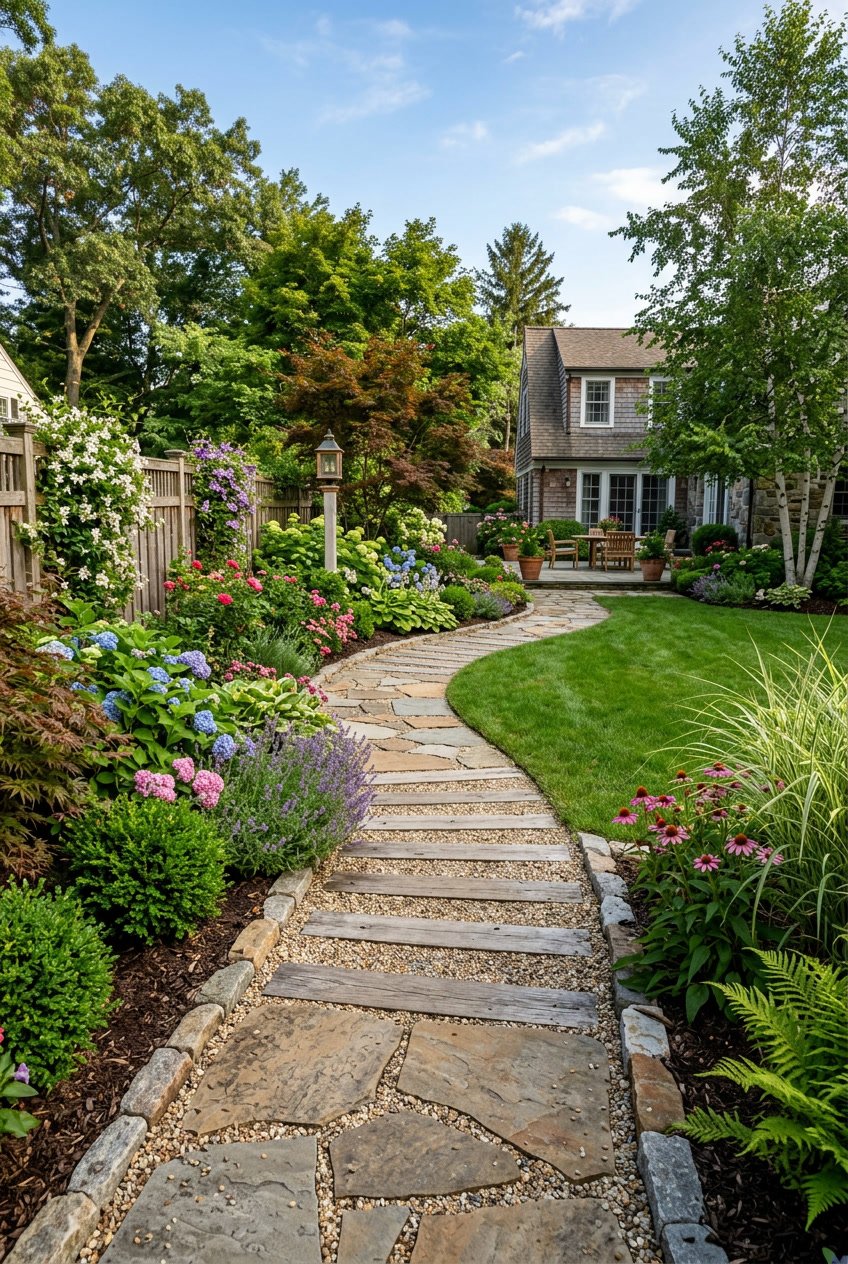
Match The Path To Your Yard Style
Your walkway should fit your home and garden, not fight them like an unruly shopping cart. Cottage yards usually love flagstone, brick, or gravel.
Modern spaces? They look sharp with concrete slabs, porcelain pavers, or straight-edged stone. Just think about your plants, fences, and patio stuff before you pick.
Pick Materials For Your Climate
Weather matters—a lot more than folks admit. Wet areas do better with gravel, permeable pavers, or anything that helps with drainage.
If you live somewhere sunny and hot, lighter stones like travertine or pale concrete won’t roast your toes.
Balance Budget With Maintenance
Some paths are cheap to build but need more TLC later. Mulch, gravel, and decomposed granite are easy on the wallet, while brick, slate, and porcelain cost more but usually need less fuss day-to-day.
Pick the kind of “easy” that actually works for your life.
Plan Width, Drainage, And Safety
A good path shouldn’t feel cramped. Leave enough space for two people to walk side by side if it gets busy, and don’t forget—water needs somewhere to go.
A walkway that looks nice and doesn’t turn into a slip-n-slide after rain? That’s the dream.
Backyard Walkway Materials At A Glance
Best For Low Maintenance
- Concrete pavers
- Porcelain pavers
- Broom-finished concrete
- Travertine
- Brick with solid edging
Best For DIY Installation
- Gravel
- Mulch
- Stepping stones
- Decomposed granite
- Pallet wood for light-use areas
Best For Budget-Friendly Projects
- Gravel with edging
- Mulch framed with timber
- Decomposed granite
- Reclaimed brick
- Stepping stone paths
Best For Upscale Curb Appeal
- Bluestone
- Slate
- Travertine
- Mosaic pebble patterns
- Herringbone brick with a border detail