You want your ball python to have a home that keeps it healthy and curious—and hey, it should look good in your living room too, right?
Here are 15 easy, creative enclosure ideas you can actually pull off to build a safe, comfy, and lively habitat your snake will love.
Get ready for options like DIY frames, bioactive setups, heating tricks, smart decor swaps, and some simple safety fixes.
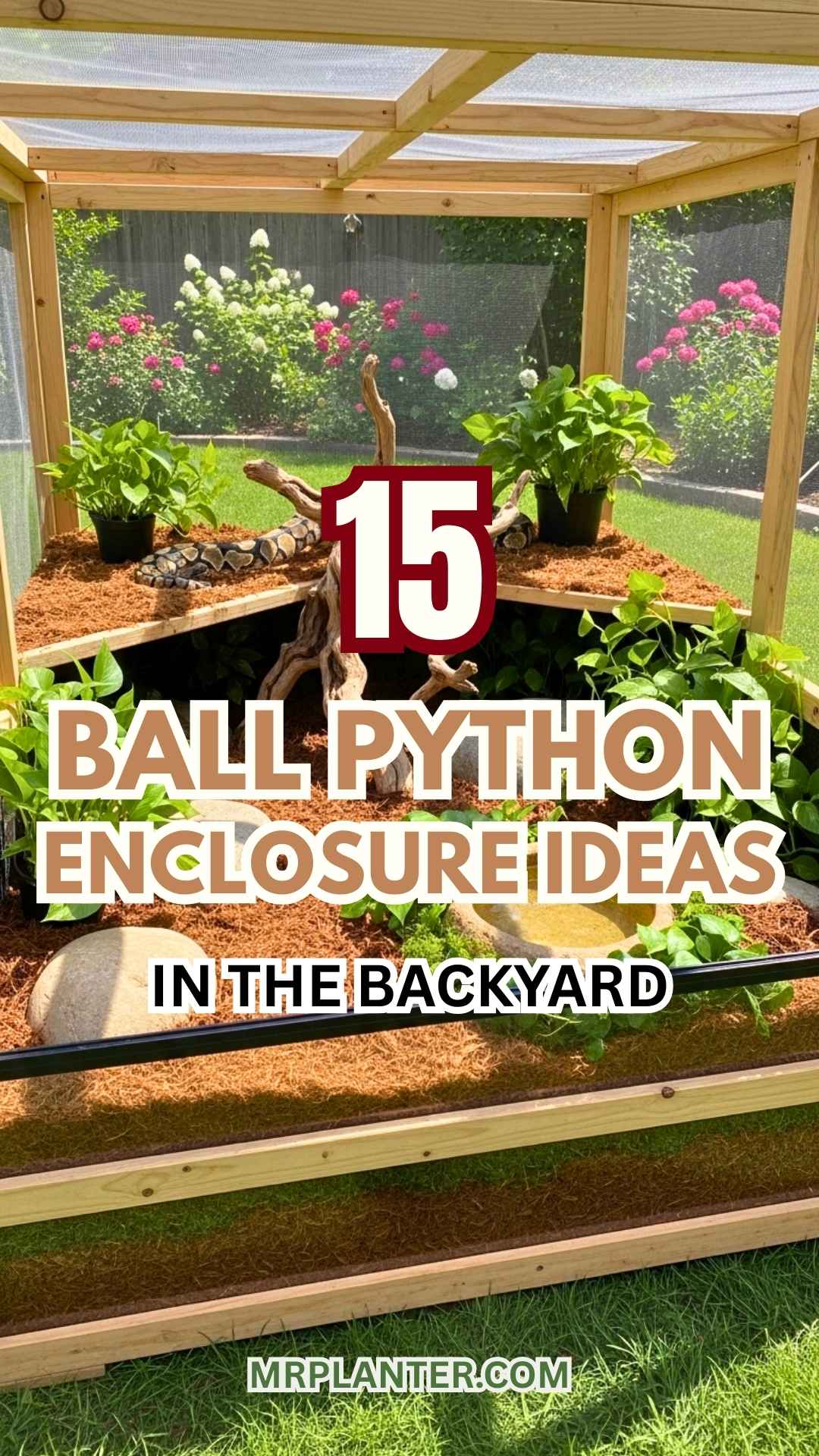
Pick what fits your skills, wallet, and the vibe you want—jungle, desert, or maybe a cozy woodland.
1. DIY PVC Frame Enclosure (4’x2’x3′) – Easy and secure for beginners
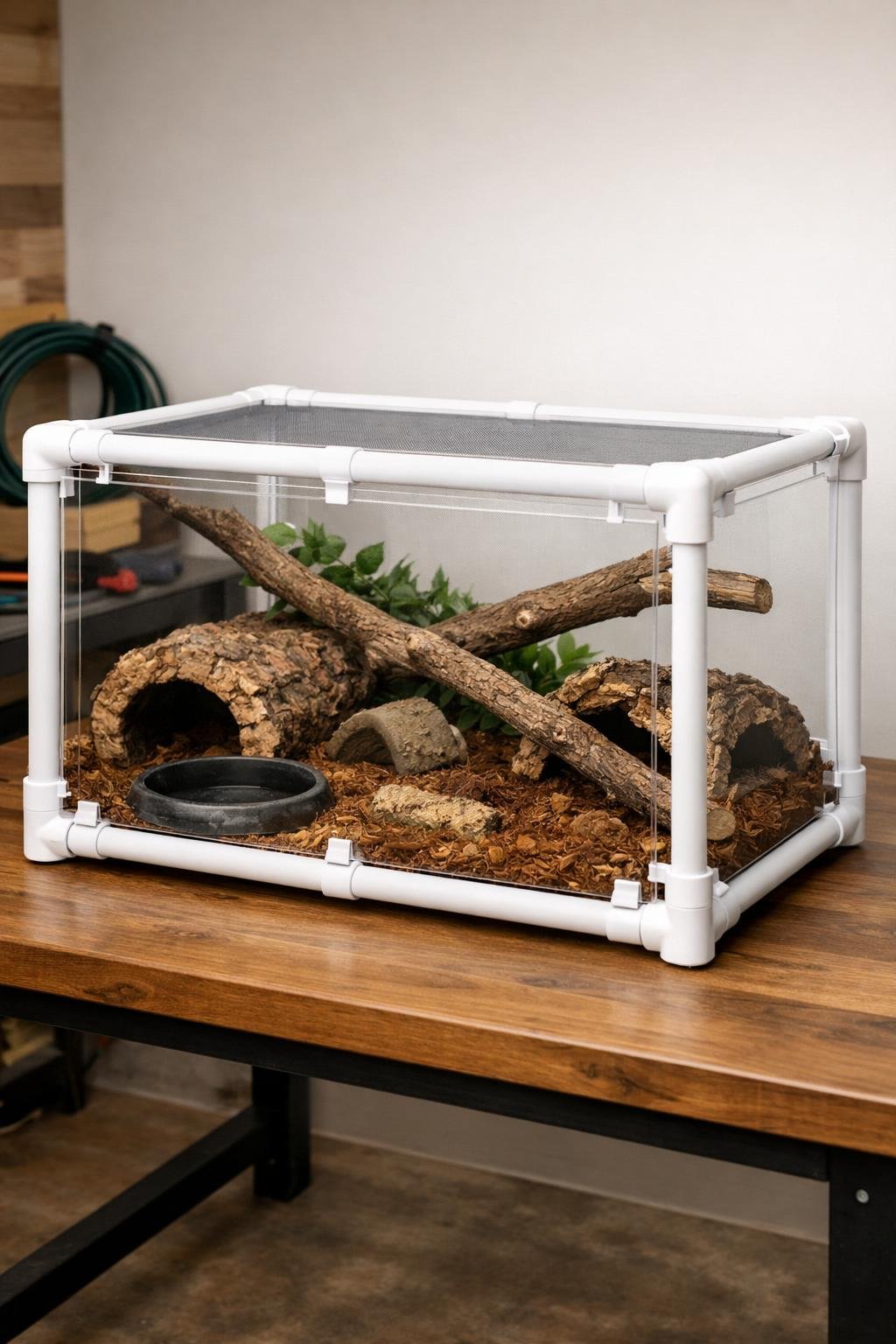
Here’s the truth: you don’t need fancy gear to give your ball python a safe, comfy home. A 4’x2’x3′ PVC frame is light, sturdy, and super easy to clean—perfect if you’re just starting out.
You can build it with PVC panels, a simple frame, and some secure fasteners. This gives your snake plenty of floor space for hides and a nice warm-to-cool gradient, but won’t eat up your whole room.
PVC shrugs off moisture and wipes clean in seconds. It helps keep humidity steady and mold low. You can also stack or move it if you ever want to switch up your room.
Expert Tip From MrPlanter: Measure twice, cut once—trust me, you don’t want to waste parts. Put a snug hide on each end so your snake feels safe and can warm up or cool down as needed.
2. Bioactive Setup with live plants and springtails for that jungle feel
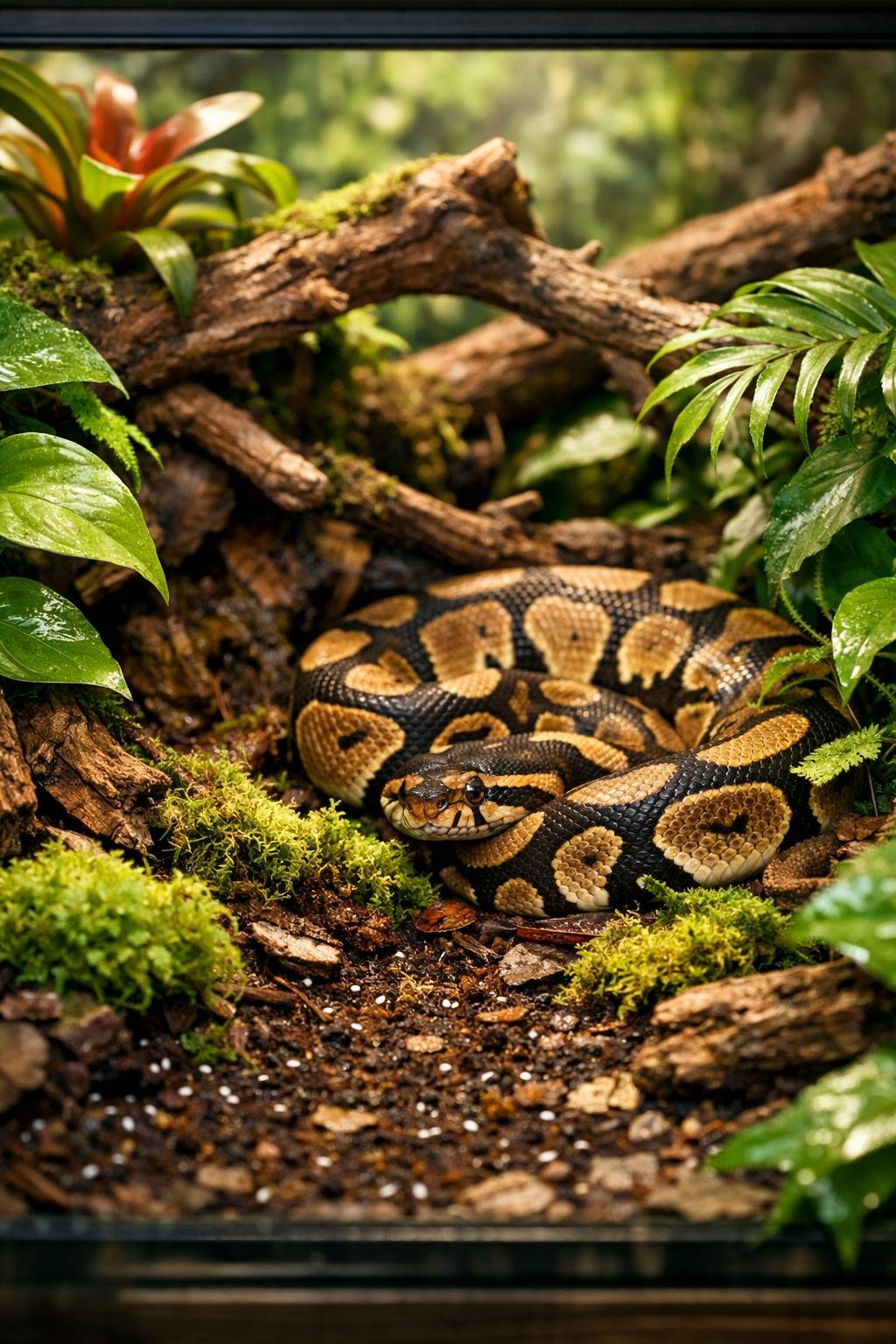
Guess what? Your ball python won’t munch on the plants, but those plants will keep the tank fresh. A bioactive setup uses live plants, a good substrate, and tiny helpers like springtails and isopods to break down waste.
You get real humidity control and a natural look that just feels right. Plants give hiding spots and little climate pockets, while springtails fight mold so you clean less.
Start with snake-safe plants, a layered substrate, and a batch of springtails. Let everything settle before adding your snake, so the system can balance out and stay chill for your pet.
Expert Tip From MrPlanter: “Start with easy plants like pothos or snake plant, and add springtails for mold control. Let the setup run for a few weeks before introducing your snake so everything balances out.“
Relatable Problem
3. Rearranging Decor Monthly – Keeps your ball python guessing and entertained
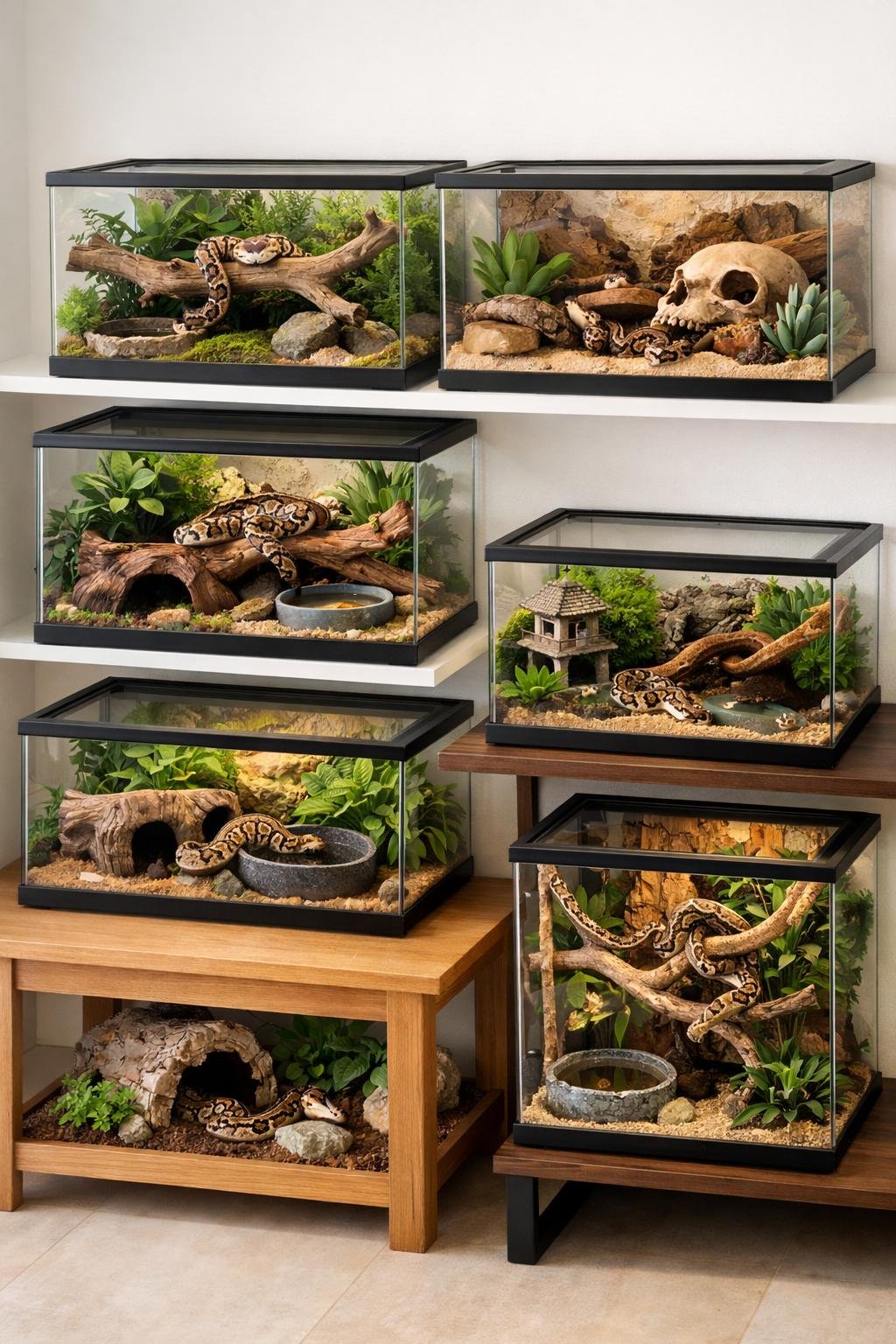
Ever notice your snake lounging in the same hide, same branch, same spot for months? If you move things around a bit each month, you give your snake new textures and paths to explore. It’s like a little adventure without causing stress.
Start with small changes so your python still feels safe. Maybe swap a hide, tilt a branch, or shift the substrate. These tiny tweaks spark curiosity and gentle movement.
Watch how your snake eats and hides after you change things up. If it looks stressed, slow down and keep its favorite hide in the usual spot. This is playtime for them, and you get to see what they like best.
Expert Tip From MrPlanter: Change one thing at a time so your snake can adjust. Always keep their favorite hide in the same spot for comfort.
4. Temperature Gradient Zones – 88-92°F warm side, cooler side below 80°F
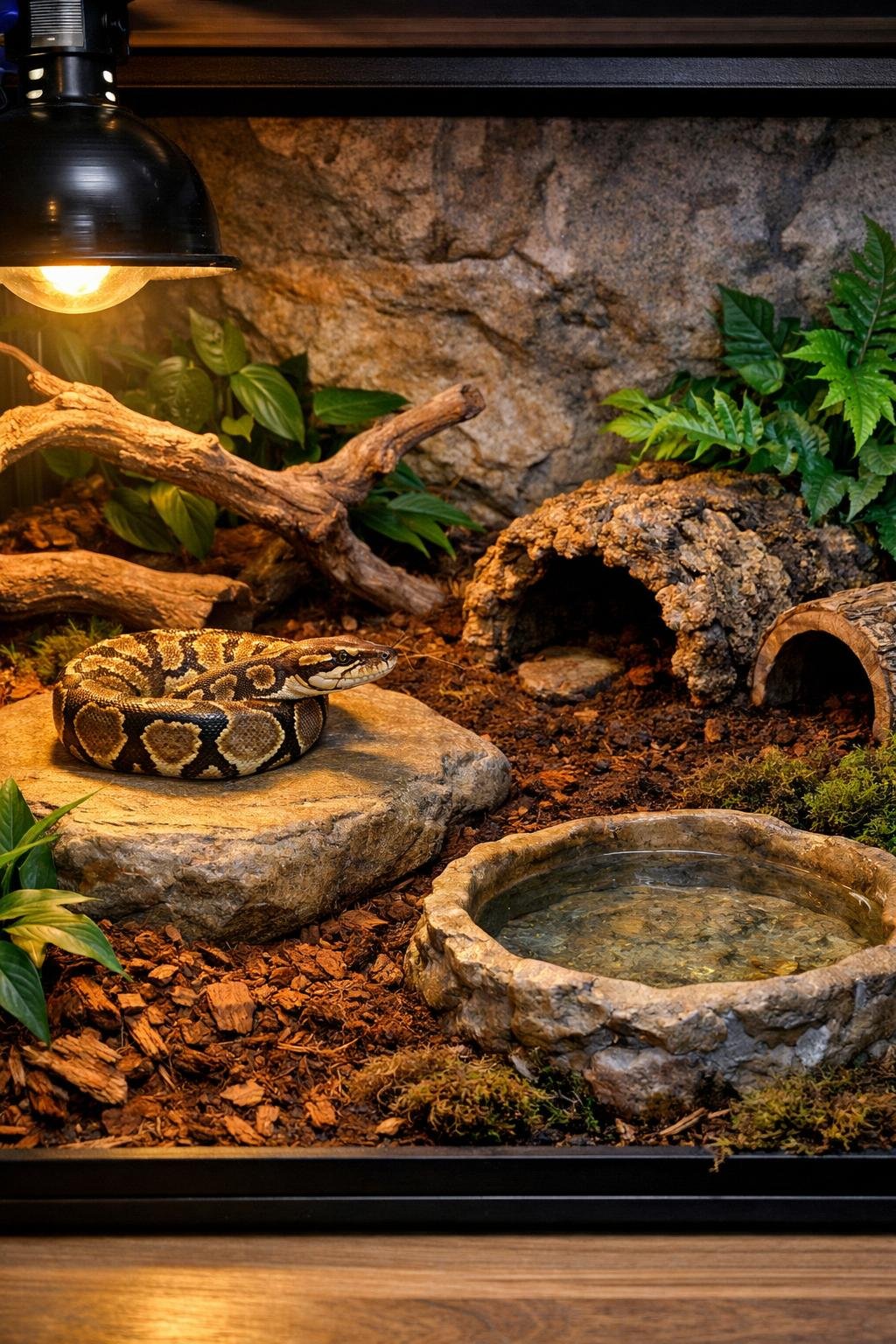
Here’s something a lot of folks miss: your ball python doesn’t want the same temperature everywhere.
Set up a warm side around 88–92°F for digestion and comfort, and a cool side under 80°F for cooling off. This gives your snake options and keeps it healthy.
Use a thermostat and put heaters on one side only. Check surface and air temps with good digital thermometers at both ends every day.
Keep night temps above 75°F so the tank doesn’t get chilly. Even small changes make a difference, so aim for a steady, safe range.
Expert Tip From MrPlanter: “Put an under-tank heater or ceramic heat emitter on the warm side, always with a thermostat. Check temps twice daily until you’re sure the gradient stays steady.“
5. Coconut Fiber Substrate – Cozy, moisture-retentive, and natural
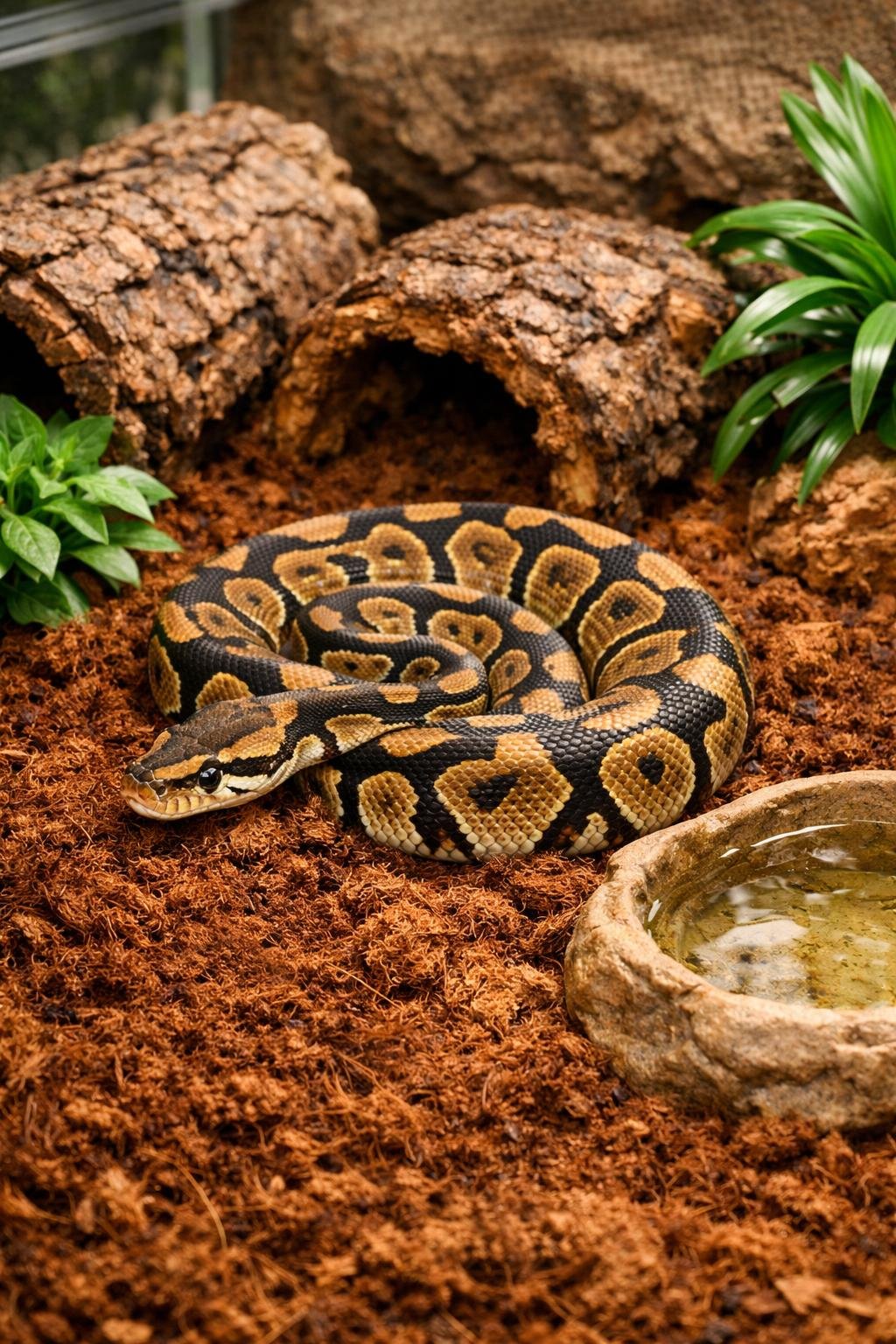
Here’s a fun one: coconut fiber holds water like a champ without turning to mush.
You’ll love how it puffs up from a brick into soft, loose bedding that your snake can burrow into. It feels natural and helps mimic their tropical roots.
Coconut fiber doesn’t kick up much dust and breaks down slowly, so it’s easy to spot-clean and swap out. It keeps odors down, too, so your room doesn’t start smelling like a swamp.
Mix it with other safe substrates for firmer burrows, or use it solo for a softer floor. Check humidity and change any damp spots to avoid mold and keep your snake happy.
Expert Tip From MrPlanter: “Wet the brick slowly and fluff it up before adding to the tank. Swap out any moldy bits right away to keep your snake safe.“
Surprising Fact: Your ball python can enjoy a real day-night rhythm without a blinding hot bulb.
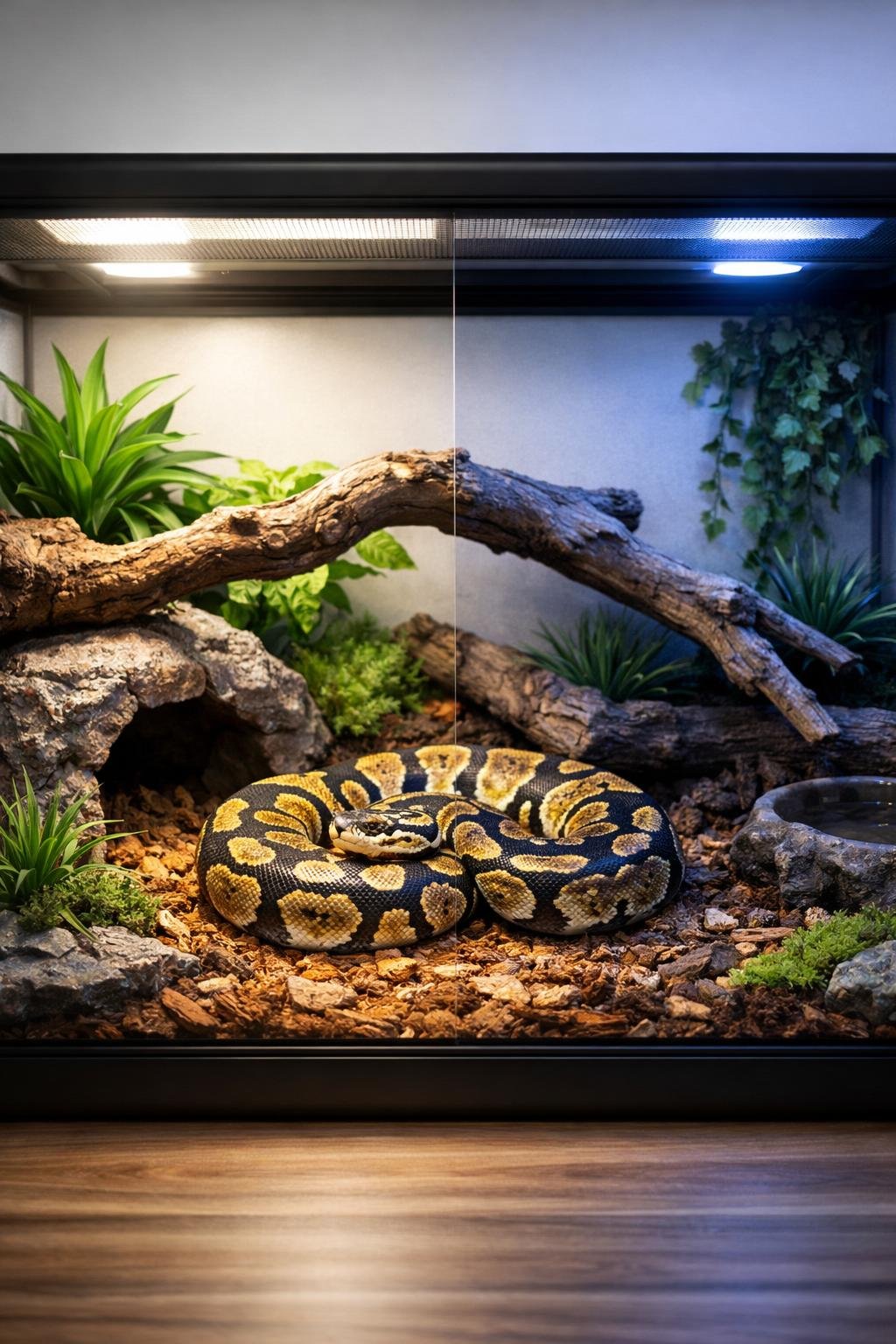
6. LED Day/Night Lighting – Mimics natural daylight cycles without heat
LED strips let you set up daylight, sunset, and night tones without heating up the tank. You can use timers so your snake gets a clear day and night, which helps its internal clock and keeps its routine steady.
Pick full-spectrum LEDs for reptiles or high-CRI white lights to show off true colors and make viewing better. Dim or red night LEDs let you peek in without waking your pet, and they don’t mess with your heat setup.
LEDs use barely any power and last forever. They fit in tight spots and look clean in modern enclosures.
Expert Tip From MrPlanter: Use a timer for the lights so the schedule never changes. That steady routine helps your python feel right at home.
7. Dual Hides Setup – One on warm side, one on cool for choice retreats
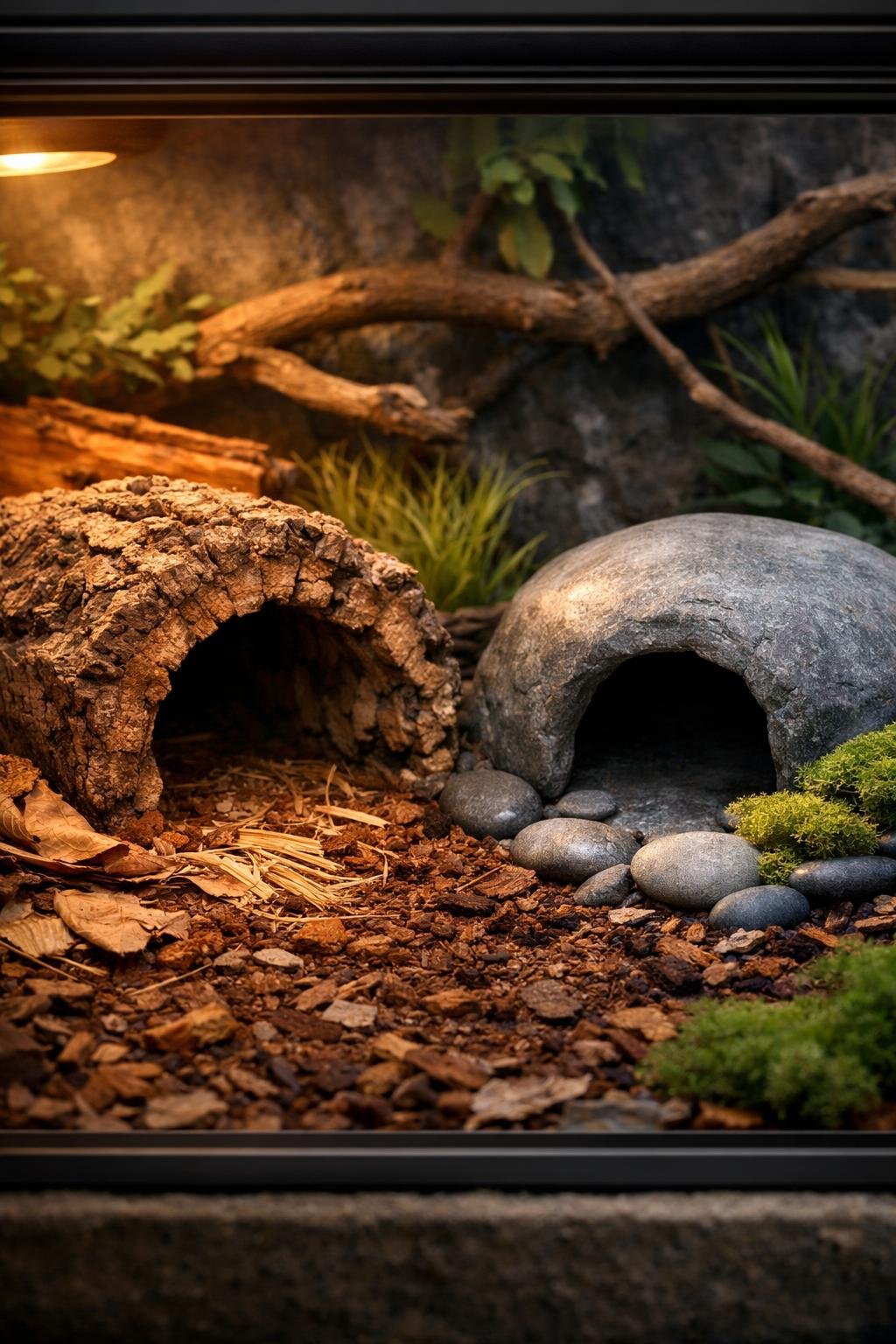
Your ball python shouldn’t have to pick between comfort and safety—it wants both!
Give your snake one snug hide on the warm side and another on the cool side. This way, it can pick based on how it feels, whether it’s digesting or just chilling out. It makes them feel safe and in control, which means less stress.
Put hides where your snake can easily move between warm and cool spots. Try different textures or shapes so your snake can pick what feels best that day. Hides should be snug but roomy enough for a quick turn, and toss in a bit of damp moss during shed season.
Expert Tip From MrPlanter: Offer at least two hides, one on each end. That little bit of choice makes your snake way calmer and more confident.
8. Water Dish Big Enough for Soaking – Hydration and mini spa days
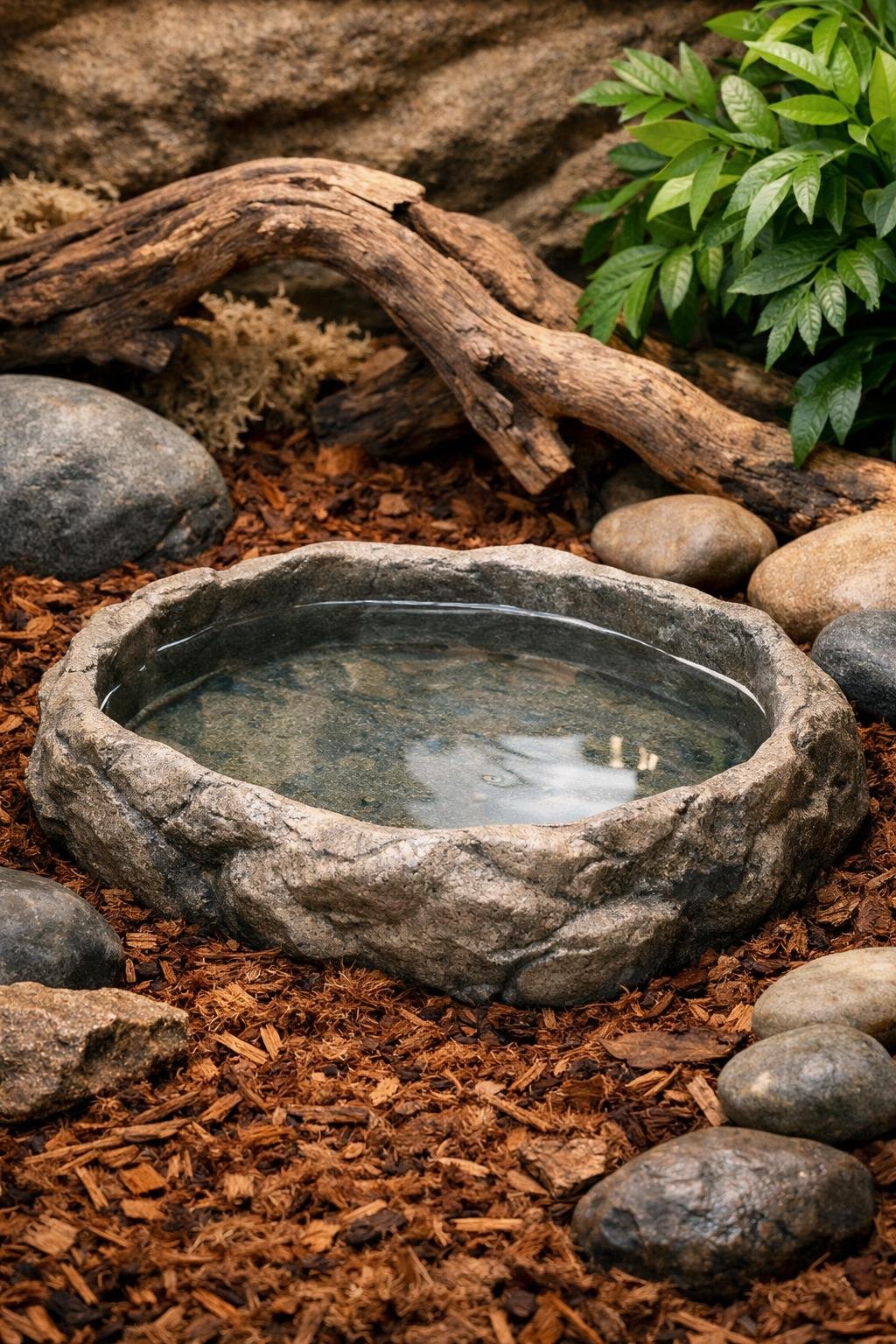
Let’s be real: a tiny water dish just doesn’t cut it, and your snake will probably skip it anyway. A bigger bowl lets your snake soak, drink, and feel safe. Soaking helps with shedding and keeps that skin in top shape.
Pick a dish that fits the enclosure but is deep enough for a good soak. It should be sturdy so it doesn’t tip, and easy to clean. Change the water daily and watch for spills that might mess with the humidity.
Ceramic or heavy resin bowls work great because they stay put. Add a ramp or low edge so your snake can get in and out easily.
Expert Tip From MrPlanter: Try putting the bowl on the warm side sometimes to encourage soaking. Clean it often and keep a backup dish ready to swap in.
9. Branch Perches and Climbing Vines – Because ball pythons love to stay fit
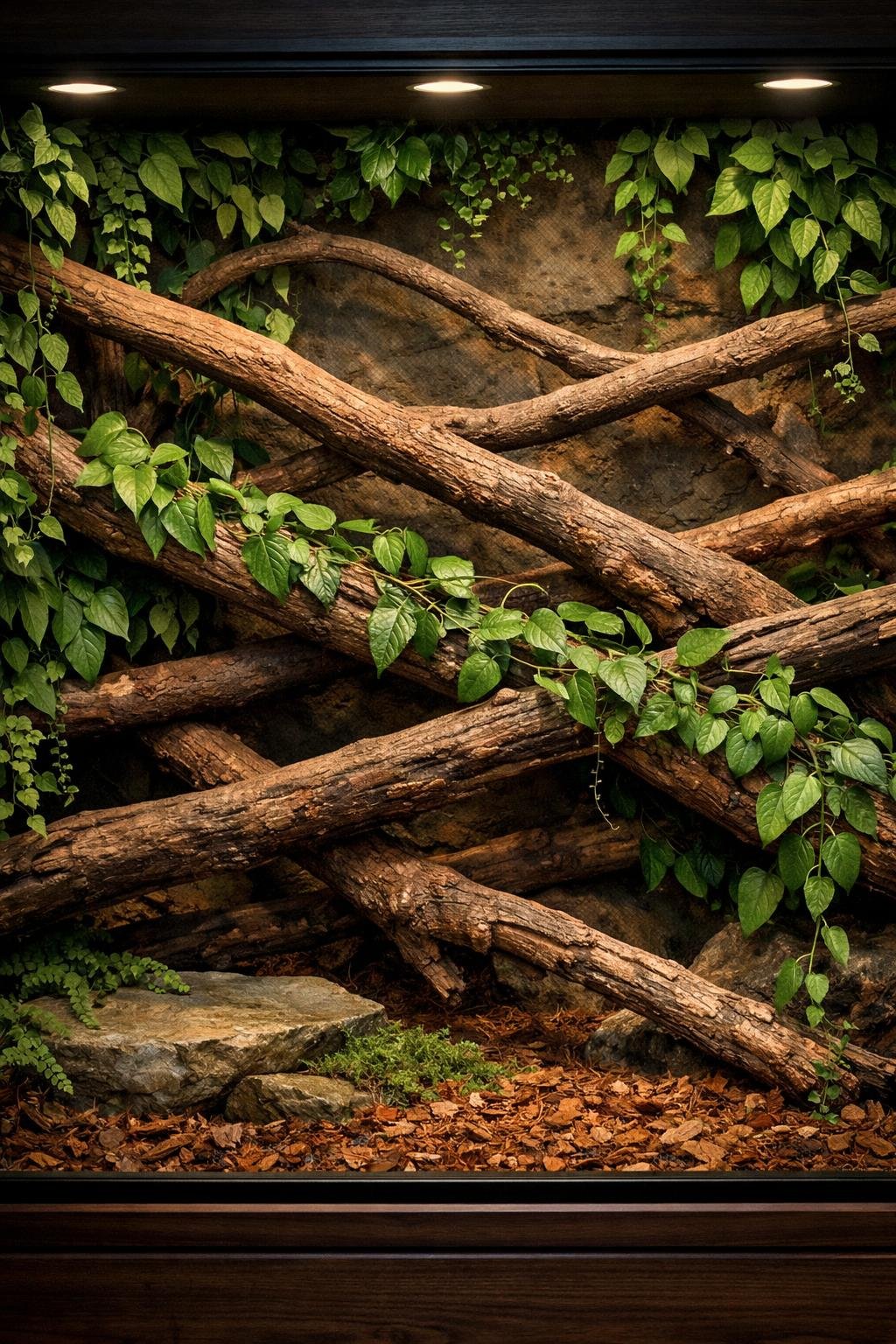
Here’s a secret: ball pythons aren’t just couch potatoes. They actually enjoy low climbs and perches, which give them exercise and something to think about.
Add sturdy branches, some climbing vines, and a couple of perches. Make sure everything’s locked down tight so nothing wobbles or crashes down when your snake gets curious.
Go for natural-looking fake vines or smooth, sealed branches that won’t splinter. Put hides both on the ground and a bit higher so your snake can pick a favorite spot.
Mix up heights and thicknesses to keep things interesting. Make sure it’s all easy to clean, and swap pieces now and then to keep your snake guessing.
Expert Tip From MrPlanter: Always check that branches are stable before letting your snake roam. Swap out anything rough or broken right away.
10. Themed Terrarium Ideas – Jungle vibe, desert chic, or woodland retreat
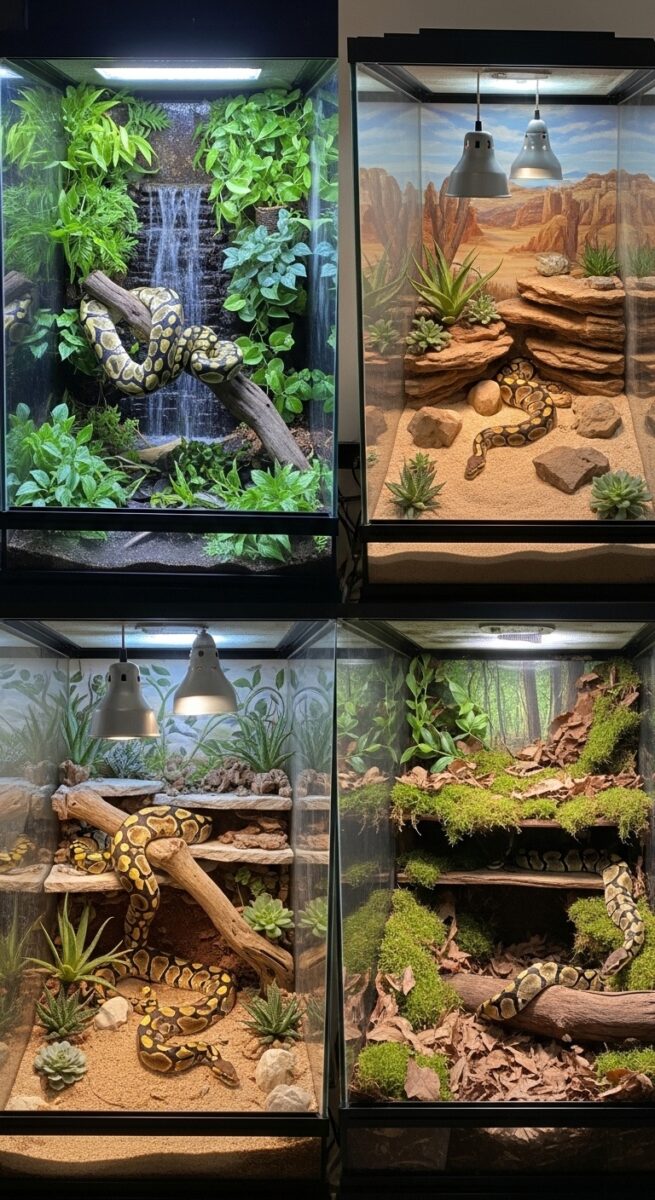
You don’t need to break the bank to give your python a cool-looking home.
Pick a theme that fits your snake and your style. Jungle setups mean more plants, higher humidity, and vines for climbing. Desert chic uses sandy colors, fewer plants, and warm basking spots.
Woodland retreat is all about leaf litter, logs, and cozy hiding caves. Just balance the look with good function—hides, deep enough substrate, and solid heating matter most. Light, safe decor keeps cleaning simple and your snake comfy.
Expert Tip From MrPlanter: “Start small, add pieces over time, and see what your snake likes. Always use clean, non-toxic materials so your pet stays healthy.”
11. Humidity Control via Silicone Sealant – Keep that 50-60% balance perfect
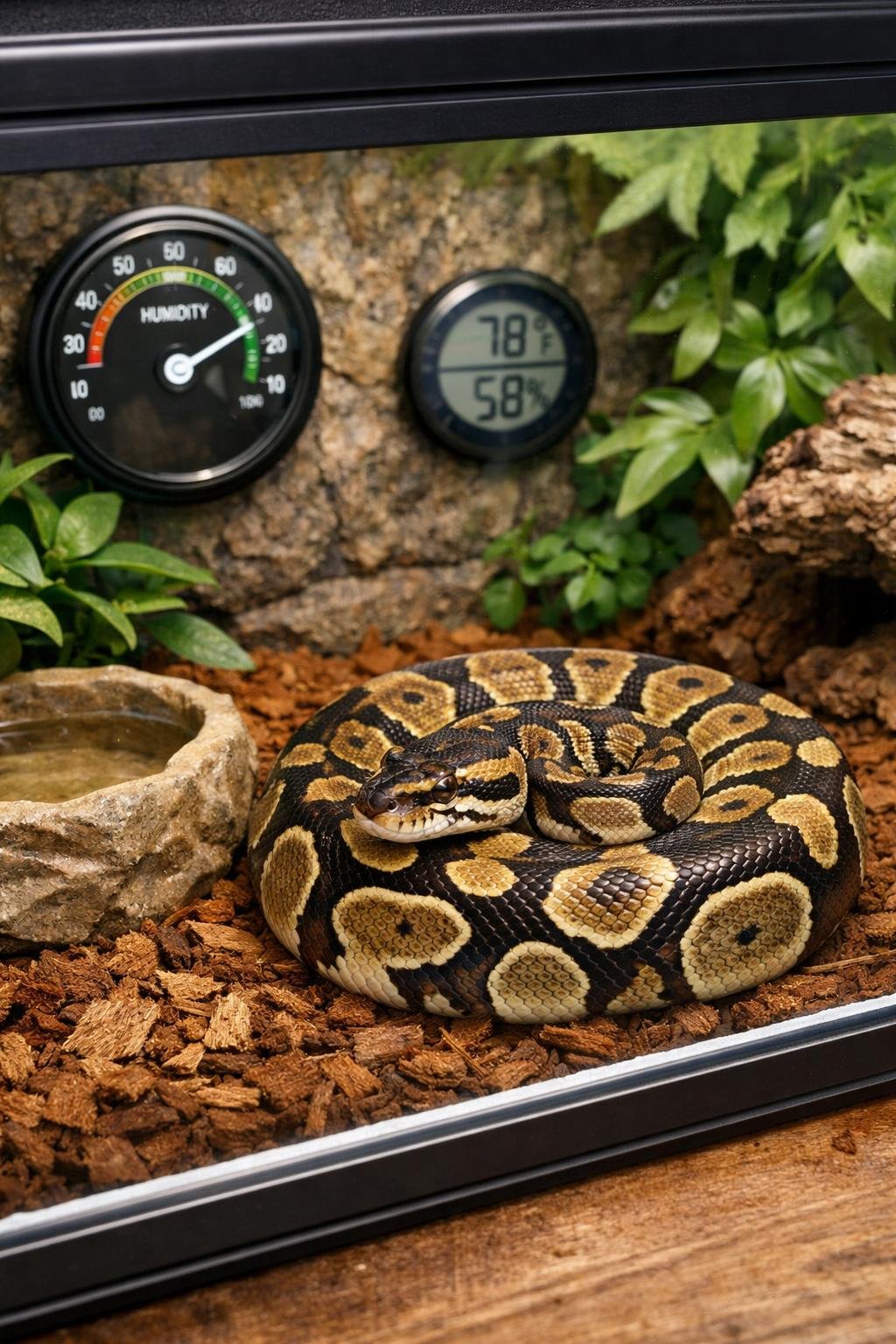
Let’s clear this up: sealing the cage won’t turn it into a swamp if you do it right. Use silicone sealant to close up little gaps so moisture stays in. That helps keep humidity steady around 50–60%, which is great for your ball python.
Seal up edges around mesh tops or back seams with weatherproof silicone. Don’t block the airflow completely—leave a tiny gap for fresh air.
Check humidity with a digital hygrometer in a couple of spots. If it drops, add a humid hide or a bit of damp moss. If it gets too high, crack a vent.
Expert Tip From MrPlanter: Seal small gaps with low-odor silicone and wait a day before your snake goes back in. Test humidity for a few days to make sure it’s holding steady.
12. Glass Enclosure with Mesh Lid – Clear views but proper ventilation
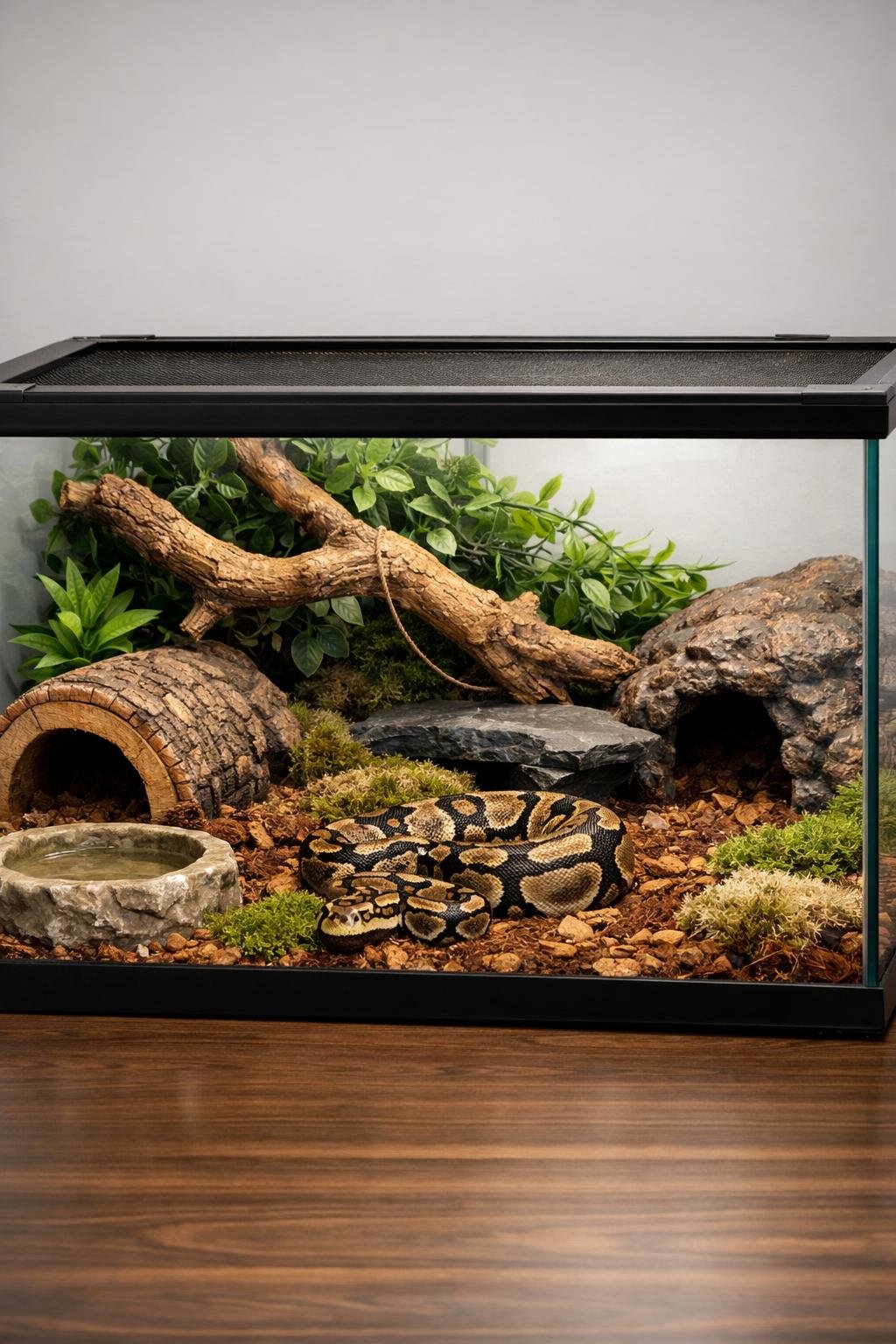
Let’s clear something up: glass tanks aren’t automatically stuffy or bad for airflow. You get a bright, clear view of your ball python and a display that actually makes it easy to spot if something’s off.
Pop on a snug mesh lid or toss in some screened vents on the sides to keep air moving. That stops those gross, damp corners that can make your snake sick with breathing problems or mold.
Set up one warm hide and one cool hide so your snake can pick its favorite spot. If you need to bump up the humidity, use a humidity box or give a quick mist—no need to seal the whole tank.
Expert Tip From MrPlanter: “Check vents daily for condensation and blockages. Small changes in airflow can make a big difference to your snake’s health.”
13. Snake Cable Covers – Safety first, those heaters aren’t chew toys
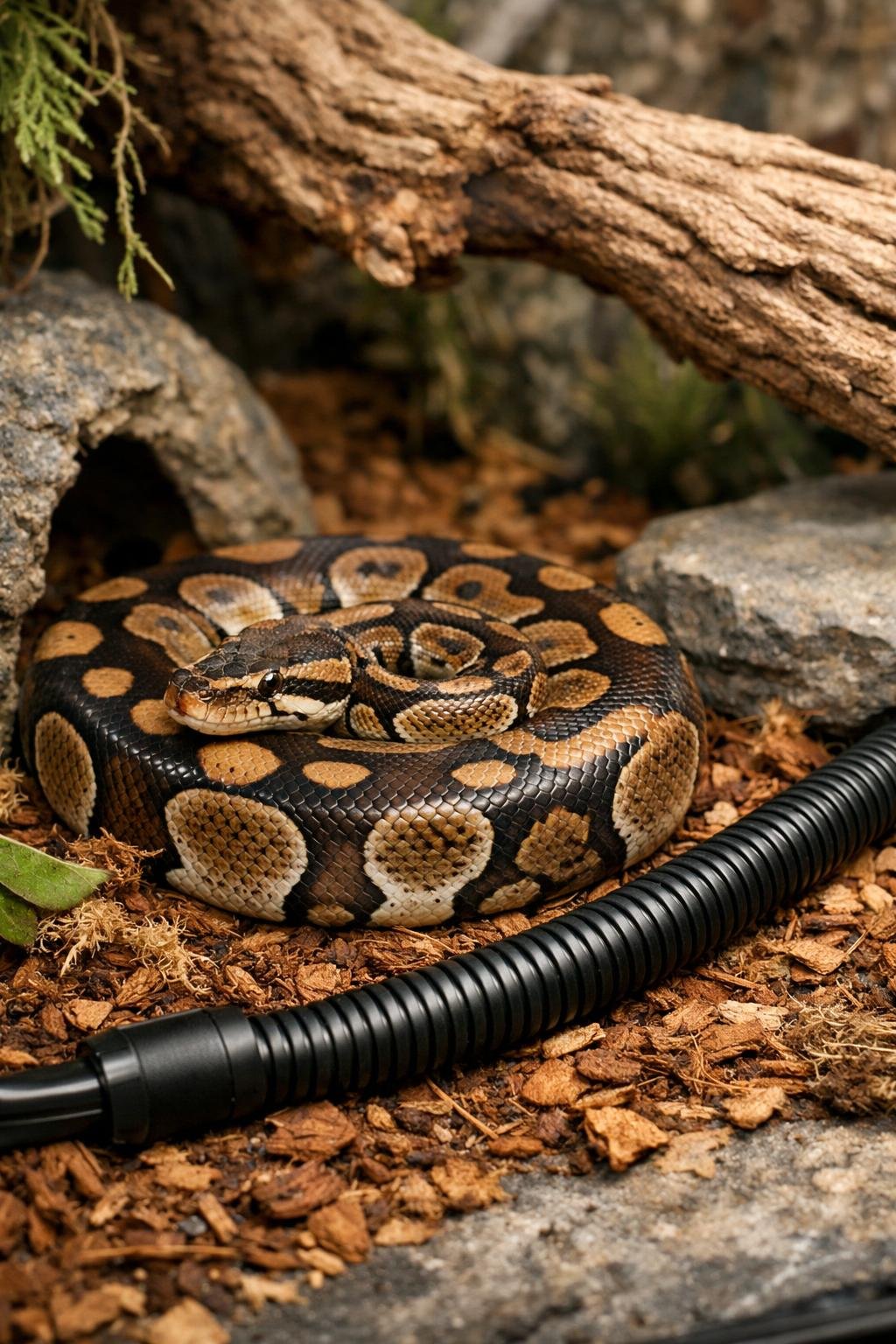
Ever look at cords hanging in a tank and think, “That looks like trouble?” Yeah, me too. Snake cable covers fix that in a snap.
Wrap any exposed cords from heat mats, lamps, or controllers so your python can’t chew or get tangled. These covers come as sleeves or wraps and keep wires tidy while blocking teeth and claws.
Pick covers that can handle heat and are actually made for cables—skip the flimsy tape. Double-check that your thermostat probe still reads temps right and that nothing’s trapping heat against the glass.
Expert Tip From MrPlanter: “Check covers weekly for bite marks or cracks. Replace any damaged cover right away to keep your snake and home safe.”
14. Naturalistic Backgrounds – Makes your snake feel like they never left Africa
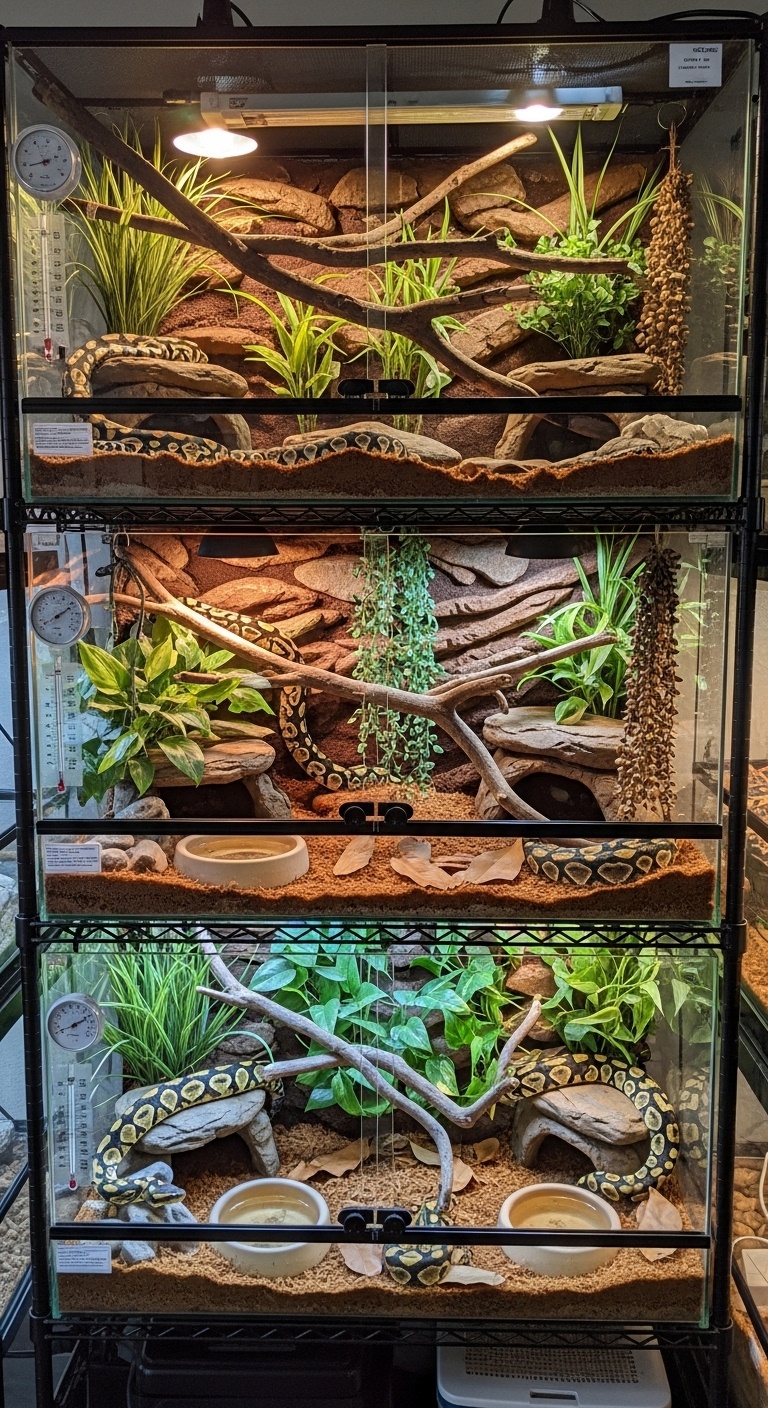
Let’s bust this myth: a plain painted wall does nothing for a ball python’s nerves.
If you want your terrarium to look like African grasslands, use textured rock, cork bark, and earthy colors. These backgrounds help your snake chill out by giving visual shelter and a sense of where the “walls” are.
Choose materials that can take humidity and wipe down easily, like sealed foam or cork. Add ledges, crevices, and fake vines for depth so your snake can hide or snuggle up to the wall.
Keep it simple and sturdy. Avoid tiny loose bits that might fall off, and always check that your glue and sealant are pet-safe before using.
Expert Tip From MrPlanter: “Use high-grade, non-toxic silicone and sealants so the background stays mold-free. Clean surfaces regularly and replace any worn pieces to keep your snake safe and calm.“
15. Substrate Mixing Technique – Layered for drainage and mold prevention
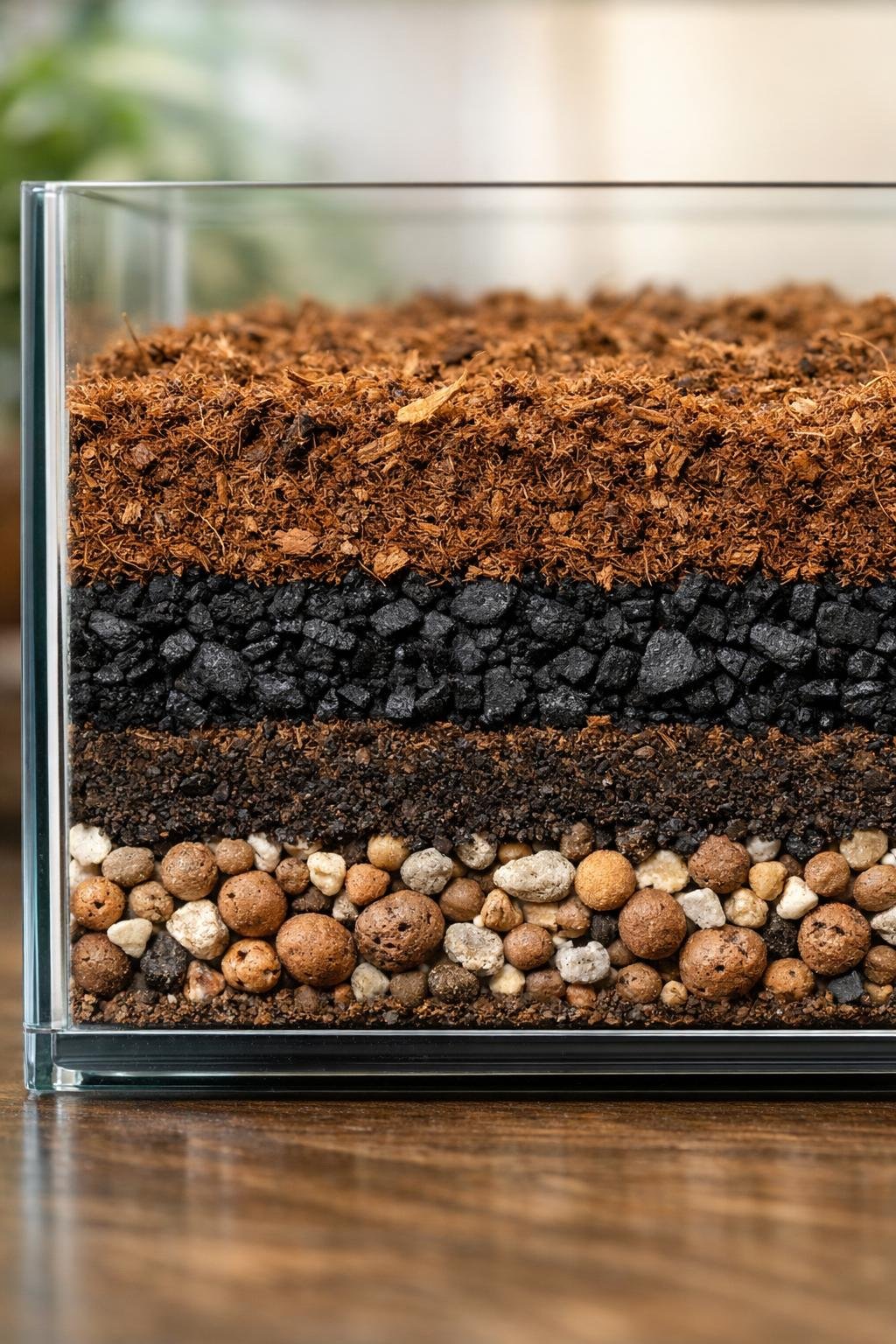
Here’s a truth bomb: dumping in a big pile of soil won’t cut it. You need layers that help water drain down so your snake stays dry up top.
Start with a drainage layer like LECA balls or hydroton. Toss a mesh on top to keep the soil from falling, then add a mix of peat or coconut coir with cypress or topsoil for structure and moisture.
Top it off with leaf litter or a thin layer of loam. This way, plants and springtails can thrive and your cleanup crew gets a cozy home.
Expert Tip From MrPlanter: “Check the drainage layer every few months and replace wet bits if needed. Small tweaks now save you a lot of trouble later.”
Choosing the Right Ball Python Enclosure
Pick a setup that fits your snake’s age, lets you control heat and humidity, and has good hiding spots. Think about size, what it’s made of, and how it breathes—your snake will thank you by staying healthy and mellow.
Key Features for Cozy Living
Match the size to your snake’s age: hatchlings do well in tanks under 10 gallons, juveniles in 20–30 gallons, and adults in 40 gallons or more. Go for a shape that lets you have a warm side and a cool side so your snake can pick its spot.
Materials make a difference. Glass tanks look awesome but lose heat and humidity. Plastic tubs and PVC boxes keep warmth and moisture better. Always use tight lids or locking clips to stop your snake from going on an adventure.
For heating and humidity, use a thermostat-controlled under-tank heater or a low-watt ceramic heat emitter. Grab a digital thermostat and a hygrometer to keep tabs on things. Give your snake two hides—one warm, one cool—and use a substrate that holds moisture like coconut fiber or cypress mulch.
Common Enclosure Mistakes to Avoid
Don’t cram the tank with decorations that block heat or eat up all the floor space. Ball pythons like to stretch out and move, so keep it simple—one branch, two hides, and a water bowl usually do the trick.
Never use heat sources without a thermostat. Heat pads on dimmers or loose ceramic bulbs can make dangerous hot spots. Always use a thermostat and check temps with a probe.
Don’t ignore humidity. If it’s too low, your snake will have trouble shedding. If it’s too wet with no airflow, you’ll get mold and breathing problems. Aim for 50–60% humidity and bump it up to 60–70% when your snake is shedding. Use a water bowl and mist lightly if needed.
Enclosure Decor That Makes Your Ball Python Shine
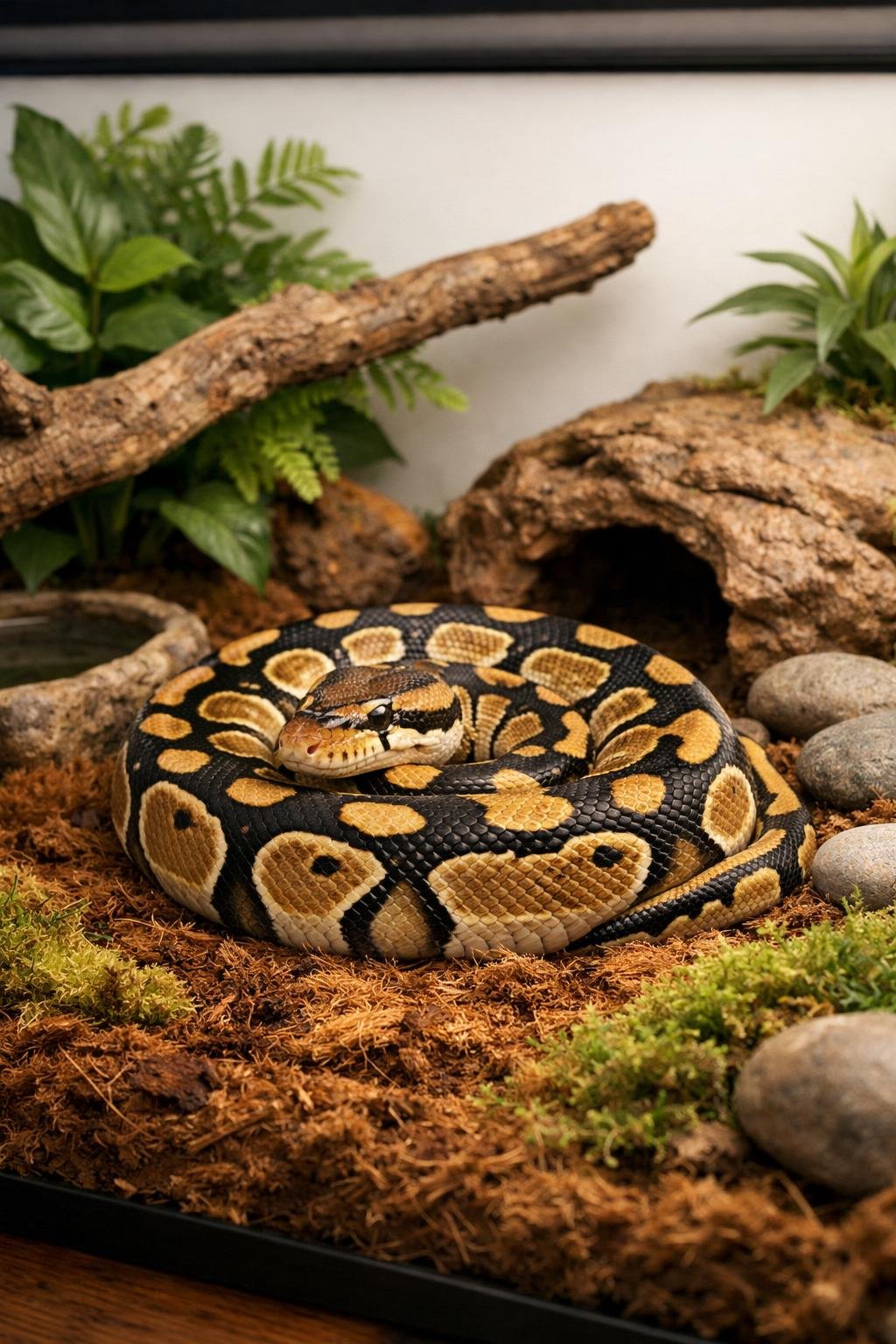
Pick decor that makes your snake comfy and lets it act like, well, a snake. Think plenty of hides, a few climbing spots, and a mix of soft and firm surfaces. Layer in real plants, fake vines, and textured hides so your snake feels safe but still curious.
Mixing Natural and Artificial Elements
Use live plants like pothos or snake plant in sturdy pots to keep soil in place and help with humidity. Keep plants away from heat and use trays so the roots don’t sit in water. Live moss in the damp hide helps with shedding, but swap it out if you see mold.
Add fake vines and silk plants where real ones won’t work. Attach vines so they stay put—nobody wants a vine falling on their snake. Toss in branches with different thicknesses—one smooth, one rough—so your python can check out new textures.
Mix soft substrates like coconut fiber or cypress mulch with flat, cool spots like slate tiles. Put hides at both warm and cool ends; always have at least two hides so your snake can pick its favorite temp and hiding place. Arrange everything so your snake has clear paths to wander.
Safety Tips for Cool Hideouts
Pick hides made from tough, safe stuff like resin, smooth cork, or plain old untreated wood. You don’t want any tiny gaps where your snake could wedge itself in—make sure the hide’s opening is bigger than your python at its widest.
If you spot any sharp edges, grab some sandpaper and smooth them out. No one wants a cut snake on their hands.
Keep humid hides just a little bit damp, not soggy. I check mine every day for mold or gross smells, and I swap out the bedding every week or two.
Use a shallow water dish that’s big enough for your snake to soak in, but don’t stick it right next to the hides. Otherwise, you’ll end up with a swampy mess inside.
If you’re adding any tall or heavy decorations, anchor them down to the wall or the bottom of the enclosure. I always give everything a good nudge—if it wobbles, I fix it.
Draw out where you want climbing branches and hides in your tank plan. That way, when it’s time to clean or move stuff around, you won’t mess up your snake’s favorite hangouts.