Alright, get ready for some genuinely cool ideas to turn your bearded dragon’s home into a palace. I’m talking about stuff that actually works—better lights, smarter heating, safer floors, and things you can wipe down in a flash.
These aren’t just fancy upgrades. They’re things you can do this weekend to make your beardie healthier, happier, and honestly, make your life a whole lot easier too.
Think of this as your personal menu of options. Maybe you want a jungle with real plants, or you just want to rearrange some rocks.
You’ll find stuff for every budget and space, from DIY crafts to tips for taking your dragon outside for some sun.

Let’s jump in and see what’ll make your dragon’s digs the best on the block.
1. Bioactive terrarium setup with live plants and microorganisms for natural cleaning
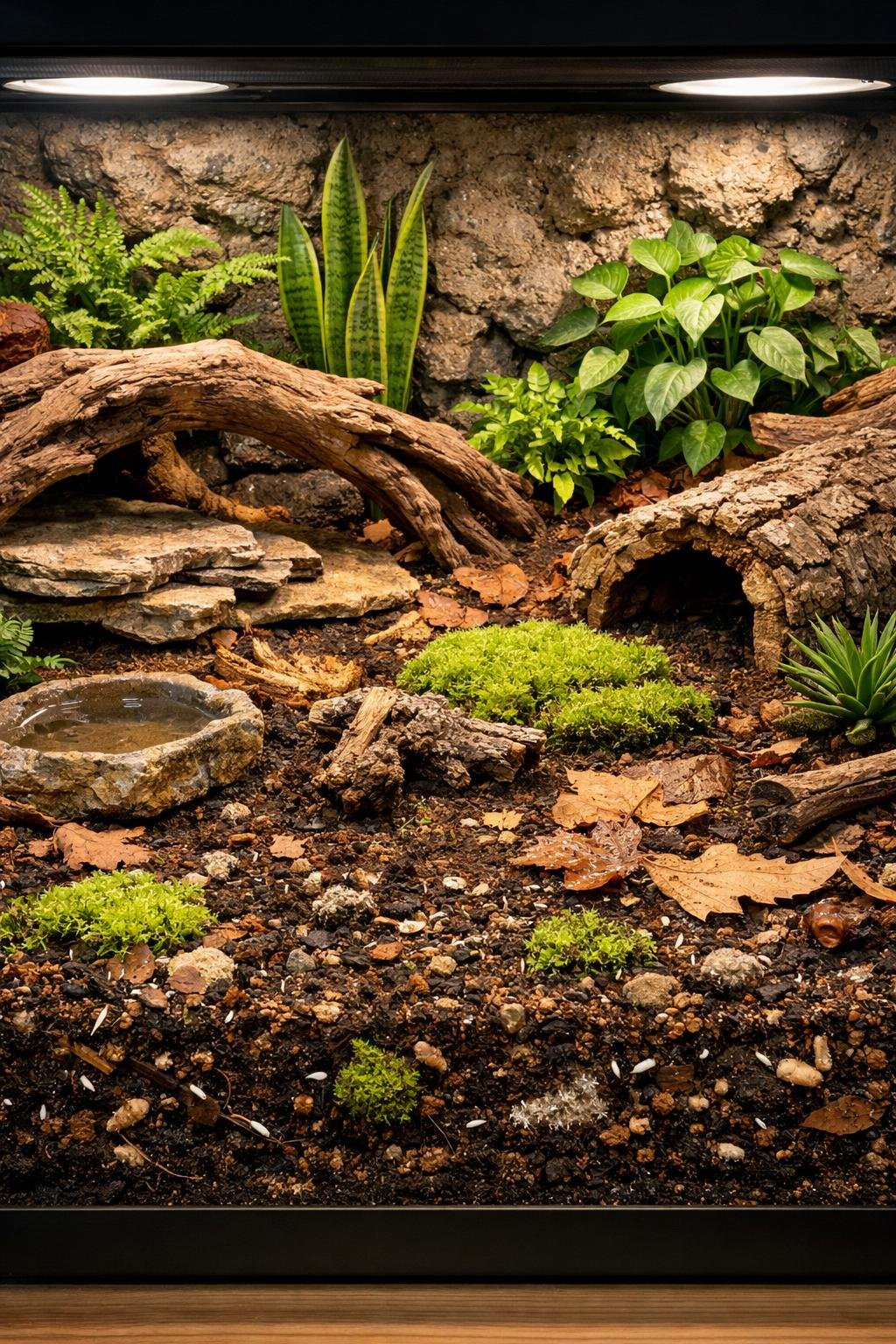
Here’s something wild: a little army of bugs can handle most of your cleaning. Seriously.
You can set up a mini world with live plants, layers of dirt, and tiny critters like isopods and springtails. These guys gobble up waste and keep the soil fresh.
Go for a deep dirt mix with drainage so your plants don’t drown and your beardie can dig. Hardy, non-toxic plants are your best friends here.
Keep a water bowl in there and give a light mist now and then. That keeps the plants and micro-helpers happy, but don’t overdo it—you don’t want swamp city.
Expert Tip From MrPlanter: “Start small and see what survives. Swap out one plant at a time and watch how your dragon reacts.”
2. PVC sheet walls for easy cleaning and moisture resistance
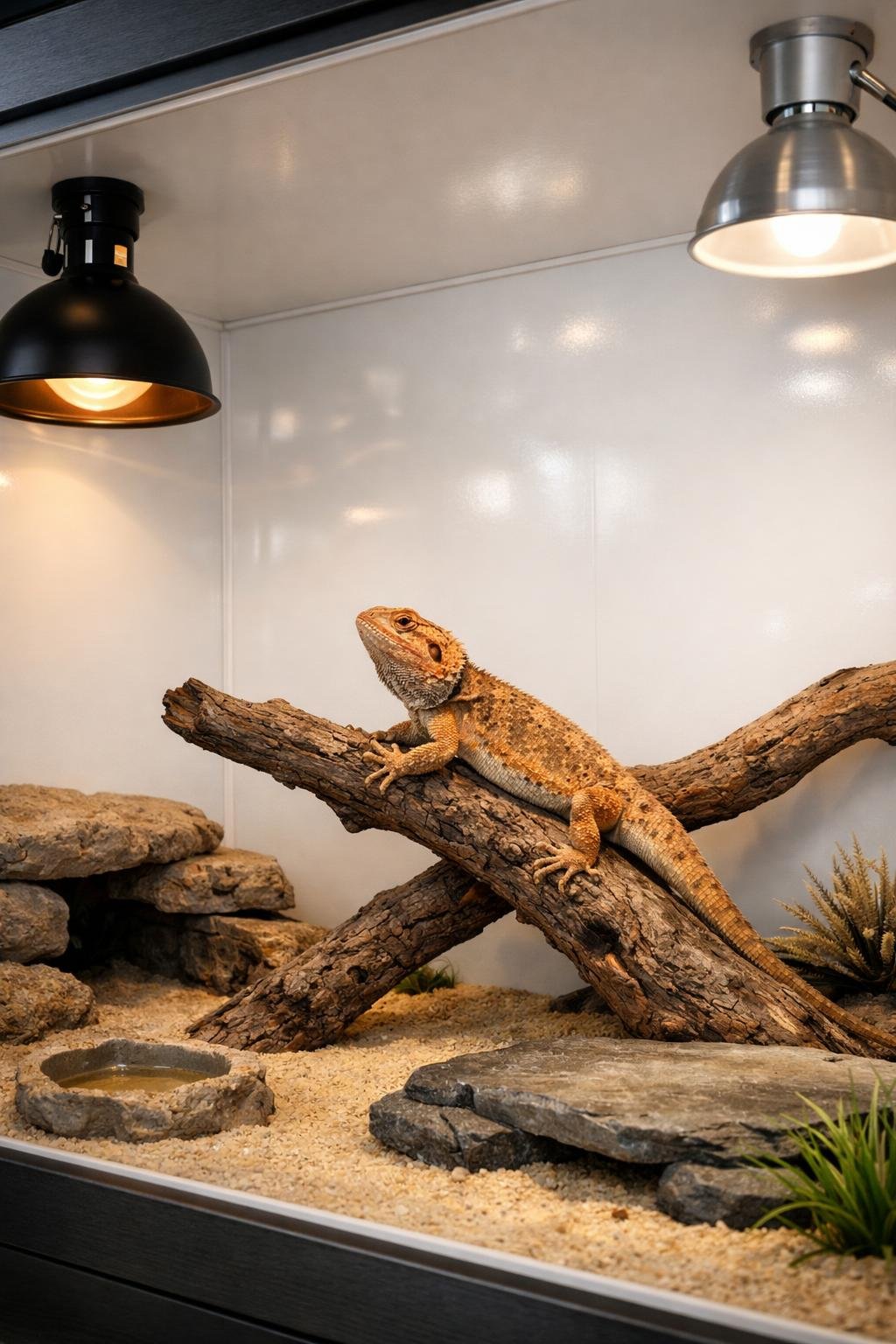
Here’s a game changer: PVC walls just laugh at water and stains.
You can snap these panels in fast, and if you want to rearrange, they’re light enough to move. They don’t warp or rot, even if you spill water or crank up the humidity.
Cleanup? Wipe with a soft cloth and a bit of cleaner, and you’re done in two minutes.
PVC keeps smells down and helps your dragon’s home stay fresh. It works with fancy setups or the simple stuff and pairs nicely with all your hides and rocks.
Expert Tip From MrPlanter: “Stick to smooth, food-safe PVC and seal up the edges with silicone. If a panel cracks, swap it out quick to keep things clean and safe.“
3. DIY reptile carpet substrate for a safe, simple floor
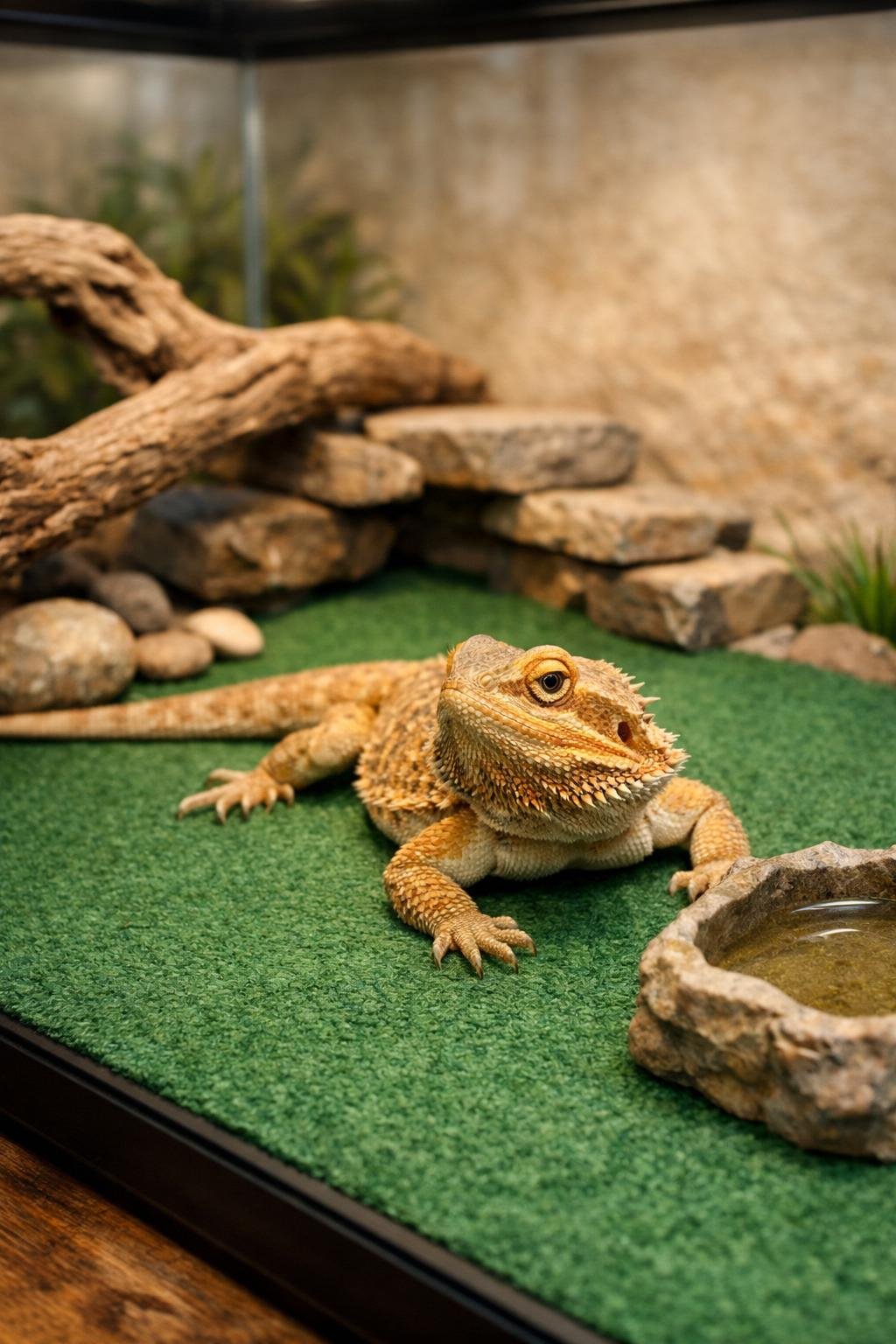
Let’s be real. Nobody wants their dragon eating sand, but plain floors are pretty blah. DIY reptile carpet solves both problems.
Cut some shelf liner or outdoor fabric to fit your tank. It’s easy to trim and swap out, and you can spot-clean with a damp rag.
Add a little non-slip backing so it doesn’t slide around when your dragon does laps. It’s cheap, safe, and keeps claws from snagging.
Expert Tip From MrPlanter: “Change out the carpet every few months or if it starts to smell weird. Rinse it weekly and let it sun-dry to keep germs away.”
4. Use coconut fiber bedding for humidity control and digging fun
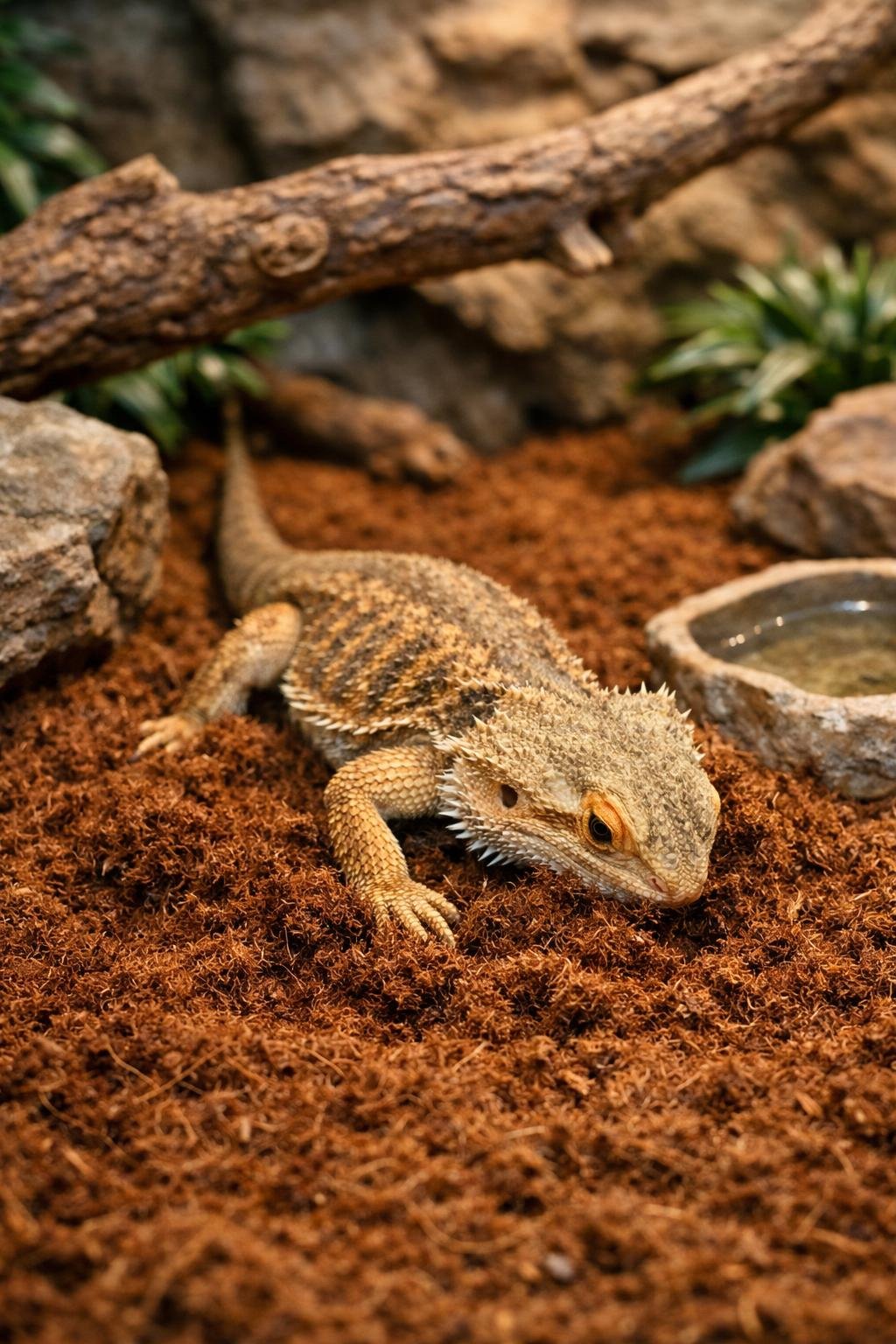
People think coconut fiber is just for rainforest pets, but guess what? It works for beardies in the right spot.
You get a soft, loose floor that holds a bit of moisture without turning into a swamp. That’s perfect if you want a humid hide or a little help with shedding.
Your dragon can dig, burrow, and just be a lizard. Coconut fiber doesn’t get moldy if you keep it just damp—not wet.
Try it as a partial floor or just in a moist hide. Use a humidity gauge and swap out wet spots so things stay fresh.
Expert Tip From MrPlanter: “Keep it just a little damp to help with shedding. Change out any wet spots often to keep mold away.”
5. Create basking platforms near UVB lights for vitamin D absorption
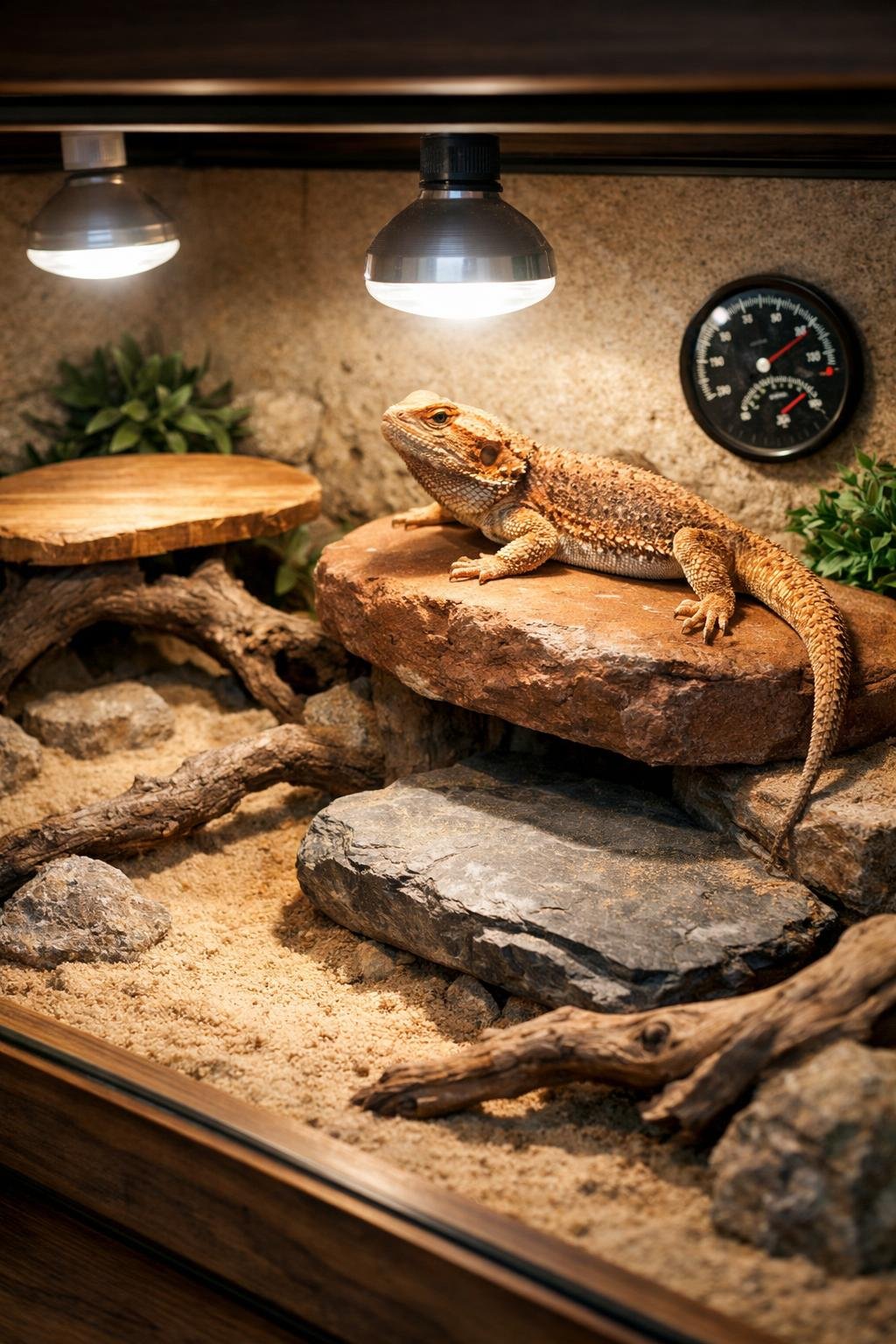
No getting around it—your beardie needs real UVB to make vitamin D3.
Put a solid basking rock or platform right under the UVB bulb. That way, your dragon can soak up rays and stay warm at the same time.
Keep the platform at a good height. Your dragon should get full UVB but still be able to scoot into the shade when it wants.
Use flat, stable surfaces and make sure nothing wobbles. Mix up platform sizes so babies and adults feel safe.
Expert Tip From MrPlanter: Lay the UVB tube across the top so the light hits the whole platform. Swap your bulb out once a year to keep it working right.
6. Add multiple hides—think secret ninja caves for your beardie
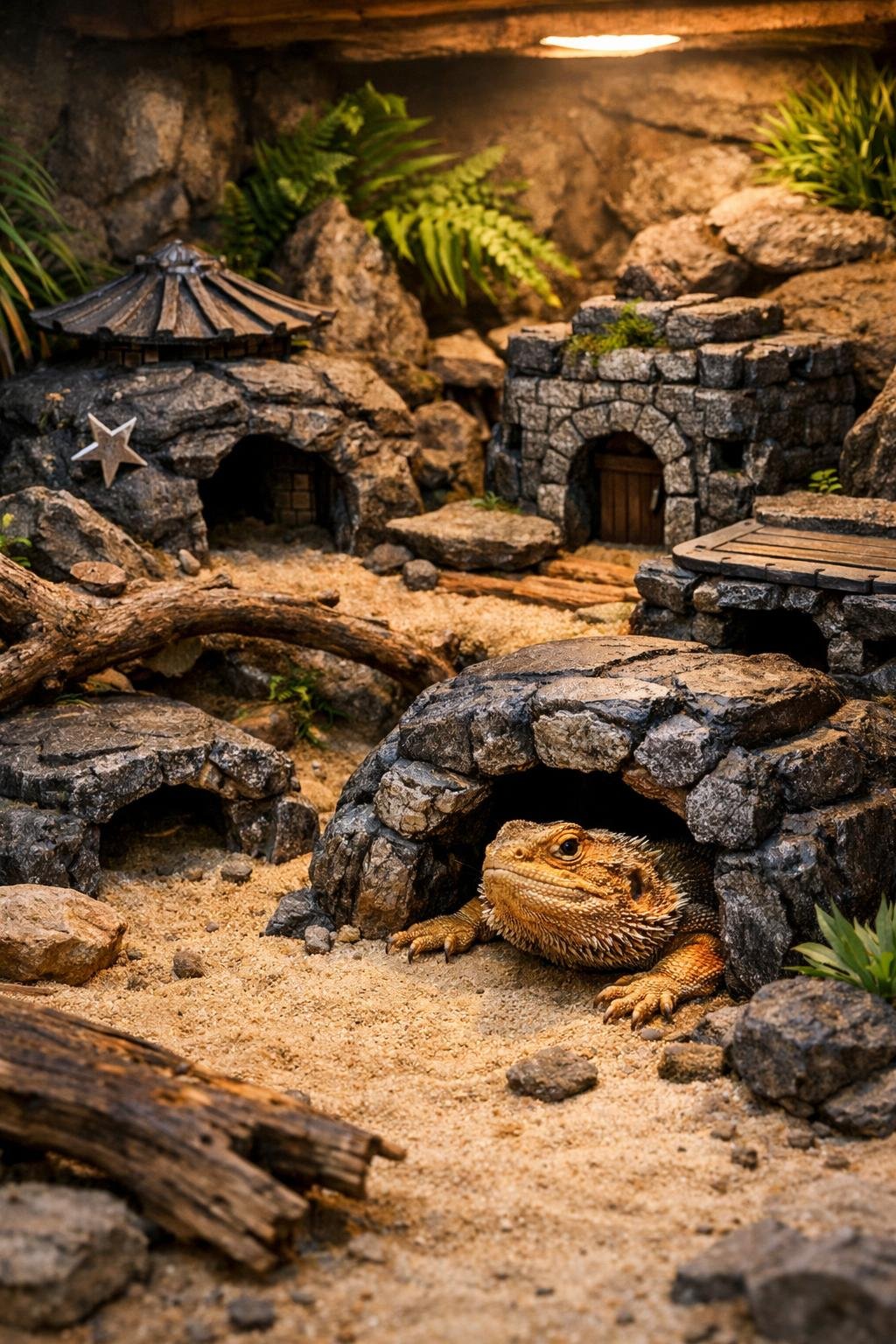
Ever notice your dragon disappears when you walk by? Hides give them a place to chill and feel safe.
Put at least two hides in different spots—one warm, one cool. Mix up the shapes: caves, logs, even a flat spot under a rock shelf.
Set one hide near the basking area and another on the cooler side. Use safe, smooth materials and make sure there’s enough airflow.
Move the hides around now and then to keep things interesting. You’ll see your dragon act more curious and less nervous.
Expert Tip From MrPlanter: Try a hide on both the hot and cool sides. Check them each week for cracks or mess, and clean them often.
7. Install a digital thermostat to avoid fiery desert or freezer tundra vibes
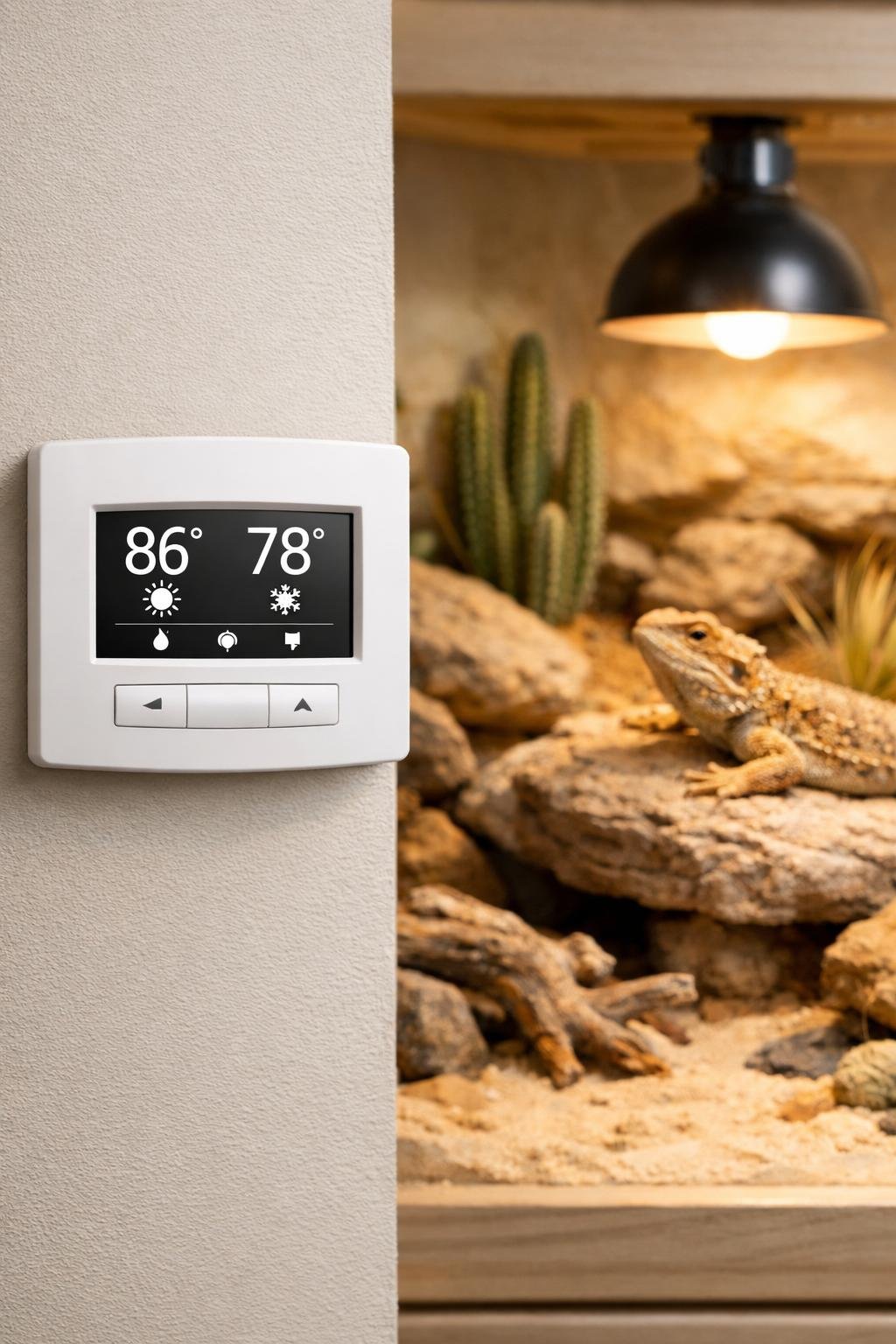
Trust me, your dragon doesn’t want surprise sauna days or chilly nights. A digital thermostat keeps the temps just right.
Stick the probe near your dragon’s favorite basking spot—not under a rock or decoration. Digital models with waterproof probes give you better readings and fewer surprises.
Set up day and night temps to match what your dragon would get outside. That helps with digestion and keeps them chill.
Expert Tip From MrPlanter: “Grab a thermostat with an extra probe and test it every month. It’s a super easy habit that keeps your dragon safe.”
8. Include natural rocks and driftwood for a rugged explorer feel
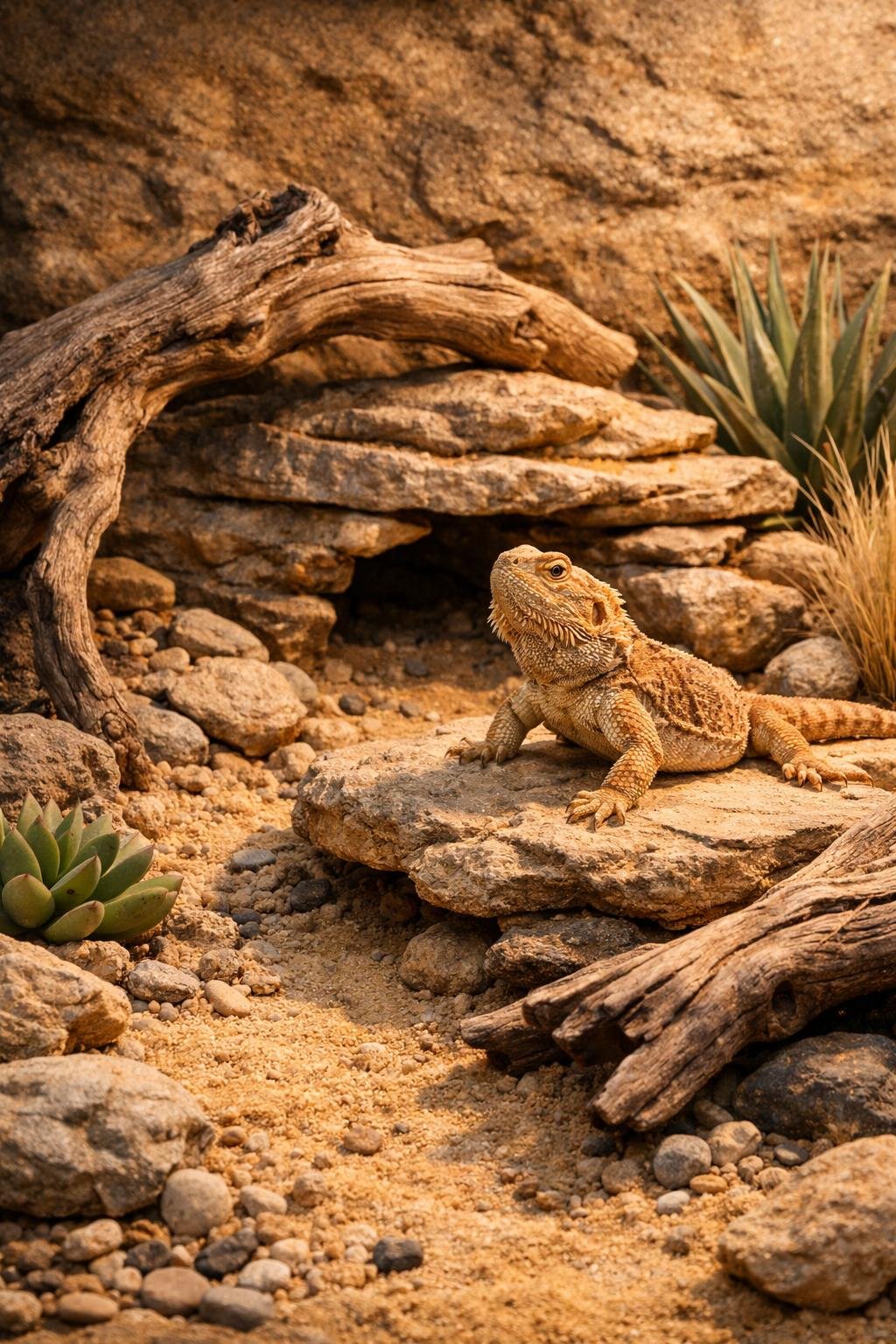
Rocks and driftwood aren’t just pretty—they turn your dragon into a little explorer.
Pick flat rocks for basking and rougher ones for climbing. Your beardie will love the new textures and places to stretch out.
Driftwood gives more climbing options but doesn’t hog floor space. Go for strong, stable pieces that won’t tip.
Always check for sharp edges and wash everything before adding it to the tank. Let stuff dry out completely before your dragon moves in.
Expert Tip From MrPlanter: “Soak rocks and driftwood, scrub off any gunk, and let them dry in the sun. That keeps things safe and clean.”
9. Build a modular enclosure with interchangeable panels for remixing the habitat
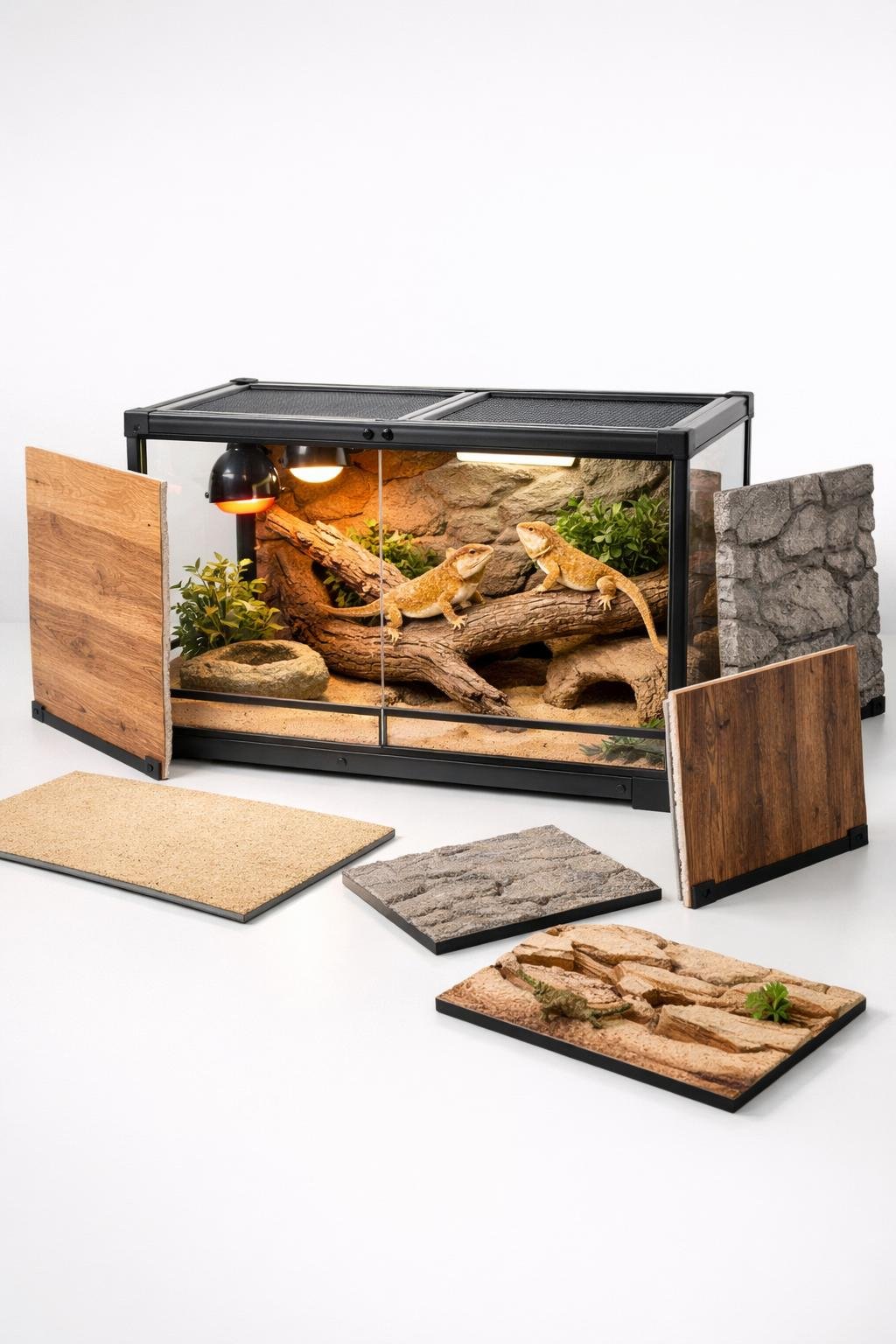
Let’s face it, you get bored with the same old tank—and so does your dragon.
A modular setup lets you swap out panels, hides, and climbing stuff in minutes. You can try new layouts for different seasons or just for fun.
Use light panels that snap or bolt in so you can add a dig box or a shallow pool whenever you feel like it. Mix solid, mesh, and clear panels to play with light and airflow.
This setup saves time, keeps your dragon curious, and makes cleaning way easier since you only remove what you need.
Expert Tip From MrPlanter: Start with a basic frame and a couple of panel styles, then add more as you go. Swap one thing at a time so you don’t freak out your dragon.
10. Use reptile-safe silicone to secure décor and avoid accidental chew wars
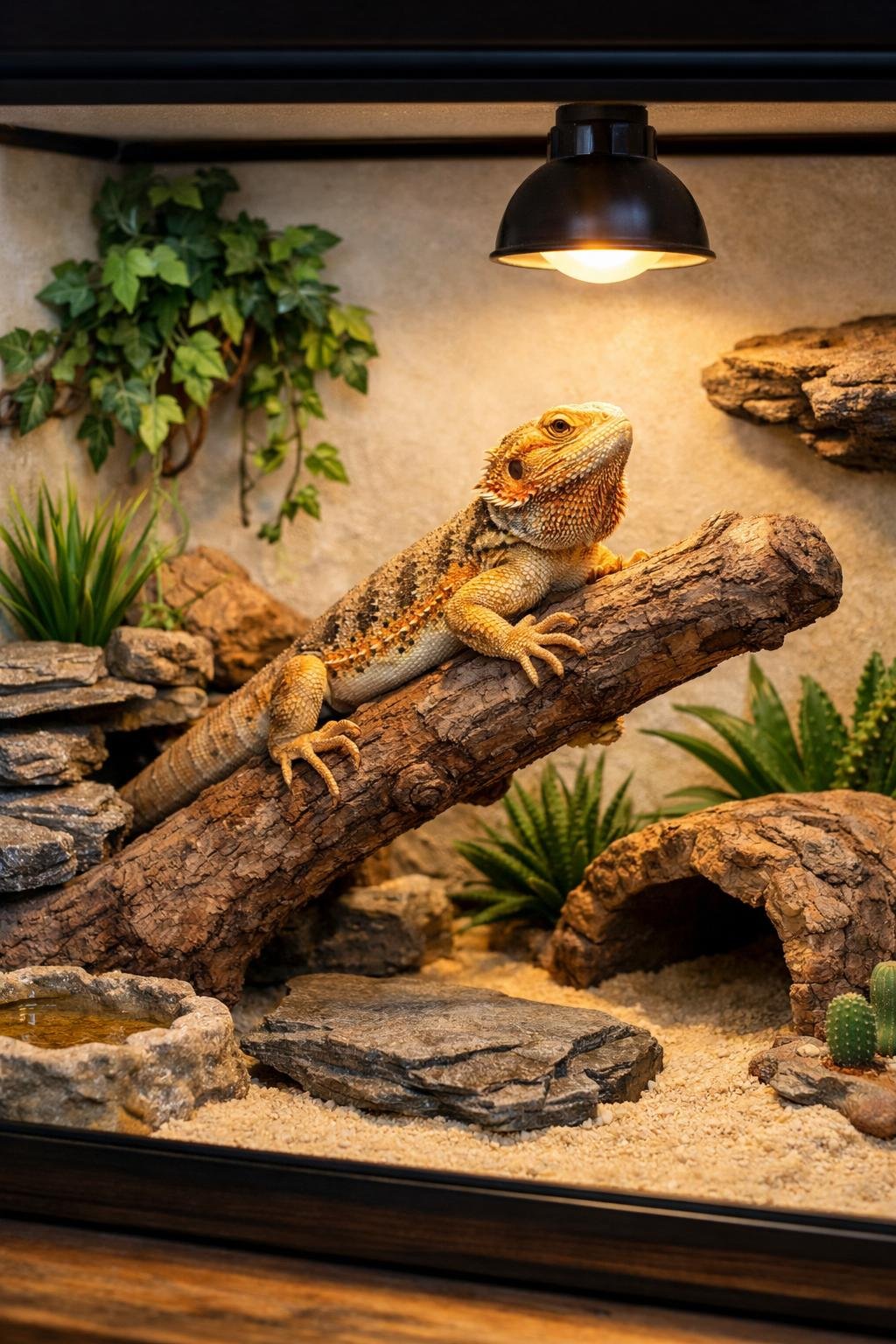
Don’t worry—your dragon won’t chew through silicone that’s made for reptiles.
When you glue down rocks or branches, stick with 100% reptile- or aquarium-safe silicone. It’s safe after curing and holds everything tight so your dragon can’t flip stuff over.
Let it cure all the way and air out the tank before your dragon moves back in. That keeps things safe and stink-free.
Check the label for “aquarium-safe” or brands like Zoo Med. Give everything a gentle tug after a week to make sure it’s stuck.
Expert Tip From MrPlanter: Let silicone dry for at least two days with good airflow. Test all your glued stuff before letting your dragon back in.
11. Incorporate a deep sand layer for natural digging instincts
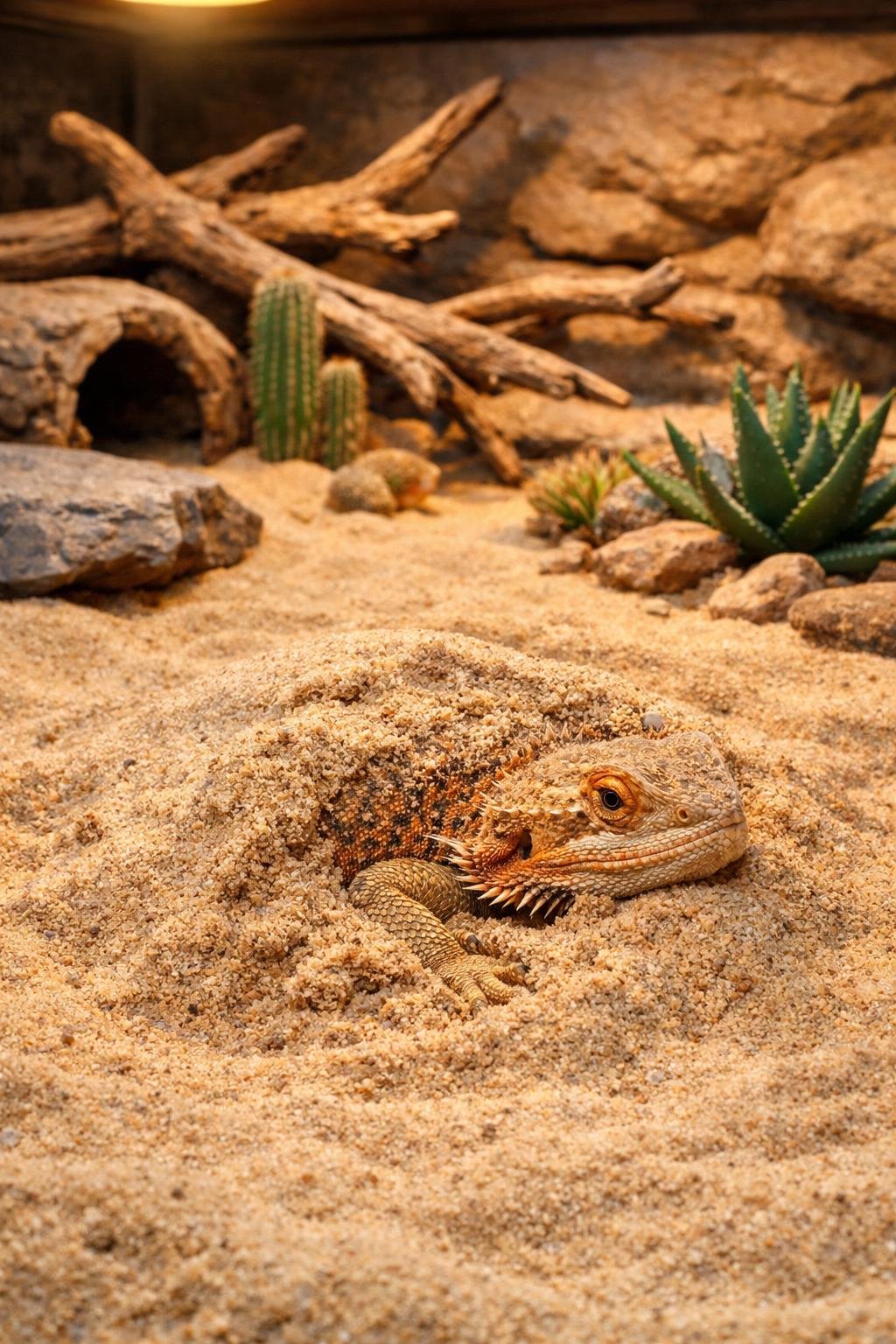
Here’s the truth: dragons love to dig, not just sit on carpet.
Give your beardie a deep sand layer—about 2 to 4 inches—so it can burrow, hide, and cool off. They’ll make little tunnels and feel right at home.
Pick a reptile-safe, low-dust sand to keep things safe. Mixing in some coconut fiber gives it a better feel and helps with moisture.
If you’re nervous about sand full-time, try a dig box for supervised play. Spot-clean often and swap out any dirty sand to keep things fresh.
Expert Tip From MrPlanter: “Keep sand dry and change it out regularly. If you’re unsure, just let your dragon dig during playtime instead of making it the full-time floor.”
12. Add a water dish large enough for occasional soaking (beardie spa day!)
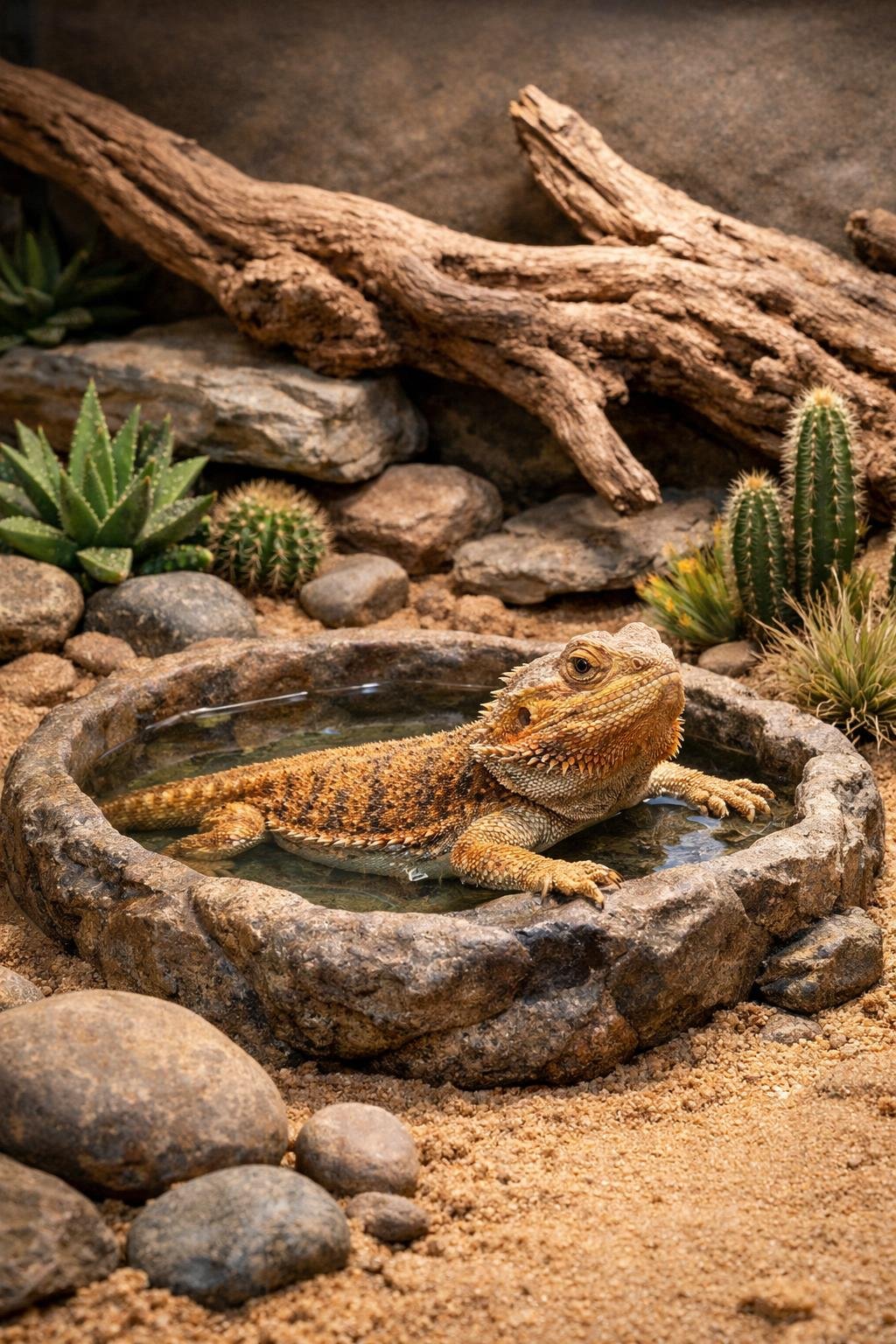
Okay, so here’s the scoop: bearded dragons aren’t just sipping from tiny bowls like dainty tea drinkers. Sometimes, they want to flop down and have a good soak—think of it like their version of a spa day.
Grab a shallow, wide dish that’s big enough for your beardie to stretch out but not deep enough to be risky. You don’t want your dragon to feel like it’s swimming laps.
A bigger water dish helps your beardie stay hydrated and makes shedding way easier. It pulls double duty as a drinking fountain and a mini spa when you let your dragon chill in a warm soak.
Keep the rim low, or toss in a ramp so your dragon can wander in and out without drama. Change out the water every day and give the dish a good scrub regularly—nobody wants a stinky, slimy spa.
Expert Tip From MrPlanter: Stick with warm (not hot!) water and always keep an eye on your dragon during bath time. Set the dish on a flat surface and rinse it well after each use.
13. Design an outdoor supervised playpen for sunbathing and fresh air perks
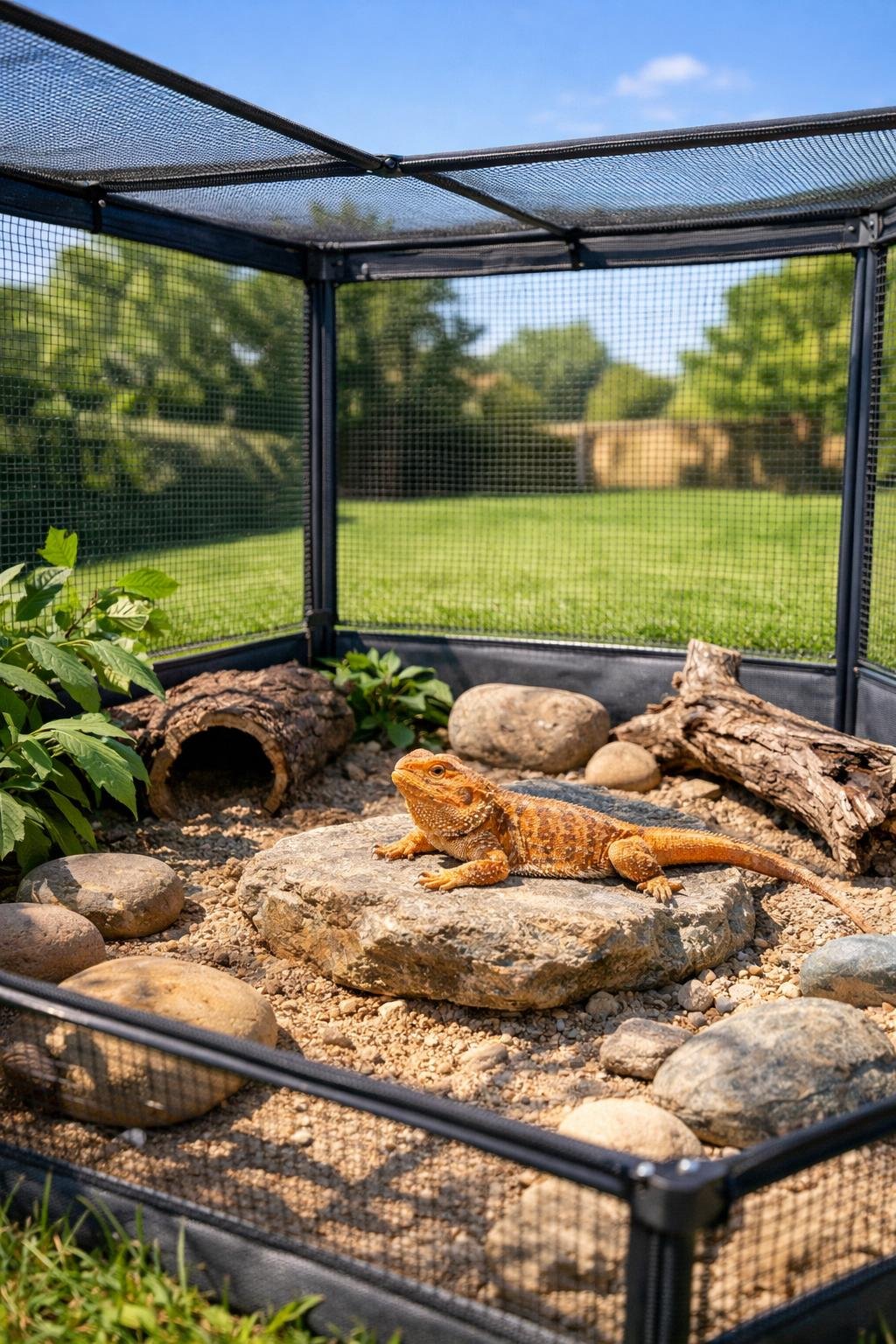
Here’s a fun myth to bust: your beardie doesn’t need to move outdoors full-time to get real sunshine. You can totally set up a safe playpen outside, so your dragon can soak up some rays and fresh air—without pulling a Houdini.
Go for a sturdy mesh or wire top and solid sides. Keep the sides low enough to peek in, but high enough so your dragon and the neighbor’s cat can’t swap places.
Add a shady hide, a big flat rock for sunbathing, and a shallow dish for water. Let your dragon pick its favorite hangout.
Start with short playdates—20 to 30 minutes is plenty at first. Keep an eye out for overheating, wind, or pesky bugs. Watch the temps with a handheld gauge, and don’t be shy about moving the playpen if the sun decides to play hide and seek.
Expert Tip From MrPlanter: “Begin with short sessions in mild weather and let your dragon adjust bit by bit. Bring a towel or hide for quick shade if the sun gets rowdy.“
14. LED full-spectrum lighting combined with ceramic heat emitters for 24/7 comfort
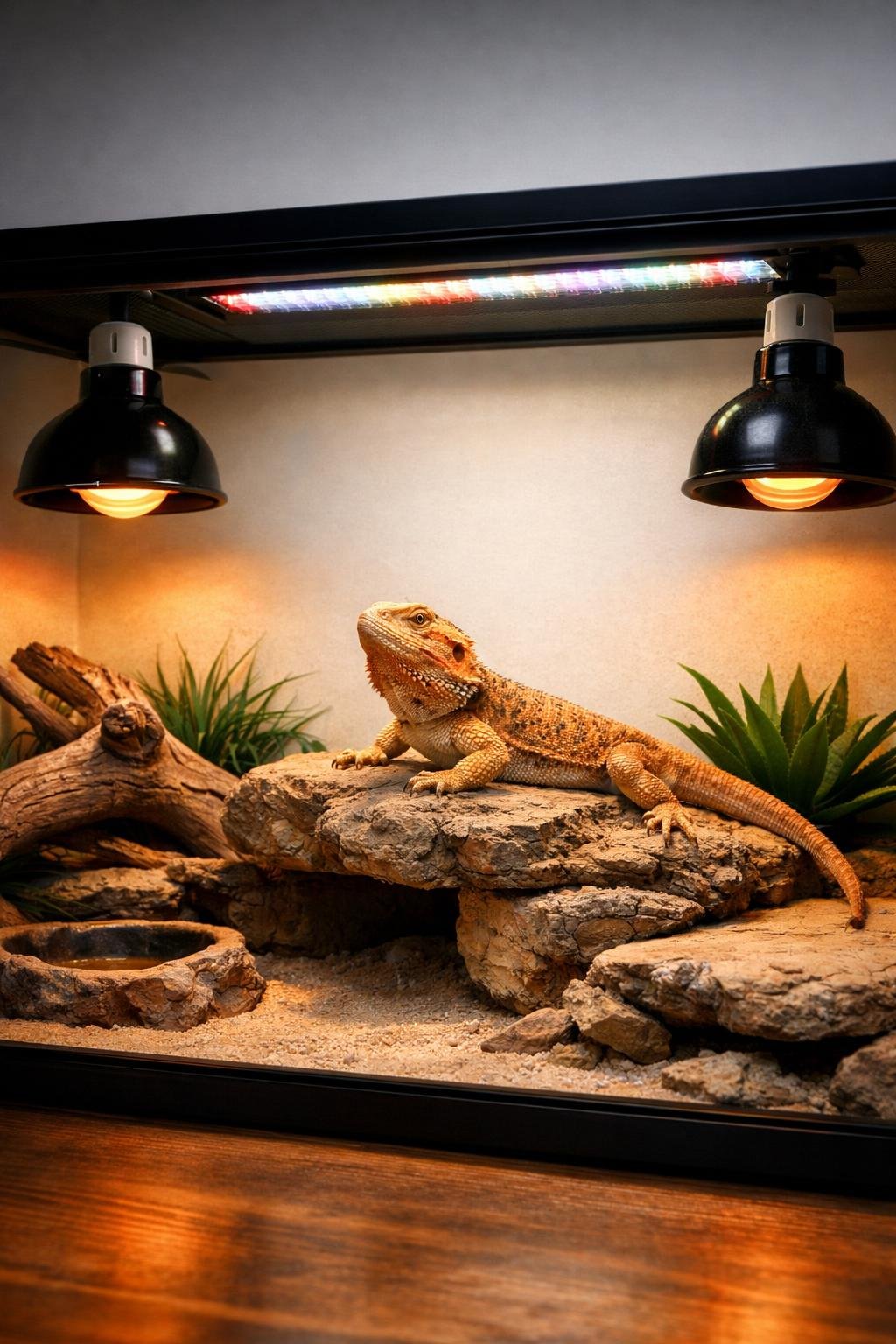
Here’s something people get wrong all the time: your beardie doesn’t want blinding light all night. Use full-spectrum LEDs for a natural “daytime” vibe, then switch to a ceramic heat emitter at night for cozy warmth—no disco lights after dark.
LEDs give you bright, plant-friendly daylight and help your dragon’s body do its thing. When the sun goes down, the ceramic heat emitter keeps the tank warm without messing with your dragon’s sleep.
Set the LED on a timer for daytime and hook the ceramic up to a thermostat for nighttime. This keeps everything steady, so your dragon can digest, play, and snooze like a champ.
Expert Tip From MrPlanter: Run the LED for 10–12 hours and set the ceramic for the right nighttime temp. Your dragon stays comfy, and you won’t have to guess what’s going on.
15. Set up a small succulent garden—low water, high sass decoration
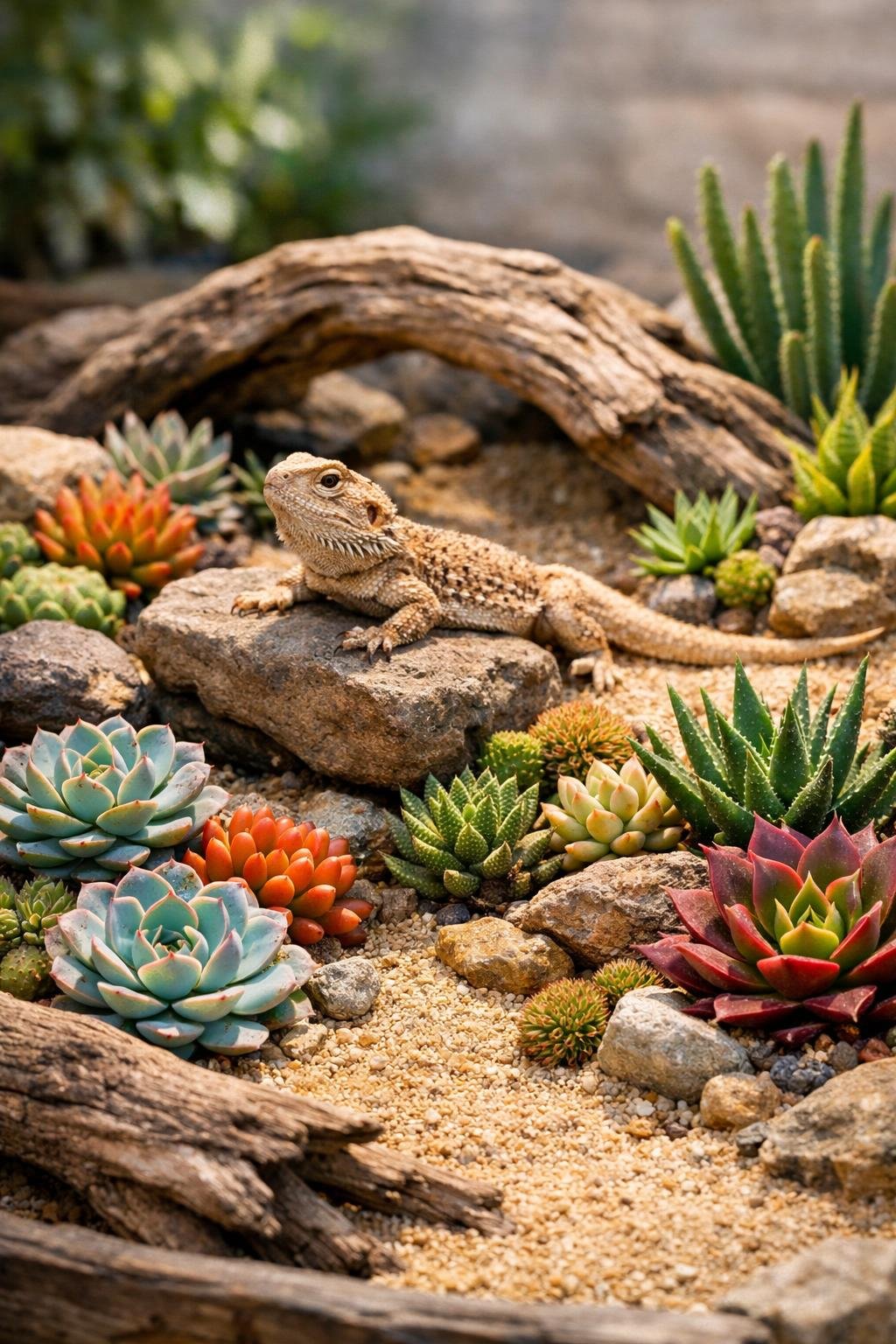
Here’s a twist: succulents can jazz up your dragon’s home and barely need any care. You can build a tiny, safe garden in a corner or a sealed planter for a pop of color and texture.
Pick tough, non-toxic plants like Haworthia or mini Echeveria. Keep them away from your dragon’s main basking path, unless you want to see a plant massacre.
Use cactus mix with gravel underneath so water drains fast. That way, you won’t end up with a moldy mess.
Pop the planter behind a rock or inside a clear, ventilated box so your dragon can admire, but not chew or dig up your masterpiece. Rotate the plants for light and swap out any nibbled bits to keep it looking sharp.
Expert Tip From MrPlanter: “Keep the planter shallow and above the substrate so your dragon doesn’t eat dirt by accident. Swap out any plants with bite marks or mushy leaves right away.”
Relatable Problem
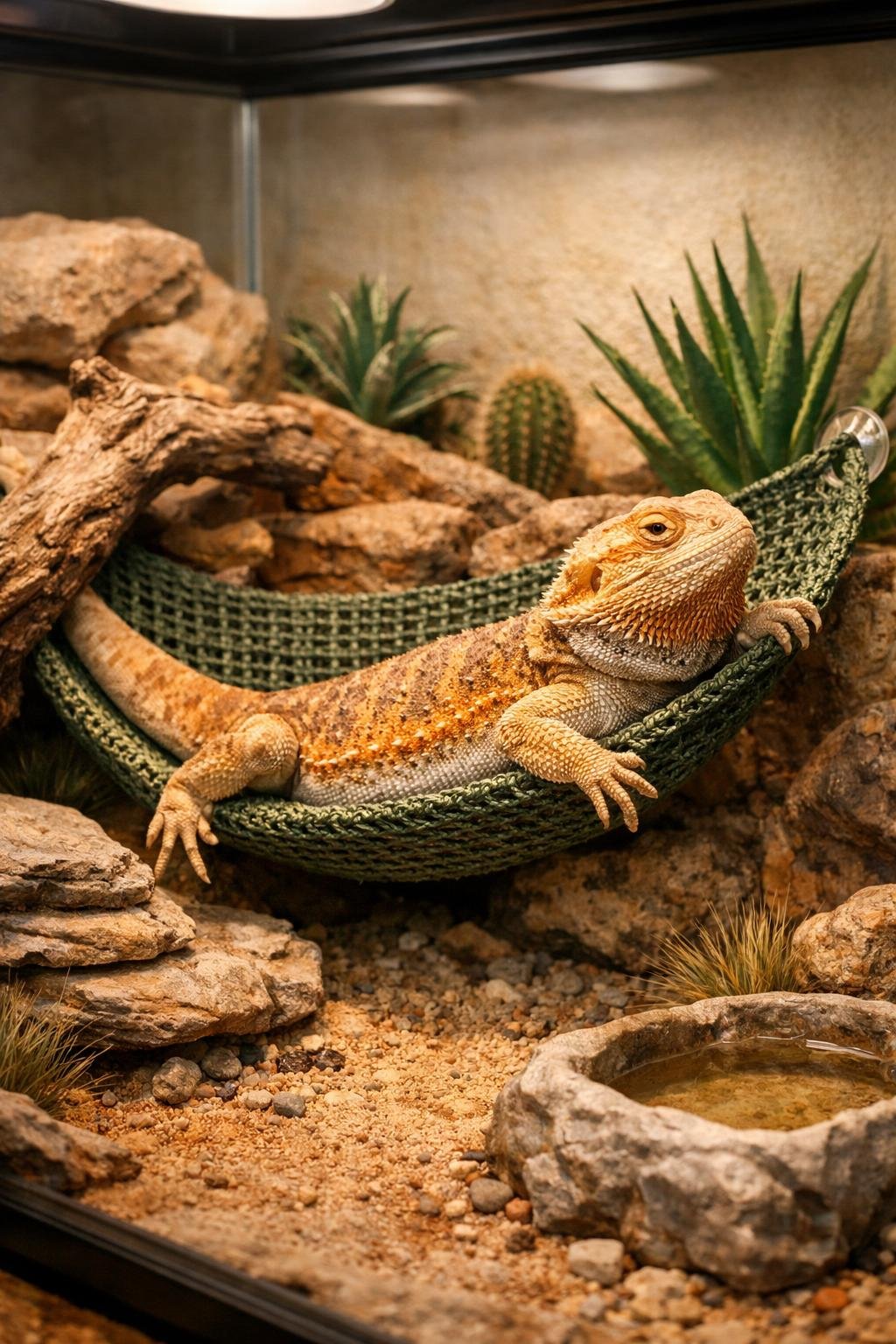
16. Include a hammock or climbing branch for that ‘lazy Sunday vibe’
Let’s be real: you want your dragon to look like it’s living its best life, not just sitting around bored. A hammock gives your beardie a soft, chill spot to lounge and soak up some heat. A sturdy branch adds a little adventure—climb up, bask, repeat.
Mix it up with fabric or leather hammocks. Just make sure they’ve got strong suction cups or straps, so your dragon doesn’t end up on the floor. Use thick, trimmed branches and fix them tight so nothing wobbles.
Set the hammock or branch where your dragon can move easily between warm and cool spots. Change things up now and then—dragons like a little surprise too.
Expert Tip From MrPlanter: “Go for washable hammock materials and check the fastenings every week. Move things around once a month to keep your dragon curious and on its toes.”
Choosing the Right Materials for Bearded Dragon Enclosures
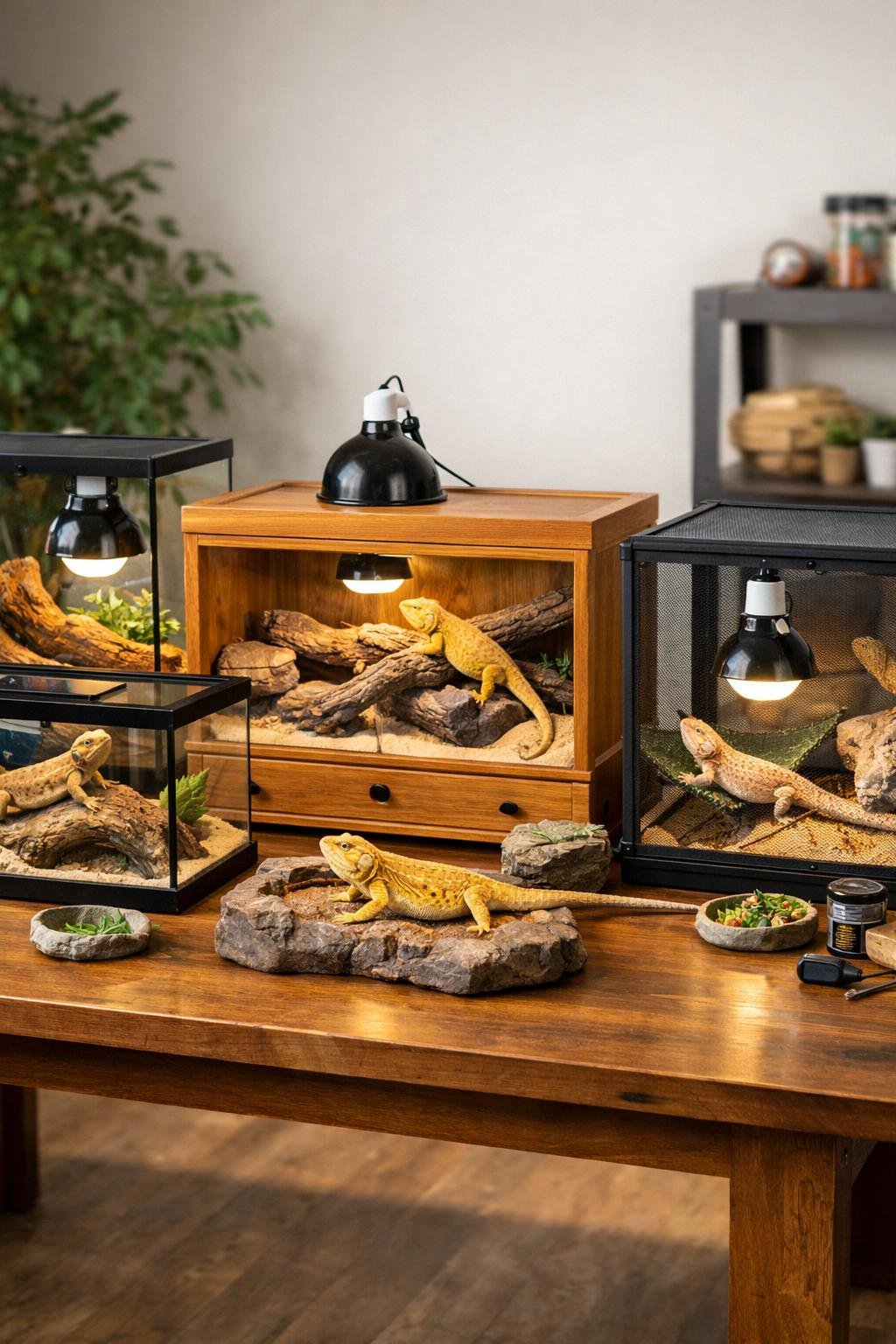
Pick stuff that keeps your dragon safe, holds heat, and doesn’t get gross with moisture. Think about how easy it is to clean, how heavy it is, and if it’ll last in a warm, sometimes humid spot.
Safe Substrates and Flooring Choices
Stick to substrates your dragon can’t eat by mistake. Reptile carpet, ceramic tiles, paper towels, and non-adhesive shelf liner all work great. They’re easy to clean, and you can spot-clean or deep clean without much hassle.
Stay away from loose sand, crushed walnut, and small gravel. Dragons eat those by accident and end up with blocked guts. If you want a “desert” look, use big, flat slate or baking stone tiles—glue them down so they don’t slide around.
For bioactive setups, use a deep mix with drainage layers and live plants only if you’re up for extra cleaning and watching humidity. Always give your dragon a warm basking spot with tile or stone so it can heat up safely.
Glass vs. Mesh vs. PVC: Pros and Cons
Glass tanks look awesome and keep in heat and humidity, but man, they’re heavy. They can get too hot too. Use a tight screen lid for air and only use under-tank heating with tile or ceramic between the tank and heater—no burnt bellies, please.
Mesh or screen cages have great airflow and stop overheating, especially if you live somewhere hot. They’re not so great at keeping humidity, and tiny bugs might escape. Nighttime temps drop fast, so you’ll need extra heat sources.
PVC or wooden vivariums with a waterproof coat hold heat and humidity well and don’t weigh a ton. Just double-check that the wood or paint is non-toxic and sealed tight. PVC is easy to drill for wires and lights, but keep an eye on seams for leaks.
Quick comparison table:
- Glass: + great view, + keeps humidity, − heavy, − can overheat
- Mesh: + good airflow, + lots of light, − loses humidity, − bugs might escape
- PVC/Wood: + holds heat, + easy to customize, − needs sealing, − could be toxic if not treated
Pick what fits your space, your wallet, and how much cleaning and adjusting you want to do.
Creating a Comfortable Environment
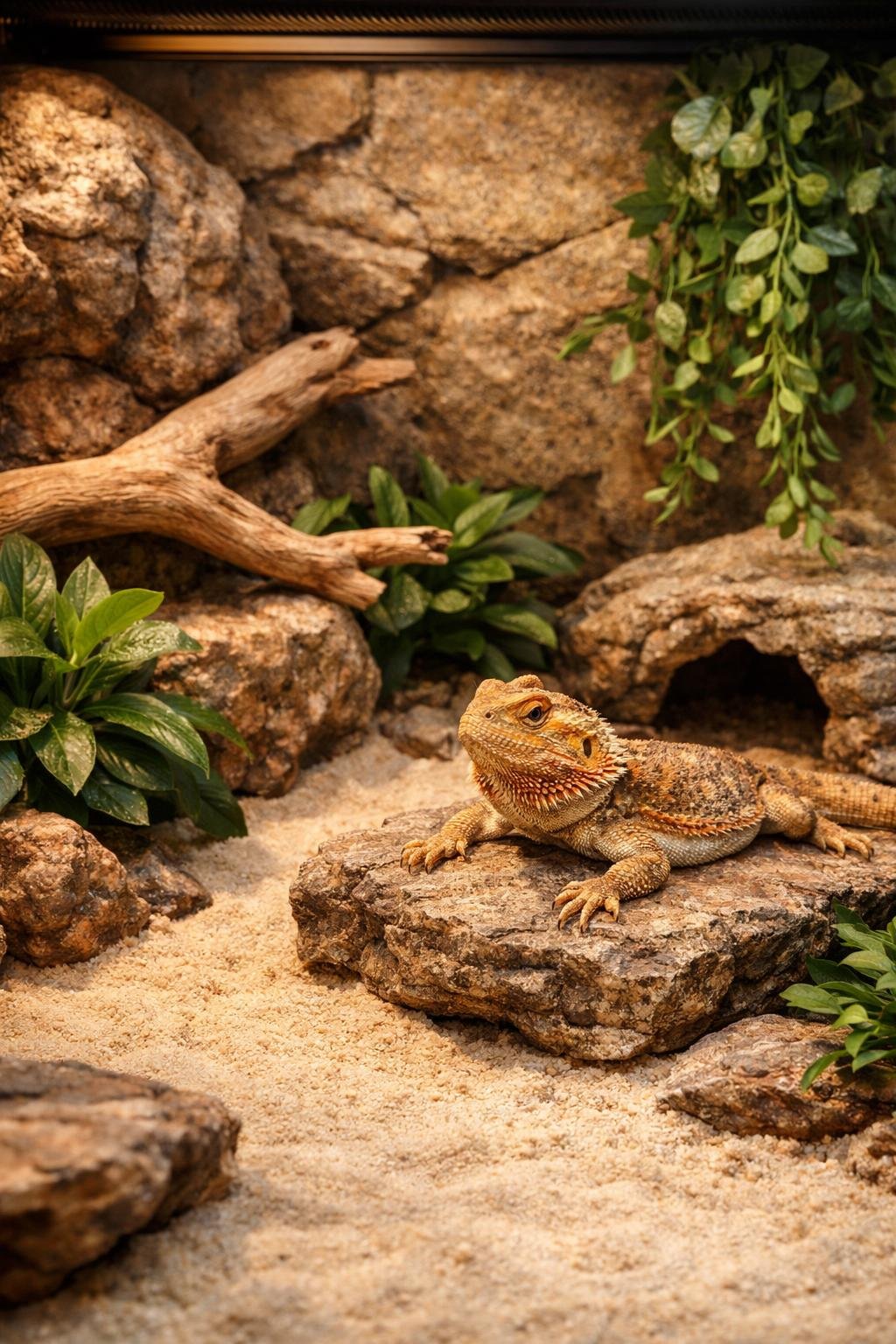
Keep your dragon warm, bright, and dry where it counts. Focus on a sunny basking area, a cool hideaway, steady airflow, and low humidity overall.
Lighting and Heating Essentials
You’ll need a strong basking bulb and a full-spectrum UVB light. Use a ceramic or basking bulb to make a hot spot—95–105°F (35–40°C) for adults, 100–110°F (38–43°C) for the little guys. Put the basking light at one end of the tank so your dragon can pick its favorite temp.
Install a 10–12% UVB tube or a good compact UVB that covers the whole tank. Swap out UVB bulbs every 6–12 months (check the box for the timeline). Measure temps with an infrared gun or two digital probes—one at the hot spot, one in the cool zone (75–85°F / 24–29°C).
Only use ceramic heat emitters at night if the temp drops below 65°F (18°C). Ditch the heat rocks—they burn dragons. Secure all lights with guards and use dimmers or thermostats to keep things safe and comfy.
Humidity and Ventilation Tips
Try to keep humidity between 20% and 40% most days. If things get too damp, you’ll probably run into breathing troubles or shedding headaches for your pet.
I like to use dry stuff like slate, tile, or even paper towels in desert-themed tanks. That keeps the humidity down and makes cleaning way easier.
Let some fresh air in with screened tops or vents on the sides. Stale air just feels gross, right?
If you’re going for a bioactive setup (which is honestly pretty cool), you can toss in a damp hide packed with sphagnum moss. This gives your pet a cozy, humid spot to help with shedding.
Just give the damp hide a quick mist now and then—don’t soak the whole tank.
Stick a digital hygrometer near the cool side to keep an eye on humidity. If it’s stubbornly high, crank up the airflow, pull out some live plants, or ditch anything soggy until things settle back down.