Who knew a boring patch of grass could turn into a hotspot for birds, color, and those sweet backyard sounds? Seriously, you just need one thing—a bird bath.
Stick a bird bath in the right spot and suddenly you get birds up close, calming water sounds, and a garden that looks like you actually planned it. Zero need for a total makeover.
Here are 15 fun, easy bird bath ideas that work for any yard, budget, or style.
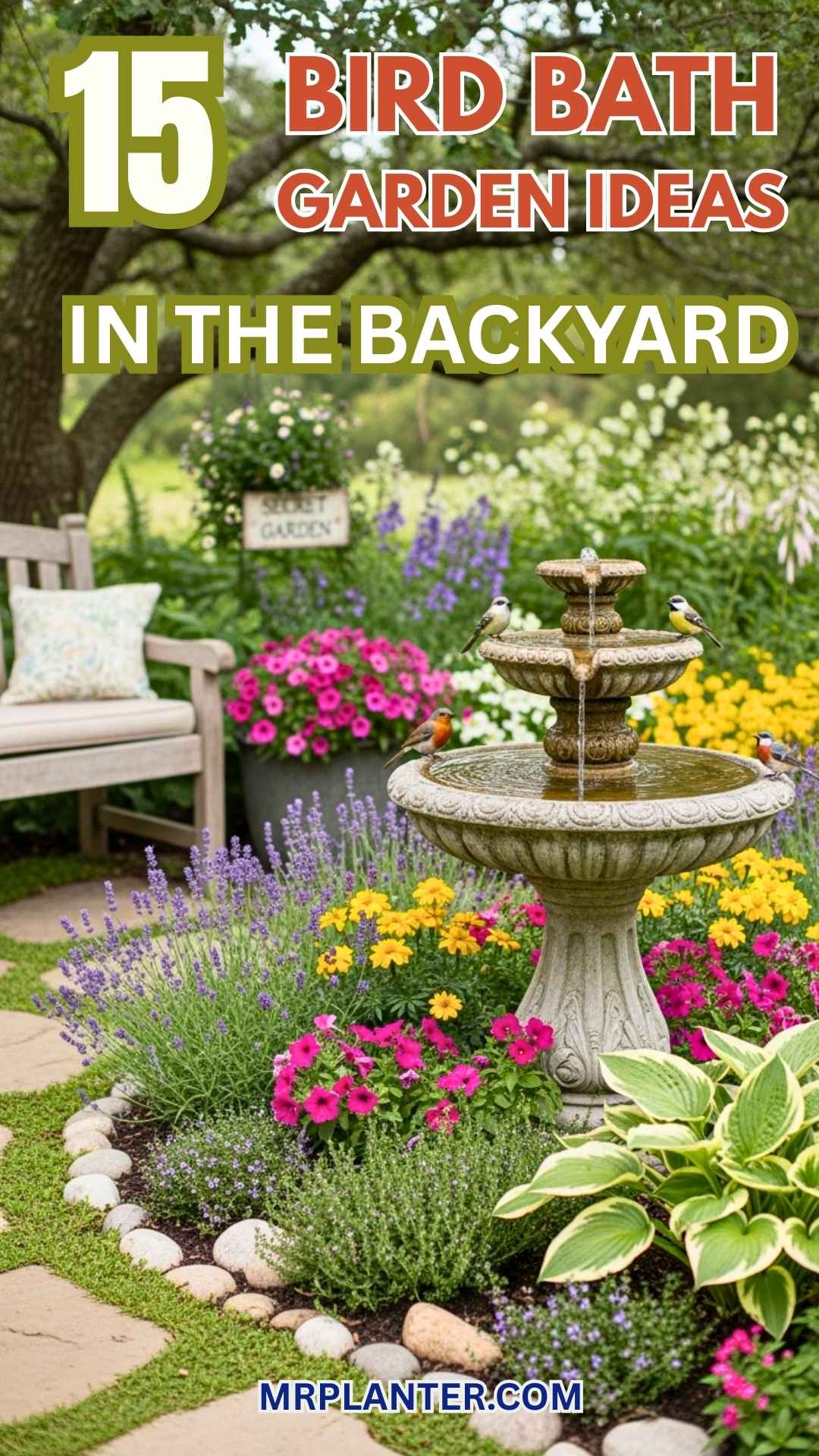
You’ll find tips about where to put them, how to make them look cool, and how to keep the water clean enough that the birds actually come back.
1. Place your bird bath near shrubs for VIP bird safety
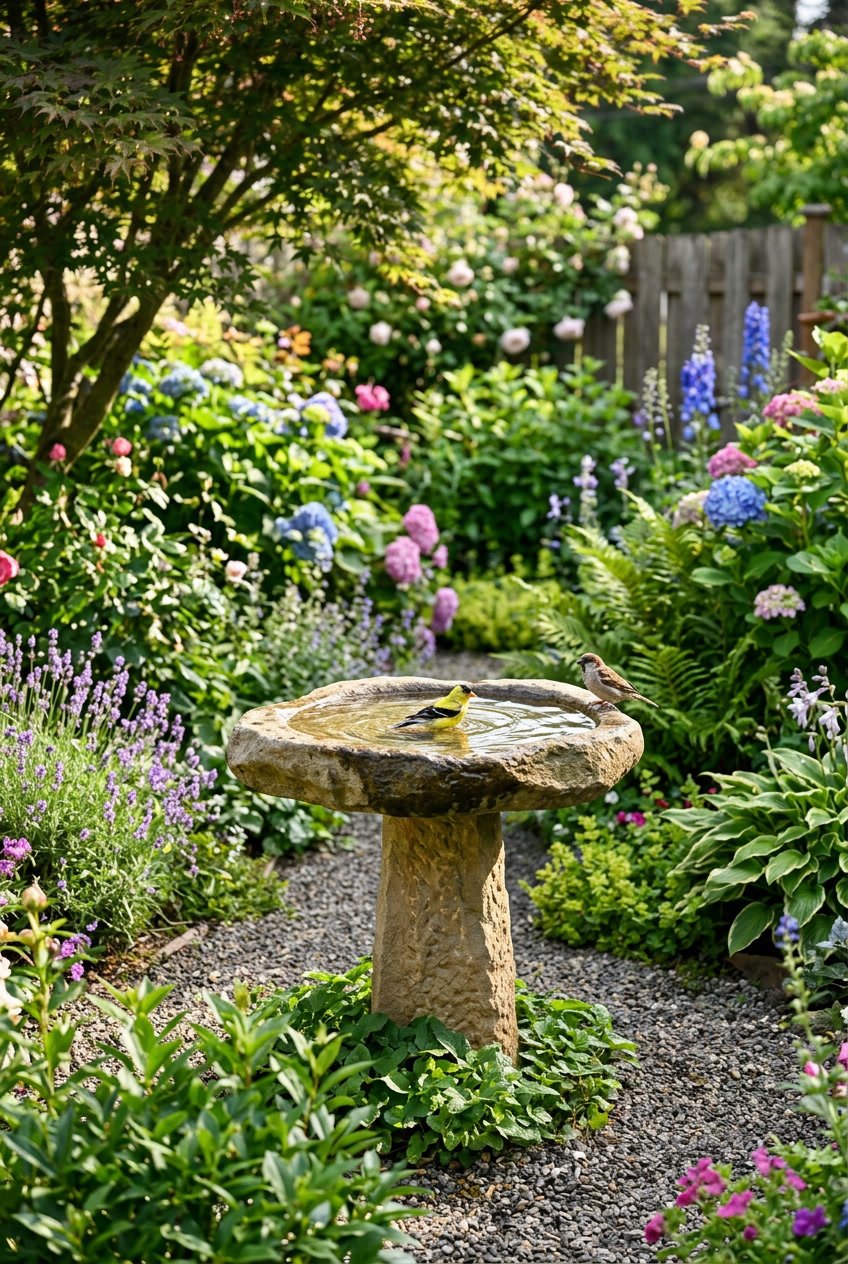
Let’s clear this up: birds skip baths if they feel like they’re on display for every neighborhood cat. So, stick your bird bath close to shrubs.
Shrubs give birds a quick getaway, but don’t jam the bath right into the bushes—keep it about 10–15 feet away. That way, cats can’t lurk right next to it, but birds still get cover.
Shrubs also block wind and give a little shade, which keeps the water cooler. If you put the bath near a feeder or some native plants, birds can grab a snack and a drink without making a whole trip out of it.
You’ll see more birds, and you can enjoy the show from your favorite chair. Win-win.
Expert Tip From MrPlanter: Put the bath where you can see it from a window, not right under a bush. Birds feel safer, and you get a front-row seat.
2. Add a gentle bubbling fountain for spa vibes and fresher water
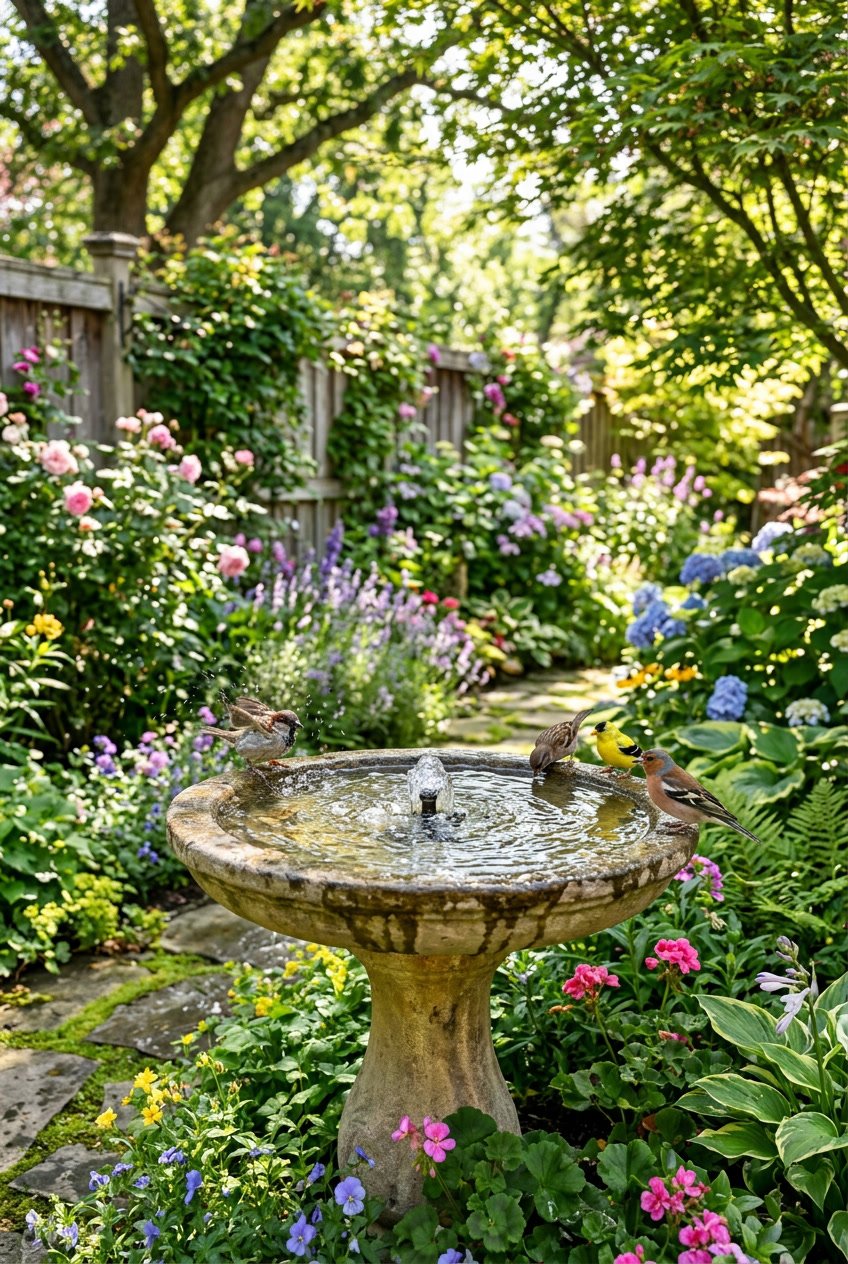
Birds love moving water way more than still water. A little bubbler or solar fountain makes the whole thing more interesting, plus it keeps mosquitoes from turning your bath into a bug resort.
Set the fountain in a shallow bowl or on a big flat rock so birds can get in and out easily. You can go solar (easy, quiet) or plug-in (works even when it’s cloudy).
Keep the water flow gentle—nobody wants to get blasted. Top up the water every few days, and give the pump a monthly cleaning so it doesn’t get gross.
Expert Tip From MrPlanter: Pick a fountain with adjustable flow. That way you can set it to “chill” or “party” as needed. Clean the pump with a soft brush every month to keep things running smooth.
3. Use a vintage wheelbarrow basin for a rustic charm that says, ‘Welcome, feathered friends!’
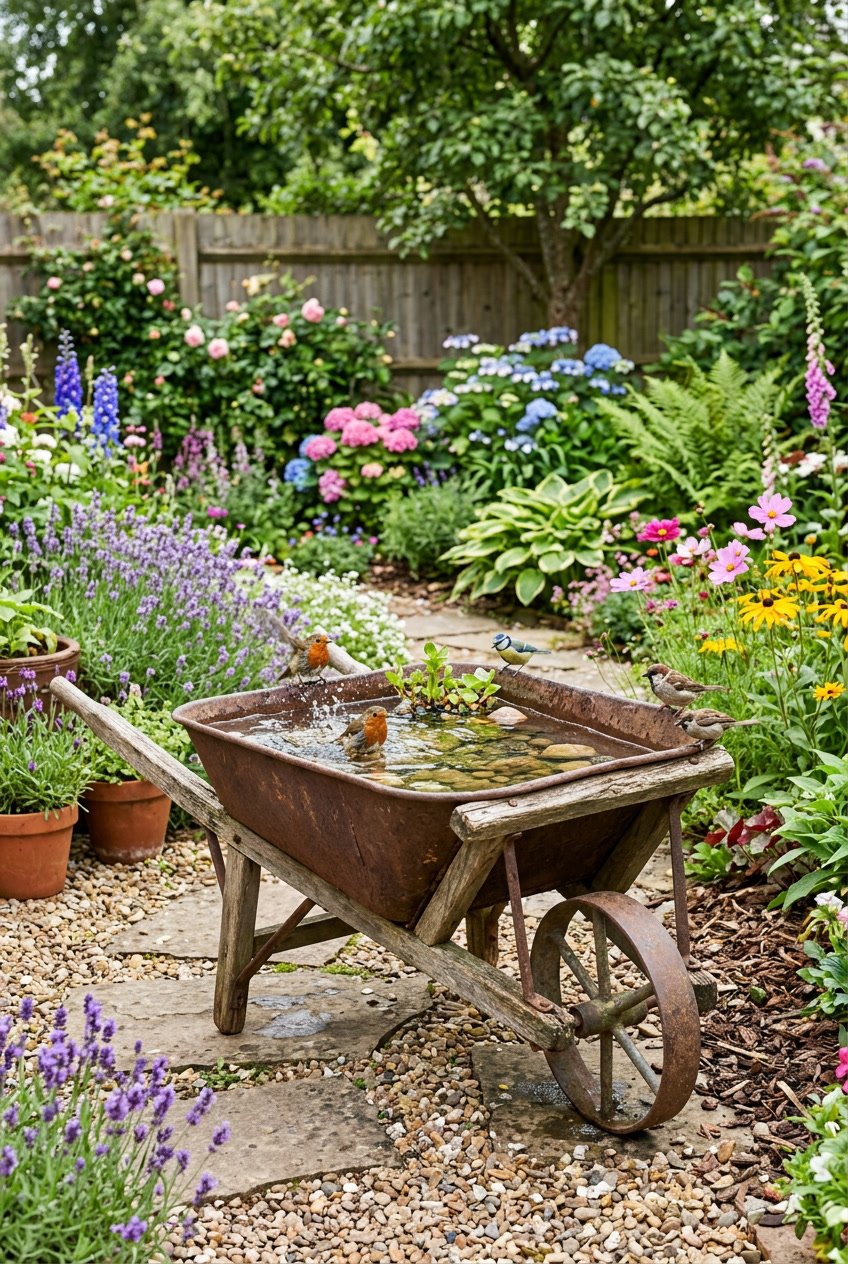
Old wheelbarrows make awesome bird baths—plus, they look cool.
Drop a big plant saucer or shallow basin inside the wheelbarrow so the water doesn’t get too deep. Toss in a stone or two for birds to perch on.
The old metal gives your yard a “been here forever” vibe. Tilt the wheelbarrow a bit so rainwater drains out and doesn’t turn the bath into a swamp.
Change the water every few days and scrub the basin when you remember. If you add some shade and a few low plants, birds will feel extra safe.
Expert Tip From MrPlanter: Use untreated stones and a shallow dish to keep the water safe. Change the water every couple of days to keep algae away and the birds happy.
4. Create a mosaic-tiled bird bath for that splash of artistic flair
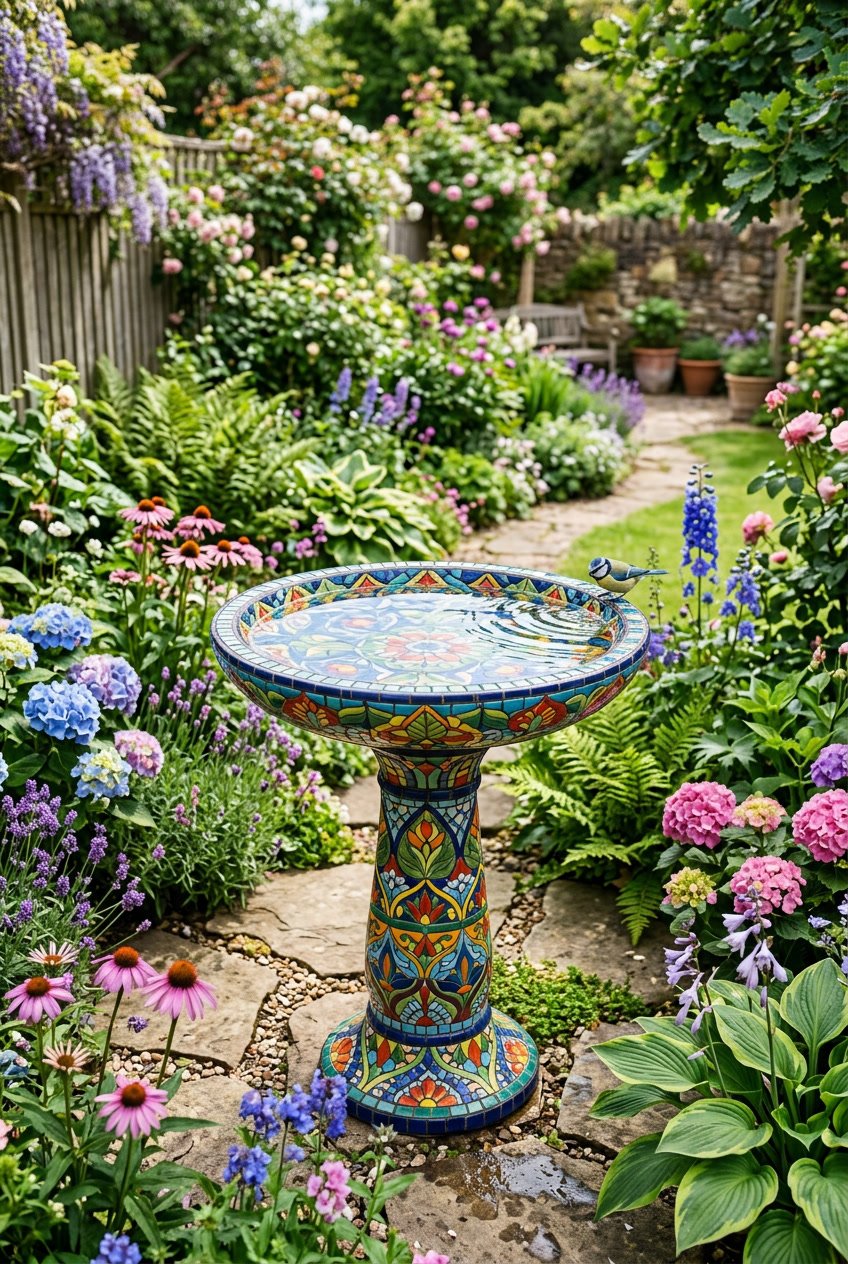
You don’t have to spend a ton or be a pro to make a mosaic bird bath look good. Grab an old bowl or concrete base, then glue on broken tiles, glass gems, or whatever colorful bits you’ve got lying around.
Use weatherproof glue and grout so your creation doesn’t fall apart in the first rain. Make sure the pieces are smooth or cover sharp bits with grout—bird feet are tiny and delicate.
Put the bath where you can see it, but don’t let cats hide nearby. You get color, birds get water—everyone’s happy.
Expert Tip From MrPlanter: Pick a shallow bowl and change the water every few days. Seal the grout after it dries so your art lasts and cleaning’s easier.
5. Install a solar-powered fountain – because birds deserve eco-friendly luxury
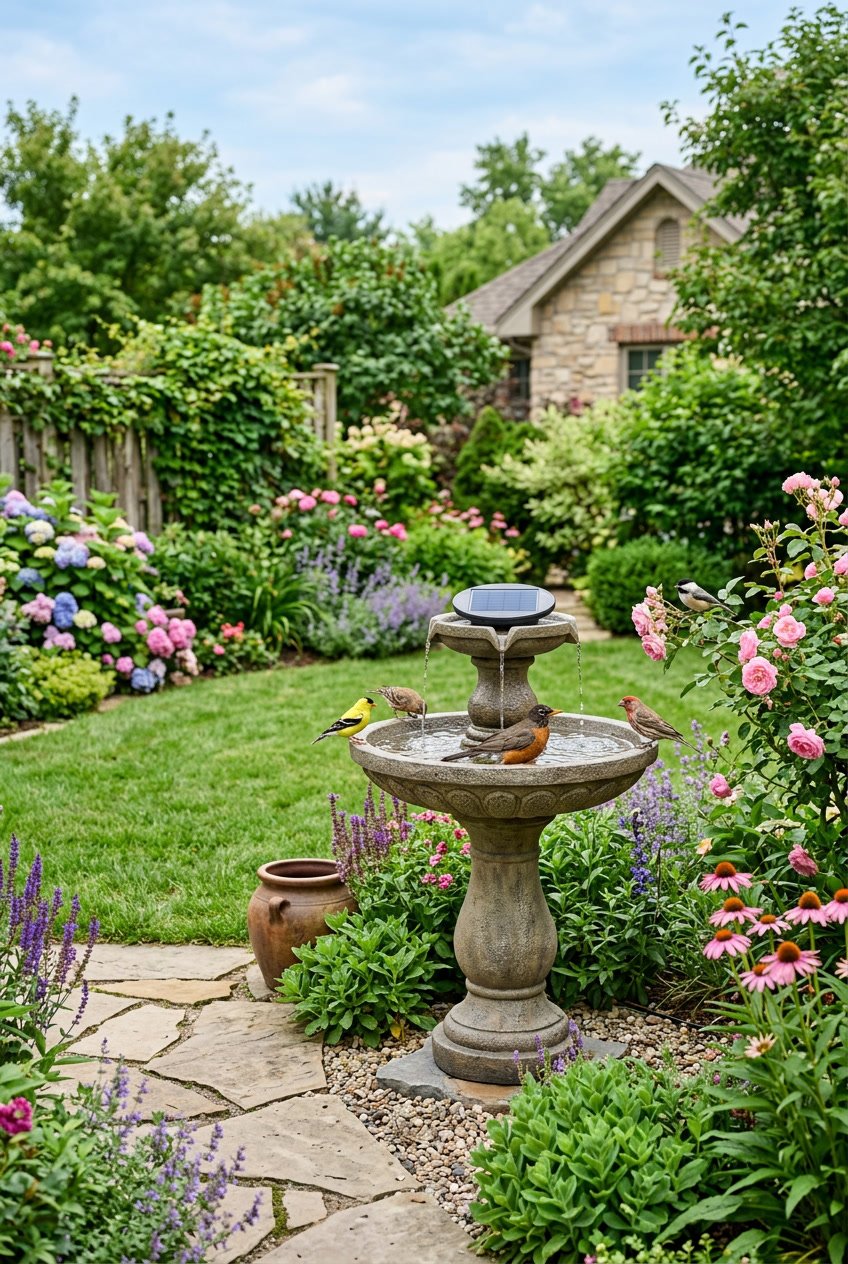
Sick of tangled cords or dead batteries? Solar-powered fountains are the fix.
They run when the sun’s out, and birds get a steady stream of fresh water. Some pumps float, some have a little panel you stick in the sun.
Pick one with adjustable spray and a sturdy panel that won’t quit after the first rainstorm. Drop in a few stones so little birds don’t have to swim.
Keep it near a tree for shade, but not so close that falling leaves clog up the works. Your birds will love it, and you’ll save a little on the power bill.
Expert Tip From MrPlanter: “Add a rock or two in the basin for the tiny guys. Check the solar panel for leaves or dirt every week so it keeps working.“
6. Upcycle a classic birdcage into a quirky bird bath centerpiece
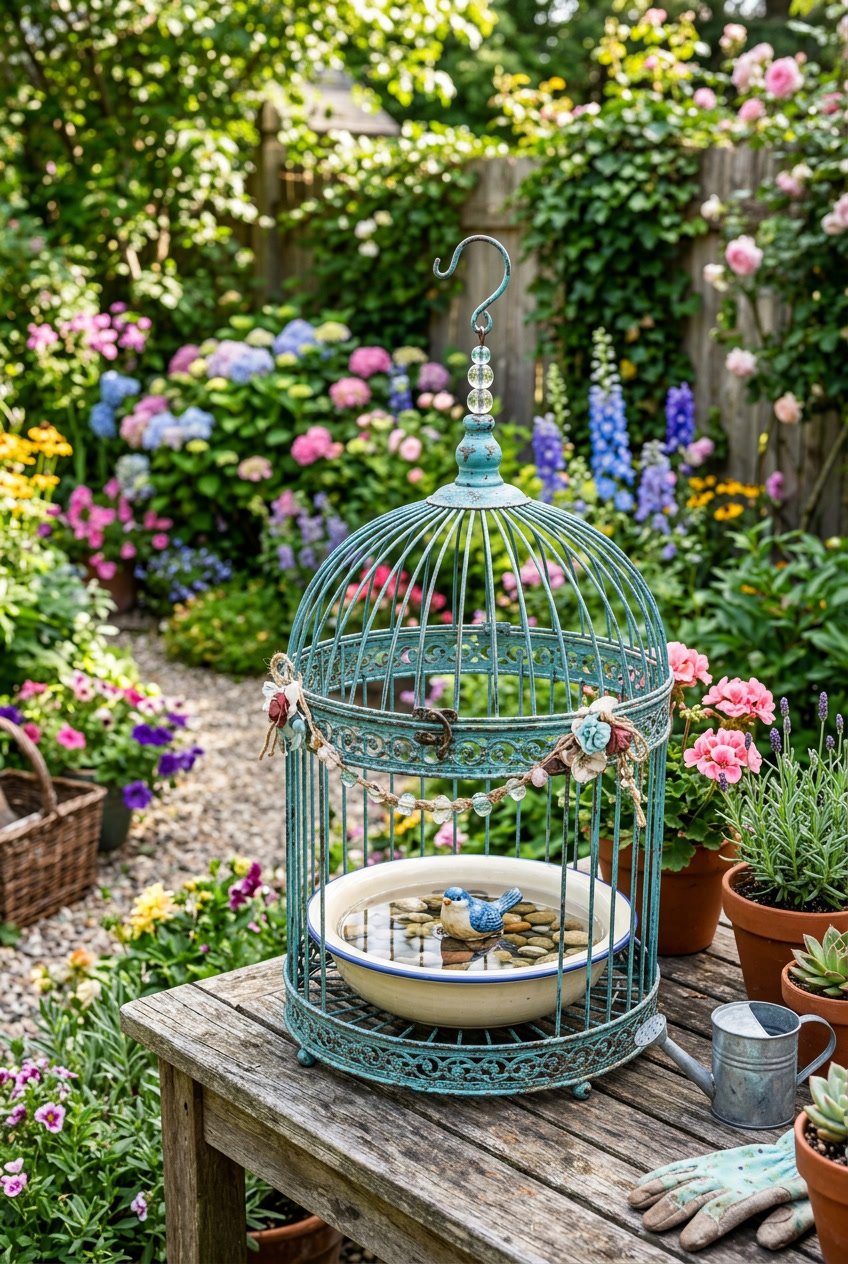
You don’t have to buy new stuff to make your yard look cool.
Grab an old birdcage, stick a shallow dish or planter inside the bottom, and fill it with water. Set the cage on a sturdy table or stand, toss in some pebbles for drainage, and let the birds do their thing.
Go for a rusty or painted cage for that antique look, or spray-paint it a fun color. Put it where you can see it and close to some low branches so birds feel safe.
Expert Tip From MrPlanter: Add a rock or twig in the water for a perch. Change the water every few days, and keep the cage shaded so the water doesn’t get too hot.
7. Choose a shallow basin no deeper than 2 inches because birds aren’t scuba divers
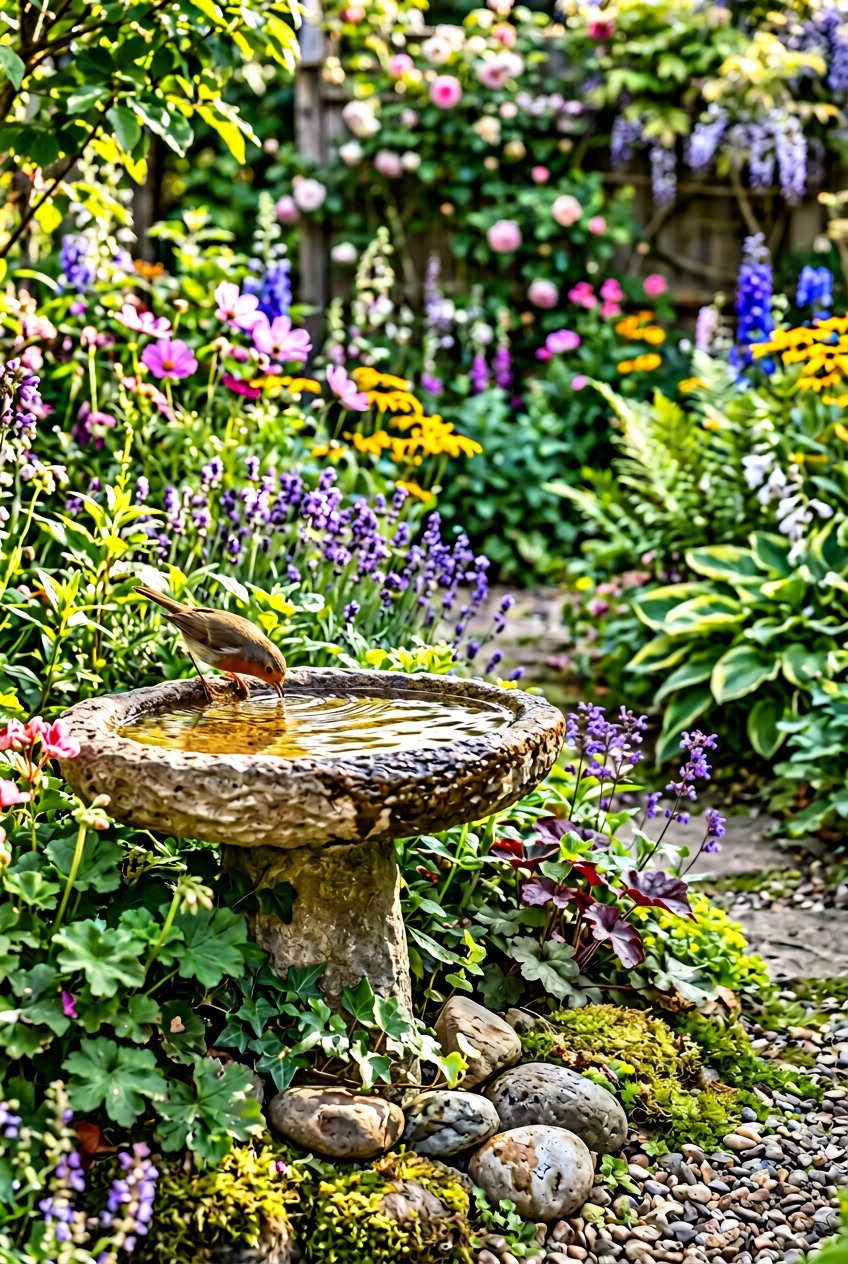
Birds aren’t looking for a swimming pool.
Keep your basin shallow—one inch at the edge, two inches max in the middle. That’s perfect for most backyard birds.
Shallow water means birds feel safe and you won’t have to clean as often. Add a couple of flat stones or a gentle slope so even the tiniest birds can get in.
Put the bath near shrubs for a quick escape route. If they feel safe, they’ll come back.
Expert Tip From MrPlanter: “Check and refill the bath every day or two when it’s hot. Stones give small birds a place to stand and splash.”
8. Put smooth stones in the bottom to help tiny birdie feet grip the slippery surface
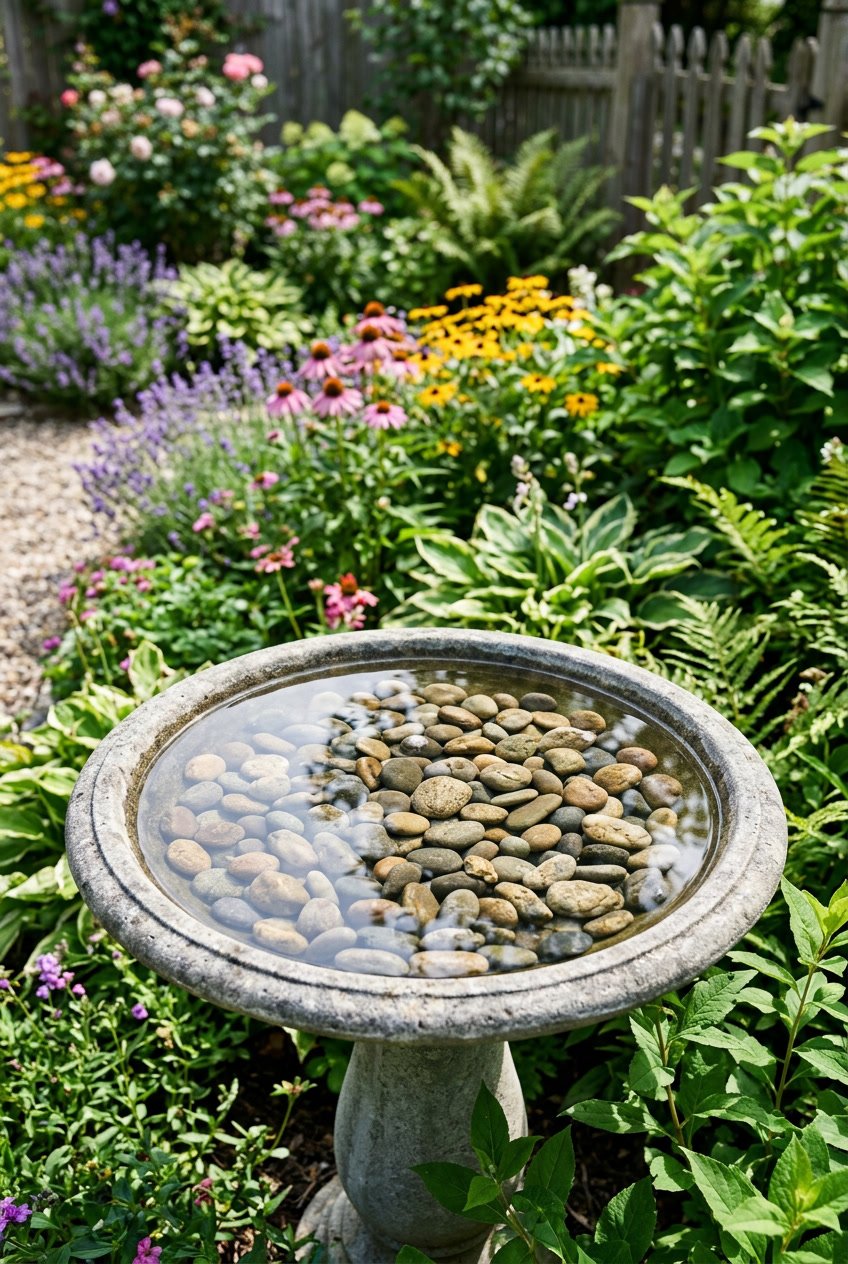
Nobody likes slipping and sliding, especially birds.
Drop a few smooth pebbles or flat rocks in the bath. Birds can land, drink, and splash without doing the splits.
Mix up the stone sizes so everyone from wrens to robins gets a good grip. Rinse the stones before you put them in so the water stays nice.
Change the water and scrub the stones once a week. Place the bath where you can watch the action, but give birds some cover nearby.
Expert Tip From MrPlanter: Pick stones with a little texture so feet don’t slip. Use pebbles that won’t mess up the water.
9. Build a tiered bird bath using stacked bowls to attract all heights and temperaments
Surprising Fact: Different birds like different water depths, so one shallow bowl won’t make everyone happy.
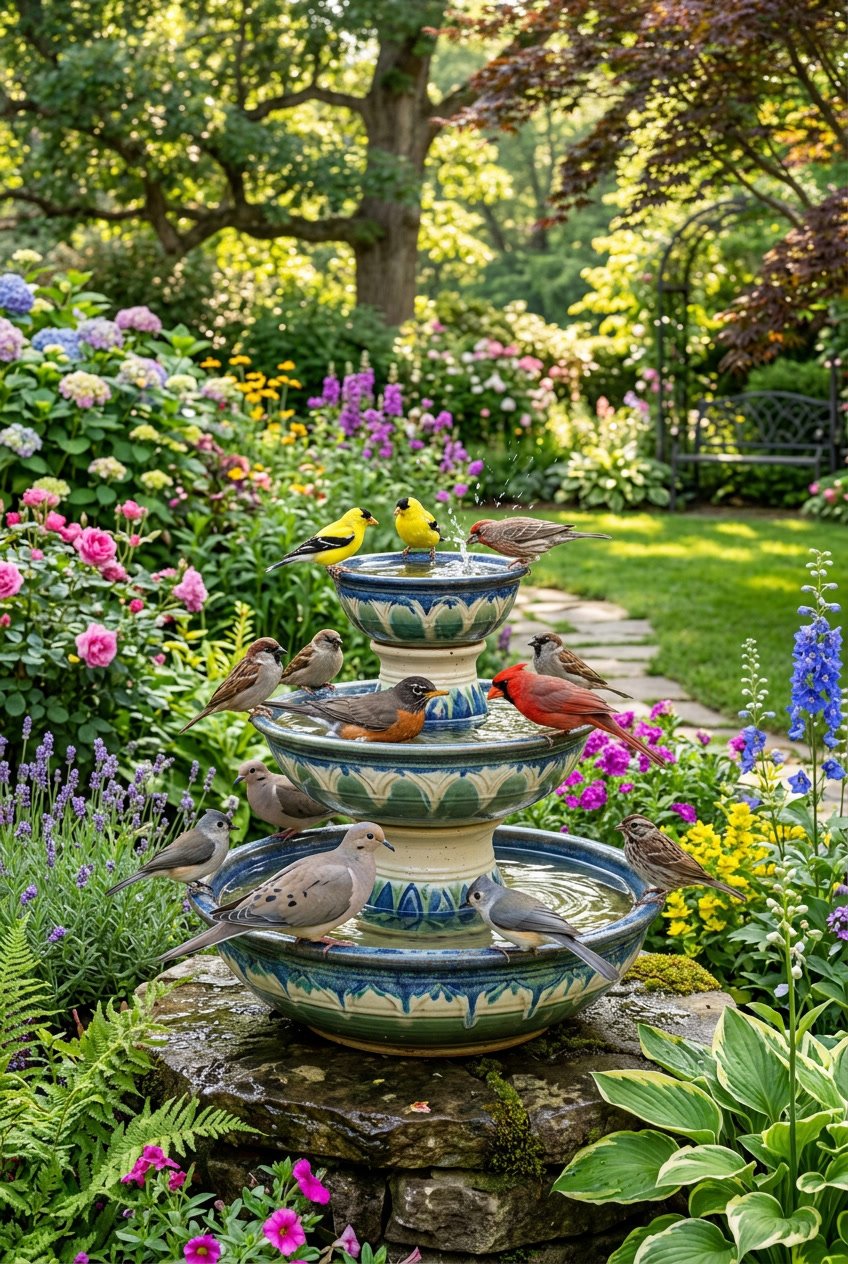
Stack a few bowls and you get a bird bath with levels—tiny sparrows up top, big robins down below. Use ceramic, terracotta, or even stainless bowls. Glue or mortar them so they don’t wobble.
Set the bath where you can see it and maybe add a slow pump for a gentle trickle. Birds like a little privacy, so pick a spot near shrubs, but don’t let anything hide right next to it.
Clean each bowl often. Keep water shallow, just a few inches deep. Top up the water every couple days so mosquitoes don’t move in.
Expert Tip From MrPlanter: “Try different bowl textures for better grip. Make the top bowl a little higher to tempt shy birds.”
10. Paint a simple basin with weatherproof paint for an easy pop of color
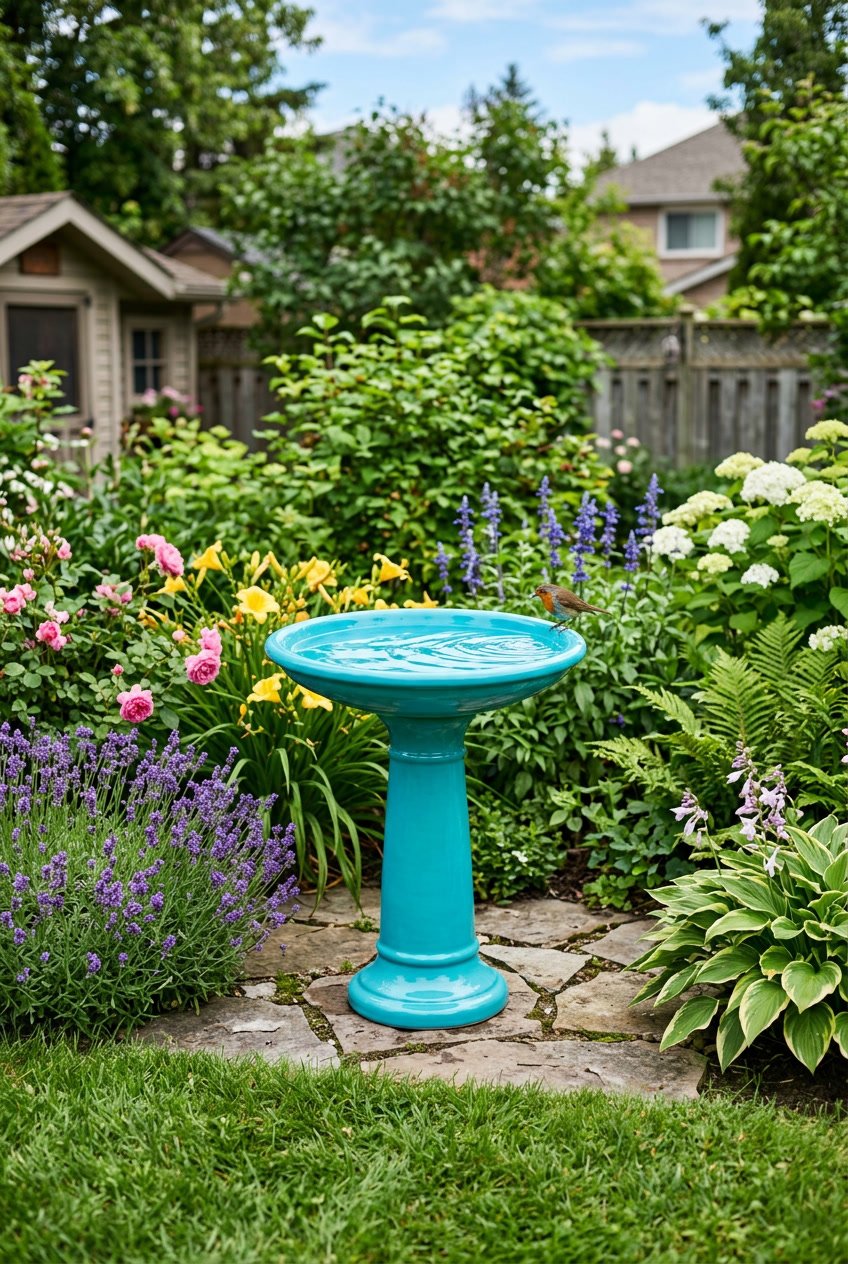
You don’t need to be an artist to make your bird bath stand out. Grab a brush and some weatherproof paint.
Clean the basin and let it dry. If it’s porous, use a primer first. Then slap on two thin coats of weatherproof paint.
Pick soft colors for a natural look, or go bold if you want it to pop. Let each coat dry all the way, then seal it with a clear outdoor sealer.
Expert Tip From MrPlanter: “Test the paint on a small spot to make sure it sticks and isn’t slippery. Re-seal once a year to keep things looking bright.”
11. Add a drip system for that soothing water sound that turns your garden into a chill zone
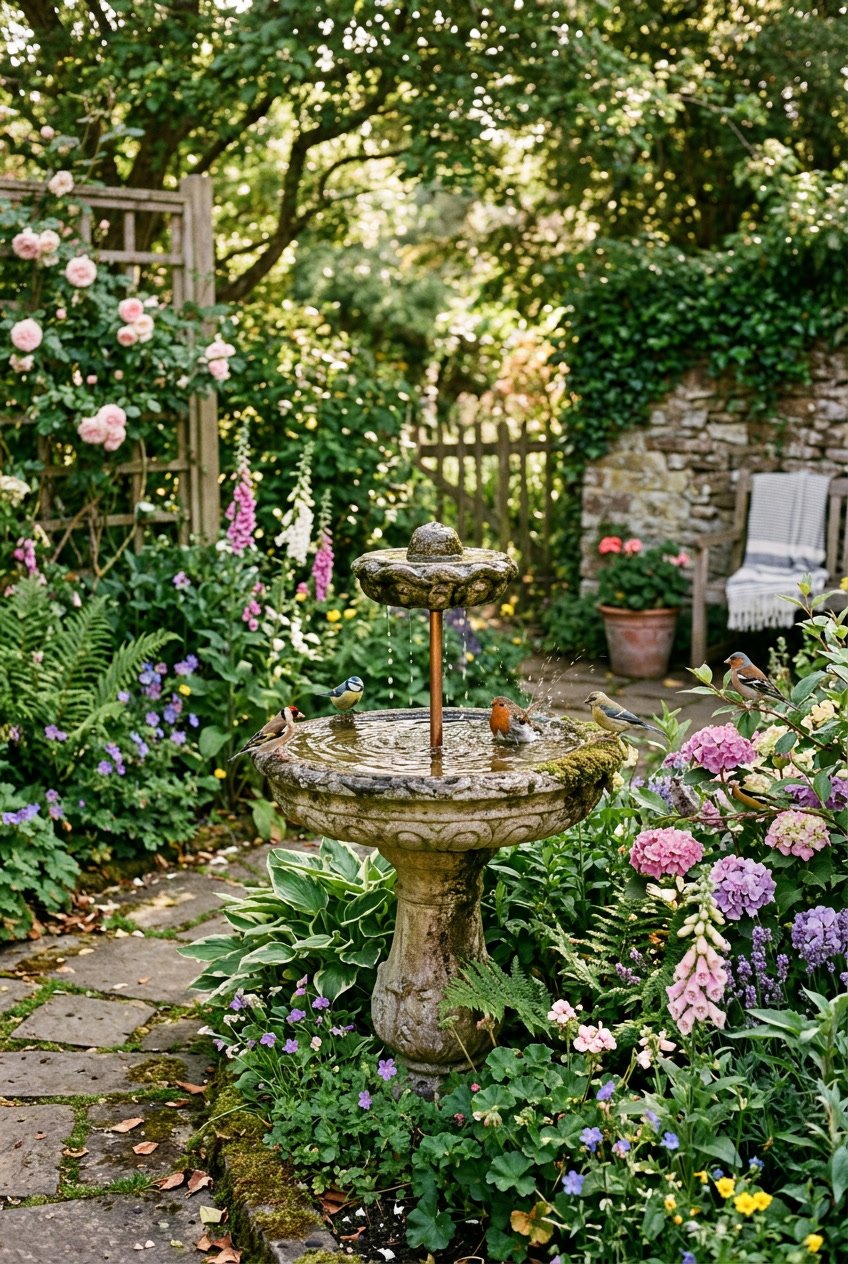
Birds spot moving water way faster than still water. A drip system is just a little tube or nozzle that lets water fall into your bird bath at a steady pace.
Hook it up to a hose or even a rain barrel if you want to feel extra eco-friendly. The soft drip keeps mosquitoes away and makes birds feel safe.
Hang the dripper about two feet above the bath so you get nice ripples. Use a flow control or kit so you can speed it up or slow it down, depending on the season.
Expert Tip From MrPlanter: Start with a slow drip and see who shows up. Clean the water twice a week, and rinse the dripper to keep it from clogging.
12. Place a bird bath next to a feeder to create the ultimate birdie hangout spot
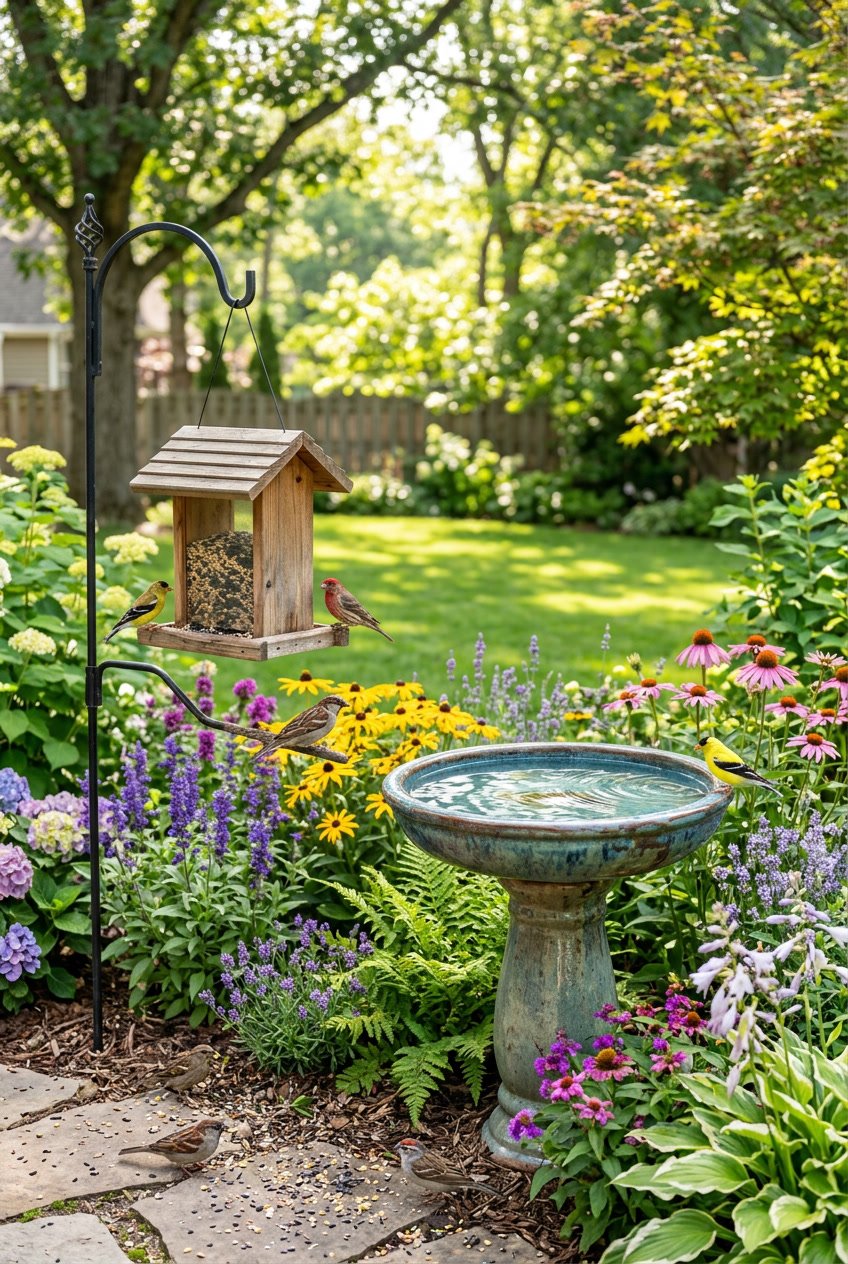
Here’s something a bit surprising: birds absolutely love having food, water, and a lookout all in one spot. If you stick a bird bath near your feeder, you basically turn your yard into a five-star pit stop for feathered guests.
Birds want everything close together—they’re not keen on flying laps just to grab a sip or a snack. I like to mix up water depths in the bath and always keep it clean. That way, tiny songbirds and the chunkier visitors all get a safe splash.
Put the setup near some shrubs or low branches. Birds feel better when they have a quick getaway nearby.
But don’t crowd everything—leave some open space so they can spot trouble before it spots them.
Expert Tip From MrPlanter: “Place the bath about 3–6 feet from the feeder and near a sheltering shrub. Clean the water twice a week to keep birds healthy.”
13. Use a sturdy pedestal to elevate your bird bath – birds love a good lookout point
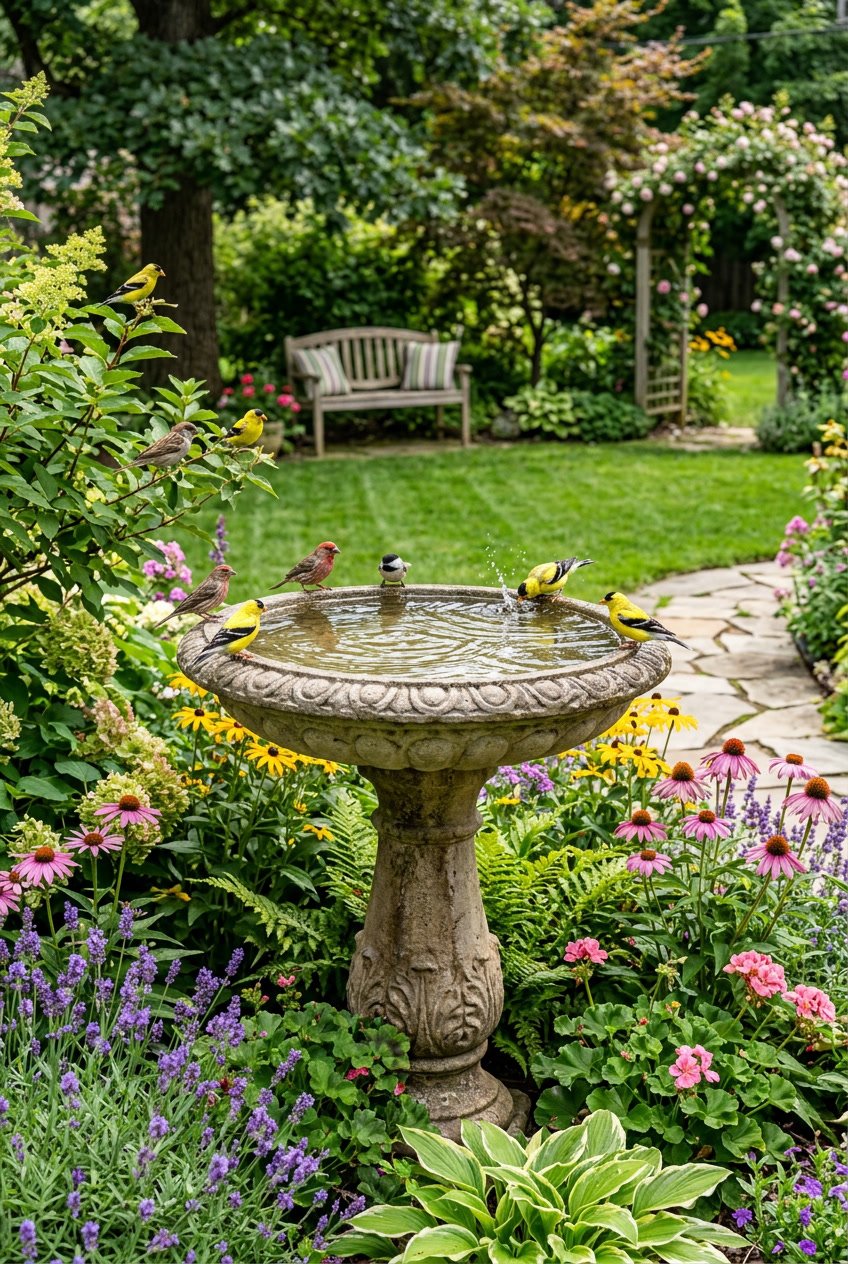
Did you know birds actually choose higher spots when they want to feel safe? A pedestal lifts the bath so birds can keep an eye out while they splash around.
Grab a pedestal made from concrete, metal, or treated wood. Make sure it doesn’t wobble—robins don’t appreciate a shaky landing.
A steady base means cleaner water and fewer spills. Plus, it keeps your setup from tipping over if a squirrel joins the party.
I like to put the pedestal where I can watch from the kitchen window. But I always keep it near some low cover, like a shrub, so the birds have a fast escape route.
Expert Tip From MrPlanter: “Choose a pedestal about 18–30 inches tall for most songbirds. Place it 10–20 feet from dense shrubs so birds can dash for cover.”
14. Decorate with native plants around the bath to provide natural snacks and hideouts
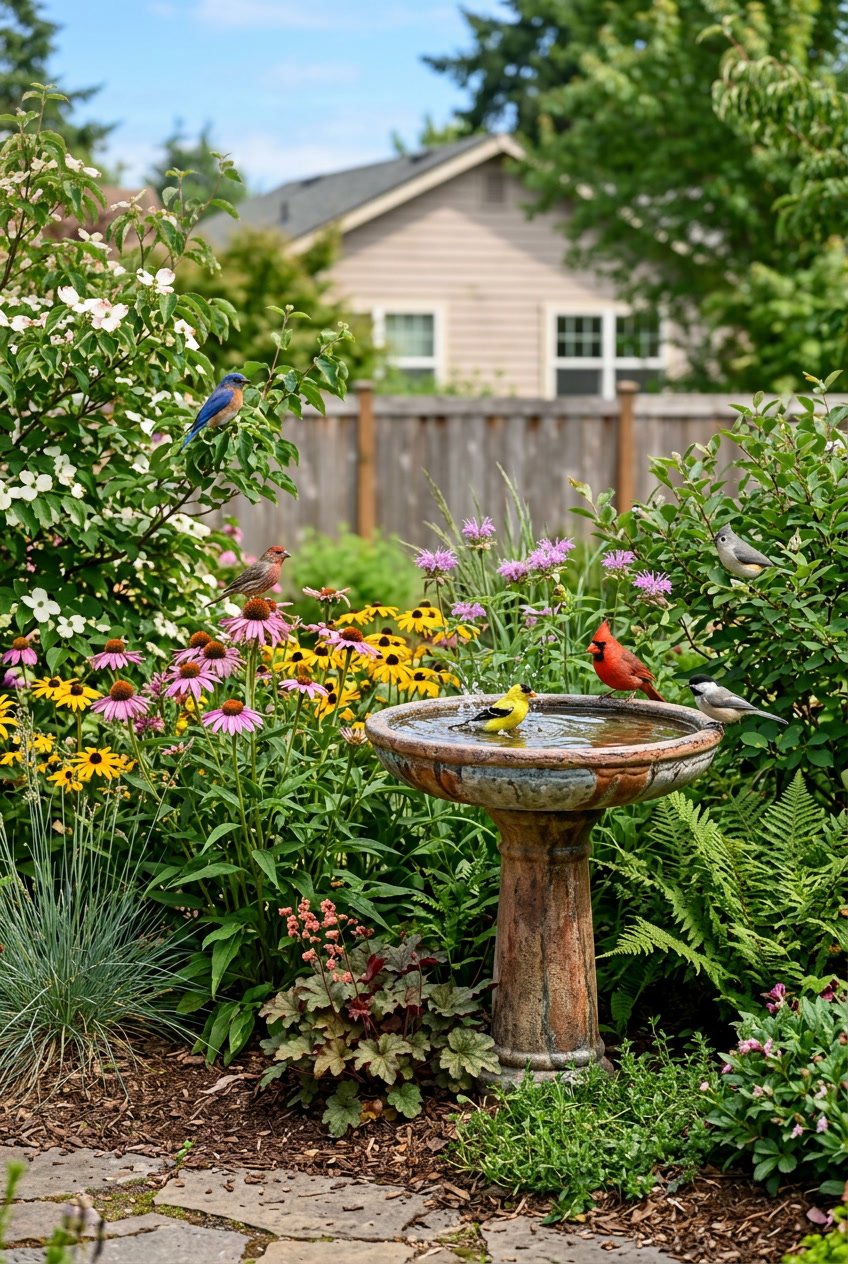
Birds honestly prefer the plants they grew up with. Native flowers, shrubs, and grasses give them seeds, nectar, and bugs they already know how to find.
I like to mix plant heights and textures. Short stuff for hopping, taller plants for hiding. Toss in some berry bushes, seed heads, and a couple of evergreens, and you’ve got a year-round bird buffet.
Just don’t crowd the edge of the bath. Birds need a clear path to the water, and nobody likes thickets right at the rim.
You’re making a balance—food and safety—so the birds feel chill but not stressed.
Expert Tip From MrPlanter: “Start small with a few native species you like, then add more each season. Watch which plants the birds use most and grow those for a happier yard.”
15. Line the base with pebbles to keep the water clean and prevent mosquito parties
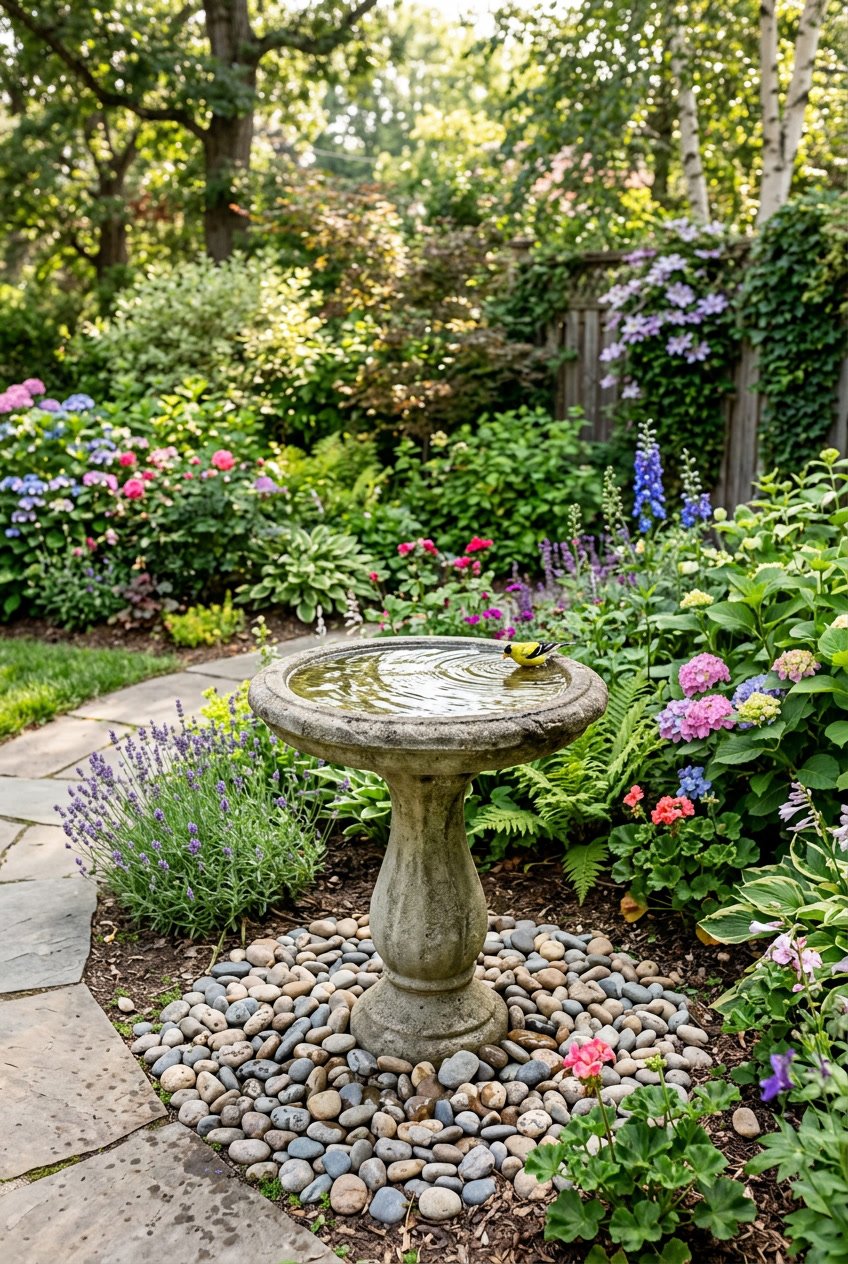
Here’s a myth-buster: mosquitoes don’t need deep water, but they love still, shallow puddles. You can actually outsmart them with one simple move.
Just toss some smooth pebbles or river rocks in the bottom of your bird bath. They break up the surface, so mosquito eggs and larvae can’t really get comfy, and birds get better footing, too.
Pebbles slow down splashing and help gunk settle at the bottom, so cleaning isn’t such a chore. When you scrub the bath, give the stones a rinse or swap them out.
This little upgrade looks good and works like a charm—no fancy gadgets needed.
Expert Tip From MrPlanter: Choose mixed-size pebbles for good drainage and a natural look. Rinse them monthly and change the water every few days to keep birds safe.
How Bird Baths Transform Backyard Gardens
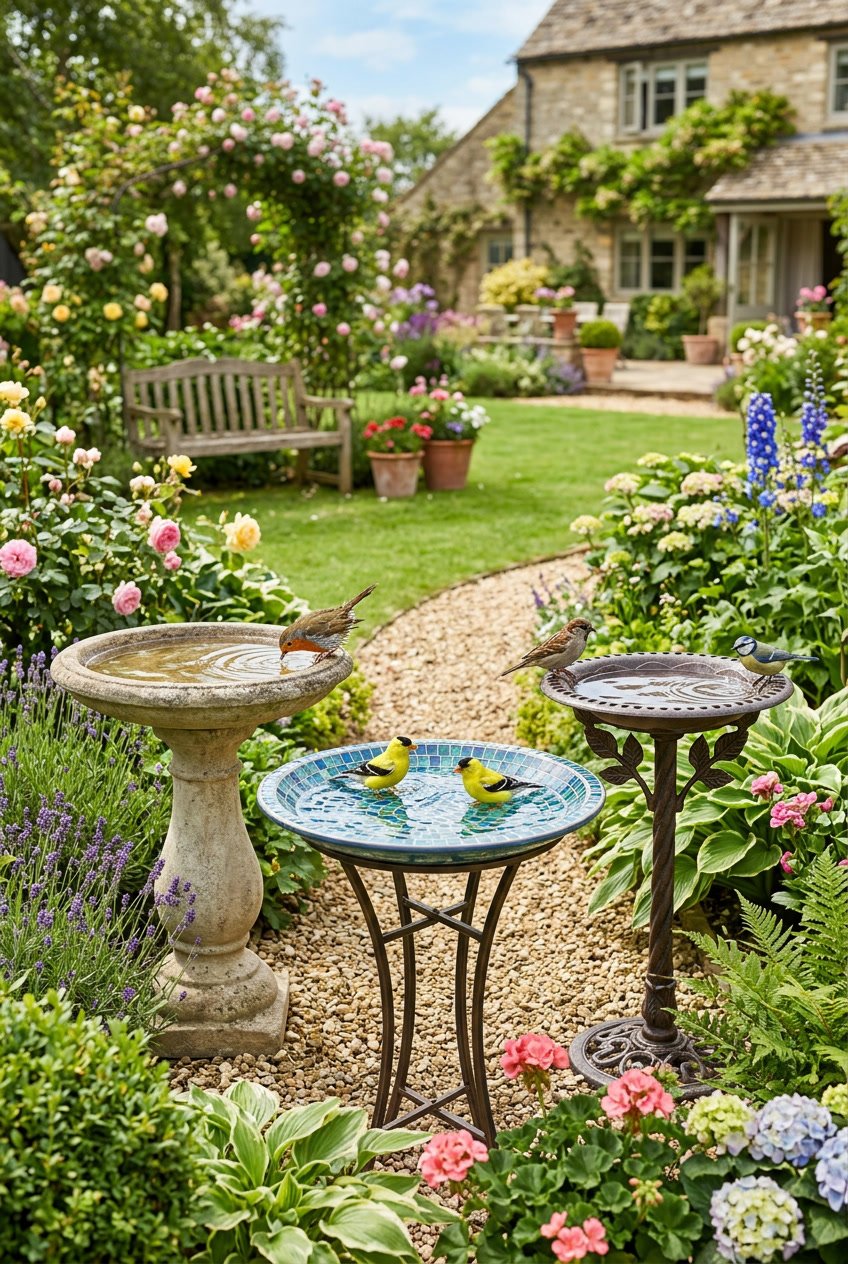
A bird bath brings your yard to life. Suddenly, you get sound, movement, and a cool spot for birds to hang out. Plus, it just ties the whole garden together.
Attracting Feathered Friends (And Why You Want Them)
Once you add clean, shallow water, robins, finches, and sparrows start showing up. I always keep the bath 3–6 feet from some cover so the birds can dash to safety.
I stick with water that’s 1–2 inches deep at the edges and maybe 3–4 inches in the middle. That keeps bath time safe for everyone.
Hot tip: Change the water every couple of days when it’s warm, and give the basin a good scrub each week. If you add a little fountain or dripper, birds notice the moving water and can’t resist.
Flat stones or a shelf in the bath give tiny birds a spot to drink without getting soaked.
Watching birds is honestly the best stress relief. You start to recognize who’s who by their colors and songs. Plus, when the bug-eating birds drop by, your garden pests don’t stand a chance.
Encouraging Local Wildlife Diversity
Water doesn’t just bring birds. Butterflies, bees, and even some furry visitors might swing by.
I like to set up a few water features—a shallow basin for insects and a deeper one for the bigger birds. That way, everyone gets a drink.
Native shrubs and nectar plants near the bath make it even better. You get food, shelter, and nesting spots all in one view. Skip the pesticides so both the bugs and the birds stay healthy.
I keep an eye on which visitors show up and tweak things with the seasons. In summer, I add more shade and refill the water often. In winter, I’ll use a heater-safe bath or move a sturdy bowl to a sunny spot.
Creating a Natural Focal Point
A bird bath just pulls a garden together. It anchors a path, a bench, or a flower bed and gives you something to look at while you sip your morning coffee.
I pick materials that fit my style—stone for a timeless look, copper for that cool green patina, or a ceramic bowl for a pop of color.
Plop the bath on a pedestal or a low stump, then surround it with groundcover and a taller plant a few feet back. It frames the bath and makes birds feel safe.
Here’s a simple trick:
- Put the bath in line with a path or bench
- Add some thyme or creeping groundcover at the base
- Plant mid-height flowers nearby for a little color
A soft path light or a little spotlight on the bath means you can watch the action even at dusk.
Caring for Your Backyard Bird Bath
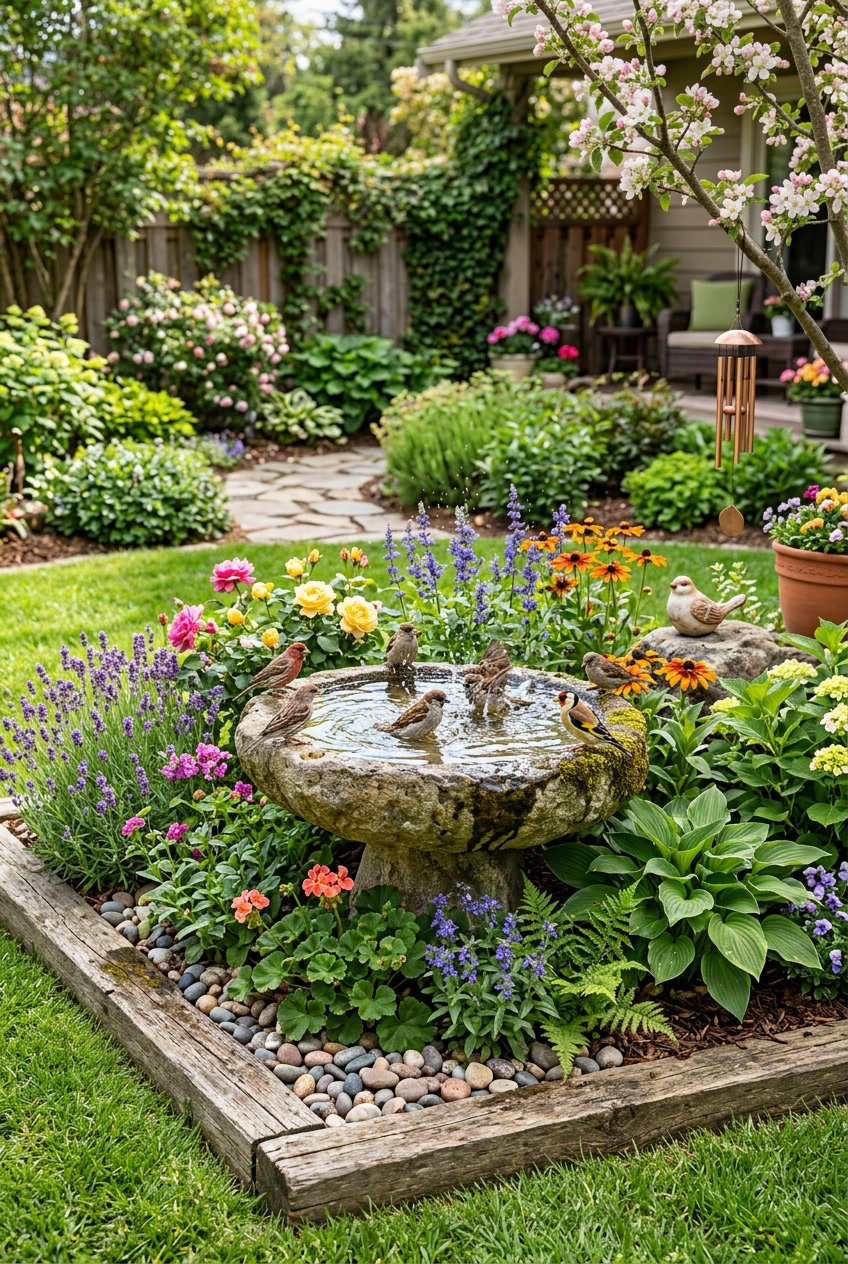
Keep the water clean, pick a safe spot, and tweak your care as the seasons change. Birds will keep coming back if you stick to these basics.
Keeping Water Clean and Bird-Approved
I change the water every couple of days in summer, and daily if it gets murky.
Just dump the basin, scrub it with a stiff brush and some mild soap or a bit of bleach (one part bleach to nine parts water). Rinse until there’s no bleach smell.
I use a shallow bowl or toss in a few stones so birds can perch. Skip the strong cleaners or anything scented—birds don’t need a bubble bath.
If algae keeps coming back, I move the bath to a shadier spot and scrub it twice a week. A little fountain keeps water moving and helps with mosquitoes.
I keep water under 2 inches deep at the edges and slope it gently to the middle. After a big rain or if I spot droppings, I swap out the water for fresh.
Location, Location, Location: Where to Place Your Bird Bath
I set my bath about 5–10 feet from shrubs or trees. That way, birds can bolt for cover, but cats can’t sneak up too easily.
If you’ve got a cat that likes to stalk, move the bath 15–20 feet from thick branches and keep the area open.
Always put the bath on a solid pedestal or flat spot so it doesn’t tip. I like to see it from my window, but not right where people or pets walk by all the time.
Flat stones or little logs around the rim make shy birds feel braver.
Don’t stick the bath right under trees that drop a ton of leaves or bird poop. I aim for a mix of sun and shade—morning sun warms the water, afternoon shade keeps it cool so birds don’t overheat.
Seasonal Tips for Year-Round Enjoyment
Spring and summer roll in, and honestly, it’s time to clean that bird bath way more often. I like to toss in a dripper to keep the water fresh—birds seem to love it.
If you spot nesting pairs nearby, keep the bath full and try not to hover too much. Baby birds learning to bathe are adorable, but they spook easily.
When fall hits, leaves start piling up, and drains get clogged fast. I always sweep out the leaves and check the drain.
If a tree keeps dumping leaves into your bath, just scoot it over a bit. That saves you a ton of cleanup.
Winter’s a different beast. I use a bird-safe de-icer or one of those heaters that only kick on when needed. That way, the water doesn’t freeze solid.
No heater? No problem. I swap to a shallow, dark basin. It soaks up the sun and keeps at least a thin layer of water from icing over.
If ice forms, I break it up gently—please, never smash it or use salt. Both can hurt the birds.
During those freezing mornings, I just refill with warm water every day. Birds come to rely on that, and honestly, seeing them show up in winter always makes my day.