You can totally turn that plain old culvert into a charming part of your yard—no need to spend a fortune or lose the function, either.
Check out these 16 culvert landscaping ideas; they’re easy ways to add color, texture, and even some wildlife-friendly touches, all while keeping water moving where it should.
You’ve got options for sunny, shady, wet, or dry spots. Whether you want low-maintenance plants, small structures, or just a little decorative flair, you’ll find something that fits your time, budget, and style.
Pick what makes you happy, and get ready to turn a practical feature into something that actually looks like you meant to put it there.
1. Turn the culvert entrance into a mini rock garden with stacked stones and succulents
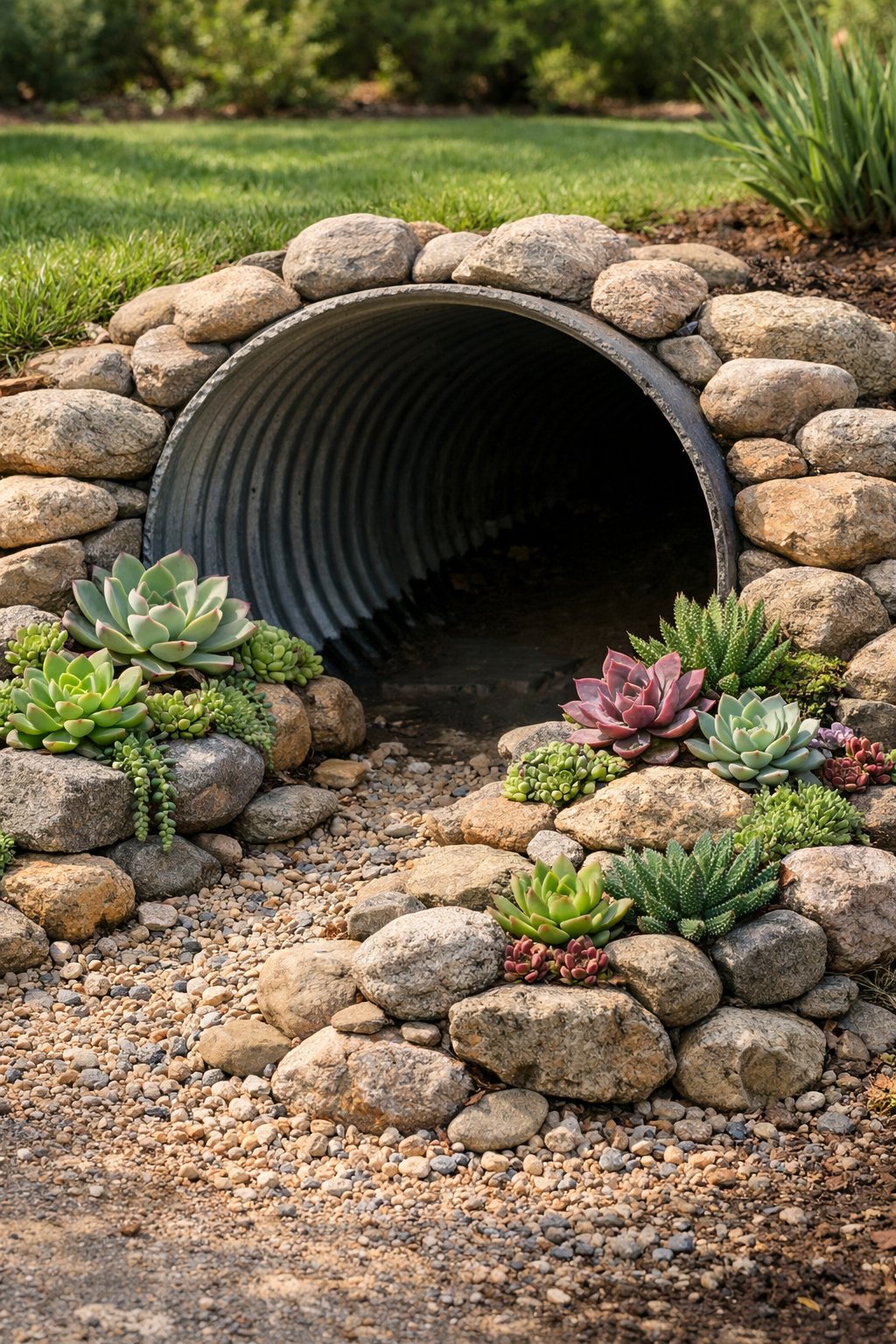
Let’s bust a myth: a culvert doesn’t have to be ugly to work well.
You can stack flat stones around the opening to hide the pipe and create a natural frame. Pop some small succulents, sedums, or other tough little plants in the gaps for color that doesn’t need much fuss.
Use big rocks as anchors and smaller pebbles to fill in, so everything stays put and you don’t end up with a rockslide. Let low, spreading succulents spill over the edges—that way, water still flows when it rains.
This setup keeps maintenance easy and gives you a neat spot that actually looks like it belongs in your yard. It’s a simple fix that brings a calm, natural vibe.
Expert Tip From MrPlanter: Start with a solid base of larger rocks so your stack doesn’t wobble. Tuck succulents into shallow pockets of soil between the stones for easy watering and drainage.
2. Plant native wildflowers around the culvert for a pop of color and local wildlife love
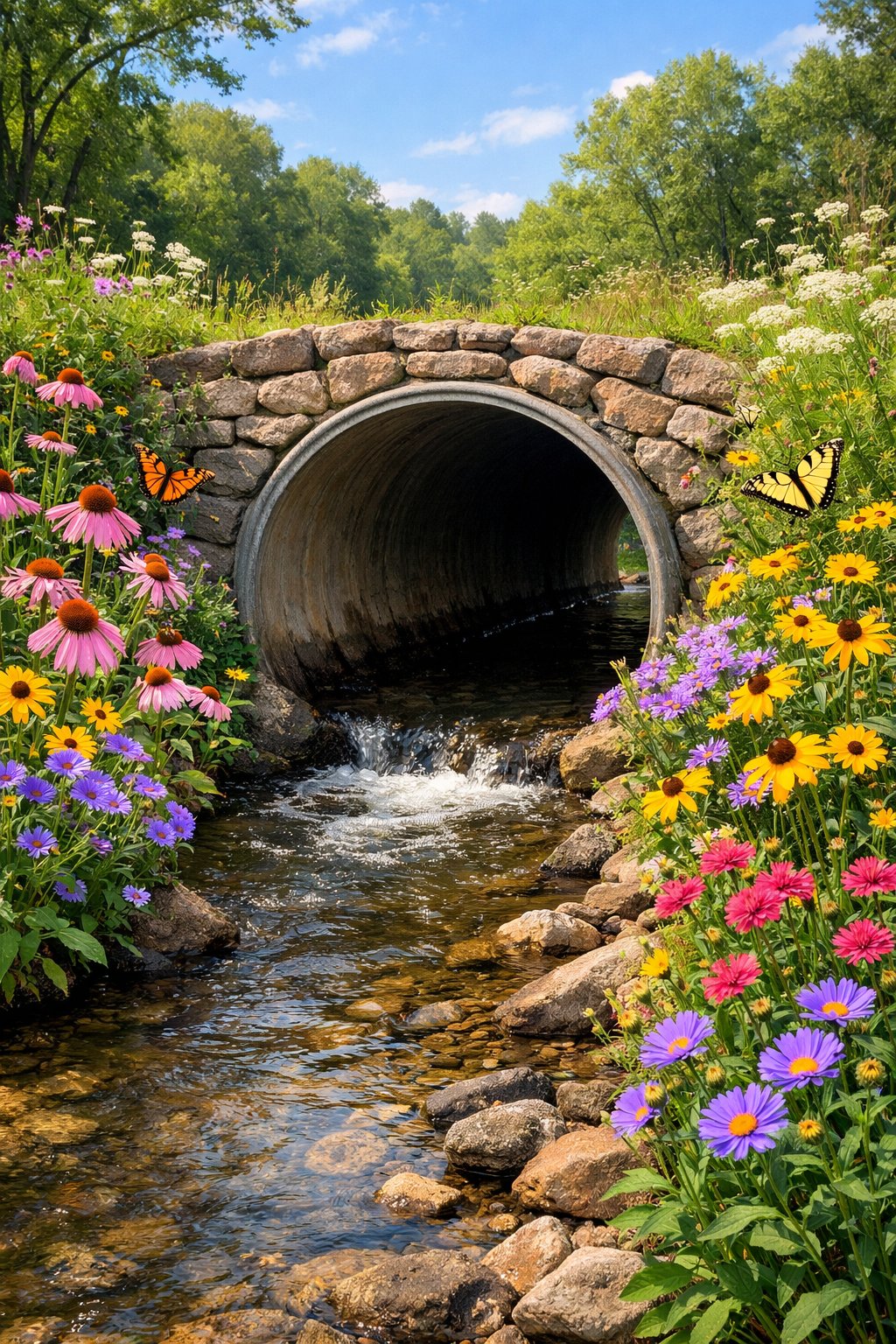
Here’s something cool: native wildflowers need less care than most garden plants but still put on a show. You can pick varieties that fit your soil and sunlight, and they’ll just do their thing.
Planting native blooms brings in pollinators like bees and butterflies right by the culvert. They hold the soil together and help stop erosion, so your culvert keeps working.
Mix short and tall wildflowers for layers. Toss seeds, plant plugs, or group the same color together for a natural look.
Expert Tip From MrPlanter: Go for local seed mixes for the best results, and just water until they’re settled. Let volunteer plants grow—sometimes they’re the prettiest surprise.
3. Add a low-maintenance rain garden nearby to absorb runoff and look charming
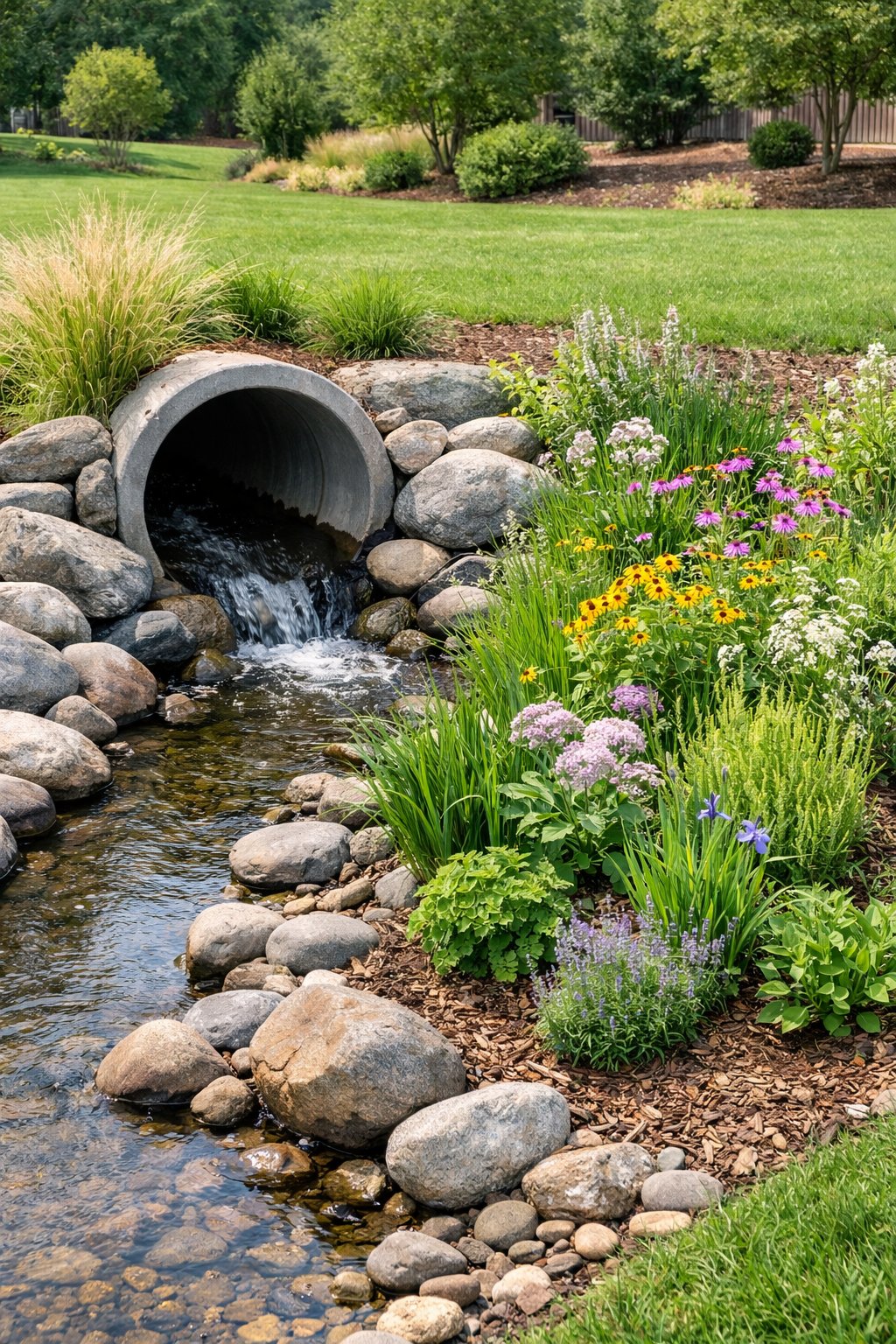
Let’s clear this up: rain gardens aren’t just soggy puddles—they’re tidy, hardworking spots that help you out. You can put one near a culvert outlet to catch roof and driveway runoff before it races away.
Pick tough native plants that handle both wet and dry spells, like coneflower, switchgrass, or bee balm. Once they’re settled, they barely need any care and they attract pollinators and birds.
Shape it into a shallow dip with good soil and mulch. A little rock border or some native stone ties it all together and keeps things looking neat.
Expert Tip From MrPlanter: “Plant in groups of three to five for a fuller look and easier care. Add mulch to cut weeds and keep moisture in.”
4. Use decorative metal grates or artistic covers to transform the culvert opening
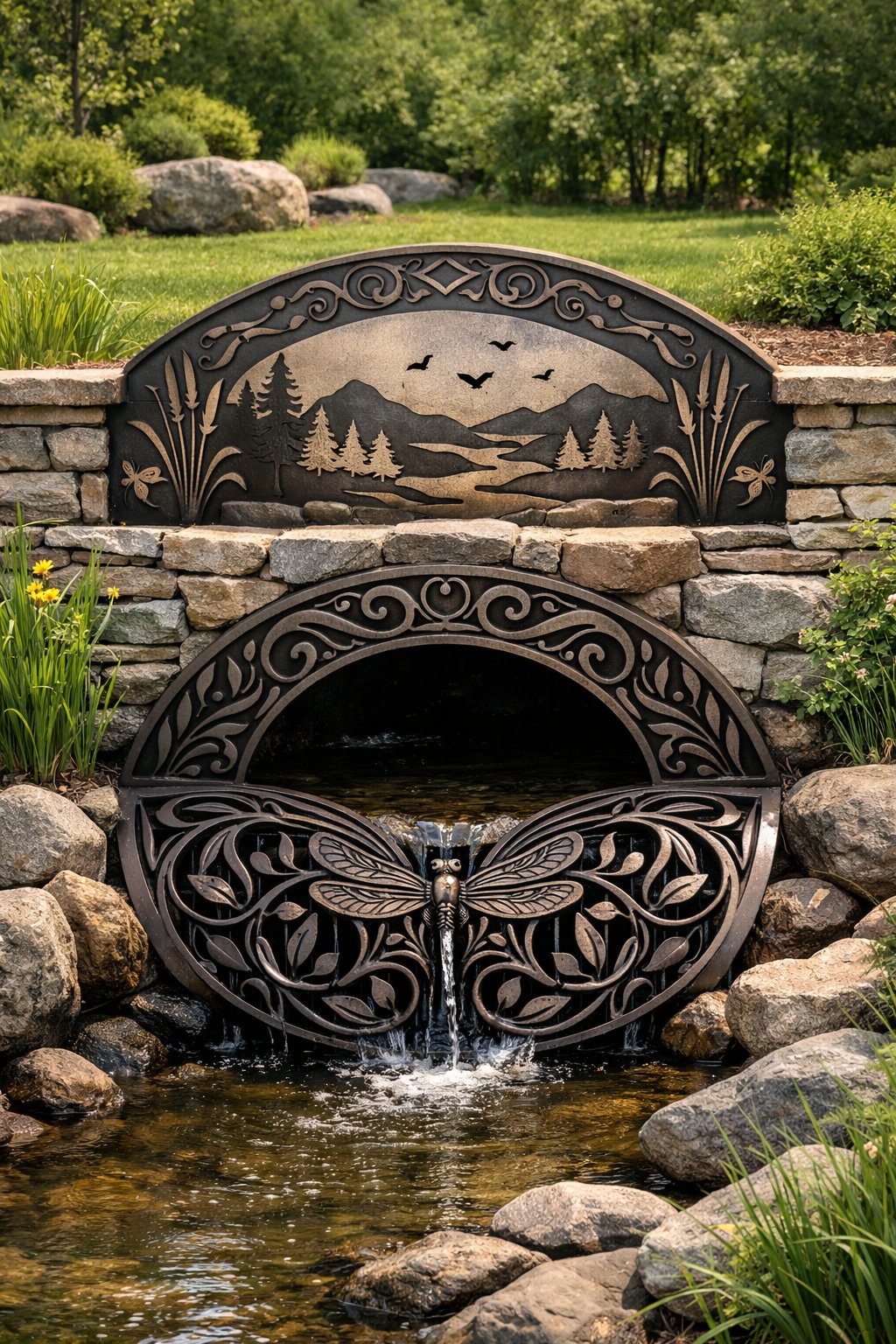
Here’s a myth to bust: a culvert doesn’t have to look like a boring old drain.
You can swap out the plain metal for a decorative grate that matches your home’s vibe and makes the entrance look finished.
Pick patterns that let water flow but catch big debris. Laser-cut panels, scrolls, or geometric shapes can add charm without messing up drainage.
Go for rust-proof materials and a design you can remove for cleaning. Paint or powder-coat it to match your fence or trim for bonus curb appeal.
Expert Tip From MrPlanter: Choose a cover with quick-release fasteners for easy inspections. A dark, matte finish hides dirt and still looks classy.
5. Create a natural habitat with ferns and mosses for that enchanted forest vibe
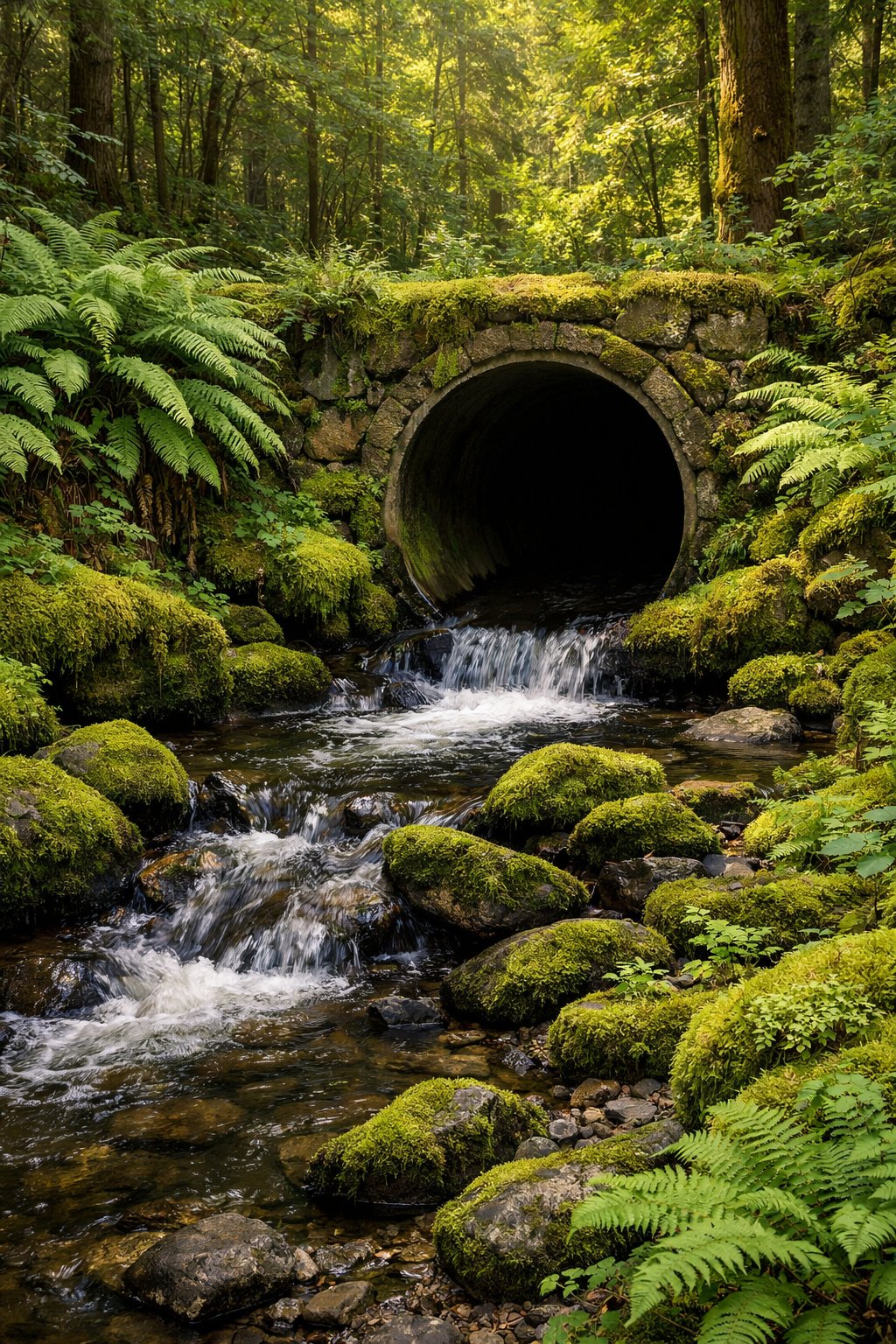
Moss and ferns don’t need much fuss to look magical, honestly. If your culvert gets shade and stays a little damp, you can build a soft, green carpet that feels like a fairy tale.
Pick shade-loving ferns and mosses that like your local weather. Plant ferns in little pockets of soil near the culvert, and press moss onto damp rocks so it grabs hold.
Toss in some small rocks, maybe a branch or two, and even a tiny path if you want to make it look lived-in. Water gently until everything settles, and just trim a bit here and there to keep it tidy.
Expert Tip From MrPlanter: “Go for native fern and moss species for the best luck. Keep the soil moist (not soaked) while they get established.”
6. Line the culvert with river rocks to disguise the structure and guide water flow
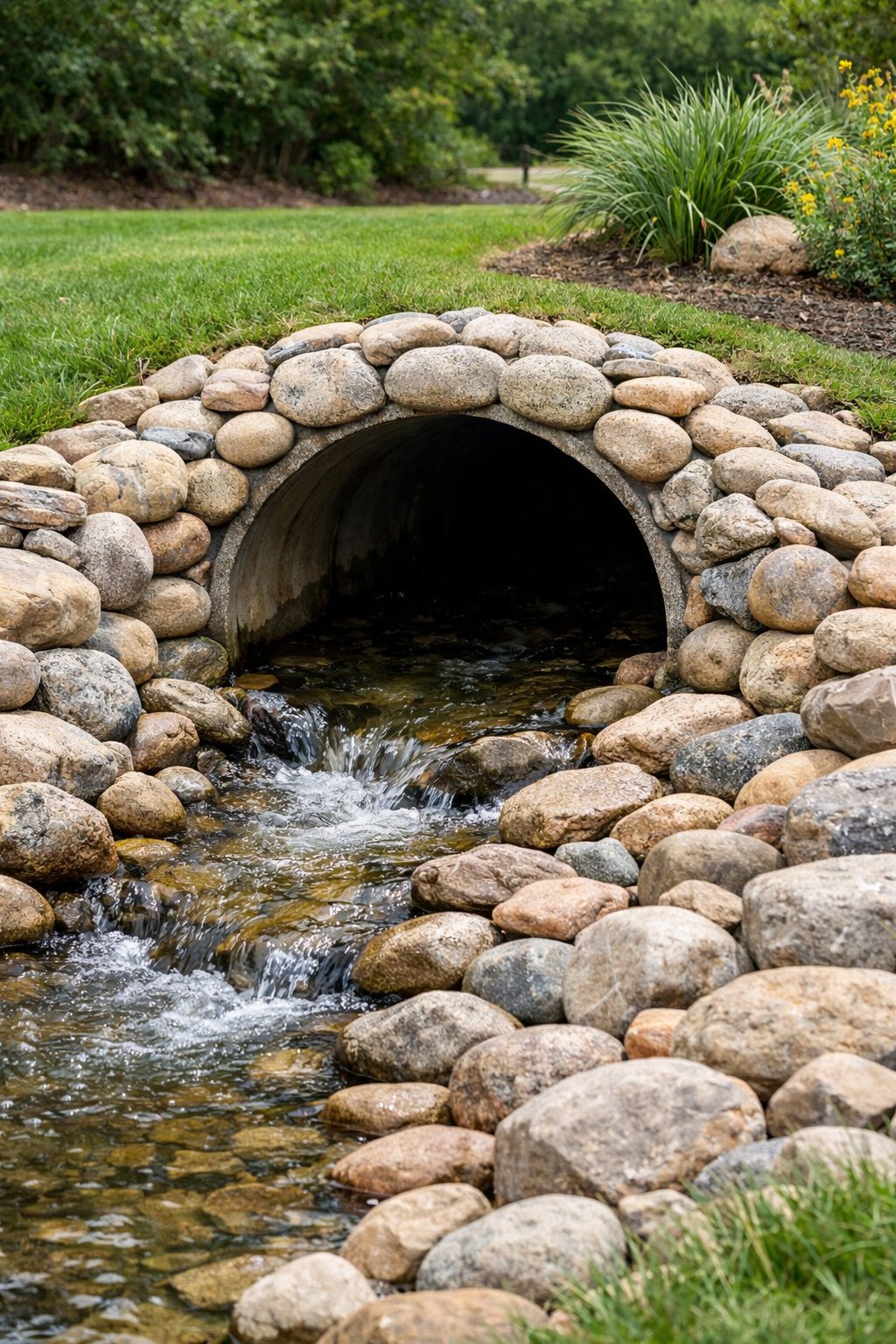
Let’s be real: a culvert doesn’t have to look like a cold pipe hiding in the yard.
You can soften it by lining the channel with river rocks. Mix up the sizes—small pebbles for the edges, bigger rocks where water hits hardest—so it looks natural and slows down fast water.
River rocks help guide water and stop erosion without blocking the pipe. Plants can even grow between the stones, giving it a cozy, lived-in feel.
Pick smooth, rounded stones so stuff doesn’t get stuck. Use landscape fabric under the rocks if you worry about washout.
Expert Tip From MrPlanter: Start with coarse gravel underneath for drainage, then layer river rocks on top for looks. After big storms, check and reset any rocks that moved.
7. Install solar pathway lights along the culvert for safety and nighttime drama
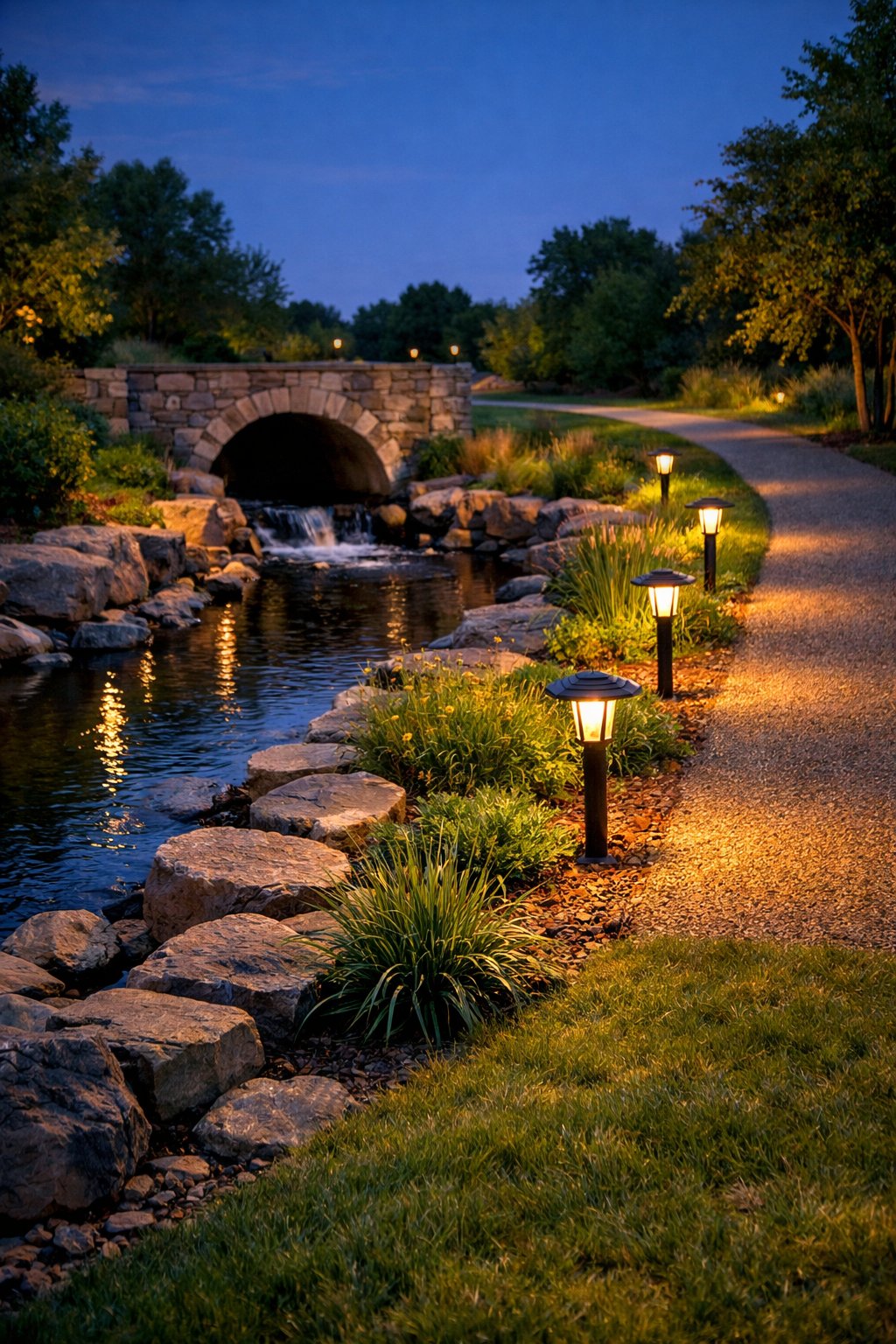
Here’s a fun fact: solar lights aren’t just for making things pretty—they actually help keep you safe after dark.
Line up some lights along the culvert edge to mark the way and help everyone see where they’re stepping.
Pick lights with warm, steady LEDs for a cozy glow. You can use stake lights or low bollards, depending on how bold you want to go.
Space them out evenly and aim the light at the path, not the road. Make sure the panels get sun during the day, and give them a quick wipe now and then.
Expert Tip From MrPlanter: “Put lights 3–6 feet apart for a nice, clear path. Clean the solar panels once a month so they keep charging strong.”
8. Build a small wooden bridge over the culvert for that rustic countryside feel
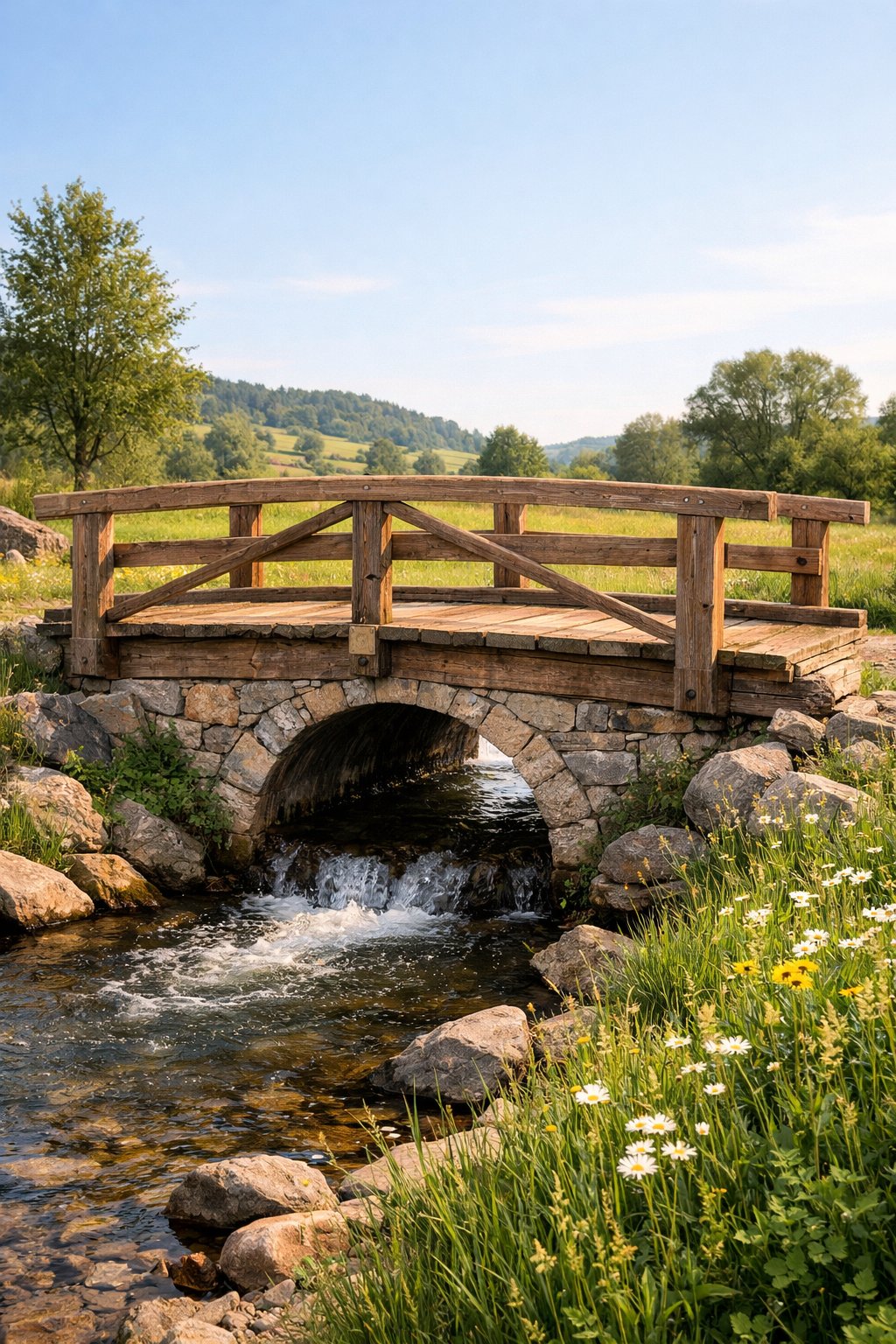
Honestly, a little culvert doesn’t need to look industrial to do its job.
You can build a simple wooden footbridge over the culvert and give the spot a cottage garden touch. Use pressure-treated lumber or cedar so it lasts through all kinds of weather.
Keep the bridge short and low to the ground for easy DIY. Add handrails or a low railing if you want it extra safe and cute.
Use stone or timber at the ends to hide the culvert edge and hold the bridge steady. Stain or seal the wood so it ages nicely and doesn’t need much upkeep.
Expert Tip From MrPlanter: “Measure twice and use sturdy wood so your bridge stays safe for years. A rustic finish hides weathering and keeps the cozy look.”
9. Incorporate ornamental grasses to soften the hard edges and add movement
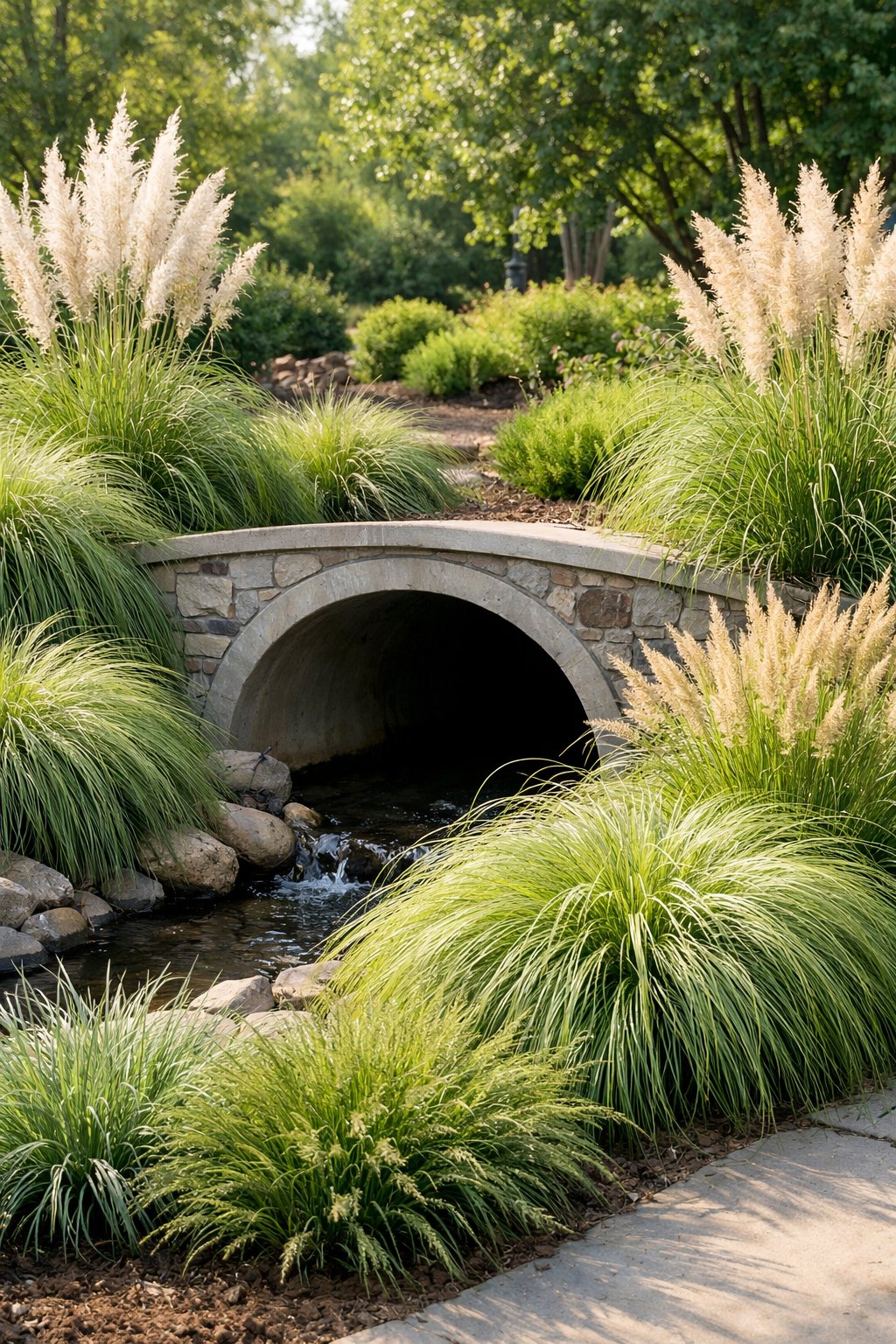
Ornamental grasses aren’t just fluffy decorations—they actually solve design and drainage problems while swaying in the breeze.
You can plant clumping grasses along the culvert to break up all that concrete or rock and make the area feel softer.
Mix up the heights and textures for year-round shape and movement. Short grasses tuck under stones, while taller ones frame the flow and add a bit of privacy without blocking water.
Pick native, noninvasive types so they handle your weather and don’t take over. Give them space to spread and add a few low flowers for color.
Expert Tip From MrPlanter: Plant grasses in odd-numbered groups for a more natural look. Water well the first season, and they’ll reward you with easy beauty after that.
10. Plant creeping thyme or moss between stones to add texture and a fragrant touch
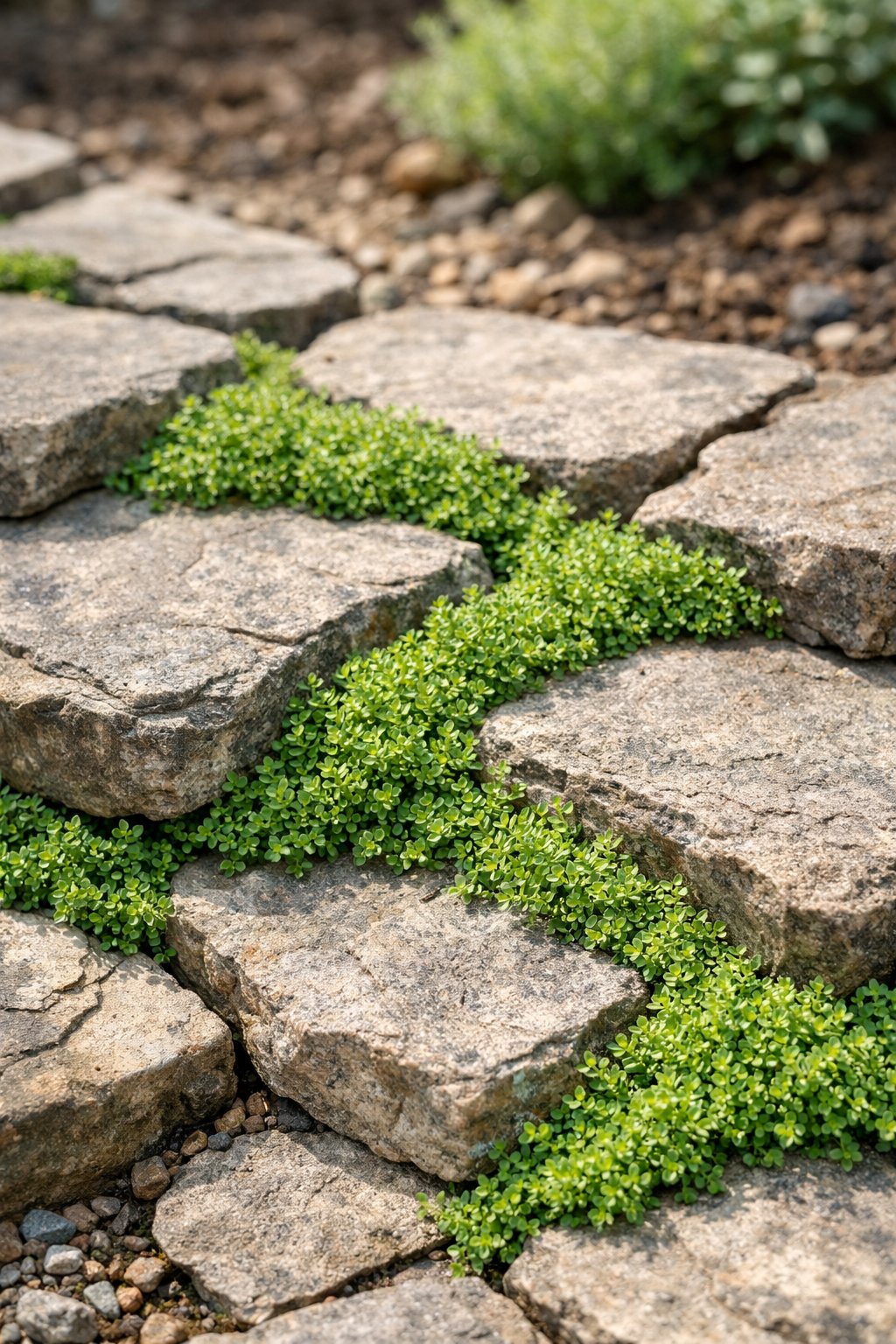
Here’s something fun: those tiny gaps between stones can turn into a fragrant, living carpet that just begs to be touched.
Plant creeping thyme in sunny, well-drained spots and let it fill in the cracks with little leaves and flowers. It softens hard lines, smells amazing when you walk by, and can handle some foot traffic.
Use moss for shady, damp spots. Moss gives you that plush, green look and barely needs any care once it’s happy.
Mix a few varieties for color and different bloom times. Keep gaps shallow, add gritty soil, and press plants in so they root quickly.
Expert Tip From MrPlanter: Start small and watch how the plants fill in over a season. Skip heavy mulch so thyme and moss don’t get smothered.
11. Use colorful gravel and mulch patterns to create visual interest around the culvert
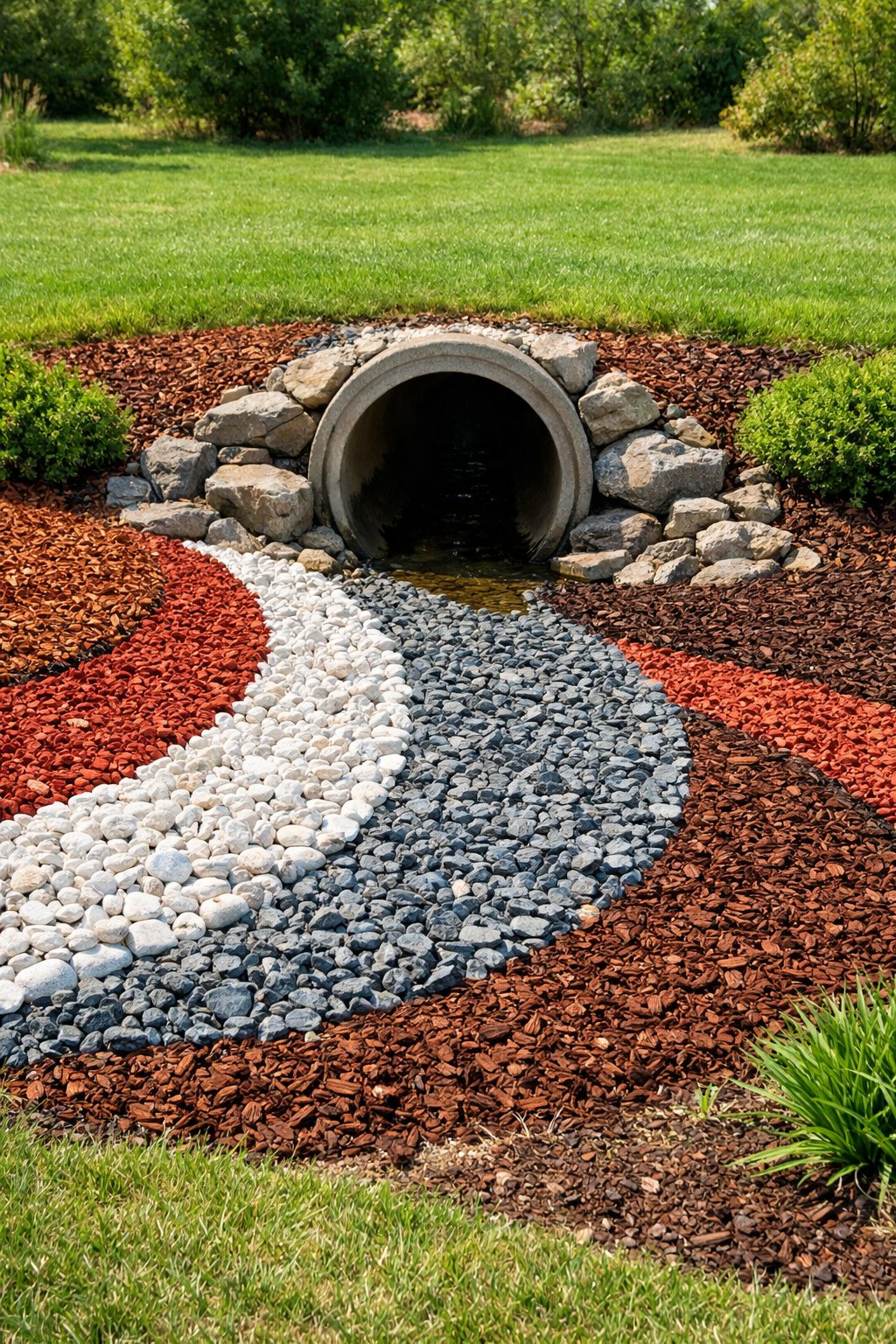
Let’s be honest: gravel and mulch don’t have to be boring brown or gray.
You can lay out bands of colored gravel to draw the eye across the culvert and connect it to the rest of your yard. Mix pea gravel with crushed stone for different textures that look rich but stay easy to care for.
Mulch adds warmth and keeps moisture in around any plants you put near the culvert. Try swapping mulch colors or pairing dark mulch with lighter gravel for a bold look that pops from the street.
Keep paths simple and a little curved, like water naturally flows. Put landscape fabric under gravel to stop weeds and save yourself some work.
Expert Tip From MrPlanter: Pick two main colors and stick with them for a clean, uncluttered look. Try small test patches first to see how the colors hold up in sun and rain.
12. Add drought-tolerant plants like lavender or sage for beauty and resilience
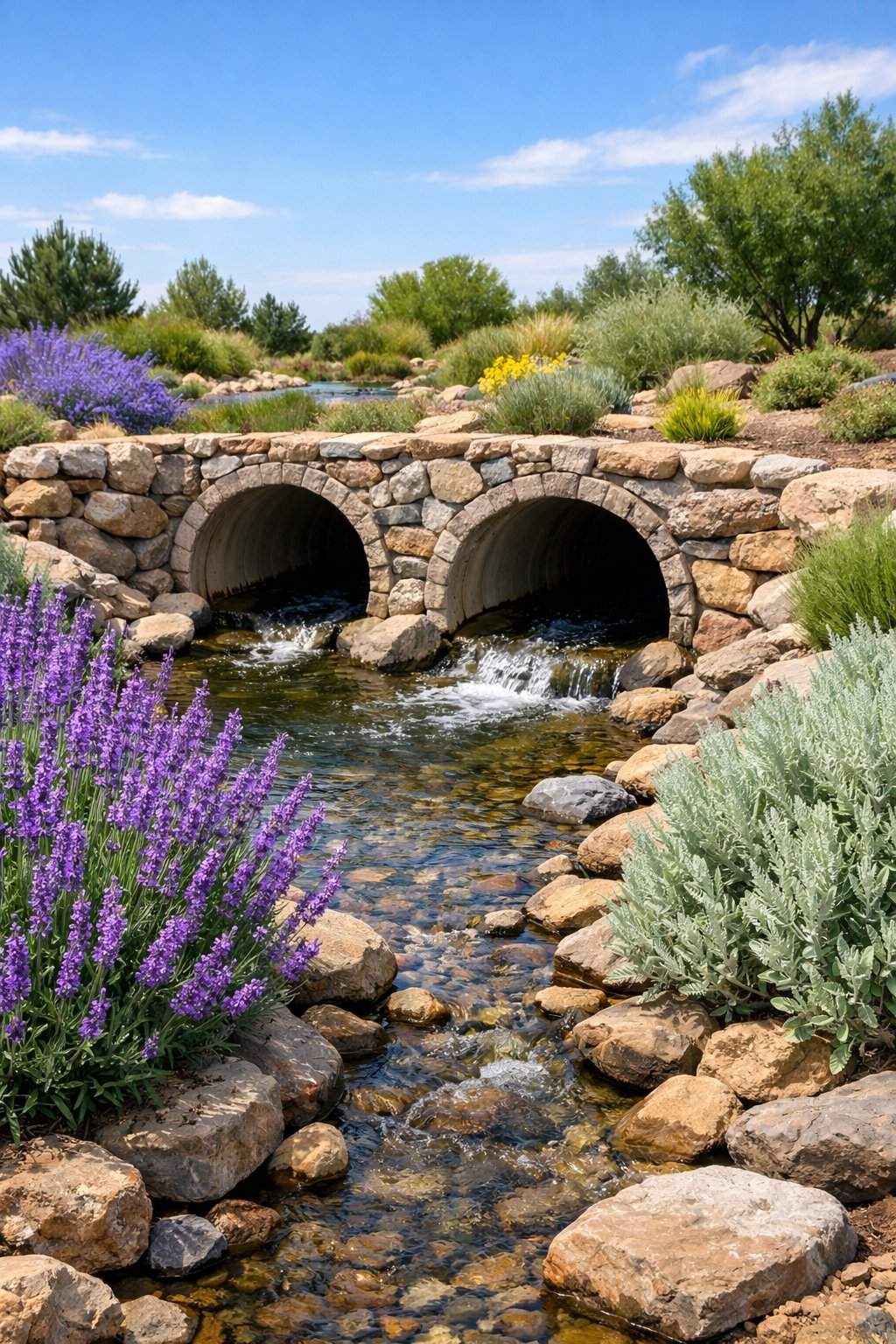
Here’s a fun little secret: some drought-tolerant plants actually smell even better when things get a bit dry. I know, wild, right? Less water and they still fill the air with that dreamy scent, even around a thirsty culvert.
Go for lavender, Russian sage, yarrow, or those tough-as-nails salvias if you want color without the headache. These beauties laugh at heat and don’t mind rough soil, so they’re perfect for those tricky culvert slopes or sun-baked corners.
Stick them in soil that drains well and toss on some mulch to help the roots stay cool. Give them a little space—plants need their personal bubble too! That way, you’ll dodge most diseases and your culvert area won’t look like a plant traffic jam.
Expert Tip From MrPlanter: Pick one plant as your star and just a couple more as backup singers. The look stays chill and simple. Plant on a gentle mound so water slides away, not straight to the roots—your plants will thank you.
13. Create a water-friendly space with water lilies or cattails if the culvert flows into a pond
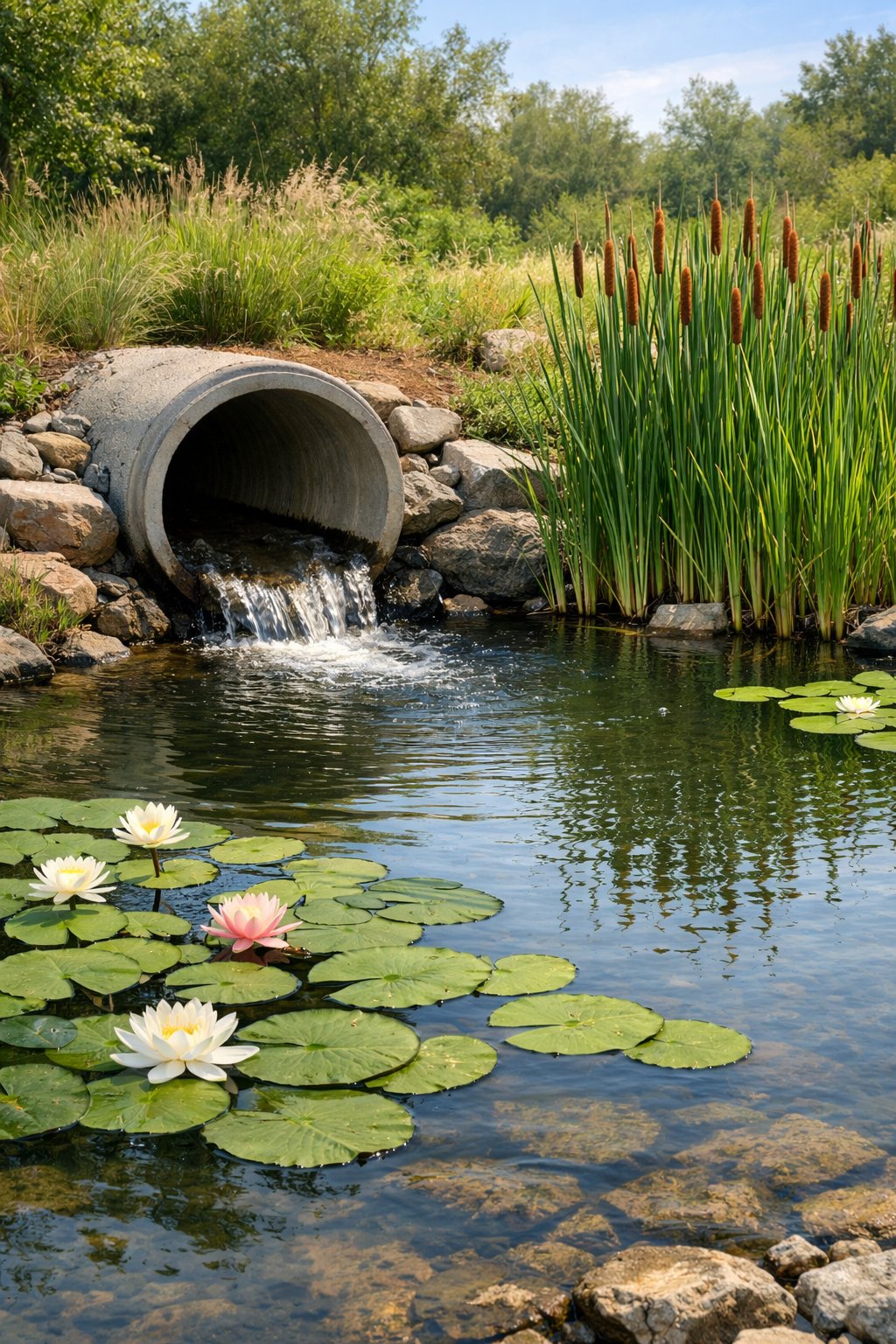
Water plants might just be the laziest gardener’s best friend. Toss in a few water lilies if your culvert empties into a pond, and suddenly you’ve got color, shade, and cooler water—plus, less algae to fight.
Cattails stand tall and bring some drama to the shallow edges. They help trap silt and give birds and frogs a spot to hang out, though you’ll want to keep them from going wild.
Drop lilies in the deeper parts and plant cattails near the edges for a nice mix. Use pots or baskets so you can shuffle things around or thin them out if they get too rowdy.
Expert Tip From MrPlanter: “Start small and let the plants show you what they want to do. If something tries to take over, just lift and split it in the spring. Easy cleanup, happy pond.”
14. Decorate with whimsical garden statues to give personality to the culvert area
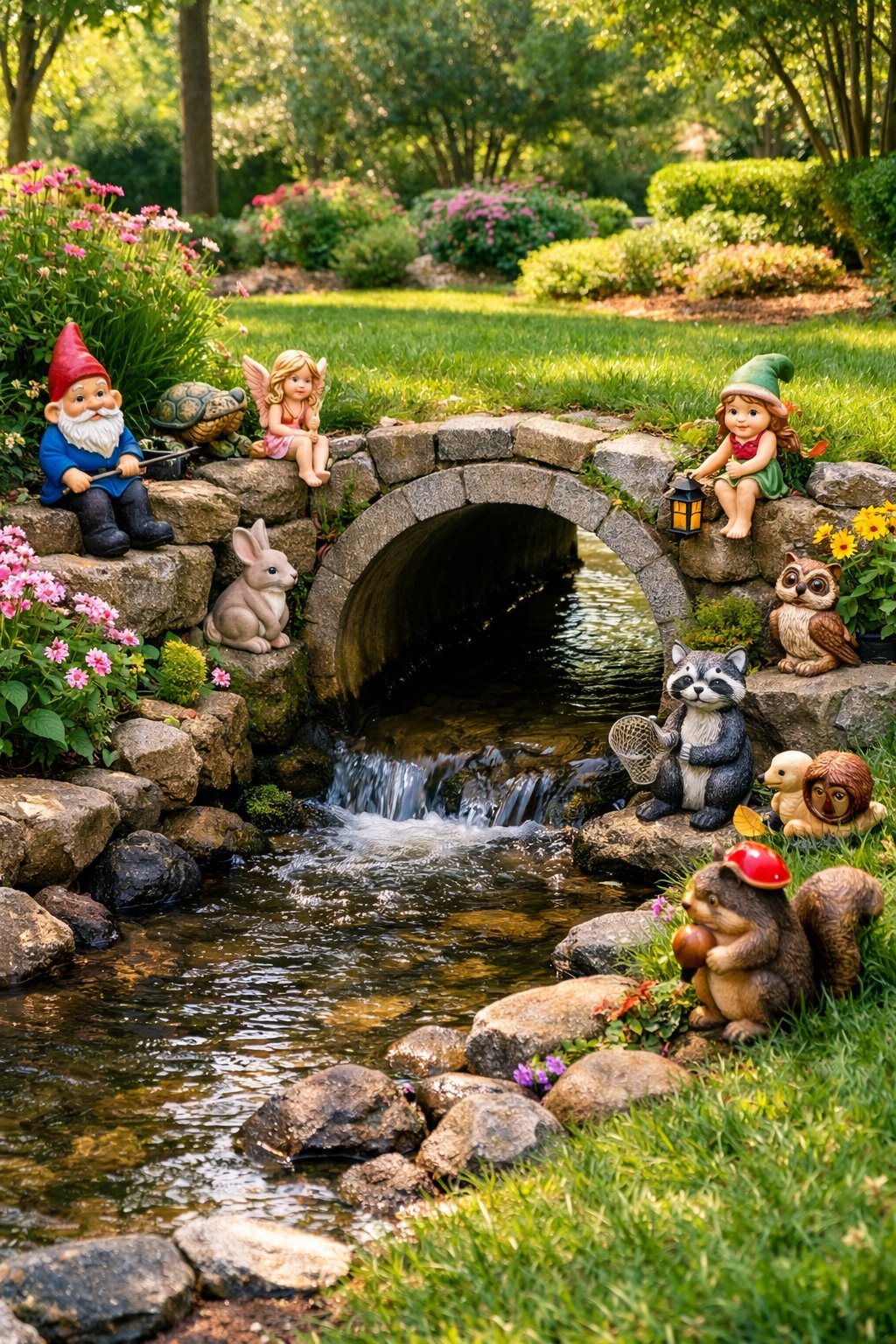
Let’s bust a myth: culverts don’t have to be boring, gray tunnels. You can totally jazz them up with a few playful statues and make the spot feel like someone actually cares.
Pick whatever tickles your fancy—little animals, fairies, or even some funky shapes. Tuck them in spots where folks will spot them, like at the entrance or peeking out from behind the flowers.
Mix up the materials if you’re feeling bold. Metal shines, stone sticks around forever, and ceramic brings in a splash of color. Just don’t plop them in the soggiest spots, and make sure they’re anchored tight so they don’t go tumbling during a storm.
Switch things up for the seasons if you want. Statues can tell a story or just make your yard feel more like home.
Expert Tip From MrPlanter: Go for weatherproof decor and anchor them well. Swap them out sometimes—keeps things fresh and fun.
15. Use reclaimed wood or timber to build a planter box that frames the culvert
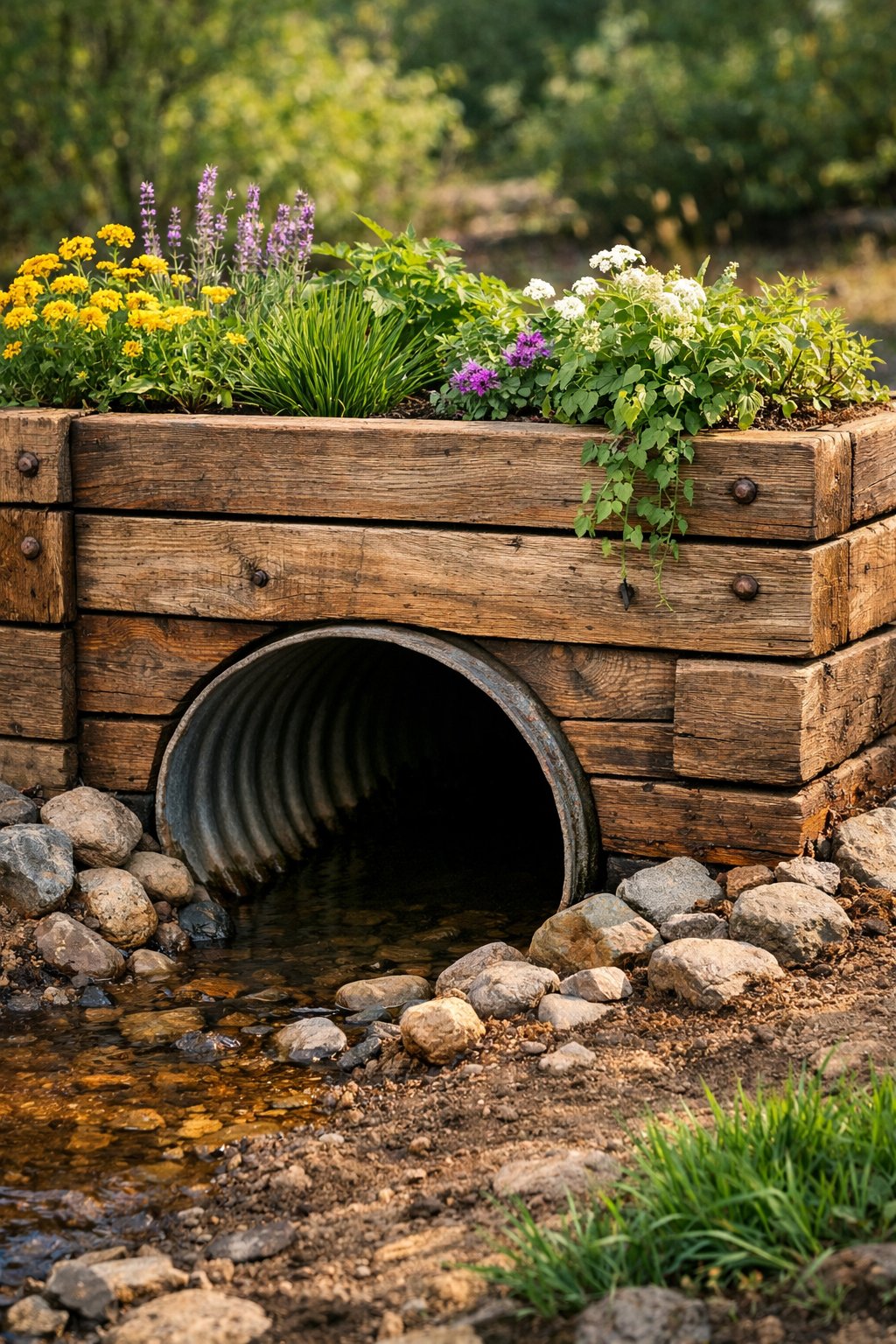
Here’s a surprise: reclaimed wood can look classy, not junky, if you use it to build a planter box around the culvert.
Grab those old boards and stack them into a tidy frame to hide the rough concrete. Suddenly, the culvert feels warm and natural. You can even paint or stain it to match your yard’s vibe.
Choose wood that won’t rot fast, like cedar or treated pieces. Line the box with landscape fabric and poke in some drainage holes so your plants won’t drown.
You’ll end up with a custom, wallet-friendly box that’s loaded with personality. Flowers, herbs, or even little shrubs will love it right by the culvert.
Expert Tip From MrPlanter: Check for sneaky nails or rotten spots before you start cutting. Give the wood a good outdoor seal so it lasts longer and keeps looking sharp.
16. Place bird feeders or butterfly houses nearby to invite some winged visitors
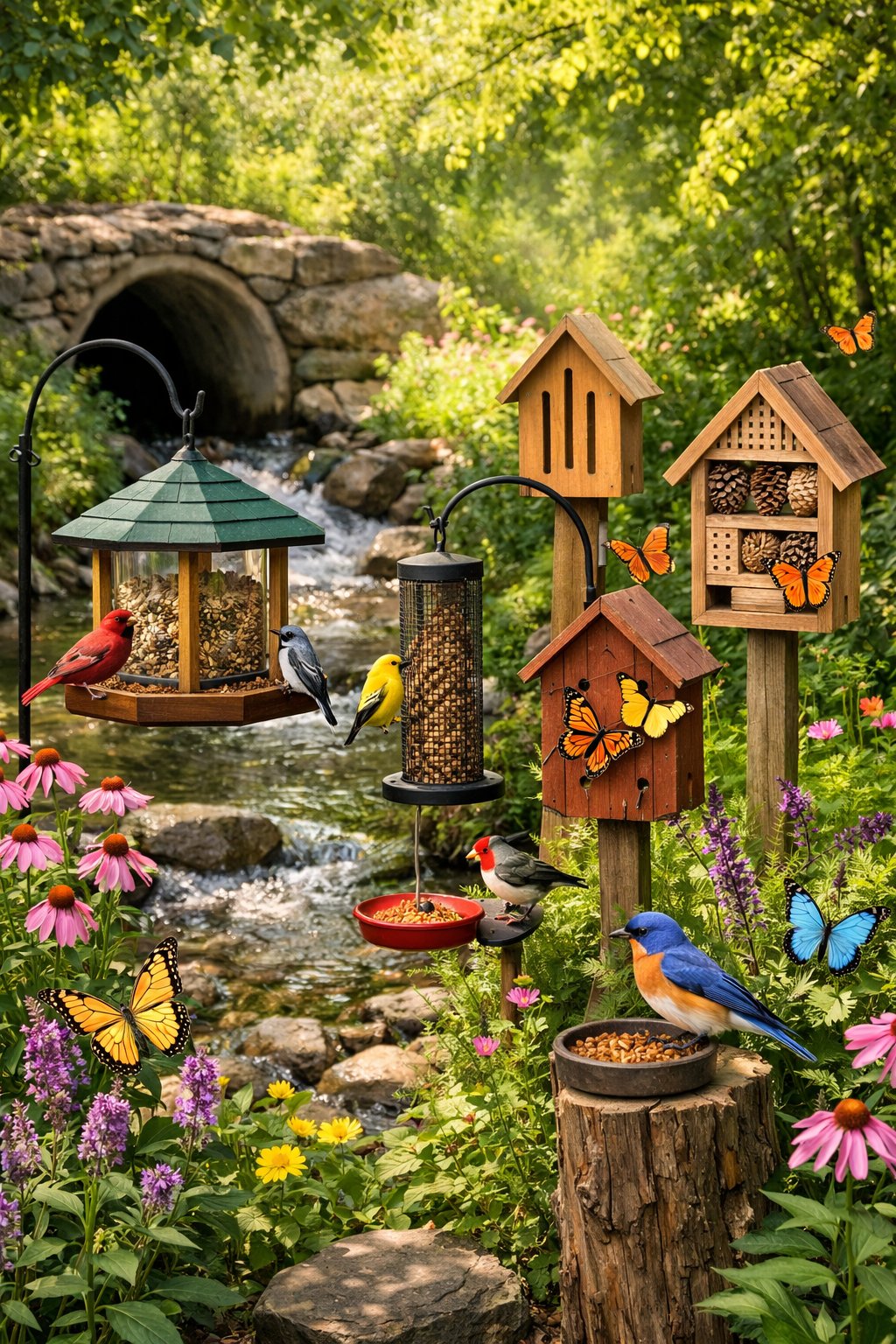
You’d be surprised how a simple feeder can turn a quiet culvert edge into a mini wildlife party. Suddenly, you’ve got birds and butterflies dropping by for snacks and a rest.
Hang bird feeders at eye level near some shrubs so your feathered guests feel safe—and you get a front-row seat. Pop butterfly houses or feeders with some overripe fruit in sunny spots and watch the magic happen.
Set out a shallow dish of water or a spot for butterflies to sip and they’ll stick around even longer. Mix up feeder styles and heights to keep the peace between visitors.
Expert Tip From MrPlanter: “Put feeders close to shelter so critters can duck and cover. Clean them often—nobody wants a sick bird at their garden party.“
Planning Your 16 Culvert Landscape
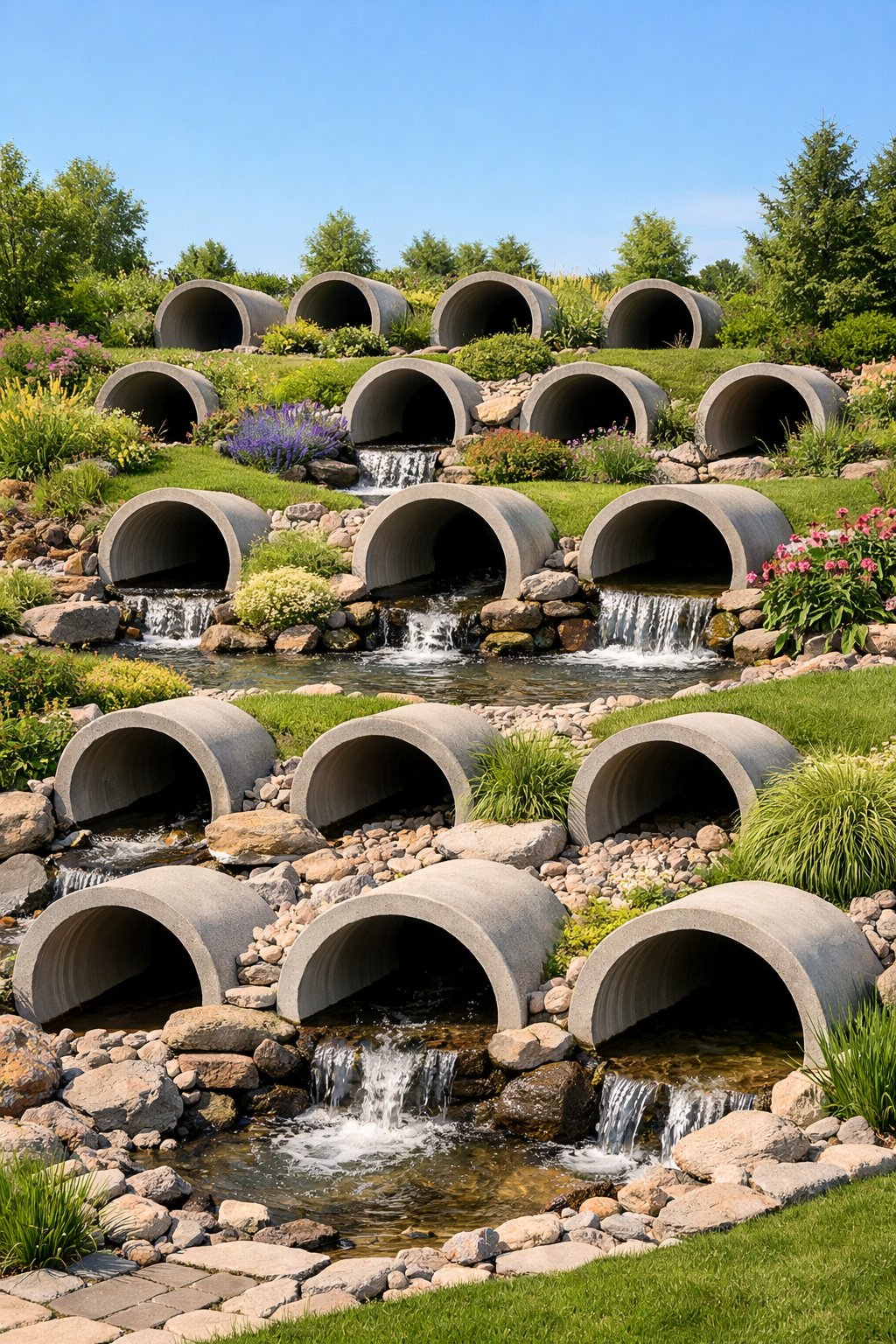
Kick things off by checking the slope, how water moves, what kind of soil you’re dealing with, and how you’ll get in to work. Safety and easy upkeep matter, and you want plants tough enough for soggy feet or the odd flood.
Site Assessment Tips
Take a walk after it rains and see where the water likes to wander. Look for places where it rushes, pools, or eats away at the dirt. Measure your culvert’s size and snap a few photos—trust me, you’ll forget the details later.
Squeeze the soil in your hand to figure out if it’s sandy, clay, or somewhere in between. Clay holds onto water, so pick plants that don’t mind wet toes and maybe toss in some drainage rock. Check how much sun the spot gets—full sun, part shade, or shade will steer your plant choices. Watch for roots and hidden pipes before you dig. Leave yourself a strip two or three feet wide so you can clear out sticks and leaves without gymnastics.
Jot down what changes with the seasons—spring melt, wild summer storms, or a blizzard of fall leaves. Use materials like native plants, river rocks, and mulch that won’t fall apart in your local weather and make cleanup less of a headache.
Permits and Local Regulations
Call your city or county public works office before you start moving dirt or adding stuff around the culvert. Some places have rules about covering or changing culverts, especially near roads or driveways. You might need a right-of-way or drainage permit.
Ask about how far you have to set things back, what you can use to stop erosion, and what materials are okay. Bigger changes might need an engineer’s stamp of approval. Keep a folder with all your permits and plans. If you share the culvert with a neighbor, check who’s supposed to fix what—sometimes you split the bill.
If the rules make your head spin, just call the office and ask them to walk you through the forms and inspections. Saves you a lot of back-and-forth later.
Materials and Plant Selection
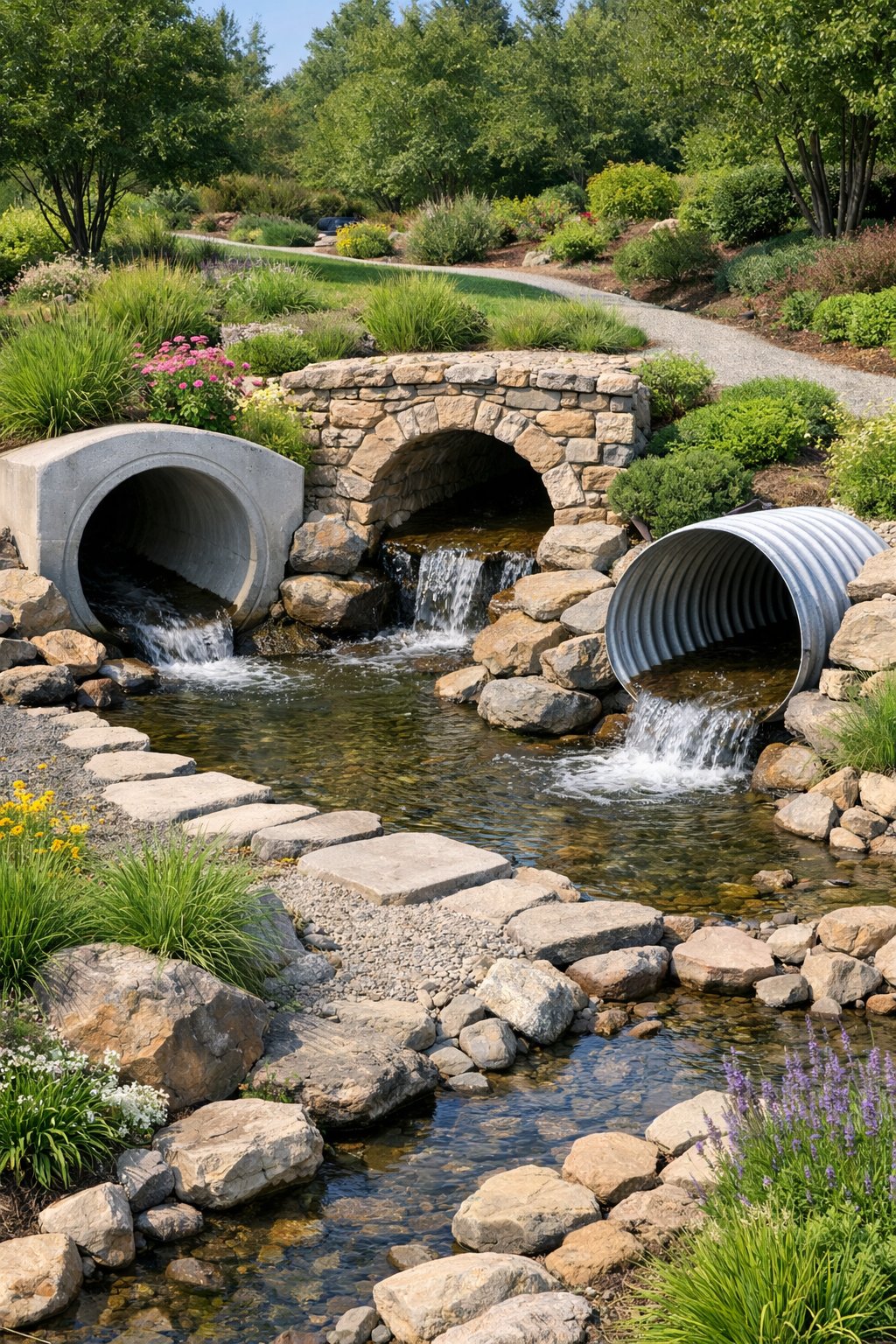
Go for stuff that laughs at water and won’t wash away—river rock, gravel, native grasses, and tough perennials that don’t need you hovering every day.
Best Plants for Culvert Areas
Pick plants that can handle both soggy days and dry spells. Native sedges (Carex species) and rushes (Juncus) love wet feet and hold soil in place. Meadow fescue or tufted hairgrass work well on slopes and catch dirt before it washes away.
If you want color and pollinators, plant swamp milkweed, bee balm, or purple coneflower a little upslope from the pipe. Try willow or dogwood cuttings where you’re fighting erosion—they root fast and lock down the soil.
Layer your plants: groundcover close to the water, medium perennials a bit higher, and shrubs or willow stakes up top. Use coarse gravel as mulch near the flow so your soil doesn’t disappear. Give everything a little elbow room—plants need sunlight and air, or you’ll end up with a sickly, crowded mess.
Choosing Complementary Hardscape Elements
Hardscape can do a lot more than just look pretty—it actually helps guide water and keeps erosion in check, all without blocking your culvert.
If you’ve got heavy water flow, try lining the channel with river rock or riprap that’s about 2 to 6 inches across. For spots with gentler flow, pea gravel or crushed stone works just fine.
You might want to toss in a shallow swale or even set up a stone step-pool system. That way, the water slows down and drops its sediment before it ever gets close to the culvert.
Got spots where soil keeps sneaking away? Slide some erosion-control fabric under your rocks. It’s honestly a lifesaver.
To keep mulch and dirt from making a break for the pipe, use low timber edging or bury some landscape timbers. They do the trick and look pretty good.
If you need to walk through or get in there for maintenance, lay down some stepping stones or use a path material that can handle salt. Just make sure it’s permeable—let that water soak in instead of running off.