Ready to check out 16 duck coop ideas? Whether you’re a total beginner, a DIY pro, or just someone who loves their backyard birds, you’ll find something here.
I’ve rounded up practical designs that keep ducks safe, happy, and honestly, pretty easy to care for.
Think of this as a fun stroll through everything from simple A-frames to wild off-grid setups and even some “fancy duck hotel” options.

I’m tossing in clever space-savers and budget builds, too. My hope? You’ll get inspired and find a plan that actually fits what you want and what your ducks need.
1. Simple A-frame duck coop for easy construction
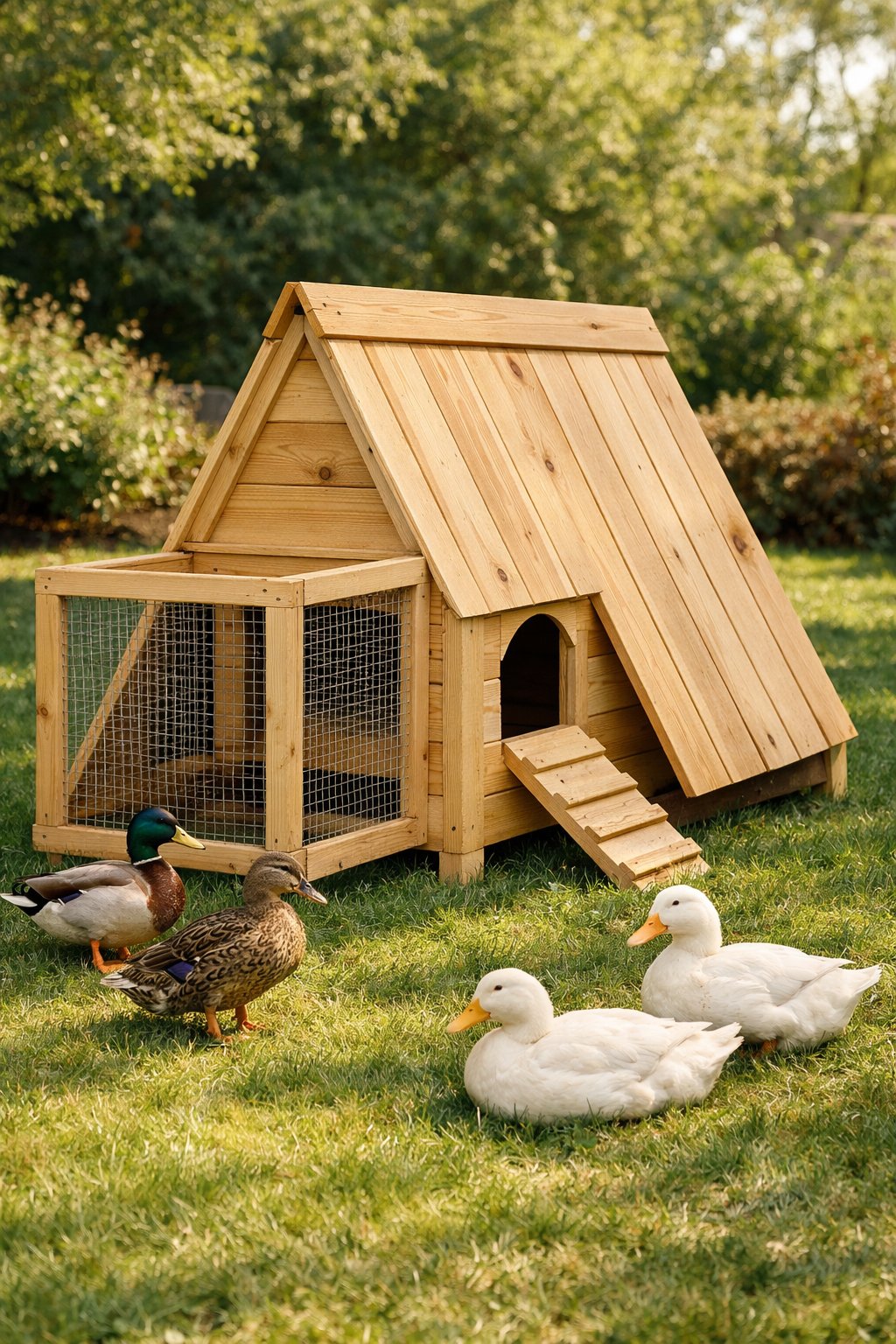
Let’s bust a myth: you don’t need a bunch of fancy tools to build a solid duck home.
An A-frame coop just needs a few straight cuts and basic joins, so you can knock it out in a weekend—no kidding.
This design sheds rain and snow like a champ because of the steep roof.
It’s light enough to move around, so your ducks get fresh grass, and it won’t take over your yard.
Keep the door low and add a ramp so your ducks don’t have to jump.
Pop in some vents near the roof and make the floor removable for those, uh, less glamorous cleaning days.
Expert Tip From MrPlanter: Pick rot-resistant wood and raise the coop a bit so it doesn’t get soggy. Check those vents every season for fresh air and healthy ducks.
2. Off-grid duck coop with solar ventilation
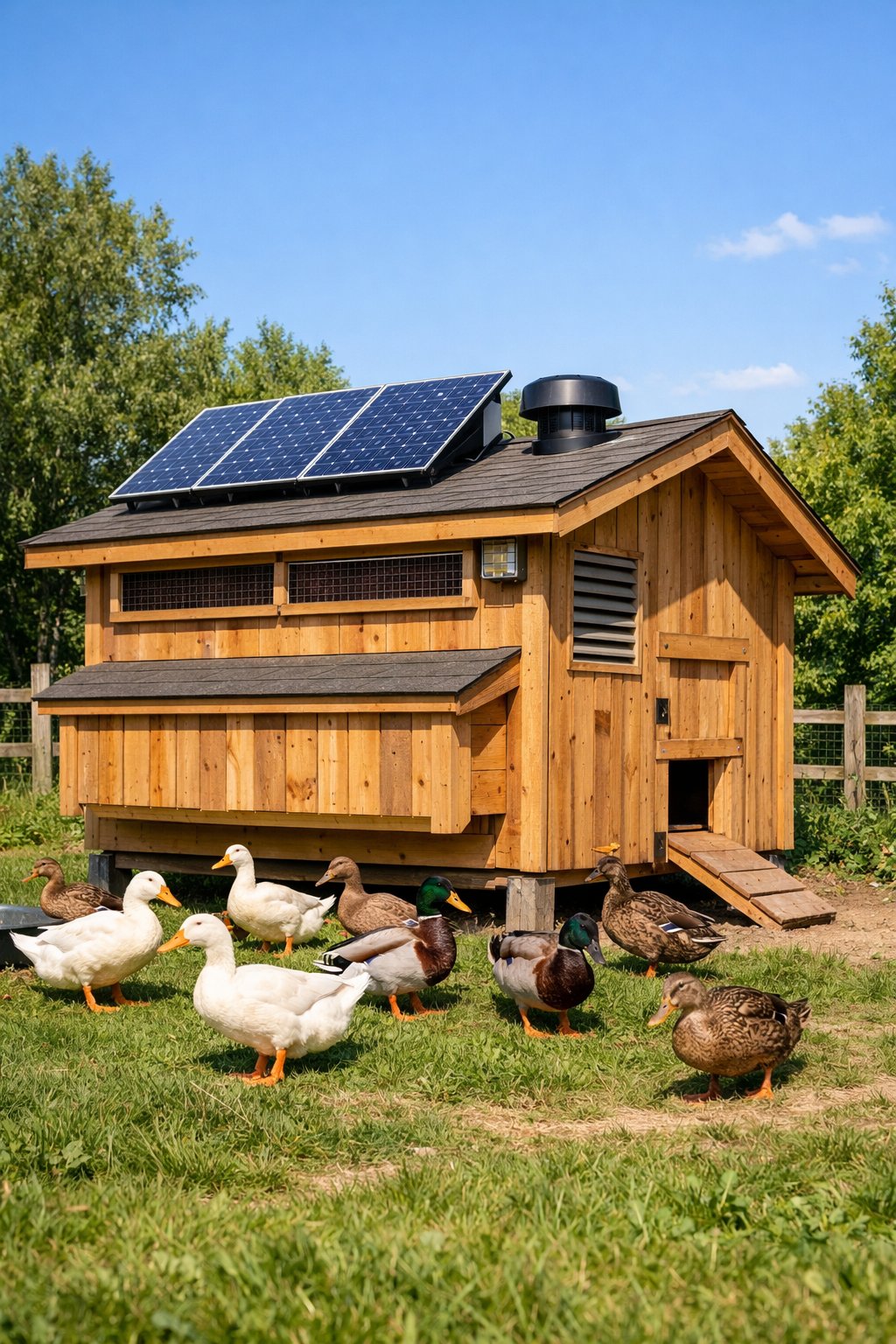
Here’s a fun fact: you can run a coop fan off a tiny solar panel and never see a spike in your electric bill.
Going off-grid keeps your ducks cool in summer and cozy in winter.
Solar panels juice up a battery that powers a small fan and an automatic vent, so air stays fresh without making it chilly at night.
Stick the panel where it gets loads of sun and mount the fan up high inside the coop.
Use a simple charge controller and a little deep-cycle battery so it works even when it’s cloudy. Weatherproof the wires and put covers on vents to keep out rain and nosy critters.
Expert Tip From MrPlanter: Start small with your solar kit and test the airflow before you shut the coop. Watch your ducks for a week and tweak things as needed.
3. Duck coop with built-in nesting boxes
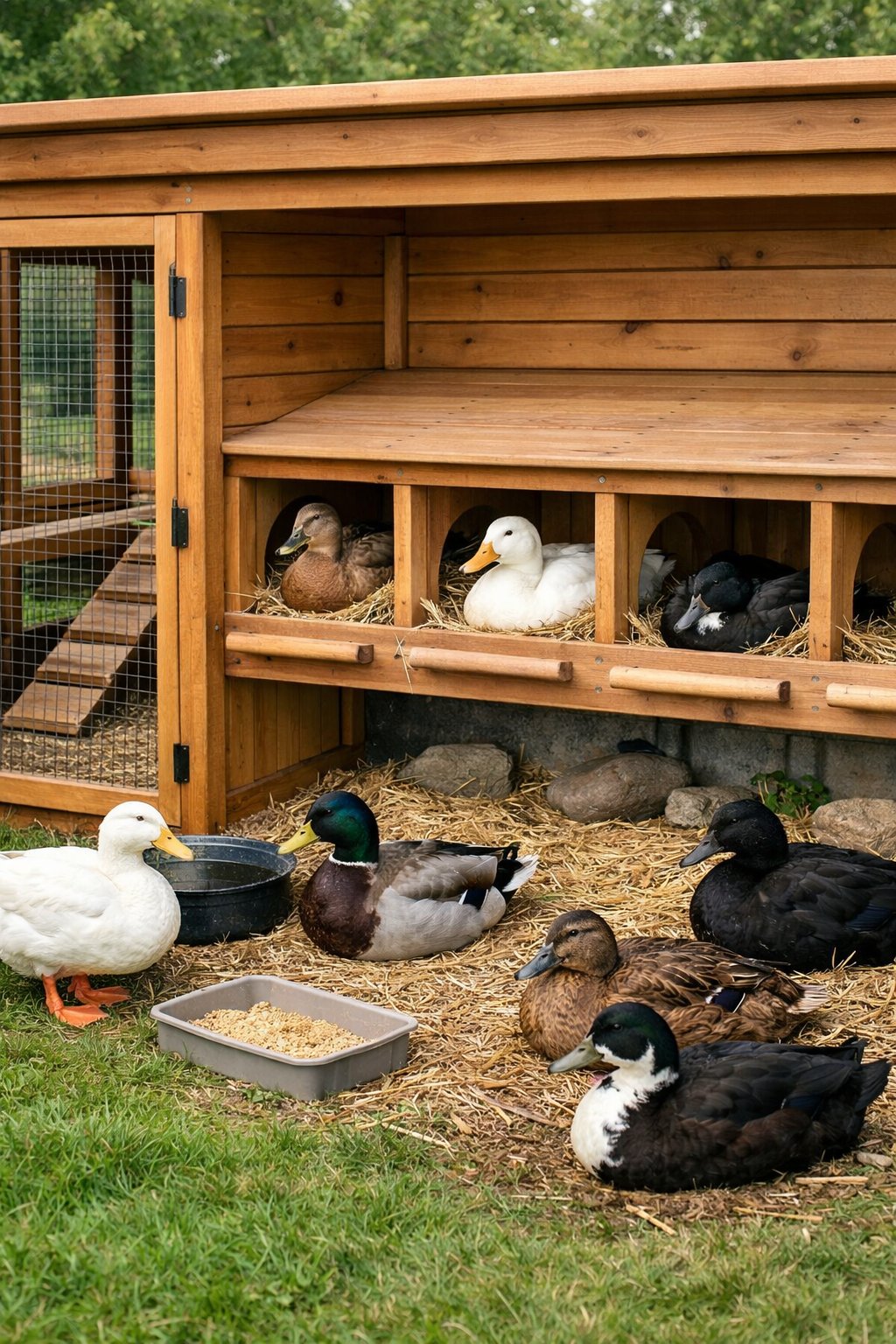
Let’s get real: ducks don’t need palatial boxes to lay eggs.
If space is tight, built-in nesting boxes save room and make egg collecting a breeze.
Set them low so your ducks can waddle in, and make each box roomy enough for two ducks to share without drama.
Use smooth wood or plastic liners for easy cleaning.
Toss in some soft bedding and add a little lip in front so eggs don’t roll out.
Try putting all the nests on one side of the coop.
That way, your hens stay calm and you can check eggs without opening up the whole place.
Expert Tip From MrPlanter: Keep nesting boxes dark and cozy to get more eggs. Check them daily and swap out bedding if it gets damp.
4. Spacious pen with shaded splash zones
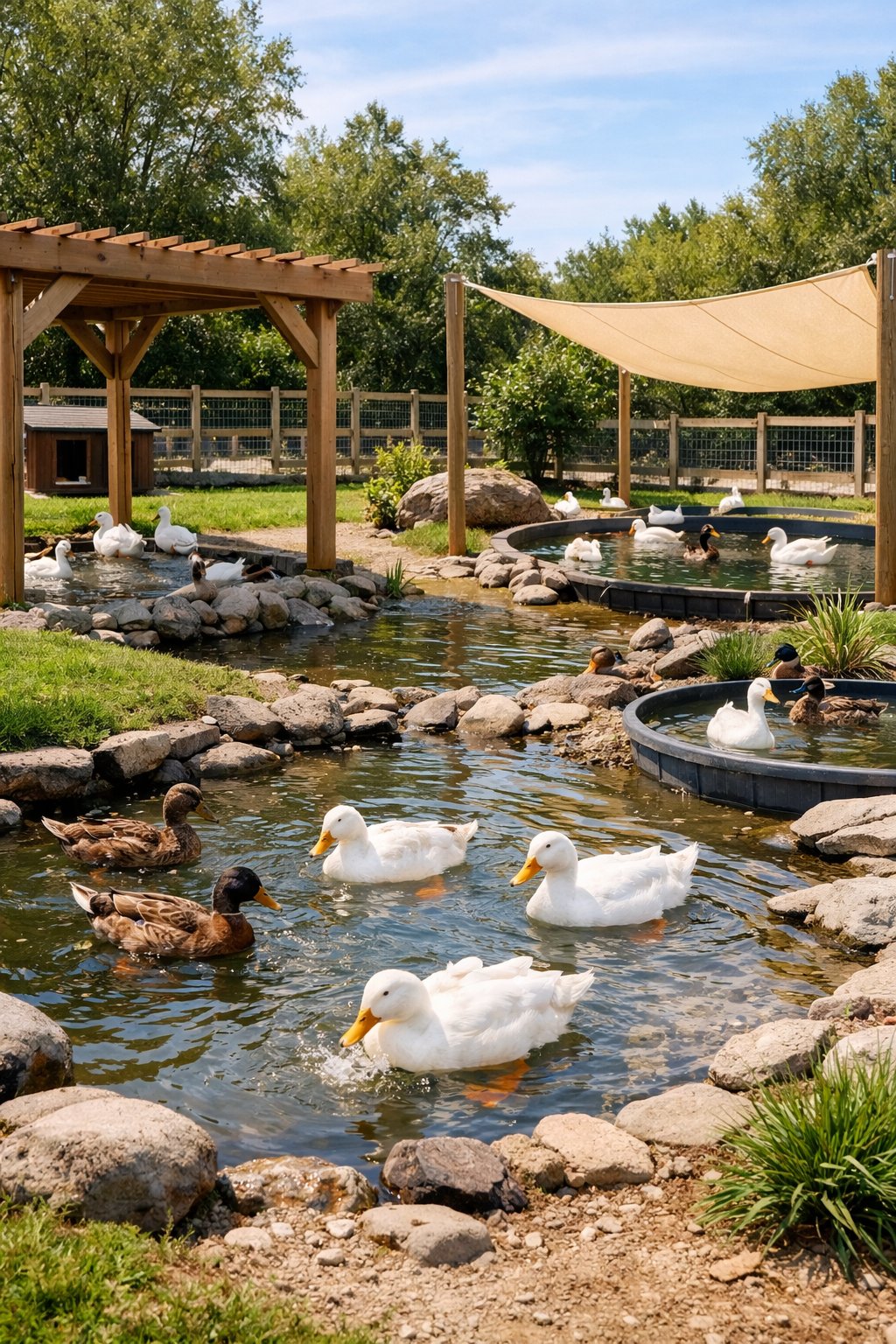
Anyone else’s ducks turn the yard into a mud pit after it rains?
Give your flock a roomy pen so they can flap, waddle, and forage without wrecking your lawn.
Set up some low shade spots so ducks can cool off and still keep an eye on you.
Make shallow splash zones using easy-clean liners or a little pond with a pump. Shade keeps the water cool and slows down algae.
Use a mix of grass, packed earth, and some pavers to help with mud and make cleaning easier.
Add a raised, sheltered house at one end for a dry nighttime hangout.
Expert Tip From MrPlanter: “Put splash zones under shade for cool water and happy ducks. Dump and refill shallow water every day to keep mud and mess at bay.”
5. Coop made from reclaimed pallets
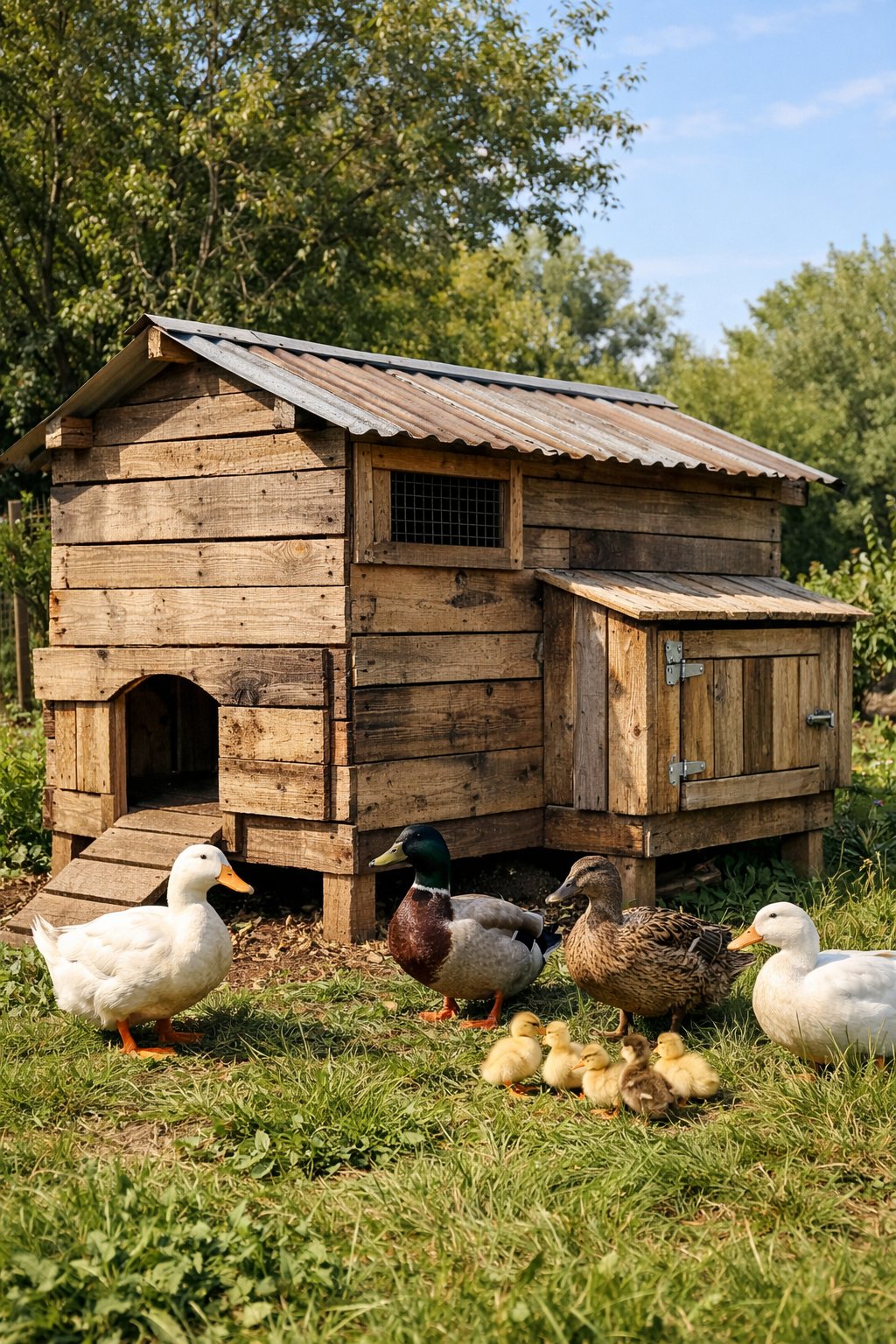
Want a cozy coop but don’t feel like dropping a ton of cash?
Reclaimed pallets are your new best friend for a sturdy duck shelter that won’t break the bank.
You can find pallets almost anywhere, and they work for walls, floors, or just the frame.
If you’ve got some basic tools, you’re set.
Keep the design simple and double-check for splinters or stray nails.
Treat the wood with a safe sealant so it doesn’t rot when it rains.
Top it off with a corrugated metal or shingled roof and raise the floor a few inches to dodge dampness.
Build nest boxes from leftover boards and make sure you leave a small opening for easy clean-out.
Expert Tip From MrPlanter: “Look for pallets stamped as heat-treated, not chemically treated. Swap out any busted boards and secure everything tight for a safe, comfy duck house.”
6. Cob material duck house for insulation
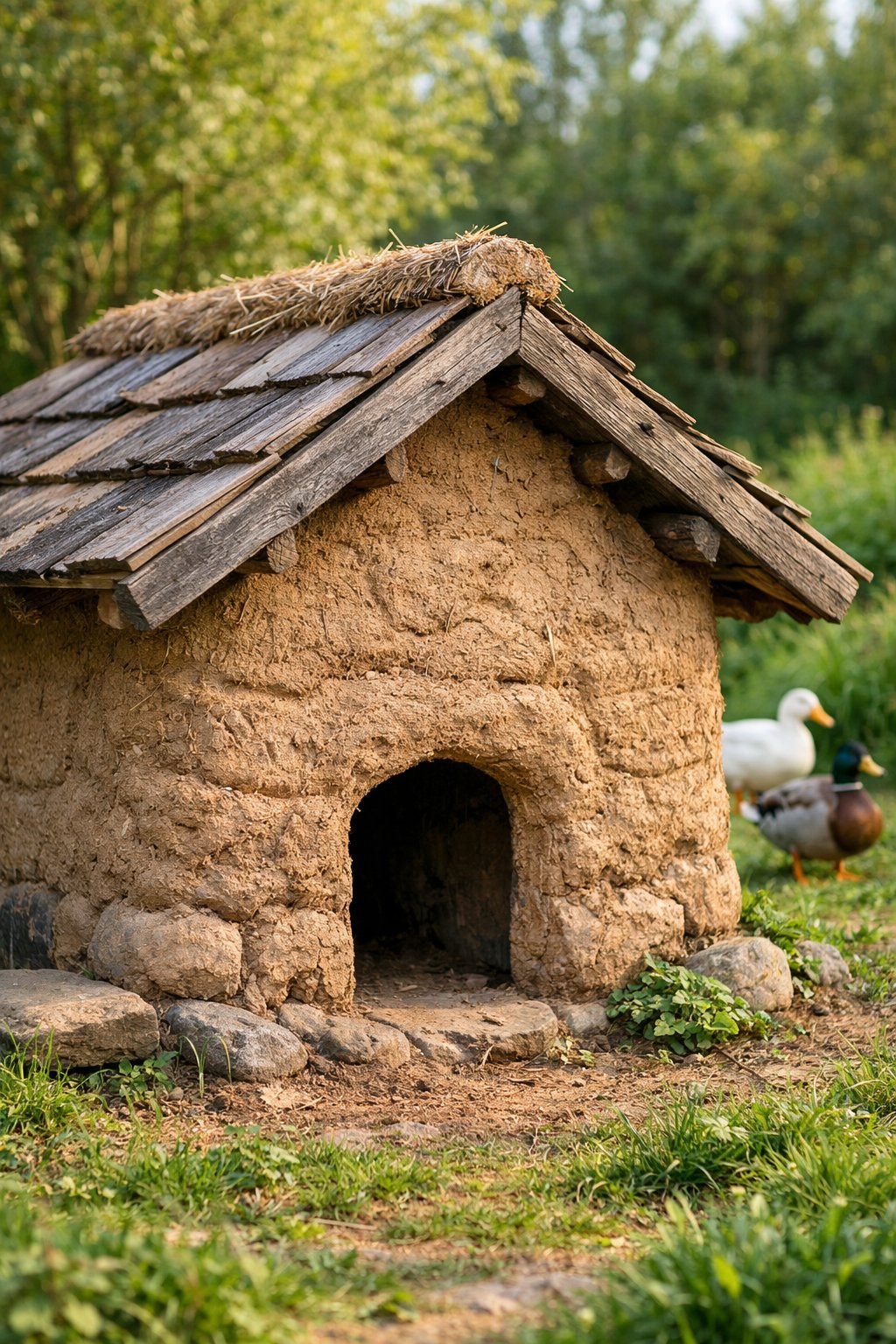
No need for fancy—cob houses just need the right mix and a little care.
You can build a snug duck house from cob (that’s clay, sand, and straw) that holds in heat during winter and stays cool in summer.
Cob walls soak up and release heat, so the inside doesn’t swing wildly in temperature.
The material breathes, which helps keep things dry and mold-free if you pair it with a good roof and floor.
Cob is cheap, eco-friendly, and shapes into cozy, round coops if you’re feeling creative.
Just make sure you raise the base and let the roof hang over to keep mud off the walls.
Expert Tip From MrPlanter: Try a small cob patch first to see what mix works for your weather. Let walls dry slowly and seal the base so water doesn’t sneak up.
7. Luxury duck coop with heated floors
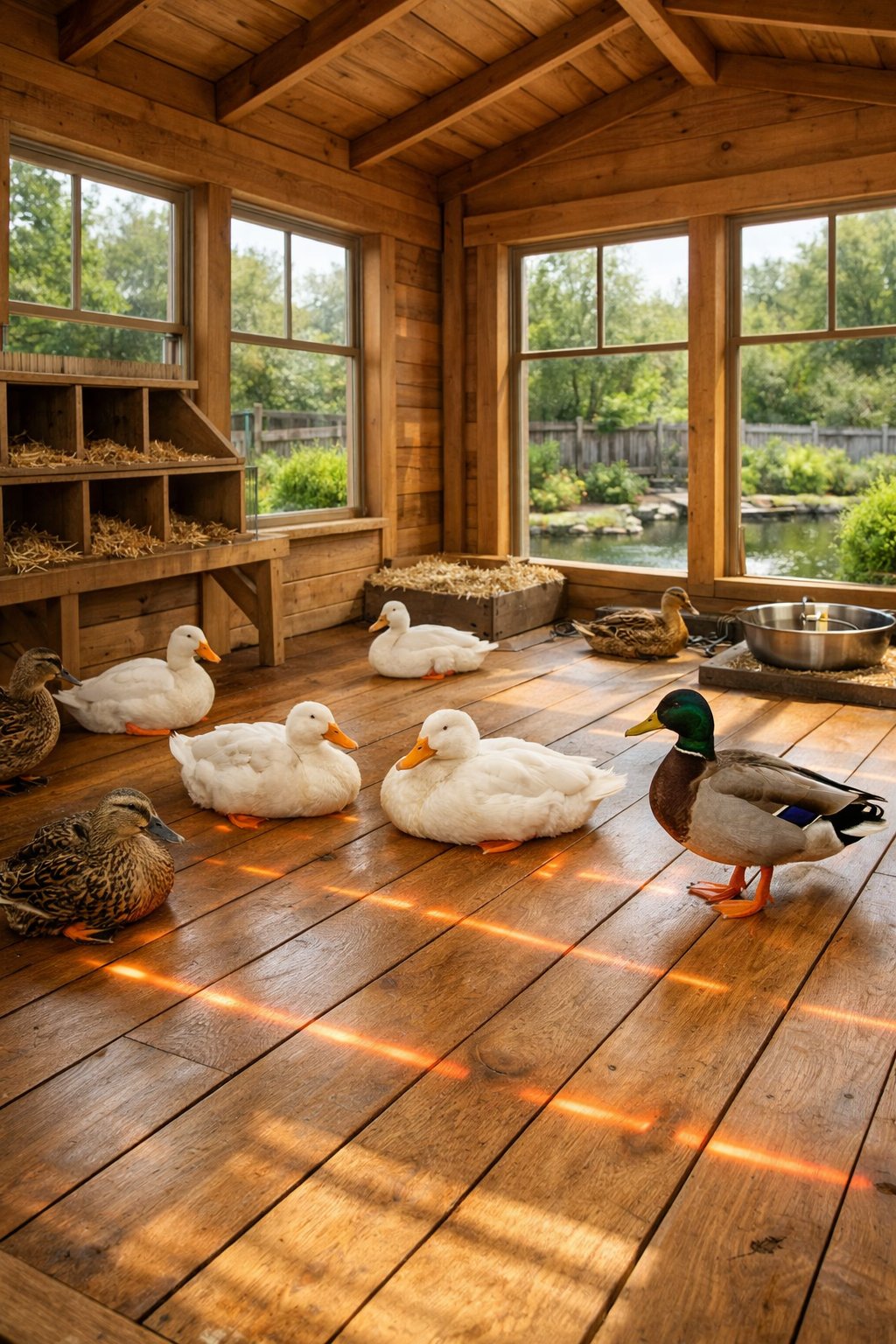
Who says ducks have to settle for drafty sheds?
You can build a warm, spa-like coop for your flock—heated floors and all.
Insulated flooring and low-wattage heating mats under a removable board or plywood layer work wonders.
You get steady warmth, no overheating, and cleaning’s a breeze.
Add non-slip mats and fresh bedding over the heated spot so ducks can nap in style.
Pop in a thermostat and a backup shutoff to keep things safe.
Expert Tip From MrPlanter: “Pick a heater with a thermostat and hide it under a removable floor panel for easy cleaning.”
8. Budget-friendly backyard duck shelter
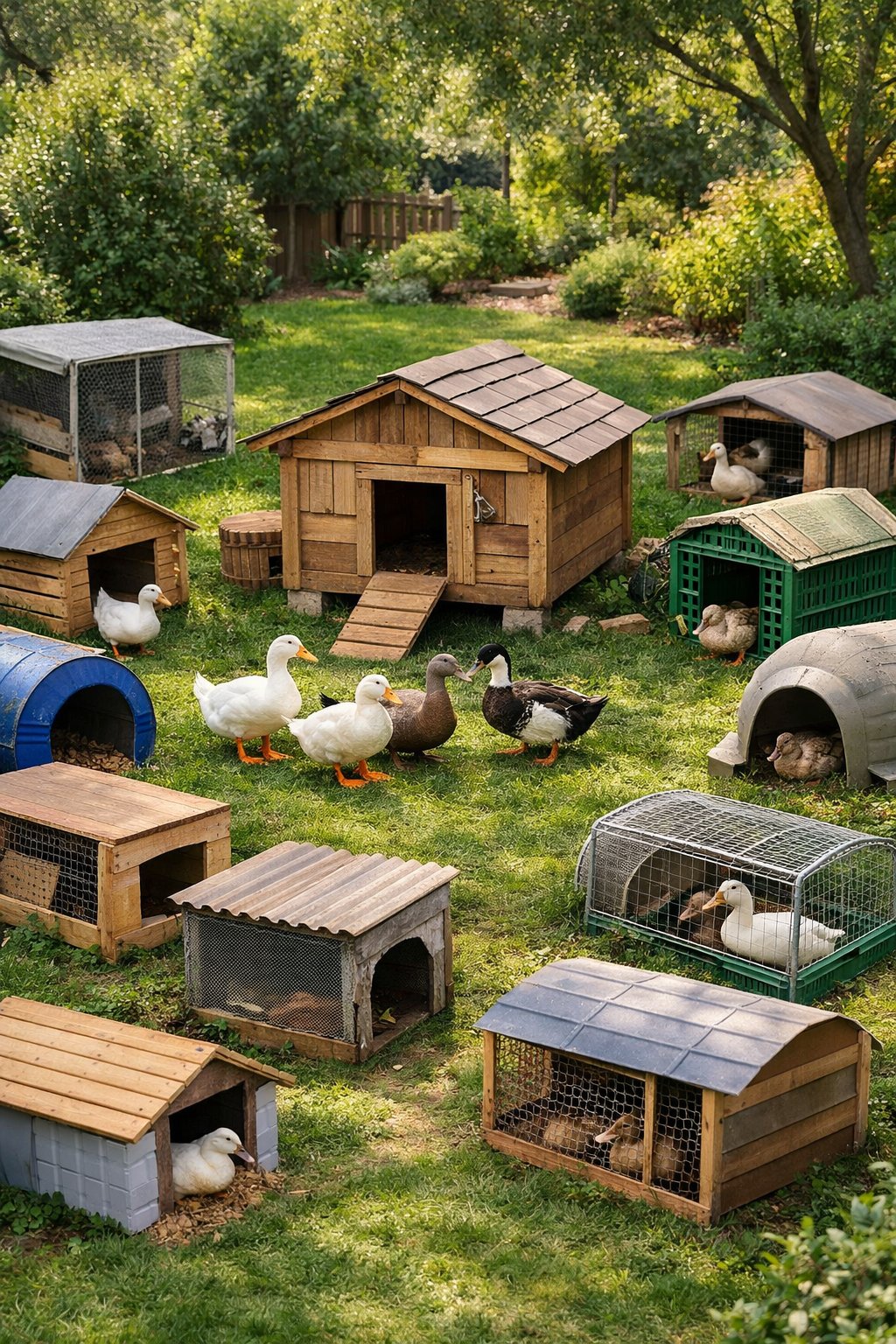
Want to give your ducks a safe home without emptying your wallet?
You can whip up a comfy shelter from hay bales, a tarp, or leftover wood.
These work great for warmer months or as a quick fix.
Raise the floor a few inches to avoid soggy bedding and throw in straw or pine shavings for comfort.
Set the shelter near a fenced run so ducks can come and go.
Add a small roof overhang to block rain and fit a snug door to keep out raccoons at night.
Keep it simple and check often for wet spots or chilly drafts.
Expert Tip From MrPlanter: “Stack hay bales for instant insulation and toss a tarp on top to keep out rain. Swap out bedding every week so your ducks stay healthy and dry.”
9. Portable duck tractor coop design
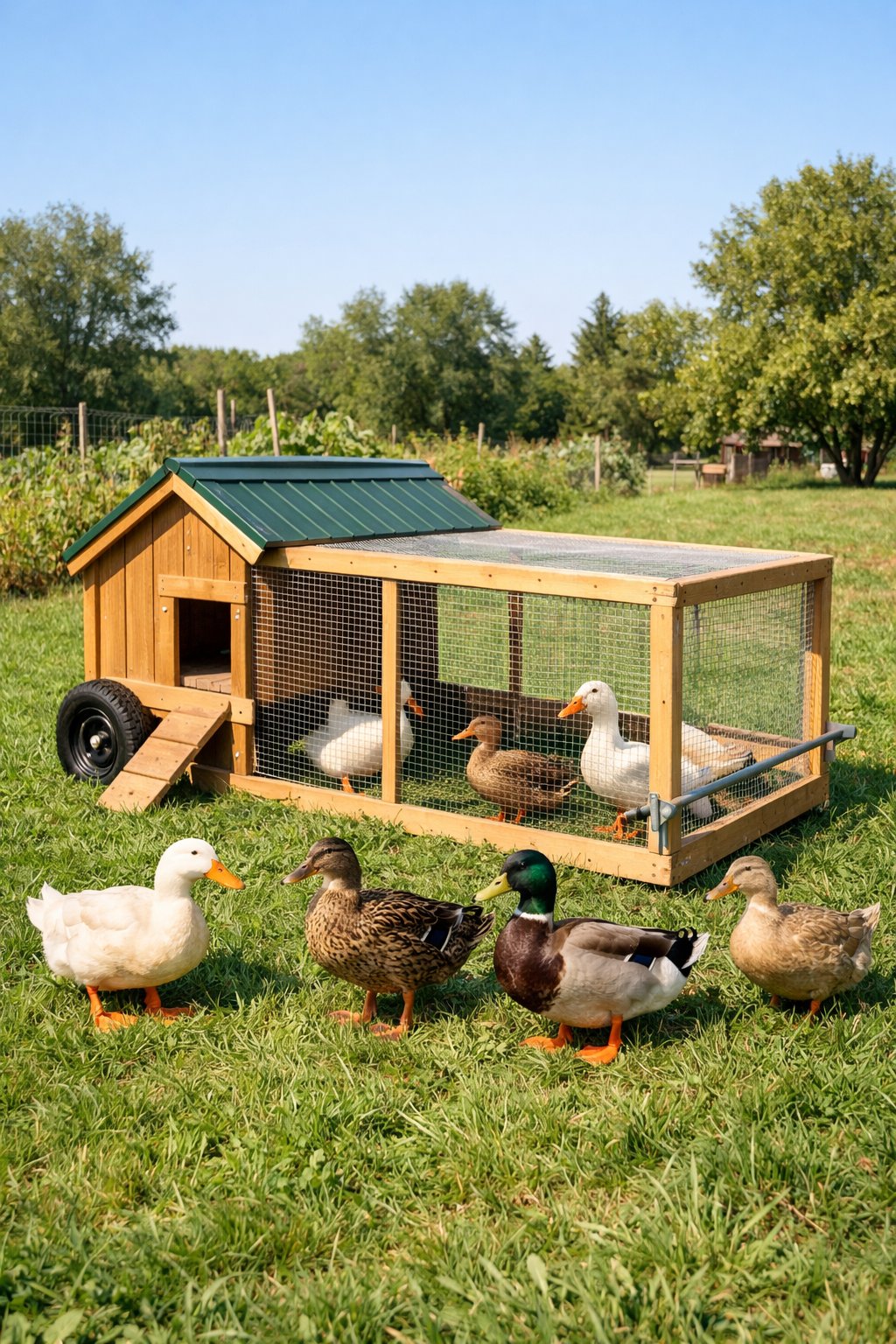
Think mobile coops have to be rickety? Nope!
You can build a sturdy duck tractor that keeps your flock safe from foxes and lets you move them to fresh grass.
Go for light but solid materials.
Build a wooden frame with welded wire that either goes a bit underground or has a skirt so nothing can dig in.
Add wheels or handles so you’re not dragging it solo.
Give your ducks a ramp, a waterproof roof, and plenty of vents.
Removable trays and hinged panels make cleaning less of a chore.
Trust me, your back will thank you.
Expert Tip From MrPlanter: Do a quick walk-around before moving the tractor to new grass. Switch up the spot daily for happy ducks and a healthy lawn.
10. DIY duck coop with predator-proof fencing
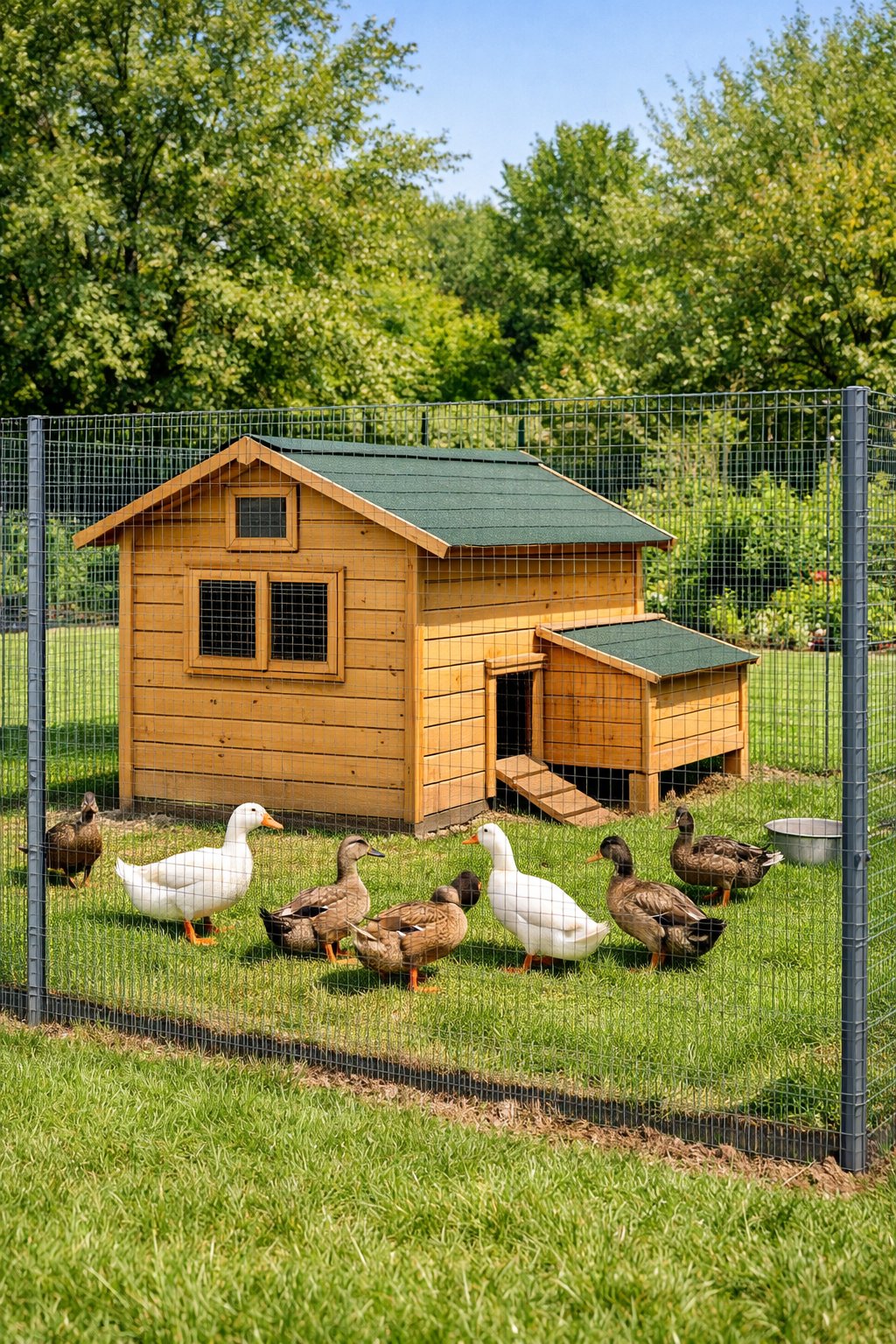
Predators don’t need much of a reason to try their luck, so you gotta outsmart them.
Pick welded wire or hardware cloth for the walls and bury it at least a foot deep to stop diggers.
Add a flat skirt under the ground so raccoons and foxes can’t sneak right up.
Cover the run with a roof or netting to block hawks and owls.
Lock all gates with carabiners or padlocks and check latches weekly.
Pop in some motion lights to scare off nighttime visitors.
Raise the sleeping area for extra safety when the weather turns nasty.
Expert Tip From MrPlanter: After a storm, check the fence for gaps. That quick look-around keeps your ducks safe and saves you from bigger repairs later.
11. Small urban duck coop for limited space
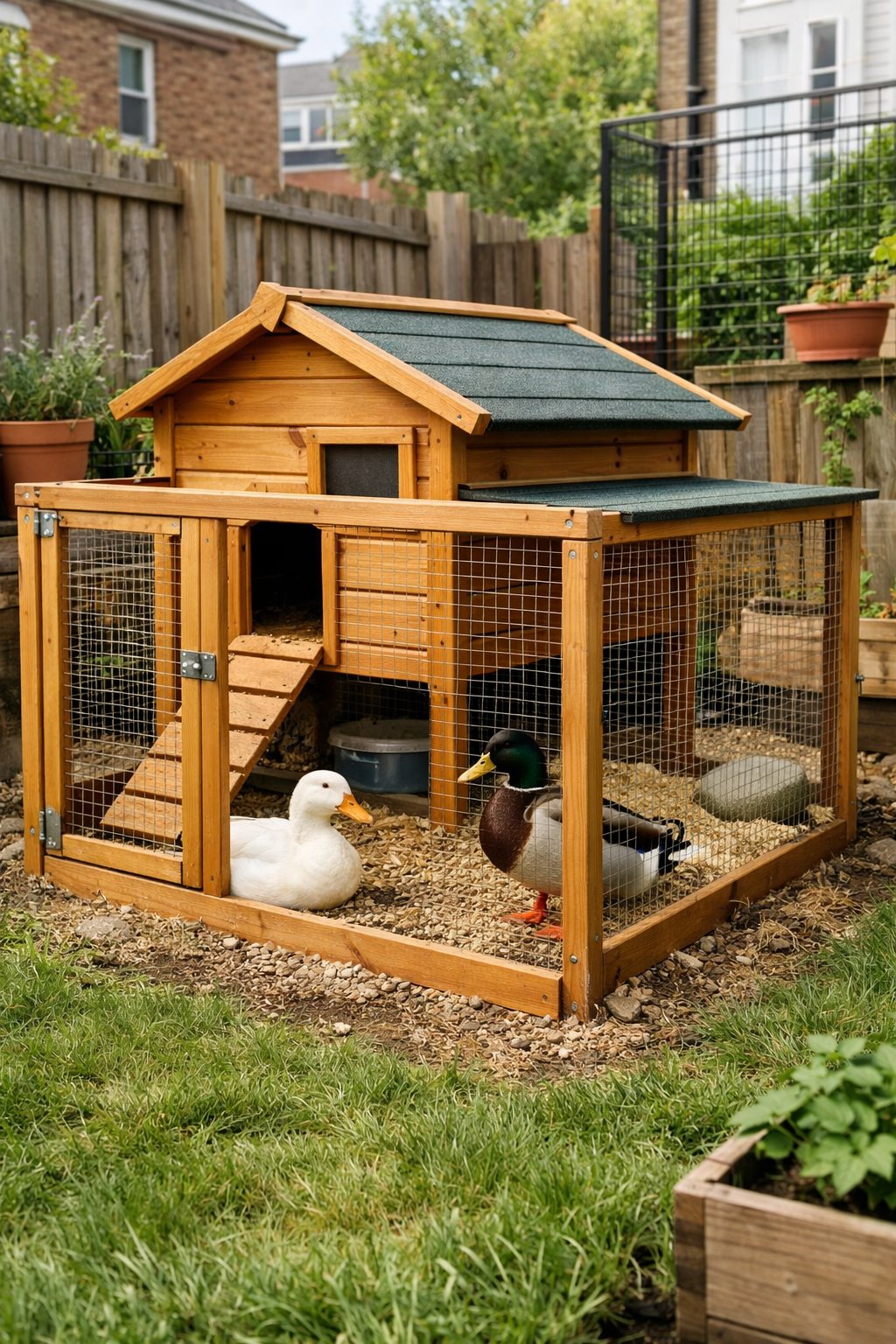
Want ducks but live in a tiny yard with nosy neighbors?
Keep your coop small and raised to save space and avoid muddy messes.
A mobile duck tractor is perfect—you can roll it to new grass and your yard won’t suffer.
Use nesting boxes that double as storage and add a ramp that folds up when you’re done.
Secure the run with mesh and bury the edge just a bit to stop any digging.
Pick lightweight but tough materials like treated plywood and metal mesh so you can move the coop yourself.
Instead of a pond, toss in a shallow tub for your ducks to splash.
Expert Tip From MrPlanter: “Set the coop near some shade and close to water for happy ducks. Move the tractor every day to keep your grass from turning into a mud bath.”
12. Round-shaped duck house for aesthetic appeal
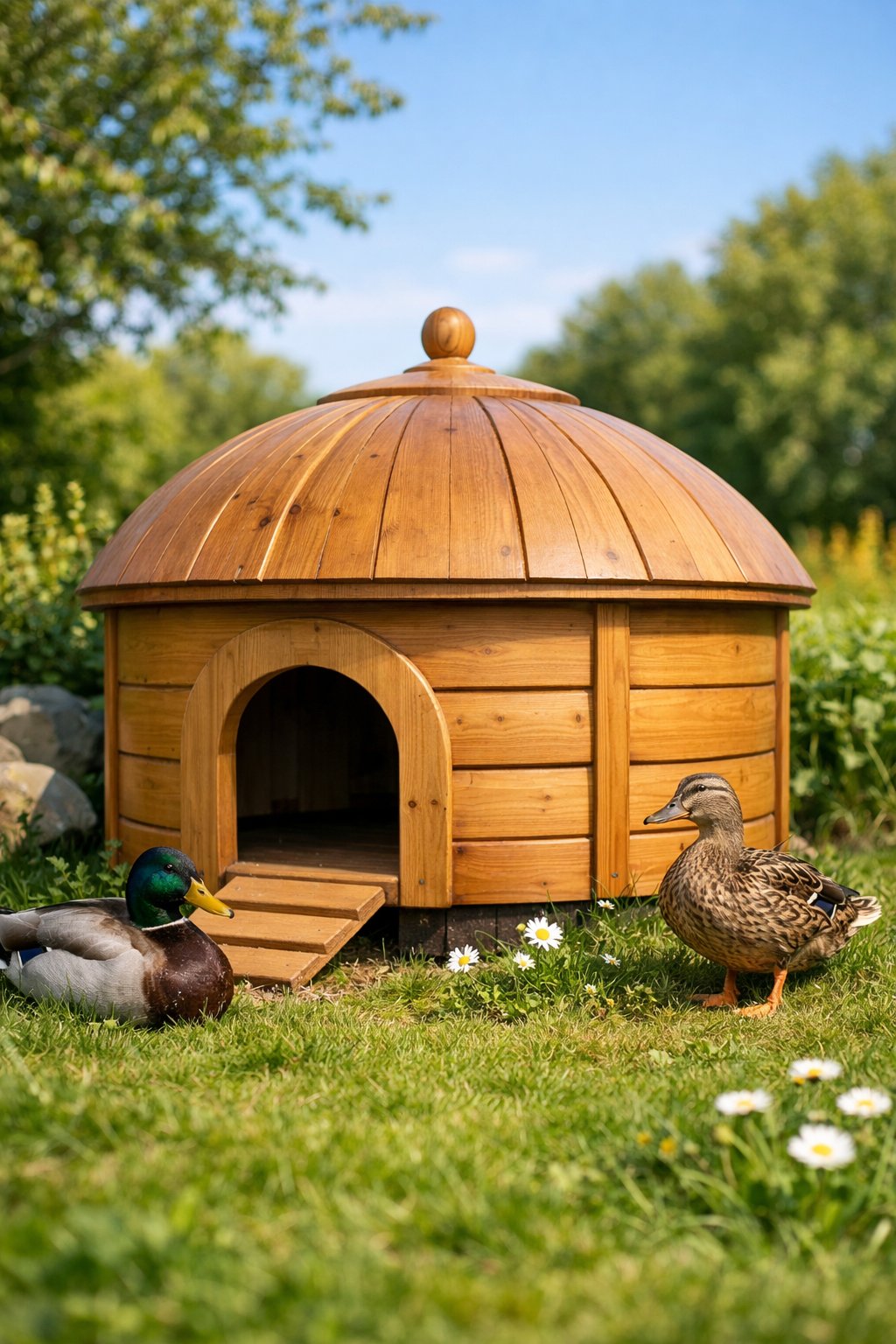
Did you know ducks actually love a cozy, curved house as much as you do?
A round duck house gives your yard a soft, charming vibe and stands out from all those boring rectangles.
Curved walls block wind, so drafts just roll right past.
Rain slides off easily, and you can tuck nests along the inside for privacy.
Round houses are pretty simple: start with a circular base and a sloped roof.
Use weatherproof wood, raise the floor, and keep the door small for easy cleaning.
Expert Tip From MrPlanter: “Put your round house under some trees for shade and a peaceful duck hangout. Add a shallow ramp so ducks can move around inside without slipping.”
13. Multi-level duck coop with ramp access
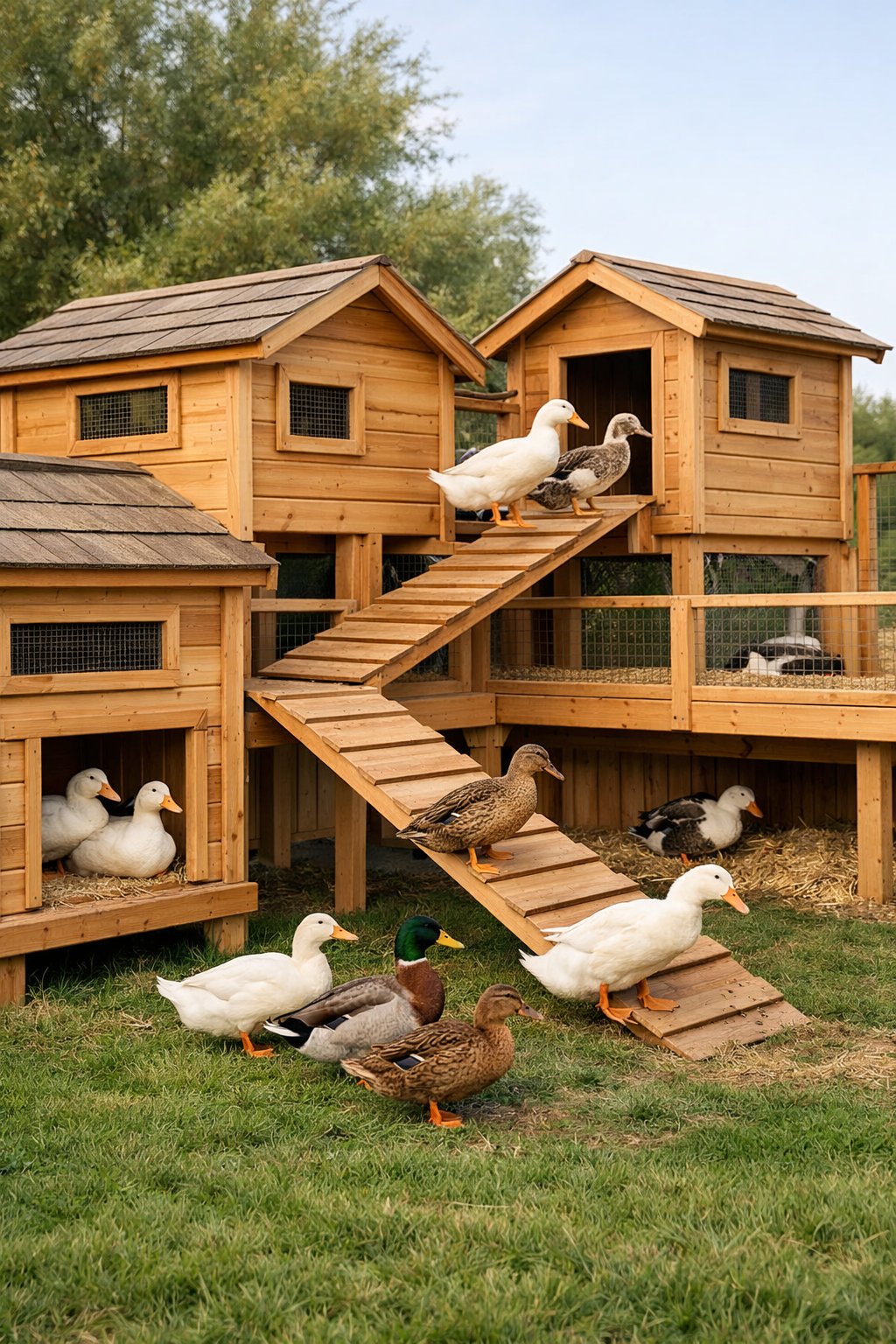
Here’s a fun surprise: ducks don’t always want to stick to the ground if you give them a cozy upstairs! If you add a second level, you can make separate spots for sleeping, nesting, and even a little duck playtime.
Keep those ramps nice and gentle. I always put non-slip stuff on them so nobody takes a tumble.
Short ramps with little steps work way better for the chubbier duck breeds. Rails on the side? Those help the tiny or extra-worried ducks feel brave enough to try the climb.
When you build up instead of out, you help your ducks avoid soggy ground and sneaky predators. You also get more space for them, even if your yard is small.
Just make sure every level has plenty of fresh air, dry bedding, and a way for you to clean up without wrestling the whole coop apart.
Expert Tip From MrPlanter: “Add a shallow landing halfway up the ramp to give ducks a rest spot. Check ramp grip regularly and replace worn material to prevent slips.”
14. Coop with easy-to-clean removable floors
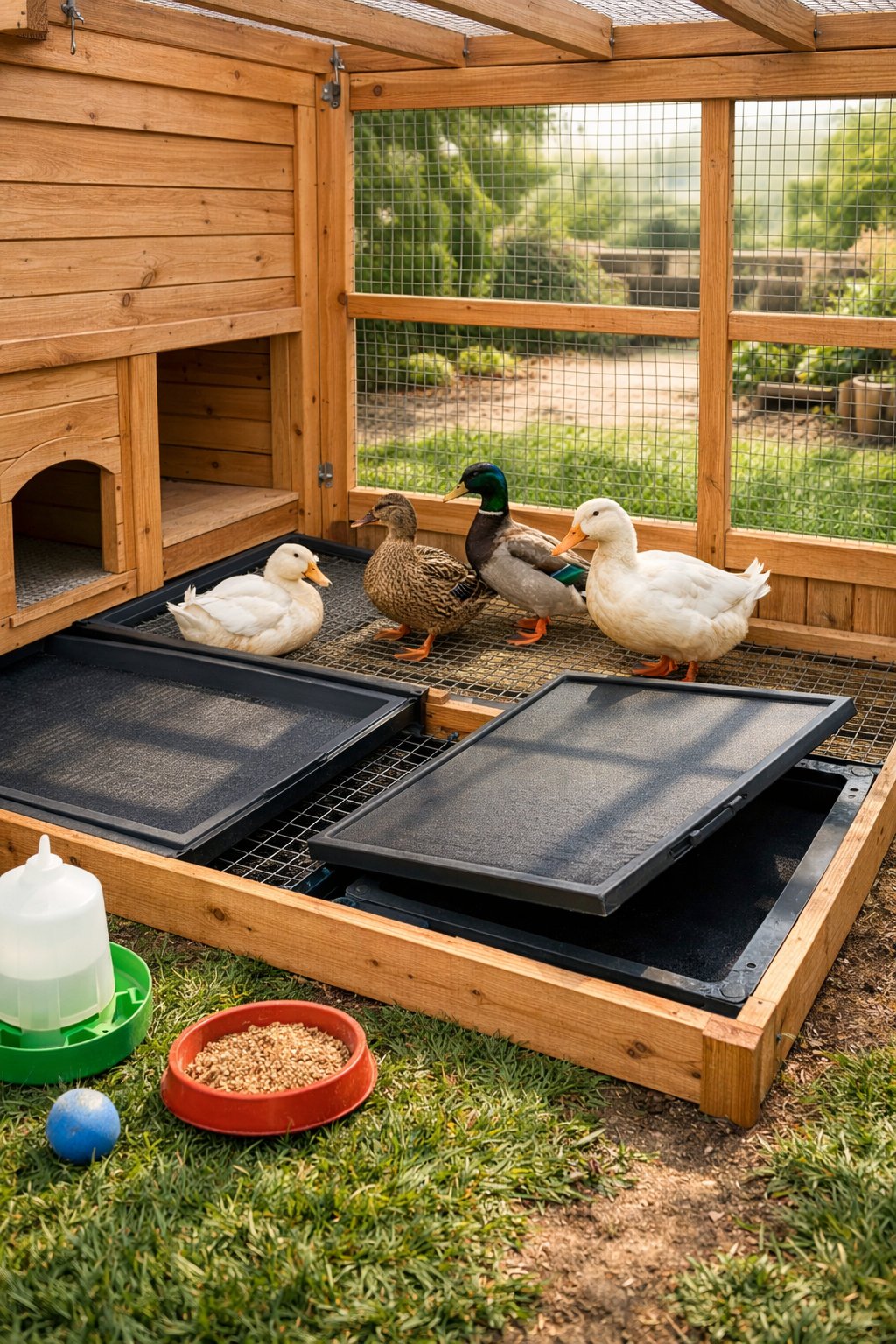
Let’s be honest—cleaning the coop can feel like a chore nobody wants, but you don’t have to dread it.
If you build a coop with pull-out trays or removable panels, you can dump out the mess in seconds. That means fresher bedding, less stink, and happier ducks (plus, your yard smells way better).
Go for waterproof stuff like linoleum, rubber mats, or sealed plywood on the bottom of those trays. They hose off easy and won’t get all warped from wet bedding.
Make trays shallow enough to lift but deep enough so bedding doesn’t spill everywhere. If you label each tray, you’ll always know which one goes where.
Slide trays out slowly so you don’t end up with a floor full of duck fluff.
Expert Tip From MrPlanter: “Measure your doors and trays before building to make sure everything slides out smoothly. Clean trays weekly and rinse with safe, mild soap to keep ducks healthy.”
15. Rustic barn-style duck shelter
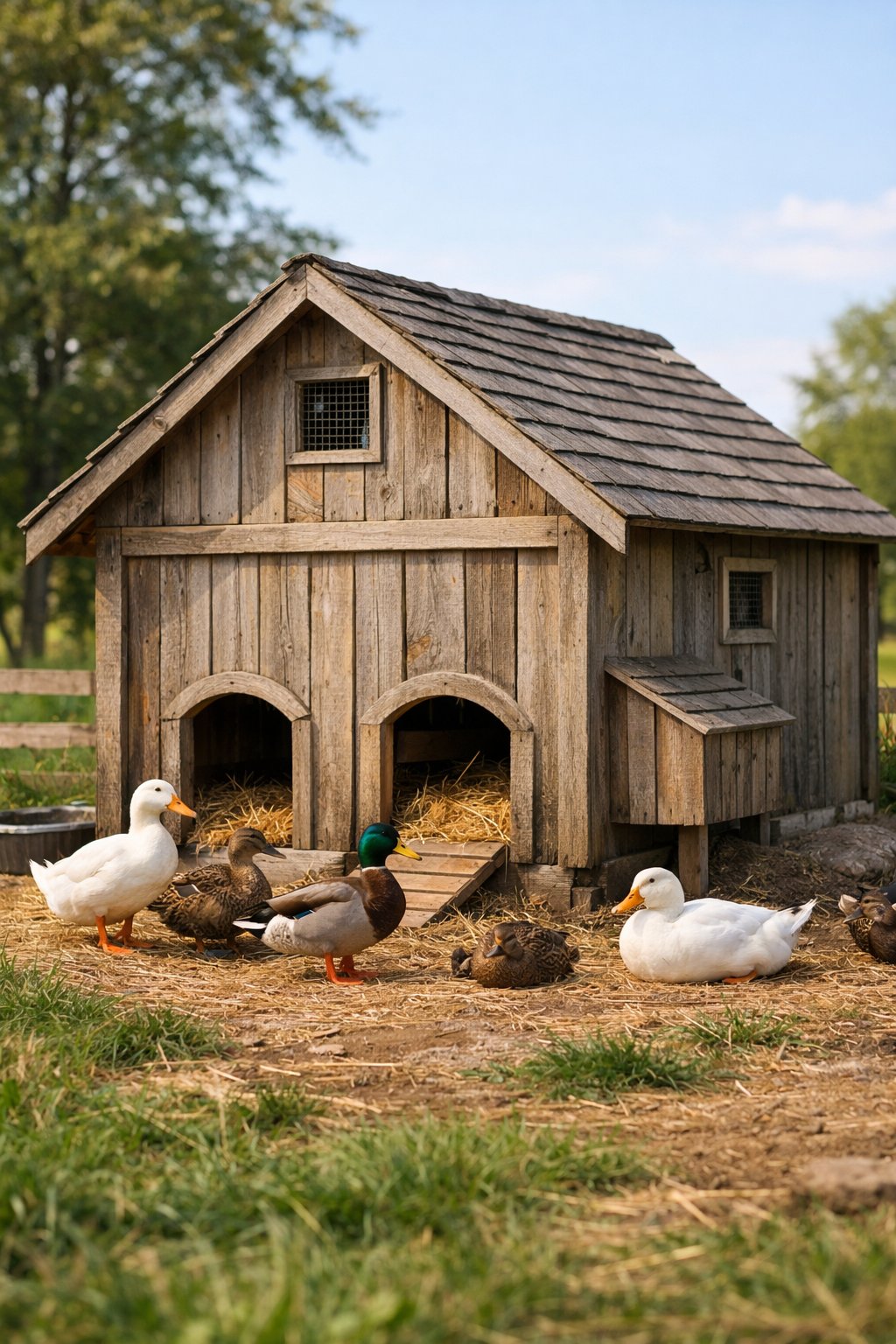
Here’s a myth worth busting: barn-style coops aren’t just for folks with giant farms. You can shrink them down for your backyard and they still look downright charming.
You get a roomy shelter with those classic barn lines and sturdy wood. The extra height lets air move around and gives you a dry loft for nesting.
If you use old barn wood or anything reclaimed, you add some real character. Plus, it blends right in with the garden.
Stick a run on the side so your ducks can nibble grass without wandering off. A simple roof overhang and raised floor help keep everything dry.
Paint or stain the wood to protect it from rain, but you can still keep that rustic vibe.
Expert Tip From MrPlanter: “Pick durable, easy-to-clean flooring and raise the coop a few inches off the ground to avoid damp. Add wide doors so you can reach nests and clean without fuss.”
16. Coop featuring built-in waterers and feeders
Here’s something a lot of folks don’t realize—ducks guzzle way more water than chickens, and boy, do they make a mess.
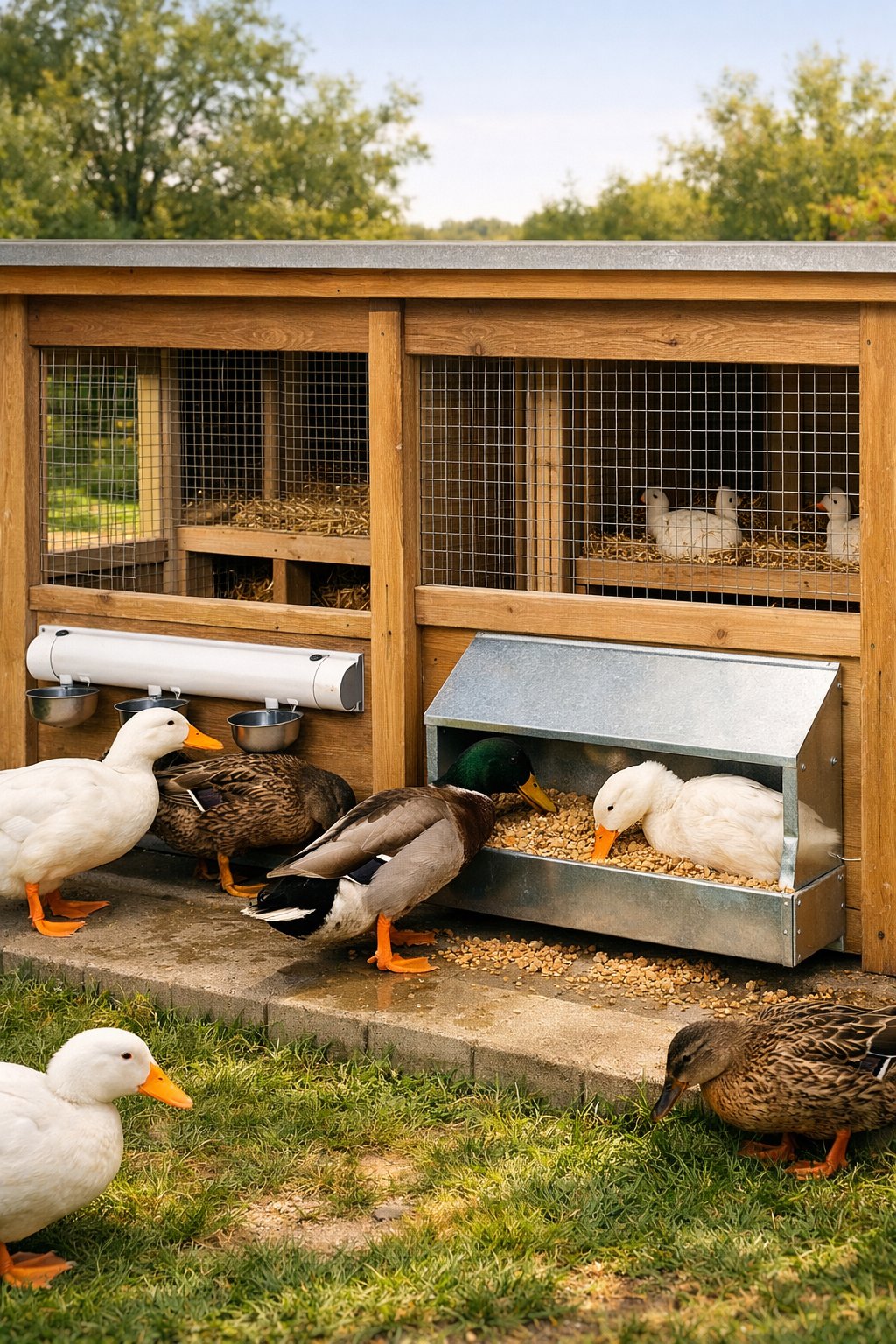
If you’re constantly refilling bowls or mopping up soggy bedding, you might want to try a coop with built-in waterers and feeders. These setups honestly save a ton of time and help keep everything a bit cleaner.
Mount those waterers and feeders right at duck shoulder height. That way, your ducks can reach them easily, but they won’t be stomping around in their own food and water.
I like using gravity-fed or nipple-style waterers since they really cut down on spills. Grab a feeder with a lip, too—it helps slow down those little overeaters.
Stick both under a sheltered overhang so rain doesn’t turn breakfast into a swamp. Toss in a removable tray underneath for cleaning, and you’ll thank yourself later.
You’ll probably notice pretty quickly that you’re working less and your flock always has what they need. It’s a win-win, honestly.
Expert Tip From MrPlanter: Set up your waterers on a gentle slope so rainwater drains away. Give everything a good scrub once a week—keeps algae out and your ducks happy and healthy.