You want a garden that looks good all year and makes life a bit easier.
I’ve rounded up 18 evergreen ideas that bring structure, color, and low-maintenance charm to your yard so it keeps looking sharp through every season.
Think of these ideas like building blocks—hedges for privacy, low borders for walkways, and textured mixes that keep things interesting.

You’ll see options for super tidy looks, wild woodland corners, and even ideas for small yards.
1. Create a privacy hedge with dense Arborvitae rows
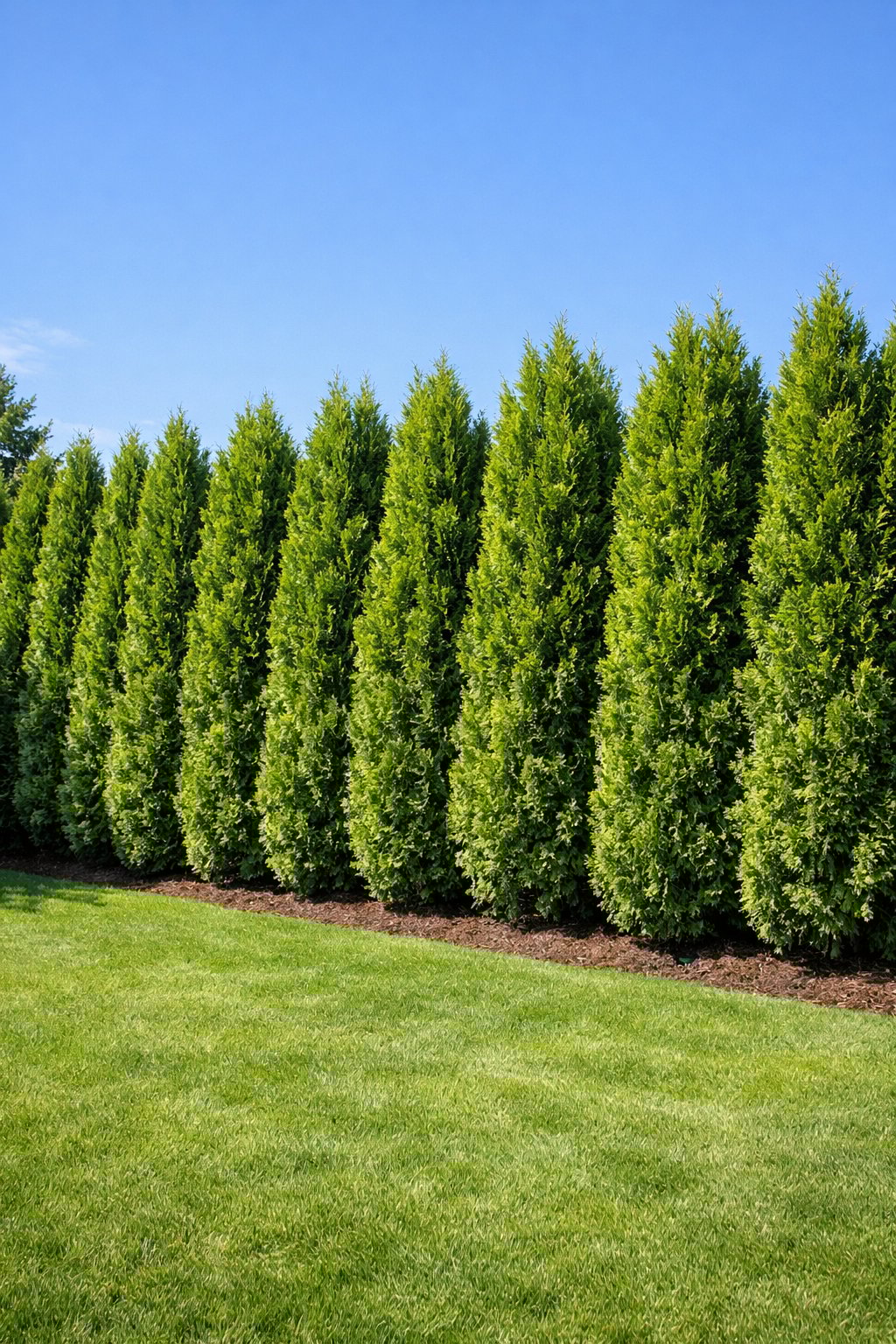
Let’s clear this up: a living fence can be easy and still look awesome.
When you plant Arborvitae in a row, you get a tall, green screen that blocks out neighbors and street noise all year.
If you’re short on space, go for a narrow, columnar kind—they pack in tight without taking over.
Give them enough room based on their full-grown width so they fill in quickly but don’t crowd each other.
Arborvitae grow fast in good soil and sun.
You’ll just need to prune them now and then to keep them tidy.
You end up with green privacy, even in winter, and a crisp property line—no need for a wooden fence.
Expert Tip From MrPlanter: Plant new trees in spring and water deeply for the first two years. Mulch around the base to save time and keep those roots cool.
2. Frame your garden paths with low boxwood borders
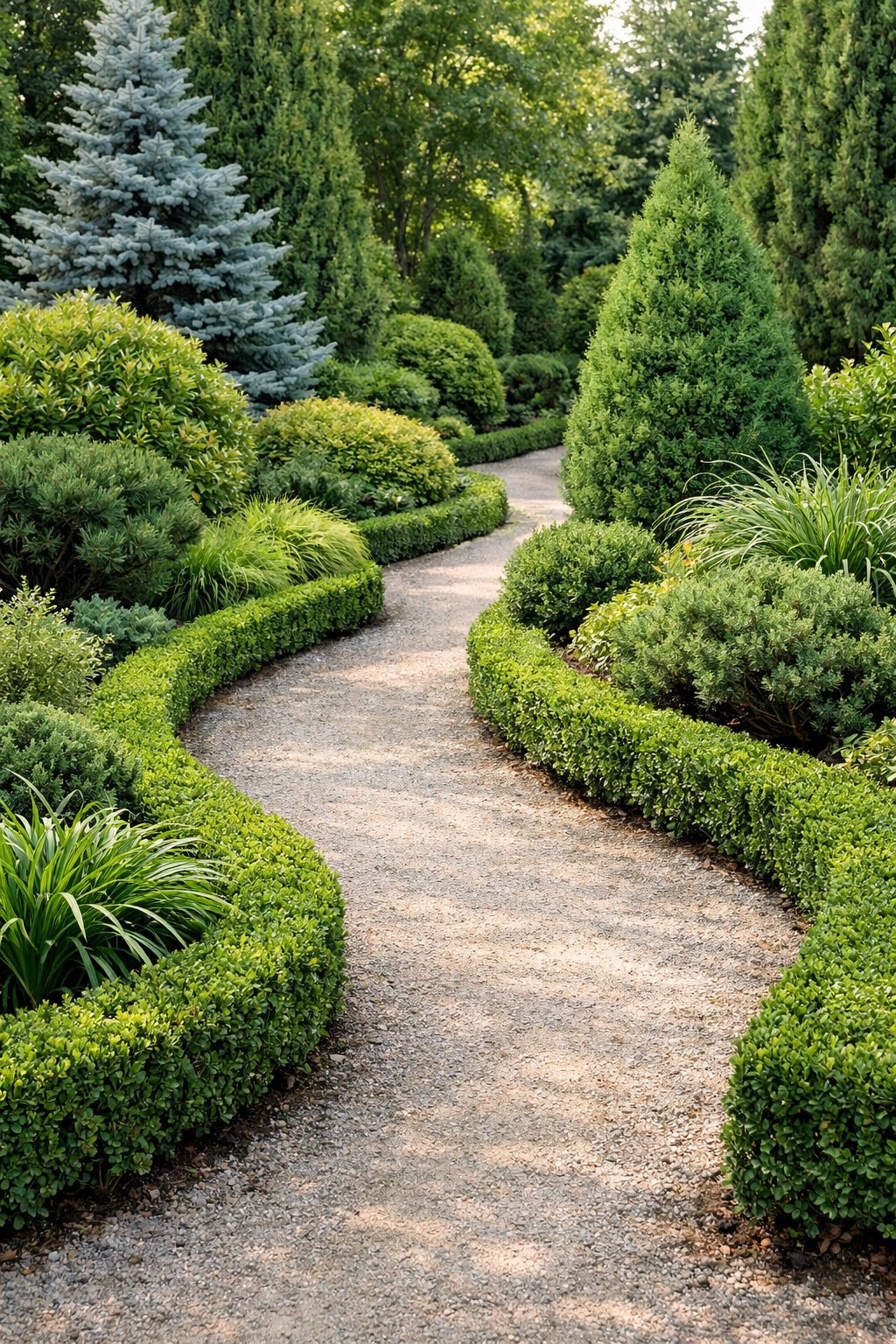
Here’s a fun one: a short, neat hedge can turn a boring path into a real entrance.
Boxwoods along walkways make your garden look tidy and welcoming, and they stay green all year.
You get clean lines that guide your feet—and your eyes.
Boxwoods are easy to trim, so you can keep them crisp or let them look more relaxed.
Mix them with flowers or gravel for a little contrast.
They work for both formal and casual paths, and they don’t need much to stay looking good.
Expert Tip From MrPlanter: “Plant boxwoods about 12–18 inches apart for a solid border. Trim lightly once or twice a year to keep their shape and let them breathe.”
3. Plant Rhododendrons for vibrant spring blooms with evergreen leaves
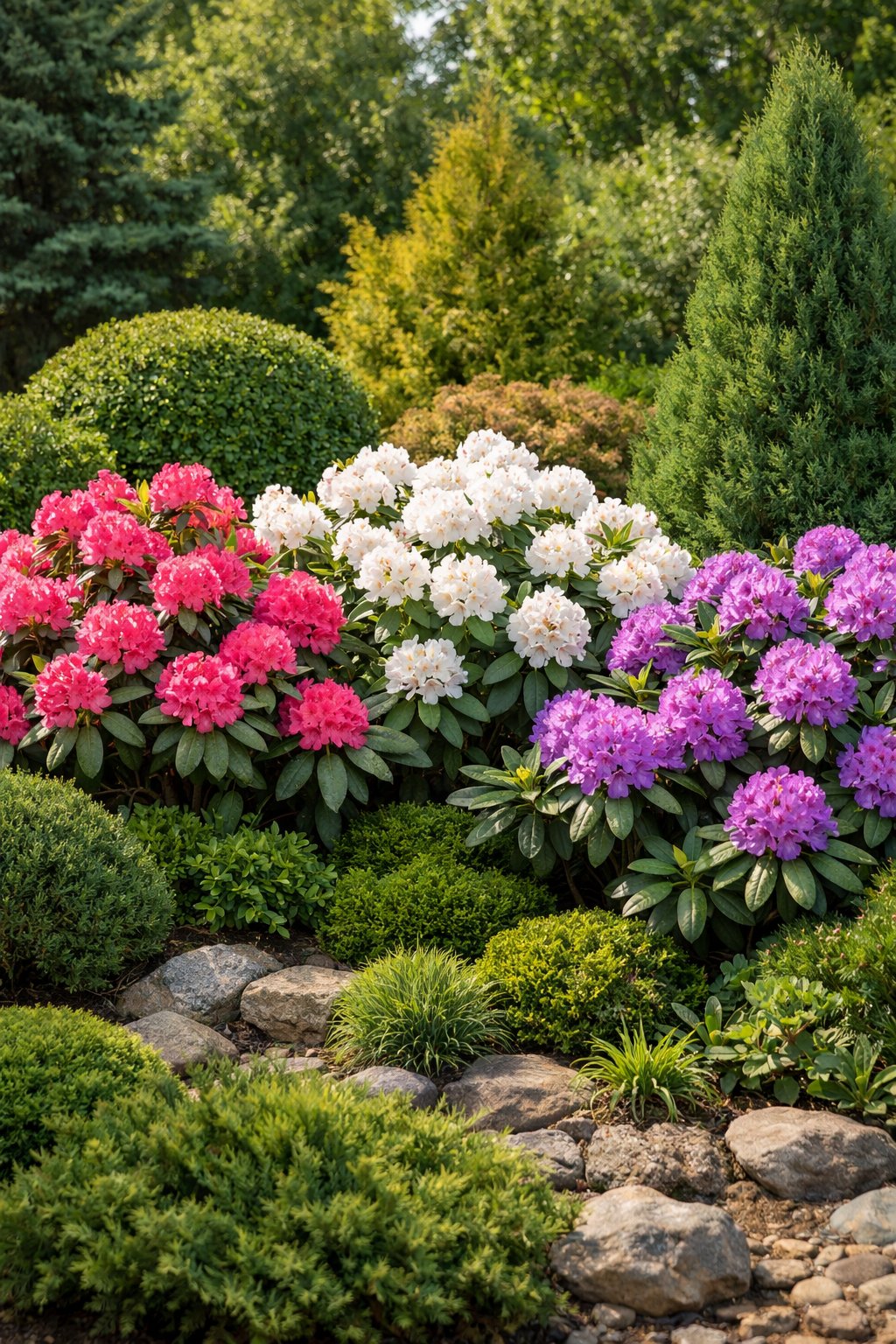
Let’s bust a myth: Rhododendrons aren’t just for fussy gardeners.
They give you big, colorful flowers in spring and glossy leaves that stick around in winter.
They fit under trees or along your house, adding steady structure to borders.
Pick a spot with dappled light and well-drained, acidic soil.
Give them room to breathe so air moves between plants.
That helps keep diseases away and lets the blooms open up.
Prune them only after flowering, so you don’t chop off next year’s buds.
Mulch helps hold moisture and keeps roots cool.
Expert Tip From MrPlanter: Plant rhododendrons in spring or fall when the soil is moist. Feed once a year with a fertilizer made for acid-loving plants for the best blooms.
4. Use Yew shrubs for classic, sculpted shapes
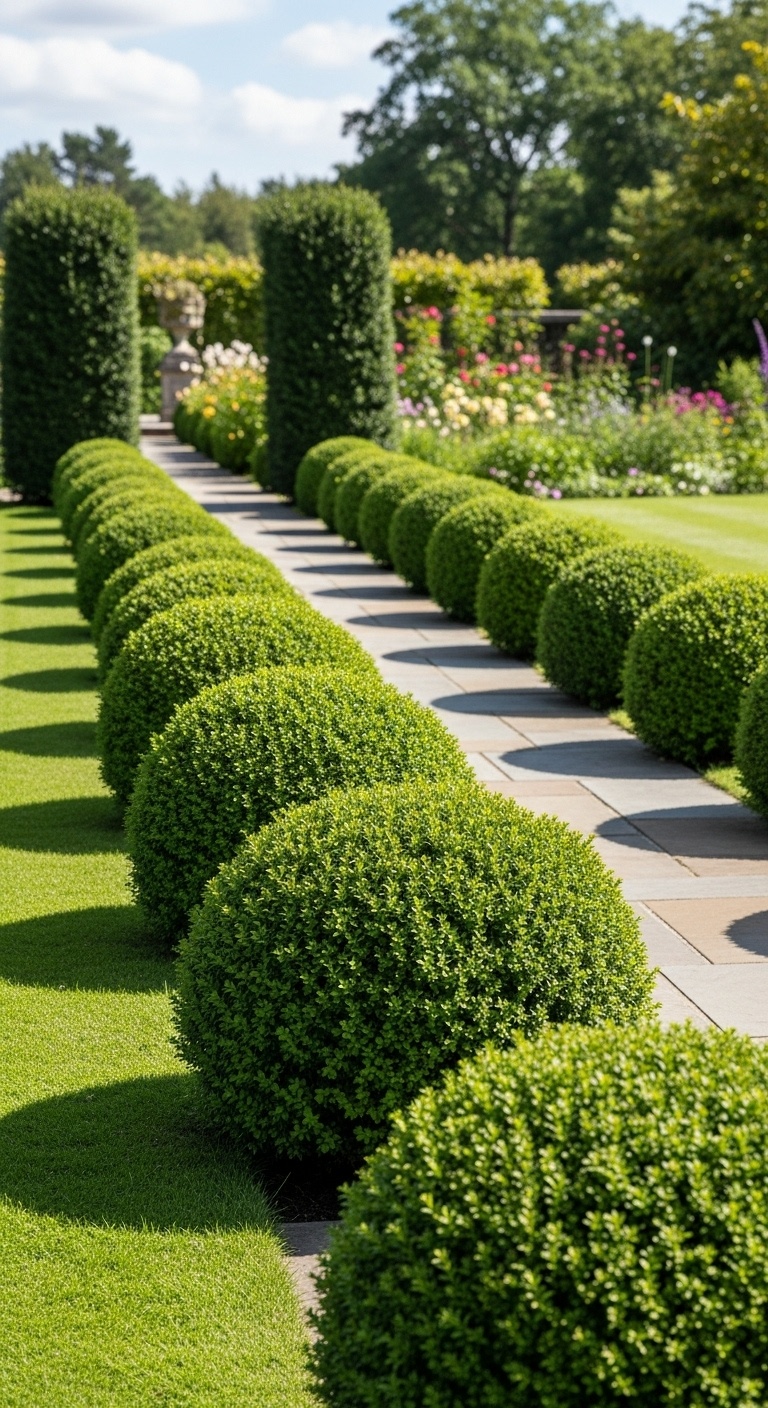
Yews aren’t just for fancy old houses—they’re actually pretty versatile.
You can trim them into hedges, neat balls, or even spirals if you’re feeling artsy.
They take pruning like champs, so you get clean lines without much trouble.
Plant them in a row for a formal border, or set one near the entry for a bold accent.
Yews handle sun or shade, and most keep their green all year.
That makes them a steady choice if you want structure in your beds.
Expert Tip From MrPlanter: “Start shaping them young and prune lightly each year. Water well for the first two years so roots get cozy.”
5. Mix Juniper varieties for texture and color contrast
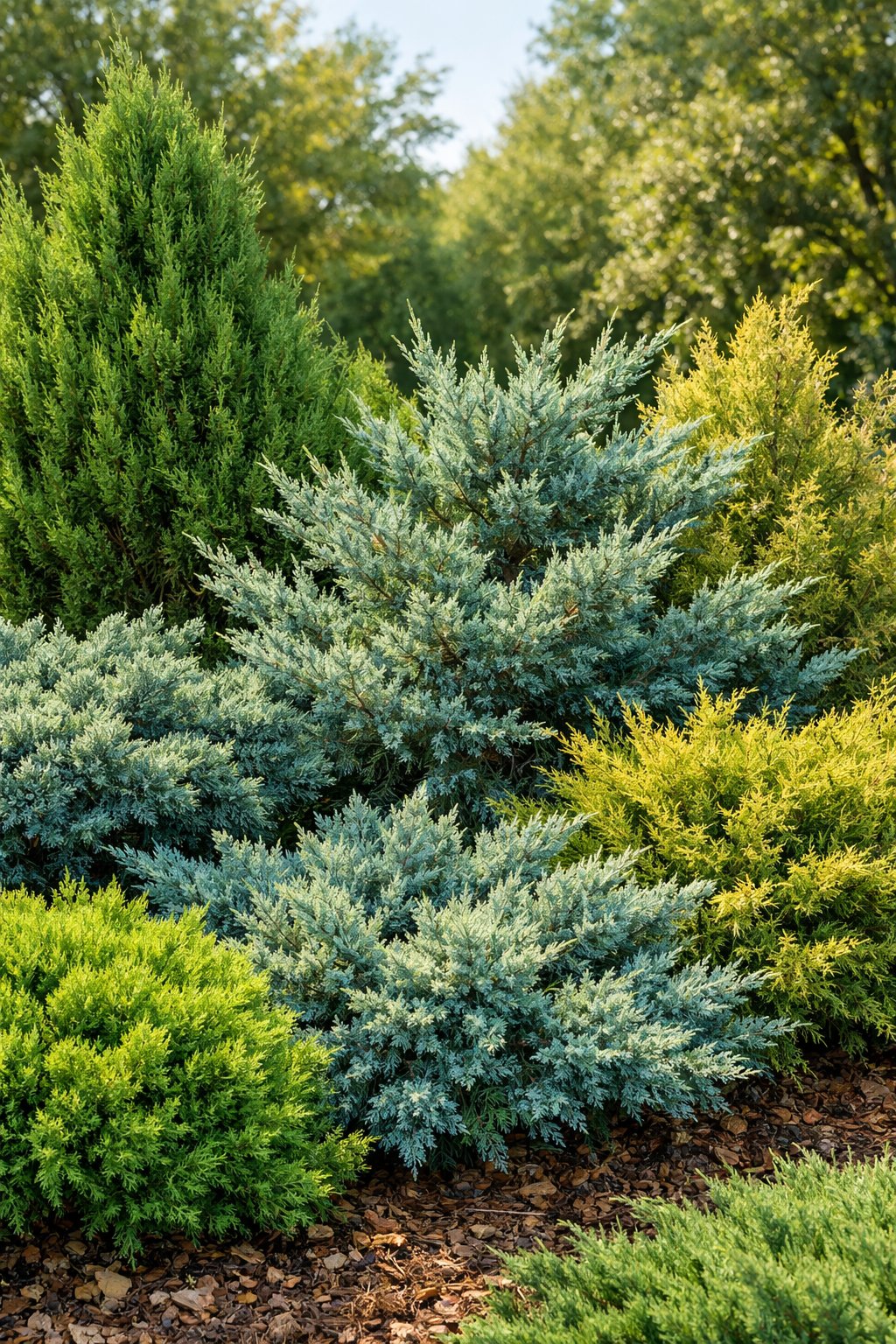
Here’s a secret: not all junipers are the same, and that’s actually great.
Mix low, creeping types with upright kinds to get height and a bit of spill.
You’ll end up with a patchwork where one plant hugs the ground and another stands tall.
Try blue-gray foliage with golden or bright green for a lively mix.
Texture matters, too—pair feathery needles with chunkier leaves for a cool effect.
Use groundcover junipers on slopes and small conical ones near paths.
The variety keeps your garden interesting, even in winter.
Expert Tip From MrPlanter: Plant in odd-numbered groups for a natural look. Water well the first year so they settle in.
6. Add a backdrop of Canadian Hemlock for soft, feathery greenery
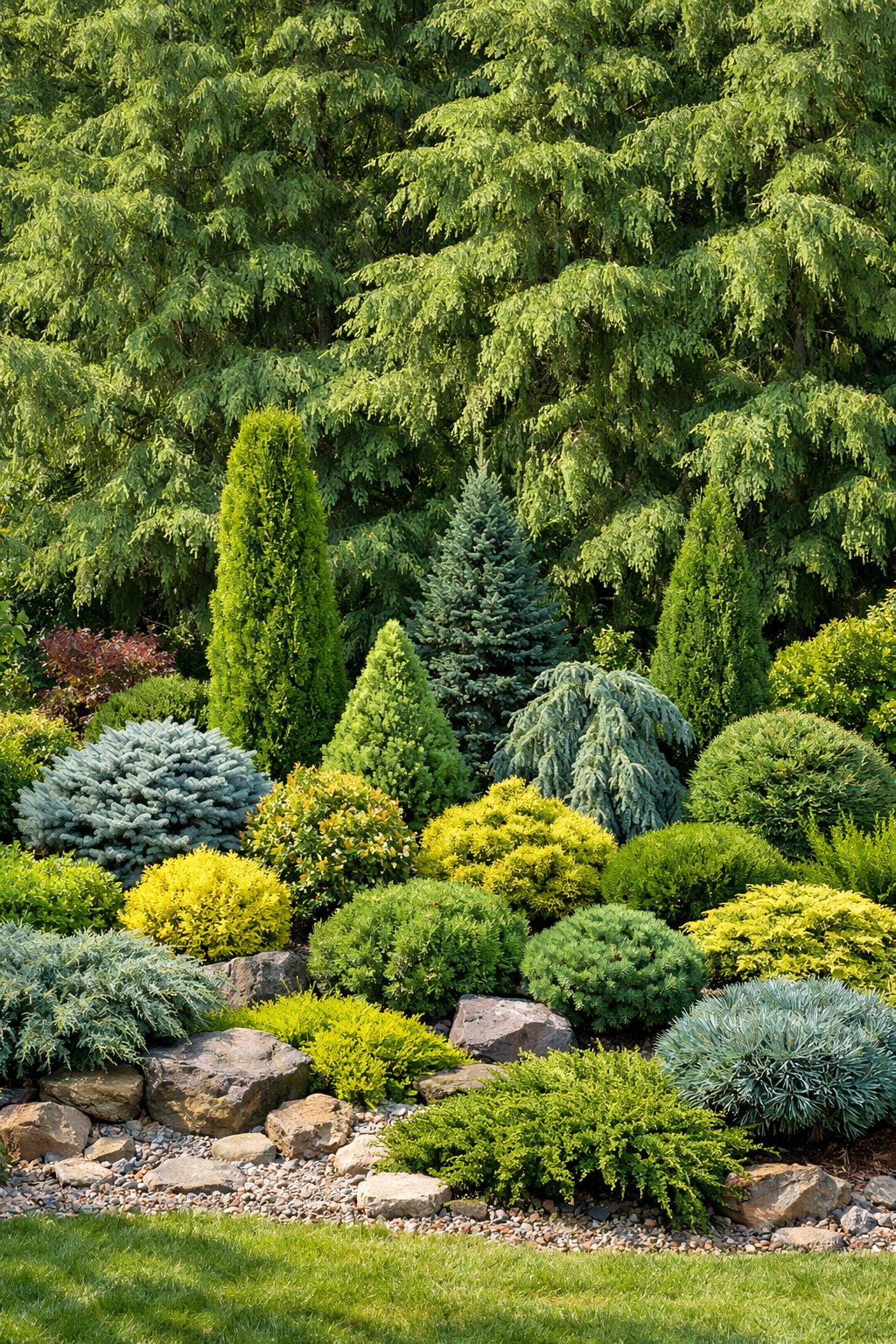
People think hemlocks belong in forests, but they’re actually perfect for home gardens.
Plant them as a soft backdrop and watch your smaller shrubs and flowers pop.
Their droopy branches and feathery needles add texture without stealing the show.
They keep their color all year, so your beds look finished, even in January.
Plant them behind shorter plants to show off those layers.
They can handle some shade, making them ideal for woodland edges or shady borders.
Expert Tip From MrPlanter: “Space hemlocks 3–5 feet apart for a dense screen. Prune lightly to keep them soft and healthy.”
7. Incorporate Dwarf Spruce for year-round structure
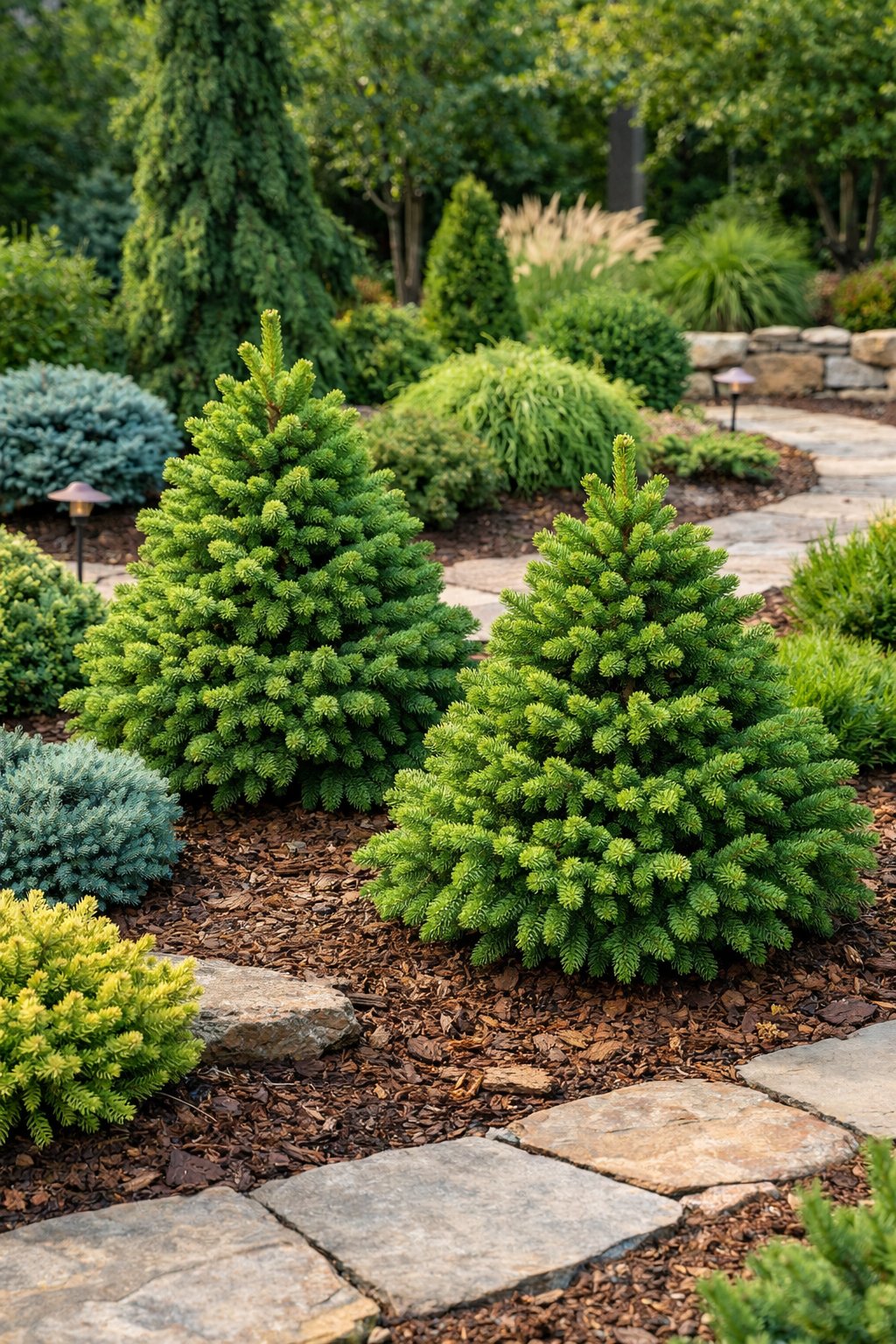
Dwarf spruces won’t take over your yard if you plant them right.
They give you steady shape and blue-green color, even in the coldest months.
Plant a few near paths or corners to guide the eye and anchor the space.
These small conifers fit tight spots and even containers, so you don’t need a giant yard.
They mix well with flowers and low shrubs, keeping the bed interesting all year.
Choose a sunny spot with well-drained soil and give them some elbow room.
Prune only for shape, and water during dry spells to keep them looking sharp.
Expert Tip From MrPlanter: Plant dwarf spruce at least 3 feet from foundations and paths. Mulch lightly and water during dry weeks for healthy, bright needles.
8. Plant Holly bushes for glossy leaves and red berries
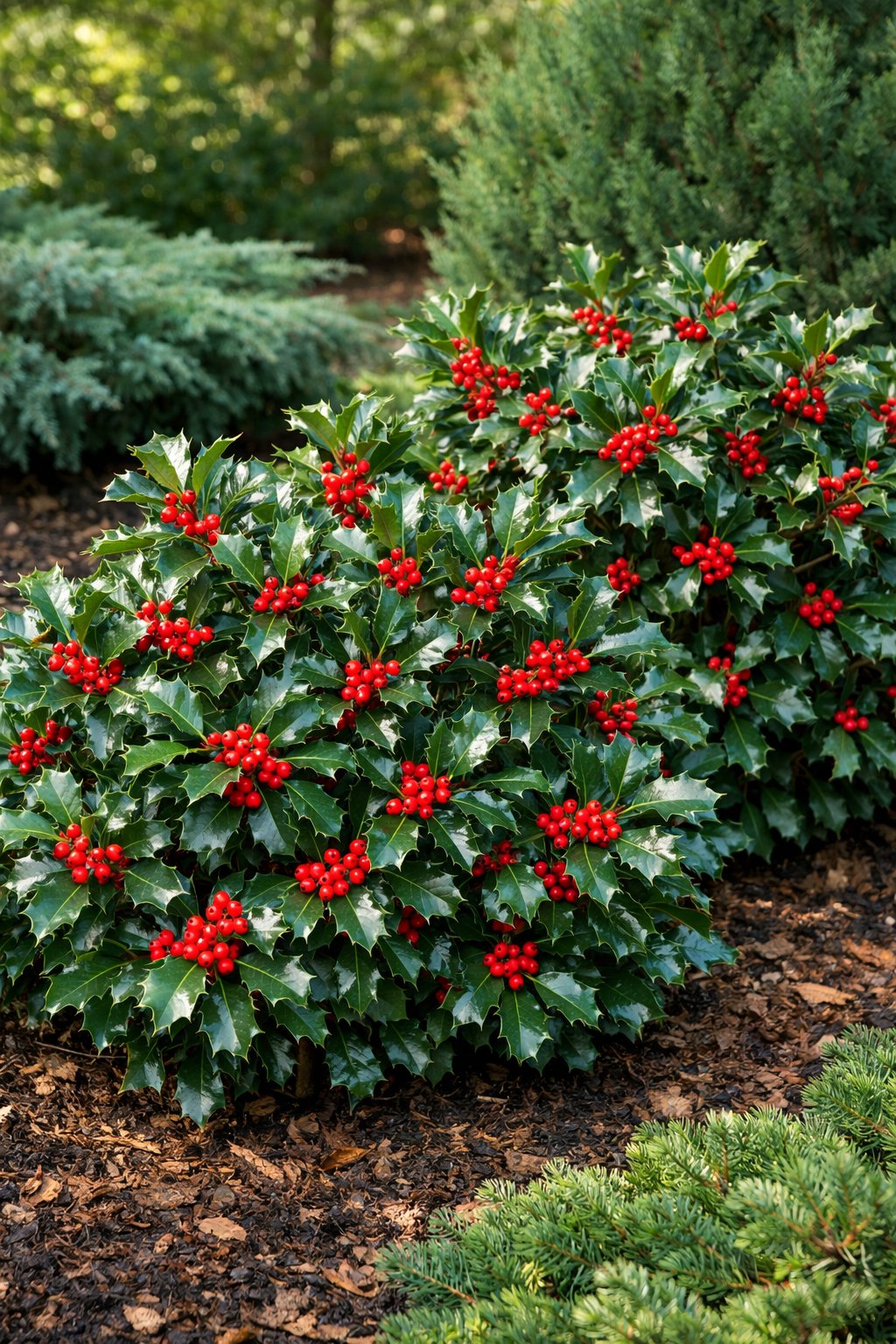
Did you know holly berries stick around all winter and brighten up a sleepy yard?
You can use holly as a low hedge, a focal shrub, or a living screen that stays green year-round.
Pick evergreen hollies for those shiny leaves and bright red berries—birds will thank you.
Plant a male and a female if you want lots of berries, since they need each other for fruit.
Hollies take pruning in stride, so shape them for neat edges or let them grow wild.
They like well-drained soil and some morning sun, but many types handle shade just fine.
Expert Tip From MrPlanter: “Plant one male holly for every five females to load up on berries. Prune lightly in late winter to keep leaves glossy and plants healthy.”
9. Mixing Broadleaf and Needle Evergreen trees
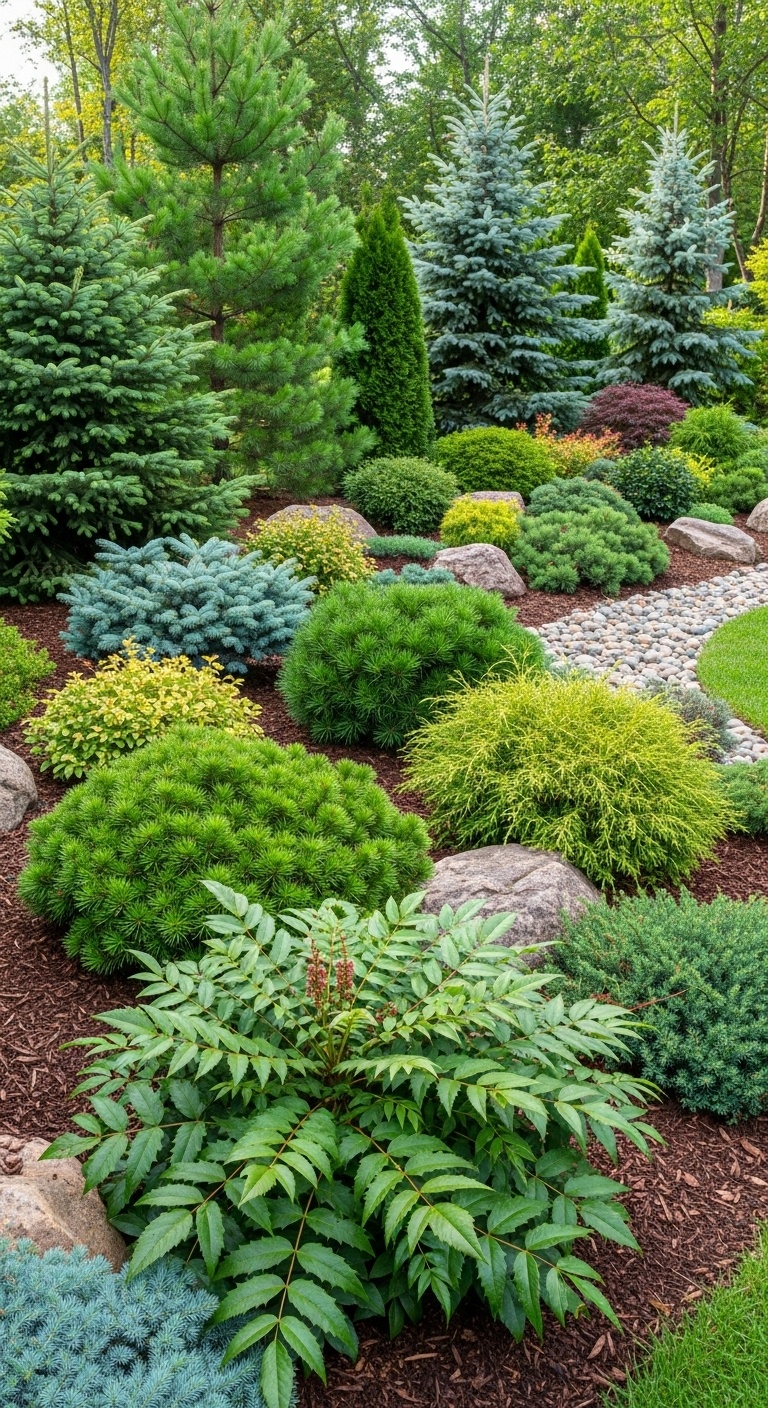
Surprising Fact: Mixing broadleaf and needle evergreens adds way more texture than a bunch of flowers ever could.
Put taller needle evergreens like arborvitae or spruce in back for height and year-round shape.
Plant broadleaf evergreens like boxwood or holly up front to soften things and add shine.
Think in layers—background, middle, and front.
That gives your yard depth and keeps it interesting when flowers are gone.
Mix up leaf shapes and sizes to show off each plant.
Repeat a few types to keep things flowing and make it look intentional.
Expert Tip From MrPlanter: Place taller evergreens so they don’t block your view, and repeat a shorter broadleaf every 8–10 feet for rhythm. Prune lightly in spring to keep lines clean.
10. Use creeping Junipers as groundcovers to prevent erosion
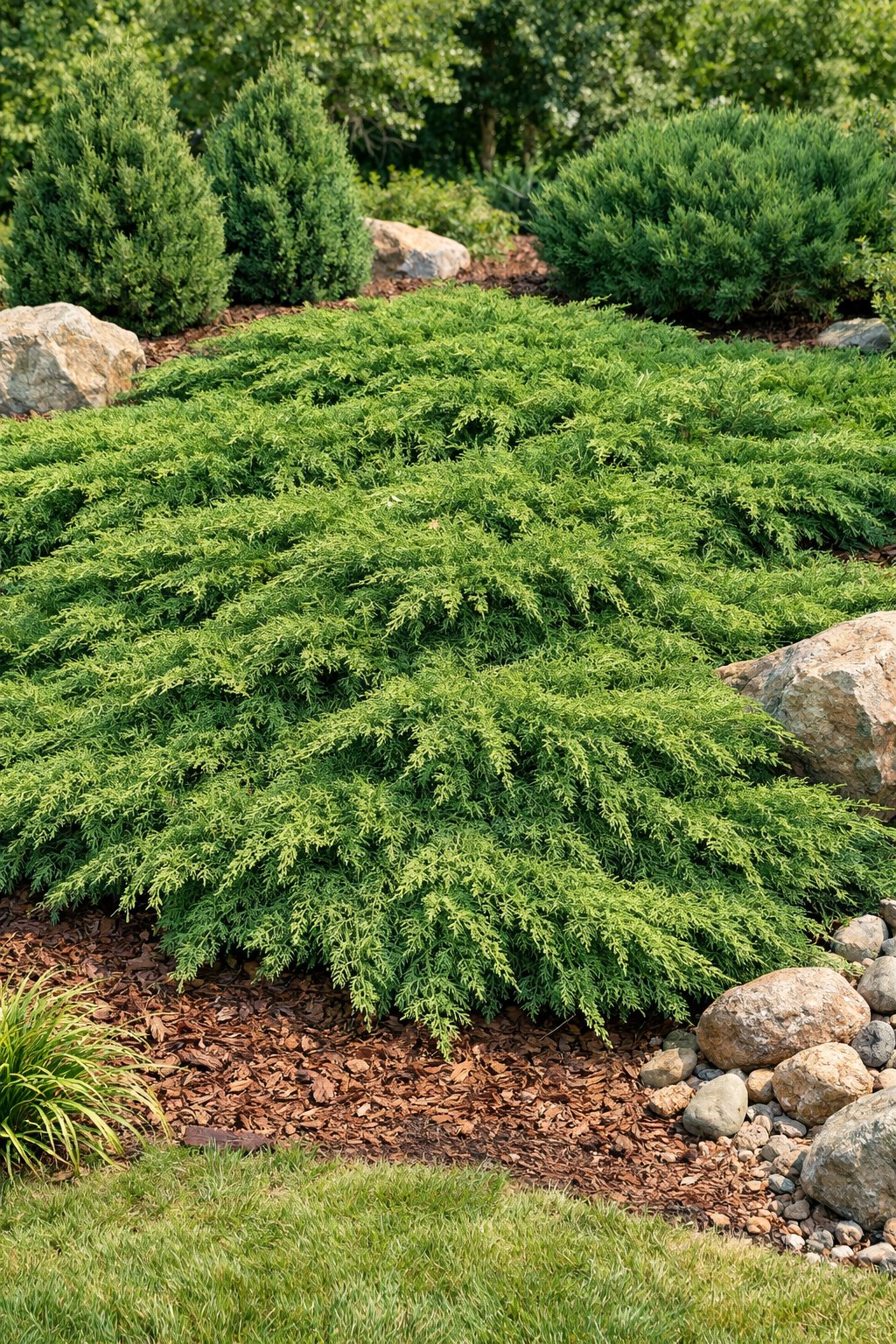
Let’s be real: slopes can turn into mudslides after a big rain, and nobody likes that.
Creeping junipers spread out, holding soil with their roots and keeping your slope tidy all year.
They thrive in dry, rocky areas where grass just gives up.
Plant them in groups for a living mat that slows water and traps dirt.
Pick varieties that match your sun and soil, and space them to fill in fast.
Mulch lightly at first to help them get started, then let the junipers do the heavy lifting.
Expert Tip From MrPlanter: Choose a hardy variety for your area, and water regularly until they’re established. Once they’re grown, junipers need almost no care and will keep your soil where it belongs.
11. Add interest with needlepoint Cypress clusters
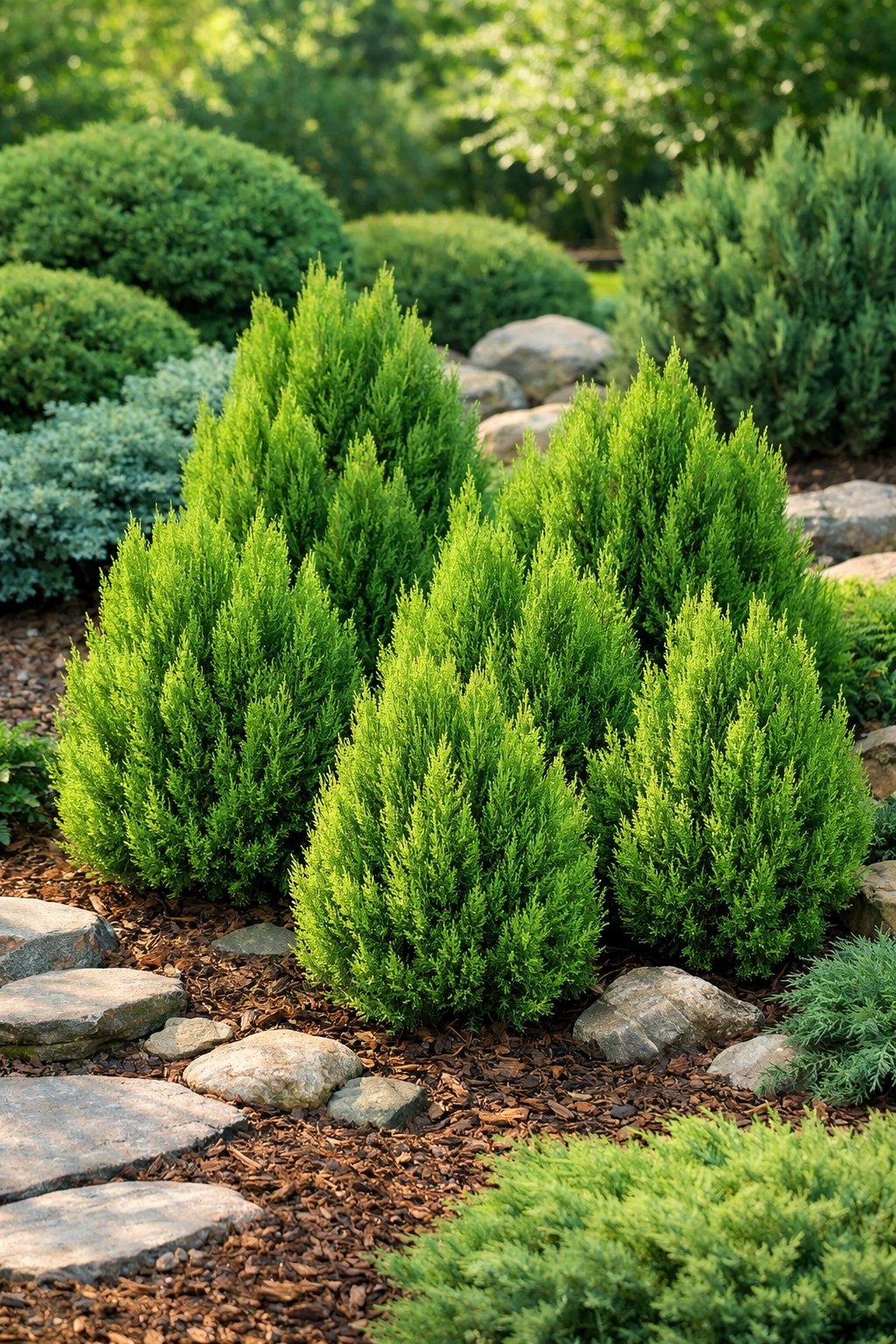
A few needlepoint cypress can totally change your yard’s vibe, no sweat.
Plant them in bunches for height and a slim, elegant look.
Mix up the sizes—put taller ones in back and shorter ones up front for easy layering.
Let a few spill over walkways for a softer, more lived-in feel.
Cypress works as an accent, a screen, or a way to break up long beds.
They stay green all year, so your yard keeps its shape even in winter.
Expert Tip From MrPlanter: “Space clusters so air can move between trunks to cut down on disease. Prune lightly each year to keep them tidy and graceful.”
12. Use Dwarf Mugo Pine for rock garden accents
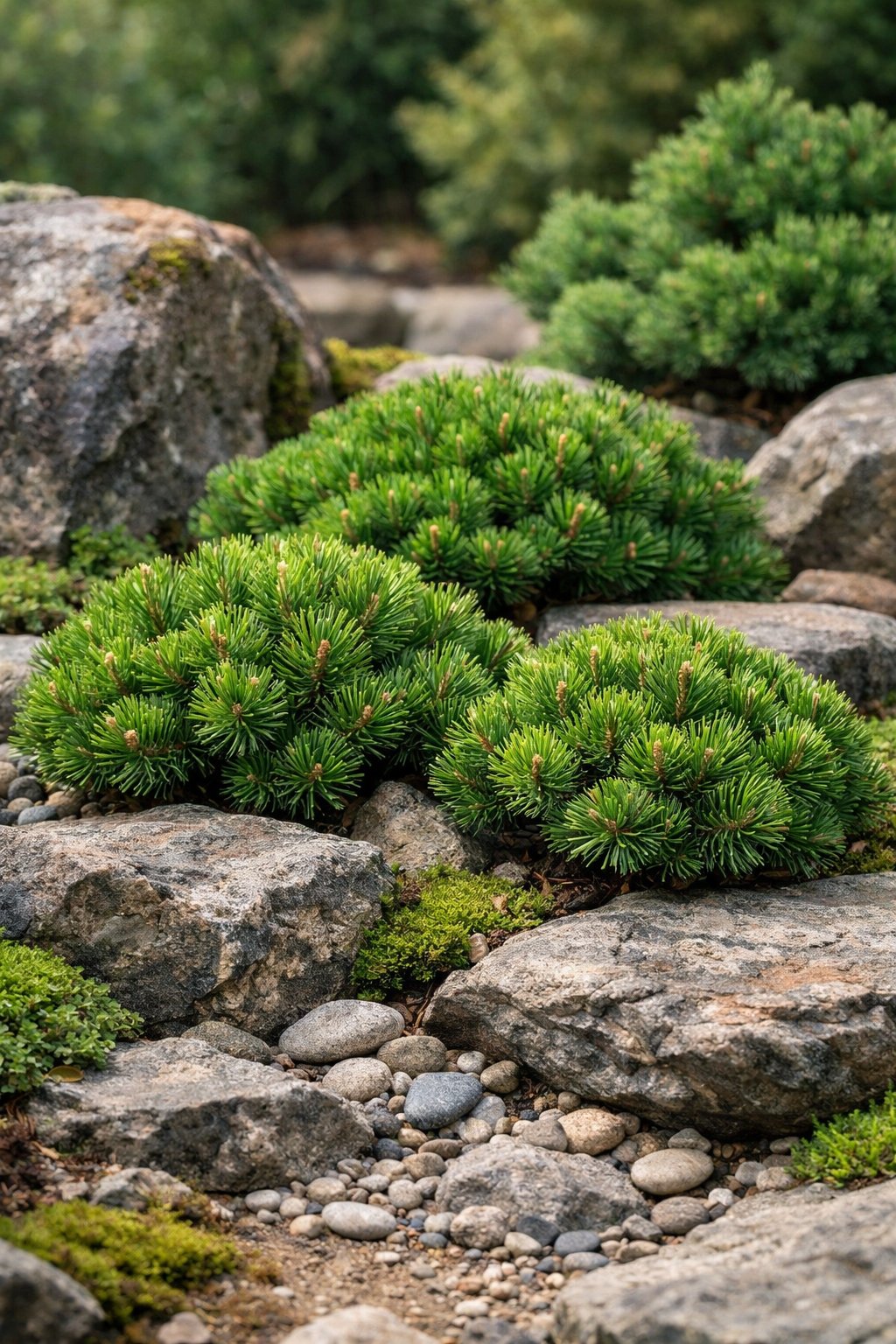
Here’s a cool one: dwarf mugo pine grows slow and stays neat, so it won’t take over your rock garden.
Tuck these little evergreens among stones for year-round green and structure.
They add texture without hogging space, and they look great with groundcover or gravel.
Plant them in well-drained soil where they get about six hours of sun.
Their rugged style fits alpine gardens and helps hold soil on slopes.
Space them 3–5 feet apart for a natural clump, or use singles as focal points.
Prune just to shape, and water until they’re settled in.
Expert Tip From MrPlanter: Plant mugo pine slightly above the rocks for better drainage. Give new plants regular water for the first year so roots can get comfy.
13. Go vertical with columnar Italian Cypress along fences
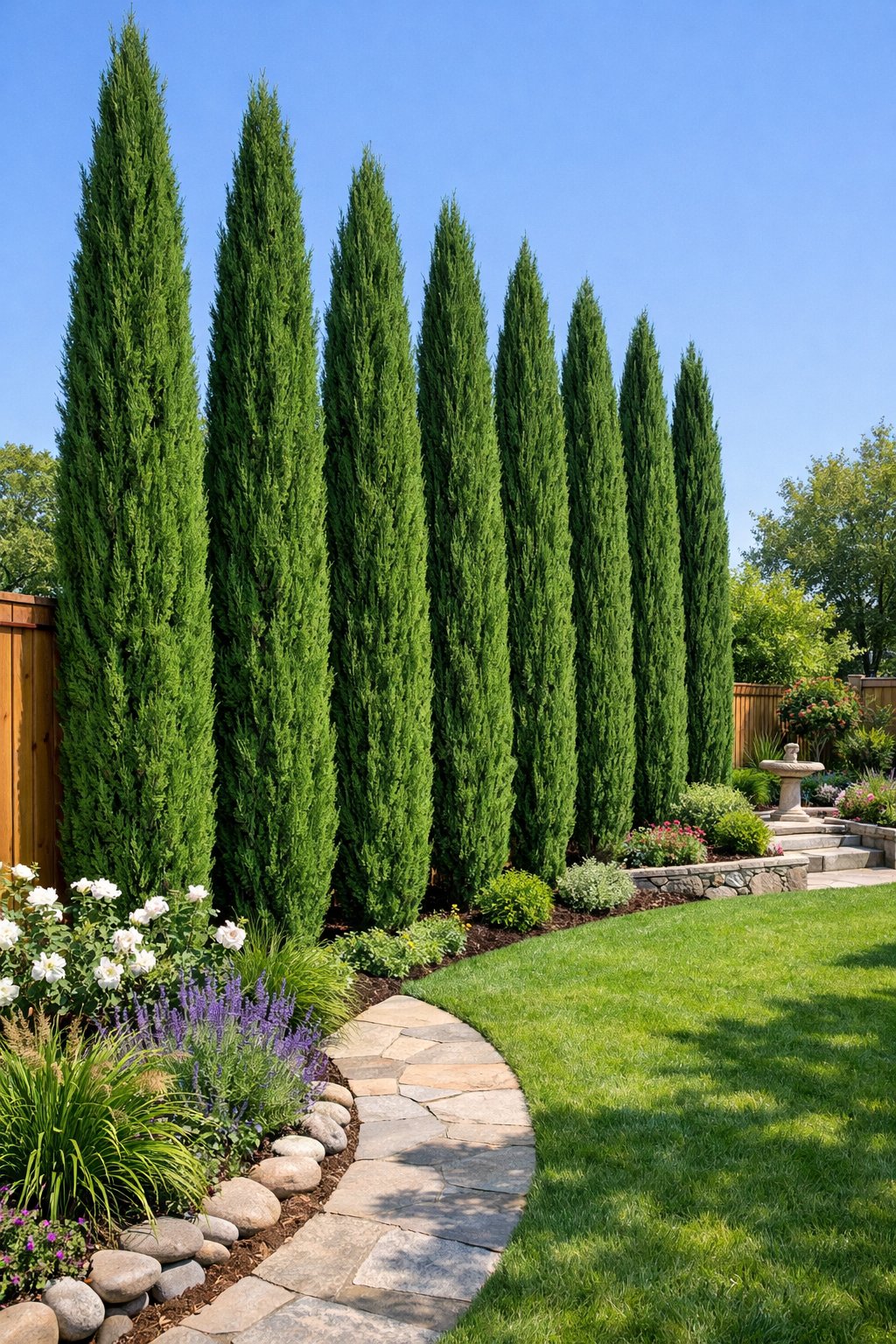
Here’s a fun twist: You don’t need a giant yard to make a bold statement.
When you plant Italian cypress along a fence, you get these tall, skinny evergreens that look super classy but don’t hog your space.
They give you year-round green and those crisp, upright lines that just make everything feel more put-together. I love how they frame a front door or even a cozy backyard corner.
These trees love warm, sunny spots and soil that drains well—so skip any soggy areas.
Give each one some breathing room, usually a few feet apart, depending on which type you pick.
Water young trees well at first, but once they settle in, you can back off. That keeps them neat and healthy, which is what we all want, right?
Expert Tip From MrPlanter: “Go for dwarf or skinny varieties if you’re tight on space, and toss a little extra mulch around the base. Keep the pruning light—just enough to keep them looking sharp.”
14. Combine evergreen ferns with shrubs for woodland vibes
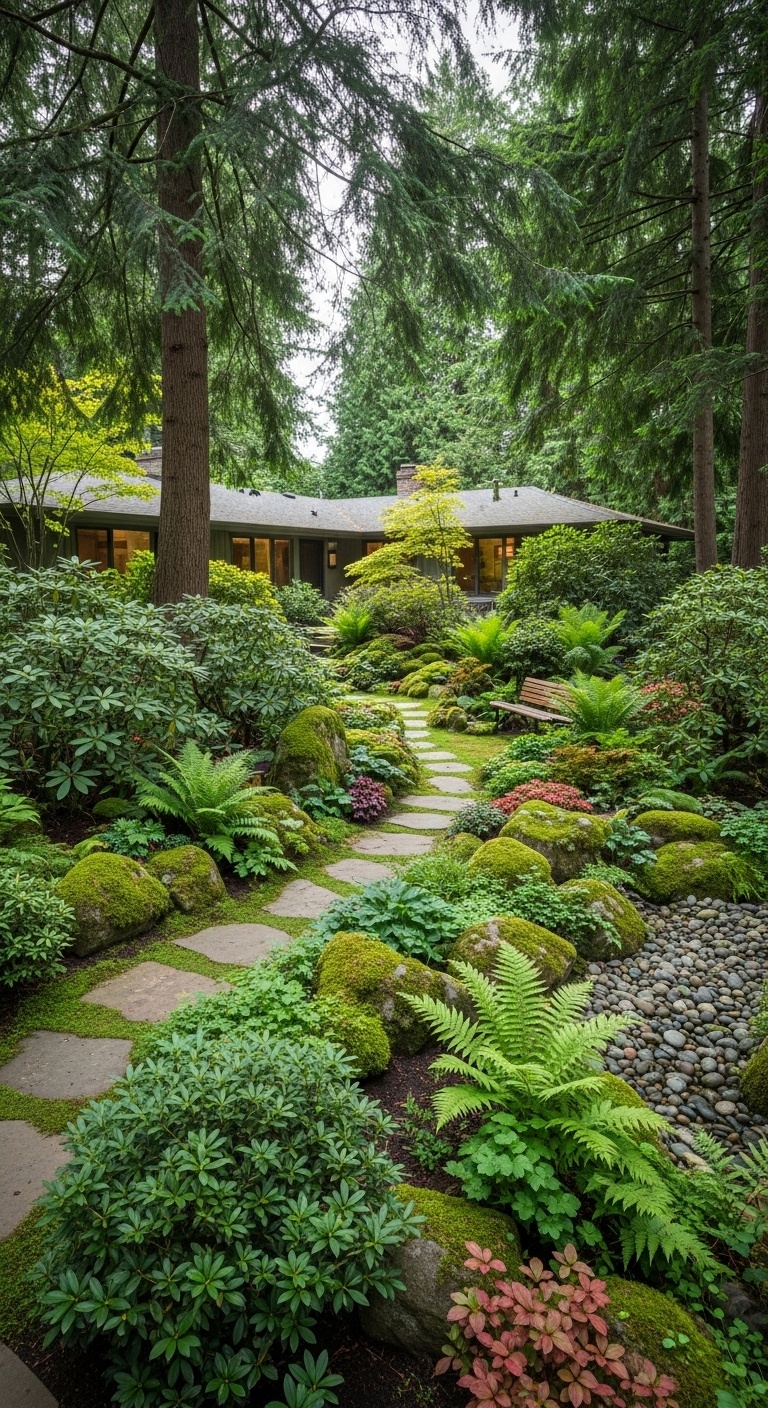
Let’s clear this up: Ferns aren’t just for wild forests.
You can totally grow them in your own yard and get that chill, woodland vibe.
Pair evergreen ferns with shade-loving shrubs like boxwood or small rhododendrons.
The shrubs give you some structure, while ferns add that feathery, relaxed look.
Mix up the heights and shapes so things don’t look flat or boring.
Put the taller stuff in back, ferns in front, and maybe sneak in a few perennials for a pop of color.
Expert Tip From MrPlanter: Plant ferns on the north or east side of shrubs so they catch gentle, dappled light. Give them a deep drink once a week—roots will thank you with lush, happy leaves.
15. Add seasonal berries with Winterberry holly
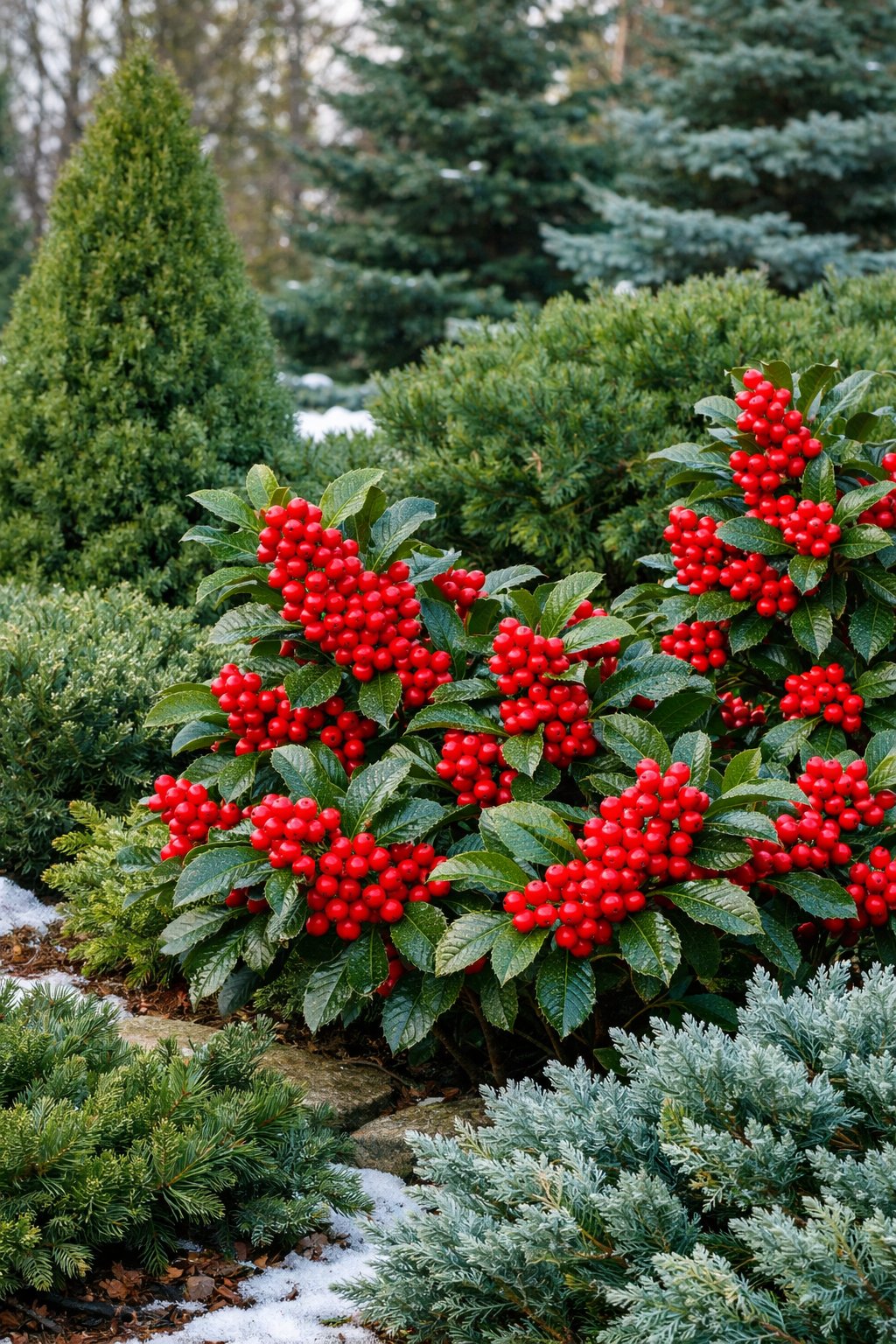
Here’s a surprise: Your winter garden can actually look festive all on its own.
Winterberry holly loses its leaves but keeps those bright red berries, so you get a pop of color even when everything else looks sleepy.
Plant a male and a female bush near each other so you get loads of berries.
They usually grow about 6 to 8 feet tall, so give them some elbow room and plant them next to evergreens for a cool contrast.
You can snip off some berry-laden branches for vases, or just let the birds have a snack.
Either way, you’ll get color, wildlife, and a super easy focal point.
Expert Tip From MrPlanter: Plant one male for every 6–10 females to get the most berries. Give them a light trim in late winter to keep branches looking full and tidy.
16. Use native evergreen shrubs for low-maintenance beauty
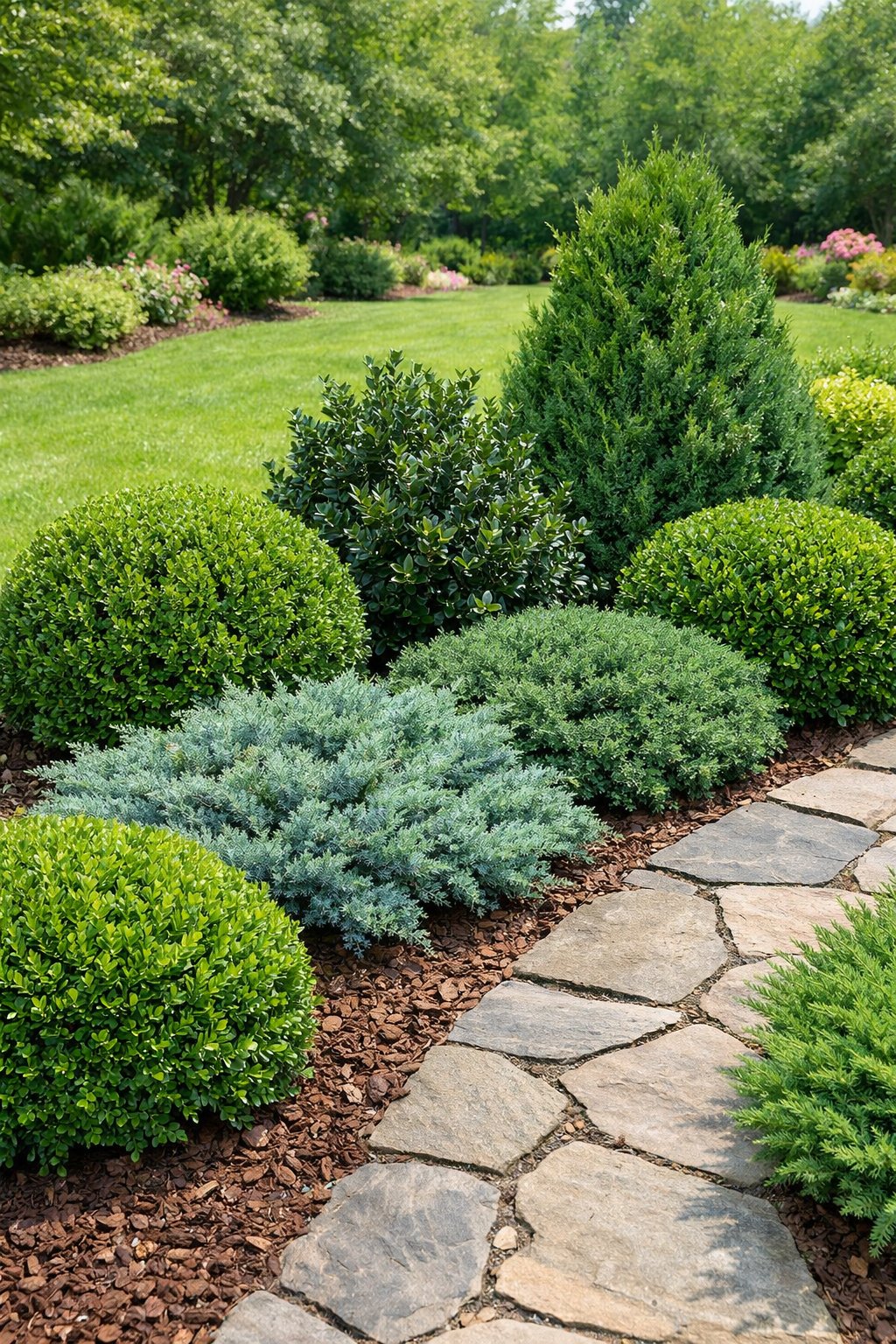
Ever feel like you’re always fussing over plants that still end up looking rough by August?
Native evergreen shrubs are a lifesaver—they stay good-looking with way less work.
Pick ones that match your zone and the spot you’ve got in mind.
Some stay small for borders, while others grow big enough to block out nosy neighbors.
A lot of them even have berries or flowers that help birds and pollinators.
Get them off to a good start in year one, and they’ll reward you with years of easy beauty.
Mix up the shapes and heights to keep things interesting, even in the middle of winter.
Expert Tip From MrPlanter: “Choose natives that like your soil and sun. Give them plenty of water their first season, and after that, they’re a breeze to care for.”
17. Plant Rhododendron ‘P.J.M.’ for cold-hardy foliage color
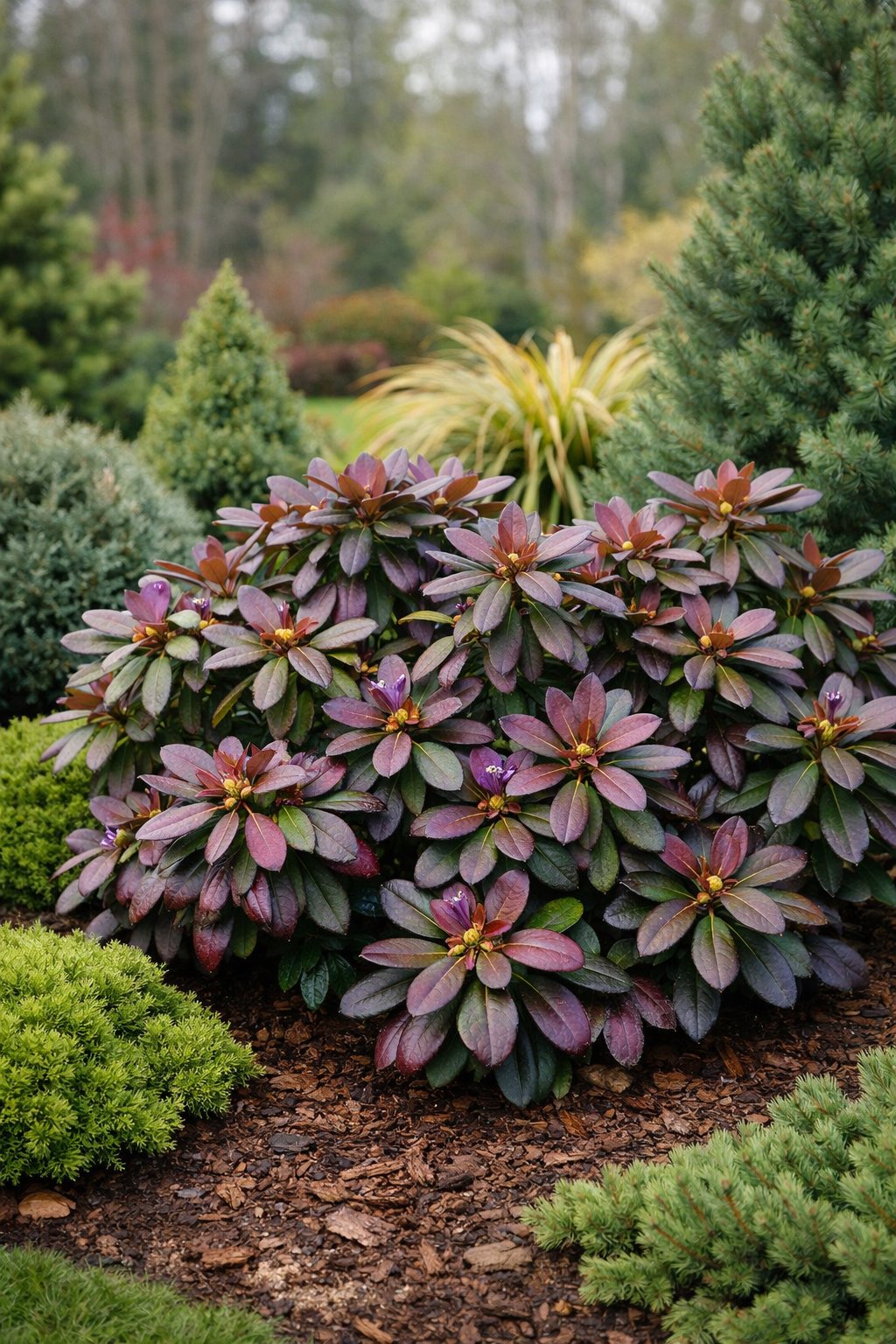
Here’s something cool: P.J.M. rhododendrons can jazz up your winter beds with burgundy and purple leaves.
They’re evergreen, so they keep their glossy leaves all year—then turn a gorgeous mahogany when it gets chilly.
In spring, you’ll get a burst of lavender-pink flowers that really shine in partial shade.
These shrubs stay pretty compact, so they work great in borders, big pots, or right up by the house.
Plant them in well-drained, acidic soil and give them some morning sun or dappled shade.
Mulch helps keep the roots cool and moist, and you only need to trim them a little after they bloom.
Expert Tip From MrPlanter: “If your yard gets soggy, pick a slightly raised spot. Water regularly for the first two summers so the roots can settle in strong.”
18. Layer with low, spreading Bearberry for winter ground cover
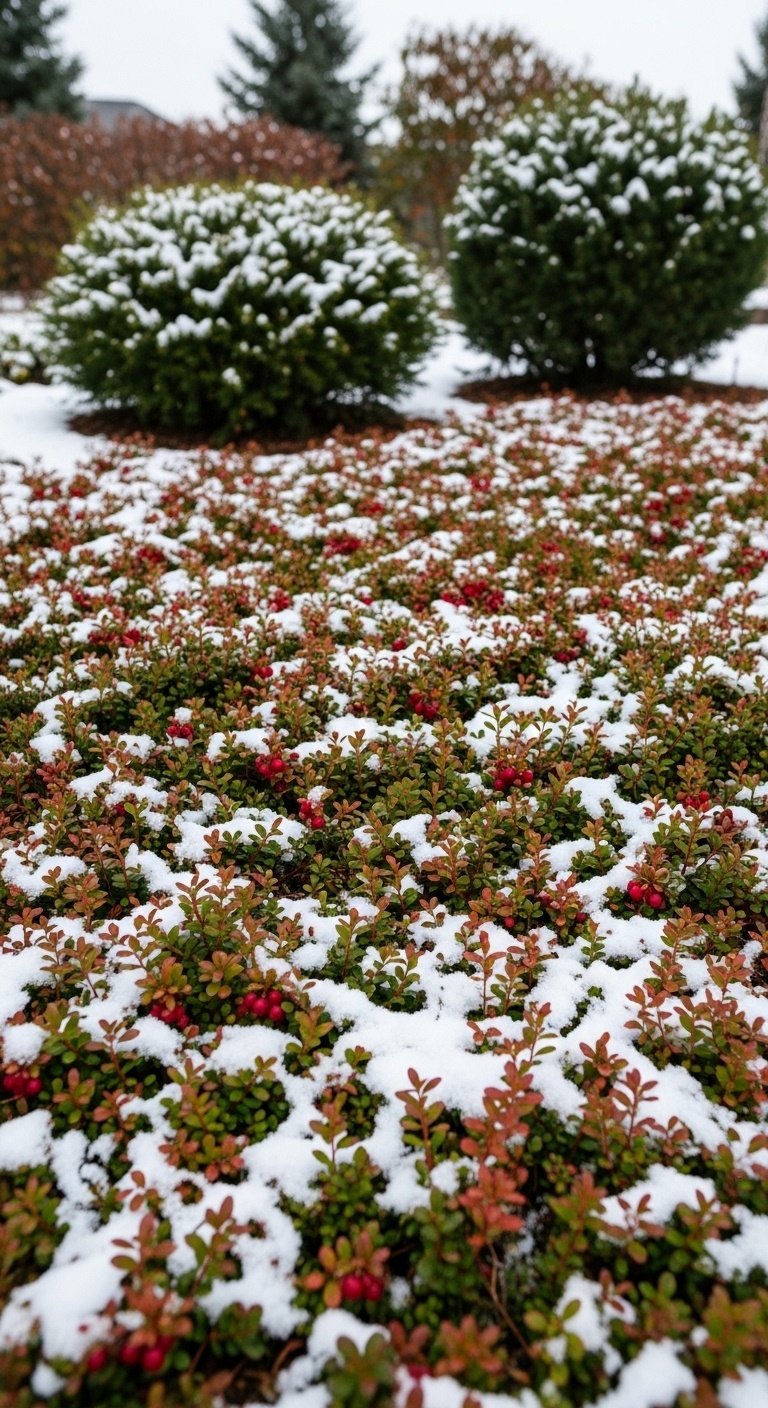
Let’s be honest—winter doesn’t have to turn your yard into a snooze fest. Bearberry keeps its green leaves even when most plants go all brown and sleepy, so your garden actually looks alive through the cold months.
I love how bearberry just sprawls out low and wide. It hugs the ground, keeps soil from sliding down hills, and honestly, it doesn’t get out of hand like some ground covers do.
You’ll also get tiny spring flowers and cute little red berries in the fall. That pop of color? It’s a win for you and for the birds.
Put bearberry in sunny, well-drained spots. It grows slow and steady, so don’t expect a jungle overnight.
Expert Tip From MrPlanter: Try planting bearberry on a little mound to help with drainage. It takes its sweet time to get going, but once it’s happy, you barely have to fuss over it.