You want a garden fence that feels like part of your story, not just a line in the dirt.
I’ve rounded up 16 simple, charming ways to frame your cottage garden—so your space looks lived-in, cozy, and brimming with personality.
Pick a style that matches your vibe—classic, rustic, green, or a playful mashup. Suddenly, your plants and paths start to pop.
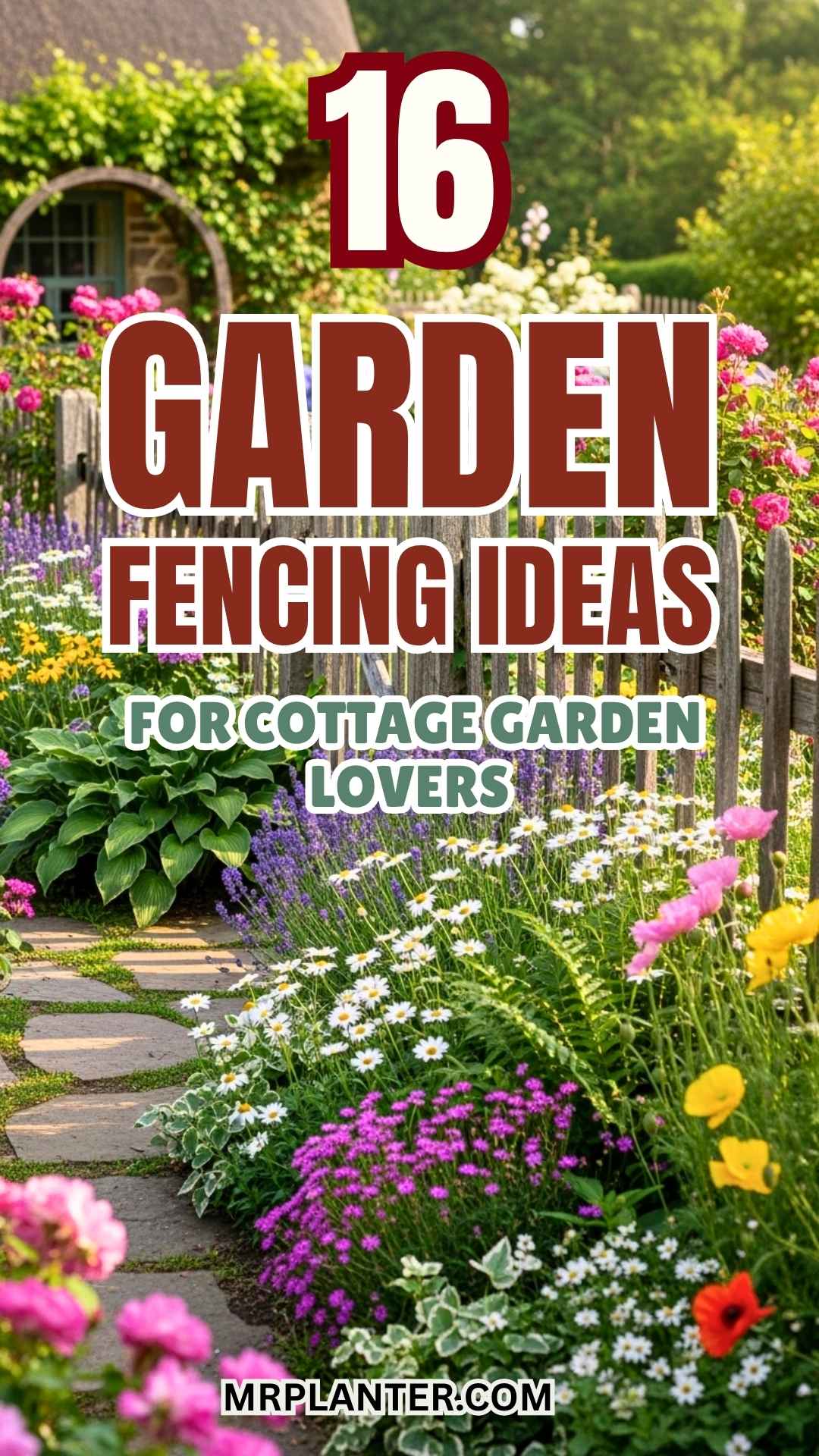
You’ll find ideas here for small yards, tight budgets, and creative DIY projects. Match fences to climbing roses, stone paths, or those secret nooks you love.
1. Classic White Picket Fence for that timeless storybook vibe
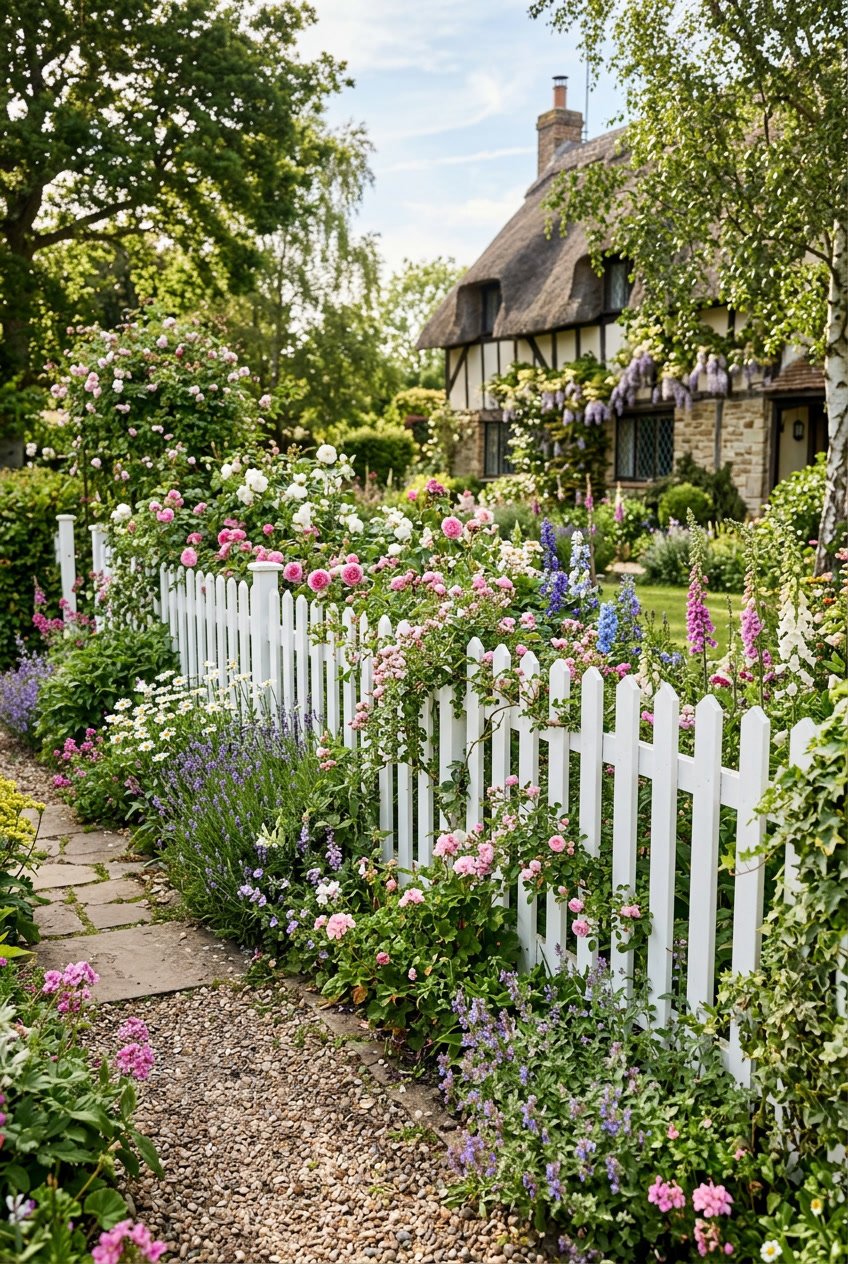
Here’s a fun fact: a white picket fence makes your garden look cozier almost instantly. It’s that storybook charm—warm, inviting, and never out of style.
This fence frames your flower beds and paths, making your plants stand out. It’s neat, simple, and works with both classic roses and wildflowers.
Go for painted wood if you want that real-deal look, or grab vinyl if you’d rather skip the upkeep. Pop in a little gate and let climbing roses do their thing for a sweet, welcoming entrance.
Expert Tip From MrPlanter: “Pick a fence height that keeps views open but marks your space. Paint touch-ups every few years keep the look fresh without huge effort.”
2. Rustic Weathered Wood Fence that whispers ‘I’ve seen seasons’
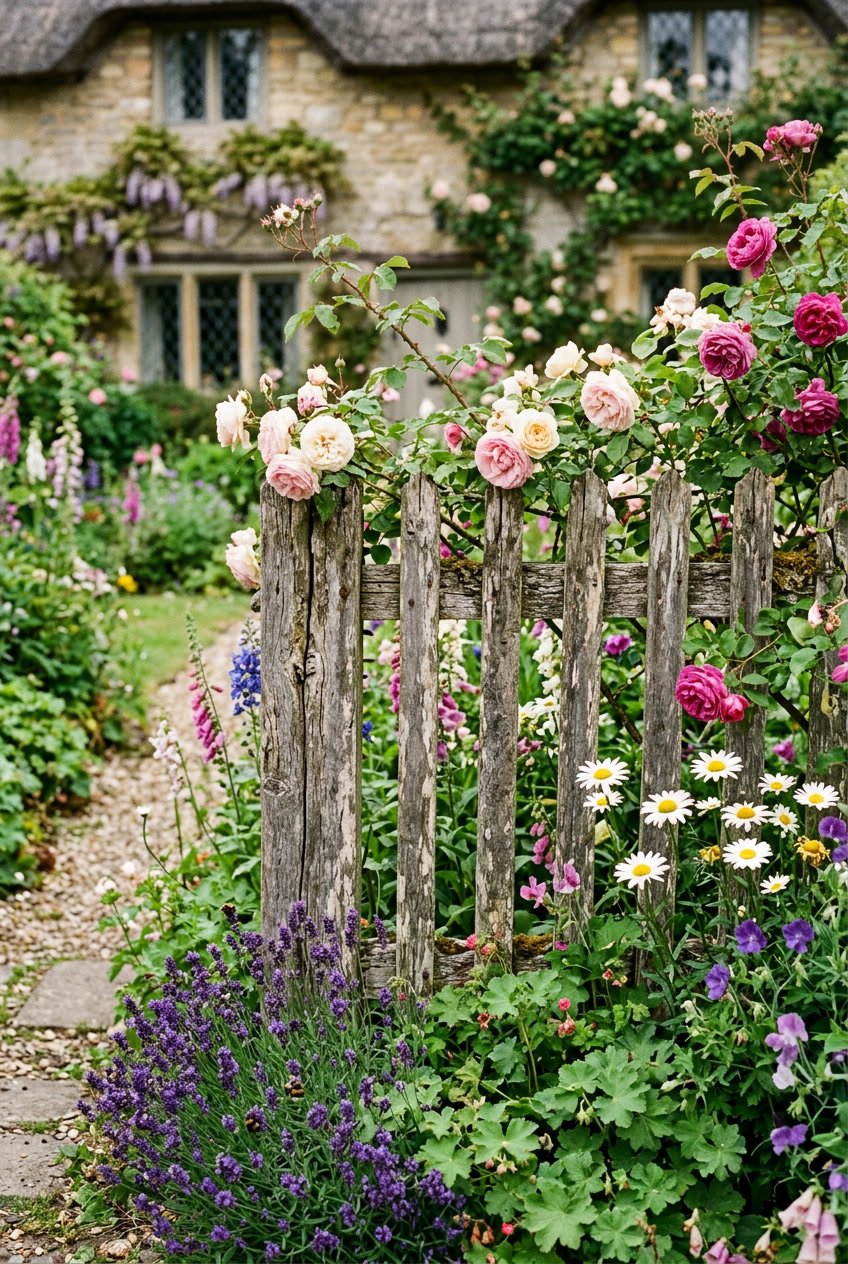
Let’s be honest—an old wood fence has stories to tell.
Old boards, knots, and dents? Let them shine. Weathered wood brings soft gray tones that make your flowers pop, and you don’t have to fuss over every scratch.
Keep the build simple and a little uneven for that wonky, lived-in charm. Grab reclaimed planks, or let new wood age right in your yard.
Plant climbing roses or clematis close to the posts. They’ll soften the edges and make your fence feel like part of the garden, not just a line in the grass.
Expert Tip From MrPlanter: “Sand rough spots and apply a clear, breathable sealant to slow decay without hiding the patina. Replace any rotten boards promptly to keep strength and charm.”
3. Woven Willow Fencing blending perfectly with wildflowers
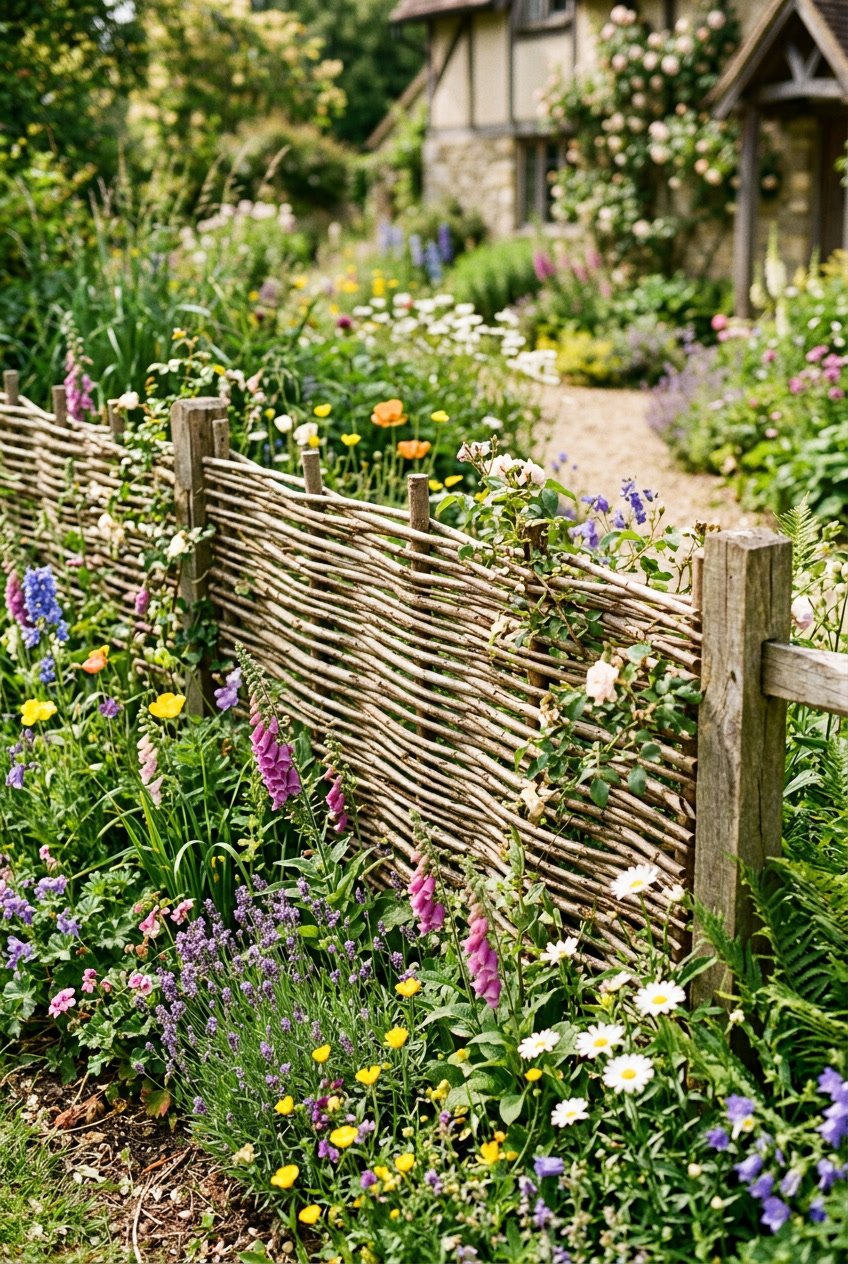
Willow fences are both strong and soft-looking, so they keep their shape without hogging the spotlight. I love how the woven texture fits right in with wildflowers and tall grasses.
This fence lets air and light through, so your daisies, foxgloves, and grasses can breathe and sway. It also gives a neat edge to those wandering paths and cozy garden nooks.
Willow is eco-friendly and has that handmade feel. You can shape curves, gates, or even low pet enclosures without hauling out heavy tools.
Expert Tip From MrPlanter: “Choose willow panels that match your garden height and leave small gaps for pollinators. Replace a panel every few years to keep the look fresh and healthy.”
4. Natural Stone Wall Fence that doubles as garden art
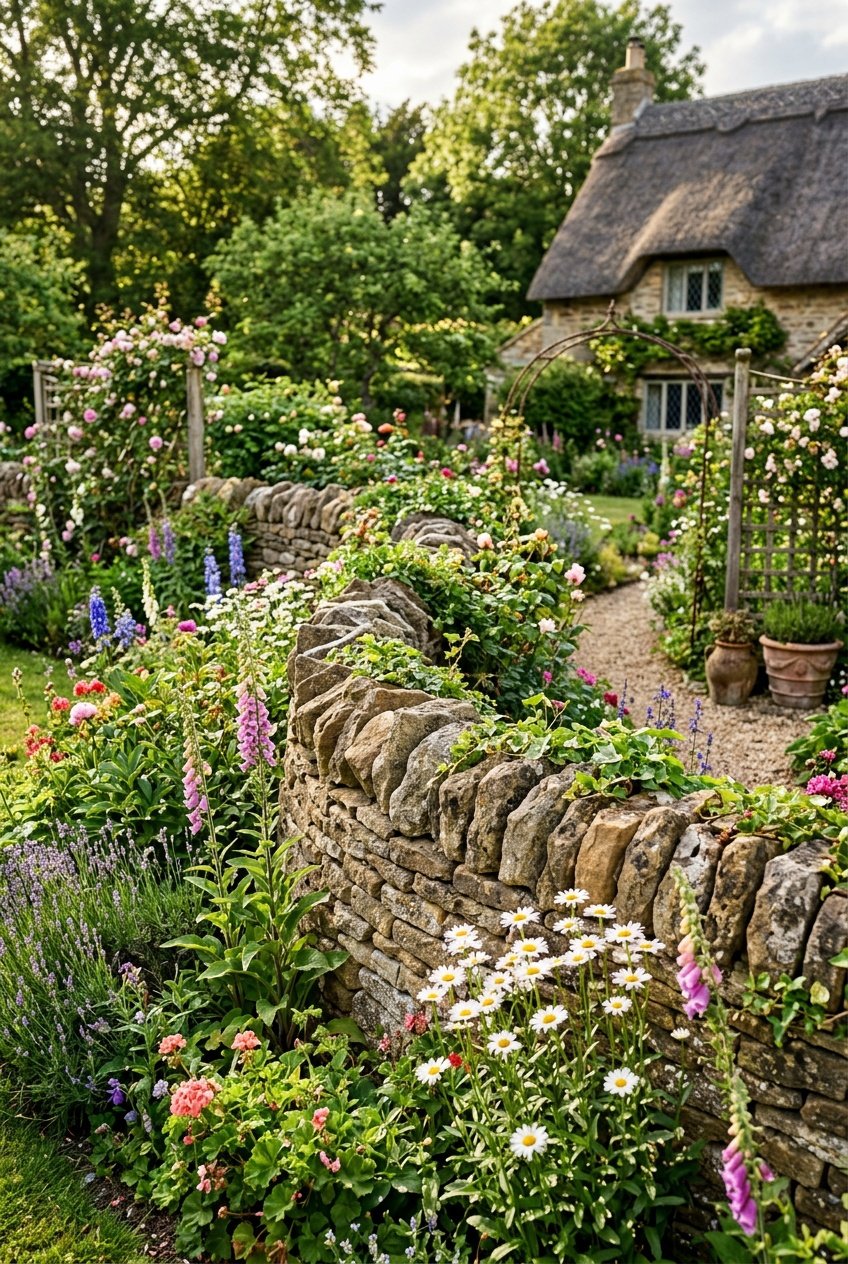
Stone fences don’t have to look stiff or gloomy. You can build a low stone wall that feels cozy and lived-in, then let it act as a frame for your plants.
A natural stone wall gives your cottage garden texture and a sense of age. Use mixed sizes and rough edges for that handmade look.
Tuck thyme, herbs, or succulents into the gaps so the wall grows with your garden. Let the wall curve around paths or beds to create little rooms.
Add a few flat stones as seats or perches for pots and lanterns. The wall can hold climbing roses or clematis to soften the stone with color.
Expert Tip From MrPlanter: “Choose local stone to match your soil and save money. Mortar the base securely, but leave upper joints loose so plants can root.“
5. Wrought Iron Fence with vintage gates for a touch of whimsy
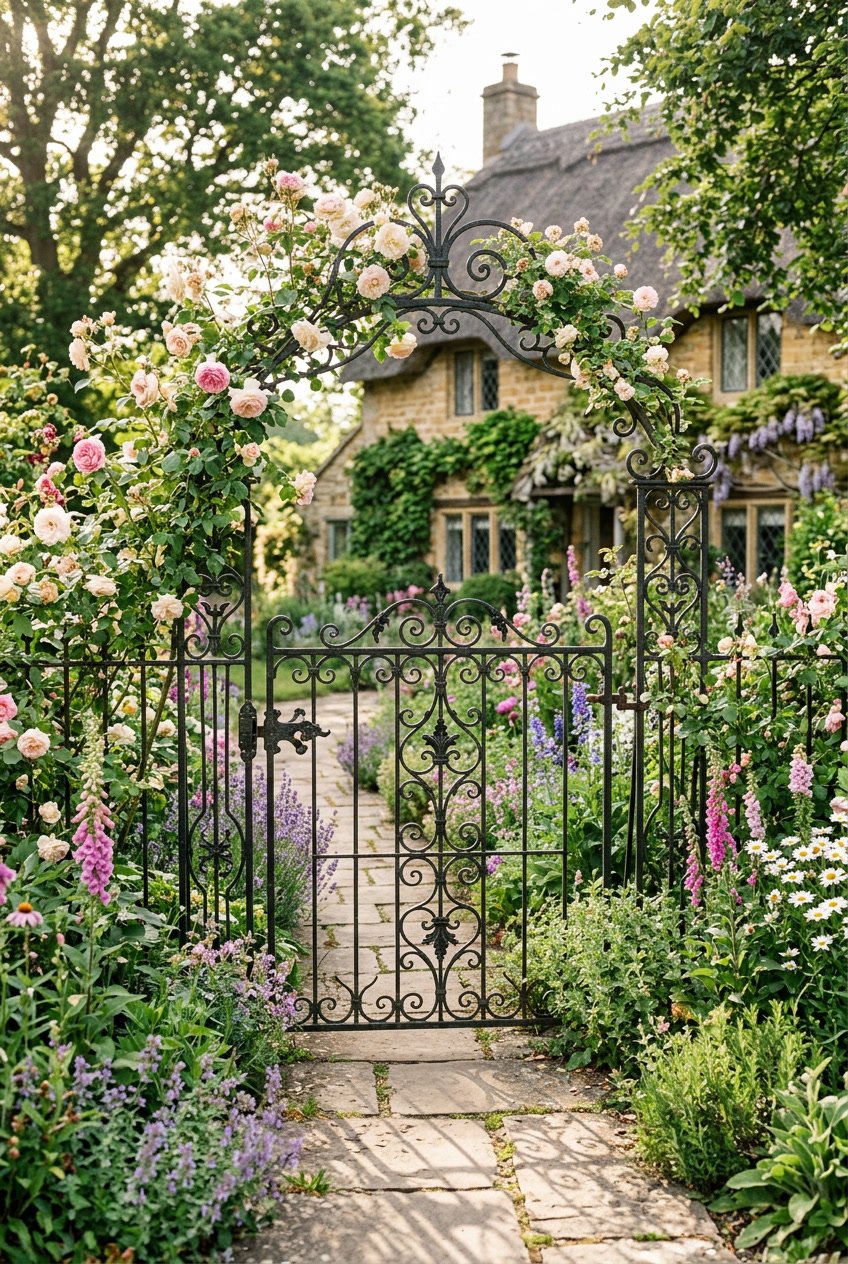
You don’t need a giant yard for a gate that steals the show. A wrought iron fence with a vintage gate gives your cottage garden an instant focal point.
The metalwork adds delicate lines that play off your soft flowers. Climbing roses and vines show off without hiding the gate’s detail.
Choose a slightly rusted or patinaed finish for charm, or paint it soft white for a cottage look. Add a latch that squeaks just enough to make you smile, and your path feels like it leads somewhere magical.
Mix antique pieces with new panels for personality and to save a few bucks. You’re building a scene, not just a fence.
Expert Tip From MrPlanter: “Look for local salvage yards or online marketplaces to find unique vintage gates at lower prices. Mount a simple hinge and you can have a charming entrance in an afternoon.”
6. Trellis Fence covered in climbing roses or sweet peas
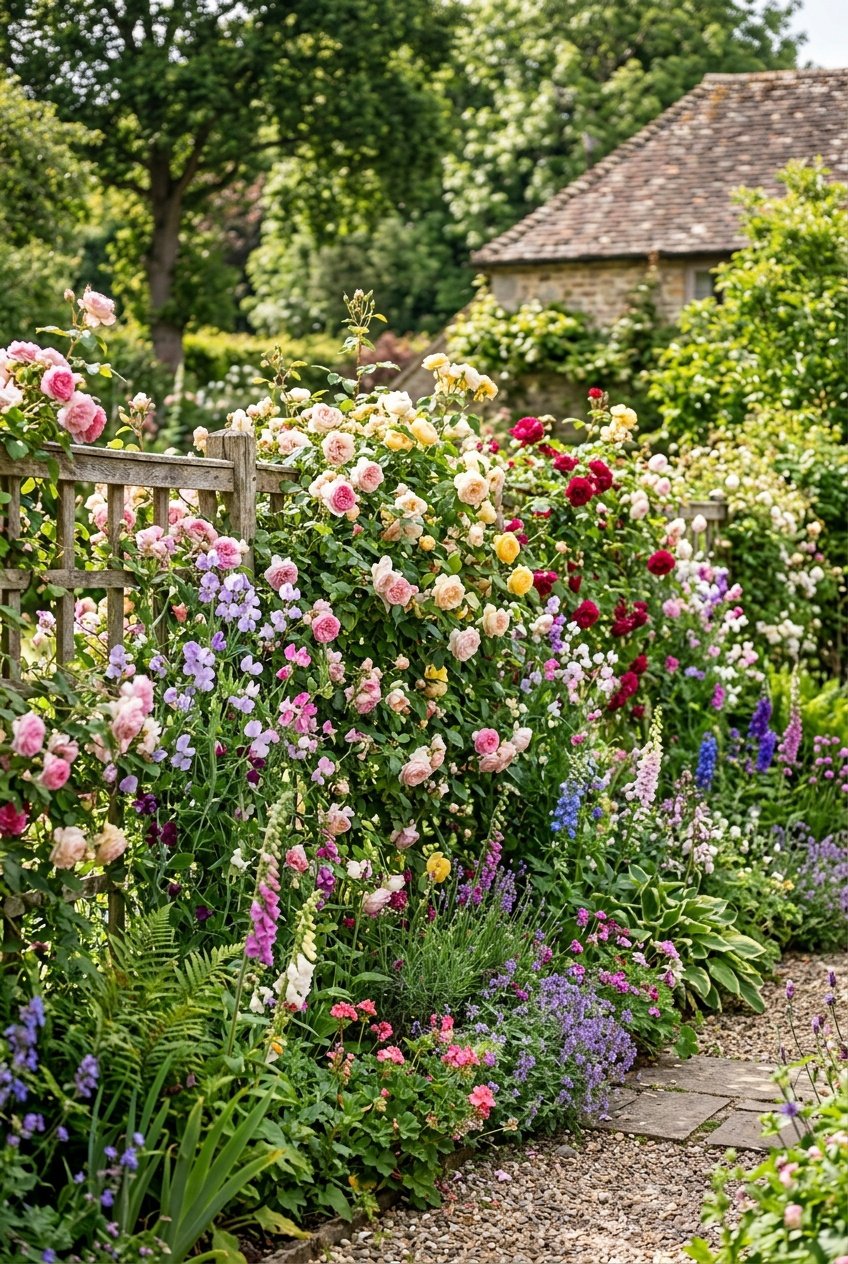
Climbing roses and sweet peas don’t have to take over the place if you give them a little guidance. Train them up a trellis fence and you get a soft, scented wall that still feels open.
Pick a sturdy trellis or lattice that fits your cottage style. Wooden frames look classic, and wire mesh works well for sweet peas.
Plant roses or sweet peas at the base and tie new shoots loosely each season. Prune roses once a year, and pinch sweet peas to keep blooms coming and stems tidy.
Expert Tip From MrPlanter: “Plant roses about 2 feet from the fence and use soft ties to train new canes. For sweet peas, sow at the base in early spring and give them a light feed when flowering starts.”
7. Living Green Wall Fence using ivy or creeping fig
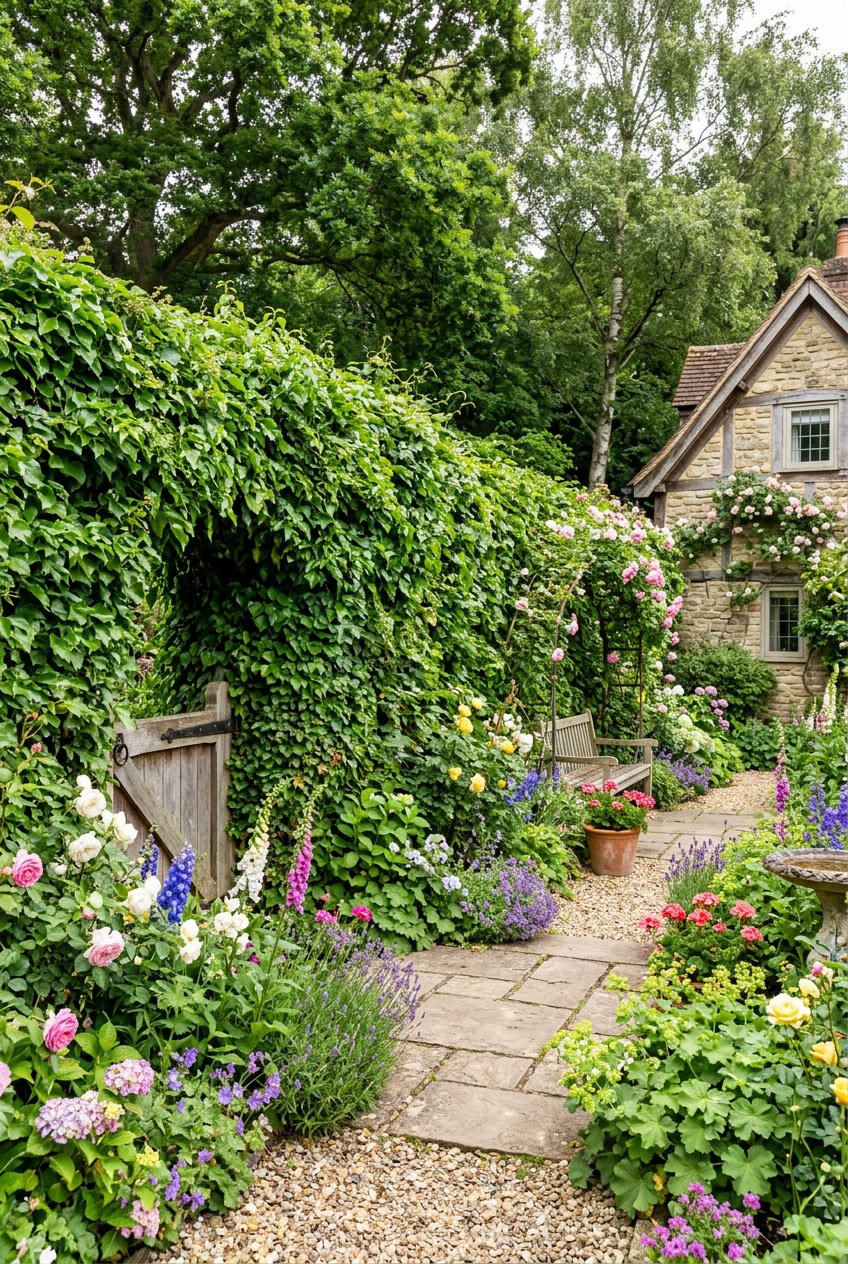
A plain fence can turn into a wall of living art in just a few seasons. Plant ivy or creeping fig at the base and watch them climb, filling gaps and softening sharp lines.
Ivy grows fast and gives dense cover, while creeping fig clings to brick or wood with tiny roots. Both need regular water at first and a bit of pruning to keep things tidy.
Train new shoots with simple twine or a light trellis until they stick on their own. Trim once or twice a year to stop overgrowth and keep pathways clear.
Expert Tip From MrPlanter: “Plant young vines in moist soil and water deeply the first month. Trim lightly each year to shape the wall and protect nearby plants.”
8. Split Rail Fence for that laid-back country charm
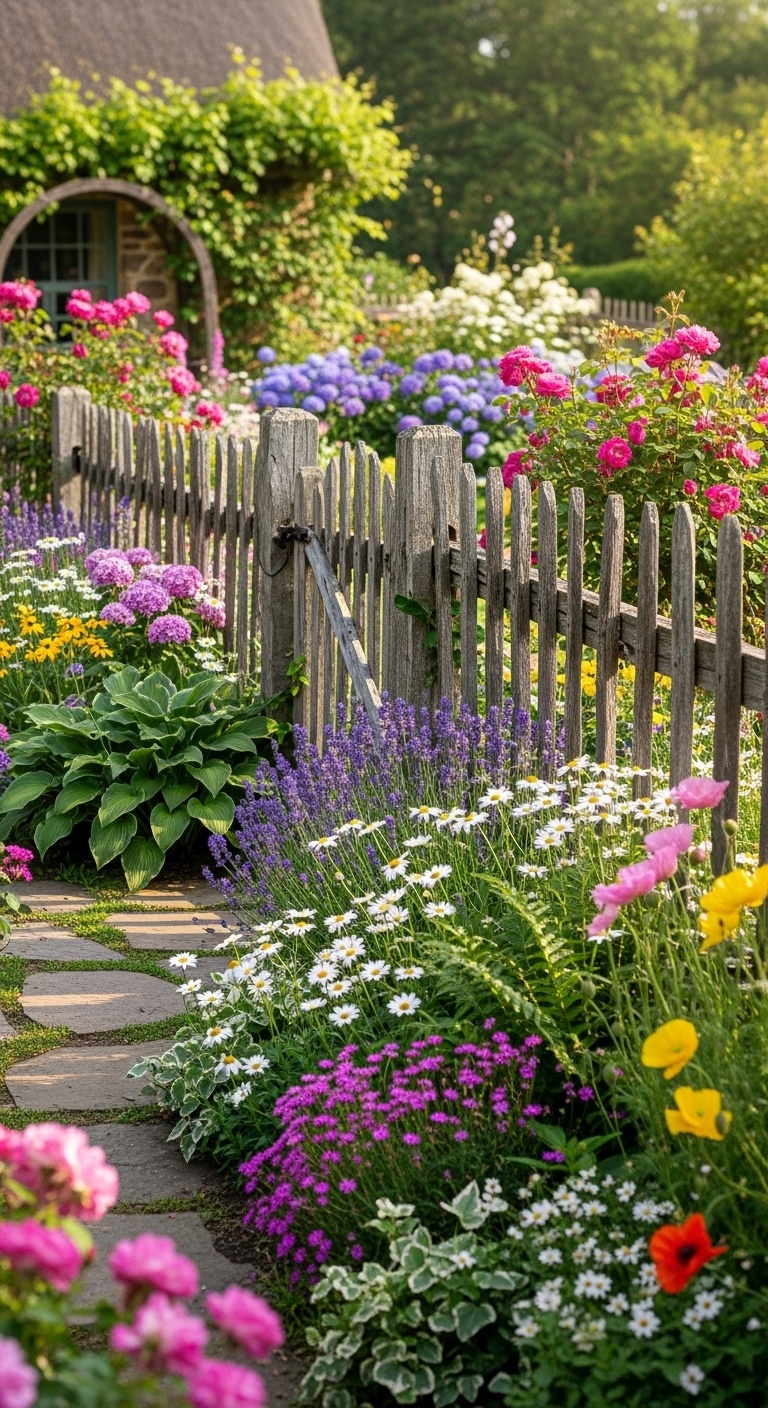
A fence doesn’t have to be fancy to look lovely. A split rail fence brings a relaxed, welcoming feel without blocking your view.
Use simple wood rails to frame garden beds and pathways. It’s low-cost and quick to set up, so you won’t be stuck with a weekend-long project.
Plant wildflowers, climbing roses, or lavender along the fence. They soften the wood and invite bees and butterflies to visit.
Pick treated timber or cedar for longer life, or go with vinyl if you want zero fuss. Spacing the rails lets small critters through while still marking your space.
Expert Tip From MrPlanter: “Place pollinator-friendly plants near the rails to boost blooms and wildlife. Stain or seal the wood every few years to keep it looking fresh.”
9. Lattice Fence inviting vines and secret garden feels
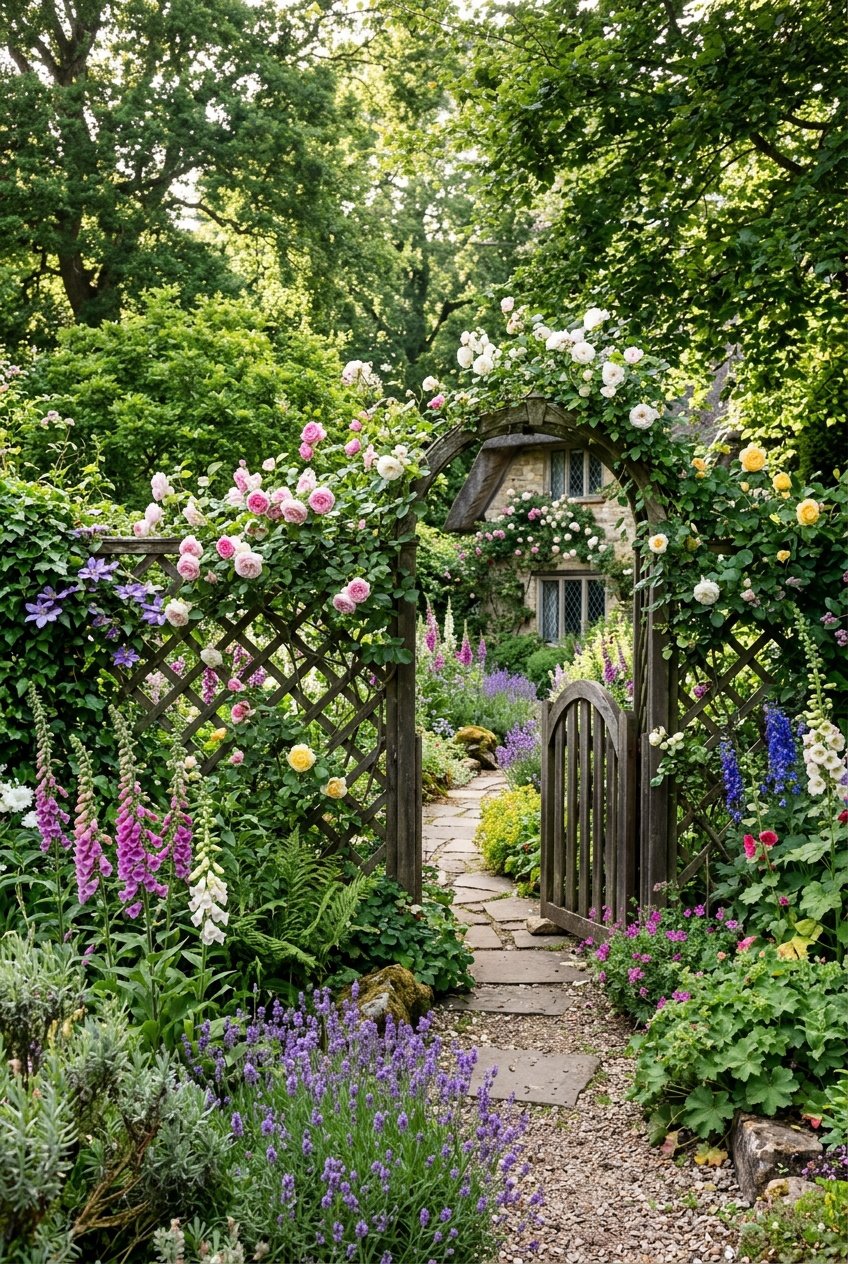
Who says a fence has to feel like a wall? Make it a soft, living frame that invites you in.
A lattice fence gives your cottage garden instant charm. It’s light, airy, and perfect for climbing roses, clematis, or sweet peas that weave through the squares.
Put the lattice near paths or a gate to create little glimpses of green. Those peek-a-boo views make your yard feel bigger and more magical.
Keep the wood painted or stained to fit your style, and give your plants space to breathe. You’ll get privacy, support for vines, and a cozy, secret-garden vibe—no heavy construction needed.
Expert Tip From MrPlanter: Plant vines on opposite sides of the lattice to create layered color and scent. Prune gently each year to keep the growth healthy and the openings pretty.
10. Cobblestone Fence with moss for old-world cottage magic
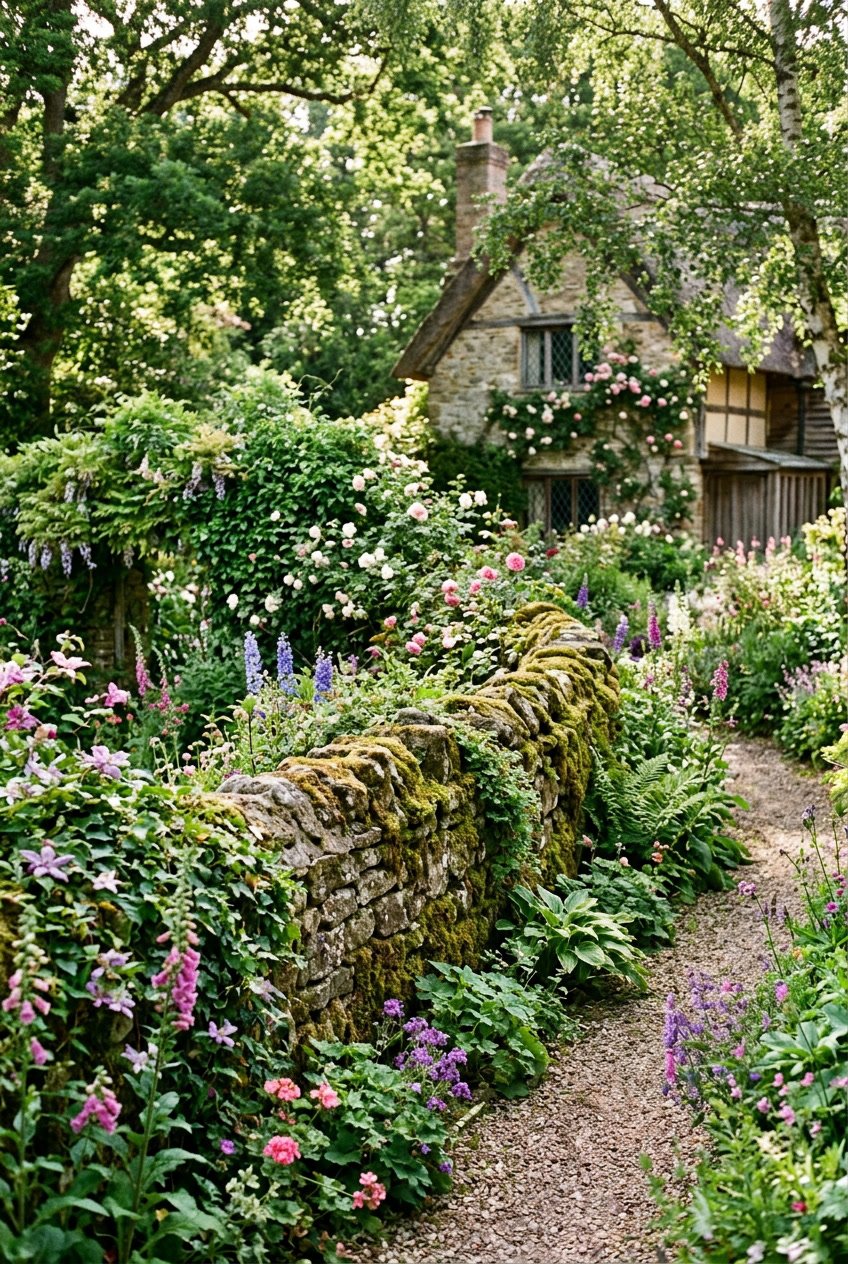
Did you know moss can make a new fence look centuries old in just one season? Lay small cobblestones into mortar or stack them dry for a looser look—either way, you get a solid, storybook edge to your garden.
Let the moss fill gaps and soften edges so the fence feels like it’s always been there. Plant shade-loving groundcovers nearby and keep the stones damp at first to help spores take hold.
Use different stone sizes and a slightly uneven top line for that natural, charming look. You’ll get a quiet, timeless border that invites you to slow down and touch the stones.
Expert Tip From MrPlanter: “Start with damp stones and add moss fragments pressed into cracks to help it establish. Water gently for a few weeks and avoid strong sun until it settles.“
11. Vertical Pallet Fence painted in pastel shades
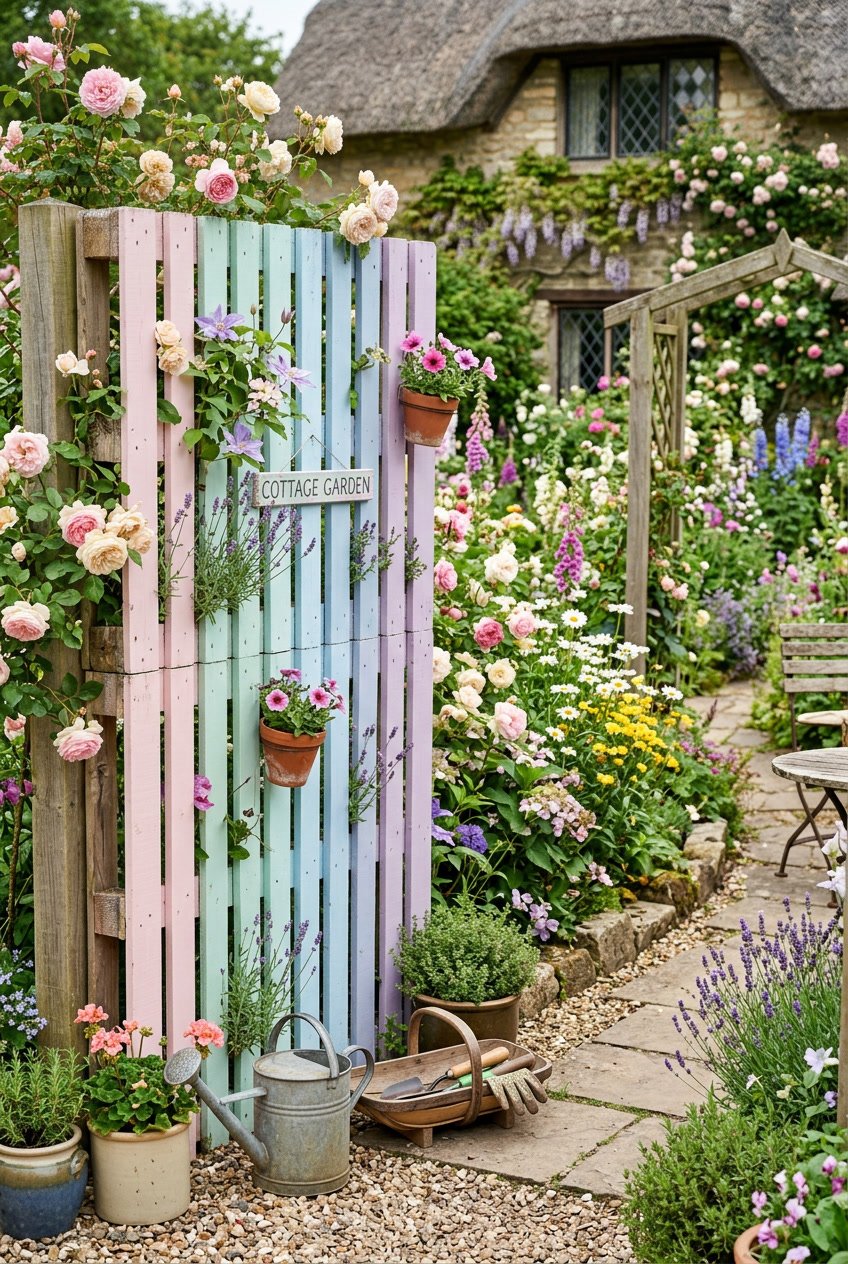
You don’t need fancy materials to make a fence that feels magical. A vertical pallet fence painted in soft pastels brings your garden instant charm—and you won’t break the bank.
Stand pallets upright and line them up to form a privacy screen or a low boundary. Paint each pallet a different pastel—lavender, mint, blush—for a sweet, cottage look that lets your flowers pop.
Add small hanging pots or attach troughs to grow herbs and trailing plants. It’s a simple way to get vertical planting and a living wall that saves space and adds a bit of scent.
Expert Tip From MrPlanter: “Test paint on one pallet first to see how it looks in sunlight. Use exterior primer and satin paint for better weather resistance.”
12. Mixed Material Fence combining wood and metal for edge
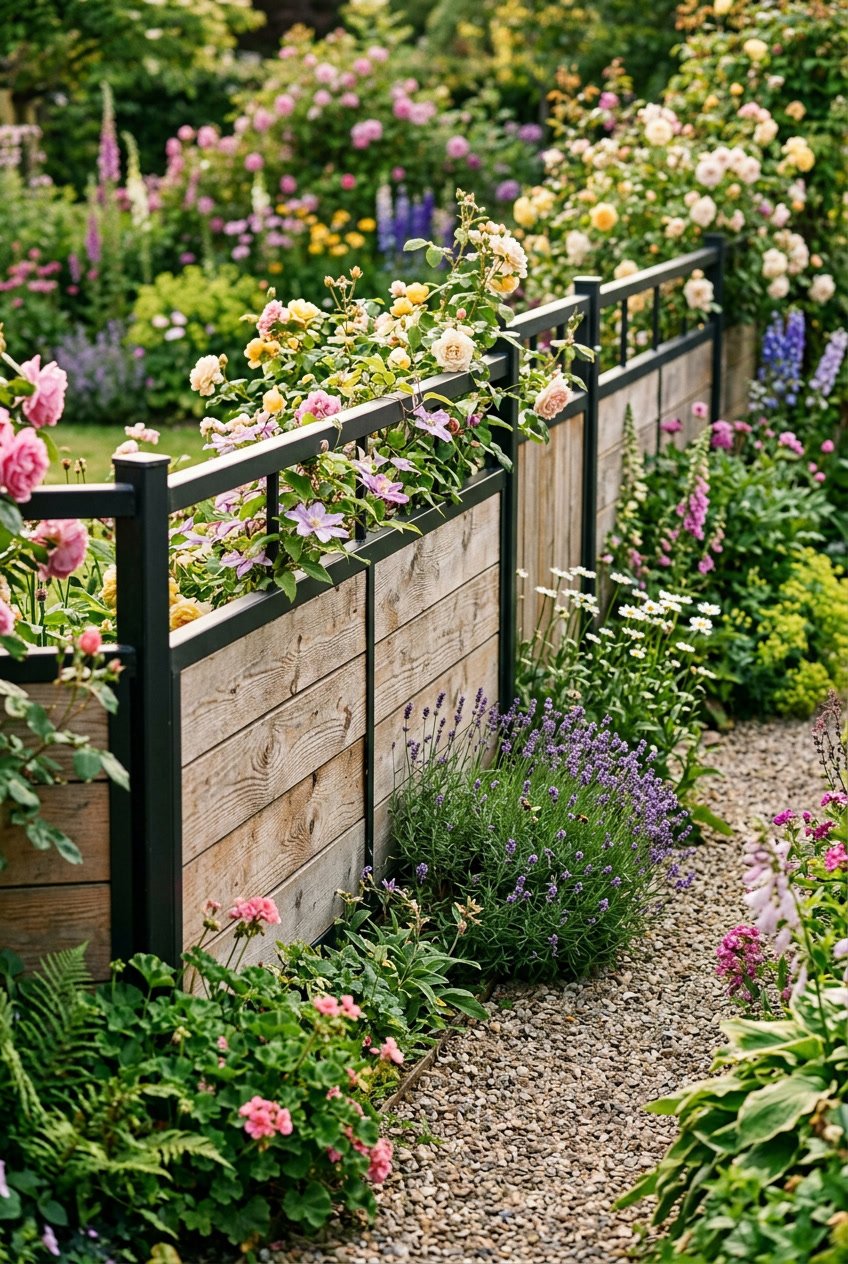
Let me tell you, you really don’t have to choose between that cozy, rustic charm and some good old modern toughness. When you use both wood and metal for your fence, you get the best of both worlds—your garden feels welcoming, but it won’t fall apart after a rough winter.
Picture this: vertical wood slats, maybe cedar, framed with slim black steel. Suddenly, you’ve got a fence that looks like it belongs in a storybook, but it’s got a modern twist.
The wood brings that warm, friendly cottage vibe, while the metal keeps things sharp and lasting longer. You can even leave little gaps between boards for airflow, or let vines sneak through.
That way, the fence doesn’t look too heavy, and your flowers get to show off a bit. If you want to make life easier, grab powder-coated steel for the frame and treated pine for the slats.
Metal posts every so often keep the whole thing sturdy, but they don’t steal the show. Trust me, it’s a win-win.
Expert Tip From MrPlanter: “Pick warm-toned wood to keep the fence feeling homey, and use dark metal for contrast. Plant climbing roses or sweet peas nearby to blend the two materials beautifully.”
13. Fence with Built-in Planters for flowers stealing the spotlight
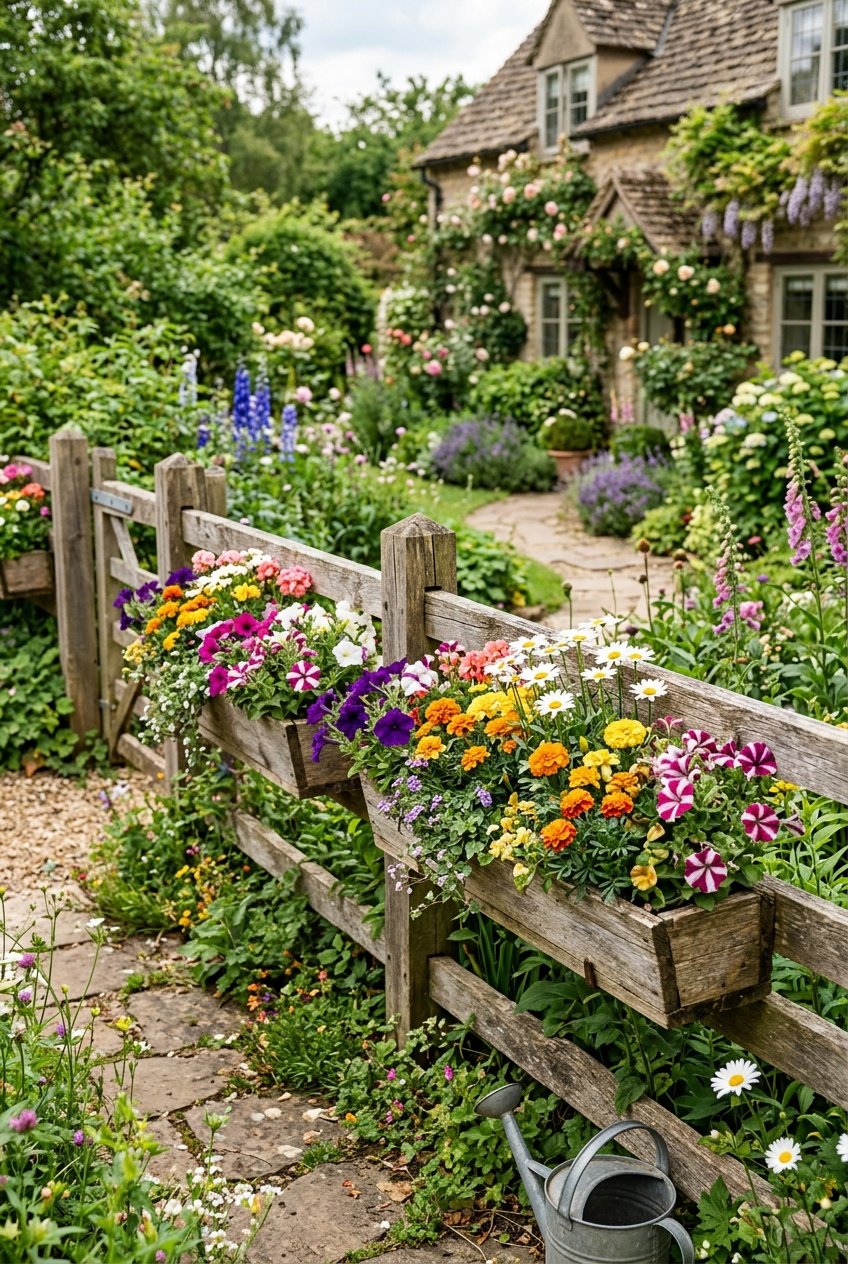
Did you know your fence can moonlight as a flower bed? It’s true—a fence with built-in planters saves space and turns plain boards into a parade of blooms.
You can tuck planters right into the fence, so flowers pop up at eye level. Suddenly, your cottage garden feels lush and layered, like it’s giving you a big floral hug.
Go for shallow boxes for annuals, and deeper ones for perennials or tiny shrubs. Don’t forget drainage holes and some decent potting mix—roots need to breathe too!
Mix up the textures: think chunky wood, trailing vines, and bunches of blossoms. Your fence becomes a living wall, bursting with color and scent, but still giving you some privacy.
Expert Tip From MrPlanter: “Choose rot‑resistant wood and line boxes with landscape fabric to extend life. Water from the top and check drainage regularly to keep plants happy.”
14. Rustic Log Fence fresh from the enchanted forest
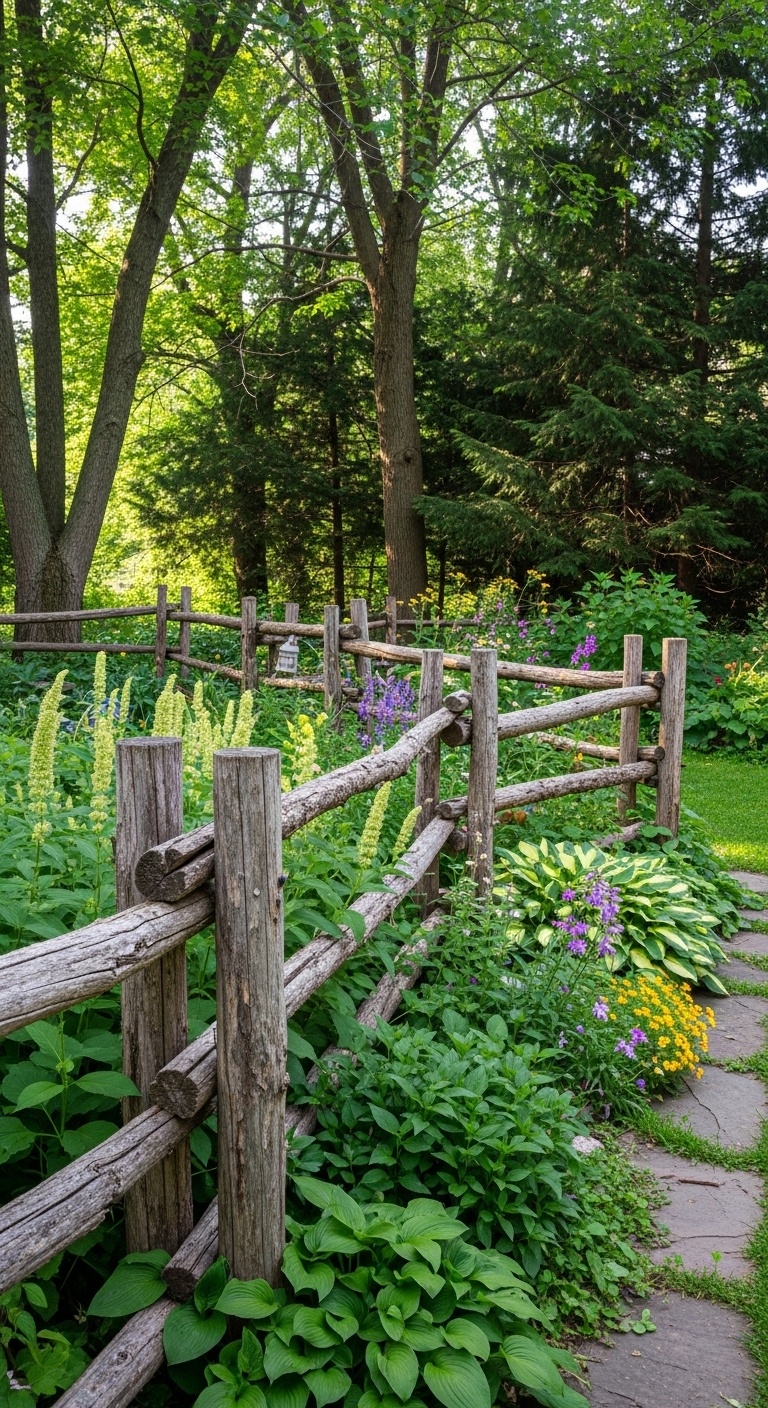
Here’s a fun one: a pile of logs can look like it wandered right out of a fairytale. You can build a rustic log fence with all sorts of uneven posts and branches, and suddenly your garden feels like a woodland hideaway.
This style brings loads of texture and a warm, old-timey feel. Leave some bark on for extra character, and let a few gaps peek through for plants to wiggle in.
You can lean logs against rails or just stick them into the ground if you want a sturdier setup. If you use recycled wood, you save cash and give your fence a backstory.
Plant climbing roses, clematis, or honeysuckle nearby. The green growth will soften the wood and add sweet scents to the air.
Moss, lichen, and even a few surprise seedlings can make this fence look like it’s always belonged there.
Expert Tip From MrPlanter: Pick locally fallen branches to match your garden’s mood. Treat the ends with a natural preservative so the fence lasts longer.
15. Chicken Wire and Wooden Frame Fence keeping critters honest
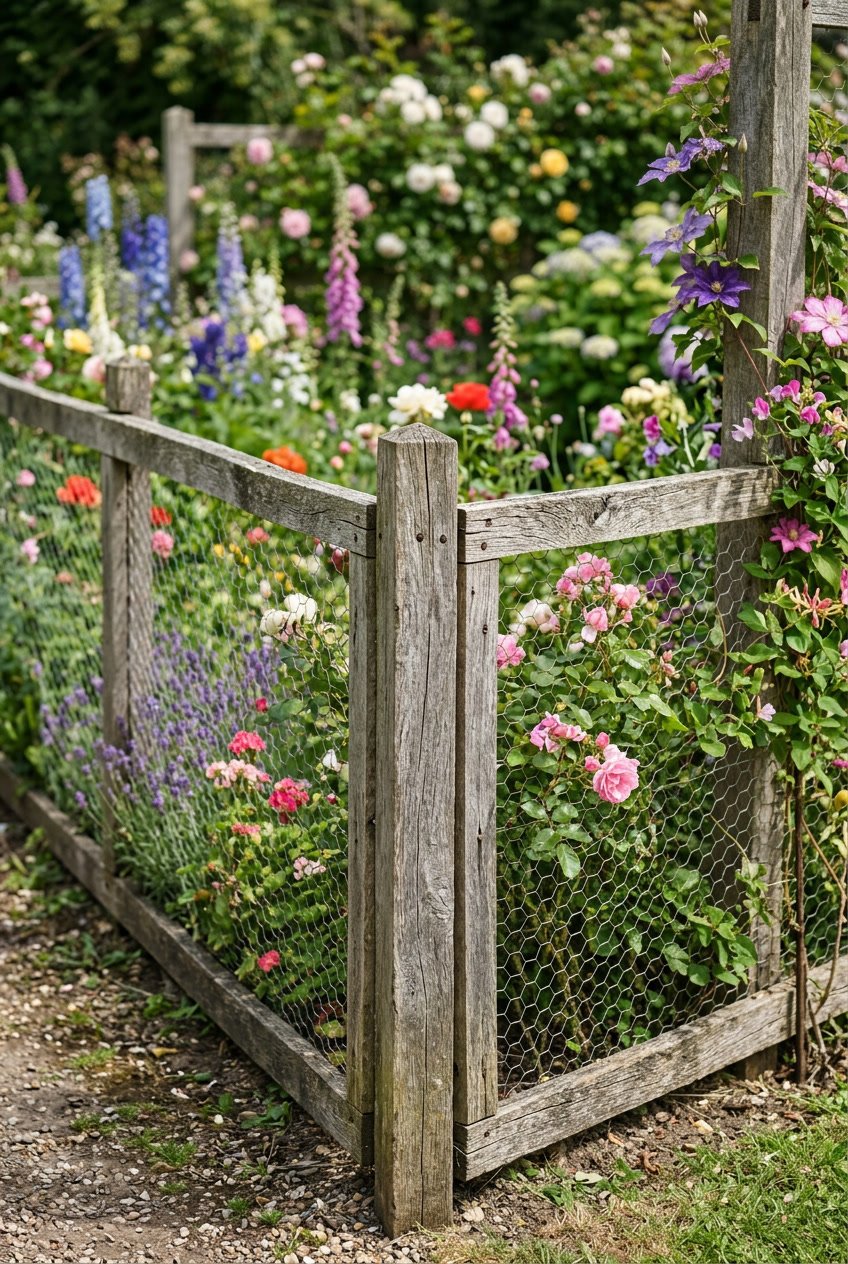
You’d be surprised at how much trouble a skinny roll of chicken wire can prevent. You can build a basic wooden frame, stretch the wire across, and just like that—your veggies and flowers get a fighting chance.
This fence keeps the cottage look and lets you see all your hard work, while keeping rabbits and other little troublemakers out. Attach the wire to 2x4s or lattice, and you’ve got a tidy panel that doesn’t mess with your garden’s style.
You can even make the panels removable, so you can get in there to weed or pick some beans. If you bury the bottom six inches of wire or bend it outward, you’ll stop diggers from sneaking in.
A little paint or stain on the frame helps it blend in and look finished. It’s simple, but it works.
Expert Tip From MrPlanter: Use hardware cloth where predators are a worry; it lasts longer and keeps paws out. Swap panels seasonally so you can reach plants easily.
16. Driftwood Fence scavenged from seaside adventures
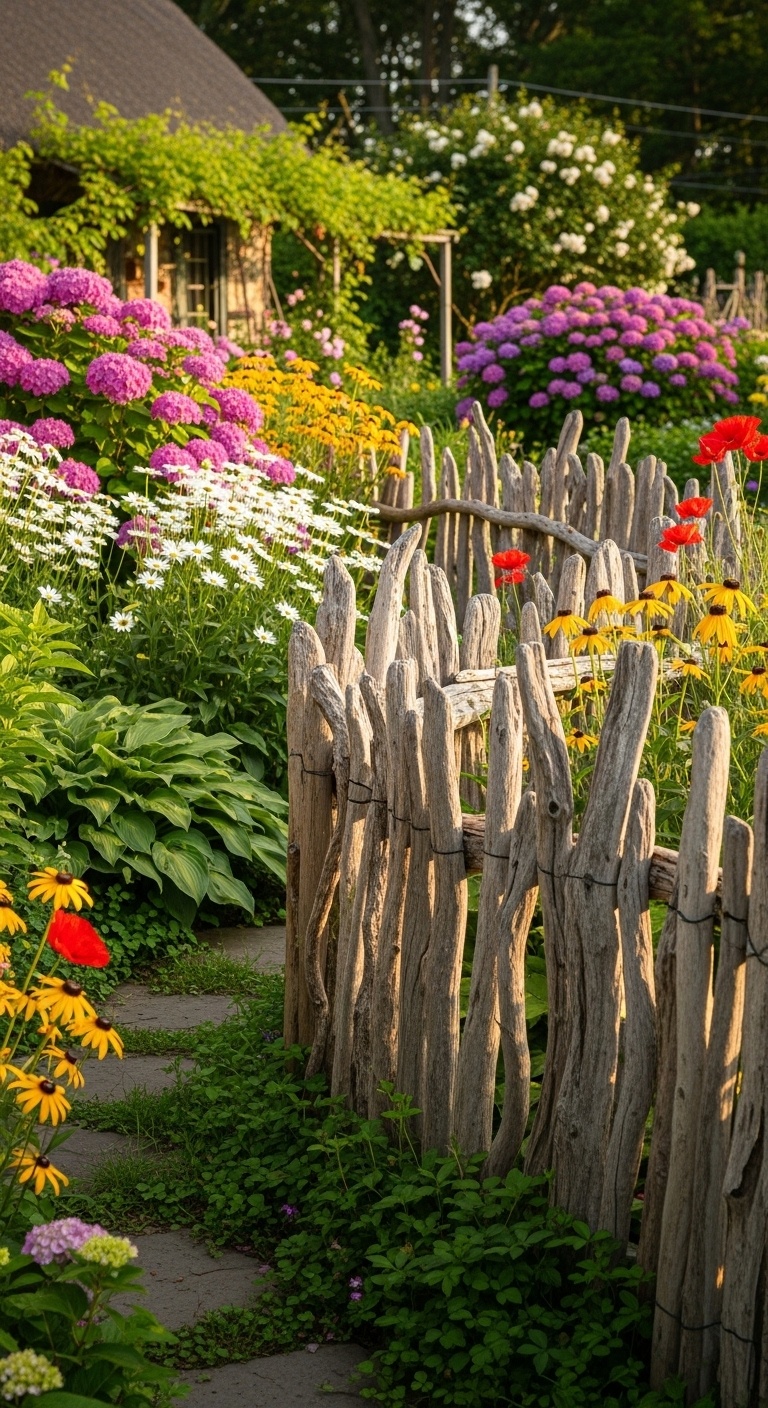
Here’s something wild: driftwood fences instantly bring a breezy, beachy feel to your garden—even if you’re miles from the coast.
Grab some weathered branches and stack or post them into a low, wavy border.
It’s not supposed to look perfect. That’s the whole point.
Every chunk and curve gives your fence its own personality, like a scrapbook of seaside adventures.
Want to get a little artsy? Toss in some stones, rope, or seashells for a quirky, folk-art twist.
Don’t stress if the pieces don’t match. That’s what makes it fun.
Just make sure you check for bugs hiding in the wood, and seal up any rough ends so you don’t get splinters or end up with soggy, rotten logs down the line.
If you want more privacy, stand the taller branches upright.
Keep shorter pieces along paths so your favorite flowers can still show off.
Suddenly, you’ve got a fence that feels like it’s got stories to tell—like it’s been on a few adventures itself.
Expert Tip From MrPlanter: Go hunting for driftwood after storms, but only when it’s safe! Let the wood dry out all the way before you build with it.
Brush off any sand and slap on a clear outdoor finish. That’ll help your fence stand up to whatever the weather throws at it.