You want a garden fence that looks awesome but doesn’t empty your wallet. I totally get it! This list is packed with clever, doable ideas you can build or scrounge up yourself.
You’ll find easy DIY tricks that save cash, add personality, and work for tiny yards, veggie patches, or whatever you’ve got going on.
Think of this as your grab-and-go project list. I’m talking old pallets, bamboo screens, living hedges, and even wattle fences.
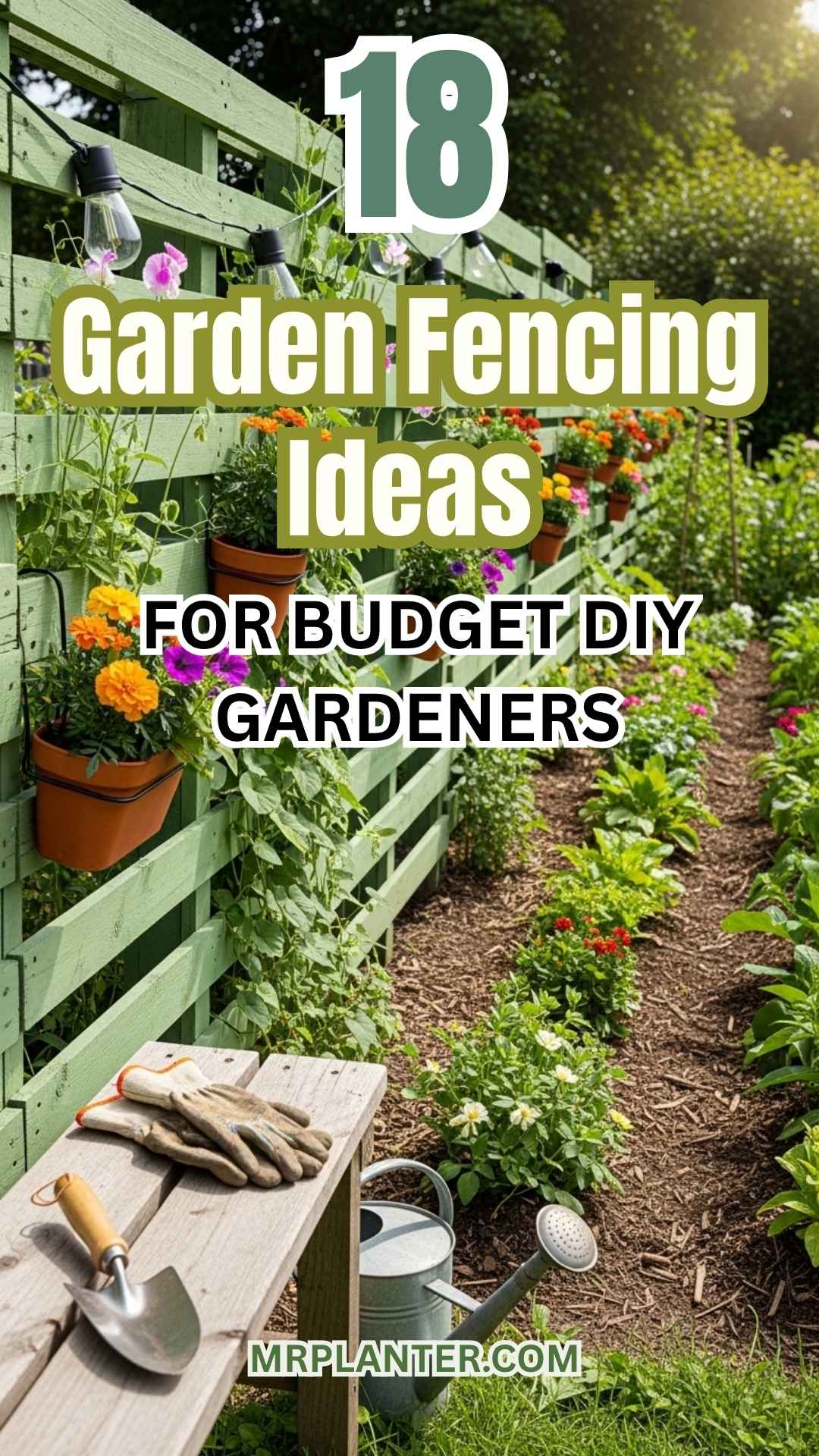
There’s something here for every taste and skill level. You’ll get ideas that feel like you and still leave a few bucks in your pocket.
1. Repurposed pallet fencing – rustic charm on a dime!
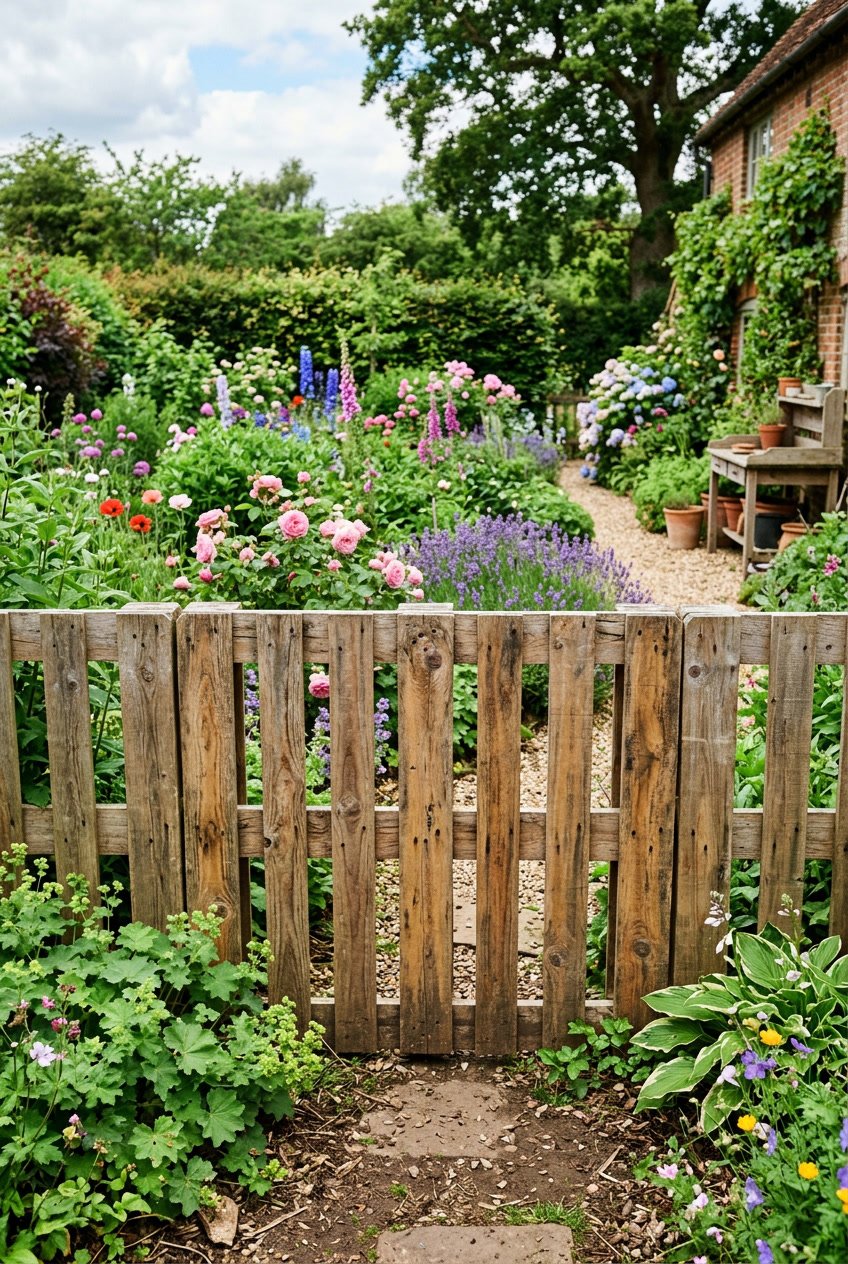
Here’s a fun one: old shipping pallets can totally transform your yard for next to nothing. I’ve stood a few upright for a quick privacy wall, and you can also break them apart to make a slatted fence that looks like you planned it.
Pallets bring a cozy, rustic feel that fits right in with veggie patches or cottage gardens. They’re light, so you can shuffle them around until you find a layout you love.
Paint or stain a few boards if you want a pop of color without blowing your budget. Just check for busted boards and stray nails before you start.
Drive posts into the ground, screw the pallets to the posts, and toss some gravel at the base to slow down rot.
Expert Tip From MrPlanter: “Look for pallets stamped HT (that means heat-treated, not chemical). Seal the bottom edges with paint or outdoor sealer so they last longer.”
Surprising Fact
2. Bamboo panel screens – tropical vibes without the flight ticket
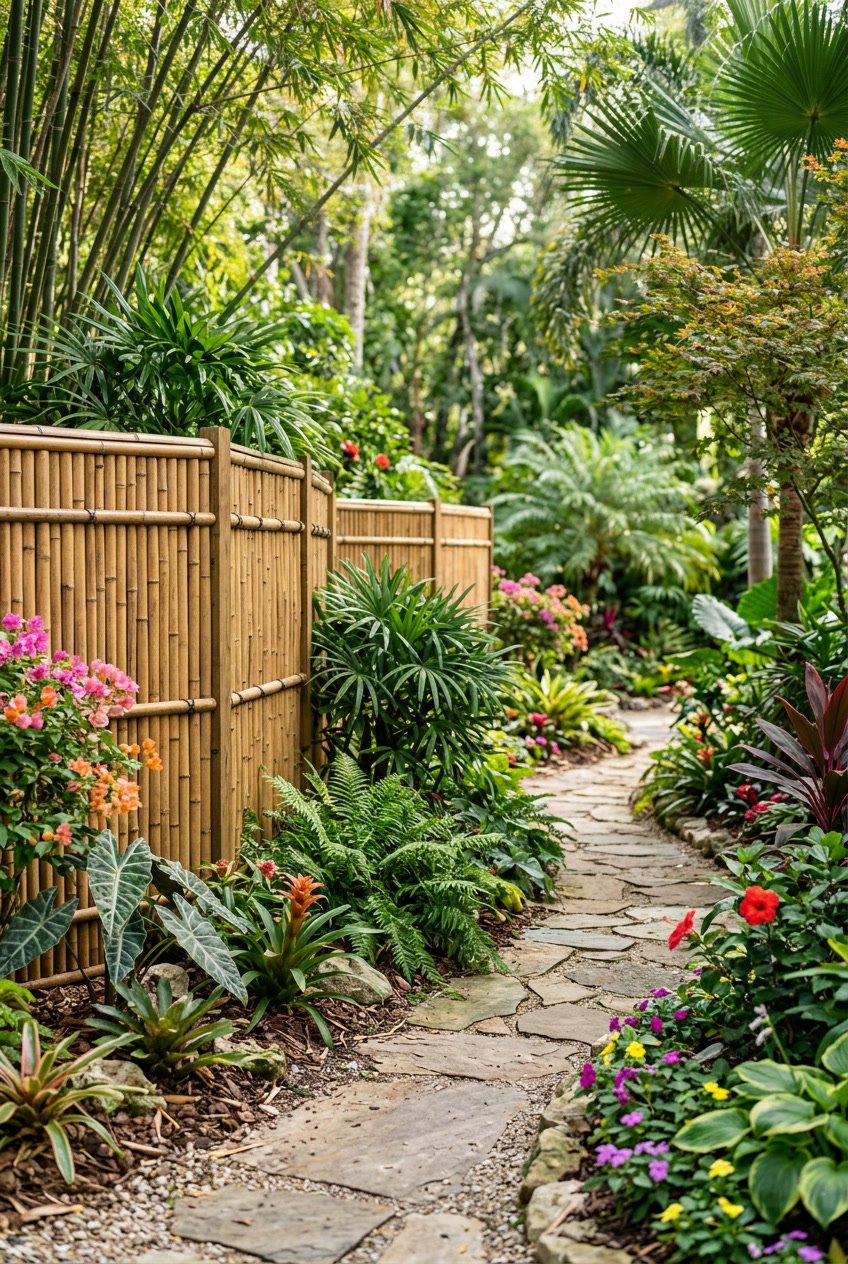
Bamboo panels instantly give your yard a vacation vibe, and they’re surprisingly cheap. You can zip-tie or wire them to posts, and—boom—your nosy neighbor is out of sight.
Buy rolled bamboo or pre-made panels and trim them to size for gates or low walls. They’re way cheaper than solid wood and add that breezy, natural texture.
Bamboo needs a little TLC if you live where it rains a lot—just slap on some sealer or paint every year or two. Plant a vine nearby if you want it to blend in and add some shade.
Expert Tip From MrPlanter: “Go for thicker bamboo panels for more privacy and less flapping in the wind. Give it a clear coat every year to keep it looking sharp.”
3. Wire mesh fencing – perfect for furry critter control
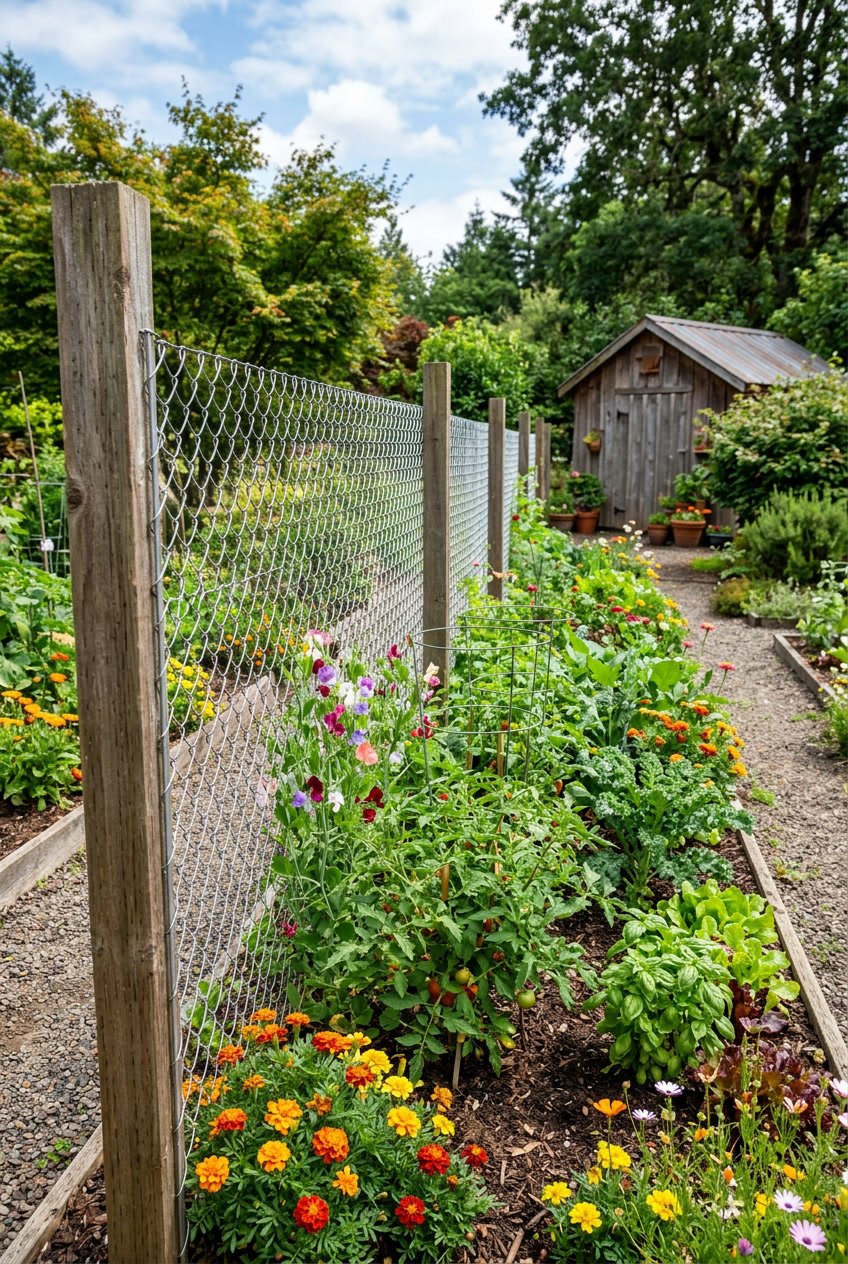
Let me guess, you’ve woken up to half-eaten lettuce and missing carrots? Wire mesh fencing saves your veggies and keeps out those sneaky rabbits and squirrels.
Go with 1-inch or smaller mesh near the ground to block the little guys. Welded wire, chicken wire, or hardware cloth all work depending on how tidy you want it.
Bury the bottom 6–12 inches or bend it out to stop diggers. Use pressure-treated posts and a top rail for a sturdy, tidy look that actually lasts.
Expert Tip From MrPlanter: “Use 1×1 welded wire at the bottom, then 2-inch mesh higher up. Check for holes every season and patch them before the critters find them.“
4. Living hedge fence – Mother Nature’s privacy wall
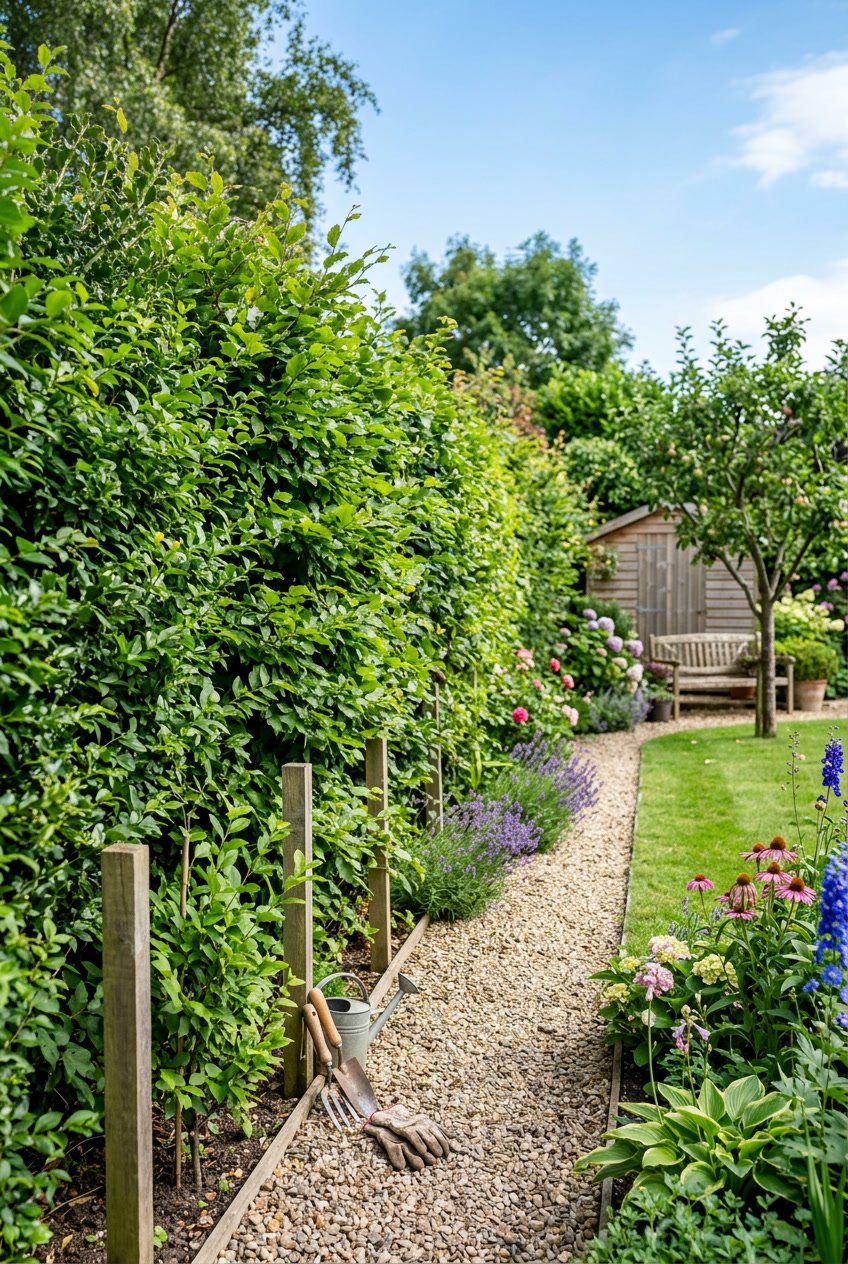
People think hedges take forever, but honestly, they can be cheap, pretty, and super easy once they’re growing.
Plant rows of shrubs or small trees, and they’ll knit together into a leafy wall that blocks noise and nosy neighbors.
Go for fast-growing natives or evergreens if you want year-round coverage. Give them some space so roots and branches can fill in without constant trimming.
You don’t need fancy soil or tools—just plant at the right time and mulch well. Prune lightly those first couple years to shape things up and save yourself work later on.
Expert Tip From MrPlanter: “Start with nursery-grown hedge plants for quicker results and fewer losses. Water deep for the first two seasons and mulch to keep chores down and roots cool.”
5. Branch and twig fence – bring the forest to your backyard
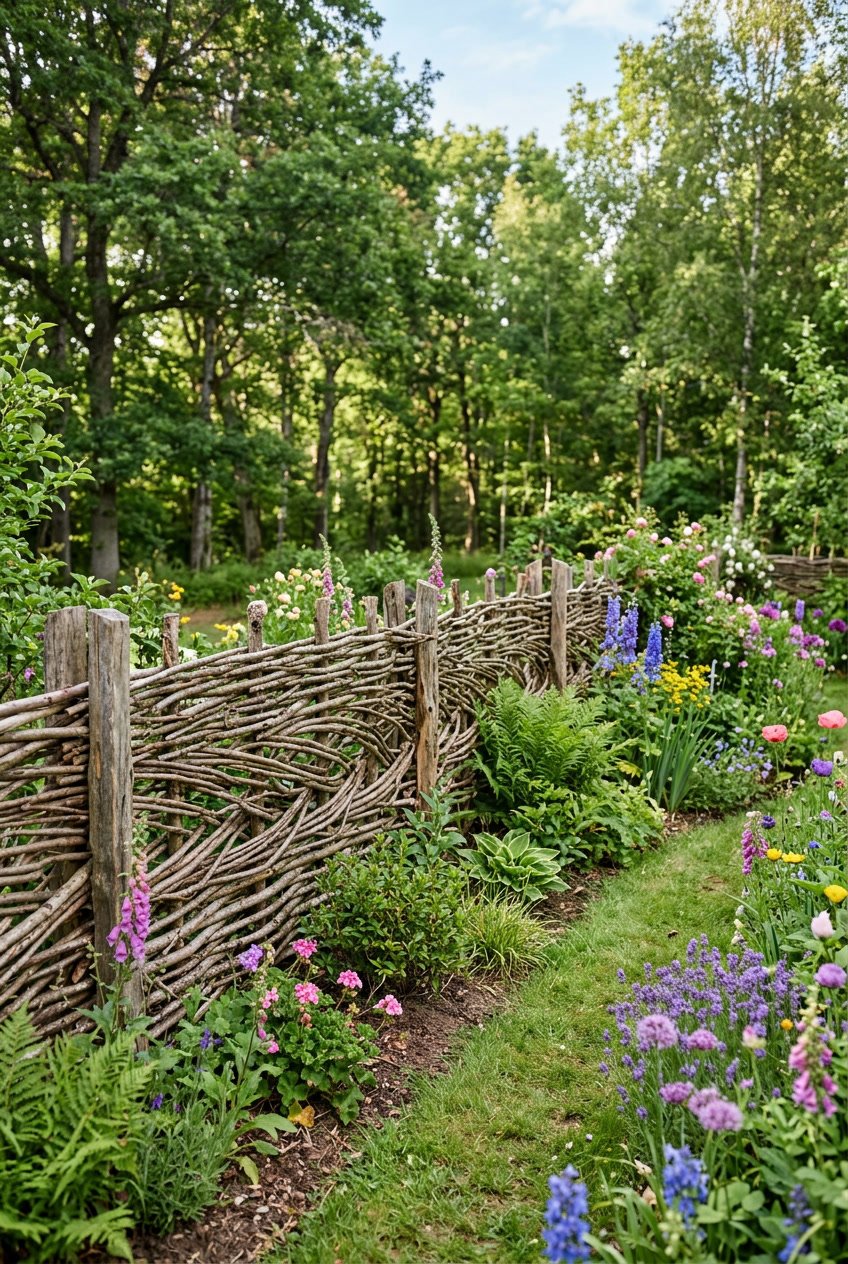
Who knew those fallen branches could become such a charming fence? It’s cheap, gives your garden a woodsy vibe, and you get to brag about recycling.
Use thicker branches for posts and weave thinner twigs between them for a cool, rustic look. You can keep it wild or trim it up for a neater edge.
Little gaps let in light and air, so your plants stay happy and birds stick around. Fasten it all with wire, nails, or even twine, and treat the posts at ground level for longer life.
Gather branches after storms, ask neighbors, or grab bundles at garden centers. That keeps costs low and gives your fence a story.
Expert Tip From MrPlanter: “Pick branches that are about the same thickness—it makes weaving way easier. Let your cut wood dry for a week before building so it doesn’t rot fast.“
6. Chicken wire trellis – double duty for veggies and fences
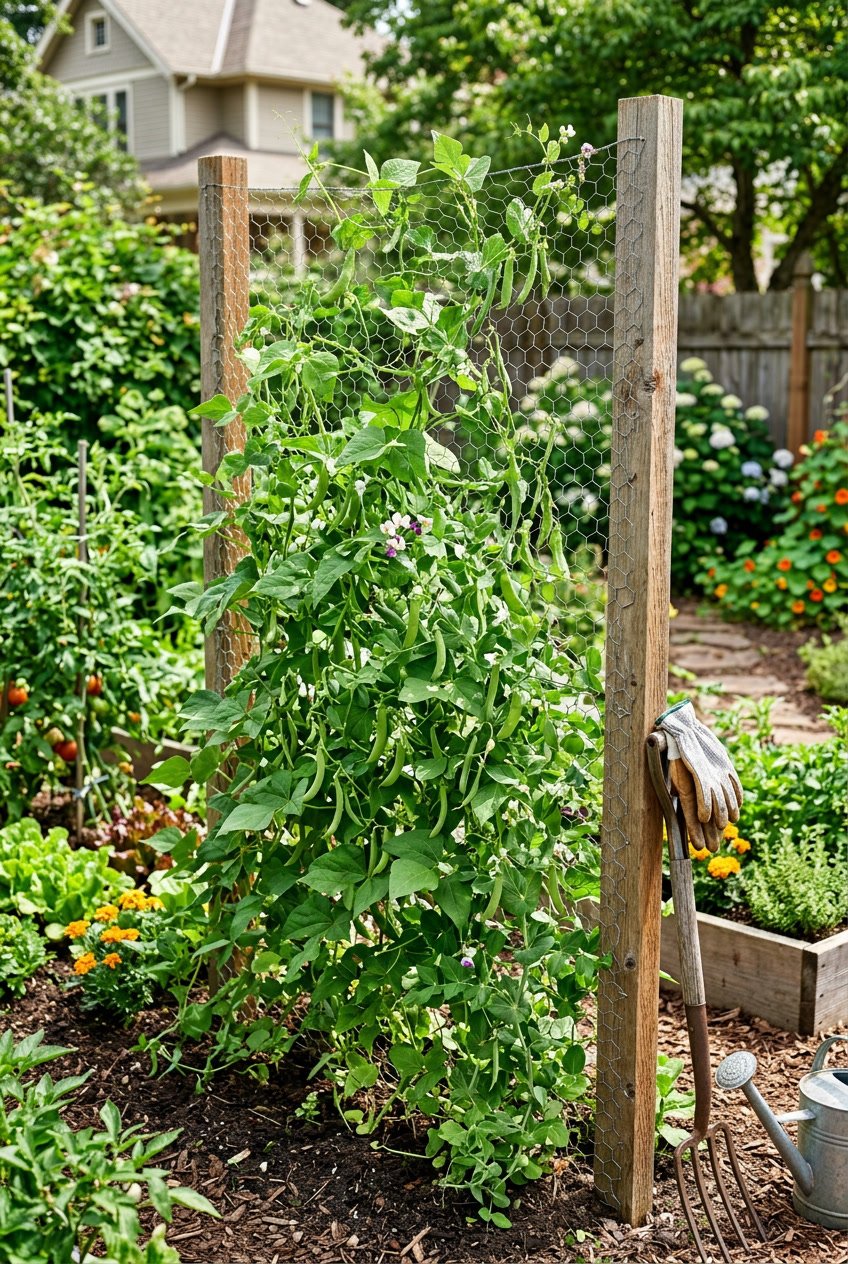
Chicken wire is a multitasker! It protects your plants and lets you grow climbing veggies without taking up extra space.
Stretch it between posts to keep out pests, and let peas, beans, or cucumbers climb up instead of sprawling everywhere. You can cut and bend it to fit weird corners or even make a curvy screen.
Chicken wire is cheap and easy to fix with a few staples or zip ties. Keep it just off the ground to avoid rust, and use sturdy posts so it doesn’t sag under a bumper crop.
Expert Tip From MrPlanter: “Nail it down with U‑staples and check the tension every season. Swap out any rusty spots early to keep your plants and fence in good shape.”
7. Lattice panels painted bright – artsy and airy
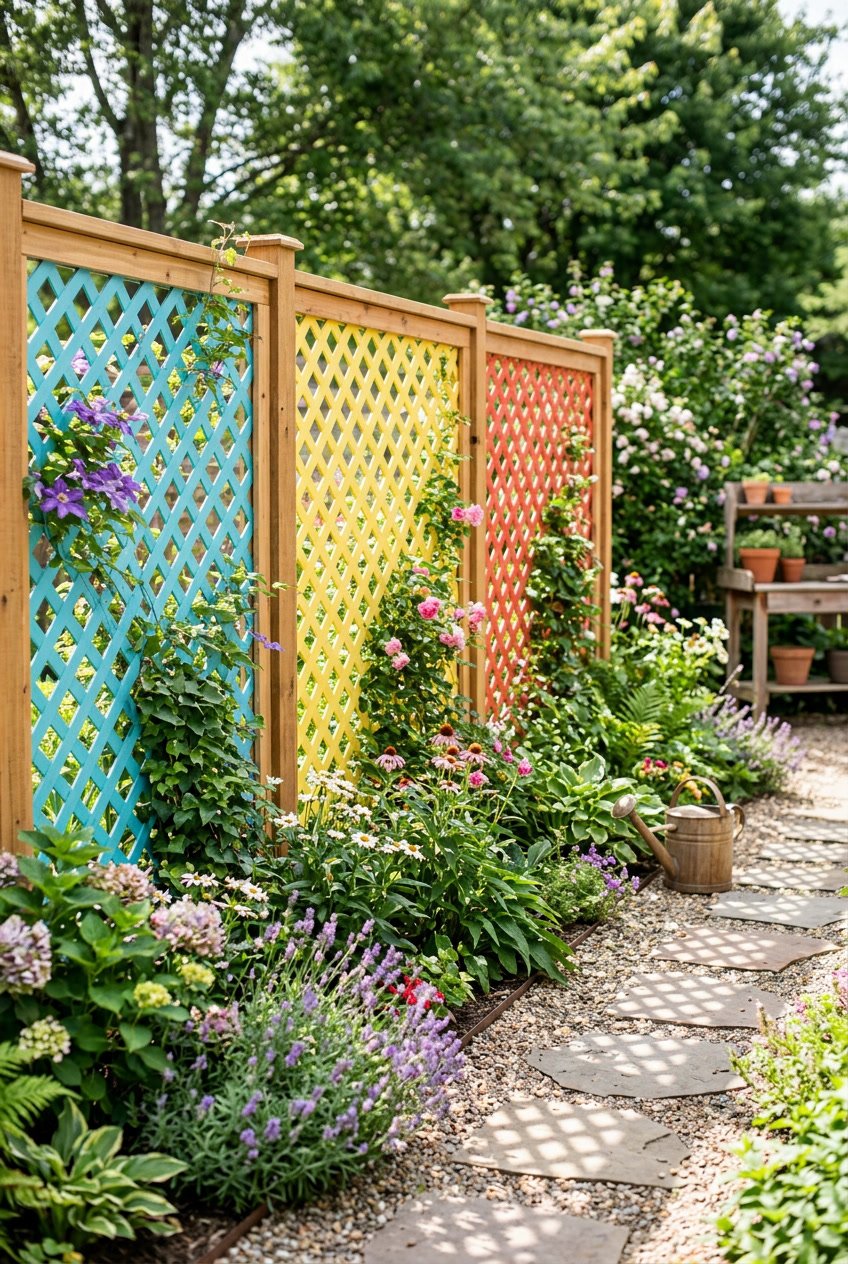
Never underestimate what a splash of color can do! Paint your lattice panels a bold shade and suddenly your tiny yard feels bigger and more fun.
Lattice keeps things open and breezy but still gives you privacy. You can weave in clematis, beans, or even string up some lights for a layered, lively look.
Use weatherproof paint and give the panels a quick sanding first. You can save time by painting just the front if you’re feeling thrifty.
Expert Tip From MrPlanter: “Pick a color that makes you happy, and test it on a small piece first. Give it a fresh coat every couple years to keep it looking great.”
8. Recycled crate fencing – crates do more than hold apples
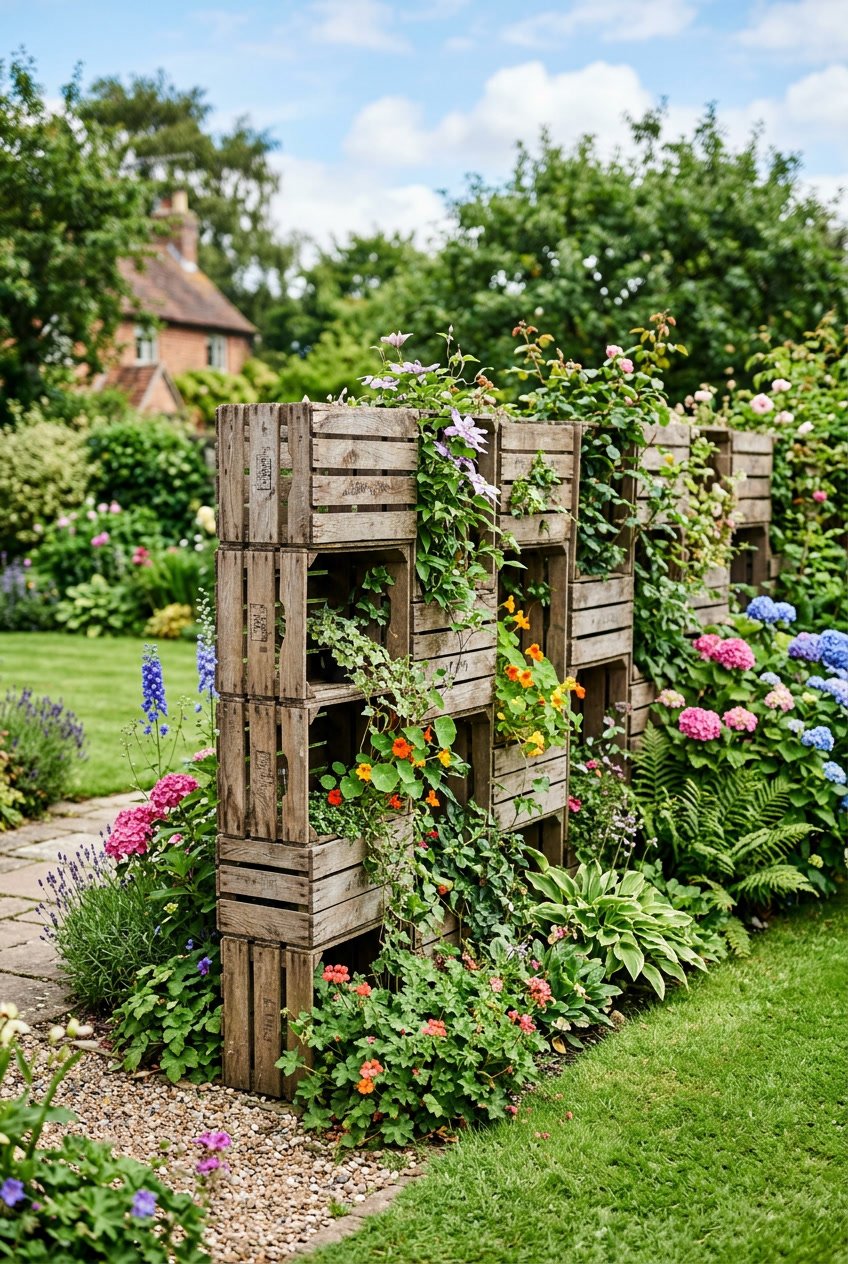
Old fruit crates make a fence that oozes rustic charm. Stack them on their sides or lay them flat to make a low privacy wall.
Screw or bracket them together, and fill any gaps with mesh if you need to keep critters out. Turn the crate faces outward and plant trailing vines or pop in some small pots for instant greenery.
Paint a few crates bright colors to break up the wood and add some flair. It’s light enough to move around if you want a new look next season.
Expert Tip From MrPlanter: “Sand down rough spots and seal the crates with outdoor wood finish so they last. Line the inside with landscape fabric to keep soil in and your plants tidy.“
9. Corrugated metal sheets – farmhouse chic and budget-savvy
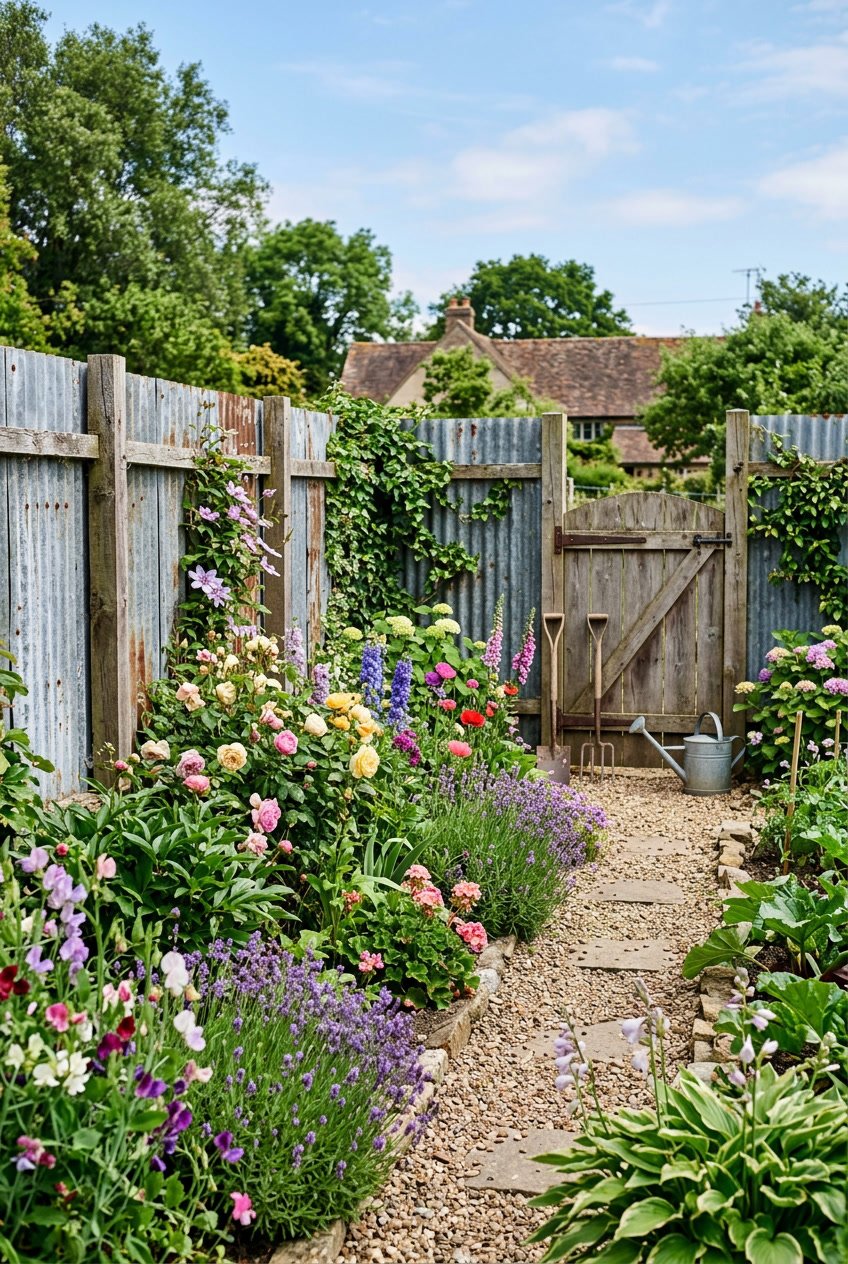
Metal fences don’t have to be pricey or cold-looking. Pair corrugated panels with wood posts or climbing plants for that cozy farmhouse look.
They’re tough and low-maintenance, so you won’t be out there painting every year. That’s a win for your wallet and your weekend plans.
Cut panels to fit gates or raised beds for a matching look all around. If you like the rustic thing, let them rust a bit on purpose, or pick coated panels for a modern vibe.
Fasten the panels to a simple frame with regular screws and washers. If you’re handy, you can knock this out in a weekend with just basic tools.
Expert Tip From MrPlanter: Pre-drill holes so you don’t bend the metal, and use rubber washers to stop leaks and rust.
10. Trellis fence for climbing plants – green walls that grow themselves
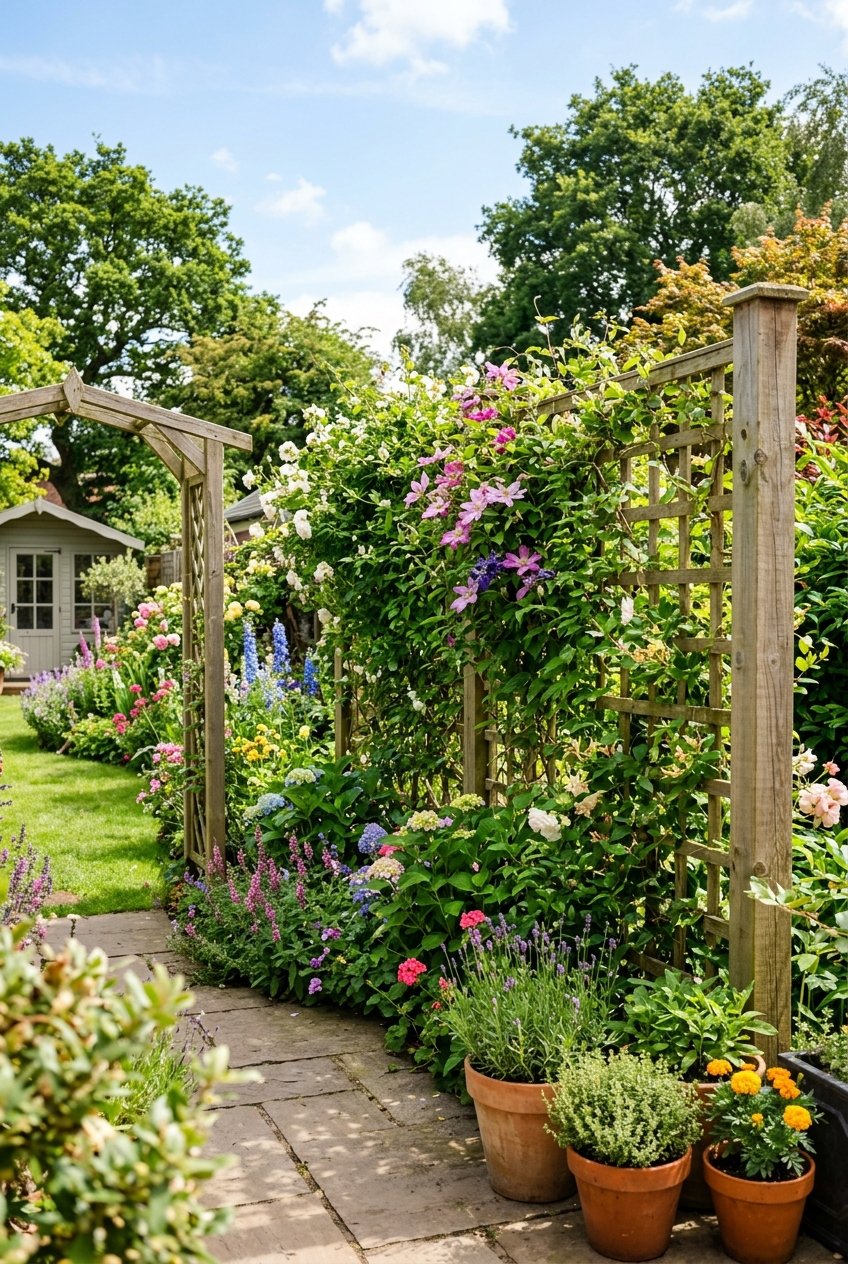
If you want privacy but don’t want to spend a ton or babysit a giant fence, try a trellis. You get a simple frame, and climbing plants do the rest!
Start with cheap lattice, pallets, or bamboo and some basic posts. Grow clematis, ivy, sweet peas, or climbing roses up twine or wire—just tie them gently as they grow.
Growing up instead of out saves space and materials. Plus, your green wall changes with the seasons and gives you shade in summer.
Plant fast climbers at the base and tie new shoots as they pop up. You’ll get good coverage in a year or two if you keep up with a little pruning and patience.
Expert Tip From MrPlanter: Mix quick growers with steady ones for fast results and lasting structure. Check your ties every month so they don’t pinch the stems, and switch to soft twine as the plants get bigger.
11. Concrete blocks stacked – modern edge meets DIY muscle
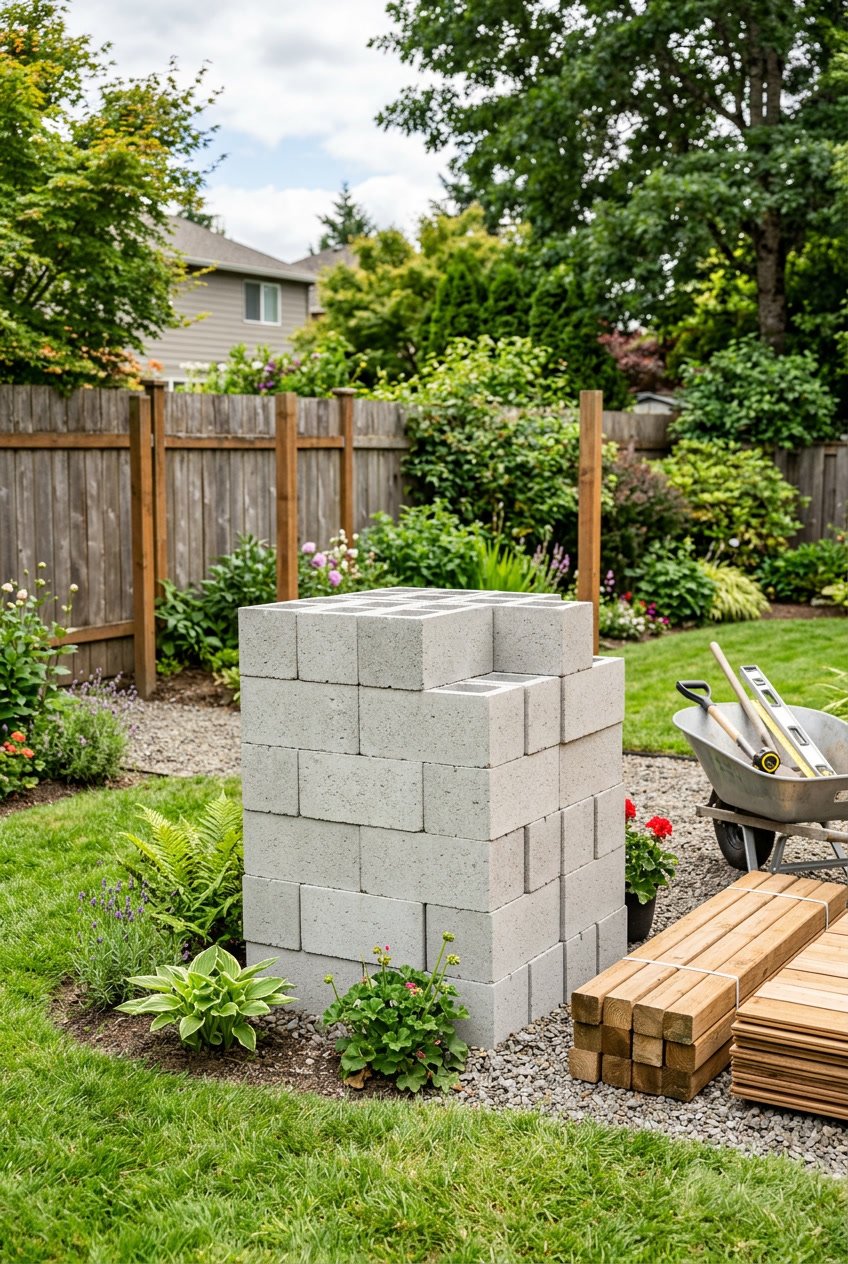
Who says you need a pro to get that sleek, modern garden wall? Stack concrete blocks for a clean edge that looks way pricier than it is.
You can use full or half blocks to make planters, benches, or low walls that double as seating. Just work on flat ground and stagger the joints like bricks so everything stays put.
Leave a few holes for plants, or fill them with soil and succulents for a cool touch. Paint or seal the blocks if you want, or let them weather for a rugged look.
This is a sturdy weekend project you can tackle with a friend and a couple of basic tools.
Expert Tip From MrPlanter: Start with a level base and check it as you go so your wall doesn’t lean. Add drainage holes if you’re turning blocks into planters—your plants will thank you!
12. Fence painted with chalkboard paint – doodle your mood daily
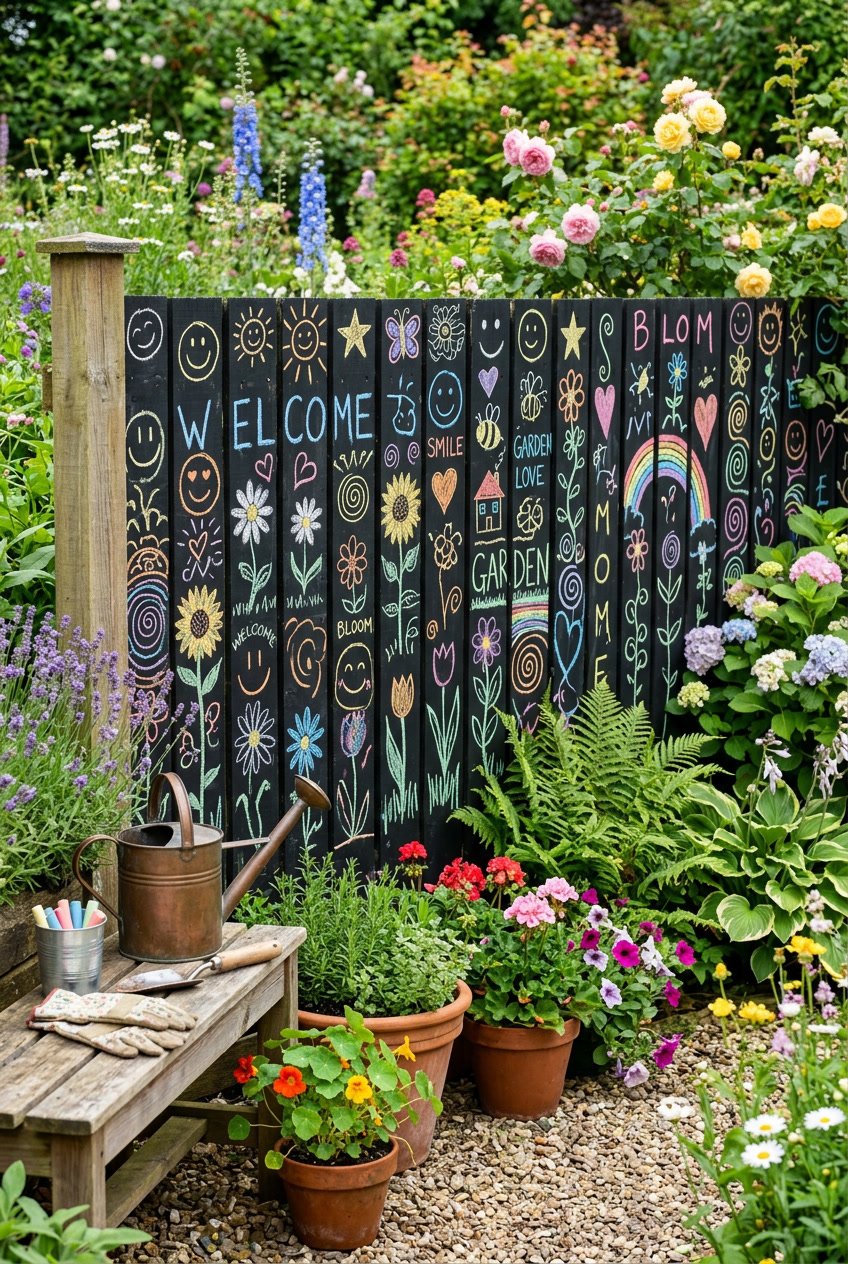
Here’s something fun: slap on some chalkboard paint, and suddenly your fence turns into a giant message board. You get to scribble reminders, doodle pumpkins in October, or just let the kids go wild while you’re digging in the dirt.
It’s easy on the wallet and doesn’t eat up your weekend. Just sand and prime the wood, roll on two thin coats, and let it cure before you start drawing—otherwise, you’ll end up with ghostly chalk shadows forever.
You can change up the look whenever you want. Wipe it clean and start over. Liquid chalk markers pop with color, but classic chalk gives that soft, old-school vibe.
Expert Tip From MrPlanter: “Try out your chalk in a tiny corner first. A damp cloth keeps your board looking fresh and ready for whatever you dream up next.”
13. Vinyl-coated chain link with fabric slats – privacy without the price
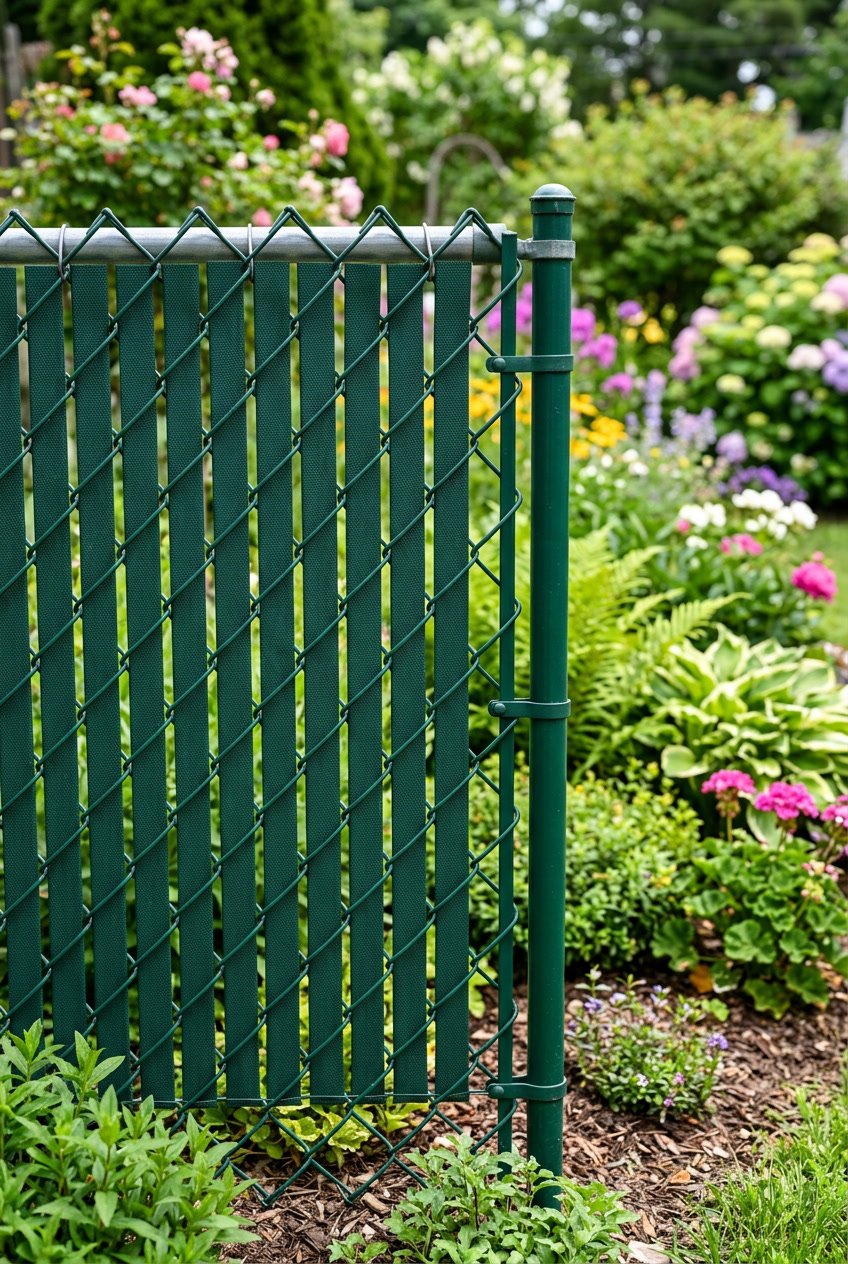
Let’s set the record straight: chain link fences don’t have to scream “parking lot.” You can grab vinyl-coated chain link that shrugs off sun and rain, then weave in some fabric or vinyl slats for privacy.
This trick costs way less than a wooden fence and still looks neat. The slats slide right into the mesh, or you can buy panels that snap on—honestly, it’s a breeze with just a few basic tools.
You’ll cut down on wind and nosy neighbors, but your plants still get air and light. Want to hide a mess? Go with dark slats. Feeling bold? Pick a bright color and show off a little.
Expert Tip From MrPlanter: “Measure twice before you buy slats, or you’ll end up with too much or not enough. And grab UV-resistant ones so your fence doesn’t fade out before summer’s done.”
14. Wattle fencing – that old-school woven beauty
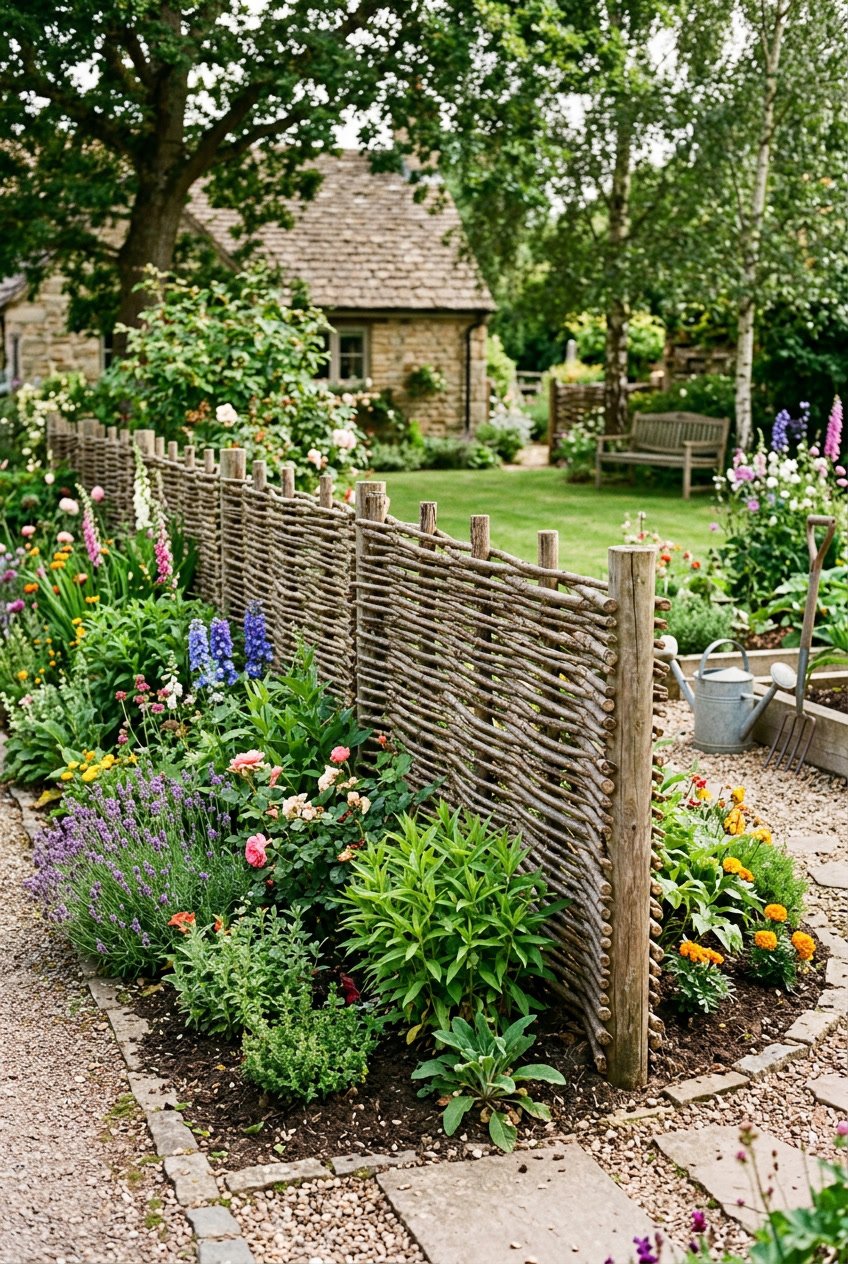
Did you know wattle fencing goes all the way back to ancient times? Even after all these years, it still brings a cozy, handmade vibe to any garden. You just need some stakes and bendy branches—super cheap, and it looks awesome.
Grab a handful of thin branches and start weaving them between upright stakes. The gaps let in light and air, so your plants don’t feel boxed in. It’s perfect for raised beds, borders, or if you want that cottage look.
No fancy gadgets needed—just a sharp saw and a mallet. If you use willow or hazel, your fence should stick around for years with a little TLC.
Expert Tip From MrPlanter: Go for freshly cut, bendy rods—they’re way easier to weave. Swap out any busted branches each spring to keep things looking sharp.
Relatable Problem
15. Old doors repurposed as fence panels – storybook style guaranteed
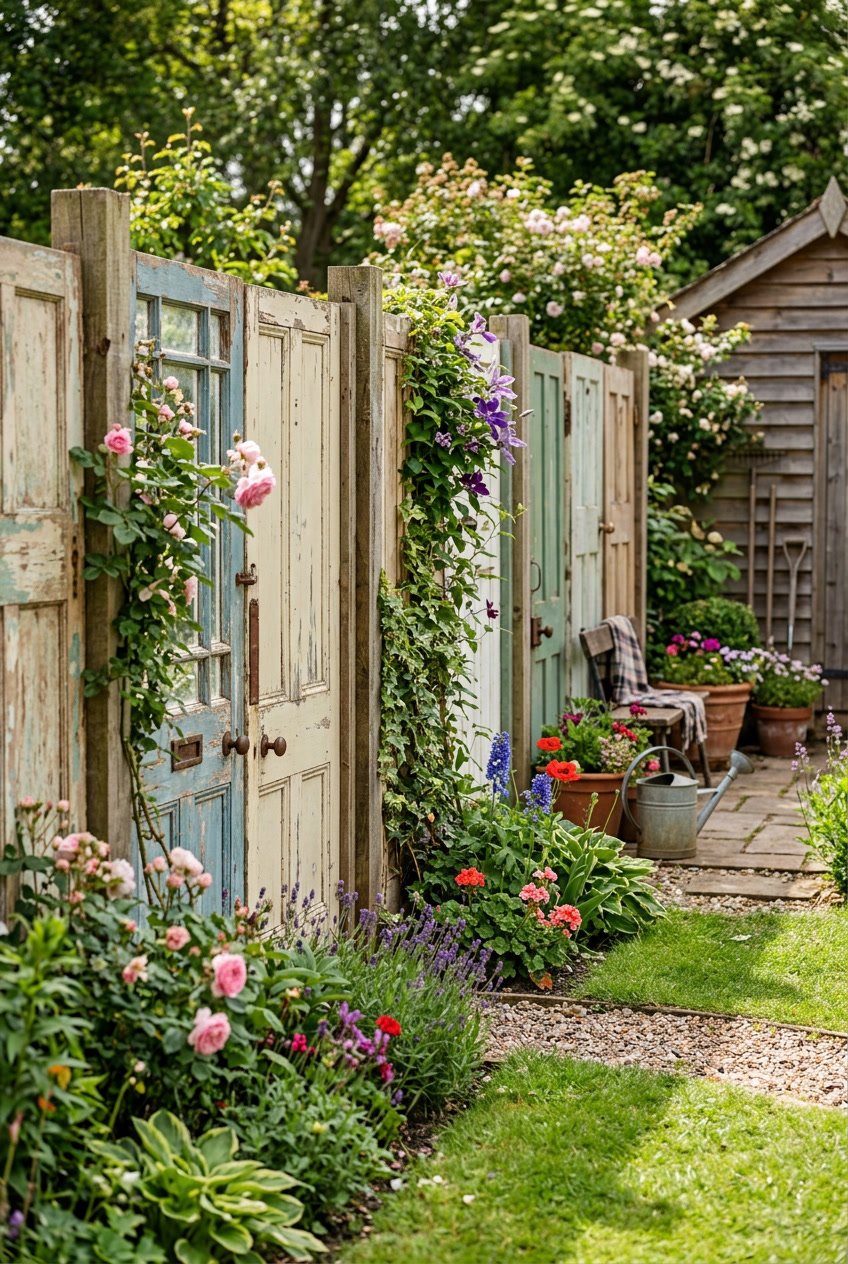
Feeling bored with plain fences? Old doors make your yard look like it belongs in a fairy tale. Each one comes with its own quirks—chipped paint, fancy knobs, and all those little details that make you smile.
Just stand them up on a simple frame or screw them onto rails. Mix up the sizes and colors for a playful, lived-in look that feels like your grandma’s garden (in the best way).
Give them a good coat of weatherproof finish so they don’t fall apart in the rain. You can hang planters or train vines up the panels—suddenly, the fence becomes part of the garden, not just a backdrop.
Expert Tip From MrPlanter: “Hunt for doors at thrift stores or salvage yards—you’ll save cash and find the coolest ones. Check for weak spots and fix them up before you put the fence together, so it stays sturdy and cute.”
16. Shrub-lined border fence – low cost, high nature points
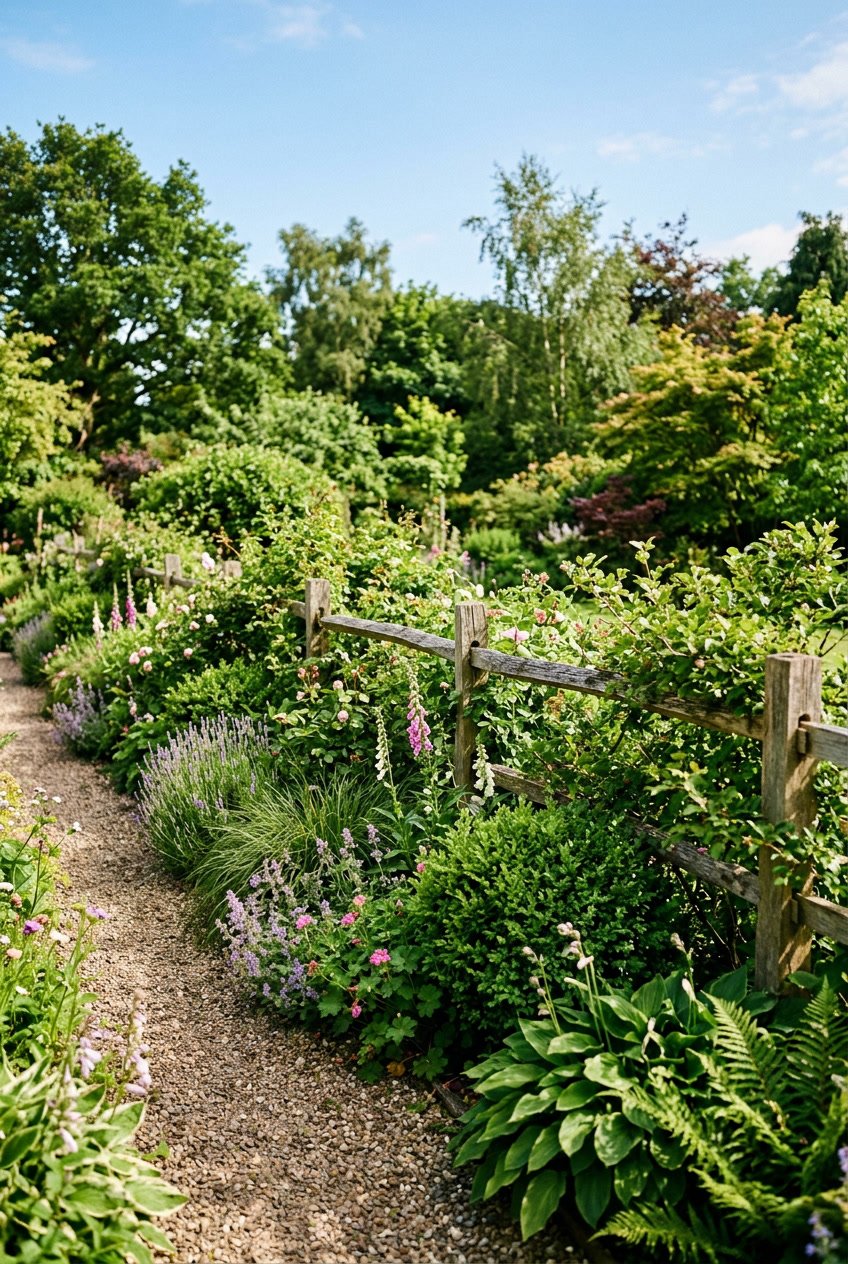
Here’s a twist: your fence doesn’t have to be a big wall. You can plant shrubs along the edge instead, and suddenly your yard feels more alive (and usually costs less).
Shrubs give you privacy, soft edges, and a home for birds and bees. Pick native, low-fuss varieties that match your sun and soil.
If you plant them closer than you would for a formal hedge, they’ll fill in faster and save you money. Mix evergreens and flowering types so there’s always something happening.
Give each plant enough space to trim them easily. Mulch around the base to keep weeds down and save on watering. This way, you get a fence that looks natural and keeps your wallet happy.
Expert Tip From MrPlanter: Try a few shrubs first to see what actually grows well in your yard. Prune them just a little the first year to help them get bushy and make your life easier later.
17. Cedar fence picked up at discount yards – sniff that savings
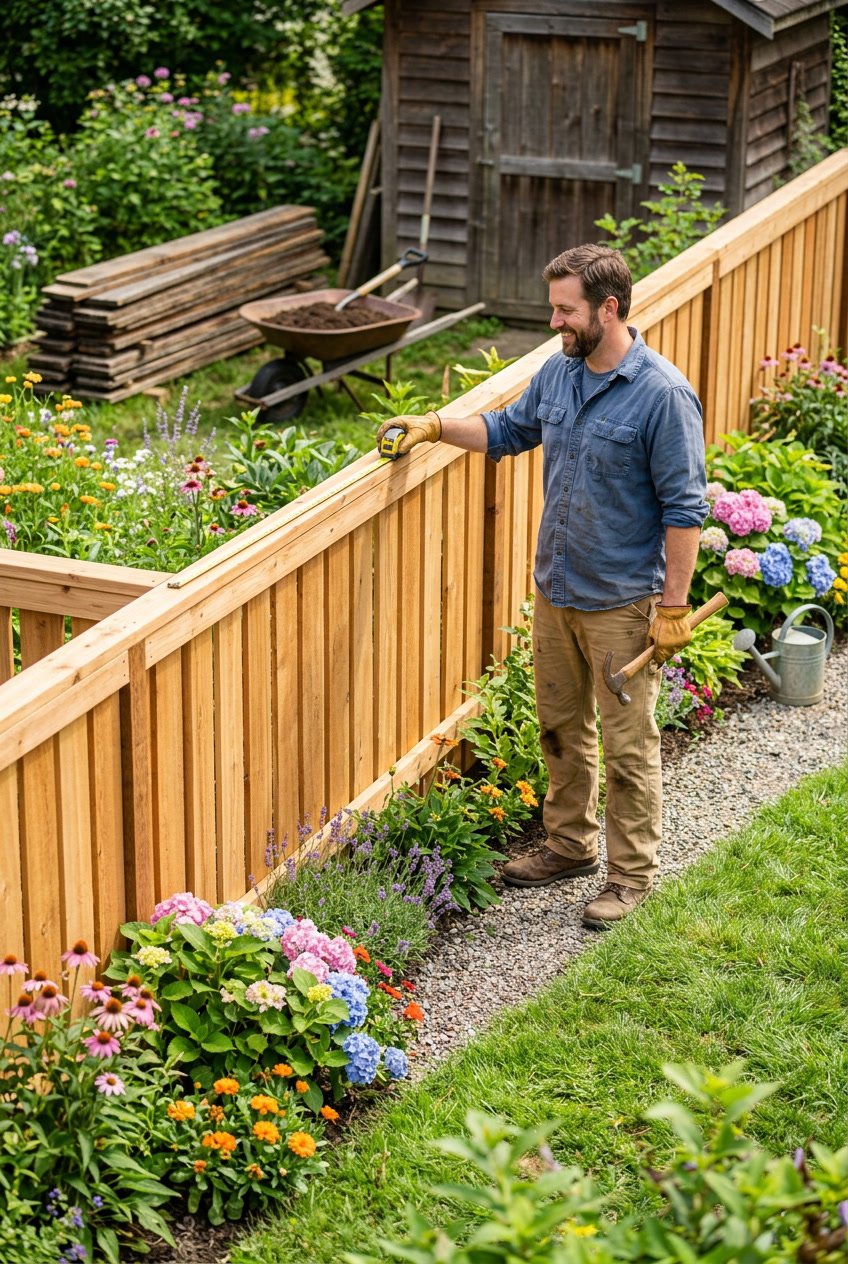
So, you want a cedar fence but your wallet’s giving you the side-eye? I get it. Discount and salvage yards are gold mines for cedar panels, pickets, and posts that still have plenty of life left.
You might find boards that look a little rough, but most just need a quick sanding and a coat of sealant. They’ll last for years and look great doing it.
Mix up old boards for that rustic, patchwork style—honestly, the little imperfections just add character. You’ll save a bundle and end up with a fence that’s got a story to tell.
Expert Tip From MrPlanter: “Check every board for rot or bug damage before you buy—don’t get stuck with duds. If the wood’s solid, a little elbow grease and sealant will make it shine.”
18. Garden stake fencing with twine – minimalist but mighty
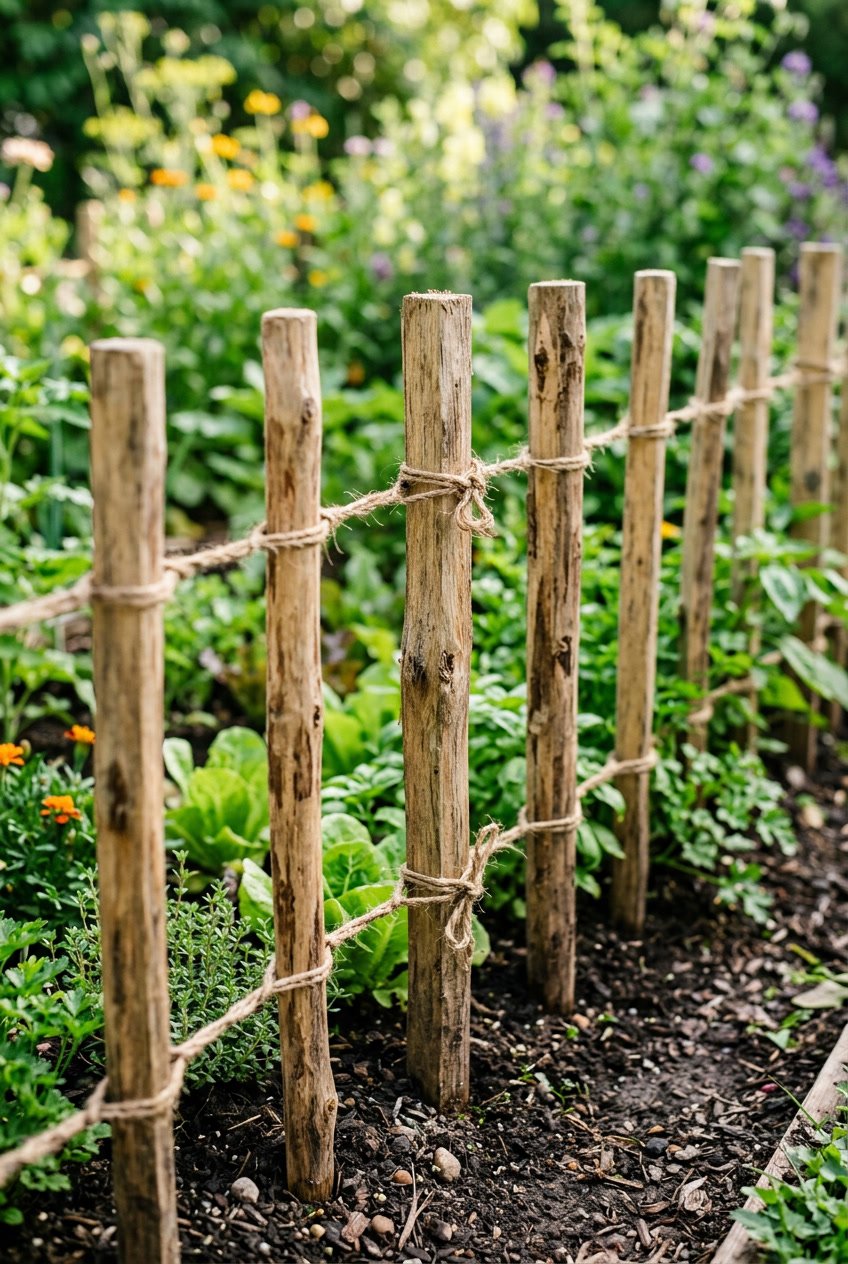
Here’s something funny—sometimes you just need a handful of stakes and a ball of twine to keep your garden in line. I mean, it’s about as simple as it gets, but it actually works!
I grab some wooden or bamboo stakes and stick them in every few feet. Then I run some twine between them, maybe in a single row, maybe double if I’m feeling fancy.
You can make the lines straight, or if you’re like me and can’t draw a straight line to save your life, just let them curve a bit around your beds and paths.
Okay, this fence won’t stop a squirrel on a mission, but it does send a message—“Hey, don’t step here!” It keeps folks (and the occasional wandering pet) from trampling your baby plants.
I like it for veggies, herbs, and those little flower patches that need a bit of protection but not a fortress.
Each season, I swap out the twine to keep things looking fresh. If it starts to sag, I just pull it tight again.
Sometimes I’ll hang plant labels from the stakes. It’s cute and honestly, I forget what I planted half the time.
Expert Tip From MrPlanter: Want your fence to look extra tidy? Use matching stakes and natural twine. Tie square knots so the lines stay snug, and swap the twine before it gets all frayed. Your plants—and your eyeballs—will thank you.