So you want goat enclosures that actually work for your space, your wallet, and whatever wild plans you’ve got for your herd?
Here’s a guide packed with practical, creative ideas to help you build or buy a safe, comfy pen that fits your life.
Think of this as a menu—real options, not just Pinterest dreams. We’re talking tiny backyard hacks, weather-tough builds, and a few “why didn’t I think of that?” solutions for shelter headaches.
You’ll spot designs that save cash, move easily, use upcycled stuff, or give your goats that little extra shade and warmth.
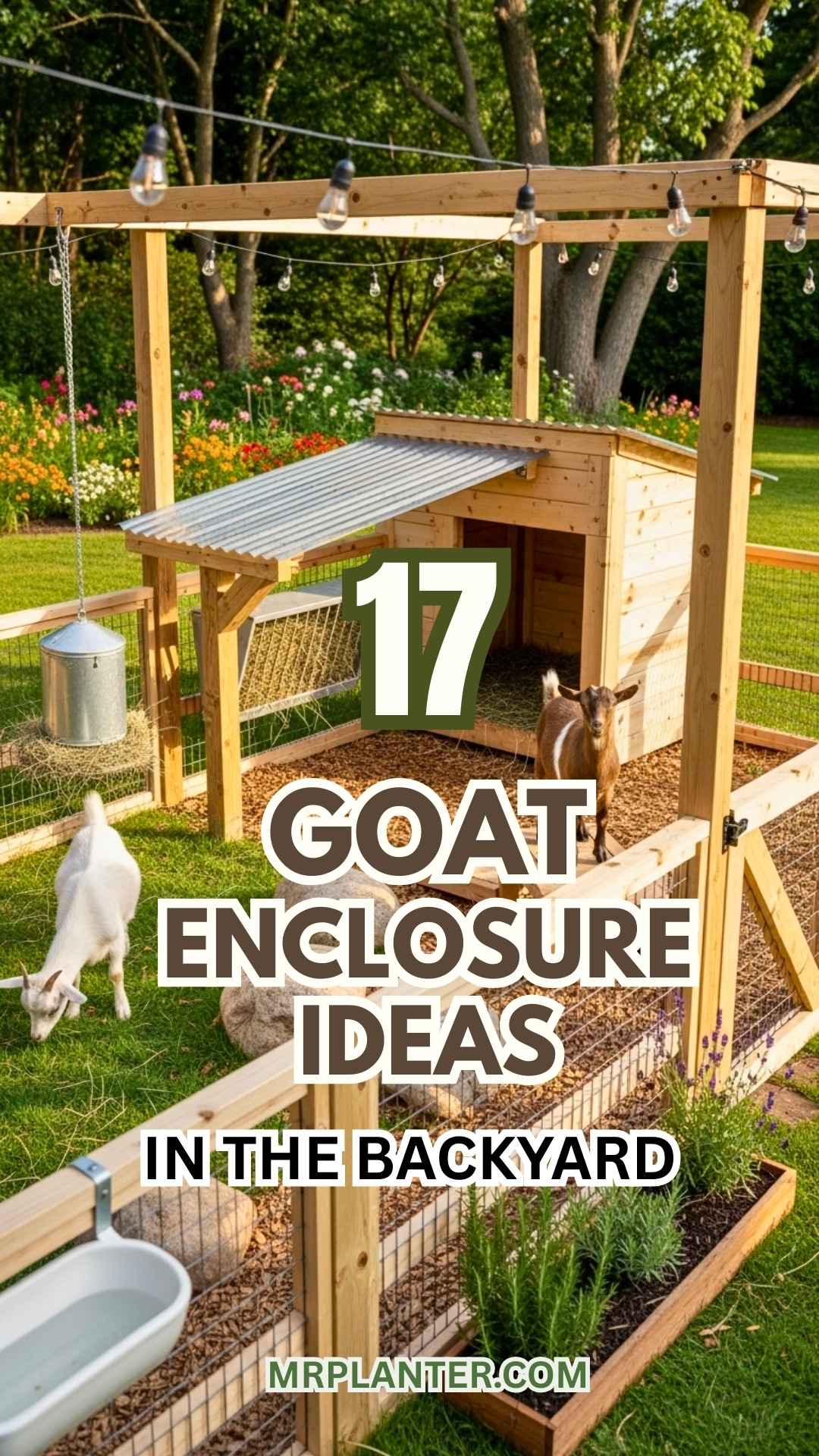
Keep your mind open—and hey, a little humor helps. A clever enclosure doesn’t need to be fancy. A few tweaks can make almost anything work for your backyard or pasture.
1. Portable A-Frame Goat Shelter for Quick Moves
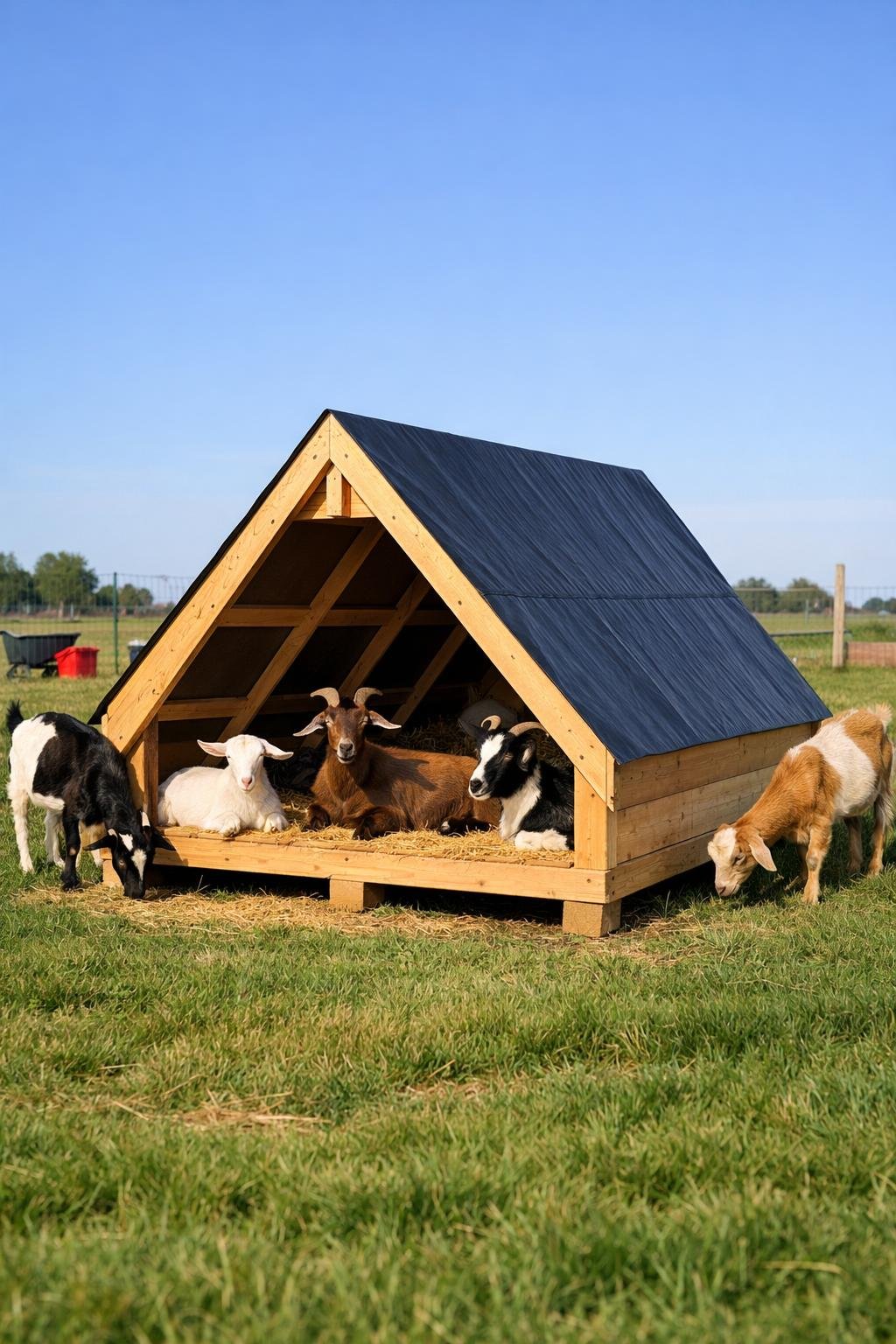
Ever tried to keep up with your goats’ grazing plans? You need a shelter that moves just as fast.
An A-frame is light, basic, and you can drag or lift it without breaking a sweat. It gives goats a dry spot and blocks wind from two sides, so they stay comfy—no big construction needed.
Build one with pallets, 2x4s, or whatever tin you’ve got lying around. Keep it low and roomy so goats can come and go, and slap on a hinge or rope so you can fold it flat for hauling.
Stake it down or toss on a small weight if it’s blowing a gale. If you paint or seal the edges, you’ll keep rot at bay and get a few extra years out of it.
Expert Tip From MrPlanter: Pick materials you can swap out easily and keep the roof nice and angled for rain to run off. Move the shelter every few days—your goats (and their bellies) will thank you.
2. DIY Pallet Goat Shelter on a Budget
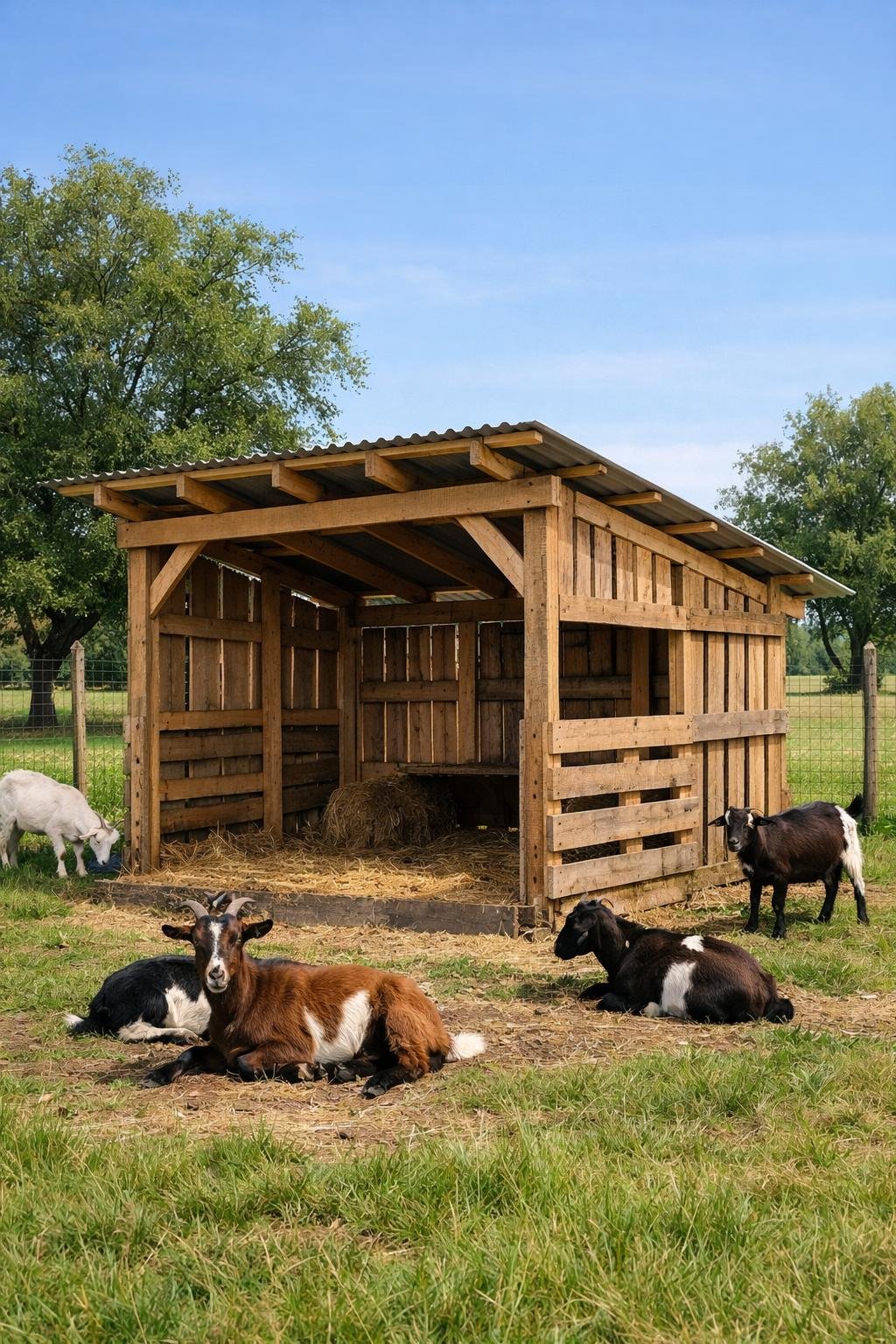
Guess what? You can build a warm, dry goat shelter for next to nothing if you grab some free pallets.
Stack three pallets for walls and leave one side open so your goats can stroll in and out. Add a couple more pallets for a raised floor to keep things dry when it gets soggy.
Slap on a sloped roof—metal or scrap plywood works fine—to keep the rain off. Screw those pallets together and beef up the corners so the shelter sticks around for more than one season.
Paint or seal the wood if you want it to last, and toss in some straw for bedding. It’s cheap, quick, and perfect for anyone just starting out who wants a safe, cozy goat spot.
Expert Tip From MrPlanter: Double-check pallets for nasty chemicals or stray nails. Swap out busted boards and keep that floor up off the ground so bedding stays dry.
3. Converted Garden Shed Goat Retreat
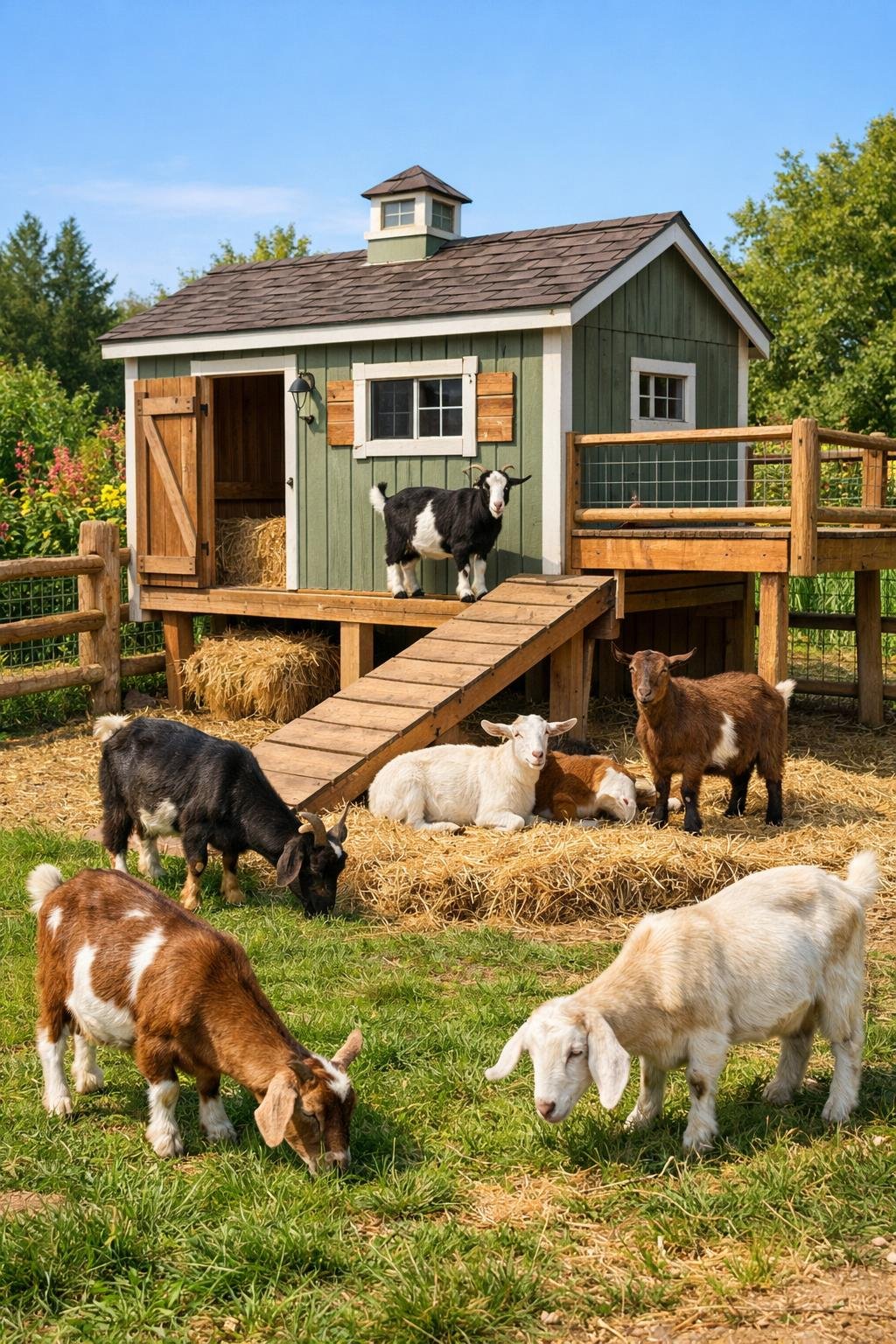
Let’s bust a myth: that old garden shed doesn’t have to collect dust and spiders. You can turn it into a cozy goat retreat with just a little effort.
Start by scrubbing and sealing the floor so dampness and breezes don’t sneak in. Raise the shed on a platform or toss some gravel underneath to help with drainage.
Add a wide front opening or a hinged door so goats can come and go as they please. Pop in low windows or vents for fresh air and light, but cover them with strong mesh to keep out unwanted visitors.
Throw in some straw bedding and maybe a small raised platform for a dry nap spot. Keep feed and tools locked up—goats are nosy and will chew anything they find.
Expert Tip From MrPlanter: “Seal up those gaps at floor level to keep out drafts and little critters. A removable ramp makes cleaning up way easier and helps goats get in and out.”
4. Ponderosa Portable Goat Shed with Wheels
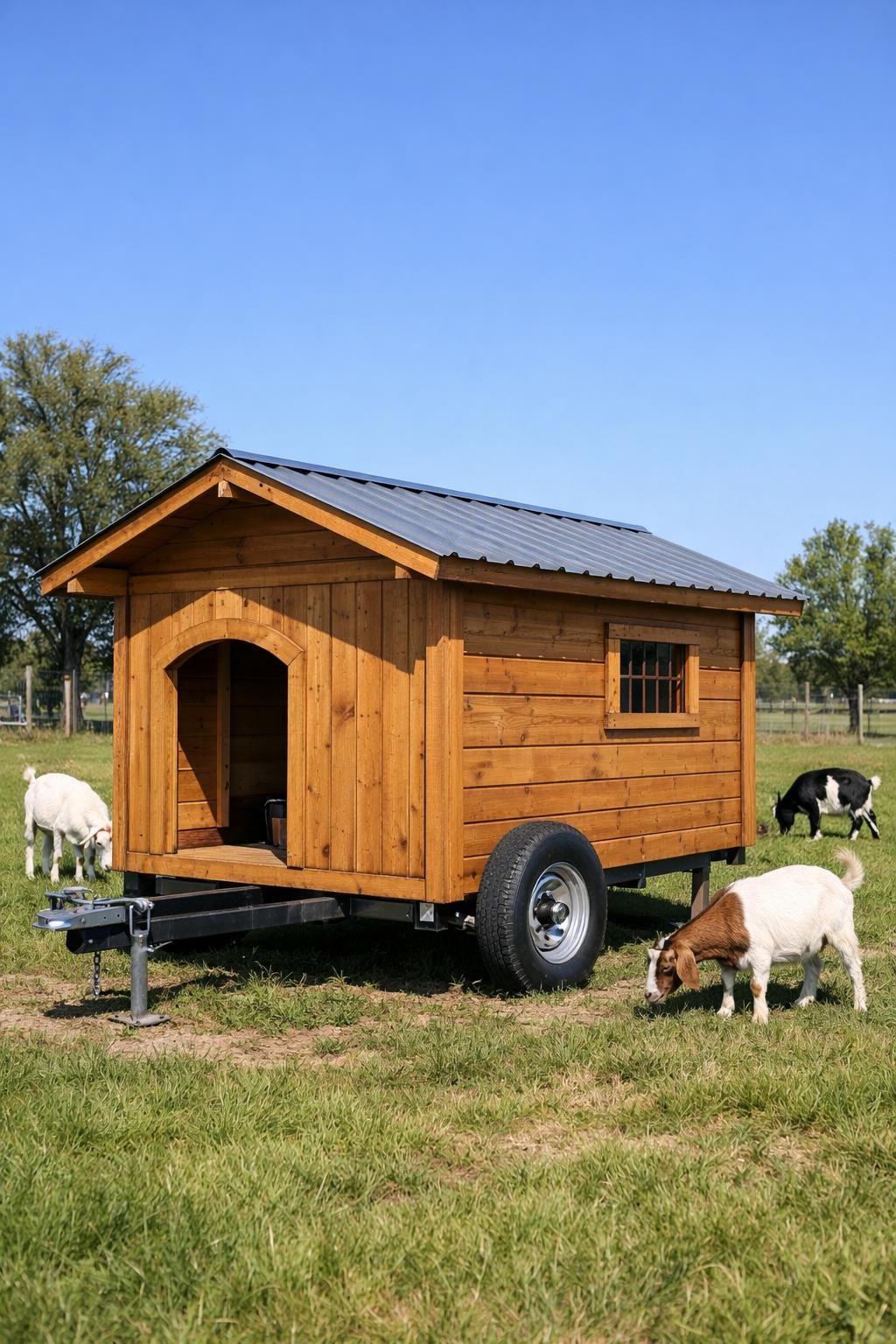
Ever tried moving a heavy shelter after a rainstorm? Your goats notice every minute you’re late.
This Ponderosa-style shed sits low and tough, and with wheels, you can pull it behind a quad or tractor. Built from rough timber, it shrugs off bumps and keeps your goats dry and out of the wind.
Chain it to a vehicle and shift it wherever you need—shade, cover, or just a new spot for munching. It makes rotating pastures and quick sheltering a breeze (and saves your back).
Expert Tip From MrPlanter: Go for heavy-duty wheels and a front tow point so you can move it even if the ground’s soft. Check the roof angle and add a little overhang to keep rain from pouring in the front.
5. Rustic Log Cabin Style Enclosure
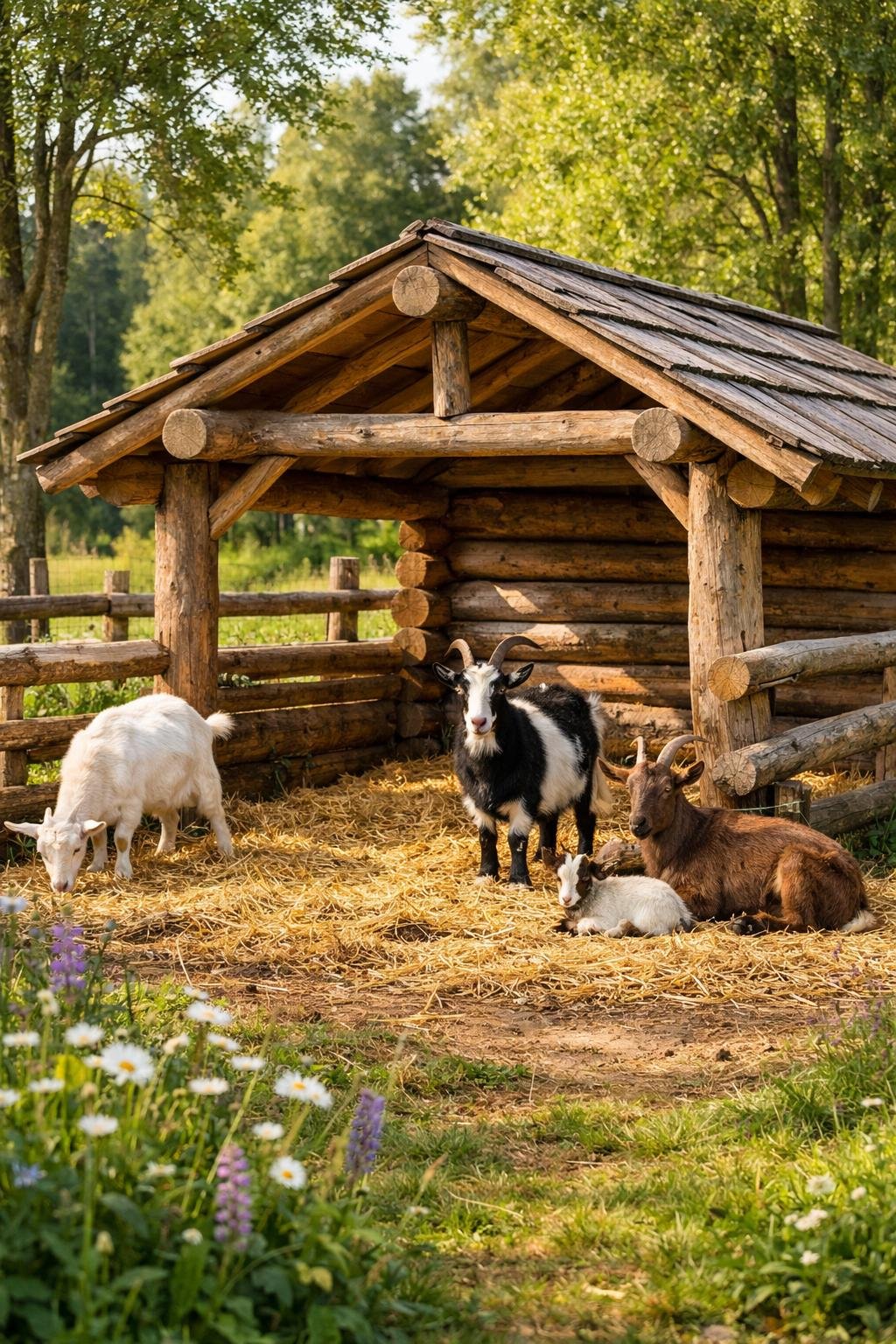
Fun fact: goats love a snug, cabin-like spot just as much as you do on a chilly morning. A rustic log cabin enclosure gives your herd a sturdy, warm home that fits right in with the countryside.
Build it from reclaimed logs or timber if you want charm without breaking the bank. Make the walls solid, but add a few high vents or windows for airflow—just keep drafts away from goat level.
A raised floor keeps things dry and cuts down on mud and bugs. Toss on a lean-to for rainy days and a wide roof overhang to keep the bedding drier.
Expert Tip From MrPlanter: “Stick with untreated, rot-resistant wood and raise the floor at least 6 inches so bedding stays dry.“
6. Multi-Animal Pen with Integrated Goat Runs
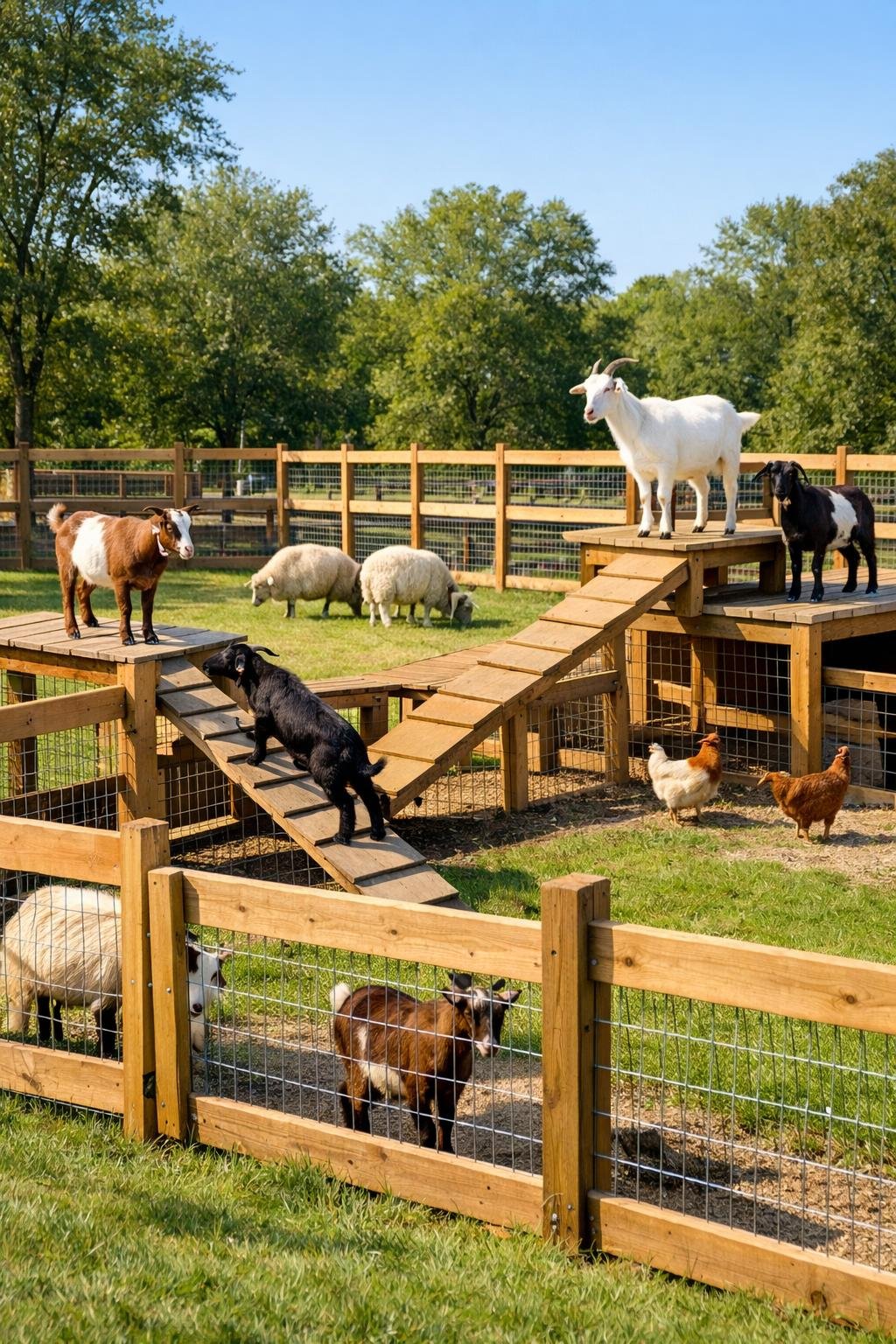
Here’s the truth: you don’t need a different building for every critter to keep the peace.
A multi-animal pen with built-in goat runs saves space and makes chores less of a headache. Goats get their own runs for climbing and grazing, but everyone can share a main shelter.
Lay out clear paths so your animals don’t get cranky with each other. Use sturdy gates and panels you can move around as your herd or flock changes.
Keep feeders and waterers at different heights so everyone eats in peace. Add easy-access gates for quick cleaning or vet visits.
Expert Tip From MrPlanter: Plan your fencing to be flexible now—it’s way easier to tweak later as your animals grow. A little planning now saves a lot of drama down the road.
7. Goat Barn with Raised Loft for Bedding
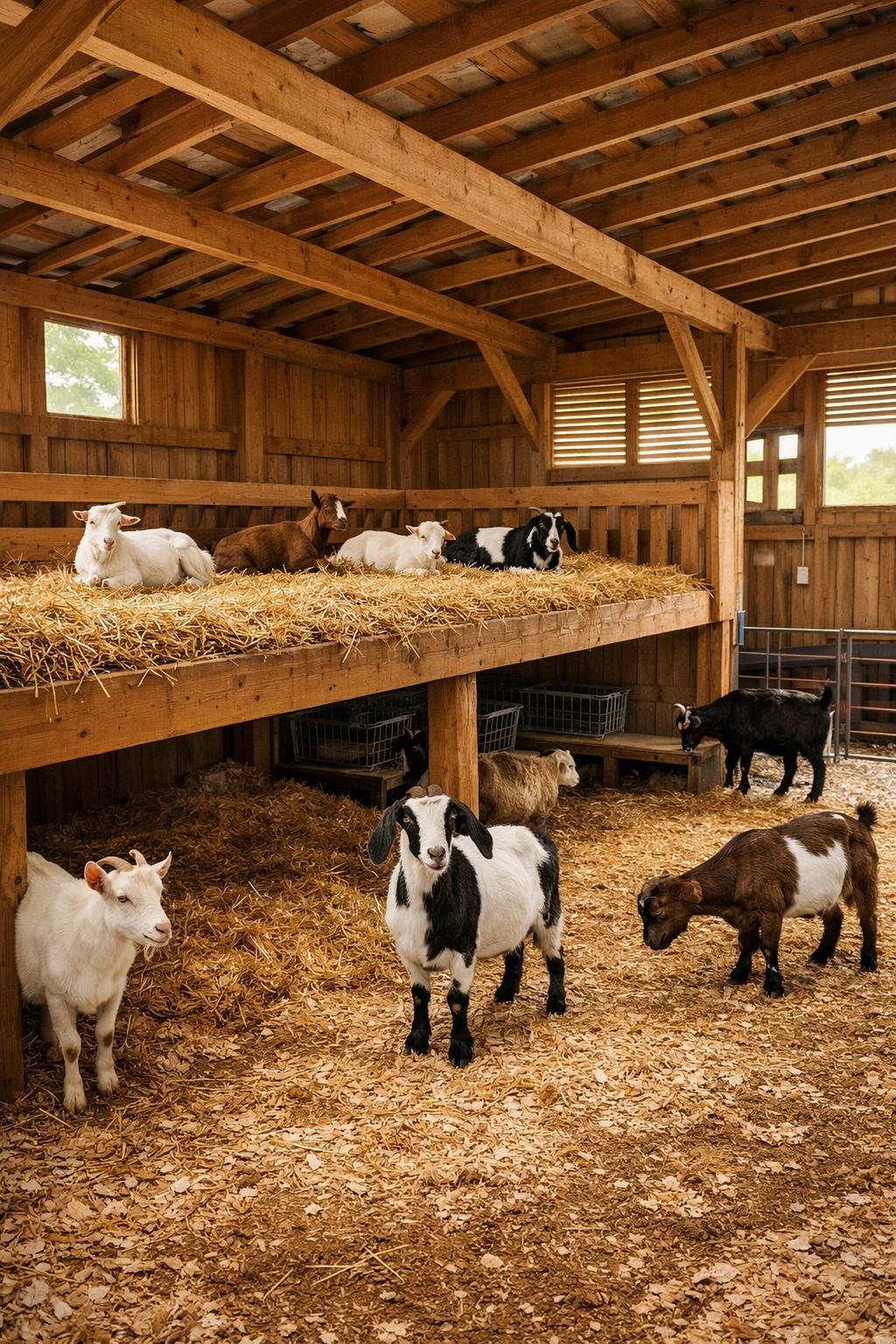
Here’s a surprise: raised lofts aren’t just for hay bales. They actually keep bedding drier and goats a whole lot happier.
You get a warm, insulated spot above ground where straw or shavings stay fluffy for longer. That means less cleaning and fewer soggy patches for your herd.
A loft also gives you space for feed and gear, so the main pen doesn’t get cluttered. Build a sturdy ladder or ramp so even the old-timers can get up there safely. Make sure the loft’s got good airflow and a solid floor to block drafts.
Put bedding where sunlight and air can help dry it out. Keep the entry wide for easy mucking and hauling in fresh straw.
Expert Tip From MrPlanter: Raise the loft at least 24 inches to keep it dry and draft-free. Keep the ramp angle around 30 degrees so goats don’t slip and slide.
8. Shady Enclosure with Natural Tree Canopy
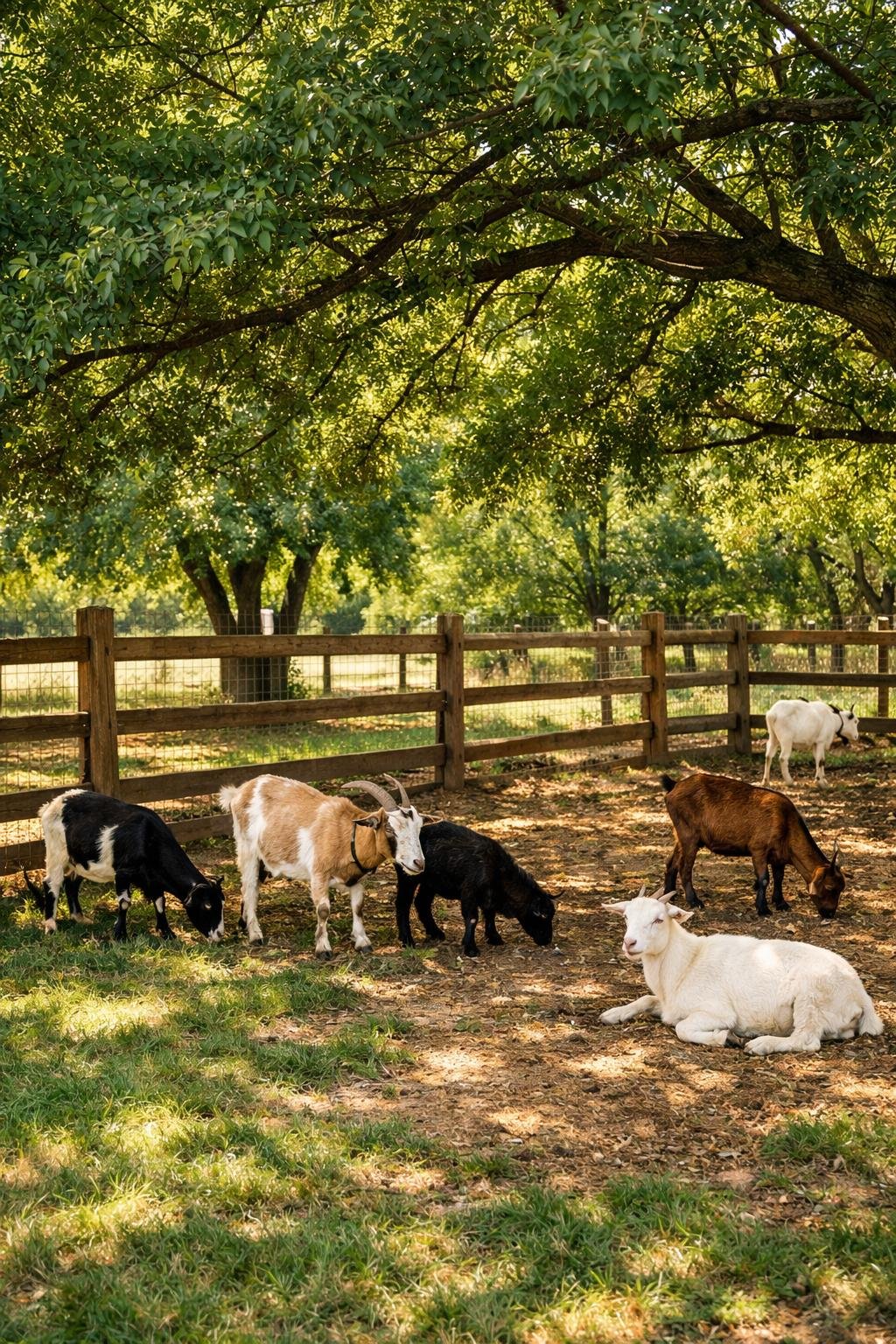
Shade cloth is cool, but you know what’s even better? Real trees. If you’ve got mature trees, they give goats cool shade, wind breaks, and a spot to scratch their backs.
Set up a safe buffer under the trees. Trim low branches, yank out any poisonous plants, and don’t let the ground get too muddy where goats hang out.
Use portable panels or simple fencing so you can rotate where goats graze and protect those tree roots. Add a raised bed or pallet shelter for rainy days and sloppy footing.
Expert Tip From MrPlanter: Plant a few native, goat-safe trees to boost shade in the long run. Rotate your goats’ access to keep both the trees and the goats healthy.
9. Insulated Goat Shed for Year-Round Comfort
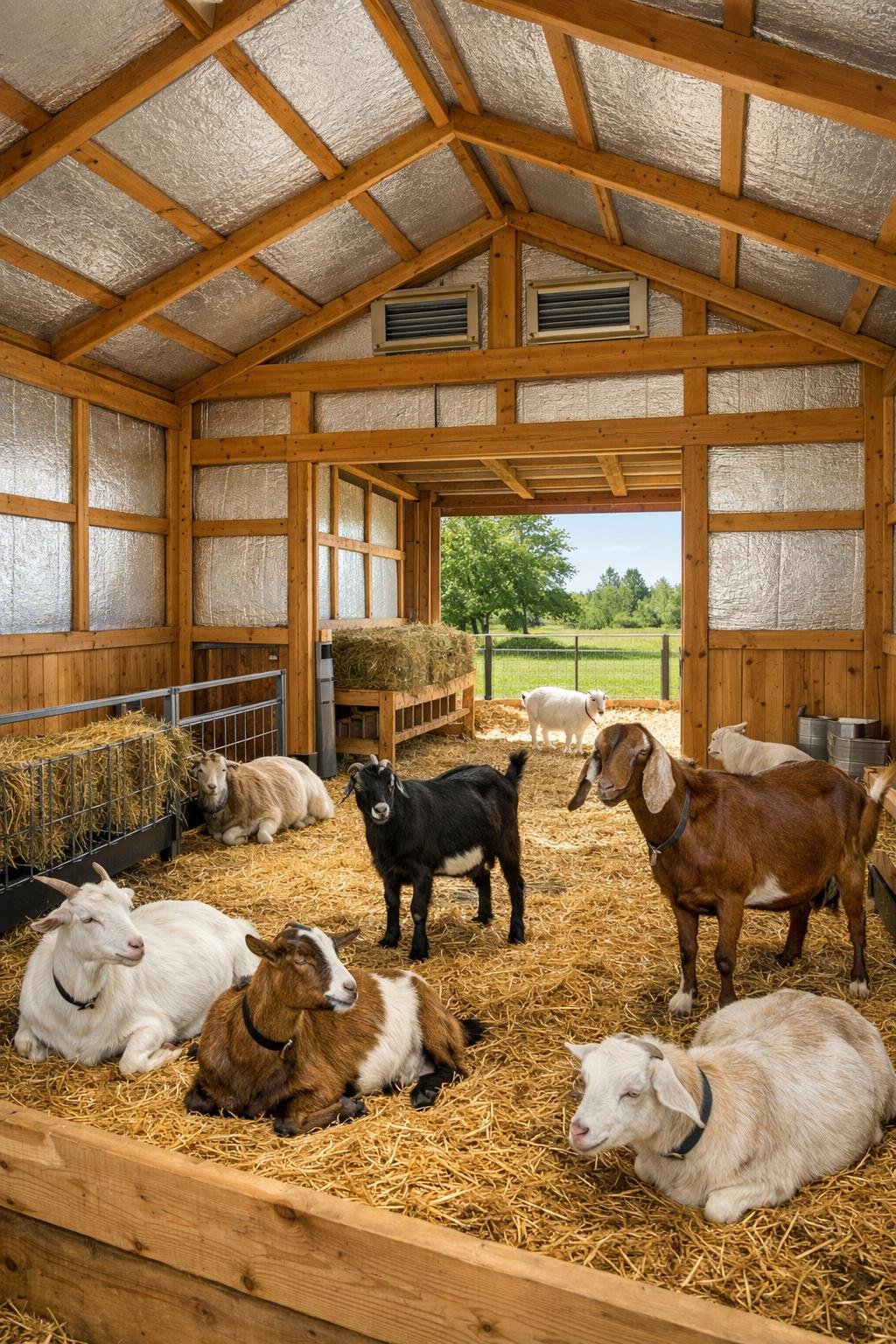
Let’s be honest: goats don’t sleep well when they’re freezing, and that messes with milk and moods.
An insulated shed keeps your goats warm in winter and cool in summer. Use rigid foam or straw bales in the walls, but don’t forget a dry, raised floor so bedding doesn’t get soggy.
Good airflow matters just as much as warmth. Put small vents up high to let out moisture and ammonia, and seal doors tight to block drafts.
Stick to non-toxic materials and finishes you can actually clean. A cozy, insulated shed makes chores easier and keeps your goats chill.
Expert Tip From MrPlanter: Pile on a deep layer of dry straw and swap it out often to hold in heat and block drafts. Check those vents every month so air stays fresh and your goats stay happy.
10. Compact Urban Backyard Goat Pen
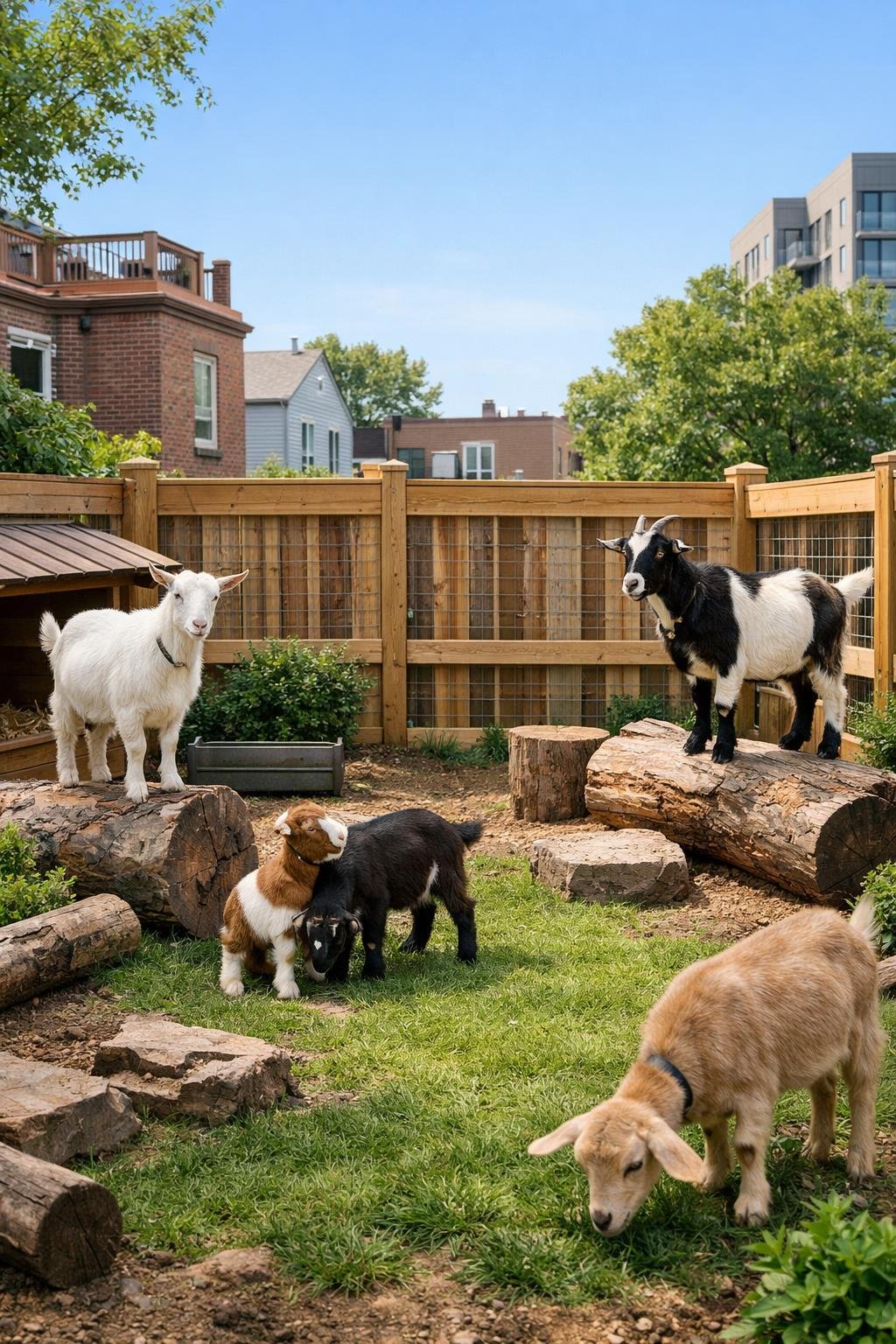
Think your city yard’s too tiny for goats? Small spaces can work if you get creative.
You can fit a snug pen in a tight backyard by stacking platforms and ramps. A three-sided shelter keeps goats warm and dry but leaves enough space for grazing and play.
Go for tall, sturdy fencing and a lockable gate for safety. Movable panels or a small electric strand help keep things neat and flexible.
Pick smaller breeds like pygmy or Nigerian dwarfs so you’re not building a mansion. Add climbing toys and a covered feed spot to keep them busy and out of trouble.
Expert Tip From MrPlanter: Measure your space and give each small goat at least 15–20 sq ft. Keep the pen close to water and your house so chores don’t feel like a trek.
11. Goat Shelter Made from Recycled Materials
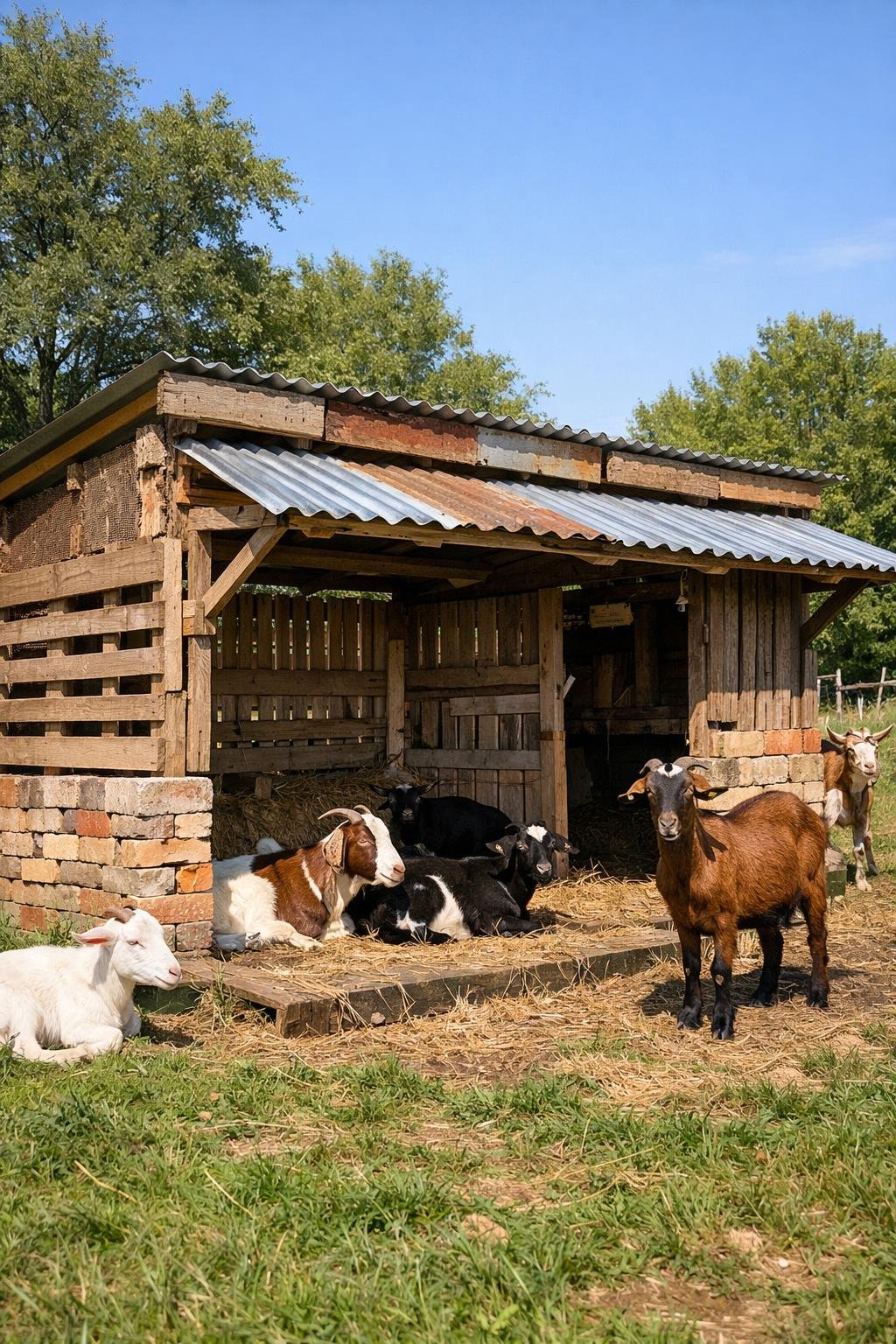
Here’s a fun one: old pallets and barrels? Not junk—they’re goat shelter gold. You can turn wood pallets, plastic barrels, and IBC totes into a weatherproof goat home for almost nothing.
Check your materials for sharp bits and rot before you build. Cut a doorway, sand the rough edges, and throw in a raised floor or straw bedding to keep things dry.
Make sure the roof slopes so rain runs off, and fill in any gaps to block chilly breezes. Small vents up high help with airflow but won’t chill the little ones.
Keep it lightweight so you can move it with your herd. You save cash and give old stuff a new purpose.
Expert Tip From MrPlanter: “Pick solid, clean materials and test the shelter before letting goats in. Always add bedding and check for hazards—goats are nosy and will find trouble if it’s there.“
12. Simple Lean-To Roof Shelter Design
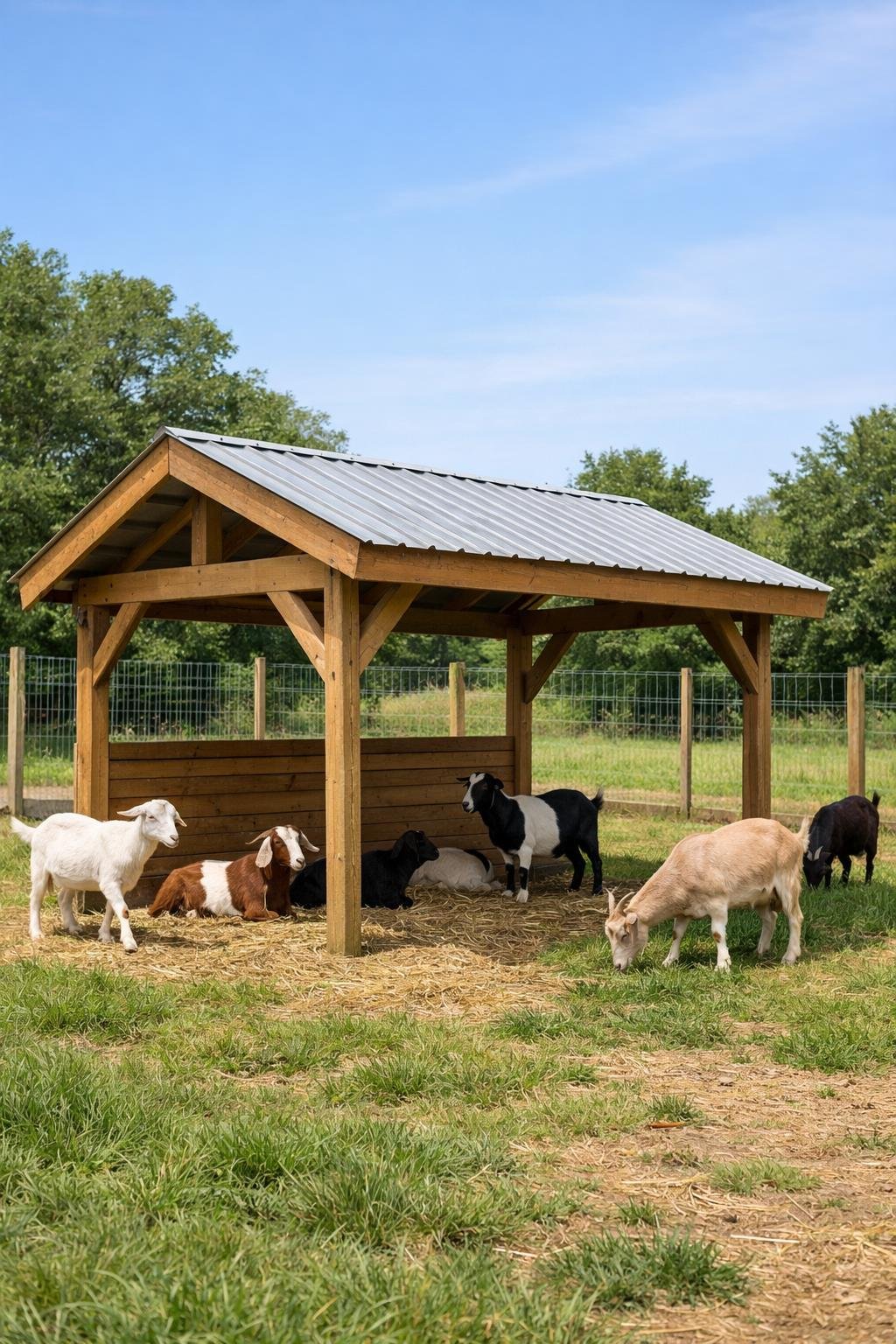
If your goats hate rain and you’re not up for building a whole barn, a lean-to roof is your best friend.
It leans against a fence or post and needs way fewer materials than a full shed. Shelter, shade, and a quick dry-off spot—all in one.
Build it from reclaimed wood, pallet boards, or new lumber if you’re feeling fancy. Pitch the roof steep so rain and snow slide right off, and raise one side for airflow.
Leave one side open for easy cleaning and goat hangouts. Add a drip edge and a gravel pad to stop mud and keep hooves healthy.
Expert Tip From MrPlanter: “Face the high side toward the wind for ventilation, and the low side away to block the worst weather. Raise the floor a bit and you’ll have less mud and fewer vet bills.“
13. Open-Air Goat Pavilion with Rain Cover
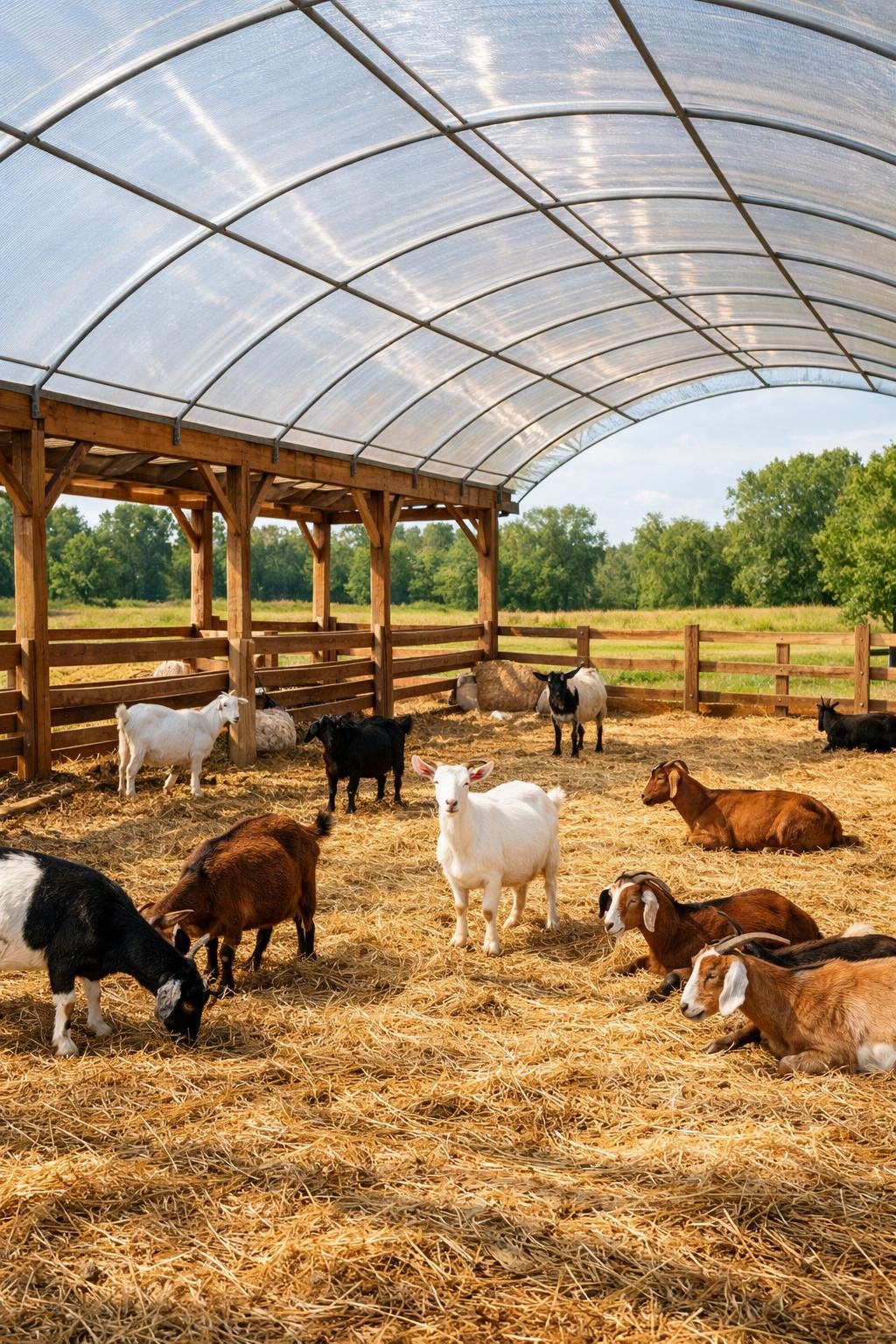
Let’s clear this up: goats don’t care about fancy barns. They just want to stay dry and have space to wander.
You can build a simple open-air pavilion that keeps rain off their backs and lets them stretch their legs. Use sturdy posts, a sloped roof, and wide eaves—water runs off, not into their bedding.
On stormy days, toss up a tarp or roll down a rain cover on one side. That way, you get fresh air on nice days but can block out the worst weather in a flash.
Set your pavilion on a little hill or a strip of gravel so you don’t end up with goat puddles. Keep the roof at least 6 or 7 feet up—tall goats (and tall humans) will thank you.
Expert Tip From MrPlanter: Pop gutters along the roof to send water away from the pen. Check and swap out tarps every couple of years—nobody likes a leaky roof!
14. Modular Goat Shelter for Expanding Herds
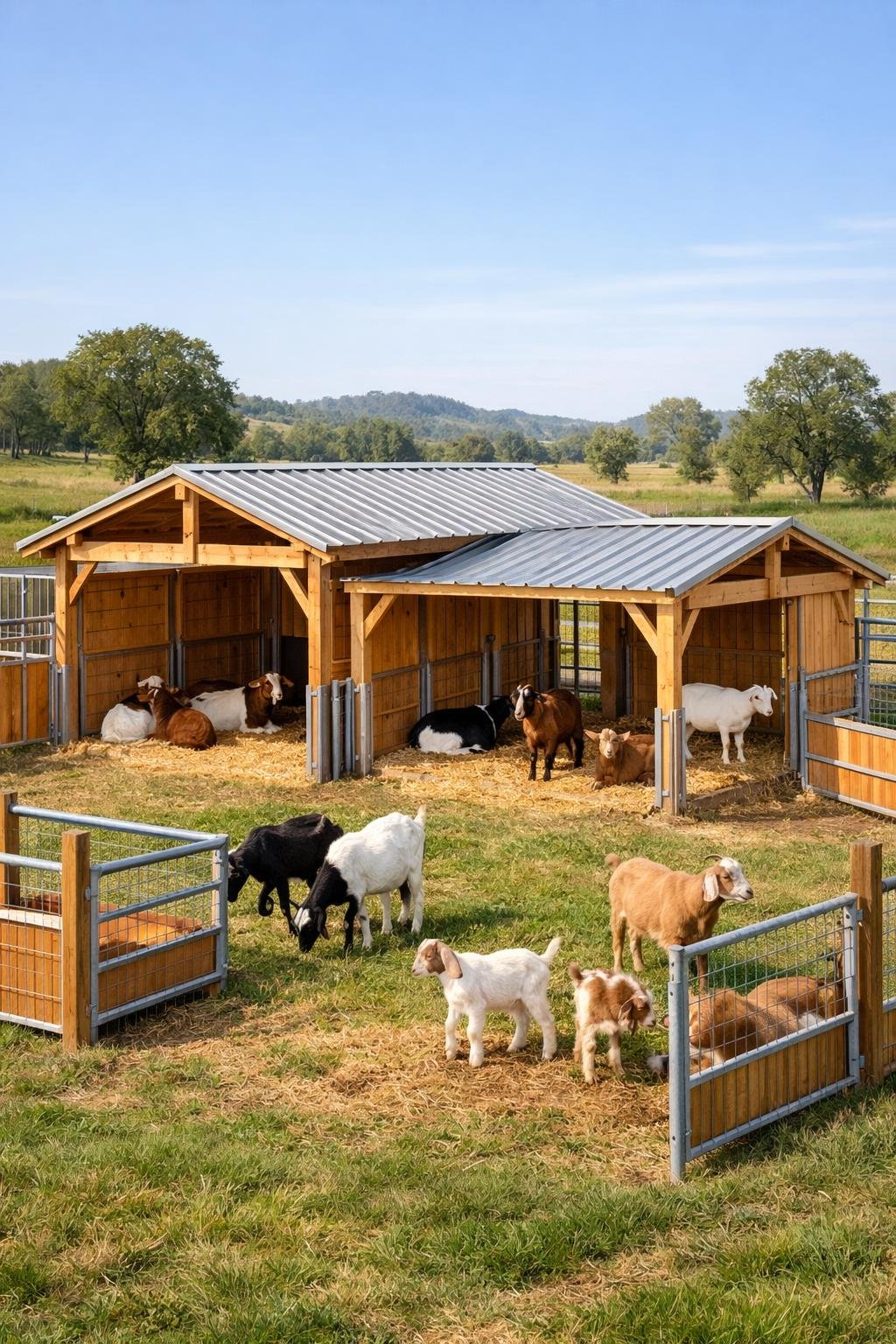
Here’s a fun one—modular goat shelters grow with your herd, kind of like adding more blocks to a LEGO set. You start small and add more space as you go.
Just snap on extra pens, runs, or panels when you need them. You save money at first and can change things up when your goats demand a remodel.
Pick strong panels, then connect them with clips or bolts so you can move or rearrange things. Portable shelters let you rotate grazing spots and dodge muddy patches.
Feed and water setups need to grow, too—plan for that from the start. And double-check that every new piece keeps predators and bad weather out.
Expert Tip From MrPlanter: Start with a tough corner, then add one piece at a time. Watch how your goats use the space before you build more.
15. Goat Enclosure with Solar-Powered Lighting
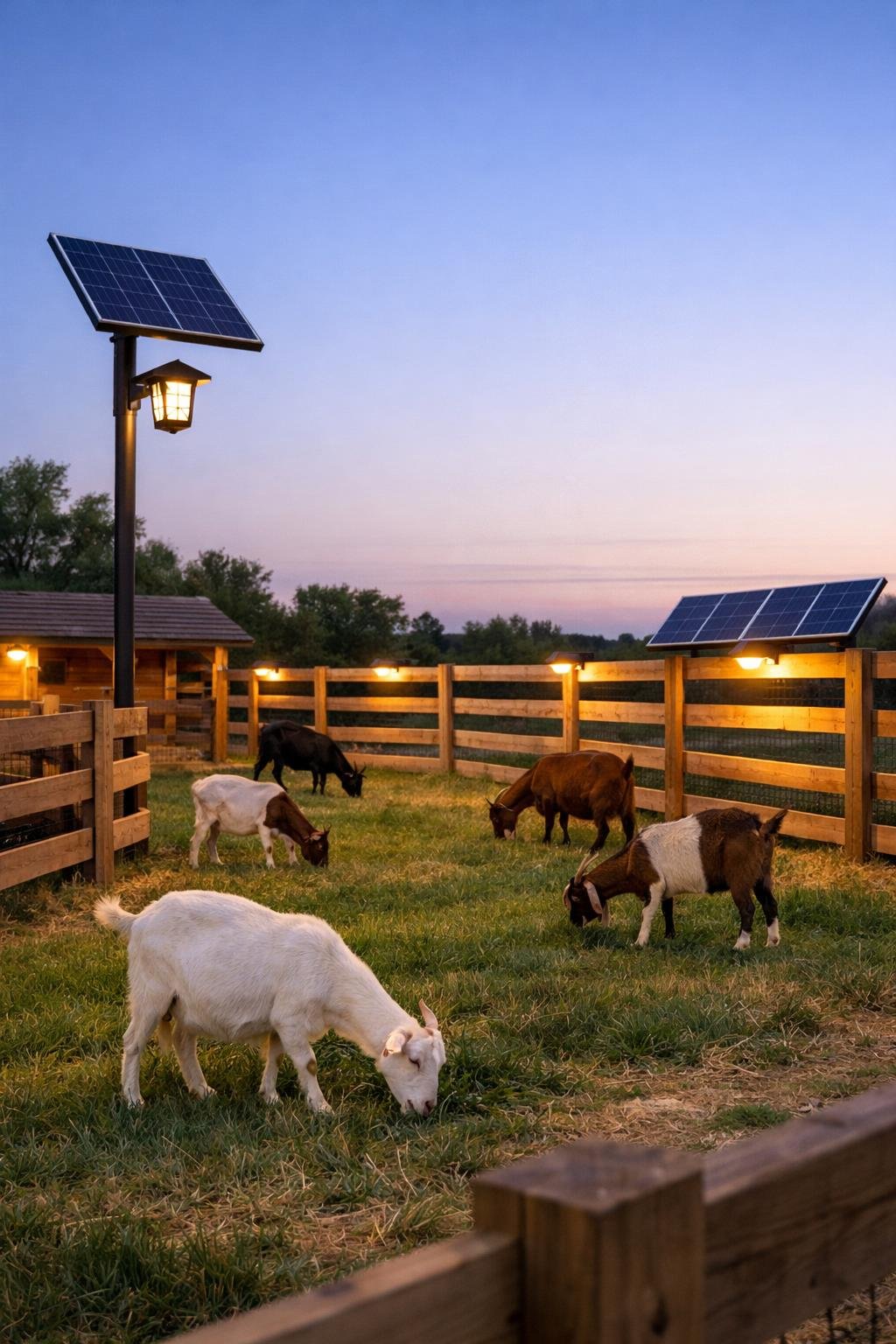
Here’s a cool trick: solar lights do more than just light up your path—they help keep goats calm at night and make it easy to check on everyone.
Stick solar lights along walkways and near gates so you’re not tripping in the dark. These little gadgets soak up sunlight all day and glow all night, no wires needed.
Mount lights up high on posts or the barn so curious goats can’t mess with them. Go for warm bulbs that don’t spook the herd but still let you see what’s going on.
Choose weatherproof lights, and if you’re running an electric fence, get a solar energizer that won’t quit on you. That keeps things simple and safe.
Expert Tip From MrPlanter: “Put lights where you check goats most—gates and feeders are perfect. Wipe off the panels and tilt them toward the sun for best results.”
16. Goat Run with Double-Wire Fencing and Gate
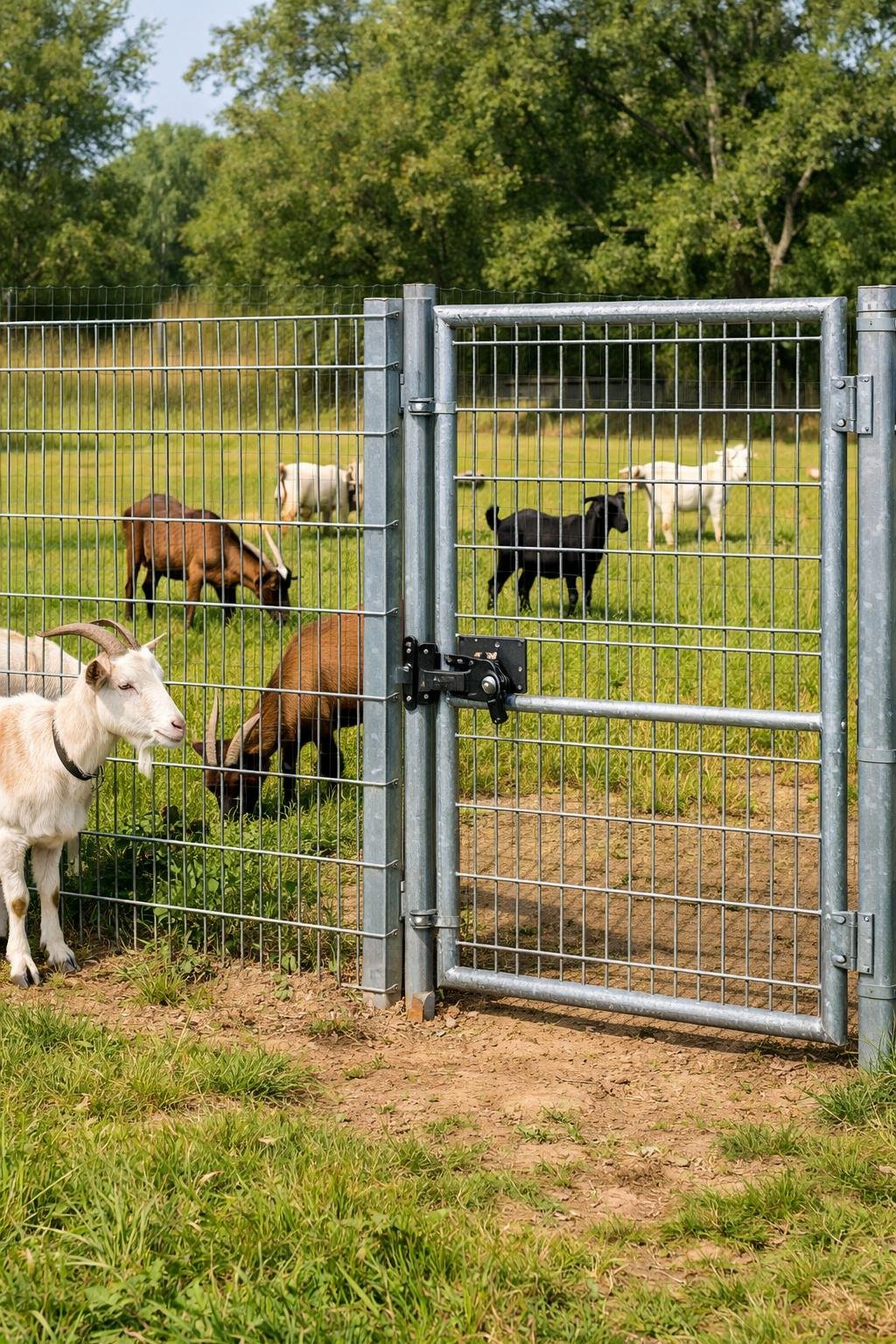
Ever fix a fence just to have another goat find a new escape route? Double-wire fences give you backup, so your herd stays put and you get some peace.
Put a strong woven wire on the outside, then a tighter mesh or goat panel on the inside. Goats can’t climb or squeeze through, and they won’t chew holes as easily.
Space your posts 8 to 10 feet apart and pull both wires tight so nothing sags. Use a gate that matches the fence—tall, sturdy, and with a latch that’s goat- and raccoon-proof but easy for you.
If you’ve got diggers, add a bottom skirt or bury some wire to block their tunnels.
Expert Tip From MrPlanter: “Double layers cut escapes and make repairs easier. Give the fence a once-over every month—catch little problems before they turn big.”
17. DIY Hoop House Shelter for Extra Warmth
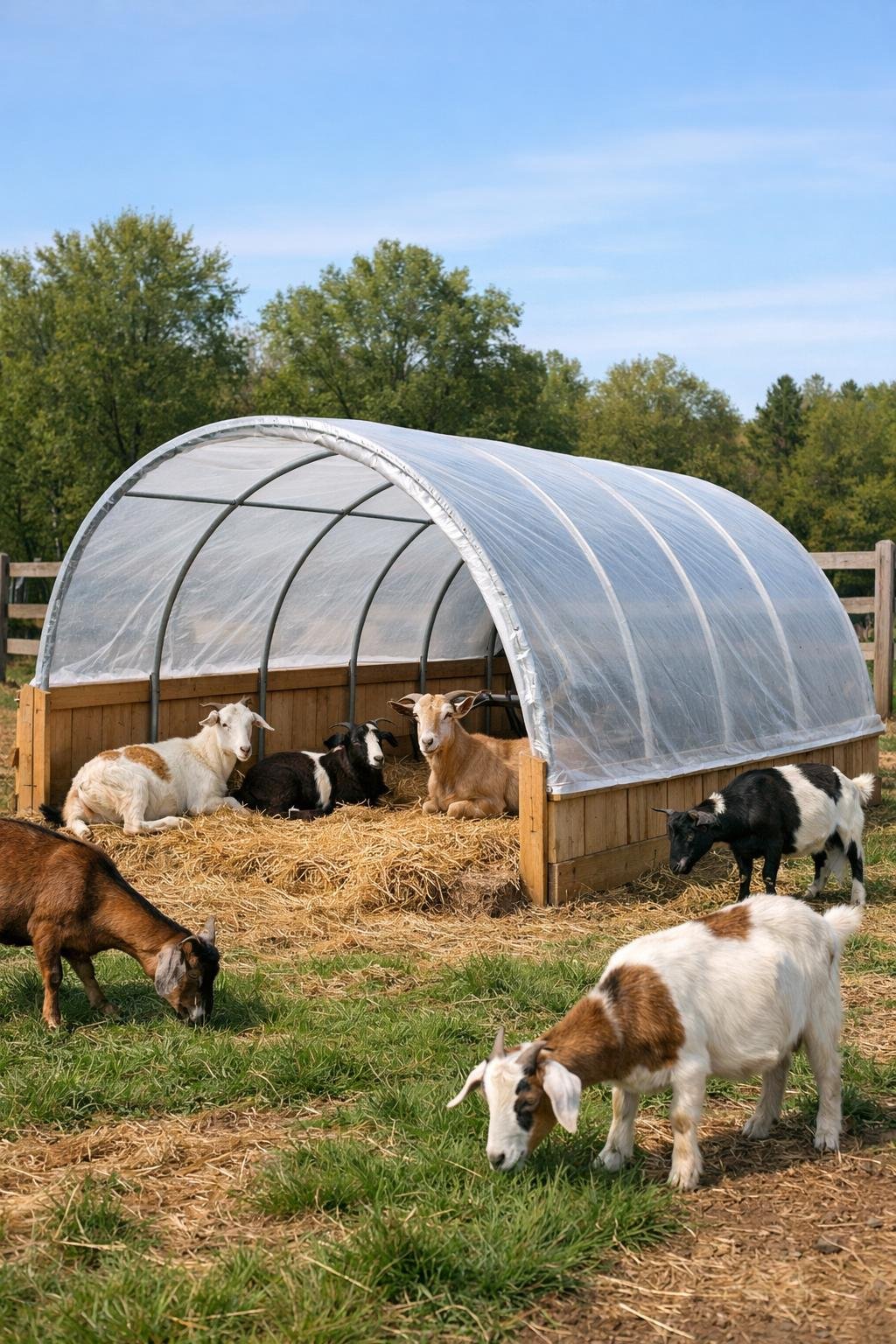
When nights get chilly, goats huddle up and you want them snug—but who wants to spend a fortune? A DIY hoop house keeps things cozy without breaking the bank.
Bend cattle panels or PVC pipes into arches, throw a tarp or greenhouse plastic over the top, and anchor it so the wind doesn’t snatch it away. You can build a few small ones and move them around or keep groups apart.
Pile in straw for bedding and add a windbreak on the open side. That traps heat but still lets in fresh air.
Insulate the lower walls if you want, but always leave vents up high so things don’t get damp inside.
Expert Tip From MrPlanter: “Cattle panels make the best frames—strong and easy. Use a removable tarp for winter, and check the air flow every day so goats stay dry and happy.”
Making Goat Enclosures Work For You
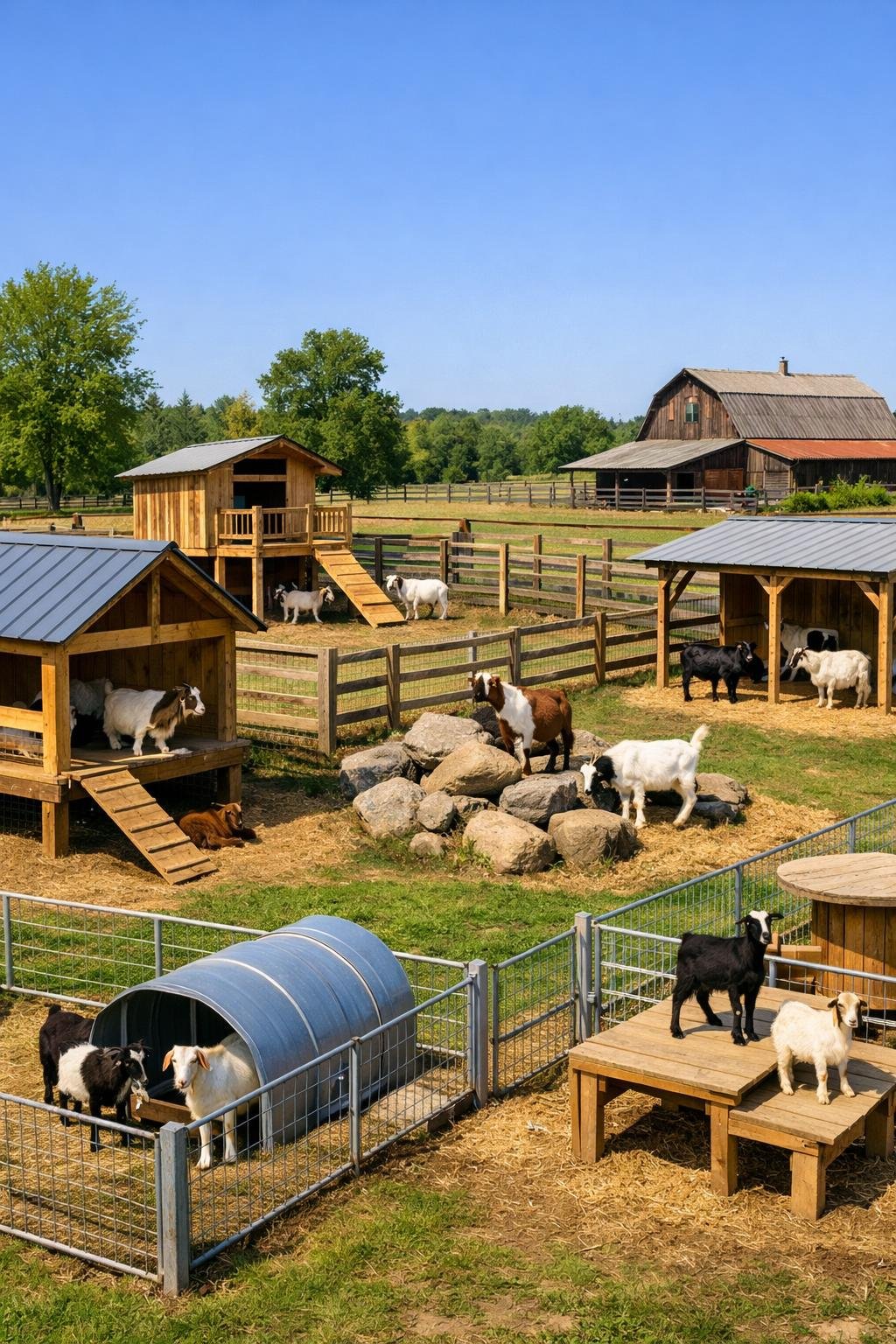
If you plan things right, your goats will be safer, cleaner, and way happier. Think about space, the weather, where you’ll put feed, and how you’ll clean up or move stuff around.
Key Factors to Consider Before Building
Start with your herd size. Each adult goat needs at least 15 to 25 square feet of dry shelter and ideally 200 to 300 square feet of pasture.
Grab a tape measure and sketch out where fences, shade, and water will go.
Pick materials that can handle goat teeth and wild weather. Welded wire or cattle panels work for fencing, and treated lumber or old shed panels make solid walls. Metal or asphalt roofs keep out rain and snow.
Dig those posts down 2 or 3 feet—goats are stronger than they look.
Think about chores. Put gates where you’ll actually use them, raise feeders to keep hay clean, and make sure you can get a truck or trailer in for vet visits.
Add a spot for feed and tools so you’re not running back and forth all day.
Plan for good air flow and drainage. Put windows or vents where air can move but not blast sleeping goats. Slope the floor just a bit so pee runs away from bedding.
Common Mistakes to Avoid
Don’t skimp on fencing. Goats test every inch. Skip the flimsy poultry wire—use strong mesh with small gaps and reinforce the bottom to stop digging. Electric wire helps but never use it alone.
Don’t let water pool under shelters. Wet spots mean hoof problems. Put floors on gravel or pallets and slope the ground away—about one inch every eight feet does the trick.
Skip the wimpy roofs. Tarps blow away or collapse in snow. Stick with a solid roof and some overhang to keep bedding dry and give goats shade.
Don’t forget about predators. Bury fencing 6 to 12 inches or add a wire apron to block diggers. Lock up feed and close doors at night if you’ve got coyotes, dogs, or foxes around.
Don’t assume one design fits all. Different breeds and climates need different setups. Nubians want more shade, Alpines or Saanens might need extra warmth.
Budget-Friendly Tips For Safe & Happy Goats
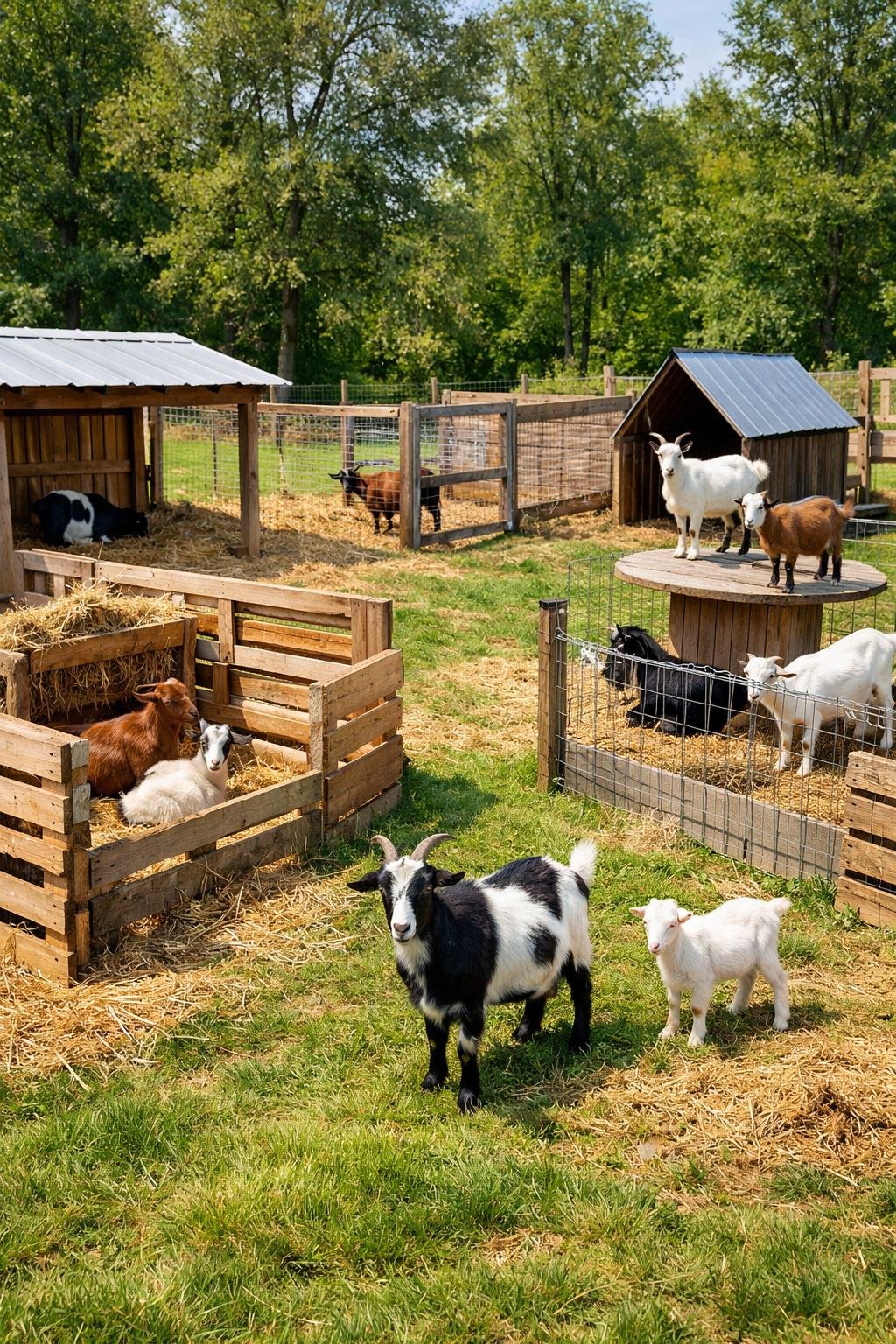
You can keep goats dry, fed, and safe from predators without spending a ton. Smart choices and a few clever fixes go a long way.
Using Recycled Materials Creatively
Old pallets, leftover lumber, and scrap metal roofing make awesome shelters, raised platforms, and feeders. Stack pallets for walls, cut and brace them to close up gaps, and slap on some corrugated metal or shingles for a sloped roof.
Treat or paint wood to slow down rot, and use screws instead of nails for stronger joints.
Turn an old livestock panel into a goat-proof gate by adding extra horizontal rails—no more baby goats slipping through. Use broken concrete blocks or cinder blocks to lift shelters off soggy ground.
Got an old bathtub or big plastic trough? Turn it into a dust bath or water tub, just make sure goats can’t flip it over.
How to Maintain Security keeping the cost lower
Okay, first things first—get yourself a decent fence. I like woven wire with a 4–6 inch grid, and I attach it to strong posts. That stops hooves from getting stuck and keeps those sneaky predators out.
I usually space the posts every 8 to 10 feet. Sometimes, I bury the bottom of the fence about 6–12 inches deep, or I just add a little apron of wire that sticks out to keep anything from digging under it.
For a little extra punch, I throw in some electric wire. One strand at about 12–18 inches high, and another at 30–36 inches. It’s a cheap way to stop anything from climbing or pushing their way through.
If you spot a weak spot, patch it up right away. I always keep a small repair kit handy—extra staples, fence clips, wire snips, and a post driver. Trust me, you don’t want to go hunting for tools when something’s already gotten in.
I’ve found that motion-activated lights or even those budget trail cameras work great near gates and corners. You’ll catch any mischief before it turns into a real problem.
Don’t forget to check hinges and latches every week. Goats are smarter than you think! I swapped out all my open-hook latches for spring-loaded or carabiner-style clips. Goats haven’t figured those out yet—at least, not mine.