You want a tank that keeps your leopard gecko happy and looks awesome on your shelf.
Here are 14 real-life enclosure ideas, so you can pick a safe, stylish setup that actually fits your space and wallet.
You’ll find a mix of DIY builds, compact setups, natural themes, and easy-care choices that’ll get your creative juices flowing—without ever risking your gecko’s well-being.
Each idea puts real gecko needs first: things like temperature, hiding spots, substrate, and enrichment.
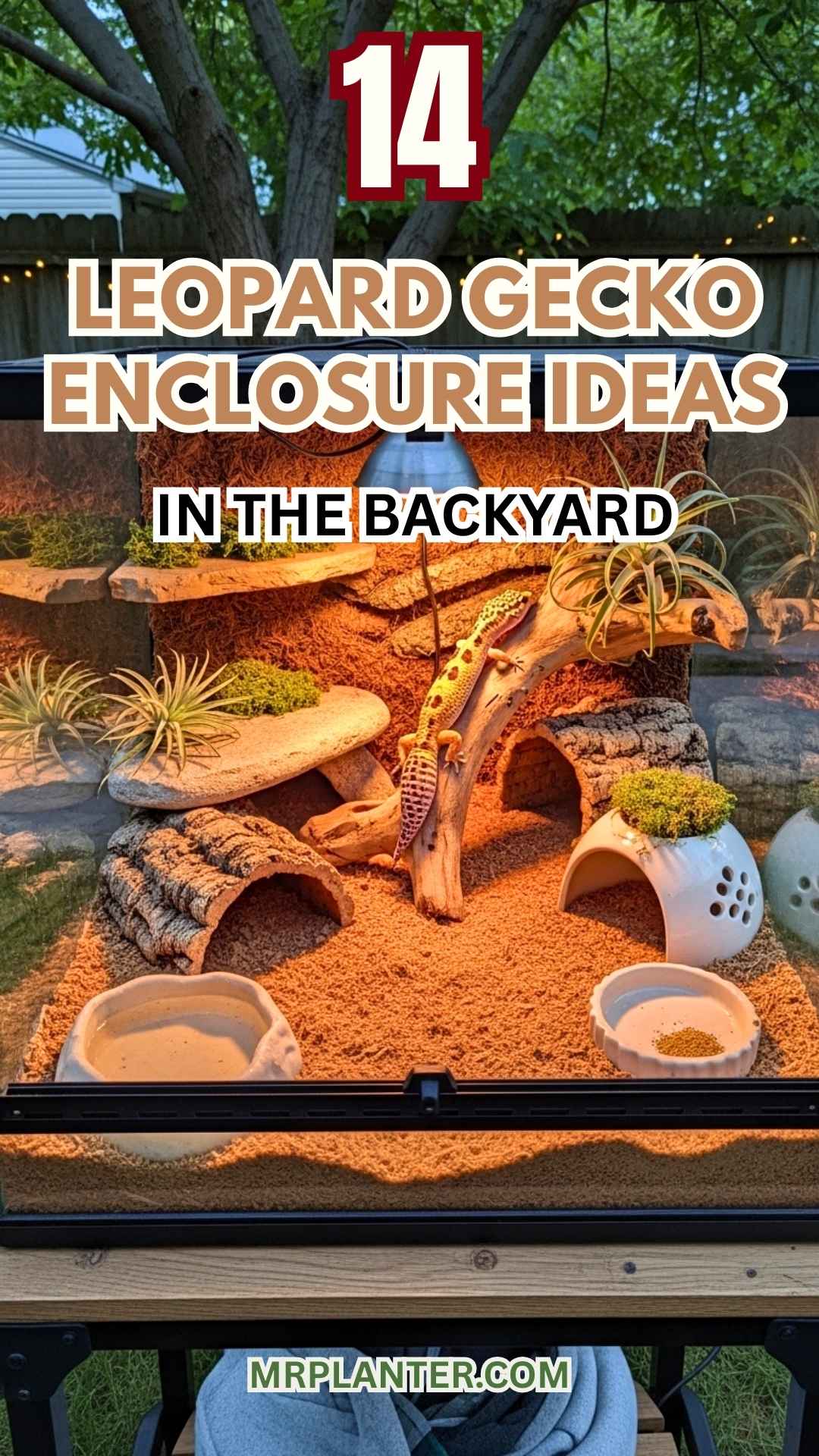
You get to design a home that both you and your gecko will actually enjoy looking at every day.
1. DIY naturalistic leopard gecko terrarium with live plants
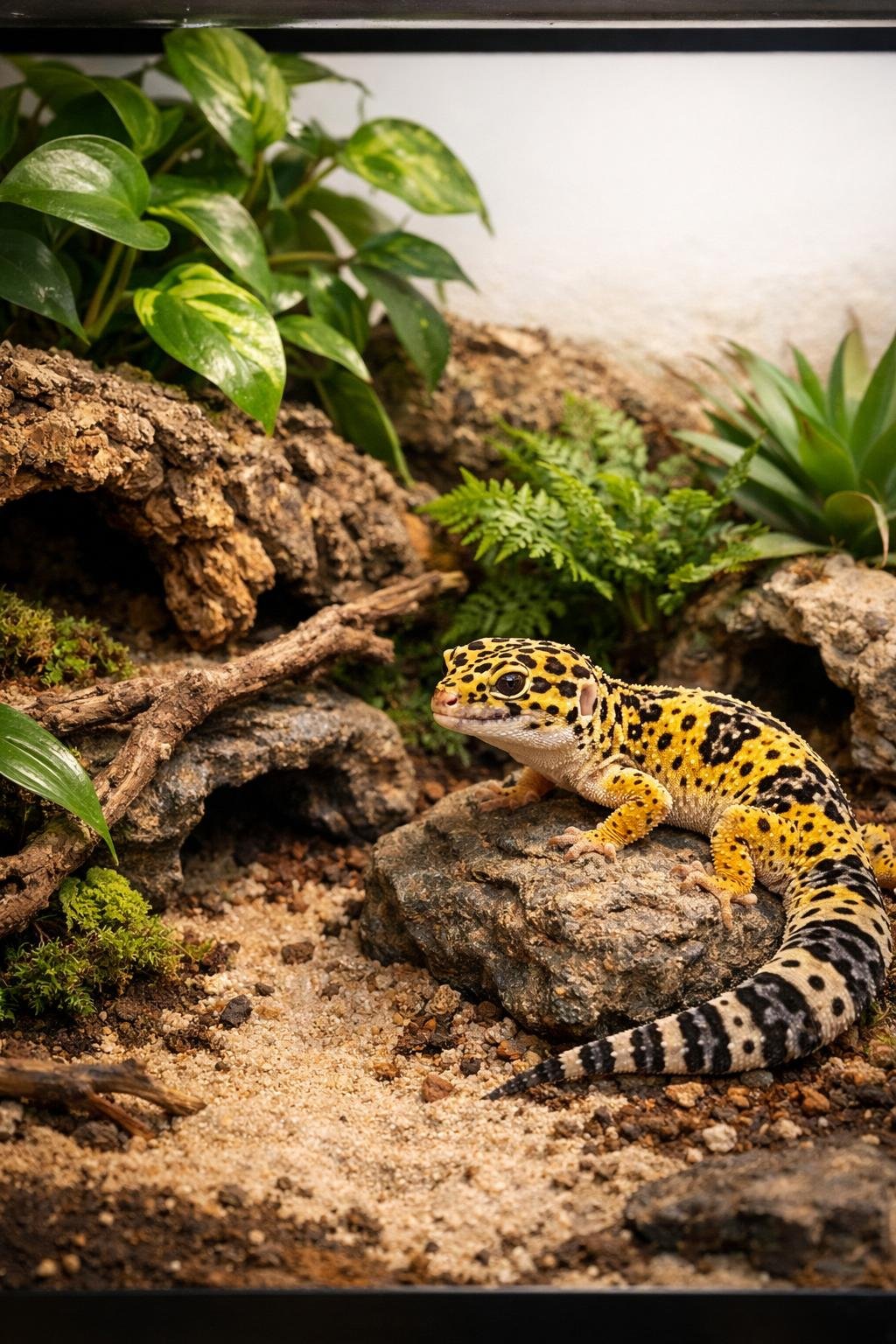
Here’s a myth worth busting: leopard geckos don’t need a boring tank to be happy.
You can totally build a cozy, warm home that looks like their wild grassland AND keeps things safe.
Pick sturdy, low-humidity plants—snake plants or pothos are champs at handling heat and dry air.
Arrange rocks and hides so your gecko has warm basking spots and cool shady retreats.
Lay down a thin soil layer over some drainage stuff, and toss in springtails or isopods as a cleanup crew.
Keep lighting and temps steady, and just watch for any sneaky humidity pockets near plants—not the whole tank.
Expert Tip From MrPlanter: “Start with one or two tough plants and add more slowly to avoid sudden humidity swings. Check plant soil every week and pull any dead leaves to keep things healthy.”
2. Compact 20-gallon glass tank with heat mat
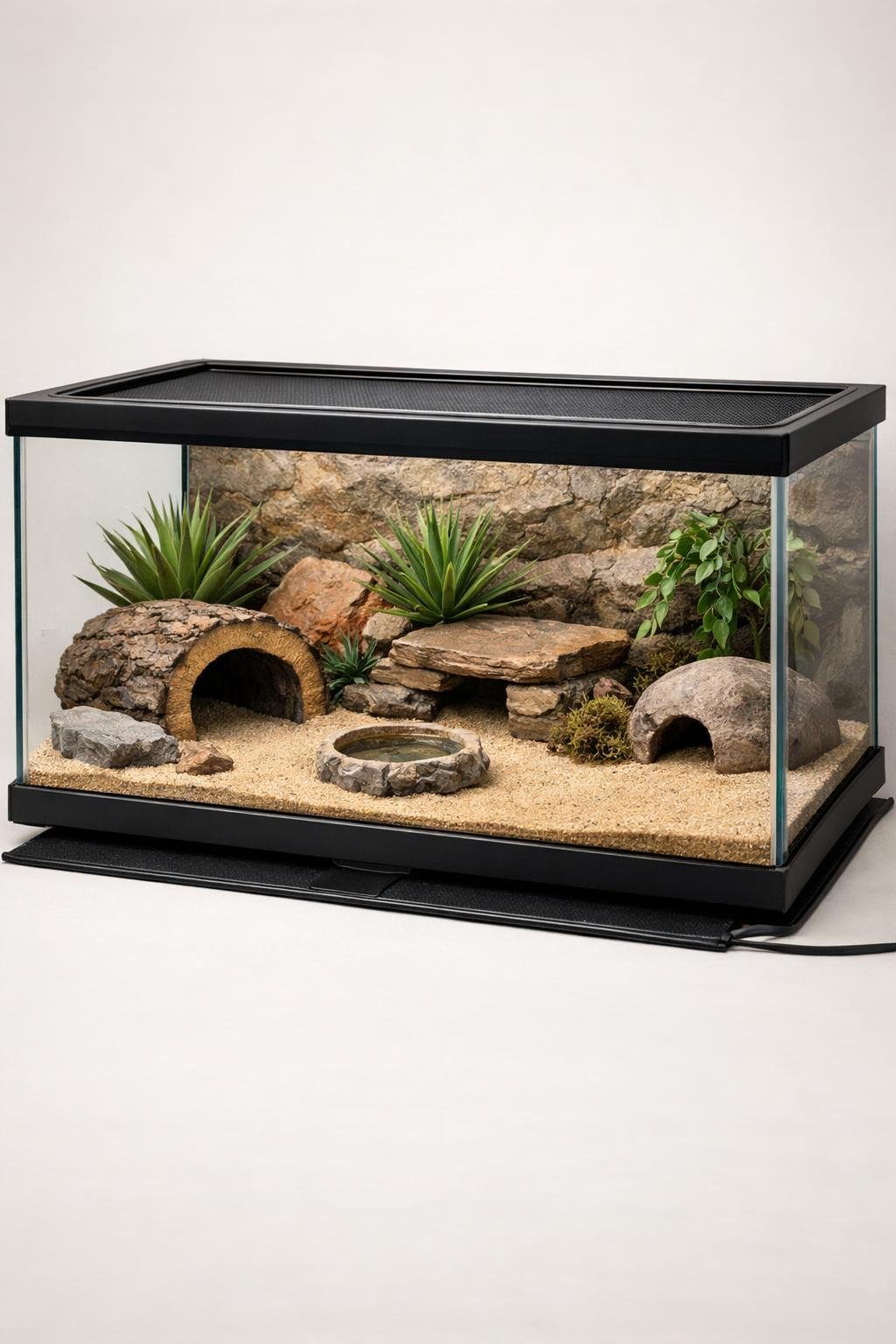
Let’s clear this up: a small tank doesn’t mean your gecko’s living cramped.
A 20-gallon long glass tank gives your leopard gecko plenty of floor space, and it won’t take over your room.
Set an under-tank heat mat under one side to make a cozy hot zone.
Keep the other side cool for exploring, and those clear glass walls mean you can spy on your gecko’s antics up close.
Stick in two or three hides, a shallow water dish, and some flat rocks for basking.
Always run the mat with a thermostat so temps stay right where you want them.
Expert Tip From MrPlanter: “Use a thermostat with your heat mat to dodge overheating. Check the surface temp with an IR gun or thermometer twice a week.”
3. Desert-themed setup with sand-colored substrate
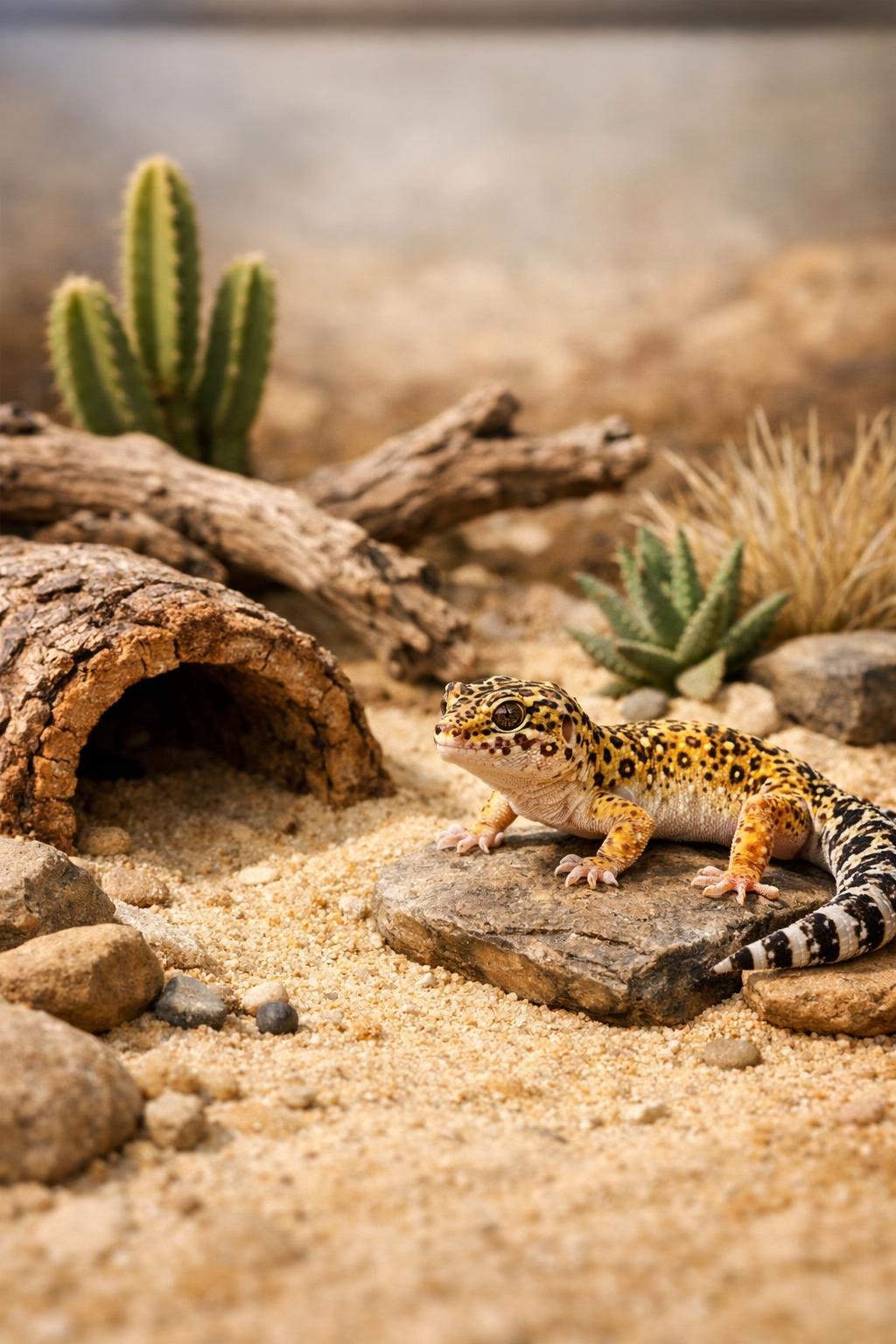
Here’s a hot take: sand isn’t always evil if you pick the right kind and use it safely.
You can set up a warm, natural look with fine, sand-colored substrate that fits your gecko’s desert vibe.
Keep hides open and shallow, and add smooth rocks for climbing and basking.
Put a warm hide on the hot side and a cool one on the other, so your gecko can pick the perfect temp.
Skip deep, loose sand—it’s risky if your gecko eats it.
Go for compacted or sand-soil mixes instead, and scatter flat stones and ledges for variety (no sharp edges, please).
Expert Tip From MrPlanter: “Use fine, reptile-safe sand or a sand-soil blend, and keep it shallow to lower the risk of your gecko eating it. Give them a few hides, especially a warm one, to keep them feeling safe.”
4. Modern minimalist enclosure with clean lines and hides
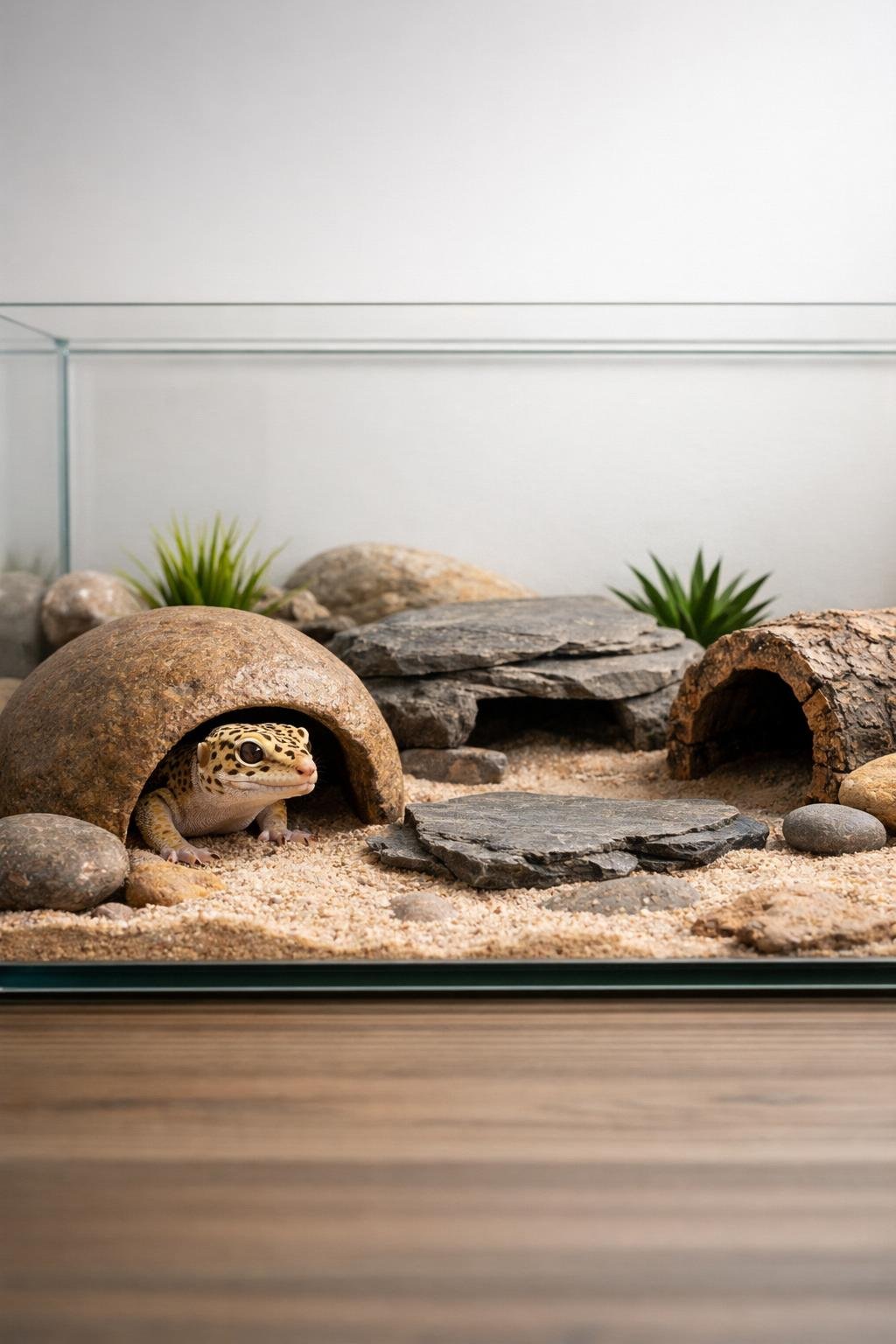
You might not expect it, but a simple tank can look super stylish and still be perfect for your gecko.
Pick a sleek tank, a neutral background, and just a few well-placed hides for a calm, tidy look.
Lay it out with a warm side, a cool side, and at least three hides.
Use smooth slate or cork for hides, and put a flat heat source under one end to make temperature zones easy.
Add a low branch and a small fake plant for interest, but don’t clutter it up.
Stick with easy-to-clean substrate and hides that feel safe but match the clean look.
Expert Tip From MrPlanter: “Put hides at both warm and cool ends so your gecko can pick its favorite spot.
Keep decor simple, so cleaning is quick and your pet stays chill.“
5. Rustic wood and cork bark habitat with climbing spots
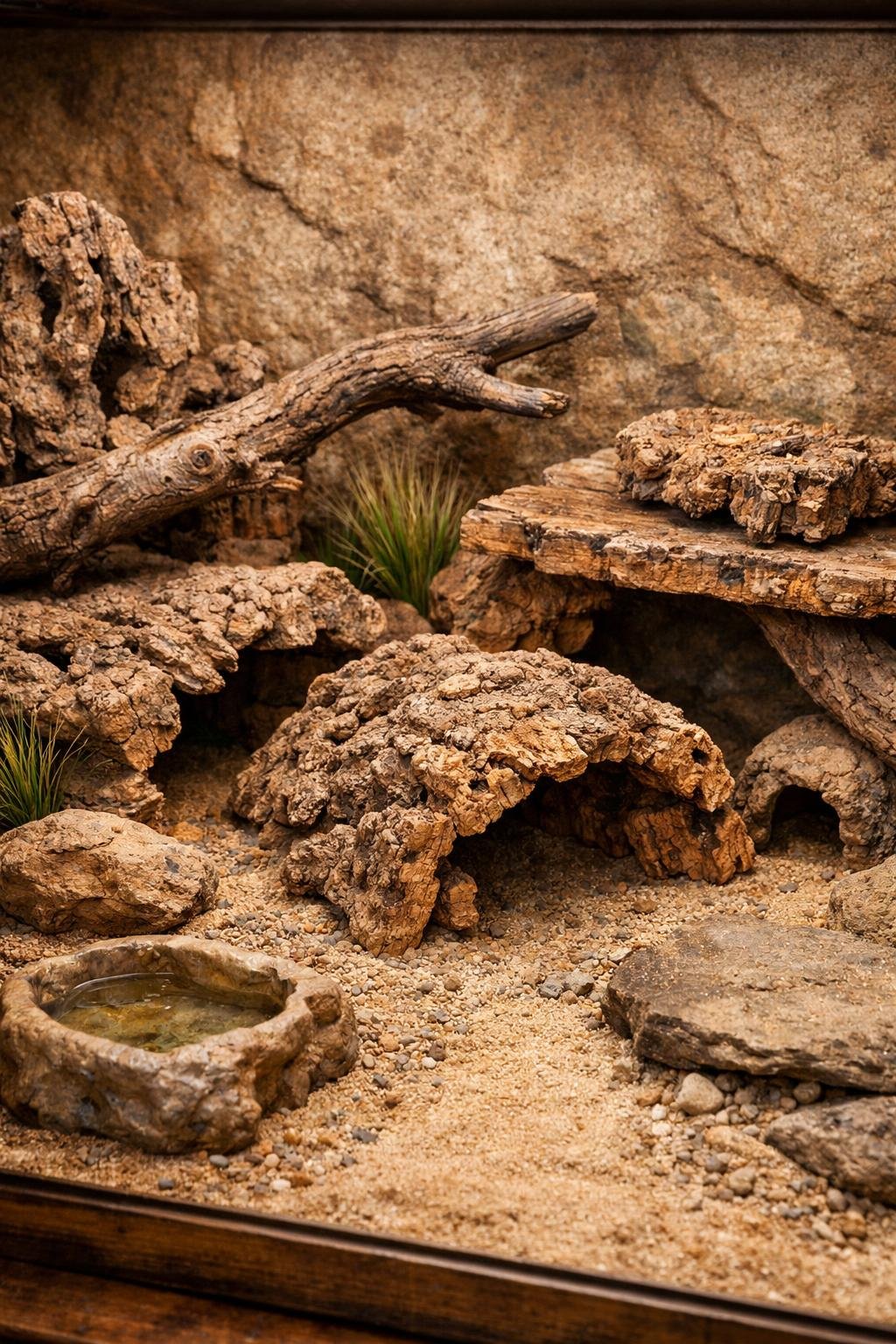
Nope, your gecko doesn’t need a jungle to be happy.
You can build a calm, nature-inspired home with cork bark and driftwood.
These materials add texture and short climbs that fit what leopard geckos actually like.
Lay down flat rocks and low ledges for safe climbing and resting.
Make sure everything’s stable, so nothing tips and squishes your pet.
Arrange hides at different levels to encourage gentle exploring.
Add a shallow water dish and soft substrate near hides to help balance humidity.
Use untreated wood and clean cork bark before putting it in.
It’s pretty fun to watch your gecko try new routes and nap on warm ledges.
Expert Tip From MrPlanter: Anchor wood pieces to the tank base so they can’t slip.
Check mounts every week and swap out anything that feels loose.
6. Aquarium style with LED lighting and rock formations
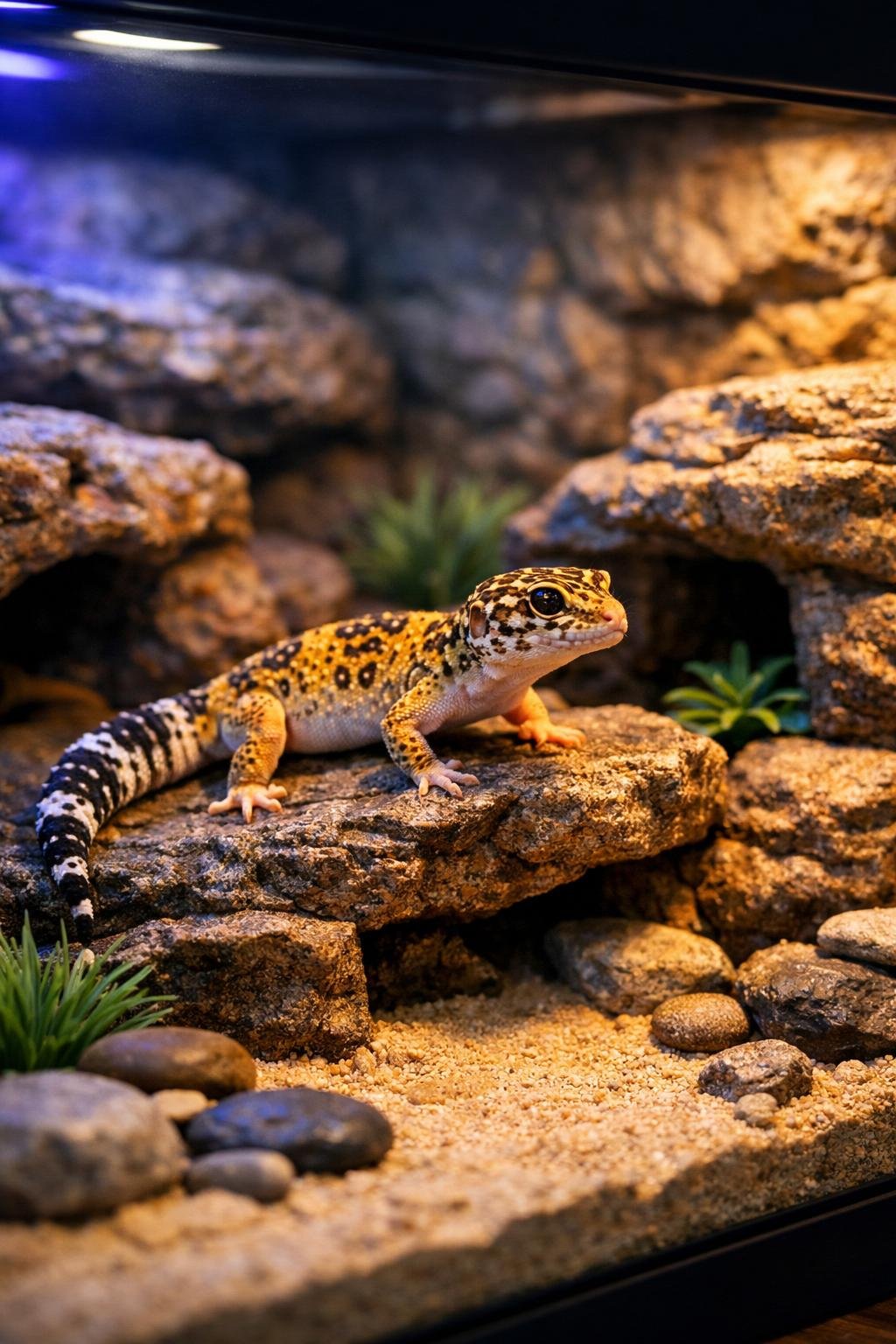
Just because it’s called “aquarium style” doesn’t mean your gecko needs water toys or flashy clutter.
You can set up a modern, rocky desert look with some cool LED lighting.
Go for smooth glass walls, stacked rock formations, and a clear view so you can watch your gecko wander.
LEDs add soft light and color without making things too hot—just pick strips made for terrariums and put them on a timer.
Stack rocks to create ledges and hides, and anchor them so nothing shifts.
Use a textured substrate and a couple flat basking stones for digging and temperature control.
Expert Tip From MrPlanter: “Use warm white LEDs on a dimmer or timer so your gecko gets natural day-night cues.
Check rock placement every day to make sure hides stay safe and sturdy.”
7. Faux cave hideouts made from natural stones
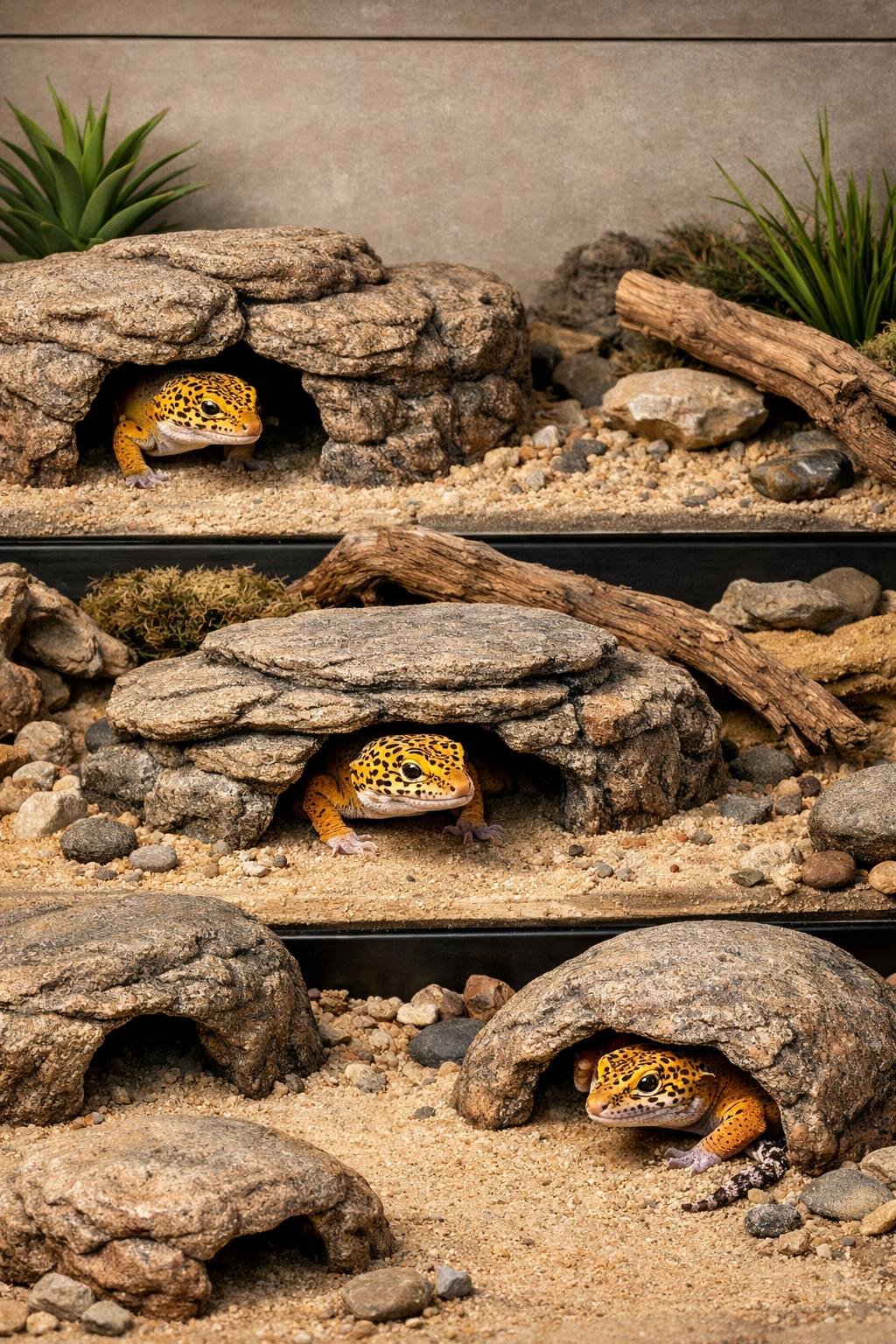
Let’s bust another myth: your gecko doesn’t have to settle for a boring plastic hide.
Stone caves can feel cozy and look just like their wild home.
Pick smooth, hollowed stones or carved rock pieces to make snug retreats.
Make sure each one has a stable base and enough space for your gecko to turn around inside.
Natural stone looks awesome and goes great with sand or slate substrate.
Wash stones before using them, and check for sharp edges so your gecko doesn’t get scratched.
Expert Tip From MrPlanter: “Choose stones you can lift easily for cleaning underneath.
Swap out any stone that chips or starts trapping moisture.”
8. Colorful background murals depicting rocky deserts
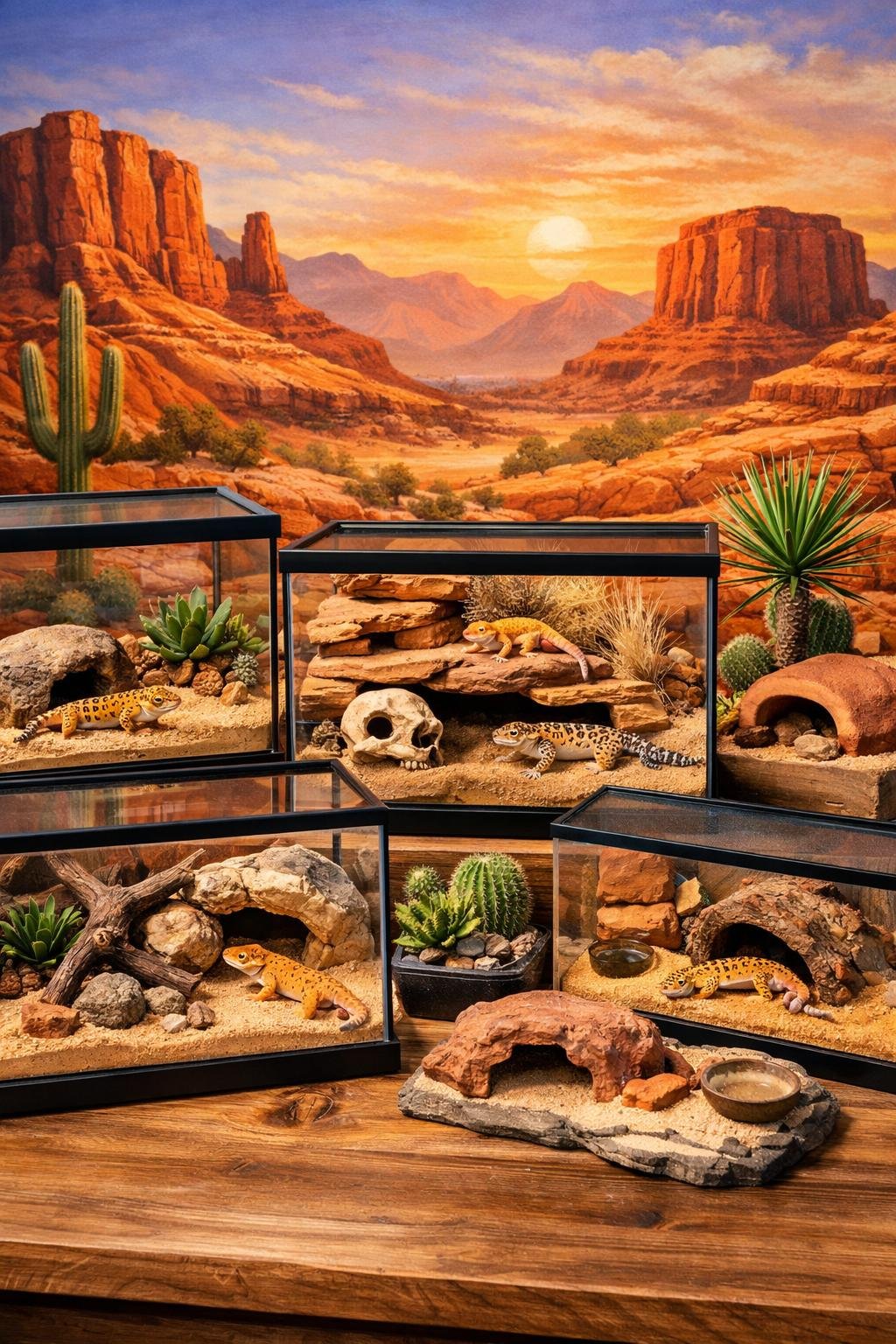
Plain glass? Not necessary.
A bright mural with rocky desert scenes adds depth and makes your gecko’s world feel bigger.
Go for murals with canyons, sandstone layers, or distant mesas.
They bring in warm colors and match the tan and orange shades leopard geckos love.
A mural also hides cords and ugly tank backs you’d rather not see.
Pick waterproof, non-toxic materials and stick them flat so they don’t peel or hold moisture.
Expert Tip From MrPlanter: Use a mural with a matte finish to cut glare and help your gecko feel safe.
Measure twice and trim carefully so the image lines up with your hides and climbing spots.
9. Glass tank with UVB lighting and humidity control
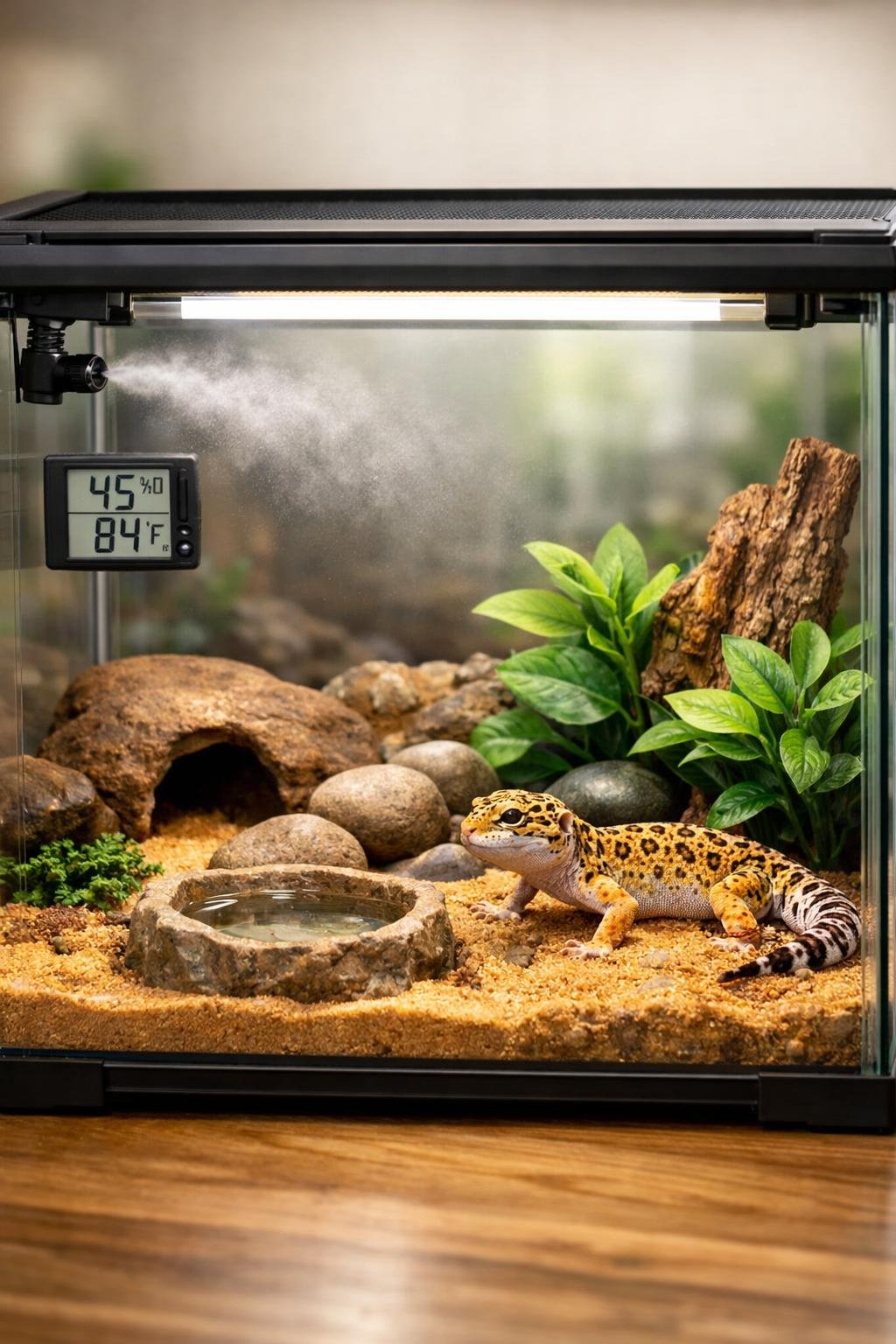
A glass tank isn’t just for show—it can be a safe, healthy home if you set it up right.
You’ll get clear views of your gecko and steady temps with a good glass terrarium.
Add a low-output UVB bulb to help with calcium, and mount it where your gecko can bask but not touch it.
Humidity is more important than most people think, especially for shedding.
Use a tight-fitting lid, a shallow water dish, and a humid hide filled with damp moss to give your gecko a wet microclimate—without making the whole tank muggy.
Control heat with an under-tank mat or ceramic heat emitter.
Check temps with two thermometers, and keep a UVB schedule (swap bulbs every 6–12 months to keep things working).
Expert Tip From MrPlanter: Put the UVB at one side so your gecko can pick sun or shade.
Change the bulb on schedule to keep those benefits coming.
10. Eco-friendly bamboo enclosure with ventilation
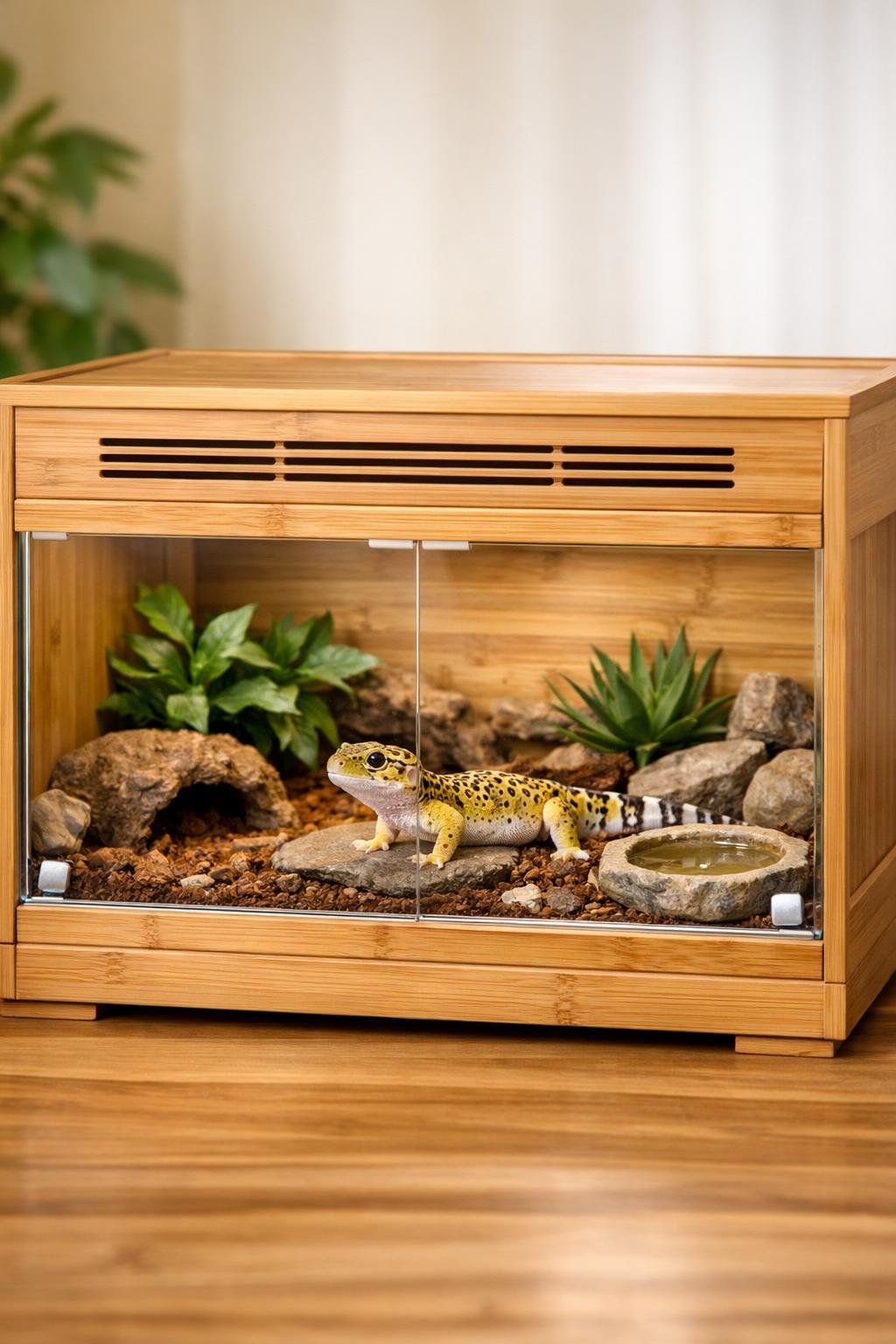
Here’s something cool: bamboo grows super fast, so it’s one of the greenest choices for a gecko home.
You can build a warm, natural-looking enclosure that still lets air move freely.
Use bamboo panels for the sides and a solid, sealed base to keep out moisture.
Cut vents into the upper sides or front for airflow, but don’t make the tank drafty.
Add a glass or acrylic door for easy viewing and extra insulation.
Cover vents with mesh to stop escapes and bugs, and seal joins with reptile-safe silicone to keep humidity steady.
Pick non-toxic finishes and a food-safe sealant so it’s all safe for your gecko.
Keep a hide and a moist hide on the warm side for shedding and comfort.
Expert Tip From MrPlanter: Go for kiln-dried bamboo to avoid warping and bugs.
Test ventilation by checking humidity over 48 hours and tweak vents if you need to.
11. Multi-level enclosure for extra climbing fun
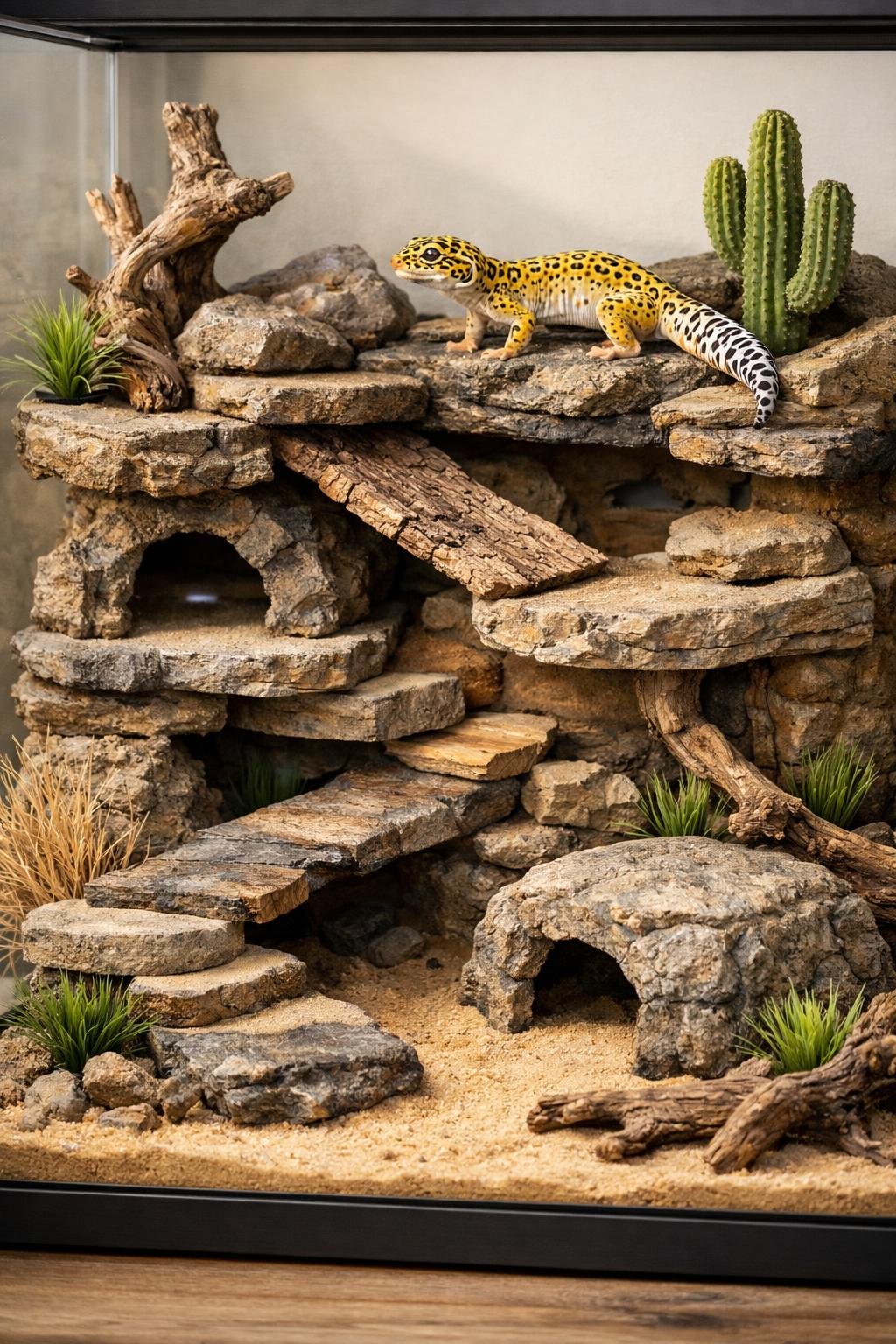
Ever notice your gecko looking bored just chilling on the tank floor?
Give them more to explore with a multi-level enclosure!
Stack platforms, ramps, and caves so your gecko can climb, hide, and relax at different heights.
You don’t even need a bigger tank—just use the space you have more creatively.
Pick sturdy materials that hold heat and won’t wobble.
Add a warm basking ledge and a cool hide on another level so your gecko can choose where to hang out.
Keep ledges shallow and ramps grippy so your gecko doesn’t slip.
Avoid tall drops and make sure every level is easy to reach.
Expert Tip From MrPlanter: “Start with one or two levels and see how your gecko uses them.
It’ll help you figure out the best heights and ramps for your little climber.“
12. Substrate mix of reptile carpet and calcium sand
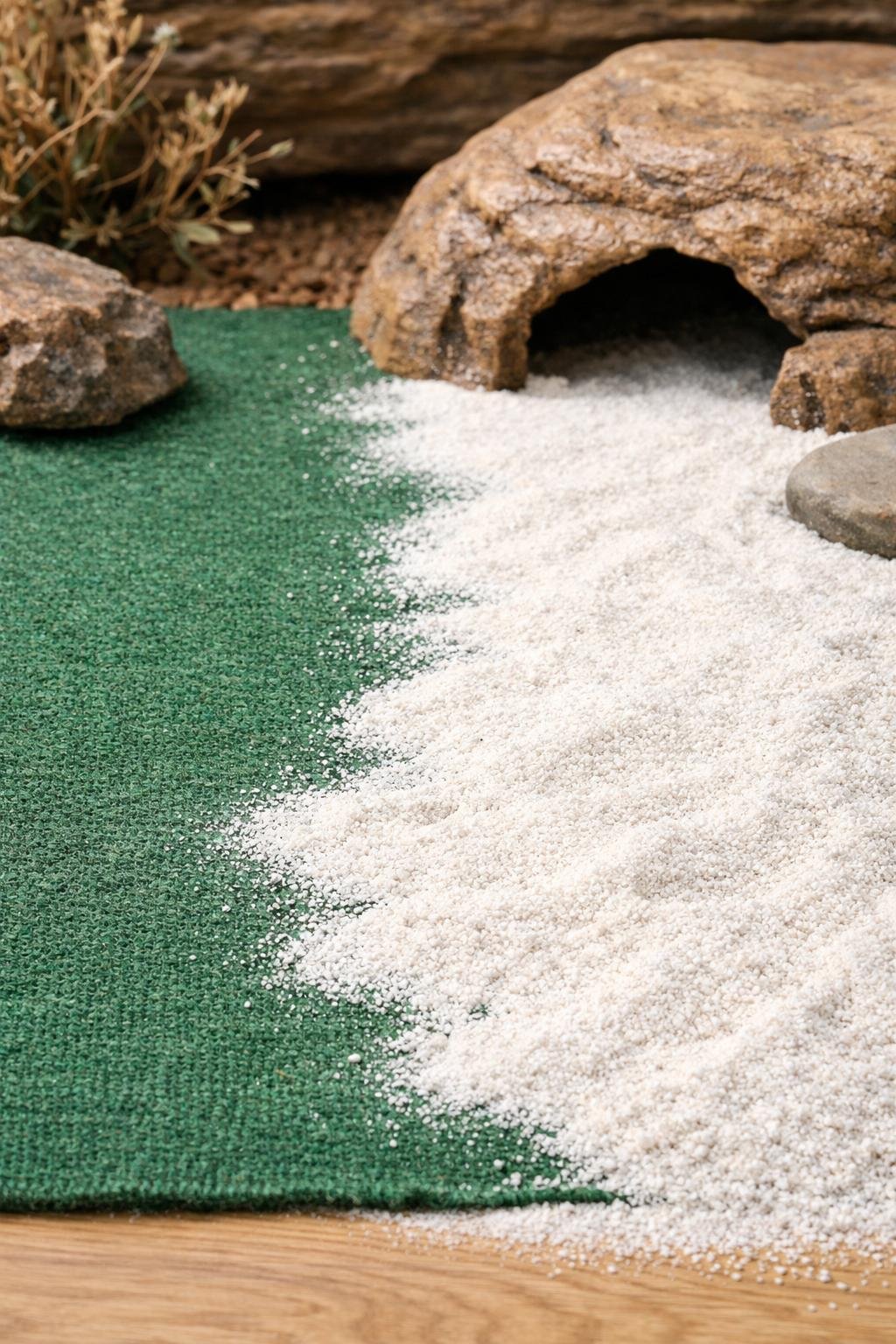
Let’s clear something up: you absolutely don’t have to stick with just one substrate forever. I like to mix reptile carpet and a thin layer of calcium sand, so you get the easy cleanup from carpet and the nice, sandy vibe.
I usually roll carpet over most of the tank and sprinkle a shallow sand strip only where my gecko wants to dig or lay eggs. This way, loose sand stays out of most of the habitat and you lower the risk of your gecko eating it.
Keep an eye on your gecko—if you spot any sand munching, just ditch the sand. Make sure you keep the carpet clean and swap it out when it starts to smell or look stained.
Expert Tip From MrPlanter: “Offer a digging box with sterile sand so your gecko gets the texture they love. Check the sand daily and remove any soiled spots to keep things safe.“
13. Warm hide with ceramic heat emitter
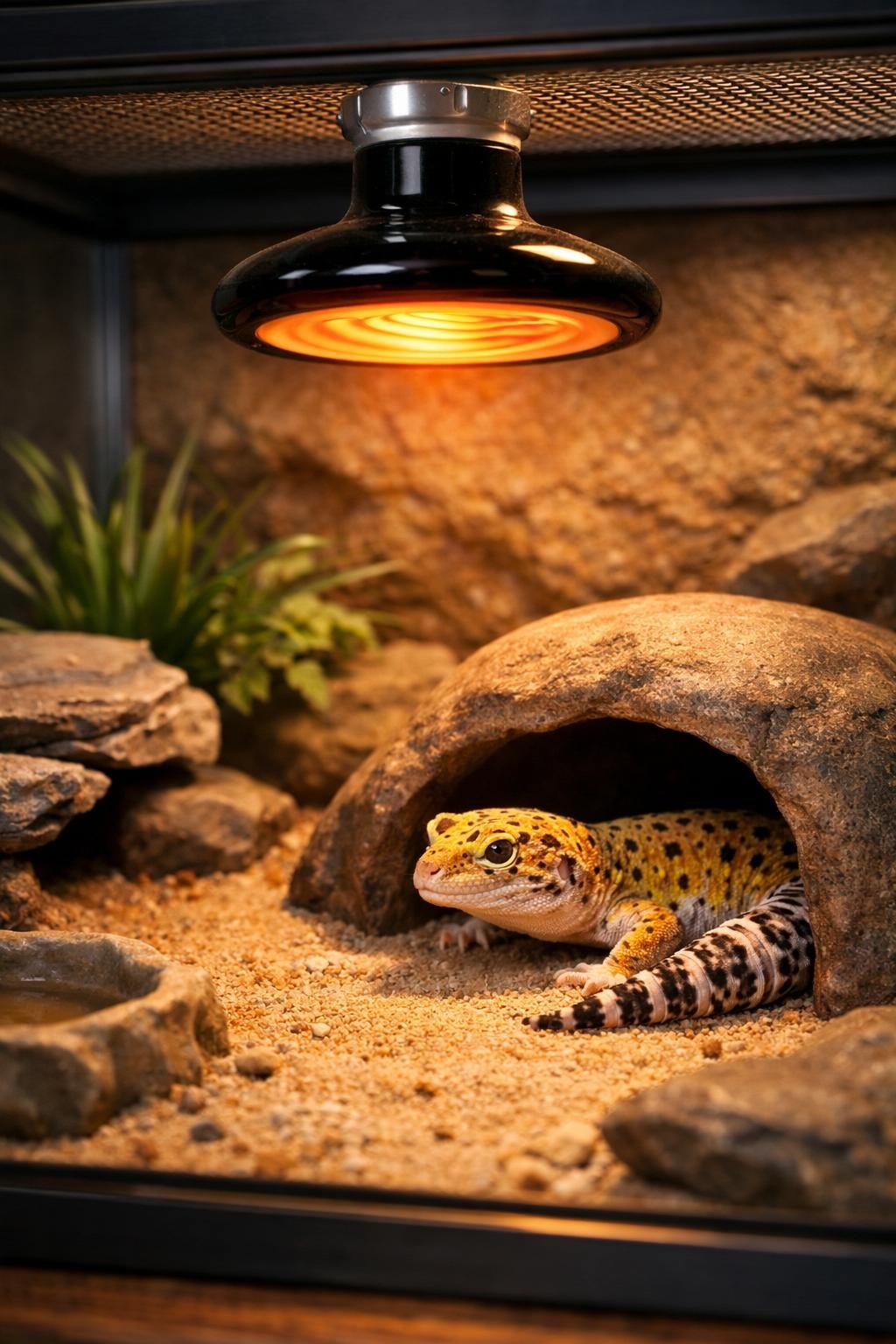
Here’s a myth I hear all the time: putting a heat source in a hide will roast your gecko. Nope! A warm hide with a ceramic heat emitter (CHE) gives your gecko a cozy, safe place to warm up—especially at night.
I put the CHE over a solid hide, like a rock cave or ceramic shelter. Always plug the emitter into a thermostat so the hide stays in the right temp range and doesn’t turn into a sauna.
Pick a hide with a small entrance and a deep floor so your gecko can really snuggle in. Use a probe thermometer right by the hide—not just on the surface—so you know what the temps are actually like in there.
Expert Tip From MrPlanter: “Use a thermostat set to the target temperature range and test the hide for several nights before trusting it. Always protect the CHE with a proper fixture and keep the cord safe so your gecko can’t reach it.”
14. Hidden water dish inside a decorative rock
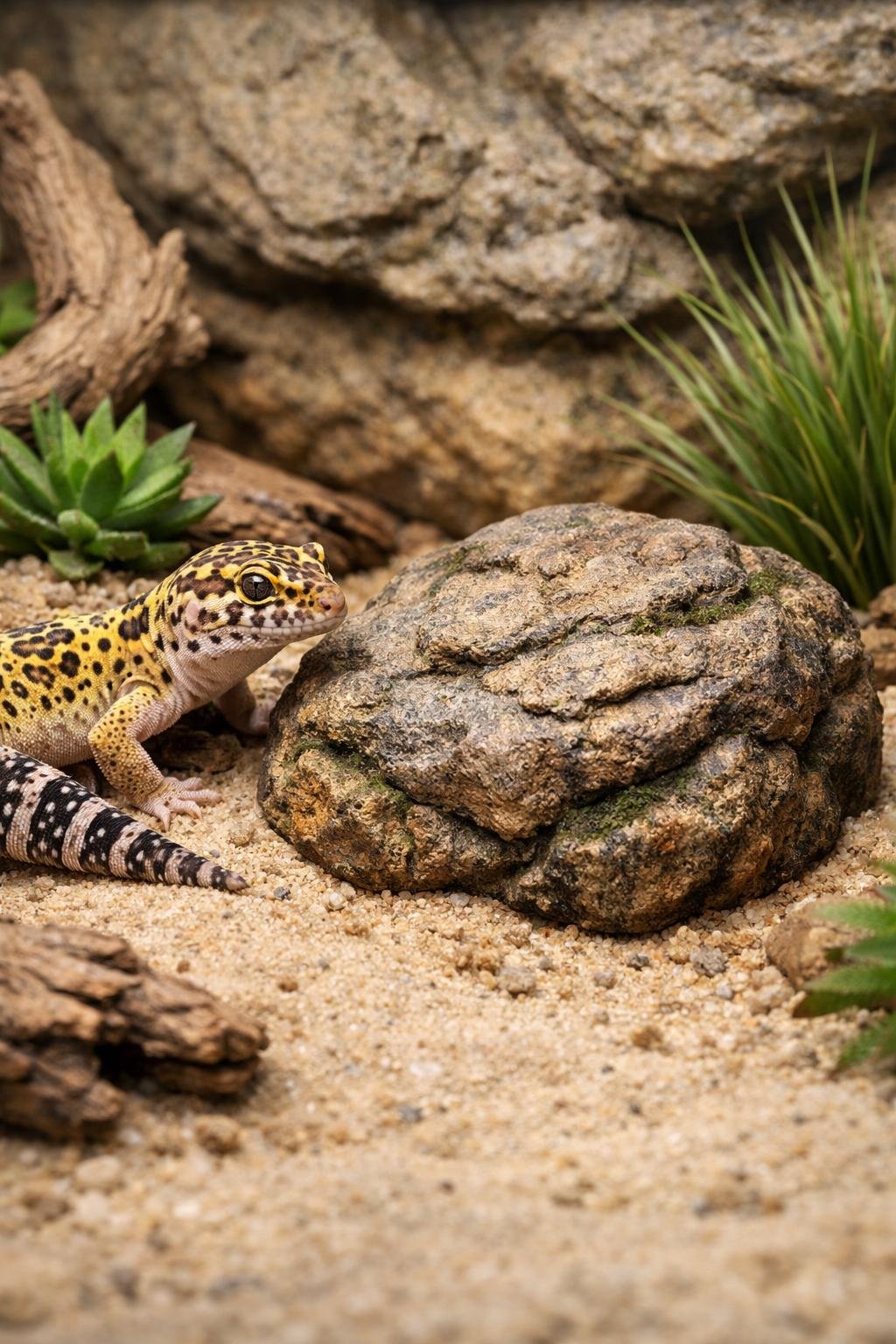
Ever had your gecko knock over its water dish, leaving a soggy mess? Yeah, me too.
Hiding a shallow water dish inside a fake rock keeps things neat and makes the tank look more natural. Your gecko gets a private spot to sip without a big bowl in the way.
Pick a low-profile rock made for terrariums that’s easy to clean. Make sure your gecko can reach the opening and the dish is shallow—no accidental swimming lessons here.
Check and refill the water every day, and give the rock a good wash now and then to keep algae and bacteria away. I like to put the water rock on the cool side so the humidity doesn’t get out of control and my gecko stays comfy.
Expert Tip From MrPlanter: “Pick a rock with a removable tray so cleaning is simple. Always use fresh water and inspect the hide weekly for mold.“
Essentials for a Leopard Gecko-Friendly Enclosure
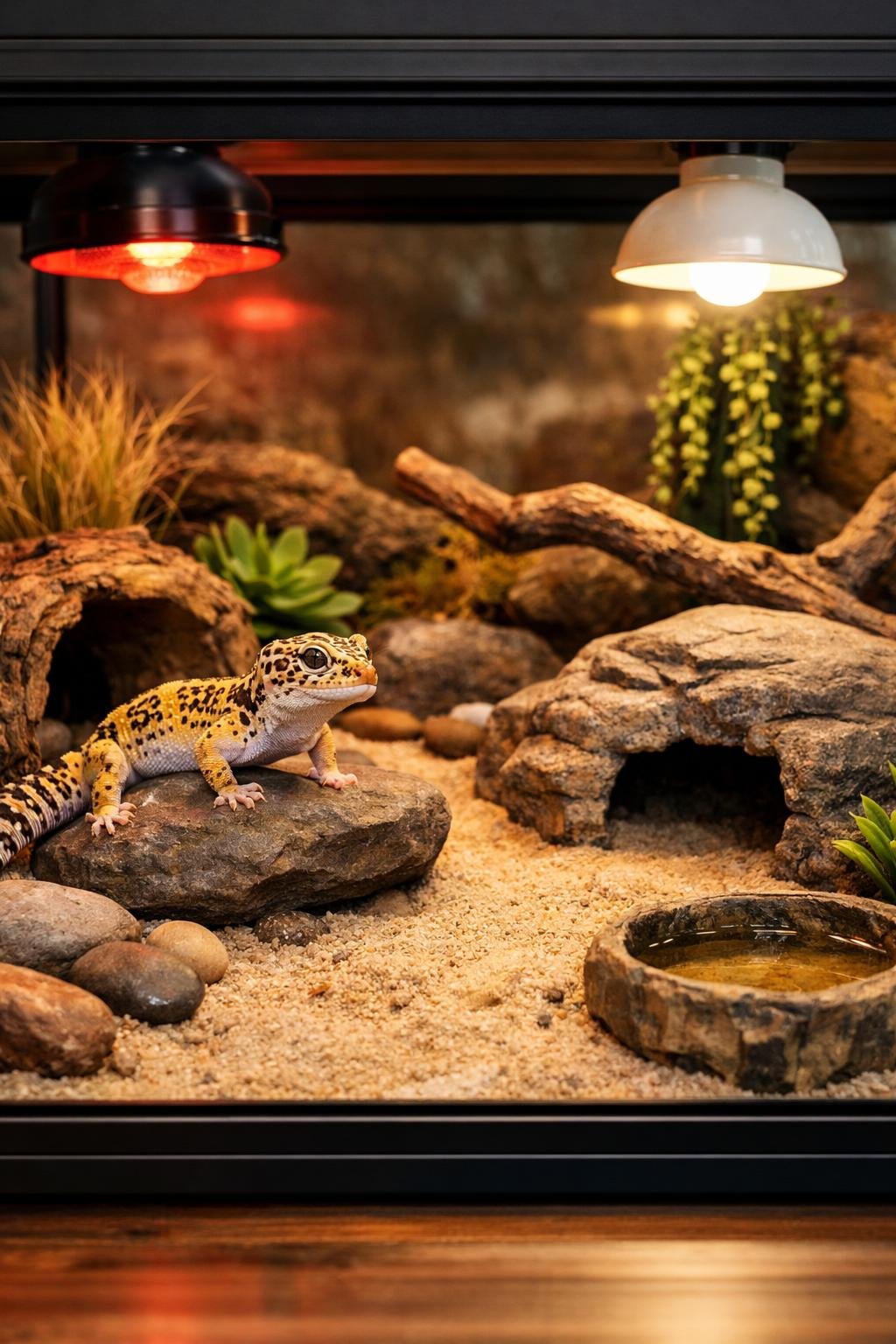
If you set up the basics right, your gecko will thrive. Focus on steady heat, the right lighting, and a safe substrate so your setup helps with feeding, shedding, and daily exploring.
Temperature and Humidity Hacks
Keep a warm side at 88–92°F (31–33°C) and a cool side at 75–80°F (24–27°C). I use an under-tank heating pad with a thermostat to dodge hot spots. Only stick the pad under one end of the tank.
At night, temps can drop to 68–75°F (20–24°C). That’s totally fine—skip the heat rock. I use an infrared thermometer to check floor temps and a digital probe for the heat pad. You want stable numbers; big swings stress geckos out.
Aim for 30–40% humidity in most of the tank. Add a moist hide (just damp sphagnum moss in a hide box) and keep it at 60–80% for shedding. Stick a small hygrometer near the hide to check humidity without making the whole tank soggy.
Lighting: Moody or Sun-Kissed?
Leopard geckos are crepuscular, so they don’t need bright daytime UV like some lizards. A low-level UVB light (2–5%) for 8–10 hours helps with calcium and health. Use a compact fluorescent or tube-style UVB and swap it every 6–12 months, depending on the brand.
Set up a simple timer for day and night cycles. Give bright light for the day, dim it at dusk, and keep it dark at night. Skip blue and red bulbs at night—they mess with sleep. For viewing, I like warm white LEDs or low-wattage bulbs that don’t overheat the tank.
The Importance of Substrate Selection
Pick a substrate that’s safe and easy to clean. I love paper towels, reptile carpet, and ceramic tiles—they’re safe and make spot-cleaning a breeze.
Want a more natural look? Try slate or big, smooth stones. Don’t use loose sand, walnut shells, or tiny bits for kids’ tanks—those raise the risk of impaction. If you go for a bioactive soil, keep an eye on humidity and feeding to avoid mites and mess.
Keep a shallow water dish and spot-clean poop every day. Change or deep-clean the substrate regularly: weekly for papers and carpets, monthly or as needed for tiles and natural setups.
Decor and Enrichment That Make Tails Wag
Make your gecko’s tank feel like a little world they can explore and hide in. I love picking out hides, textures, and low climbing spots that boost confidence and look cool in the room.
Hideouts That Double as Art
Choose hides that give your gecko privacy and also make the tank pop. I always use three: a warm hide on the heat side, a cool hide on the other, and a humid hide for shedding. Cork bark caves, hollow driftwood, or stacked slate look awesome and give plenty of hiding spots.
Bury hides a bit or tuck them under fake plants so your gecko feels safe. Make the entrance snug—just wide enough for your gecko’s head—to mimic how they’d hide in the wild. Skip painted or glued stuff that might flake; go for smooth, non-toxic materials.
Think of hides as both shelter and decoration. Put a main hide near the front for easy viewing, then scatter smaller ones around to encourage exploring. I like to change up the shapes and spots every few weeks just to keep things interesting.
Climbing Opportunities and Safe Surfaces
Give your leopard gecko some fun, low climbing spots that fit their ground-loving habits. I like to use flat rocks, chunky branches, and little ledges, but I keep everything under 6–8 inches tall—nobody wants a gecko wipeout.
I always double-check that nothing wobbles, because geckos love to nose things around, and a loose rock is just asking for trouble.
Mix up the textures a bit. Smooth slate works great for basking, rough cork gives them grip, and a few fake plants make for easy, gentle hurdles.
Skip any loose stuff on higher spots—solid platforms or cork glued down are way better for keeping your gecko from slipping. I make sure to sand down sharp edges, or just cover them up if I’m feeling lazy.
Surfaces can get grimy fast, so I keep an eye out for wear and clean them often to stop bacteria from building up. Swapping out pieces now and then makes things more interesting for your gecko and helps me spot any chips or weak spots before they turn into a problem.