You can turn a plain property line into a living, lovely barrier that gives you privacy, color, and even snacks.
These 15 natural fence ideas offer easy, beautiful ways to block unwanted views, attract pollinators, and match your yard’s vibe—no boring lumber or noisy metal required.
Picture willow arches, bamboo screens, lavender rows, espaliered fruit trees, and sunflower walls—all pulling double duty as fences while adding scent, shade, and a heap of charm.
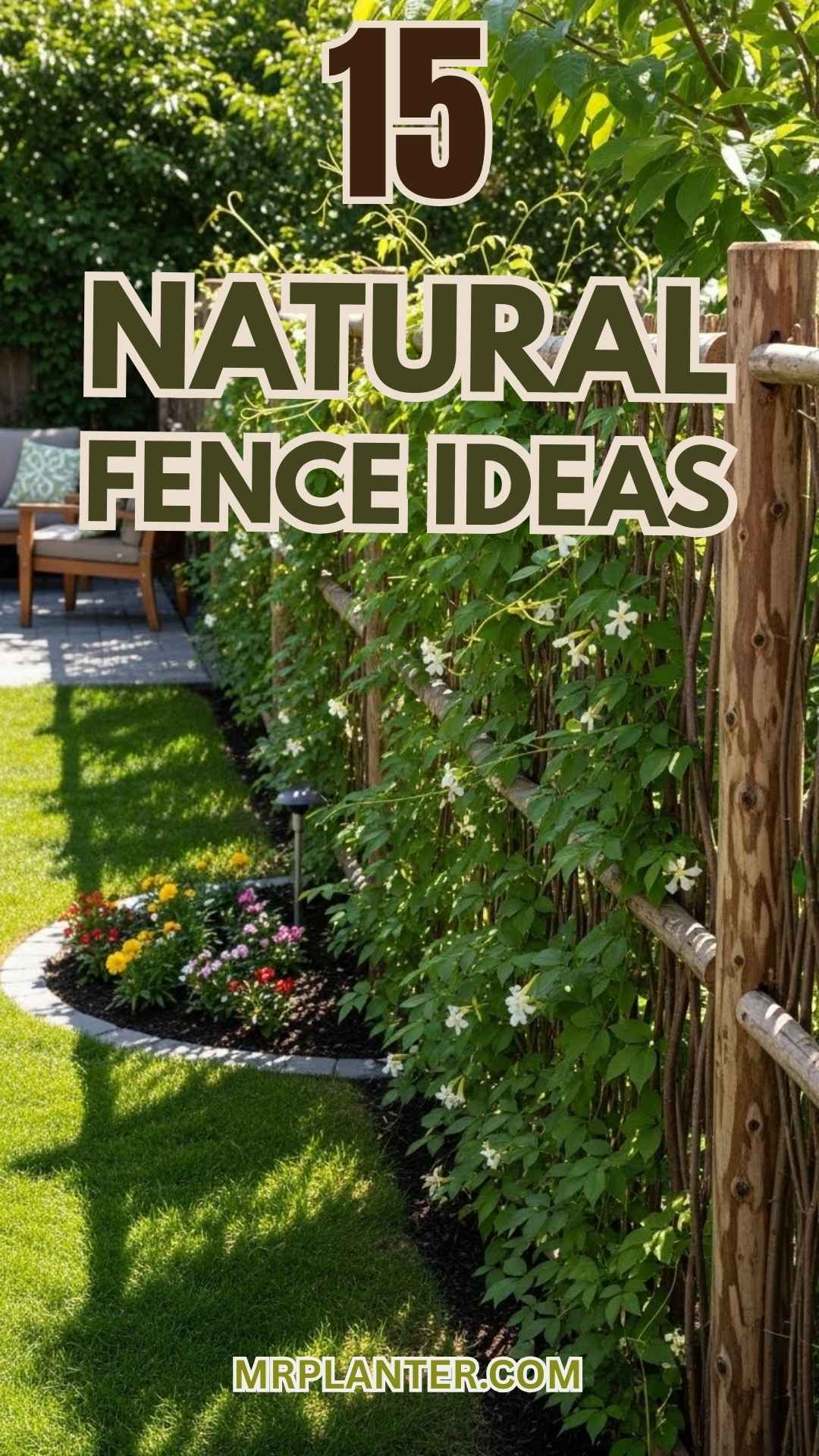
Check out these ideas and see what fits your space, wallet, and how much sweat you want to put in.
1. Willow Weaving Fence: Twisty, artsy, and a bird magnet for your garden party

Wild but true: willow bends into almost any shape and somehow springs back to life.
You can weave living or dried willow into a low, curvy fence that feels playful and totally natural.
If you want privacy without a harsh look, this is your pick. The woven pattern attracts birds, bugs, and climbing plants, so your garden actually buzzes with life.
You won’t need power tools—just willow rods, some stakes, and a little patience.
Leave gaps for critters and tuck those ends in tight so the fence hangs on through wind and rain.
Expert Tip From MrPlanter: Plant willow cuttings in damp soil for fast rooting and beefier panels. Weave tighter at the bottom to block small animals, but let it breathe up top so birds can perch.
2. Bamboo Privacy Screen: Tall, natural, and adds a tropical vibe without the beach.
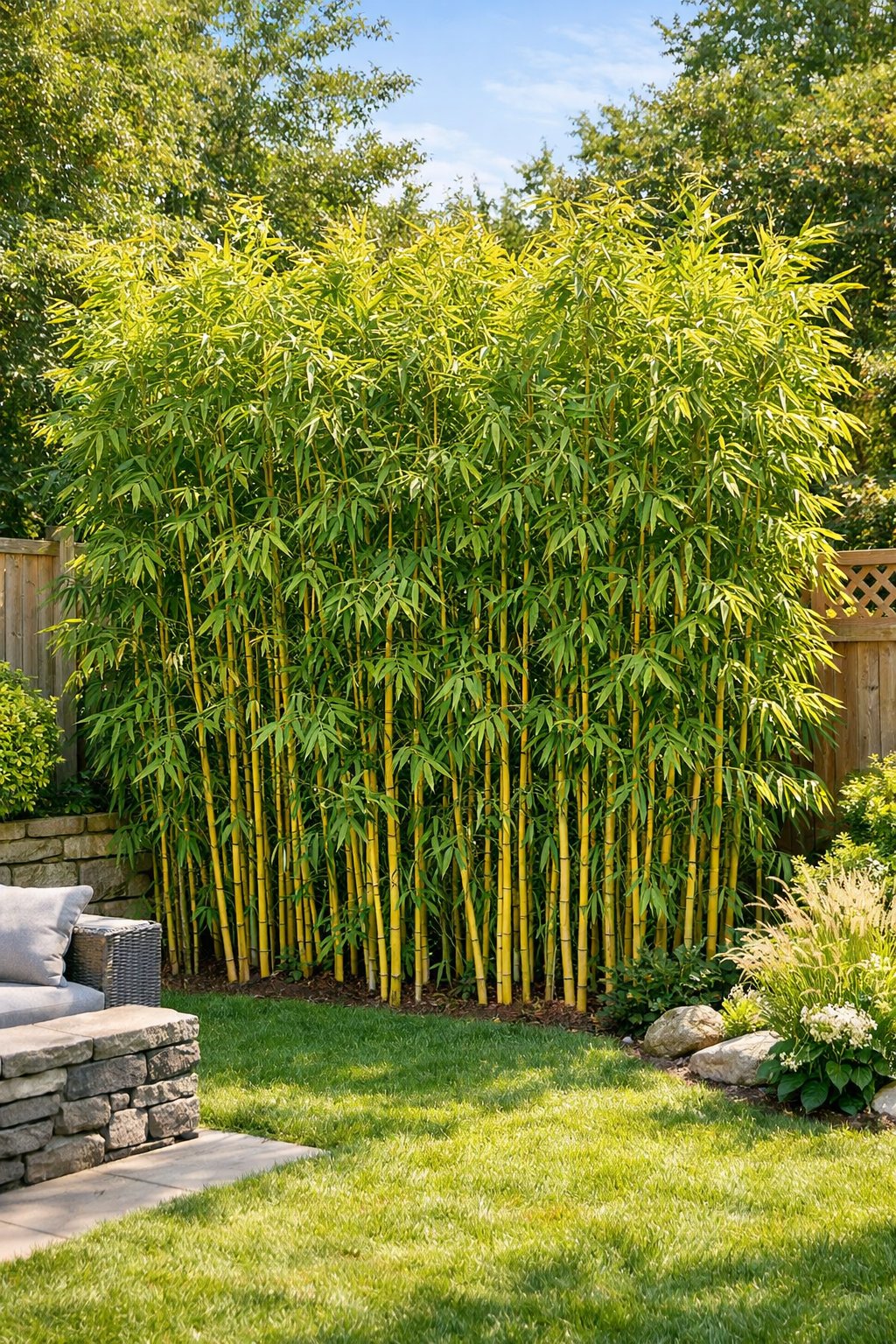
Let’s clear this up: Bamboo won’t take over your yard in a week.
You get tall, leafy screening that feels warm and relaxing. It blocks views well and gives you a chill, tropical look—no neon colors needed.
Bamboo panels and rolls go up fast on fences or frames. They’re light, so you can shuffle them around until it feels just right.
Pick treated bamboo or thick poles for longer life, and snip new shoots so it doesn’t get wild.
Pair with potted palms or string lights for a cozy nook you’ll actually want to hang out in.
Expert Tip From MrPlanter: Look for bamboo panels with galvanized wire and ask for sealed or steamed slats to fight off rot. Trim shoots each year so your screen stays neat and doesn’t sneak into the neighbor’s yard.
3. Hedge Maze: Perfect for those who want a backyard that doubles as a puzzle.
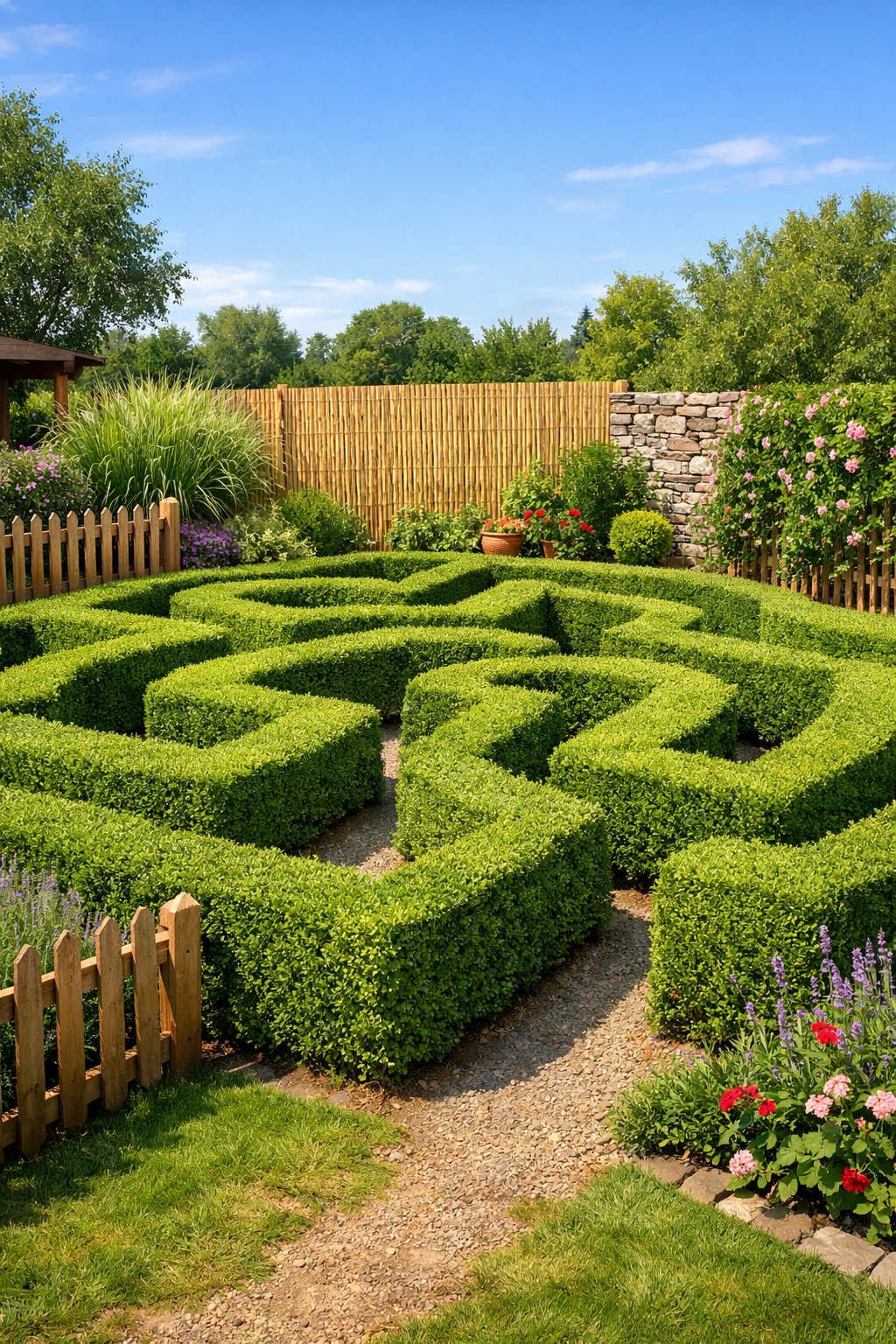
Here’s a fun one: a hedge maze can turn a plain yard into a playful escape you’ll actually use.
You get privacy, shade, and a fun walk—all in one green package.
Start small if the idea feels overwhelming. Use boxwood, yew, or quick-growing shrubs and map out simple paths with a few dead ends.
Short mazes work for tiny yards; bigger mazes need more patience and a bit more planning.
Keep it easy by trimming regularly and keeping paths clear so nobody gets lost (or stuck).
Add a bench or a little statue in the center as a reward for making it through.
Expert Tip From MrPlanter: “Plant young hedges in a grid so they fill in evenly. Trim twice a year to keep paths open and the maze looking sharp.“
4. Mixed Shrubbery Border: Because variety is the spice of fence life.
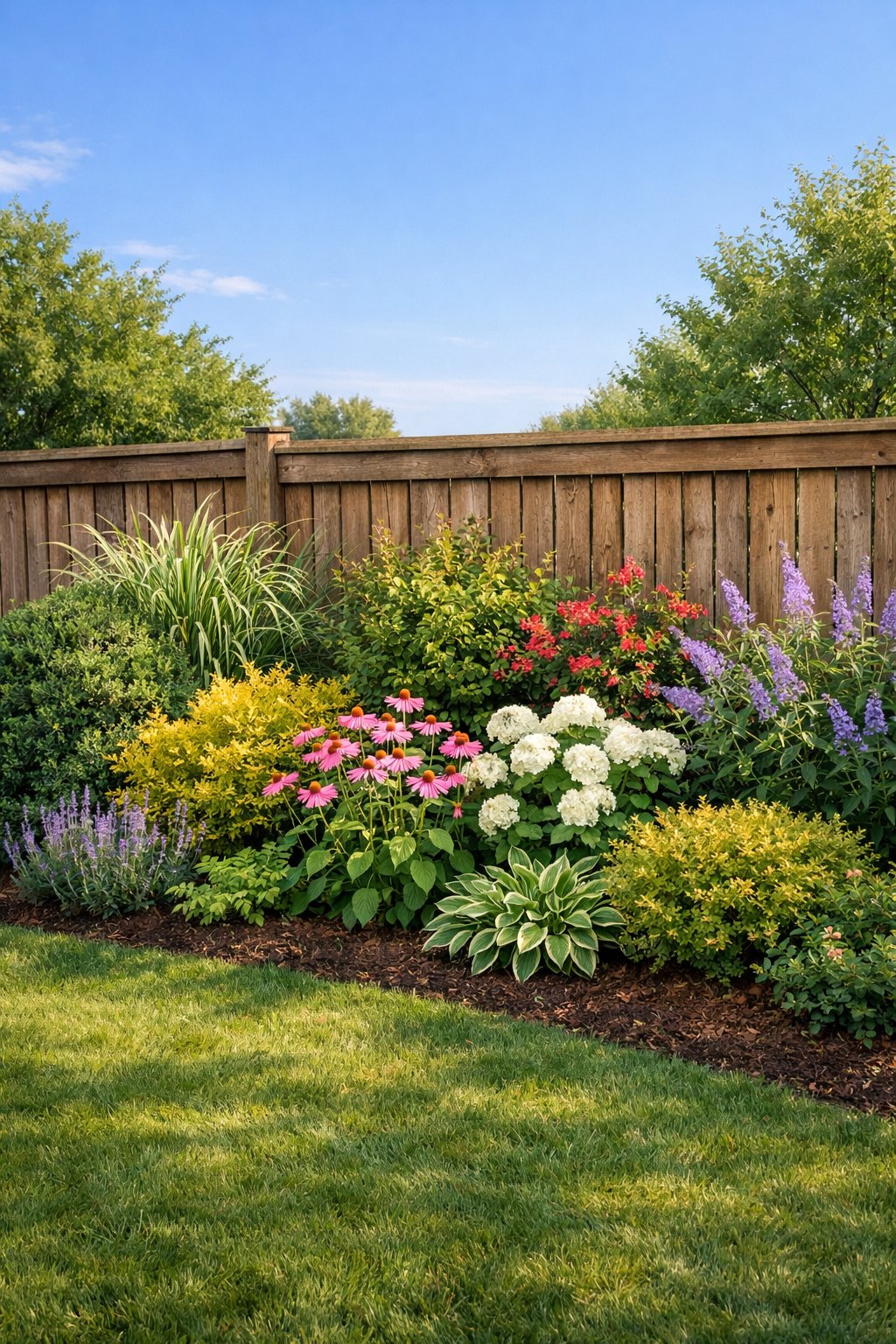
Let’s be honest: a flat row of the same plant gets old by midsummer.
A mixed shrubbery border shakes things up with layers of size, shape, and color that keep your fence interesting all year.
Mix evergreens for winter privacy with flowering shrubs for spring and summer. Toss in some upright shapes for screening and low mounds for softer edges.
This trick gives you depth without a ton of work.
Pick plants with different bloom times and leaf textures so your border keeps changing.
Diversity also helps slow down pests and diseases—stronger than a single row of the same old shrub.
Expert Tip From MrPlanter: Plant three heights—tall in back, middle in the center, short up front—for a full, lush look. Mulch well and water deep the first couple years so everything settles in happy.
5. Lavender Rows: Smells like heaven and keeps nosy neighbors guessing
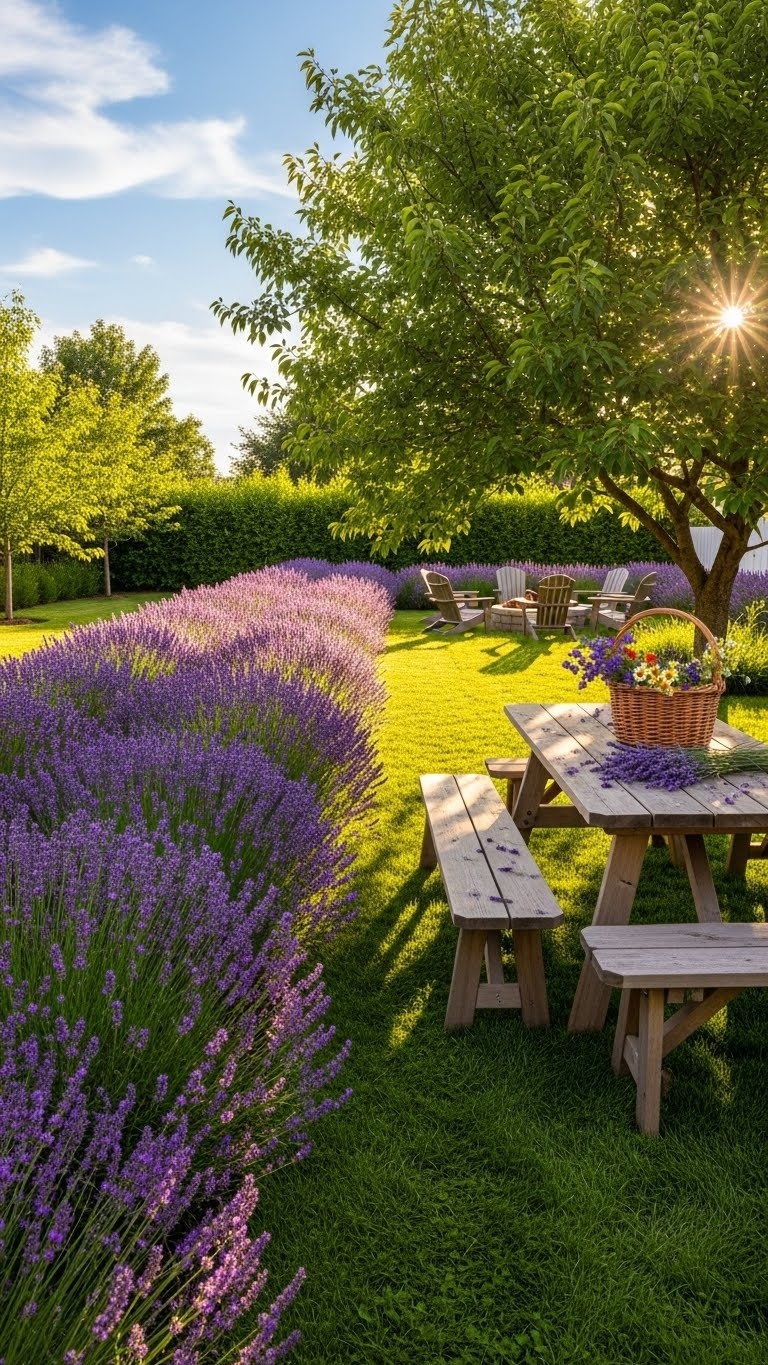
Did you know? Lavender makes a fence that looks neat and smells like a dream, with hardly any fuss.
Plant a single line of lavender as a low hedge, and you get a soft, fragrant boundary that feels welcoming—not shut off.
Lavender loves full sun and dry feet, so pick a sunny spot with good drainage.
Space plants about 18 inches apart, and they’ll fill in after a couple seasons.
You’ll see color from late spring into summer and enjoy a gentle wall of scent that needs fewer trims than boxwood.
Bees will thank you, too.
Expert Tip From MrPlanter: “Go for English or French lavender for the best blooms and scent. Cut back after flowering to keep things tidy and encourage new growth.”
6. Hornbeam Hedge: The dependable, year-round green wall that won’t ghost you.
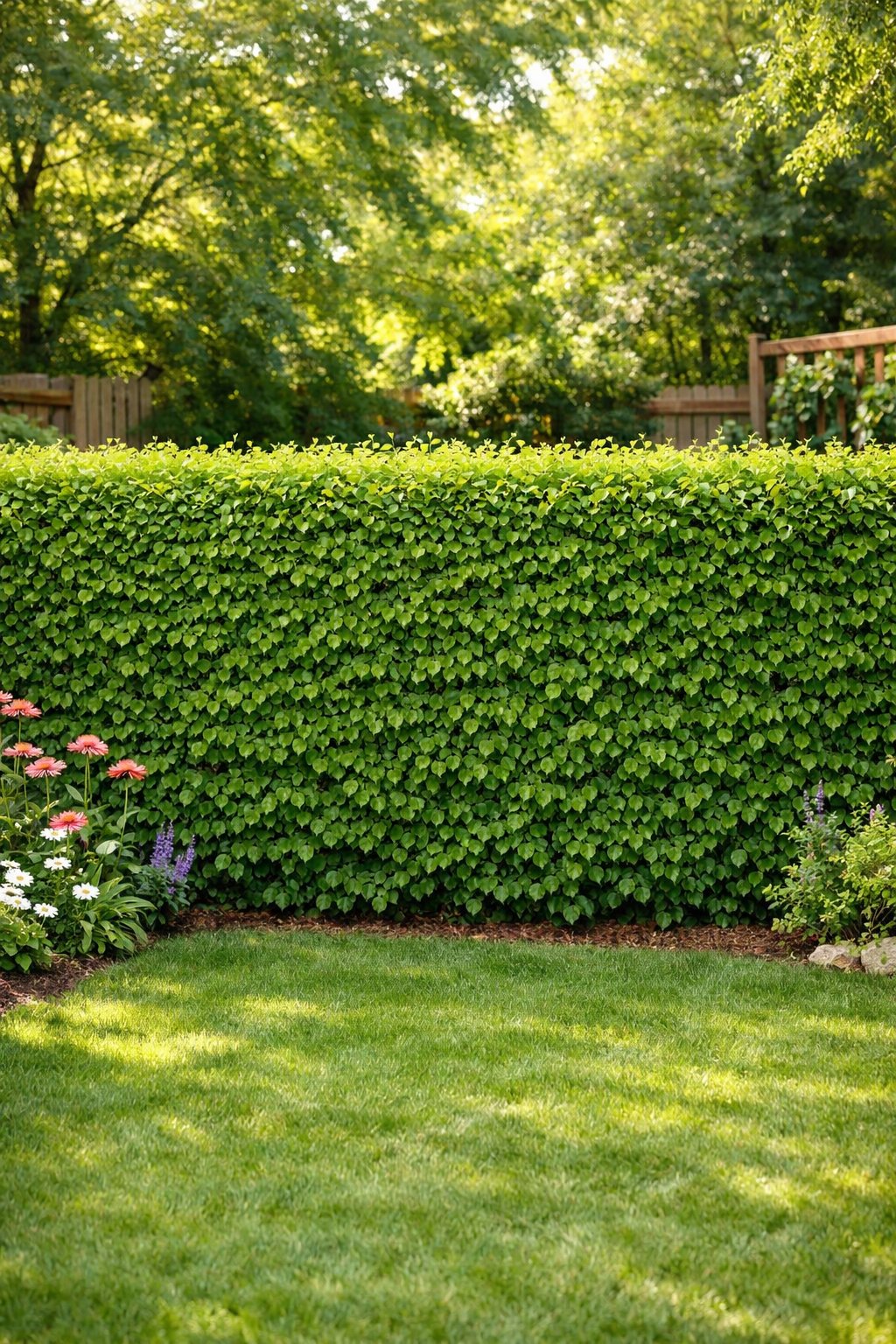
Here’s the scoop: Hornbeam hangs onto some leaves all winter, so your privacy doesn’t disappear when you need it most.
If you want a neat, living fence that looks good all year, hornbeam’s a solid bet.
It takes pruning like a champ, so you can shape it into a formal wall or let it stay a little wild.
Growth is steady—not too fast—so you’re not out there trimming every weekend.
Hornbeam handles heavy soils and windy spots better than most. Even in winter, it holds on to those dry leaves, giving you shelter and blocking the wind when other hedges look bare.
Expert Tip From MrPlanter: “Plant young hornbeam hedges 40–60 cm apart for a thick screen. Prune once or twice a year to keep the shape and encourage lush growth.”
7. Boxwood Topiary Fence: Fancy shapes to make your yard look like a hedge museum
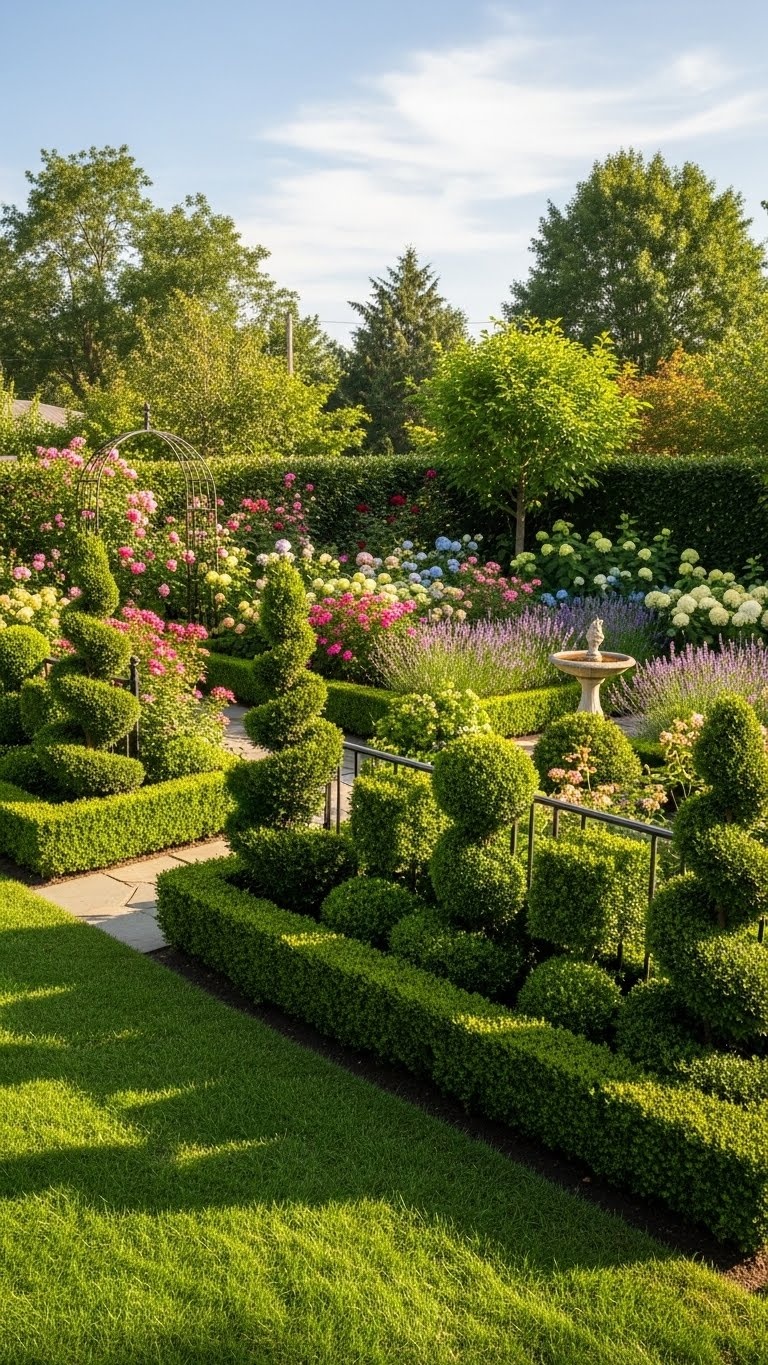
Let’s set the record straight: Boxwoods aren’t just for boring hedges—they’re perfect for living sculptures that give your yard some personality.
You can train them into balls, spirals, or even goofy animal shapes for a border that feels like art.
Start with small, young plants spaced evenly so the fence fills in without big gaps.
Regular pruning keeps the shapes sharp, and a little fertilizer helps them stay green and dense.
Pick varieties that stay compact and handle your weather. Use frames at first if you want super-precise shapes, then relax as the shrubs catch on.
Expert Tip From MrPlanter: “Begin with a simple shape and prune often to stay in control. Mulch well and water deeply during dry spells.”
8. Willow Branch Fence: Rustic charm meets DIY prowess with a side of mud
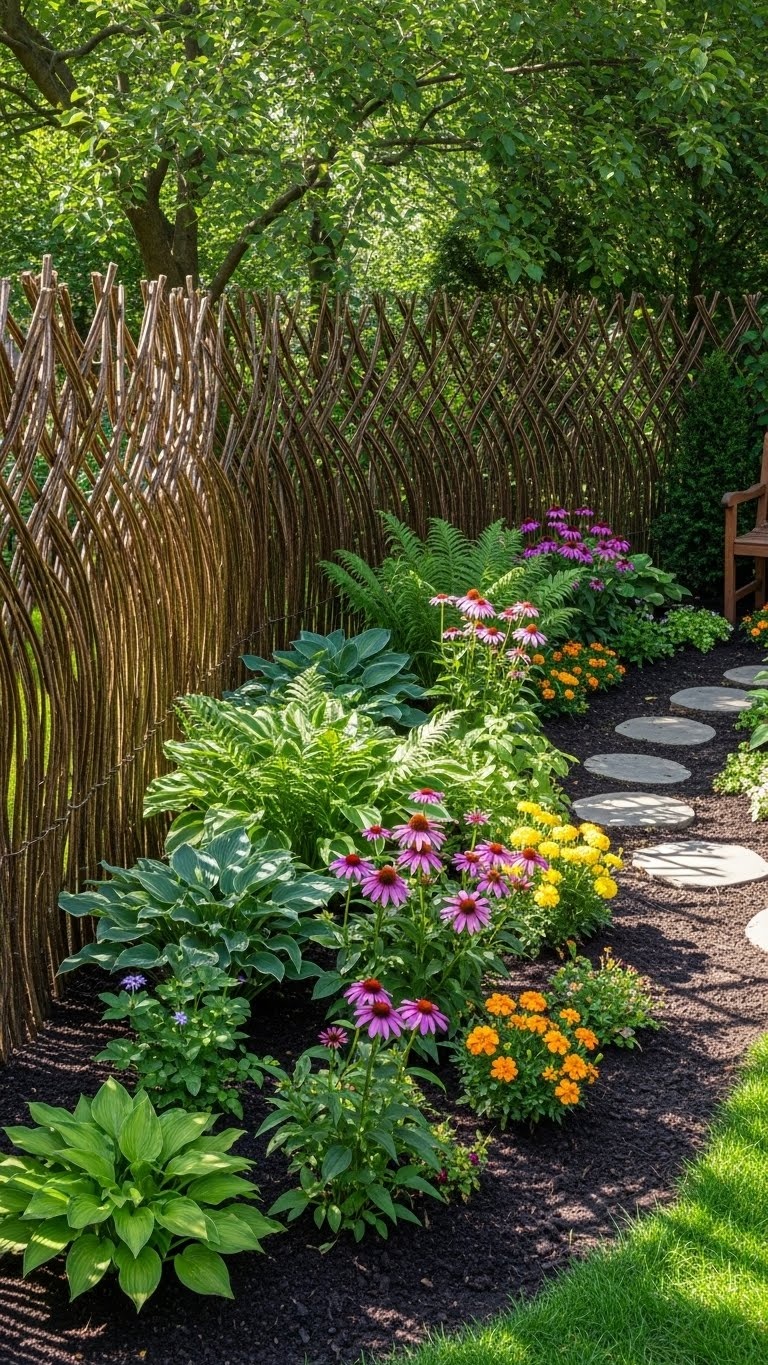
Here’s a secret: Willow fences aren’t just pretty—they’re sturdy and forgiving, too.
Weave flexible willow rods between upright posts to make a low, cozy barrier that looks right at home in any garden.
It works great for curvy beds, paths, or a soft property edge, and it weathers beautifully.
Building one gets your hands dirty, but that’s half the fun. Fresh, bendy rods work best, and you’ll want solid posts sunk deep for support.
The look is handmade and charming, and repairs are a breeze—just swap out a few rods instead of the whole thing.
Expert Tip From MrPlanter: Harvest willow in late winter while it’s still sleeping for the bendiest rods. Plant a few extra cuttings nearby—they’ll grow into your next batch of fence material.
9. Clematis Trellis Fence: Flowers climbing for the ‘Oh wow’ factor
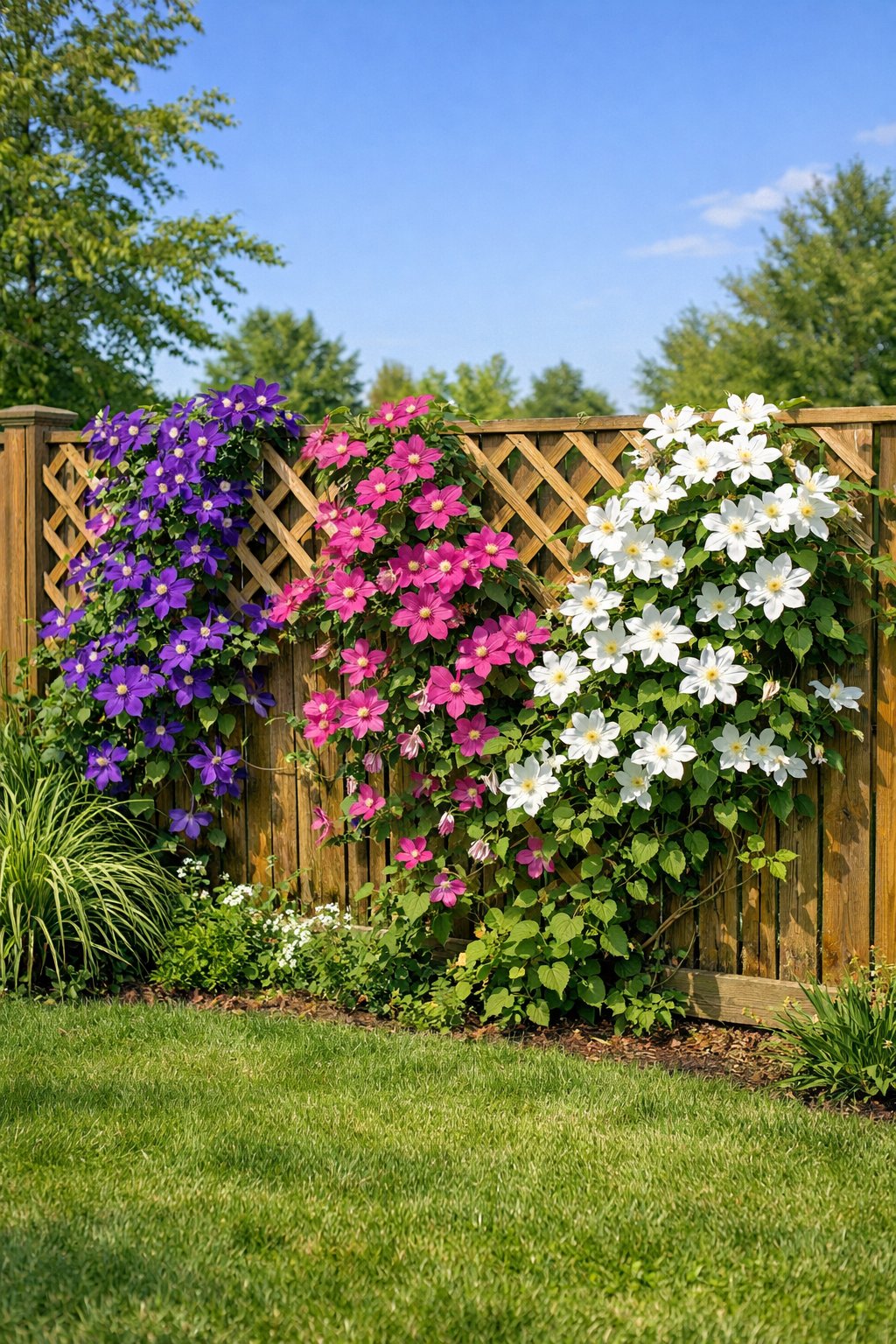
Get this: Clematis can turn a boring fence into a total show-off in one season.
Plant it at the base, add a trellis or some wire, and soon you’ll have flowers climbing up to cover that fence.
Pick strong supports like wood lattice or stretched wire.
Clematis likes its head in the sun and feet in the shade, so mulch or low plants at the bottom keep roots cool.
Mix up varieties for different bloom times and colors.
You’ll get a long season of flowers with hardly any work, and it still looks natural.
Expert Tip From MrPlanter: Plant clematis where the top gets sun and the roots stay cool. Water regularly the first year so roots get established fast.
10. Juniper Privacy Hedge: Needle-tough privacy with a scent that might just relax your in-laws
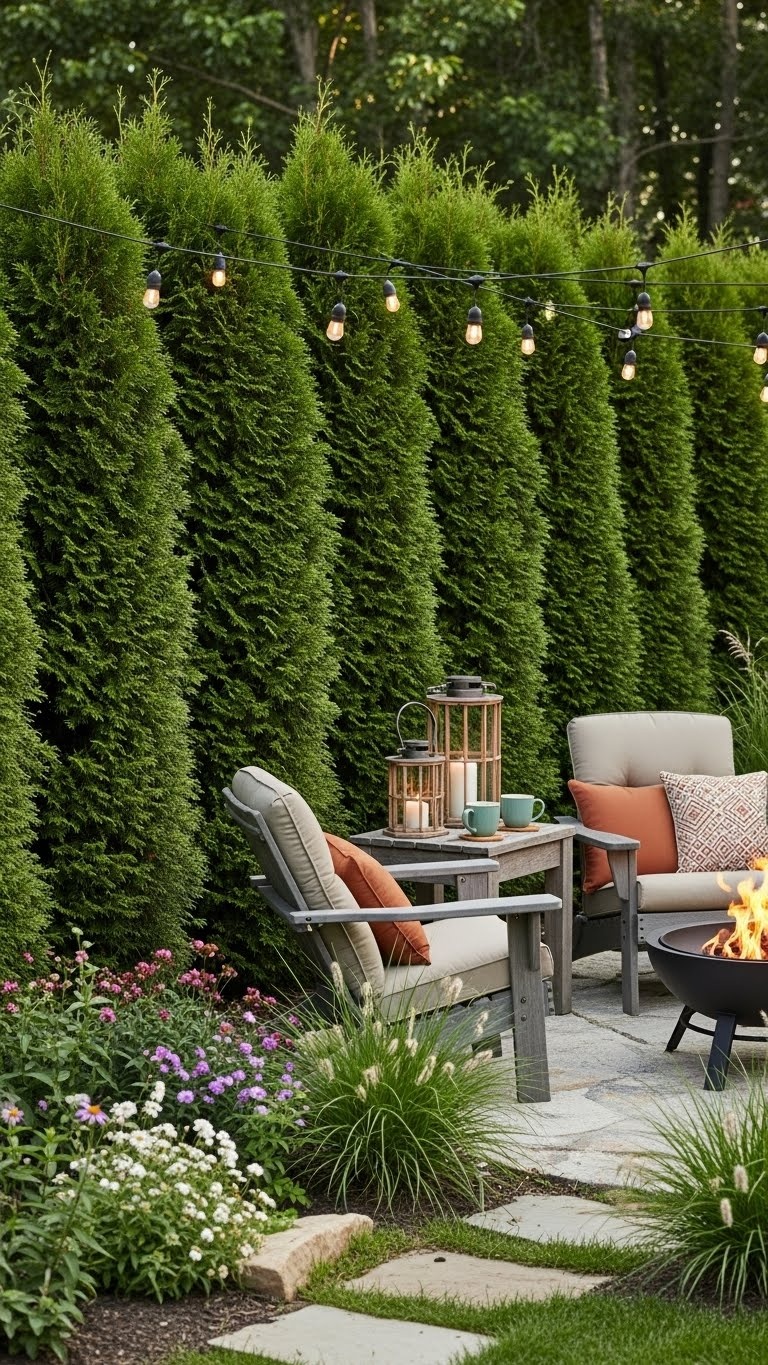
Let’s bust a myth: Junipers aren’t just prickly bushes—they make a tidy, year-round screen with almost no drama.
Pick skinny types like Blue Arrow for tight spaces, or go wide for a thicker wall of green.
They keep their color all winter and shrug off drought, so you don’t have to baby them.
Plant in well-drained soil and give new plants a drink until they’re settled.
Prune once a year to keep shape, but don’t cut deep into old wood—junipers don’t bounce back from that.
Expert Tip From MrPlanter: “Space plants to match their grown-up width so you’re not fighting crowding later. Mulch lightly to keep roots cool and cut down on watering.”
11. Living Willow Tunnel: A magical, leafy tunnel that screams fairytale backyard
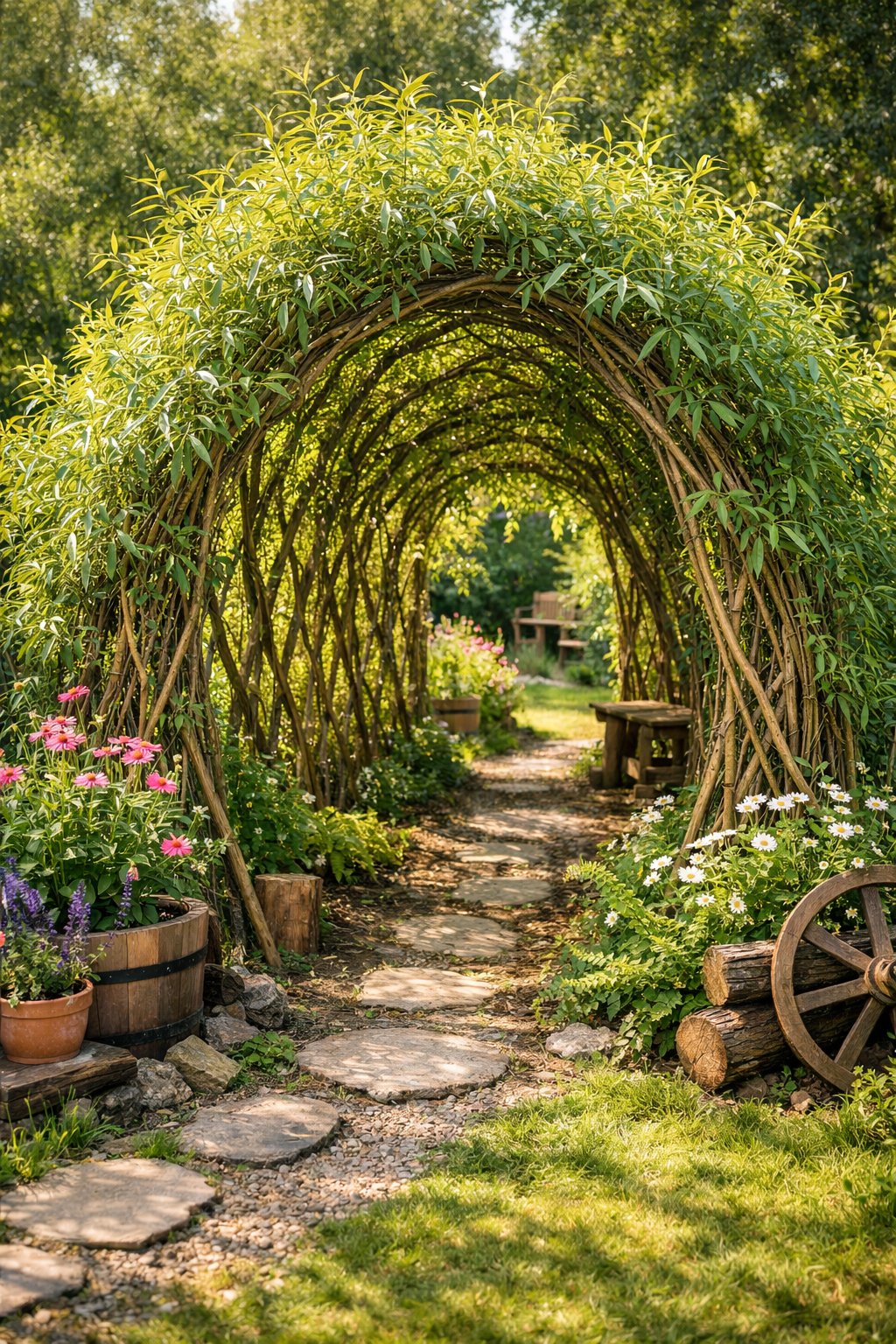
If your yard feels a little boxy, a living willow tunnel brings in some magic and gives you a secret path you’ll actually want to stroll every day.
Plant bundles of dormant willow rods in two rows, about a foot apart, and weave the tips together to form the tunnel.
Willow grows fast and fills out in a year or two, giving you green walls and dappled sunlight.
Kids love crawling through it, and it adds a playful, natural fence that still lets the breeze through.
You can grab a kit with measured rods and ties, or just plant your own with 7-foot rods and some garden twine.
Keep the soil moist the first year and keep weaving or trimming new shoots to keep the tunnel looking good.
Expert Tip From MrPlanter: Plant in winter while rods are still dormant for the best rooting. Trim and weave new shoots each spring to keep the tunnel sturdy.
12. Cherry Laurel Hedge: Fast-growing and dense, this one’s like the bouncer of your yard
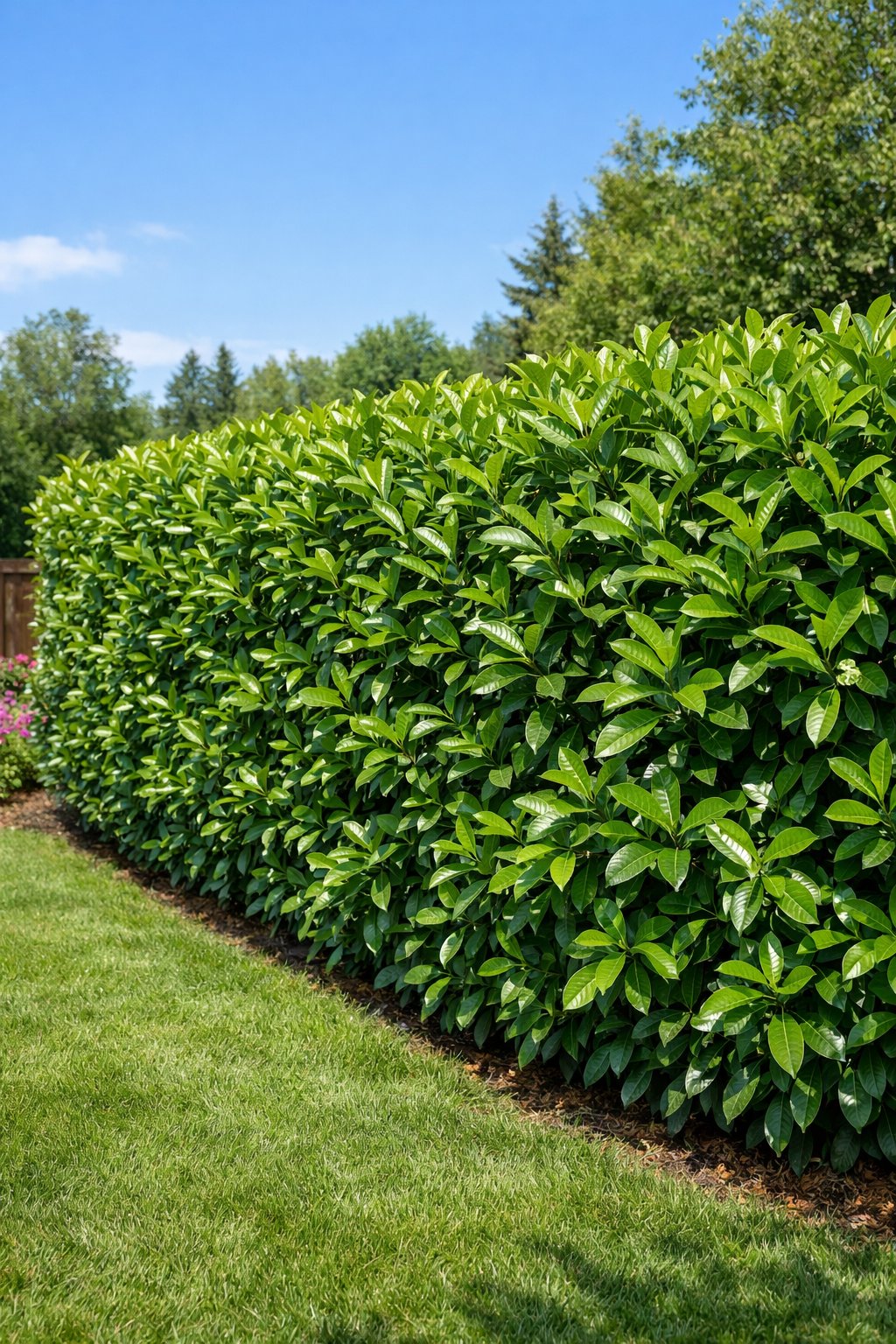
Let’s be honest, cherry laurel stands at the edge of your yard like a friendly bouncer—firm, but with leafy charm.
You’ll get a thick, evergreen wall that blocks nosy neighbors and hushes street noise faster than most shrubs.
Cherry laurel doesn’t fuss much about sun or shade, and it grows in almost any soil if you don’t let it get soggy.
You can prune it into a neat hedge or let it shoot up tall for some serious privacy.
Sometimes pests pop by, so keep an eye out.
Snip away dead wood now and then to keep it looking sharp.
If you plant cherry laurel in a zig-zag row, you’ll get an even denser screen.
Remember to water it well while it gets settled in.
Expert Tip From MrPlanter: Prune lightly twice a year to keep the hedge dense and tidy. Mulch the base to retain moisture and cut back on weeds.
13. Mixed Native Plant Fence: Great for eco-warriors wanting privacy and pollinators
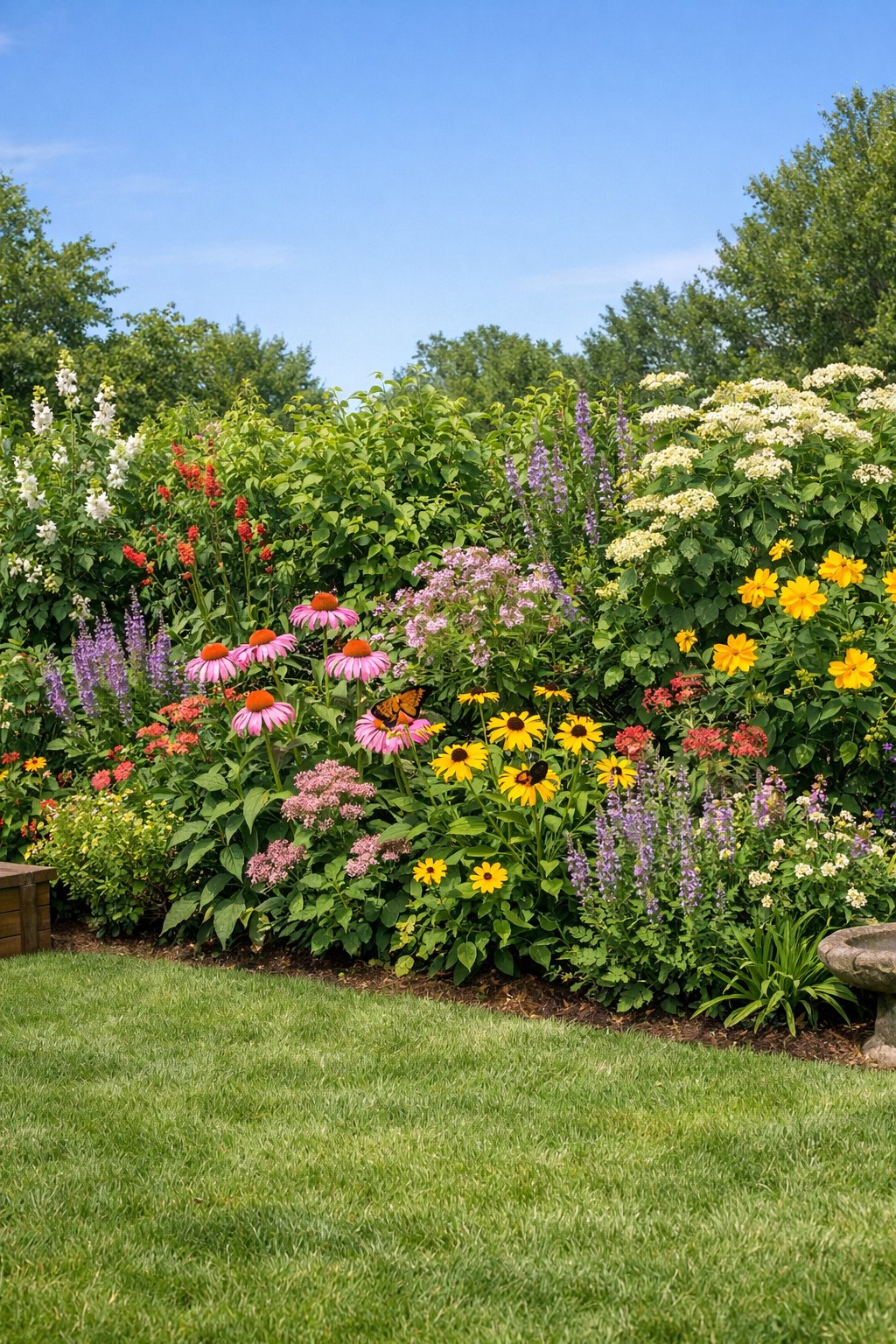
Here’s a fun fact: a mixed native hedge attracts way more bees and butterflies than a boring, single-species wall.
When you plant a mix of local shrubs, small trees, and flowering perennials, you get privacy and a pollinator party.
Pick plants that bloom at different times, so there’s always something for the bugs to munch on.
Stagger the heights and spacing and you’ll have a thick screen in no time.
Toss in some evergreens for winter cover, and flowering shrubs for a pop of color and sweet smells.
Local natives are tough cookies—they need less water and make your yard a haven for wildlife.
Expert Tip From MrPlanter: “Plant at least three species that bloom in spring, summer, and fall to keep pollinators fed. Mulch well the first year to keep roots cool and water steady.“
14. Espaliered fruit tree fence: Privacy with an edible twist. Your guests will love the snacks
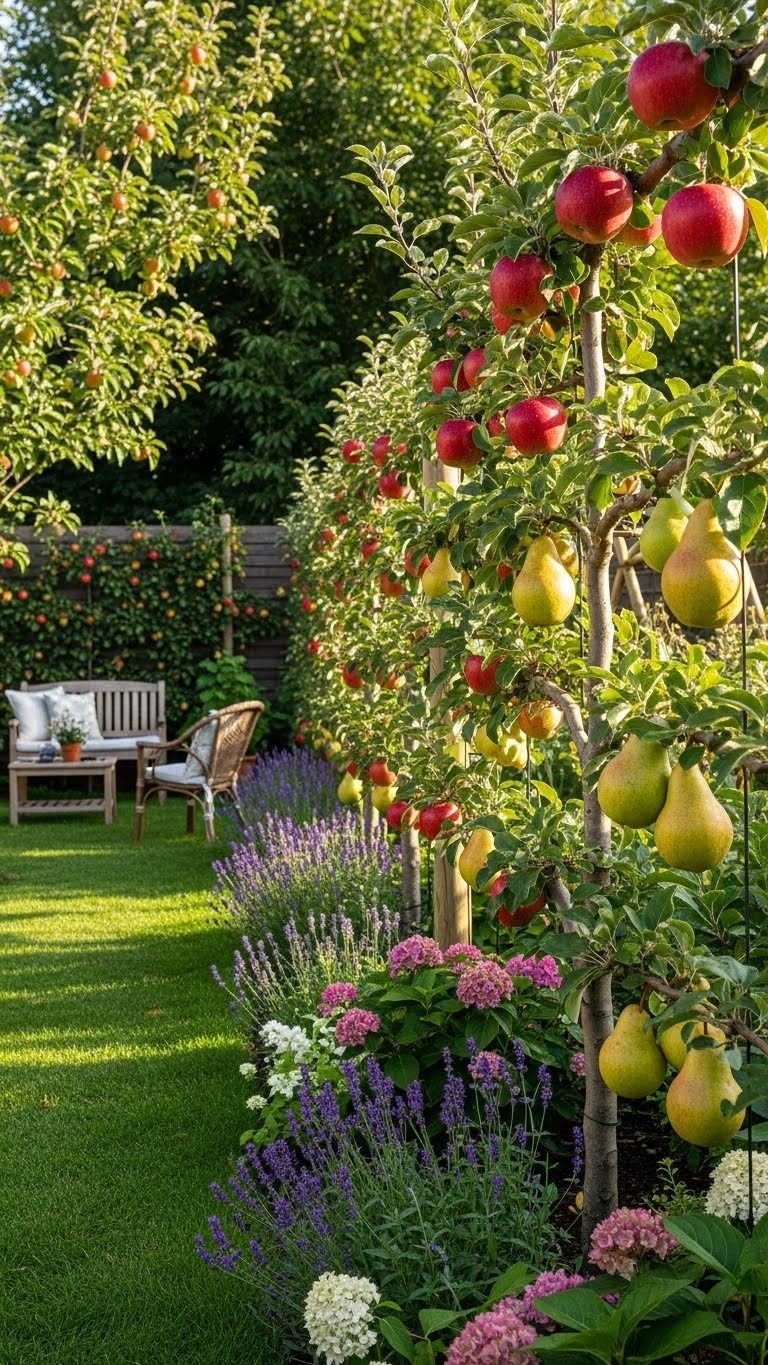
Okay, let’s bust a myth right out of the gate: a privacy fence doesn’t have to look dull or skip the snack table. You can train espaliered fruit trees to grow flat against a fence or trellis, and suddenly your yard has a living wall that blocks nosy neighbors and hands you fruit.
I’ve seen apples, pears, and even peaches get the espalier treatment along fences. It saves space, looks pretty sharp, and honestly, it’s way more fun than a plain old wooden fence.
You’ll need to train the branches and do a little pruning each year. That keeps everything tidy and helps the fruit ripen up nicely.
This trick fits right in with small yards or for folks who like things in order. Plus, you get a bonus: birds find a home and you’ll see flowers in spring while you wait for your snack stash to grow.
Expert Tip From MrPlanter: Start with dwarf or semi-dwarf trees. Put in strong supports right from the start. Each winter, prune to keep that fence shape going and you’ll see even more fruit next year.
15. Sunflower fence
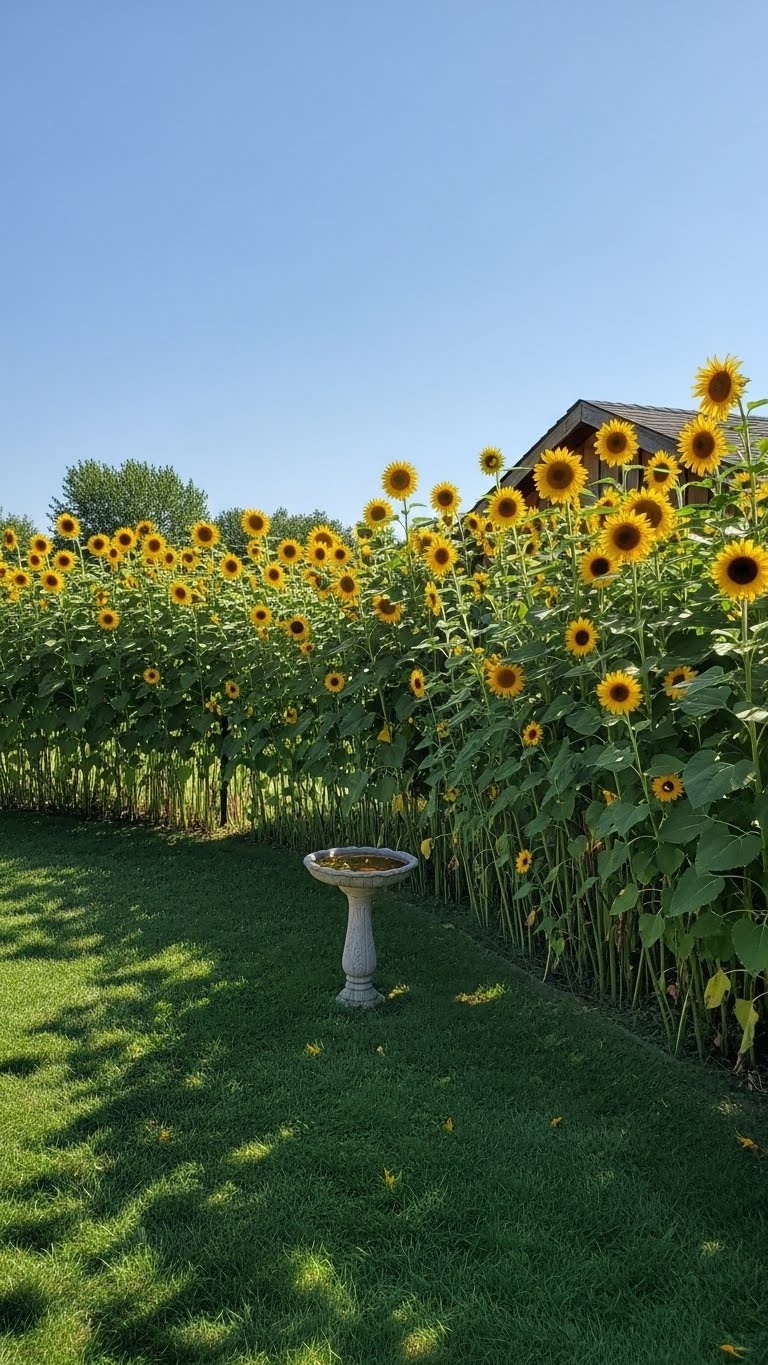
Surprising Fact: Sunflowers can shoot up taller than your fence and turn your yard into a sunny, cheerful hideaway.
Try planting a double row of tall sunflowers along your property line. They grow super fast, burst into bloom in late summer, and bring in pollinators that help the rest of your plants.
If you want a little flair, stagger the heights for layers. Windy spot? Just tie the stems gently. They look awesome with a simple trellis or behind a low picket fence—hides the stakes, shows off the flowers.
Sunflowers die back each year, so either let the seeds fall and replant themselves or mix in some perennials for privacy all year. They’re cheap, make great photo backdrops, and honestly, kids go wild for them.
Expert Tip From MrPlanter: “Give sunflowers full sun and a bit of compost. Save some seed heads for next spring so you’re always ready for round two.”