As an Amazon Associate, MrPlanter.com earns from qualifying purchases.
Your backyard patio works hardest when it gives each activity a clear place to happen. The strongest patio plan combines comfortable seating, a practical surface, shade, lighting, and planting that suits how you spend time outdoors. Even a small space can feel generous when furniture leaves room to move and every feature has a job.
Use the ideas below to shape a patio for weekday dinners, weekend guests, quiet coffee, or cool evenings beside a fire. Start with the layout, then choose materials and details that fit your budget, climate, and maintenance routine.
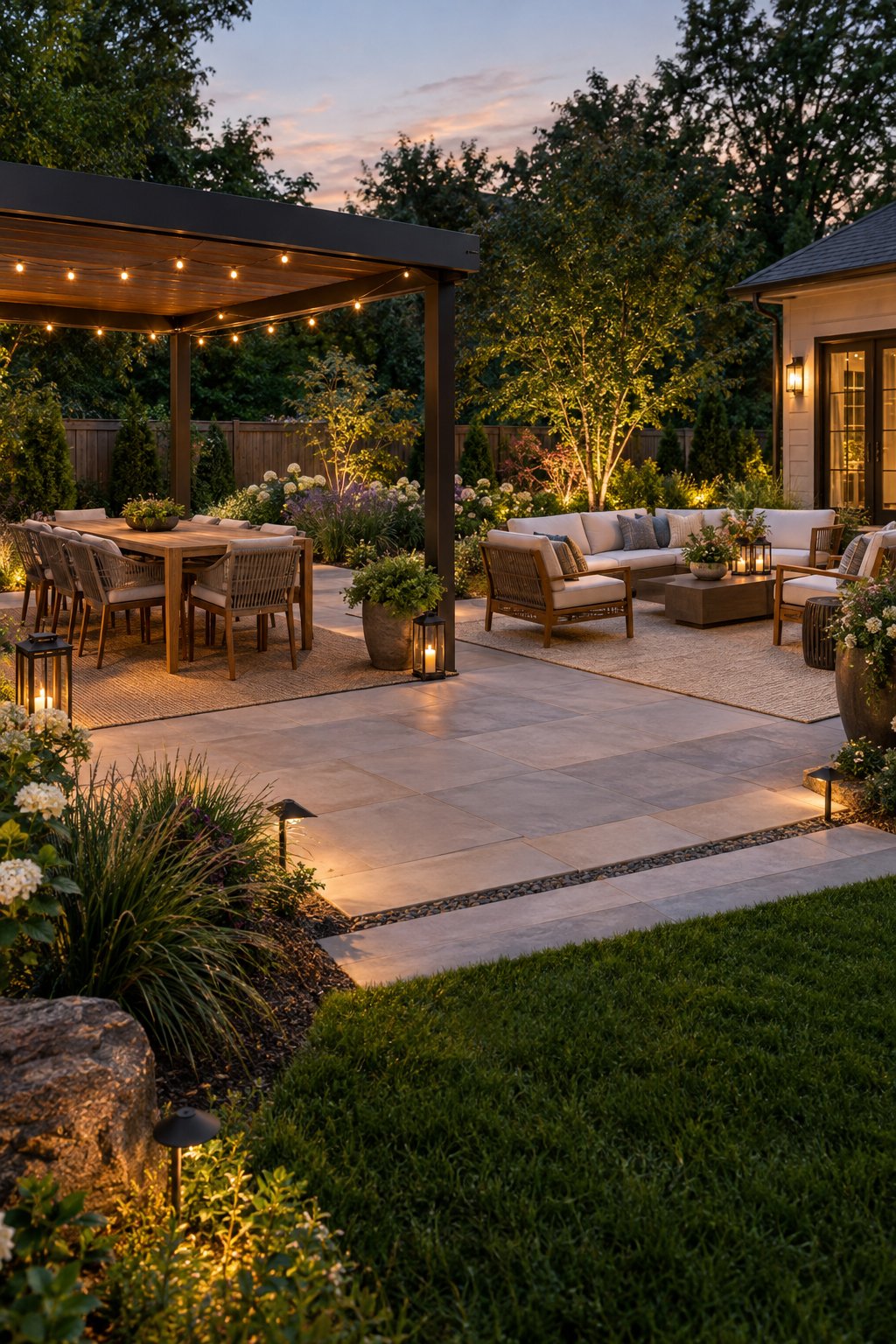
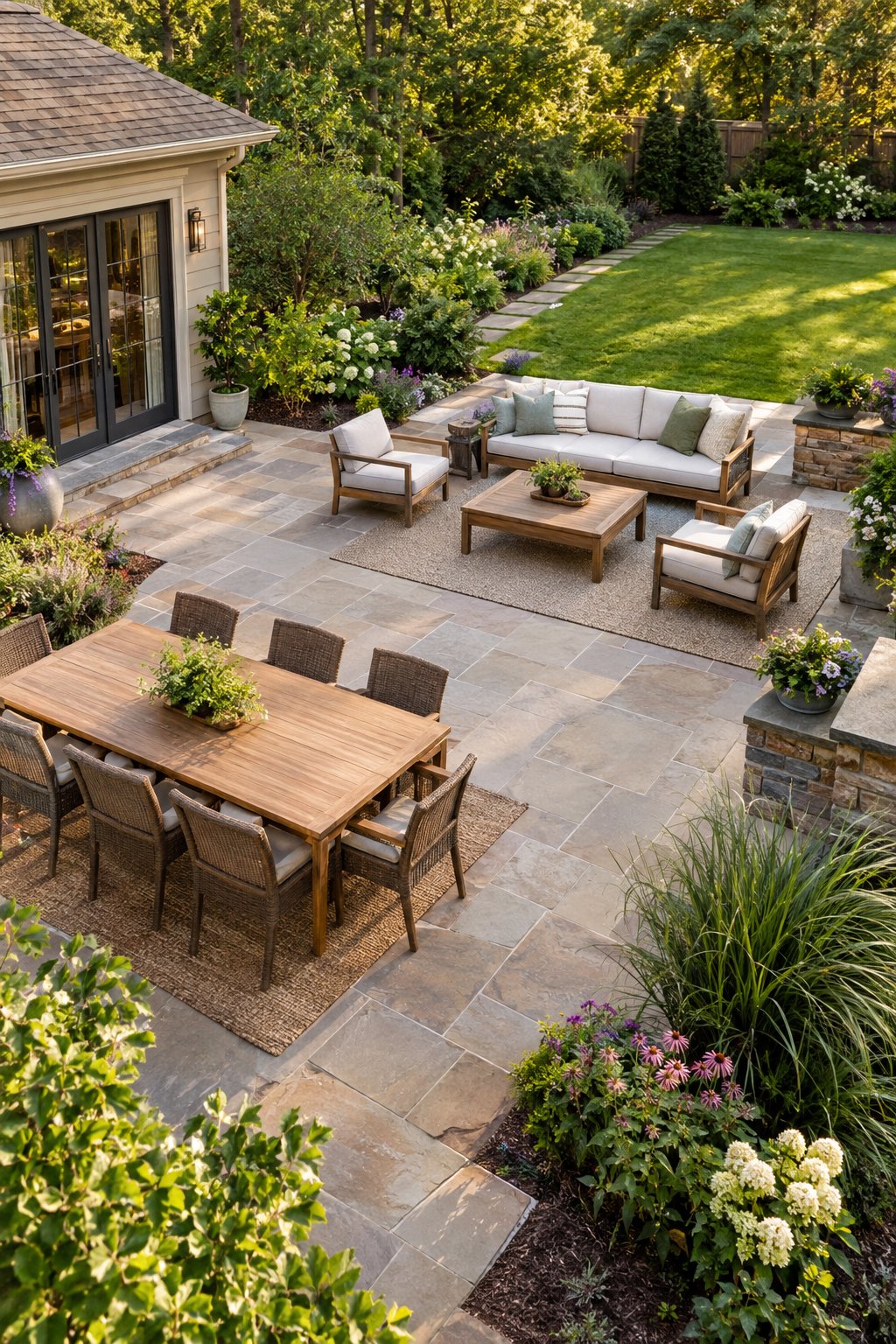
1. Create A Zoned Dining And Lounge Patio
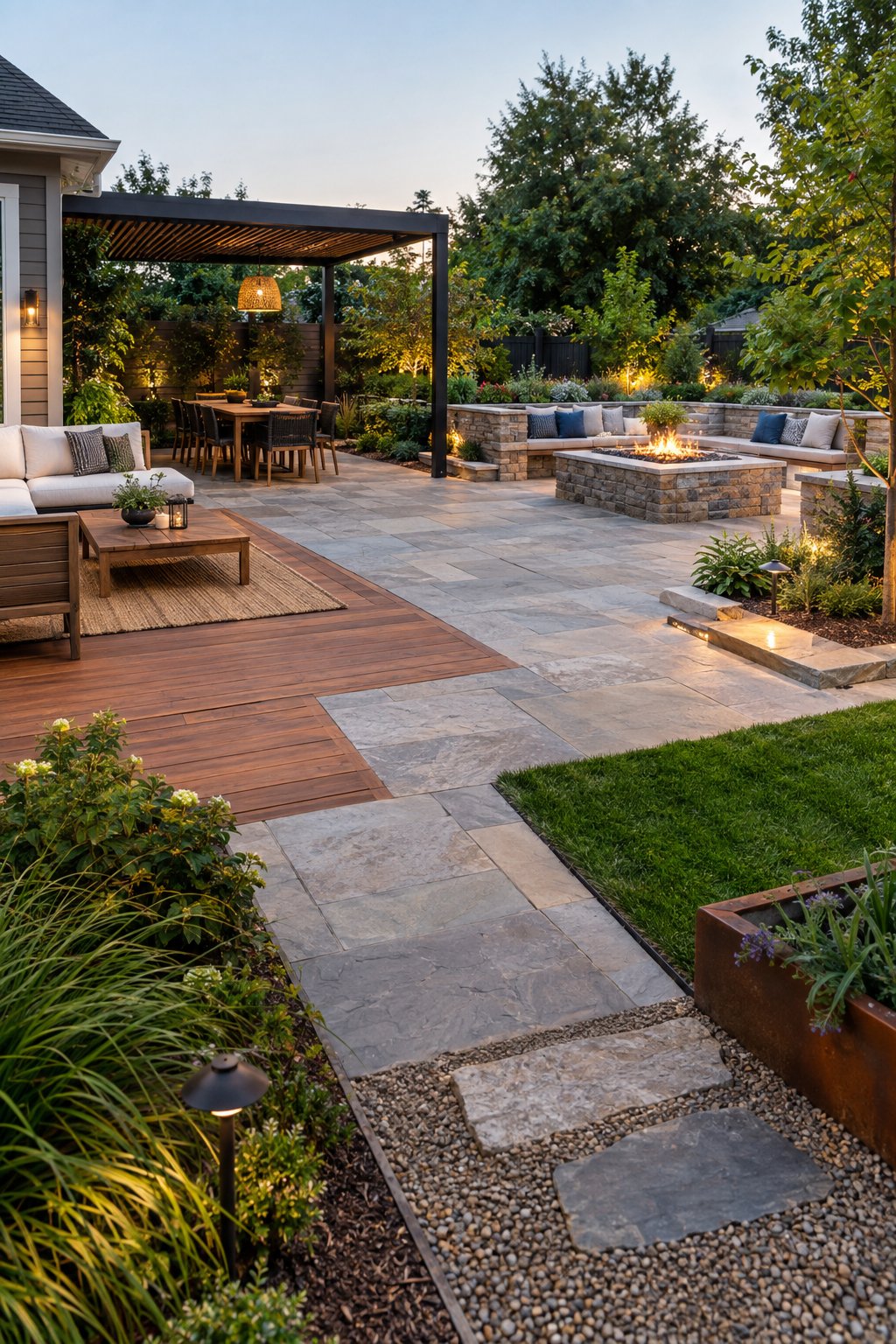
A single patio feels more useful when you give meals and lounging their own zones. Place a dining table near the kitchen door, then set a sofa and chairs at the far end around a low table. A rug, change in paver direction, or large planter can mark the shift without building a wall. Keep a clear walkway between both areas so guests can move through with plates and drinks. Weather-resistant cushions and warm string lights make the layout comfortable after sunset. Use the planting around the patio to soften edges and add privacy.
Expert Tip From MrPlanter: “Leave open space around each chair so people can sit down easily. A small layout feels relaxed when traffic has a clear path.”
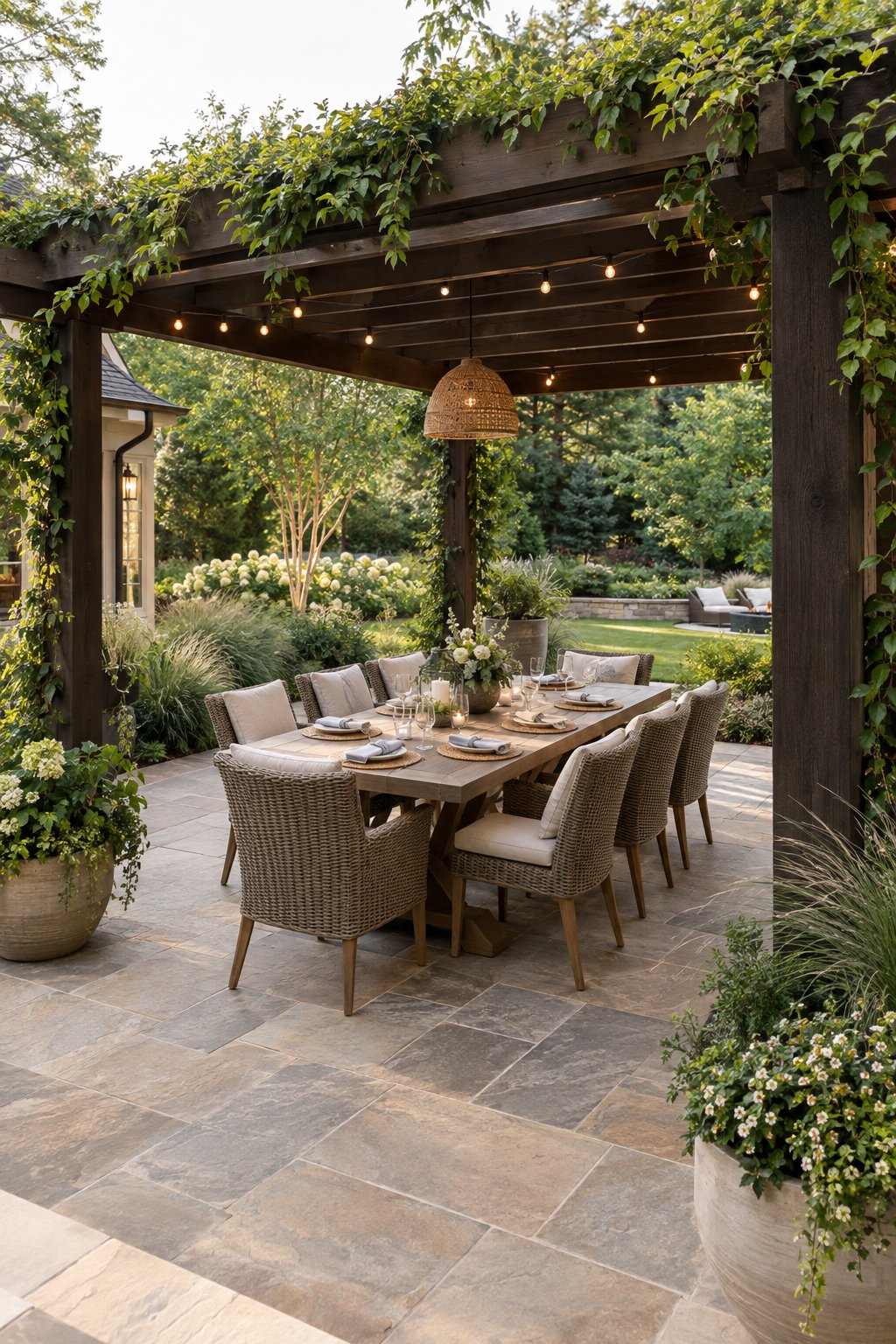
2. Add A Pergola-Covered Outdoor Dining Room
A pergola gives an exposed dining area a ceiling, shape, and welcome shade. Set it over a table sized for your household, then add climbing plants, outdoor curtains, or a retractable canopy for more cover. Keep the grill close enough for serving while leaving safe room around hot surfaces. String lights attached to the beams create a soft glow for dinner. Choose posts and stain colors that relate to your home, fence, or garden edging so the structure feels connected to the backyard.
Expert Tip From MrPlanter: “Place the pergola where it shades the table during your main meal time. Add curtains on the windward side when you need more privacy.”
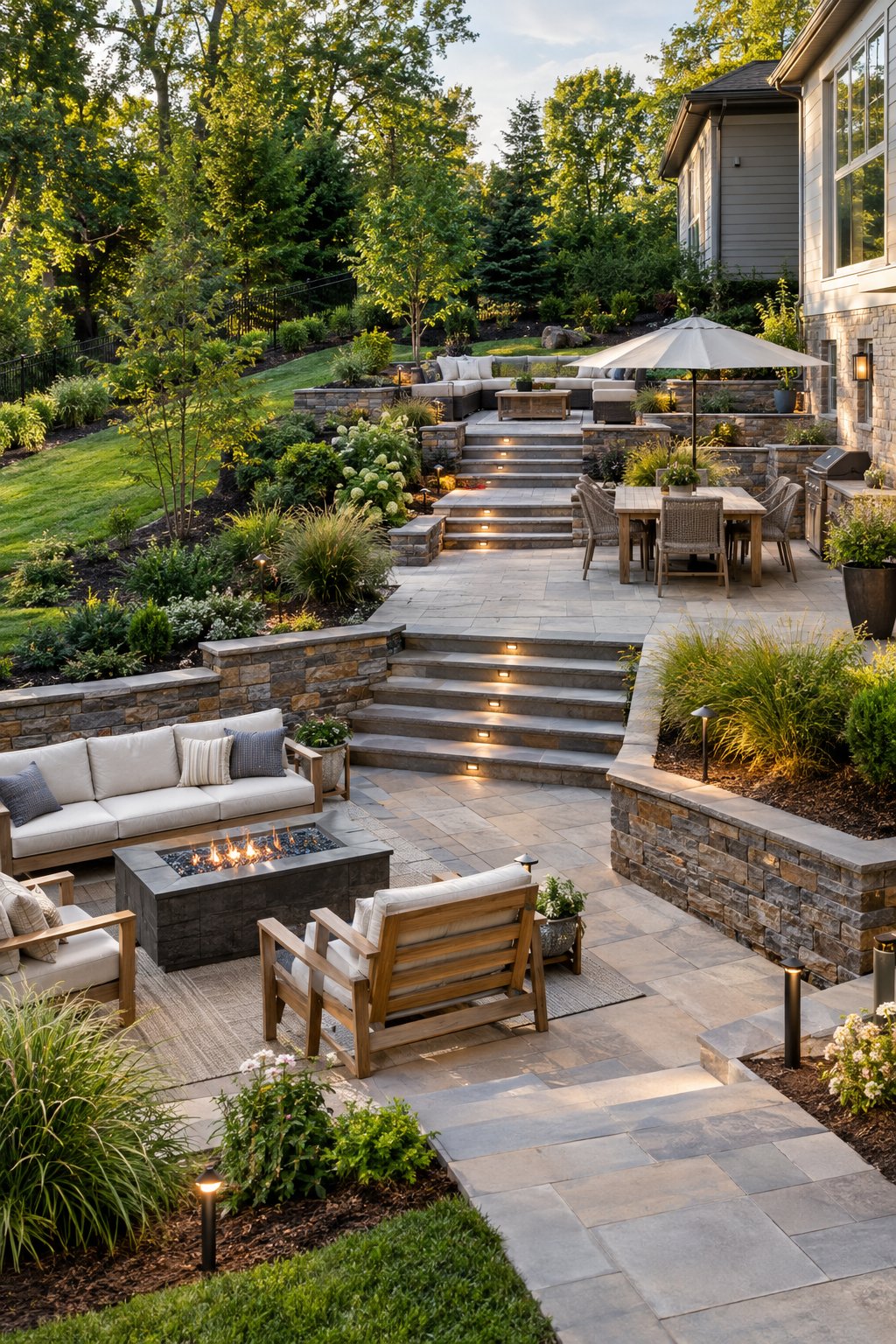
3. Build A Multi-Level Patio For Sloped Backyards
A sloped yard becomes easier to use when you divide it into stable patio levels. Use one terrace for dining, another for lounging, and steps that connect each area with a steady rise. Retaining walls hold the soil and may double as casual bench seating when capped with smooth stone. Plan drainage before choosing finishes, since water must move safely away from the house and walls. Planting on the edges helps each level blend into the yard. For more planting guidance, explore these sloped backyard landscaping ideas.
Expert Tip From MrPlanter: “Keep steps broad and easy to see, especially near seating areas. Add low lights along the edges so evening visitors can find each level.”
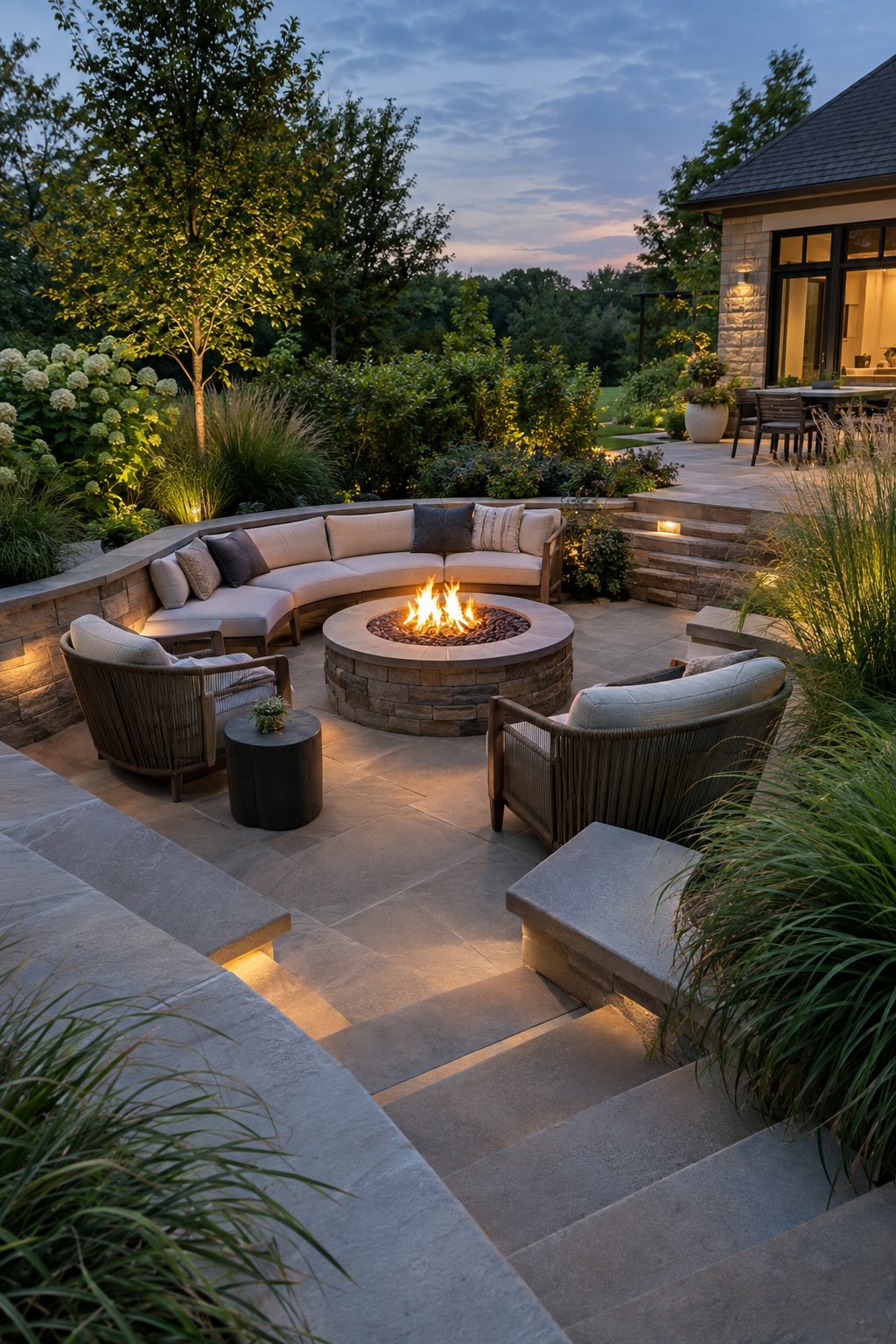
4. Install A Sunken Fire Pit Conversation Area
A sunken fire pit creates a cozy gathering spot with built-in shelter from the yard around it. Dig the seating area into a level section, reinforce the sides, and surround the fire with a broad band of noncombustible paving. Built-in benches keep the center open and give everyone a view of the flames. Check local fire rules, keep branches away, and provide a safe route out of the pit. Gravel or stone underfoot handles sparks better than loose mulch.
Expert Tip From MrPlanter: “Give the fire pit generous clearance from plants, fences, and structures. Keep a lid and a water source nearby for quick control.”
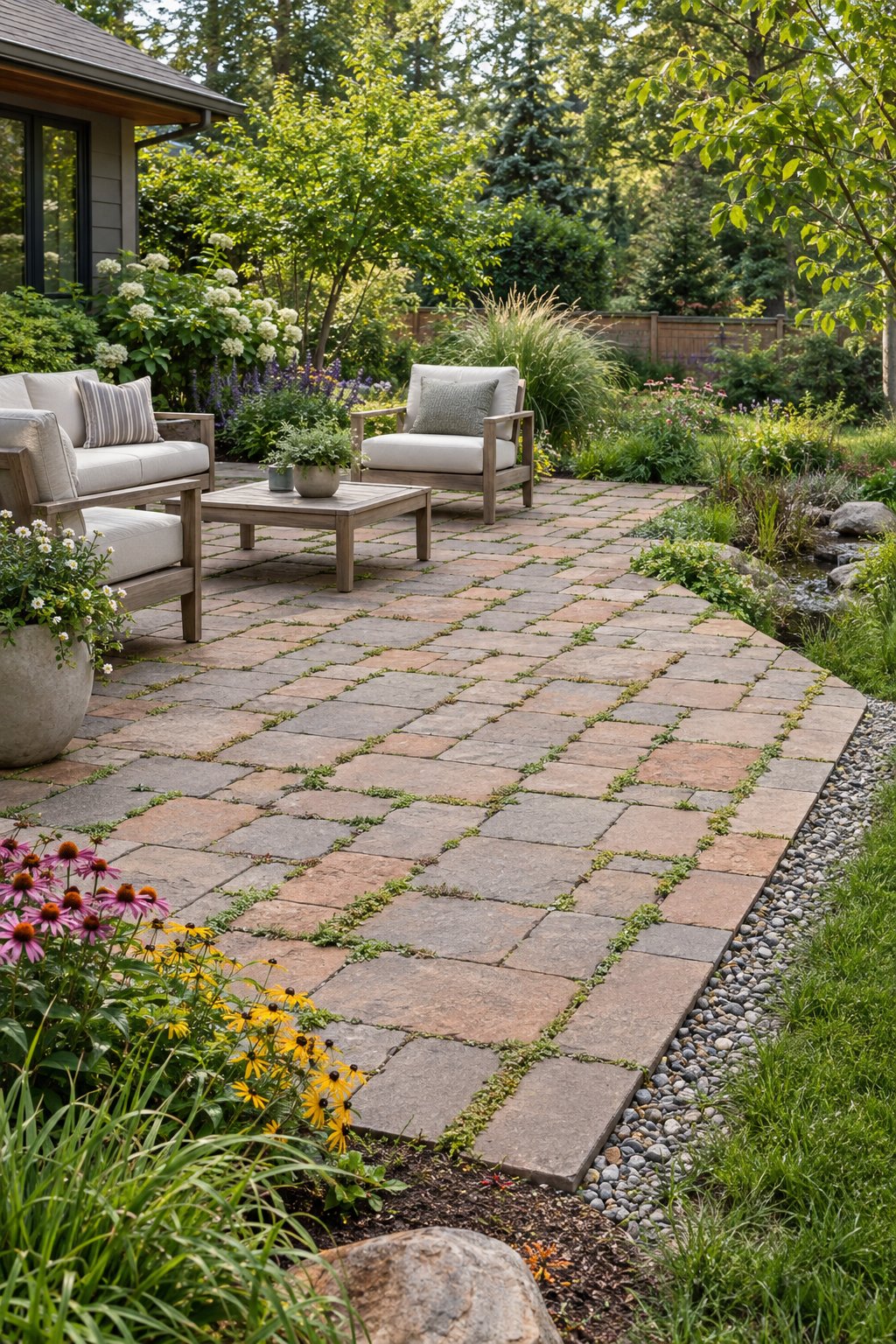
5. Design A Permeable Paver Patio With Planting Joints
Permeable pavers let rain filter through joints and into a prepared base, making them useful where runoff collects. Choose a firm, level installation area, then use a repeating pattern that suits your furniture. Narrow planting joints can hold low groundcover in spots with enough light and foot traffic control. Keep dining legs on broad, stable pavers, and reserve planted gaps for the patio edges. Sweep debris from the joints so water continues to pass through freely.
Expert Tip From MrPlanter: “Use wider solid pavers beneath chairs and tables. Save planted joints for borders where moving furniture is less likely.”
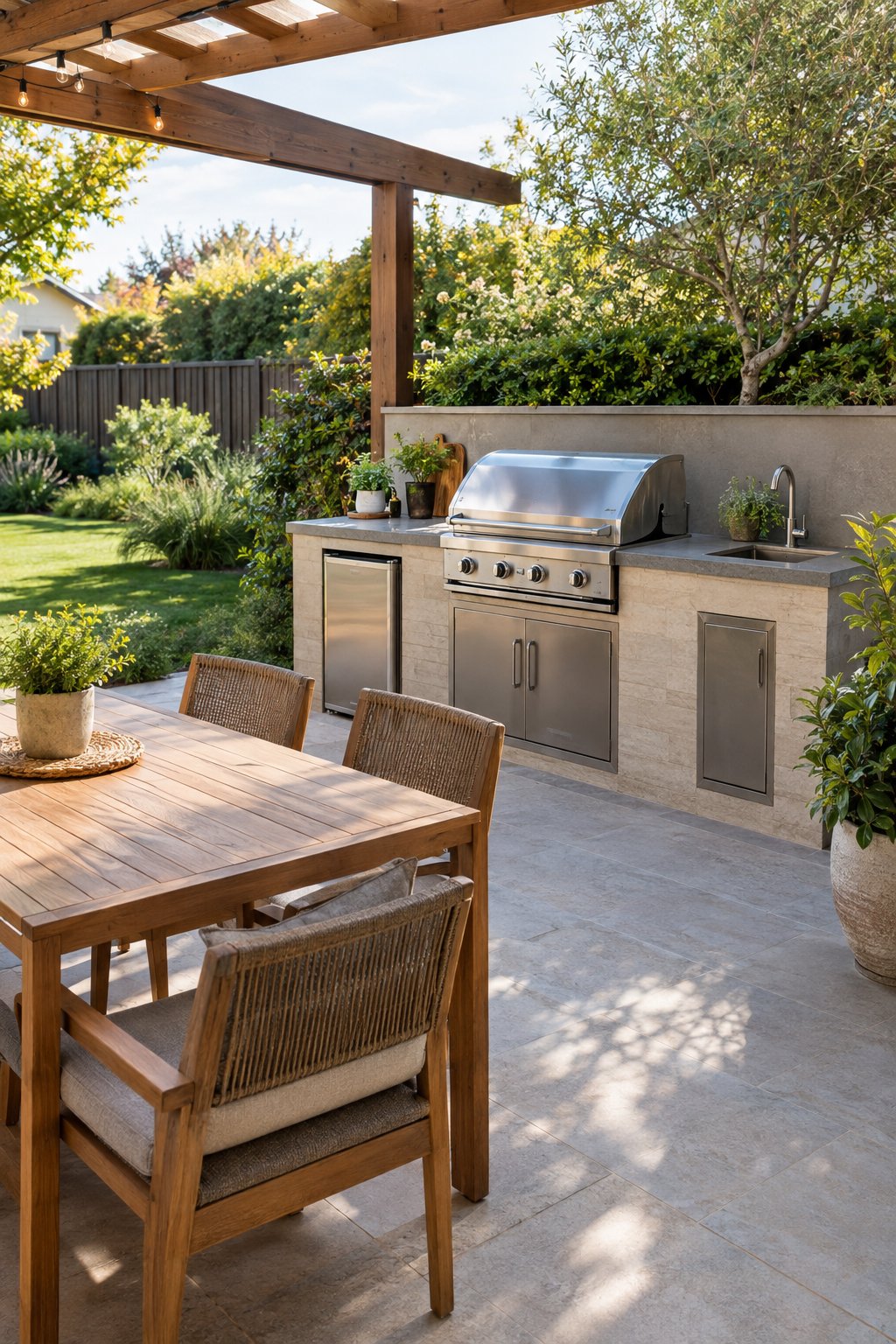
6. Add A Compact Outdoor Kitchen And Grill Station
A compact grill station brings cooking closer to guests while using a small footprint. Start with a grill, heat-safe counter space, and storage for tools, plates, and fuel. Position the station near the dining area, yet leave enough room for the cook to open lids and move safely. A small sink or beverage cooler adds convenience when plumbing and power support it. Protect appliances with covers or a roof, and choose finishes that handle grease, heat, and outdoor moisture.
Expert Tip From MrPlanter: “Put the counter on the side where you set food down most often. A few feet of landing space makes grilling much easier.”
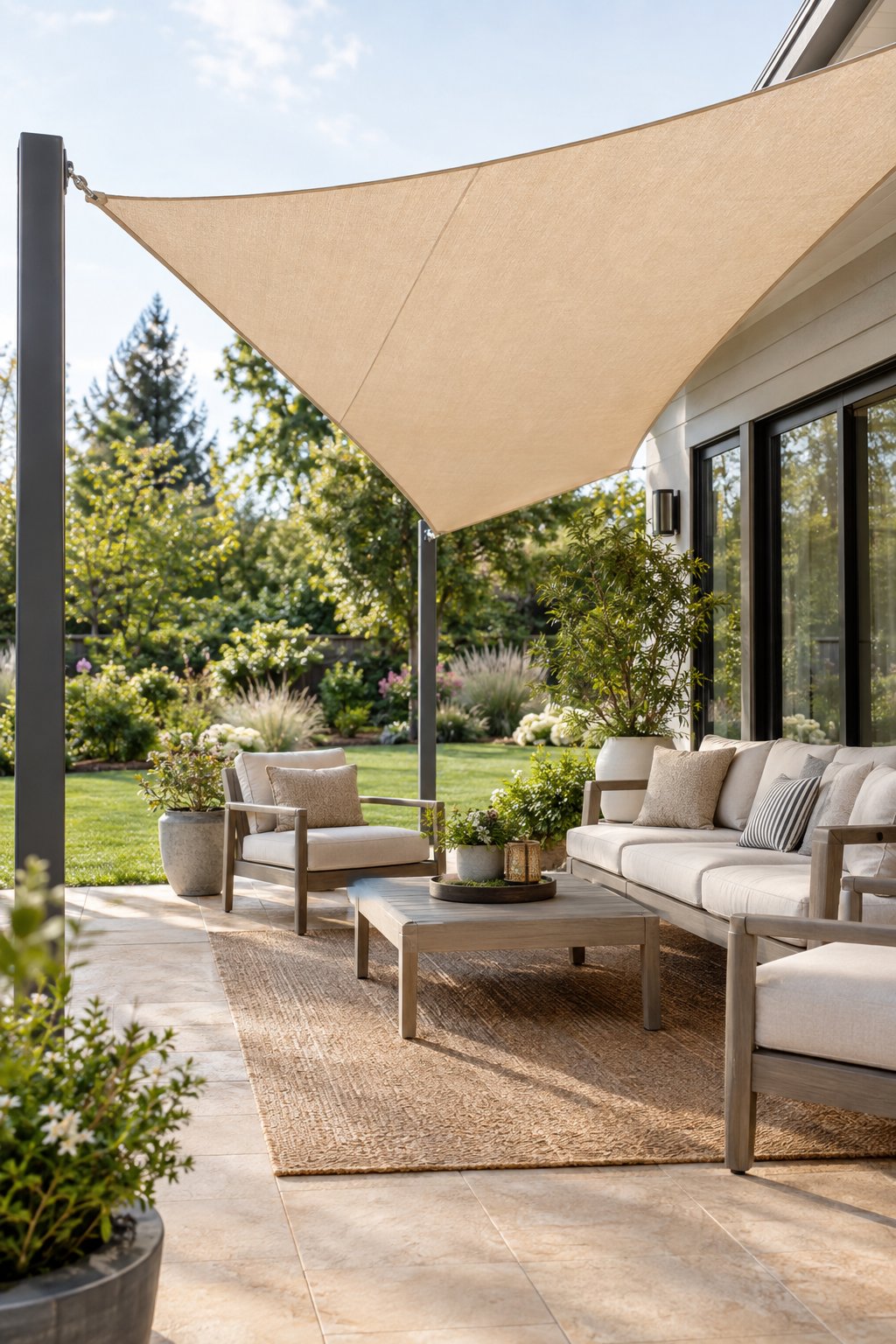
7. Frame The Patio With A Shade Sail
A shade sail gives your patio quick sun protection with a light visual footprint. Anchor it to strong posts or approved structural points, then slope the fabric so rain drains away. A triangular sail creates a crisp modern look, while overlapping sails cover a wider seating area. Place the shaded zone over lounge chairs or a dining table, and keep the fabric clear of grills and fire features. Pick a UV-resistant outdoor fabric in a color that works with your house and planting.
Expert Tip From MrPlanter: “Set one corner lower than the others to guide rainwater away from furniture. Inspect anchors before the windy season begins.”
8. Use Flagstone And Groundcover For A Garden Patio
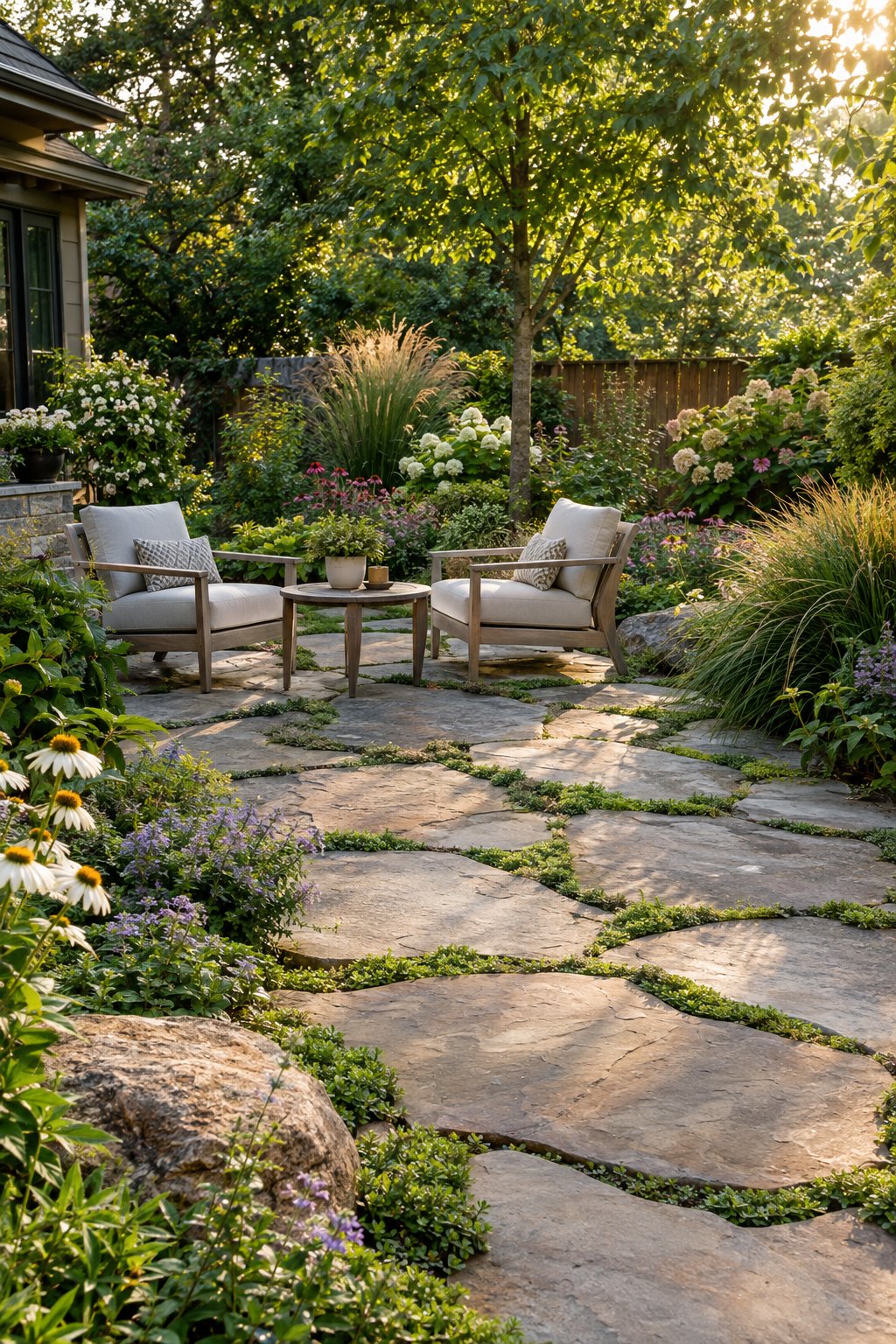
Flagstone with low groundcover creates a garden patio that feels connected to its surroundings. Choose stones with reasonably flat surfaces, then set them on a well-prepared base for stable chairs and tables. Leave controlled gaps for a walkable plant such as a low-growing thyme suited to your climate. Use larger stones in the main seating area and smaller pieces along the garden edge. Repeated stone colors help the patio feel settled without making it look too formal.
Expert Tip From MrPlanter: “Test every stone with a chair before filling the joints. A pretty patio still needs a steady place for four legs.”
9. Make A Small Courtyard Patio With Bistro Seating
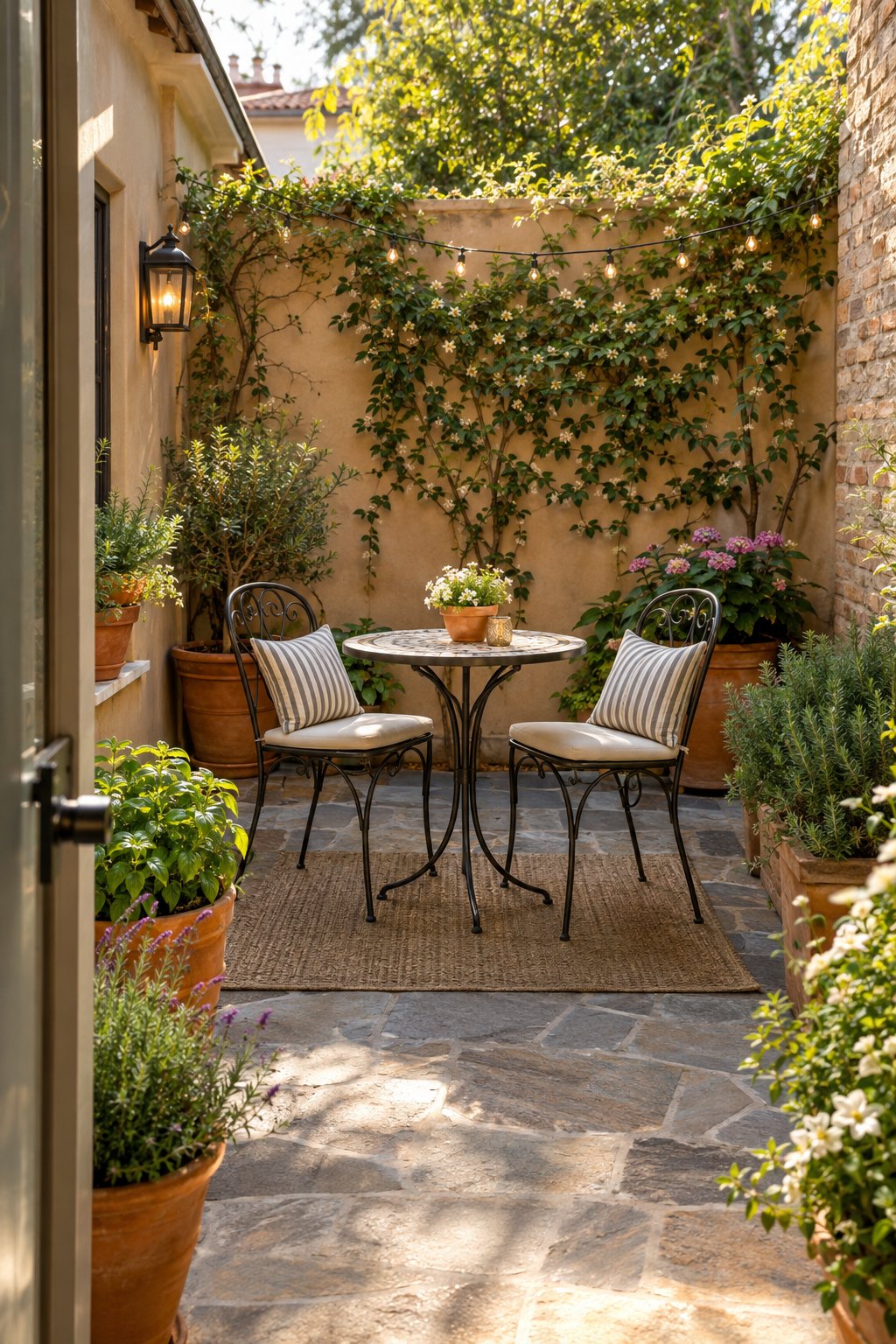
A small courtyard becomes a charming daily retreat with a round table and two light chairs. Use a compact surface such as brick, tile, or small pavers, then add tall pots to create height without taking floor space. A wall, fence, or trellis can provide privacy and a backdrop for herbs or flowering vines. Choose folding furniture if you need room for gardening tasks. A wall-mounted lantern or slim string light keeps the center clear.
Expert Tip From MrPlanter: “Measure the chair pull-back space before buying the table. You need room to sit comfortably without blocking the entry.”
10. Create A Poolside Patio With A Pergola Cabana
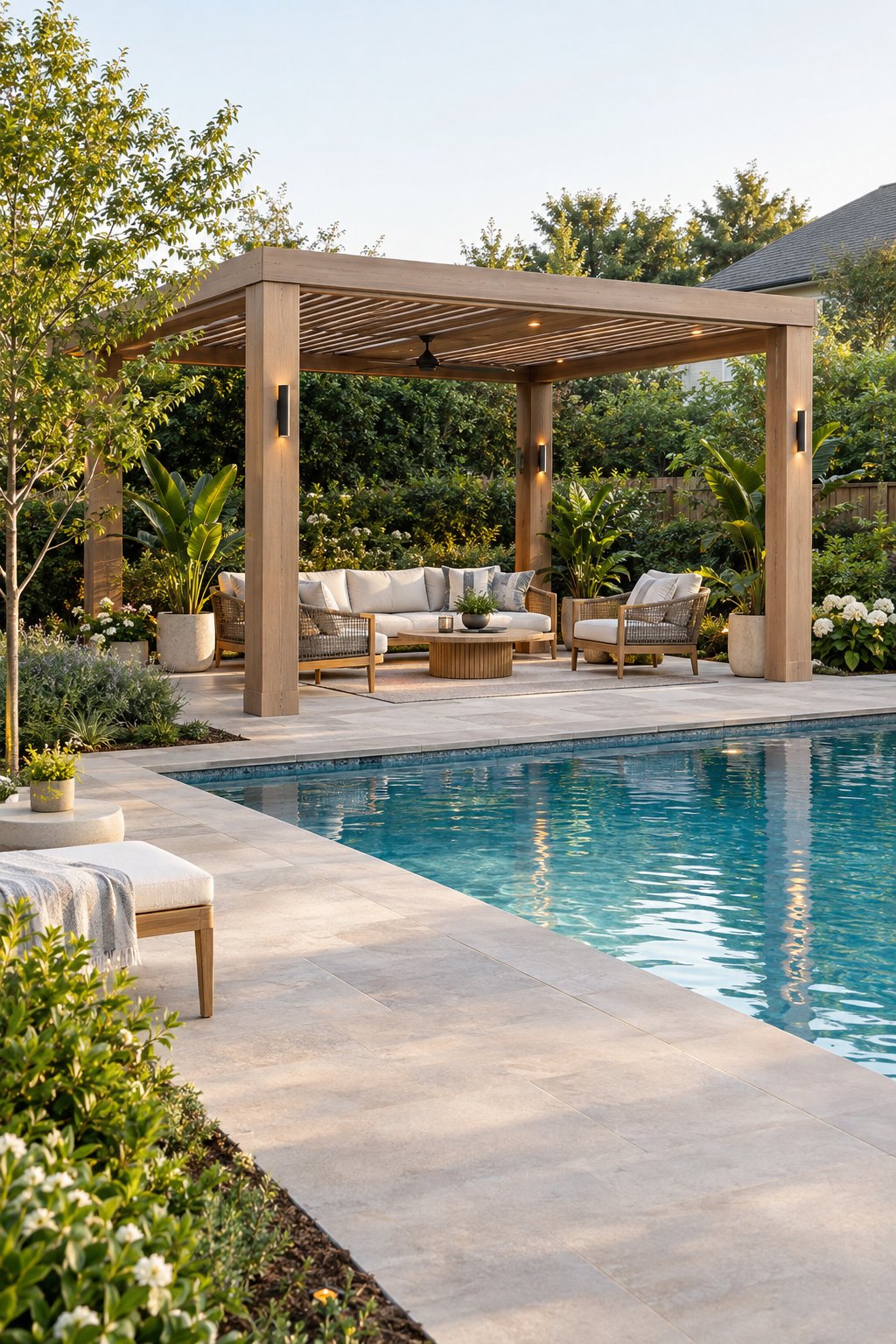
A poolside patio works best when the cabana creates a dry, shaded base beside the water. Place loungers where swimmers can reach them easily, then reserve the covered area for towels, drinks, and conversation. Use slip-resistant paving with enough room around the pool edge for safe movement. Keep furniture fabrics suited to chlorine and sun, and place plants where fallen leaves stay away from filters. A small table inside the cabana gives wet guests somewhere to set a book or drink.
Expert Tip From MrPlanter: “Leave a clear strip between the pool and furniture. This keeps towels dry and gives swimmers room to walk.”
11. Add A Water Feature Beside A Quiet Seating Nook
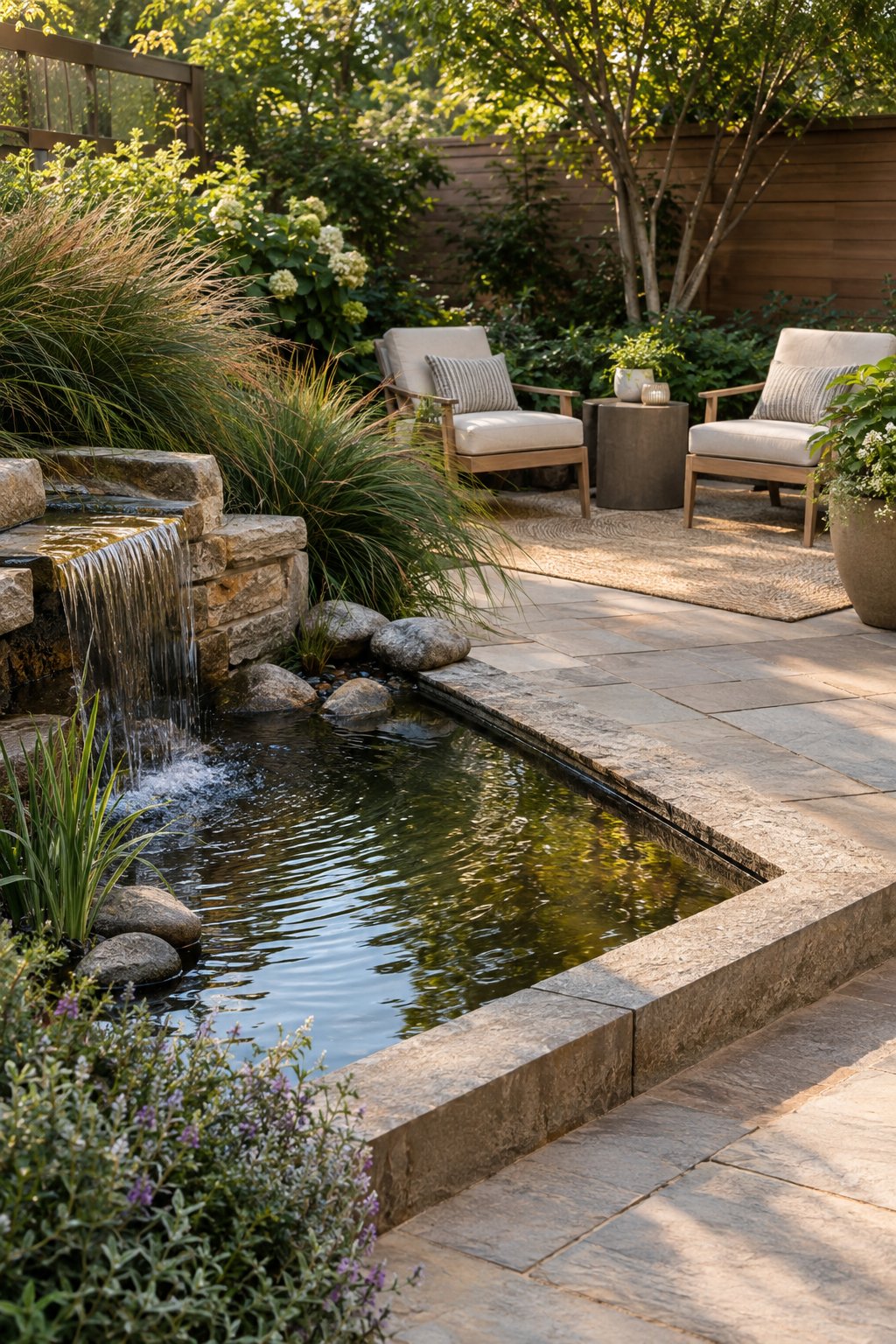
A small fountain or pond can turn an unused patio corner into a calm seating nook. Place two chairs where you can hear the water without blocking maintenance access. Choose a recirculating feature with a pump sized for its basin, and plan a nearby power source rated for outdoor use. Stones, ferns, and moisture-tolerant plants help the feature blend into the garden. Remove leaves regularly and follow a care schedule for the pump and water treatment.
Expert Tip From MrPlanter: “Keep a clear service path beside the basin. Easy access makes cleaning feel like a quick chore.”
12. Build A Brick Patio With A Built-In Fire Pit
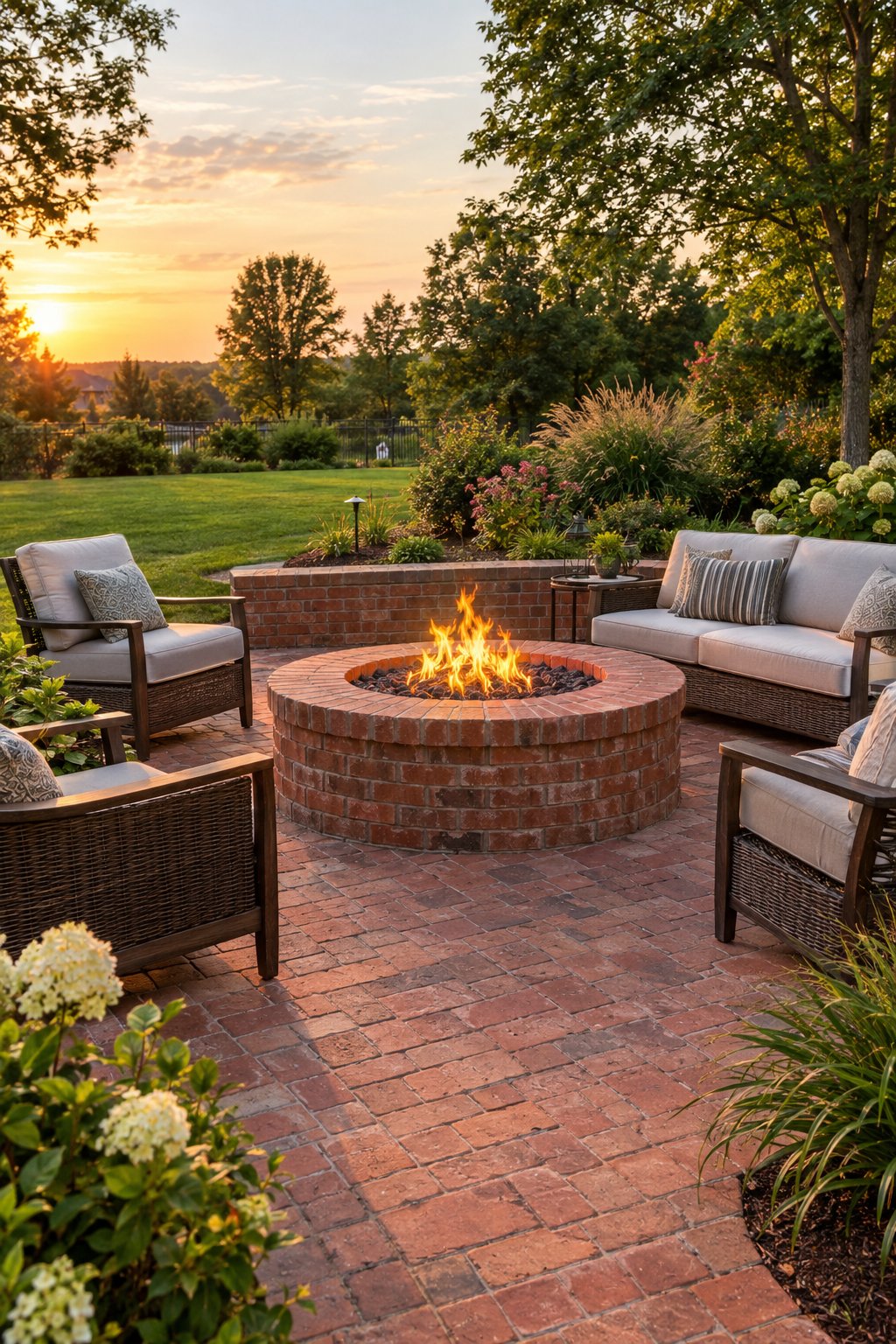
Brick gives a fire pit patio a warm pattern and a surface that suits traditional homes. Lay the bricks in a strong pattern, then build the fire pit from fire-rated masonry with a safe, noncombustible ring. Curved benches or separate chairs can face the center while leaving a clear route around the flames. Use polymeric joint material suited to the installation and seal the brick if the climate calls for it. Keep nearby greenery trimmed away from sparks.
Expert Tip From MrPlanter: “Choose a brick color that repeats somewhere else in the yard. That small connection helps the fire pit feel planned.”
13. Use Reclaimed Wood And Vintage Furniture For A Rustic Patio
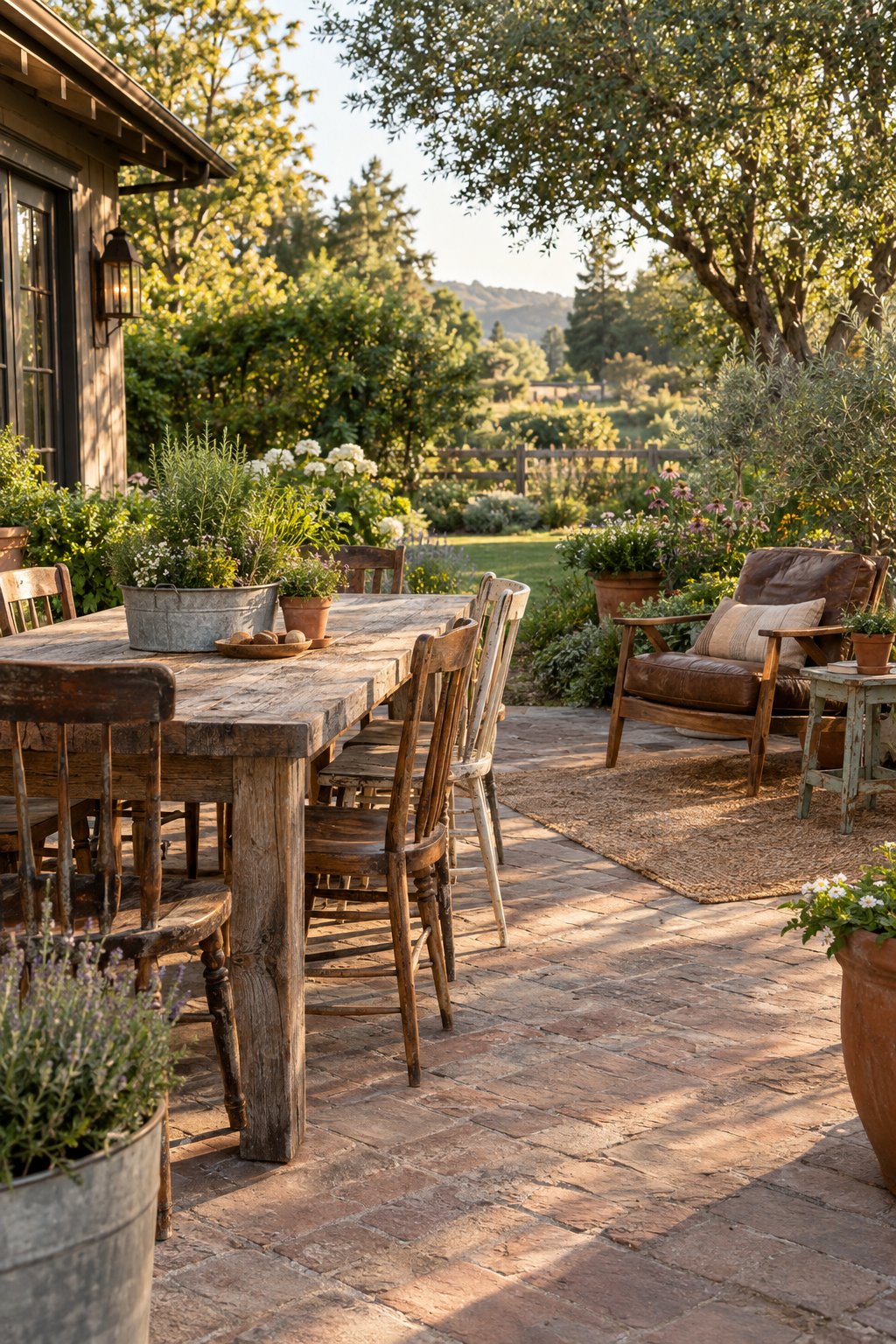
Reclaimed wood and vintage furniture give a patio an easygoing, lived-in character. Use reclaimed boards for a dining table only after checking that they are sound, clean, and free from unsafe coatings. Pair the table with mismatched metal or wood chairs, then add washable cushions for comfort. Potted herbs, galvanized containers, and a simple outdoor rug build the rustic theme without filling every corner. Seal wood for outdoor use and store cushions during wet weather.
Expert Tip From MrPlanter: “Sand rough edges before anyone sits down. Preserve the old marks while removing splinters and loose finish.”
14. Design A Coastal Patio With Blue-and-White Accents
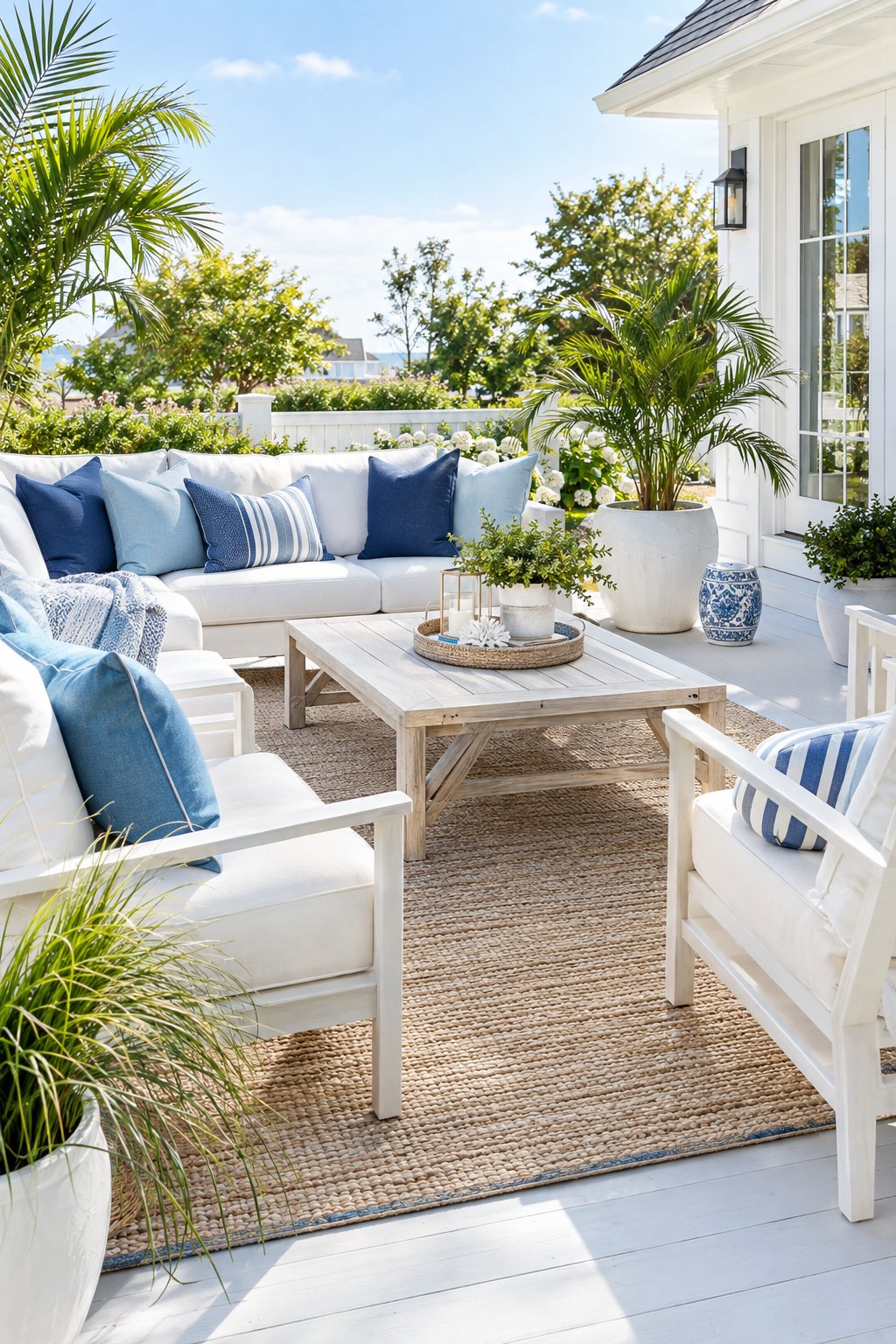
Blue-and-white fabrics give a patio a coastal feel without major construction. Start with a pale outdoor rug, blue cushions, and white or light wood furniture. Add rope details, striped textiles, and planters that tolerate your sun and wind conditions. Keep the hardscape simple so the color palette remains the main feature. A compact coffee table and movable chairs let you shift the arrangement for conversation or afternoon shade.
Expert Tip From MrPlanter: “Repeat one blue shade in two or three small accents. A focused color keeps the patio fresh instead of busy.”
15. Create A Tropical Patio With Lush Privacy Planting
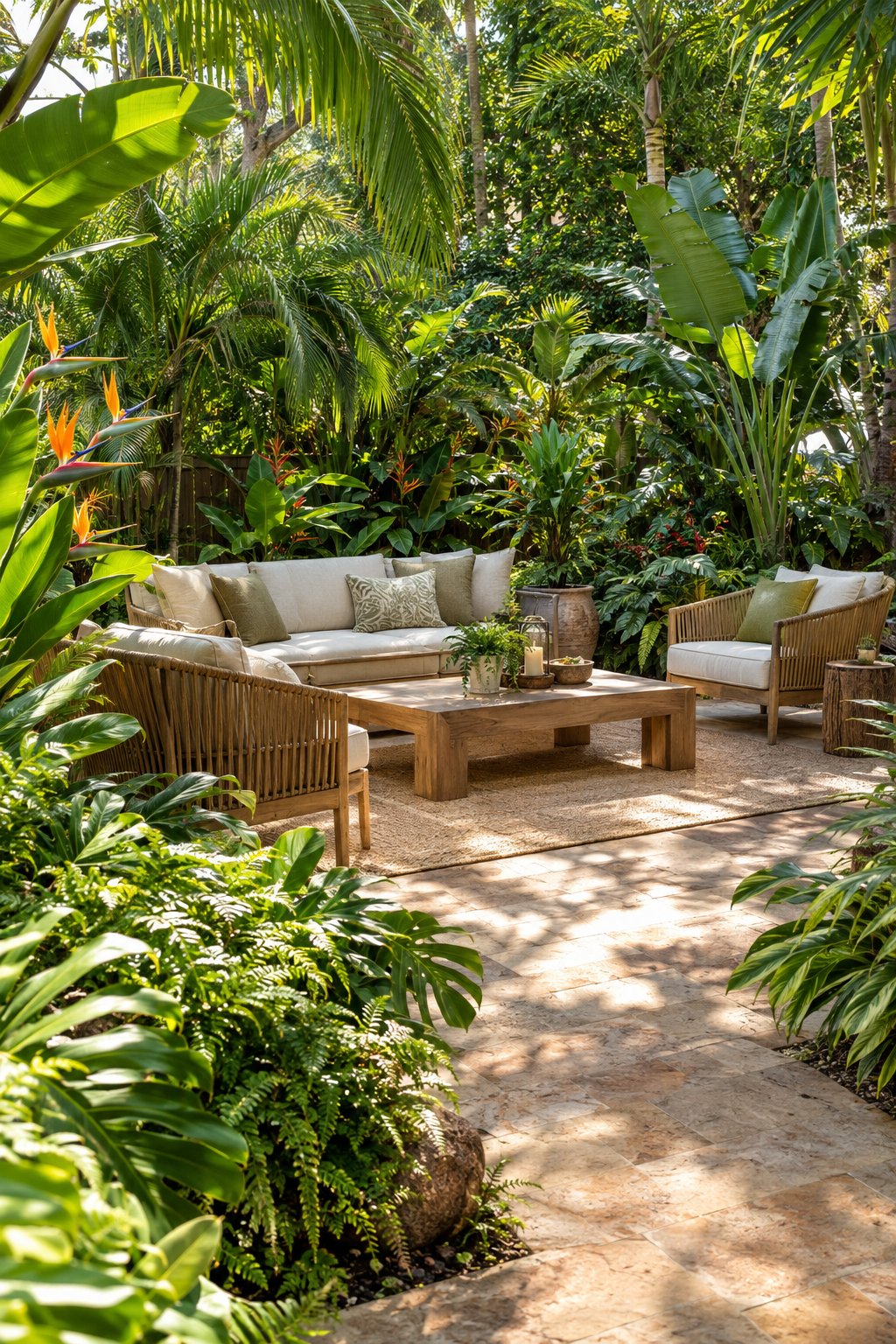
Lush planting can make a patio feel private and cool, especially beside a fence or overlooked boundary. Layer tall plants at the back, broad-leaf plants near the seating, and low pots along the edge. Select species that match your local growing conditions, then group containers with similar water needs. A deep-toned patio surface and natural wood furniture let the foliage take center stage. Leave access for pruning, watering, and moving furniture during storms.
Expert Tip From MrPlanter: “Place the tallest plants where they block the view first. Keep lower growth near chairs so the seating stays open and comfortable.”
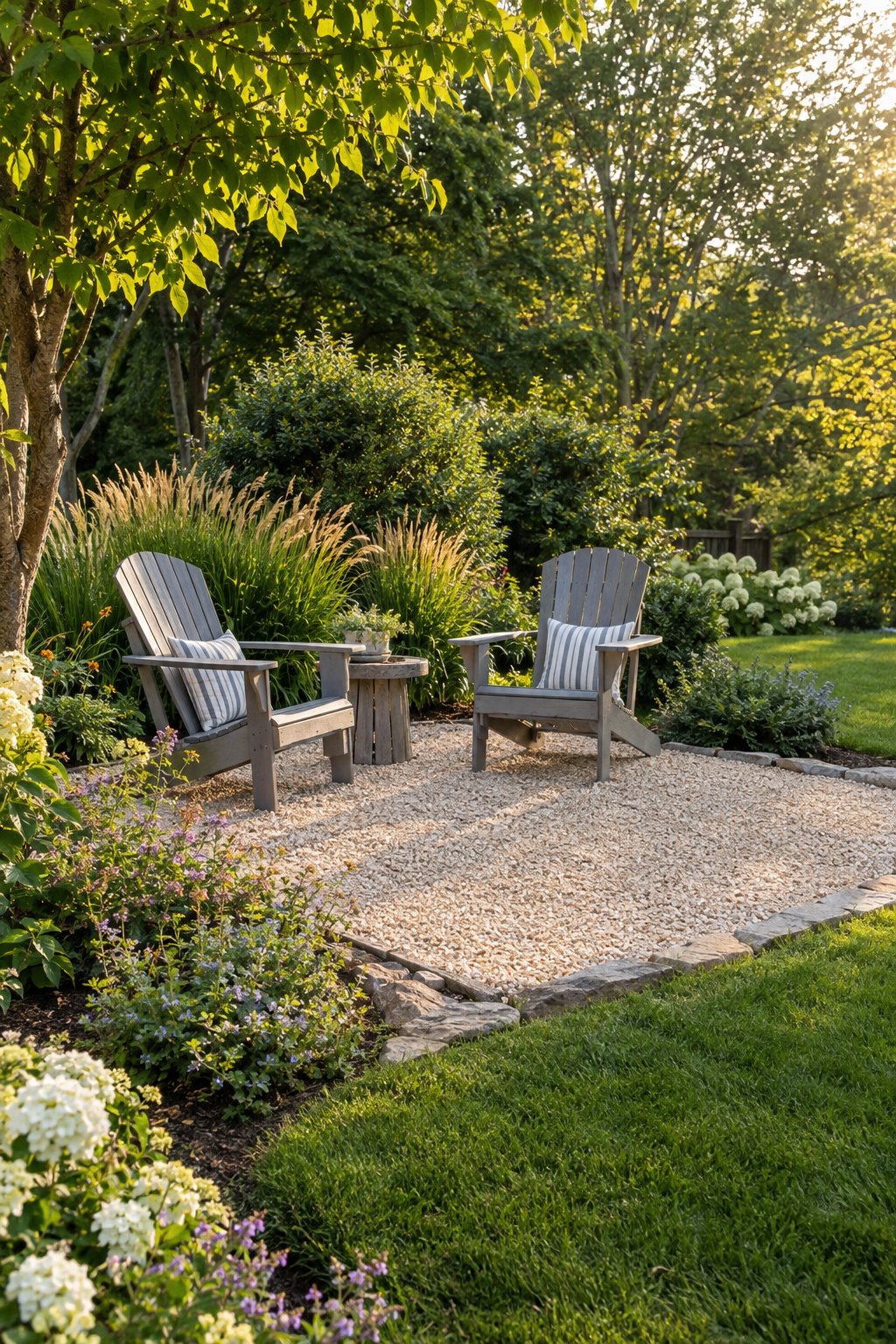
16. Install A Gravel Patio With Adirondack Chairs
A gravel patio offers a quick, flexible base for two Adirondack chairs and a small table. Excavate the area, install a firm edging, and use a compacted base beneath the gravel to reduce shifting. Choose angular stone that locks together underfoot, then place stepping stones along the main entry route. Adirondack chairs invite long sitting sessions, while a side table holds drinks and books. Rake displaced gravel back into place after heavy rain or frequent use.
Expert Tip From MrPlanter: “Use sturdy edging on every side of the gravel area. It keeps the stone from spreading into lawn and planting beds.”
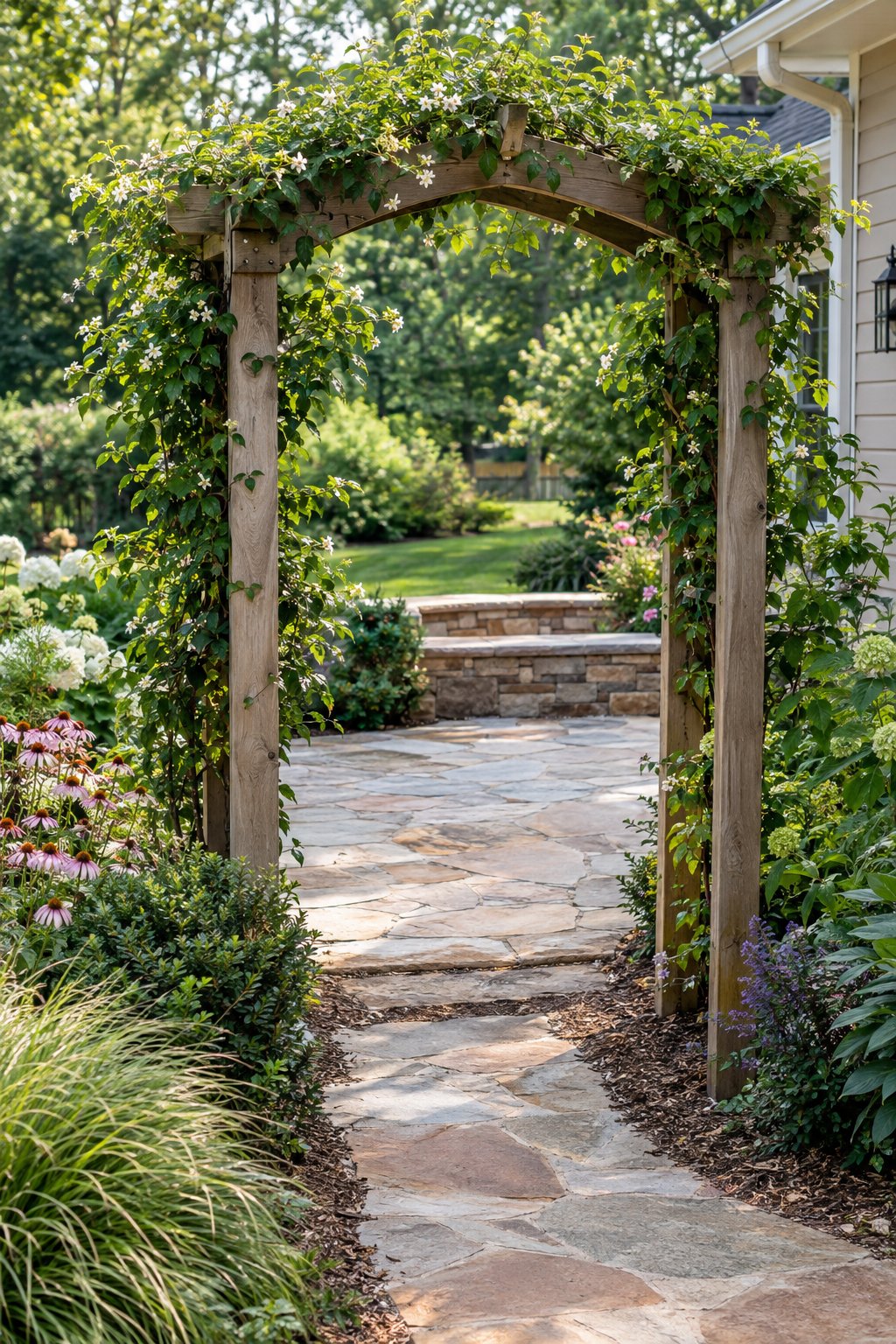
17. Add A Garden Arbor Entry And Stone Landing Patio
A garden arbor turns the route to a small patio into a clear destination. Set the arbor at the path entrance, then place a stone landing beyond it with room for two chairs or a bench. Train vines on the structure only after confirming the posts can carry mature growth. Use stepping stones that remain level and easy to see through the planting. A bench facing the garden gives the landing a purpose without crowding the space.
Expert Tip From MrPlanter: “Make the arbor wide enough for two people to pass comfortably. A welcoming entry should never feel like a narrow gate.”
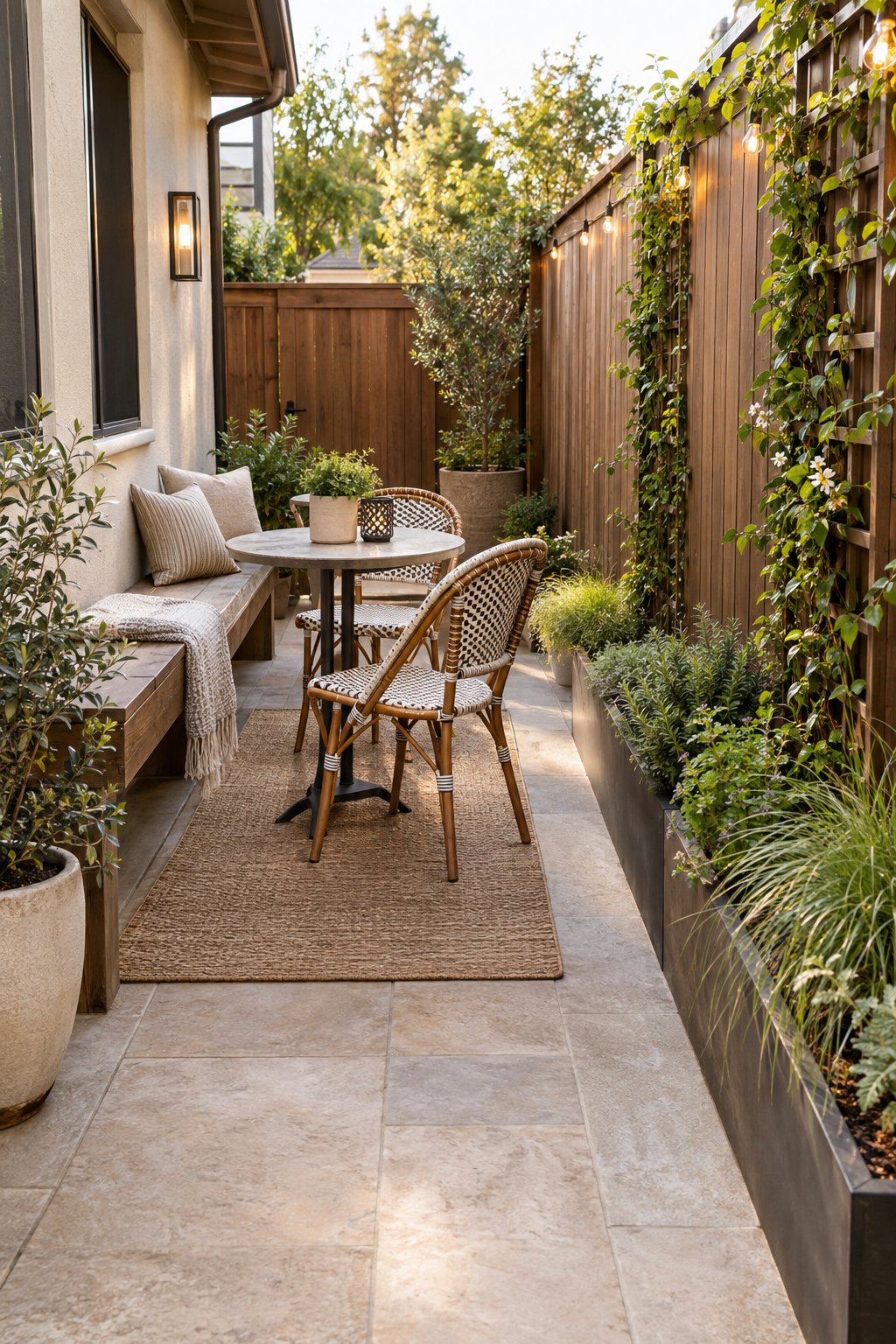
18. Turn A Side Yard Into A Narrow Café-Style Patio
A narrow side yard can become a useful café patio with a slim table and foldable chairs. Choose a hard surface that supports small furniture, then keep one side open as a walking route. Wall planters, trellis panels, and hanging lights add interest without taking floor space. A bistro table near the kitchen makes morning coffee convenient, while a small bench at the far end creates a second pause point. Check drainage and keep gates, vents, and utility access clear.
Expert Tip From MrPlanter: “Measure the walkway with chairs pulled out. Plan for movement first, then add the decorative pieces.”
How to Choose the Right Patio Layout
What Will You Use the Patio For Most Often?
Start with the activity that happens most frequently. A dining patio needs a stable table, serving space, and a direct connection to the kitchen. A lounge patio needs deeper seating, side tables, and shade. If you host guests, combine zones with a clear walkway so cooking, eating, and conversation can happen at the same time.
Sketch the furniture on paper or mark it with painter’s tape before construction. Include the space needed to pull out chairs, open grill lids, and walk around the seating.
How Much Space Does Each Seating Zone Need?
Measure furniture by its full working footprint, not just the item’s width. Chairs need room to pull back, and dining tables need space for people to pass behind seated guests. Keep the main route wide enough for comfortable movement, then place smaller pieces such as stools or side tables at the edges.
Use flexible furniture in a compact yard. Folding chairs, benches, nesting tables, and movable planters let you change the layout for dinner, gardening, or quiet reading.
How Do Sun, Wind, Privacy, and Drainage Affect Placement?
Track where shade falls during the hours you use the patio. Set dining seats away from harsh low sun, place wind-sensitive items near a wall or screen, and use layered planting to block views without sealing off airflow. Slope paving away from your home, keep water away from foundations, and plan access for cleaning drains and outdoor equipment.
Patio Materials and Features to Compare
Which Patio Material Fits Your Budget and Maintenance Tolerance?
Concrete offers a practical base and works well with stains, scoring, or stamped patterns. Brick brings warmth and easy pattern changes, while natural stone gives each patio varied color and texture. Pavers allow individual pieces to be replaced after damage. Your choice should account for installation, sealing, weed control, cleaning, and the local freeze-thaw cycle.
Smooth surfaces make dining furniture easier to steady. Textured finishes improve traction in wet areas, especially near pools and outdoor showers.
When Are Permeable Pavers Worth It?
Permeable pavers suit patios where stormwater collects or where you want rainfall to filter through the surface. Their base must be installed correctly, with clean aggregate and joints that stay open. They require periodic sweeping and attention to sediment buildup.
Choose them when drainage is a design priority and the site can support the required base depth. A standard paver patio may fit better where the ground already drains well and maintenance needs to stay low.
Which Shade, Fire, Water, and Lighting Features Suit Your Climate?
Choose shade based on sun intensity, wind, and seasonal rain. A pergola supports lights and vines, a shade sail installs with less structure, and a solid roof gives stronger weather protection. Fire features need safe clearance, a suitable surface, and local approval where required. Water features need pump access and regular cleaning.
Use outdoor-rated LED lighting at steps, paths, dining areas, and seating edges. Select fixtures with sealed housings for wet locations, then aim the light downward to reduce glare and keep the patio comfortable after dark.
I’m Anirban Saha, the Founder and Owner of MrPlanter.com. I pay the bills as a software developer, although my BTech is actually in Electronics and Communication. I really love my day job, but what gives me energy every day is interacting with my indoor plants and taking care of them. I have been successfully nurturing and maintaining houseplants for over 10 years now.
📚🔍 Our content undergoes thorough review and fact-checking before publication. For additional details, explore our strict Editorial Policy to deliver helpful content. 📝🔒