You can turn a plain backyard into a chill, low-maintenance spot that still makes your friends do a double take.
These 23 rock garden ideas give you fun, creative ways to use stones, plants, and simple features so your yard looks sharp without a ton of work.
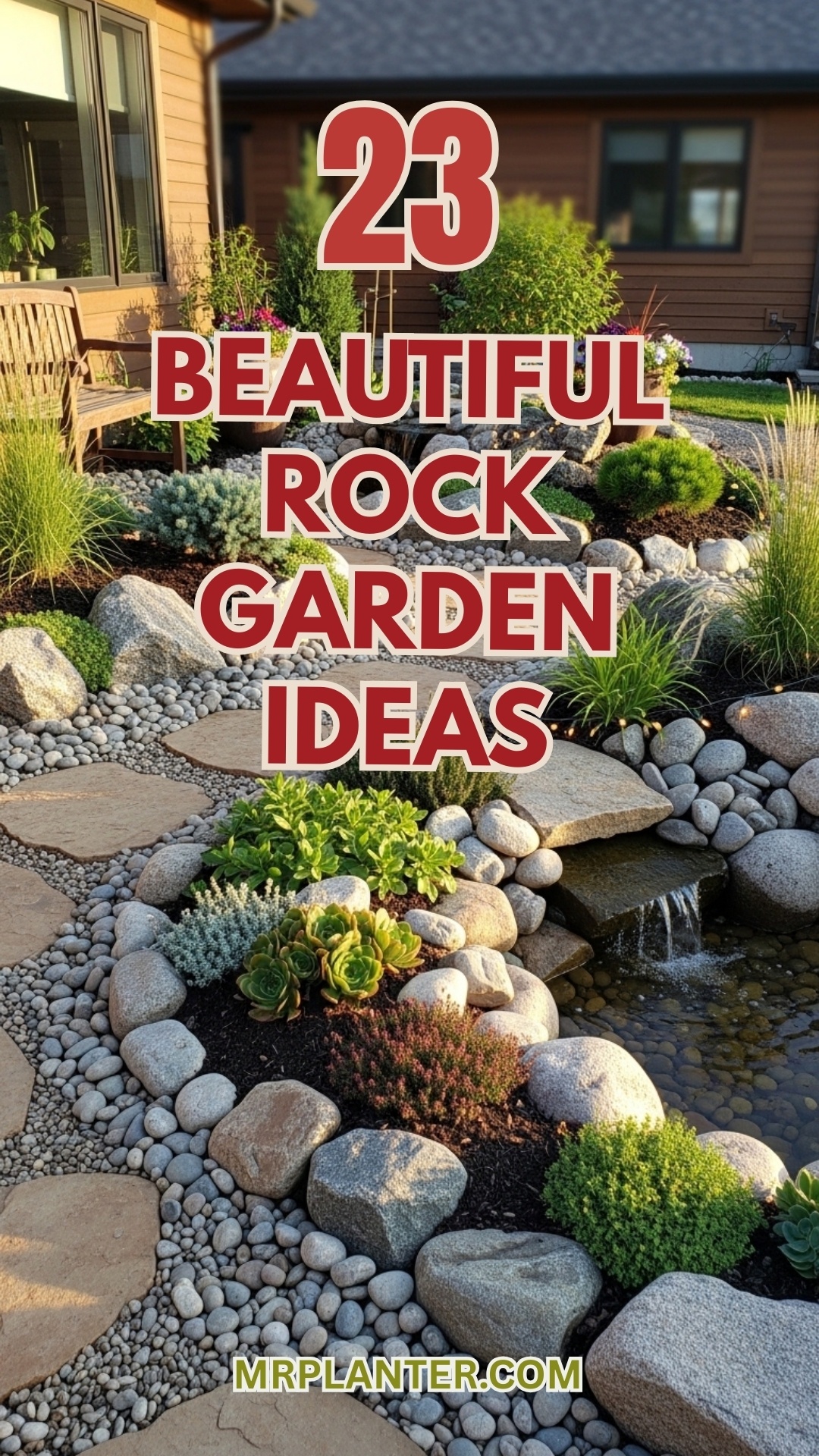
Think of this like a box of easy tricks—from pebble textures and stepping paths to tough succulents and little water features—that can fit any yard or skill level.
Scroll through and pick a few that match your vibe; you’ll end up with a plan that’s practical, pretty, and honestly just fun to pull together.
1. Use a variety of pebble sizes to add texture and visual interest
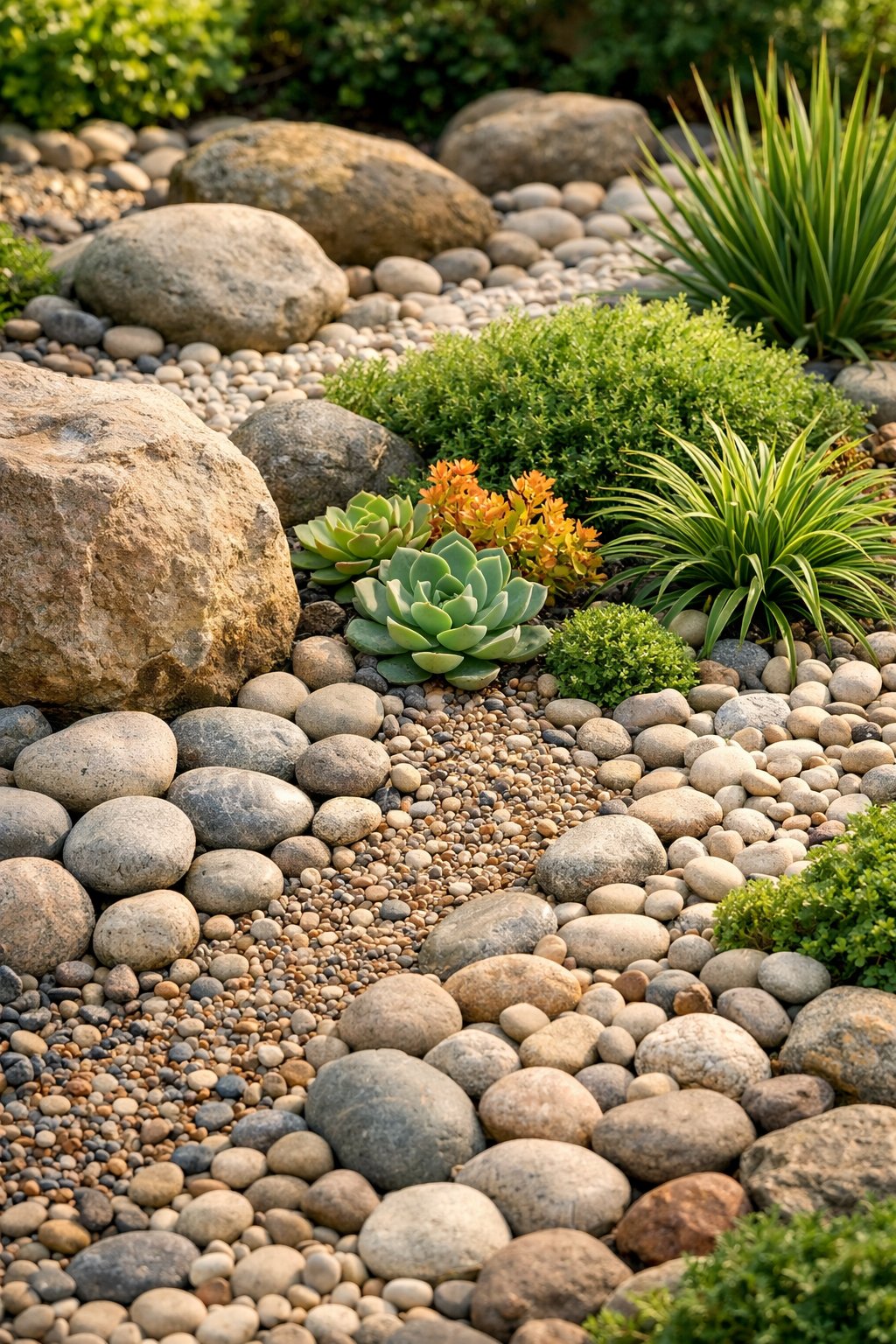
Here’s the thing: if you use only small pebbles, your garden ends up looking kind of unfinished. When you mix pebble sizes, you get layers and a vibe that actually looks like nature.
Spread tiny chips as ground cover to fill in gaps and keep the dirt in place. Use medium pebbles for paths or edges to guide the eye.
Drop in a few bigger stones as anchors near your plants. The size contrast makes the colors and leaves stand out, and your garden won’t look flat.
You can totally change the mood depending on whether you pick smooth river pebbles or rough gravel. Try a test patch and see how the sun hits the stones.
Expert Tip From MrPlanter: Start with a small area and try out combos before you go all in. Keep a bag of one size handy for quick touch-ups.
2. Incorporate drought-tolerant succulents for a low-maintenance vibe
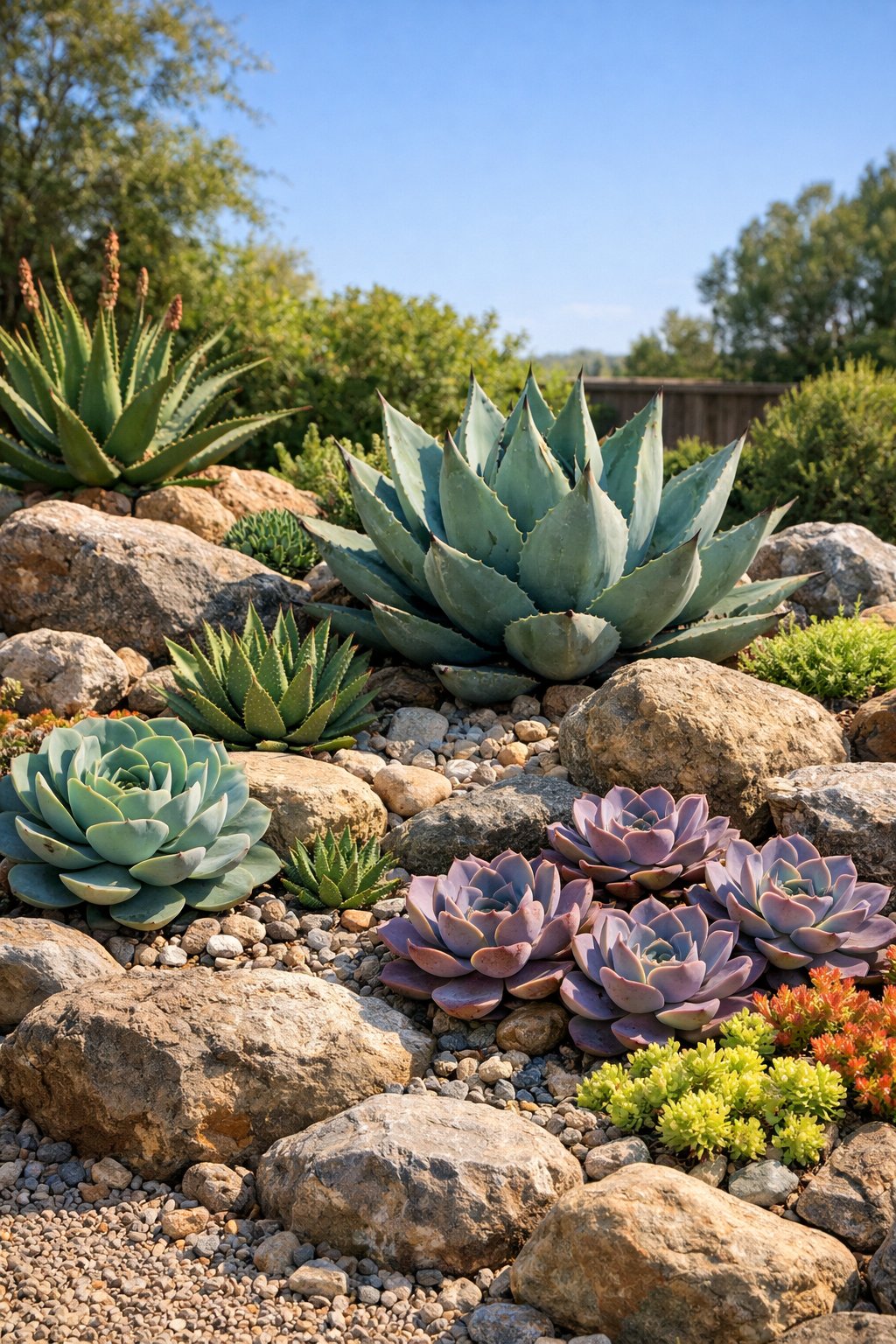
Fun fact: succulents store water for months, so they don’t care about heat waves—they just keep looking good. Mix rosettes, trailing types, and spiky agaves for texture and color without needing to babysit them.
Pop succulents onto raised mounds or tuck them between rocks so water drains fast. They really hate soggy feet, so sandy soil keeps them happy.
Stick with a few favorite types for a sense of rhythm. Add accent stones or chunky pebbles to make the plants stand out and hide any bare dirt.
Expert Tip From MrPlanter: “Start with a rosette, a trailing succulent, and a spiky one. Water only when the soil dries out and you’ll have a garden that looks good without much effort.”
3. Build a dry creek bed with smooth river rocks for natural drainage
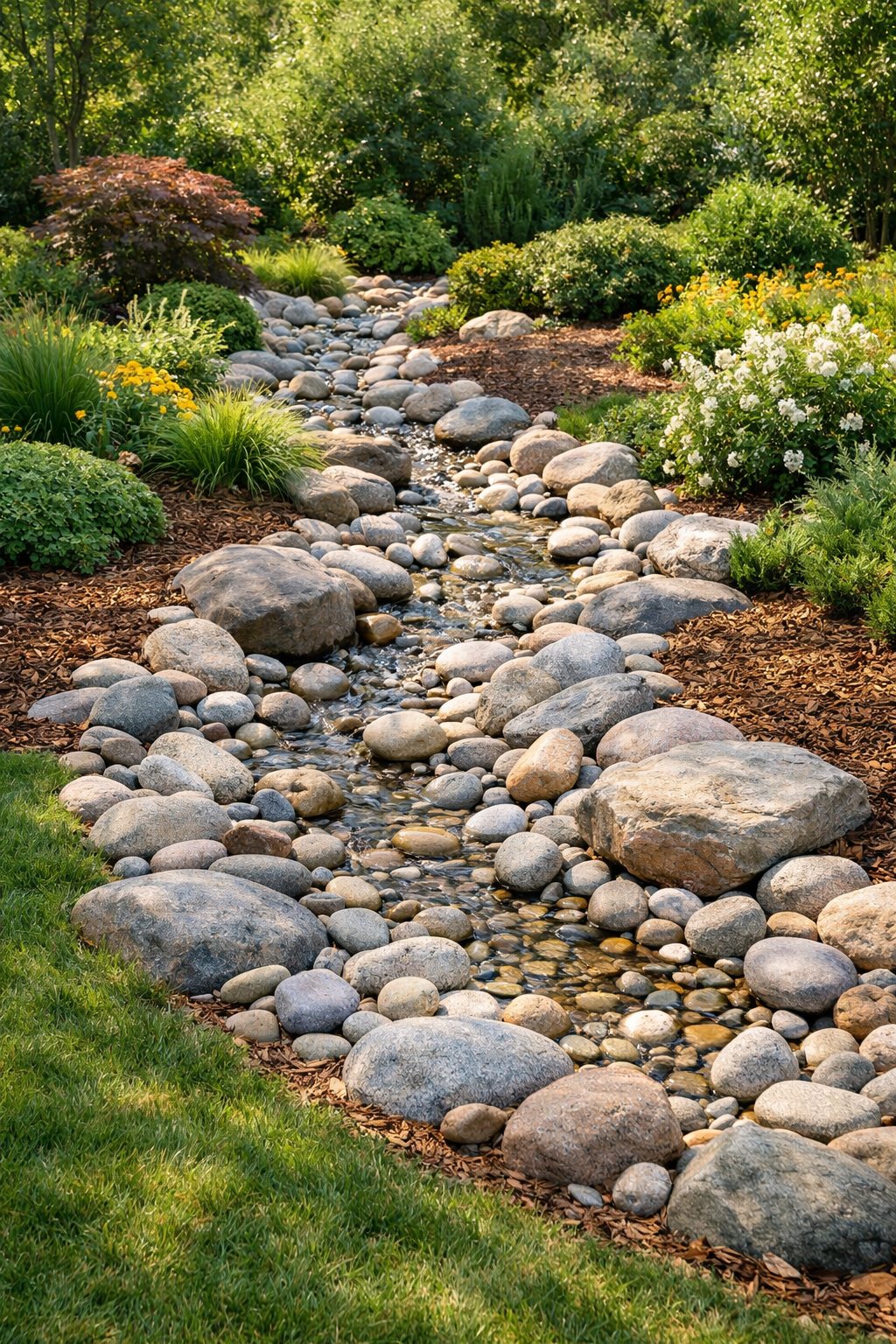
Let’s be real: puddles are the worst. They drown your plants and turn your yard into a mess after it rains. A dry creek bed gives water a place to go and keeps your soil in place.
Dig a shallow trench where water usually collects or where your gutters spit out rain. Lay down landscape fabric to keep the rocks and soil from mixing, then toss in a mix of big boulders and river stones for a natural look.
Plant some low shrubs or grasses along the edges to soften things up and slow the water down. Boom: you’ve got a feature that looks cool and actually helps with stormwater—no pipes required.
Expert Tip From MrPlanter: “Use river rocks in different sizes so water flows through but doesn’t carry your stones away. Add a couple big boulders for balance.”
4. Add a mini Zen garden corner with sand and carefully placed stones
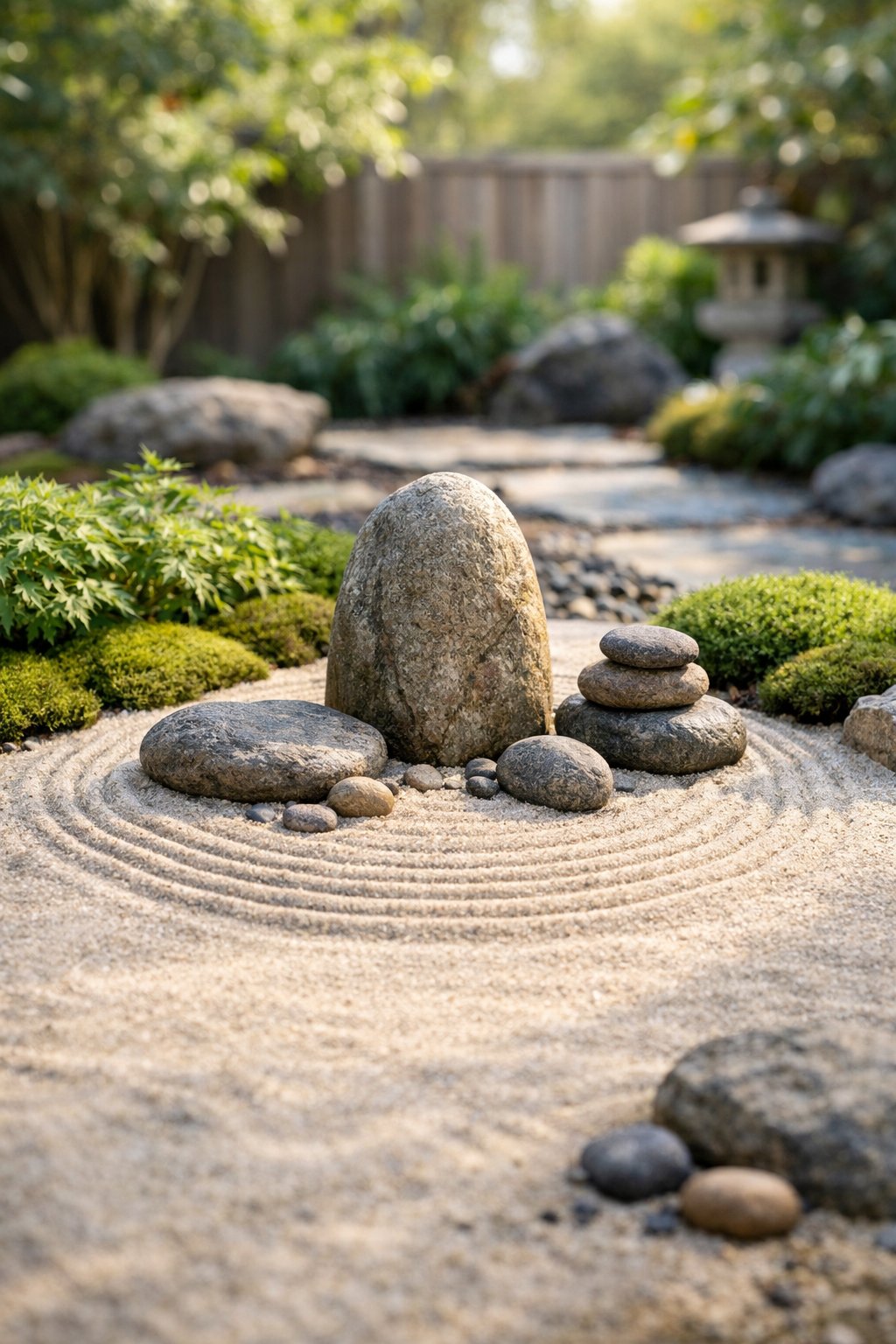
Here’s a secret: a Zen garden isn’t just for monks. You can make a peaceful little spot with sand, a few smooth stones, and a rake—even if you’ve only got a tiny corner.
Set your bigger stones first to work like little islands, then sprinkle smaller pebbles around them. Rake gentle patterns in the sand to look like water or waves.
Keep plants simple—a tiny moss patch or a bonsai makes a great accent without crowding things. This spot is for quiet moments, not for showing off.
Move stones around until it feels right to you. Honestly, that’s half the fun.
Expert Tip From MrPlanter: Build a shallow border to hold the sand in place. Give the sand a quick rake once a week to keep things fresh and relaxing.
5. Scatter moss between rocks for a pop of green that screams ‘nature loves me’
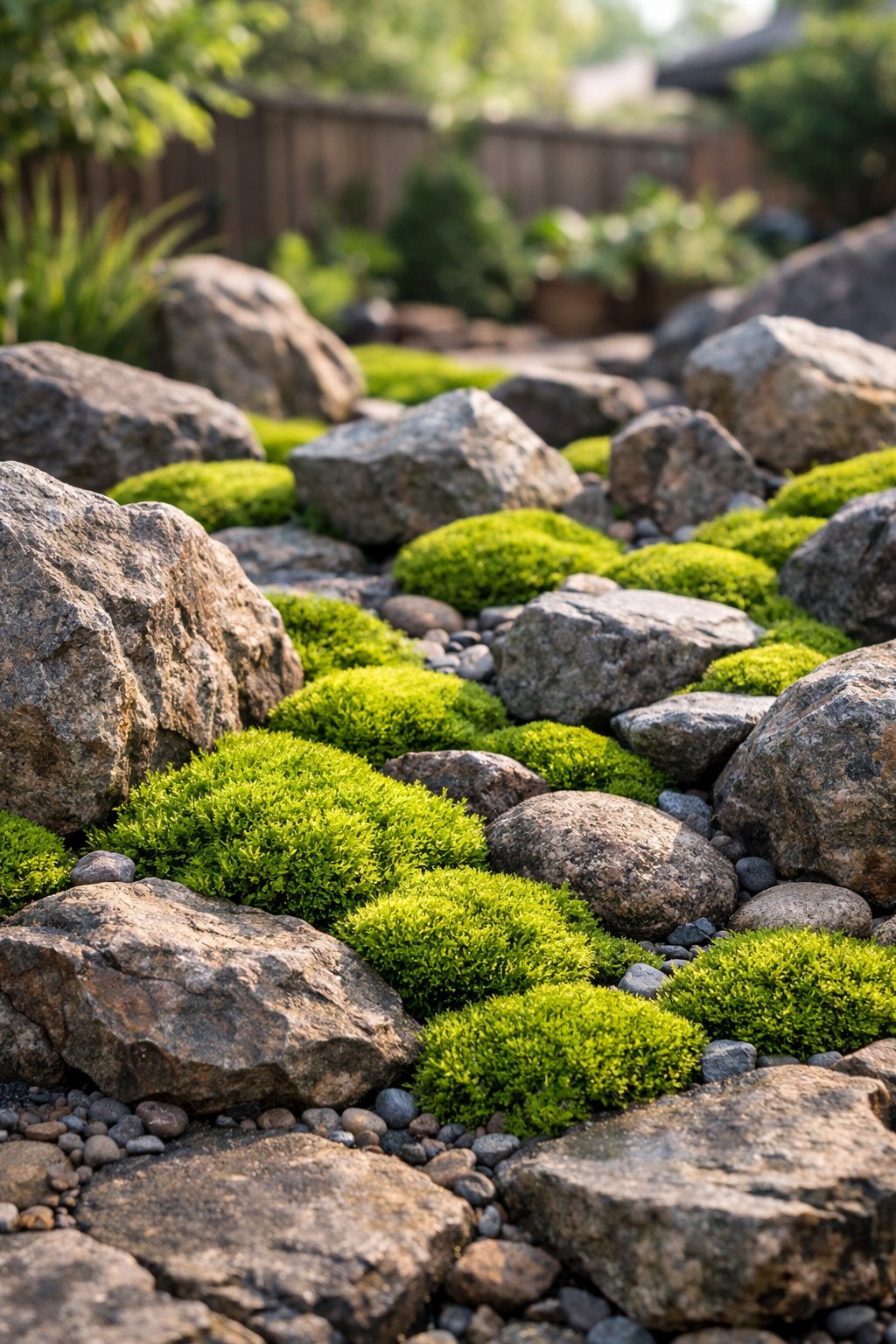
Let’s bust a myth: moss doesn’t mess things up—it actually makes everything feel softer and more alive. If you tuck little clumps into cracks, you’ll soften hard edges and give your garden a ‘been here forever’ vibe.
Moss barely needs any care and loves shady spots where grass just gives up. It grows slowly, so there’s no mowing—just give it a splash of water during dry spells.
Pair smooth stones with velvety moss for a nice mix of textures. It draws the eye without being loud.
Stick moss in pockets or on flat rocks where it can settle in. Don’t plant it where you walk a lot—let it spread quietly.
Expert Tip From MrPlanter: Press damp moss into clean stone cracks and mist it for a couple weeks. Be patient—it’ll reward you with rich green color.
6. Use slate stones to create a rustic stepping path through the garden
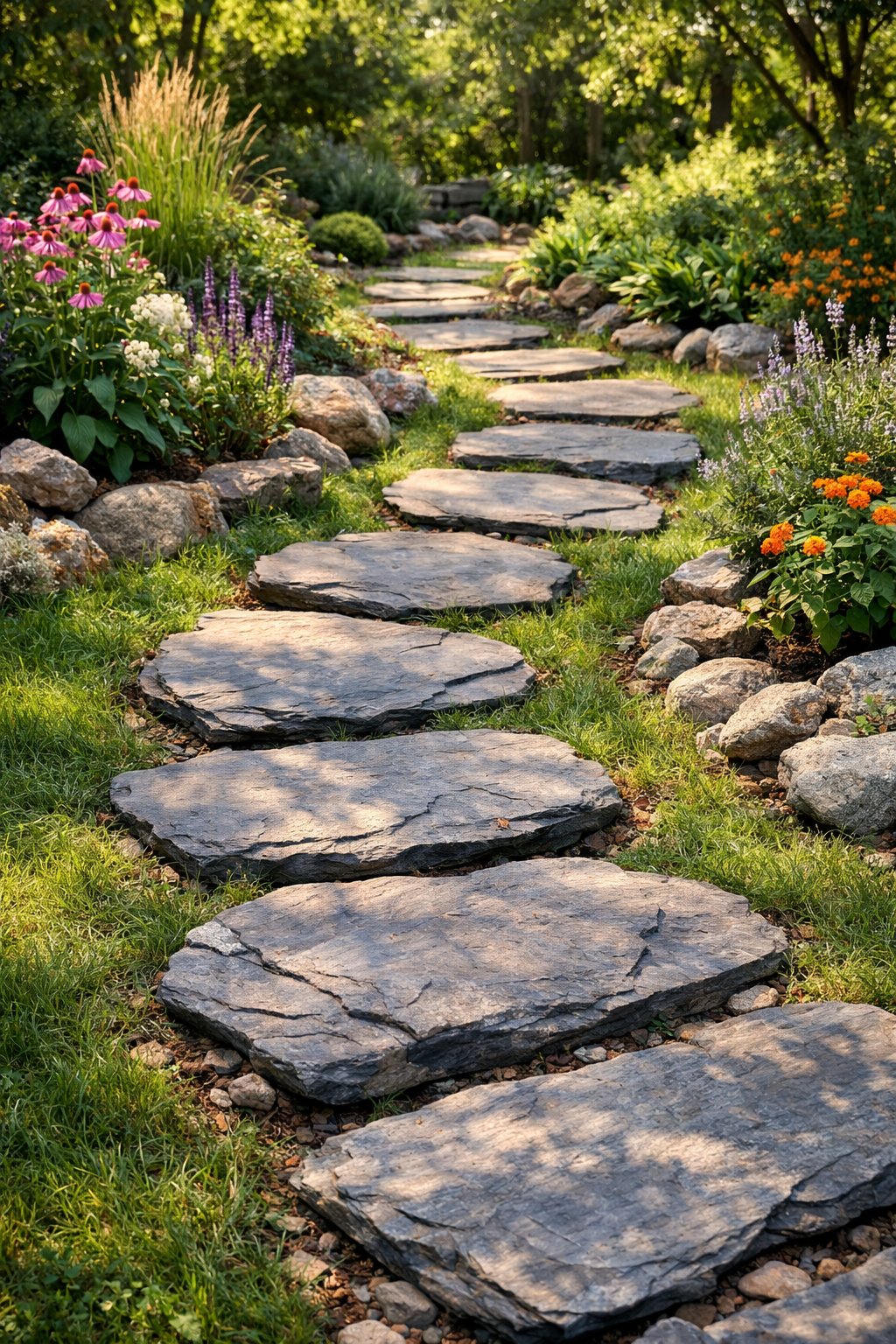
Here’s a twist: slate isn’t just for rooftops. You can lay irregular slate slabs and make a path that looks like it grew right out of your rock garden.
Set each stone on a bed of sand or gravel so it stays put and doesn’t wobble. Space them for your stride so walking feels natural and grass doesn’t sneak between every stone.
Slate’s cool gray tones play nicely with plants and pebbles, giving a chill, rustic look. Mix up sizes and shapes for a casual feel, or trim edges if you want things tidy.
Expert Tip From MrPlanter: Use a thin layer of sand for stability and tap stones in place with a rubber mallet. Plant low groundcover between stones to soften the look and keep weeds down.
7. Plant alpine plants like creeping thyme that thrive in rocky soil
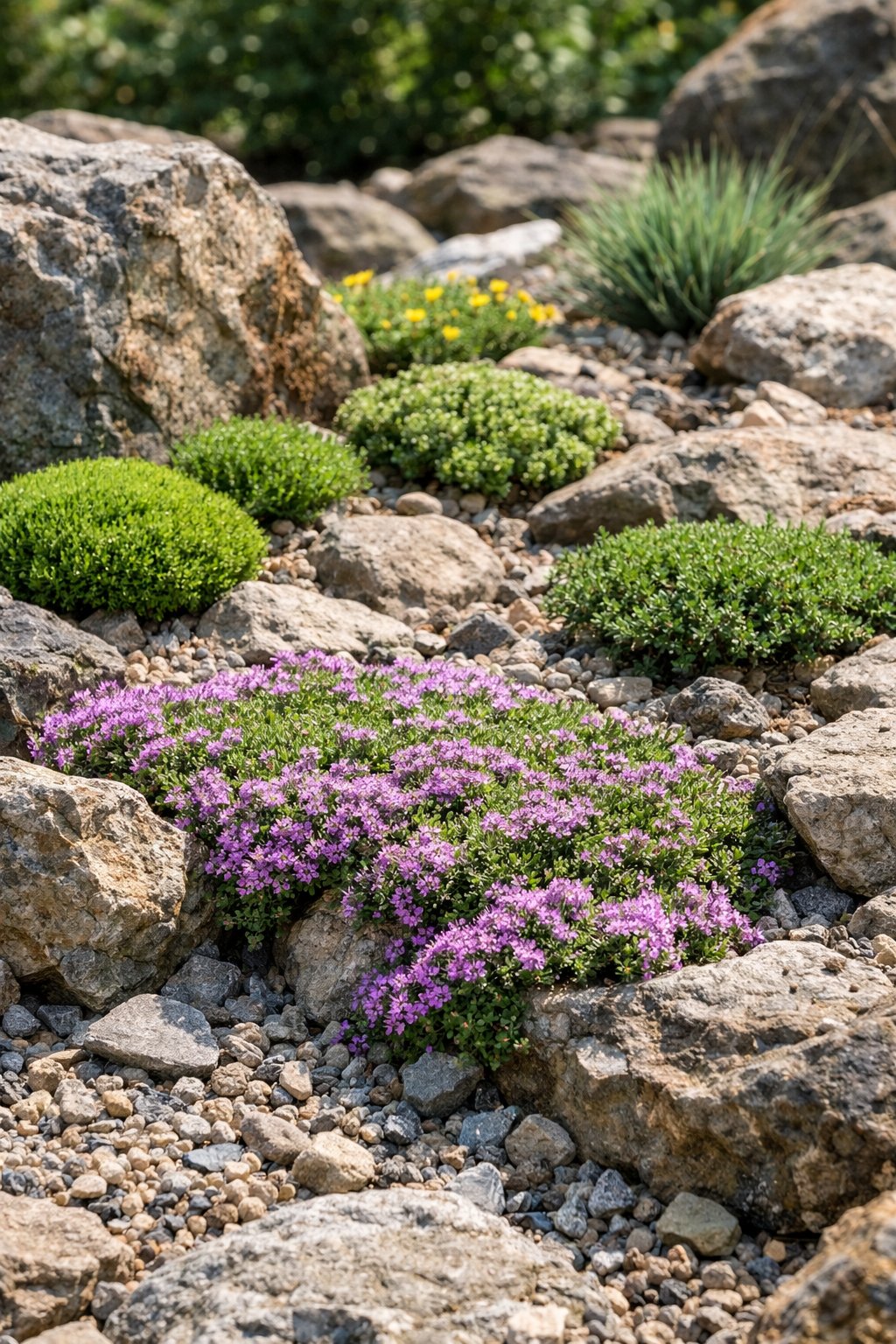
Guess what? Rock gardens don’t have to be all rocks—they can burst with life and color. Alpine plants love dry, gritty spots and still give you flowers and soft ground cover.
Creeping thyme and rock cress fit perfectly in cracks and crevices. They want sun and good drainage, so plant them near stones where water won’t hang around.
These low growers spread out to fill gaps without crowding bigger plants. They’re tough, need hardly any food, and bees love their flowers.
Expert Tip From MrPlanter: “Plant alpines in little groups for a natural look and to help them spread. Pick sunny, gritty spots so they stay healthy.”
8. Mix colorful crushed granite with larger rocks to brighten the space
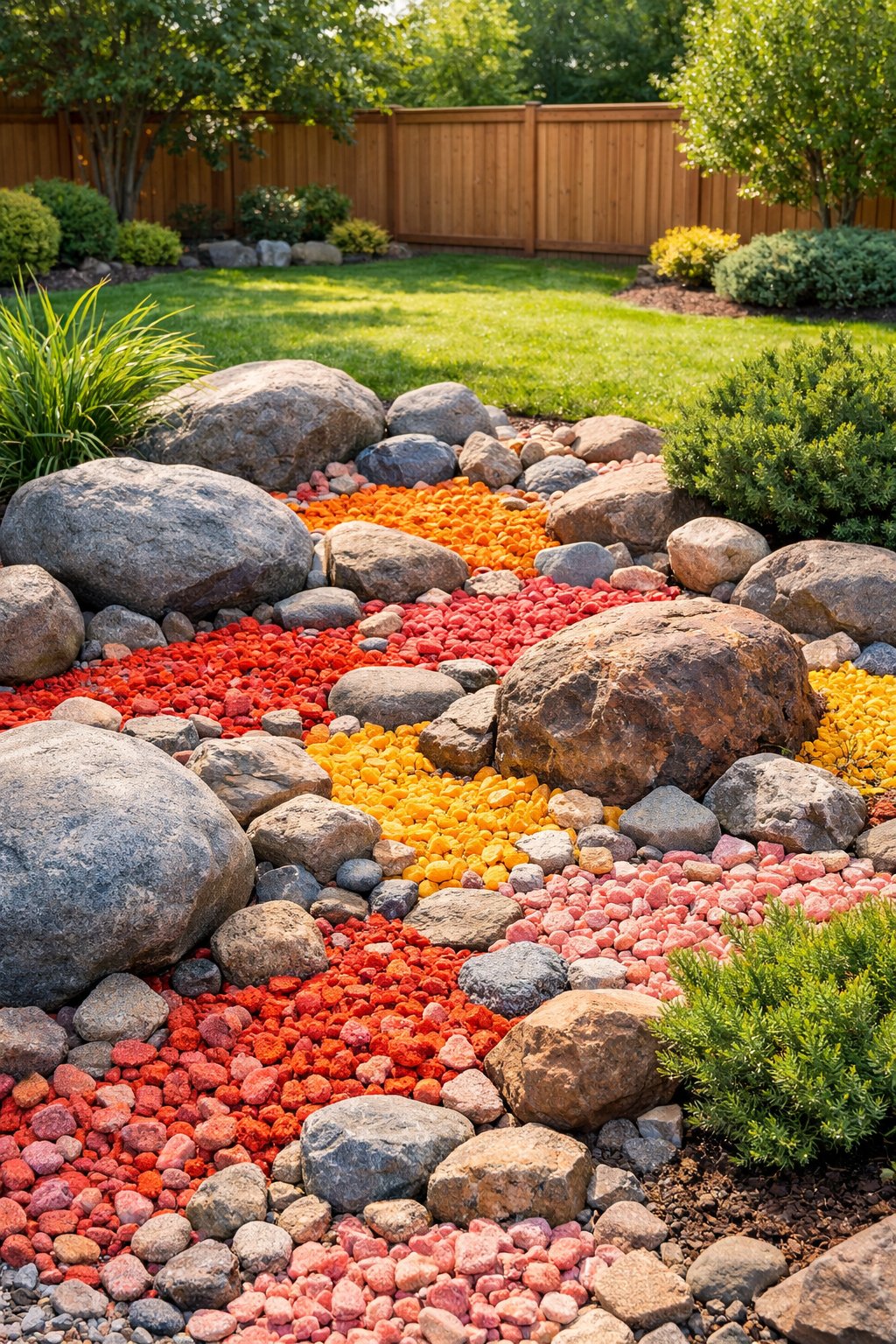
Let’s clear this up: crushed granite isn’t just filler—it can totally steal the show. It brings bright color and a fine texture that makes your bigger rocks pop.
Spread the granite between larger stones like a cool little runway. That contrast between the fine, colorful grit and chunky rocks grabs attention and keeps paths neat.
Pick colors that match your plants or your house so it all feels pulled together. Go for soft tans, pinks, or blue-grays depending on your mood.
Edge the granite with bigger stones to keep it from washing away. Add a little mulch or fabric underneath to stop weeds and keep the color looking sharp.
Expert Tip From MrPlanter: A 2–3 inch layer of granite covers well but won’t bury your plants. Give it a rake every year to keep the color bright and clean out leaves.
9. Install solar-powered rock lights to make the garden glow at night
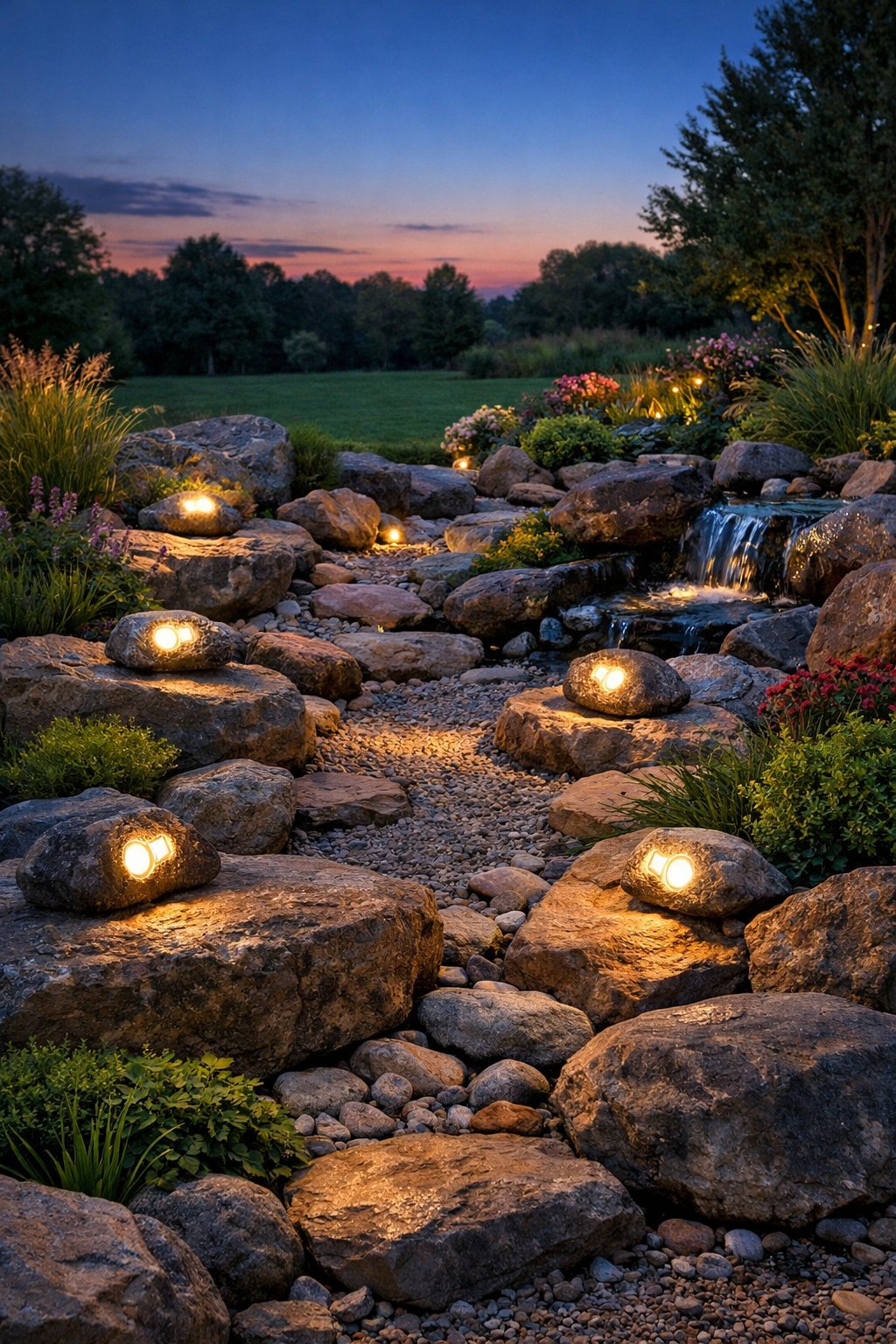
Surprise—solar lights actually work, even when it’s cloudy. You can tuck them among rocks to light up paths and show off your favorite plants, no hassle with wires.
Go for weatherproof, low-profile rock lights that blend in with your garden’s colors. Place them where shadows fall so the rocks and textures really stand out at night.
Mix softer lights for accents and brighter ones for paths to get both safety and a little drama. You’ll save on energy, and you can move them as your plants grow or you change things up.
Expert Tip From MrPlanter: Put lights where they’ll get morning sun so they charge up all day. Swap their spots each season to keep the look fresh.
10. Craft a small rock waterfall for that soothing ‘spa day’ sound effect
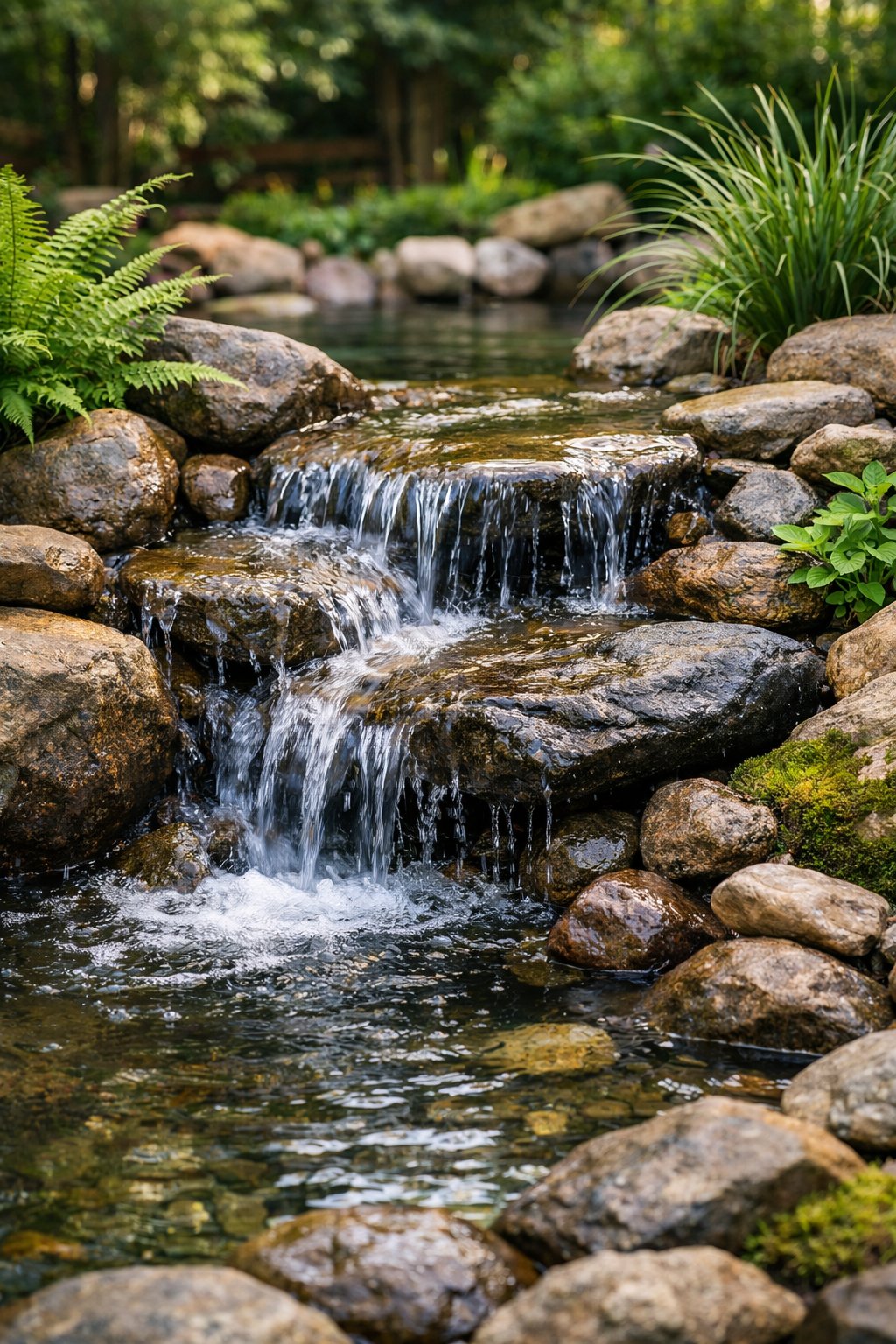
Here’s a secret: a backyard waterfall doesn’t have to be huge or expensive to feel fancy. You can build a small, relaxing feature that fits in any corner.
Start with a shallow basin or a pond liner and stack flat rocks to make little tiers. Drop in a small pump and hide the tubing behind rocks so the water flow looks natural.
Mix in rough and smooth stones for texture, and plant a few small things around the edges to soften it up. Add solar or low-voltage lights so the water glows at night—no big wiring project needed.
Keep the water flow gentle so it’s more spa than thunderstorm. Just clear out leaves and check the pump now and then—it’ll keep whispering for years.
Expert Tip From MrPlanter: Use a pond skimmer or net every week to keep water clear. A slow, steady flow is way more relaxing and saves on power.
11. Include ornamental grasses around stones for a wild, unkempt charm
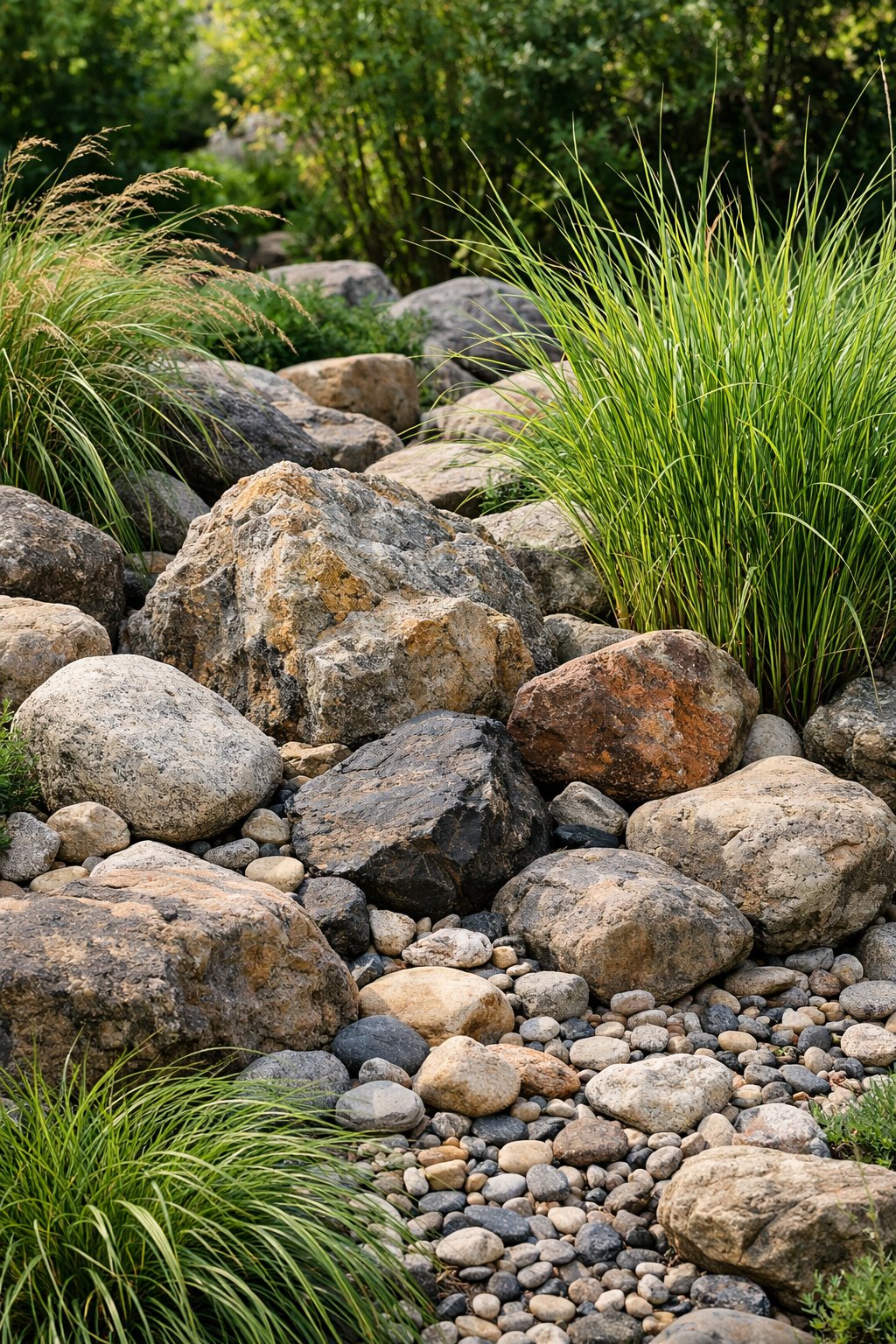
Here’s the deal: a little mess can look amazing. Tuck fountain grass, blue fescue, or carex around your stones for a spot that feels alive without being fussy.
Grasses soften the hard edges and sway in the breeze, adding movement. They fill in gaps so you don’t have to mulch or weed all the time.
Pick a mix of heights and textures for contrast. Put low tufts near pebbles, taller grasses behind boulders to make layers.
Plant in drifts, not straight lines, for a natural feel. Water well at first, then let the drought-tough ones do their thing.
Expert Tip From MrPlanter: Start with three or five clumps of the same grass to keep things balanced. Cut back in late winter for healthy, fresh growth.
12. Place large boulders as sculptural focal points that say ‘look at me’
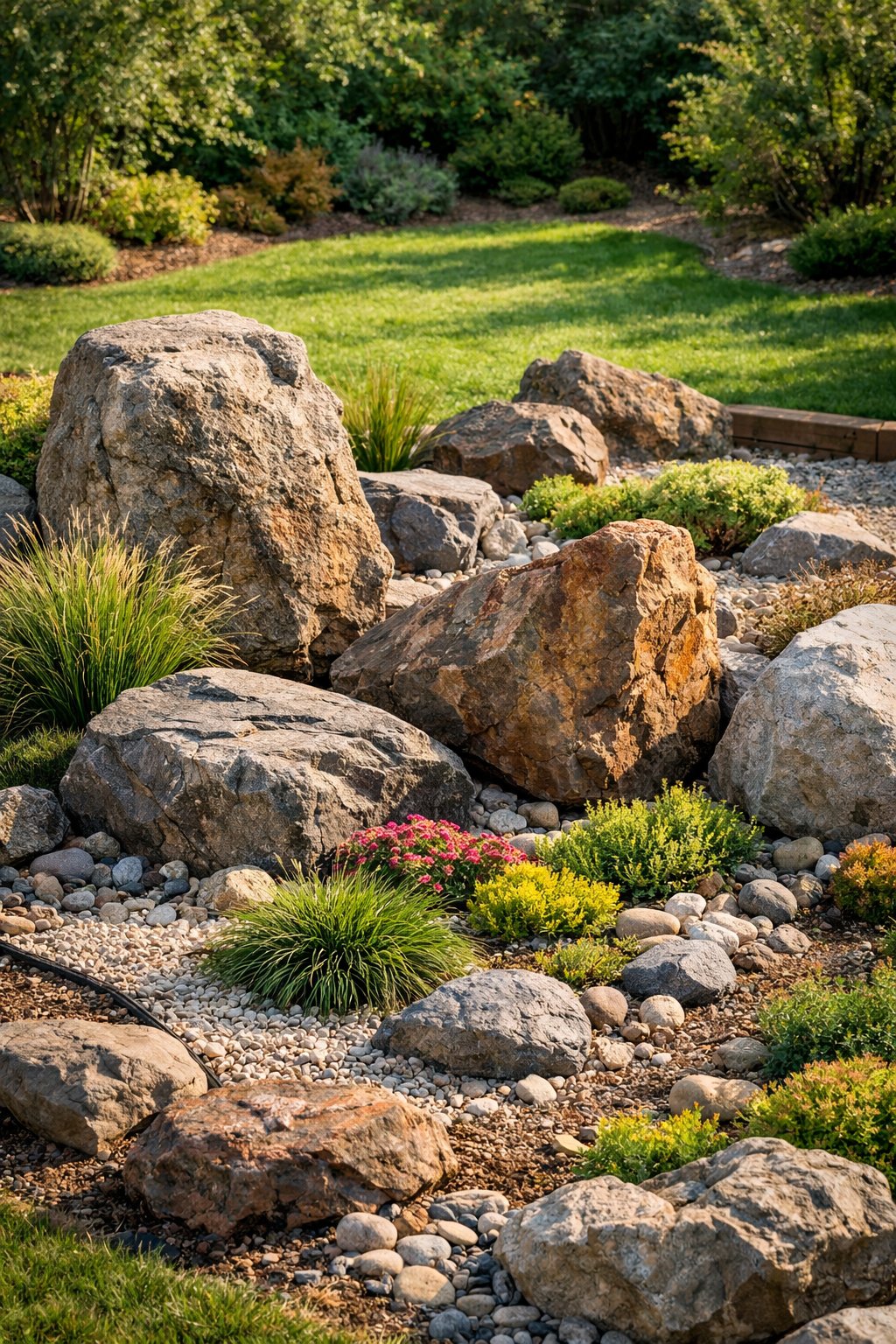
Here’s a wild truth: one big rock can totally change your whole backyard vibe.
Set a bold boulder right where paths or sightlines meet—like at the end of a walkway. It gives your eyes a spot to rest, almost like a natural exclamation point.
Pair that big stone with smaller plants or gravel. The mix of textures makes the rock stand out, but keeps everything looking relaxed and real.
Watch the size, though. The boulder should fit in with your plants and patio stuff, so it looks settled in—not like it crash-landed.
Expert Tip From MrPlanter: Pick a boulder with some personality—veins or rough, weird edges are cool. Sink it a bit into the dirt so it looks like it’s always been there.
13. Combine hardy lavender and rosemary for scent and stone-friendly greenery
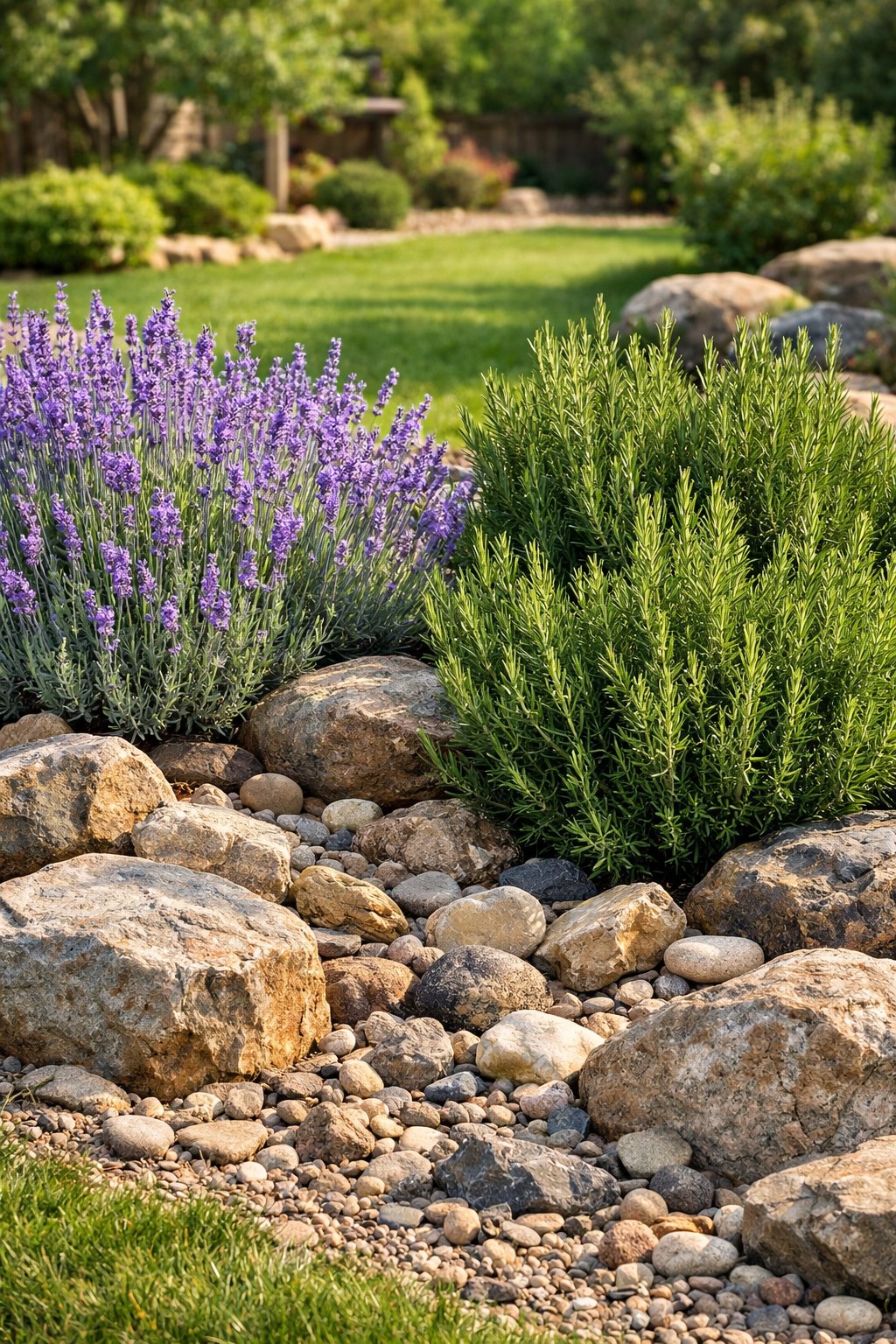
Here’s a fun myth-buster: lavender and rosemary don’t need coddling to look amazing. You can plant them together in a rock garden for big fragrance with almost zero drama.
Both of them love sunshine and soil that drains fast, so they’re basically made for rock gardens. Their gray-green leaves match the stones, and then lavender throws in those purple spikes that bees can’t resist.
Give each plant enough space for air to move around. That keeps leaves dry and helps avoid plant drama from mildew. Just snip rosemary a bit and deadhead lavender after it blooms to keep everything looking neat.
Expert Tip From MrPlanter: “Plant on a little slope or in a raised bed for better drainage. Feed lightly in spring and give both a yearly prune to keep them happy.”
14. Create a layered rock mound to encourage different plant heights and textures
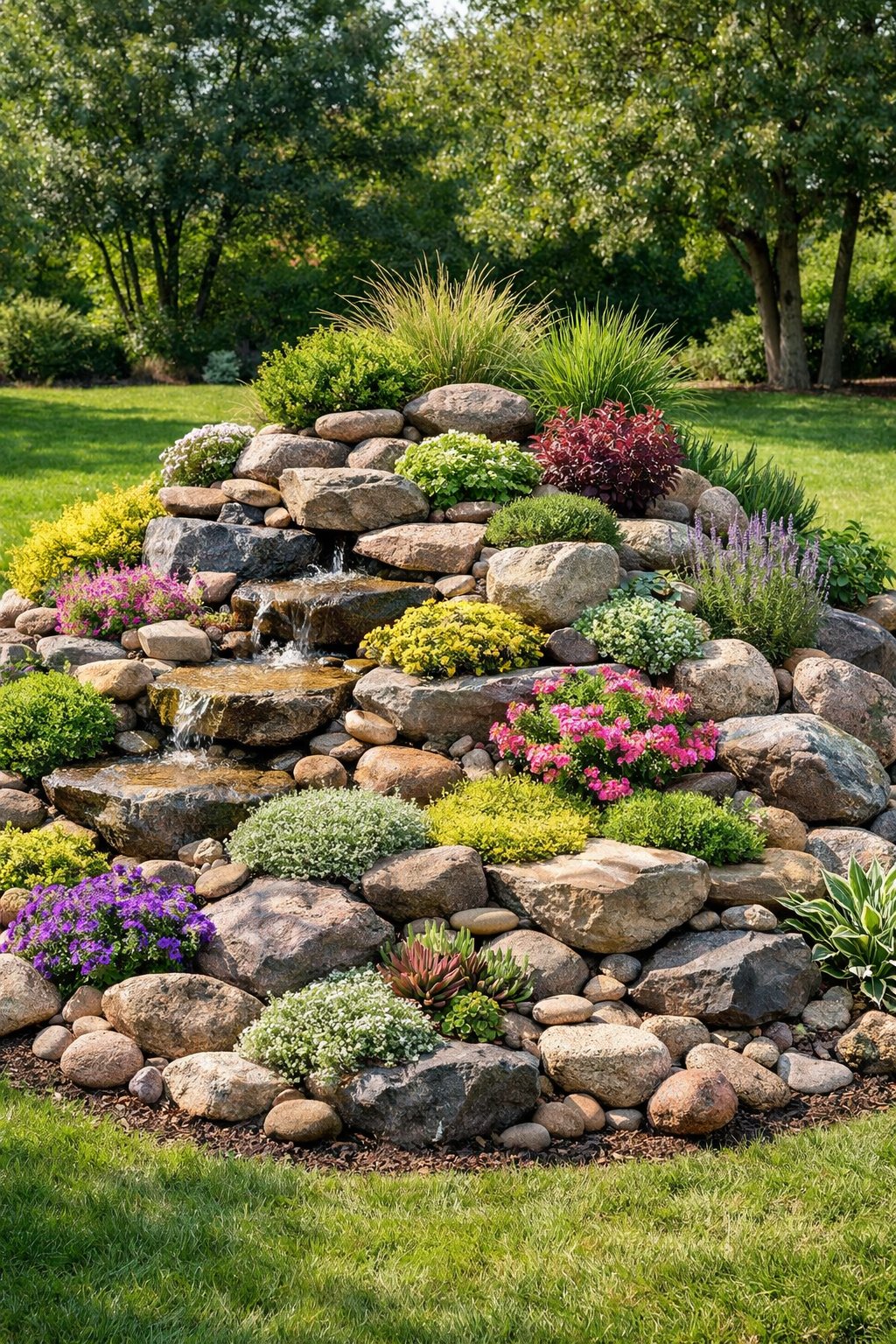
Here’s something cool: even a tiny hill can make a flat yard feel totally new. Build up a low mound with layers of rocks, so you get little pockets of soil at different depths.
This lets you plant short groundcovers at the edges and taller stuff up top. Stack rocks for gentle steps or mini-terraces. Each level gets its own soil mix and drainage, so you can plant drought-lovers on top and moisture fans below.
Mix up the textures—rough rocks, smooth pebbles, wispy plants. It keeps your eyes bouncing around, in a good way.
Don’t worry, you don’t need a bulldozer. A wheelbarrow, shovel, and some bigger rocks will do the trick. Start with the biggest rocks for a steady base, then fill in with dirt and plants.
Expert Tip From MrPlanter: Build the mound in stages and watch how it settles before piling on more. Give it a deep watering after planting so the roots can stretch down.
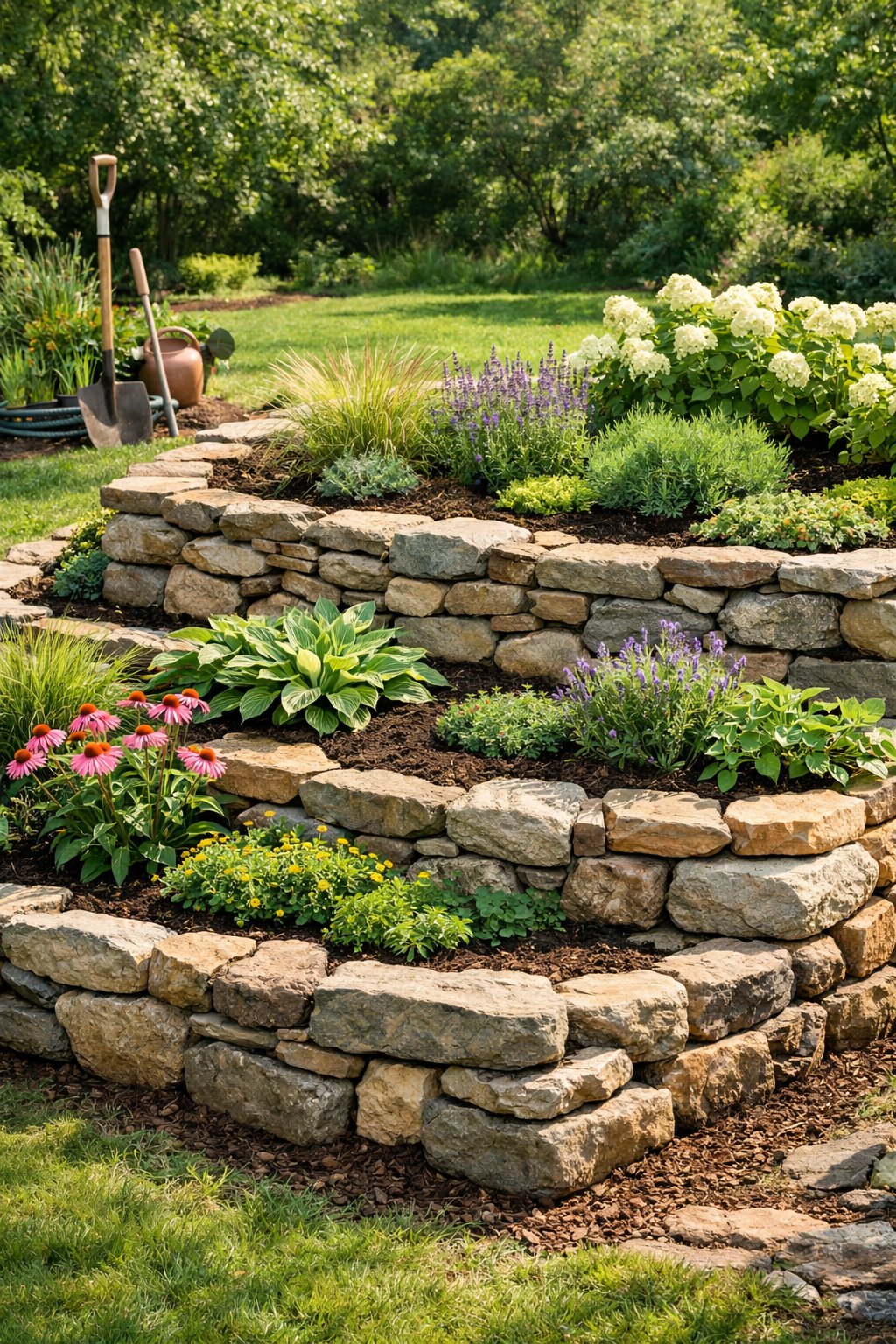
15. Build raised rock beds to add structure and reduce soil erosion
Stacking stones for raised beds is like building a fortress for your plants. You lock the soil in place, so rain can’t wash everything away.
Raised rock beds also give your garden nice edges and little pockets for all sorts of plants. Try succulents, alpine stuff, or drought-tolerant perennials for a mix of colors and textures.
Use flat stones for the walls so things don’t wobble. Toss in some gravel or drainage holes behind the wall so water doesn’t pool up. Knee-high beds are easiest for planting and keeping things tidy.
Expert Tip From MrPlanter: “Go for local stones—they’ll blend in and cost less. Test a small bed first to see how it handles water and what plants like it.”
16. Use slate or flagstone slabs to create a natural seating area
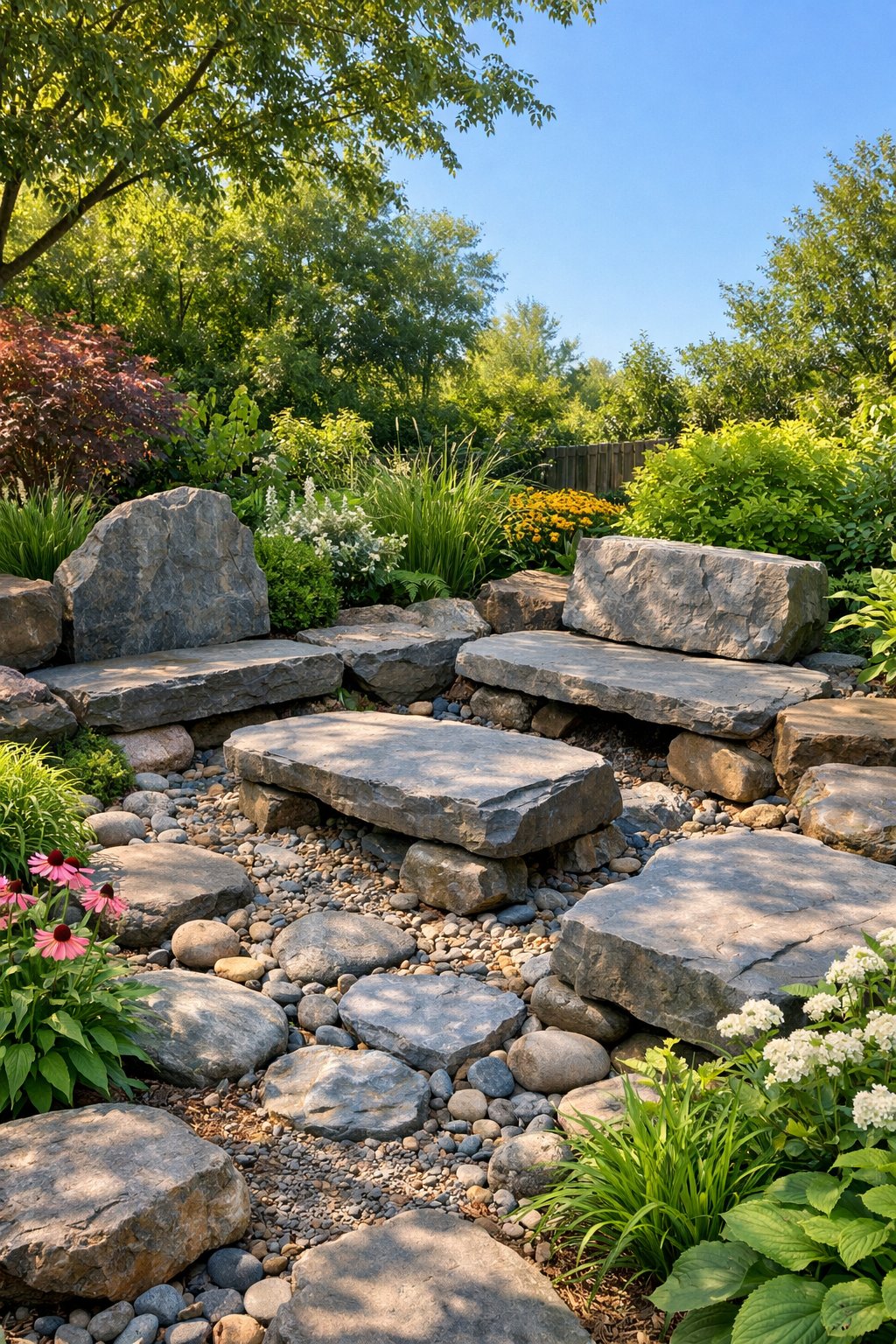
Let’s be real: plastic chairs always wobble on gravel and look a little sad. Slate or flagstone slabs make a chill seat that just fits in with the rest of your garden.
Lay a few big, flat slabs close together for a bench or a low table. You can stack a couple for a backrest, or put a wood plank across two stones for a little flair.
Pick slabs that are flat and about the same thickness, so you don’t slide off. Tuck moss or creeping thyme between them for a soft touch and some nice smells when you walk by.
Stick your seating where you’ll get some shade or the best view. Level the ground and use compacted sand or gravel underneath so nothing wiggles.
Expert Tip From MrPlanter: Go for slabs at least 16–18 inches deep for comfy sitting. If you’ve got kids, smooth or seal the edges to avoid ouch moments.
17. Incorporate a rock border around flower beds for neatness without fuss
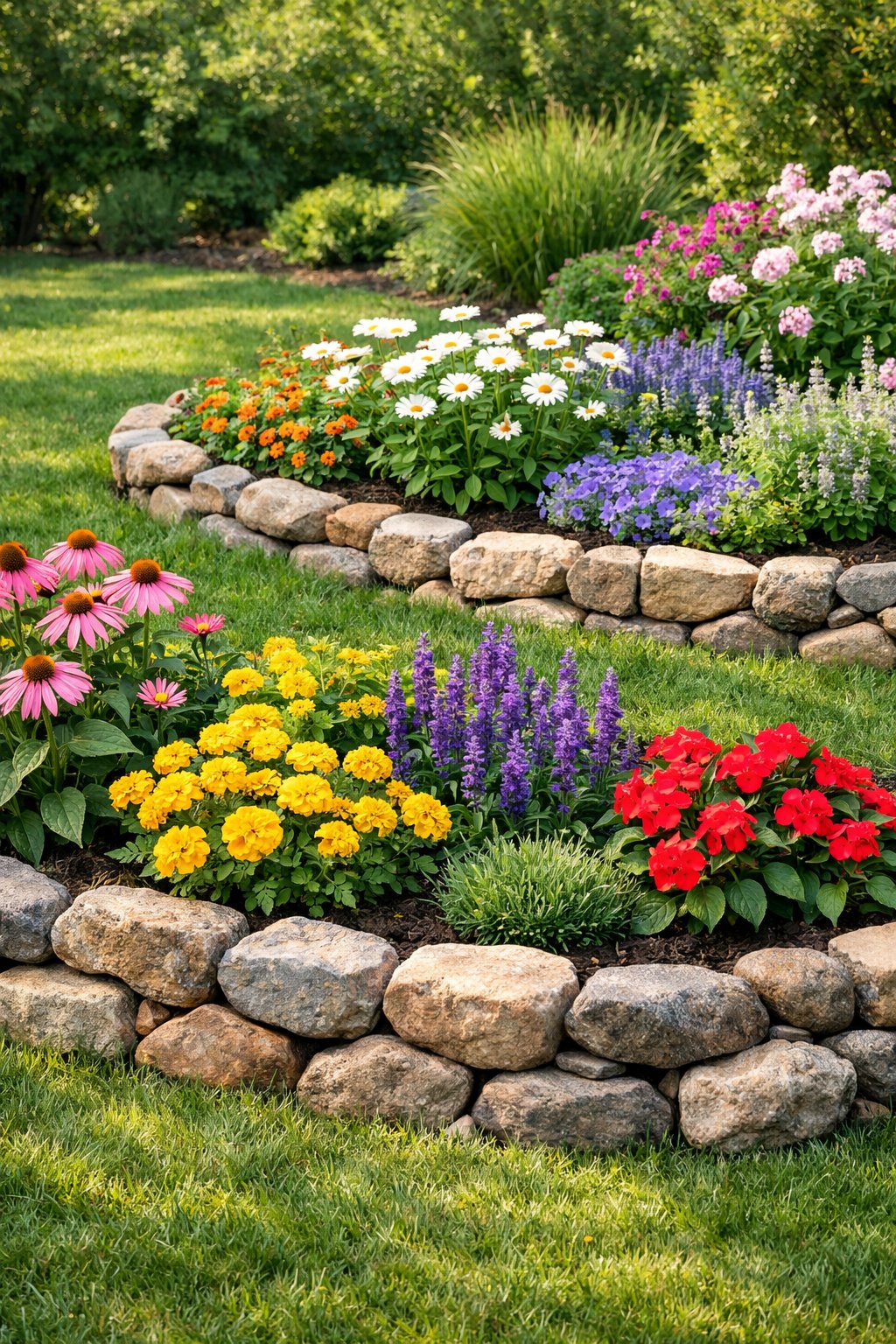
Ever get annoyed when mulch slides into the grass? A rock border keeps everything in its place without constant fixing.
You can use little river stones or chunky field rocks to outline your beds. They stop soil and mulch from escaping and give your garden a tidy shape.
Curved borders feel softer than straight ones. Stack a few stones for a bit of height, or mix colors and sizes for extra fun.
Lay down a weed barrier and set the rocks half on the soil, half on the grass for stability. Easy, and it lasts for ages.
Expert Tip From MrPlanter: “Put flat stones on the inside so the mower doesn’t grab them. Swap out a few rocks each year to keep the border looking sharp.”
18. Plant sedums with varied colors to fill crevices and soften rocks
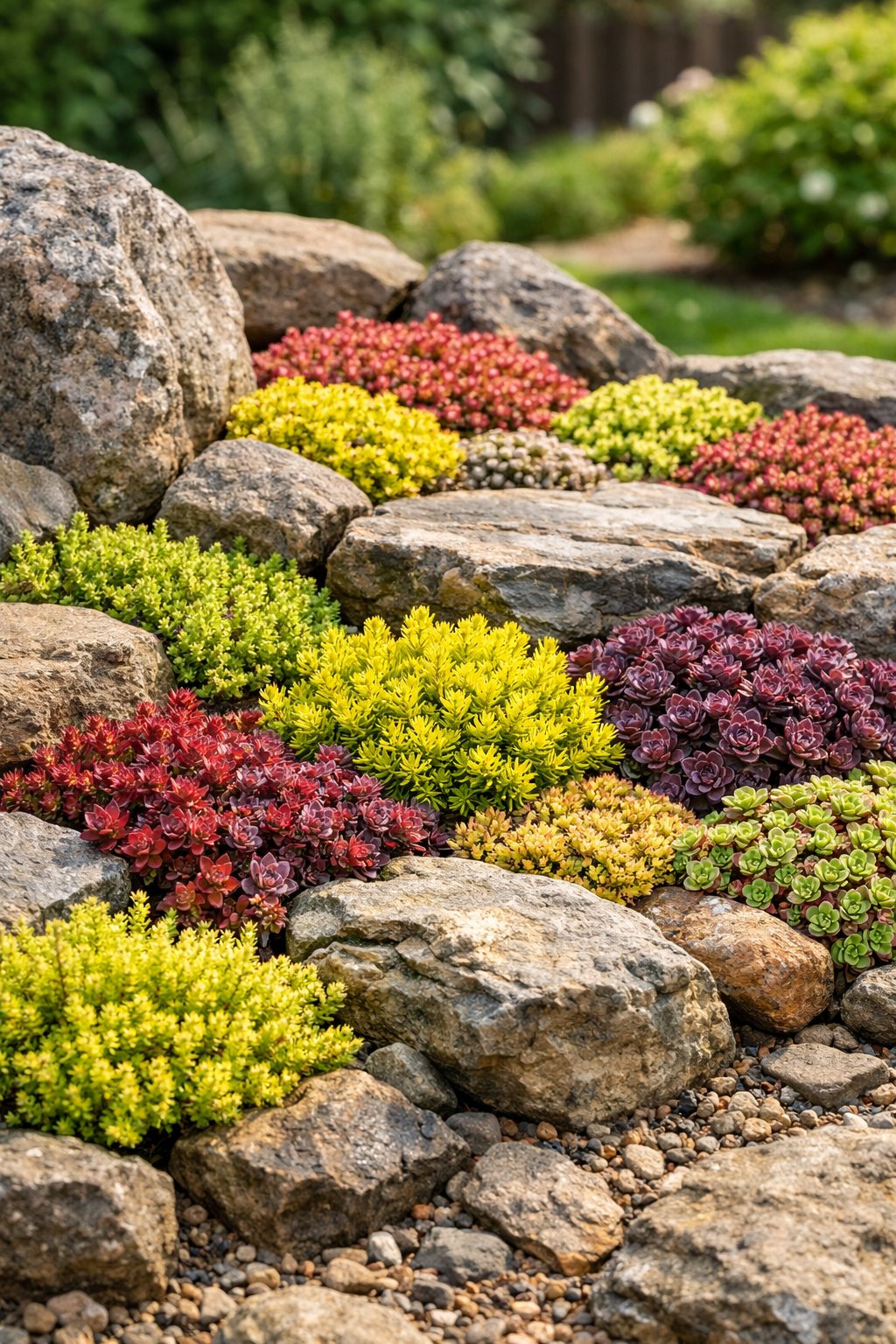
Here’s a fun one: sedums will happily sneak into tiny cracks and make them look planned.
Tuck low-growing sedums into gaps between rocks to cover bare spots and soften sharp edges. They spread fast enough to fill spaces, but stay low so your rocks still shine.
Mix up the colors—green, burgundy, gold—so the garden changes with the seasons. Some even flower and bring in bees, so you get bonus visitors.
Put sun-lovers in bright spots and shade-tolerant types in sheltered cracks. Don’t overwater; sedums like it dry and reward you with color.
Expert Tip From MrPlanter: Plant sedums in little groups of three or five for a natural look. Trim off old growth in spring to keep things tidy and fresh.
19. Set up a small pond surrounded by river stones for extra backyard zen
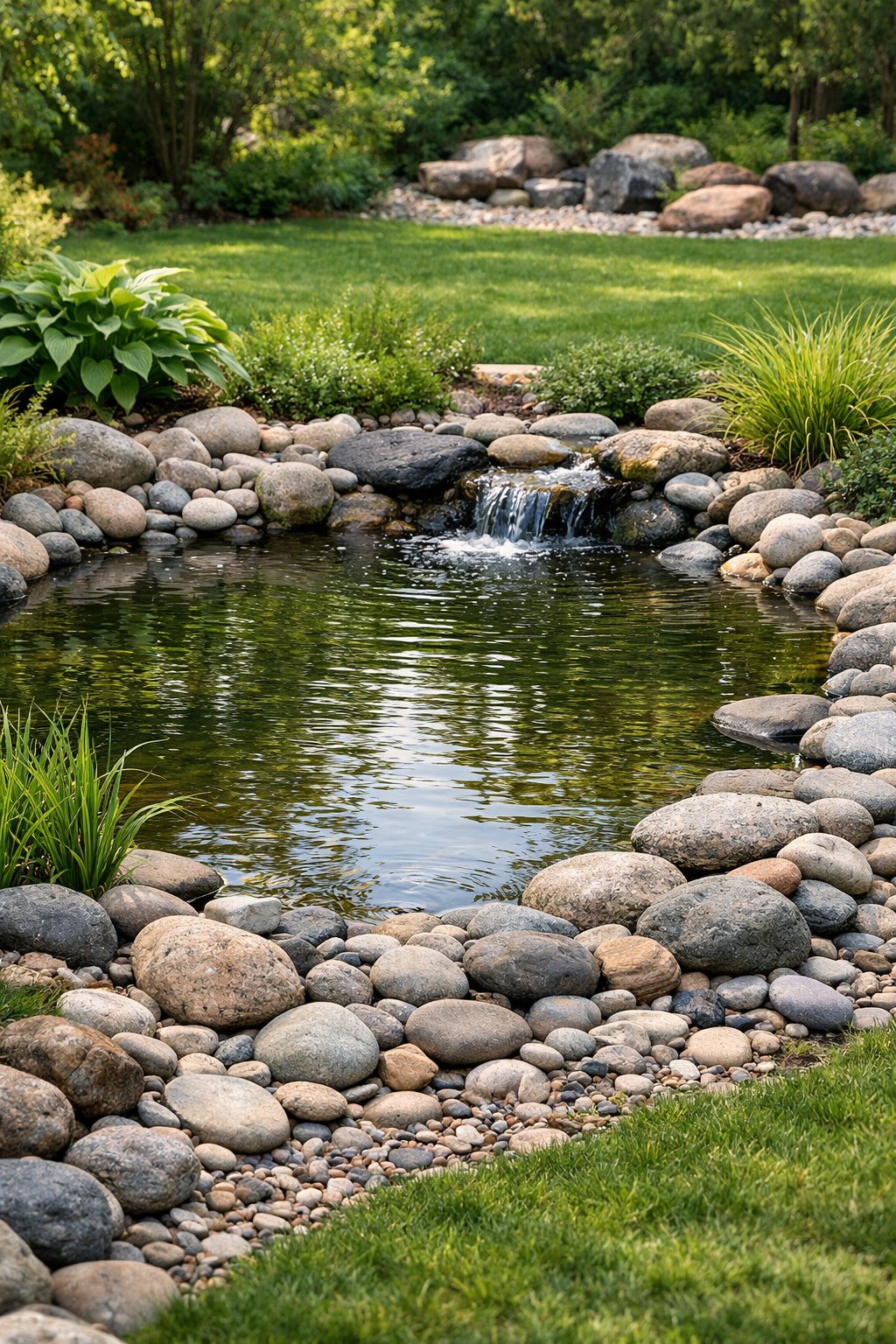
Believe it or not, a tiny pond can bring in more birds and chill you out faster than a giant fountain.
Drop in a small liner or pre-shaped pond near your patio or under a tree. Edge it with smooth river stones to cover the plastic and make it look like it’s always been there.
Add a little pump for gentle water movement so things stay clean. Plant some water lilies or rushes for soft edges and a spot for critters to hang out.
Keep it simple with a shallow shelf for wildlife and a deeper spot in the middle if you want fish. Toss in a couple lights so the stones glow at night.
Expert Tip From MrPlanter: Start with a small pond to see what works. Check the water and pump every few weeks to keep things calm and clear.
20. Use crushed limestone as ground cover for a light, clean look
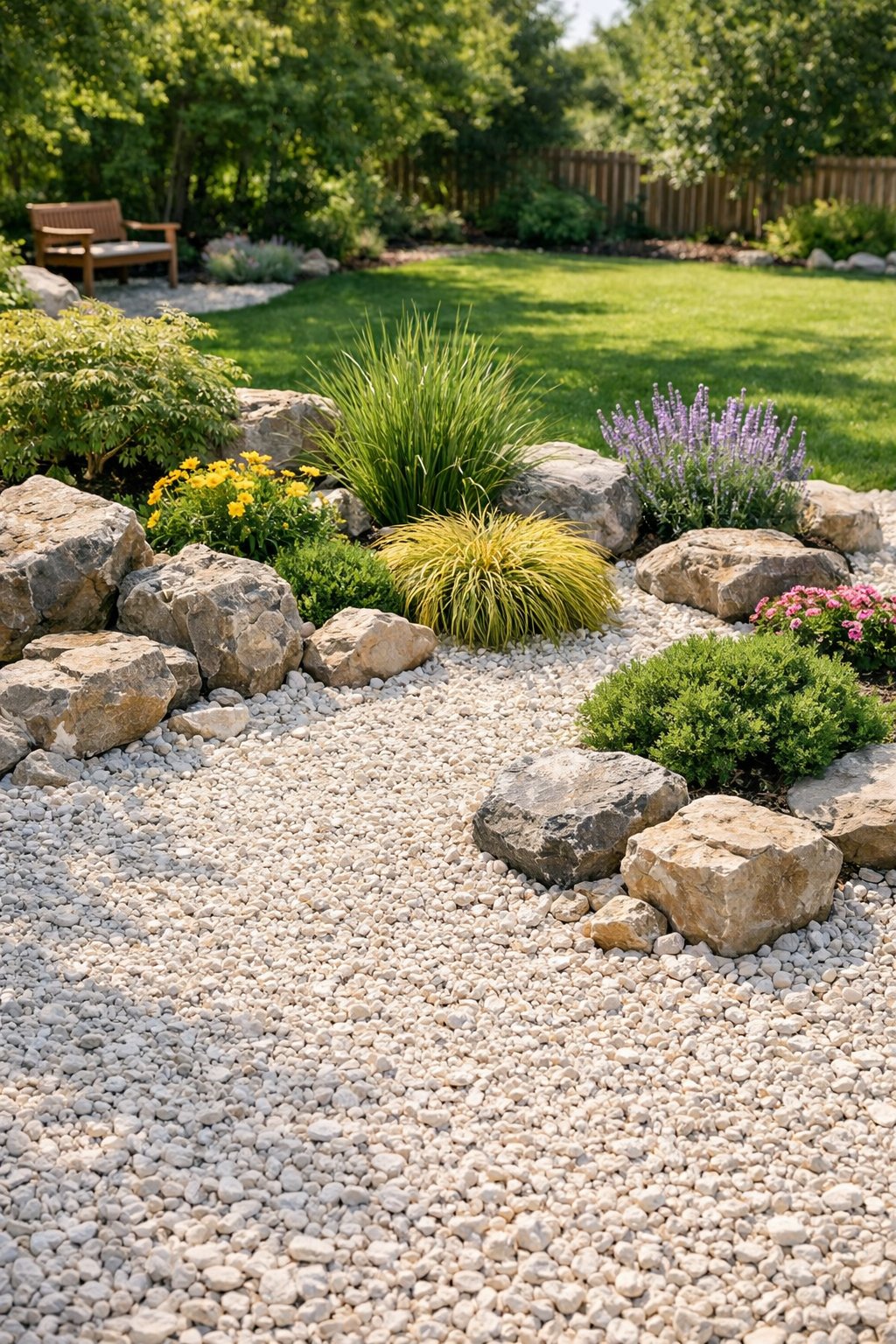
Let’s bust a myth: crushed limestone doesn’t make things boring—it actually brightens up your yard and keeps everything tidy.
Spread crushed limestone around plants, paths, or seats for a neat, light look. It keeps weeds down and helps water drain away, so your plants won’t get soggy feet.
The pale color makes small yards feel bigger, and it looks great with green plants or dark stones. It’s easy to take care of, and you won’t track much of it inside.
Expert Tip From MrPlanter: Put down a 2–3 inch layer and press it down a bit so it stays put. Top with a fine dust to lock it in and keep dust down while the yard stays sharp.
21. Add quirky garden statues among rocks to surprise and delight visitors
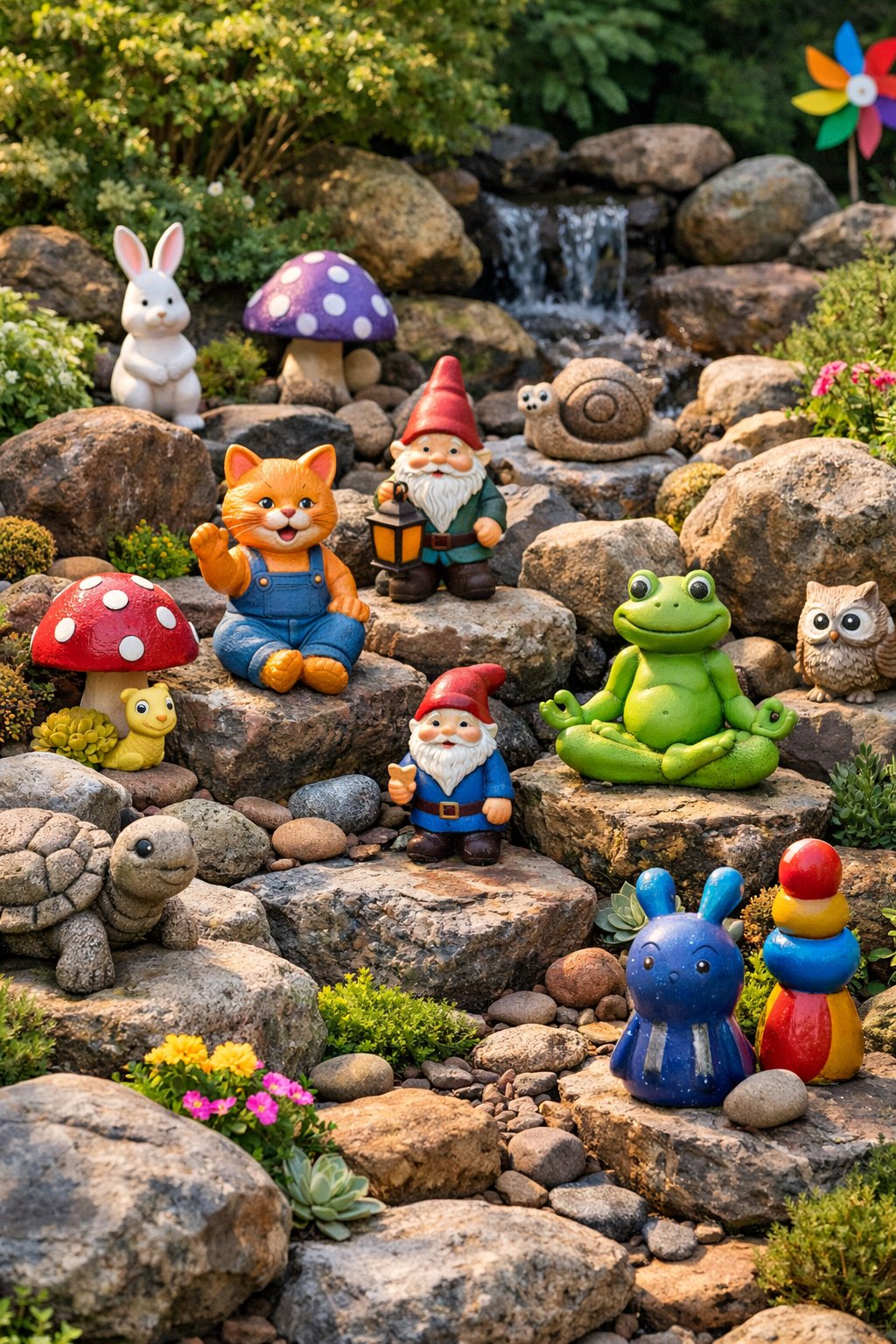
Here’s a fun surprise: a tiny statue hidden in the rocks can make people stop and grin.
Tuck small, quirky figures between boulders or pebbles so they feel like little discoveries. Your guests might end up crawling around, looking for the next one.
Mix up the styles—a weathered critter, a modern face, or a goofy gnome. Just keep the size right so nothing gets lost next to your rocks.
Pick statues made from stuff that can handle sun and rain. Metal, stone, and sealed concrete all last. Move pieces around every so often to keep things fresh.
Expert Tip From MrPlanter: “Put statues near paths or seats so people spot them. Switch them up once a year to keep the fun going.”
22. Use volcanic rocks for a dramatic, bold statement with texture
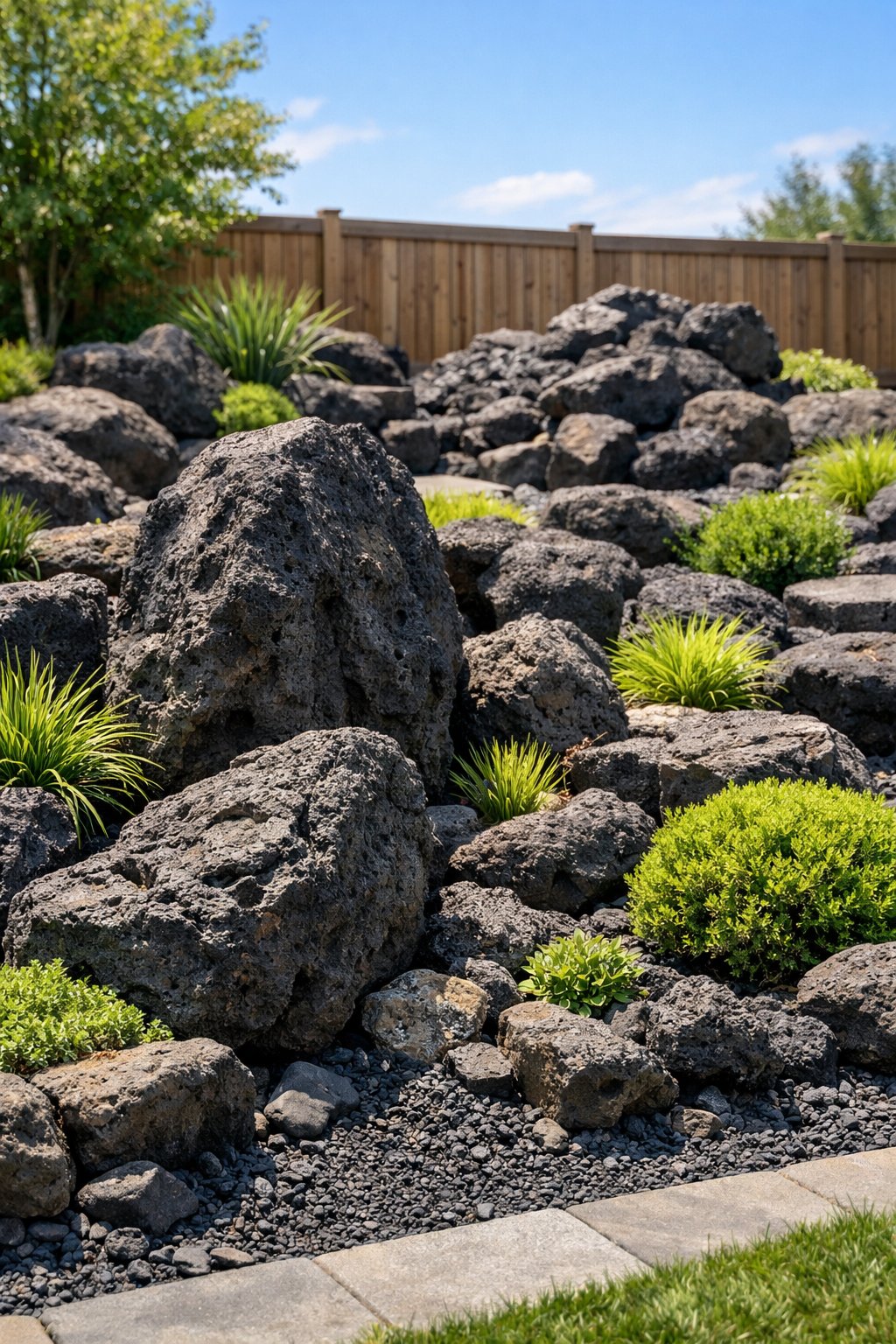
Here’s something wild: volcanic rocks are super light but tough, so they keep their shape without sinking.
Use them as a bold border or pile them up for mini-mountains that add drama and height. Their rough, dark texture catches the light and makes bright plants stand out.
Mix big and small pieces for a natural feel—tiny pebbles, medium chunks, and a couple of big show-offs. Volcanic rock helps with drainage, so it’s perfect for succulents and dry-loving plants.
Want contrast? Pair the rocks with pale gravel or silvery leaves for a modern twist.
Expert Tip From MrPlanter: Set the big volcanic rocks first, then tuck in plants and smaller stones around them. Use slow-draining soil and mulch with coarse gravel to keep roots happy.
23. Create a pattern with alternating light and dark stones for visual drama
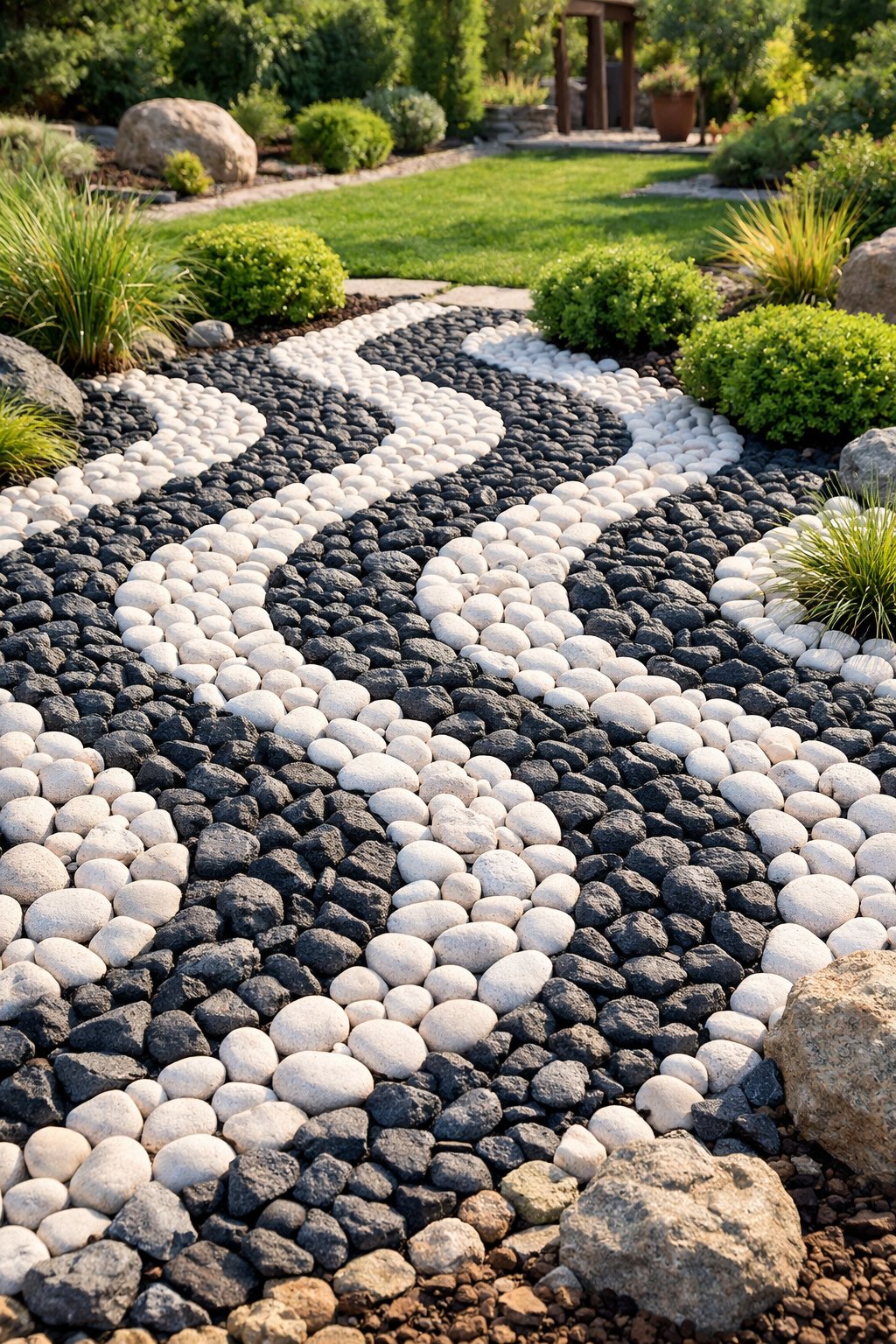
Here’s something wild: just swapping light and dark stones can totally trick your eyes into seeing movement and depth in your backyard.
You can set up bands, chevrons, or even a checkerboard to pull attention across a slope or nudge folks toward a cozy bench.
Switching up stone sizes or leaving a little space between them? That changes the vibe fast.
I always keep edges tidy by running a skinny line of pavers or metal edging. It just makes the pattern pop.
If you want to soften things up (and let’s be honest, less weeding is always good), tuck some low plants or gravel between the stones.
Try to pick stones that vibe with your house colors. That way, the pattern feels intentional, not like a wild experiment gone wrong.
Honestly, starting small on a path or border is smart. You’ll see how the colors shift in different light before you go all in.
Expert Tip From MrPlanter: Test a little strip first. It’s the best way to see how those stones look as the sun moves across your yard.