You know, even the tiniest backyard can turn into a cozy, blooming cottage spot that looks straight out of a fairy tale.
Here are 16 small cottage garden ideas to help you add charm, scent, and color—no need for a huge space or a fancy gardener badge.
You’ll find easy ways to lay paths, mix up plant heights, throw in vintage touches, and welcome birds and pollinators—even if your yard is more “cozy” than “sprawling.”
I like to think of this as your friendly cheat sheet for building comfy corners, layered planting, and little accents that make your outdoor space feel loved.
1. Create a winding brick pathway for that whimsical, storybook feel.
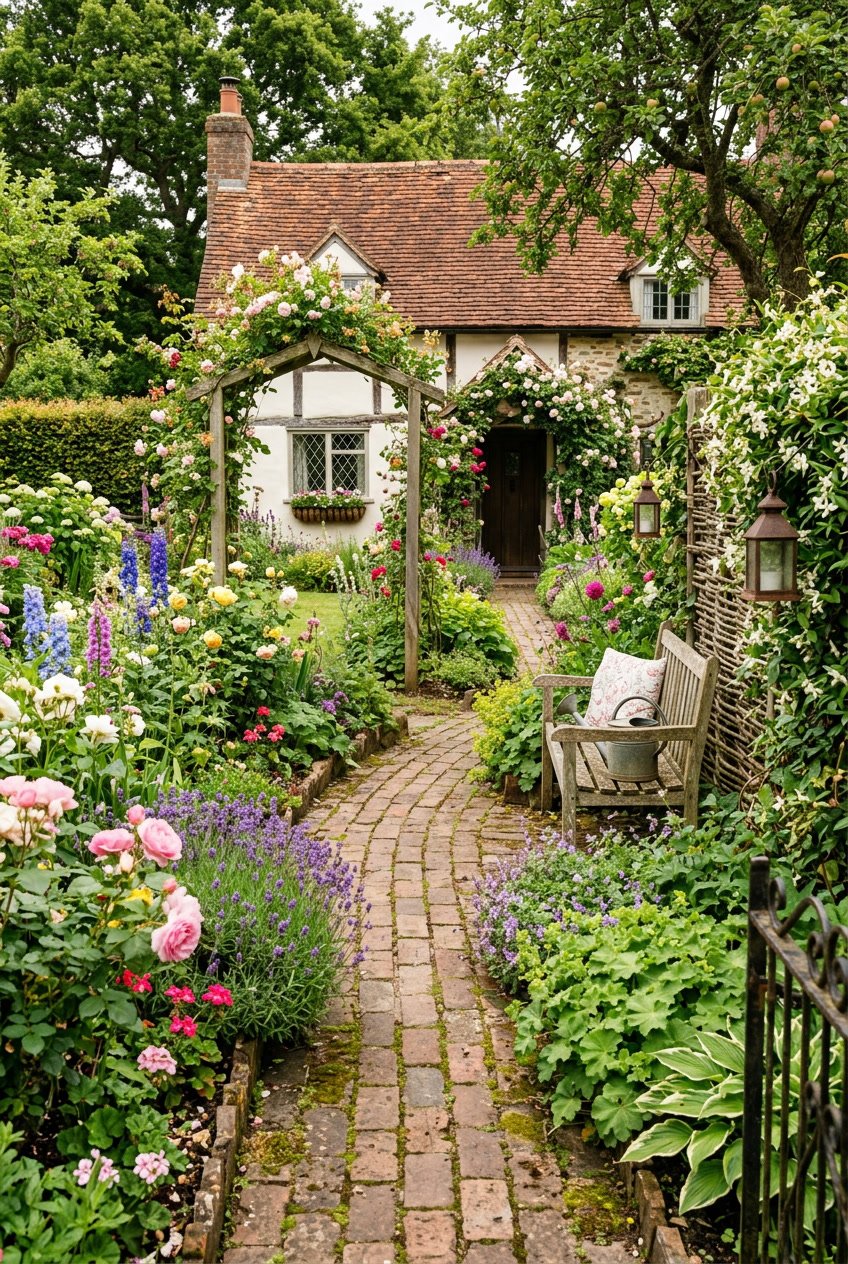
Let’s be honest: straight paths are fine, but winding ones? They beg you to slow down and wander. Imagine bricks smoothed by years of bare feet, with moss peeking through the cracks.
Lay a curvy brick path that guides your eyes—and your toes—on a little adventure. Grab some old bricks for extra charm, or mix up colors for a patchwork that feels warm and lived-in.
Tuck low herbs or flowers along the edges to soften things up. If you keep the path narrow and plant taller stuff on the sides, it’ll feel like a secret passage.
Expert Tip From MrPlanter: Pick bricks with some texture so you don’t slip when it rains. Try thyme or chamomile between the bricks for a soft, scented touch.
2. Plant foxgloves and let them self-seed like the garden’s own little rebels.
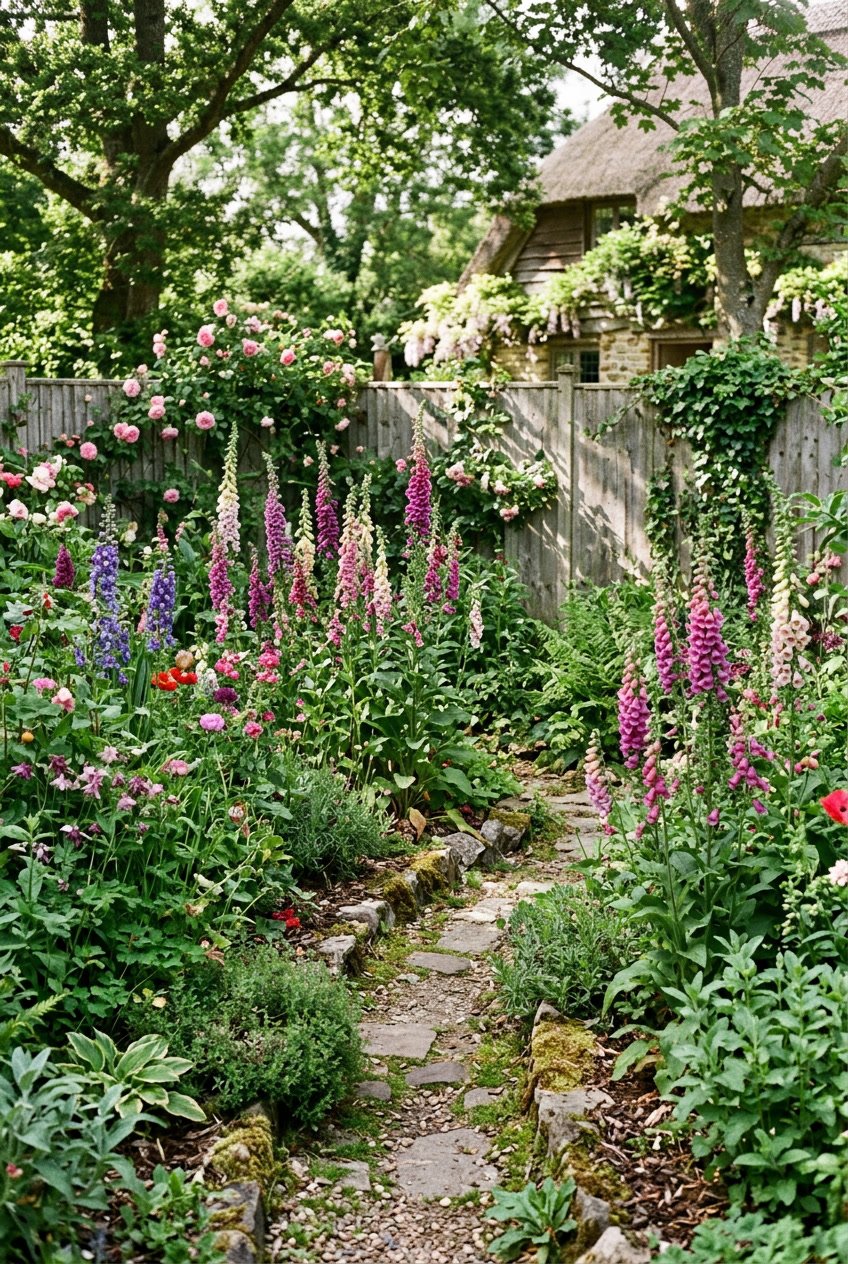
Fun fact: foxgloves love to show up year after year if you let them do their thing. They act like cheerful squatters, dropping seeds that find any bare patch you left.
Plant your seeds or baby foxgloves in a spot with some shade and soil that drains well. Let the old flower stalks hang out until the seeds dry, or just shake them around wherever you want new plants.
Foxgloves bring height and dreamy color to the back of a bed, and they look great with roses and herbs. If you want a laid-back, cottage look, they’re your friends.
Expert Tip From MrPlanter: “Wait to deadhead foxgloves until the seed pods turn brown. That way, you’ll get free plants next year and keep things looking natural.”
3. Add a vintage wrought iron bench tucked under climbing clematis—hello, secret reading nook!
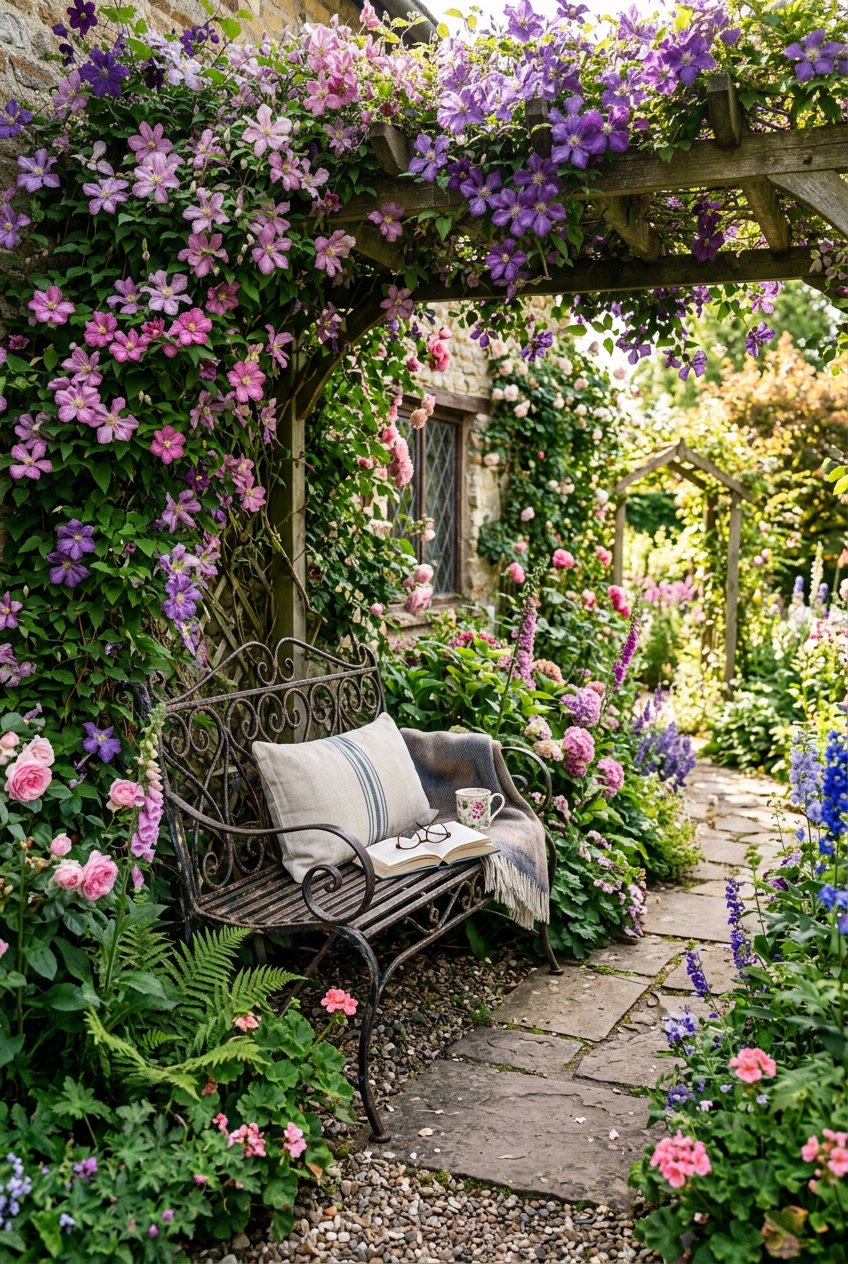
You don’t need a giant yard for a dreamy escape.
Pop a small wrought iron bench where it’ll catch some morning sun and a bit of afternoon shade. A little chipped paint just adds to the charm, especially next to soft clematis blooms.
Train clematis up a trellis or an old piece of lattice behind the bench. The vines give you shade, sweet scent, and a dash of privacy—without hogging space. Toss on a thin cushion and a throw, and you’re set.
Surround your nook with low flowers and a stepping stone path. A small lantern or solar light makes it extra cozy at dusk.
Expert Tip From MrPlanter: Pick clematis varieties that match your sun situation. Water during dry spells, and prune lightly so your reading spot stays airy.
4. Mix roses with ferns for that perfect old-fashioned charm cocktail.
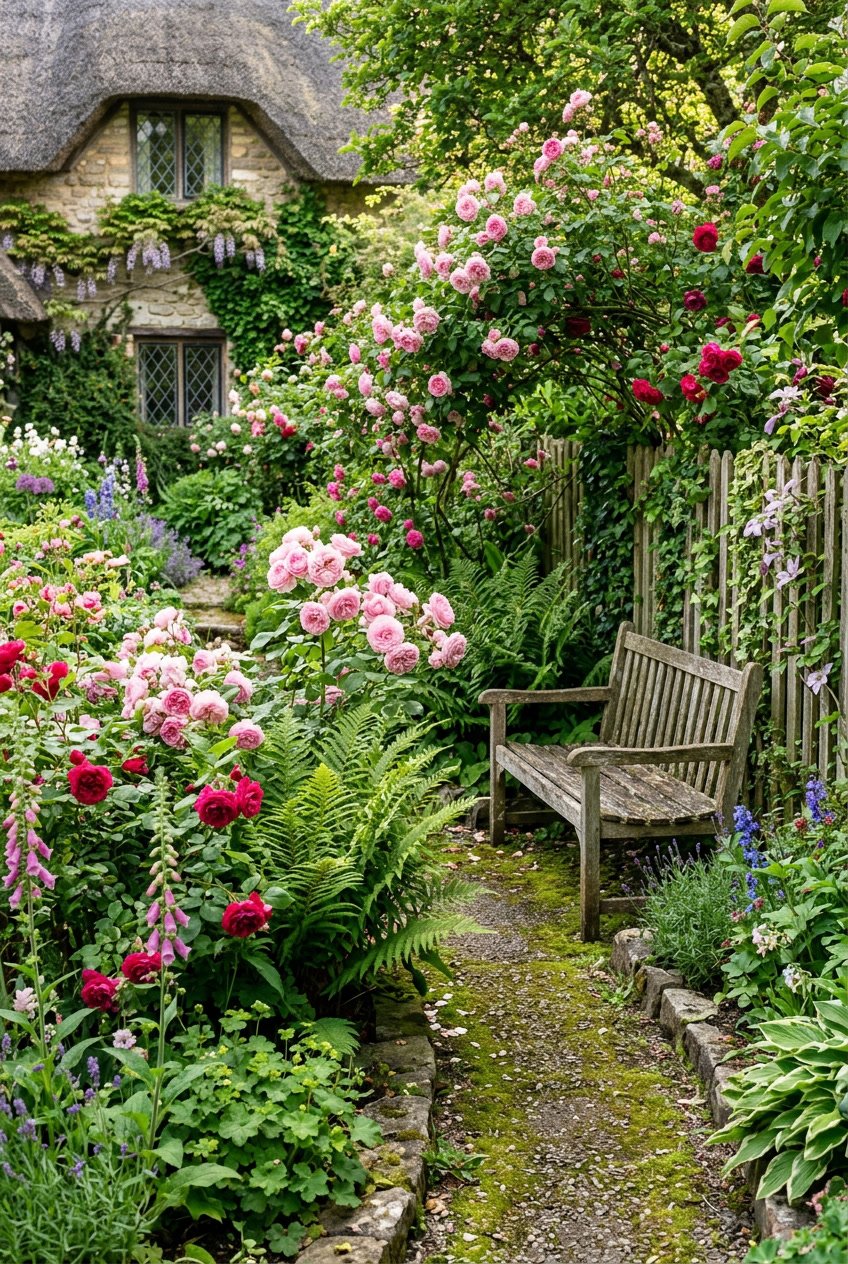
Here’s something cool: old English gardens often paired roses and ferns because the ferns made rose blooms stand out, but never tried to steal the show.
Tuck ferns at the back or along the edges of your rose beds. You’ll get a lacy green backdrop that lets the roses shine and adds depth.
Go for hardy ferns and repeat them for a nice rhythm. Space your roses so air can move around—less disease, longer blooms.
Pick colors that play nice together—pale pinks, creams, and soft whites look lovely with fern green. Mix up textures too: big rose blooms and feathery fronds just work.
Expert Tip From MrPlanter: Plant ferns on the north side of roses to keep roots cool. Prune roses in spring so the ferns can fill in the gaps.
5. Install a small birdbath to invite feathered guests and elevate garden gossip.
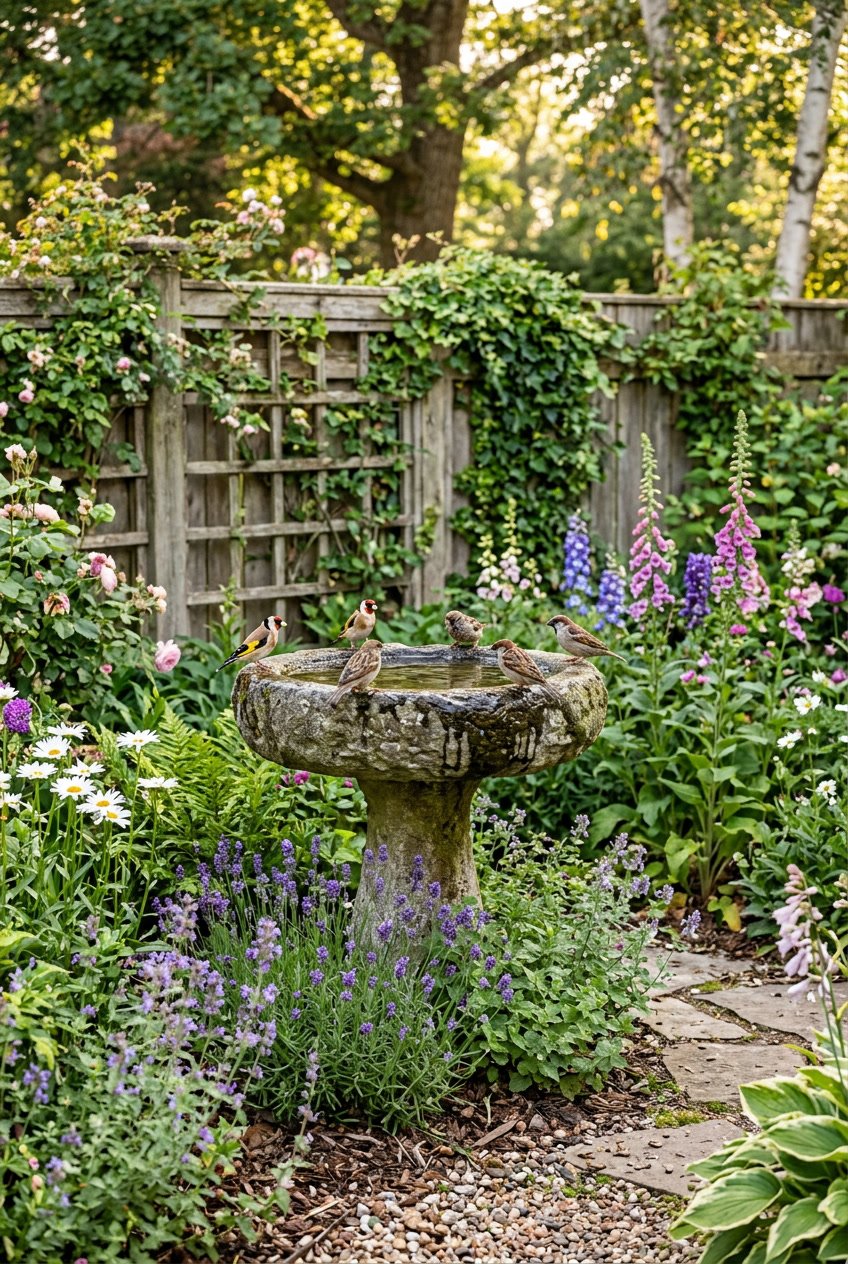
Birdbaths don’t have to be fancy or huge. Even a shallow bowl or an old sink can give birds a safe spot to drink and splash, and it barely takes up space.
Set the birdbath near a low shrub or small tree so birds feel safe—and you get a great view. Keep it shallow (one or two inches deep), and swap out the water every few days so it stays fresh.
If you can, add a little dripper or a tiny fountain. Moving water brings in more birds and doesn’t get gross as fast. Make sure the base is sturdy, and tuck the bath among flowers for a sweet, natural look.
Expert Tip From MrPlanter: Put the birdbath where you can see it from inside. Scrub it out weekly with a brush and plain water to keep your feathered friends healthy.
6. Use lavender for scent and pollinator attraction; bonus, it practically garden-proofs itself.
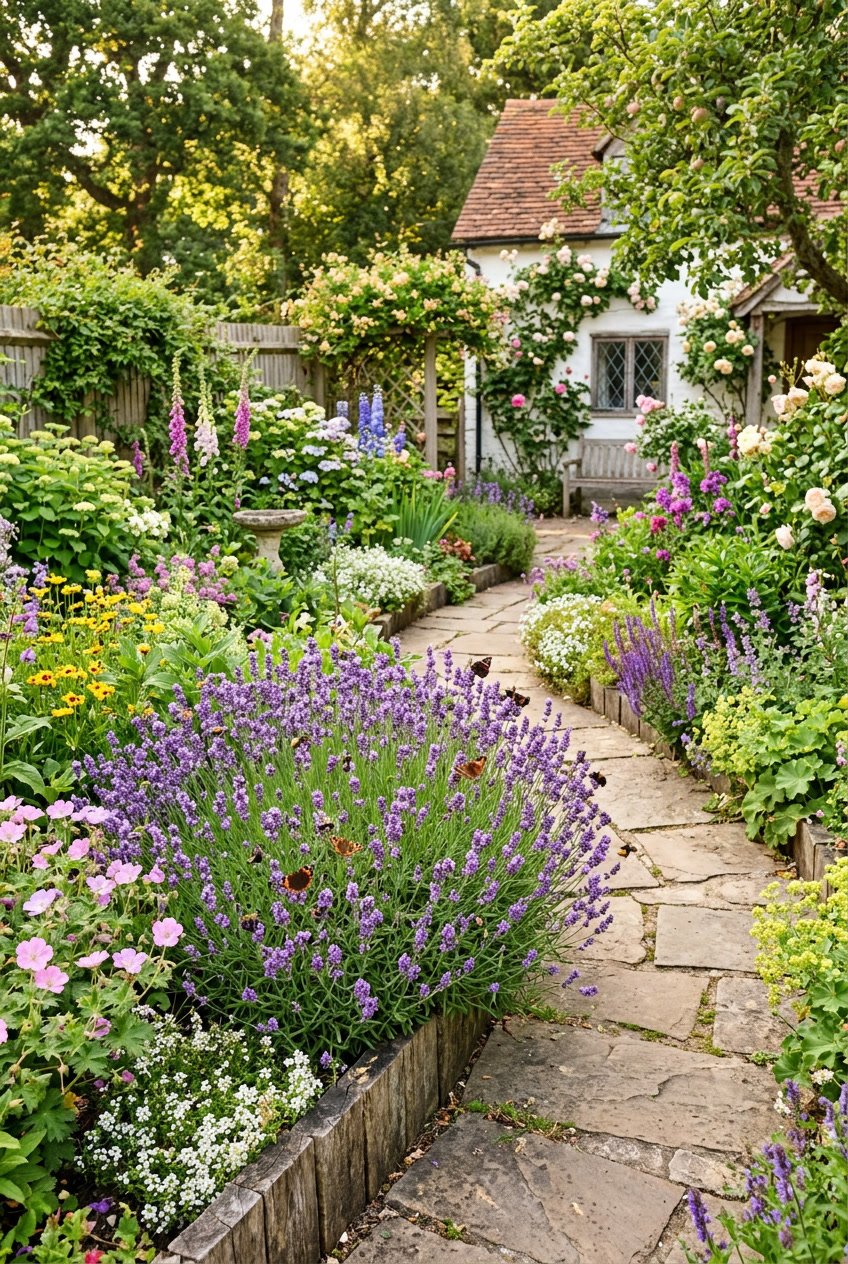
Here’s the scoop: lavender smells like a mini spa and throws a party for bees. You get calm, lovely fragrance and a steady stream of pollinators—no babysitting needed.
Plant it where there’s lots of sun and soil drains well. Lavender shrugs off dry spells, so you don’t have to fuss over it.
Line your paths or set it near a bench so you catch the scent as you walk by. The purple flowers pop and help bees and butterflies spot your yard.
Expert Tip From MrPlanter: Snip off faded blooms to keep things tidy and encourage more flowers. Space plants about 18 inches apart so they stay healthy.
7. Create a cozy corner with a wicker chair surrounded by cascading sweet peas.
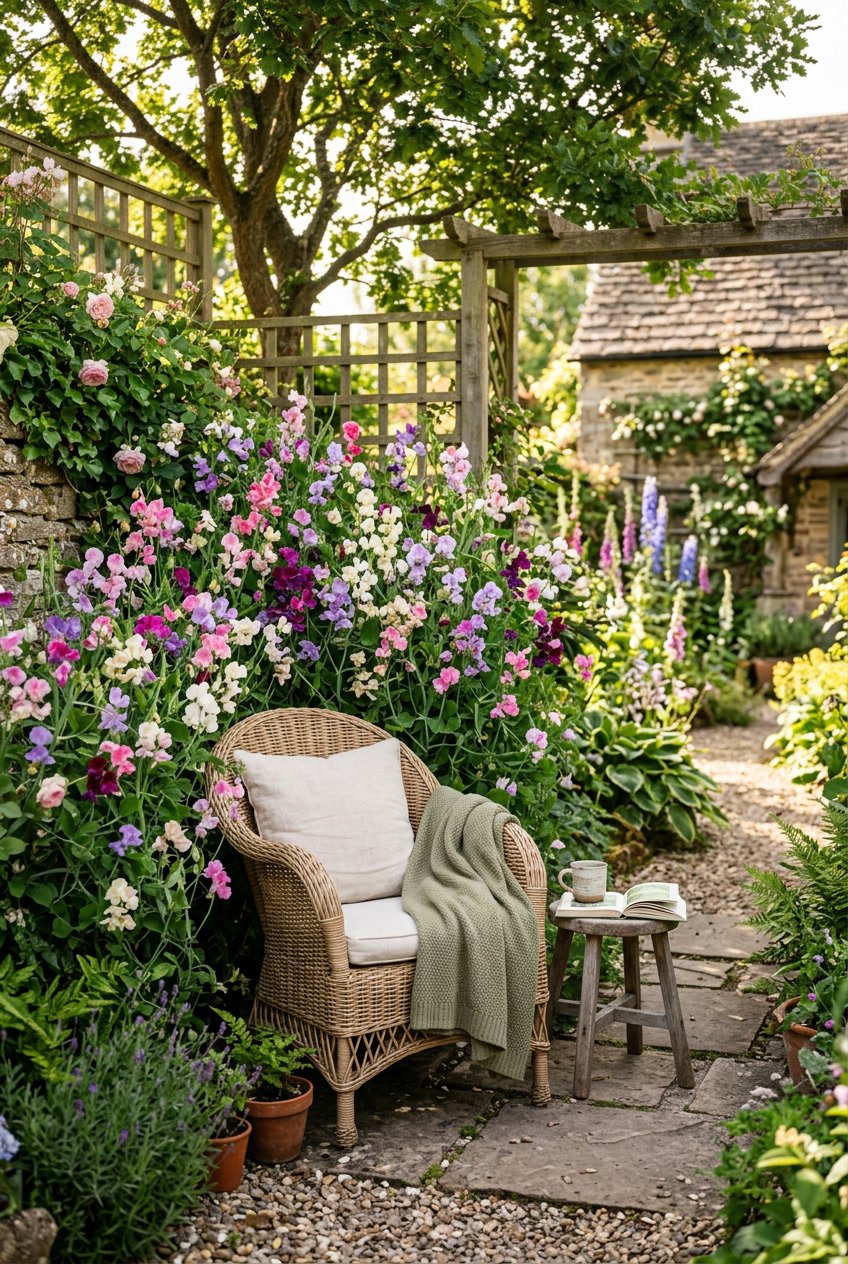
Even a tiny yard can feel like a secret garden.
Set a small wicker chair where you catch soft morning or evening light. It’s comfy, easy to move, and looks great with a pop of color from a cushion.
Grow sweet peas up a trellis or weave them through the back of the chair. They climb quickly and spill over with fragrant blooms, making your spot feel tucked away.
Add a little side table for tea and a throw for chilly evenings. You’ll have the perfect spot to read or just watch bees do their thing.
Expert Tip From MrPlanter: Go for dwarf sweet pea varieties in small spaces. Feed weekly with a low-nitrogen fertilizer, and keep a trellis handy so vines climb where you want them.
8. Incorporate a rustic wooden trellis to support climbing honeysuckle and jasmine.
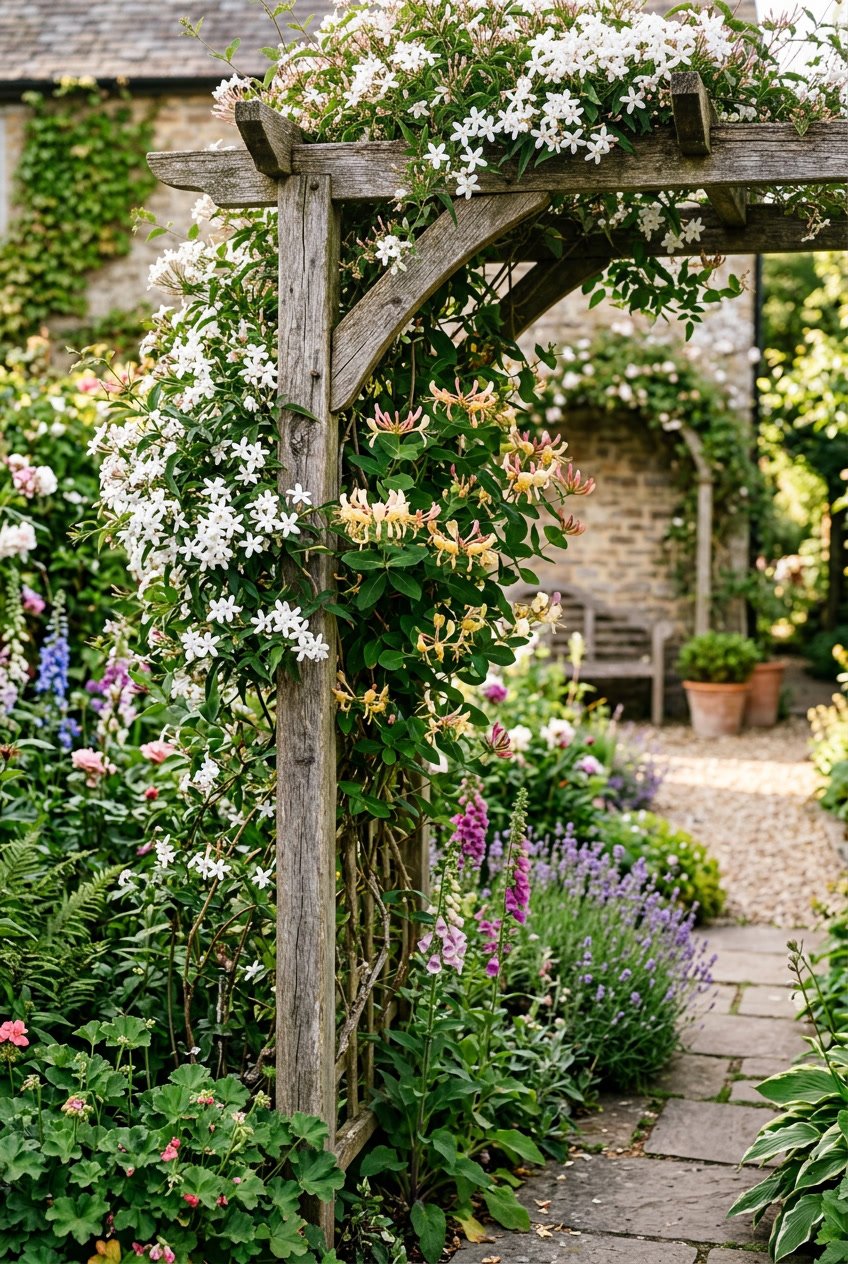
A trellis isn’t just for neat, fussy gardens—it’s your backstage pass for scent and color.
Lean an old wooden ladder or a simple lattice against a sunny wall. Honeysuckle and jasmine will climb right up and fill the air with sweet fragrance.
Use rot-resistant wood and space the rungs so vines can weave through. Paint or stain it if you want, or leave it bare for that classic cottage vibe.
Guide young shoots with soft ties and trim lightly to keep things tidy. This helps the blooms keep coming and stops your trellis from getting buried.
Expert Tip From MrPlanter: Pick a trellis you can reach for pruning. A bit of garden twine every few inches helps young vines climb without a fuss.
9. Scatter soft moss between stepping stones to blur edges and boost that lived-in vibe.
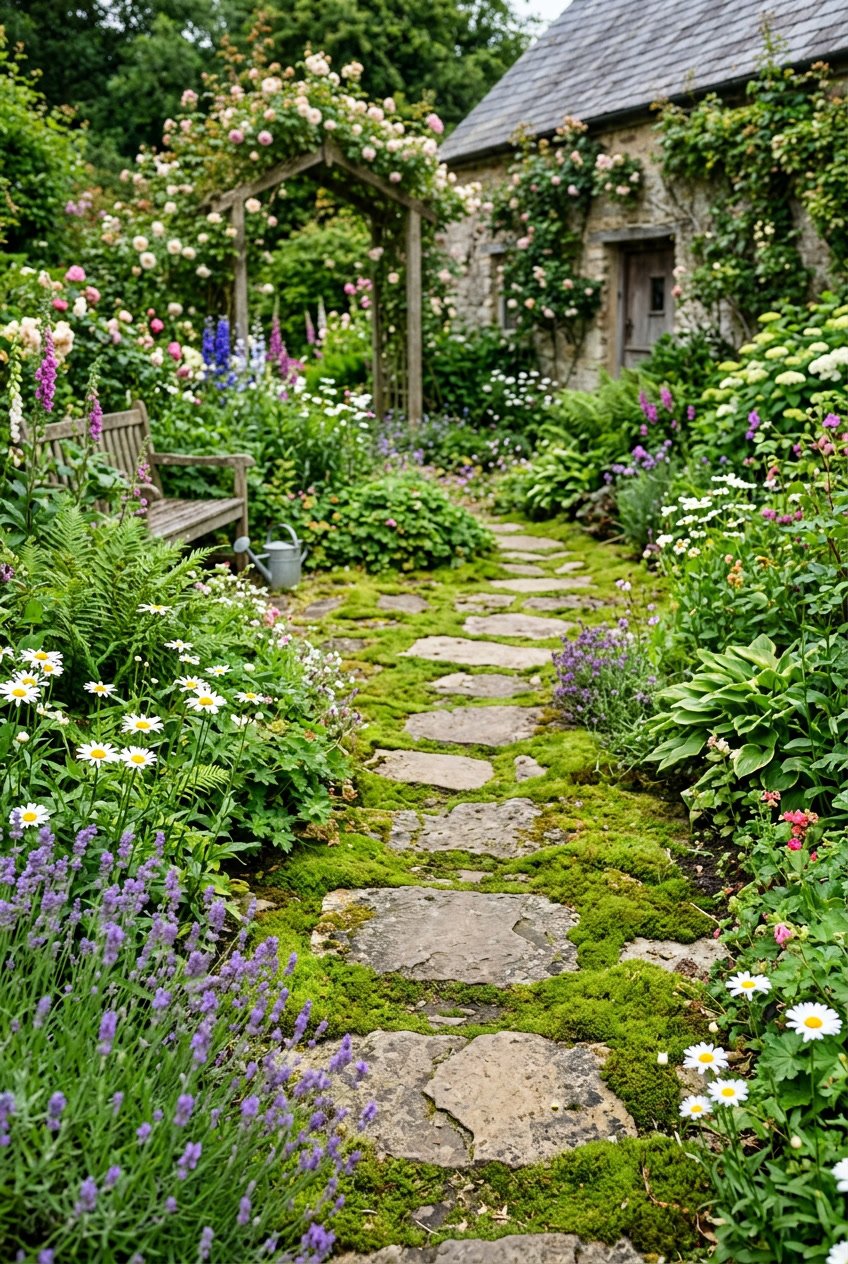
Ever look at your path and think, “This is a little too tidy”?
Soft moss between stepping stones makes everything feel gentle and relaxed. It hides sharp edges and gives your garden a cozy, settled-in mood.
Moss loves shade and damp soil, so it’s perfect under trees or in beds that don’t get blasted by sun. Press small clumps into moist soil or lay moss mats between pavers, then let it do its thing.
Go easy on foot traffic while it settles. Use a small tool to trim the edges if you want, but keep it a little wild.
Expert Tip From MrPlanter: Choose a local moss for the best luck—it’ll adapt faster and need less fuss. Water gently during dry spells until it’s rooted in.
10. Plant a cluster of quaint daisies and forget-me-nots for effortless cottage whimsy.
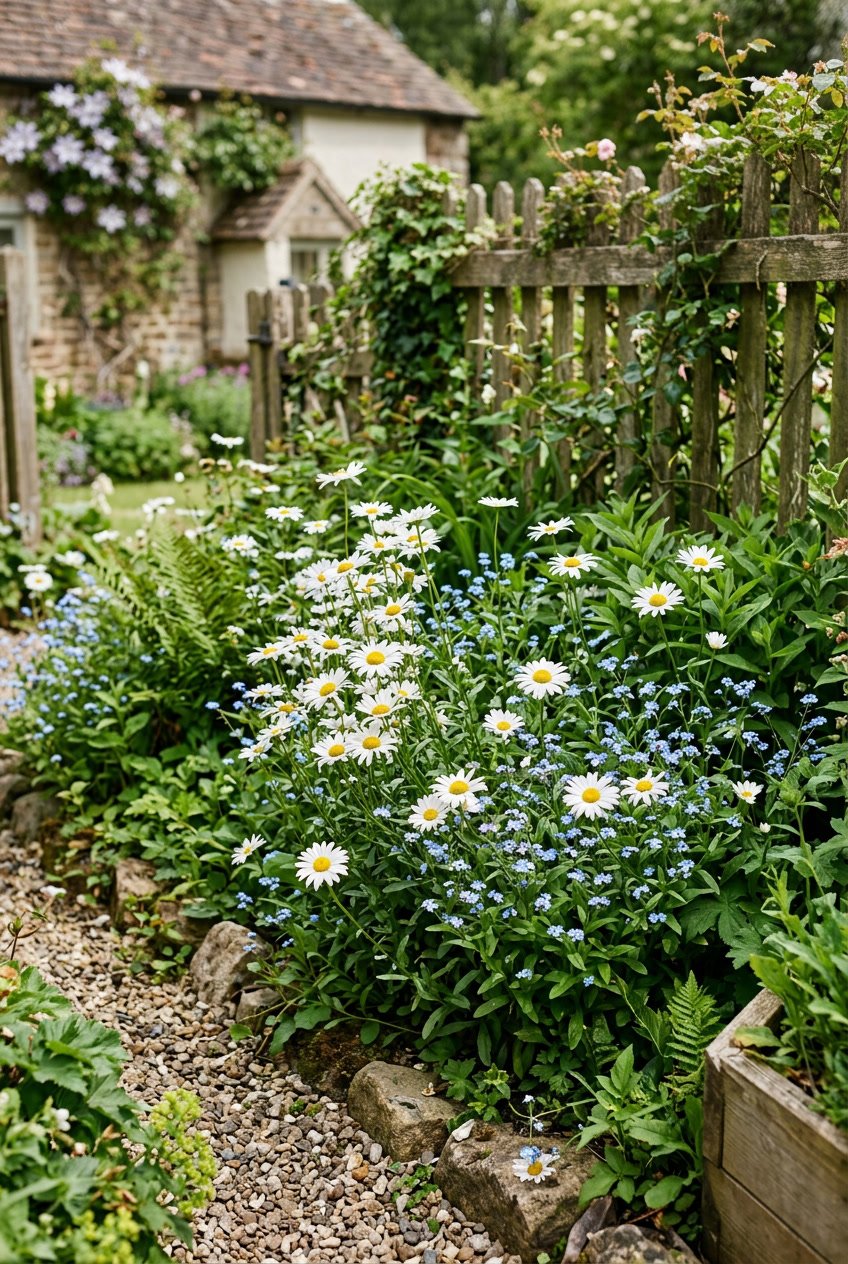
Think your little yard can’t feel magical? A handful of simple flowers can prove you wrong in a hurry. Daisies bring bright, cheerful blooms, while forget-me-nots add soft blue patches at ground level.
Plant them in groups—not boring rows—so they look like a splash of color from across the yard. Put the daisies behind, forget-me-nots in front, and you’ll get a layered, cozy look.
Both flowers self-seed a bit, so you’ll get more charm each year. Pick a sunny-ish spot with decent drainage, and water until they settle in.
Expert Tip From MrPlanter: “Plant in odd-numbered clusters for a natural look. Snip off tired blooms now and then to keep the flowers coming.”
11. Use painted terracotta pots in pastel hues to bring pops of color without fuss.
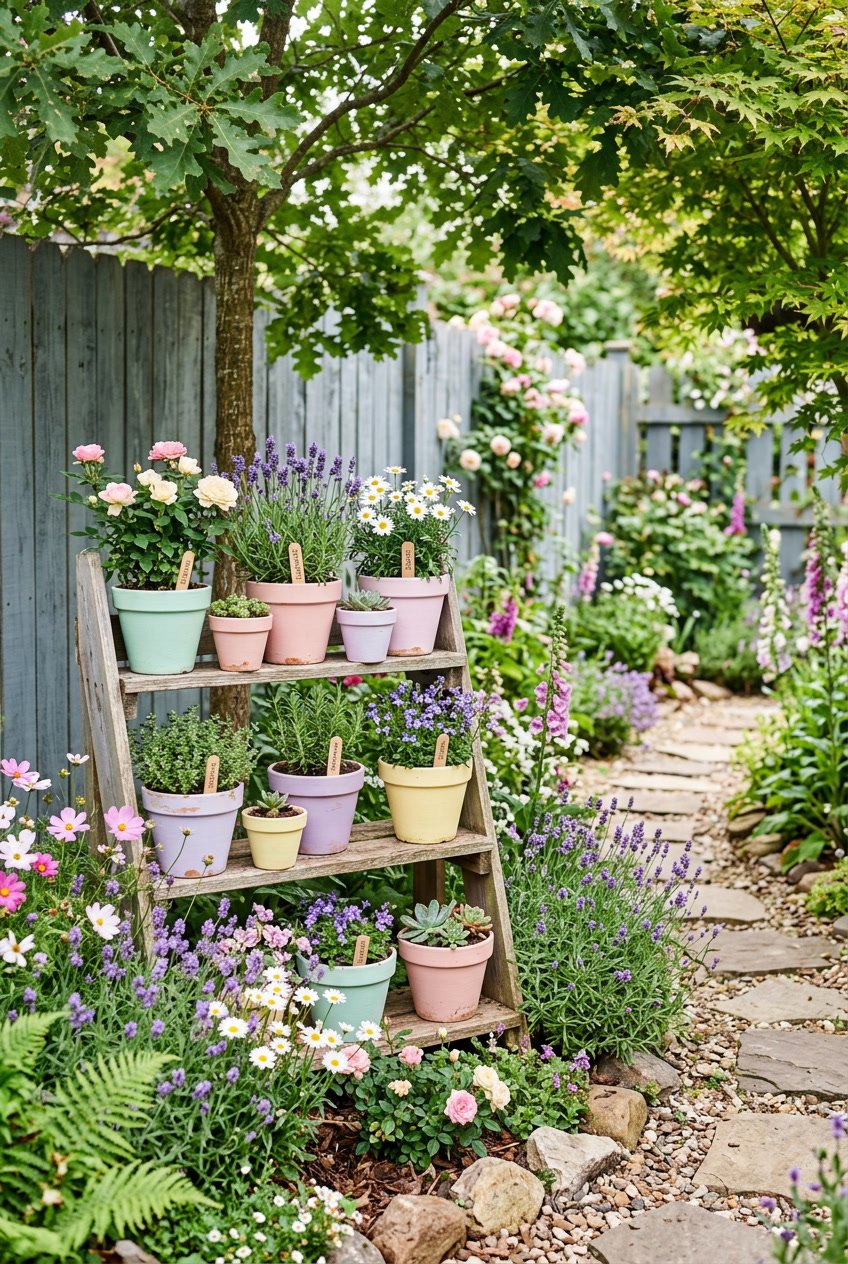
Ever wish your garden had just a few more pops of color, but you don’t want to work all weekend? Painted terracotta pots in soft pastels are a quick fix. They’re cheap, light, and you can shuffle them around whenever you feel like it.
Paint a base color, then add dots, stripes, or little leaves if you’re feeling artsy. Pastels like mint, blush, and sky blue fit the cottage vibe but won’t upstage your flowers.
Mix up pot sizes and stack a few for height—no need for big flowerbeds. You’ll get color, texture, and the freedom to rearrange any time.
Expert Tip From MrPlanter: “Use acrylic paint and seal with clear outdoor varnish so your pots last. Let each coat dry all the way so your colors stay bright.”
12. Include a tiny herb patch with thyme, mint, and chives for kitchen magic on demand.
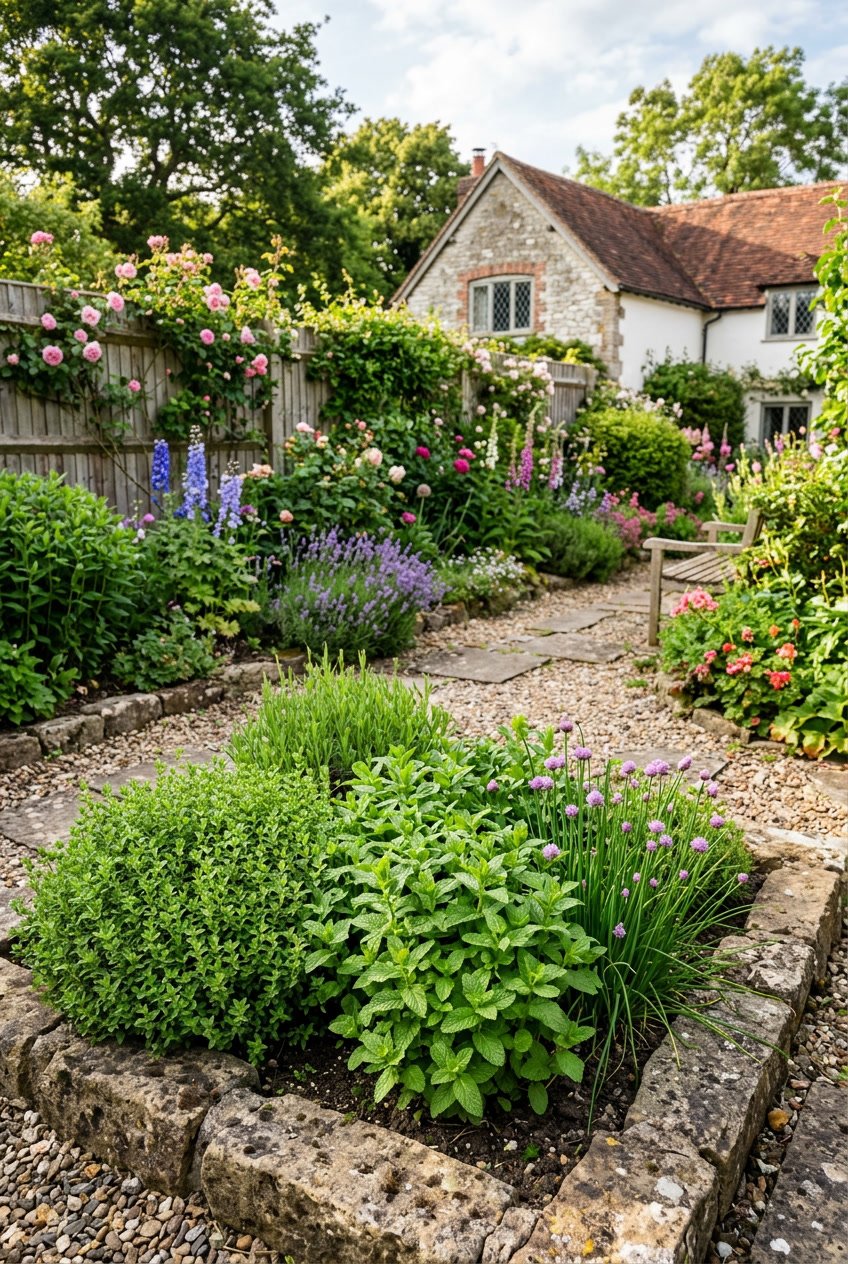
Ever open your fridge and realize you totally forgot the fresh herbs for tonight’s dinner? Happens to me more than I’d like to admit.
Stick a tiny patch near your back door so you can grab a handful of flavor in seconds. Thyme loves sunshine and doesn’t mind rough soil, while mint goes wild—seriously, keep it in a pot or it’ll take over your yard. Chives just do their thing, blooming in spring and asking for almost nothing.
Pop them in a little raised bed or cluster a few pots together to save space and add charm. If you can reach them in your slippers, you’ll actually use them, and they make your garden smell amazing.
Expert Tip From MrPlanter: Plant mint by itself in a container or you’ll be yanking it out for years. Snip your herbs often—they’ll stay bushy and tasty.
13. Build a petite stone patio as a quiet place for morning coffee and garden daydreams.
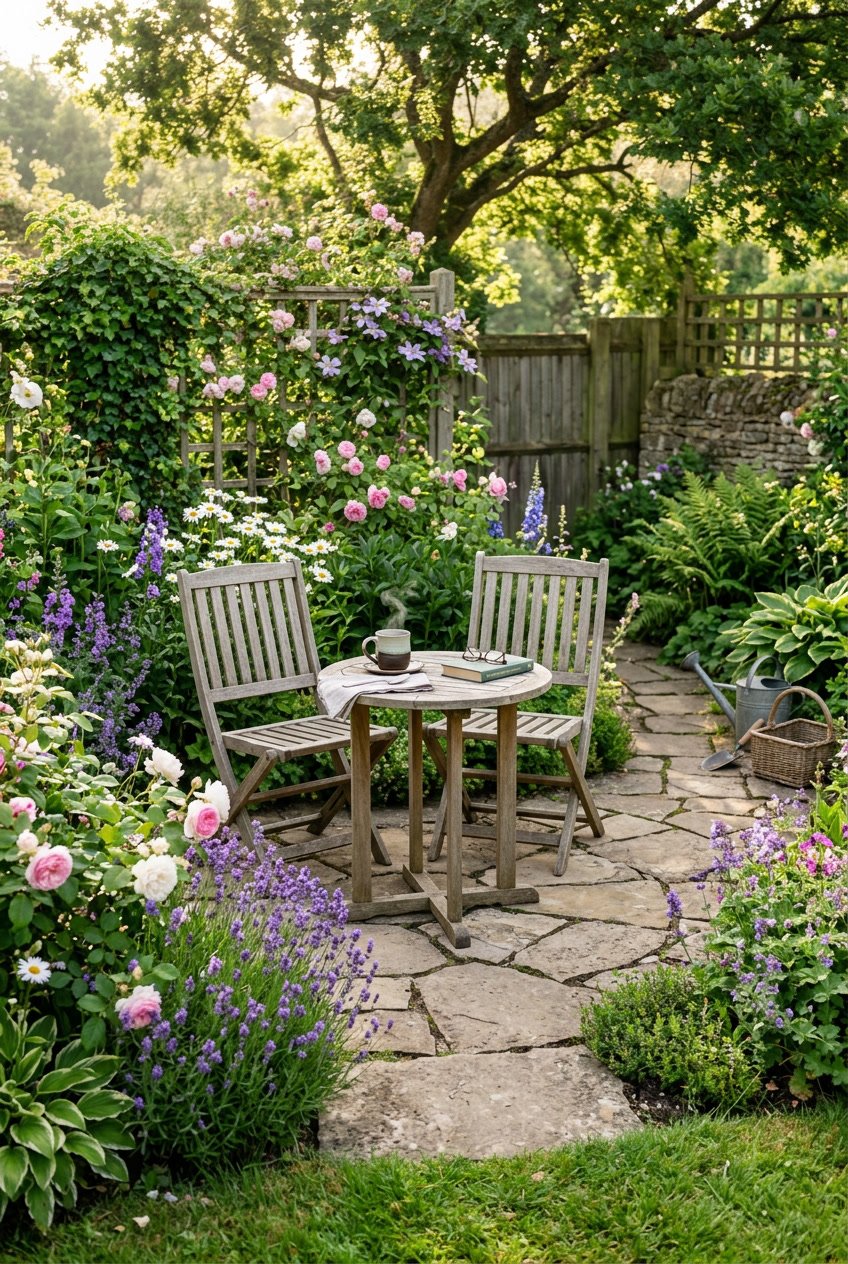
Did you know a tiny patio can feel like your own little hideaway? I love tucking a stone patio into a corner or next to a flowerbed—it’s your private coffee shop, minus the barista.
Pick sturdy, flat stones so your chair doesn’t wobble. Lay them close so moss or creeping thyme can fill the cracks and soften the edges.
All you need is one comfy chair and a small table. Trust me, you won’t miss the extra furniture.
Surround the spot with low shrubs or potted herbs for color and scent. Rounded stones and a simple border help it blend right into the garden.
A birdbath or a lantern? That’s the cherry on top, especially at sunrise or sunset.
Expert Tip From MrPlanter: Start with pavers you can move around. Test where the sun hits and where you like the view. Plain stones are cheaper—save your bold colors for the plants!
14. Add old-fashioned foxglove lanterns to light up your evenings with charm.
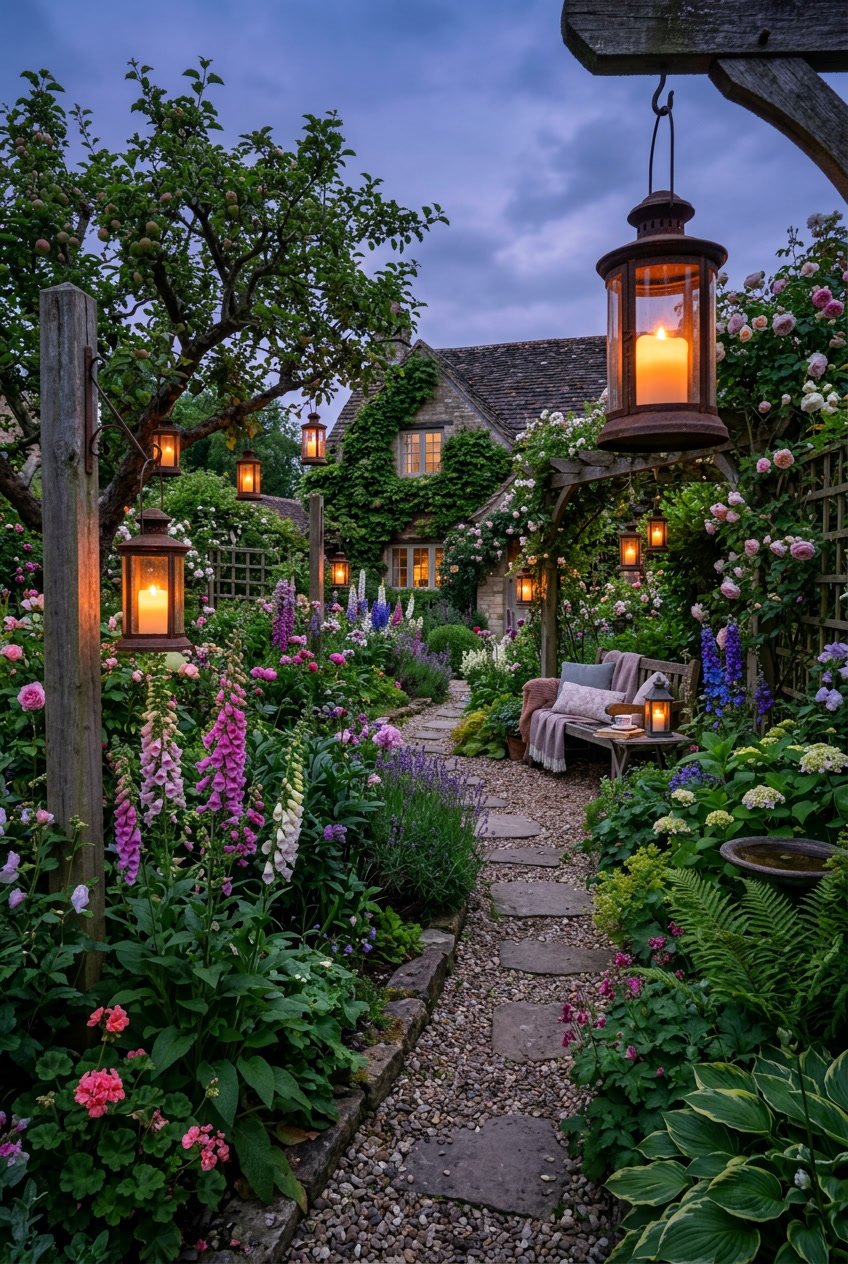
Foxgloves aren’t just pretty faces—they make your porch glow without blinding you. Plant tall spikes of foxglove along your walkway, then sneak in some little LED lanterns or fairy lights among the blooms.
You get that cottage garden vibe, plus soft light for evening strolls. The flowers hide the lights, so it looks like the plants are glowing all on their own.
Go for hardy types that bloom late spring through early summer. Cluster them in odd numbers—trust me, it looks way more natural and cozy.
Expert Tip From MrPlanter: “Put battery LED tea lights in weatherproof holders right among the foxglove stems. Your blooms and wires stay safe, and you only need to swap batteries once a season.”
15. Place a weathered wooden wheel as a focal point—vintage garden bling!
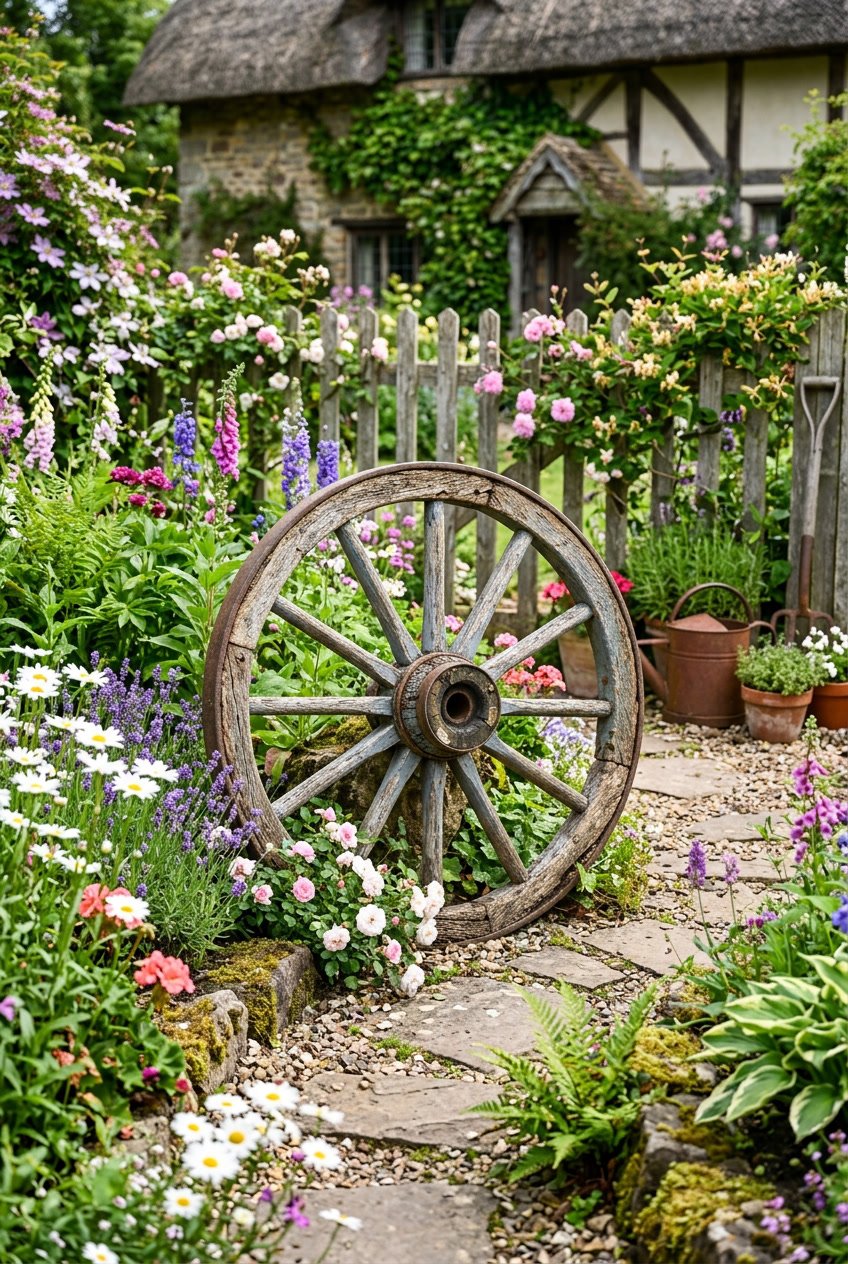
Don’t believe the rumors—a rusty wheel can look awesome, not just forgotten. Set an old wooden wheel by a bed of flowers and your garden suddenly feels like it’s been loved for ages.
Lean it upright against a trellis or lay it flat and tuck low herbs between the spokes for a cool, round herb patch. Paint it a soft color for contrast, or leave it weathered for that true vintage look.
Let climbing roses or morning glories twine through the spokes. You can move it around until you find the perfect spot.
Expert Tip From MrPlanter: Put the wheel where you walk by all the time—why hide it? A quick coat of sealant keeps it from falling apart but keeps that old-school charm.
16. Create layers with mixed-height plants: tall delphiniums, mid-level hydrangeas, and soft ground covers.
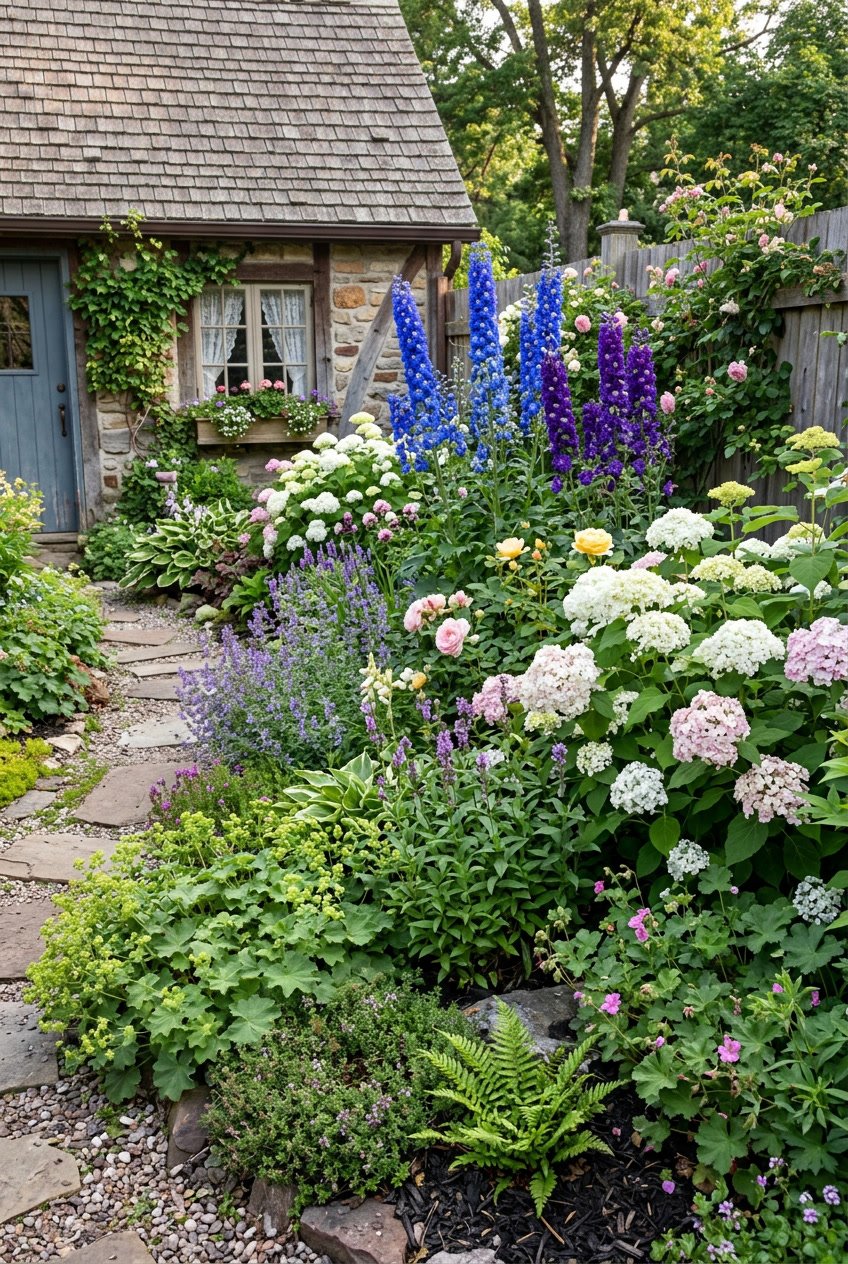
Small yards don’t have to look flat or boring. Tall delphiniums at the back give your garden some drama and vertical style.
Put hydrangeas in front—they fill the middle with big, friendly flowers and soften the view. That way, your eyes glide from tall to short without a jarring drop.
Fill in the gaps with soft ground covers like creeping thyme or low geraniums. They keep weeds down and add a little scent when you brush past.
Plant in little groups of three to five for a natural, not-too-perfect look. Repeat colors here and there so the whole bed feels pulled together.
Leave space for stepping stones or a narrow path so you can check out each layer up close.
Expert Tip From MrPlanter: “Don’t crowd the little guys—space your plants so the tall ones don’t hog all the sunlight. Pick a main color and echo it in every layer for a cozy, unified feel.“
Design Principles for Small Cottage Gardens
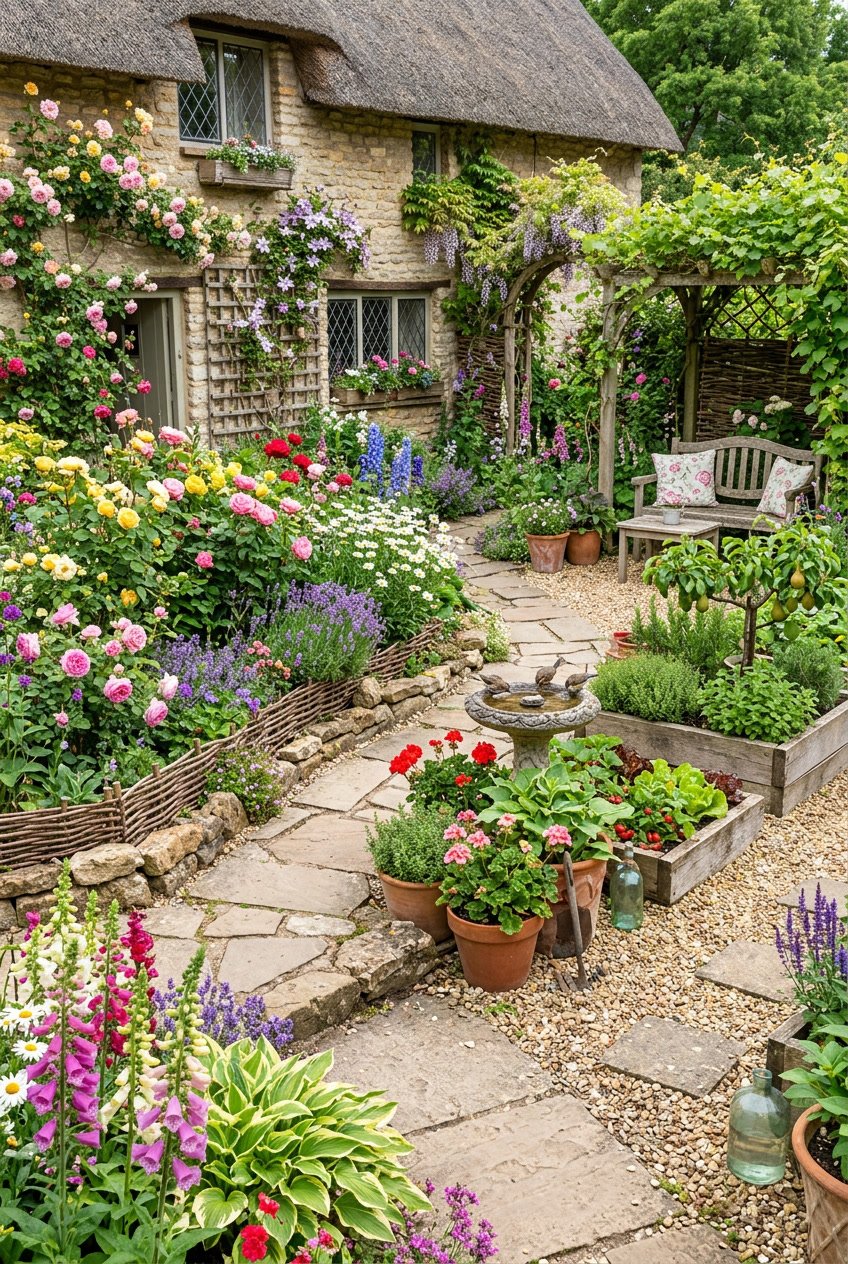
Start with a simple layout and pick plants that do more than just look good. I like flowers that smell great, or herbs I can eat, or even those that attract pollinators.
Think in layers. Winding paths, lots of nooks, and clever features make a small garden feel way bigger and more interesting.
Balancing Charm and Functionality
You really can have romance and practicality. Go for plants that look pretty and offer scent, color, or something edible—think lavender, dwarf fruit trees, or salad greens tucked between the flowers.
Group plants that like the same amount of water. Makes watering easier and saves you time (and your water bill).
Keep your paths just wide enough—18–24 inches is usually enough for one person. Add a bench or fold-up chair for a cozy spot to sit without eating up your space.
Use low fences or edging to keep beds neat and stop the garden from looking messy.
Hide your tools and supplies in a cute box or vertical cabinet. That way, your garden stays pretty and you’re always ready to dig in.
Leveraging Vertical Space
When your yard is tiny, just go up! Trellises, obelisks, or wall planters let you grow climbers and trailers without losing ground space.
Try clematis, climbing roses, or sweet peas for height and scent without making things crowded.
Stack shelves or use a ladder planter for pots—herbs at eye level are a real treat when you’re cooking. Train fruiting vines along a fence for privacy and snacks.
A skinny pergola or arched entry adds height and gives you a shady spot to walk through.
Mix up your container sizes and hang some baskets. Layers add depth and keep your patio or grass free for chairs or a picnic blanket.
Common Mistakes to Avoid in Compact Cottage Spaces
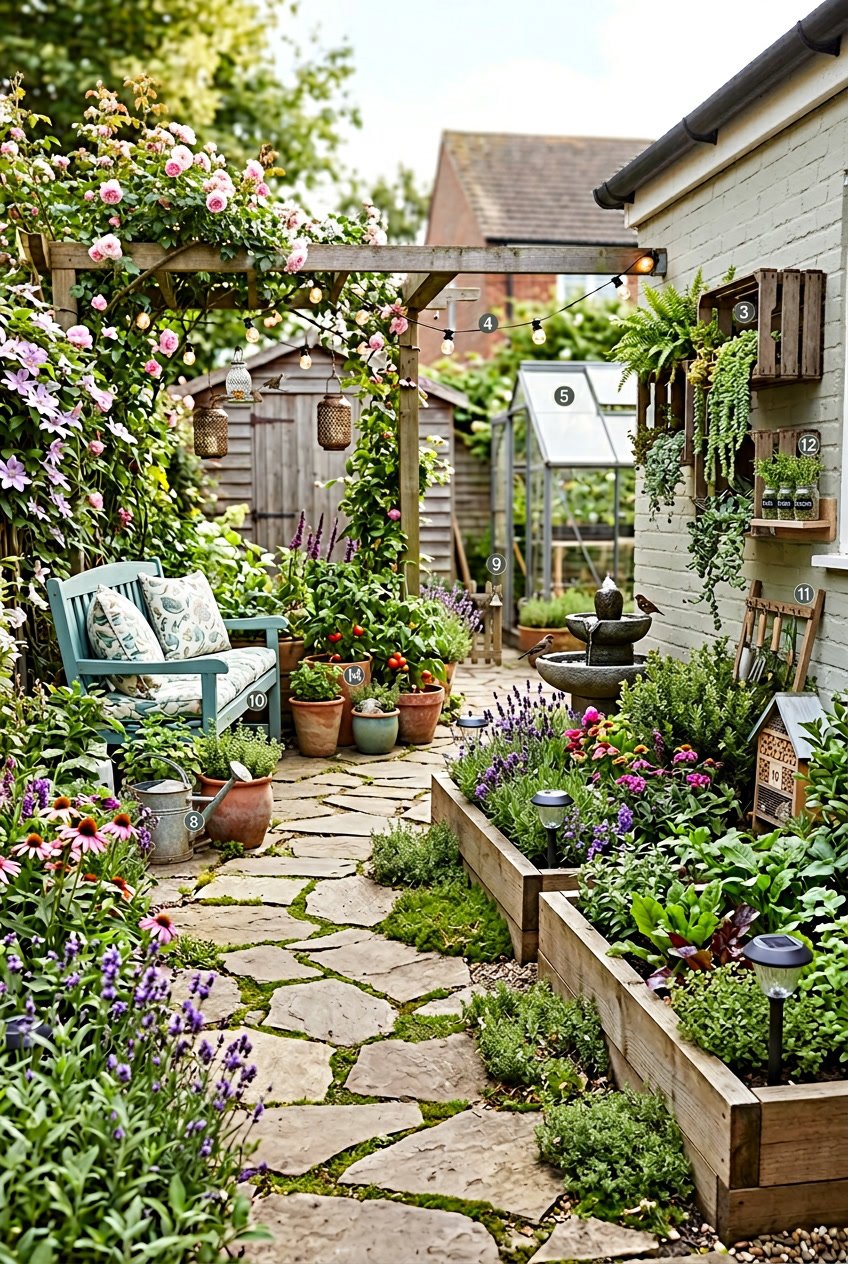
Leave space so you can actually move around and let air flow through. Pick a handful of standout plants and keep a clear path—your garden will feel inviting, not squished.
Overcrowding with Plants
I get it, plant shopping is addictive, but cramming too many together can backfire. Plants need their space for air to flow, or you’ll end up with sickly, floppy stems and more bugs than you bargained for.
Stick to the spacing on the seed packet or plant tag—foxgloves like 18–24 inches, dwarf roses about 24 inches.
Thin out seedlings early and yank extras. Every couple years, dig up and split perennials like daylilies or salvias so they stay healthy and you get more blooms.
Use containers for overflow—you can shuffle them around or swap them out anytime.
Layer your beds: groundcovers in front, medium plants in the middle, tall ones at the back. This keeps the view open and gives every plant its moment in the sun.
Jot down a simple planting map or notes so you remember what worked (or didn’t) next season.
Ignoring Walkways
A good path can really save your plants and make your garden feel welcoming. If you don’t plan one, you end up tiptoeing around, squishing roots, and feeling like you’re playing hopscotch.
Give yourself at least 18–24 inches for a main walkway. For smaller side paths, 12–18 inches usually does the trick. Trust me, you’ll want to reach your tomatoes without doing a weird dance.
I like gravel, stepping stones, or even some compacted mulch for small yards. They’re tough and don’t turn into a muddy mess after rain.
Set stepping stones by pots or benches so you’re not stomping on your prettiest plants. Edging or a low-growing herb like thyme can help mark the path—plus, it smells amazing when you brush by.
Don’t forget about getting to your compost bin, hose, or tools. If you have to move a jungle of plants every time you grab a shovel, you’ll end up grumbling instead of gardening.
A clear, easy path saves you time and keeps your garden looking relaxed, not wild and tangled. Isn’t that what we’re all after?