You can totally turn your backyard into a berry paradise, even if you don’t have a ton of space or some fancy gardening gear.
Here are 17 simple, fun ways to grow more strawberries—whether you want to stack ‘em up in towers or spread them out in raised beds—so you can snack on fresh berries all season.
Honestly, this is a mashup of clever tricks and easy fixes that work for tiny patios and big yards.
You’ll find ideas to help protect your plants, save water, and even make your berries taste better.
You’ll see setups that don’t take much effort and a couple of playful projects you might want to try just for the fun of it.
1. Build DIY raised beds for better drainage and giant juicy strawberries.
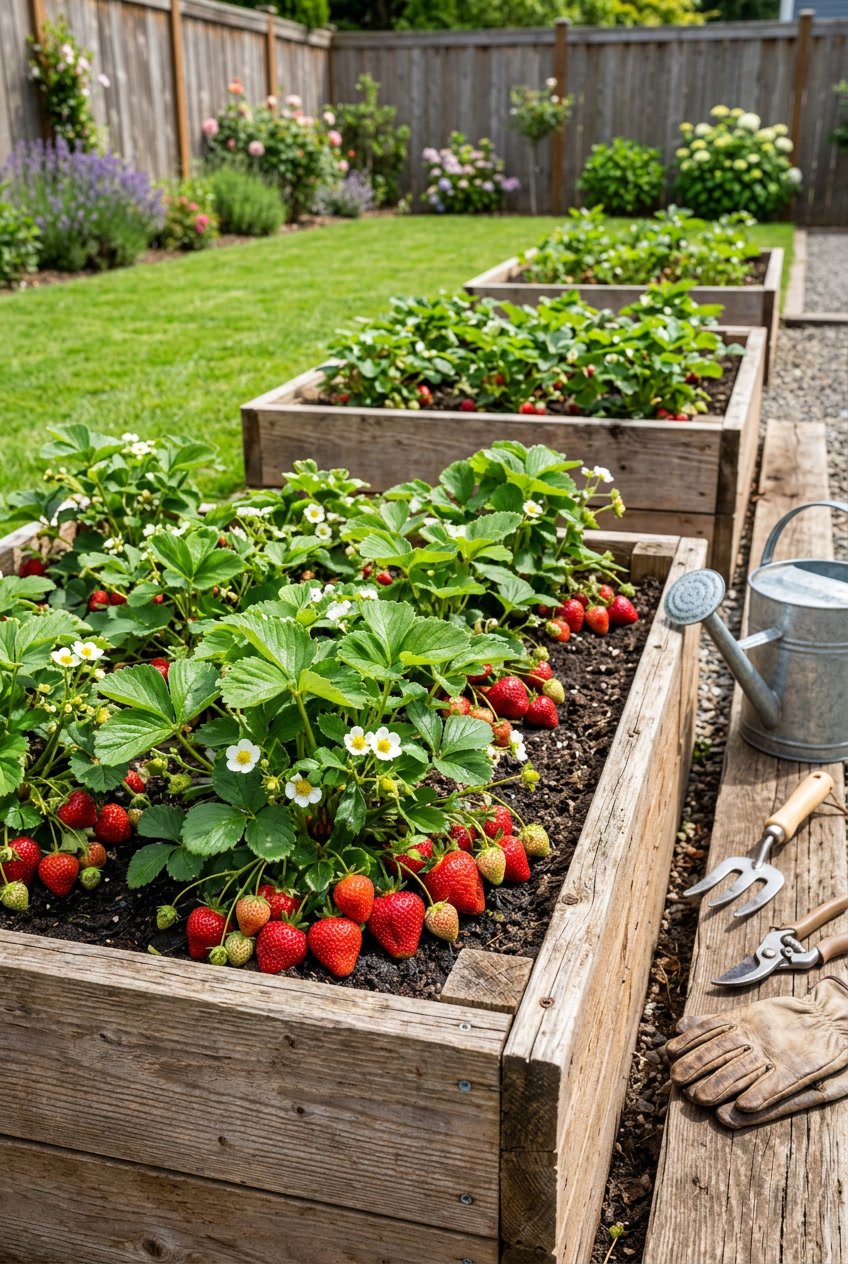
Here’s a weird truth: strawberries hate wet, soggy soil. If their roots stay wet, the fruit gets ruined fast.
Raised beds lift your soil up, so water drains away and roots can breathe. You’ll notice your plants get bigger and healthier, especially since the soil warms up faster in spring.
Raised beds also make weeding and picking way easier, so you’ll probably stick with your patch longer. Use rot-resistant wood or recycled stuff, and keep beds 6–12 inches high for runners, or 12–18 inches if you want deeper roots.
Fill them with a mix of compost, topsoil, and a little sand to help drainage. Place beds in full sun and leave enough space to walk between them.
You’ll get juicier berries and won’t have to bend over as much.
Expert Tip From MrPlanter: Plant strawberries in loose, well-draining soil and add compost each year. Water deeply but less often so those roots grow strong.
2. Try vertical strawberry towers to save space and impress neighbors.
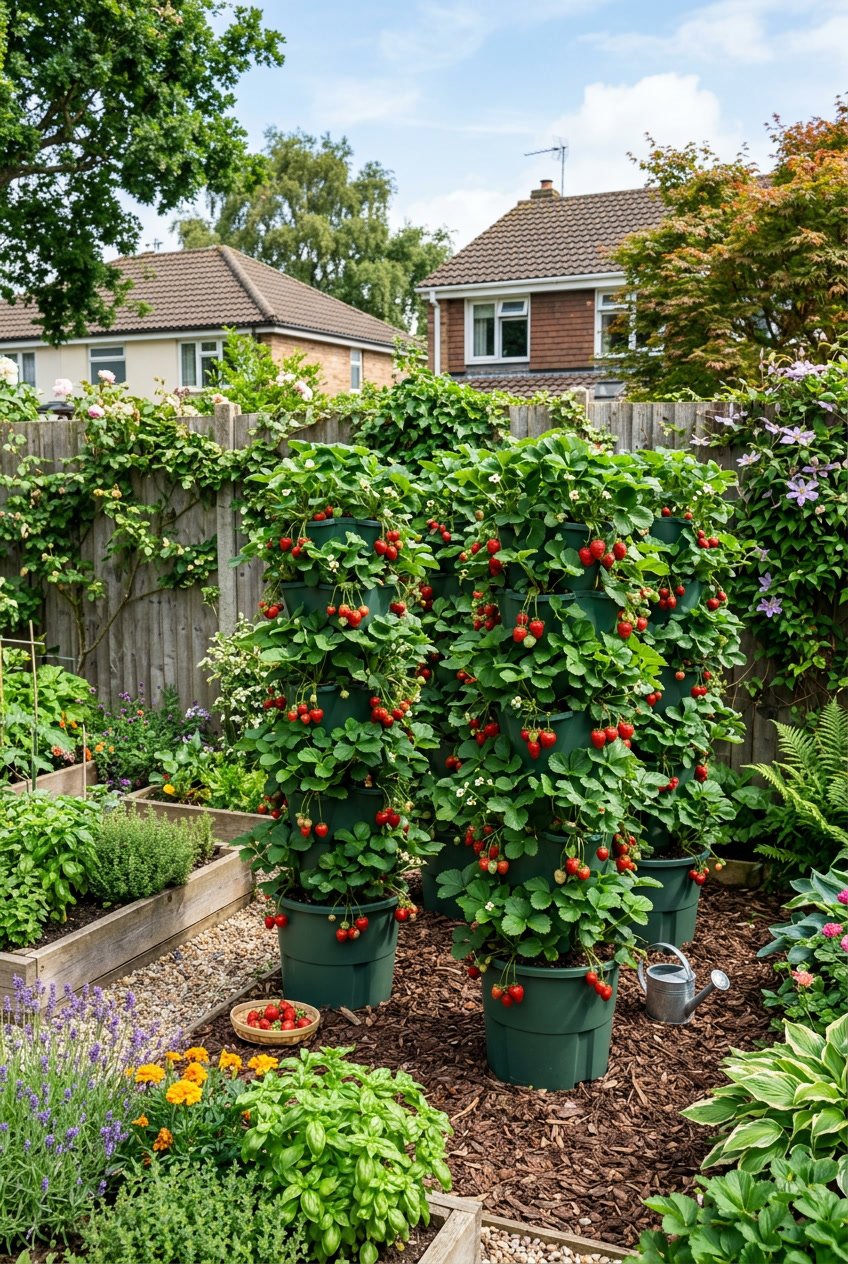
Guess what? You don’t need a giant yard to grow a ton of strawberries. Stacked towers let you fit a bunch of plants into a tiny spot—perfect for patios, balconies, or even that weird side yard.
You can build towers from recycled pots, PVC-free planters, or even tiered wood shelves. These towers keep fruit off the ground, so you’ll deal with fewer pests and picking is a breeze for kids (or adults who don’t want to squat).
Watering matters more in towers, so add a little reservoir or water from the top slowly. Plant everbearing varieties for a longer harvest, and space runners so each plant gets enough light and air.
Expert Tip From MrPlanter: “Check those drainage holes before planting and water gently so you don’t wash out the soil. Give the tower a spin every few weeks so all sides get sun.”
3. Plant strawberries in gutter strips—because who knew gutters could be so berry-friendly?
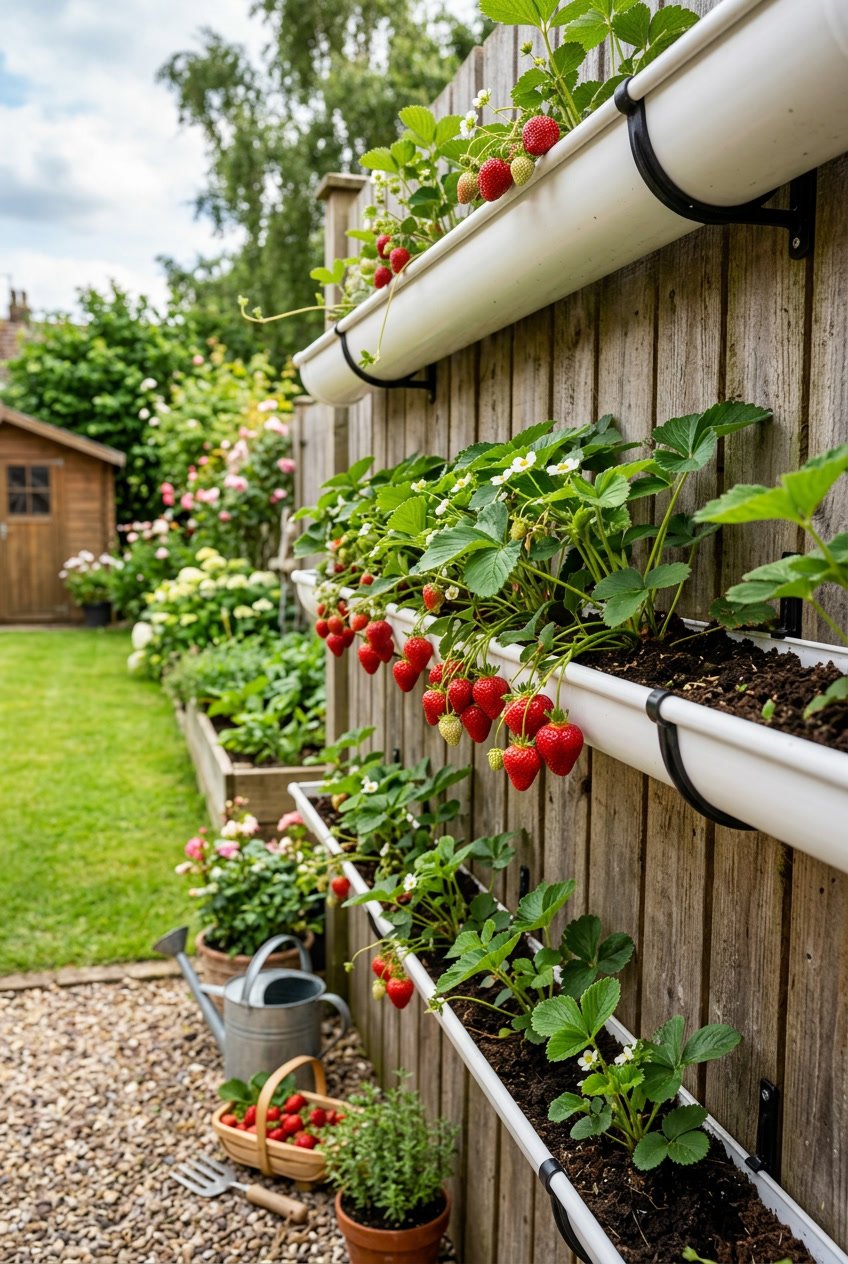
Here’s something wild: you can grow a whole row of strawberries without ever bending down. Gutters lift your plants up to waist height and keep fruit clean.
Gutters save space and you can stick them on fences, decks, or walls. Add holes for drainage and you’ll cut down on slugs and soil bugs.
Use potting mix with compost and leave about 6–8 inches between plants. Water from the top and check drainage often so the roots don’t get soggy.
You’ll need brackets or chains to hang them, and end caps to keep soil in. Old gutters or new PVC both work, and bare-root plants fit right in.
Expert Tip From MrPlanter: Start with one short gutter to test light and watering. Move or add more once you see how fast they spread.
4. Use classic ceramic strawberry pots with holes all around for an Instagram-worthy setup.
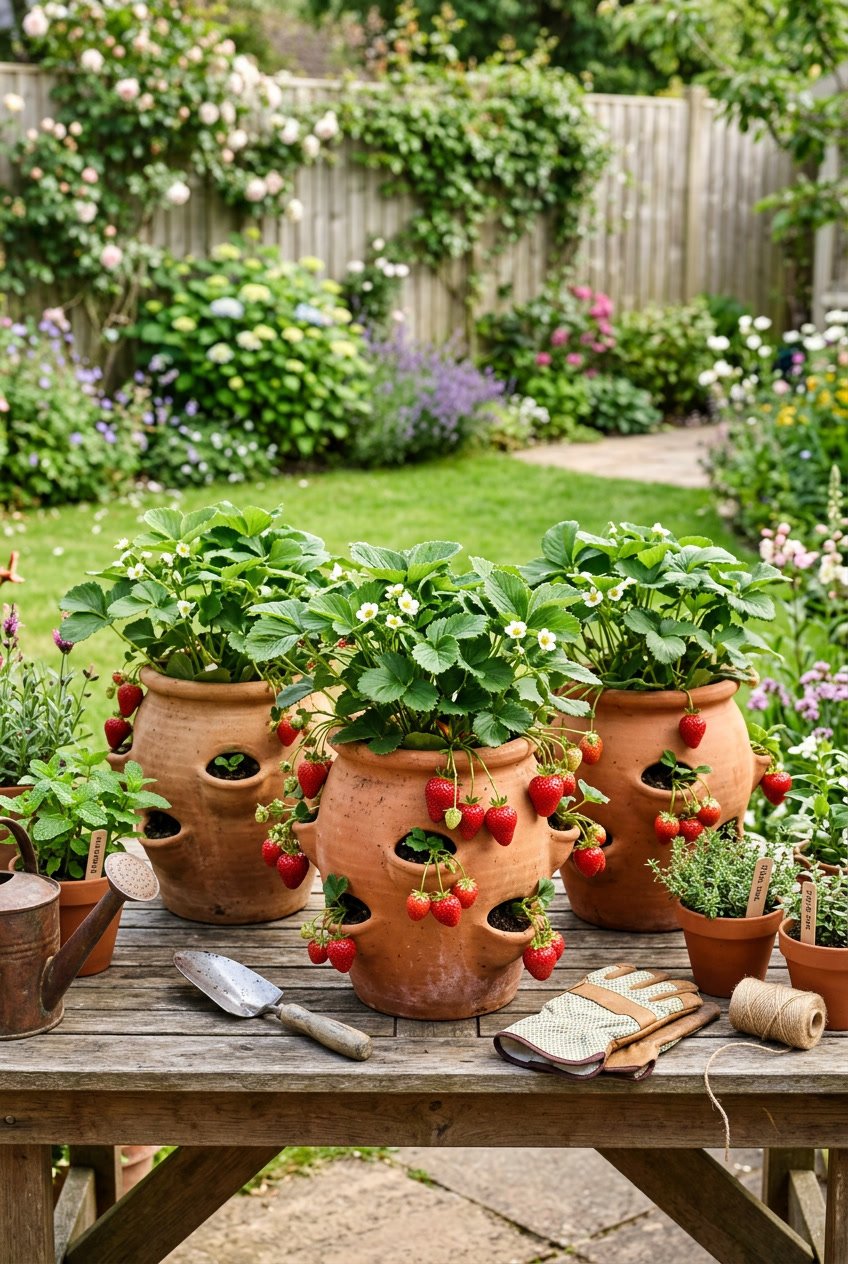
Let’s clear something up: ceramic strawberry pots aren’t just for looks—they actually help your plants. You can plant one in the top and tuck others into the side holes, so berries spill out all over.
These pots are perfect if you want a neat, compact setup for your porch or patio. The clay keeps soil cool and helps drain extra water, which strawberries definitely appreciate.
Pick a pot with lots of holes and good drainage at the bottom. Fill each pocket with loose potting mix, tuck in one plant per hole, and water gently so the roots stay put.
Rotate the pot every now and then so every side gets some sun, and keep an eye out for bugs. You’ll end up with a cute cluster of fruit and leaves, and it’s honestly easier than it looks.
Expert Tip From MrPlanter: Go for a glazed ceramic pot if you can for weather resistance, and use a balanced potting mix so you don’t drown the roots. Water in the morning and feed lightly every few weeks for steady berries.
5. Mix a wild strawberry patch with your garden for a burst of unexpected sweetness.
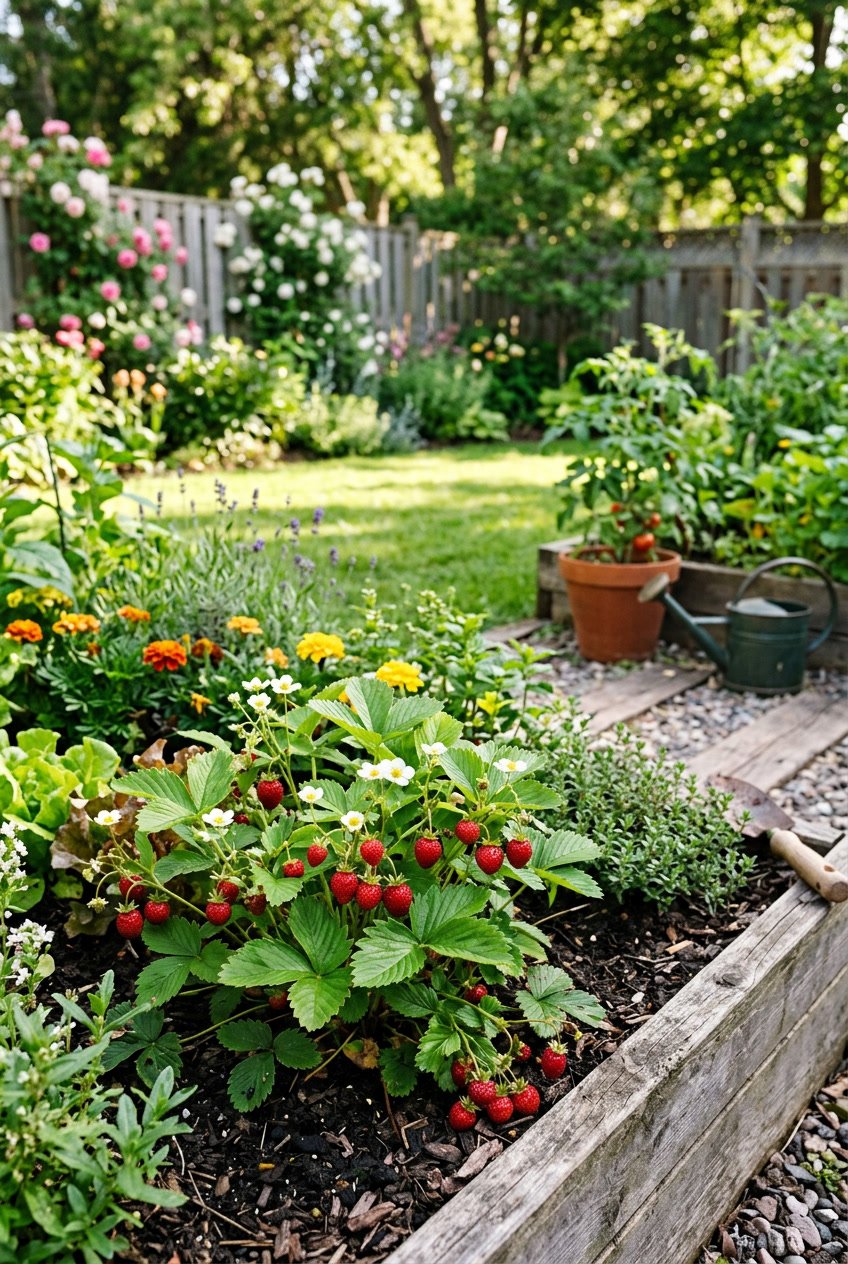
Did you know wild strawberries are tiny but taste amazing? They’ll often show up in spots you didn’t plan, but you can totally plant a wild patch on purpose.
Tuck them into shady edges, under shrubs, or along a stone path for surprise snacks while you walk the yard. Wild strawberries spread by runners, so let them fill gaps between plants or edge your beds for a sweet, low-maintenance border.
These little guys like well-drained soil and a bit of shade in hot spots. They’ll bring in pollinators and give you small, frequent harvests—no fuss required.
Expert Tip From MrPlanter: Plant wild strawberries near herbs or low perennials to keep things tidy and productive. Check their runners each season and thin them out if they start crowding other plants.
6. Create a ‘strawberry wall’ using wooden pallet planters for that rustic vibe.
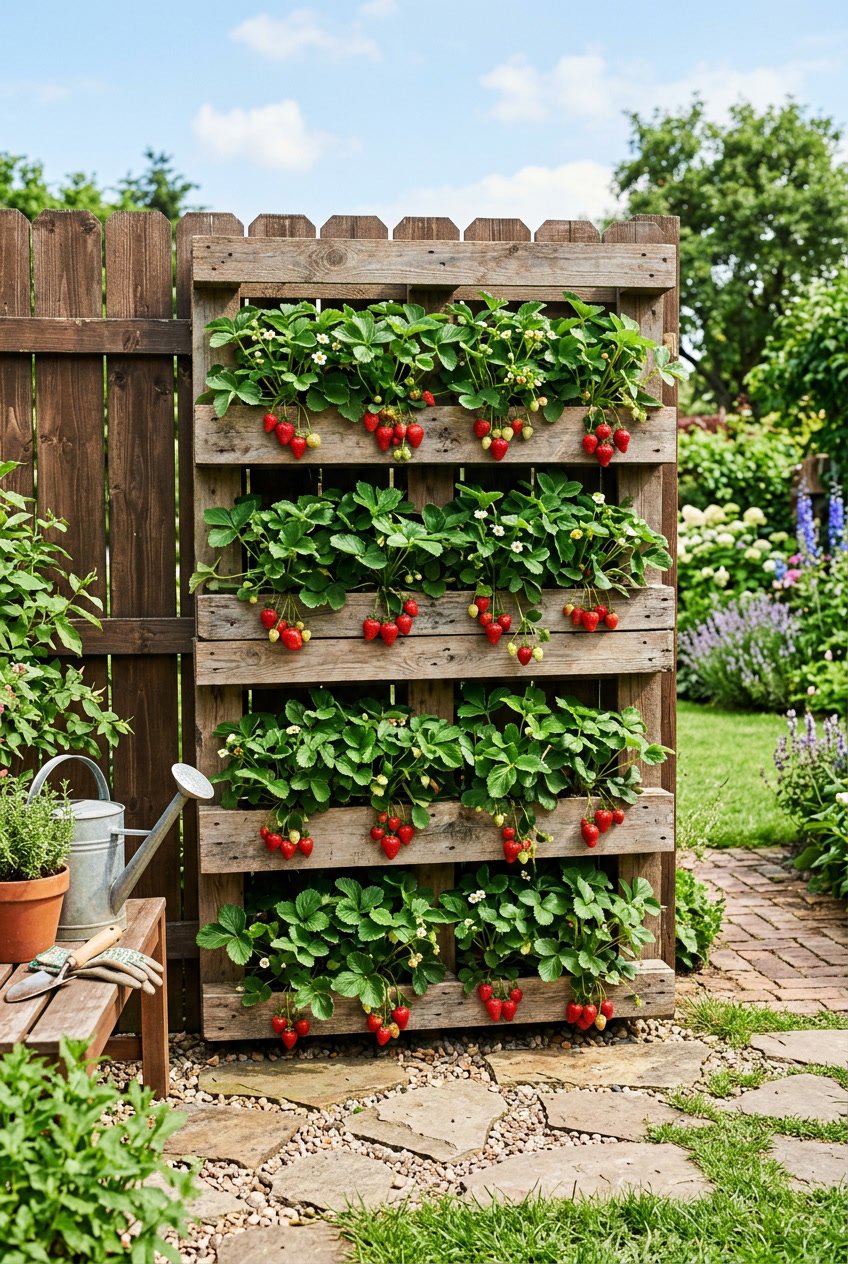
Here’s a cool trick: a vertical pallet planter can fit dozens of strawberries in the same footprint as one raised bed. Turn an old pallet into a living wall that saves space and looks charming.
Line it with landscape fabric or plastic to hold soil and protect the wood. Mount the pallet on a sunny wall or fence, angled just a bit for drainage.
Fill the pockets with good potting mix and plant bare-root or potted strawberries every few inches. Water from the top so moisture trickles down, and check the bottom for soggy spots.
Pick untreated pallets or seal them if you need to avoid chemicals. Swap out soil every couple years and rotate plants to keep your harvests coming.
Expert Tip From MrPlanter: Look for a pallet with wide boards for bigger pockets, and always check for weird chemicals before planting. Water regularly but don’t drown those roots.
7. Grow strawberries in hanging baskets where they dangle like little red jewels.
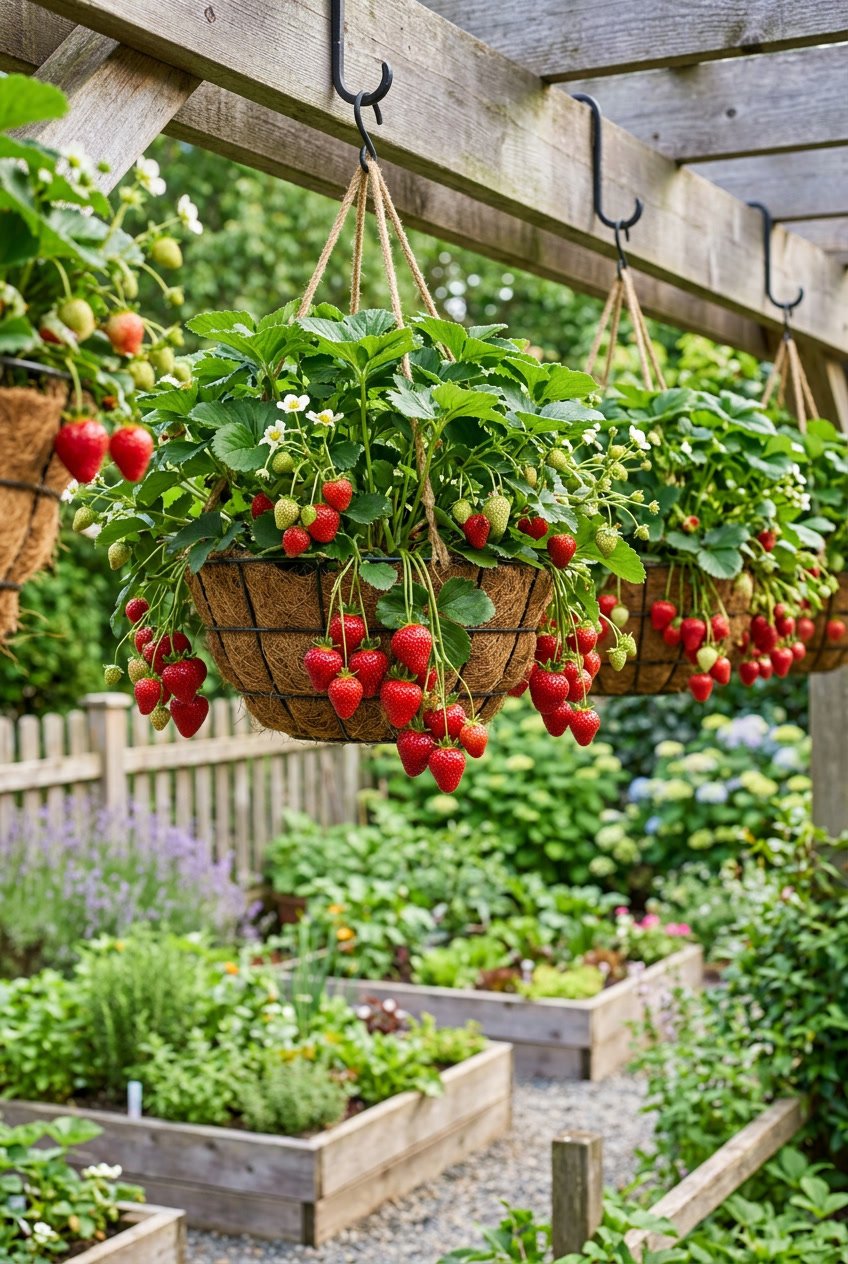
Here’s the thing: strawberries don’t need a huge garden to taste great. Hang a basket on your porch and pick berries right at shoulder height—no bending, no fuss.
Pick a sturdy basket with good drainage and fill it with a light, slightly acidic potting mix. Plant 3–5 healthy starts or bare-root plants so leaves spill over and berries hang down.
Set the basket somewhere with 6–8 hours of sun, and water often because hanging baskets dry out fast. Feed with a balanced fertilizer during the season to keep flowers and fruit coming.
Rotate baskets for even sun and keep an eye out for slugs and birds. You’ll end up with a sweet, living decoration that actually pays you in berries.
Expert Tip From MrPlanter: “Pick berries when they’re fully red for the best flavor. Water hanging baskets every day in hot weather so they don’t get stressed.“
8. Incorporate companion plants like basil to keep bugs away and flavor your garden.
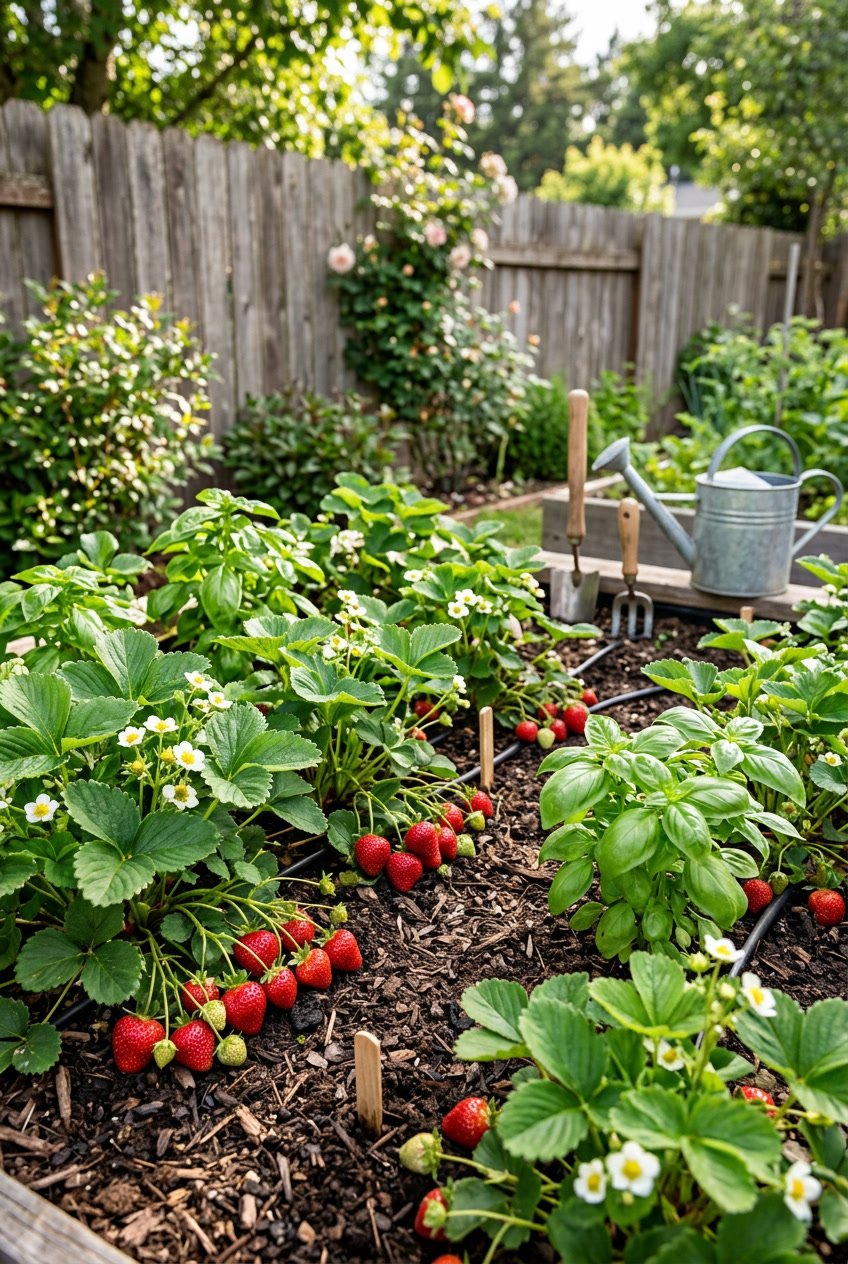
Here’s something fun: planting basil near strawberries can help cut down on bugs and make your patch smell amazing. You’ll see fewer flies and some beetles, and your garden will just smell fresher when you brush by.
Basil and other herbs like mint or chives make great neighbors. They bring in helpful insects and can hide strawberry scents from pests.
Keep basil in small clumps around beds or pots between plants. That way you can grab leaves for cooking without messing up the roots.
Plant taller friends like tomatoes or marigolds along the edge for a bit of shade and extra bug protection. Move things around each year to avoid soil diseases building up.
Expert Tip From MrPlanter: Plant basil in small clusters near your strawberries but don’t crowd them. Pick leaves often so the plants stay healthy and pests stay confused.
9. Lay straw mulch around plants—no, not for breakfast, but to keep berries clean and happy.
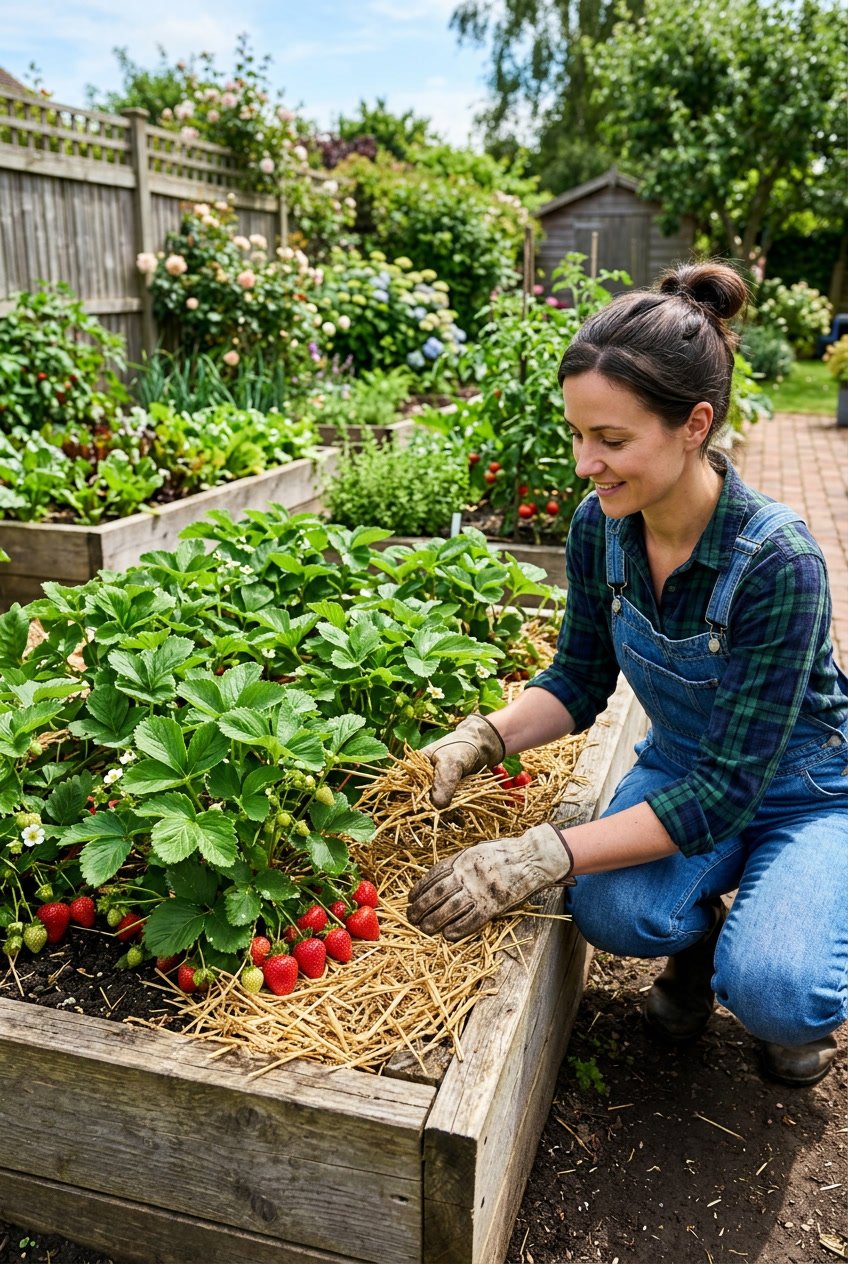
Let’s be real: muddy, bruised strawberries after rain are the worst. Spread a 2–3 inch layer of straw around your plants to keep berries off the dirt.
It stops splashing, keeps fruit clean, and helps prevent rot. Straw also cools the soil and holds moisture so you don’t have to water as much.
Pull weeds by hand before you lay the straw, then spread it loosely so air and water can still reach the roots. Don’t pile straw against the crowns—it can trap moisture and rot the plant base.
Top up the straw each season to keep it looking good and working well.
Expert Tip From MrPlanter: Use clean straw, not hay, so you don’t accidentally plant a field of weeds. Swap out the mulch in spring so new berries have a fresh, dry bed.
10. Use self-watering containers so your strawberries stay hydrated, and your thumbs stay lazy.
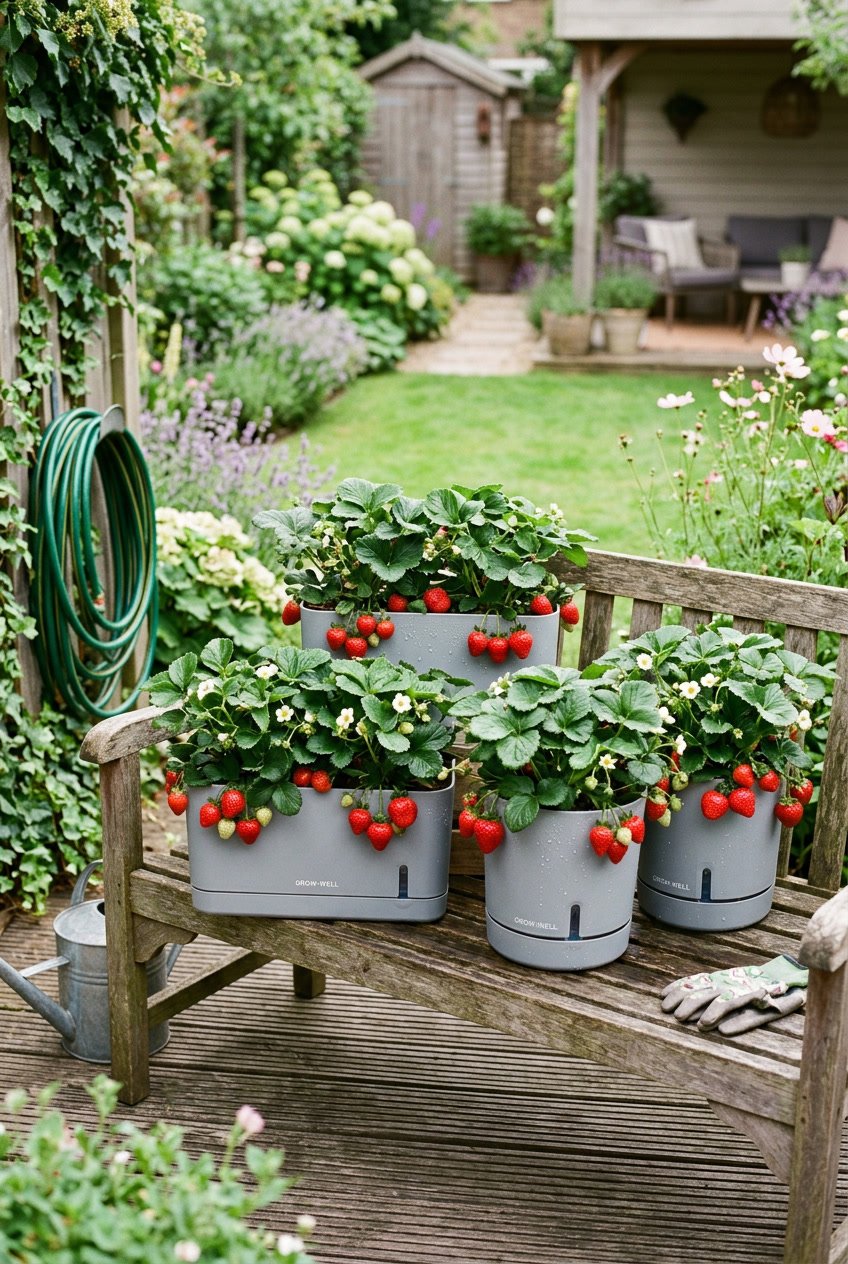
Let’s be honest: forgetting to water is a top strawberry killer. Self-watering containers keep roots moist, so your plants don’t dry out when life gets busy.
These pots have a reservoir under the soil and a wick or tube that pulls water up. That means you water less often and your leaves stay green instead of droopy.
You’ll still need to top up the reservoir and check for bugs. Pick light-colored plastic or a recycled bottle design to keep roots cool and save space on your balcony.
Expert Tip From MrPlanter: “Check the reservoir every week and refill before it’s totally empty. A simple mulch on top will slow down evaporation and keep your berries extra juicy.”
11. Build a low wooden frame and cover it with bird netting to save your harvest from hungry neighbors—feathered or otherwise.
Raise your hand if you’ve watched berries disappear faster than you can pick them. Yeah, me too.
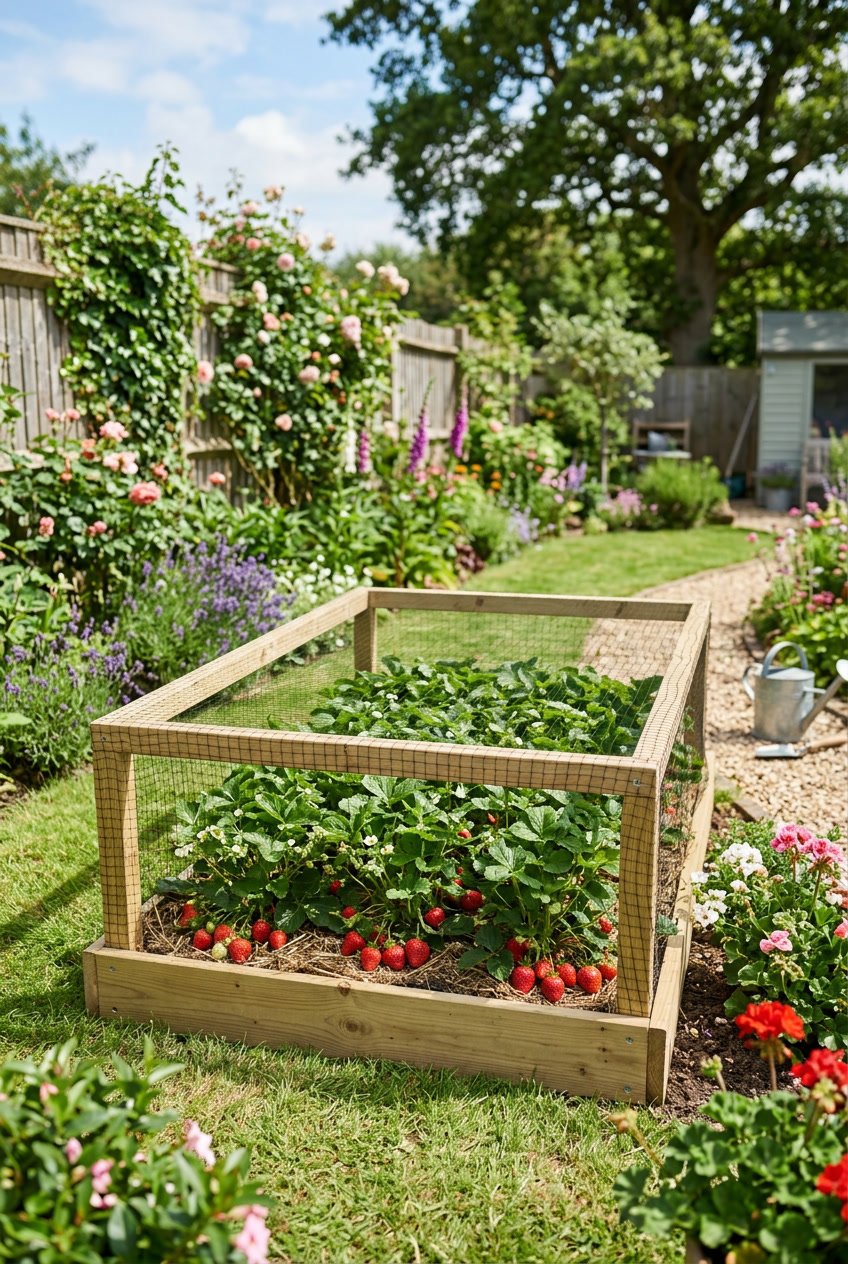
A low wooden frame keeps strawberries easy to reach and neat. Nail or screw simple 1x2s into a rectangle that sits just above the plants.
That low height protects fruit without blocking the sun. Drape bird netting over the frame and tuck the edges under soil or edge boards.
You can add a hinged side for quick picking. The netting keeps birds and little critters out but lets air and water through.
Use rot-resistant wood or give the frame a coat of paint so it lasts longer. Leave a gap for pollinators early in the season, then close it up when fruit starts to ripen.
Expert Tip From MrPlanter: Check your netting every week for holes and patch them up right away. Even a tiny rip can turn into a big problem if you ignore it.
12. Plant everbearing strawberry varieties to enjoy berries from spring right through fall, like a berry marathon.
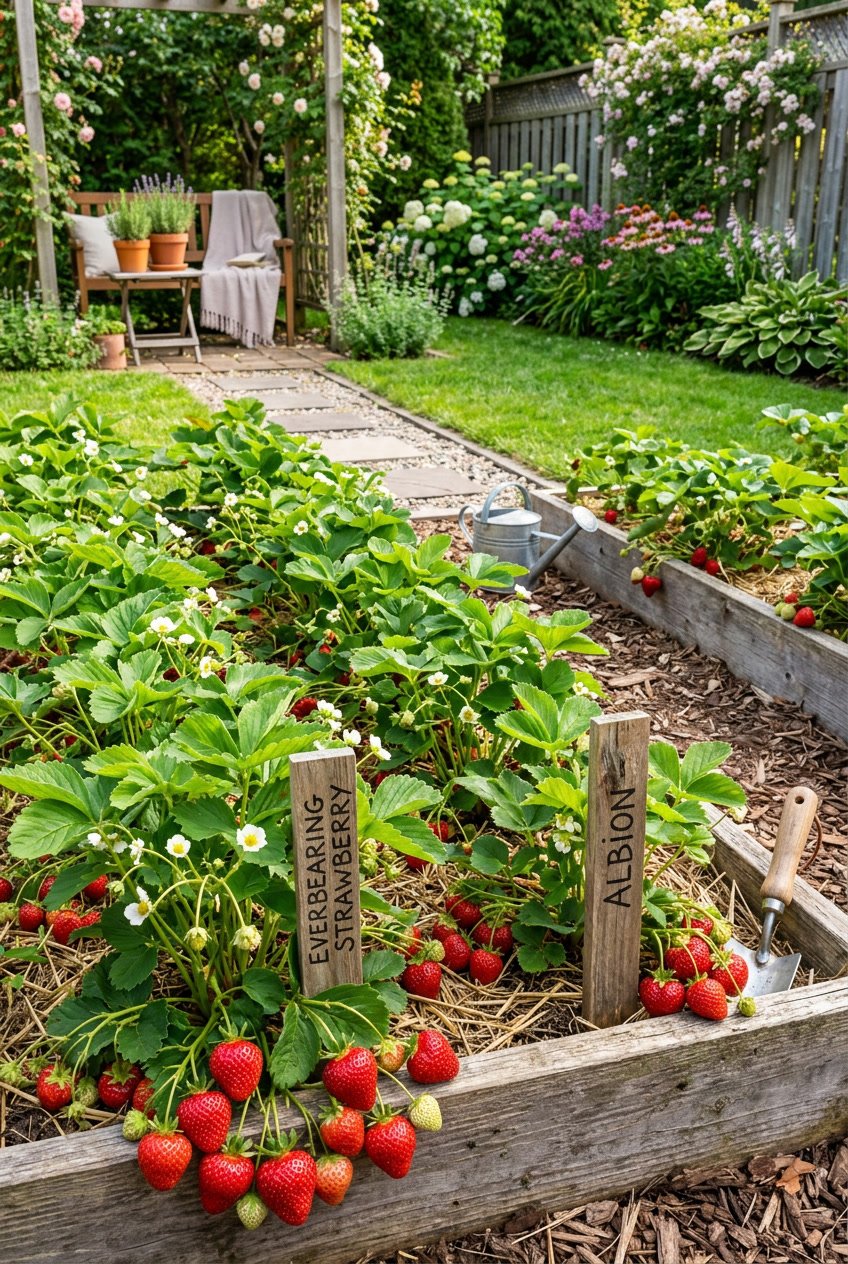
Here’s something wild: some strawberry plants just keep cranking out fruit from early summer all the way into fall. You get to enjoy the berry party for months, not just a week.
Grab everbearing or day-neutral types like Albion or Charlotte if you want a steady stream of berries instead of one big glut. When the weather’s cool enough, these champs keep setting flowers and fruit, so you’ll pick in little bursts all season.
Set your plants about a foot apart and make sure they get full sun. Toss on some mulch to keep the berries clean and those sneaky weeds at bay.
Every few years, pick a new spot for your strawberries and pull out the old crowns after three seasons. That way, you keep your berry haul strong.
You’ll have fresh berries for salads, snacks, or just showing off to friends (who will totally want some).
Expert Tip From MrPlanter: Mix early, mid, and late types to stretch out your harvest. Feed them a little each month and water evenly—your tastebuds will thank you.
13. Try growing alpine strawberries for tiny, sweet surprises that don’t need much space.
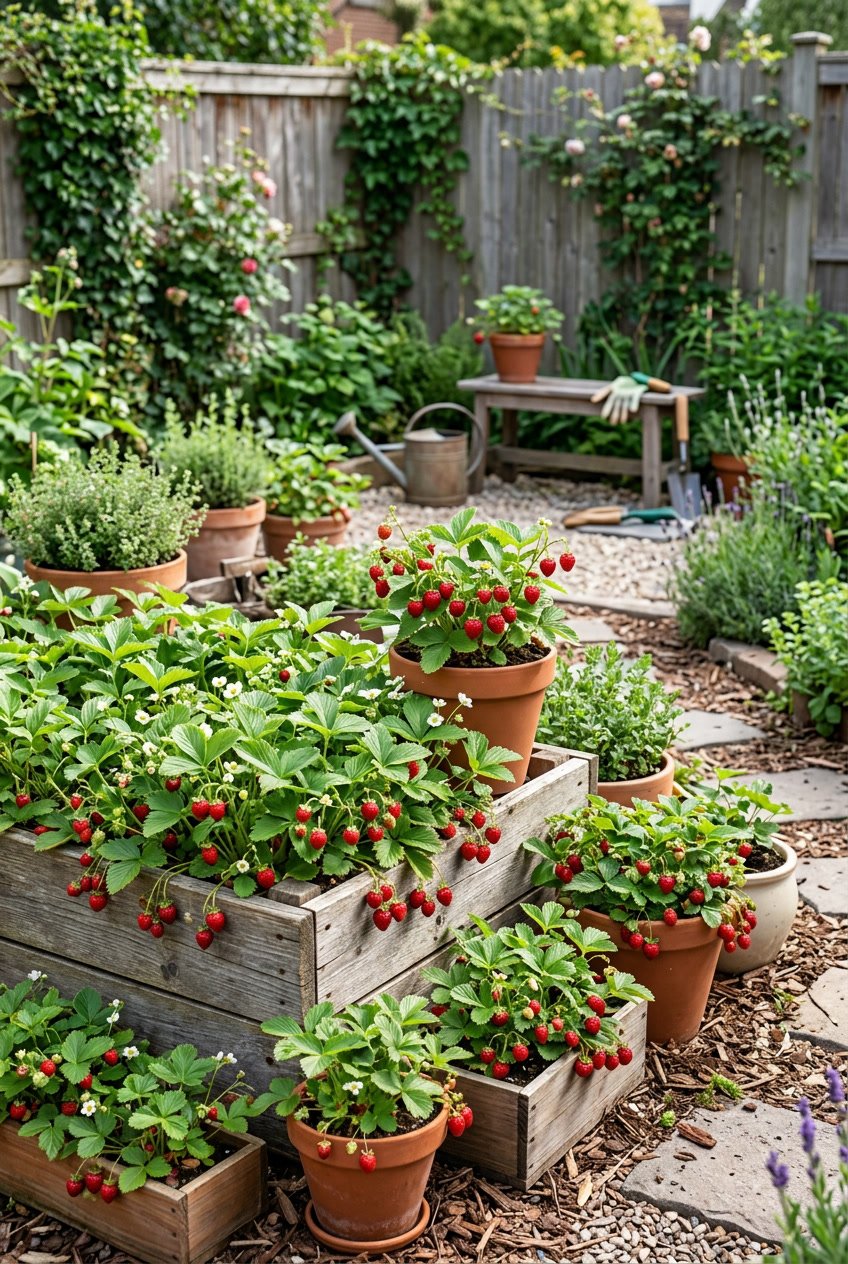
Tiny but mighty—alpine strawberries don’t play around with flavor, and they’ll keep going all summer.
You can squeeze them into a window box, hang them in a basket, or sneak them along a garden path.
Since they don’t send out runners, they stay tidy and don’t try to take over your yard.
You’ll get little red berries that smell amazing and taste even better, perfect for eating right off the plant.
Start with seeds or buy baby plants and pop them into rich, well-draining soil.
Give them some sun, steady water, and a bit of compost each year—they’ll pay you back in sweet bites.
Expert Tip From MrPlanter: “Stick alpine strawberries in containers or tuck them between your herbs to save space. They’re easy to handle and will treat you to fragrant berries all season.”
14. Add a drip irrigation system, because your strawberries deserve spa-level hydration.
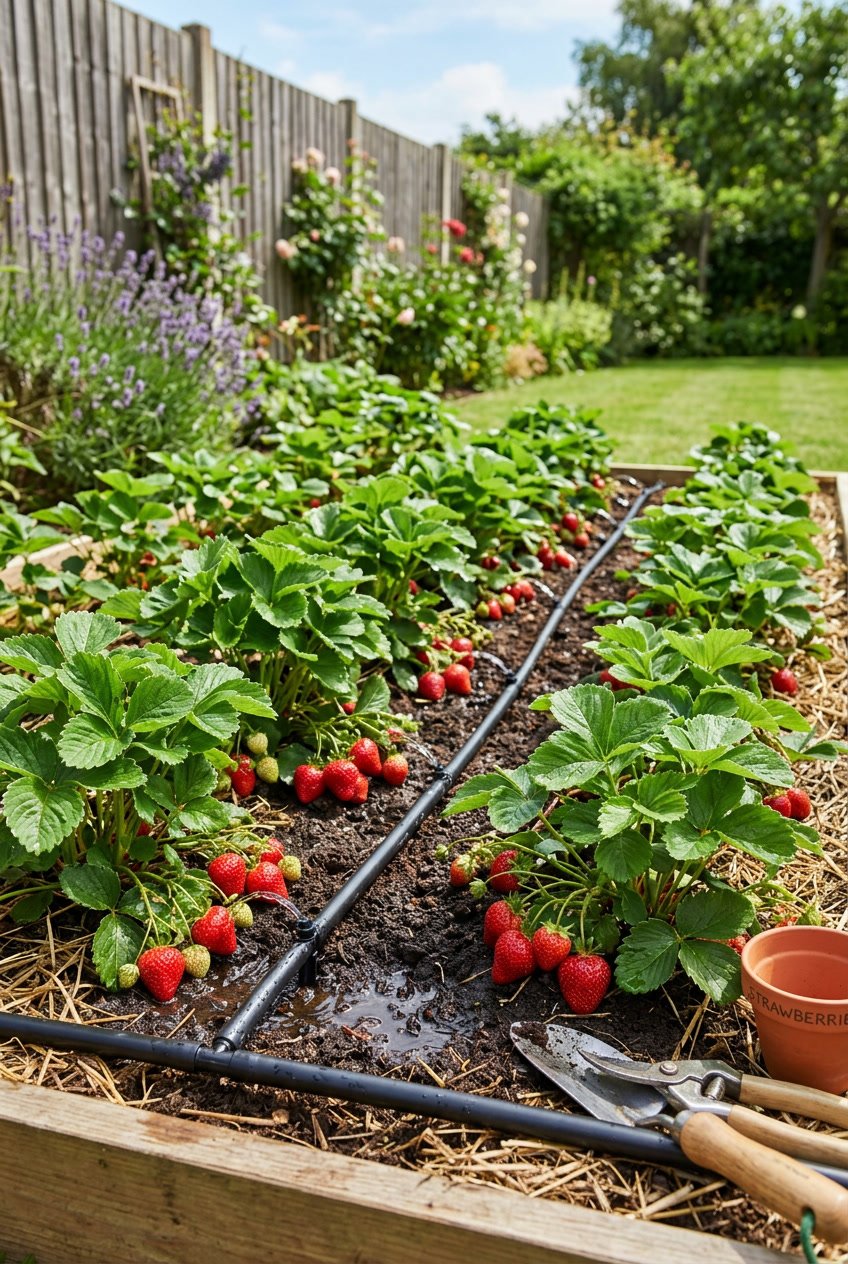
Here’s the scoop: strawberries need steady moisture when they’re making fruit if you want them big and sweet.
A drip system sends water straight to the roots, so you’re not wasting water or soaking the leaves. Plants stay happier, and you dodge a lot of leaf diseases.
Set up drip tape, soaker hoses, or little emitters on a timer to match your favorite watering time. You can add a timer and filter—let it run while you’re off doing literally anything else.
Try it out for a week and watch the soil. Tweak the timing if you need to. You’ll use less water and pick better fruit, too.
Expert Tip From MrPlanter: “Put emitters close to the crown and check pressure every month. If leaves look sad, switch to short daily cycles instead of one long soak.“
15. Use recycled wooden crates stacked to make a strawberry tower—eco-friendly and fab!
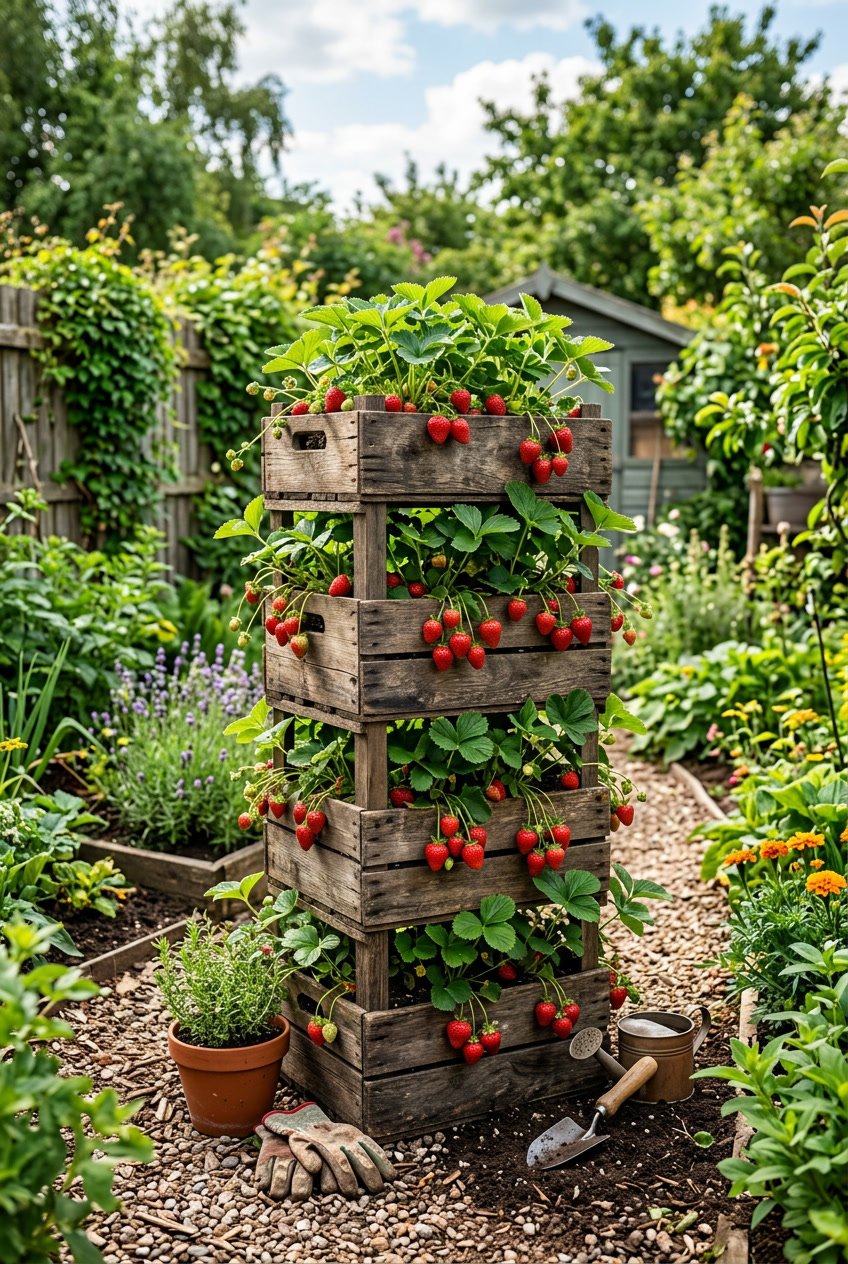
Did you know you can stack old wooden crates and grow a whole bunch of strawberries in a tiny spot?
You’ll get more fruit, great drainage, and a rustic look that’s actually cute.
Pick sturdy crates with gaps so water can run out. Line them with landscape fabric or coconut coir—keeps the soil in, lets water out.
Stack them on a flat spot and use a stake or some screws if they feel wobbly.
Plant strawberries along the edges so their crowns get sun and runners can hang down.
Water from the top and let the extra drip through—easy, and the roots stay happy.
Expert Tip From MrPlanter: “Go for untreated wood so your berries stay safe. Swap out old fabric each year to keep the soil fresh and your plants smiling.”
16. Incorporate DIY cold frames to protect young plants from sneaky late frosts, because strawberries don’t like cold shoulders.
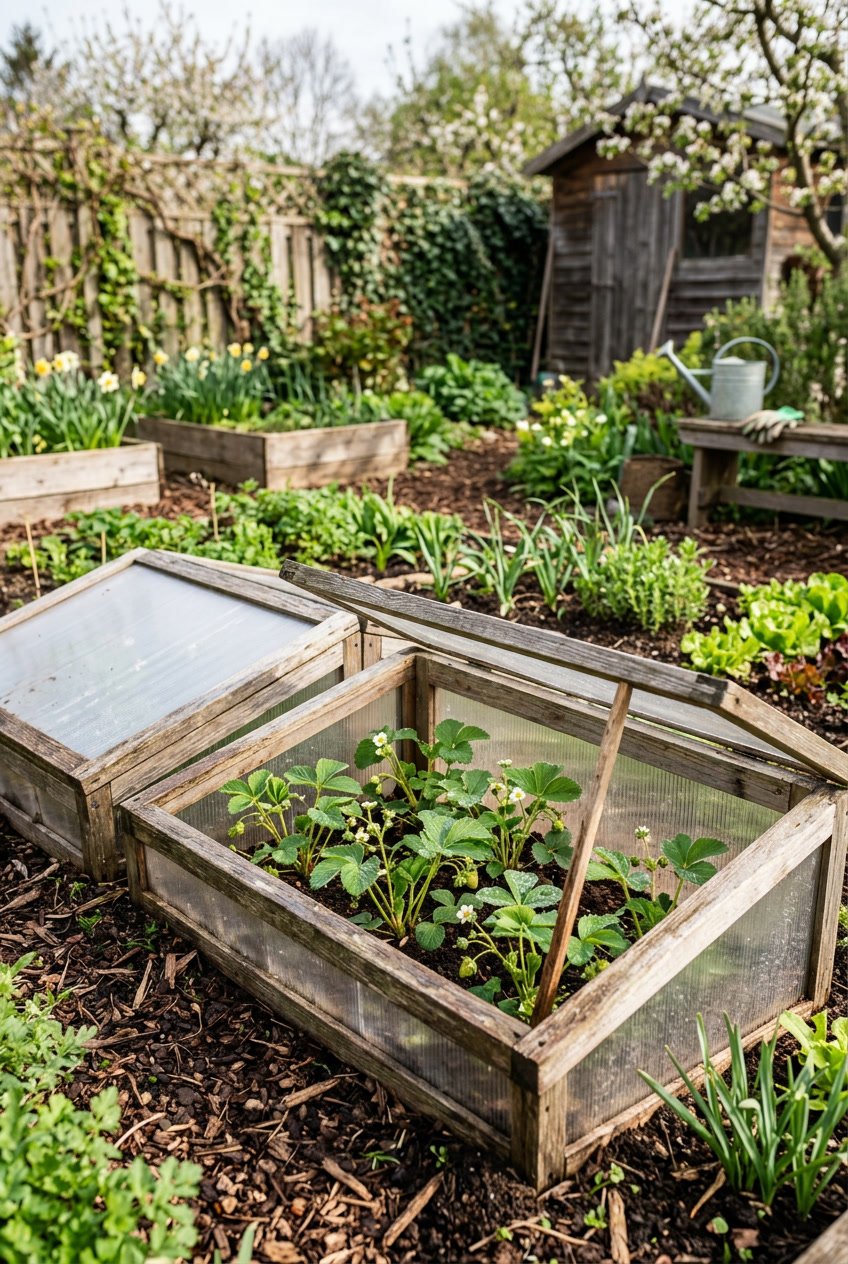
Late spring frost? It doesn’t have to take out your strawberries.
You can build a cold frame out of scrap wood and an old window or clear plastic. Set it over your baby strawberry plants at night if frost is coming, then open it up when the sun’s out so your plants can breathe.
Cold frames catch daytime warmth and keep things just a few degrees cozier at night. That’s often all it takes to save blossoms and tender leaves.
Pick a sunny, south-facing spot and add a hinge to the lid for easy venting. Move the frame if you want to rotate beds or chase more sun.
Expert Tip From MrPlanter: Check the lids every morning and prop them open on warm days—use a brick or whatever’s handy so things don’t get too toasty.
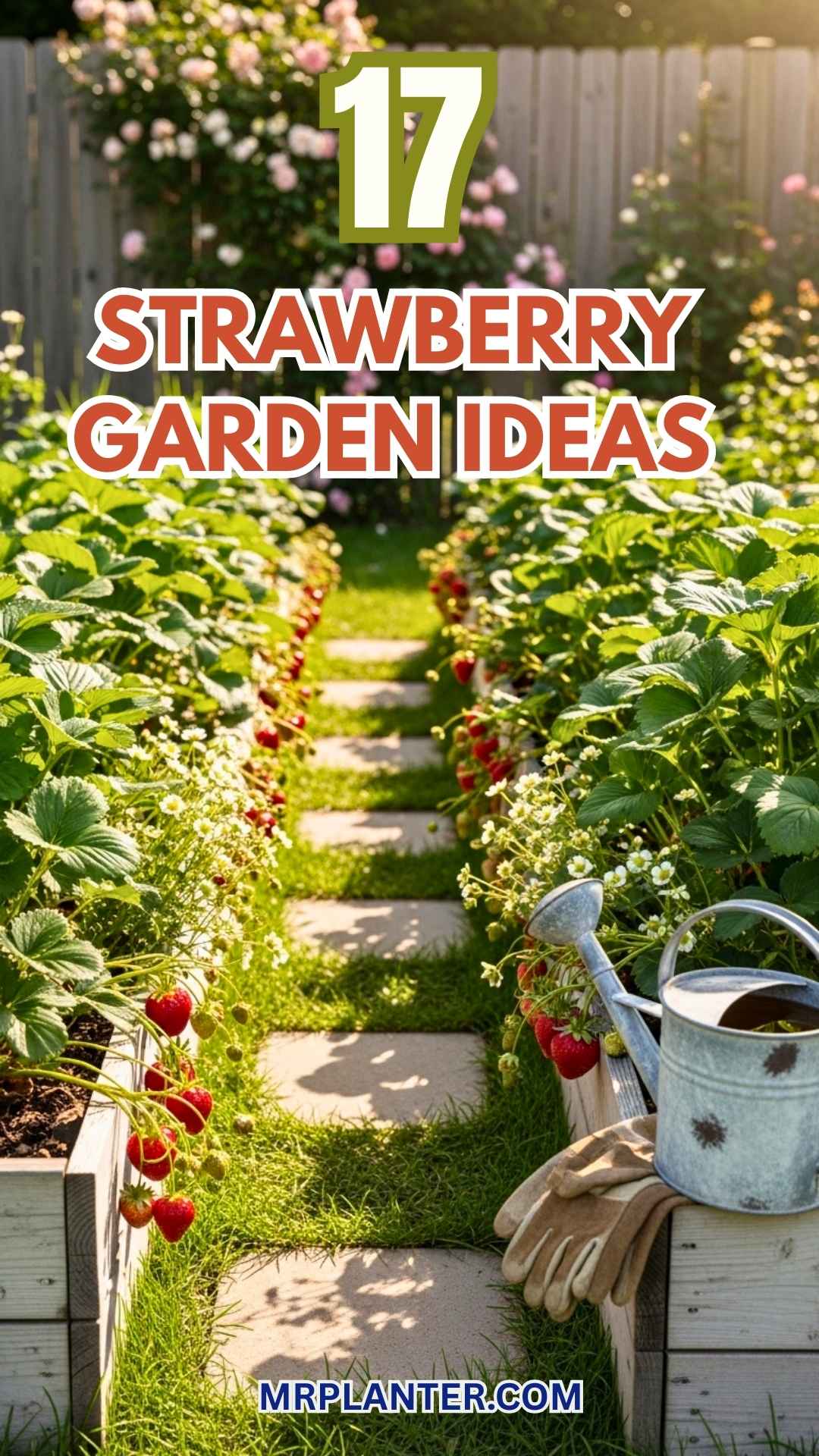
17. Plant strawberries around your garden paths—snacking without even trying.
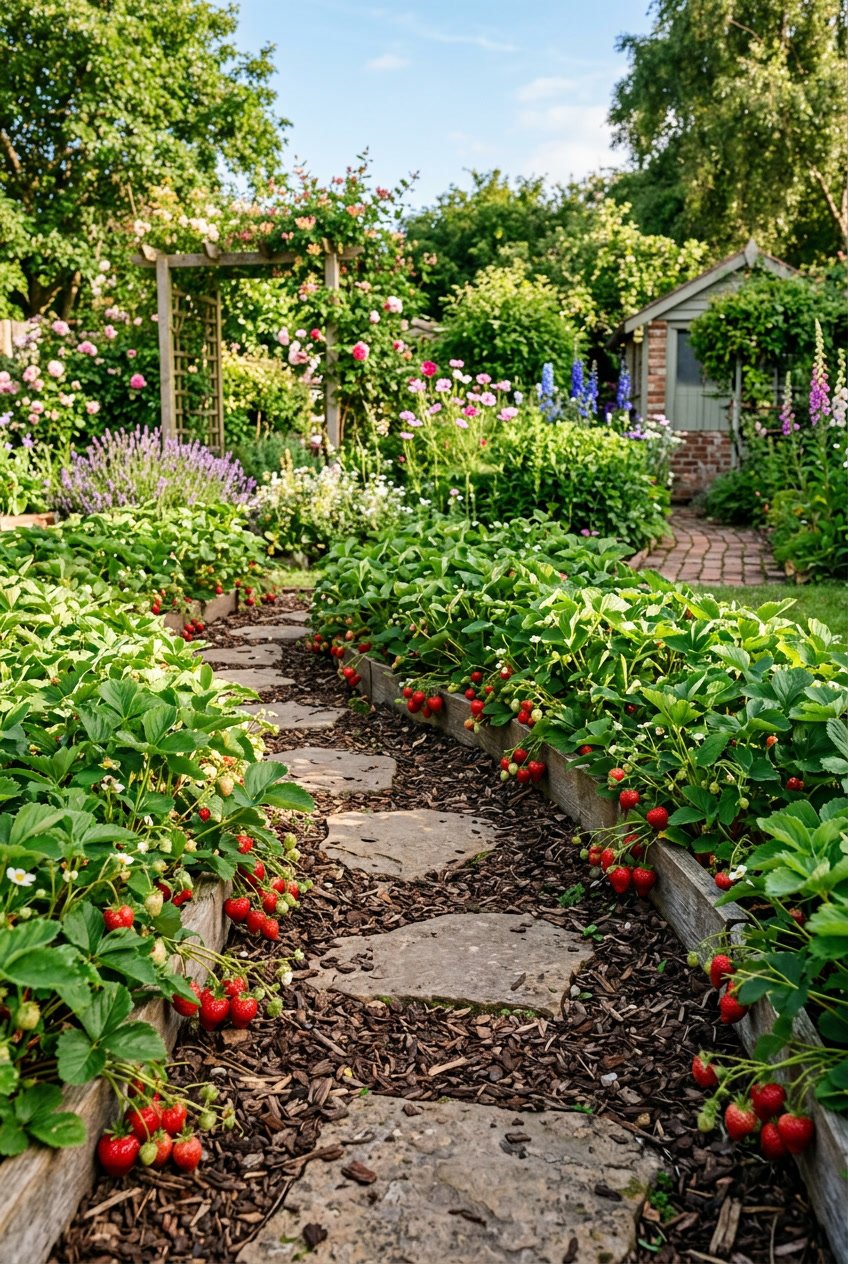
Strawberries love hanging out on the edges, so why not turn your garden path into a snack stop?
Line your walkways with low-growing strawberries. You’ll grab berries as you stroll by, and the plants soften up those hard edges. They fit in tight spots and look downright charming by the stepping stones.
Pick firm, disease-resistant types and use good soil or potting mix. Keep them mulched and watered, and trim runners if they get too wild.
Stick a few everbearing or day-neutral plants by the paths for berries all season. You’re making your garden both tasty and fun.
Expert Tip From MrPlanter: Plant a little bed of everbearing strawberries where you walk the most. Mulch well to keep fruit clean and plants happy—less work, more snacks.
Strawberry Garden Essentials
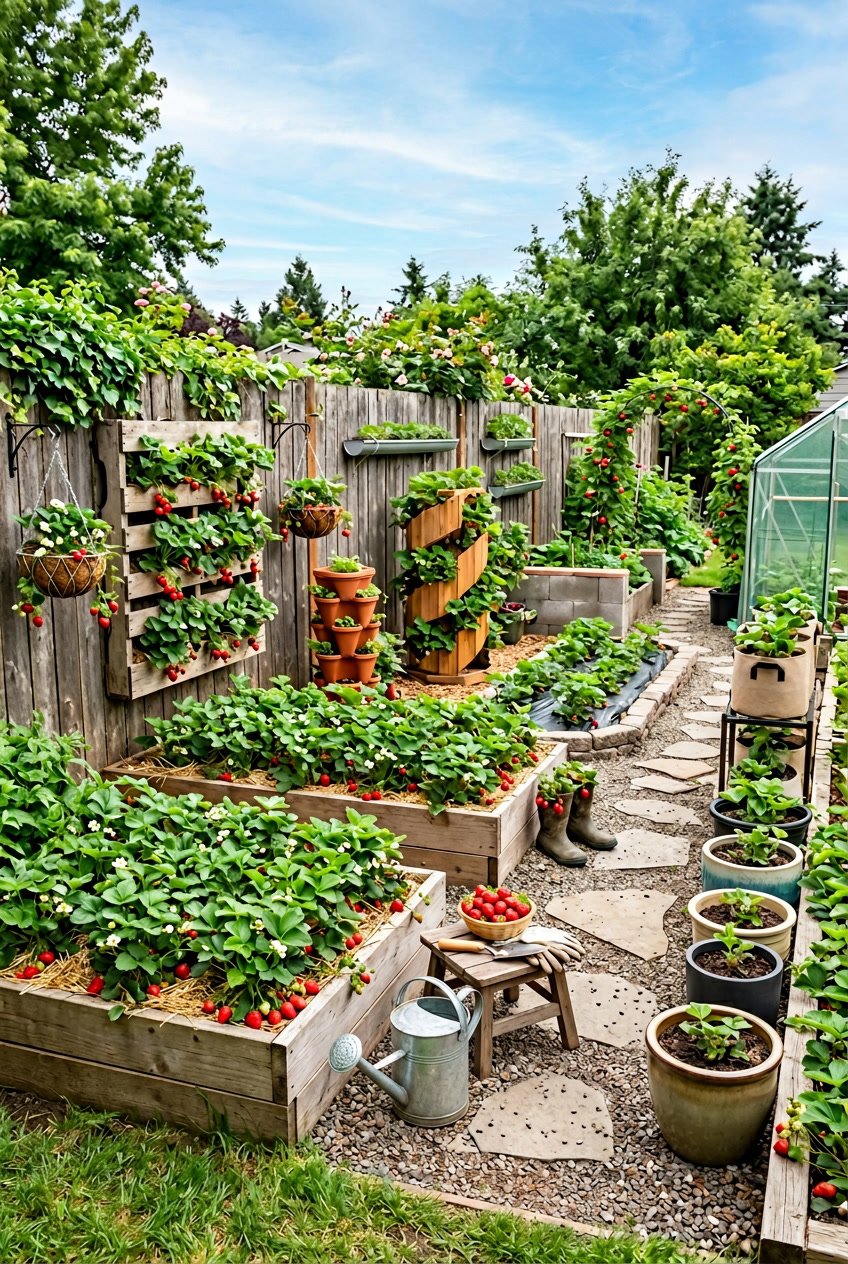
Let’s get the basics down: pick strawberries that fit your season, give them soil that drains well, and make sure they get at least six hours of sun. Oh, and don’t crowd them or water the wrong way—those are rookie mistakes.
Choosing the Right Strawberry Varieties
If you want tasty berries and plants that actually fit your space, you’ve got options. June-bearing types give one big crop (perfect for jam or freezer days). Everbearing plants give two or three smaller harvests. Day-neutral types just keep going with steady fruit all season.
For jam and freezing, try June-bearing like ‘Chandler’ or ‘Earliglow’. For fresh berries all summer, go for day-neutral like ‘Albion’ or ‘Seascape’.
Match your variety to your climate. If you get cold winters, pick hardy types. Hot summers? Look for heat-tolerant ones. Some varieties throw out lots of runners (great for bigger beds), while others put their energy into fruit. Buy certified, disease-free plants or bare roots in spring for the best start.
Soil and Sunlight Secrets
Strawberries love sun—aim for 6 to 8 hours of direct light. Less sun means fewer, smaller berries. Plant them where the morning sun hits first; it dries off dew and helps stop disease.
Use well-draining soil with a slightly acidic pH around 5.5 to 6.5. Add compost and some sand if your soil’s heavy clay. Mix in a couple inches of compost before planting. Mulch with straw or shredded leaves to keep berries clean, lock in moisture, and block weeds.
Water about an inch a week, more if it’s hot. Drip irrigation or soaker hoses work best—keeps leaves dry. Give each plant 12 to 18 inches of space for good airflow and ripening.
Common Mistakes to Avoid
Packing plants too close means less fruit and more disease. Give them space and pull extra runners if you want bigger berries. Too much fertilizer, especially the high-nitrogen stuff, makes a bushy plant but not much fruit—stick to balanced fertilizer in early spring.
If you water unevenly, you’ll get small, weird-shaped berries and stressed roots. Don’t let the soil dry out totally, but don’t drown them either. Don’t bury the crown—keep it level with the soil so it doesn’t rot.
Buying cheap, untested plants or reusing old soil without sterilizing it can bring in pests and diseases. Move your beds every 3–4 years and swap out plants after three seasons for the best berries.
Troubleshooting and Easy Fixes
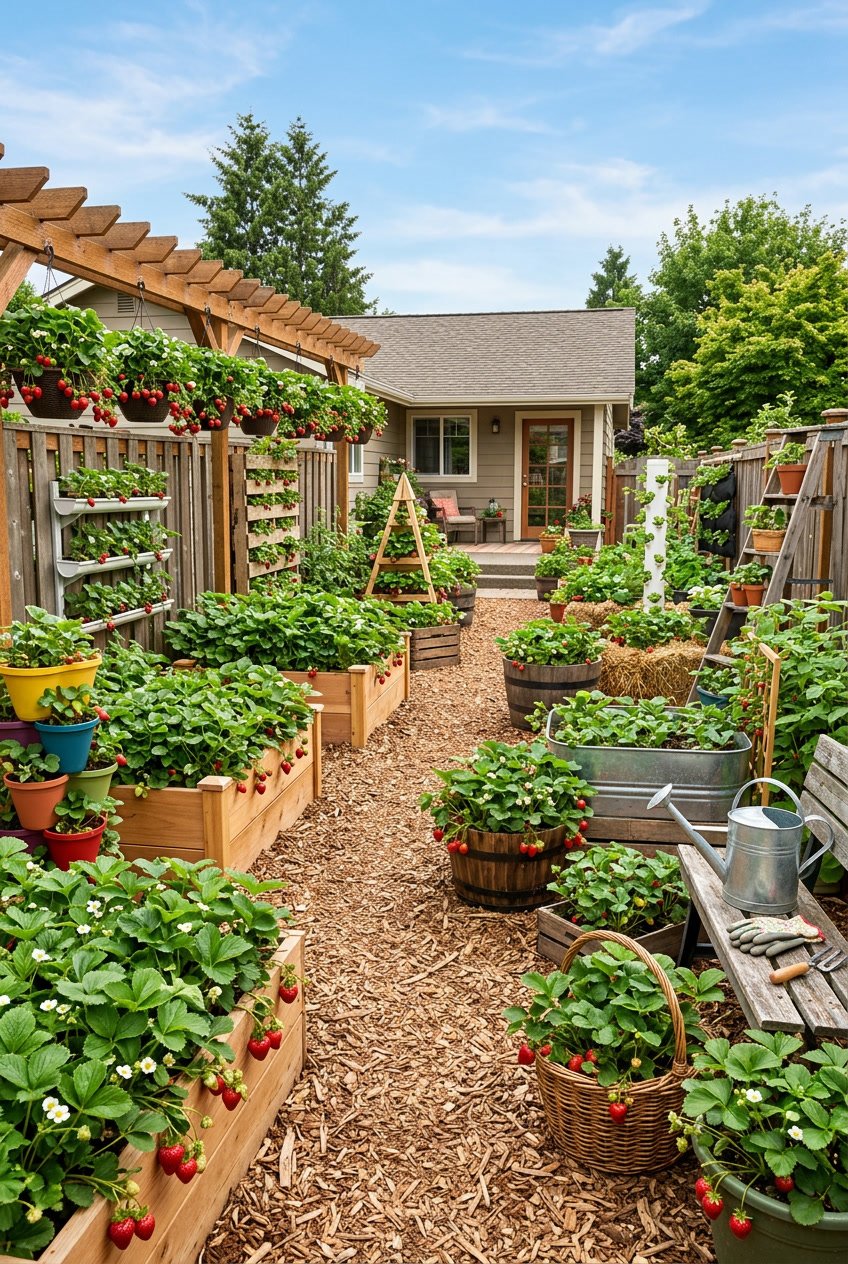
Keep your eyes peeled for pests, sick-looking leaves, and droopy plants. Little fixes—like trapping slugs, letting in some air, or tweaking your watering—can solve most issues pretty quick.
Dealing With Pests and Critters
You’ll find slugs, snails, birds, and sometimes beetles trying to join the fun. Go slug hunting at night, set out beer traps, or sprinkle crushed eggshells to keep them away. Floating row covers help keep birds and bugs off while flowers are setting.
For tiny bugs like aphids, blast them off with water or use insecticidal soap. Ladybugs and lacewings eat pests, so plant marigolds, yarrow, or dill nearby to attract them.
If squirrels or rabbits get nosy, put wire mesh cages around young plants or set up motion-activated lights or sprinklers. For birds, toss lightweight netting over your patch—it keeps the fruit safe and doesn’t hurt the wildlife.
Preventing Plant Diseases
Good airflow and dry leaves make a huge difference. Space plants at least a foot apart, pull off old leaves, and mulch with straw to keep berries off the wet ground. Water at the base early in the morning so leaves dry fast.
If you spot gray mold or leaf spots, yank out the bad parts and compost or trash them—don’t leave them nearby. Use disease-resistant varieties when it’s time to replant.
Move your strawberry patch every 3–4 years. Skip planting where you just had tomatoes, peppers, or potatoes to dodge soil diseases.
What to Do if Your Strawberries Look Sad
You spot yellow or pale leaves on your strawberries? That usually screams low nutrients or soggy roots.
I’d grab a cheap soil pH test kit (aim for 5.5–6.5) and toss on some balanced fertilizer or a scoop of compost if needed.
If the roots are drowning, I’d gently lift the plants and work some organic matter into the soil. Nobody likes wet feet—not even strawberries.
Now, if your berries just won’t fruit, don’t panic. Sometimes it’s too much nitrogen, a lack of pollinators, or honestly, the plants are just getting old.
Snip off those runners during the first year; it’ll help the plant focus on making fruit instead of babies.
Planting a little bee-friendly flower patch nearby can help too. And, if you’ve had the same plants for three years, it might be time to swap them out for fresh ones.
Wilting plants and rotten crowns? That could be crown borers or root rot sneaking in.
I usually yank out the worst plants, toss them, and give my tools a good scrub.
When you plant new crowns, try putting them on raised beds. It helps with drainage and keeps the same problems from coming back.