You want bigger, healthier tomatoes without dealing with a tangled mess of vines. This list of 13 trellis ideas? It’ll help you find a simple, sturdy way to lift those plants and get a better harvest.
You’ll see practical supports that work for tiny balconies, raised beds, heavy tomato types, and even some clever DIY projects that use stuff you probably already have.
These ideas mix old-school fixes like wooden stakes and cages with fancier options like obelisks, arches, and hanging setups.
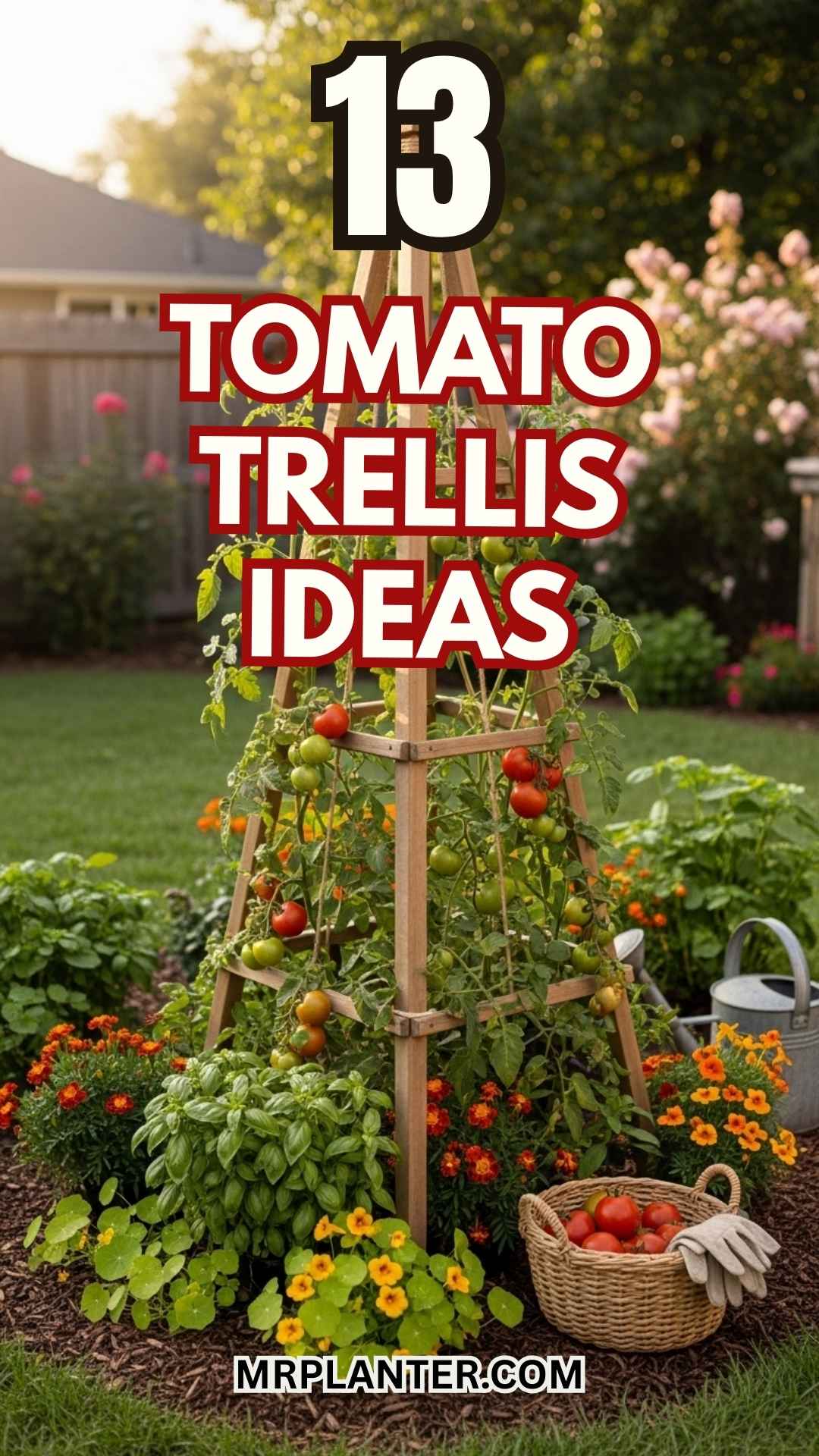
Pick what fits your space and your style—no judgment here. You’ll get doable choices and quick troubleshooting tips, so your trellis actually helps you all season.
1. Classic Wooden Stake Trellis
Here’s a fun one: a single sturdy stake can save you hours of detangling vines and chasing lost tomatoes.
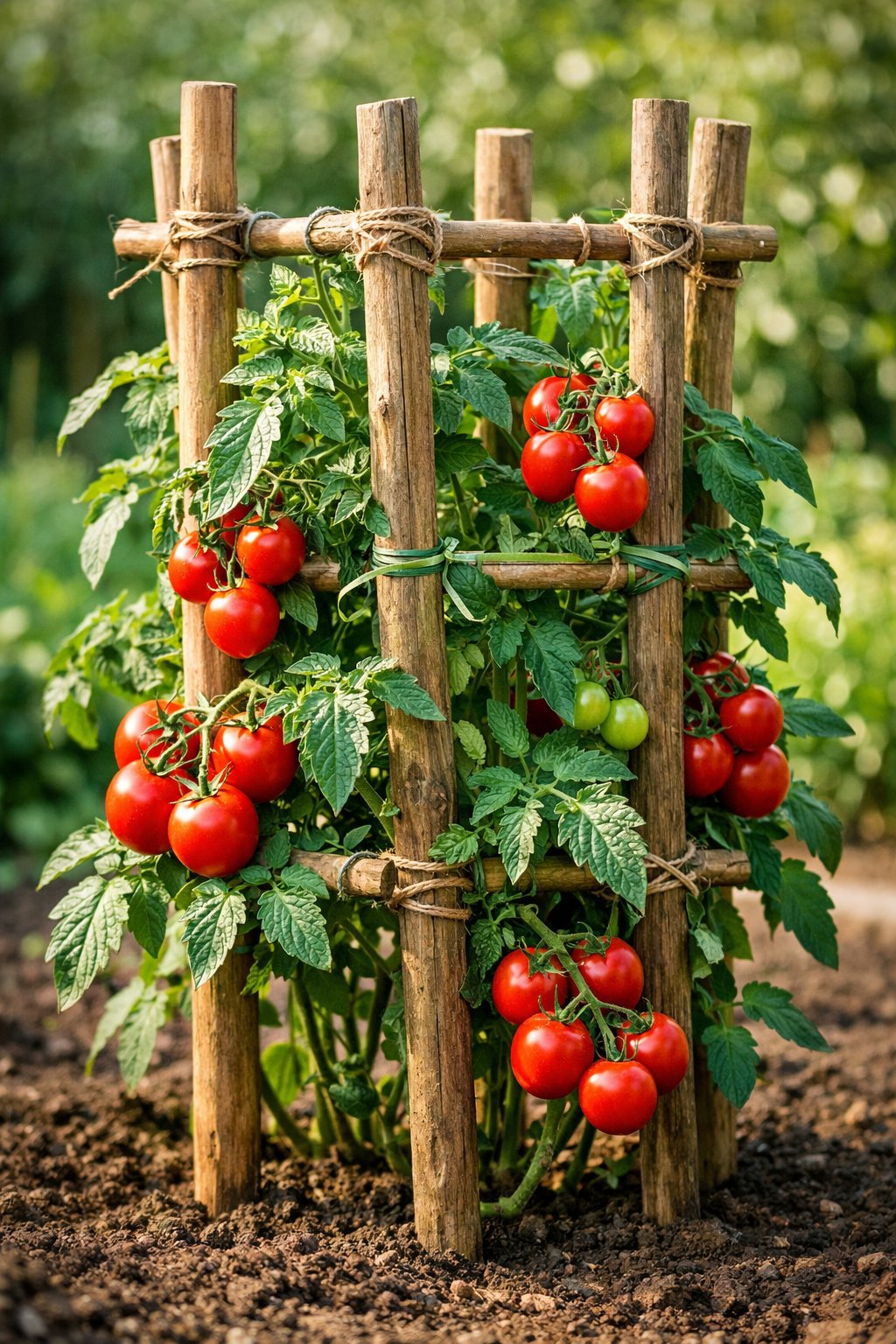
You just drive a stake right next to each tomato plant and loosely tie the main stem as it climbs. It’s simple, cheap, and works for indeterminate and bushy types.
Go with cedar or pressure-treated wood if you want your stake to last the whole season. Use soft garden twine or strips of old T-shirts every 8–12 inches, so you don’t hurt those stems.
This keeps your plants standing tall, lets the air flow, and makes picking tomatoes way easier. For bigger plants, add a second stake and a crosspiece—no need to get fancy.
Expert Tip From MrPlanter: Tie with soft twine and swap out ties if they start cutting in. Give those ties a weekly check and tighten gently as your plant grows.
2. Cattle Panel Trellis for Heavy Lifters
Here’s a wild one: a single cattle panel can handle hundreds of pounds of tomatoes without even flinching.
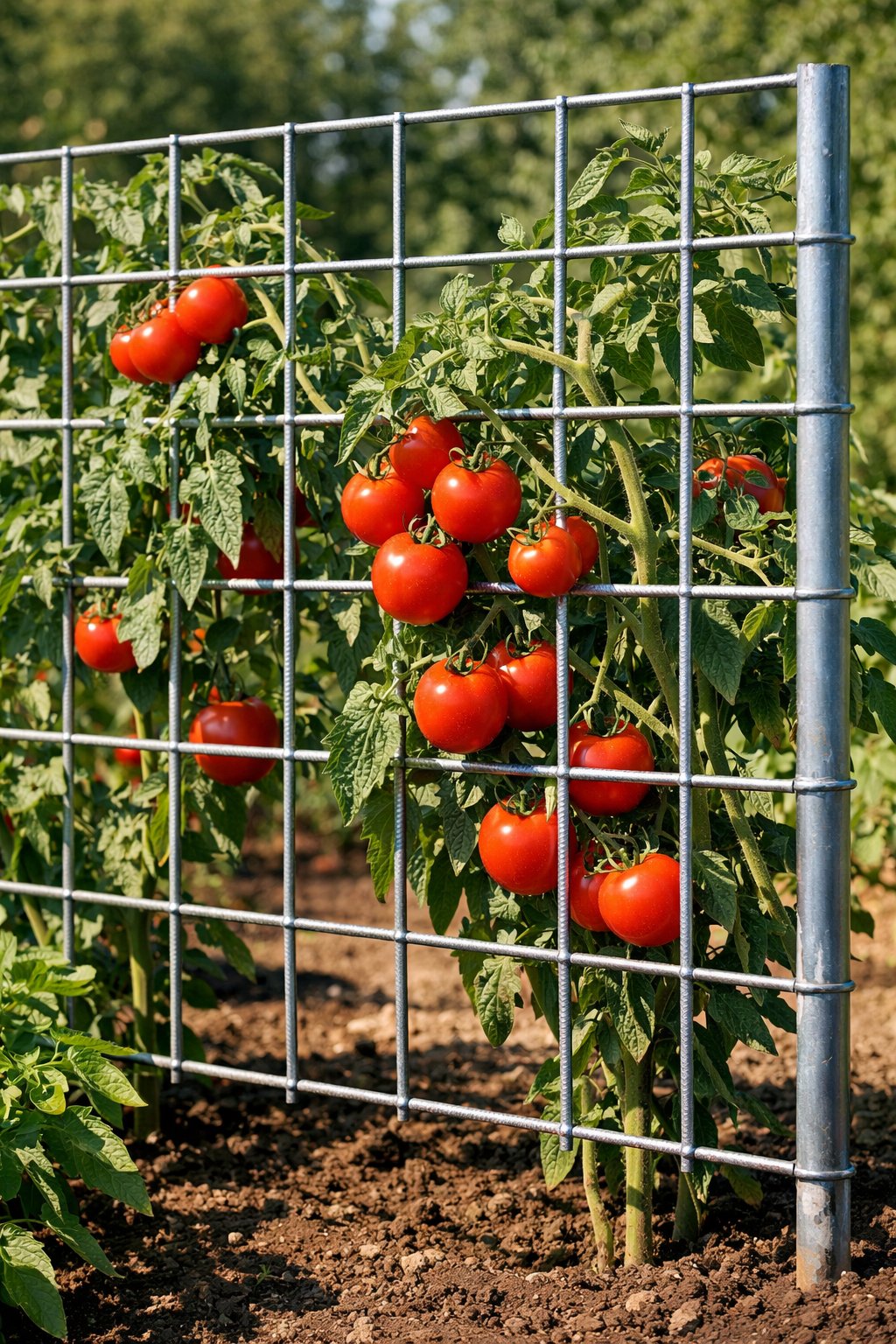
If you’re growing those big, heavy indeterminate tomatoes, you’ll love this. Cattle panels are basically heavy-duty wire grids that stand tall and stay put, so they can handle big vines and loads of fruit.
Set up two or more sturdy posts, then attach the panel vertically or arch it over your row. You’ll get an open grid that’s easy to tie vines to—and you can reach right in for pruning or picking.
This setup lasts for years and saves you time every summer. If you have old panels lying around, it’s pretty cheap, and it works in raised beds or long garden rows.
Expert Tip From MrPlanter: Use zip ties or metal clips to hook the panel to posts, and check them each year for wear. Start weaving stems through the grid early so you don’t snap branches under heavy fruit.
3. Tomato Cage Made from Recycled Pallets
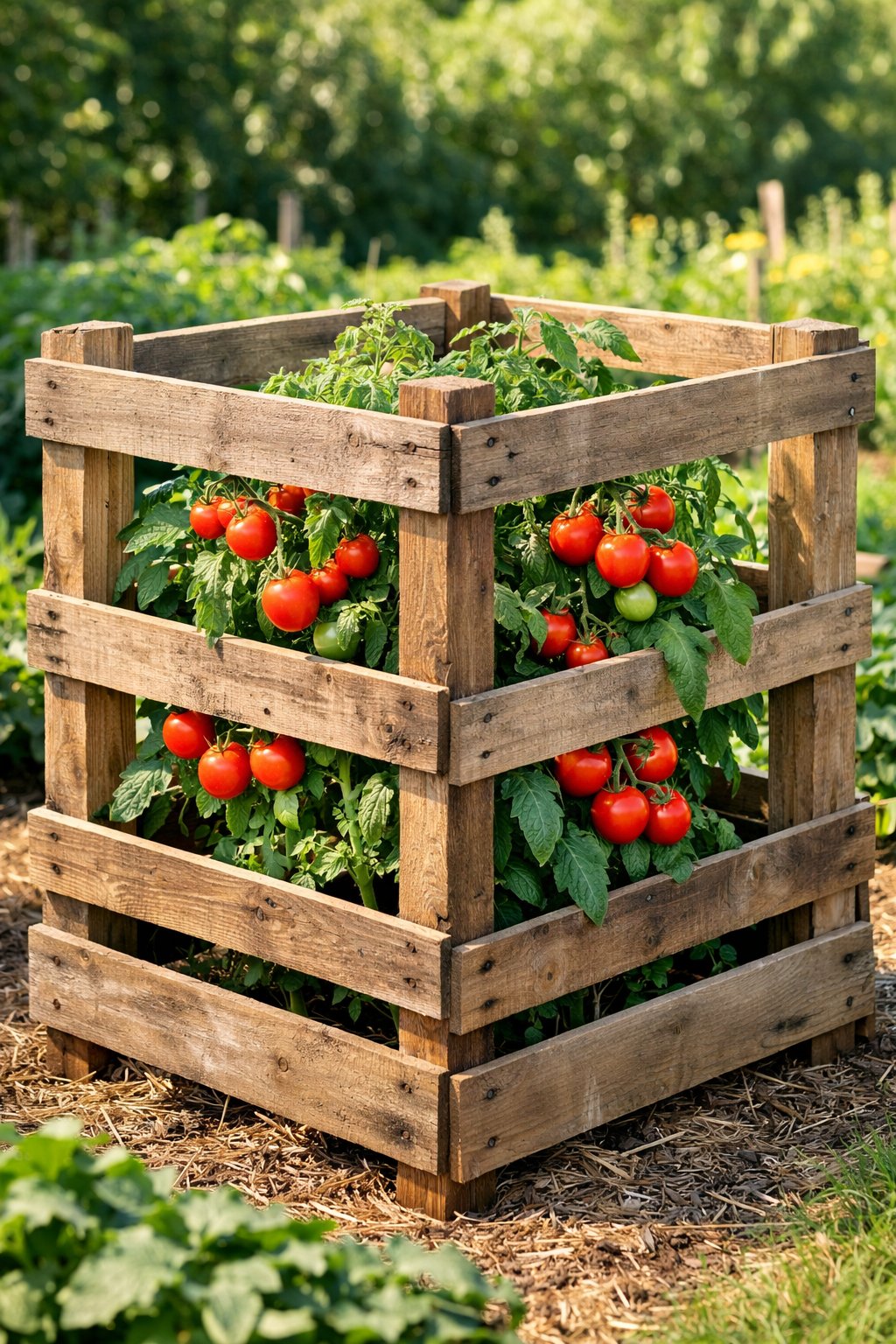
Let’s bust a myth: you don’t need pricey cages to grow awesome tomatoes. If you’ve got old pallets, you can make a cage that’s sturdy and saves cash.
Stand a pallet upright around your tomato and secure it with stakes or zip ties. The slats act as natural tiers for vines to climb, and you can add twine or clips where the gaps are too wide.
Pallet cages fit tall indeterminate varieties and keep fruit up off the dirt. They look kind of rustic and let air move through, which helps cut down on disease.
Expert Tip From MrPlanter: “Pick heat-treated pallets and sand down rough edges to protect your plants. Tie vines loosely every few inches, so the branches can grow without getting pinched.”
4. Obelisk Trellis for Vertical Drama
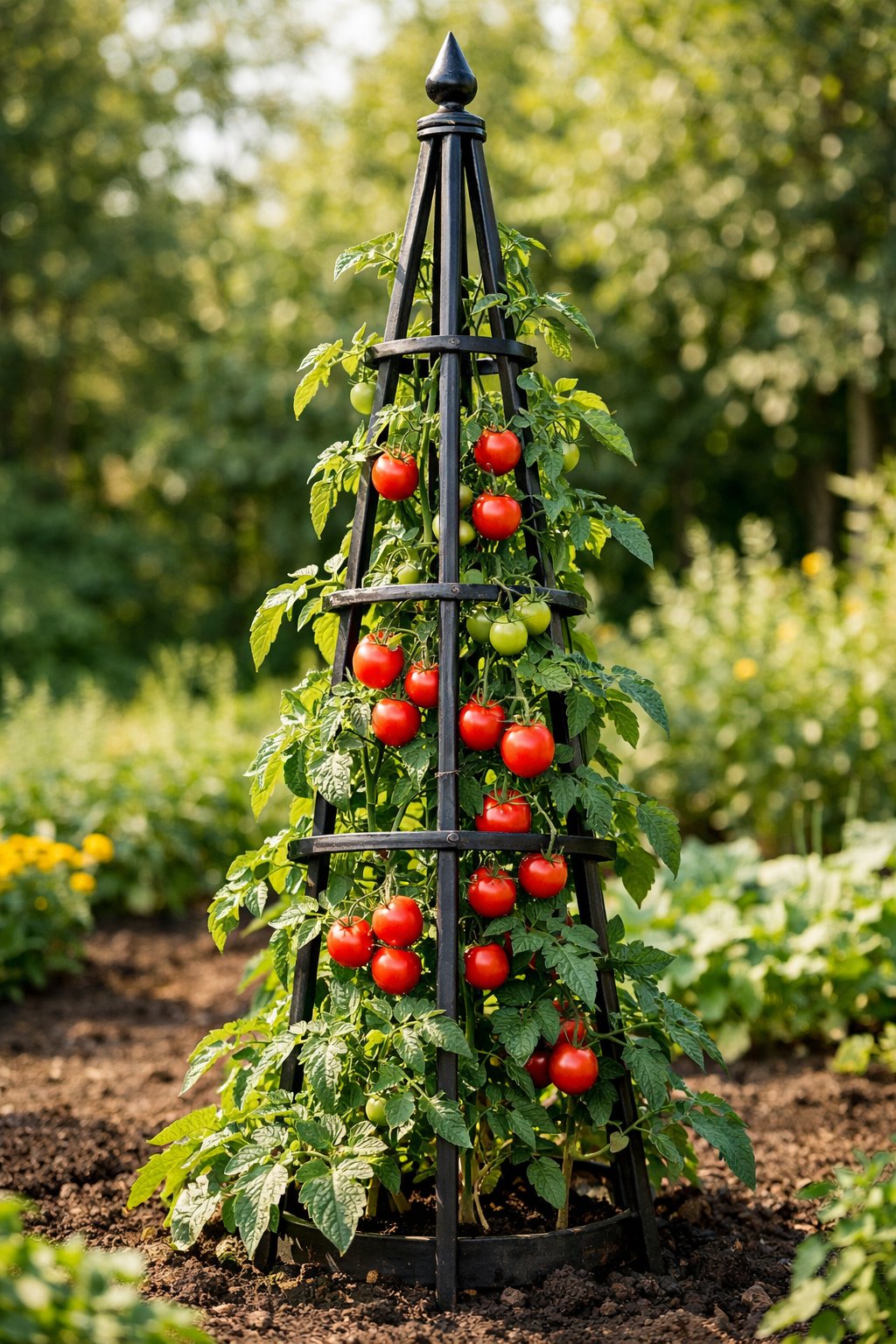
Here’s another myth-buster: obelisks aren’t just for show-off gardens—they’re awesome for tomatoes, too. You’ll get tall, tidy plants that save space and look fancy in a bed or even a big pot.
An obelisk trellis pulls vines straight up, keeping fruit clean and making watering and picking easier. The pyramid shape supports plants without any complicated parts.
You can buy a metal obelisk or build one from cedar or bamboo. Set it up when your plants are small, so you don’t mess with their roots. Prune off some lower leaves to let air in.
Expert Tip From MrPlanter: “Place the obelisk over your plant early, so you don’t disturb roots. Tie stems loosely with soft twine—no strangling!“
5. Hanging Tomato Trellis to Save Space
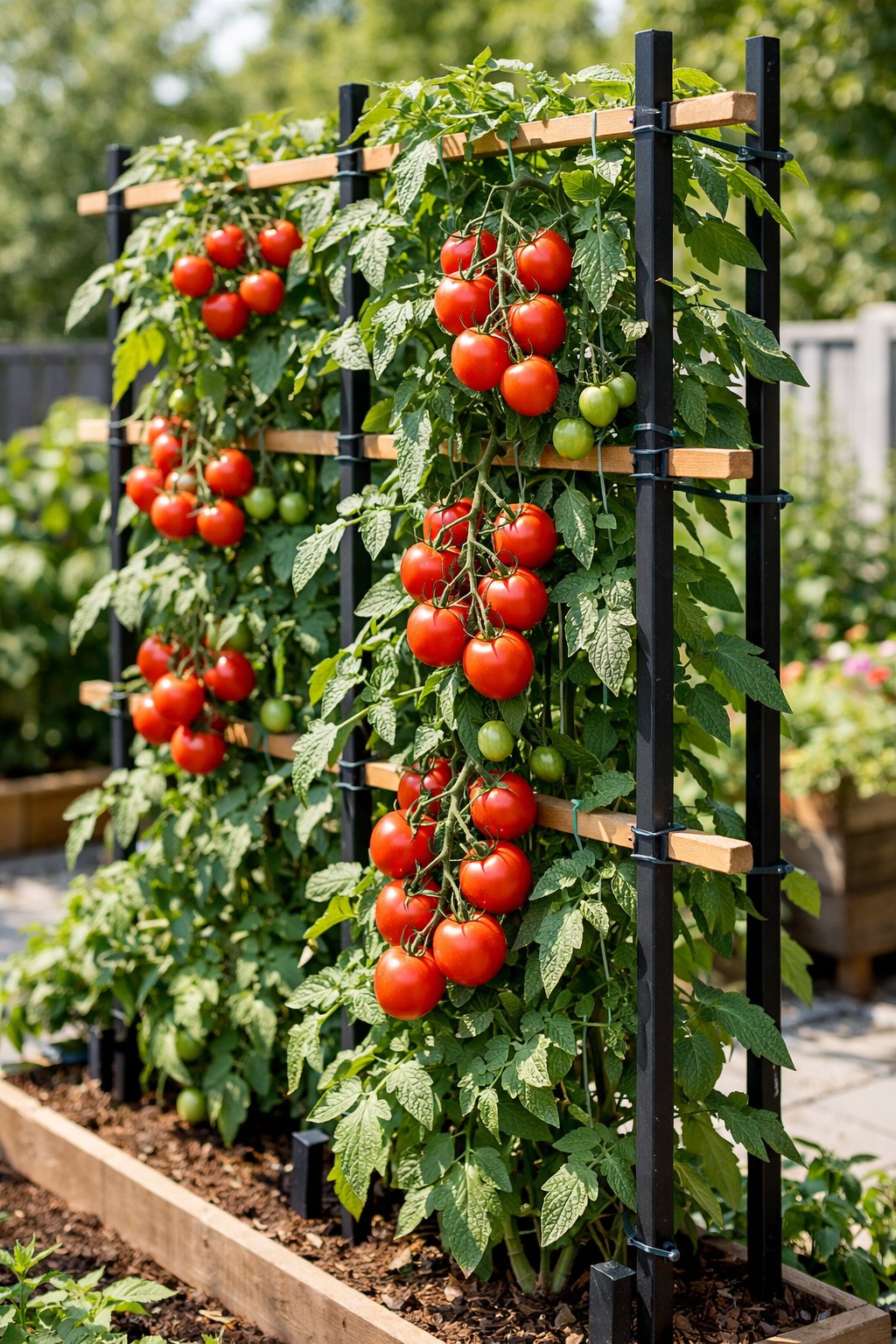
Bet you didn’t know: you can grow tomatoes upside-down or from above and never lose fruit to the ground. A hanging trellis lifts vines, keeps tomatoes clean, and frees up space for more plants.
Hang a sturdy beam or hook, tie on twine or a strong net, and train the main stem up. Your leaves get better air flow, which means less disease, and you can pick fruit right at eye level.
Go for indeterminate types that keep growing. Make sure your anchors are strong enough for the weight. Move ties up as the plant grows, so stems stay happy.
Expert Tip From MrPlanter: Use soft ties and check anchors every week to prevent breaks. Trim a few lower leaves to boost air flow and make picking easy.
6. DIY Wire Mesh Trellis
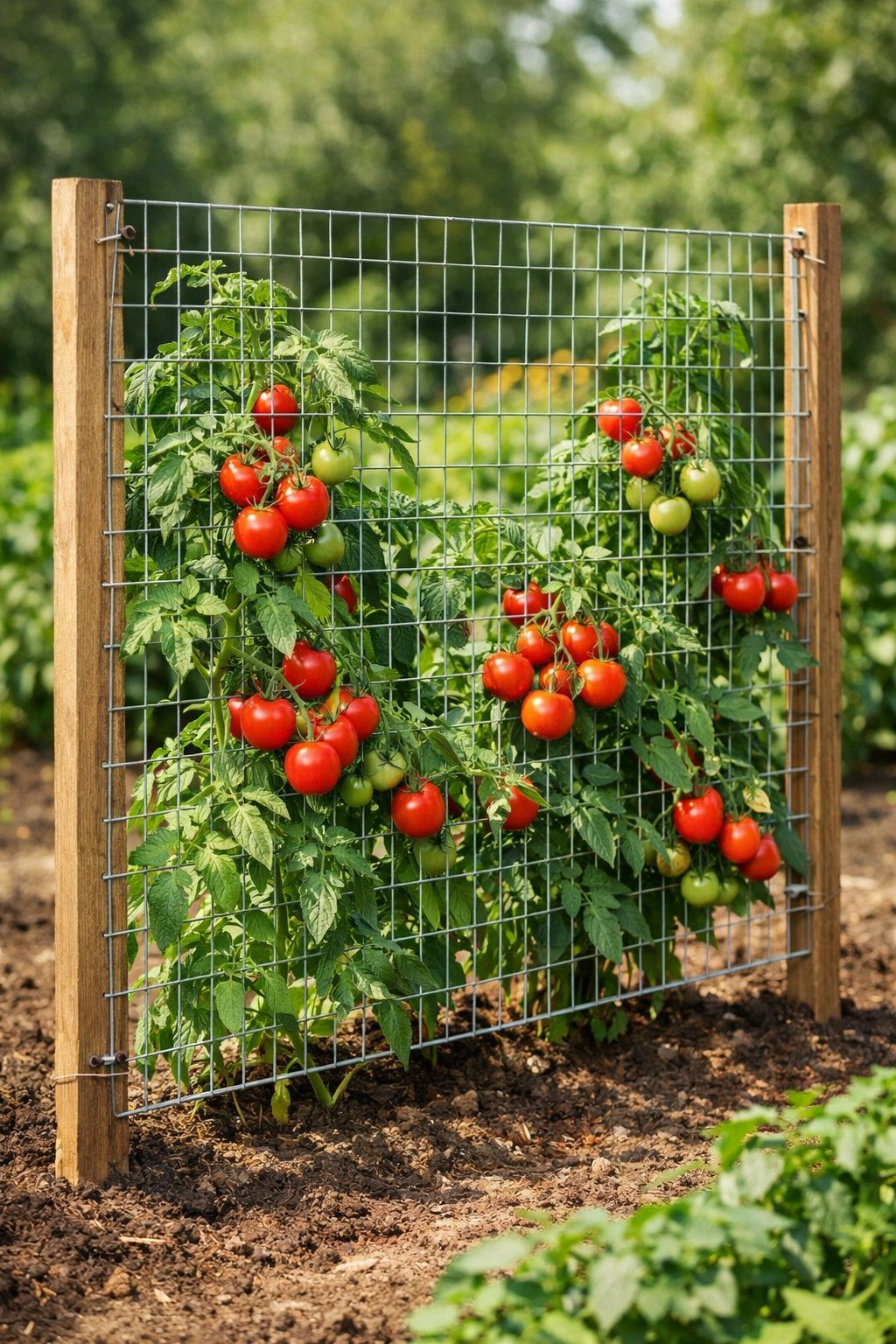
Raise your hand if you’re tired of cages that flop over and bend under heavy fruit. A wire mesh trellis gives steady, even support without much hassle.
Buy a roll of welded wire or hardware cloth and fasten it to stakes or T-posts. It keeps vines up and lets air move through, which helps fight disease and makes fruit ripen evenly.
Guide stems through the mesh as they grow or tie them up gently with soft twine. This setup works in rows or against a fence and lasts for years with just a little care.
Expert Tip From MrPlanter: “Put up the mesh when plants are small, so you can guide branches easily. Tie stems loosely, so you don’t squish the vines as they get bigger.”
7. Upside-Down Bucket Tomato Planter
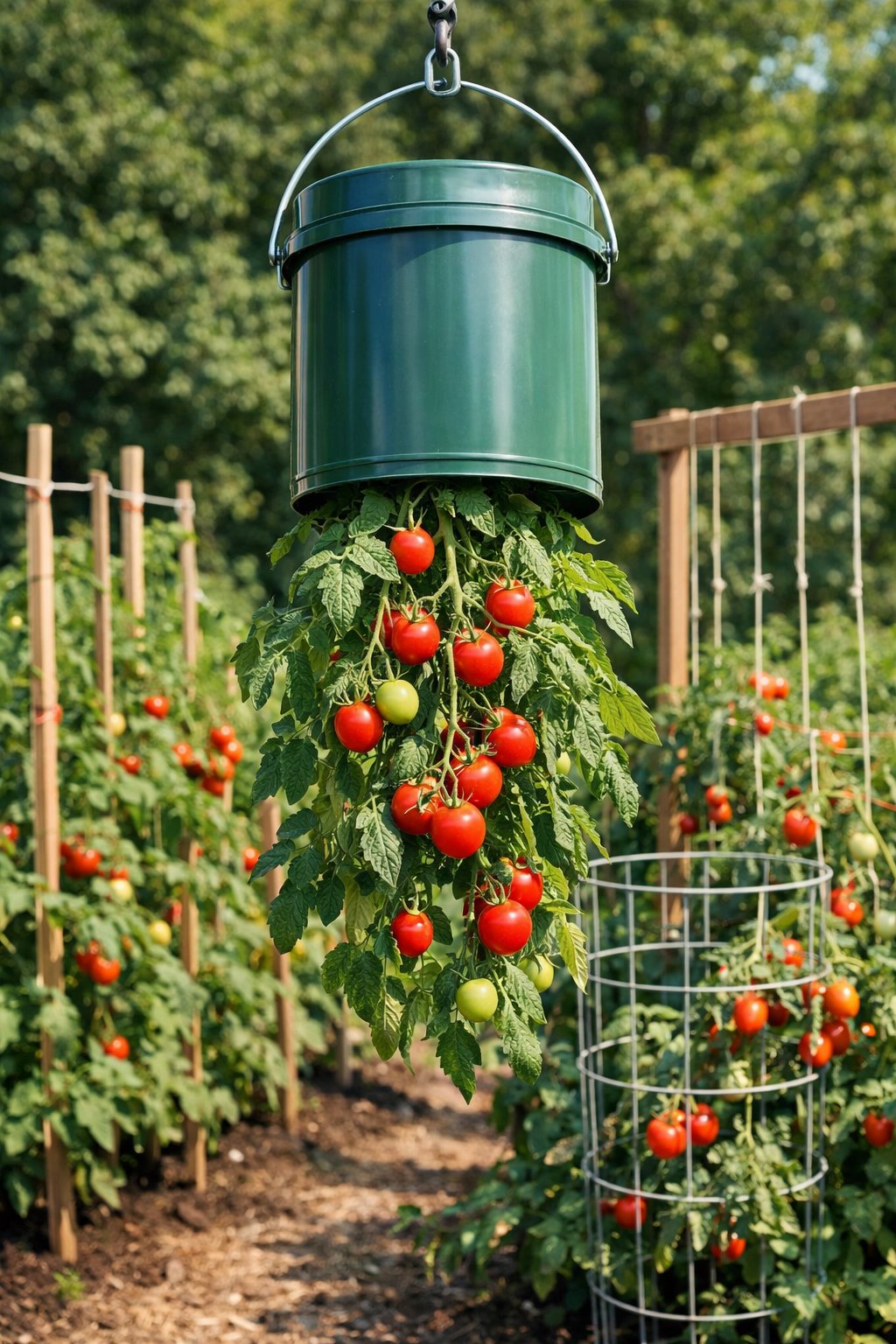
Some folks think tomatoes can’t grow upside down, but it actually works and saves space.
Grab a sturdy 5-gallon bucket, a lid, good soil, and a healthy seedling. Drill a hole in the lid, tuck the seedling through, and pack soil around the stem for support.
Hang the bucket in a sunny spot with a strong hook or beam. Water from the top and make sure it drains well. Add a slow-release fertilizer to keep the tomatoes coming.
This trick keeps slugs and some pests away and looks pretty cool on a porch or balcony. It’s perfect if you don’t have much ground space and want easy picking.
Expert Tip From MrPlanter: Wrap a small mesh bag around the roots so soil stays put when you hang the bucket. Water slowly into the lid hole so the roots get a good drink without washing out soil.
8. Arched Trellis for a Tomato Tunnel
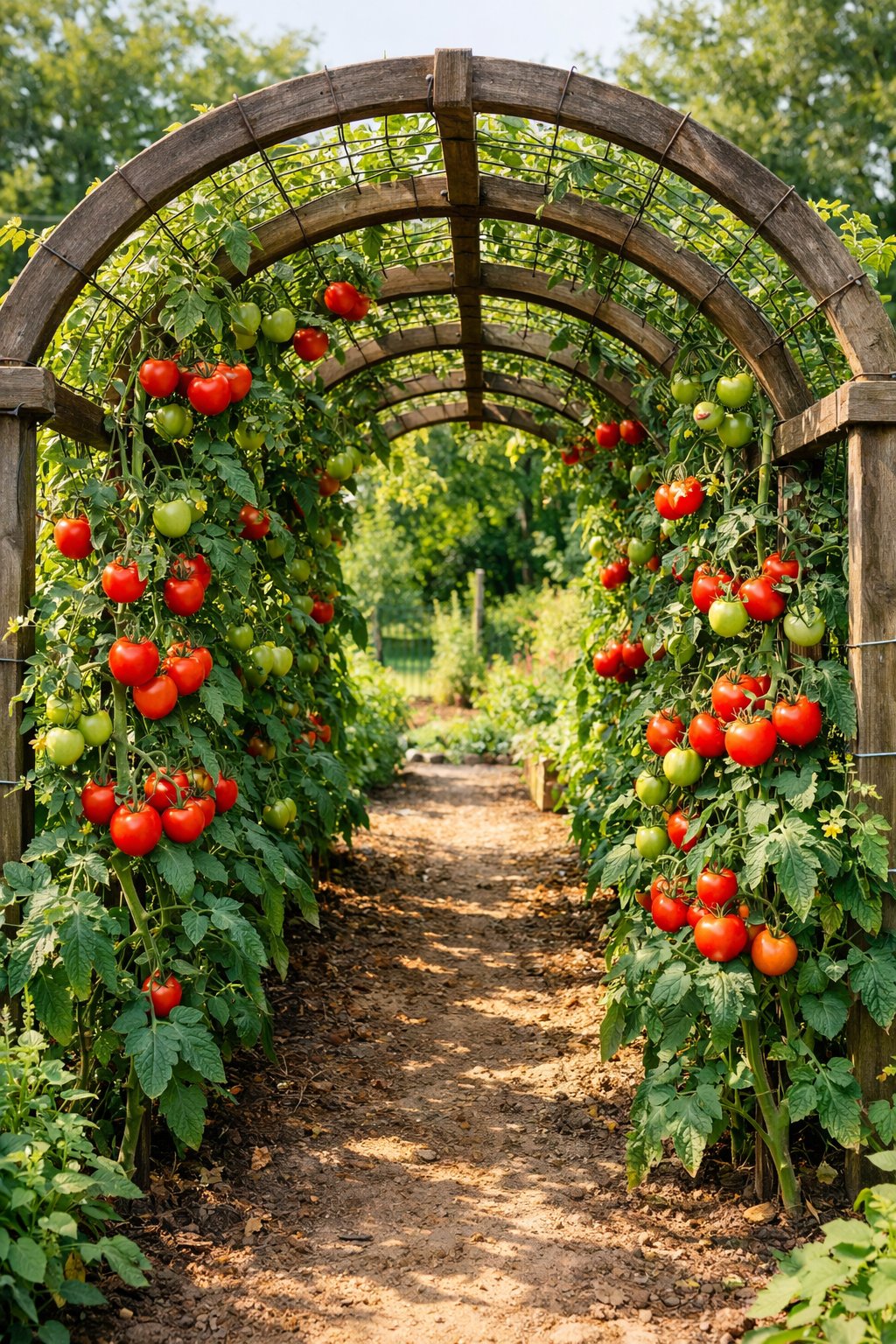
You don’t need a big budget to make a dreamy tomato tunnel. An arched trellis gives you a garden walkway that’s both pretty and super practical.
Bend cattle panels, metal conduit, or PVC into a sturdy arch that your vines will climb. Space supports every 2–4 feet so the arch stays strong and you can walk under it.
Fruit stays off the ground, and picking is a breeze. More light reaches the leaves, so tomatoes ripen up nicely.
Expert Tip From MrPlanter: Anchor the ends well and train vines up both sides for balance. Prune a bit so air flows through and you get healthier, tastier tomatoes.
9. Tomato Loom Using Bamboo Poles
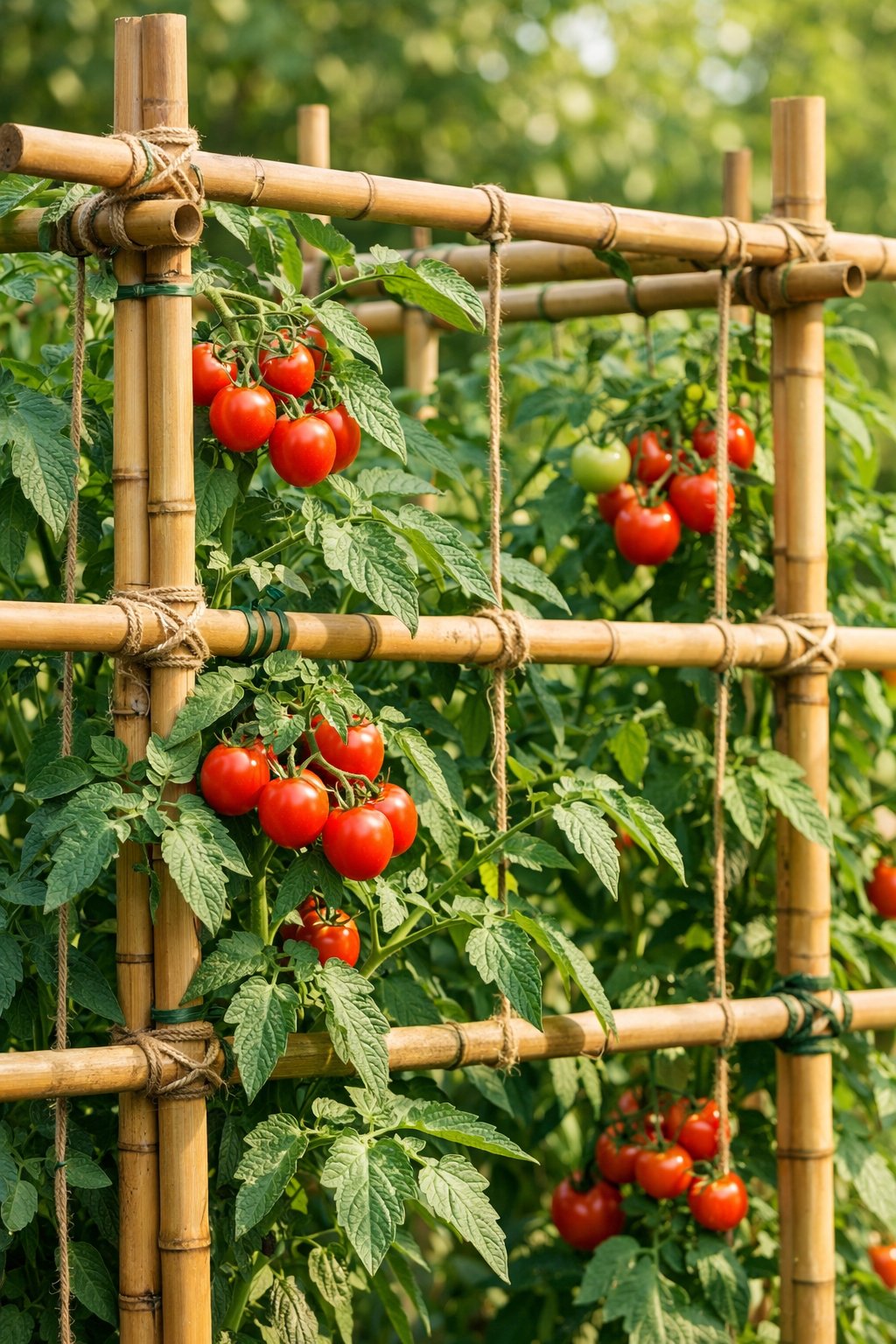
Here’s a neat fact: a basic bamboo loom can hold a whole row of tomatoes and still look good. Drive tall bamboo poles into the ground at even intervals, then weave twine or soft wire across like a ladder. The plants grow through the gaps and lean on the woven support.
Space the poles to fit your tomato variety. Indeterminate types need taller poles and more woven rows; determinate types can get by with shorter setups. This keeps fruit up and makes pruning and picking much easier.
The design looks light and natural, and bamboo lasts a few seasons if it stays dry at the base. If a pole breaks, swap it out, and tighten up sagging twine as needed.
Expert Tip From MrPlanter: Use rot-resistant bamboo and drive poles deep for stability. Check ties every few weeks and loosen them as stems get thicker.
10. Wooden Box Trellis with Mesh
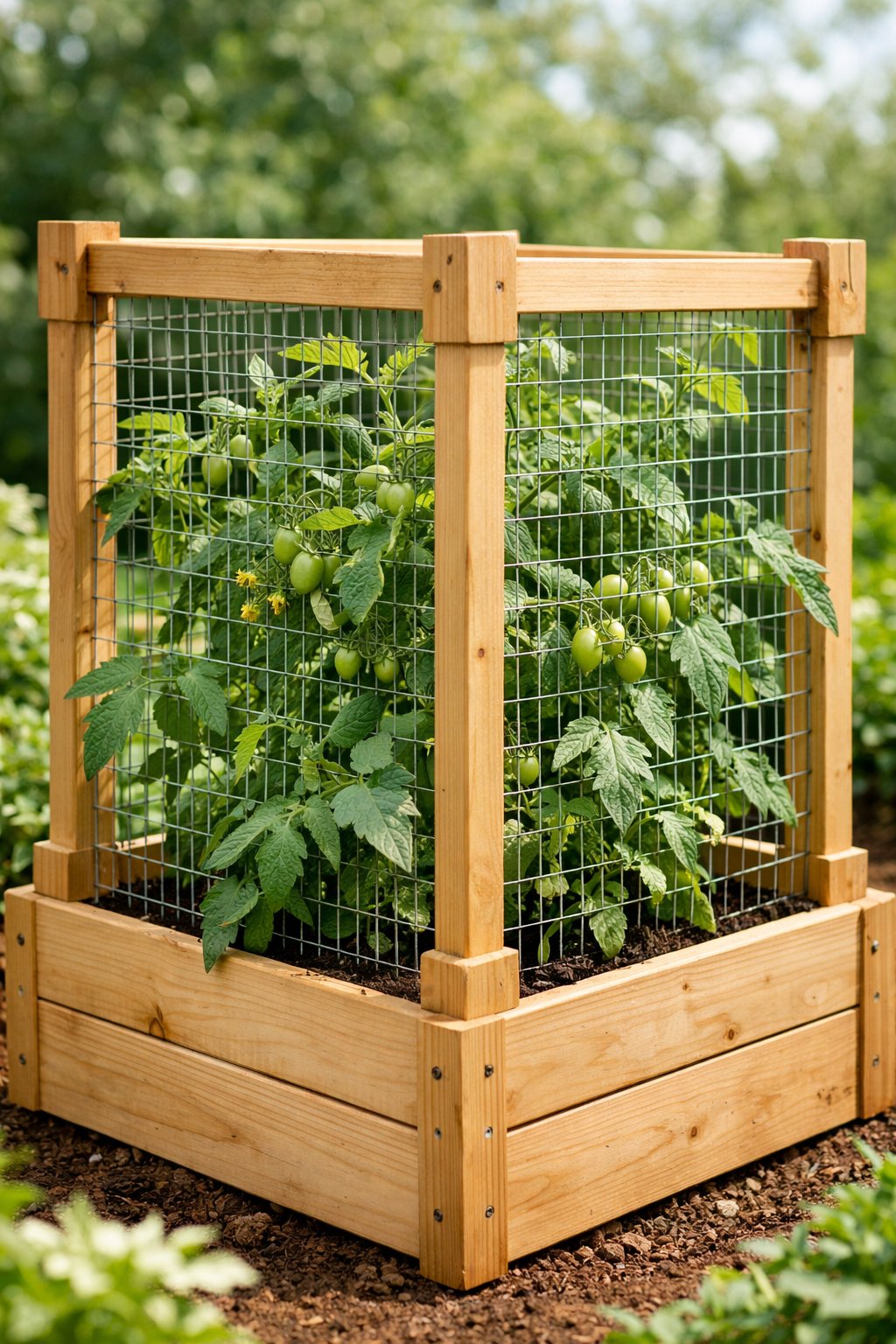
You don’t need fancy metal for strong tomato support.
A wooden box trellis with mesh gives you a neat, raised frame that keeps plants tidy and off the ground. It’s perfect if you like straight rows and easy picking, and it fits on small patios, too.
Build a sturdy box from cedar or treated wood, then staple galvanized wire mesh on the sides and back. The mesh holds vines gently, and the wood keeps everything stable, even in wind or rain.
You can plant right inside the box or set pots on top. The mesh lets air in, which helps fight off disease and makes tying and pruning simple.
Expert Tip From MrPlanter: “Go with 1×1-inch wire mesh for good fruit support and airflow. Add a removable top panel to protect young plants from hungry critters.”
11. Tomato Teepee Trellis
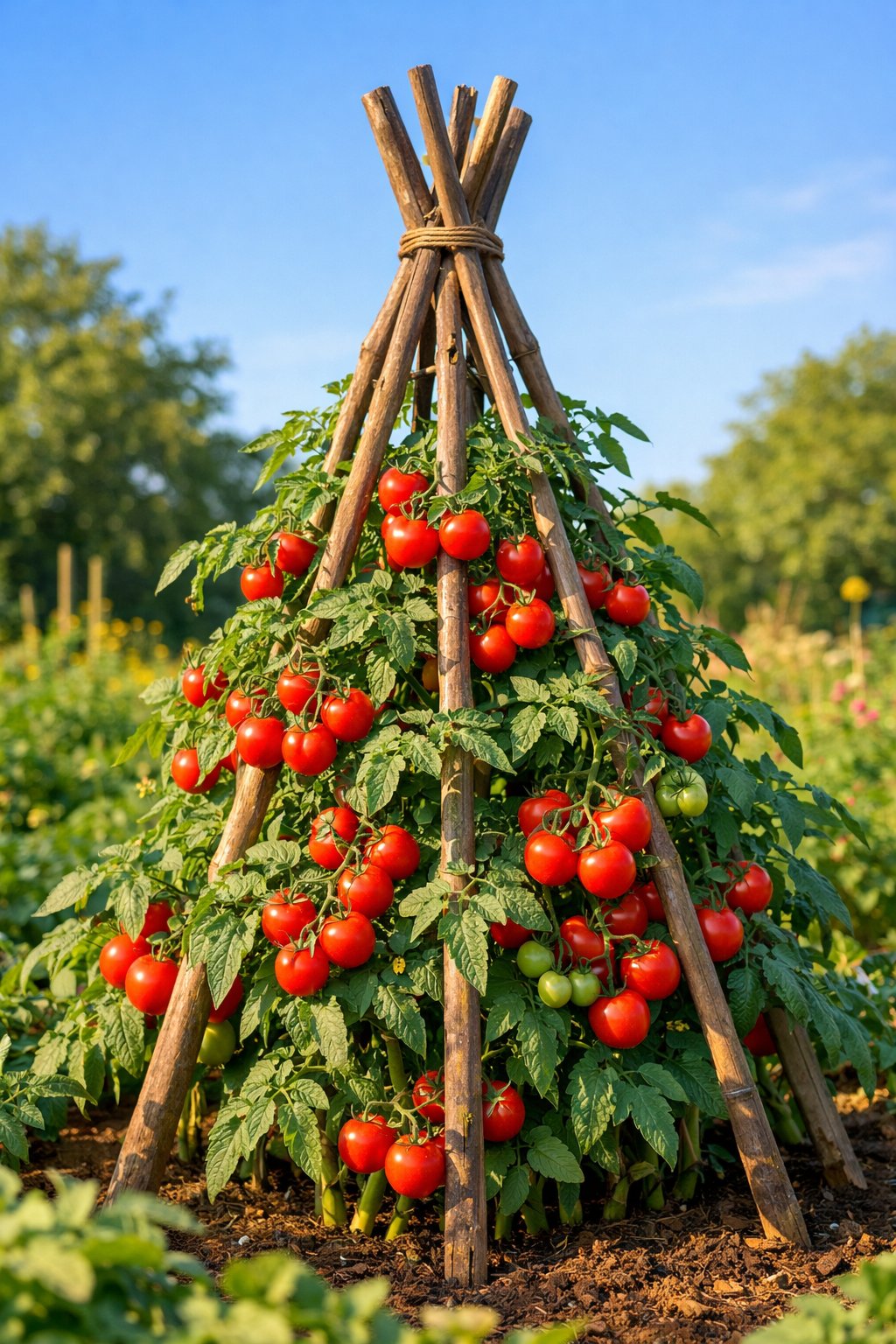
Tomato plants don’t need fancy gear to climb—a simple teepee works wonders.
Just build a teepee with three or more stakes tied at the top to make a cone. It’s quick, cheap, and you can move it or reuse it next summer.
Teepees let air flow and make it easy to prune and pick fruit. They’re great for indeterminate tomatoes that want to sprawl upward. Use sturdy bamboo or wood, and tie branches loosely so stems don’t get squished.
Space a few teepees a couple feet apart in a row to keep plants from tangling. Stake the poles deep and add twine as vines grow. This keeps fruit off the soil and helps prevent rot and pests.
Expert Tip From MrPlanter: “Spread mulch under the teepee to keep soil moist and block weeds. Check ties every week so stems can grow without getting squeezed.”_
12. Metal Post and Twine Support
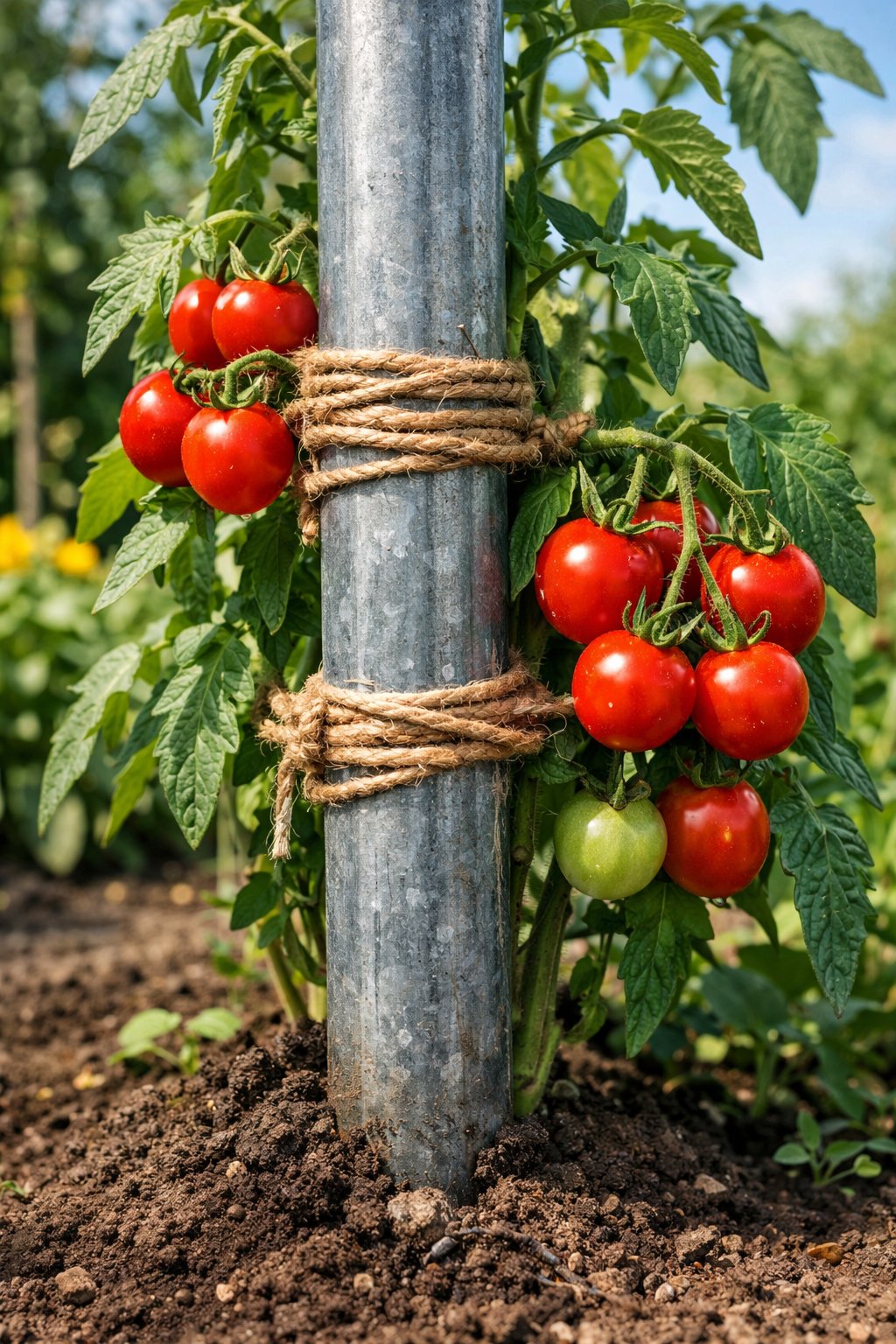
Ever watched your tomato plants just flop over like tired toddlers at nap time? Yeah, me too.
I use metal T-posts spaced out along the row, then run strong twine between them. First, I tie the twine low, and as the plants shoot up, I add more lines to keep those wild stems upright.
This setup is cheap and honestly, it takes barely any time to get going. It works for raised beds, big containers, or those long rows if you’re going all-in.
The metal posts hold everything solid, and the twine lets you move the support up as the plants keep growing. No more tomato jungle at harvest.
For indeterminate tomatoes, I train one or two main stems along the twine. That way, the plants get more sun and air. Just keep the twine tight and check often so the branches don’t get squished or rubbed raw.
Expert Tip From MrPlanter: Start your first twine at knee height, then add more every few weeks. If it starts sagging, swap it out—your tomatoes will thank you.
13. String and Stake Grid Method
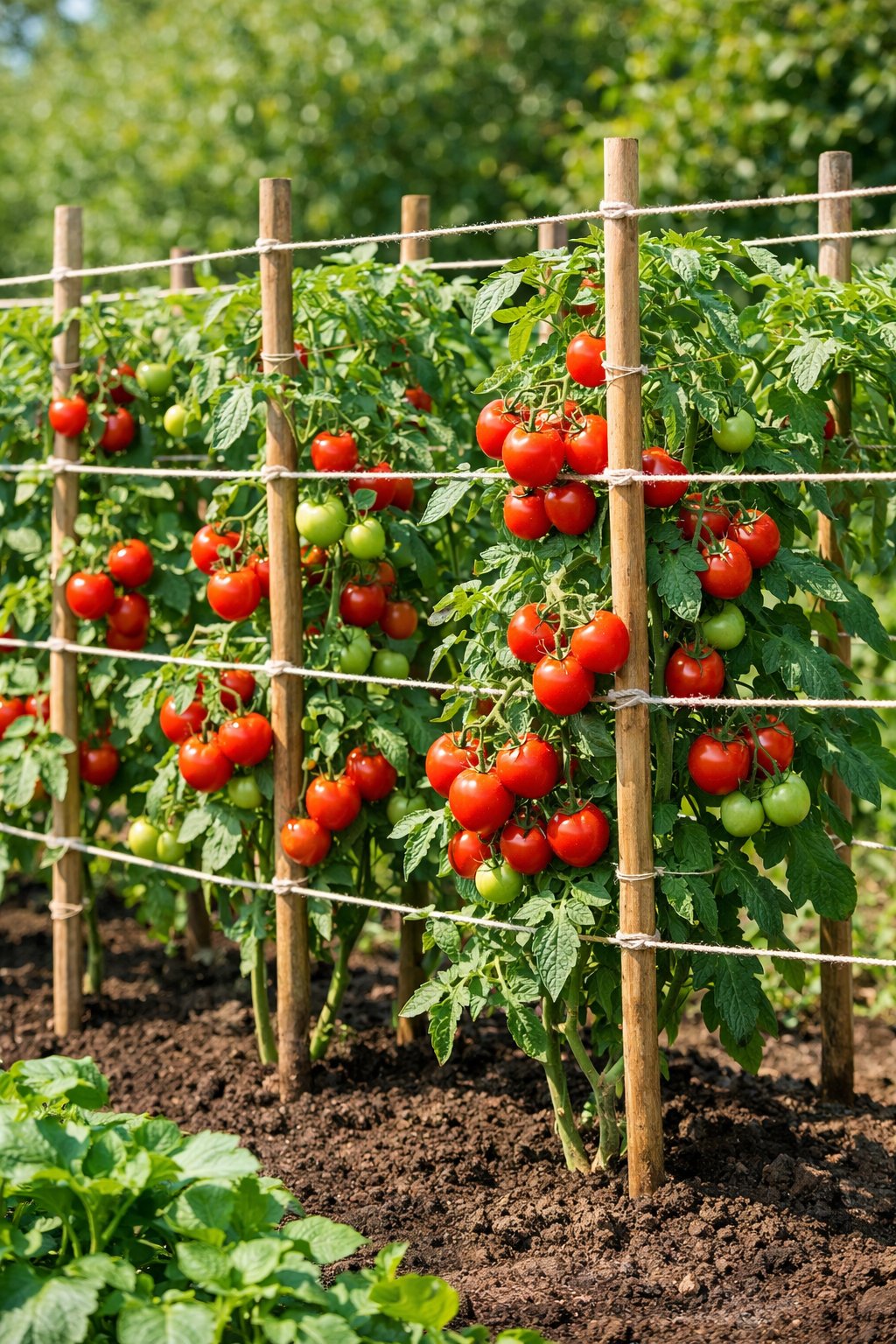
People say you need giant cages for tomatoes, but honestly, you really don’t.
I like using stakes set in a grid and weaving string between them. Each plant gets a “lane” to climb, so they don’t crowd each other, and picking becomes a breeze.
I tie vertical strings from a strong top wire down to each stake, then weave horizontal strings as the plants get taller. That makes little pockets for the vines and fruit, so nothing gets crushed.
You can build this with wood or metal stakes and some sturdy twine. It’s quick, easy, and you can move the strings up or out as needed—works for both bushy and vining tomato types.
Expert Tip From MrPlanter: “Set your stakes about 2–3 feet apart and use a top wire for the vertical strings. Every couple weeks, check the ties and move the strings up as your tomatoes grow.”
Choosing the Right Tomato Trellis for Your Garden
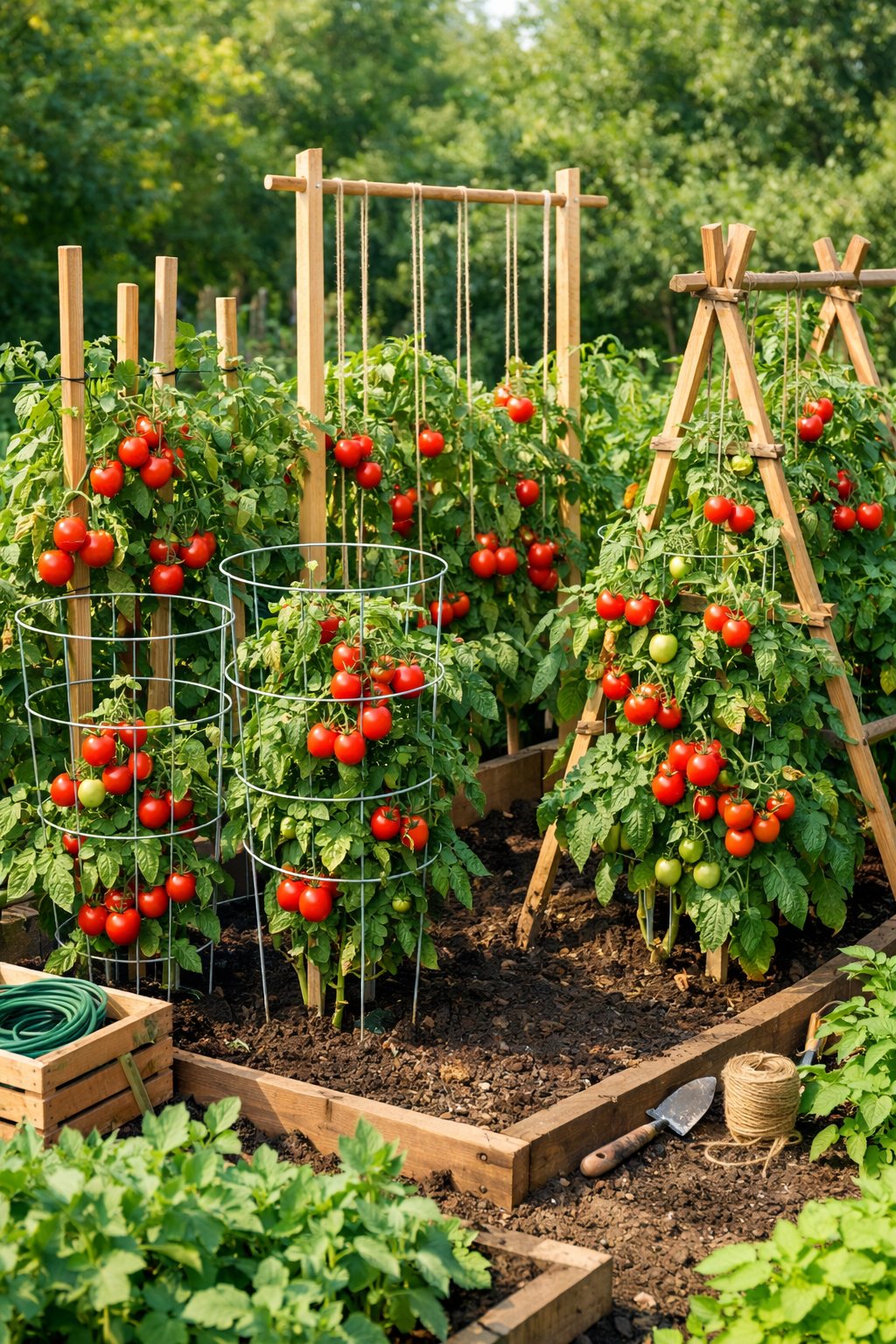
Pick a trellis that actually fits your space, works for your tomato type, and—let’s be honest—looks good to you. Think about how much room you have, how tall your plants get, and how much time you want to spend fussing with ties or trimming.
Assessing Your Space and Sunlight
First, measure your planting area. Grab a tape measure and check the bed width, the paths, and how far your plants sit from fences or walls.
Watch where the sun hits for at least a week. Tomatoes want 6–8 hours of direct sunlight. If you’re short on sun, try to set up your trellises so the plants face south or east to catch the morning rays.
Go vertical if you want to save ground space and boost airflow. If you need easy access for watering or picking, a horizontal or lean-to style might be better.
If your yard gets hit with strong winds, use sturdy posts. For heavy clay or crummy soil, I like raised beds with anchored trellises so the plants don’t tip over.
Considering Tomato Varieties
Figure out if you’re growing determinate (bush) or indeterminate (vining) tomatoes. Bush types stop growing at a certain height and do fine with short cages or simple rings. Vining types keep going and need tall, tough supports.
Estimate how tall your tomatoes will get. Some vining types can reach 6–10 feet. Make sure your trellis is at least as tall as your tallest plant, plus a little extra for anchoring.
Match how far apart you space your support with your plants. Vining tomatoes usually need 18–36 inches between stems. Bush types can squeeze in a bit closer, about 12–18 inches apart.
If you’re growing big, heavy varieties like beefsteak or heirlooms, use wire-reinforced trellises or sturdy cages. Those tomatoes can weigh a ton, and you don’t want your trellis sagging under the load.
Balancing Aesthetics and Functionality
Do you want a neat, modern vibe? Go with simple metal stakes. Prefer a cozy, rustic look? Try lattices or old wood. Pick materials that handle your local weather and match your yard’s style.
Think about how much work you want. Tall, single-line trellises mean you’ll need to tie and prune regularly. Cages and spiral stakes are easier, but sometimes block airflow. Choose a system you’ll actually stick with.
If you’re on a budget, PVC and wood are cheap but may not last forever. Galvanized steel or coated wire will last longer. If you want something fast, try a twine-and-peg setup over a weekend.
And don’t forget about harvesting. Place trellises so you can reach the fruit without trampling your plants. Makes picking way less of a chore—and fewer broken branches.
Troubleshooting Common Tomato Trellis Problems
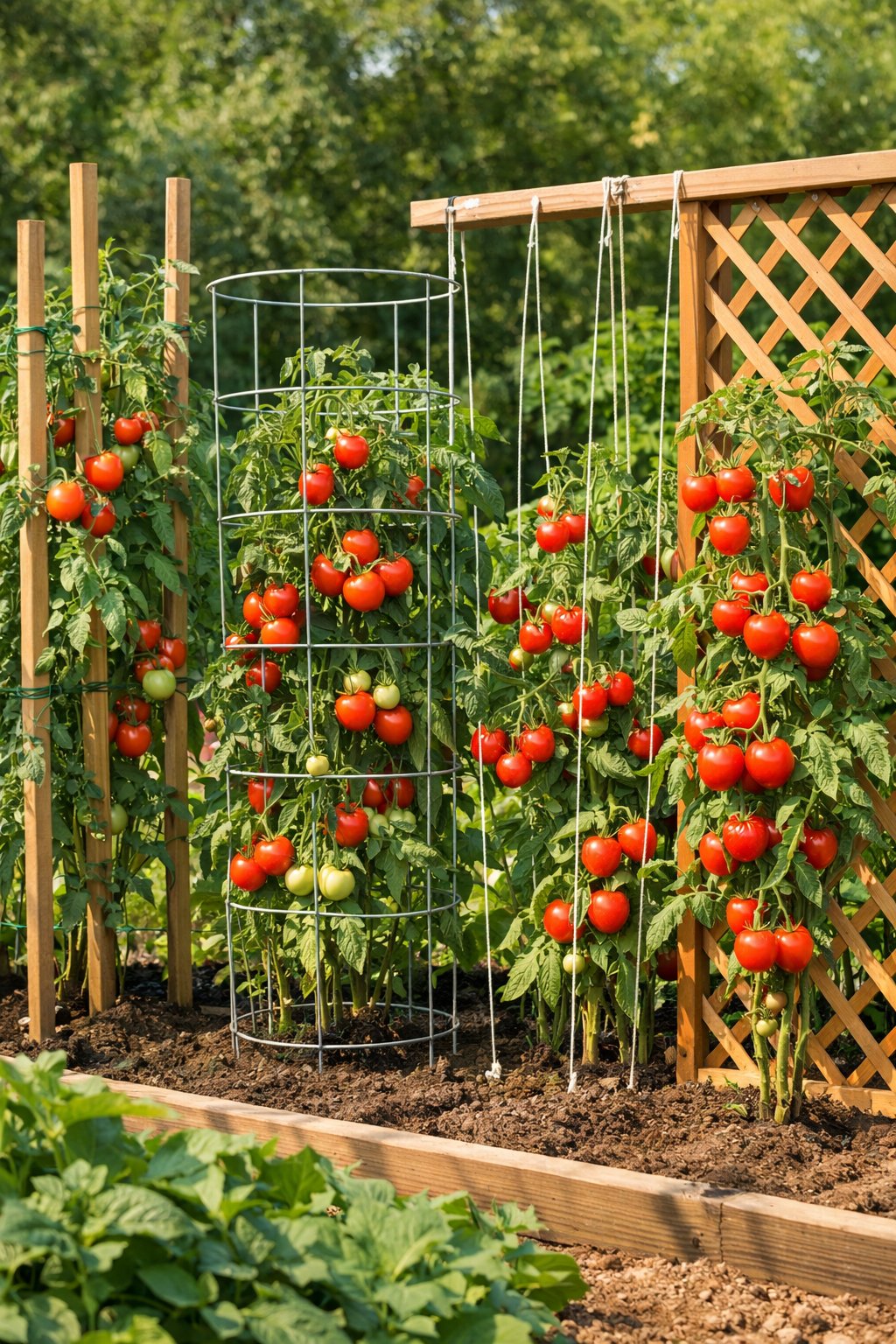
Keep your supports sturdy, avoid tangled vines, and brace those heavy fruit clusters so your tomatoes stay happy and off the ground. A few quick fixes now can save you a world of headache later.
Dealing With Wind and Weather Mishaps
Strong wind and heavy rain can knock over trellises or snap stems. I always anchor posts at least 2 feet deep, and for tall setups, I’ll use concrete or extra-long stakes. If I’m using cages, I drive three short rebar stakes around the base and tie the cage down tight.
Use weather-proof ties like cloth strips, twine, or plant clips that won’t cut into your stems when the wind blows. Swap out elastic ties each season—they stretch, then snap, and nobody wants that. After a storm, walk the row and retie any loose branches right away to stop rubbing wounds.
If your trellis bends but the plant survives, brace it with a temporary stake and a diagonal support. If wind keeps causing trouble, try a more flexible setup like netting or spaced strings that let the plants sway without breaking.
Preventing Tomato Plant Tangling
Tomatoes love to tangle if you let stems cross or vines loop through netting. I train each main stem on its own line or stake. When I prune, I snip off side shoots low on vining types so fewer branches need support.
Make a habit of checking every week or so. Walk the row, wrap new growth clockwise around the support, or use a soft tie. If you grow lots of varieties, stick a small label on each plant with pruning notes—it’s a lifesaver.
For cages and spiral trellises, guide stems through the bigger gaps early on. If you spot a tangle, gently untwist from the top down. Only cut if a branch is damaged. Keep your pruners clean so you don’t spread any plant diseases while you’re fixing knots.
Supporting Heavier Tomato Varieties
Big beefsteak tomatoes and those old-school indeterminate types really want a sturdier setup. I usually grab some 1.5 to 2-inch square lumber or sturdy metal T-posts and jam them in deep—no wimpy supports here! I keep them about 4 to 6 feet apart, which feels about right.
Every 12 to 18 inches, I toss in a horizontal crosspiece. That way, those massive fruit clusters have somewhere solid to hang out.
When things start getting heavy, I use wide, soft slings under the big clusters. These slings spread out the weight and keep the stems from snapping. I always tie the slings right to the trellis.
For each plant, I make sure to use at least two ties: one under the main leader and another down lower to help with the load. As the fruit gets chunkier, I swap out the ties so nothing gets pinched or broken.
Sometimes, I set up a two-line system. There’s a lower belt of twine to cradle the fruit and a higher line to keep the main stem heading up. This trick keeps the stem from flopping over and honestly, it makes picking tomatoes way easier.
If a stem ever cracks (and trust me, it happens), I just grab a splint and prop it up. I keep the fruit above the boo-boo until the plant sorts itself out.