You might be surprised, but you can grow a whole bunch of fresh vegetables in just a 5-gallon bucket—even if your “garden” is just a balcony or a patch of concrete.
Here’s the scoop on 13 veggies that love bucket life, how they act in small spaces, and why buckets make gardening feel way less complicated and a lot more fun.
Think of this as your friendly guide to turning a few cheap buckets into a lively mini-garden.
You’ll find everything from salad greens and herbs to “fruiting” show-offs like tomatoes and peppers.
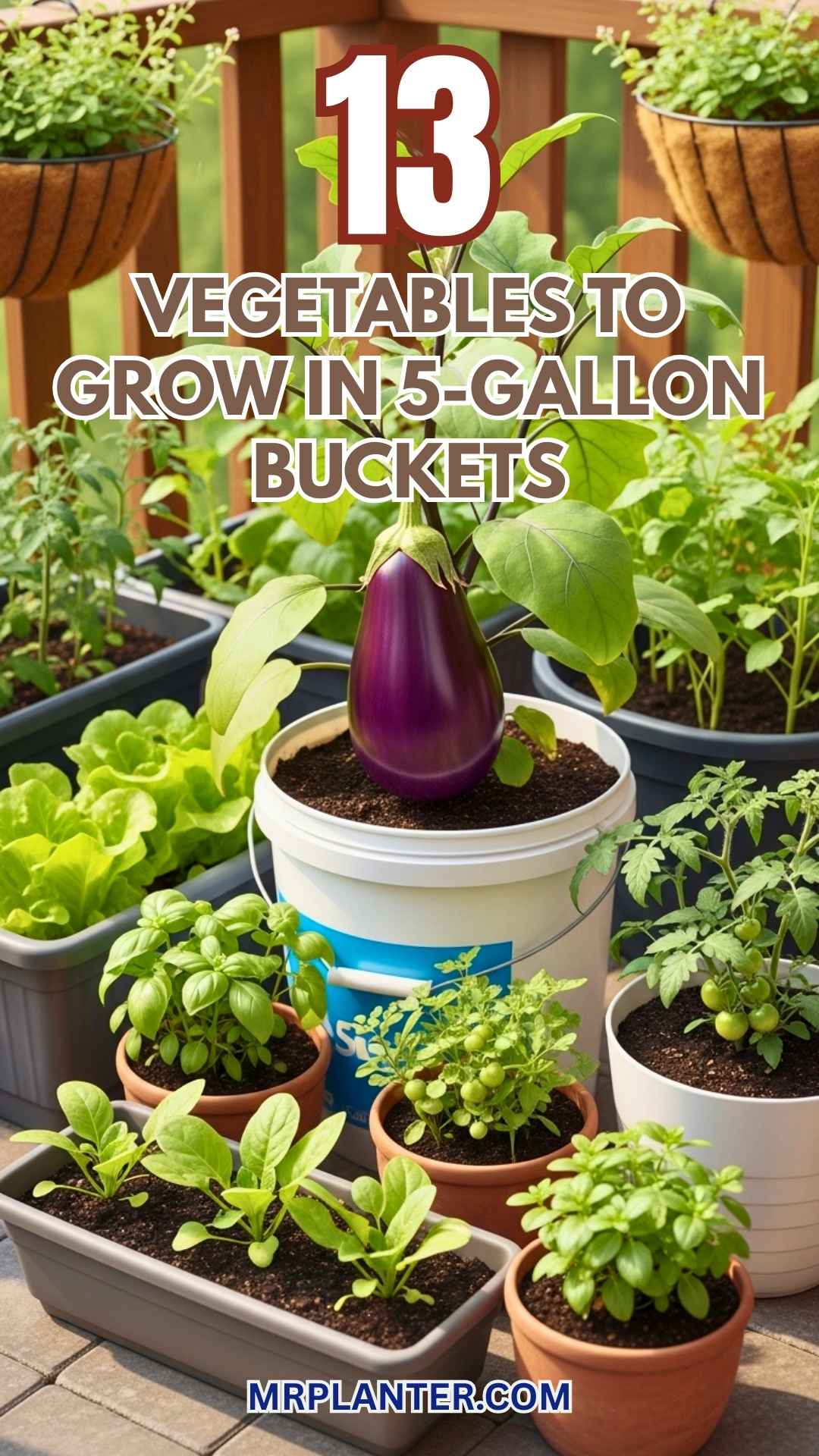
I’m tossing in easy tips and playful ideas, so you can pick plants that fit your space, your taste buds, and honestly, how much time you want to spend fussing over them.
1. Cherry Tomatoes – because bigger buckets mean bigger fruit parties!
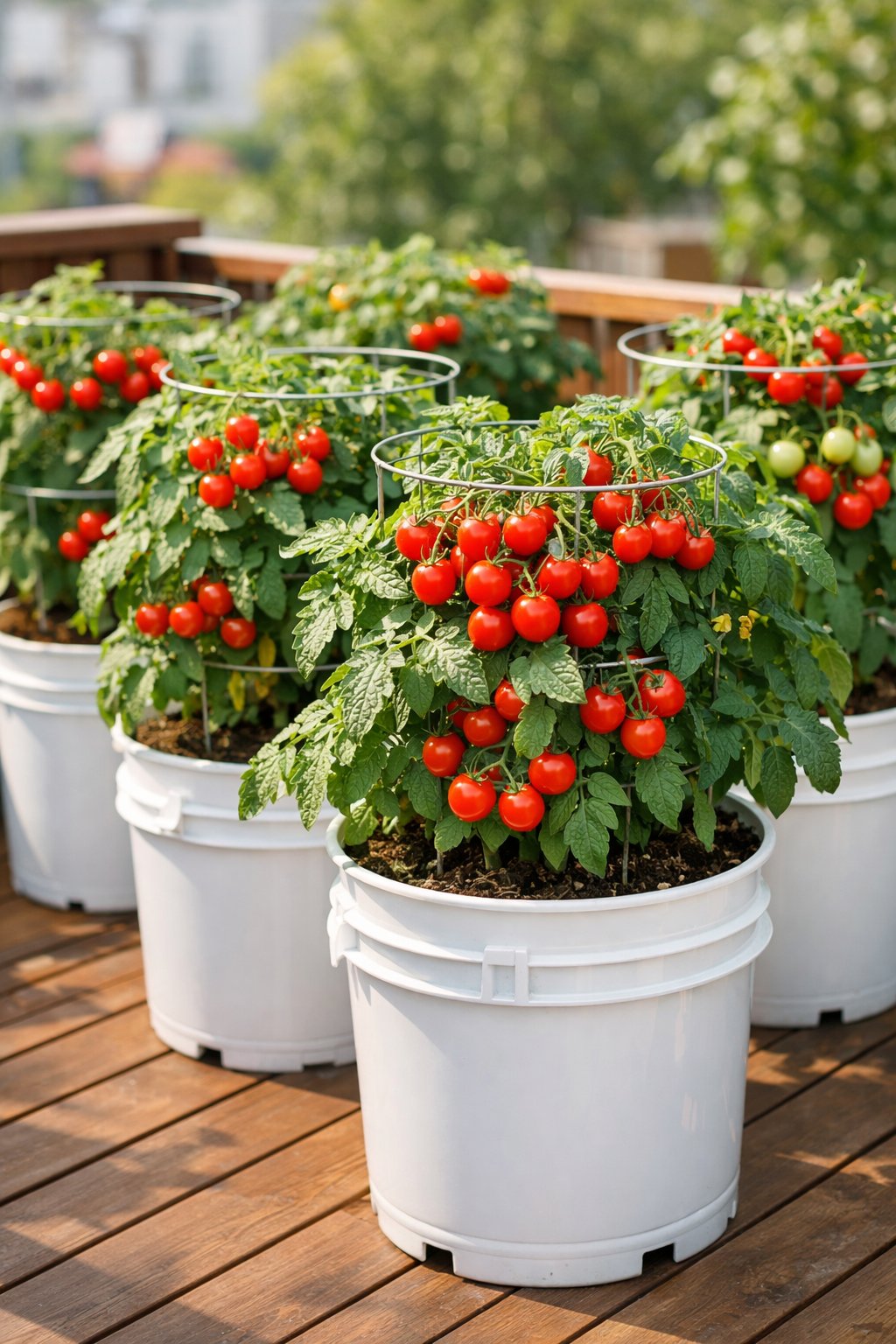
You don’t need a yard to grow sweet, juicy cherry tomatoes—trust me, I’ve tried it.
Plop one plant in a 5-gallon bucket and you’ll end up with more tomatoes than you’ll know what to do with.
Buckets let roots stretch out, keep moisture steady, and soak up the sun’s warmth.
Pick a compact or determinate cherry variety so the plant doesn’t turn into a jungle.
Use good potting mix and toss in some fertilizer every few weeks to keep those blooms coming.
Stake or cage your plant early so the vines grow up instead of sprawling everywhere.
That way, picking tomatoes stays easy and the fruit stays clean.
Buckets dry out faster than the ground, so poke your finger in the soil and water when the top inch feels dry.
Expert Tip From MrPlanter: Stick to one tomato per bucket, add slow-release fertilizer at planting, and set up a cage early so you don’t squish roots later.
2. Bell Peppers – the sweet, crunchy bucket MVPs
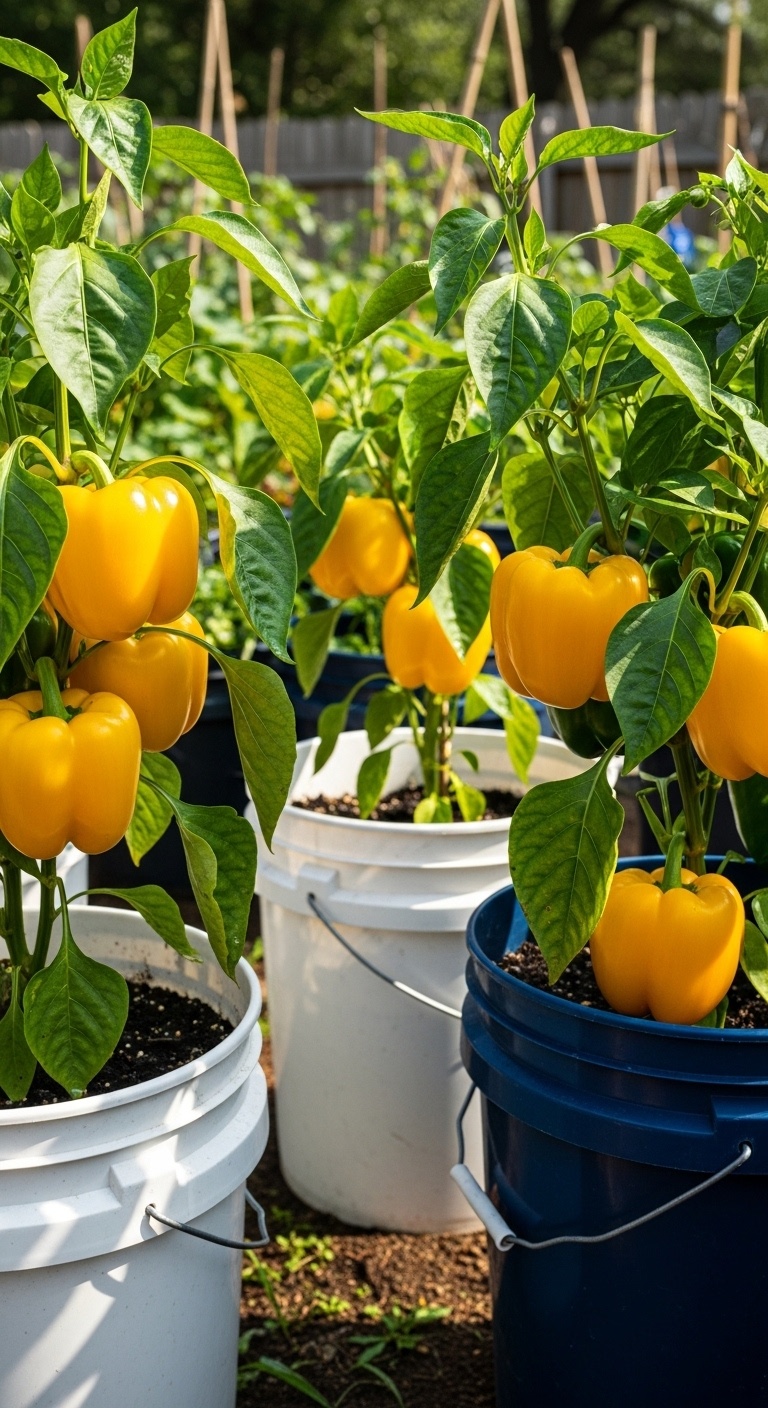
Bell peppers actually enjoy a snug spot, so a 5-gallon bucket fits them just right.
Put one healthy pepper plant in a bucket and you’ll get a steady stream of crunchy peppers all summer.
Start with well-draining potting mix and a slow-release fertilizer.
Keep the soil evenly moist; peppers get cranky if they dry out or sit in soggy soil.
Set the bucket where your pepper gets at least six hours of sun.
If your plant looks a little wimpy, pinch off the first flowers so it can focus on growing strong roots and stems.
Taller pepper plants sometimes need a stake, or their branches might snap under all that fruit.
Watch for aphids and caterpillars—usually, a gentle spray of soapy water does the trick.
Expert Tip From MrPlanter: Once peppers start to flower, feed with a balanced liquid fertilizer every two weeks. Move buckets or add mulch at night to keep roots warm if it gets chilly.
3. Lettuce – easy, fast, and salad-ready from your mini garden
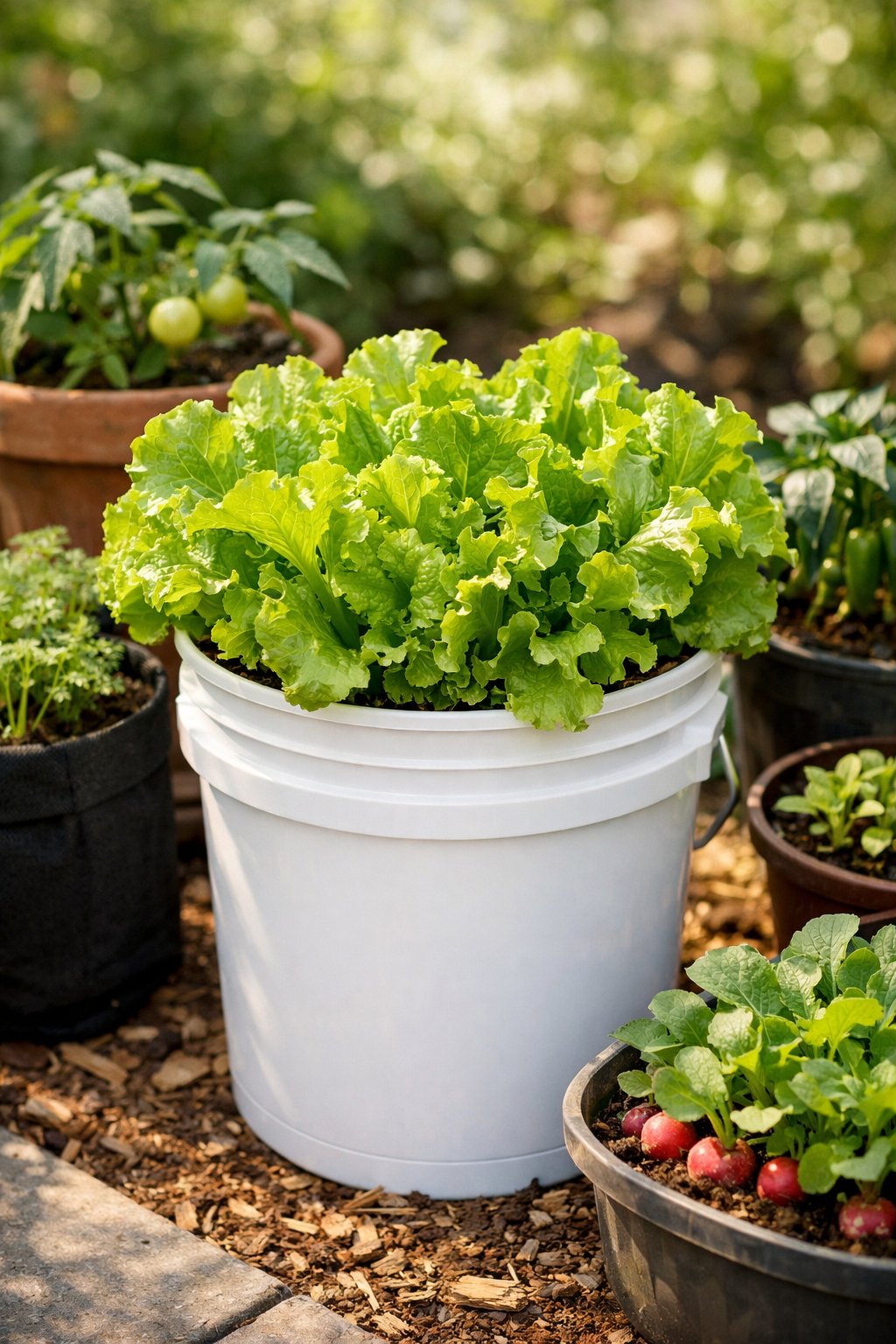
Lettuce won’t take over your bucket if you give it a little love.
You can grow crisp leaves in a 5-gallon bucket and snip fresh salad all season long.
Looseleaf or baby-leaf varieties grow fast and keep producing.
Sow seeds thinly, keep the soil damp, and let them soak up some morning sun.
Baby leaves show up in about three weeks, and full heads pop up in four to six.
Plant new seeds every couple weeks so you always have something to pick.
On hot days, toss a bit of shade cloth over your lettuce to keep it sweet and stop it from bolting.
Nobody likes bitter lettuce—trust me.
Expert Tip From MrPlanter: Plant a new row every two weeks for endless greens. Water gently in the morning so roots and leaves stay perky.
4. Radishes – like crunchy little surprises popping out of buckets
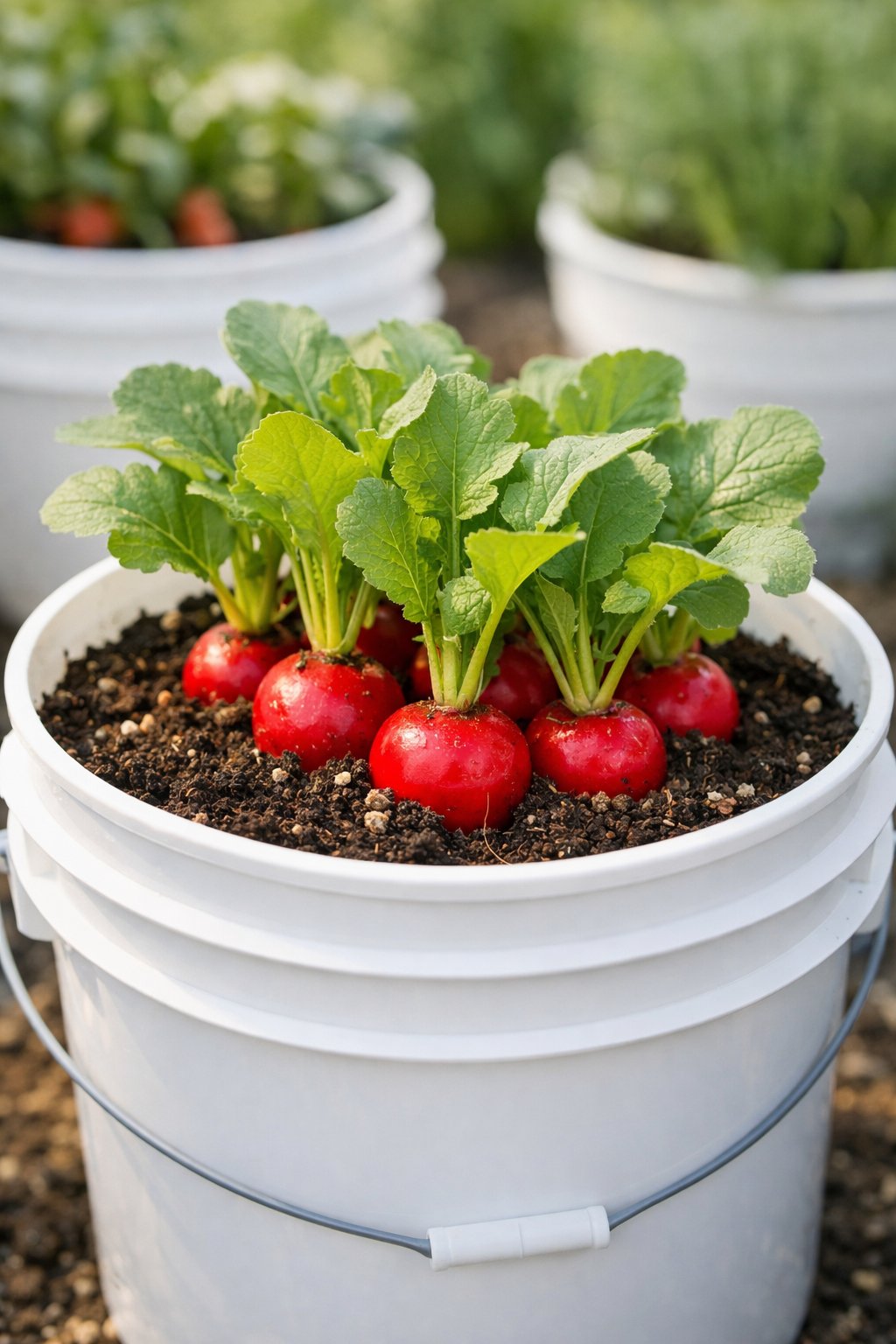
Radishes grow at warp speed—sometimes you get to eat them in just 20 to 30 days.
If you want quick wins and steady snacks, these are your bucket buddies.
Sow seeds straight into a 5-gallon bucket filled with loose potting mix.
Radishes don’t need deep soil, so you can fit several rows in one bucket.
Keep the soil moist and give them full sun or light shade.
Thin seedlings so each root has space to plump up.
Harvest early for mild flavor or let them get a bit bigger for more spice.
Radishes also make great companion crops, filling in around slower growers.
Expert Tip From MrPlanter: Plant new rows every two weeks for a continuous harvest. Pull small radishes often so the big ones don’t get crowded.
5. Green Beans – climbing and thriving like they’re at a bucket amusement park
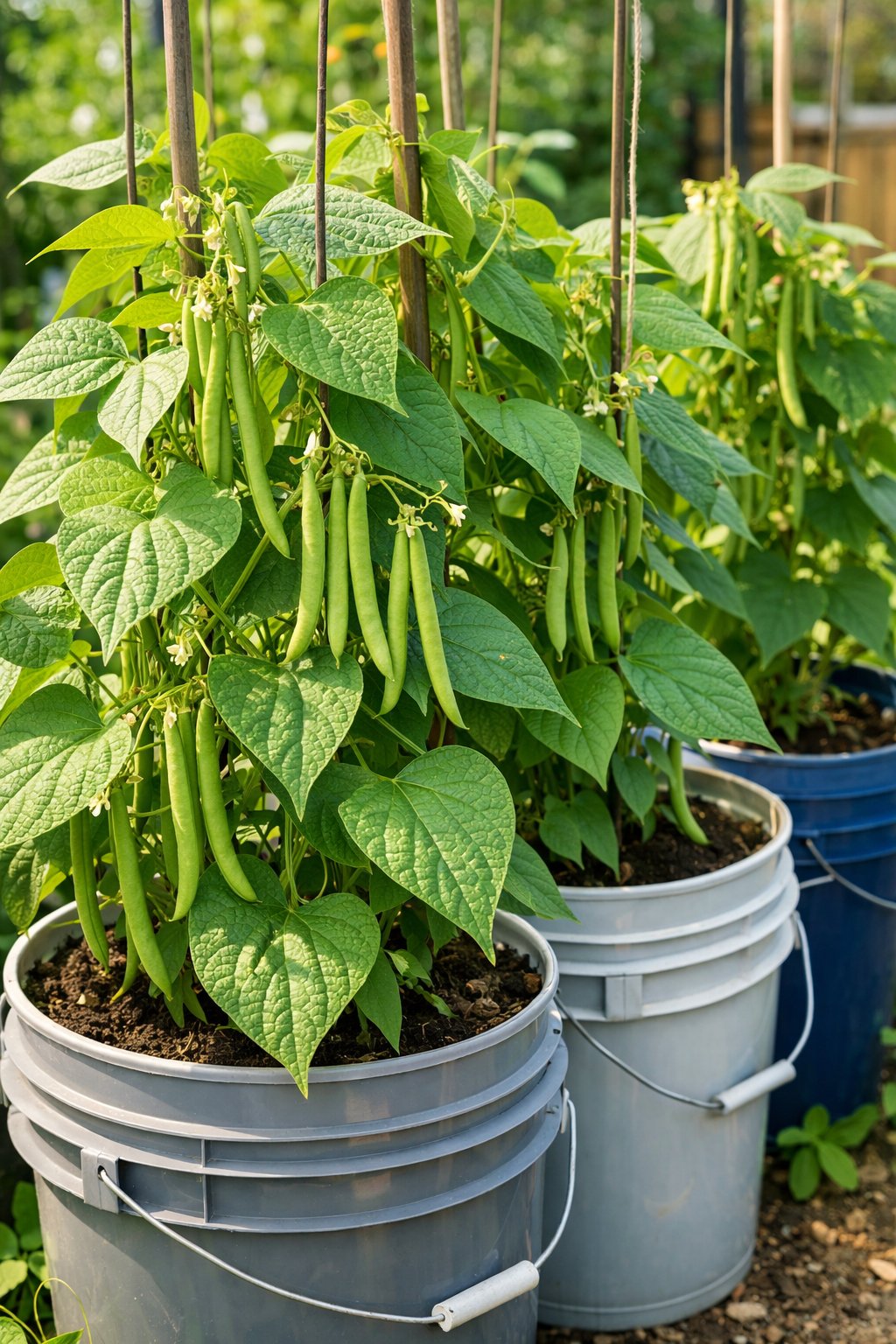
Green beans are basically the acrobats of the bucket garden—they love to climb.
Pick pole (climbing) varieties for buckets, and those vines will twist up a trellis and give you lots of beans.
Fill your bucket with good potting mix and a little compost.
Beans want steady moisture, but soggy roots make them grumpy.
Put the bucket in full sun and gently tie the vines as they stretch up.
Plant two or three seeds, then keep the strongest one.
Flowers show up fast, and soon you’ll have tasty pods.
It’s kind of magical.
Expert Tip From MrPlanter: Use a 4–6 foot trellis and water when the top inch of soil dries out. If plants look stressed, pinch off flowers so they can regroup.
6. Spinach – your vitamin-packed leafy sidekick
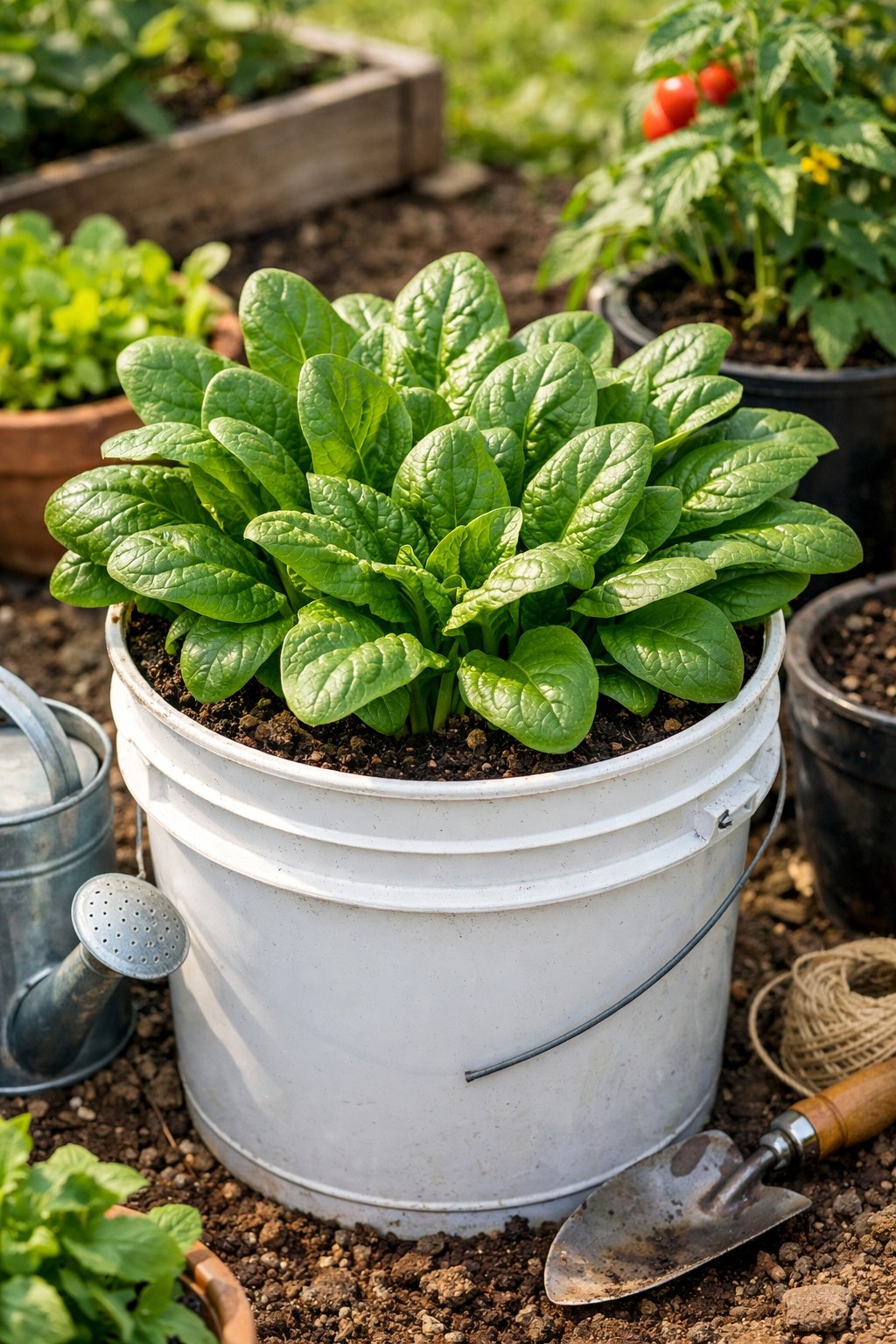
Spinach grows like a champ in buckets—you can fit several plants in one and still have room for big leaves.
They’re loaded with iron, vitamins A and C, and fiber, so you’re basically growing salad superheroes.
Plant seeds or baby seedlings in loose, well-draining mix.
Give them morning sun and a bit of afternoon shade, especially if you live somewhere hot.
Spinach likes cool weather, so plant in early spring or fall for the best flavor.
Keep the soil moist but not soggy, and harvest outer leaves as they get big.
You’ll keep getting more leaves that way.
Easy win.
Expert Tip From MrPlanter: Mix compost and potting soil for steady nutrients. Thin seedlings early so each plant gets room to grow big and tasty.
7. Carrots – bucket-grown, but still digging deep for flavor
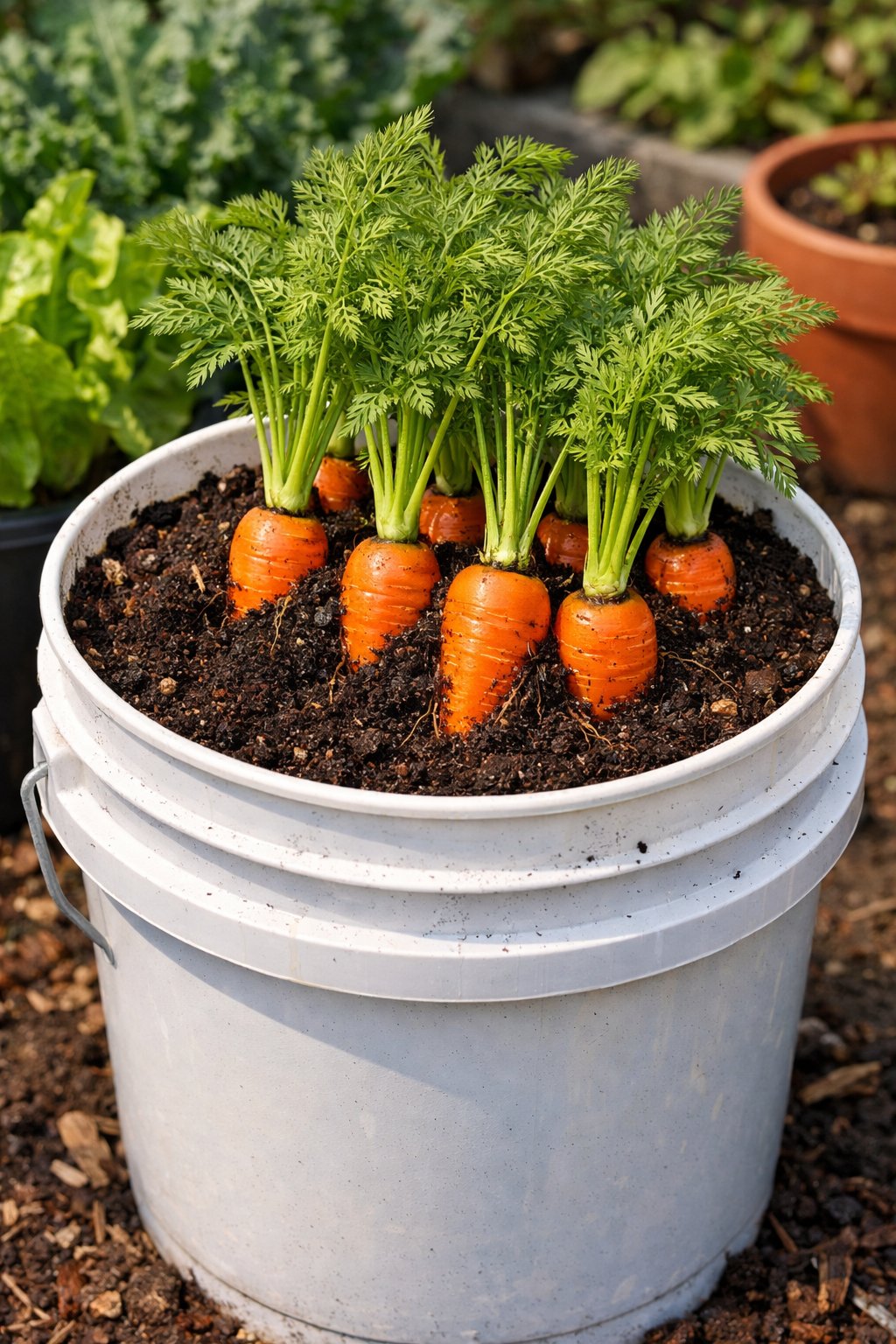
Carrots don’t need a giant garden to get sweet and crunchy.
Buckets work if you pick the right variety.
Use deep, loose potting mix and clear out rocks or clumps so roots can stretch down.
Space seeds thinly, or thin seedlings early so each carrot fattens up nicely.
Keep the soil moist—carrots hate drying out, and sudden droughts make them tough.
Set the bucket in full sun and just wait it out; carrots take their sweet time.
Harvest when they hit the size you expect for the variety.
Patience pays off here.
Expert Tip From MrPlanter: “Go for long, skinny carrot types in buckets. Feed with compost tea once during the season for extra goodness.“
8. Zucchini – the overachievers that love some room to stretch
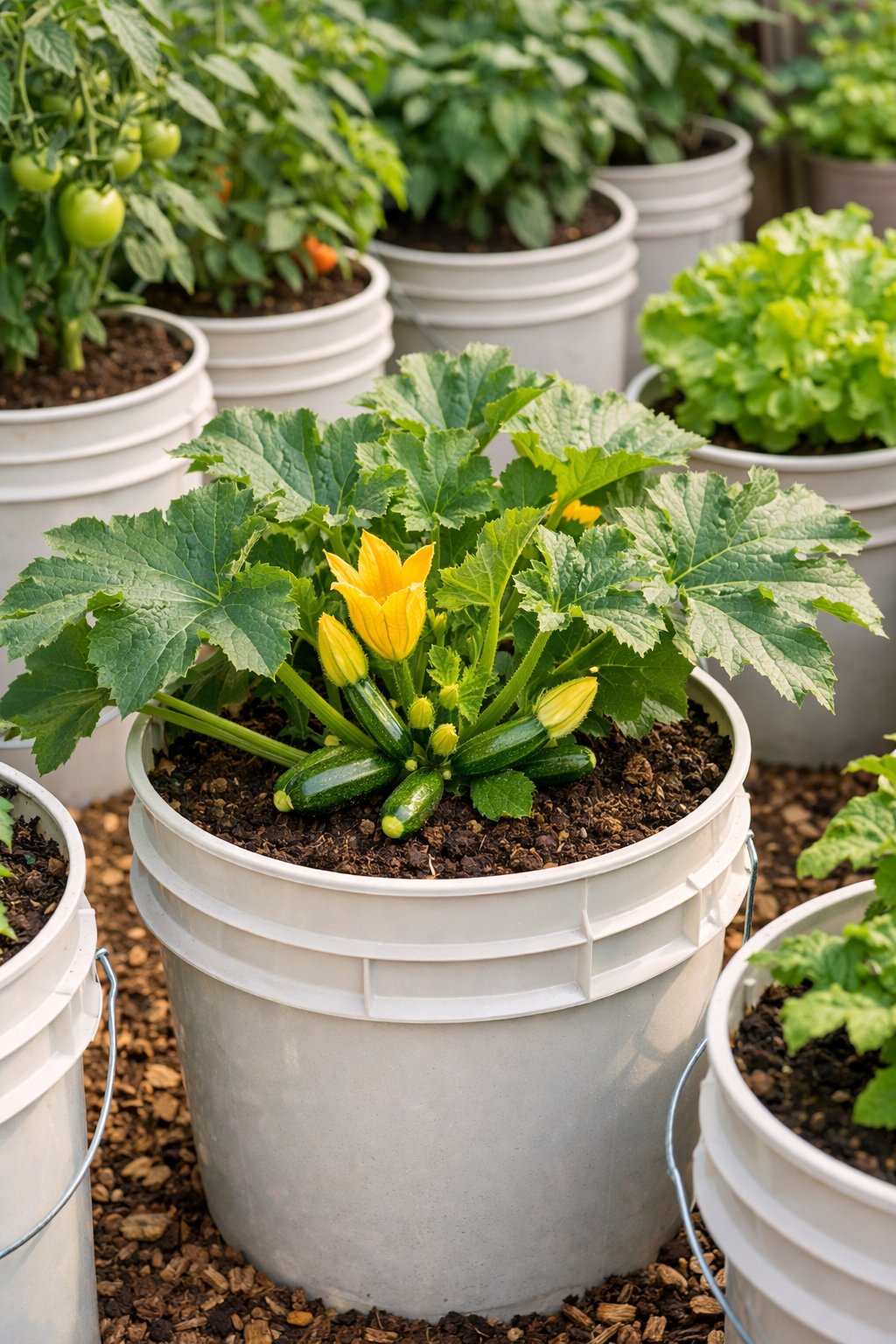
One zucchini plant can bury you in squash, even from a bucket.
Pick a compact variety, and you’ll get plenty of harvest without the plant taking over your patio.
Zucchini loves sun and steady water, so park your bucket where it gets at least six hours of light.
Use rich, well-draining soil and feed every few weeks with a balanced fertilizer.
Train vines to one side, or trim a few big leaves to let air flow through.
That helps keep mildew away.
Keep an eye out for squash bugs and powdery mildew.
Hand-pick pests and water at the base so leaves stay dry.
Pick zucchinis at 6–8 inches long for the best taste and more fruit.
Don’t let them get huge unless you want a doorstop.
Expert Tip From MrPlanter: “Pick bush or semi-bush zucchini if you want less plant chaos. Keep soil moist and pick often to keep the fruits coming.“
9. Herbs like Basil and Parsley – the perfume section of your bucket farm
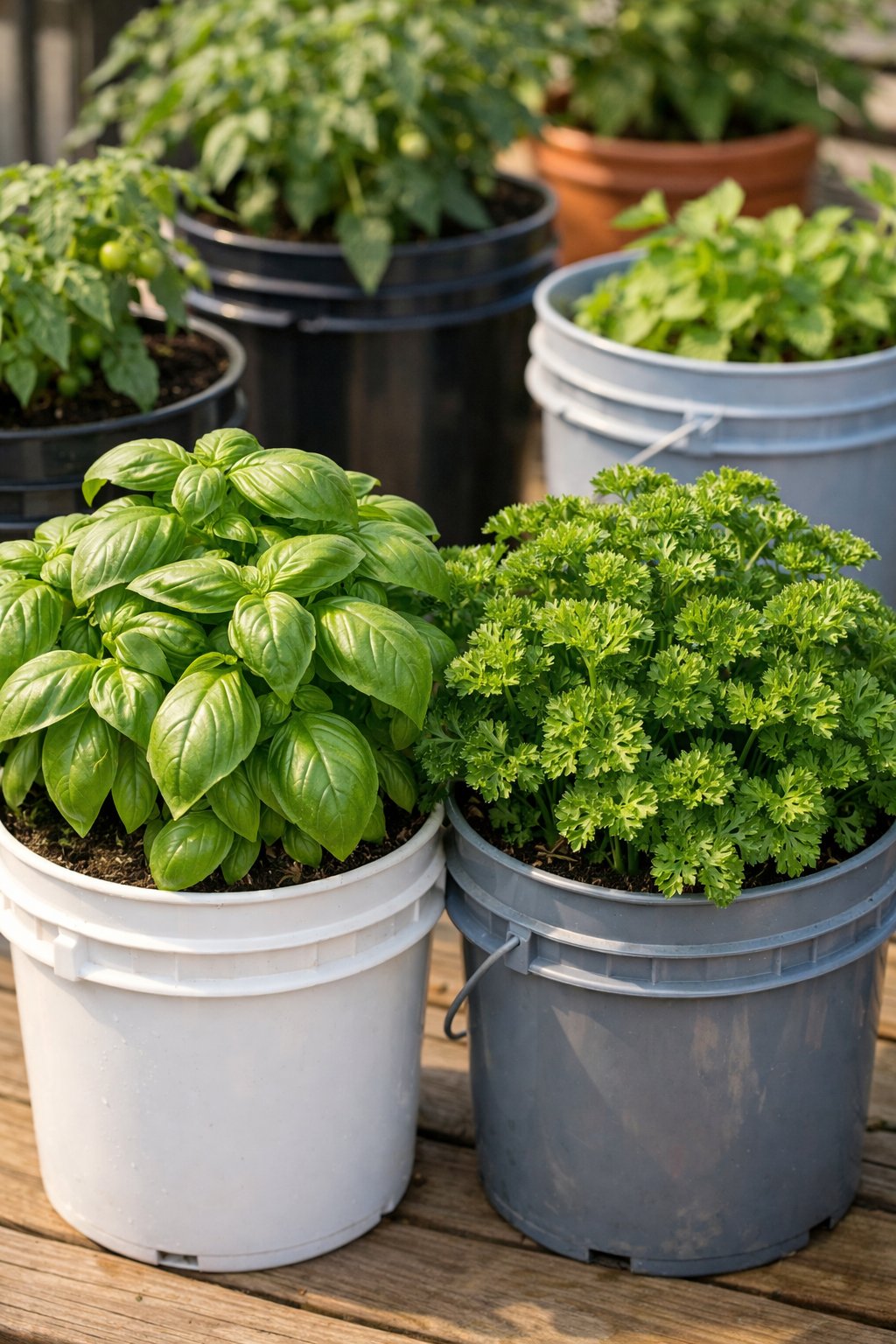
A bucket of basil can make your whole kitchen smell like a fancy restaurant.
You can grow basil and parsley together in one bucket if you give them a little elbow room.
Plant one basil and one parsley, or maybe a basil with a few small parsley seedlings.
Regular watering and full sun keep them happy.
Basil craves heat and sun, while parsley handles a bit more shade and likes steady moisture.
Use rich, well-drained soil, and pinch basil often to stop it from flowering.
If one herb starts hogging the sun, just move the bucket a bit.
Both herbs will thank you.
Expert Tip From MrPlanter: Plant basil in the center for more sun, tuck parsley near the edge for a little shade. Feed lightly every few weeks and pinch leaves often for bushy plants.
10. Chili Peppers – small buckets, big spicy attitude
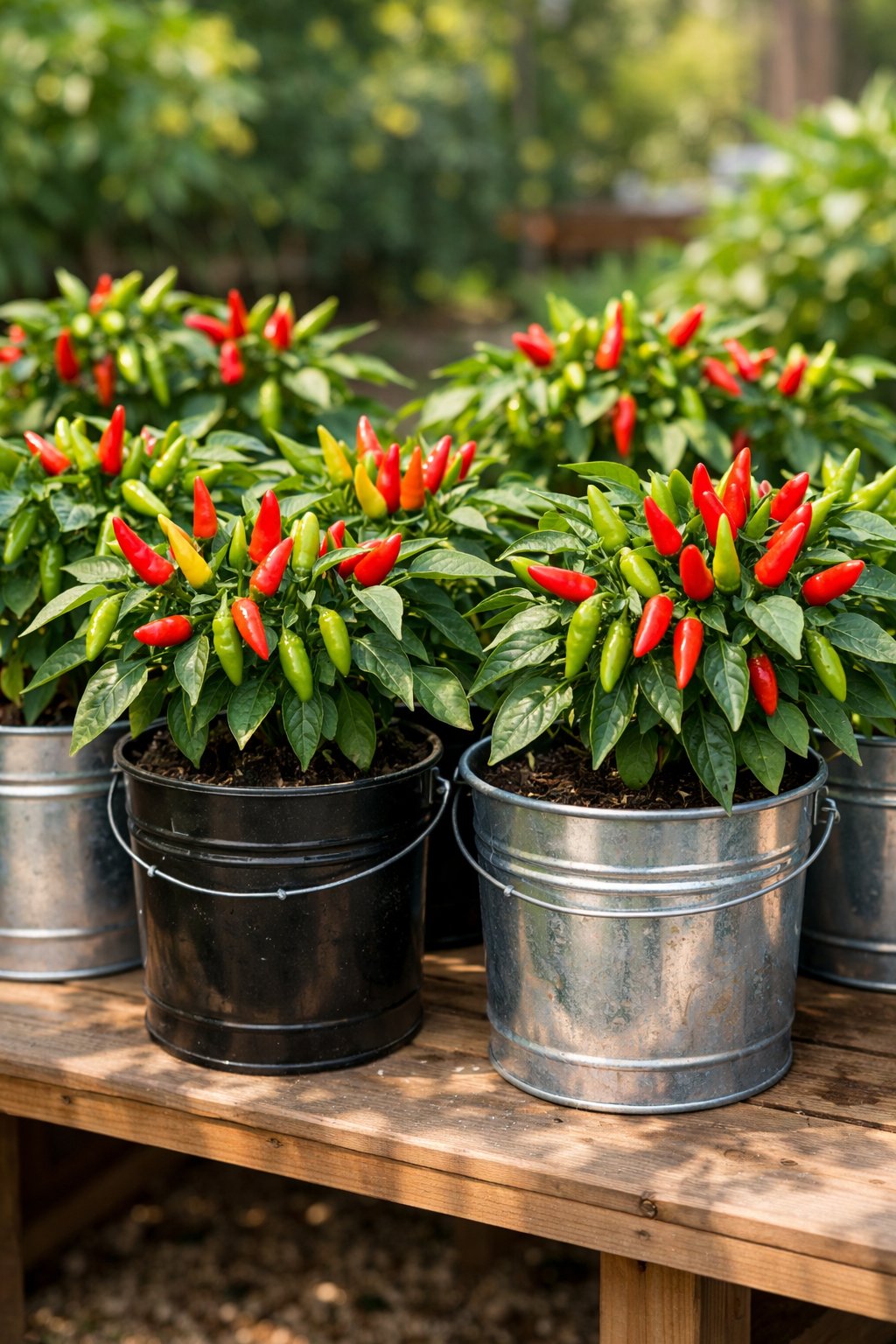
A single 5-gallon bucket can hold a whole pepper party—seriously, try it.
You can grow all sorts of chili peppers in one bucket, from mild bells to fiery hot habaneros, and they’ll keep pumping out fruit all season.
Pick a bucket with good drainage and fill it with rich, well-draining potting mix.
Peppers love warmth and sun, so give them at least six hours of sunlight every day.
Keep the soil moist but never soggy—peppers like their “feet” dry.
Feed every few weeks with a balanced fertilizer to keep the harvest coming.
Expert Tip From MrPlanter: “Plant peppers after the last frost and give them full sun for best yields. Pinch off early flowers so the plant can grow strong before it starts fruiting.”
11. Cucumbers – they’ll happily vine on a trellis beside your bucket
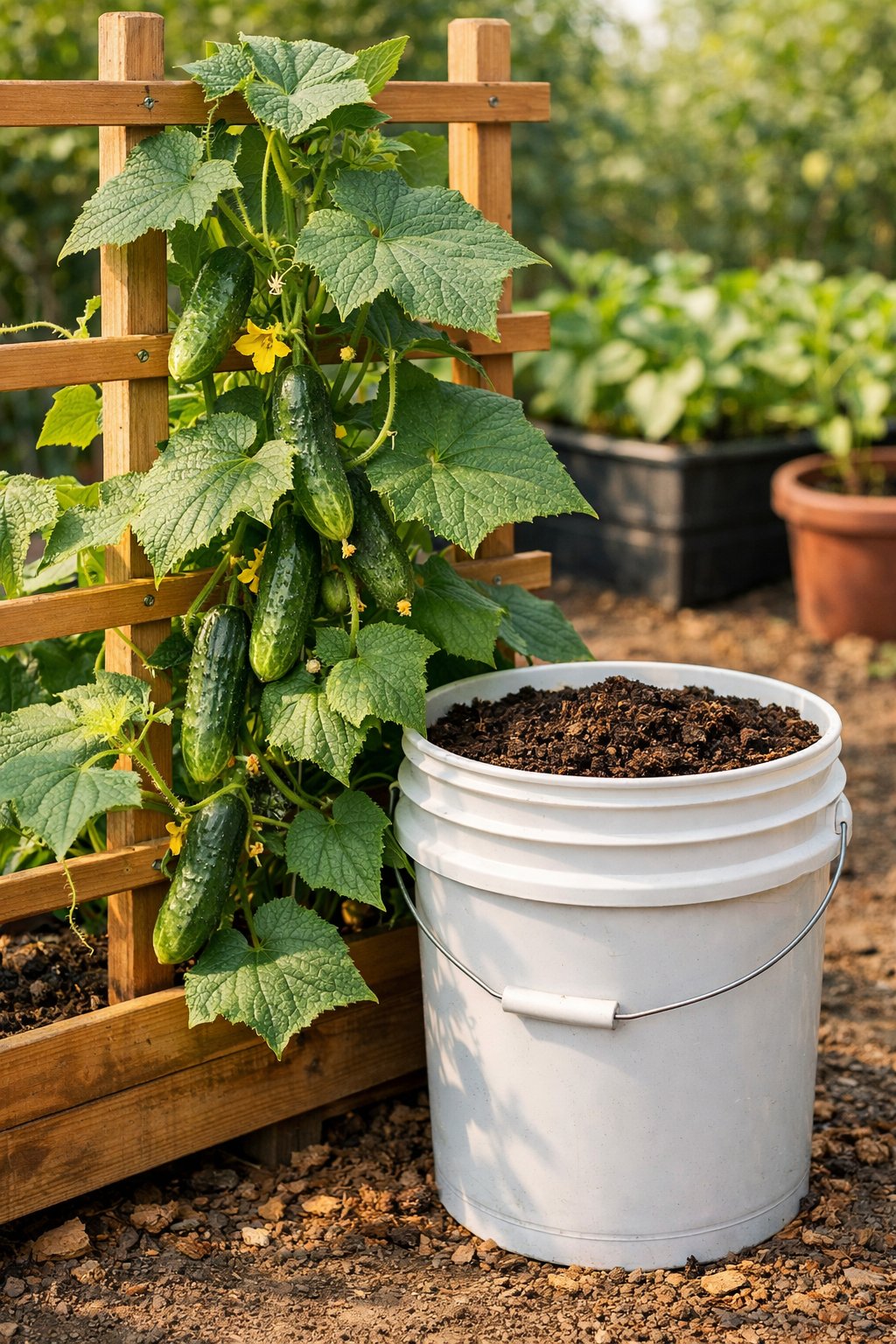
People always say cucumbers need a massive patch of dirt, but honestly? You can totally grow vining cucumbers in a 5-gallon bucket and let them climb a simple trellis right next to it.
Just grab a vining variety and a deep pot with holes in the bottom. Fill it with rich potting mix and toss in some food every couple weeks—your cucumbers will thank you with crisp, sweet fruits.
Keep the trellis close so the vines can grab on before they wander off. Growing them up instead of out saves space, keeps the fruit cleaner, and lets air move around so disease has less of a chance.
Buckets dry out fast, so water often. If you don’t see many bees, you might need to play matchmaker and hand-pollinate the flowers.
Expert Tip From MrPlanter: Stick one healthy seedling in each bucket and give it a sturdy trellis from day one. Snip a few side shoots now and then so your plant stays happy and doesn’t turn into a wild jungle.
12. Eggplants – purple globes of gloriousness for compact growers
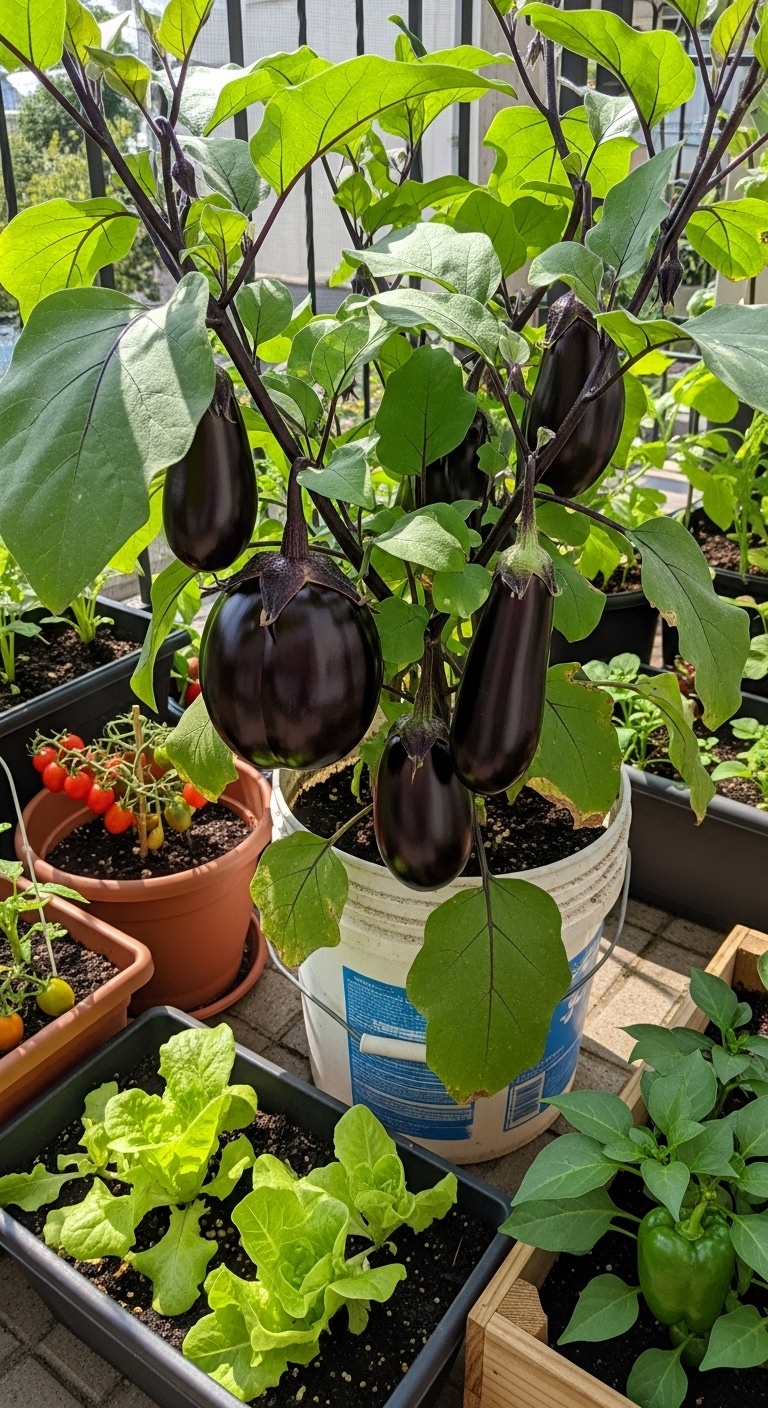
Most folks don’t realize eggplants can totally rock a 5-gallon bucket and still serve up plenty of shiny, purple fruits. It’s like getting big flavor from a tiny space—how cool is that?
Go for mini or compact types so your plant doesn’t try to escape the bucket. Use a rich, well-draining mix and toss in a little balanced fertilizer every few weeks to keep the flowers coming.
Make sure the bucket sits where it soaks up at least six hours of sunshine each day. Water deeply, but let the top inch of soil dry out before you water again—eggplants don’t like soggy feet.
Stake or cage the plant early so those purple globes don’t end up flopping all over the place. If you spot flea beetles or aphids, just brush them off or use a gentle spray.
Expert Tip From MrPlanter: Start with a compact variety and give it all the sun you can for the best fruit. Check the soil moisture a couple times a week and feed lightly when you see blooms popping up.
13. Bush Beans – less climbing, more munching from tiny containers
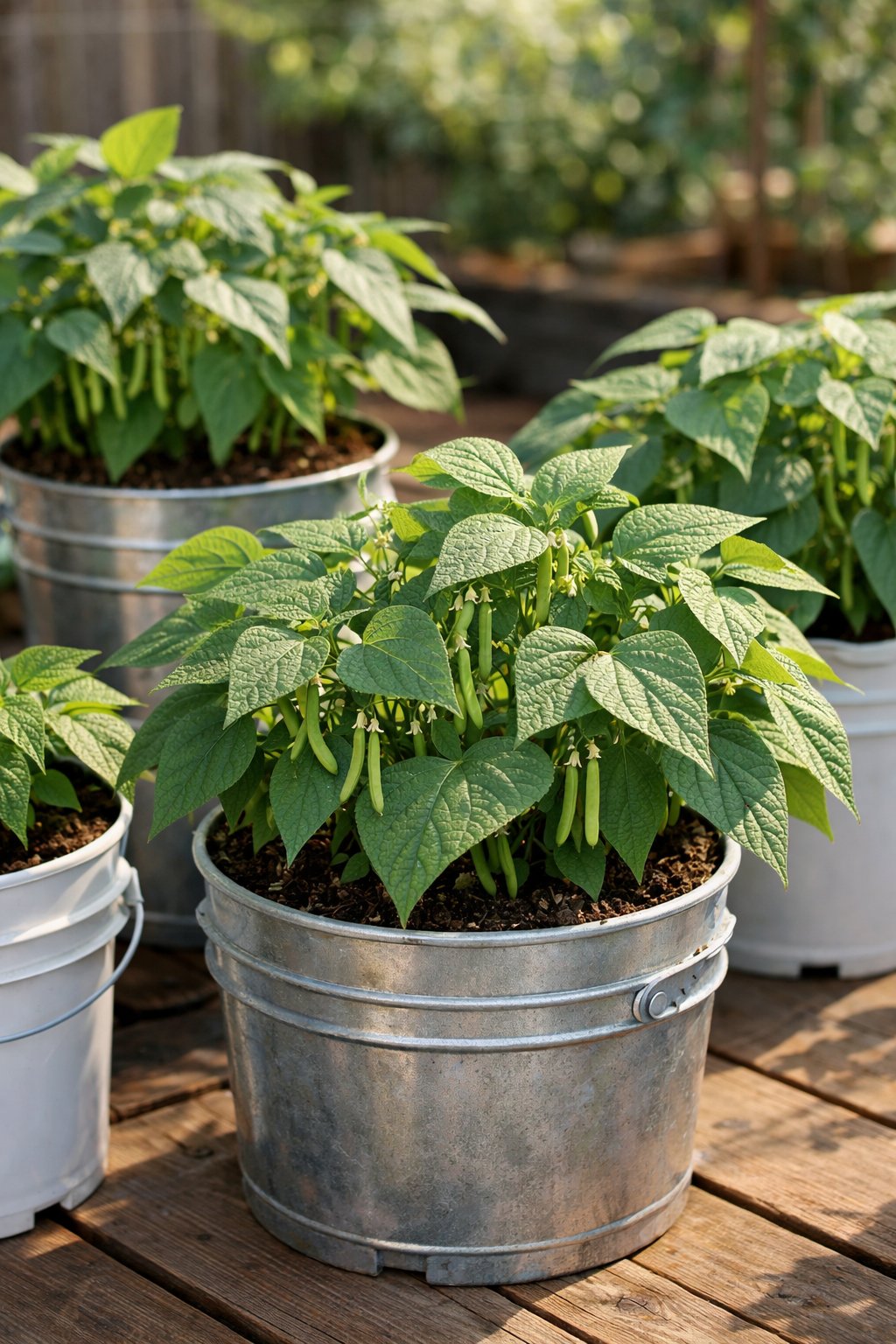
Here’s a fun little secret: you can actually grow a snack-worthy batch of bush beans in just a small bucket.
Bush beans aren’t climbers, so you can forget about wrestling with poles or trellises.
They fit right into a 5-gallon bucket and don’t complain.
Drop two to four seeds into each bucket.
Once the seedlings pop up, keep only the two strongest.
You only need 6–7 inches of soil, and these beans really love about eight hours of sun every day.
Keep the soil evenly moist—don’t let it dry out, but don’t drown them either.
Pick beans often, or they’ll slow down on making more.
Go easy on the fertilizer; half what you’d use for other veggies works best.
If you overdo it, you’ll just end up with lots of leaves and not much to munch.
Expert Tip From MrPlanter: “Space two good plants per bucket and pick beans every few days to keep them producing. Water when the top inch of soil is dry and you’ll be rewarded with fresh, crunchy beans.”