As an Amazon Associate, MrPlanter.com earns from qualifying purchases.
A Buddha garden works best when it feels calm, simple, and easy on the eyes.
You can make that happen with a few smart choices, like a steady focal point, soft water sounds, and plants that frame the space instead of crowding it.
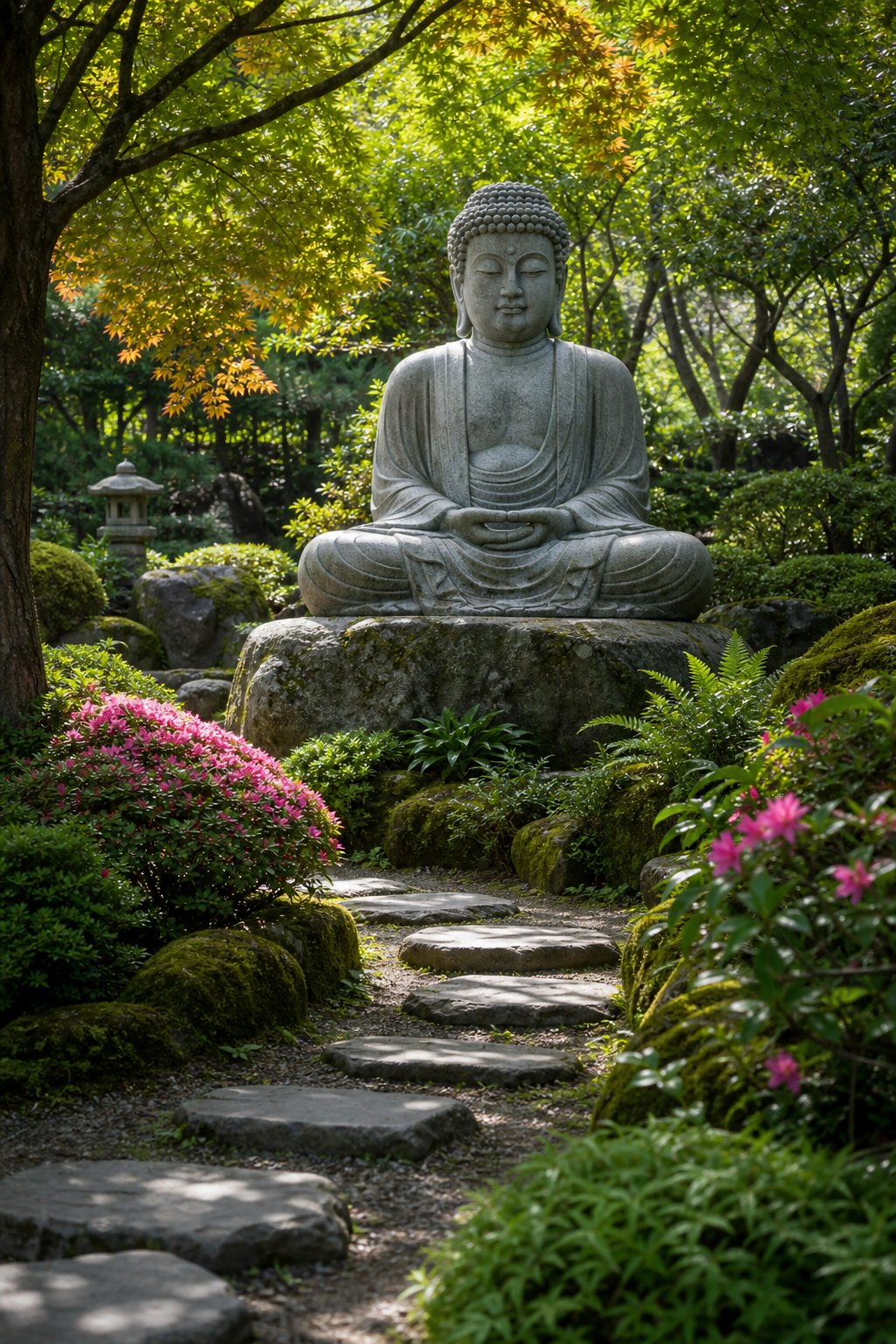
1. Place A Seated Stone Buddha Statue As The Garden Focal Point
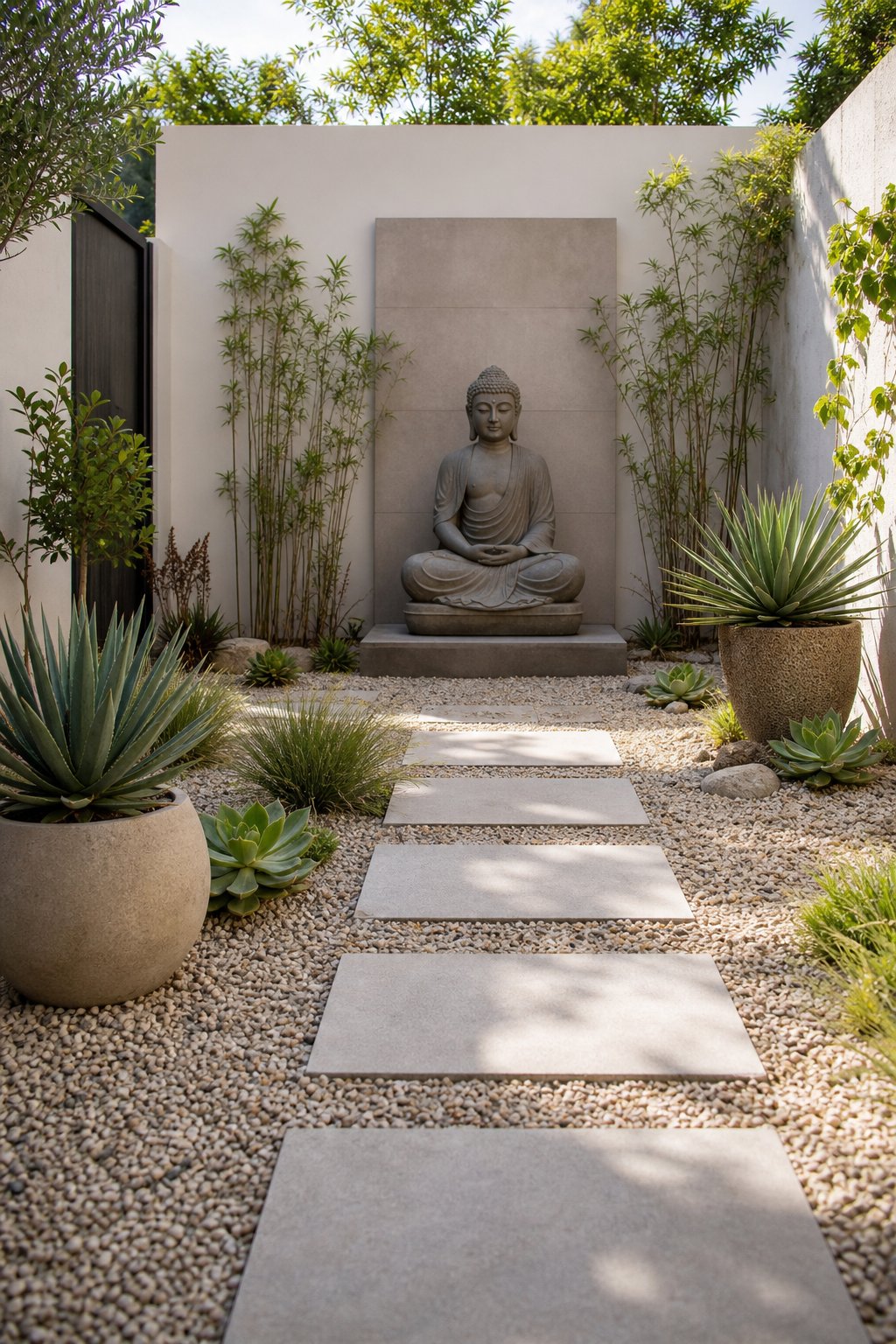
A garden can feel a little lost without a clear star, and a seated stone Buddha does that job beautifully. Put it where you naturally look first, like the end of a path or across from a patio chair.
Stone works well because it feels steady and calm in outdoor light. I like giving the statue a simple base of gravel or moss so it doesn’t look like a confused giant dropped it there.
Expert Tip From MrPlanter: “Choose one clear focal point, then let the rest of the garden support it. If everything tries to be the main character, the space starts acting like a noisy group chat.“
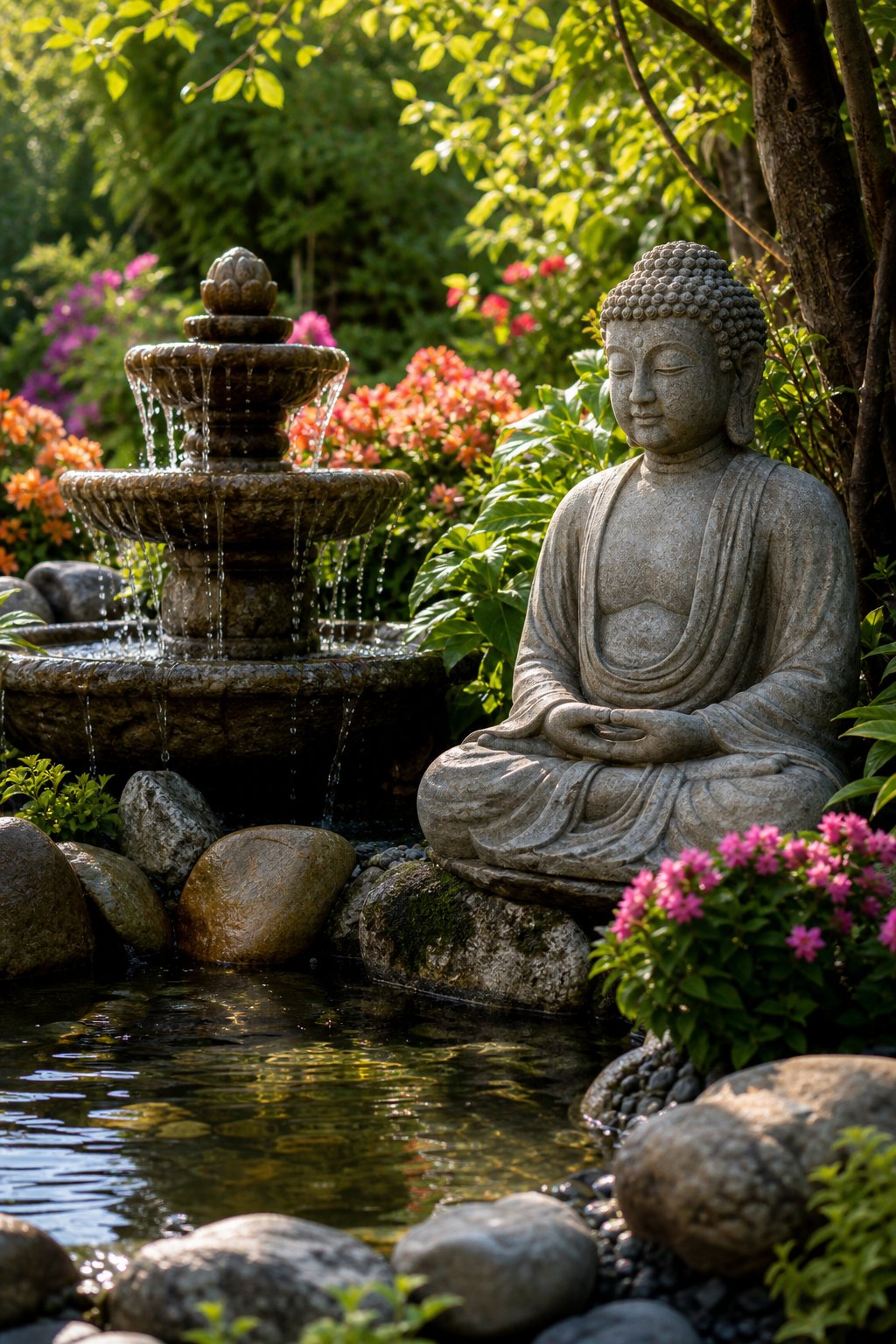
2. Add A Small Tiered Fountain Beside The Buddha For Gentle Sound
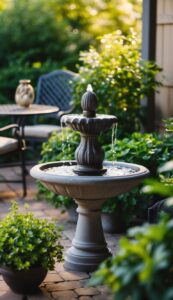
A still garden is nice, yet a little water sound can make the space feel alive. A small tiered fountain beside your Buddha statue gives you that soft trickle without taking over the yard.
Keep the scale modest so it feels calm, not like a hotel lobby fountain with a billing department. Place it where you can hear it from a seat or walkway, since sound matters just as much as looks.
Expert Tip From MrPlanter: “Test the fountain before you place it for good. If the sound makes you exhale a little slower, you’ve found the right spot.“
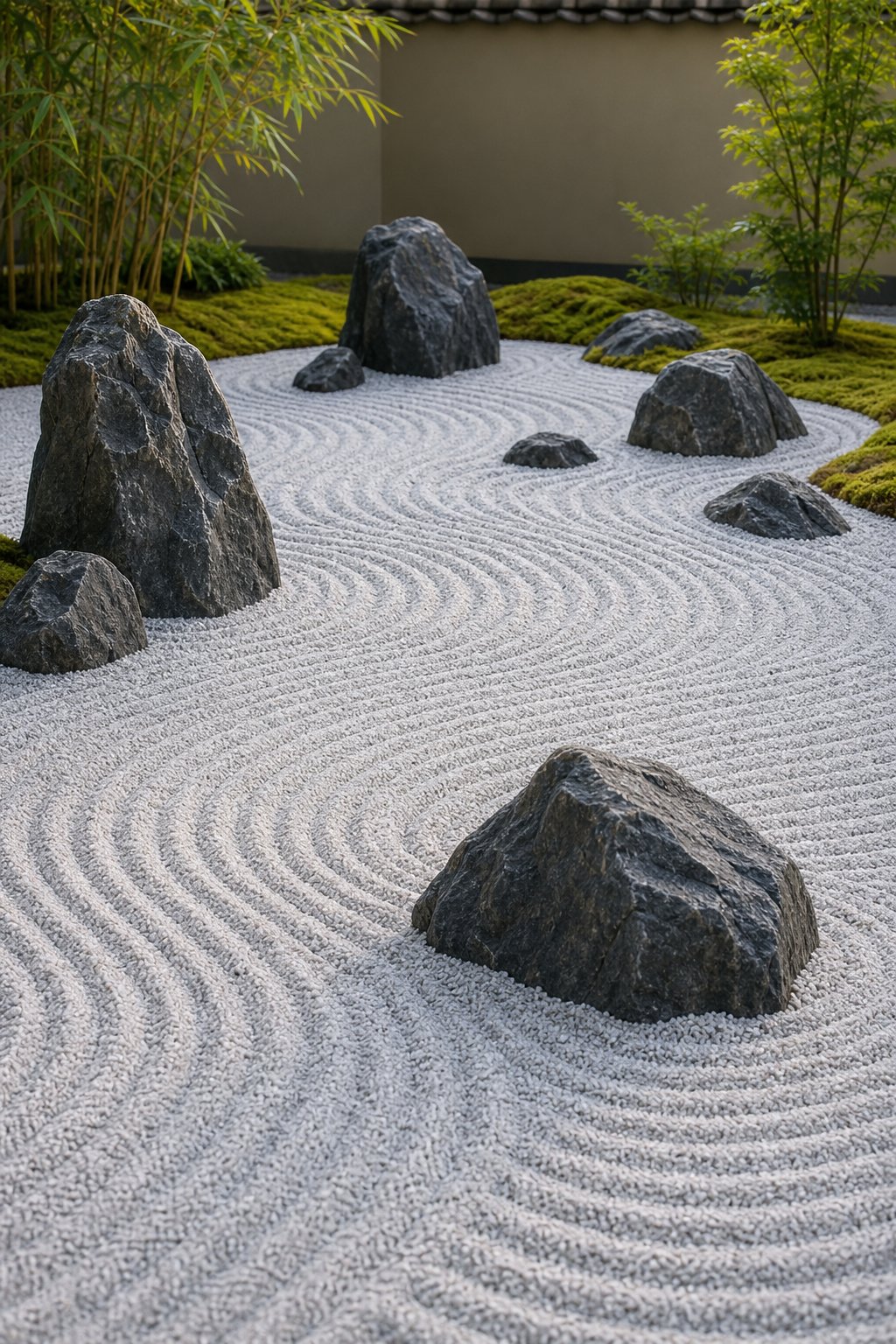
3. Create A Raked Gravel Zen Garden With Basalt Rocks
A flat patch of gravel can feel plain until you rake in clean lines and add a few dark basalt rocks. The contrast makes the space feel calm and intentional, like your yard is wearing its good shoes.
This idea works well near a statue or along a side yard. Keep the pattern simple, because too many curves or too many rocks can turn peaceful into busy pretty fast.
Expert Tip From MrPlanter: “Rake the gravel in one direction, then stop before you overwork it. A few clean lines look calm, while too much pattern starts looking like a frustrated doodle.“
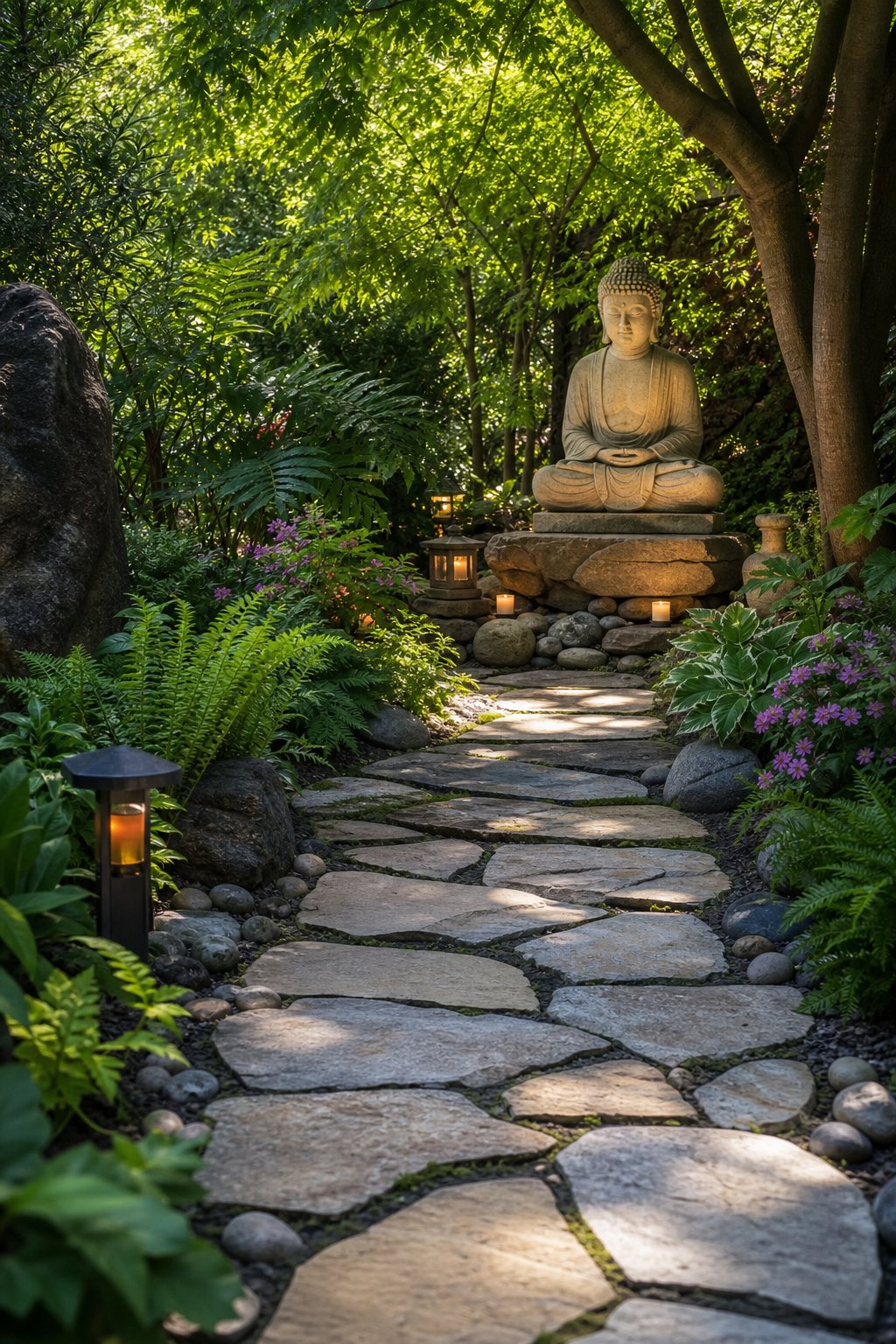
4. Build A Flagstone Path Leading To The Buddha Nook
A winding path gives your garden a little sense of arrival, which makes the Buddha nook feel special. Flagstone works well because it looks natural and gives your feet a solid place to land.
Leave a bit of space between stones so plants can soften the edges. I’ve found that a path feels more peaceful when it slows you down just a touch instead of rushing you straight through.
Expert Tip From MrPlanter: “Keep the stones wide enough for an easy step and irregular enough to feel natural. If the path feels too perfect, it starts acting like a sidewalk with a yoga problem.“
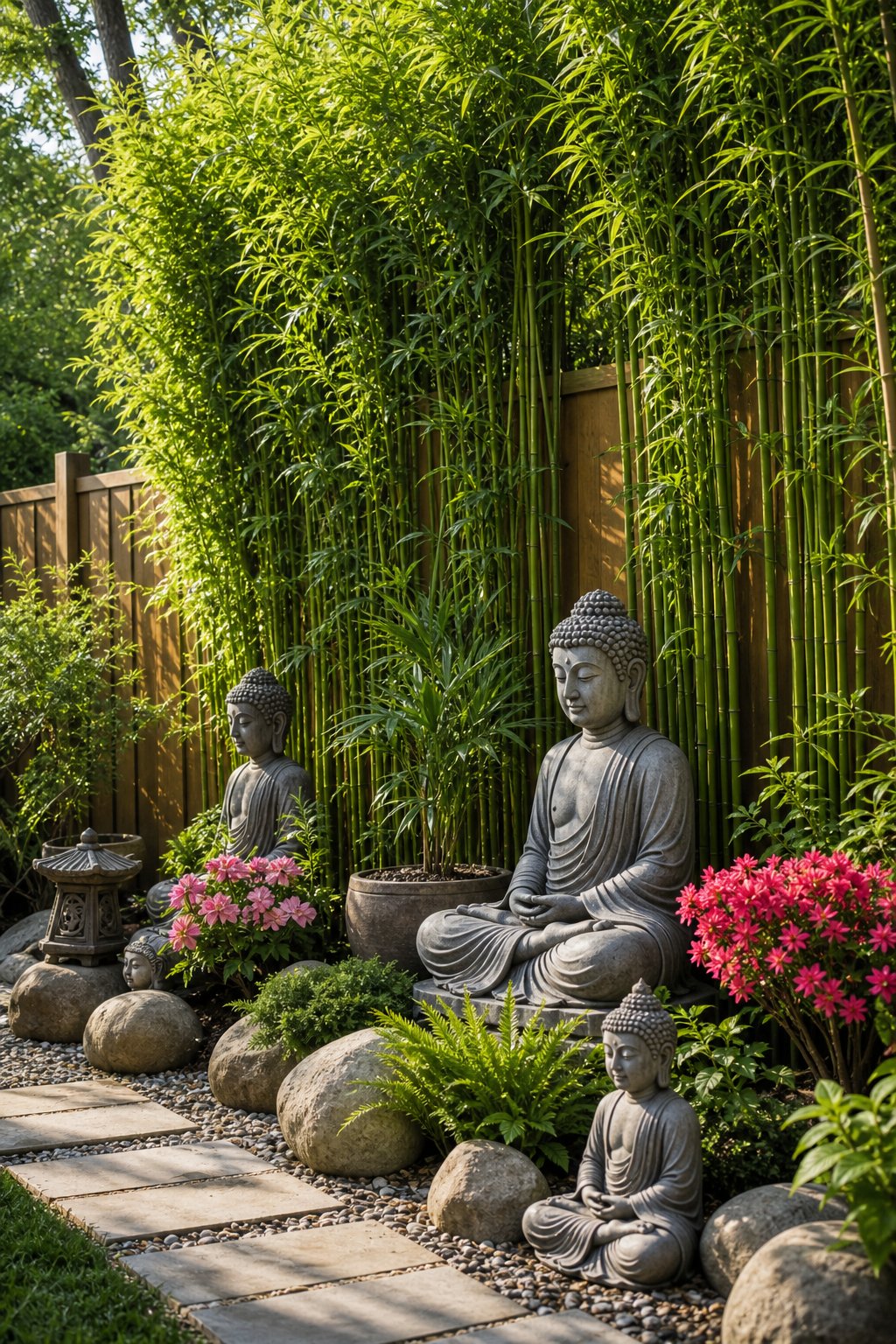
5. Use Bamboo Privacy Screens Along The Fence Line
A peaceful garden is hard to enjoy if you feel like the whole neighborhood is watching. Bamboo screens along the fence line block views and add a soft, natural backdrop for your Buddha space.
Use them where you want height without a heavy wall look. They pair well with stone and water because the straight bamboo shapes give the eye something restful to follow.
Expert Tip From MrPlanter: “Check how much sun your bamboo gets before you plant it. If it stays healthy, it acts like a polite curtain instead of a leafy drama queen.“
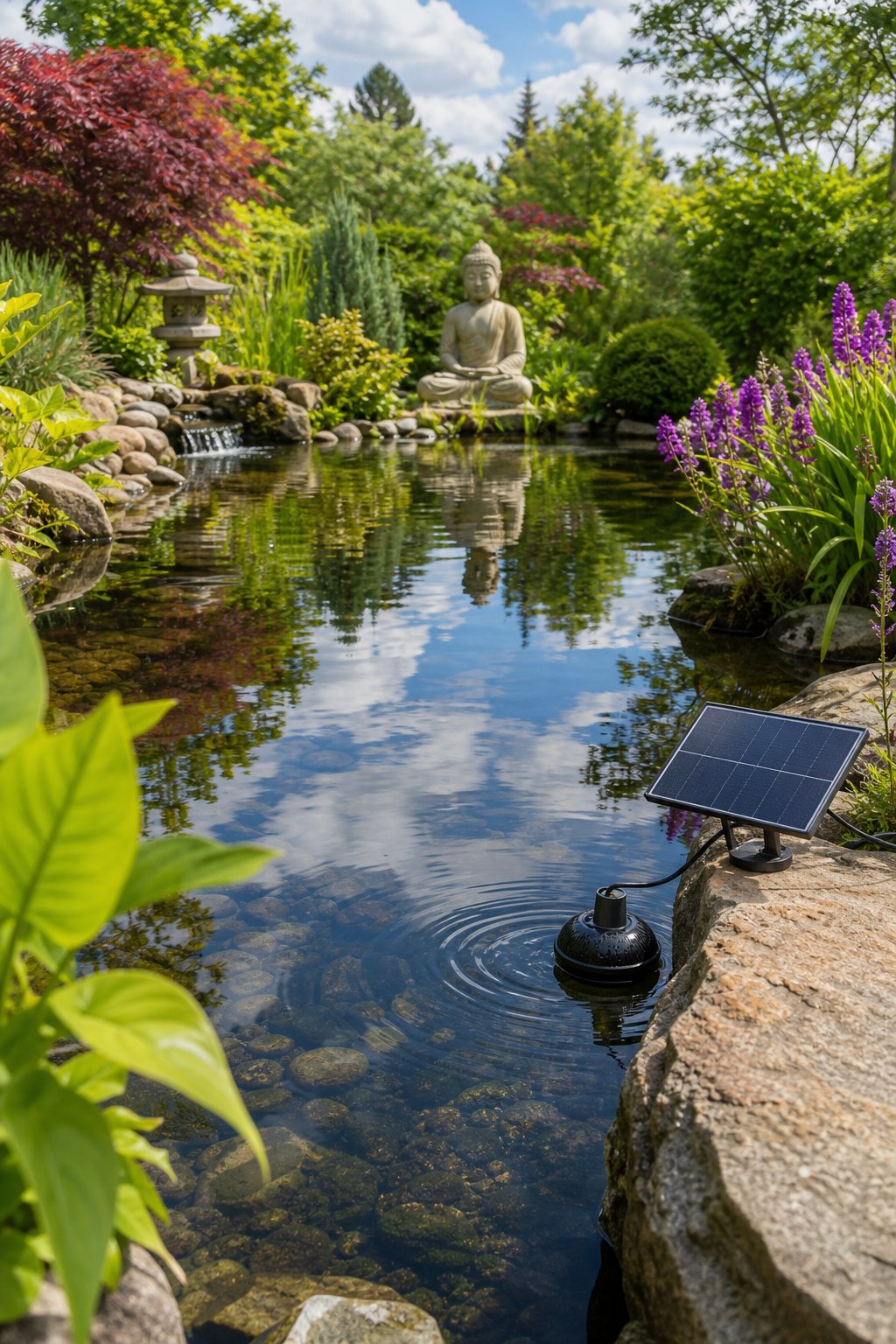
6. Install A Reflective Pool With A Solar Pond Pump
A reflective pool gives your garden a quiet mirror effect that feels almost meditative. Add a solar pond pump, and you get gentle movement without needing a power line in the middle of your retreat.
Keep the pool shallow and simple so the reflection stays clear. The real magic is seeing the Buddha, plants, and sky all play together on the water surface.
Expert Tip From MrPlanter: “Place the pool where it catches morning light if you can. Morning reflections are calmer, and the water tends to look like it had coffee before you did.“
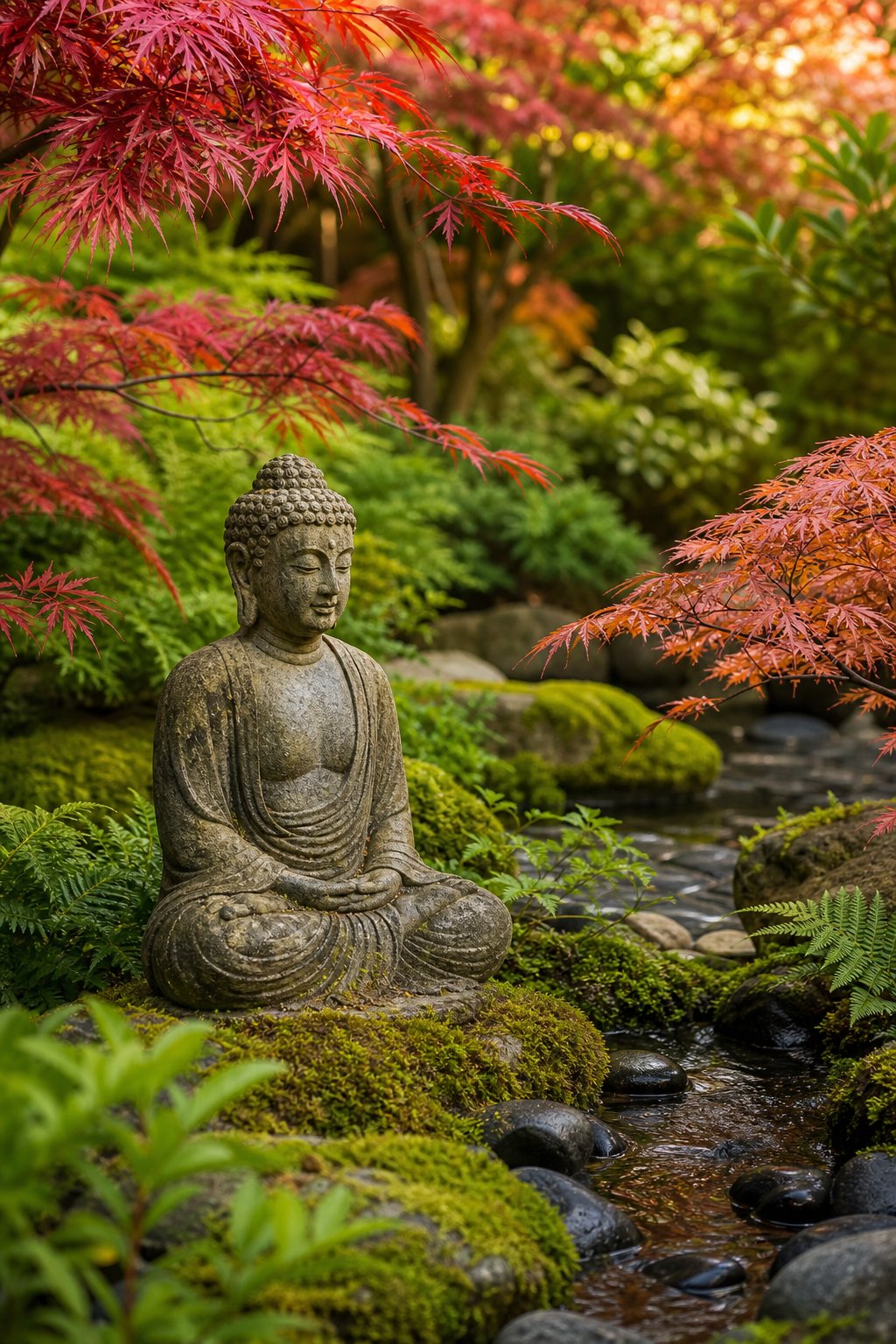
7. Frame The Space With Japanese Forest Grass And Dwarf Maple
A Buddha garden feels richer when the plants frame the scene instead of fighting it. Japanese forest grass adds soft movement, while a dwarf maple brings shape and seasonal color.
Use these plants near paths, corners, or behind the statue to create layers. I like this combo because it looks elegant without needing a lot of fuss, which is great for busy yards.
Expert Tip From MrPlanter: “Mix one plant with gentle motion and one with a strong shape. That contrast keeps the garden from feeling flat without making it feel crowded.“
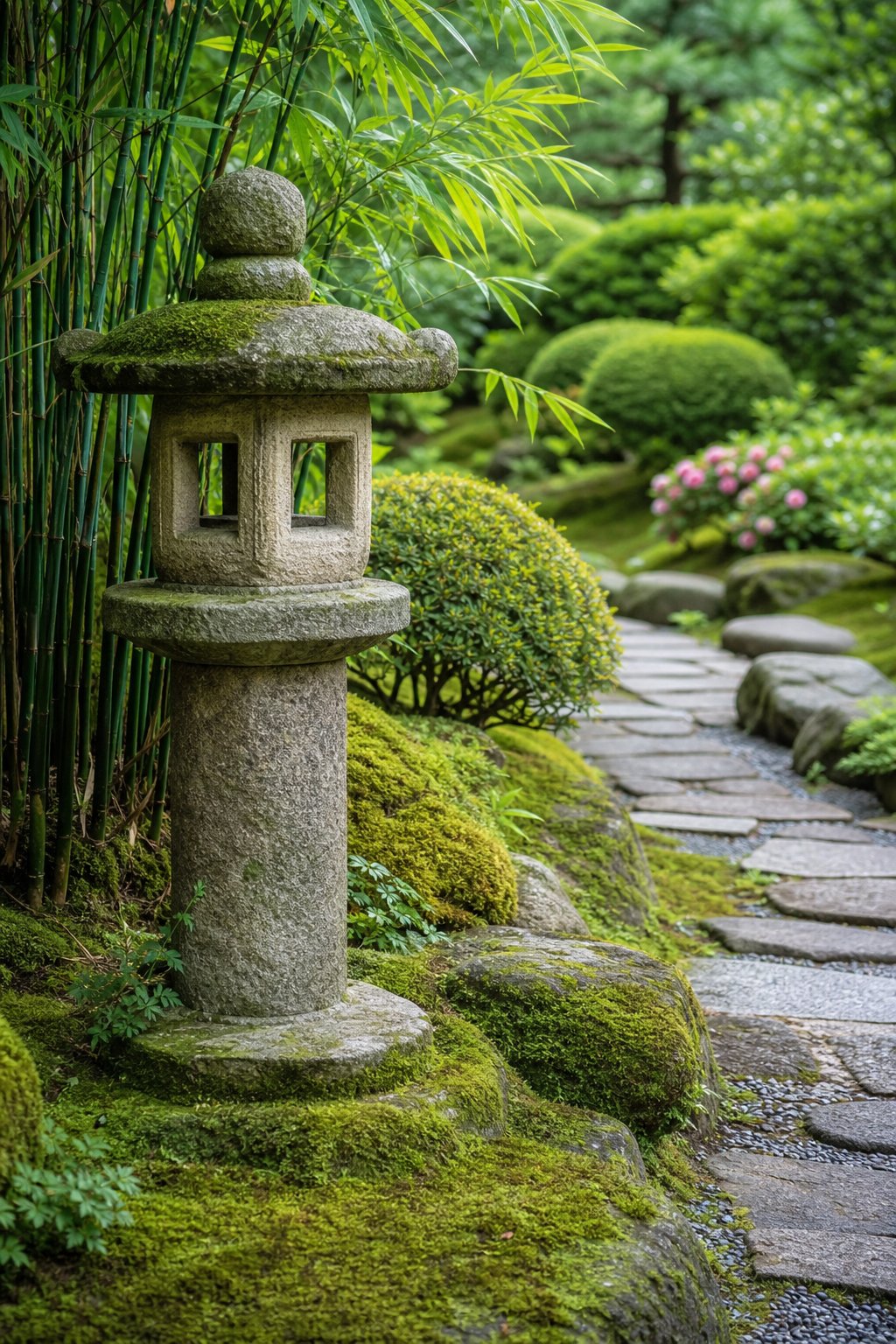
8. Set A Traditional Japanese Stone Lantern Near The Path
A stone lantern gives your path a quiet sense of ceremony, like your garden knows where the important moments happen. Place it near a turn, entrance, or resting spot so you discover it rather than shove it in.
It pairs well with moss, gravel, and low plants because the lantern gets room to breathe. In my experience, one good lantern does more for mood than a bunch of random decor.
Expert Tip From MrPlanter: “Keep the lantern simple and let the plants do the softening. If you add too many extras, the lantern starts looking like it wandered into a souvenir shop.“
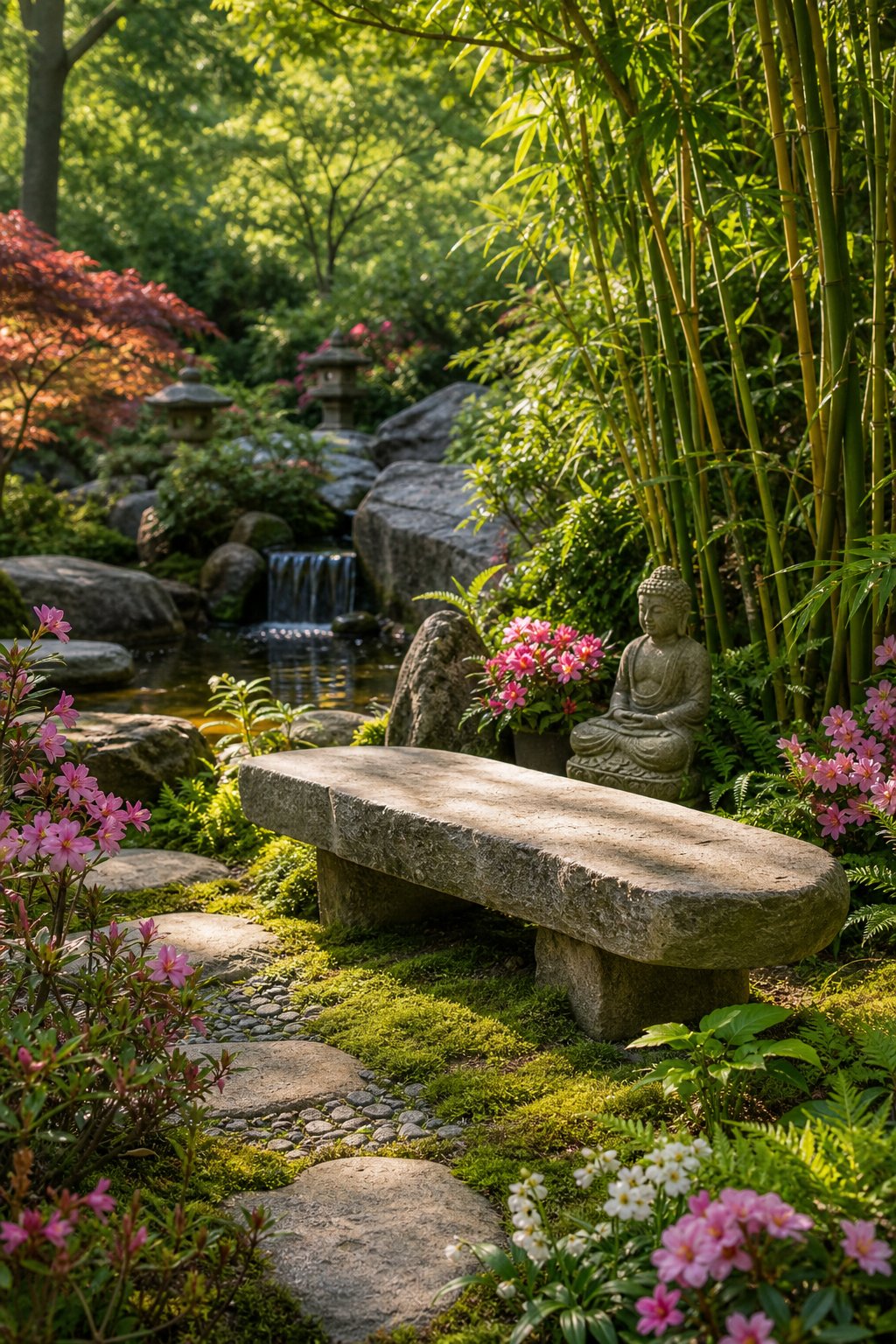
9. Place A Natural Stone Bench For Quiet Meditation
A garden needs a place to sit, or you only glance at it while carrying mulch. A natural stone bench gives you a spot to pause, breathe, and actually stay awhile.
Set it where you can see the Buddha, pond, or path without feeling exposed. A bench with a rough, natural finish often fits better than something too polished or fancy.
Expert Tip From MrPlanter: “Try sitting there before you call it done. If the view makes you want to stay for five more minutes, you picked the right spot.“
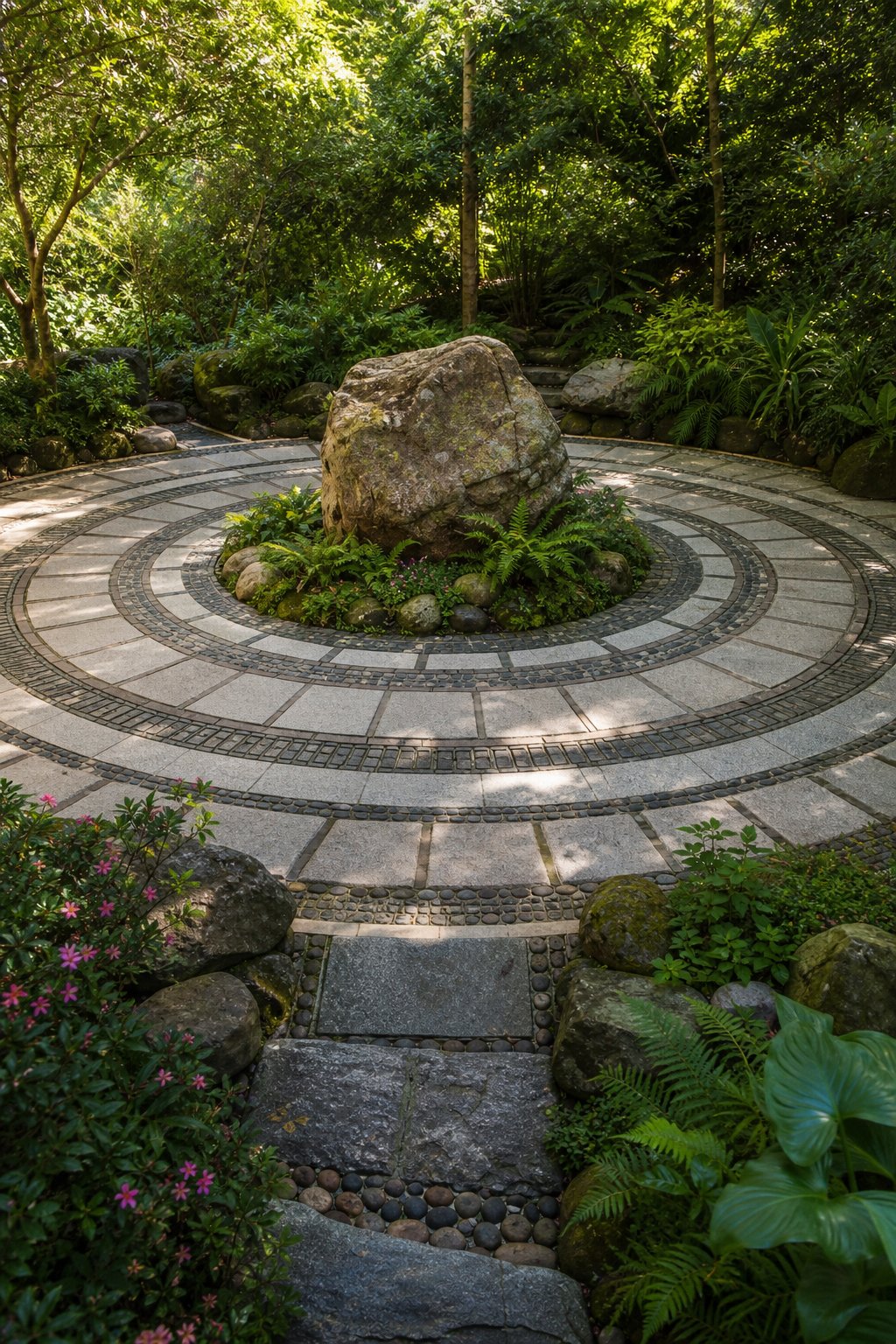
10. Design A Mandala-Style Circular Walking Path Around A Large Center Rock
A circular path can make your garden feel centered, almost like your feet are doing the meditation for you. Put a large rock in the middle, then build the path around it with simple, repeating shapes.
This works best when the circle is clear and uncluttered. I like it for bigger backyards because it gives you a slow, gentle route instead of a straight line that feels like a hallway.
Expert Tip From MrPlanter: “Keep the center simple and let the circle do the work. A calm shape is stronger than a busy one trying too hard.“
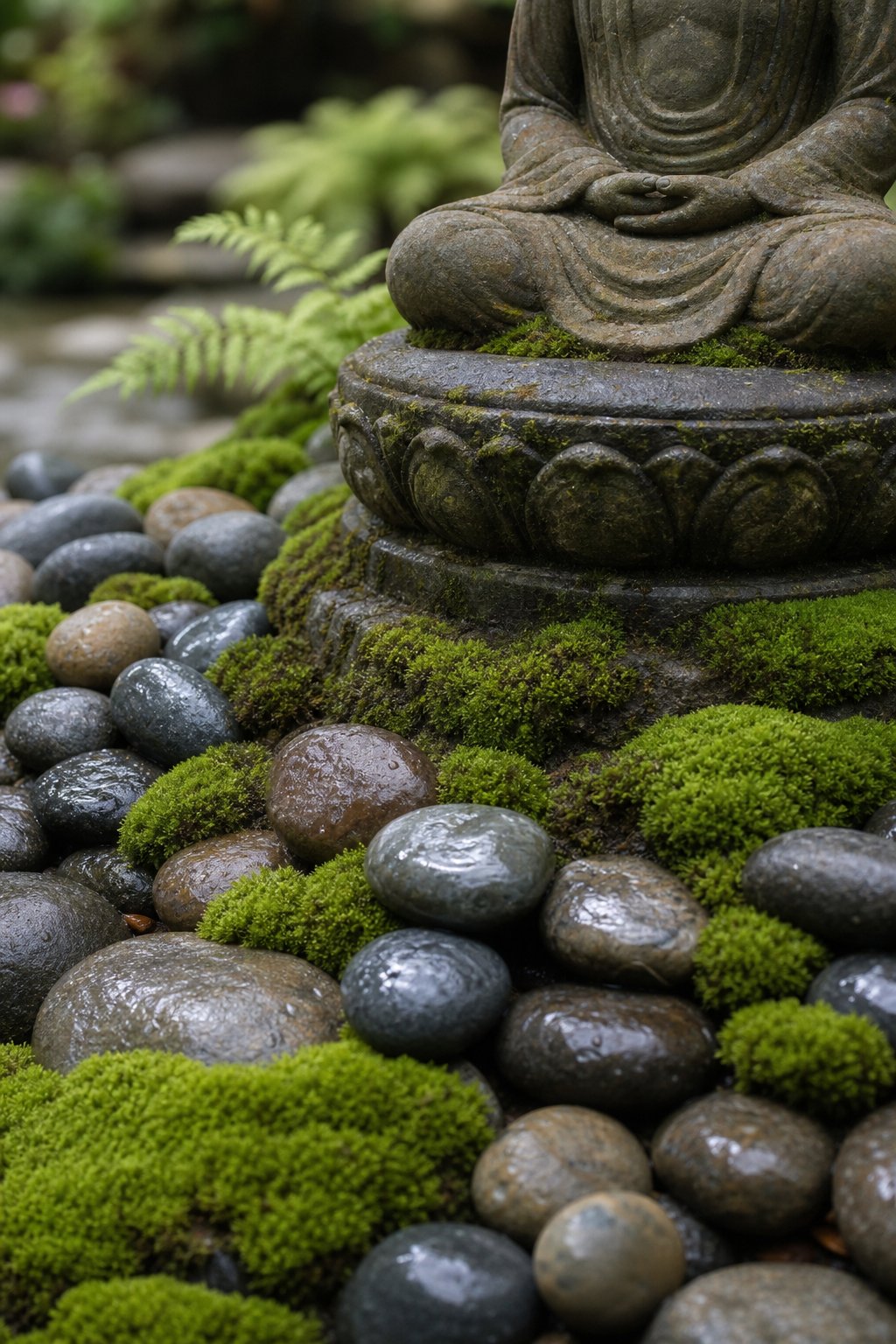
11. Layer River Rocks And Moss Around The Statue Base
A Buddha statue looks more settled when the base has texture instead of bare soil. River rocks and moss give you that aged, grounded feeling that fits the whole garden mood.
Use the rocks to create a neat edge, then tuck moss into cooler, shaded spots. The mix feels peaceful because it balances rough stone with something soft and green.
Expert Tip From MrPlanter: “Group rocks in odd numbers and leave a few small gaps for moss to spread. If every stone looks equally important, the base starts feeling staged.“
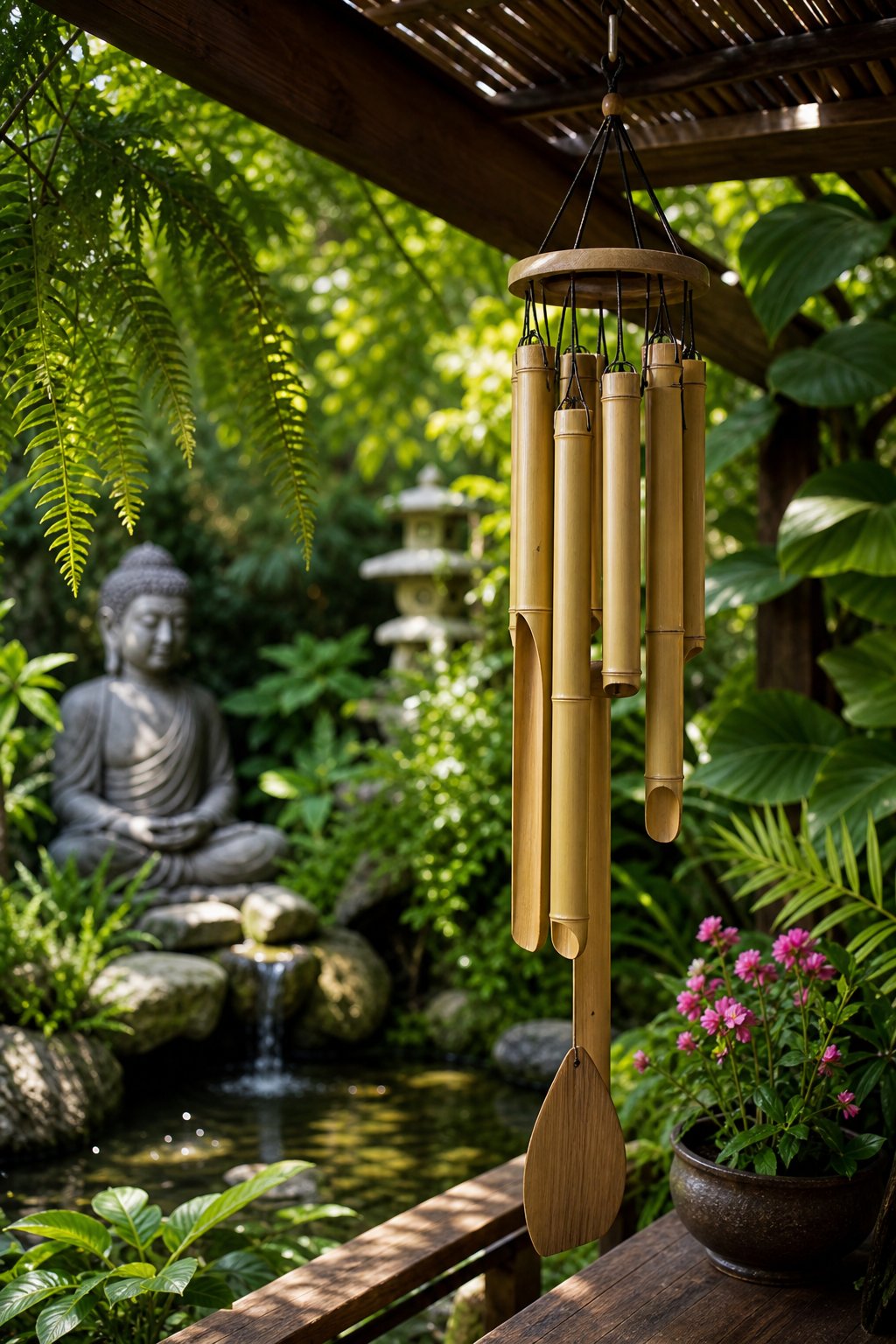
12. Hang Bamboo Wind Chimes In A Sheltered Corner
A sheltered corner is perfect for wind chimes because you get gentle sound without constant clatter. Bamboo chimes fit a Buddha garden nicely since they sound soft and look natural.
Hang them where breezes can reach, yet heavy wind can’t bash them around all day. The goal is a light note here and there, not a backyard percussion solo.
Expert Tip From MrPlanter: “Listen to the chime before you buy it if you can. The right tone should feel like a gentle tap on the shoulder, not a surprise drum circle.“
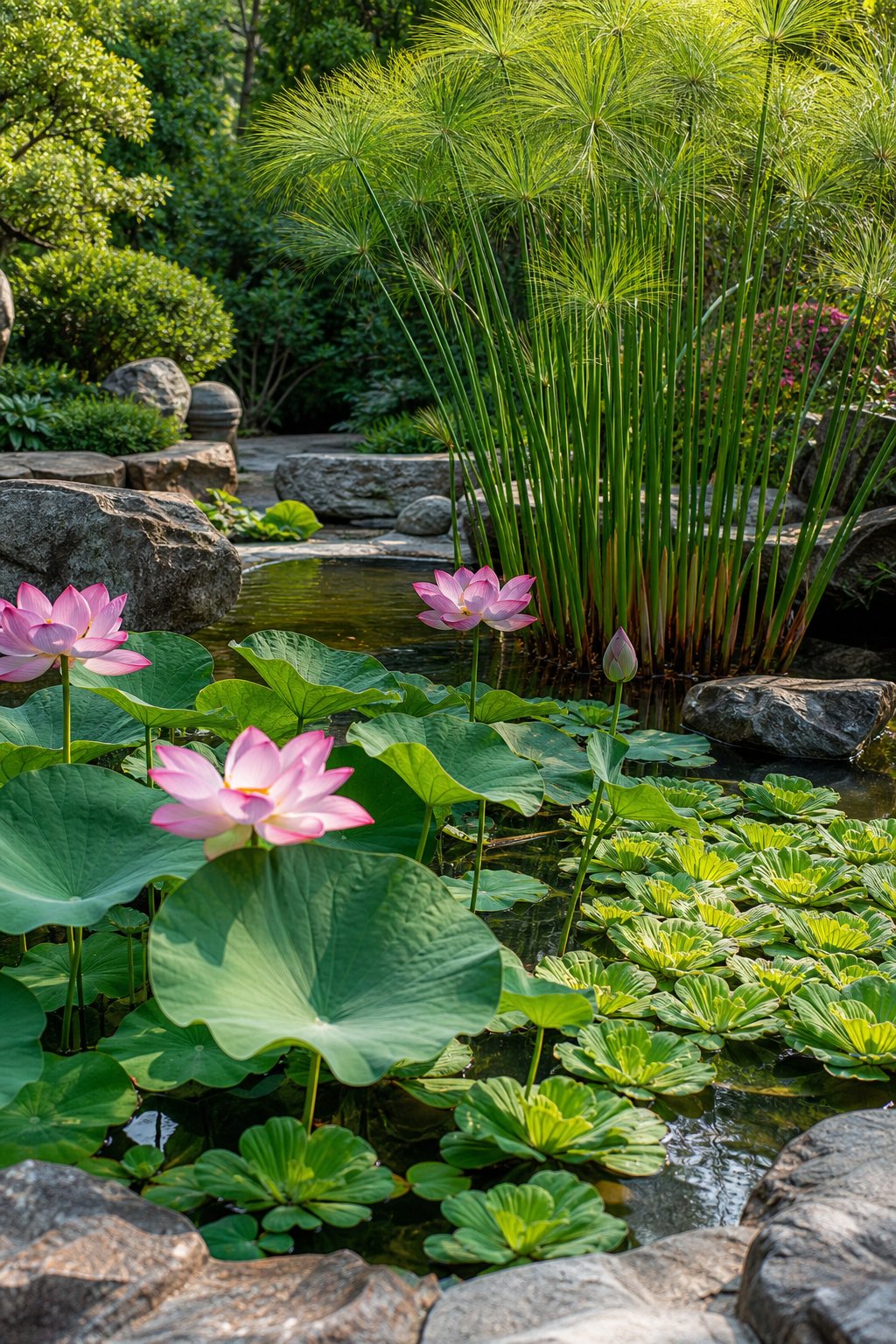
13. Add Lotus, Water Lettuce, Or Papyrus To A Garden Pond
A pond feels more complete when plants soften the edges and give the water life. Lotus, water lettuce, and papyrus bring that calm, natural look while helping the pond feel less empty.
Choose only a few plant types so the pond stays tidy. Too many floating and tall plants can crowd the water, and then your peaceful pond starts acting like it pays rent.
Expert Tip From MrPlanter: “Pick plants that fit your climate and your care level. A pond should feel soothing to look at, not like a weekend job in a raincoat.“
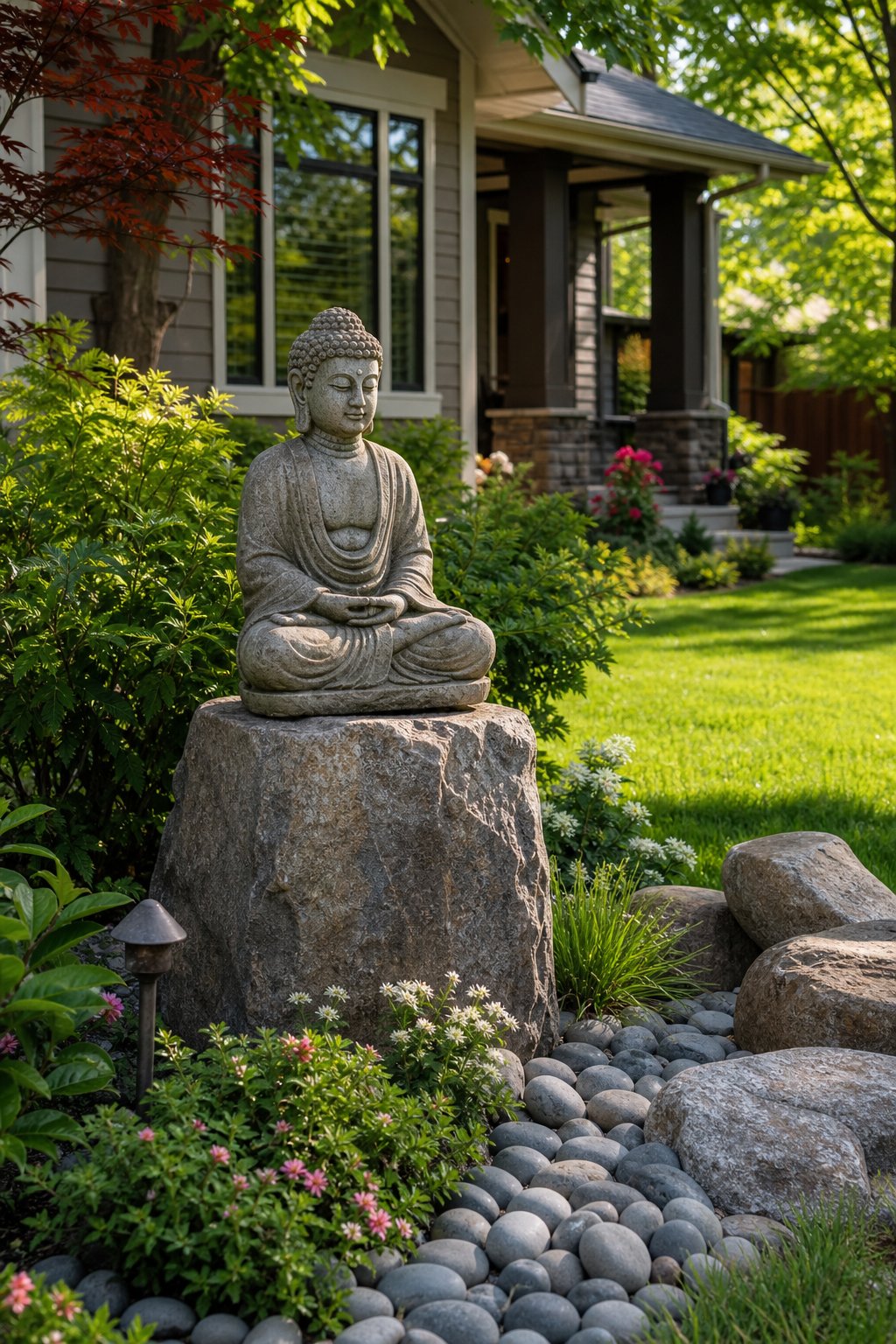
14. Use A Stone Pedestal To Elevate A Smaller Buddha In The Front Yard
A small Buddha can still make a strong impression if you give it height and a clean setting. A stone pedestal lifts it above the plants and makes it easier to spot from the street or walkway.
This works well in a front yard where space is tight. Keep the planting simple around the base so the statue stays the star and doesn’t get swallowed by shrubs.
Expert Tip From MrPlanter: “Make sure the pedestal feels sturdy and the statue isn’t too tall for the space. A small Buddha can be powerful, as long as it isn’t trying to shout over the mailbox.“
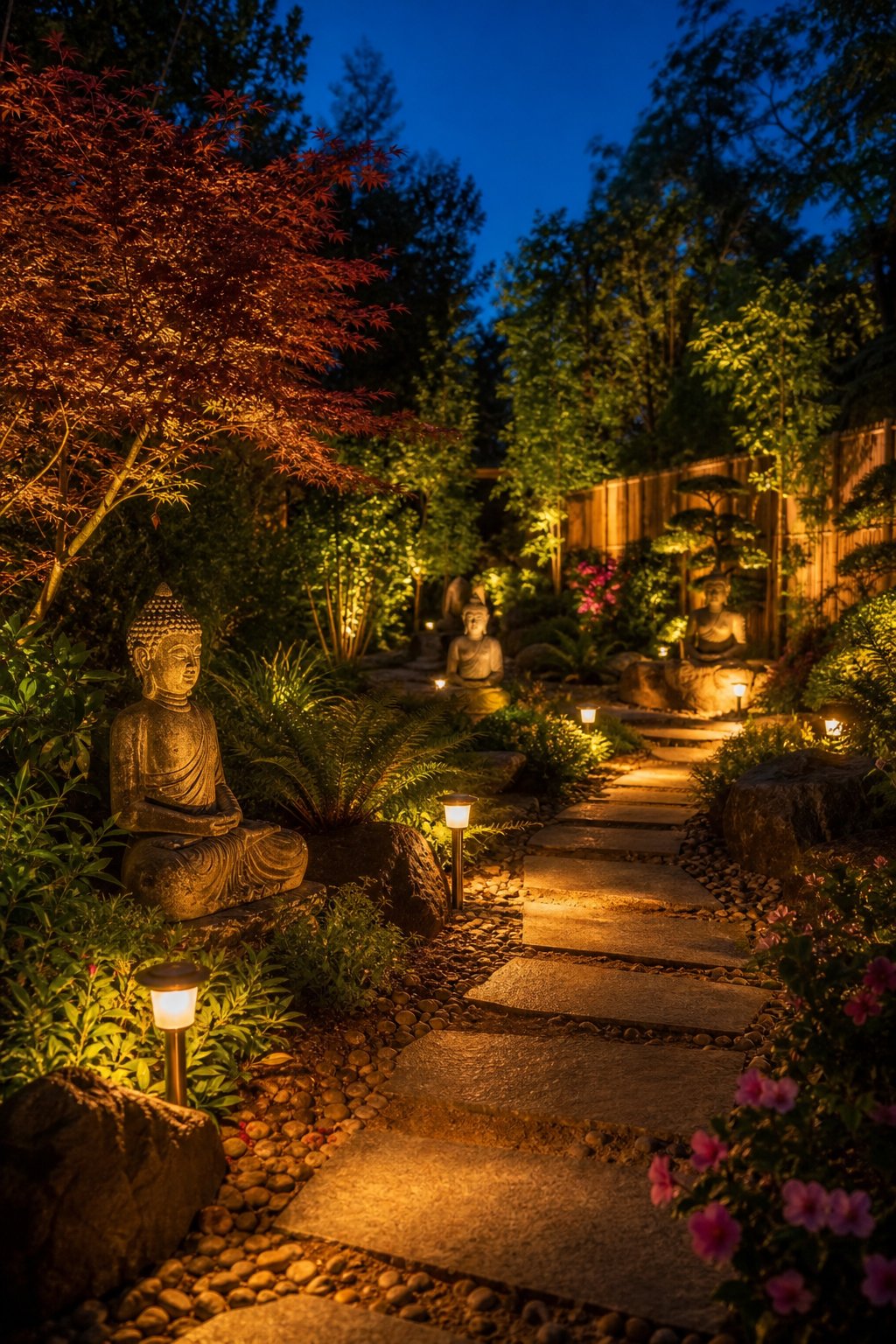
15. Light The Garden With Warm Solar Path Lights And Uplighting
A Buddha garden changes completely at dusk. The right lighting helps it feel calm instead of dark and forgotten.
Warm solar path lights guide your steps. Soft uplighting makes the statue and plants glow gently.
Aim for a low, warm look instead of bright white light. Many gardens lose their calm fast when the lighting feels like a parking lot with a compost pile.
Expert Tip From MrPlanter: “Use just enough light to see the path and the statue. If the garden still feels like evening instead of midnight at a hardware store, you nailed it.“
16. Create A Low-Maintenance Courtyard Buddha Garden With Pavers And Gravel
A courtyard Buddha garden works best when you keep it simple and easy to care for. Pavers and gravel give you a neat base.
A single statue or a few plants keep the space calm. This is a smart choice if you want the look without a lot of watering or trimming.
The clean surfaces also make the statue stand out. This effect is exactly what you want in a smaller yard.
Expert Tip From MrPlanter: “Choose materials that are easy to sweep and simple to reset after storms. A peaceful garden feels even better when it doesn’t ask for a weekly rescue mission.“
How To Choose The Right Buddha Garden Style
Zen Vs. Mandala Layouts
A Zen layout usually feels spare, with clean lines, gravel, rocks, and one strong focal point. A mandala layout feels more circular and layered.
You can choose a mandala layout if you want the garden to feel more symbolic and centered. Pick the style that matches how you want to use the space.
If you want quiet reflection, Zen is often easier to keep calm. If you want a path you can circle and pause along, mandala shapes may fit you better.
Best Fits For Front Yards Vs. Backyards
Front yards need a simpler look because people see them from the street. A small statue, pedestal, lantern, or tidy gravel bed usually works well there.
Backyards give you more freedom for ponds, benches, paths, and privacy screens. You can build a more private retreat there, since it’s not doing public duty every day.
Balancing Symbolism With Personal Taste
Your garden should mean something to you. It should not feel like a copied template.
Mix symbols like water, stone, bamboo, and lanterns with colors and materials you actually enjoy. The best gardens feel personal without becoming cluttered.
If a piece feels right in your space and makes you want to spend time outside, it probably belongs there.
What To Avoid In A Buddha Garden
Overcrowding The Space
A Buddha garden loses its calm when you pack every inch with statues, pots, and ornaments. Leave breathing room around the main pieces so your eye can rest.
Think of empty space as part of the design, not wasted ground. It gives the garden its quiet mood.
Mixing Too Many Competing Materials
Stone, wood, gravel, and water can work together. Too many finishes can make the space feel noisy.
Stick to a few materials and repeat them in a few spots. That repeat creates a sense of order.
Without it, the garden can start looking like three yard sales had a meeting.
Ignoring Privacy, Drainage, And Scale
You also need to plan practical details for a peaceful garden. If water pools after rain, the space quickly loses its relaxing feel.
If you choose a Buddha that is too small or too large, the whole setup feels off. Check how the area drains.
Decide how much privacy you need. Think about how big each feature should be.
When you design a garden that fits the space, it always feels calmer than one that fights it.
Expert Tip From MrPlanter: “Start with space, then add meaning. When the layout feels calm and the scale feels right, your garden stops arguing with itself and starts relaxing with you.“
I’m Anirban Saha, the Founder and Owner of MrPlanter.com. I pay the bills as a software developer, although my BTech is actually in Electronics and Communication. I really love my day job, but what gives me energy every day is interacting with my indoor plants and taking care of them. I have been successfully nurturing and maintaining houseplants for over 10 years now.
📚🔍 Our content undergoes thorough review and fact-checking before publication. For additional details, explore our strict Editorial Policy to deliver helpful content. 📝🔒