Your outdoor garden can hold far more plants without spreading pots across every step, table, and windowsill. With the right shelves, you can give herbs, flowers, and trailing vines their own tidy places while adding height and personality to your yard.
The best plant shelf ideas combine sturdy materials, safe placement, good drainage, and plant groupings that suit your sunlight. From a simple fence shelf to a rolling patio cart, you can choose a display that fits your space and your gardening habits.
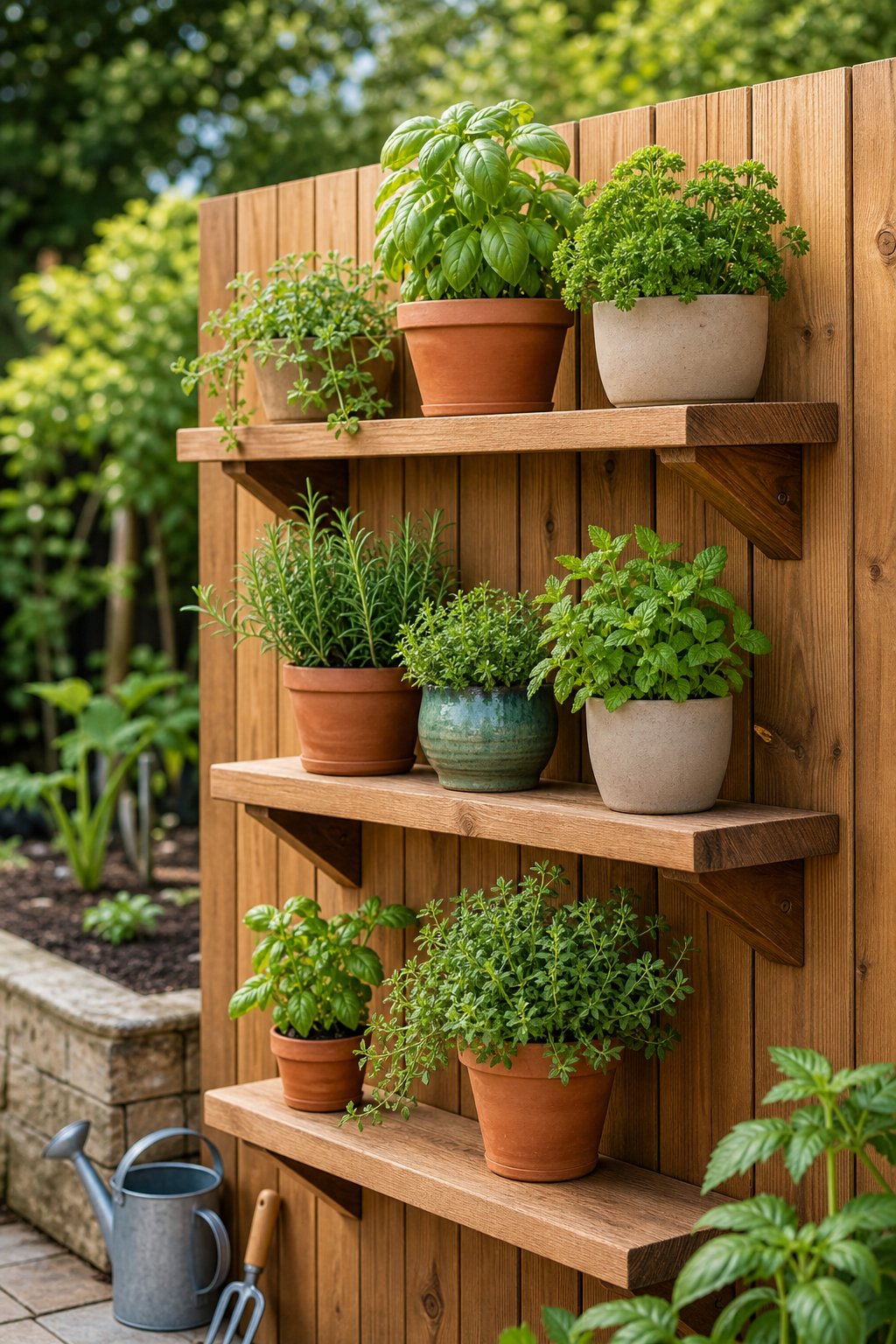
1. Cedar Fence-Mounted Floating Shelves For Herb Pots
A plain fence can feel a little lonely, especially when it has nothing to do all day except stand there. Cedar floating shelves give it a useful job by holding basil, thyme, mint, and small flowers.
Cedar handles outdoor moisture better than many soft woods. Its warm color looks at home beside green foliage.
Mount each shelf into fence posts or sturdy rails rather than thin fence boards. Leave enough space between levels so your herbs receive light and you can reach them with garden shears.
Small terracotta pots work well. Sealed ceramic pots add more color.
Expert Tip From MrPlanter: “Keep mint in its own pot so it doesn’t take over the neighborhood. Add a small label to each herb, because every green leaf starts looking suspiciously alike at dinner time.”
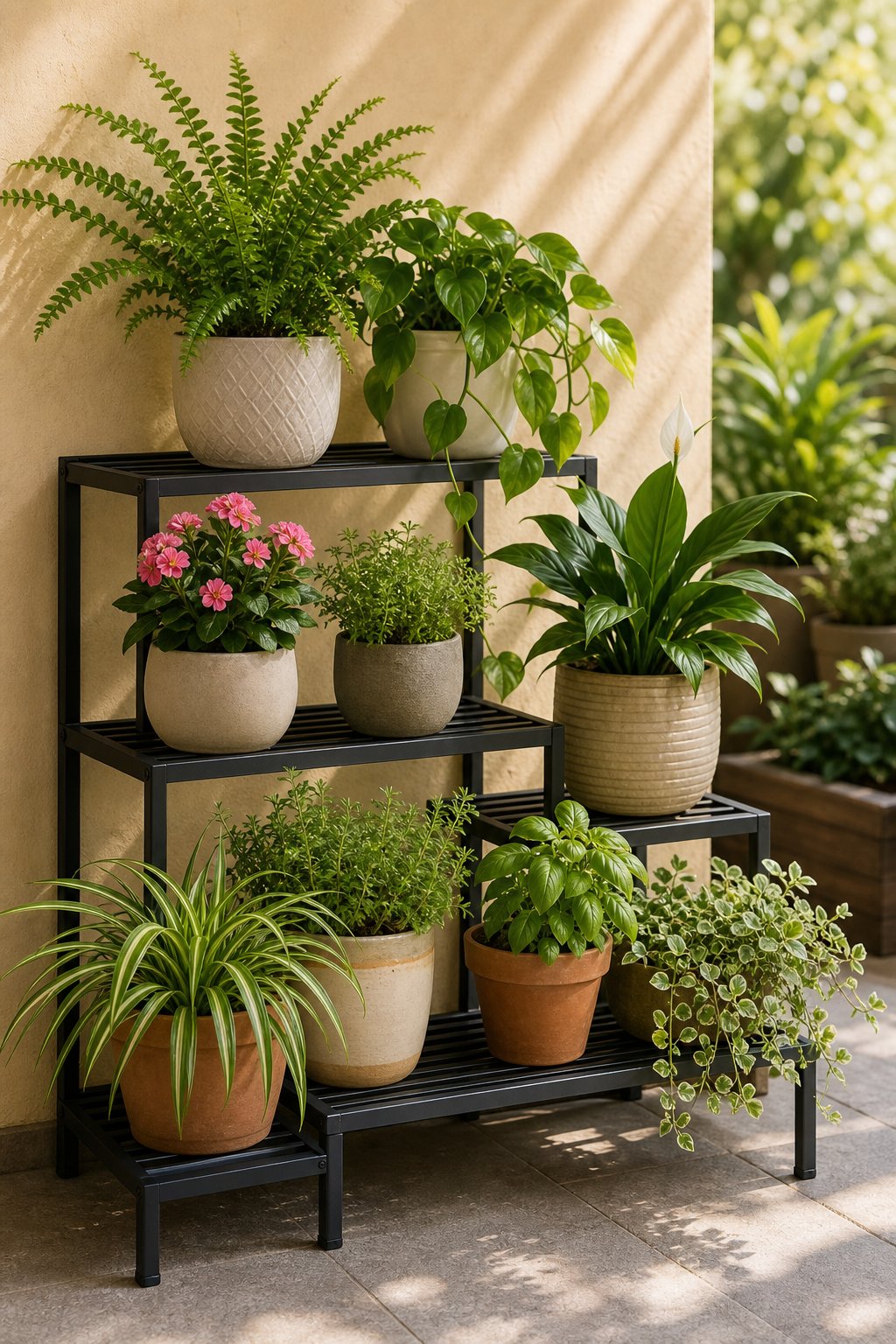
2. Tiered Metal Plant Stand For A Sunny Patio Corner
A sunny patio corner often becomes a storage spot for empty pots and forgotten tools. A tiered metal stand turns that awkward area into a cheerful plant display with several levels for color and texture.
Choose a powder-coated frame to help resist rust. Place sun-loving plants on the brightest shelves.
Use the lower tier for heavier containers, which helps keep the stand steady. Marigolds, lavender, succulents, and compact peppers can handle bright conditions when watered to match their needs.
Check the stand after windy weather, especially if the top shelf holds tall plants.
Expert Tip From MrPlanter: “Put the heaviest pot on the bottom shelf to give the stand a firm base. If the patio gets strong wind, tuck the frame against a wall and secure it with a strap.”
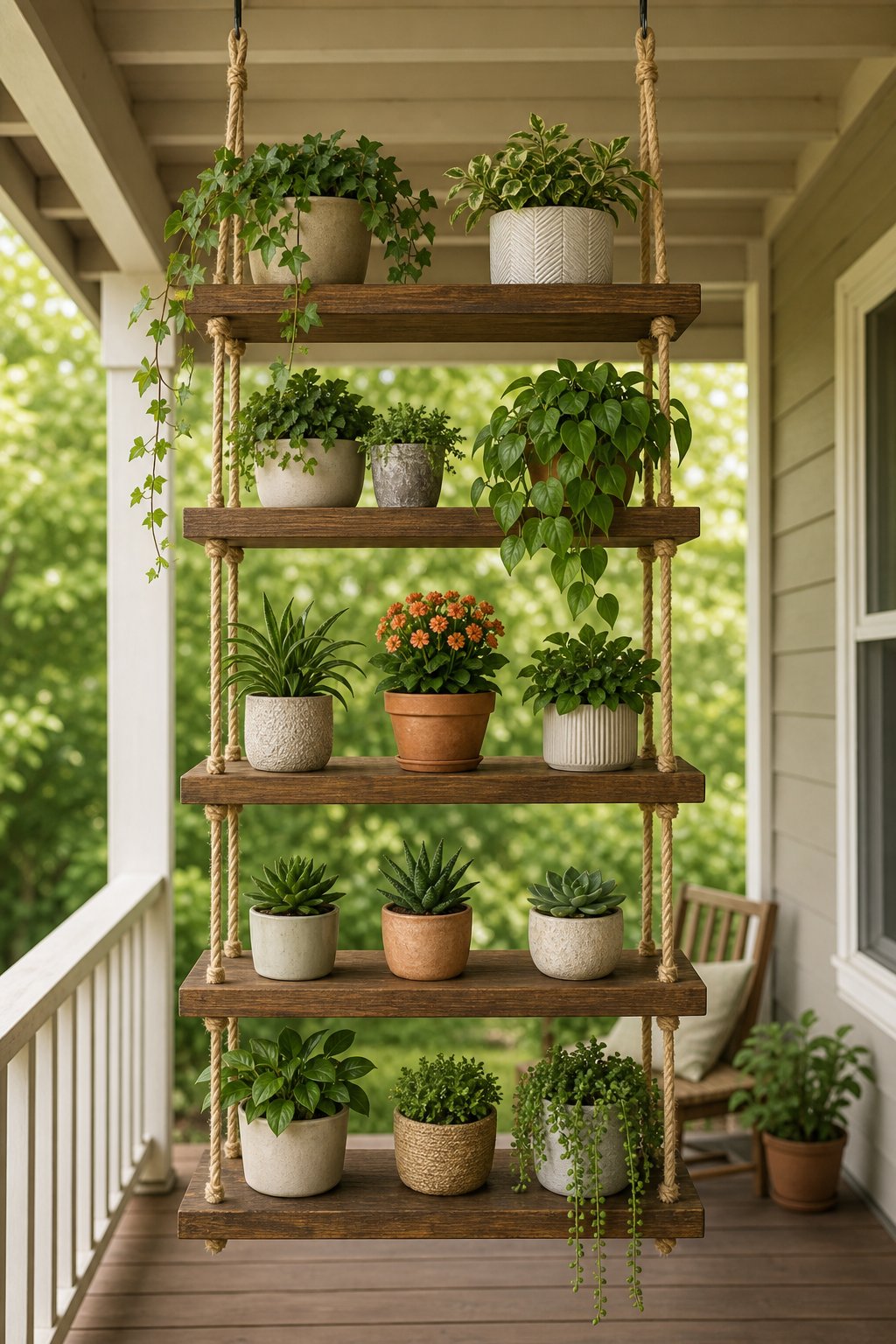
3. Five-Tier Rope Hanging Wood Shelf Under A Covered Porch
A covered porch can protect a hanging shelf from harsh rain while giving your plants a little stage above the floor. This five-tier rope design looks especially charming with pothos, ivy, ferns, and other plants that spill over the edges.
The layers create height without taking much walking space. Use outdoor-rated rope, thick planks, and ceiling hooks fastened into solid framing.
Each shelf should sit level, with knots tied firmly beneath every corner. Keep the display away from swinging doors and avoid placing heavy pots above seating areas.
Expert Tip From MrPlanter: “Test the empty shelf before adding plants, then add pots one at a time. Trailing plants look lovely on the edges, while compact upright plants keep the middle from looking crowded.”
4. L-Shaped Corner Shelves Around A Backyard Deck
Deck corners can be tricky spaces where chairs do not quite fit and leaves collect like tiny notes from the trees. L-shaped shelves turn those unused edges into a plant display that wraps around the deck.
You can use one side for herbs and the other for flowers or shade plants. Build the shelves from treated lumber or sealed cedar, and attach them to sturdy posts or the deck structure.
Keep the lowest level high enough for sweeping and cleaning. A few matching pots make the corner feel planned instead of like a plant nursery moved in overnight.
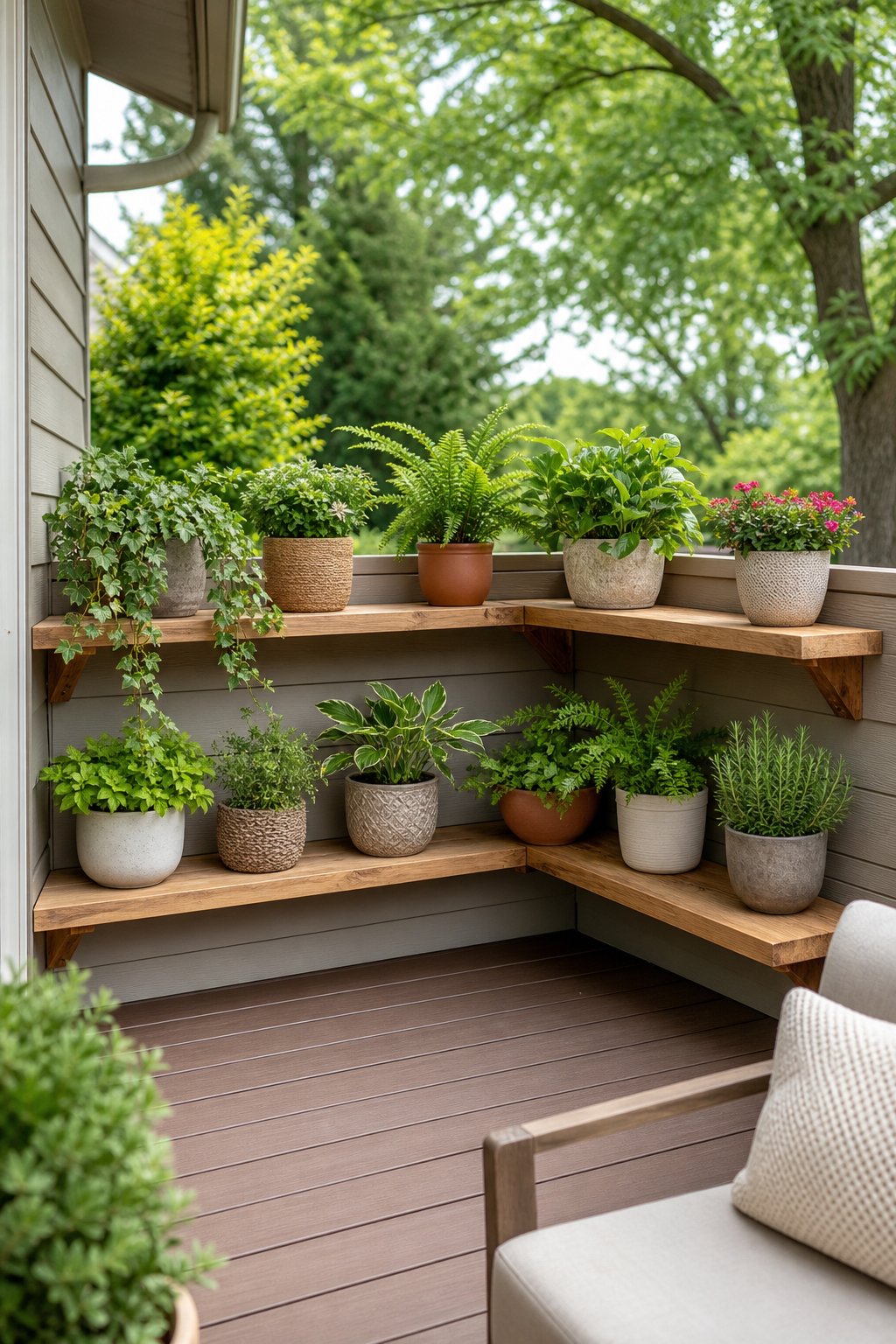
Expert Tip From MrPlanter: “Leave a small gap between the shelf and deck boards so water can drain away. Place your favorite flowering pot at the corner where both shelf runs meet.”
5. Rustic Ladder Shelf For A Front-Porch Flower Display
A front porch may have room for flowers, yet not enough room for a wide plant table. A rustic ladder shelf solves that puzzle by going upward.
Its leaning shape adds a relaxed farmhouse touch. Several narrow levels hold geraniums, begonias, ferns, and seasonal color.
Set the feet on a flat, dry surface and secure the top to the wall if children, pets, or strong winds use the porch. Put larger containers near the bottom and smaller pots above them.
A fresh coat of exterior stain can protect the wood while keeping its aged look.
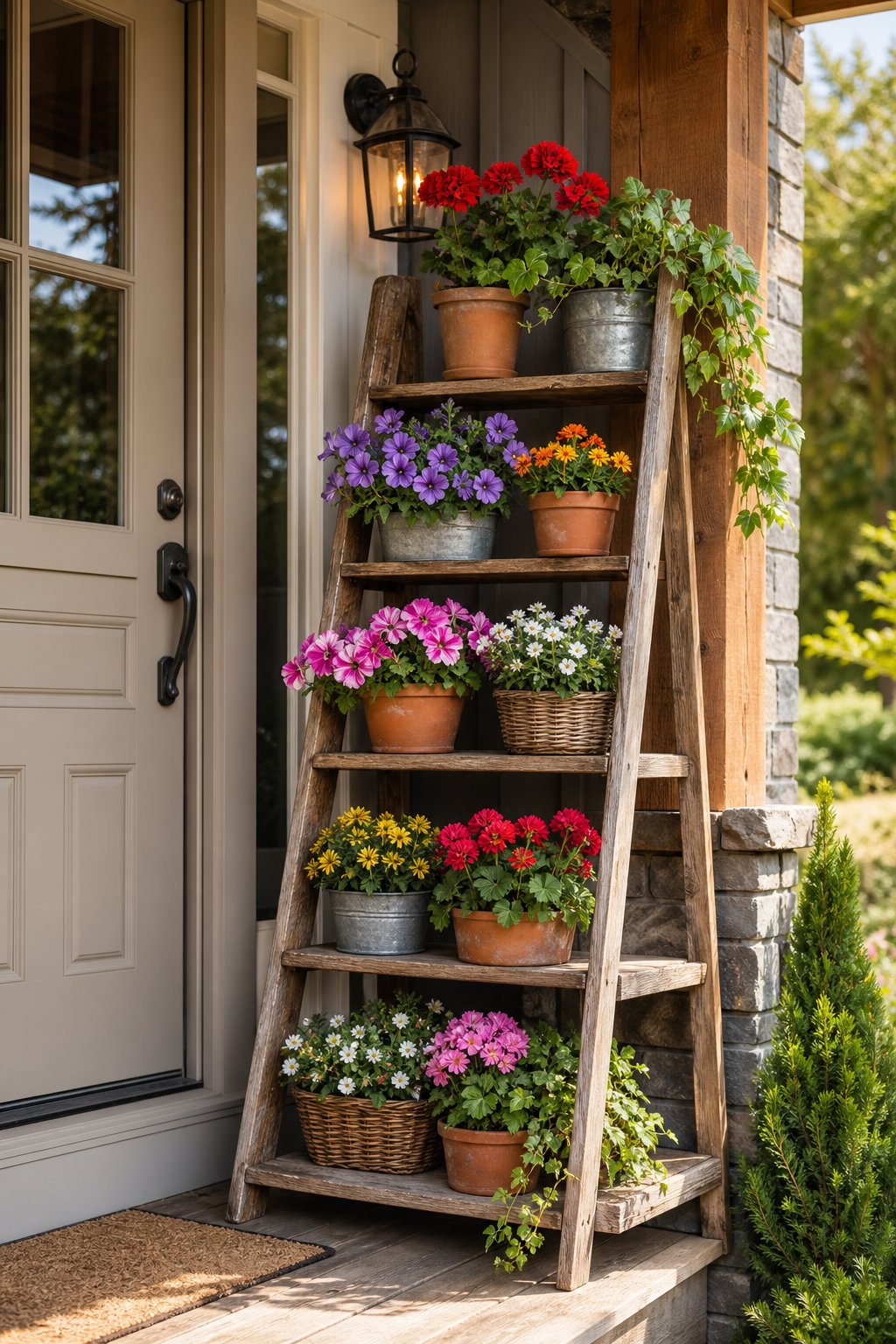
Expert Tip From MrPlanter: “Use pots with similar colors but different shapes for a collected look. Keep the lowest rung clear enough that you can water without bumping every plant above it.”
6. Wall-Mounted Pallet Shelf For Succulents By The Garden Shed
A shed wall often has empty space that could hold a small army of cheerful succulents. A pallet shelf adds texture beside the garden door and keeps tiny pots off the ground.
Choose a pallet marked for safe use. Remove loose boards, and sand rough edges before mounting it.
Succulents prefer bright light and soil that drains quickly, so this display works best on a sunny wall with some protection from heavy rain. Use small pots with drainage holes, and avoid packing them tightly together.
Airflow helps the plants stay healthier.
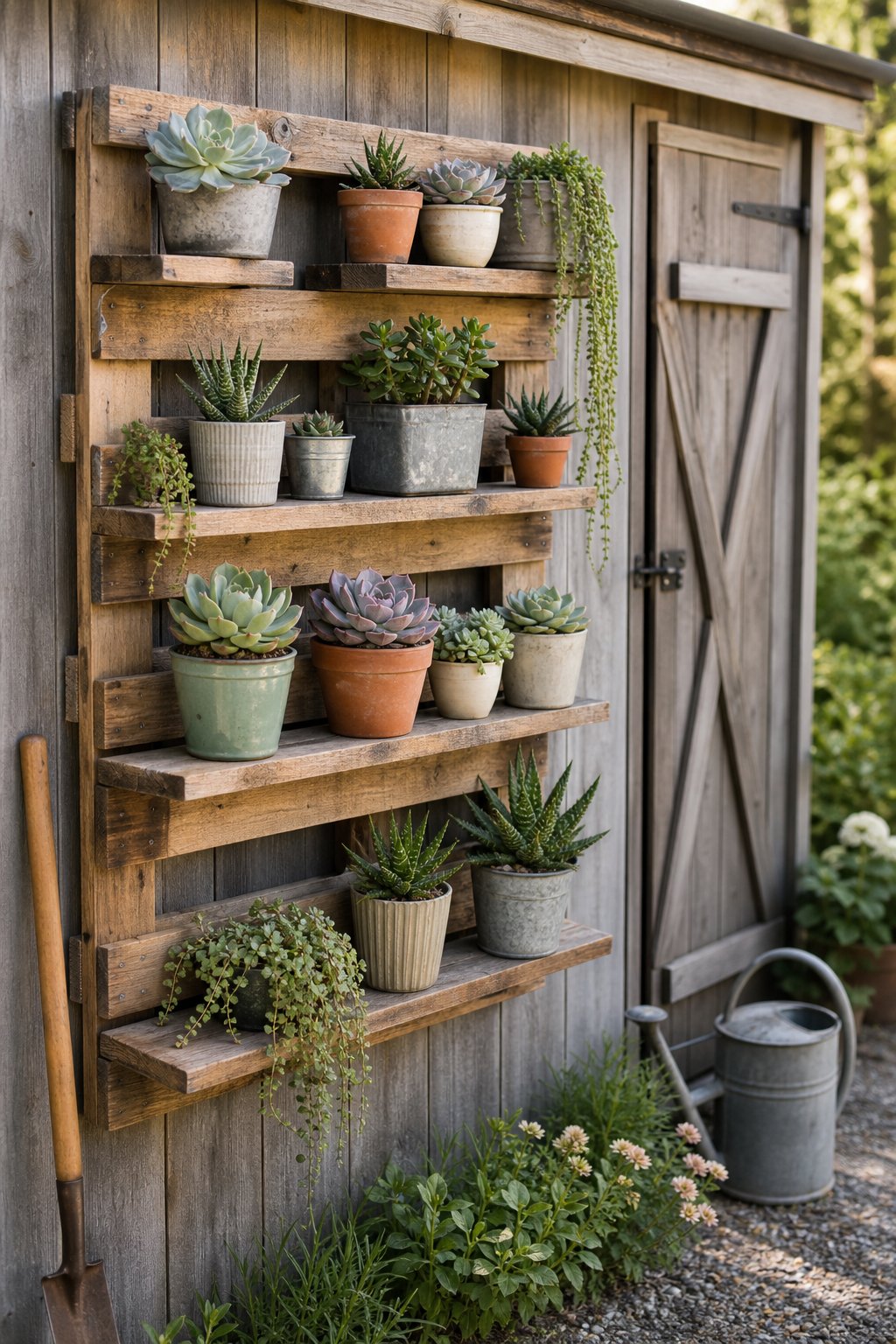
Expert Tip From MrPlanter: “Water succulents only after the soil has dried well. A little space between pots lets you lift each one without starting a tiny ceramic traffic jam.”
7. Freestanding Bamboo Plant Shelf For A Covered Balcony
A covered balcony benefits from furniture that feels light rather than bulky. A freestanding bamboo shelf adds several plant levels while keeping the floor open for a chair or watering can.
Bamboo looks natural beside ferns, begonias, spider plants, and leafy tropical containers. Place the shelf where it receives the light your plants need, then turn the pots every week or two for even growth.
Since balcony wind can be strong, choose a wide, stable frame and keep heavier pots on its lower shelves. Use a waterproof mat beneath the unit to catch drips.
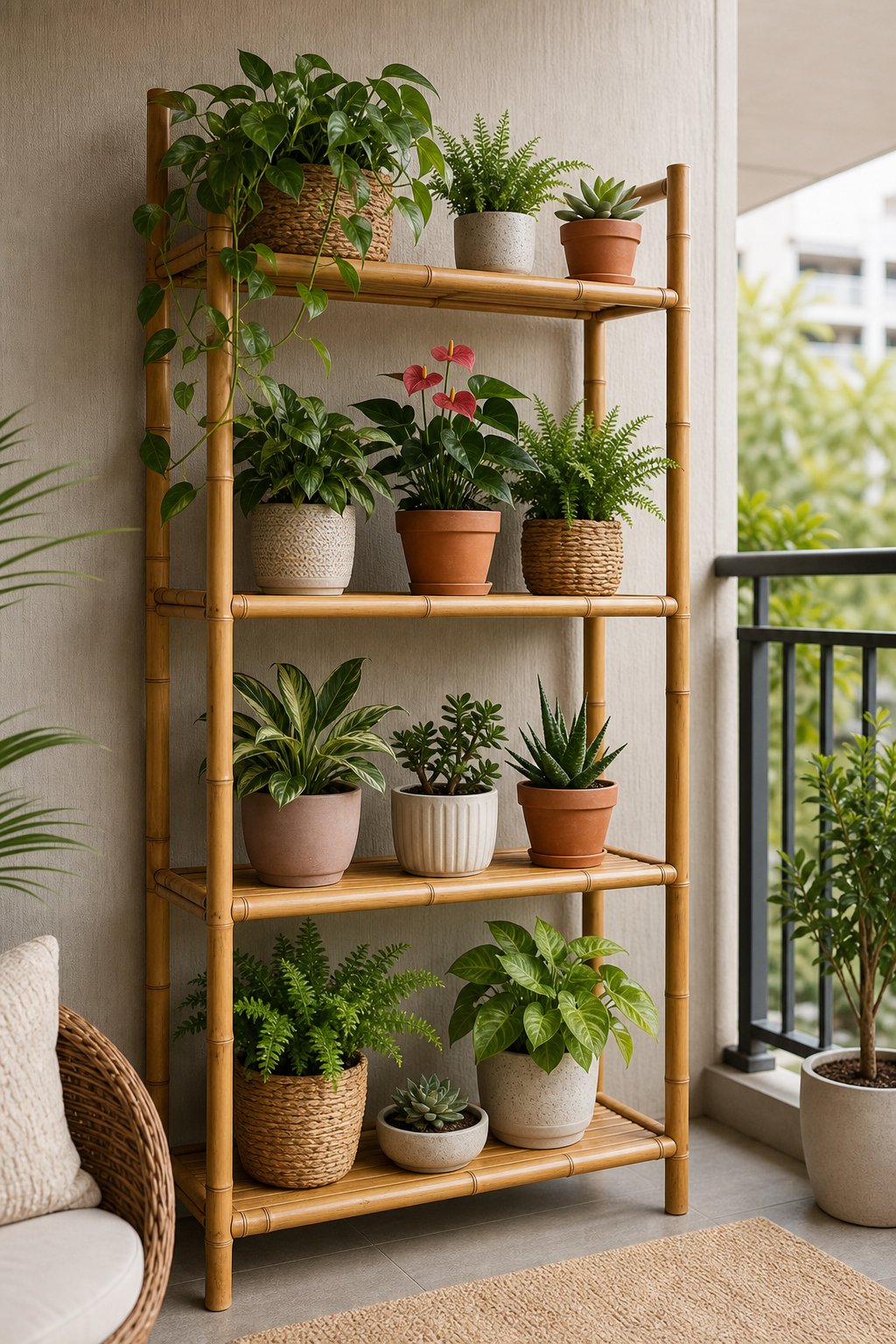
Expert Tip From MrPlanter: “Bamboo lasts longer when it stays out of standing water. Wipe spills from the shelf and place a small tray beneath pots that drip after watering.”
8. Galvanized Metal Baker’s Rack For A Potting Bench Station
A baker’s rack can retire from the kitchen and start a second career in the garden. Its open metal shelves hold seed trays, potted plants, hand tools, and bags of soil near your potting area.
Galvanized metal suits a practical garden style and is easy to wipe clean. Place the rack on level ground beside the shed or workbench.
Keep sharp tools on one shelf and young plants on another so watering does not become a juggling act. A wood board across the middle can create a handy work surface, provided the frame can support it.
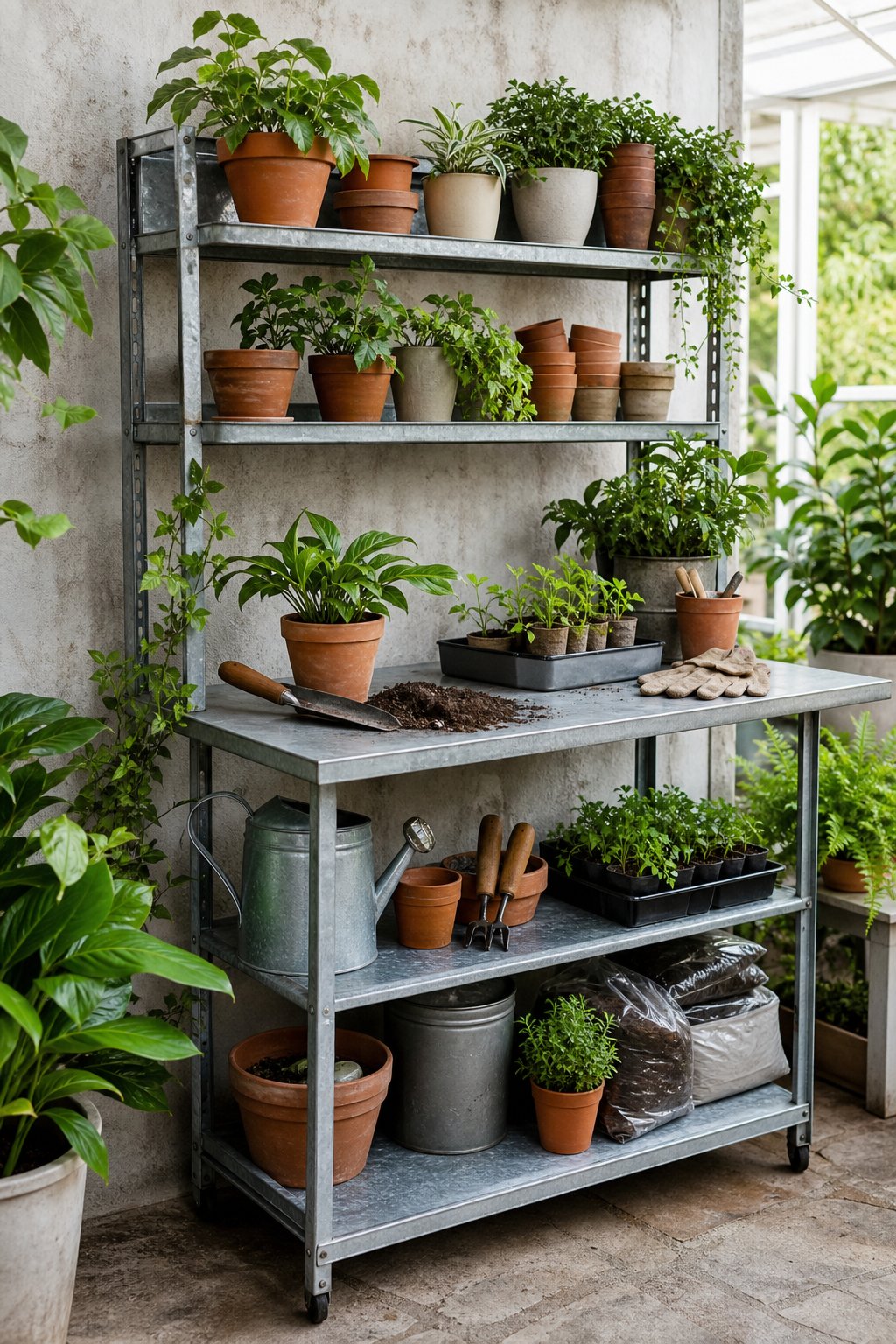
Expert Tip From MrPlanter: “Store heavy soil bags on the lowest level, not near the top. Add hooks along one side for pruners and gloves, so your tools stop hiding at the exact moment you need them.”
9. Hexagon Wall Shelves On A Protected Garden Fence
Hexagon shelves bring a playful shape to a flat garden fence. Grouped together, they can hold small pots of succulents, violas, thyme, or compact trailing plants.
Their open layout gives you a chance to create a pattern instead of lining every pot in a straight row. Use weather-sealed wood or outdoor metal, and mount each shelf to a protected section of fence.
Keep the pots lightweight, since decorative shapes often have less depth than standard shelves. Arrange the hexagons first on the ground so you can test the spacing before drilling.
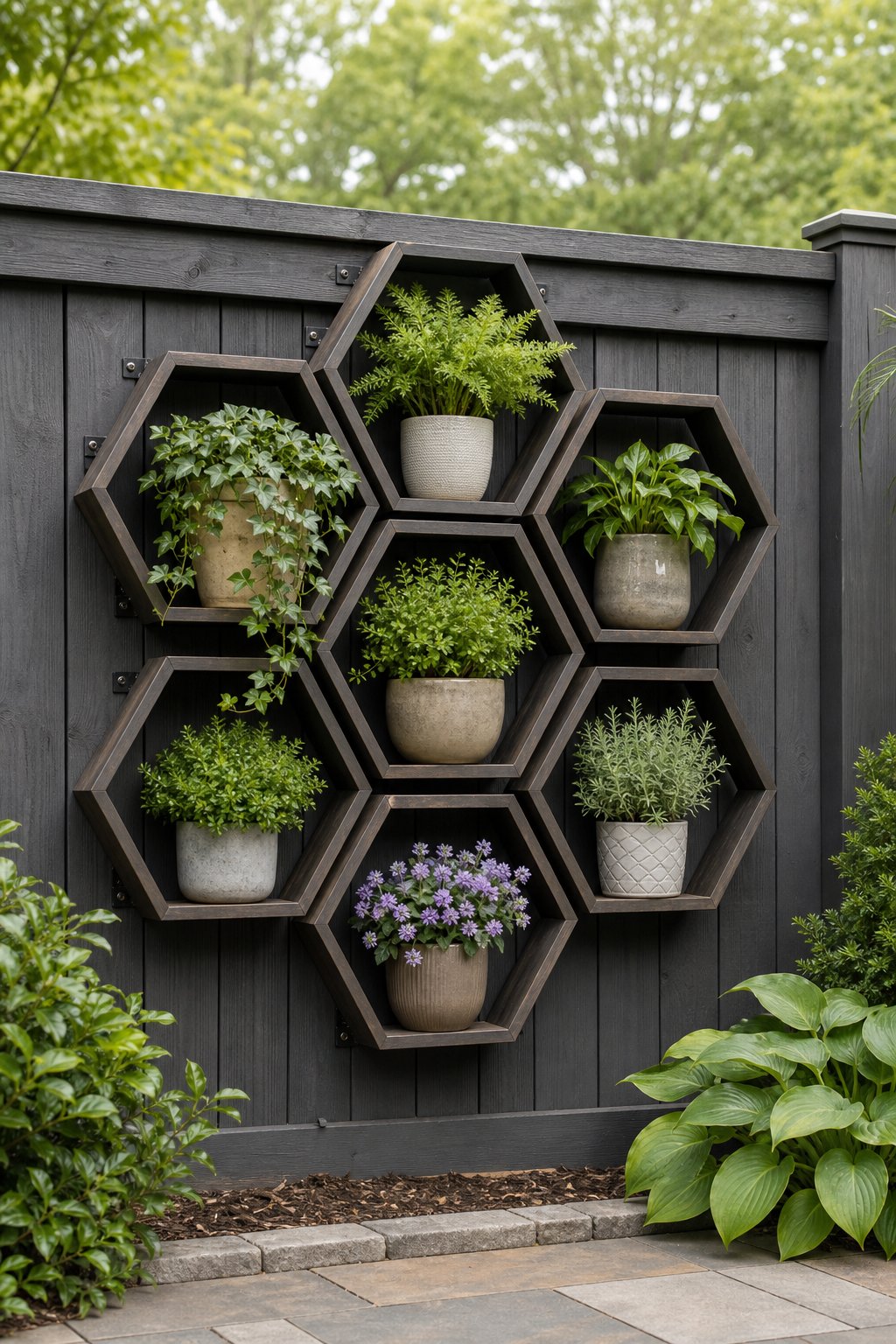
Expert Tip From MrPlanter: “Leave enough room to lift each pot straight out for watering. Odd numbers often make a wall grouping feel more natural, so try three or five hexagons.”
10. A-Frame Wooden Plant Stand For A Cottage Garden Path
A cottage garden path already has plenty of flowers, yet a little height can make the planting feel richer. An A-frame stand adds two-sided display space without needing a wall.
You can fill one side with small flowering pots and the other with herbs or leafy plants. Set the stand beside the path, not in it, and check that its feet sit firmly on compact soil or pavers.
Exterior paint or stain protects the wood from rain. Keep taller plants low on the frame so the display does not block the path or lean into passing shoulders.
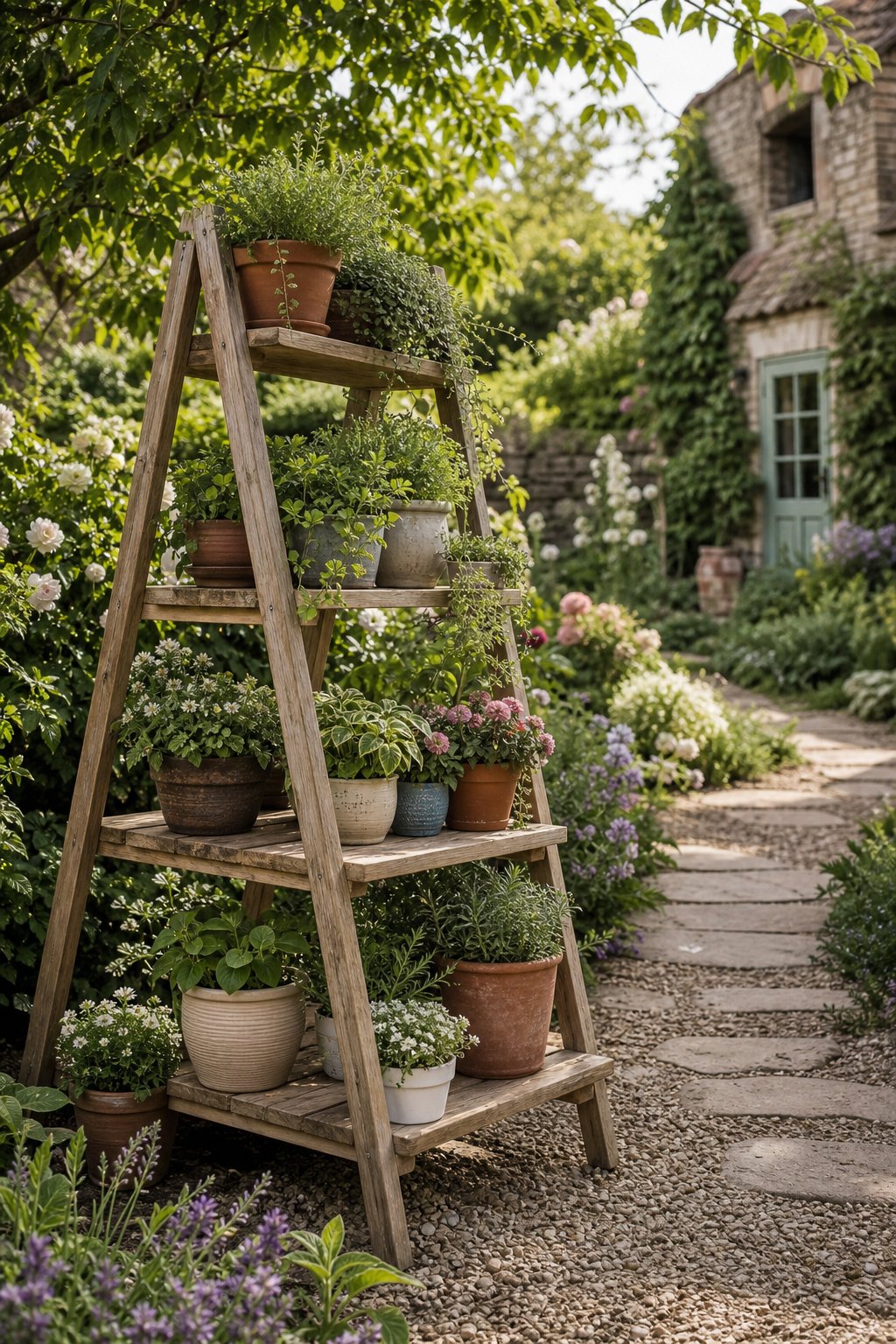
Expert Tip From MrPlanter: “Measure the path after the stand is filled, not before. A pretty plant that brushes your arm every time you pass will soon become a very unpopular neighbor.”
11. Window Box Shelf Beneath A Sunny Exterior Window
The space beneath an exterior window is perfect for a low shelf of plants. It gives you a layered view from inside while keeping the window box itself free for flowers.
A wooden shelf can hold potted herbs, small houseplants during warm weather, or colorful annuals. Leave enough clearance for window cleaning and shutters.
Choose plants based on the window’s direction, since afternoon sun can be much stronger than morning light. A sealed cedar plank with simple brackets gives you a clean display without making the wall feel crowded.
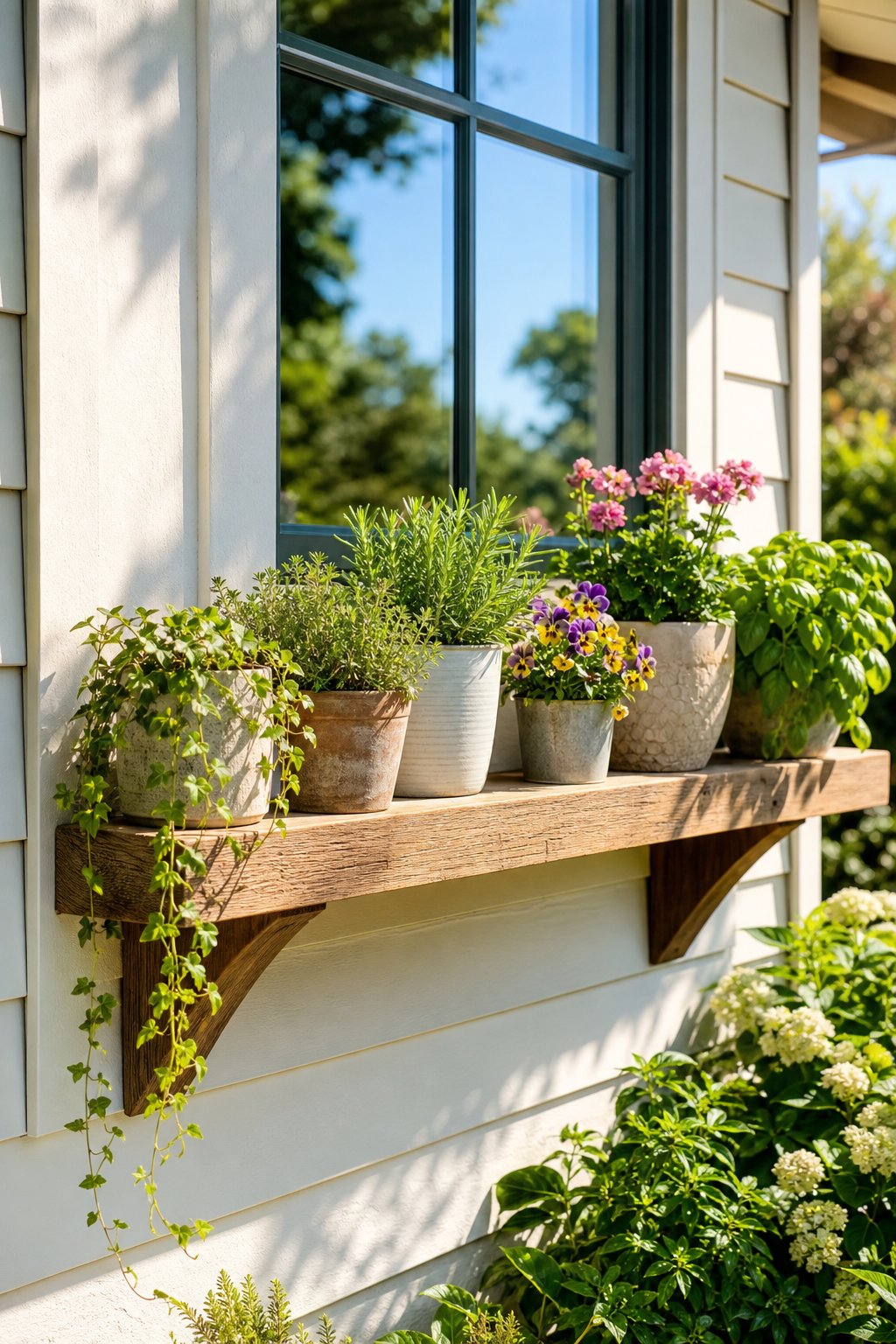
Expert Tip From MrPlanter: “Keep the shelf a few inches below the sill so rainwater does not collect against the wall. Group plants by water needs, not just by matching pot color.”
12. Pergola Beam Hanging Shelves For Trailing Ferns
Pergola beams offer a ready-made place for hanging shelves, and trailing ferns seem to enjoy the invitation. A suspended display adds greenery above a patio or seating area while leaving the ground open.
Ferns, ivy, and flowering vines can soften the straight lines of the structure. Use hooks rated for the full weight of wet soil, pots, and wood.
Hang shelves where people will not bump their heads, and keep them away from grills or open flames. Choose a covered or partly shaded position if your plants dislike strong midday sun.
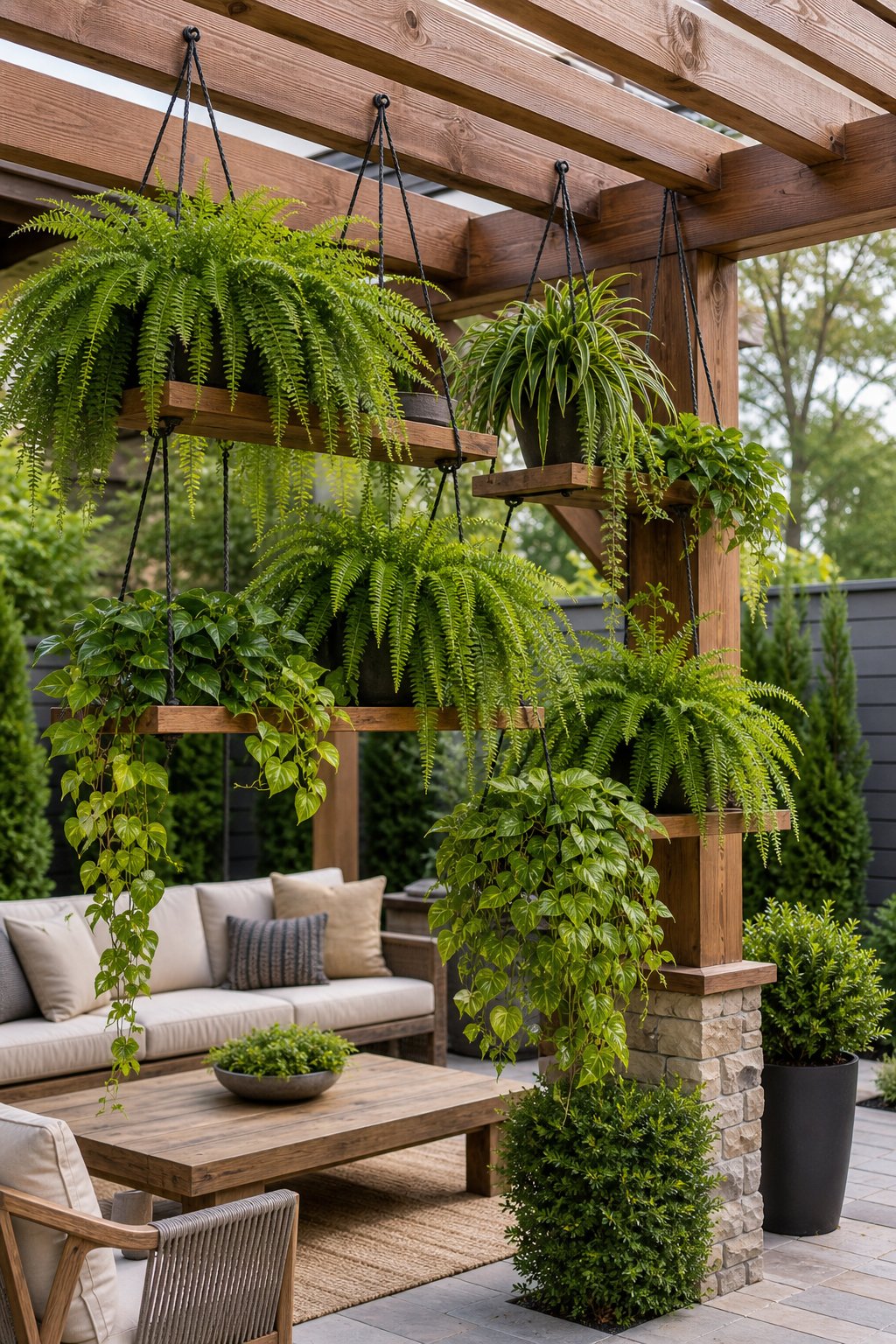
Expert Tip From MrPlanter: “Water hanging plants slowly so excess moisture does not fall onto guests below. Let fern fronds spill from one side while keeping the opposite side lighter for balance.”
13. Rolling Multi-Tier Plant Cart For Flexible Patio Styling
A plant cart proves its usefulness whenever the sun moves, storms arrive, or you need the patio cleared for company.
Rolling wheels let you shift several plants at once instead of carrying pots one by one like a very slow parade.
Multiple tiers also provide small containers with better access to light.
Choose locking casters and select a frame designed for outdoor use.
Place large pots on the lowest shelf, then test the cart on the patio before adding more plants.
Move the cart slowly over uneven surfaces, and clear soil and fallen leaves from the wheels.
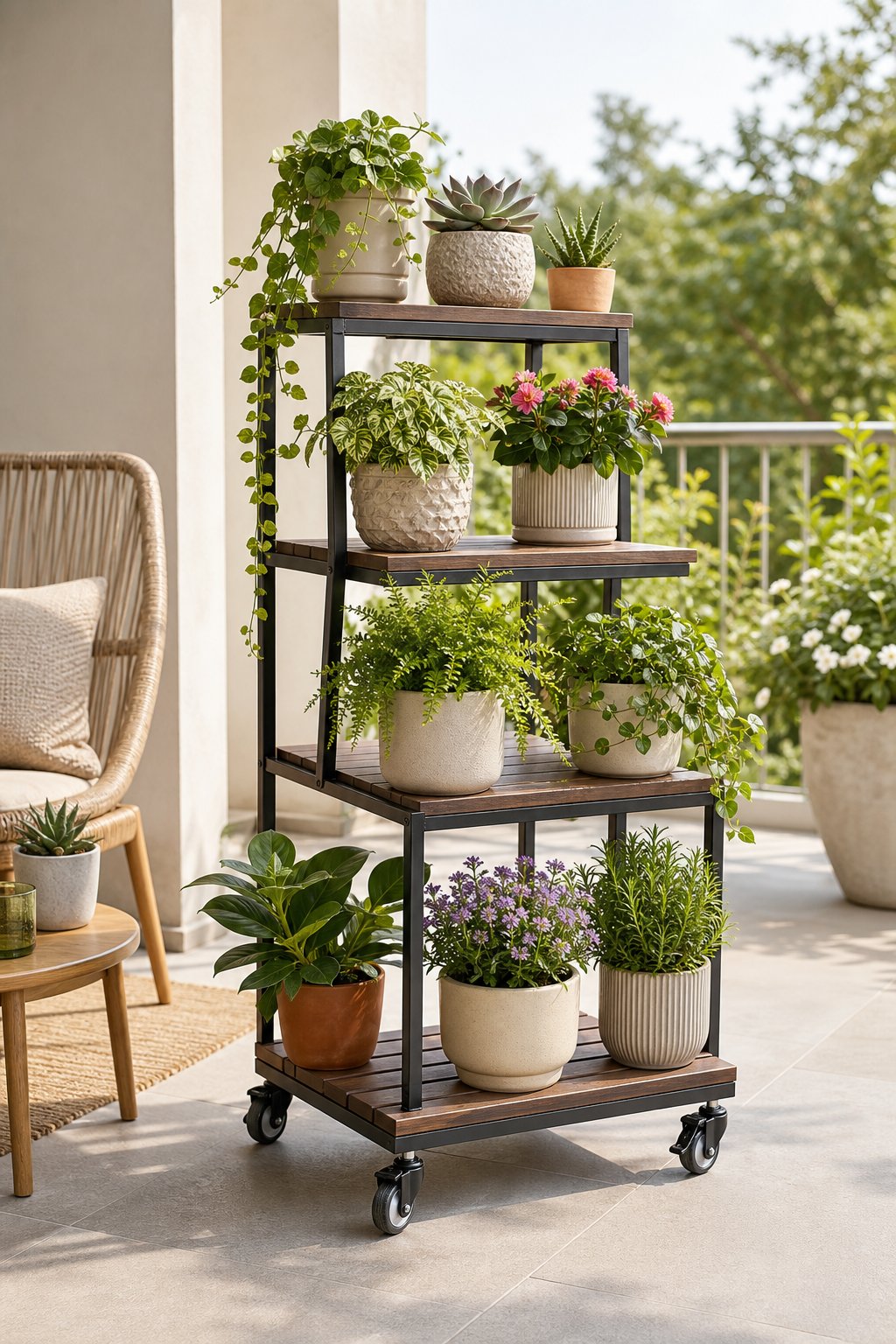
Expert Tip From MrPlanter: “Lock all four wheels before watering or pruning. When a storm is coming, move the cart to a sheltered spot before the wind turns it into garden furniture with a travel plan.”
14. Cinder Block And Cedar Plank Shelf For A Vegetable Garden
Cinder blocks and cedar planks create a simple shelf without complicated cuts or special hardware.
Set the blocks in matching pairs, place planks across them, and build another level above if the structure remains stable.
This setup fits naturally beside raised beds and gives seedlings, herbs, or harvest baskets a useful home.
Keep the blocks on firm, level ground so the planks stay steady.
Cedar resists outdoor moisture, while the open design lets water drain quickly.
You can paint the blocks, though their plain gray color suits a working vegetable garden.
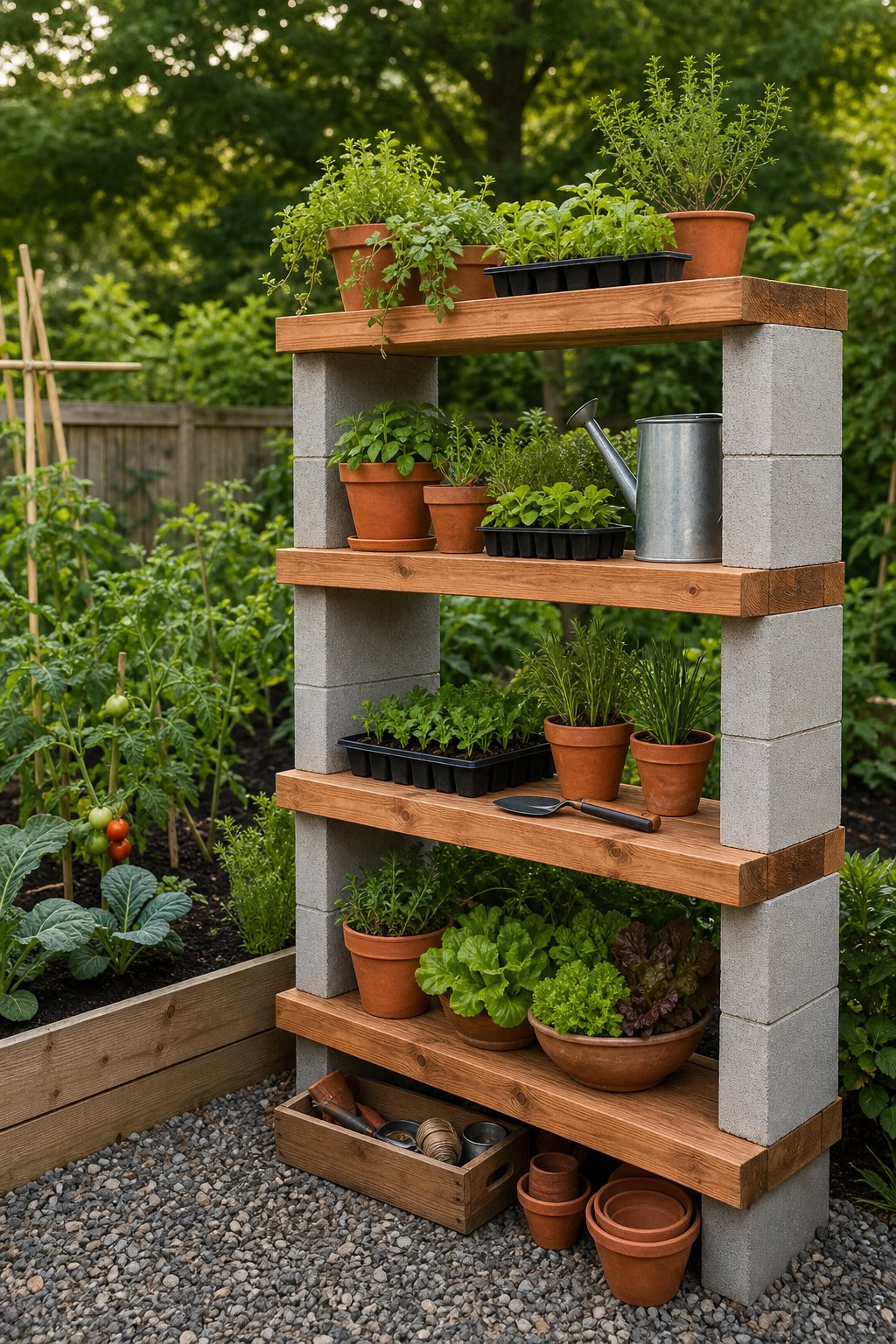
Expert Tip From MrPlanter: “Check each plank with your hand before placing pots on it. Use the lower shelf for heavier containers and keep the top shelf for small plants and seed trays.”
15. Vertical Gutter Shelf Garden For A Narrow Side Yard
A narrow side yard may offer little room for pots, yet its fence or wall can still support a productive display.
Mount outdoor gutters in rows to create long, shallow shelves for lettuce, herbs, strawberries, and small flowers.
The design uses vertical space while keeping the walkway open.
Mount gutters with a slight slope so water flows toward a drainage point.
Add end caps, drainage holes, and lightweight potting mix.
Keep the rows at a reachable height, since a garden that requires a ladder to harvest lettuce has taken the vertical idea a little too seriously.
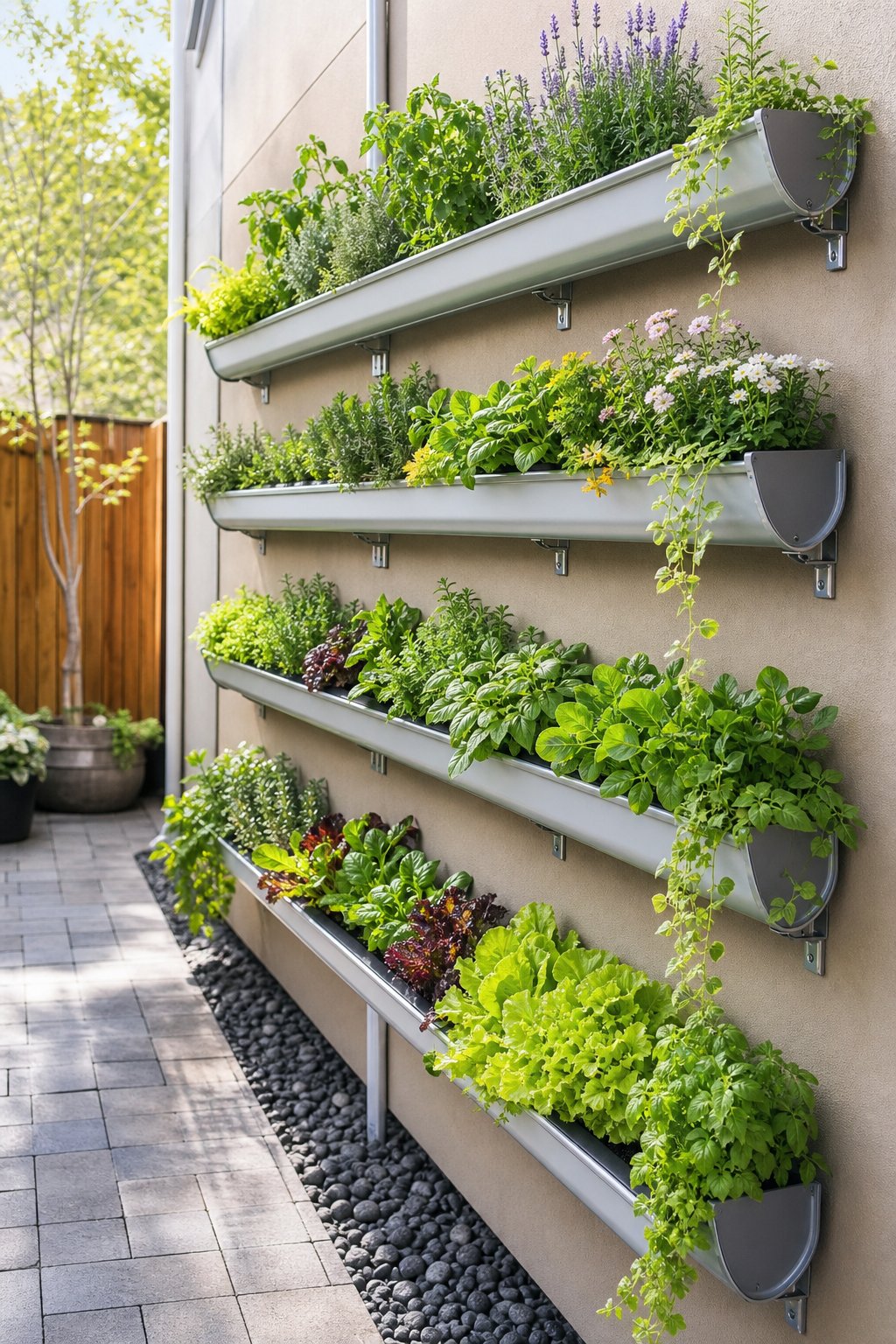
Expert Tip From MrPlanter: “Use gutters for shallow-rooted plants rather than large vegetables. Leave a clear path for hoses, wheelbarrows, and your feet during harvest.”
16. Reclaimed Crate Shelves Beside A Garden Gate
A garden gate makes a natural entrance for a small plant display, and reclaimed crates add plenty of character.
Stack or mount the crates in an offset pattern to hold potted flowers, herbs, and compact vines.
Their open sides provide visual texture and give the display a handmade feel.
Use crates that are clean, solid, and free from questionable chemical treatments.
Secure stacked crates together and anchor the arrangement if the gate swings nearby.
Place weather-tough plants in the most exposed spots, while delicate containers can sit in the protected center.
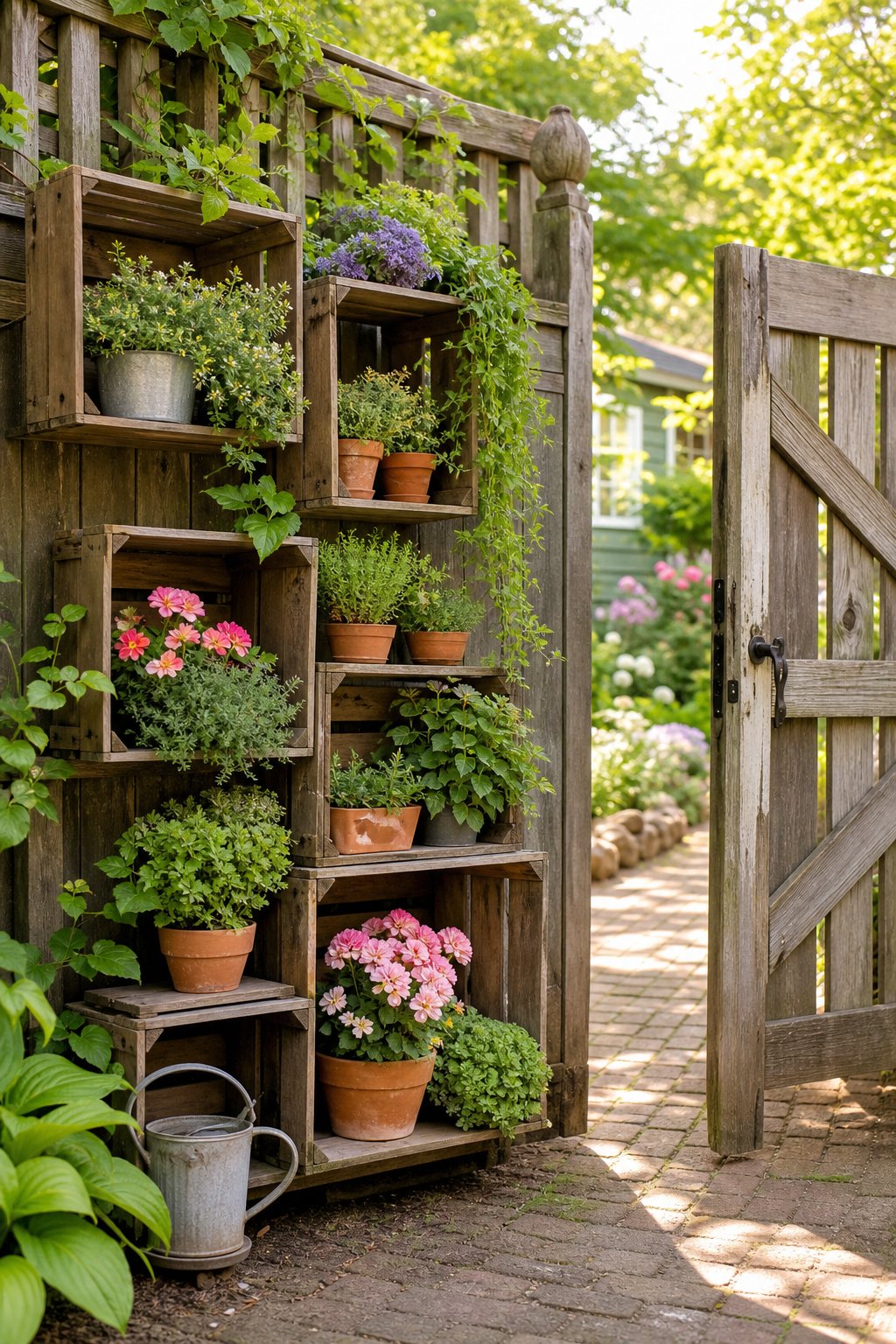
Expert Tip From MrPlanter: “Line crate bottoms with a breathable material instead of plastic that traps water. Keep the gate’s swing path clear, because flowers should welcome visitors, not stop them.”
How To Choose Outdoor Plant Shelves
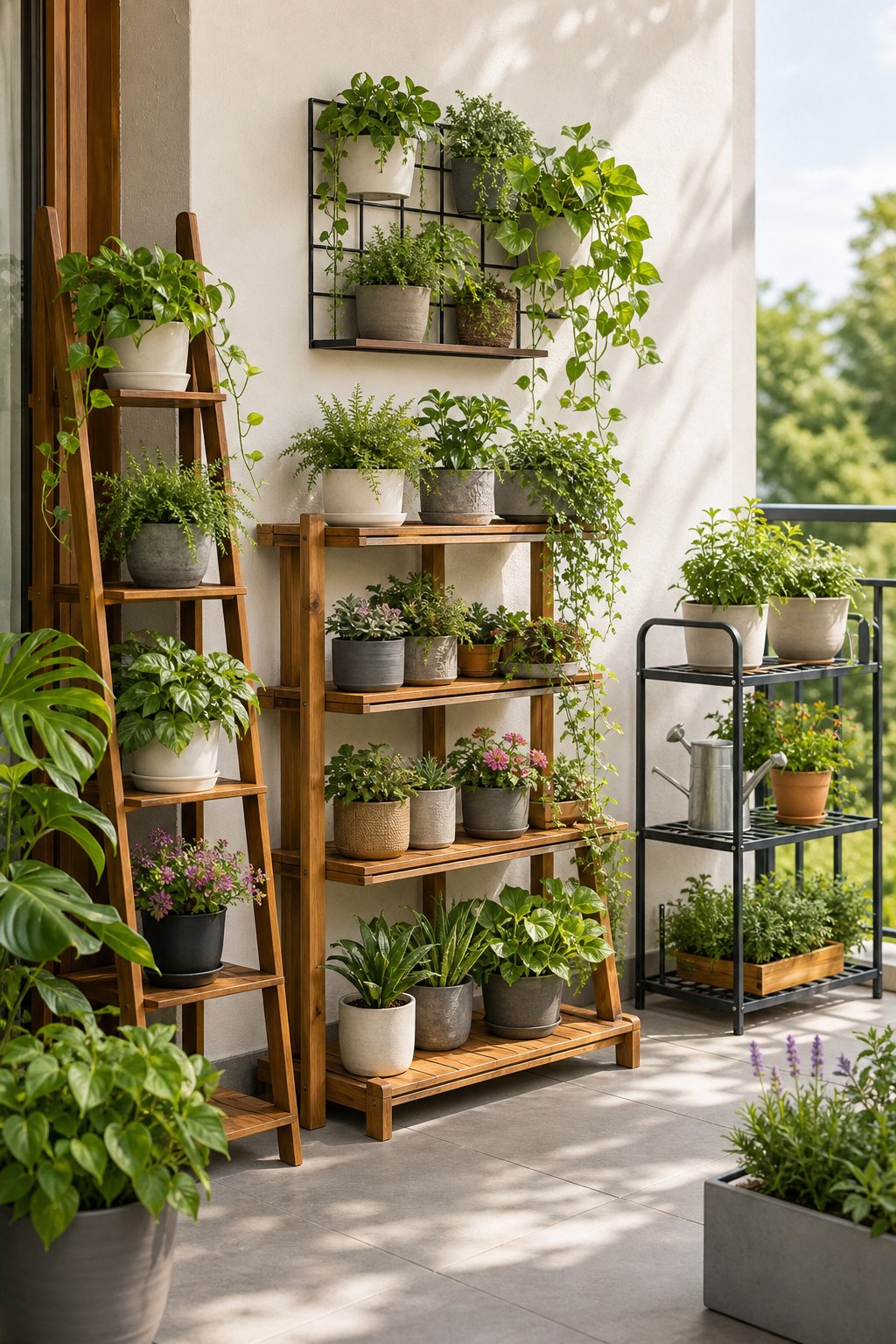
Weather Resistance And Material Choice
Outdoor shelves face sun, rain, humidity, and temperature changes, so material choice matters.
Cedar, treated lumber, bamboo, powder-coated metal, galvanized steel, and sturdy plastic all work when matched to your conditions.
Seal wood with an exterior product, inspect metal for rust, and avoid placing untreated materials where they stay wet.
Weight Capacity And Secure Anchoring
A pot becomes much heavier after you add wet soil.
Check the shelf’s weight rating, then account for every container, saucer, and decoration you plan to add.
Wall shelves need solid screws and appropriate anchors.
Freestanding units may need straps, brackets, or a position against a stable wall.
Sun Exposure, Drainage, And Plant Needs
Study the area at different times of day before placing your shelves.
Full-sun plants need bright exposure, while ferns and many leafy plants prefer filtered light.
Pots need drainage holes, and shelves need gaps or trays that prevent water from pooling around wood and metal.
Scale For Patios, Porches, And Garden Beds
Measure the available width, depth, and walking clearance before you buy or build.
A tall, narrow shelf suits a small porch.
A wide tiered unit may work beside a deck or garden bed.
Leave room to water, prune, sweep, and move through the space comfortably.
Outdoor Plant Shelf Styling And Safety Tips
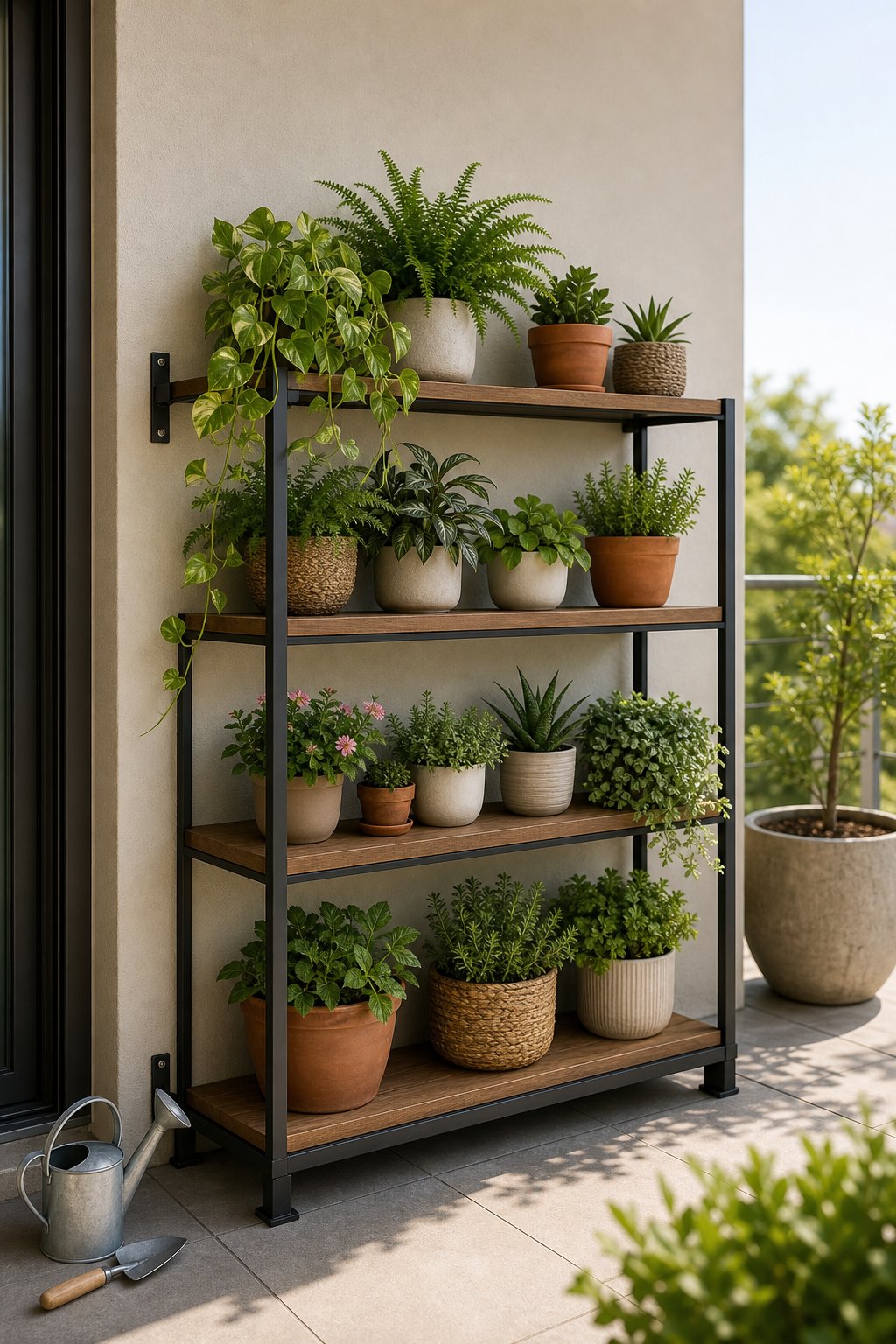
Mix Trailing, Upright, And Seasonal Plants
Combine different shapes so your shelf does not look like a row of identical green hats.
Use upright plants for height, rounded plants for fullness, and trailing vines to soften the edges.
Add seasonal flowers in small groups, then replace them as temperatures change.
Use Pots With Drainage Holes And Saucers Where Needed
Drainage holes protect roots from sitting in water, especially after heavy rain or frequent watering.
Use saucers on porches, balconies, and decks where dripping could stain the surface.
Empty standing water regularly so mosquitoes do not find your plant shelf attractive.
Protect Wood And Metal From Moisture
Wipe water from wooden shelves and refresh exterior finishes as needed.
Check metal joints, screws, and brackets for rust or looseness at the start of each season.
Keep shelves slightly raised from wet ground to help air move underneath and slow damage.
Keep Walkways Clear And Shelves Stable
Place every shelf outside the natural path of feet, hoses, pets, and opening gates.
Test for wobbling before you add plants. Then secure tall or narrow units in windy areas.
Keep heavy pots low. Trim trailing growth when it begins to reach the ground.