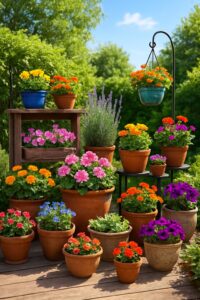
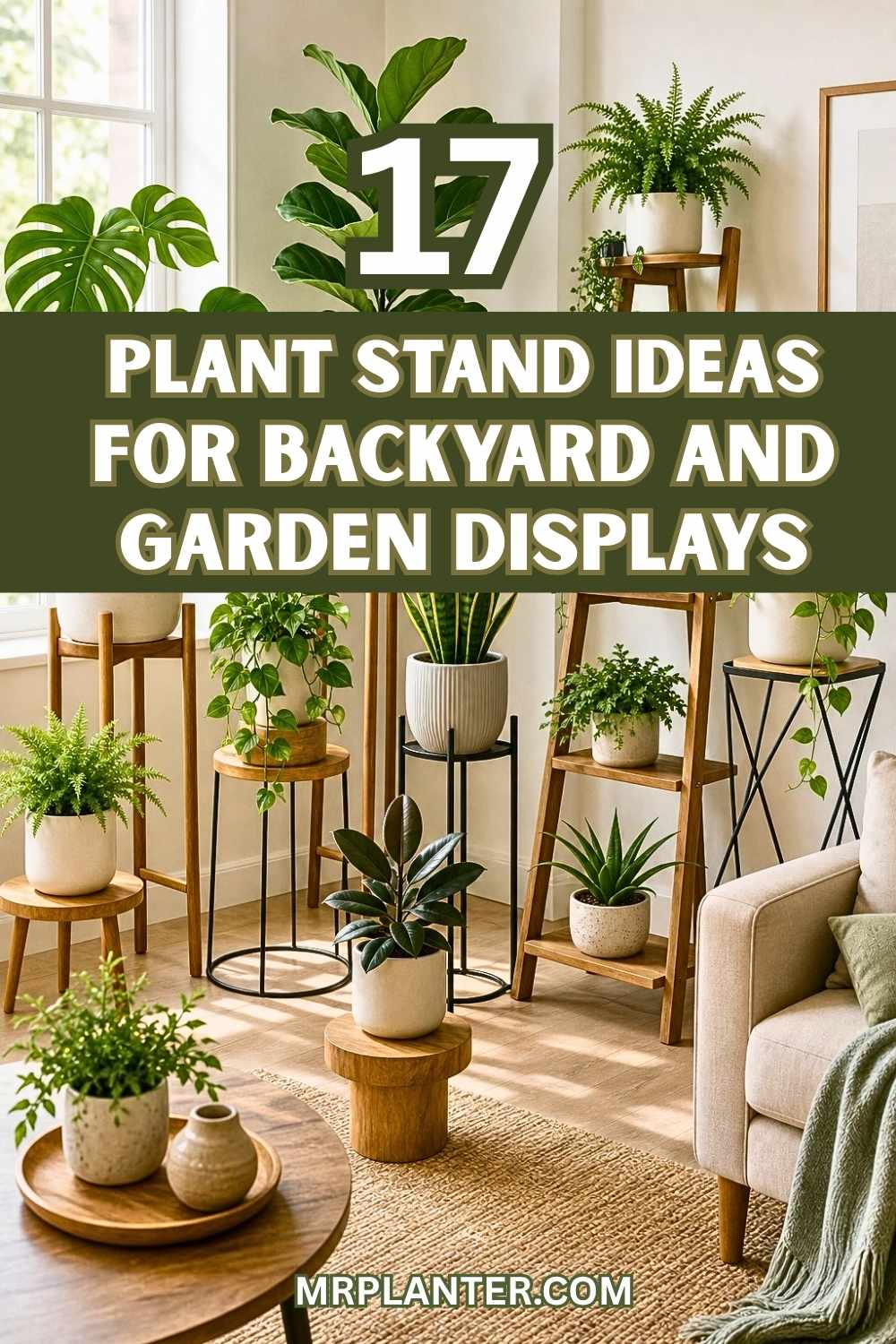
A good plant stand does more than lift a pot off the ground. It helps you fit more greenery into a small yard, gives each plant better light, and adds shape to patios, porches, and garden paths.
These 17 plant stand ideas use wood, metal, blocks, buckets, and even old furniture to make your outdoor display more useful and personal.
You can build some options in an afternoon. Others let you repurpose items you may already have.
Choose a stand that supports your pots safely, drains well, and places each plant where its sunlight needs can be met.
1. Leaning Wooden Ladder Plant Stand
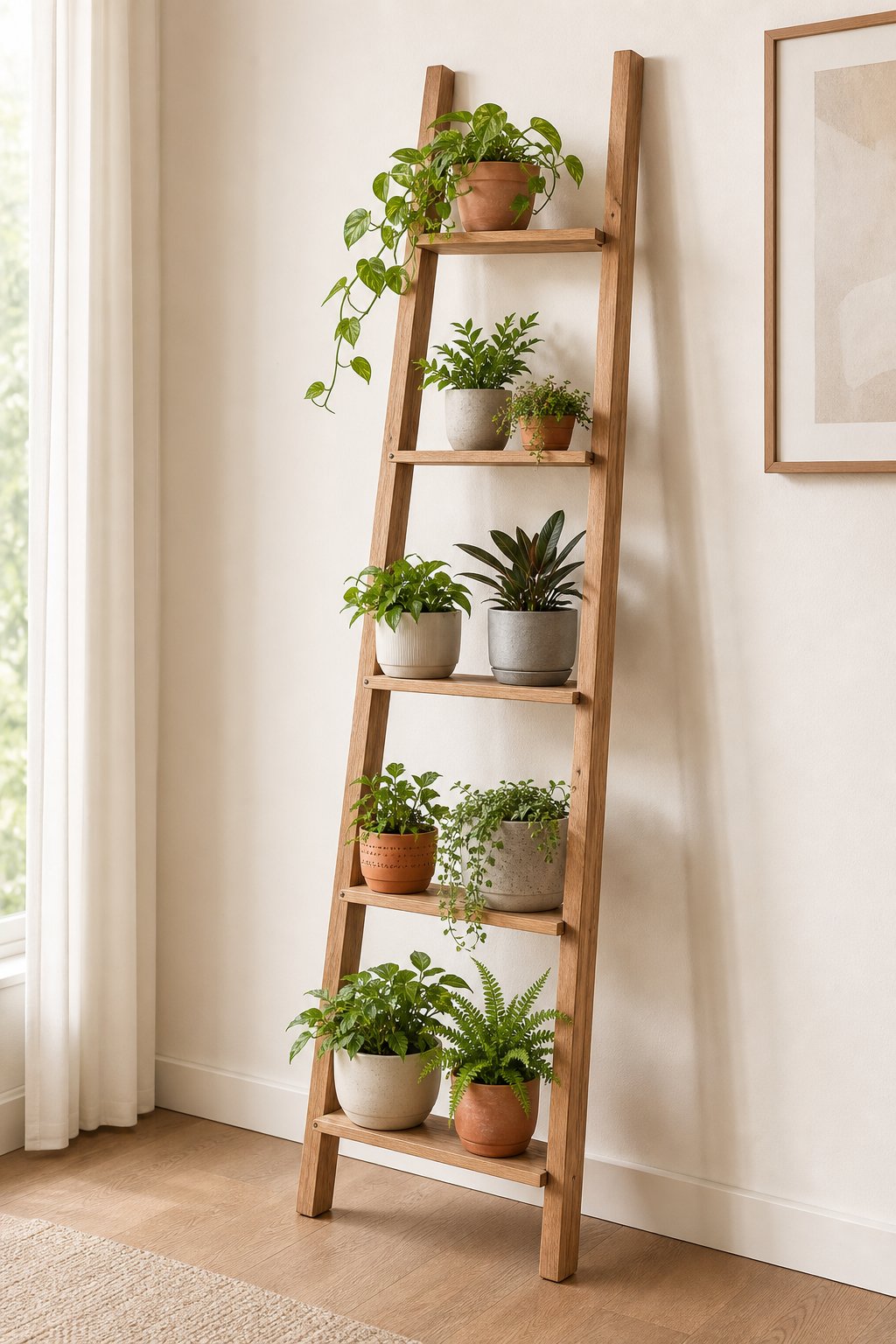
That empty fence or shed wall may be begging for a ladder. A wooden ladder gives you several levels without taking much ground space, making it handy for herbs, annual flowers, and trailing vines.
Lean it against a solid surface, then secure the top with screws or heavy-duty brackets so wind can’t send your pots tumbling. Use wide boards across the rungs for flat shelves, and keep the heaviest containers near the bottom.
A weatherproof stain helps the wood last through damp seasons. You can also paint it a cheerful color if your garden needs a little extra personality.
Expert Tip From MrPlanter: “Put a small drip tray under each pot to protect the wood. Leave space between plants so air can move freely.”
2. Three-Tier Cedar Corner Plant Stand
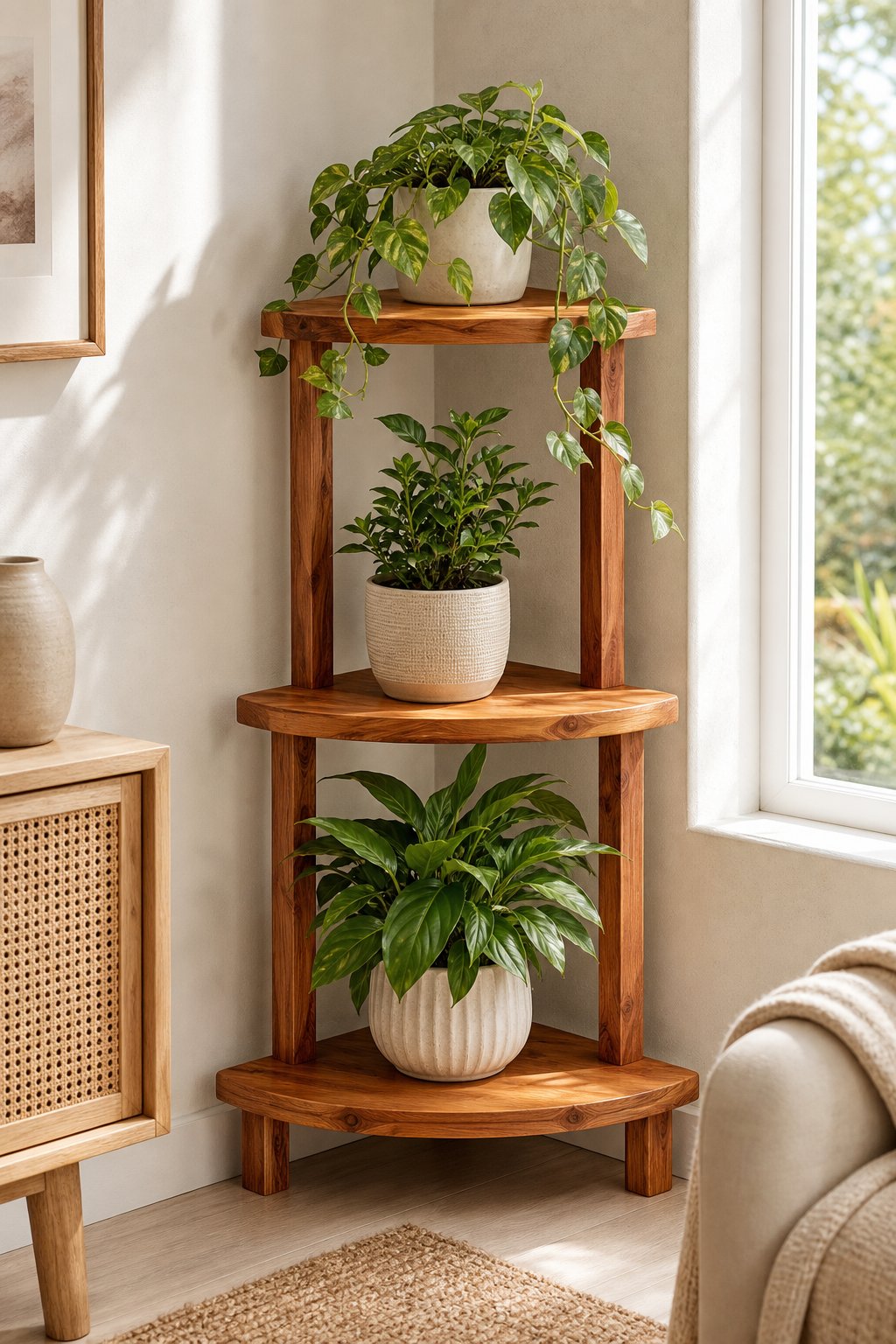
Corners often collect forgotten hoses, empty pots, and one brave spider plant. A three-tier cedar stand turns that awkward spot into a tidy garden display.
Cedar handles outdoor moisture well, and its warm color looks at home beside wood fencing, brick, or natural stone. Place sun-loving pots on the upper shelves and shade-tolerant plants below, depending on the corner’s light.
Keep the structure a few inches from the wall so rainwater and air can pass behind it. Cedar is light enough to move, though you’ll want help once every shelf is full.
Expert Tip From MrPlanter: “Check that every leg touches level ground before loading the shelves. A thin paver under one leg can fix a small wobble.”
3. Galvanized Stock Tank Plant Shelf
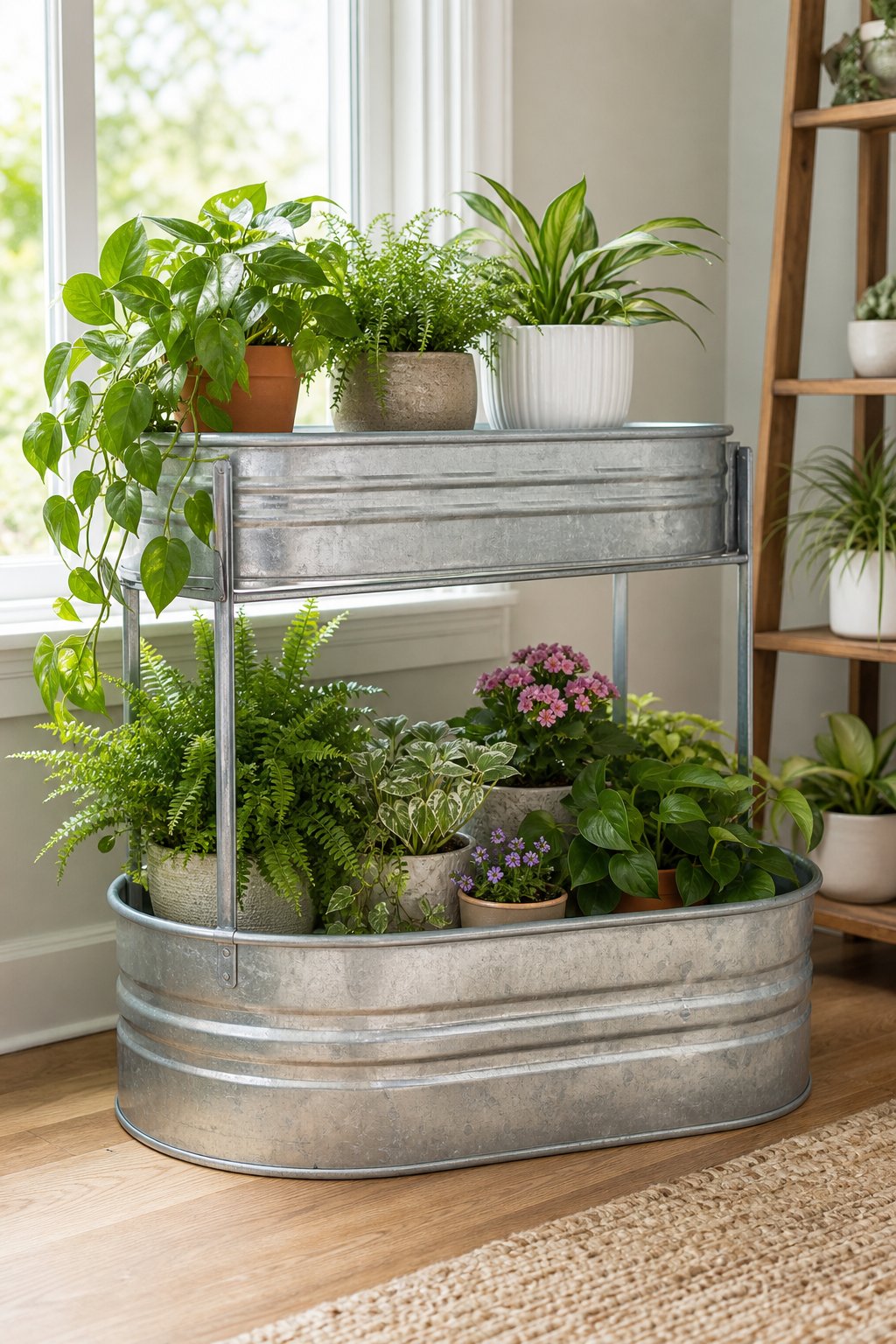
A stock tank isn’t just for livestock or collecting rainwater. Turn a shallow galvanized tank into a broad plant shelf by adding sturdy wooden boards across its top or inside its rim.
The metal brings a clean farm-style look to a patio and stands up well to rain. Use the lower area for small pots, watering cans, or bags of soil, while taller plants sit on the boards.
Drill drainage holes only if you plan to fill the tank with soil. For potted plants, raise containers so water doesn’t sit against their bases.
Expert Tip From MrPlanter: “Choose a tank with a wide, stable base for busy patios. Sand sharp edges before placing it where children or pets play.”
4. Cinder Block And Pressure-Treated Lumber Stand
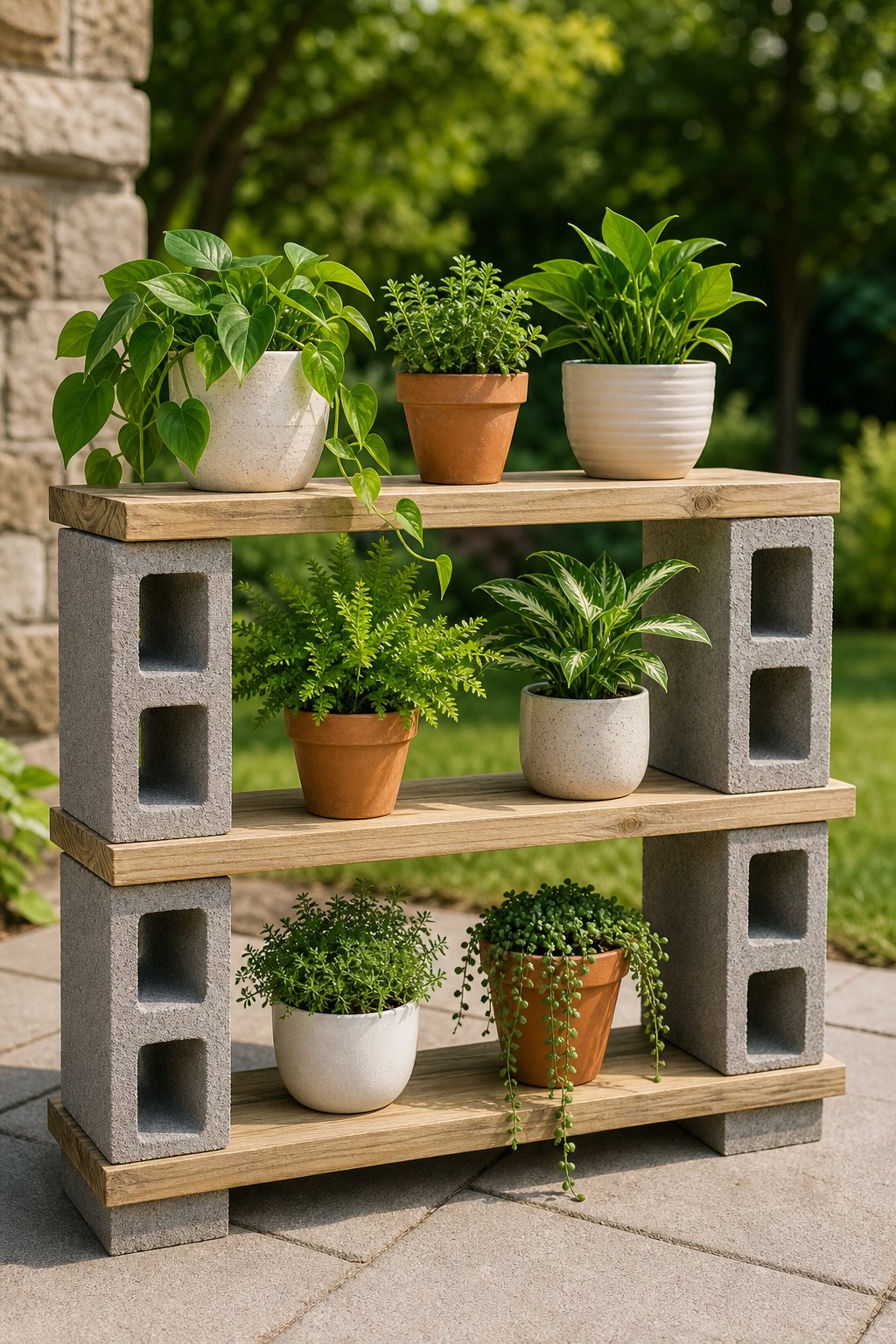
If your budget is feeling shy, cinder blocks and pressure-treated boards make a practical stand for very little money. Stack the blocks in pairs, then rest boards across them to create one or more shelves.
You can adjust the height whenever your plant collection grows. This is useful because plants have a way of multiplying when you’re not looking.
Set the blocks on compact soil, gravel, or pavers rather than soft mulch. Keep each board centered and test the structure before adding heavy ceramic pots.
Paint the boards or blocks if you want a cleaner garden color scheme.
Expert Tip From MrPlanter: “Use matching block stacks on both sides for better balance. Place the largest pots on the lowest board.”
5. Repurposed Wooden Chair Planter Stand
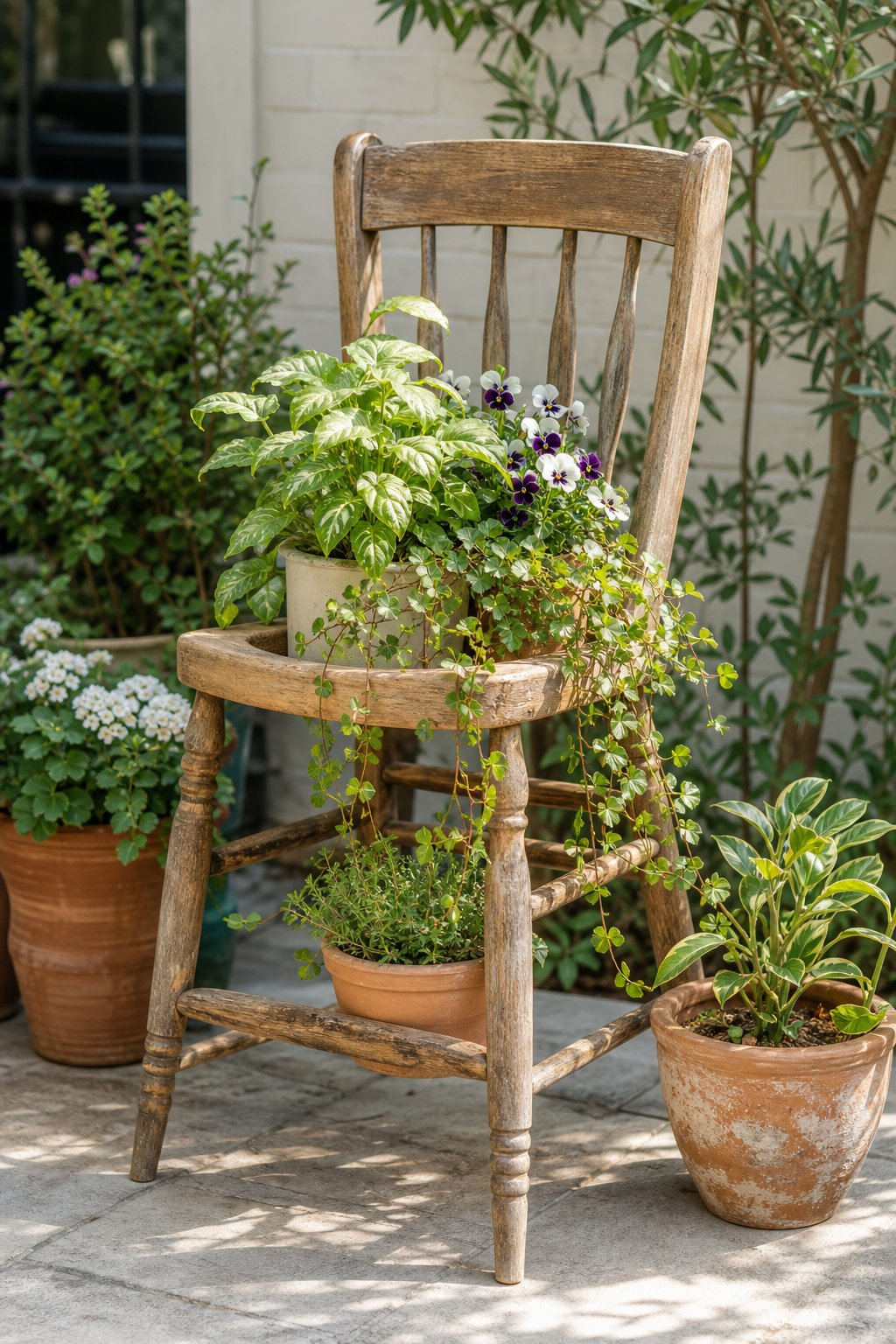
An old chair can retire from dining duty and start a second life among your flowers. Remove the seat, place a pot inside the frame, or use the seat as a platform for one large container.
The backrest adds height and creates a natural support for climbing or trailing plants. Sand loose splinters and seal the wood before putting the chair outdoors.
A chair with sturdy legs works best on a porch, where it gets some protection from constant rain. You can paint it to match your fence, or let its weathered finish add garden charm.
Expert Tip From MrPlanter: “Test the chair with an empty pot first. If it rocks, set it on a paver before adding soil and plants.”
6. Metal Bakers Rack Plant Display
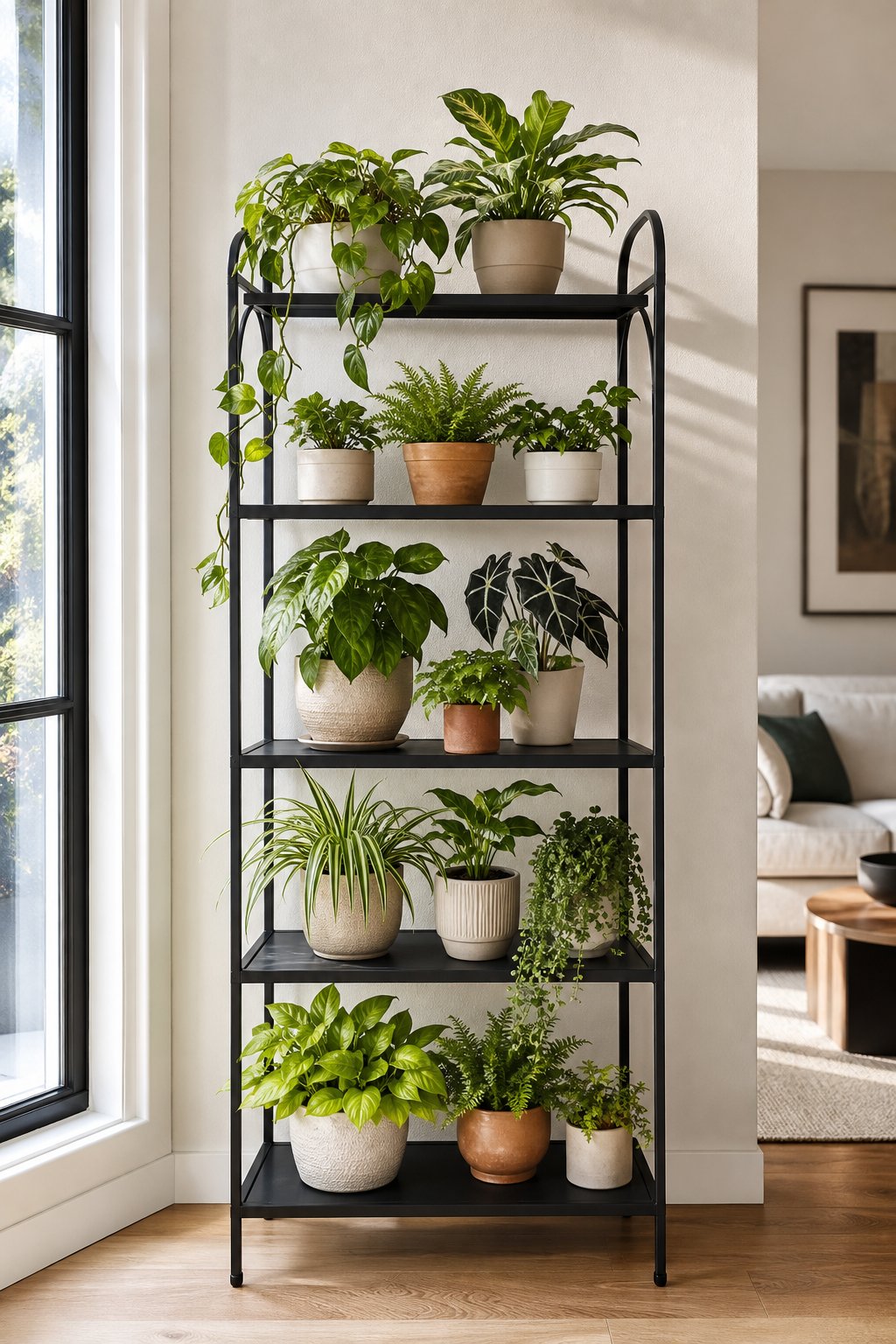
A bakers rack brings order to a patio that has started to resemble a plant-pot traffic jam. Its open metal shelves let sunlight reach several levels, while the tall frame gives your display a strong vertical shape.
Use it for herbs near the kitchen door, or fill it with flowers beside a porch. Choose a rack made for outdoor use, or protect indoor metal with exterior paint and rust-resistant primer.
Keep pots smaller on upper shelves so the rack stays steady. A rack with adjustable feet is especially helpful on sloped patios.
Expert Tip From MrPlanter: “Add rubber feet or pavers under the legs to protect finished surfaces. Wipe standing water from the shelves after heavy rain.”
7. Rustic Pallet Wood Vertical Plant Stand
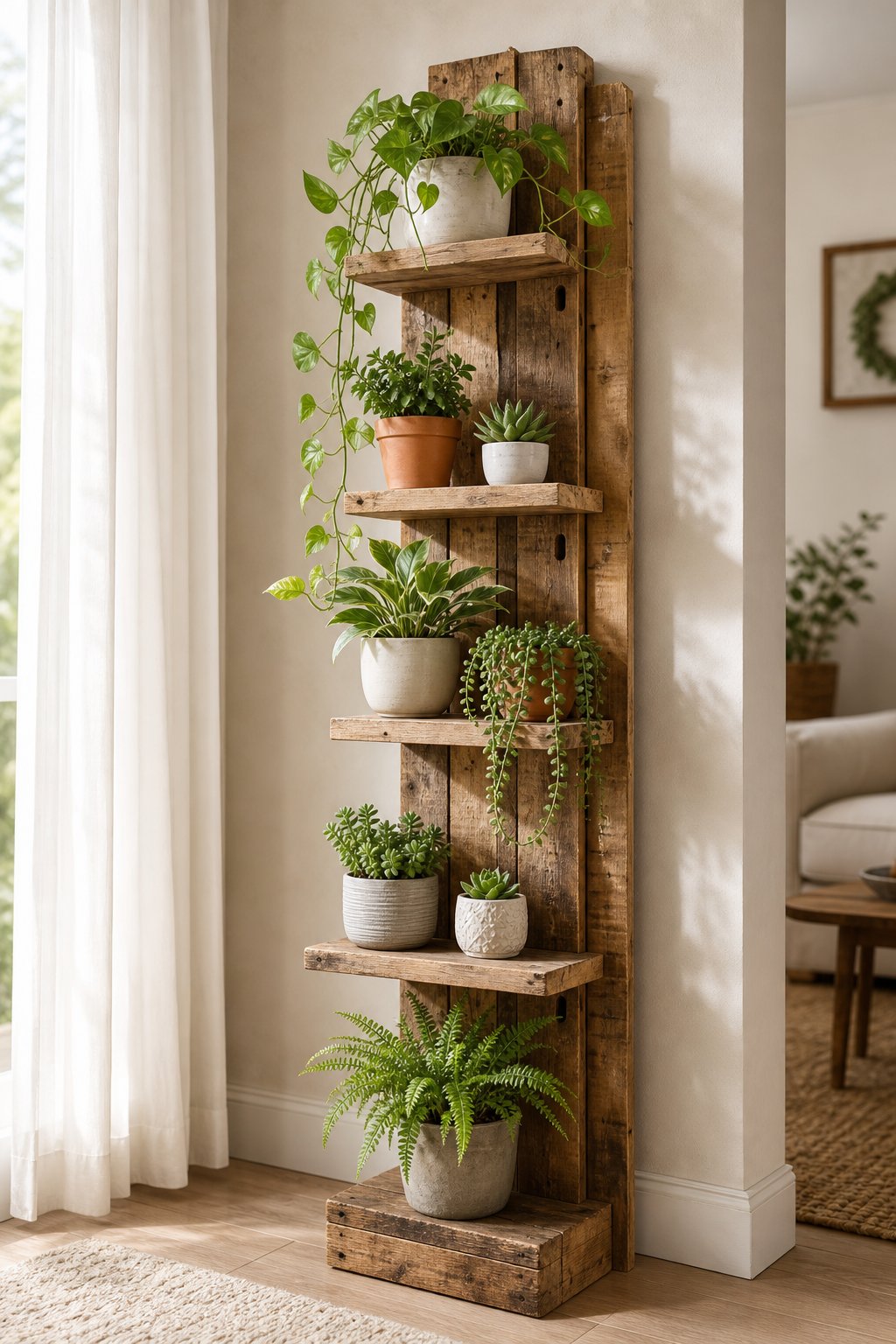
A pallet can become a tall plant stand, though not every pallet deserves a place in your garden. Look for heat-treated boards marked “HT,” avoid stained or oily pallets, and remove loose nails before starting.
Add small shelves, planter boxes, or brackets to the front for a vertical display. Secure the pallet to a fence or wall rather than leaving it freestanding.
This design works well for lightweight herb pots, succulents, and small flowers. Seal the wood with an exterior finish, then leave room beneath each shelf for watering.
Expert Tip From MrPlanter: “Use only clean, heat-treated pallets from a trusted source. Anchor the frame before placing pots on the upper levels.”
8. Wire Gabion Plant Pedestal
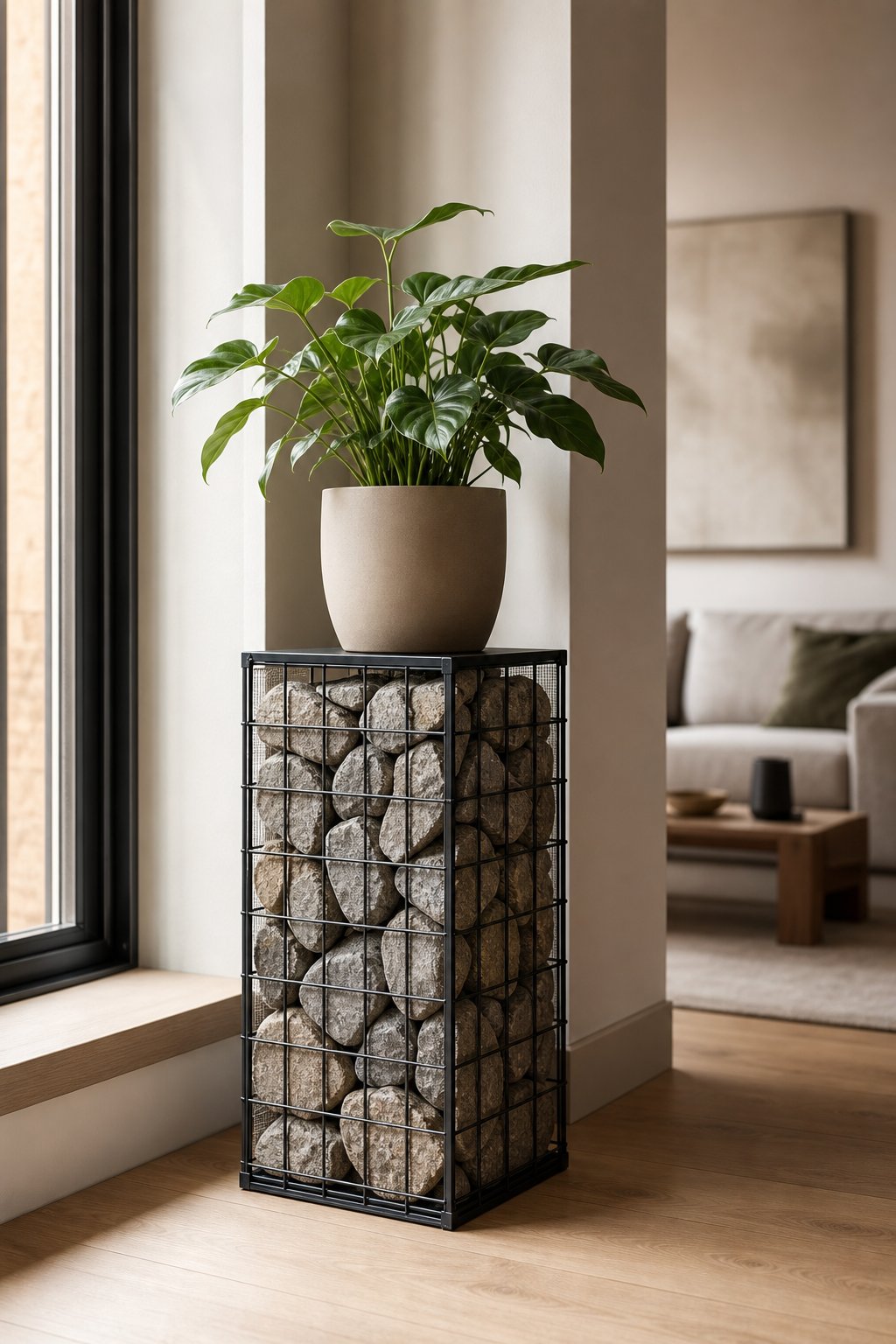
Gabion baskets usually hold rocks for walls, yet you can use a narrow one to make a sturdy plant pedestal with a sculptural look. Fill a wire cage with local stone, then place a flat paver or thick board on top.
The weight keeps the stand steady in windy yards, while the stones bring a natural texture beside beds and paths. Choose galvanized wire rated for outdoor use and cover sharp edges.
A gabion pedestal suits one large pot, such as a fern, ornamental grass, or small shrub. It looks best when the pot color contrasts with the stone.
Expert Tip From MrPlanter: “Fill the basket evenly so its weight stays centered. Add a level paver on top before placing your container.”
9. Terra-Cotta Pot Tower Plant Stand
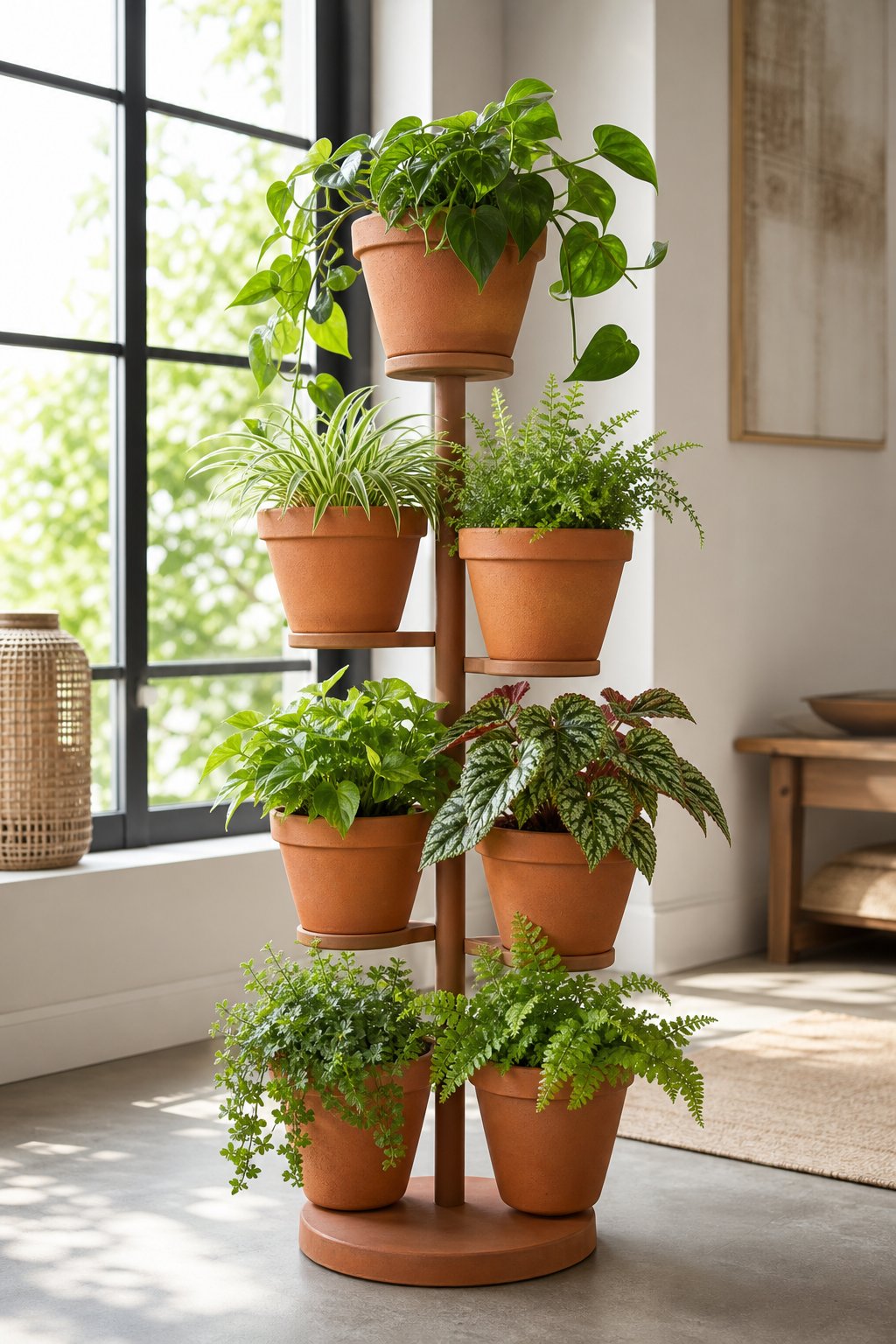
You can stack terra-cotta pots into a playful tower that looks like your plants are climbing toward the sky. Use a central metal rod or sturdy pole through matching pots, with each pot angled slightly in a different direction.
The result saves ground space and gives small herbs or flowers a sunny perch. Fill each pot with lightweight soil, since a tall tower gets heavy quickly.
Set the bottom pot on a broad, level base and avoid placing the tower where strong wind hits it. Terra-cotta dries fast, so check moisture more often during hot weather.
Expert Tip From MrPlanter: “Keep the tower low enough to reach every pot comfortably. Water slowly from the top and check that each pot drains freely.”
10. Upcycled Wooden Crate Plant Shelf
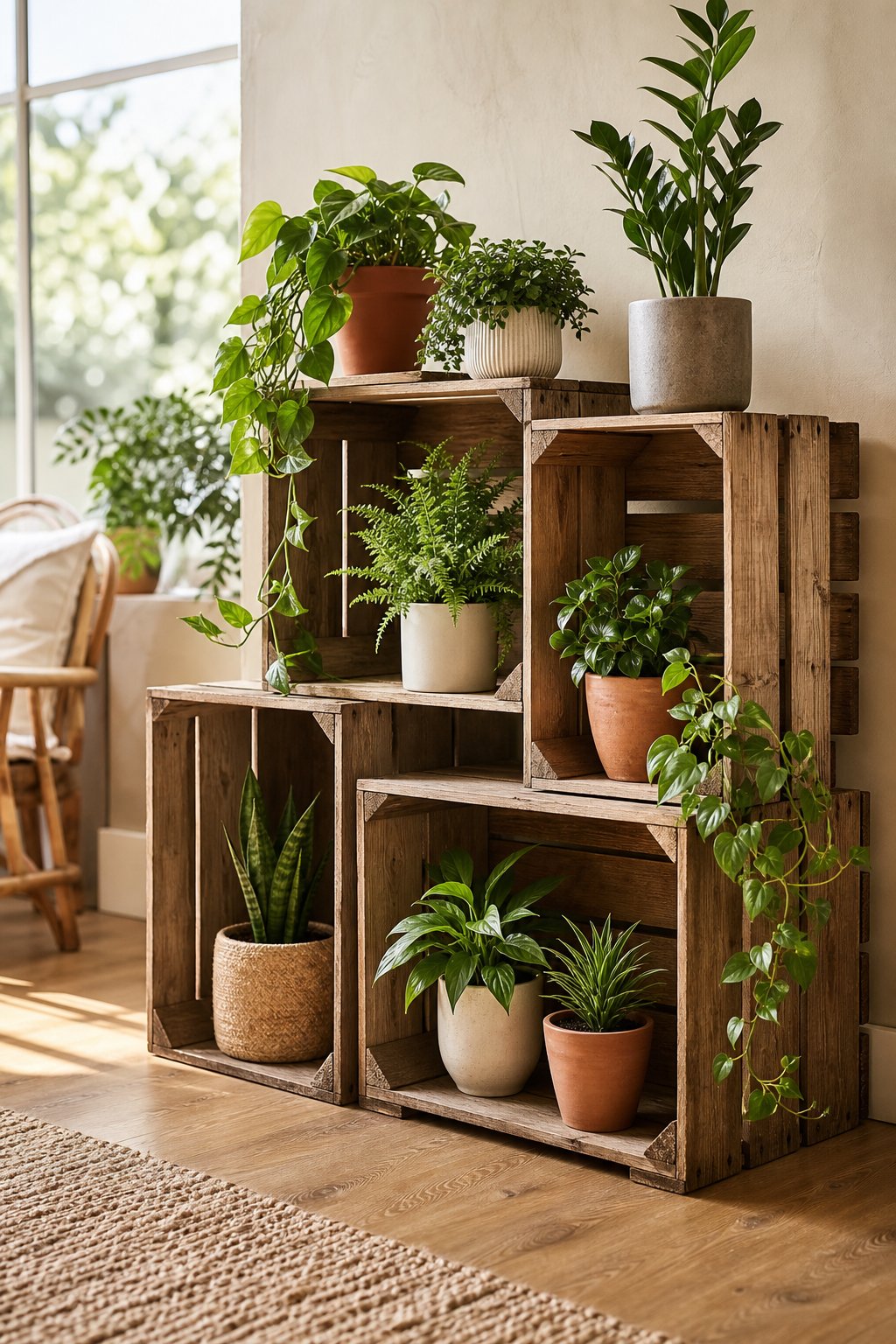
Wooden crates are wonderfully forgiving when you want a custom plant shelf. Stack them, turn some sideways, or attach them to a frame to create cubbies for pots and garden tools.
Their open sides help light reach plants, and their rough texture suits a cottage or farmhouse yard. Use clean, sturdy crates without chemical odors or soft wood.
Anchor tall stacks to a wall or fence, especially if your yard gets gusty. Line the inside with small trays instead of planting directly in the wood, which helps prevent rot.
Expert Tip From MrPlanter: “Arrange the crates on the ground before fastening them. Keep the widest crates at the bottom for a steadier base.”
11. Rolling Outdoor Bar Cart Plant Stand
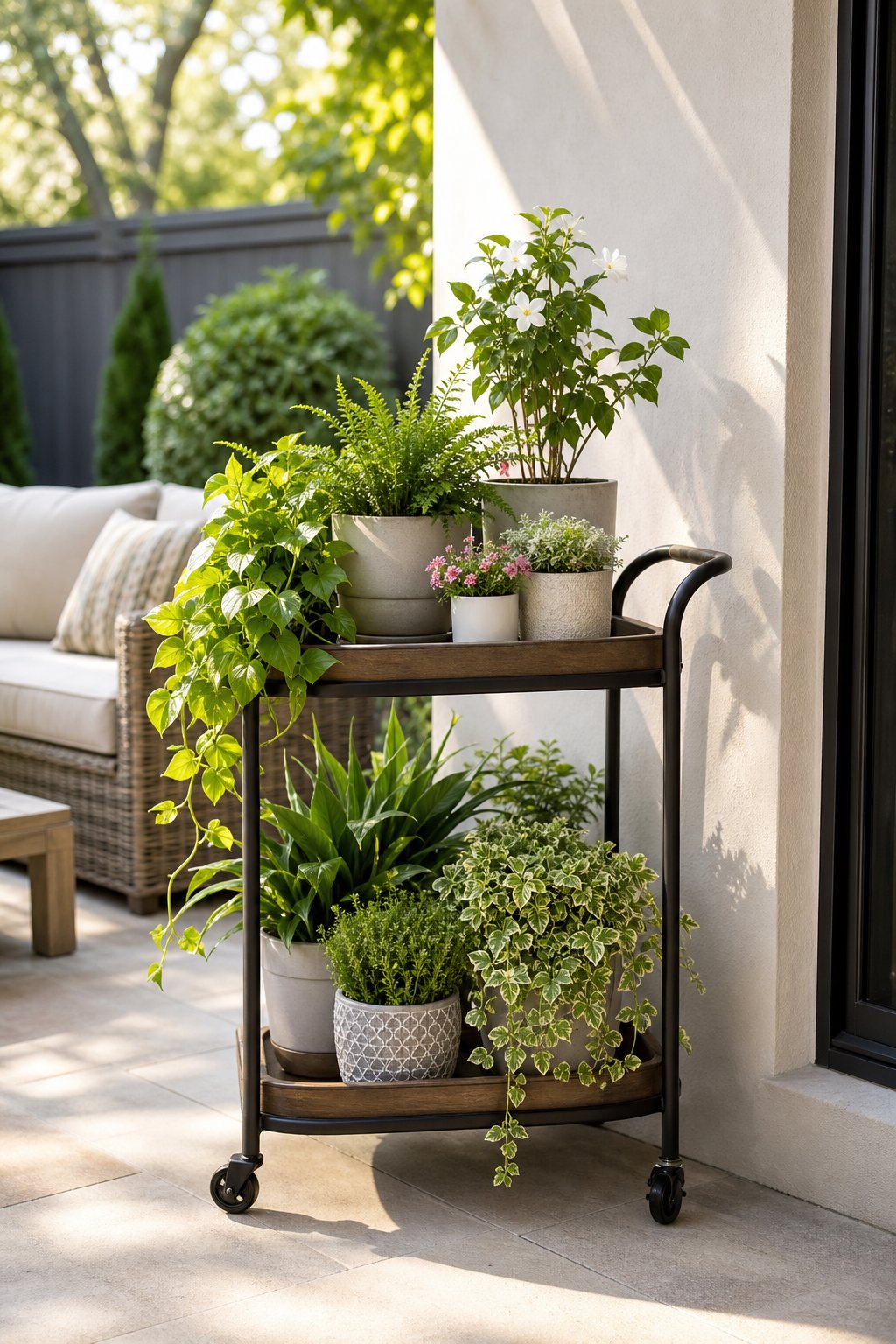
A bar cart can roll from a sunny patio corner to a shaded porch whenever your plants need a change. Its two shelves hold a mix of pots, pruners, and a small watering can, while its handle makes moving simple.
This is especially useful for tender plants that need shelter during cold nights. Pick a cart with locking wheels and a rust-resistant finish.
Keep the heaviest containers on the lower shelf, and don’t overload the top. A removable tray under each pot catches drips and keeps the cart easier to clean.
Expert Tip From MrPlanter: “Lock the wheels before watering or pruning. Move the cart by its frame, not by a delicate plant stem.”
12. Concrete Breeze Block Plant Stand
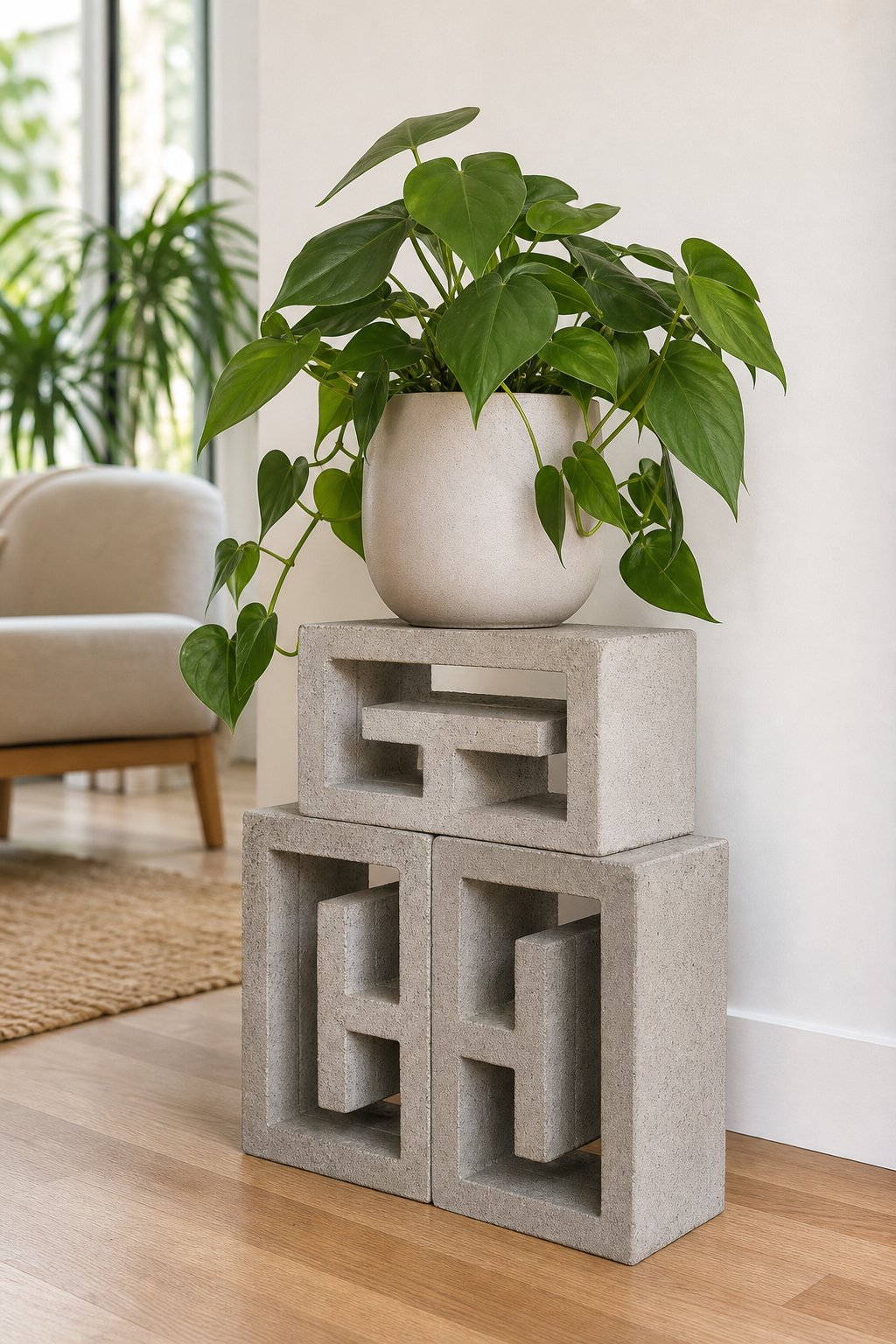
Breeze blocks give your plant display a sturdy base with interesting patterns of light and shadow. Stack them with boards or pavers between layers, creating an airy stand for pots on a patio or beside a garden wall.
Their weight makes them a good choice for exposed areas where lighter stands may shift. Set the blocks on a level surface and inspect them for cracks.
Wear gloves when handling them, since rough edges can catch skin. Use the openings for small pots, garden lights, or decorative stones.
Expert Tip From MrPlanter: “Place a solid paver on top for a flat pot surface. Keep the stack low unless you anchor it securely.”
13. A-Frame Trellis Plant Stand
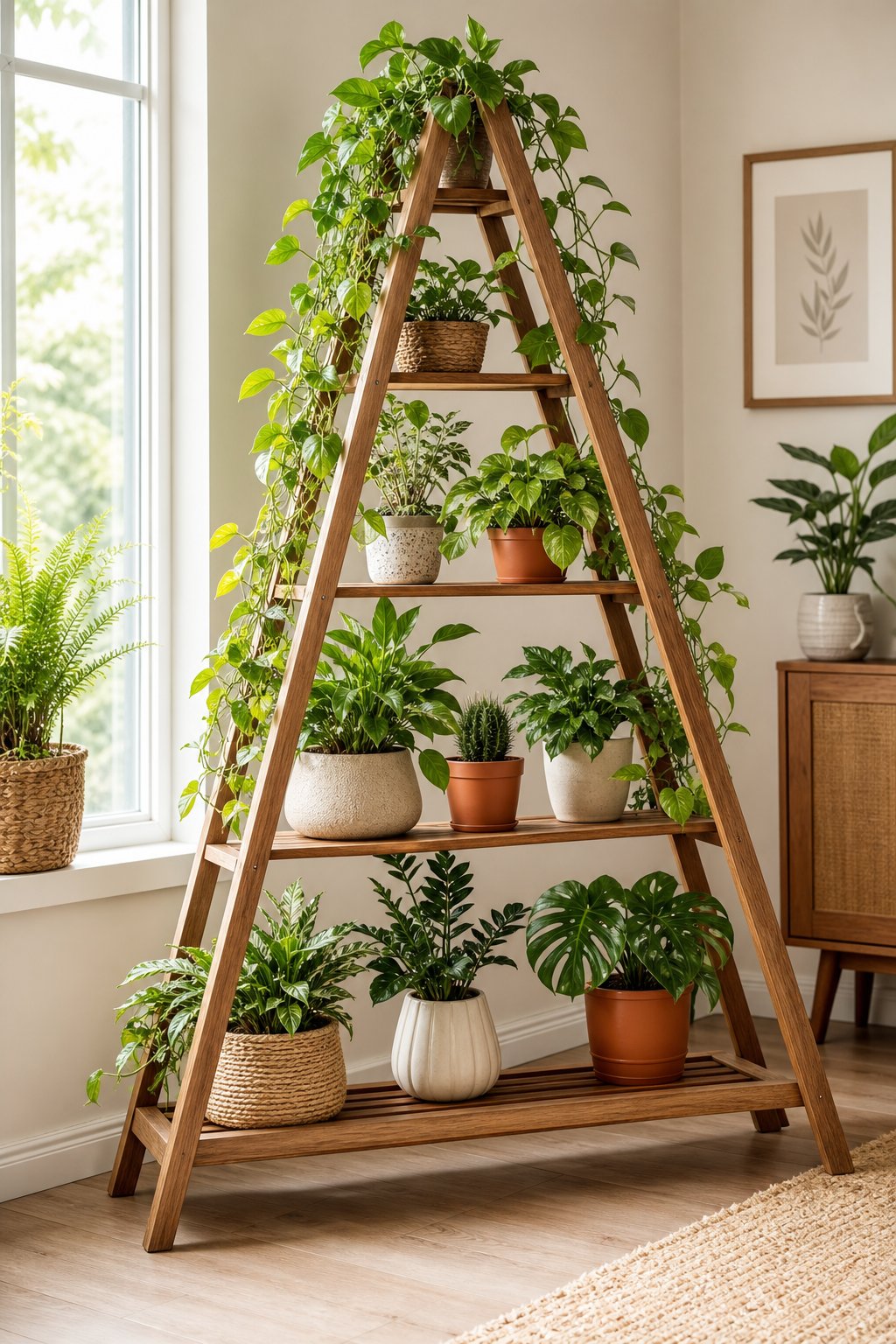
An A-frame trellis gives climbing plants a place to reach. Its lower shelves hold grounded pots.
It works well beside a vegetable bed. Beans, peas, cucumbers, or flowering vines can grow upward.
The sloping sides also create a neat display for smaller containers.
Build the frame from cedar or treated lumber. Add wire mesh or thin crosspieces for vines to grip.
Keep the feet wide enough to resist tipping. Place the frame where plants receive the light they need.
Leave a clear path around it for harvesting and watering.
Expert Tip From MrPlanter: “Anchor each foot with garden stakes in windy areas. Tie young vines loosely so stems have room to thicken.”
14. Galvanized Bucket Tiered Plant Stand
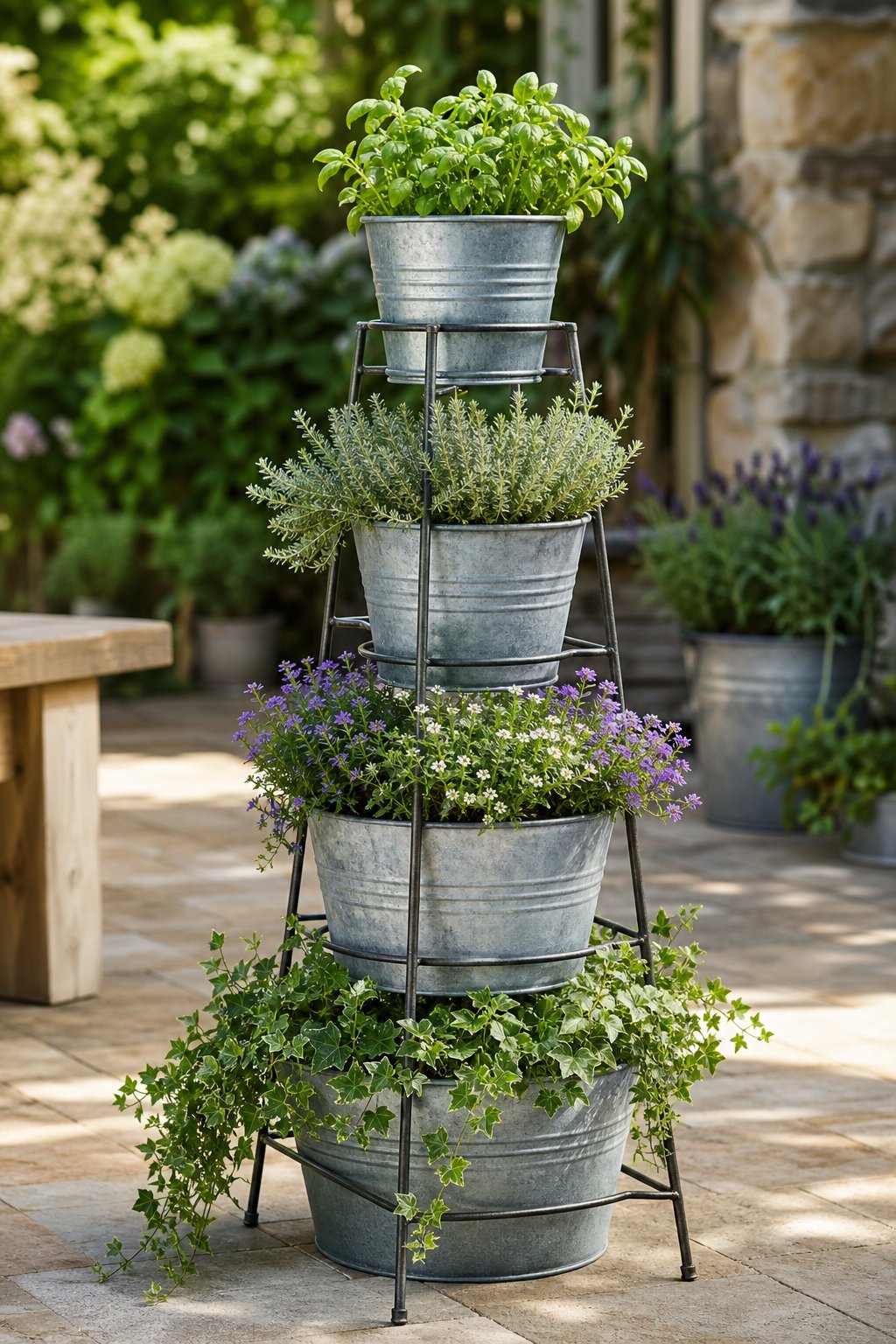
Galvanized buckets make cheerful planters. Arrange them on steps or a tiered frame.
Their silver finish reflects light and pairs nicely with green leaves, purple flowers, and warm wood. Use them for herbs, annuals, or compact vegetables near a back door.
Drill several holes in each bucket before adding soil. Metal containers don’t drain on their own.
Line the buckets with a thin layer of potting mix rather than gravel. This method saves weight.
In hot sun, check the soil often because metal can warm the root zone.
Expert Tip From MrPlanter: “Choose smaller buckets for upper tiers to keep the stand balanced. Add a liner if the metal gets hot in afternoon sun.”
15. Tree Stump Plant Pedestal
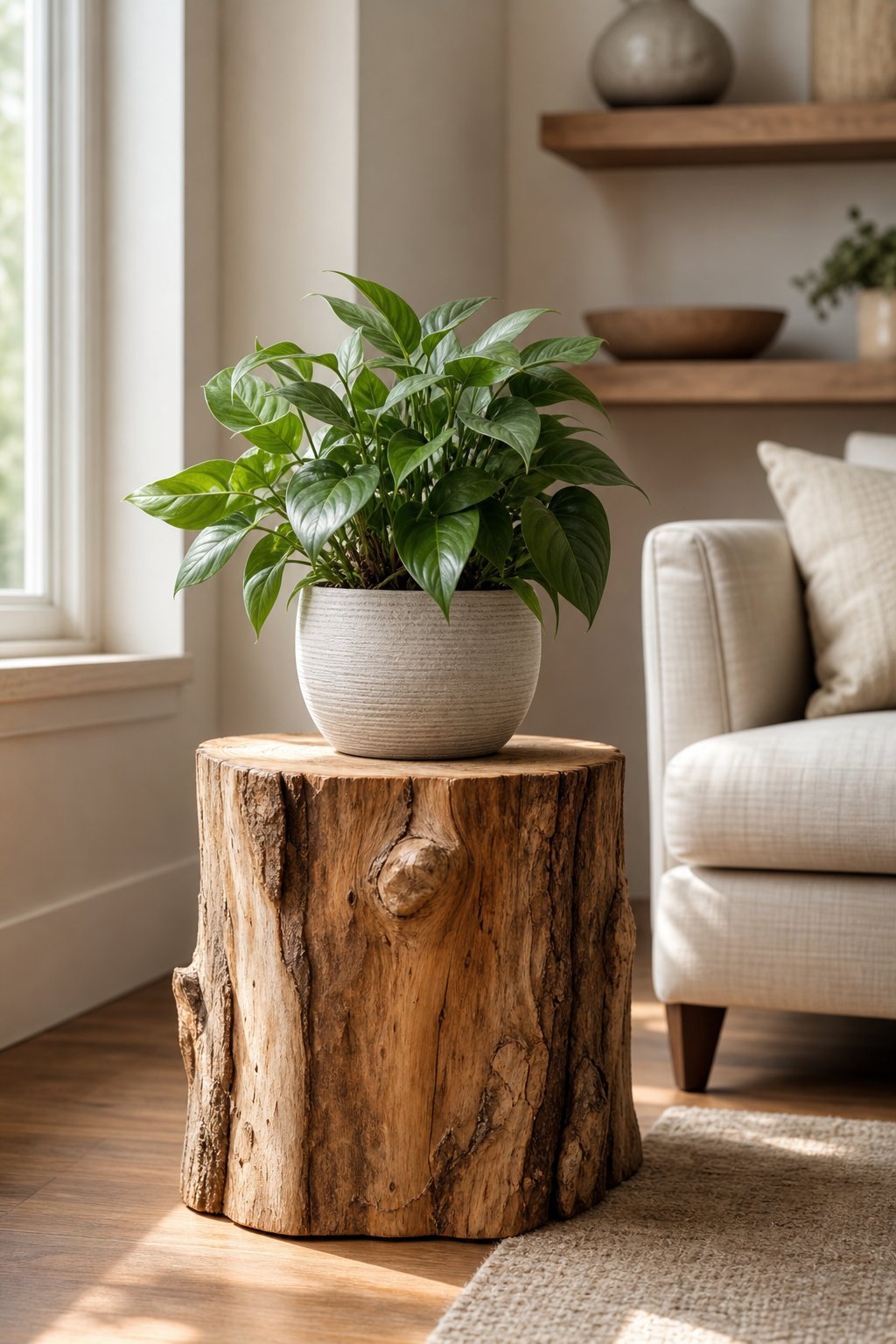
A leftover tree stump can become a plant pedestal with almost no construction. Its natural shape brings a woodland note to a porch, deck, or shady garden corner.
Cut the top flat. Remove loose bark and let the wood dry well before placing a pot on it.
Seal the stump with an exterior wood product to slow decay. Keep it off constantly wet soil.
A heavy stump supports a large container. You may want help moving it into place.
Use a saucer beneath the pot so water doesn’t collect on the wood.
Expert Tip From MrPlanter: “Level the top with a saw or grinder before sealing it. Keep the stump away from sprinklers to help it last longer.”
16. Wrought-Iron Spiral Plant Stand
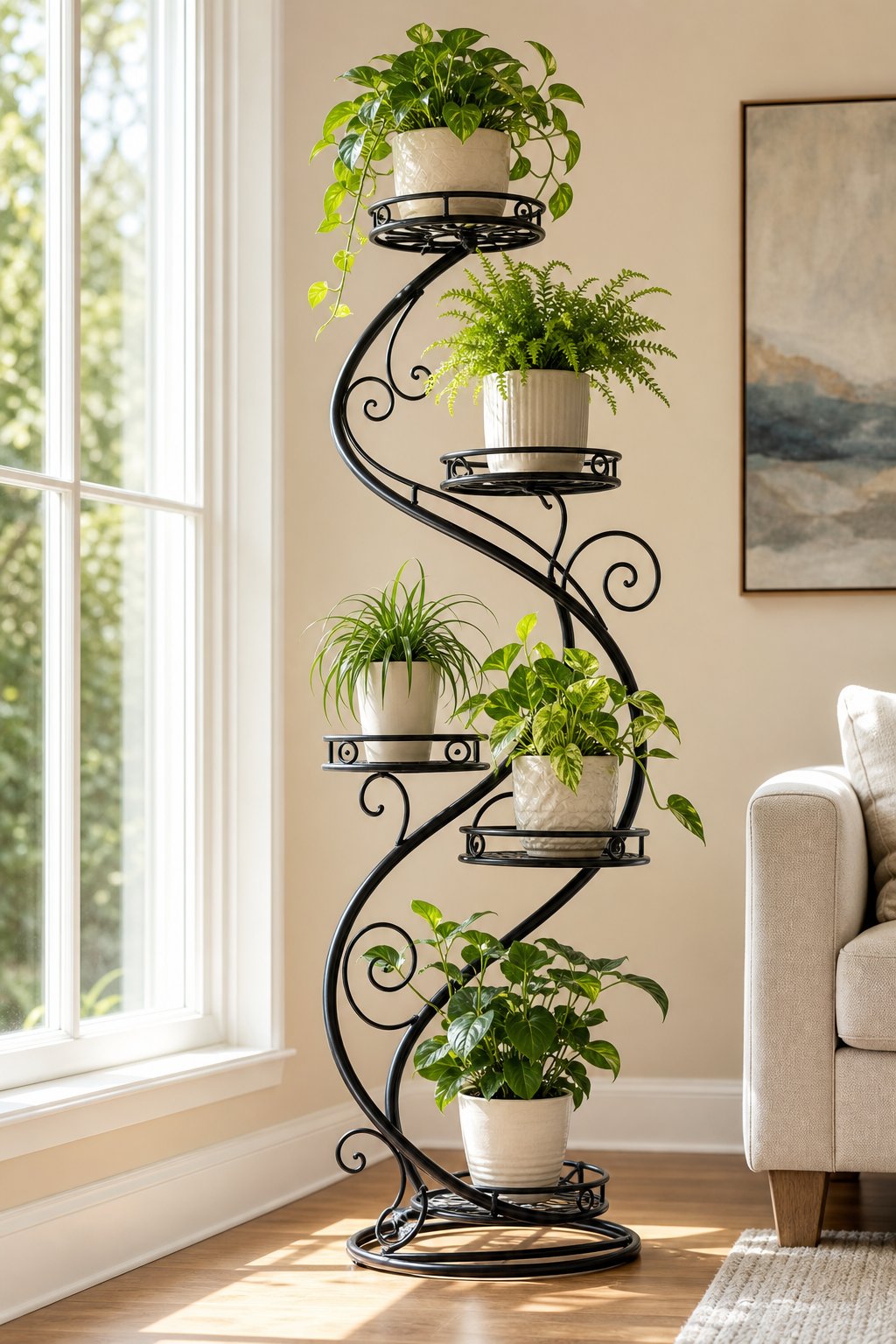
A spiral stand lets several plants circle upward like a leafy staircase. Wrought iron provides a slim profile that fits beside a porch column, garden gate, or sunny wall without crowding the walkway.
The curved shape looks especially good with plants that spill over each level.
Check the weight rating before adding ceramic pots. Place larger containers near the bottom.
Rust-resistant paint keeps the finish fresh. Rubber feet protect decking.
If the stand feels light, anchor it to a wall or set it on a heavy paver.
Expert Tip From MrPlanter: “Turn the stand a little after arranging your pots so every plant gets light. Keep the spiral clear of passing shoulders and hoses.”
17. Hanging Rope Plant Shelf Between Fence Posts
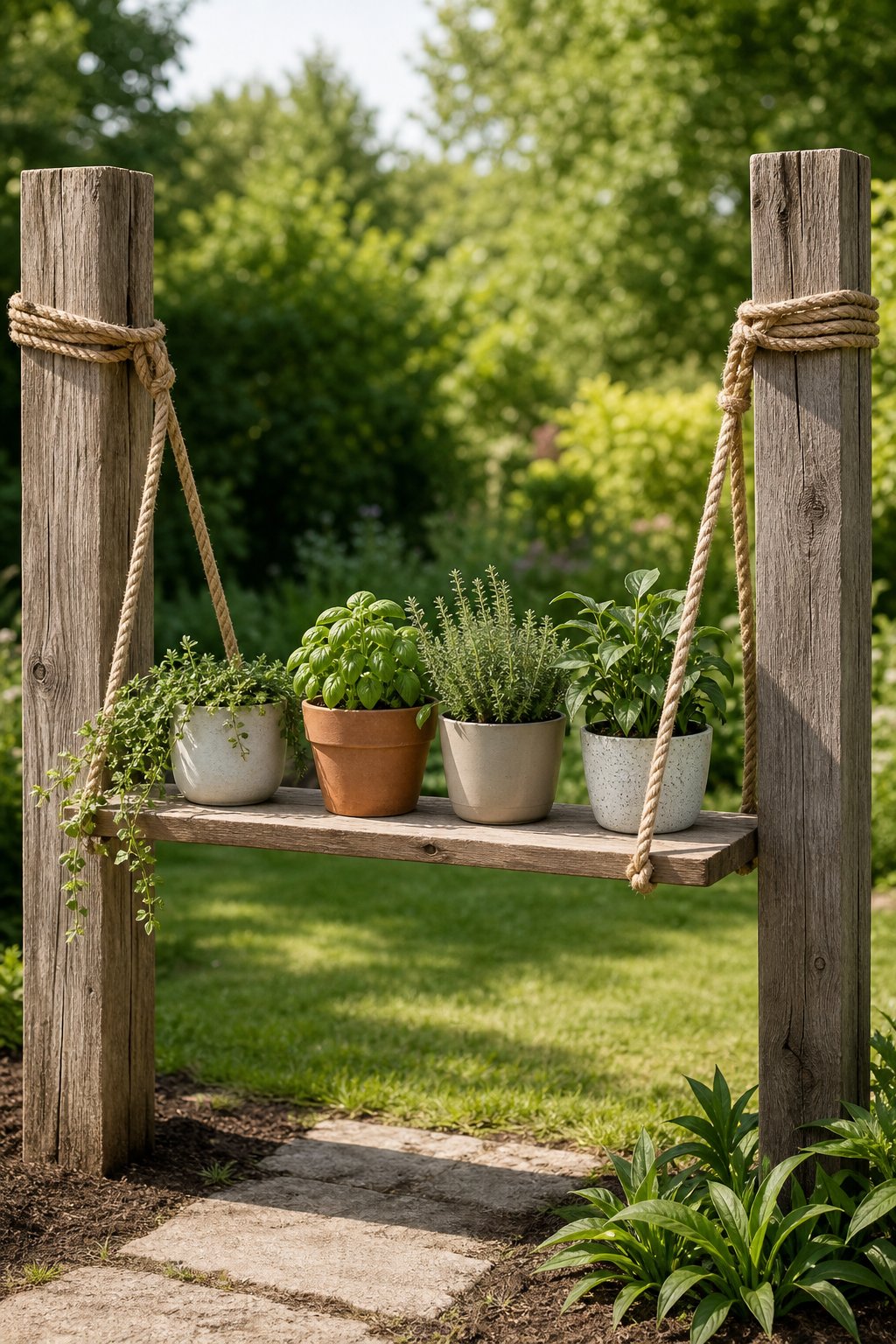
When the ground is full, look up. A rope-supported shelf between two sturdy fence posts adds planting space without taking another inch from your bed.
Use a thick, weather-resistant rope and a sealed wood board. Hang the shelf high enough to keep pots away from curious pets.
Set the posts firmly. Keep the shelf short enough to prevent excessive sway.
Choose small herbs, ferns, and compact flowers instead of heavy containers.
Add drainage trays. Check the knots after storms or strong wind.
Expert Tip From MrPlanter: “Use two ropes at each end for better balance. Test the shelf with light weight before adding your favorite pots.”
How To Choose An Outdoor Plant Stand
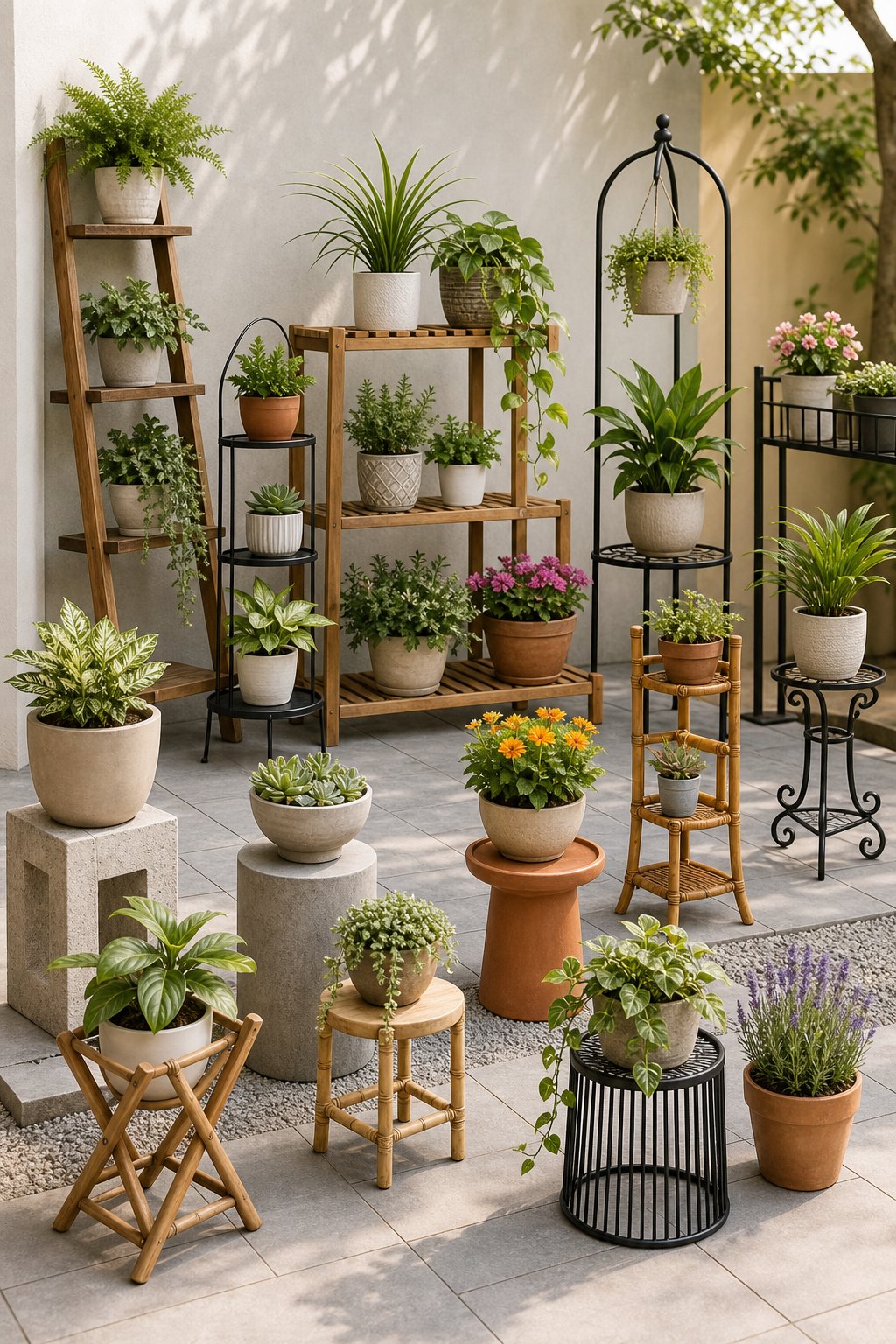
Match The Stand Size To Your Pots And Available Space
Measure the pot diameter, height, and total weight before choosing a stand. Leave enough room to lift each container out for watering or repotting.
Keep walkways at least comfortably wide for daily use. A narrow corner shelf can work better than a large rack in a small yard.
Choose Weather-Resistant Materials And Finishes
Cedar, galvanized metal, sealed concrete, and exterior-rated lumber hold up better outdoors than unfinished indoor furniture. Look for drainage-friendly shelves and finishes that resist rust, peeling, and moisture.
If you repurpose furniture, seal exposed wood and cover metal scratches with outdoor paint.
Prioritize Stability For Wind, Kids, And Heavy Containers
A tall stand needs a broad base, strong joints, and a level surface. Place heavy pots low and anchor lightweight frames.
Avoid stands that rock when you press gently on a corner. Think about pets and children before placing a breakable pot on an upper shelf.
Plan Plant Placement For Sunlight And Water Drainage
Match each plant to the light it receives. Don’t force every pot into the brightest spot.
Keep enough space between containers for air movement. Use saucers or trays where runoff could stain a deck.
Check that water can escape freely after every watering.
How To Create A Balanced Garden Plant Display
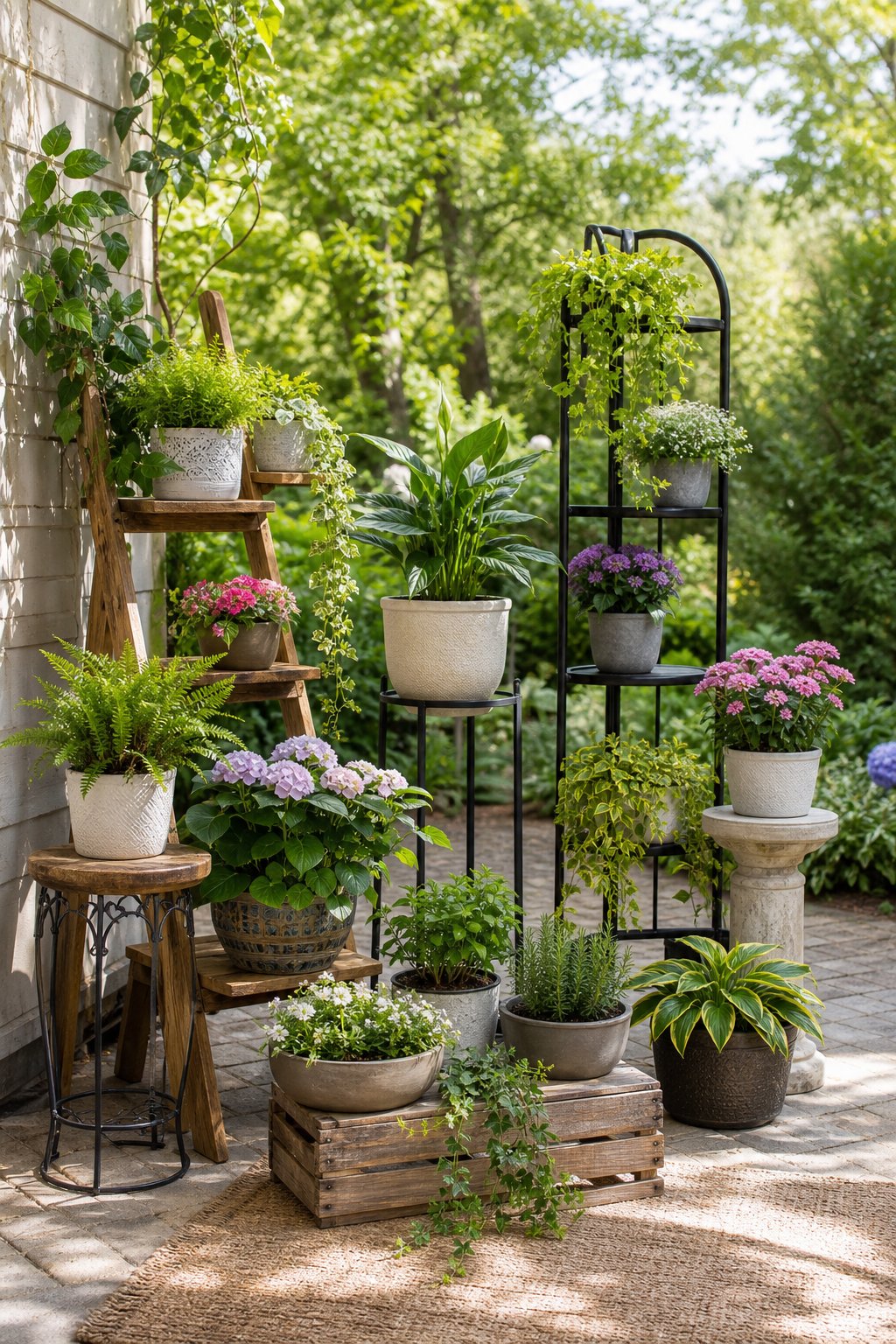
Put Heaviest Pots On The Lowest Level
Place large ceramic, concrete, and water-filled containers on the ground or lowest shelf. Smaller pots can go higher without making the display top-heavy.
This arrangement also makes watering easier because the heaviest plants stay within easy reach.
Mix Heights, Leaf Shapes, And Pot Materials
Pair tall plants with low mounding flowers and trailing vines. Create a display that feels full without looking crowded.
Mix smooth ceramic with terra-cotta, wood, or galvanized metal for texture. Repeat one pot color or plant type in two or three places to make the arrangement feel connected.
Use Wheels Or Lightweight Pots For Seasonal Rearranging
A rolling cart or lightweight stand lets you shift plants as the sun changes through the year.
Choose plastic, resin, or fiber pots when you need to move a display frequently.
Before you relocate anything, check for loose stems, dry soil, and locked wheels.