As an Amazon Associate, MrPlanter.com earns from qualifying purchases.
You don’t need a sprawling sunroom to create a lush indoor garden. With the right hooks, rails, rods, and planters, you can move your greenery off the floor and turn empty wall, window, and ceiling space into a leafy display.
The best way to hang plants indoors is to match each plant’s light, water, and mature size with hardware rated for its fully watered weight.
These 13 ways to hang plants indoors help you build a display that looks good and stays safe.
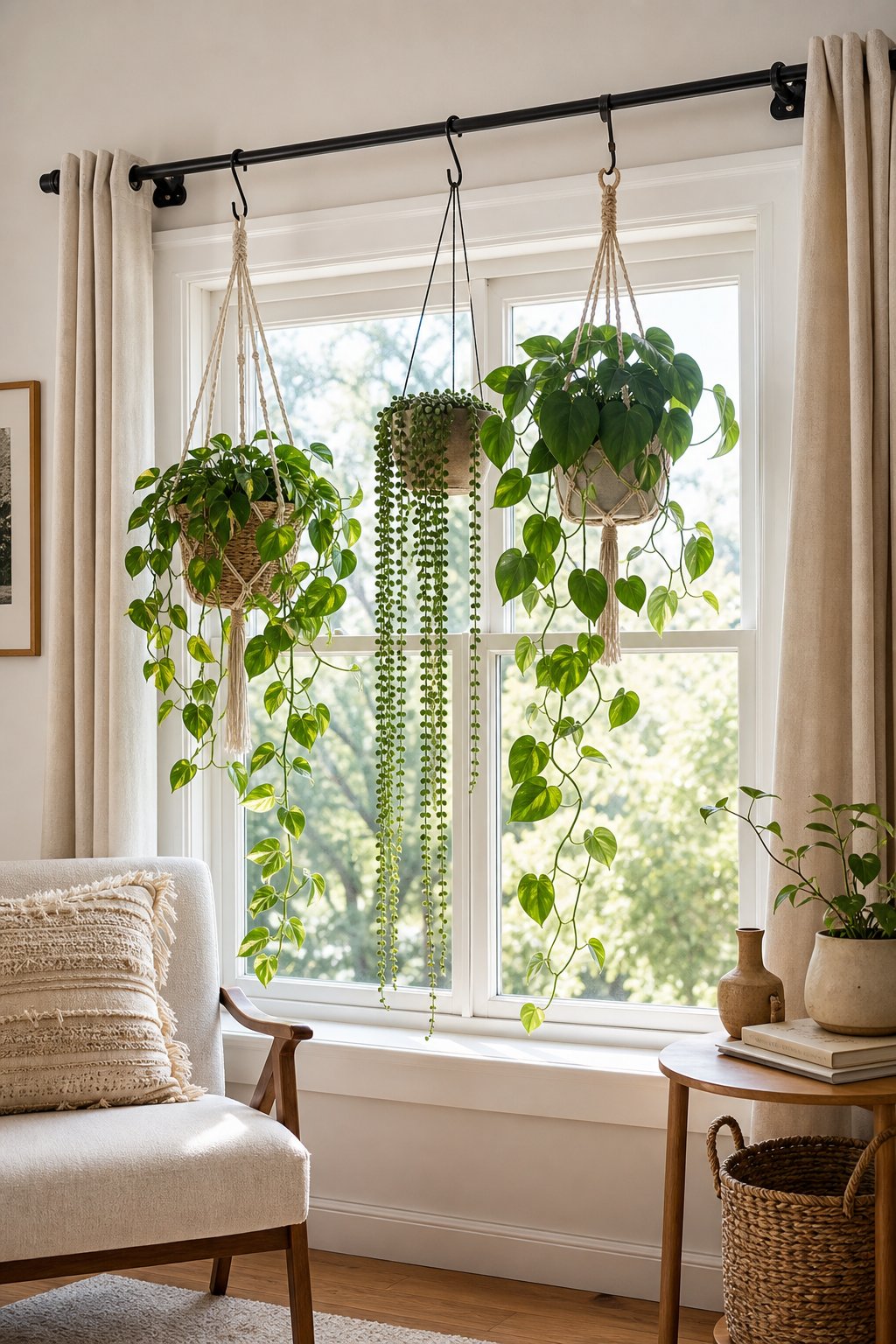
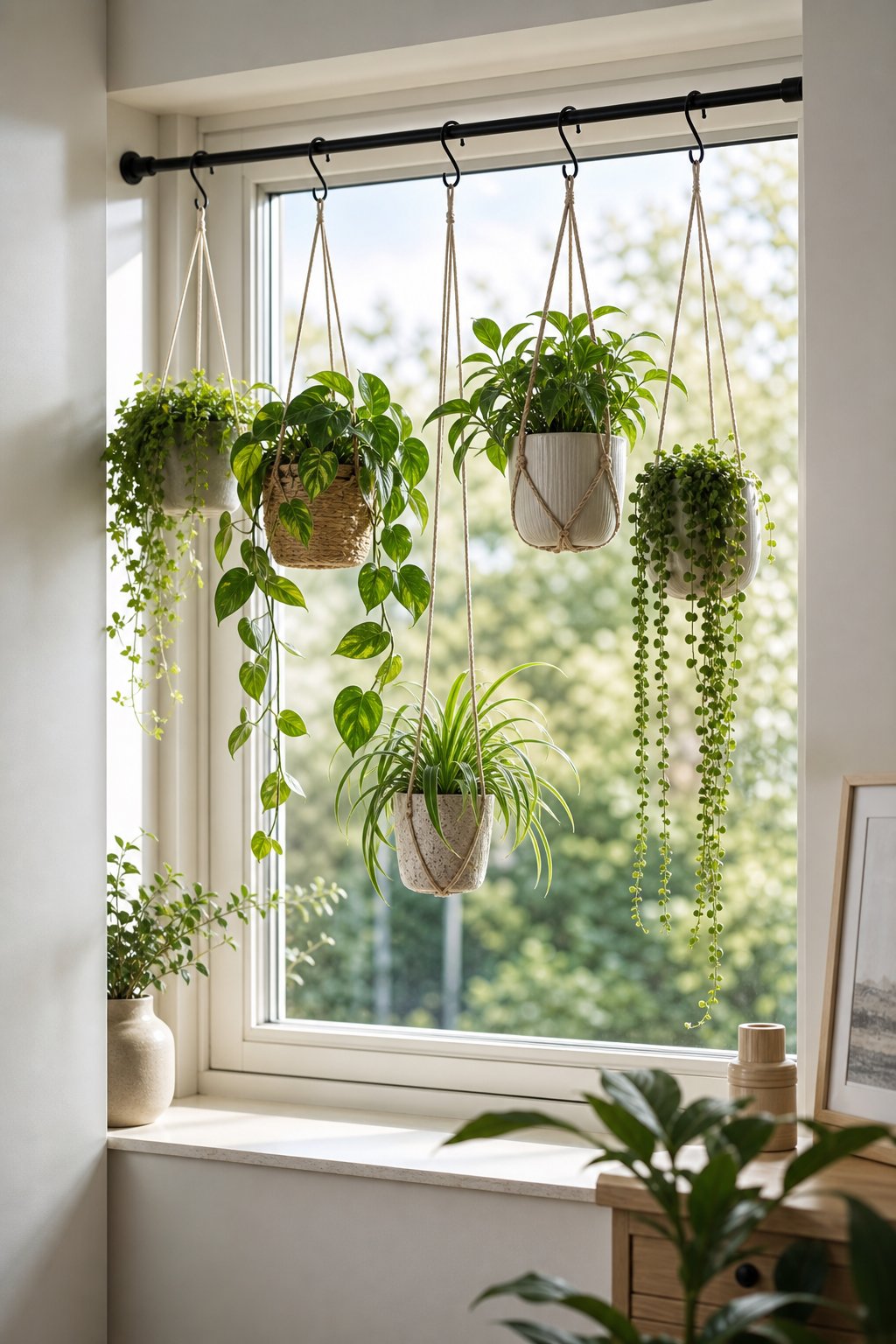
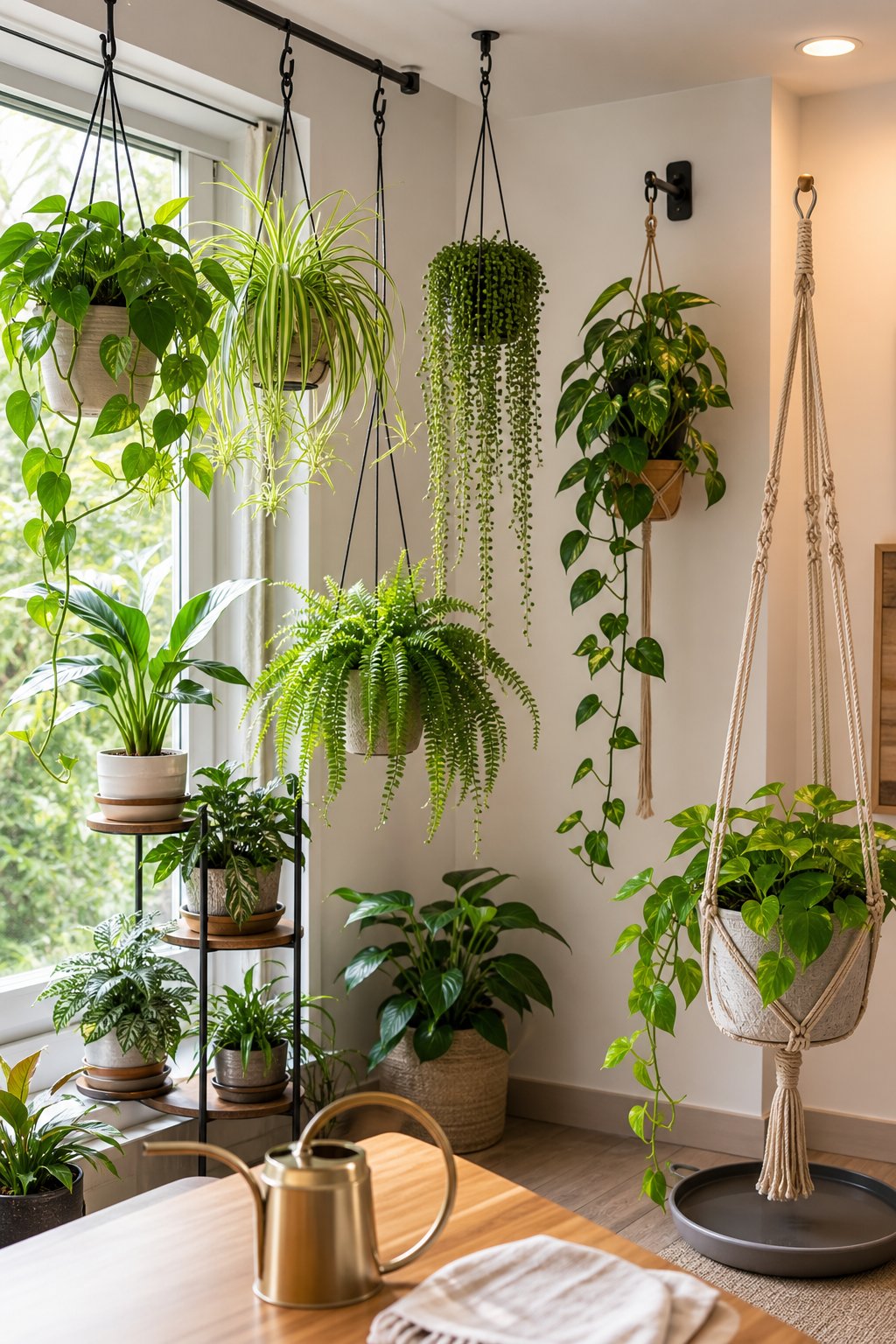
1. Hang Trailing Plants From A Heavy-Duty Curtain Rod
A bare window can look a little lonely, especially when your curtains are open. A sturdy curtain rod gives pothos, spider plants, and heartleaf philodendrons a place to spill downward without taking up floor space.
Choose a metal rod and screw brackets into studs or strong wall anchors. Use lightweight plastic or fiberglass pots, since wet soil adds surprising weight.
Keep foliage a few inches from the glass so leaves don’t press against cold windows or receive harsh afternoon sun. Clip long vines when they begin to block the window or brush against blinds.
Expert Tip From MrPlanter: “Test the rod with a gentle pull before adding plants. Start with one pot, then add more only if the rod stays level and firm.”
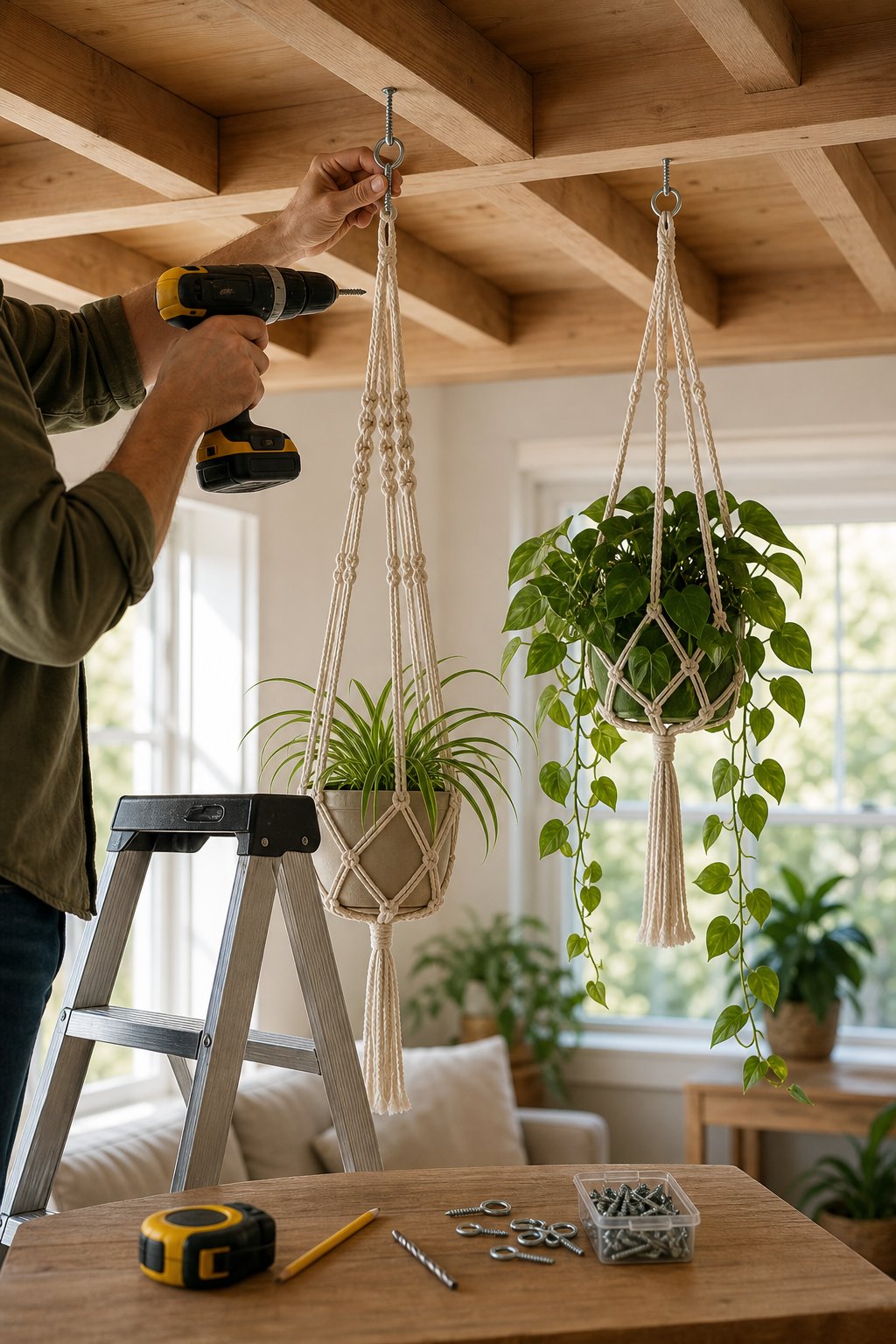
2. Install Ceiling Hooks Into Joists For Macramé Hanging Baskets
Ceiling hooks make an empty corner feel useful, though drywall alone isn’t a safe partner for a heavy basket. Find a ceiling joist with a stud finder, mark the spot, and drill a pilot hole sized for the hook’s screw.
A macramé hanger works well for pothos, ferns, and tradescantia in lightweight pots. Leave enough room beneath the basket for trailing stems, and keep the plant clear of doors, fans, and walkways.
If you rent, choose a smaller planter and ask about approved hardware before drilling.
Expert Tip From MrPlanter: “Weigh the pot after watering, not when the soil is dry. Your hook and hanger should both carry more than that full weight.”
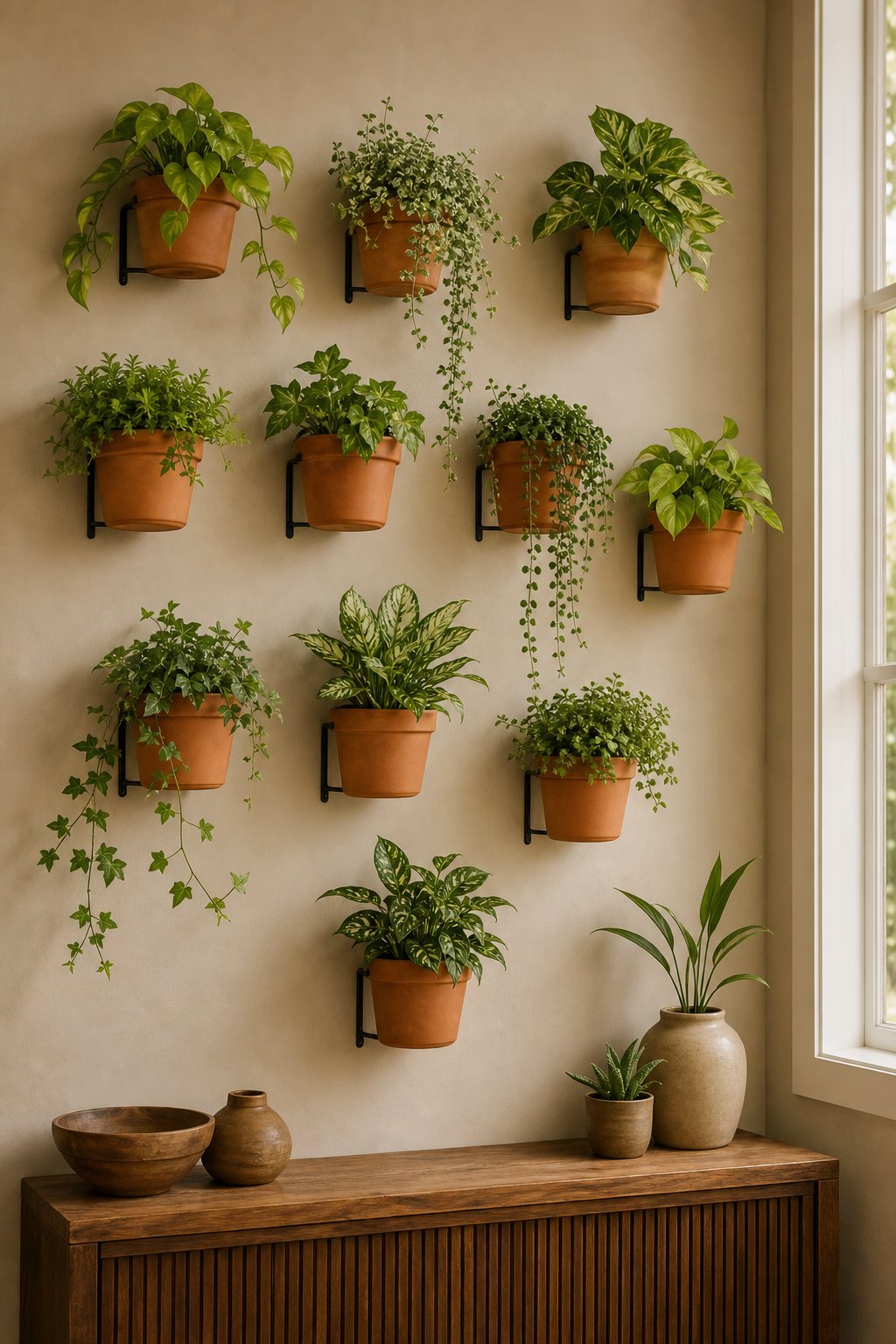
3. Create A Wall Display With Individual Terracotta Pot Holders
A blank wall can make your plants look like tiny green works of art. Individual terracotta holders let you arrange small succulents, peperomias, or compact ferns in a neat pattern.
Mark every holder before drilling so the display stays balanced. Mount each bracket into a stud when possible, or use anchors rated for the holder and watered pot together.
Terracotta dries soil faster than plastic, so check moisture often. Add a small saucer or waterproof liner if the holder sits above painted trim or furniture.
Expert Tip From MrPlanter: “Leave space between pots for air and future growth. A little breathing room keeps the wall display tidy instead of crowded.”
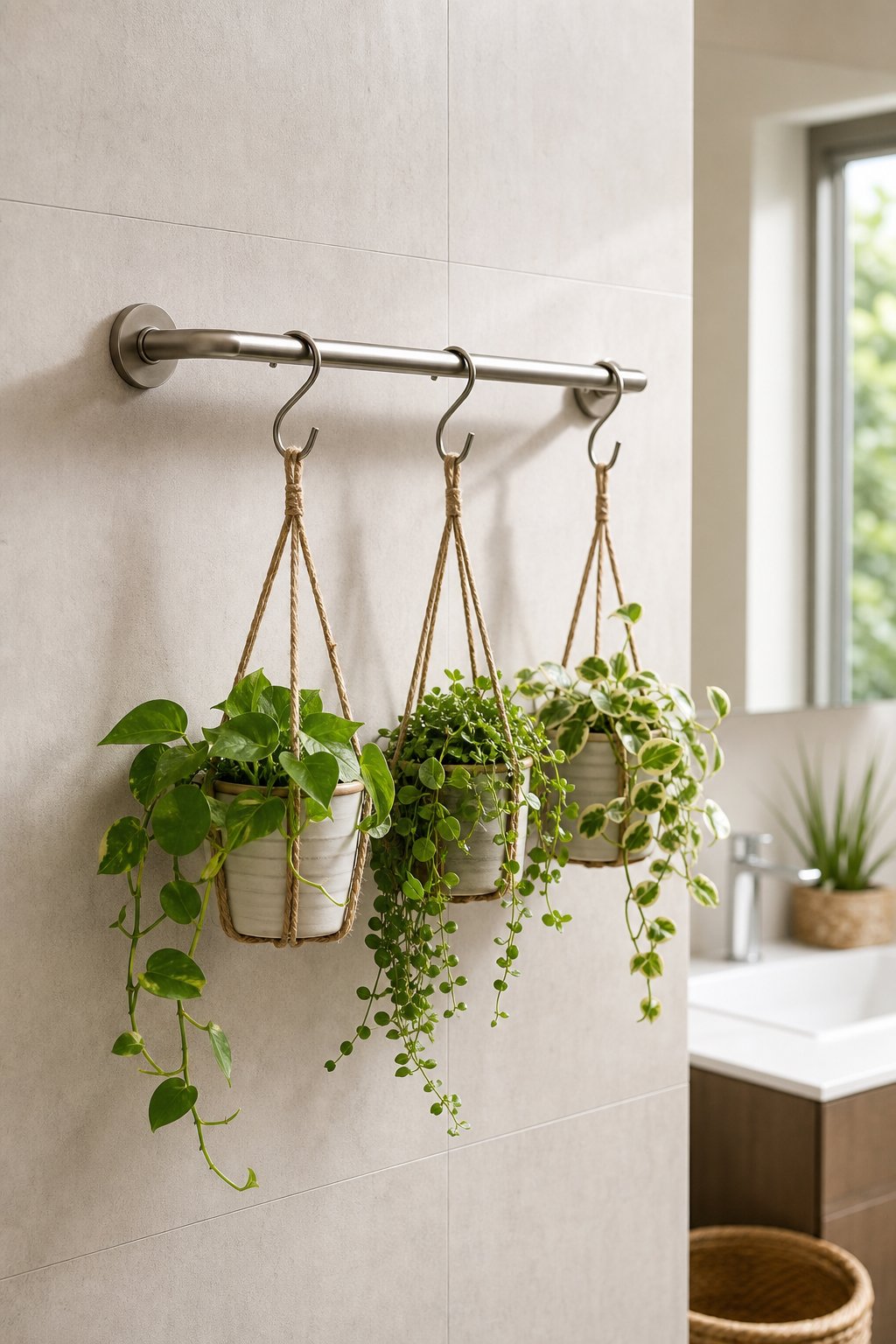
4. Use S-Hooks On A Towel Bar For Small Plant Holders
Your towel bar may be hiding a second career as a plant rack. Add S-hooks and small hanging cups for air plants, spider plant babies, or lightweight herb pots.
Check that the bar is firmly attached before loading it. A bar mounted only with weak anchors may pull away from the wall under repeated watering.
Choose hooks that fit the bar snugly, and keep plants away from towels so dripping water doesn’t create a damp, musty mess. This setup works nicely in a bright bathroom or kitchen.
Expert Tip From MrPlanter: “Use one hook per small plant instead of stacking several on one hook. The bar will stay balanced and your plants will be easier to remove.”
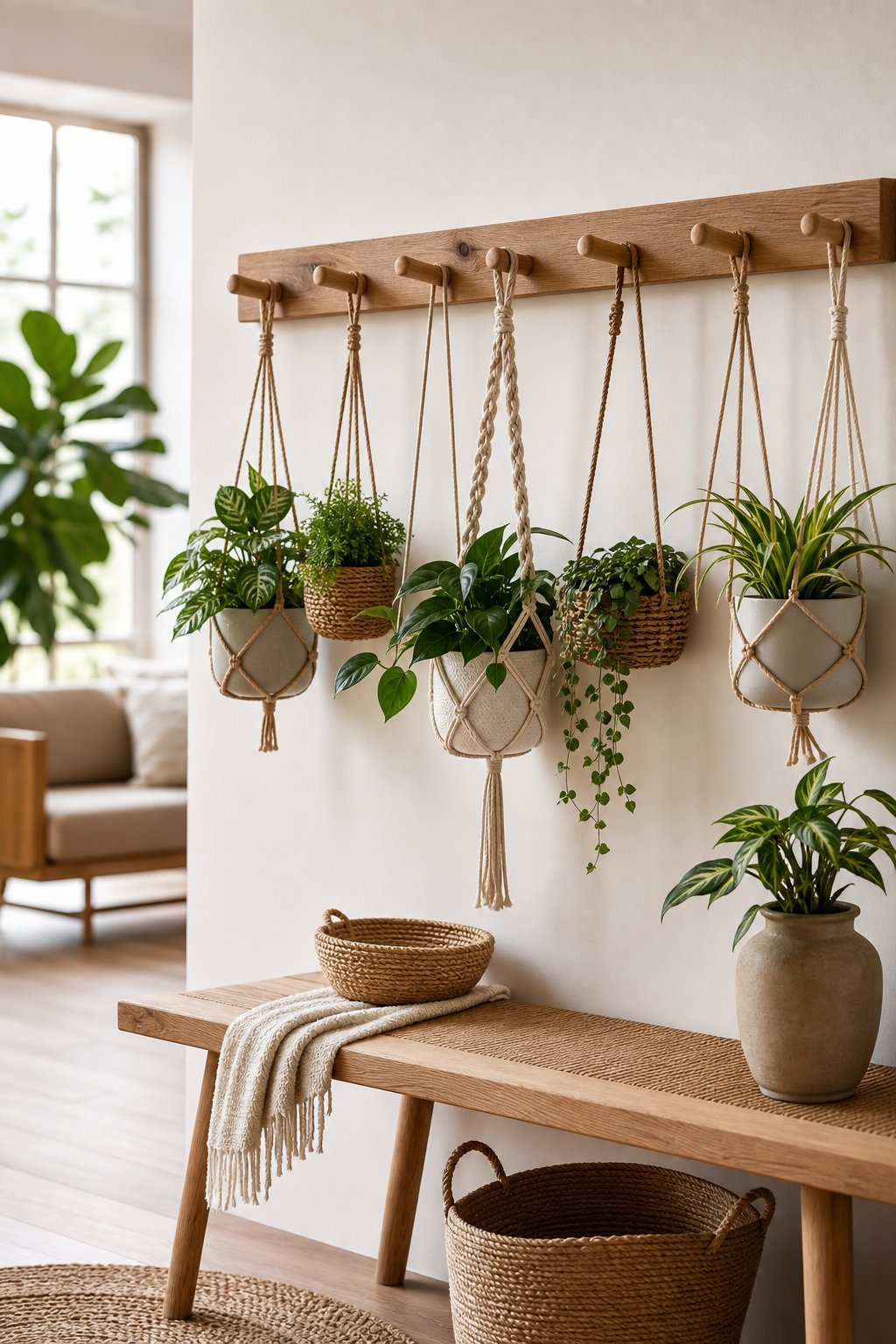
5. Hang Planters From A Decorative Wooden Peg Rail
A peg rail brings order to the plant pile that keeps wandering around your home. Hang baskets from the pegs, then use the open space below for pruning shears, a mister, or a small watering can.
Pick a rail with solid pegs and mount it into studs or properly rated anchors. Lightweight woven baskets are easier on the wall than thick ceramic pots.
Arrange plants at different heights, and choose compact trailers that won’t brush your head as you pass. A rail near a bright window gives you a flexible display that can change with the seasons.
Expert Tip From MrPlanter: “Place the heaviest basket closest to the strongest mounting point. Keep lighter plants on the outer pegs for better balance.”
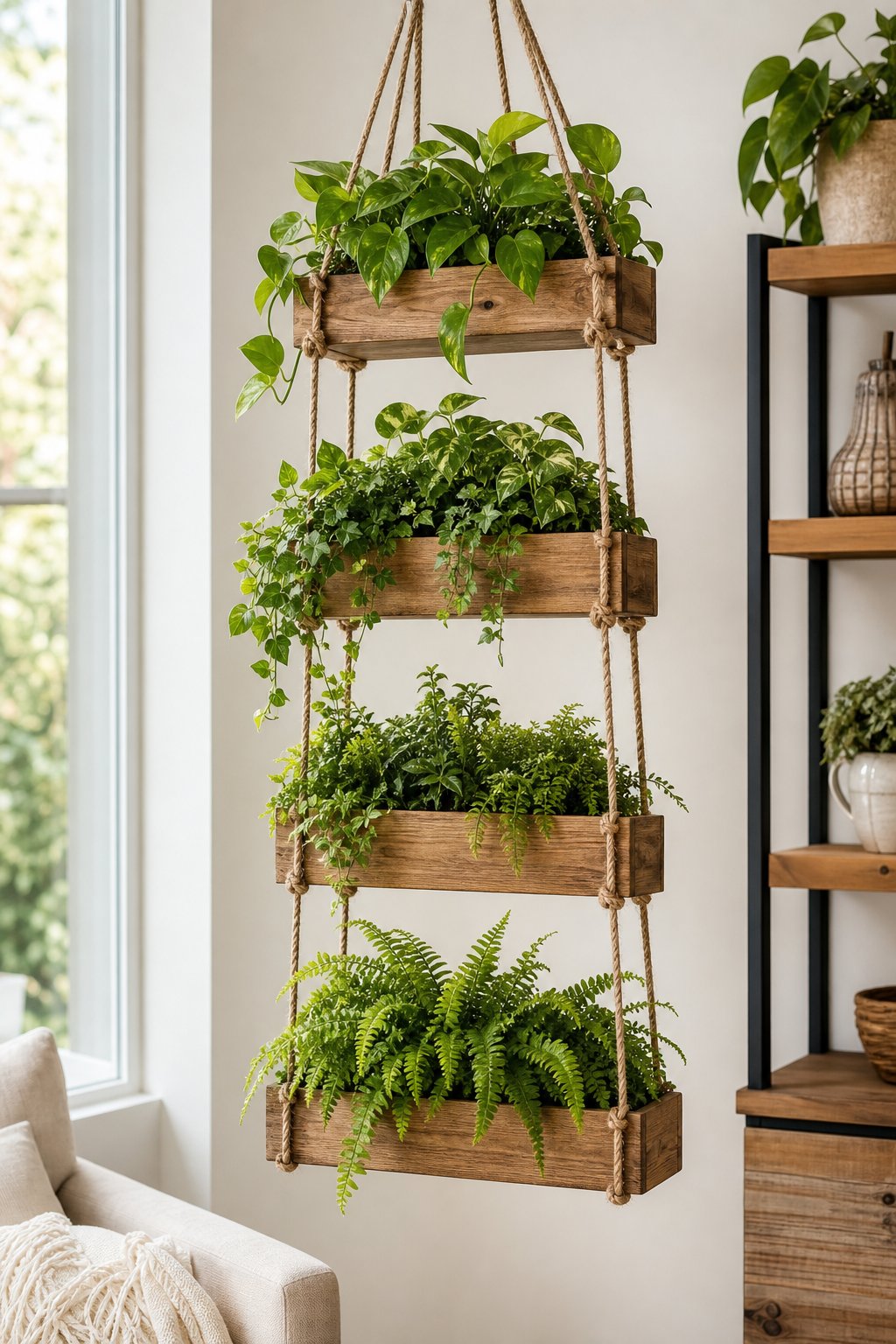
6. Build A Tiered Hanging Planter With Wood Boards And Rope
Small homes often run out of shelves before they run out of plants. A tiered planter uses vertical space, giving you several levels for compact greenery near one bright window.
Cut boards with enough room for each pot, sand the edges, and drill matching rope holes in every corner. Use strong rope and tie secure knots, then hang the entire unit from a ceiling hook fixed into a joist.
Keep the boards level as you add pots, since uneven weight can make the structure twist. Plastic pots help reduce the load.
Expert Tip From MrPlanter: “Water each pot separately and let it drain before returning it. Wet boards and trapped water can weaken the setup over time.”
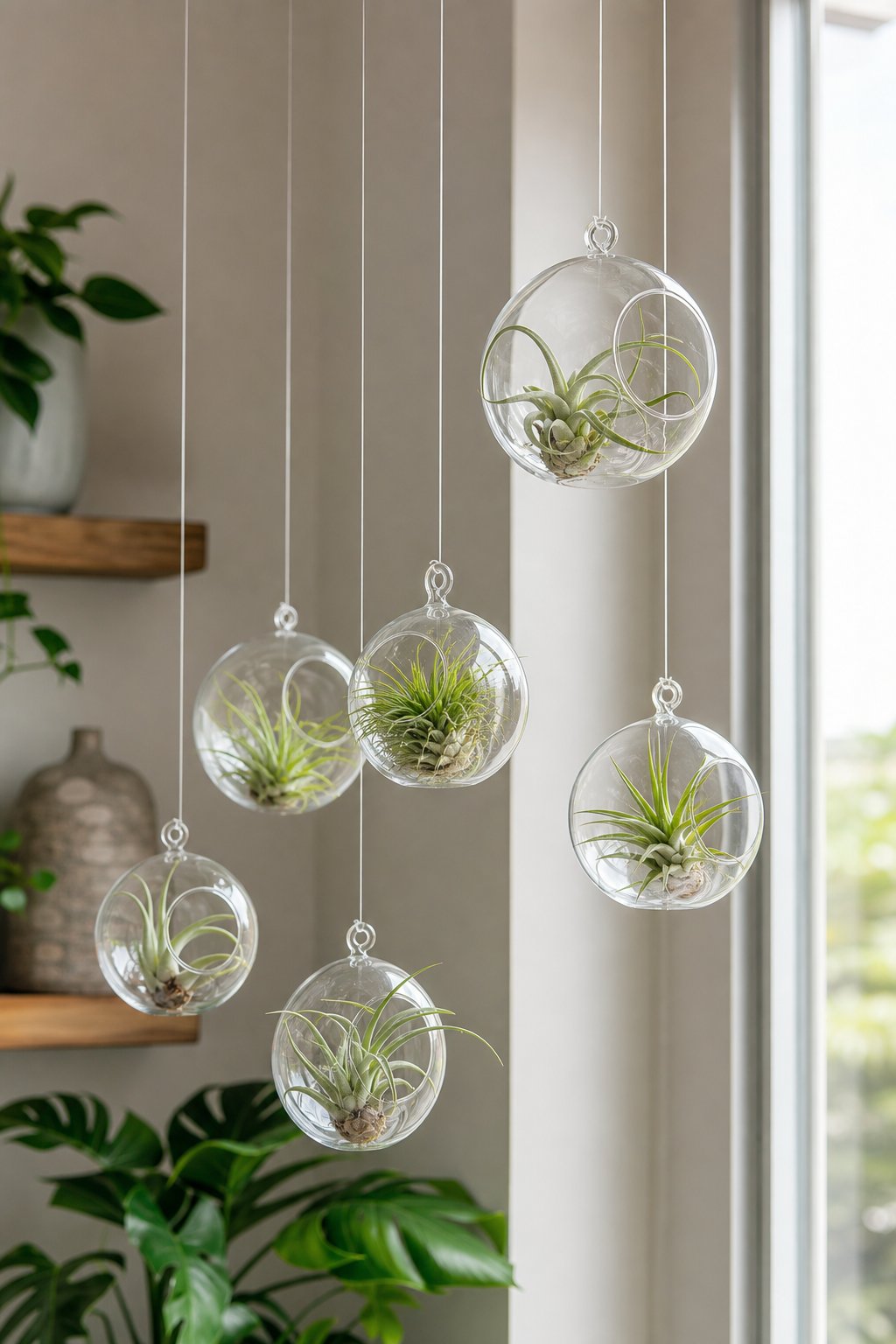
7. Suspend Air Plants In Glass Globe Terrariums
Air plants seem to float in glass globes, which is handy when you want greenery without bags of potting soil. Hang the globes near bright, indirect light and leave space around each one for airflow.
Use the supplied wire or cord only when its weight rating fits the globe. Keep the glass away from spots where it can swing into a wall or window.
Remove air plants for watering, soak them as needed, and let them dry fully before returning them. Direct hot sun can turn the globe into a tiny greenhouse.
Expert Tip From MrPlanter: “Give air plants a gentle shake after watering. Standing water inside the center can cause rot.”
8. Make A Window Garden With A Tension Rod And S-Hooks
A tension rod lets you create a window garden without drilling, which is music to a renter’s ears. Add S-hooks and lightweight pots for herbs, small vines, or spider plant cuttings.
Measure the window opening carefully and choose a rod rated for the span and load. Tighten it firmly, then test it before hanging anything.
Keep the rod high enough that plants won’t bump the sill or block the window latch. Rotate the pots every week so stems grow evenly toward the light.
Expert Tip From MrPlanter: “Treat a tension rod as a light-duty system. Use small plastic pots and check the tension whenever you water.”
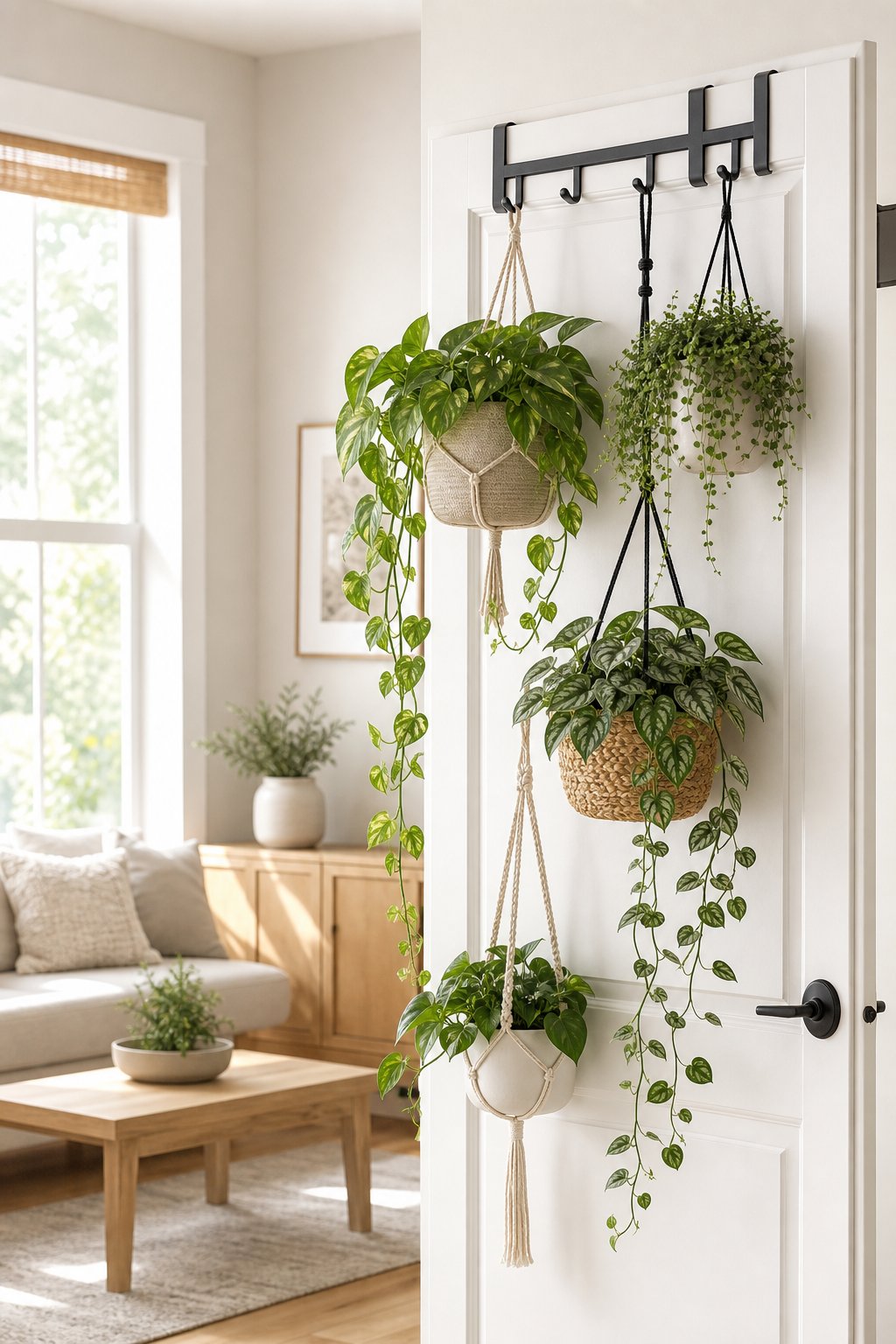
9. Use An Over-The-Door Plant Hanger In A Bright Room
A door rack turns an unused vertical edge into a leafy display, though your door still needs to close freely. Choose a rack with padded hooks if you want to protect the door’s finish.
Hang small plants in lightweight pots and check the gap above the door. Avoid placing a plant where it will swing into the wall each time the door moves.
A bright bedroom door, pantry door, or closet door can work well when the rack doesn’t interfere with handles or trim.
Expert Tip From MrPlanter: “Open and close the door slowly after installation. If the rack shifts, reduce the load before adding more plants.”
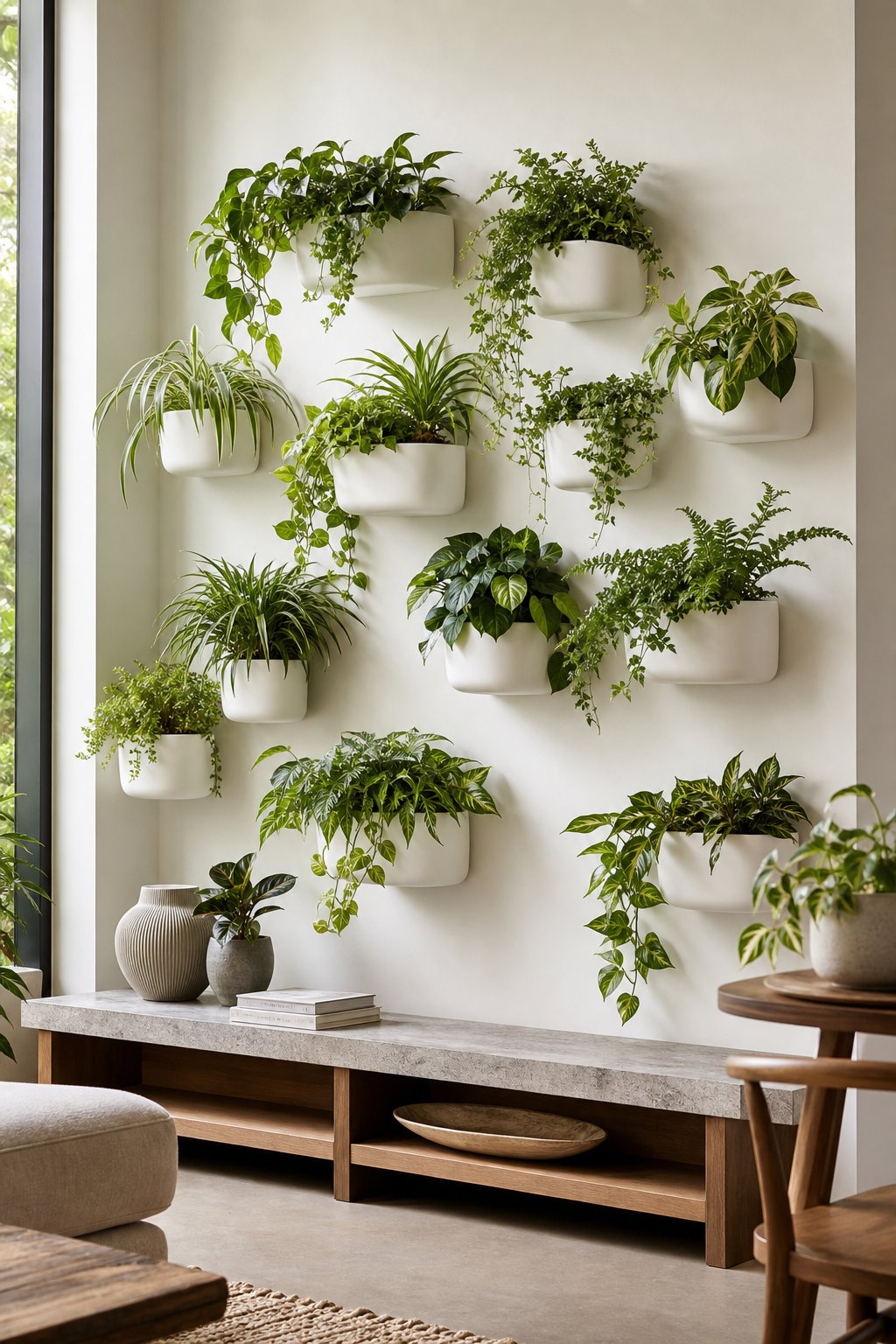
10. Mount White Wall Planters For A Green Wall
White planters make green leaves stand out while keeping the display light and clean. Arrange several wall planters in rows for small ferns, pothos cuttings, or compact prayer plants.
Use a level and mark every mounting point before drilling. Secure heavier planters into studs, and select anchors that match your wall type for lighter ones.
Confirm that each planter has drainage or a removable inner pot. Leave enough space between units for pruning and for leaves to spread without covering the entire wall.
Expert Tip From MrPlanter: “Use matching inner pots to catch excess water. Your wall will stay cleaner, and plant care will be much less stressful.”
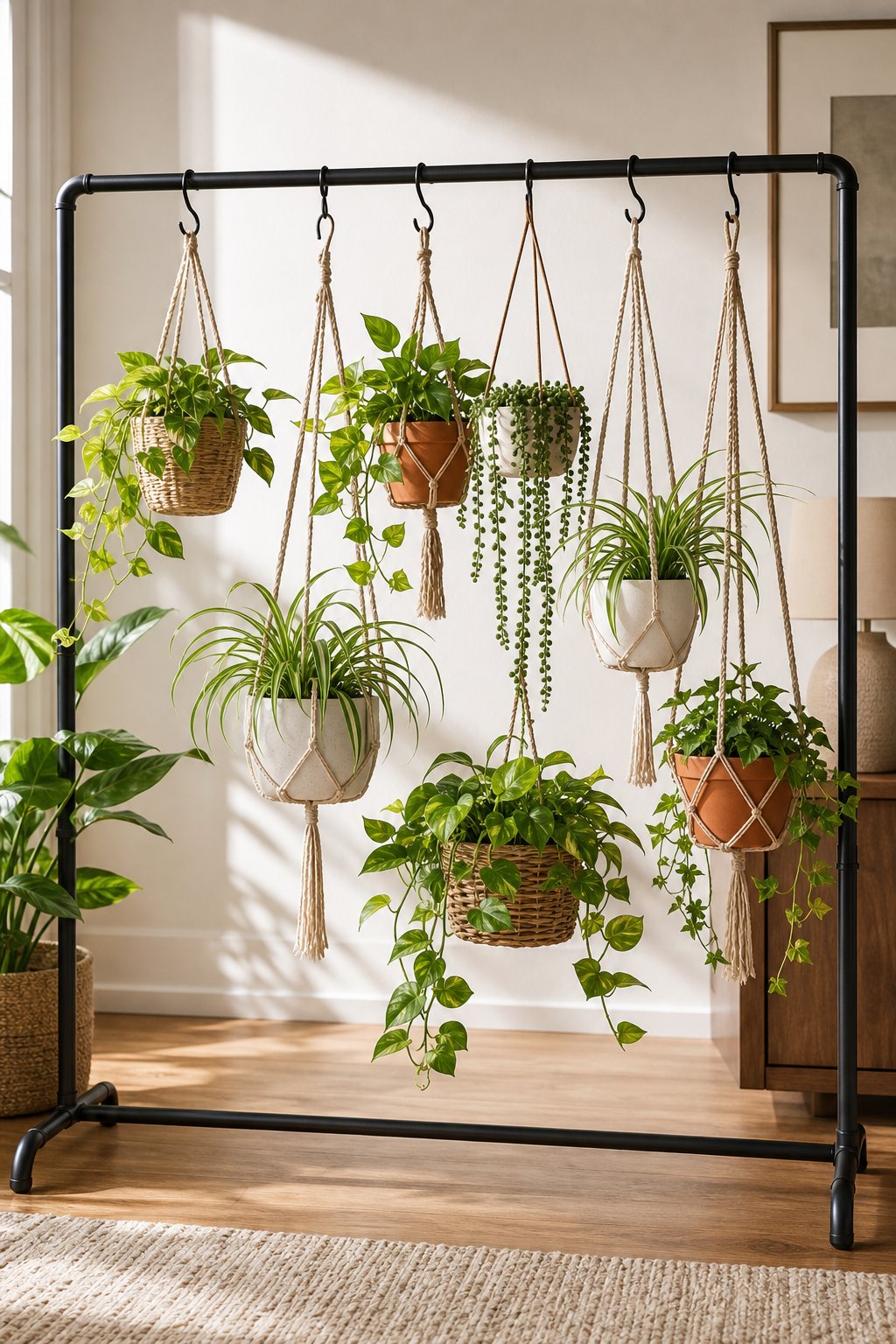
11. Hang Pots From A Freestanding Clothing Rack Plant Stand
A clothing rack can retire from holding jackets and start holding plants. Its freestanding design works well when you can’t drill into ceilings or walls.
Choose a wide, stable rack with a strong top bar and a weighted base. Hang plants evenly from both sides so the rack doesn’t tip.
Add felt pads beneath the feet to protect floors, and keep the stand away from busy walkways. This method makes it easy to move plants closer to light or away from a cold window.
Expert Tip From MrPlanter: “Place the largest pot near the center of the rack. Keeping the weight low and centered makes the stand steadier.”
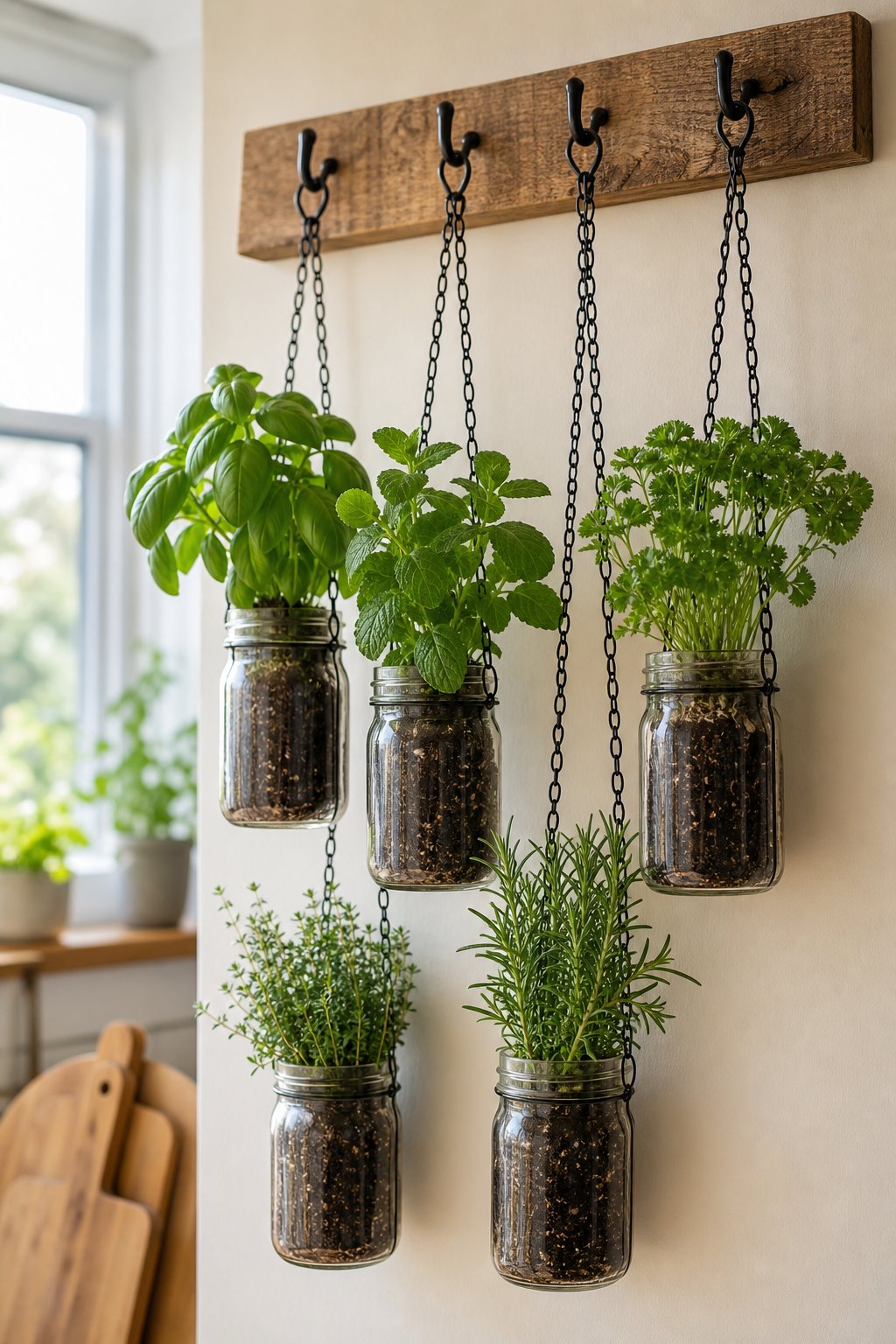
12. Create A Hanging Herb Garden With Mason Jar Planters
Fresh herbs make a kitchen smell wonderful, though mason jars become heavy quickly once filled with water and soil. Use small jars, sturdy wire holders, and a rail mounted securely to the wall.
Basil, thyme, chives, and mint need bright light, so place the garden near a sunny window. Add a drainage layer only if the container design allows it, and avoid soaking jars that have nowhere for water to escape.
A separate inner pot with drainage is safer than planting directly in a sealed jar.
Expert Tip From MrPlanter: “Water lightly and check the soil with your finger first. A sealed jar stays wet much longer than a regular plant pot.”
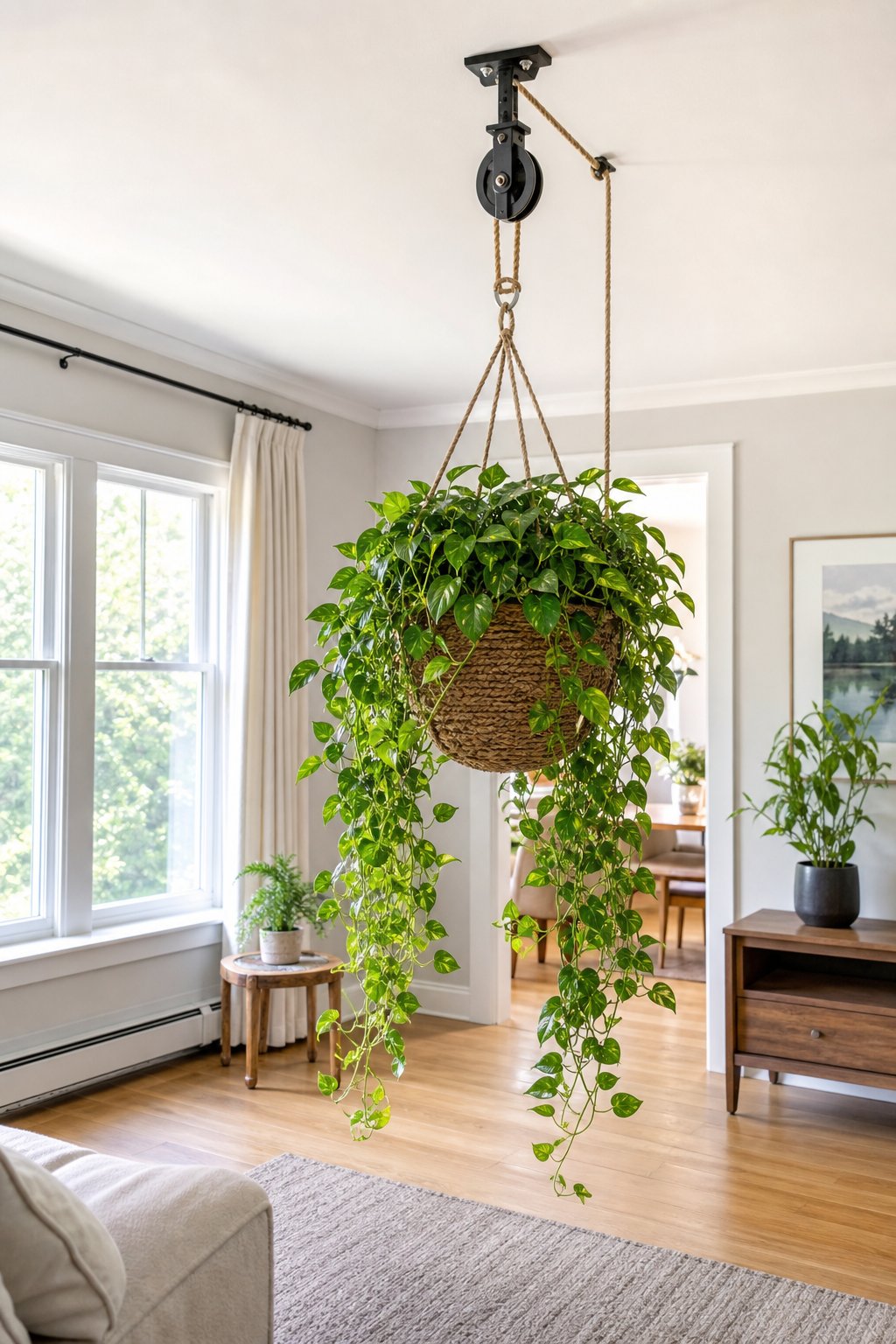
13. Use A Pulley Hook System For Large Hanging Baskets
Large baskets look beautiful until watering time turns into a lifting contest. A pulley system lets you lower a plant for care, then raise it back into place without balancing on a chair.
Mount the pulley hardware into a ceiling joist, and choose a system rated above the fully watered basket. Lock the cord securely so the plant won’t drop.
Keep the path clear of ceiling fans and doors, and lower the basket slowly to prevent swinging. This setup suits large ferns, hoyas, and other mature trailing plants.
Expert Tip From MrPlanter: “Pull the basket down for every watering and inspect the cord as you go. Replace frayed rope before it becomes a safety problem.”
Safety, Light, And Watering Essentials
Match Hardware Weight Ratings To The Fully Watered Pot
Add the pot, soil, plant, and water together before you choose hardware. Choose hooks, rods, brackets, and hangers with ratings above that total, since a dry pot becomes much heavier after watering.
Mount Heavy Planters Into Ceiling Joists Or Wall Studs
Use a stud finder to locate solid framing behind the ceiling or wall. Install hardware for large baskets into a joist or stud with the correct fastener, while drywall anchors work for lighter displays.
Place Plants According To Direct Or Indirect Light Needs
Bright, indirect light suits many pothos, philodendrons, and spider plants. Keep sensitive foliage away from harsh midday sun, and place low-light plants farther from windows while you watch for weak, stretched growth.
Use Drip Trays Or Waterproof Cachepots To Protect Floors And Furniture
Let water drain before you return a hanging pot to its holder.
A drip tray or waterproof outer pot protects floors, shelves, and furniture from slow leaks. These leaks may not appear until hours after you water the plant.
I’m Anirban Saha, the Founder and Owner of MrPlanter.com. I pay the bills as a software developer, although my BTech is actually in Electronics and Communication. I really love my day job, but what gives me energy every day is interacting with my indoor plants and taking care of them. I have been successfully nurturing and maintaining houseplants for over 10 years now.
📚🔍 Our content undergoes thorough review and fact-checking before publication. For additional details, explore our strict Editorial Policy to deliver helpful content. 📝🔒