As an Amazon Associate, MrPlanter.com earns from qualifying purchases.
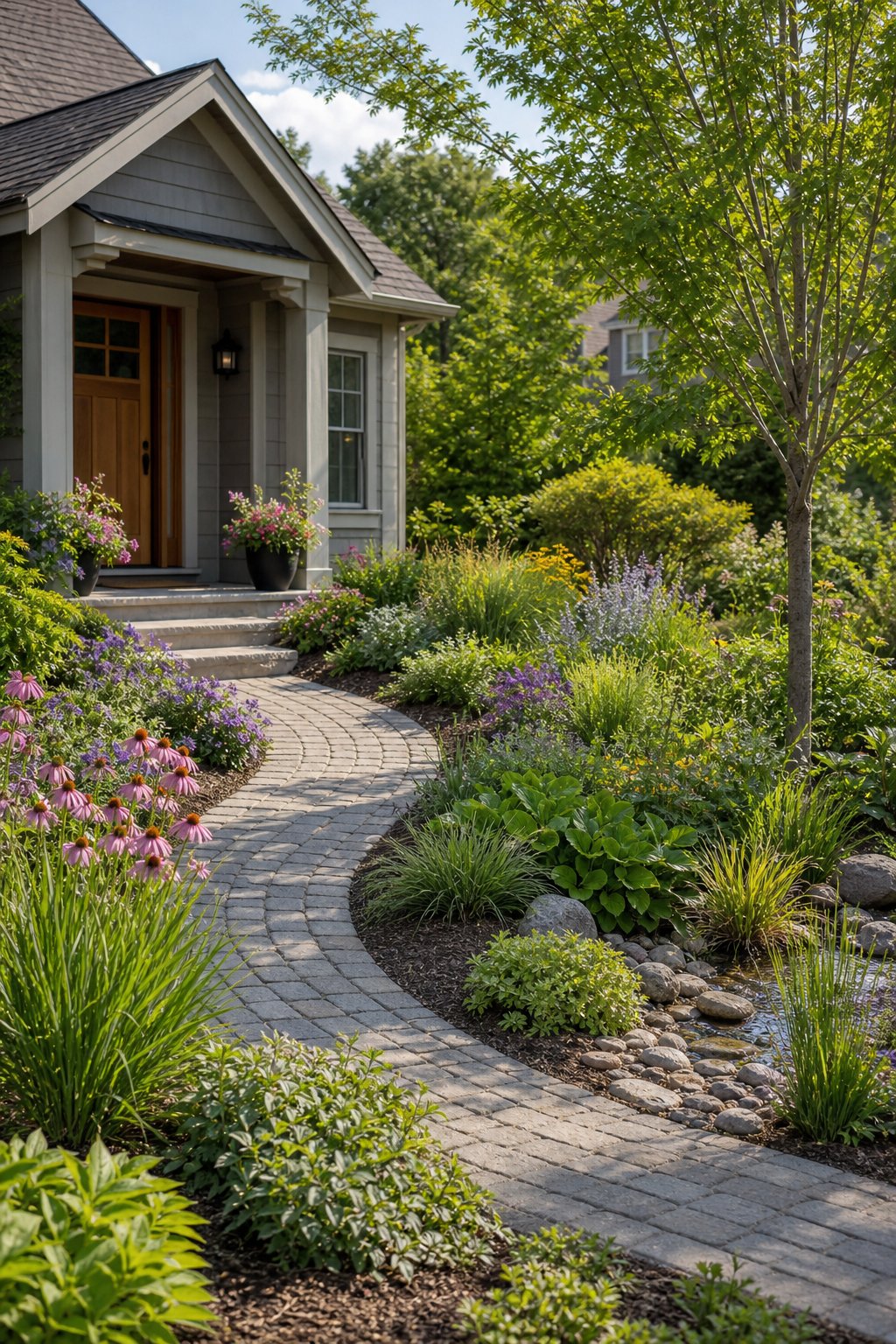
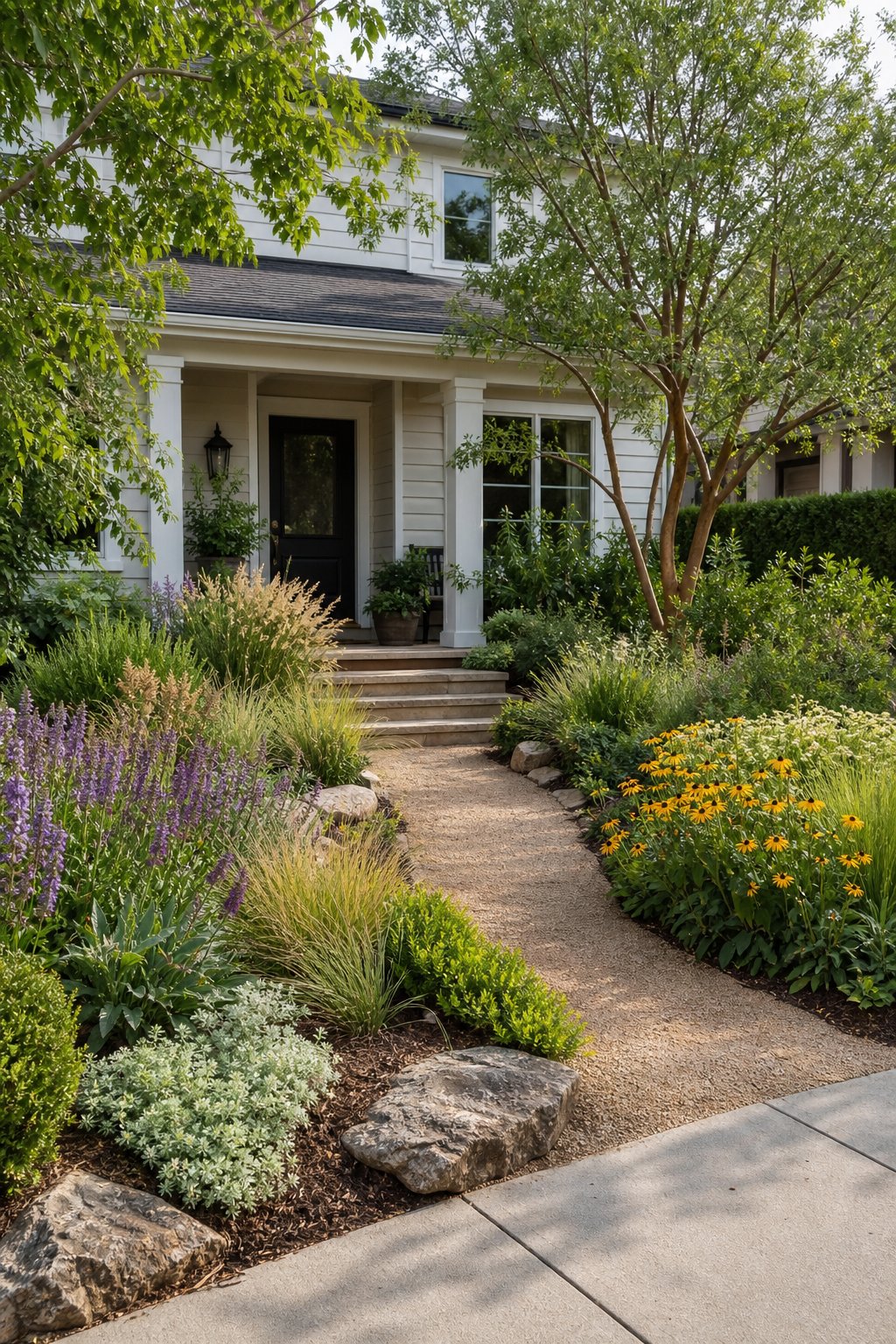
Native plants give your front garden a sense of place while reducing mowing, watering, and chemical use. You can shape them into tidy borders, flowing meadows, rain-catching beds, or small wildlife patches that suit your home and local climate.
Choose plants native to your region, then match them to your yard’s sunlight, soil, and moisture. Grouping plants in broad drifts makes the garden feel planned, while stone edges, paths, and repeated shapes keep the wild character friendly to passersby.
Native front garden ideas work best when beauty and function share the same space. The right plants feed pollinators, give birds seeds and shelter, and create seasonal color without turning your weekends into a full-time gardening job.
1. Curving Drought-Tolerant Native Beds With Boulders
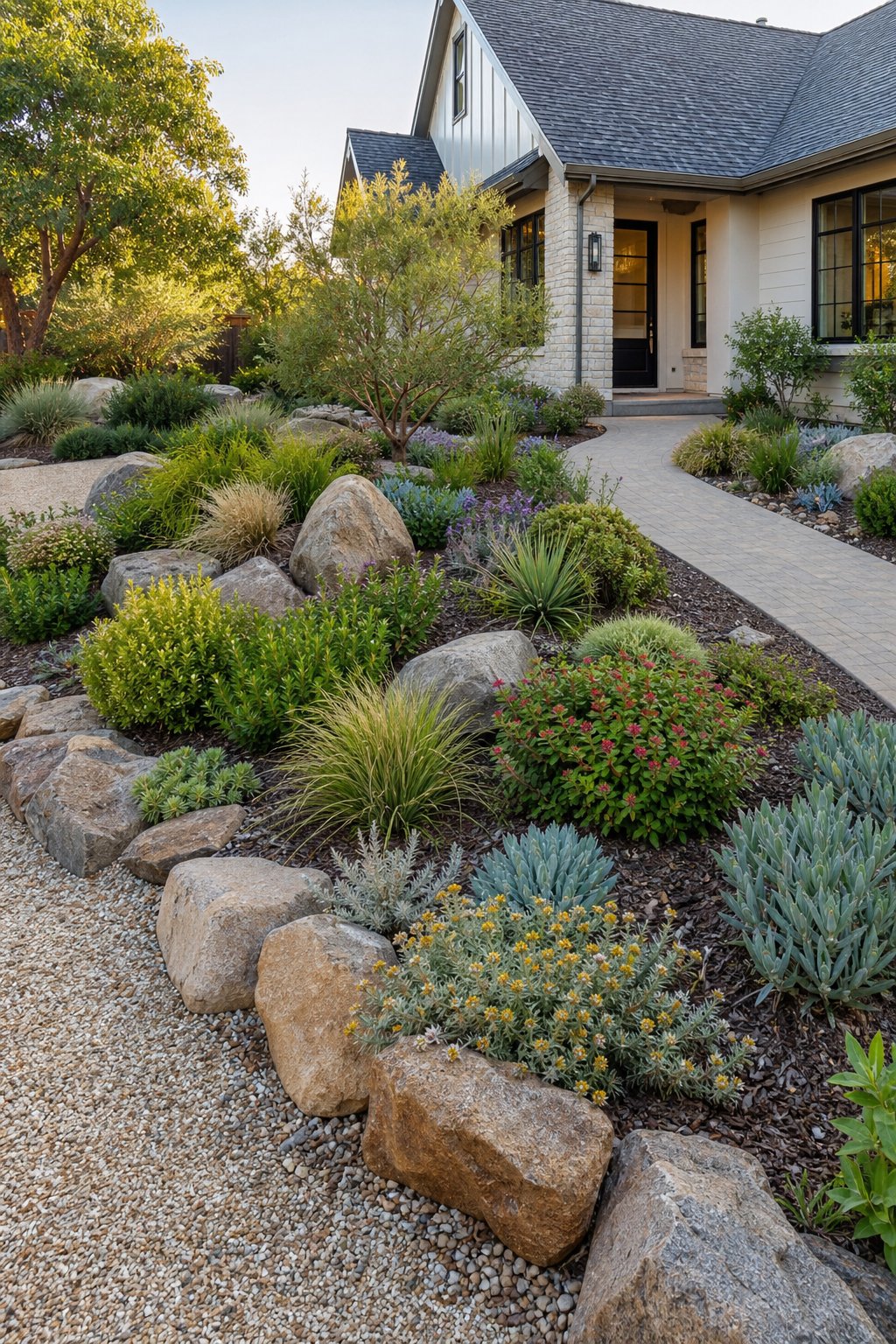
Curving beds soften the front yard and make drought-tolerant plants look intentional. Lay out a wide arc that follows the walkway or porch, then repeat regional grasses, coneflowers, or California poppies in groups. Large boulders give the eye a resting place and add height without extra watering.
Set each stone partly into the soil so it looks settled. Keep plants with similar water needs together, and cover bare soil with gravel or a thin layer of mulch. The curves also leave mower-friendly corners if you keep a small lawn nearby.
Expert Tip From MrPlanter: “Place your biggest boulder first, then build the planting around it. Give young plants deep watering while their roots settle in.”
2. Native Wildflower Meadow With a Mowed Border Path
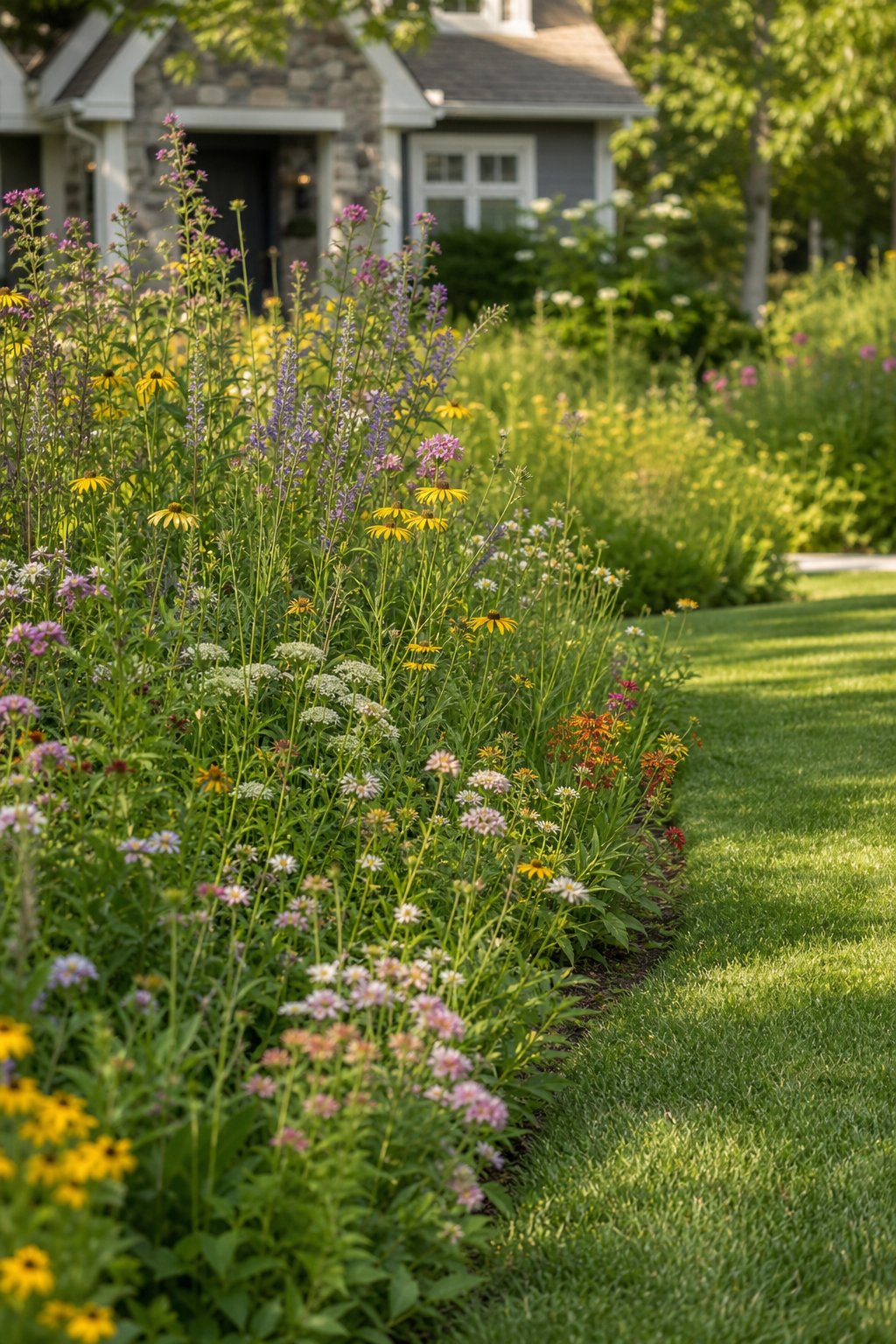
A mowed border path gives a native meadow a clean frame and an easy way through the garden. Sow regionally native flowers among grasses, allowing enough room for mature growth and seed heads. Coneflower, black-eyed Susan, and native asters bring color across several months.
Mow the path short and curve it gently through the planting. During the first season, pull weeds before they seed and water new plants during dry spells. A simple sign or low edging can explain the garden’s purpose to curious neighbors.
Expert Tip From MrPlanter: “Keep the path wide enough for a mower and comfortable walking. Leave the meadow stems standing through winter for birds.”
3. Pollinator Border With Coneflowers, Bee Balm, and Little Bluestem
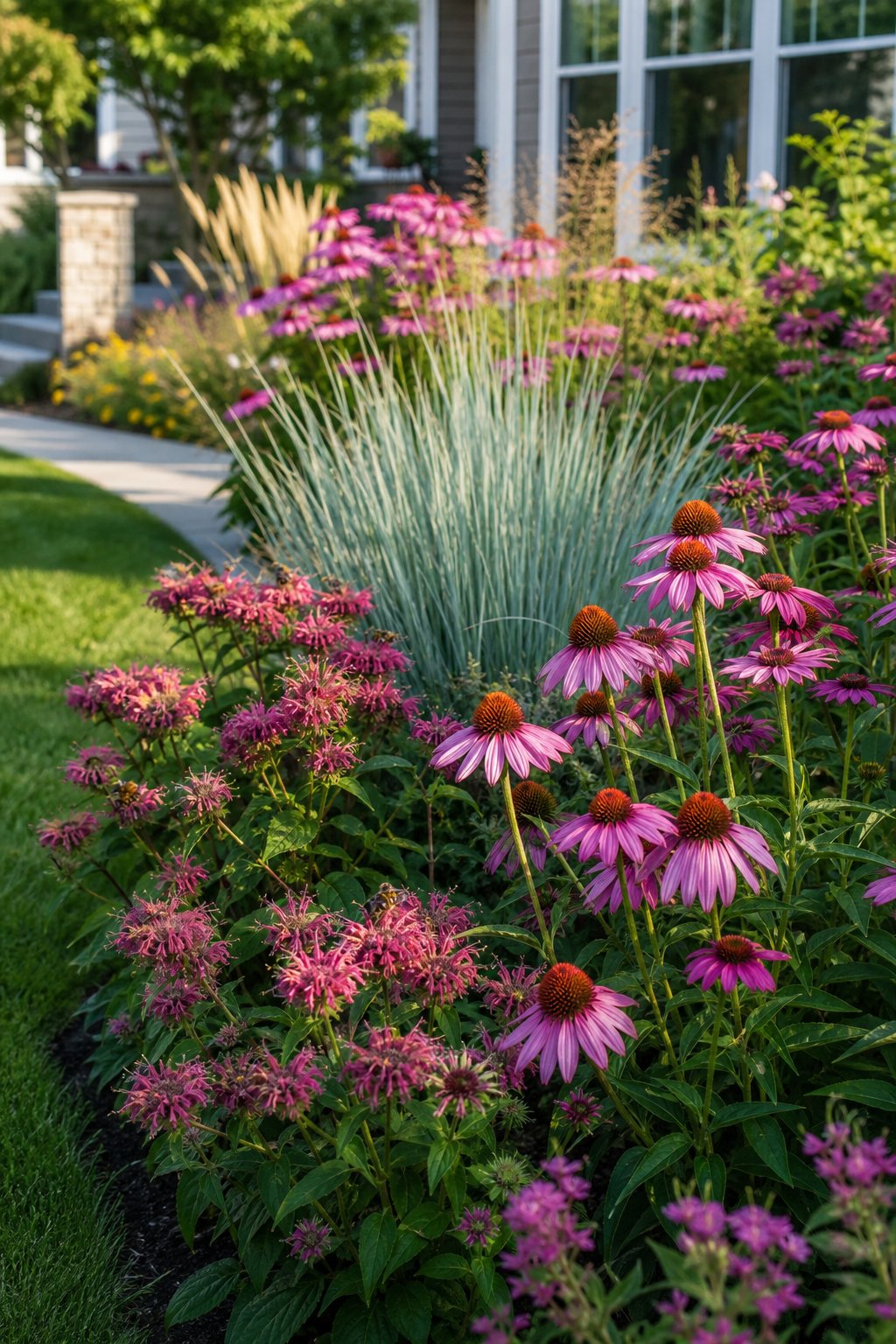
Coneflowers, bee balm, and little bluestem create a pollinator border with strong color and changing texture. Put the taller bee balm toward the back, place coneflowers through the middle, and use little bluestem to fill gaps with fine foliage. This layered arrangement keeps blooms visible from the sidewalk.
Choose a sunny bed with good air movement around bee balm. Remove spent flowers if you want more blooms, then leave some seed heads for finches. A crisp mulch edge helps the planting feel deliberate while insects work nearby.
Expert Tip From MrPlanter: “Give bee balm room to breathe so leaves dry after rain. Trim only damaged stems during summer and save the larger cleanup for spring.”
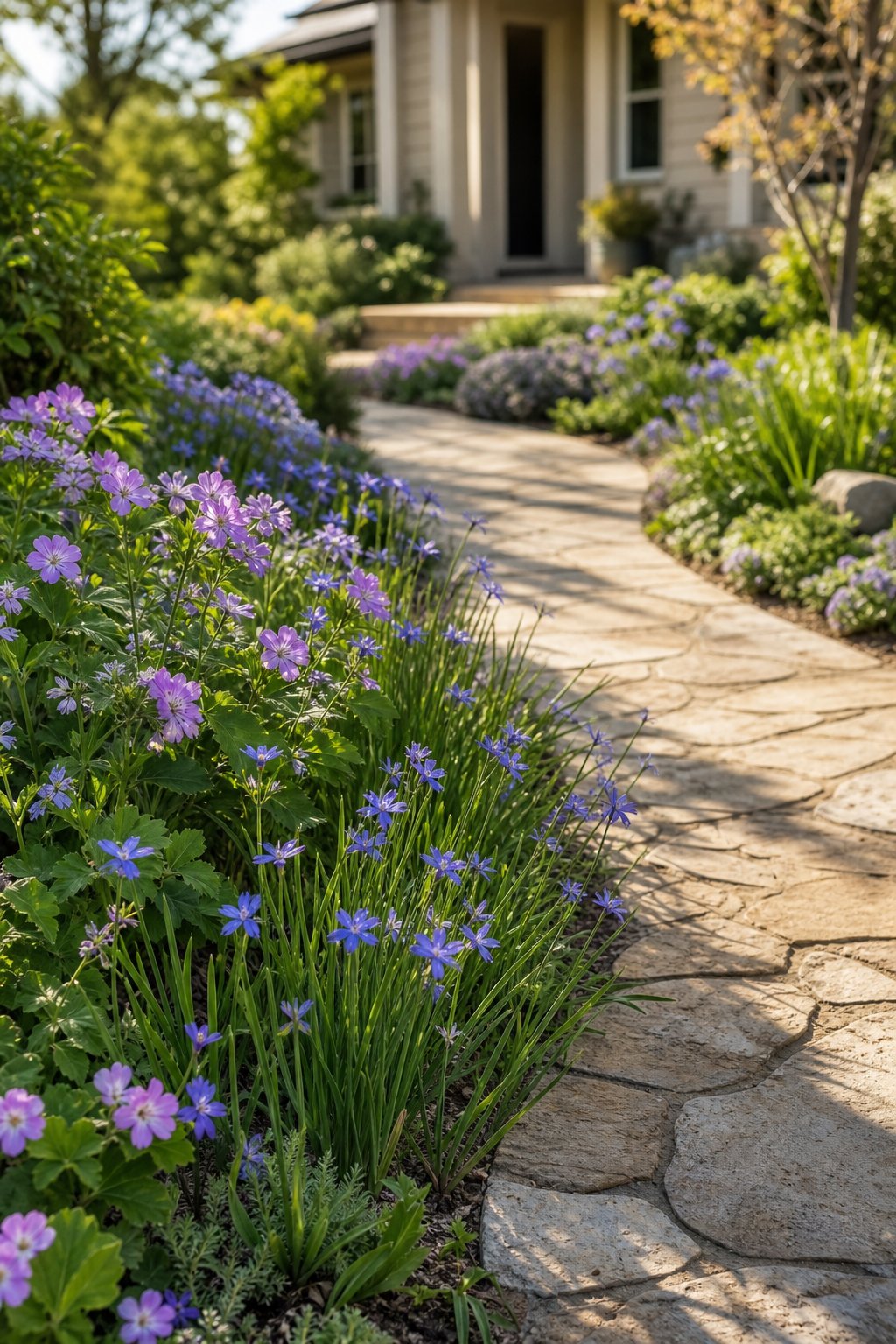
4. Front Walkway Edge With Blue-Eyed Grass and Wild Geranium
Blue-eyed grass and wild geranium make a soft, low planting for a front walkway. Their modest height keeps steps and door views open, while small flowers bring detail close to where you walk. Repeat both plants along one side or mirror them on each edge for a calm rhythm.
Leave enough clearance for shoes, snow removal, and garden tools. Wild geranium handles light shade, while blue-eyed grass prefers brighter conditions, so place each where it will perform well. Stone edging can hold soil in place beside the path.
Expert Tip From MrPlanter: “Measure the walkway before planting and keep foliage outside the walking line. Shear tired blue-eyed grass lightly after flowering to refresh its shape.”
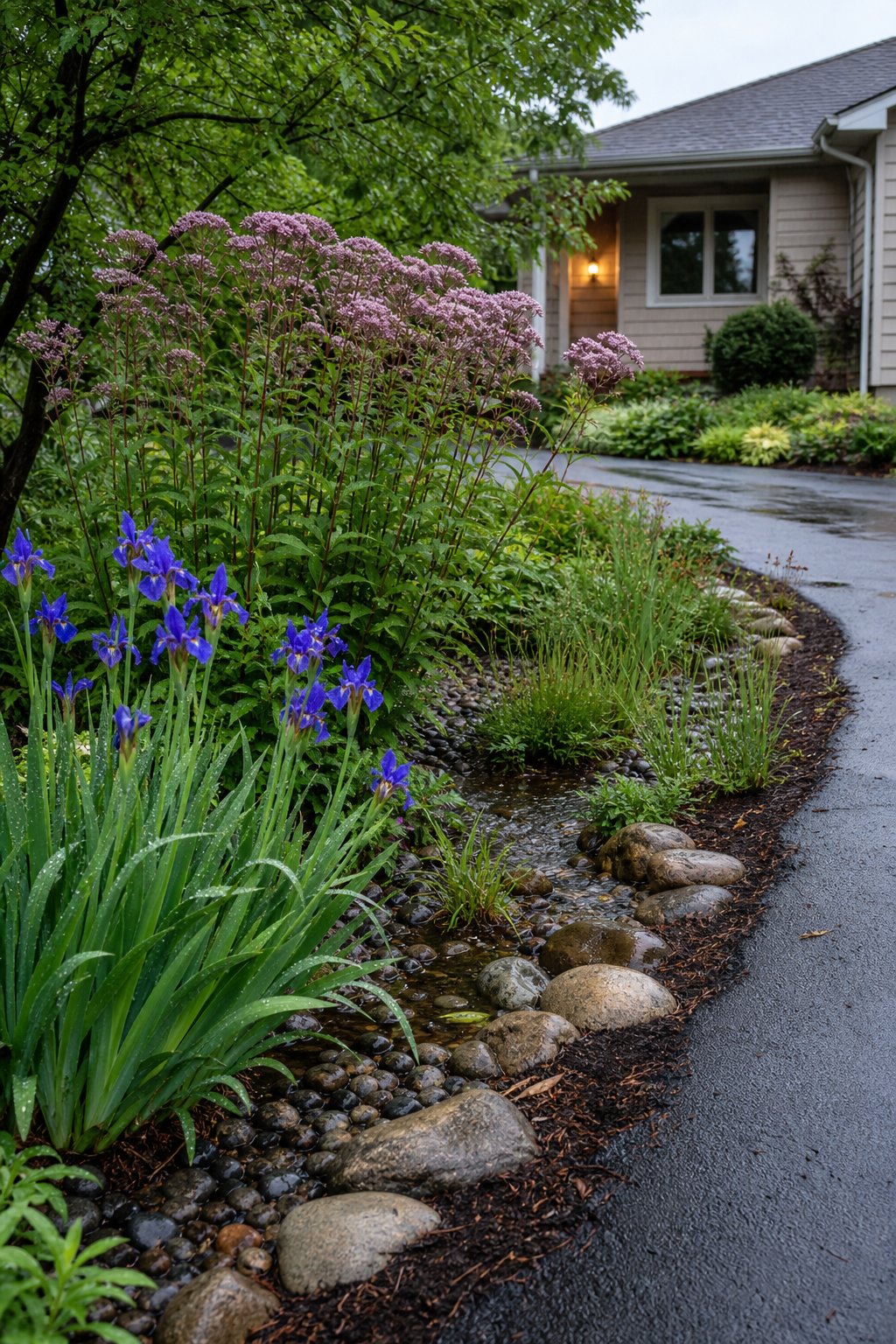
5. Driveway Rain Garden With Blue Flag Iris and Joe-Pye Weed
A shallow rain garden beside the driveway can collect runoff while blue flag iris and Joe-Pye weed handle damp soil. Shape a broad depression where water naturally gathers, keeping the overflow route away from your foundation. Blue flag iris suits the lower, wetter center, while Joe-Pye weed adds height along the back.
Use a level check during digging so the basin spreads water evenly. Weed and water new plants during their first growing season. Once roots fill the soil, the bed needs less attention and helps reduce puddles near the drive.
Expert Tip From MrPlanter: “Test the basin with a hose before planting. Keep overflow directed toward a safe lawn area or approved drainage point.”
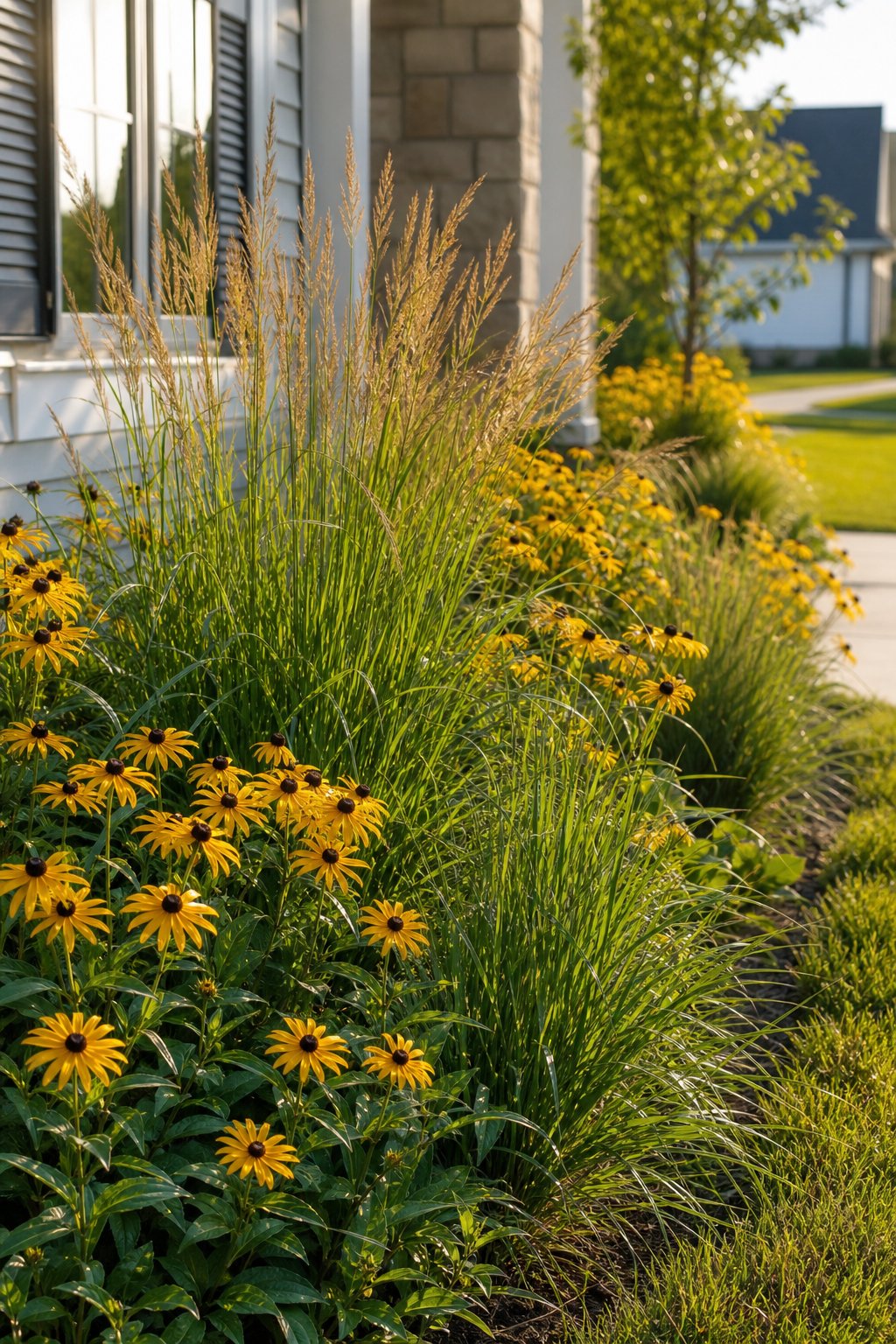
6. Sunny Foundation Border With Switchgrass and Black-Eyed Susans
Switchgrass and black-eyed Susans give a sunny foundation bed movement, flowers, and winter structure. Plant switchgrass in repeating clumps toward the back, then thread black-eyed Susans through the front and middle. Their yellow blooms brighten siding and draw bees without blocking windows.
Keep mature plant sizes in mind near doors, vents, and basement windows. Leave a clear strip beside the foundation for inspection and repairs. A gravel or stone edge helps separate the bed from lawn and keeps grass from creeping into the planting.
Expert Tip From MrPlanter: “Place switchgrass where its seed heads catch morning or evening light. Cut old stems in late winter so winter shelter stays available.”
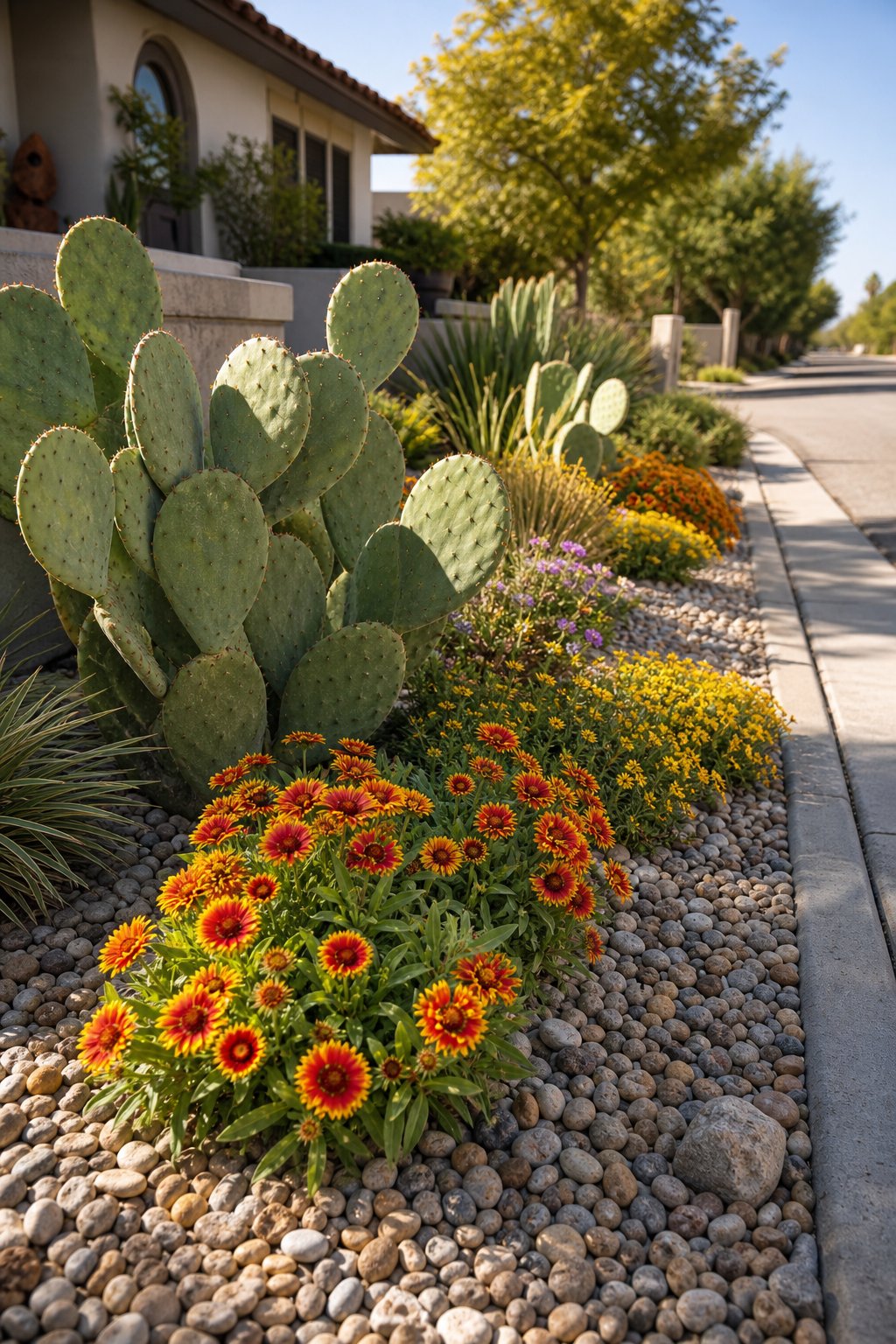
7. Dry Curb Strip With Prickly Pear, Blanketflower, and Gravel
A gravel curb strip suits hot, dry spaces where prickly pear and blanketflower can handle reflected heat. Use gravel as the main ground cover, then place prickly pear in open pockets with plenty of room around its pads. Blanketflower adds red and yellow flowers through summer.
Check local hardiness and safety needs before planting cactus beside a sidewalk. Keep prickly pear away from tight corners and children’s play routes. A steel or stone edge keeps gravel from spreading onto pavement after storms.
Expert Tip From MrPlanter: “Wear thick gloves when handling prickly pear. Set each plant slightly above surrounding soil so water drains from its base.”
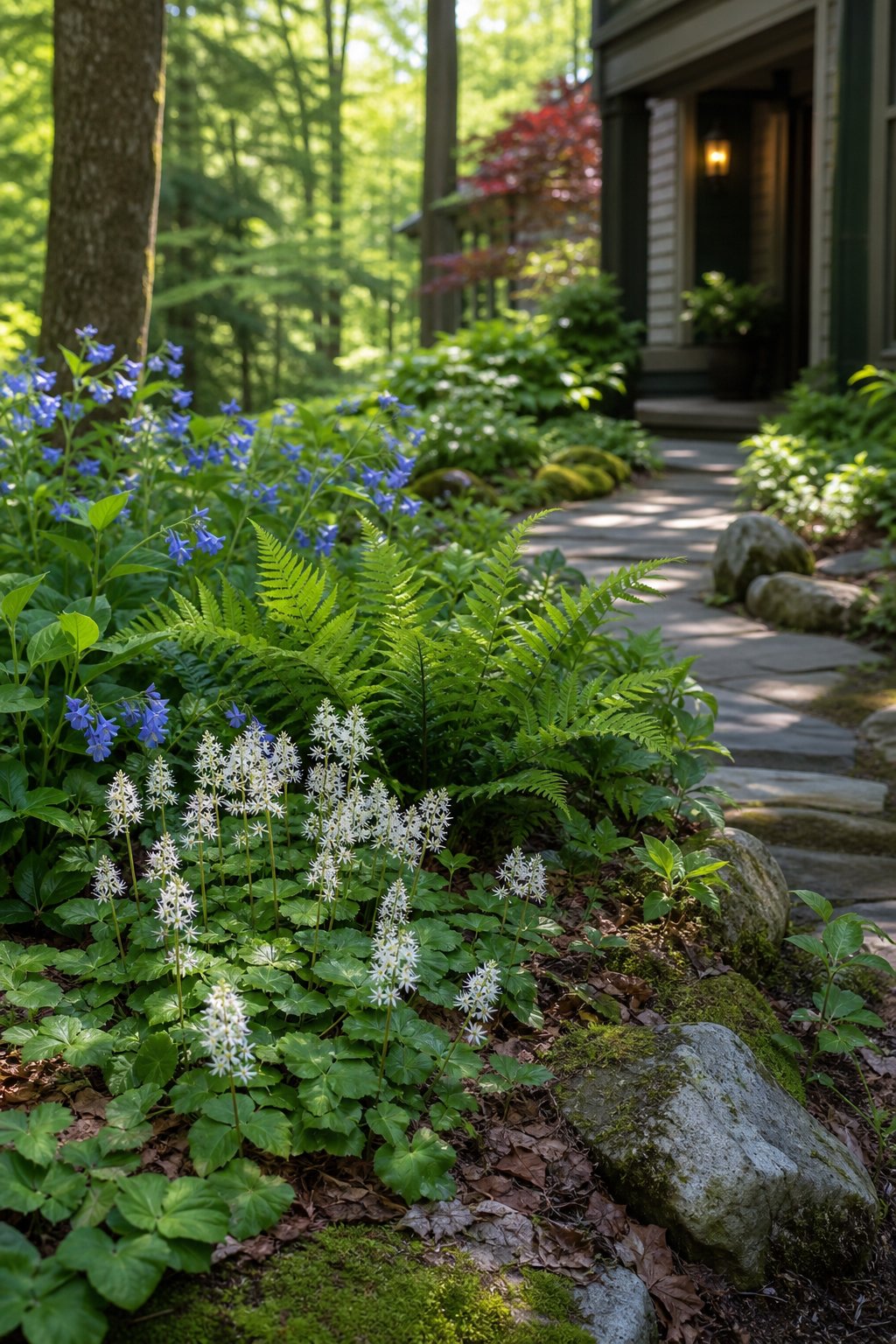
8. Woodland Entry Garden With Foamflower, Ferns, and Virginia Bluebells
Foamflower, ferns, and Virginia bluebells turn a shady entry into a cool woodland garden. Let ferns provide broad green texture, then group foamflower near the path and place bluebells where spring color will be easy to see. Their soft forms suit a porch shaded by trees or the north side of a home.
Improve compacted soil with leaf mold or finished compost before planting. Keep the soil evenly moist while roots establish, especially beneath large trees. A narrow path edge makes the low planting look cared for without disturbing its woodland feel.
Expert Tip From MrPlanter: “Plant in small groups with open space between them for air and growth. Let fallen leaves remain in the bed as a natural soil cover.”
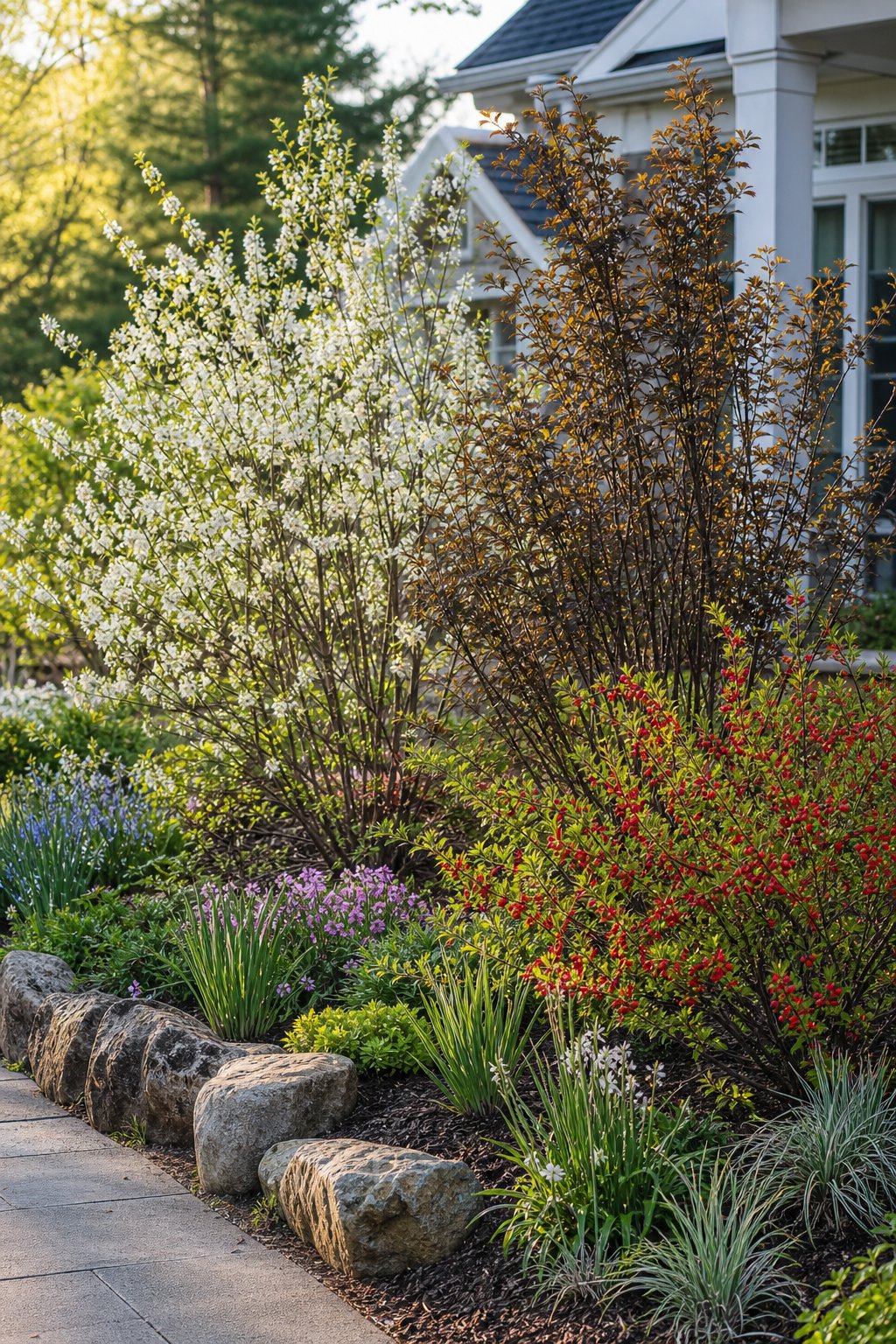
9. Native Shrub Border With Serviceberry, Ninebark, and Winterberry
Serviceberry, ninebark, and winterberry create a native shrub border with flowers, bark, and berries across the seasons. Place serviceberry where its mature size fits the yard, use ninebark for layered stems, and add winterberry in a damp spot. Female winterberry plants need a compatible male pollinator nearby for fruit.
Keep shrubs in loose groups with low perennials at their feet. Prune after flowering when needed, following each plant’s natural form. Check mature widths before planting near windows, utility lines, or the sidewalk.
Expert Tip From MrPlanter: “Give serviceberry breathing room so its branching shape stays visible. Add a male winterberry within pollination range for reliable berry production.”
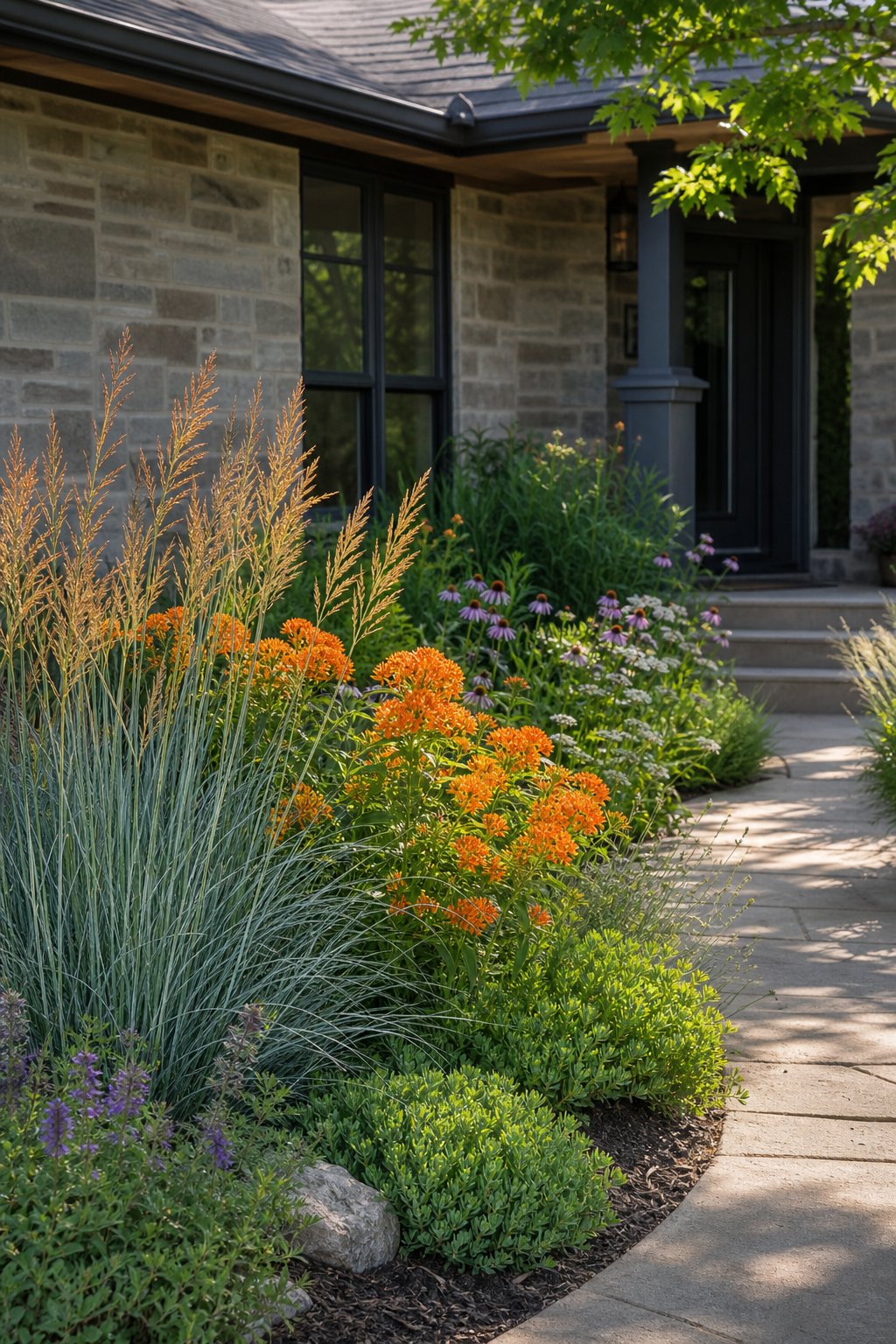
10. Small Front Yard Prairie With Little Bluestem and Butterfly Weed
A small prairie planting gains strong structure from little bluestem and bright butterfly weed. Use several grass clumps as a repeating base, then scatter orange butterfly weed through sunny openings. The grass gives the bed shape after flowers fade, while butterfly weed supports monarch caterpillars.
Define the area with a straight mulch edge, low stones, or a narrow path. Remove competing weeds while plants fill in, and avoid rich fertilizer that produces floppy growth. Keep the walkway clear as the prairie matures.
Expert Tip From MrPlanter: “Plant butterfly weed where drainage is sharp and sunlight is strong. Mark its location in spring because new shoots emerge slowly.”
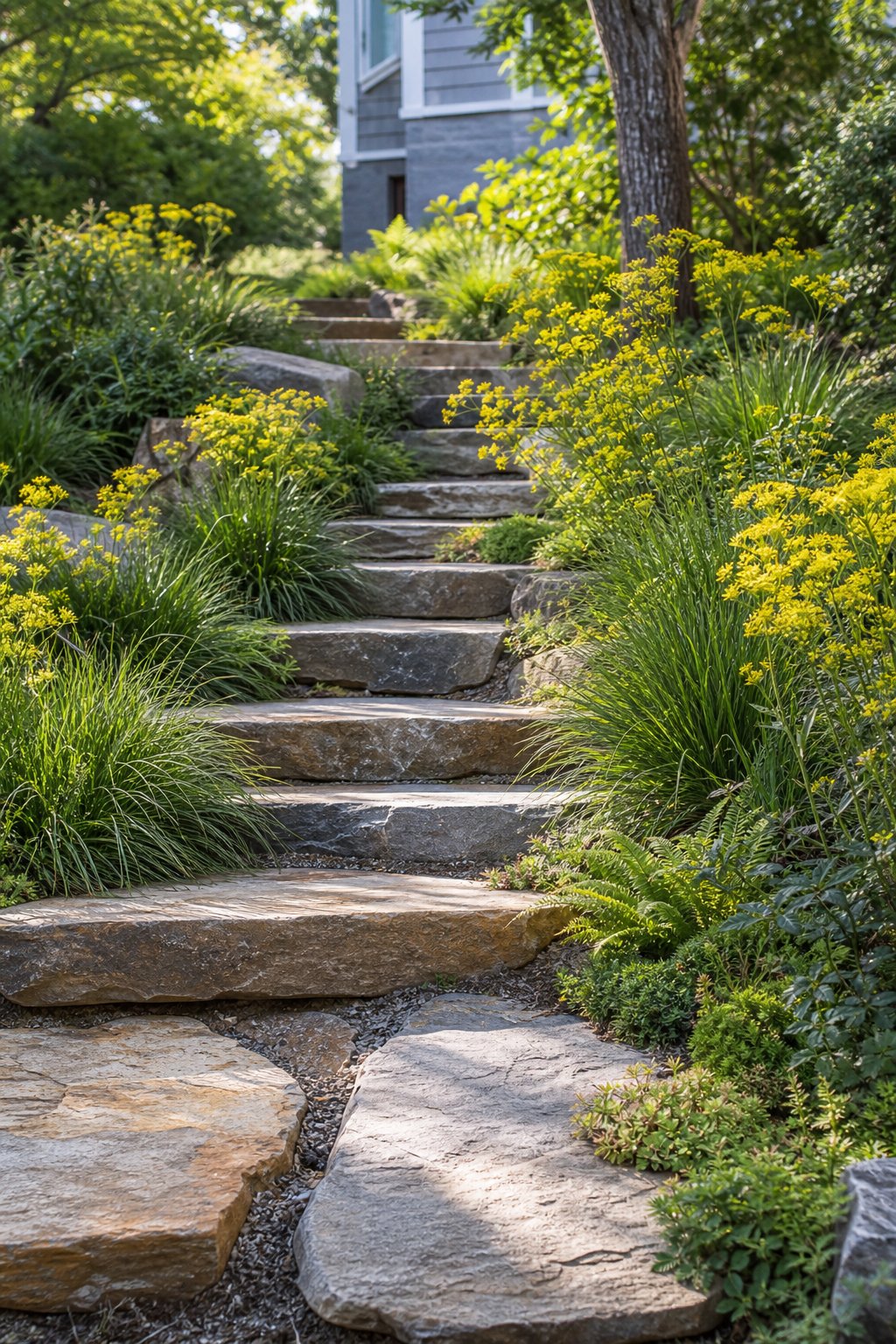
11. Stone-Stepped Slope With Native Sedges and Golden Alexanders
Stone steps make a sloped front garden safer while sedges and golden Alexanders hold the planting together. Set steps on a stable base with a comfortable rise, then use sedges along the edges where their roots help reduce soil movement. Golden Alexanders add flat yellow flower clusters in spring.
Build short planting pockets between steps so rain does not rush downhill. Choose sedges that match the slope’s light and moisture. Leave enough tread space for winter footing and routine sweeping.
Expert Tip From MrPlanter: “Set each stone firmly before adding plants. Use low sedges beside the tread and reserve taller flowers for wider pockets away from feet.”
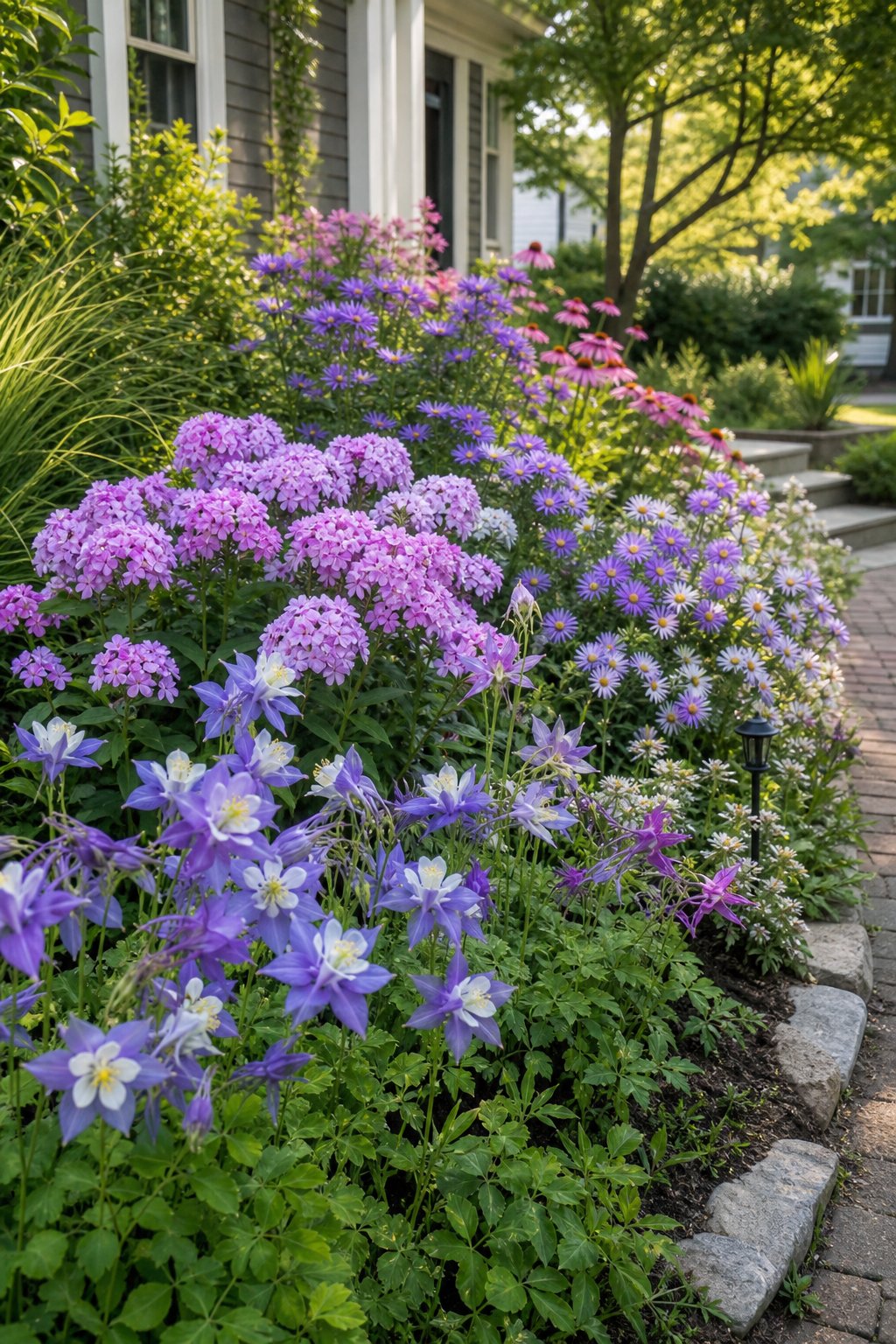
12. Native Cottage Border With Columbine, Phlox, and Asters
Columbine, phlox, and asters bring a relaxed cottage feeling to a native front border. Columbine starts the color early, phlox fills the middle of the season, and asters carry flowers toward fall. Repeat each plant in small clusters so the mix feels connected along the porch or walk.
Combine upright stems with low edging plants and leave narrow gaps for access. Deadhead a few flowers for a tidy view while leaving others to form seed. Keep the border within its planned height near windows and entry doors.
Expert Tip From MrPlanter: “Repeat one flower color near the front door to tie the bed to your home. Divide crowded clumps in spring and share extras with a neighbor.”
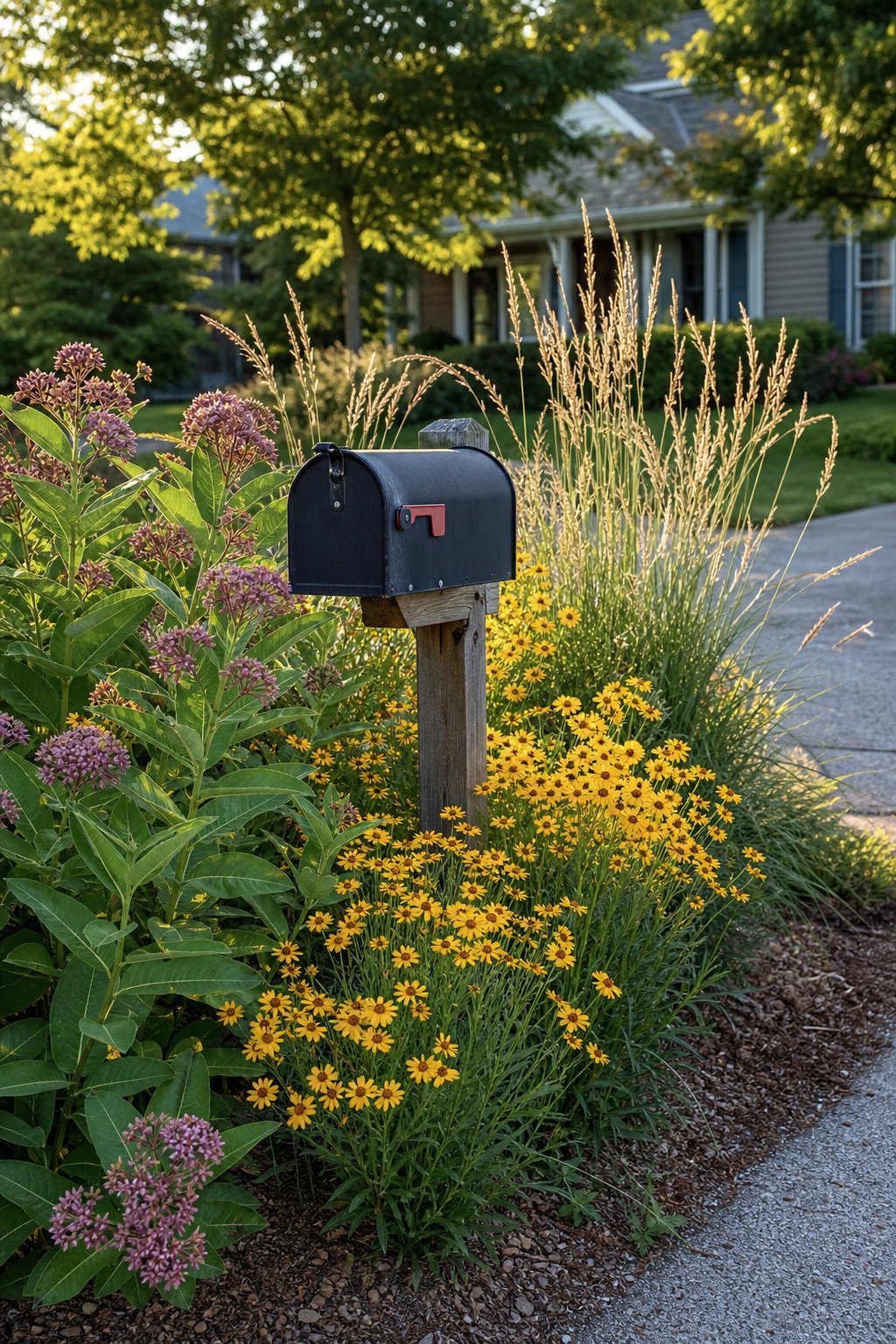
13. Mailbox Garden With Coreopsis, Milkweed, and Prairie Dropseed
Coreopsis, milkweed, and prairie dropseed make a mailbox garden colorful, useful, and easy to recognize. Keep plants low around the box so delivery access stays clear, then place taller milkweed behind or to one side. Prairie dropseed adds fine texture and holds its shape near the curb.
Use a small mulch or gravel ring to prevent grass from reaching the post. Choose milkweed species native to your area, since forms differ in height and growth habit. Water new plants during dry weather until their roots spread.
Expert Tip From MrPlanter: “Leave a clear standing area beside the mailbox door. Cut back only what blocks delivery access and let the rest provide shelter.”
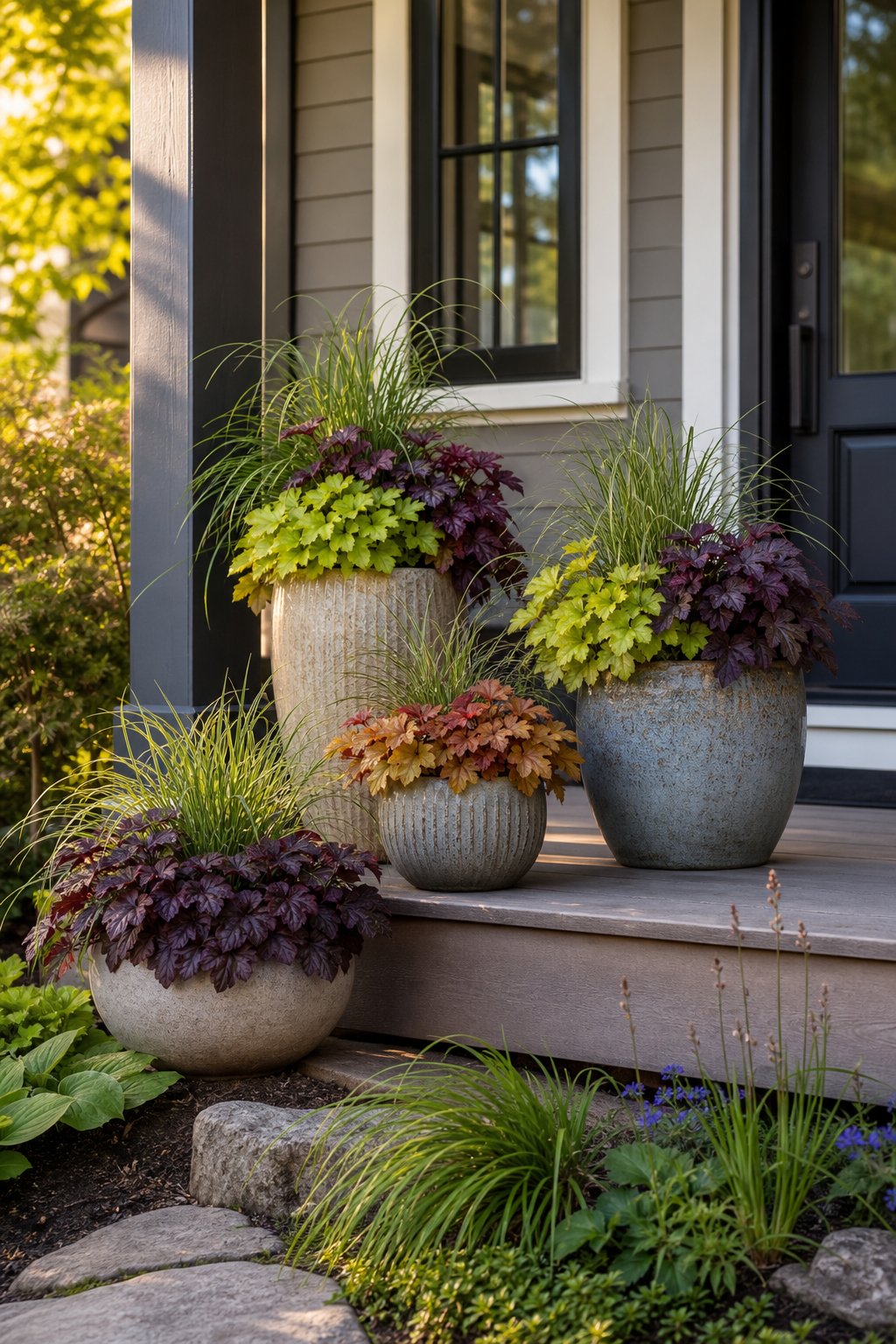
14. Front Porch Containers With Native Heuchera and Carex
Native heuchera and carex bring texture to a porch when an in-ground bed is small or shaded. Use heuchera for colorful leaves and carex for arching blades, placing each in a container with drainage holes. Matching pots create order, while varied plant heights keep the doorway welcoming.
Choose pot sizes that give roots room for two growing seasons. Water when the top inch of mix feels dry, and move containers into a protected spot during severe winter cold if needed. Refresh the mix before spring growth begins.
Expert Tip From MrPlanter: “Raise pots slightly so drainage holes stay open. Group containers in odd heights, then leave a clear route to the door.”
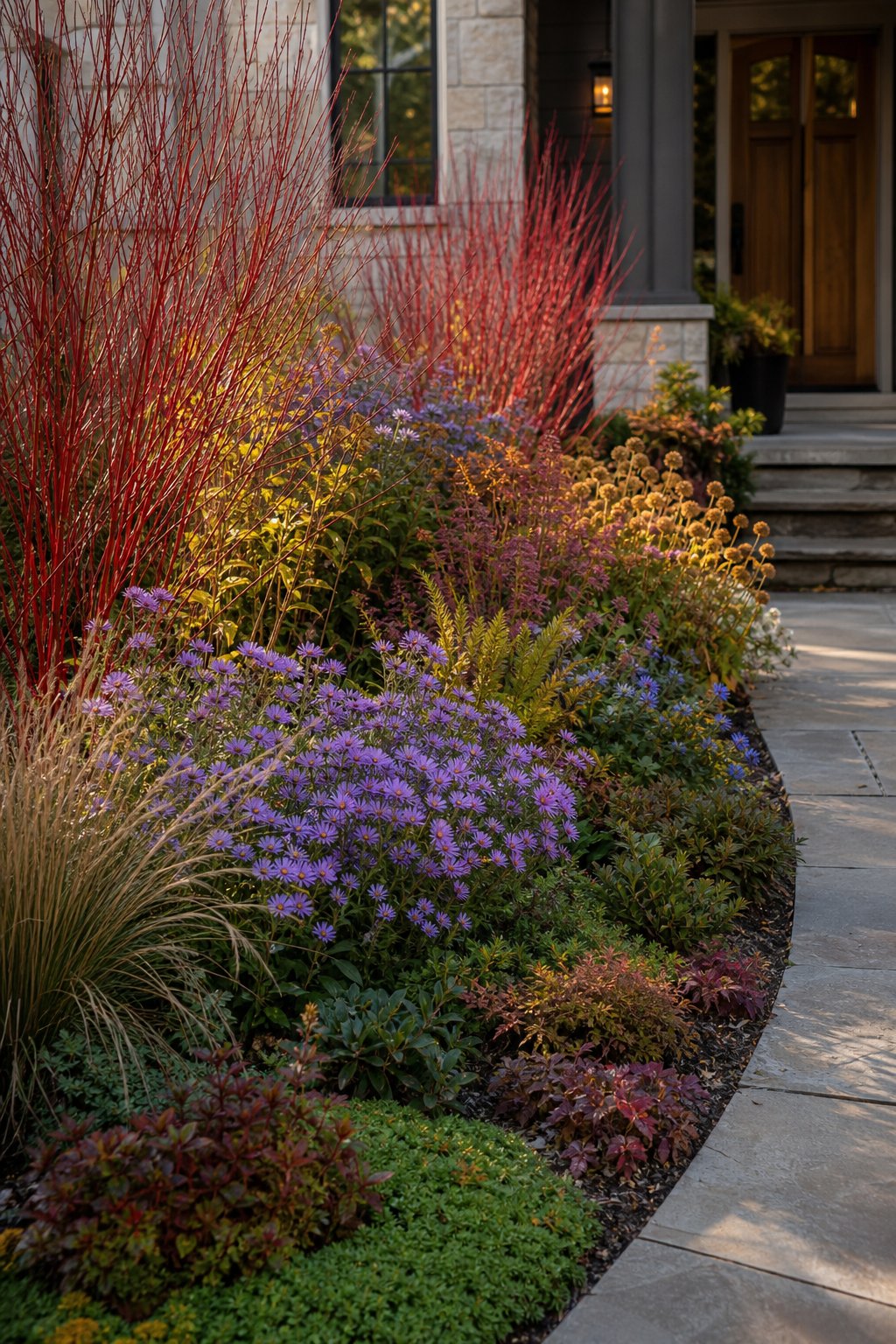
15. Four-Season Native Entry Bed With Red Twig Dogwood and Asters
Red twig dogwood and asters give an entry bed color from winter stems through fall flowers. Use dogwood toward the back or side, add grasses for summer movement, and weave asters through the front. The red stems stand out after leaves drop and help the garden keep its shape.
Prune older dogwood stems near the ground in late winter to encourage fresh color. Keep the bed open around steps and door swings. Add spring bulbs or early native perennials for interest before asters bloom.
Expert Tip From MrPlanter: “Plant dogwood where winter stems receive good light. Remove a portion of the oldest stems each year instead of cutting every branch at once.”
How to Choose Native Plants for Your Front Garden
Choose native plants by matching each species to your region, site conditions, mature size, and preferred garden style. A plant native to one state can struggle in another, so local plant lists and native nurseries help you make sound choices.
What Is Native to Your Specific Region?
Start with your state, county, or local ecoregion. Native plant societies, extension offices, and conservation groups often publish lists suited to local soils and wildlife. Check the scientific name on nursery tags because common names can describe several different plants.
Favor locally grown plants when possible, and avoid invasive species sold under familiar names. A regional native plant source can also tell you whether a species spreads by seed, runners, or slow clump growth.
How Much Sun, Moisture, and Reflected Heat Does the Site Get?
Watch the yard through a full day before choosing plants. Record areas with morning sun, afternoon shade, standing water, dry tree roots, and heat bouncing from pavement or walls.
Match moisture needs to the site. Blue flag iris suits a wet rain garden, while prickly pear needs sharp drainage. Plants placed in the wrong moisture zone demand extra care and produce weaker growth.
What Mature Plant Size Fits the Bed and Walkways?
Read the mature height and width on every plant label. Measure from the foundation, windows, utility equipment, steps, and property line before digging.
Use low plants near walkways and taller shrubs where they won’t hide signs or block views. Give shrubs room to reach their natural width, since crowded plants need more pruning and develop poorer air circulation.
How Can You Keep a Naturalistic Planting Looking Intentional?
Repeat plants, colors, or shapes across the bed. A few broad groups look calmer than many single specimens scattered like confetti.
Add a clear edge using stone, steel, mulch, or a mowed strip. Keep paths open, define planting limits, and use height layers so the garden reads as planned from the street. For more layout inspiration, browse these front yard garden design ideas.
Front Garden Design and Care Essentials
Native front gardens stay attractive when repeated plant groups, clear edges, seasonal structure, and timely care work together. You can allow natural growth while keeping doors, paths, signs, and windows easy to use.
Why Should You Plant in Repeated Drifts Rather Than One-Off Specimens?
Repeated drifts create visual rhythm and help each plant show its form. Plant three, five, or more of one species in a loose group, then repeat that group elsewhere when space allows.
Drifts also make maintenance faster because similar plants share the same watering and trimming needs. Keep spacing generous enough for mature growth, with smaller groups in narrow beds.
Which Edges, Paths, and Mulches Make Native Plantings Look Tidy?
A crisp edge separates planting from lawn and pavement. Stone, steel, brick, or a mowed strip all work when installed evenly and kept free of creeping grass.
Use paths where you need to reach doors, mailboxes, bins, and planting areas. Apply mulch two to three inches deep, keeping it away from trunks and crowns. Gravel suits dry gardens, while leaf mulch works well beneath woodland plants.
How Do You Provide Blooms, Seeds, and Structure Through All Four Seasons?
Choose plants with staggered bloom times. Add spring flowers, summer perennials, fall asters, evergreen or semi-evergreen foliage, and shrubs with winter bark or persistent seed heads.
Leave selected stems standing after frost so birds can feed and beneficial insects can shelter. Keep a few strong shapes visible from the street, especially near the entry. A seasonal plan for a garden border can help balance height and color.
When Should You Weed, Water, Cut Back, and Leave Stems for Wildlife?
Water new plants deeply during their first season, adjusting for rainfall and soil drainage. Pull weeds while they are small, especially before seed heads form. Check paths and edges during the growing season so plants do not spread into walking areas.
Cut back most dry stems in late winter or early spring after birds finish using the seed. Leave sturdy stems through winter, and remove diseased foliage promptly. Divide crowded perennials when active growth is low, then water them well after replanting.
I’m Anirban Saha, the Founder and Owner of MrPlanter.com. I pay the bills as a software developer, although my BTech is actually in Electronics and Communication. I really love my day job, but what gives me energy every day is interacting with my indoor plants and taking care of them. I have been successfully nurturing and maintaining houseplants for over 10 years now.
📚🔍 Our content undergoes thorough review and fact-checking before publication. For additional details, explore our strict Editorial Policy to deliver helpful content. 📝🔒