As an Amazon Associate, MrPlanter.com earns from qualifying purchases.
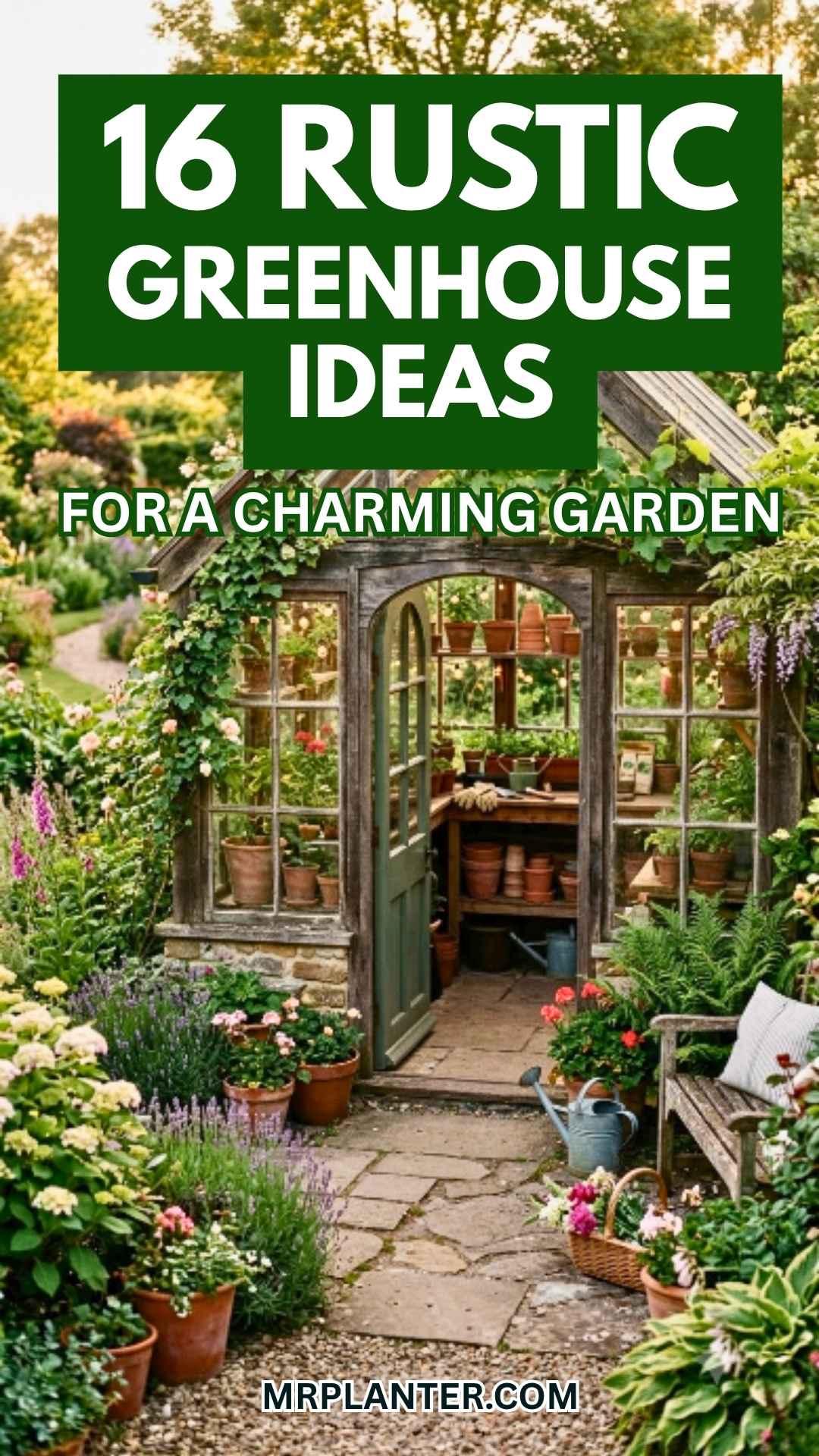
A rustic greenhouse gives your garden a warm, useful focal point while extending the growing season. Reclaimed wood, old windows, stone, and aged metal bring texture that feels at home beside flower beds, vegetable rows, and winding paths.
The best rustic greenhouse combines a weather-friendly frame, strong light, steady airflow, and enough room for the way you garden. These 16 rustic greenhouses ideas can help you choose a look that grows well and feels personal.
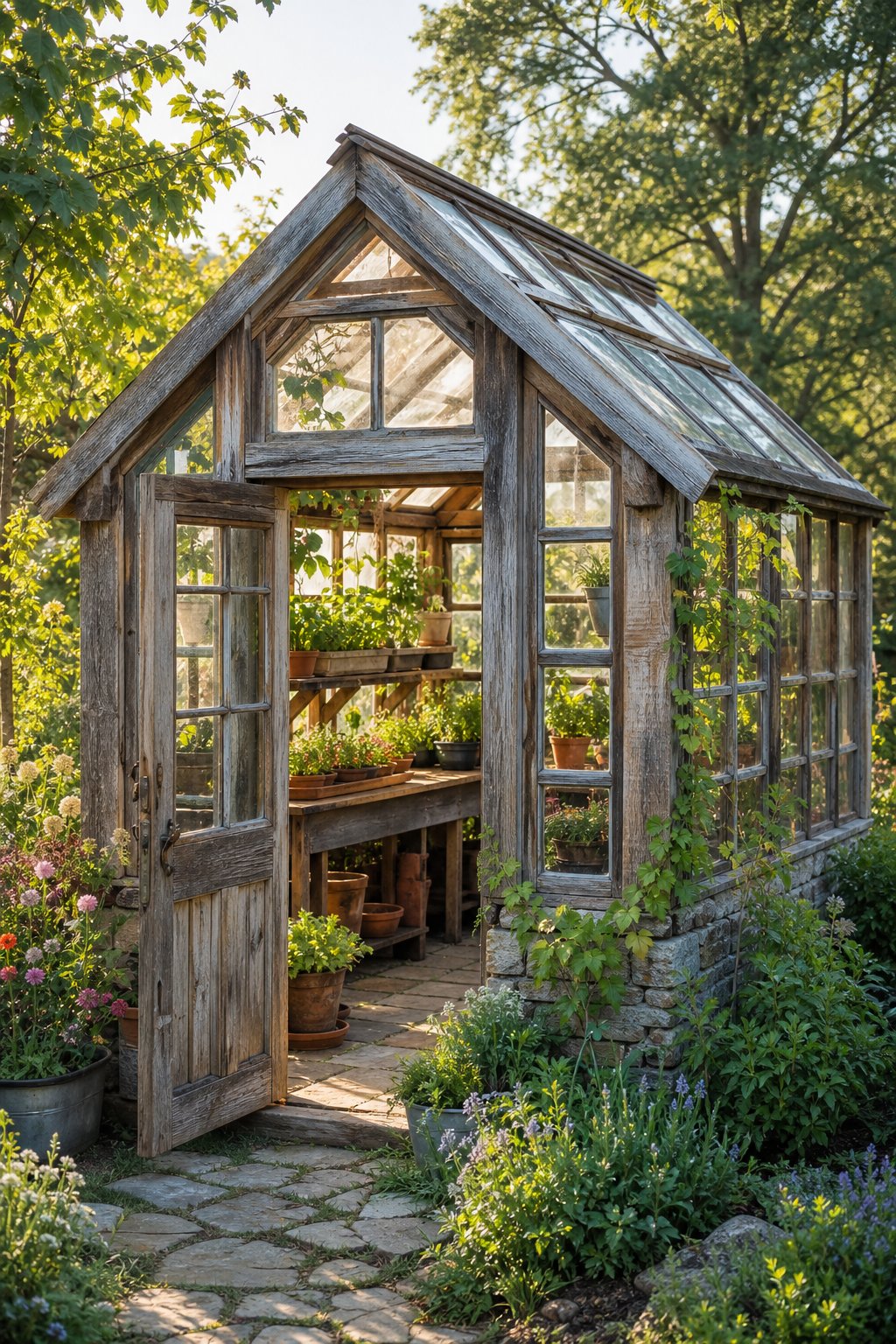
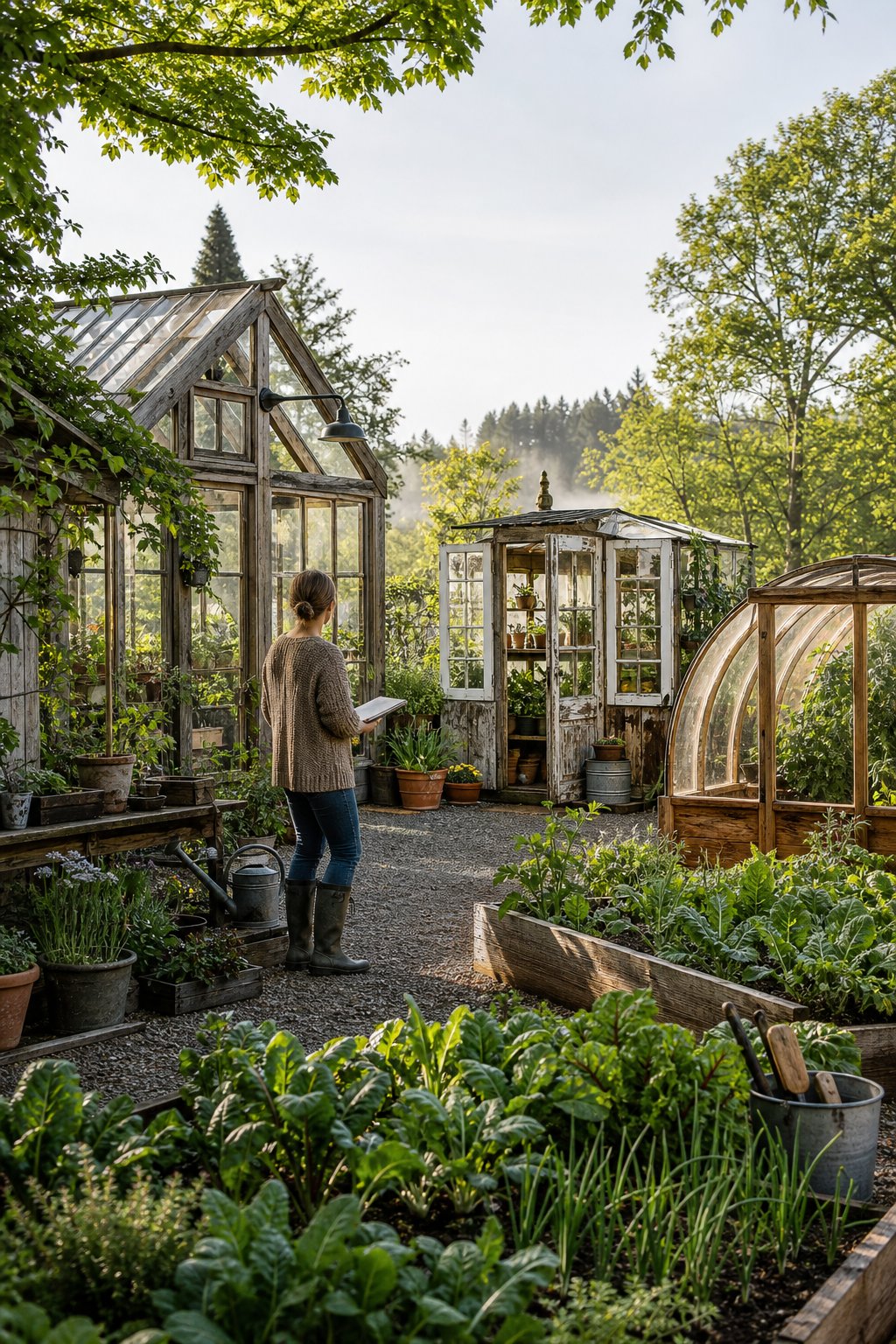
1. Reclaimed Barn-Wood Greenhouse With Salvaged Glass Windows
Old barn boards give this greenhouse its story, while salvaged glass fills it with soft daylight. The weathered wood looks especially welcoming beside raised beds, berry bushes, or a simple gravel path. Before building, check every board for rot, mold, lead paint, and insect damage. Seal sound wood with an exterior finish made for outdoor use.
Salvaged windows rarely match perfectly, so measure each one and plan the frame around your collection. Add sturdy hinges to at least two windows for cross-ventilation. A reclaimed potting bench inside gives you a place to sow seeds and keep hand tools nearby.
Expert Tip From MrPlanter: “Brush off loose paint before bringing old windows near your plants. Keep a few replacement panes stored safely for future repairs.”
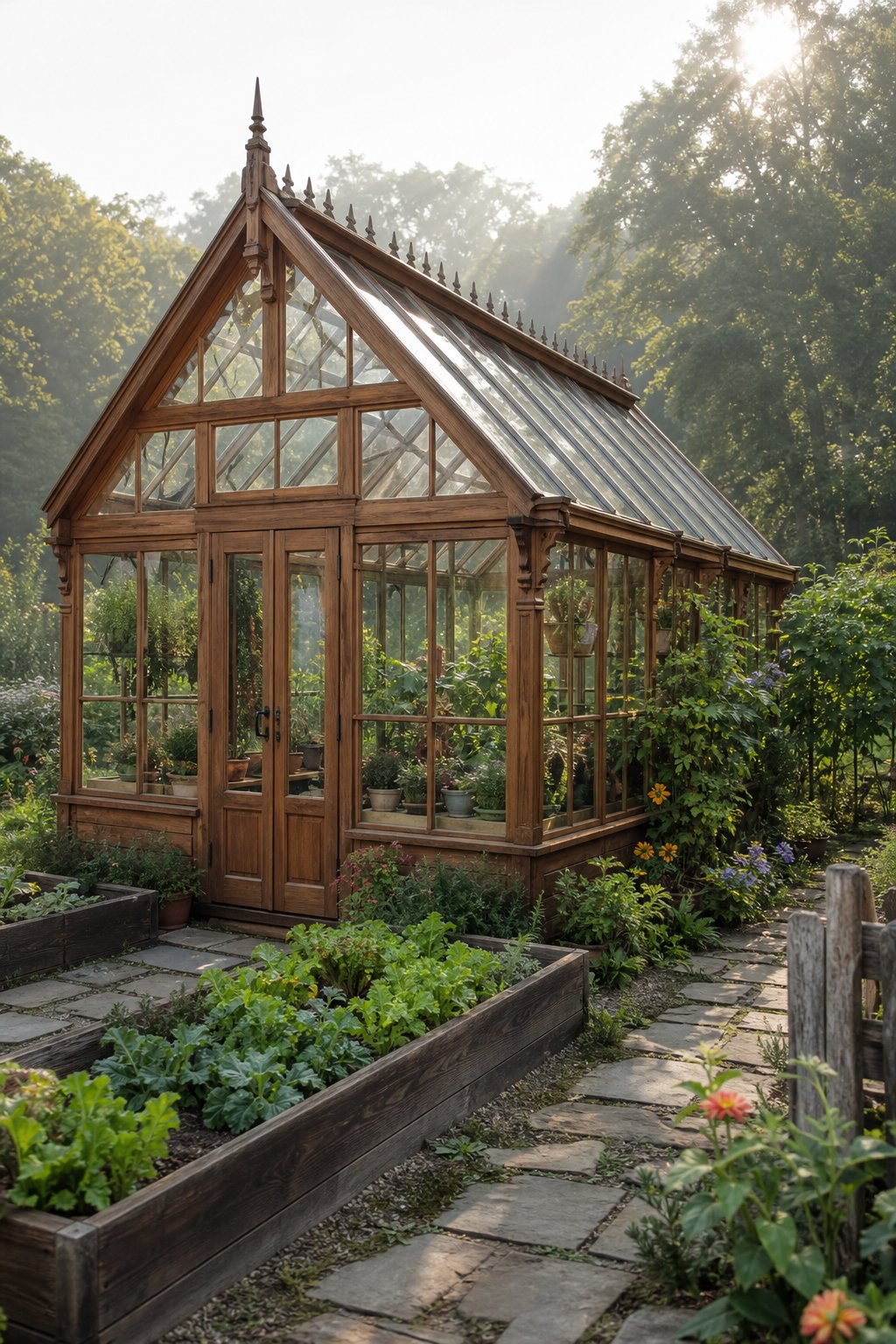
2. Victorian-Style Cedar Greenhouse With a Gabled Roof
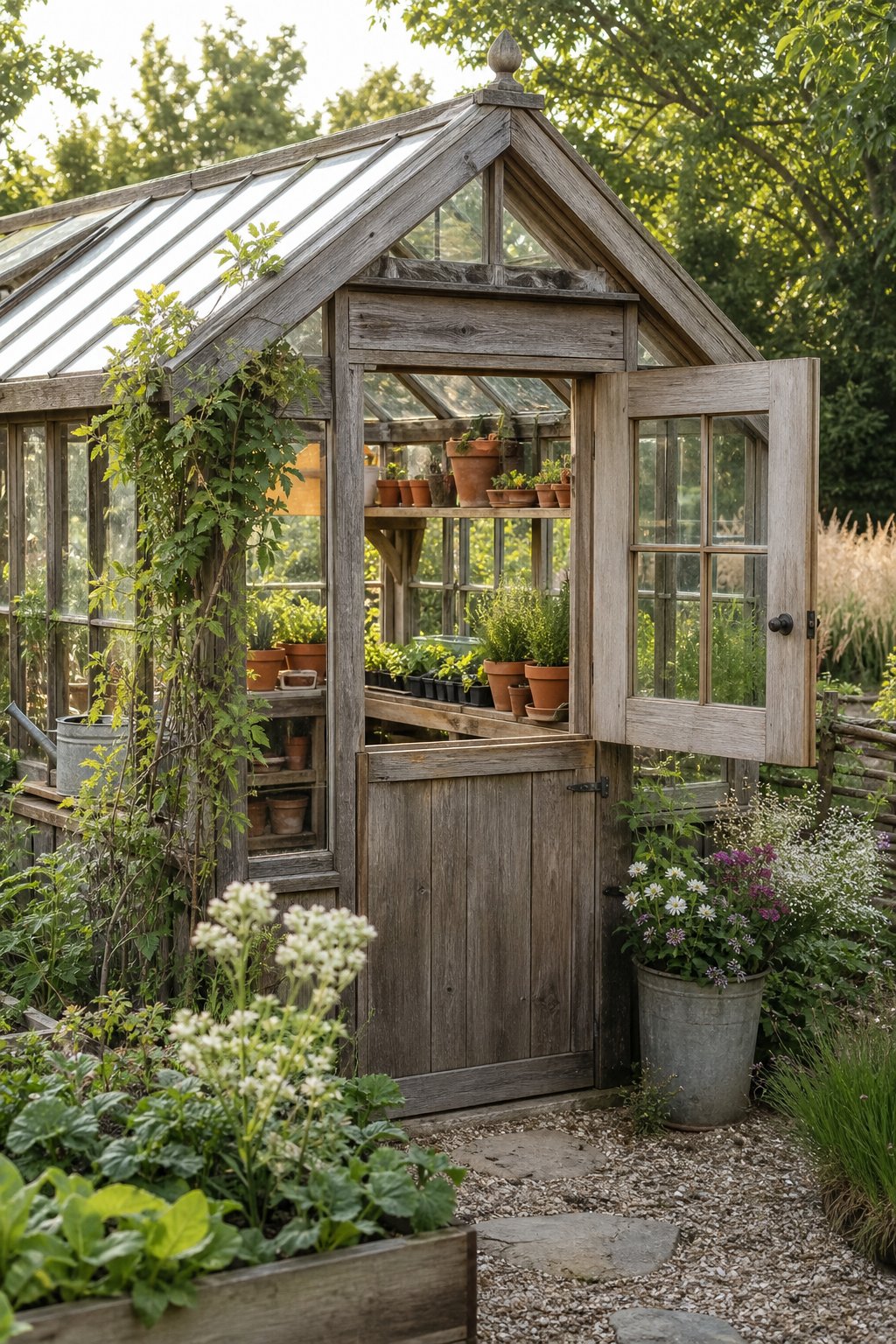
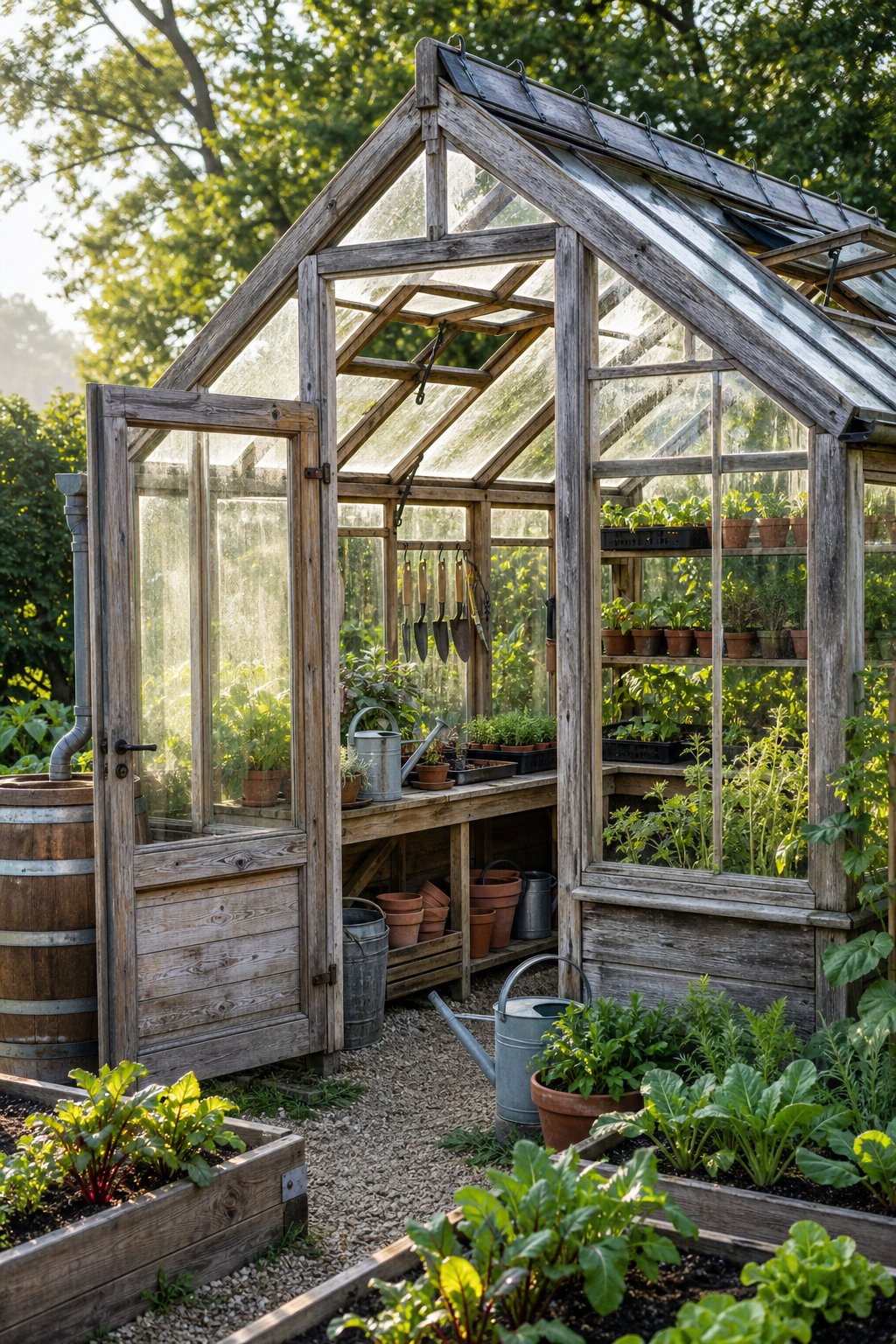
A gabled cedar greenhouse brings graceful Victorian character to a backyard garden. Cedar handles outdoor moisture well and develops a soft gray tone as it ages. The peaked roof gives tall plants more headroom and sheds rain and snow with ease.
Use clear glazing on the main roof faces to keep the interior bright. Decorative ridge trim, divided panes, and a narrow wooden door add charm without making the structure fussy. Leave room around the base for airflow and maintenance, especially if the greenhouse sits near shrubs.
A small bench beneath one side wall works for seed trays during the day and garden notes after watering.
Expert Tip From MrPlanter: “Set the ridge so prevailing breezes can move through roof vents. A little extra height makes summer heat easier to manage.”
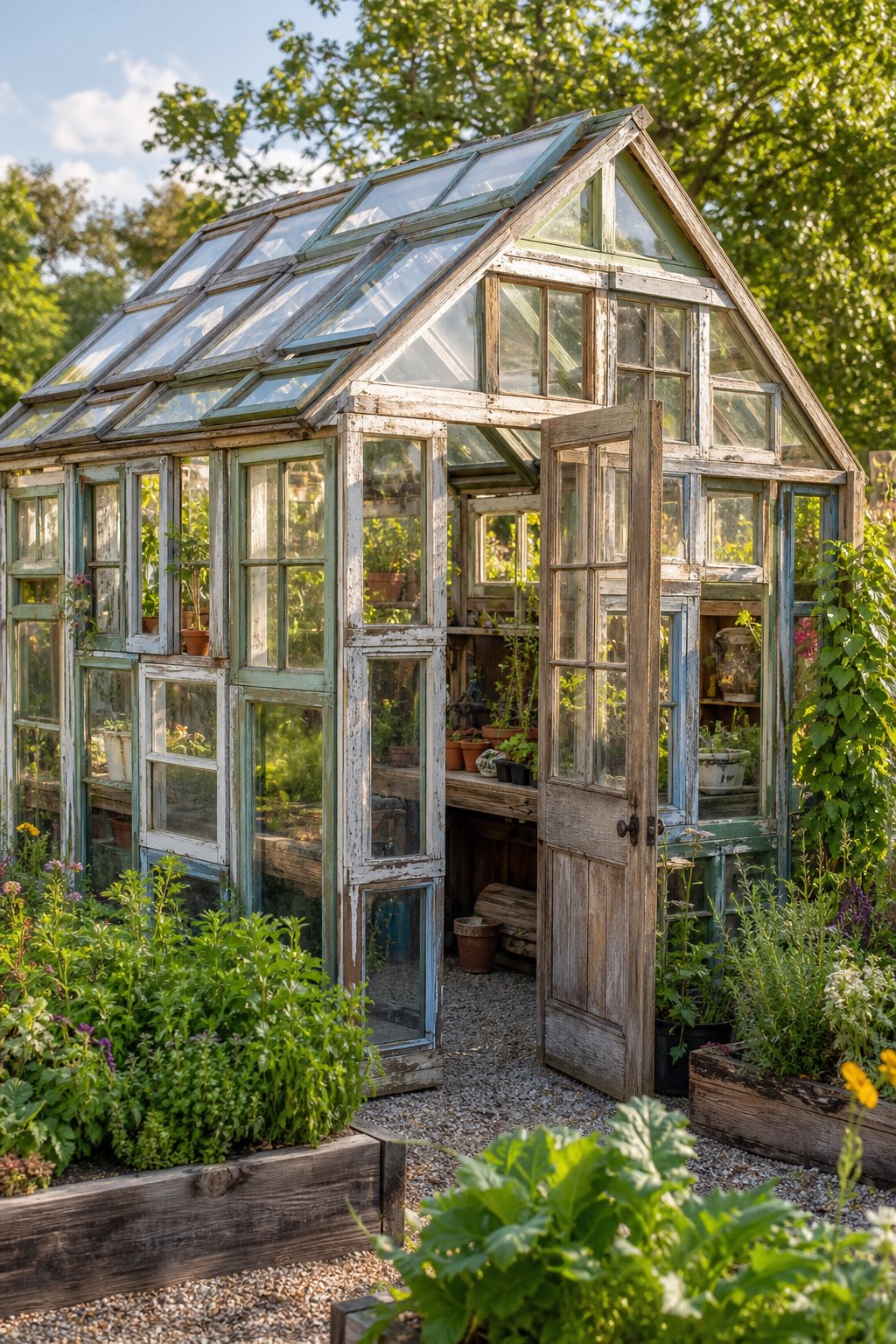
3. Old Window Greenhouse With Mismatched Salvage Frames
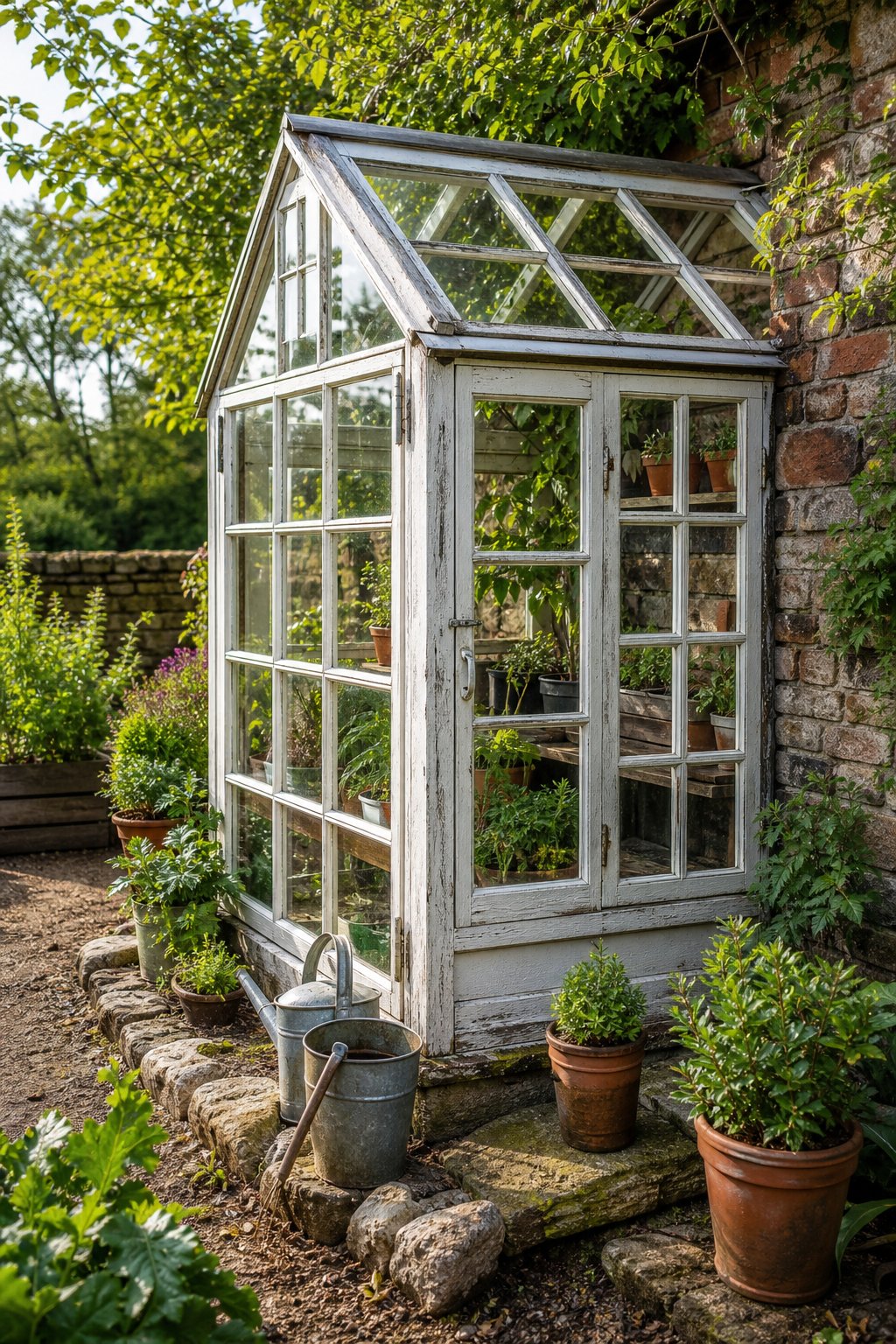
Mismatched windows turn a small greenhouse into a playful garden feature. Different sash sizes create a patchwork wall with cottage appeal, especially beside a cottage garden filled with daisies, herbs, and climbing vines.
Arrange the frames on the ground before attaching them. Keep the lowest panes consistent in height so benches and shelves fit neatly inside. Use exterior-grade fasteners and seal gaps with suitable glazing compound or weatherproof seals. Tempered panes are a safer choice in doors and busy walkways.
Paint the frames in related shades, such as cream, sage, and faded blue, or let the original finishes tell their own story.
Expert Tip From MrPlanter: “Place the clearest windows on the south-facing wall. Save cloudy or textured panes for areas where direct sun feels too strong.”
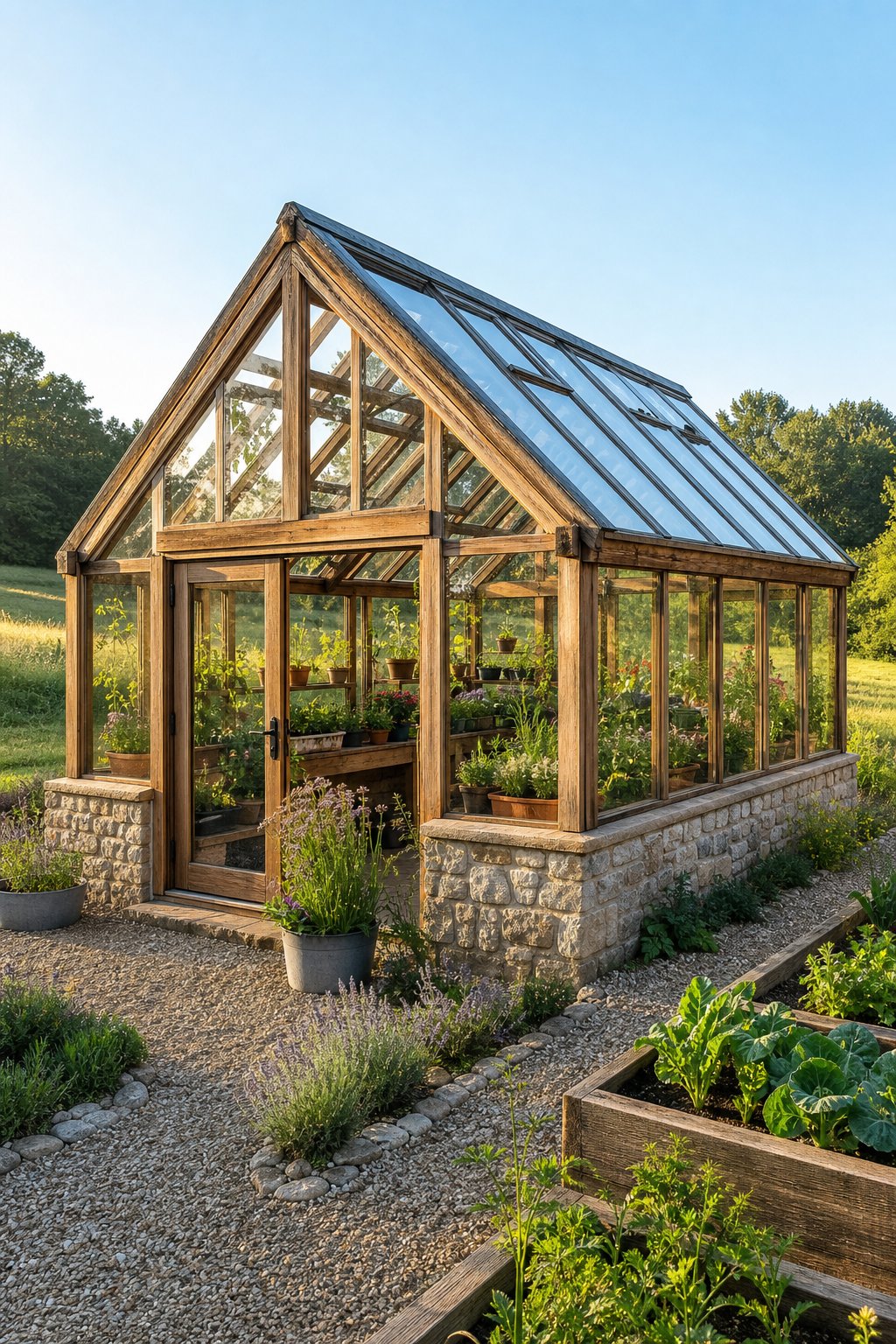
4. Stone-Base Greenhouse With a Timber Frame
A low stone base anchors a timber greenhouse and protects the frame from splashing soil. Fieldstone, brick, or locally available rock can connect the structure to nearby paths and retaining walls. Choose level stones with tight joints so the walls remain stable.
Set the timber frame on a moisture barrier above the masonry. This small detail reduces water contact at the most vulnerable part of the building. Warm wood tones pair well with terracotta pots and broad-leaved plants.
Inside, use a compact center path with planting shelves along the walls. Stone flooring stores daytime warmth and gives you a firm surface for watering cans, trays, and muddy boots.
Expert Tip From MrPlanter: “Keep the stone base low enough for easy entry. A single step becomes awkward when you carry full trays or a heavy watering can.”
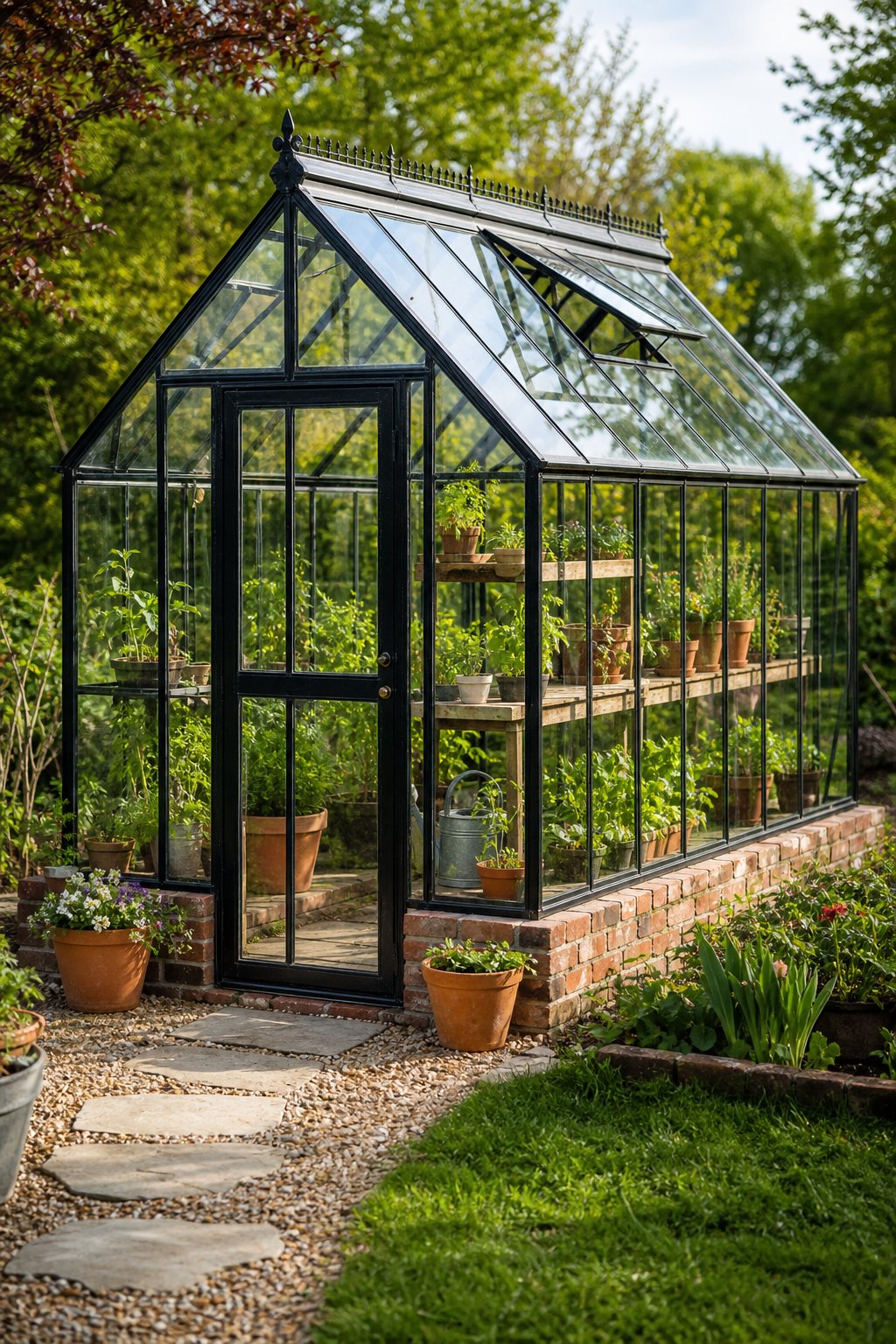
5. Black-Framed Greenhouse With Red Brick Edging
Black framing gives this greenhouse a crisp outline, while red brick edging adds a grounded farmhouse feel. The dark frame makes green leaves stand out and works well with farmhouse landscaping ideas around a front or backyard growing space.
Lay the bricks in a clean border around the walls and leave a narrow drainage gap where needed. Brick pavers inside create a durable floor that brushes clean after potting. Use pale wood shelves to keep the interior from feeling too dark.
Black metal or painted timber both suit this design. Select a finish made for outdoor exposure, then inspect chips each spring before rust or moisture spreads.
Expert Tip From MrPlanter: “Keep the brick edge slightly below the greenhouse threshold. Rainwater needs a clear path away from the door.”
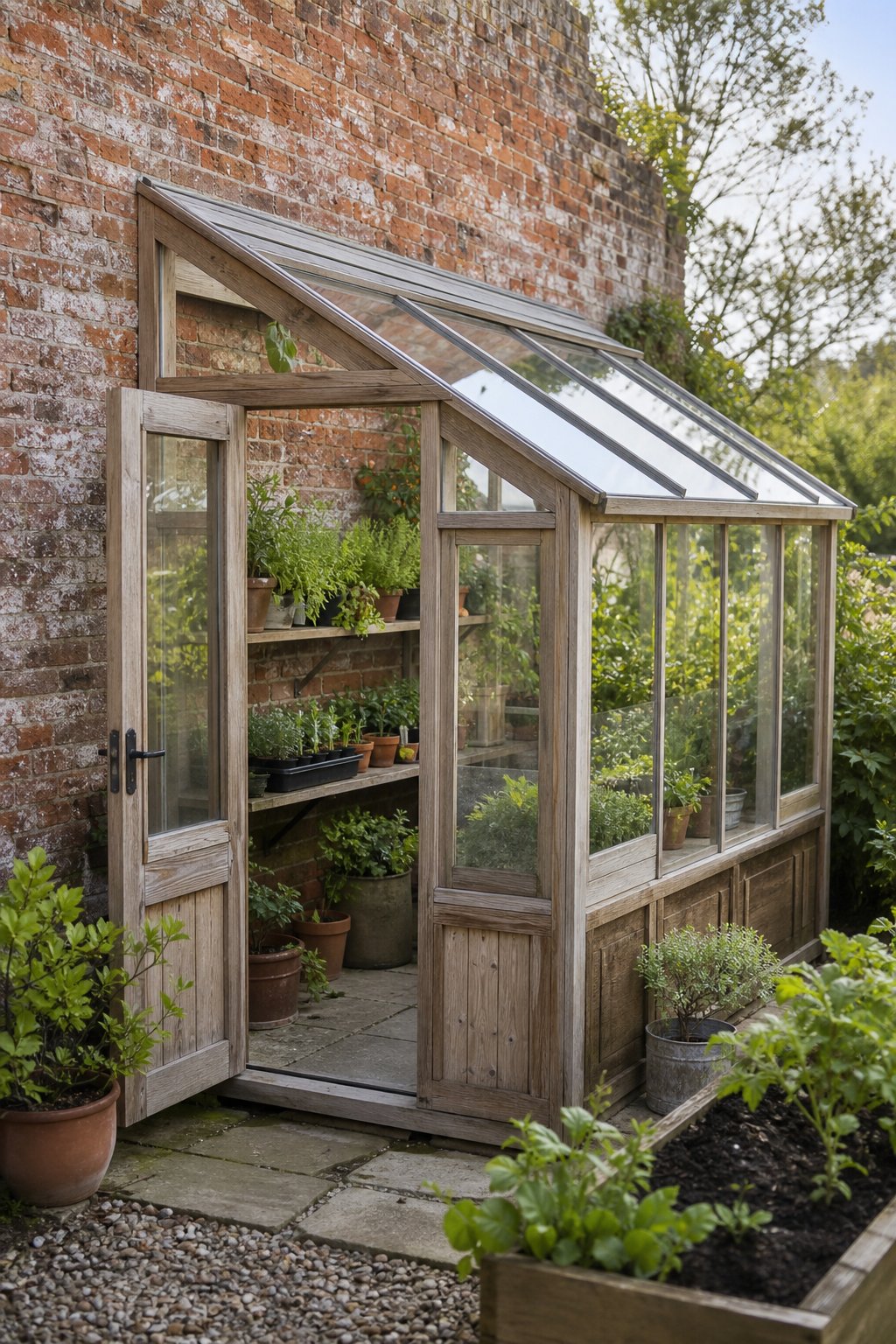
6. Lean-To Greenhouse Against a Reclaimed Brick Wall
A lean-to greenhouse uses an existing brick wall for support and helps save valuable garden space. The wall stores daytime heat, which supports steadier temperatures after sunset. This setup fits neatly along a garage, garden wall, or sunny side of the house.
Check the wall for cracks, loose mortar, and damp areas before attaching anything. A sloped roof directs rain away from the building, while roof vents release warm air. Fit shelves on the brick side for seedlings and keep the open side clear for movement.
The reclaimed brick adds color and texture, so simple wood trim keeps the design from feeling crowded.
Expert Tip From MrPlanter: “Watch the wall for shade across the seasons. Winter sun and summer sun reach the greenhouse from different angles.”
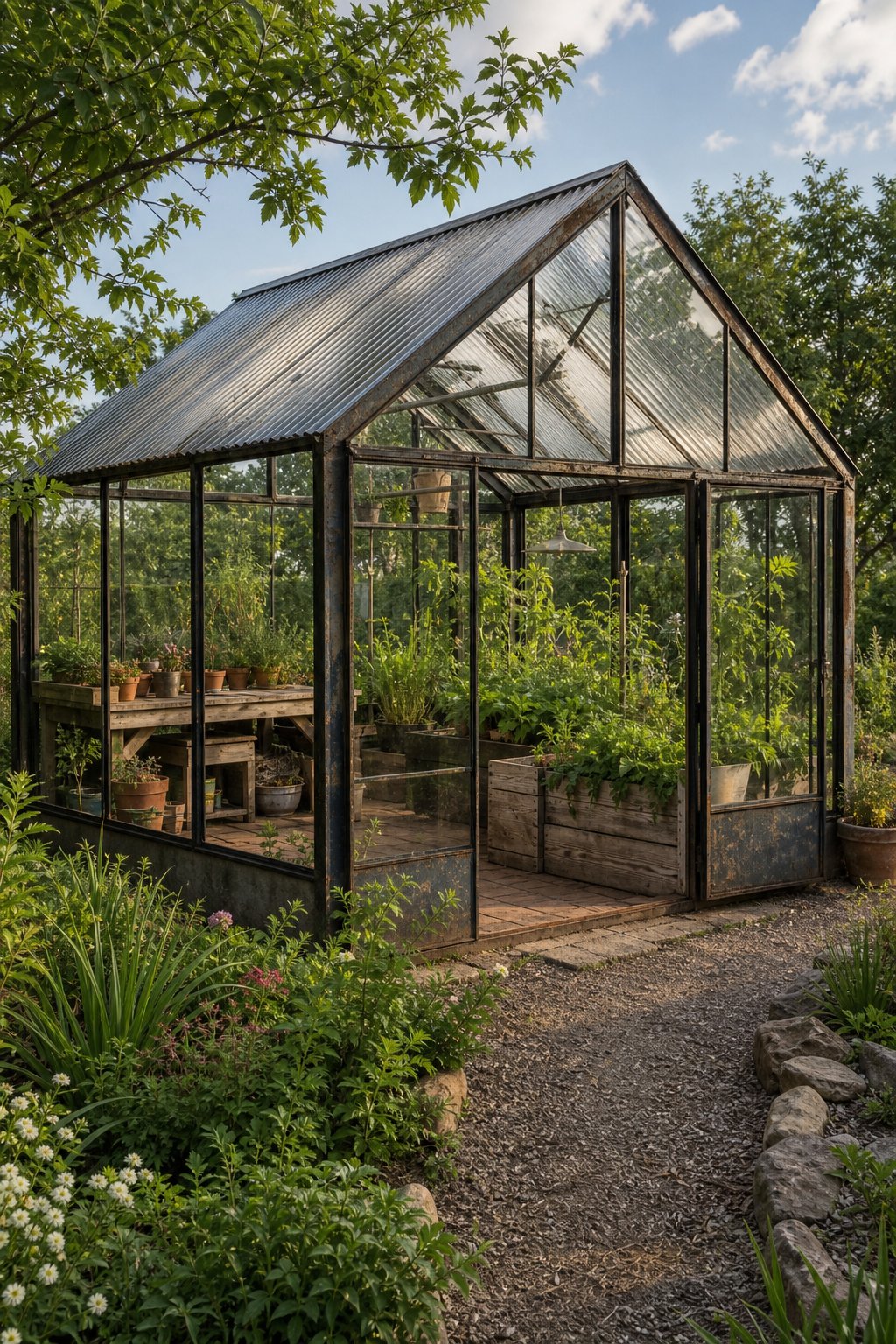
7. Recycled Metal-Frame Greenhouse With Corrugated Roof Panels
A recycled metal frame gives you a strong skeleton with a lighter visual feel. Corrugated roof panels add a barn-like touch and handle rain well when installed with the correct overlap and fasteners. This style fits beside raised beds, compost bins, and informal paths.
Clean used metal before assembly and remove sharp edges around every opening. Paint exposed steel with a rust-resistant outdoor coating. Clear corrugated panels keep the roof bright, while a few translucent panels soften intense afternoon light.
Wooden shelves and a reclaimed door warm the industrial frame. Place the greenhouse where roof runoff will not wash soil toward nearby plants.
Expert Tip From MrPlanter: “Use washers made for roofing screws so water stays outside. Tighten fasteners until snug, since over-tightening can crack panels.”
8. Potting-Shed Greenhouse With a Dutch Door
A Dutch door makes this potting-shed greenhouse easy to air out while keeping pets and loose tools contained. The lower half gives you a safe entry point, and the upper half opens for a quick breeze during mild weather.
Use solid wood on the lower wall and glazing above to blend shed storage with plant space. A deep potting bench can hold trays, soil, and hand tools. Add hooks to the inside of the door for pruners and gloves.
This design suits a narrow backyard because storage stays along one wall. Paint the door a muted green or blue, then repeat that color on nearby planters.
Expert Tip From MrPlanter: “Install a latch on both door sections. Wind can swing the upper half hard enough to damage its hinges.”
9. Compact Corner Greenhouse Built From Vintage Sash Windows
A corner greenhouse makes useful growing space from an awkward garden edge. Vintage sash windows provide familiar proportions and let you build around a fence corner, patio, or side path. This is a smart choice for herbs, seedlings, and compact tomato plants.
Measure the corner twice before cutting the base. Keep the entrance wide enough for a tray, and place shelves on the shorter wall to preserve standing room. Sash windows with working sections supply handy ventilation when temperatures rise.
A light stain or soft white paint keeps the small structure open and bright. Surround it with gravel so weeds stay away from the frames.
Expert Tip From MrPlanter: “Keep tall plants near the outer wall. The center needs clear space for turning, watering, and carrying trays.”
10. Cottage Greenhouse With a Gravel Path and Climbing Roses
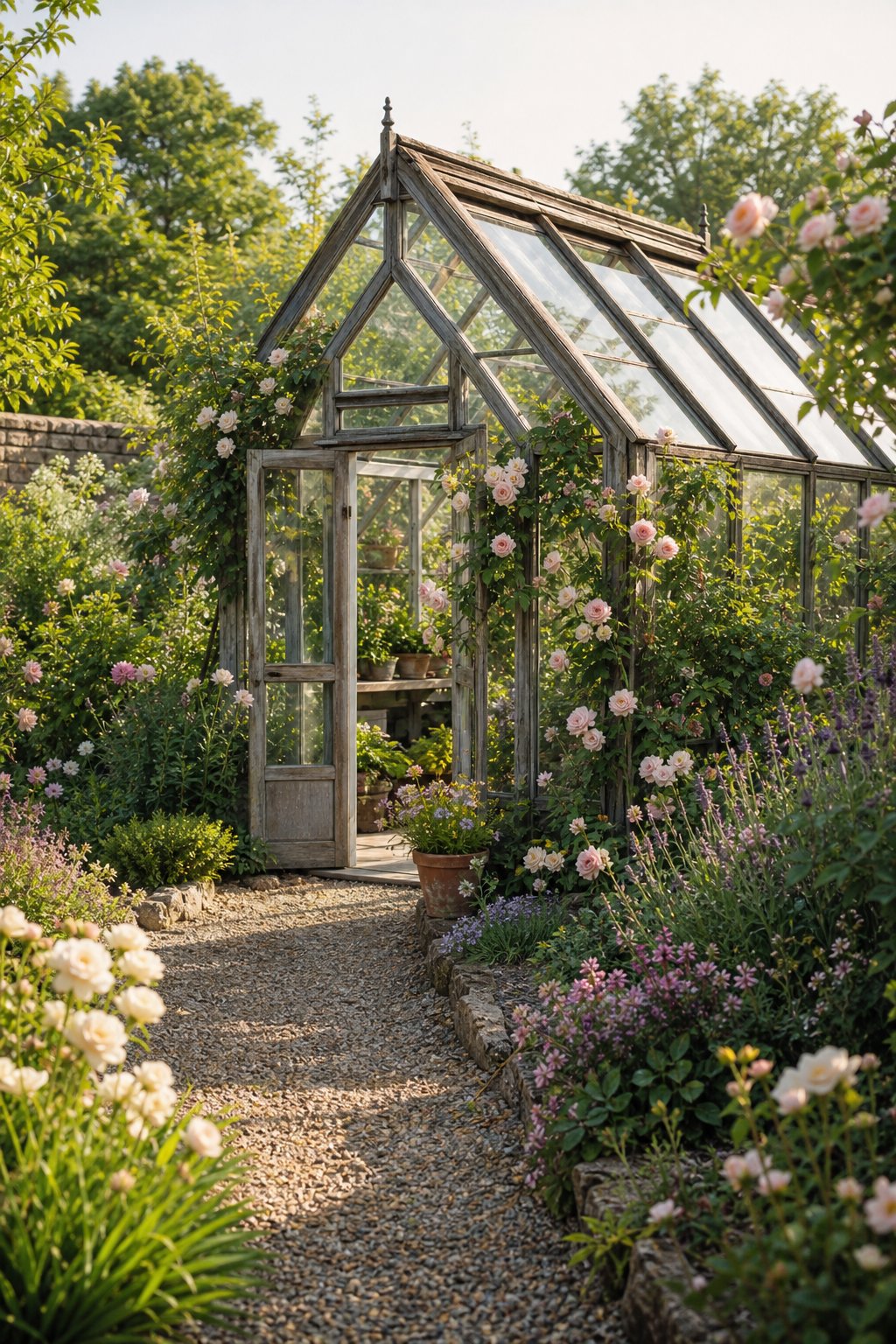
A gravel path makes this cottage greenhouse feel connected to the rest of the garden. Climbing roses soften the frame and guide the eye toward the entrance, while low plants keep the path open for wheelbarrow access.
Choose compact rose varieties and train them on a separate trellis beside the greenhouse. Direct contact between thorny stems and glazing can scratch panels and block vents. Use compacted gravel with a firm edging material so loose stones stay out of the doorway.
Inside, white shelves, terracotta pots, and a small stool support the relaxed cottage style. This look pairs naturally with informal rustic landscaping ideas.
Expert Tip From MrPlanter: “Leave space between roses and roof vents. Flowers are lovely, while blocked airflow creates plant problems.”
11. Farmhouse Greenhouse With a Galvanized Trough Planter
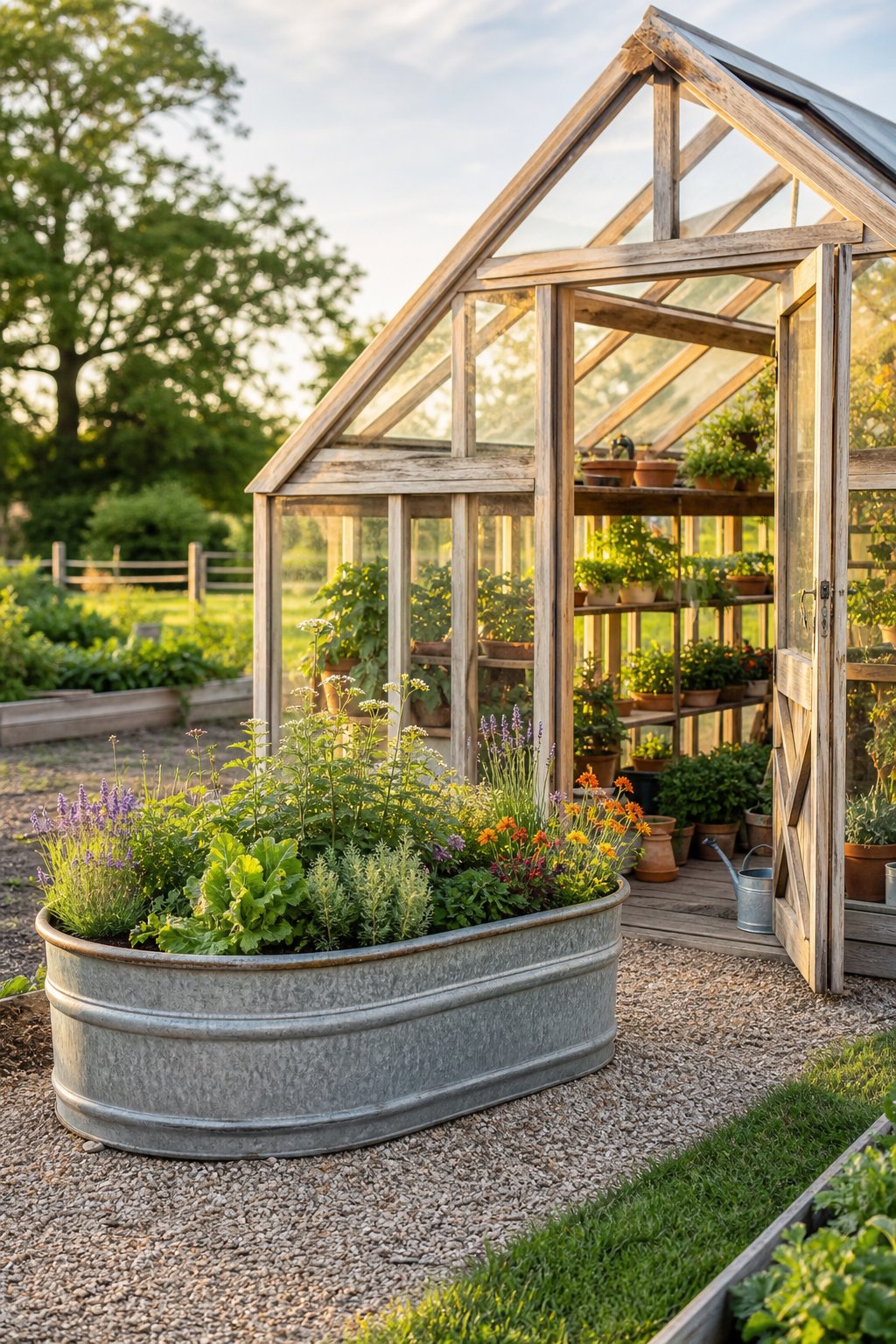
A galvanized trough planter gives a farmhouse greenhouse a useful companion and a clear place for plants that prefer outdoor conditions. Its metal finish adds a nice counterpoint to wood framing and clear panels.
Drill drainage holes if the trough lacks them, then raise it slightly on stable blocks. Fill it with soil suited to the plants you choose, keeping thirsty crops separate from drought-tolerant herbs. Position the trough near the door for quick harvesting and easy watering.
Inside the greenhouse, use a simple wood bench and wall hooks. Repeating galvanized metal in a watering can or small shelf creates a connected look without filling every corner with shiny accents.
Expert Tip From MrPlanter: “Check the trough after heavy rain. Standing water near the foundation can soften soil and shift the greenhouse base.”
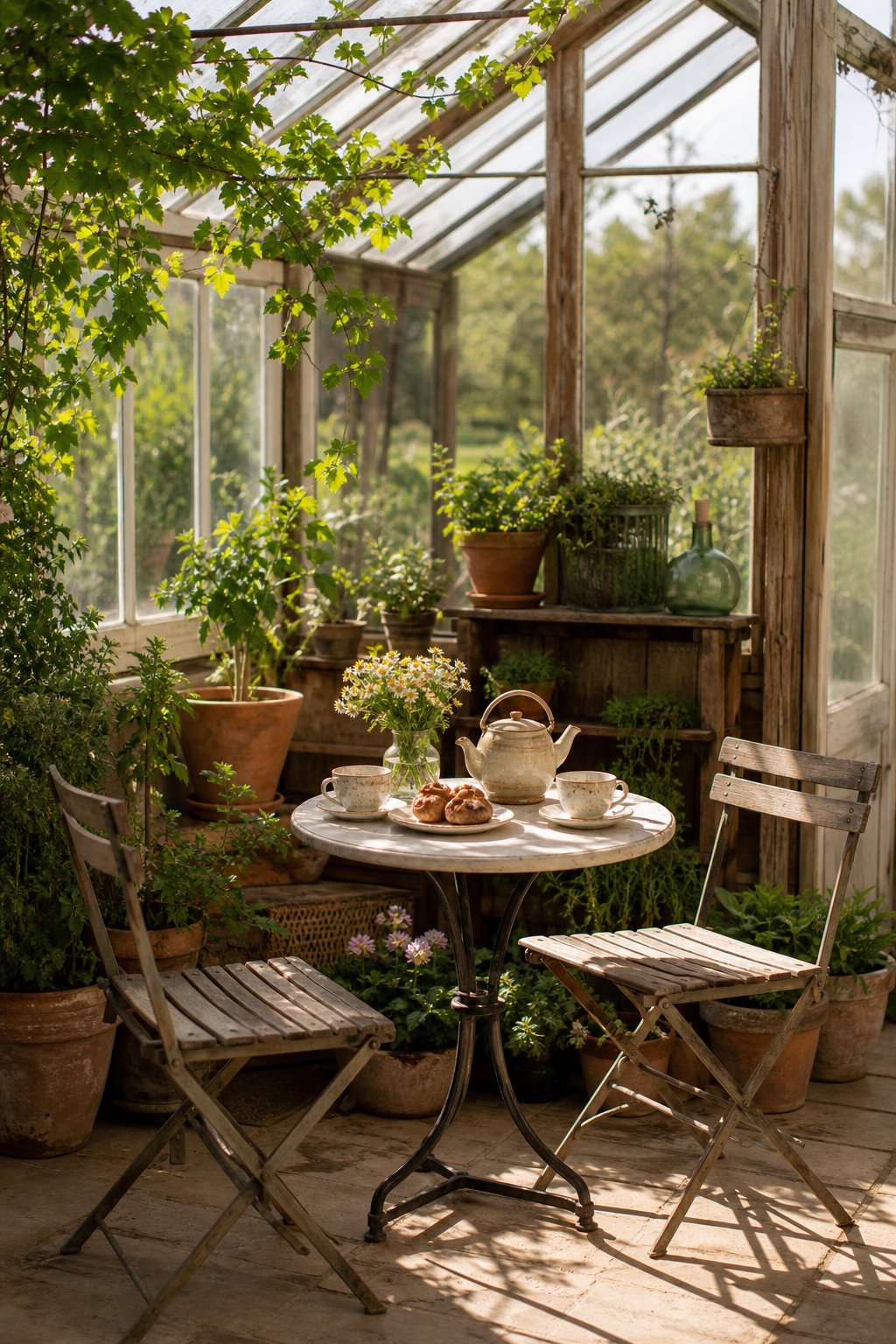
12. Greenhouse Tea Room With a Small Bistro Table
A small bistro table turns a greenhouse into a pleasant tea room after daily plant care is done. Choose a narrow round table so you keep a clear route from the door to the beds. Folding chairs help you reclaim floor space when you need to carry supplies.
Place seating away from the hottest glass and use a washable cushion. A shelf above the table can hold tea cups, garden journals, or a small vase of cut flowers. Keep drinks on a stable tray to protect wood and prevent spills near electrical equipment.
Soft solar lights make the room inviting in the evening without adding permanent wiring.
Expert Tip From MrPlanter: “Measure the chair clearance before buying the table. You need room to pull a chair back without bumping plants.”
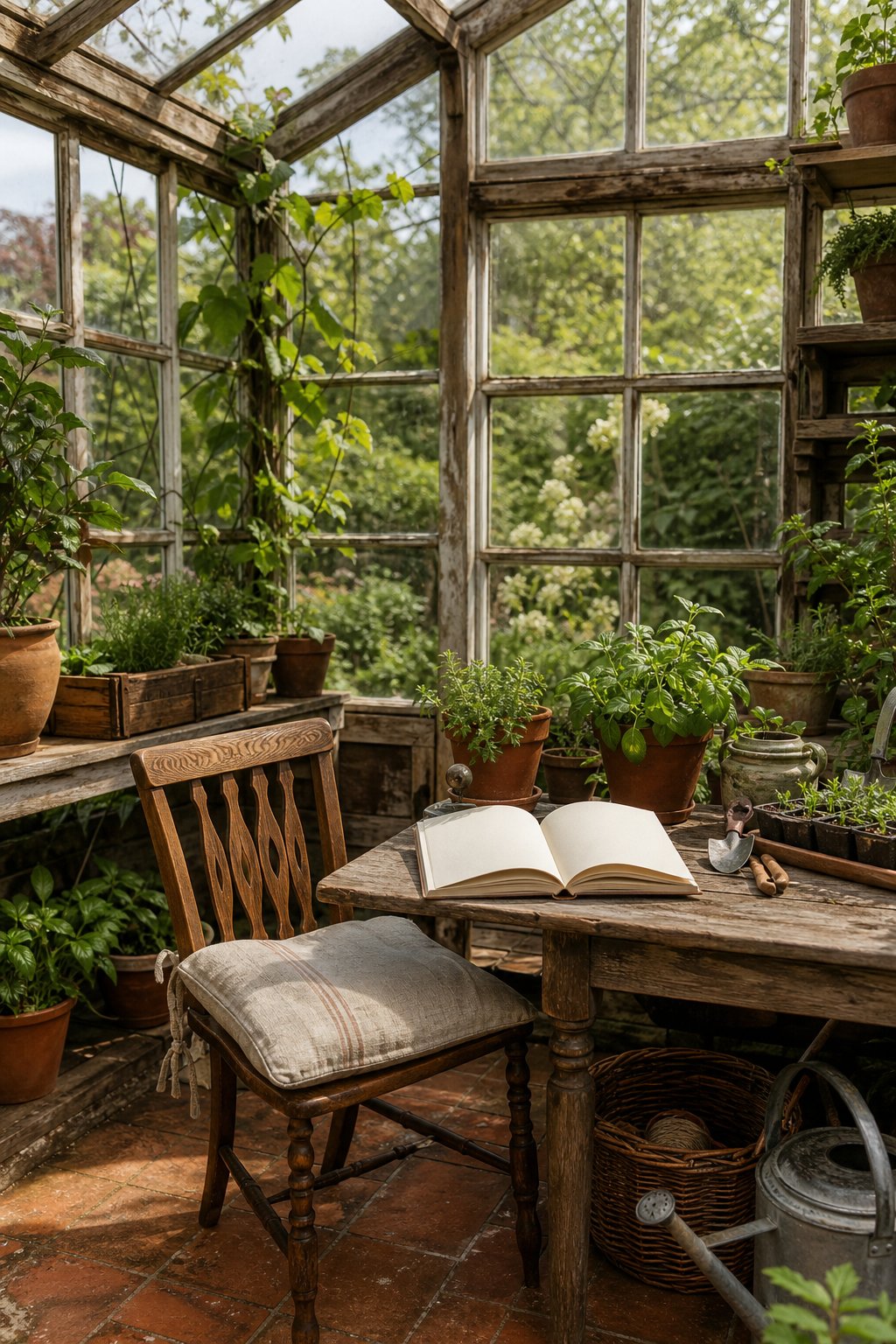
13. Rustic Greenhouse With a Gardening Book Nook
A chair, a narrow shelf, and a few favorite books create a useful reading nook inside a rustic greenhouse. Keep the seat close to a side wall so it does not interrupt the main work path. Choose weather-resistant furniture, since humidity reaches every part of the room.
A small shelf with a raised lip keeps books from sliding when you move pots nearby. Store books in a lidded box during wet seasons, and place a washable mat below the chair. Add a task light with a protected outdoor rating if you read after sunset.
This idea works well in a small greenhouse that combines plant shelves with a quiet corner.
Expert Tip From MrPlanter: “Keep paper away from watering areas. A covered shelf protects books from drips and damp air.”
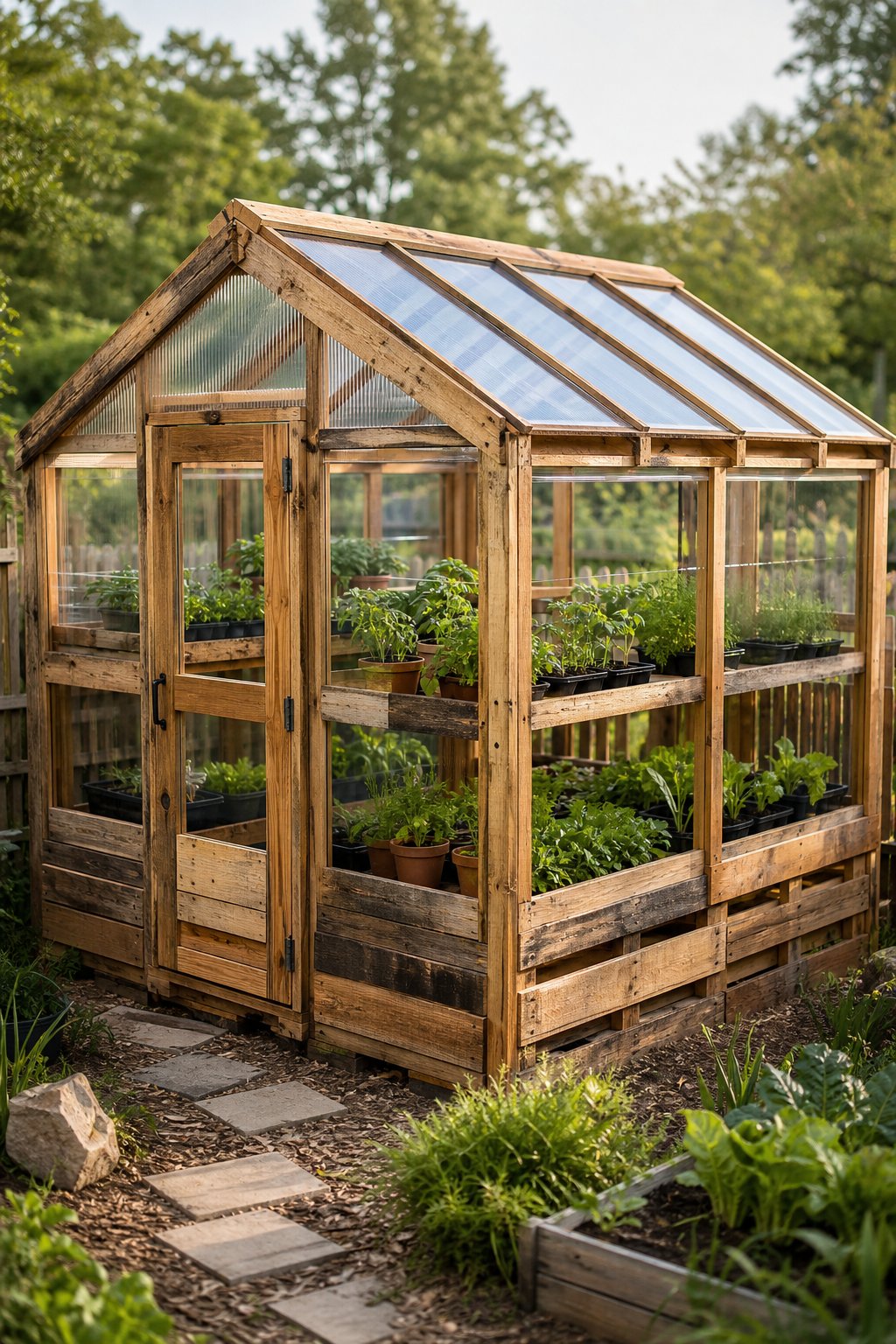
14. Pallet-Wood Greenhouse With Clear Polycarbonate Panels
Pallet wood creates a low-cost rustic frame when you select clean, sound pallets marked for safe treatment. Clear polycarbonate panels weigh less than glass and resist many everyday impacts, making them practical for active backyard gardens.
Look for pallets stamped HT, meaning heat-treated, and skip boards with chemical odors, spills, or unknown stains. Sand rough edges and seal the wood before assembly. Fasten panels with the correct washers and leave room for expansion according to the panel maker’s directions.
A pallet garden ideas project nearby can repeat the same wood texture through planters or vertical herb storage.
Expert Tip From MrPlanter: “Use pallet boards for trim and framing after sorting them carefully. Keep the clearest panels on the sun-facing side.”
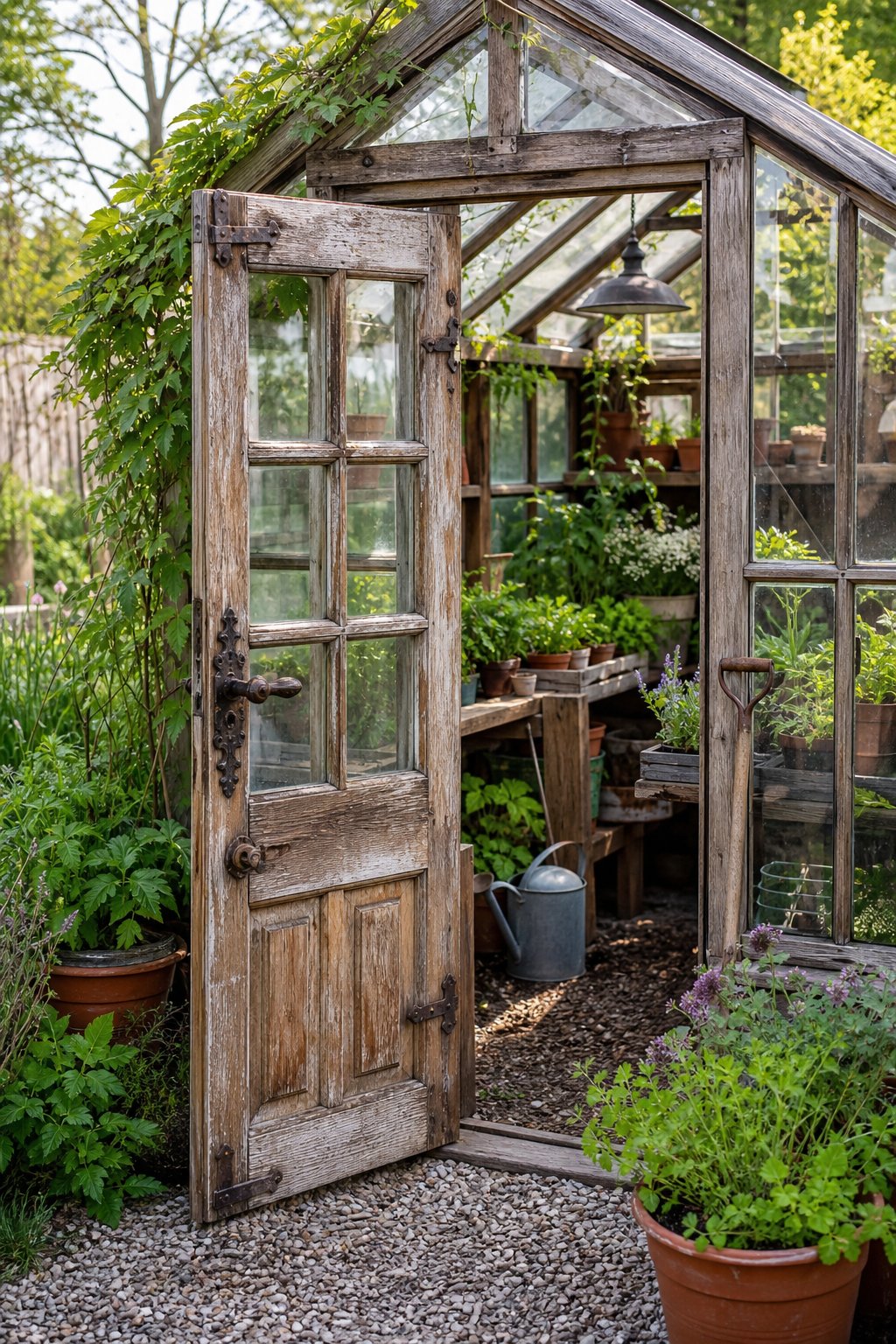
15. Salvaged Door Greenhouse With Antique Hardware
A salvaged door gives this greenhouse an instant focal point, especially when its hinges, latch, and handle show a little age. Confirm that the door swings freely and seals well before building the surrounding frame.
Strip loose paint, inspect the wood for rot, and test old hardware for sharp edges or weak fasteners. A glazed door brings light into the entrance, while solid lower panels protect plants from drafts. Match the frame color to one detail on the door for a pulled-together finish.
Mount a small sign or hook beside the entrance for gloves. Keep the threshold level enough for carts and trays.
Expert Tip From MrPlanter: “Test the door in wet weather if possible. Swollen wood can turn a charming entrance into a daily wrestling match.”
16. Rustic Herb Greenhouse With Hanging Metal Baskets
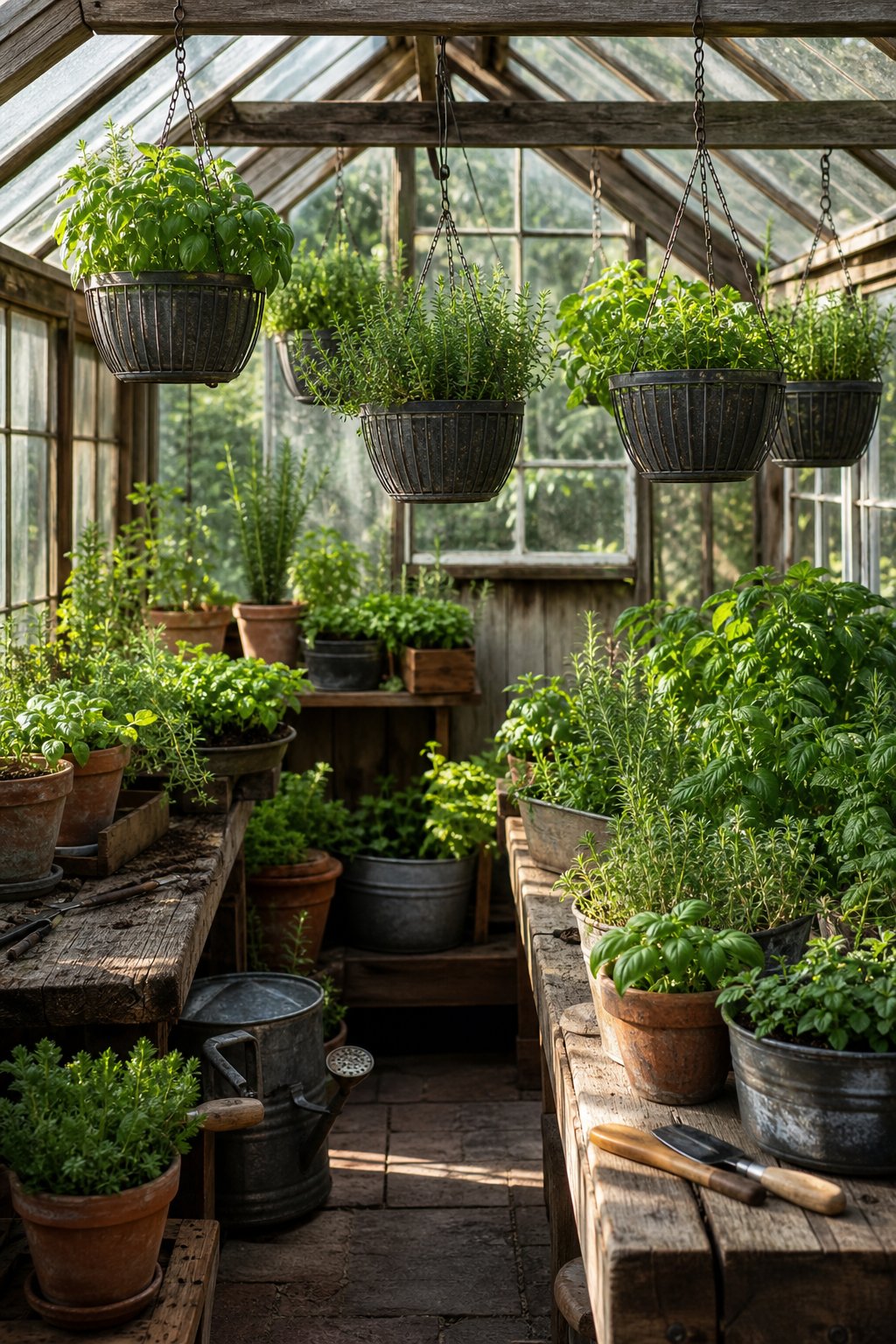
Hanging metal baskets make vertical room for herbs while leaving the benches open for seedlings. This herb greenhouse works well near a kitchen door, where clipping basil, thyme, or mint takes only a few steps.
Use baskets with drainage holes and line them with a material that holds soil without blocking water flow. Hang heavier containers from framing members, not glazing bars. Label each herb with a weatherproof tag, since crowded foliage can make identification tricky.
Keep mint in its own container because its roots spread quickly. Place rosemary and thyme where the soil dries faster, then group moisture-loving herbs closer to your watering point.
Expert Tip From MrPlanter: “Hang baskets at eye level for easy harvesting. Leave enough headroom so you can walk beneath them safely.”
How to Choose a Rustic Greenhouse Design
Choose the greenhouse that fits your available footprint, growing goals, local weather, and repair skills. Rustic style comes from honest materials and thoughtful details, so a small, well-built structure often feels better than an oversized project that strains your budget and time.
Design
Best material
Light choice
Space use
Reclaimed barn wood
Salvaged lumber
Glass
Medium
Victorian cedar
Cedar
Glass
Medium-large
Old window frame
Vintage windows
Glass
Small-medium
Stone base timber
Stone and wood
Glass
Medium
Black frame brick
Metal or timber
Glass
Medium
Lean-to
Brick and glass
Glass
Small
Recycled metal
Steel
Corrugated panels
Medium
Potting shed
Wood
Mixed glazing
Medium
Corner sash
Vintage windows
Glass
Small
Cottage rose
Wood or metal
Glass
Medium
Farmhouse trough
Wood and metal
Glass
Medium
Tea room
Wood or metal
Glass
Medium
Book nook
Wood
Glass
Medium
Pallet wood
Pallet lumber
Polycarbonate
Small-medium
Salvaged door
Reclaimed wood
Mixed glazing
Medium
Herb greenhouse
Wood or metal
Glass or panels
Small
Which Greenhouse Size Fits Your Backyard or Garden?
Measure the full working area, including door swing, paths, roof runoff, and space for repairs. A small greenhouse suits seed starting and herbs, while a medium structure gives you room for shelves, tomatoes, and a narrow workbench. Keep the main path at least wide enough for your largest tray or cart.
Place the greenhouse where it receives strong winter light and avoids shade from mature trees. Check underground utilities and local permit rules before digging footings.
Which Reclaimed Materials Are Safe and Weather-Resistant?
Choose reclaimed wood that is dry, solid, and free from chemical spills. Heat-treated pallets marked HT are a safer source for garden projects than pallets with unknown treatment. Inspect old windows for cracked glass, lead-based paint, loose putty, and failing frames.
Use exterior screws, galvanized brackets, and weather-rated sealants. Replace questionable materials before construction, since a cheap board becomes costly once plants and shelves depend on it.
When Should You Choose Glass Rather Than Polycarbonate Panels?
Choose glass for maximum clarity, a classic appearance, and long-term scratch resistance. Select tempered glass for doors and areas exposed to people or garden equipment. Glass adds weight and needs a strong frame.
Choose polycarbonate when impact resistance, lighter handling, and simpler installation fit your project. Twin-wall panels provide insulation, while clear corrugated sheets suit a lightweight rustic build. Keep protective film on until installation is complete, then seal open channels as directed.
Practical Details That Keep It Growing
A rustic greenhouse grows well when airflow, drainage, shade, and storage receive as much attention as the frame. Build practical features into the plan before you add decorative trim or antique pieces.
How Will You Add Ventilation and Temperature Control?
Use roof vents for rising hot air and low side vents for incoming air. Automatic vent openers respond to heat and help when you cannot check the greenhouse every afternoon. A small circulating fan improves airflow around dense foliage.
Add shade cloth during the hottest part of summer, especially on south- or west-facing glazing. A thermometer placed at plant height gives you useful readings. Keep vents clear of climbing plants, hanging baskets, and stored supplies.
What Foundation Works Best for a Rustic Greenhouse?
A level gravel bed with perimeter timbers suits many small garden greenhouses and drains well. Concrete footings provide stronger support for heavier glass structures. Brick, stone, and pavers create attractive walking surfaces when they rest on a stable, compacted base.
Keep wood above standing water with a moisture barrier or raised anchors. Confirm the foundation is square before fastening walls, since small errors grow as the frame rises.
How Can You Combine Potting, Storage, and Seating Space?
Place a potting bench near the entrance, shelves along the brightest walls, and seating in a corner that stays clear of watering tasks. Use wall hooks for tools, shallow bins for seeds, and a lidded cabinet for soil amendments.
Fold-down tables free floor space during planting season. A narrow center path keeps movement easy, while rolling carts let you shift plants without lifting heavy pots. Store flammable materials outside the greenhouse in a suitable locked cabinet.
I’m Anirban Saha, the Founder and Owner of MrPlanter.com. I pay the bills as a software developer, although my BTech is actually in Electronics and Communication. I really love my day job, but what gives me energy every day is interacting with my indoor plants and taking care of them. I have been successfully nurturing and maintaining houseplants for over 10 years now.
📚🔍 Our content undergoes thorough review and fact-checking before publication. For additional details, explore our strict Editorial Policy to deliver helpful content. 📝🔒