As an Amazon Associate, MrPlanter.com earns from qualifying purchases.
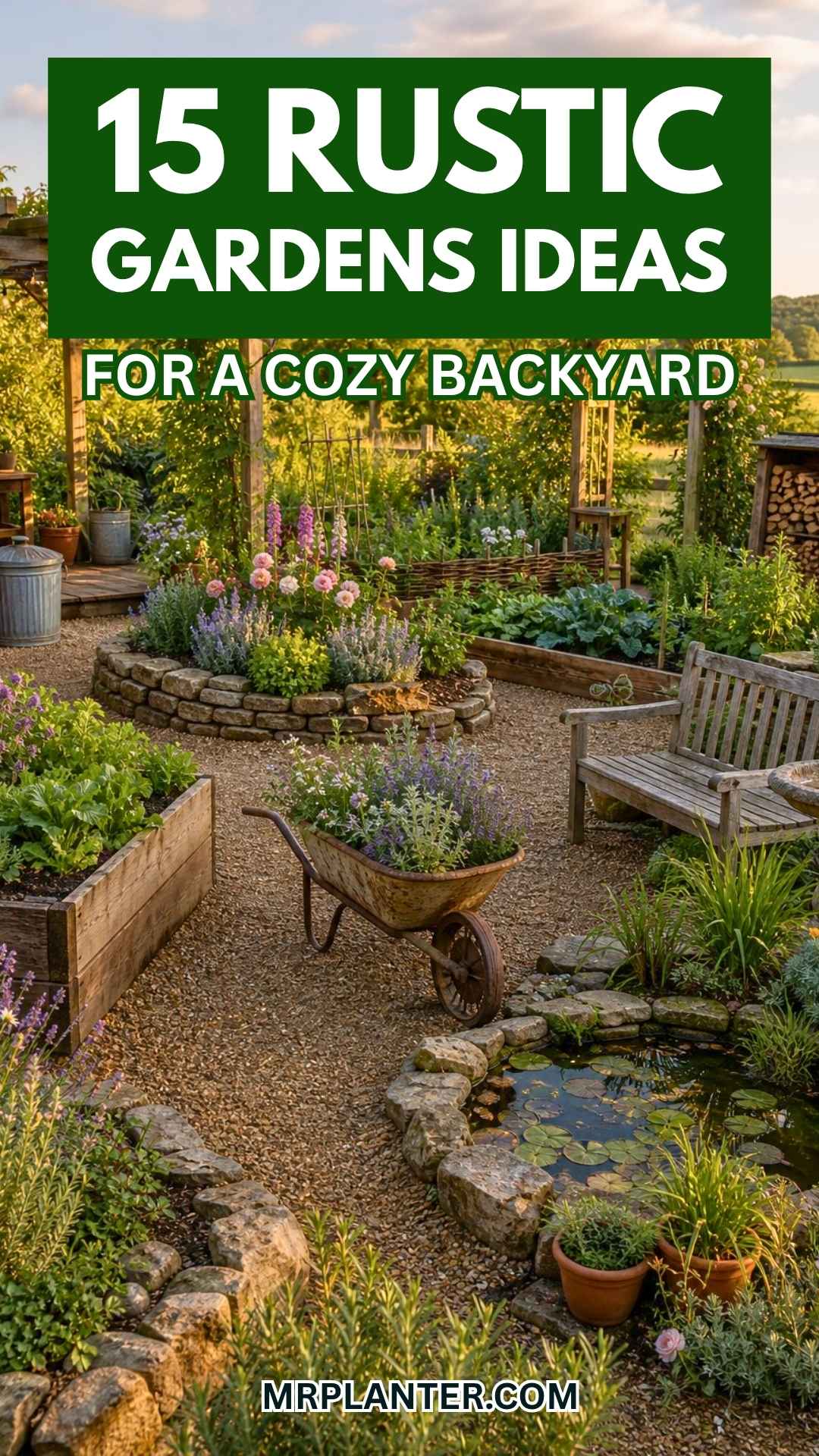
Rustic gardens bring warmth to your backyard or front yard through weathered materials, loose planting, and useful spaces that feel connected to nature. You can create that cozy country character with a curved stone path, reclaimed wood, vintage containers, and plants that spill gently beyond their beds.
The best rustic garden ideas mix relaxed planting with a few clear anchors, so your yard feels natural while staying easy to use and care for. Choose materials that age well, repeat a few colors, and give every decorative piece a practical place.
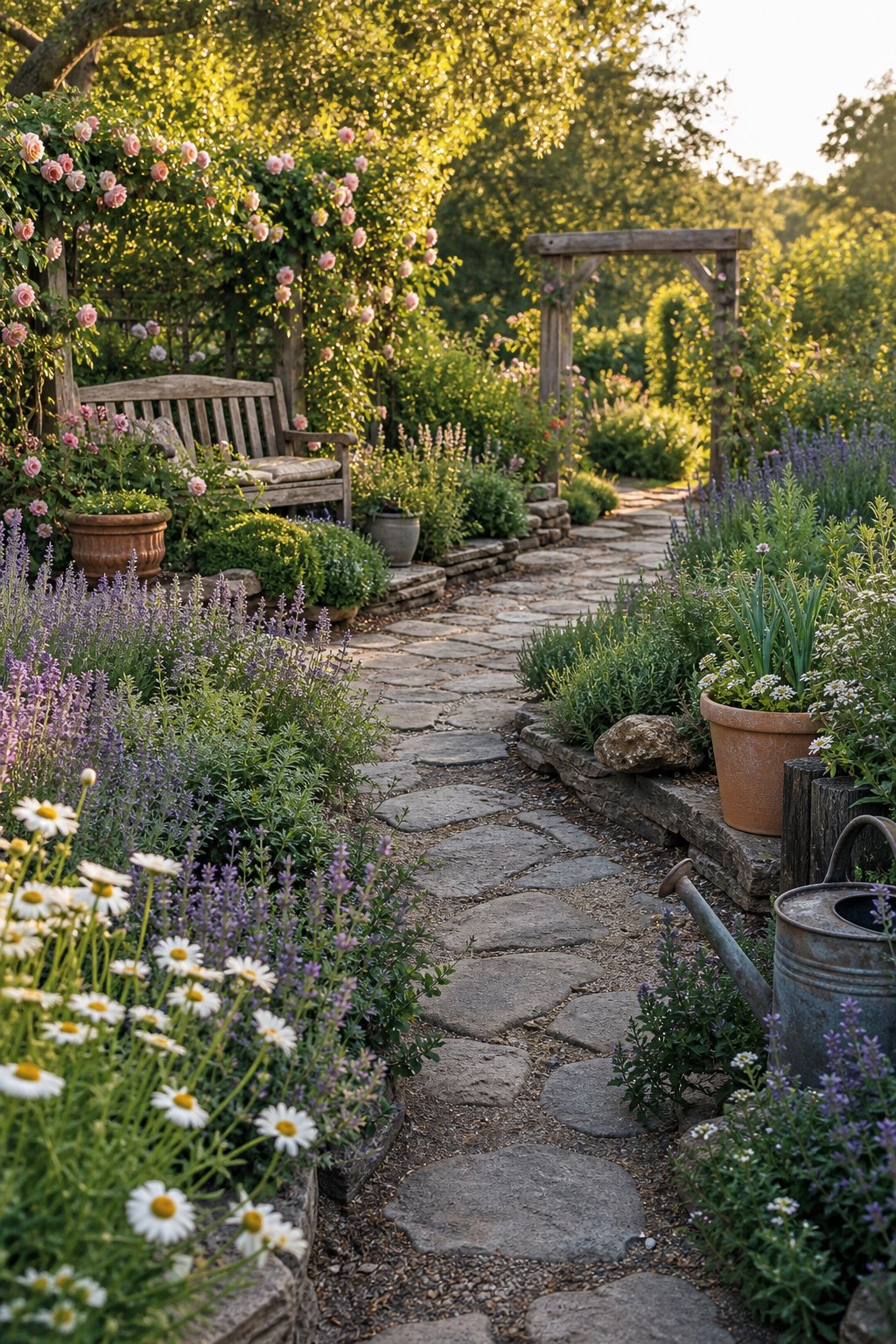
1. Winding Flagstone Path Through Wildflowers
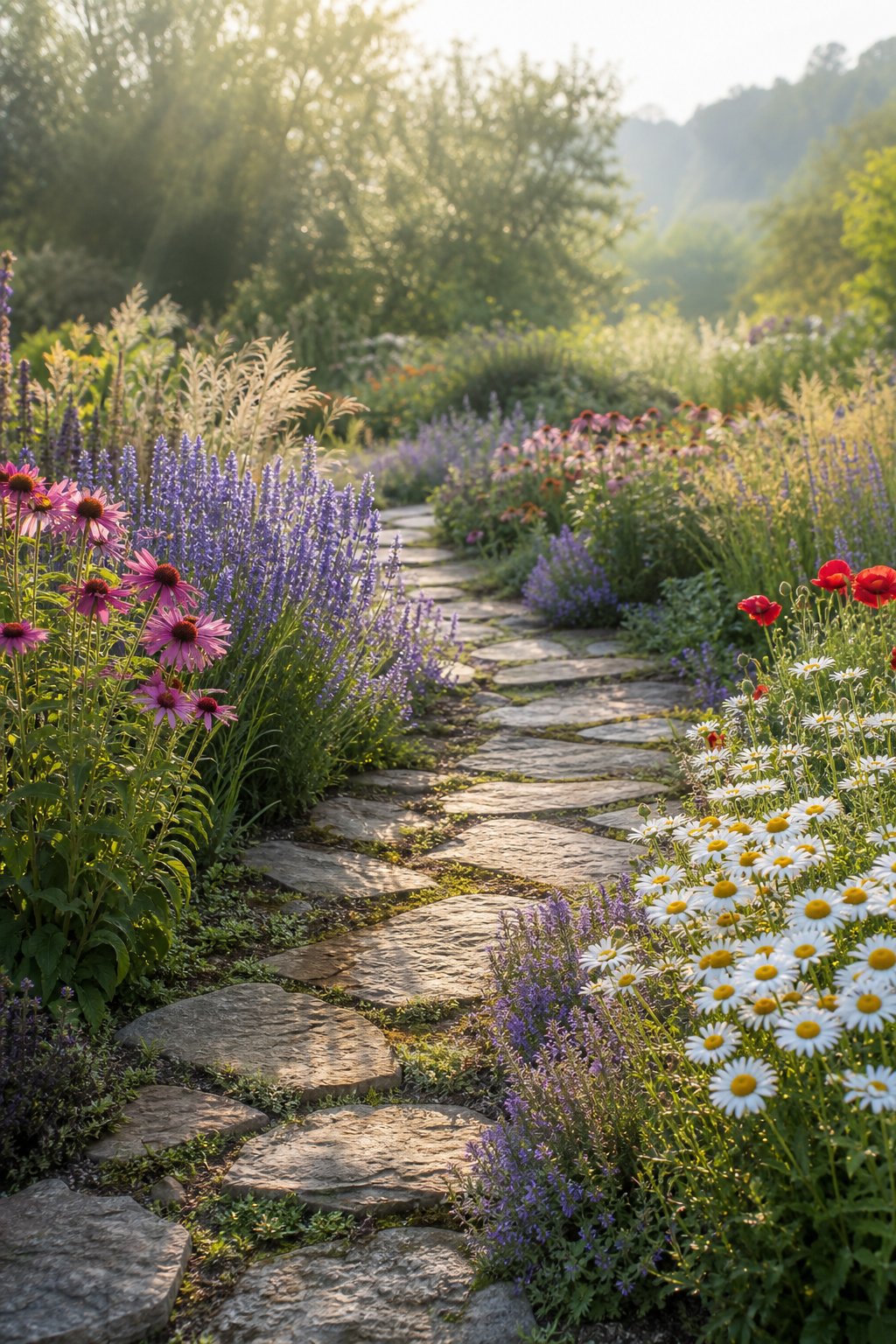
A straight walkway can make a garden feel stiff, while a winding flagstone path adds a little storybook charm. Set irregular stones through loose groups of native wildflowers, leaving enough room for each stone to sit level and stable. Low ground cover or gravel tucked into the gaps helps the path settle into the planting.
Choose flat flagstones with textured surfaces for safer footing after rain. Let taller flowers sit toward the back and shorter plants edge the walkway, so you can enjoy color without brushing against wet stems. This approach also gives you a clear route through a relaxed planting style. Find more layout inspiration among these backyard walkway ideas.
Expert Tip From MrPlanter: “Use cardboard beneath gravel to slow weeds while your plants fill in. Keep the path wide enough for a wheelbarrow.”
2. Reclaimed-Wood Raised Vegetable Beds
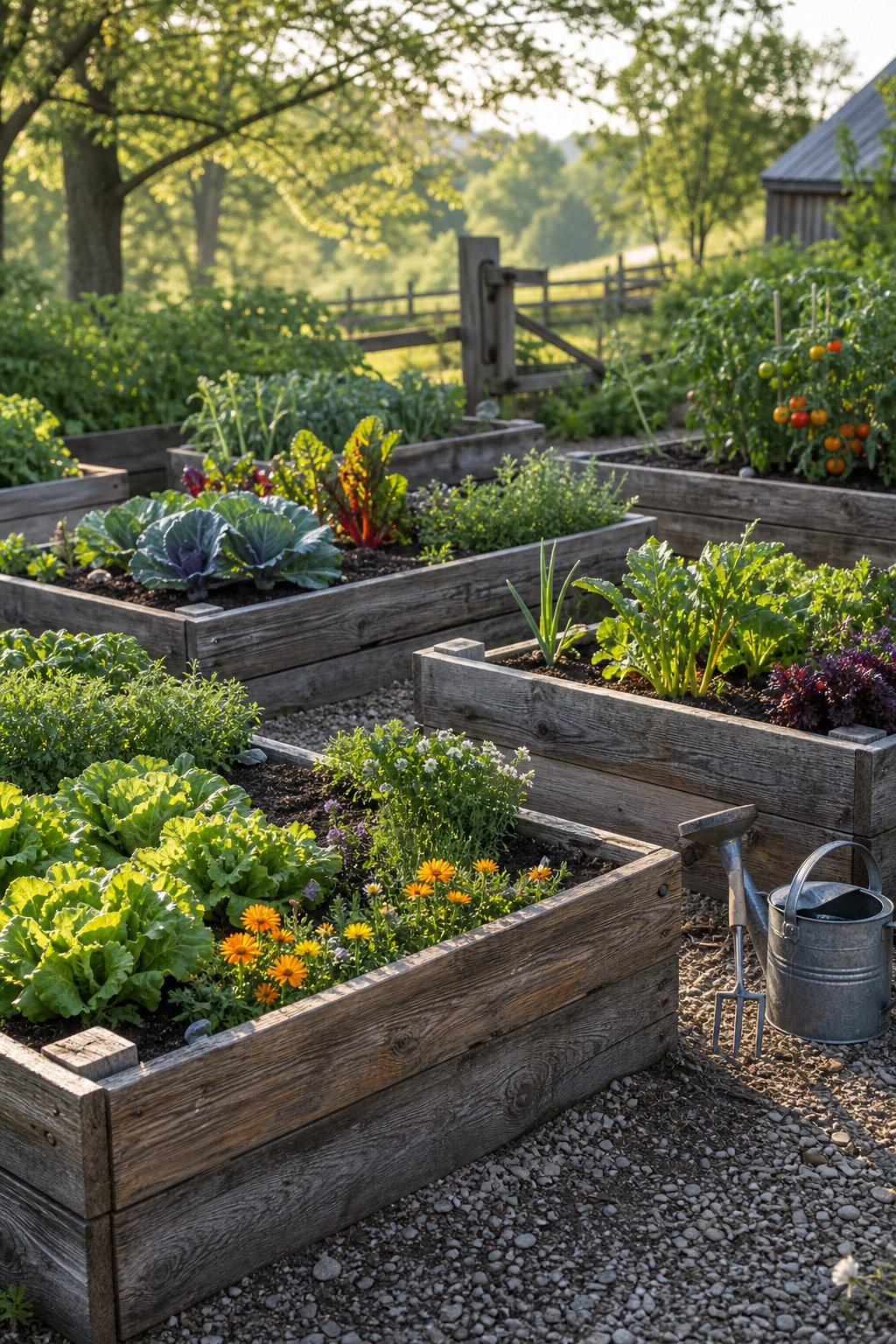
Tired of bending over every row of vegetables? Reclaimed-wood raised beds bring your crops closer and give the garden a warm, handmade frame. Use untreated cedar, oak, or other durable boards, and check every piece for paint, stains, and chemical treatment before adding soil.
Build beds no wider than four feet, so you can reach the center from either side. Leave paths between them for watering and harvesting, then cover those paths with straw, bark, or gravel. Lettuce, beans, peppers, and herbs look right at home in this setup. Browse these raised garden bed ideas for more practical layouts.
Expert Tip From MrPlanter: “Choose boards with a few natural marks for character. Replace soft or crumbling wood before it touches your growing soil.”
3. Weathered Split-Rail Fence With Climbing Roses
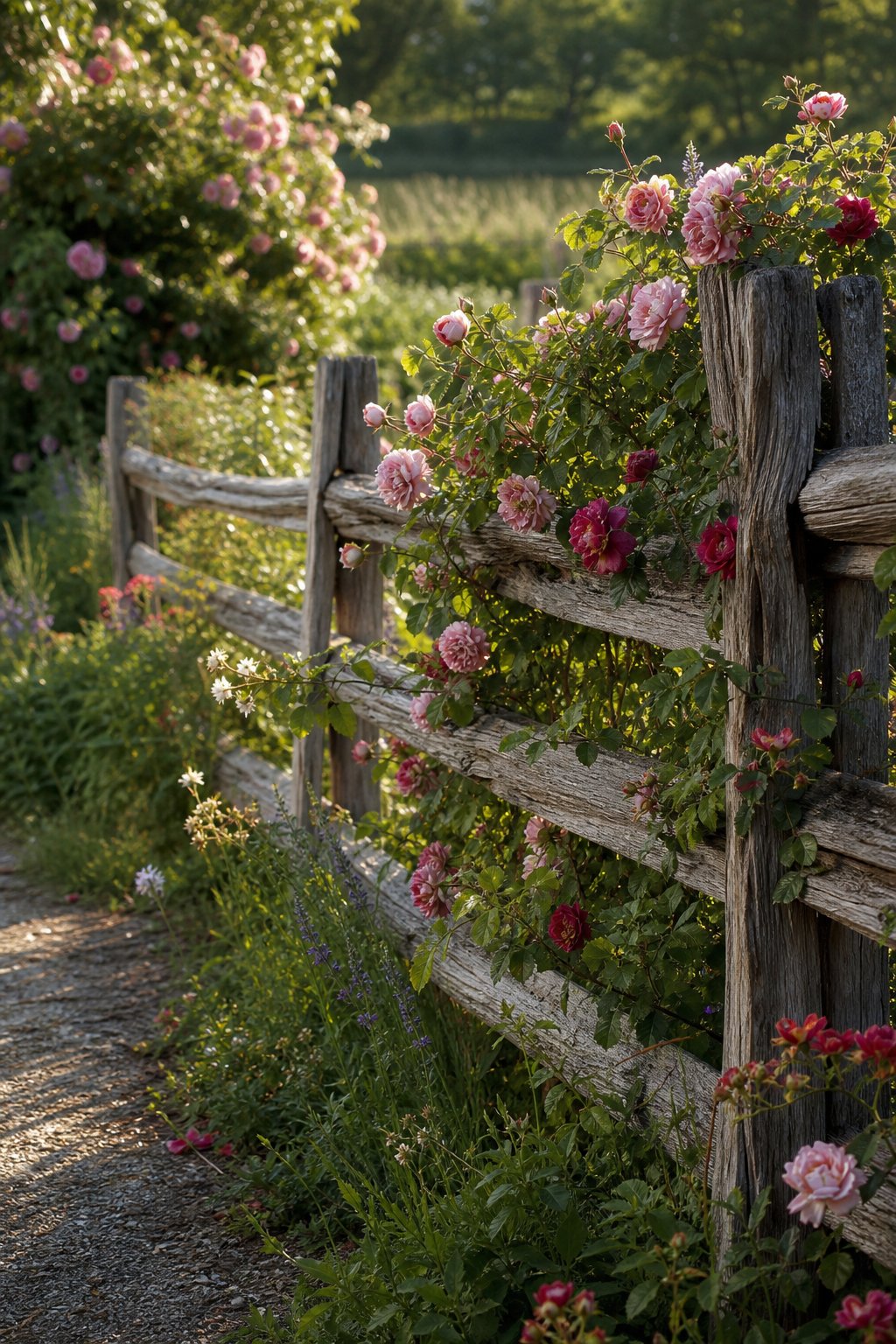
A split-rail fence gives your yard an instant country outline, and climbing roses soften its rough edges with flowers. Set the rails along a property line, garden border, or front-yard bed, then guide young canes through the openings as they grow.
Leave enough space behind the fence for air to move around the roses. Tie stems loosely with soft garden tape, and prune after flowering according to your rose variety. The fence also creates a useful background for daisies, lavender, or ornamental grasses. You can find more ways to shape this look with these split rail fence ideas.
Expert Tip From MrPlanter: “Give each rose sturdy support at the base. Tie branches before they become tangled, and your fence will look full without becoming messy.”
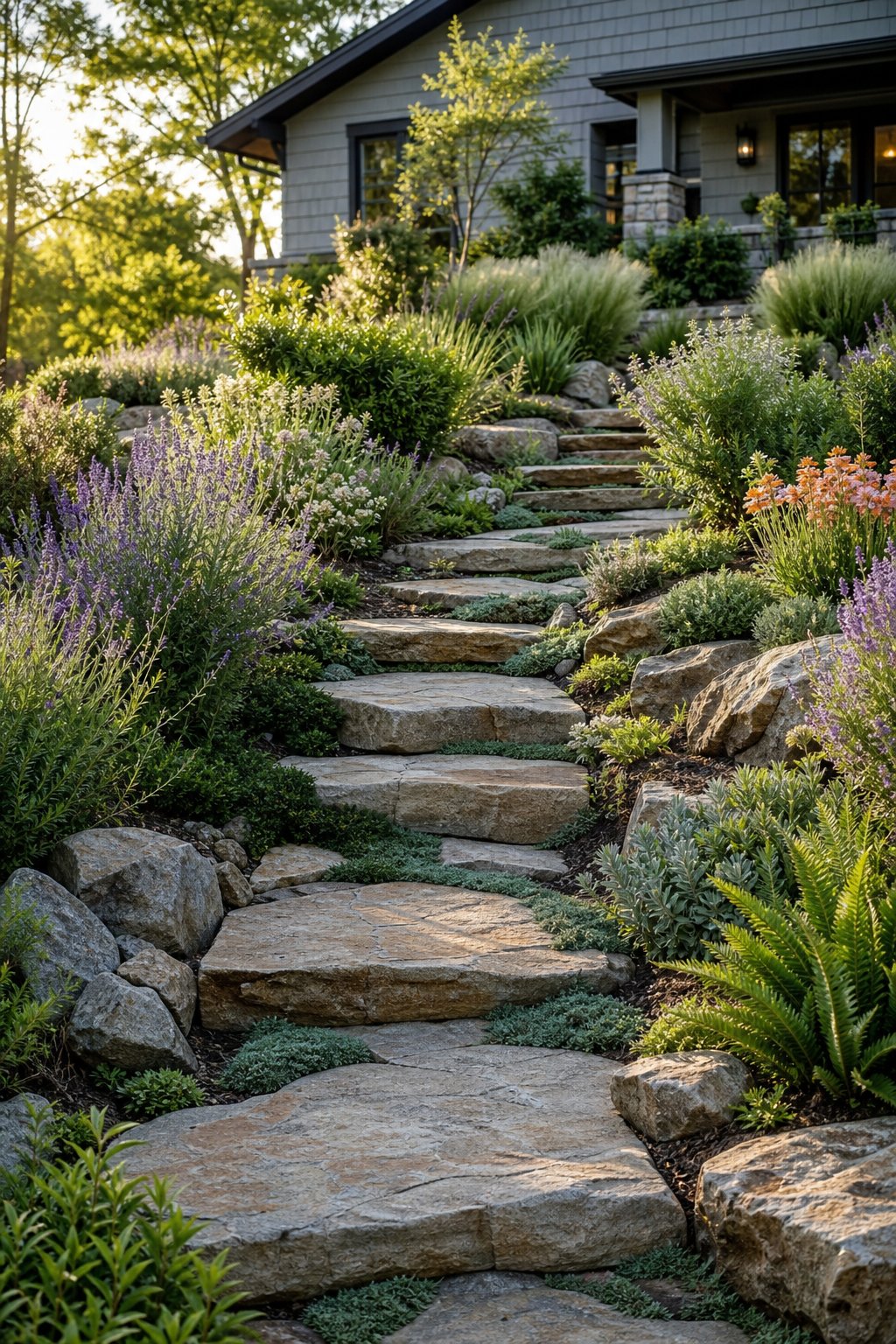
4. Natural Stone Steps on a Sloped Front Yard
Sloped yards become easier to walk when natural stone steps follow the land in short, steady rises. Place broad stones into compacted gravel, with each tread sitting level from side to side. Low plants along the edges help hold soil and soften the hard surfaces.
Measure every rise before digging, then add drainage beneath the steps so rainwater does not wash out the soil. Thyme, sedum, creeping phlox, and small grasses work well beside sunny stonework. For a longer planning guide, explore these beautiful sloped backyard landscaping ideas.
Expert Tip From MrPlanter: “Test each step with your full weight before planting beside it. A stable stone saves you repairs and a muddy surprise.”
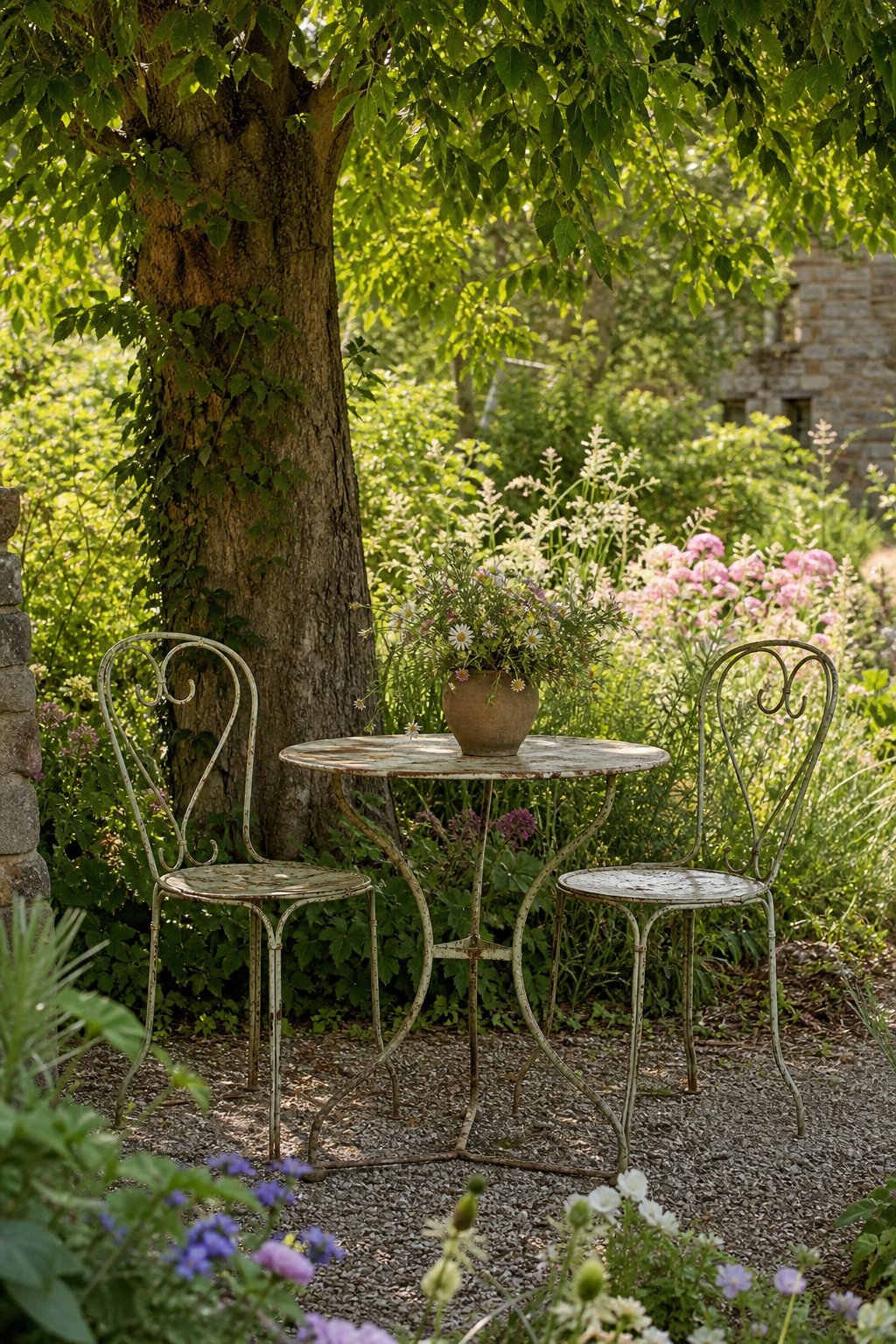
5. Vintage Metal Bistro Set Beneath a Shade Tree
A small bistro set turns the cool patch beneath a mature tree into a cozy garden room. Look for painted metal chairs with a few chips and worn spots, then add seat cushions in a simple stripe or floral print. Keep the table close to a path so you can carry drinks without trampling flowers.
Check the legs for rust before buying, and place furniture on gravel, pavers, or firm mulch. Leave room around the tree trunk for watering and root growth. A nearby pot of mint or lemon balm adds fragrance, though containers keep those vigorous herbs from spreading.
Expert Tip From MrPlanter: “Use outdoor wax or paint on bare metal after cleaning it. Keep the seat colors quiet so the flowers remain the star.”
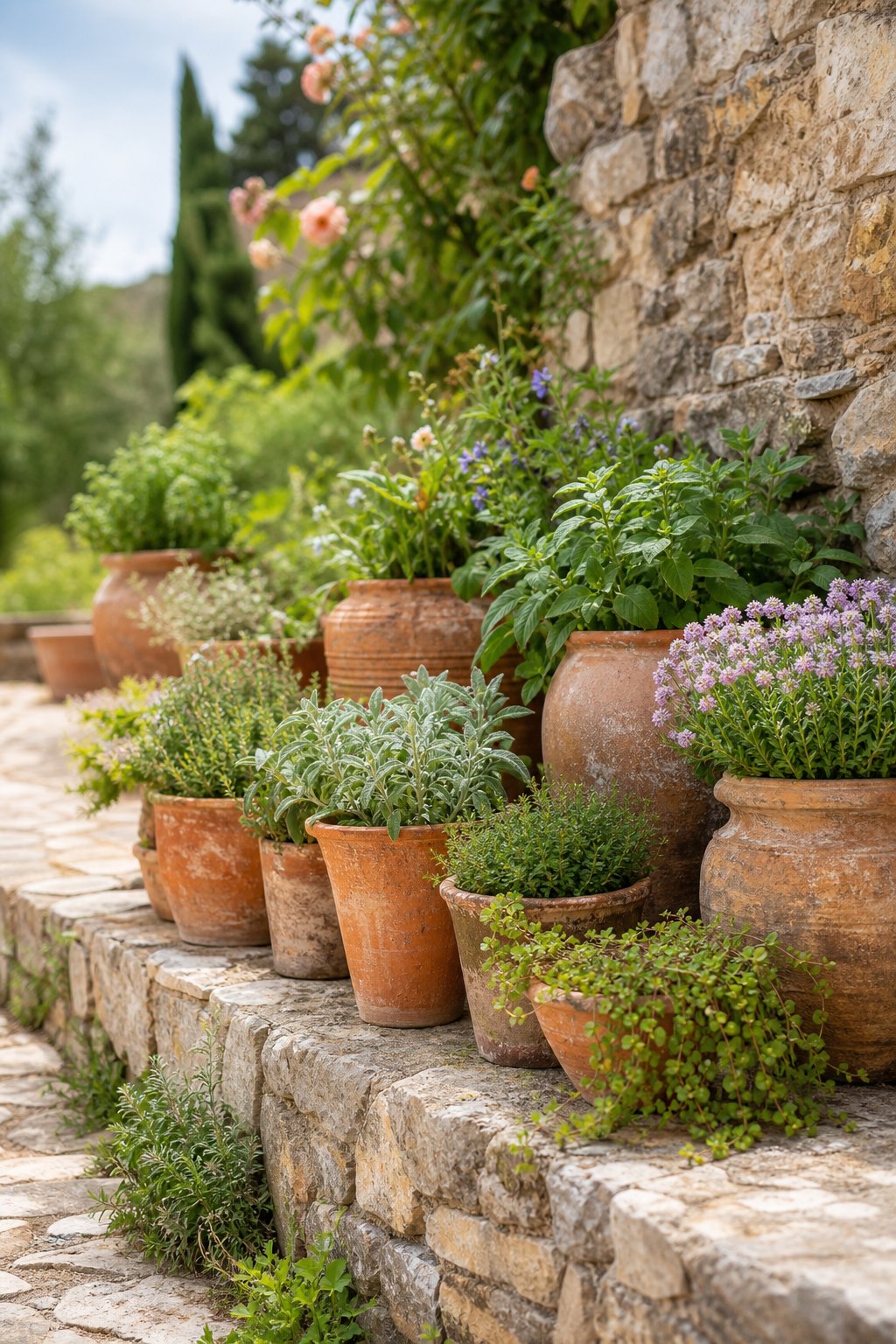
6. Mismatched Terracotta Pots on a Stone Wall
Mismatched terracotta pots make a stone wall feel collected over time. Group several sizes along the top, then repeat one plant color to keep the arrangement from looking random. Geraniums, thyme, small ferns, and trailing nasturtiums suit the warm clay tones.
Drill or confirm drainage holes before planting, because terracotta dries out faster than plastic. Place sun-loving pots on the brighter side of the wall and shade plants where the stones block afternoon heat. Keep heavy containers low and secure tall pots against strong wind.
Expert Tip From MrPlanter: “Repeat one pot shape or color to tie the mix together. Turn chipped rims toward the garden for a graceful aged look.”
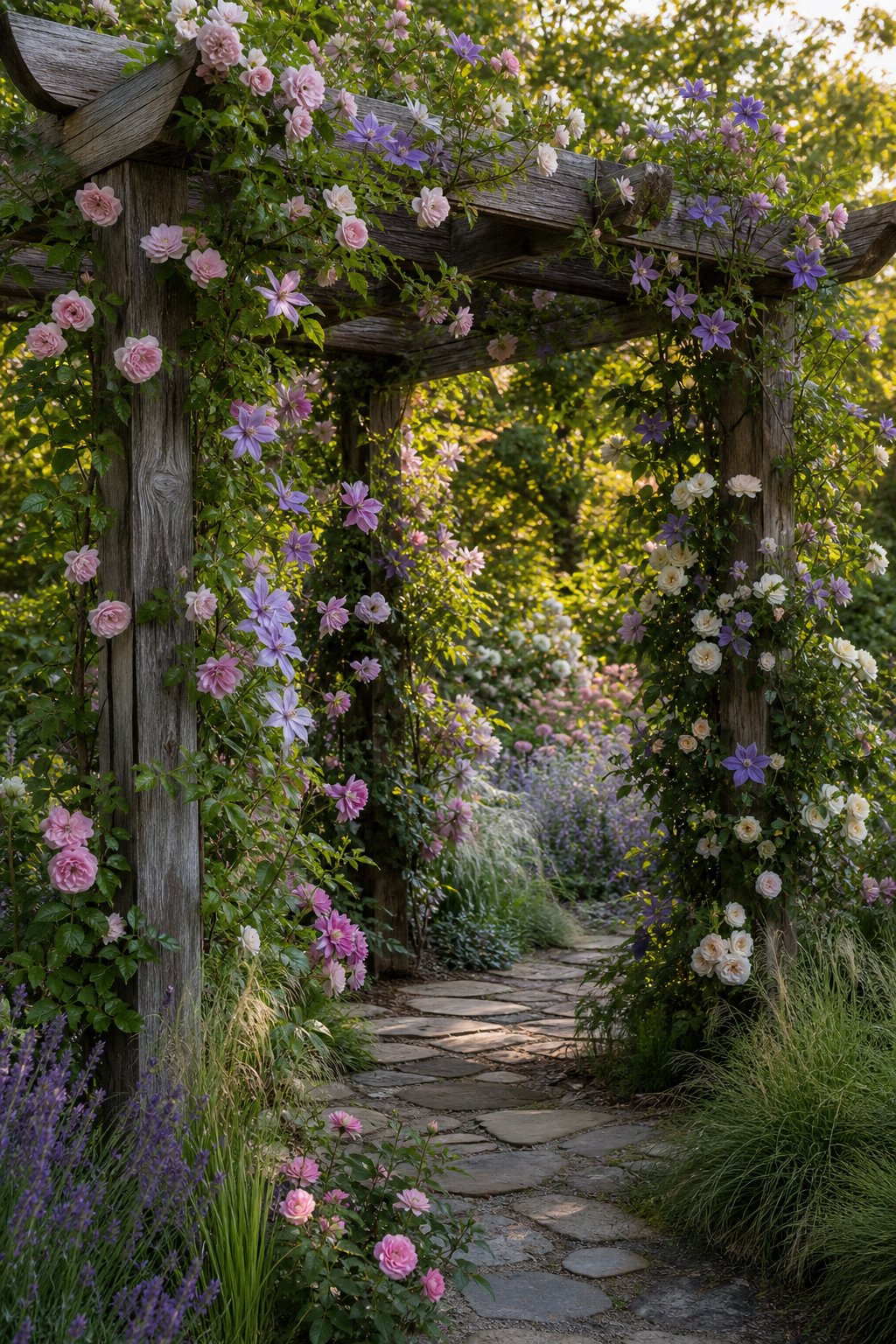
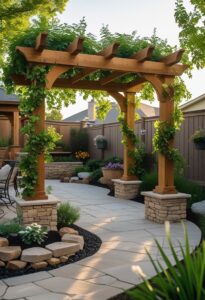
7. Wooden Pergola With a Rose and Clematis Trellis
A wooden pergola adds height, shade, and a clear destination to your garden. Train climbing roses and clematis up separate supports, giving each vine its own space to climb and bloom. Rough cedar or stained reclaimed lumber fits the rustic mood while providing a firm frame.
Set the posts on solid footings and inspect the wood each spring for rot. Plant the vines near the posts, then use soft ties until their stems reach the rafters. Place a bench beneath the structure for a quiet resting spot. These garden trellis ideas offer more support options.
Expert Tip From MrPlanter: “Give clematis cool roots with a low plant or mulch cover. Keep rose stems tied loosely so they can thicken safely.”
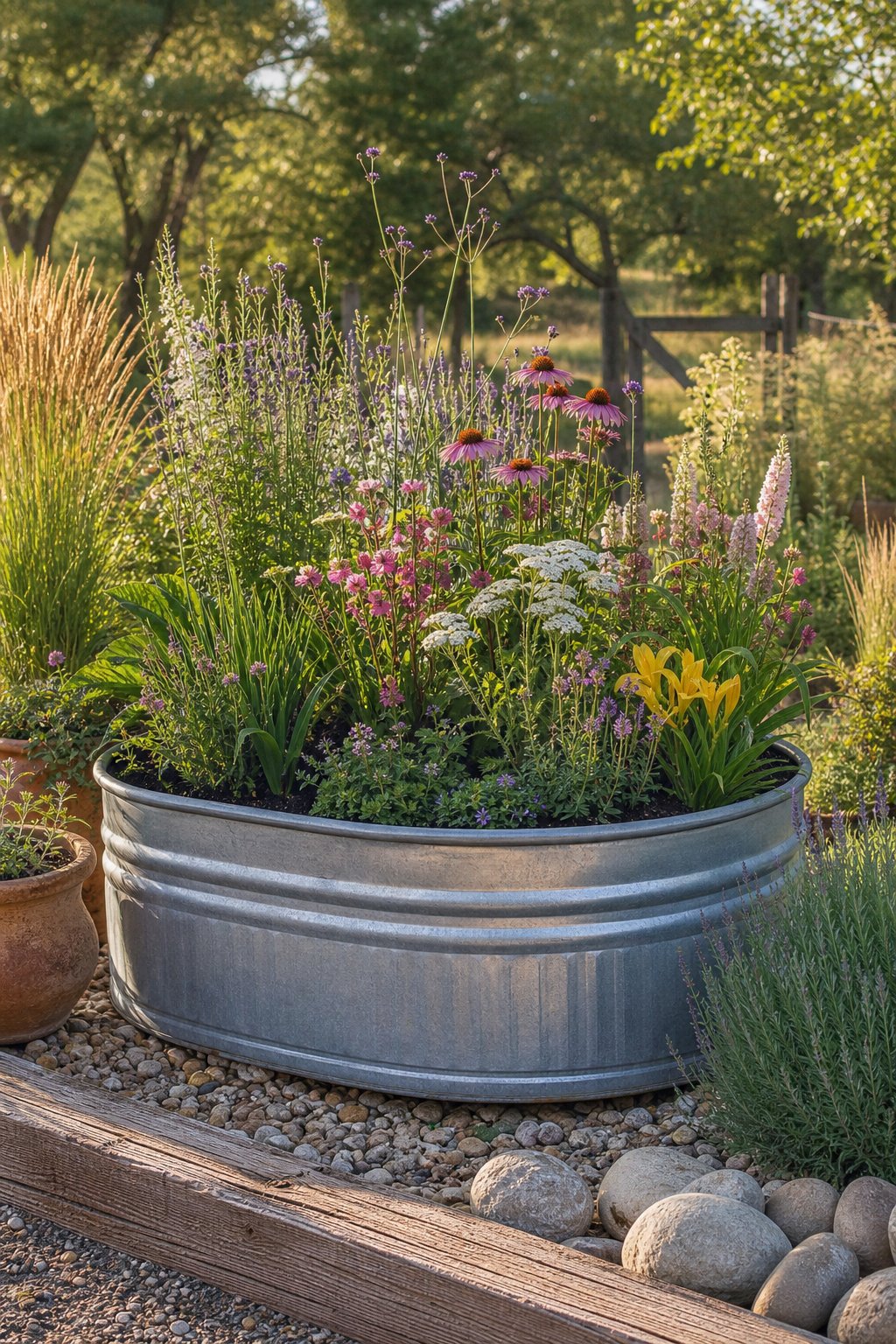
8. Galvanized Stock Tank Flower Planter
A galvanized stock tank creates a roomy flower planter with farmhouse character. Drill several drainage holes in the base, line the bottom with coarse material, and fill it with potting soil suited to your plants. Its raised height makes a colorful bed easier to view from a patio or porch.
Use heat-tolerant flowers for tanks in full sun, since metal warms quickly. Add trailing plants at the edges and taller blooms in the center for a soft shape. Keep the tank away from narrow walkways, where its wide rim might catch passing legs.
Expert Tip From MrPlanter: “Place the tank on level ground before filling it. Soil and water make a large planter surprisingly hard to move.”
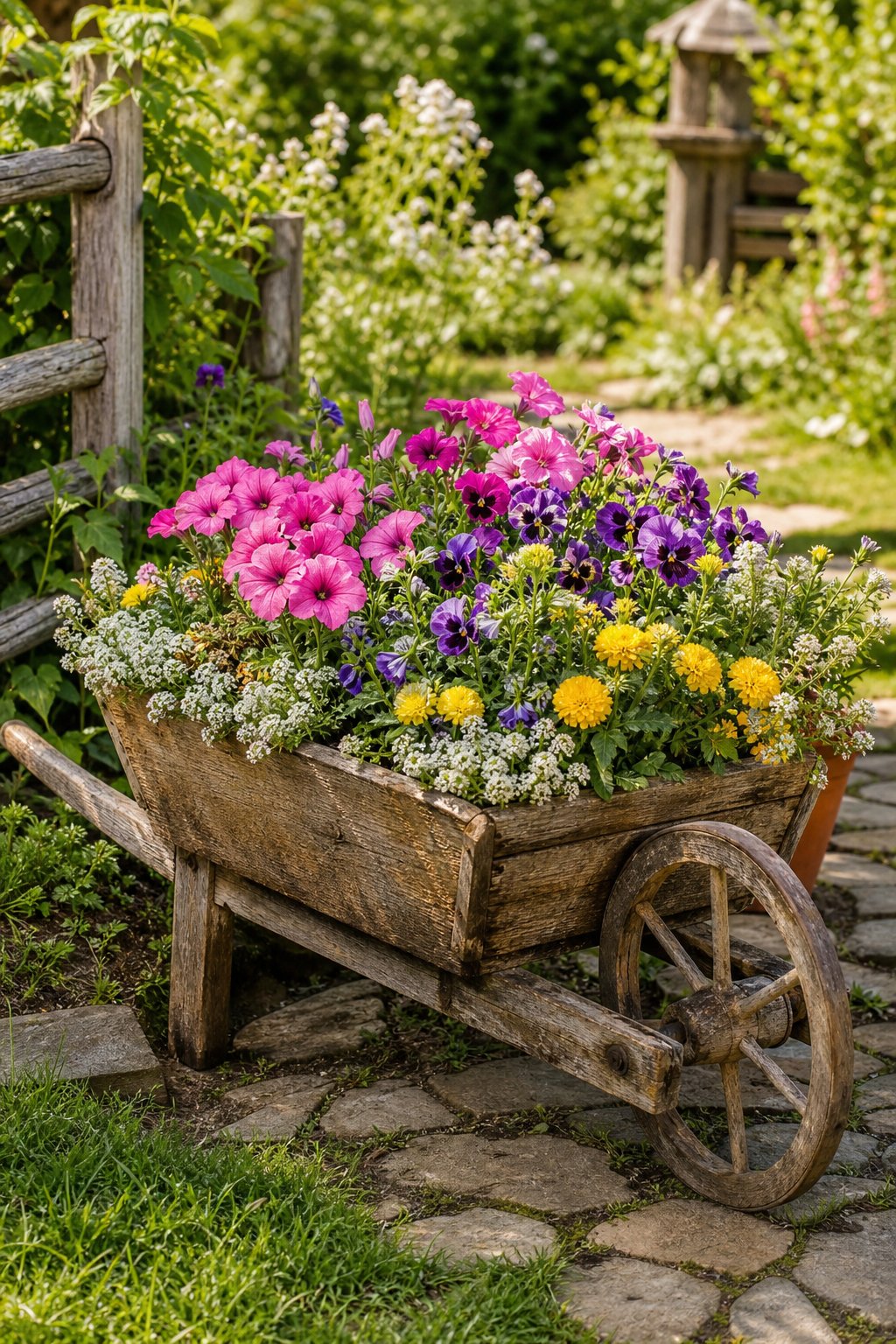
9. Repurposed Wheelbarrow Overflowing With Annuals
A worn wheelbarrow becomes a playful planter when annuals spill over its sides. Position it where you can see the handles and wheel, then fill it with flowers that bloom through the season. Petunias, marigolds, zinnias, and trailing alyssum create a full, cheerful display.
Drill drainage holes in the bottom and raise the wheelbarrow slightly with bricks to prevent standing water. Angle the handles toward a fence or bed so the piece feels anchored. Refresh tired annuals midseason, or let a few flowers set seed for a loose finish.
Expert Tip From MrPlanter: “Keep the original wheel and handles visible. Those working parts give the planter its best rustic charm.”
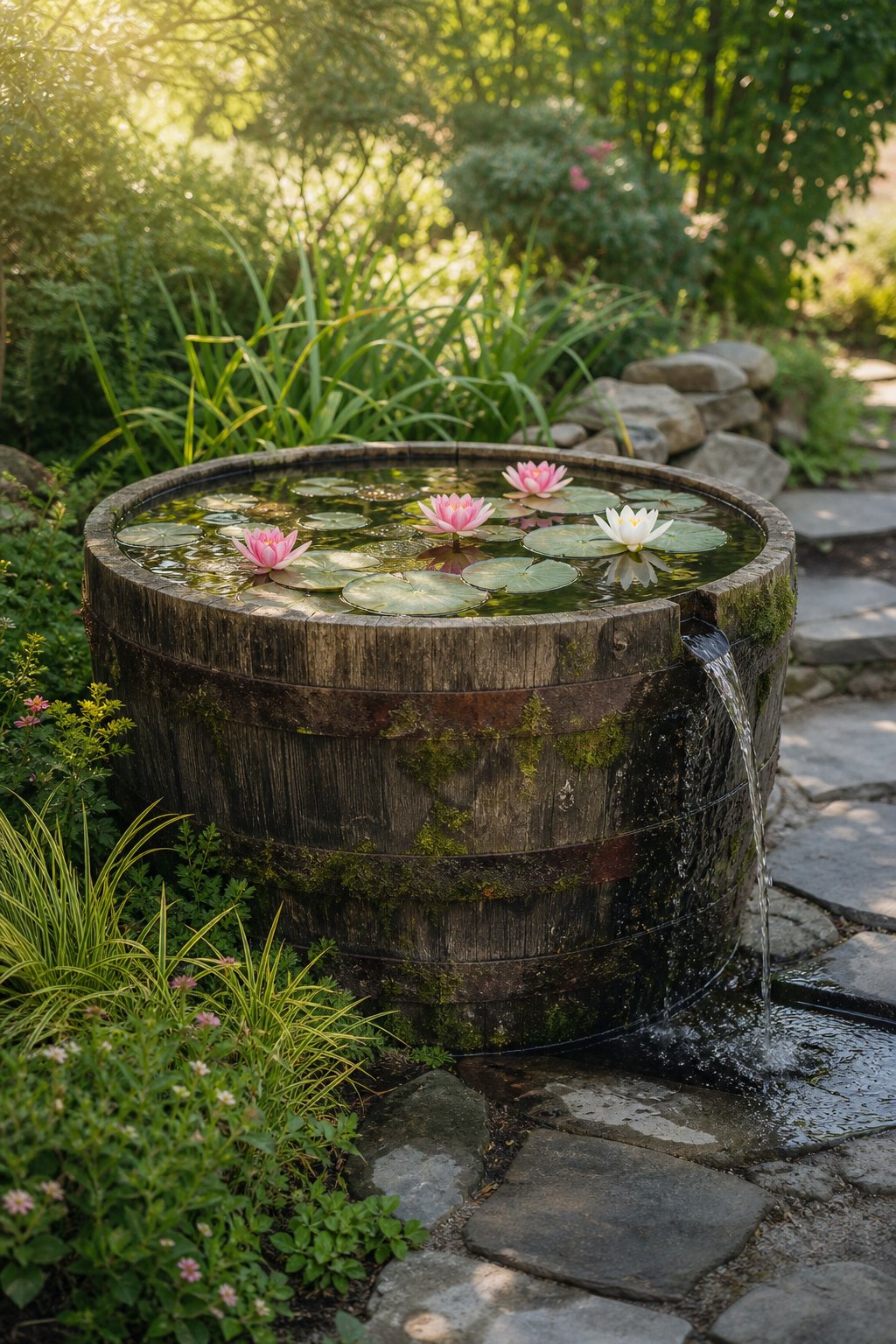
10. Wine Barrel Water Feature With Waterlilies
A wine barrel water feature brings gentle movement and a cool focal point to a patio or garden bed. Use a watertight half barrel, add a small pump, and place a water lily in a submerged container so its roots stay controlled. The dark wood pairs well with ferns and leafy plants.
Set the barrel on a firm, level base near an outdoor outlet or choose a solar pump. Remove fallen leaves before they decay, and check the water level during hot weather. Add mosquito control approved for ornamental ponds if moving water alone does not keep insects away.
Expert Tip From MrPlanter: “Keep the pump intake clear with a small mesh cover. Place the feature near seating so you can enjoy its soft sound.”
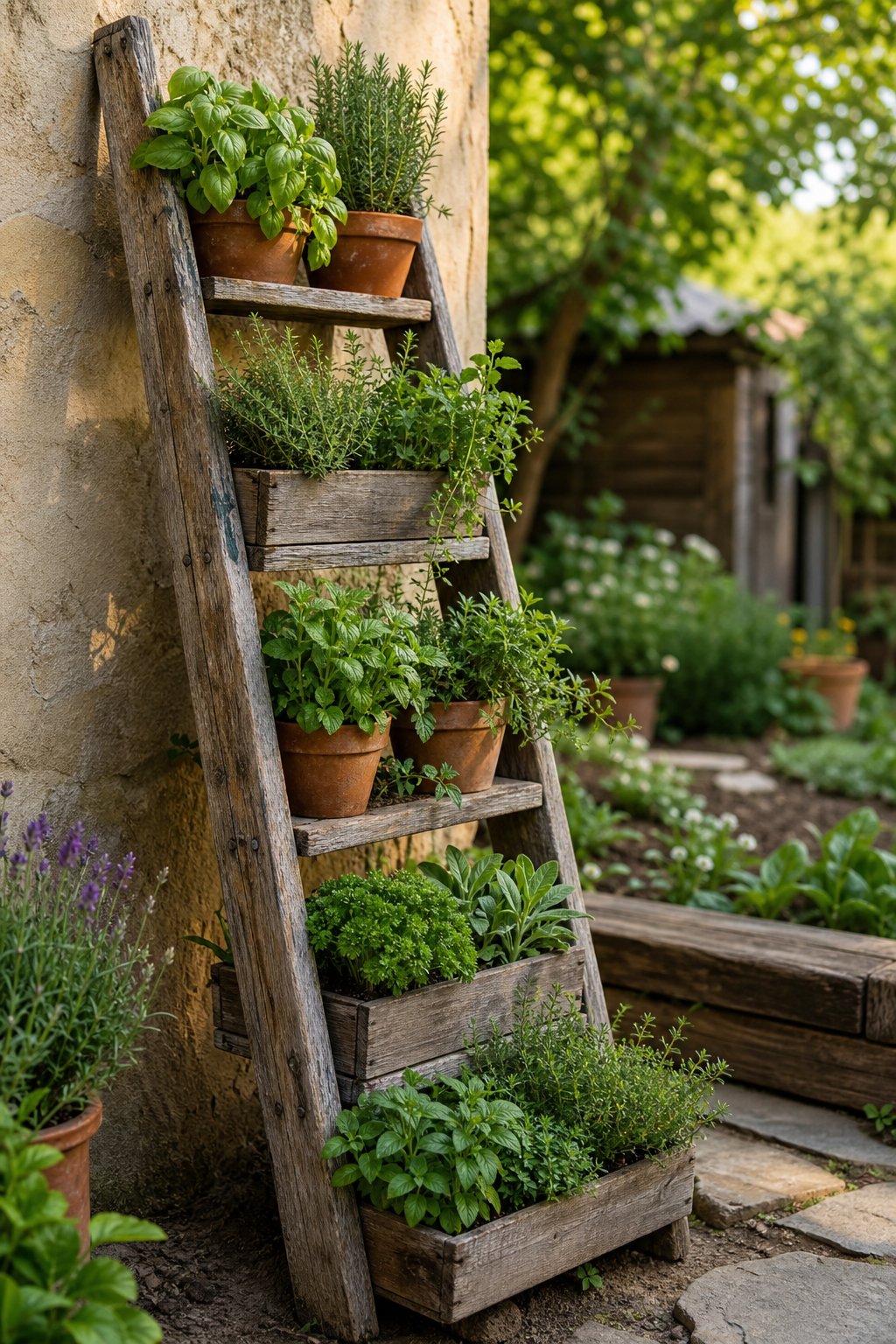
11. Old Wooden Ladder Herb Garden Display
An old wooden ladder gives you a vertical spot for herbs beside a kitchen door or sunny patio. Lean it securely against a wall, then set pots on the steps with the tallest herbs at the top. Basil, rosemary, thyme, parsley, and chives provide useful harvests in a small footprint.
Use saucers beneath pots to protect the surface, and leave space between containers for airflow. A ladder in morning sun works well for tender herbs, while afternoon shade suits parsley and mint. Secure the ladder to the wall if children or pets use the area.
Expert Tip From MrPlanter: “Label each herb with a small wooden tag. Water the top pots first because they dry out fastest.”
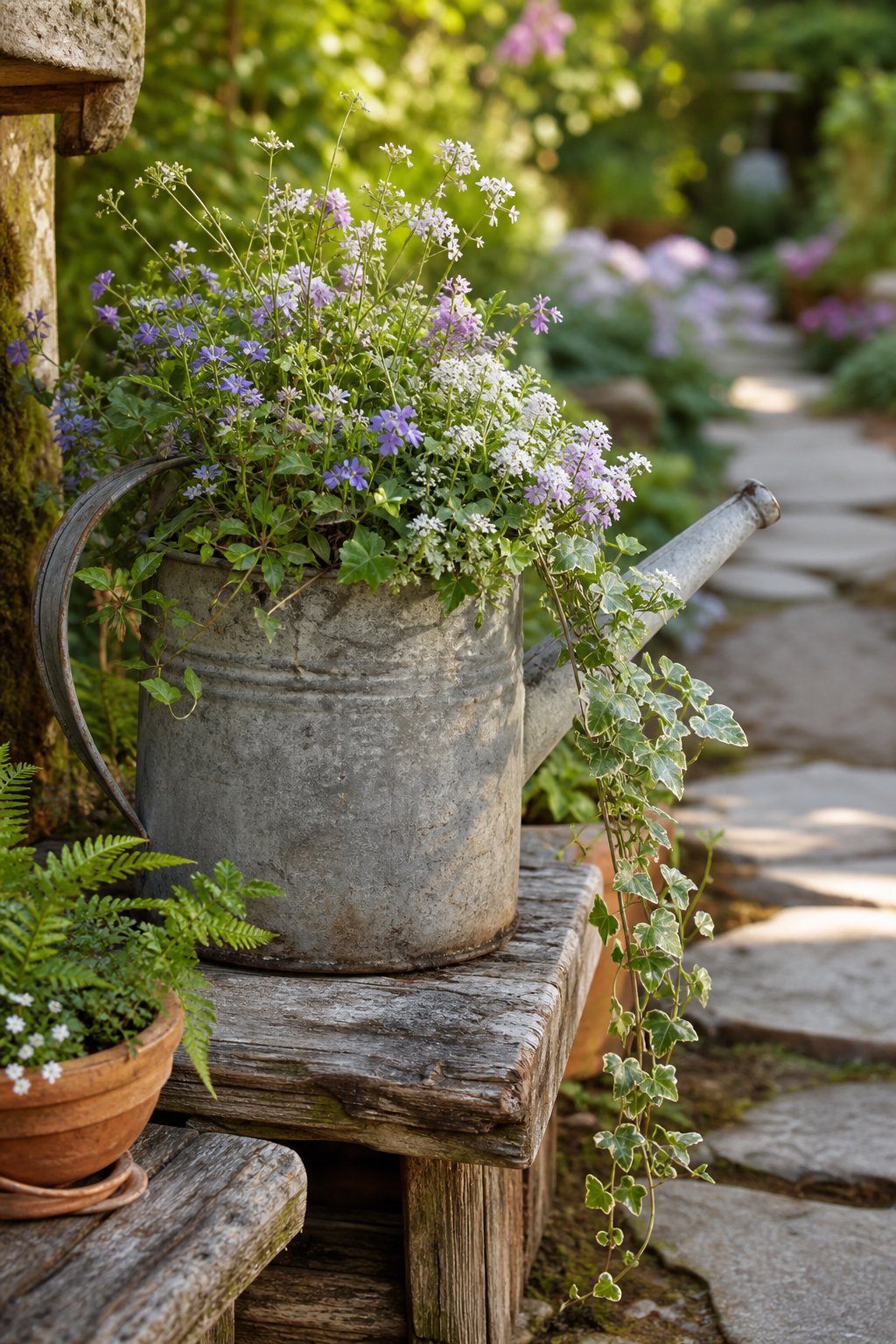
12. Vintage Watering Can Planter Arrangement
A vintage watering can adds a small burst of color wherever your garden needs a pause. Fill it with a compact flowering plant, then surround it with two lower pots or a patch of ground cover. The handle and spout give the arrangement a strong shape even when blooms fade.
Make drainage holes in the base if the can will stay outdoors. Use the spout as part of the display by letting trailing flowers lean toward it. Place the can on a step, beside a shed door, or at the edge of a flower bed where it will not block watering.
Expert Tip From MrPlanter: “Choose one bold flower color for a cleaner display. A little rust adds charm, while sharp metal edges need sanding.”
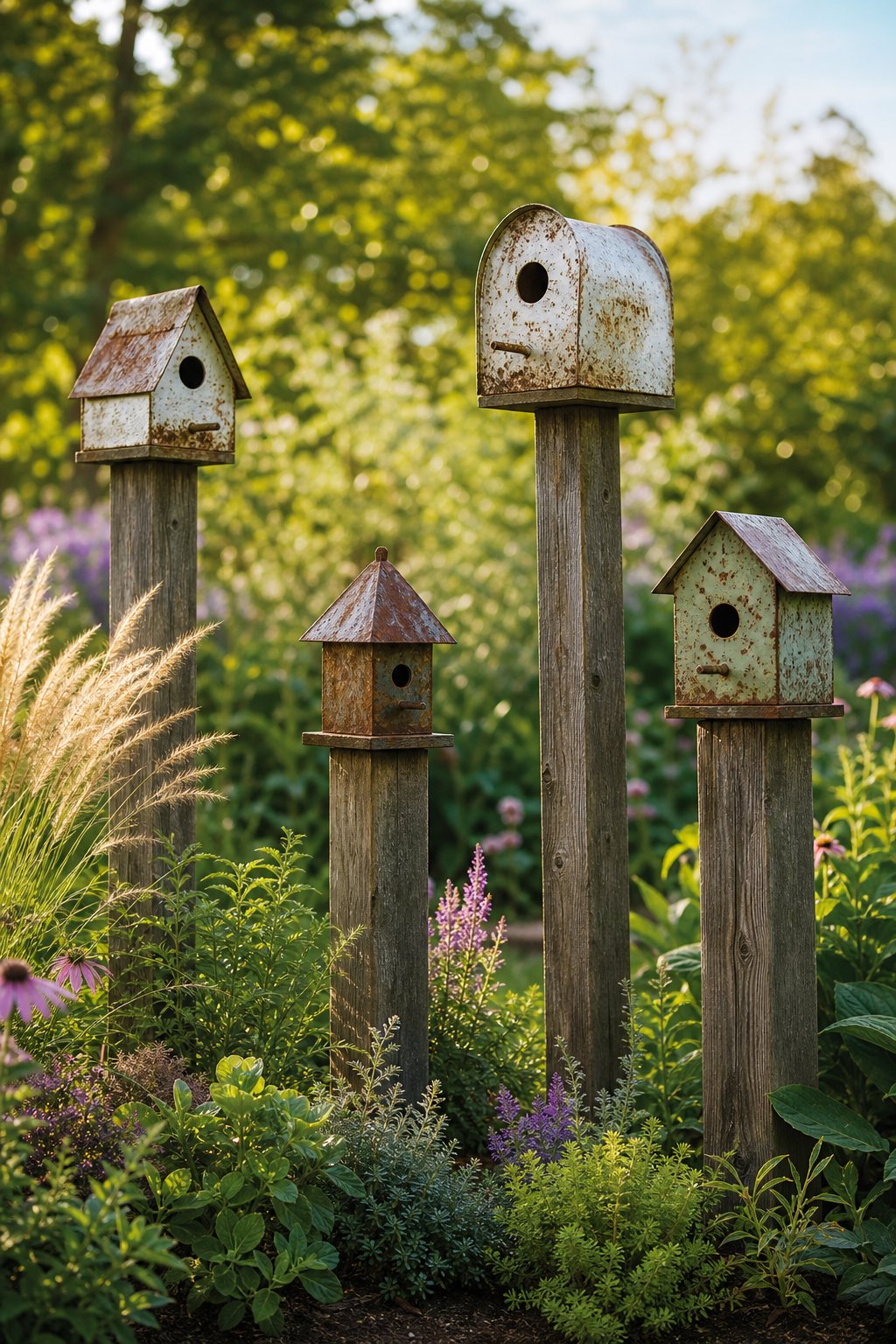
13. Salvaged Metal Birdhouses on Cedar Posts
Salvaged metal birdhouses turn a plain garden edge into a useful wildlife feature. Mount each house on a cedar post at the height recommended for its intended bird, and space the posts far enough apart to reduce territorial squabbles. Keep the colors varied while repeating the same post material.
Clean old metal gently and avoid coatings that could harm birds. Place houses away from busy paths, feeders, and spots where cats can hide. Add native shrubs nearby for cover and food, then clean the houses between nesting seasons.
Expert Tip From MrPlanter: “Use drainage holes and a removable front when possible. Face openings away from strong prevailing winds.”
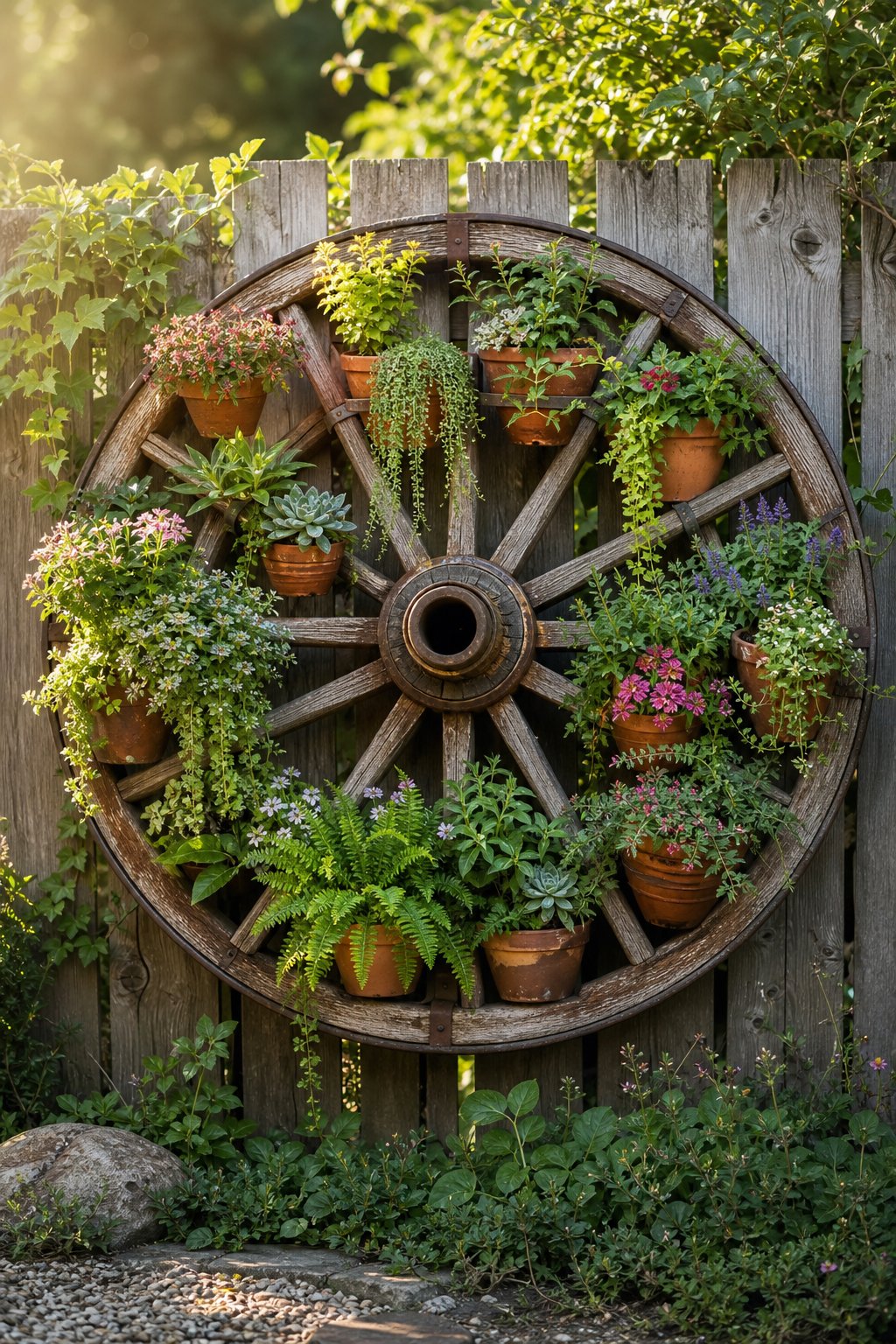
14. Wagon Wheel Vertical Garden
A wooden wagon wheel turns a fence into a rustic plant display with almost no ground space. Hang it securely, then attach small pots or pockets between the spokes. Compact flowers, succulents, and trailing greenery fill the open shape while keeping the wheel visible.
Choose a fence that can support the added weight, and use outdoor-rated brackets or screws. Keep the display at a height you can water safely from the ground. A simple palette of white flowers and green leaves gives the wheel an aged, farmhouse feel.
Expert Tip From MrPlanter: “Use lightweight pots on the upper spokes. Test every bracket before adding soil and water.”
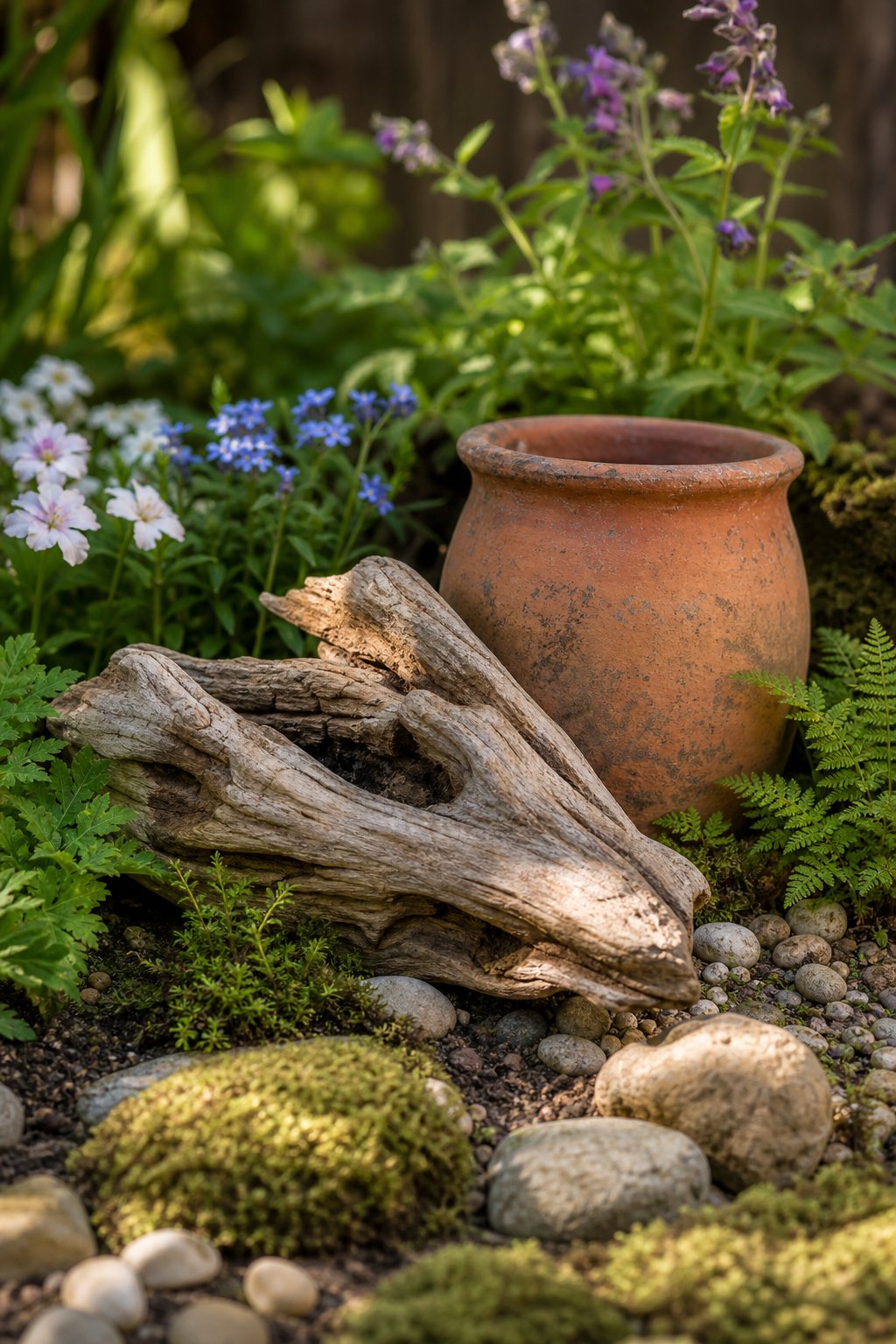
15. Driftwood and Clay Pot Garden Vignette
Driftwood and a single clay pot create a quiet garden vignette in an unused corner. Place the wood first, then tuck the pot beside it with moss, stones, or a low fern bridging the two forms. The uneven shapes feel found and relaxed.
Keep the arrangement low enough to see from a path or patio chair. Choose a plant that matches the light, and leave open soil around the vignette so it can breathe. Replace moss that dries out, and rotate the pot occasionally for even growth.
Expert Tip From MrPlanter: “Set driftwood on stable points so it won’t roll after rain. Use one repeated stone color to make the corner feel settled.”
How to Make a Rustic Garden Feel Intentional
Which Natural Materials Work Best Outdoors?
Cedar, fieldstone, galvanized metal, terracotta, and hardwood branches hold up well while developing a pleasing aged look. Use cedar for posts and raised beds, stone for paths and steps, and metal or clay for containers. Check salvaged pieces for lead paint, sharp edges, rot, and chemical residue before bringing them into your garden.
Build drainage into every planter, including barrels, cans, tanks, and wheelbarrows. Keep wood off constantly wet soil, and seal cut ends of posts or boards to slow decay. Materials from the same color family help separate rustic character from random clutter.
How Can You Balance Wildflowers With Structure?
Give loose flowers a clear edge through a path, low wall, fence, or simple bed line. Repeat two or four plant types across the yard, then vary their heights and bloom times for a natural rhythm. Native flowers support local pollinators and need less attention after they establish.
Keep taller plants toward the rear of a bed and shorter varieties near paths. Trim growth that blocks steps, gates, or seating. A small mown strip or gravel border gives wild planting room to spread while keeping maintenance practical.
Where Should Focal Points Go in a Backyard or Front Yard?
Place a focal point where a path turns, a doorway opens, or a seating area needs a visual destination. A pergola, water barrel, large stock tank, or flowering tree works well when it can be seen from a window or used from nearby seating.
Use one strong feature per view. In a front yard, keep the entry route open and welcoming. In a backyard, position the focal point at the end of a path or beside a bench, then layer lower plants around it.
How Can You Use Salvaged Decor Without Creating Clutter?
Limit each garden area to one large salvaged piece and a small group of supporting items. A wheelbarrow might stand beside a shed, while a watering can belongs near a porch step. Give every object a job as a planter, support, boundary, seat, or habitat feature.
Repeat a finish or material to connect separate displays. For example, cedar posts can echo a wood fence, while terracotta pots can repeat the color of a brick path. Remove pieces with unsafe rust, unstable legs, or drainage problems before they become part of the garden.
I’m Anirban Saha, the Founder and Owner of MrPlanter.com. I pay the bills as a software developer, although my BTech is actually in Electronics and Communication. I really love my day job, but what gives me energy every day is interacting with my indoor plants and taking care of them. I have been successfully nurturing and maintaining houseplants for over 10 years now.
📚🔍 Our content undergoes thorough review and fact-checking before publication. For additional details, explore our strict Editorial Policy to deliver helpful content. 📝🔒