As an Amazon Associate, MrPlanter.com earns from qualifying purchases.
The most common enclosure mistake isn’t bad decor — it’s too much vertical space above a terrestrial tarantula. A fall of just a few inches can rupture an abdomen, which is why good tarantula enclosure ideas always start with dimensions.
A garden display can give your tarantula enclosure a calm, natural setting without turning your spider’s home into an outdoor ornament.
You can borrow colors, textures, and plant shapes from your yard while keeping the habitat safely indoors or inside a protected garden room.
Good ventilation, secure access, species-appropriate space, a water dish, and a safe hide form the basis of the best tarantula enclosure ideas. Add decorative touches after covering these needs.
The sixteen designs below help you create a pleasing garden-adjacent display while keeping your spider’s needs first.
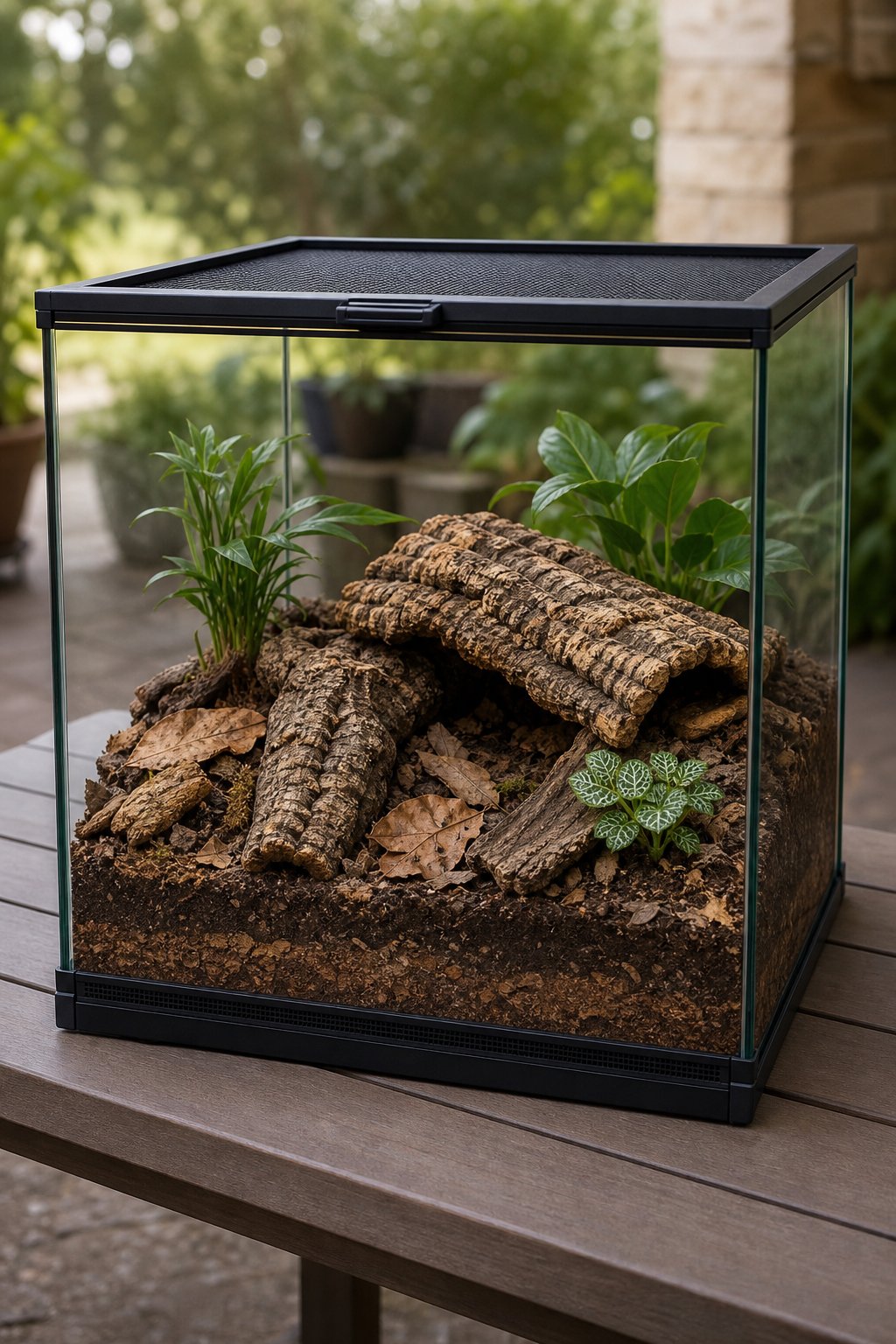
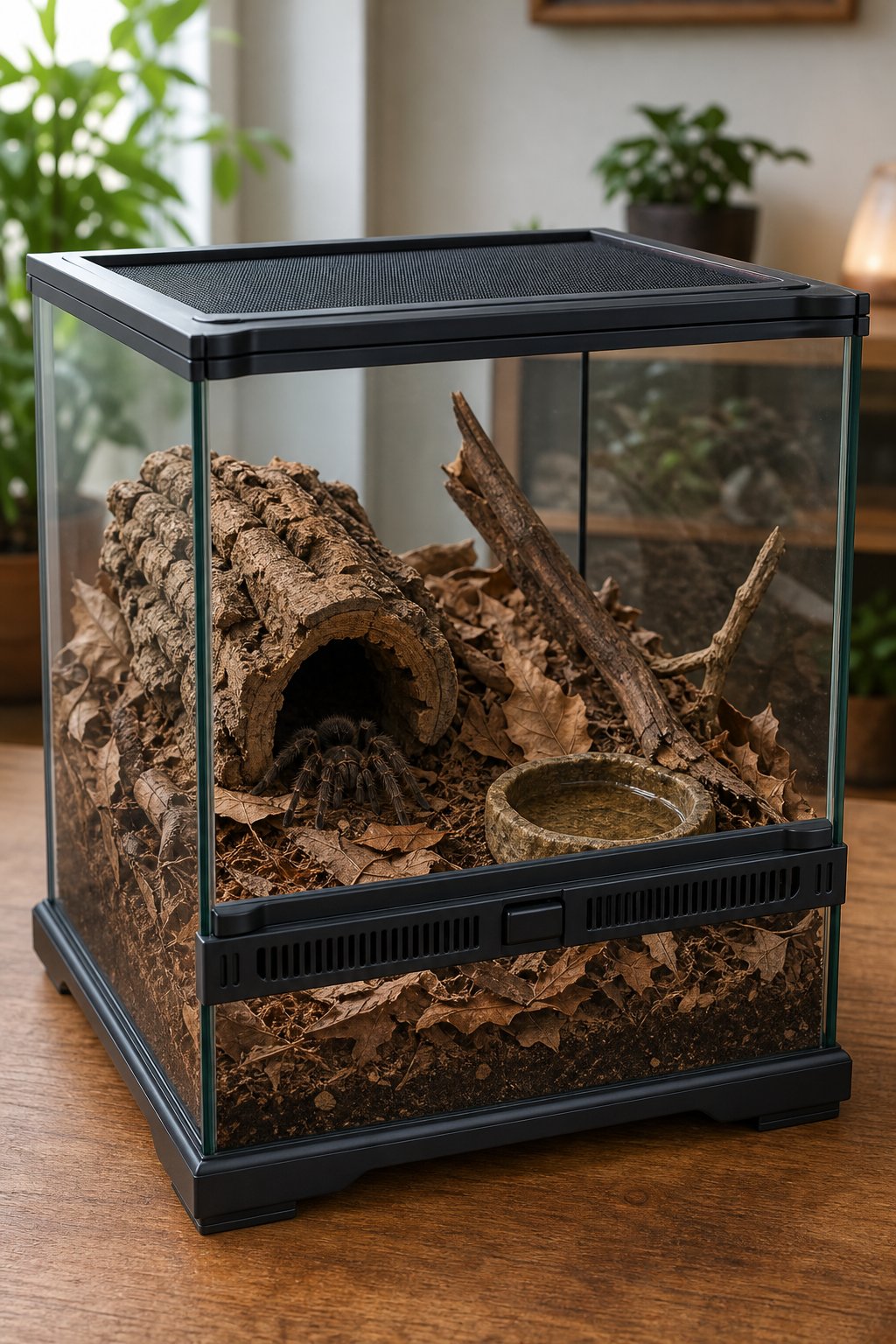
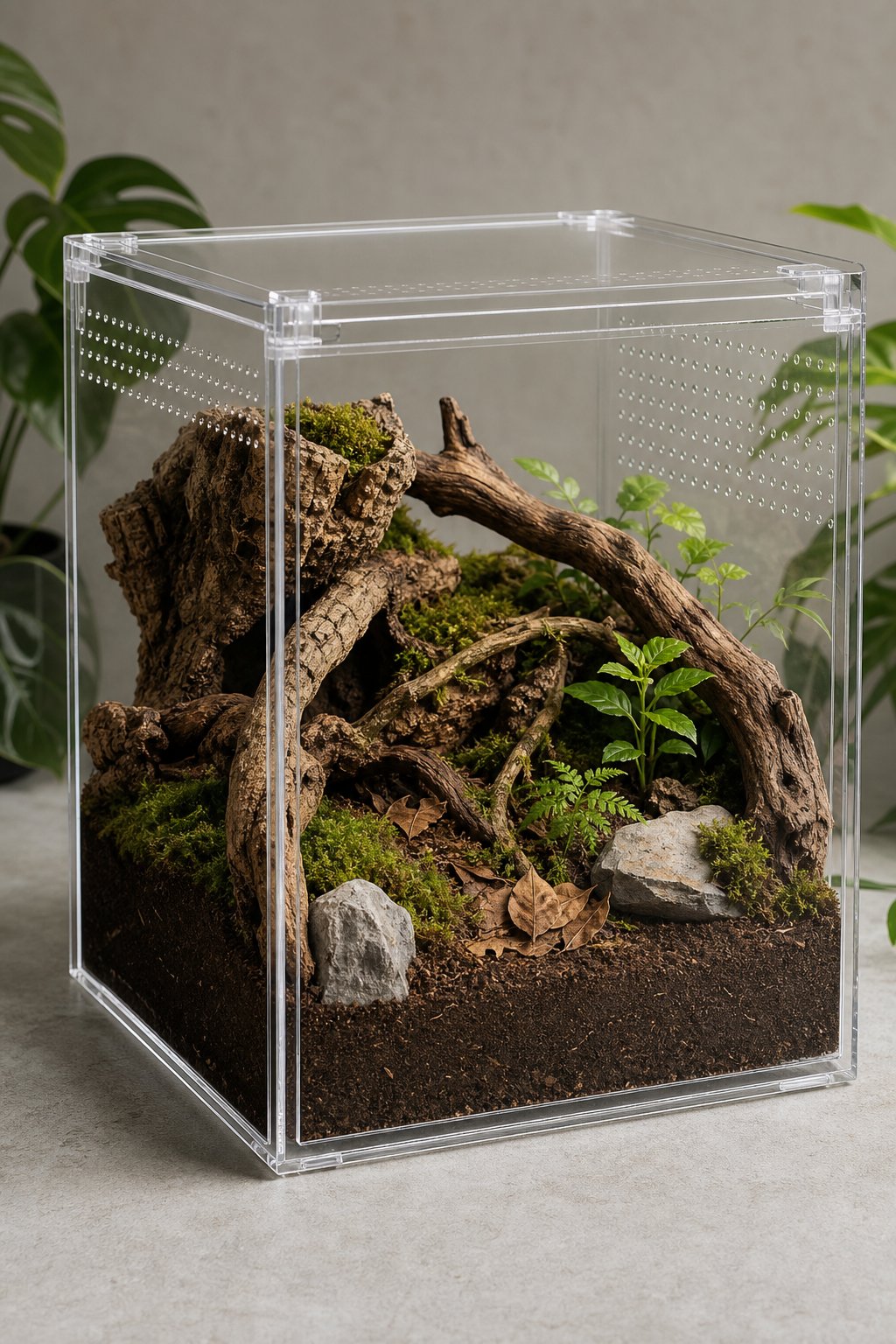
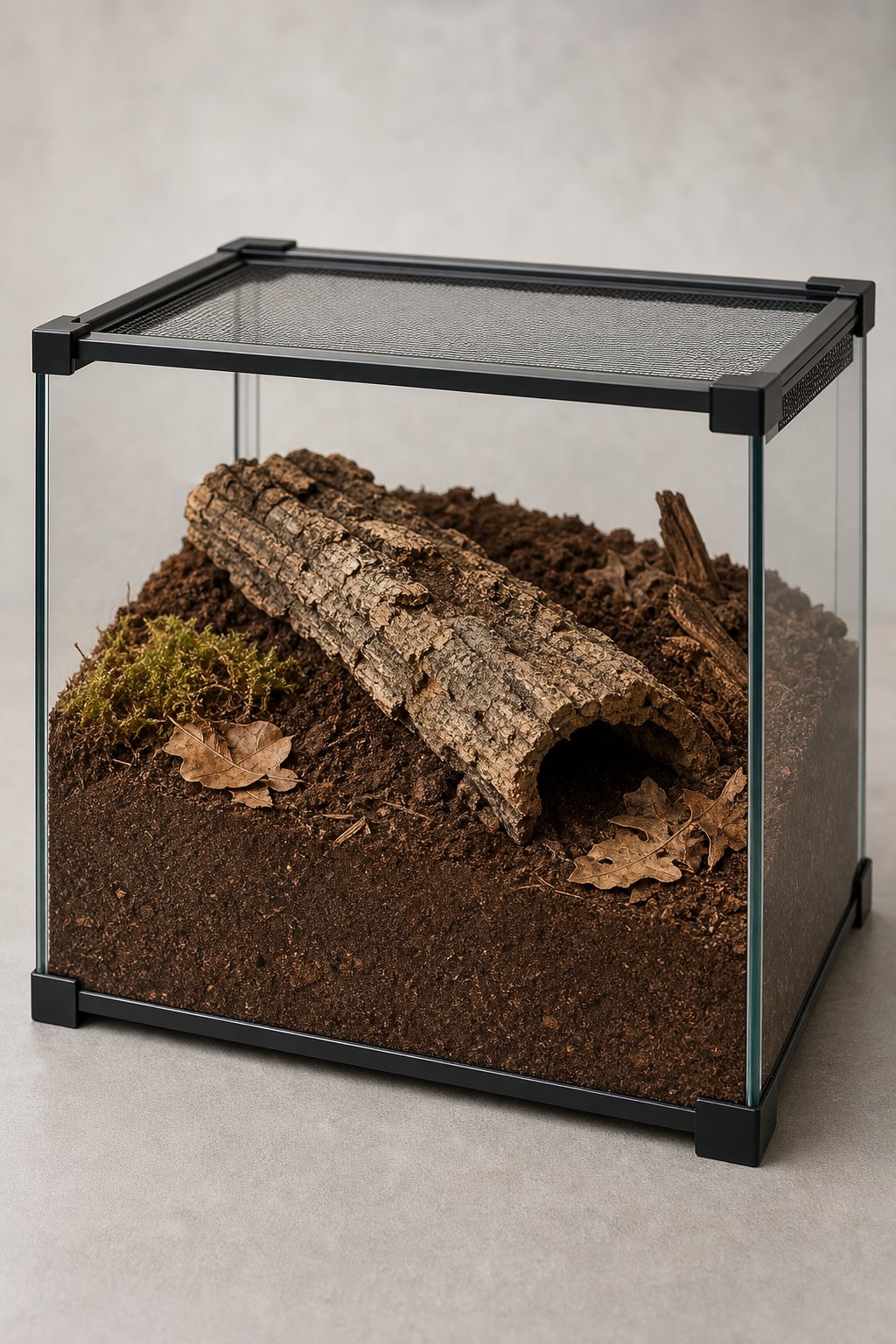
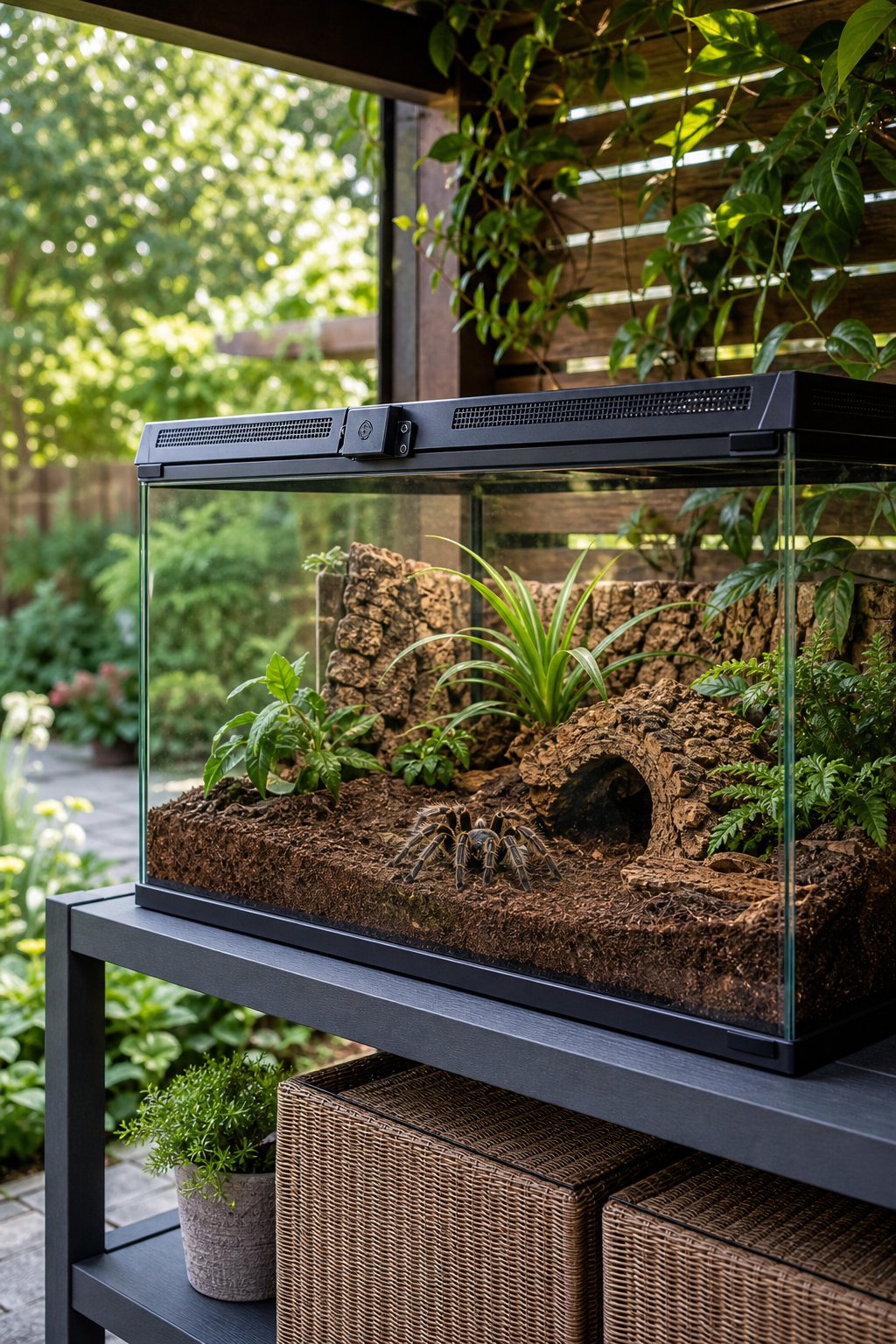
1. Covered-Patio Terrestrial Cork Bark Terrarium
A patio table can look inviting, yet a tarantula doesn’t need a sunny porch vacation.
Keep the enclosure under a solid roof, away from wind, rain, and direct afternoon sun.
Terrestrial species that spend most of their time on the ground thrive in this setup.
Add hardy, low-light plants in pots or use artificial greenery if living roots make cleaning difficult.
A locking lid keeps curious pets and visitors from opening the habitat.
Expert Tip From MrPlanter: “Keep the terrarium in the shade, even on a covered patio. Check the temperature at the enclosure before moving your spider there.”
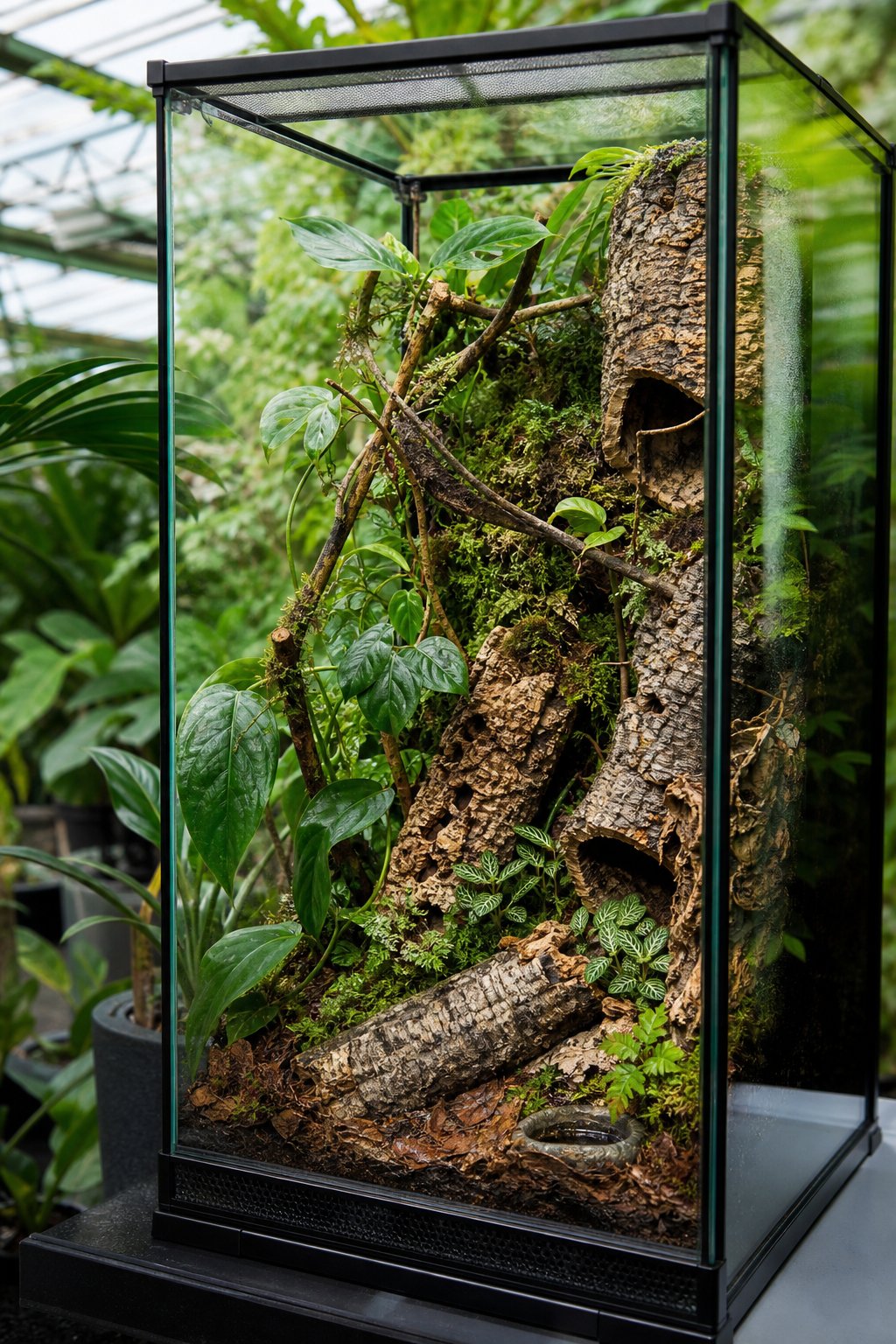
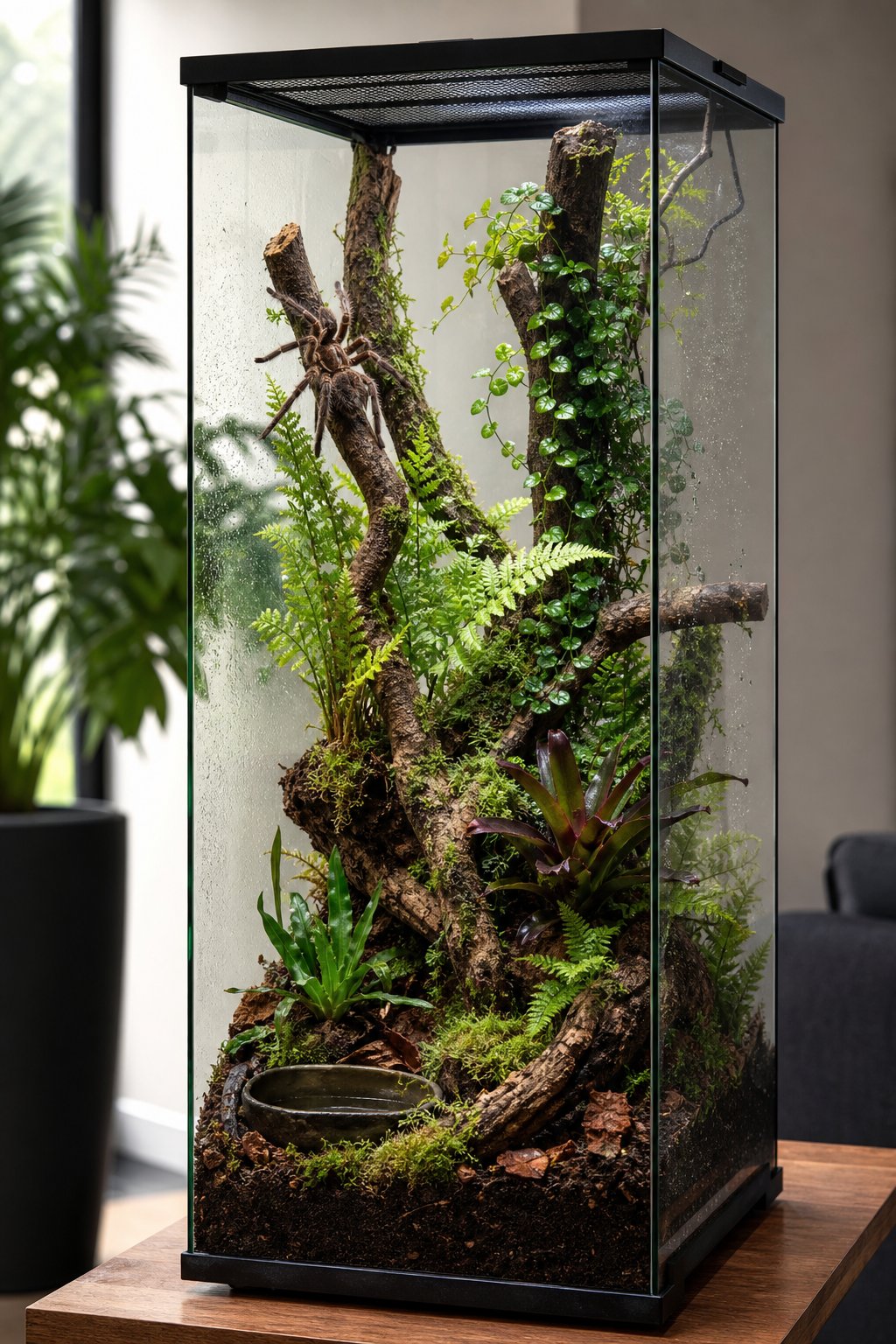
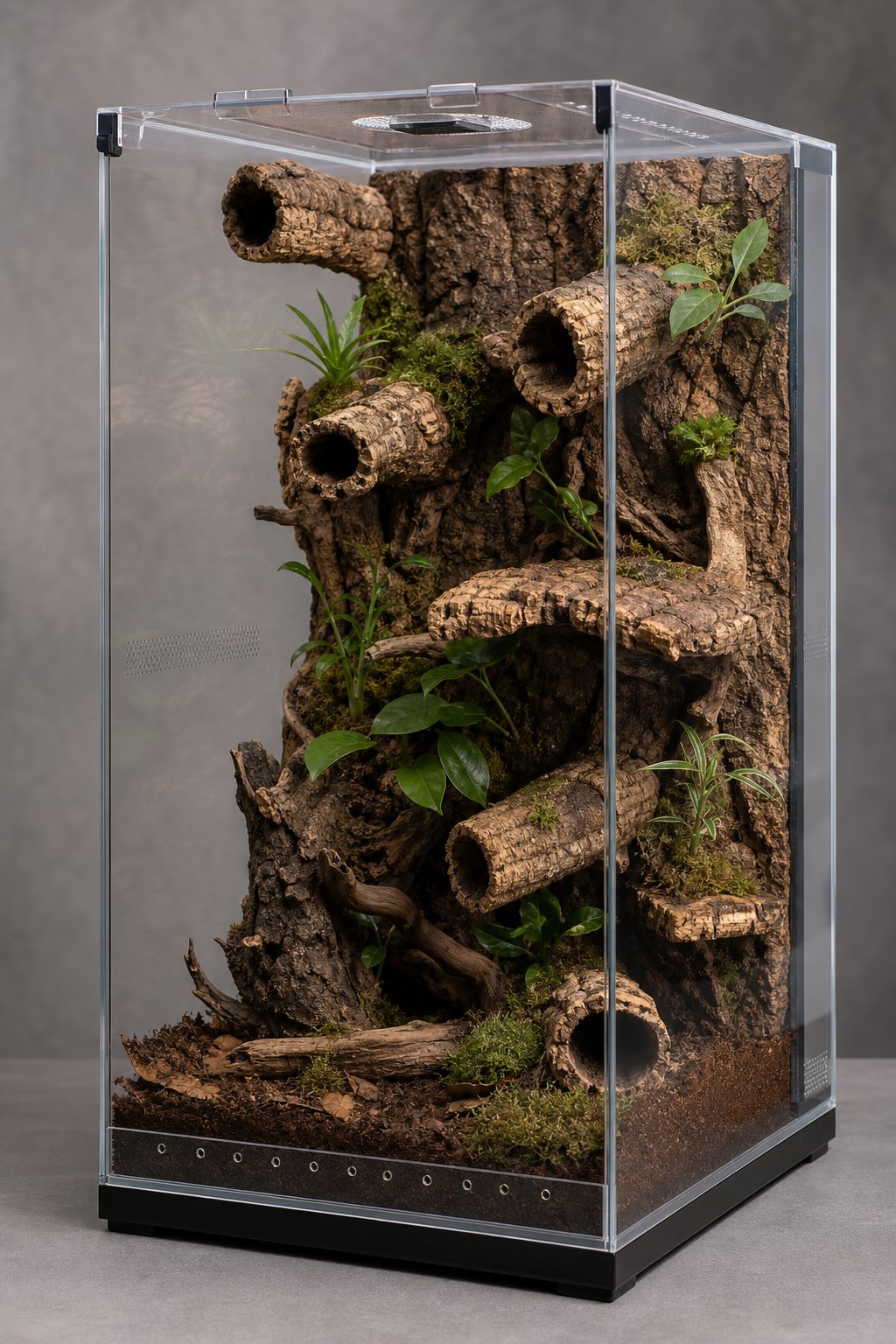
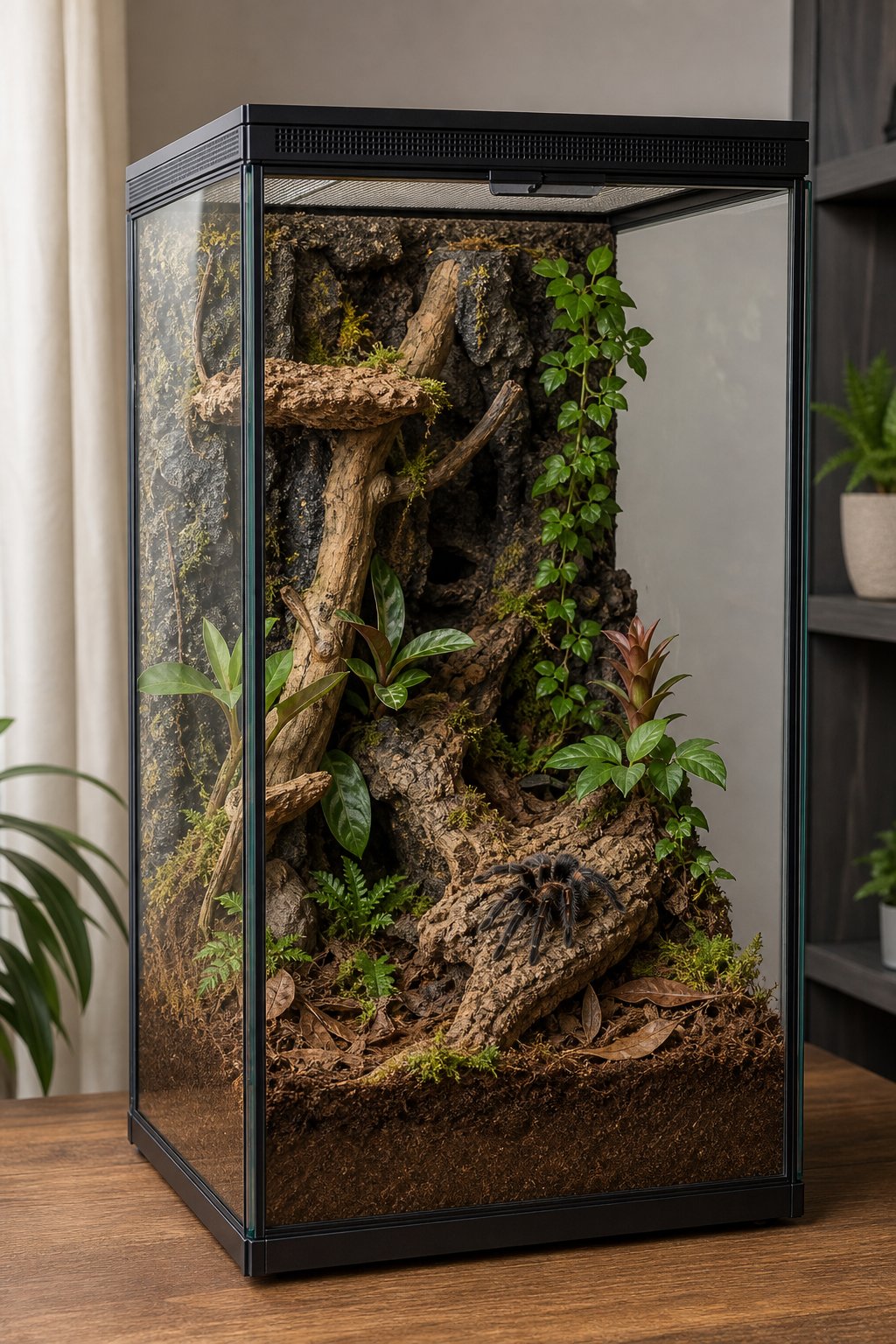
2. Greenhouse-View Arboreal Cork Tube Vivarium
A tall vivarium lets your arboreal tarantula climb while giving you a leafy view of the garden.
Place a cork tube upright against the back wall, then add sturdy branches that connect the lower area to the upper hide.
Leave enough open space for feeding and routine checks.
Greenhouse light can heat glass quickly, so position the enclosure away from direct rays.
Use a digital thermometer and hygrometer, and provide cross-ventilation rather than relying on a warm, damp box.
Anchor every branch firmly because loose wood can injure a climbing spider.
Expert Tip From MrPlanter: “Build upward, not outward, for an arboreal tarantula. Test every branch with your hand before your spider moves in.”
A conservatory display gives Avicularia avicularia plenty of height and a soft green backdrop.
Use a tall enclosure with a cork tube, thin climbing branches, and foliage near the upper half.
Keep the floor simple so you can spot leftover food and clean it without disturbing the webbing.
This species benefits from fresh airflow, so avoid packing the enclosure with wet moss or dense plants.
A small water dish and light, controlled misting can provide moisture without leaving the habitat soggy.
Make sure the door closes tightly before placing the terrarium near other plants.
Expert Tip From MrPlanter: “Put the best climbing surfaces near the top third of the enclosure. Keep the air moving so the display stays fresh, not swampy.”
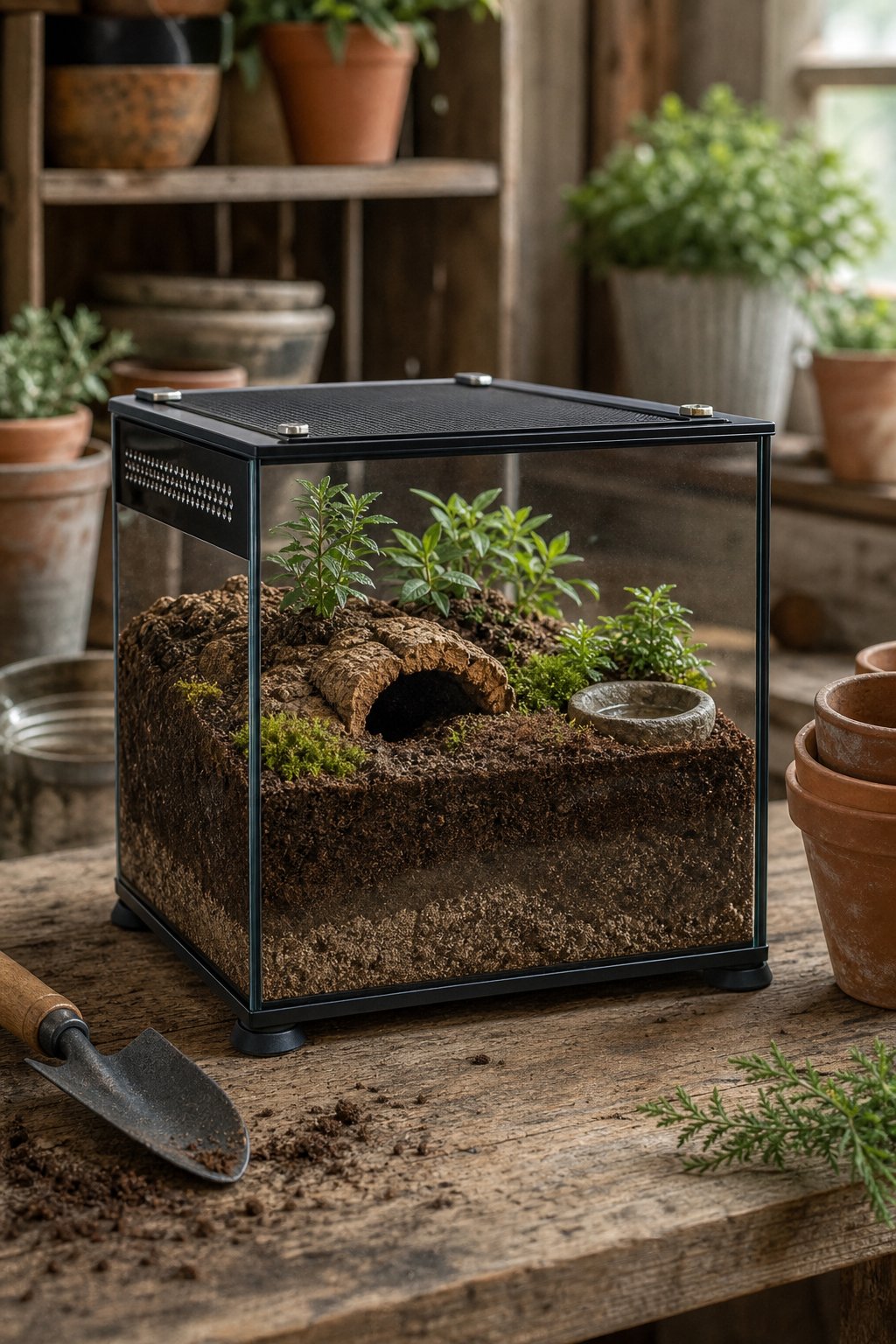
5. Potting-Shed Fossorial Excavation Tank
A potting shed already has the right mood for a digging tarantula, especially one that treats the soil like a personal renovation project.
Choose a front-opening or top-opening tank with deep, firmly packed substrate.
Add a cork bark piece partly buried at an angle, giving the spider a safe starting point for a tunnel.
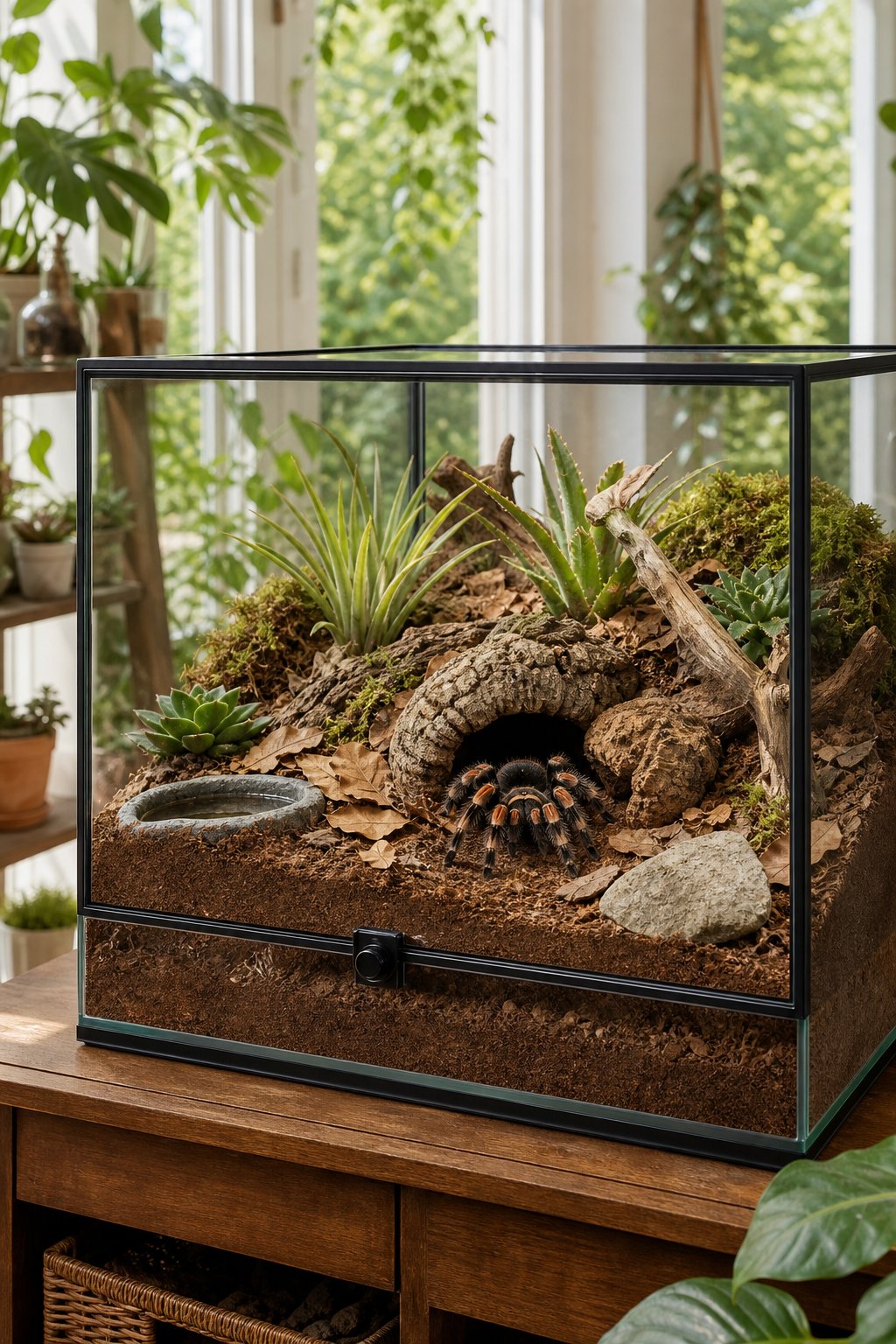
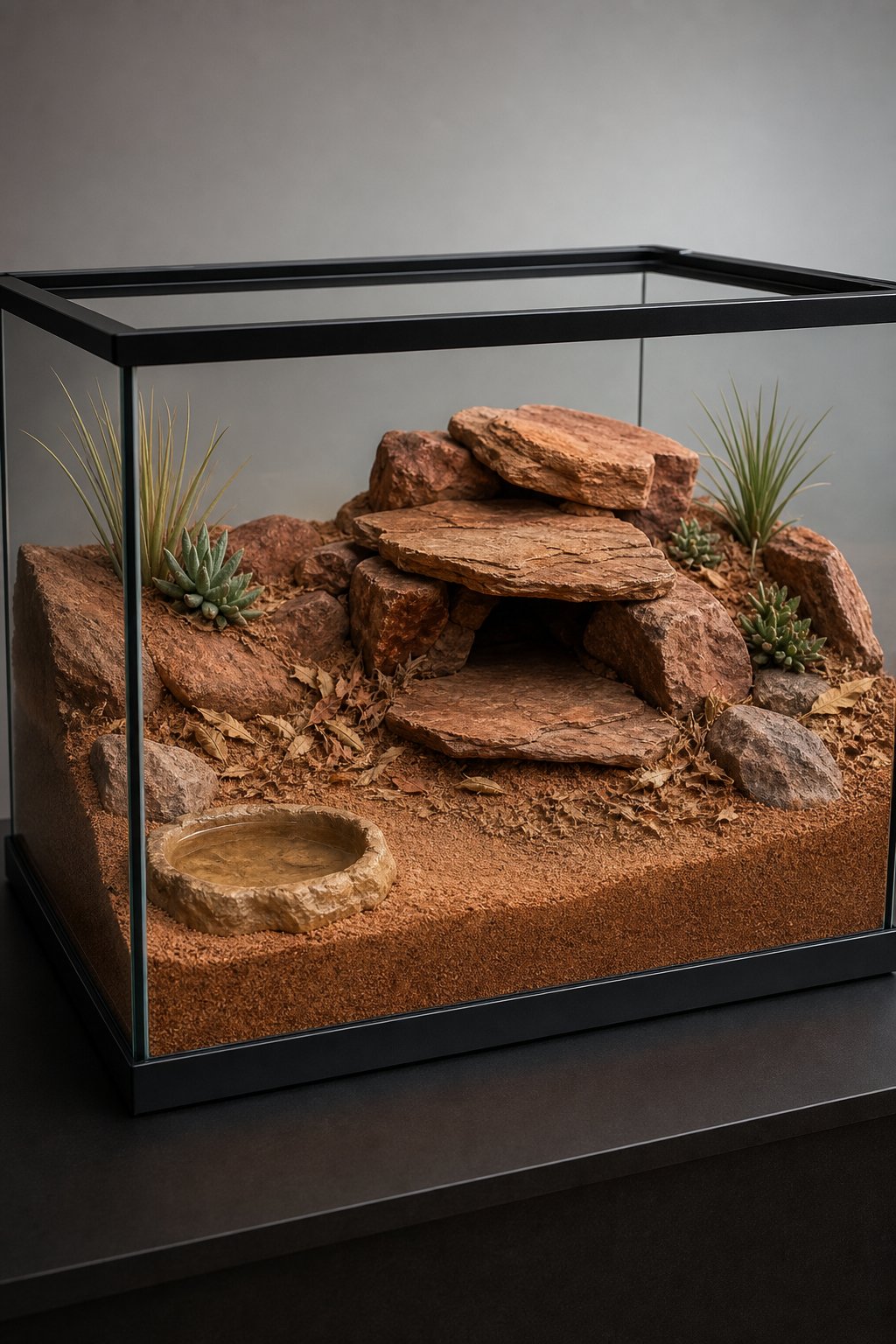
A desert rockscape may look dry and dramatic, yet Acanthoscurria geniculata still needs access to water.
Use a deep, firm substrate base, layered flat rocks, sparse plants, and a shallow dish that cannot tip.
Choose broad stones with no sharp edges and press them securely into the substrate.
This terrestrial layout leaves open floor space for a large, active tarantula.
Keep humidity and watering suited to the individual species and your room conditions rather than copying a desert label.
Place the display in a shaded garden room, not outdoors where heat can rise suddenly.
Expert Tip From MrPlanter: “Give the water dish a permanent spot that your spider can reach easily. Test every rock for wobble before adding the tarantula.”
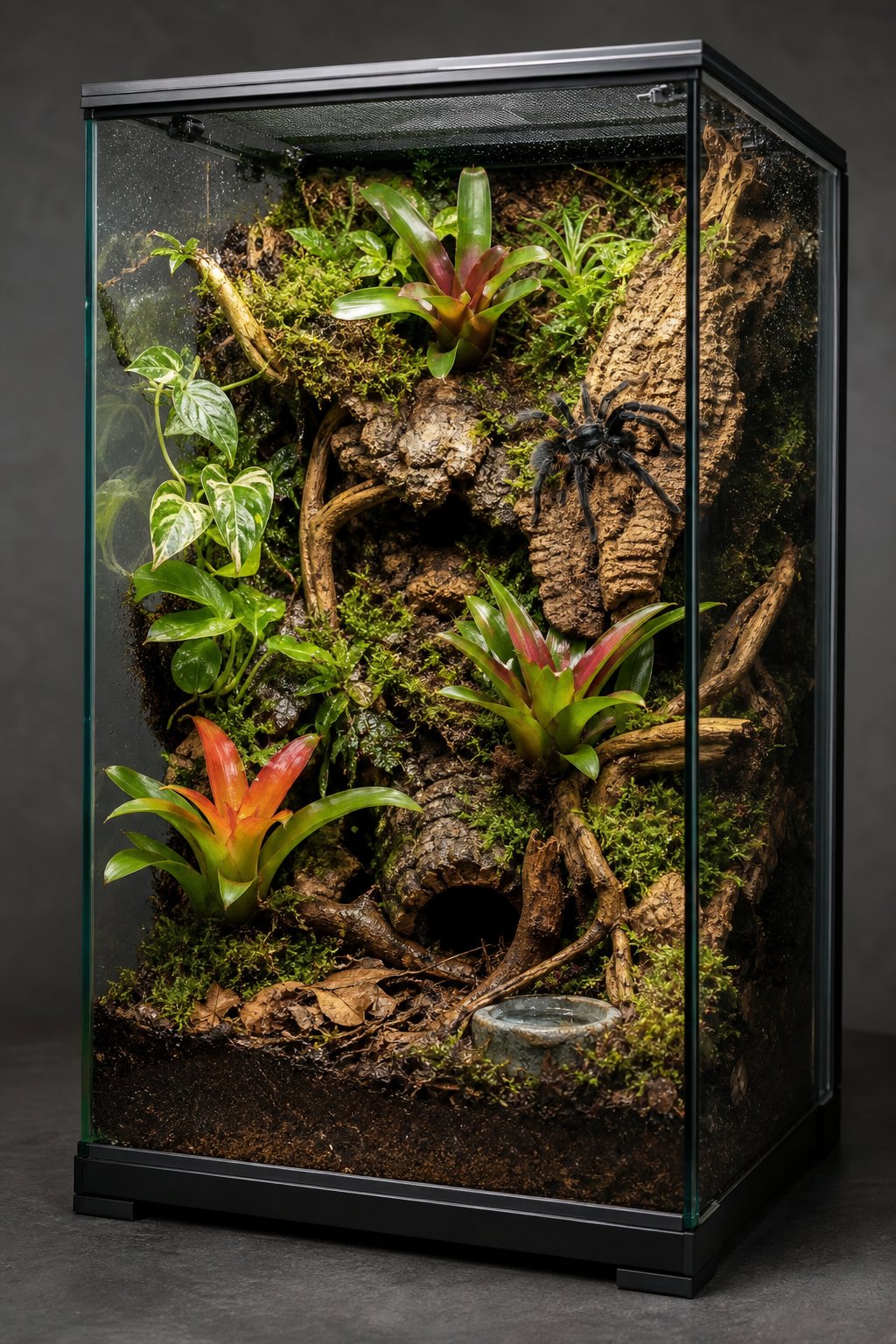
A foam-rock background gives an arboreal terrarium the look of a shaded garden wall. Seal the background fully with animal-safe materials.
Add branches that create several routes upward. Keep the texture firm and inspect it often for peeling, loose pieces, or damp pockets.
A tall enclosure with front access makes feeding and cleaning easier around webbing. Keep the floor free of heavy stones that could hurt a climbing tarantula during a fall.
Use plants as accents, while the bark and branches shape the habitat.
Expert Tip From MrPlanter: “Press and tug every background piece before installation. If anything moves, repair it before your spider moves in.”
A cork flat gives a burrowing tarantula an easy invitation to move underground. Bury part of the bark at a shallow angle and pack substrate around it.
Leave an entrance your spider can enlarge. Add a little moss and a few leaves without covering the doorway.
This setup has a quiet, earthy look that fits beside potted garden plants. Choose enclosure height based on the tarantula’s behavior.
Keep the fall distance low for a terrestrial species. Keep a water dish visible and easy to refill.
Expert Tip From MrPlanter: “Start the hide where you want the burrow entrance. Your tarantula may remodel it, so give the tunnel room to grow.”
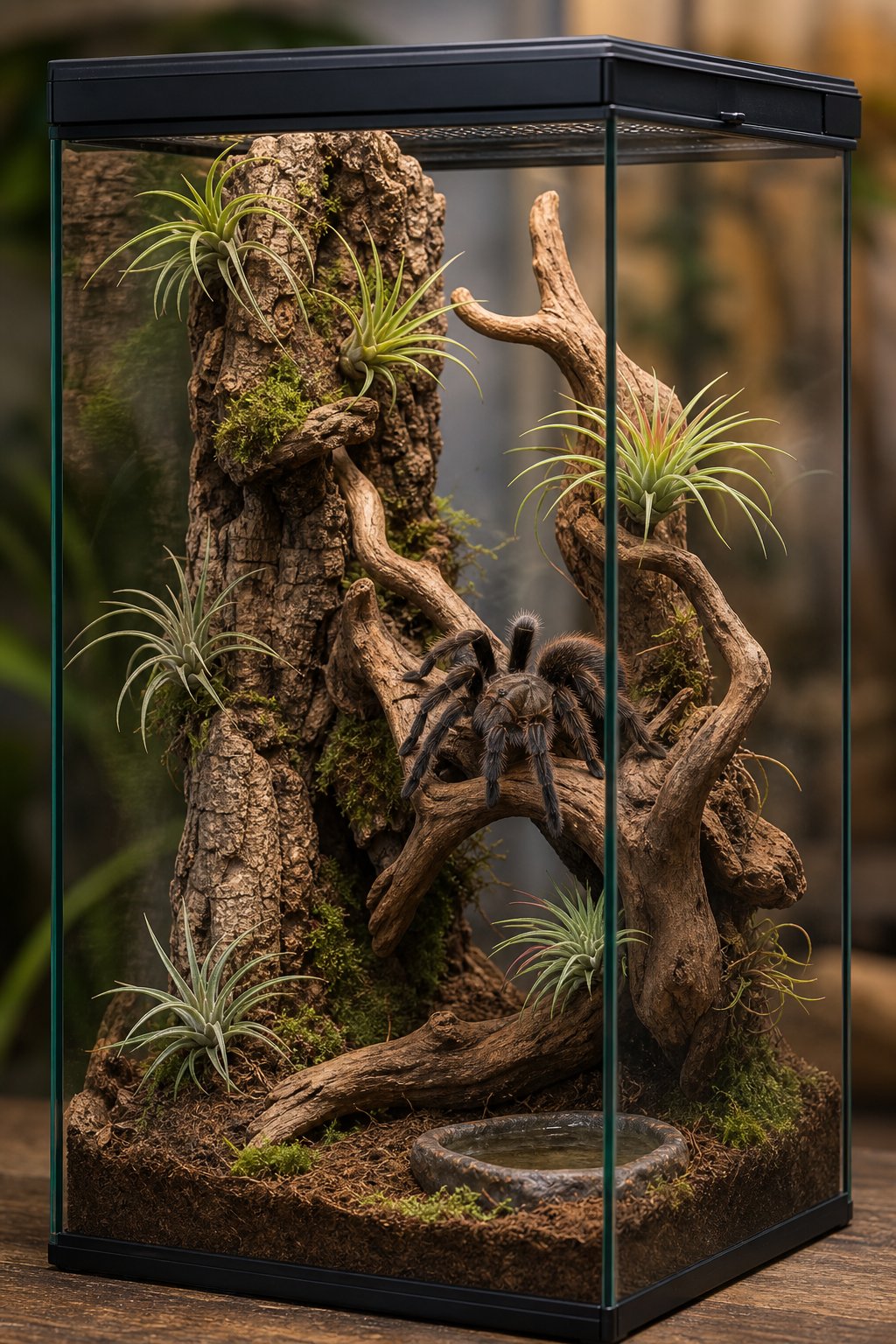
14. Spider Wood And Air-Plant Arboreal Showcase
Spider wood creates winding paths that make an arboreal enclosure look like a miniature tree canopy. Secure the main piece from the base to the top.
Attach air plants where they won’t block the spider’s routes. Keep the plants away from the door so maintenance stays simple.
Clean and dry the wood, and remove any sharp points. Provide a secure hide behind or beside the wood, since an attractive branch alone may not feel safe to your tarantula.
Expert Tip From MrPlanter: “Think like a spider and trace every climbing route. Remove any branch tip that could snag legs or catch a molt.”
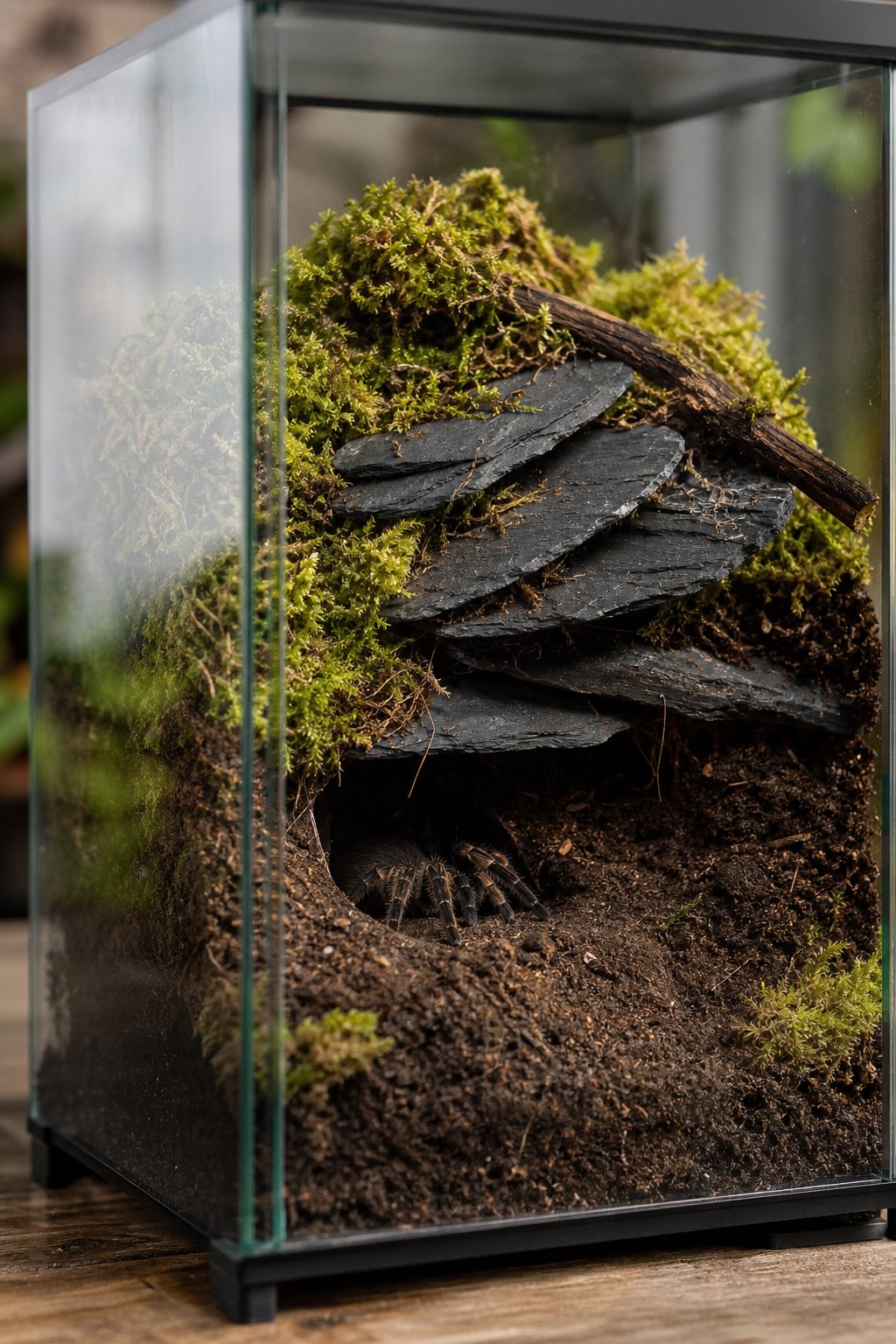
15. Natural Slate And Sphagnum Moss Fossorial Setup
Dark slate and green moss give a fossorial setup a rich woodland color scheme. Use slate as a supported entrance or surface shelter, never as a loose stack that can collapse.
Pack deep substrate beneath the slate. Place moss near the water area and monitor moisture.
Keep the habitat easy to inspect from the front or sides. Sphagnum moss holds moisture, though too much wet material may reduce airflow.
Expert Tip From MrPlanter: “Support slate from below instead of balancing it on loose soil. A safe shelter matters more than a perfect stone pattern.”
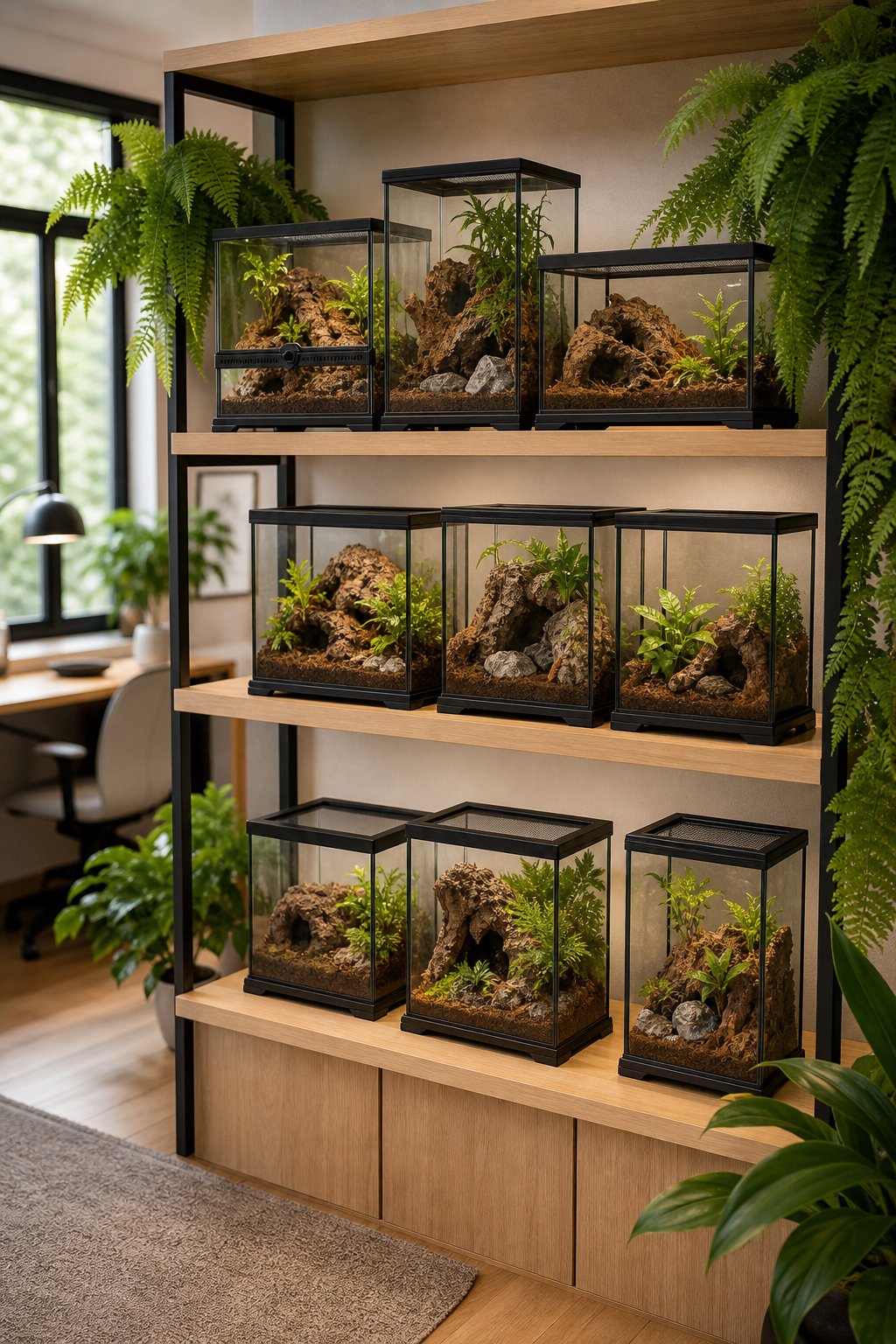
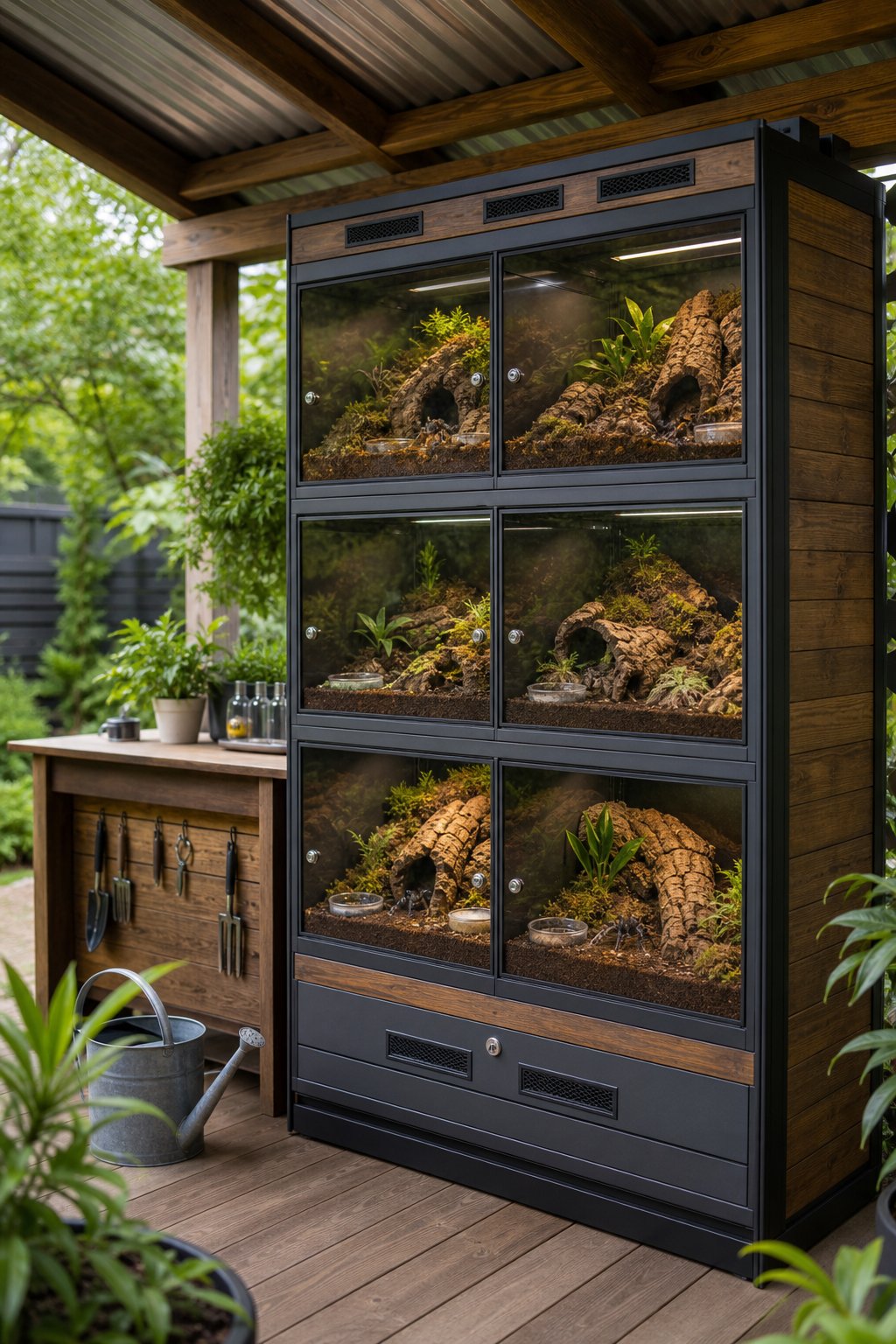
16. Weatherproof Garden Studio Tarantula Cabinet
A garden studio cabinet organizes several tarantula enclosures behind glass-fronted doors. Use separate, locked habitats with species-specific substrate, hides, and ventilation.
Add labels and a small care station nearby. Keep food, chemicals, and gardening tools in a different cabinet.
Monitor the room through hot afternoons and cold nights, since weatherproof construction does not guarantee stable temperatures inside. Add safe heating or cooling only with proper controls.
Keep the cabinet away from exterior walls that receive strong sun or dampness.
Expert Tip From MrPlanter: “Treat the studio as an indoor animal room, not a shed. Check temperatures daily before trusting the cabinet with your collection.”
Choosing An Enclosure For Your Tarantula
Match Terrestrial, Arboreal, Or Fossorial Behavior
Start with how your tarantula naturally uses space. Terrestrial species need a wider floor plan and a low fall height.
Provide a sturdy hide for terrestrial species. Arboreal species need more vertical room and climbing surfaces.
Give arboreal species a high hide. Fossorial species need deep, firmly packed substrate so they can build tunnels.
Avoid choosing a tank by appearance alone. A tall enclosure may look impressive for a ground-dwelling tarantula, yet extra height can create a dangerous fall.
Keep each tarantula alone unless a qualified specialist gives you a different, species-specific reason.
Prioritize Ventilation, Secure Access, And Safe Fall Height
Fresh airflow helps prevent stale, overly damp conditions. Look for secure vents that provide movement without creating escape gaps.
Test every door or lid before adding substrate. Front-opening designs can make feeding easier.
Top access may work well for simple terrestrial habitats. Place heavy decor directly on the enclosure floor before adding substrate around it.
This stops a burrowing spider from shifting a rock onto itself. Choose a lock, clip, or firm latch if children, pets, or frequent visitors use the garden room.
Use Species-Appropriate Substrate Depth And Hide Placement
Use a clean substrate suited to the species, then provide enough depth for digging or enough open floor for walking. Place the hide where your tarantula can reach it without crossing a cluttered area.
Add a shallow water dish that stays stable and easy to clean. Watch your spider after setup changes.
Refusing food, hiding for long periods, or avoiding a wet area can indicate the arrangement needs adjustment, though normal molting behavior can look similar.
Keeping A Garden-Adjacent Display Safe
Avoid Direct Sun, Outdoor Temperature Swings, And Rain
Keep tarantula enclosures inside a climate-controlled room, greenhouse annex, or fully enclosed patio space. Direct sun can heat glass rapidly, even on a mild day.
Nighttime temperatures may drop faster near exterior walls. Rain and wind can also stress the spider and damage wood, substrate, or electrical equipment.
Use a digital thermometer and hygrometer at enclosure level. Curtains, shade cloth, and careful placement can control light.
These measures cannot fix a room with major temperature swings. Never leave a tank where rain can enter through mesh or ventilation openings.
Protect Enclosures From Pesticide Drift, Pets, And Wildlife
Garden sprays, lawn treatments, and insecticides can harm tarantulas even when the enclosure looks closed. Keep habitats far from treated plants.
Avoid bringing outdoor decor inside unless you know it is clean and chemical-free. Wash your hands after gardening before handling enclosure equipment.
Cats, dogs, raccoons, and curious birds can knock over a display or damage a lid. Use a sturdy shelf and secure doors.
Add a separate barrier if pets can enter the room. Keep all tarantulas in individual enclosures.
Use A Climate-Controlled Room, Greenhouse Annex, Or Enclosed Patio Space
A controlled garden room gives you the best balance between a leafy display and reliable care. Choose a space with stable heat, good airflow, low traffic, and protection from rain.
Place the enclosures on a level cabinet. Keep cords away from water, and leave enough space for safe maintenance.
Check the room during the hottest and coldest parts of the day before you move a tarantula there. You can create a display that looks like a peaceful garden corner while the spider enjoys the steady conditions it needs.
Set a simple daily check for temperature, door security, water, and signs of damage.
I’m Anirban Saha, the Founder and Owner of MrPlanter.com. I pay the bills as a software developer, although my BTech is actually in Electronics and Communication. I really love my day job, but what gives me energy every day is interacting with my indoor plants and taking care of them. I have been successfully nurturing and maintaining houseplants for over 10 years now.
📚🔍 Our content undergoes thorough review and fact-checking before publication. For additional details, explore our strict Editorial Policy to deliver helpful content. 📝🔒