As an Amazon Associate, MrPlanter.com earns from qualifying purchases.
The most common jumping spider setup mistake is using a wide, short enclosure meant for a terrestrial pet. Jumpers build their hammocks near the top, so good jumping spider enclosure ideas start with vertical space, not floor area.
You can pair clear walls with cork bark, moss, safe plants, and tiny perches while keeping your spider easy to watch and care for.
The best enclosure gives your spider secure ventilation, climbing space, feeding access, and a dry retreat, while also fitting the sheltered spot you choose in your yard or garden.
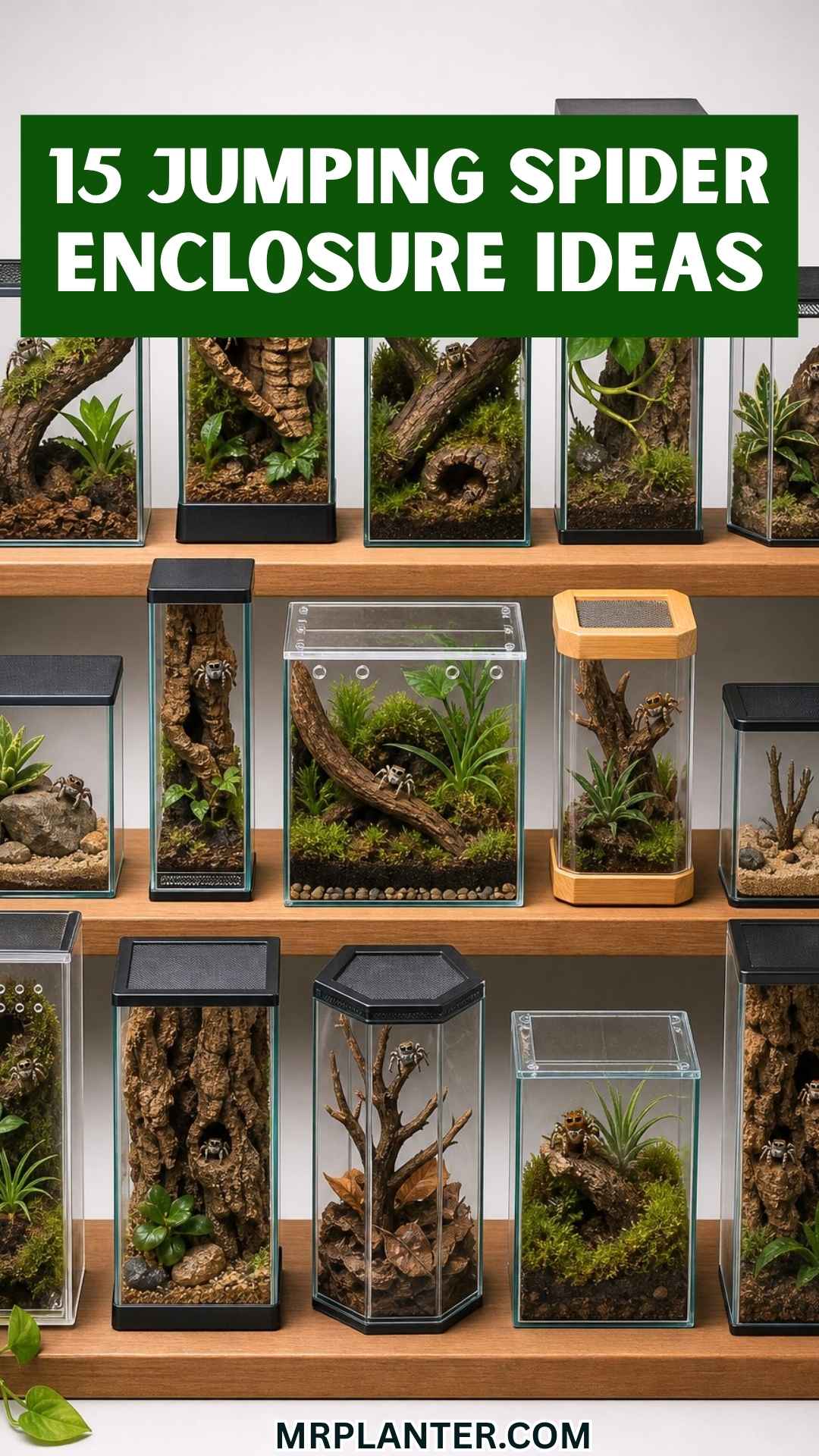
These 15 jumping spider enclosure ideas help you create a display that looks lively without making daily care difficult.
1. Woodland Jumping Spider Enclosure Kit With Hide, Feeder, And Water Dish
A bare enclosure can feel like a studio apartment with no furniture.
Your spider deserves better décor.
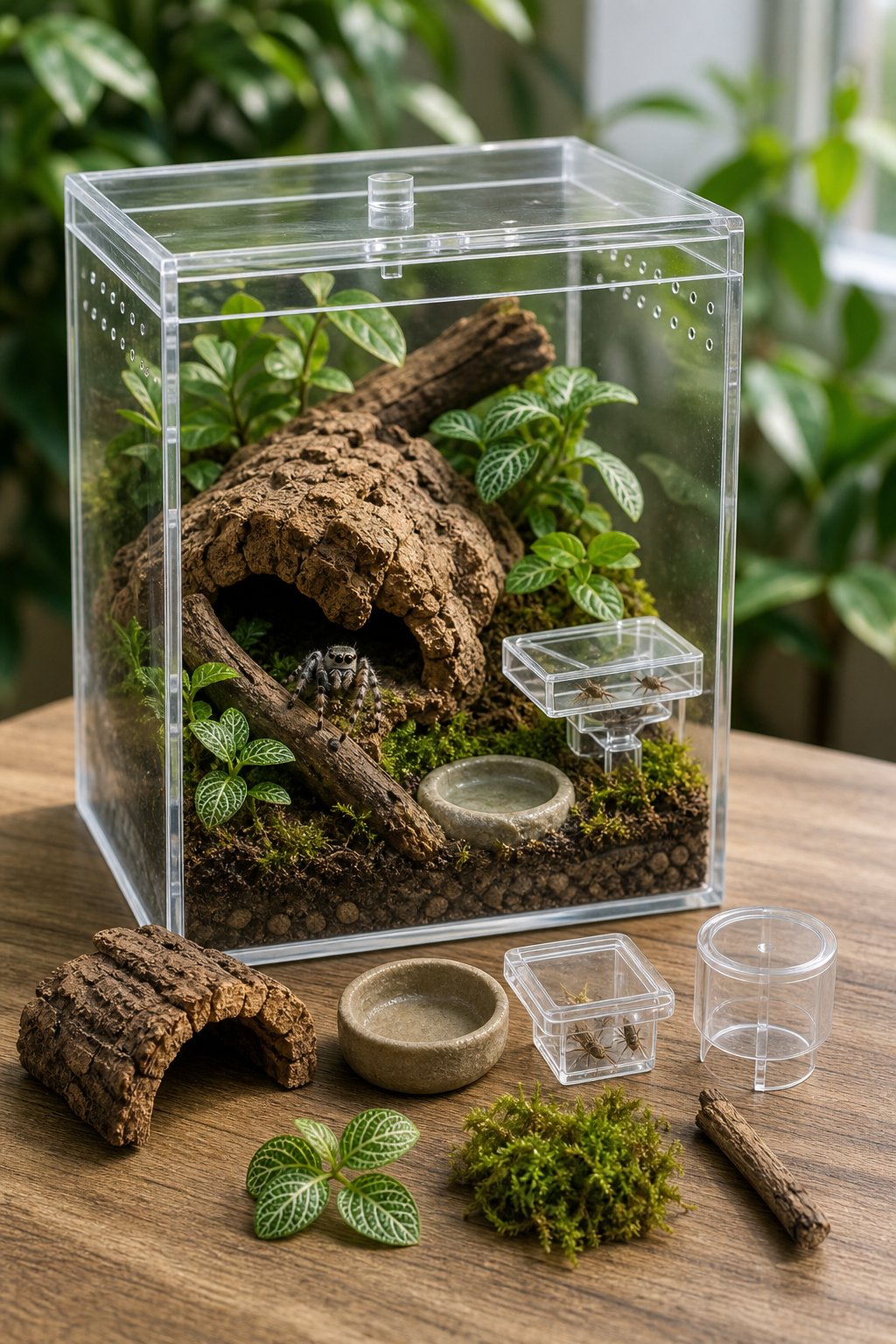
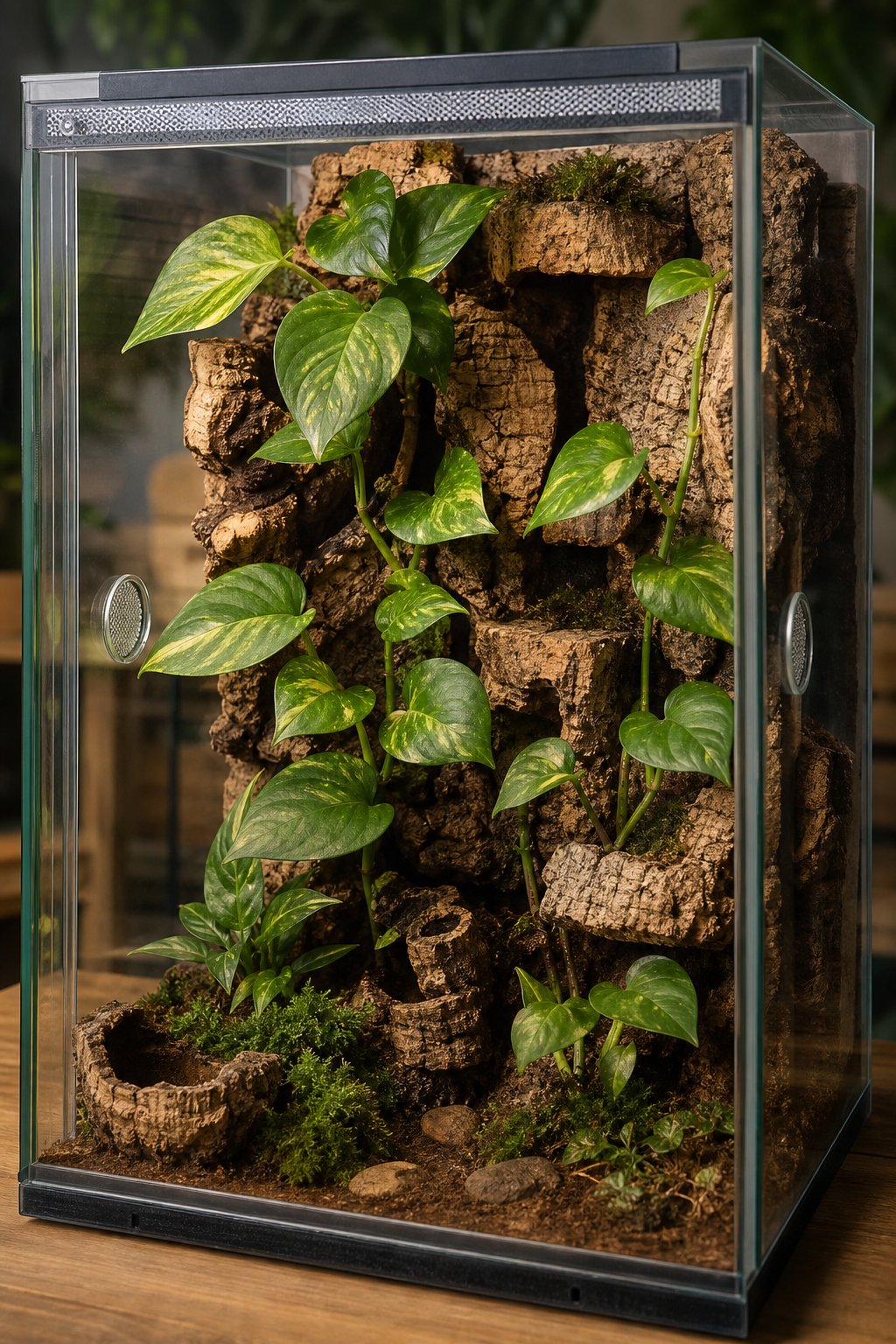
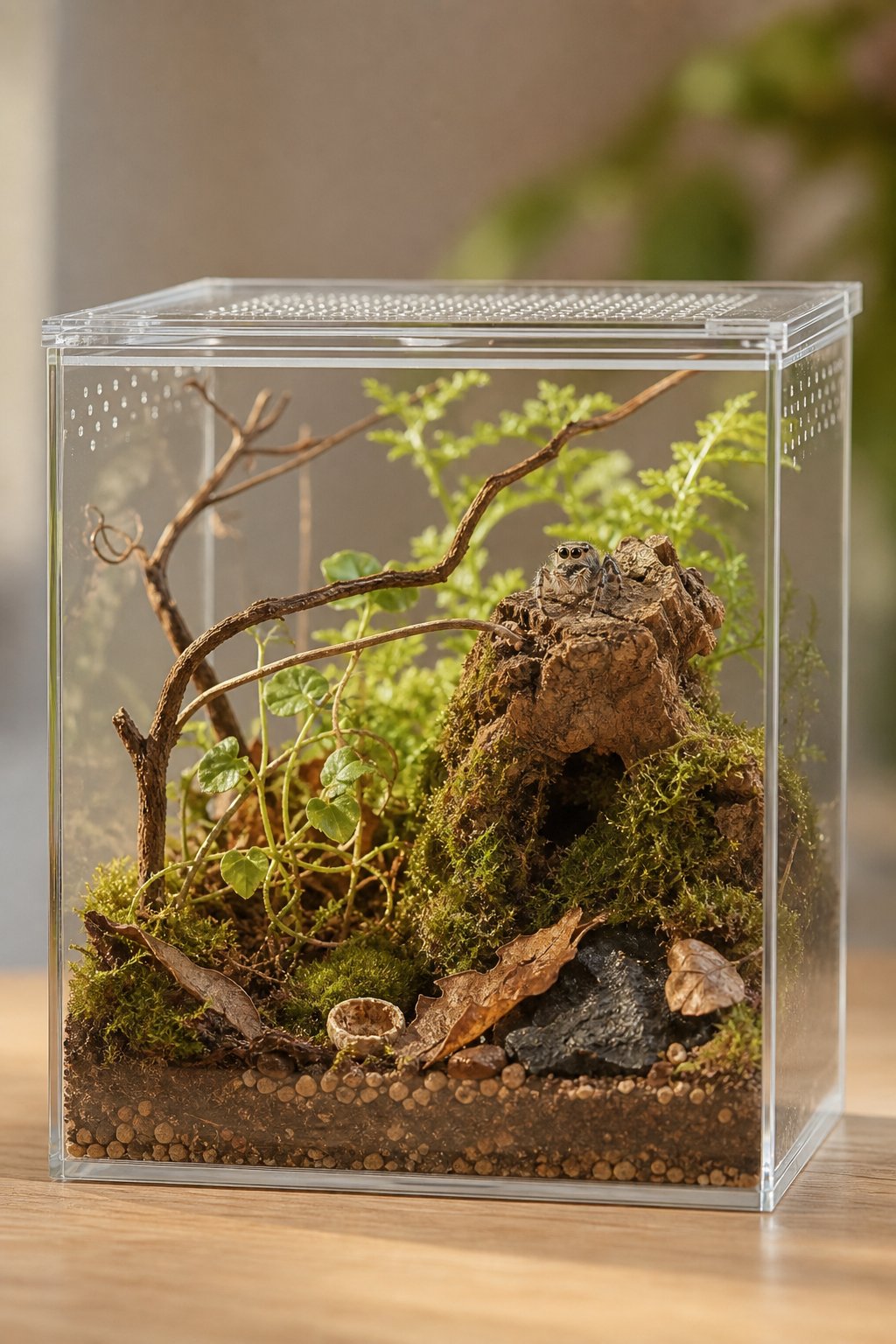
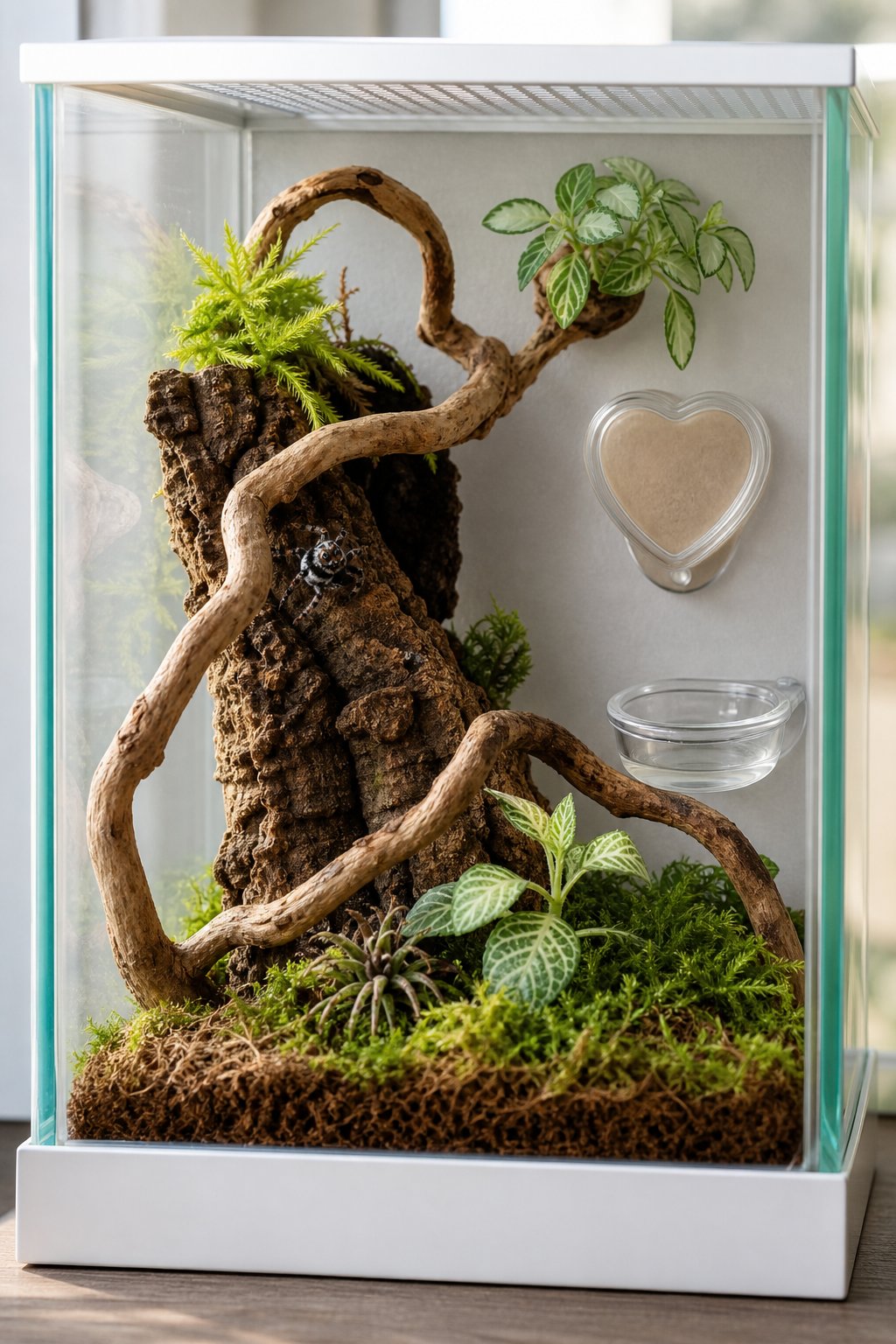
This woodland kit gives you a ready-made starting point with a hide, feeder, water dish, and natural-looking details that suit a covered garden shelf.
The hide offers your spider a place to rest, while the feeder and dish simplify routine care.
Check that the enclosure stays shaded and protected from rain before you place it near plants or a porch.
Add a twig or two if your spider needs more climbing routes.
Expert Tip From MrPlanter: “Place the water dish where you can reach it without disturbing the web nest. A calm spider is much easier to care for.”
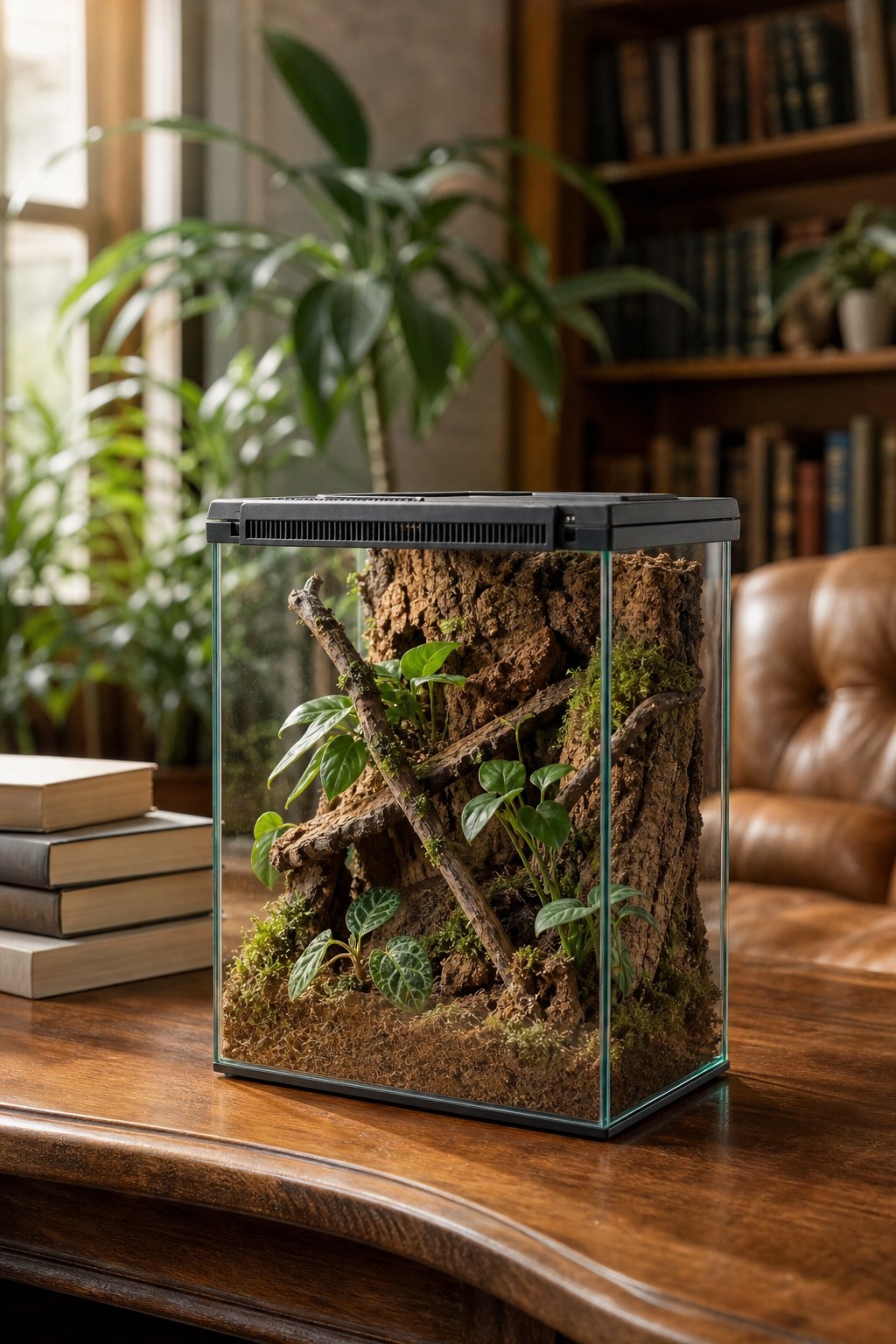
A garden reading nook and a tiny spider home make a surprisingly sweet pair.
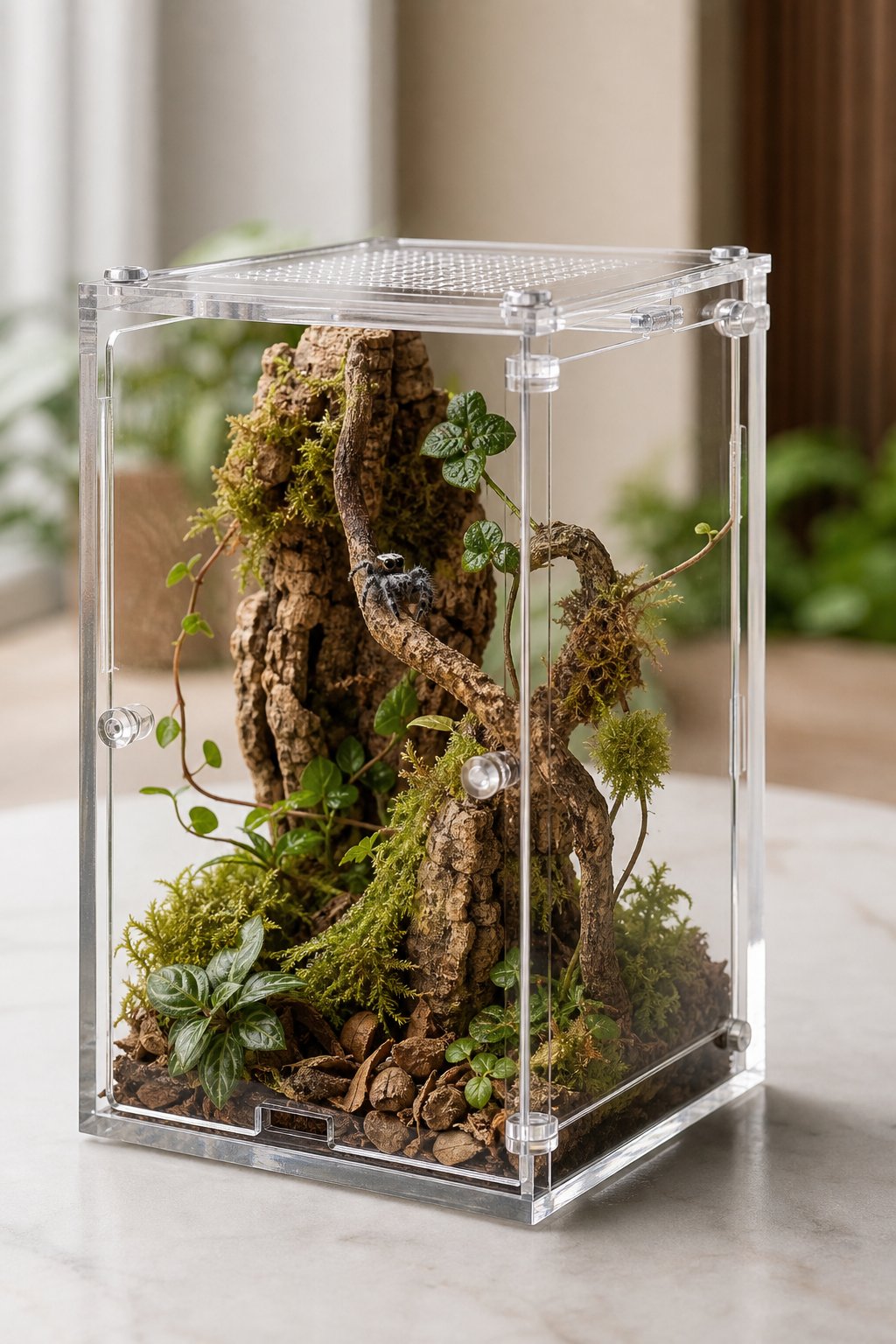
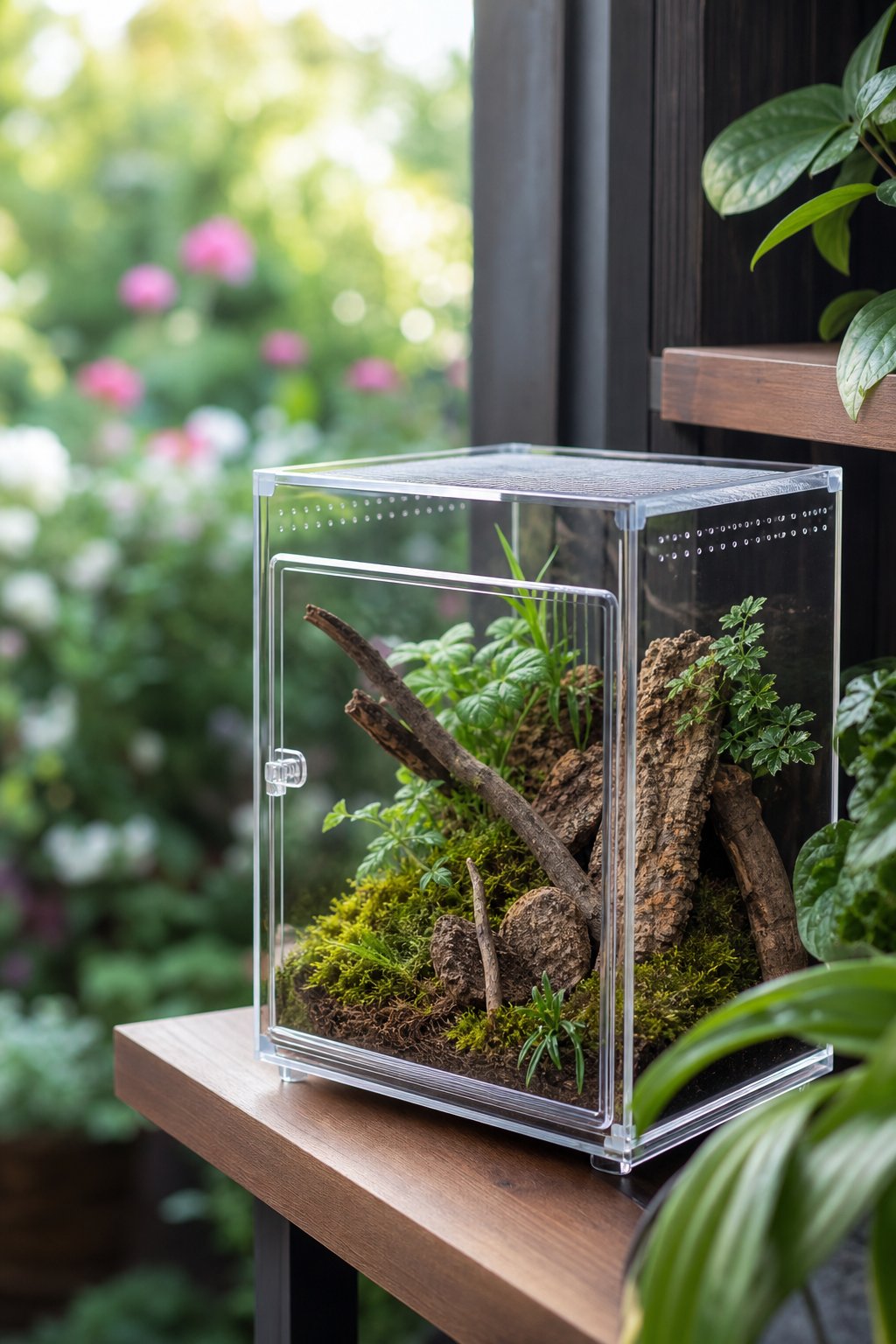
This handmade botanical terrarium brings leafy texture, bookish charm, and a cozy focal point to a covered porch or sunroom shelf.
Use the plants and bark to create several routes without blocking your view of the spider.
Keep the terrarium away from direct afternoon sun, since glass can heat quickly.
A handcrafted setup may vary slightly, so test the door, ventilation, and décor before you add your spider.
Expert Tip From MrPlanter: “Think of the enclosure as a tiny room with windows and furniture. Leave one open viewing area so you can enjoy the resident.”
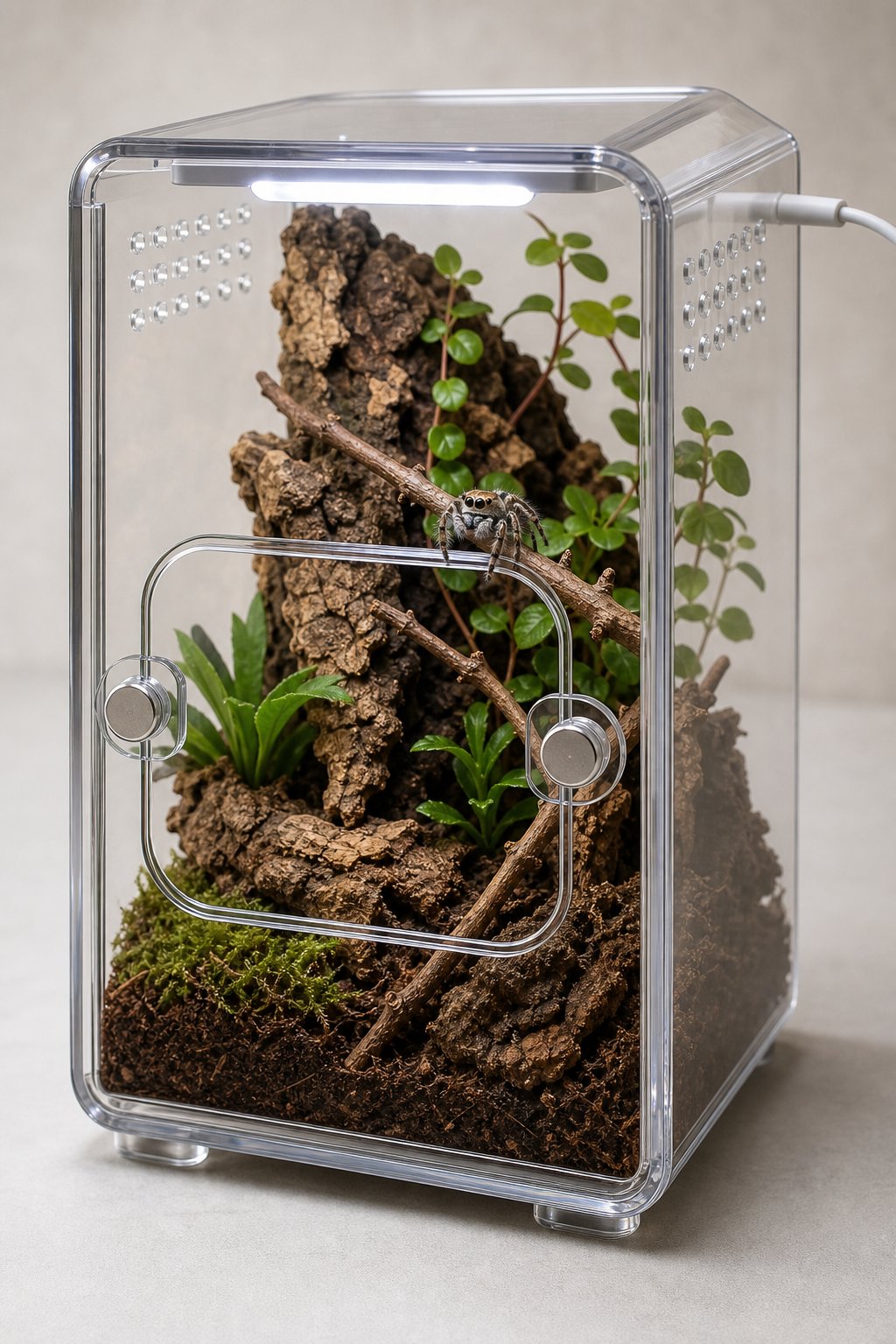
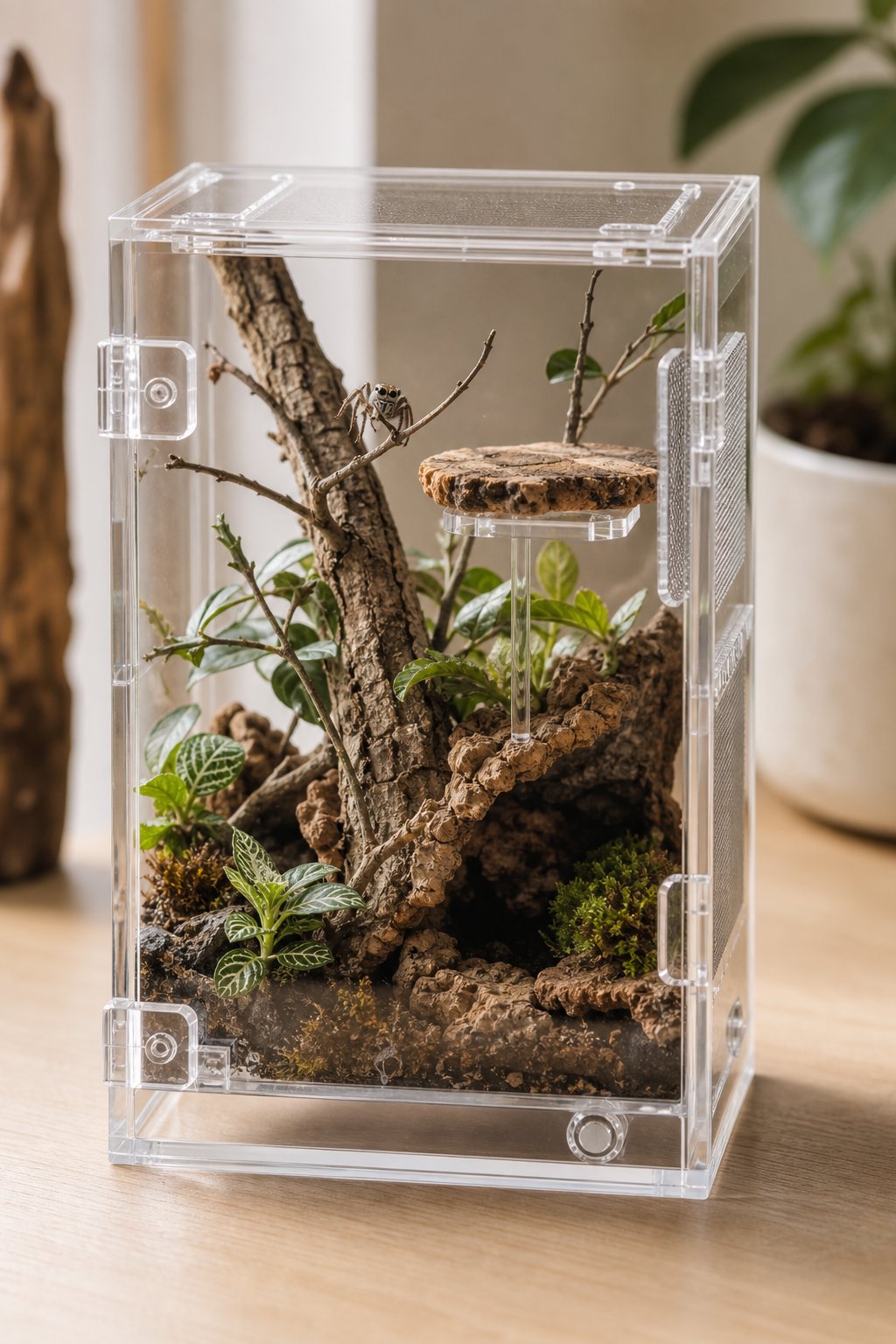
5. BIO POD Enclosure With Magnetic Feeding Hatch And USB Light
Feeding time can become a clumsy little circus when the door is hard to open.
Magnetic décor lets you adjust the layout without rebuilding the habitat.
Keep every piece secure, with no sharp edges or loose parts that could block the door.
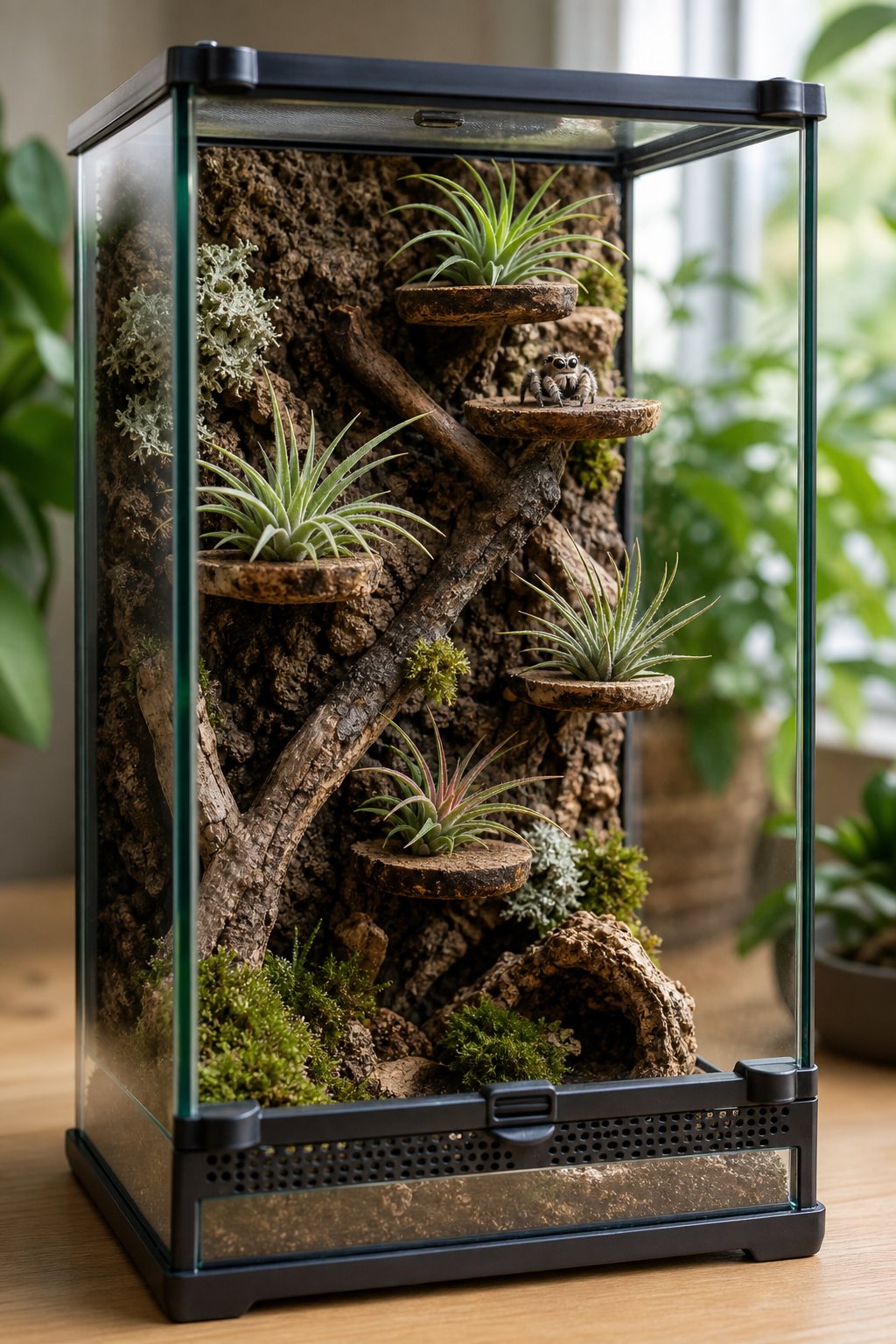
Air plants need suitable light and airflow, so avoid sealing them in damp corners.
Expert Tip From MrPlanter: “Move one perch at a time when you change the layout. Small changes help you see which spots your spider prefers.”
9. Hanging Moss Hide 3D-Printed Spider Habitat
Your spider may ignore the fancy floor plan and choose the ceiling.
Spiders enjoy keeping you humble.
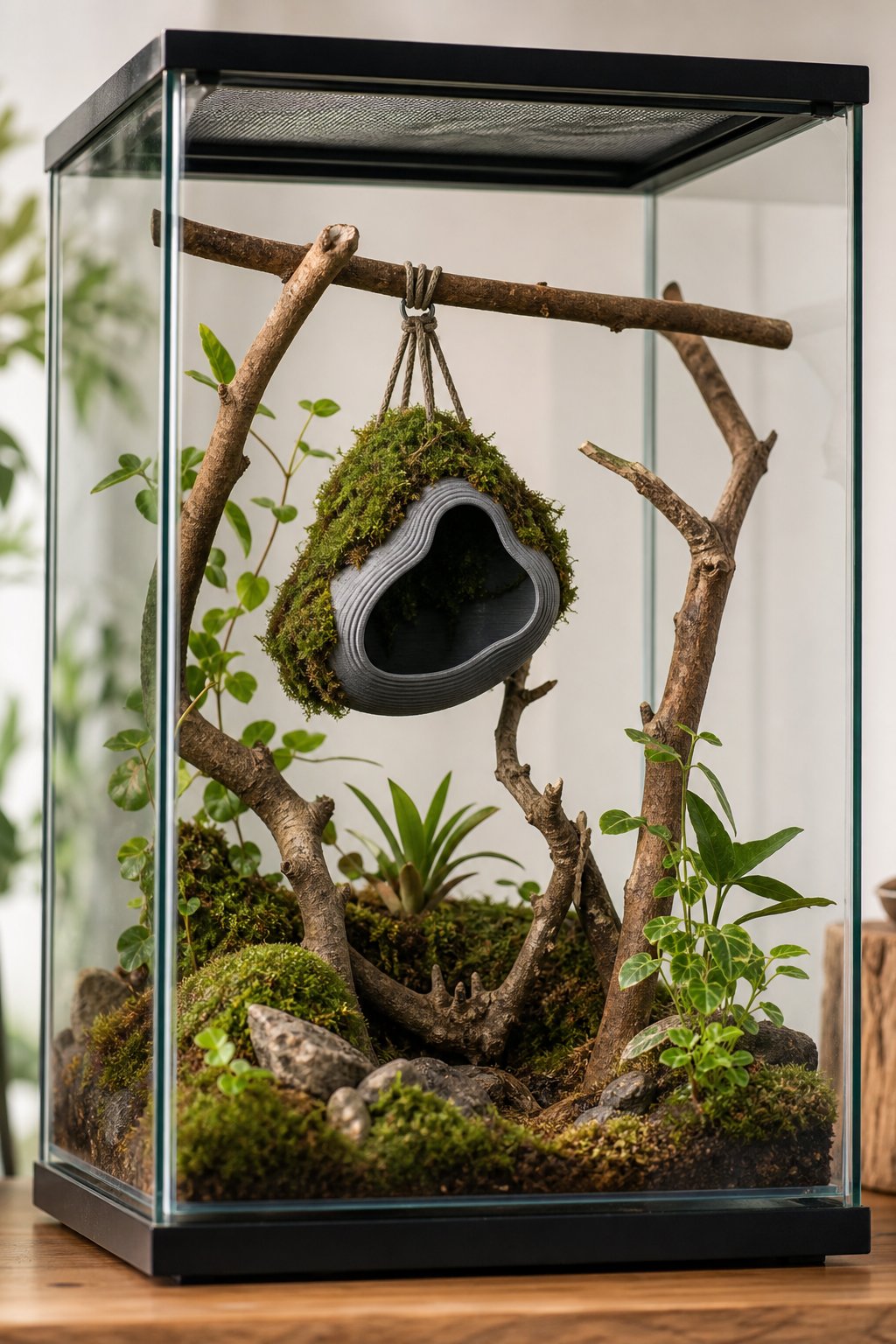
A hanging moss hide adds a raised retreat and gives a garden display a soft woodland touch.
Suspend the hide so it cannot swing into the walls or door.
Inspect the printed material for rough edges, and use only spider-safe finishes.
Since web nests often appear high in the enclosure, keep the upper area calm and avoid frequent rearranging.
Expert Tip From MrPlanter: “Hang the hide near a wall rather than in the middle of the habitat. Your spider gets shelter without losing climbing room.”
10. Whimsical Mushroom Accent Woodland Terrarium
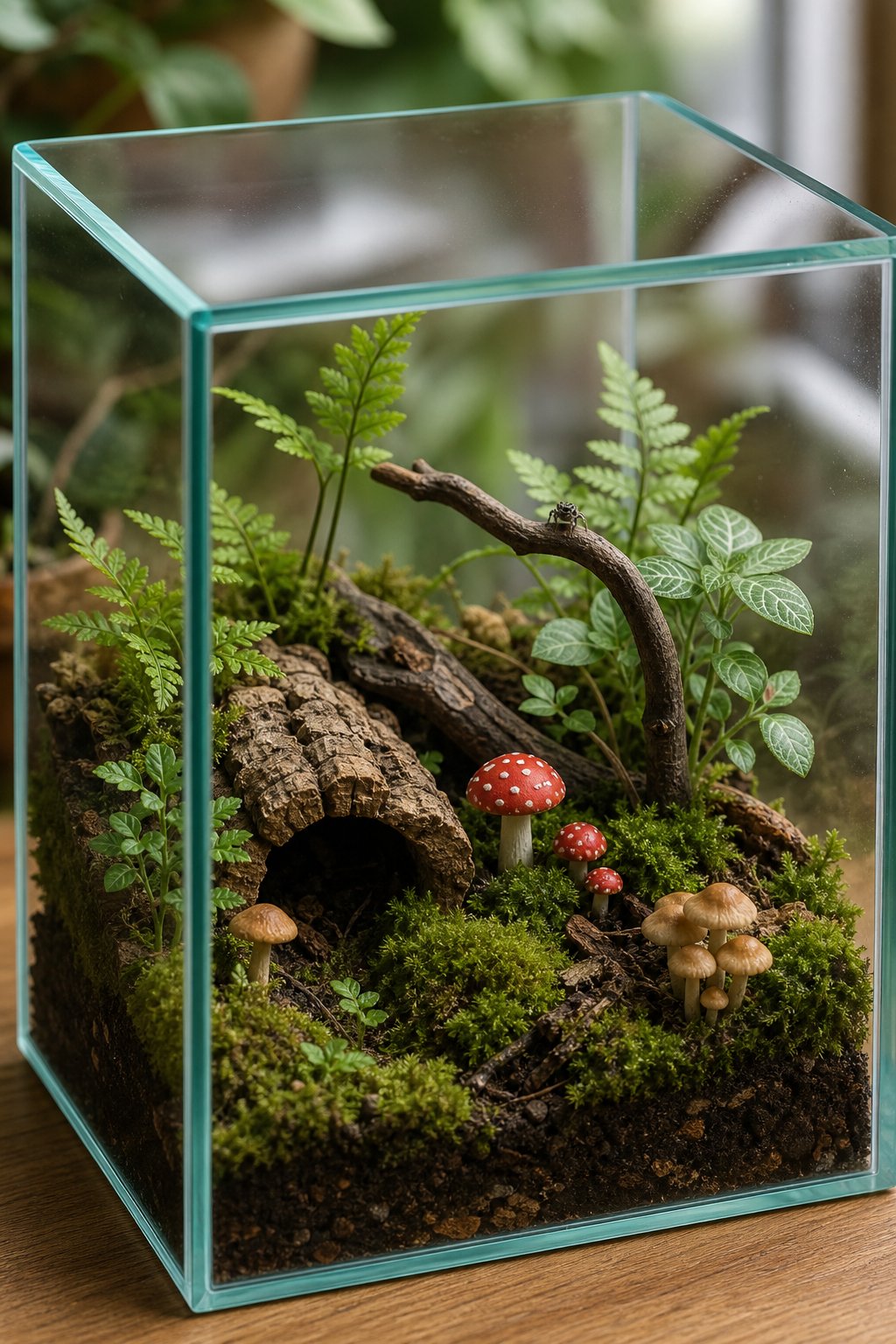
Miniature mushrooms can make an enclosure look like your garden has shrunk overnight.
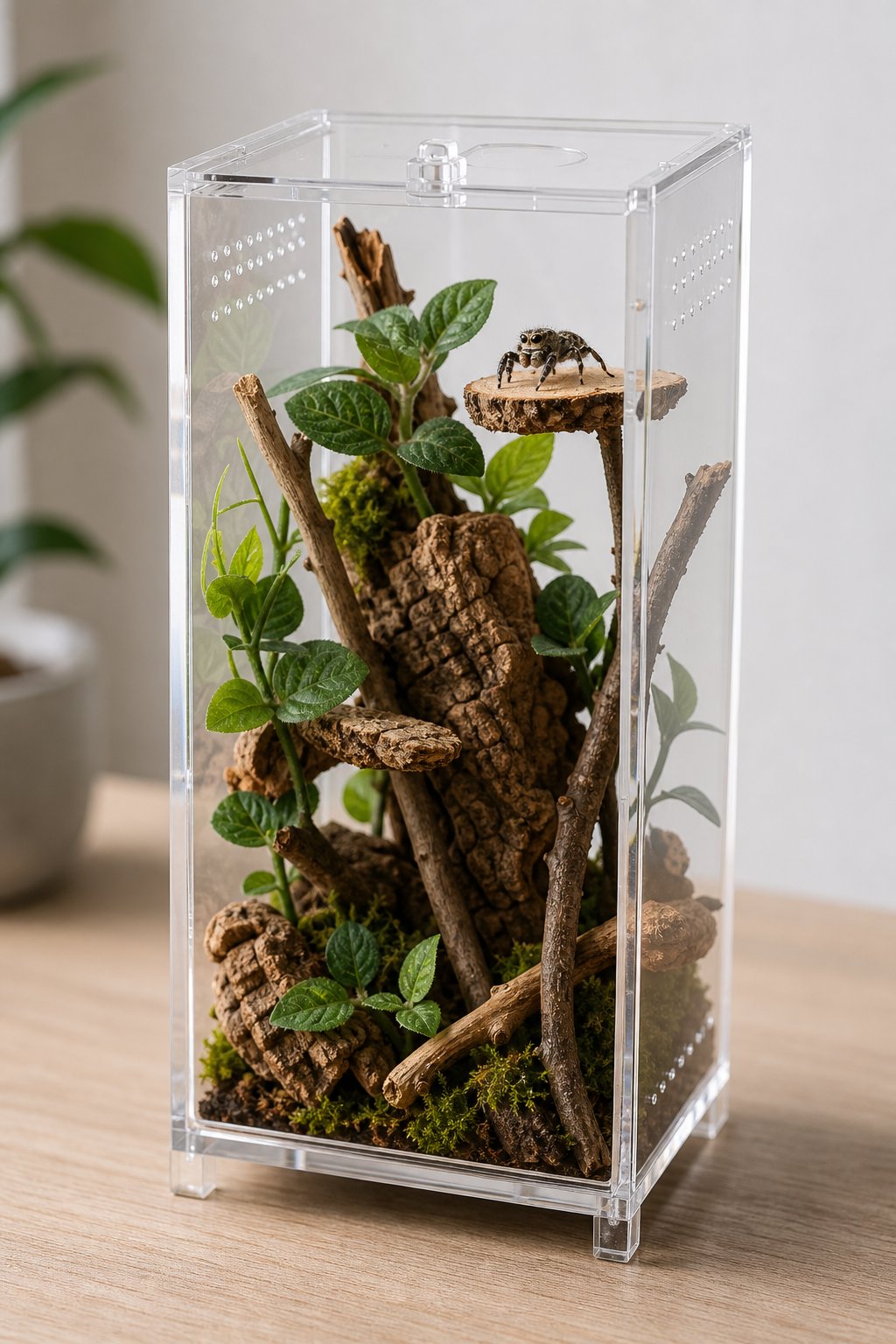
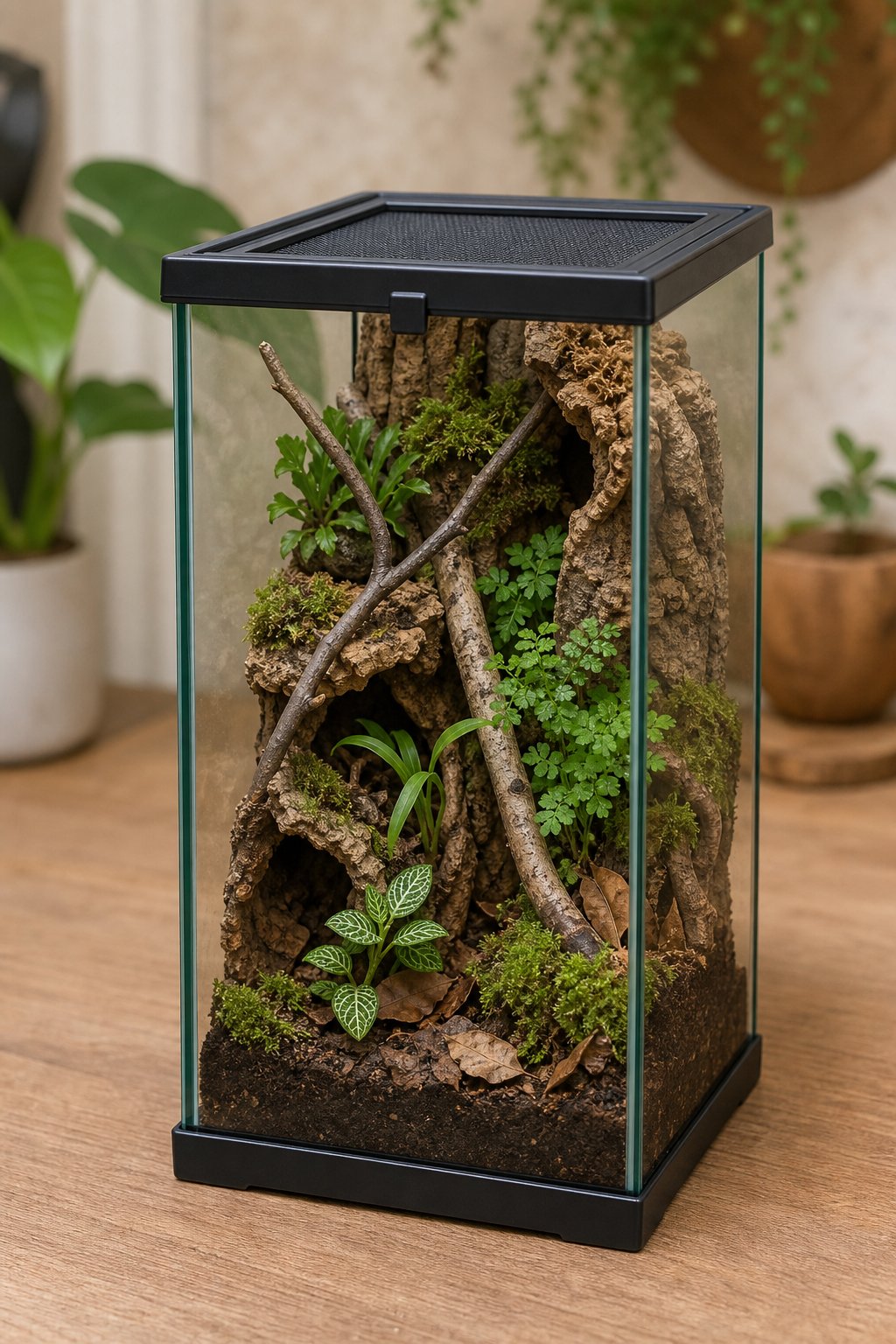
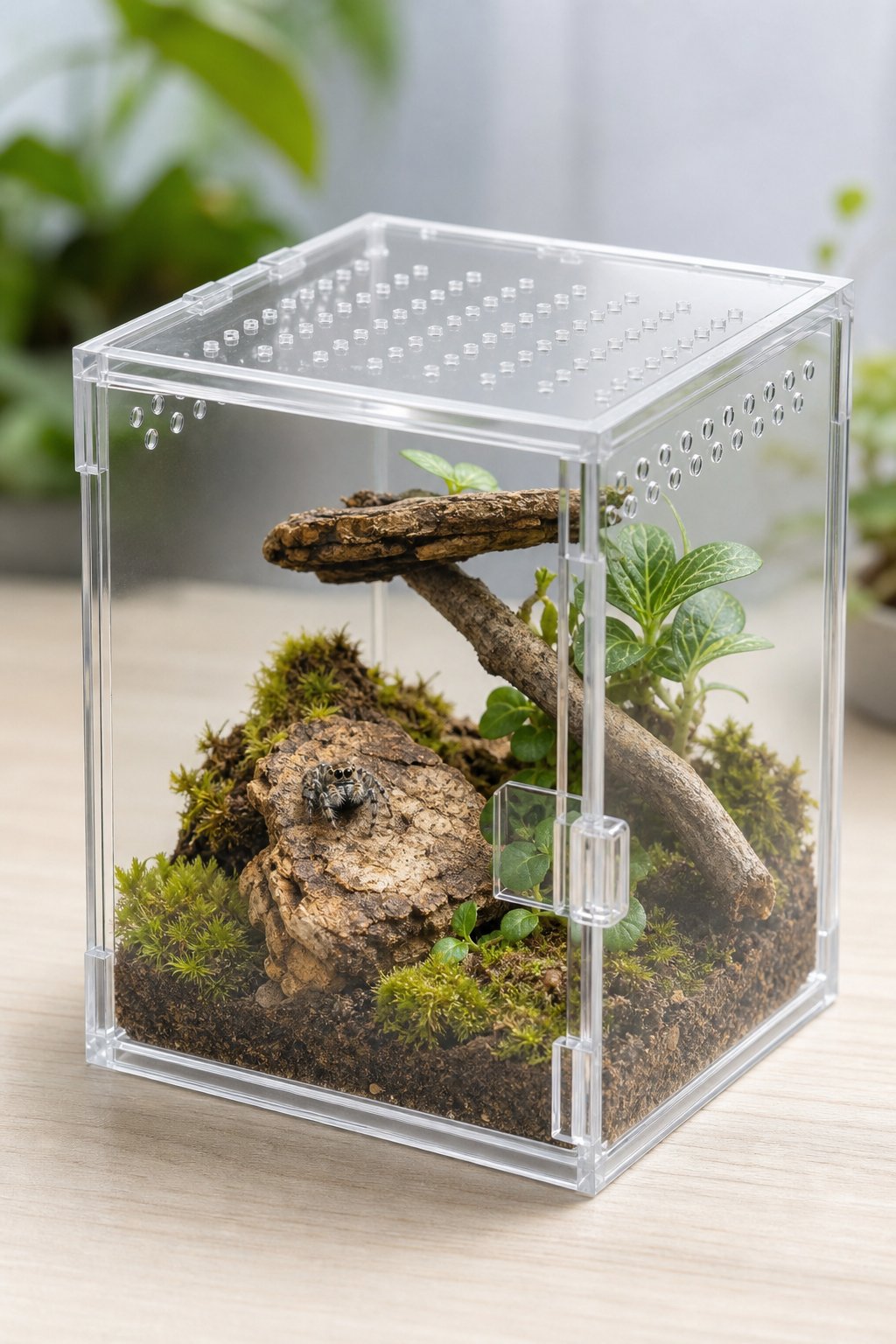
This 4x4x4-inch compact display uses cork bark, moss, a branch, and tiny plants to make a simple habitat with a tidy footprint.
Its compact size suits a young or small spider when the layout meets the animal’s needs.
You should check space requirements as your spider grows.
Keep the décor low and secure.
Make sure you can open the enclosure without crushing a web nest.
Expert Tip From MrPlanter: “Measure your spider and décor before settling on a compact habitat. A small display should still leave room for safe movement.”
Choosing A Garden-Adjacent Enclosure Location
Use A Covered Porch, Screened Patio, Or Greenhouse Shelf
A covered porch, screened patio, or greenhouse shelf gives you garden views without exposing the enclosure to every change in weather.
Choose a spot with steady shade, gentle daylight, and enough room to reach the door.
You should also keep the habitat away from sprinklers, fans, and busy walkways.
Avoid Direct Afternoon Sun, Rain, And Lawn-Spray Drift
Clear glass and acrylic can heat rapidly in afternoon sun, even when the air feels mild.
Rain can flood the enclosure.
Lawn treatments and garden sprays may drift onto vents or décor.
Keep the display away from treated plants.
Move it indoors during severe weather.
Keep The Enclosure Above Ground And Away From Ant Trails
A raised shelf helps protect your spider from ants, slugs, curious pets, and damp soil.
Watch the area for ant trails before you set up.
Inspect the shelf after you place the enclosure.
Leave space around the habitat so you can lift it safely for cleaning or a quick indoor move.
Essential Safety Features For Outdoor Displays
Front-Opening Doors To Protect Web Nests
A front-opening door makes feeding and cleaning easier while reducing the need to reach down from above.
Before you open it, look for a web nest around the frame or ceiling.
If your spider is resting nearby, wait until it moves to avoid damaging its retreat.
Cross-Ventilation Without Escape Gaps
Good airflow helps prevent stale, damp conditions.
Ventilation holes must remain too small for escape.
Inspect vents for cracks, loose screens, and widened gaps.
Place openings on different sides when the enclosure allows.
Keep the habitat away from strong outdoor drafts.
Spider-Safe, Pesticide-Free Plants And Décor
Use clean cork bark, untreated branches, and plants that have not received pesticides or fertilizer sprays.
Rinse natural materials and let them dry before you add them.
Avoid sharp decorations, sticky finishes, exposed wire, and anything that could shed flakes into the habitat.
Secure Latches For Windy Or Curious-Pet Areas
A latch protects the enclosure when wind, birds, cats, or dogs share the garden space.
Set the habitat on a stable shelf rather than a narrow railing. Check the door after every feeding.
If weather becomes unsafe, move the complete enclosure indoors. Do not try to shield it at the last moment.
I’m Anirban Saha, the Founder and Owner of MrPlanter.com. I pay the bills as a software developer, although my BTech is actually in Electronics and Communication. I really love my day job, but what gives me energy every day is interacting with my indoor plants and taking care of them. I have been successfully nurturing and maintaining houseplants for over 10 years now.
📚🔍 Our content undergoes thorough review and fact-checking before publication. For additional details, explore our strict Editorial Policy to deliver helpful content. 📝🔒