As an Amazon Associate, MrPlanter.com earns from qualifying purchases.
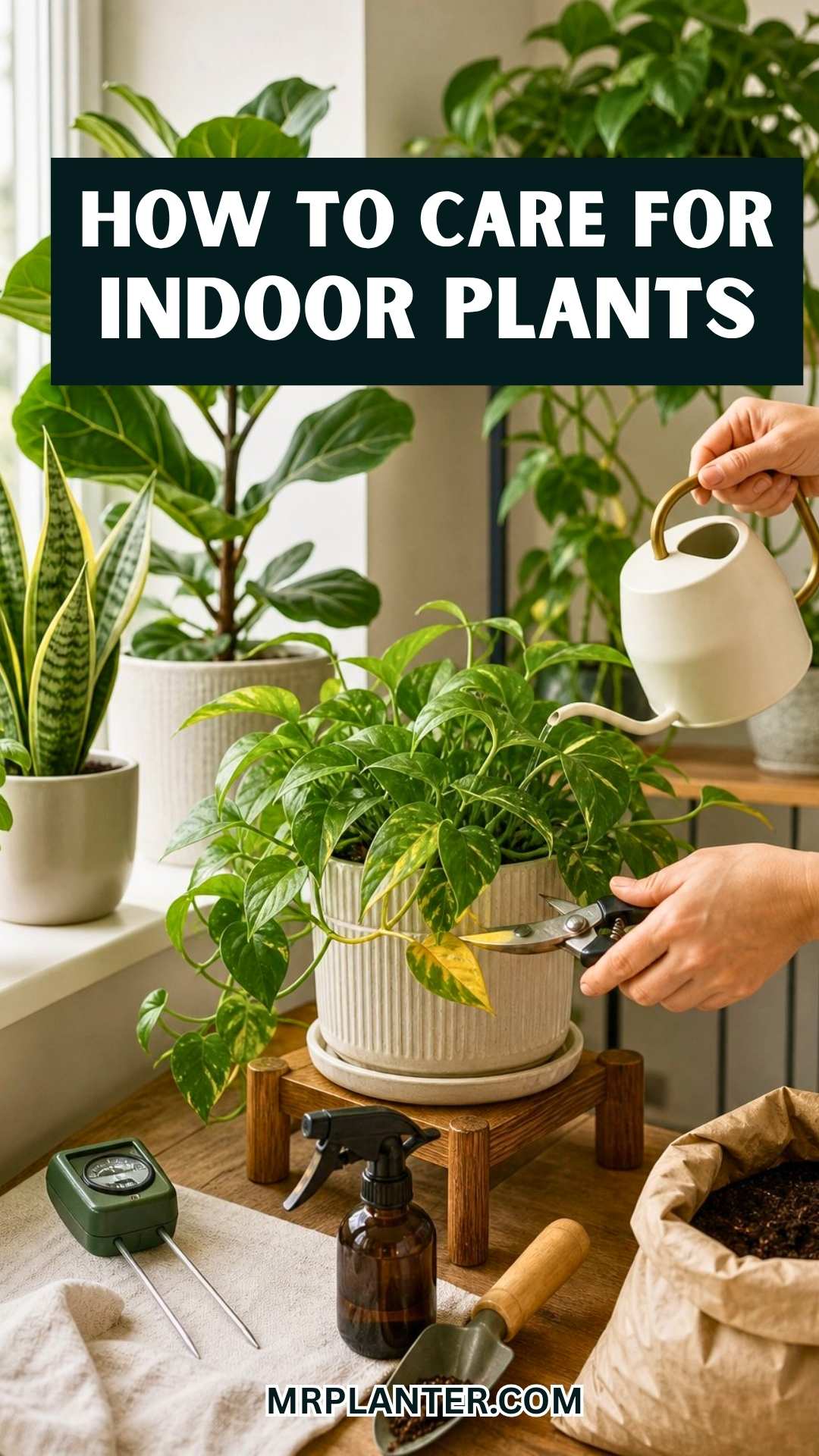
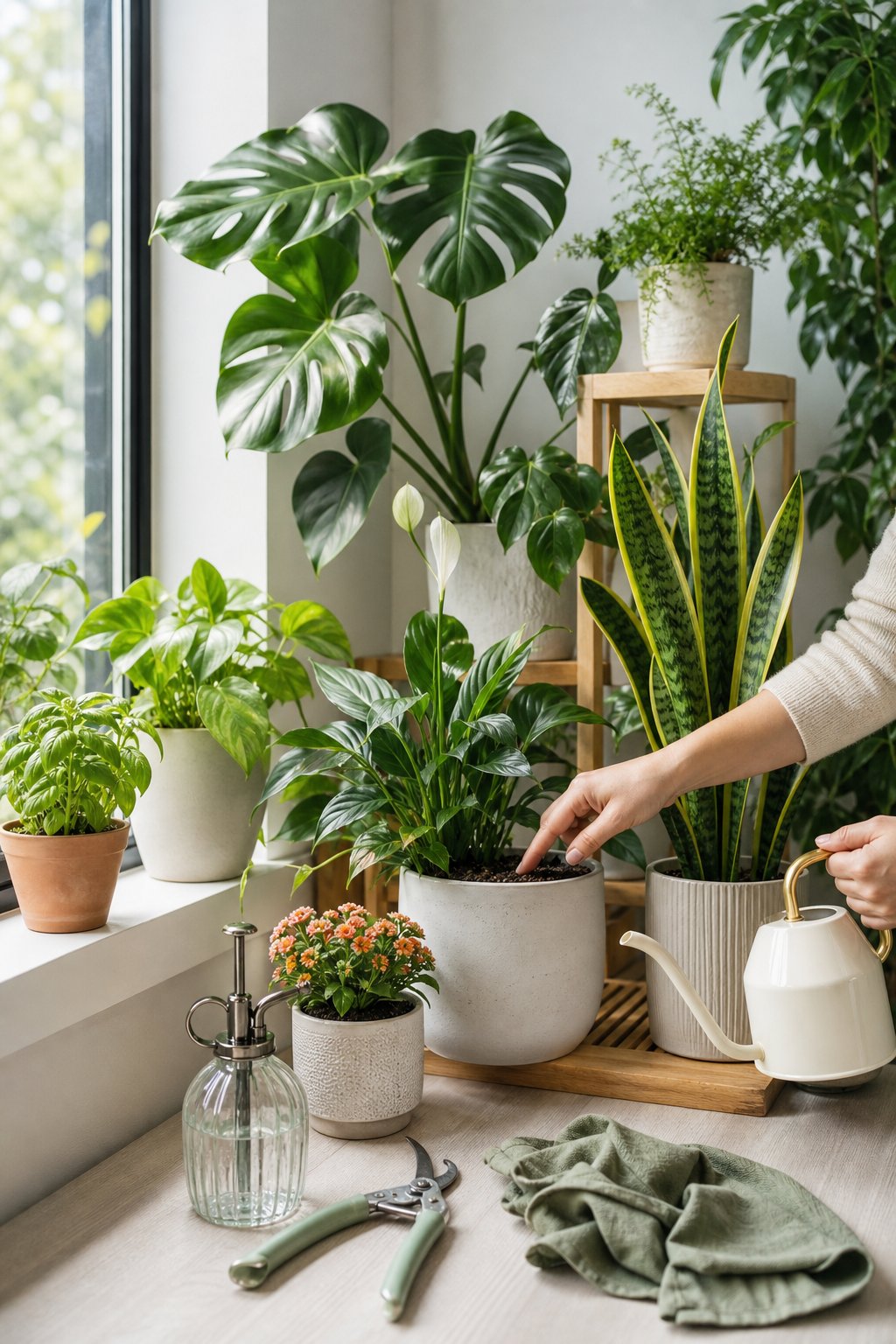
Good indoor plant care runs on a few simple rules: water when the top inch of soil is dry, use pots with drainage holes, give bright indirect light, and repot every one to two years. Learn how to care for indoor plants using those four and you’ve covered most of it.
Keeping a houseplant alive comes down to a few simple habits, not a secret talent. Once you match your plant to the light in your home, water based on what the soil actually needs, and give the roots room to breathe, most indoor plants settle in and grow steadily.
The biggest mistake most people make is treating every plant the same way, when light, water, and humidity needs can vary widely from one species to the next.
An indoor garden does not need to be complicated. Learn to read your space, pick plants that fit it, and adjust your routine as the seasons change.
Key Takeaways
Match each plant to the light your home actually provides instead of guessing.
Water based on soil moisture and season, not a fixed schedule.
Healthy roots, steady humidity, and early pest checks keep plants thriving long term.
Start With Light, Location, And Plant Match
Light drives photosynthesis, so it shapes almost everything about how a plant grows. Once you know what kind of light your windows give off and how strong it is, choosing the right plants for each spot gets a lot easier.
Read Natural Light by Window Direction
South-facing windows usually give the strongest, most direct light all day. West-facing windows bring hot afternoon sun, while east-facing spots offer gentler morning rays.
North-facing windows stay soft and low, which suits shade-tolerant plants like pothos or a peace lily.
Recognize Direct, Bright Indirect, And Moderate Light
Direct sunlight hits leaves straight on and can scorch sensitive foliage. Bright indirect light means the room is well lit but the sun does not touch the plant directly, ideal for monstera or philodendron.
Moderate light sits a bit dimmer, still enough for a snake plant or zz plant to hold steady.
Use Grow Lights When Windows Fall Short
If your home has small windows or shaded rooms, artificial lighting fills the gap. Place a basic grow light a foot or two above the plant to replace hours of missing sun.
Run it on a timer for about 12 to 14 hours a day for best results.
Choose Plants for the Conditions You Already Have
Instead of forcing a plant to survive in the wrong spot, pick species suited to what you have. Cacti and succulents like aloe vera want bright, direct light.
Ficus and monstera prefer bright indirect conditions, while snake plants forgive nearly any light level.
Water According to Soil, Roots, And Season
Watering causes more houseplant deaths than any other habit, mostly from overdoing it. Check the soil, water fully, and adjust for the season to protect roots and keep leaves from yellowing.
Check Moisture Before Reaching for the Watering Can
Stick a finger into the potting soil up to the first knuckle. If it feels damp, wait a few more days.
Dry soil that has pulled away from the pot’s edge is a clear sign it’s time to water.
Water Thoroughly and Let Excess Drain Away
When you water, soak the soil until liquid runs out the drainage holes. This encourages roots to grow deep and evenly instead of staying shallow.
Always empty the saucer underneath so the pot never sits in standing water.
Adjust Your Watering Schedule Through the Year
During the growing season, spring through summer, plants drink more and dry out faster. In fall and winter, growth slows and watering needs drop off significantly.
A peace lily that needs water twice a week in July might only need it once every ten days in January.
Spot Overwatering Before It Causes Root Rot
Yellowing leaves, mushy stems, and a sour smell from the soil all point to overwatering and possible root rot. Succulents, cacti, and snake plants are especially sensitive since they store water in their leaves.
When in doubt, wait another day before watering rather than risk soggy soil.
Build a Healthy Root Zone
Strong roots start with the right pot, the right potting mix, and feeding that matches the plant’s actual needs. Get these basics right to prevent most slow decline problems that show up months later.
Select Pots That Drain Properly
Every pot needs drainage holes, no exceptions. Water that has nowhere to go collects at the bottom and causes root damage over time.
If you love a decorative pot without holes, use it as a cover and keep the plant in its nursery pot inside.
Match Potting Mix Texture to Plant Type
Standard potting soil works for most foliage plants like philodendron or ficus. Cacti and succulents need a fast-draining cactus mix, often built with extra perlite, sand, or vermiculite.
Orchids like phalaenopsis need a chunky bark-based mix, not standard potting soil at all.
Know When Repotting Is Necessary
Roots circling the bottom of the pot or poking through drainage holes signal it’s time to repot. Most houseplants do well moving up one pot size every one to two years.
Repotting during the growing season helps roots recover faster.
Feed Without Overfertilizing
A balanced fertilizer with nitrogen and phosphorus supports steady growth during spring and summer. Cut back or stop feeding in fall and winter when growth naturally slows.
Too much fertilizer builds up salts in the soil and can burn tender roots.
Manage Humidity, Temperature, And Airflow
Tropical plants like calathea, ferns, and hoya evolved in humid environments, so dry indoor air can stress them fast. Balance humidity, keep temperatures steady, and give plants gentle airflow for a healthy indoor climate.
Identify Low Humidity Stress
Crispy brown leaf edges and curling foliage often point to low humidity rather than underwatering. Calatheas and ferns show this stress quickly, sometimes within days of sitting near a heat vent.
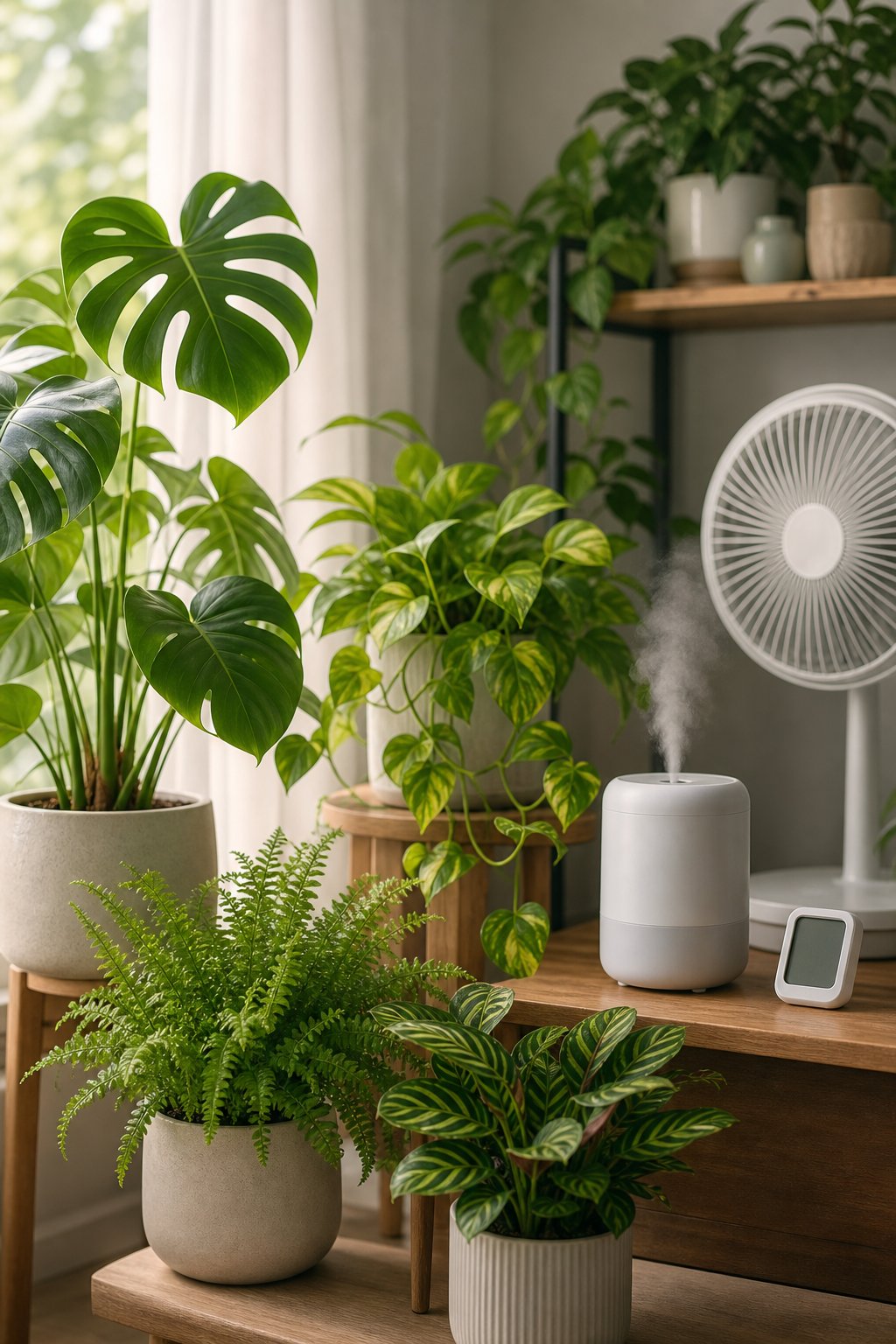
A hygrometer gives an exact reading if you want to confirm the cause.
Raise Humidity Without Creating Stagnant Air
A pebble tray filled with water under the pot adds gentle moisture as it evaporates. A small humidifier works well for a cluster of tropical plants like orchids or air plants.
Keep the air moving with a fan on low so moisture doesn’t turn into mold.
Keep Plants Away From Drafts and Heat Sources
Cold drafts near doors and windows stress most houseplants, especially in winter. Heating vents and radiators dry out leaves fast and can cause sudden wilting.
Aim for indoor temperatures between 65 and 80°F for most common houseplants.
Group Plants by Their Environmental Needs
Clustering humidity-loving plants together raises the moisture around them naturally. Keep succulents and cacti separate since they prefer drier air and more airflow.
This simple grouping habit cuts down on constant misting or humidifier adjustments.
Maintain Plants and Prevent Pest Problems
Routine maintenance catches small problems before they turn into bigger ones. Pruning, cleaning leaves, checking new arrivals, and watching for pests all work together to keep an indoor garden strong.
Prune, Clean, and Rotate for Stronger Growth
Trim yellowing or dead leaves to redirect the plant’s energy toward healthy growth. Wipe dust off broad leaves like those on a peperomia or spider plant so they can absorb light efficiently.
Rotate pots a quarter turn every week or two for even growth on all sides.
Inspect New Plants Before Adding Them to Your Collection
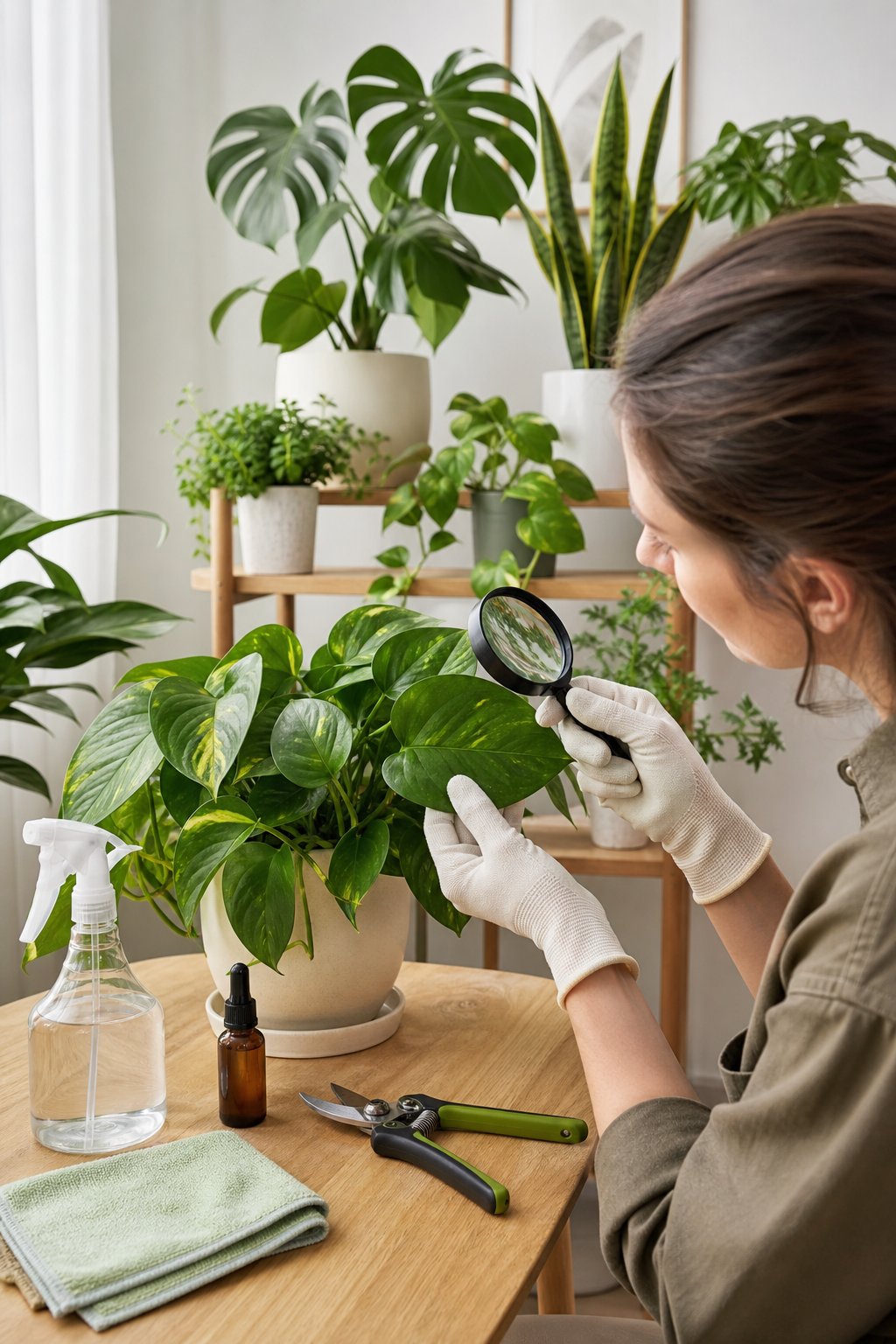
Check new plants closely before placing them near your existing collection. Look under leaves and along stems for pests or sticky residue.
Isolating a new plant for one to two weeks prevents a hidden problem from spreading.
Identify Common Houseplant Pests
Spider mites leave fine webbing and speckled leaves, while fungus gnats hover near damp soil. Aphids cluster on new growth, and mealybugs show up as small white cottony spots.
Neem oil treats most of these pests without harsh chemicals.
Respond Early to Leaf and Growth Changes
Yellowing leaves, sudden leaf drop, or stunted growth all signal something needs adjusting. Catch these changes early, before they spread, to make recovery much easier.
A weekly walk-through of your plants only takes a few minutes and prevents bigger losses.
Adapt Care for Popular Plant Groups and Indoor Herbs
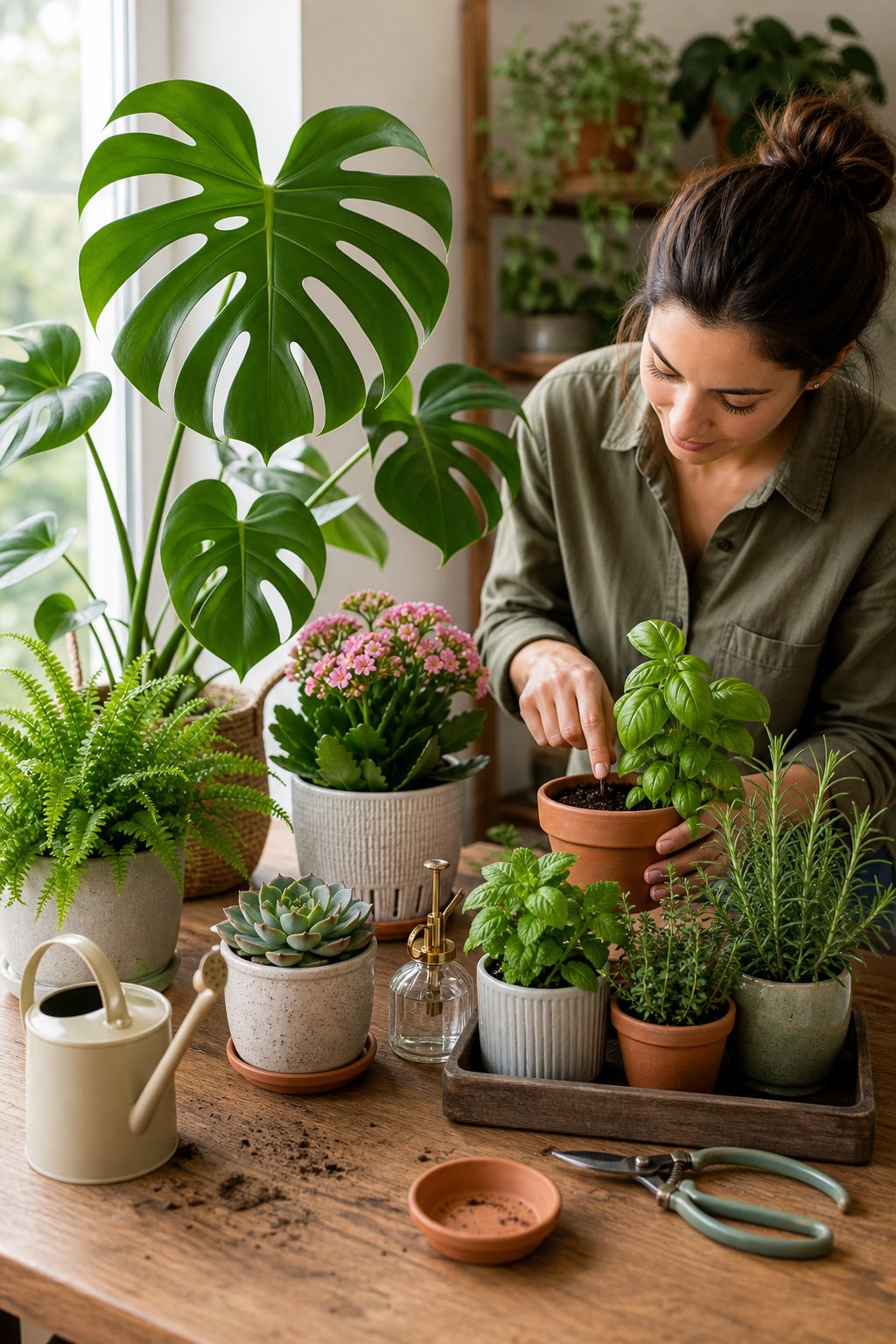
Different plant groups need different routines, even though the basics stay the same. Grouping plants by their shared needs, foliage, humidity lovers, sun worshippers, and flowering types, makes it easier to build a care routine that actually fits.
Low-Maintenance Foliage Plants
Pothos, snake plants, zz plants, and philodendron tolerate missed waterings and lower light better than most. These are solid picks for beginners or busy households.
They still benefit from occasional feeding and dust-free leaves.
Humidity-Loving Tropical Plants
Ferns, calatheas, hoya, and air plants thrive with higher humidity and steady warmth. These plants show stress quickly in dry winter air, so a humidifier or pebble tray helps a lot.
Keep them away from cold drafts and heating vents.
Sun-Loving Succulents and Cacti
Succulents and cacti want bright, direct light and soil that dries out completely between waterings. Aloe vera fits this group well and doubles as a useful plant for minor burns.
Overwatering is the fastest way to lose these plants.
Flowering Plants, Orchids, and Windowsill Herbs
Peace lilies, african violets, and phalaenopsis orchids need bright indirect light and consistent moisture to bloom well. Herbs like basil, chives, mint, and rosemary want a sunny windowsill and regular watering to keep producing fresh leaves.
Frequently Asked Questions on Indoor Plant Care
How often should indoor plants be watered?
It depends on the plant, pot, and season, not a fixed number of days. Check the soil with your finger first and water only when it feels dry an inch or two down. Most plants need less water in fall and winter than in spring and summer.
How much sunlight do houseplants need?
Most houseplants do best with several hours of bright indirect light each day. Flowering plants often need more light than plants grown just for their leaves. South and west-facing windows give the strongest natural light in most homes.
What should I do when I bring home a new houseplant?
Inspect the leaves and stems closely for pests before placing it near other plants. Keep it isolated for a week or two as a precaution. Give it a spot with appropriate light and hold off on fertilizing until it settles in.
What type of soil is best for potted indoor plants?
Use a potting mix made for containers, not garden soil, since it drains far better. Cacti and succulents need a gritty, fast-draining mix, while orchids need a chunky bark-based blend. Regular potting soil works well for most foliage houseplants.
How can I care for houseplants in low-light rooms?
Choose tolerant species like pothos, snake plants, or zz plants for dim spaces. Supplement with a grow light for 12 to 14 hours a day if natural light is very limited. Water less often since plants use water more slowly in low light.
How do I know if an indoor plant is overwatered or underwatered?
Overwatered plants often show yellow, mushy leaves and soggy soil that smells sour. Underwatered plants show dry, crispy leaf edges and soil that pulls away from the pot’s sides. Check the soil moisture directly to tell the two apart.
I’m Anirban Saha, the Founder and Owner of MrPlanter.com. I pay the bills as a software developer, although my BTech is actually in Electronics and Communication. I really love my day job, but what gives me energy every day is interacting with my indoor plants and taking care of them. I have been successfully nurturing and maintaining houseplants for over 10 years now.
📚🔍 Our content undergoes thorough review and fact-checking before publication. For additional details, explore our strict Editorial Policy to deliver helpful content. 📝🔒