As an Amazon Associate, MrPlanter.com earns from qualifying purchases.
Phalaenopsis orchids are labeled “difficult” so often that most people believe it before they’ve even tried. In reality, Phalaenopsis orchid care asks less of you than a fern or a fiddle leaf fig — it just asks for different things.
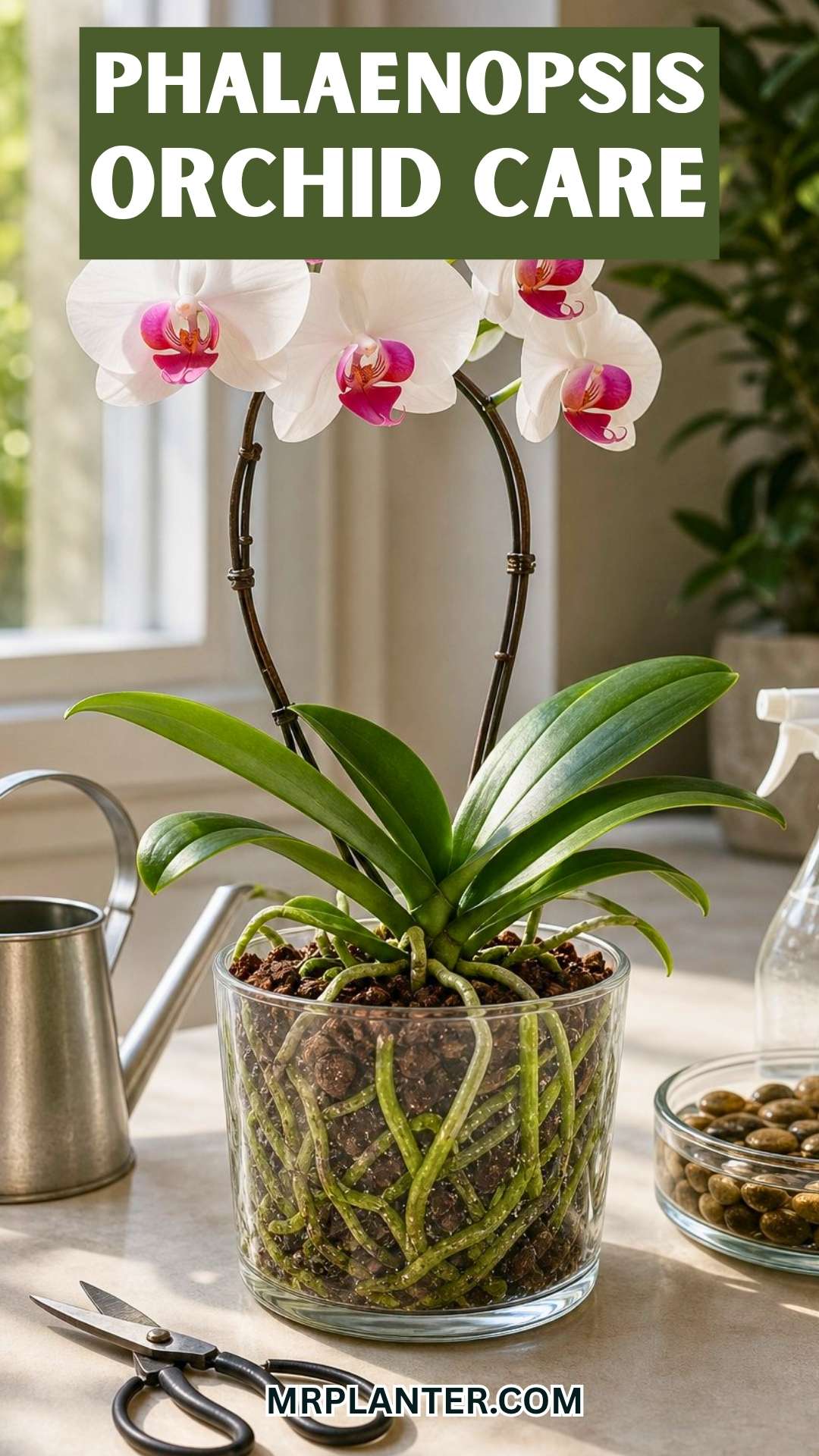
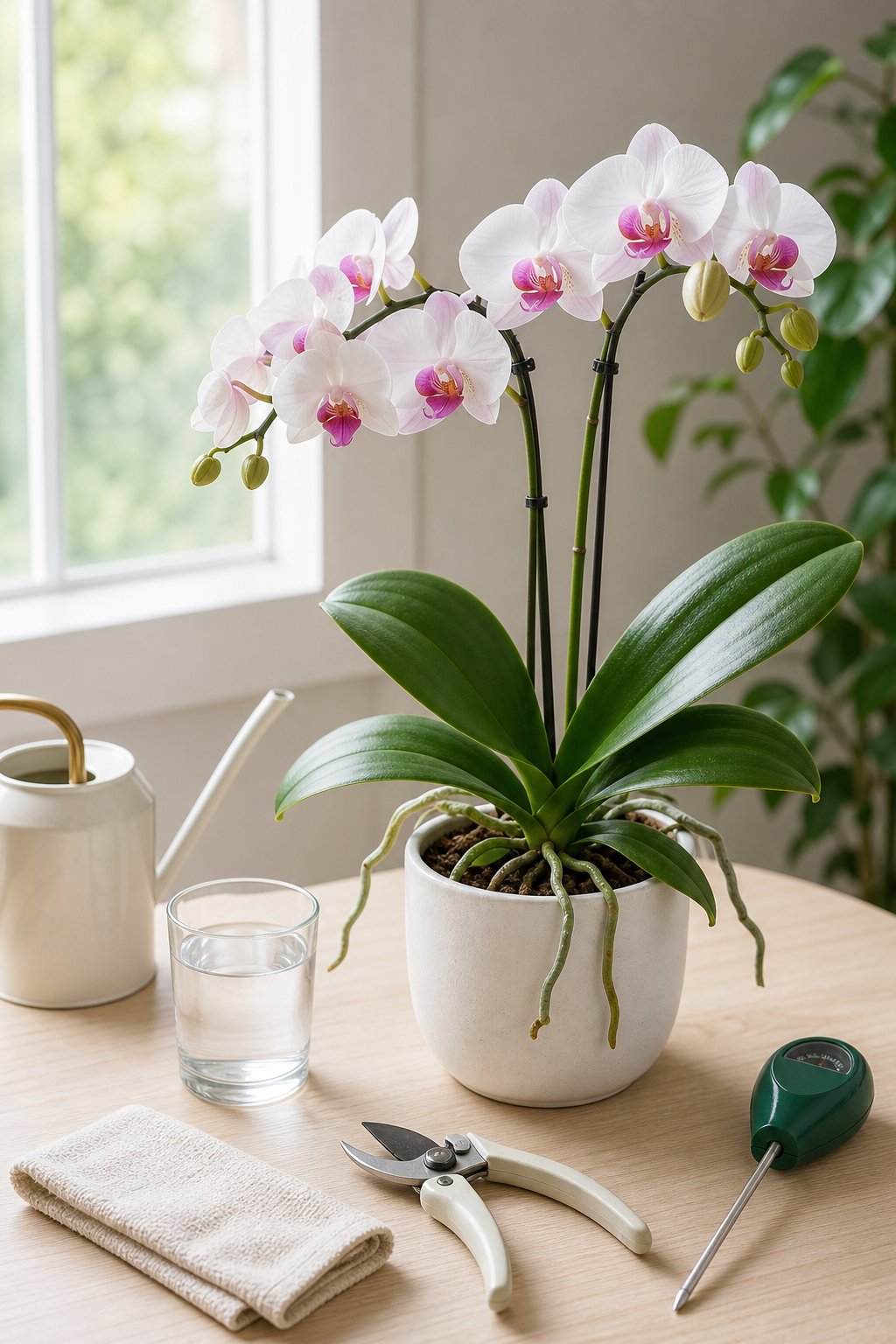
A phalaenopsis orchid does not need a green thumb, just a few consistent habits. This plant, often called the moth orchid, is the most common member of the Orchidaceae family sold in grocery stores and garden centers across the country.
Once you understand that a phalaenopsis orchid grows naturally on tree bark instead of in soil, every care decision starts to make sense.
This orchid care guide breaks down exactly what phalaenopsis orchids need to thrive indoors. You’ll learn how to water without drowning the roots, which light works best, and how to coax the plant into blooming again.
Whether you just brought home your first moth orchid or you’re troubleshooting a struggling one, the steps ahead are simple to follow.
Key Takeaways
Phalaenopsis orchids thrive on bright, indirect light and a watering routine that lets roots dry between soakings.
A loose, bark-based mix and the right pot size prevent the root rot that kills most indoor orchids.
Watching leaf color, root color, and bud behavior tells you exactly what your plant needs before problems get serious.
The Daily Phalaenopsis Orchid Care Routine That Keeps Plants Healthy
Good phalaenopsis orchid care comes down to three daily factors: light, temperature, and humidity. Get these steady and consistent, and the plant does most of the work on its own.
Choose Bright, Filtered Exposure
A phalaenopsis orchid wants bright, indirect light, never direct sun. An east-facing window is ideal for gentle morning rays.
A south window or west window can work too, but only with a sheer curtain between the plant and the glass. Watch the leaves for feedback.
Medium olive-green leaves mean the light is right. Dark green leaves suggest too little light, while yellowish or reddish leaves mean the plant is getting scorched.
No good window nearby? Grow lights solve that problem.
Position an LED or fluorescent grow light 6 to 12 inches above the leaves and run it 12 to 16 hours a day.
Maintain Warm, Stable Temperatures
Phalaenopsis orchids like the same temperatures people do, roughly 65 to 80°F during the day. Avoid placing them near drafty windows, heating vents, or air conditioning units.
Sudden temperature swings stress the plant and can cause buds to drop before they open.
Balance Moisture, Humidity, And Airflow
Most homes sit at 30 to 50% relative humidity, but this orchid prefers 40 to 70%. A humidity tray filled with pebbles and water raises moisture around the plant without soaking the roots.
Pair that humidity with gentle air movement. A small fan running nearby keeps leaves dry and helps prevent fungal problems.
Watering Without Suffocating the Roots
More phalaenopsis orchids die from overwatering than from any other cause. Orchid roots need air between waterings, and reading a few simple signals tells you exactly when it’s time to reach for the watering can.
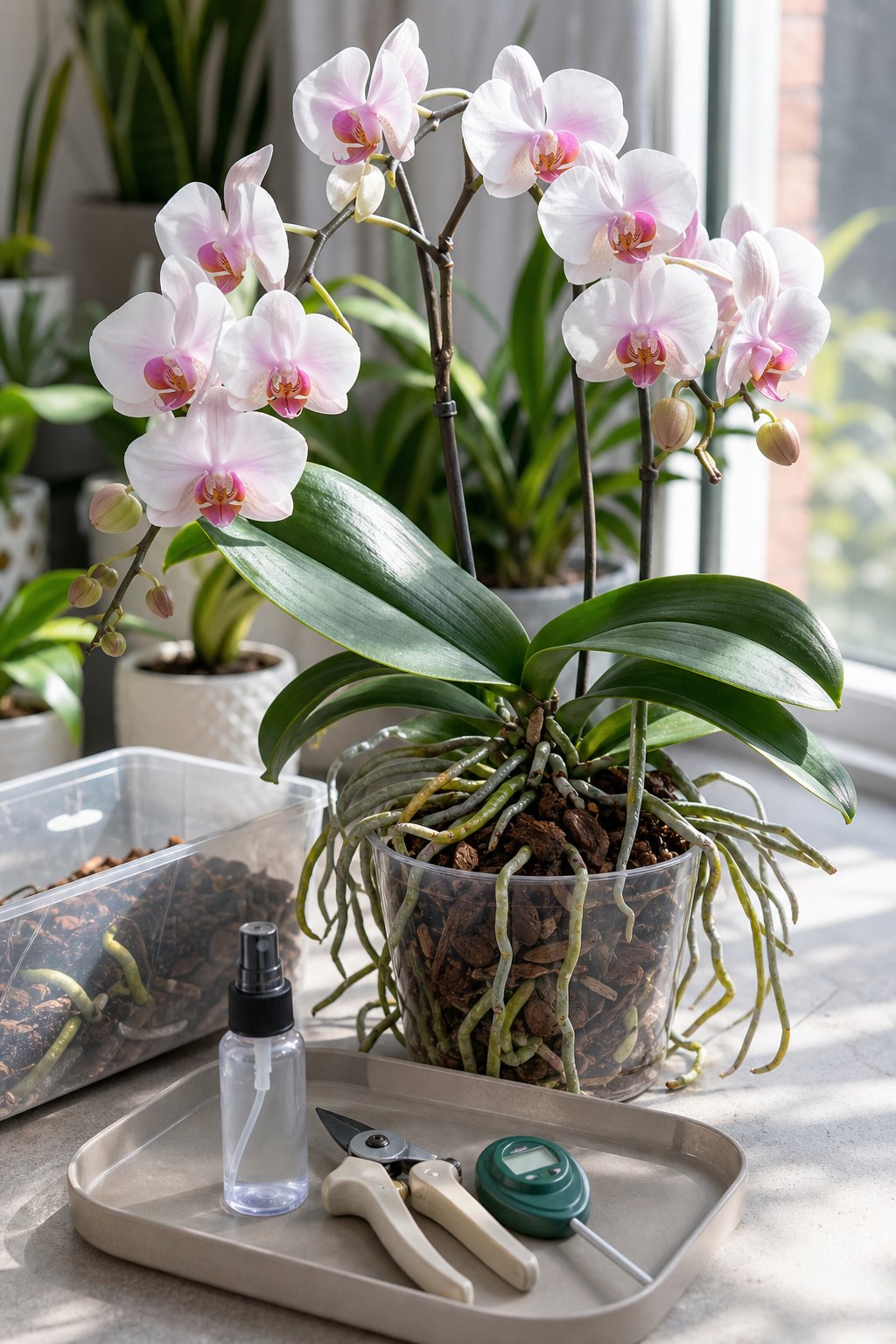
Healthy orchid roots look silvery-green when dry and bright green when wet. Brown, mushy roots signal rot, while shriveled gray roots mean the plant has gone too long without water.
A clear plastic pot makes this easy to check at a glance. Lifting the pot also helps: a light pot means it’s dry and ready for water, while a heavy pot still has moisture to spare.
Don’t judge watering needs by the aerial roots outside the pot. Those roots dry out faster than the ones inside the mix and aren’t a reliable guide.
Adjust Watering for Bark and Moss
Fir bark dries out faster and forgives an occasional missed watering. Sphagnum moss holds moisture much longer and can stay damp for two weeks or more.
Plants in bark typically need water weekly. Moss-potted orchids often go 10 to 14 days between waterings.
Sticking a wooden skewer into the mix and checking for dampness takes the guesswork out of either method.
Keep Water Out of the Crown
Water in the crown, where the leaves meet at the center, is the top cause of crown rot. This fungal issue can kill a plant in days.
Water in the morning so any moisture dries before nightfall. If water pools in the crown, blot it dry with a paper towel right away.
Potting Mix, Containers, and Repotting
The right container and potting mix keep orchid roots breathing instead of drowning. Getting the mix, pot, and repotting timing right prevents the majority of root rot cases seen in home-grown plants.
Build an Airy, Fast-Draining Medium
A phalaenopsis orchid needs a chunky, fast-draining mix, never regular potting soil. Fir bark forms the base of most mixes, often combined with perlite for extra drainage and charcoal to keep the mix fresh.
Sphagnum moss works too, especially for smaller plants or drier homes, but it needs closer attention to avoid staying soggy too long.
Know When the Plant Has Outgrown Its Mix
Bark breaks down over time, turning soft and compacted instead of chunky and airy. This usually happens every one to two years and shows up as mix that holds too much water for too long.
Roots growing heavily out of the pot, or a plant that seems unstable in its container, are also signs it’s time for a fresh mix and possibly a larger pot.
Repot With Minimal Root Damage
Gently remove old, broken-down bark from the roots by hand or with lukewarm water. Trim any mushy or dead roots with clean, sharp scissors.
Choose a clear plastic pot only slightly larger than the root mass. Orchids actually bloom better when slightly root-bound, so resist the urge to size up too much.
Regular feeding and a seasonal temperature dip are the two biggest drivers behind repeat blooms. Getting the dose right and knowing when to prune old flower spikes rounds out this part of phalaenopsis orchid care.
Use Fertilizer at a Safe Dilution
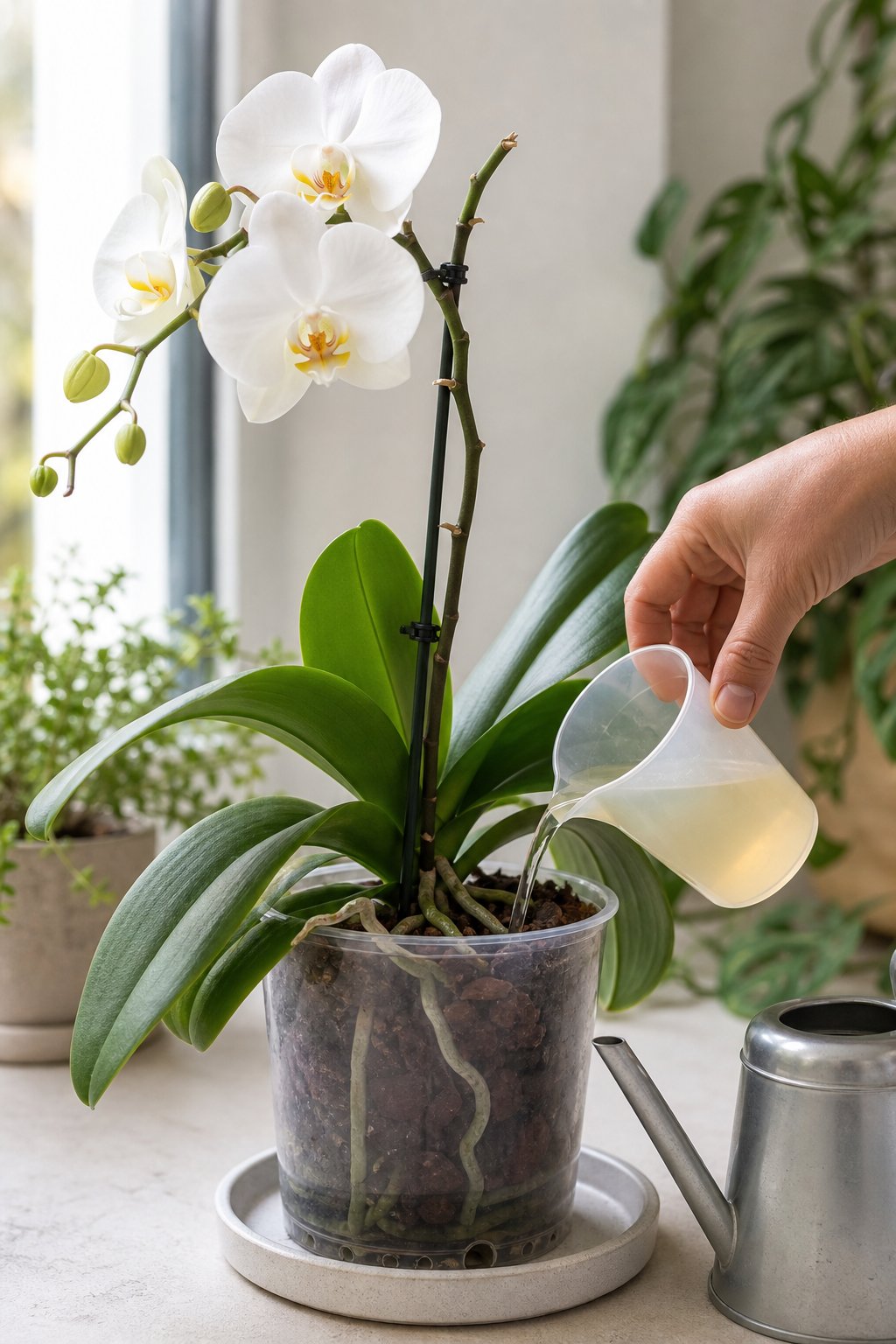
A balanced orchid fertilizer diluted to quarter-strength, applied with regular watering, works better than a strong dose applied occasionally. Full-strength fertilizer can burn the roots and leaf tips.
Feed roughly every other watering during active growth in spring and summer. Cut back in winter when growth naturally slows.
Trigger New Spikes With Seasonal Temperature Changes
A drop to around 55 to 65°F at night for two to three weeks in fall often triggers a new flower spike. This mimics the natural temperature dip these plants experience in their native habitat.
A cooler spot near a window at night, away from drafts, usually does the trick without any special equipment.
Prune Spent Stems Based on Plant Condition
Once blooms fade, look at the flower spike itself. If it’s still green, cut just above a node to encourage a secondary bloom.
If the spike has turned brown and dry, cut it at the base. This directs the plant’s energy into producing a strong new spike instead.
Troubleshooting Leaves, Roots, Buds, and Pests
Most phalaenopsis problems trace back to watering, light, or pests, and each shows distinct warning signs. Catching these early keeps small issues from turning into a lost plant.
Diagnose Yellow Leaves and Wrinkling
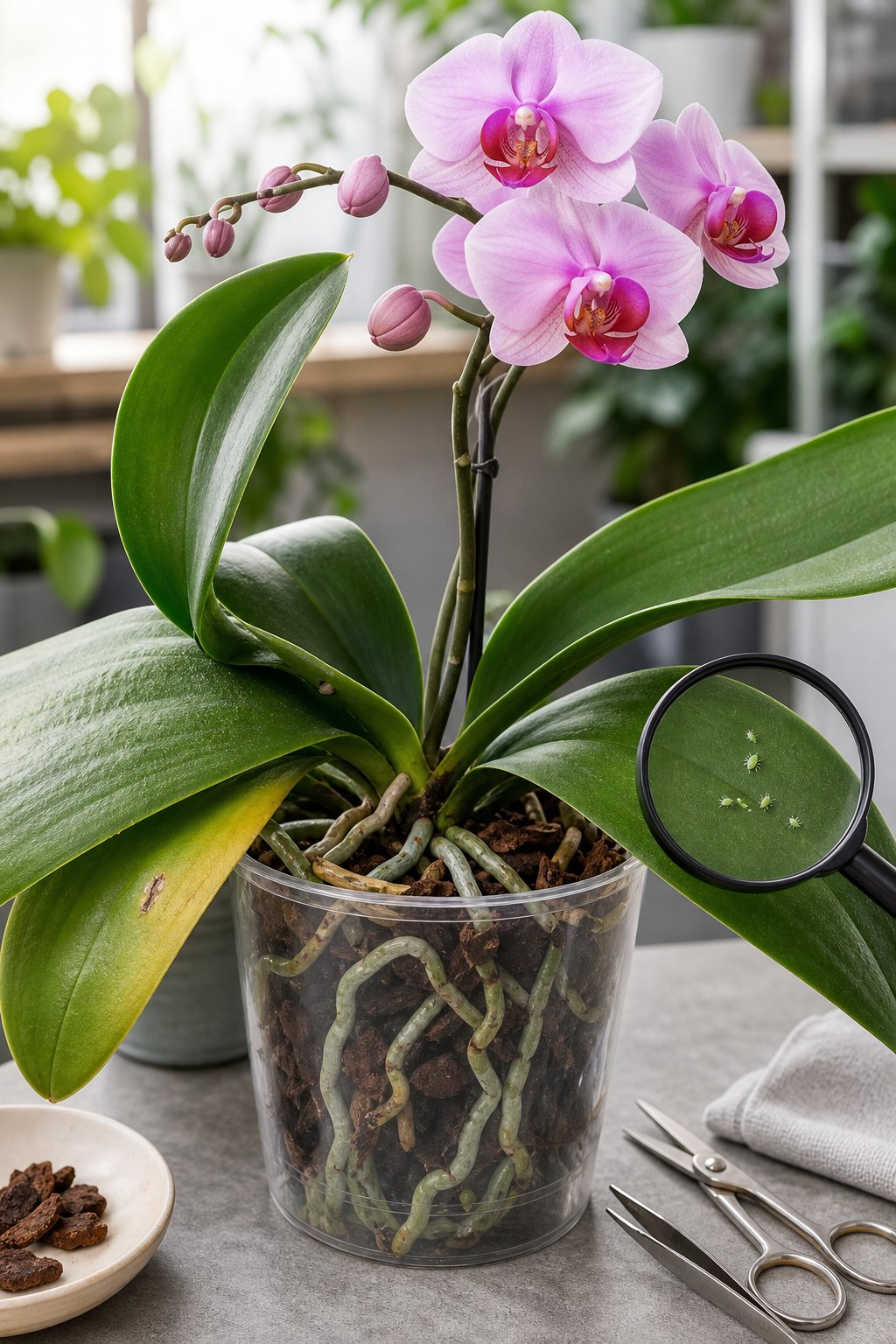
A single yellowing lower leaf is often normal aging and nothing to worry about. Multiple yellow leaves, especially with soft or mushy texture, usually point to overwatering.
Wrinkled or limp leaves without yellowing often mean the roots can’t absorb water, either from rot or from being too dry for too long. Checking root color quickly narrows down which problem you’re dealing with.
Respond to Rot Before It Spreads
Root rot and crown rot both call for fast action. Remove the plant from its pot, cut away any brown or mushy roots with sterilized scissors, and let the remaining roots air dry for a few hours before repotting into fresh mix.
For crown rot, use a paper towel to remove standing water immediately and consider a light dusting of cinnamon, a natural antifungal, on the affected area.
Manage Common Indoor Infestations
Aphids, mealybugs, spider mites, and thrips are the most common orchid pests indoors. Look for sticky residue, tiny webs, or clusters of small insects near new growth and flower spikes.
Insecticidal soap handles most infestations when applied every 7 to 10 days for several cycles. Isolating the affected plant prevents pests from spreading to others nearby.
When Generic Orchid Advice Does Not Apply
Orchidaceae contains more than 28,000 species, so advice written for one type can actively harm another. Knowing how cattleya and dendrobium orchids differ from phalaenopsis orchids helps you avoid applying the wrong routine to the wrong plant.
A cattleya orchid needs much brighter light than phalaenopsis, including some direct morning or late-afternoon sun. It also needs a distinct dry rest period after blooming, which would stress or dehydrate a phalaenopsis orchid if applied to it.
Why Dendrobium Care Depends on the Type
Some dendrobium orchid varieties, especially Dendrobium phalaenopsis hybrids, want warm conditions similar to moth orchids. True Dendrobium nobile types need a cool, dry rest around 50 to 55°F at night for several weeks to bloom, a requirement that would be harmful advice for a phalaenopsis owner.
Match Care Decisions to the Orchid You Own
Before following any orchid care tip online, confirm which genus you actually have. A plant tag, a photo comparison, or a quick look at leaf and root shape usually settles it.
This one step prevents most of the common mistakes people make with mixed orchid collections.
Frequently Asked Questions on Phalaenopsis Orchid Care
How do you care for a Phalaenopsis orchid indoors?
Give it bright, indirect light, water it only when the mix feels dry, and keep it in a warm spot away from drafts. A bark-based mix in a clear plastic pot, plus occasional diluted fertilizer, covers the rest of its basic needs.
How often should you water a Phalaenopsis orchid?
Most phalaenopsis orchids need water every 7 to 10 days in bark, or every 10 to 14 days in moss. Checking the mix with a skewer or watching root color is more reliable than sticking to a fixed schedule.
What should you do with a Phalaenopsis orchid after it blooms?
Look at the flower spike once the blooms drop. Cut a green spike just above a node to try for a second bloom, or cut a brown, dry spike down to the base to redirect energy into new growth.
How can you encourage a Phalaenopsis orchid to bloom again?
A cooler nighttime temperature, around 55 to 65°F for two to three weeks in fall, often triggers a new flower spike. Combine that with consistent light and regular diluted feeding during the growing season.
How long do Phalaenopsis orchid flowers last?
Individual blooms typically last two to three months under good conditions. Cooler room temperatures tend to extend bloom time. Heat and direct sun can shorten it.
What type of light does a Phalaenopsis orchid need?
Bright, indirect light works best. An east-facing window provides ideal conditions. A south or west window can work too. Use sheer curtains to filter the direct sun and prevent leaf scorch.
I’m Anirban Saha, the Founder and Owner of MrPlanter.com. I pay the bills as a software developer, although my BTech is actually in Electronics and Communication. I really love my day job, but what gives me energy every day is interacting with my indoor plants and taking care of them. I have been successfully nurturing and maintaining houseplants for over 10 years now.
📚🔍 Our content undergoes thorough review and fact-checking before publication. For additional details, explore our strict Editorial Policy to deliver helpful content. 📝🔒