Lavender looks delicate, but it’s actually one of the toughest plants you can grow — as long as you plant it correctly from day one. Learning how to plant lavender takes just a few key steps, and most of them happen before the plant ever touches the ground.
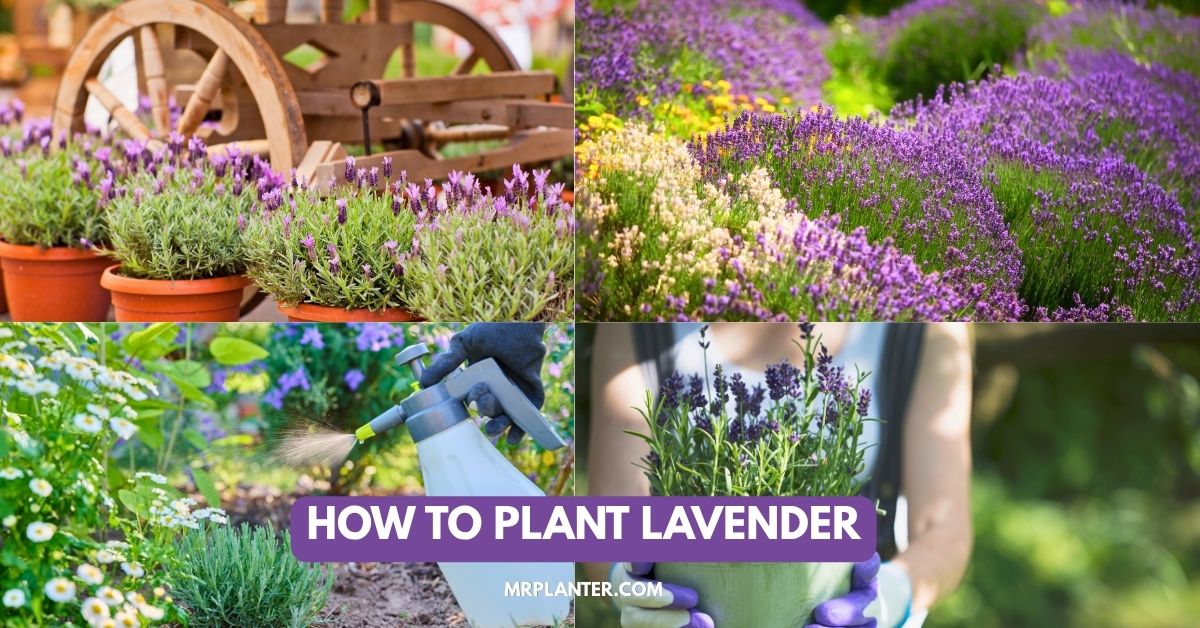
Lavender rewards you when you give it the conditions it prefers: bright sun, gritty soil, and a light touch with water.
Plant it in spring after frost. Choose a spot with at least six hours of direct sunlight, and make sure rain can drain away quickly.
With those basics in place, you can enjoy fragrant purple blooms and a steady stream of bees and butterflies.
Learning how to plant lavender means focusing on avoiding the conditions it dislikes rather than pampering the plant.
Soggy soil, shade, crowded branches, and rich fertilizer can turn a tough Mediterranean herb into a very unhappy little shrub.
Key Takeaways
- Plant lavender in spring, after frost and once the soil has warmed.
- Give each plant full sun, sharp drainage, and enough room for airflow.
- Water young plants regularly, then let established plants dry between drinks.
Choose The Right Lavender Variety
The best lavender for your yard depends on winter temperatures, summer humidity, mature size, and how you plan to use the flowers.
A variety suited to your climate will settle in faster and need fewer rescues from weather-related trouble.
English Lavender For Cooler Gardens
English lavender, or Lavandula angustifolia, is a dependable choice for many cooler U.S. gardens.
Cultivars such as ‘Munstead’ and ‘Hidcote’ are compact, fragrant, and generally hardy in USDA Zones 5 through 9.
These plants often bloom in early to midsummer.
They produce flower stems that dry well.
In areas with cold winters, choose a protected spot near a wall or foundation.
Keep the soil dry even in protected spots.
Spanish And French Lavender For Mild Climates
Spanish lavender, often sold as Lavandula stoechas, suits mild regions, especially USDA Zones 7 through 9.
Its topped flower heads look like tiny purple ears, which gives the plant a playful appearance in a sunny border.
French lavender names can refer to more than one species.
Check the plant label before buying. These types usually handle heat well. They can struggle with wet winters and deep freezes.
Size And Spacing Considerations
Check the mature width before you dig.
Many lavender plants reach about 2 to 3 feet tall and 2 to 4 feet wide, while some compact cultivars stay much smaller.
Space plants about 18 to 24 inches apart for a hedge or border.
Adjust spacing for the variety’s mature size.
Extra room improves air movement and keeps foliage from staying damp after rain.
Pick A Sunny, Well-Drained Location
Lavender performs best in an open garden spot where sunlight reaches the foliage for most of the day.
A dry bed, gentle slope, or raised planting area usually works better than a rich, low patch that holds rain.
Sunlight Requirements for Lavender
Give lavender at least six hours of direct sunlight daily.
Eight hours is even better in places with humid summers because strong sun helps the foliage dry after rain.
Watch the planting area for a full day before you commit.
A spot that looks sunny in the morning may fall into shade by afternoon, right when lavender is trying to build flower buds.
Avoiding Wet Or Low-Lying Areas
Skip places where water gathers after storms or where the ground stays cool and damp.
Lavender roots need air around them, and standing water can lead to root rot before you see any trouble above the soil.
Avoid planting beside downspouts, at the bottom of a slope, or in dense grass that keeps moisture close to the crown.
A sunny location cannot make up for constantly wet roots.
Using Raised Beds And Slopes
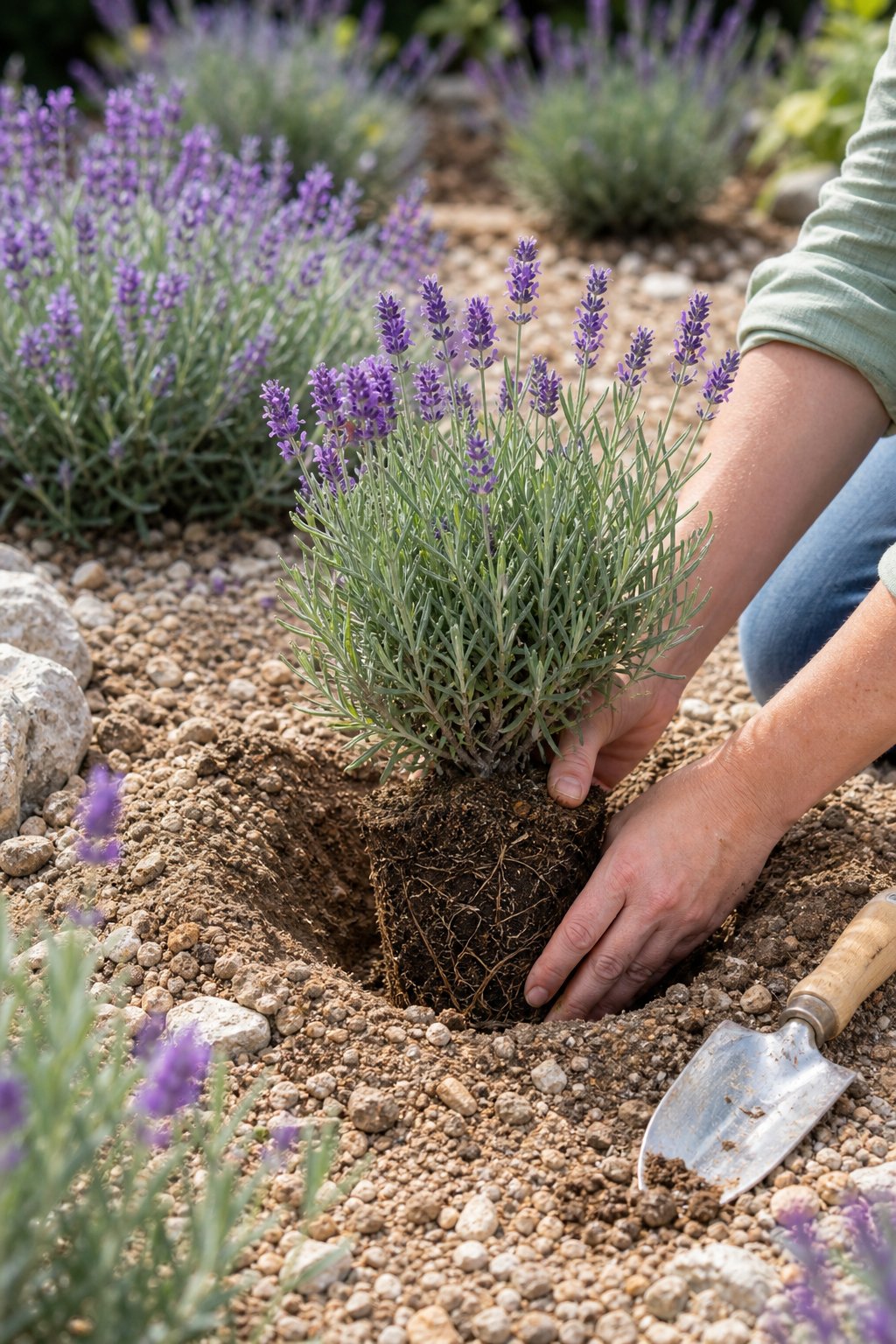
A raised bed gives rainwater a quicker escape and makes it easier to create a gritty soil mix.
Even a mound that rises 8 to 12 inches above the surrounding ground can improve drainage.
South-facing slopes often provide extra warmth and runoff.
On a flat yard, plant lavender near the top of a gentle mound rather than in a shallow depression.
Prepare Soil For Lavender’s Healthy Roots
Good lavender soil feels loose and gritty rather than dark, heavy, and spongy.
Test the bed before planting.
Fix drainage problems first, and keep fertility modest so you encourage flowers instead of soft, floppy growth.
Testing Drainage Before Planting Lavender
Dig a hole about 12 inches deep and wide, fill it with water, and let it drain.
Fill it again and watch how quickly the water disappears.
If water remains for several hours, choose a different spot or build the bed higher.
This simple test can save many lavender plants in garden beds.
Lavender tolerates dry conditions far more easily than a root zone that stays wet.
Improving Heavy Clay Soil
Heavy clay needs more than a thin layer of compost sprinkled over the surface.
Mix coarse grit, small gravel, or another mineral material through the planting area.
Raise the bed if water still drains slowly.
Avoid adding only fine sand, which can combine with clay and form a dense, brick-like mix.
If the clay is severe, grow lavender in a raised bed or large container instead.
Managing Soil pH And Fertility
Lavender prefers soil that is neutral to slightly alkaline, commonly around pH 6.5 to 8.
A soil test can show whether your bed needs an adjustment, so you do not add lime by guesswork.
Mix a small amount of finished compost into the planting hole, then stop feeding.
Rich fertilizer can produce lush leaves with fewer flowers and may make the plant less sturdy.
Planting Steps For Garden Beds
Planting lavender becomes straightforward once the bed drains well.
Handle the root ball gently, keep the crown at the correct height, and give the new plant one thorough drink instead of turning the bed into a miniature pond.
Best Planting Time for Lavender Plants
Set lavender out in spring after your area’s last frost, once the soil has warmed.
This gives roots a full growing season to settle before winter arrives.
In mild climates, fall planting can work if the plant has several weeks to root before cold, wet weather.
Avoid planting during extreme summer heat unless you can provide careful early watering.
Digging The Hole And Setting Depth for Lavender
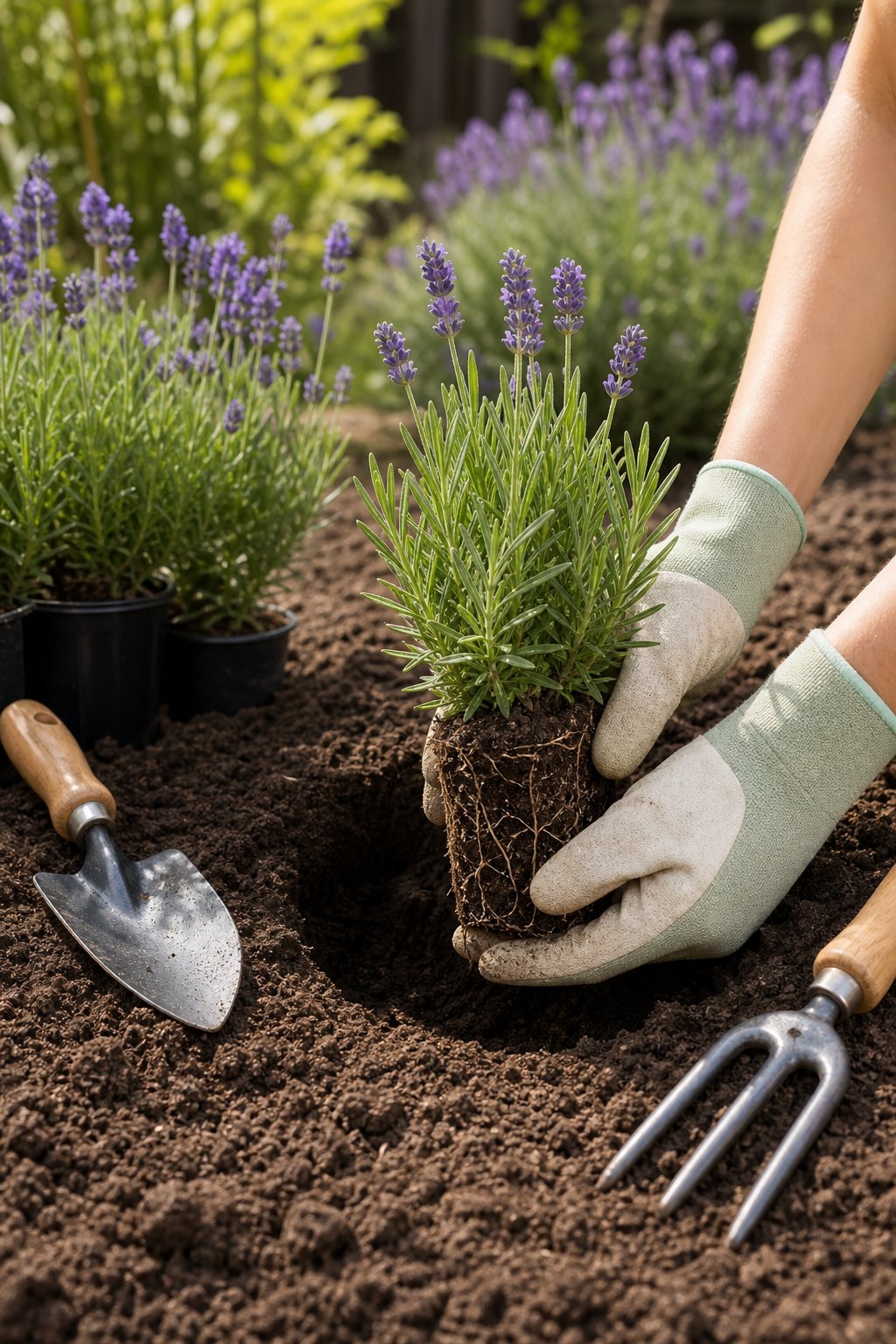
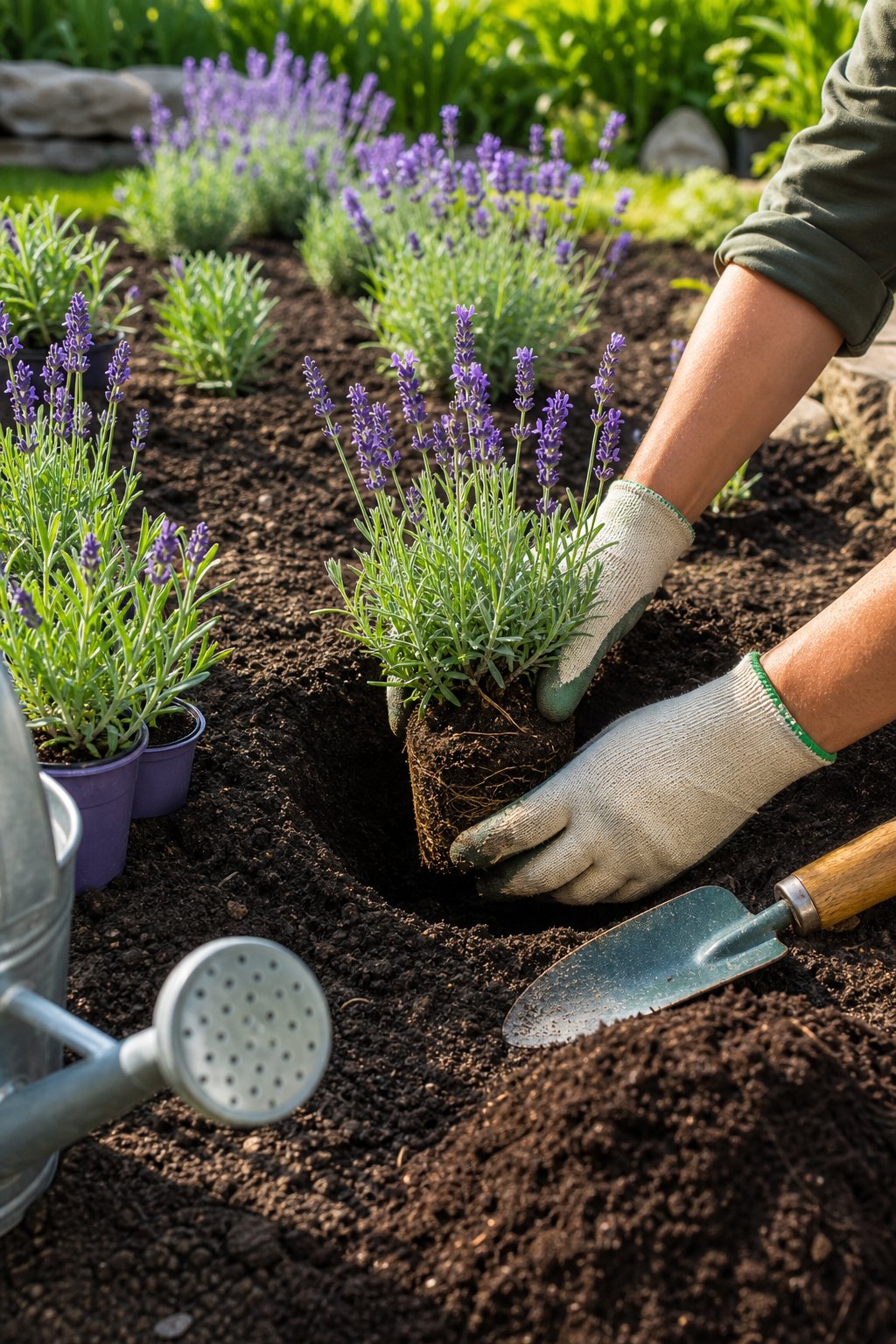
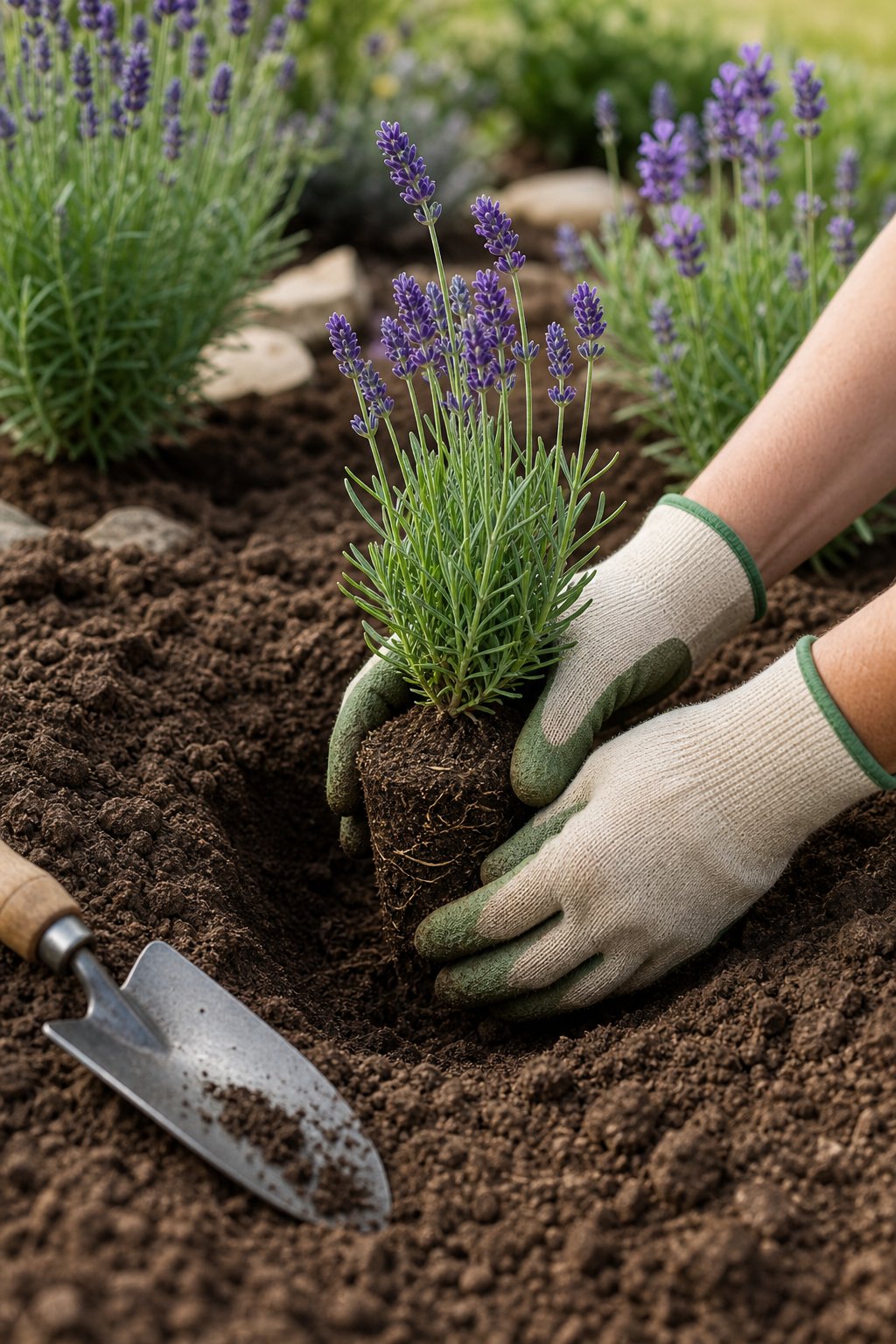
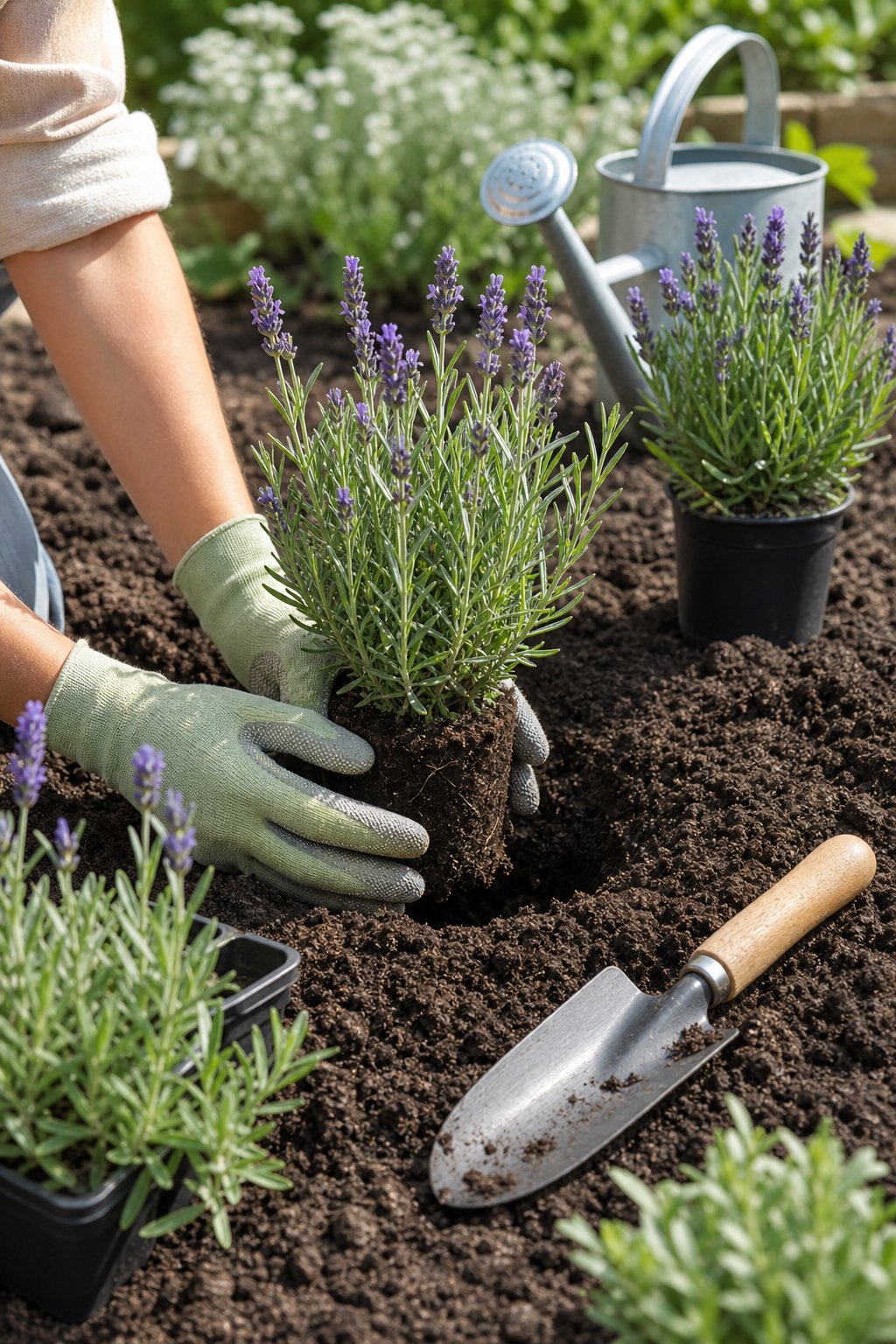
Dig a hole about twice as wide as the root ball and no deeper than its current container.
Loosen circling roots gently, then place the plant so the top of the root ball sits level with, or slightly above, the surrounding soil.
Backfill with the native soil and a small amount of compost if needed.
Press lightly around the roots, leaving the woody crown uncovered rather than burying it under soil or mulch.
Watering Lavender In Without Overwatering
Water slowly around the root zone immediately after planting.
This settles the soil against the roots and removes air pockets.
Afterward, allow the surface to dry before watering again.
A newly planted lavender plant needs more moisture than an established one, yet soggy soil can cause problems within days.
Early Lavender Care And Establishment
The first growing season focuses on helping roots spread without keeping them constantly wet.
Gravel mulch, open spacing, and restrained pruning help lavender develop a compact shape that can handle dry weather later.
Watering During The First Growing Season
Check the soil with your finger every few days during the first month.
Water deeply when the top inch or two feels dry, then wait until the soil dries again.
During hot weather, a young plant may need water once or twice a week, depending on rainfall and soil type.
By the second year, reduce watering as the plant becomes more drought-tolerant.
Mulching With Gravel Rather Than Wood Chips
Use a thin layer of pea gravel or another small stone around the plant, leaving a few inches clear around the crown.
Gravel allows air movement and helps the soil surface dry quickly.
Wood chips and thick organic mulch can hold moisture against the stems.
That may be helpful for thirsty plants, yet lavender tends to regard it as an invitation to rot.
When To Prune New Lavender Plants
Do not cut a new plant deeply during its first season.
Remove spent flower stems and pinch a small amount of soft growth if the plant becomes uneven.
Once the plant is established, prune after flowering by about one-third of its leafy growth.
Avoid cutting into old, bare wood because lavender may not regrow from those sections.
Prevent Common Garden Problems
Most lavender problems happen because of too much moisture, too little light, or pruning that removes more wood than the plant can replace.
Inspect the base, stems, and soil regularly so you can correct small issues before the whole plant declines.
Root Rot And Poor Drainage
Root rot often appears as wilted foliage even when the soil is wet.
Yellowing leaves, a soft crown, and dark roots are further warning signs.
Move affected plants to a raised, drier bed if the roots still look firm.
Remove mushy roots with clean pruners, improve the soil, and water less often.
A severely rotted plant may not recover.
Leggy Growth And Weak Blooming
Long, open stems usually point to insufficient sunlight, crowded planting, or excess fertilizer.
Move container plants to a brighter spot and avoid high-nitrogen feed.
Prune lightly after flowering to encourage branching.
If the plant has become mostly bare wood, replace it rather than cutting it back severely and hoping for a miracle.
Protecting Plants Through Winter
Cold is not always the main winter threat.
Wet soil, poor airflow, and freeze-thaw cycles can damage lavender even in areas where the variety is hardy.
Keep gravel around the plant, avoid heavy winter mulch, and place tender varieties near a sheltered wall.
In colder zones, choose English lavender and protect the plant from harsh wind without covering it so tightly that moisture collects.
Frequently Asked Questions on the Right way to Plant Lavender
What’s the best time of year to plant lavender so it doesn’t throw a tiny purple tantrum?
Plant lavender in spring after the last frost, when the soil has warmed and excess winter moisture has drained away.
Fall planting can work in mild climates if the plant has time to root before cold weather.
Should lavender be planted in the ground or in a pot?
Either option works if the plant receives full sun and the soil drains quickly. Pots give you more control over soil and moisture, while garden beds provide more root space and less frequent watering once plants settle in.
How much sun and what type of soil does lavender need to thrive?
Give lavender at least six hours of direct sunlight each day, with eight hours preferred in humid areas. Use loose, dry, well-drained soil that is neutral to slightly alkaline, and avoid rich soil that stays wet.
How do you plant lavender seeds successfully without waiting forever for sprouts?
Sow seeds about 1/8 inch deep in fine, well-drained soil and keep the surface lightly moist. Provide warmth and bright light, then thin seedlings so each has about six inches of room. Lavender seeds often germinate slowly, and seedlings may not match the parent plant.
How far apart should lavender plants be spaced?
Place most plants 18 to 24 inches apart. Adjust spacing for the mature width listed on the plant label. Wider spacing improves airflow and reduces fungal problems in humid weather.
What are the most common mistakes that cause lavender plants to struggle?
People often plant lavender in shade. They may choose a low wet spot. Some gardeners water too often. Others bury the crown. Using thick wood mulch is another common mistake. Heavy fertilizer produces leafy growth with fewer flowers.