As an Amazon Associate, MrPlanter.com earns from qualifying purchases.
When your front lawn stays soggy after rain, it’s usually because the yard slopes the wrong way, the soil is packed tight, downspouts dump water in the wrong spot, or there’s a low patch that acts like a tiny pond.
You don’t have to pick between fixing drainage and keeping your house looking sharp from the street.
The best front yard drainage ideas send water where it belongs while still making your place look tidy, natural, and inviting.
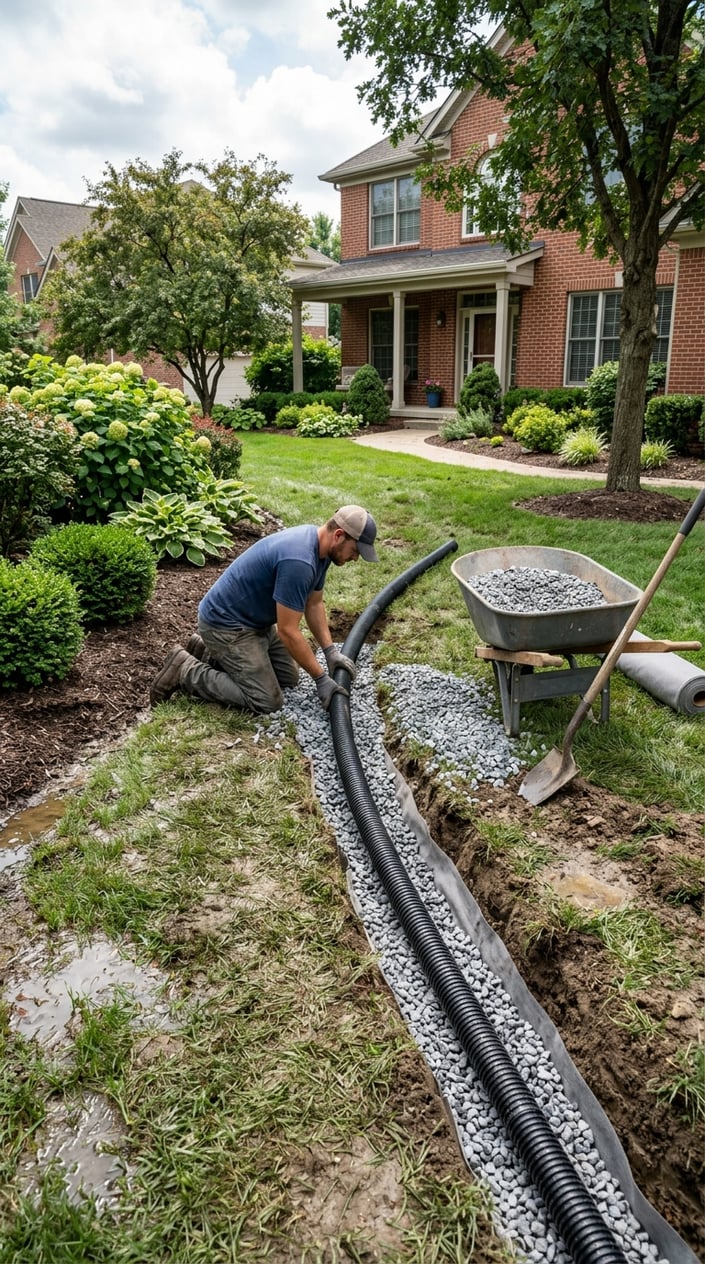
1. Install A French Drain With Perforated Pipe And Washed Gravel
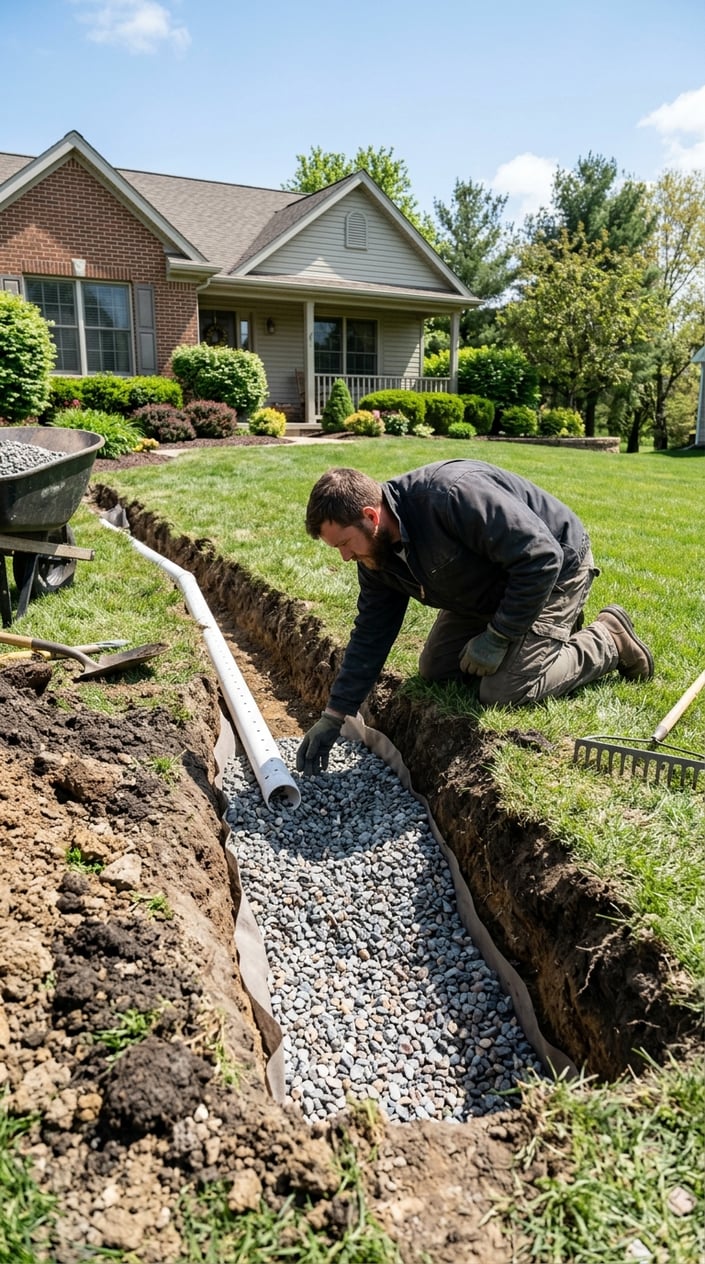
Your grass turns squishy the second it rains, and your shoes sink like you’re walking on pudding. A French drain gives that water a fast escape by collecting it in a trench and moving it through a pipe full of holes.
Put washed gravel around the pipe so water can flow easily, then cover it up with soil or something that matches your yard. This fix works wonders when standing water keeps showing up in the same spot by the curb.
Expert Tip From MrPlanter: “Keep the trench sloped the right way so water has a path to follow. A little planning here saves a lot of muddy boots later.“
2. Build A River Rock Dry Creek Bed Through The Lowest Part Of The Lawn
The lowest spot in your yard is basically begging for a creek bed. A dry creek bed made with river rock gives stormwater a place to travel, and it looks way better than a muddy rut.
Shape it to follow the dip in your lawn, then line the sides with bigger stones and plants that love wet feet. Suddenly, your drainage fix looks like a landscape feature you planned on purpose.
Expert Tip From MrPlanter: “Mix in a few larger boulders so the creek bed looks natural. If it seems like it belongs there, it will make the whole yard feel more polished.“
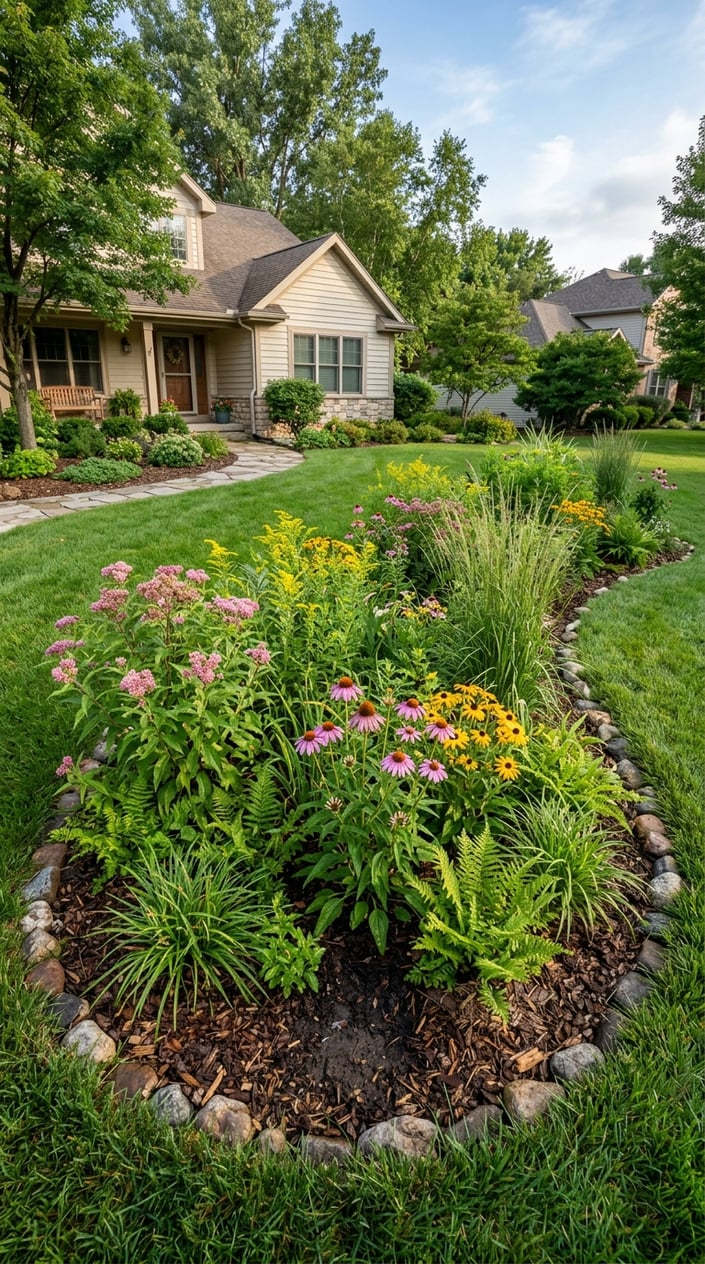
3. Create A Native Plant Rain Garden In A Chronic Low Spot
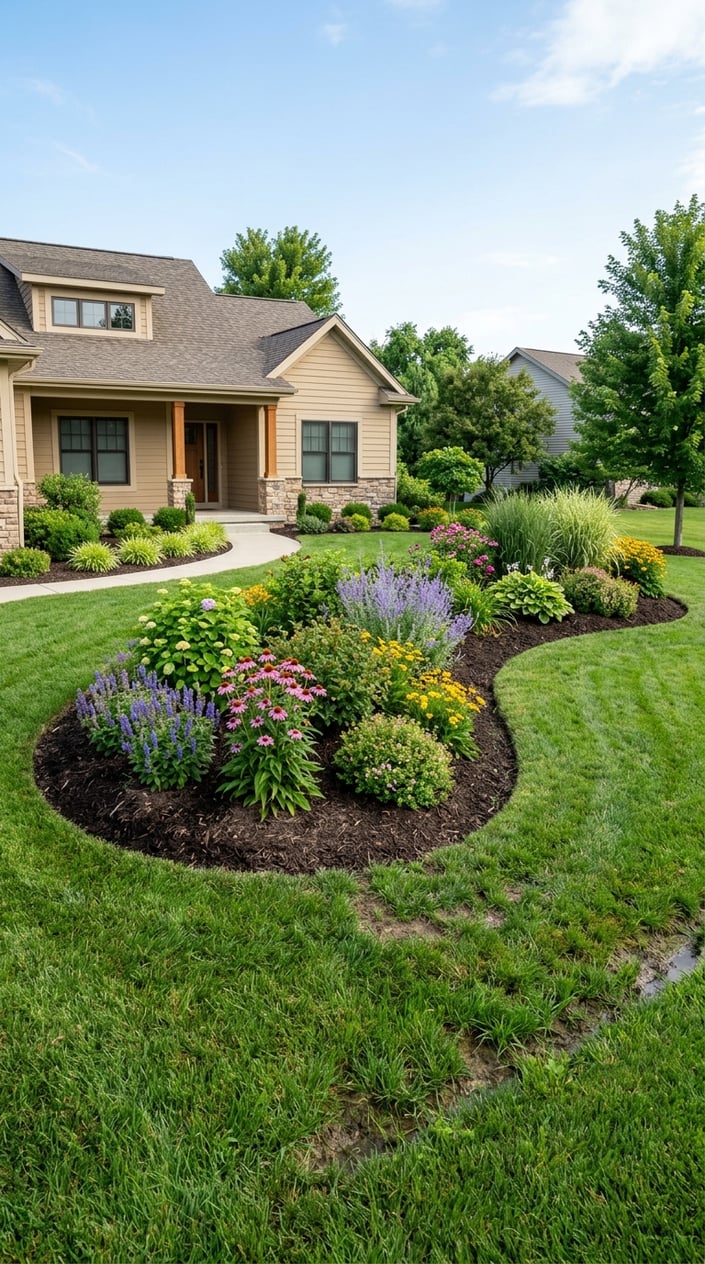
A wet low spot isn’t dead space—it’s a planting opportunity in disguise. A rain garden turns that problem area into a shallow basin filled with native plants that don’t mind wet feet.
Pick plants that handle both soggy and dry spells, like black-eyed Susans, sedges, and other local stars. Once the garden gets going, it adds color and soaks up extra water near the front walk.
Expert Tip From MrPlanter: “Group the plants in clusters instead of lining them up like soldiers. That simple trick makes the rain garden look softer and more natural.“
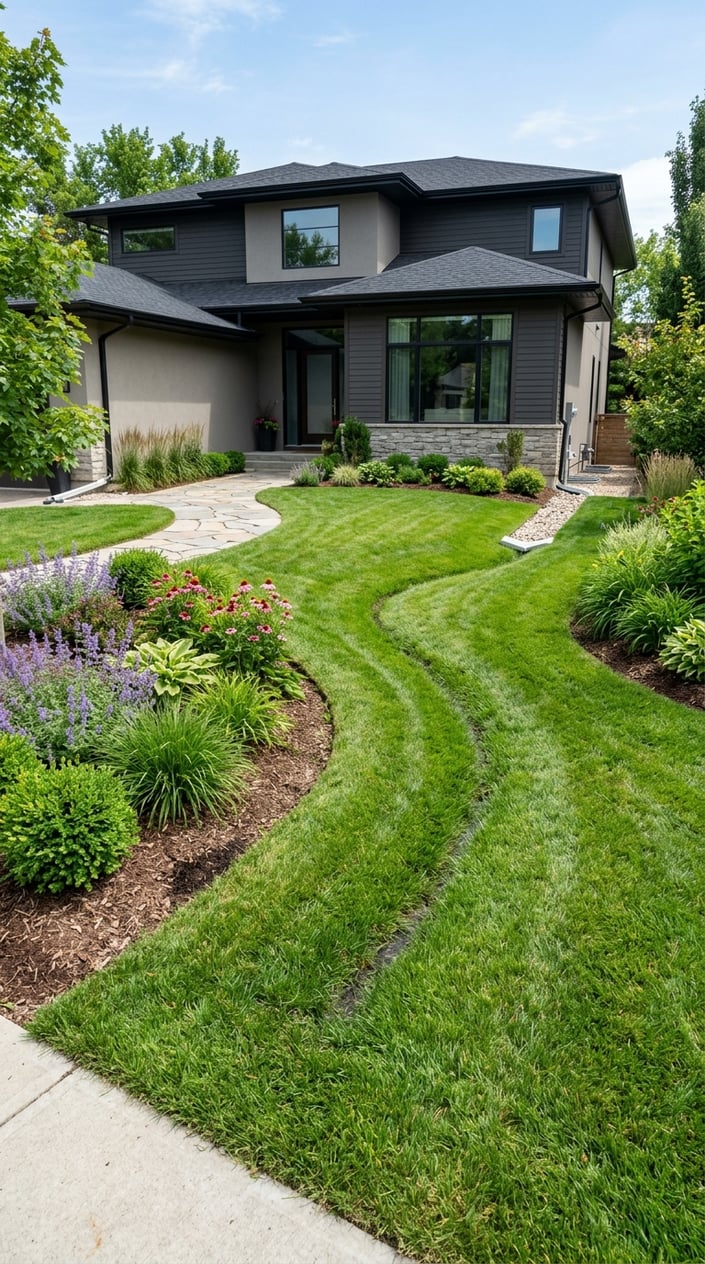
4. Shape A Gentle Grass Swale To Redirect Runoff Away From The House
Water keeps sneaking toward your foundation like it owns the place. A grass swale—a shallow, gently sloped channel—guides runoff to a safer spot and blends right into the lawn.
Keep the shape soft and wide so mowing stays easy and the swale doesn’t look like a ditch. Grass swales quietly move water through the yard without making a big fuss.
Expert Tip From MrPlanter: “Seed the swale with hardy grass once the grade is set. A living green channel looks better than bare dirt and helps hold the soil in place.“
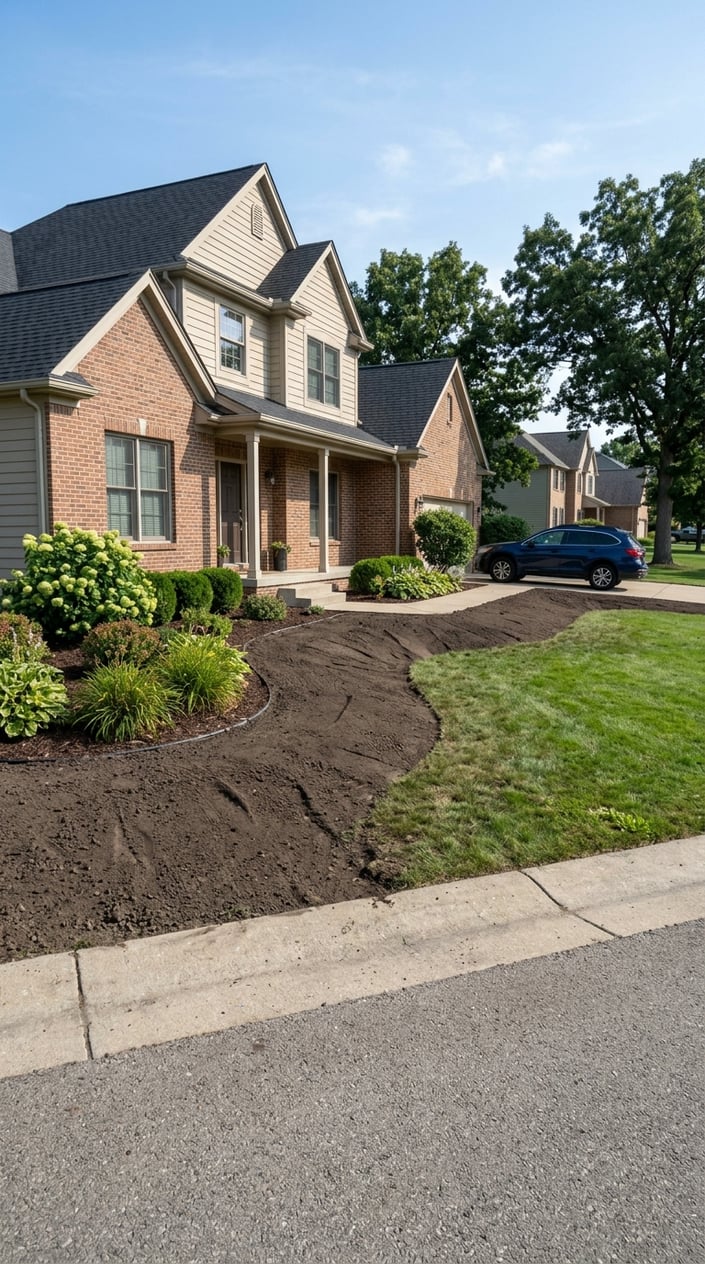
5. Regrade Soil To Pitch Water Away From The Foundation
A tiny slope can make a huge difference in how your yard drains. When you regrade, you shape the soil so water moves away from the house instead of hanging out by the foundation.
This is a smart first step when soggy spots show up near the front wall or porch. Toss on some fresh topsoil, smooth it out, and make sure the slope is gentle but gets the job done.
Expert Tip From MrPlanter: “Check the finished slope after a rain if you can. Water always tells the truth, and it will show you if the grade still needs a little work.“
6. Extend Downspouts With Buried Drain Pipe To A Safe Outlet
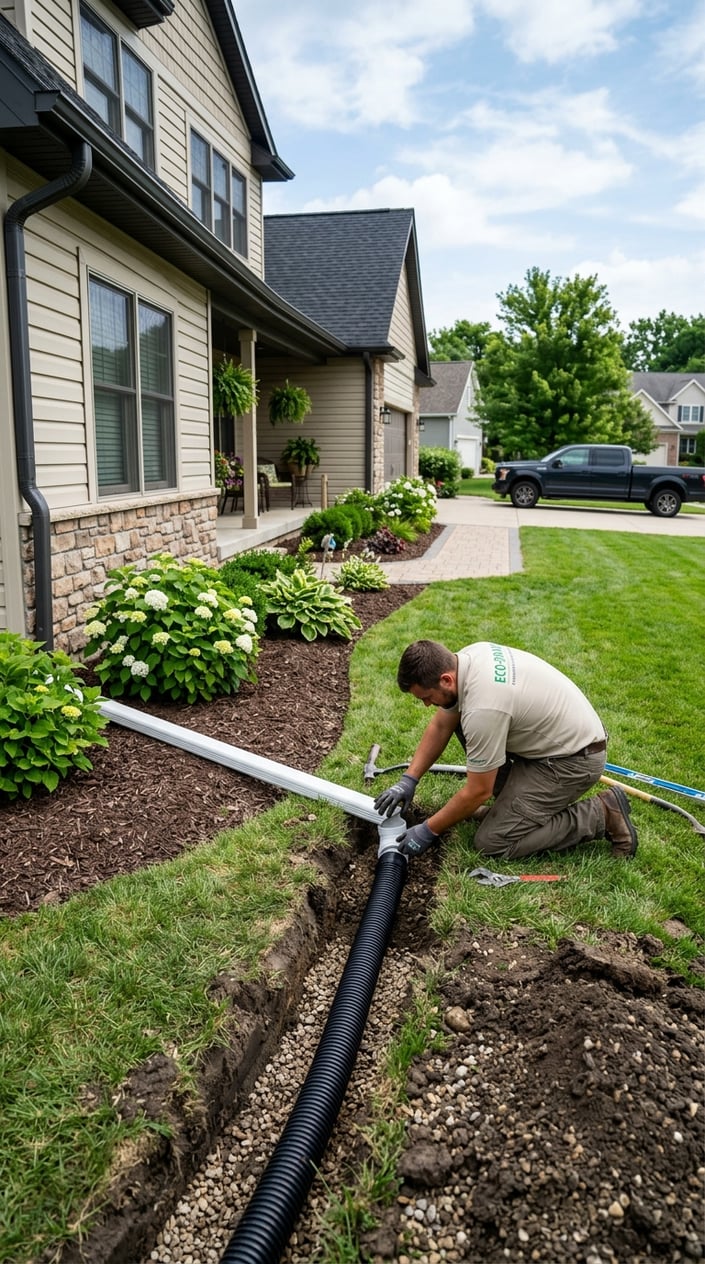
A downspout doesn’t help if it dumps water right next to the house. When you add a buried drain pipe, you send roof runoff to a safer spot, which keeps flower beds and foundations happier.
This is especially handy when one roof valley keeps flooding the same corner of your yard. Aim the outlet away from your house, walkway, and your neighbor’s place, so you don’t swap one problem for another.
Expert Tip From MrPlanter: “Test the line with a hose before you bury everything. It’s much easier to adjust a pipe in daylight than after the lawn is back in place.“
7. Install A Gravel-Filled Dry Well Beneath A Front-Lawn Drainage Zone
Sometimes water just hangs around like an uninvited guest. A dry well gives runoff a secret spot to collect and slowly soak into the ground.
This works great for downspout overflow or a small patch that stays soggy after storms. Dig a gravel-filled pit, maybe add a pipe, then cover it up so your yard stays neat.
Expert Tip From MrPlanter: “Use the right size dry well for your soil and runoff. If it is too small, it fills up fast and acts more like a puddle with a lid.“
8. Aerate Compacted Clay Lawn Areas With A Core Aerator
Sometimes the drainage problem isn’t too much water—it’s soil that acts like a sealed sponge. Core aeration pulls little plugs out of compacted clay so air, water, and roots can finally move around.
If your lawn feels hard as a sidewalk and stays wet for days, aeration can help. It also lets seed, compost, and water get down where they’re needed.
14. Replace Mulch In Soggy Beds With Pea Gravel Or River Pebbles
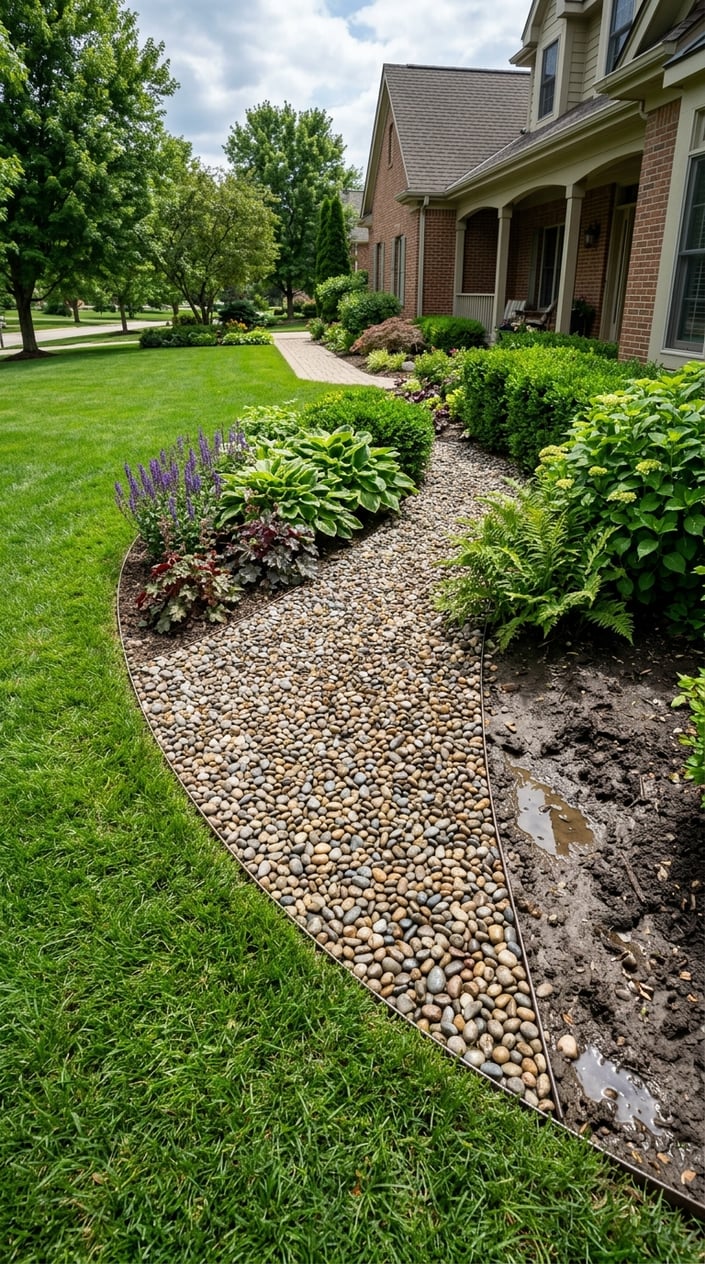
Let’s talk about a classic mess: mulch in a wet bed turns into a soft, swampy disaster. I swap it out for pea gravel or river pebbles because they drain better and keep things tidy after a rainstorm.
I like to use this trick under shrubs, around downspouts, or next to drainage channels. Mulch just washes away, but those stones stay put and make the front yard look sharp—even after a downpour.
Expert Tip From MrPlanter: “Use landscape fabric only where it makes sense, and do not pack the stone too tightly. Good drainage needs a little room to move.“
15. Raise Planting Beds With Berms Along The Wettest Front-Yard Sections
Here’s a fun fact: a small mound can save your favorite plant from drowning. When I build berms, I raise the root zone above the soggy soil, so my plants stay happy even in the wettest parts of the yard.
I place berms along the damp edges, then top them with tough shrubs, perennials, or grasses. The raised beds also add a little extra shape, so the yard looks lively instead of flat and muddy.
Expert Tip From MrPlanter: “Build berms with gentle curves, not sharp humps. Soft shapes look natural and are easier to mow around.“
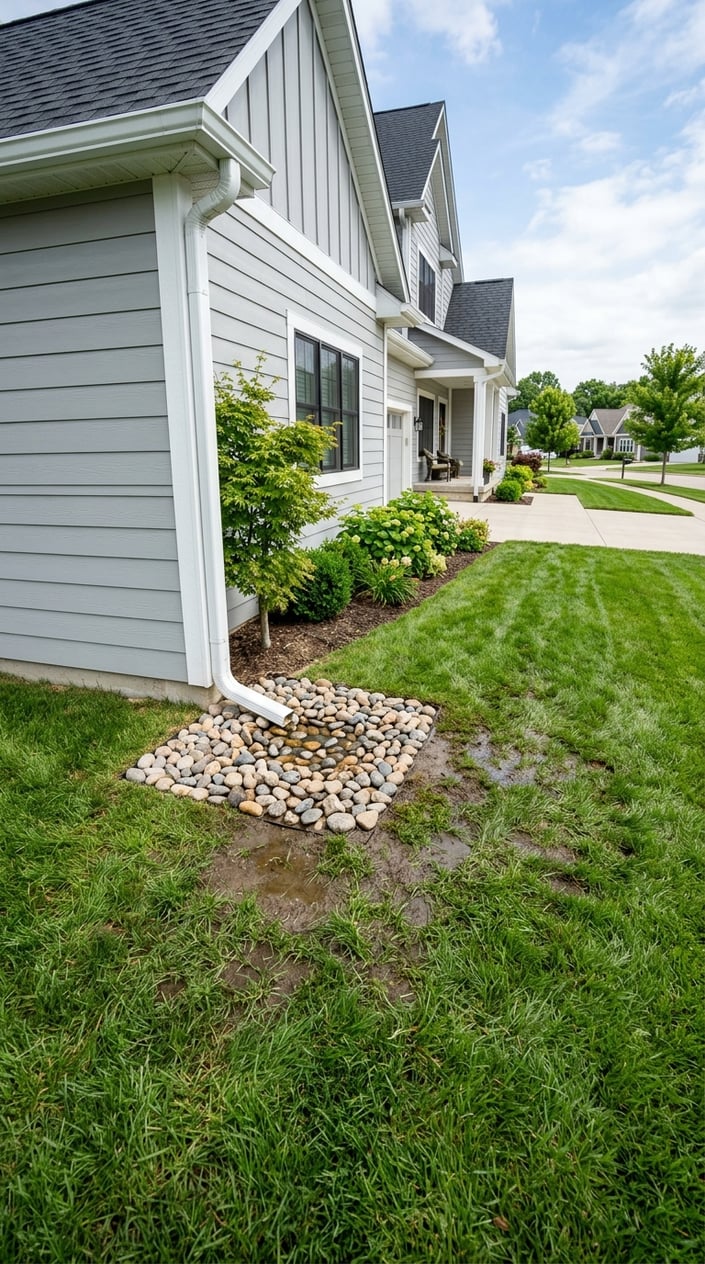
16. Add A Rock Apron Under Downspouts To Stop Splashback And Mud
Let’s clear up a myth: your downspout doesn’t need a fancy fix to behave. I toss down a rock apron, and suddenly, all that roof runoff has a sturdy landing zone that stops mud from splashing everywhere.
I use this trick near front entries, corners of the house, and beds that get pounded when it rains. A mix of big stones and smaller gravel helps the water spread out, so it doesn’t dig a hole.
Expert Tip From MrPlanter: “Extend the apron far enough to catch the splash zone, not just the pipe opening. A few extra stones can save a lot of cleanup.“
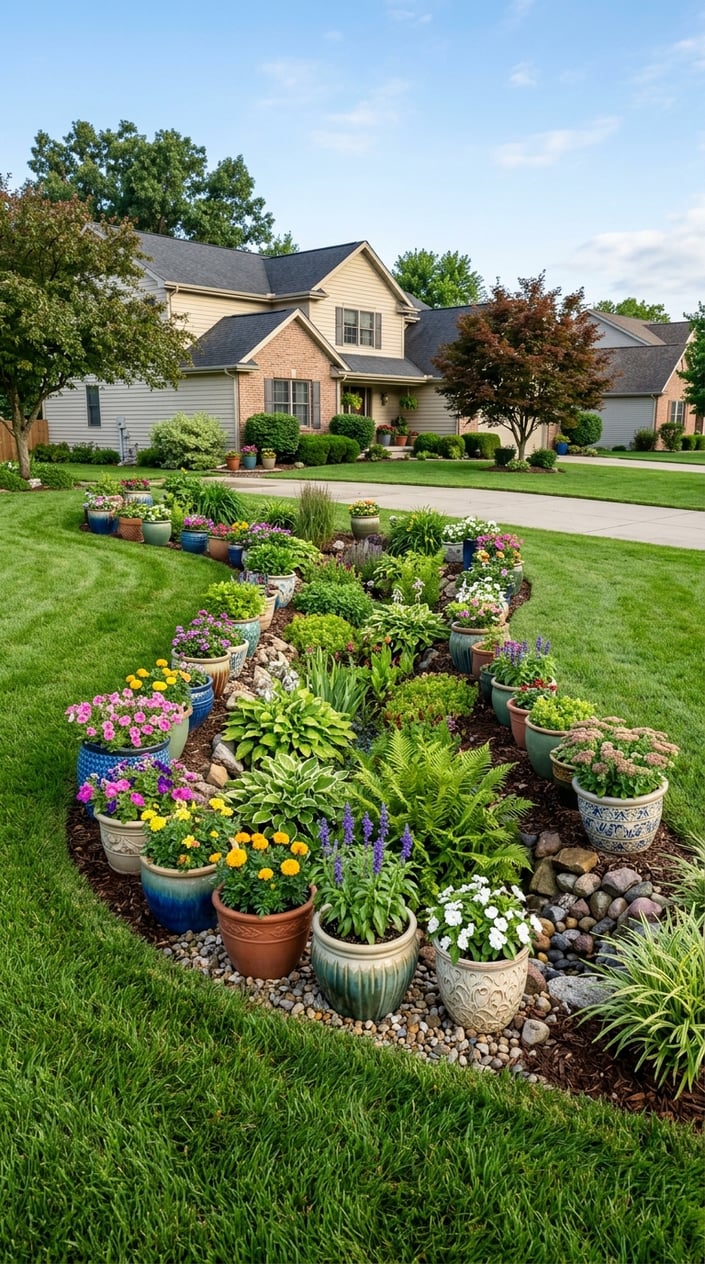
17. Use Ceramic Planters To Dress Up A Visible Drainage Ditch
We’ve all seen it: the drainage ditch that works great but looks like it belongs behind a hardware store. I line mine with ceramic planters, and suddenly, it’s the happiest spot in the yard.
I pick heavy pots with drainage holes and fill them with plants that love wet feet or lots of sun. The planters soften those hard edges and make the ditch look like part of the plan, not an afterthought.
Expert Tip From MrPlanter: “Choose heavy pots so they stay put in wind and rain. A pretty planter that tips over is just a very dramatic mess.“
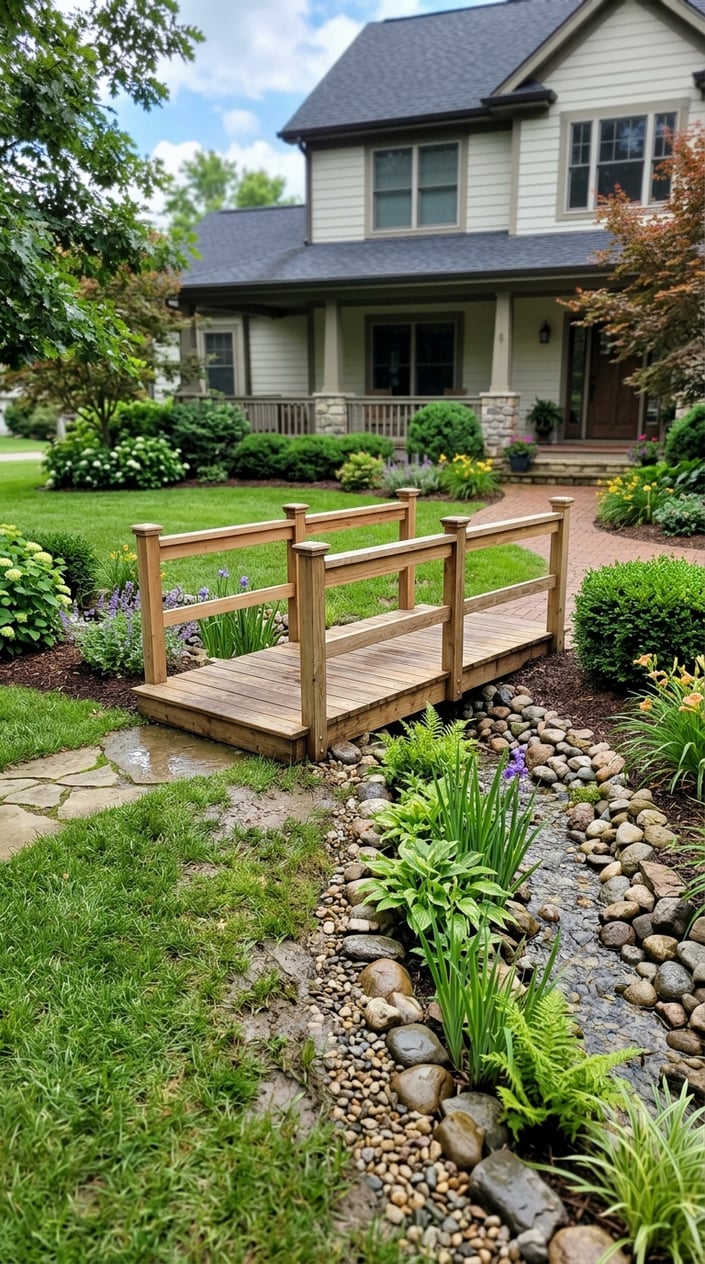
18. Build A Small Footbridge Over A Decorative Drainage Channel
Here’s something fun: your drainage channel could be the cutest spot in the front yard. I add a small footbridge, and now the whole thing feels charming instead of like a problem.
I put the bridge where a path crosses a swale or dry creek bed, especially near the front door. Whether I use wood or stone, I make sure the bridge feels sturdy and matches the house.
Expert Tip From MrPlanter: “Keep the bridge simple and scaled to the space. A tiny bridge over a tidy channel can look magical without feeling like a theme park.“
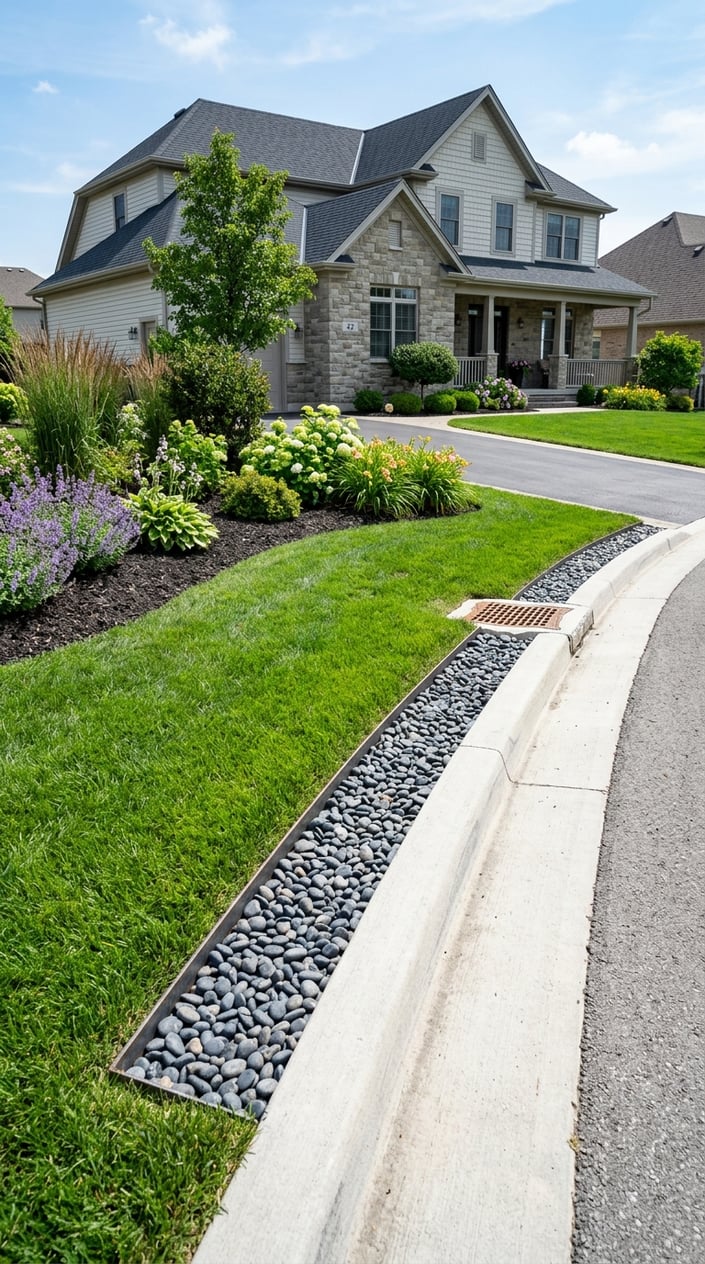
19. Edge Drainage Features With Steel Or Stone For A Finished Curb-Appeal Look
Let’s bust another myth: drainage features don’t have to look messy or temporary. I use steel or stone edging to give swales, ditches, and rock beds a crisp outline that makes the whole front yard shine.
This edging keeps grass out of the gravel and draws a clear line around drainage zones. When the lines look sharp, the yard just feels put together—like it’s working hard but still looking good.
Expert Tip From MrPlanter: “Repeat the edging style in other parts of the yard if you can. Small matching details make drainage work look like part of the original design.“
20. Seed Wet Patches With Moisture-Tolerant Fine Fescue Or Tall Fescue Mix
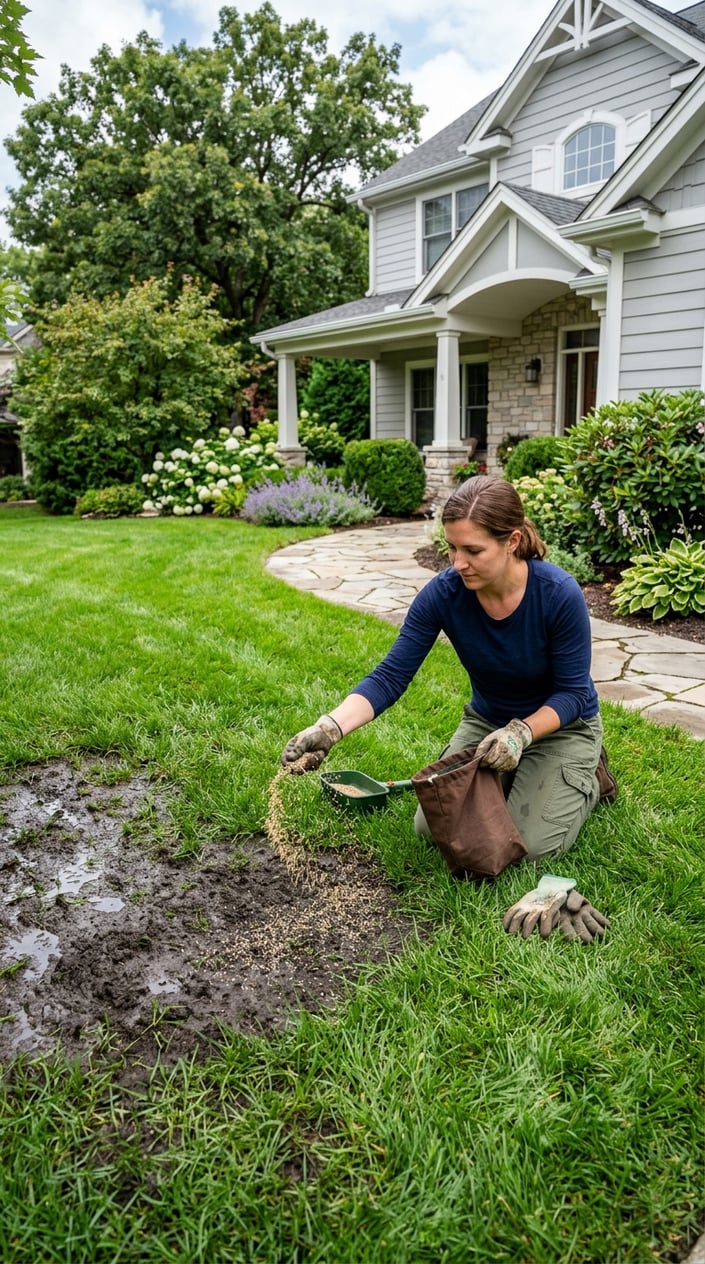
Oh, soggy lawn spots—the backyard version of that one leaky faucet you keep meaning to fix. You patch up the grass, and boom, the same wet area turns it into a muddy mess again.
Try using moisture-tolerant fine fescue or tall fescue seeds for those damp patches. These grasses handle wet feet way better than your average lawn seed.
Pick a seed mix that fits your climate and how much sun the area gets. Keep the patch lightly moist while the seeds sprout.
Just a heads up: these grasses do their best work after you sort out any drainage problems. Think of them as the final flourish, not the first step.
Expert Tip From MrPlanter: “Do not seed into standing water and hope for the best. Fix the water first, then let the grass do its happy little job.“
I’m Anirban Saha, the Founder and Owner of MrPlanter.com. I pay the bills as a software developer, although my BTech is actually in Electronics and Communication. I really love my day job, but what gives me energy every day is interacting with my indoor plants and taking care of them. I have been successfully nurturing and maintaining houseplants for over 10 years now.
📚🔍 Our content undergoes thorough review and fact-checking before publication. For additional details, explore our strict Editorial Policy to deliver helpful content. 📝🔒