Too much fertilizer burns plants, too little starves them. Learn how to dose fertilizer for plants using NPK ratios, pot size, and season-based feeding rules.
Fertilizer works best when you treat it like seasoning, not a dare. Too little can leave plants pale and slow-growing.
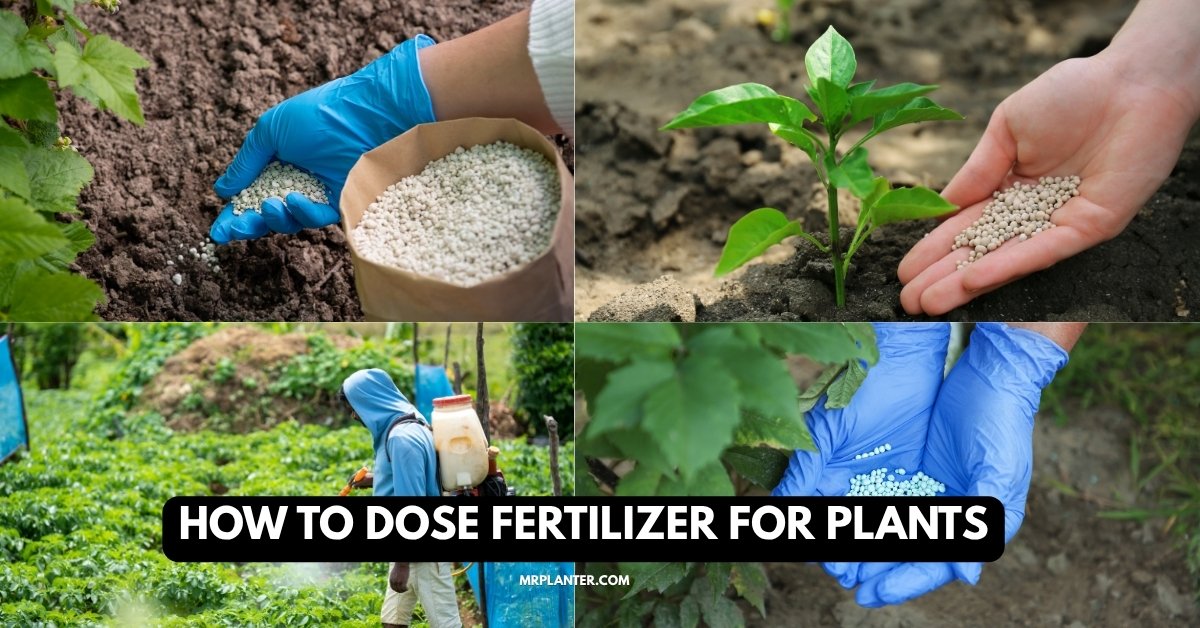
Too much can scorch roots, damage leaves, and wash nutrients into nearby waterways. To dose fertilizer for plants safely, match the product to the plant, follow the label rate, measure your garden area, and start with less rather than more.
Your soil, sunlight, rainfall, plant type, and growth stage all affect the right amount. A tomato in rich soil may need less fertilizer than a tomato in a lean raised bed.
A shaded shrub may need almost none. The goal is steady growth, not a sudden green explosion that leaves weak stems in its wake.
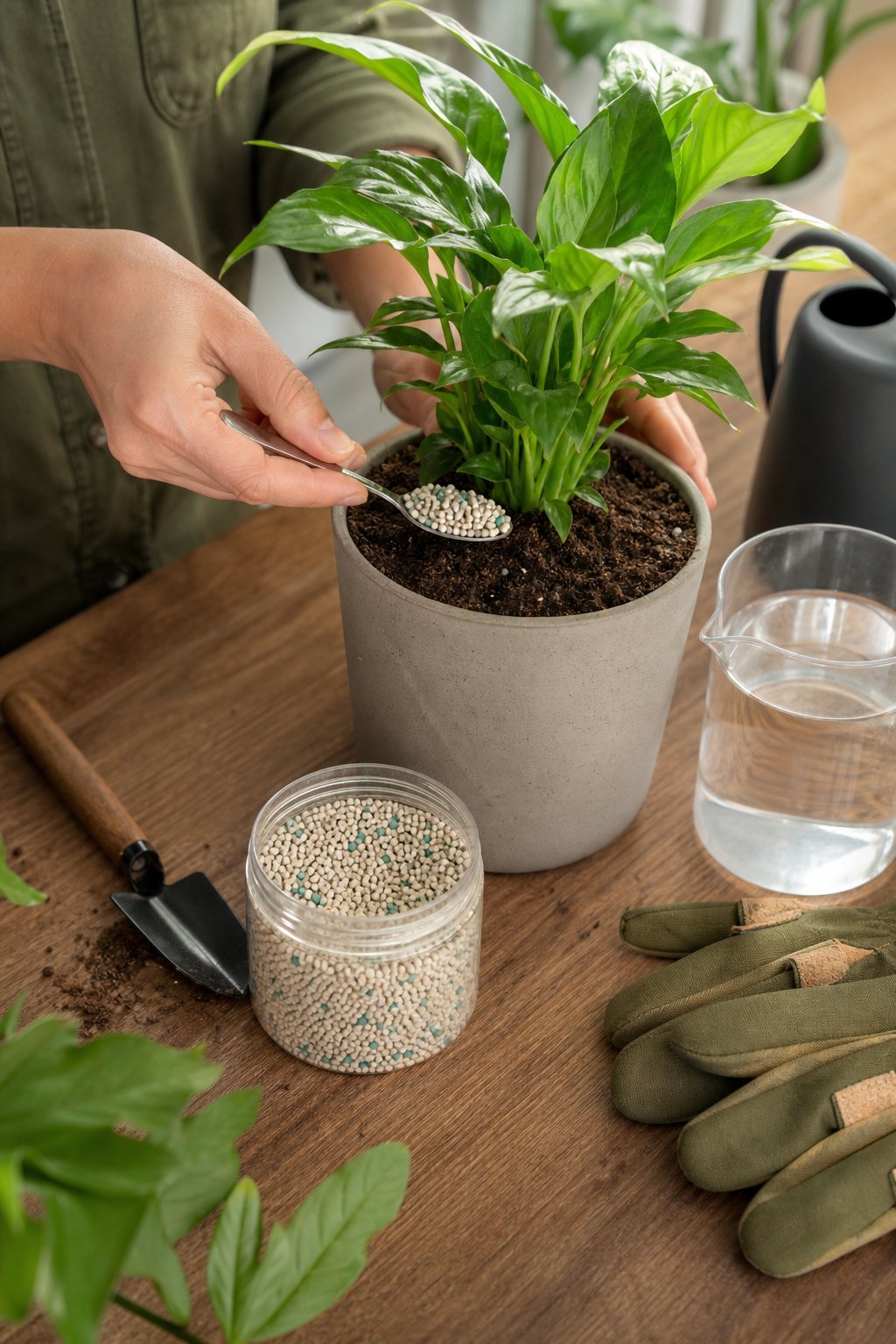
Key Takeaways
- Test your soil and match the fertilizer to the plant’s real needs.
- Use the label rate, accurate measurements, and even coverage.
- Stop feeding when plants slow down, and flush soil if salt buildup appears.
Start With Plant Needs And Soil Conditions
A good fertilizer dose begins before you open the bag. Check what your plants need, what your soil already contains, and whether weather or plant growth will change nutrient demand.
Identify Heavy Feeders And Light Feeders
Heavy feeders include tomatoes, corn, squash, peppers, roses, and many annual flowers. They grow quickly or produce fruit and flowers, so they may need regular feeding during active growth.
Light feeders include established trees, shrubs, herbs, succulents, and native plants adapted to lean soil. Feeding these plants too often can create soft growth, fewer flowers, or pest problems.
Start with the lowest label rate and watch the plant for two to three weeks before adding more.
Use A Soil Test To Find Nutrient Gaps
A soil test can show your soil’s pH and levels of nitrogen, phosphorus, potassium, and other nutrients. This keeps you from adding phosphorus or potassium that your garden already has in excess.
Test vegetable beds every few years, or test sooner if plants grow poorly despite good watering and sunlight. Follow the test recommendations instead of reaching for a general-purpose fertilizer by habit.
Account For Sunlight, Rainfall, And Growth Stage
Plants in full sun usually grow and feed more actively than plants in deep shade. Heavy rain can wash soluble nutrients below the root zone.
Dry soil can make fertilizer salts more damaging. Feed during active growth when soil has enough moisture.
Newly planted, wilted, diseased, or heat-stressed plants need water and recovery first. A plant putting out new leaves, buds, or fruit can use nutrients more readily than one sitting dormant.
Read Fertilizer Labels And Nutrient Ratios
The label tells you what the product contains, how much to use, how often to apply it, and what area it covers. Treat those instructions as a starting point, then adjust only when soil tests and plant response support a change.
Understand N-P-K Numbers
The three numbers on a fertilizer bag show the percentage by weight of nitrogen, phosphorus, and potassium.
- Nitrogen, or N: Supports green leaves and stem growth.
- Phosphorus, or P: Helps roots, flowers, and fruit develop.
- Potassium, or K: Supports water balance, sturdy growth, and stress tolerance.
A 10-10-10 fertilizer contains 10 percent of each nutrient by weight. A lawn formula such as 30-0-4 contains much more nitrogen and may be a poor choice for flowering plants.
Choose a formula that fits your crop and soil report rather than assuming a higher number means better results.
Compare Granular, Liquid, And Slow-Release Products
Liquid fertilizer acts quickly and works well for plants that need small, repeated feedings. You dilute it with water, so measure the concentrate carefully.
Granular fertilizer is spread over soil and watered in. Slow-release granules release nutrients over several weeks or months, which can reduce the chance of a sudden salt surge.
Each form has its own rate, so never substitute a liquid measurement for a granular one.
Calculate Product Amount From Application Rates
Read whether the label gives a rate per gallon, plant, square foot, or 100 square feet. Measure your bed length and width, multiply them to find square footage, then multiply that area by the label rate.
For example, a 4-by-8-foot bed covers 32 square feet. If the label calls for 1 pound per 100 square feet, multiply 1 pound by 32 divided by 100, giving 0.32 pound, or about 5.1 ounces.
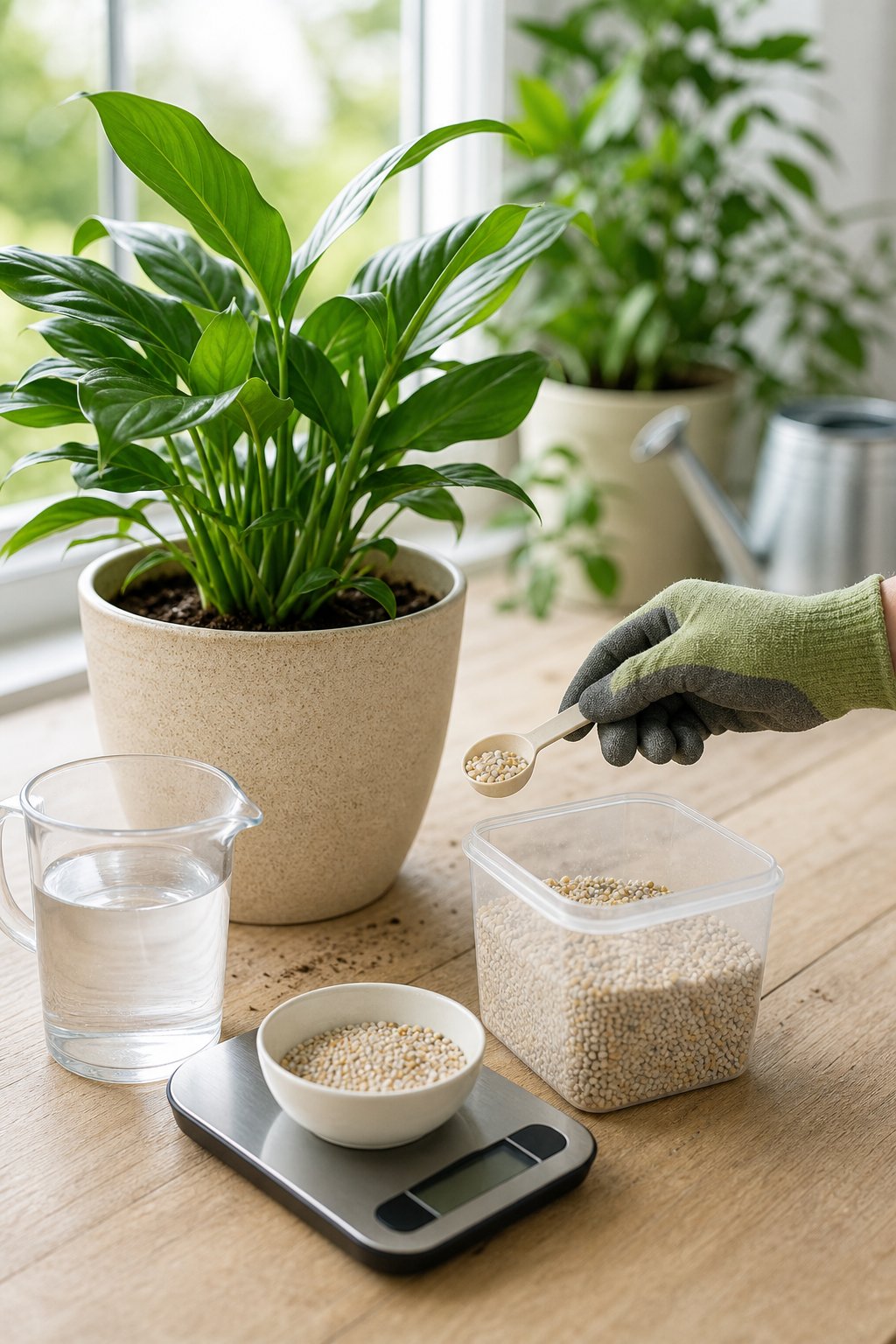
A kitchen scale makes this far more reliable than guessing with a garden scoop.
Measure The Right Amount For Garden Spaces
Different garden areas need different methods. Vegetable beds are measured by square feet, trees by root-zone spread, and lawns by coverage area.
Keep a small notebook with product names, rates, dates, and weather so you can spot patterns.
Dose Fertilizer For Vegetable Beds
Measure the bed rather than dosing each plant by eye. For heavy-feeding vegetables, apply the label rate before planting or beside the row.
Make later applications only if the product and crop call for them. Keep fertilizer away from direct contact with seeds and tender stems.
Leafy greens often use more nitrogen, while carrots and other root crops can produce lots of leaves and small roots if you add too much nitrogen. Tomatoes may need a balanced feed early, followed by a formula suited to fruiting once flowers appear.
Apply Fertilizer Around Trees And Shrubs
Spread granular fertilizer across the area beneath the canopy and a little beyond the outer branches, where many fine roots grow. Do not pile it against the trunk or place concentrated fertilizer in planting holes.
Established trees generally need less frequent feeding than annual vegetables. Young trees need careful watering more than a heavy fertilizer dose, especially during their first growing season.
Use the product’s tree rate and base any added nitrogen on a soil test when possible.
Feed Flower Borders And Lawns Without Overdoing It
Flower borders usually benefit from slow-release fertilizer mixed into the soil at planting, followed by light feedings during active growth. Too much nitrogen can produce leafy plants with disappointing blooms.
For lawns, measure the turf area and use a spreader set according to the product label. Apply in two directions at half the total rate if you want more even coverage.
Sweep stray granules from sidewalks and driveways so rain does not carry them into storm drains.
Apply Fertilizer Safely And Evenly
Good dosing depends on good application. Measure the product, spread it across the root zone, and water it in without turning the garden into a salty soup.
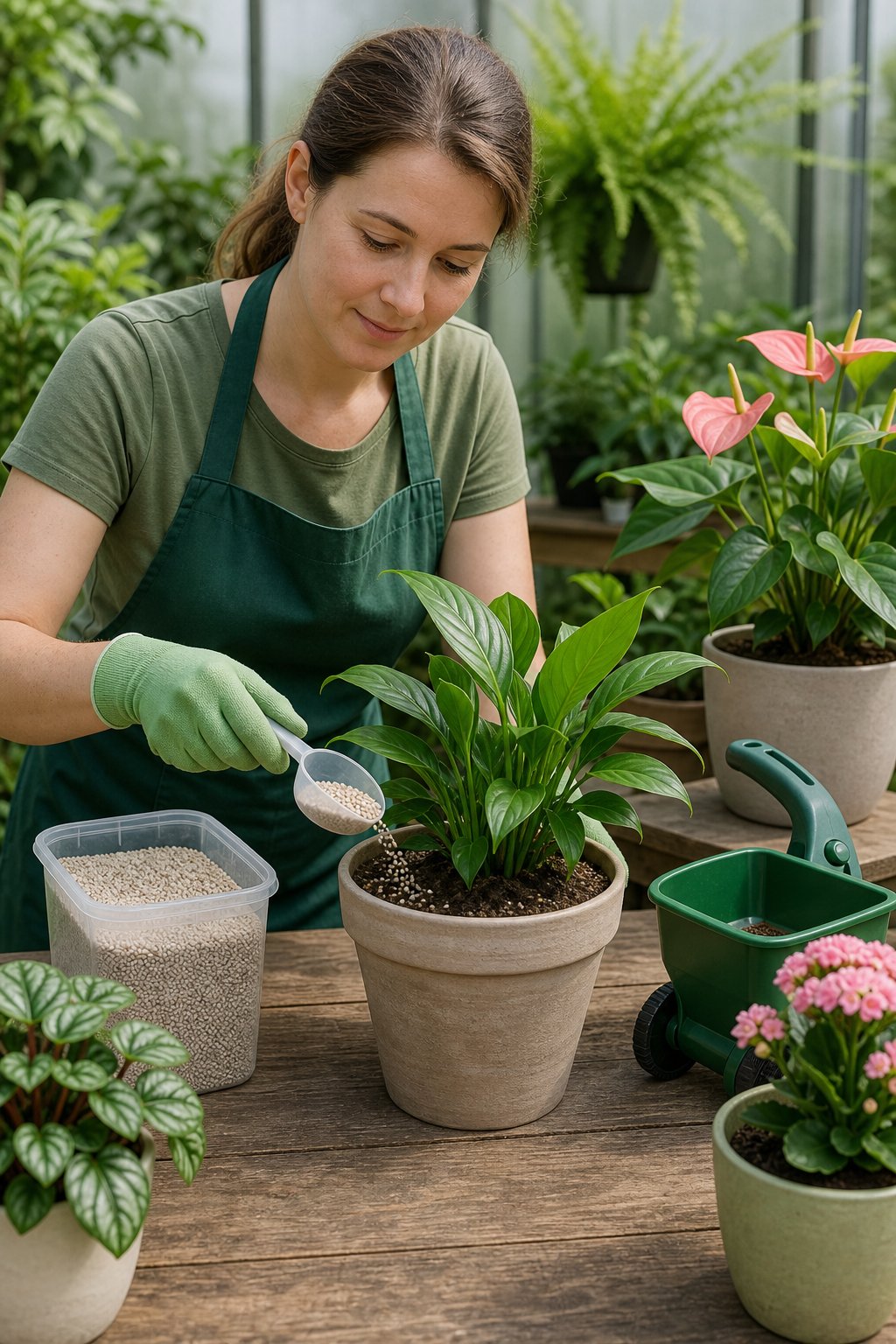
Use Cups, Scoops, And Spreaders Accurately
Use a dedicated measuring cup or scoop for fertilizer, and keep it separate from kitchen tools. A small digital scale helps when a label gives ounces or pounds.
For large areas, calibrate your spreader with a small test patch. Walk at a steady pace and avoid stopping with the gate open.
That can create one very overfed stripe across the lawn.
Keep Granules Away From Stems And Roots
Place fertilizer on the soil surface around plants, not against stems, trunks, or exposed roots. Concentrated granules touching wet plant tissue can cause burns.
For liquid fertilizer, pour onto the soil unless the label specifically allows foliar spraying. A wider, lighter application around the root zone is safer than dumping the whole dose beside the crown.
Water Fertilizer In At The Right Time
Water the soil before applying liquid fertilizer if it is dry. After applying granular fertilizer, water deeply enough to move nutrients into the upper root zone.
Avoid fertilizing before intense rain, which can wash nutrients away. Do not fertilize during extreme heat, which raises the chance of root injury.
Morning is a practical time because plants and soil have time to dry before night.
Set A Seasonal Feeding Schedule
Your garden does not need the same feeding plan from April through November. Match applications to new growth, harvest, flowering, rainfall, and the point when plants begin preparing for dormancy.
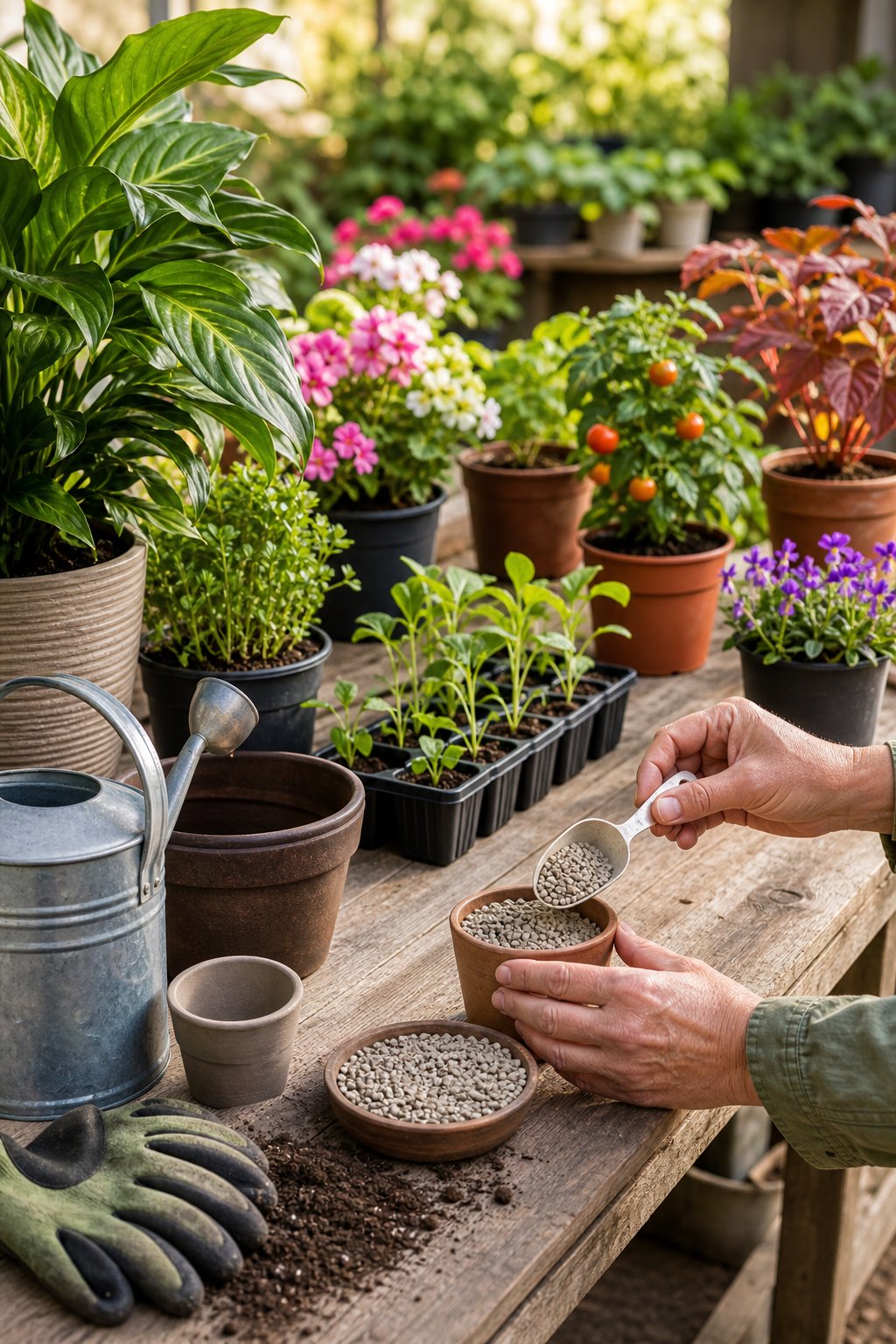
Fertilize During Spring Growth
Begin feeding when soil warms and plants show fresh leaves or shoots. Apply compost or a slow-release product according to your soil test and the label.
For perennial beds, a single spring application may be enough. Vegetable gardens often need a preplant dose, with side-dressing later for crops that keep producing through summer.
Adjust Feeding Through Summer
Check plants before each scheduled application. Strong color, steady growth, and good flowering may mean the current dose is enough.
Increase feeding only when the label permits and plants show a real need. Heavy rain, frequent harvests, sandy soil, and container growing can increase nutrient loss.
Mulch helps protect soil moisture, though it does not replace fertilizer.
Know When To Stop Before Winter
Stop feeding most outdoor plants as growth slows in late summer or early fall. Late nitrogen can push tender growth that is more likely to suffer winter damage.
Avoid fertilizing dormant trees, shrubs, and perennials unless a soil professional or product label gives a specific reason. Watering needs may continue even after feeding stops.
Spot And Fix Overfertilization
Overfertilization often looks like a plant crying for help, which tempts you to add more. Look closely at the pattern before reaching for another scoop.
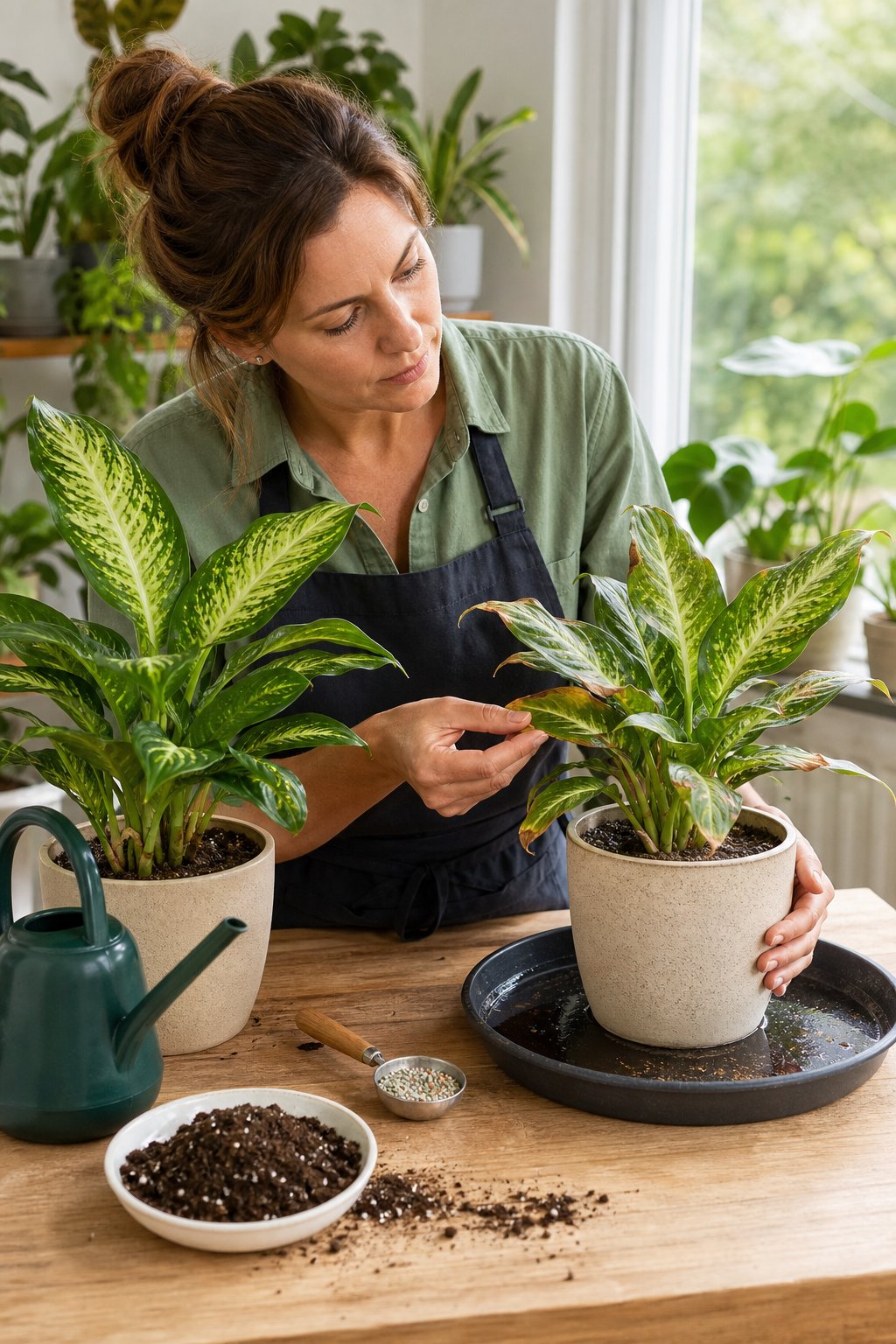
Recognize Fertilizer Burn And Salt Buildup
Brown leaf tips, crispy edges, yellowing, wilting despite moist soil, and a white crust on the soil surface can point to excess fertilizer salts. Growth may slow even though the plant has plenty of nutrients.
Check for recent applications before treating the problem as a deficiency. Adding more fertilizer to a burned plant usually makes the damage worse.
Flush Excess Nutrients From Soil
Stop feeding and remove visible granules from the soil surface. For a container with drainage holes, slowly run clean water through the soil several times, allowing excess water to drain away each time.
For garden beds, deep watering can move soluble salts below the root zone. Avoid runoff into drains, ponds, or streams.
Do not flush waterlogged soil, and repair poor drainage before adding more water.
Avoid Common Backyard Fertilizing Mistakes
Do not fertilize dry, wilted, diseased, or newly transplanted plants until they recover. Avoid using lawn fertilizer in vegetable beds, applying a second product before the first one has taken effect, or assuming organic fertilizer cannot burn roots.
Keep records of rates and dates. Many mistakes happen when you forget a previous application and repeat it too soon.
Frequently Asked Questions on Knowing the Right Dose Fertilizer For Plants
How much liquid fertilizer should I add to my aquarium without turning it into a science experiment?
Use the aquarium product’s dose for your tank volume, not a garden fertilizer rate. Start at half the label dose, especially in a new or lightly planted tank.
Monitor plant growth, algae, and water test results.
How often should I dose fertilizer for healthy aquarium plants?
Many aquarists give planted aquariums small doses once or several times per week. The frequency depends on plant mass, light, carbon supply, and water changes.
Follow the product schedule. Reduce feeding if algae rises faster than plant growth.
When is the best time of day to add fertilizer to an aquarium?
Add fertilizer during the lighting period, when aquarium plants can use available nutrients.
After a water change, you can conveniently add fertilizer because you know the tank volume and have removed some old water.
How do I calculate the right fertilizer dose for my tank size?
Measure the actual water volume, accounting for gravel, rocks, and decorations.
Divide the product’s stated dose by its reference volume. Then multiply by your tank’s water volume, using a syringe or graduated measure for small amounts.
Can I use too much fertilizer, and what signs should I watch for?
You can use too much fertilizer.
Excess fertilizer encourages algae and may raise nutrient levels beyond what plants can use. Watch for algae blooms, stressed plants, cloudy water, or test results that remain high between water changes.
Should I dose fertilizer differently for low-tech and high-tech planted tanks?
Yes.
Low-tech tanks with modest light and no added carbon usually need lighter feeding.
High-tech tanks use strong light, injected carbon, and dense plant growth.
You can use more fertilizer in high-tech tanks, though you should still increase doses gradually.
Test the water as you increase fertilizer doses.