As an Amazon Associate, MrPlanter.com earns from qualifying purchases.
A busy front yard can still look polished, welcoming, and easy to care for. The trick is to pick features that cut mowing, watering, and weeding without making your home feel bare or unfinished.
If you want curb appeal with less weekend labor, swap high-maintenance turf for structure, mulch, gravel, and tough plants that can handle a little neglect.
You don’t need a giant remodel to get there. Small changes, like swapping lawn strips for river rock or adding evergreen anchors, can make your front yard look intentional all year.
Planting drought-tolerant perennials also helps. These ideas work in different light conditions, yard sizes, and styles, so you can pick the ones that fit your home and your schedule.
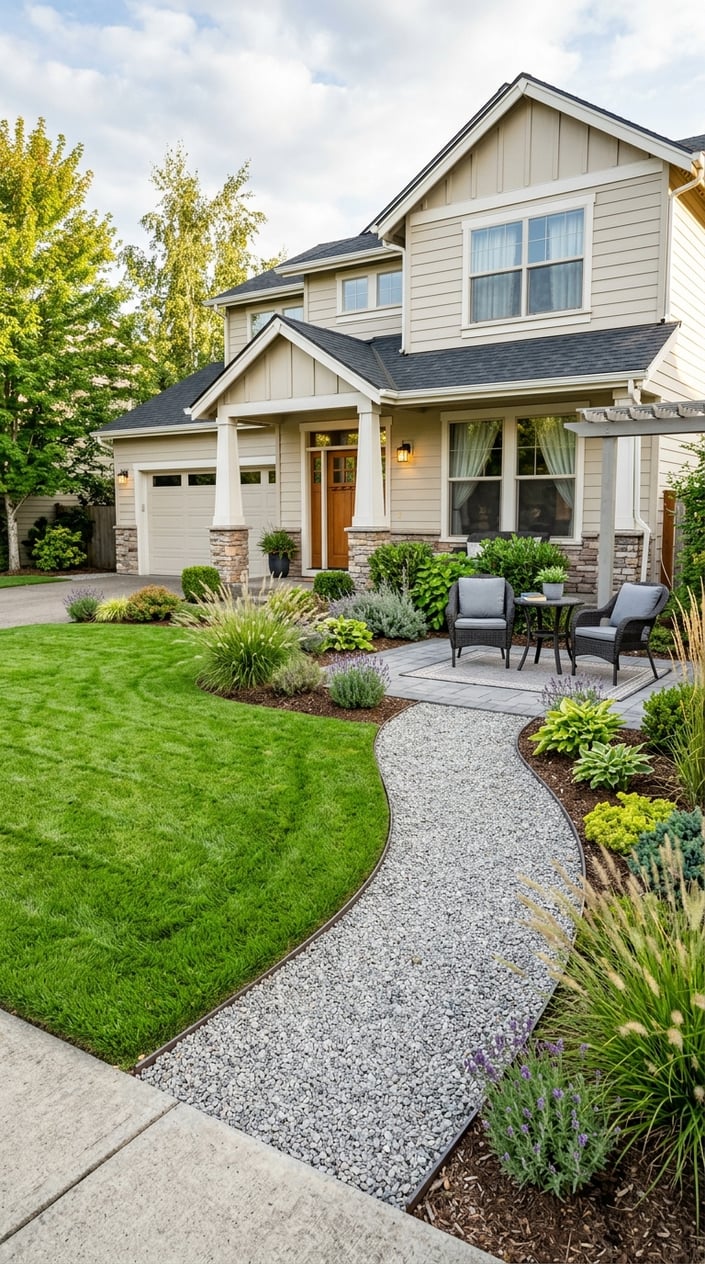
1. Replace Part Of The Front Lawn With A Pea Gravel Path And Patio
If your front lawn keeps begging for a haircut in places you barely use, give it a break. Trade a slice of turf for pea gravel and a small patio to get a cleaner look and cut mowing time fast.
Pea gravel works well for walkways, sitting spots, and side areas that don’t need grass. Add a few stepping stones, a chair, or a bench, and the space feels finished without much fuss.
You’ll want a sturdy border, since gravel loves to wander when you’re not looking.
Expert Tip From MrPlanter:“Choose a simple edge, like steel, stone, or pressure-treated wood, to keep the gravel in place. A tidy border makes the whole area look sharper with almost no extra work.”
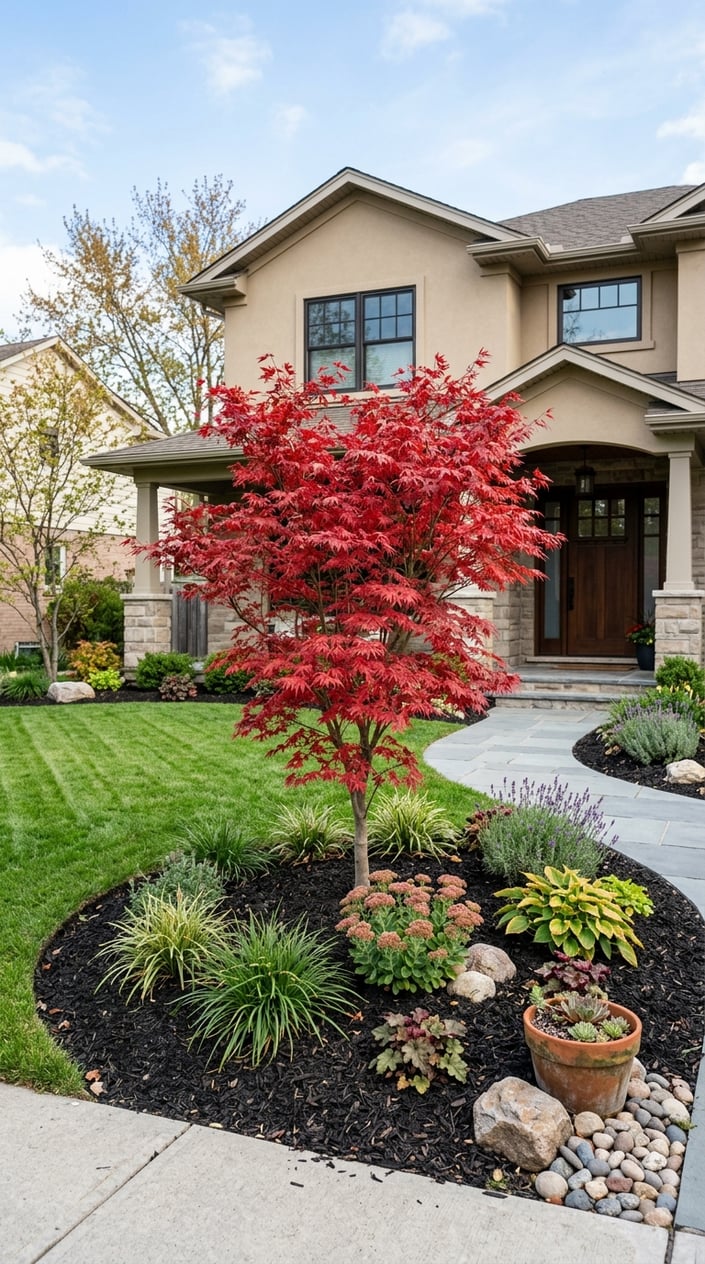
2. Plant A Japanese Maple As A Low-Fuss Front Yard Focal Point
One tree can do more for curb appeal than a whole cart of flowers. A Japanese maple brings graceful shape, rich color, and a calm look without begging for constant trimming.
It stays manageable in size, so it makes a smart anchor near an entry path or porch. In many yards, it also handles partial shade nicely, so you’re not stuck chasing the sun.
Pair it with mulch and a few low-growing perennials, and the tree becomes the star while everything around it stays easy.
Expert Tip From MrPlanter:“Give your Japanese maple room to breathe, because crowding ruins its shape fast. A clean mulch ring and a simple underplanting will keep the tree looking elegant with very little fuss.”
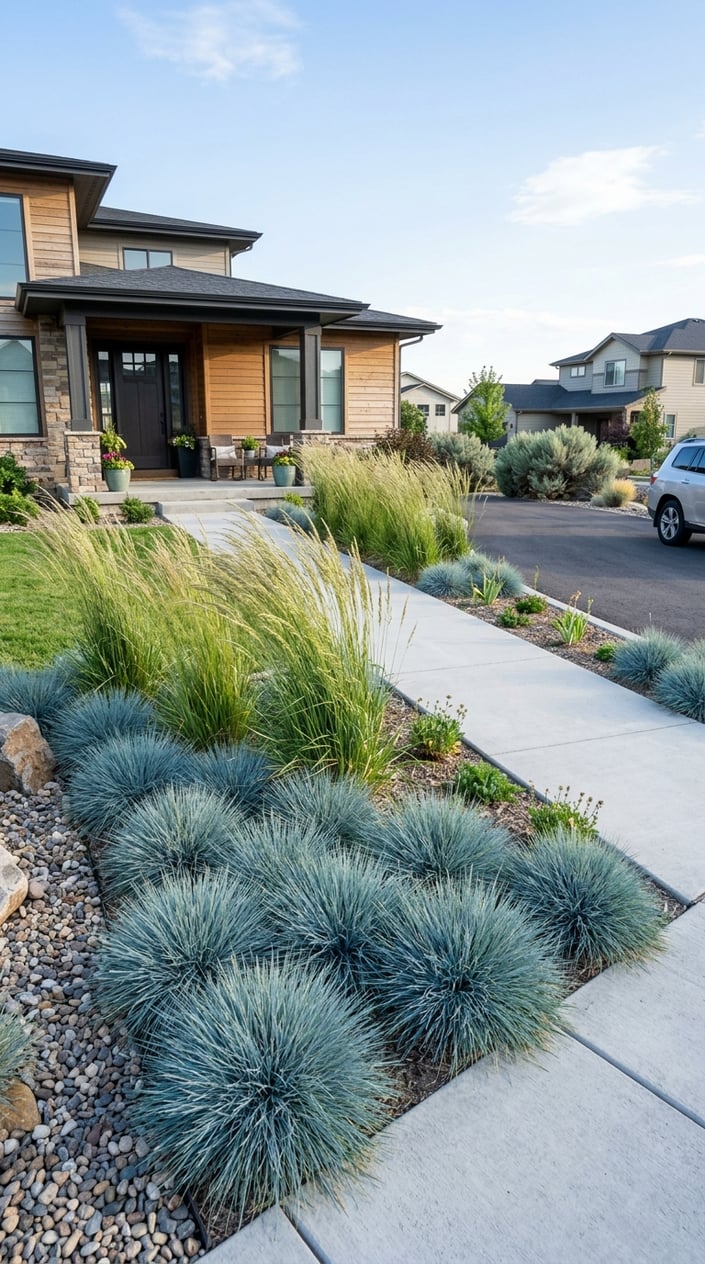
3. Use Native Drought-Tolerant Grasses Like Blue Fescue And Switchgrass
Ornamental grasses aren’t just for fancy magazine gardens. Blue fescue and switchgrass can make your front yard look soft, modern, and low-maintenance all at once.
Blue fescue forms tidy blue-green mounds, while switchgrass adds taller movement and texture. These grasses usually need less water and less trimming than a full lawn, especially once they settle in.
They also look good through more of the year than many flowering plants, so your yard stays attractive even when blooms fade.
Expert Tip From MrPlanter:“Plant grasses in groups instead of one at a time, because clusters look fuller and more natural. You will also spend less time trying to make them feel balanced.”
4. Install Drip Irrigation With A Rachio Smart Sprinkler Controller
If you always forget to water, you’re not alone. Drip irrigation paired with a smart controller takes a lot of the guesswork out of keeping plants happy.
Drip lines send water right to the roots, so less gets lost to evaporation or runoff. A Rachio smart sprinkler controller can adjust schedules based on weather, which means you won’t water right before rain.
That means less waste and fewer evenings spent dragging hoses around like a reluctant firefighter.
Expert Tip From MrPlanter:“Start with the driest beds first, especially shrubs and new plantings. Once your system is set, you will save time and your plants will get more consistent water.”
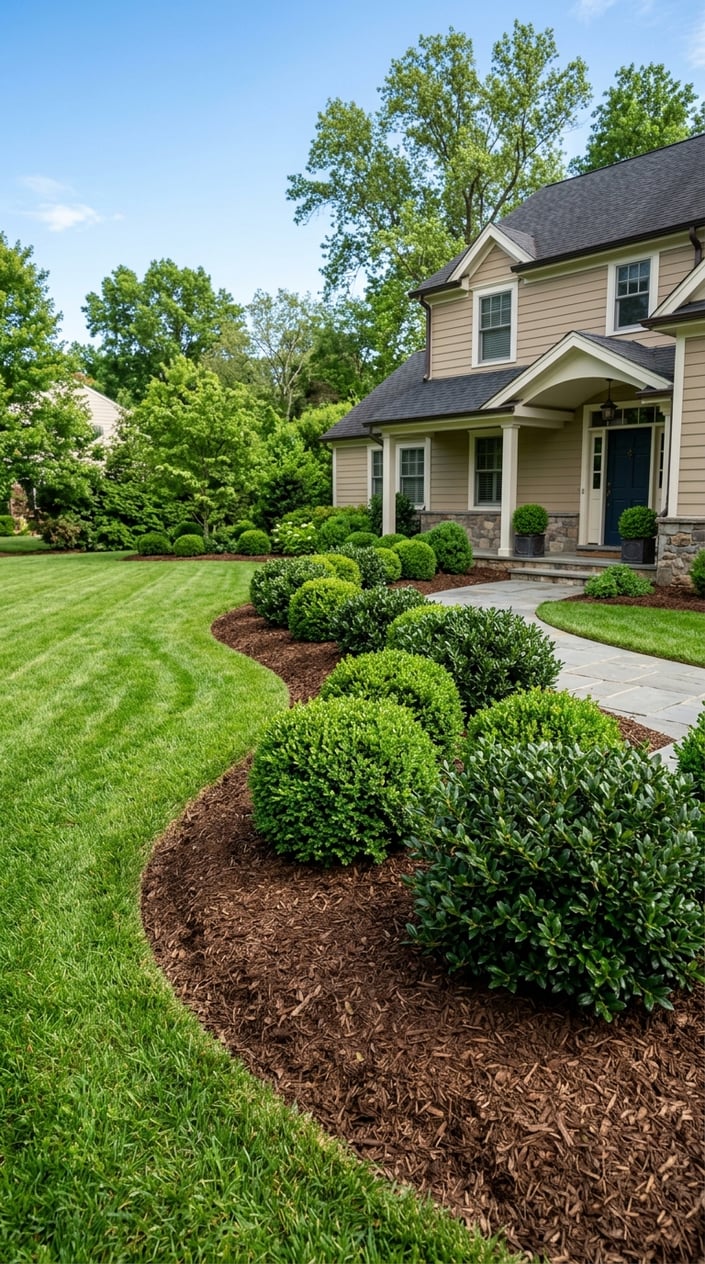
5. Swap Annual Beds For Mulched Shrub Borders With Boxwood And Inkberry Holly
Colorful front beds don’t have to mean constant replanting. Mulched shrub borders with boxwood and inkberry holly give you structure that looks neat for a long time.
Boxwood adds crisp form, and inkberry holly brings evergreen color with a softer feel. Since both shrubs hold their shape well, you spend less time deadheading and more time enjoying the view from the driveway.
A thick mulch layer also helps hold moisture and slows weeds, which is a gift your future self will appreciate.
Expert Tip From MrPlanter:“Keep the border simple and repeat the same shrubs along the bed. Repetition makes the design look polished, and it makes maintenance much easier too.”
6. Edge Walkways With Creeping Thyme Instead Of High-Maintenance Turf
If the skinny strip beside your walkway always looks sad, you’re not alone. Creeping thyme turns that tough little trouble spot into a fragrant ground cover.
It hugs the edge, handles foot traffic better than most folks expect, and adds tiny blooms that attract pollinators. You’ll mow less, water less, and stop arguing with a sliver of turf that never seems happy.
It works especially well along sunny paths where grass struggles and weeds try to sneak in.
Expert Tip From MrPlanter:“Use creeping thyme where it gets good sun and decent drainage. If the spot stays soggy, it will sulk instead of spread.”
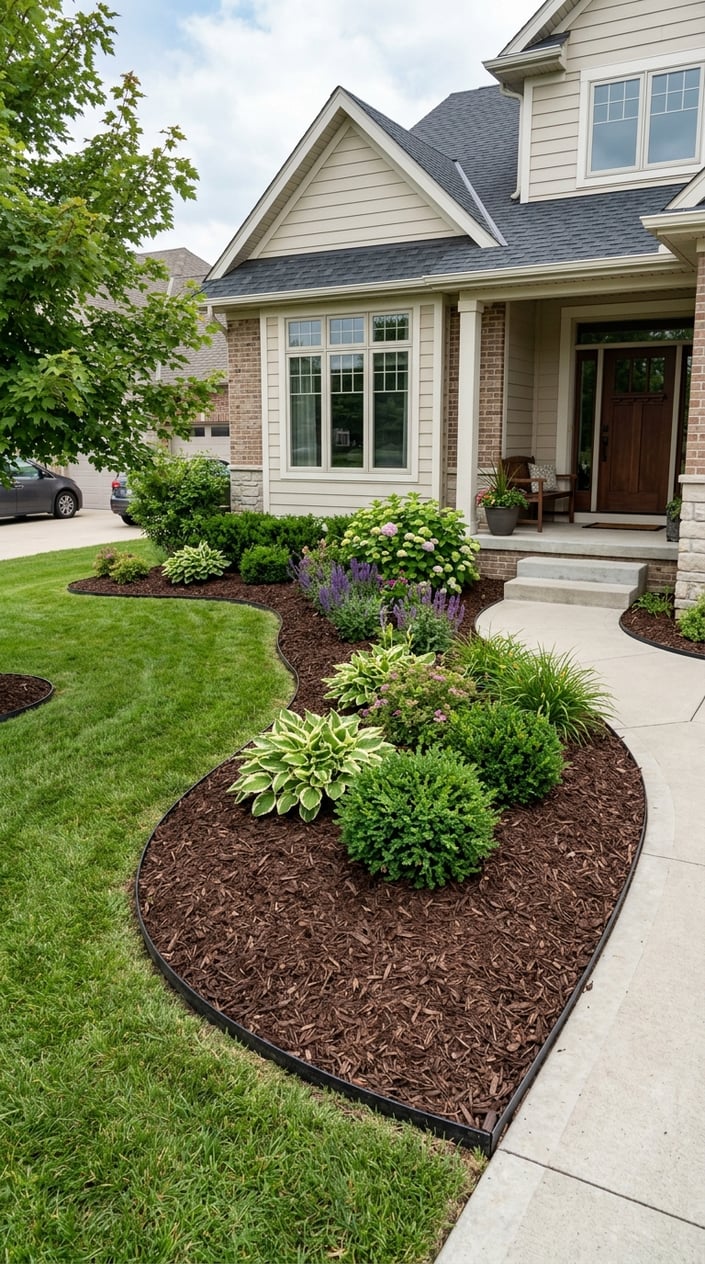
7. Cover Bare Soil With Shredded Hardwood Mulch To Cut Weeds And Watering
Mulch can make a front yard look more finished than extra flowers sometimes do. Shredded hardwood mulch gives bare beds a clean, dark backdrop that makes plants pop.
It also helps hold moisture, keeps weeds down, and stops soil from drying out so fast in hot weather. If your front yard has big planting beds, mulch is one of the easiest ways to make the whole space look tidy without adding more chores.
Refresh it once in a while and the yard stays neat with very little effort.
Expert Tip From MrPlanter:“Spread mulch in a layer that is thick enough to block weeds, but not so thick that it smothers plants. Leave a small gap around stems and trunks so everything can breathe.”
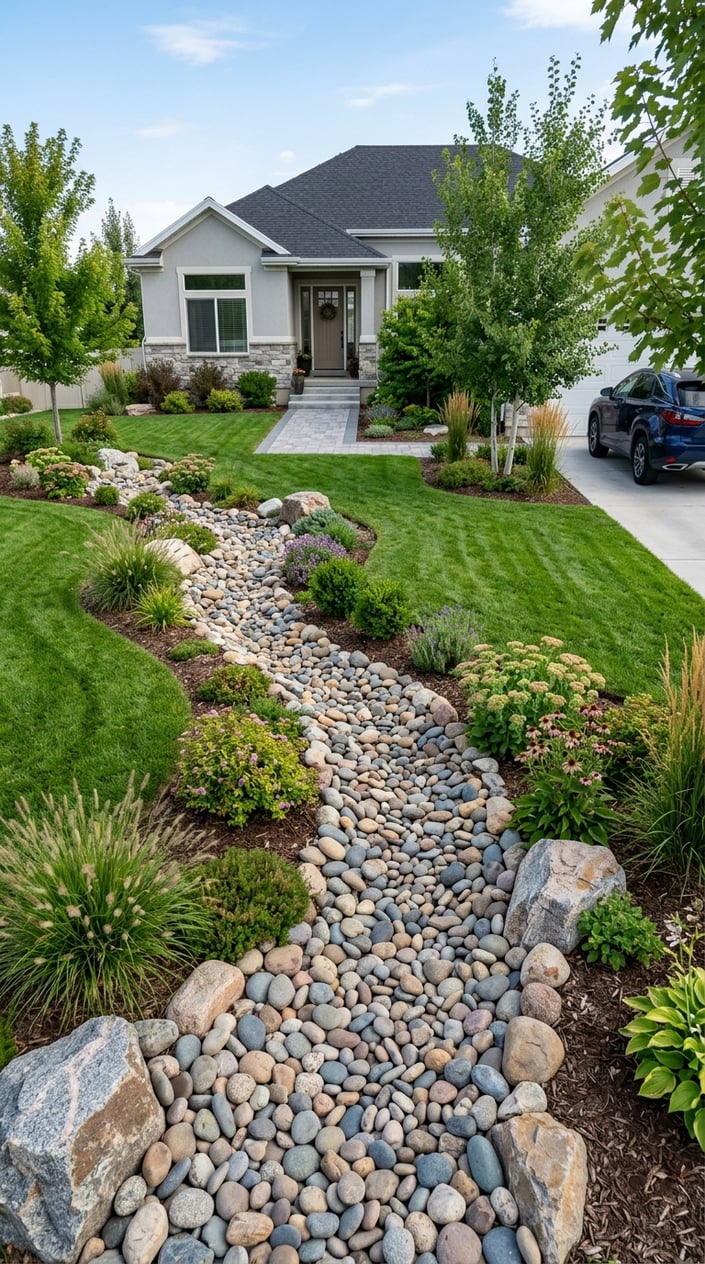
8. Build A Dry Creek Bed With River Rock For Drainage And Easy Style
Drainage fixes don’t have to look like a construction site. A dry creek bed made from river rock can move water away from problem spots while adding a natural, polished look.
It works especially well where runoff collects after heavy rain. Use larger stones near the center and smaller rock along the edges so it feels like a real stream bed instead of a pile of gravel.
Add a few tough plants nearby, and you get a front yard feature that looks intentional even when the weather turns messy.
Expert Tip From MrPlanter:“Follow the natural slope of the yard when you lay out the creek bed. Water will thank you, and the design will look more believable.”
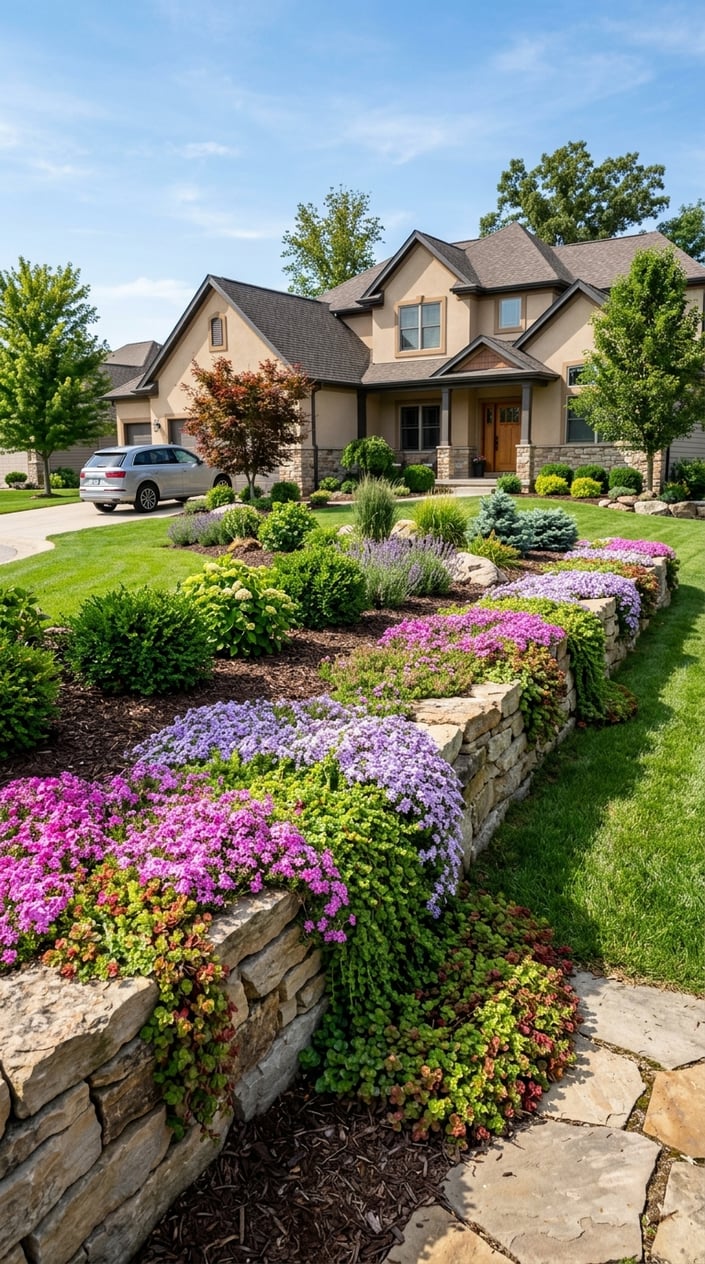
9. Grow Creeping Phlox Or Creeping Sedum Over A Sunny Retaining Wall
A sunny retaining wall can feel like the yard’s awkward middle child until you dress it up. Creeping phlox and creeping sedum spill over stone beautifully and turn that hard surface into part of the garden.
Both plants are low-maintenance once they settle in, and they handle sunny spots well. Creeping phlox gives you colorful spring blooms, while sedum brings thick, tidy foliage and strong drought tolerance.
Together, they soften the wall without asking you to baby them every week.
Expert Tip From MrPlanter:“Choose plants based on how much sun the wall gets, not just how pretty they look in the nursery. The right match means less watering and fewer bald spots.”
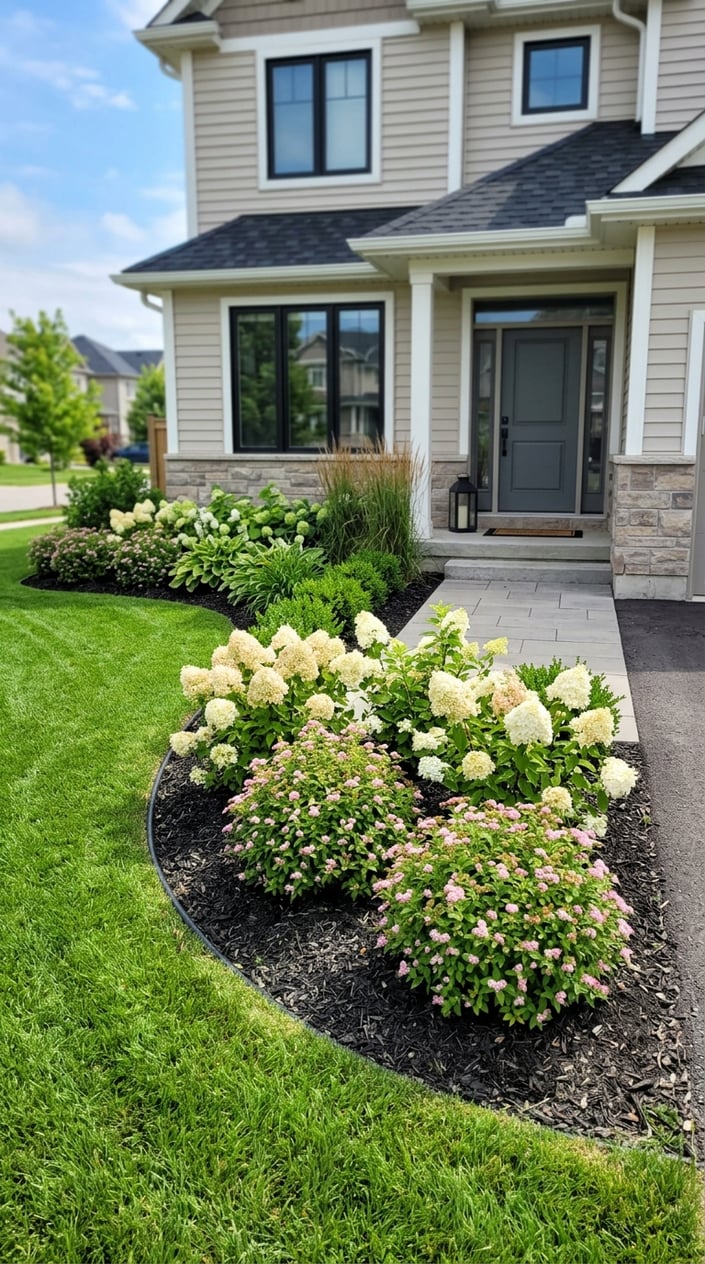
10. Use A Simple Foundation Planting With Dwarf Hydrangea And Spirea
If the front of your house looks empty but you don’t want a jungle by the porch, try dwarf hydrangea and spirea. They give you a neat foundation planting that stays compact and easy to manage.
Hydrangea adds big seasonal blooms, and spirea brings light texture and dependable color. Both shrubs stay smaller than many traditional foundation plants, so they fit under windows and along walkways.
Add mulch, keep the line simple, and your house will look framed instead of crowded.
Expert Tip From MrPlanter:“Check the mature size before planting, because small shrubs can surprise you later. A little space at the start saves a lot of pruning down the road.”
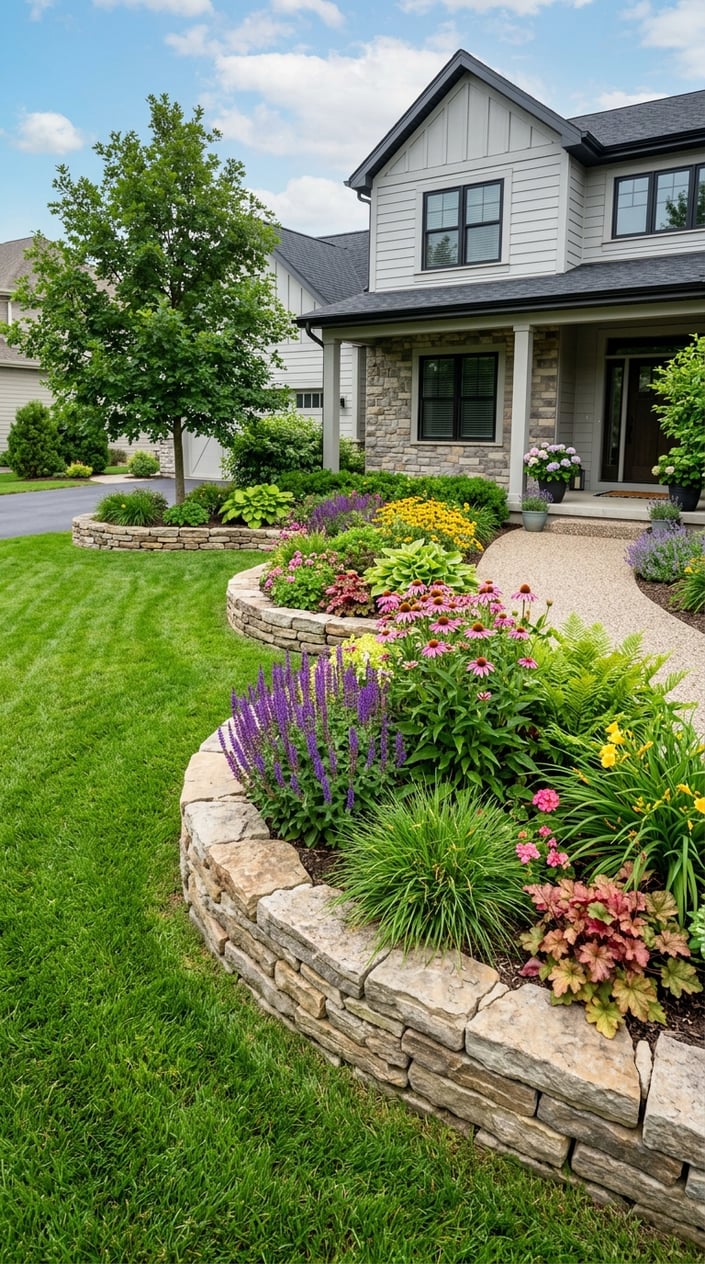
11. Add Raised Beds With Natural Stone For Tidy, Contained Planting Zones
Raised beds can make a front yard look cleaner and be easier to care for at the same time. Natural stone beds create clear edges, which keeps plants from wandering into the lawn and makes mowing simpler.
They also give you better control over soil and drainage, which helps if your yard has heavy clay or soggy spots. Because the bed is contained, you can group low-maintenance plants inside and keep the rest of the yard open and easy to trim.
The stone itself adds texture even when the plants are resting.
Expert Tip From MrPlanter:“Keep raised beds modest in size so they do not overwhelm the front yard. A few well-placed beds usually look better than one giant block of stone.”
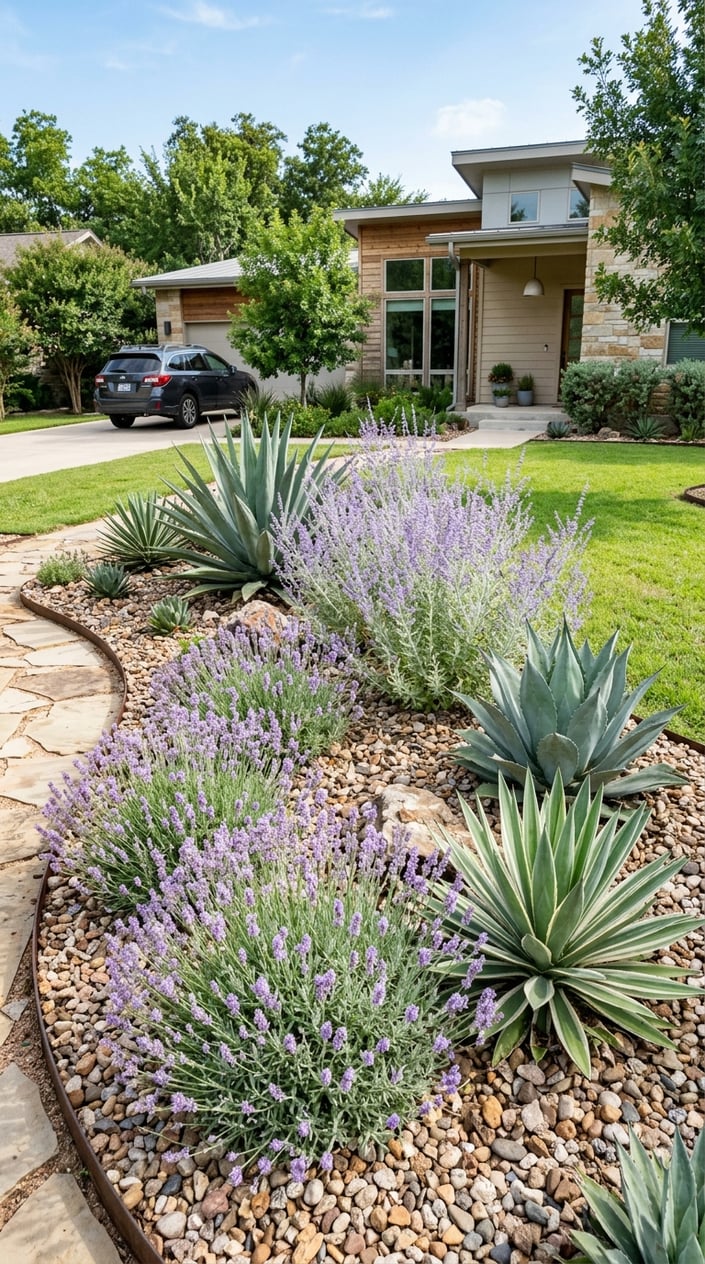
12. Create A Xeriscape Bed With Lavender, Russian Sage, And Agave
Xeriscape doesn’t mean your yard has to look dry or plain. Lavender, Russian sage, and agave can create a bold front bed with color, texture, and serious drought tolerance.
Lavender gives you fragrance and soft purple blooms. Russian sage adds airy height, and agave brings sculptural shape that looks almost like garden art.
With gravel mulch underneath, the whole bed feels clean and modern while asking for far less water than a traditional flower border.
Expert Tip From MrPlanter:“Give xeriscape plants excellent drainage, because they hate wet feet. If your soil is heavy, raise the bed or amend it before planting.”
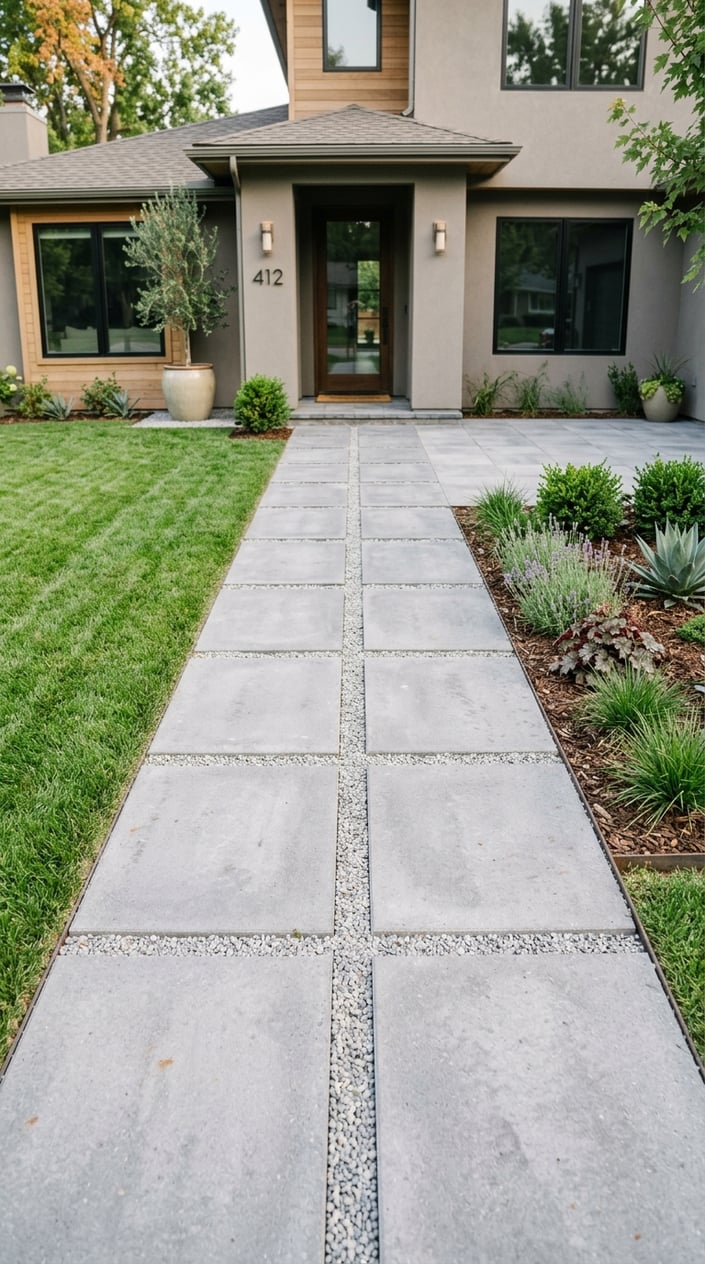
13. Install Large Concrete Pavers With Gravel Joints To Reduce Mowing
Mowing around tiny curves and narrow corners feels like running a weekly obstacle course. Large concrete pavers with gravel joints break up the turf and create a clean path that barely needs maintenance.
You can stroll easily on the wide pavers, and the gravel joints help water drain while shrinking the amount of lawn you have to cut. This setup shines from the driveway to the front door, giving you a sturdy, stylish path.
Keep the layout simple. Suddenly, the yard feels bigger and more open.
Expert Tip From MrPlanter:“Use fewer, larger pavers for a calmer look. Busy patterns can make low-maintenance design feel fussy, which defeats the whole point.”
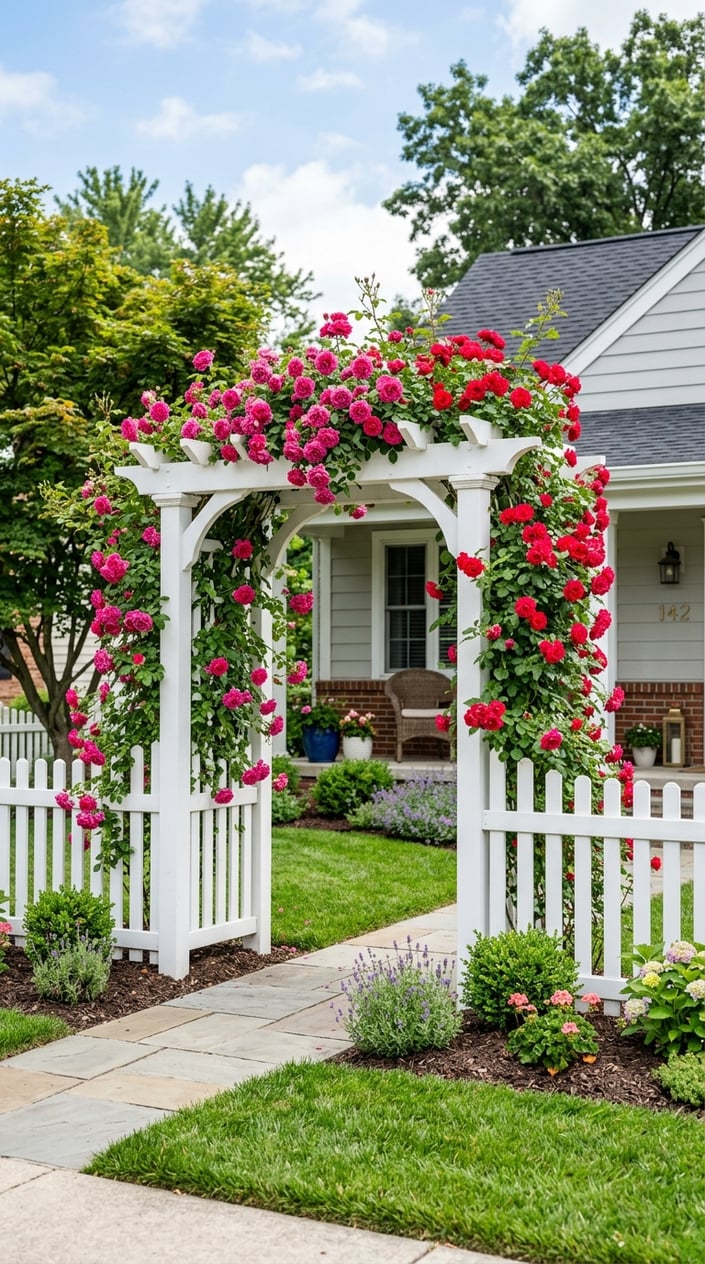
14. Plant Climbing Roses On A Front Arbor Or Fence For Vertical Curb Appeal
Climbing roses love to show off right at the front of your house. Give them an arbor or fence, and they’ll turn a plain entry into something dreamy without hogging space.
When you plant vertically, you get color and fragrance without giving up precious lawn or flower bed room. Once the roses settle in, they climb, bloom, and pull everyone’s eyes upward.
You’ll still need to do some pruning, but the payoff is huge for the little bit of space they use.
Expert Tip From MrPlanter:“Train the canes early and tie them loosely, because young roses need direction. A little guidance now keeps the whole display from turning into a tangled mess later.”
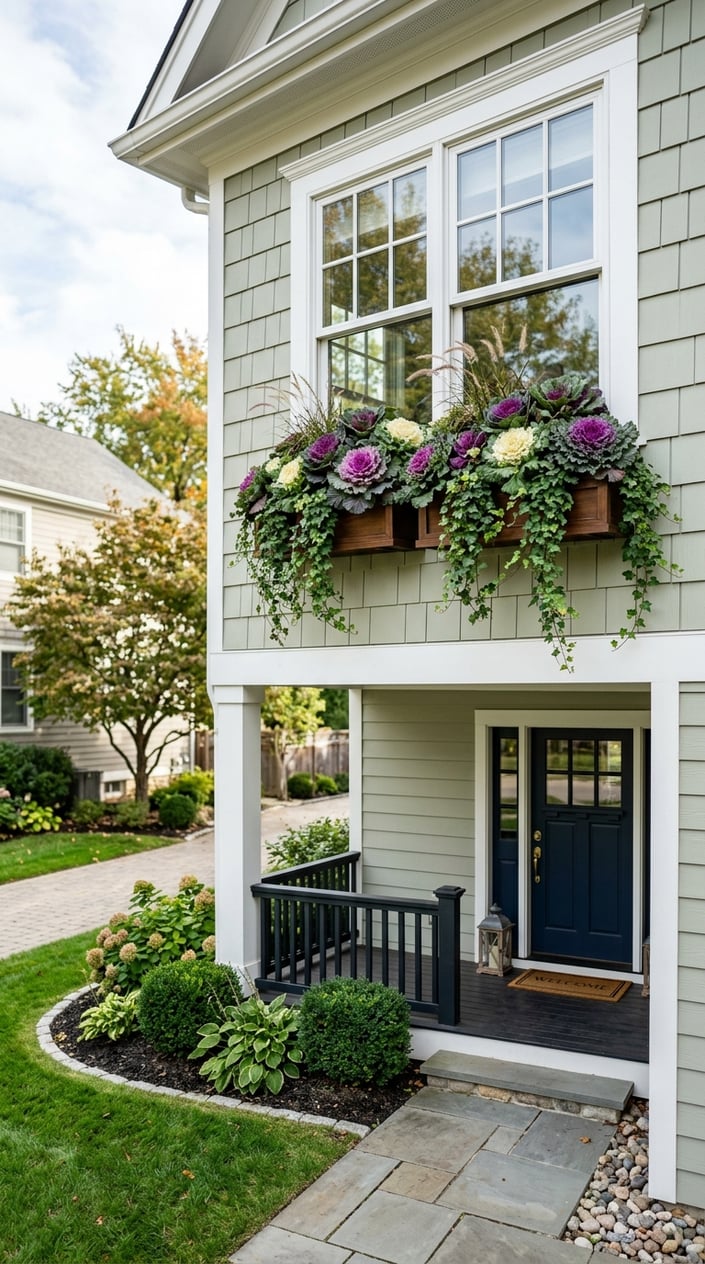
15. Use Seasonal Window Boxes With Ornamental Kale And Creeping Ivy
Window boxes can bring loads of style without you touching the lawn at all. Ornamental kale and creeping ivy create a cool-season display that adds texture near the house and keeps the front entry lively.
If you want a change but don’t feel like redoing a whole bed, this is your move. Window boxes are easy to refresh and look good on both classic and modern homes.
Since the planting area stays small, you don’t get stuck with much upkeep. You can swap out the plants with the seasons if you want a fresh look.
Expert Tip From MrPlanter:“Water window boxes more often than ground beds, since they dry out fast. A quick check every few days keeps the plants from getting cranky.”
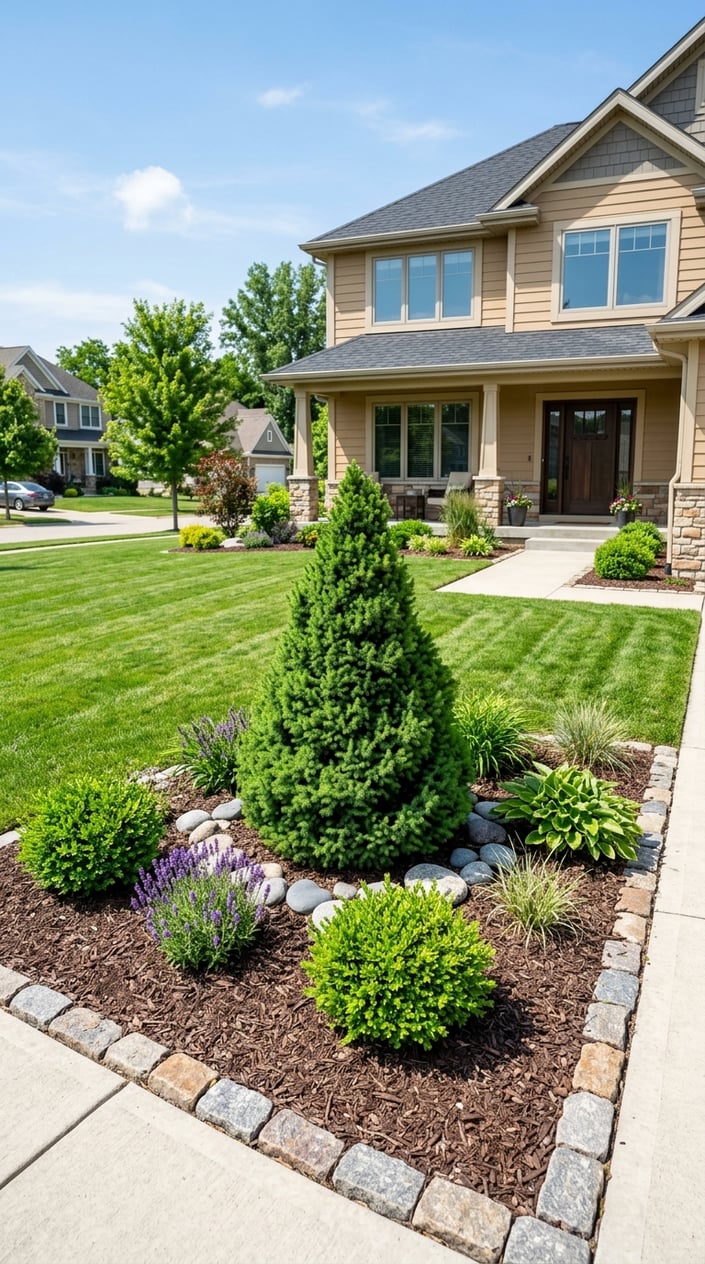
16. Choose Evergreen Anchors Like Dwarf Alberta Spruce For Year-Round Structure
People think evergreens are dull, but you can pick great ones. Dwarf Alberta spruce gives your front yard a neat, sculpted look that lasts through every season.
You can use it as a focal point, a matching pair by the porch, or repeat it along a foundation bed. Since it stays compact and naturally tidy, you barely have to prune it to keep it looking sharp.
When winter rolls in and other plants fade, it keeps your landscape from looking empty.
Expert Tip From MrPlanter:“Use evergreen anchors to give your yard structure before adding seasonal accents. That way, your front yard still looks good when flowers are out of season.”
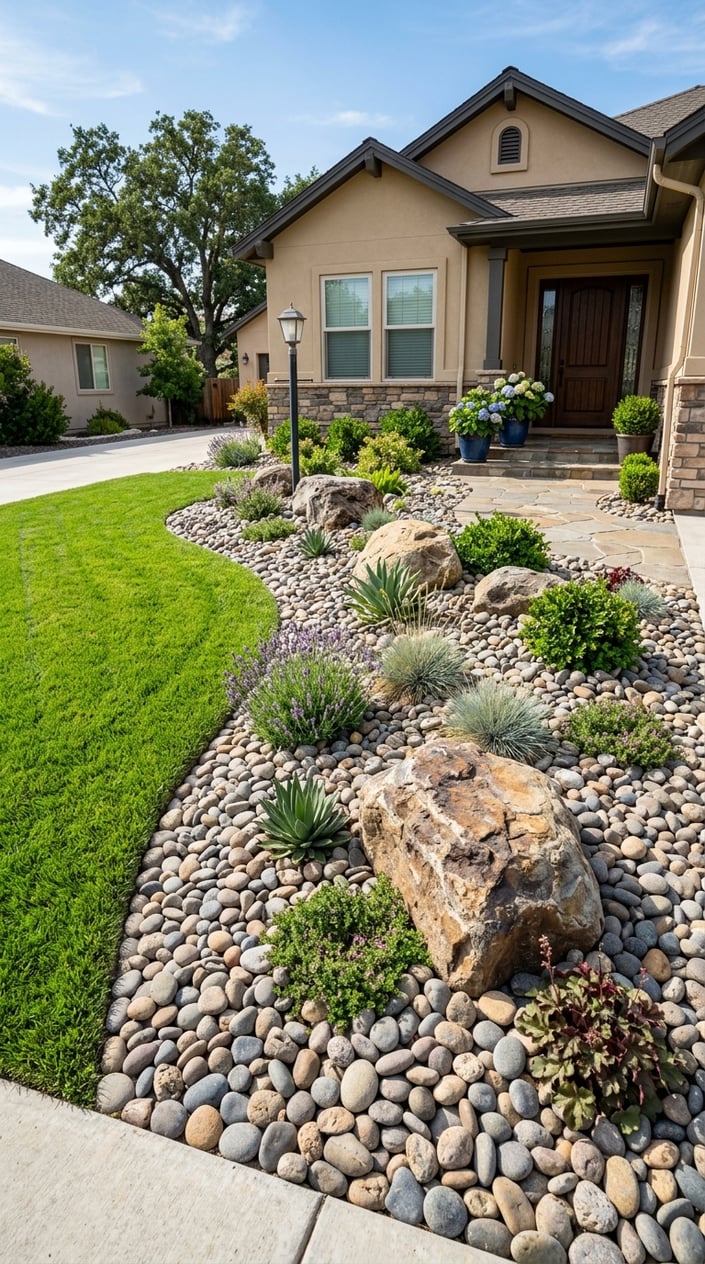
17. Replace Narrow Lawn Strips With River Rock And Boulders
Those skinny grass strips beside sidewalks turn into maintenance traps every summer. Swap them out for river rock and a few boulders, and you can skip mowing, trimming, and watering all at once.
This idea works best in those awkward spots where grass never grows right. The rocks handle heat like champs, and boulders give the space a solid, finished look.
Throw in a few drought-tolerant plants, and you’ve got a simple setup that’s easy to keep tidy.
Expert Tip From MrPlanter:“Mix rock sizes for a more natural look, but keep the palette simple. Too many materials can make a small space feel busy and harder to maintain.”
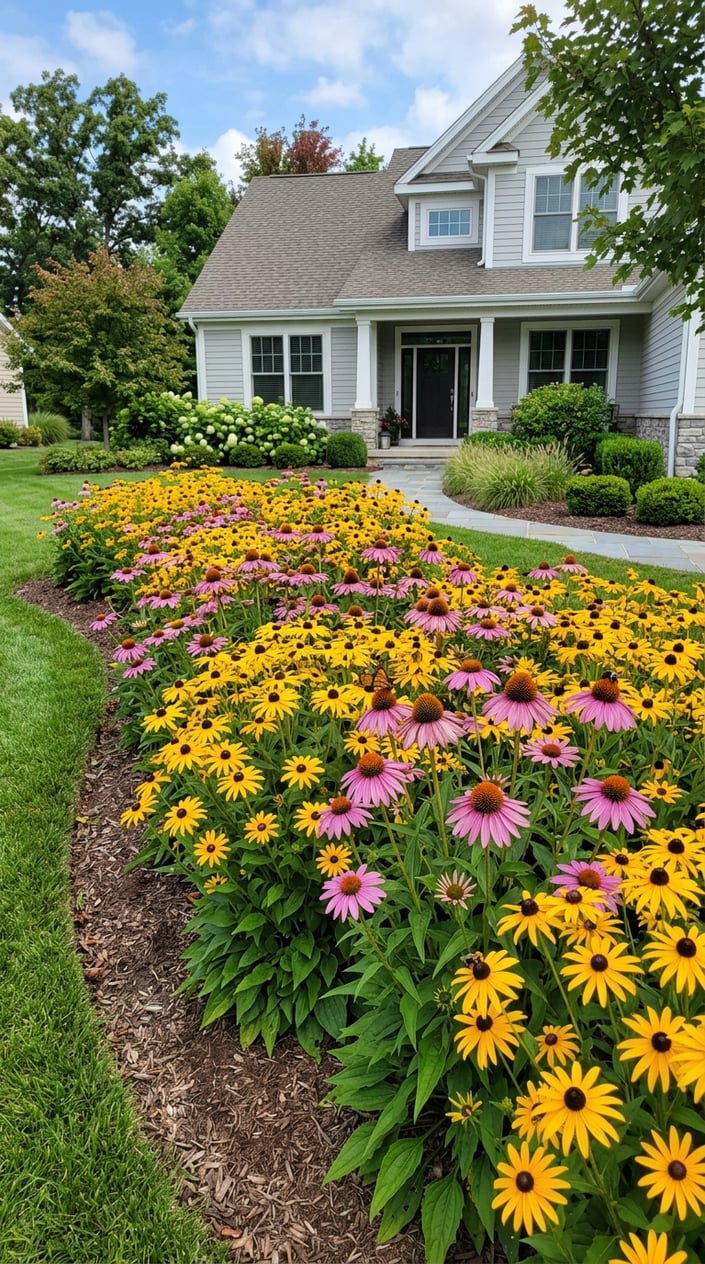
18. Mass-Plant Black-Eyed Susan And Coneflower For Easy Color
Let’s be real—these flowers are like those friends who always roll up wearing something bright and cheerful.
Black-eyed Susan and coneflower are tough, sunny perennials that bring color to your yard without any drama.
When you plant them in big groups, you get a bold, happy look that doesn’t need much babysitting.
They soak up the sun, invite pollinators over, and come back every year once you get them settled in.
If you want a front bed that looks lively but doesn’t act needy, go for these.
Toss some mulch around them, and the flowers will do most of the heavy lifting for you.
Expert Tip From MrPlanter:“Plant them in generous clusters so the color reads from the street. A larger drift looks more polished and is easier to weed around than scattered singles.”
I’m Anirban Saha, the Founder and Owner of MrPlanter.com. I pay the bills as a software developer, although my BTech is actually in Electronics and Communication. I really love my day job, but what gives me energy every day is interacting with my indoor plants and taking care of them. I have been successfully nurturing and maintaining houseplants for over 10 years now.
📚🔍 Our content undergoes thorough review and fact-checking before publication. For additional details, explore our strict Editorial Policy to deliver helpful content. 📝🔒