As an Amazon Associate, MrPlanter.com earns from qualifying purchases.
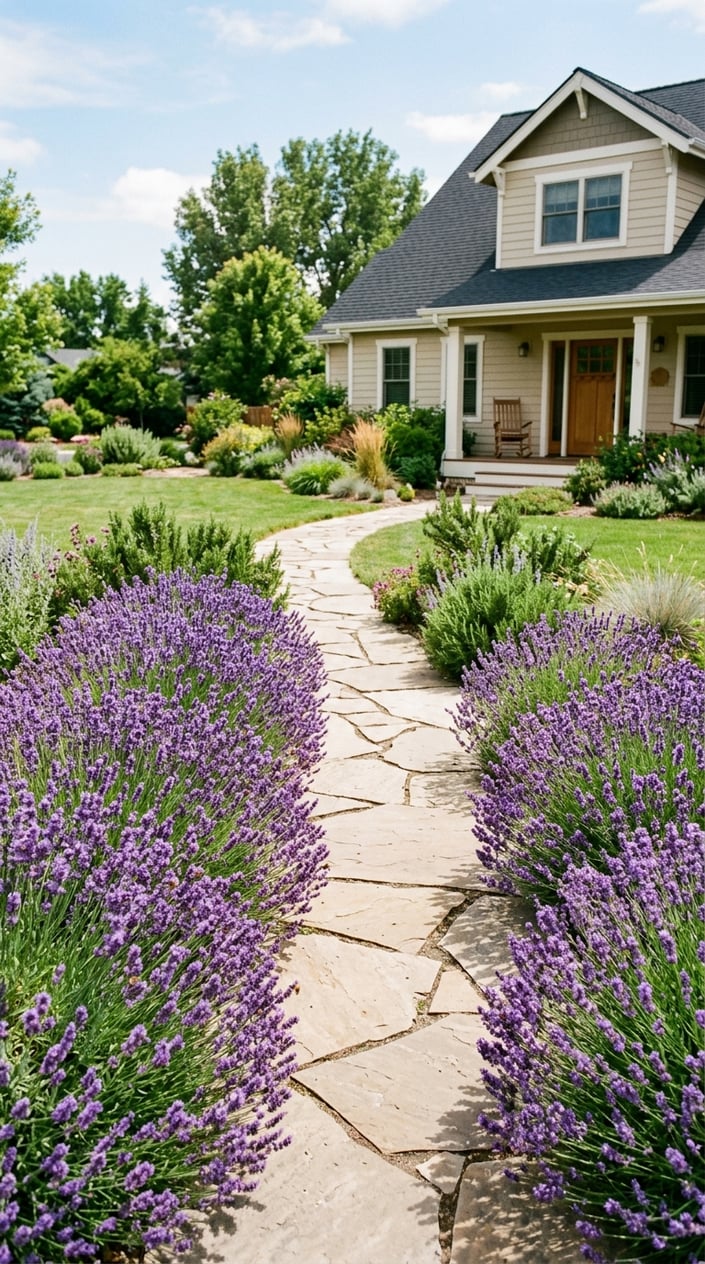
Lavender borders can turn your front walk into a calm, fragrant runway. In full sun, lavender loves the heat, asks for lean soil, and keeps your entry looking neat with very little fuss.
If you want curb appeal that feels polished without constant watering, build your design around heat-loving plants, simple hardscape, and repeated plant groupings.
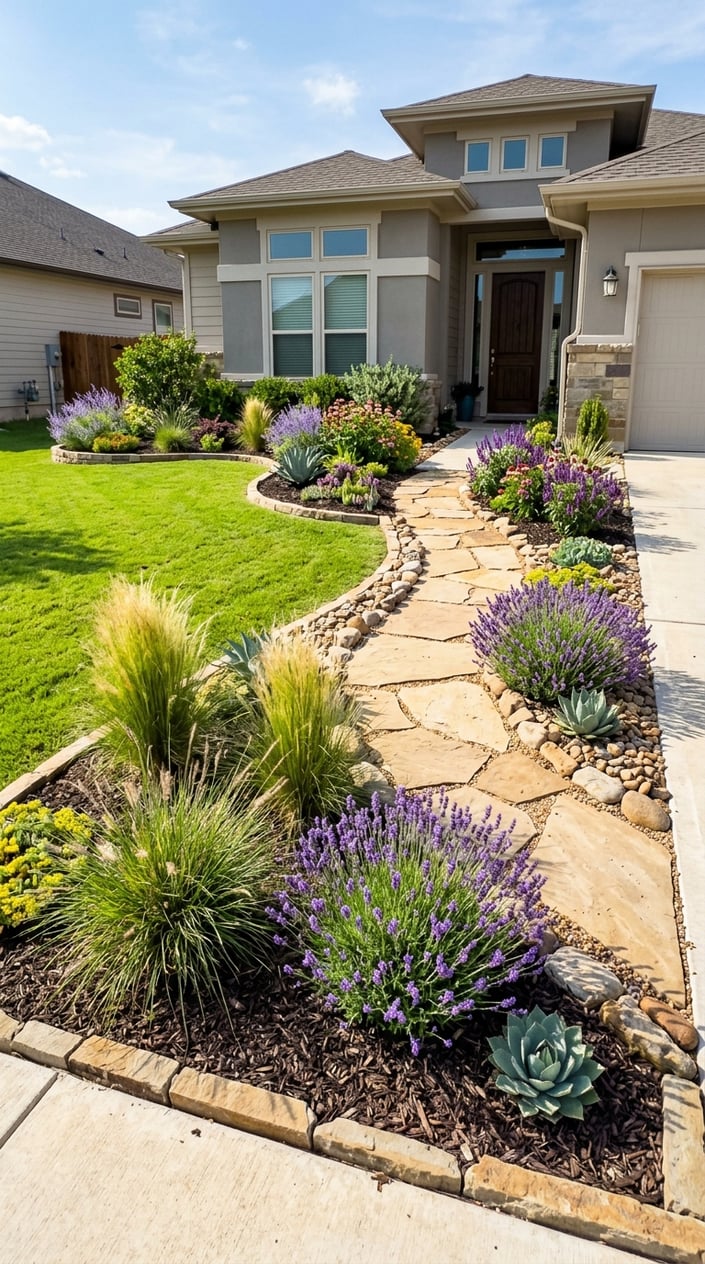
1. Massed Lavender Borders Along The Walkway
Let’s be honest, your front path can look bare fast when the sun bakes everything except weeds. Lavender fixes that with tight, silvery mounds and soft purple blooms that make your walkway look intentional.
Plant several in a row instead of scattering them, and you get a cleaner edge, a light scent, and a pollinator-friendly welcome. Give each plant room to breathe, because crowded lavender turns scruffy in a hurry.
A gravel or stone border makes the whole strip feel crisp and keeps splashing soil off the walkway. Expert Tip From MrPlanter: “Plant lavender in a dry, sunny strip where water drains fast. Keep the shape simple, and your front walk will look neat even on the hottest day.”
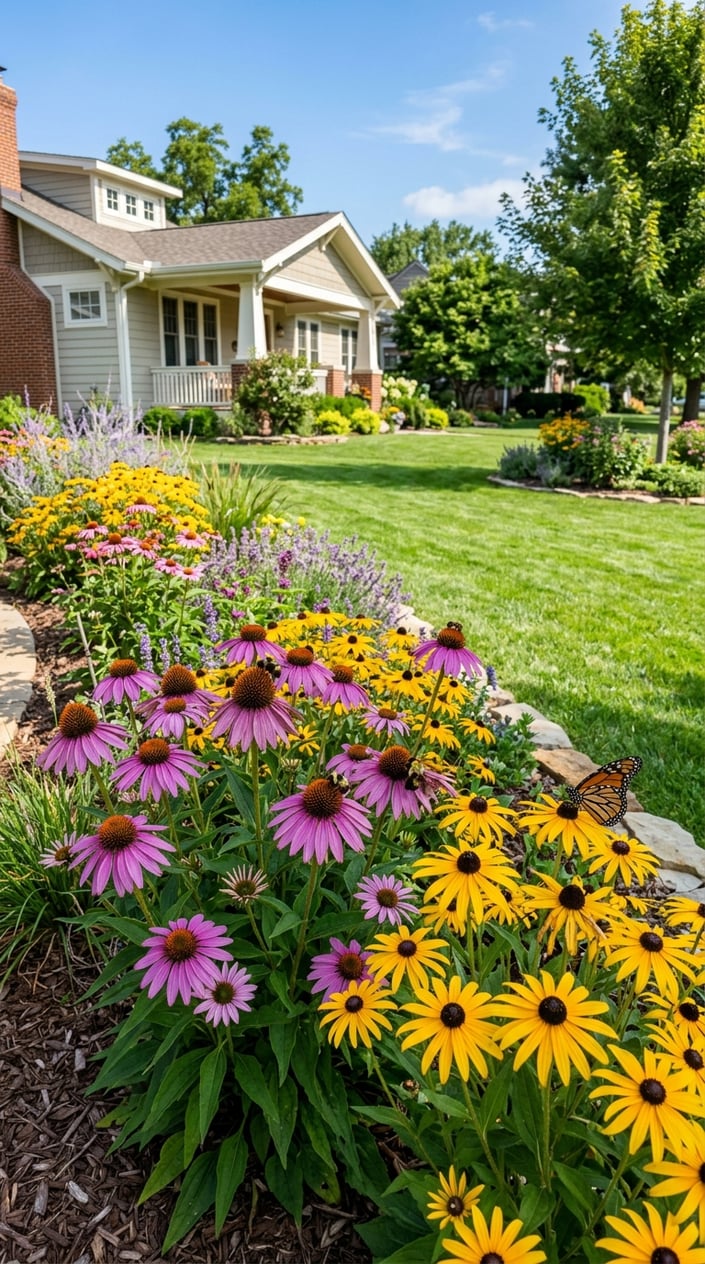
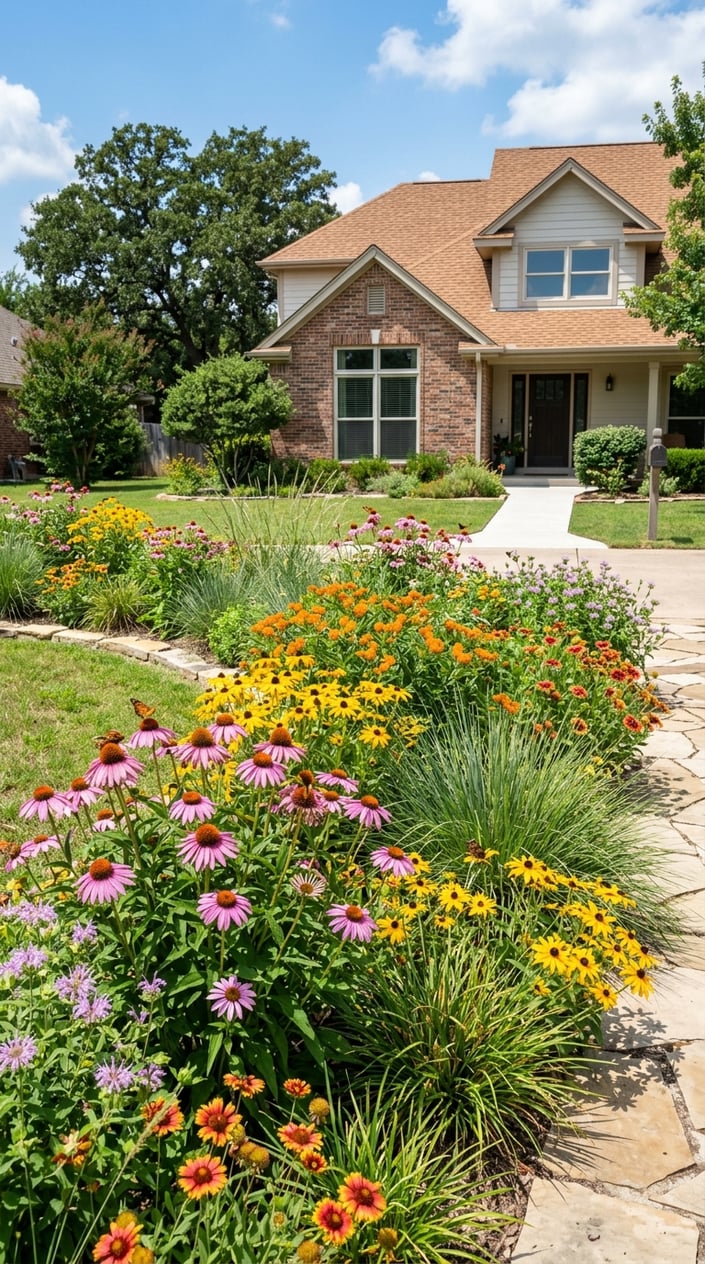
2. Coneflower And Black-Eyed Susan Pollinator Beds
A plain sunny bed can turn lively the second you add coneflowers and black-eyed Susans. These native-style perennials bring bold color, handle summer heat, and keep bees and butterflies busy without acting needy.
Their upright blooms stand out from the street, which helps your yard look full and healthy instead of patchy. Group them in repeating drifts for the best look, and mix in a few drought-tolerant grasses for texture.
You get color through summer and easy upkeep. Expert Tip From MrPlanter: “Plant these in clumps, not singles, so the color feels stronger. Water them well at first, then let them earn their keep in the sun.”
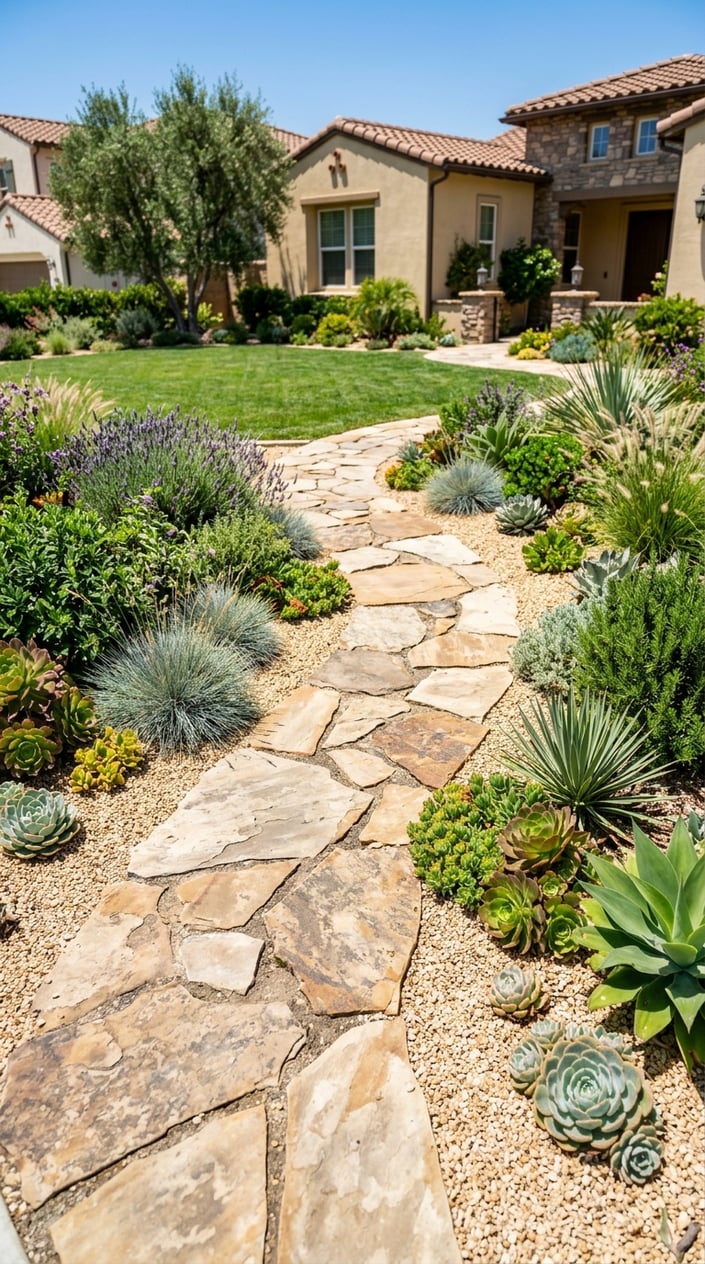
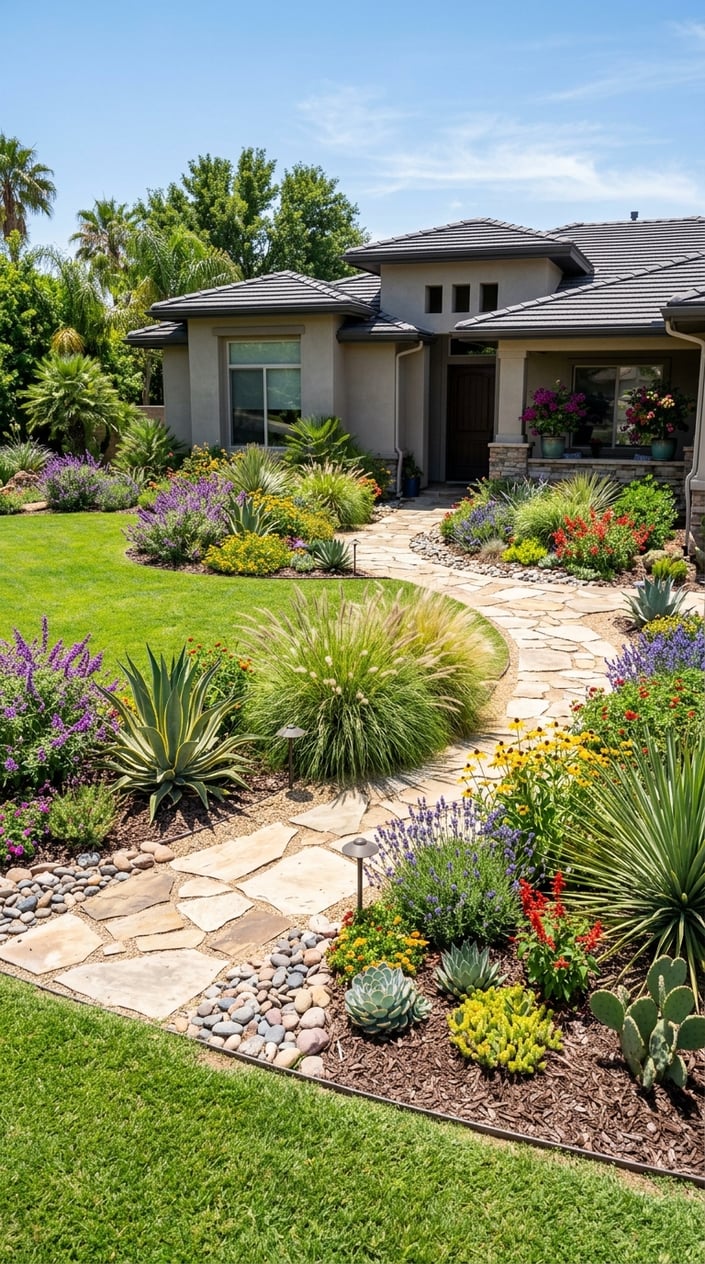
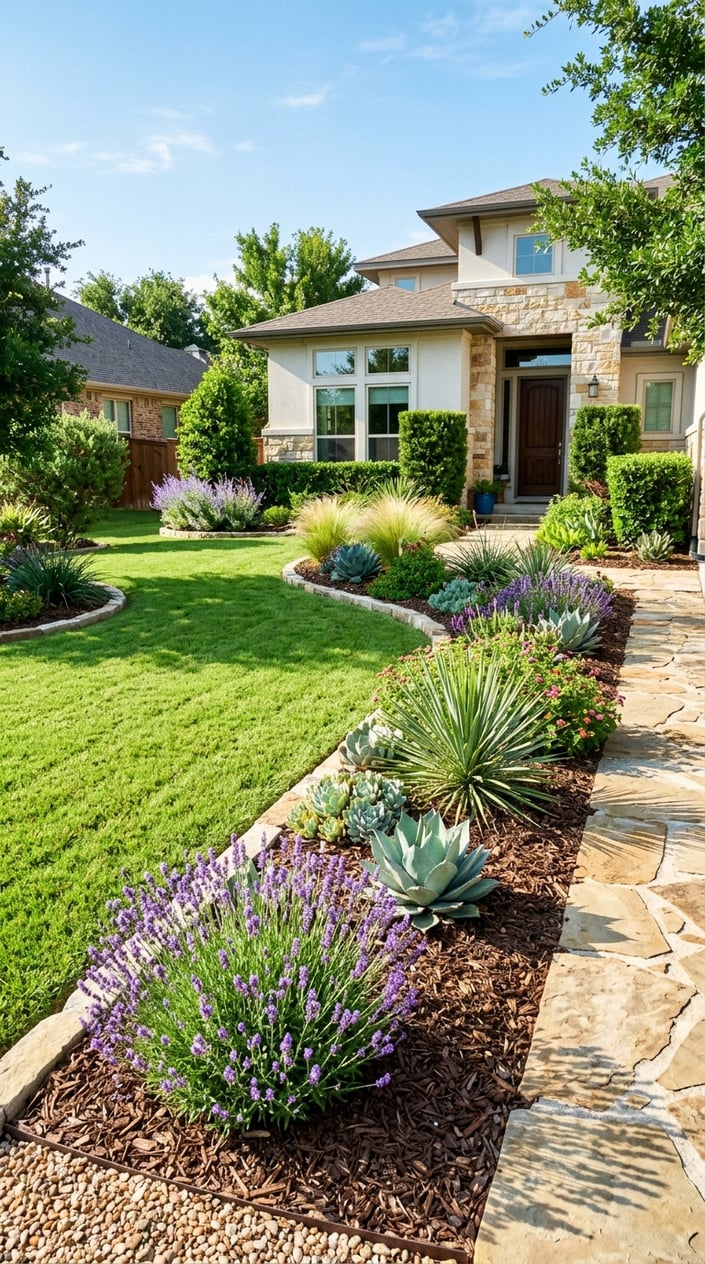
3. A Meandering Flagstone Path Through Gravel Mulch
A straight path can feel like a drill sergeant, while a meandering one feels like it knows how to relax. A flagstone route through gravel mulch cools the look of a hot yard and gives your eye something to follow.
Gravel also helps with drainage and cuts down on thirsty turf. Keep the stones spaced evenly enough for easy walking, then line the edges with sedum, lavender, or low grasses.
The mix of stone and plant texture gives your curb appeal a clean, modern feel. Expert Tip From MrPlanter: “Choose larger stones if you want the path to feel stable and relaxed. Use gravel that matches your house colors, and the whole yard will look like it was planned on purpose.”
4. Dwarf Boxwood Framing For Crisp Front-Lawn Edges
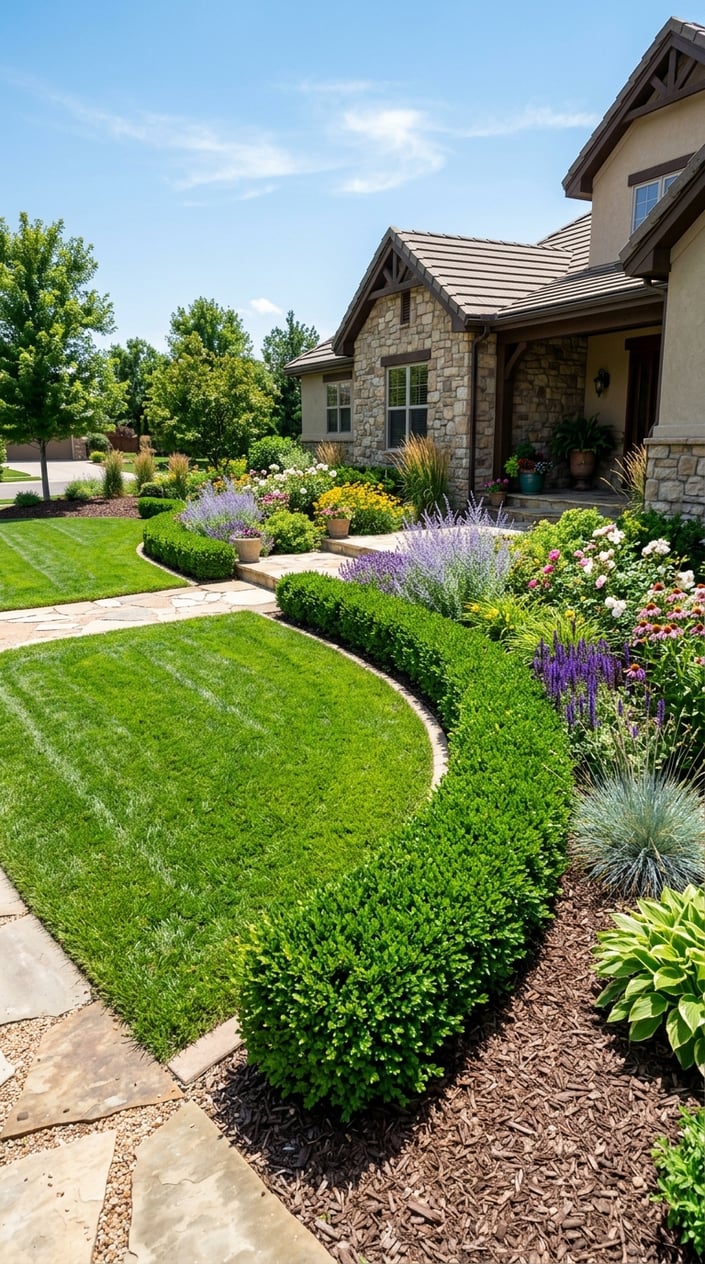
You do not need a lot of flowers to make a front yard look sharp. Dwarf boxwood gives you a tidy frame that works like a picture border for the rest of your planting.
In full sun, these compact shrubs can anchor beds near the walkway, porch, or driveway and make everything else look more deliberate. Use them in repeating lines or small rounded groups so the design feels steady.
They pair well with seasonal color, ornamental grasses, and stone edging. Expert Tip From MrPlanter: “Trim boxwood lightly and often so the shape stays clean. Use them where you want order, then let the brighter plants do the talking.”
5. Bermuda Grass For A Heat-Resistant Sunny Lawn
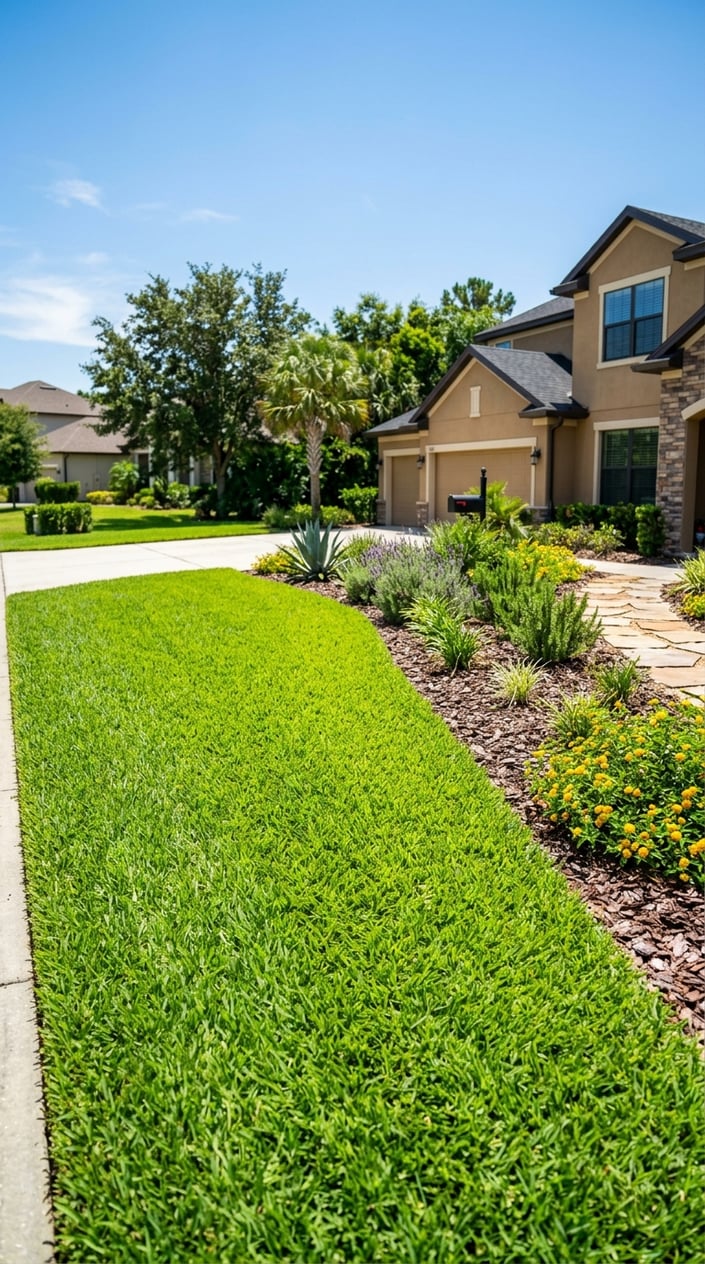
Some lawns act like drama queens the moment summer arrives. Bermuda grass loves heat and sun, so it stays greener and recovers faster than many cool-season lawns in warm climates.
That makes it a smart choice if you still want open lawn space in front instead of replacing every inch with beds. It looks best when edges are sharp and beds are well defined, because a healthy lawn needs a clean frame.
Pair it with drought-tolerant shrubs and perennials so the whole yard works together. Expert Tip From MrPlanter: “Keep Bermuda in full sun and mow it at the right height for your climate. A strong edge along beds makes even a simple lawn look polished.”
6. Blue Star Juniper Ground Cover On Slopes And Hot Strips
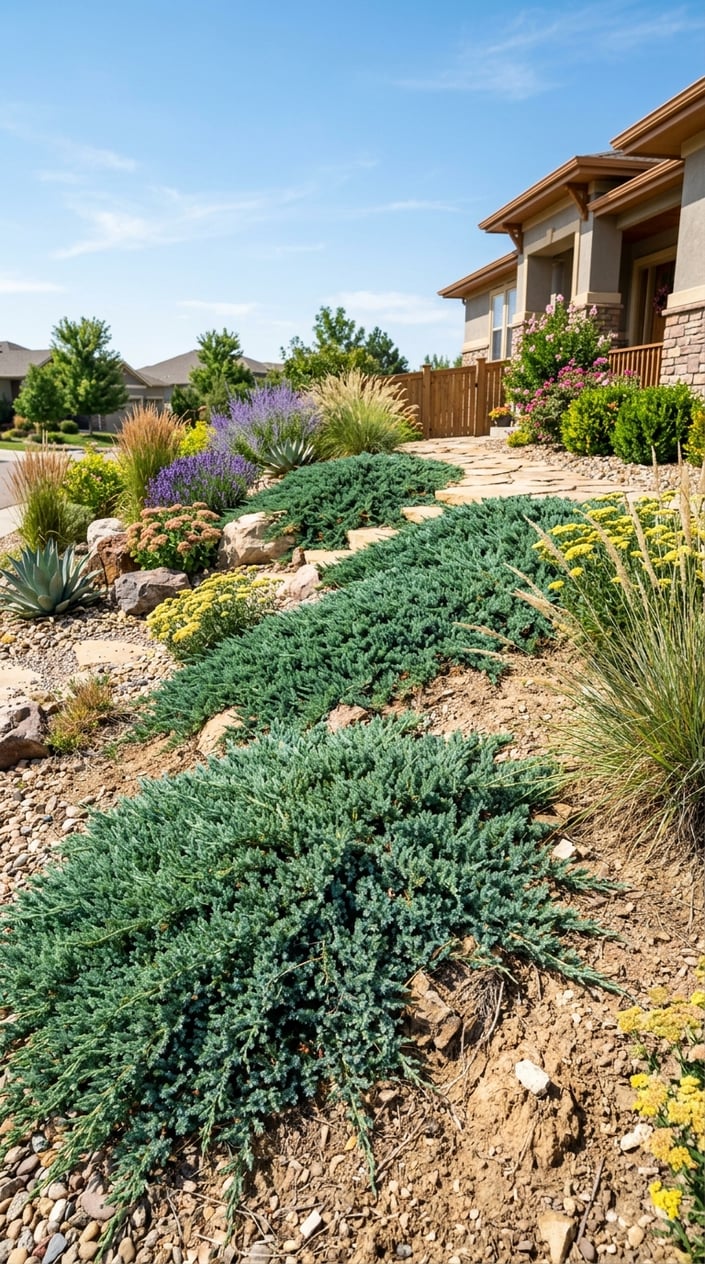
Those awkward hot strips by the sidewalk can become your best-looking spots with the right plant. Blue Star juniper spreads low, stays blue-green, and handles dry, sunny slopes where grass usually gives up.
It gives you a soft, evergreen carpet effect without asking for constant water or babysitting. Use it on banks, edges, and narrow hell strips to replace patchy turf with something sturdier.
A few boulders or stone accents nearby help the planting feel finished. Expert Tip From MrPlanter: “Give juniper room to spread, because it looks best when it can flow naturally. It loves sun and poor soil, so do not pamper it into a soggy mess.”
7. Russian Sage Planted In Repeating Drifts
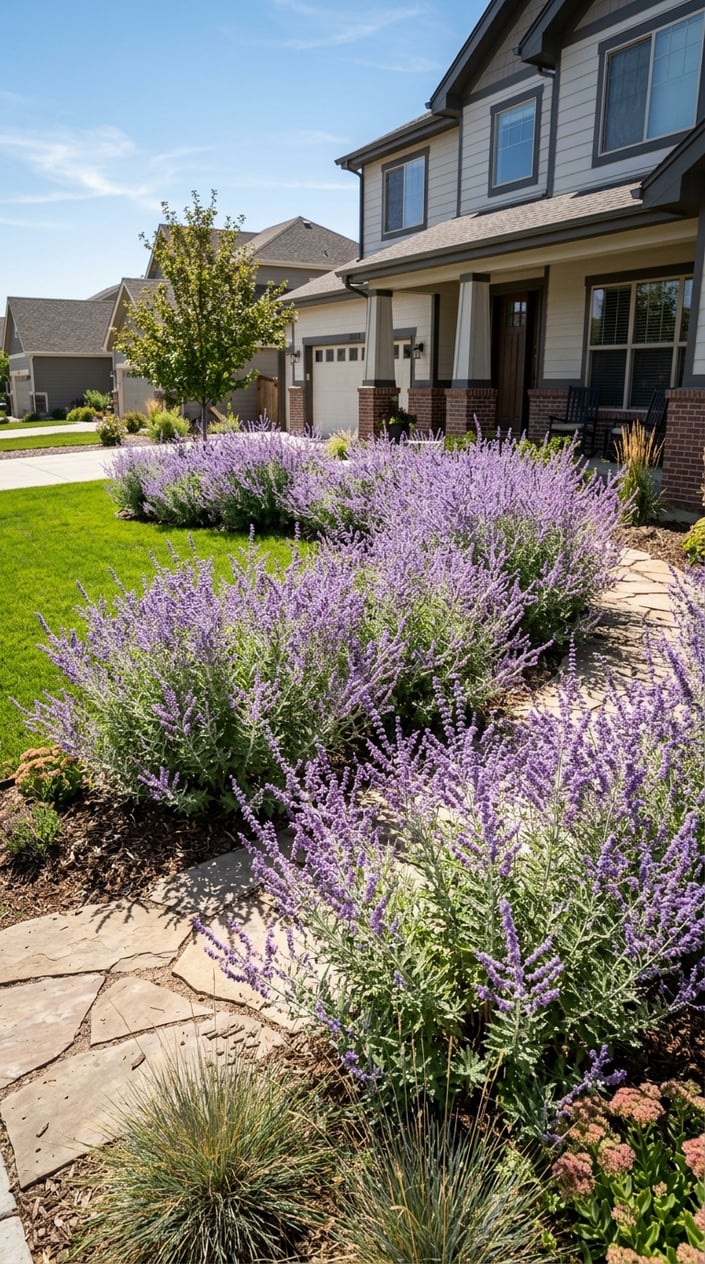
Russian sage is the laid-back guest who shows up in a heat wave and still looks great. Its tall, airy stems and lavender-blue blooms bring movement, color, and a soft haze that suits full-sun front yards.
Repeat drifts to make the plant look rich and intentional, not scattered. It pairs well with gravel mulch, ornamental grasses, and other drought-tolerant perennials.
The fine texture also balances out boxwood, stone, and broader leaves in the rest of the yard. Expert Tip From MrPlanter: “Plant Russian sage in groups so the blooms read from the street. Cut it back in spring, and it comes back looking fresh instead of tired.”
8. Karl Foerster Feather Reed Grass For Vertical Structure
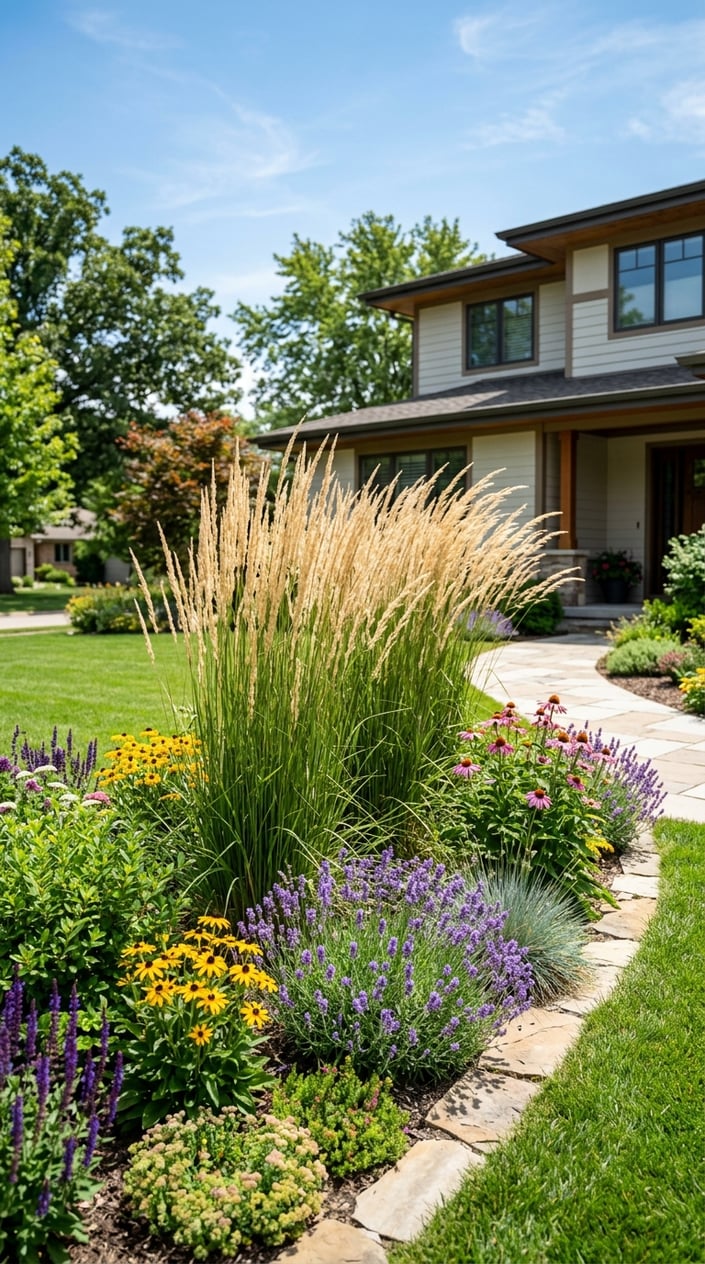
Grasses are not just filler. Karl Foerster feather reed grass gives you tall, upright lines that stay elegant in wind and sun, which is perfect when your yard needs a little backbone.
It adds height without looking heavy, so the front yard still feels open and bright. Use it behind lower blooms or beside a path to guide the eye upward.
It works especially well when repeated in a few spots. Expert Tip From MrPlanter: “Plant feather reed grass where you want a strong upright accent. When it catches afternoon light, it can make a plain bed look surprisingly fancy.”
9. Marigold Border Bands For Fast Seasonal Color
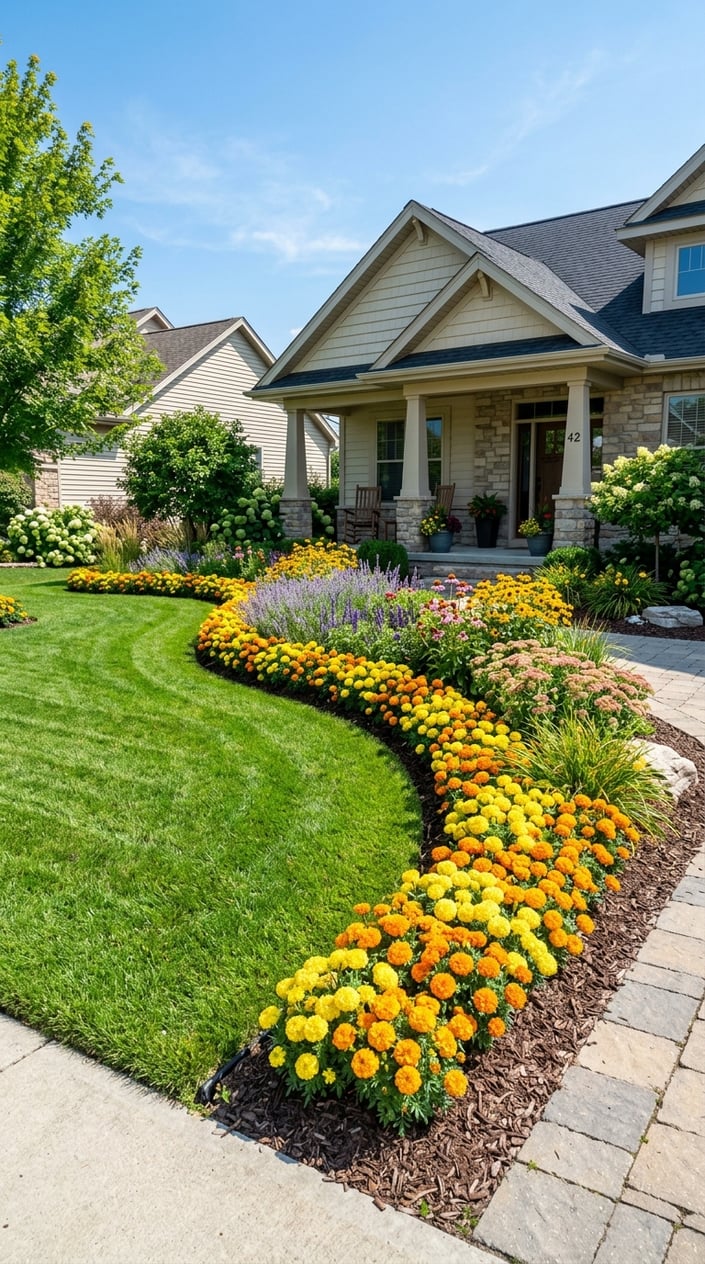
You want color now, not in three months. Marigolds are your fast answer because they bloom quickly, love the sun, and add bright bands of orange and gold along beds and walkways.
They are easy to slot into a front yard when you want a cheerful seasonal refresh. Use them as border bands instead of sprinkling them everywhere.
That creates a strong color line and keeps the yard from looking busy. Expert Tip From MrPlanter: “Deadhead marigolds often so they keep blooming hard. Plant them at the front edge of beds where their color can really show off.”
10. Dwarf Sunflower Pockets Near The Curb
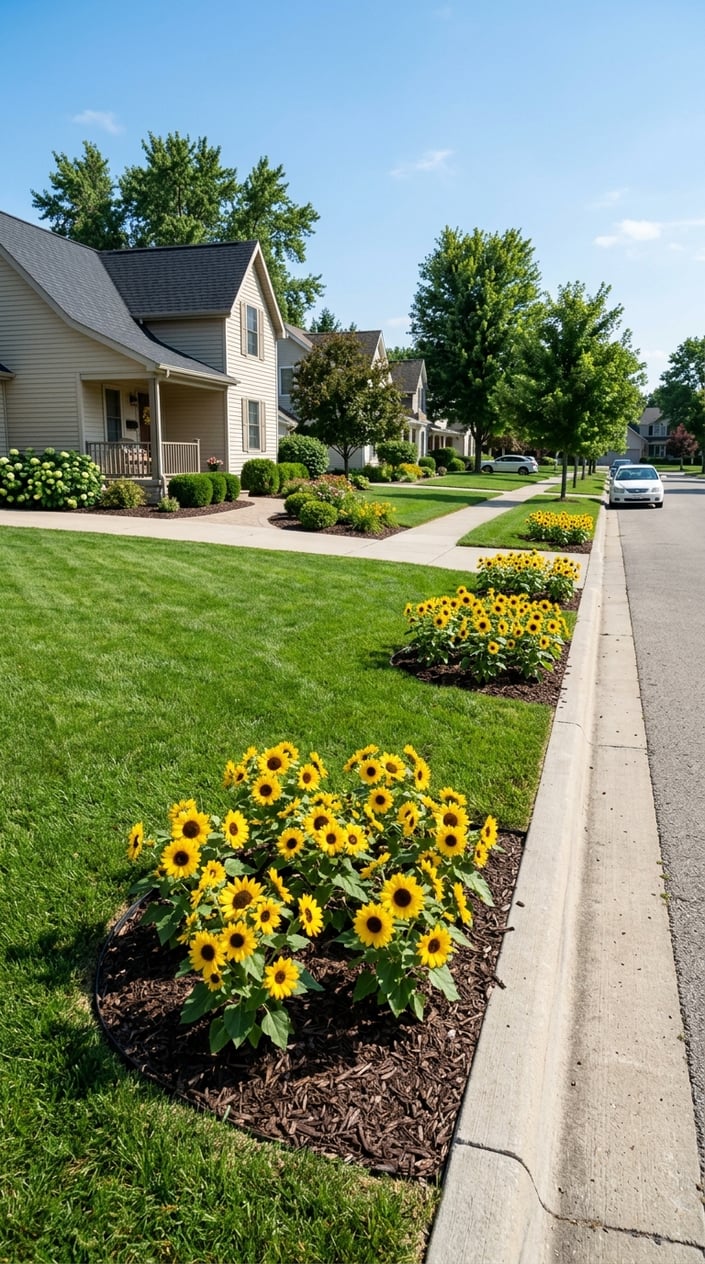
A few small sunflower pockets can change the whole mood of a front yard. Dwarf sunflowers bring big cheer in a compact size, so they fit near the curb without blocking sight lines or taking over the bed.
In full sun, they bloom fast and give your yard a bright, easy-going look. Tuck them into repeated pockets near the drive or walkway, then echo the shape with low grasses or mulch rings.
That keeps the planting playful while still looking controlled from the street. Expert Tip From MrPlanter: “Place dwarf sunflowers where they get all-day light and a clear view from the curb. Stagger the planting dates a little if you want blooms to last longer.”
11. Rosemary And Culinary Sage Shrub Rows
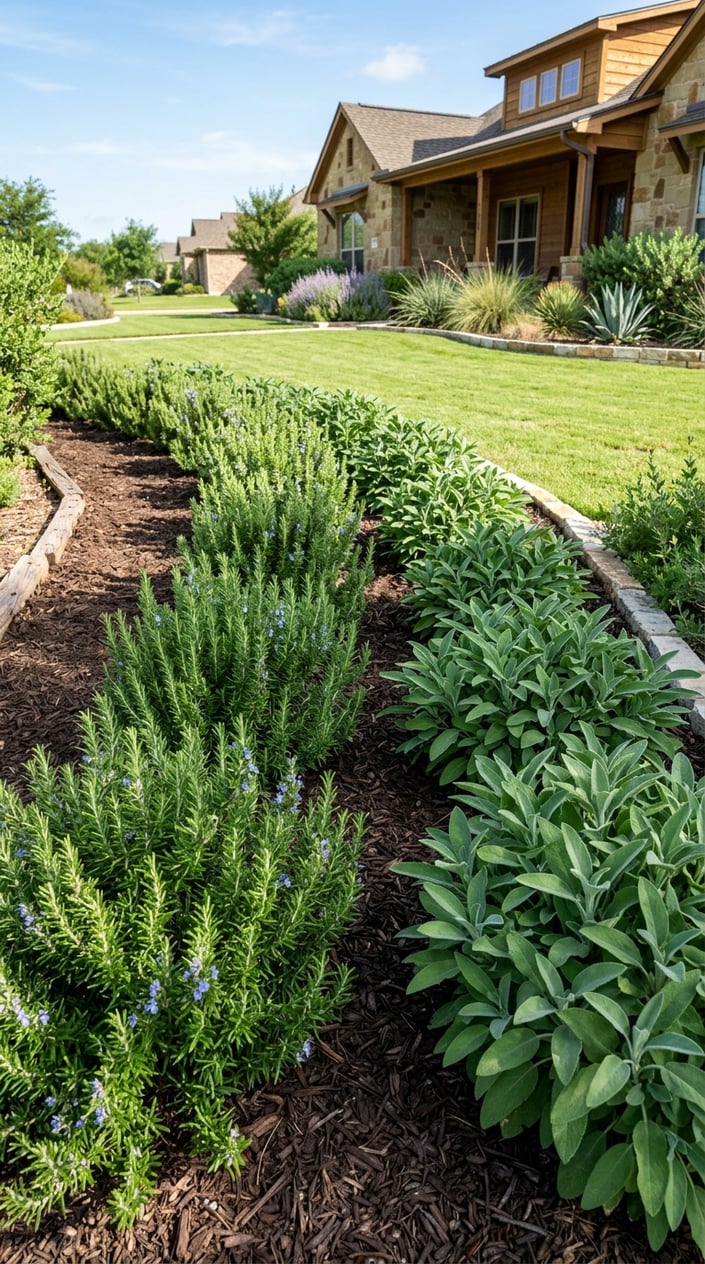
Herbs are not just for the kitchen window. Rosemary and culinary sage can behave like small shrubs in sunny front beds, bringing scent, texture, and drought tolerance all at once.
Their silver-green foliage looks calm next to stone, gravel, and warmer flower colors. Row them near a walkway or entrance where brushing past them releases that fresh, clean smell.
Keep the spacing loose so air can move around them, and you will avoid the shaggy look that comes from crowding. Expert Tip From MrPlanter: “Prune rosemary and sage lightly so they stay woody and neat. If your soil drains well, these plants can make your front yard smell like dinner and look good doing it.”
12. Sedum Ground Cover In Rock Mulch Beds
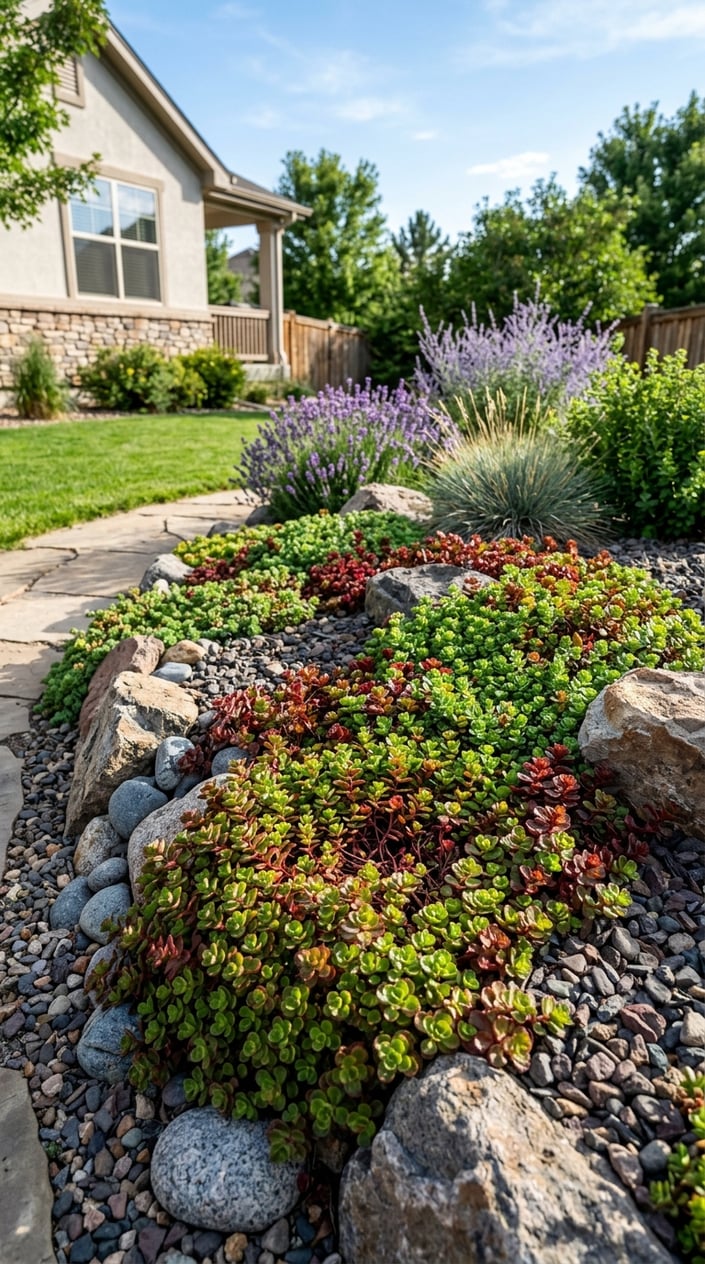
Sedum is the low-maintenance friend who shows up wearing a sun hat and never complains. This succulent ground cover thrives in hot, dry spots and works beautifully where you want living texture between rocks.
Rock mulch helps the planting feel modern while holding in less moisture, which suits sedum just fine. Use it along edges, between boulders, or in shallow beds that bake all afternoon.
The tight, spreading habit helps cover soil and suppress weeds, which makes your front yard easier to keep tidy. Expert Tip From MrPlanter: “Do not overwater sedum, because it prefers lean conditions. Mix a few leaf shapes or colors for interest, then let the plantings do the rest.”
13. Raised Stone Planting Beds For Better Drainage
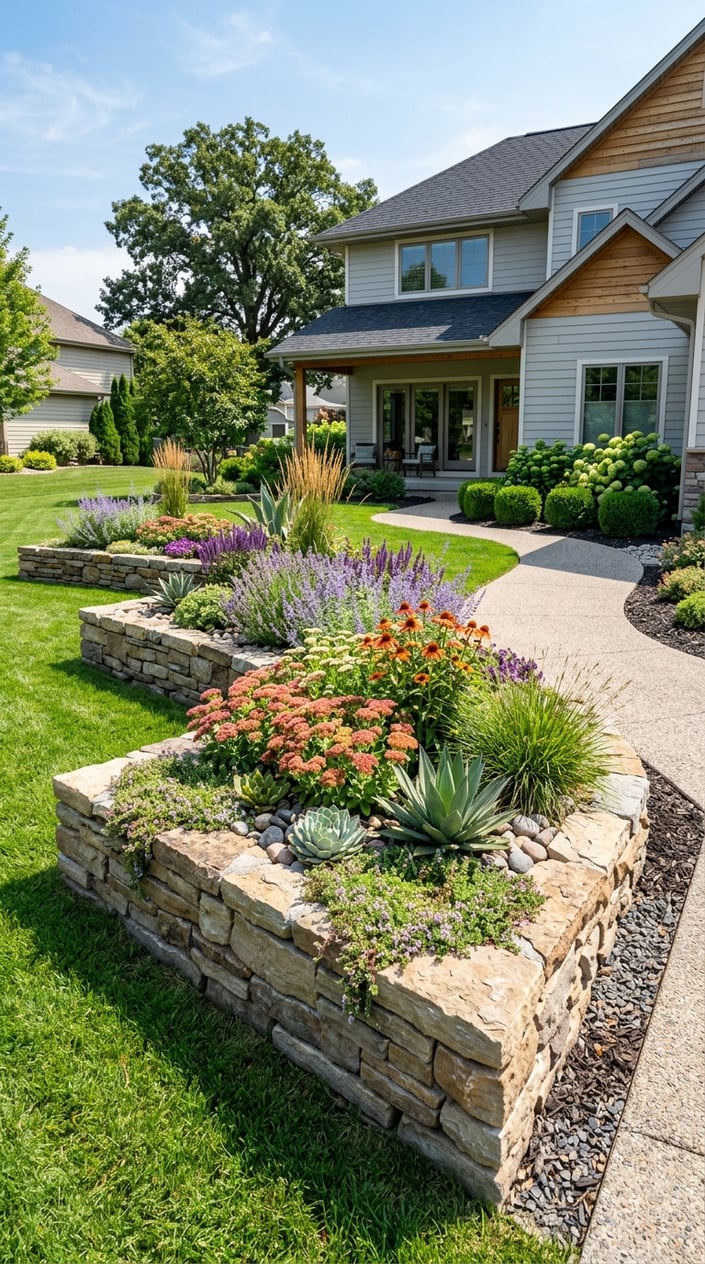
Hot front yards love to hide a sneaky problem: bad drainage. Raised stone beds tackle that by lifting roots above soggy or packed-down soil, and they give your landscape a crisp, finished look.
The stone edges bring structure, and the raised shape keeps heat-tolerant plants happier in those tough sunny spots. Lavender, sedum, rosemary, and other sun-lovers that hate wet feet really shine here.
Your yard gets a boost in curb appeal because the bed looks like it belongs, not like an afterthought.
Expert Tip From MrPlanter: “Build raised beds wide enough that plants can settle in without crowding the edge.“ “Stone and dry soil are a strong team when summer heat starts acting rude.“*
14. Pebble Mulch Island Beds With A Single Focal Shrub
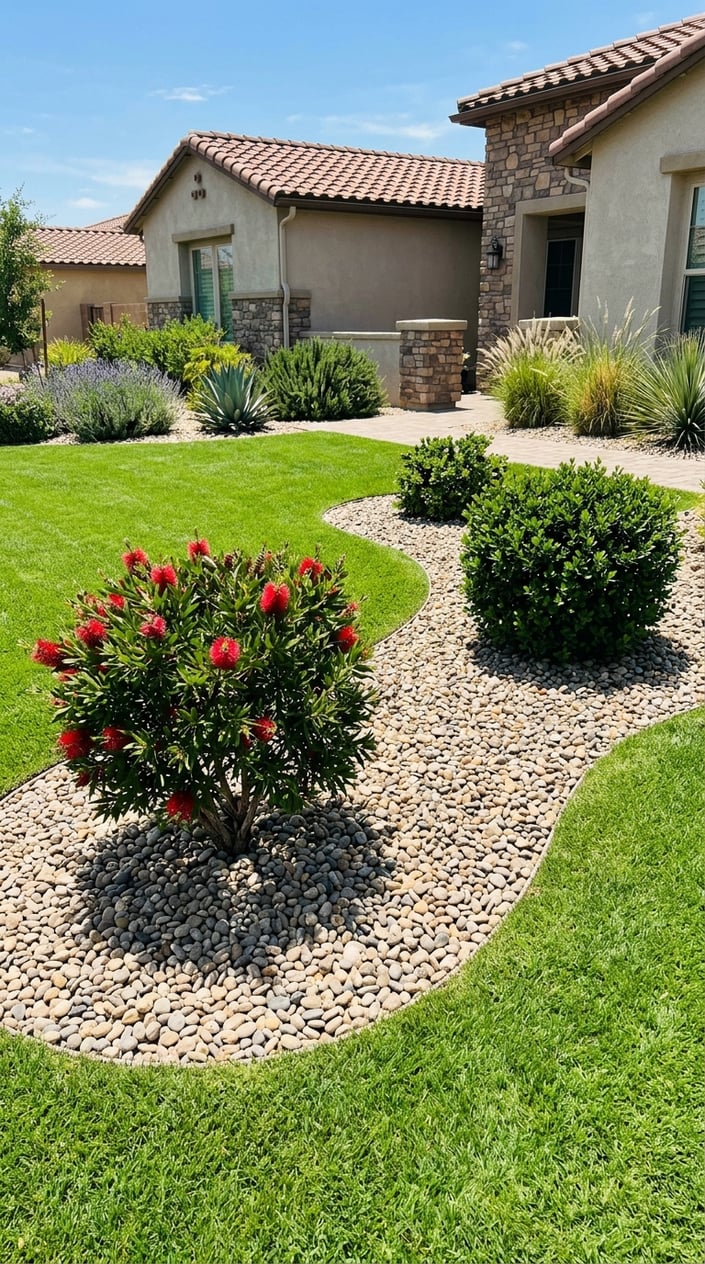
Let’s bust a myth: you do not need a jungle of plants for your yard to look fancy. A pebble mulch island with one bold shrub can feel clean, modern, and totally intentional in full sun.
Pebbles keep weeds down and give off a tidy, dry-climate vibe that fits right in with heat-loving plants. Pick a shrub with a strong shape, then repeat the look in a few spots if you have a bigger yard.
That repetition calms things down and makes the design easy to read from the street.
Expert Tip From MrPlanter: “Pick a shrub with a clear outline so it stands out against the pebbles.“ “A little negative space can make the whole yard look more upscale.“*
15. Terraced Boulder Beds For Sloped Front Yards
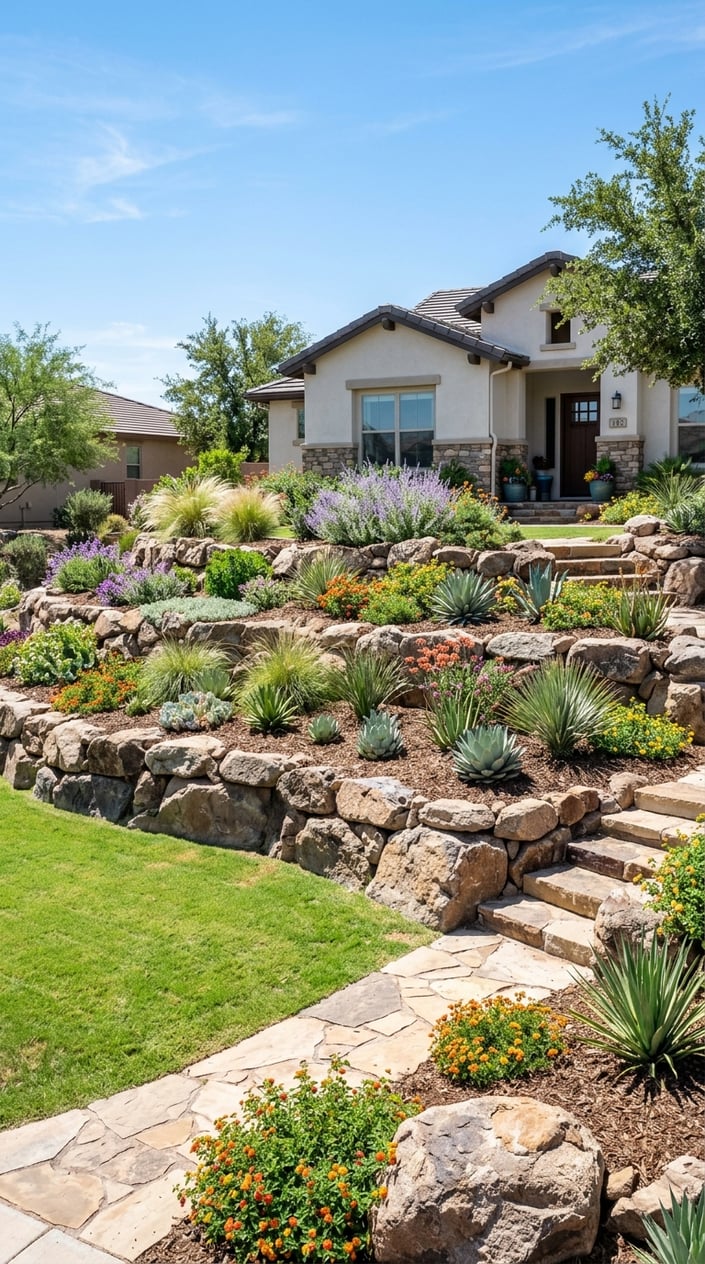
Got a slope? Don’t sweat it. Give that hill a good frame, and suddenly it’s a feature, not a headache.
Terraced boulder beds slow down water, create planting pockets, and turn a steep yard into a layered showstopper. The boulders soak up sunshine and make drought-tolerant plants look right at home.
Fill the terraces with low shrubs, grasses, and ground covers so the structure stays in the spotlight. Repeat the boulder sizes so the slope feels planned instead of thrown together.
Expert Tip From MrPlanter: “Use terraces to control water and give roots better footing.“ “The trick is to make the hill look like it belongs, not like it is trying to escape.“*
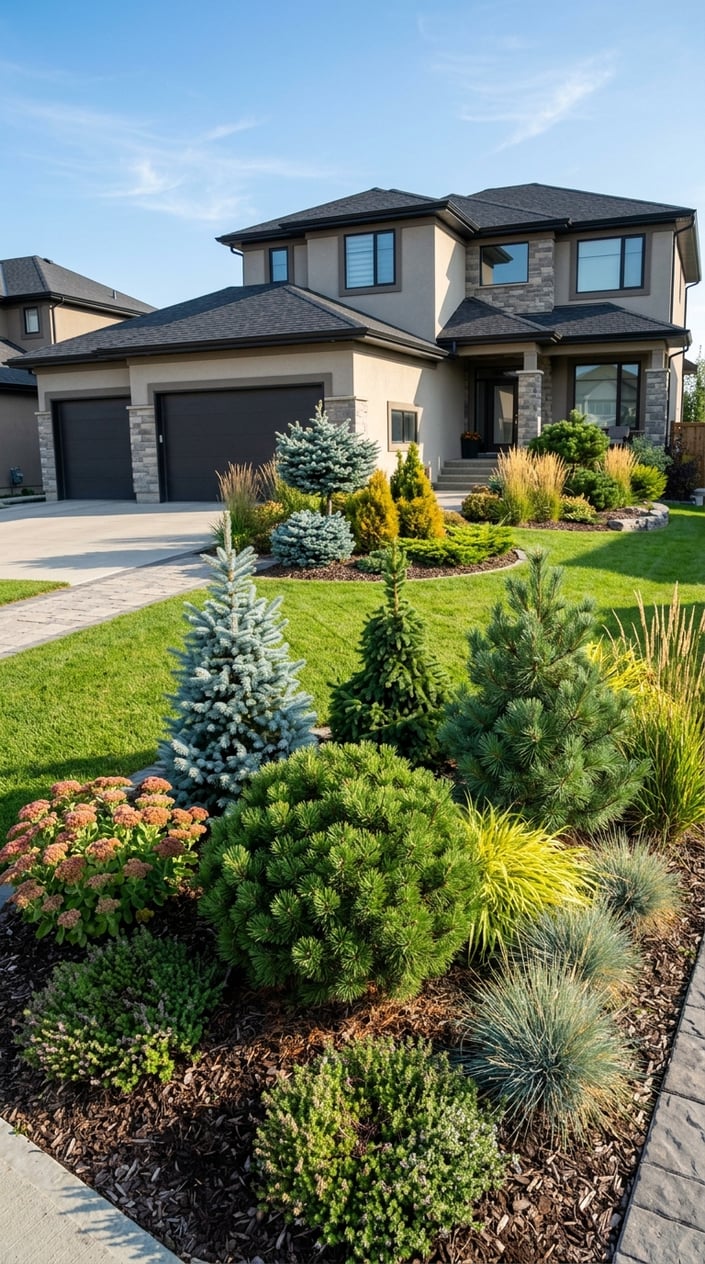
16. Dwarf Conifers For Year-Round Front-Lawn Structure
Dwarf conifers are the steady friends who always show up, rain or shine. They hold their shape through winter, keep your front yard looking sharp, and give your planting beds a backbone when flowers take a break.
In full sun, their compact shapes and needle textures add calm structure without taking over. Place them at corners, by entries, or near stone beds where you want year-round focus.
Pair them with perennials and grasses for a layered look that stays interesting in every season.
Expert Tip From MrPlanter: “Choose dwarf forms that match the size of your yard, not the size of your dreams.“ “A few evergreen anchors can make the rest of the planting feel far more polished.“*
17. Native Wildflower Patches For Regional Color And Lower Water Use
Let’s be real: you want color, but you do not want a yard that guzzles water like a thirsty camel. Native wildflower patches bring in local color, help pollinators, and usually settle in better than picky imports.
They also make your yard feel like it belongs in your neighborhood, not like it was copied from a magazine. Use a defined patch or a meadow strip so it looks intentional, not wild in the “lost my keys” kind of way.
A neat edge, some repeated grasses, and a bit of mulch at the border keep things tidy.
Expert Tip From MrPlanter: “Choose native flowers that fit your exact region and sun exposure.“ “A well-kept wildflower patch should look lively, not like it missed curfew.“*
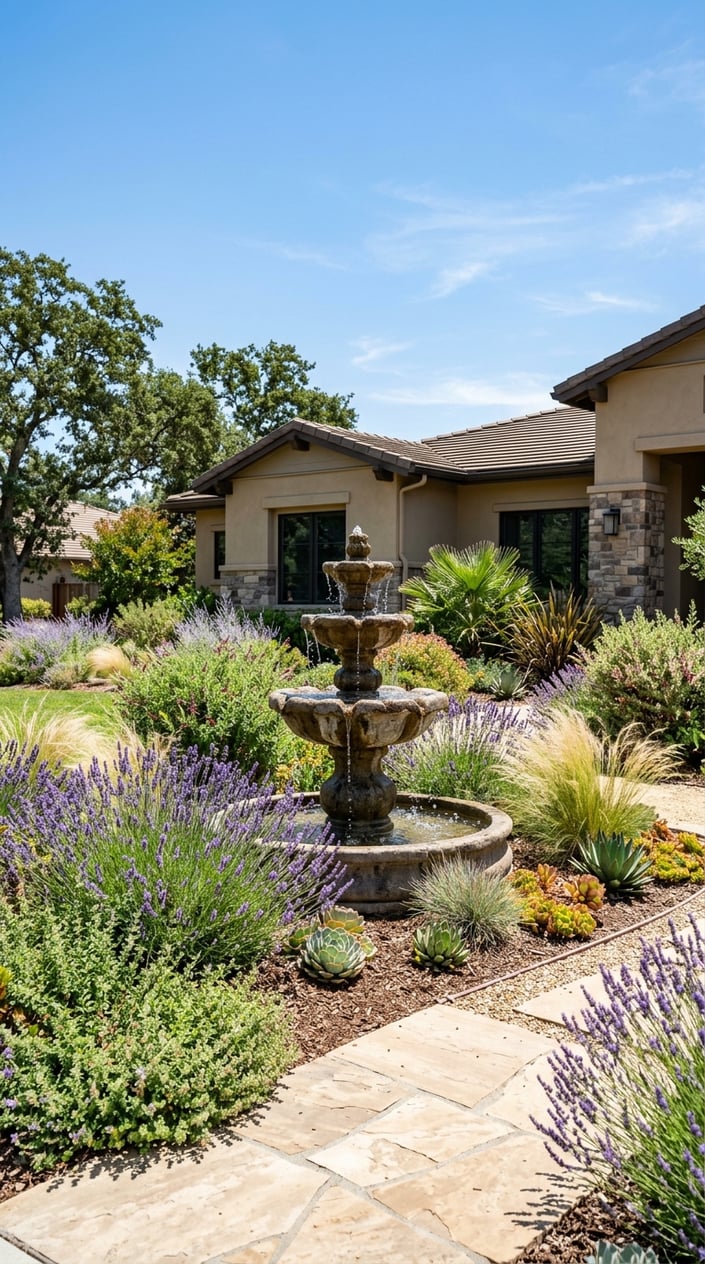
18. A Stone Fountain Anchored By Heat-Tolerant Planting
It’s wild how one fountain can make a blazing front yard feel cooler the second you spot it. A stone fountain becomes the main attraction when you surround it with heat-tolerant plants that can handle all the sun and dry soil.
The stone adds weight and texture, while the plants soften the edges so everything feels welcoming. Keep the plant choices simple around the fountain—lavender, sedum, or dwarf grasses do the trick.
That way, the water feature stays the star without any competition.
Expert Tip From MrPlanter: “Frame the fountain with repeated plants so the eye lands there fast.“ “The best fountain beds feel balanced, not crowded, and a little breathing room makes the stone look richer.“*
19. How To Choose The Right Idea For Your Yard
Match Plants To USDA Zone And Summer Heat
Check your USDA hardiness zone and think about the kind of heat that hits your front yard. A plant that loves dry sun in Arizona might act totally different in Georgia’s sticky air or in the Texas heat.
Decide How Much Lawn You Actually Want To Maintain
Be honest with yourself about mowing, edging, and watering. If you want less work, shrink the lawn and let gravel, ground cover, shrubs, and drought-tolerant perennials take over.
Use Paths, Edging, And Repetition To Create Structure
Clean lines make a sunny yard look intentional. Repeat the same plants, use stone edging, and add a simple path so your design feels calm instead of crowded.
Plan For Drainage, Slopes, And Reflective Heat
Watch where water collects, where your yard slopes, and where pavement bounces extra heat back at your plants. The hottest spots need the toughest choices—think sedum, juniper, ornamental grasses, or raised beds.
Expert Tip From MrPlanter: “Walk your yard at midday so you can see the hottest zones for yourself.“ “The sun is the boss here, so let your plant choices answer back in the right places.“*
20. What Makes A Full-Sun Front Yard Look Polished
Repeat Plant Groups Instead Of Mixing Everything Once
A few repeated plant groups always look better than a wild mix. When you echo the same shrubs or flowers around the yard, your eyes know where to rest.
Layer Heights From Ground Cover To Shrubs To Grasses
Build from low to medium to tall. Ground cover in front, shrubs in the middle, and grasses or focal plants in back give your yard depth without turning it into a mess.
Balance Seasonal Color With Evergreen Structure
Flowers bring the fun, but evergreens keep your yard looking steady when the blooms take a break. That balance matters if you want curb appeal all year, not just in spring.
Choose Mulch And Stone That Reduce Weeds And Water Loss
Mulch and stone do more than just fill space—they help the bed stay neat and dry. Pick materials that match your house and keep the planting bed looking finished.
Expert Tip From MrPlanter: “Use a simple palette of plants and materials so the design feels calm.“ “When the structure is solid, the color can shine without making the yard look busy.“*
21. Common Mistakes To Avoid In Blazing Front Yards
Using Thirsty Plants In The Hottest Strip By The Street
The strip near the street gets blasted with reflected heat, and thirsty plants just can’t handle it. Save those spots for tough choices like lavender, sedum, juniper, or native drought-tolerant perennials.
Skipping Edging So Beds Look Messy Fast
Skip the edging, and grass creeps in until the whole yard looks fuzzy. A clean stone, metal, or brick border makes even simple plantings look like you planned it.
Overloading The Design With Too Many Flower Colors
Too many colors can make a sunny yard feel loud and busy. Stick with a tighter palette so each flower stands out without clashing with its neighbors.
Ignoring Mature Plant Size And Sun Reflection From Pavement
Small plants love to stretch out, and pavement cranks up the heat more than you’d think.
Give your plants space to grow up, not just out.
Put your toughest green buddies near driveways, sidewalks, and walls where the sun bounces around.
Here’s a tip from MrPlanter: “Design for the plant’s full size, not the tiny pot you brought home.”
If your garden bed looks packed in year one, just wait—by year three, it’ll be a wild party out there.
I’m Anirban Saha, the Founder and Owner of MrPlanter.com. I pay the bills as a software developer, although my BTech is actually in Electronics and Communication. I really love my day job, but what gives me energy every day is interacting with my indoor plants and taking care of them. I have been successfully nurturing and maintaining houseplants for over 10 years now.
📚🔍 Our content undergoes thorough review and fact-checking before publication. For additional details, explore our strict Editorial Policy to deliver helpful content. 📝🔒