Tulips fail from shallow planting and soggy soil. Learn how to plant tulip bulbs at the right depth, spacing, and time of year for reliable spring color.
Tulips look like they spent all winter rehearsing underground for their spring entrance.
To give them a strong start, plant firm bulbs in loose, well-drained soil during fall, after summer heat fades and before the ground freezes.
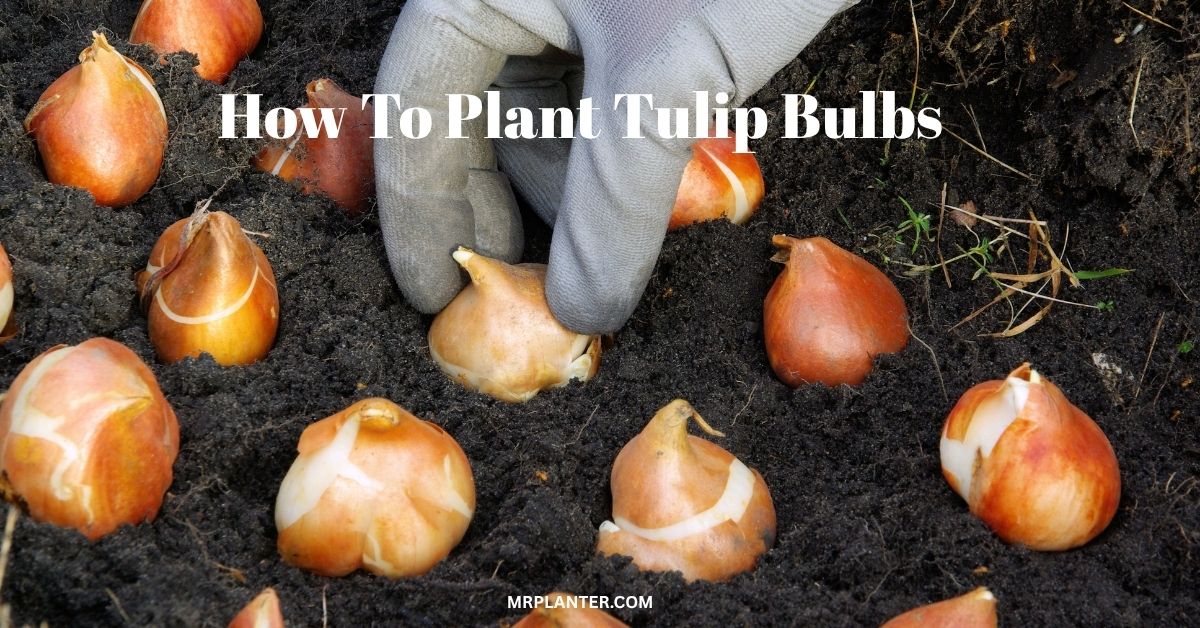
Plant your tulip bulbs with the pointed end up, place them about 6 to 8 inches deep, water them once, and cover the bed with a light mulch layer.
A sunny garden spot, sensible spacing, and protection from hungry wildlife can turn a small group of bulbs into a cheerful spring display.
Key Takeaways
- Choose firm Tulip bulbs and a sunny spot where water drains quickly.
- Plant the tulip bulbs in cool fall soil, with the pointed tips facing upward.
- Let leaves fade naturally after flowering so tulip bulbs can store energy.
Choose Bulbs And Garden Locations
The best results start before your trowel touches the soil.
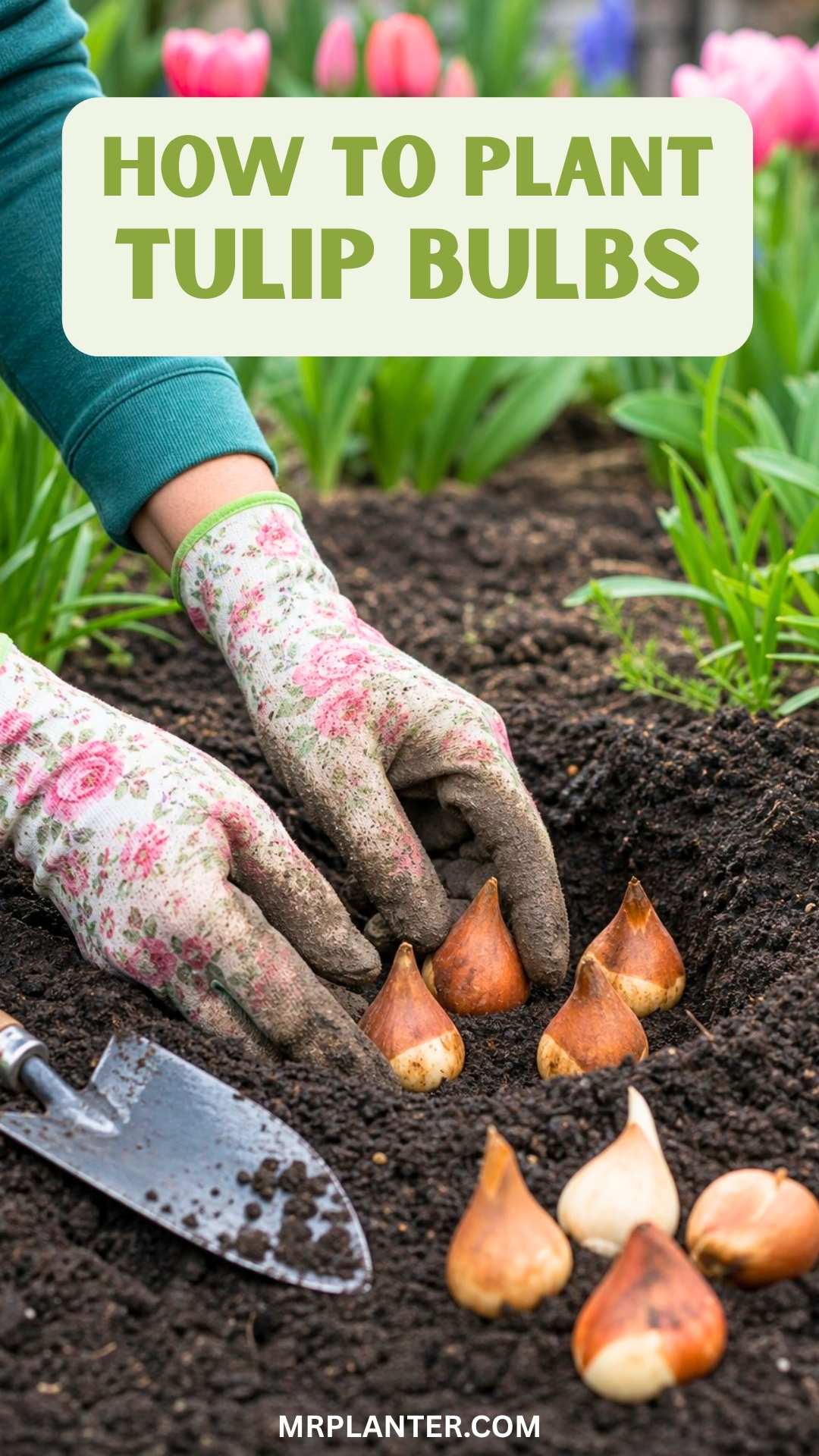
Choose sound bulbs, then match their height, bloom time, and light needs to the front yard or backyard bed where you plan to grow them.
Select Healthy, Firm Tulip Bulbs
Pick Tulip Bulbs that feel heavy and firm for their size.
Skip any with soft spots, mold, deep cuts, or a strong rotten smell.
The papery outer skin may be loose or partly missing, and that alone is not a problem.
Larger bulbs usually produce larger flowers, so choose the biggest healthy bulbs that fit your budget.
Keep them in a cool, dry, airy place until planting time.
Do not store them in a sealed plastic bag, where trapped moisture can invite rot.
Match Tulip Types To Sunlight And Space
Choose a location that receives at least six hours of direct sun each day.
Morning sun is helpful, though an open bed with afternoon light often produces sturdy stems and cleaner blooms.
Tall Darwin hybrids work well in borders and along fences.
Shorter species tulips suit rock gardens and the front edge of a bed.
Leave room for the mature height, and avoid spots that stay wet after rain.
Tulips also look more natural in groups than in a lonely single-file row.
Time The Planting Window
Fall gives tulip bulbs time to grow roots before spring arrives.
Rather than planting on a fixed date, watch soil temperature and local weather, especially if your region has mild winters.
Use Soil Temperature Instead Of Calendar Dates
Plant when the soil cools to about 55°F or lower.
In much of the United States, that means September through November, though the exact window shifts with elevation and climate.
You want enough time for roots to form before the ground freezes solid.
Planting while the soil is still warm can encourage early growth.
Waiting too long may leave bulbs of Tulip without time to settle.
A soil thermometer makes the decision easier than guessing from the calendar.
Adjust Timing For Mild-Winter Regions
In USDA Zones 8 and warmer, natural winter cold may not last long enough for strong flowering.
Chill bulbs in a refrigerator at about 38°F to 45°F for 6 to 12 weeks before planting, following the supplier’s directions.
Keep chilled bulbs away from apples and other fruit.
Fruit releases ethylene gas, which can damage the developing flower inside the bulb.
After chilling, plant bulbs outdoors when the soil cools and the weather is mild.
Prepare Beds And Improve Drainage for Tulips
Tulips tolerate ordinary garden soil, yet they struggle in waterlogged beds.
Before planting, improve the soil structure, clear away weeds, and make sure rain can move away from the bulbs.
Loosen Soil To The Right Depth
Dig or till the bed to about 12 inches deep, even though the planting holes will usually be 6 to 8 inches deep.
Loose soil gives roots room to spread and makes it easier for excess water to drain.
Test a questionable area by digging a 12-inch hole, filling it with water, and watching how quickly it empties.
If water remains after several hours, raise the bed, plant on a gentle slope, or choose another location.
Soggy soil threatens tulips much more than chilly weather does.
Add Organic Matter Without Overfeeding
Mix 2 to 3 inches of compost or aged organic matter into heavy clay or compacted soil.
Work it through the bed rather than creating a rich pocket around each tulip bulb, since pockets can hold water.
Avoid piling fresh manure or high-nitrogen fertilizer into the planting hole.
Tulip bulbs already contain stored food.
You can mix a modest bulb fertilizer or balanced slow-release product into the soil according to the label, though healthy soil often needs little extra.
Set Tulip Bulbs At The Correct Depth And Spacing
Depth and spacing affect stem strength, drainage, and the way your spring display fills out.
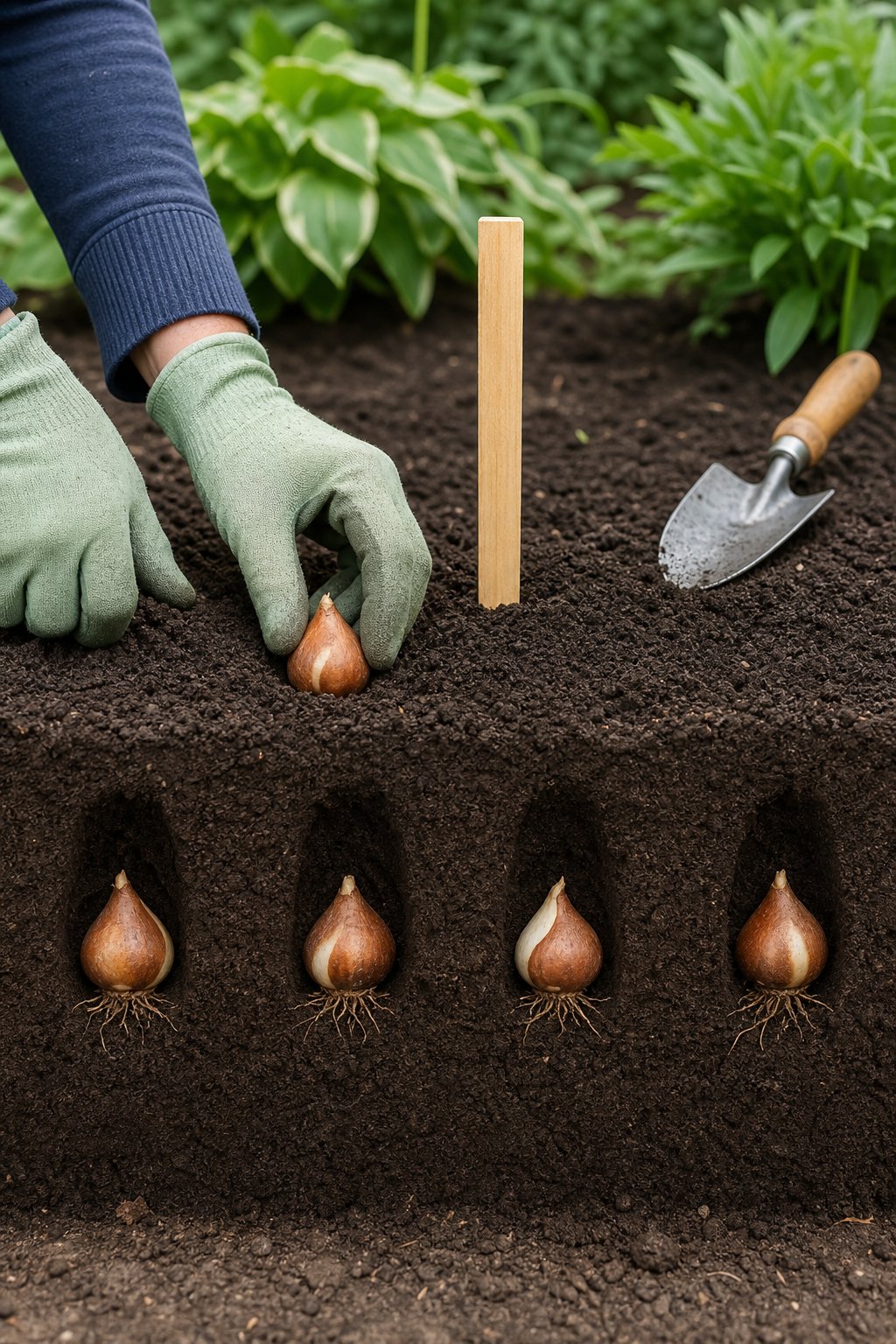
Measure from the bulb’s base to the soil surface, not from its tip.
Position Tulip Bulbs Pointed End Up
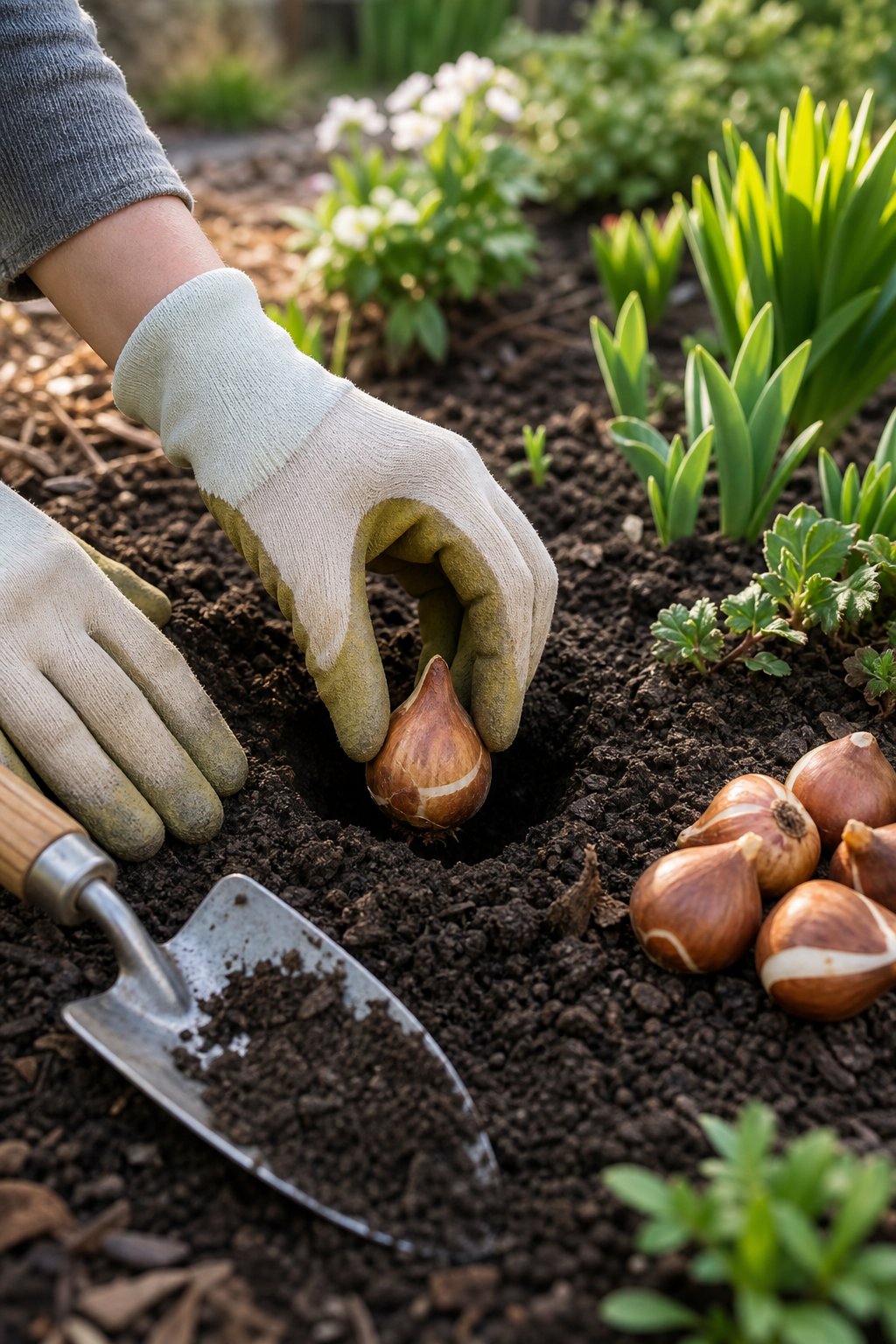
Dig holes 6 to 8 inches deep for standard tulips, or follow the depth listed for your specific variety.
Place each bulb with the pointed end up and the flat root plate down.
If the bulb rolls slightly, do not panic, though correct placement gives the emerging shoot a straight path.
Space standard bulbs about 4 to 6 inches apart.
Smaller species tulips can sit closer, around 3 inches apart.
Backfill with loose soil, press gently to remove large air pockets, and avoid stamping the bed hard.
Create Natural-Looking Clumps And Drifts
For a relaxed garden look, plant groups of 5 to 7 bulbs rather than making a rigid grid.
Dig one broad hole, scatter bulbs with even spacing, and place them at the same depth.
For a stronger color statement, repeat the same variety in several drifts through the bed.
Planting 9 to 12 bulbs per square foot creates a dense display.
You should leave enough room for airflow and healthy foliage.
Water, Mulch, And Protect New Tulip Bulb Plantings
The first watering settles soil around the bulbs and starts root growth.
After that, mulch and simple wildlife barriers help the bed remain steady through winter.
Water After Planting Tulip Bulbs And During Dry Spells
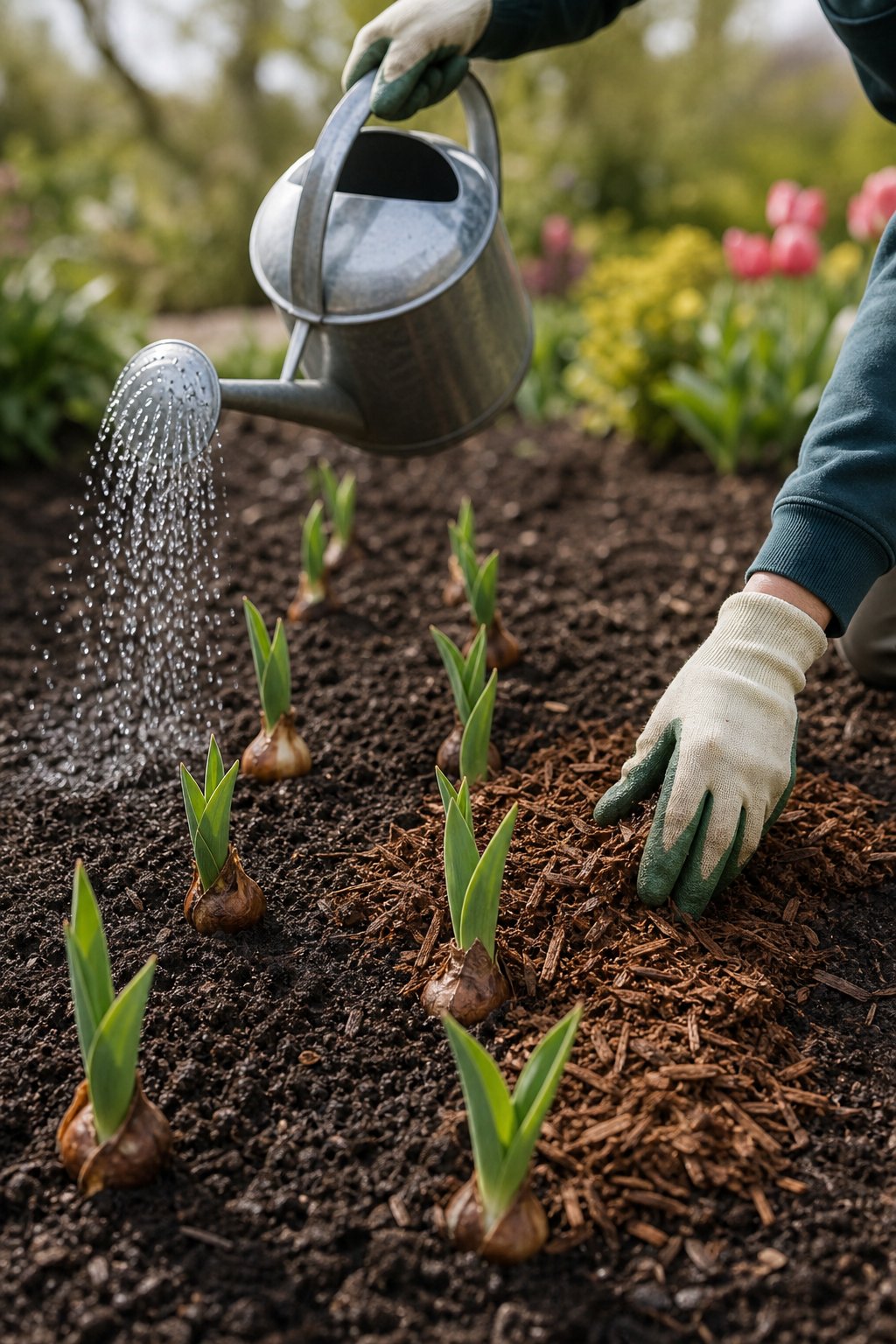
Water the bed thoroughly after planting, unless the soil is already saturated from rain.
You want moist soil, not a muddy bulb bath.
During a dry fall, water when the top few inches become dry so roots can develop before winter.
Spread 2 to 4 inches of shredded leaves, straw, or fine bark after the soil cools.
Keep mulch slightly away from emerging stems in spring.
Pull back any layer that becomes packed and soggy.
Prevent Damage From Squirrels, Deer, And Rodents
Squirrels may dig into fresh beds while searching for their own snacks.
Cover the soil with chicken wire, hardware cloth, or a low garden net until the ground settles.
Remove or secure the cover before shoots need room to grow.
Deer and rabbits may browse leaves and flowers in spring.
A temporary fence works best.
Bulbs planted in protected beds or containers may suffer less damage.
Rodents can also target tulip bulbs, so remove loose bulb skins or planting debris from the bed.
Care For Tulips After Blooming
Spring care determines whether bulbs have enough stored energy for another show.
The flowers may be finished, yet the leaves still have work to do.
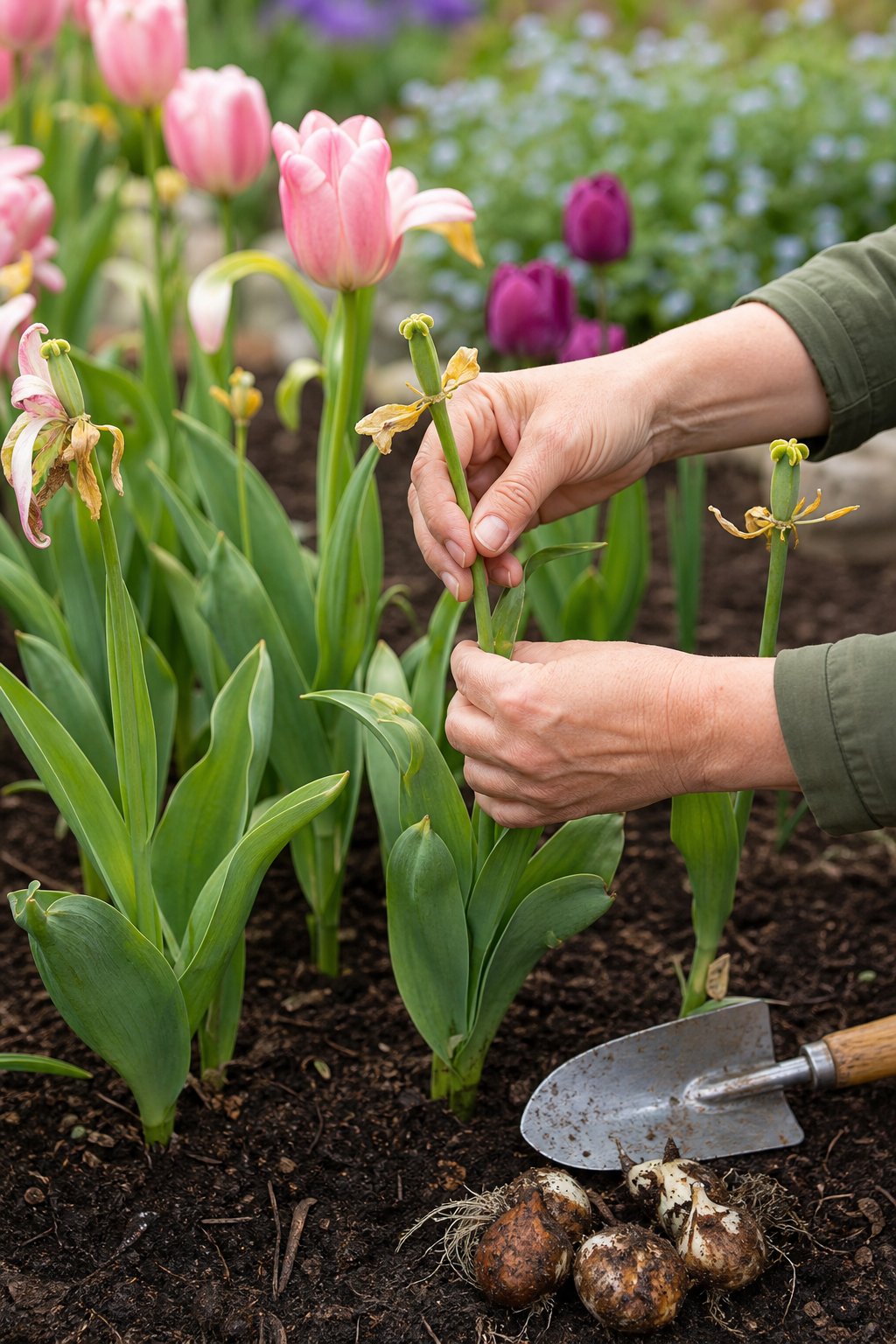
Deadhead Flowers And Let Foliage Fade
Remove faded flowers as soon as they lose their color.
Snip the flower and seed pod, if one forms, while leaving the stem and leaves in place.
This directs more energy toward the bulb instead of seed production.
Let the foliage yellow and collapse naturally for four to six weeks.
Do not braid, tie, or cut green leaves just because they look untidy.
Once they have faded, cut them at soil level and tidy the bed.
Plan For Returns Or Treat Tulips As Annuals
Darwin hybrids and species tulips often return better than highly bred varieties.
Good drainage, full sun, and careful post-bloom watering give returning bulbs a better chance.
Many modern tulips are strongest in their first year.
If you want a guaranteed spring display, plant fresh bulbs each fall.
You can lift spent bulbs after the foliage dies, dry them in a cool, airy place, and store them for fall.
Replacing them is often simpler for a busy garden.
Frequently Asked Questions on Right Way to Plant Tulip Bulbs
What month gives tulip bulbs the best shot at a spectacular spring entrance?
Plant tulip bulbs in fall, often from October through November in much of the United States. Use soil temperature as your guide and plant once the soil cools to about 55°F or lower, before it freezes solid.
How deep should tulip bulbs be planted so they do not pop up like tiny botanical toast?
Plant standard tulip bulbs 6 to 8 inches deep, measuring from the bulb’s base to the soil surface. Shallow planting can expose bulbs to weather and animals, while overly deep planting may delay growth in heavy soil.
How many tulip bulbs can share one planting hole without starting a flower feud?
A broad hole can hold a natural-looking group of 5 to 7 bulbs. Keep each bulb 4 to 6 inches from its neighbors so the plants have room for roots, leaves, and airflow.
Should tulip bulbs go in the ground or pots for the happiest blooms?
Both work if the soil drains well and the bulbs receive plenty of sun.
Pots need drainage holes, quality potting mix, and protection from deep freezing, since container soil chills faster than garden soil.
Do tulip bulbs need to be soaked before planting, or can they skip the spa day?
Tulip bulbs do not need soaking before planting. Set dry, healthy bulbs into prepared soil, then water the bed thoroughly once to settle the soil around them.
Can tulip bulbs still be planted in spring, or has the flower train already left the station?
Tulips need a period of cold to form blooms, so if you plant them in spring, you may see leaves but not flowers. Plant the bulbs as soon as possible in well-drained soil. If your region has mild winters, chill the bulbs first.