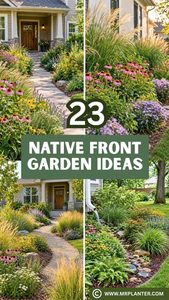
Pennsylvania sedge quietly does the heavy lifting in shady front yards, popping up where grass just gives up.
If your lawn stays patchy under big trees, this soft, native ground cover finishes the space without begging you to mow all the time.
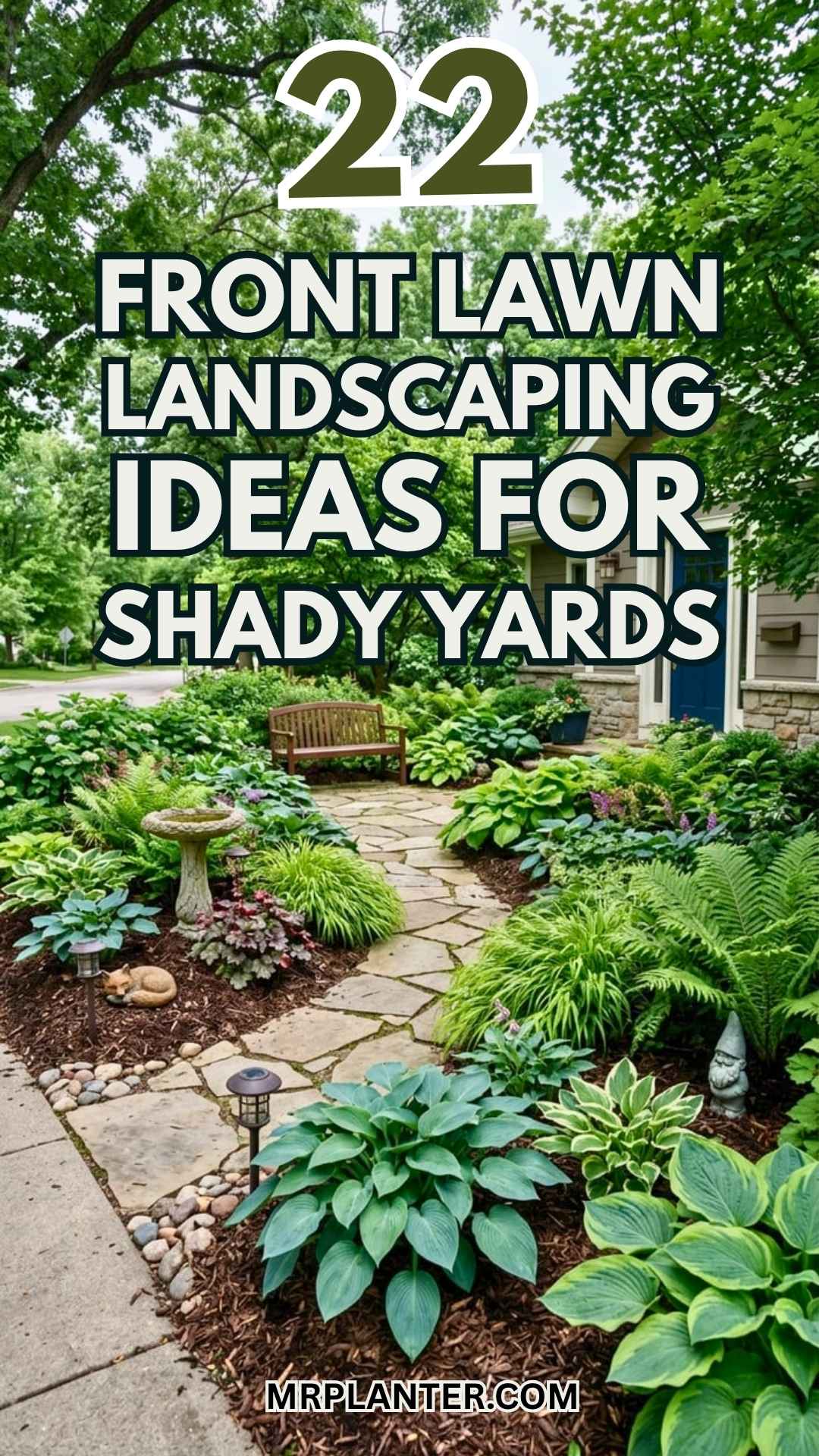
You get a low, tidy carpet that handles shade, blends beautifully with woodland plants, and saves you from staring at bare dirt every time you pull into the driveway.
1. Pennsylvania Sedge Under Mature Oak Trees
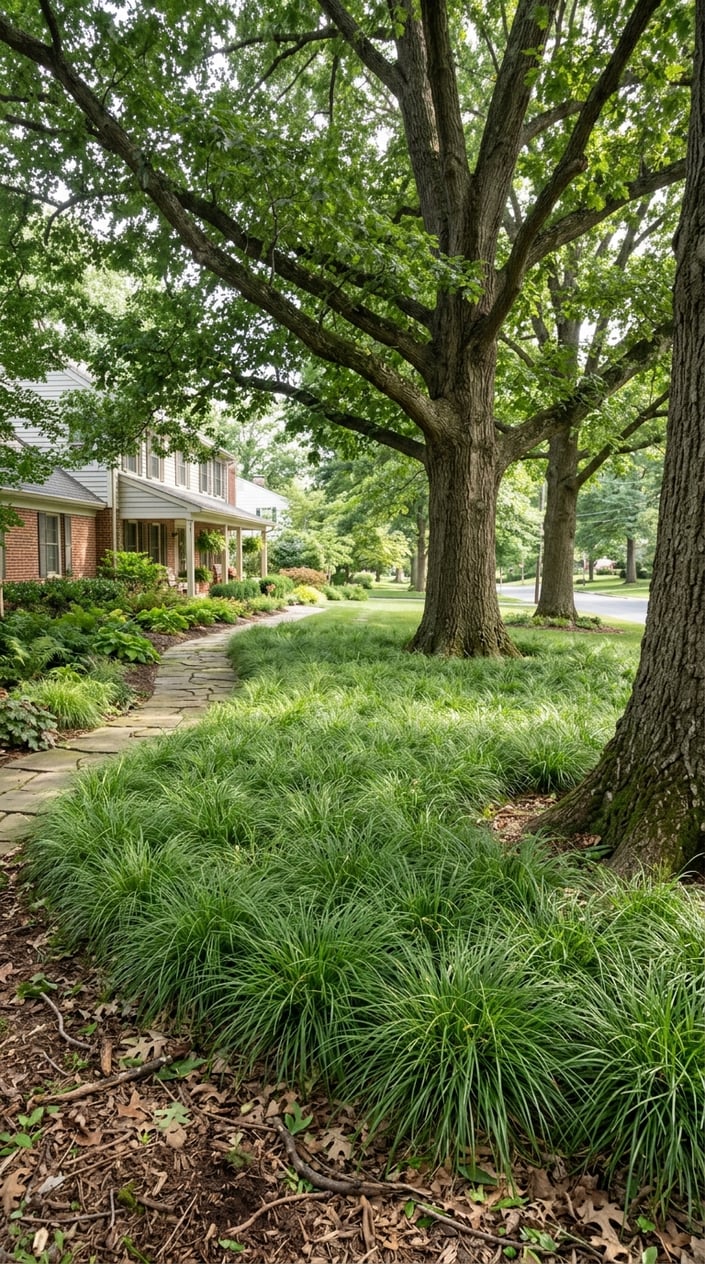
Let’s be honest—your oak tree drops so much shade that even stubborn grass calls it quits. Pennsylvania sedge steps in with fine texture and a soft meadow look that feels natural, not fussy.
It loves dry shade, spreads into a neat drift, and needs way less mowing than turf. Plant it in loose soil with a little compost, then mulch between new plants until they knit together.
Edge it with stone or bark for a clean front-yard finish.
Expert Tip From MrPlanter: “*Plant sedge in small groups first so you can see how fast it fills. *Give it a season, and it starts looking like it has always lived there.“*
2. Golden Star As A Front-Yard Ground Cover Carpet
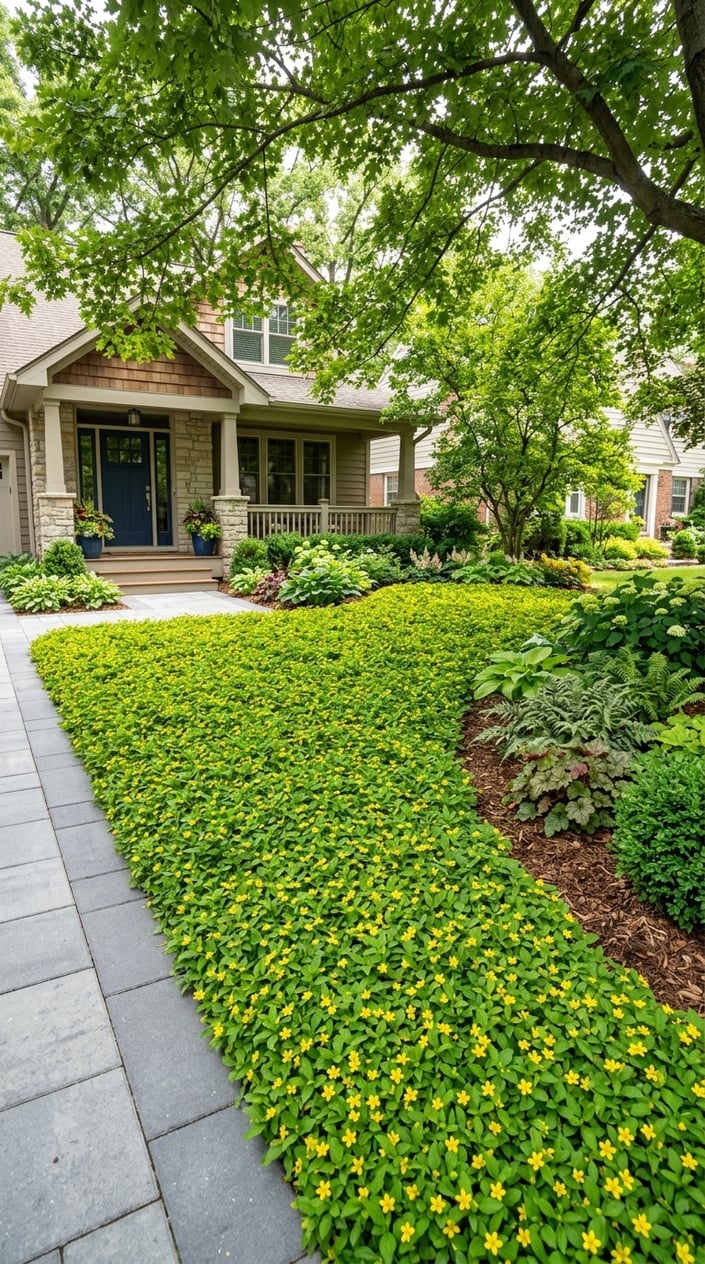
Who knew a tiny ground cover could do the job of a whole lawn when the shade is serious? Golden star makes a bright, low carpet that lights up dark corners near walks and trees.
Its cheerful color gives your front yard a fresh look without much trimming. Tuck it along borders, under shrubs, or near mailbox beds where you want soft coverage instead of grass.
Keep the soil lightly moist while it settles in, then let it spread at its own happy pace.
Expert Tip From MrPlanter: “*Use golden star where you want color without tall growth. *It looks best when you let it flow in wide, simple patches.“*
3. Ajuga Reptans Filling Bare Spots Along The Walkway
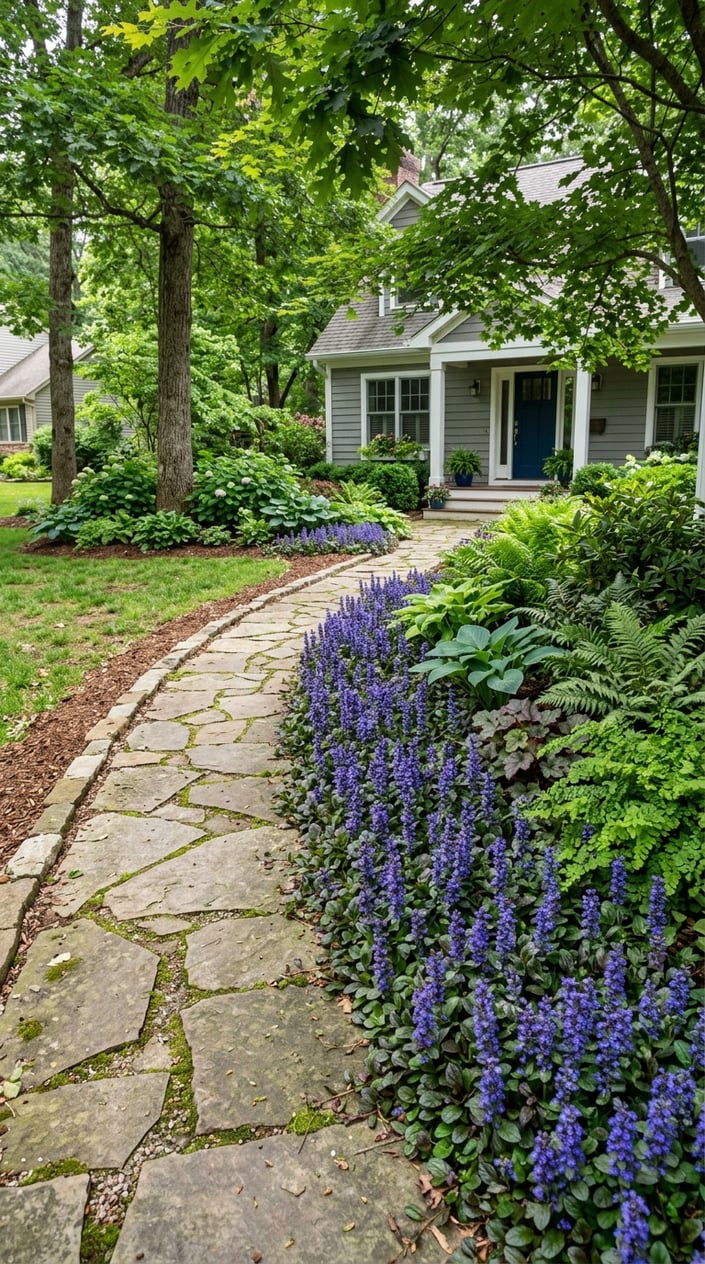
Bare spots along a walkway do not need another sad patch of seed. Ajuga reptans gives you colorful leaves and neat flower spikes, so the edge of your path looks planned instead of neglected.
It spreads fast enough to fill problem areas, which comes in handy where foot traffic and shade keep beating up grass. I like it for path borders because it makes the whole front entry feel more polished.
Give it room, because it wants to creep and cover, not sit still.
Expert Tip From MrPlanter: “*Plant ajuga where you need quick cover and a little color. *It is happiest when you let it act like a polite little escape artist.“*
4. Natural Moss Garden Between Flagstone Pavers
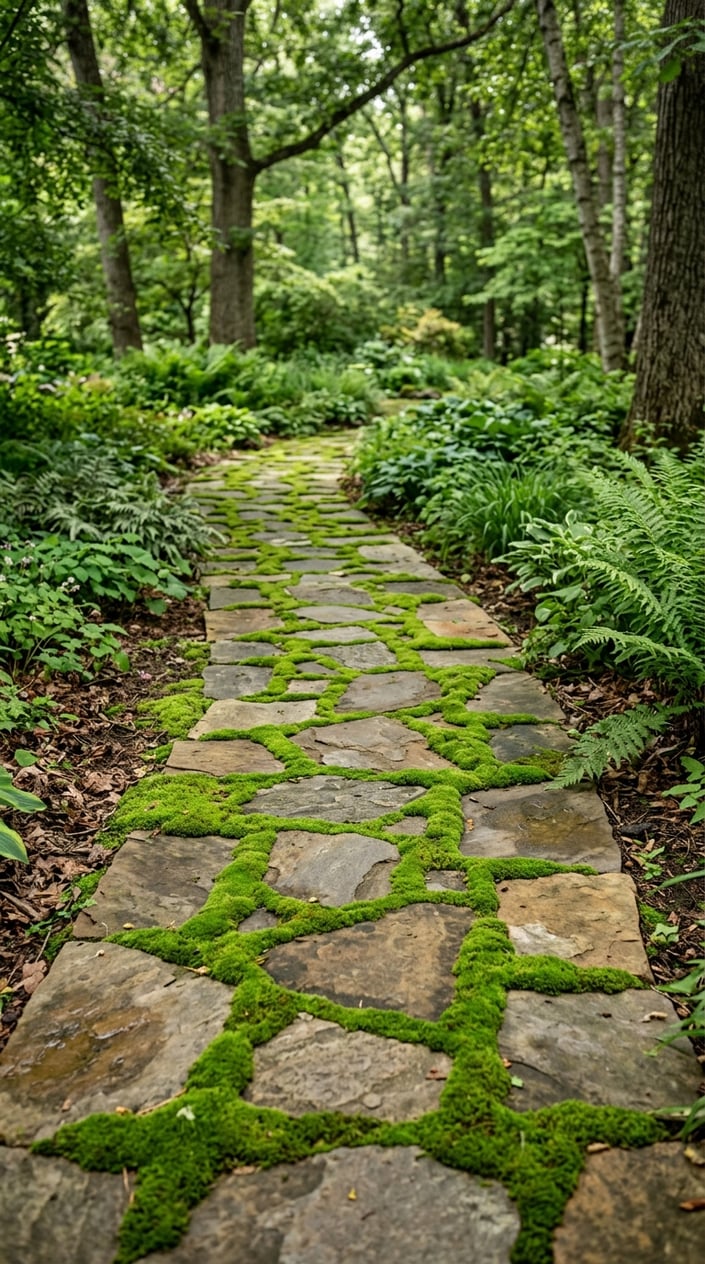
Moss is the soft-spoken neighbor that makes everything around it look better. Between flagstone pavers, it turns a plain walkway into something peaceful and old-world.
It loves shade, gentle moisture, and soil that is not constantly baked dry. This idea works best where you want a natural look with less mowing and fewer weeds.
Keep the stones slightly spaced so moss has room to settle in. Avoid harsh foot traffic while it gets established.
Expert Tip From MrPlanter: “*Think of moss as carpet for quiet places. *If the area stays damp and shaded, it can make your path feel like a little secret garden.“*
5. A Winding Flagstone Path Through Hostas And Ferns
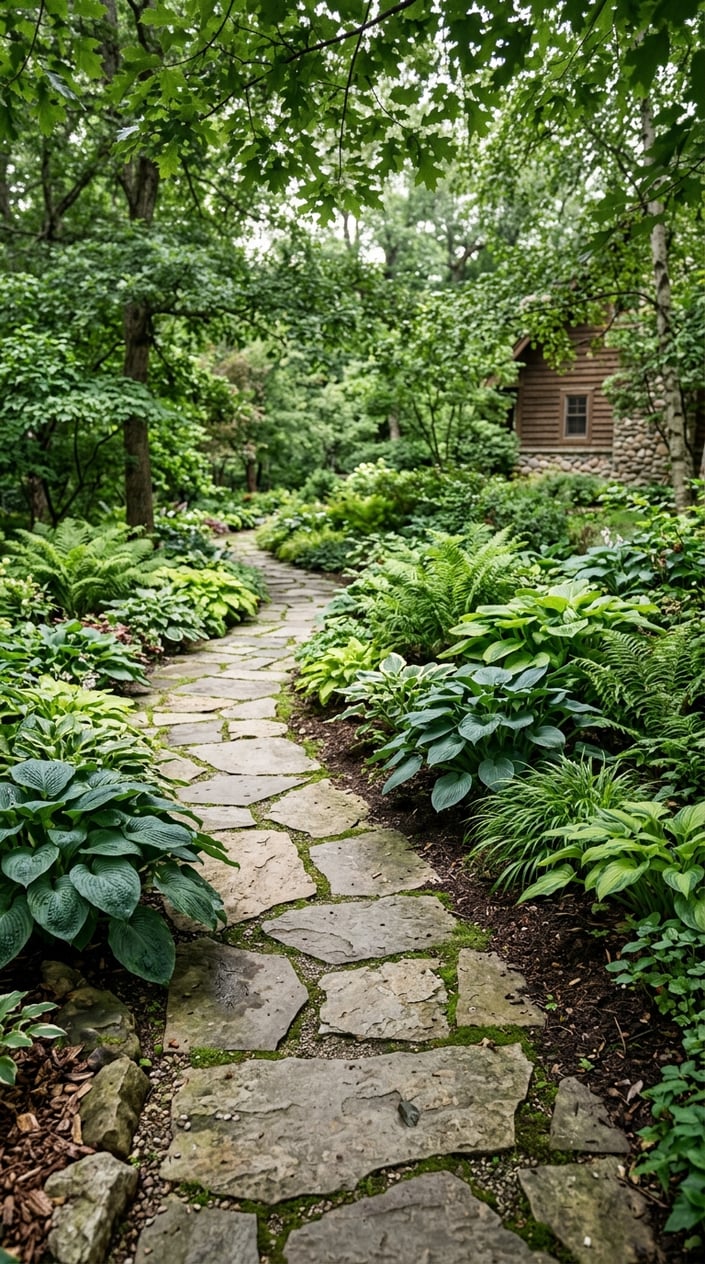
Straight walkways can feel harsh in a shady yard that already has a lot of tree cover. A winding flagstone path softens the layout and gives you a place to layer hostas, ferns, and mulch.
The mix feels welcoming and makes the front yard look larger than it is. Choose stones with irregular edges for a more natural look, then plant in pockets along the curves.
The plants help break up the hardscape, and the path keeps muddy boots off the ground.
Expert Tip From MrPlanter: “*Let the path bend a little instead of marching straight to the door. *Your yard looks calmer when the walkway feels like it belongs to the trees.“*
6. Shredded Bark Mulch Beds With Native Woodland Plants
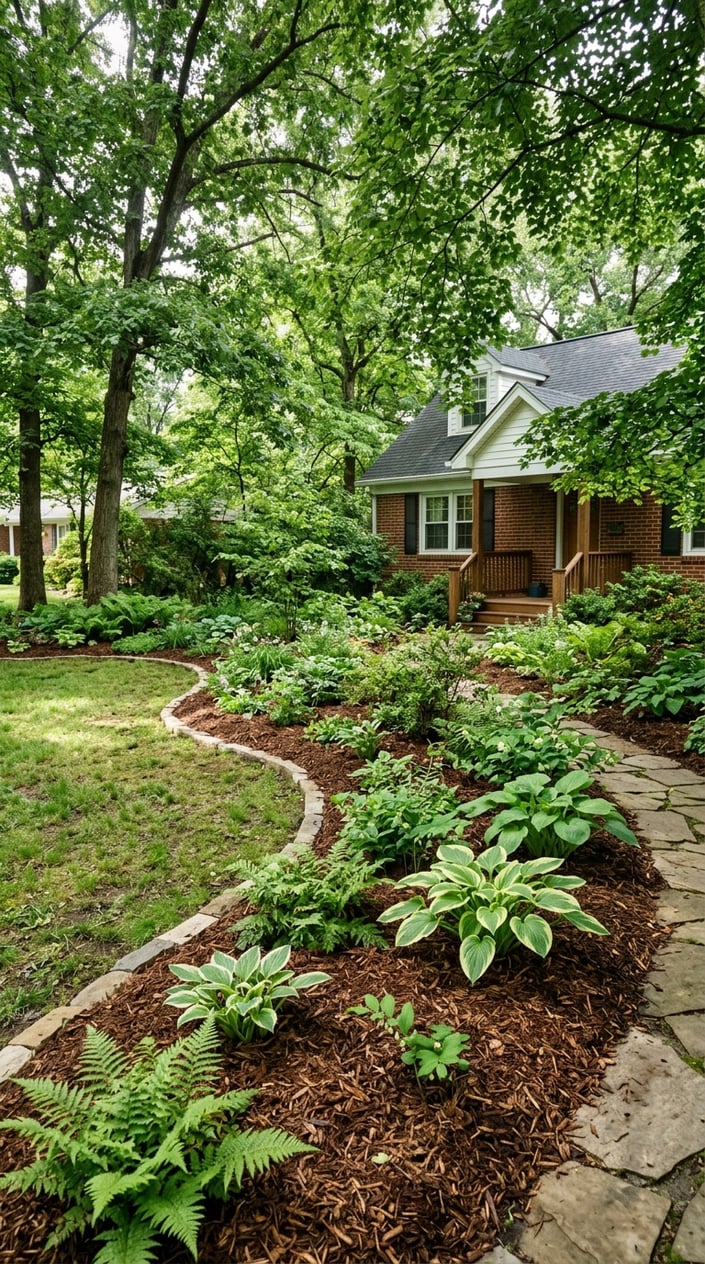
Mulch beds can be more attractive than turf when shade wins the battle. Shredded bark gives you a clean base for native woodland plants that like dappled light and cooler roots.
It also helps with weed control, which is a nice bonus when you are tired of pulling tiny invaders every weekend. This look works well near tall trees, along foundation beds, or around a front corner that never gets enough sun.
Refresh the mulch each season so the bed stays neat and rich.
Expert Tip From MrPlanter: “*Use a deep mulch bed to make weak spots look intentional. *Then let native plants do the real decorating for you.“*
7. Lungwort Planted In Bright-Dappled Entry Beds
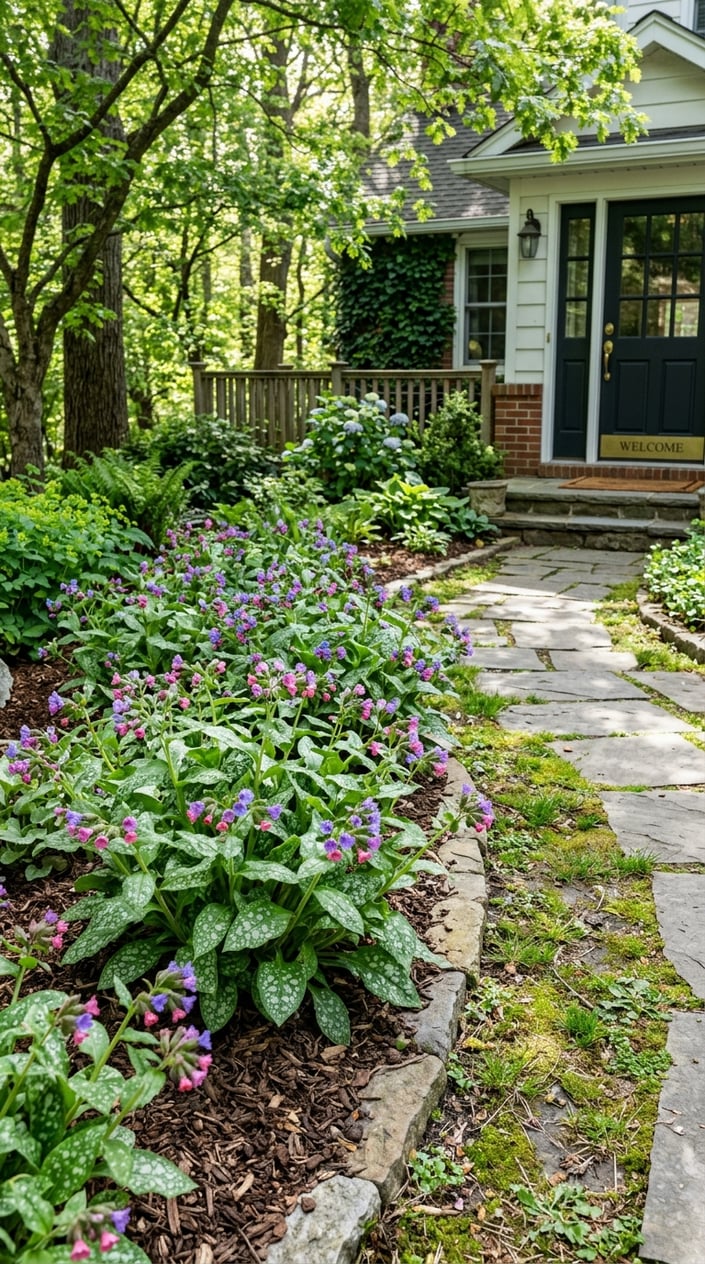
Shade does not have to mean dull. Lungwort brings spotted leaves and spring flowers that brighten entry beds without asking for full sun.
It handles dappled light well, which makes it a smart fit under open trees or beside a porch. I like pairing it with mulch and a few larger leaves around it because the texture really stands out.
Keep the bed evenly moist, and it rewards you with a fresh, tucked-in look near the front door.
Expert Tip From MrPlanter: “*Mix lungwort with plants that have larger leaves so the whole bed feels layered. *That little leaf pattern looks extra lively near the entry.“*
8. Blue Mouse Ears Hosta Border Along A Front Path
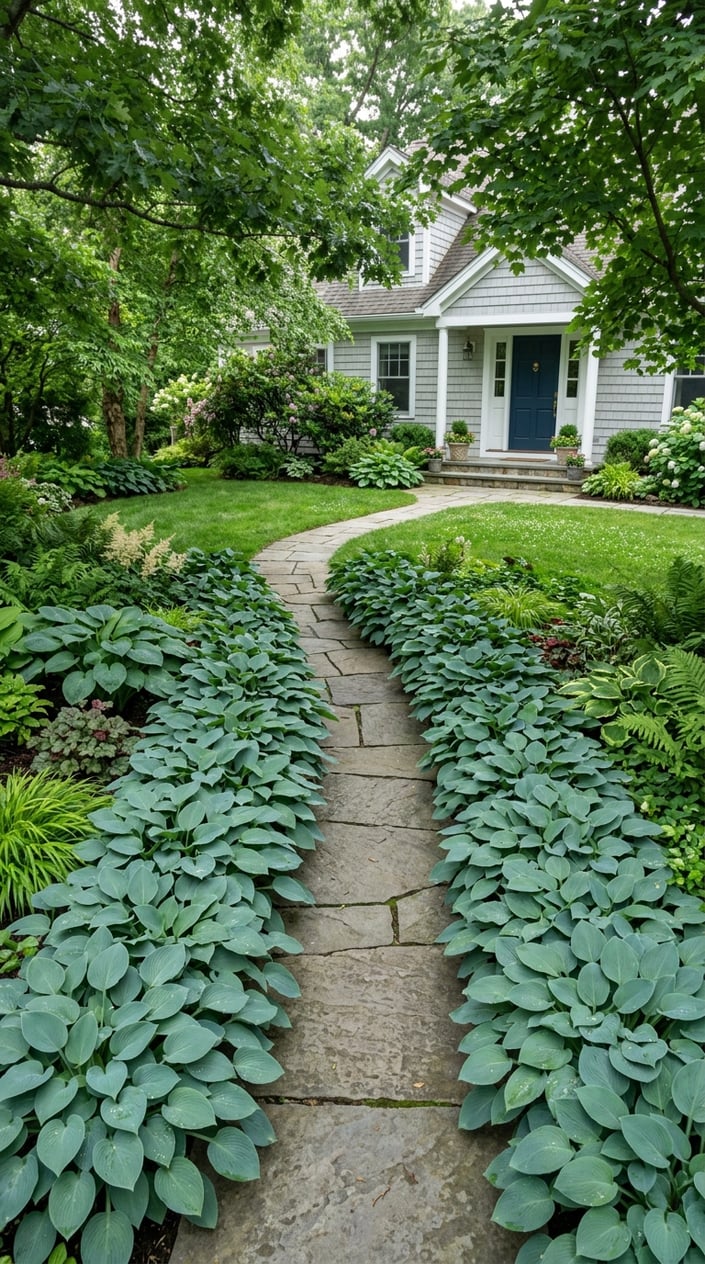
Blue Mouse Ears hosta acts like a tidy row of tiny green umbrellas along your path. Its compact size makes it perfect for borders where you want shape without crowding the walkway.
The thick leaves also bring that classic hosta look in a smaller package. This edging idea works well beside brick, stone, or gravel paths.
If deer are an issue in your area, you may want to protect young plants until they settle in.
Expert Tip From MrPlanter: “*Use small hostas where a big one would bully the path. *They stay neat, and your walkway still gets the spotlight.“*
9. Christmas Fern And River Rock For Dry Shade Slopes
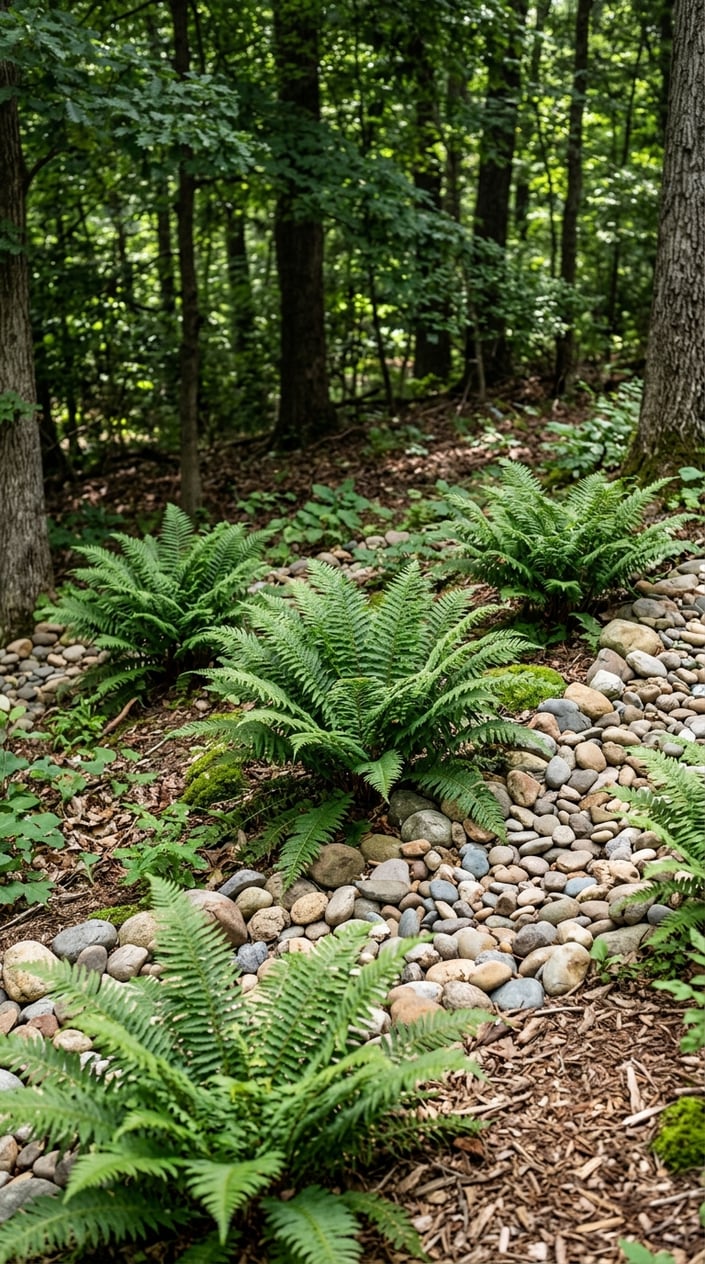
Sloped shade can turn into a slippery, weedy mess fast. Christmas fern handles the light, and river rock helps hold the slope together while giving it a clean, finished look.
It is a strong option where grass slides right out or never roots well. Use larger stones near the bottom for stability, then tuck fern clumps into pockets of soil.
The mix keeps the hill from looking bare while still feeling natural and low-key.
Expert Tip From MrPlanter: “*On a slope, plants and rock should work like teammates. *Christmas fern keeps the scene green, and the rock keeps the whole thing from wandering downhill.“*
10. Sweet Woodruff Beneath Maples Near The Porch
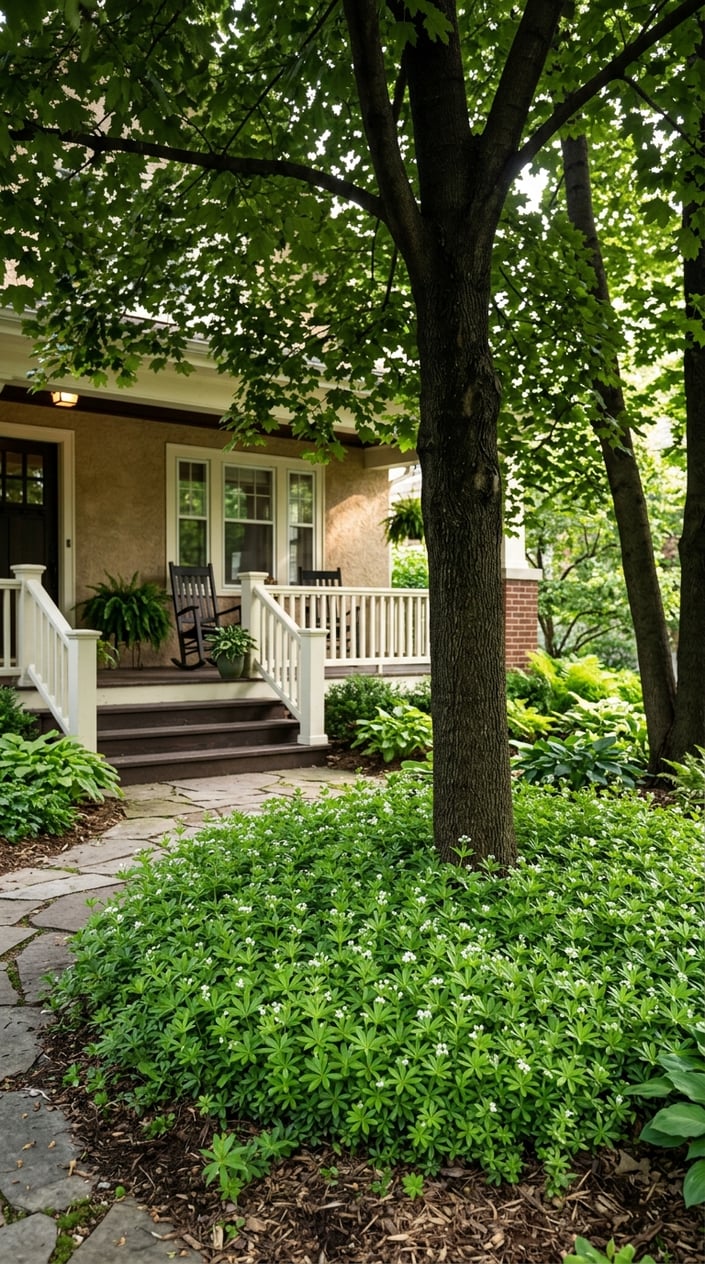
Some of the prettiest shady beds look delicate but behave like champs. Sweet woodruff forms a soft, low mat beneath maples and around porches, which makes it a lovely grass replacement.
Its starry flowers add a little charm without making the front yard feel crowded. It is a smart pick when you want a gentle, woodland style near the house.
Give it room to spread, and it will help smother weeds while keeping the soil covered.
Expert Tip From MrPlanter: “*Plant sweet woodruff where you want a soft green spill. *It makes a porch feel like it is sitting inside a storybook shade garden.“*
11. Hellebores Mixed With Leaf Mulch For Four-Season Interest
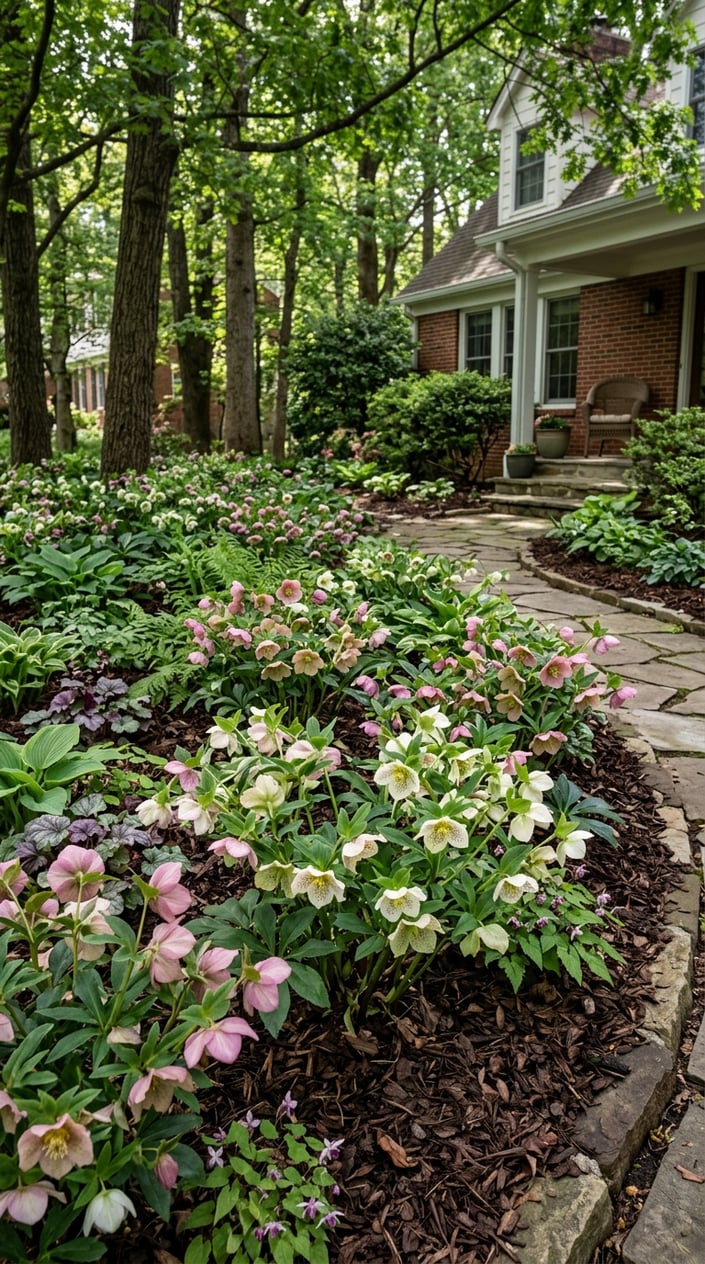
Winter does not have to make your front yard look empty. Hellebores bring flowers when many plants are still sleeping, and leaf mulch gives the bed a rich, woodland feel.
You can plant them near the entry or under high trees where the light stays filtered. The fallen-leaf look is not messy here, it is part of the charm.
Expert Tip From MrPlanter: “*Keep hellebores near places you see in cold weather. *That way, the blooms surprise you right when you need them most.“*
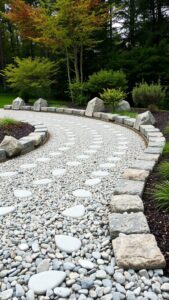
12. A Gravel Path With Irregular Stepping Stones
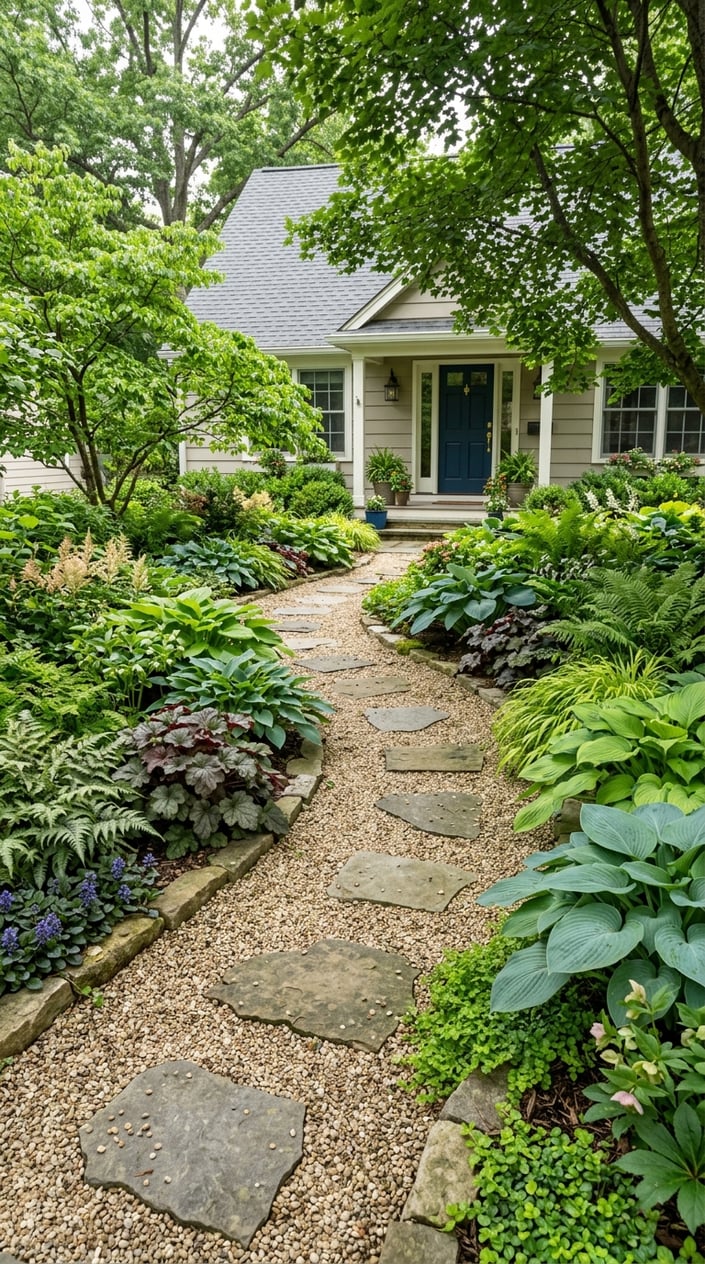
A muddy side yard or front edge can make every trip to the door feel like a test. Gravel with irregular stepping stones gives you a practical path that also looks relaxed and stylish.
It drains well, keeps shoes cleaner, and cuts down on the urge to grow grass where the sun barely visits. Add stone edging to hold the gravel in place and keep the shape crisp.
A few shade plants along the sides make the whole route feel finished instead of purely functional.
Expert Tip From MrPlanter: “*Use stepping stones where people naturally walk. *Then let gravel fill the spaces so the whole path feels easy, not forced.“*
13. Heuchera And Hosta Layering Around The Mailbox Bed
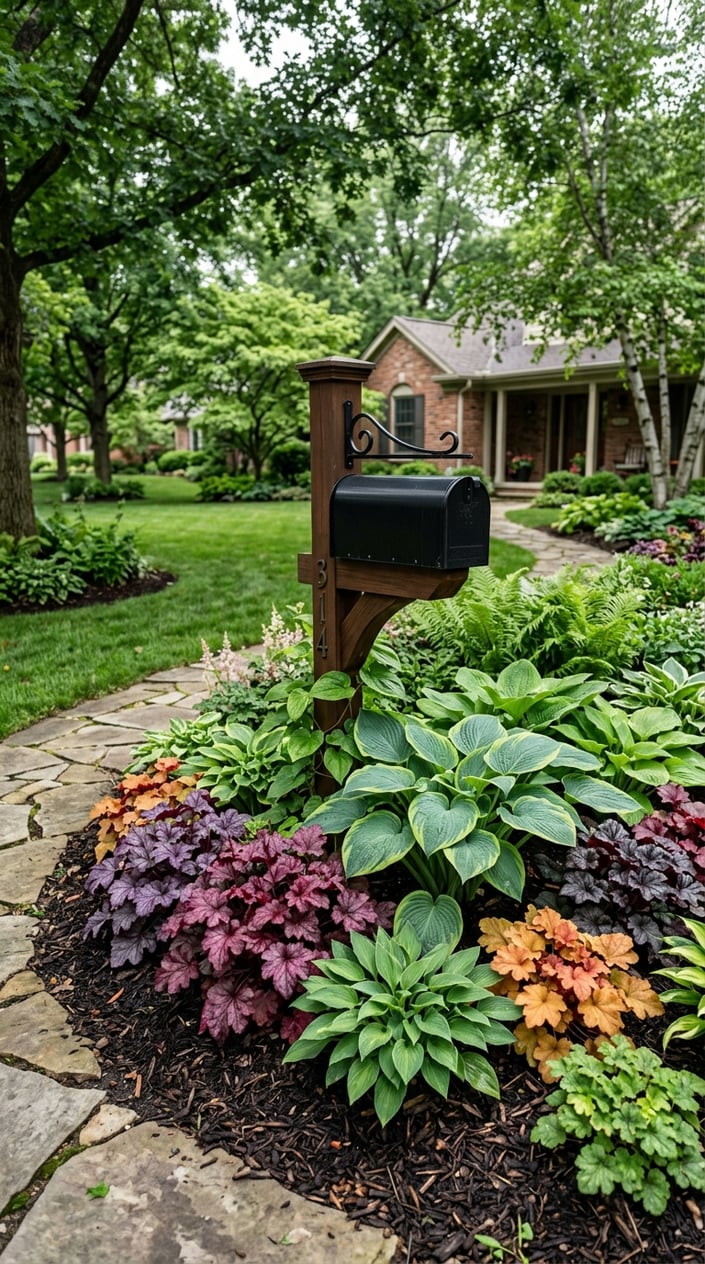
The mailbox bed is the front yard’s handshake, so it should look cheerful. Heuchera adds colorful leaves, while hostas bring broad texture that softens the edge of the street.
Together, they make a layered bed that still works when turf refuses to show up. I like using this combo because it looks good from the curb and is simple to maintain.
Add mulch between plants so weeds do not crash the party. Trim faded leaves as needed.
Expert Tip From MrPlanter: “*Put your brightest heuchera closest to the eye level view. *That little burst of color makes the mailbox bed feel intentional fast.“*## 14. A Pebble-Edged Fern Walkway To The Front Door
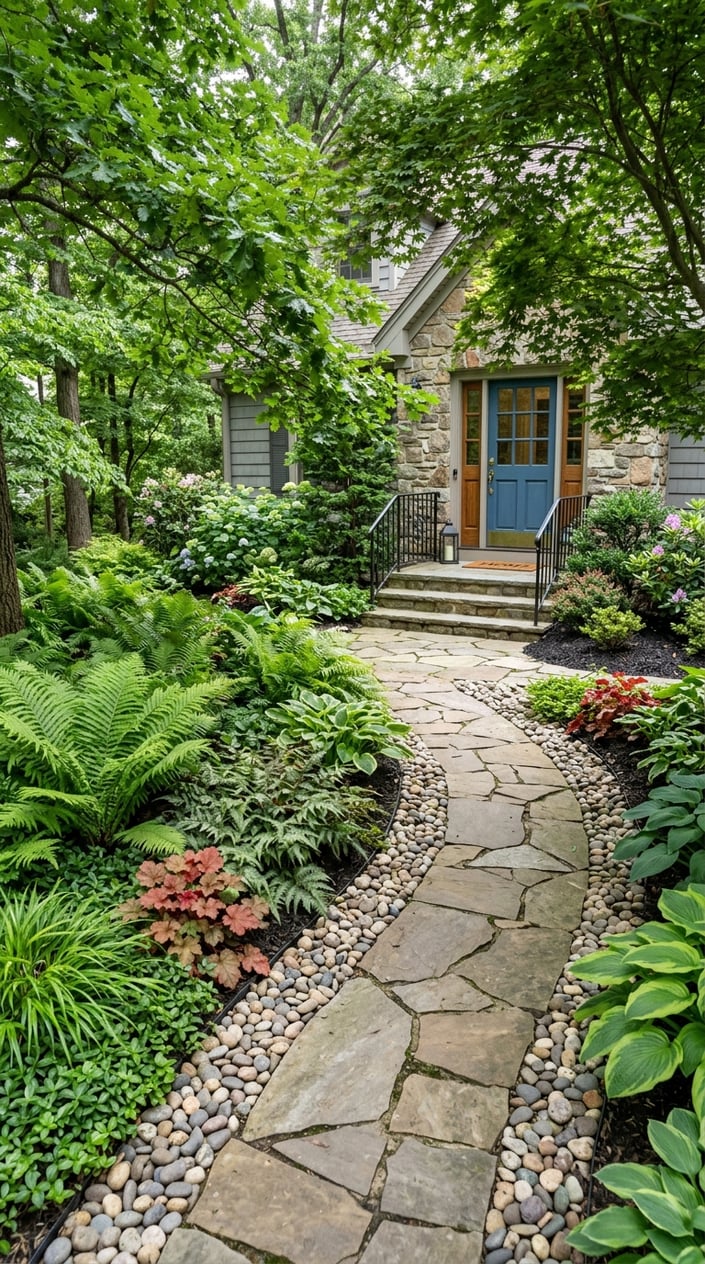
Surprising Fact: Just a handful of pebbles can turn a plain walkway into something that looks sharp and put-together.
When you edge a path with pebbles and line it with ferns, the walk to your front door feels soft, cool, and calm.
Ferns absolutely love the shade, and the pebble edge keeps mulch or soil from tumbling onto your path.
If you want something pretty without fussing over lawn care, this design makes life easier.
Keep the line crisp, and your front entry will look like you planned it out with a ruler and a dream.
Expert Tip From MrPlanter: “*Use pebbles as a neat little frame for fern beds. *That small edge helps the path stay tidy and keeps the plants looking like they belong there.“*
15. Native Wild Ginger As A Weed-Smothering Tree Ring
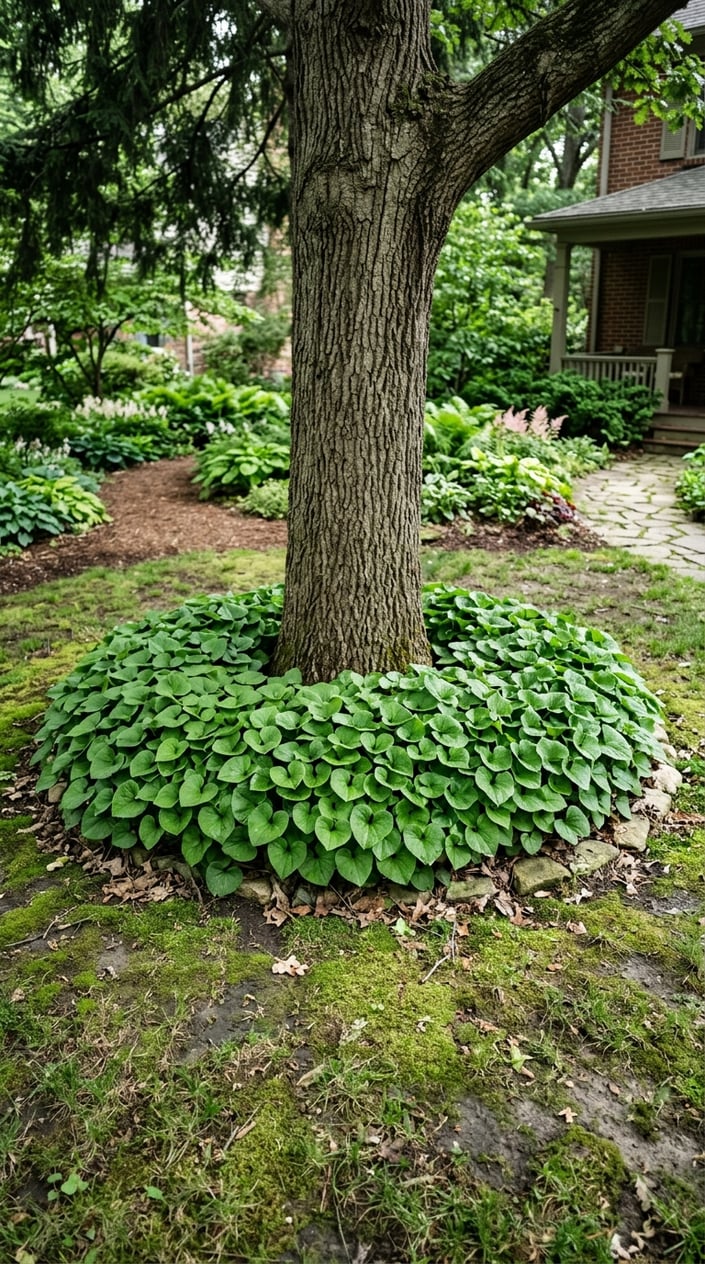
Myth-Busting Statement: You don’t have to let the dead zone around a tree stay bare forever.
Native wild ginger forms a thick ring that covers soil, chokes out weeds, and looks fantastic under mature trees.
Those heart-shaped leaves bring a woodland vibe, and you won’t need to mow much at all.
When tree roots make planting tricky and grass keeps giving up, wild ginger steps in to save the day.
Tuck the plants in with compost and mulch, then water them until they settle into the shade.
Expert Tip From MrPlanter: “*If a tree is stealing the show, make the ground cover work with it. *Wild ginger turns that awkward ring into one of the best-looking spots in the yard.“*
16. Virginia Bluebells And Solomon’s Seal In A Woodland Drift
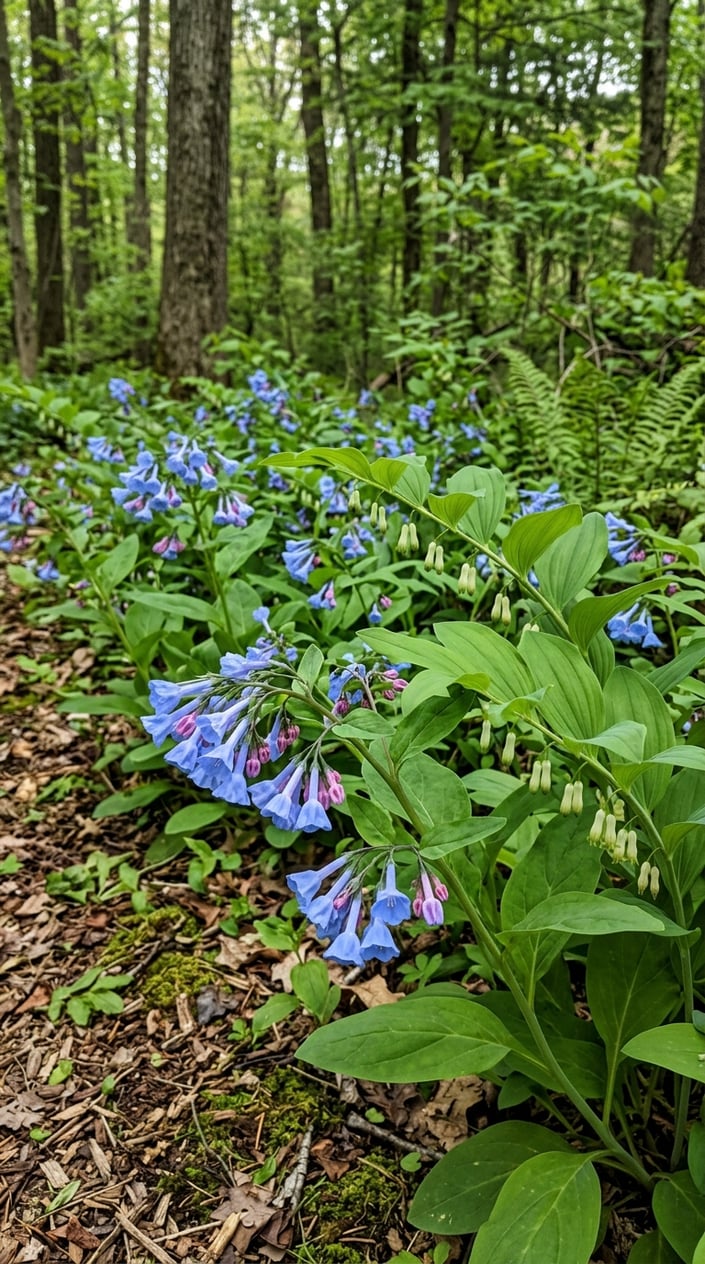
Personification: This planting feels like a cheerful parade marching through the shade.
Virginia bluebells bring spring color, and Solomon’s seal adds those graceful arching stems that keep the bed looking good after the blooms fade.
Together, they create a woodland scene that looks right at home near trees or along a shady front border.
If you want your front yard to feel soft and layered, this pairing works wonders.
Plant in loose groups so the shapes can mingle instead of looking stiff and awkward.
Expert Tip From MrPlanter: “*Let spring bulbs and woodland perennials share the stage. *One gives you color, the other keeps the bed graceful after the show is over.“*
17. Coral Bells In Raised Gravel Beds By The Entry
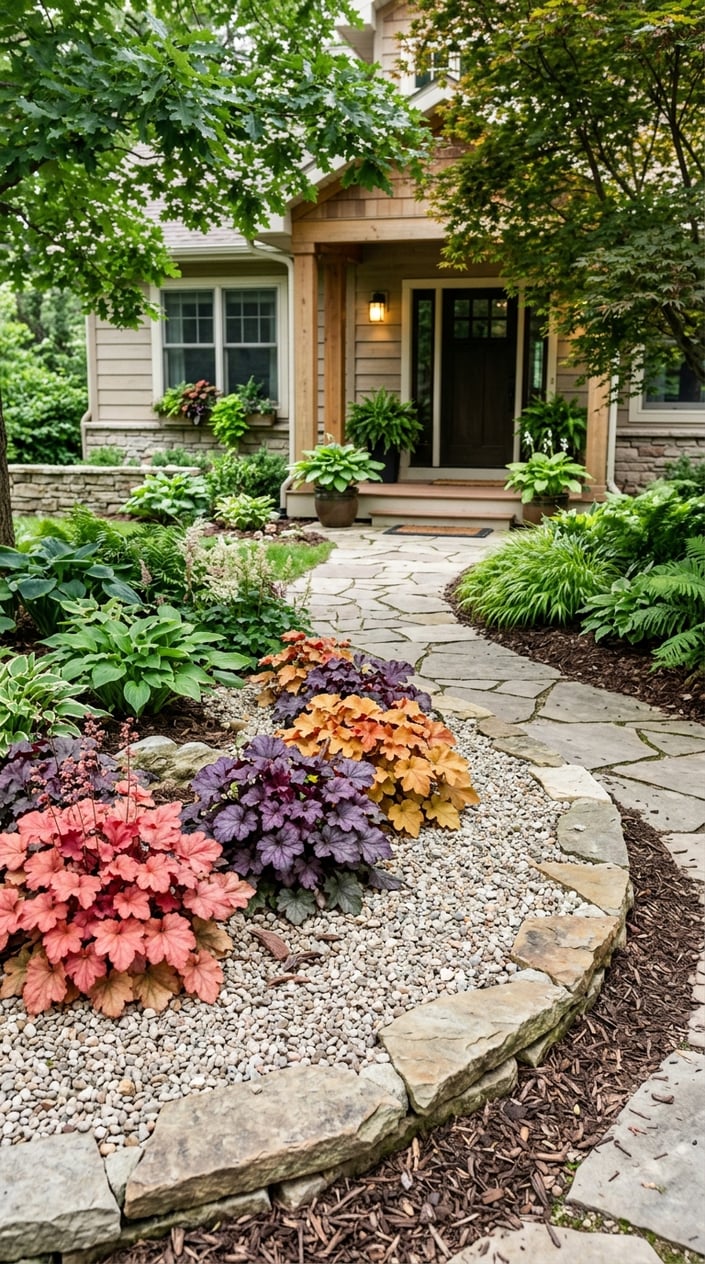
Relatable Problem: Soggy soil by the entry can make your plants act like grumpy teenagers.
Raised gravel beds fix the drainage, and coral bells bring pops of color that brighten up a shady front door.
The lifted bed gives your entry a crisp, cared-for look, and you don’t have to mess with a full lawn.
I love this setup because gravel keeps the base tidy and the plants stay dry and happy.
Pick a few leaf colors for extra flair, and keep the border clean so the shape stands out.
Expert Tip From MrPlanter: “*Raise the bed a little when drainage is weak. *Coral bells stay happier, and your entry gets that neat, custom-built feel.“*
18. A Small Shade Pollinator Garden With Foamflower And Columbine
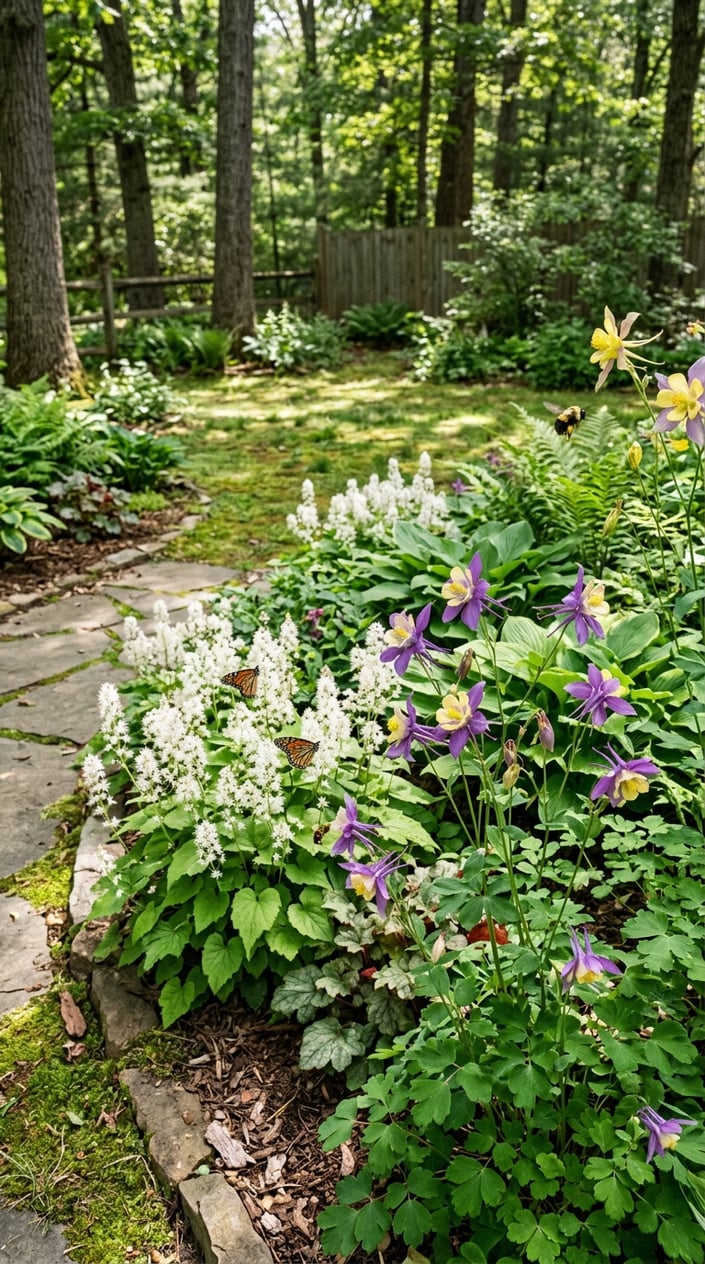
Surprising Fact: Even shady yards can roll out the welcome mat for bees and butterflies.
Foamflower and columbine bloom happily in light shade and turn a forgotten front corner into a buzzing pollinator hangout.
The flowers look light and airy, so your bed never feels heavy or gloomy.
Group them in small drifts and skip the harsh chemicals so the good bugs stick around.
A water dish nearby gives pollinators a reason to linger and maybe gossip about your excellent plant choices.
Expert Tip From MrPlanter: “*Plant pollinator flowers where you can see them from the porch. *It makes the garden feel alive, and you get a front-row seat to the action.“*
19. Pachysandra Terminalis For Formal Foundation Planting
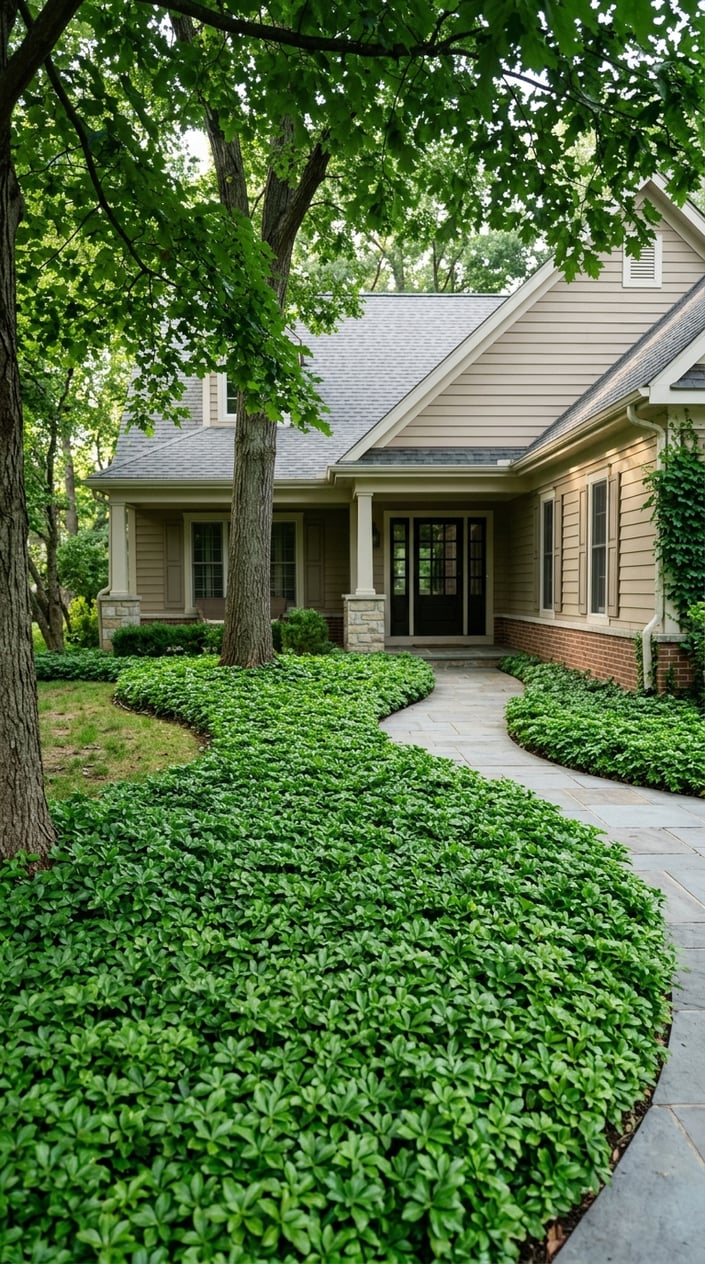
Myth-Busting Statement: You don’t need grass for a front bed to feel neat and proper.
Pachysandra terminalis forms a dense, evergreen carpet that stays sharp along the base of your house.
This plant shines in deep shade where turf keeps thinning out and weeds try to sneak in.
You get a clean, clipped look with way less work than a traditional lawn border.
Space the plants out, keep the soil evenly moist while they settle in, and soon you’ll see them fill in like they’re on a mission.
Expert Tip From MrPlanter: “*Use pachysandra when you want a front bed to look polished all year. *Its steady green color makes the house feel anchored, even in deep shade.“*
20. Japanese Forest Grass Massed Along A Curved Brick Path
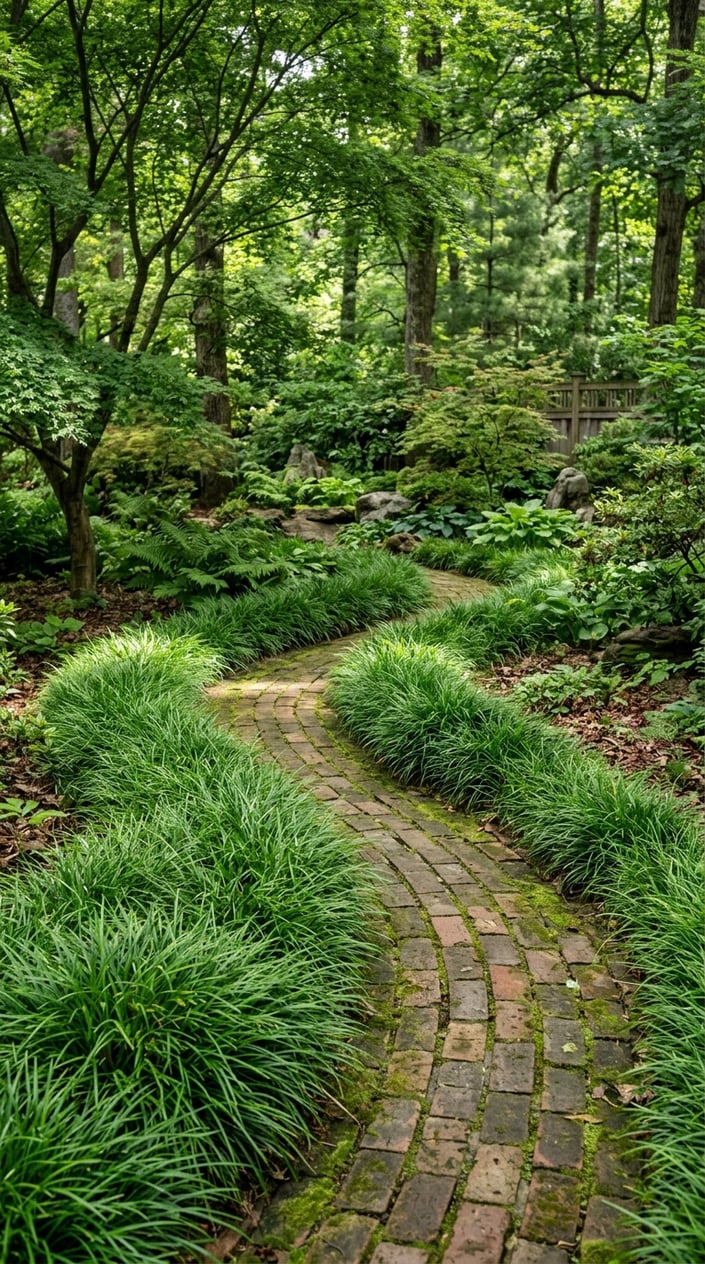
Personification: Japanese forest grass moves like a soft ribbon along a path.
When you plant it in groups, it gives shade gardens a gentle sway that breaks up all those hard lines from brick and siding.
The arching blades catch the light, even when the rest of the yard feels a little dim.
A curved brick path looks even better when the grass follows the bend.
Let the clumps spread, and add mulch around the base to keep things tidy.
Expert Tip From MrPlanter: “*Plant forest grass in repeated clumps instead of one lonely patch. *The rhythm makes your path feel calm and intentional.“*
21. A Bench Nook Set In Mulch And Ferns Under A Large Beech
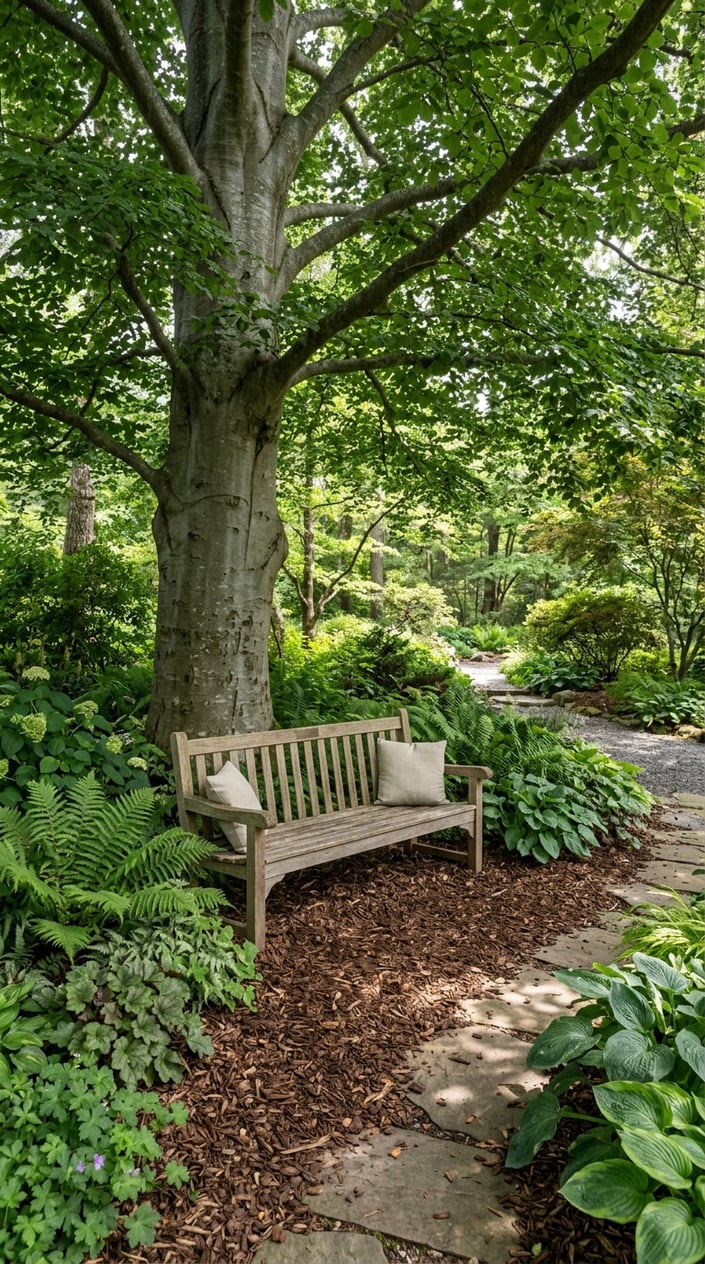
Relatable Problem: Sometimes the best fix for a stubborn patch is not more grass, but a cozy spot to sit.
A bench nook turns shade into a place you actually want to hang out, and mulch with ferns makes the corner feel finished.
Under a big beech tree, this setup looks peaceful and like you planned it that way.
You can add a side planter or a small stone landing to make the nook extra inviting.
It’s a smart use for space that’s just too dark for lawn.
Expert Tip From MrPlanter: “*If an area refuses to grow turf, give it a job instead. *A quiet bench nook can make your front yard feel friendlier than a patch of grass ever did.“**
22. Xeric Dry-Shade Planting With Epimedium And Mulch
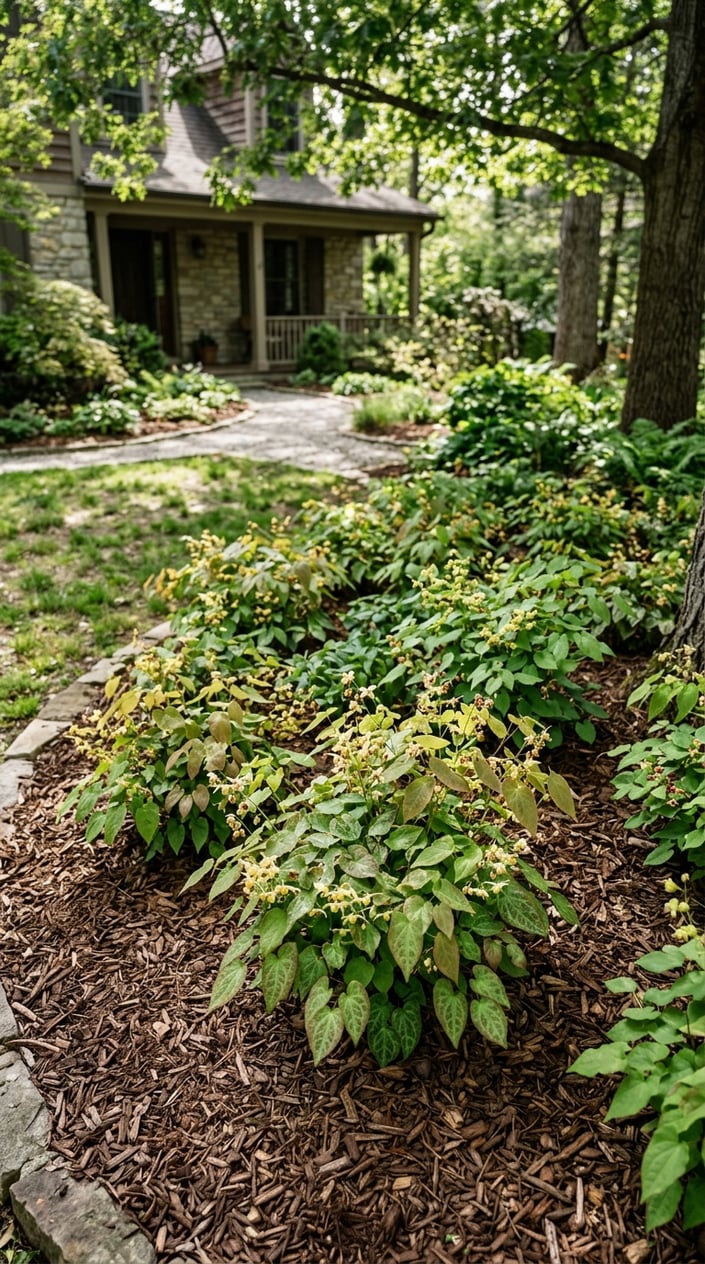
Surprising Fact: Dry shade can be tougher than deep shade, but epimedium handles it like a champ.
This plant gives you airy foliage and spring flowers, and mulch helps hold moisture and keeps weeds down.
You’ll find it’s a smart choice under trees where roots steal water and grass never seems to recover.
Spread compost to boost the soil, then pile on the mulch around new plants so they can settle in.
Expert Tip From MrPlanter: “Choose plants that do well in dry shade instead of fighting the site. Epimedium makes a hard spot look elegant, which is a pretty great trade.“