As an Amazon Associate, MrPlanter.com earns from qualifying purchases.
Mowing the lawn is basically a part-time job nobody asked for. If you’re tired of the constant upkeep, switching to rock landscaping is a total game-changer for your curb appeal.
Here are sixteen ways to use stone and hardy plants to get a front yard that stays looking sharp without all the weekend sweat.
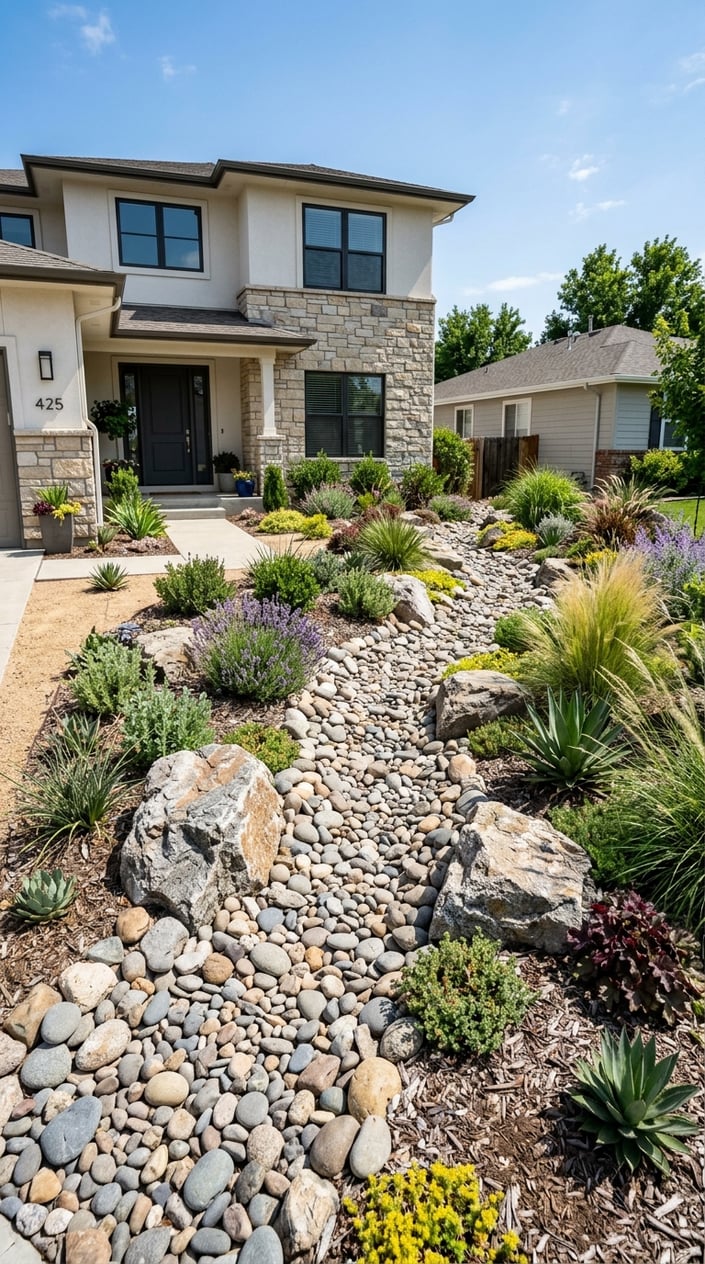
1. Dry Creek Bed With River Rock And Accent Boulders
Myth-Busting Statement: a dry creek bed is not just for fancy yards with endless space. It’s a smart way to guide rainwater, break up a flat front lawn, and make your entry feel calm instead of plain.
River rock gives you that smooth, natural look, while a few accent boulders add weight and shape.
Tuck in drought-tolerant plants like ornamental grasses or compact shrubs along the edges, and you get a front yard that feels finished without asking for weekly mowing.
If your yard slopes even a little, this design can also help manage runoff in a way that looks good year-round.
Expert Tip From MrPlanter: “*Start your dry creek bed with larger stones first, then fill in with river rock for a natural flow. Keep the edges soft with plants so it looks like it belongs there, not like you dropped a pile of rocks from space.“
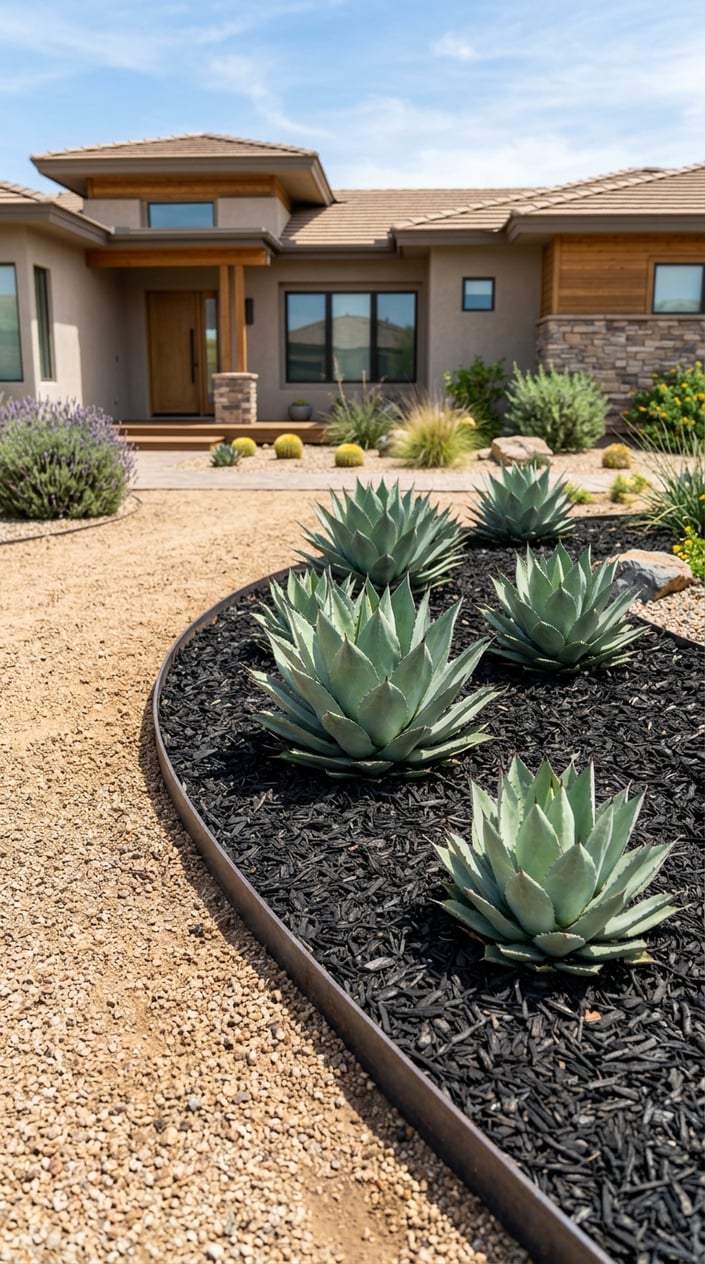
2. Decomposed Granite Xeriscape With Agave And Black Mulch Steel Edging
Relatable Problem: if your front yard always looks messy after a windy week, this layout can save your sanity. Decomposed granite creates a clean, firm surface that feels tidy without the work of grass.
Agave gives the whole space a bold shape, and black mulch helps the plants pop without fighting for attention. Steel edging keeps the lines crisp, which is a big deal when you want that polished xeriscape look. This design works well if you like modern style and want drainage, low upkeep, and strong curb appeal in one shot.
Expert Tip From MrPlanter: “*Use steel edging to keep decomposed granite from wandering into your walkway. A simple border makes the whole yard look more expensive and a lot less fussy.“
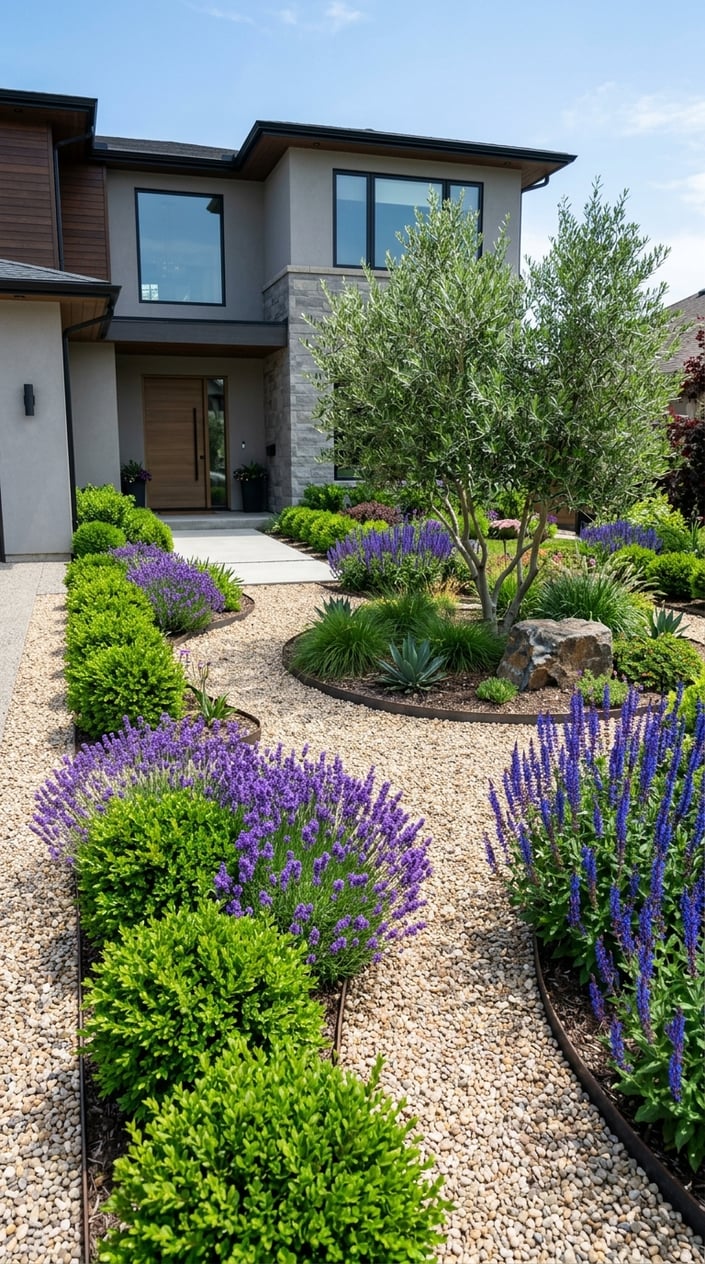
3. Pea Gravel Front Yard With Lavender, Salvia, And Boxwood Islands
Surprising Fact: pea gravel can make a front yard feel softer, not rougher. Its small, rounded stones give you a comfortable base that looks relaxed and still stays neat.
When you add lavender, salvia, and boxwood islands, the yard gets color, scent, and structure all at once. Lavender and salvia attract pollinators, while boxwood gives you a steady green shape through the seasons. I like this mix for homes that need a welcoming look without a lot of plant babysitting.
Expert Tip From MrPlanter: “*Leave enough space between the planting islands so the gravel still shows. That open space is what makes the design breathe instead of feeling crowded.“
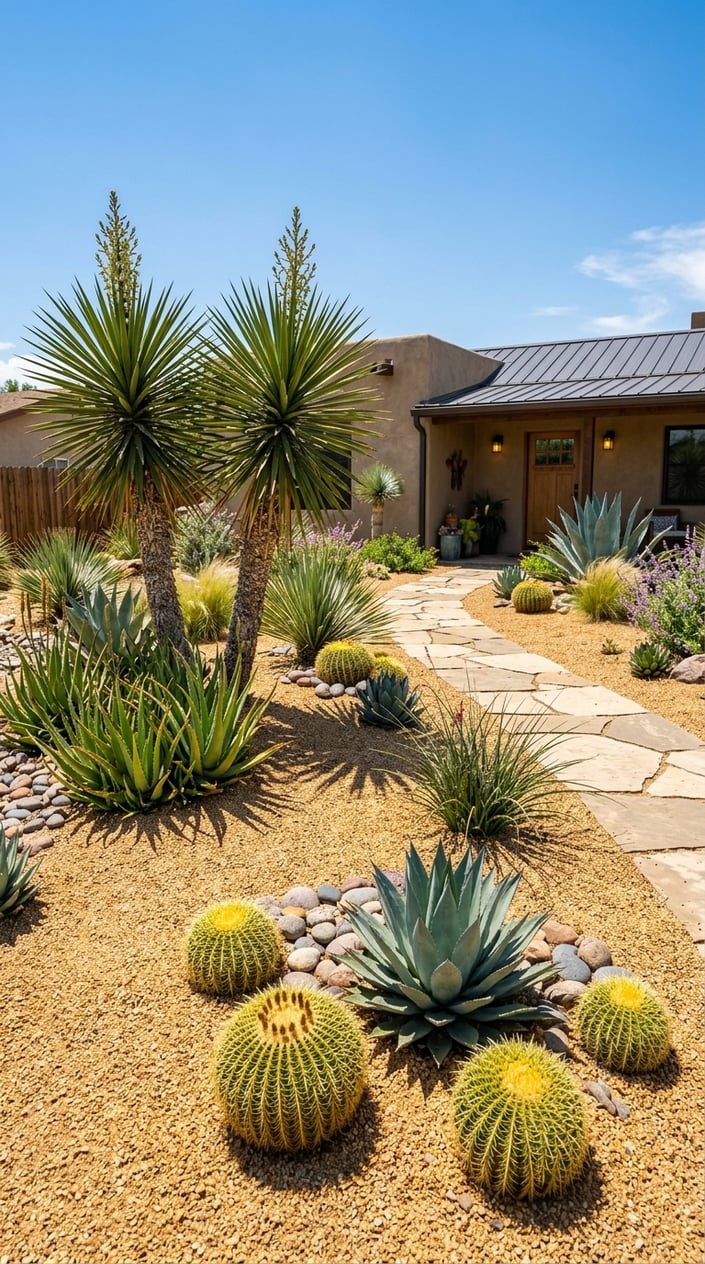
4. Desert Oasis Layout With Golden Gravel, Aloe, Yucca, And Barrel Cactus
Personification: golden gravel loves the sun and never complains about it. That makes it a perfect partner for aloe, yucca, and barrel cactus in a hot-climate front yard.
This style brings strong desert color and bold plant shapes without needing lawn care. The gravel reflects light nicely, which can make the whole yard feel brighter and cleaner. If you want a landscape that looks tough, tidy, and a little dramatic, this one does the trick with very little effort.
Expert Tip From MrPlanter: “*Group your desert plants in odd numbers so the layout feels natural. Then let the gravel act like the quiet background that makes the plants shine.“
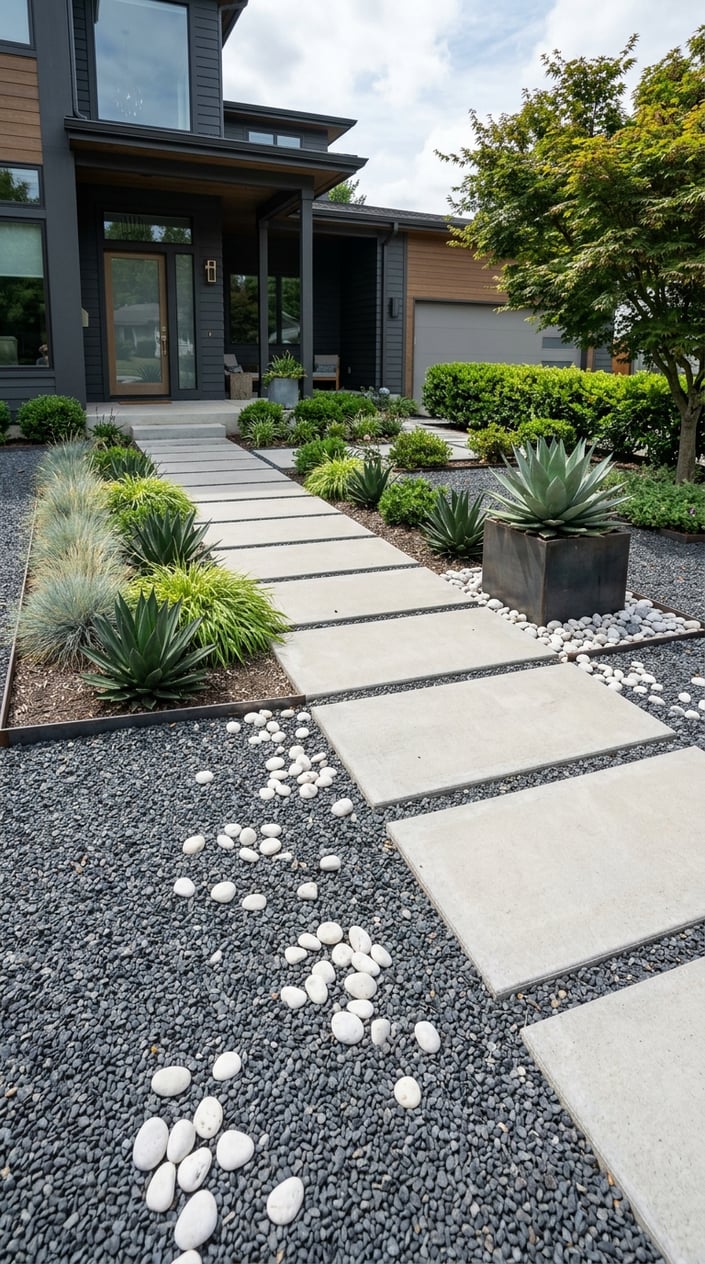
5. Modern Basalt Gravel Design With Concrete Pavers And White Mexican Beach Pebbles
Myth-Busting Statement: a rock yard does not have to look harsh or empty. When you pair dark basalt gravel with clean concrete pavers, the whole front entry suddenly feels sharp and intentional.
White Mexican beach pebbles add a bright contrast that keeps the design from going flat. I like this look for modern homes because it uses simple shapes and strong color changes instead of busy plantings. A few green accents are enough to soften the edges and keep the space feeling lived-in.
Expert Tip From MrPlanter: “*Repeat the same paver spacing across the yard so the design feels calm. A few well-placed plants are enough when the stone pattern is doing the heavy lifting.“
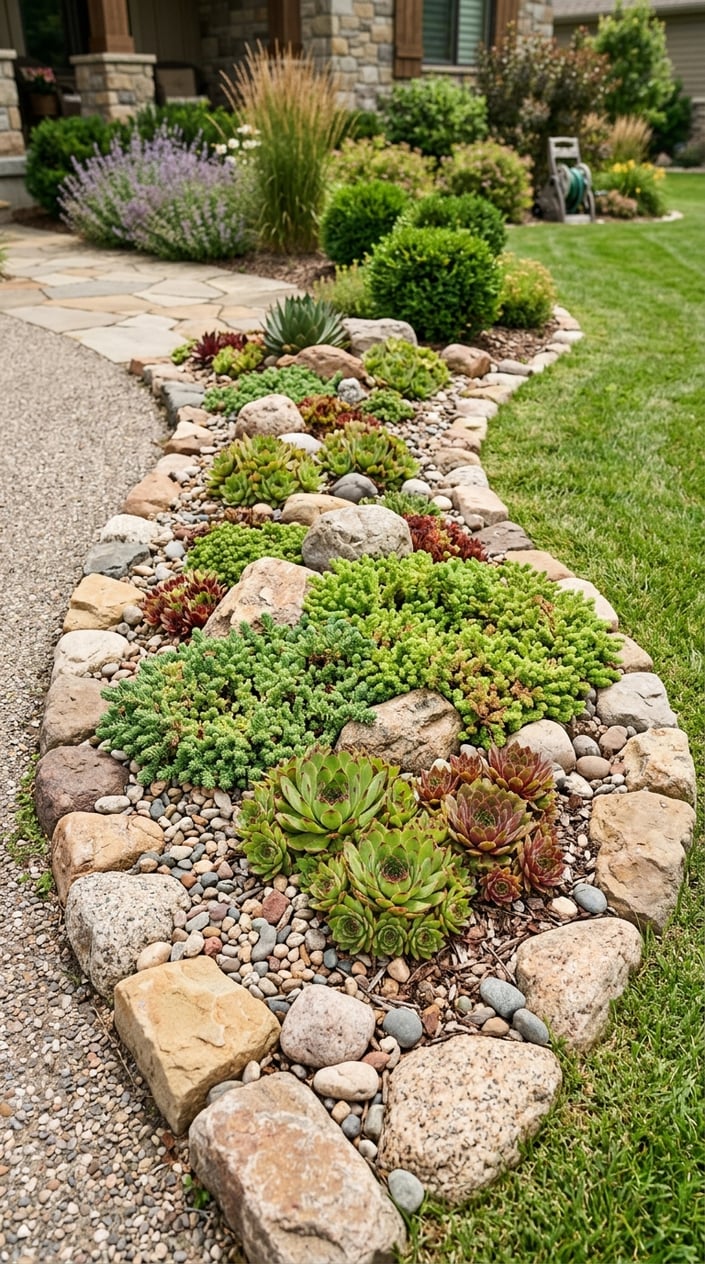
6. Rock Garden Bed With Sedum, Hens-And-Chicks, And Mixed Fieldstone
Relatable Problem: if you want color without constant trimming, this is your friend. Sedum and hens-and-chicks stay neat, handle dry conditions well, and look charming tucked between mixed fieldstone.
This kind of rock garden works best when the stones vary in size and shape, so it feels natural instead of staged. The succulents add soft texture and seasonal interest, while the fieldstone anchors the bed with a rugged look. It’s a great choice for a front yard corner that needs personality more than lawn.
Expert Tip From MrPlanter: “*Plant sedum in pockets between stones, not in straight rows. That messy-natural spacing is what makes the whole bed feel alive.“
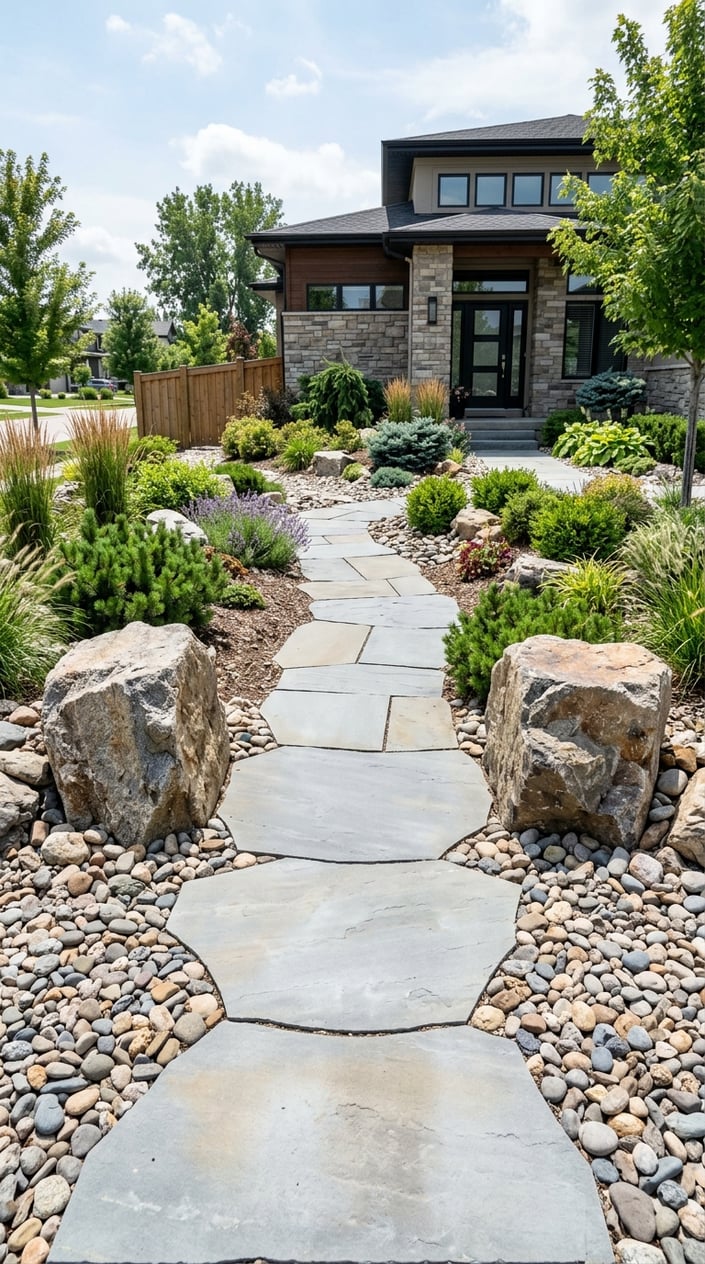
7. Large Entry Boulders Framing A Bluestone Walkway
Surprising Fact: a few big boulders can do more for curb appeal than a dozen tiny decorations. They create instant presence and make your front walk feel grounded.
Bluestone adds a clean, classic path from the street or drive to the door, and the boulders help frame that route like natural bookends. Small plants around the edges keep the look soft and welcoming. If your front yard feels too open, this design gives it structure without turning it into a full garden project.
Expert Tip From MrPlanter: “*Place the biggest boulders where the eye naturally stops, near the entrance or walkway turn. That way they feel purposeful, not like they rolled in by accident.“
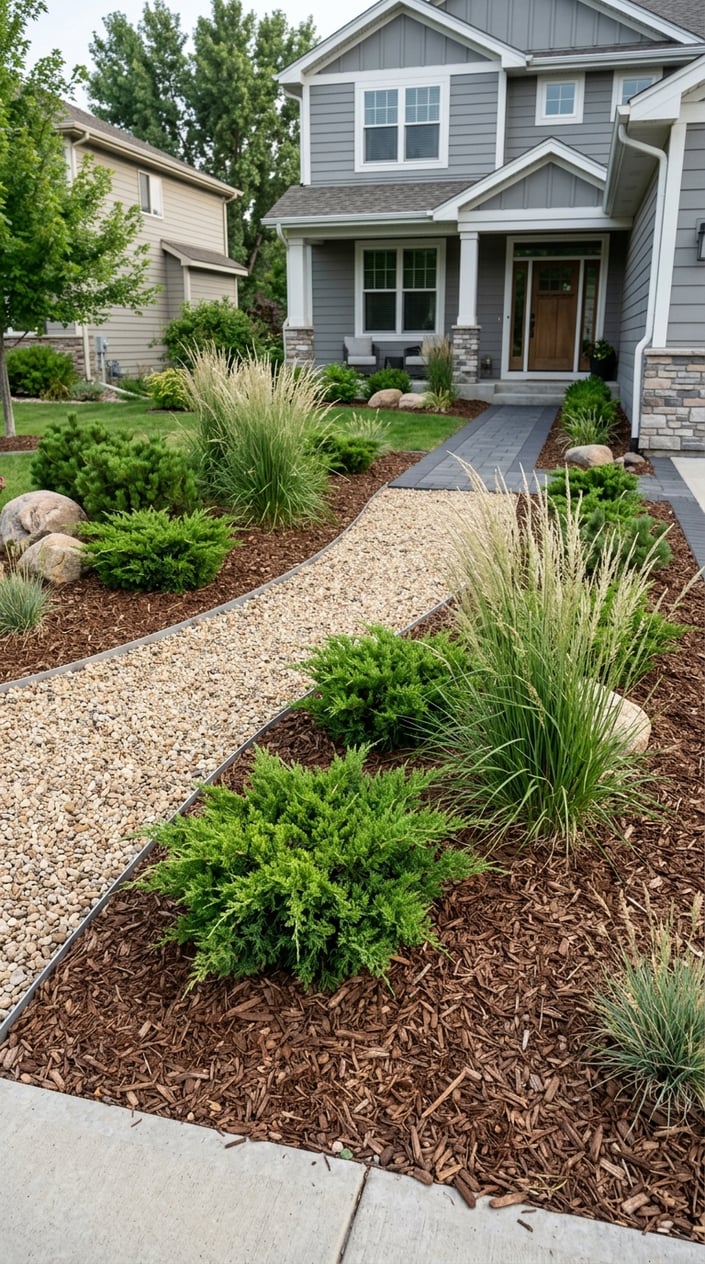
8. Gravel And Mulch Zone Design With Dwarf Juniper And Switchgrass
Personification: this design knows how to keep its cool. Gravel handles the open spaces, mulch helps anchor the planting zones, and dwarf juniper stays low and tidy without fuss.
Switchgrass adds movement and a soft, upright shape that keeps the yard from feeling too stiff. I like this mix because it blends texture instead of relying on one material for everything. It also gives you a nice balance of evergreen structure and seasonal grass-like motion, which looks good from spring through fall.
Expert Tip From MrPlanter: “*Keep dwarf juniper trimmed into simple mounds so the design stays clean. A little shape control goes a long way in a rock-heavy yard.“
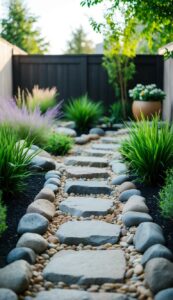
9. Stepping Stone Path With Crushed Granite And Creeping Thyme Borders
Relatable Problem: you want a front path that feels friendly, not like a parking lot made of dirt and stones. Stepping stones solve that, and crushed granite keeps the base neat and drain-friendly.
Creeping thyme around the edges softens the hard lines and gives you a low ground cover that can handle light foot traffic. The tiny leaves and little blooms make the walkway feel alive without turning it into a lawn chore. This idea works especially well if you want a natural path that still looks planned. Expert Tip From MrPlanter: “*Set each stepping stone level with the surface so walking feels easy. Then let the creeping thyme spill gently around the edges for a storybook finish.“
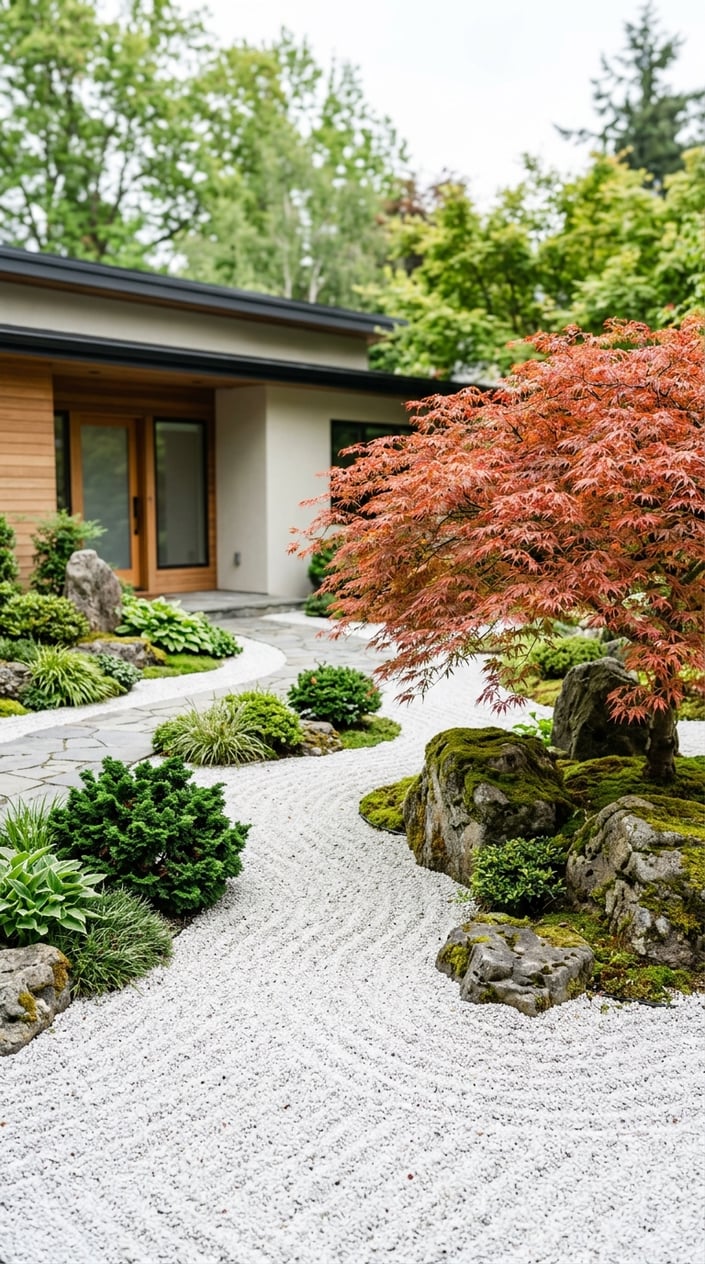
10. Zen-Inspired Front Yard With Raked Gravel, Mossy Boulders, And Japanese Maple
Myth-Busting Statement: zen style is not only for backyard retreats. In a front yard, raked gravel, mossy boulders, and a Japanese maple can make your home feel calm before anyone even reaches the door.
The gravel patterns bring order, while the boulders add age and character. A Japanese maple gives you a seasonal focal point with color that changes through the year. This layout suits homeowners who want a quiet, polished landscape with very little lawn care and a lot of visual grace.
Expert Tip From MrPlanter: “*Keep the raked lines simple and repeat them across open areas. A calm pattern makes even a small yard feel thoughtful and balanced.“
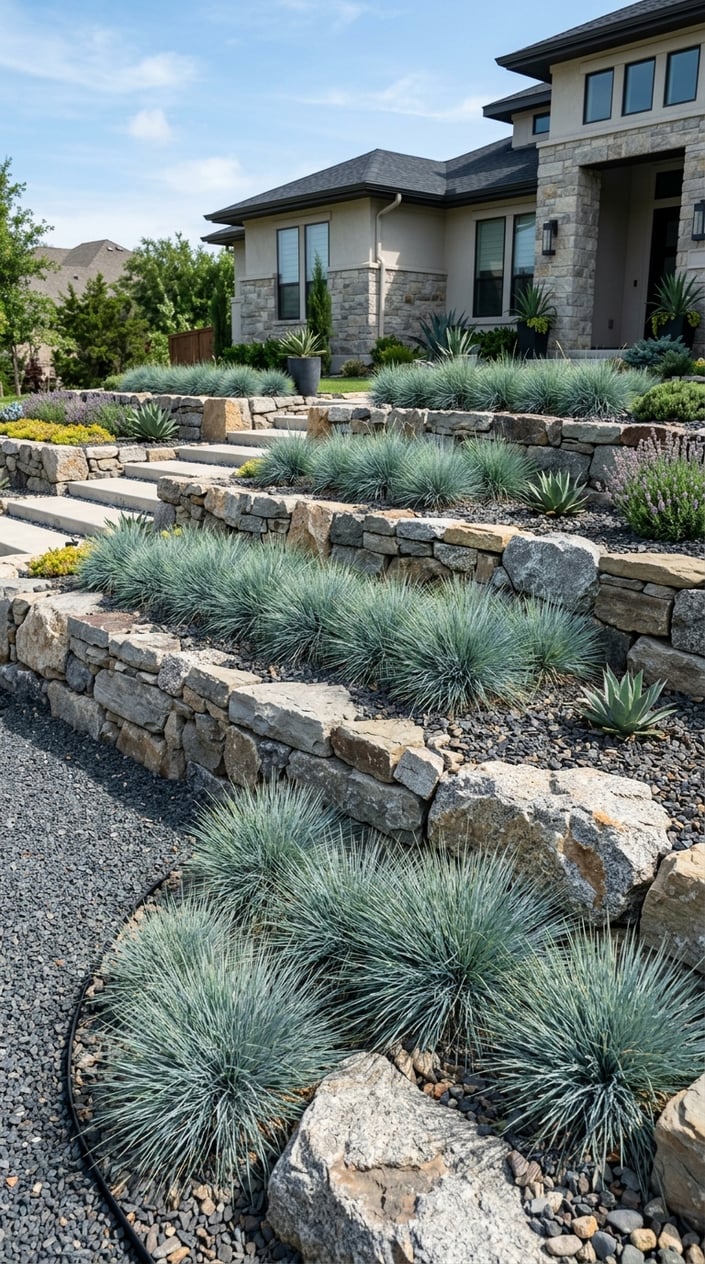
11. Tiered Slope Landscape With Riprap Rock And Blue Fescue
Surprising Fact: a sloped yard can be easier to manage once you stop fighting it. Riprap rock helps hold the hill together, and tiered planting areas make the whole space feel deliberate.
Blue fescue adds a cool, soft color that looks great against rough stone. Its tidy clumps break up the heavier rock and keep the slope from looking too blunt. If your front yard has a hill, this approach can turn a problem spot into the best feature on the property.
Expert Tip From MrPlanter: “*Use tiered breaks to slow runoff and create planting pockets. A slope looks much friendlier when each level has a clear job.“
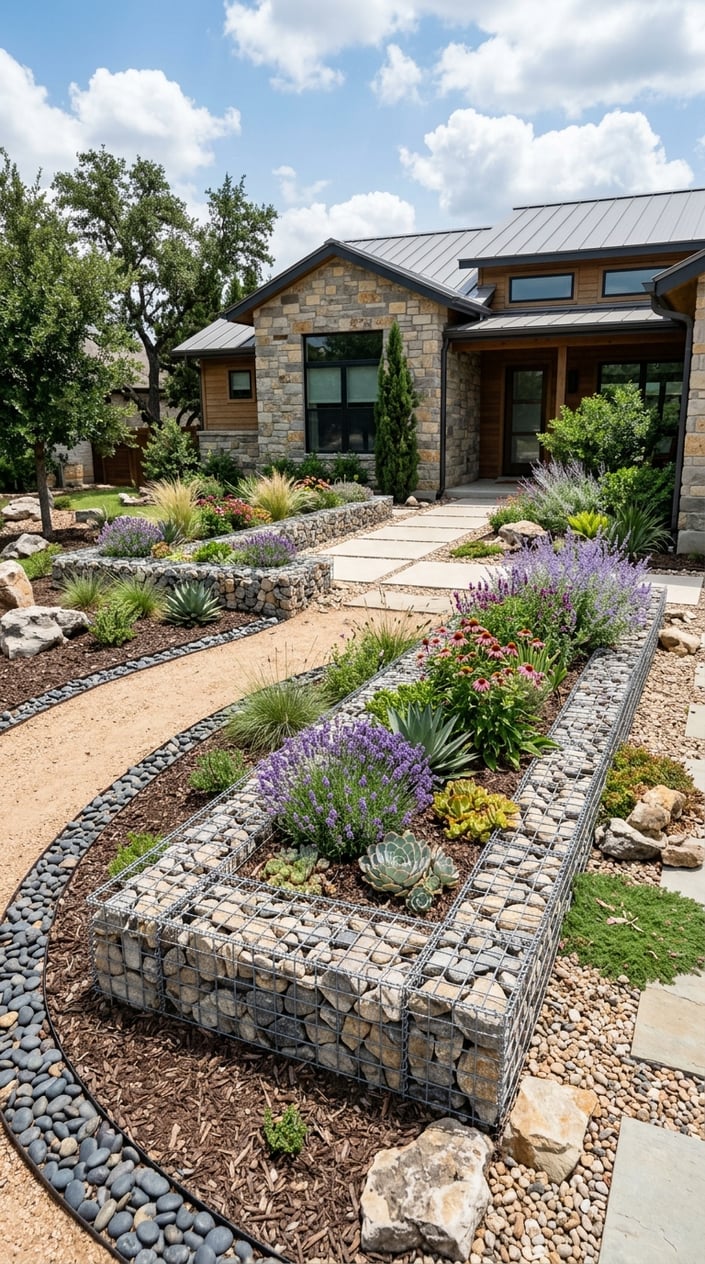
12. Gabion Stone Border Beds With Drought-Tolerant Perennials
Personification: gabion walls are the strong, quiet type. They hold stone neatly in metal cages and give your border beds a modern edge that feels sturdy and smart.
Fill the beds with drought-tolerant perennials so you get color through the growing season without much watering. This setup is useful when you want a clean boundary between lawn-free areas and the rest of the yard. It works well for front yards that need definition, texture, and a little industrial style.
Expert Tip From MrPlanter: “*Mix a few stone sizes inside the gabion for a richer look. Then repeat the same perennial colors in each bed so the front yard feels connected.“
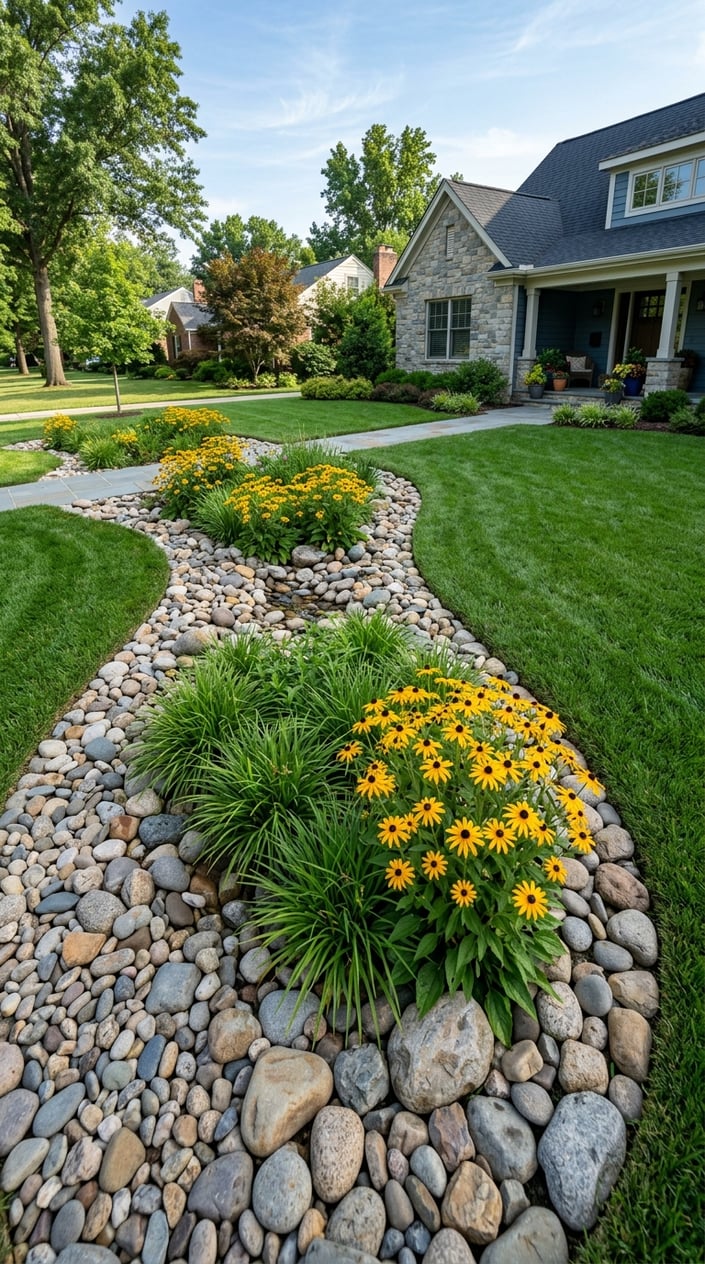
13. River Rock Rain Garden With Native Sedges And Black-Eyed Susan
Myth-Busting Statement: a rain garden can be pretty and practical at the same time. River rock helps slow and direct water, while native sedges handle wet spots better than turf ever could.
Black-eyed Susan adds a bright burst of yellow that keeps the design cheerful instead of plain. I like this idea for yards that collect water after storms because it turns drainage into a feature. It’s a smart way to reduce puddles, help the soil, and still keep the front yard looking sunny and welcoming.
Expert Tip From MrPlanter: “*Choose native plants that naturally enjoy wetter soil. That makes your rain garden easier to maintain and much more reliable after big storms.“
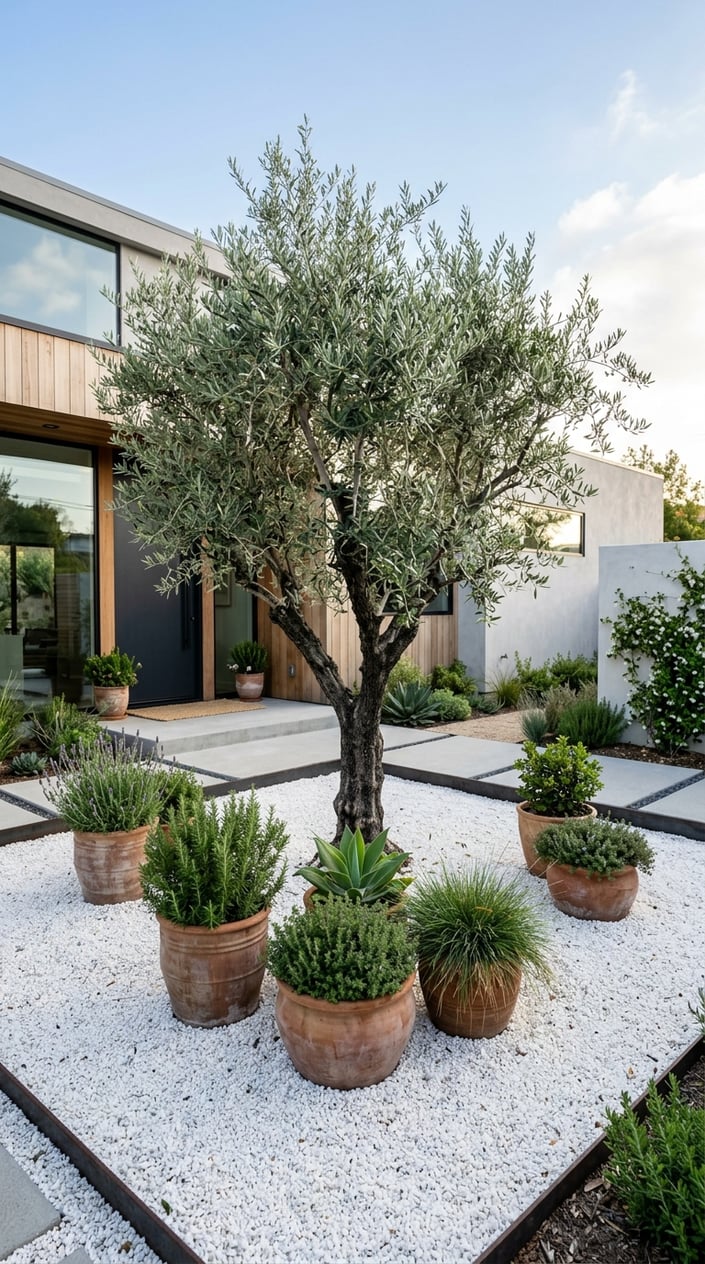
14. White Gravel Courtyard Look With Olive Tree And Terracotta Planters
Relatable Problem: if your front yard feels too small for a big design, this one gives you a clever shortcut. White gravel opens up the space visually and makes everything feel brighter.
An olive tree becomes the calm center of the yard, while terracotta planters add warmth and a bit of Mediterranean charm. This style works especially well near a porch or entry where you want a courtyard feeling without adding grass. It’s simple, elegant, and easy to keep clean.
Expert Tip From MrPlanter: “*Use a few large planters instead of many small ones. Fewer pieces make the courtyard feel calm, open, and much easier to care for.“
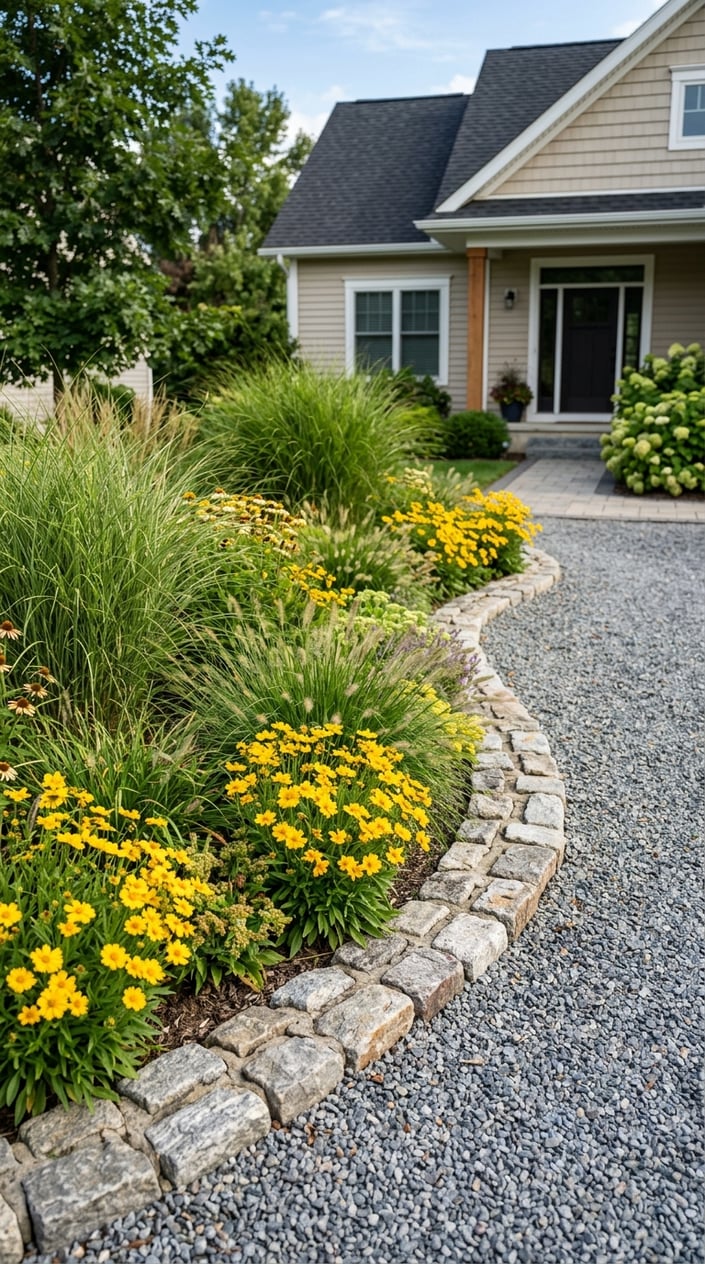
15. Rustic Cobblestone Border Bed With Ornamental Grasses And Coreopsis
Surprising Fact: cobblestone can make even a simple planting bed look like it’s been there for years. That aged, rustic feel gives your front yard a lot of charm without needing a big lawn.
Ornamental grasses soften the stone edges, and coreopsis adds cheerful yellow flowers that brighten the whole scene. The mix feels relaxed and a little country, which is perfect if you want your home to look warm and welcoming. This is an easy way to replace grass with texture and color that lasts.
Expert Tip From MrPlanter: “*Let the grasses arch naturally over the cobblestone edge. That soft overlap keeps the border from looking too stiff or staged.“
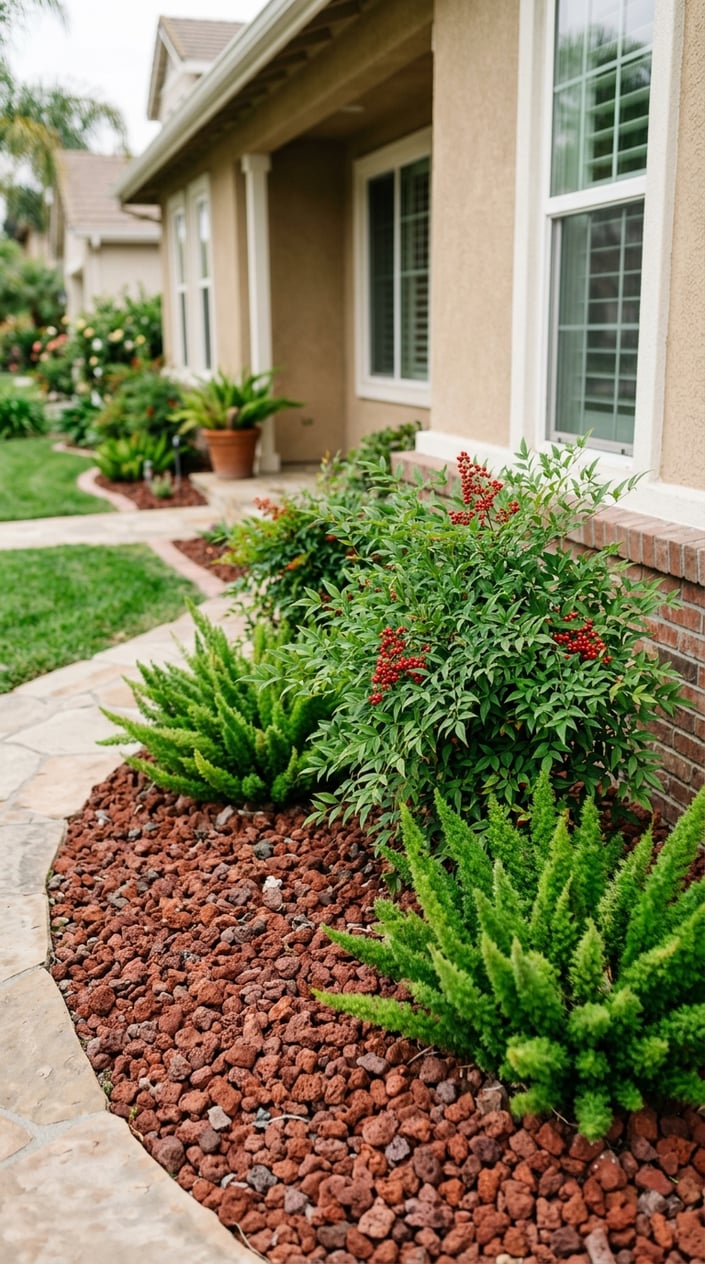
16. Red Lava Rock Foundation Planting With Nandina And Foxtail Fern
Personification: red lava rock brings the drama, and it knows it. Its bold color makes foundation plantings stand out, especially around green nandina and feathery foxtail fern.
This combo works well near the house because the lava rock acts like a durable mulch that keeps the bed neat and adds contrast. Nandina gives you upright structure, while foxtail fern adds a softer, airy texture. If you want a front foundation bed that looks sharp with very little lawn maintenance, this is a strong finishing move.
Expert Tip From MrPlanter: “*Keep your foundation plants far enough from the wall for airflow and easy care. That little bit of breathing room helps the bed look cleaner and healthier.“
Wrapping It Up
Ditching the grass doesn’t mean your yard has to look boring. Whether you go with a sleek modern gravel or a more natural-looking creek bed, these designs are all about making your life easier. Once the rocks are down, you can finally retire the mower and enjoy a front yard that looks great in every season.
I’m Anirban Saha, the Founder and Owner of MrPlanter.com. I pay the bills as a software developer, although my BTech is actually in Electronics and Communication. I really love my day job, but what gives me energy every day is interacting with my indoor plants and taking care of them. I have been successfully nurturing and maintaining houseplants for over 10 years now.
📚🔍 Our content undergoes thorough review and fact-checking before publication. For additional details, explore our strict Editorial Policy to deliver helpful content. 📝🔒