Learning how to care for a bonsai tree means treating it as a living tree in a very small pot, not as a houseplant. That shallow container dries out within hours, which is why watering technique — and matching your species to the right indoor or outdoor spot — matters more than any other bonsai skill.
A bonsai tree looks delicate, but most of them fail for the same handful of reasons. New owners water on a fixed schedule instead of checking the soil.
They pick a species that fights against the light in their home. They skip repotting until the roots have nowhere left to go.
Learning bonsai care comes down to a few consistent habits: checking moisture before watering, matching light to species, using soil that drains fast, and pruning with a purpose. None of it requires special talent.
It just requires attention.
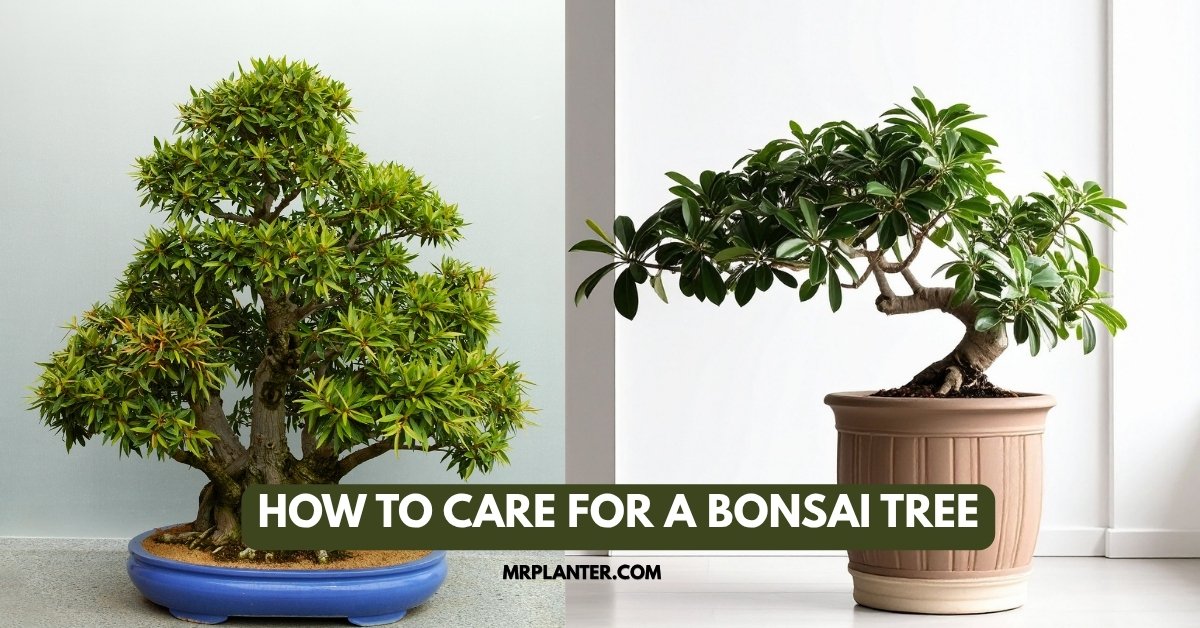
This guide explains what a bonsai tree needs to survive its first year and beyond. It covers watering, light, species selection, soil, feeding, pruning, and pest problems that catch beginners off guard.
Bonsai cultivation is a horticulture practice, not a plant type. Once that clicks, growing bonsai gets a lot less confusing.
Key Takeaways
- Check soil moisture by touch instead of following a set watering schedule.
- Match your tree’s light, humidity, and seasonal needs to its specific species.
- Use fast-draining soil and repot only when the roots actually need the room.
Water Your Bonsai Based on Soil Moisture, Not a Calendar
Watering bonsai trees on a fixed schedule quickly leads to problems. Bonsai roots live in a shallow pot with very little soil, so moisture levels swing fast depending on heat, season, and pot size.
Check the soil first, then decide when to water.
How to Check Soil Moisture Before Watering
Push a finger about half an inch into the soil near the trunk. If it feels dry, water it.
If it still feels damp, wait a day and check again.
Some growers use a wooden chopstick instead. Push it into the soil, pull it out, and look at how much soil clings to it.
A dry stick means it’s time to water.
How to Water Through the Entire Root Ball
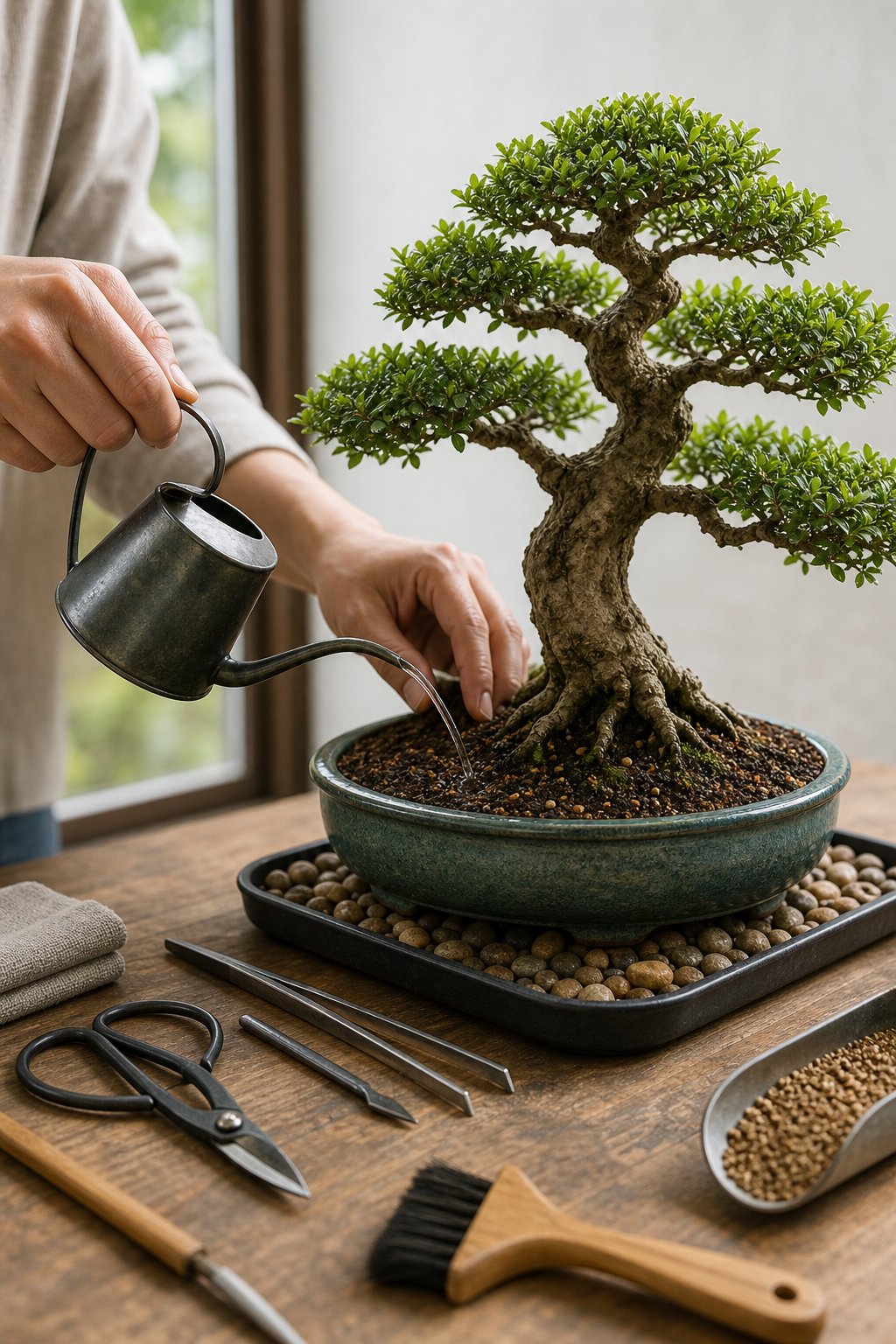
A quick splash on top does not count as watering. Pour slowly and evenly until water runs freely out of the drainage holes on the bottom of the pot.
For very dry soil, water two or three times in one session. The first pour softens the soil so the second and third actually soak in instead of running straight off the top.
Signs of Underwatering and Overwatering
Both problems can look similar at first, which trips up a lot of beginners. Here’s how to tell them apart:
- Underwatering: dry, brittle leaves; crispy edges; soil pulling away from the pot’s sides
- Overwatering: yellowing leaves that feel soft, a sour smell from the soil, or root rot at the base
Root rot is one of the hardest problems to reverse. When in doubt, check the soil again before adding more water.
Match Light and Location to the Bonsai Tree Species
Indoor bonsai and outdoor bonsai have completely different light needs. Mixing them up is one of the most common beginner mistakes.
Tropical bonsai species thrive in bright indoor spots. Hardy outdoor species need direct sun and a real winter rest to stay healthy long term.
Indoor Bonsai Conditions and Limitations
Indoor bonsai care means working around lower light and drier air than a tree would get outside. Even the sunniest room in a house rarely matches the light intensity of being outdoors.
Tropical bonsai like ficus and jade adapt well to this. Species that naturally grow outside, like juniper, will slowly decline indoors even with good care.
Outdoor Placement and Winter Dormancy
Outdoor bonsai trees need 4 to 6 hours of direct sun most days during the growing season. Winter is different.
Many outdoor species need a cold dormant period to stay healthy, so bringing them inside to “protect” them can actually do more harm.
A sheltered spot near a wall, or mulch around the pot, protects roots from hard freezes without pulling the tree indoors.
Using Windows, Grow Lights, and Humidity Support
A south-facing window works well for most tropical bonsai in the US. If natural light falls short, an LED grow light placed above the tree fills the gap.
Indoor air also runs drier than a bonsai prefers. A humidity tray under the pot, or a small room humidifier nearby, helps offset dry heating or air conditioning through the seasons.
Choose a Bonsai Tree Species That Fits Your Environment
Selecting a bonsai tree species that matches your actual living space matters more than picking one for looks. A juniper bonsai will not survive long-term indoors no matter how well you water it.
A Japanese maple bonsai left outside in a harsh climate without protection will struggle too.
Reliable Indoor Bonsai Species
These indoor bonsai species forgive the occasional missed watering or lower light spot:
- Ficus bonsai: tolerant of low light and inconsistent watering
- Jade bonsai (Crassula ovata): stores water in its leaves, so it survives dry spells
- Schefflera arboricola: handles indoor humidity swings well
- Chinese elm: adapts to indoor or outdoor conditions depending on climate
| Species | Indoor/Outdoor | Light | Difficulty |
|---|---|---|---|
| Ficus | Indoor | Bright indirect | Easiest |
| Jade | Indoor | Bright direct | Easy |
| Chinese elm | Both | Bright | Easy |
| Juniper | Outdoor only | Full sun | Moderate |
| Japanese maple | Outdoor only | Partial sun | Moderate |
Hardy Outdoor Bonsai Choices
Outdoor bonsai trees need a species built for real seasons. Juniper bonsai handles full sun and cold winters without issue.
Deciduous bonsai options like maple bonsai and cherry blossom bonsai bring seasonal color. They need consistent outdoor exposure and a dormant winter period to thrive.
What to Inspect Before Buying
Whether you’re buying nursery stock or pre-bonsai material, check the trunk for firmness. Look for even leaf color, and gently inspect the soil surface for pests.
A tree with wilted or yellowing leaves at the nursery rarely improves once it gets home.
Use Fast-Draining Soil and Repot Bonsai Tree at the Right Time
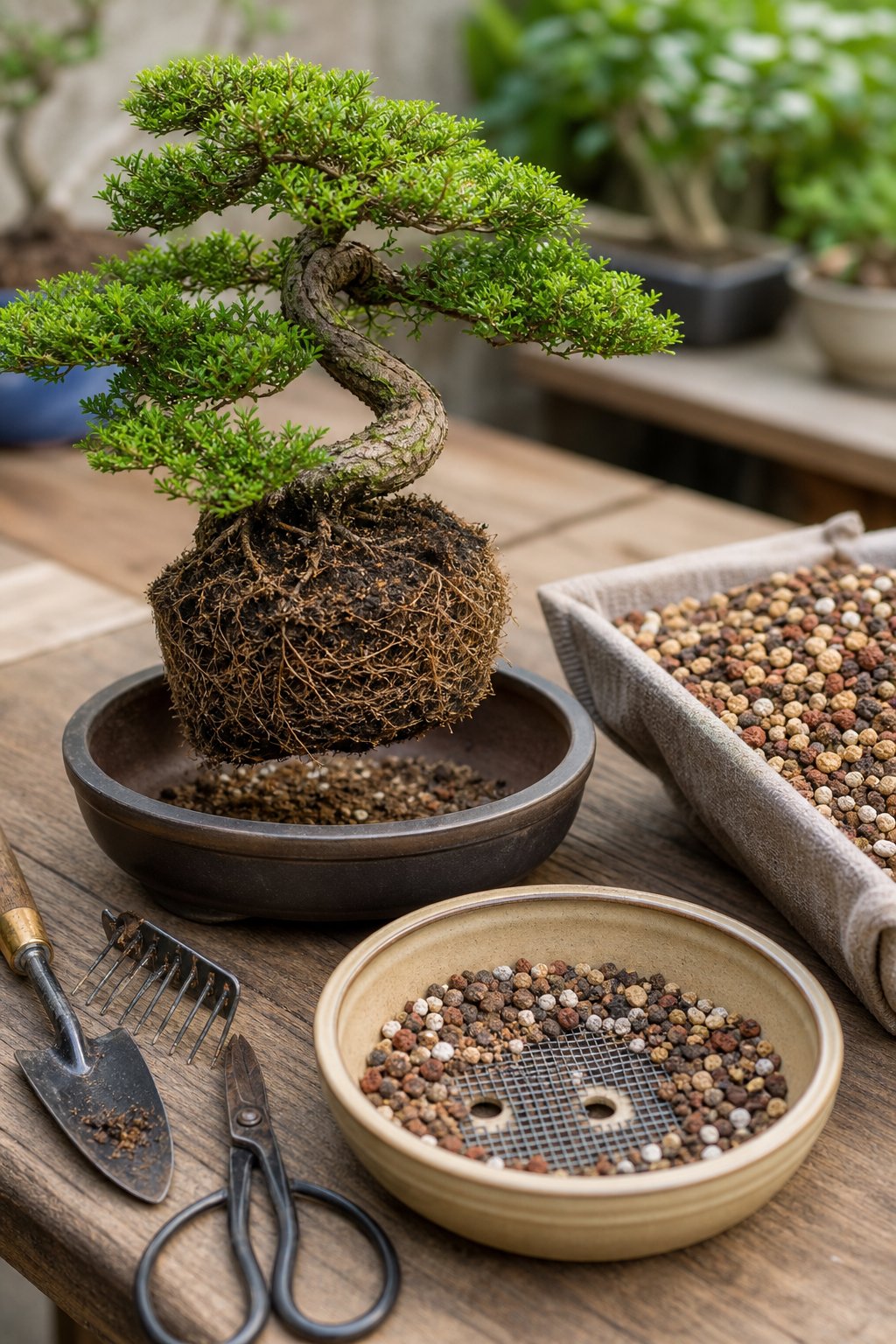
Regular potting soil often causes beginner bonsai trees to die within months. Bonsai soil needs to drain fast while still holding a bit of moisture, since a shallow pot leaves roots little room for error.
What a Functional Bonsai Soil Mix Does
A good bonsai tree soil mix combines particles like akadama, pumice, lava rock, perlite, and coarse sand. These let air and water move freely through the soil instead of pooling around the roots.
Skip regular compost or potting soil on its own. It holds too much water for a shallow bonsai pot and raises the risk of root rot fast.
Selecting Pots for Bonsai Tree With Proper Drainage
Bonsai pots need multiple drainage holes, not just one small hole in the center. Look for holes big enough to let water flow freely without washing soil out with it.
Use mesh screens over the holes to hold the soil in place.
Repotting Without Causing Excess Stress
Most bonsai need repotting every one to three years, depending on species and age. Deciduous trees like Chinese elm are best repotted in early spring before buds break.
Evergreens like juniper prefer late winter. Trim no more than a third of the root mass at once.
Cutting too much at one time causes repotting shock and can set the tree back for a full growing season.
Feeding and Pruning for Healthy, Controlled Growth
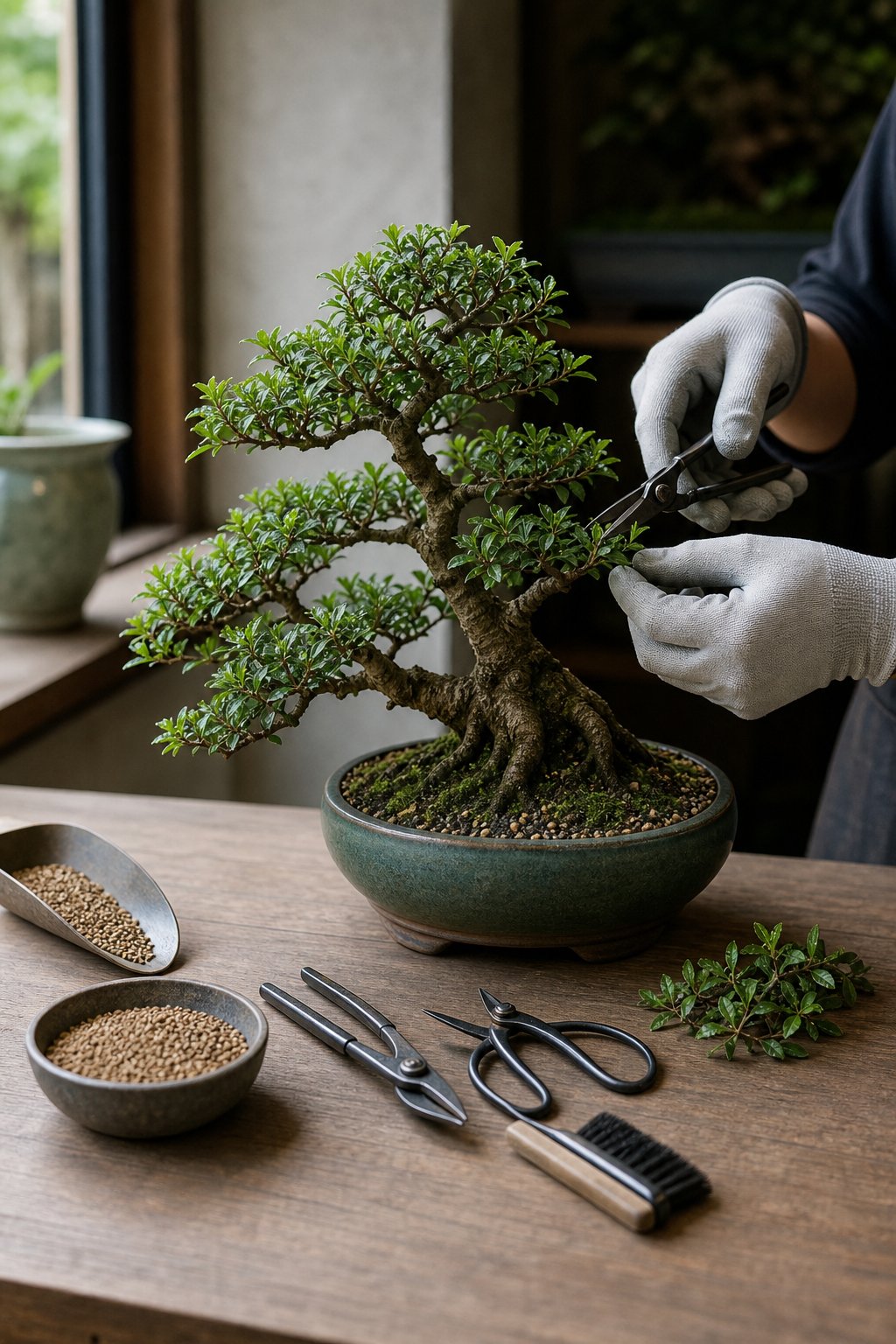
A bonsai in a small pot uses up soil nutrition much faster than a tree planted in open ground. Fertilizing bonsai trees on a regular schedule, paired with routine pruning, keeps growth dense and healthy.
When and How to Fertilize Your Bonsai Tree
Feed with a balanced liquid fertilizer every two to four weeks during spring and summer, mixed to half the strength listed on the label. Bonsai roots are compact, so full-strength doses can burn them.
Stop fertilizing in late fall and through winter. Growth slows down during this rest period.
Maintenance Pruning for Shape and Vigor of Your Bonsai Tree
Snip new shoots back with sharp bonsai scissors once they grow past the tree’s outline, cutting at a slight angle just above a leaf node. This keeps the silhouette tight and encourages smaller, denser leaves over time.
Structural Pruning and Basic Training
Structural pruning removes full branches to reshape the tree or manage apical dominance, where the top growth outpaces the rest. Save this for a healthy, actively growing tree, never right after repotting.
A concave cutter leaves a smoother wound than regular shears when removing a branch. Apply cut paste over larger wounds to protect the tree while it heals.
Prevent Pests, Stress, and Beginner Setbacks
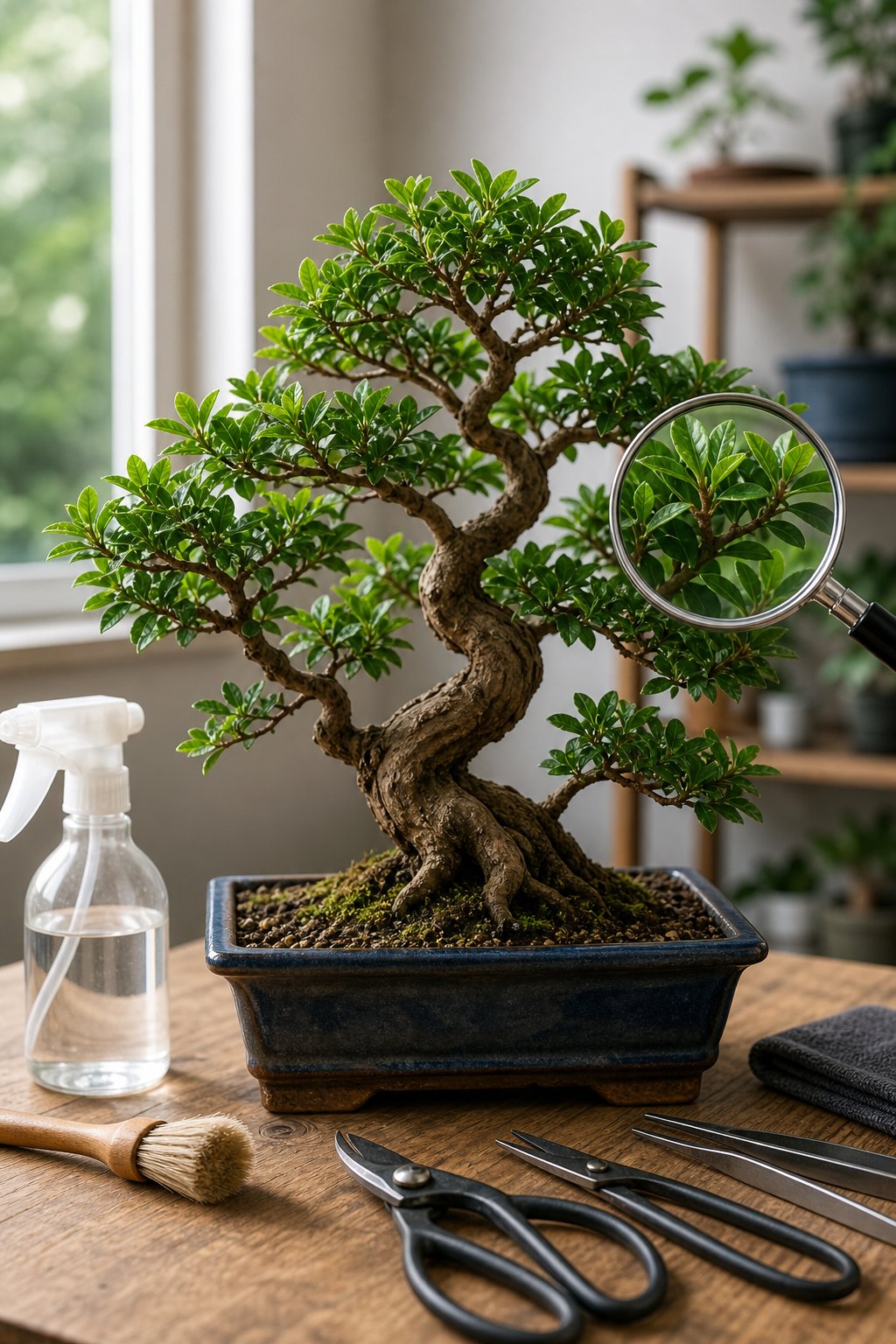
Bonsai pests spread fast in a small pot. Stress from watering mistakes or sudden light changes often shows up as leaf drop before you notice anything else wrong.
Spotting Common Pests Early
Check the undersides of leaves weekly for spider mites, which look like tiny specks with fine webbing, and scale insects, which appear as small brown bumps along stems. Catching either early makes treatment much easier.
Wipe leaves down with a damp cloth regularly and keep fallen debris cleared from the soil surface. Clean pots also help prevent pest buildup around the base of the tree.
Responding to Leaf Drop and Weak Growth
Sudden leaf drop usually points to a change in watering, light, or temperature rather than disease. Check your recent care routine first before assuming the worst.
Weak, sparse growth often means the tree needs more light or a lighter fertilizing schedule.
Starting From Seed or Collected Material
Growing bonsai from seed takes patience, often years before the trunk thickens enough to start shaping. Yamadori bonsai, or trees collected from the wild, need a slow recovery period before any pruning or wiring begins.
Beginners usually get faster, more reliable results starting from nursery stock instead.
Frequently Asked Questions on Right Way to Care for a Bonsai Tree
How often should you water a bonsai tree?
There’s no fixed number of days. Check the soil with your finger and water only when it feels dry about half an inch down.
In summer this might mean daily checks, while winter often stretches to every few days.
How do you care for a bonsai tree indoors?
Place it in your brightest window, ideally facing south, and add a grow light if the room stays dim. Watch humidity levels too, since indoor heating and air conditioning dry out the air faster than most tropical bonsai prefer.
Can bonsai trees be kept outside year-round?
Hardy outdoor species like juniper and Chinese elm can stay outside through winter and actually need the cold dormant period. Protect the pot with mulch or move it near a sheltered wall during hard freezes rather than bringing the tree indoors.
What type of soil is best for a bonsai tree?
A fast-draining mix of akadama, pumice, lava rock, and coarse sand works best. Regular potting soil holds too much water in a shallow pot and raises the risk of root rot.
How often should you prune and fertilize a bonsai tree?
Maintenance pruning happens throughout the growing season whenever new shoots pass the tree’s outline. Fertilize every two to four weeks during spring and summer with a half-strength balanced liquid fertilizer, then stop through fall and winter.
What are the most common mistakes to avoid when caring for a bonsai tree?
Many beginners lose their bonsai by watering on a fixed schedule instead of checking the soil. Using regular potting soil is another common mistake. Choosing a species that doesn’t match your indoor or outdoor space can also cause problems. Skipping repotting for too long leads to setbacks.
Final Thoughts on Bonsai Care
Caring for a bonsai tree comes down to six habits:
- Water when the topsoil feels dry — soak thoroughly until it drains
- Match placement to species — indoor for ficus, outdoors for juniper and pine
- Give plenty of light — most bonsai need several hours of direct sun
- Prune lightly and often rather than heavily once
- Fertilize during the growing season, ease off in winter
- Repot every two to three years with fresh bonsai soil and light root trimming
Master those and your tree will stay healthy for years.
Don’t rush the styling. Bonsai rewards patience more than technique, and a tree that’s simply alive and vigorous will always look better than one shaped aggressively too soon.
Start by checking your bonsai today: identify the species, confirm it’s in the right spot, and check whether the soil is dry. Those three checks solve most beginner problems before they start.