As an Amazon Associate, MrPlanter.com earns from qualifying purchases.
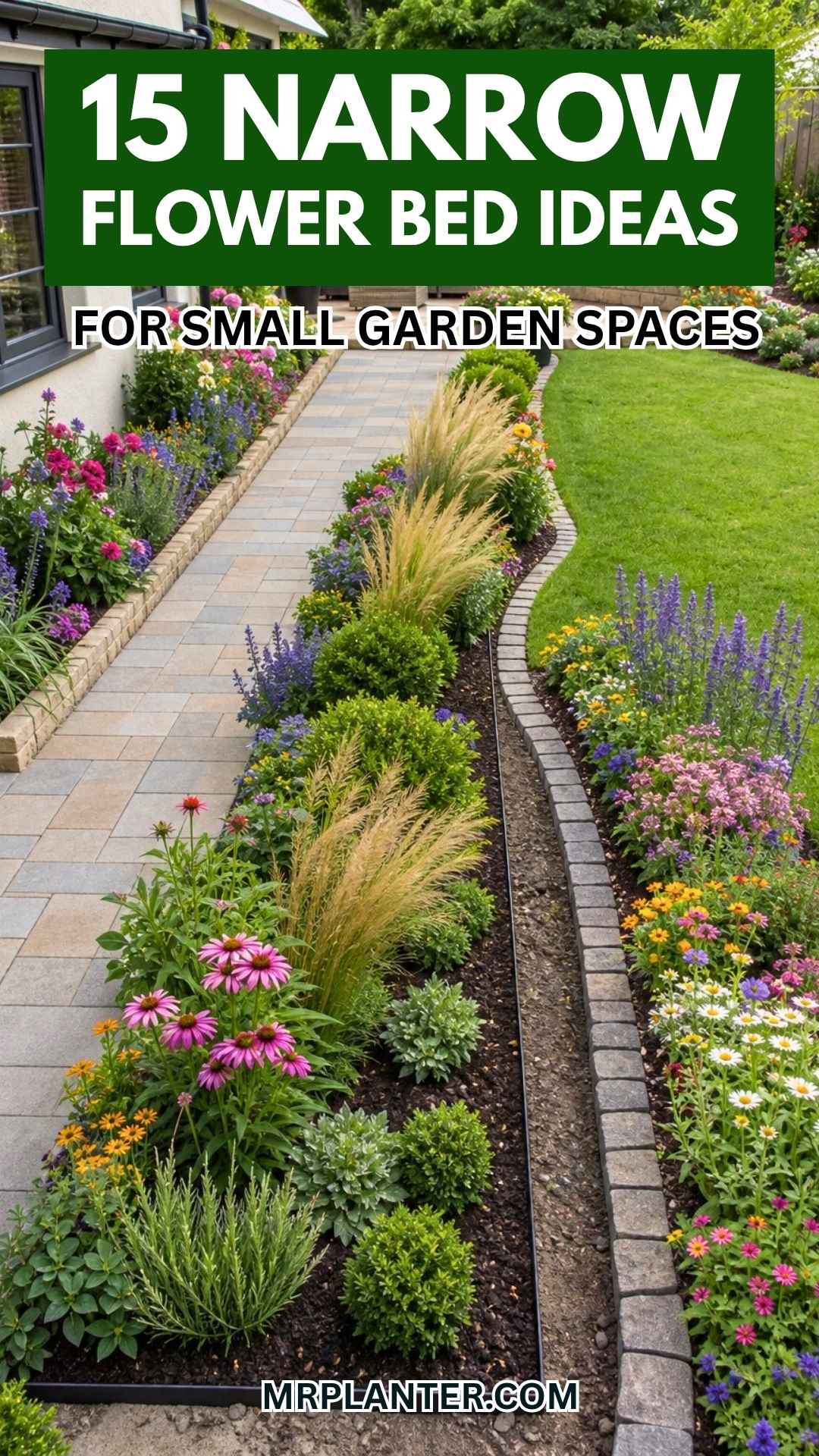
A narrow strip beside your walkway, fence, or home can become a lively garden with the right plant heights and spacing. You only need enough room for healthy roots, a clear path, and flowers that suit the site’s light.
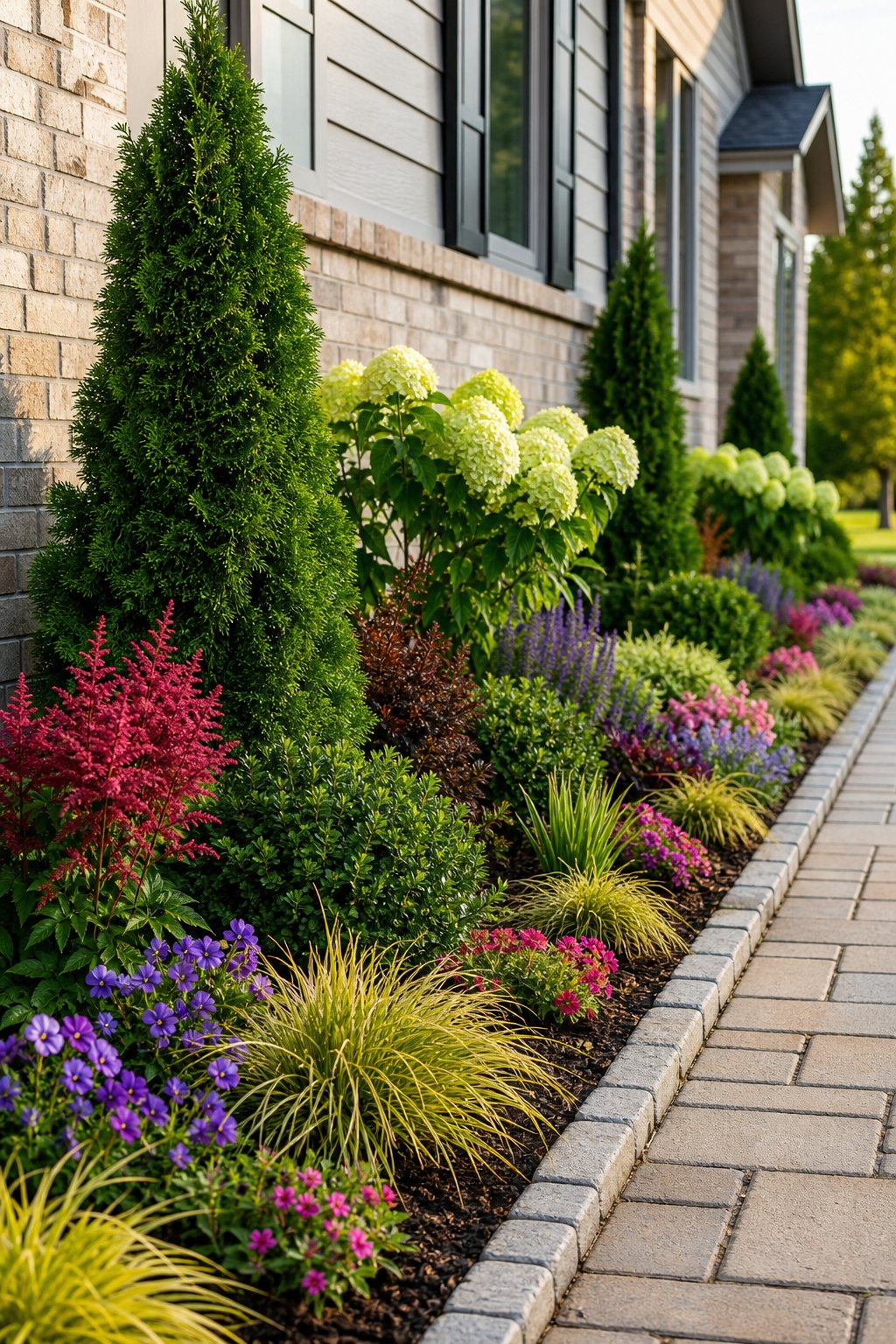
The best narrow flower bed ideas use vertical growth, repeated plant groupings, and tidy edging to make a small space feel full without blocking movement.
Start with the growing conditions before choosing colors. Measure the strip, watch its sunlight for a full day, and leave enough space to water, weed, and reach windows or gates. A few well-matched plants will look calmer and stay easier to manage than a crowded mix.
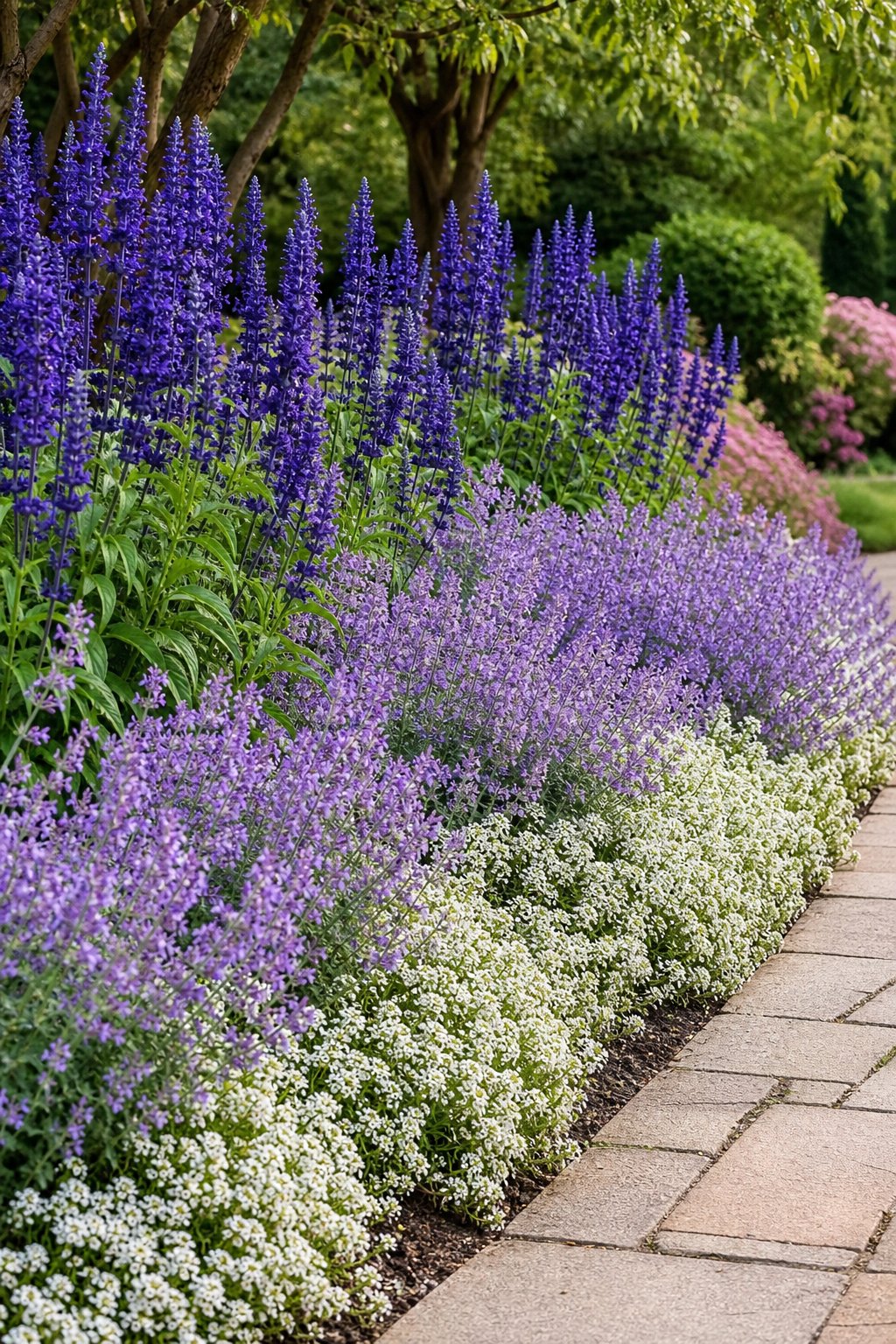
1. Layered Salvia, Lavender, and Alyssum Border
A three-level planting plan gives a slim border fullness without taking over the path. Place salvia at the back, lavender through the middle, and sweet alyssum along the front edge. The upright salvia draws your eye upward, while lavender adds fragrance and soft gray-green foliage.
Space lavender where air moves freely, since crowded, damp foliage invites problems. Alyssum works well as a temporary filler while the perennials grow. Repeat the same group every few feet so the bed looks planned instead of sprinkled with random plants.
Expert Tip From MrPlanter: “Trim lavender lightly after flowering to keep its shape neat. Leave room around each plant so you can reach the soil easily.”
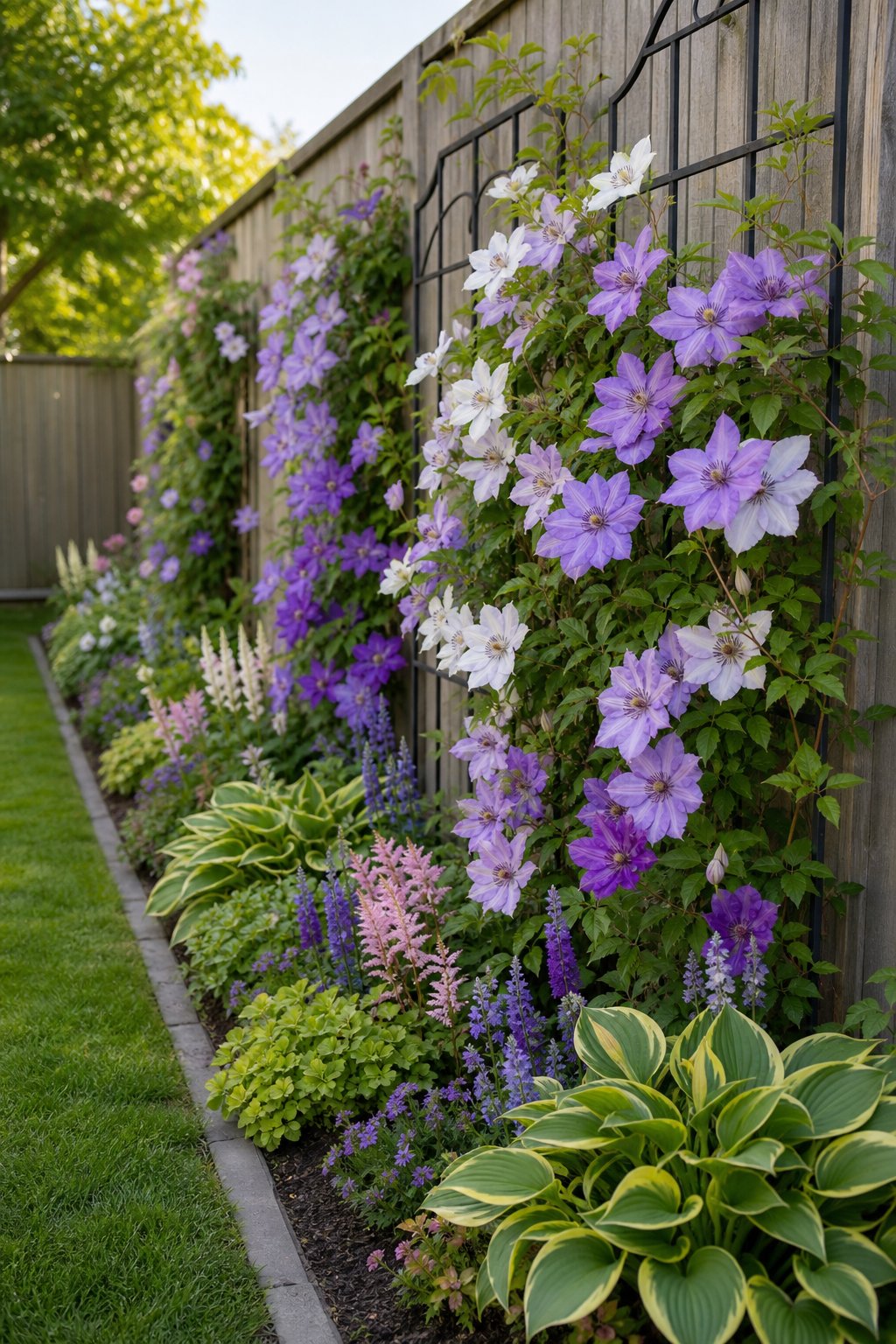
2. Clematis Trellis Bed Along a Fence
A clematis trellis lets you add height while keeping the soil strip shallow. Mount a sturdy trellis slightly away from the fence to improve airflow, then plant clematis with its roots shaded and its upper growth in sun. A low edging plant, such as coral bells or sweet alyssum, fills the base.
Tie young stems loosely as they climb. Check the mature vine size before planting because some clematis varieties spread widely. Keep the bed deep enough for compost and mulch, even when the planting area runs in a narrow line.
Expert Tip From MrPlanter: “Give clematis a cool root zone with mulch or a small front plant. Tie stems with soft material so new growth stays safe.”
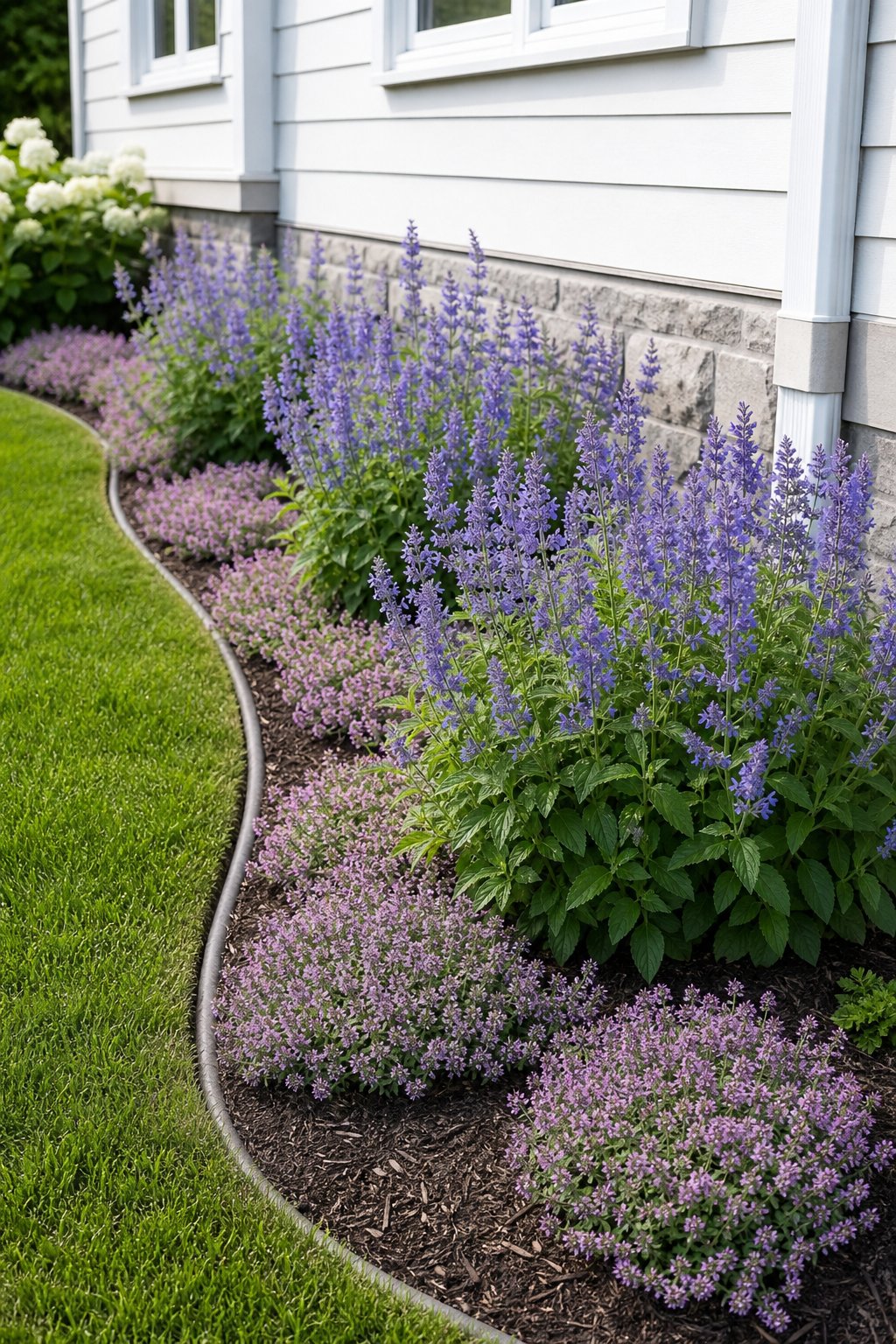
3. Curved Foundation Bed With Catmint and Creeping Thyme
A gentle curve softens the hard line beside your home, and catmint with creeping thyme keeps the planting low and relaxed. Use catmint as the main mass, then tuck thyme along the sunny front edge or between flat stones. Their blue-purple flowers create a cool color band against brick, siding, or stone.
Keep soil away from the foundation siding and leave access for repairs. Catmint spreads into a broad mound, so give each plant room to widen. Shear spent catmint stems after its first flush to encourage fresh foliage and later flowers.
Expert Tip From MrPlanter: “Mark the curve with a hose before digging so you can adjust it from the walkway. Keep thyme near the edge where its trailing habit stays visible.”
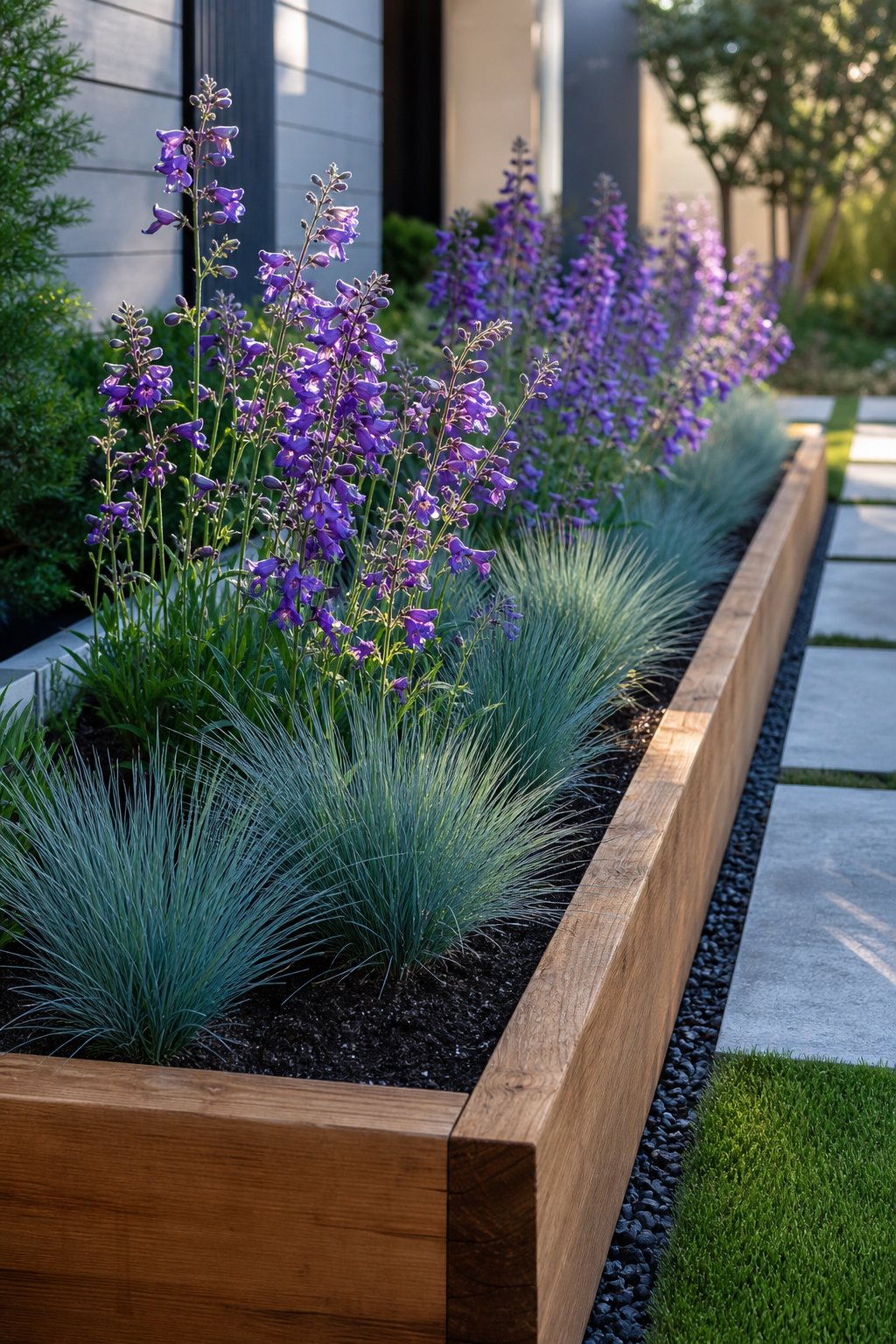
4. Slim Raised Bed With Penstemon and Blue Fescue
A slim raised bed gives you better control over soil, drainage, and height beside a walkway. Plant penstemon toward the center or back, then use blue fescue to form compact clumps along the front. The purple flowers rise above the cool blue grass, creating contrast in a small footprint.
Choose untreated wood, stone, or durable metal for the frame. Fill the bed with compost-rich soil that drains well, and keep its edge low enough to avoid catching shoes or mower wheels. Penstemon appreciates sun and moderate watering once established.
Expert Tip From MrPlanter: “Keep the bed narrow enough for you to reach its center from the path. Comb blue fescue with your fingers and remove brown blades when needed.”
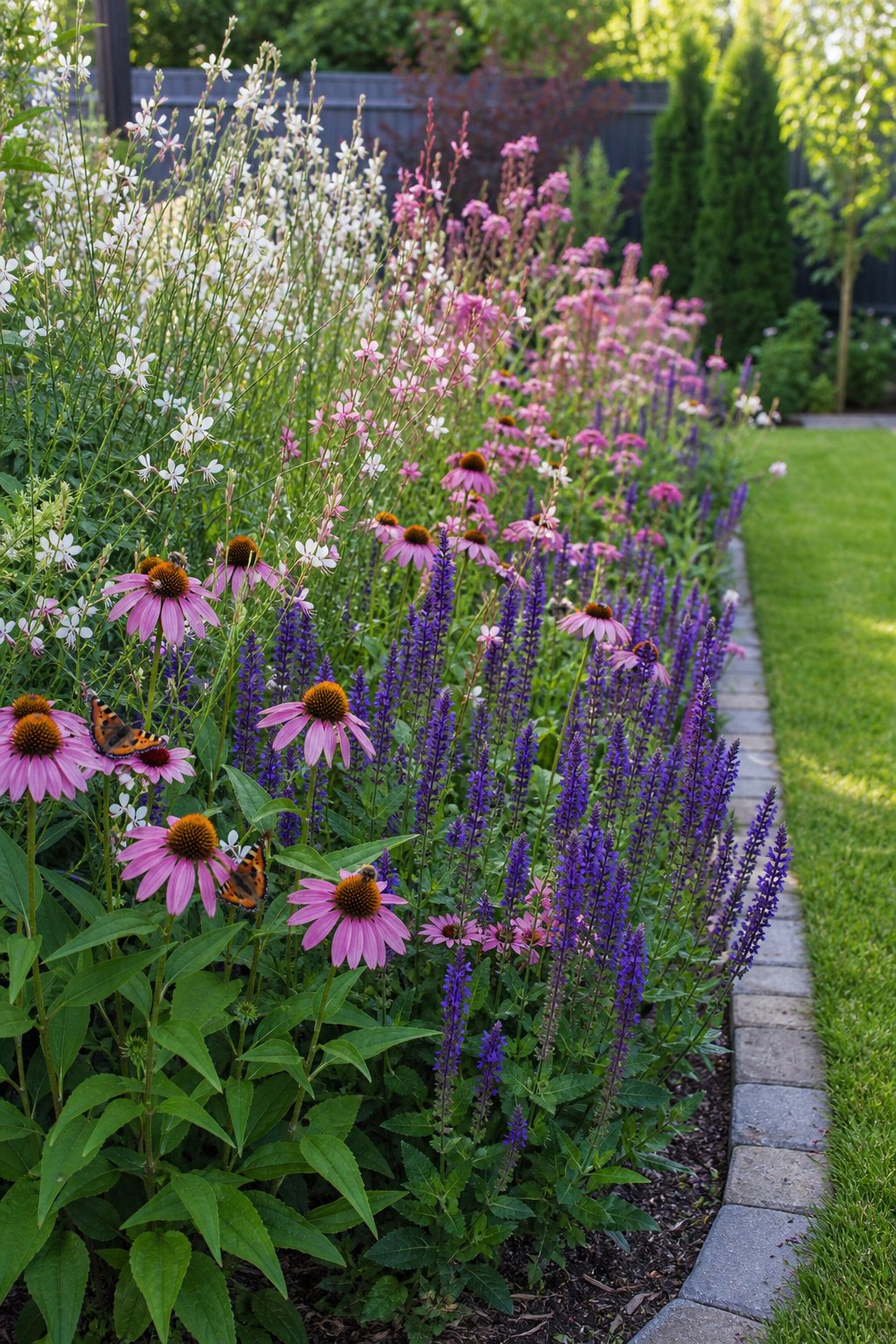
5. Pollinator Strip With Echinacea, Gaura, and Salvia
A sunny pollinator strip works best with flowers that bloom at different heights and times. Place echinacea as sturdy anchors, gaura between the clumps for airy movement, and salvia near the edge for spikes of color. This mix gives bees and butterflies repeated landing spots through the warm season.
Use groups of three to five plants when the bed allows, with wider gaps around echinacea. Leave a few seed heads standing into fall for birds and winter texture. Avoid rich, wet soil, which produces floppy growth in many drought-tolerant plants.
Expert Tip From MrPlanter: “Water new plants deeply while their roots settle. Let mature soil dry slightly between watering sessions to keep stems sturdy.”
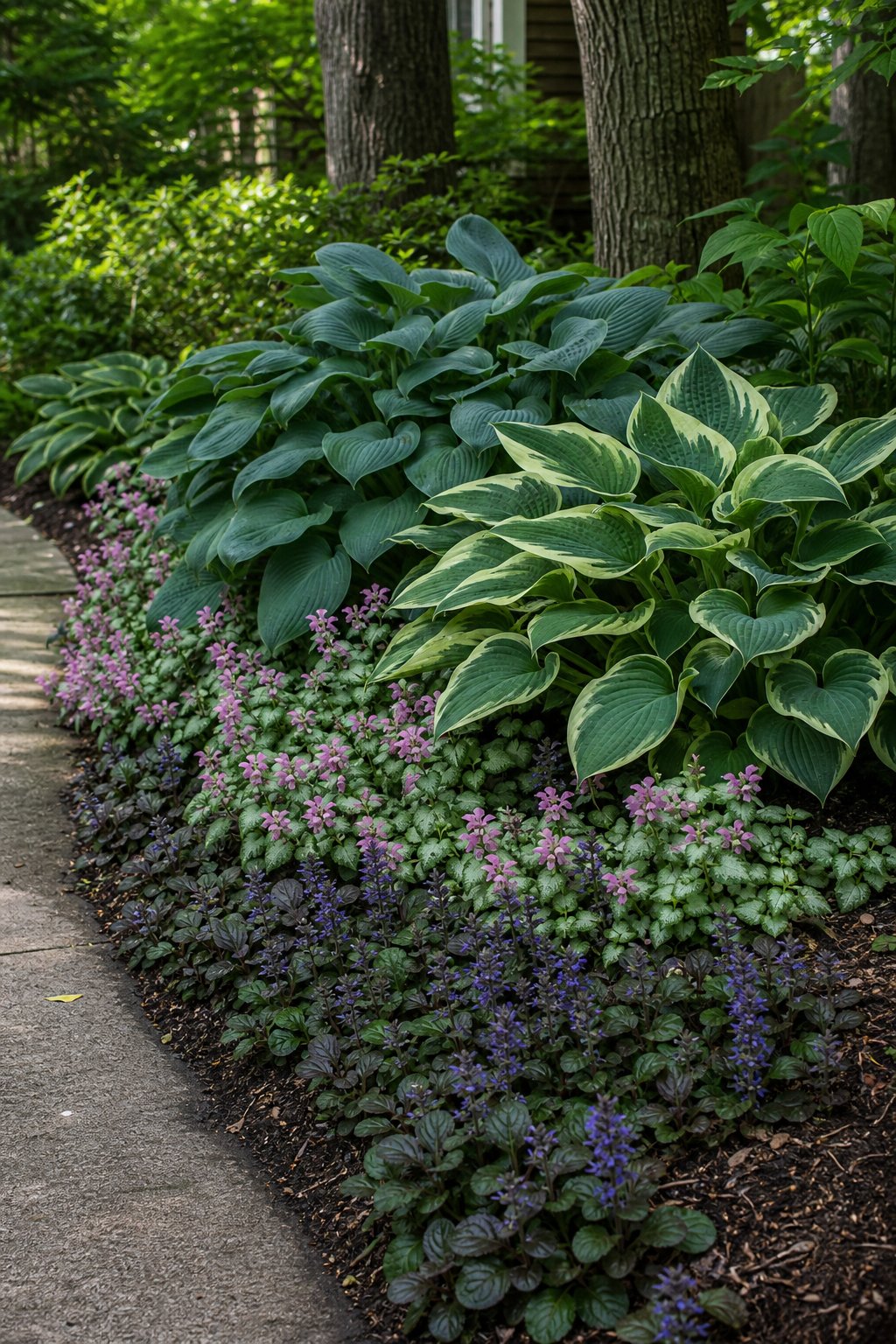
6. Shade Border With Hosta, Lamium, and Ajuga
A shady border gains texture from hosta leaves, silver lamium, and low ajuga ground cover. Put hostas toward the back where their broad leaves create a strong shape. Use lamium and ajuga along the front to brighten dim areas and cover exposed soil.
Give each plant space to spread, since shade plants can fill a bed faster than expected in moist soil. Keep fallen leaves from smothering the crowns, and check hostas for slug damage after rainy nights. This combination suits a fence line, porch edge, or north-facing side yard.
Expert Tip From MrPlanter: “Choose hosta sizes that fit your bed before planting. Keep ajuga trimmed at the path so its runners stay in bounds.”
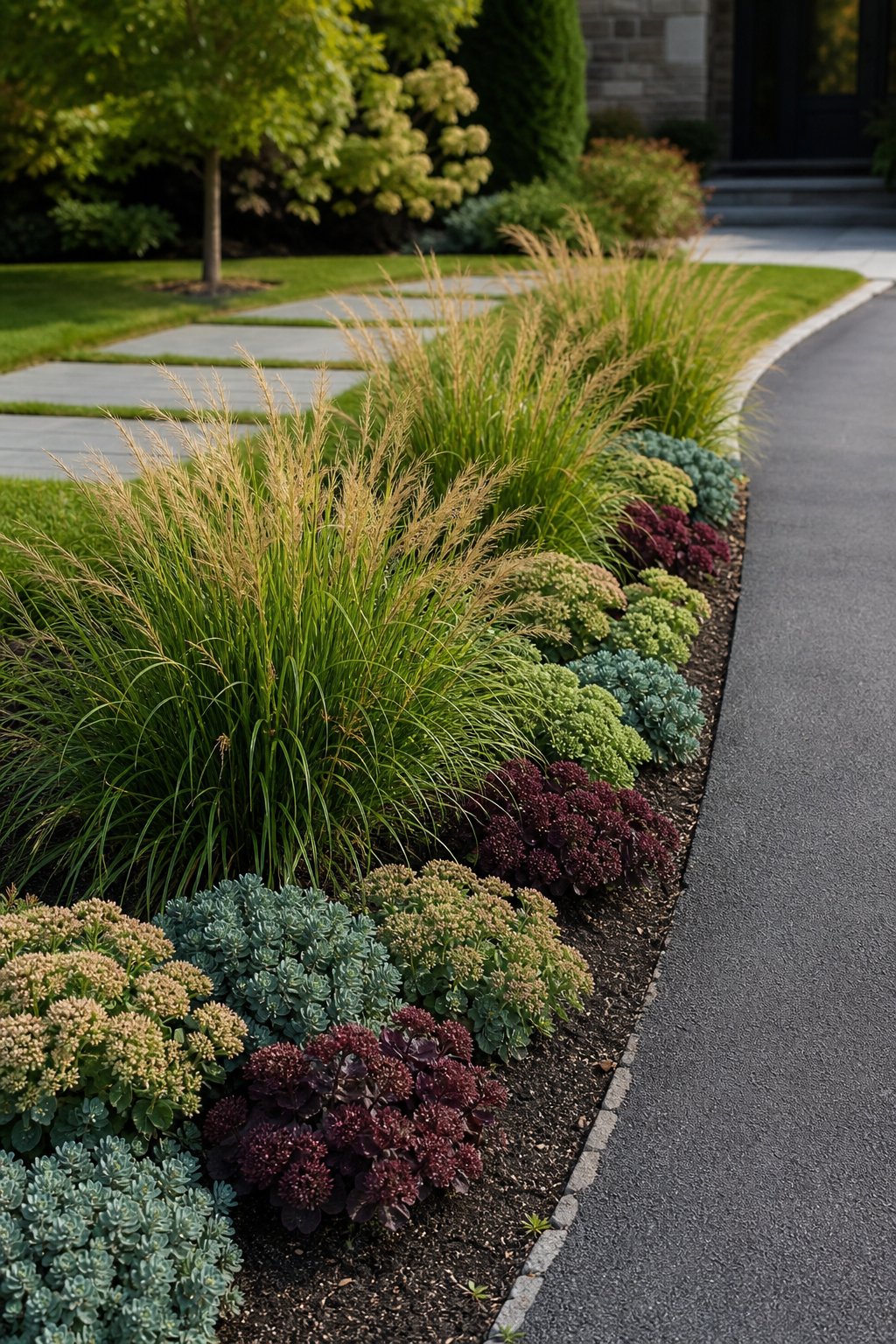
7. Driveway Edge With Ornamental Grasses and Sedum
Ornamental grasses and sedum handle a sunny driveway edge with texture and modest water needs. Choose compact grasses that won’t lean into parked cars, then place sedum in front for fleshy leaves and late-season flowers. A gravel mulch keeps splashback off the foliage and defines the strip neatly.
Leave a buffer between plants and the pavement so growth doesn’t scrape vehicles or narrow the driving line. Select grass varieties suited to your USDA zone, because some become much wider than their nursery tag suggests. This layout pairs well with other side of driveway landscaping ideas.
Expert Tip From MrPlanter: “Measure mature plant width before buying grasses. Sweep gravel back into place after storms so the driveway edge stays crisp.”
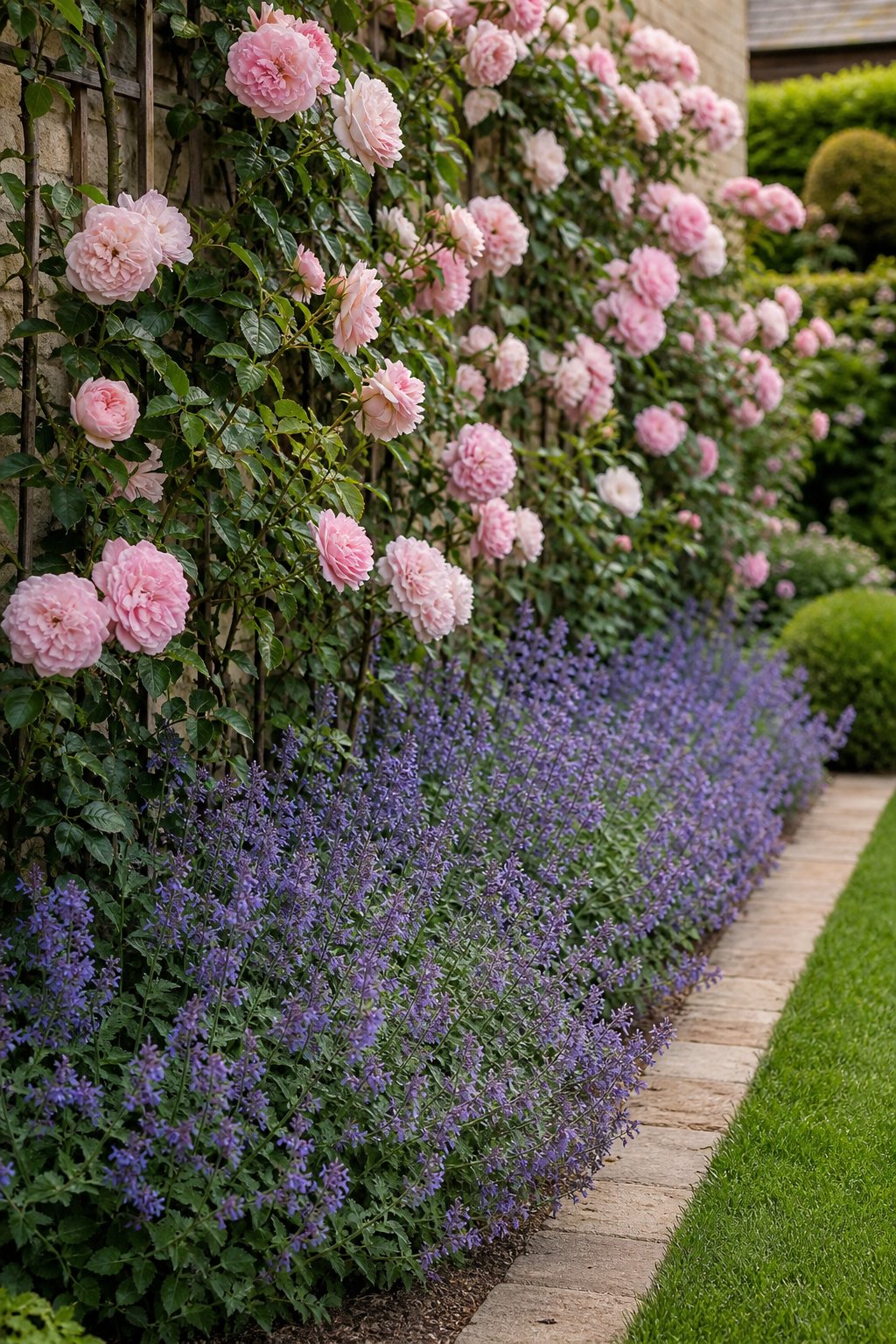
8. Climbing Rose Bed With Nepeta Underplanting
A climbing rose creates a tall focal point while nepeta fills the soil beneath it with soft blue flowers. Train the rose onto a secure support, keeping its canes tied in a fan shape for better flower coverage. Plant nepeta along the front where its mounding stems soften the base.
Roses need sun, regular feeding, and steady moisture during active growth. Give the root zone room to breathe, and keep mulch away from the rose crown. Shear nepeta after its first bloom to encourage a fresh flush and maintain the walkway clearance.
Expert Tip From MrPlanter: “Tie rose canes horizontally when possible to encourage more flowering shoots. Cut nepeta back with clean shears after its first bloom fades.”
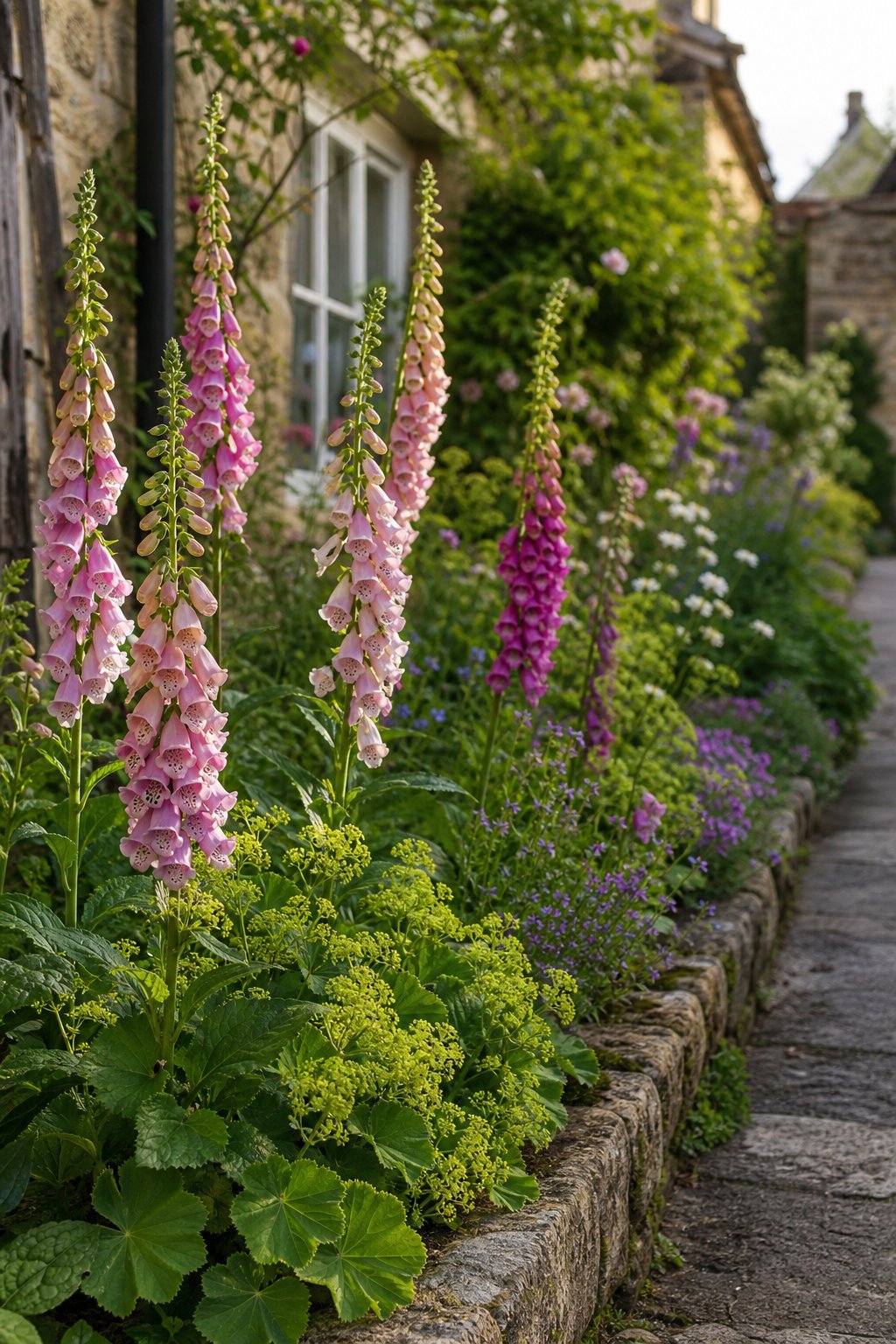
9. Cottage-Style Bed With Foxgloves and Alchemilla
Foxgloves bring tall, old-fashioned flower spikes to a narrow bed, while alchemilla forms a low, soft border. Set foxgloves near a fence or wall, then tuck alchemilla along the path. Their pink and lime-green colors create a charming cottage look without needing a deep planting area.
Foxgloves are biennial or short-lived perennials, so let a few seed heads mature if you want new seedlings. Keep the bed evenly moist during establishment. Place them where children and pets won’t brush against the foliage, since foxglove parts are poisonous if eaten.
Expert Tip From MrPlanter: “Use foxgloves as changing vertical accents and let alchemilla hold the front edge. Remove unwanted seedlings while they are still small.”
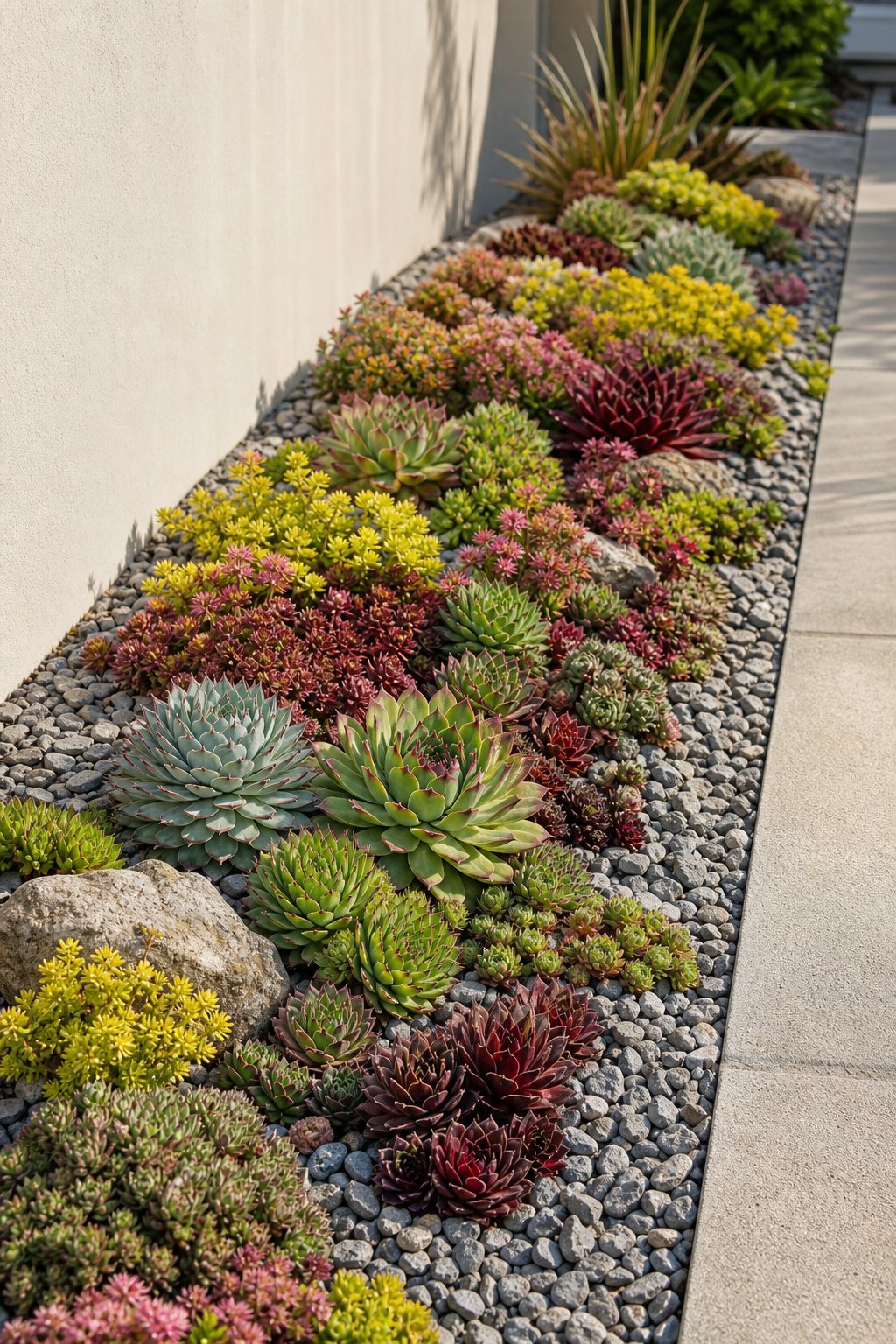
10. Gravel-Lined Succulent Bed With Sedum and Sempervivum
A gravel-lined succulent bed suits hot, dry strips where other flowers struggle. Combine upright sedum with rosette-forming sempervivum to create varied shapes close to the ground. Use gritty, fast-draining soil and a layer of small gravel to keep crowns dry after rain.
Place the bed beside a sunny wall, path, or patio, and choose hardy varieties for your region. Sempervivum produces offsets that gradually fill gaps, while sedum adds flower color later in the season. Remove weeds early because they are easier to pull before roots spread through the gravel.
Expert Tip From MrPlanter: “Keep succulent crowns above the soil line so water drains away. Group rosettes in small clusters and leave gravel visible between them.”
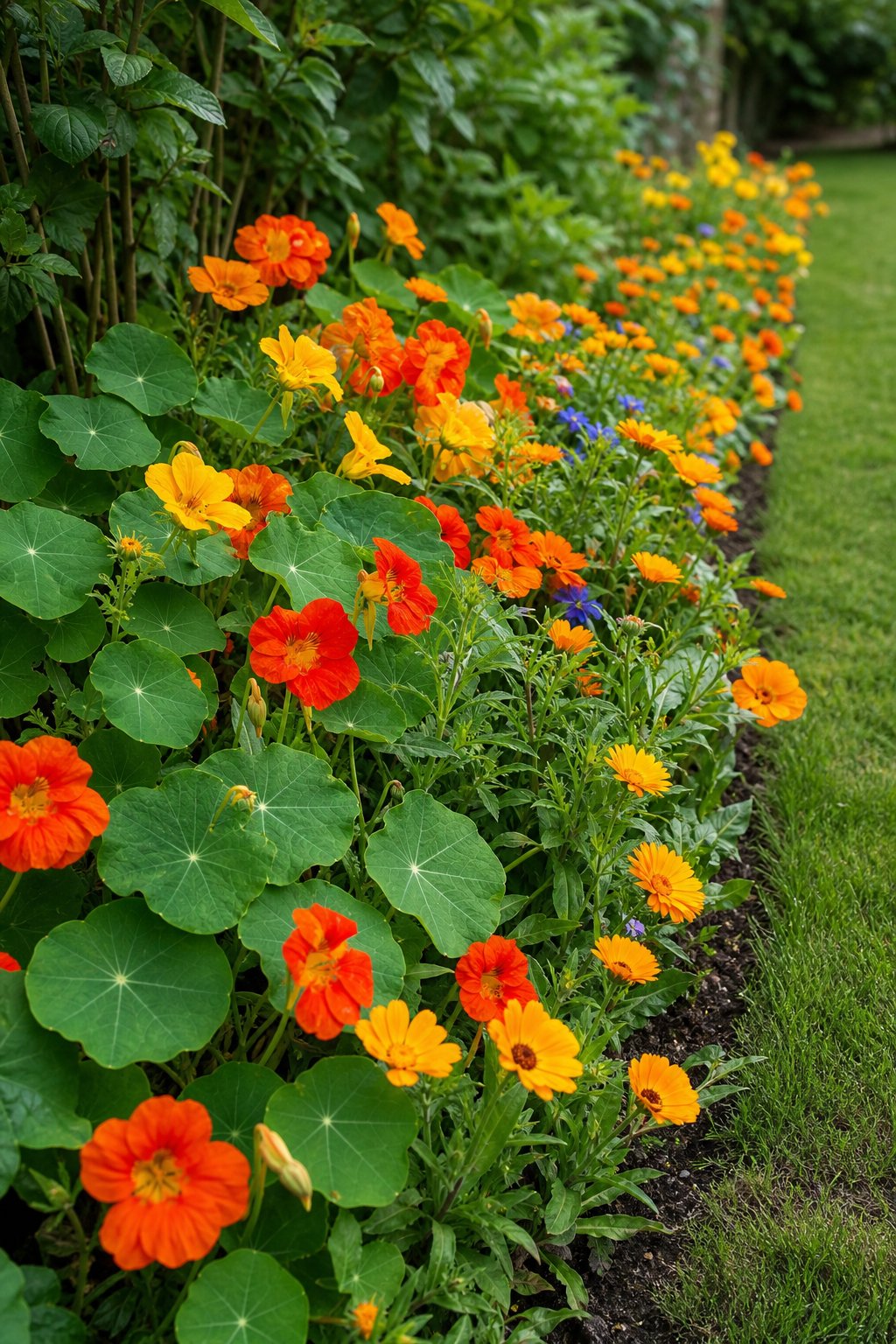
11. Edible Flower Border With Nasturtiums and Calendula
Nasturtiums and calendula turn a sunny garden edge into a colorful edible border. Let nasturtiums trail toward the path or climb a short support, then place calendula behind or between them for upright color. Their orange and yellow blooms bring a warm note to vegetable beds, patios, and front walks.
Grow edible flowers away from areas treated with lawn chemicals. Harvest fresh blooms after they open, rinse them gently, and use them as salad garnish only after confirming the variety is safe to eat. Nasturtiums prefer lean soil, while calendula appreciates regular deadheading.
Expert Tip From MrPlanter: “Pick flowers in the cool morning for the freshest texture. Leave a few blooms on each plant so pollinators still have food.”
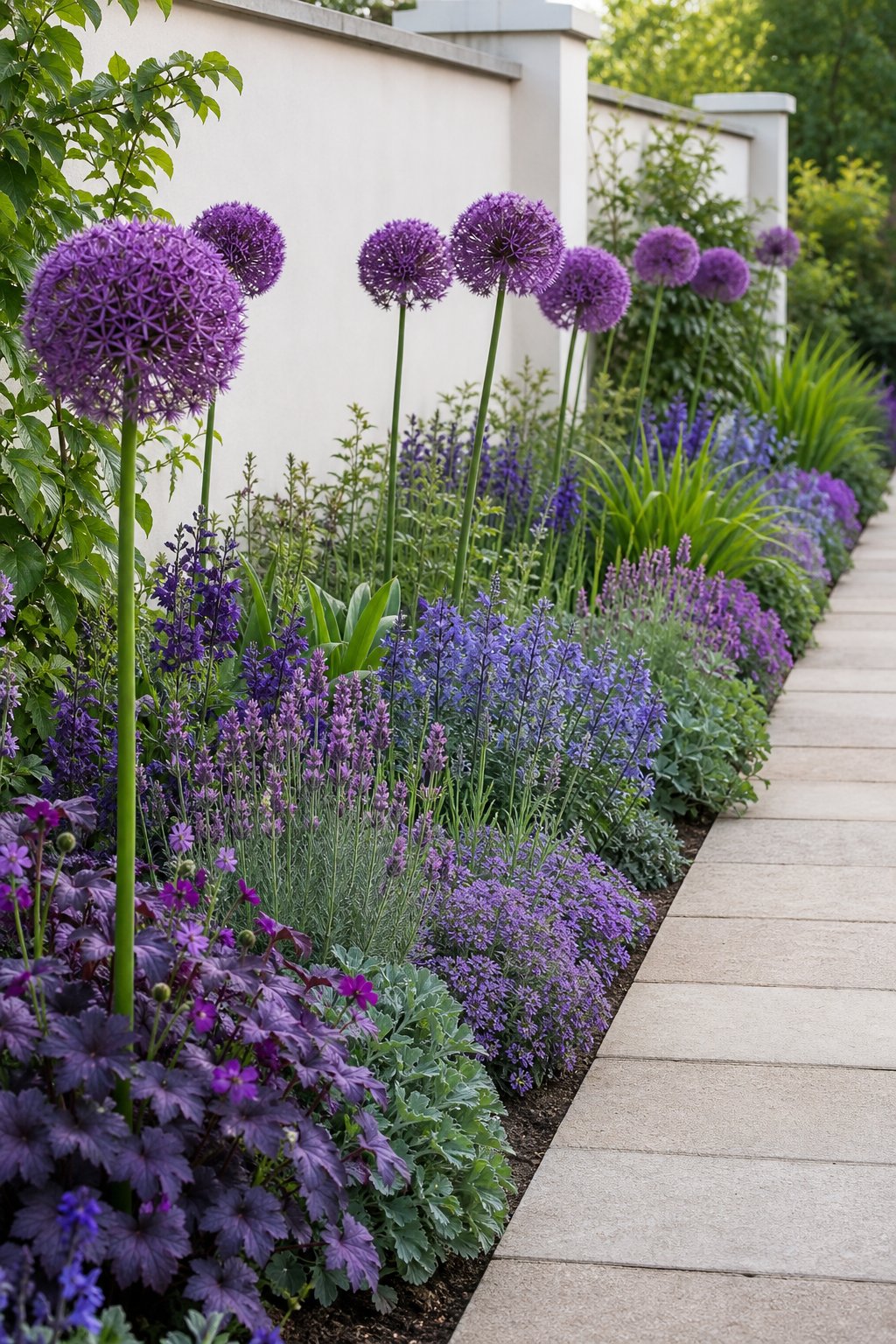
12. Color-Blocked Purple Bed With Lavender and Alliums
A purple color block gives a narrow bed a clear visual theme and a polished look. Plant lavender in repeated clumps, then add allium bulbs between them for tall spring spheres. Green foliage plants fill the gaps after the allium flowers fade and keep the strip grounded.
Use a simple edge made from stone, metal, or brick to frame the color. Lavender needs sun and sharp drainage, while alliums prefer soil that does not stay wet. Cut allium stems after flowering if you want a cleaner summer display, or leave the seed heads for structure.
Expert Tip From MrPlanter: “Repeat the same purple shade in several spots so the bed feels connected. Plant allium bulbs in fall at the depth listed on the package.”
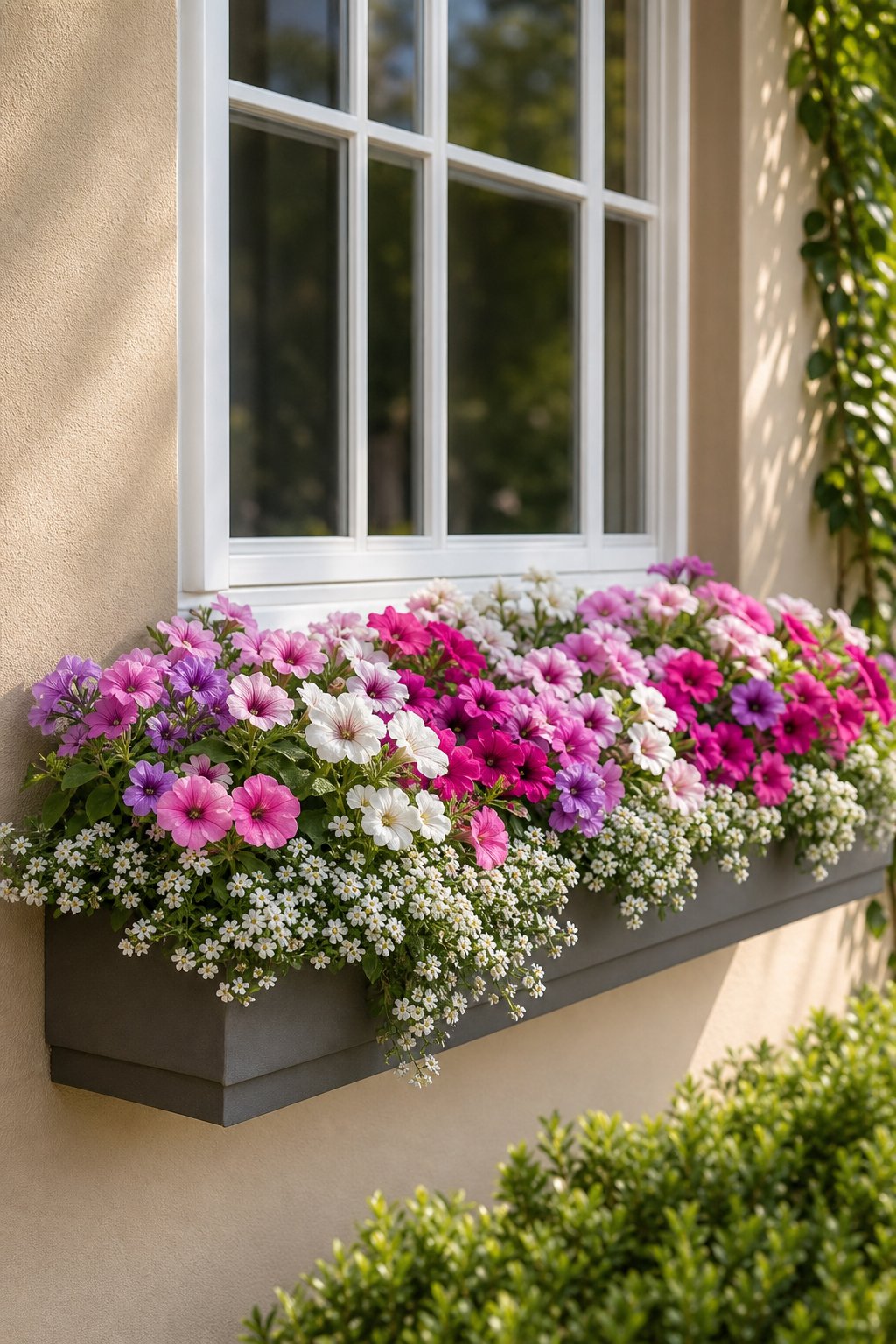
13. Window-Box-Style Bed With Petunias and Sweet Alyssum
A ground-level bed beneath a window can copy the charm of a window box with compact, blooming annuals. Plant petunias toward the middle and sweet alyssum along the front so flowers spill gently toward the path. Pink, purple, and white blooms keep the display cheerful without blocking the window.
Choose compact or mounding petunia types for easier control. Water at the soil line and feed regularly during the growing season because annuals flower heavily in containers and narrow beds. Keep plants below the sill and leave room to open shutters, clean glass, or reach the foundation.
Expert Tip From MrPlanter: “Check the mature height before planting beneath a low window. Pinch lanky stems early to keep the bed rounded and full.”
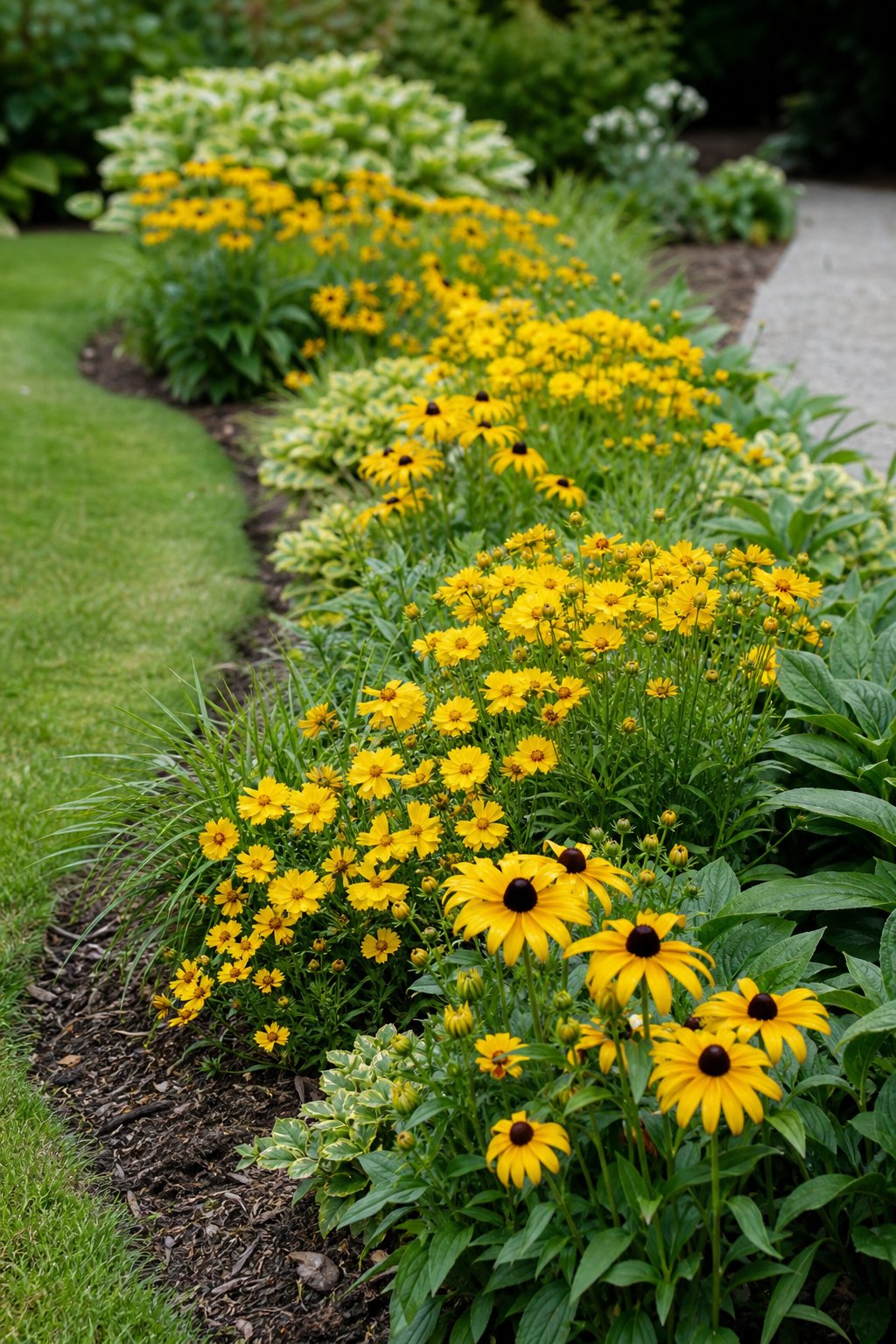
14. Wildflower Strip With Coreopsis and Black-Eyed Susans
Coreopsis and black-eyed Susans create a sunny wildflower strip with long-lasting yellow blooms. Place black-eyed Susans toward the back and use coreopsis along the front for a lower layer. The warm flowers suit a lawn edge, mailbox path, or informal backyard border.
Prepare the soil by removing weeds before sowing or planting. Avoid adding heavy fertilizer, which encourages tall, weak stems and excess leaves. Deadhead some flowers for more blooms, then leave selected seed heads standing for birds and winter interest. For more loose, natural planting plans, explore these wildflower garden ideas.
Expert Tip From MrPlanter: “Use a firm path edge to contain the relaxed planting style. Cut the bed down in late winter before fresh growth begins.”
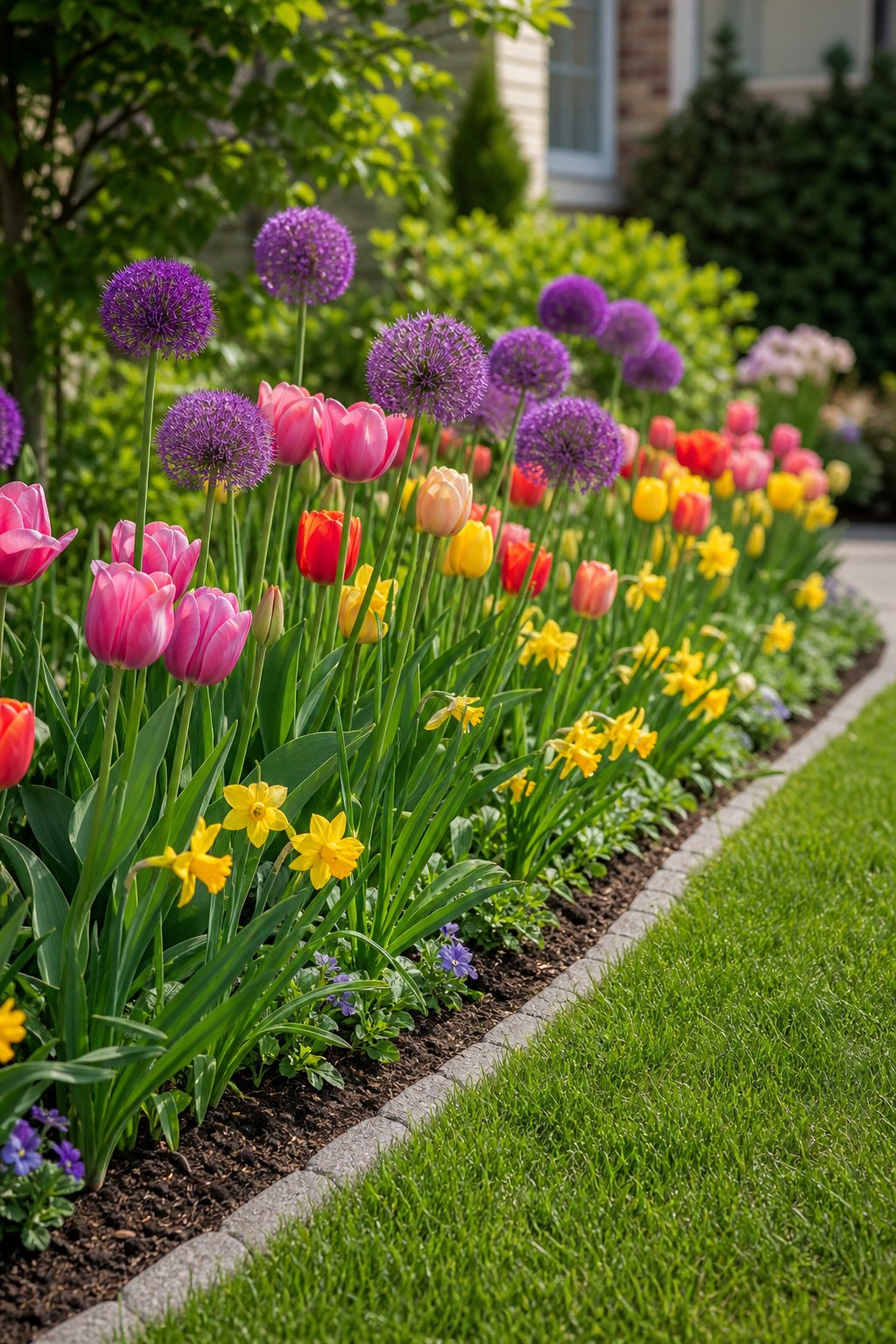
15. Seasonal Bulb Border With Tulips, Alliums, and Daffodils
A layered bulb border delivers spring color in waves from one narrow strip. Plant daffodils for early flowers, tulips for the main color show, and alliums for a later vertical accent. Add summer perennials or annuals that hide fading bulb leaves after flowering.
Plant bulbs in groups for stronger color, keeping tall alliums toward the back or center. Let bulb foliage yellow naturally so the plants can store energy for the next year. Mark the planting line before winter so digging for later plants doesn’t damage dormant bulbs.
Expert Tip From MrPlanter: “Use bulbs with different bloom times to keep the bed active for weeks. Plant them in generous clusters and label unusual varieties.”
How to Design a Narrow Flower Bed
A successful narrow bed begins with a measured footprint, a clear plant-height plan, and enough room for maintenance. Sketch the strip from above, mark doors and gates, then note where mature plants will spread. A restrained palette of repeated plants gives a small garden a more settled appearance.
How Wide Should a Narrow Flower Bed Be?
A narrow bed should measure about 18 to 30 inches wide when you need access from one side. A bed beside a path can be slimmer, around 12 to 18 inches, when you choose compact plants. Two-sided access allows a bed closer to 4 feet wide because you can reach the center from both edges.
Keep walkways at least 30 to 36 inches wide for comfortable foot traffic. Leave extra clearance around gates, steps, downspouts, and HVAC equipment. Use flower bed edging ideas to keep soil and mulch from spreading into the walking area.
How Do You Layer Plants Without Overcrowding?
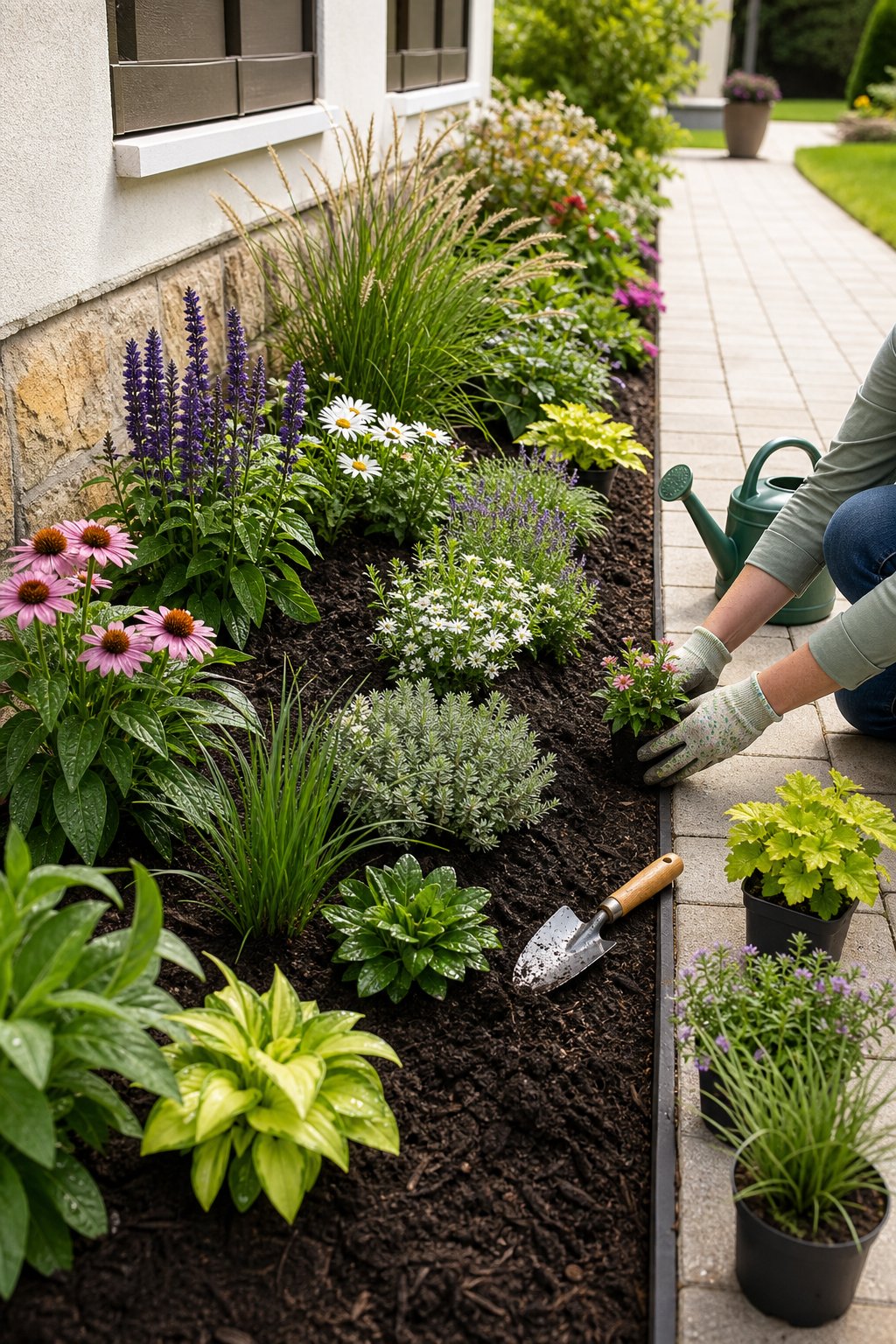
Place the tallest plants along the fence or house, medium plants in the middle, and low plants beside the path. Check the mature width on every plant tag, then space plants so their leaves touch lightly at maturity. Groups of one plant type create clear shapes and reduce visual clutter.
Build layers with height, bloom time, and leaf form. Bulbs can occupy space below summer perennials, while ground covers fill open soil around taller specimens. Keep aggressive spreaders in containers or use a firm root barrier.
Which Plant Heights Work Best Along Fences and Walkways?
Plants around 2 to 4 feet tall suit the back of a fence-line bed, while 12- to 24-inch plants fit the middle. Keep the path edge at about 6 to 12 inches unless the walkway is wide. Tall plants at corners can add height without blocking the main view.
Choose stiff, upright stems near narrow passages and airy plants where movement won’t cause contact. Review mature height after rain and wind, since leaning stems often reach farther than their label suggests.
Planting and Maintenance Essentials
A skinny bed stays attractive when you match plants to light, keep its edge clear, and plan for seasonal changes. Prepare the full root zone before planting, then add a thin mulch layer that leaves crowns and stems uncovered. Regular short visits make narrow beds easier to manage than occasional heavy cleanups.
How Much Sun Does the Bed Receive?
Track direct light for a full day before selecting plants. Six or more hours suits sun lovers such as lavender, salvia, sedum, echinacea, and roses. Morning light with afternoon shade suits many plants labeled part shade, while deep shade calls for hostas, lamium, ajuga, and other shade-tolerant choices.
Reflective walls and pavement raise heat near the bed. Check soil moisture at the root depth, especially beside driveways and south-facing walls. A shade plant in hot reflected light will need more care and may still scorch.
How Can You Keep a Skinny Bed Looking Neat?
Use a defined edge, repeat plant groups, and keep mulch or gravel a few inches below nearby paving. Pull weeds while they are small, remove damaged leaves, and cut back spent stems before they flop across the path. A narrow hand tool reaches tight spaces without disturbing nearby roots.
Prune plants according to their growth habit. Shear mounding nepeta and catmint after flowering, comb ornamental grasses in spring, and thin crowded seedlings before they hide the bed’s structure. Keep irrigation aimed at the soil so walkways remain dry and safe.
Which Plants Offer the Longest Season of Interest?
Combine spring bulbs, summer perennials, and plants with fall seed heads for a bed that changes through the year. Daffodils and alliums start the display, while salvia, echinacea, catmint, roses, and annuals carry color into summer. Sedum, ornamental grasses, and black-eyed Susans add late-season form.
Include evergreen or semi-evergreen foliage where your climate allows. Lavender, blue fescue, creeping thyme, and some ground covers keep the bed readable after flowers fade. Replace tired annuals promptly, or tuck in cool-season plants for fall and winter color.
I’m Anirban Saha, the Founder and Owner of MrPlanter.com. I pay the bills as a software developer, although my BTech is actually in Electronics and Communication. I really love my day job, but what gives me energy every day is interacting with my indoor plants and taking care of them. I have been successfully nurturing and maintaining houseplants for over 10 years now.
📚🔍 Our content undergoes thorough review and fact-checking before publication. For additional details, explore our strict Editorial Policy to deliver helpful content. 📝🔒