The ideas below range from easy starter setups to more polished pond designs. You can pick one that fits your flock and your free time.
1. Natural Biofilter Duck Pond System
Myth-busting statement: a duck pond does not need to look like a lab project to stay clean.
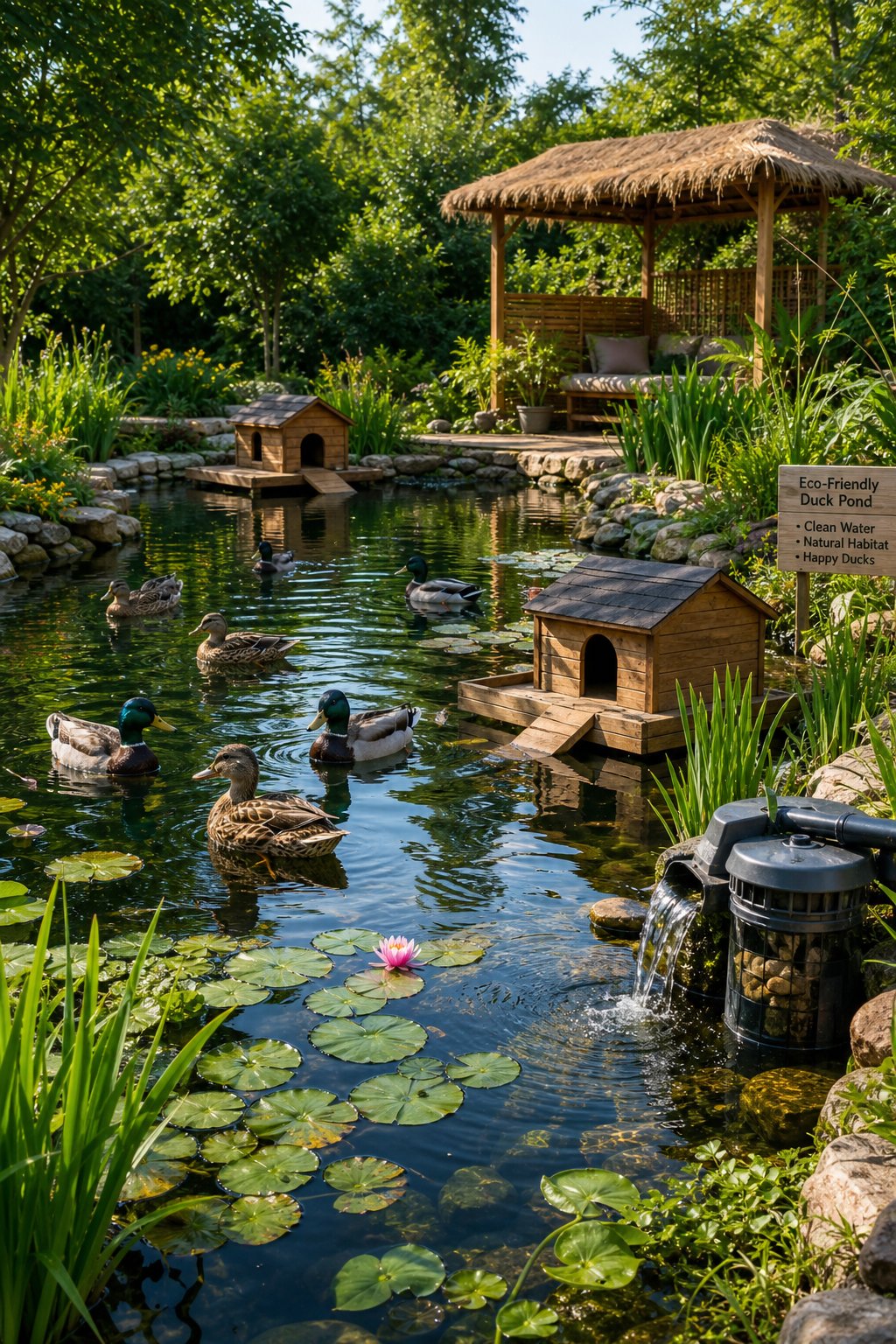
A natural biofilter system uses plants, gravel, and water flow to help trap debris before it turns the water nasty. You can keep the pond looking soft and garden-like while giving your ducks a healthier place to splash.
This setup works well if you want lower odor and less cloudy water. Add native marginals, keep the filter area easy to reach, and leave room for your ducks to get in and out without slipping.
Expert Tip From MrPlanter: “Start with a small biofilter if you’re new to pond care. It gives you room to learn without making the setup feel like a part-time job.”
2. Backyard Pond With DIY Filtration Setup
Relatable problem: if your ducks act like tiny feathered tornadoes, the water can turn cloudy fast.
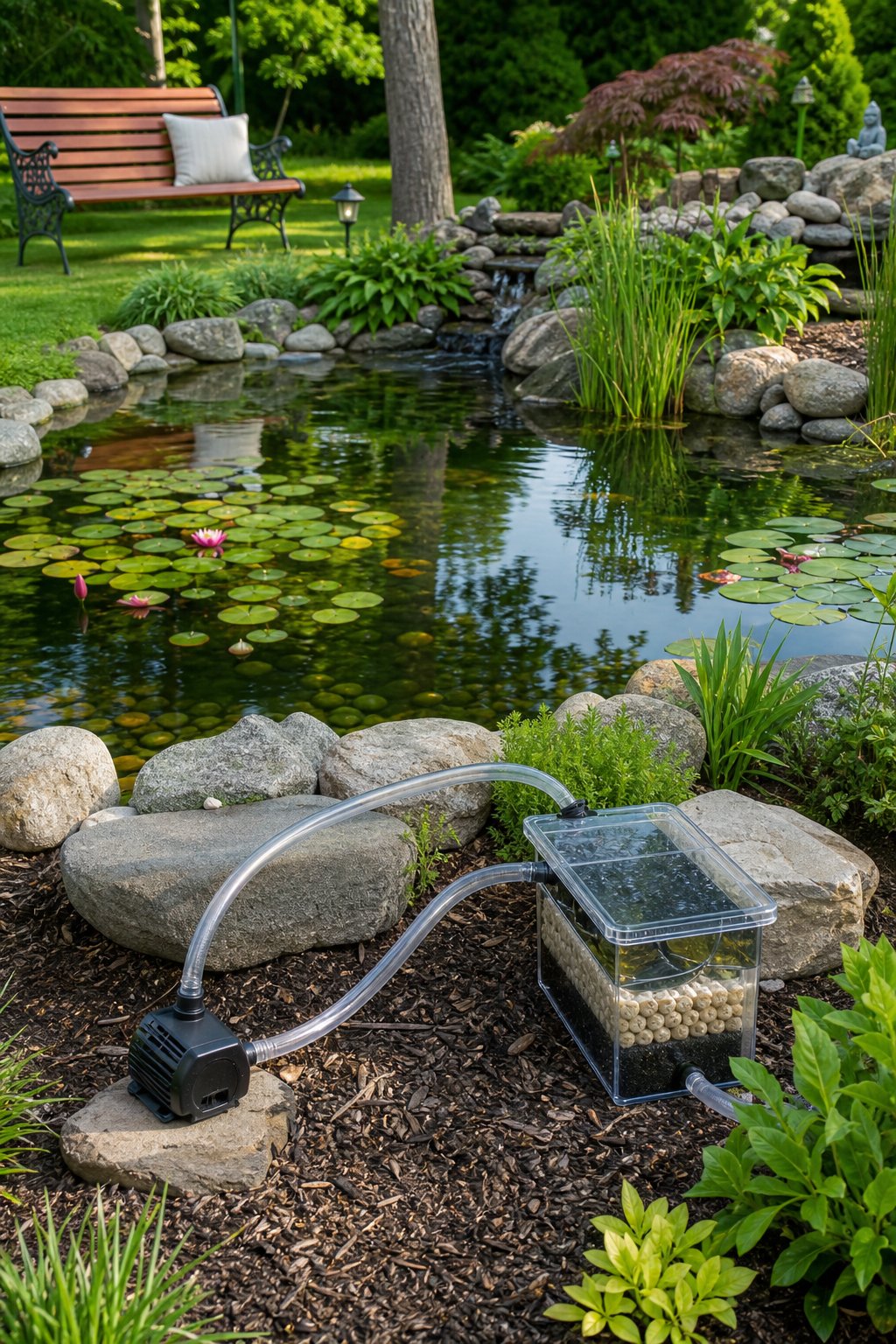
A DIY filtration setup helps you keep up without spending a fortune on store-bought systems. A simple pump, tubing, and a homemade filter box can do a lot of the dirty work for you.
This idea fits a medium-sized backyard where you want a cleaner pond with less daily scooping. Place the intake where it catches floating waste, and keep the filter easy to open for rinsing.
Expert Tip From MrPlanter: “Use parts you can replace easily. When a tube clogs on a busy Saturday, you want a fix, not a treasure hunt.”
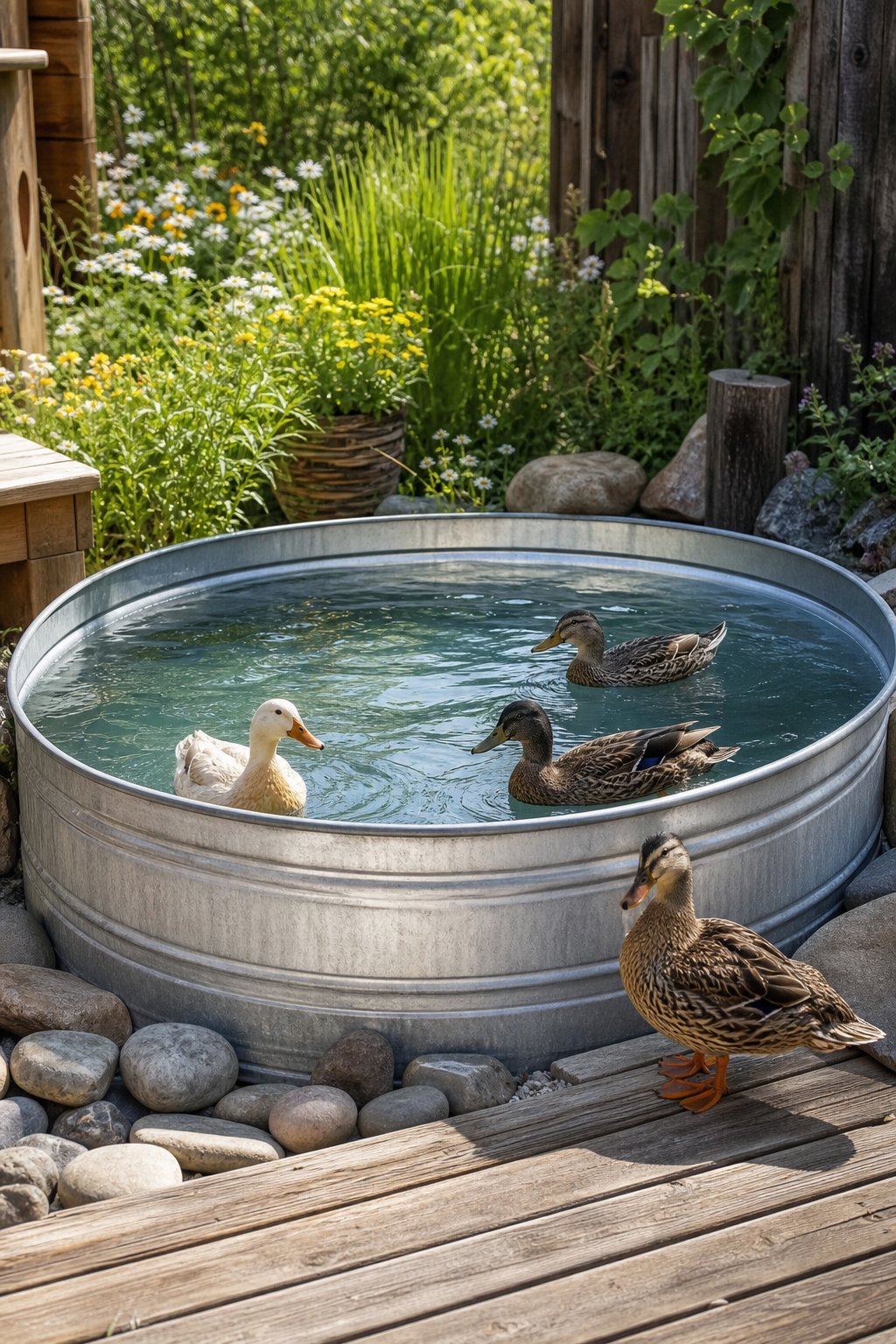
3. Stock Tank Container Duck Pond
Surprising fact: a plain stock tank can make a surprisingly tidy duck pond.
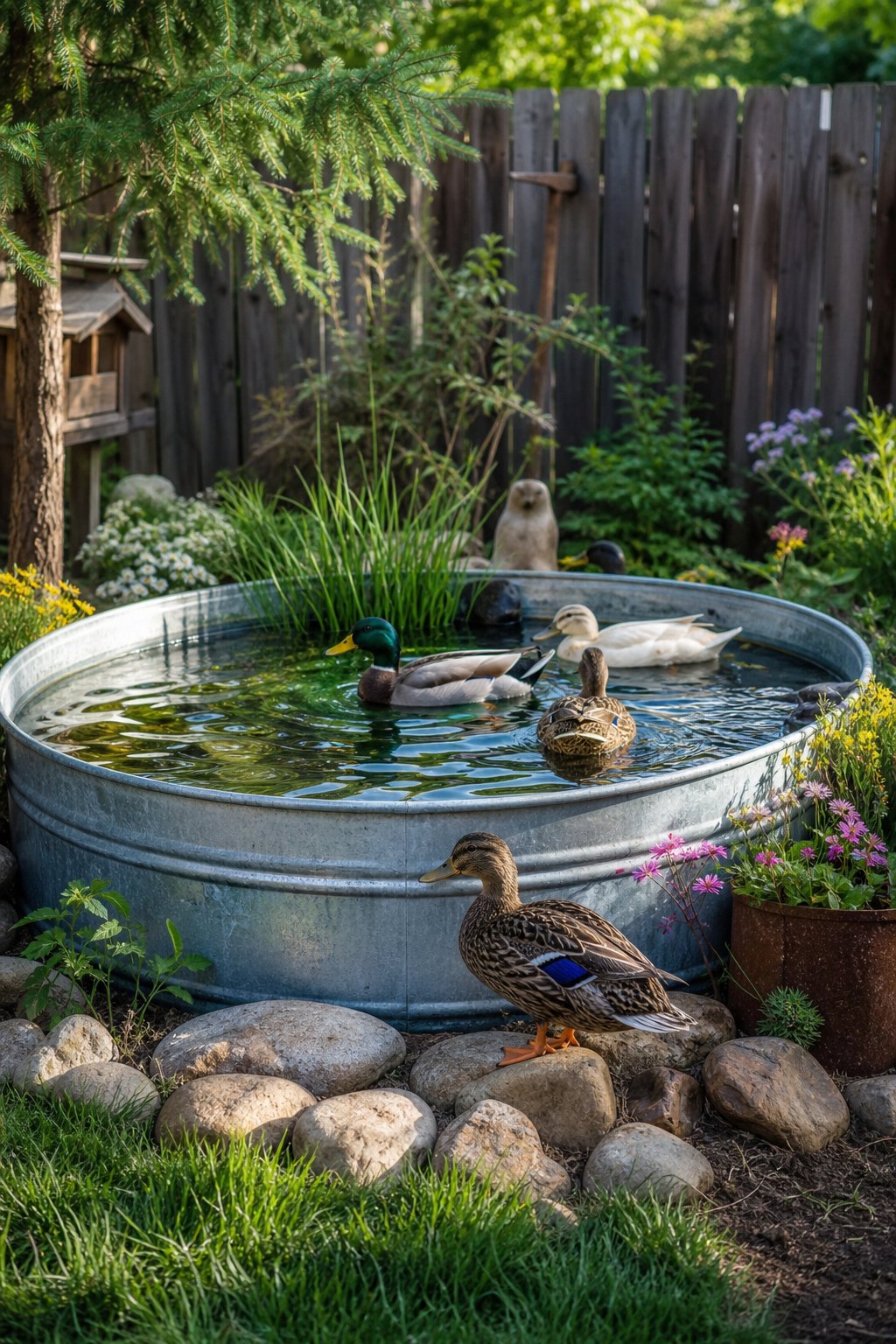
It is sturdy, easy to place, and great if you want a pond that does not need digging. You can drop it into a fenced yard corner and have a working water spot fast.
This works well for small flocks or as a starter pond. Add a non-slip ramp or flat stone step so your ducks can climb out without drama.
If you paint or hide the outside with plants or wood trim, you can make it look far less like farm hardware and more like part of your yard.
Expert Tip From MrPlanter: “Choose a tank with smooth edges and a drain you can reach. Your back, and your ducks, will thank you.”
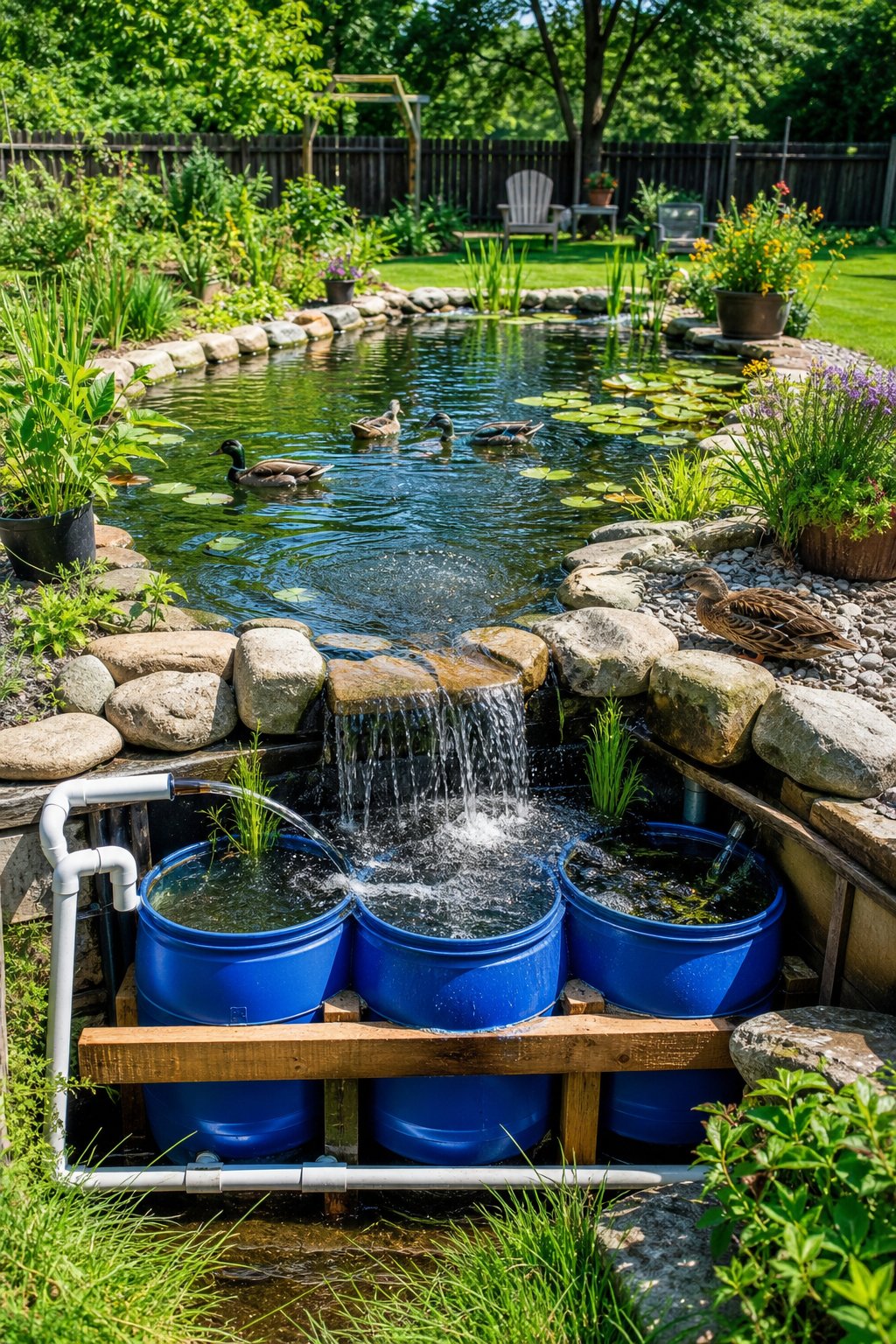
4. Blue-Barrel Filtered Splash Pond
Personification: blue barrels may not look fancy, but they work like hardworking little helpers.
With a barrel filter system, you can move water through stages that catch muck and keep the pond fresher longer. It is a practical choice if you want more water volume without constant scrubbing.
This setup suits backyard keepers who enjoy a bit of DIY and do not mind visible equipment. Tuck the barrels behind shrubs, fences, or a screen to soften the look.
Keep the plumbing simple so you can clean it without needing a weekend and three cups of coffee.
Expert Tip From MrPlanter: “Label every hose before you install it. Future you will be grateful when it’s time to clean the system.”
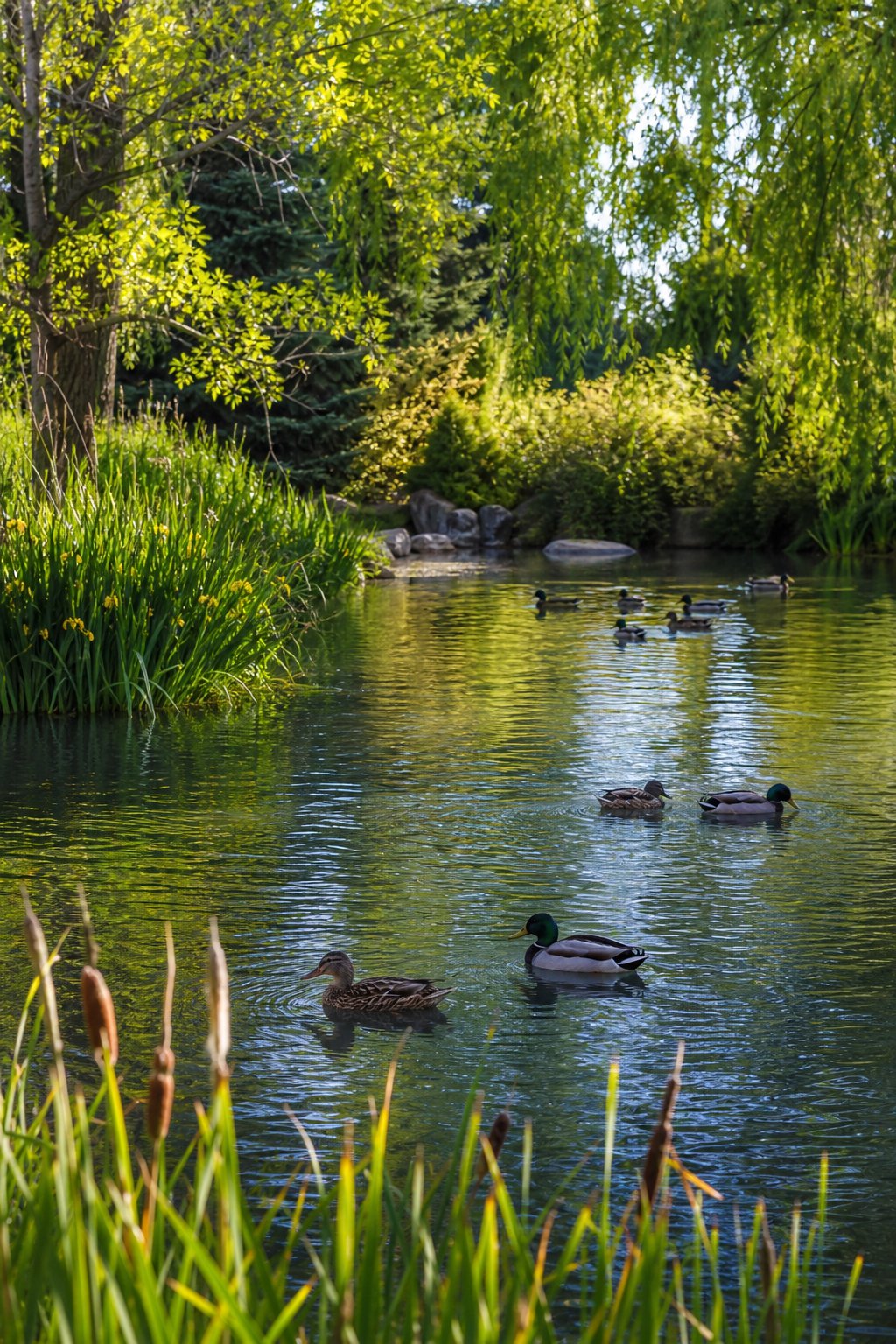
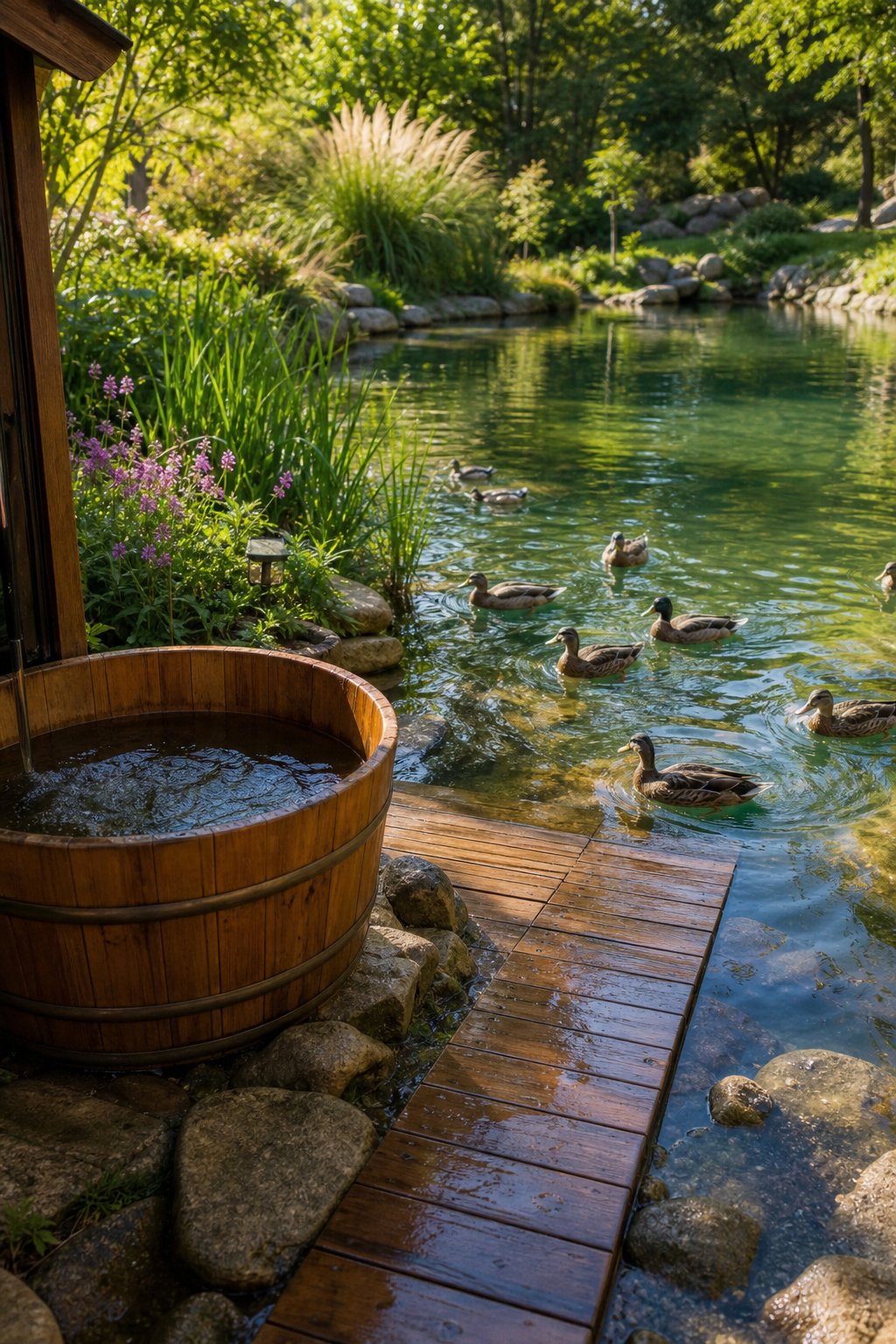
5. Natural Wildlife Duck Pond
Myth-busting statement: a duck pond can welcome wildlife and still be duck-friendly.
By using native plants, soft edges, and shallow zones, you can make a pond that feels natural without turning it into a wild mess. Ducks get room to swim, and beneficial insects and birds may visit too.
This idea works best if your yard already has a relaxed, garden feel. Keep a few open water spots for your ducks, and let the edges grow a little softer with grasses and reeds.
Just avoid dense plant clutter where you cannot reach for cleaning or quick checks.
Expert Tip From MrPlanter: “Leave one side easy to reach. A pond can look natural and still be simple for you to care for.”
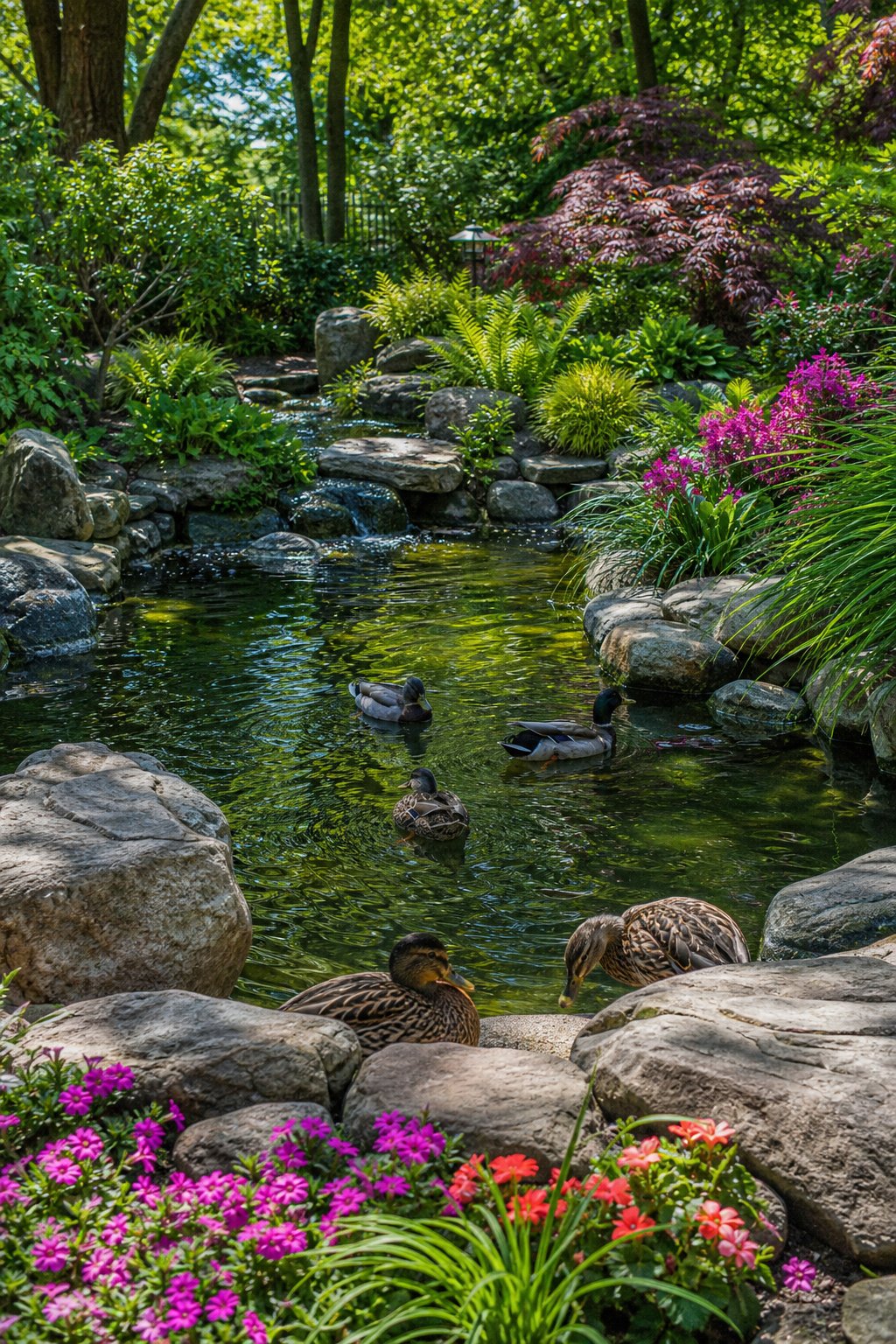
6. Rock-Rimmed Garden Pond
Relatable problem: ducks love to splash, and plain dirt turns into a muddy slip-and-slide fast.
A rock rim helps hold the edge together and gives your pond a finished look. It also creates spots where ducks can hop in and out without churning up the whole bank.
Use rounded rocks rather than sharp ones, and set them firmly so they do not wobble. You can mix in a few larger stones for visual balance and a safer landing zone.
This style works nicely near flowers, shrubs, or a patio where you want the pond to feel like part of the yard.
Expert Tip From MrPlanter: “Test the rocks with your hand before you build. If they feel shaky to you, they will feel worse to your ducks.”
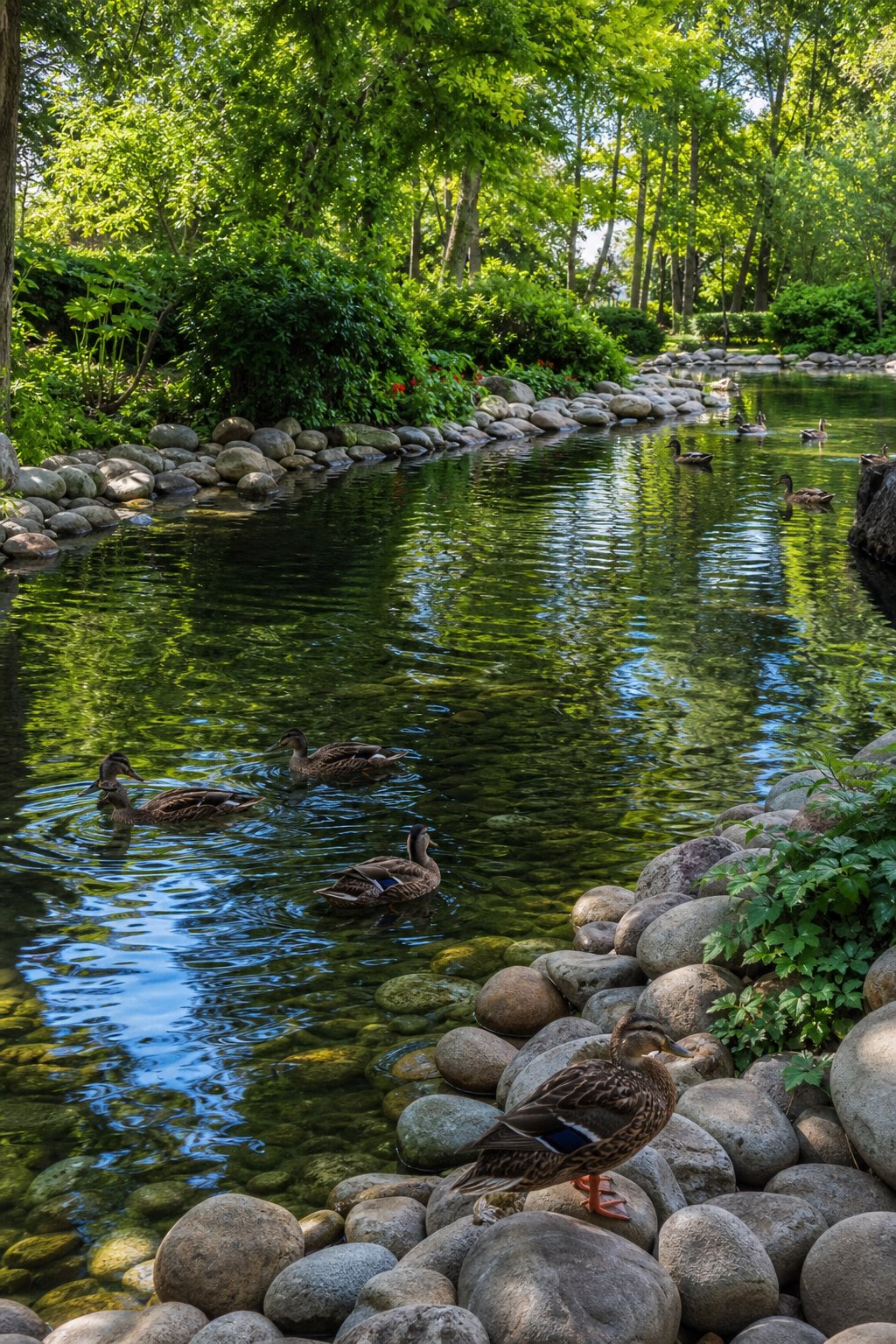
7. Pebble-Edged Serenity Pool
Surprising fact: pebbles can do more than look nice, they help soften the shoreline.
A pebble edge gives your ducks a gentle place to walk, and it helps the pond blend into a backyard garden. The small stones also make the shoreline less muddy after splashing sessions.
This idea works well around shallow ponds and smaller spaces. Pick pebbles that stay put when wet, and avoid loose areas that can shift underfoot.
If you add low plants nearby, the whole spot can feel calm without being hard to maintain.
Expert Tip From MrPlanter: “Rinse the pebbles before you install them. Clean stones make the first fill a lot less cloudy.”
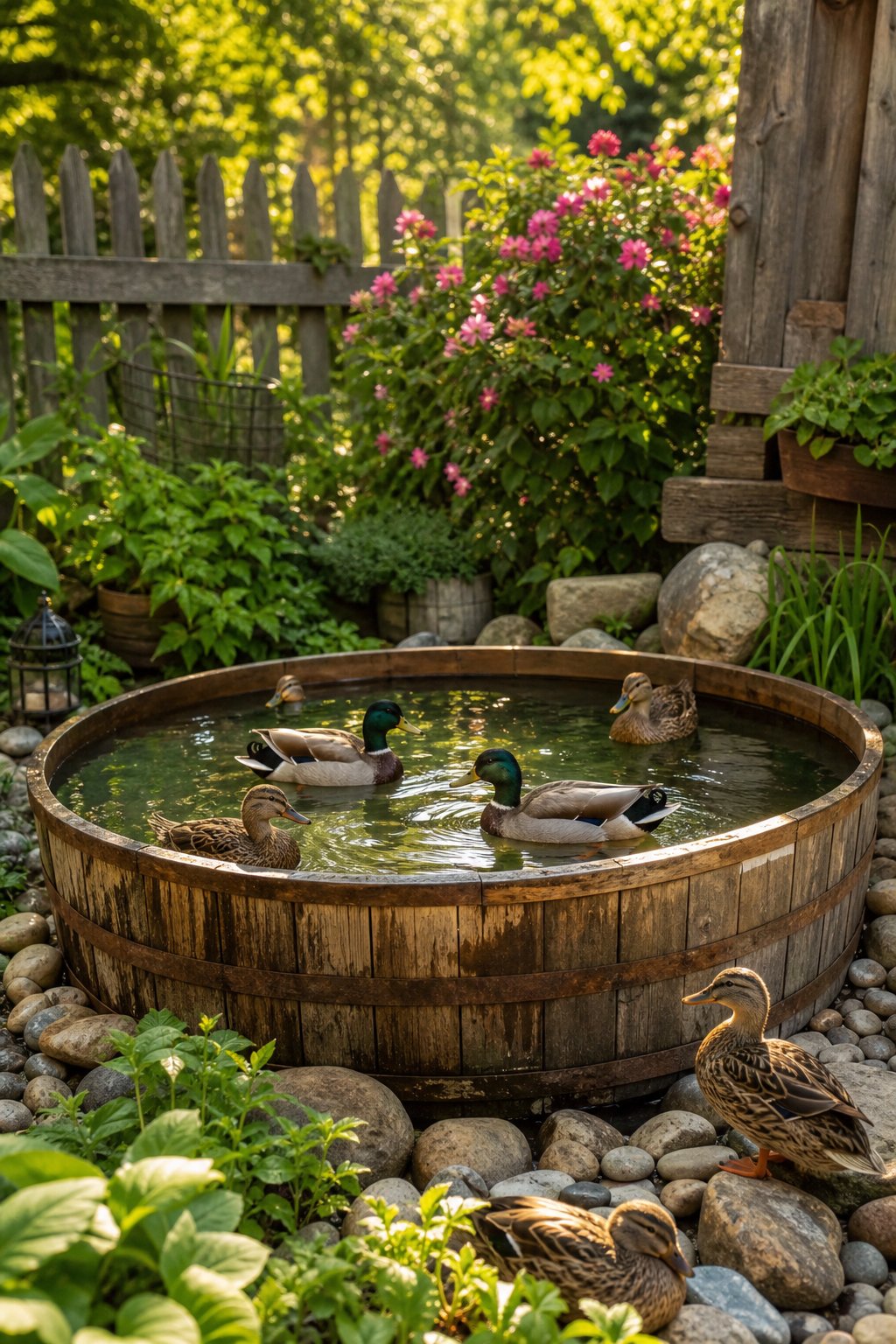
8. Rustic Kiddie-Pool Duck Oasis
Myth-busting statement: a kiddie pool is not a lazy choice, it is a smart one.
If you want cheap, fast, and easy to clean, this setup can be a lifesaver. Ducks love the water, and you get something you can dump, rinse, and refill without a wrestling match.
This is a good pick for young ducks, small flocks, or a backup pond. Set it on level ground and place bricks, pavers, or a ramp nearby so birds can exit safely.
A little landscaping around the pool helps it feel more like a pond and less like a summer toy.
Expert Tip From MrPlanter: “Keep one spare kiddie pool on hand if you can. Swapping pools is much easier than waiting for one to dry.”
9. Upcycled Bathtub Duck Pond
Personification: an old bathtub has retired from human duty and is ready for duck duty.
This setup gives you a deep, sturdy container with built-in sides and a smooth finish. It also adds a little quirky charm to your yard if you like repurposed pieces.
You can bury part of the tub for a more natural look, or leave it above ground for easier draining. Add a sturdy step or stone beside it so your ducks can climb in without flapping like tiny gymnasts.
Just make sure the drain works before you fill it.
Expert Tip From MrPlanter: “Check for rust, cracks, and sharp spots first. A cute repurpose should still be safe for bare duck feet.”
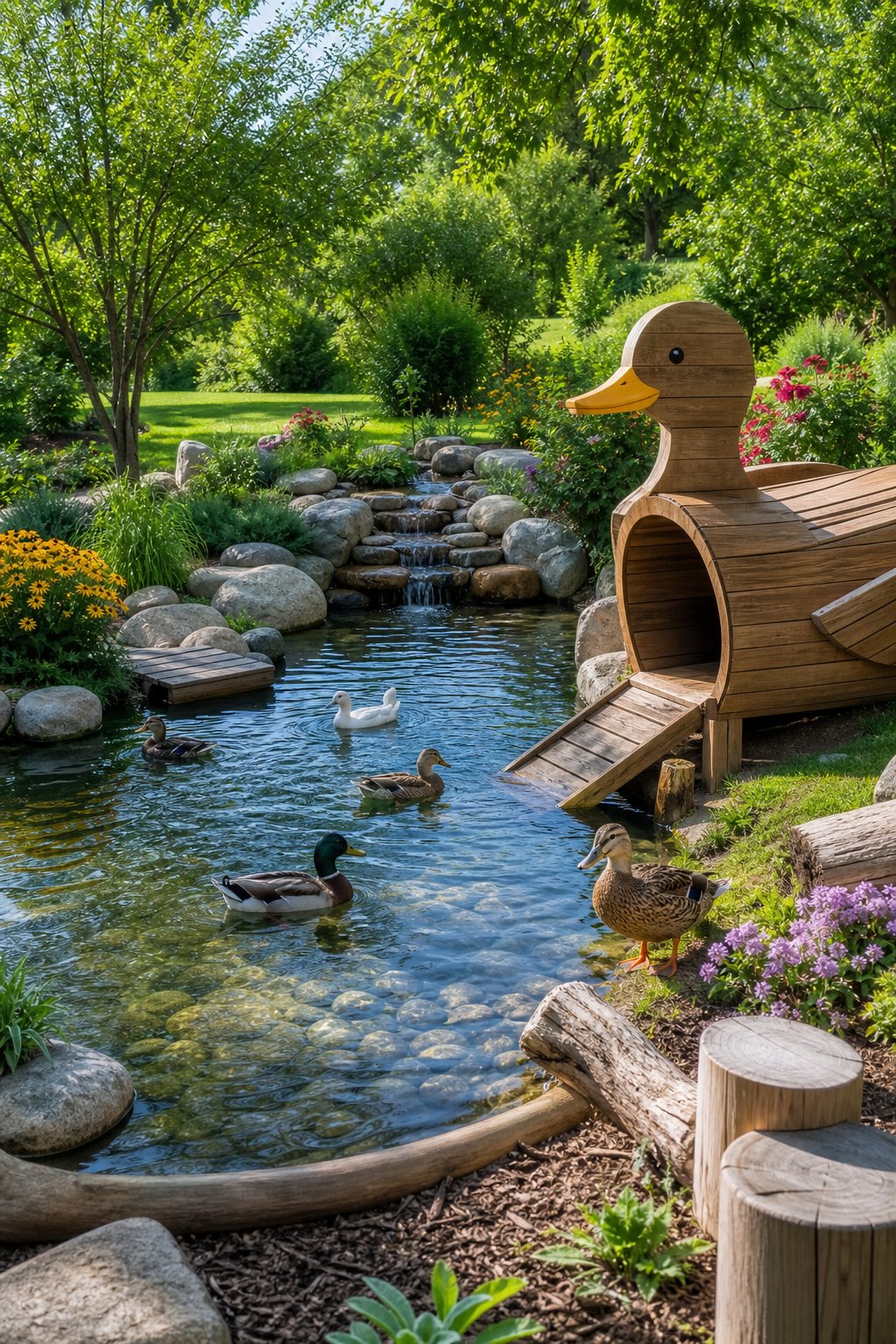
10. Play-Pool Duck Run
Relatable problem: your ducks want more than a water bowl, they want a place to wander and act ridiculous.
A play-pool duck run mixes water with open ground, shade, and room to move. That gives your flock more variety, which can cut down on boredom.
This setup works well if your yard has space for both dry and wet areas. Add low ramps, logs, or flat stones so the ducks can explore safely.
Keep the play features simple and sturdy, since ducks will peck, climb, and test everything like curious little inspectors.
Expert Tip From MrPlanter: “Build for splash zone chaos, not perfection. Ducks will rearrange the fun faster than you think.”
11. Rustic Stock-Tank Splash Spot
Surprising fact: a stock tank can look rustic with almost no fancy work.
Pair it with tall grasses, a few stones, and a simple frame of wood or brush, and you start to make it feel like part of the garden. It is a solid choice if you want water without digging a full pond.
This idea is handy for backyards where you want fast setup and easy draining. It can also work as a seasonal pond if you live in a place with cold winters.
Keep the water level comfortable for bathing, and add a safe exit point so your ducks do not have to hop too far.
Expert Tip From MrPlanter: “Add plants around the outside, not inside, if cleanup matters most. That keeps the look soft without making the water harder to manage.”
12. Cozy Tub And Ramp Splash Spot
Myth-busting statement: a small tub can still make a duck very happy.
When you pair it with a gentle ramp, you give your flock an easy place to bathe and climb out. That matters more than fancy curves or expensive stonework.
This setup is great when you want a simple, tidy water spot near a coop or run. The ramp helps younger ducks and heavier birds get in and out safely.
Use rough wood, rubber matting, or textured material so feet do not slip when wet.
Expert Tip From MrPlanter: “Check the ramp after rain and after a few muddy feet. If it feels slick to you, it needs more grip.”
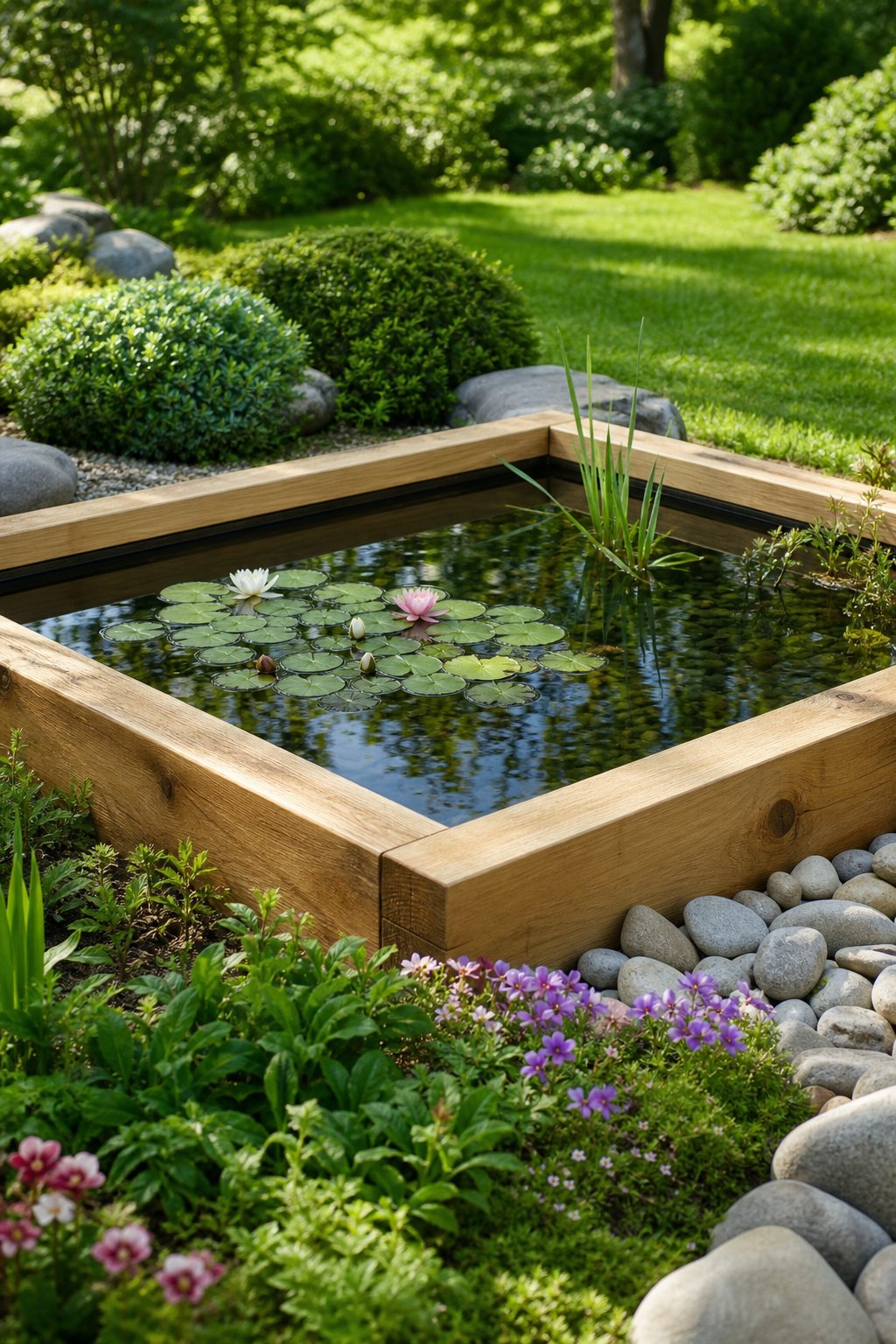
13. Shallow Square Timber Pond
Some pond shapes look pretty but waste space. A shallow square timber pond makes the most of a corner or fence line.
The clean edges are easier to frame in a yard. Building a square pond can be simpler than building a curved pond.
This style works well if you like neat lines and want a pond that feels organized. Add a liner and seal the timber properly.
Keep the depth shallow enough for safe bathing. If you plant around the outside, the square shape softens nicely and stops looking so boxy.
Expert Tip From MrPlanter: “Measure twice before you cut the timber. Square ponds show every crooked edge right away.”
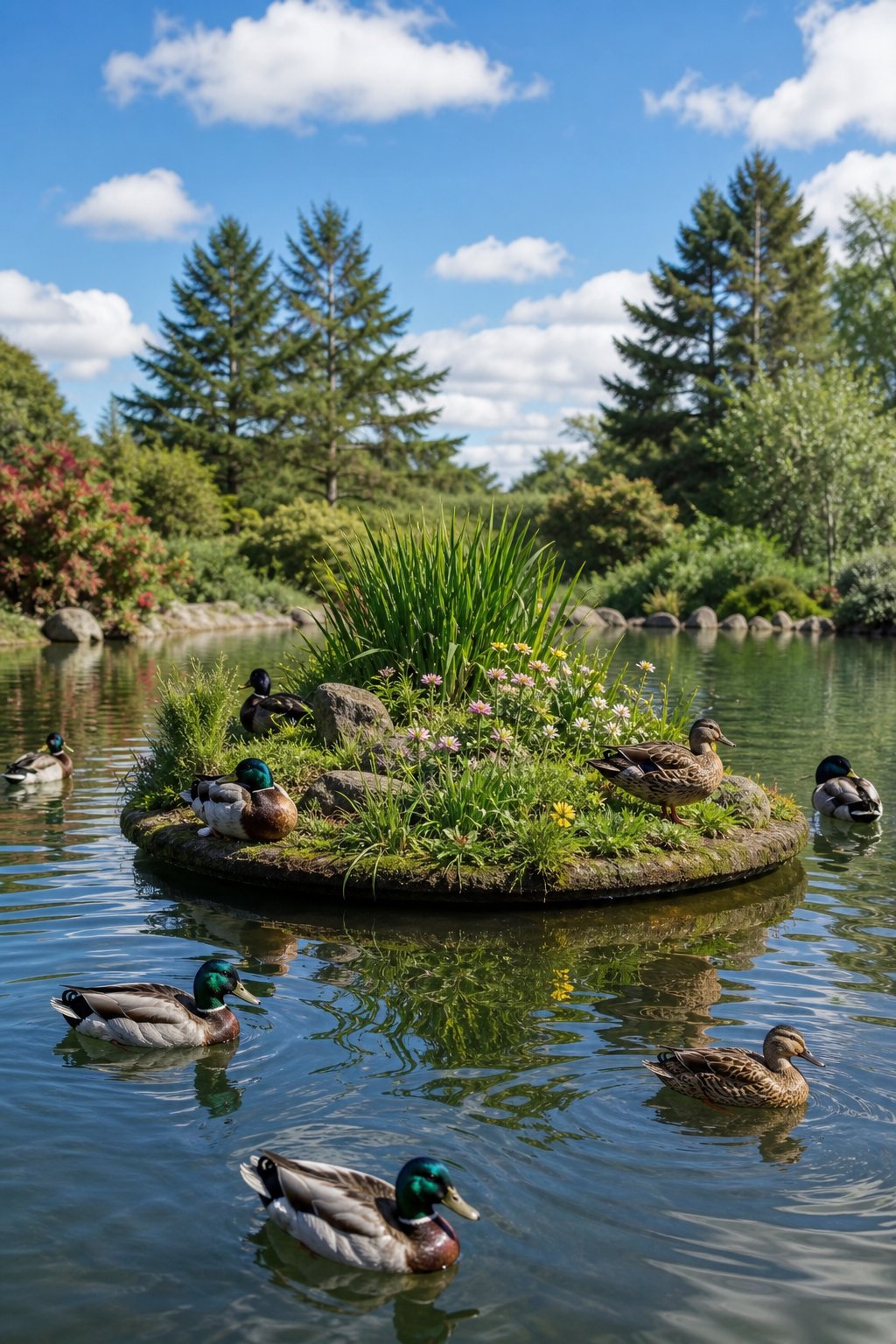
14. Floating Island Duck Pond
Ducks love having little spots to rest near the water, not just in it. A floating island gives them shade, a perch, and a bit of visual interest.
A floating island also helps break up open water if your pond feels too bare. This idea works best in larger ponds with enough room for the island to drift without blocking access.
Use pond-safe materials and keep the platform stable enough for ducks to step onto. A planted island softens the look and makes your pond feel more like a natural stopover.
Expert Tip From MrPlanter: “Secure the island so it cannot drift into your pump or filter. Water features work best when they stay where you planned them.”
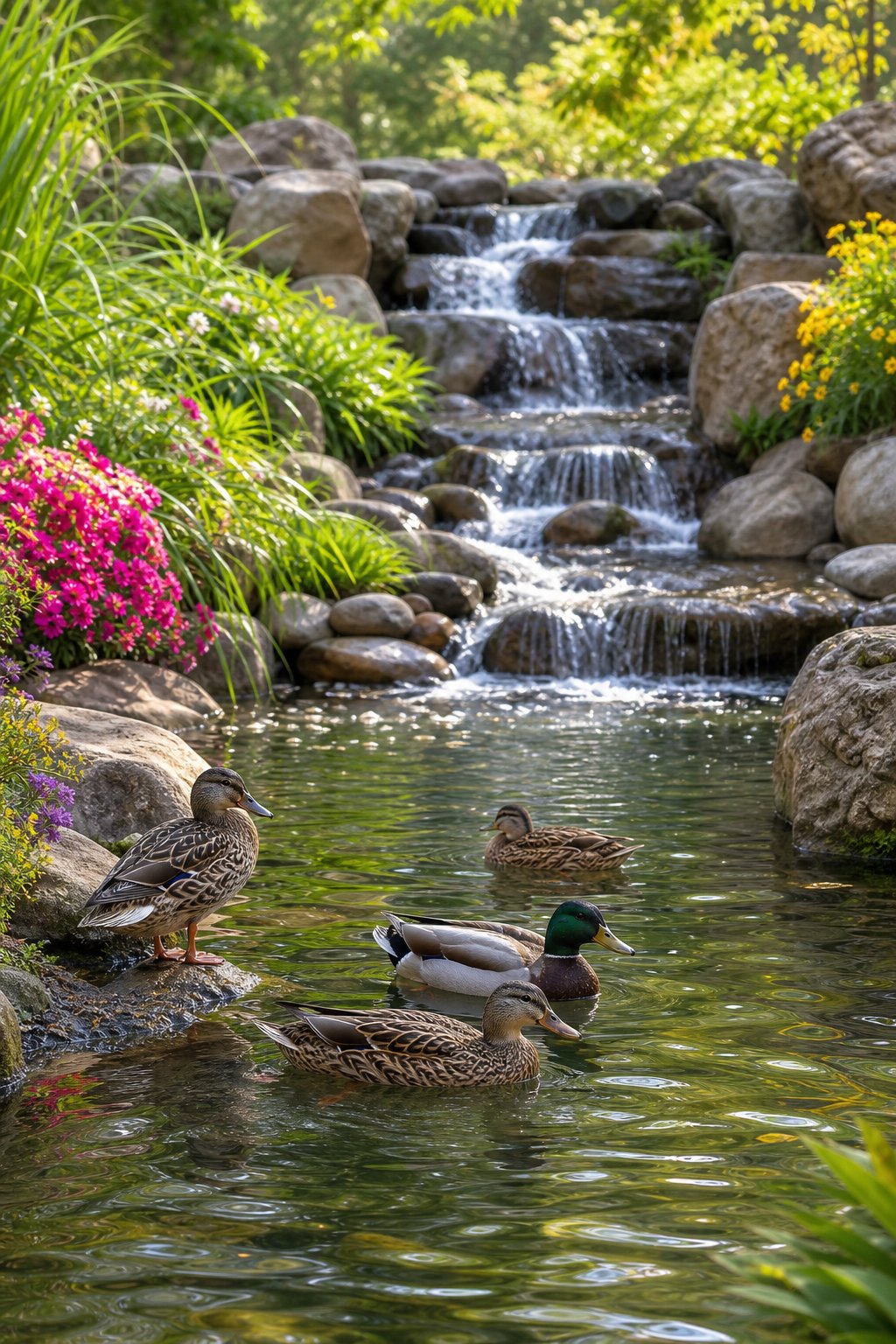
15. Waterfall Feature Duck Pond
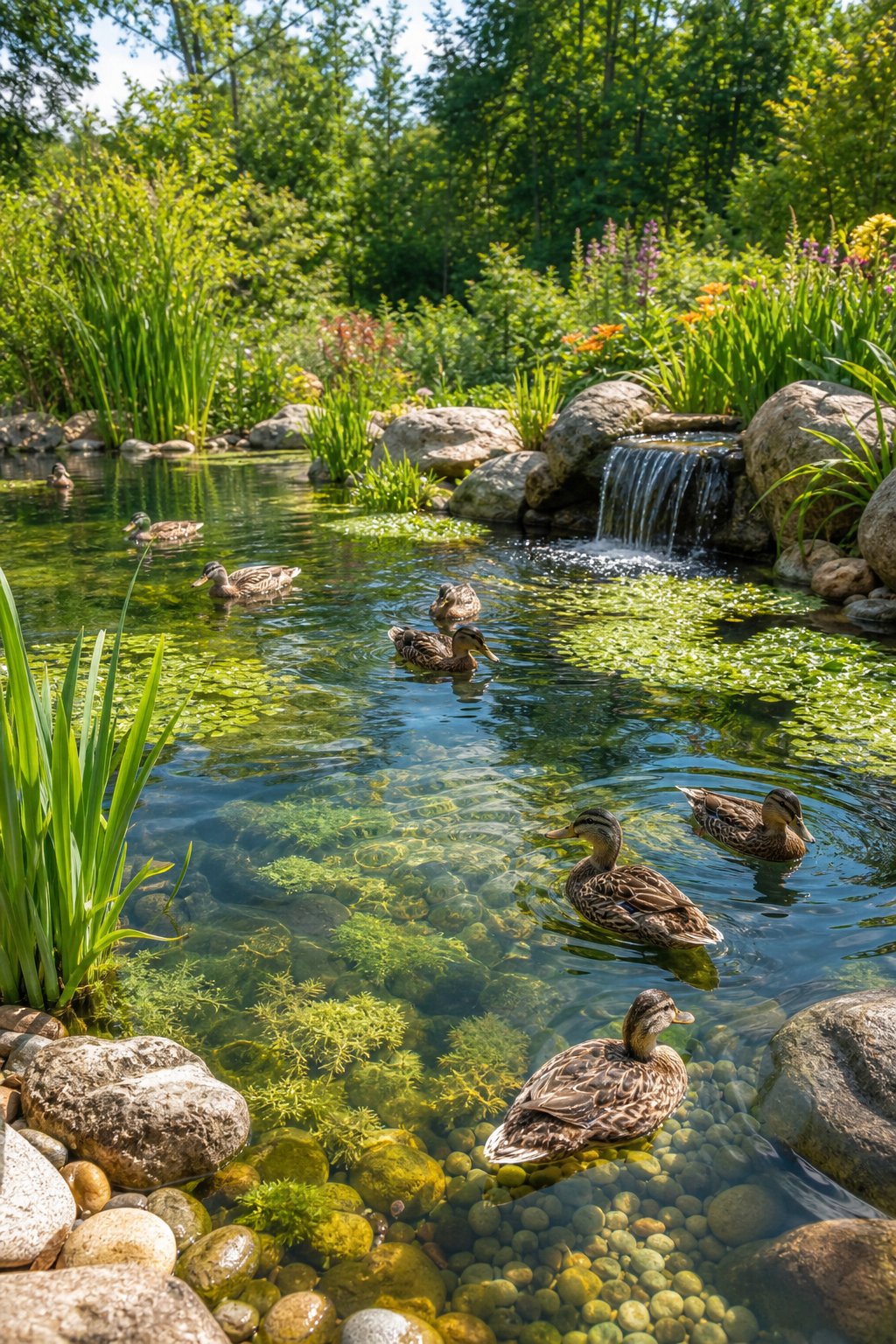
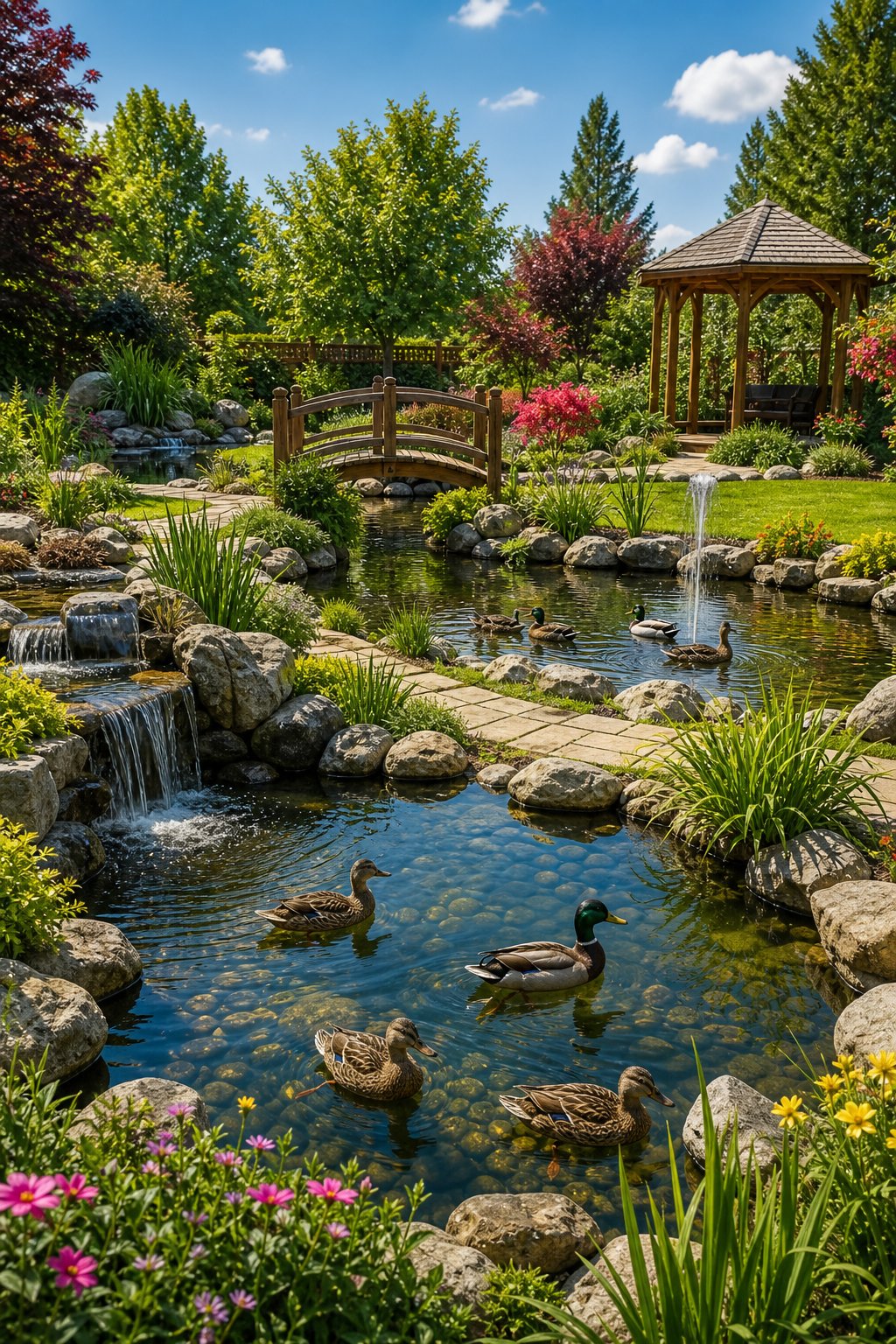
A little waterfall can make your pond feel like it is gently humming all day. The moving water helps keep things fresher, and ducks often enjoy swimming near the flow.
The sound from the waterfall makes the whole backyard feel calmer. This setup fits well if you want a showpiece pond with some natural movement.
Keep the cascade low enough so ducks can avoid the splash if they want to. Make sure you secure the stones.
A waterfall works well with plants, gravel, and a broad shallow area for bathing.
Expert Tip From MrPlanter: “Keep the waterfall flow gentle, not wild. Ducks like a steady trickle much more than a mini rapids course.”
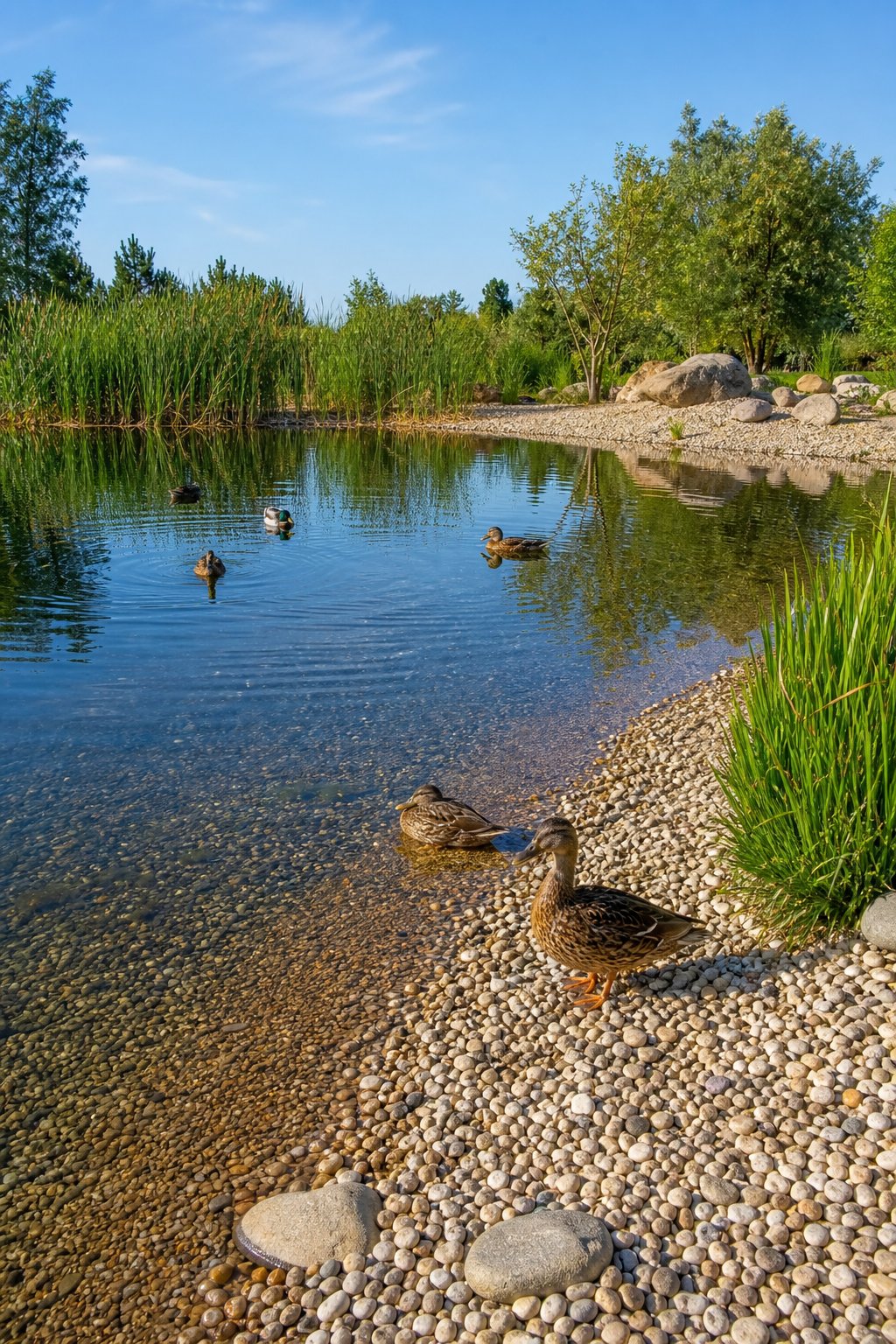
16. Gravel Beach Duck Pond
Muddy edges can turn a pleasant pond into a boot-cleaning station. A gravel beach gives your ducks a firm, dry-ish entry point and helps keep the shoreline from turning into a swamp.
A gravel beach also makes the pond look neat without feeling too formal. This works well for ponds that need easier access and less edge wear.
Use rounded gravel, not sharp stone, and spread it thick enough to stay in place. If you mix in a gentle slope, your ducks can wade in at their own pace without making a muddy mess right away.
Expert Tip From MrPlanter: “Choose gravel that is large enough to stay put. Tiny stones move fast when ducks start their daily splash parade.”
17. How To Choose The Right Duck Pond Idea
Match The Pond Size To Your Flock
Your pond should fit the number of ducks you keep, not just the space you have left over. A pair of ducks can do well with a smaller setup.
A bigger flock needs more room to bathe without crowding each other.
Prioritize Drainage And Easy Cleaning
If you cannot drain or scrub it easily, the pond will become a chore fast. Pick a design with a drain, a removable container, or a shape that lets you reach most of the water.
Choose Safe Entry And Exit Points
Ducks need a way in and out that does not feel like a cliff. Ramps, flat rocks, gravel beaches, and low edges all help prevent slips and muddy pileups.
Plan For Shade, Winter, And Predator Safety
A good pond should work in hot weather and stay usable when temperatures drop. Add shade for summer and think about heated water options in winter.
Keep the pond near fencing or cover that helps your flock feel safe.
Expert Tip From MrPlanter: “Pick the pond you can care for on your busiest week, not just your best day. That choice saves stress later.”
18. What Makes A Duck Pond Healthier And Lower Maintenance
Ideal Depth For Bathing And Preening
Adult ducks usually do well with about 12 to 18 inches of water for bathing and preening. That depth gives them room to dunk their heads and groom their feathers without making the pond overly deep.
When To Use Filters, Pumps, And Bubblers
Use a filter or pump when your pond gets dirty fast or sits near a lot of ducks. Bubblers help keep water moving and may reduce stagnant spots.
Bubblers can also make the pond easier to manage.
Best Pond Plants For Duck-Friendly Setups
Simple, duck-safe plants like cattails, water hyacinth, and duckweed help soften the pond and support a more natural look. Protect plants if your ducks tend to snack or stomp on everything.
How Often To Refresh The Water
You may need to add fresh water to small ponds every day or two. Larger setups can go a bit longer if the filtration works well.
If the water smells bad, looks cloudy, or contains too much sludge, you should refresh it.
Expert Tip From MrPlanter: “Fresh water is the cheapest health upgrade you can give your ducks. A simple refill routine can save you a lot of trouble.”
I’m Anirban Saha, the Founder and Owner of MrPlanter.com. I pay the bills as a software developer, although my BTech is actually in Electronics and Communication. I really love my day job, but what gives me energy every day is interacting with my indoor plants and taking care of them. I have been successfully nurturing and maintaining houseplants for over 10 years now.
📚🔍 Our content undergoes thorough review and fact-checking before publication. For additional details, explore our strict Editorial Policy to deliver helpful content. 📝🔒