As an Amazon Associate, MrPlanter.com earns from qualifying purchases.
A wildlife pond in your backyard can do a lot more than sit there looking pretty. With the right shape, depth, and planting, your pond can bring in frogs, birds, dragonflies, and other small visitors that actually use the water, not just pose beside it.
The best 15 wildlife pond ideas all share the same basic trick, they give animals a safe way in, a safe way out, and enough cover to stick around.
If you’ve ever built a pond and then wondered why nothing moved in, the answer usually lies in the structure, not the luck.
A few smart choices at the start can turn a simple water feature into a busy little habitat that feels alive all season.
1. Graduated Shelf Wildlife Pond With 20cm, 40cm, And 60–90cm Depth Zones
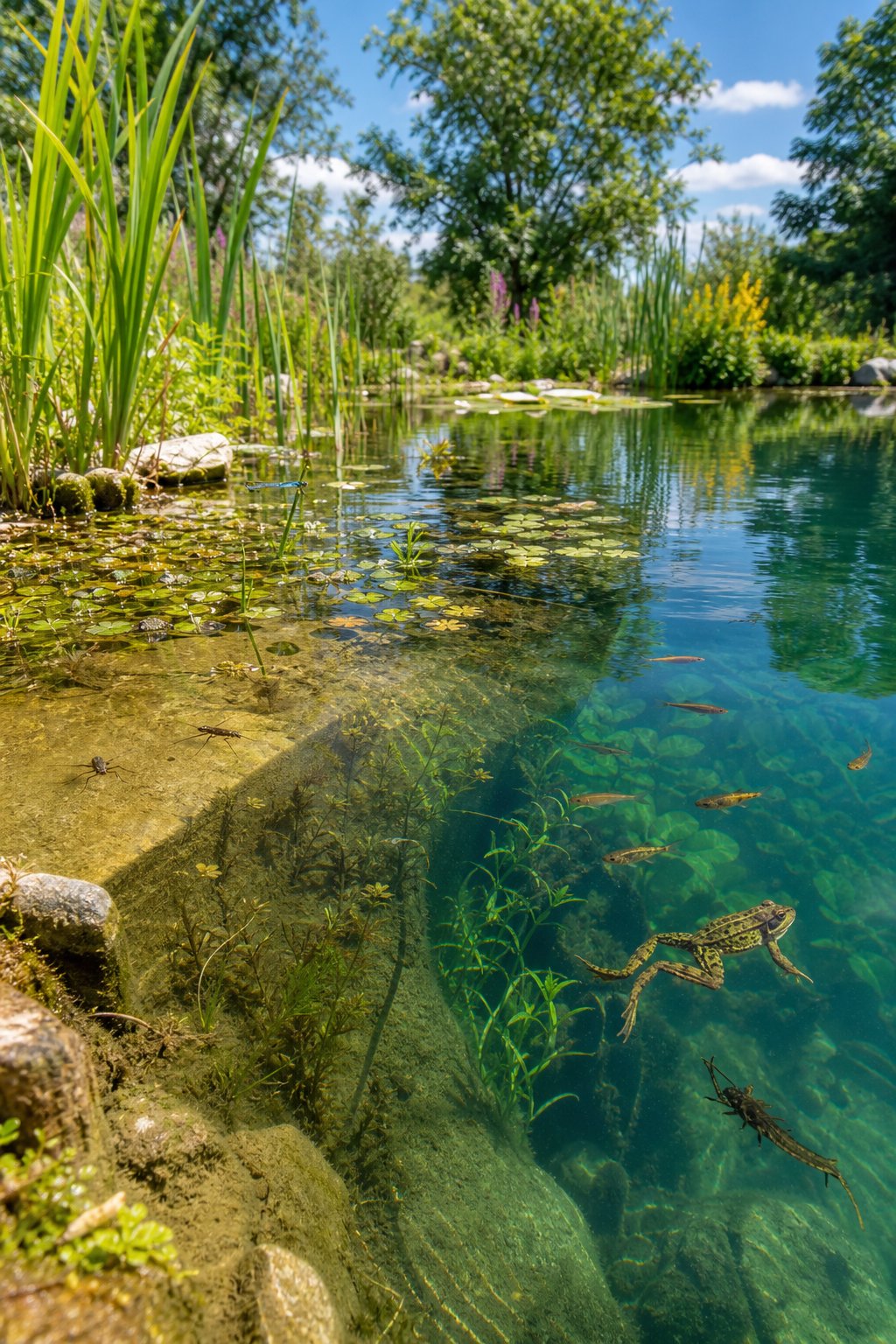
You dig one big hole, fill it, and then wonder why it feels like a fancy puddle with trust issues. A graduated shelf pond fixes that by giving you a shallow 20cm zone, a middle shelf around 40cm, and a deeper center at 60 to 90cm.
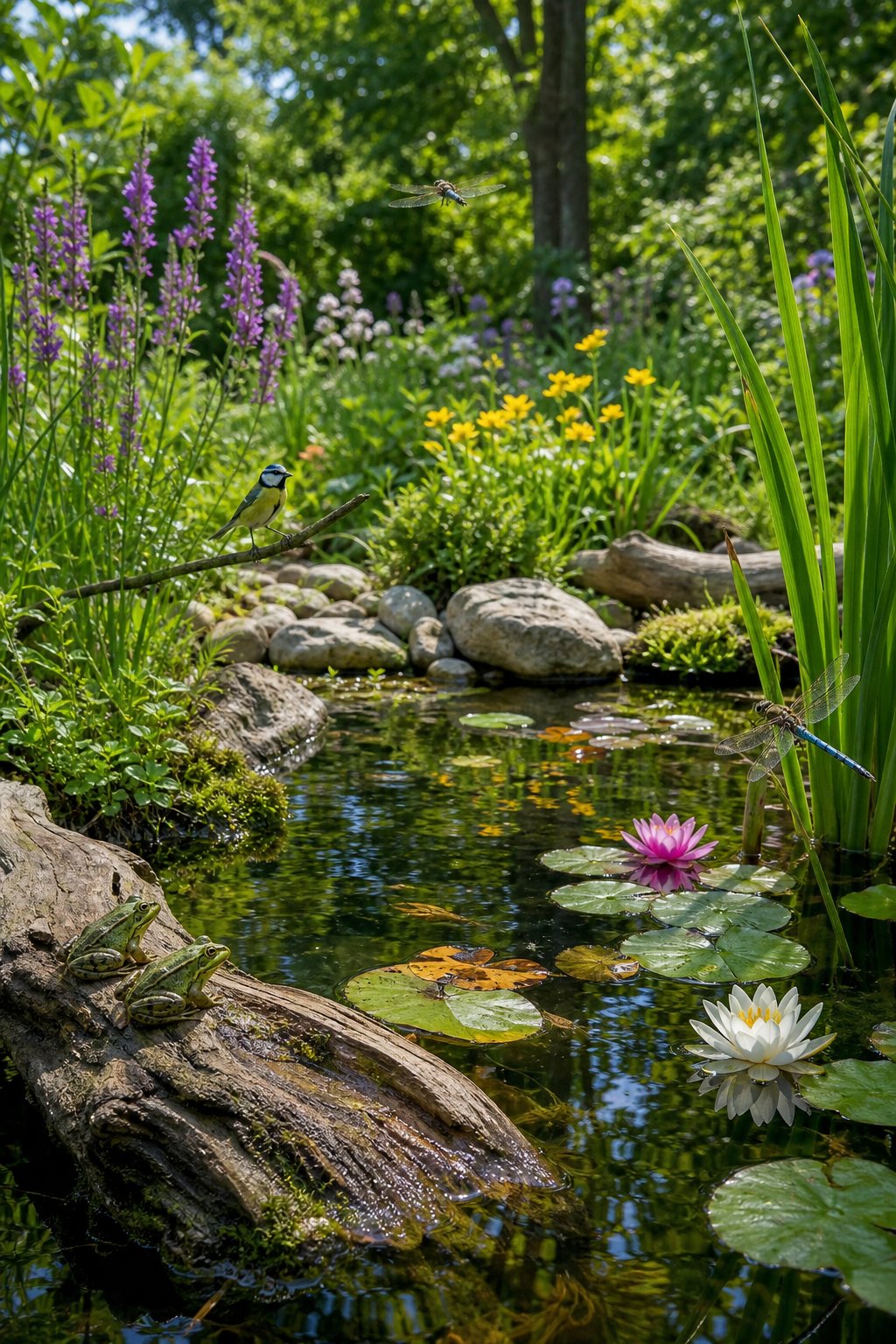
That mix helps tadpoles, birds, and overwintering frogs all use the same pond without stepping on each other’s toes. The shallow shelf warms fast and works well for marginal plants.
The deeper center stays steadier through winter, which gives wildlife a safer place to ride out cold snaps. MrPlanter suggests, “Build your pond in layers, not one flat hole. Your wildlife gets more options, and your pond looks more natural too.“
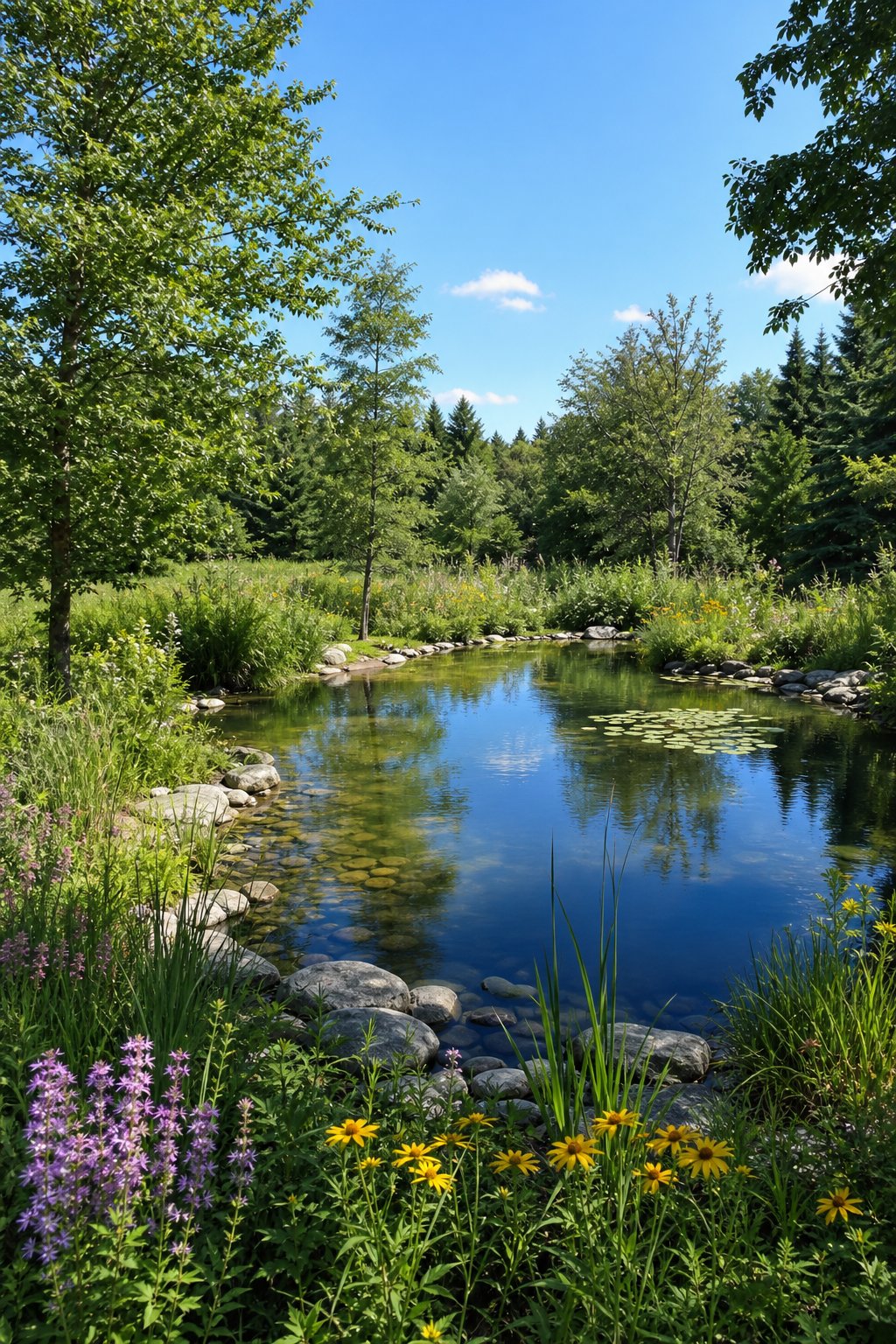
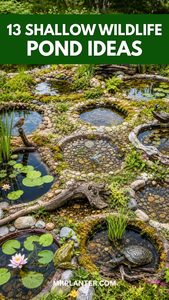
2. Sloped Pebble Beach Pond Edge For Birds, Hedgehogs, And Frogs
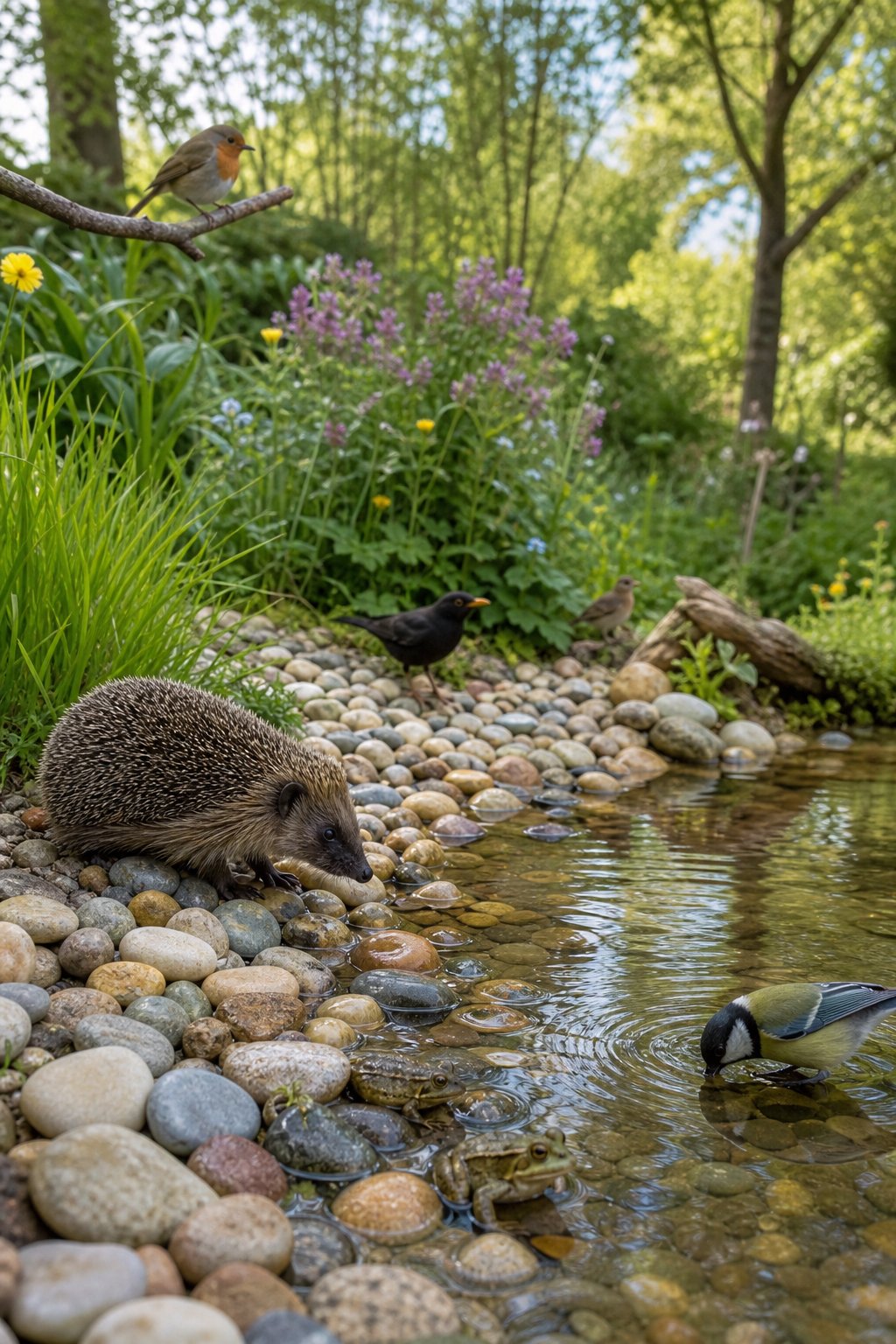
Birds often ignore ponds with steep edges, like they’ve signed a no-adventure contract. A sloped pebble beach gives them a place to land, drink, and bathe without fuss.
It also gives hedgehogs and frogs a gentle path out if they slip in. You can build it with rounded pea gravel or small washed stones that slope into the water.
Keep it shallow enough that feet can grip and avoid sharp rock that feels like it came from a bad driveway. MrPlanter says, “Make one side of your pond easy to walk, hop, and wade into. That simple change can turn a quiet edge into the busiest spot in the yard.“
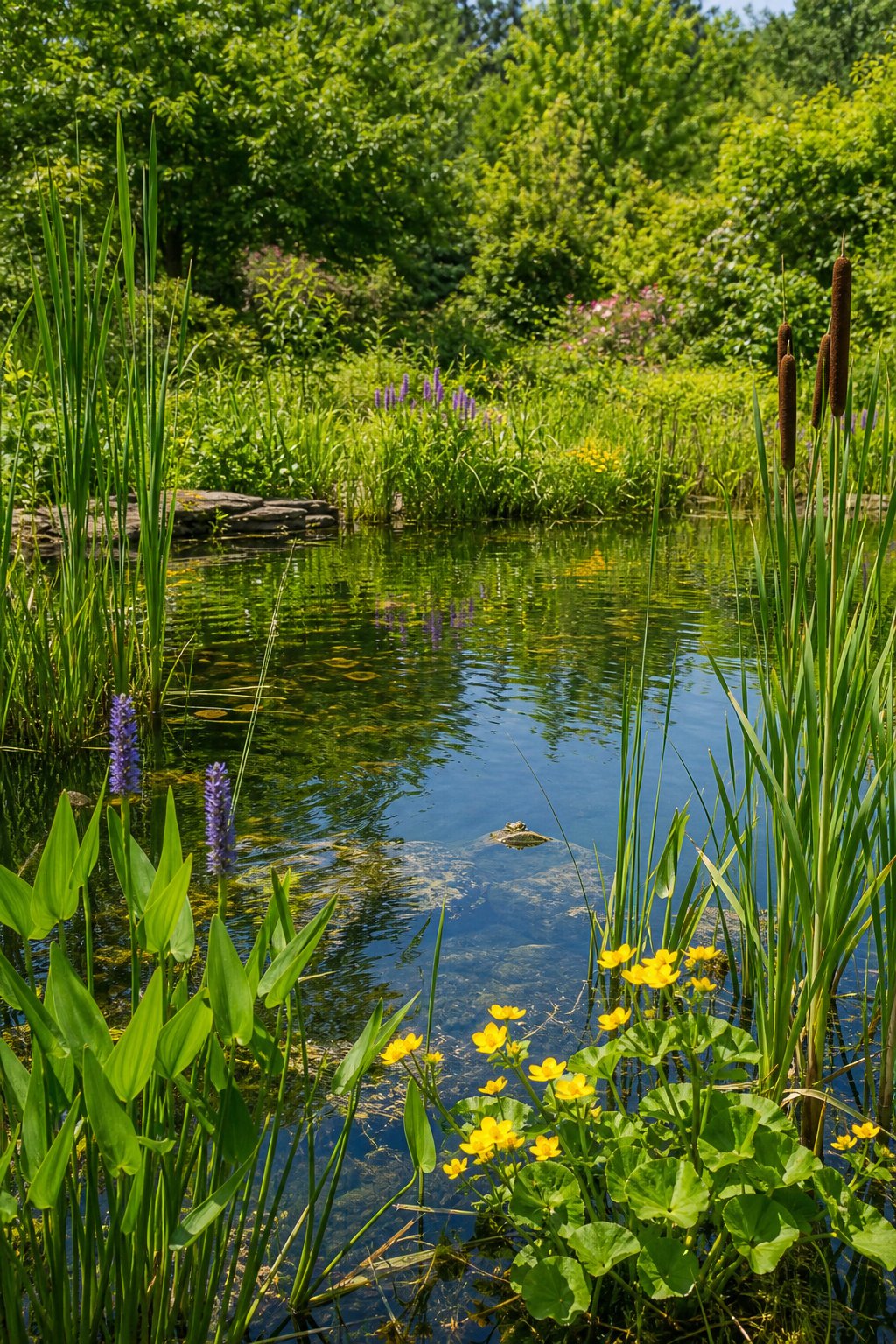
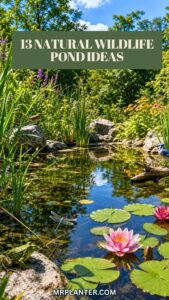
3. Native Marginal Planting With Yellow Flag Iris, Marsh Marigold, And Purple Loosestrife
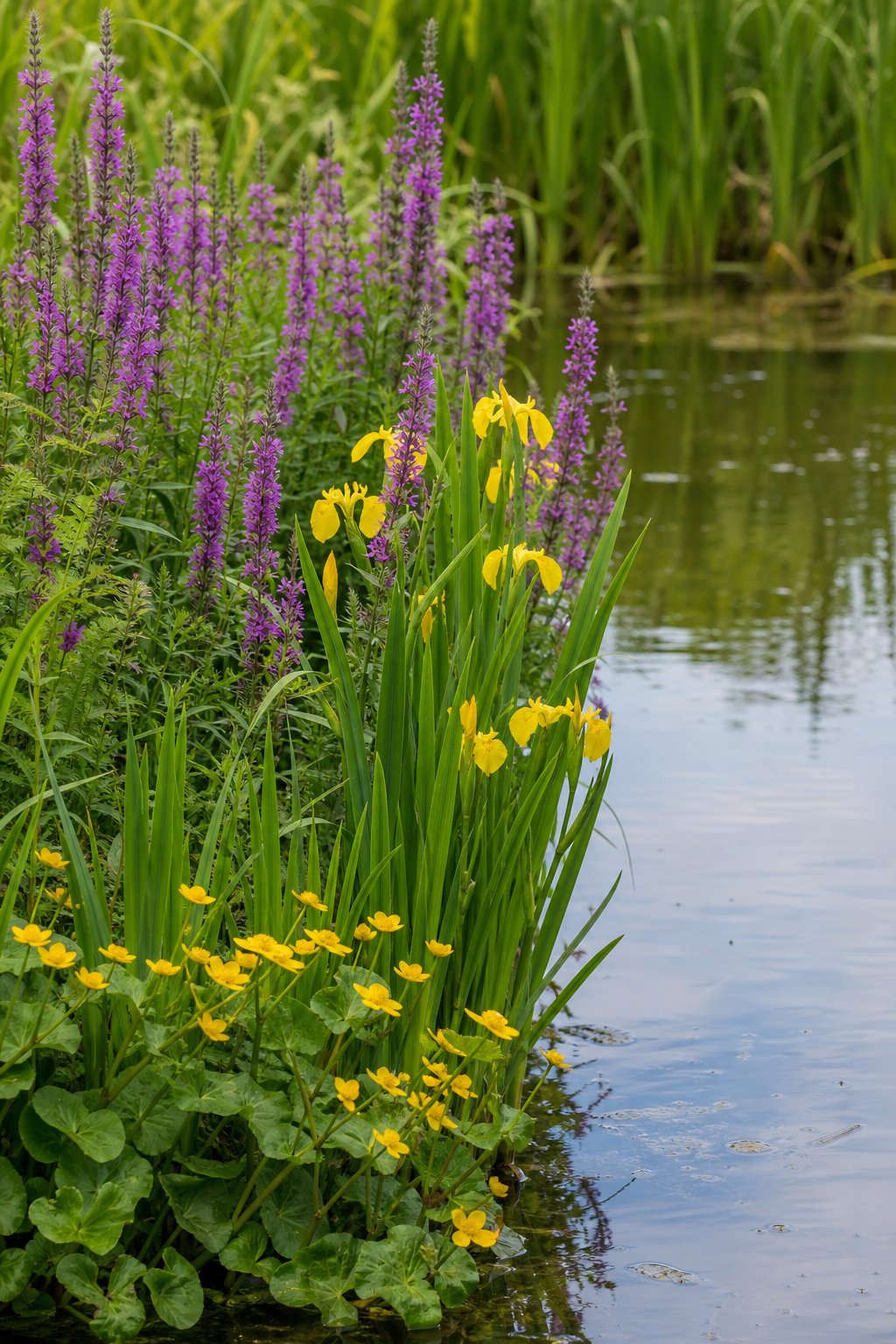
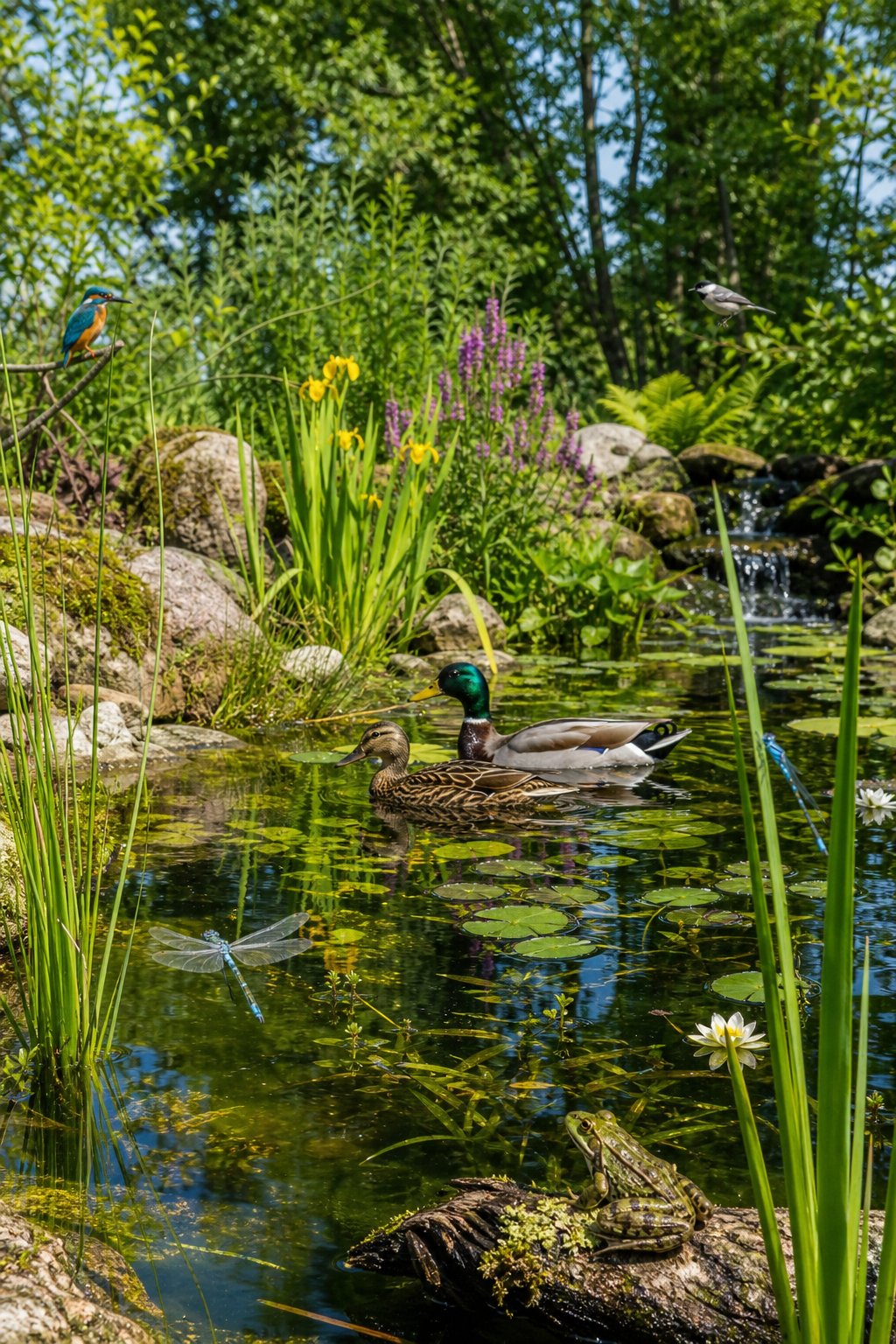
Native marginals act as the pond’s friendly neighborhood hosts, always ready with a seat and a snack. Yellow flag iris, marsh marigold, and purple loosestrife give insects, frogs, and small birds the cover they need along the edge.
They also break up hard lines so the pond feels like it belongs in the yard. Plant them in baskets or pockets along the shelf so roots stay where you want them.
A mix of heights works well, since low plants near the front and taller ones at the back create shelter without blocking all the light. MrPlanter notes, “Choose plants that belong in your area. They usually ask for less fuss and give more life back in return.“
4. Organic Kidney-Shaped Pond With Curved, Naturalistic Shorelines
A pond does not need to look like a perfect oval to work well. A kidney shape with soft curves feels calmer and gives wildlife more edge to explore.
It also helps your pond blend into a garden bed instead of looking like it was stamped out by a cookie cutter. Curved shorelines create pockets for planting and little hideouts for frogs and insects.
They also make the space easier on the eye from a patio or kitchen window. MrPlanter advises, “Let the edges wander a little. Straight lines are great for folders, not so much for wildlife ponds.“
5. Part-Sun Garden Pond Sited Away From Deciduous Leaf Drop
You set a pond under a tree and then spend fall fishing leaves out like a very soggy treasure hunt. A part-sun spot with morning light and afternoon shade works much better.
It keeps water from getting too hot while also avoiding the leaf dump that comes from sitting under deciduous trees. Try to place your pond a little away from heavy leaf fall, even if the shade looks tempting.
Four to six hours of sun is a good target for most backyard ponds. MrPlanter suggests, “Pick the spot before you dig, not after. Sun, shade, and falling leaves can make or break the pond’s first year.“
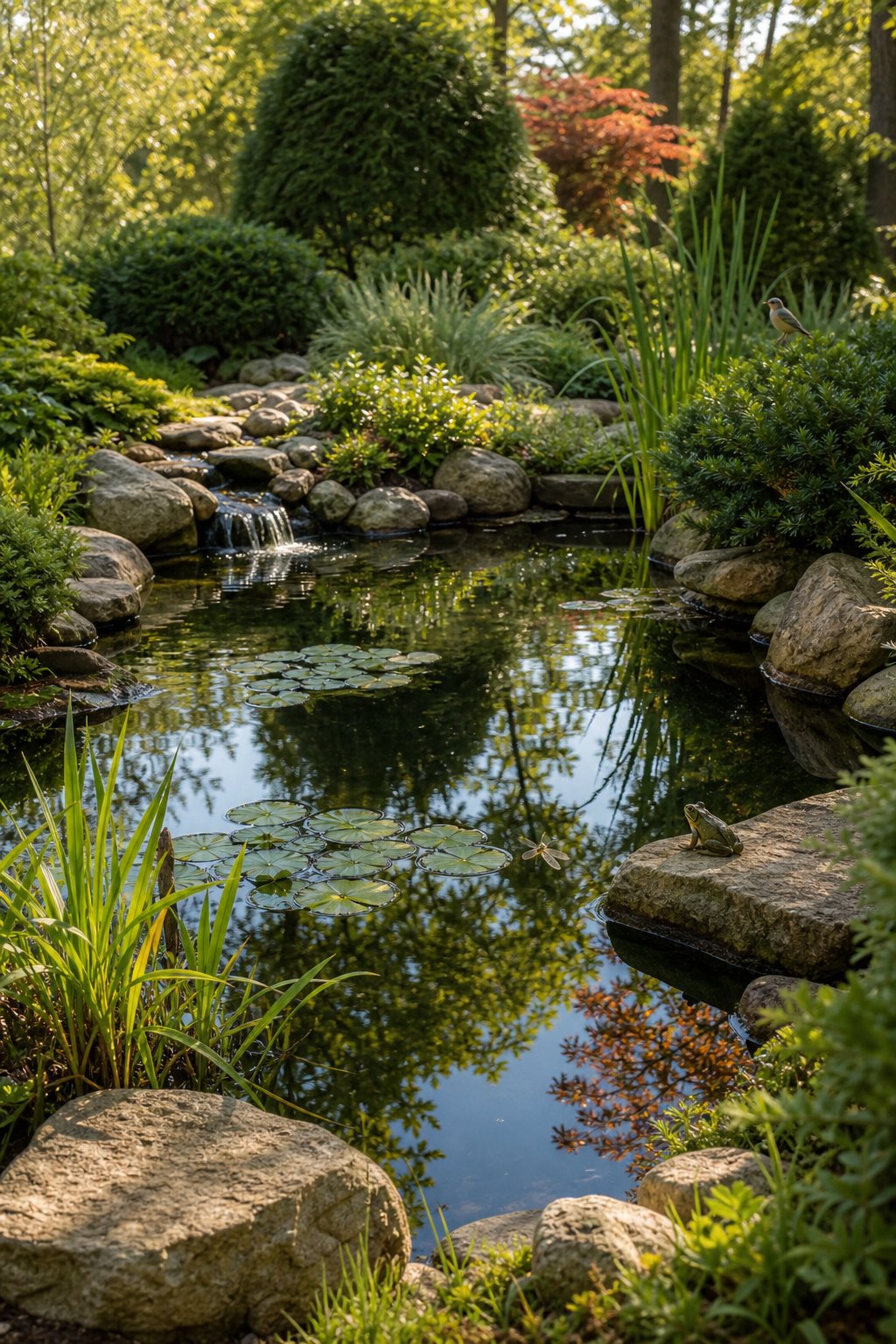
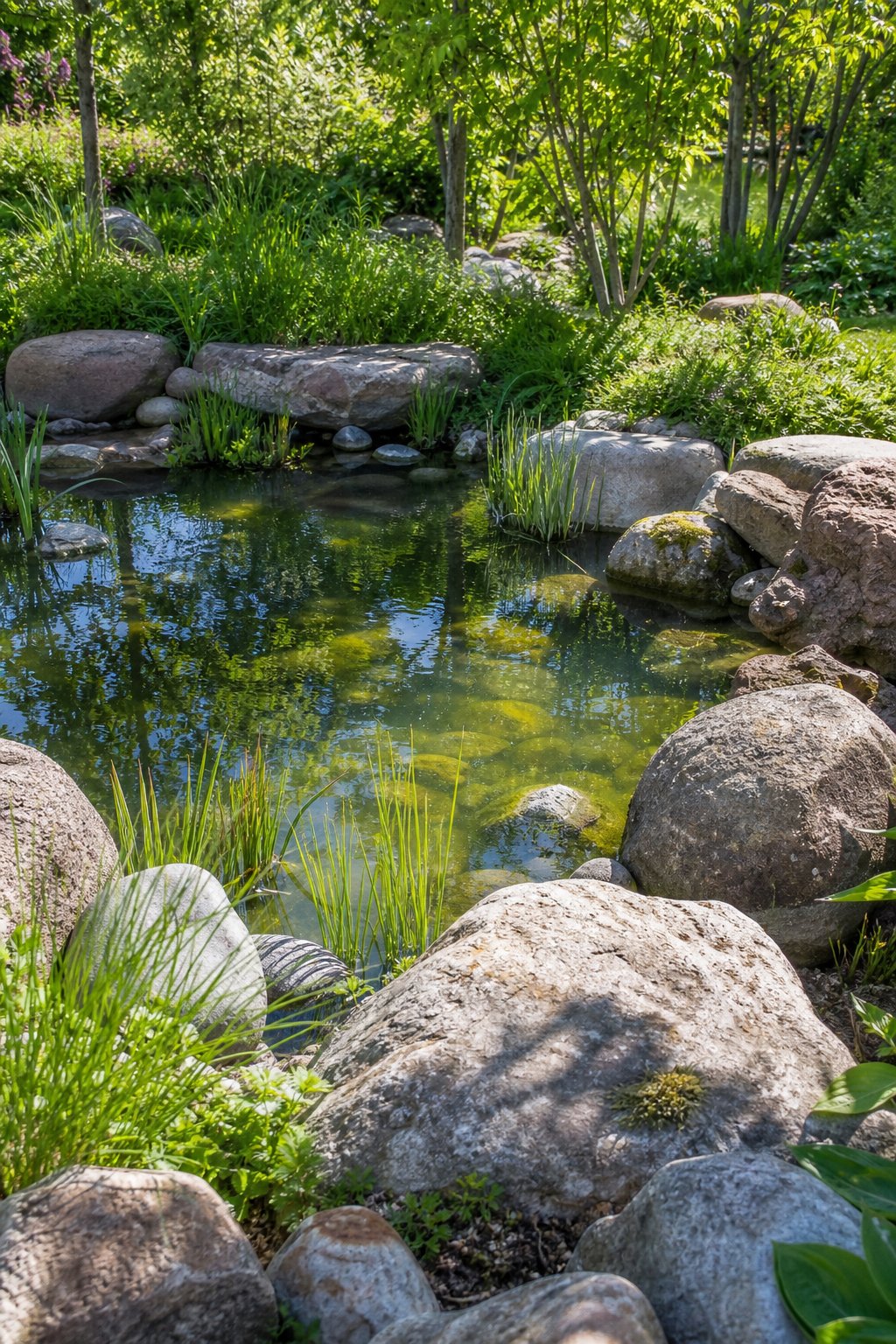
6. Stone-And-Boulder Edge Pond With Gaps For Shelter And Safe Access
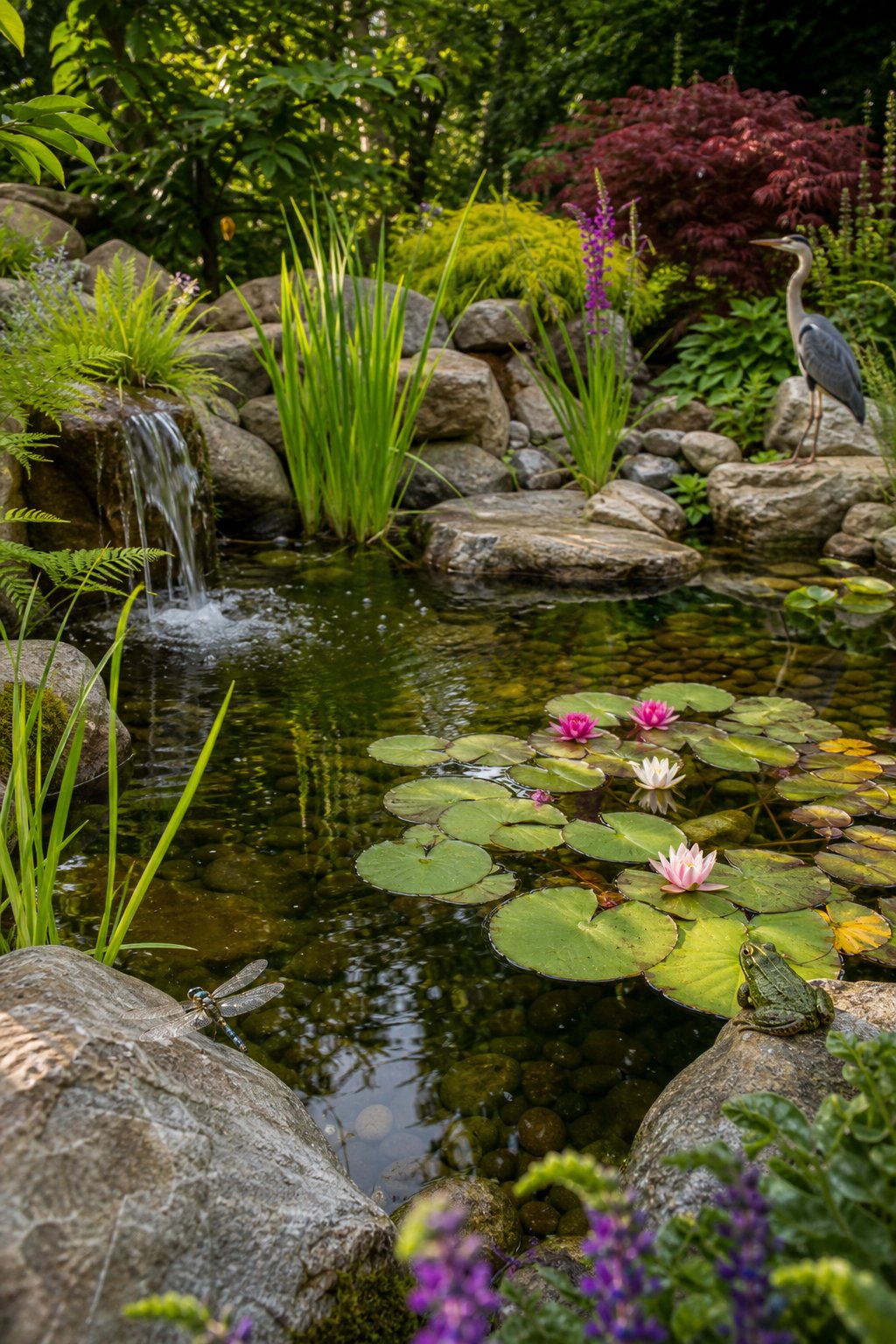
A pile of stones can become a condo block for frogs, beetles, and other small helpers. When you place boulders with gaps between them, you create cool hiding spots and a safer way for animals to move in and out of the water.
It also gives the pond a more settled, weathered look. The trick is to avoid packing every stone tight.
Leave small openings near the edge and mix larger rocks with flatter ones so animals can rest, hide, or climb. MrPlanter advises, “Think shelter, not just decoration. A few well-placed gaps can mean more visits from the creatures you want most.“
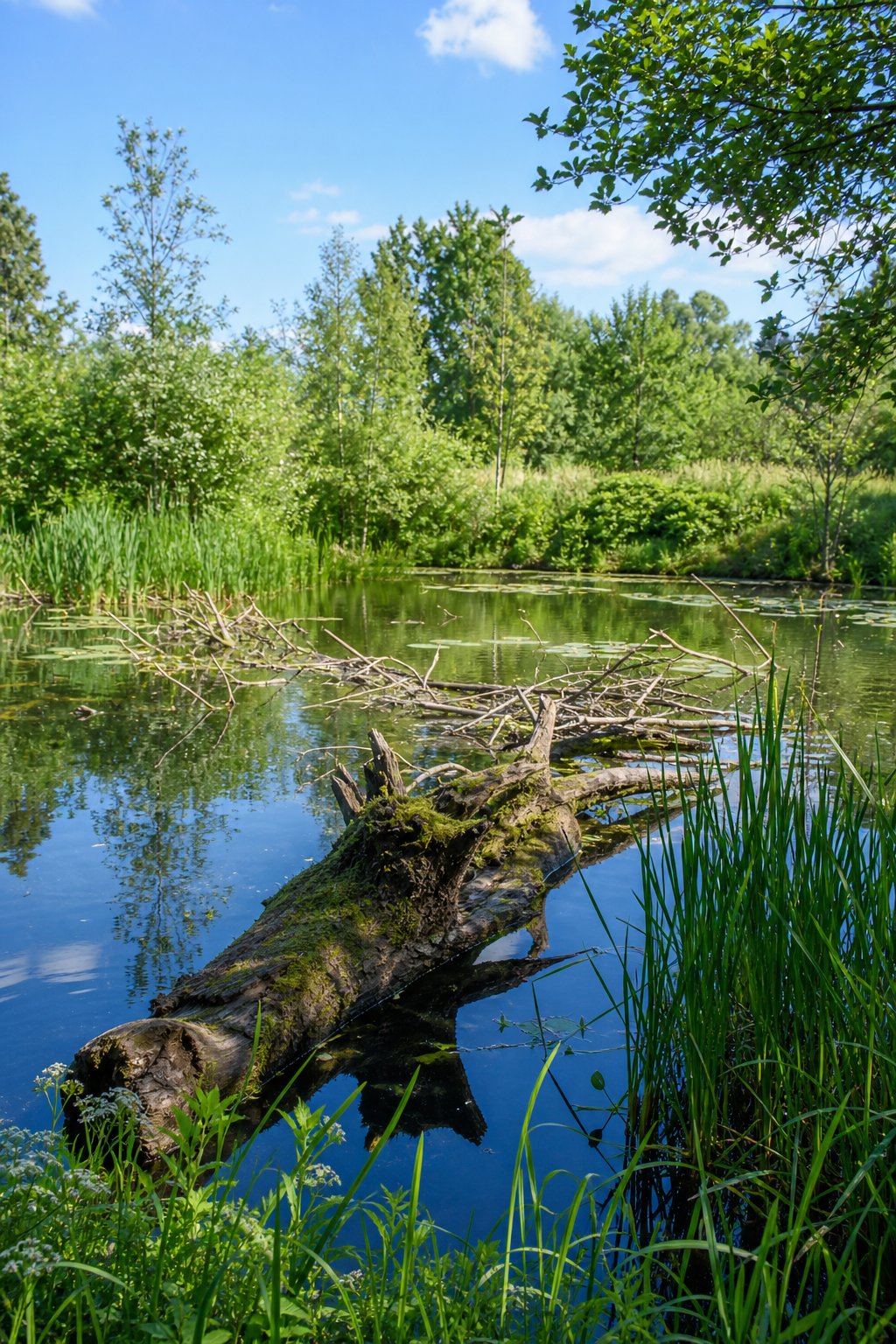
7. Pond With Half-Submerged Log And Branch Refuge Features
A half-submerged log acts like a cozy dock for pond life, always ready to host a frog or a dragonfly. Branches and logs give resting spots, hunting perches, and shade on hot days.
They also make the water feel less bare, which helps wildlife feel safer. Choose untreated wood and anchor it so it stays partly in place.
One end can rest in shallow water while the other leans toward the bank, giving animals easy access from both sides. MrPlanter notes, “Add wood like you’re setting out furniture for tiny guests. If it looks useful to you, it probably looks useful to them too.“
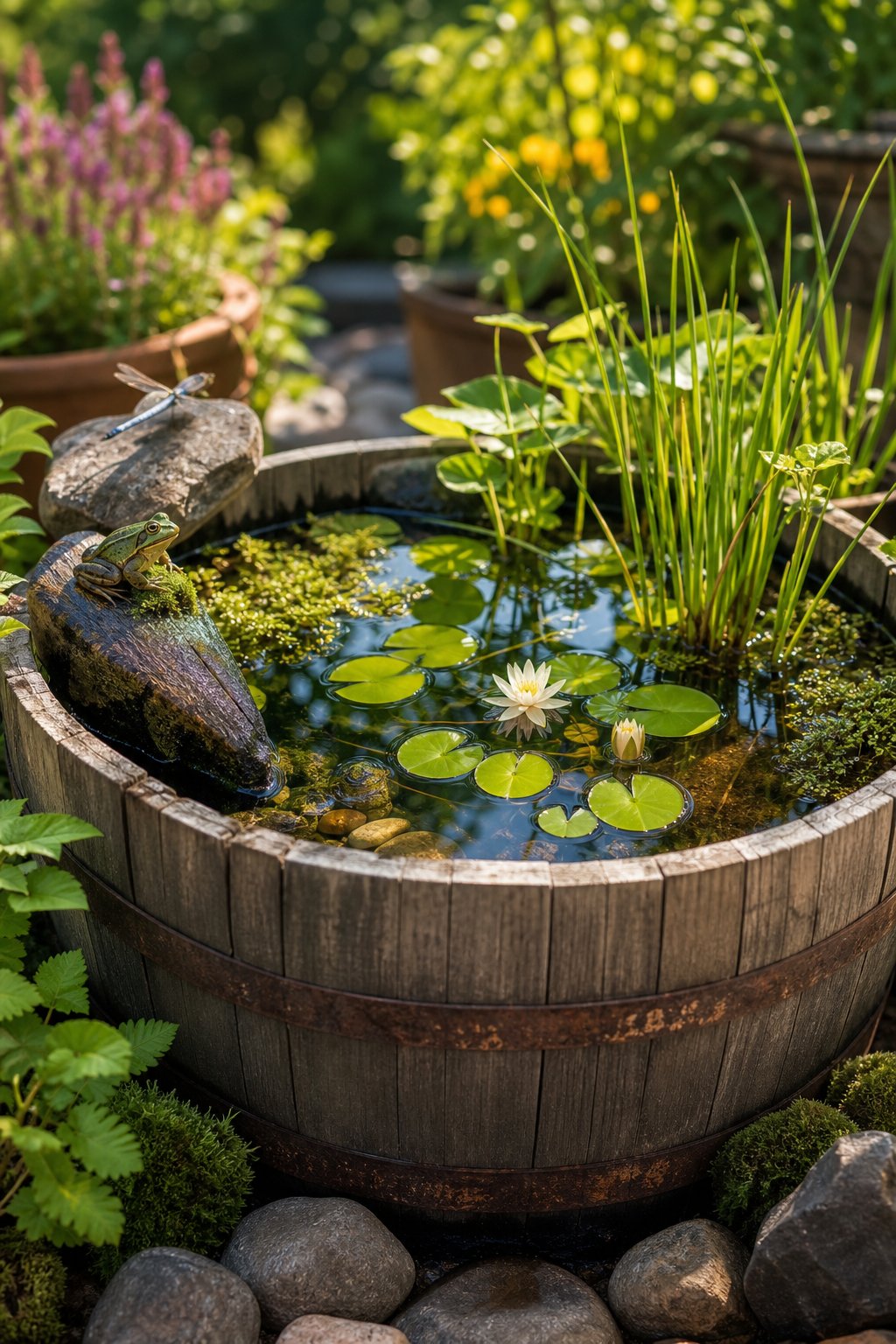
8. Mini Wildlife Pond In A Half Wine Barrel
You do not need a huge yard to make a wildlife pond work. A half wine barrel can hold a tiny pond that still brings in insects and gives birds a safe place to sip.
It’s a smart choice for patios, small decks, and tight garden corners. Line it properly, add a shallow shelf or raised stone, and keep the planting modest so the container does not feel crowded.
Because it warms up faster, you’ll want to watch water levels more closely in hot weather. MrPlanter says, “Small ponds still count. A well-placed barrel can do more wildlife work than a big empty hole.“
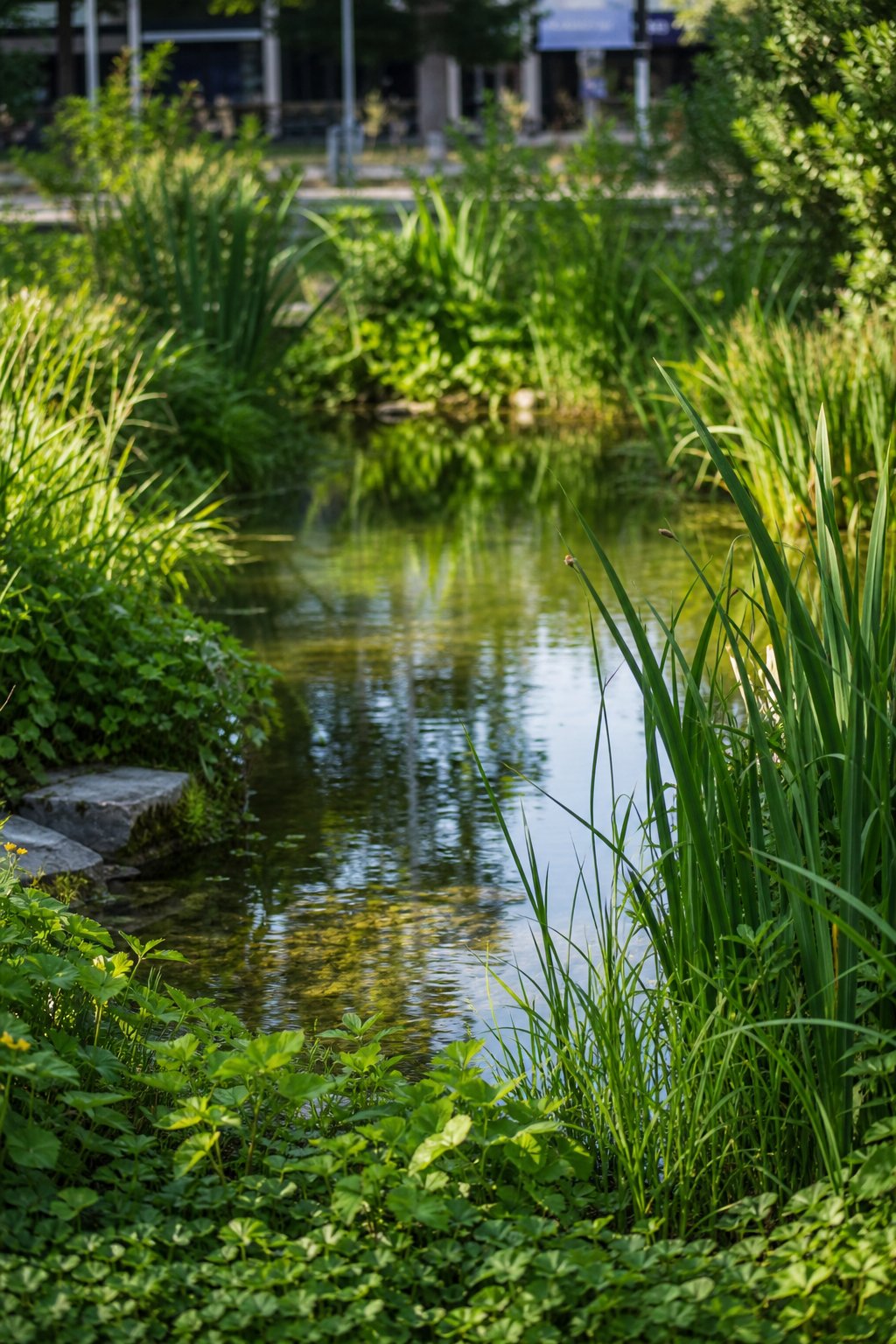
9. Small Urban Pond Framed By Long Grass And Low Cover Planting
In a city yard, a pond can feel exposed, like it’s trying to host a wildlife party in a parking lot. Long grass and low cover plants fix that by giving animals places to slip in and out without feeling watched.
They also soften the edges so the pond looks more natural in a tight space. Keep the center open, then ring it with grasses, sedges, and low flowering plants.
That mix gives small creatures cover without blocking your view of the water. MrPlanter suggests, “Frame small ponds with plants, not fences of stone. The more tucked in the edge feels, the more wildlife usually trusts it.“
10. Bog Garden Margin Pond With Moisture-Loving Native Plants
The soggy edge can be just as useful as the pond itself. A bog garden margin lets moisture-loving native plants sit right beside the water, where they can soak up splash and spillover.
That gives you more planting space and a richer habitat edge. Use plants that like wet feet, then keep the soil damp but not flooded.
This works especially well where the pond blends into a rain-fed hollow or low spot in the yard. MrPlanter says, “Treat the margin like part of the pond, not leftover dirt. That wet strip can pull a lot of wildlife duty.“
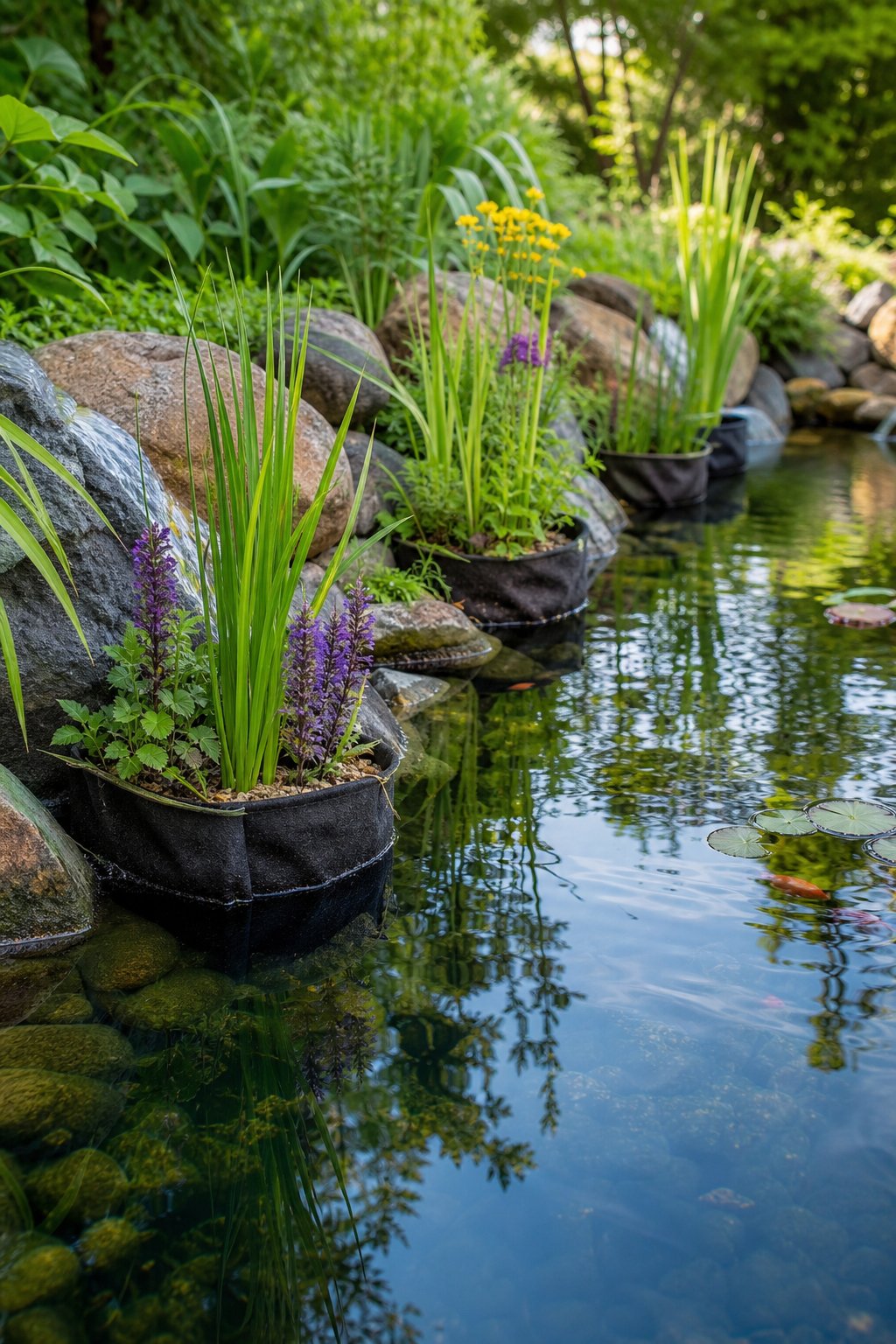
11. Liner Pond With Fabric Aquatic Plant Baskets On Marginal Shelves
A liner pond does not have to look plain or plastic if you dress the shelves right. Fabric aquatic plant baskets let you place marginals neatly on ledges while keeping roots where they belong.
They also make it easier to swap plants later without wrecking the whole setup. This setup works well if you want flexibility and a cleaner layout.
Just tuck the baskets into the shelves and hide the edges with stones or lower plants so they blend in. MrPlanter notes, “Use baskets when you want control without chaos. They make plant care easier and keep your pond from turning into a root pile.“
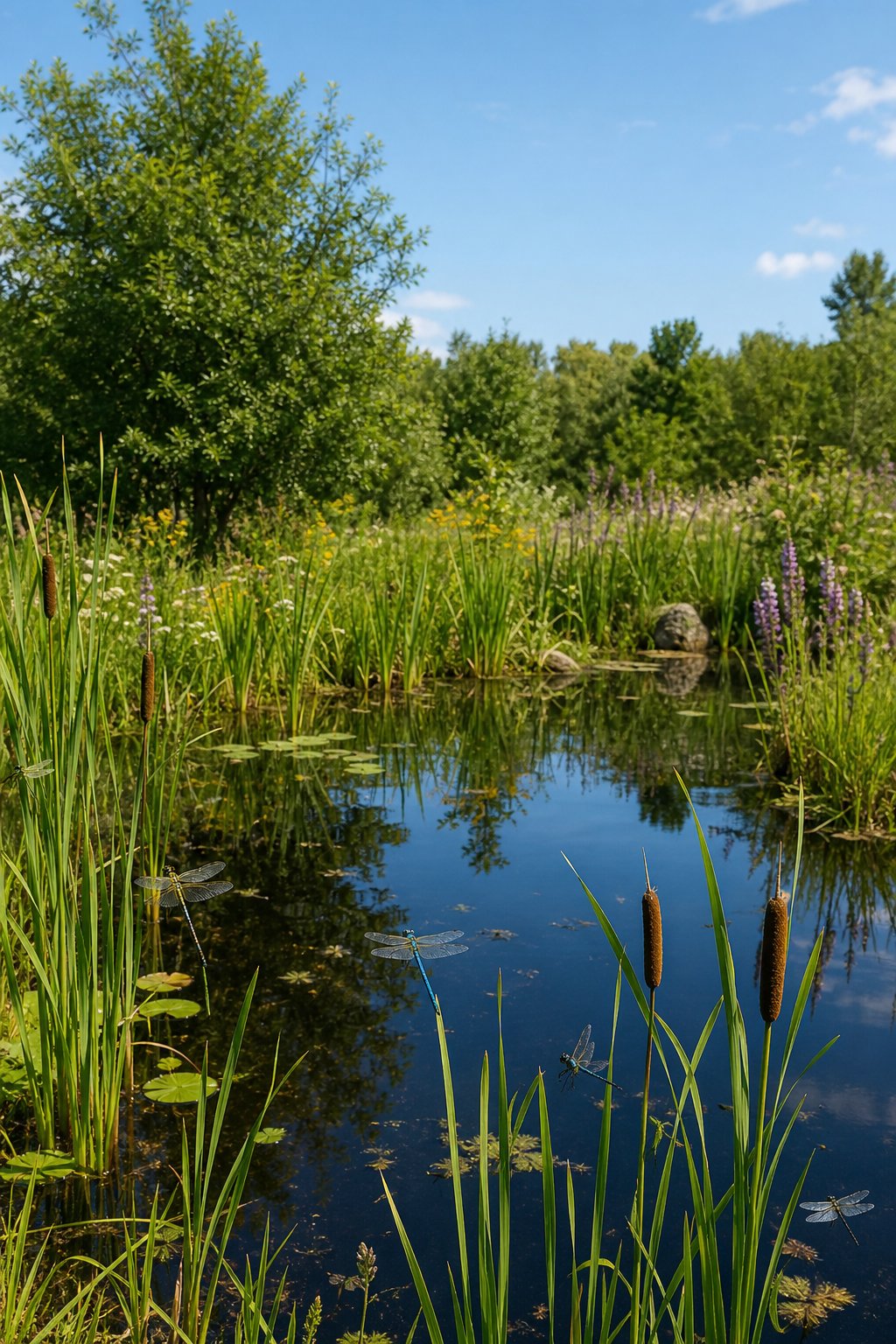
12. No-Fish Dragonfly Pond With Open Water And Emergent Perches
You want dragonflies, then add fish, and suddenly the buffet disappears. A no-fish pond gives dragonfly nymphs a real chance to grow up, which means more adult dragonflies zipping around your yard.
Open water and reed stems give them room to hunt, rest, and emerge. Keep the water calm, with some open patches and some upright stems for perches.
That balance helps insects land and makes the pond feel active without getting crowded. MrPlanter advises, “If dragonflies are on your wish list, skip the fish. You’ll be surprised how fast the pond starts to buzz with life.“
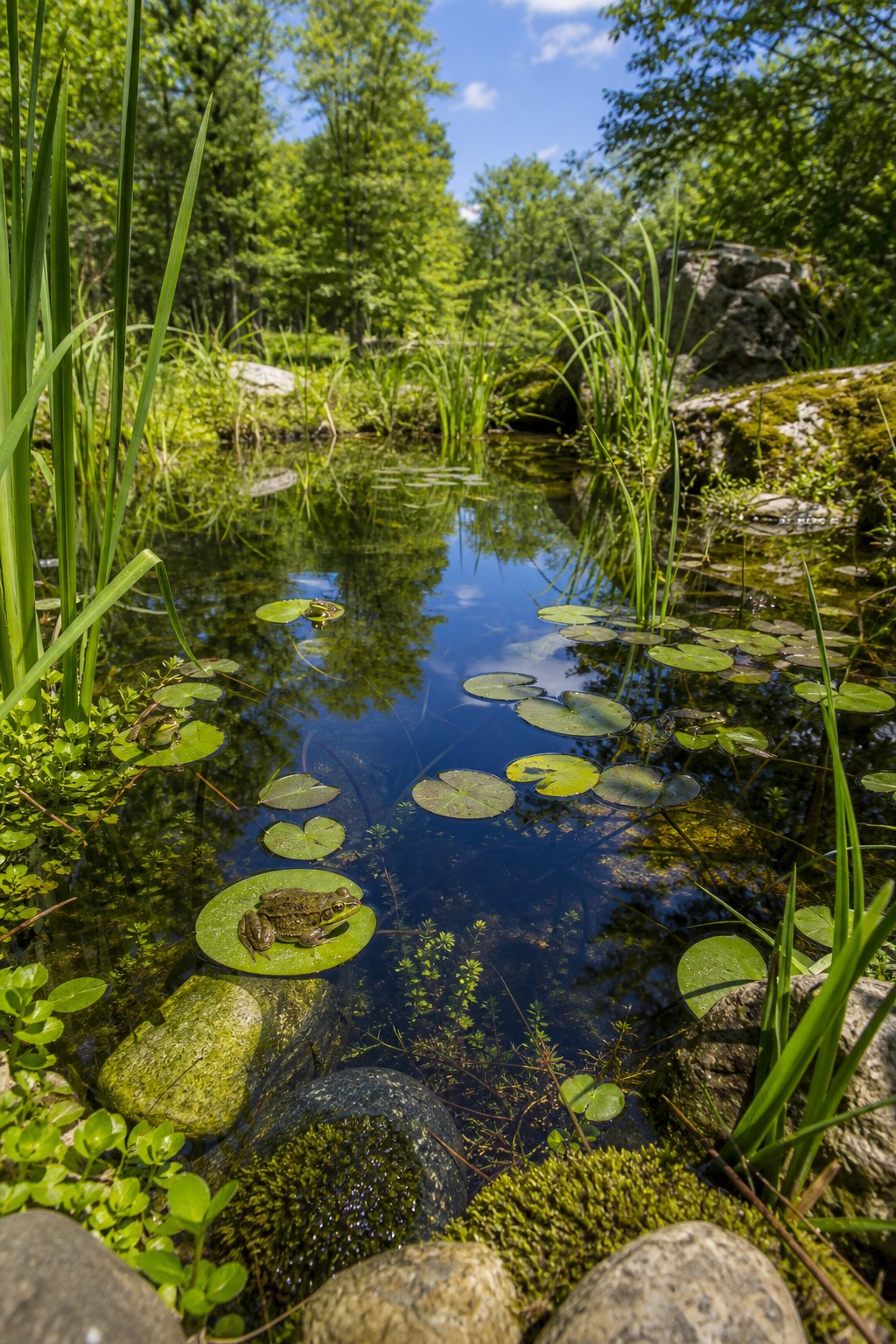
13. Frog-Friendly Pond With Quiet Deep Center For Overwintering
Surprising fact: frogs need more than a shallow splash zone if you want them to stay through the seasons. A quiet deep center gives them a place to rest in cold weather, while the shallows let them enter and leave with ease.
This kind of setup feels simple, yet it does a lot of work. Avoid noisy pumps and keep the center calm and sheltered by adding plants or stones nearby.
Frogs like places where they can hide fast and settle down without being bothered. Expert Tip From MrPlanter: “*Give frogs a quiet middle and a soft edge. That mix makes your pond feel safe enough for them to stick around.“
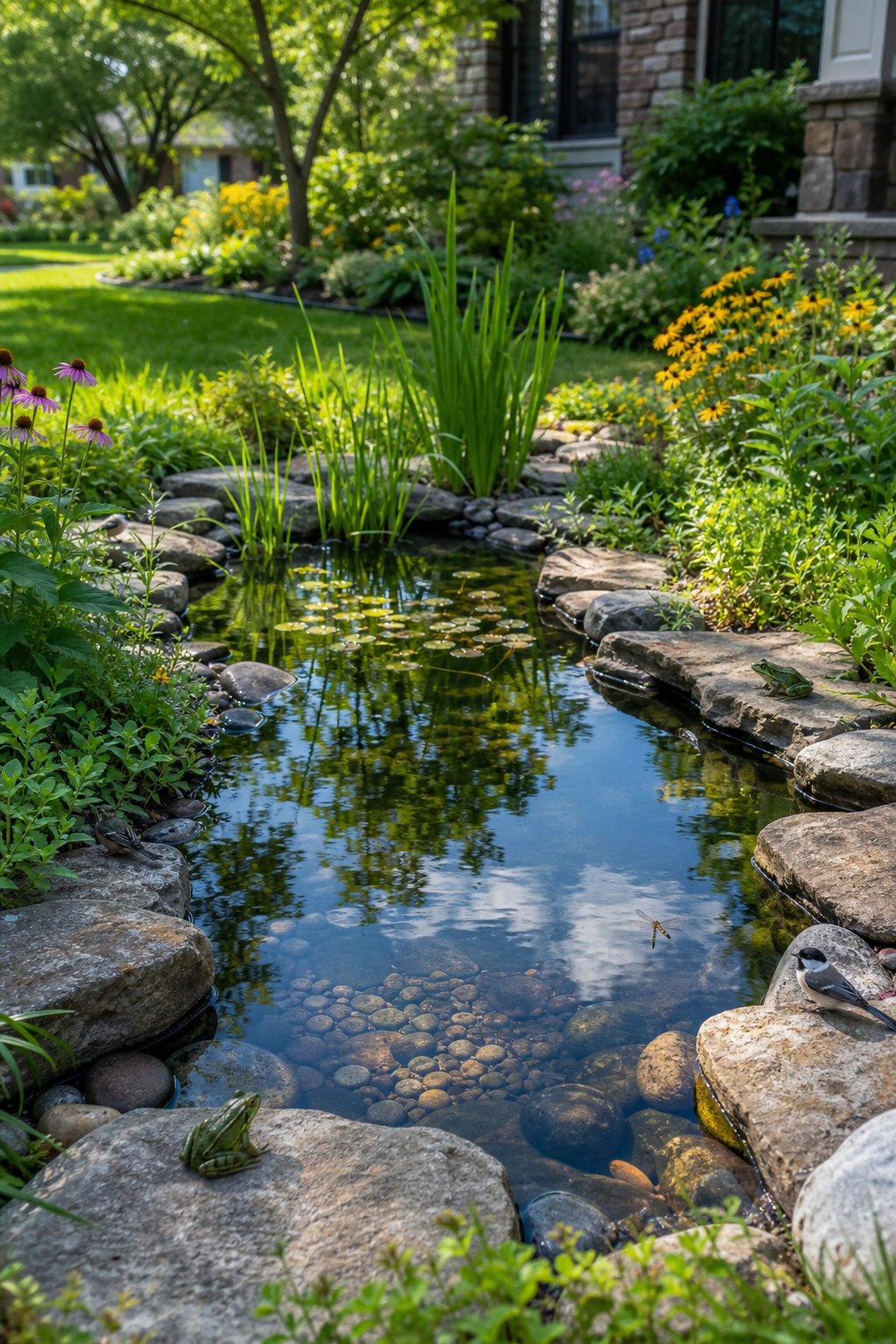
14. Front Yard Wildlife Pond With Discreet Natural Stone Edging
Personification: a front yard pond is the neighbor who always dresses nicely but still knows how to have fun. Natural stone edging keeps the look tidy without making the pond feel stiff or formal.
It can turn the front yard into a friendly little habitat that still fits the curb appeal of the house. Use stones in mixed sizes and soften them with low plants so the edge does not look harsh.
A front pond also works well when you want to enjoy wildlife from the street side as well as the porch. Expert Tip From MrPlanter: “*Keep the edge neat, not fussy. A front yard pond can be polite and wild at the same time.“
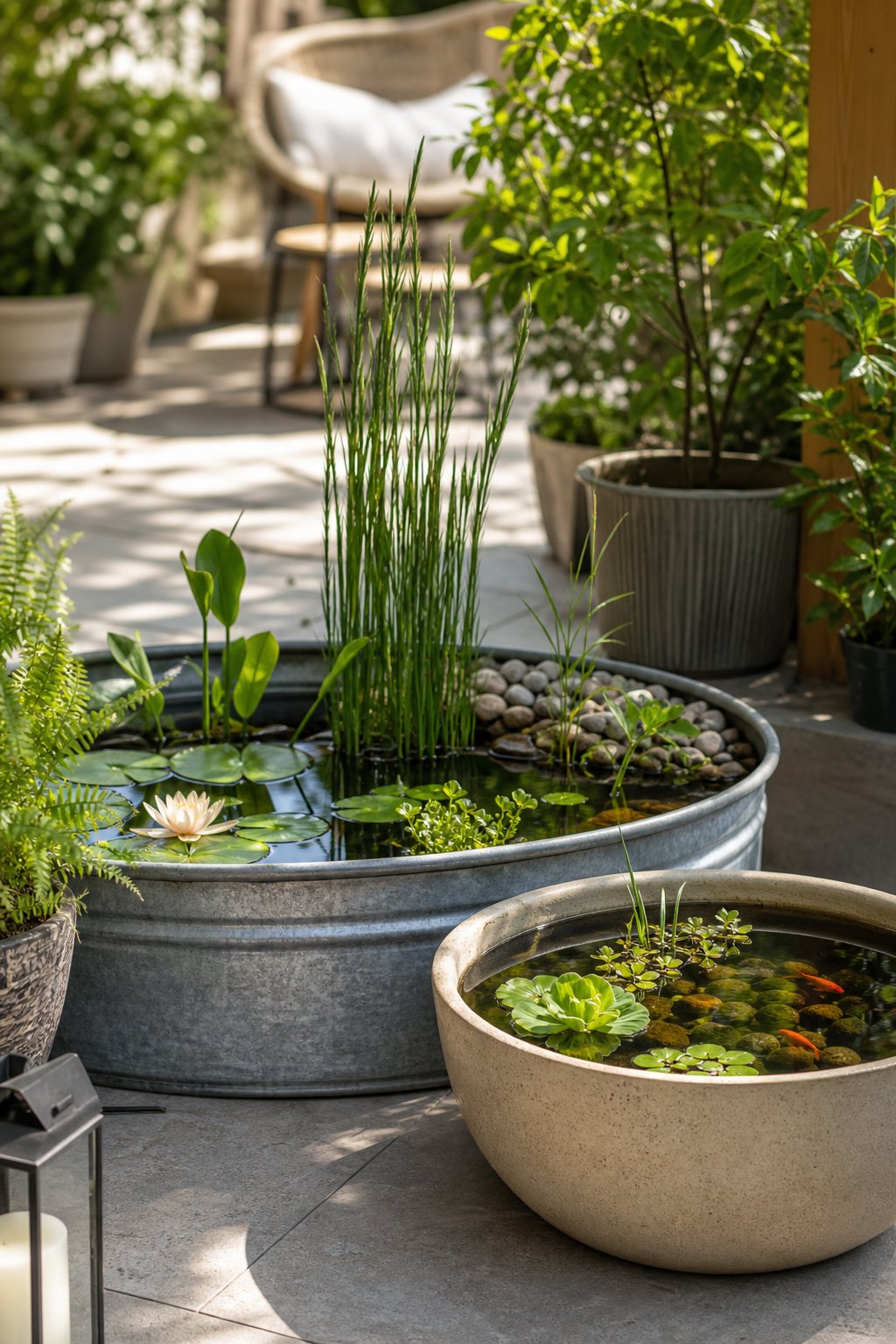
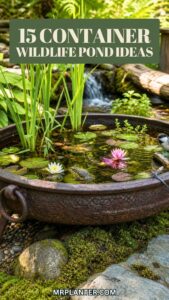
15. Patio-Side Container Pond In A Galvanized Trough Or Ceramic Bowl
Relatable problem: you want a pond near your chair, not at the far end of the yard where you forget it exists. A galvanized trough or ceramic bowl gives you a patio-side pond that’s easy to watch and even easier to enjoy with coffee.
Small container ponds can still bring in birds, bees, and visiting insects. Keep the planting simple and make sure insects have a way to land safely, like a stone or sloping insert.
Because you keep these ponds close at hand, you can clean and refresh them more easily. Expert Tip From MrPlanter: “*Put a small pond where you’ll actually see it. Wildlife is fun, and so is enjoying it from two steps away.“
Myth-busting statement: structure makes a wildlife pond work, not luck. You need varied depth, safe entry and exit routes, native plants, and a spot with part sun so the water stays healthy.
If those pieces are missing, the pond can look nice and still feel empty.
Depth And Shelf Structure
A shallow shelf, middle ledge, and deeper center give different animals different uses. That mix helps plants root, birds wade, and frogs overwinter.
Safe Entry And Exit Routes
Every pond should have a ramp, beach, or sloped edge. If a hedgehog falls in, it needs a way out without panic.
Why Native Plants Matter
Native marginals do more than decorate the edge. They offer cover, food, and stem space for insects and amphibians.
How Much Sun Is Enough
Aim for about four to six hours of direct light with some afternoon shade. Too much sun heats the water, while too much shade fills it with leaf mess.
Common Mistakes To Avoid
Relatable problem: most pond mistakes are small choices that seem harmless at first. A few of them can keep wildlife away or make the pond harder to care for than it needs to be.
Catching them early saves a lot of frustration later.
Vertical Sides And No Escape Ramp
Steep walls trap small animals. Every pond needs at least one gentle way back out.
Too Much Decorative Stone And Not Enough Cover
Stone looks tidy, yet wildlife needs places to hide. Mix in plants, logs, and soft edges so the pond does not feel exposed.
Putting It Under A Messy Deciduous Tree
Leaf drop can foul the water fast. Keep the pond away from heavy fall cleanup if you can.
Adding Fish Too Early
Fish can eat frog eggs and insect larvae. If you want wildlife, let the pond settle before you decide whether fish belong there.
How To Choose The Right Pond Idea For Your Space
Personification: the right pond idea acts like a good houseguest, fitting the space without causing drama. A tiny yard may need a barrel or container pond, while a bigger space can handle shelves, beaches, and deeper zones.
Your best choice depends on sun, room, budget, and how much digging you want to do.
Best Ideas For Small Backyards
Go with a mini barrel pond, a narrow shelf pond, or a small bog edge. These give you wildlife value without eating the whole yard.
Best Ideas For Front Yards
Choose discreet stone edging, a curved shape, and tidy marginal planting. You want it to feel welcoming from the street.
Best Ideas For Patios And Courtyards
Container ponds work well here, especially troughs and ceramic bowls. They’re close enough to enjoy daily and simple to keep tidy.
Budget Vs. Build Complexity
Simple container ponds cost less and go in fast.
Full liner ponds with shelves take more work. They give you more room for wildlife and plant variety.
Expert Tip From MrPlanter: “*Start with the space you actually have, not the one in your head. The best pond is the one you can build, care for, and enjoy all season long.“
I’m Anirban Saha, the Founder and Owner of MrPlanter.com. I pay the bills as a software developer, although my BTech is actually in Electronics and Communication. I really love my day job, but what gives me energy every day is interacting with my indoor plants and taking care of them. I have been successfully nurturing and maintaining houseplants for over 10 years now.
📚🔍 Our content undergoes thorough review and fact-checking before publication. For additional details, explore our strict Editorial Policy to deliver helpful content. 📝🔒