As an Amazon Associate, MrPlanter.com earns from qualifying purchases.
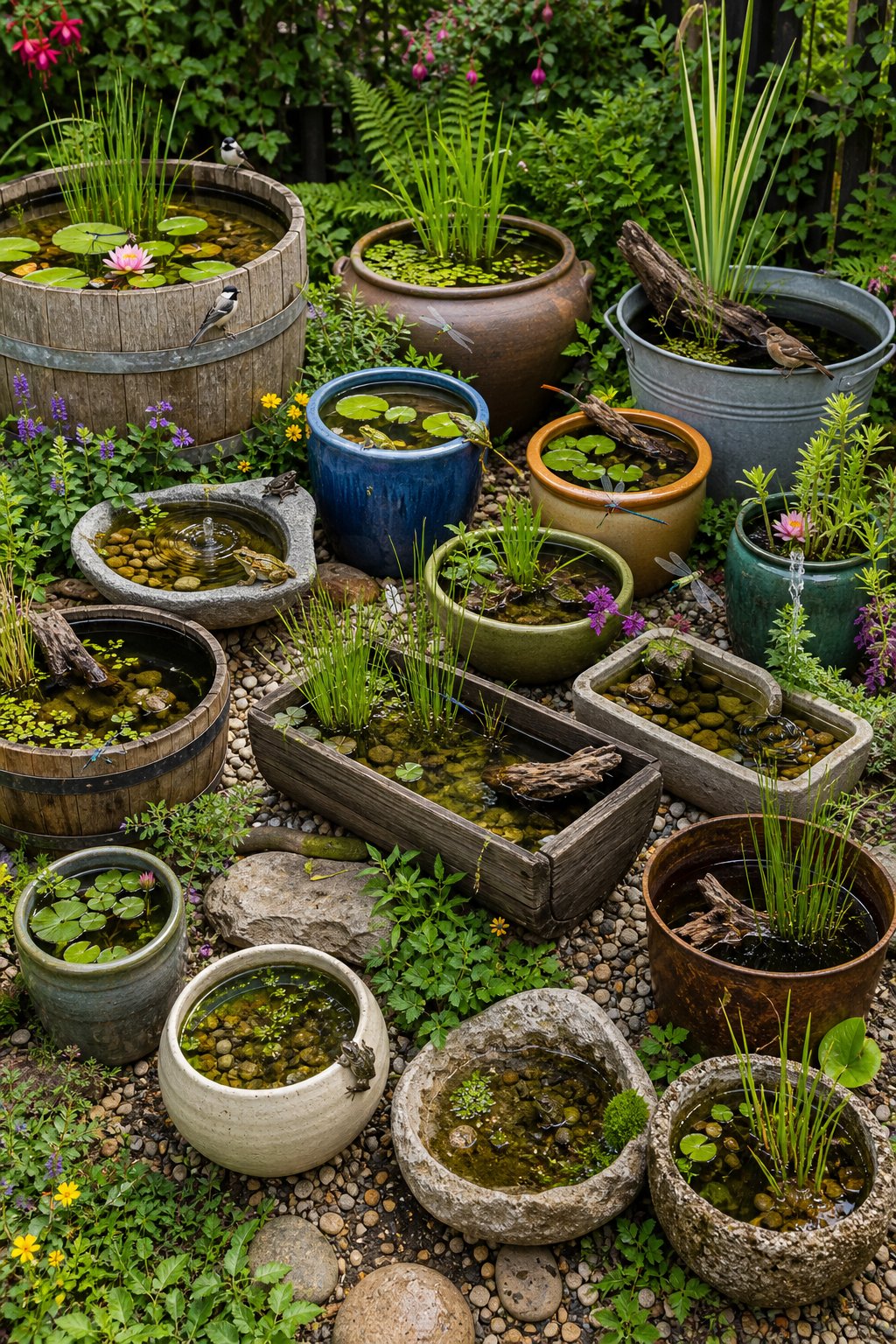
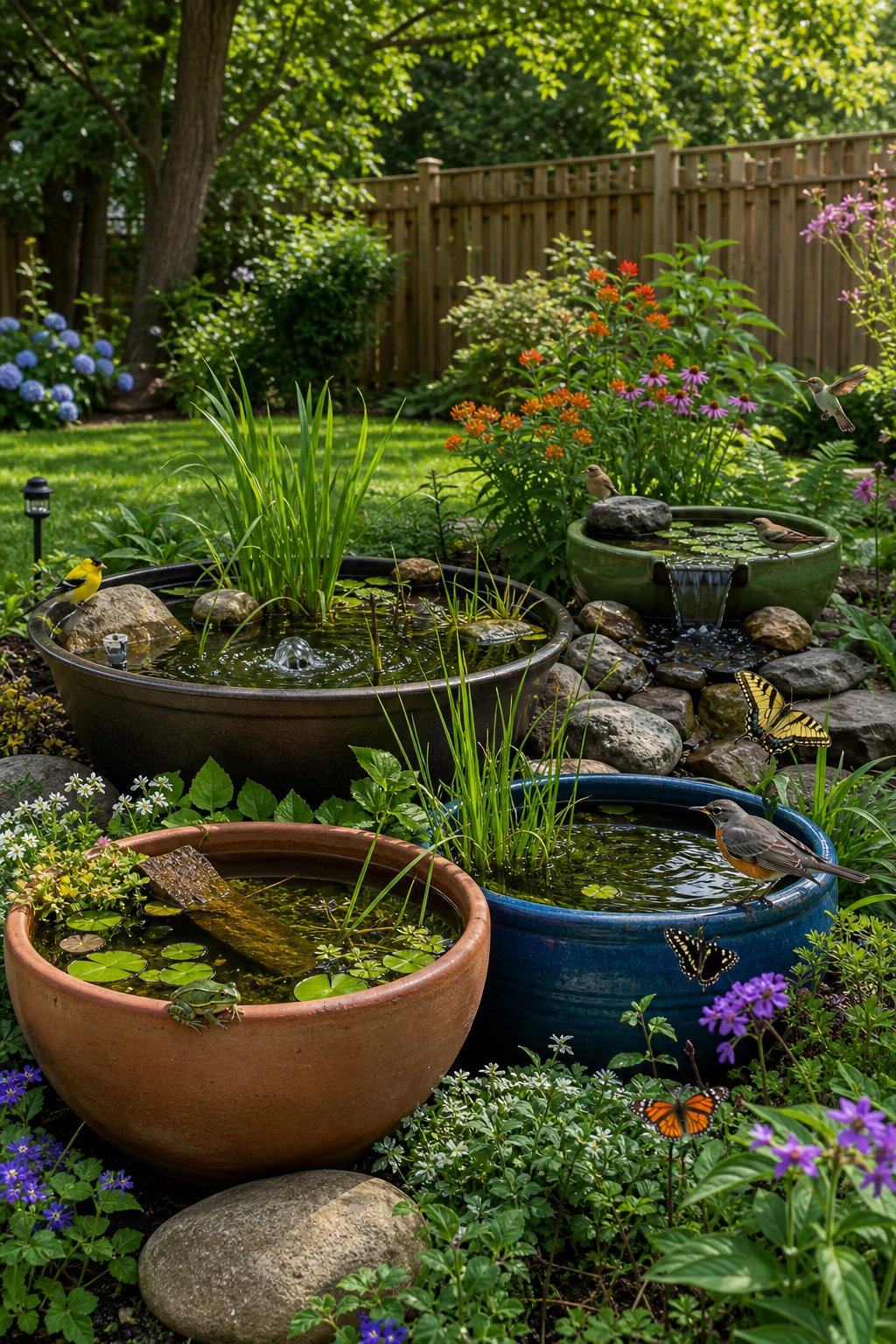
You can turn a plain backyard corner, front entry, or patio into a mini haven for birds, bees, frogs, and dragonflies with a container pond.
The trick is choosing the right vessel, giving wildlife an easy way in and out, and placing it where it gets a nice mix of sun and shade.
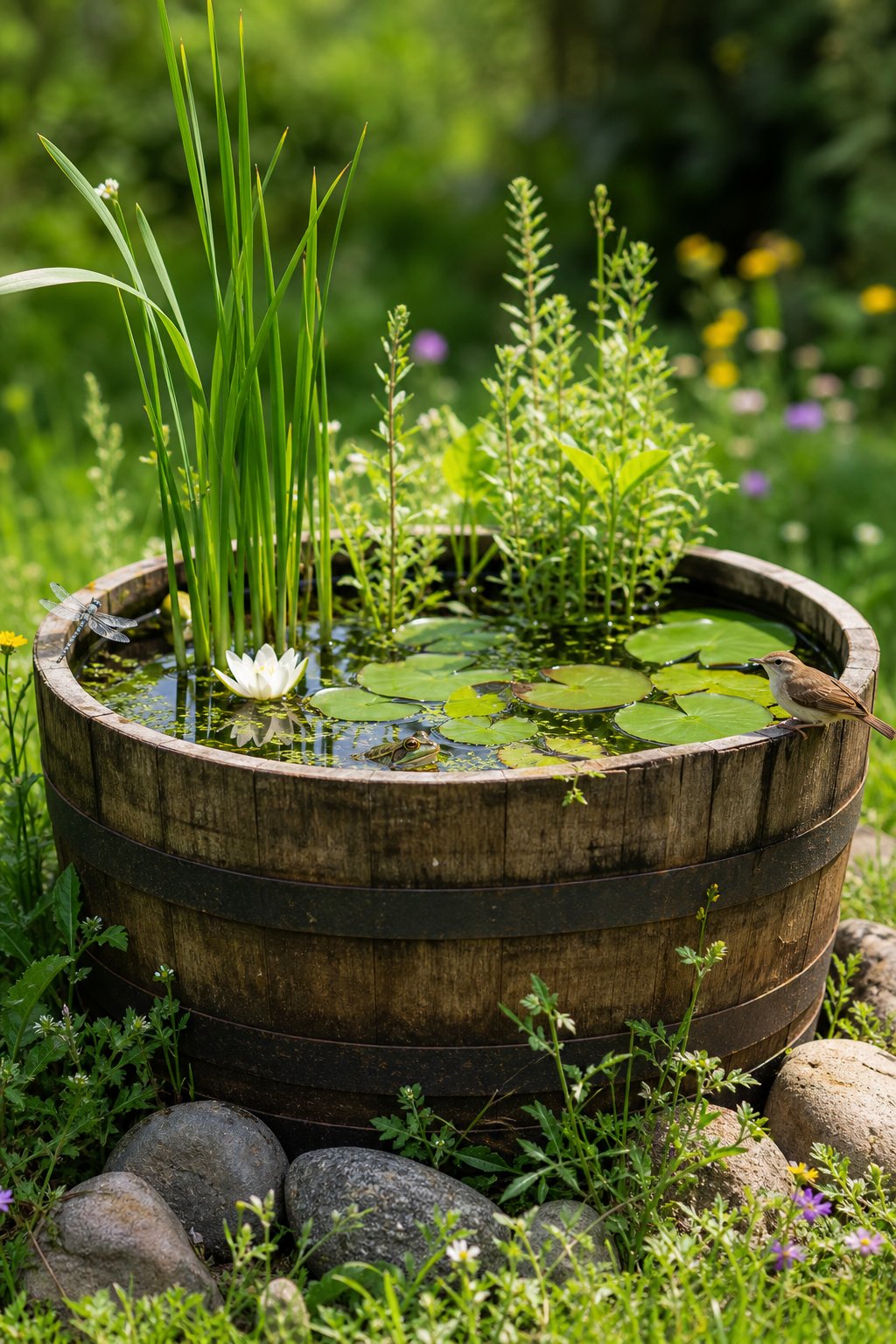
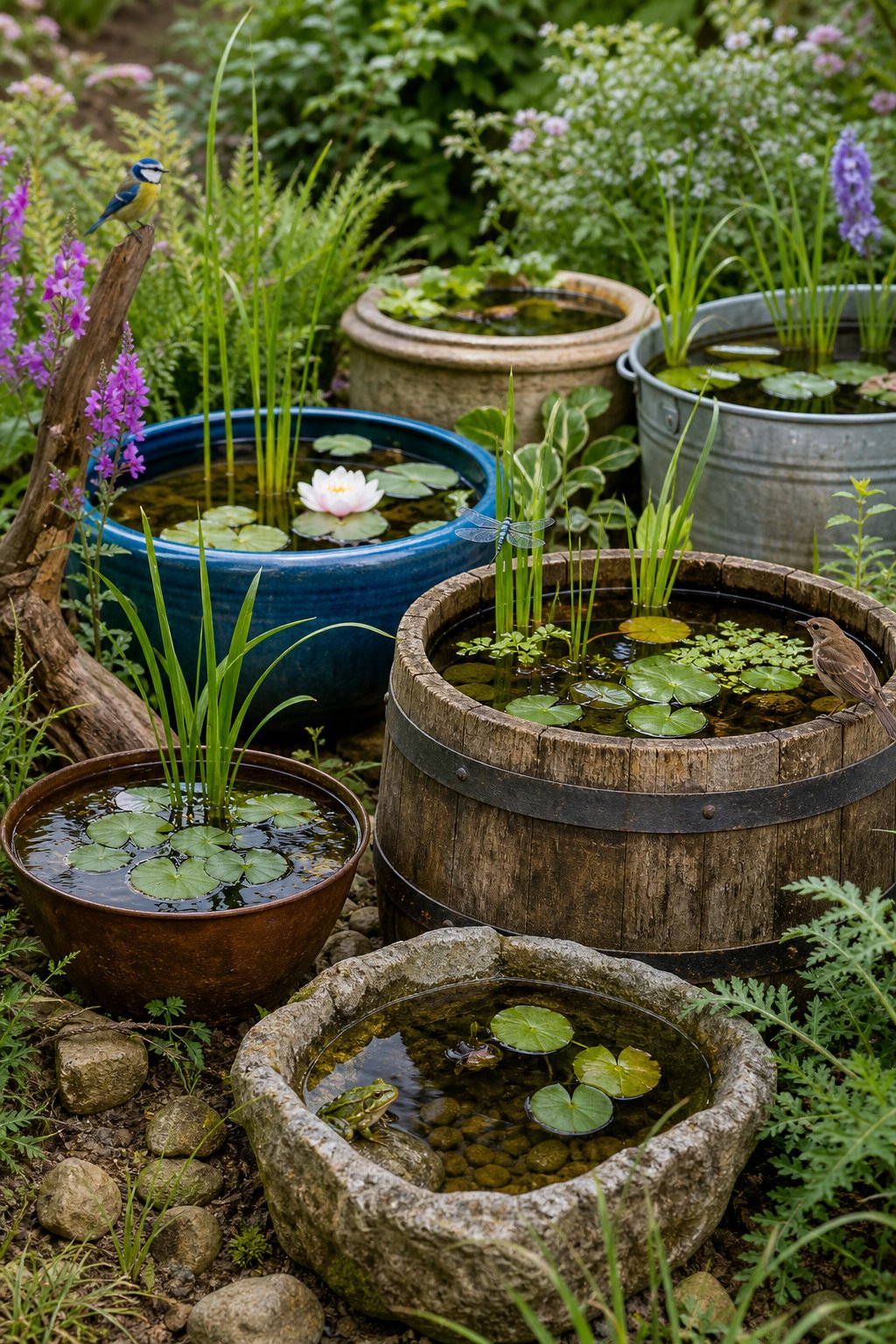
1. Half Whiskey Barrel Wildlife Pond
A half whiskey barrel is a classic for a reason.
It brings instant rustic charm, and it feels right at home in a backyard, side yard, or front garden bed.
The wood tones soften the look, so even a small pond can feel like part of the garden instead of a random water bucket.
You’ll want to seal the inside with a liner or pond-safe coating, since old barrels can dry out and leak.
Add a few rocks, a floating plant or two, and a sloped entry point for birds and insects.
Expert Tip From MrPlanter: “Keep the planting simple at first. A small barrel pond looks best when the water can still be seen. It also makes it easier for wildlife to find a clear landing spot.“
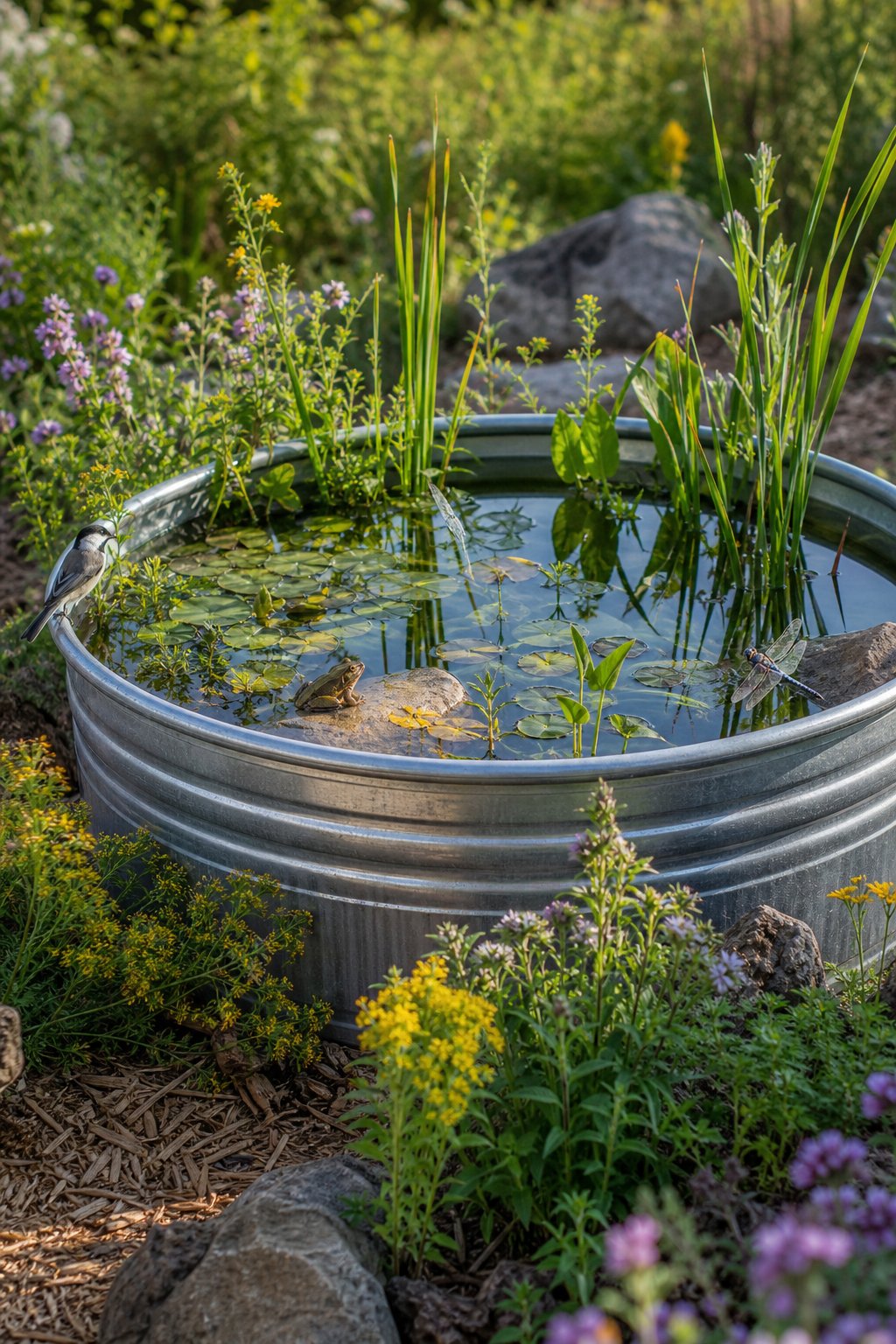
2. Galvanized Stock Tank Wildlife Pond
A stock tank can go from farm gear to garden star in a flash.
Its wide shape gives you room for a shallow shelf, floating plants, and even a tiny pump if you want gentle movement.
That shiny metal look also pairs well with modern patios and simple backyard layouts.
This is a smart pick if you want a pond that holds up well outdoors and is easy to clean.
Add stones or a mesh ramp so small creatures can climb in and out safely.
Expert Tip From MrPlanter: “Rinse the tank well before filling it. Then place it on level ground, because even a small tilt can make the waterline look odd and waste space.“
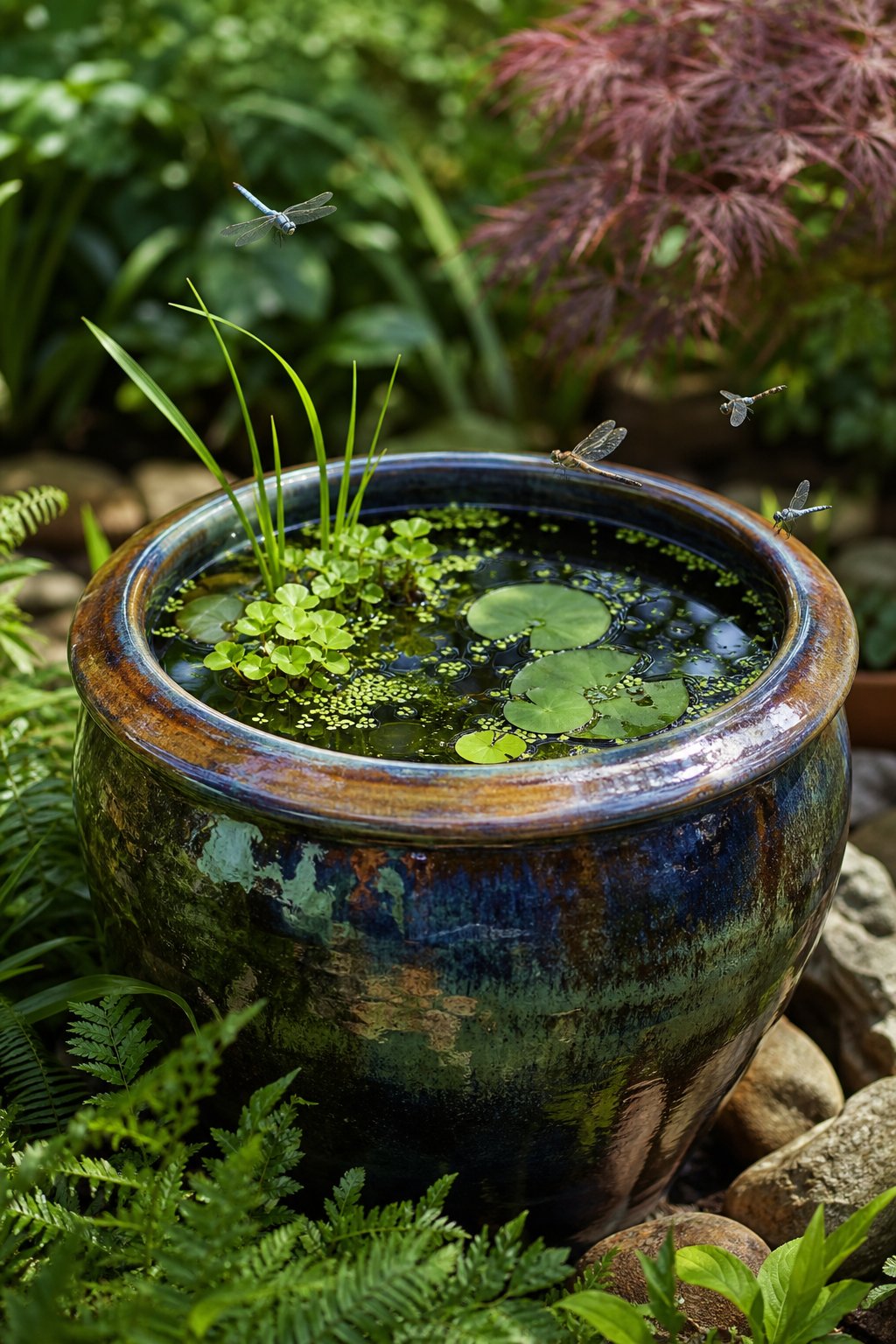
3. Glazed Ceramic Pot Wildlife Pond
A glazed ceramic pot can feel like a tiny jewel in your yard.
The shiny finish gives it a clean look, and the shape works well near a path, porch, or seating area where you want a close-up view.
It’s a nice choice if you like a smaller pond with a calm, polished style.
Pick a pot with a wide opening so birds and pollinators can reach the water easily.
Since some ceramic pots can crack in cold weather, place yours where it won’t face harsh freeze-thaw stress.
Expert Tip From MrPlanter: “Choose a pot with a broad rim and a stable base. That makes it safer for wildlife and less likely to tip when you add rocks or plants.“
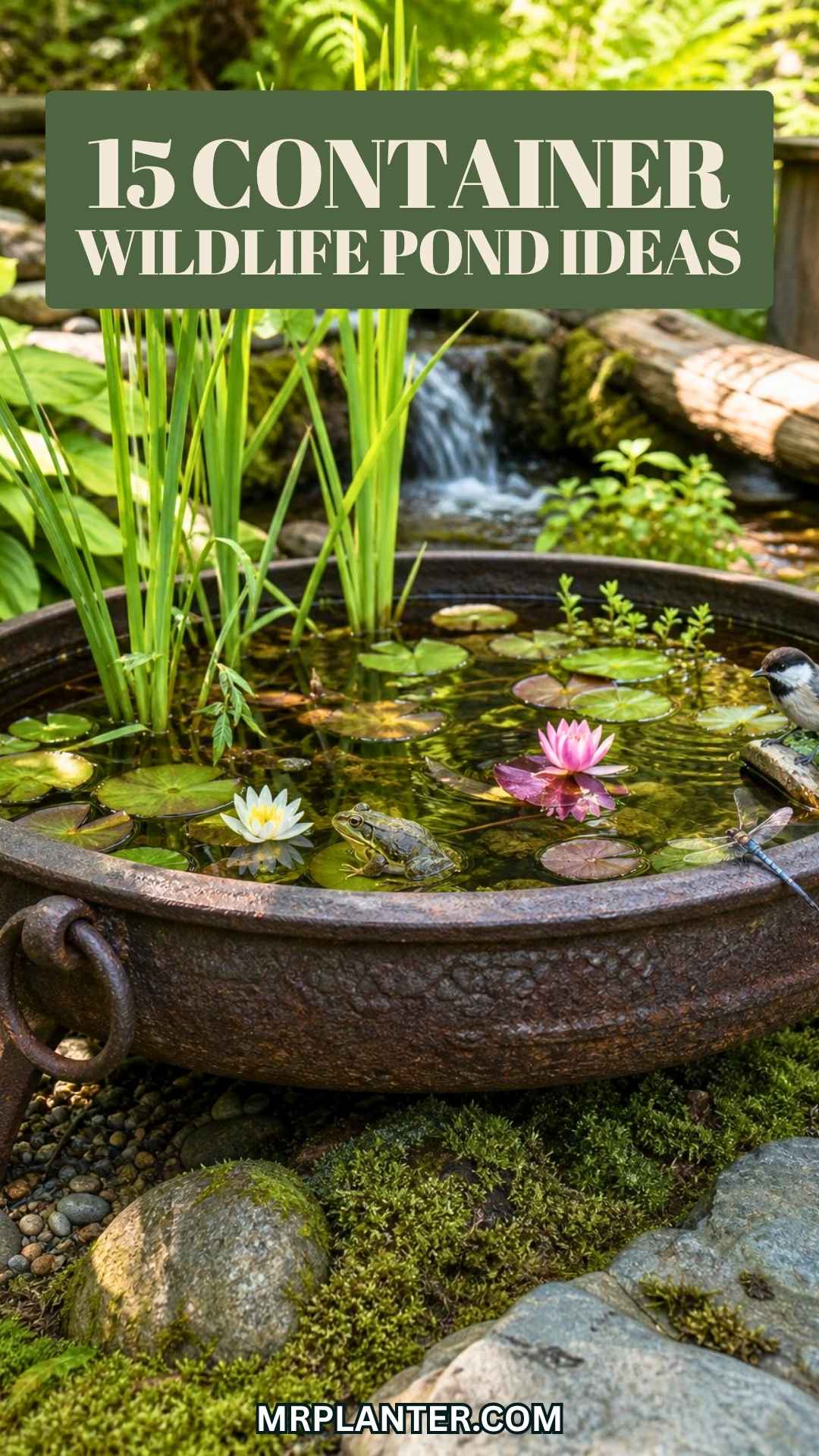
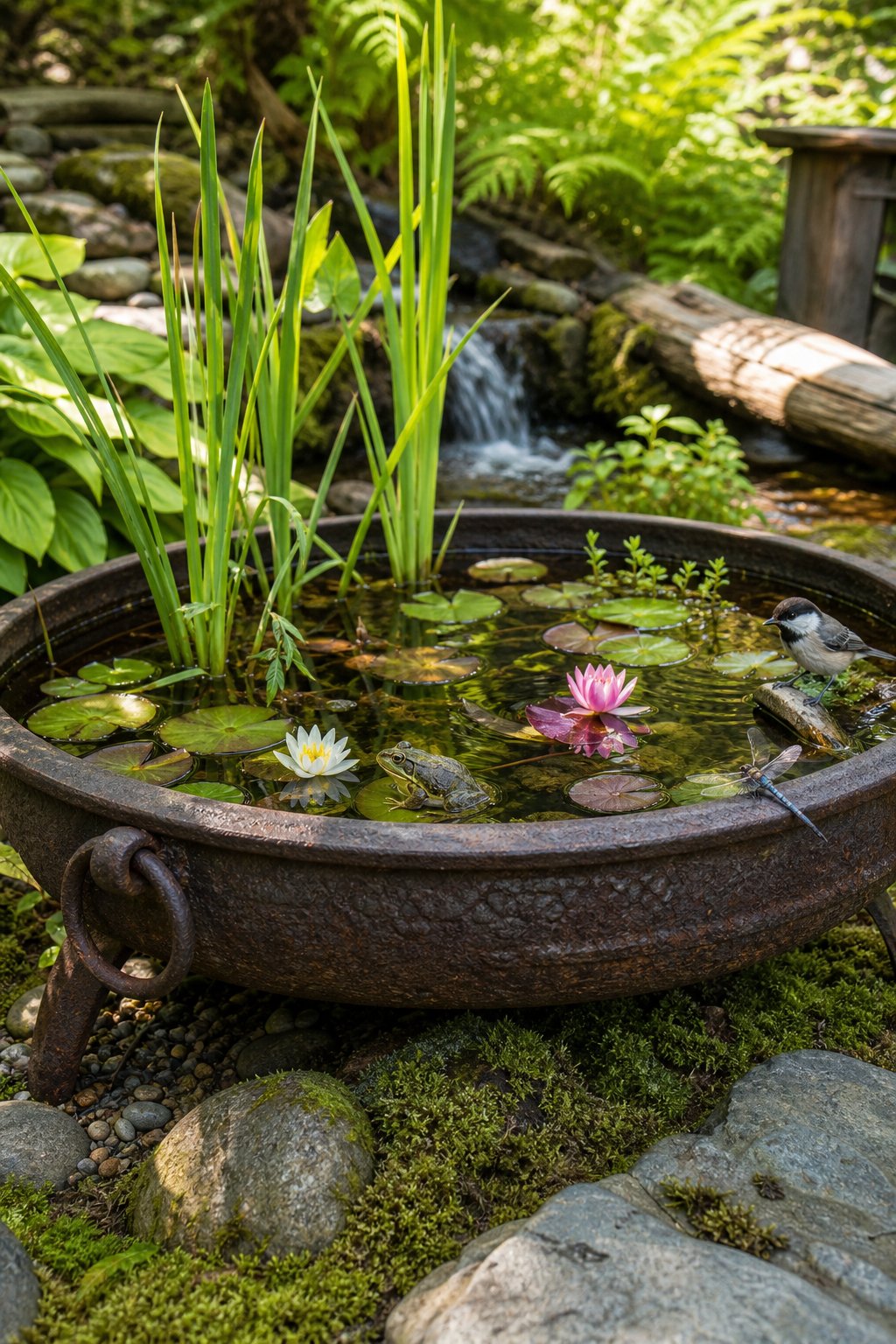
4. Vintage Cast Iron Fire Pit Pond
You can give a tired old fire pit a second life as a pond with a lot more charm than ash and soot.
The round shape creates a neat focal point, and the dark metal makes water and plants stand out nicely.
It’s a good fit for a backyard spot that needs a bold feature without much fuss.
Line it well, since fire pits often have rough seams or drain holes.
Then add marginal plants around the edges so the pond looks softer and gives wildlife extra cover.
Expert Tip From MrPlanter: “Check every seam before filling. A little leak can turn into a big headache once the pond settles into place.“
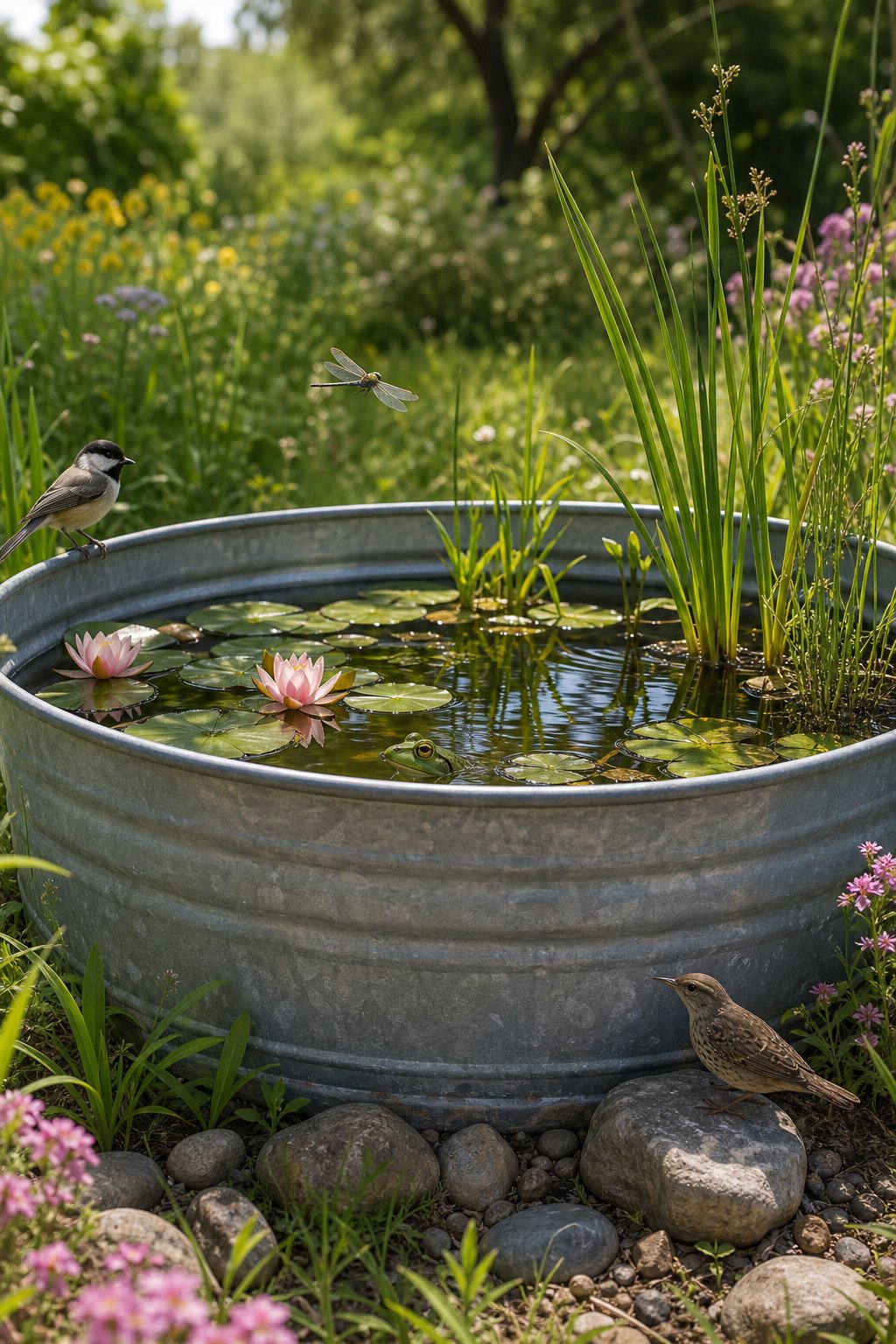
5. Galvanized Metal Tub Wildlife Pond
A galvanized metal tub is one of the easiest ways to start a wildlife pond.
It’s sturdy, simple, and roomy enough for water lilies, floating plants, and a few stones.
If you want a pond that looks friendly from the start, this one gets the job done fast.
I like this option for small yards because it doesn’t ask for much.
Set it near flowers, and you’ll usually see bees, dragonflies, and birds checking it out sooner than you expect.
Expert Tip From MrPlanter: “Use a few flat stones that rise just above the waterline. They help insects land and give birds a place to drink without slipping.“
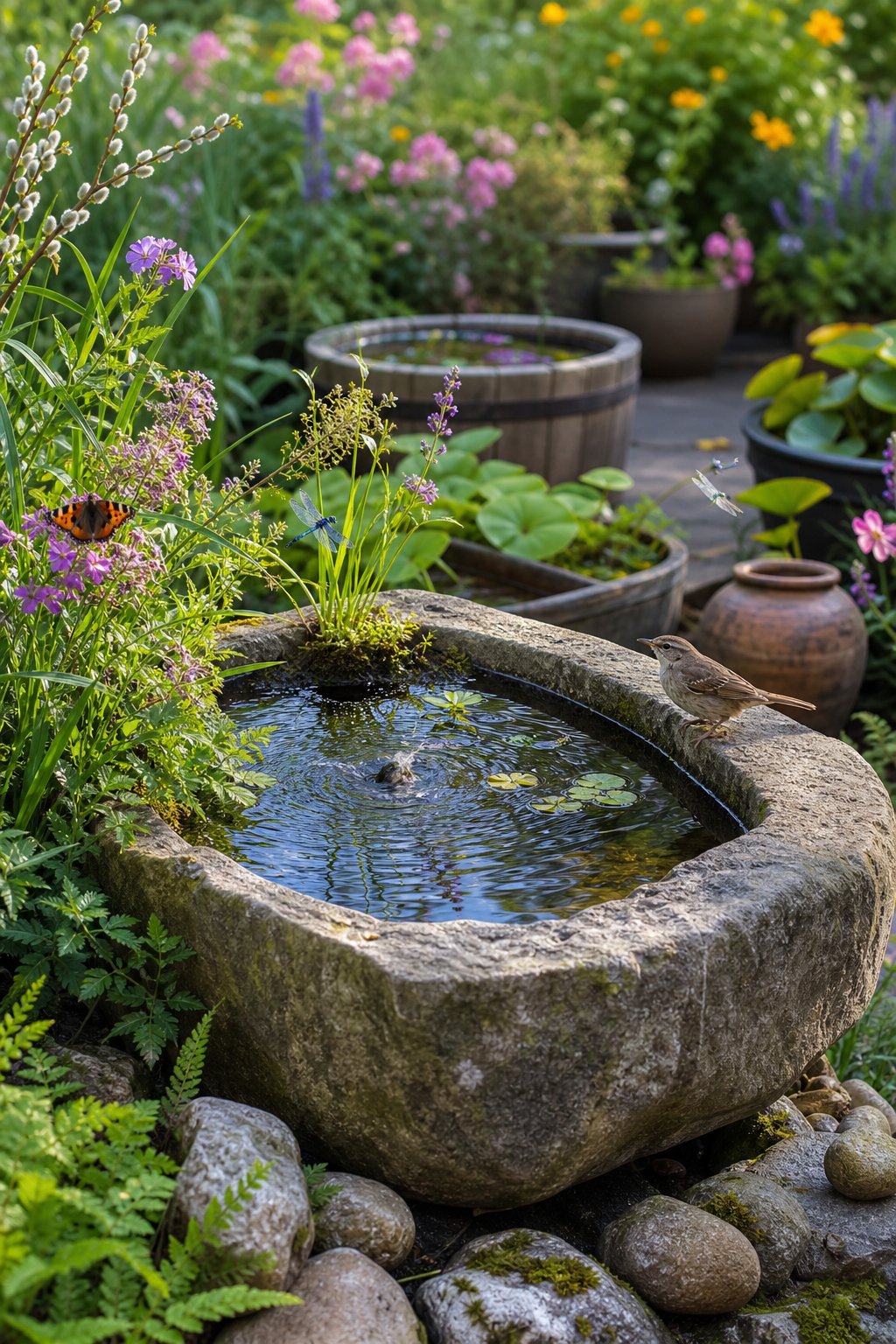
6. Stone Trough Wildlife Pond
A stone trough has a timeless garden feel, like it’s been there longer than the house.
The weight and texture make it look settled right away, and that helps it blend into both formal and cottage-style yards.
It’s a strong choice if you want a pond that feels quiet and grounded.
Because stone holds heat and cold longer than some materials, placement matters.
Give it morning sun and some afternoon shade if you can, then keep the water shallow enough for easy wildlife access.
Expert Tip From MrPlanter: “Add a few smooth stones near one side to create a gentle exit. That tiny detail makes a big difference for frogs and bees.“
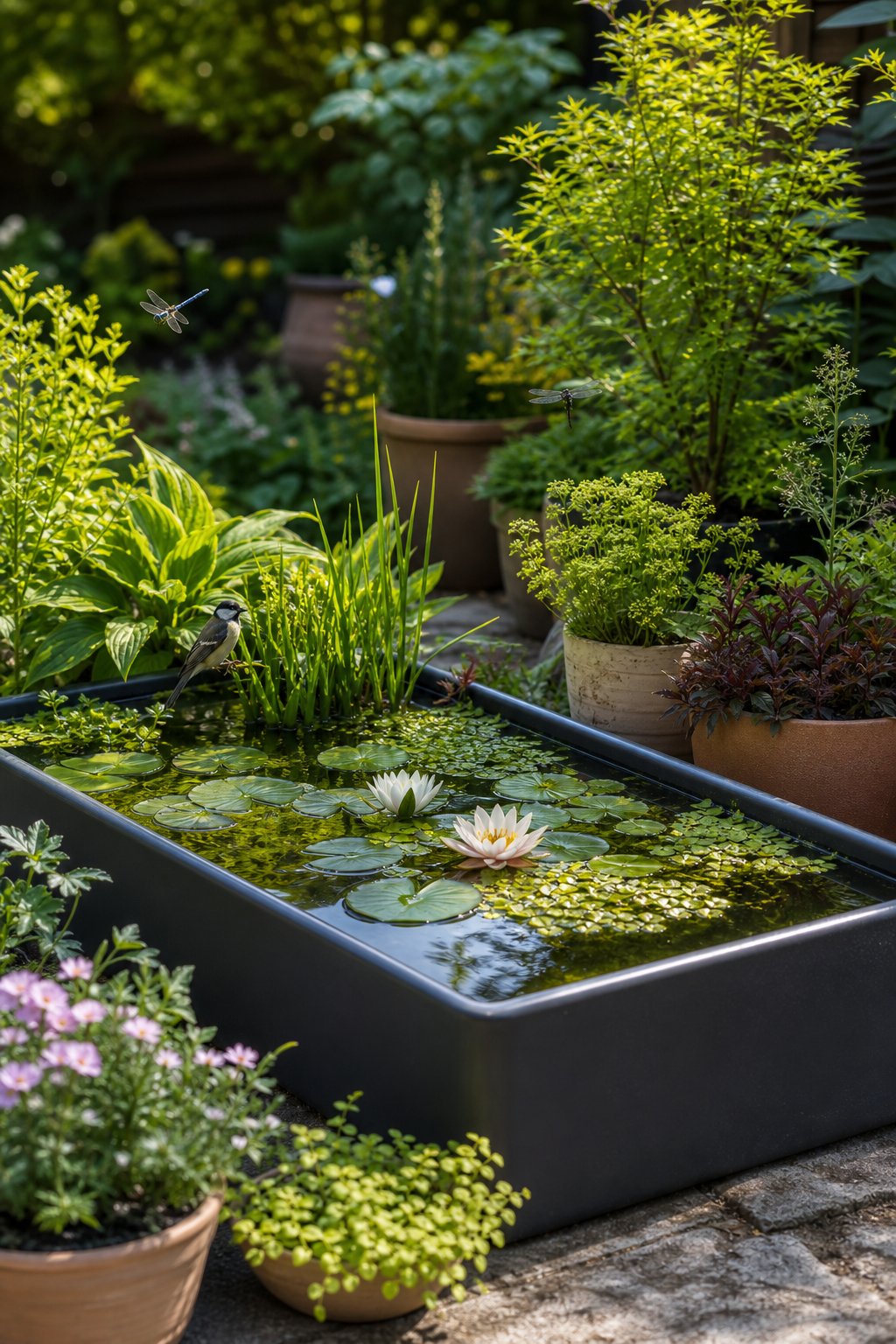
7. Fiberglass Trough Garden Pond
A fiberglass trough gives you a clean, neat shape that works well in modern yards.
It’s lighter than stone, easier to move than you’d expect, and often simpler to fit into a narrow patio or side yard.
If you like tidy lines, this one fits the bill nicely.
Fiberglass also works well when you want a pond that stays watertight without much drama.
Pair it with just a few plants and some natural rocks so it doesn’t look too plain or boxy.
Expert Tip From MrPlanter: “Keep the planting sparse and intentional. A fiberglass pond looks best when the water shape stays visible instead of hiding under too many leaves.“
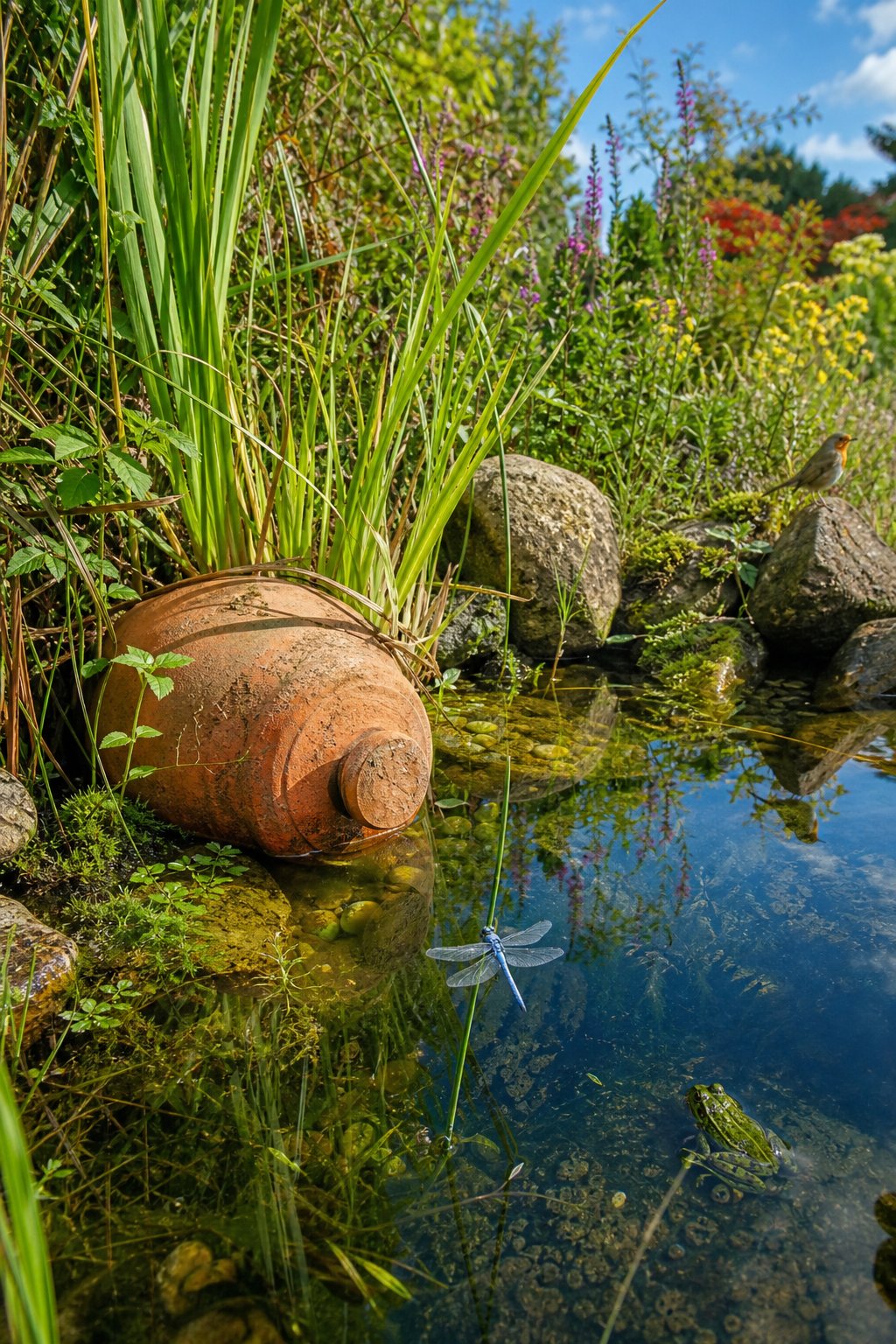
8. Sealed Terracotta Urn Wildlife Pond
A terracotta urn can make a small pond feel like a storybook scene.
Its warm color looks great near green plants, and the curved shape adds a soft, old-world feel to the garden.
If your yard has a relaxed or Mediterranean style, this one fits beautifully.
Since terracotta is porous, seal it if you want it to hold water.
Use it as a feature near the pond edge or as part of a larger container setup with shallow water nearby.
Expert Tip From MrPlanter: “Seal the urn before adding water, and let it cure fully. That patience pays off with a pond that lasts longer and stays cleaner.“
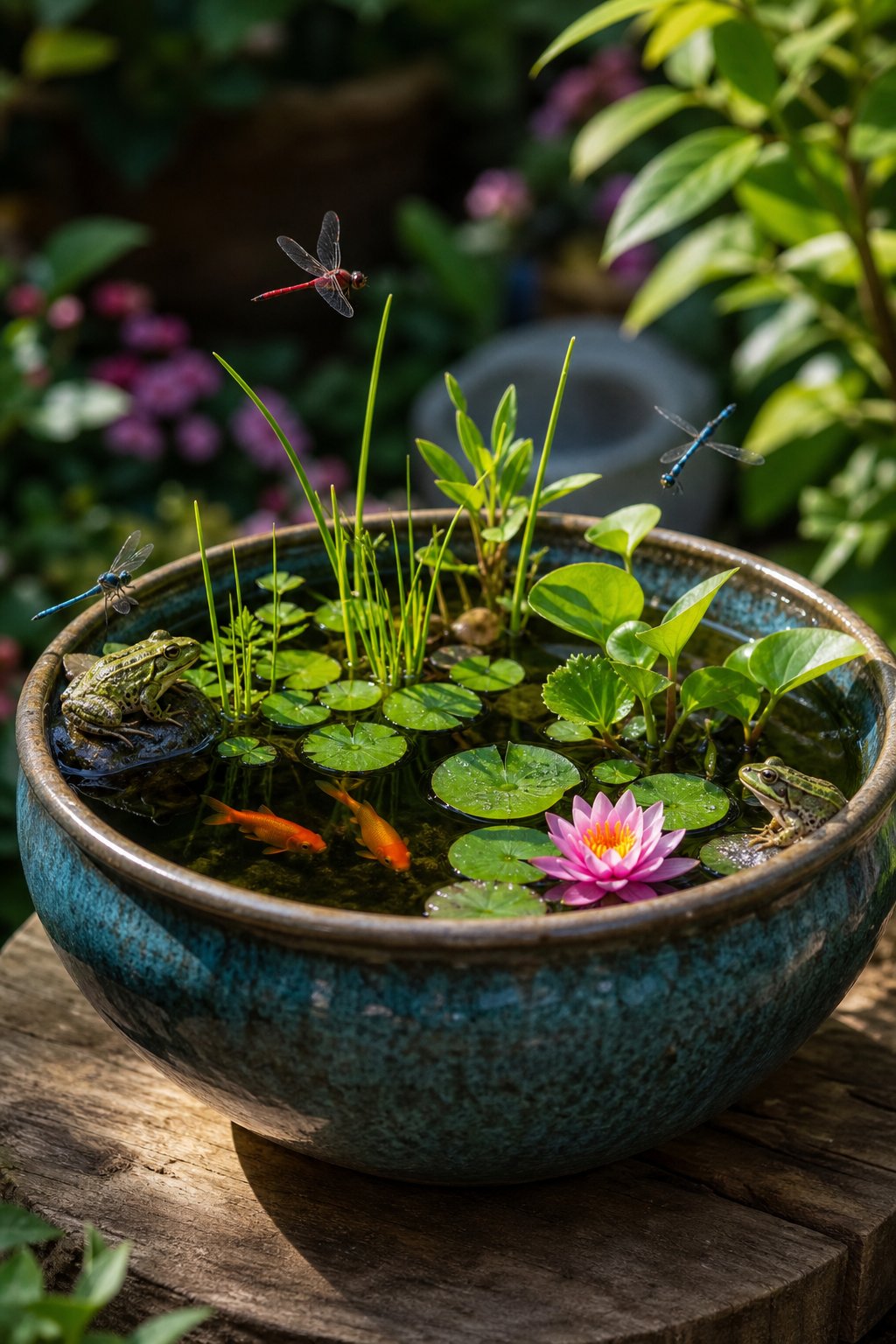
9. Large Ceramic Serving Bowl Mini Pond
A large ceramic serving bowl turns into a charming mini pond with very little effort.
It works well on a table, pedestal, or raised planter stand where you want a close look at tiny plants and visiting insects.
The low profile makes it feel neat and easy to fit almost anywhere.
This is a good choice if your space is tight or you want a small water feature near a seating area.
Keep it shallow, stable, and simple, since too many decorations can crowd the bowl fast.
Expert Tip From MrPlanter: “Use only a few small plants and one or two stones. In a bowl this size, less clutter means more peace for you and more room for wildlife.“
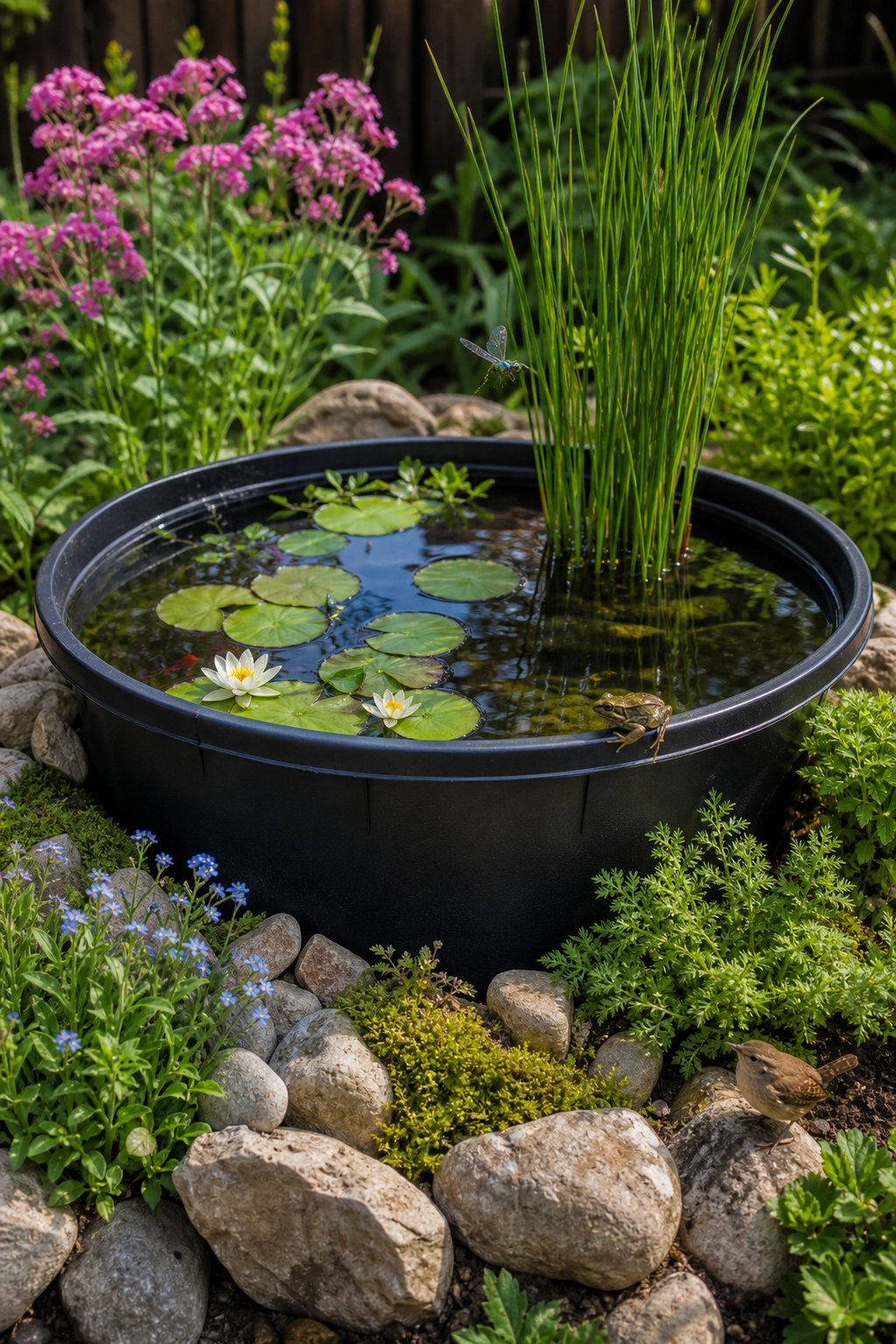
10. Black Plastic Utility Tub Habitat Pond
A black plastic utility tub may not win beauty contests at first glance, yet you can turn it into a busy wildlife stop.
It’s cheap, easy to set up, and surprisingly good at holding water for frogs, insects, and birds.
With a few rocks and plants, you can make it disappear into the garden faster than you’d think.
This is a strong starter option if you want to test a pond spot before upgrading to something fancier.
Place it behind low plants or tuck it among containers so the dark sides fade into the background.
Expert Tip From MrPlanter: “Use rocks of different sizes to break up the hard edges. That makes the tub look more natural and gives small visitors a safer landing zone.“
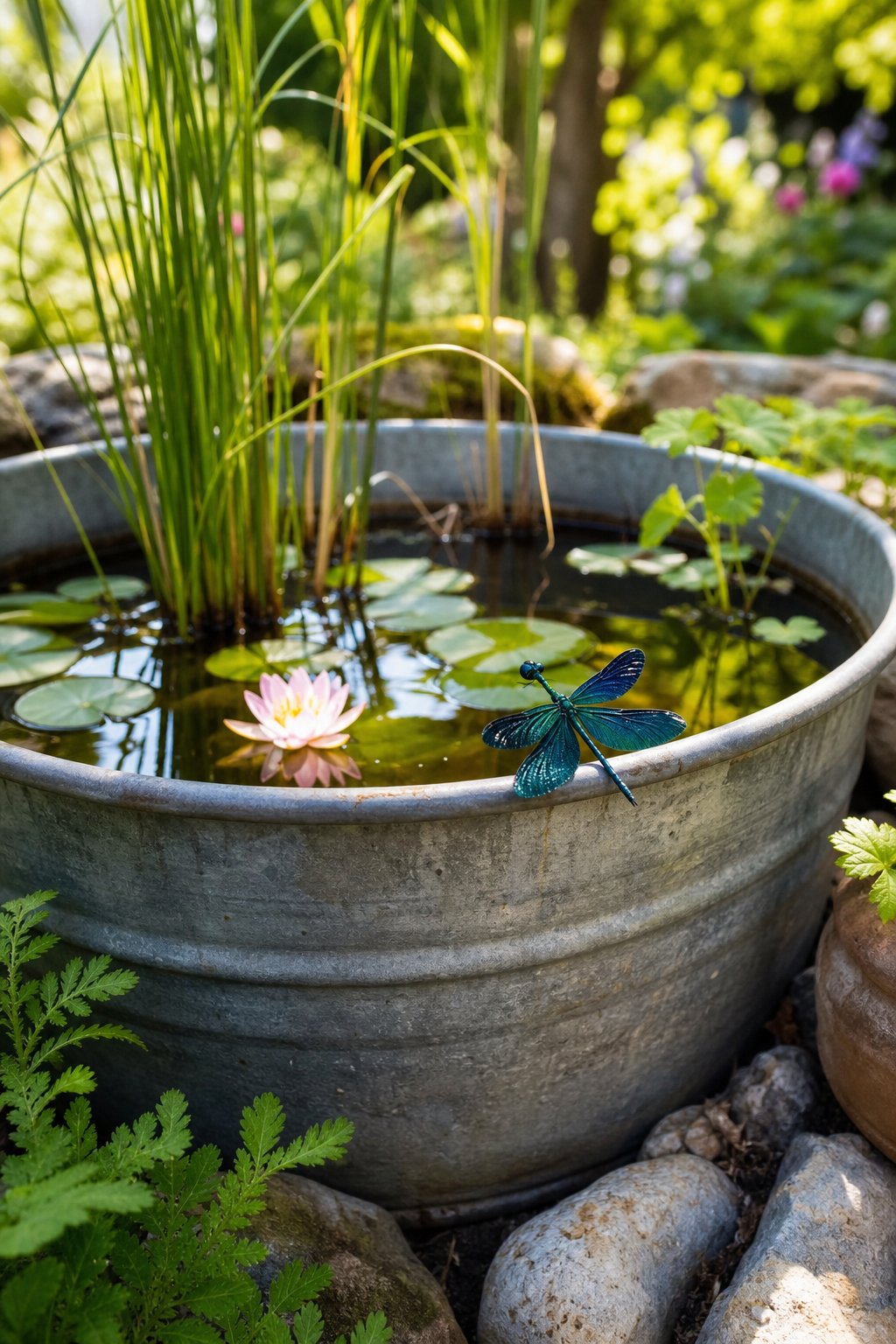
A zinc washtub has a lovely old-fashioned feel, and dragonflies seem to like that kind of setup.
Its smaller size makes it easy to place near a porch, gate, or flower border where you can enjoy the action up close.
It’s a sweet pick for a garden corner that needs a little personality.
Keep the water clean and open, with just a small cluster of plants around one side.
That leaves plenty of room for dragonflies to skim the surface and perch at the edge.
Expert Tip From MrPlanter: “Don’t crowd the top with tall plants. A clear surface gives dragonflies room to patrol, and it keeps the pond feeling airy.“
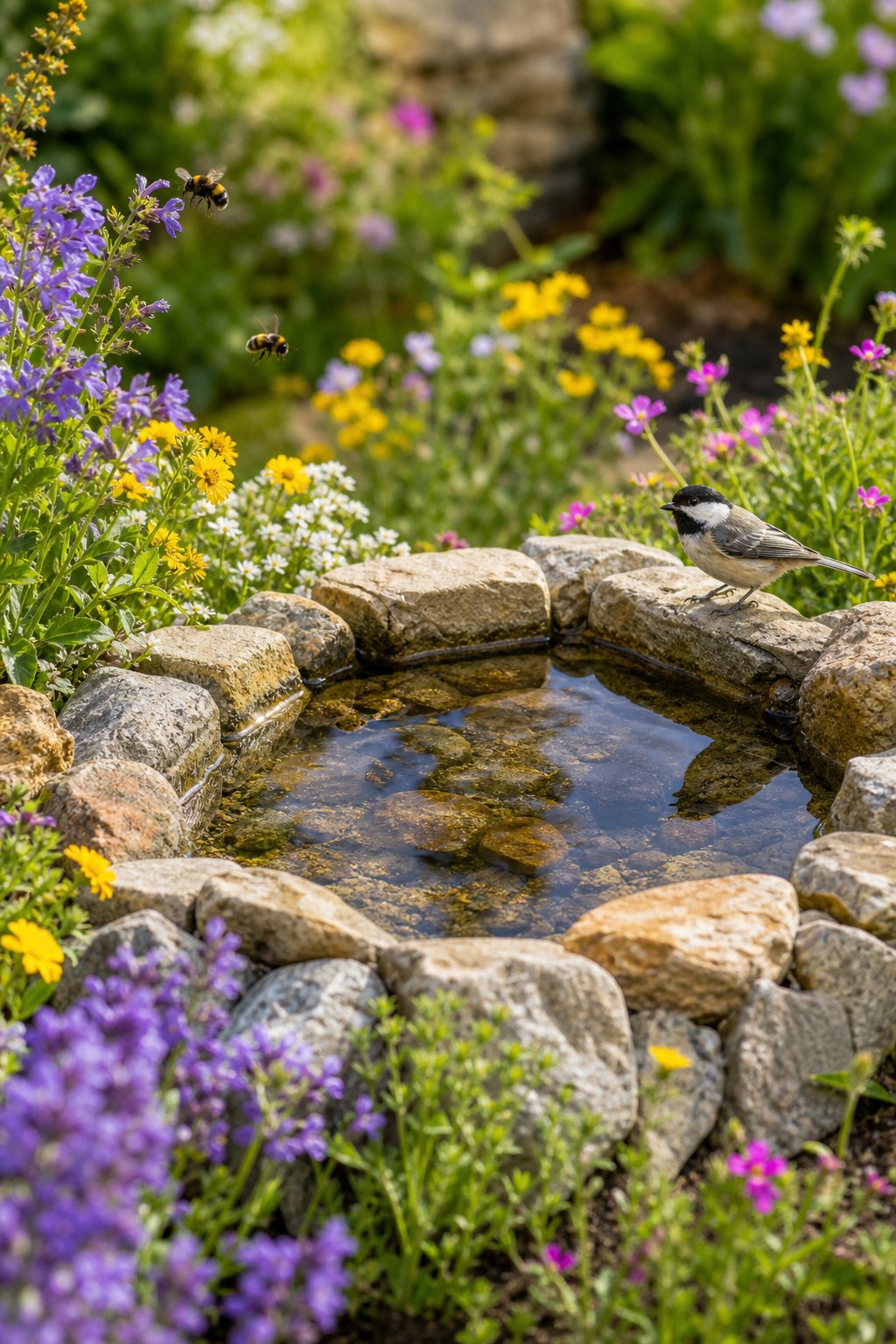
12. Shallow Stone Bird-And-Bee Pond
A shallow stone pond is one of the easiest setups for birds and bees to trust.
The low water depth lets tiny visitors drink or bathe without much risk, and the stone look fits nicely beside wildflowers or native grasses.
It feels calm, simple, and very garden-friendly.
Add pebbles, a sloped edge, or a flat stone that sits just above the surface.
Those details make a huge difference for pollinators that need a safe place to land.
Expert Tip From MrPlanter: “Keep the water shallow enough to see the bottom. Clear, easy-to-read water helps birds feel safer almost right away.“
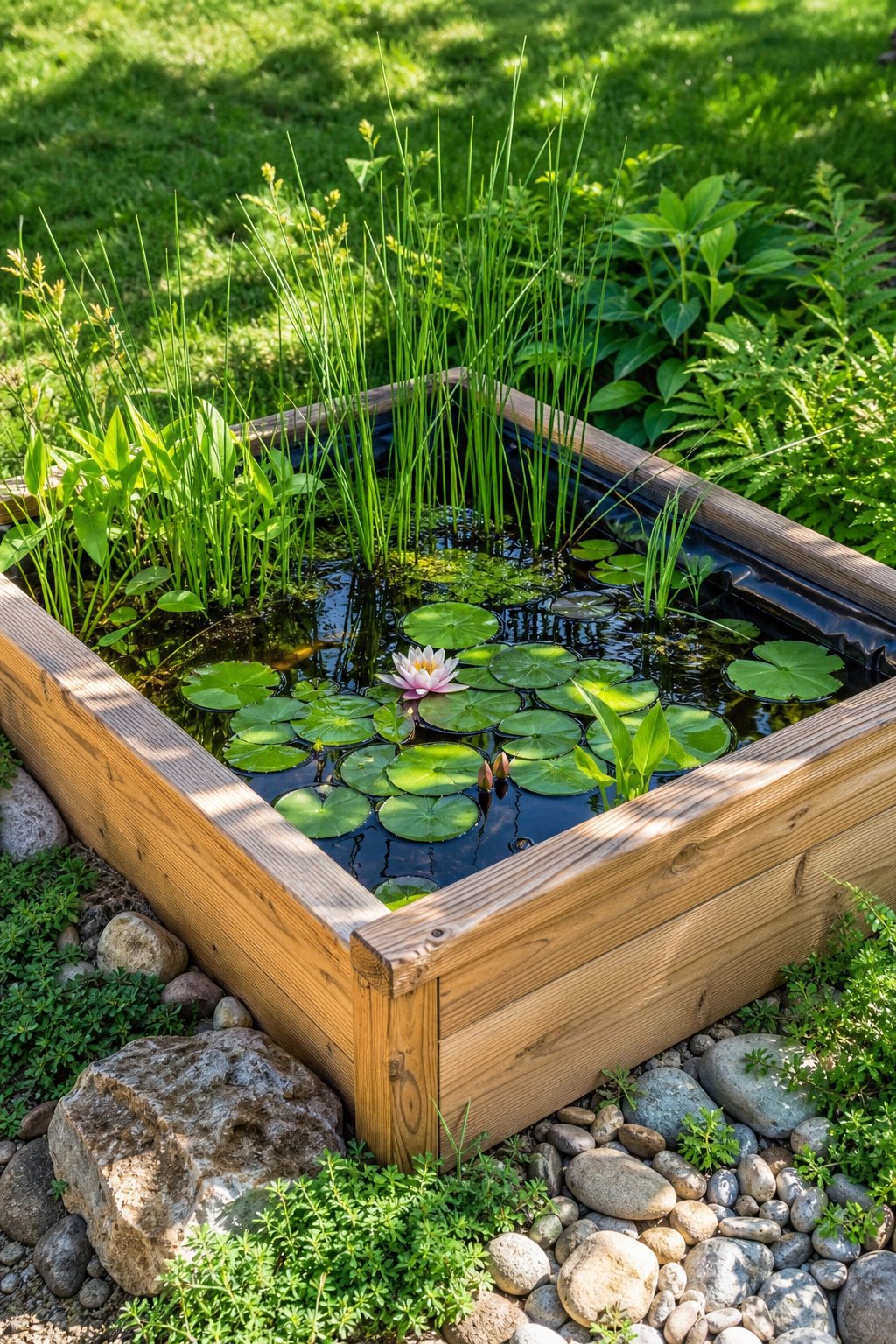
13. Rectangular Wooden Planter Box Pond With Liner
A rectangular wooden planter box pond gives you a crisp shape and a cozy garden feel at the same time. It works well along fences, patios, and narrow side yards where a round tub might feel awkward.
The wood also helps the pond blend in with nearby planters and seating. You must use a good liner here, since wood alone won’t hold water for long.
Once you line it, keep the planting modest and use clean edges so the shape stays clear. Expert Tip From MrPlanter: “Choose rot-resistant wood if you can, and lift the box slightly off the ground. That helps it last longer and keeps moisture from sitting under it.“
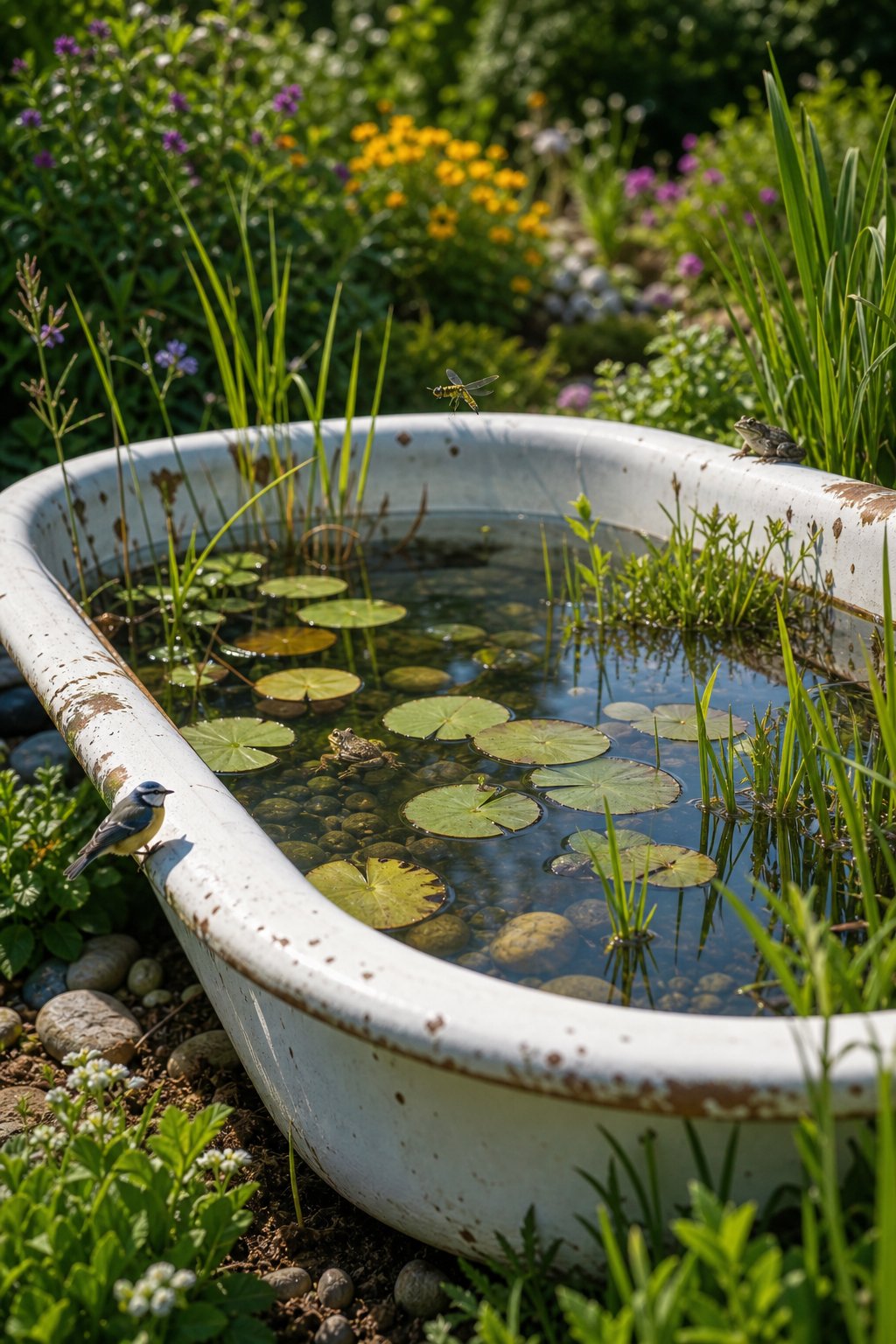
14. Repurposed Enamel Bathtub Wildlife Pond
A repurposed enamel bathtub brings a bit of humor and a lot of charm. It offers plenty of room, enough depth for a healthy water garden, and strong support for rocks and plants.
In a backyard, it can become a playful focal point that guests will notice right away. Because tubs are usually deep, give wildlife an easy exit with stones, bricks, or a sloped plant shelf.
A few native marginal plants help it feel less like plumbing and more like a real pond. Expert Tip From MrPlanter: “Scrub the tub well before filling it. Clean enamel gives you a brighter look and helps you spot any cracks or rust early.“
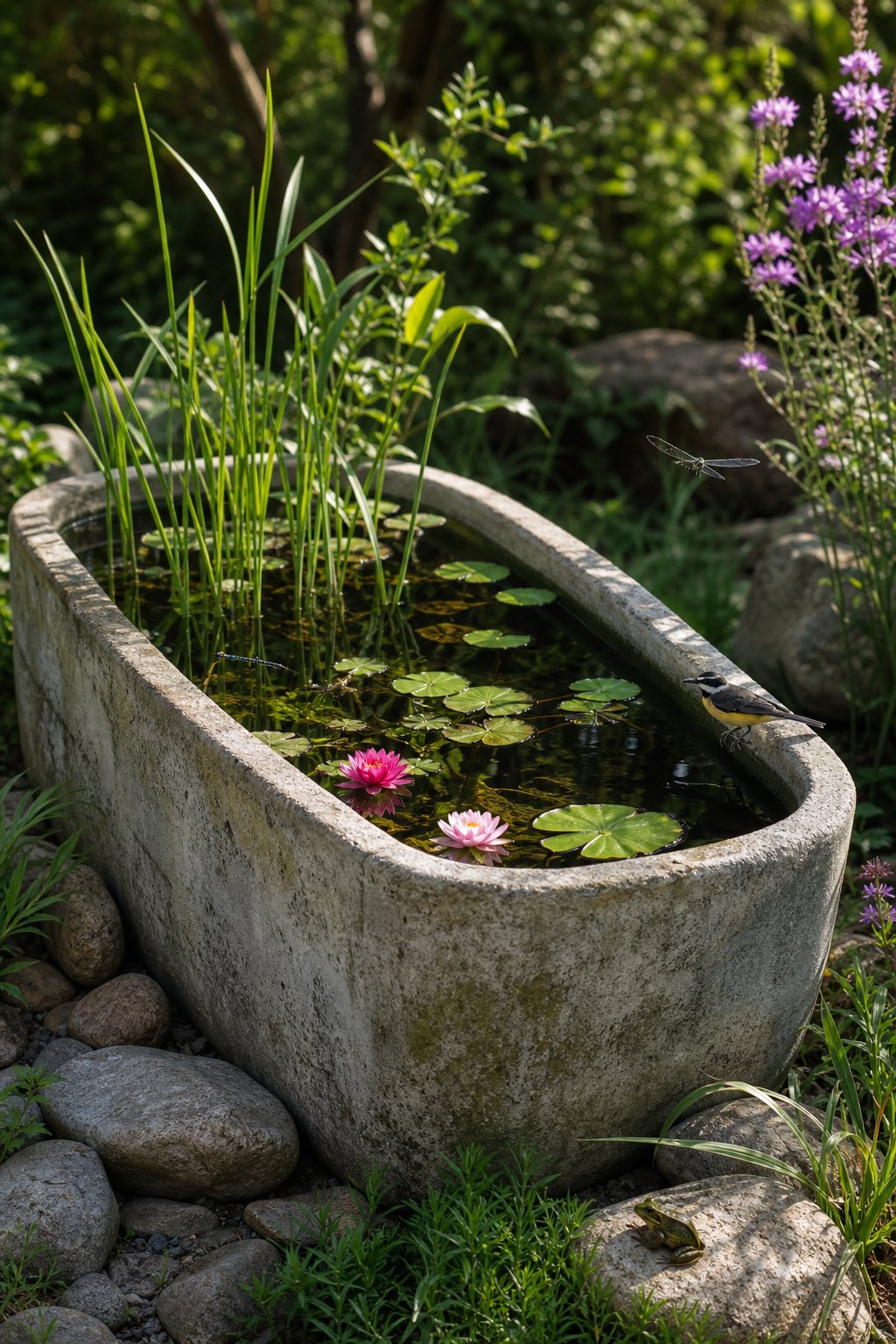
15. Concrete Mixing Trough Container Pond
A concrete mixing trough can become a sturdy little habitat with almost no fuss. It has a plain shape, which sounds boring until you fill it with water, stones, and plants.
Suddenly, it feels like a quiet corner of the garden that wildlife can’t resist. You can also use it in a side yard or tuck it near a shed.
This kind of container handles outdoor weather well. Its low, wide form gives birds and pollinators easy access.
Keep the design simple so the rough concrete doesn’t fight with the plants. Expert Tip From MrPlanter: “Use a few soft plants and one clear open area. That balance keeps the trough looking calm instead of crowded.“
How To Choose The Best Container
Best Materials For Long-Term Outdoor Use
The best containers can handle sun, rain, and changing temperatures without cracking or rusting too fast. Stone, metal, fiberglass, and some ceramics tend to work well outdoors.
Wood usually needs a liner and extra care. If you want less maintenance, pick a container with a solid base and walls that won’t warp.
Ideal Depth And Width For Wildlife
Shallow and wide shapes usually work better than deep and narrow ones. Birds, bees, and dragonflies need easy access, and frogs like gentle edges and places to rest.
A broad opening also gives plants more room and makes the pond look more natural in a yard setting.
When To Use A Liner
Use a liner when the container is porous, rough, or likely to leak over time. Wood, some terracotta, and older metal pieces often need that extra layer to hold water safely.
A liner also gives you more control over water depth and plant placement. Expert Tip From MrPlanter: “Pick the container first, then think about the liner. That order saves you from buying a pond that looks great but leaks like a tired old watering can.“
Wildlife-Friendly Setup Essentials
Safe Access For Birds And Pollinators
Wildlife needs an easy way to reach the water without slipping. Flat stones, pebbles, shallow shelves, and sloped edges all help birds and pollinators drink safely.
If the pond edge is too steep, tiny visitors may avoid it even if the water looks perfect.
Native And Floating Plant Options
Native plants fit your local climate better and usually attract more useful insects. Floating plants can give shade, reduce algae, and add a calm look without crowding the water.
A few well-chosen plants often work better than a packed mix that hides the surface.
How To Prevent Mosquito Problems Naturally
Moving water, even gently, helps discourage mosquitoes from laying eggs. You can also keep the water balanced with a few plants and remove thick debris that traps still pockets.
Small fish may help in some setups, though they need the right container size and care. Expert Tip From MrPlanter: “Keep water fresh and lightly moving if you can. Still, murky water is where mosquitoes get ideas, and your pond does not need that drama.“
Where To Place A Container Pond In The Yard
Sun And Shade Balance
A pond needs some sun for plants, yet too much sun can heat the water and speed up evaporation. A spot with morning light and afternoon shade often works best in a backyard or front yard.
That balance helps the water stay clearer and more comfortable for wildlife.
Best Spots In Backyards And Front Yards
Backyards often give you more room for larger tubs and troughs. Front yards can handle smaller decorative containers near a walkway or porch.
Place the pond where you’ll actually see it, since regular viewing helps you notice water levels and wildlife visitors. A visible spot also makes the feature feel like part of the yard instead of something hidden in a corner.
Visibility Versus Wildlife Privacy
You want to enjoy the pond, yet wildlife also likes a little cover nearby.
Low plants, grasses, and nearby shrubs help creatures feel safe without hiding the water completely.
The sweet spot is a pond that you can see from the house. Birds and frogs still get a bit of shelter around it.
Expert Tip From MrPlanter: “Put the pond where you pass by it every day. You’ll catch more wildlife moments, and you’ll spot problems before they turn into muddy surprises.“
Hi, this is Tarun, and I am the Editor of MrPlanter. I love plants, and spending time with them is my favorite hobby. I will be sharing my gardening experience of more than two decades as a gardening enthusiast here.
📚🔍 Our content undergoes thorough review and fact-checking before publication. For additional details, explore our strict Editorial Policy to deliver helpful content. 📝🔒