As an Amazon Associate, MrPlanter.com earns from qualifying purchases.
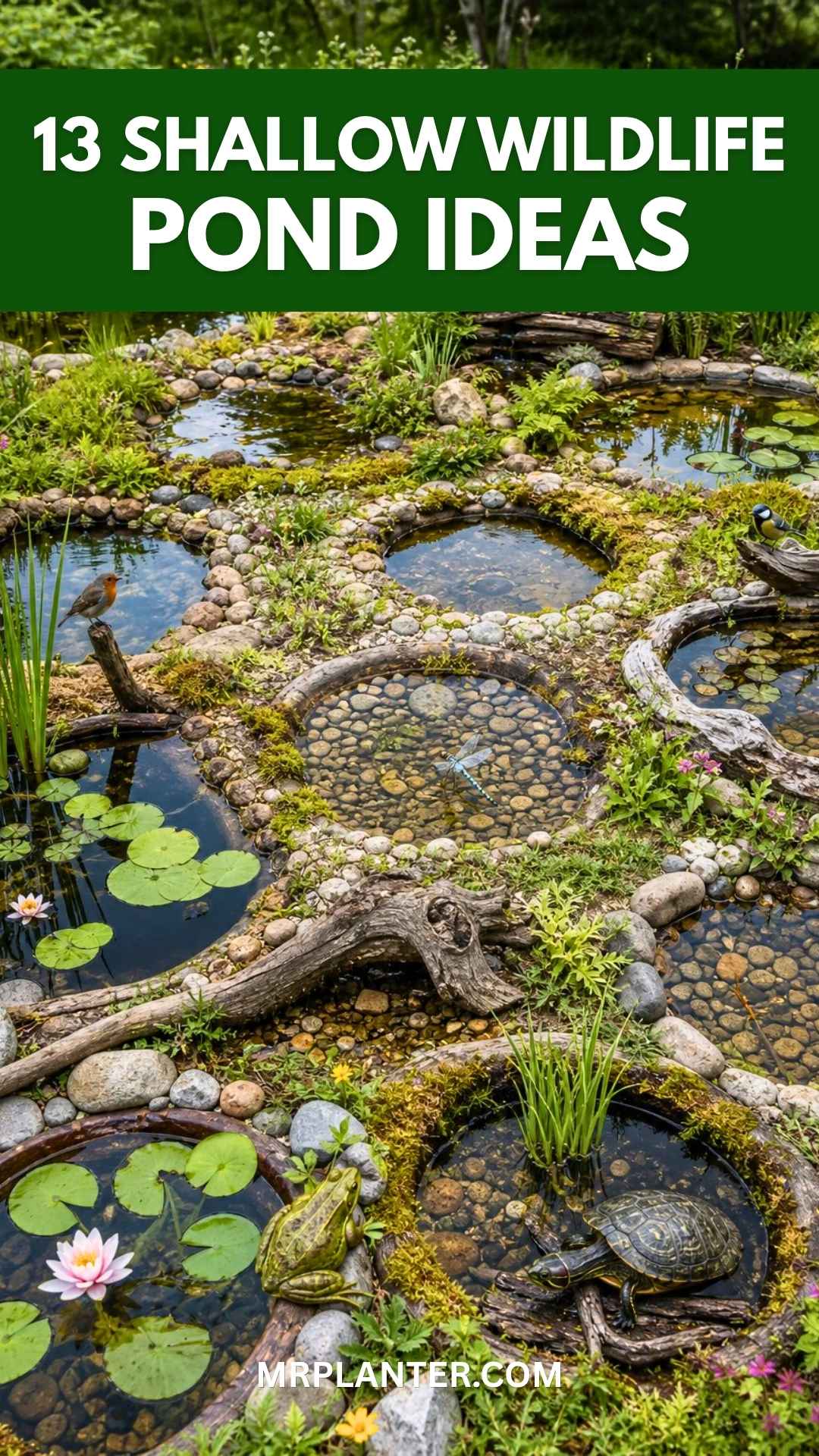
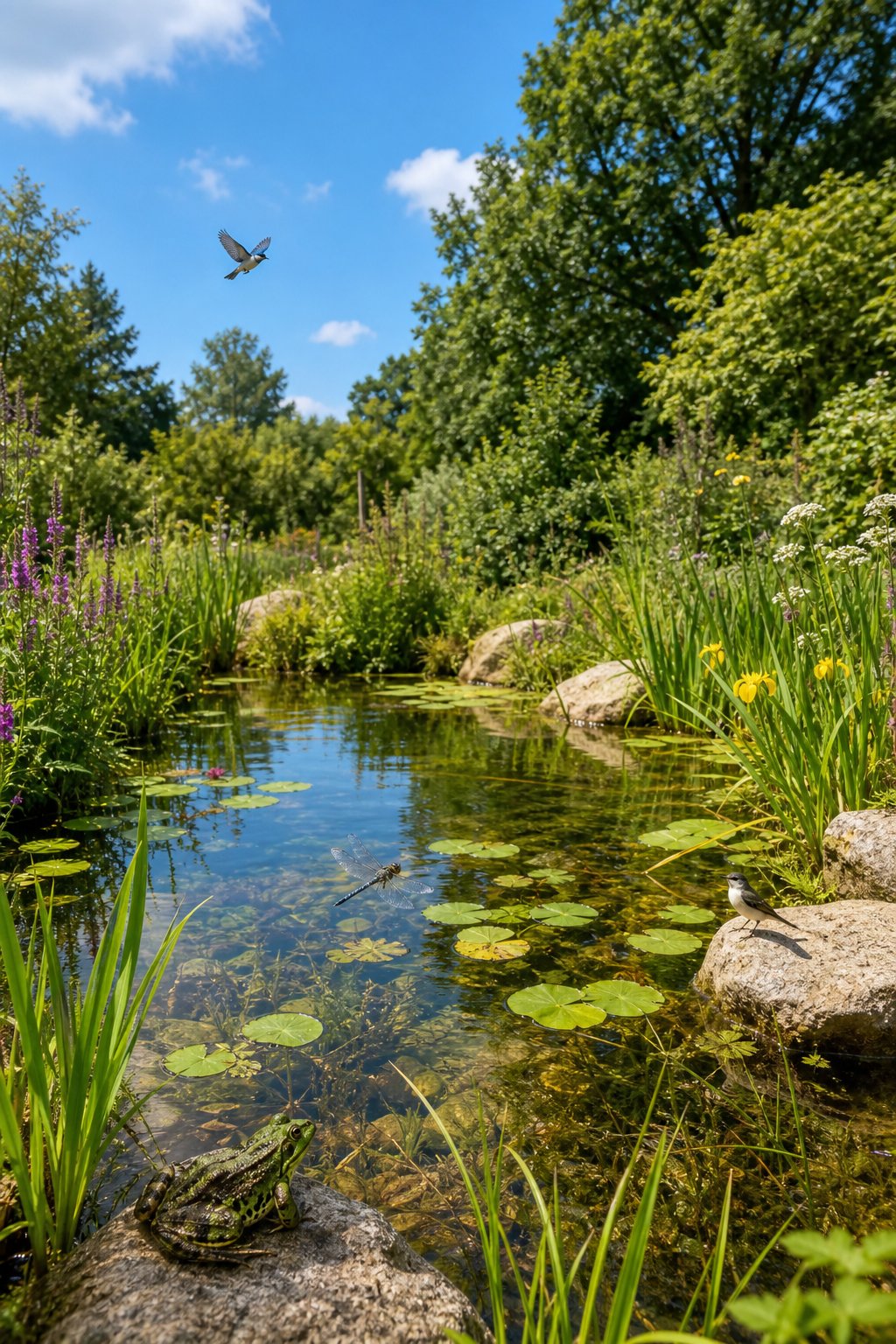
Your backyard does not need a giant excavation crew to become a wildlife magnet. A shallow pond can give frogs, birds, dragonflies, and helpful insects a place to drink, rest, and breed, while still fitting into an ordinary garden.
The best shallow wildlife ponds keep their edges easy to enter, their water zones simple, and their planting natural, so animals feel safe using them.
The good news is that you have lots of ways to build one, from a tiny bowl sunk into the lawn to a layered pond with planting shelves.
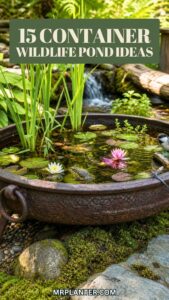
You can match the style to your front yard, patio, or backyard border and still keep it friendly for wildlife. These 13 shallow wildlife pond ideas give you practical ways to bring water into your space without making it fussy.
1. Pebble Beach Entry Pond With A 1:10 Shelving Edge
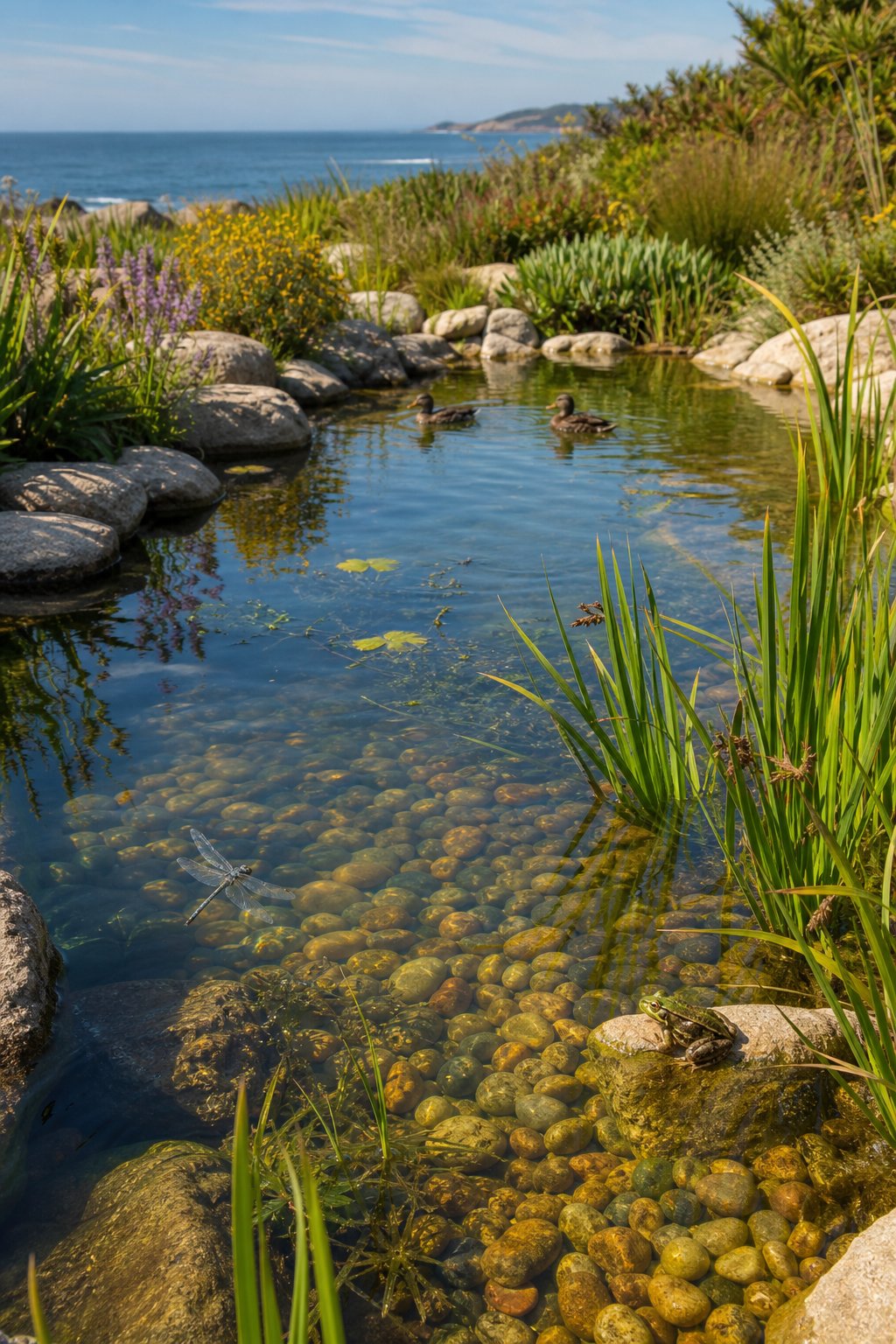
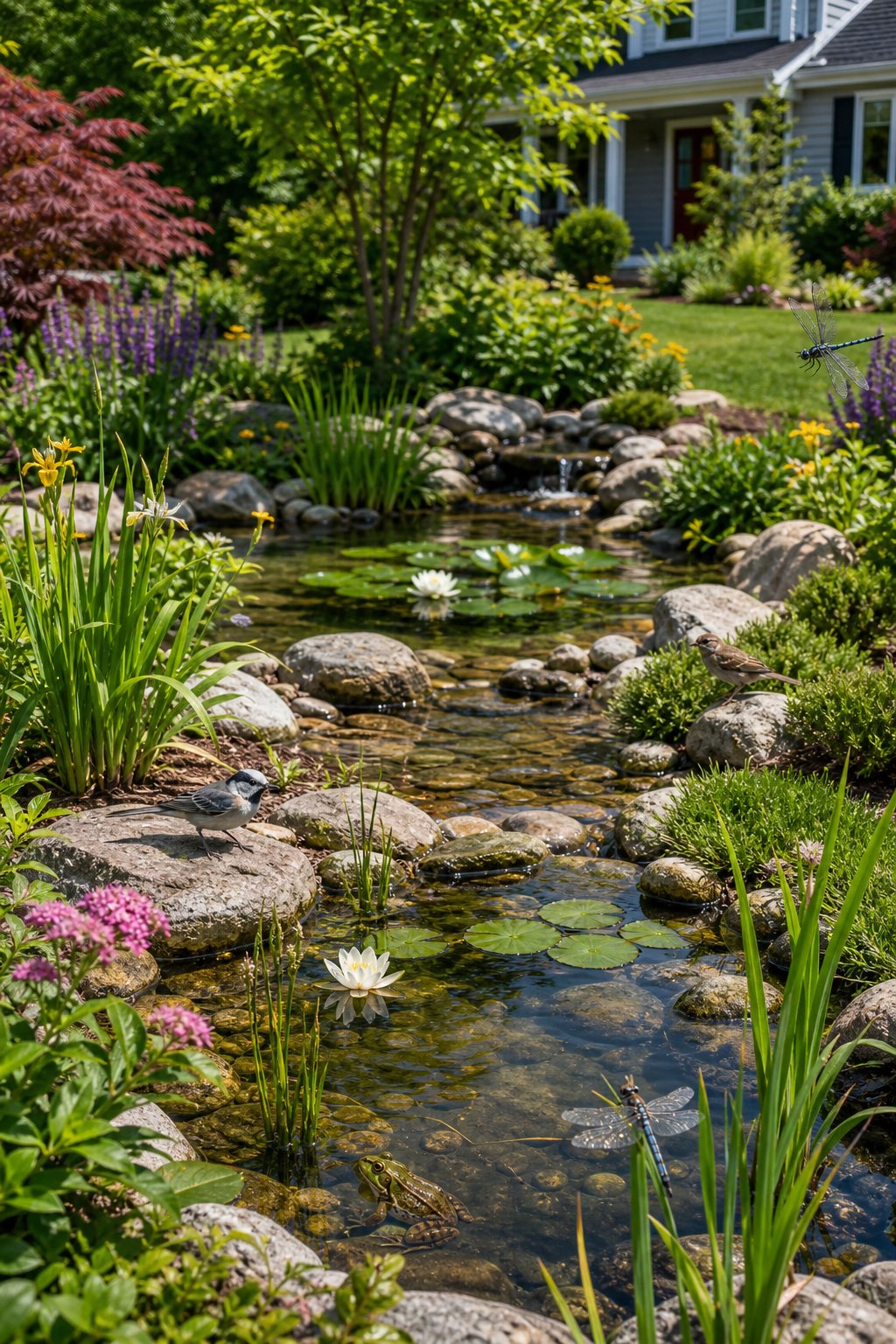
Myth-Busting Statement: a wildlife pond does not need steep sides to feel “finished.” A 1:10 shelving edge gives you a gentle beach that birds and frogs can use without drama. I like this style because the pebbles make the pond feel natural, and the slow slope keeps the first steps into water safe. It also works well in a small backyard where you want the pond to look soft, not boxed in.
Add a few clumps of native marginals near the shelf, then leave one low side open for easy access. That little opening makes a big difference when thirsty birds show up. Expert Tip From MrPlanter: “Use rounded pebbles, not sharp gravel, along the entry shelf. Keep the first stretch of water very shallow so small visitors can test the edge with confidence.”
2. Three-Tier Shelf Pond With 20 Cm, 40 Cm, And 60–90 Cm Zones
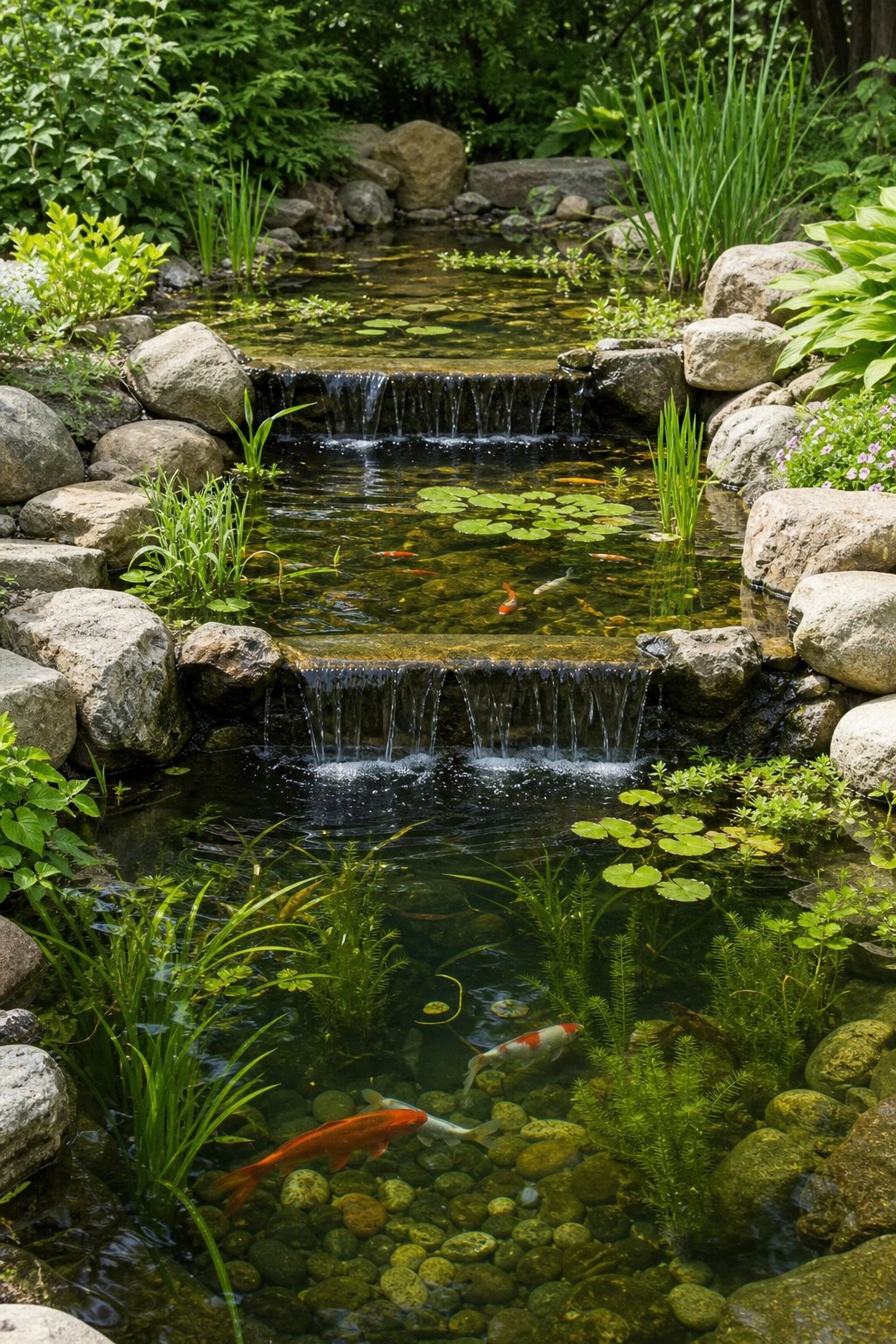
Surprising Fact: a shallow wildlife pond can still have more than one level. Three shelves give you space for different plants and different animal needs, with the top shelf staying easy to reach. The 20 cm zone is great for marginals, the 40 cm shelf suits taller plants, and the deeper pocket can help water stay steadier in hot weather.
This layout looks tidy in a garden while still acting natural. I’ve seen it work best when the shelves are wide, not skinny little ledges. Expert Tip From MrPlanter: “Keep the edge shelves broad enough for planting and perching. A mix of shelves gives you more plant choices and better shelter for wildlife.”
3. Washing-Up Bowl Micro Pond Sunk Flush Into A Lawn
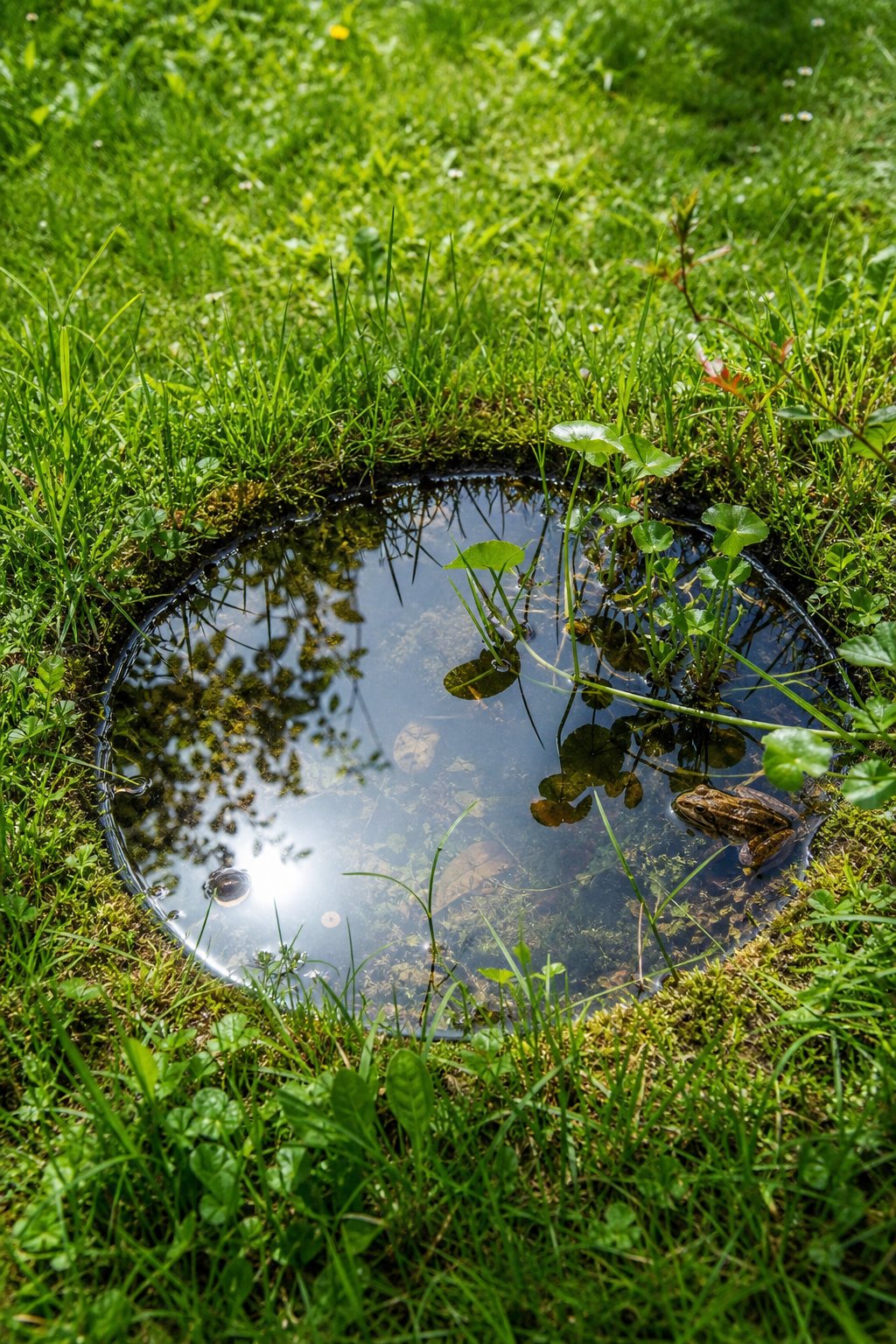
Relatable Problem: you want a pond, but your yard says, “small please.” A washing-up bowl sunk flush into the lawn solves that problem fast. When the rim sits level with the grass, the pond feels like part of the yard instead of a plastic tub pretending to be fancy. It’s a nice choice for patios, narrow side yards, or a front yard corner.
Add a few stones for perch spots and a tiny raft of floating plants. Even a small bowl can attract insects and birds if you keep the water clean and shallow. Expert Tip From MrPlanter: “Sink the bowl so the rim is hidden by grass. That simple trick makes the pond look more natural and easier for wildlife to approach.”
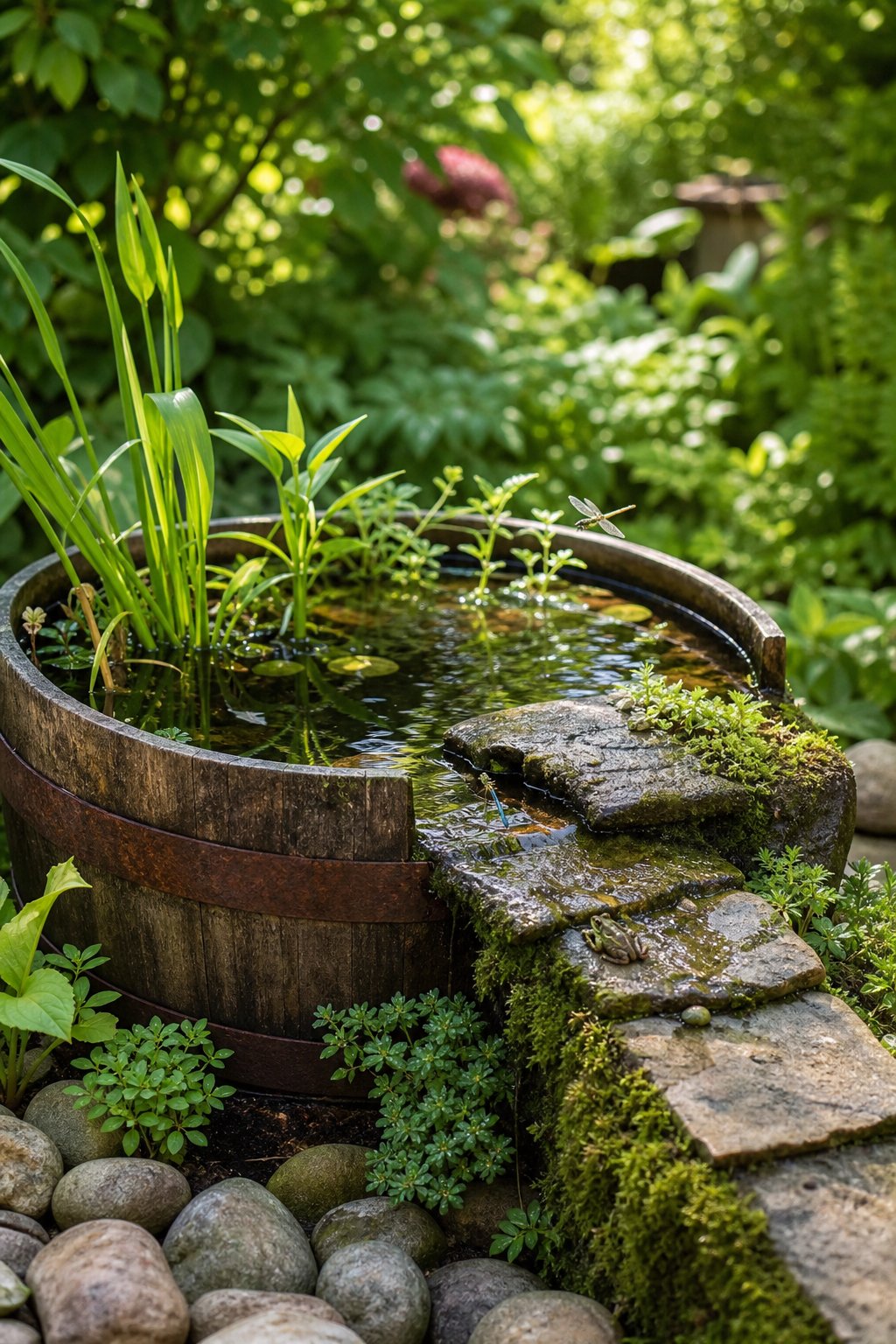
4. Weathered Oak Half-Barrel Pond With A Mossy Stone Ramp
Personification: the old oak barrel looks like it has stories to tell. A half-barrel pond feels warm and rustic, and the mossy stone ramp gives it a soft, aged look that suits a cottage garden. The ramp also gives frogs and beetles a simple way in and out, which is the kind of detail wildlife actually uses.
I’ve found this style shines on patios or beside a shed where you want a small focal point. Plant a little water mint or a compact marginal, and keep the center open. Expert Tip From MrPlanter: “Seal the barrel well before adding water. Then add one broad stone ramp so small animals never face a sheer climb.”
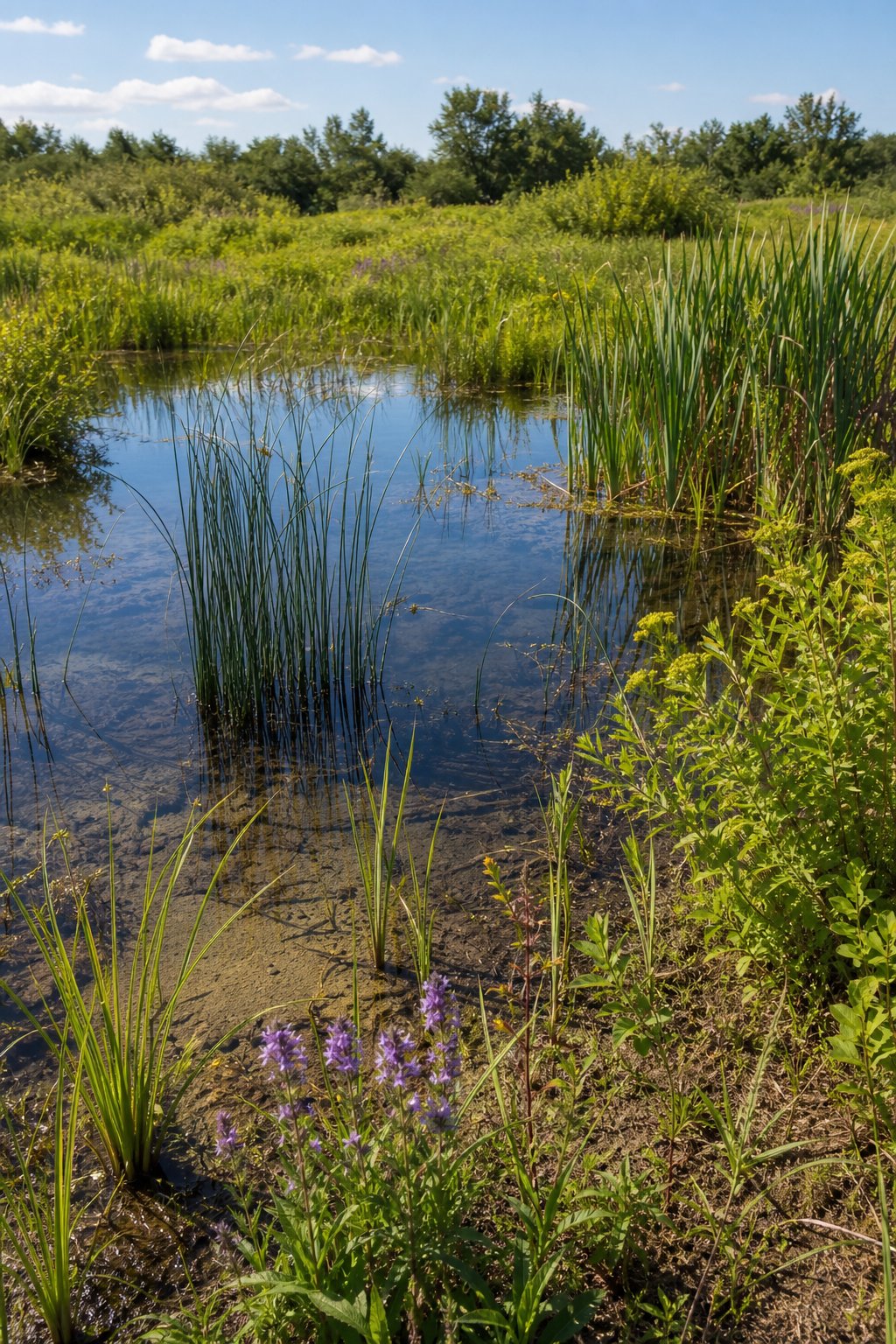
5. Bog-Edge Spillover Pond Planted With Native Marsh Species
Surprising Fact: a pond edge can do more wildlife work than the center. A bog-style spillover pond with native marsh plants turns the margins into a feeding and hiding zone. This is a smart choice if your yard stays damp or if you already have a low spot that holds moisture. The edge plants also help soften the pond and make it feel like part of the garden.
Choose marsh plants that fit your region, then let them spread a bit around the water line. The more mixed the edge, the more places you give small creatures to rest. Expert Tip From MrPlanter: “Let the pond spill into a boggy planting ring. That extra wet edge can bring in more frogs, insects, and dragonflies than a bare pool ever will.”
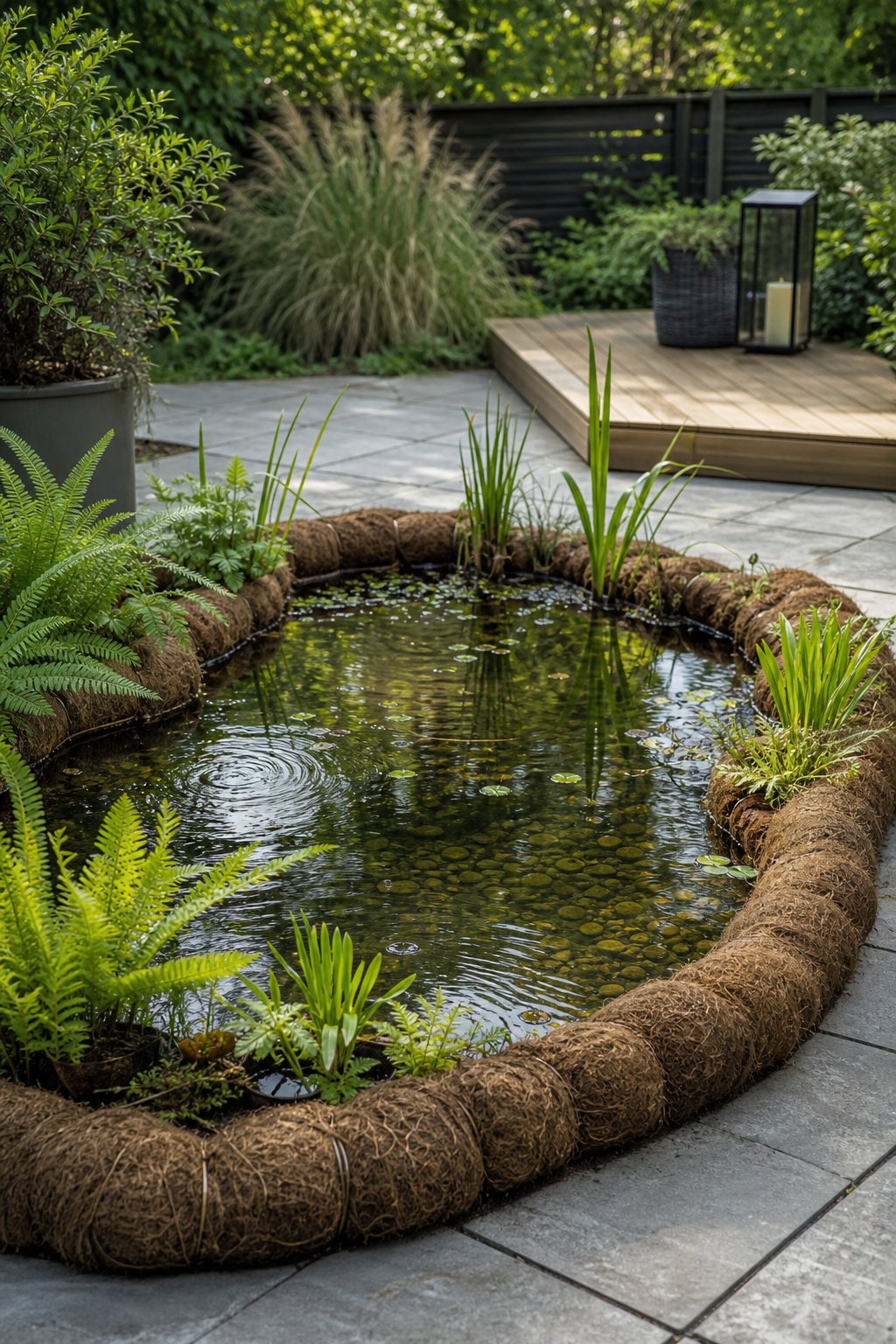
6. Coir Roll-Lined Patio Pond With Marginal Planting Pockets
Myth-Busting Statement: patio ponds do not have to look hard-edged or formal. Coir rolls soften the rim, and the planting pockets let you tuck in marginals without making the setup feel crowded. This works well on a stone terrace or paved side yard where a full dug pond is not practical. The coir also gives the whole thing a more natural, earthy finish.
I like this option because it’s flexible and easy to shape around a small space. Just keep the roll line low enough that wildlife can still get in and out with ease. Expert Tip From MrPlanter: “Use coir to hide the hard edge, then leave a few open gaps for entry points. Wildlife likes soft borders, not a wall of plants with nowhere to land.”
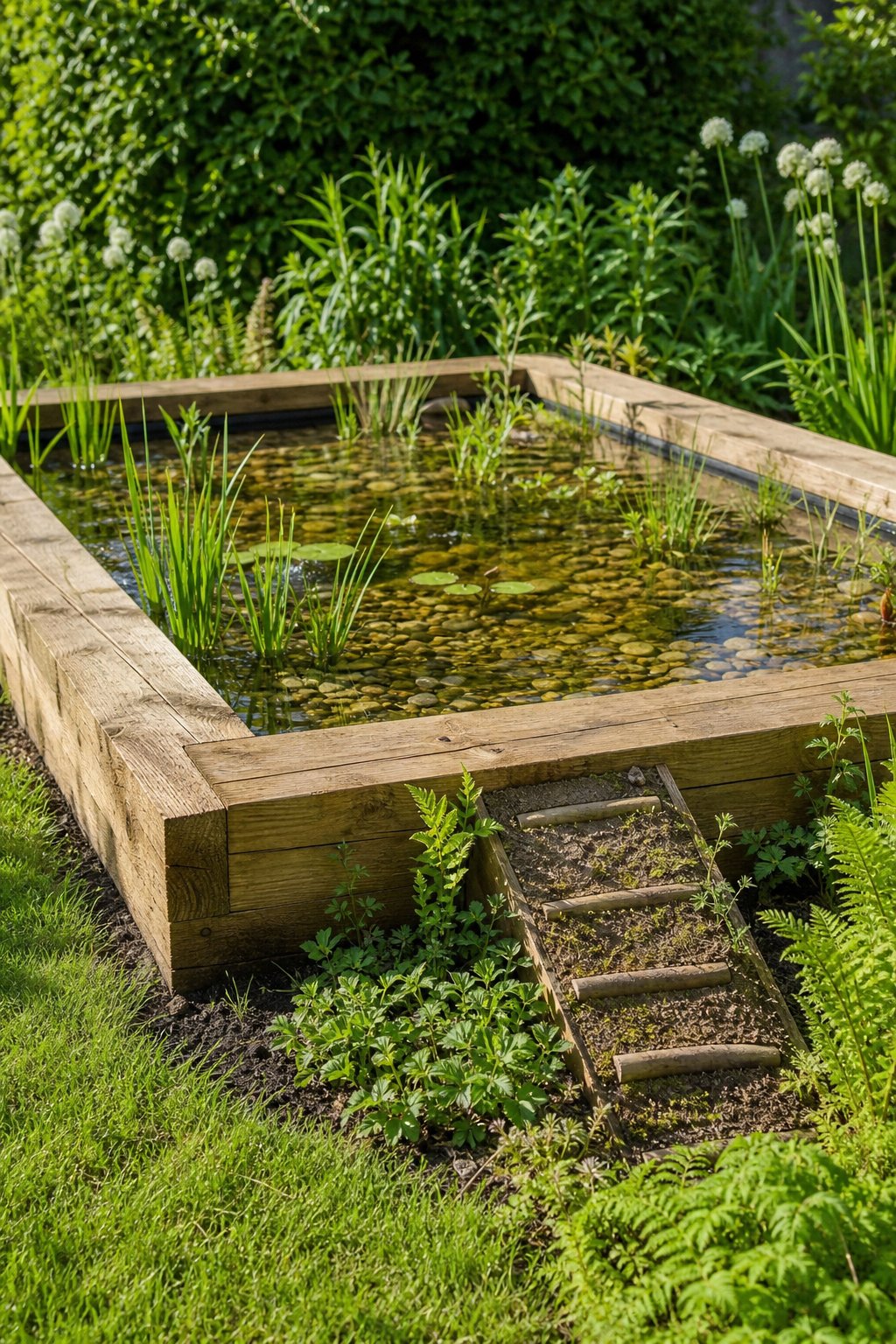
7. Raised Timber Sleeper Pond With A Hidden Hedgehog Escape Ramp
Relatable Problem: you want a raised pond, yet you don’t want to trap visiting animals. A hidden hedgehog escape ramp solves that neatly while the timber sleeper frame gives the pond a solid, garden-built feel. It’s a good fit for family yards where you want the pond to sit above the soil line for easier viewing.
Keep the inside shallow near the edges and use plants to soften the timber. The ramp can be tucked behind stones or greenery so it doesn’t spoil the look. Expert Tip From MrPlanter: “Add a ramp before you add plants, so it stays usable all year. A good escape route matters as much as the water itself.”
8. Pebble-Rimmed Zinc Trough Pond For A Front Yard Border
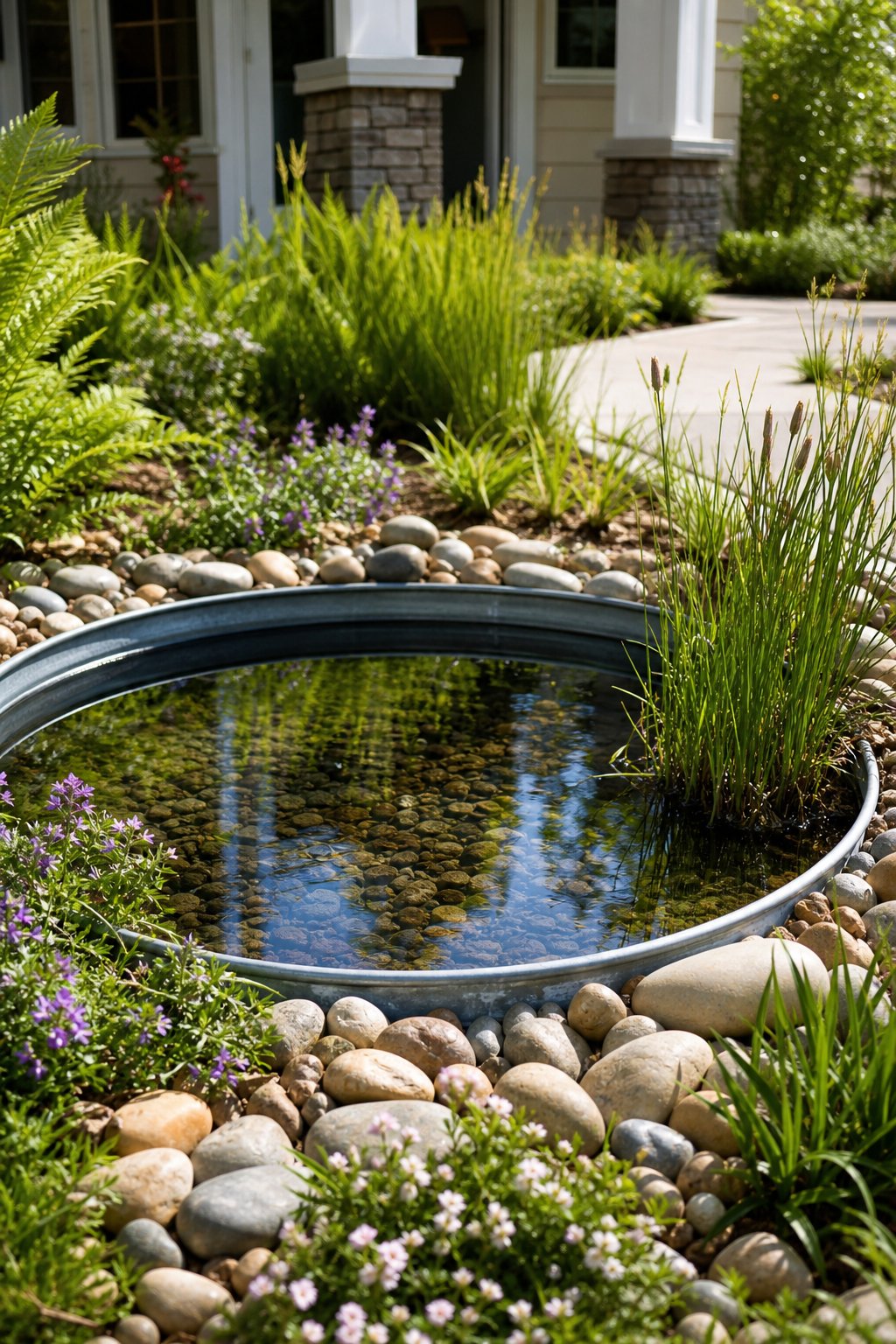
Surprising Fact: a trough pond can look polished and still feel friendly to wildlife. A pebble rim softens the zinc edge, which helps the pond fit into a front yard border without looking like farm gear in a flower bed. The narrow shape works well near a walkway, fence, or driveway edge where space is tight.
Use low plants around the base so the container blends into the garden. A few floating leaves or duckweed can make the surface feel calmer and more alive. Expert Tip From MrPlanter: “Keep the rim low and the pebble border wide. That gives birds a comfortable landing zone and keeps the metal from feeling harsh.”
9. Log-Edged Cottage Pond With Native Grasses And Wildflowers
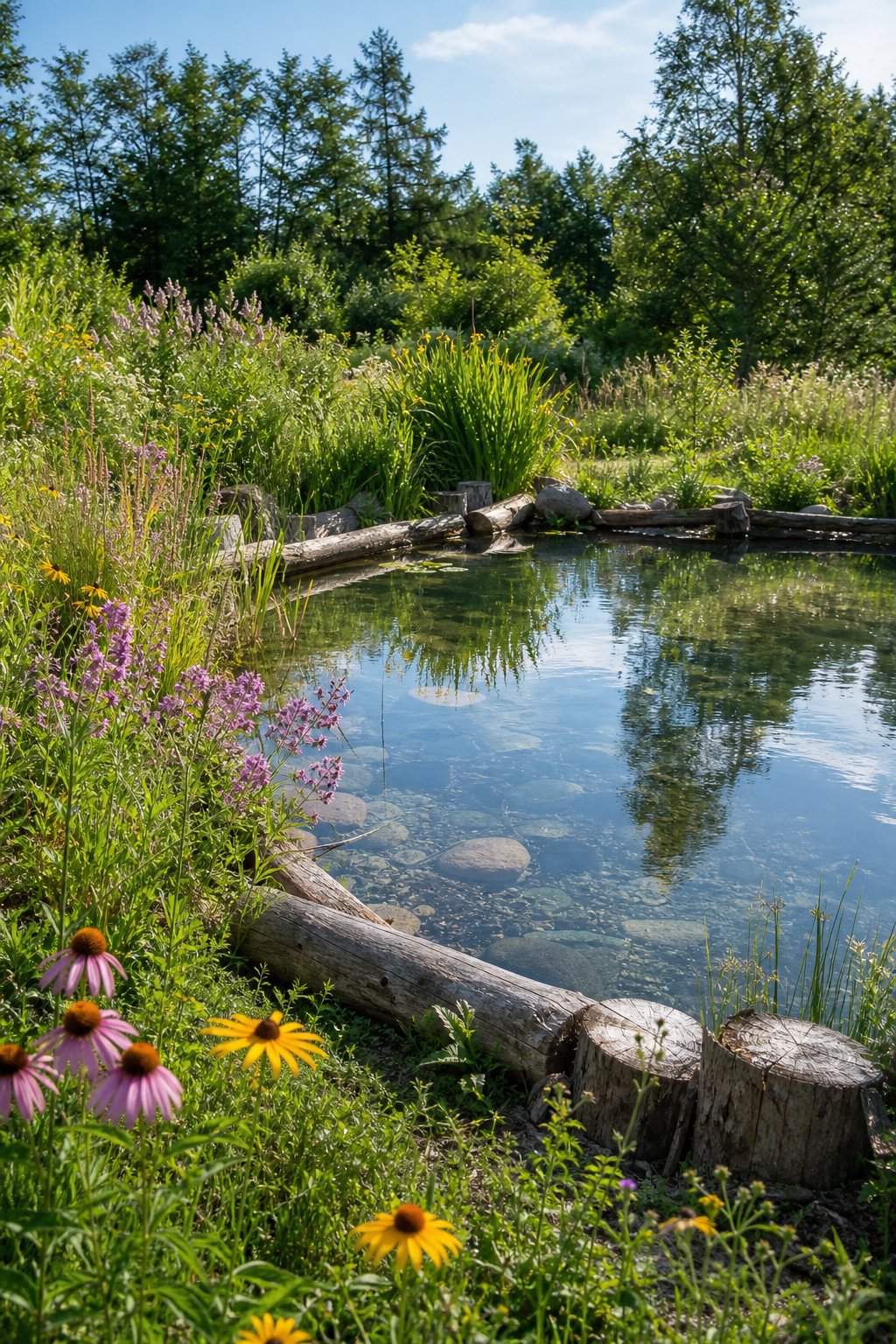
Myth-Busting Statement: logs are not just for rustic style, they’re useful habitat. A log-edged cottage pond looks relaxed and a little wild, which is exactly why it works so well for wildlife. Native grasses and wildflowers around the edge give bees and butterflies a reason to visit, while the logs create resting spots for insects and small animals.
This idea fits a backyard that you want to feel soft and meadow-like. Let the planting grow in loose drifts instead of neat rows. Expert Tip From MrPlanter: “Mix logs with a few open gaps and low plants. That gives you a pond edge that feels natural and still lets animals reach the water.”
10. Stone Basin Courtyard Pond With Floating Frogbit Cover
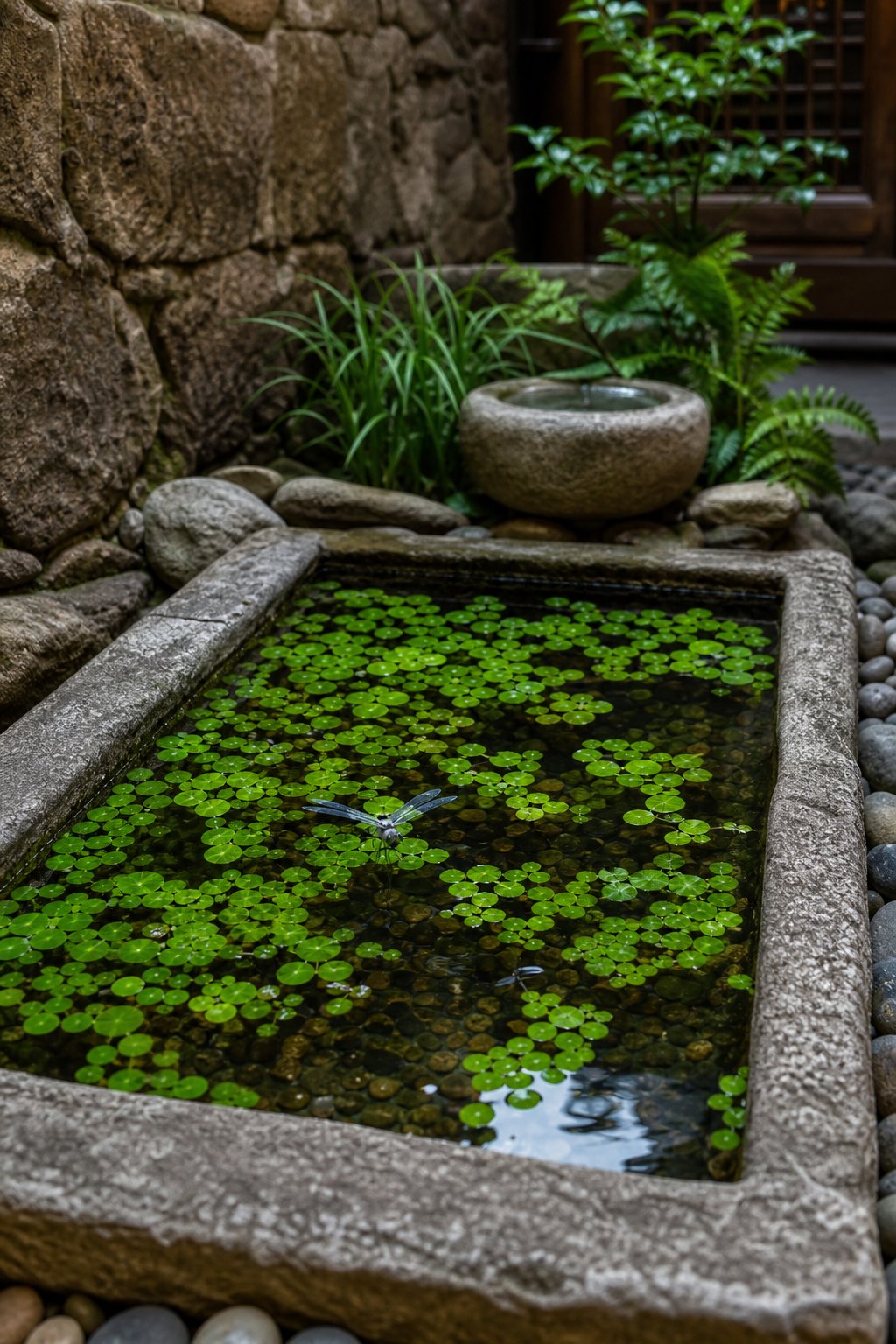
Personification: the stone basin sits there like a tiny calm pond with a job to do. Floating frogbit gives it a soft green cover that helps shade the water and offers cover for small pond life. In a courtyard, this style feels tidy and contained, yet it still supports wildlife better than a bare basin ever could.
Keep some open water visible so birds can still spot it. The trick is balance, not full coverage. Expert Tip From MrPlanter: “Let frogbit cover part of the surface, not all of it. Wildlife likes a mix of shelter and open water for drinking and landing.”
11. Black Pond Liner Pool With Rounded Cobbles And Iris Margins
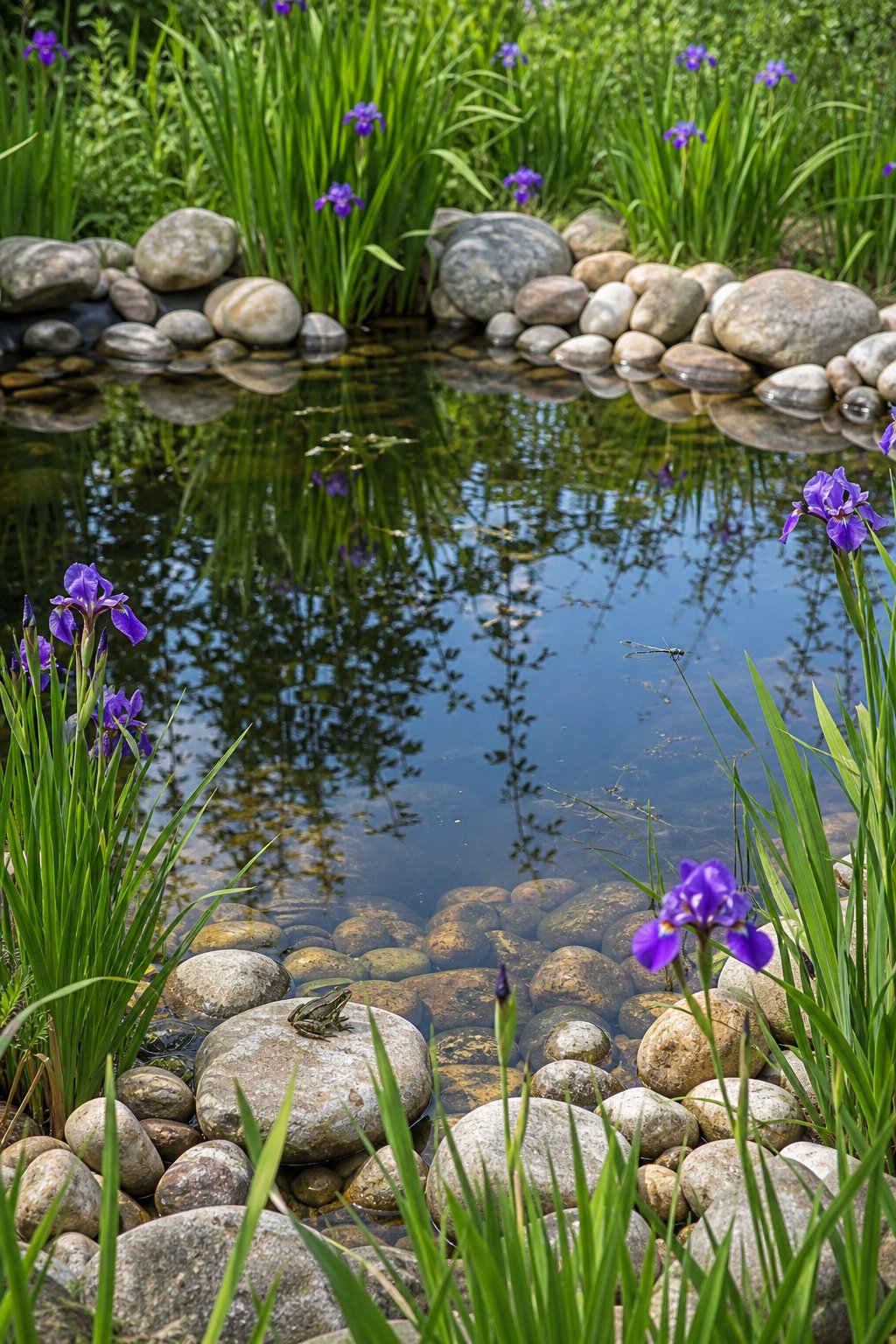
Relatable Problem: you want a liner pond, but you don’t want it to look like a black hole with water. Rounded cobbles and iris margins fix that fast by hiding the liner and softening the edge. This setup gives you a clean shape with enough plant cover to feel natural in a backyard bed. The irises also bring height and color without crowding the water.
I’ve found this works best when the cobbles are mixed in size and partly buried. That keeps the edge from looking too neat. Expert Tip From MrPlanter: “Hide the liner under stones and roots, not just soil. A good edge looks like it grew there, not like it was dropped in place.”
12. Sunken Container Pond In A Pollinator Bed With Marsh Marigold
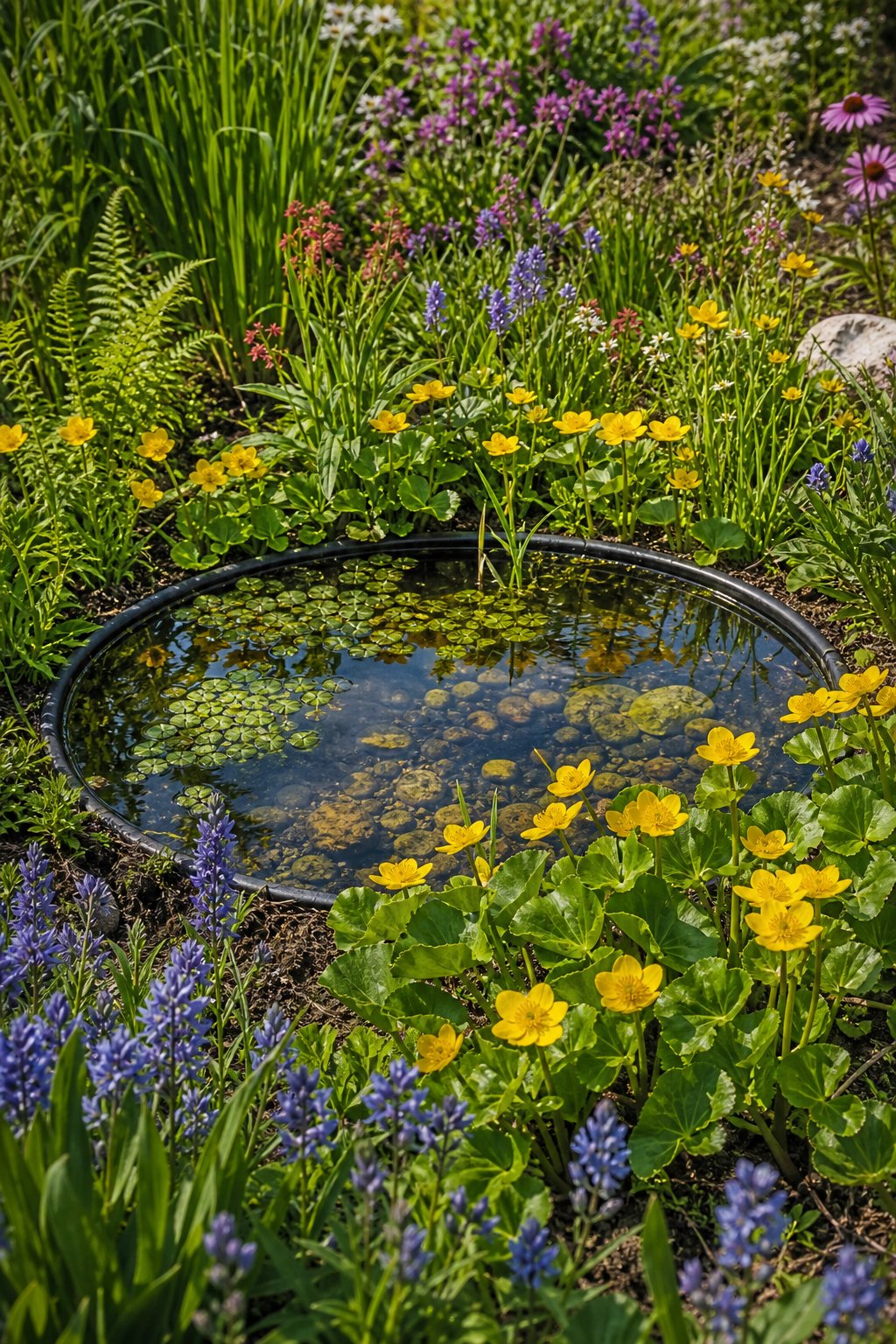
Surprising Fact: a container pond can pull double duty in a pollinator bed. When you sink it into the soil and ring it with marsh marigold and other pollinator plants, the pond becomes part of the flower planting instead of a separate feature. That makes it a smart option for a front yard or a sunny backyard border.
The bright flowers draw your eye, while the water brings in insects and birds. Keep the container rim hidden with mulch, stones, or low plants. Expert Tip From MrPlanter: “Tuck the container below soil level so the edge disappears. Then plant around it so the pond feels like a natural part of the bed.”
13. Shallow Bird-Bathing Pond With A Gravel Foreshore
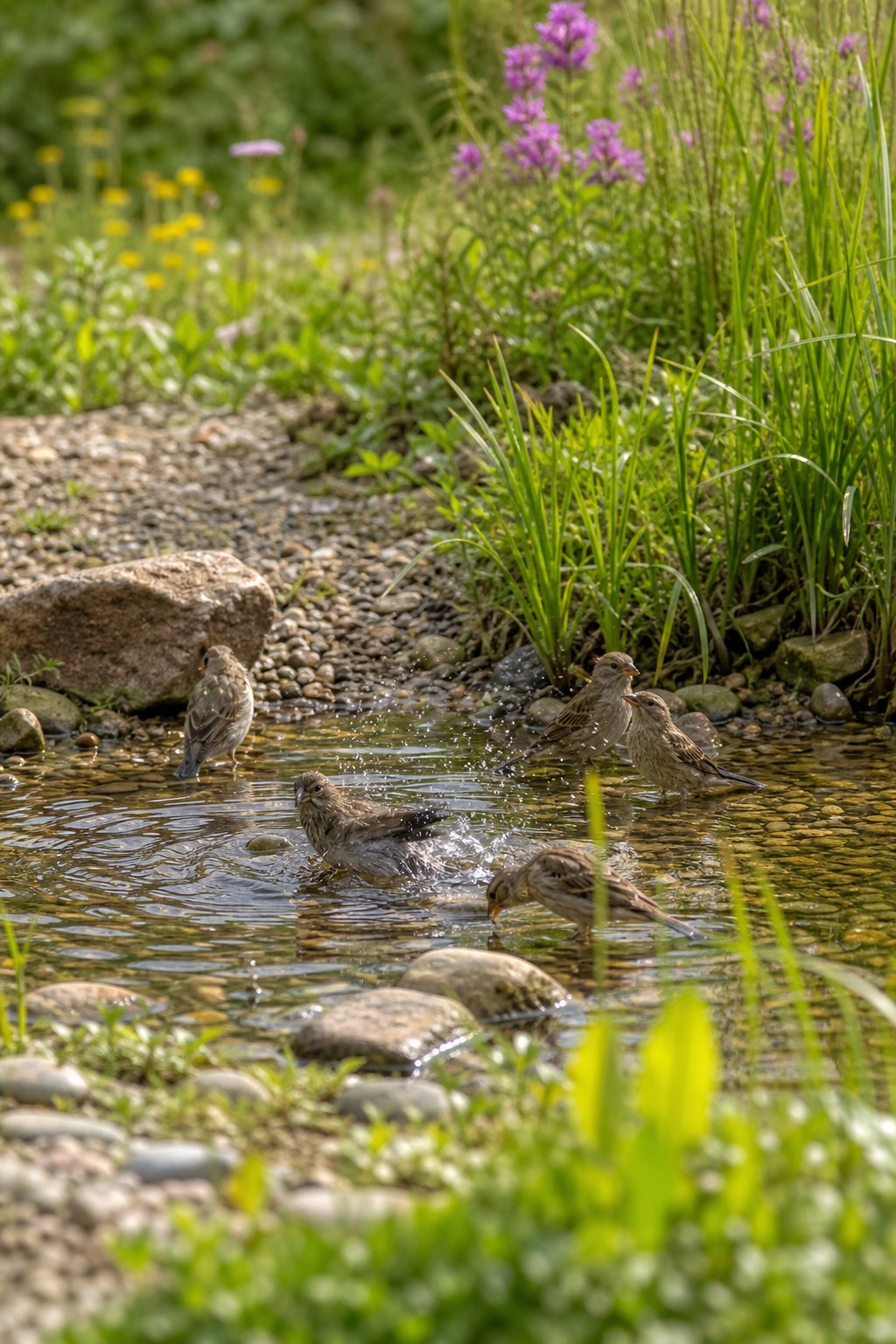
Myth-Busting Statement: birds do not need a big pond to enjoy a bath. A shallow bird-bathing pond with a gravel foreshore gives them the exact kind of easy access they like. The gravel helps create a gradual edge, and the low water lets birds hop in without hesitation. This is a great choice if you want movement and life in a small yard.
A few reeds or clumps of grass nearby help birds feel safer while they wait their turn. Keep the water fresh and the stones easy to stand on. Expert Tip From MrPlanter: “Use small gravel that stays put and does not roll under feet. Birds trust a pond more when the edge feels steady and shallow.”
14. Mini Patio Pond In A Glazed Ceramic Pot With Water Mint
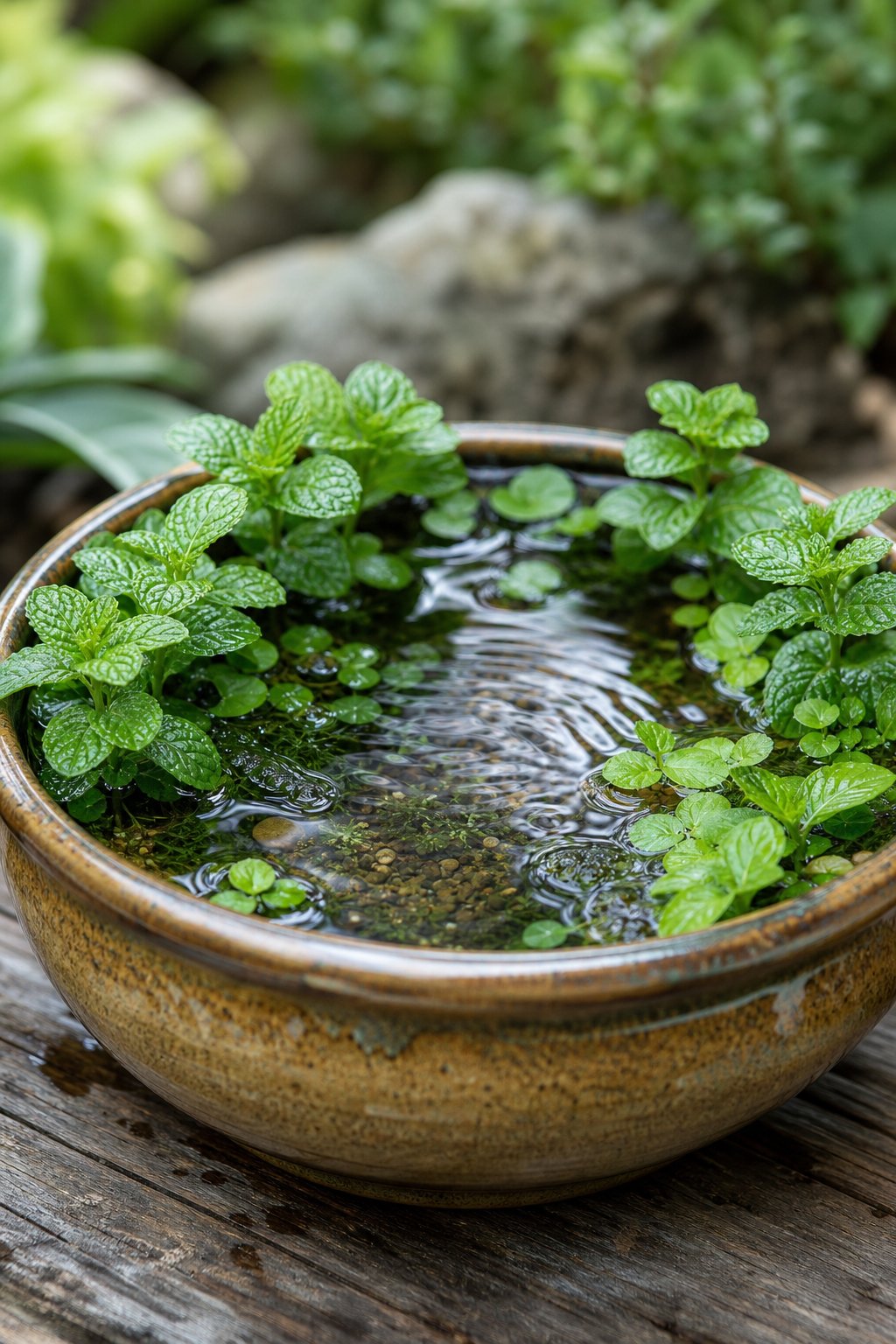
Relatable Problem: your patio feels too small for a real pond. A glazed ceramic pot with water mint turns a corner table, step, or deck edge into a tiny wildlife stop. It’s small, attractive, and easy to keep close to the house so you can check water levels often. Water mint gives the pond a fresh look and can attract insects while staying compact.
I like this for renters or anyone who wants a low-commitment water feature. Just be sure the pot has a shallow setup with a safe perch stone or two. Expert Tip From MrPlanter: “Choose a wide pot over a tall one, since shallow water works better for wildlife. A little mint and one stone perch can do a surprising amount of work.”
15. What Makes A Shallow Wildlife Pond Actually Work
Why The First 1–10 Cm Of Water Matters Most
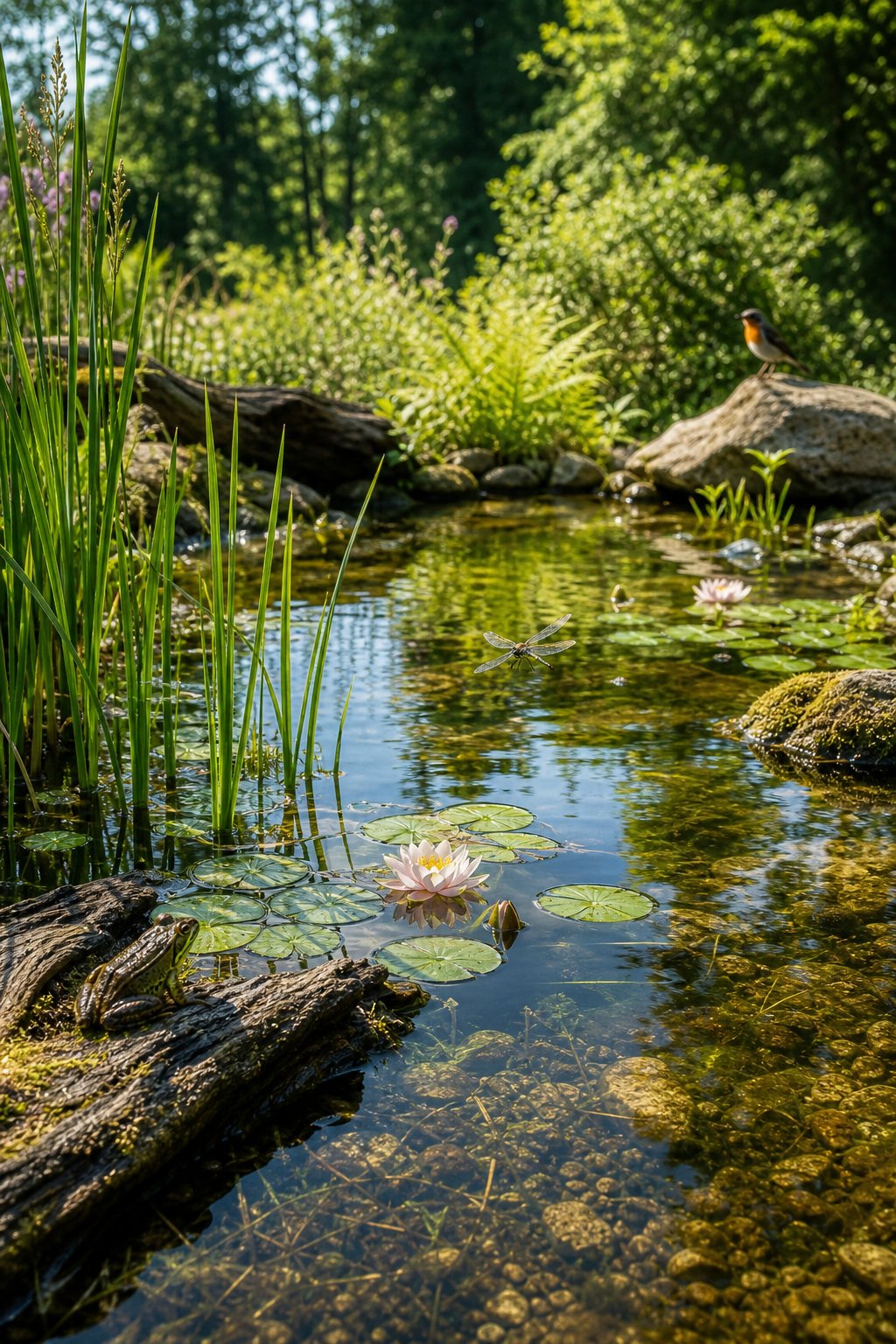
The first few centimeters are where a lot of the action happens. Birds drink there, insects land there, and frogs use that easy edge like a welcome mat. If the water starts off too deep, many small visitors will simply keep moving. A soft, shallow start gives them confidence and cuts the risk of slips.
A good wildlife pond usually has shallow shelves before it has any deeper pocket. Frogs and newts use those ledges to enter, rest, and leave without trouble. Birds also like the changing edge because they can wade at different spots and keep watch while they drink.
How To Add Safe Exit Routes For Small Mammals
Small mammals need a way out just as much as they need water. A log, stone ramp, sloping edge, or firm planting mat can keep them from getting stuck. I always prefer more than one exit, because real gardens are busy places and animals do not always choose the easiest side. Expert Tip From MrPlanter: “Think like a tired hedgehog or a nervous frog, and make the first step easy. A pond is better when getting out is as simple as getting in.”
16. Planting And Placement Tips For Backyard And Front Yard Ponds
Native Marginals, Floaters, And Oxygenators To Prioritize
Native marginals belong near the edge because they soften the shoreline and give wildlife cover. Floaters can shade the water a bit, while oxygenators help keep the pond from going stale in warm weather. If you can, choose plants that already grow in your region, since local frogs, insects, and birds are more likely to use them.
Sun, Shade, And Wind Exposure In Small Gardens
A pond in full hot sun can warm up fast, while full shade can slow plant growth. I usually aim for a spot with morning sun and some afternoon relief. Try to keep strong wind from pushing leaves and debris straight into the pond, because small water features fill up fast.
How To Hide Liner Without Creating A Wildlife Trap
A hidden liner should still leave safe footing at the edge. Use stones, soil, roots, and plants to cover the rim, but do not make a steep, slippery lip. Wildlife needs a path in and out, not a trap dressed up like garden decor. Expert Tip From MrPlanter: “Hide the liner with layers, not a wall of stuff. Leave at least one gentle exit path so animals can come and go without stress.”
17. Common Mistakes To Avoid
Steep Edges And Bare Plastic Rims
A steep edge can turn a friendly pond into a hard one for wildlife to use. Bare plastic rims look unfinished and can heat up in the sun. A gentle slope and some natural cover make the pond feel safer and more inviting.
Adding Fish To Tiny Wildlife Ponds
Fish can be charming, yet they are not a good match for every small wildlife pond. In a tiny shallow setup, fish may eat eggs and larvae that frogs and insects need. If your goal is wildlife, keep the pond simple and let other creatures do the work.
Overdesigning Instead Of Letting Nature Settle In
It’s easy to keep fiddling with stones, plants, and decorations. The trouble is that wildlife often likes a pond best after it has had time to settle. Give it a season, watch what shows up, and resist the urge to keep reshaping everything. Expert Tip From MrPlanter: “Build it, plant it, then step back. A pond gets better when you let it age a little and let nature do some of the decorating.”
I’m Anirban Saha, the Founder and Owner of MrPlanter.com. I pay the bills as a software developer, although my BTech is actually in Electronics and Communication. I really love my day job, but what gives me energy every day is interacting with my indoor plants and taking care of them. I have been successfully nurturing and maintaining houseplants for over 10 years now.
📚🔍 Our content undergoes thorough review and fact-checking before publication. For additional details, explore our strict Editorial Policy to deliver helpful content. 📝🔒