As an Amazon Associate, MrPlanter.com earns from qualifying purchases.
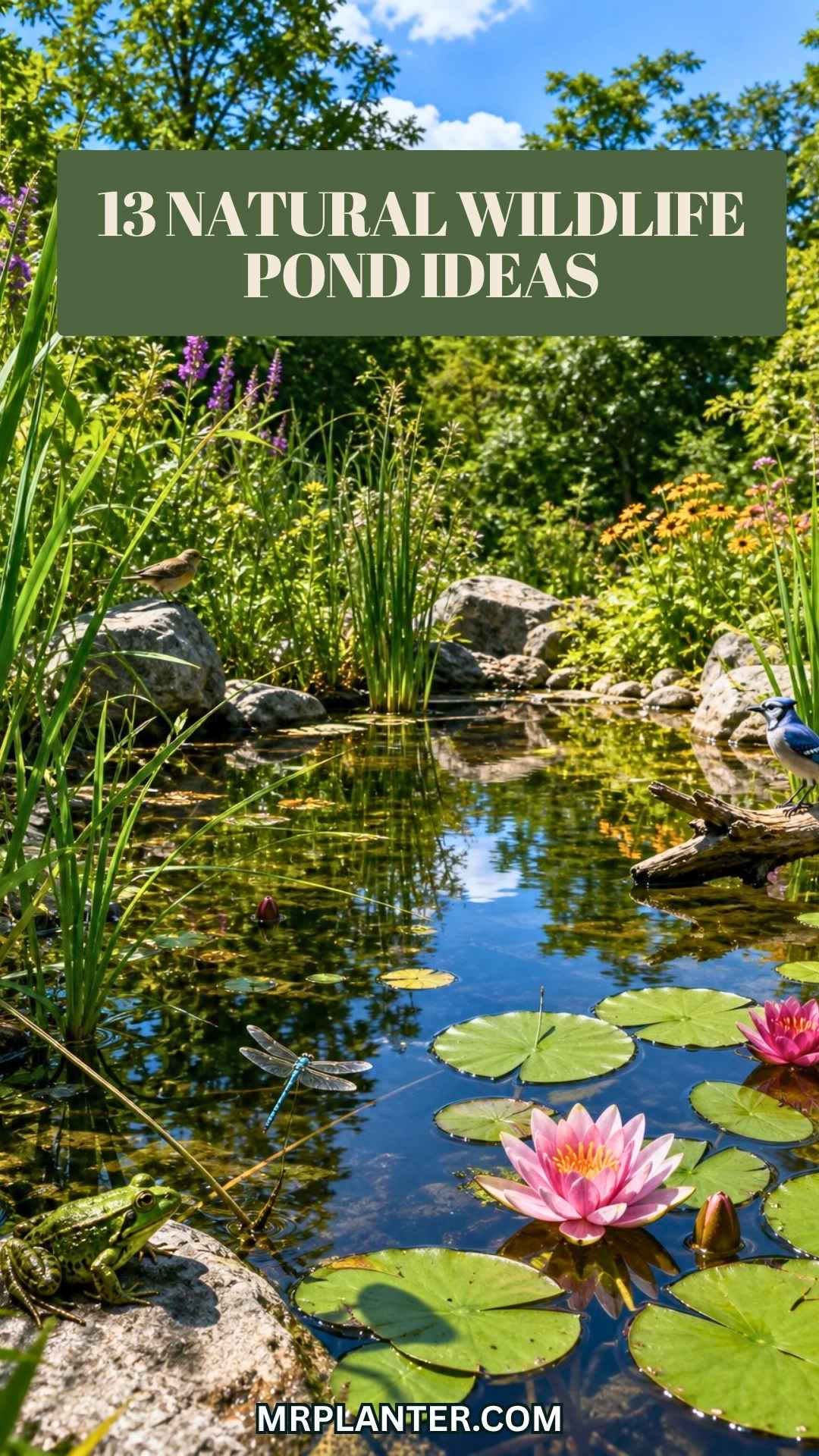
If you want a pond that feels alive, the trick is to think like a frog, a dragonfly, and a thirsty bird all at once. The best garden ponds give wildlife a way in, a way out, and a few calm spots to rest, feed, and hide.
A gentle slope, shallow water, and native plants do far more for pond life than a fancy shape or a polished edge.
You do not need a huge yard to make this work. Even a small pond can pull in frogs, bees, birds, and полезных insects if you give it the right mix of soft edges, shade, and clean rainwater.
The ideas below give you a simple way to match your space with a pond style that feels natural and useful.
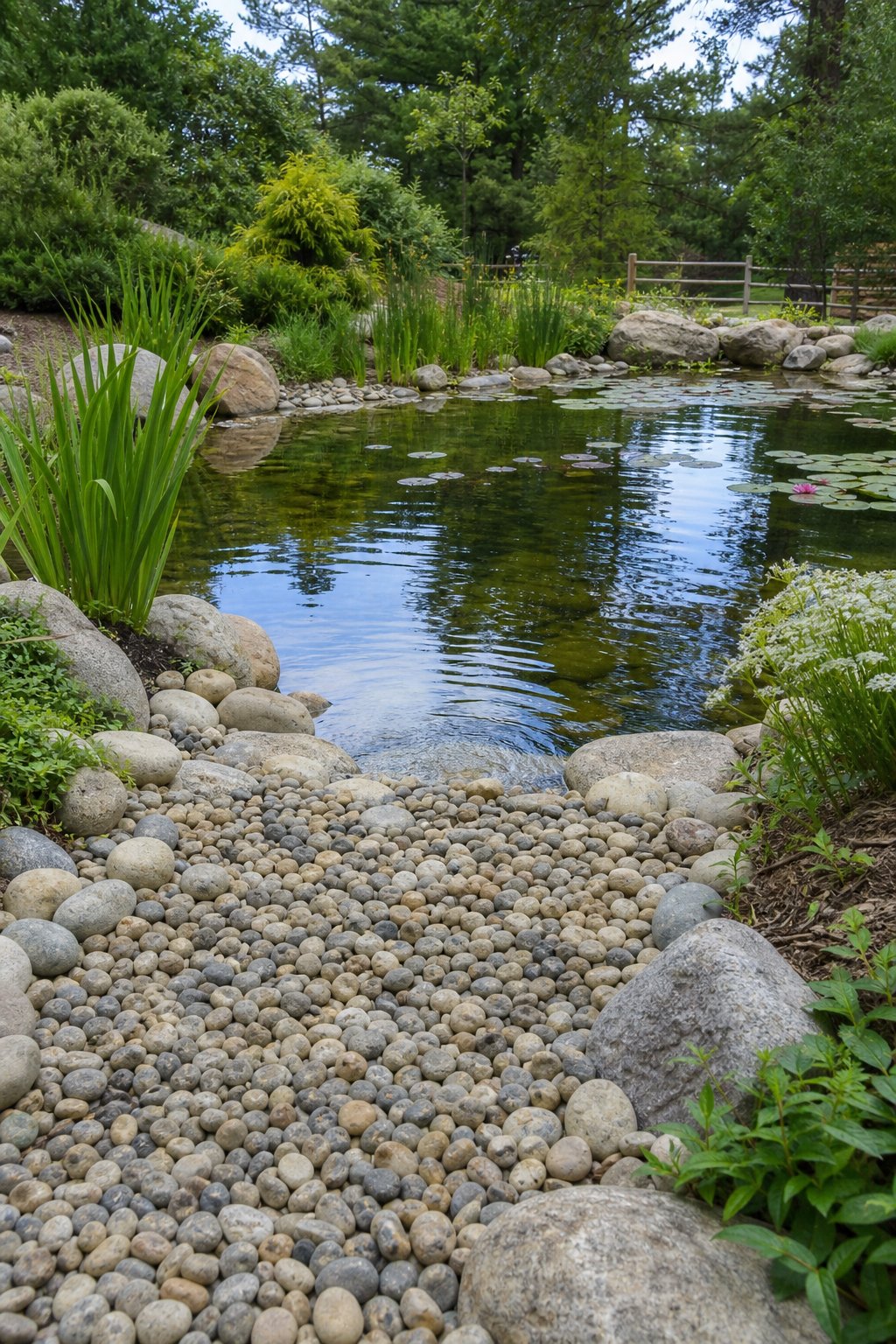
1. Pebble Beach Entry With Rounded Pea Gravel And Cobbles
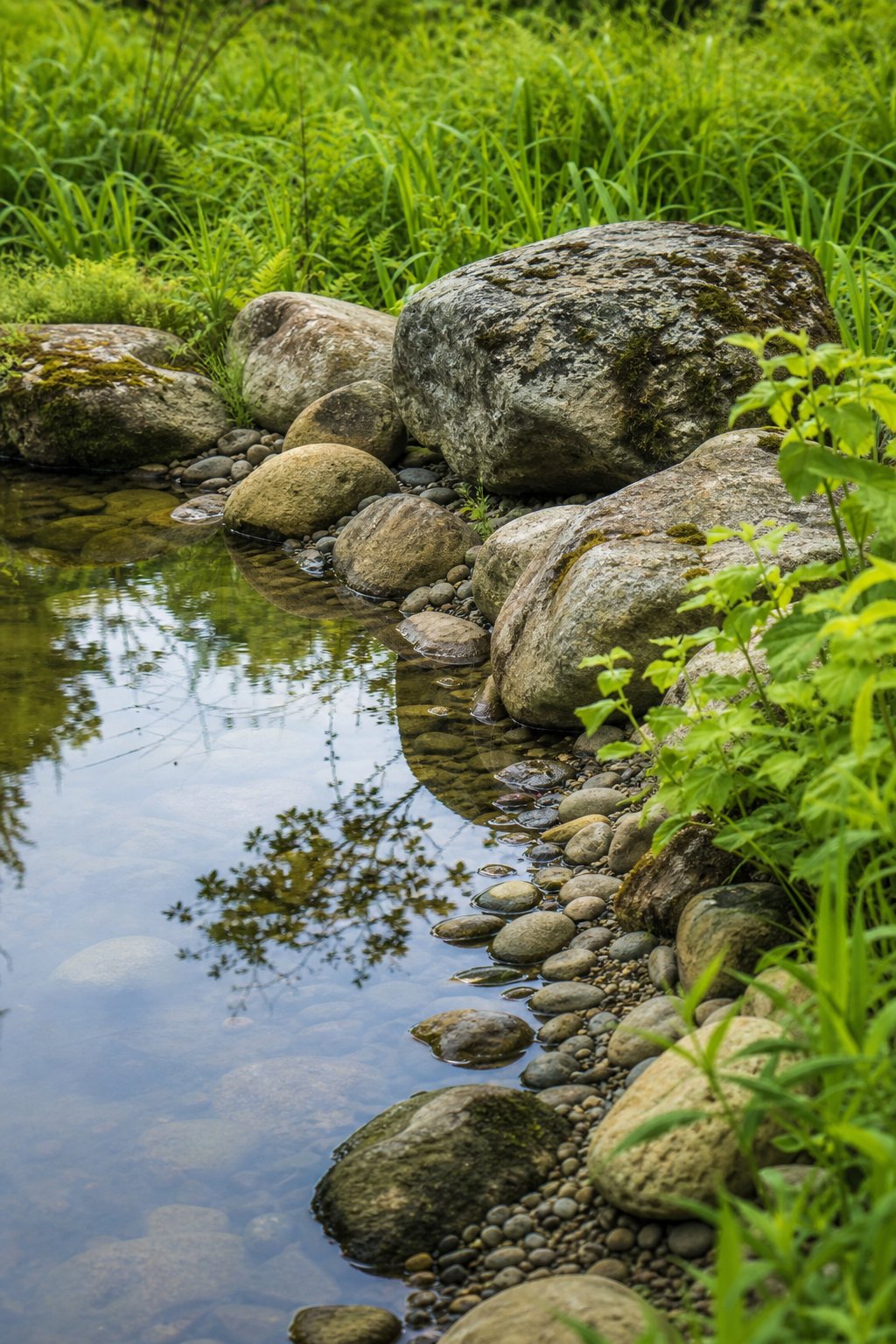
Myth-busting statement: a pond edge does not need to be hard or formal to look neat. A pebble beach entry gives you a soft landing zone that wildlife can actually use.
Rounded pea gravel and smooth cobbles create grip for frogs, beetles, and birds, while keeping the liner safer than sharp stone would. Aim for a gentle 1:10 to 1:20 slope so the first shallow water stays easy to reach.
I like to mix in a few larger cobbles near the edge, since they warm up in the sun and make good basking spots. Expert Tip From MrPlanter: “*Keep the stone rounded and the slope gentle, or your pond may look tidy while being unfriendly. *”
2. Gently Sloping Shelf Edge At 1:10 To 1:20
Relatable problem: if your pond edge drops too fast, wildlife treats it like a bad staircase and stays away. A softly sloped shelf lets animals walk in and out without getting trapped.
That shallow band also warms faster, which helps insects, tadpoles, and birds find food. In my own pond builds, I see this part get used most, because everything from robins to frogs likes a low, easy margin.
Keep the grade around 1:10 to 1:20, and you’ll get a safer edge with less liner stress. Expert Tip From MrPlanter: “*If you can stand at the edge and imagine a small frog using it, you’re on the right track. *”
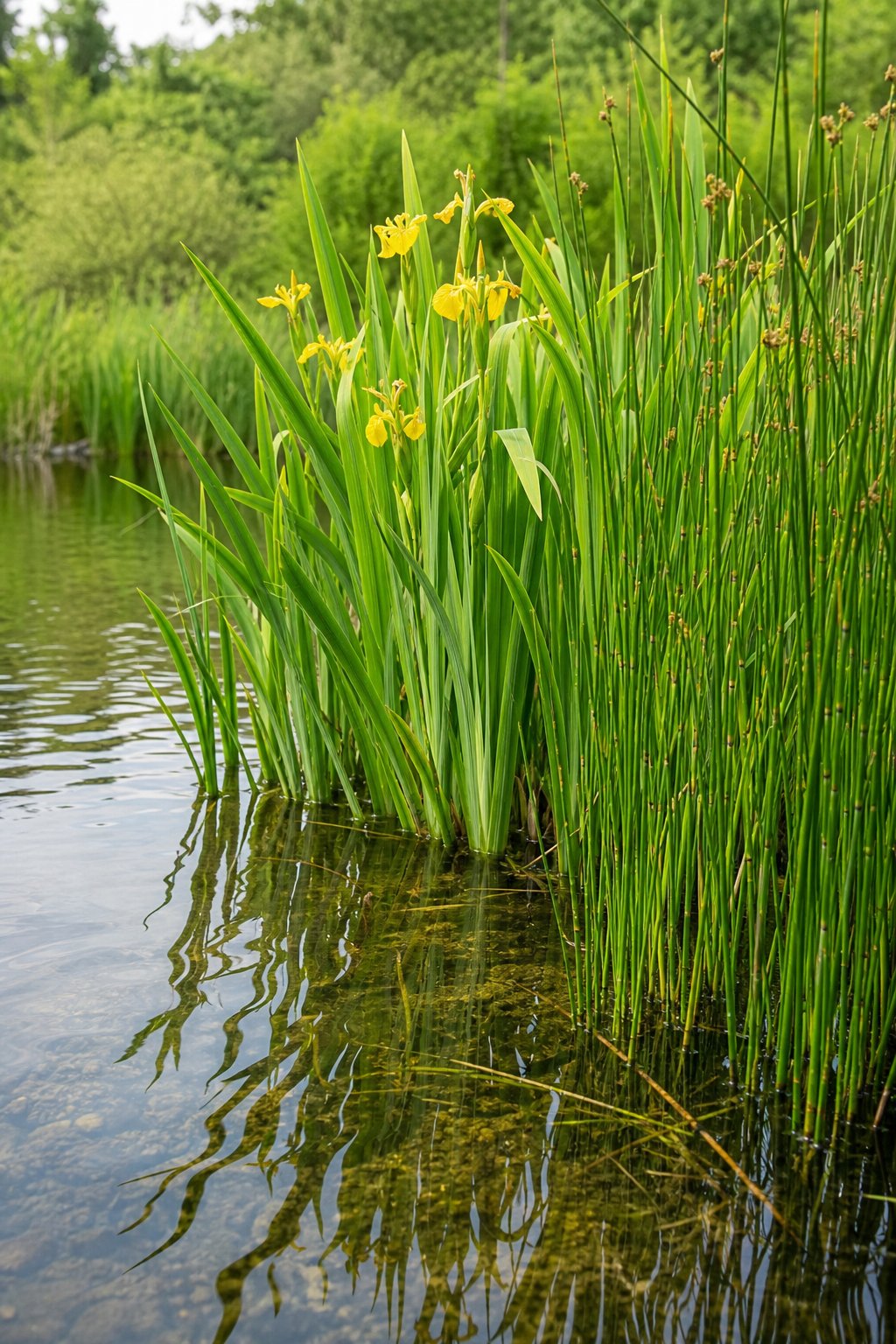
3. 30 Cm Marginal Shelf Planted With Native Water Iris And Rushes
Surprising fact: a 30 cm shelf can do more for pond life than a deeper middle section. This band gives roots a place to anchor and gives wildlife a place to rest just under the surface.
Native water iris and rushes are a smart pair because they look calm, spread well, and help hide the liner edge. I’ve found this shelf works best when you plant in clusters instead of dots, so the space fills in faster and feels more natural.
Keep the water shallow here, and let the stems lean a little over the edge. Expert Tip From MrPlanter: “*Plant in small clumps and give them room to lean, because stiff little soldiers are not what pond wildlife wants. *”
4. Bog Garden Spillover Edge With Moisture-Loving Native Plants
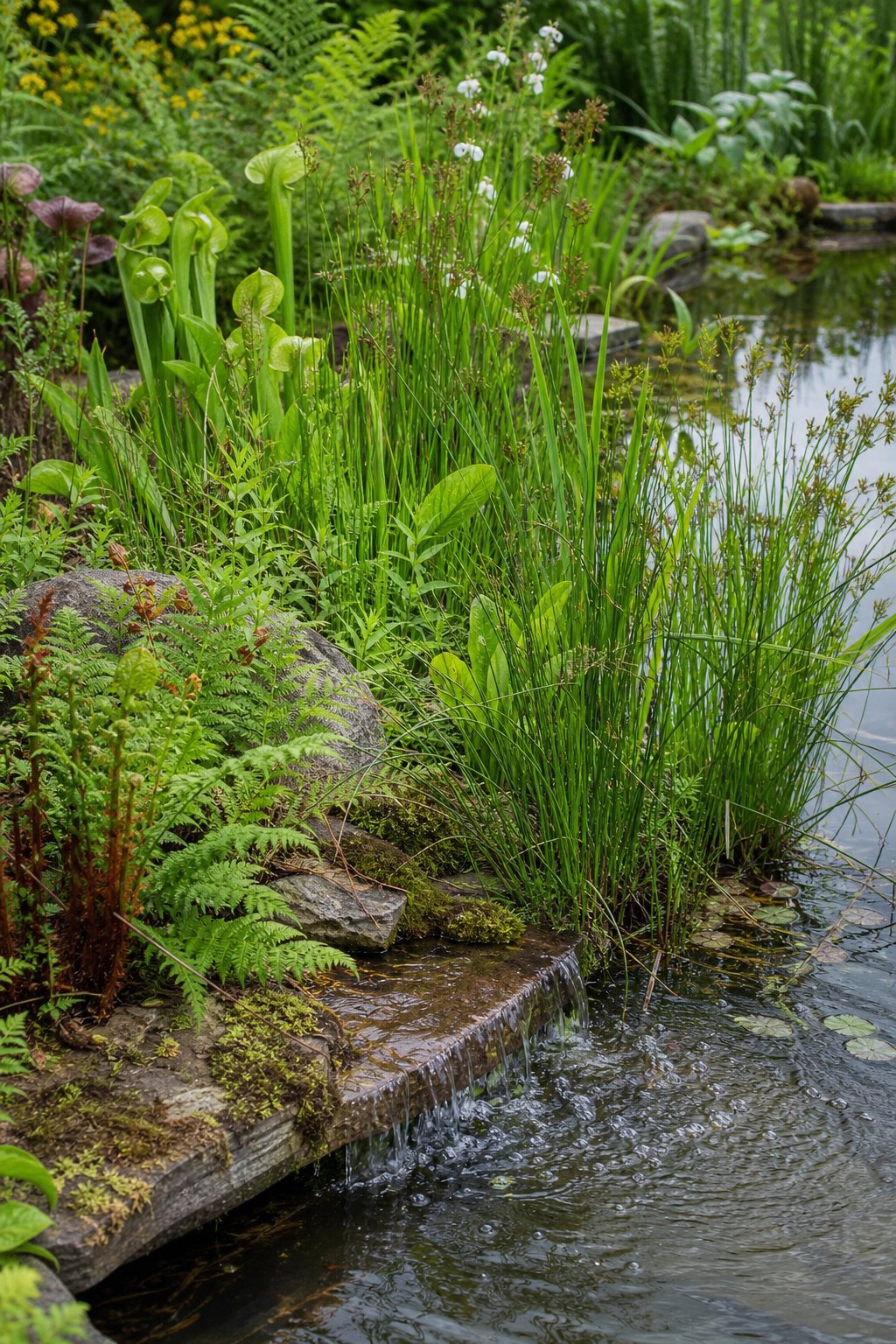
Personification: the pond edge loves a soggy sidekick. A bog garden spillover turns the damp border into useful habitat instead of wasted mud.
Moisture-loving native plants soak up extra water, soften the edge, and give pollinators a busy little food stop. This setup works well if your pond gets overflow after rain or if you want a softer transition into the rest of the garden.
Keep the spillover area planted thickly, and skip thirsty ornamentals that hate wet feet. Expert Tip From MrPlanter: “*If the edge stays damp after rain, give it plants that act like they were born in rain boots. *”
5. Coir Roll Pond Margin For Instant Soft Natural Edging
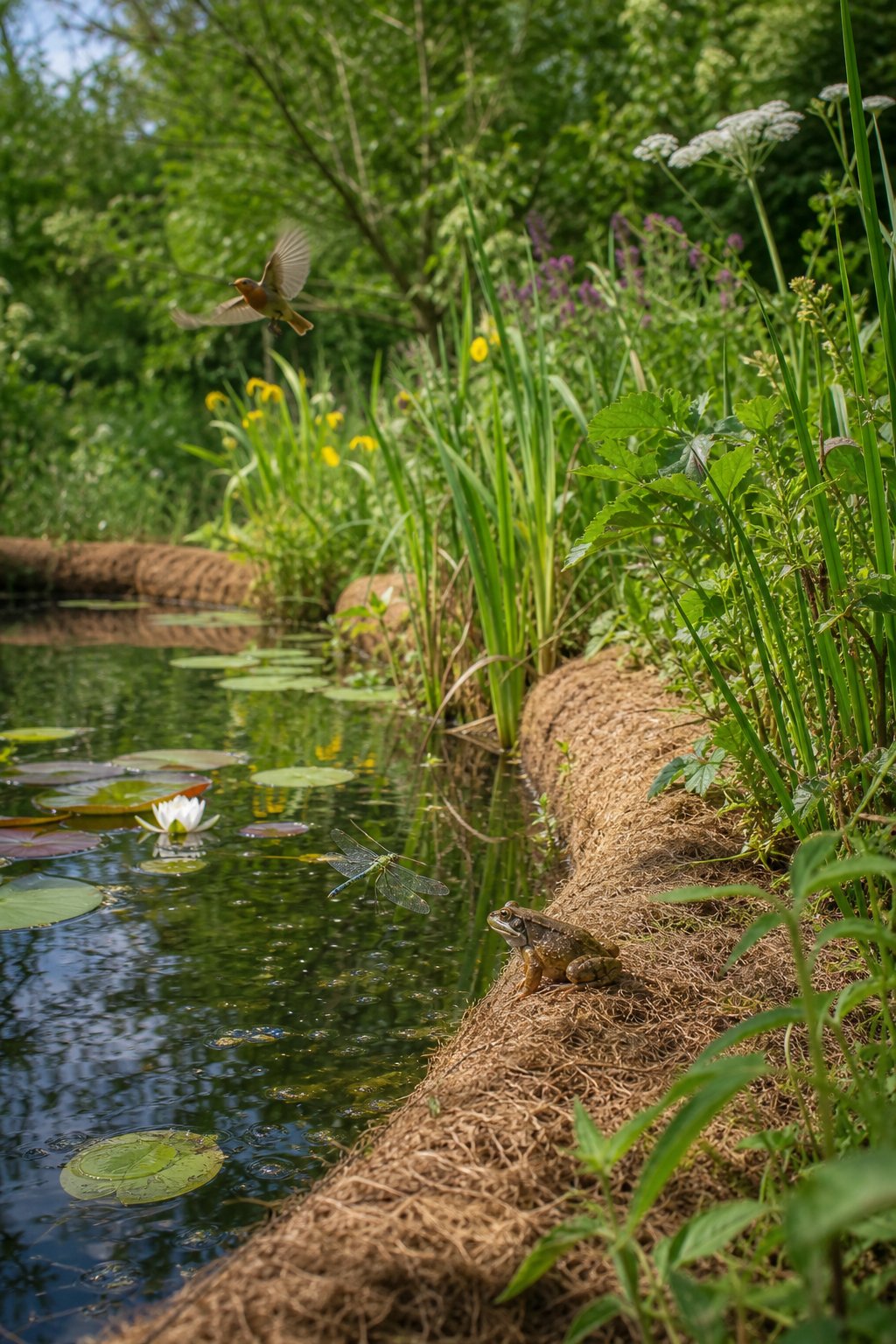
Myth-busting statement: you do not need hard edging to stop a pond bank from slipping. Coir rolls give you a soft, living margin that settles in fast and looks like it has always been there.
They hold the bank toe while plants root through them, which is handy if your soil wants to wander. I like this idea for new ponds because it hides the liner early and gives wildlife a gentle landing zone.
Pair it with native marginal plants, and the whole edge starts looking calmer within a season. Expert Tip From MrPlanter: “*Coir rolls are like training wheels for a pond edge, and that is a very good thing. *”
6. Turf-Over-Liner Edge For A Hidden Pond Rim
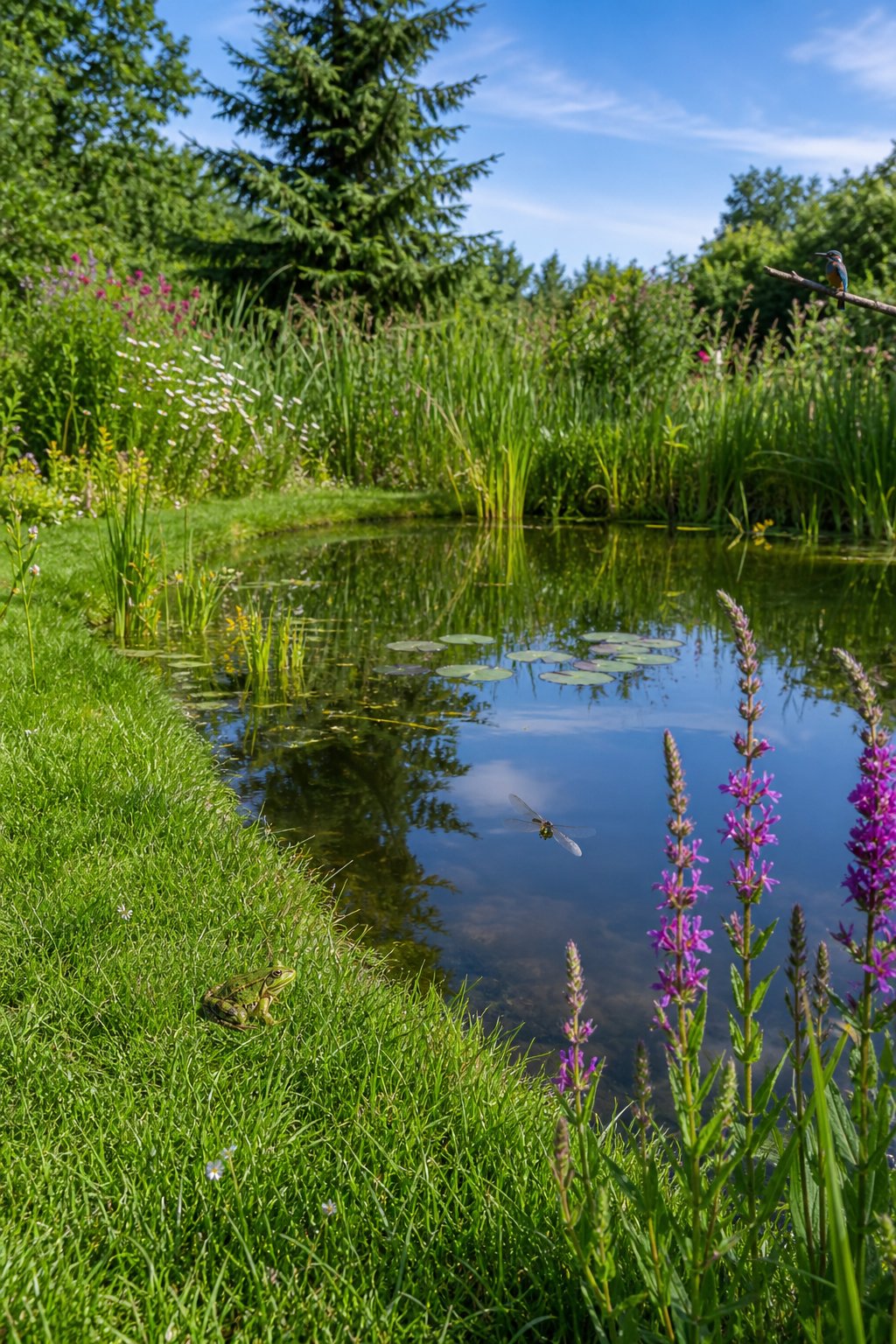
Relatable problem: a shiny liner rim can make a beautiful pond look unfinished fast. Turf-over-liner edging hides that plastic line and gives insects and small creatures a softer place to land.
Leave a small overhang so the grass reaches past the waterline, and keep the strip long rather than clipped short. I’ve seen this trick work best near calmer pond sides, where the turf can root without getting washed out.
It also helps shade the rim, which can reduce algae near the edge. Expert Tip From MrPlanter: “*Let the grass act like a little curtain, because a pond edge should disappear into the garden, not shout at it. *”
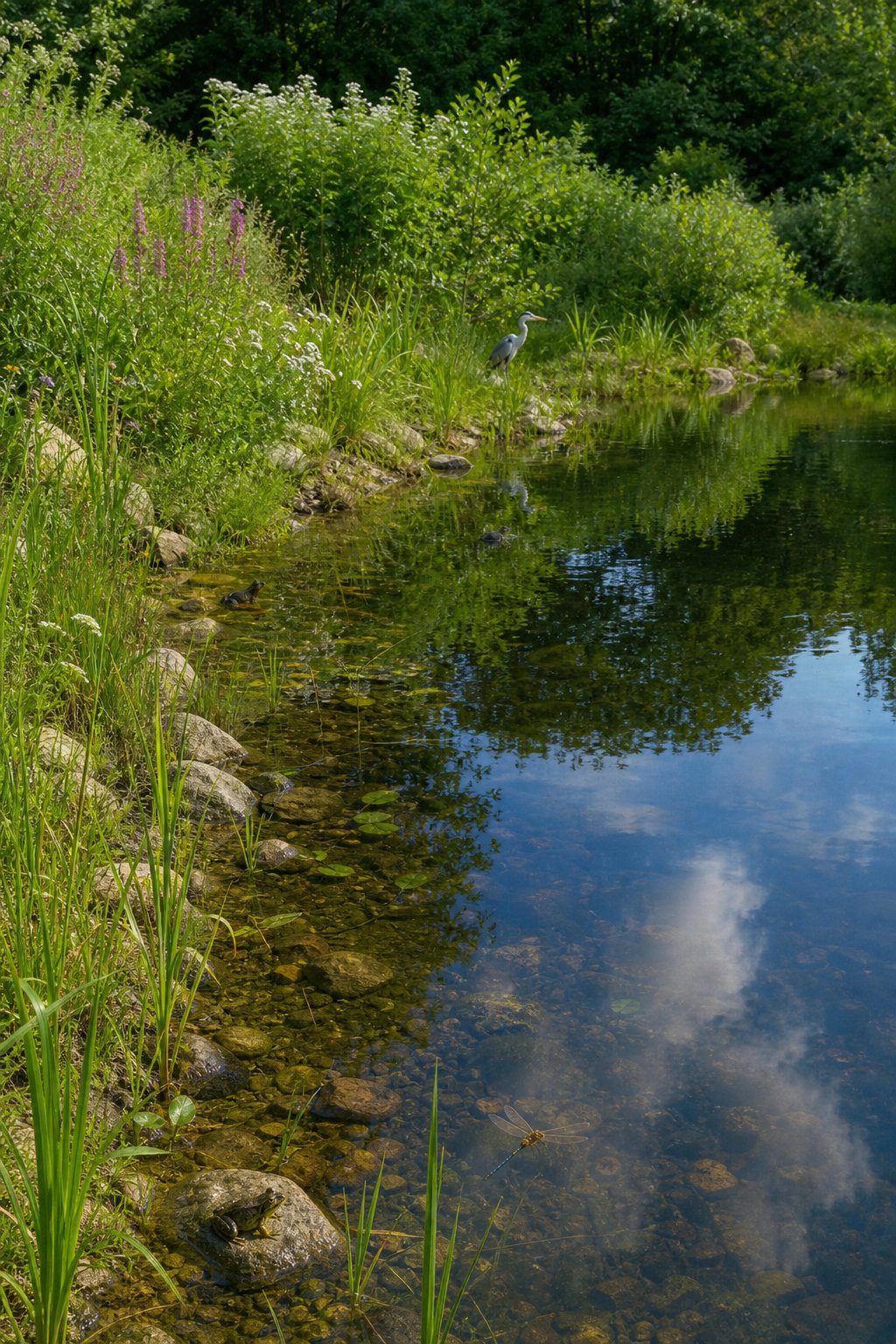
7. Boulder And Cobble Shoreline With Amphibian Gaps
Surprising fact: gaps between rocks matter almost as much as the rocks themselves. A boulder and cobble shoreline gives frogs, newts, and insects places to hide, cool off, and move safely along the water.
The trick is to leave small gaps and uneven pockets, not a packed wall of stone. That way, the edge still feels natural and gives animals more than one route in and out.
Mixed sizes also break up heat, light, and shade, which makes the shoreline more useful through the day. Expert Tip From MrPlanter: “*If every stone fits too neatly, you probably built a wall instead of a habitat. *”
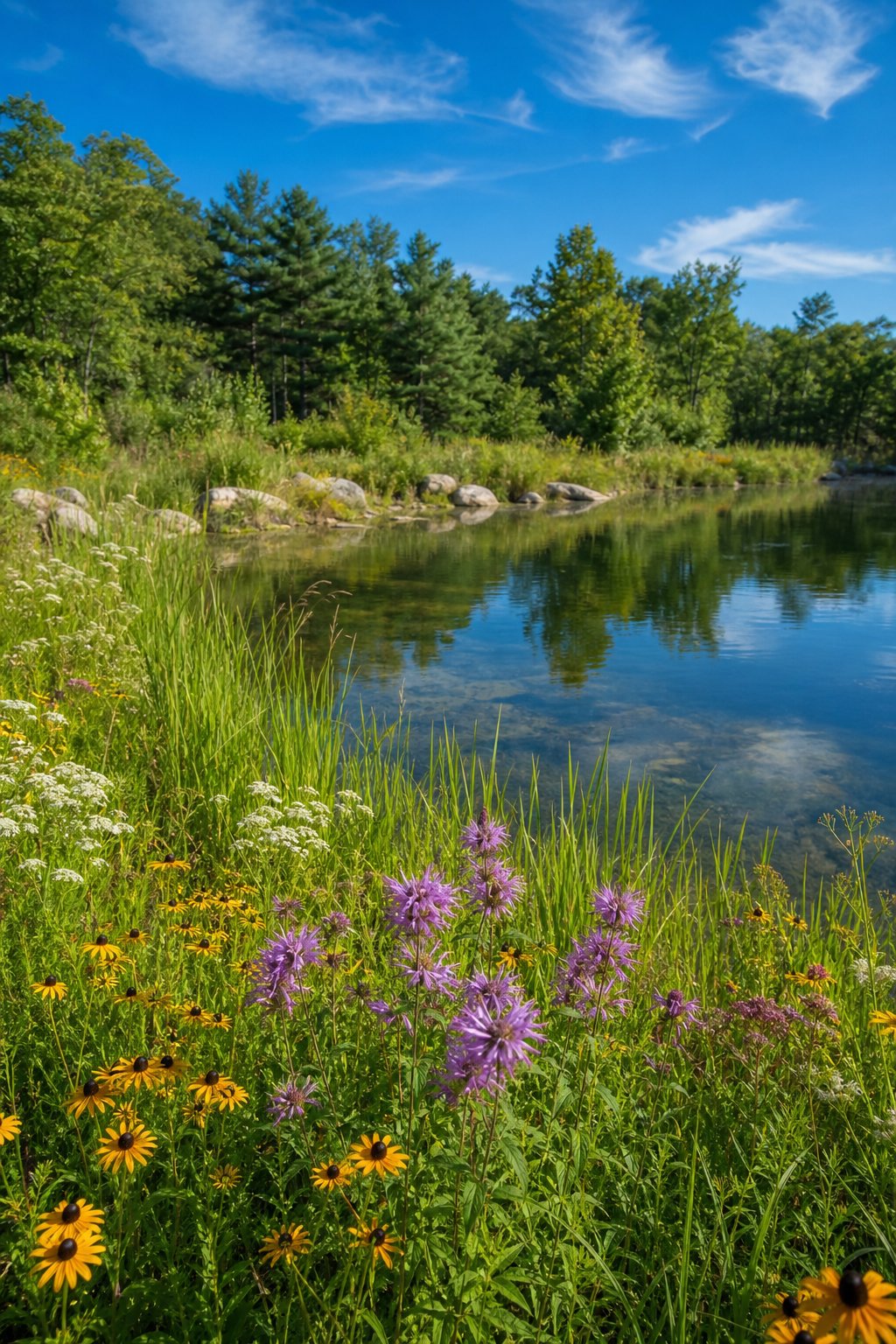
8. Wildflower And Native Grass Buffer Around The Pond
Personification: the pond relaxes when you give it a wild border. A buffer of wildflowers and native grasses softens the whole scene and gives pollinators, birds, and small insects a reason to stay nearby.
It also keeps mowers, feet, and lawn fertilizer farther from the water, which helps water stay cleaner. I like to keep at least one side a little looser and taller, since that feels more like a real pond edge and less like a garden display.
Expert Tip From MrPlanter: “*A pond with a wild border feels less like a feature and more like a small piece of nature that moved in on purpose. *”
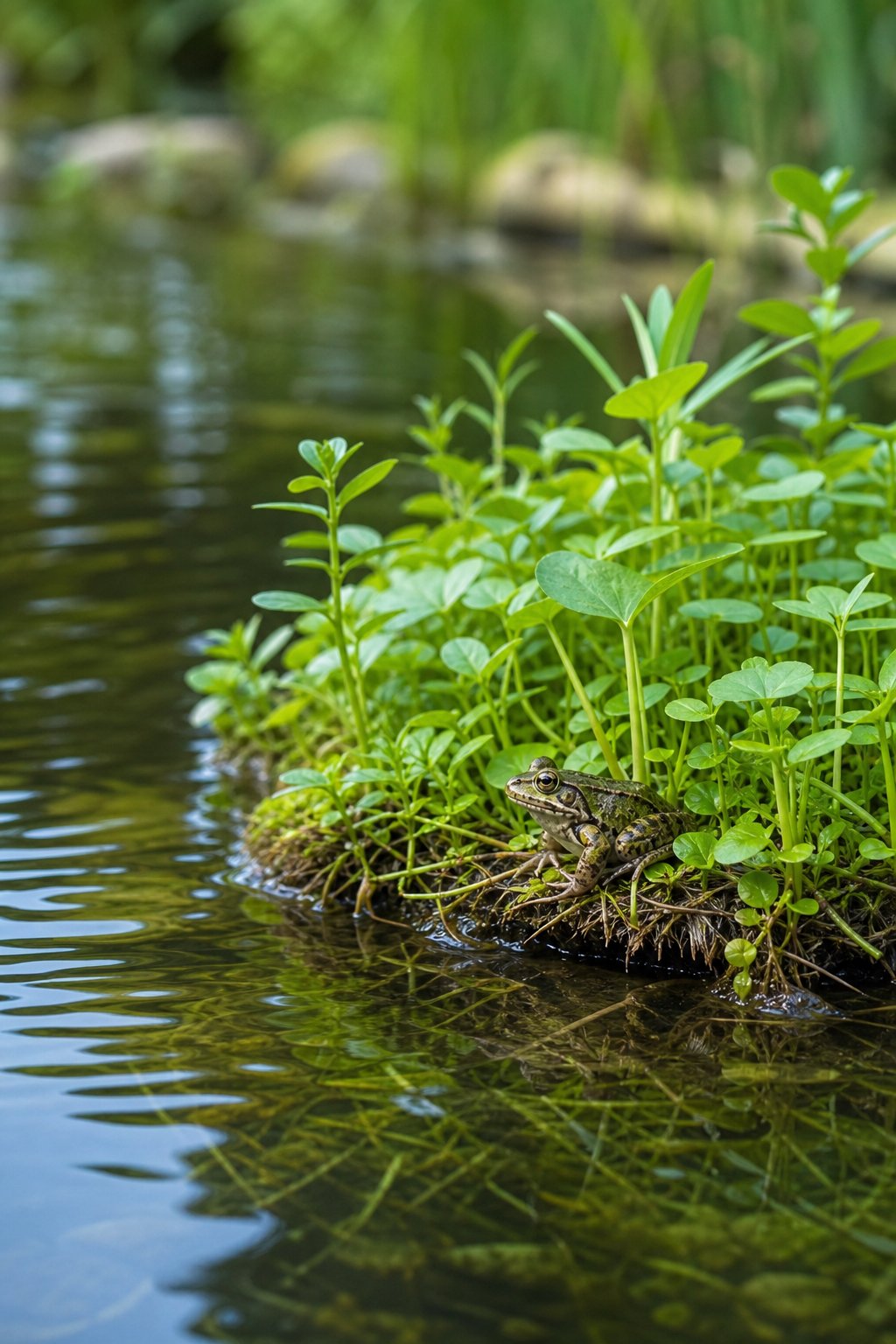
9. Floating Plant Raft Edge With Frog Cover
Myth-busting statement: floating plants are not just decoration. A plant raft gives frogs cover, shades the water, and creates a soft edge where small creatures can rest.
This is a smart fix if your pond has open water that feels too bare or too sunny. Keep the raft light and stable, and let it sit near one side so wildlife can use it without blocking the whole surface.
In practice, it works best when you pair it with shallow margins and still water. Expert Tip From MrPlanter: “*A good floating raft should look a little lazy, because wildlife likes cover that feels easy and quiet. *”
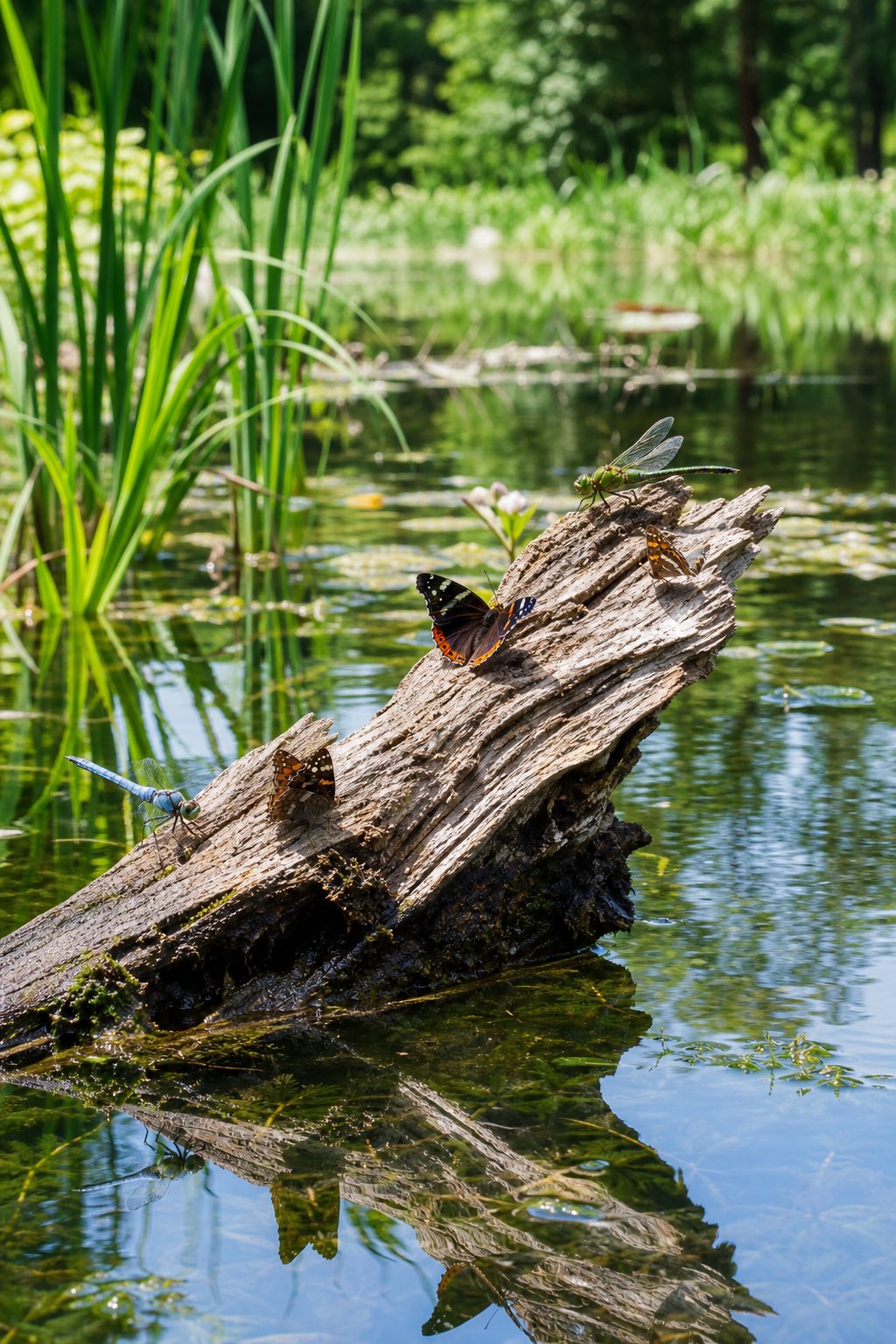
10. Deadwood Log Landing And Insect Basking Edge
Relatable problem: a perfect pond edge can feel a little too polished for real wildlife. A deadwood log landing gives insects a warm place to bask and a dry route across the edge.
It also adds texture that makes the pond feel older and more settled. I like to tuck one end partly into the bank so it does not shift, then leave the rest reaching toward the water.
That simple shape often becomes a favorite perch for dragonflies and small birds. Expert Tip From MrPlanter: “*If you have one good log at the edge, the pond starts acting like it owns a forest job title. *”
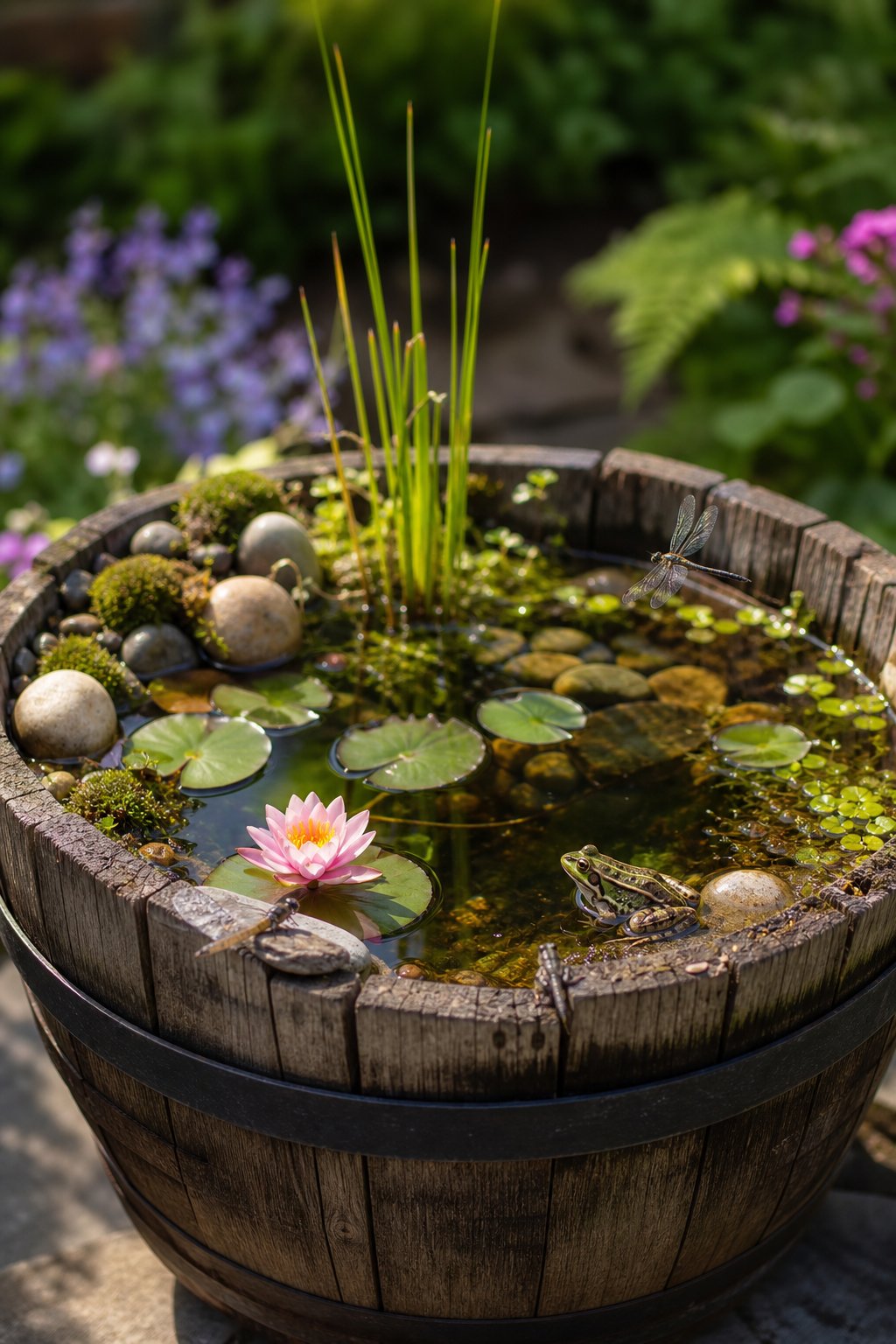
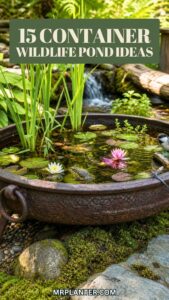
11. Shallow Container Wildlife Pond In A Half Barrel
Surprising fact: a half barrel can pull in wildlife if you keep it shallow and simple. This is a great pick for small patios, tight side yards, or a front garden corner.
A shallow container pond works best with a few native plants, a stone step for easy exit, and clean rainwater instead of treated tap water. I’ve seen these tiny ponds attract dragonflies fast, especially when they get a little morning sun and a bit of shade later in the day.
Keep the water level stable, and avoid cramming it with too many plants. Expert Tip From MrPlanter: “*Small ponds can do big work, as long as you let them stay calm and uncluttered. *”
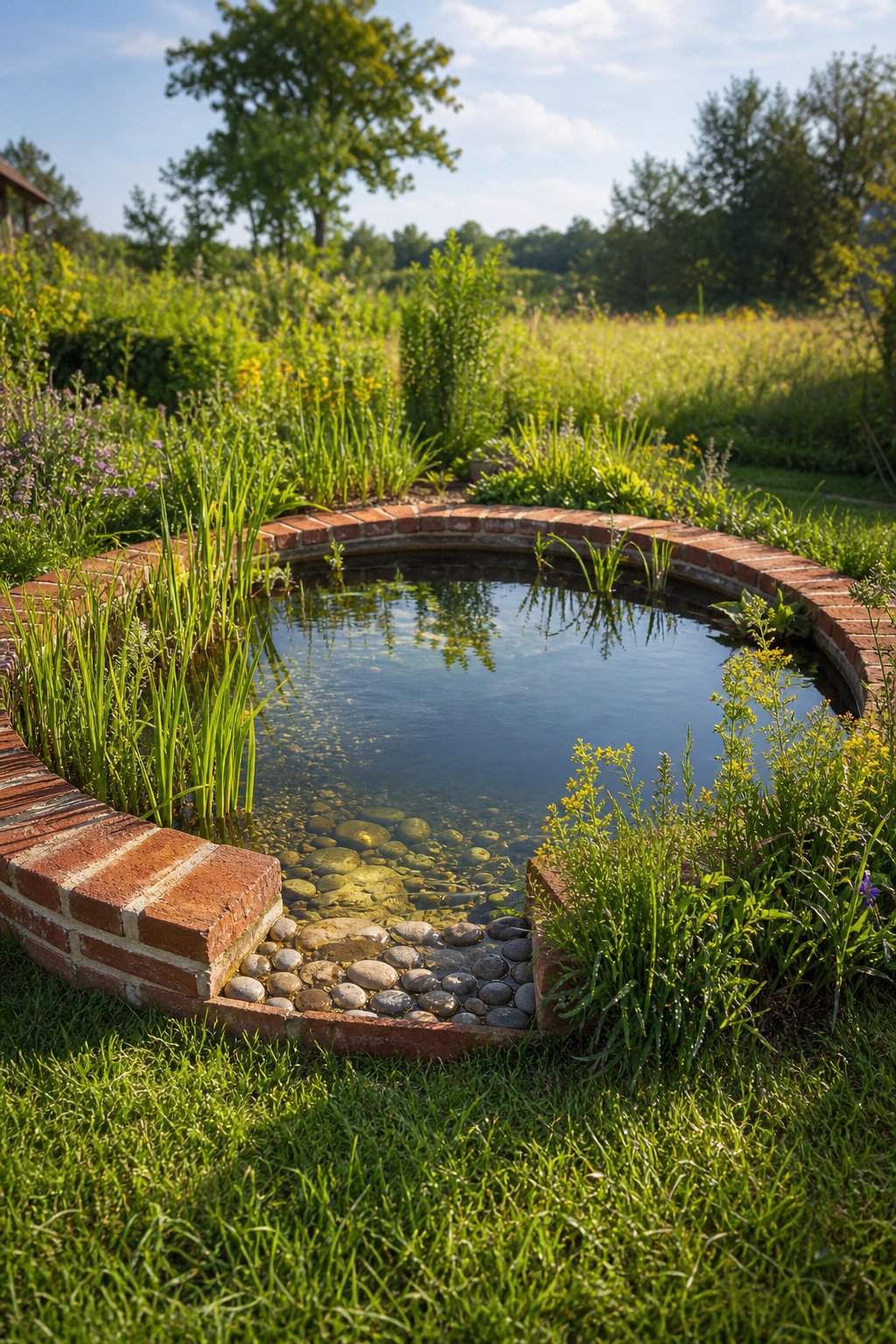
12. Brick-Rimmed Raised Pond With Built-In Escape Ramp
Myth-busting statement: a raised pond can still be wildlife friendly. The trick is to give animals a built-in escape ramp and a low, easy place to enter.
Brick looks tidy, but you should still keep the inside soft with plants, stones, and a gentle exit point for anything that falls in. I like this option for front yards because it reads neatly from the street while still doing the job behind the scenes.
Keep the ramp rough enough for grip. Avoid steep, smooth inner walls.
Expert Tip From MrPlanter: “A raised pond should look neat from a distance and still act like a good neighbor up close.“
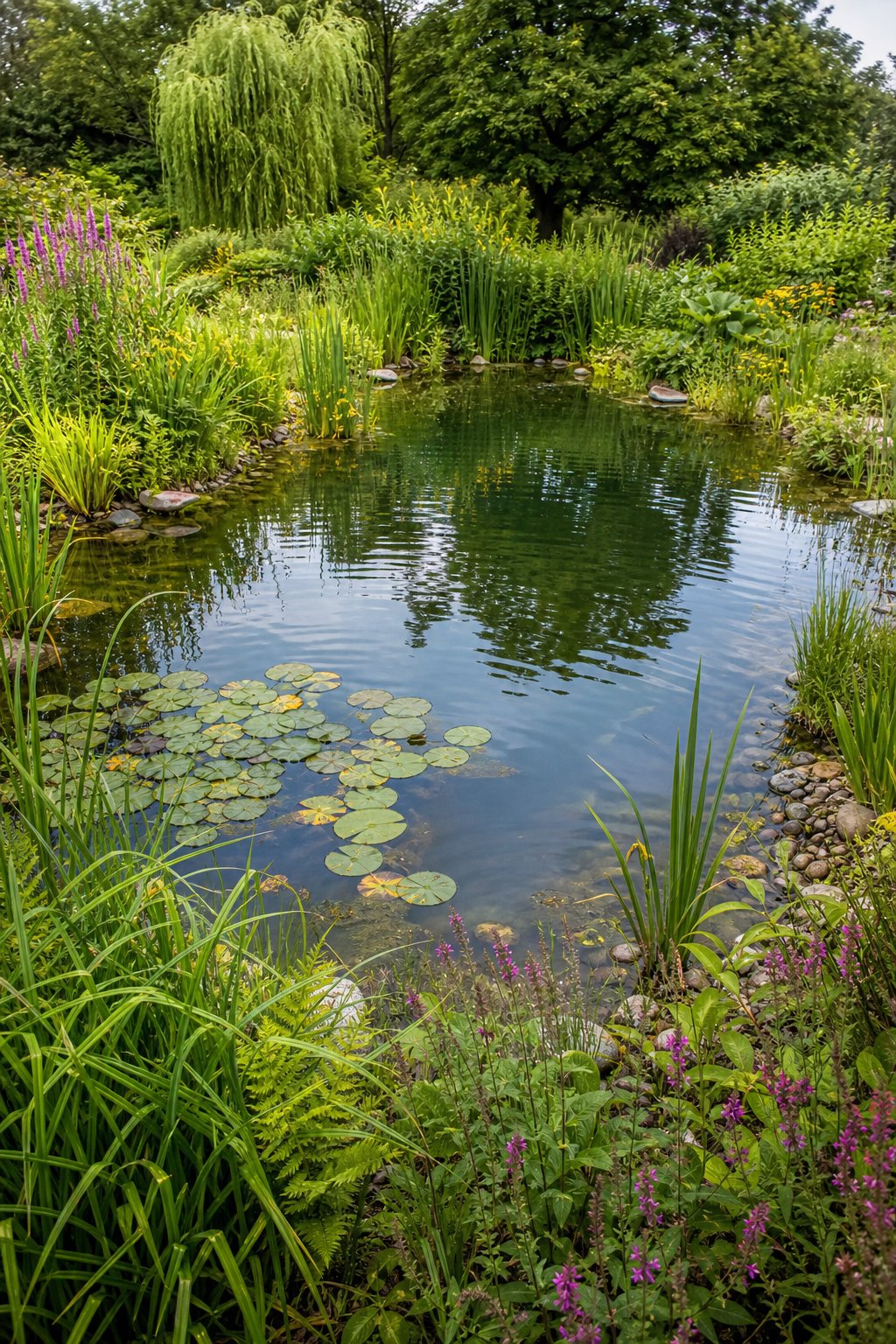
13. Organic Kidney-Shaped Pond With Curved Mixed-Plant Margins
Personification: the kidney shape likes to meander, and wildlife likes that too. Curved edges feel softer than straight lines, and they give you more room for mixed planting around the margins.
This shape also makes it easier to tuck in shallow shelves, deeper pockets, and little hiding spots all in one pond. I’ve found it works well in garden spaces where you want the pond to look like it settled there on its own.
Use a mix of marginals, rushes, and low creepers so the edge feels full without looking packed.
Expert Tip From MrPlanter: “Curves give your pond a more natural rhythm, and wildlife tends to trust a shoreline that does not look rushed.“
If your pond sits in the front yard, choose a cleaner shape with a soft edge that still looks tidy from the street. In a backyard, you can lean more wild with logs, taller grasses, and thicker planting.
Space Needed For Safe Slopes
Small spaces need gentle slopes just as much as bigger ones. A narrow pond still benefits from a broad entry, a shallow shelf, or a planted margin that gives wildlife a safe route in and out.
If space is tight, you can still follow the same rules with a container pond or small raised pond.
Raised Pond Vs In-Ground Pond
Raised ponds work well where you want easier access, better visibility, or help with poor soil. In-ground ponds feel more natural and usually blend into the garden faster.
Wildlife Access And Child Safety
Wildlife needs a gentle entry and exit, and children need clear, visible edges. A shallow shelf, low planting, and a sturdy escape ramp help with both.
If kids use the garden, keep the pond easy to see, avoid steep drops, and place the most inviting wildlife features where you can watch them closely.
Expert Tip From MrPlanter: “Pick the pond idea that fits your yard first, then shape it for wildlife, because the best pond is the one you can keep safe and easy to care for.“
What Makes A Pond Truly Wildlife Friendly
Native Plants Over Exotic Showpieces
Native plants usually do a better job of feeding local insects and blending into the site. Exotic showpieces may look bold, yet they often do less for birds, frogs, and pollinators.
A mix of local marginals, rushes, and grasses gives the pond a more useful edge with less fuss.
Shallow Zones Matter Most
The shallowest water is where a lot of the action happens. Frogs, birds, and insects use that first bit of water far more than deep water, so aim for broad, usable margins.
A pond with only deep water may look nice, yet it often misses the best wildlife action.
How To Hide Liner Naturally
You can hide liner with turf overhang, coir rolls, cobbles, and thick planting. The goal is to make the edge look planted and lived in, not wrapped in plastic.
I’ve had the best results when roots, stems, and a few well-placed stones hide the liner.
Why Rainwater Beats Treated Tap Water
Rainwater usually fits pond life better because it does not bring the same treatment chemicals that tap water can carry.
It also feels closer to what local wildlife expects after a storm.
If you can, collect rainwater and use it to top off your pond.
Let the water level move naturally when the weather changes.
Expert Tip From MrPlanter: “A wildlife-friendly pond is less about perfection and more about giving nature the right doorway, the right water, and a few good hiding spots.“
I’m Anirban Saha, the Founder and Owner of MrPlanter.com. I pay the bills as a software developer, although my BTech is actually in Electronics and Communication. I really love my day job, but what gives me energy every day is interacting with my indoor plants and taking care of them. I have been successfully nurturing and maintaining houseplants for over 10 years now.
📚🔍 Our content undergoes thorough review and fact-checking before publication. For additional details, explore our strict Editorial Policy to deliver helpful content. 📝🔒