As an Amazon Associate, MrPlanter.com earns from qualifying purchases.
A front gate does more than mark the edge of your property. It sets the tone for your front yard and guides guests toward your door.
It also gives passersby a quick hint about your home’s personality. Whether you prefer clean metal, warm wood, classic iron, or a leafy garden look, the right gate can make your entrance feel thoughtfully finished.
Measure your opening and study your home’s exterior colors. Consider how the gate will meet the walkway before you choose a material or finish.
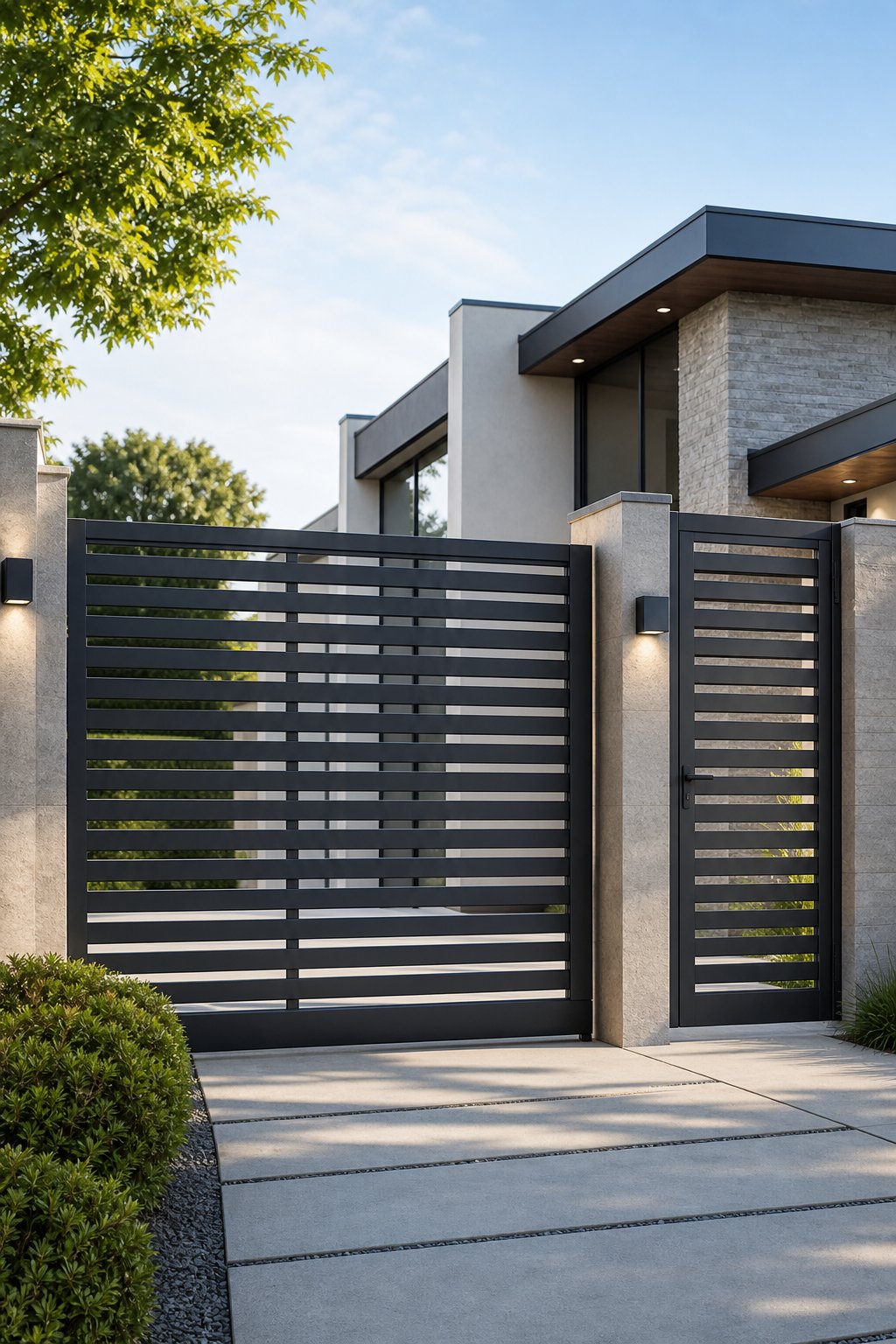
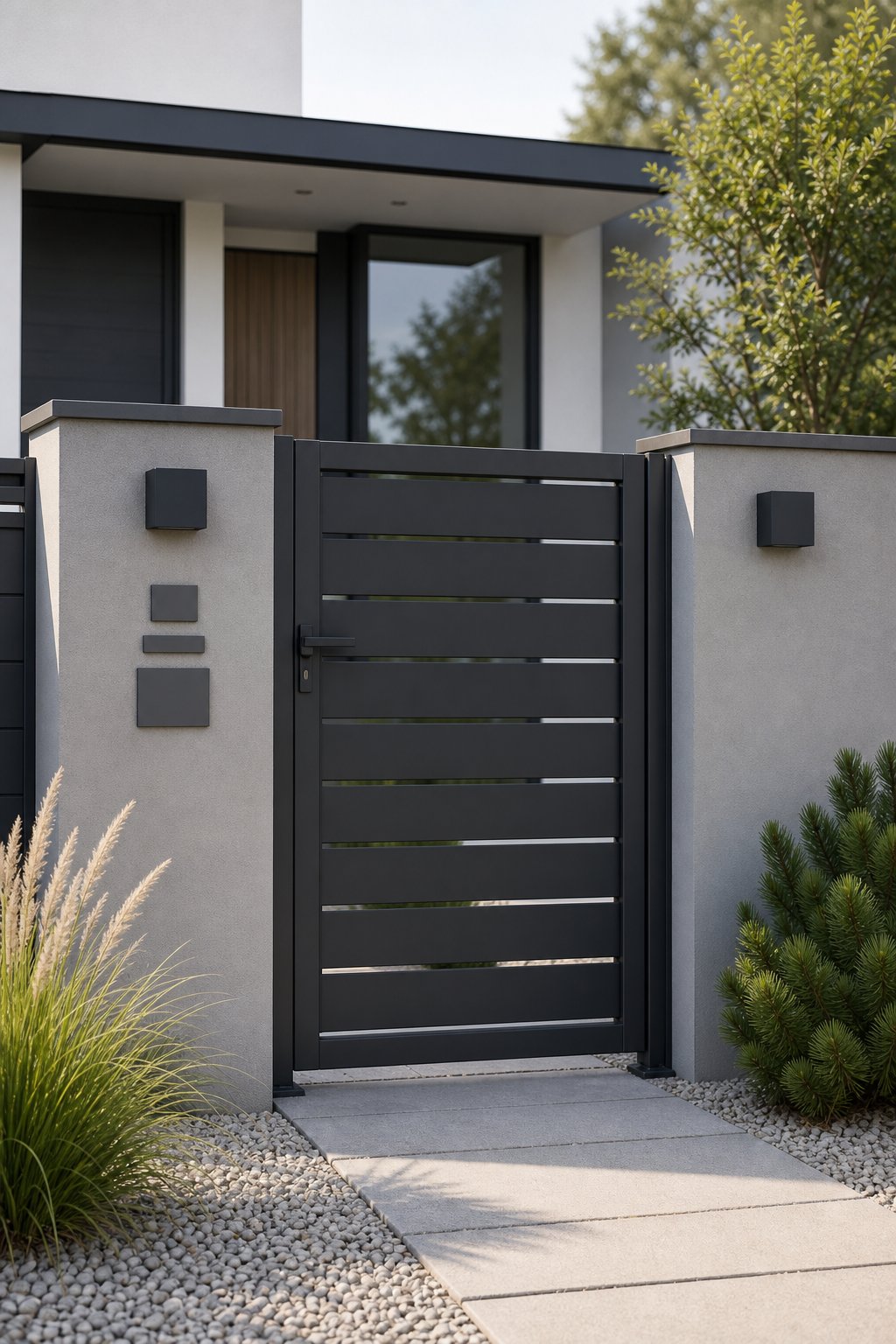
1. Powder-Coated Aluminum Horizontal-Slat Gate
A plain fence can make a modern front yard feel a little sleepy. A horizontal-slat aluminum gate wakes it up with crisp lines and a neat, tailored look.
Powder coating gives the metal a smooth finish that handles outdoor exposure well. Aluminum keeps the gate lighter than steel.
Choose dark gray, black, or bronze to echo window frames and exterior trim. Leave small gaps between slats if you want air movement and a glimpse of the garden.
The horizontal lines can also make a narrow entrance appear wider. This is a handy visual trick.
Expert Tip From MrPlanter: “Use a simple latch and handle so the clean lines stay visible. Add low path lights near the gate, and your entrance will look welcoming after sunset too.”
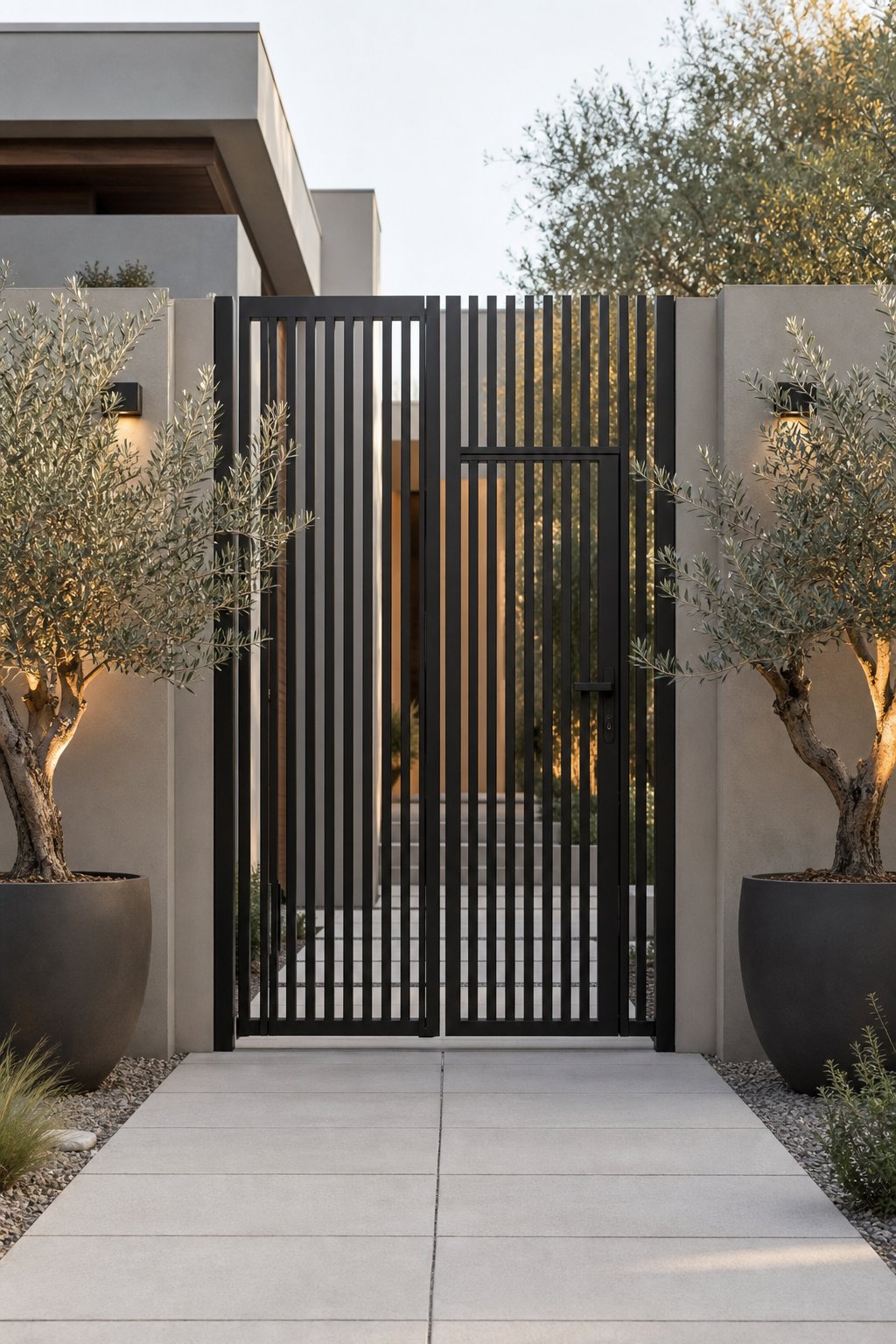
2. Black Vertical Metal-Slat Gate With Olive Tree Planters
If your gate feels too stark, a pair of plants can soften it in minutes. Black vertical slats create a strong, modern outline.
Olive trees in planters add pale foliage and a relaxed garden mood. The tall slats draw your eyes upward, making the entry feel taller.
Use matching planters on both sides for a balanced arrangement. Olive trees suit sunny yards and tolerate dry conditions once established, though you should check your local growing zone.
Pick sturdy containers with drainage holes, since a top-heavy tree can become a windy-day surprise.
Expert Tip From MrPlanter: “Keep the planters slightly wider than the gate posts so the whole entrance feels grounded. Choose a matte black finish to hide fingerprints and small marks.”
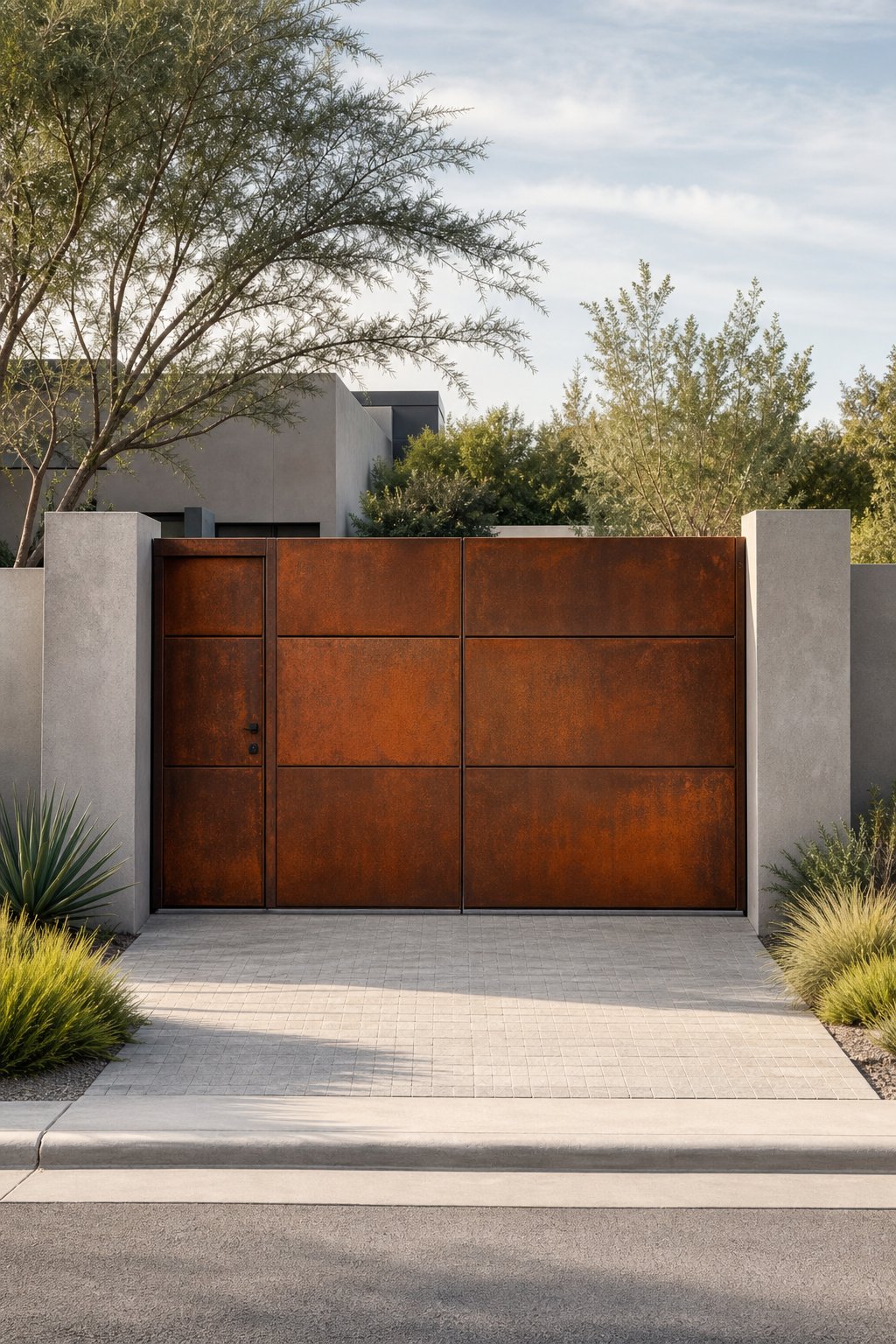
3. Corten Steel Gate Between Concrete Pillars
Some gates arrive looking unfinished, and that is the point. Corten steel develops a warm rust-colored surface that pairs beautifully with cool concrete pillars and green planting.
Its earthy color gives a modern entry a softer, more natural feeling without adding extra decoration. This style works well with gravel, ornamental grasses, and simple paving.
Keep the gate frame level and the pillar caps neat, since the strong materials leave little room for sloppy edges. Check runoff, too, because rust-colored water can stain light paving during the weathering period.
Expert Tip From MrPlanter: “Test the steel finish on a small sample before installation. Keep light stone away from the drip line until the surface has settled.”
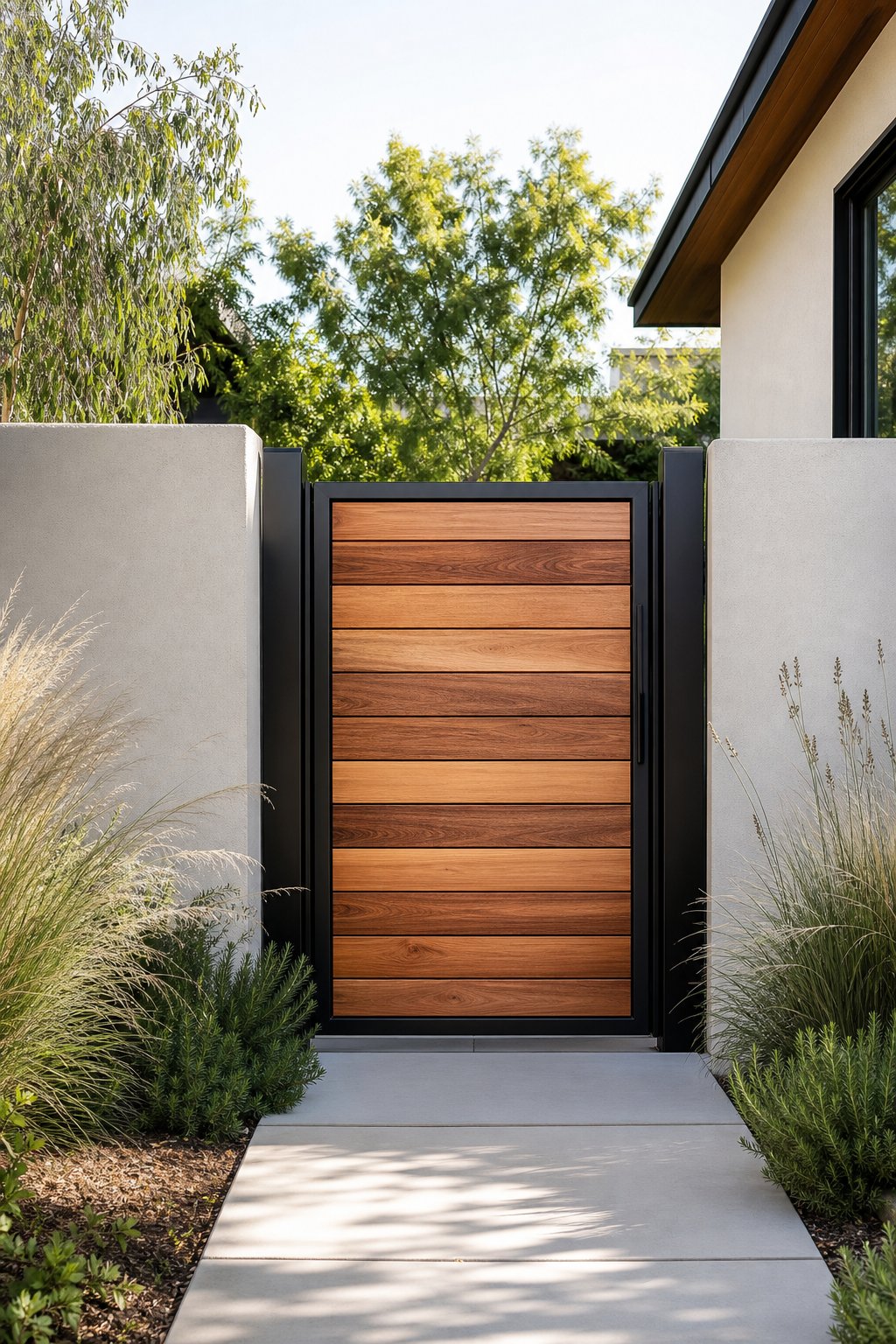
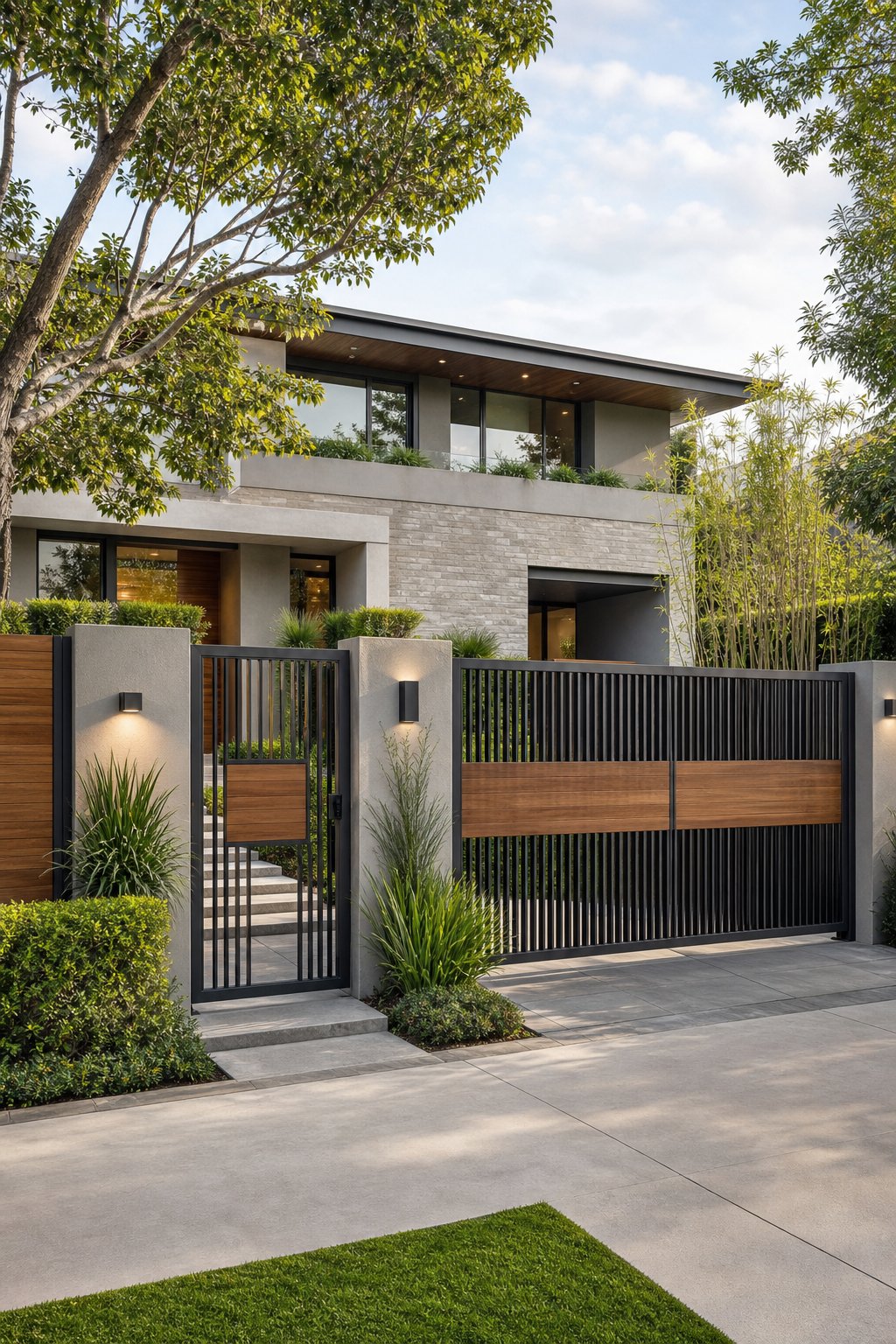
4. Warm Cedar And Black Steel Frame Gate
When a metal gate feels cold and a wood gate feels too casual, cedar and steel make a friendly peace treaty. Warm cedar boards bring texture and color, while a black steel frame gives the gate a sharp border and dependable structure.
The combination suits modern, craftsman, and simple farmhouse homes. Run the boards horizontally for a wider look, or vertically for a taller, more private entrance.
Cedar needs a suitable exterior stain or sealer, especially on end grain and lower edges. Keep the wood slightly above the paving so splashing water does not sit against it.
Expert Tip From MrPlanter: “Choose a stain that repeats a wood tone already used near your front door. Seal every cut edge before the gate is hung.”
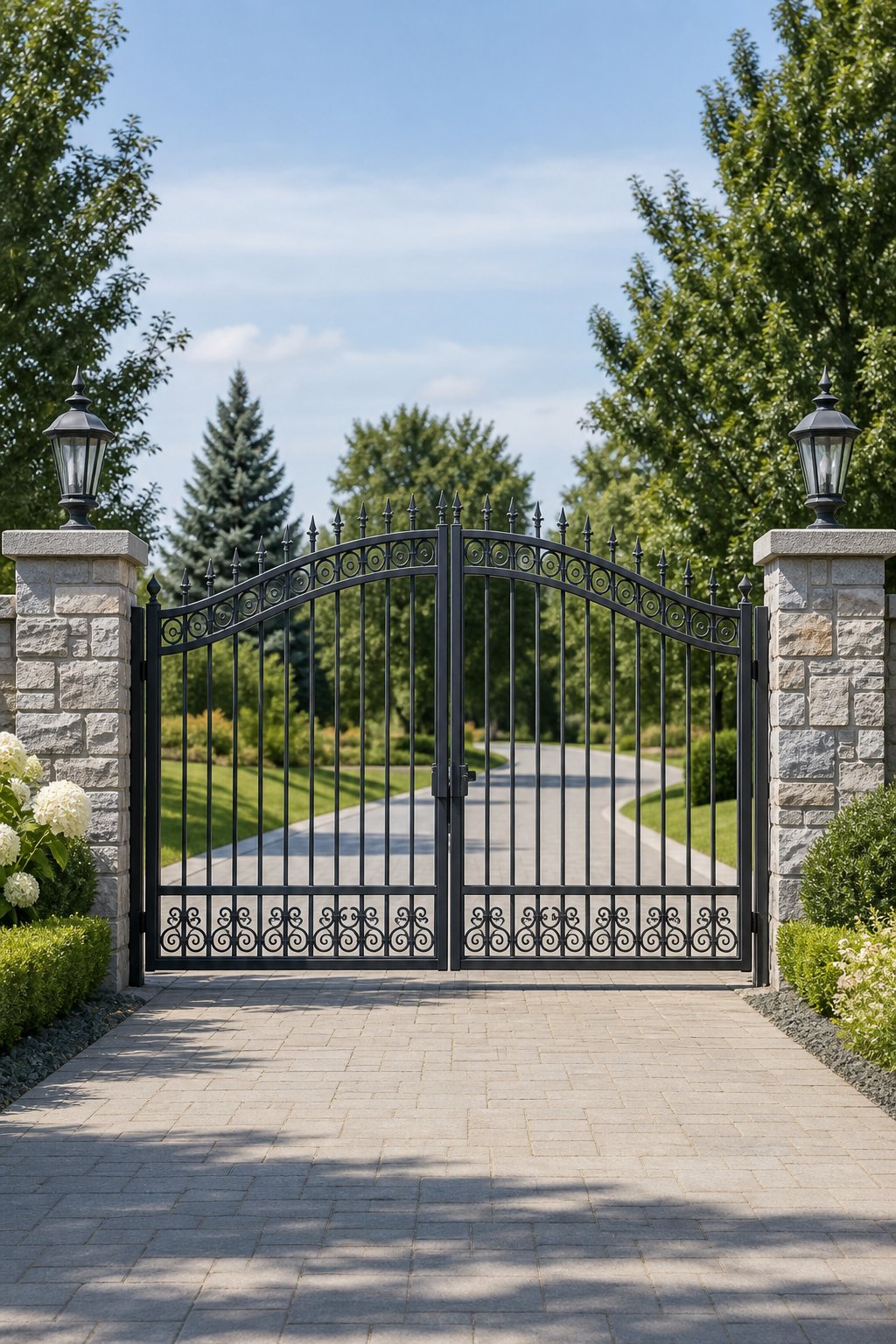
5. Classic Wrought-Iron Swing Gate With Spear-Top Pickets
A classic iron gate can make a garden entrance feel like it has a good story to tell. Spear-top pickets add a traditional detail, while the open design lets your flowers and front path remain visible.
The result feels formal without turning your yard into a castle. This is probably a relief for the mail carrier.
A swing gate needs clear space behind or in front of the opening. Use strong hinges, a reliable latch, and a stop that prevents the gate from slamming into a pillar.
Black paint keeps the style timeless and makes leafy planting stand out.
Expert Tip From MrPlanter: “Measure the swing arc before you order the gate. Leave room for mulch, snow, and wet soil so the bottom stays clear.”
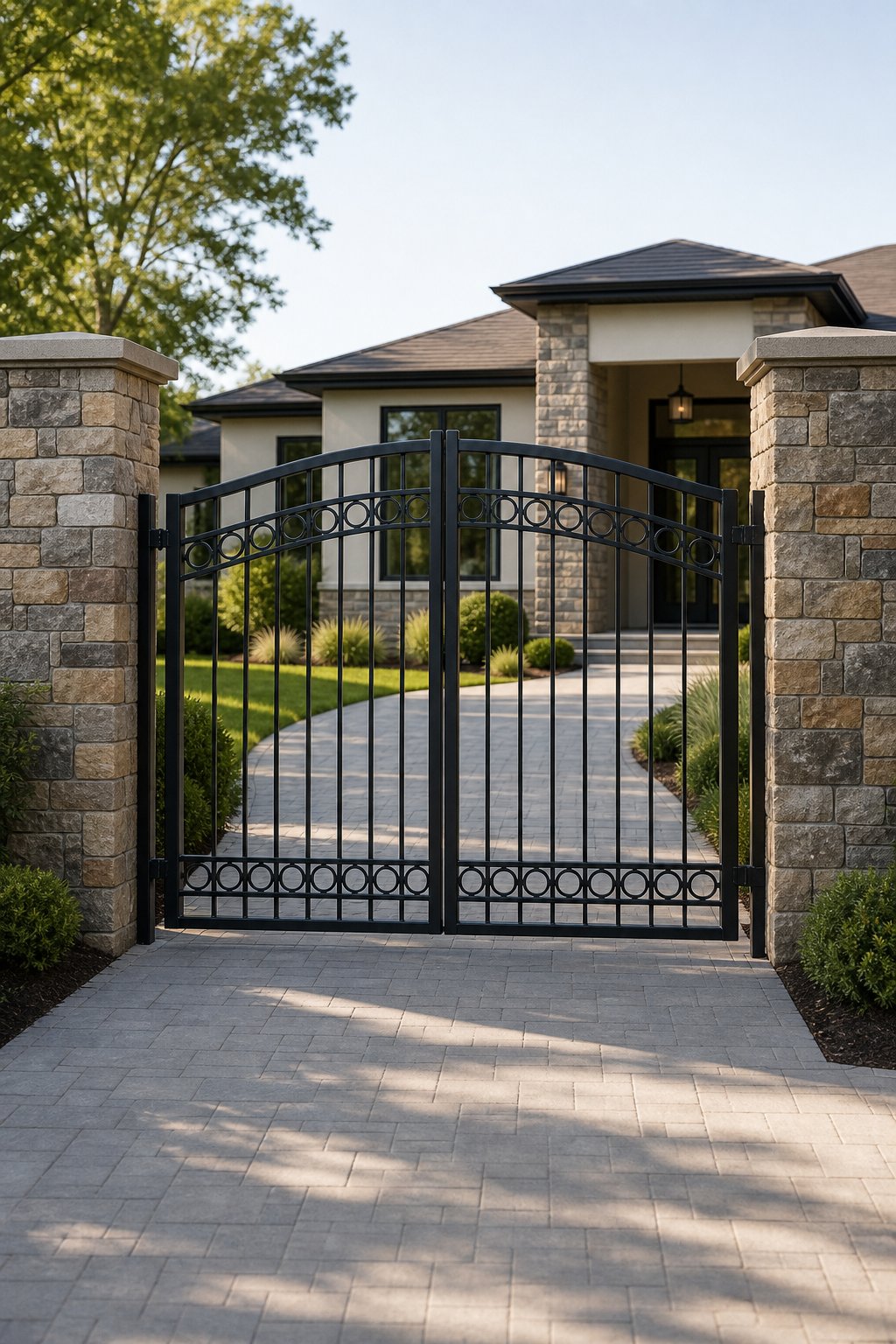
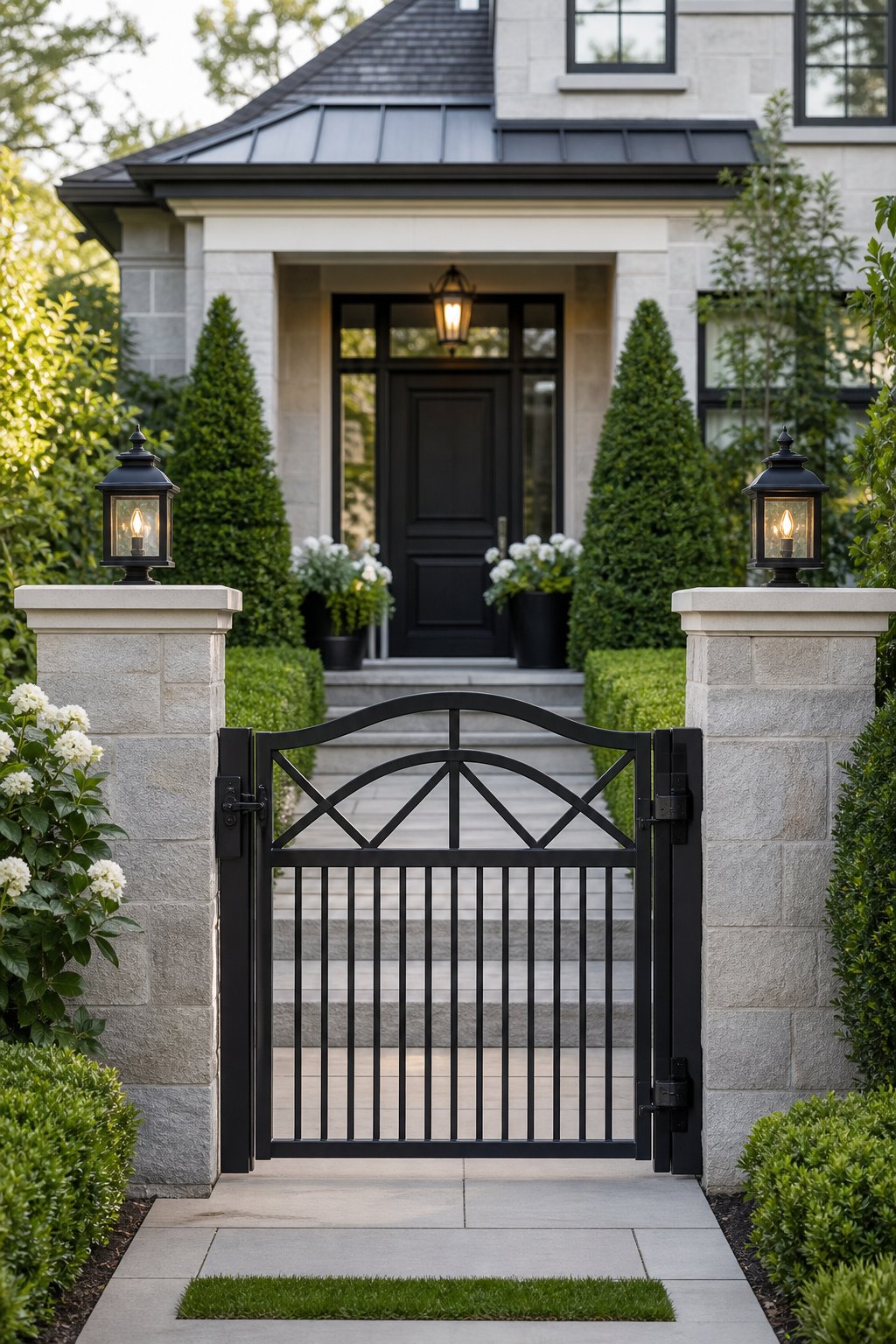
6. Stone Veneer Pillars With A Black Metal Gate
A gate can look a little lonely without a strong frame. Stone veneer pillars give a black metal gate visual weight and connect the entrance to patios, retaining walls, or a stone-faced home.
The mix of rough stone and slim metal creates useful contrast. Choose veneer in colors already found around your property, then keep the gate design simple.
Too many patterns competing at the entrance can make a small front yard feel busy. A cap on each pillar helps shed water and gives the masonry a clean finish.
Expert Tip From MrPlanter: “Carry one stone color from the pillars into the walkway for a connected look. Set the latch at a comfortable height so guests do not have to hunt for it.”
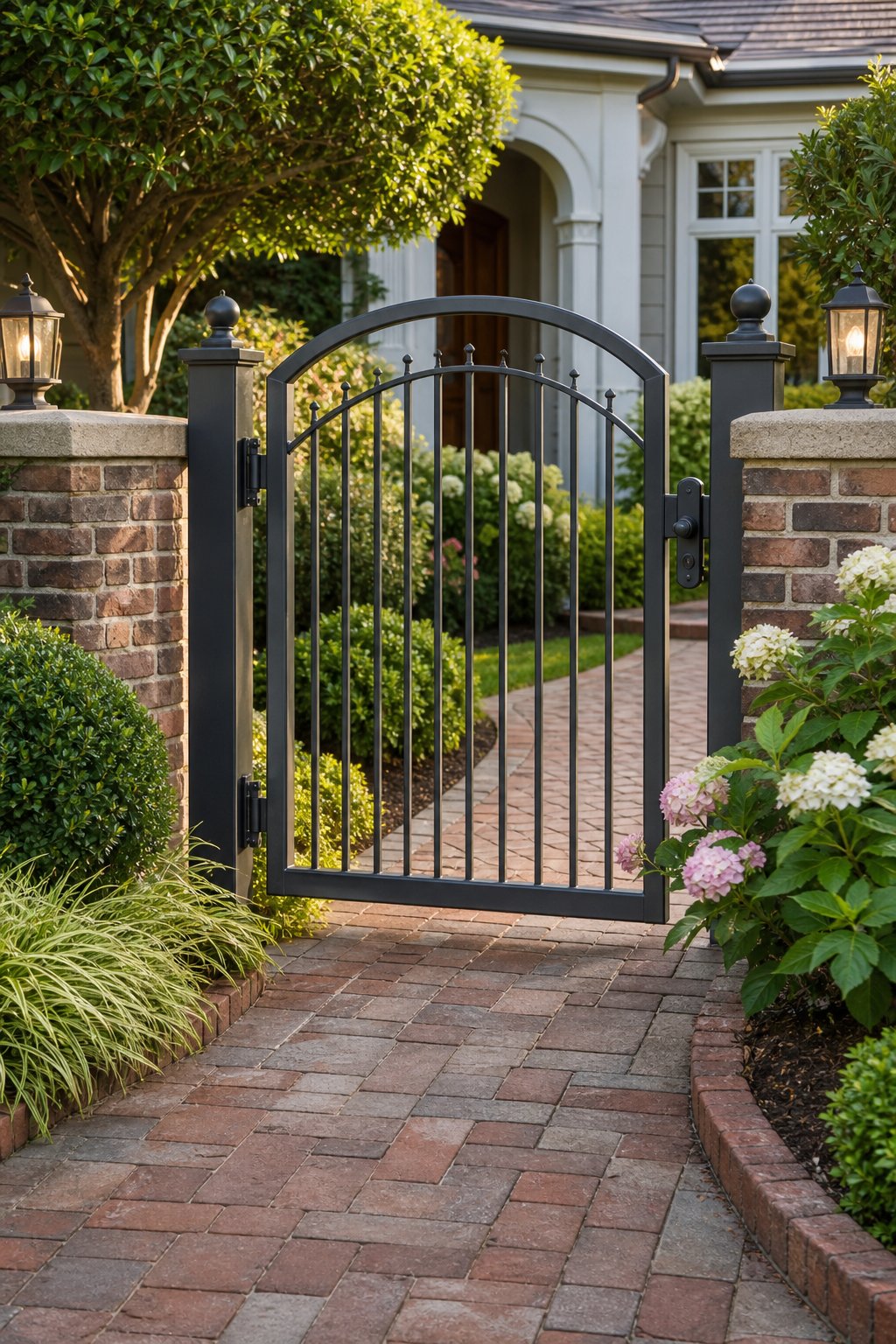
7. Brick Paver Entry With An Arched Steel Garden Gate
A straight walkway can feel ordinary until an arch gives it a little lift. An arched steel garden gate creates a welcoming focal point, while brick pavers add warmth underfoot and define the route to your front door.
This pairing feels especially at home beside cottage gardens and older houses. Keep the arch proportionate to the opening.
A shallow curve looks tidy in a small yard, while a taller arch can suit a wide garden entrance. Use polymeric sand or well-set joints between pavers to reduce weeds and shifting near the gate.
Expert Tip From MrPlanter: “Center the arch with the front door or a strong garden feature. Add a climbing plant only after checking that it will not block the latch.”
8. Full-Privacy Composite Board Gate In A Charcoal Frame
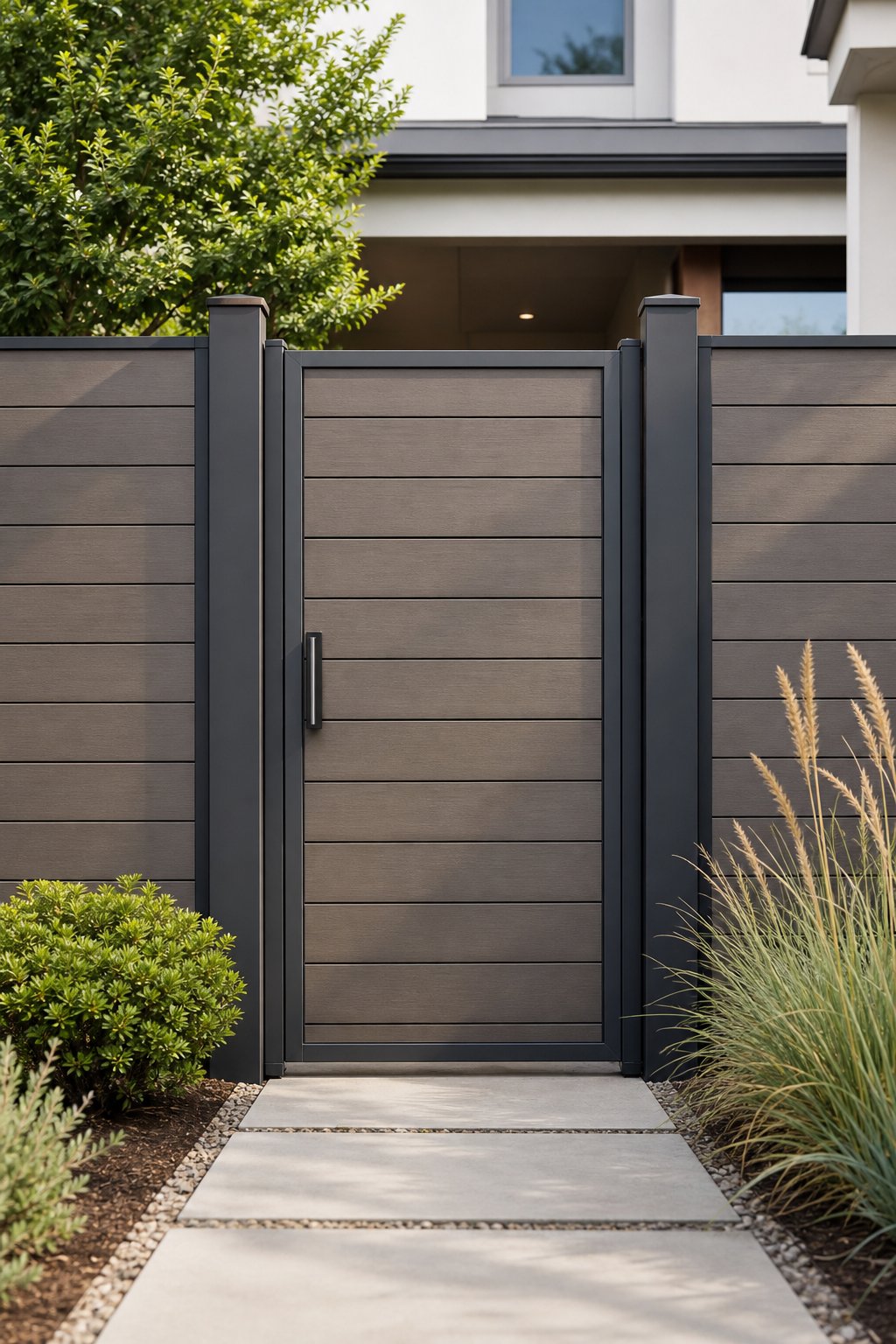
Privacy gates are useful, though they do not have to look like solid walls. Composite boards in a charcoal frame create a clean, closed entrance that hides bins, pets, and part of the front yard from view.
The horizontal boards add a little width and keep the large surface from feeling flat. Composite materials resist rot and usually need less upkeep than painted wood.
Still, inspect the hinges and frame each year. A heavy privacy gate puts more strain on its hardware.
A narrow gap beneath the gate helps it clear paving and shed rainwater.
Expert Tip From MrPlanter: “Break up the solid surface with a nearby planter or wall light. Choose hardware rated for the gate’s weight, not just its appearance.”
9. Laser-Cut Steel Privacy Gate With Botanical Pattern
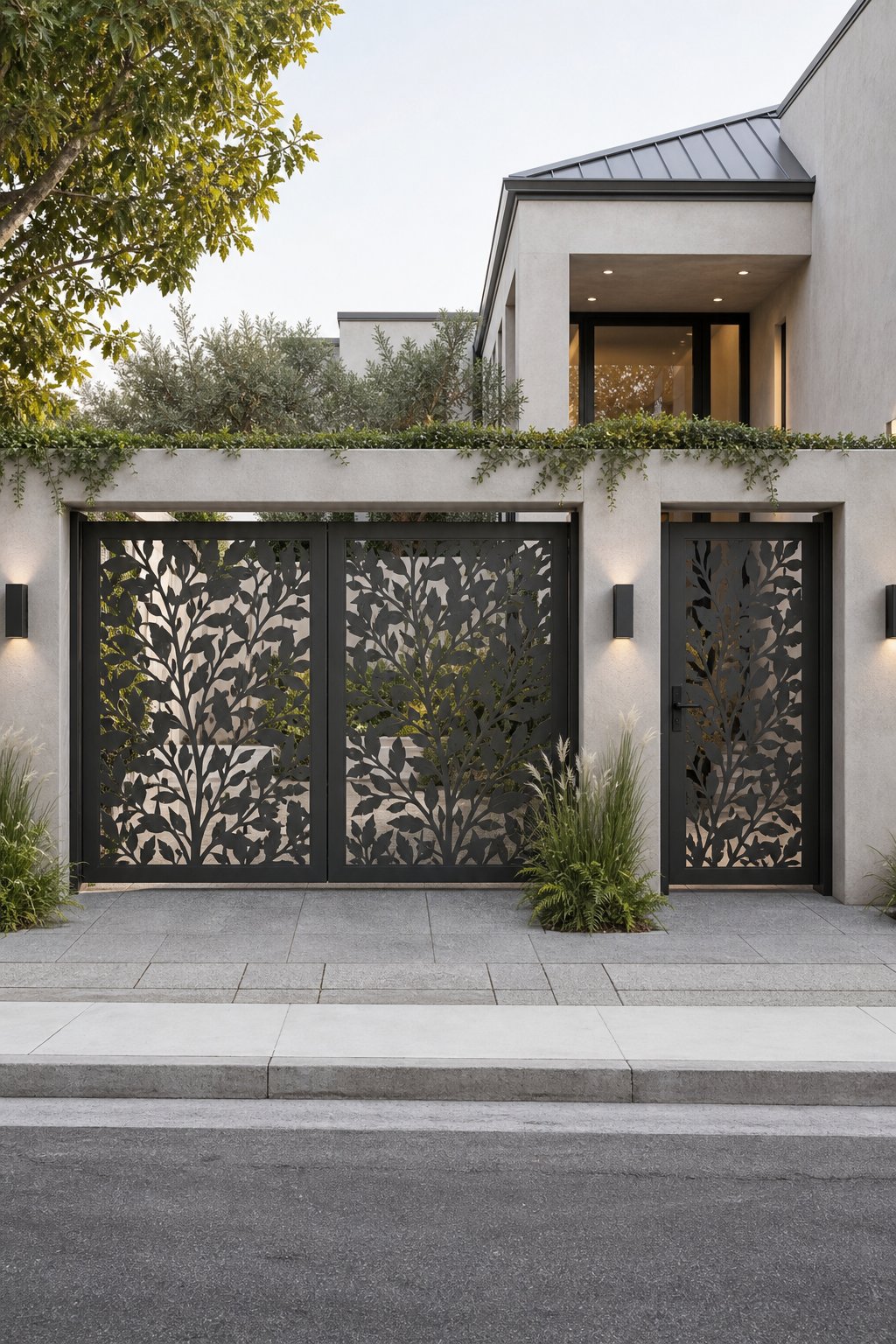
A privacy gate does not need to hide every hint of personality. A laser-cut botanical pattern turns a steel panel into garden artwork, giving you privacy while allowing small patches of light to pass through.
Leaves, branches, and simple geometric vines work well beside modern stucco or masonry walls. Choose a pattern that is easy to read from the sidewalk.
Very fine cutouts can collect dust and may look muddled at a distance. A quality exterior coating protects the steel, while a concealed frame keeps attention on the pattern rather than the supports.
Expert Tip From MrPlanter: “View the pattern at full size before fabrication, not only on a small screen. Add warm lighting behind or beside the gate to bring out the cutouts at night.”
10. White Painted Picket Gate With A Matching Arbor
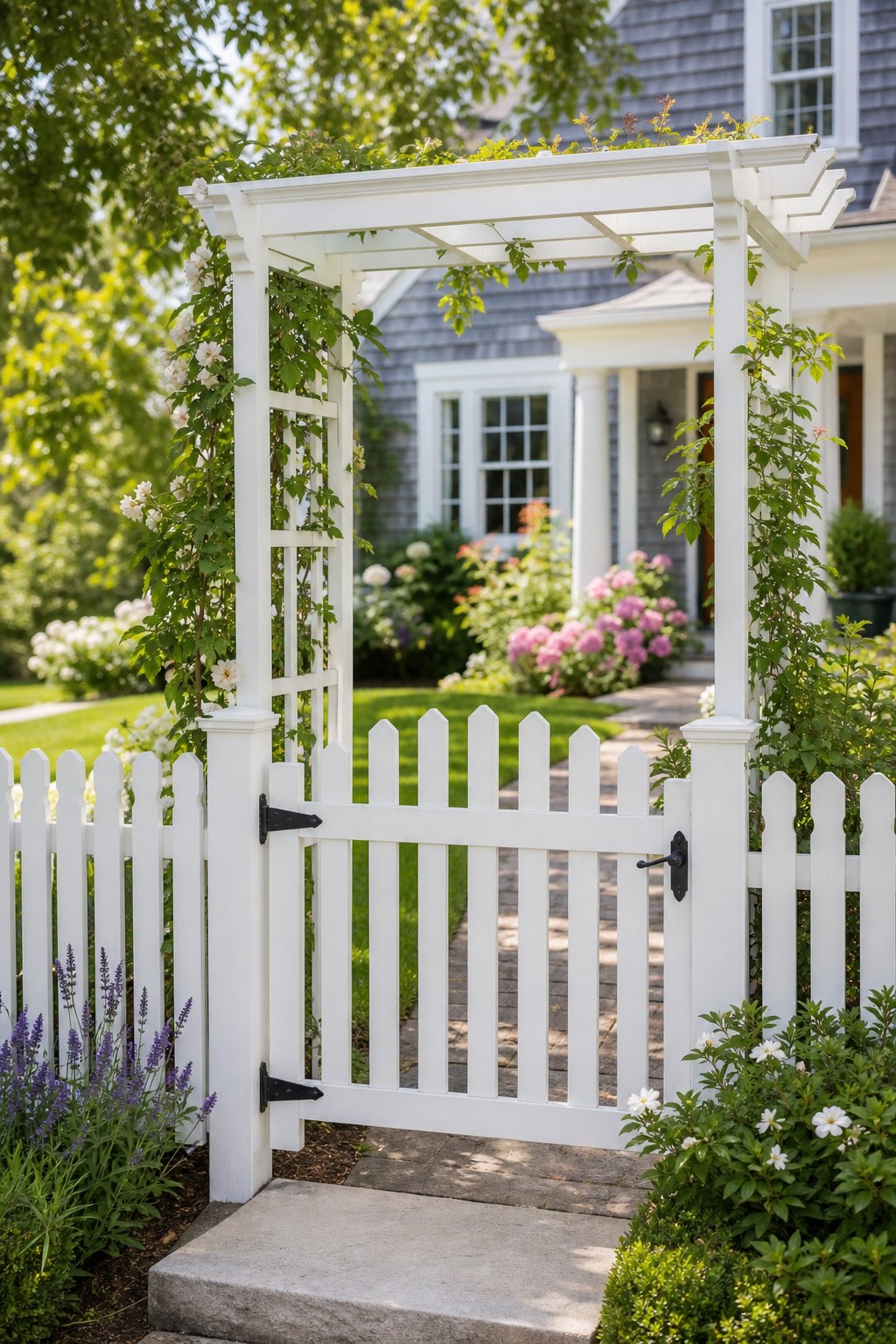
White pickets have a talent for making a front garden look cheerful. Add a matching arbor, and your entry gains a clear frame for climbing roses, clematis, or simple evergreen vines.
The style suits cottage, traditional, and coastal homes, especially when paired with a brick or gravel path. Use exterior paint made for the gate material and prepare the surface carefully before coating.
Keep the arbor open enough for plants to breathe, and do not let vines crowd the latch. A simple round handle can make the gate feel more like a garden invitation than a barrier.
Expert Tip From MrPlanter: “Paint the gate and arbor at the same time so their whites match. Train vines to the sides first, then guide them over the top.”
11. Natural Timber Batten Gate With A Flush Pull Handle
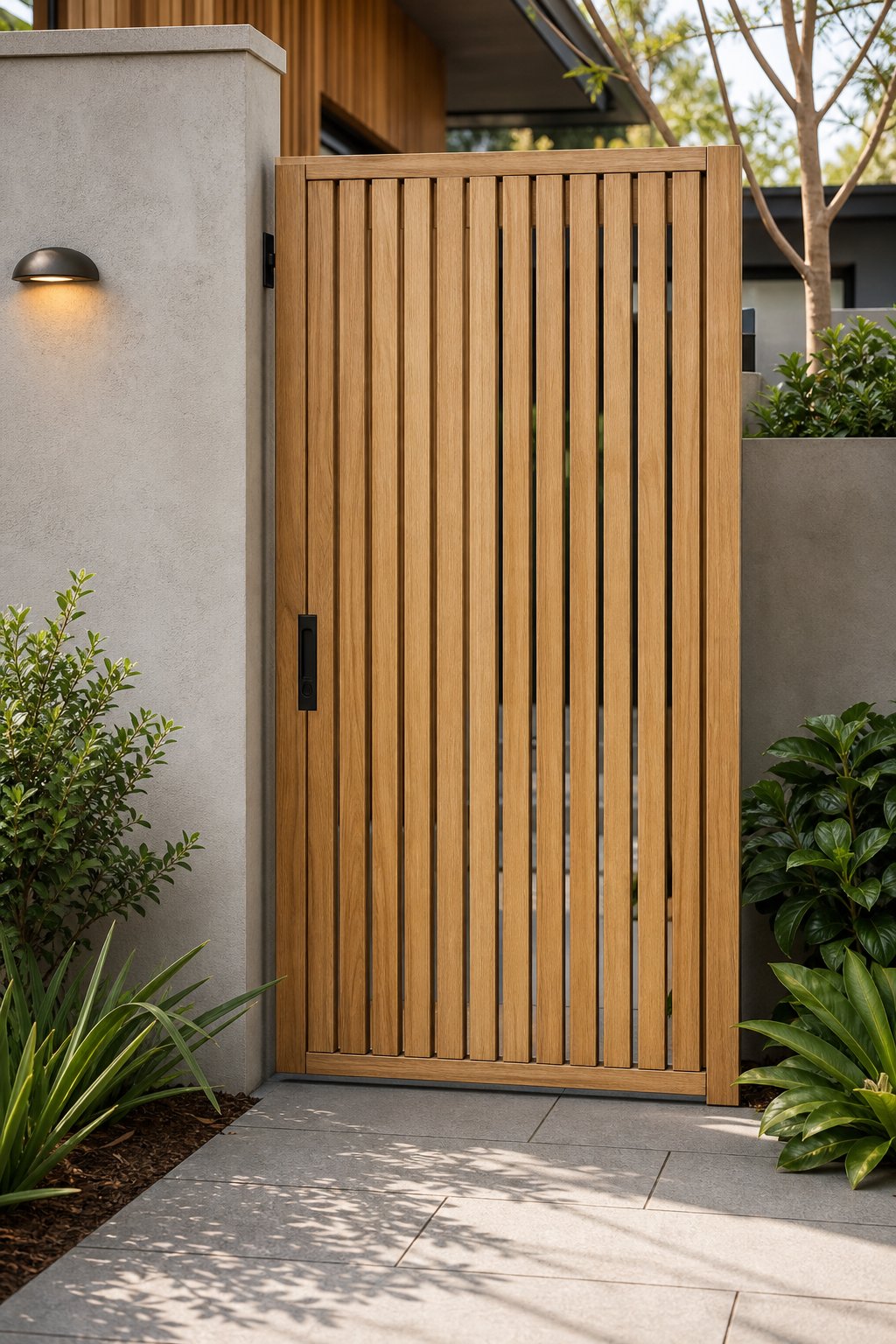
A timber gate can bring instant warmth to a hard-edged entry. Narrow battens create a calm rhythm, while a flush pull handle keeps the surface smooth and uncluttered.
This look fits modern homes that use wood siding, concrete, stone, or broad areas of glass. Leave consistent gaps between battens if you want filtered views and airflow.
For privacy, use a tighter layout or add a backing panel. Select durable exterior timber, protect the top and bottom edges, and make sure the frame can handle seasonal movement.
Expert Tip From MrPlanter: “Mock up the batten spacing with scraps before building the gate. A few extra minutes of testing can save you from a very visible pattern mistake.”
12. Modern Aluminum Pedestrian Gate With Integrated House Numbers
Searching for a house number should not feel like a small outdoor treasure hunt. An aluminum pedestrian gate with integrated numbers solves that problem while keeping the entrance tidy.
The light material works well for a narrow walk-in gate, and its clean finish suits contemporary front yards. Place numbers where they can be read from the sidewalk, not hidden behind a shrub or hinge.
Use a font with open shapes, especially if the gate has slats. A contrasting number color, built-in panel, or cutout design gives the address enough visual weight.
Expert Tip From MrPlanter: “Check the numbers from the street before fixing them in place. Match their finish to the door handle or mailbox for a polished connection.”
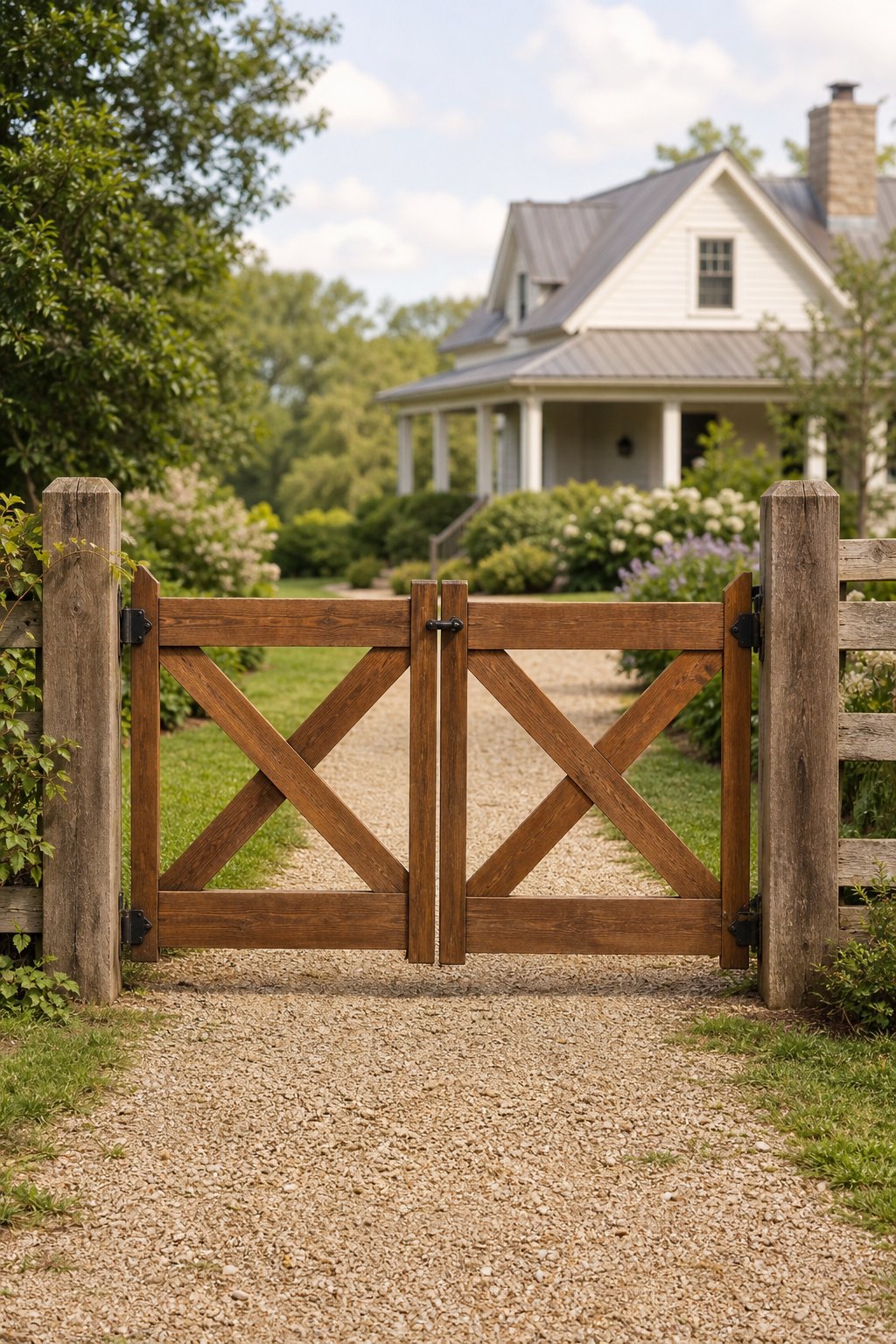
13. Farmhouse Crossbuck Gate In Stained Wood
A crossbuck gate brings farmhouse character without requiring a full barnyard. Diagonal boards form an X pattern that adds charm and helps a simple wooden gate feel finished.
Stained wood pairs naturally with gravel, native plants, and broad front lawns. This design gives limited privacy, so it works best when you want an open view into the yard.
Use a sturdy frame and add diagonal braces to direct water away from joints. Galvanized or coated hardware prevents orange marks on the wood.
Expert Tip From MrPlanter: “Keep the X centered and equal on both sides so the gate looks intentional. Use a penetrating exterior stain instead of a thick film that may peel.”
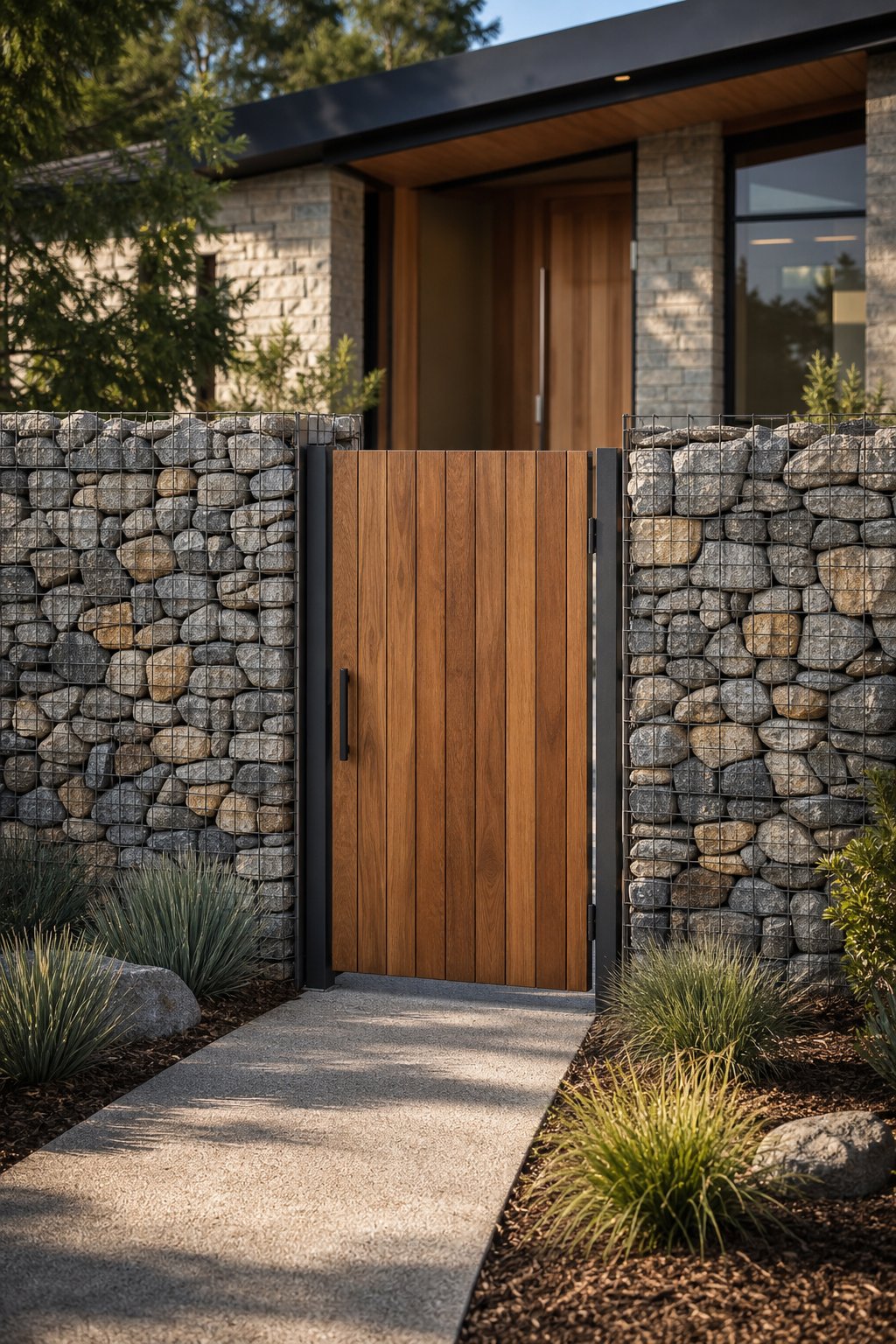
14. Gabion Stone Wall With A Timber Infill Gate
A gabion wall looks rugged, and a timber gate keeps it from feeling too severe. Wire baskets filled with local stone create a textured frame, while the wood infill adds a warmer note at hand level.
This choice suits a natural, modern, or hillside front yard. Use stone that fits your regional soil and nearby walls.
Set the baskets on a stable base and fill them carefully so the wall stays even. Attach the gate’s hinges to a solid structural frame instead of relying on the wire basket alone.
Expert Tip From MrPlanter: “Choose timber with a clear grain because the stone already provides plenty of texture. Install a separate steel gate frame inside the gabion opening for dependable movement.”
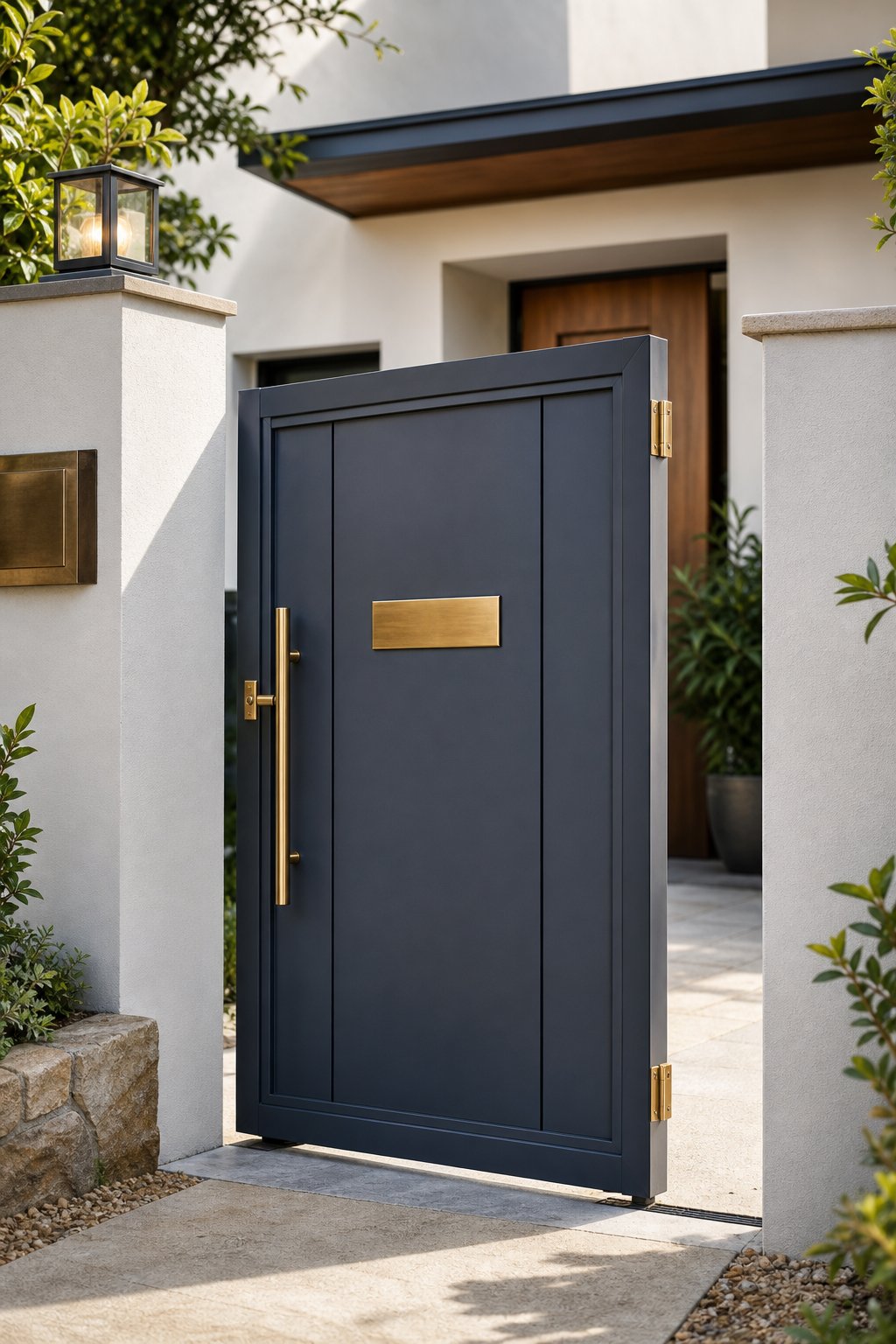
15. Color-Painted Steel Gate With Brass Hardware
A colorful gate can make your front yard smile before you even open it. Deep green, navy, red, or soft blue steel adds personality, while brass hardware supplies a warm, classic accent.
This idea works especially well when your home exterior is neutral. Sample paint colors outdoors, since sunlight changes how they look during the day.
Prepare steel correctly and use an exterior system made for metal to limit peeling and rust. Keep nearby plants simpler so the gate remains the star without starting a color argument with your flowers.
Expert Tip From MrPlanter: “Repeat the gate color in a planter, mailbox detail, or front-door accessory. Use a satin finish to balance color, durability, and easy cleaning.”
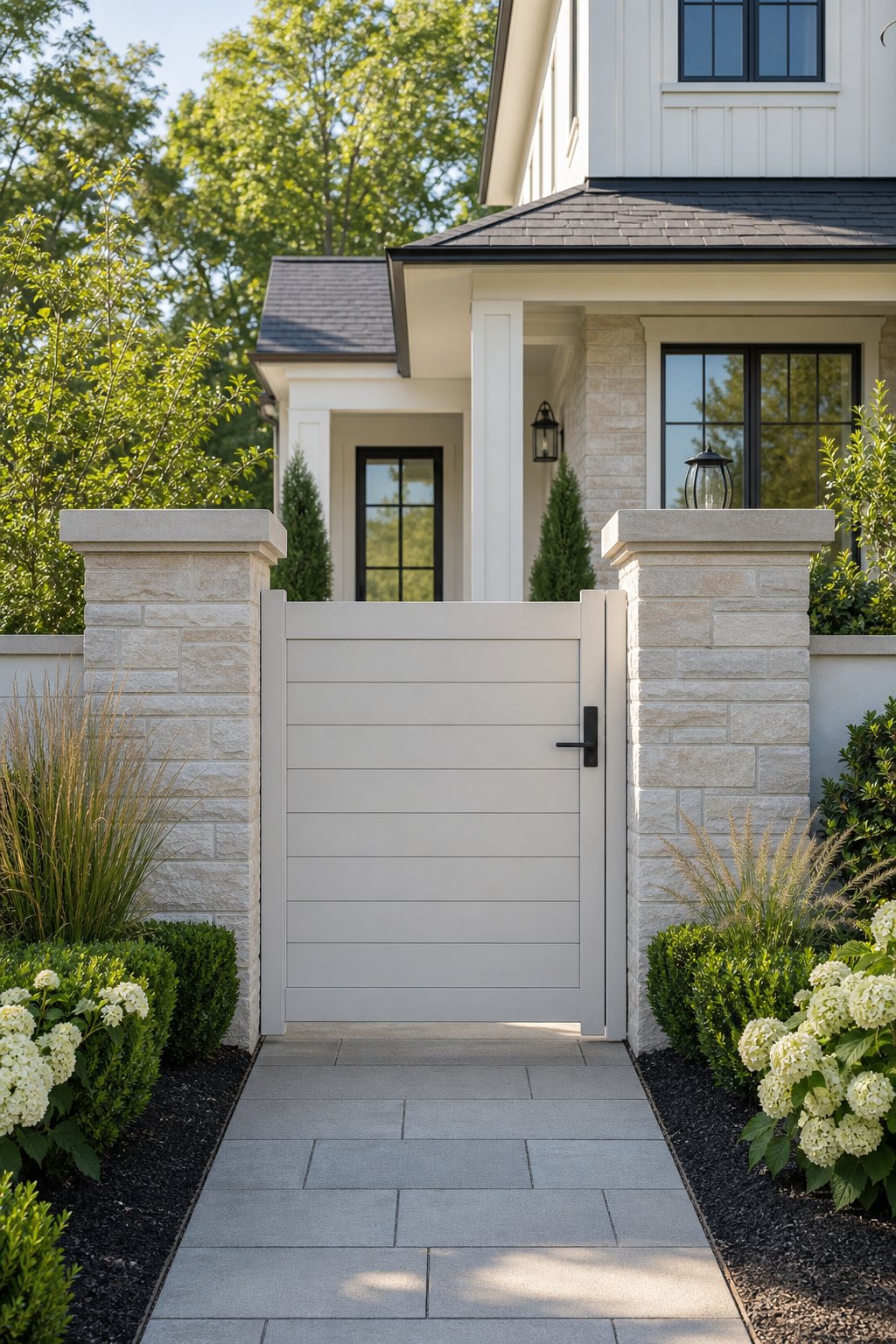
16. Low-Maintenance Vinyl Gate With Masonry Columns
Busy homeowners deserve a gate that does not ask for weekend painting sessions. A vinyl gate between masonry columns offers a bright, traditional look with simple cleaning and little routine care.
The stone columns give the lightweight material a more established presence. White vinyl suits cottage, colonial, and suburban homes, while tan or gray can feel softer.
Check the gate’s internal reinforcement and hinge hardware before buying, since appearance does not show how well it will handle daily use. Wash it with mild soap rather than harsh cleaners.
Expert Tip From MrPlanter: “Use a wide column cap to protect the masonry from rain. Leave enough clearance below the vinyl panel for leaves and winter frost heave.”
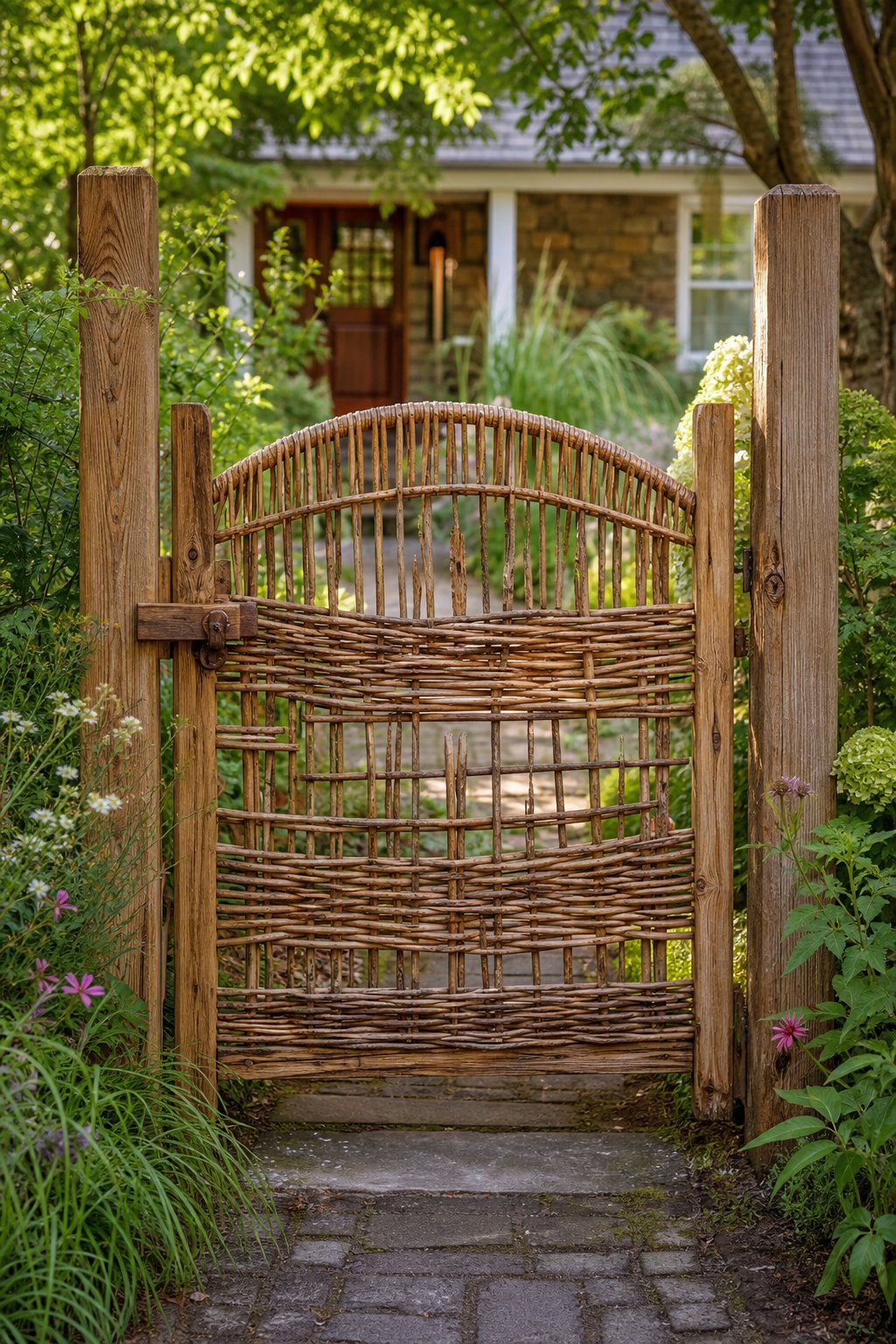
17. Woven Willow Garden Gate With Rustic Timber Posts
A leafy garden entrance can feel even more inviting with a gate that looks handwoven. Willow brings soft texture and a rustic shape, while timber posts keep the opening grounded.
This style fits cottage gardens, informal paths, and yards filled with ferns or flowering plants. Treat woven willow as a garden feature rather than a heavy security barrier.
Protect it from constant ground moisture, and check the weave each season for loose sections. A simple latch keeps the look honest and makes the gate easy to use.
Expert Tip From MrPlanter: “Set the posts in a well-drained base so the wood does not sit in wet soil. Trim nearby growth before it tangles with the weave or latch.”
How To Choose A Front Gate Design
Match The Gate To Your Home’s Architecture
Start with the lines, colors, and materials already on your house. A simple slat gate fits a modern facade, while pickets, ironwork, or stained wood can suit traditional and farmhouse homes.
You do not need an exact match, though repeating one finish or color helps the entrance feel connected. Look at the gate from the sidewalk and from your front door.
A design that seems attractive up close can appear too busy or too small from the street.
Balance Privacy, Visibility, And Security
Solid panels give you the most privacy, while open pickets let you see visitors and keep the yard feeling welcoming. Semi-open slats offer a middle ground, especially when you want to screen part of the garden without blocking every view.
Think about pets, children, deliveries, and nighttime use. Add a self-closing latch, sturdy hinges, and a well-lit path to make the gate more practical without making it look severe.
Choose Materials For Your Climate And Maintenance Tolerance
Let your local weather guide the material. Wood may need regular sealing, steel needs rust protection, and vinyl or aluminum usually asks for less care.
In wet or coastal areas, pay close attention to hardware, fasteners, drainage, and protective finishes. Ask how the gate will age, not just how it looks on installation day.
A material that fits your schedule is more likely to stay attractive.
Plan Gate Width, Swing Clearance, And Access Needs
Measure the opening at the top, middle, and bottom because posts and paving are not always perfectly square. Confirm the swing direction, nearby walls, planting beds, and path width before ordering.
A sliding gate may suit a tight entry, while a single pedestrian gate can work well for a garden path. Leave room for wheelbarrows, strollers, packages, and seasonal maintenance equipment.
If you may add an opener later, plan conduit and power access early.
Details That Make A Front Gate Feel Finished
Lighting, House Numbers, And Hardware
Good lighting helps you find the latch and lets guests see the path after dark. Wall lanterns, low path lights, or discreet fixtures near the posts provide a gentle glow without shining into your windows.
Choose house numbers with strong contrast and place them where delivery drivers can read them from the sidewalk. Select hardware that suits the gate’s weight and exposure.
A beautiful handle offers little help if the latch sticks every time the weather changes.
Pillars, Paths, And Planting Design
Pillars give a gate a clear frame, while a well-set path tells visitors exactly where to walk. Repeat materials from the house, such as brick, stone, timber, or dark metal, to create a visual link.
Keep planting attractive but practical, with enough clearance around hinges, latches, and the gate’s swing. Use shrubs to soften posts and low plants to guide feet toward the entrance.
Avoid thorny growth beside a narrow opening unless you enjoy watching guests perform an awkward sideways shuffle.
Paint, Powder Coating, And Protective Finishes
A finish protects the gate and sets its character.
Powder coating covers prepared metal effectively. Exterior paint adds color, and stain lets timber grain remain visible.
Follow the maker’s care instructions. Pay special attention to scratches, cut edges, and fasteners.
Inspect the gate twice a year for loose hardware or rust spots. Look for peeling coating or wood movement.
Address small repairs early. Water and weather can quickly turn them into a larger project.
I’m Anirban Saha, the Founder and Owner of MrPlanter.com. I pay the bills as a software developer, although my BTech is actually in Electronics and Communication. I really love my day job, but what gives me energy every day is interacting with my indoor plants and taking care of them. I have been successfully nurturing and maintaining houseplants for over 10 years now.
📚🔍 Our content undergoes thorough review and fact-checking before publication. For additional details, explore our strict Editorial Policy to deliver helpful content. 📝🔒