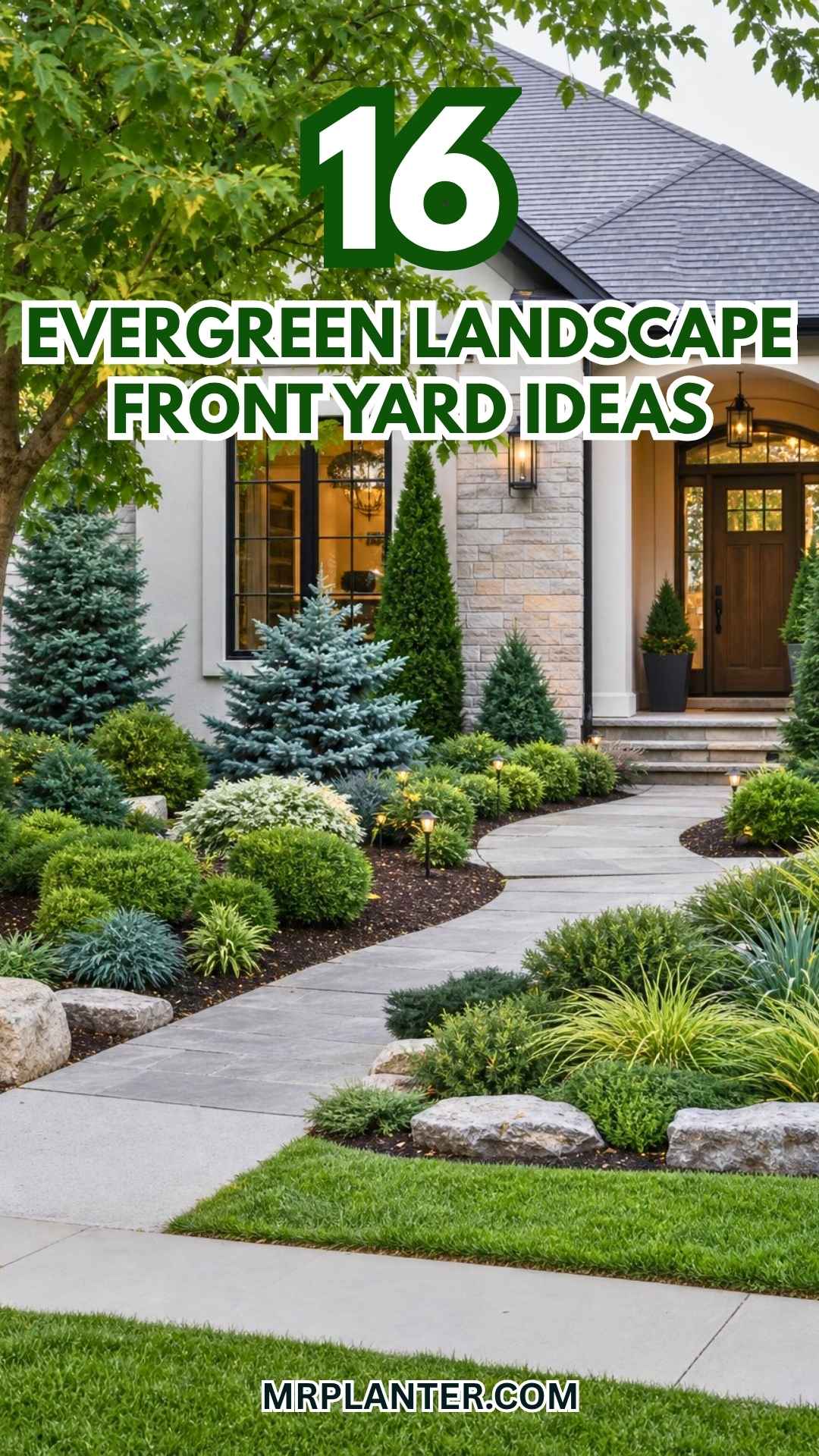
Evergreen plants give your front yard a steady shape through frosty mornings, hot summers, and every season between them. With the right mix of heights, textures, and colors, you can keep your home looking cared for even when flowers have packed up for the year.
The best evergreen landscape front yard ideas match each plant’s mature size, light needs, and soil conditions before you put a shovel in the ground.
Start with a strong background, add medium shrubs, then soften the edges with groundcovers or grasses. That simple order keeps your beds attractive without turning them into a crowded green wall.
1. Layered Creeping Juniper, Boxwood, and Arborvitae Beds
A flat foundation bed can make a home look shorter and wider than it is. Layering arborvitae at the back, boxwood in the middle, and creeping juniper along the edge gives your front yard height, clean lines, and a soft finish. Leave enough space between each plant for mature growth, especially near windows and siding. The juniper also helps cover bare soil and spill gently over stone edging. Repeat the same group near the walkway to connect both sides of the yard.
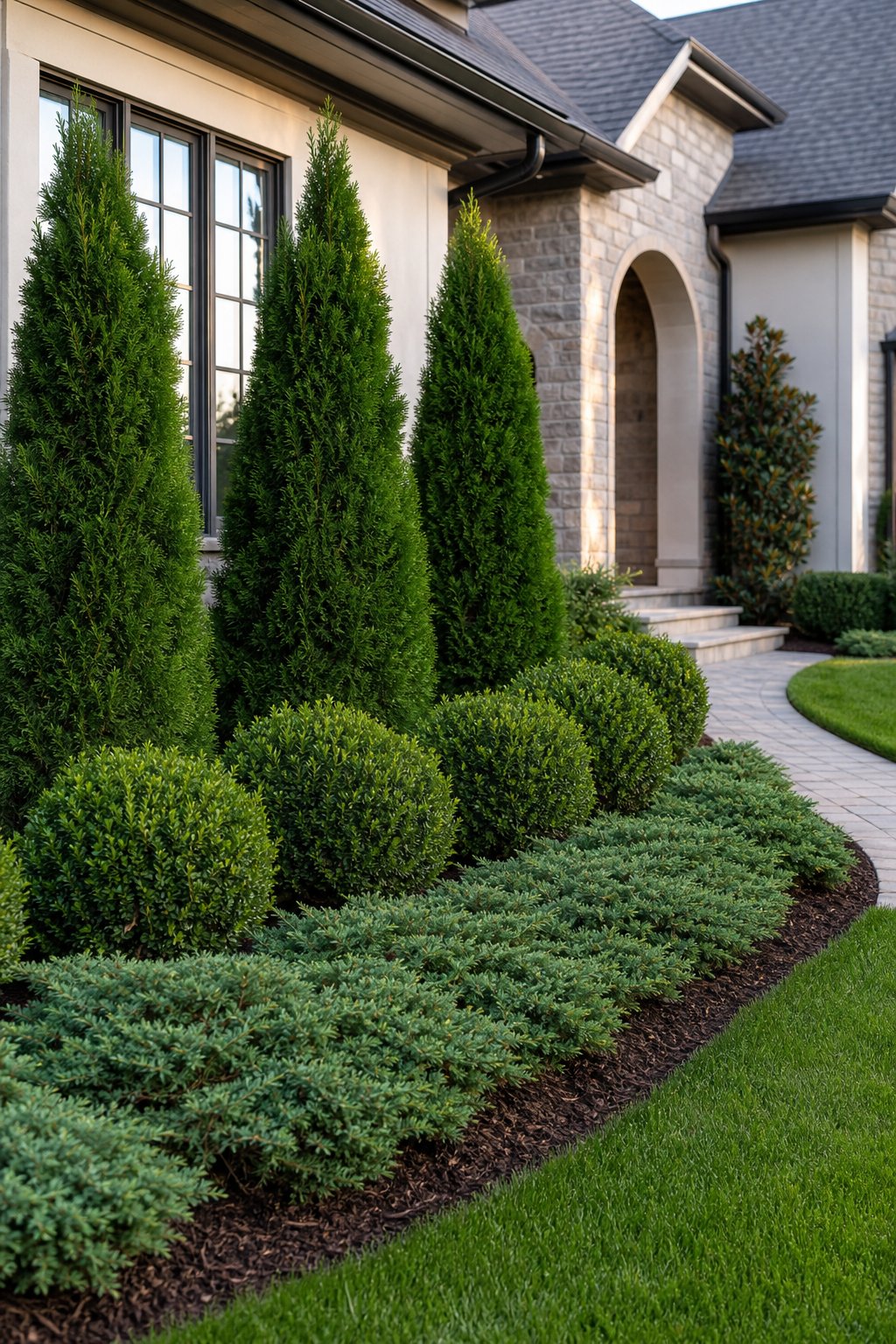
Expert Tip From MrPlanter: “Plant the tallest evergreen where it won’t block windows or signs. Give every layer room to reach its full width so pruning stays light.”
2. Emerald Green Arborvitae Privacy Screen Along the Property Line
A row of emerald green arborvitae creates a neat living screen along an exposed property line. Their narrow, upright shape suits many suburban yards, while their dense foliage softens views of neighboring homes and streets. Set the row far enough from the boundary for roots, branches, and future maintenance. Use a hose to mark the line before digging so the spacing stays straight. Deep watering during the first two growing seasons helps new trees settle in.
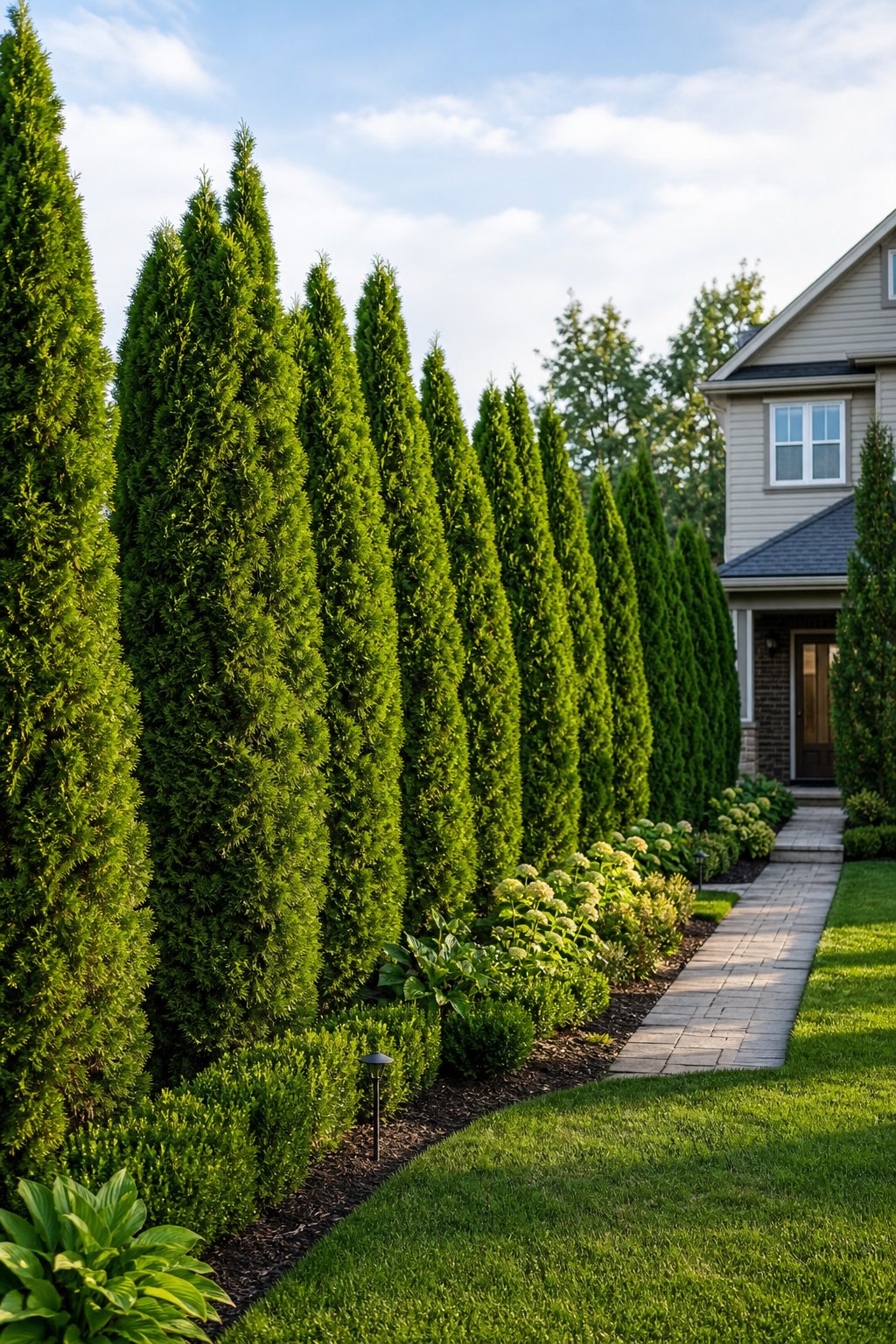
Expert Tip From MrPlanter: “Check the mature width on the plant tag before spacing your trees. Add a light mulch ring, keeping mulch several inches away from each trunk.”
3. Boxwood Borders Framing the Front Walk
A boxwood border turns a plain front walk into a clear path toward your door. The small, glossy leaves create a tidy edge that works with brick, concrete, gravel, or stone. Plant young shrubs in a straight line, then allow room for their mature spread. A light trim once or twice a year keeps the border crisp without forcing you into constant clipping. Pair the green foliage with seasonal flowers placed behind the hedge for changing color.
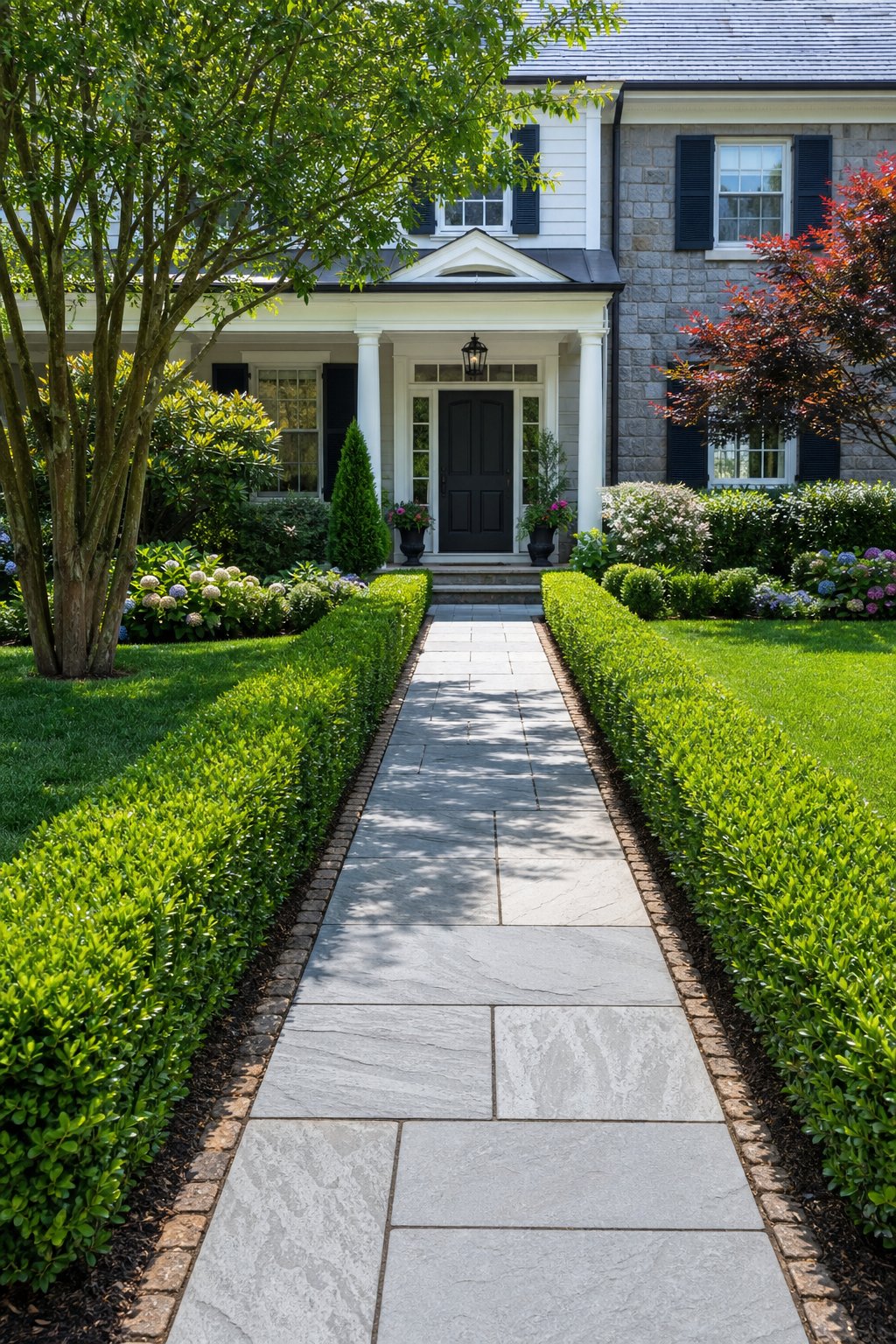
Expert Tip From MrPlanter: “Leave enough space for people to walk comfortably beside the hedge. Trim after the spring flush of growth when the weather is mild.”
4. Dwarf Mugo Pine Foundation Planting
Dwarf mugo pine brings a low, rounded form to foundation beds and rock gardens. Its short needles add texture beside smooth boxwood leaves or broad paving stones. Place it below windows where its mature height won’t cover the glass. Mugo pine prefers sun and soil that drains well, so avoid planting it in a wet pocket beside a downspout. Its slow growth also keeps the bed easier to manage over time.
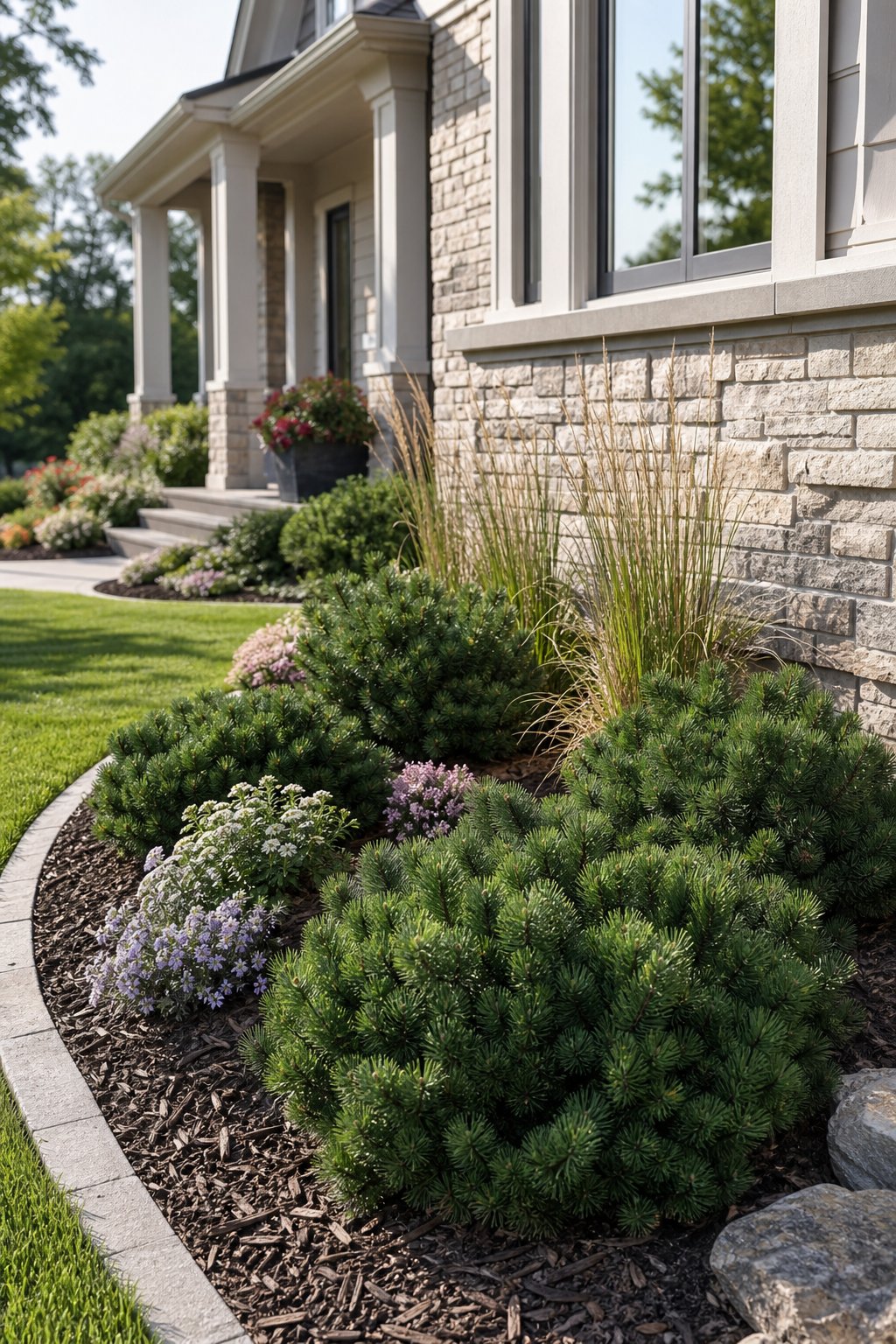
Expert Tip From MrPlanter: “Use a thin mulch layer to protect the roots without burying the low branches. Water deeply while the shrub establishes, then check the soil during dry spells.”
5. Blue Star Juniper and White Gravel Island Bed
Blue Star juniper gives a sunny island bed a cool blue focal point. The stiff, starry needles stand out against white gravel, while the gravel keeps the planting area open and tidy. Shape the bed with a gentle curve that follows your driveway or lawn edge. Add a few warm-toned boulders for balance, then leave space around each juniper for airflow. This setup suits dry, sunny spots where thirsty plants struggle.
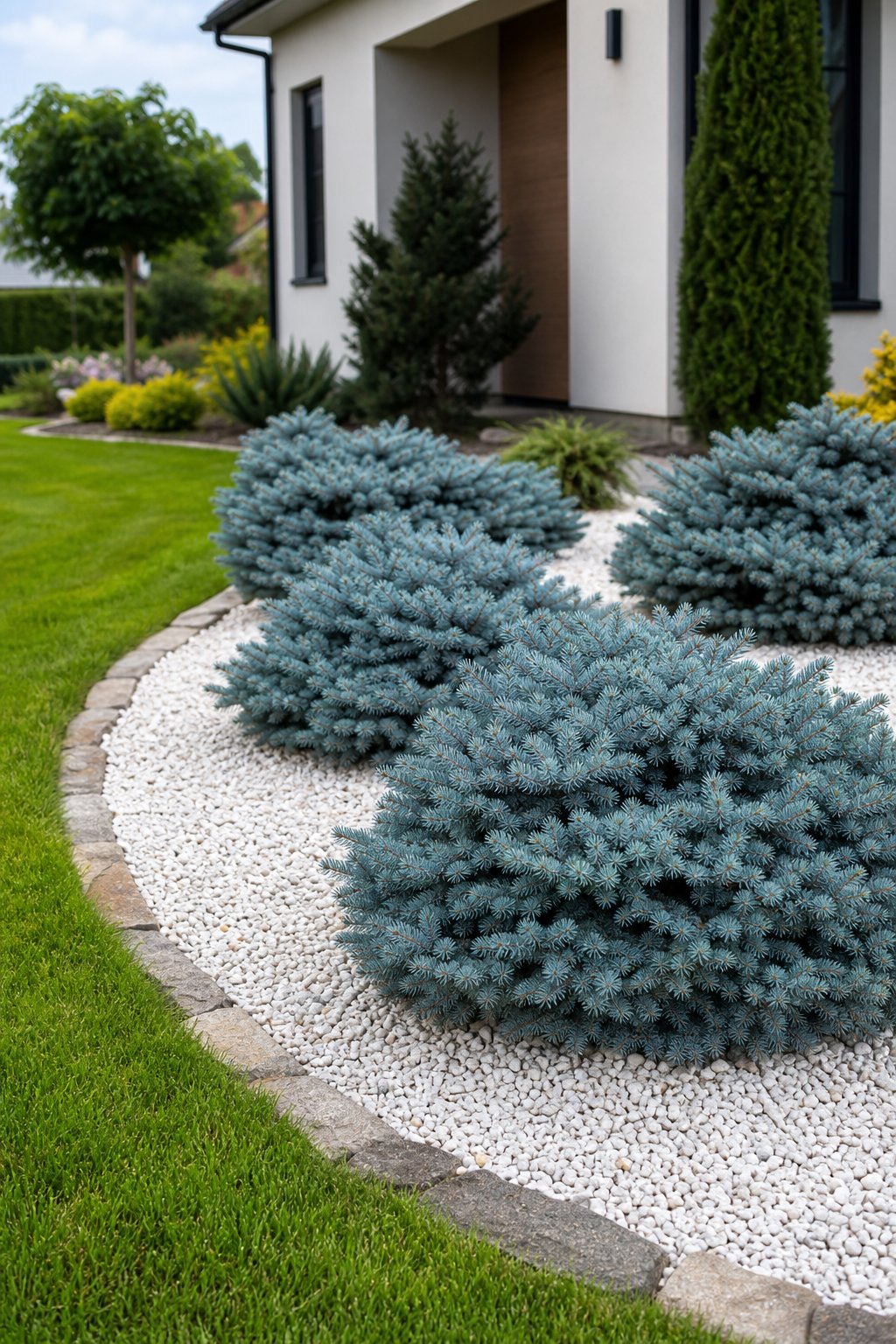
Expert Tip From MrPlanter: “Lay landscape fabric only where it helps control weeds, and keep gravel away from the plant crown. Water the juniper deeply until new roots reach the surrounding soil.”
6. Inkberry Holly Hedge Around the Front Foundation
Inkberry holly forms a handsome foundation hedge with rounded leaves and a naturally soft outline. It handles damp soil better than many evergreen shrubs, making it useful near low areas that drain slowly. Set the plants in a gentle arc beneath windows or along the front porch. Shearing isn’t required for a relaxed look, though selective pruning keeps the hedge within its space. Female plants produce dark berries when a male pollinator grows nearby.
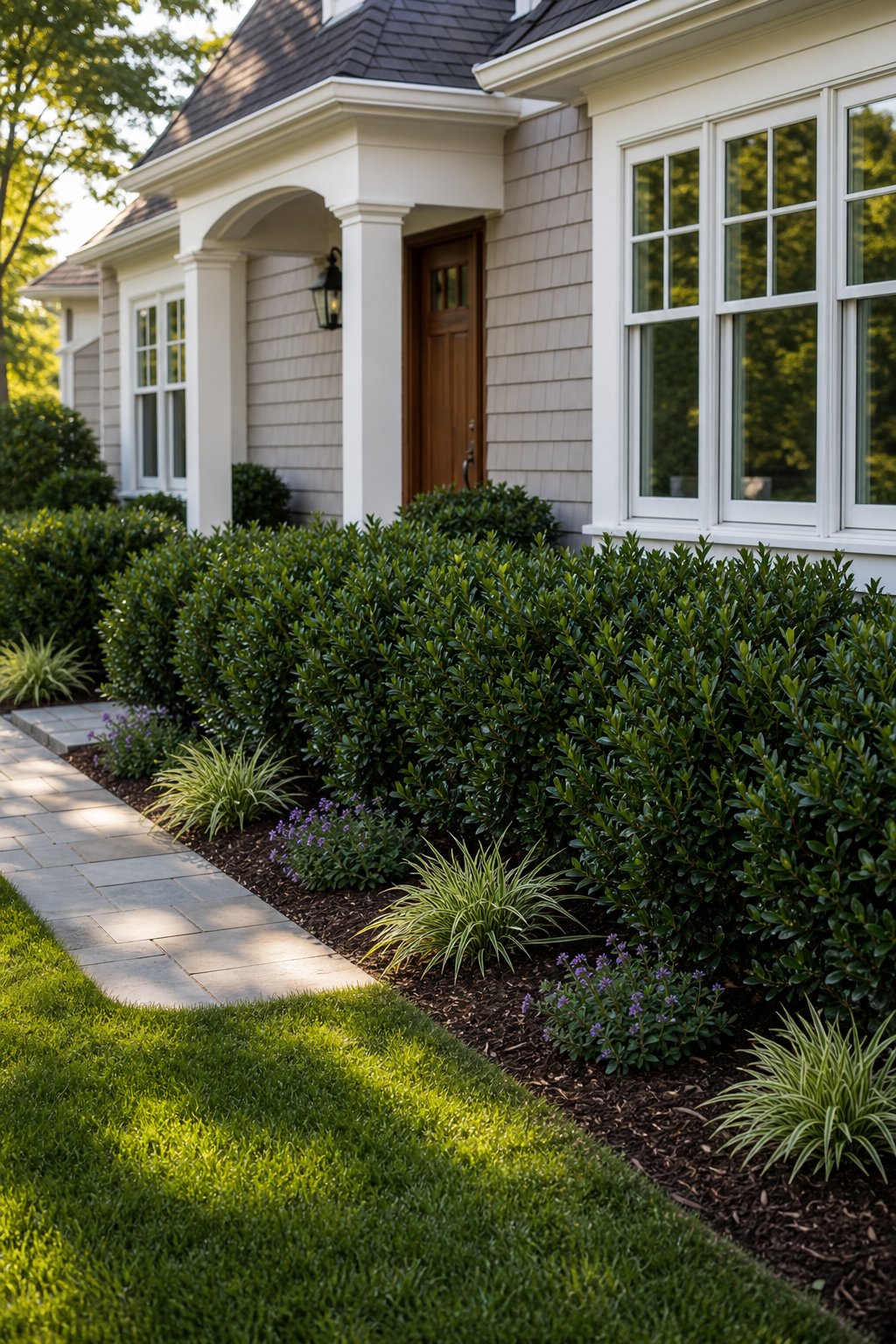
Expert Tip From MrPlanter: “Choose inkberry cultivars that fit your bed’s mature width. Remove a few older stems at the base each year to keep the shrub full from top to bottom.”
7. Japanese Holly Entryway Topiaries
Symmetrical Japanese holly topiaries give your entry a polished frame with small leaves and dense growth. Place matching plants on both sides of the door, keeping them clear of steps and handrails. Their rounded or column-shaped forms suit brick homes, painted siding, and simple modern porches. Use a narrow bed of gravel or mulch to make the dark foliage stand out. Gentle trimming keeps the pair balanced without creating hard, artificial shapes.
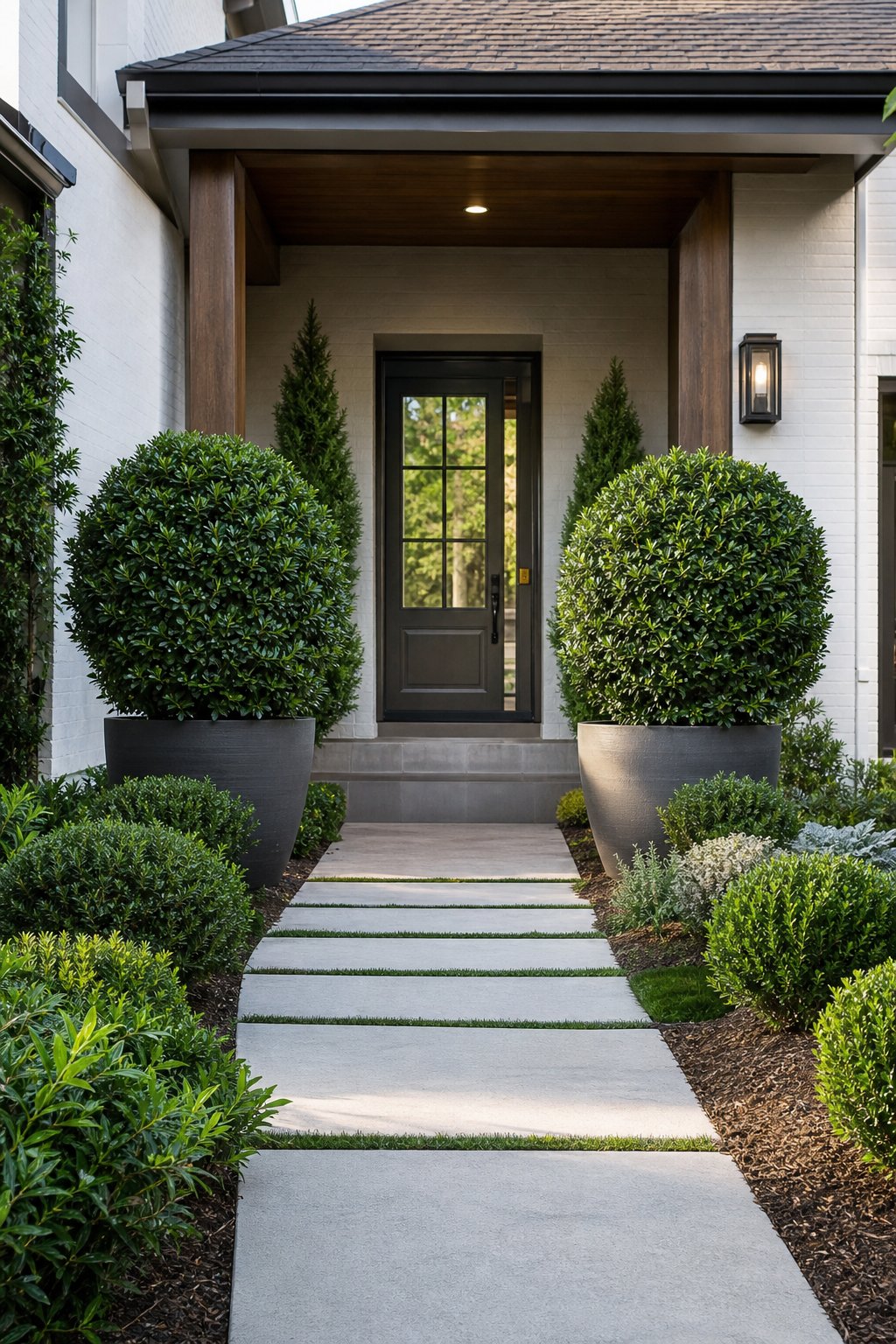
Expert Tip From MrPlanter: “Measure from the door before planting so both shrubs sit at the same distance. Prune in small passes and step back often to check the shape.”
8. Rhododendron and Pieris Woodland-Style Corner
A shady front-yard corner feels richer with rhododendron and pieris planted beneath trees. Rhododendron supplies broad evergreen leaves and spring flowers, while pieris adds fine foliage and hanging blooms. Give both plants acidic, well-drained soil with steady moisture and protection from harsh afternoon sun. A curved mulch bed makes the planting feel at home beside a porch or mature tree. Leave open pockets so air moves through the shrubs after rain.
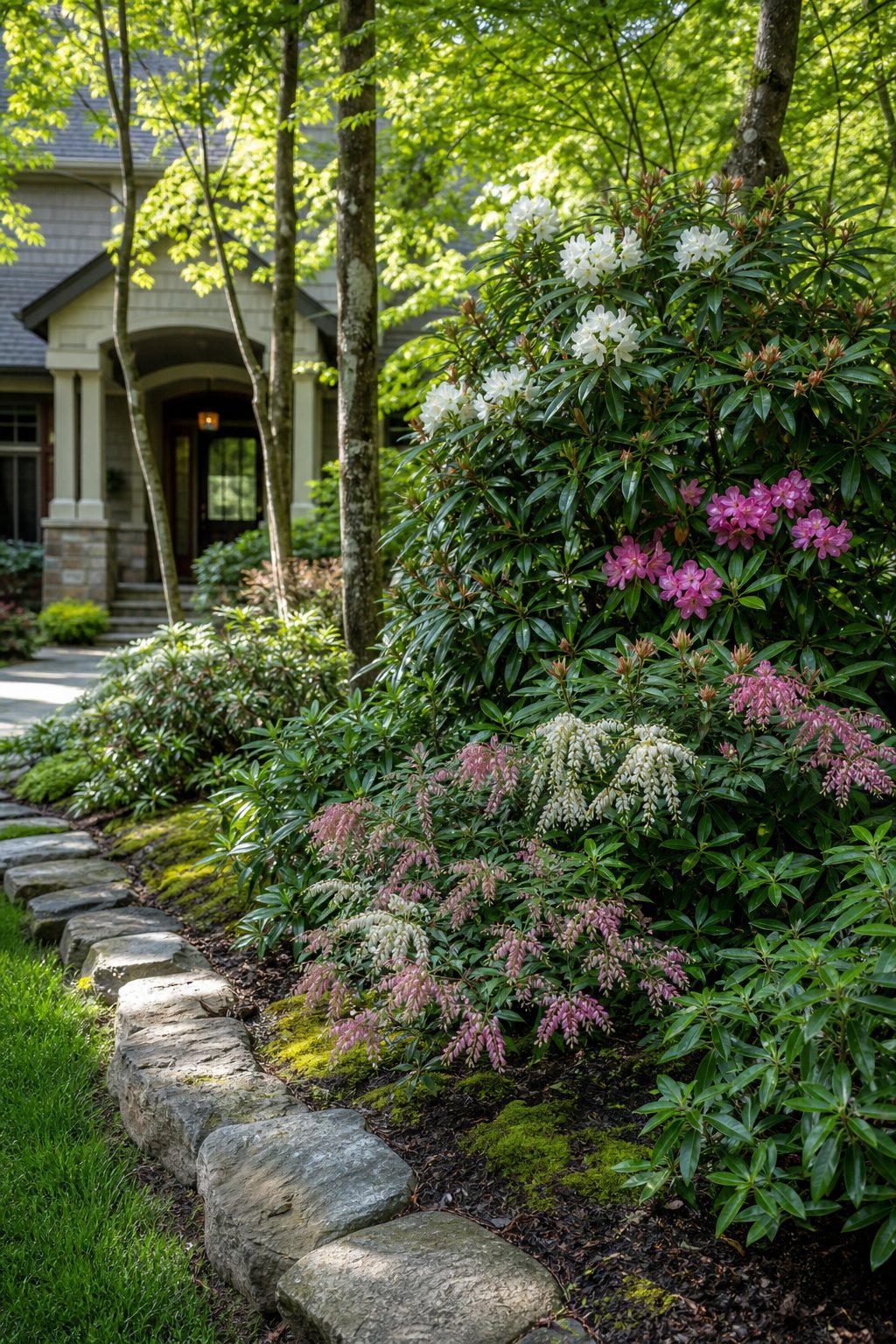
Expert Tip From MrPlanter: “Plant these shrubs with the root ball slightly above the soil line. Prune rhododendron after flowering so next year’s buds stay intact.”
9. Creeping Juniper Groundcover on a Sunny Slope
A sunny slope becomes easier to manage when creeping juniper covers the soil with a low evergreen mat. Its spreading stems help hold loose soil in place and reduce the bare patches that invite weeds. Plant several groups across the slope, following the natural contour instead of making rigid rows. Gravel or small boulders can break up the planting and slow runoff. Choose a hardy variety suited to your local winter temperatures.
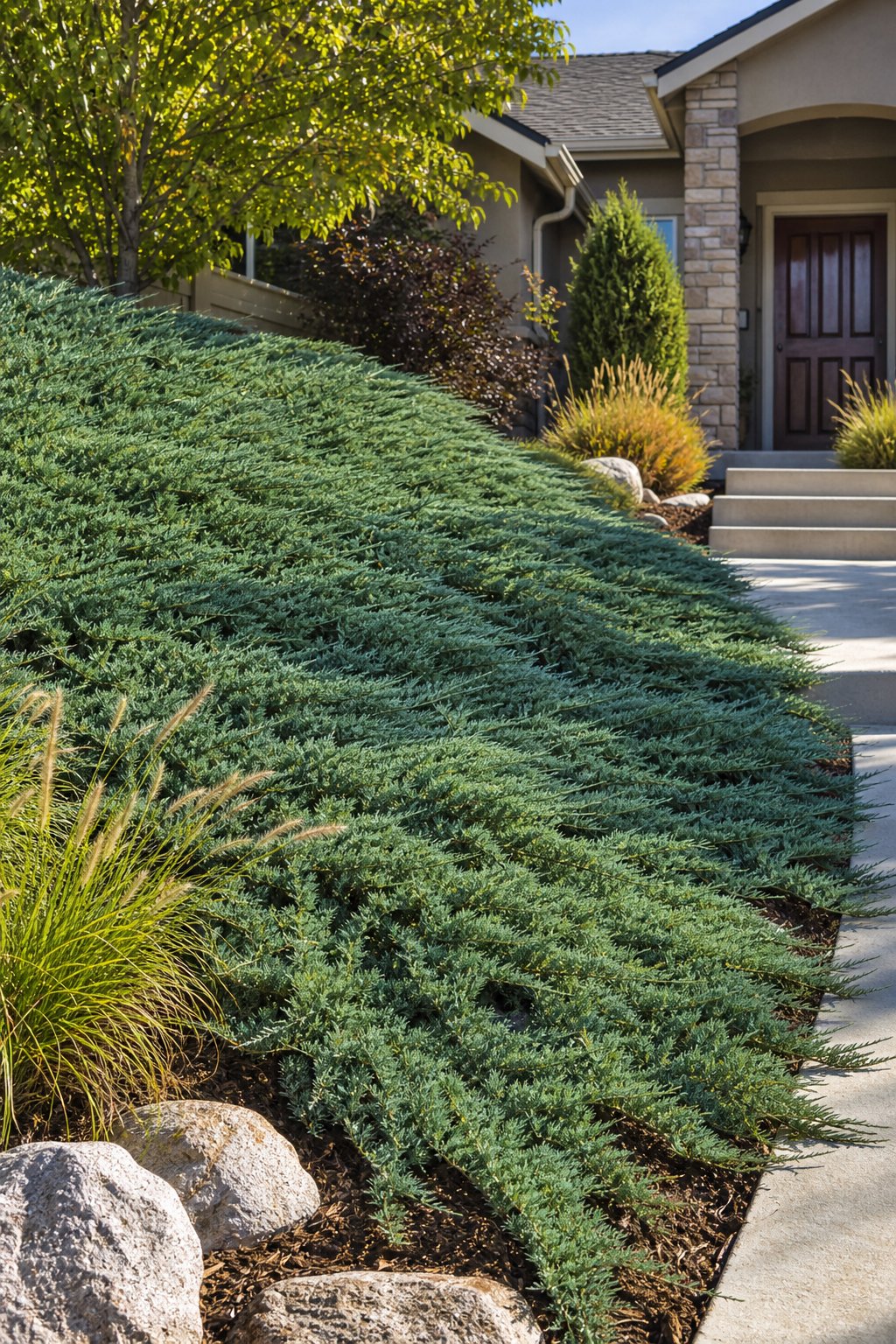
Expert Tip From MrPlanter: “Water new junipers during dry weeks while their roots spread. Keep fallen leaves from piling on the center of each plant.”
10. Dwarf Alberta Spruce Flanking the Front Door
Dwarf Alberta spruce gives your entrance two formal green exclamation points. Its dense, cone-shaped growth works well beside a centered door, porch columns, or a short flight of steps. Plant both specimens at equal distances from the entry, then check the view from the street before filling the bed. These spruces prefer full sun and soil that drains well. Avoid tight corners where reflected heat from walls can stress the needles.
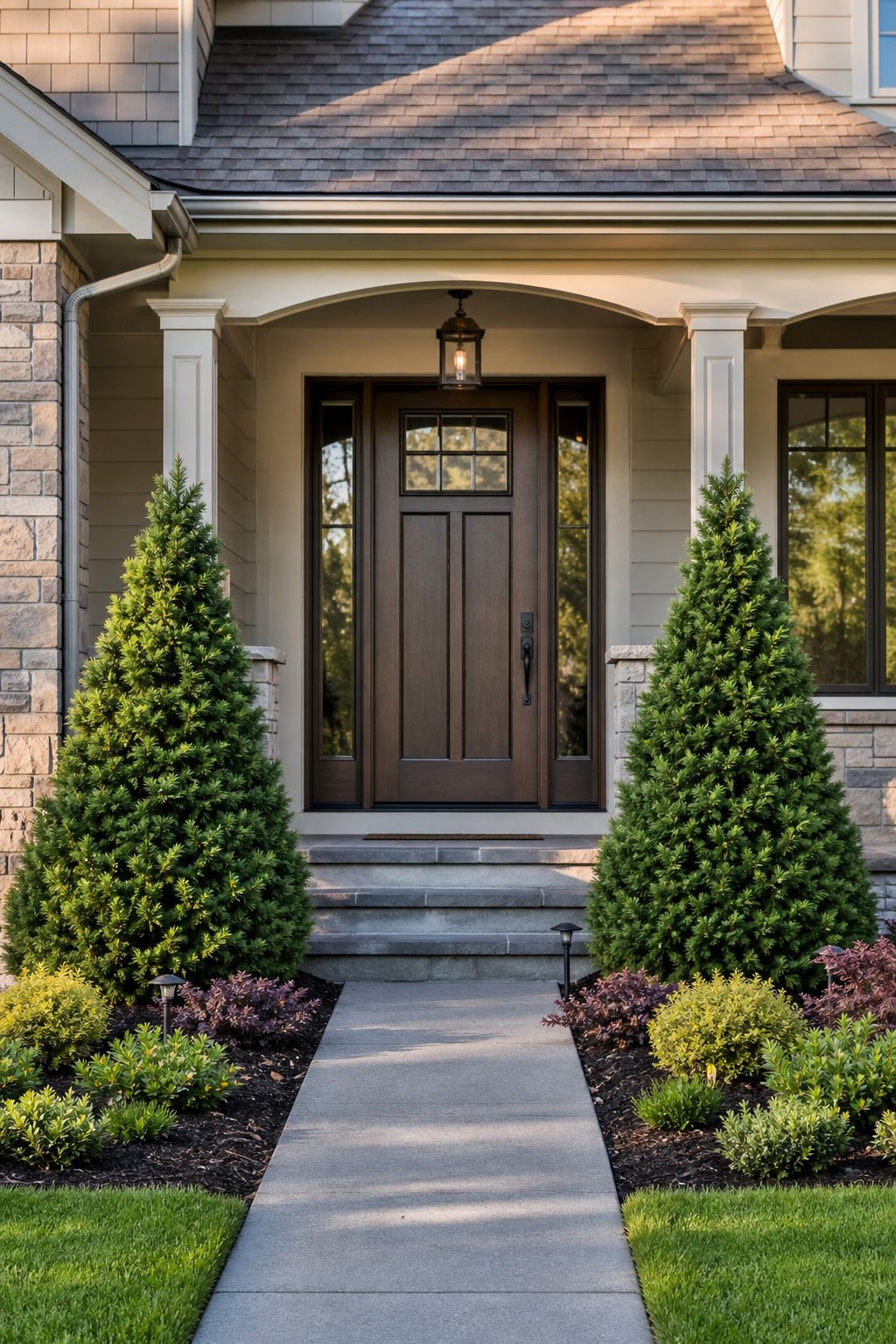
Expert Tip From MrPlanter: “Keep each spruce several feet from the foundation and walkway. Water at the soil line and avoid frequent light sprinkling.”
11. Yew Foundation Hedge Beneath Front Windows
Yew shrubs form a flexible hedge beneath front windows because they handle pruning and partial shade with ease. Their deep green needles give the home a calm backdrop through winter, while their dense branches hide bare foundation walls. Choose a softer, informal line for a cottage home or trim the hedge into a clean shape for a formal facade. Check drainage before planting, since standing water can damage the roots.
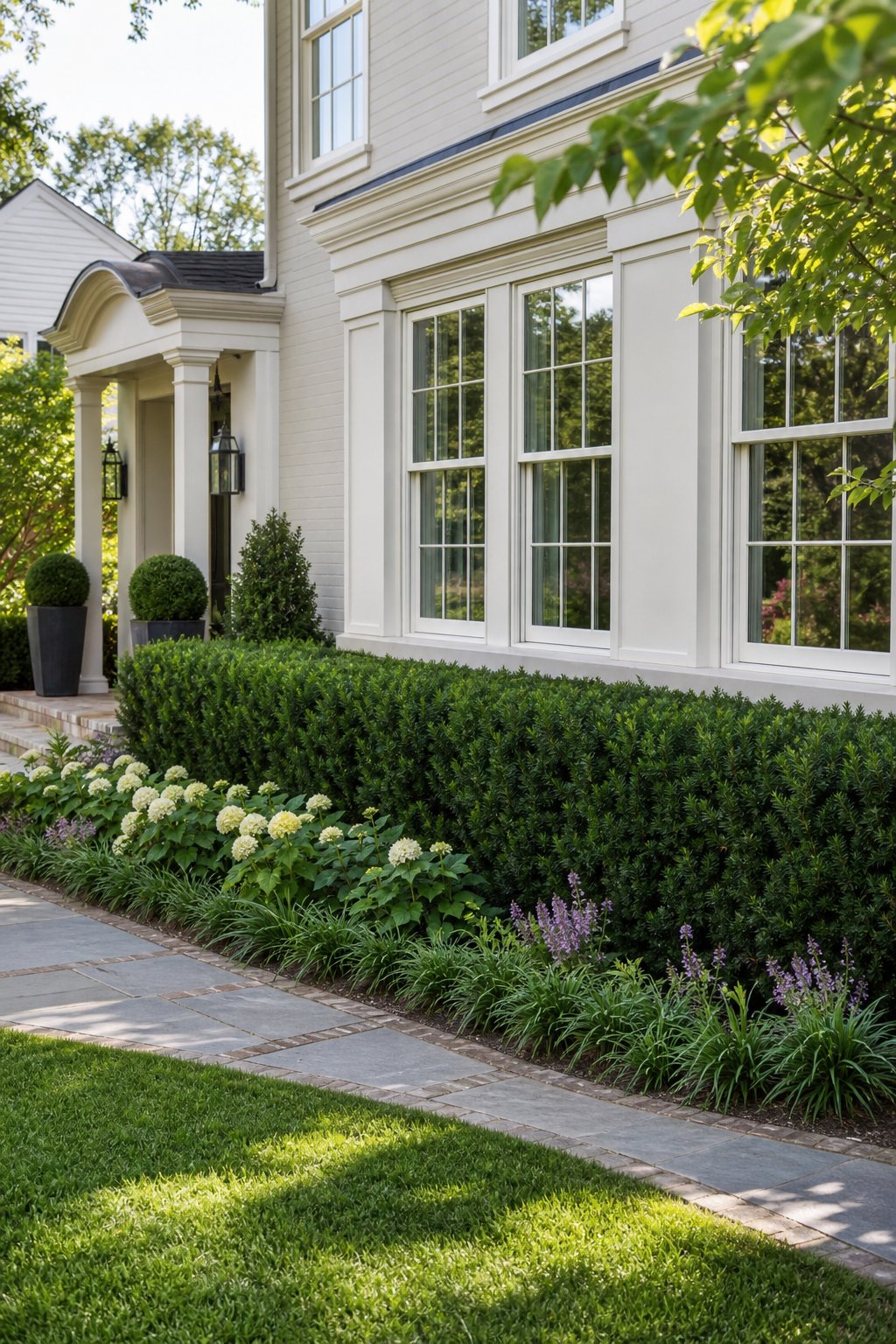
Expert Tip From MrPlanter: “Start with shrubs that fit the available height and width. Remove long shoots with hand pruners so the hedge keeps its natural fullness.”
12. Camellia and Boxwood Cottage Entry Border
Camellias and boxwood create a welcoming cottage border with year-round foliage and seasonal flowers. Set camellias farther back where their mature size has room, then use boxwood to define the path edge. Morning sun and afternoon shade help protect camellia leaves and blooms in warmer areas. Compost-rich soil with good drainage supports both plants. Keep the path wide enough for guests, packages, and a garden hose.
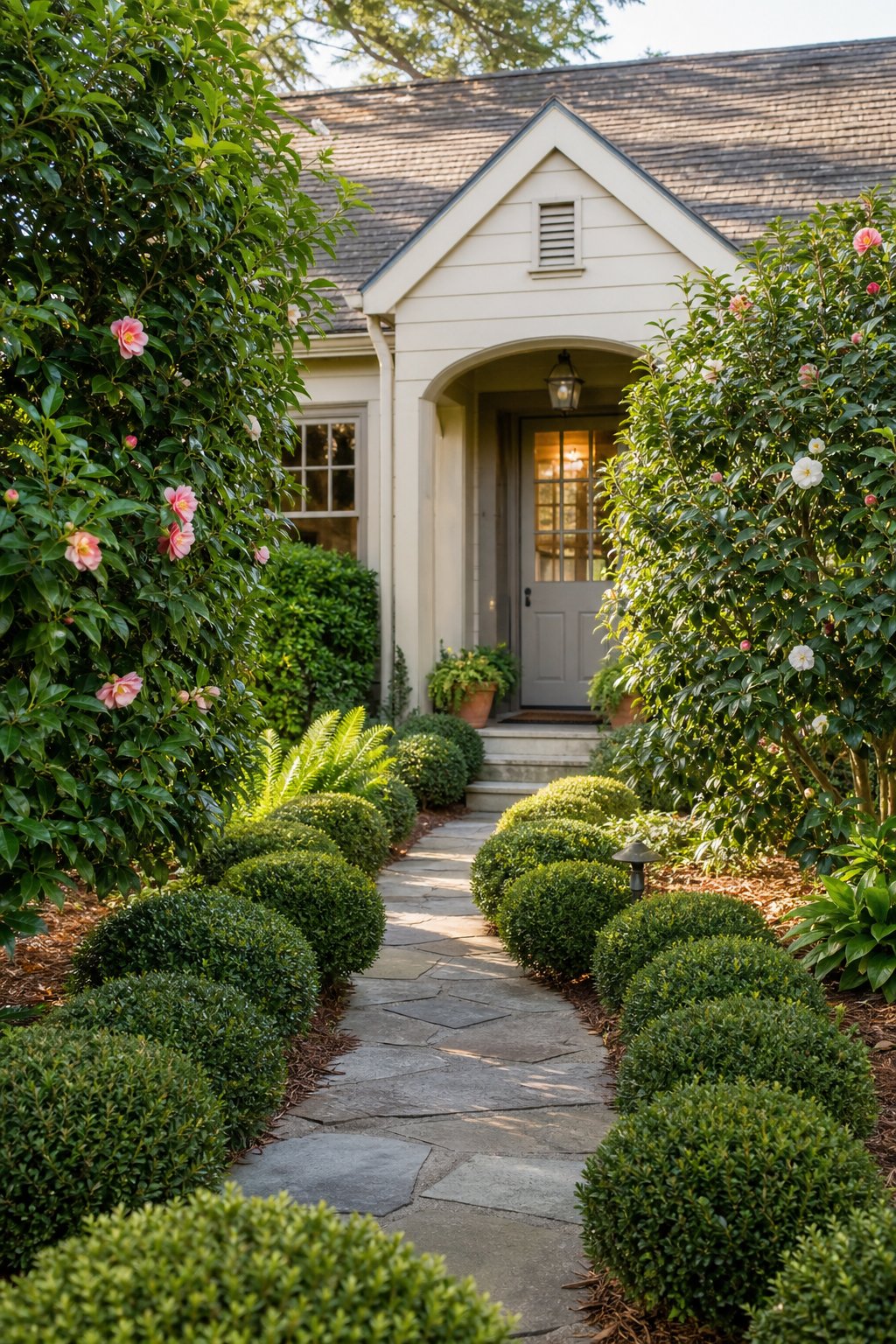
Expert Tip From MrPlanter: “Prune camellias after they finish flowering to protect next season’s buds. Give boxwood a rounded trim that follows the relaxed cottage style.”
13. Blue Atlas Cedar Specimen Tree With Low Evergreen Underplanting
A Blue Atlas cedar supplies a strong focal point when you give it open space and a simple ground layer. Its blue needles contrast with low green juniper, sedum, or compact conifers around the base. Keep the surrounding plants low so the cedar’s branching form remains visible from the street. Use a broad mulch ring or gravel bed to protect the trunk from mower damage. Check the mature spread before placing it near the house.
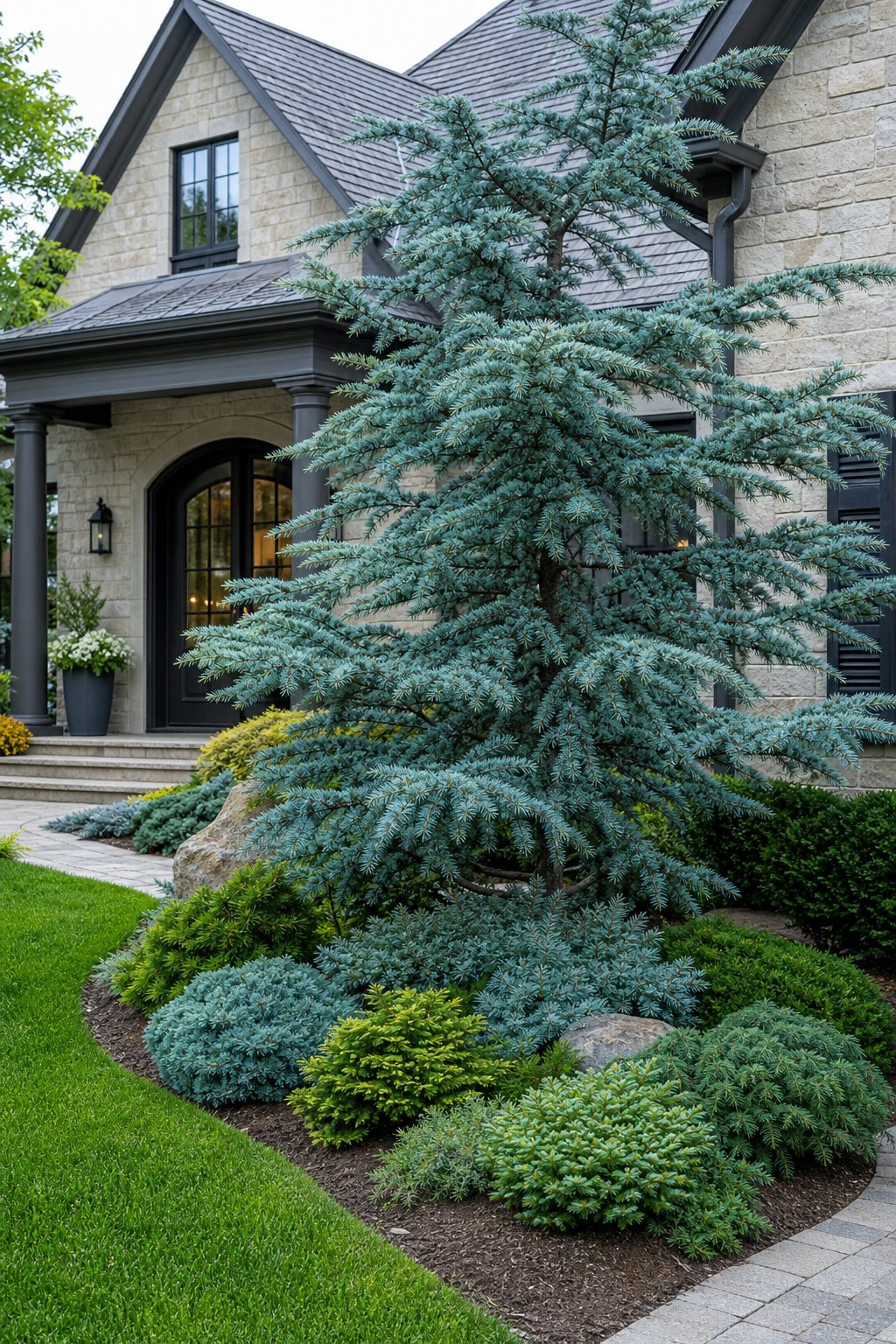
Expert Tip From MrPlanter: “Give this cedar plenty of room to grow before you plant nearby shrubs. Water the root zone slowly during its first seasons and keep grass away from the trunk.”
14. Columnar Sky Pencil Holly Along a Narrow Walkway
Sky Pencil holly adds height beside a narrow walkway while using very little horizontal space. The upright shrubs guide the eye toward your entrance and give a plain side yard a crisp rhythm. Plant them in a row with equal spacing, then soften the base with low sedges or gravel. Protect the walkway by checking mature width before digging. Their slim form suits small front yards, townhomes, and tight spaces beside garages.
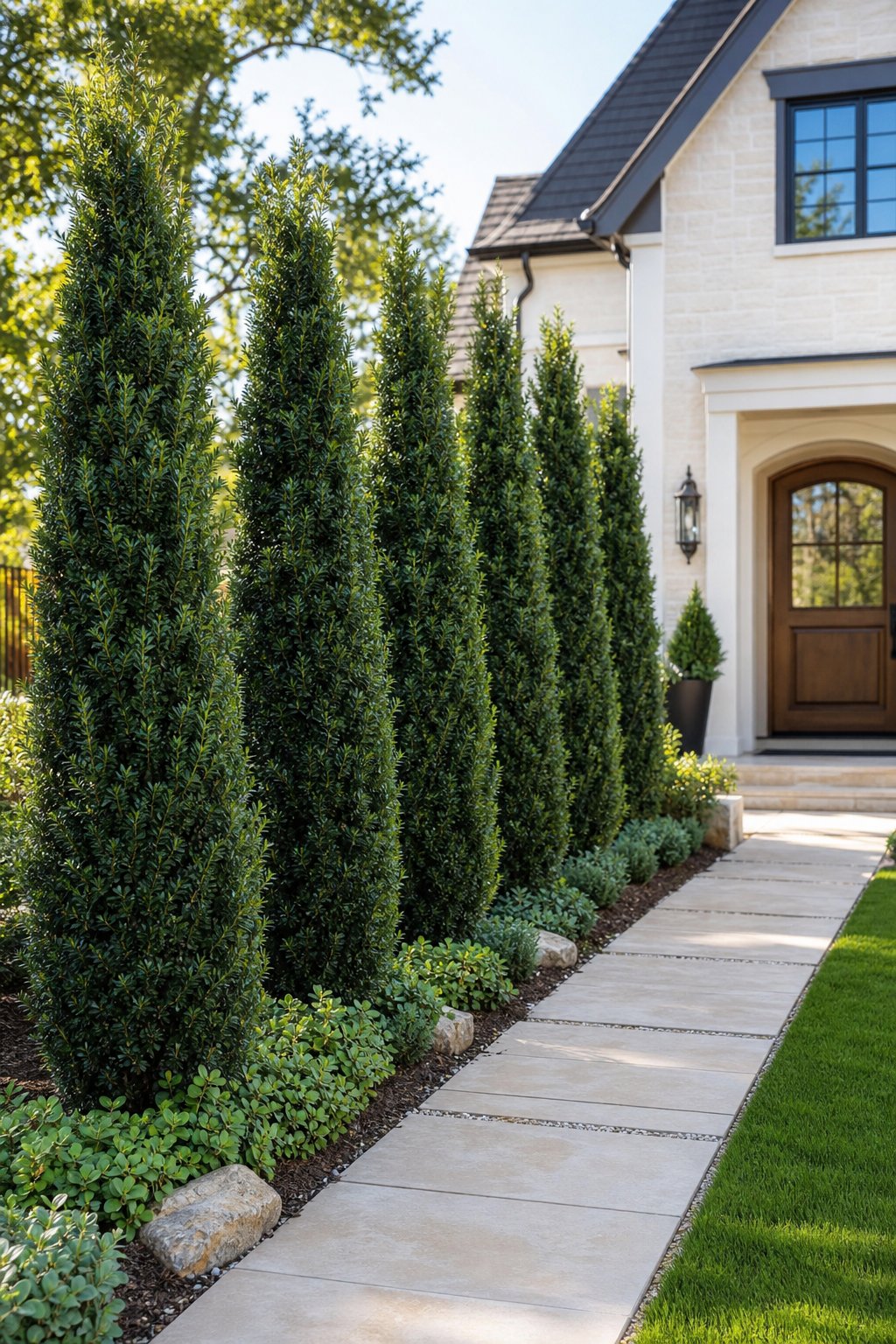
Expert Tip From MrPlanter: “Use a measuring tape to keep each holly the same distance from the path. Prune stray shoots by hand so the narrow outline stays clean.”
15. Bird’s Nest Spruce Rock Garden Bed
A Bird’s Nest Spruce gives a rock garden a low, rounded anchor with dense green needles. Its flattened shape looks good beside angular stones, gravel, and small groundcovers. Place the spruce slightly off center, then repeat one or two low plants around it for a natural arrangement. Full sun and free-draining soil help prevent root trouble. Keep the stones stable so rainwater doesn’t wash them onto the walkway.
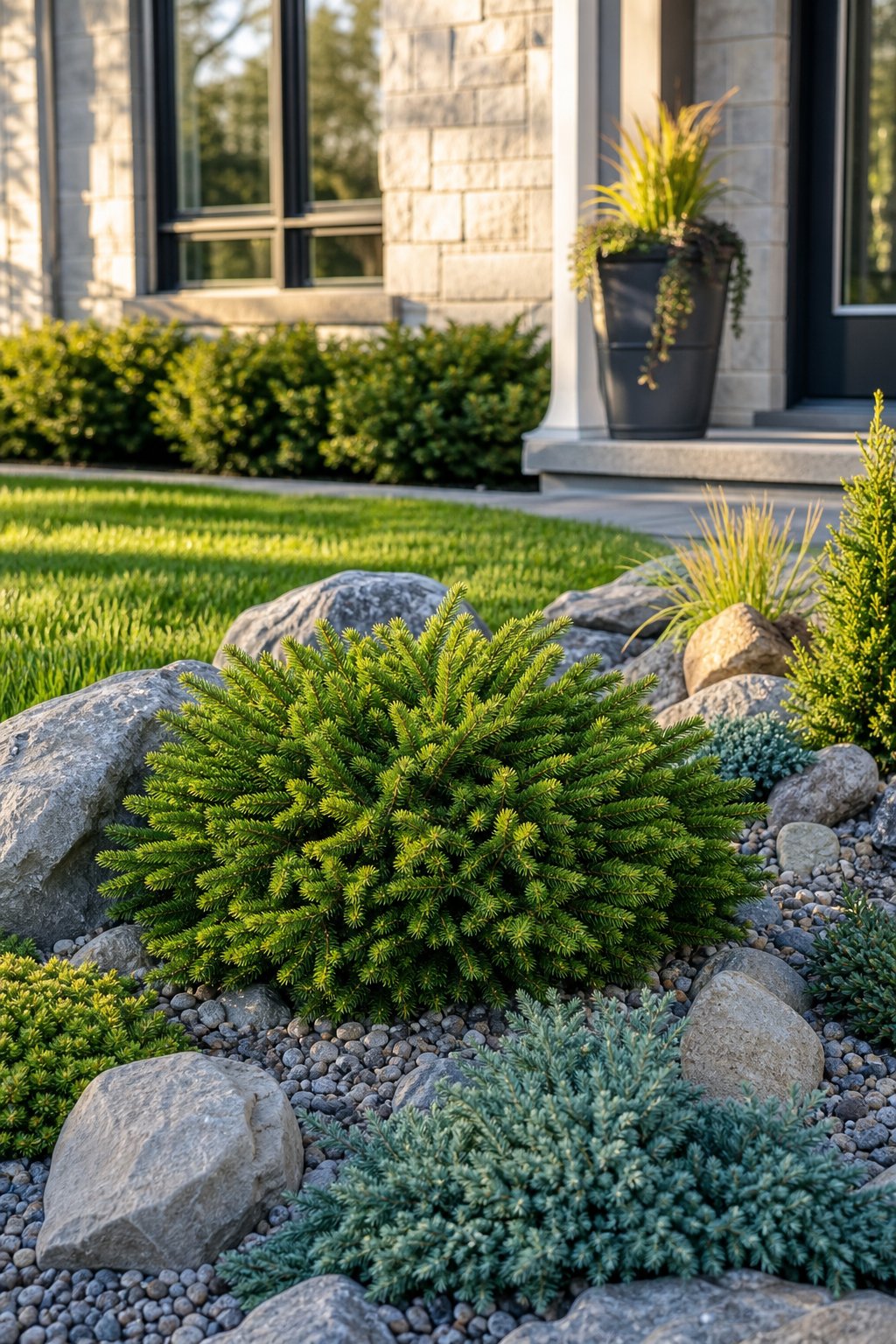
Expert Tip From MrPlanter: “Set the largest rock first and arrange the spruce beside it at a lower visual height. Leave breathing room around the branches so the plant keeps its rounded form.”
16. Evergreen Mixed Border With Hinoki Cypress, Hebe, and Carex
A mixed evergreen border stays interesting when each plant brings a different shape or texture. Hinoki cypress adds vertical form, hebe supplies rounded broad leaves, and carex softens the front edge with arching blades. Repeat plants along the bed so the combination feels connected to the rest of your yard. Match the grouping to your sun exposure and winter zone before planting. A narrow strip of mulch between the border and lawn makes mowing easier.
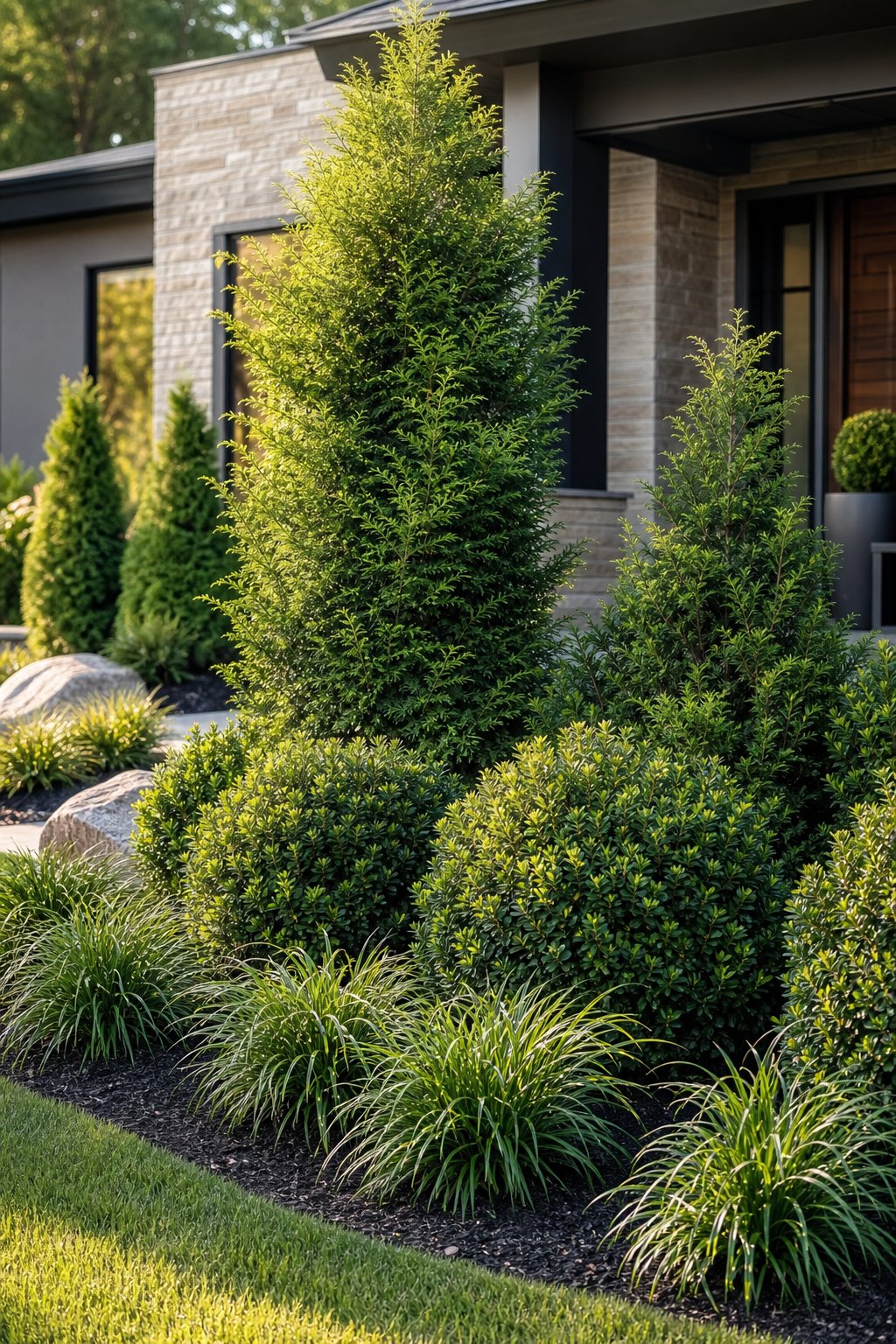
Expert Tip From MrPlanter: “Put the Hinoki cypress toward the back and let carex spill near the edge. Cut back tired carex blades in late winter before fresh growth appears.”
How to Choose Evergreens for Your Front Yard
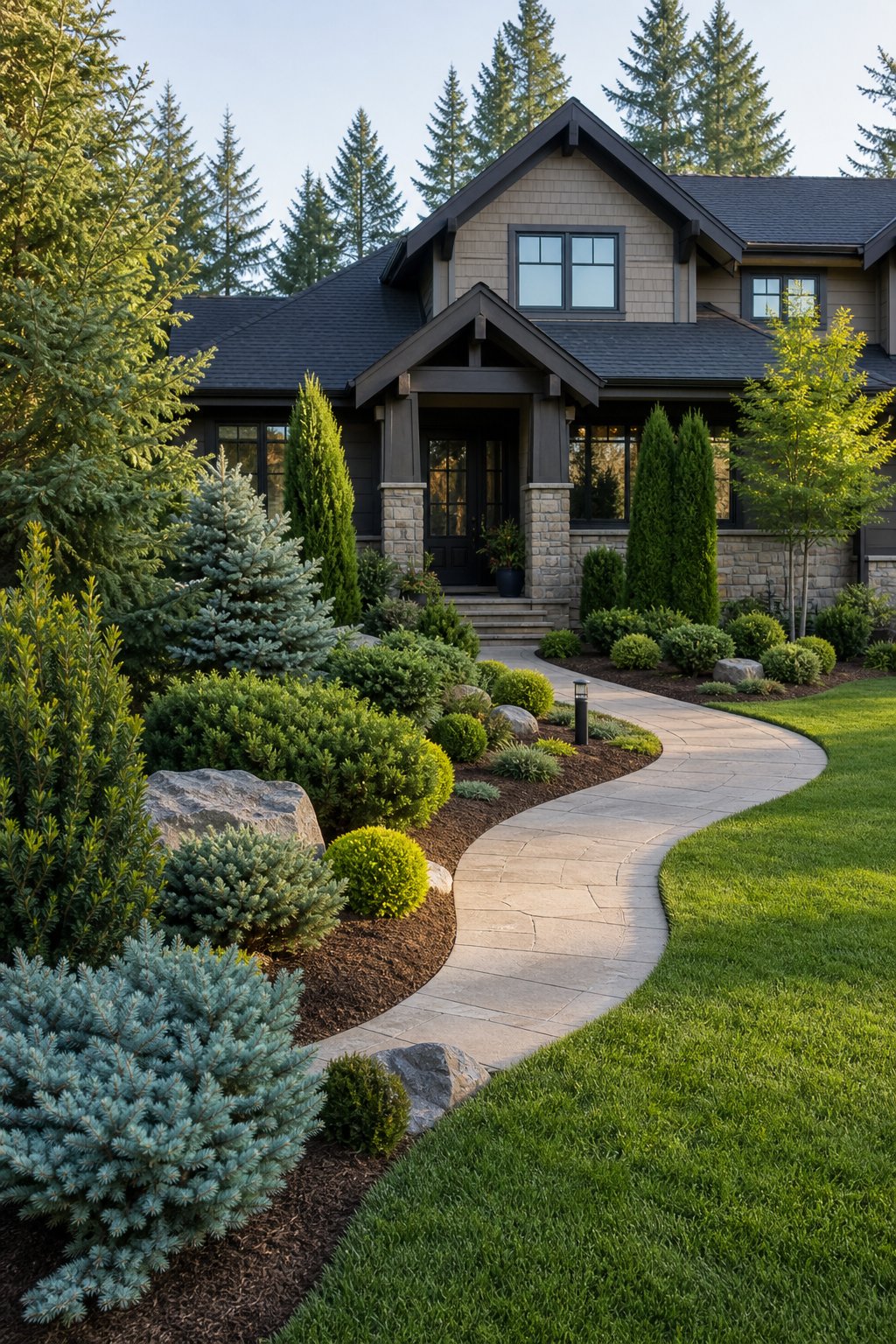
The right evergreen starts with your climate, available space, and growing conditions. A plant that thrives in coastal shade may struggle in a dry inland bed, so check the label before you buy. You can also compare more planting combinations through these evergreen landscape ideas.
Which Evergreens Suit Your USDA Hardiness Zone?
Your USDA Hardiness Zone helps you judge whether a plant can survive your area’s coldest winter temperatures. Match the plant tag to your zone, then consider wind, winter sun, and exposure beside pavement or walls. Arborvitae, spruce, and yew suit different conditions, so the zone number alone doesn’t tell the whole story. Ask a local nursery for cultivars that handle your region’s heat, humidity, or winter drying.
How Much Mature Width Should You Allow?
Measure the plant’s mature width before you set the first shrub in the ground. A small nursery plant can double or triple its footprint, especially when planted beside a foundation, walkway, or property line. Mark the future edge with a hose and keep access space for pruning, painting, windows, and utility equipment. This step reduces the need for harsh trimming later.
Which Plants Match Sun, Shade, and Soil Conditions?
Read the light requirement as a daily condition, not a quick glance from the street. Full-sun plants need about six hours of direct light, while rhododendrons and pieris prefer filtered light and acidic, moist soil. Test drainage by filling the planting hole with water and watching how quickly it empties. Amend soil only after you identify the problem, since excessive changes can harm roots.
Design and Care Essentials
Evergreen beds stay attractive when you plan their layers, spacing, and maintenance access before planting. A strong design uses a few repeated plants and leaves enough open ground for each one to mature. Mulch, deep watering, and light pruning keep the work manageable through the seasons.
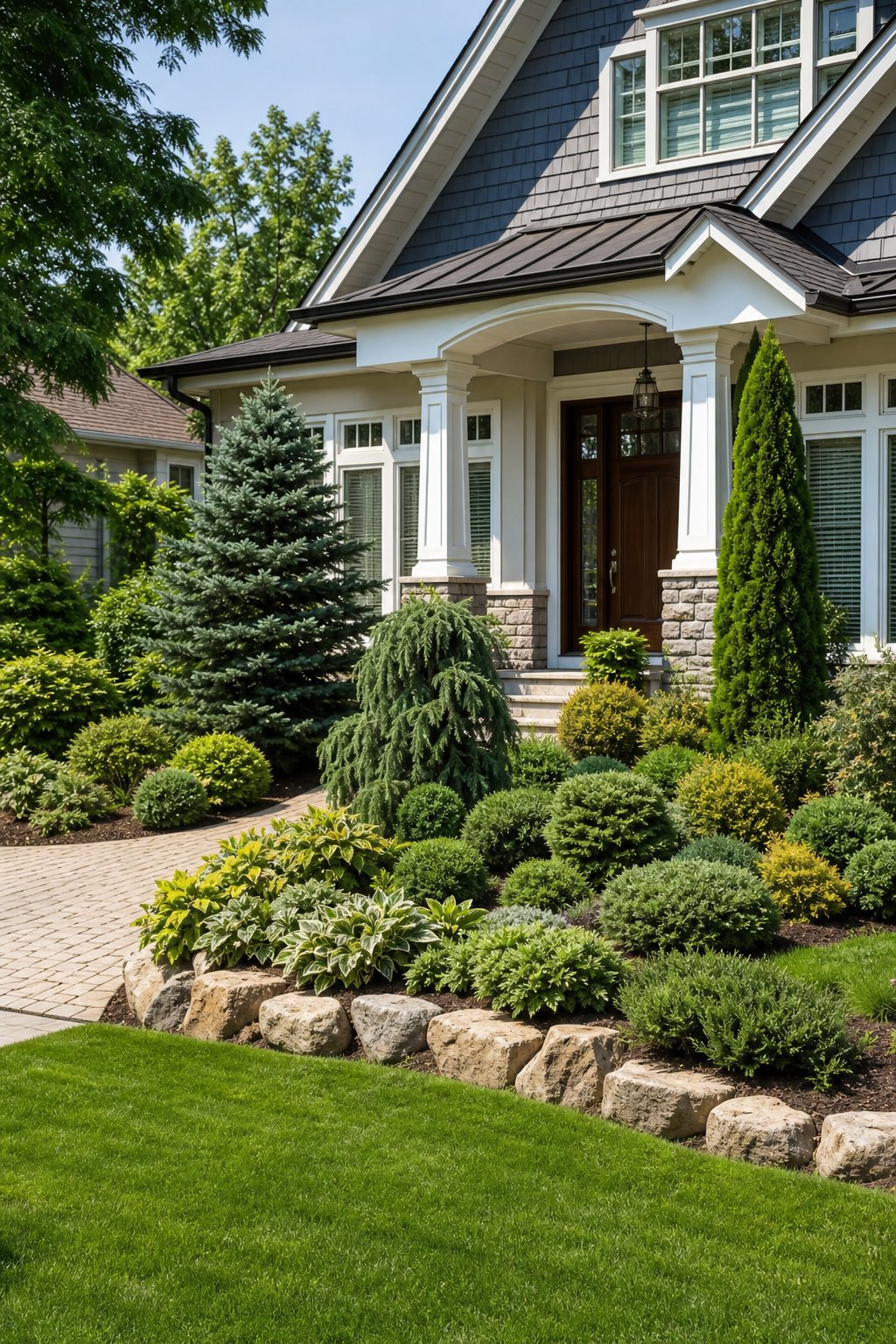
How Do You Layer Evergreens for Depth?
Place tall evergreens toward the back, medium shrubs near the middle, and low groundcovers along the front edge. Keep the tallest plants clear of windows, driveway sightlines, and door views. Repeat a plant or foliage color in separate beds to make the yard feel connected. Curved bed lines soften large lawns, while straight edges suit formal homes.
How Can You Avoid an Overcrowded Foundation Bed?
Use mature plant measurements to set spacing, then leave room for air movement around every shrub. Keep plants away from siding and allow access to windows, vents, hose bibs, and electrical boxes. Three well-spaced plant groups often look fuller than a tight row that needs frequent cutting. A clean mulch edge also gives growing plants visual breathing room.
When Should You Mulch, Water, and Prune Evergreens?
Apply mulch in a two- to three-inch layer, keeping it away from trunks and crowns. Water new plants slowly and deeply, checking the soil during hot or dry periods; established plants need extra water when rain is scarce. Prune spring-flowering broadleaf evergreens after bloom, while light shaping of conifers works best during active growth. Remove dead, damaged, or crossing branches whenever you spot them.