As an Amazon Associate, MrPlanter.com earns from qualifying purchases.
Red brick gives your home a warm, steady backdrop, so the right plants and paths can add color without making the front yard feel busy. Green foliage cools the brick’s orange-red tones, while blue flowers, pale stone, and soft grasses create welcome contrast.
The best red brick house landscaping ideas combine layered planting, clear walkways, and materials that echo the home’s warm character. Start with the entry and foundation, then repeat a few colors and shapes through the yard for a connected look.
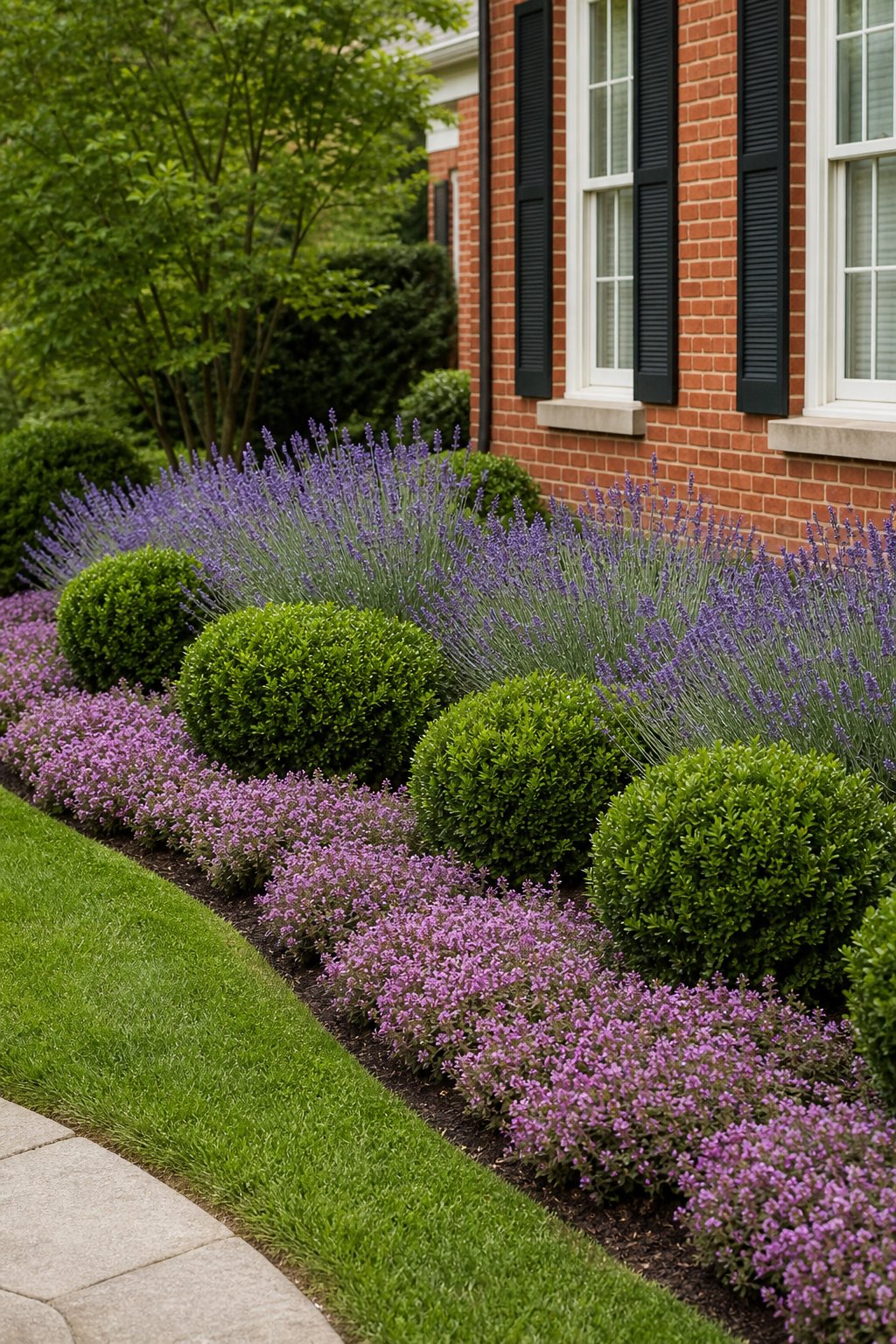
1. Layered Foundation Bed With Boxwood, Lavender, and Creeping Thyme
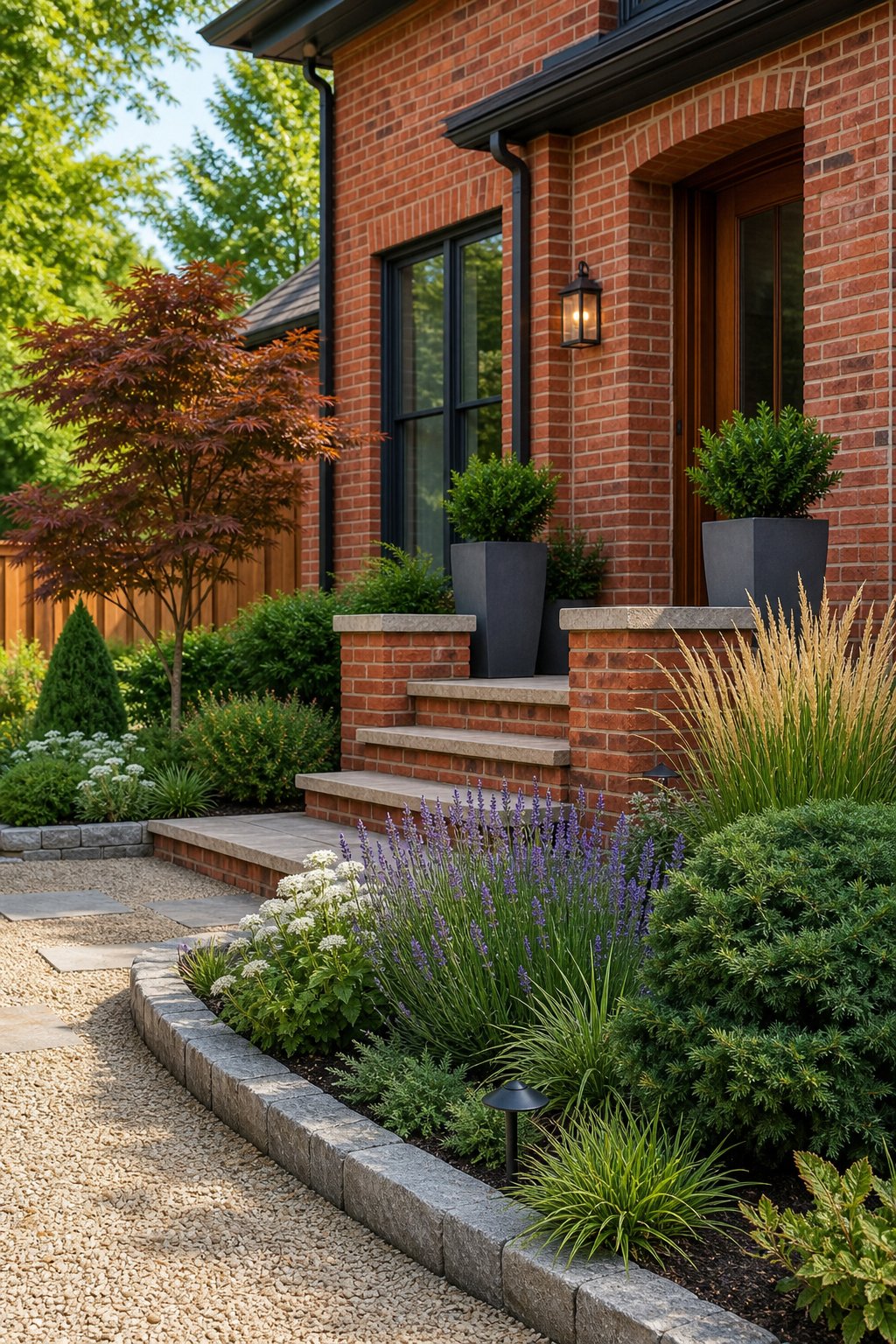
A bare foundation can make even a handsome brick home look unfinished. Build three planting heights with rounded boxwood near the wall, lavender in the middle, and creeping thyme along the bed’s front edge. The layered arrangement softens the straight foundation line while keeping windows and vents clear.
Lavender’s gray-green leaves cool the red brick, and its purple flowers add color without fighting the home’s strong pattern. Creeping thyme fills small gaps, spills over edging, and handles sunny, well-drained soil. Leave enough room for each plant’s mature width so pruning stays light.
Expert Tip From MrPlanter: “Keep the tallest plants below the lower edge of your windows. Give creeping thyme gritty soil so it stays short and full.”
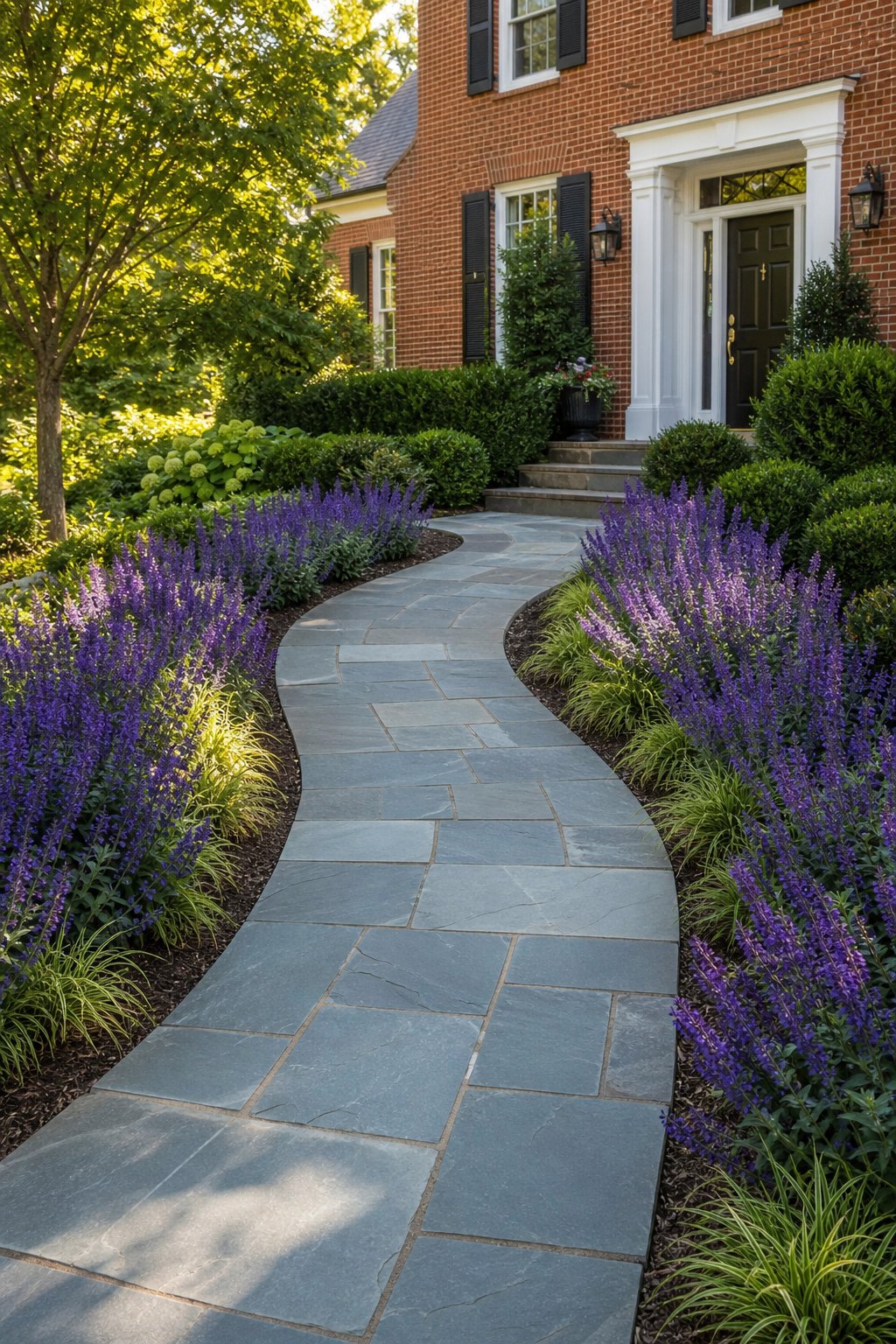
2. Blue-Gray Bluestone Walkway With Purple Salvia Borders
A blue-gray bluestone path gives red brick a cool, clean counterpoint. Set the stones with tight joints for a formal route, or leave modest planting gaps for a softer garden feel. Purple salvia along the edges repeats the cool color while drawing bees and butterflies toward the entry.
Keep the walkway wide enough for two people, with a firm, level base beneath the stone. Salvia looks best when its flower spikes rise just above low edging plants. Shear spent blooms lightly to encourage another flush and keep the path from feeling crowded.
Expert Tip From MrPlanter: “Choose bluestone with a subtle surface so the brick remains the star. Plant salvia far enough back that wet foliage never brushes your shoes.”
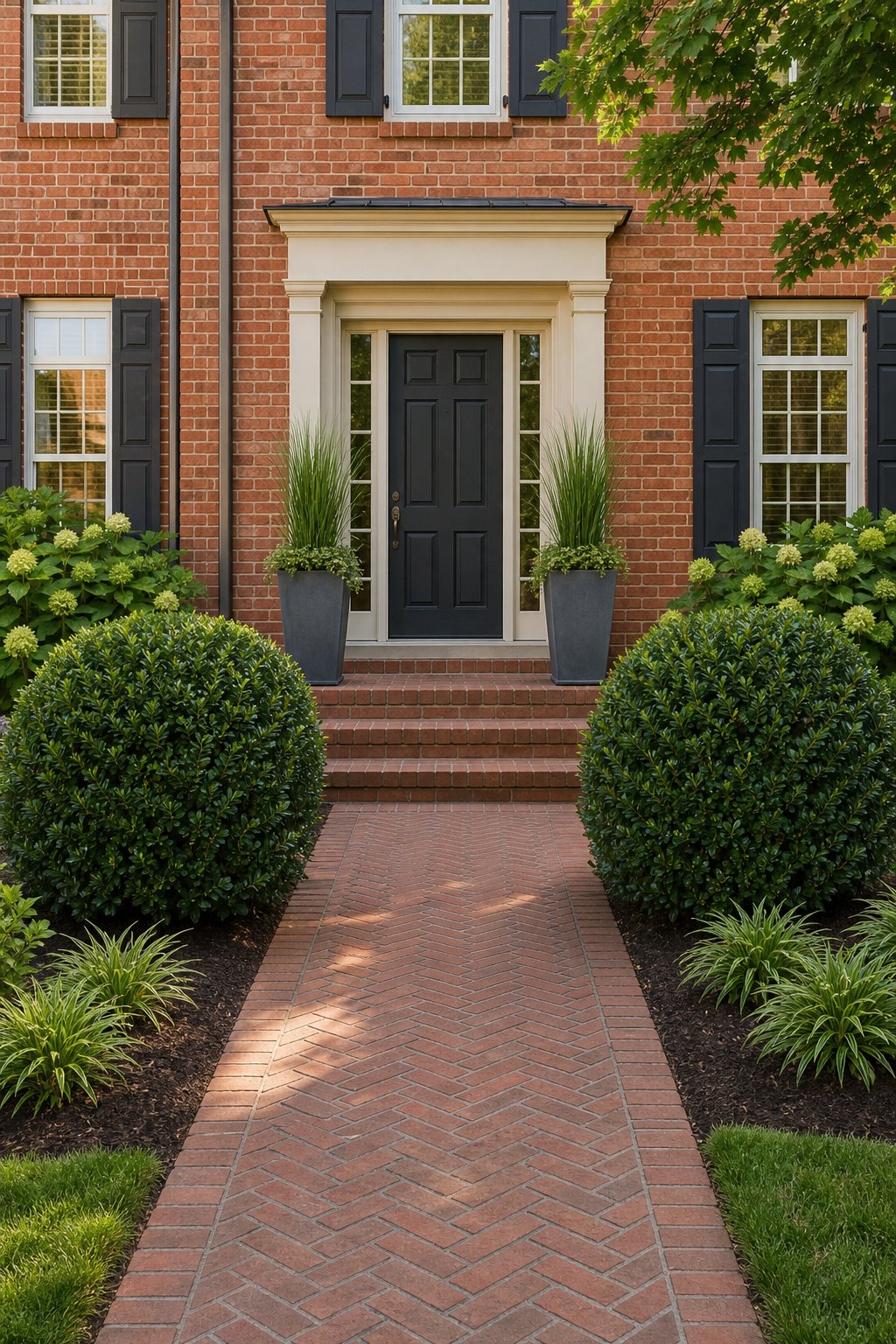
3. Symmetrical Dwarf Inkberry and Tall Planters at the Front Entry
Entry symmetry makes a red brick doorway feel settled and welcoming. Place matching rounded dwarf inkberry shrubs on both sides of the steps, then add tall planters near the door for a second layer of height. The mix of low mounds and upright containers gives the entrance shape without blocking the brick.
Inkberry keeps its leaves through winter and tolerates pruning into neat forms. Choose planters that echo the dark hardware or roof accents, then refresh them with seasonal flowers. Check that each container has drainage holes and enough weight to resist strong wind.
Expert Tip From MrPlanter: “Measure from the door before placing anything so both sides match. Use lightweight inserts inside tall planters to make seasonal changes easier.”
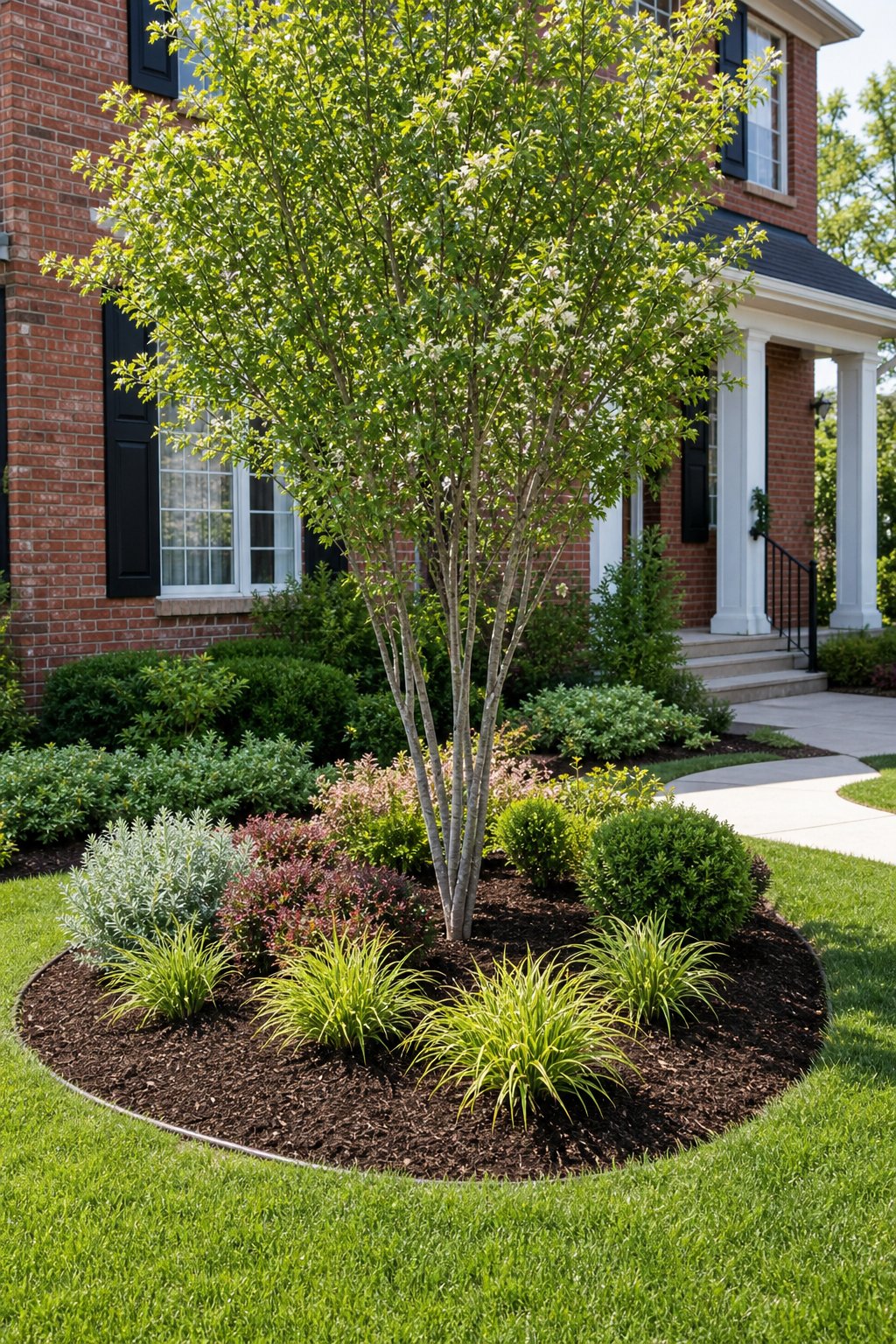
4. Kidney-Shaped Island Bed With a Serviceberry Tree and Dark Mulch
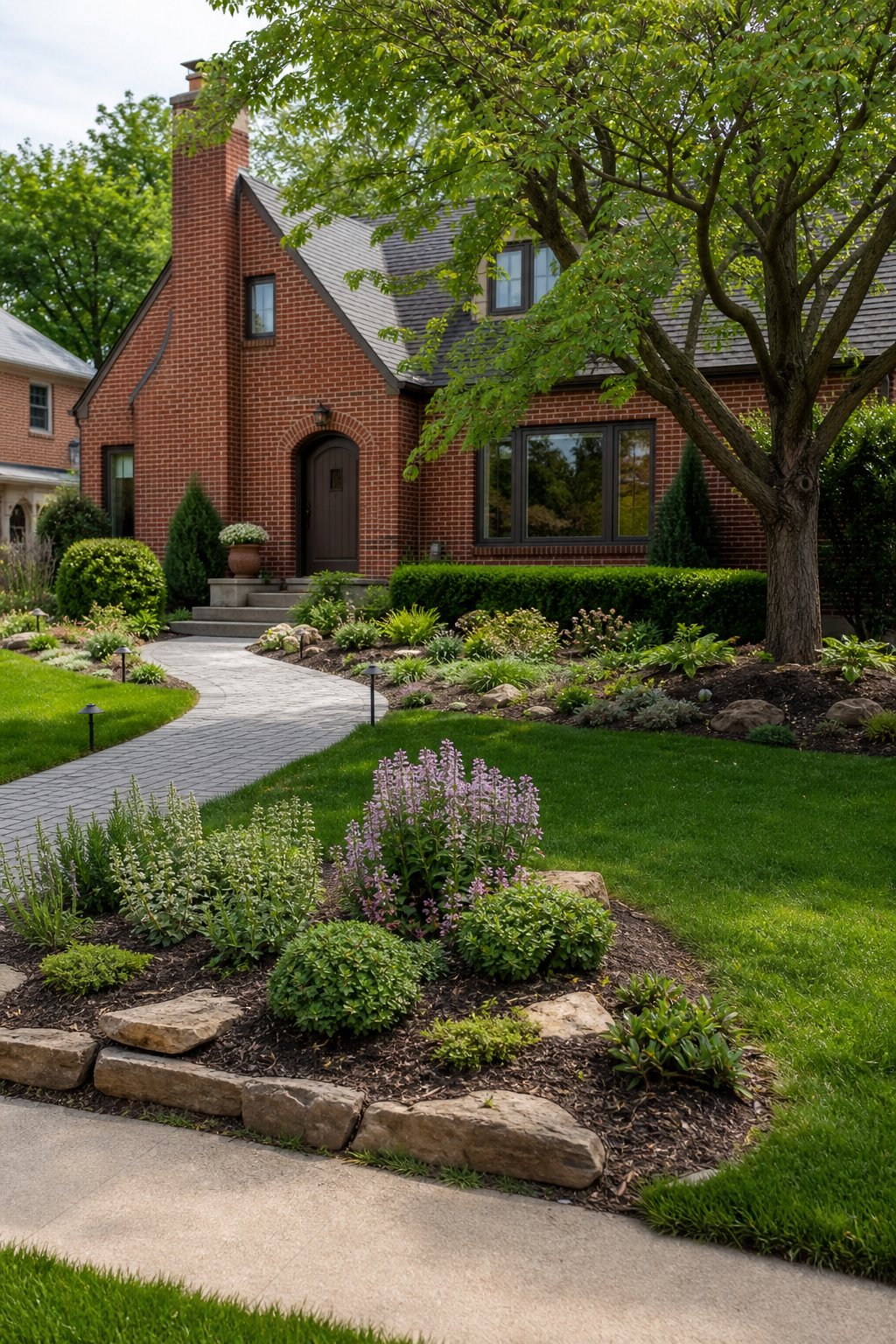
A kidney-shaped island bed gives an open front yard a gentle focal point. Center a serviceberry tree in the wider end, then sweep dark mulch around it to define the planting area against the lawn. The tree brings spring flowers, summer foliage, and fall color while keeping a lighter, airy form.
Use a smooth curve that lawn equipment can follow without awkward corners. Keep mulch several inches away from the trunk, and add low perennials along the outer edge for seasonal color. A serviceberry needs room for its mature canopy, so check overhead wires and nearby paving first.
Expert Tip From MrPlanter: “Lay out the curve with a garden hose before digging. Keep the bed wide enough to show the tree’s shape from the street.”
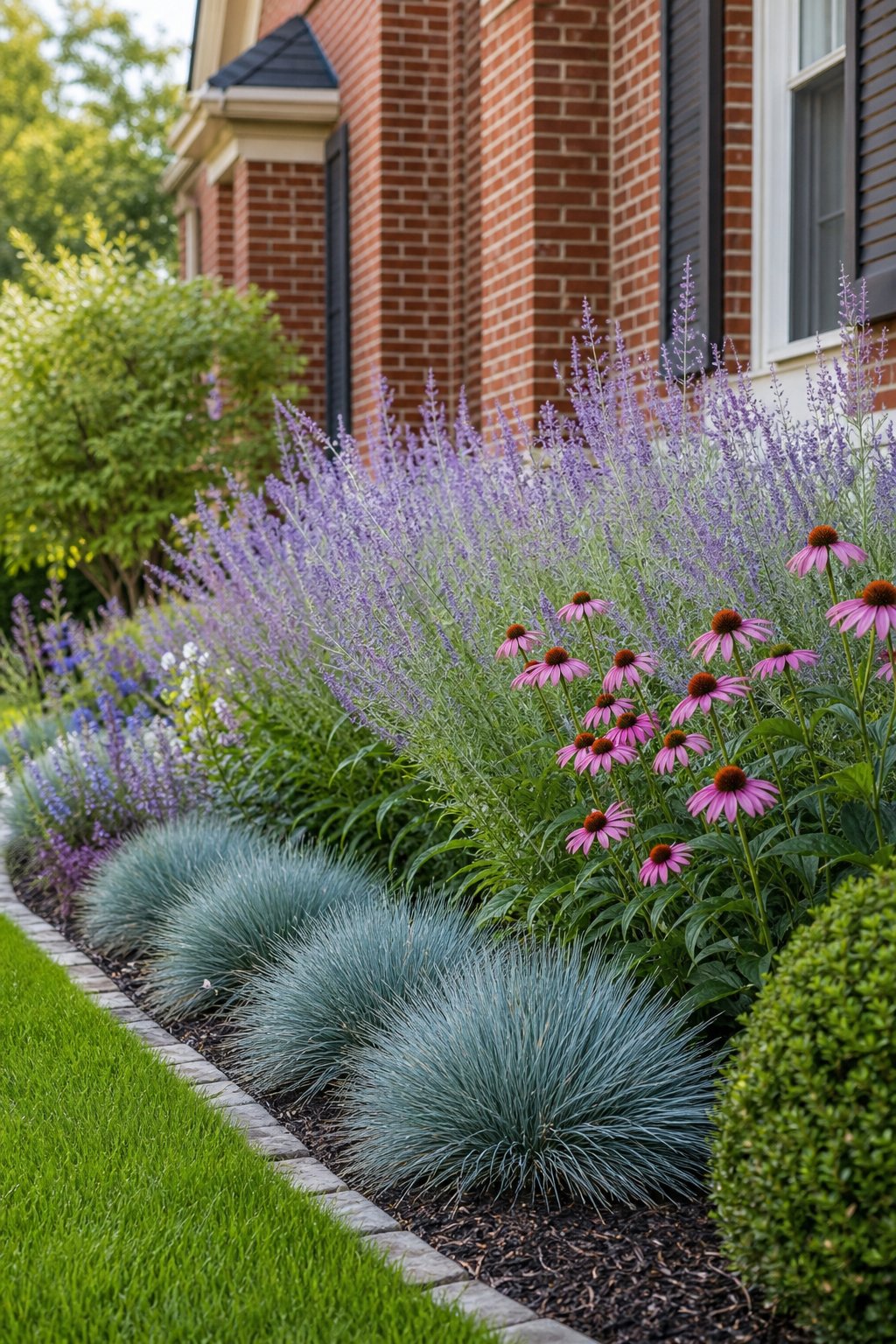
5. Cool-Toned Perennial Border With Russian Sage, Coneflower, and Blue Fescue
Warm brick looks crisp beside a cool-toned perennial border. Place Russian sage toward the rear, purple coneflower through the middle, and blue fescue along the front for a mix of height and texture. Their gray, blue, and violet shades calm a large brick wall while keeping the bed lively.
Give Russian sage plenty of air and sunlight because crowded stems flop after rain. Coneflower adds strong summer blooms and seedheads that remain useful into fall. Blue fescue forms tidy clumps, so divide older plants when the centers thin.
Expert Tip From MrPlanter: “Repeat each plant in small groups so the border feels planned. Leave open soil between young plants for future growth.”
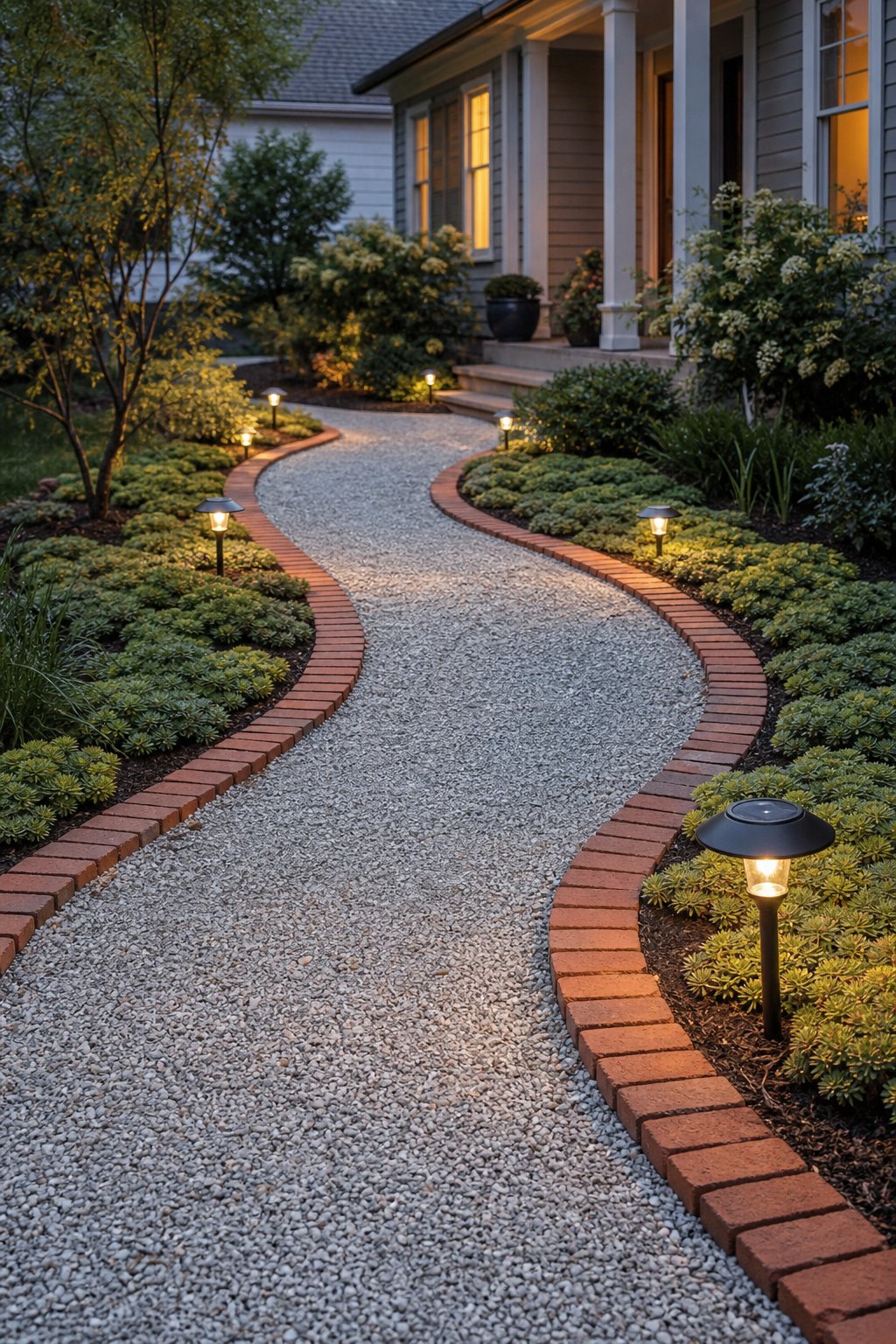
6. Brick-Edged Pathway With Low Sedum and Solar Path Lights
A brick-edged path connects the home’s architecture to the rest of the yard. Use matching or closely related brick along the border, then plant low sedum beside it so the hard edge gains a soft green frame. Small solar lights mark the route after sunset and make uneven steps easier to spot.
Set the edging on a compact base so frost and rain do not push it out of line. Sedum needs sharp drainage and little fertilizer, making it a handy choice for hot, dry strips. Space lights evenly and keep their panels free from shading.
Expert Tip From MrPlanter: “Test the path after rain before planting its edges. A small grade correction now prevents puddles beside your brick border later.”
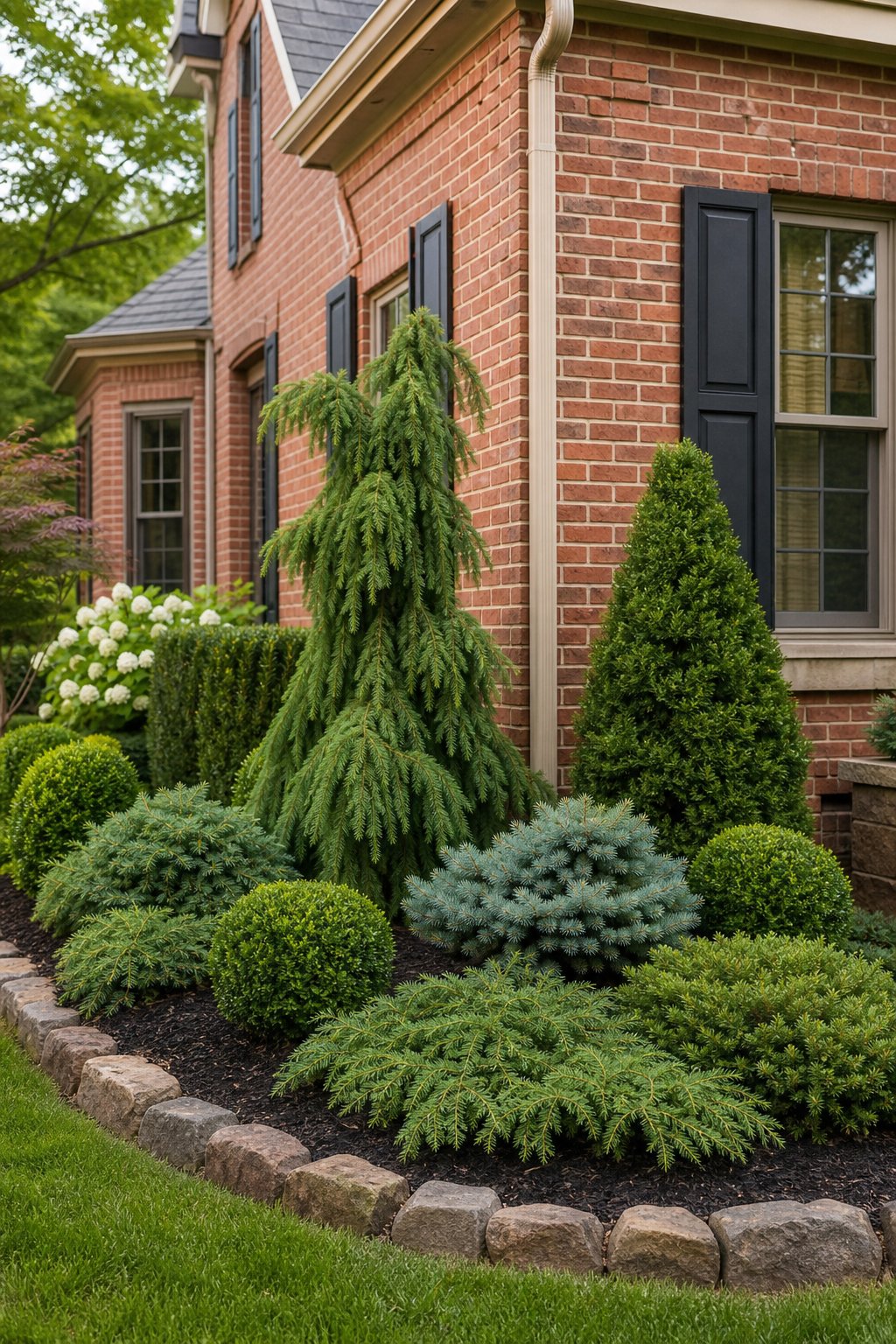
7. Evergreen Corner Planting With Dwarf Conifers and Boxwood
A house corner gains year-round structure from dwarf conifers and boxwood. Use taller conifers behind the corner, rounded boxwood near the walkway, and low ground cover to close the soil gaps. This arrangement guides the eye upward while hiding a plain foundation joint.
Choose plants with different textures so the bed stays interesting through winter. Dwarf conifers need well-drained soil and room for their mature spread. Boxwood responds well to shaping, though a naturally rounded variety reduces trimming chores.
Expert Tip From MrPlanter: “Stand at the sidewalk before choosing plant height. Your corner bed should frame the house without covering windows or trim.”
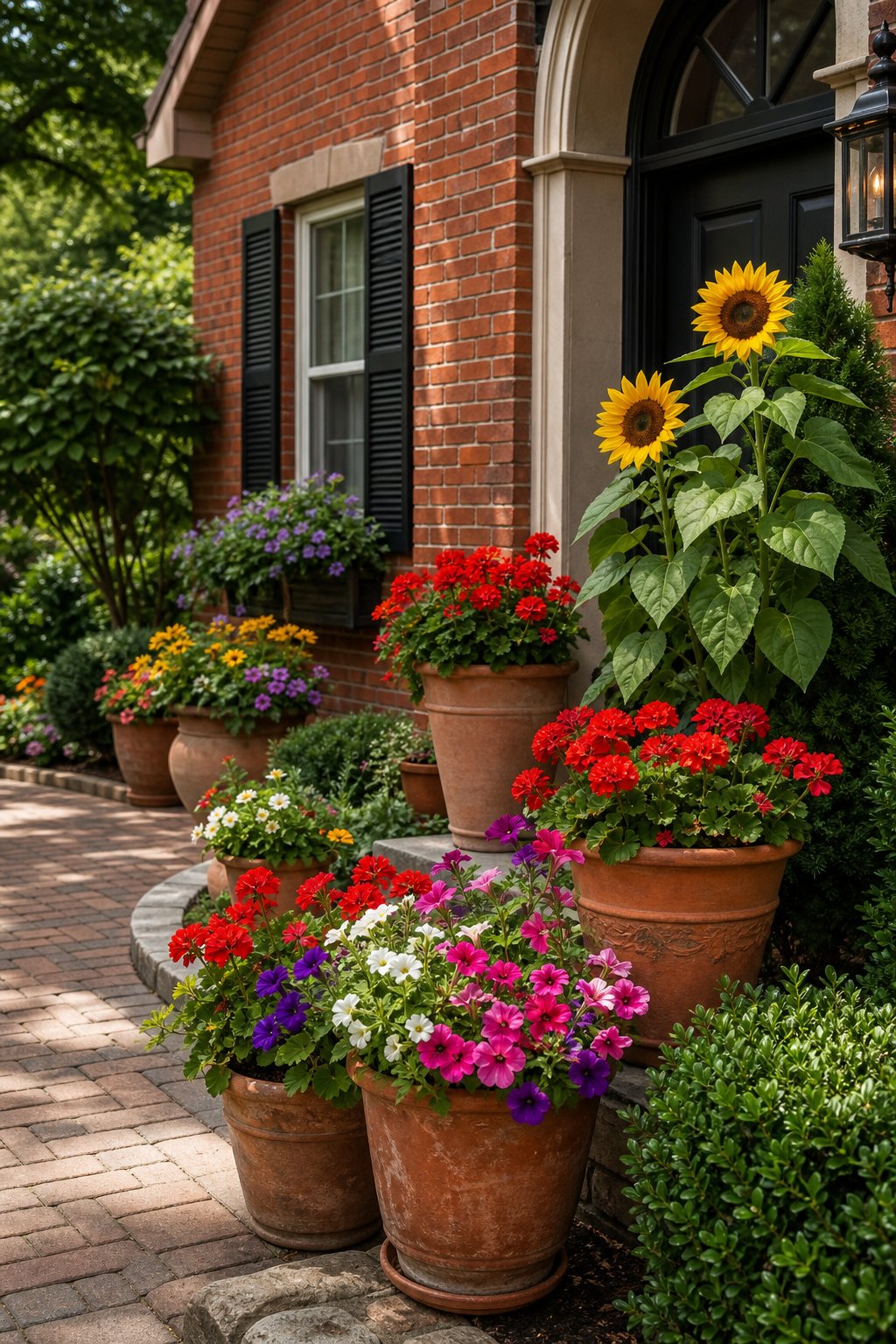
8. Terracotta Planters Filled With Geraniums, Petunias, and Sunflowers
Terracotta containers bring a soft echo of the brick’s warm color. Group geraniums and petunias near the entry for long-lasting blooms, then place a taller sunflower where it can rise above the display. The different flower heights make a small porch feel like part of the garden.
Terracotta dries quickly, so check moisture during hot weather and water deeply when the top inch feels dry. Mix in a container plant with trailing growth to soften the rims. Keep the tallest pot away from the door swing and steps.
Expert Tip From MrPlanter: “Use matching pots in different sizes for a collected look. Add saucers on paved areas to protect the surface from water marks.”
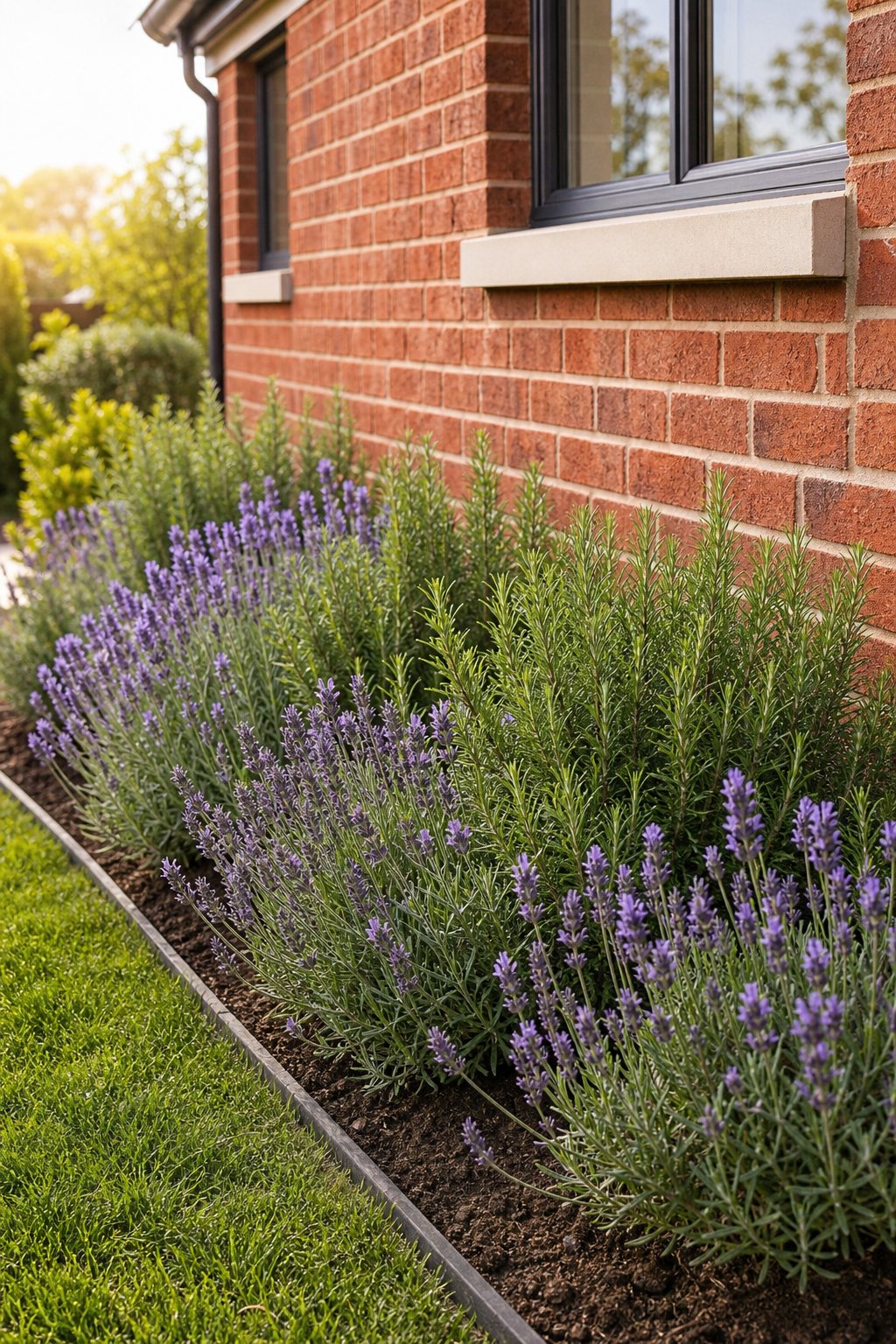
9. Rosemary and Lavender Border Along a Sunny Foundation Wall
A sunny brick wall creates a warm spot for rosemary and lavender. Plant rosemary toward the back where its upright form can frame the foundation, then run lavender along the front for lower purple blooms and gray-green foliage. Both plants bring fragrance close to paths and doors.
Provide gritty, fast-draining soil because wet roots cause trouble during cold seasons. Trim rosemary lightly after flowering and cut lavender after blooms fade, keeping old woody stems intact. A gravel mulch helps water move away from the crowns.
Expert Tip From MrPlanter: “Watch the wall after a hot afternoon before planting. Choose herbs that tolerate reflected heat and leave space for air around each mound.”
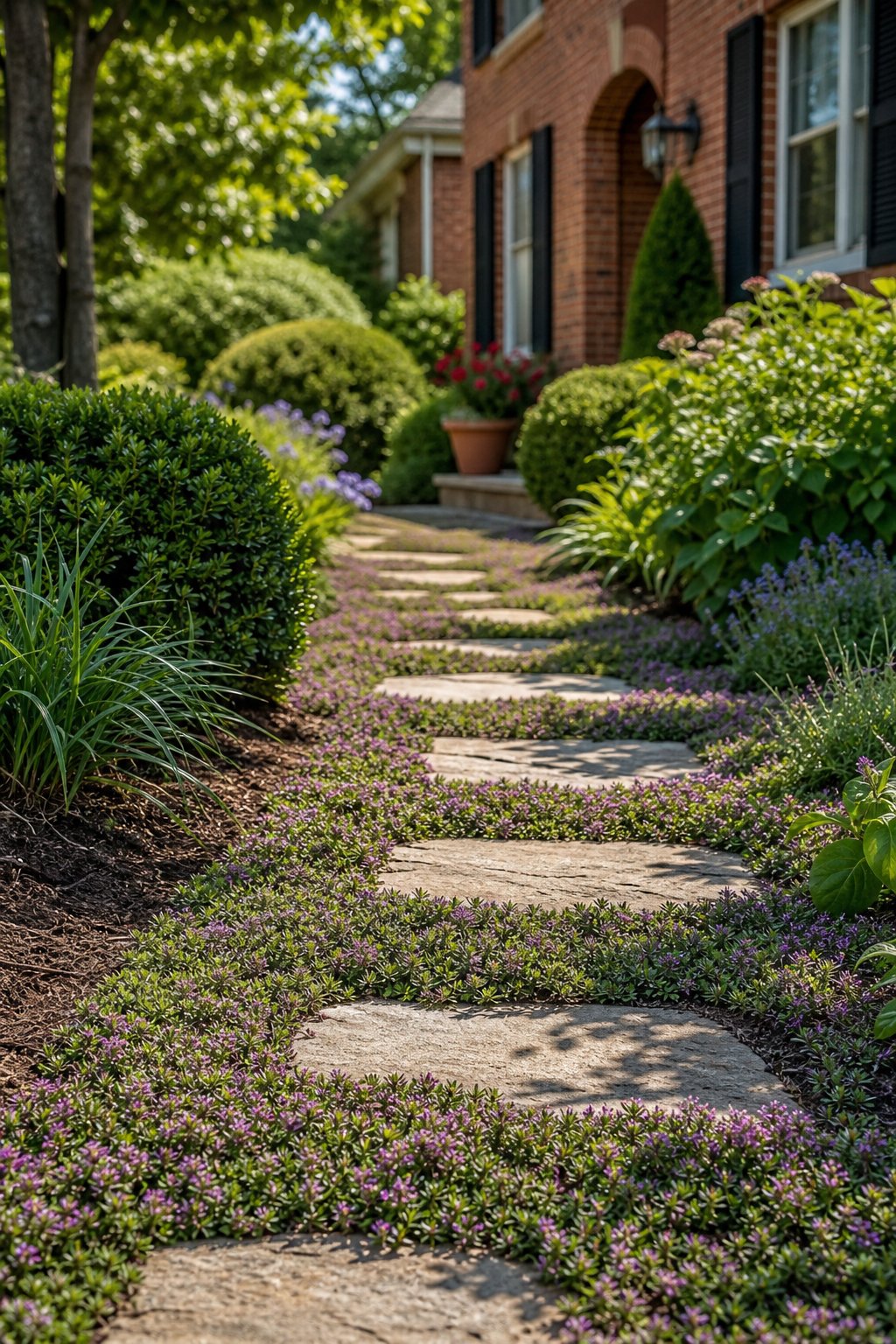
10. Creeping Thyme Ground Cover Between Stepping Stones
Stepping stones feel more natural when creeping thyme fills the spaces between them. The low ground cover softens hard edges, releases a pleasant scent underfoot, and adds small flowers during its bloom period. Set stones on a firm base with enough room for comfortable steps.
Creeping thyme prefers sun and lean soil, so avoid rich compost that encourages floppy growth. Keep the gaps free of aggressive weeds while the plants establish. Trim lightly after flowering if the thyme begins to spill across the walking surface.
Expert Tip From MrPlanter: “Place each stone where your foot lands naturally before setting it. Use gravel beneath the stones so spring frost causes less movement.”
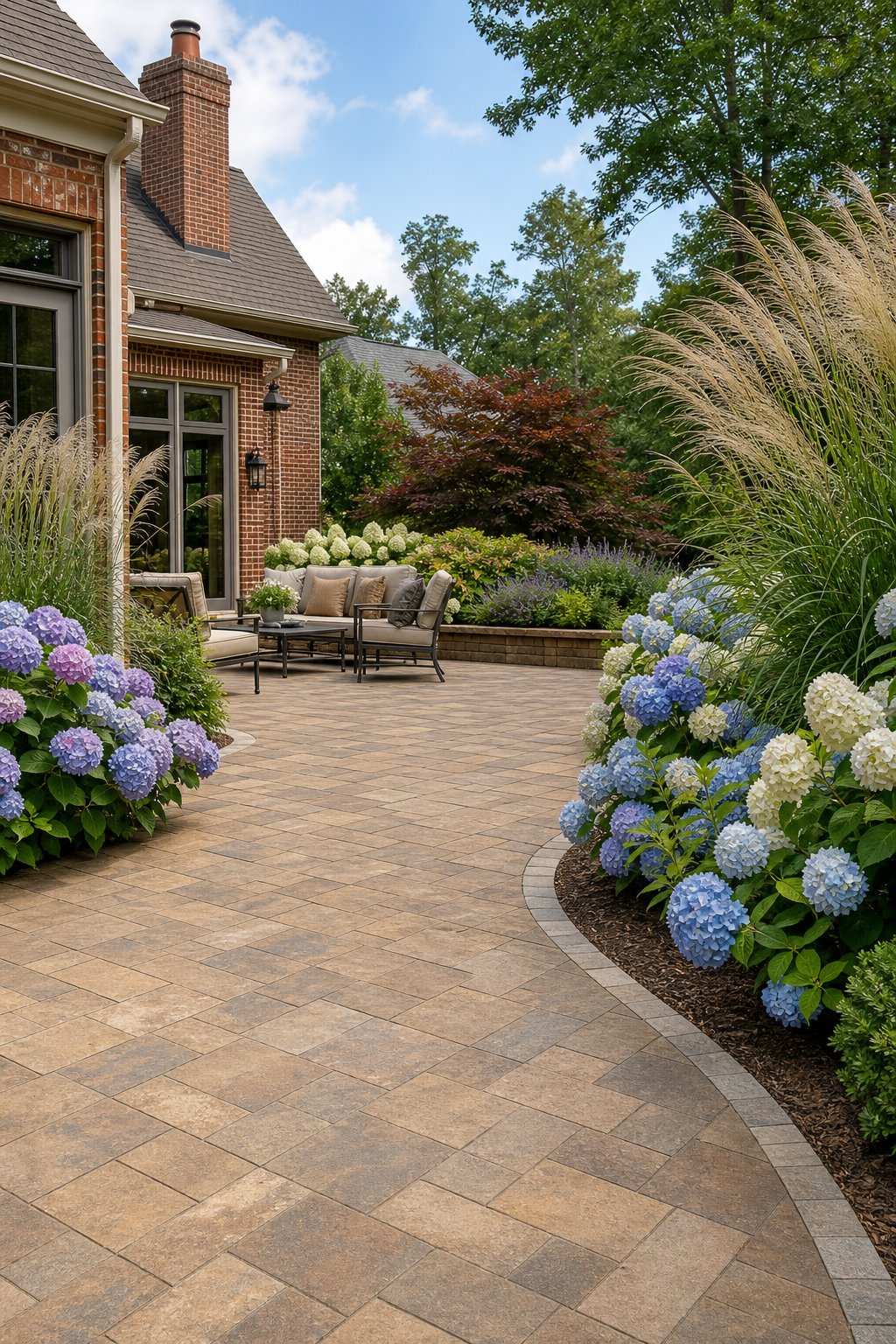
11. Buff Paver Patio Framed by Hydrangeas and Ornamental Grasses
Buff pavers warm a patio while giving red brick a lighter place to rest. Frame the seating area with hydrangeas near the house and ornamental grasses farther along the edge for movement and privacy. Pale pavers reflect light, while the plants keep the space from feeling overly hard.
Give hydrangeas rich, evenly moist soil and enough room for mature width. Grasses bring winter texture when their seedheads remain standing, then need one cutback in late winter or early spring. Leave a service gap between plants and the paving for pruning and cleaning.
Expert Tip From MrPlanter: “Set patio pavers with a gentle slope away from the house. Choose compact hydrangeas if the seating area sits close to the foundation.”
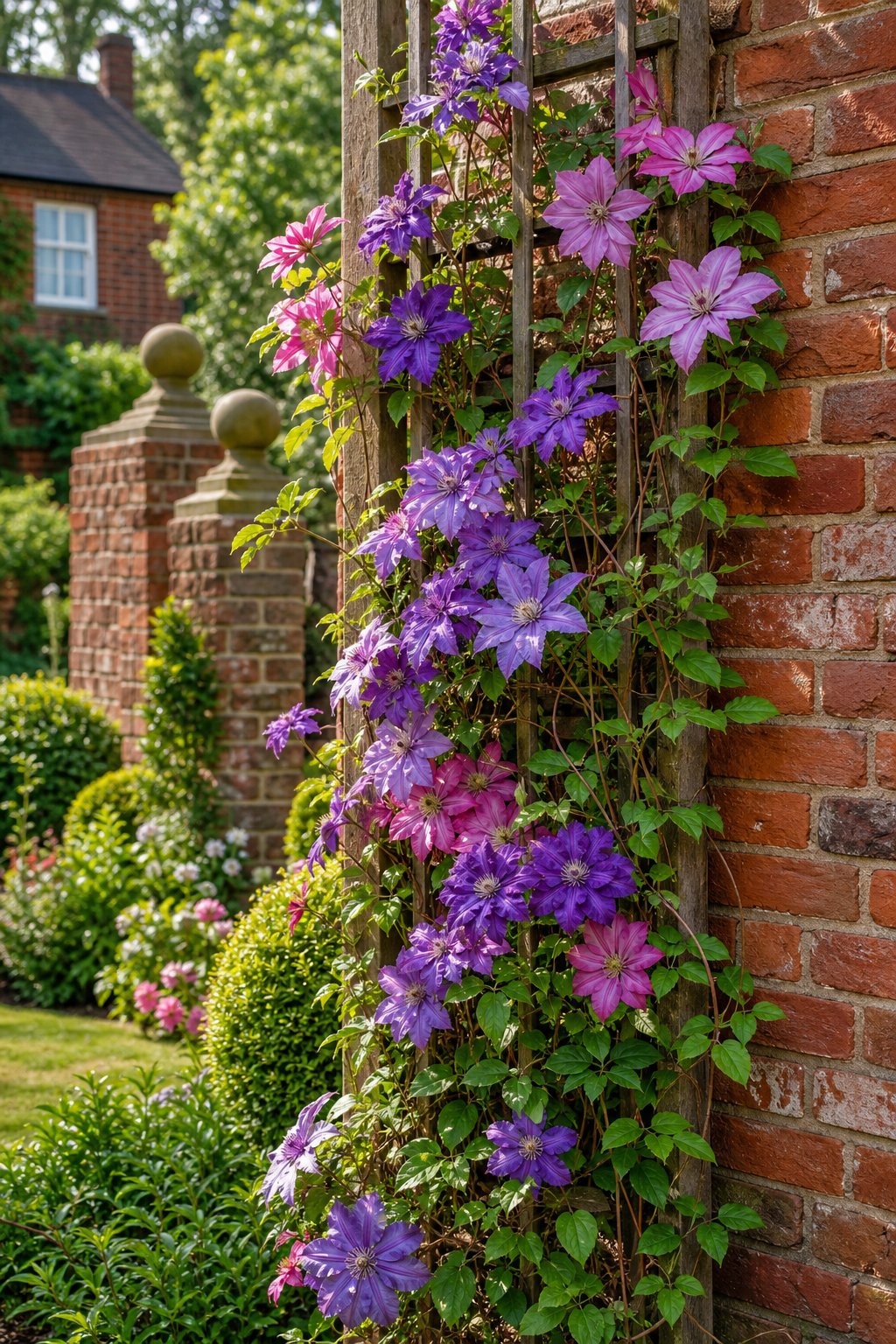
12. Vine-Covered Trellis With Clematis Beside a Brick Garden Wall
A freestanding trellis lets clematis add height beside a brick garden wall without attaching plant supports to the masonry. Place the trellis where its flowers can soften a blank view, then guide young stems through the openings as they grow. The vine brings vertical color while preserving access for brick repairs.
Give clematis sun on its upper growth and cooler, shaded soil around its roots. A low perennial or mulch layer protects the root zone from drying. Check the pruning group for your variety before cutting old stems in spring.
Expert Tip From MrPlanter: “Anchor the trellis deeply so mature vines cannot pull it forward. Tie stems with soft garden tape to prevent damage as they thicken.”
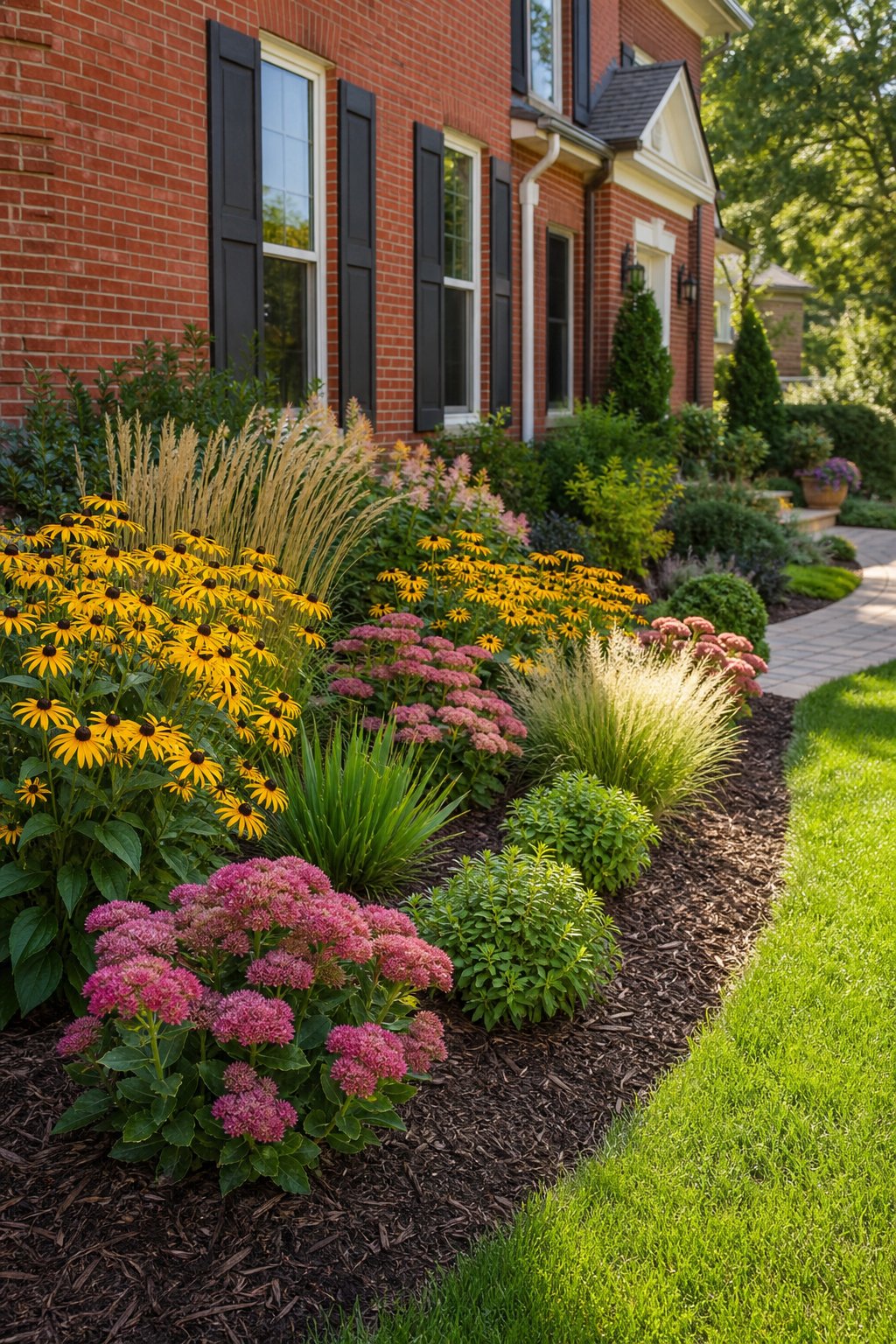
13. Curved Garden Bed With Black-Eyed Susans and Sedum
A curved bed filled with black-eyed Susans and sedum brings late-season color to a red brick yard. Place black-eyed Susans in broad groups through the center, then edge the curve with sedum for low foliage and pink flower clusters. The rounded outline adds softness beside straight walls and walks.
Both plants handle sun and moderate dryness once established. Remove spent flower heads for a tidier look, or leave some seedheads for birds through winter. Keep the curve wide enough for a narrow path or wheelbarrow if you need to reach the foundation.
Expert Tip From MrPlanter: “Mark the curve with a hose before cutting the lawn. Repeat the same plants along the arc so the border reads clearly from the street.”
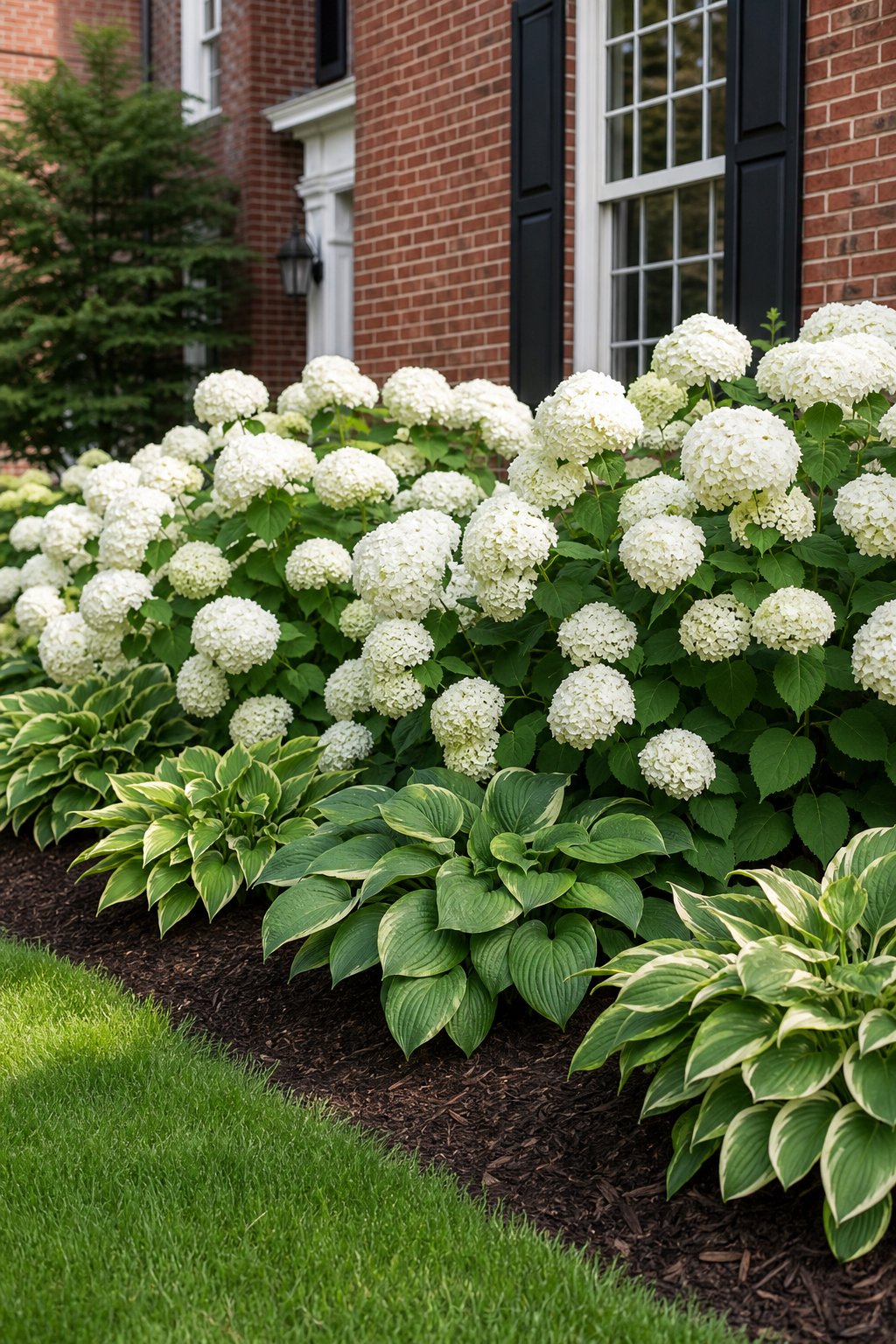
14. Dark Brown Mulch Beds With White Hydrangeas and Green Hostas
White hydrangeas stand out sharply against dark brown mulch beside red brick. Tuck hostas beneath them or along the shaded edge to create a calm foliage layer. The pale flowers brighten the bed, while broad green leaves fill space after the blooms fade.
Use this pairing where afternoon shade protects hostas from scorch. Keep mulch loose and several inches away from plant crowns and trunks. Choose hydrangeas suited to your region, then water deeply during dry spells while roots establish.
Expert Tip From MrPlanter: “Repeat the white blooms near the entry for a stronger connection. Select hosta sizes that leave a clear path for maintenance beside the wall.”
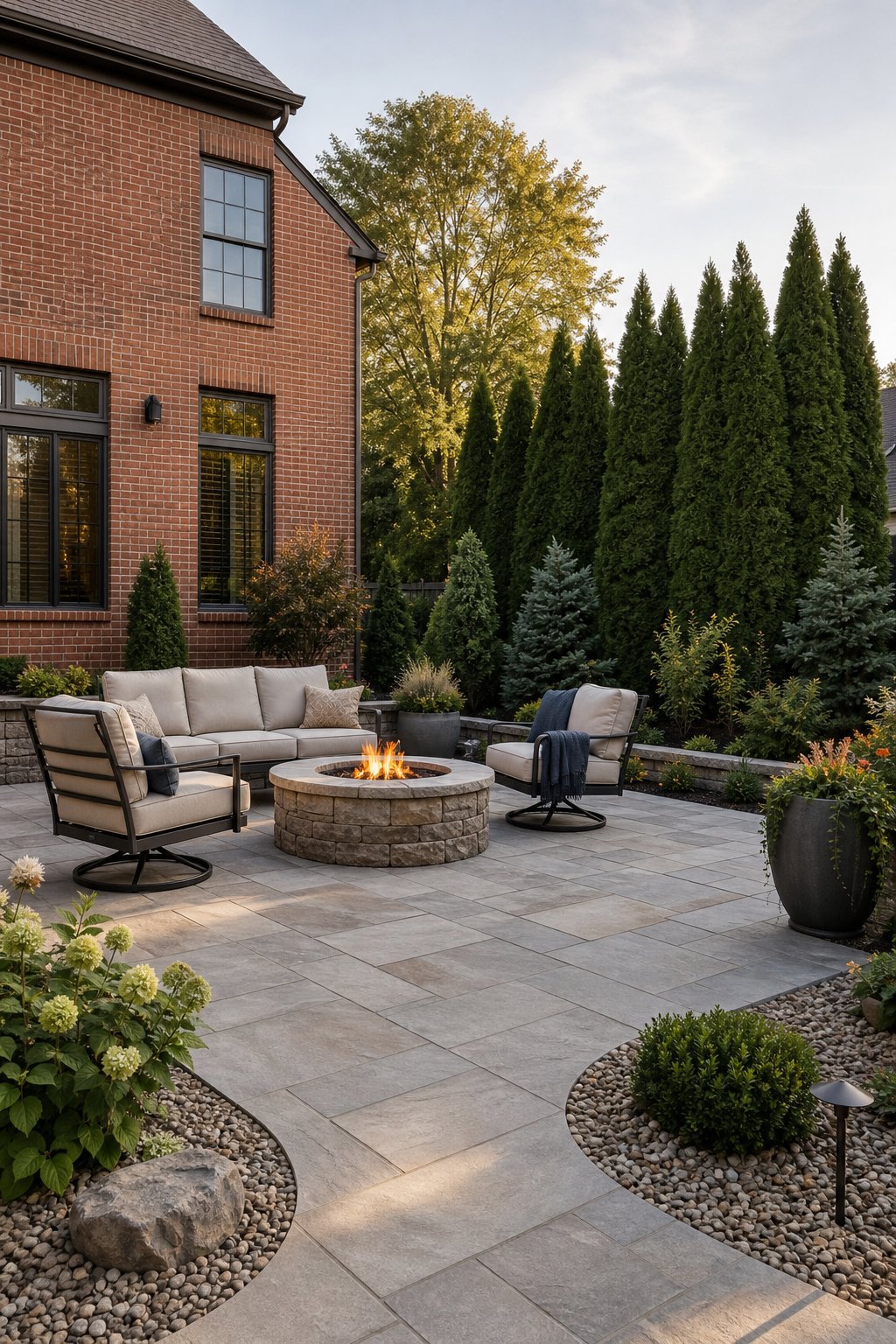
15. Backyard Fire Pit Patio With Neutral Stone and Evergreen Screening
A neutral stone fire pit patio creates a comfortable backyard gathering spot beside red brick. Use evergreen screening along the property edge, then leave open views toward the home and seating area. The muted stone lets the brick provide warmth while foliage adds privacy through every season.
Place the fire pit on a noncombustible surface with clear space around chairs, doors, fences, and low branches. Check local fire rules before building, and select evergreens that fit their mature size. A simple gravel strip can improve drainage around the patio perimeter.
Expert Tip From MrPlanter: “Measure chair clearance before ordering stone. Keep screening plants far enough from the fire area that dry needles and branches stay out of the heat zone.”
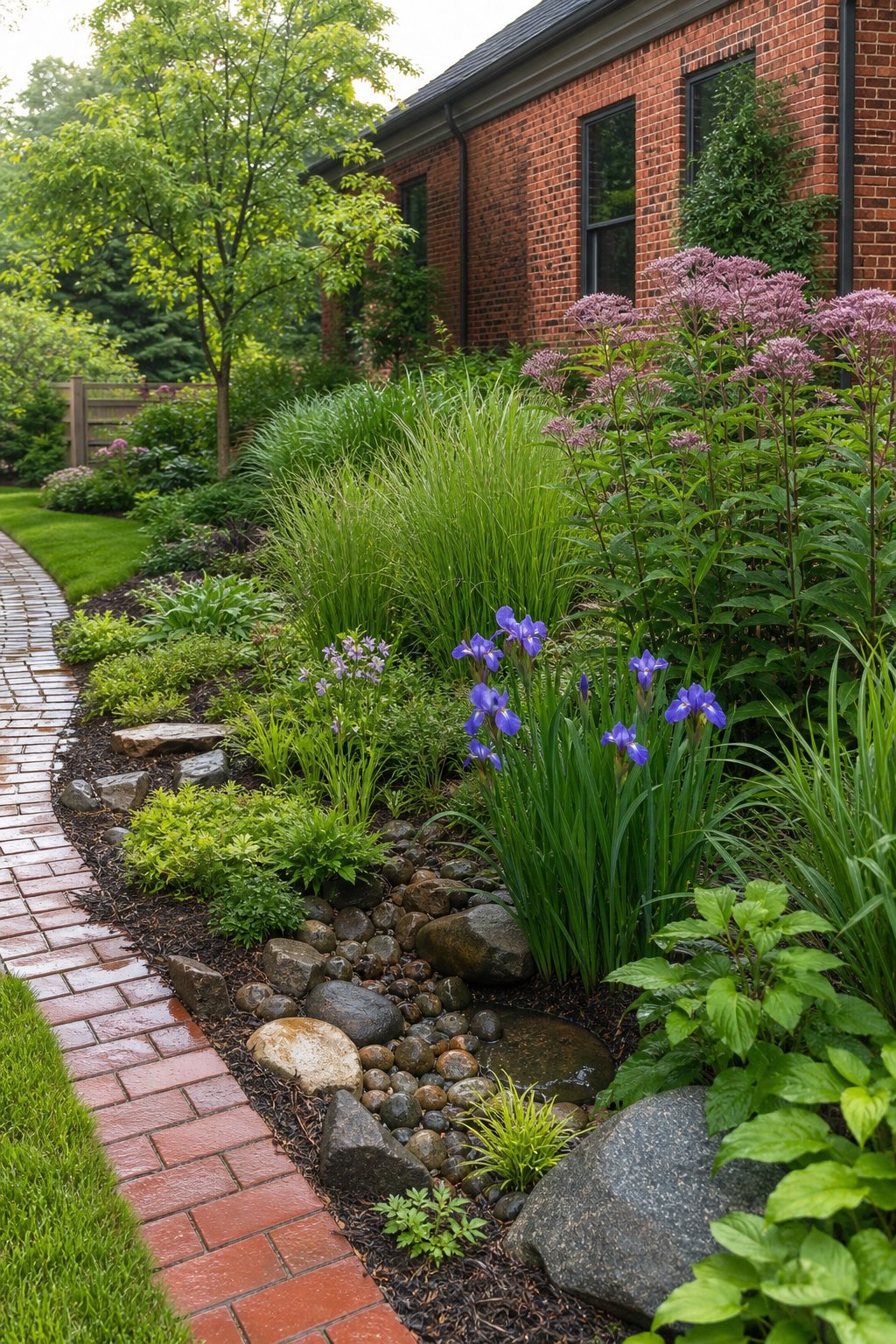
16. Rain Garden With Switchgrass, Joe-Pye Weed, and Blue Flag Iris
A rain garden turns a wet yard spot into a planted basin that slows roof and driveway runoff. Use switchgrass for upright texture, Joe-Pye weed for height and late-season flowers, and blue flag iris in the dampest area. The mix gives a red brick home a natural planting feature with a clear drainage purpose.
Keep the basin away from the foundation and confirm that overflow moves safely during heavy rain. Improve soil with organic matter where needed, then choose native plants suited to your region. Mulch lightly while plants fill in, leaving the iris crowns uncovered.
Expert Tip From MrPlanter: “Watch where water collects during a storm before shaping the basin. Add an overflow route so excess water never sits against the brick foundation.”
17. Low-Maintenance Rock Garden With Blue Fescue and Creeping Sedum
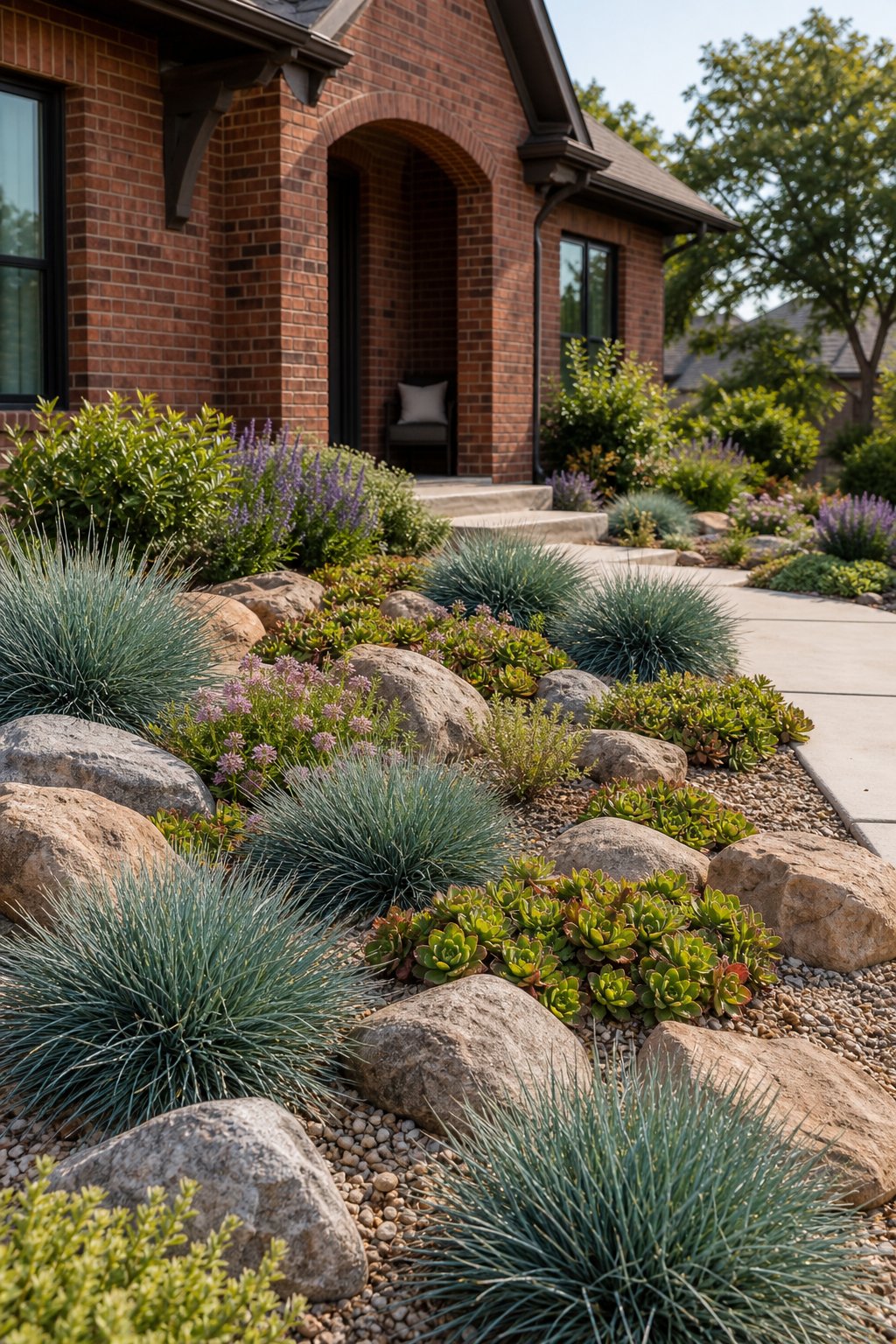
A rock garden gives a dry, sunny area a tidy planting plan with little trimming. Arrange larger stones first, then tuck blue fescue into open pockets and let creeping sedum trail over the edges. The blue foliage and pale rock create cool contrast against red brick.
Use gritty soil that drains quickly, and set stones partly into the ground so they look settled. Avoid packing every gap with plants because open gravel helps air move around drought-tolerant roots. Remove weeds while they are small and cut back tired foliage in spring.
Expert Tip From MrPlanter: “Place stones in uneven groups for a natural pattern. Choose plants with matching water needs so one area does not stay wet while another dries out.”
How to Choose Plants and Materials for Red Brick
Which Plant Colors Best Contrast With Red Brick?
Blue-green foliage, purple flowers, white blooms, and soft yellow flowers create clear contrast with red brick. Boxwood, blue fescue, lavender, salvia, white hydrangeas, and black-eyed Susans each bring a different effect. Use green as the base, then repeat one or two flower colors through the yard so the planting feels connected.
Gray foliage also helps cool a sunny brick wall. Test plant colors beside a brick sample or photograph before buying a large quantity. Bloom time matters too, so include foliage plants that keep the bed attractive after flowers fade.
How Should You Layer Plants From the Foundation Outward?
Place the tallest plants where they frame the home without covering windows, vents, or trim. Use medium shrubs and perennials through the middle, then finish the front edge with low ground cover or clean edging. Leave room for mature width and a narrow maintenance route near the wall.
A layered bed gives you height, texture, and seasonal change without crowding the foundation. Group plants in repeating drifts instead of placing one of everything in a row. For additional planting layouts, browse these front yard landscaping ideas.
Which Pathway Materials Complement Rather Than Compete With Brick?
Bluestone, buff pavers, gravel, and natural stone pair well with red brick when their colors stay quiet. Choose one main path material and repeat it in small accents, such as a seat wall or stepping stones. Strongly patterned paving can make the entry feel busy beside brick’s repeated lines.
Match the path scale to the home and keep walking surfaces level. A brick edge works when it closely matches the house, while blue-gray stone creates a cooler visual break. Check drainage before setting any hardscape near the foundation.
Planning a Healthy, Practical Landscape
How Far Should Trees Be Planted From a Brick Foundation?
Place trees far enough away that mature roots, trunks, branches, and canopy stay clear of the foundation and roof. A small ornamental tree may need a modest setback, while a large shade tree requires much more room. Check the tree’s mature spread and local planting guidance before digging.
Keep trunks away from walls so airflow and inspection remain possible. Never mound soil against brick or cover foundation vents. Call your utility-locator service before planting, and account for overhead wires when selecting height.
How Can You Create Year-Round Interest With Less Maintenance?
Use evergreens for winter shape, ornamental grasses for lasting texture, and shrubs with attractive bark or berries for seasonal detail. Add perennials in groups so watering, pruning, and dividing stay manageable. Mulch beds to reduce weeds and help soil hold moisture.
Choose plants suited to your sun, soil, and rainfall pattern. Native plants often support local wildlife and settle in with fewer inputs after establishment. A simple planting plan with repeated species takes less time to maintain than a crowded collection of individual plants.
What Should You Consider Before Adding Beds, Paths, or Patio Areas?
Mark the proposed shape with a hose, inspect water movement after rain, and measure mature plant sizes before buying materials. Check property lines, utility locations, local permits, fire rules, and access for deliveries. Keep paths wide, surfaces stable, and slopes directed away from the brick foundation.
Plan irrigation before planting and provide a route for wheelbarrows or maintenance tools. Select mulch, stone, and edging that you can replenish locally. A small test bed lets you see how colors look against the brick through a full season.
I’m Anirban Saha, the Founder and Owner of MrPlanter.com. I pay the bills as a software developer, although my BTech is actually in Electronics and Communication. I really love my day job, but what gives me energy every day is interacting with my indoor plants and taking care of them. I have been successfully nurturing and maintaining houseplants for over 10 years now.
📚🔍 Our content undergoes thorough review and fact-checking before publication. For additional details, explore our strict Editorial Policy to deliver helpful content. 📝🔒