As an Amazon Associate, MrPlanter.com earns from qualifying purchases.
Red brick brings instant warmth to a garden, whether you use it for a small border or a full outdoor room. Its earthy color works with cottage flowers, tidy evergreens, soft grasses, and cool blue-gray stone.
The best red brick garden ideas combine practical structure with plants that soften the hard edges. You can build a patio, define a planting bed, guide foot traffic, or create a cozy spot for dinner and conversation.
Choose the pattern and project size around how you use your yard, then give the brick a firm, well-drained base.
1. Herringbone Red Brick Patio With Lavender Borders
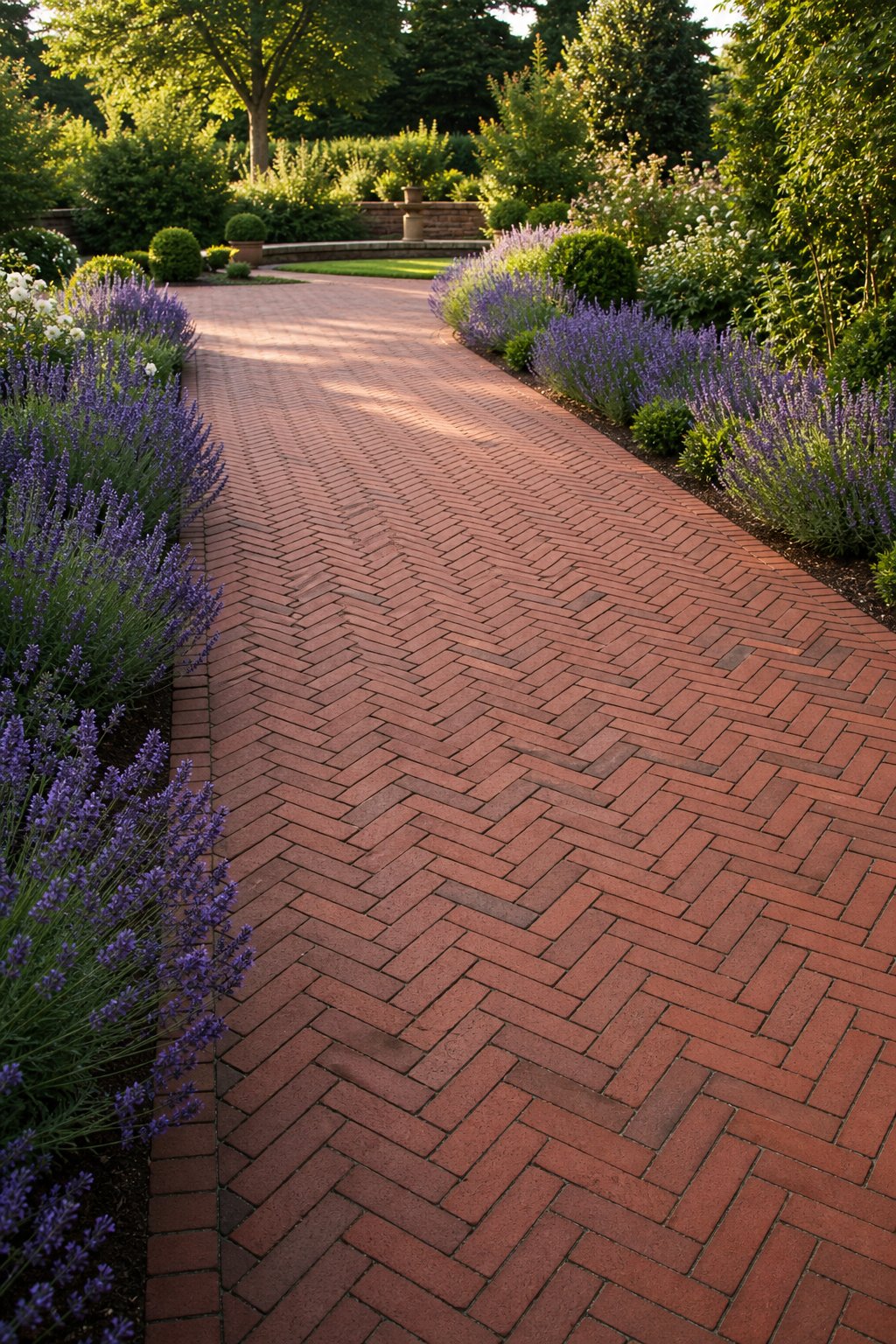
A plain patio can feel a little flat, while a herringbone pattern gives it movement and polish. Lay the bricks at alternating angles, then frame the edges with a straight soldier-course border for a crisp finish.
Lavender adds a soft purple line beside the warm brick and brings a pleasant scent near seating. Give the patio a compacted gravel base and a slight slope for drainage. Leave enough space around the border for pruning and airflow. A narrow path through the lavender keeps guests from stepping into the planting bed.
Expert Tip From MrPlanter: “Sweep polymeric sand into the joints after the bricks are level. Keep lavender a few inches back so water and roots don’t crowd the patio edge.”
2. Terraced Red Brick Retaining Walls for a Sloped Garden
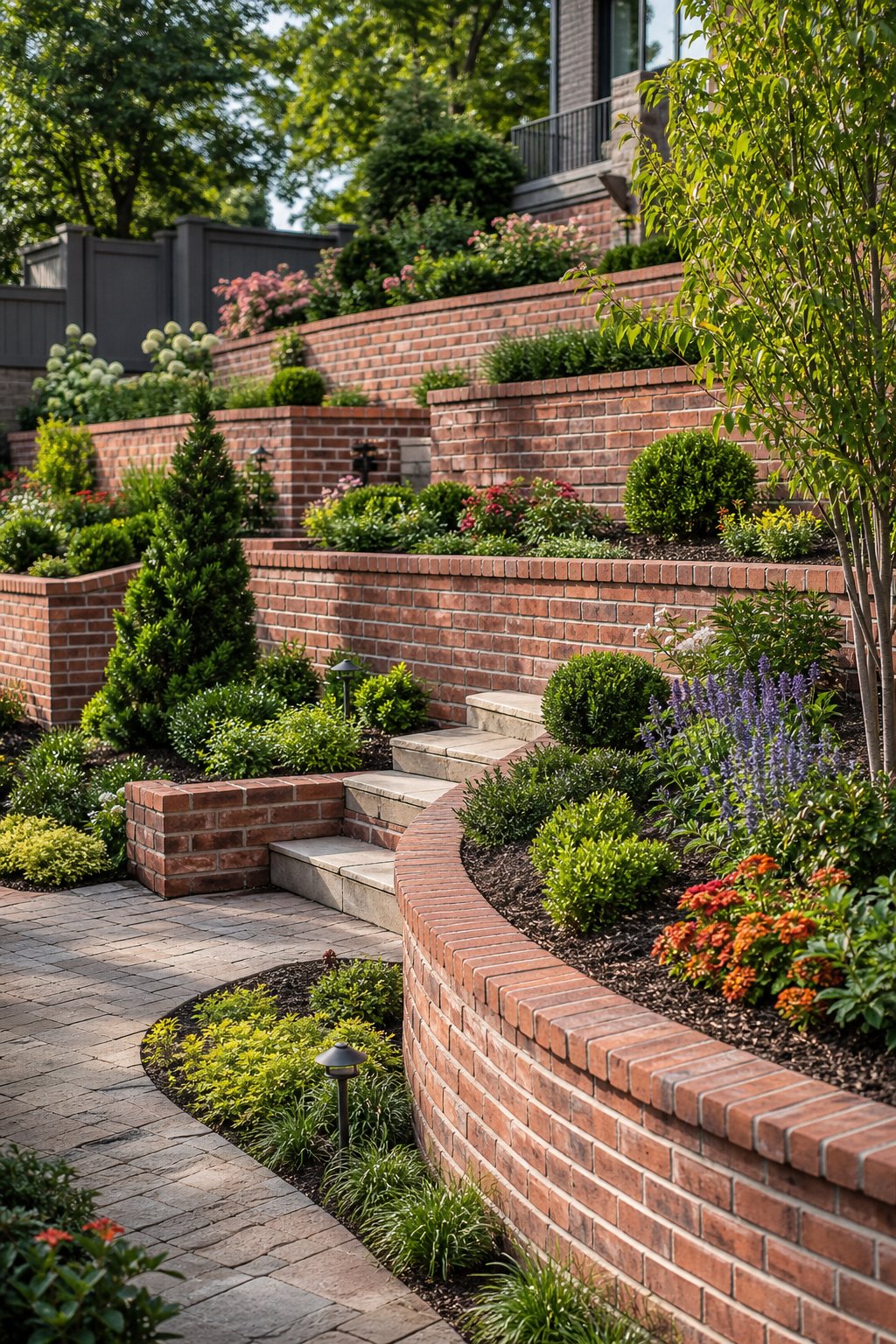
A sloped yard becomes easier to plant when red brick retaining walls divide it into manageable terraces. Each level creates a flatter bed for flowers, shrubs, or a small sitting area.
Build drainage into every wall with gravel and a perforated drainpipe behind the brick. Connect the terraces with broad steps that feel comfortable underfoot. Low plants near the wall soften the hard line, while taller plants at the back add height without blocking the view.
Expert Tip From MrPlanter: “Keep each terrace modest in height unless a qualified builder plans the structure. Water needs a clear path out from behind every wall.”
3. Red Brick Raised Herb Beds With Rosemary and Thyme
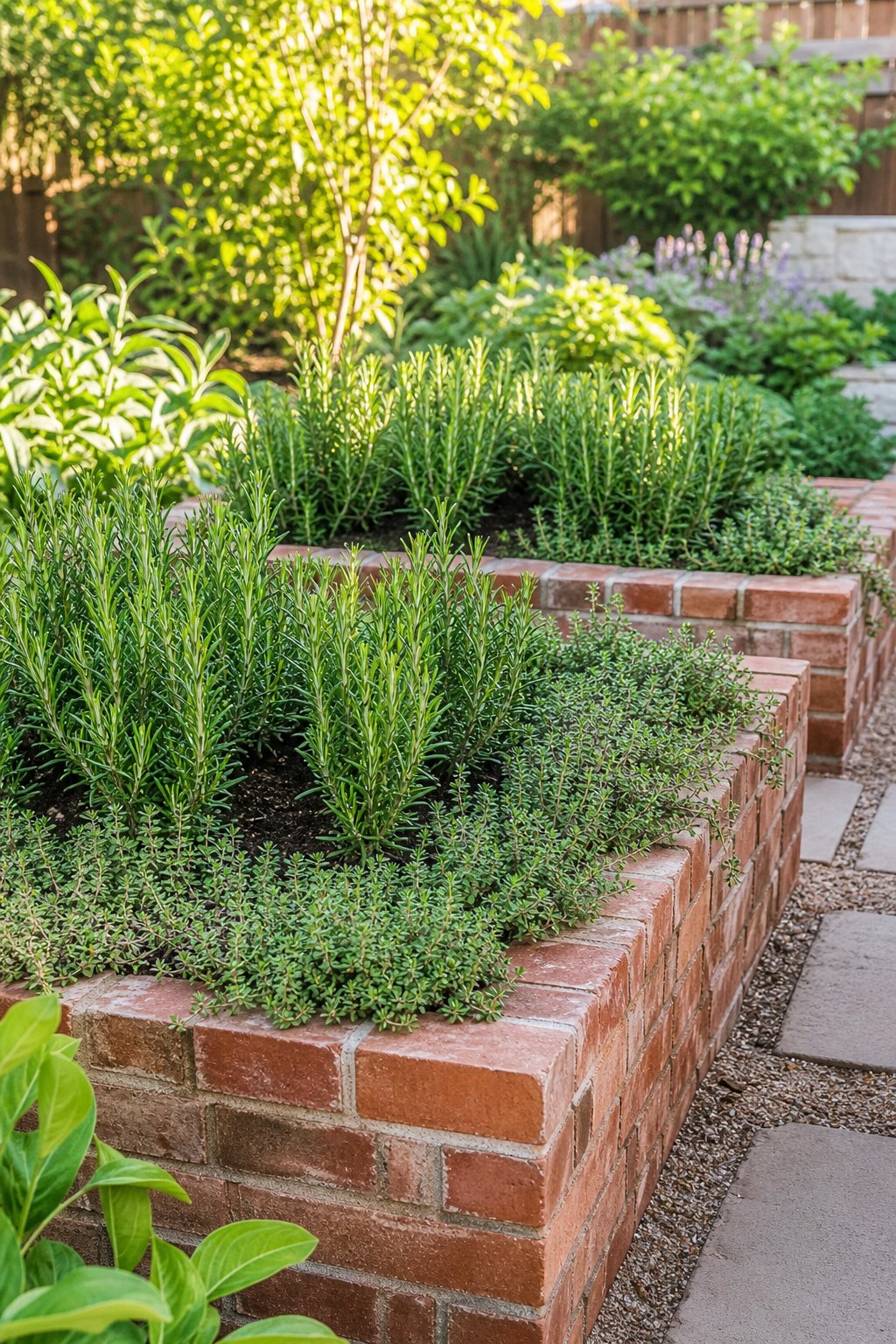
Tired of bending over tiny herb pots? Raised red brick beds put rosemary and thyme at a more comfortable working height while giving your garden a tidy frame.
Use wide corners or low walls that let you reach the center from both sides. Fill the beds with loose soil that drains quickly, since Mediterranean herbs dislike soggy roots. Rosemary looks handsome at the corners, while thyme can spill over the lower edge and soften the brick.
Keep the beds close to your kitchen or a well-used path. A small gravel strip around them reduces mud and makes harvesting easier after rain.
Expert Tip From MrPlanter: “Give rosemary the sunniest spot and let the soil dry slightly between watering. Trim thyme after flowering to keep it dense.”
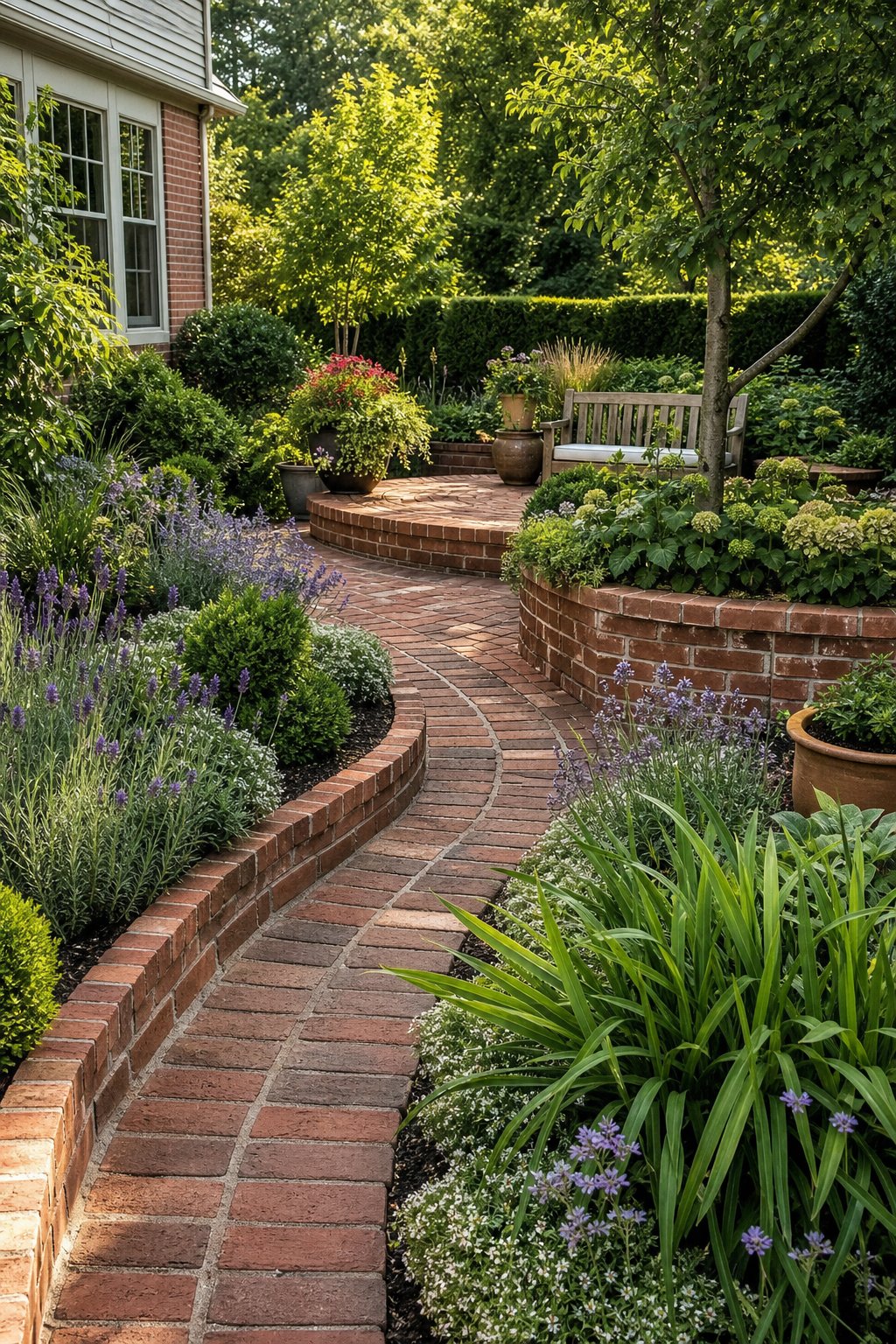
4. Curved Red Brick Garden Edging Along Perennial Beds
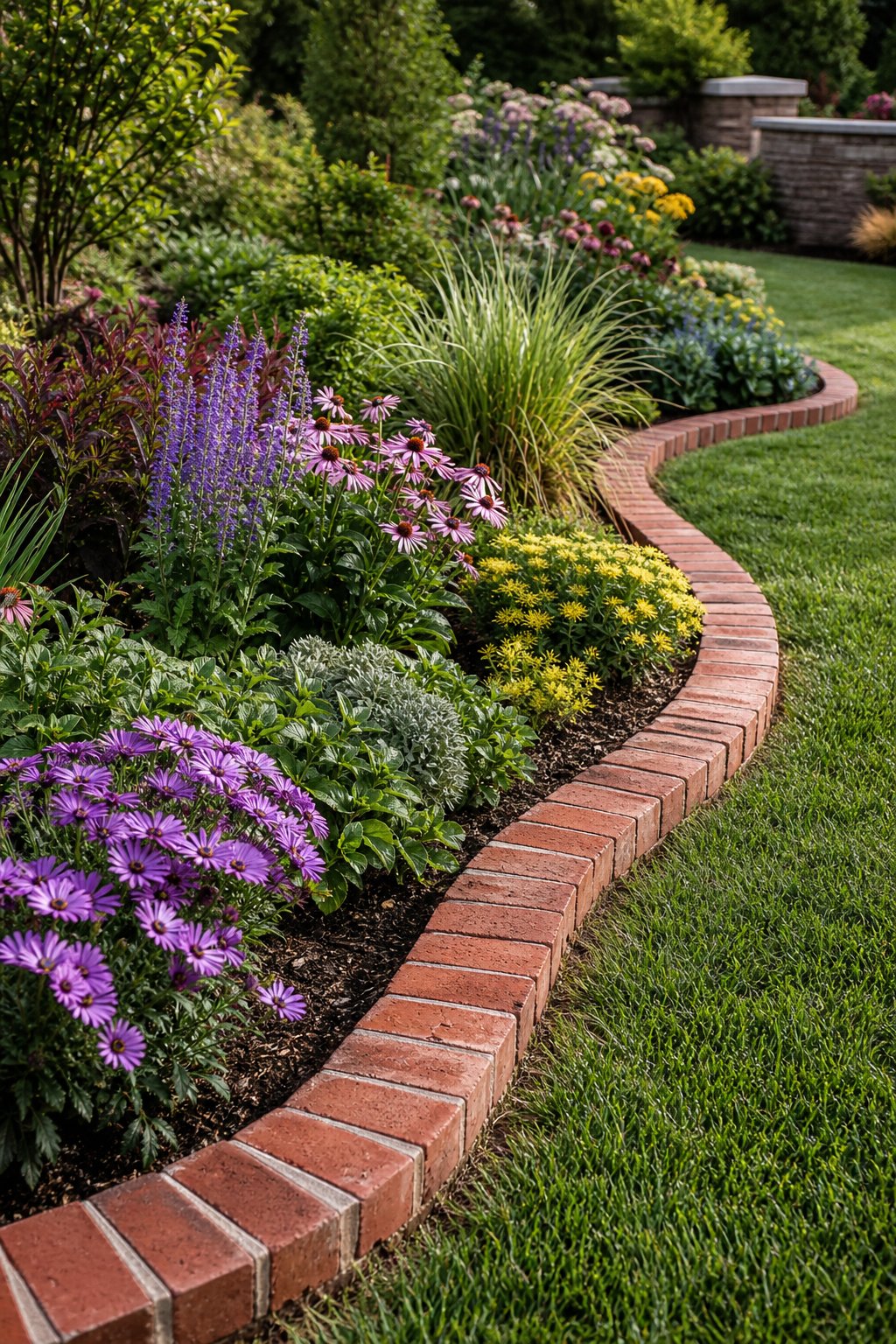
Straight borders suit formal yards, while curved red brick edging gives perennial beds a relaxed, flowing shape. The brick line separates mulch from grass and makes mowing easier.
Set the bricks partly below the soil surface so the edge stays secure and lawn runners have less room to cross. Use a garden hose to test the curve before digging. Repeat the same curve in a nearby path or bed for a connected design.
Plant low flowers near the front, then place taller perennials behind them. This keeps the edging visible while giving the bed a full, layered look. Find more ideas in this guide to garden edging ideas.
Expert Tip From MrPlanter: “Lay the bricks dry first and step back to inspect the curve. A smooth, gentle bend looks more natural than a series of sharp turns.”
5. Red Brick Pathway With Creeping Thyme Joints
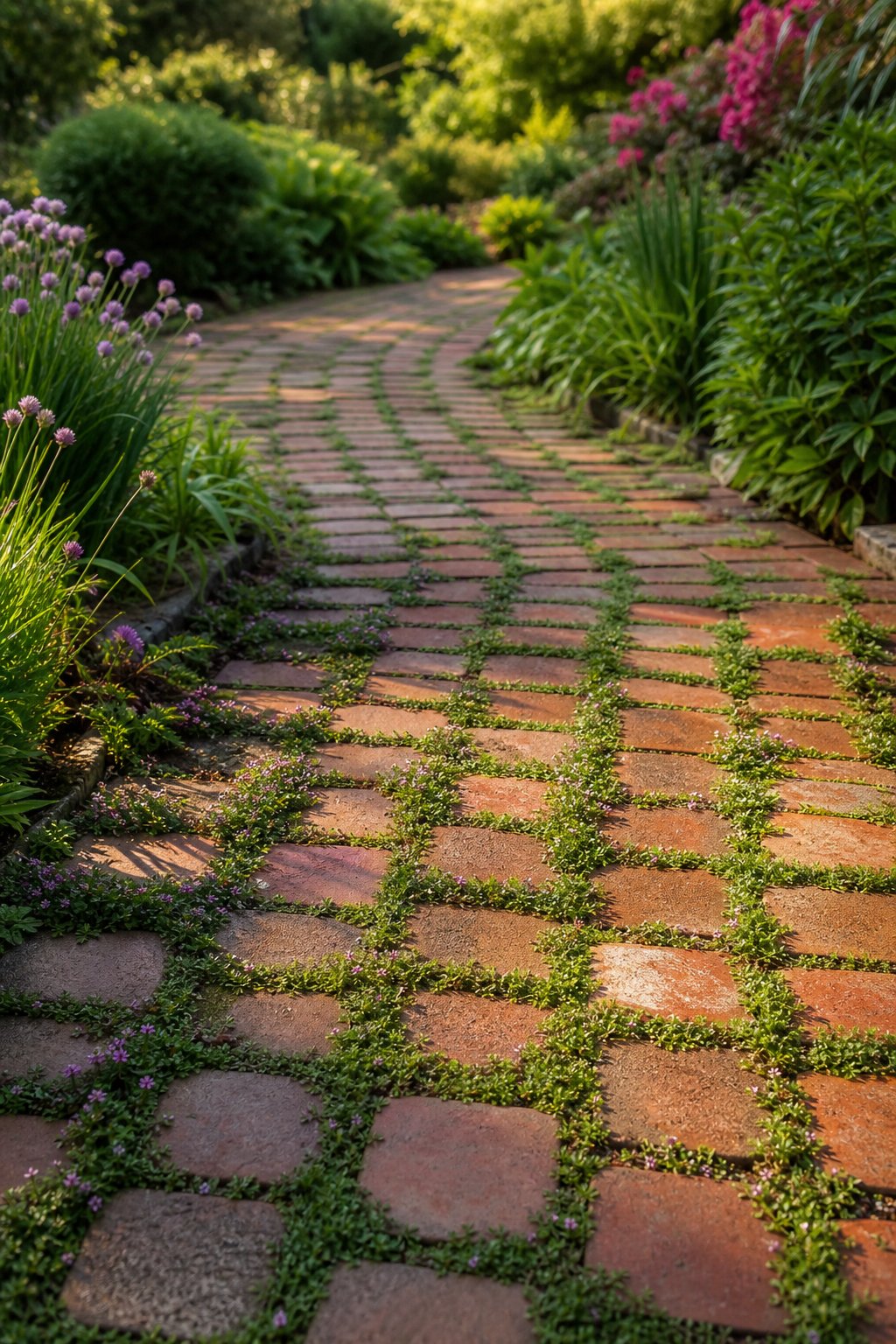
Weeds between pathway bricks can turn a neat walkway into a chore, so creeping thyme offers a charming living joint. Its tiny leaves fill narrow spaces and release fragrance when brushed.
Build the path on a level, compacted base and leave small, even gaps between bricks. Choose a thyme variety suited to your local conditions, then water it while the roots settle. Keep the path wide enough for comfortable walking, especially near gates and outdoor seating.
This design works well in a sunny backyard or front garden. Gravel beside the path helps with drainage and gives the brick a clean visual border.
Expert Tip From MrPlanter: “Use creeping thyme where foot traffic stays light. Keep the brick surface brushed clean so soil doesn’t smother the young plants.”
6. Brick-and-Bluestone Dining Patio With Boxwood Borders
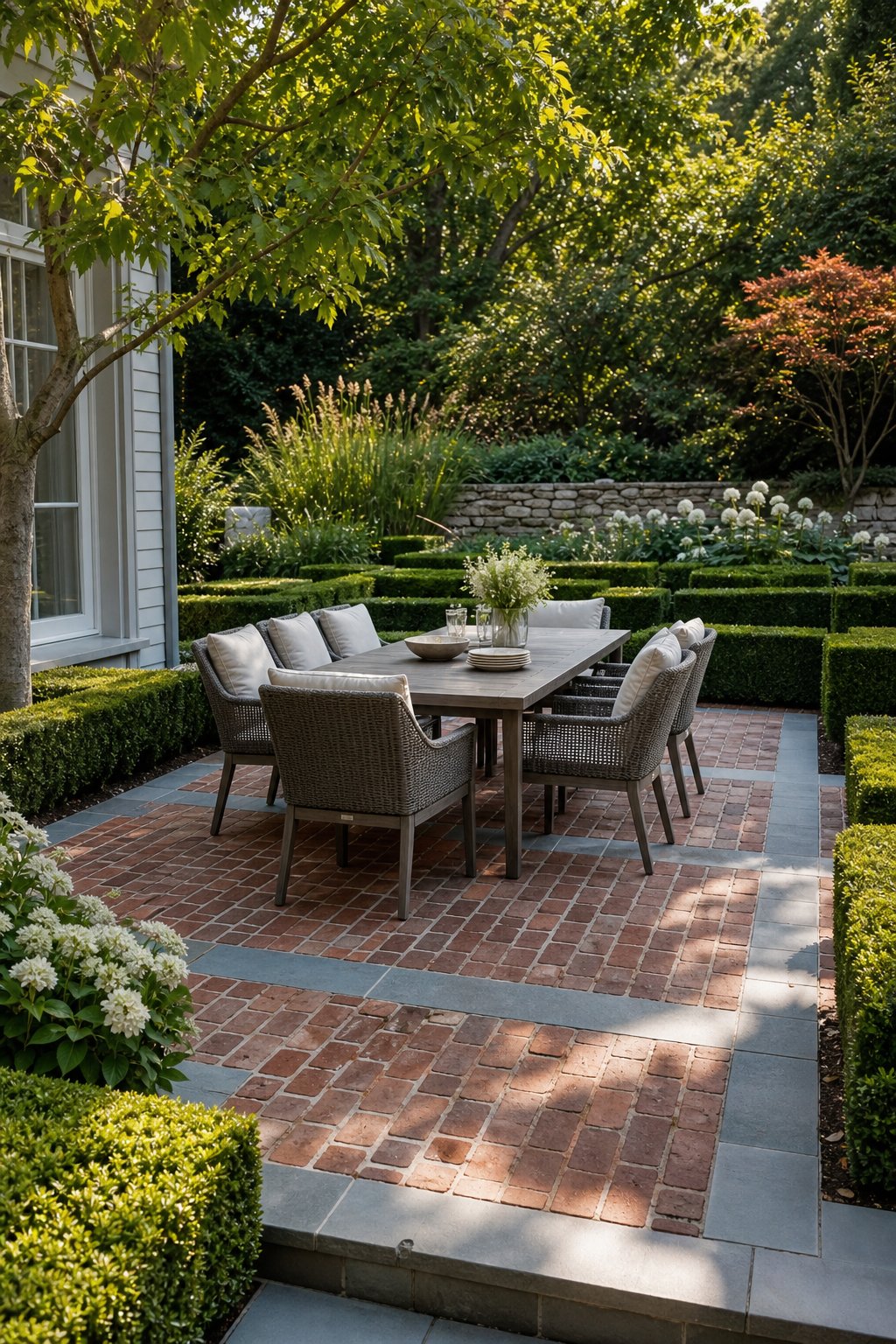
Red brick and blue-gray bluestone create a balanced dining patio with warm and cool tones working side by side. Use brick for the main field and bluestone as a border, inset band, or center detail.
Boxwood borders give the patio a tailored edge and stay attractive through much of the year. Leave room for mature growth so the shrubs don’t crowd chairs or narrow the walkway. A large rug, wood table, or muted cushions can bridge the two hardscape colors.
Plan the table location before laying the surface. You want chairs to pull back freely without catching on a planting bed or step.
Expert Tip From MrPlanter: “Use bluestone accents sparingly so the red brick remains the main feature. Keep boxwood low along entrances where sight lines need to stay open.”
7. Red Brick Fire Pit Circle With Adirondack Chairs
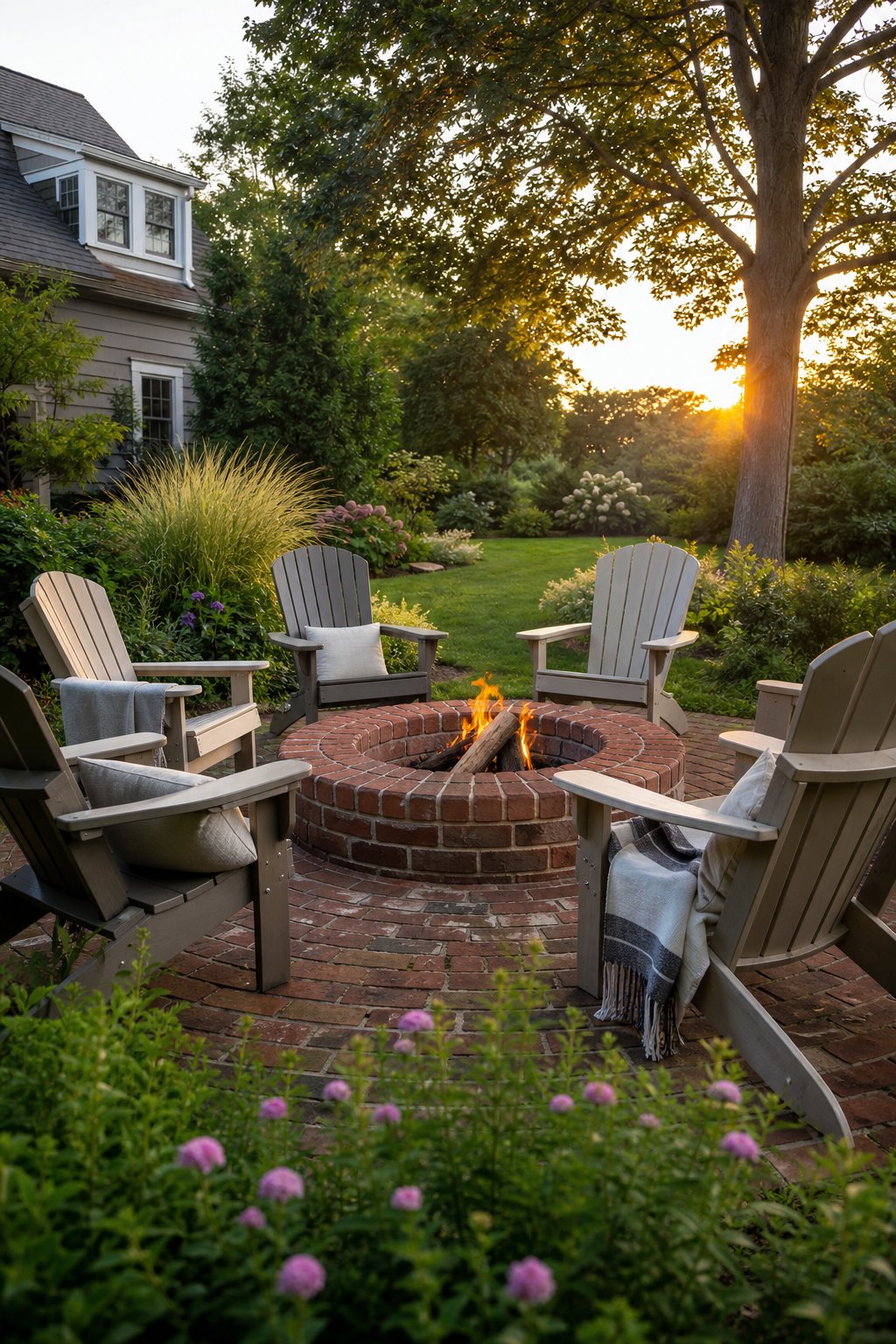
A fire pit circle gives an empty corner of your yard a clear purpose, and red brick makes the gathering area feel grounded and welcoming. Arrange the bricks in a fan, ring, or radial pattern around a metal fire ring.
Set the pit on a level, noncombustible surface with generous clearance from fences, branches, and structures. Adirondack chairs fit the relaxed mood, while gravel around the circle helps control sparks and mud. Check local fire rules before lighting it and keep a water source nearby.
Expert Tip From MrPlanter: “Use a listed fire ring inside the brick circle for safer burning. Leave enough space behind each chair for people to walk through comfortably.”
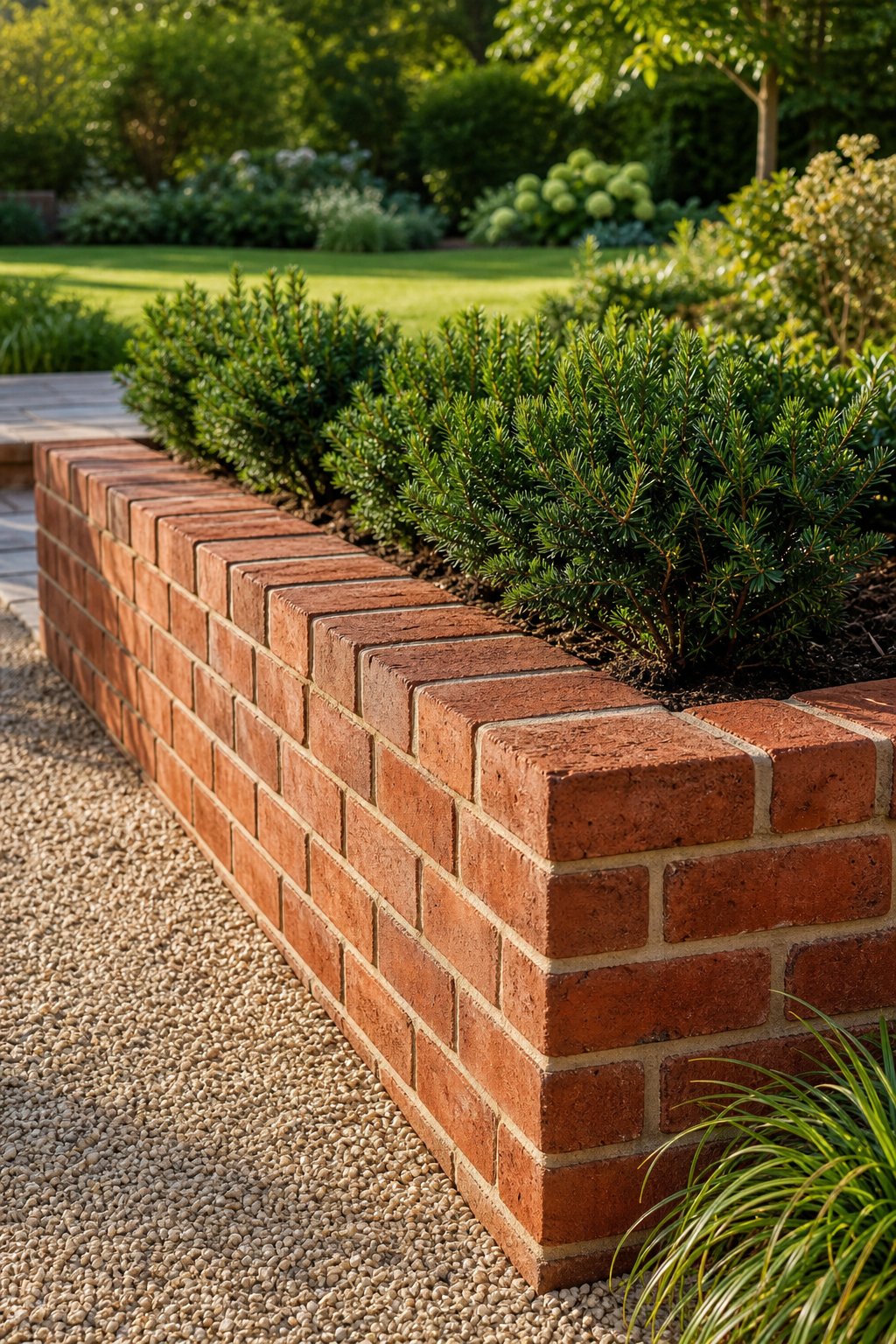
8. Red Brick Planter Wall With Dwarf Evergreen Shrubs
A low red brick planter wall adds structure near a patio, porch, or front walk while giving dwarf evergreens a raised stage. The shrubs supply year-round form without overwhelming a small garden.
Build the wall with a stable footing and include drainage openings or a gravel-filled base. Choose compact plants that match the wall’s scale, such as dwarf spruce, inkberry, or small globe arborvitae. Leave space between shrubs for mature width and air movement.
A pale gravel mulch makes the brick color stand out and keeps soil from splashing onto the wall. Add seasonal flowers in small pots when you want a change without disturbing the shrubs.
Expert Tip From MrPlanter: “Check the mature size on every plant label before buying. A low wall looks cleaner when the greenery stays below its cap.”
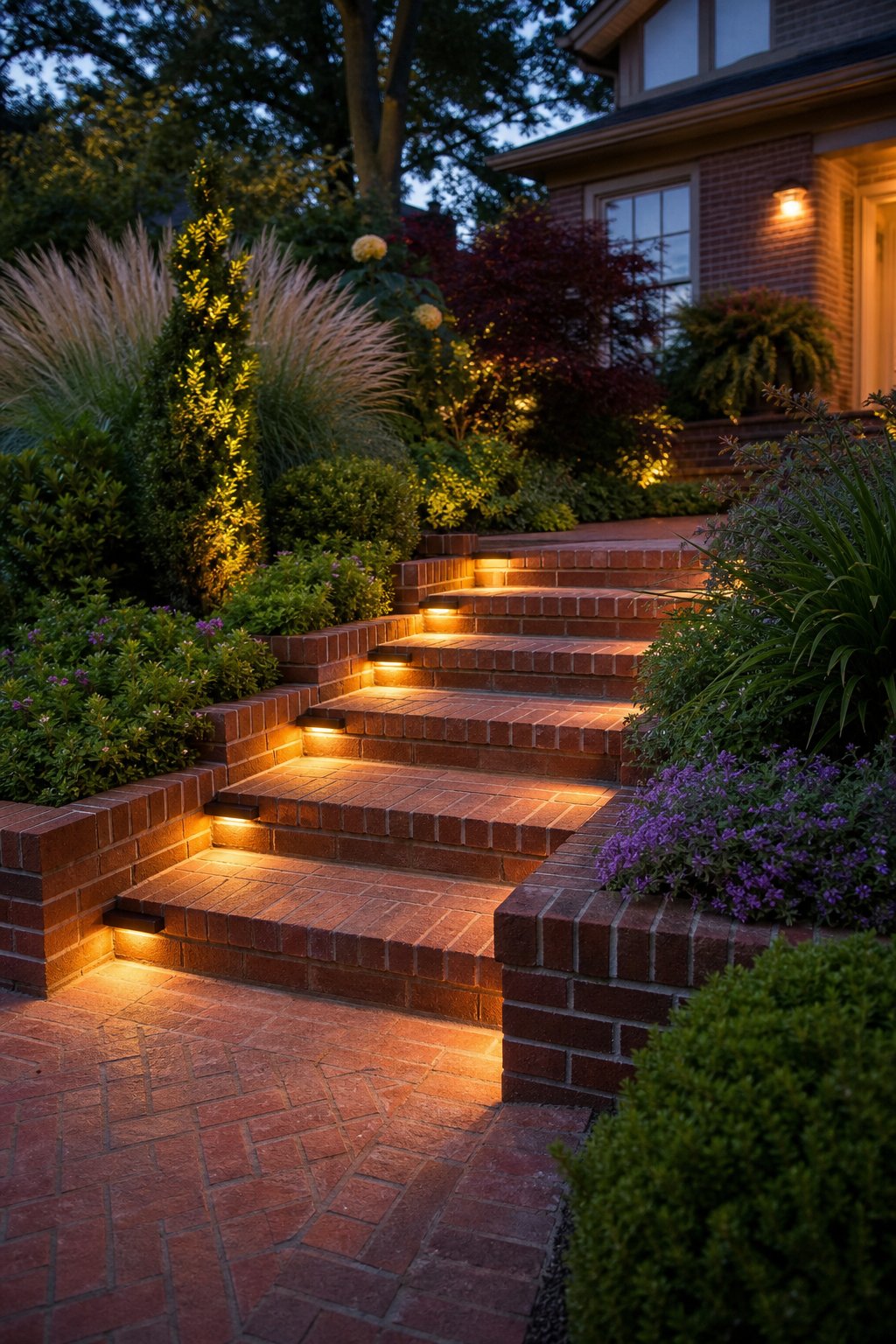
9. Red Brick Steps With Integrated LED Path Lights
Dark steps become safer and more inviting when warm LED lights are built into the risers or placed along the edges. Red brick gives the stairway a clear visual shape in daylight.
Keep every tread level and every riser consistent so walking feels natural. Use outdoor-rated fixtures and protect wiring inside approved conduit. Low plants beside the steps soften the edges, while gravel or ground cover reduces splash during storms.
Warm white light works well with brick and foliage. Aim fixtures downward to reduce glare and keep the path comfortable for guests after sunset.
Expert Tip From MrPlanter: “Test the lights at night before finishing the planting. Bright spots on the treads help more than fixtures aimed toward your eyes.”
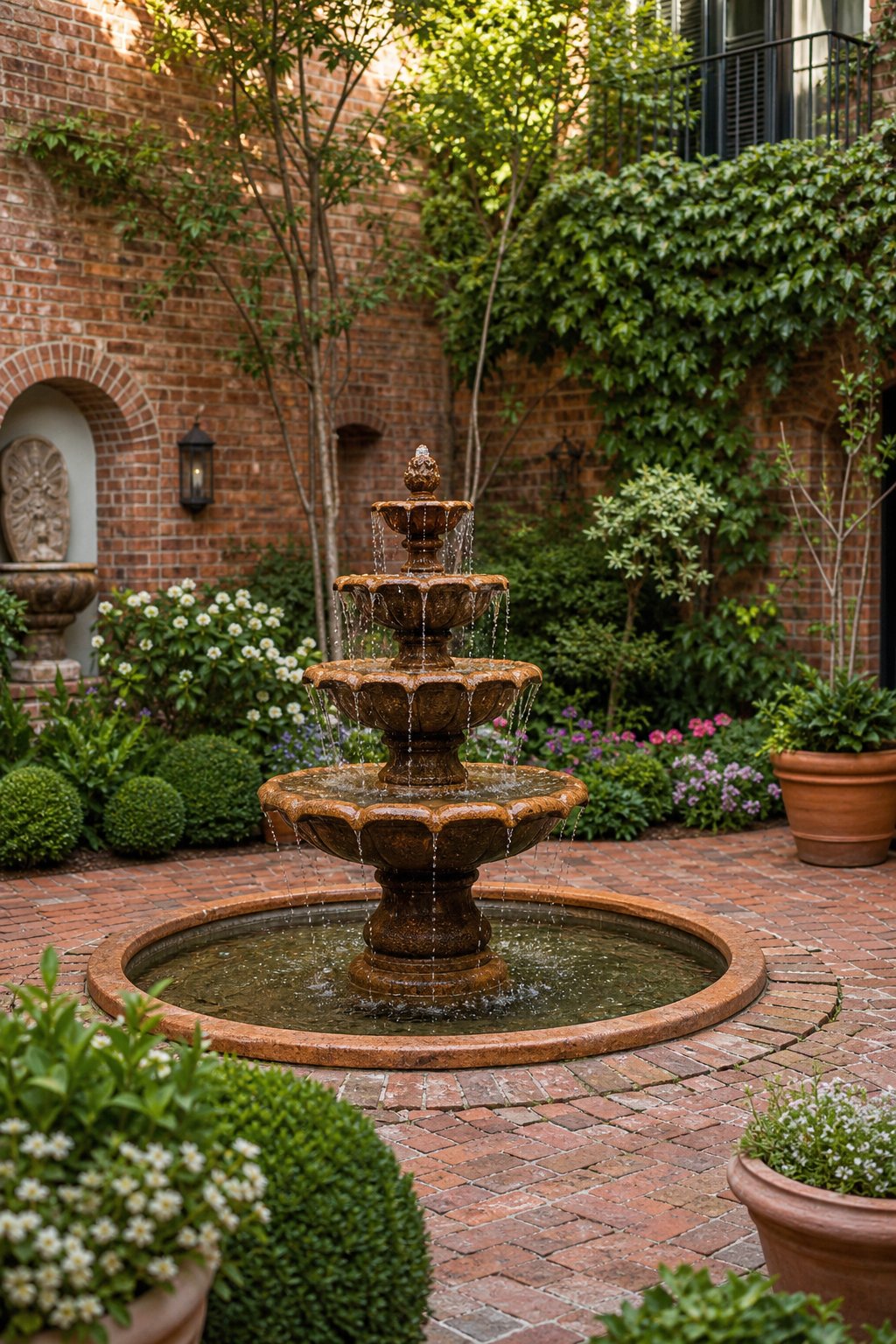
10. Red Brick Courtyard With a Tiered Water Fountain
A red brick courtyard gives a tiered fountain a strong architectural setting and turns a small space into a calm outdoor room. The repeated brick lines frame the sound and movement of the water.
Choose a fountain size that leaves clear walking space around it. Place the basin on a firm, level foundation and hide the pump cord safely. Ferns, hostas, and shade-tolerant flowers work well around a partly shaded courtyard, while herbs suit a sunny space.
Use a simple brick pattern on the floor so the fountain remains the focal point. A small bench against the wall gives you a comfortable place to enjoy the water.
Expert Tip From MrPlanter: “Keep leaves out of the basin with a little clearance around nearby plants. Check the water level often during hot weather so the pump stays covered.”
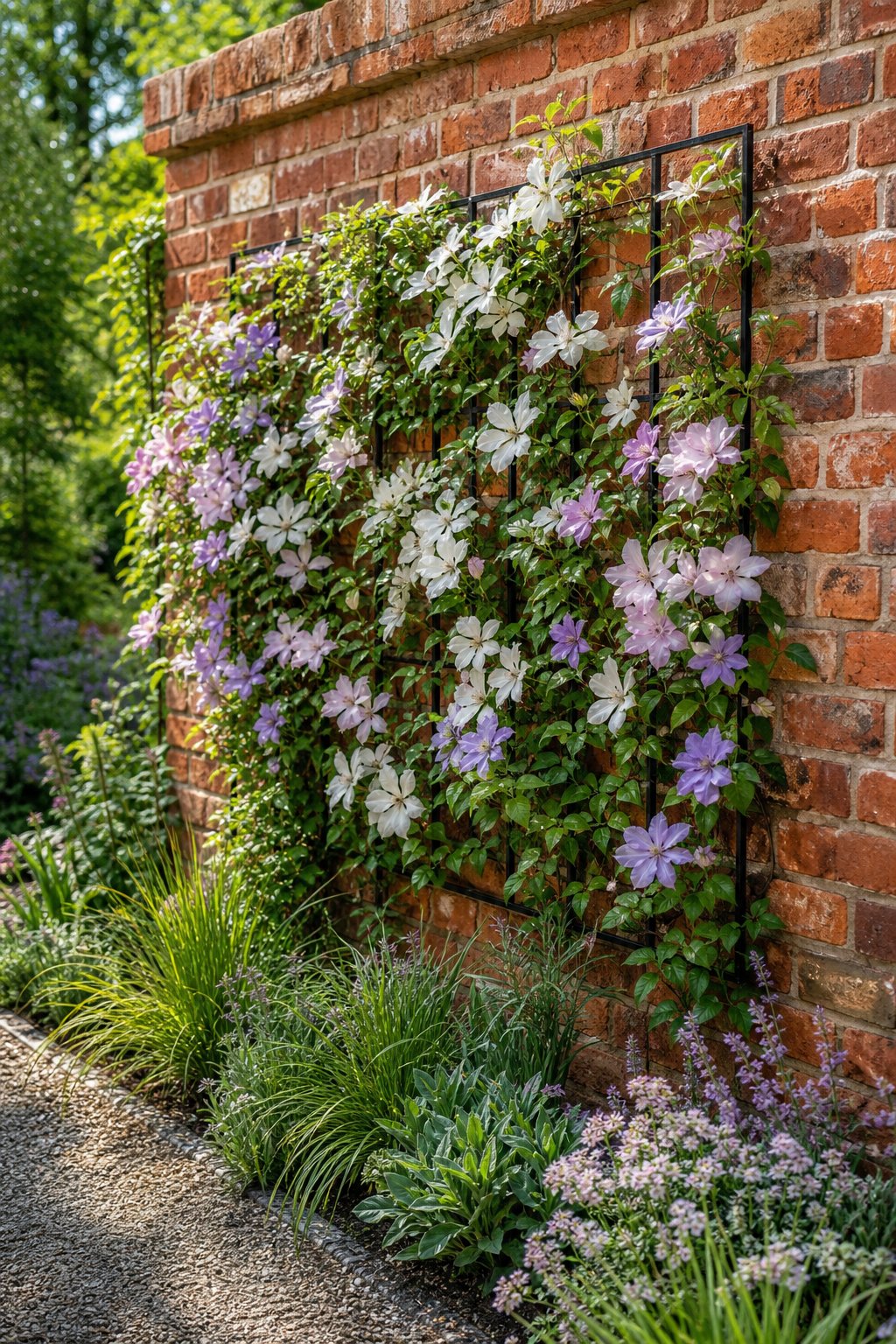
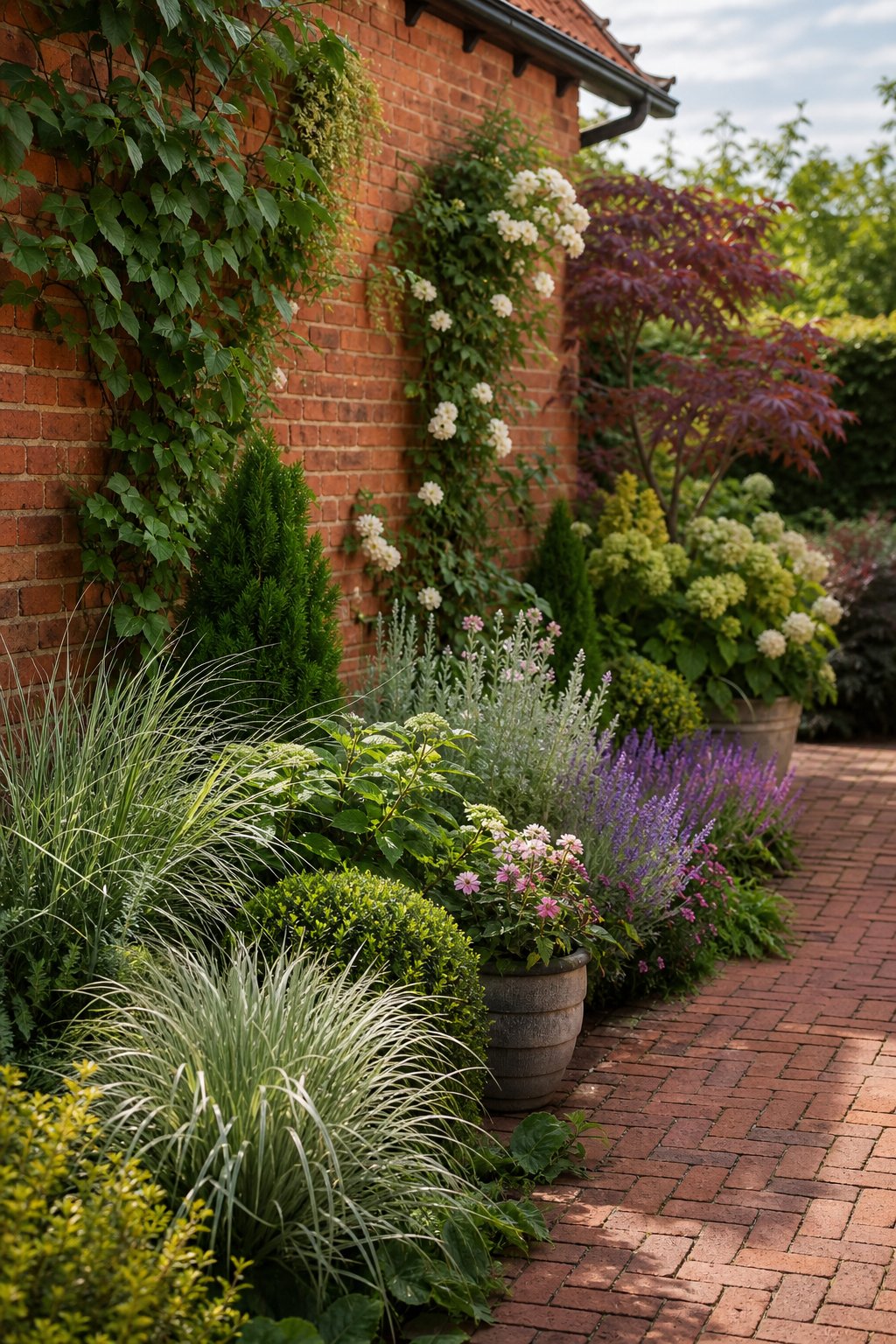
11. Red Brick Garden Wall With Climbing Clematis Trellis
A brick wall becomes a living backdrop when a trellis gives clematis room to climb. The vine adds flowers and height while preserving the wall’s warm texture.
Attach the trellis with spacers so air can move between the wood or metal and the brick. Plant clematis with its roots shaded and its upper growth in sun. Mulch around the base, then guide young stems gently through the support.
Choose a trellis that reaches high enough for the mature vine and strong enough for its weight. The wall can also hold small pots or a bench, though open space keeps the flowers from looking crowded.
Expert Tip From MrPlanter: “Shade the clematis roots with mulch or a low plant. Tie stems loosely because tight ties can damage new growth.”
12. Red Brick Potting Bench With Terracotta Planters
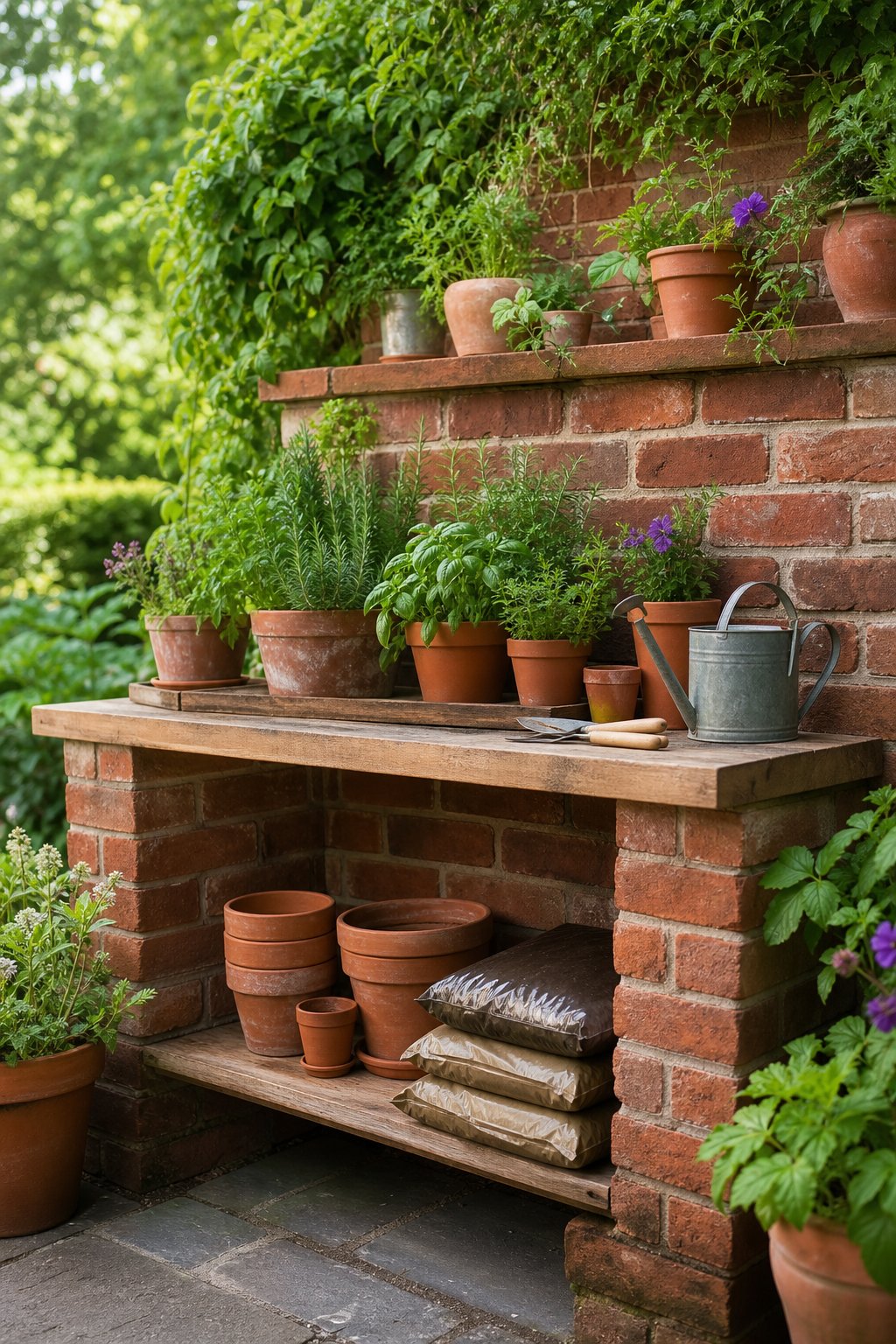
A red brick potting bench gives you a sturdy work surface and a handsome home for terracotta pots. It fits beside a shed, greenhouse, or sunny garden wall.
Build the base with a level top and choose a surface that wipes clean. Add a lower shelf for empty pots, soil bags, and hand tools. Terracotta echoes the brick’s warm color, while galvanized metal buckets add a cooler note.
Place the bench where you have good light and a nearby water source. A small hook rail keeps pruners and twine within reach without filling the worktop.
Expert Tip From MrPlanter: “Seal or cap the work surface if potting soil will sit there often. Store terracotta pots under cover during freezing weather to reduce cracking.”
13. Red Brick Vegetable Bed Borders With Gravel Paths
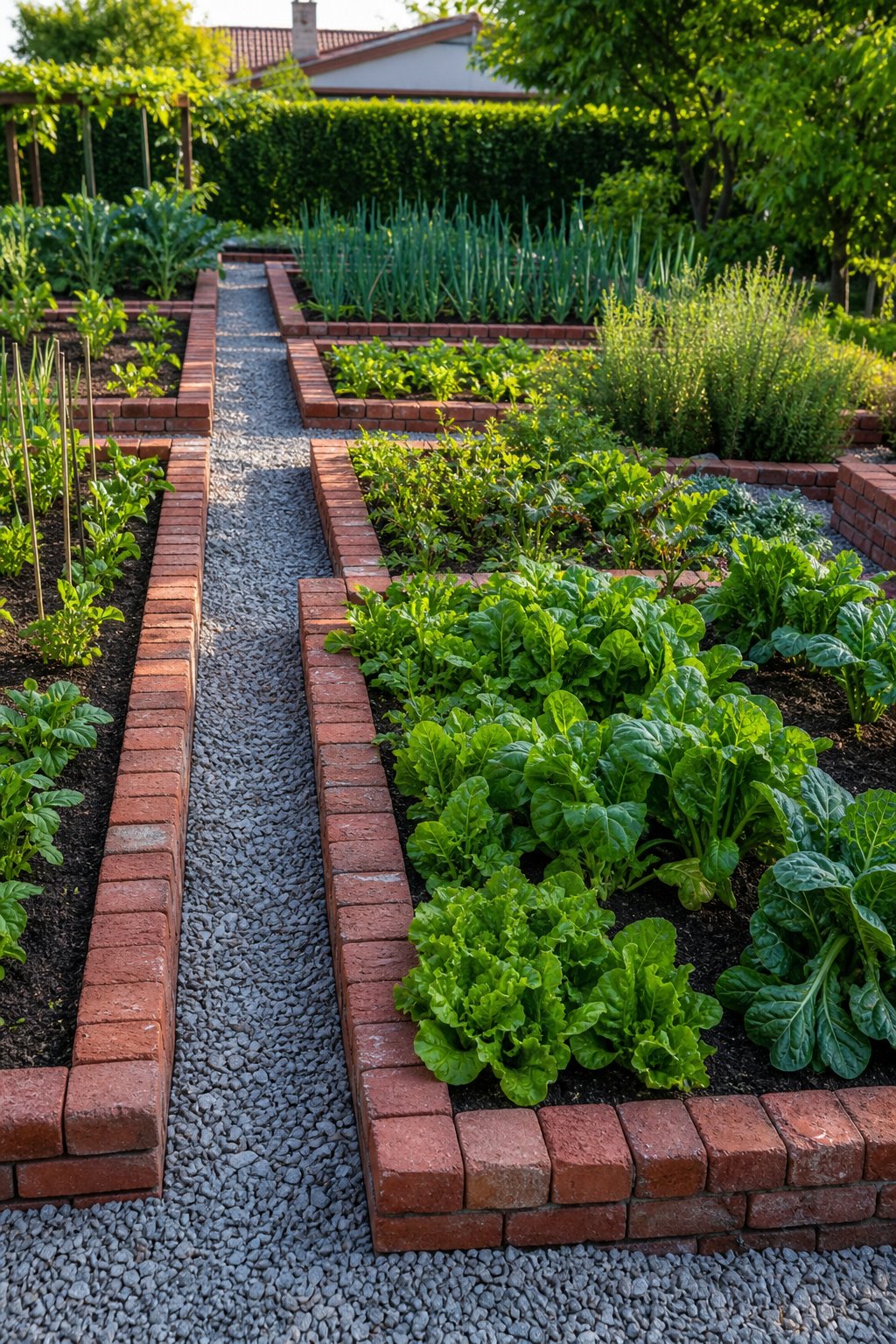
Gravel paths make a vegetable garden easier to reach, while red brick borders hold soil and define each growing bed. The layout gives you clear rows for planting and harvesting.
Make beds narrow enough to reach the center from the path. Set the bricks firmly and slightly above the soil line so mulch stays in place. Compact gravel provides a firm walking surface and drains quickly after rain.
Reserve sunny beds for crops that need long light exposure. Add wider turning points at corners for carts or wheelbarrows. Red brick also makes a useful visual link between the vegetable area and nearby patio paving.
Expert Tip From MrPlanter: “Keep paths wide enough for your wheelbarrow before you spread the gravel. Leave room around each crop for airflow and harvest access.”
14. Red Brick Spiral Herb Garden
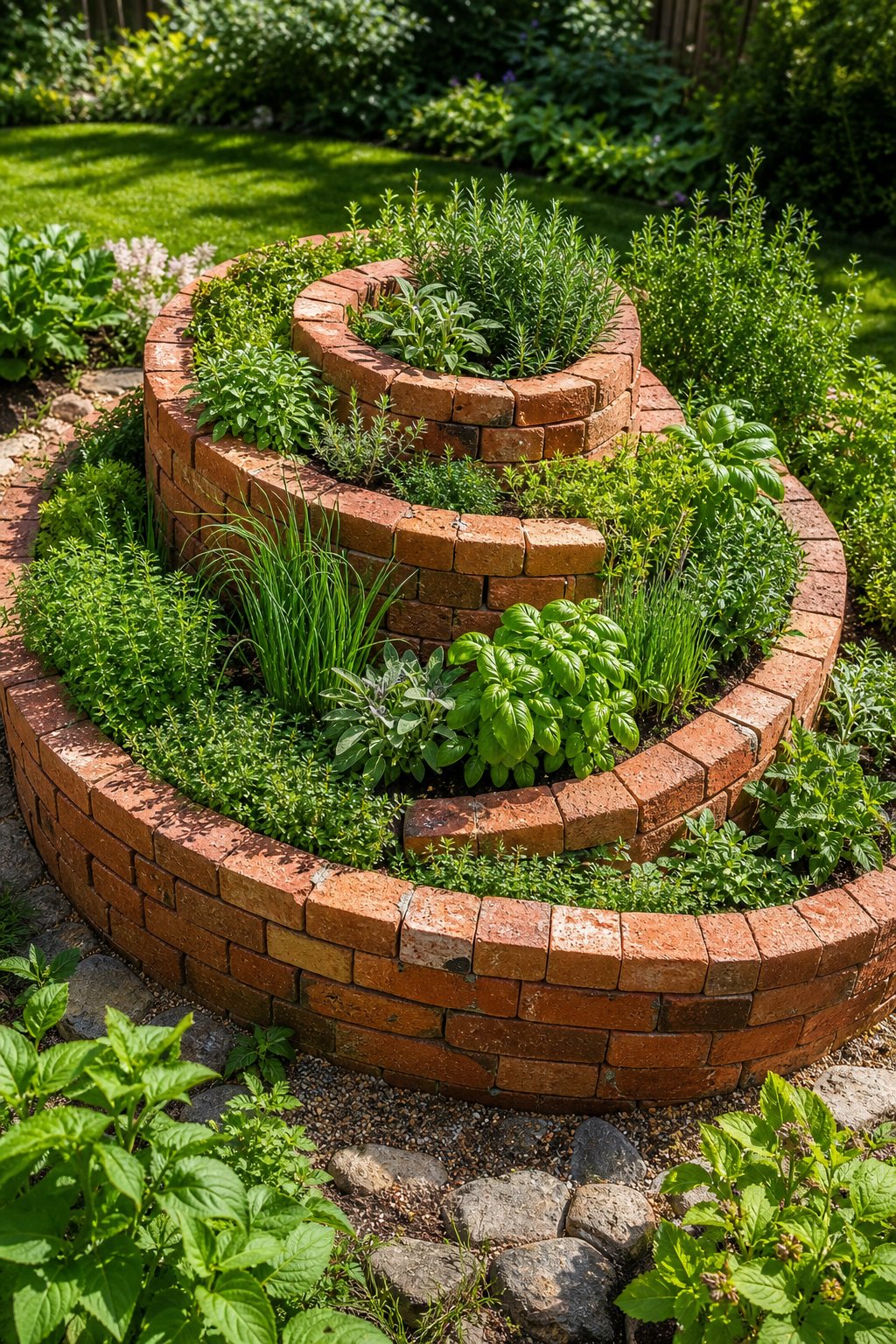
A red brick spiral herb garden packs several growing conditions into one compact feature. The higher center drains quickly for rosemary and oregano, while lower areas suit herbs that prefer more moisture.
Lay the brick in a rising coil with a broad enough path to reach each planting pocket. Fill the center with gritty soil and use richer soil lower down. Place sun-loving herbs at the top, then use parsley, chives, or cilantro in cooler sections.
The spiral shape works well in a small backyard and gives children an easy way to see where food grows. Keep the outer edge low enough for comfortable harvesting.
Expert Tip From MrPlanter: “Mark each herb while young because the spiral fills quickly. Water the upper levels first and check the lower pockets before adding more.”
15. Red Brick Seating Wall Around a Backyard Patio
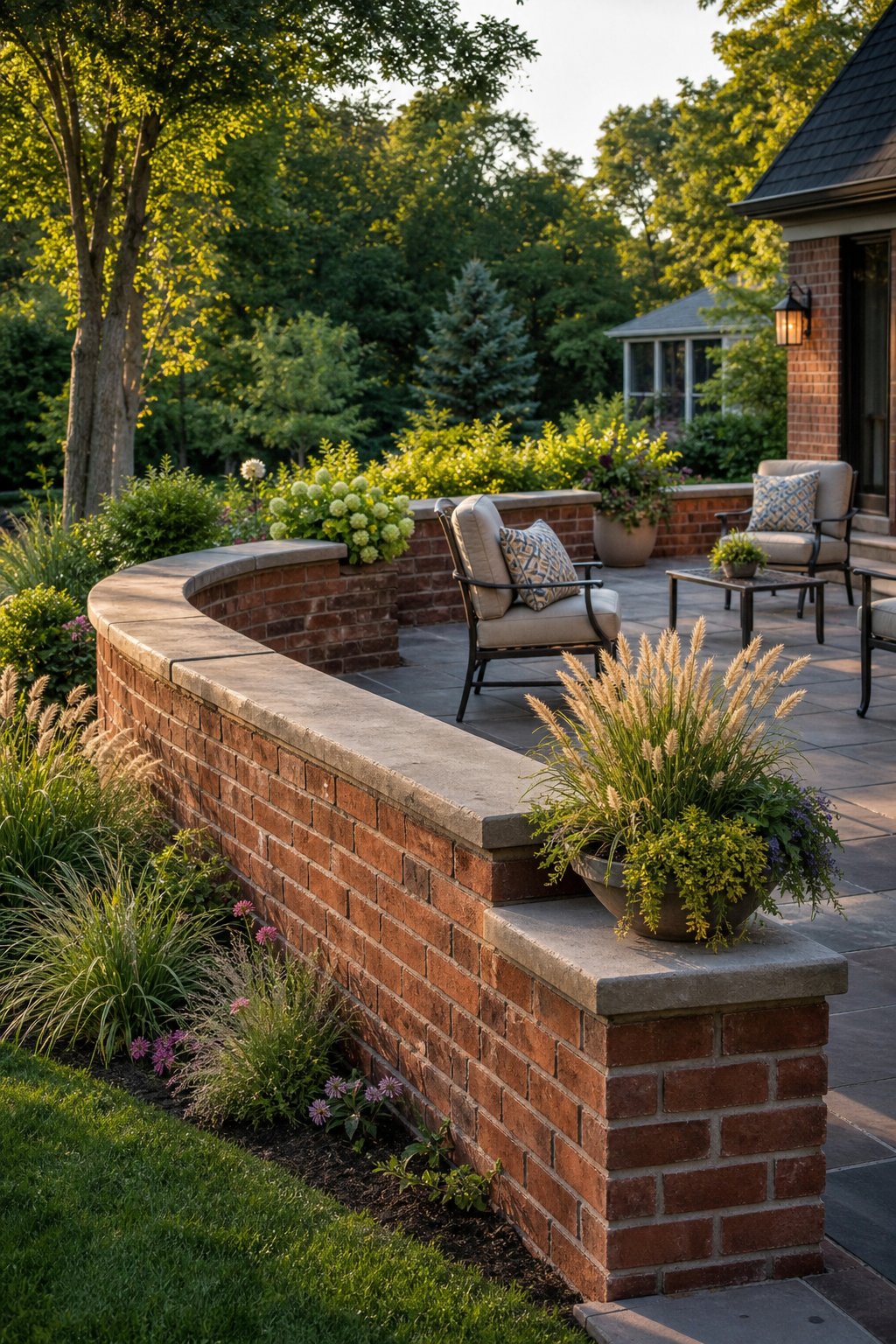
A red brick seating wall adds built-in places to sit around a patio without taking up the floor space needed for extra chairs. It also creates a strong edge between paving and planting beds.
Build the cap wide enough for comfortable sitting and finish it with smooth brick, stone, or a fitted seat top. Add cushions in washable outdoor fabric for longer meals and cool evenings. Keep the wall height comfortable and place breaks in the wall where guests need to enter or leave.
Planting beds behind the wall soften the brick and protect cushions from muddy splash. For more patio layout ideas, browse these landscaping around patio ideas.
Expert Tip From MrPlanter: “Test the seat height with a temporary board before building the cap. A slight overhang keeps rainwater from running down the front.”
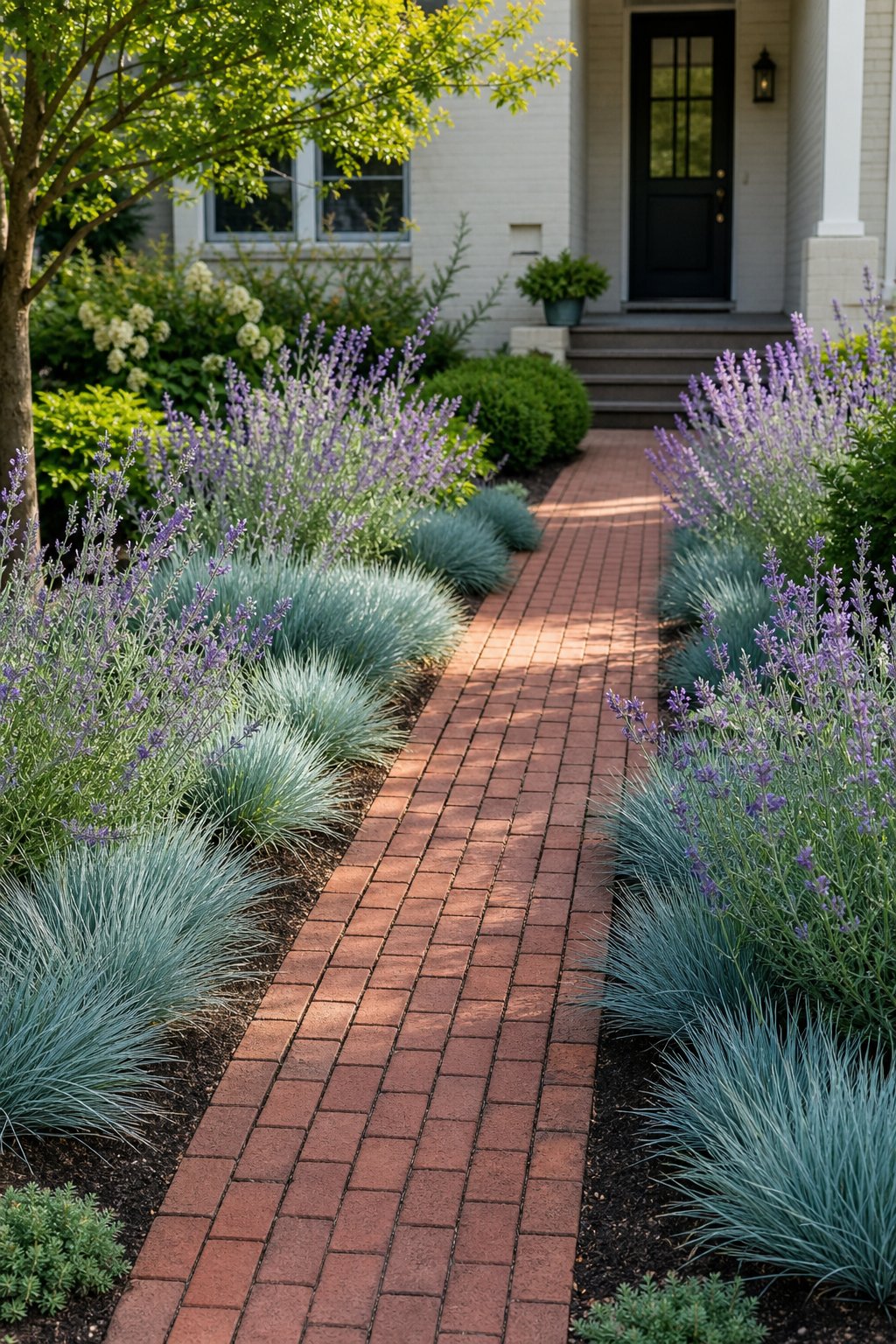
16. Red Brick Front Walk With Blue Fescue and Russian Sage
Blue fescue and Russian sage bring cool silver-blue color to a red brick front walk. Their fine texture breaks up the hard paving and gives the entrance a lighter feel.
Use a straight path for a formal entrance or a gentle curve for a softer approach. Space blue fescue in repeating groups, then place Russian sage behind it for taller flower stems. Keep plants low near the walk so visitors have a clear route to the door.
A narrow gravel strip between brick and planting helps drainage and reduces soil on the pavers. See more entry planting ideas in these front garden ideas.
Expert Tip From MrPlanter: “Shear blue fescue lightly in spring and remove dead centers when needed. Give Russian sage room to spread so stems don’t crowd the path.”
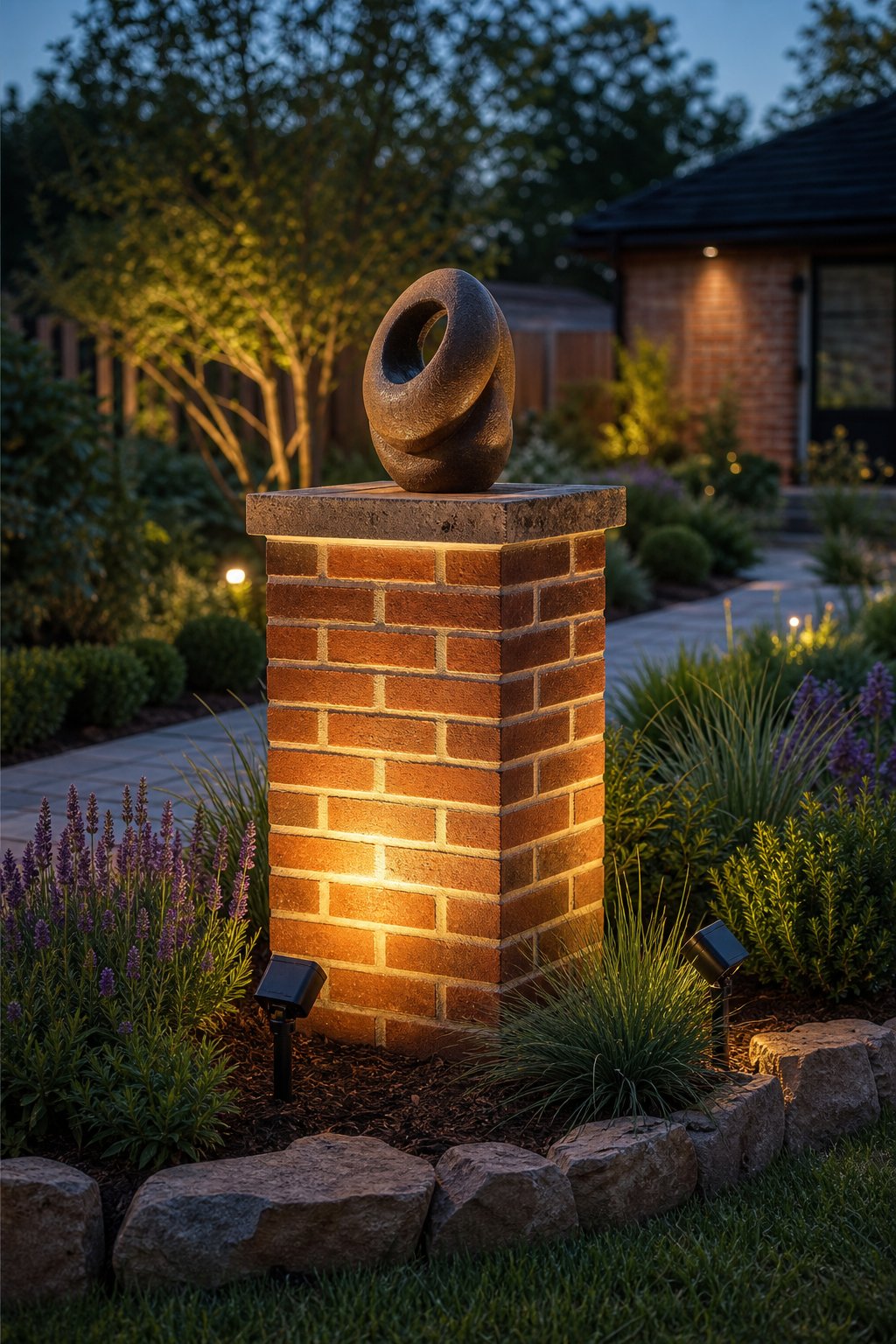
17. Red Brick Garden Art Plinth With Solar Spotlights
A red brick plinth gives garden art a clear place to shine, and solar spotlights keep the display visible after dark. The raised platform works well at the end of a path or inside a planting bed.
Choose weather-resistant art that suits the scale of the plinth. Keep the base wide and level, then place low plants around it so the sculpture remains easy to see. Solar fixtures need several hours of direct sun, so position the display away from dense shade.
Use one light from each side for gentle depth and avoid aiming beams toward nearby windows. This small feature adds interest without filling the yard with furniture.
Expert Tip From MrPlanter: “Secure tall or valuable pieces against wind with a hidden anchor. Clean the solar panels often so the lights keep their charge.”
How to Choose the Right Red Brick Garden Project
Which Brick Project Fits Your Backyard, Front Yard, or Garden Layout?
Your available space and daily habits should guide the project you choose. A patio or seating wall suits a backyard used for meals, while a front walk, low planter, or art plinth gives the entrance a finished look. Slopes benefit from terraces and steps, and compact yards gain useful growing space from raised beds or a spiral herb garden.
Measure the area before buying materials. Mark the footprint with stakes or a hose, then check door swings, mature plant size, drainage, and access for moving soil. A narrow path needs clear walking room, while a fire pit needs safe separation from structures and branches.
Should You Use Reclaimed Brick, New Clay Brick, or Brick Veneer?
Reclaimed brick brings varied color, worn edges, and a historic feel. Inspect each piece for cracks, frost damage, and old mortar before using it in a path or wall. New clay brick offers consistent size and color, which helps when you want clean joints and an even pattern.
Brick veneer works well on a framed wall or planter face where full masonry would add too much weight. It needs a suitable backing, moisture control, and proper installation. Use paving brick rated for ground contact on patios and paths, and choose wall brick for vertical features.
Which Brick Patterns Work Best for Paths, Patios, and Walls?
Herringbone handles patio traffic well and adds a lively pattern. Running bond gives paths and walls a calm, simple rhythm, while a soldier-course border creates a strong edge. Basket weave suits traditional patios, and radial layouts fit fire pit circles.
Use a paper sketch to test the pattern before installation. Plan cuts at edges and keep joint widths consistent. For more project planning help, compare these garden design ideas.
Project
Best location
Main skill
Plant pairing
Pattern
Herringbone patio
Backyard
Base preparation
Lavender
Herringbone
Terraced wall
Sloped yard
Drainage
Perennials
Running bond
Raised herb bed
Backyard
Masonry layout
Rosemary and thyme
Soldier course
Curved edging
Front or backyard
Brick setting
Perennials
Curved line
Brick pathway
Front or backyard
Level grading
Creeping thyme
Running bond
Dining patio
Backyard
Surface layout
Boxwood
Mixed bands
Fire pit circle
Backyard
Fire-safe placement
Gravel planting
Radial
Planter wall
Front or backyard
Footing and drainage
Dwarf evergreens
Running bond
Garden steps
Sloped yard
Consistent risers
Ground cover
Running bond
Courtyard fountain
Backyard
Level foundation
Shade plants
Running bond
Clematis wall
Backyard
Trellis support
Clematis
Running bond
Potting bench
Backyard
Level construction
Terracotta pots
Stack bond
Vegetable borders
Backyard
Bed layout
Vegetables
Soldier course
Spiral herb garden
Backyard
Grading
Culinary herbs
Spiral
Seating wall
Backyard
Cap installation
Patio plants
Running bond
Front walk
Front yard
Path grading
Blue fescue
Running bond
Art plinth
Front or backyard
Stable base
Low perennials
Stack bond
Plant and Color Pairings That Make Red Brick Shine
Which Cool-Toned Plants Create the Best Contrast With Red Brick?
Cool blue, purple, and silver foliage balances the warmth of red brick. Blue fescue, Russian sage, lavender, catmint, and purple salvia create clear contrast without competing with the brick’s earthy color. Plants with fine leaves also soften broad paved surfaces.
Repeat one cool-toned plant along a path or wall for a connected look. Use taller stems behind low edging plants, then leave enough space for mature width. In sunny areas, pair blue fescue with drought-tolerant herbs and gravel mulch.
How Can Evergreen Shrubs and Perennials Soften Brick Edges?
Evergreen shrubs give brick features structure through winter, while perennials add seasonal color around the base. Dwarf boxwood, inkberry, compact juniper, and small arborvitae suit low walls and patios. Hostas, coral bells, ornamental grasses, and cottage flowers help soften taller brickwork.
Plant in layers so the brick remains visible at the base. Keep spreading plants from covering drainage holes or blocking steps. A narrow mulch band makes pruning easier and keeps wet soil from staining the lower courses.
Which Planter, Furniture, and Lighting Colors Complement Red Brick?
Terracotta repeats the warm brick color, while blue-gray stone, sage green, cream, and charcoal create balance. Choose wood furniture for a relaxed garden feel or black metal for a sharper outline. Warm-white lighting brings out the brick’s red and brown tones after sunset.
Limit the main palette to two or three supporting colors, then add seasonal flowers in smaller doses. Test fabric swatches and paver samples outside because sunlight changes how colors read. For extra planting inspiration, explore these garden border ideas.
I’m Anirban Saha, the Founder and Owner of MrPlanter.com. I pay the bills as a software developer, although my BTech is actually in Electronics and Communication. I really love my day job, but what gives me energy every day is interacting with my indoor plants and taking care of them. I have been successfully nurturing and maintaining houseplants for over 10 years now.
📚🔍 Our content undergoes thorough review and fact-checking before publication. For additional details, explore our strict Editorial Policy to deliver helpful content. 📝🔒